EP1479467B1 - Bearbeitungsvorrichtung zur Bearbeitung von Kanten an Stirnseiten von plattenförmigen Werkstücken - Google Patents
Bearbeitungsvorrichtung zur Bearbeitung von Kanten an Stirnseiten von plattenförmigen Werkstücken Download PDFInfo
- Publication number
- EP1479467B1 EP1479467B1 EP04011938A EP04011938A EP1479467B1 EP 1479467 B1 EP1479467 B1 EP 1479467B1 EP 04011938 A EP04011938 A EP 04011938A EP 04011938 A EP04011938 A EP 04011938A EP 1479467 B1 EP1479467 B1 EP 1479467B1
- Authority
- EP
- European Patent Office
- Prior art keywords
- workpiece
- sensing
- articulated
- pivot points
- links
- Prior art date
- Legal status (The legal status is an assumption and is not a legal conclusion. Google has not performed a legal analysis and makes no representation as to the accuracy of the status listed.)
- Expired - Lifetime
Links
- 238000003801 milling Methods 0.000 claims abstract description 20
- 238000003754 machining Methods 0.000 claims description 11
- 238000009966 trimming Methods 0.000 description 3
- 239000002023 wood Substances 0.000 description 2
- 238000004026 adhesive bonding Methods 0.000 description 1
- 239000011093 chipboard Substances 0.000 description 1
- 230000006835 compression Effects 0.000 description 1
- 238000007906 compression Methods 0.000 description 1
- 230000007423 decrease Effects 0.000 description 1
- 238000011161 development Methods 0.000 description 1
- 230000018109 developmental process Effects 0.000 description 1
- 238000005516 engineering process Methods 0.000 description 1
- 239000000523 sample Substances 0.000 description 1
- 230000007704 transition Effects 0.000 description 1
- 210000001364 upper extremity Anatomy 0.000 description 1
Images


Classifications
-
- B—PERFORMING OPERATIONS; TRANSPORTING
- B27—WORKING OR PRESERVING WOOD OR SIMILAR MATERIAL; NAILING OR STAPLING MACHINES IN GENERAL
- B27D—WORKING VENEER OR PLYWOOD
- B27D5/00—Other working of veneer or plywood specially adapted to veneer or plywood
- B27D5/006—Trimming, chamfering or bevelling edgings, e.g. lists
-
- B—PERFORMING OPERATIONS; TRANSPORTING
- B23—MACHINE TOOLS; METAL-WORKING NOT OTHERWISE PROVIDED FOR
- B23C—MILLING
- B23C3/00—Milling particular work; Special milling operations; Machines therefor
- B23C3/12—Trimming or finishing edges, e.g. deburring welded corners
-
- B—PERFORMING OPERATIONS; TRANSPORTING
- B23—MACHINE TOOLS; METAL-WORKING NOT OTHERWISE PROVIDED FOR
- B23Q—DETAILS, COMPONENTS, OR ACCESSORIES FOR MACHINE TOOLS, e.g. ARRANGEMENTS FOR COPYING OR CONTROLLING; MACHINE TOOLS IN GENERAL CHARACTERISED BY THE CONSTRUCTION OF PARTICULAR DETAILS OR COMPONENTS; COMBINATIONS OR ASSOCIATIONS OF METAL-WORKING MACHINES, NOT DIRECTED TO A PARTICULAR RESULT
- B23Q1/00—Members which are comprised in the general build-up of a form of machine, particularly relatively large fixed members
- B23Q1/25—Movable or adjustable work or tool supports
- B23Q1/44—Movable or adjustable work or tool supports using particular mechanisms
- B23Q1/50—Movable or adjustable work or tool supports using particular mechanisms with rotating pairs only, the rotating pairs being the first two elements of the mechanism
- B23Q1/54—Movable or adjustable work or tool supports using particular mechanisms with rotating pairs only, the rotating pairs being the first two elements of the mechanism two rotating pairs only
- B23Q1/5468—Movable or adjustable work or tool supports using particular mechanisms with rotating pairs only, the rotating pairs being the first two elements of the mechanism two rotating pairs only a single rotating pair followed parallelly by a single rotating pair
- B23Q1/5481—Movable or adjustable work or tool supports using particular mechanisms with rotating pairs only, the rotating pairs being the first two elements of the mechanism two rotating pairs only a single rotating pair followed parallelly by a single rotating pair followed parallelly by a single rotating pair
Definitions
- the invention relates to a processing device for processing edges on end faces of plate-shaped workpieces according to the preamble of patent claim 1.
- Processing devices serve as a processing unit, e.g. a milling unit for rounding the front and rear end faces of a continuous workpiece or a trimming unit for cutting to length of front and rear edge projections on the workpieces.
- each processing unit is articulated at first ends of two parallel links, which are articulated at its other end to a frame-fixed bearing element.
- two processing units are thus required for an upper processing, as well as for a lower processing, which is very complicated on the whole
- the US-A-4 019 256 describes a guide for a tool, such as a saw, on the holder of two mutually spaced first pivot points are provided.
- Two first parallel links are articulated with one end in each case at one of the first pivot points and with its other end in each case at one hinged by two rollers.
- Two second parallel links are each also hinged to one of the rollers with one end.
- the other ends of the second links are each articulated at one of two fourth pivot points on an angle adjusting plate, which is fixed by means of a straight edge element to the edge of a workpiece.
- the rollers have the same diameter and are tangent to each other, arranged to rotate in opposite directions. This is ensured by a band circulating the rollers.
- a steering system for generating horizontal and vertical movements of a tool carrier is described.
- Two mutually spaced first pivot points are provided on the tool carrier, on which two first parallel links are each articulated with one end.
- the first links are each articulated at one of two second pivot points on a first bearing element on which two second parallel links are articulated with one end, wherein a first and a second link rotate about the same pivot point.
- the second links are each hinged to one of two fourth pivot points on a frame-fixed bearing element.
- the vertical or horizontal movement of the tool is achieved by an intermediate plate hinged to a second lever.
- the other end of the intermediate plate is hingedly connected via a rod with a first link.
- At the intermediate plate also attack two pressure medium cylinder from different directions.
- the invention has for its object to provide with structurally simple means a processing device with a small size, with the high throughput speeds and a high degree of automation are possible.
- the processing unit Due to the articulation according to the invention by the double parallelogram formed by the links, the processing unit can only be moved parallel to the machined end face of the workpiece. Therefore, a clear assignment of the milling tool to the contour of the workpiece is given for the various adjustments of the processing unit. In addition, by means of only one processing unit a front and rear edge can be edited. Finally, the space requirement of the processing device is low.
- the processing apparatus expediently has attached to the workpiece-facing side of the processing unit a sensing device with a sensing roller for scanning the tool surface and a probe ring for sensing the workpiece front side to be machined.
- the processing unit may be a milling unit for rounding the front and rear end faces of the workpieces or a trimming unit for cutting to length front and rear edge projections on the workpieces.
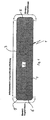
- Fig. 1 shows the longitudinal end face of a plate-shaped workpiece 1 made of wood, e.g. a chipboard on which an edge 2 is glued.
- the edge 2 must be machined by longitudinal milling after gluing on the longitudinal edges 3, 4 by longitudinal radius machining and at the side edges, wherein roundings 7 are provided in the transition region between the longitudinal and lateral edges.
- the milling unit 10 shown in FIGS. 2 to 6 has, for carrying out this machining, a milling motor device 12 with an oblong cuboidal motor housing 14, in which a drive motor is provided. From the housing 14 projects a drive shaft 16, which is arranged perpendicular to a plane in which the longitudinal end face of the plate-shaped workpiece 1 is made of wood, on which the edge 2 is glued. At the extreme end of the drive shaft 16, a radius cutter head 18 for machining the edges of the edge 2 is attached.
- the guide rail 20 On the upper side of the motor housing 14, a guide strip 20 extending in the longitudinal direction (Z direction) of the motor housing 14 is mounted.
- the guide rail 20 has a dovetail guide-like cross-section.
- the cross section is generally rectangular, wherein in the two opposite longitudinal sides of the guide rail 20 cone recesses 21 and 27 are formed, each having a horizontal bottom surface 24 and 25, from the inner end, a side surface 22 and 23 obliquely to an angle extends above and to the outside.
- the guide rail 20 is received in a downwardly open recess 28 of a Fräskopfgiving Anlagen 30, the shape of which is designed so that the guide bar 20 along a formed on her upper sliding surface 19 on a Gegengleit Structure 29 of the recess 28 can move so that a necessary adjustment (Eg 0.3mm) in the X direction, ie parallel to the glued edge 2, as well as a greater possibility of movement (eg 3mm) in the Z direction, ie perpendicular to the edge 2 is made possible.
- a necessary adjustment Eg 0.3mm
- 27 open grooves 32, 34 are formed in the Fräskopfing worn 30 to the recesses.
- a counter pressure strip 36 is arranged parallel to the longitudinal end face of the workpiece 1 (in the X direction) slidably having a sliding surface 38 which bears against the side surface 23 of the guide rail 20.
- Fig. 6 shows the section V-V of Fig. 4, wherein the guide bar 20 is omitted for reasons of clarity.
- a plurality of pressure elements 40 are perpendicular to the longitudinal direction of the guide rail 20 and the Lekssverstellides (Z-direction) of the guide rail 20 attached, the exercise with its one end face on the outer side surface 42 of the back pressure bar 36 a biasing force.
- a Z-direction extending threaded opening 52 is provided, in which an adjusting spindle 54 engages, which is driven by a drive motor 56 which is fixed to the rear end side of the Fräskopfmaking Anlagen 30.
- the guide strip 20 is tensioned both upwards on the counter-sliding surface 29 of the recess 28 of the milling head receiving device 30 and on the opposite sliding surface 37 of the side pressure strip 43 due to the oblique side surface 23.
- the guide strip 20 is tensioned on the sliding surfaces 19 and 29 and nevertheless kept freely movable in the Z direction, so that a precise axis movement in the Z direction is also possible on the formed as sliding surfaces side surfaces 22, 23 without interference or obstruction.
- the side of the recesses 21, 27 open grooves 32, 34 are formed in the Fräskopfmaking worn 30.
- the Fräskopfmaking worn 30 has a generally cuboid receiving body 60, in its central region an upwardly open recess 62 is provided, which is bounded by a front leg 64 and a rear leg 66.
- a threaded nut block 68 is arranged in the region of the recess 62 in the threaded nut on the upper side of the guide rail 20 a front thread of an adjusting spindle 70 engages.
- a second rear thread of the adjusting spindle engages in a thread of a spindle nut 72 which is mounted in the rear leg 66.
- the adjusting spindle 70 passes through the rear leg 66 and is driven at its rear end by a spindle drive 74 which is secured to the adjusting spindle 70 and secured by the spindle nut 72 against rotation. Due to the resulting and acting difference of the two threads a very sensitive adjustment in the Z direction is achieved.
- the receiving body 60 is mounted in its upper region in a horizontal plane parallel to each other at a distance, serving as a pivot point axes 76, 78 slidably mounted in the Z direction.
- Two first parallel links 80, 82 are fixedly mounted with their one end on the axis 76 and 78, respectively. With their other end, the links 80, 82 are pivotally connected to a bearing plate 84 at pivot points 81, 83 lying in a horizontal plane.
- On the other side of the bearing plate 84 are two second parallel links 86, 88 hinged at one end to lying in a horizontal plane pivot points 85, 87.
- the other ends of the links 86, 88 are hinged to another bearing plate 90 at pivot points 89, 91 lying in a horizontal plane.
- the bearing plate 90 is fixed to a machine frame 92.
- the pivot pairs 76, 78; 81, 83; 85, 87 and 89, 91 are each in a plane parallel to the surface of the workpiece to be machined
- a piston 92 of a pneumatic piston device 94 is articulated, which in turn is articulated to a support 98 which is fixed to the first bearing plate 84.
- a piston 100 of a pneumatic piston device 102 is articulated in the middle region of the right in Fig. 4 second link 88, wherein the piston device 102 is pivotally connected to the machine frame 92.
- a receiving plate 104 is fixed so that its height in the Y direction with respect to the receiving body 60 can be adjusted by a top accessible adjusting screw 106 along a guide.
- a cutter head 18 surrounding Tastring 108 and a follower roller 110 mounted so that the follower roller 110 rests on the workpiece 1 when machining the edge and the follower 108 abuts against the longitudinal end face of the provided with the edge 2 workpiece 1, as shown in Fig. 3.
- the height of the receiving plate 104 in the Y direction is adjusted so that the cutter head 18 above the respective longitudinal edge of the workpiece 1 leaves a minimum projection of about 0.05 to 0.1 mm, which is then removed by a subsequent scraper unit to to create a clean and chatter mark free surface.
- each piston rod 112, 114 therethrough, each with its front end to the receiving plate 104 in front or activated position abut and so the entire milling unit 10 in the Bring working position or over a fortified in the leg 64 driver pin 118 which projects into a recess 116 which is formed at the front end of the piston rod 112, 114, pull back for a deactivated position .
- each piston rod 112, 114th connected to a pneumatic drive 120 and 122, which is screwed into the rear end of the shaft 76 and 78, respectively.
- the axles 76, 78 pass between the links 80, 82 and the leg 66 through a stop plate 124.
- a threaded opening 126 is formed between the two axes, in which an adjusting spindle 128 engages, which passes through the leg 66.
- the rear end of the adjusting spindle 128 is connected to a feed drive 132.
- the piston rods 112, 114 Upon actuation of the pneumatic actuators 120, 122, the piston rods 112, 114 are moved forward until the stop plate 124 abuts against the first links 80, 82.
- the travel path of the piston rods 112, 114 and thus the travel path of the entire milling head receiving device 30 in the Z direction to the workpiece 1 can thus be set. The travel is adjusted so that the touch ring 108 rests with suitable pressure on the edge 2. A precise Adjustment to the edge thickness can be done by adjusting the stop plate 124.
- the fine adjustment of the relative position of the cutter head 18 to the sensing ring 108 in the Z direction is effected by actuation of the spindle drive 74 via the spindle nut 72 engaging in the adjusting spindle 70, whose outer end is in engagement with the threaded nut block 68 on the guide rail 20.
- the milling motor device 12 can be finely adjusted with the cutter head 18 in the X direction by actuating the adjusting drive 56.
- a trimming unit for cutting to length front and rear edge projections may be attached to the front side of a workpiece side facing the processing unit a sensing device with a tactile surface for scanning the workpiece start or workpiece end.
Landscapes
- Engineering & Computer Science (AREA)
- Mechanical Engineering (AREA)
- Life Sciences & Earth Sciences (AREA)
- Wood Science & Technology (AREA)
- Forests & Forestry (AREA)
- Milling Processes (AREA)
- Grinding Of Cylindrical And Plane Surfaces (AREA)
- Constituent Portions Of Griding Lathes, Driving, Sensing And Control (AREA)
- Milling, Drilling, And Turning Of Wood (AREA)
- Finish Polishing, Edge Sharpening, And Grinding By Specific Grinding Devices (AREA)
- Cereal-Derived Products (AREA)
Description
- Die Erfindung betrifft eine Bearbeitungsvorrichtung zur Bearbeitung von Kanten an Stirnseiten von plattenförmigen Werkstücken nach dem Oberbegriff des Patentanspruchs 1.
- Es sind Bearbeitungsvorrichtungen bekannt, die als Bearbeitungsaggregat z.B. ein Fräsaggregat zum Verrunden der vorderen und hinteren Stirnseiten eines durchlaufenden Werkstücks oder ein Kappaggregat zum Ablängen vorderer und hinterer Kantenüberstände an den Werkstücken umfassen.
- Bei herkömmlichen Bearbeitungsaggregaten, die die Kopierbewegung durch ein Parallelogramm bewerkstelligen, sind die Parallelogramme für die vordere bzw. hintere Bearbeitung getrennt angeordnet. Jedes Bearbeitungsaggregat ist an ersten Enden von zwei parallelen Lenkern angelenkt, die mit ihrem anderen Ende an einem gestellfesten Lagerelement angelenkt sind. Bei diesem Aufbau sind somit für eine obere Bearbeitung zwei Bearbeitungsaggregate erforderlich, ebenso für eine untere Bearbeitung, was insgesamt sehr aufwendig ist
- Andere Lösungen, die imstande sind, mit einem Bearbeitungsaggregat eine vordere und eine hintere Stirnseite zu bearbeiten, sind bekannt, doch sind diese steuerungstechnisch sehr aufwendig bzw. erlauben keine hohen Durchlaufgeschwindigkeiten der Werkstücke (z.B. Linearachsen, die schräg oder längs und quer zur Förderrichtung des Werkstücks angeordnet sind.
- Die
US-A- 4 019 256 beschreibt eine Führung für ein Werkzeug, wie z.B. eine Säge, an deren Halter zwei im Abstand zueinander angeordnete erste Schwenkpunkte vorgesehen sind. Zwei erste parallele Lenker sind mit einem Ende jeweils an einem der ersten Schwenkpunkte angelenkt und mit ihrem anderen Ende jeweils an einer von zwei Rollen angelenkt. Zwei zweite parallele Lenker sind mit einem Ende jeweils ebenfalls an einer der Rollen angelenkt. Die anderen Enden der zweiten Lenker sind jeweils an einem von zwei vierten Schwenkpunkten an einer Winkeleinstellplatte angelenkt, die mit Hilfe eines geraden Kantenelements an der Kante eines Werkstücks befestigt ist. Die Rollen haben den gleichen Durchmesser und tangieren einander, wobei sie so angeordnet sind, dass sie in entgegen gesetzte Richtungen drehen. Dies wird durch ein die Rollen umlaufendes Band sichergestellt. - In der
DE 41 36 441 A ist ein Lenksystem zur Erzeugung horizontaler und vertikaler Bewegungen eines Werkzeugträgers beschrieben. An dem Werkzeugträger sind zwei im Abstand zueinander angeordnete erste Schwenkpunkte vorgesehen, an denen zwei erste parallele Lenker jeweils mit einem Ende angelenkt sind. Mit ihrem anderen Ende sind die ersten Lenker jeweils an einem von zwei zweiten Schwenkpunkten an einem ersten Lagerelement angelenkt, an dem auch zwei zweite parallele Lenker mit einem Ende angelenkt sind, wobei ein erster und ein zweiter Lenker um den gleichen Schwenkpunkt drehen. Mit dem anderen Ende sind die zweiten Lenker jeweils an einem von zwei vierten Schwenkpunkten an einem gestellfesten Lagerelement angelenkt. Die Vertikal- oder Horizontalbewegung des Werkzeugs wird durch eine Zwischenplatte erreicht, die an einem zweiten Hebel angelenkt ist. Das andere Ende der Zwischenplatte ist über eine Stange mit einem ersten Lenker gelenkig verbunden. An der Zwischenplatte greifen außerdem zwei Druckmittelzylinder aus unterschiedlichen Richtungen an. - Der Erfindung liegt die Aufgabe zugrunde, mit konstruktiv einfachen Mitteln eine Bearbeitungsvorrichtung mit geringer Baugröße zu schaffen, mit dem hohe Durchlauf geschwindigkeiten und ein hoher Automatisierungsgrad möglich sind.
- Diese Aufgabe wird erfindungsgemäß durch eine Bearbeitungsvorrichtung mit den Merkmalen des Patentanspruchs 1 gelöst. Vorteilhafte Weiterbildungen der erfindungsgemäßen Bearbeitungsvorrichtung sind Gegenstand der Patentansprüche 2 bis 7.
- Aufgrund der erfindungsgemäßen Anlenkung durch das von den Lenkern gebildete Doppelparallelogramm kann das Bearbeitungsaggregat nur parallel zur zu bearbeiteten Stirnseite des Werkstücks bewegt werden. Deswegen ist für die verschiedenen Verstellungen des Bearbeitungsaggregats eine klare Zuordnung des Fräswerkzeugs zur Kontur des Werkstücks gegeben. Außerdem kann mittels nur einen Bearbeitungsaggregats eine vordere und hintere Kante bearbeitet werden. Schließlich ist der Raumbedarf der Bearbeitungsvorrichtung gering.
- Die erfindungsgemäße Bearbeitungsvorrichtung weist zweckmäßigerweise an der dem Werkstück zugewandten Seite des Bearbeitungsaggregats eine Tasteinrichtung mit Tastrolle zur Ertastung der Werkzeugoberfläche und Tastring zur Ertastung der zu bearbeitenden Werkstückstirnseite angebracht ist.
- Das Bearbeitungsaggregat kann ein Fräsaggregat zum Verrunden der vorderen und hinteren Stirnseiten der Werkstücke oder auch ein Kappaggregat zum Ablängen vorderer und hinterer Kantenüberstände an den Werkstücken sein.
- Ein Ausführungsbeispiel der Erfindung wird nachstehend anhand von Zeichnungen näher erläutert. Es zeigen:
- Fig. 1
- eine Stirnansicht einer Längsseite eines plattenförmigen Werkstücks, auf die eine Kante aufgeleimt ist,
- Fig. 2
- eine perspektivische Darstellung eines Fräsaggregats einer Bearbeitungsvorrichtung,
- Fig. 3
- eine Seitenansicht des Fräsaggregats von Fig. 2,
- Fig. 4
- eine hintere Stirnansicht des Fräsaggregats von Fig. 2 wobei Verstellbzw. Zustellantriebe weggelassen sind,
- Fig. 5
- eine vergrößerte Teilansicht von Fig. 4,
- Fig. 6
- den Schnitt V-V von Fig. 4.
- Fig. 1 zeigt die Längsstirnseite eines plattenförmigen Werkstücks 1 aus Holz, z.B. einer Spanplatte, auf die eine Kante 2 aufgeleimt ist. Die Kante 2 muss nach dem Aufleimen an den Längsrändern 3, 4 durch Längsradiusbearbeitung und an den Seitenrändern durch Kopierfräsen bearbeitet werden, wobei im Übergangsbereich zwischen Längs- und Seitenrändern Verrundungen 7 vorgesehen werden.
- Das in den Fig. 2 bis 6 gezeigte Fräsaggregat 10 weist zur Durchführung dieser Bearbeitung eine Fräsmotoreinrichtung 12 mit einem länglichen quaderförmigen Motorgehäuse 14 auf, in dem ein Antriebsmotor vorgesehen ist. Aus dem Gehäuse 14 steht eine Antriebswelle 16 vor, die senkrecht zu einer Ebene angeordnet ist, in der die Längsstirnseite des plattenförmigen Werkstücks 1 aus Holz liegt, auf die die Kante 2 aufgeleimt ist. Am äußersten Ende der Antriebswelle 16 ist ein Radiusmesserkopf 18 zur Bearbeitung der Ränder der Kante 2 befestigt.
- Auf der Oberseite des Motorgehäuses 14 ist eine sich in Längsrichtung (Z-Richtung) des Motorgehäuses 14 erstreckende Führungsleiste 20 angebracht. Wie es in den Fig. 2 und 4 zu erkennen ist, hat die Führungsleiste 20 einen schwalbenschwanzführungsähnlichen Querschnitt. Der Querschnitt ist insgesamt rechteckig, wobei in den beiden gegenüberliegenden Längsseiten der Führungsleiste 20 Konusaussparungen 21 bzw. 27 ausgebildet sind, die jeweils eine horizontale Bodenfläche 24 bzw. 25 aufweisen, von deren inneren Ende sich eine Seitenfläche 22 bzw. 23 in geneigtem Winkel schräg nach oben und nach außen erstreckt.
- Die Führungsleiste 20 ist in einer nach unten offenen Ausnehmung 28 einer Fräskopfaufnahmeeinrichtung 30 aufgenommen, deren Form so gestaltet ist, dass sich die Führungsleiste 20 entlang einer an ihr ausgebildeten oberen Gleitfläche 19 an einer Gegengleitfläche 29 der Ausnehmung 28 so bewegen kann, dass eine nötige Verstellmöglichkeit (z.B. 0,3mm) in X-Richtung, d.h. parallel zur aufgeleimten Kante 2, sowie eine größere Bewegungsmöglichkeit (z.B. 3mm) in Z-Richtung, d.h. senkrecht zur Kante 2 ermöglicht wird. Seitlich der Aussparungen 21, 27 sind in der Fräskopfaufnahmeeinrichtung 30 zu den Aussparungen hin offene Nuten 32, 34 ausgebildet.
- In der in Fig. 4 und 5 rechten Nut 34 ist eine Gegendruckleiste 36 parallel zur Längsstirnseite des Werkstücks 1 (in X-Richtung) verschiebbar angeordnet, die eine Gleitfläche 38 aufweist, die an der Seitenfläche 23 der Führungsleiste 20 anliegt.
- Fig. 6 zeigt den Schnitt V-V von Fig. 4, wobei die Führungsleiste 20 aus Gründen der Übersichtlichkeit weggelassen ist. In der Wandung 31 der Fräskopfaufnahmeeinrichtung 30 sind mehrere Druckelemente 40 senkrecht zur Längsrichtung der Führungsleiste 20 bzw. zur Längsverstellrichtung (Z-Richtung) der Führungsleiste 20 befestigt, die mit ihrem einen Stirnende auf die äußere Seitenfläche 42 der Gegendruckleiste 36 eine Vorspannkraft ausüben.
- In die in Fig. 4 linke Aussparung 21 der Führungsleiste 20 greift eine in der Nut 32 horizontal verschiebbar geführte Seitendruckleiste 43 ein, die eine innere Gleitfläche 37 aufweist, die an der Seitenfläche 22 der Führungsleiste 20 anliegt. Die äußere Gleitfläche 44 der Seitendruckleiste 43 verläuft leicht schräg zu der Verstellrichtung Z, wobei sich die Dicke der Seitendruckleiste 43 zum hinteren Ende der Fräskopfaufnahmeeinrichtung 30 hin verringert. Die Steigung beträgt ungefähr 1:10. Zwischen der äußeren Gleitfläche 44 und der Stirnfläche 46 der Nut 32 ist ein Schieber 49 angeordnet, der mit seiner inneren Gleitfläche 48 an der äußeren Gleitfläche 44 der Seitendruckleiste 43 und mit seiner äußeren Gleitfläche 51 an der in Z-Richtung verlaufenden Stirnfläche 46 der Nut 32 anliegt. Die horizontale Breite des Schiebers 49 verringert sich somit nach vorne mit der gleichen Steigung mit der sich die Dicke der Seitendruckleiste 43 erhöht.
- In dem hinteren Ende des Schiebers 49 ist eine in Z-Richtung verlaufende Gewindeöffnung 52 vorgesehen, in die eine Verstellspindel 54 eingreift, die von einem Antriebsmotor 56 angetrieben wird, der an der hinteren Stirnseite der Fräskopfaufnahmeeinrichtung 30 befestigt ist.
- In der in den Fig. 4 und 5 gezeigten Mittelstellung der Führungsleiste 20 ist zu beiden Seiten der Führungsleiste 20 ein Spiel von ca. 0,5mm zwischen Ausnehmung 28 und Führungsleiste 20 vorhanden. Zwischen der äußere Seitenfläche 42 der Gegendruckleiste 36 und der Wandung 31 existiert dabei ein Spiel von ebenfalls ca. 0,5mm.
- Durch den durch die Druckelemente 40 über die Gegendruckleiste 36 seitlich ausgeübten Druck wird die Führungsleiste 20 aufgrund der schrägen Seitenfläche 23 sowohl nach oben auf die Gegengleitfläche 29 der Ausnehmung 28 der Fräskopfaufnahmeeinrichtung 30 als auch auf die gegenüberliegende Gleitfläche 37 der Seitendruckleiste 43 gespannt.
- Bei einer Bewegung des Schiebers 49 mittels der Verstellspindel 54 nach vorne wird die Seitendruckleiste 43 und somit auch die Führungsleiste 20 mit der daran befestigten Fräsmotoreinrichtung 12 und die Gegendruckleiste 36 gegen die Vorspannkraft der Druckfedern 40 in X-Richtung nach links bewegt. Bei einer Bewegung des Schiebers 49 nach hinten werden die Gegendruckleiste 36, die Führungsleiste 20 und die Seitendruckleiste 43 durch die Federkraft der Druckelemente 40 in X-Richtung nach rechts bewegt.
- Durch die bei der Bewegung in X-Richtung auf die Seitenflächen 22 bzw. 23 der Führungsleiste ausgeübte Kraft wird die Führungsleiste 20 auf die Gleitflächen 19 und 29 gespannt und trotzdem in Z-Richtung frei bewegbar gehalten, so dass eine präzise Achsbewegung in Z-Richtung ebenfalls über die als Gleitflächen ausgebildeten Seitenflächen 22, 23 ohne Beeinflussung oder Behinderung möglich ist. Zur Aufnahme der Krafteinleitung sind die seitlich der Aussparungen 21, 27 offene Nuten 32, 34 in der Fräskopfaufnahmeeinrichtung 30 ausgebildet.
- Außerdem ist durch die konstruktive Ausführung der Verstellung mit Spindelantrieb 70 und dem sich mit einer Steigung von 1:10 verjüngenden Schieber 49 eine extrem feinfühlige Untersetzung möglich. Verstellschritte in X-Richtung von 0,005mm können so einfach über eine Steuerung realisiert werden.
- Wie es in Fig. 3 zu erkennen ist, weist die Fräskopfaufnahmeeinrichtung 30 einen insgesamt quaderförmigen Aufnahmekörper 60 auf, in dessen mittleren Bereich eine nach oben offene Aussparung 62 vorgesehen ist, die durch einen vorderen Schenkel 64 und einen hinteren Schenkel 66 begrenzt wird. Zur Feinverstellung der Fräsmotoreinrichtung 12 in Z-Richtung ist auf der Oberseite der Führungsleiste 20 ein Gewindemutterblock 68 im Bereich der Aussparung 62 angeordnet, in dessen Gewindemutter ein vorderes Gewinde einer Verstellspindel 70 eingreift. Ein zweites hinteres Gewinde der Verstellspindel greift in ein Gewinde einer Spindelmutter 72 ein, die in dem hinteren Schenkel 66 angebracht ist. Die Verstellspindel 70 geht durch den hinteren Schenkel 66 hindurch und wird an ihrem hinteren Ende durch einen Spindelantrieb 74 angetrieben, der an der Verstellspindel 70 befestigt und über die Spindelmutter 72 gegen Verdrehung gesichert ist. Durch die entstehende und wirkende Differenz der beiden Gewinde wird eine sehr feinfühlige Verstellung in Z-Richtung erreicht.
- Der Aufnahmekörper 60 ist in seinem oberen Bereich in einer horizontalen Ebene auf parallel zueinander im Abstand angeordneten, als Schwenkpunkt dienende Achsen 76, 78 in Z-Richtung verschiebbar gelagert. Zwei erste parallele Lenker 80, 82 sind mit ihrem einen Ende auf der Achse 76 bzw. 78 fest angebracht. Mit ihrem anderen Ende sind die Lenker 80, 82 an einer Lagerplatte 84 an in einer horizontalen Ebene liegenden Schwenkpunkten 81, 83 schwenkbar angelenkt. Auf der anderen Seite der Lagerplatte 84 sind zwei zweite parallele Lenker 86, 88 mit ihrem einen Ende an in einer horizontalen Ebene liegenden Schwenkpunkten 85, 87 angelenkt. Die anderen Enden der Lenker 86, 88 sind an einer weiteren Lagerplatte 90 an in einer horizontalen Ebene liegenden Schwenkpunkten 89, 91 angelenkt. Die Lagerplatte 90 ist an einem Maschinengestell 92 befestigt. Die Schwenkpunktpaare 76, 78; 81, 83; 85, 87 und 89, 91 liegen jeweils in einer parallel zur Oberfläche des zu bearbeitenden Werkstücks 1 verlaufenden Ebene.
- Im mittleren Bereich des in Fig. 4 rechten ersten Lenkers 80 ist ein Kolben 92 einer pneumatischen Kolbeneinrichtung 94 angelenkt, die ihrerseits an einem Träger 98 angelenkt ist, der an der ersten Lagerplatte 84 befestigt ist. Auf gleiche Weise ist im mittleren Bereich des in Fig. 4 rechten zweiten Lenkers 88 ein Kolben 100 einer pneumatischen Kolbeneinrichtung 102 angelenkt, wobei die Kolbeneinrichtung 102 mit dem Maschinengestell 92 gelenkig verbunden ist.
- An der Stirnseite des Aufnahmekörpers 60 ist eine Aufnahmeplatte 104 so befestigt, dass ihre Höhe in Y-Richtung bezüglich des Aufnahmekörpers 60 durch eine von oben zugänglich Einstellschraube 106 längs einer Führung eingestellt werden kann. An der vorderen Stirnseite der Aufnahmeplatte 104 sind ein den Messerkopf 18 umgebender Tastring 108 und eine Tastrolle 110 so angebracht, dass die Tastrolle 110 bei Bearbeitung der Kante auf dem Werkstück 1 aufliegt und der Tastring 108 an der Längsstirnseite des mit der Kante 2 versehenen Werkstücks 1 anliegt, wie es in Fig. 3 gezeigt ist.
- Die Höhe der Aufnahmeplatte 104 in Y-Richtung wird so eingestellt, dass der Messerkopf 18 über dem jeweiligen Längsrand des Werkstücks 1 einen minimalen Überstand von ca. 0,05 bis 0,1 mm belässt, der anschließend durch ein folgendes Ziehklingenaggregat beseitigt wird, um eine saubere und rattermarkenfreie Fläche zu schaffen.
- Wie es in Fig. 2 zu erkennen ist, geht durch die Achsen 76, 78 jeweils eine Kolbenstange 112, 114 hindurch, die jeweils mit ihrem vorderen Ende an die Aufnahmeplatte 104 in vorderer bzw. aktivierter Stellung anstoßen und so das gesamte Fräsaggregat 10 in die Arbeitsstellung bringen bzw. über einem im Schenkel 64 befestigten Mitnehmerstift 118, der in eine Vertiefung 116 ragt, die am vorderen Ende der Kolbenstange 112, 114 ausgebildet ist, wieder für eine deaktivierte Stellung zurückziehen.. An ihrem entgegengesetzten Ende ist jede Kolbenstange 112, 114 mit einem pneumatischen Antrieb 120 bzw. 122 verbunden, der in das hintere Ende der Achse 76 bzw. 78 eingeschraubt ist.
- Die Achsen 76, 78 gehen zwischen den Lenkern 80, 82 und dem Schenkel 66 durch eine Anschlagplatte 124 hindurch. In der Anschlagplatte 124 ist zwischen den beiden Achsen eine Gewindeöffnung 126 ausgebildet, in die eine Verstellspindel 128 eingreift, die durch den Schenkel 66 hindurchgeht. Das hintere Ende der Verstellspindel 128 ist mit einem Zustellantrieb 132 verbunden.
- Bei Betätigung der pneumatischen Antriebe 120, 122 werden die Kolbenstangen 112, 114 nach vorne bewegt, bis die Anschlagplatte 124 an den ersten Lenkern 80, 82 anliegt. Zur Einstellung der Position der Anschlagplatte 124 durch den Zustellantrieb 132 über die Spindel 128 kann somit der Verfahrweg der Kolbenstangen 112, 114 und somit der Verfahrweg der gesamten Fräskopfaufnahmeeinrichtung 30 in Z-Richtung zum Werkstück 1 eingestellt werden. Der Verfahrweg wird dabei so eingestellt, dass der Tastring 108 mit geeignetem Druck an der Kante 2 anliegt. Eine präzise Einstellung auf die Kantenstärke kann durch Verstellung der Anschlagplatte 124 erfolgen.
- Die Feinverstellung der relativen Position des Messerkopfes 18 zu dem Tastring 108 in Z-Richtung erfolgt durch Betätigung des Spindelantriebes 74 über die in die Spindelmutter 72 eingreifende Verstellspindel 70, deren äußeres Ende mit dem Gewindemutterblock 68 auf der Führungsleiste 20 in Eingriff steht. Gleichzeitig kann die Fräsmotoreinrichtung 12 mit dem Messerkopf 18 in X-Richtung durch Betätigung des Verstellantriebes 56 fein eingestellt werden.
- Wenn das Bearbeitungsaggregat beispielsweise ein Kappaggregat zum Ablängen vorderer und hinterer Kantenüberstände ist, kann an der der Stirnseite eines Werkstückes zugewandten Seite des Bearbeitungsaggregates eine Tasteinrichtung mit Tastfläche zum Abtasten des Werkstückanfangs bzw. Werkstückendes angebracht sein.
Claims (7)
- Bearbeitungsvorrichtung zur Bearbeitung einer Kante an Stirnseiten plattenförmiger Werkstücke (1), mit einem Bearbeitungsaggregat (10), an dem ein Paar im Abstand zueinander angeordneter erster Schwenkpunkte (76, 78) vorgesehen ist, wobei zwei erste parallele Lenker (80, 82) mit einem Ende jeweils an einem der ersten Schwenkpunkte (76, 78) angelenkt und mit ihrem anderen Ende jeweils an einem Schwenkpunkt eines Paars von zweiten Schwenkpunkten (81, 83) angelenkt sind, und zwei zweite parallele Lenker (86, 88) mit einem Ende jeweils an einem Schwenkpunkt eines Paars von dritten Schwenkpunkten (85, 87) und mit dem anderen Ende jeweils an einem Schwenkpunkt eines Paars von vierten Schwenkpunkten (89, 91) an einem gestellfesten Lagerelement (90) angelenkt sind,
dadurch gekennzeichnet, dass die zwei ersten parallelen Lenker (80, 82) mit ihrem anderen Ende an einem gemeinsamen weiteren Lagerelement (84) angelenkt sind, an dem auch die zwei zweiten parallelen Lenker (86, 88) mit ihrem einem Ende gelagert sind, und dass die beiden Schwenkachsen jeweils eines Paars der ersten (76, 78), zweiten (81, 83), dritten (85, 87) und vierten Schwenkpunkte (89, 91) in einer zur Werkstückoberfläche parallelen Ebene verlaufen. - Vorrichtung nach Anspruch 1, dadurch gekennzeichnet, dass an der dem Werkstück (1) zugewandten Seite des Bearbeitungsaggregats (10) eine Tasteinrichtung mit Tastrolle (110) zur Ertastung der Werkstückoberfläche und Tastring (108) zur Ertastung der zu bearbeitenden Werkstückstirnseite angebracht ist.
- Vorrichtung nach Anspruch 1 oder 2, dadurch gekennzeichnet, dass das Bearbeitungsaggregat ein Fräsaggregat (10) zum Verrunden der vorderen und hinteren Stirnseiten der Werkstücke ist.
- Vorrichtung nach Anspruch 1, dadurch gekennzeichnet, dass an der der Stirnseite eines Werkstückes (1) zugewandten Seite des Bearbeitungsaggregates (10) eine Tasteinrichtung mit Tastfläche zum Abtasten des Werkstückanfangs bzw. Werkstückendes angebracht ist.
- Vorrichtung nach Anspruch 1 oder 4, dadurch gekennzeichnet, dass das Bearbeitungsaggregat ein Kappaggregat zum Ablängen vorderer und hinterer Kantenüberstände an den Werkstücken ist.
- Vorrichtung nach einem der vorhergehenden Ansprüche, dadurch gekennzeichnet, dass einer der ersten Lenker (80) mit einem ersten Schwenkantrieb (94) und einer der zweiten Lenker (88) mit einem zweiten Schwenkantrieb (102) verbunden ist.
- Vorrichtung nach Anspruch 6, dadurch gekennzeichnet, dass wenigstens einer der Schwenkantriebe von einer pneumatischen Kolbeneinrichtung (94, 102) gebildet wird.
Priority Applications (1)
| Application Number | Priority Date | Filing Date | Title |
|---|---|---|---|
| PL04011938T PL1479467T3 (pl) | 2003-05-22 | 2004-05-19 | Urządzenie do obróbki krawędzi powierzchni czołowych przedmiotów obrabianych w kształcie płyt |
Applications Claiming Priority (2)
| Application Number | Priority Date | Filing Date | Title |
|---|---|---|---|
| DE20308037U | 2003-05-22 | ||
| DE20308037U DE20308037U1 (de) | 2003-05-22 | 2003-05-22 | Fräsaggregat |
Publications (2)
| Publication Number | Publication Date |
|---|---|
| EP1479467A1 EP1479467A1 (de) | 2004-11-24 |
| EP1479467B1 true EP1479467B1 (de) | 2007-10-10 |
Family
ID=27740931
Family Applications (2)
| Application Number | Title | Priority Date | Filing Date |
|---|---|---|---|
| EP04733317A Expired - Lifetime EP1624989B1 (de) | 2003-05-22 | 2004-05-17 | Fräsaggregat |
| EP04011938A Expired - Lifetime EP1479467B1 (de) | 2003-05-22 | 2004-05-19 | Bearbeitungsvorrichtung zur Bearbeitung von Kanten an Stirnseiten von plattenförmigen Werkstücken |
Family Applications Before (1)
| Application Number | Title | Priority Date | Filing Date |
|---|---|---|---|
| EP04733317A Expired - Lifetime EP1624989B1 (de) | 2003-05-22 | 2004-05-17 | Fräsaggregat |
Country Status (6)
| Country | Link |
|---|---|
| EP (2) | EP1624989B1 (de) |
| AT (2) | ATE336324T1 (de) |
| DE (3) | DE20308037U1 (de) |
| ES (2) | ES2270378T3 (de) |
| PL (2) | PL1624989T3 (de) |
| WO (1) | WO2004103621A1 (de) |
Families Citing this family (14)
| Publication number | Priority date | Publication date | Assignee | Title |
|---|---|---|---|---|
| ITMO20070155A1 (it) * | 2007-05-11 | 2008-11-12 | Scm Group Spa | Apparato per rifilare elementi di bordo di pannelli |
| DE102008018079B4 (de) * | 2008-04-09 | 2009-11-26 | Zimmer, Günther | Fräsaggregat mit pendelnder Werkzeugaufnahmespindel |
| ATE539862T1 (de) | 2008-11-03 | 2012-01-15 | Brandt Kantentechnik Gmbh | Bearbeitungsaggregat |
| DE102010003274A1 (de) * | 2010-03-25 | 2011-09-29 | Homag Holzbearbeitungssysteme Ag | Bearbeitungsaggregat |
| ITMO20110135A1 (it) * | 2011-05-26 | 2012-11-27 | Scm Group Spa | Gruppo operatore, in particolare per macchine bordatrici |
| DE102013207107A1 (de) * | 2013-04-19 | 2014-11-06 | Homag Holzbearbeitungssysteme Gmbh | Vorrichtung und Verfahren zum Kantenbearbeiten eines Werkstücks |
| CN103978521B (zh) * | 2014-05-28 | 2016-01-06 | 浙江乐韵钢琴有限公司 | 肋木和弦码加工用铣机 |
| EP3106273B1 (de) * | 2015-06-16 | 2020-01-08 | SWISS KRONO Tec AG | Werkzeuganordnung zum bearbeiten von holzwerkstoffplatten |
| ITUA20163517A1 (it) * | 2016-05-17 | 2017-11-17 | Scm Group Spa | Copiatore e apparato fresatore per la lavorazione di un bordo applicato ad un pannello, che lo comprende |
| ITUA20163744A1 (it) * | 2016-05-24 | 2017-11-24 | Fravol Exp S R L | Dispositivo di fresatura per macchina bordatrice e metodo di funzionamento di detto dispositivo di fresatura |
| DE102016213463A1 (de) | 2016-07-22 | 2018-01-25 | Brandt Kantentechnik Gmbh | Bearbeitungsvorrichtung und Bearbeitungsverfahren |
| RU182015U1 (ru) * | 2017-07-25 | 2018-07-31 | федеральное государственное бюджетное образовательное учреждение высшего образования "Белгородский государственный технологический университет им. В.Г. Шухова" | Ручная кромкофрезерная машина для обработки торцев труб |
| EP4516470A1 (de) * | 2023-08-28 | 2025-03-05 | SCM Group S.p.A. | Bearbeitungseinheit |
| CN119589490A (zh) * | 2025-02-10 | 2025-03-11 | 福建巨昂电子科技有限公司 | 一种铣削机床以及用于汽车塑胶件生产的铣削方法 |
Family Cites Families (5)
| Publication number | Priority date | Publication date | Assignee | Title |
|---|---|---|---|---|
| US4019256A (en) * | 1975-12-19 | 1977-04-26 | Johnson Lance A | Guide for tool or instrument |
| US4991637A (en) * | 1989-08-03 | 1991-02-12 | Butler Timothy J | Trimmer apparatus and method |
| DE4136441C2 (de) * | 1991-11-06 | 1996-10-02 | Dango & Dienenthal Maschbau | Lenksystem zum Ausführen einer geradlinigen horizontalen Vorschubbewegung und einer geradlinigen vertikalen Hubbewegung des Werkzeugträgers eines Manipulier- oder Chargiergerätes |
| IT1304235B1 (it) * | 1998-10-30 | 2001-03-13 | Scm Group Spa | Gruppo di lavorazione di bordi di pannelli. |
| ITBO20010627A1 (it) * | 2001-10-12 | 2003-04-12 | Biesse Spa | Unita' operatrice per la lavorazione di pannelli di legno o simili |
-
2003
- 2003-05-22 DE DE20308037U patent/DE20308037U1/de not_active Expired - Lifetime
-
2004
- 2004-05-17 WO PCT/EP2004/005298 patent/WO2004103621A1/de not_active Ceased
- 2004-05-17 EP EP04733317A patent/EP1624989B1/de not_active Expired - Lifetime
- 2004-05-17 DE DE502004001218T patent/DE502004001218D1/de not_active Expired - Lifetime
- 2004-05-17 AT AT04733317T patent/ATE336324T1/de active
- 2004-05-17 PL PL04733317T patent/PL1624989T3/pl unknown
- 2004-05-17 ES ES04733317T patent/ES2270378T3/es not_active Expired - Lifetime
- 2004-05-19 DE DE502004005176T patent/DE502004005176D1/de not_active Expired - Lifetime
- 2004-05-19 PL PL04011938T patent/PL1479467T3/pl unknown
- 2004-05-19 EP EP04011938A patent/EP1479467B1/de not_active Expired - Lifetime
- 2004-05-19 AT AT04011938T patent/ATE375222T1/de active
- 2004-05-19 ES ES04011938T patent/ES2294394T3/es not_active Expired - Lifetime
Also Published As
| Publication number | Publication date |
|---|---|
| WO2004103621A1 (de) | 2004-12-02 |
| ES2294394T3 (es) | 2008-04-01 |
| EP1479467A1 (de) | 2004-11-24 |
| PL1479467T3 (pl) | 2008-03-31 |
| ES2270378T3 (es) | 2007-04-01 |
| DE502004005176D1 (de) | 2007-11-22 |
| DE20308037U1 (de) | 2003-08-07 |
| ATE336324T1 (de) | 2006-09-15 |
| EP1624989A1 (de) | 2006-02-15 |
| PL1624989T3 (pl) | 2006-12-29 |
| DE502004001218D1 (de) | 2006-09-28 |
| EP1624989B1 (de) | 2006-08-16 |
| ATE375222T1 (de) | 2007-10-15 |
Similar Documents
| Publication | Publication Date | Title |
|---|---|---|
| DE10137839B4 (de) | Maschine zum Bearbeiten von Werkstücken aus Holz, Kunststoff und dergleichen | |
| EP2392438B1 (de) | Bearbeitungsvorrichtung | |
| EP2181816B1 (de) | Bearbeitungsaggregat | |
| DE19915672C2 (de) | Vorrichtung zum Bearbeiten von Kanten eines plattenförmigen Werkstückes mit mehreren Spanwerkzeugen | |
| EP3639971B1 (de) | Verfahren zum bearbeiten von länglichen werkstücken aus holz, kunststoff und dergleichen sowie maschine zur durchführung des verfahrens | |
| DE102007056266B4 (de) | Presse | |
| EP1624989B1 (de) | Fräsaggregat | |
| EP2923852B1 (de) | Vorrichtung zum formen von buchdecken | |
| DE20021021U1 (de) | Vorrichtung zur Bildung einer dreiseitig begrenzten Ecke aus einem ebenflächigen, plattenförmigen Material | |
| DE4243054C1 (de) | Vorrichtung zur Bearbeitung der Kantenränder von fortlaufend bewegten plattenförmigen Werkstücken | |
| AT526694B1 (de) | Möbelkomponente | |
| EP2213413A2 (de) | Schleifmaschine zum Planschleifen von Bauelementen aus keramischem oder ähnlichem Material, insbesondere von Ziegelsteinen | |
| AT409606B (de) | Plattenaufteilsäge | |
| EP1651381A2 (de) | Werkzeugmaschine mit einspannvorrichtung auf beiden seiten | |
| EP0995509A1 (de) | Biegeeinrichtung | |
| DE69916395T2 (de) | Paneelkantenbearbeitungseinheit | |
| DE1752346B2 (de) | Bombiervorrichtung für eine Abkantpresse | |
| DE3235775A1 (de) | Unterwerkzeug fuer eine abkantpresse | |
| EP3970872B1 (de) | Blechbiegemaschine mit anschlagsystem | |
| DE69306304T2 (de) | Kehlmaschine für Holzbearbeitung | |
| DE69501684T2 (de) | Rolltisch für Werkzeugmaschinen, insbesondere für Holzbearbeitungsmaschinen | |
| DE102009022345A1 (de) | Hobeleinrichtung, insbesondere Abricht- oder Fügeeinrichtung, für eine Maschine zum Bearbeiten von Werkstücken aus Holz, Kunststoff und dergleichen | |
| EP1658154A1 (de) | Stossvorrichtung zum stossen von nuten od. dgl. auf wekzeugmaschinen mit einem wekzeugdrehantrieb insb. auf cnc-drehmaschinen | |
| DE2017440C3 (de) | Fräsmaschine zum Bearbeiten von Profilflächen | |
| DE3520528C1 (de) | Werkstückspanneinrichtung an einer Werkzeugmaschine |
Legal Events
| Date | Code | Title | Description |
|---|---|---|---|
| PUAI | Public reference made under article 153(3) epc to a published international application that has entered the european phase |
Free format text: ORIGINAL CODE: 0009012 |
|
| AK | Designated contracting states |
Kind code of ref document: A1 Designated state(s): AT BE BG CH CY CZ DE DK EE ES FI FR GB GR HU IE IT LI LU MC NL PL PT RO SE SI SK TR |
|
| AX | Request for extension of the european patent |
Extension state: AL HR LT LV MK |
|
| RAP1 | Party data changed (applicant data changed or rights of an application transferred) |
Owner name: OTT VERWALTUNGS GMBH |
|
| 17P | Request for examination filed |
Effective date: 20050510 |
|
| AKX | Designation fees paid |
Designated state(s): AT BE BG CH CY CZ DE DK EE ES FI FR GB GR HU IE IT LI LU MC NL PL PT RO SE SI SK TR |
|
| 17Q | First examination report despatched |
Effective date: 20051116 |
|
| GRAP | Despatch of communication of intention to grant a patent |
Free format text: ORIGINAL CODE: EPIDOSNIGR1 |
|
| GRAS | Grant fee paid |
Free format text: ORIGINAL CODE: EPIDOSNIGR3 |
|
| GRAA | (expected) grant |
Free format text: ORIGINAL CODE: 0009210 |
|
| AK | Designated contracting states |
Kind code of ref document: B1 Designated state(s): AT BE BG CH CY CZ DE DK EE ES FI FR GB GR HU IE IT LI LU MC NL PL PT RO SE SI SK TR |
|
| REG | Reference to a national code |
Ref country code: GB Ref legal event code: FG4D Free format text: NOT ENGLISH |
|
| REG | Reference to a national code |
Ref country code: CH Ref legal event code: EP |
|
| REG | Reference to a national code |
Ref country code: IE Ref legal event code: FG4D Free format text: LANGUAGE OF EP DOCUMENT: GERMAN |
|
| GBT | Gb: translation of ep patent filed (gb section 77(6)(a)/1977) |
Effective date: 20071025 |
|
| REF | Corresponds to: |
Ref document number: 502004005176 Country of ref document: DE Date of ref document: 20071122 Kind code of ref document: P |
|
| REG | Reference to a national code |
Ref country code: PL Ref legal event code: T3 |
|
| NLV1 | Nl: lapsed or annulled due to failure to fulfill the requirements of art. 29p and 29m of the patents act | ||
| REG | Reference to a national code |
Ref country code: ES Ref legal event code: FG2A Ref document number: 2294394 Country of ref document: ES Kind code of ref document: T3 |
|
| PG25 | Lapsed in a contracting state [announced via postgrant information from national office to epo] |
Ref country code: SE Free format text: LAPSE BECAUSE OF FAILURE TO SUBMIT A TRANSLATION OF THE DESCRIPTION OR TO PAY THE FEE WITHIN THE PRESCRIBED TIME-LIMIT Effective date: 20080110 Ref country code: NL Free format text: LAPSE BECAUSE OF FAILURE TO SUBMIT A TRANSLATION OF THE DESCRIPTION OR TO PAY THE FEE WITHIN THE PRESCRIBED TIME-LIMIT Effective date: 20071010 |
|
| PG25 | Lapsed in a contracting state [announced via postgrant information from national office to epo] |
Ref country code: BG Free format text: LAPSE BECAUSE OF FAILURE TO SUBMIT A TRANSLATION OF THE DESCRIPTION OR TO PAY THE FEE WITHIN THE PRESCRIBED TIME-LIMIT Effective date: 20080110 Ref country code: PT Free format text: LAPSE BECAUSE OF FAILURE TO SUBMIT A TRANSLATION OF THE DESCRIPTION OR TO PAY THE FEE WITHIN THE PRESCRIBED TIME-LIMIT Effective date: 20080310 |
|
| REG | Reference to a national code |
Ref country code: IE Ref legal event code: FD4D |
|
| EN | Fr: translation not filed | ||
| PG25 | Lapsed in a contracting state [announced via postgrant information from national office to epo] |
Ref country code: DK Free format text: LAPSE BECAUSE OF FAILURE TO SUBMIT A TRANSLATION OF THE DESCRIPTION OR TO PAY THE FEE WITHIN THE PRESCRIBED TIME-LIMIT Effective date: 20071010 |
|
| PLBE | No opposition filed within time limit |
Free format text: ORIGINAL CODE: 0009261 |
|
| STAA | Information on the status of an ep patent application or granted ep patent |
Free format text: STATUS: NO OPPOSITION FILED WITHIN TIME LIMIT |
|
| PG25 | Lapsed in a contracting state [announced via postgrant information from national office to epo] |
Ref country code: RO Free format text: LAPSE BECAUSE OF FAILURE TO SUBMIT A TRANSLATION OF THE DESCRIPTION OR TO PAY THE FEE WITHIN THE PRESCRIBED TIME-LIMIT Effective date: 20071010 |
|
| 26N | No opposition filed |
Effective date: 20080711 |
|
| PG25 | Lapsed in a contracting state [announced via postgrant information from national office to epo] |
Ref country code: FR Free format text: LAPSE BECAUSE OF FAILURE TO SUBMIT A TRANSLATION OF THE DESCRIPTION OR TO PAY THE FEE WITHIN THE PRESCRIBED TIME-LIMIT Effective date: 20080725 Ref country code: IE Free format text: LAPSE BECAUSE OF FAILURE TO SUBMIT A TRANSLATION OF THE DESCRIPTION OR TO PAY THE FEE WITHIN THE PRESCRIBED TIME-LIMIT Effective date: 20071010 |
|
| BERE | Be: lapsed |
Owner name: OTT VERWALTUNGS GMBH Effective date: 20080531 |
|
| PG25 | Lapsed in a contracting state [announced via postgrant information from national office to epo] |
Ref country code: MC Free format text: LAPSE BECAUSE OF NON-PAYMENT OF DUE FEES Effective date: 20080531 |
|
| REG | Reference to a national code |
Ref country code: CH Ref legal event code: PL |
|
| PG25 | Lapsed in a contracting state [announced via postgrant information from national office to epo] |
Ref country code: LI Free format text: LAPSE BECAUSE OF NON-PAYMENT OF DUE FEES Effective date: 20080531 Ref country code: GR Free format text: LAPSE BECAUSE OF FAILURE TO SUBMIT A TRANSLATION OF THE DESCRIPTION OR TO PAY THE FEE WITHIN THE PRESCRIBED TIME-LIMIT Effective date: 20080111 Ref country code: CH Free format text: LAPSE BECAUSE OF NON-PAYMENT OF DUE FEES Effective date: 20080531 |
|
| PG25 | Lapsed in a contracting state [announced via postgrant information from national office to epo] |
Ref country code: FI Free format text: LAPSE BECAUSE OF FAILURE TO SUBMIT A TRANSLATION OF THE DESCRIPTION OR TO PAY THE FEE WITHIN THE PRESCRIBED TIME-LIMIT Effective date: 20071010 |
|
| PG25 | Lapsed in a contracting state [announced via postgrant information from national office to epo] |
Ref country code: BE Free format text: LAPSE BECAUSE OF NON-PAYMENT OF DUE FEES Effective date: 20080531 |
|
| PG25 | Lapsed in a contracting state [announced via postgrant information from national office to epo] |
Ref country code: EE Free format text: LAPSE BECAUSE OF FAILURE TO SUBMIT A TRANSLATION OF THE DESCRIPTION OR TO PAY THE FEE WITHIN THE PRESCRIBED TIME-LIMIT Effective date: 20071010 |
|
| PG25 | Lapsed in a contracting state [announced via postgrant information from national office to epo] |
Ref country code: SI Free format text: LAPSE BECAUSE OF FAILURE TO SUBMIT A TRANSLATION OF THE DESCRIPTION OR TO PAY THE FEE WITHIN THE PRESCRIBED TIME-LIMIT Effective date: 20071010 |
|
| PG25 | Lapsed in a contracting state [announced via postgrant information from national office to epo] |
Ref country code: CY Free format text: LAPSE BECAUSE OF FAILURE TO SUBMIT A TRANSLATION OF THE DESCRIPTION OR TO PAY THE FEE WITHIN THE PRESCRIBED TIME-LIMIT Effective date: 20071010 |
|
| PG25 | Lapsed in a contracting state [announced via postgrant information from national office to epo] |
Ref country code: HU Free format text: LAPSE BECAUSE OF FAILURE TO SUBMIT A TRANSLATION OF THE DESCRIPTION OR TO PAY THE FEE WITHIN THE PRESCRIBED TIME-LIMIT Effective date: 20080411 Ref country code: LU Free format text: LAPSE BECAUSE OF NON-PAYMENT OF DUE FEES Effective date: 20080519 |
|
| PGFP | Annual fee paid to national office [announced via postgrant information from national office to epo] |
Ref country code: SK Payment date: 20130423 Year of fee payment: 10 Ref country code: GB Payment date: 20130521 Year of fee payment: 10 |
|
| GBPC | Gb: european patent ceased through non-payment of renewal fee |
Effective date: 20140519 |
|
| PG25 | Lapsed in a contracting state [announced via postgrant information from national office to epo] |
Ref country code: SK Free format text: LAPSE BECAUSE OF NON-PAYMENT OF DUE FEES Effective date: 20140519 |
|
| REG | Reference to a national code |
Ref country code: SK Ref legal event code: MM4A Ref document number: E 2768 Country of ref document: SK Effective date: 20140519 |
|
| PG25 | Lapsed in a contracting state [announced via postgrant information from national office to epo] |
Ref country code: GB Free format text: LAPSE BECAUSE OF NON-PAYMENT OF DUE FEES Effective date: 20140519 |
|
| PGFP | Annual fee paid to national office [announced via postgrant information from national office to epo] |
Ref country code: IT Payment date: 20230529 Year of fee payment: 20 Ref country code: ES Payment date: 20230601 Year of fee payment: 20 Ref country code: DE Payment date: 20230426 Year of fee payment: 20 Ref country code: CZ Payment date: 20230426 Year of fee payment: 20 |
|
| PGFP | Annual fee paid to national office [announced via postgrant information from national office to epo] |
Ref country code: TR Payment date: 20230516 Year of fee payment: 20 Ref country code: PL Payment date: 20230508 Year of fee payment: 20 Ref country code: AT Payment date: 20230524 Year of fee payment: 20 |
|
| REG | Reference to a national code |
Ref country code: DE Ref legal event code: R071 Ref document number: 502004005176 Country of ref document: DE |
|
| REG | Reference to a national code |
Ref country code: ES Ref legal event code: FD2A Effective date: 20240524 |
|
| REG | Reference to a national code |
Ref country code: AT Ref legal event code: MK07 Ref document number: 375222 Country of ref document: AT Kind code of ref document: T Effective date: 20240519 |
|
| PG25 | Lapsed in a contracting state [announced via postgrant information from national office to epo] |
Ref country code: ES Free format text: LAPSE BECAUSE OF EXPIRATION OF PROTECTION Effective date: 20240520 |
|
| PG25 | Lapsed in a contracting state [announced via postgrant information from national office to epo] |
Ref country code: CZ Free format text: LAPSE BECAUSE OF EXPIRATION OF PROTECTION Effective date: 20240519 |
|
| PG25 | Lapsed in a contracting state [announced via postgrant information from national office to epo] |
Ref country code: ES Free format text: LAPSE BECAUSE OF EXPIRATION OF PROTECTION Effective date: 20240520 Ref country code: CZ Free format text: LAPSE BECAUSE OF EXPIRATION OF PROTECTION Effective date: 20240519 |