EP1472295B1 - Multimodal ethylene, alpha-olefin and diene polymers, processes for making and devices comprising such compositions - Google Patents
Multimodal ethylene, alpha-olefin and diene polymers, processes for making and devices comprising such compositions Download PDFInfo
- Publication number
- EP1472295B1 EP1472295B1 EP03737717A EP03737717A EP1472295B1 EP 1472295 B1 EP1472295 B1 EP 1472295B1 EP 03737717 A EP03737717 A EP 03737717A EP 03737717 A EP03737717 A EP 03737717A EP 1472295 B1 EP1472295 B1 EP 1472295B1
- Authority
- EP
- European Patent Office
- Prior art keywords
- polymer
- fraction
- weight
- mooney viscosity
- composition according
- Prior art date
- Legal status (The legal status is an assumption and is not a legal conclusion. Google has not performed a legal analysis and makes no representation as to the accuracy of the status listed.)
- Expired - Lifetime
Links
- 229920000642 polymer Polymers 0.000 title claims abstract description 176
- VGGSQFUCUMXWEO-UHFFFAOYSA-N Ethene Chemical compound C=C VGGSQFUCUMXWEO-UHFFFAOYSA-N 0.000 title claims abstract description 44
- 239000005977 Ethylene Substances 0.000 title claims abstract description 42
- 150000001993 dienes Chemical class 0.000 title claims abstract description 37
- 239000004711 α-olefin Substances 0.000 title claims abstract description 19
- 239000000203 mixture Substances 0.000 title claims description 83
- 238000000034 method Methods 0.000 title claims description 23
- 230000008569 process Effects 0.000 title claims description 13
- 239000000178 monomer Substances 0.000 claims description 19
- 238000013016 damping Methods 0.000 claims description 13
- 238000005227 gel permeation chromatography Methods 0.000 claims description 13
- QQONPFPTGQHPMA-UHFFFAOYSA-N propylene Natural products CC=C QQONPFPTGQHPMA-UHFFFAOYSA-N 0.000 claims description 13
- 125000004805 propylene group Chemical group [H]C([H])([H])C([H])([*:1])C([H])([H])[*:2] 0.000 claims description 13
- 239000000654 additive Substances 0.000 claims description 11
- 238000009826 distribution Methods 0.000 claims description 11
- 210000003918 fraction a Anatomy 0.000 claims description 11
- -1 ethylene diene Chemical class 0.000 claims description 8
- 229910052799 carbon Inorganic materials 0.000 claims description 7
- 239000012968 metallocene catalyst Substances 0.000 claims description 7
- 239000007787 solid Substances 0.000 claims description 7
- 230000000996 additive effect Effects 0.000 claims description 6
- 238000005033 Fourier transform infrared spectroscopy Methods 0.000 claims description 4
- 239000012467 final product Substances 0.000 claims description 4
- 238000002360 preparation method Methods 0.000 claims description 4
- 238000005160 1H NMR spectroscopy Methods 0.000 claims description 2
- 238000004587 chromatography analysis Methods 0.000 claims 1
- 229920001897 terpolymer Polymers 0.000 abstract description 3
- 229920001059 synthetic polymer Polymers 0.000 abstract description 2
- 239000003921 oil Substances 0.000 description 58
- 229920001971 elastomer Polymers 0.000 description 35
- 241001441571 Hiodontidae Species 0.000 description 31
- 150000001875 compounds Chemical class 0.000 description 30
- 229920002943 EPDM rubber Polymers 0.000 description 27
- 239000003054 catalyst Substances 0.000 description 25
- 239000000806 elastomer Substances 0.000 description 23
- 239000003446 ligand Substances 0.000 description 17
- 150000003624 transition metals Chemical class 0.000 description 15
- 244000043261 Hevea brasiliensis Species 0.000 description 14
- 229920003052 natural elastomer Polymers 0.000 description 14
- 229920001194 natural rubber Polymers 0.000 description 14
- 239000004606 Fillers/Extenders Substances 0.000 description 13
- 238000006116 polymerization reaction Methods 0.000 description 13
- 239000005060 rubber Substances 0.000 description 12
- 238000012360 testing method Methods 0.000 description 12
- 229910052723 transition metal Inorganic materials 0.000 description 12
- 238000013329 compounding Methods 0.000 description 11
- 239000002904 solvent Substances 0.000 description 11
- OJOWICOBYCXEKR-APPZFPTMSA-N (1S,4R)-5-ethylidenebicyclo[2.2.1]hept-2-ene Chemical compound CC=C1C[C@@H]2C[C@@H]1C=C2 OJOWICOBYCXEKR-APPZFPTMSA-N 0.000 description 10
- 230000000052 comparative effect Effects 0.000 description 9
- VLKZOEOYAKHREP-UHFFFAOYSA-N n-Hexane Chemical compound CCCCCC VLKZOEOYAKHREP-UHFFFAOYSA-N 0.000 description 9
- 239000000047 product Substances 0.000 description 9
- 238000012545 processing Methods 0.000 description 8
- 238000001374 small-angle light scattering Methods 0.000 description 8
- 125000000058 cyclopentadienyl group Chemical group C1(=CC=CC1)* 0.000 description 7
- 239000000463 material Substances 0.000 description 7
- YXFVVABEGXRONW-UHFFFAOYSA-N Toluene Chemical compound CC1=CC=CC=C1 YXFVVABEGXRONW-UHFFFAOYSA-N 0.000 description 6
- XLOMVQKBTHCTTD-UHFFFAOYSA-N Zinc monoxide Chemical compound [Zn]=O XLOMVQKBTHCTTD-UHFFFAOYSA-N 0.000 description 6
- 239000012190 activator Substances 0.000 description 6
- NNBZCPXTIHJBJL-UHFFFAOYSA-N decalin Chemical compound C1CCCC2CCCCC21 NNBZCPXTIHJBJL-UHFFFAOYSA-N 0.000 description 6
- 239000000243 solution Substances 0.000 description 6
- HECLRDQVFMWTQS-RGOKHQFPSA-N 1755-01-7 Chemical compound C1[C@H]2[C@@H]3CC=C[C@@H]3[C@@H]1C=C2 HECLRDQVFMWTQS-RGOKHQFPSA-N 0.000 description 5
- NINIDFKCEFEMDL-UHFFFAOYSA-N Sulfur Chemical compound [S] NINIDFKCEFEMDL-UHFFFAOYSA-N 0.000 description 5
- 239000006229 carbon black Substances 0.000 description 5
- 239000003795 chemical substances by application Substances 0.000 description 5
- 230000001965 increasing effect Effects 0.000 description 5
- 230000000704 physical effect Effects 0.000 description 5
- 239000002574 poison Substances 0.000 description 5
- 231100000614 poison Toxicity 0.000 description 5
- 230000036316 preload Effects 0.000 description 5
- 229910052717 sulfur Inorganic materials 0.000 description 5
- 239000011593 sulfur Substances 0.000 description 5
- OKTJSMMVPCPJKN-UHFFFAOYSA-N Carbon Chemical compound [C] OKTJSMMVPCPJKN-UHFFFAOYSA-N 0.000 description 4
- UFHFLCQGNIYNRP-UHFFFAOYSA-N Hydrogen Chemical compound [H][H] UFHFLCQGNIYNRP-UHFFFAOYSA-N 0.000 description 4
- 230000002902 bimodal effect Effects 0.000 description 4
- 238000007906 compression Methods 0.000 description 4
- 230000006835 compression Effects 0.000 description 4
- 229910052739 hydrogen Inorganic materials 0.000 description 4
- 239000001257 hydrogen Substances 0.000 description 4
- 238000005259 measurement Methods 0.000 description 4
- 238000004073 vulcanization Methods 0.000 description 4
- PBKONEOXTCPAFI-UHFFFAOYSA-N 1,2,4-trichlorobenzene Chemical compound ClC1=CC=C(Cl)C(Cl)=C1 PBKONEOXTCPAFI-UHFFFAOYSA-N 0.000 description 3
- ZWEHNKRNPOVVGH-UHFFFAOYSA-N 2-Butanone Chemical compound CCC(C)=O ZWEHNKRNPOVVGH-UHFFFAOYSA-N 0.000 description 3
- INYHZQLKOKTDAI-UHFFFAOYSA-N 5-ethenylbicyclo[2.2.1]hept-2-ene Chemical compound C1C2C(C=C)CC1C=C2 INYHZQLKOKTDAI-UHFFFAOYSA-N 0.000 description 3
- 235000021355 Stearic acid Nutrition 0.000 description 3
- 150000001450 anions Chemical class 0.000 description 3
- 239000003963 antioxidant agent Substances 0.000 description 3
- 125000004429 atom Chemical group 0.000 description 3
- 238000006243 chemical reaction Methods 0.000 description 3
- 238000004132 cross linking Methods 0.000 description 3
- 230000000694 effects Effects 0.000 description 3
- 238000000605 extraction Methods 0.000 description 3
- 239000000945 filler Substances 0.000 description 3
- 229910052735 hafnium Inorganic materials 0.000 description 3
- 238000004519 manufacturing process Methods 0.000 description 3
- 238000002156 mixing Methods 0.000 description 3
- QIQXTHQIDYTFRH-UHFFFAOYSA-N octadecanoic acid Chemical compound CCCCCCCCCCCCCCCCCC(O)=O QIQXTHQIDYTFRH-UHFFFAOYSA-N 0.000 description 3
- OQCDKBAXFALNLD-UHFFFAOYSA-N octadecanoic acid Natural products CCCCCCCC(C)CCCCCCCCC(O)=O OQCDKBAXFALNLD-UHFFFAOYSA-N 0.000 description 3
- 230000003647 oxidation Effects 0.000 description 3
- 238000007254 oxidation reaction Methods 0.000 description 3
- 239000010690 paraffinic oil Substances 0.000 description 3
- 239000004014 plasticizer Substances 0.000 description 3
- 239000002516 radical scavenger Substances 0.000 description 3
- 230000000087 stabilizing effect Effects 0.000 description 3
- 239000008117 stearic acid Substances 0.000 description 3
- PXXNTAGJWPJAGM-UHFFFAOYSA-N vertaline Natural products C1C2C=3C=C(OC)C(OC)=CC=3OC(C=C3)=CC=C3CCC(=O)OC1CC1N2CCCC1 PXXNTAGJWPJAGM-UHFFFAOYSA-N 0.000 description 3
- 239000011787 zinc oxide Substances 0.000 description 3
- FUDNBFMOXDUIIE-UHFFFAOYSA-N 3,7-dimethylocta-1,6-diene Chemical compound C=CC(C)CCC=C(C)C FUDNBFMOXDUIIE-UHFFFAOYSA-N 0.000 description 2
- CSCPPACGZOOCGX-UHFFFAOYSA-N Acetone Chemical compound CC(C)=O CSCPPACGZOOCGX-UHFFFAOYSA-N 0.000 description 2
- VTYYLEPIZMXCLO-UHFFFAOYSA-L Calcium carbonate Chemical compound [Ca+2].[O-]C([O-])=O VTYYLEPIZMXCLO-UHFFFAOYSA-L 0.000 description 2
- CBENFWSGALASAD-UHFFFAOYSA-N Ozone Chemical compound [O-][O+]=O CBENFWSGALASAD-UHFFFAOYSA-N 0.000 description 2
- VYPSYNLAJGMNEJ-UHFFFAOYSA-N Silicium dioxide Chemical compound O=[Si]=O VYPSYNLAJGMNEJ-UHFFFAOYSA-N 0.000 description 2
- 229910010068 TiCl2 Inorganic materials 0.000 description 2
- 230000002411 adverse Effects 0.000 description 2
- 230000032683 aging Effects 0.000 description 2
- 229910052782 aluminium Inorganic materials 0.000 description 2
- 230000003078 antioxidant effect Effects 0.000 description 2
- 125000003118 aryl group Chemical group 0.000 description 2
- 230000008901 benefit Effects 0.000 description 2
- 125000004432 carbon atom Chemical group C* 0.000 description 2
- 150000001768 cations Chemical class 0.000 description 2
- 238000012512 characterization method Methods 0.000 description 2
- 238000012937 correction Methods 0.000 description 2
- 230000007423 decrease Effects 0.000 description 2
- 229920003244 diene elastomer Polymers 0.000 description 2
- ZSWFCLXCOIISFI-UHFFFAOYSA-N endo-cyclopentadiene Natural products C1C=CC=C1 ZSWFCLXCOIISFI-UHFFFAOYSA-N 0.000 description 2
- 238000005516 engineering process Methods 0.000 description 2
- 125000003983 fluorenyl group Chemical group C1(=CC=CC=2C3=CC=CC=C3CC12)* 0.000 description 2
- 238000009472 formulation Methods 0.000 description 2
- 239000007789 gas Substances 0.000 description 2
- VBJZVLUMGGDVMO-UHFFFAOYSA-N hafnium atom Chemical compound [Hf] VBJZVLUMGGDVMO-UHFFFAOYSA-N 0.000 description 2
- 229920006158 high molecular weight polymer Polymers 0.000 description 2
- 125000001183 hydrocarbyl group Chemical group 0.000 description 2
- 239000004615 ingredient Substances 0.000 description 2
- 230000002147 killing effect Effects 0.000 description 2
- 239000007788 liquid Substances 0.000 description 2
- 230000033001 locomotion Effects 0.000 description 2
- 238000010077 mastication Methods 0.000 description 2
- 230000018984 mastication Effects 0.000 description 2
- 239000002808 molecular sieve Substances 0.000 description 2
- 230000007935 neutral effect Effects 0.000 description 2
- SJYNFBVQFBRSIB-UHFFFAOYSA-N norbornadiene Chemical compound C1=CC2C=CC1C2 SJYNFBVQFBRSIB-UHFFFAOYSA-N 0.000 description 2
- 230000000737 periodic effect Effects 0.000 description 2
- 239000002243 precursor Substances 0.000 description 2
- 238000011084 recovery Methods 0.000 description 2
- 230000002829 reductive effect Effects 0.000 description 2
- 238000000518 rheometry Methods 0.000 description 2
- 238000010057 rubber processing Methods 0.000 description 2
- 229910052710 silicon Inorganic materials 0.000 description 2
- URGAHOPLAPQHLN-UHFFFAOYSA-N sodium aluminosilicate Chemical compound [Na+].[Al+3].[O-][Si]([O-])=O.[O-][Si]([O-])=O URGAHOPLAPQHLN-UHFFFAOYSA-N 0.000 description 2
- 239000000126 substance Substances 0.000 description 2
- 229960002447 thiram Drugs 0.000 description 2
- ZWYDDDAMNQQZHD-UHFFFAOYSA-L titanium(ii) chloride Chemical compound [Cl-].[Cl-].[Ti+2] ZWYDDDAMNQQZHD-UHFFFAOYSA-L 0.000 description 2
- MCULRUJILOGHCJ-UHFFFAOYSA-N triisobutylaluminium Chemical compound CC(C)C[Al](CC(C)C)CC(C)C MCULRUJILOGHCJ-UHFFFAOYSA-N 0.000 description 2
- XLYOFNOQVPJJNP-UHFFFAOYSA-N water Substances O XLYOFNOQVPJJNP-UHFFFAOYSA-N 0.000 description 2
- PRBHEGAFLDMLAL-GQCTYLIASA-N (4e)-hexa-1,4-diene Chemical compound C\C=C\CC=C PRBHEGAFLDMLAL-GQCTYLIASA-N 0.000 description 1
- OJOWICOBYCXEKR-KRXBUXKQSA-N (5e)-5-ethylidenebicyclo[2.2.1]hept-2-ene Chemical group C1C2C(=C/C)/CC1C=C2 OJOWICOBYCXEKR-KRXBUXKQSA-N 0.000 description 1
- RJUCIROUEDJQIB-GQCTYLIASA-N (6e)-octa-1,6-diene Chemical compound C\C=C\CCCC=C RJUCIROUEDJQIB-GQCTYLIASA-N 0.000 description 1
- KKDHWGOHWGLLPR-UHFFFAOYSA-N 1,1-bis(sulfanylidene)-3h-1,3-benzothiazole-2-thione Chemical compound C1=CC=C2S(=S)(=S)C(S)=NC2=C1 KKDHWGOHWGLLPR-UHFFFAOYSA-N 0.000 description 1
- RELMFMZEBKVZJC-UHFFFAOYSA-N 1,2,3-trichlorobenzene Chemical compound ClC1=CC=CC(Cl)=C1Cl RELMFMZEBKVZJC-UHFFFAOYSA-N 0.000 description 1
- VXNZUUAINFGPBY-UHFFFAOYSA-N 1-Butene Chemical compound CCC=C VXNZUUAINFGPBY-UHFFFAOYSA-N 0.000 description 1
- 238000001644 13C nuclear magnetic resonance spectroscopy Methods 0.000 description 1
- ZNRLMGFXSPUZNR-UHFFFAOYSA-N 2,2,4-trimethyl-1h-quinoline Chemical compound C1=CC=C2C(C)=CC(C)(C)NC2=C1 ZNRLMGFXSPUZNR-UHFFFAOYSA-N 0.000 description 1
- AQZWEFBJYQSQEH-UHFFFAOYSA-N 2-methyloxaluminane Chemical compound C[Al]1CCCCO1 AQZWEFBJYQSQEH-UHFFFAOYSA-N 0.000 description 1
- GDVYSIUCFBLTEN-UHFFFAOYSA-N 3,4,5-trimethyl-1h-quinolin-2-one Chemical compound N1C(=O)C(C)=C(C)C2=C1C=CC=C2C GDVYSIUCFBLTEN-UHFFFAOYSA-N 0.000 description 1
- HLBZWYXLQJQBKU-UHFFFAOYSA-N 4-(morpholin-4-yldisulfanyl)morpholine Chemical compound C1COCCN1SSN1CCOCC1 HLBZWYXLQJQBKU-UHFFFAOYSA-N 0.000 description 1
- VSQLAQKFRFTMNS-UHFFFAOYSA-N 5-methylhexa-1,4-diene Chemical compound CC(C)=CCC=C VSQLAQKFRFTMNS-UHFFFAOYSA-N 0.000 description 1
- ZOXJGFHDIHLPTG-UHFFFAOYSA-N Boron Chemical compound [B] ZOXJGFHDIHLPTG-UHFFFAOYSA-N 0.000 description 1
- 239000004215 Carbon black (E152) Substances 0.000 description 1
- 229920000181 Ethylene propylene rubber Polymers 0.000 description 1
- 239000006057 Non-nutritive feed additive Substances 0.000 description 1
- ISWSIDIOOBJBQZ-UHFFFAOYSA-N Phenol Chemical compound OC1=CC=CC=C1 ISWSIDIOOBJBQZ-UHFFFAOYSA-N 0.000 description 1
- 239000004698 Polyethylene Substances 0.000 description 1
- 239000004793 Polystyrene Substances 0.000 description 1
- 239000004614 Process Aid Substances 0.000 description 1
- XUIMIQQOPSSXEZ-UHFFFAOYSA-N Silicon Chemical group [Si] XUIMIQQOPSSXEZ-UHFFFAOYSA-N 0.000 description 1
- 238000000944 Soxhlet extraction Methods 0.000 description 1
- MUMGGOZAMZWBJJ-DYKIIFRCSA-N Testostosterone Chemical compound O=C1CC[C@]2(C)[C@H]3CC[C@](C)([C@H](CC4)O)[C@@H]4[C@@H]3CCC2=C1 MUMGGOZAMZWBJJ-DYKIIFRCSA-N 0.000 description 1
- QCWXUUIWCKQGHC-UHFFFAOYSA-N Zirconium Chemical compound [Zr] QCWXUUIWCKQGHC-UHFFFAOYSA-N 0.000 description 1
- 230000002378 acidificating effect Effects 0.000 description 1
- 150000001335 aliphatic alkanes Chemical class 0.000 description 1
- 150000001336 alkenes Chemical class 0.000 description 1
- 125000005234 alkyl aluminium group Chemical group 0.000 description 1
- XAGFODPZIPBFFR-UHFFFAOYSA-N aluminium Chemical compound [Al] XAGFODPZIPBFFR-UHFFFAOYSA-N 0.000 description 1
- PNEYBMLMFCGWSK-UHFFFAOYSA-N aluminium oxide Inorganic materials [O-2].[O-2].[O-2].[Al+3].[Al+3] PNEYBMLMFCGWSK-UHFFFAOYSA-N 0.000 description 1
- 238000004458 analytical method Methods 0.000 description 1
- 238000013459 approach Methods 0.000 description 1
- 238000000149 argon plasma sintering Methods 0.000 description 1
- 239000010692 aromatic oil Substances 0.000 description 1
- 239000002585 base Substances 0.000 description 1
- 230000005540 biological transmission Effects 0.000 description 1
- 230000015572 biosynthetic process Effects 0.000 description 1
- 229910052796 boron Inorganic materials 0.000 description 1
- IAQRGUVFOMOMEM-UHFFFAOYSA-N butene Natural products CC=CC IAQRGUVFOMOMEM-UHFFFAOYSA-N 0.000 description 1
- 229910000019 calcium carbonate Inorganic materials 0.000 description 1
- 230000008859 change Effects 0.000 description 1
- 239000006231 channel black Substances 0.000 description 1
- 239000004927 clay Substances 0.000 description 1
- 229910052570 clay Inorganic materials 0.000 description 1
- 238000002485 combustion reaction Methods 0.000 description 1
- 229920001577 copolymer Polymers 0.000 description 1
- 125000004122 cyclic group Chemical group 0.000 description 1
- 230000009849 deactivation Effects 0.000 description 1
- 230000003247 decreasing effect Effects 0.000 description 1
- 238000013461 design Methods 0.000 description 1
- 230000001066 destructive effect Effects 0.000 description 1
- 238000011161 development Methods 0.000 description 1
- 230000018109 developmental process Effects 0.000 description 1
- AFZSMODLJJCVPP-UHFFFAOYSA-N dibenzothiazol-2-yl disulfide Chemical compound C1=CC=C2SC(SSC=3SC4=CC=CC=C4N=3)=NC2=C1 AFZSMODLJJCVPP-UHFFFAOYSA-N 0.000 description 1
- 235000014113 dietary fatty acids Nutrition 0.000 description 1
- 238000007865 diluting Methods 0.000 description 1
- JLTDJTHDQAWBAV-UHFFFAOYSA-O dimethyl(phenyl)azanium Chemical compound C[NH+](C)C1=CC=CC=C1 JLTDJTHDQAWBAV-UHFFFAOYSA-O 0.000 description 1
- 239000012990 dithiocarbamate Substances 0.000 description 1
- 150000004659 dithiocarbamates Chemical class 0.000 description 1
- 238000001035 drying Methods 0.000 description 1
- 238000010828 elution Methods 0.000 description 1
- 230000007613 environmental effect Effects 0.000 description 1
- 125000000816 ethylene group Chemical group [H]C([H])([*:1])C([H])([H])[*:2] 0.000 description 1
- 238000001125 extrusion Methods 0.000 description 1
- 239000000194 fatty acid Substances 0.000 description 1
- 229930195729 fatty acid Natural products 0.000 description 1
- 150000004665 fatty acids Chemical class 0.000 description 1
- 239000012530 fluid Substances 0.000 description 1
- 239000006232 furnace black Substances 0.000 description 1
- 229910052736 halogen Inorganic materials 0.000 description 1
- 150000002367 halogens Chemical class 0.000 description 1
- 125000005842 heteroatom Chemical group 0.000 description 1
- 229930195733 hydrocarbon Natural products 0.000 description 1
- 150000002430 hydrocarbons Chemical class 0.000 description 1
- 239000012535 impurity Substances 0.000 description 1
- 230000001939 inductive effect Effects 0.000 description 1
- 230000002401 inhibitory effect Effects 0.000 description 1
- 238000002347 injection Methods 0.000 description 1
- 239000007924 injection Substances 0.000 description 1
- 238000009434 installation Methods 0.000 description 1
- 239000012212 insulator Substances 0.000 description 1
- 238000011545 laboratory measurement Methods 0.000 description 1
- 238000004811 liquid chromatography Methods 0.000 description 1
- 239000007791 liquid phase Substances 0.000 description 1
- 229910052751 metal Inorganic materials 0.000 description 1
- 239000002184 metal Substances 0.000 description 1
- 125000002496 methyl group Chemical group [H]C([H])([H])* 0.000 description 1
- 238000000465 moulding Methods 0.000 description 1
- 125000001624 naphthyl group Chemical group 0.000 description 1
- TVMXDCGIABBOFY-UHFFFAOYSA-N octane Chemical compound CCCCCCCC TVMXDCGIABBOFY-UHFFFAOYSA-N 0.000 description 1
- SOEVKJXMZBAALG-UHFFFAOYSA-N octylalumane Chemical compound CCCCCCCC[AlH2] SOEVKJXMZBAALG-UHFFFAOYSA-N 0.000 description 1
- JRZJOMJEPLMPRA-UHFFFAOYSA-N olefin Natural products CCCCCCCC=C JRZJOMJEPLMPRA-UHFFFAOYSA-N 0.000 description 1
- MMMNTDFSPSQXJP-UHFFFAOYSA-N orphenadrine citrate Chemical compound OC(=O)CC(O)(C(O)=O)CC(O)=O.C=1C=CC=C(C)C=1C(OCCN(C)C)C1=CC=CC=C1 MMMNTDFSPSQXJP-UHFFFAOYSA-N 0.000 description 1
- 230000003534 oscillatory effect Effects 0.000 description 1
- NFHFRUOZVGFOOS-UHFFFAOYSA-N palladium;triphenylphosphane Chemical compound [Pd].C1=CC=CC=C1P(C=1C=CC=CC=1)C1=CC=CC=C1.C1=CC=CC=C1P(C=1C=CC=CC=1)C1=CC=CC=C1.C1=CC=CC=C1P(C=1C=CC=CC=1)C1=CC=CC=C1.C1=CC=CC=C1P(C=1C=CC=CC=1)C1=CC=CC=C1 NFHFRUOZVGFOOS-UHFFFAOYSA-N 0.000 description 1
- 239000002245 particle Substances 0.000 description 1
- 239000008188 pellet Substances 0.000 description 1
- 238000005453 pelletization Methods 0.000 description 1
- 239000012466 permeate Substances 0.000 description 1
- 150000002978 peroxides Chemical class 0.000 description 1
- 239000012071 phase Substances 0.000 description 1
- 238000005191 phase separation Methods 0.000 description 1
- 125000001997 phenyl group Chemical group [H]C1=C([H])C([H])=C(*)C([H])=C1[H] 0.000 description 1
- 150000004986 phenylenediamines Chemical class 0.000 description 1
- 238000002464 physical blending Methods 0.000 description 1
- 229920000573 polyethylene Polymers 0.000 description 1
- 229920001195 polyisoprene Polymers 0.000 description 1
- 229920002223 polystyrene Polymers 0.000 description 1
- 230000002035 prolonged effect Effects 0.000 description 1
- 239000003223 protective agent Substances 0.000 description 1
- 230000002787 reinforcement Effects 0.000 description 1
- 239000012779 reinforcing material Substances 0.000 description 1
- 238000011160 research Methods 0.000 description 1
- 239000011347 resin Substances 0.000 description 1
- 229920005989 resin Polymers 0.000 description 1
- 238000010058 rubber compounding Methods 0.000 description 1
- 150000003839 salts Chemical class 0.000 description 1
- 238000007789 sealing Methods 0.000 description 1
- 230000035945 sensitivity Effects 0.000 description 1
- 238000007493 shaping process Methods 0.000 description 1
- 238000010008 shearing Methods 0.000 description 1
- 239000000377 silicon dioxide Substances 0.000 description 1
- 125000006850 spacer group Chemical group 0.000 description 1
- 241000894007 species Species 0.000 description 1
- 238000003892 spreading Methods 0.000 description 1
- 230000007480 spreading Effects 0.000 description 1
- 230000006641 stabilisation Effects 0.000 description 1
- 238000011105 stabilization Methods 0.000 description 1
- 238000003860 storage Methods 0.000 description 1
- 239000000725 suspension Substances 0.000 description 1
- 229920002994 synthetic fiber Polymers 0.000 description 1
- 239000006234 thermal black Substances 0.000 description 1
- 150000003557 thiazoles Chemical class 0.000 description 1
- 150000004886 thiomorpholines Chemical class 0.000 description 1
- KUAZQDVKQLNFPE-UHFFFAOYSA-N thiram Chemical compound CN(C)C(=S)SSC(=S)N(C)C KUAZQDVKQLNFPE-UHFFFAOYSA-N 0.000 description 1
- ANEFWEBMQHRDLH-UHFFFAOYSA-N tris(2,3,4,5,6-pentafluorophenyl) borate Chemical compound FC1=C(F)C(F)=C(F)C(F)=C1OB(OC=1C(=C(F)C(F)=C(F)C=1F)F)OC1=C(F)C(F)=C(F)C(F)=C1F ANEFWEBMQHRDLH-UHFFFAOYSA-N 0.000 description 1
- 239000003643 water by type Substances 0.000 description 1
- 239000001993 wax Substances 0.000 description 1
- BOXSVZNGTQTENJ-UHFFFAOYSA-L zinc dibutyldithiocarbamate Chemical compound [Zn+2].CCCCN(C([S-])=S)CCCC.CCCCN(C([S-])=S)CCCC BOXSVZNGTQTENJ-UHFFFAOYSA-L 0.000 description 1
- 229910052726 zirconium Inorganic materials 0.000 description 1
Images

Classifications
-
- C—CHEMISTRY; METALLURGY
- C08—ORGANIC MACROMOLECULAR COMPOUNDS; THEIR PREPARATION OR CHEMICAL WORKING-UP; COMPOSITIONS BASED THEREON
- C08F—MACROMOLECULAR COMPOUNDS OBTAINED BY REACTIONS ONLY INVOLVING CARBON-TO-CARBON UNSATURATED BONDS
- C08F210/00—Copolymers of unsaturated aliphatic hydrocarbons having only one carbon-to-carbon double bond
- C08F210/16—Copolymers of ethene with alpha-alkenes, e.g. EP rubbers
- C08F210/18—Copolymers of ethene with alpha-alkenes, e.g. EP rubbers with non-conjugated dienes, e.g. EPT rubbers
-
- C—CHEMISTRY; METALLURGY
- C08—ORGANIC MACROMOLECULAR COMPOUNDS; THEIR PREPARATION OR CHEMICAL WORKING-UP; COMPOSITIONS BASED THEREON
- C08L—COMPOSITIONS OF MACROMOLECULAR COMPOUNDS
- C08L23/00—Compositions of homopolymers or copolymers of unsaturated aliphatic hydrocarbons having only one carbon-to-carbon double bond; Compositions of derivatives of such polymers
- C08L23/02—Compositions of homopolymers or copolymers of unsaturated aliphatic hydrocarbons having only one carbon-to-carbon double bond; Compositions of derivatives of such polymers not modified by chemical after-treatment
- C08L23/16—Ethene-propene or ethene-propene-diene copolymers
-
- C—CHEMISTRY; METALLURGY
- C08—ORGANIC MACROMOLECULAR COMPOUNDS; THEIR PREPARATION OR CHEMICAL WORKING-UP; COMPOSITIONS BASED THEREON
- C08L—COMPOSITIONS OF MACROMOLECULAR COMPOUNDS
- C08L2205/00—Polymer mixtures characterised by other features
- C08L2205/02—Polymer mixtures characterised by other features containing two or more polymers of the same C08L -group
-
- C—CHEMISTRY; METALLURGY
- C08—ORGANIC MACROMOLECULAR COMPOUNDS; THEIR PREPARATION OR CHEMICAL WORKING-UP; COMPOSITIONS BASED THEREON
- C08L—COMPOSITIONS OF MACROMOLECULAR COMPOUNDS
- C08L2205/00—Polymer mixtures characterised by other features
- C08L2205/02—Polymer mixtures characterised by other features containing two or more polymers of the same C08L -group
- C08L2205/025—Polymer mixtures characterised by other features containing two or more polymers of the same C08L -group containing two or more polymers of the same hierarchy C08L, and differing only in parameters such as density, comonomer content, molecular weight, structure
-
- C—CHEMISTRY; METALLURGY
- C08—ORGANIC MACROMOLECULAR COMPOUNDS; THEIR PREPARATION OR CHEMICAL WORKING-UP; COMPOSITIONS BASED THEREON
- C08L—COMPOSITIONS OF MACROMOLECULAR COMPOUNDS
- C08L2308/00—Chemical blending or stepwise polymerisation process with the same catalyst
-
- C—CHEMISTRY; METALLURGY
- C08—ORGANIC MACROMOLECULAR COMPOUNDS; THEIR PREPARATION OR CHEMICAL WORKING-UP; COMPOSITIONS BASED THEREON
- C08L—COMPOSITIONS OF MACROMOLECULAR COMPOUNDS
- C08L2314/00—Polymer mixtures characterised by way of preparation
- C08L2314/06—Metallocene or single site catalysts
Definitions
- This invention relates generally to multimodal ethylene, alpha-olefin and diene polymer compositions, processes for making them and to devices comprising such compositions. These compositions have been found to have an improved balance of processability, resilience and durability.
- Elastomers useful in applications requiring high resilience have in general a high elasticity in the medium to high frequency range (typically between 5 and 600 rad/sec) which results in low loss tangent (tan ⁇ ), at temperatures ranging from approximately room temperature to over 100°C.
- Natural rubber is an elastomer of this type.
- Ethylene elastomers contain sufficient copolymerised alpha-olefin to produce amorphous to semi-crystalline compounds of density generally bellow 0.9 g/cm 3 .
- polymers of very high molecular weight as measured by their Mooney viscosity
- Mooney viscosity in general greater than 200
- Very high molecular weight polymers are not only difficult to separate from their polymerization solvent without inducing significant macromolecular chain breakage, but they are difficult to mix and compound.
- extender oil to the elastomer eases - processability in terms of production process recovery, elastomer mixing and compounding.
- extender oil depends on the molecular weight of the elastomer, but is usually sufficient to reduce the apparent viscosity to a Mooney viscosity of about 100 or below.
- Typical extender oil level is in general in the range of from 10 to 150 phr.
- Commercially available very high molecular weight EPDMs which would be useful in high resilience applications contain from 50 to 125 phr extender oil.
- extender oil simply acts as a processing aid and does not participate in the formation of a tight cross-link network upon vulcanization, which reduces the elasticity of the vulcanized compounds.
- the elasticity of ethylene based elastomers can be increased by introducing long chain branches into their structure. This can be achieved using certain acidic transition metal catalysts, or through the use of dienes having two polymerizable double bonds such as norbornadiene dicyclopentadiene, vinyl norbornene or alpha-omega dienes.
- a high level of branching is required for significantly improved elasticity, and such branching can result in polymers that are almost impossible to process without the use of extender oil as described above.
- the presence of long chain branching adversely affects physical properties such as tear resistance, tensile strength and elongation.
- Another method of increasing processability is to produce bimodal elastomers having a major fraction of lower molecular weight polymer (Mooney viscosity less than 100) and a minor fraction of high molecular weight polymer (Mooney viscosity greater than 120), as in ExxonMobil Chemical's VistalonTM Bimodal EPDM grades.
- Mooney viscosity less than 100 lower molecular weight polymer
- Mooney viscosity greater than 120 Low molecular weight polymer
- these polymers tend to have an elasticity which is too low.
- Vibration damping devices are used to absorb vibrational energy generated by machines such as automobile, jet and other engines, air conditioners, vehicle exhaust systems and other dynamic devices that generate significant vibration during operation. Unless a damping device is used, this vibration is directly transmitted to support and surrounding structures. The result can range from annoying to destructive.
- the damping device should maintain its performance under a wide range of temperature and other environmental conditions and for a relatively long period of time.
- vibration damping devices include formed shapes, mountings, harnesses, rings, bushings and belts used to isolate vibrators from what would otherwise be vibrated. While natural rubber is often used in vibration damping applications because it provides high resiliency and desirable physical properties like tear resistance, natural rubber does not last long under conditions of extreme heat (>120°C) or ozone concentration such as is found in many automotive applications.
- U.S. Patent No. 3,884,993 describes the preparation of the blends via a parallel reactor process using traditional Ziegler-Natta catalysts. These blends have a maximum Mooney viscosity of 53 (1+8 @ 121°C) which corresponds to a Mooney viscosity of about 57 when measured at 1+4 @ 125°C even where the amount of high molecular weight fraction reaches approximately 58 weight percent. The low molecular weight fraction has an Mn below 25,000.
- WO00/26296 discloses an ethylene-alpha olefin elastomeric composition made by a series reactor operation in which the high molecular weight component has a Mooney not exceeding 120 and is present in an amount no greater than 50 weight percent.
- U.S. Patent 4,078,131 describes blends of EPDM having components with differing average propylene contents. A wide range and variation of properties in the components is disclosed, but there is no disclosure of a blend comprising 50 weight percent or more of a high molecular weight fraction having a Mooney of over 120.
- US6147025 uses a metallocene based catalyst to make an EPDM elastomer with specified Mooney and tan delta. However no low molecular weight EPDM fraction is included that has a lower Mooney.
- US2877200 produces blend of high Mooney diene rubbers with plasticizing low Mooney diene rubber fractions.
- the plasticizing fraction is not indicated to benefit the resilience or tan delta.
- EP446380 A1 produces (see claim 2) blends of EPDM fractions with sulfur in a dispersed state.
- the low molecular weight fraction has a molecular weight so low that the resilience is unable to improve appreciably.
- US6319998 discloses generally the use of metallocene catalyst to make different EPDM fractions in series reactors but does not specify, specific Mooney ranges optimized to provide the resiliency and a low tan delta.
- a multiple reactor process may be used to produce an elastomer of high Mooney viscosity in one reactor, while a second reactor in series or parallel produces an elastomer of low Mooney viscosity which acts as an internal plasticizer for the high Mooney viscosity polymer component thereby producing an elastomer having an overall Mooney viscosity low enough to enable easy processing while maintaining normal compounding operations.
- the composition is solid, that is to say not fluid at room temperature, and substantially free of solvent.
- the composition can be formed into bales or pellets for subsequent processing, compounding and mastication.
- a multimodal elastomer including a fraction of high Mooney viscosity and a fraction of low Mooney viscosity which acts as an internal plasticizer for the high Mooney viscosity polymer fraction thereby producing an elastomer having a Mooney viscosity low enough to enable easy processing while maintaining normal compounding operations.
- the elastomeric nature of the internal plasticizing component allows it to participate in a cross-linked network upon vulcanization.
- a formulation containing a polymer of the invention containing a polymer of the invention; conventional fillers, cross-linking and stabilizing additives, plasticizing oil and optionally other compounding ingredients.
- conventional fillers, cross-linking and stabilizing additives, plasticizing oil and optionally other compounding ingredients Compared to recipes containing high Mooney viscosity polymers extended with oil, the total amount of plasticizing oil in the recipe can be reduced.
- the invention provides a solid multimodal polymer composition
- a solid multimodal polymer composition comprising units derived from ethylene, alpha-olefin and diene, said polymer composition having a tan ( ⁇ ) of 0.5 or less when measured at 125°C and at a frequency of 10.4 rad/sec, and an overall Mooney viscosity of at least 30 (1+4 @ 125°C); said polymer comprising: at least 50 weight percent based on the total polymer weight of a first fraction having a Mooney viscosity of over 120 (1+4@125°C); and from 5 to 50 weight percent based on the total polymer weight of a second fraction having a Mooney viscosity of 120 or less (1 +4 @ 125°C) and a Mn of at least 25000 g/mol; in which the fractions a) and b) have a molecular weight distribution of 4 or less as determined by Gel Permeates Chrometography.
- the composition may be solid and have an overall Mooney viscos
- the solid multimodal polymer composition may comprise a) at least 60 weight percent based on the total polymer weight of a first fraction having a Mooney viscosity of over 120 (1 +4 @ 125°C); and b) from 5 to 40 weight percent based on the total polymer weight of a second fraction having a Mooney viscosity of 120 or less (1+4 @ 125°C).
- the composition may have a molecular weight distribution of 3.0 or less.
- the invention may be a multimodal polymer composition comprising from 40 to 90 mole percent ethylene derived units, from 0.2 to 5.0 mole percent non-conjugated diene derived units, and the remainder of the polymer units comprised of propylene derived units; said polymer composition being essentially free of oil additive and having a tan ( ⁇ ) less than 0.5 when measured at 125°C and at a frequency of 10.4 rad/sec, an overall Mooney viscosity of from 30 to 100(1+4 @ 125°C), a branching index of at least 0.7, and said polymer comprising: a) at least 50 weight percent based on the total polymer weight of a first fraction having a Mooney viscosity of over 120 (1+4 @ 125°C) and a molecular weight distribution of 3 or less; and b) from 5 to 50 weight percent based on the total polymer weight of a second fraction having a Mooney viscosity of 120 or less (1+4 @ 125°C), and
- composition may have one or more of the following characteristics, in any combination:
- the invention also concerns a process, preferably a series reactor process, for the preparation of multimodal polymer composition of the invention comprising: contacting in a first reactor activated metallocene catalyst with ethylene, diene and propylene monomers thereby producing an effluent containing a first polymer component; feeding the effluent to a second reactor wherein activated metallocene catalyst is contacted with additional ethylene, diene and propylene monomers to produce a second polymer component and final product; and controlling conditions in each reactor in order to obtain a first polymer component having a Mooney viscosity of over 120 (1+4 @ 125°C) and a second polymer component having a Mooney viscosity of 120 or less (1+4 @ 125°C) with the final product having tan ( ⁇ ) of 0.5 or less when measured at 125°C and at a frequency of 10.4 rad/sec, an overall Mooney viscosity of at least 30 (1+4 @ 125°C), and contains no more of the second
- the invention also concerns a vibration damping device comprising a multimodal polymer composition of the invention
- the polymer compositions of this invention comprise units derived from ethylene, alpha-olefin and diene.
- Such "EPDM-type” or “EODM” terpolymers are well known in the art.
- the alpha olefin is preferably one or more C 3 to C 8 alpha olefins, more preferably propylene or butene, most preferably propylene.
- the diene is preferably a non-conjugated diene selected from the group consisting of 5-ethylidene-2-norbornene (ENB), 1,4-hexadiene, 1,6 octadiene, 5-methyl-1,4-hexadiene, 3,7 -dimethyl-1,6-octadiene, dicyclopentadiene (DCPD), norbornadiene, 5-vinyl-2-norbornene (VNB), and combinations thereof, most preferably ENB.
- ENB 5-ethylidene-2-norbornene
- DCPD dicyclopentadiene
- VNB 5-vinyl-2-norbornene
- the maximum amount of ethylene derived units is 90 mole percent (corresponding to 85 wt% in EPDM), more preferably 80 mole percent and most preferably 75 mole percent based on the total moles of monomer.
- the preferred minimum amount of ethylene derived units is 35 mole percent, more preferably 40 mole percent, even more preferably 50 mole percent based on the total moles of monomer.
- the diene content maximum is preferably 5.0 mole percent (15 wt%), more preferably 3.0 mole percent even more preferably 2.5 mole percent, with the preferred minimum being 0.2 mole percent (0.7 wt%), more preferably 0.3 mole percent, and even more preferably 0.5 mole percent.
- the balance of the polymer units is preferably made up of alpha olefin.
- Ethylene content is determined by FTIR, ASTM D3900, and is not corrected for diene content.
- ENB content is determined by FTIR, ASTM D6047. Other dienes can be measured via 1H NMR. All ranges disclosed herein are inclusive unless otherwise noted.
- tan ( ⁇ ) which denotes the ratio of the loss modulus G", to the elastic modulus G'. This quantifies the ability of a material to dissipate mechanical energy into heat versus the purely elastic storage of mechanical motion during one cycle of oscillatory movement.
- the measurement of tan ( ⁇ ) can be made by a dynamic analyzer, and may be made by a sweep of frequencies at a fixed temperature, then repeating that sweep of frequencies at several other temperatures, followed by the development of a master curve of tan ( ⁇ ) versus frequency by curve alignment.
- An alternate method is to measure tan ( ⁇ ) at constant frequency and strain over a temperature range. As used herein tan ( ⁇ ) is measured at 10.4 rad/sec and 13.95 % strain using A Rubber Processing Analyzer RPA 2000 (by Alpha Technologies Co).
- Tan ( ⁇ ) may be lowered by raising the polymer molecular weight and/or by introducing long chain branching.
- processability suffers at high molecular weight, and long chain branching degrades tear properties.
- preferred polymers have a molecular weight which allows for easy processing with little or no oil additive, and they have little or no long chain branching as described more fully below.
- the polymers of this invention preferably have a tan ( ⁇ ) of 0.5 or less, preferably 0.45 or less, most preferably from 0.1 to 0.4 when measured at 125°C at a frequency of 10.4 rad/sec and a strain of 13.95%.
- the polymer compositions of this invention have an overall Mooney viscosity of at least 30, more preferably at least 50, even more preferably at least 60, with preferred maximum Mooney viscosity being 150, and even more preferably 100.
- Mooney viscosity is measured as ML (1 +4) at 125°C in Mooney units according to ASTM D-1646.
- Mooney viscosity values greater than about 100 cannot generally be measured under these conditions.
- a higher temperature can be used (i.e., 150°C), with eventual longer shearing time (i.e., 1+8 @ 125 or 150°C), but more preferably, the Mooney measurement is carried out using a non-standard small rotor as described below.
- MST - Mooney Small Thin The non-standard rotor design is employed with a change in Mooney scale that allows the same instrumentation on the Mooney machine to be used with higher Mooney polymers. This rotor is termed MST - Mooney Small Thin.
- MST point is approximately 5 ML points when MST is measured at (5+4 @ 200°C) and ML is measured at (1 +4 @ 125°C).
- ASTM D1646 - 99 prescribes the dimensions of the rotor to be used within the cavity of the Mooney machine. This prescription allows a large and a small rotor differing only in diameter. These are referred to as ML (Mooney Large) and MS (Mooney Small). However, EPDM can be produced at such high MW that the torque limit of the Mooney machine can be exceeded using these standard prescribed rotors. In these instances, the test is run using the MST rotor that is both smaller in diameter and thinner. Typically when the MST rotor is employed, the test is also run at different time and temperature. The pre-heat time is changed from the standard 1 minute to 5 minutes and the test is run at 200°C instead of the standard 125°C.
- ML is the Mooney viscosity of a blend of two polymers A and B each having individual Mooney viscosities ML A and ML B , respectively.
- the fraction of polymer A in the blend is n A
- the fraction of the polymer B is n B .
- Equation (1) has been used to generate blends of high Mooney polymer (A) with a low Mooney polymer (B) that have measurable Mooney viscosities under (1+4 @ 125°C) conditions. Knowing ML, ML A and n A , ML B can be easily calculated.
- the polymer compositions of this invention may not require additives to facilitate easy processing. Consequently, in a preferred embodiment, the polymer is substantially free of highly branched material (such as is described in U.S. Patent No. 6,268,427 ) and/or oil additives such as extender oils.
- Extender oils typically naphthenic or paraffinic oils, are often added to EPDM polymers by adding the oil to the polymer solution exiting the polymerization reactors and recovering the oil extended polymer, or by adding the oil in a later compounding stage.
- the amount of oil used is usually from about 10 to about 150 parts by weight of oil per 100 parts by weight of polymer.
- the polymers of this invention are preferably essentially free of oil additive, i.e., do not contain added oil or contain less than 30, more preferably less than 20, and even more preferably less than 10 parts by weight of oil per 100 parts by weight of polymer.
- Oil content is measured by extraction of a small elastomer sample pressed in film using methylethyl ketone in a Soxhlet extraction unit. In order to extract oil from a larger sample, the sample is fully dissolved in a suitable solvent (i.e., two to three weight percent solution in toluene containing some antioxidant), then precipitated in acetone, filtered and dried.
- Oil is used herein to mean a naphthenic or paraffinic compound that is liquid at 25°C.
- the polymers of this invention are preferably not highly branched, therefore, the branching index is at least 0.7, more preferably at least 0.8, even more preferably at least 0.9, and most preferably 1.0.
- BI branching index factor
- M w , GPC LALLS weight average molecular weight measured using a low angle laser light scattering (LALLS) technique in combination with Gel Permeation Chromatography (GPC)
- LALLS low angle laser light scattering
- GPC Gel Permeation Chromatography
- M w , DRI weight average molecular weight measured using a low angle laser light scattering technique in combination with Gel Permeation Chromatography
- DRI viscosity average molecular weight
- IV intrinsic viscosity measured in decalin at 135°C.
- the first two measurements (i and ii) are obtained in a GPC using a filtered dilute solution of the polymer in trichlorobenzene.
- BI for branched polymers is less than 1.0, and a smaller BI value denotes a higher level of branching.
- a viscosity detector in tandem with DRI and LALLS detectors in the so-called GPC-3D instrument.
- 'k' and 'a' values appropriate for the GPC solvent should be used in the equation above.
- the polymers of this invention are multimodal meaning that they contain at least two fractions.
- the multimodality manifests itself as two distinct peaks or a main peak and a shoulder peak in the M w GPC LALLS signal.
- This multimodality is caused by the blending of a very high with a very low molecular weight component either as a result of sequential polymerization as described below, or by physical blending techniques well known in the art.
- One polymer fraction, the "first fraction,” preferably has a Mooney viscosity of over 120 (determined in practice using a MST rotor as described earlier), preferably at least 175, and even more preferably at least 200.
- the maximum Mooney viscosity will be determined by the desired polydispersity of the blend and the amount of each fraction in the blend.
- Another polymer fraction has a Mooney viscosity of 120 or less, preferably below 75, and most preferably below 50.
- the lower Mooney viscosity fraction has a number average molecular weight (Mn) of at least 25000, and preferably a viscosity average molecular weight (Mv) of at least 9000.
- both fractions in the blend by themselves preferably have a molecular weight distribution of 4 or less, preferably 3 or less, more preferably 2.5 or less, and most preferably 2 or less.
- the molecular weight distribution of the resulting blend is generally large (greater than 3) when made to yield the highly elastic (low tan delta) compositions of this invention.
- molecular weight distribution Mw/Mn is determined according to well known methods, for example by GPC (Gel Permeation Chromatography) on a Waters 150 gel permeation chromatograph equipped with a differential refractive index (DRI) detector and a Chromatix KMX-6 on line light scattering photometer.
- GPC Gel Permeation Chromatography
- Mw/Mn is calculated from elution times. The numerical analyses are performed using the commercially available Beckman/CIS customized LALLS software in conjunction with the standard Gel Permeation package. Calculations involved in the characterization of polymers by 13 CNMR follow the work of F. A. Bovey in "Polymer Conformation and Configuration" Academic Press, New York, 1969 . Reference to Mw/Mn implies that the Mw is the value reported using the LALLS detector and Mn is the value reported using the DRI detector described above.
- the first fraction comprises less than 78 wt%, preferably less than 72 wt%, and especially less than 65 wt% of ethylene derived units based on the total weight of ethylene and alpha-olefin.
- the first and second fractions have a diene content less than 15 wt%, preferably less than 12 wt%, and especially less than 10 wt%, based on the total weight of ethylene, alpha-olefin, and diene.
- the weight percent (based on total polymer weight) of ethylene in the first fraction and the weight percent of ethylene in the second fraction differ by no more than 20%, even more preferably by no more than 10%.
- the relative amount of each fraction can vary and will depend on the desired overall polymer polydispersity and resiliency.
- both fractions preferably contain the same or similar weight percent of diene, i.e., the weight percent in each fraction differs by no more than 8 weight percent, preferably by no more than 3 weight percent, more preferably by no more than 2 weight percent, and most preferably by no more than 1 weight percent.
- the overall polymer will comprise at least 50 weight percent of the first fraction (high Mooney viscosity) based on the total polymer weight and from 5 to 50 weight percent of the second fraction (low Mooney viscosity). More preferably the overall polymer will comprise at least 60, even more preferably at least 65 and still more preferably at least 70 weight percent based on the total polymer weight of the first fraction (high Mooney viscosity), and from 5 to 40 weight percent of the second fraction (low Mooney viscosity), even more preferably from 5 to 35, and still more preferably from 5 to 30 weight percent of the second fraction.
- additives may be compounded with the polymer compositions of this invention including but not limited to: carbon black, plasticizer like paraffinic oil, process aids such as fatty acids, waxes, antioxidants, curatives, fillers such as calcium carbonate, clay, silica, antiozonants, tackifiers, and scorch inhibiting agents.
- polymer compositions may be cured or vulcanized according to known methods, for example using agents such as sulfur or peroxide as is described in " Vulcanization", Chapter 7 of “Science and Technology of Rubber", by A.Y. Coran, (F.R Eirich editor) Academic Press Inc., 1978 .
- the polymers of this invention can be used in a wide variety of applications where increased processability needs to be balanced with resilience and aging.
- a few automotive (car, truck, aircraft, tractor) examples include: engine mounts, transmission mounts, chassis/suspension insulators, exhaust mounts, drive shaft dampers, strut mounts, crankshaft pulleys, leafspring dampers, radiator mounts, front and rear bumper mountings, steering wheel mounts, seating, bushings, A/C clutch assembly and hydromounts.
- Vibration damping devices are also used in household electrical appliances such as air-conditioners, laundry machines, refrigerators, electric fans, vacuums, dryers. Audio equipment employs vibration damping devices, and such devices are common throughout manufacturing processes.
- any process may be used to prepare the polymers of this invention.
- the fractions can be obtained using series reactors as described below or by using parallel reactors or by mechanical blending though the former method is preferred.
- the catalyst used is preferably a single-site catalyst, generally with an activity and longevity sufficient to polymerize in a homogeneous environment at temperatures of at least 100°C so that the different molecular weight fractions can be produced in successive reactors arranged in series by temperature and/or hydrogen control.
- the catalyst is a bulky ligand transition metal catalyst.
- the bulky ligand contains a multiplicity of bonded atoms, preferably carbon atoms, forming a group, which may be cyclic with one or more optional hetero-atoms.
- the bulky ligand may be a cyclopentadienyl derivative, which can be mono- or poly-nuclear.
- One or more bulky ligands may be bonded to the transition metal atom.
- the bulky ligand is assumed, according to prevailing scientific theory, to remain in position in the course of polymerization to provide a homogenous polymerization effect.
- ligands may be bonded or coordinated to the transition metal, preferably detachable by a cocatalyst or activator, such as a hydrocarbyl or halogen-leaving group. It is assumed that detachment of any such ligand leads to the creation of a coordination site at which the olefin monomer can be inserted into the polymer chain.
- the transition metal atom is a Group IV, V or VI transition metal of the Periodic Table of Elements.
- the transition metal atom is preferably a Group IVB atom. While it is assumed that the transition metal in the active catalyst state is in the 4+ oxidation state and a positively charged cation, precursor transition metal complexes that are generally neutral may be in a lower oxidation state. Reference is made to U. S. Patent No. 6,211,312 for a more detailed description of suitable metallocene complexes.
- the catalyst is derivable from a compound represented by the formula: [L] m M[X] n wherein L is the bulky ligand; X is the leaving group, M is the transition metal and m and n are such that the total ligand valency corresponds to the transition metal valency.
- the catalyst is four co-ordinate such that the compound is ionizable to a 1+ valency state.
- the ligands L and X may be bridged to each other, and if two ligands L and/or X are present, they may be bridged.
- the metallocenes may be full-sandwich compounds having two ligands L which are cyclopentadienyl groups or half-sandwich compounds having one ligand L only which is a cyclopentadienyl group.
- metallocene is herein defined to contain one or more cyclopentadienyl moieties in combination with a transition metal of the Periodic Table of Elements.
- metallocenes which are biscyclopentadienyl derivatives of a Group IV transition metal, preferably zirconium or hafnium. See ExxonMobil WO 99/41294 . These may be derivatives containing a fluorenyl ligand and a cyclopentadienyl ligand connected by a single carbon and silicon atom. (See ExxonMobil WO99/45040 and WO99/45041 ) Most preferably the Cp ring is unsubstituted and/or the bridge contains alkyl substituents such as alkylsilyl substituents to assist in the alkane solubility of the metallocene.
- WO0024792 and WO0024793 Other metallocene catalyst systems may show a polymerization capability suitable for making the composition according to the invention.
- Dow EP418044 uses a monocyclopentadienyl compound similar that that EP416815 . Similar compounds are described in ExxonMobil EP-420436 .
- Sumitomo WO9703992 shows a catalyst in which a single Cp species and a phenol are linked by a C or Si linkage, such as Me2C(Cp)(3-tBu-5-Me-2-phenoxy)TiCl2.
- the catalyst is generally used with a cocatalyst or activator which, it is assumed according to prevailing theory, helps form the metallocene cation.
- Aluminum alkyl derived activators may be used of which methyl alumoxane is the prime and well know example. This material may also function as scavenger is commercially obtainable from Albemarle or Schering.
- NCA Non or weakly coordinating anion (NCA) generating activators of the type described in ExxonMobil EP277004 are preferred. These activators are often used and described in conjunction with the metallocene in the above metallocene patent references.
- NCA's may be generated from precursors which may be a neutral salt containing the stabilizing anion or a nonionic Lewis Base capable of abstracting a group from the transition metal complex to form an stabilizing anion.
- the NCA may, depending on mode of generation, have three or four ligands substituted on a metal atom such as boron or aluminum.
- the ligands are preferably fluorinated, more preferably perfluorinated, aromatic moieties such as phenyl bisphenyl or naphthyl.
- ExxonMobil WO01/4224 which describes another suitable NCA structure.
- Poisons may enter into the polymerization reactor as impurities in the solvent or monomer feed or be generated by secondary processes such as the catalyst killing operation, generally performed with water after polymerization proper is completed.
- Such poisons may be deactivated by using an alkyl aluminum scavenger such as TEAL, TIBAL or n-octyl aluminum.
- an alkyl aluminum scavenger such as TEAL, TIBAL or n-octyl aluminum.
- the presence of poison can also be countered by providing a molecular sieve or other purifying installation as part of the recycle in the continuous reactor lay out.
- a terpolymer (containing a suitable diene) is made using ethylene, higher alpha-olefin (e.g: propylene, butylene, hexene, and octane) and non-conjugated diene in a process which comprises: a) feeding a first set of monomers containing a diene to a first reactor, b) adding a single site catalyst to the first reactor, c) operating the first reactor to polymerize the first set of monomers to produce an effluent containing a first polymer component and optionally unreacted monomers, d) feeding the effluent of c) to a second reactor, e) feeding a second set of monomers to the second reactor, f) operating the second reactor to polymerize the second set of monomers and any unreacted monomers to produce a second polymer component.
- additional catalyst may also
- the solvent can be removed by one or more flashing steps or a liquid phase separation as described in Mitsui EP552945 so that the solvent content is lowered to less than 0.1 wt % or less.
- the solvent can be recycled and the polymer baled or pelletized.
- Polymerizations were carried out in a series of two twenty-eight liter stirred reactors with continuous flow of feeds to the system and continuous withdrawal of products. All feeds were pumped into the reactors by metering pumps except for the ethylene, which flowed as a gas under its own pressure through a mass flow meter/controller. The hexane solvent and monomers were purified over beds of alumina and molecular sieves. Reactor temperature was controlled by controlling the chilling of the feed. The reactors were operated liquid full at a pressure of about 2000 kPa.
- Ethylene, propylene and ENB feeds were combined into one stream with hexane along with a hexane solution of triisobutyl aluminum scavenger to reduce the level of catalyst poisons.
- the catalyst bis(methyl)(cyclopentadienyl)(di-4-triethylsilyl-phenyl) (methyl)-9-(2,7-di-tert-butyl-fluorenyl) hafnium and activator (N,N - Dimethyl anilinium (tetrakis pentafluorophenyl borate) were pre-mixed in toluene and pumped, separately from the monomer fed, to the reactor.
- an alternate catalyst - diphenylmethylene (cylopentadienyl)(fluorenyl) hafnium dimethyl was used.
- the product from the reactor exited through a pressure control valve and was collected for polymer recovery.
- the polymer product was recovered from solution at the completion of the polymerization by either steam stripping followed by mill drying or by devolatilizing extrusion and under water pelletization.
- the range of reactor conditions exemplified in this invention is shown in Table 1.
- Molecular weight (Mooney viscosity) of the first and second fraction shown in Table 1 was controlled by adjusting the hydrogen feed to each of the reactors.
- the amount of the respective polymer fraction 1 and 2 shown in Table 1 was controlled by varying the monomer feed rates to each of the reactors as well as the catalyst feed rates.
- the composition of each of the components was controlled by the ratio of monomers in the feed to each of the reactors.
- the Mooney viscosity of the fraction of polymer actually made in reactor 2 has been calculated using equation (1).
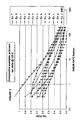
- the elasticities of the polymers of the Examples 1-8 are compared to natural rubber on Figure 1 , which depicts the evolution of the polymers tan delta versus frequency at 125°C and 13.95% strain measured on the RPA 2000.
- Figure 1 two families of polymers can be identified: one that has high tan delta and another that has a low tan delta. These two families can be clearly distinguished from each other using a single tan delta value measured at 10.4 rad/s. Those polymers having a tan delta below 0.5 at 10.4 rad/s frequency exhibit clearly a higher elasticity than the others between 5 and 200 rad/s frequency and have a rheology much closer to natural rubber.
- Examples 1 and 2 show that the polymer elasticity is lower and a tan delta below 0.5 is not achieved when the amount of fraction 1 is only 29%, even if the Mooney of fraction 1 is greater than 120.
- Examples 3, 4 and 6 show that the polymer elasticity is also lower and a tan delta below 0.5 is not achieved when the Mooney of fraction 1 is less than 120, even if the amount of this fraction is greater than 50%.
- Examples 5,7 and 8 have a much higher elasticity resulting in a tan delta below 0.5 because the amount of fraction 1 is greater than 50% and the Mooney of fraction 1 is greater than 120.
- the polymers of this invention were compared to commercially available EPDM elastomers of high Mooney viscosity. Table 2 summarizes the characteristics of these EPDM polymers.
- Examples a) and b) are unimodal EPDM polymers of high Mooney viscosity, but their elasticity is low as indicated by a tan ⁇ well above 0.5
- Example c) (Keltan TM 4903 available from DSM Elastomers) is a unimodal high Mooney viscosity EPDM having a tan ⁇ just above 0.5.
- Example d (Keltan TM 820) is a fairly branched EPDM polymer (containing DCPD as diene) of high Mooney viscosity and having a tan ⁇ just above 0.5.
- Example e (Vistalon TM V3666 available from ExxonMobil Chemical) is a unimodal EPDM of very high molecular weight extended with 75 phr of oil to render it processible, and having a tan ⁇ of 0.49.
- Example e' is the same polymer whose oil has been extracted. This polymer has a MST (5+4 @ 200°C) of 51 and thus a calculated Mooney viscosity (1 +4 @ 125°C) of about 260. Without the extending oil, its tan delta is 0.34.
- Example f (Keltan TM 8340A) is a unimodal controlled-branched EPDM of high Mooney viscosity, but having a tan ⁇ well above 0.5.
- Example g (Keltan TM 7341A) is a high Mooney viscosity controlled-branched EPDM polymer extended with 20 phr of oil. Its GPC LALLS trace exhibits a minor shoulder in the higher MW range. As such, this polymer has a tan ⁇ of 0.49. After extraction of the oil (Example g'), the tan ⁇ of the polymer decreases to 0.46 for a calculated Mooney viscosity of about 135.
- Example h (Vistalon TM V7500) is a bimodal high Mooney viscosity EPDM, consisting of a major fraction of lower MW polymer with a minor fraction of higher MW polymer. It has a tan ⁇ of 0.5.
- Example i) is a bimodal EPDM of similar structure as example h) and containing 15 phr of oil. As such it has a tan ⁇ of 0.49. After extraction of the oil (example i'), the tan ⁇ decreases to 0.47 for a calculated Mooney viscosity of about 110.
- Example 7 The polymer of Example 7 was compounded with carbon black and oil in an internal mixer according to the recipe shown in Table 3, which is representative of a vibration damping compound. Natural rubber (comparative Example j) and polymer of comparative Example h have been compounded in the same recipe.
- a rubber compounder or fabricator of damping parts will plasticize or masticate the elastomer while adding compounding materials such as reinforcing materials, diluting fillers, vulcanizing agents, accelerators, and other additives which would be well known to those of ordinary skilled in the art, to produce an elastomer compound for use in vibration damping parts.
- compounding materials such as reinforcing materials, diluting fillers, vulcanizing agents, accelerators, and other additives which would be well known to those of ordinary skilled in the art, to produce an elastomer compound for use in vibration damping parts.
- compounding materials such as reinforcing materials, diluting fillers, vulcanizing agents, accelerators, and other additives which would be well known to those of ordinary skilled in the art, to produce an elastomer compound for use in vibration damping parts.
- plasticization, mastication, and/or compounding, or both takes place in a roll mill or an internal kneader, such as a Ban
- Table 4 Compound Testing Methods Parameter Units Test Mooney Viscosity (compound) ML1+4, 100° C, MU ASTM D 1646 Mooney Scorch time TS 2, 5 or 10 , 125°C, minutes ASTM D 1646 Monsanto Oscillating Disk Rheometer (ODR) @ 180°C, ⁇ 3°arc ML dN.m ASTM D 2084 MH dN.m Ts2 minute T 90 minute Cure rate dN.m/minute physical Properties, press cured 10 minutes @ 180°C Hardness Shore A ISO 7619-1986 100% Modulus MPa ISO 37 - 1977 type Tensile Strength MPa 2 Elongation at Break % ISO 37 - 1977 type 2 ISO 37 -1977 type 2 Compression Set, press cured 8 min.
- Example 10 Example 11
- Example 12 Example 13 40 phr C.B.
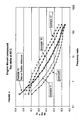
- Dynamic testing was performed on the cured rubber samples of Examples 9-13 using a Dynamic Characterization Testing equipment MTS model 790.13 under the following testing conditions: A rubber part of 40x40x20 mm was compression molded and cured for 10 minutes at 180°C. in a hot press. A compression pre-load of 800N was then applied on the specimen. The test was run for 300 seconds after a 300 seconds stabilization period. The deformation exerted on the rubber part is 0.5mm at a frequency of 15 Hz, and 0.05 mm at a frequency of 100 Hz.
- G' elastic modulus
Landscapes
- Chemical & Material Sciences (AREA)
- Health & Medical Sciences (AREA)
- Chemical Kinetics & Catalysis (AREA)
- Medicinal Chemistry (AREA)
- Polymers & Plastics (AREA)
- Organic Chemistry (AREA)
- Compositions Of Macromolecular Compounds (AREA)
- Addition Polymer Or Copolymer, Post-Treatments, Or Chemical Modifications (AREA)
- Transition And Organic Metals Composition Catalysts For Addition Polymerization (AREA)
- Vibration Prevention Devices (AREA)
- Vibration Dampers (AREA)
- Graft Or Block Polymers (AREA)
Applications Claiming Priority (3)
| Application Number | Priority Date | Filing Date | Title |
|---|---|---|---|
| US35577902P | 2002-02-08 | 2002-02-08 | |
| US355779P | 2002-02-08 | ||
| PCT/US2003/003871 WO2003066725A2 (en) | 2002-02-08 | 2003-02-07 | Multimodal ethylene, alpha-olefin and diene polymers, processes for making and devices comprising such compositions |
Publications (3)
| Publication Number | Publication Date |
|---|---|
| EP1472295A2 EP1472295A2 (en) | 2004-11-03 |
| EP1472295A4 EP1472295A4 (en) | 2005-03-30 |
| EP1472295B1 true EP1472295B1 (en) | 2010-03-24 |
Family
ID=27734560
Family Applications (1)
| Application Number | Title | Priority Date | Filing Date |
|---|---|---|---|
| EP03737717A Expired - Lifetime EP1472295B1 (en) | 2002-02-08 | 2003-02-07 | Multimodal ethylene, alpha-olefin and diene polymers, processes for making and devices comprising such compositions |
Country Status (7)
| Country | Link |
|---|---|
| US (1) | US6686419B2 (enExample) |
| EP (1) | EP1472295B1 (enExample) |
| JP (1) | JP4819313B2 (enExample) |
| AT (1) | ATE461947T1 (enExample) |
| AU (1) | AU2003216210A1 (enExample) |
| DE (1) | DE60331815D1 (enExample) |
| WO (1) | WO2003066725A2 (enExample) |
Families Citing this family (39)
| Publication number | Priority date | Publication date | Assignee | Title |
|---|---|---|---|---|
| US7135533B2 (en) * | 2002-06-19 | 2006-11-14 | Exxonmobil Chemical Patents Inc. | Ethylene, higher alpha-olefin comonomer and dienes, especially vinyl norbornene and polymers made using such processes |
| DE10356933A1 (de) * | 2003-12-05 | 2005-06-30 | Robert Bosch Gmbh | Gummimaterial und Verfahren zur Herstellung desselben |
| KR100586922B1 (ko) * | 2004-11-18 | 2006-06-08 | 금호폴리켐 주식회사 | 고수율의 이피(디)엠의 제조방법 및 수율의 제어방법,이피(디)엠의 회수방법 |
| AU2006306188B2 (en) * | 2005-10-25 | 2011-08-25 | General Cable Technologies Corporation | Improved lead-free insulation compositions containing metallocene polymers |
| US8178625B2 (en) * | 2006-08-01 | 2012-05-15 | Exxonmobil Chemical Patents Inc. | Thermoplastic vulcanizate composition |
| WO2008016467A1 (en) * | 2006-08-01 | 2008-02-07 | Exxonmobil Chemical Patents Inc. | Multimodal ethylene-alpha-olefin elastomers and process for making |
| US7985804B2 (en) * | 2006-11-06 | 2011-07-26 | Exxonmobil Chemical Patents Inc. | Rubber toughened compositions, articles, films, and methods of making the same |
| DE102006053390A1 (de) * | 2006-11-10 | 2008-05-15 | Lanxess Deutschland Gmbh | Verfahren zur Bestimmung einer Molekulargewichtsverteilung in einem Polymer |
| JP2008208352A (ja) * | 2007-01-31 | 2008-09-11 | Sumitomo Chemical Co Ltd | エチレン−α−オレフィン系共重合体の製造方法 |
| WO2009123609A1 (en) * | 2008-03-31 | 2009-10-08 | Advanced Elastomer Systems, L.P. | Thermoplastic vulcanizates |
| SG177650A1 (en) | 2009-07-15 | 2012-03-29 | Dow Global Technologies Llc | Polymer compositions, methods of making the same, and articles prepared from the same |
| JP5577898B2 (ja) * | 2010-07-05 | 2014-08-27 | 横浜ゴム株式会社 | タイヤ劣化判定システムおよび更生タイヤの製造方法 |
| DE102011008622B4 (de) * | 2011-01-11 | 2016-05-12 | Gkn Stromag Ag | Verwendung eines ringförmigen Elastomerkörpers für eine hochelastische Wellenkupplung und hochelastische Wellenkupplung |
| KR102002893B1 (ko) | 2011-12-29 | 2019-07-23 | 다우 글로벌 테크놀로지스 엘엘씨 | 개선된 점도를 갖는 에틸렌계 폴리머 조성물 |
| US9139727B2 (en) * | 2012-10-09 | 2015-09-22 | Lion Copolymer Geismar, Llc | Low damping high strength polymer with long chain branching for use in anti-vibration applications |
| US9139726B2 (en) * | 2012-10-09 | 2015-09-22 | Lion Copolymer Geismar, Llc | Process for making an ethylene elastomer with long chain branching for use in anti-vibration applications |
| KR101585204B1 (ko) | 2013-06-28 | 2016-01-13 | 주식회사 엘지화학 | 디엔을 포함하는 3원계 탄성 공중합체 및 이의 제조 방법 |
| JP2015532361A (ja) | 2013-06-28 | 2015-11-09 | エルジー・ケム・リミテッド | ジエンを含む三元系弾性共重合体およびその製造方法 |
| JP2015536368A (ja) | 2013-06-28 | 2015-12-21 | エルジー・ケム・リミテッド | ジエンを含む三元系弾性共重合体およびその製造方法 |
| IN2015DN02232A (enExample) | 2013-06-28 | 2015-08-21 | Lg Chemical Ltd | |
| KR101446685B1 (ko) | 2014-04-04 | 2014-10-06 | 주식회사 엘지화학 | 디엔을 포함하는 3원계 탄성 공중합체 및 이의 제조 방법 |
| WO2015142547A1 (en) * | 2014-03-21 | 2015-09-24 | Exxonmobil Chemical Patents Inc. | Process to produce ethylene propylene copolymers |
| US10336845B2 (en) | 2014-09-30 | 2019-07-02 | Exxonmobil Chemical Patents Inc. | Low ethylene amorphous propylene-ethylene-diene terpolymer compositions |
| US10370471B2 (en) | 2014-12-29 | 2019-08-06 | Dow Global Technologies Llc | Process to form oil containing ethylene-based polymers |
| US10167383B2 (en) | 2014-12-29 | 2019-01-01 | Dow Global Technologies Llc | Process to form ethylene/alpha-olefin interpolymers |
| KR102106961B1 (ko) | 2016-01-19 | 2020-05-07 | 엑손모빌 케미칼 패턴츠 인코포레이티드 | 양호한 가공성을 갖는 고분자량 멀티모달 엘라스토머 조성물 |
| WO2017127175A1 (en) | 2016-01-22 | 2017-07-27 | Exxonmobil Chemical Patents Inc. | High viscosity metallocene polymers with low volatiles content |
| WO2017206008A1 (en) | 2016-05-30 | 2017-12-07 | Dow Global Technologies Llc | Ethylene/alpha-olefin/diene interpolymer |
| US9574033B1 (en) * | 2016-08-12 | 2017-02-21 | Lion Copolymer Geismar, Llc | Process for continuously making high molecular weight tetrapolymer for use in anti-vibration applications |
| US9574035B1 (en) * | 2016-08-12 | 2017-02-21 | Lion Copolymer Geismar, Llc | Process for making high molecular weight tetrapolymer and articles produced therefrom |
| US9574034B1 (en) * | 2016-08-12 | 2017-02-21 | Lion Copolymer Geismar, Llc | Process for making high molecular weight tetrapolymer and articles produced therefrom |
| CN110520471B (zh) | 2017-02-28 | 2022-05-24 | 埃克森美孚化学专利公司 | 用油增量的双峰茂金属合成的epdm制备的热塑性硫化橡胶 |
| CN111032772B (zh) * | 2017-06-14 | 2022-07-15 | 埃克森美孚化学专利公司 | 用于交联应用的乙烯共聚物共混物 |
| US10995166B2 (en) | 2017-11-07 | 2021-05-04 | Nova Chemicals (International) S.A. | Ethylene interpolymer products and films |
| US10683376B2 (en) | 2017-11-07 | 2020-06-16 | Nova Chemicals (International) S.A. | Manufacturing ethylene interpolymer products at higher production rate |
| BR112020016302A2 (pt) | 2018-02-14 | 2020-12-15 | Dow Global Technologies Llc | Composições de interpolímero de etileno/alfa-olefina com desempenho de envelhecimento térmico a longo prazo melhorado |
| CN110387003B (zh) * | 2018-04-20 | 2022-03-01 | 中国石油化工股份有限公司 | 聚烯烃弹性体及其制备方法 |
| US20230183461A1 (en) * | 2020-05-15 | 2023-06-15 | Arlanxeo Netherlands B.V. | Ethylene-copolymer rubbers |
| EP4176005A1 (en) * | 2020-07-02 | 2023-05-10 | Celanese International Corporation | Thermoplastic vulcanizate compositions containing metallocene multimodal copolymer rubber and processes for making same |
Family Cites Families (38)
| Publication number | Priority date | Publication date | Assignee | Title |
|---|---|---|---|---|
| US2877200A (en) * | 1953-12-24 | 1959-03-10 | Phillips Petroleum Co | Process of plasticizing high mooney synthetic rubber with a low mooney synthetic rubber |
| US3681306A (en) | 1969-10-24 | 1972-08-01 | Du Pont | Epdm polymerization process |
| NL170019C (nl) | 1970-06-02 | Exxon Research Engineering Co | Werkwijze ter bereiding van een smeeroliemengsel. | |
| US3718632A (en) * | 1970-10-19 | 1973-02-27 | Exxon Research Engineering Co | Continuous process for the production of ethylene copolymers |
| US3884993A (en) | 1971-01-25 | 1975-05-20 | Copolymer Rubber & Chem Corp | EPM and EPDM rubbers having improved processability |
| US4016342A (en) | 1975-03-07 | 1977-04-05 | Exxon Research And Engineering Company | Process and product |
| FR2322883A1 (fr) | 1975-09-02 | 1977-04-01 | Michelin & Cie | Elastomeres du type e p t, et articles comportant de tels elastomeres |
| US4306041A (en) | 1980-03-14 | 1981-12-15 | Exxon Research & Engineering Co. | Process for the preparation of ethylene-higher alpha olefin polymers (P-891) |
| JPH0696655B2 (ja) | 1985-08-02 | 1994-11-30 | エクソン・ケミカル・パテンツ・インク | 加工性の良いエチレンプロピレンエラストマー |
| US4645793A (en) | 1985-12-19 | 1987-02-24 | Polysar Limited | EPDM elastomeric compositions |
| JPH086113B2 (ja) | 1986-07-11 | 1996-01-24 | 三井石油化学工業株式会社 | 作動油 |
| EP0446380B1 (en) | 1989-10-05 | 1998-06-10 | Mitsui Chemicals, Inc. | Ethylene-propylene-diene rubber, elastomer composition, and vulcanized rubber prepared therefrom |
| US5710218A (en) * | 1989-10-05 | 1998-01-20 | Mitsui Petrochemical Industries | Ethylene-propylene-diene rubber, elastomer composition and vulcanized rubber thereof |
| JP2894858B2 (ja) | 1991-04-05 | 1999-05-24 | 三井化学株式会社 | エチレン・α−オレフィン・ジエン系ゴムおよびその用途 |
| JP2528224B2 (ja) * | 1991-09-27 | 1996-08-28 | 三井石油化学工業株式会社 | 耐熱防振ゴム用ゴム組成物 |
| US6545088B1 (en) | 1991-12-30 | 2003-04-08 | Dow Global Technologies Inc. | Metallocene-catalyzed process for the manufacture of EP and EPDM polymers |
| JPH05279524A (ja) | 1992-03-31 | 1993-10-26 | Sumitomo Chem Co Ltd | 耐光性表皮材用エラストマー組成物および該組成物からなる工業部品用耐光性表皮材 |
| WO1994000500A1 (en) | 1992-06-26 | 1994-01-06 | Exxon Chemical Patents Inc. | Solution phase polymerization process utilizing metallocene catalyst with production of olefin polymers |
| US5686529A (en) | 1993-02-10 | 1997-11-11 | D&S Plastics International | Painted polymeric articles having improved properties |
| US5691413A (en) | 1994-09-29 | 1997-11-25 | Japan Synthetic Rubber Co., Ltd. | Ethylene-α-olefin-non-conjugated diene copolymer rubber composition |
| US5677382A (en) | 1994-12-19 | 1997-10-14 | Japan Synthetic Rubber Co., Ltd. | Ethylene-α-olefin-non-conjugated diene copolymer rubber composition |
| JP3191589B2 (ja) * | 1994-12-19 | 2001-07-23 | ジェイエスアール株式会社 | エチレン−α−オレフィン−非共役ジエン共重合ゴム組成物 |
| US5698650A (en) * | 1995-06-14 | 1997-12-16 | Exxon Chemical Patents Inc. | Elastomeric vehicle brake parts and power transmission belts |
| US5571883A (en) | 1995-06-14 | 1996-11-05 | Exxon Chemical Patents Inc. | Elastomeric vehicle vibration damping devices |
| EA199800199A1 (ru) | 1995-08-15 | 1998-10-29 | Эксон Кемикэл Пейтентс Инк. | Стойкий к высокой темпемратуре вулканизат для гашения вибрации и изоляции |
| WO1997022639A1 (en) | 1995-12-19 | 1997-06-26 | Exxon Chemical Patents Inc. | High temperature solution polymerization process |
| JPH09169878A (ja) * | 1995-12-20 | 1997-06-30 | Japan Synthetic Rubber Co Ltd | エチレン系共重合体ゴム組成物 |
| US6225426B1 (en) * | 1996-04-10 | 2001-05-01 | Uniroyal Chemical Company, Inc. | Process for producing polyolefin elastomer employing a metallocene catalyst |
| GB9617507D0 (en) | 1996-08-21 | 1996-10-02 | Exxon Chemical Patents Inc | Chemically modified elastomeres and blends thereof |
| EP0855413B1 (en) | 1997-01-23 | 2002-01-02 | JSR Corporation | Ethylene copolymer rubber composition |
| JP3362301B2 (ja) | 1997-06-06 | 2003-01-07 | 豊田合成株式会社 | 発泡ゴム組成物及び発泡ゴム成形品 |
| KR100323116B1 (ko) | 1997-07-18 | 2002-11-04 | 미쓰이 가가쿠 가부시키가이샤 | 불포화엘라스토머조성물및그의가황고무 |
| US6319998B1 (en) | 1998-03-04 | 2001-11-20 | Exxon Mobil Chemical Patents Inc. | Method for making polymer blends by using series reactors |
| JPH11269329A (ja) * | 1998-03-19 | 1999-10-05 | Jsr Corp | 熱可塑性エラストマー組成物 |
| US6271311B1 (en) * | 1998-10-29 | 2001-08-07 | Exxon Mobil Chemical Patents Inc. | Ethylene α-olefin elastomeric polymer compositions having improved extrusion processibility |
| US6268427B1 (en) | 1999-02-18 | 2001-07-31 | Bridgestone Corporation | Elastomeric compositions for damping |
| JP2000256423A (ja) * | 1999-03-05 | 2000-09-19 | Jsr Corp | エチレン系共重合体ゴムおよびその組成物 |
| JP2002080662A (ja) | 2000-09-08 | 2002-03-19 | Jsr Corp | ゴム組成物 |
-
2003
- 2003-02-07 AT AT03737717T patent/ATE461947T1/de not_active IP Right Cessation
- 2003-02-07 WO PCT/US2003/003871 patent/WO2003066725A2/en not_active Ceased
- 2003-02-07 DE DE60331815T patent/DE60331815D1/de not_active Expired - Lifetime
- 2003-02-07 EP EP03737717A patent/EP1472295B1/en not_active Expired - Lifetime
- 2003-02-07 JP JP2003566092A patent/JP4819313B2/ja not_active Expired - Fee Related
- 2003-02-07 US US10/360,973 patent/US6686419B2/en not_active Expired - Lifetime
- 2003-02-07 AU AU2003216210A patent/AU2003216210A1/en not_active Abandoned
Also Published As
| Publication number | Publication date |
|---|---|
| WO2003066725A3 (en) | 2003-10-02 |
| US6686419B2 (en) | 2004-02-03 |
| JP2005517068A (ja) | 2005-06-09 |
| EP1472295A4 (en) | 2005-03-30 |
| WO2003066725A2 (en) | 2003-08-14 |
| ATE461947T1 (de) | 2010-04-15 |
| JP4819313B2 (ja) | 2011-11-24 |
| DE60331815D1 (de) | 2010-05-06 |
| AU2003216210A8 (en) | 2003-09-02 |
| US20030162926A1 (en) | 2003-08-28 |
| AU2003216210A1 (en) | 2003-09-02 |
| EP1472295A2 (en) | 2004-11-03 |
Similar Documents
| Publication | Publication Date | Title |
|---|---|---|
| EP1472295B1 (en) | Multimodal ethylene, alpha-olefin and diene polymers, processes for making and devices comprising such compositions | |
| US7915354B2 (en) | Multimodal ethylene-alpha-olefin elastomers and process for making | |
| CN107207807B (zh) | 生产聚合物组合物的方法 | |
| US6251998B1 (en) | Hydrosilylation crosslinking of thermoplastic elastomer | |
| JP6654234B2 (ja) | その場で油生成を伴うエチレンコポリマー | |
| EP0843700B1 (en) | Elastomeric vehicle vibration damping devices | |
| AU6109596A (en) | Thermoplastic elastomers having improved cure | |
| JP5552232B2 (ja) | エチレンエラストマー組成物 | |
| US11466149B2 (en) | Preparation of bimodal rubber, thermoplastic vulcanizates, and articles made therefrom | |
| CN111902435B (zh) | 弹性体丙烯-α-烯烃-二烯三元共聚物组合物 | |
| WO2009123609A1 (en) | Thermoplastic vulcanizates | |
| WO2020023193A1 (en) | Preparation of bimodal rubber, thermoplastic vulcanizates, and articles made therefrom | |
| CN109641990B (zh) | 双金属茂催化剂共聚物组合物 | |
| US5807946A (en) | Vehicle parts comprising ethylene/2-olefin/vinylnorbornene elastomeric polymers | |
| KR100405102B1 (ko) | 차량용엘라스토머성호스 | |
| CN110520471B (zh) | 用油增量的双峰茂金属合成的epdm制备的热塑性硫化橡胶 | |
| JPH09169878A (ja) | エチレン系共重合体ゴム組成物 | |
| EP3638730B1 (en) | Ethylene copolymer blends for cross-linking applications | |
| KR20080092459A (ko) | 비공액 폴리엔계 공중합체 및 고무 조성물 | |
| WO2000022015A1 (en) | Elastomeric polymer vehicle parts having improved low-temperature compression set | |
| KR20070018963A (ko) | 비공액 폴리엔계 공중합체, 고무 조성물 및 이들의 용도 |
Legal Events
| Date | Code | Title | Description |
|---|---|---|---|
| PUAI | Public reference made under article 153(3) epc to a published international application that has entered the european phase |
Free format text: ORIGINAL CODE: 0009012 |
|
| 17P | Request for examination filed |
Effective date: 20040806 |
|
| AK | Designated contracting states |
Kind code of ref document: A2 Designated state(s): AT BE BG CH CY CZ DE DK EE ES FI FR GB GR HU IE IT LI LU MC NL PT SE SI SK TR |
|
| AX | Request for extension of the european patent |
Extension state: AL LT LV MK RO |
|
| A4 | Supplementary search report drawn up and despatched |
Effective date: 20050211 |
|
| 17Q | First examination report despatched |
Effective date: 20070322 |
|
| GRAP | Despatch of communication of intention to grant a patent |
Free format text: ORIGINAL CODE: EPIDOSNIGR1 |
|
| GRAS | Grant fee paid |
Free format text: ORIGINAL CODE: EPIDOSNIGR3 |
|
| GRAA | (expected) grant |
Free format text: ORIGINAL CODE: 0009210 |
|
| AK | Designated contracting states |
Kind code of ref document: B1 Designated state(s): AT BE BG CH CY CZ DE DK EE ES FI FR GB GR HU IE IT LI LU MC NL PT SE SI SK TR |
|
| REG | Reference to a national code |
Ref country code: GB Ref legal event code: FG4D |
|
| REG | Reference to a national code |
Ref country code: CH Ref legal event code: EP |
|
| REG | Reference to a national code |
Ref country code: IE Ref legal event code: FG4D |
|
| REF | Corresponds to: |
Ref document number: 60331815 Country of ref document: DE Date of ref document: 20100506 Kind code of ref document: P |
|
| REG | Reference to a national code |
Ref country code: NL Ref legal event code: T3 |
|
| PG25 | Lapsed in a contracting state [announced via postgrant information from national office to epo] |
Ref country code: SI Free format text: LAPSE BECAUSE OF FAILURE TO SUBMIT A TRANSLATION OF THE DESCRIPTION OR TO PAY THE FEE WITHIN THE PRESCRIBED TIME-LIMIT Effective date: 20100324 Ref country code: AT Free format text: LAPSE BECAUSE OF FAILURE TO SUBMIT A TRANSLATION OF THE DESCRIPTION OR TO PAY THE FEE WITHIN THE PRESCRIBED TIME-LIMIT Effective date: 20100324 Ref country code: FI Free format text: LAPSE BECAUSE OF FAILURE TO SUBMIT A TRANSLATION OF THE DESCRIPTION OR TO PAY THE FEE WITHIN THE PRESCRIBED TIME-LIMIT Effective date: 20100324 |
|
| PG25 | Lapsed in a contracting state [announced via postgrant information from national office to epo] |
Ref country code: EE Free format text: LAPSE BECAUSE OF FAILURE TO SUBMIT A TRANSLATION OF THE DESCRIPTION OR TO PAY THE FEE WITHIN THE PRESCRIBED TIME-LIMIT Effective date: 20100324 Ref country code: ES Free format text: LAPSE BECAUSE OF FAILURE TO SUBMIT A TRANSLATION OF THE DESCRIPTION OR TO PAY THE FEE WITHIN THE PRESCRIBED TIME-LIMIT Effective date: 20100705 Ref country code: GR Free format text: LAPSE BECAUSE OF FAILURE TO SUBMIT A TRANSLATION OF THE DESCRIPTION OR TO PAY THE FEE WITHIN THE PRESCRIBED TIME-LIMIT Effective date: 20100625 Ref country code: SE Free format text: LAPSE BECAUSE OF FAILURE TO SUBMIT A TRANSLATION OF THE DESCRIPTION OR TO PAY THE FEE WITHIN THE PRESCRIBED TIME-LIMIT Effective date: 20100324 Ref country code: BE Free format text: LAPSE BECAUSE OF FAILURE TO SUBMIT A TRANSLATION OF THE DESCRIPTION OR TO PAY THE FEE WITHIN THE PRESCRIBED TIME-LIMIT Effective date: 20100324 |
|
| PG25 | Lapsed in a contracting state [announced via postgrant information from national office to epo] |
Ref country code: CZ Free format text: LAPSE BECAUSE OF FAILURE TO SUBMIT A TRANSLATION OF THE DESCRIPTION OR TO PAY THE FEE WITHIN THE PRESCRIBED TIME-LIMIT Effective date: 20100324 Ref country code: SK Free format text: LAPSE BECAUSE OF FAILURE TO SUBMIT A TRANSLATION OF THE DESCRIPTION OR TO PAY THE FEE WITHIN THE PRESCRIBED TIME-LIMIT Effective date: 20100324 Ref country code: BG Free format text: LAPSE BECAUSE OF FAILURE TO SUBMIT A TRANSLATION OF THE DESCRIPTION OR TO PAY THE FEE WITHIN THE PRESCRIBED TIME-LIMIT Effective date: 20100624 |
|
| PLBE | No opposition filed within time limit |
Free format text: ORIGINAL CODE: 0009261 |
|
| STAA | Information on the status of an ep patent application or granted ep patent |
Free format text: STATUS: NO OPPOSITION FILED WITHIN TIME LIMIT |
|
| PG25 | Lapsed in a contracting state [announced via postgrant information from national office to epo] |
Ref country code: PT Free format text: LAPSE BECAUSE OF FAILURE TO SUBMIT A TRANSLATION OF THE DESCRIPTION OR TO PAY THE FEE WITHIN THE PRESCRIBED TIME-LIMIT Effective date: 20100726 Ref country code: DK Free format text: LAPSE BECAUSE OF FAILURE TO SUBMIT A TRANSLATION OF THE DESCRIPTION OR TO PAY THE FEE WITHIN THE PRESCRIBED TIME-LIMIT Effective date: 20100324 |
|
| 26N | No opposition filed |
Effective date: 20101228 |
|
| PG25 | Lapsed in a contracting state [announced via postgrant information from national office to epo] |
Ref country code: IT Free format text: LAPSE BECAUSE OF FAILURE TO SUBMIT A TRANSLATION OF THE DESCRIPTION OR TO PAY THE FEE WITHIN THE PRESCRIBED TIME-LIMIT Effective date: 20100324 |
|
| PG25 | Lapsed in a contracting state [announced via postgrant information from national office to epo] |
Ref country code: MC Free format text: LAPSE BECAUSE OF NON-PAYMENT OF DUE FEES Effective date: 20110228 |
|
| REG | Reference to a national code |
Ref country code: CH Ref legal event code: PL |
|
| GBPC | Gb: european patent ceased through non-payment of renewal fee |
Effective date: 20110207 |
|
| PG25 | Lapsed in a contracting state [announced via postgrant information from national office to epo] |
Ref country code: LI Free format text: LAPSE BECAUSE OF NON-PAYMENT OF DUE FEES Effective date: 20110228 Ref country code: CH Free format text: LAPSE BECAUSE OF NON-PAYMENT OF DUE FEES Effective date: 20110228 |
|
| REG | Reference to a national code |
Ref country code: IE Ref legal event code: MM4A |
|
| PG25 | Lapsed in a contracting state [announced via postgrant information from national office to epo] |
Ref country code: IE Free format text: LAPSE BECAUSE OF NON-PAYMENT OF DUE FEES Effective date: 20110207 |
|
| PG25 | Lapsed in a contracting state [announced via postgrant information from national office to epo] |
Ref country code: GB Free format text: LAPSE BECAUSE OF NON-PAYMENT OF DUE FEES Effective date: 20110207 |
|
| PG25 | Lapsed in a contracting state [announced via postgrant information from national office to epo] |
Ref country code: CY Free format text: LAPSE BECAUSE OF FAILURE TO SUBMIT A TRANSLATION OF THE DESCRIPTION OR TO PAY THE FEE WITHIN THE PRESCRIBED TIME-LIMIT Effective date: 20100324 Ref country code: LU Free format text: LAPSE BECAUSE OF NON-PAYMENT OF DUE FEES Effective date: 20110207 |
|
| PG25 | Lapsed in a contracting state [announced via postgrant information from national office to epo] |
Ref country code: TR Free format text: LAPSE BECAUSE OF FAILURE TO SUBMIT A TRANSLATION OF THE DESCRIPTION OR TO PAY THE FEE WITHIN THE PRESCRIBED TIME-LIMIT Effective date: 20100324 |
|
| PG25 | Lapsed in a contracting state [announced via postgrant information from national office to epo] |
Ref country code: HU Free format text: LAPSE BECAUSE OF FAILURE TO SUBMIT A TRANSLATION OF THE DESCRIPTION OR TO PAY THE FEE WITHIN THE PRESCRIBED TIME-LIMIT Effective date: 20100324 |
|
| REG | Reference to a national code |
Ref country code: FR Ref legal event code: PLFP Year of fee payment: 14 |
|
| REG | Reference to a national code |
Ref country code: FR Ref legal event code: PLFP Year of fee payment: 15 |
|
| REG | Reference to a national code |
Ref country code: FR Ref legal event code: PLFP Year of fee payment: 16 |
|
| PGFP | Annual fee paid to national office [announced via postgrant information from national office to epo] |
Ref country code: FR Payment date: 20210120 Year of fee payment: 19 Ref country code: NL Payment date: 20210115 Year of fee payment: 19 |
|
| PGFP | Annual fee paid to national office [announced via postgrant information from national office to epo] |
Ref country code: DE Payment date: 20220428 Year of fee payment: 20 |
|
| REG | Reference to a national code |
Ref country code: NL Ref legal event code: MM Effective date: 20220301 |
|
| PG25 | Lapsed in a contracting state [announced via postgrant information from national office to epo] |
Ref country code: NL Free format text: LAPSE BECAUSE OF NON-PAYMENT OF DUE FEES Effective date: 20220301 Ref country code: FR Free format text: LAPSE BECAUSE OF NON-PAYMENT OF DUE FEES Effective date: 20220228 |
|
| REG | Reference to a national code |
Ref country code: DE Ref legal event code: R071 Ref document number: 60331815 Country of ref document: DE |