EP1470283B1 - Verbundfolie für kunstleder mit geringer dehnung und ausgezeichnetem weichgriff - Google Patents
Verbundfolie für kunstleder mit geringer dehnung und ausgezeichnetem weichgriff Download PDFInfo
- Publication number
- EP1470283B1 EP1470283B1 EP03705423.6A EP03705423A EP1470283B1 EP 1470283 B1 EP1470283 B1 EP 1470283B1 EP 03705423 A EP03705423 A EP 03705423A EP 1470283 B1 EP1470283 B1 EP 1470283B1
- Authority
- EP
- European Patent Office
- Prior art keywords
- woven
- fabric layer
- composite sheet
- knitted fabric
- ultra fine
- Prior art date
- Legal status (The legal status is an assumption and is not a legal conclusion. Google has not performed a legal analysis and makes no representation as to the accuracy of the status listed.)
- Expired - Lifetime
Links
- 239000002649 leather substitute Substances 0.000 title claims description 80
- 239000002131 composite material Substances 0.000 title claims description 78
- 239000004744 fabric Substances 0.000 claims description 91
- 229920001410 Microfiber Polymers 0.000 claims description 81
- 239000004745 nonwoven fabric Substances 0.000 claims description 54
- 229920005749 polyurethane resin Polymers 0.000 claims description 14
- 239000004677 Nylon Substances 0.000 claims description 6
- 229920001778 nylon Polymers 0.000 claims description 6
- 229920005989 resin Polymers 0.000 claims description 2
- 239000011347 resin Substances 0.000 claims description 2
- 229920001225 polyester resin Polymers 0.000 claims 1
- 239000010410 layer Substances 0.000 description 79
- 239000000835 fiber Substances 0.000 description 71
- 238000000034 method Methods 0.000 description 24
- 239000000470 constituent Substances 0.000 description 17
- ZMXDDKWLCZADIW-UHFFFAOYSA-N N,N-Dimethylformamide Chemical compound CN(C)C=O ZMXDDKWLCZADIW-UHFFFAOYSA-N 0.000 description 15
- HEMHJVSKTPXQMS-UHFFFAOYSA-M Sodium hydroxide Chemical compound [OH-].[Na+] HEMHJVSKTPXQMS-UHFFFAOYSA-M 0.000 description 15
- 229920000728 polyester Polymers 0.000 description 14
- LYCAIKOWRPUZTN-UHFFFAOYSA-N Ethylene glycol Chemical compound OCCO LYCAIKOWRPUZTN-UHFFFAOYSA-N 0.000 description 13
- 239000002759 woven fabric Substances 0.000 description 13
- 238000004043 dyeing Methods 0.000 description 12
- 230000008569 process Effects 0.000 description 11
- 230000000704 physical effect Effects 0.000 description 10
- 238000004080 punching Methods 0.000 description 9
- 238000000576 coating method Methods 0.000 description 8
- 229920002635 polyurethane Polymers 0.000 description 8
- 239000004814 polyurethane Substances 0.000 description 8
- 239000007864 aqueous solution Substances 0.000 description 7
- 239000000243 solution Substances 0.000 description 7
- 239000011248 coating agent Substances 0.000 description 6
- 238000004519 manufacturing process Methods 0.000 description 6
- 238000009958 sewing Methods 0.000 description 6
- WGCNASOHLSPBMP-UHFFFAOYSA-N hydroxyacetaldehyde Natural products OCC=O WGCNASOHLSPBMP-UHFFFAOYSA-N 0.000 description 5
- 239000000047 product Substances 0.000 description 5
- 244000137852 Petrea volubilis Species 0.000 description 4
- 230000000052 comparative effect Effects 0.000 description 4
- 229920001577 copolymer Polymers 0.000 description 4
- 238000004090 dissolution Methods 0.000 description 4
- -1 polyethylene Polymers 0.000 description 4
- 239000002861 polymer material Substances 0.000 description 4
- 229920003225 polyurethane elastomer Polymers 0.000 description 4
- 229920002451 polyvinyl alcohol Polymers 0.000 description 4
- 238000002360 preparation method Methods 0.000 description 4
- 238000009987 spinning Methods 0.000 description 4
- 239000004749 staple nonwoven Substances 0.000 description 4
- 239000004372 Polyvinyl alcohol Substances 0.000 description 3
- YXFVVABEGXRONW-UHFFFAOYSA-N Toluene Chemical compound CC1=CC=CC=C1 YXFVVABEGXRONW-UHFFFAOYSA-N 0.000 description 3
- 238000005520 cutting process Methods 0.000 description 3
- 230000003247 decreasing effect Effects 0.000 description 3
- 230000000694 effects Effects 0.000 description 3
- 239000010985 leather Substances 0.000 description 3
- 229920000642 polymer Polymers 0.000 description 3
- 239000002904 solvent Substances 0.000 description 3
- 239000004698 Polyethylene Substances 0.000 description 2
- 239000004721 Polyphenylene oxide Substances 0.000 description 2
- 239000004793 Polystyrene Substances 0.000 description 2
- 230000008859 change Effects 0.000 description 2
- 230000000593 degrading effect Effects 0.000 description 2
- 150000004985 diamines Chemical class 0.000 description 2
- 238000007865 diluting Methods 0.000 description 2
- 150000002009 diols Chemical class 0.000 description 2
- 239000000986 disperse dye Substances 0.000 description 2
- 238000001035 drying Methods 0.000 description 2
- 239000012467 final product Substances 0.000 description 2
- PCHJSUWPFVWCPO-UHFFFAOYSA-N gold Chemical compound [Au] PCHJSUWPFVWCPO-UHFFFAOYSA-N 0.000 description 2
- 239000010931 gold Substances 0.000 description 2
- 229910052737 gold Inorganic materials 0.000 description 2
- 238000009940 knitting Methods 0.000 description 2
- 238000005259 measurement Methods 0.000 description 2
- 229920000570 polyether Polymers 0.000 description 2
- 229920000573 polyethylene Polymers 0.000 description 2
- 229920000139 polyethylene terephthalate Polymers 0.000 description 2
- 239000005020 polyethylene terephthalate Substances 0.000 description 2
- 229920002223 polystyrene Polymers 0.000 description 2
- 239000011527 polyurethane coating Substances 0.000 description 2
- 230000002787 reinforcement Effects 0.000 description 2
- XLYOFNOQVPJJNP-UHFFFAOYSA-N water Substances O XLYOFNOQVPJJNP-UHFFFAOYSA-N 0.000 description 2
- 229920003169 water-soluble polymer Polymers 0.000 description 2
- 238000009941 weaving Methods 0.000 description 2
- YBRVSVVVWCFQMG-UHFFFAOYSA-N 4,4'-diaminodiphenylmethane Chemical compound C1=CC(N)=CC=C1CC1=CC=C(N)C=C1 YBRVSVVVWCFQMG-UHFFFAOYSA-N 0.000 description 1
- 229920002134 Carboxymethyl cellulose Polymers 0.000 description 1
- 239000004970 Chain extender Substances 0.000 description 1
- 229920002292 Nylon 6 Polymers 0.000 description 1
- CYTYCFOTNPOANT-UHFFFAOYSA-N Perchloroethylene Chemical group ClC(Cl)=C(Cl)Cl CYTYCFOTNPOANT-UHFFFAOYSA-N 0.000 description 1
- 239000004952 Polyamide Substances 0.000 description 1
- XSTXAVWGXDQKEL-UHFFFAOYSA-N Trichloroethylene Chemical group ClC=C(Cl)Cl XSTXAVWGXDQKEL-UHFFFAOYSA-N 0.000 description 1
- 239000000980 acid dye Substances 0.000 description 1
- 239000000853 adhesive Substances 0.000 description 1
- 230000001070 adhesive effect Effects 0.000 description 1
- 239000002216 antistatic agent Substances 0.000 description 1
- 239000003795 chemical substances by application Substances 0.000 description 1
- 230000008878 coupling Effects 0.000 description 1
- 238000010168 coupling process Methods 0.000 description 1
- 238000005859 coupling reaction Methods 0.000 description 1
- 238000004132 cross linking Methods 0.000 description 1
- 230000007547 defect Effects 0.000 description 1
- 239000003599 detergent Substances 0.000 description 1
- 125000005442 diisocyanate group Chemical group 0.000 description 1
- 238000011156 evaluation Methods 0.000 description 1
- 238000000605 extraction Methods 0.000 description 1
- 239000013067 intermediate product Substances 0.000 description 1
- 238000010030 laminating Methods 0.000 description 1
- 239000000434 metal complex dye Substances 0.000 description 1
- 238000003801 milling Methods 0.000 description 1
- 239000002245 particle Substances 0.000 description 1
- 239000000049 pigment Substances 0.000 description 1
- 229920002647 polyamide Polymers 0.000 description 1
- 239000004417 polycarbonate Substances 0.000 description 1
- 229920000515 polycarbonate Polymers 0.000 description 1
- 238000003825 pressing Methods 0.000 description 1
- 230000009467 reduction Effects 0.000 description 1
- 239000012779 reinforcing material Substances 0.000 description 1
- 239000005871 repellent Substances 0.000 description 1
- 230000002940 repellent Effects 0.000 description 1
- 238000001878 scanning electron micrograph Methods 0.000 description 1
- 239000007787 solid Substances 0.000 description 1
- UBOXGVDOUJQMTN-UHFFFAOYSA-N trichloroethylene Natural products ClCC(Cl)Cl UBOXGVDOUJQMTN-UHFFFAOYSA-N 0.000 description 1
Images

Classifications
-
- D—TEXTILES; PAPER
- D06—TREATMENT OF TEXTILES OR THE LIKE; LAUNDERING; FLEXIBLE MATERIALS NOT OTHERWISE PROVIDED FOR
- D06N—WALL, FLOOR, OR LIKE COVERING MATERIALS, e.g. LINOLEUM, OILCLOTH, ARTIFICIAL LEATHER, ROOFING FELT, CONSISTING OF A FIBROUS WEB COATED WITH A LAYER OF MACROMOLECULAR MATERIAL; FLEXIBLE SHEET MATERIAL NOT OTHERWISE PROVIDED FOR
- D06N7/00—Flexible sheet materials not otherwise provided for, e.g. textile threads, filaments, yarns or tow, glued on macromolecular material
-
- B—PERFORMING OPERATIONS; TRANSPORTING
- B32—LAYERED PRODUCTS
- B32B—LAYERED PRODUCTS, i.e. PRODUCTS BUILT-UP OF STRATA OF FLAT OR NON-FLAT, e.g. CELLULAR OR HONEYCOMB, FORM
- B32B5/00—Layered products characterised by the non- homogeneity or physical structure, i.e. comprising a fibrous, filamentary, particulate or foam layer; Layered products characterised by having a layer differing constitutionally or physically in different parts
- B32B5/02—Layered products characterised by the non- homogeneity or physical structure, i.e. comprising a fibrous, filamentary, particulate or foam layer; Layered products characterised by having a layer differing constitutionally or physically in different parts characterised by structural features of a fibrous or filamentary layer
- B32B5/022—Non-woven fabric
-
- B—PERFORMING OPERATIONS; TRANSPORTING
- B32—LAYERED PRODUCTS
- B32B—LAYERED PRODUCTS, i.e. PRODUCTS BUILT-UP OF STRATA OF FLAT OR NON-FLAT, e.g. CELLULAR OR HONEYCOMB, FORM
- B32B5/00—Layered products characterised by the non- homogeneity or physical structure, i.e. comprising a fibrous, filamentary, particulate or foam layer; Layered products characterised by having a layer differing constitutionally or physically in different parts
- B32B5/02—Layered products characterised by the non- homogeneity or physical structure, i.e. comprising a fibrous, filamentary, particulate or foam layer; Layered products characterised by having a layer differing constitutionally or physically in different parts characterised by structural features of a fibrous or filamentary layer
- B32B5/024—Woven fabric
-
- B—PERFORMING OPERATIONS; TRANSPORTING
- B32—LAYERED PRODUCTS
- B32B—LAYERED PRODUCTS, i.e. PRODUCTS BUILT-UP OF STRATA OF FLAT OR NON-FLAT, e.g. CELLULAR OR HONEYCOMB, FORM
- B32B5/00—Layered products characterised by the non- homogeneity or physical structure, i.e. comprising a fibrous, filamentary, particulate or foam layer; Layered products characterised by having a layer differing constitutionally or physically in different parts
- B32B5/02—Layered products characterised by the non- homogeneity or physical structure, i.e. comprising a fibrous, filamentary, particulate or foam layer; Layered products characterised by having a layer differing constitutionally or physically in different parts characterised by structural features of a fibrous or filamentary layer
- B32B5/026—Knitted fabric
-
- B—PERFORMING OPERATIONS; TRANSPORTING
- B32—LAYERED PRODUCTS
- B32B—LAYERED PRODUCTS, i.e. PRODUCTS BUILT-UP OF STRATA OF FLAT OR NON-FLAT, e.g. CELLULAR OR HONEYCOMB, FORM
- B32B5/00—Layered products characterised by the non- homogeneity or physical structure, i.e. comprising a fibrous, filamentary, particulate or foam layer; Layered products characterised by having a layer differing constitutionally or physically in different parts
- B32B5/02—Layered products characterised by the non- homogeneity or physical structure, i.e. comprising a fibrous, filamentary, particulate or foam layer; Layered products characterised by having a layer differing constitutionally or physically in different parts characterised by structural features of a fibrous or filamentary layer
- B32B5/06—Layered products characterised by the non- homogeneity or physical structure, i.e. comprising a fibrous, filamentary, particulate or foam layer; Layered products characterised by having a layer differing constitutionally or physically in different parts characterised by structural features of a fibrous or filamentary layer characterised by a fibrous or filamentary layer mechanically connected, e.g. by needling to another layer, e.g. of fibres, of paper
-
- B—PERFORMING OPERATIONS; TRANSPORTING
- B32—LAYERED PRODUCTS
- B32B—LAYERED PRODUCTS, i.e. PRODUCTS BUILT-UP OF STRATA OF FLAT OR NON-FLAT, e.g. CELLULAR OR HONEYCOMB, FORM
- B32B5/00—Layered products characterised by the non- homogeneity or physical structure, i.e. comprising a fibrous, filamentary, particulate or foam layer; Layered products characterised by having a layer differing constitutionally or physically in different parts
- B32B5/22—Layered products characterised by the non- homogeneity or physical structure, i.e. comprising a fibrous, filamentary, particulate or foam layer; Layered products characterised by having a layer differing constitutionally or physically in different parts characterised by the presence of two or more layers which are next to each other and are fibrous, filamentary, formed of particles or foamed
- B32B5/24—Layered products characterised by the non- homogeneity or physical structure, i.e. comprising a fibrous, filamentary, particulate or foam layer; Layered products characterised by having a layer differing constitutionally or physically in different parts characterised by the presence of two or more layers which are next to each other and are fibrous, filamentary, formed of particles or foamed one layer being a fibrous or filamentary layer
- B32B5/26—Layered products characterised by the non- homogeneity or physical structure, i.e. comprising a fibrous, filamentary, particulate or foam layer; Layered products characterised by having a layer differing constitutionally or physically in different parts characterised by the presence of two or more layers which are next to each other and are fibrous, filamentary, formed of particles or foamed one layer being a fibrous or filamentary layer another layer next to it also being fibrous or filamentary
-
- D—TEXTILES; PAPER
- D04—BRAIDING; LACE-MAKING; KNITTING; TRIMMINGS; NON-WOVEN FABRICS
- D04H—MAKING TEXTILE FABRICS, e.g. FROM FIBRES OR FILAMENTARY MATERIAL; FABRICS MADE BY SUCH PROCESSES OR APPARATUS, e.g. FELTS, NON-WOVEN FABRICS; COTTON-WOOL; WADDING ; NON-WOVEN FABRICS FROM STAPLE FIBRES, FILAMENTS OR YARNS, BONDED WITH AT LEAST ONE WEB-LIKE MATERIAL DURING THEIR CONSOLIDATION
- D04H1/00—Non-woven fabrics formed wholly or mainly of staple fibres or like relatively short fibres
- D04H1/40—Non-woven fabrics formed wholly or mainly of staple fibres or like relatively short fibres from fleeces or layers composed of fibres without existing or potential cohesive properties
- D04H1/42—Non-woven fabrics formed wholly or mainly of staple fibres or like relatively short fibres from fleeces or layers composed of fibres without existing or potential cohesive properties characterised by the use of certain kinds of fibres insofar as this use has no preponderant influence on the consolidation of the fleece
- D04H1/4382—Stretched reticular film fibres; Composite fibres; Mixed fibres; Ultrafine fibres; Fibres for artificial leather
- D04H1/43825—Composite fibres
- D04H1/4383—Composite fibres sea-island
-
- D—TEXTILES; PAPER
- D04—BRAIDING; LACE-MAKING; KNITTING; TRIMMINGS; NON-WOVEN FABRICS
- D04H—MAKING TEXTILE FABRICS, e.g. FROM FIBRES OR FILAMENTARY MATERIAL; FABRICS MADE BY SUCH PROCESSES OR APPARATUS, e.g. FELTS, NON-WOVEN FABRICS; COTTON-WOOL; WADDING ; NON-WOVEN FABRICS FROM STAPLE FIBRES, FILAMENTS OR YARNS, BONDED WITH AT LEAST ONE WEB-LIKE MATERIAL DURING THEIR CONSOLIDATION
- D04H1/00—Non-woven fabrics formed wholly or mainly of staple fibres or like relatively short fibres
- D04H1/40—Non-woven fabrics formed wholly or mainly of staple fibres or like relatively short fibres from fleeces or layers composed of fibres without existing or potential cohesive properties
- D04H1/42—Non-woven fabrics formed wholly or mainly of staple fibres or like relatively short fibres from fleeces or layers composed of fibres without existing or potential cohesive properties characterised by the use of certain kinds of fibres insofar as this use has no preponderant influence on the consolidation of the fleece
- D04H1/4382—Stretched reticular film fibres; Composite fibres; Mixed fibres; Ultrafine fibres; Fibres for artificial leather
- D04H1/43838—Ultrafine fibres, e.g. microfibres
-
- D—TEXTILES; PAPER
- D04—BRAIDING; LACE-MAKING; KNITTING; TRIMMINGS; NON-WOVEN FABRICS
- D04H—MAKING TEXTILE FABRICS, e.g. FROM FIBRES OR FILAMENTARY MATERIAL; FABRICS MADE BY SUCH PROCESSES OR APPARATUS, e.g. FELTS, NON-WOVEN FABRICS; COTTON-WOOL; WADDING ; NON-WOVEN FABRICS FROM STAPLE FIBRES, FILAMENTS OR YARNS, BONDED WITH AT LEAST ONE WEB-LIKE MATERIAL DURING THEIR CONSOLIDATION
- D04H13/00—Other non-woven fabrics
-
- D—TEXTILES; PAPER
- D06—TREATMENT OF TEXTILES OR THE LIKE; LAUNDERING; FLEXIBLE MATERIALS NOT OTHERWISE PROVIDED FOR
- D06N—WALL, FLOOR, OR LIKE COVERING MATERIALS, e.g. LINOLEUM, OILCLOTH, ARTIFICIAL LEATHER, ROOFING FELT, CONSISTING OF A FIBROUS WEB COATED WITH A LAYER OF MACROMOLECULAR MATERIAL; FLEXIBLE SHEET MATERIAL NOT OTHERWISE PROVIDED FOR
- D06N3/00—Artificial leather, oilcloth or other material obtained by covering fibrous webs with macromolecular material, e.g. resins, rubber or derivatives thereof
- D06N3/0002—Artificial leather, oilcloth or other material obtained by covering fibrous webs with macromolecular material, e.g. resins, rubber or derivatives thereof characterised by the substrate
- D06N3/0004—Artificial leather, oilcloth or other material obtained by covering fibrous webs with macromolecular material, e.g. resins, rubber or derivatives thereof characterised by the substrate using ultra-fine two-component fibres, e.g. island/sea, or ultra-fine one component fibres (< 1 denier)
-
- D—TEXTILES; PAPER
- D06—TREATMENT OF TEXTILES OR THE LIKE; LAUNDERING; FLEXIBLE MATERIALS NOT OTHERWISE PROVIDED FOR
- D06N—WALL, FLOOR, OR LIKE COVERING MATERIALS, e.g. LINOLEUM, OILCLOTH, ARTIFICIAL LEATHER, ROOFING FELT, CONSISTING OF A FIBROUS WEB COATED WITH A LAYER OF MACROMOLECULAR MATERIAL; FLEXIBLE SHEET MATERIAL NOT OTHERWISE PROVIDED FOR
- D06N3/00—Artificial leather, oilcloth or other material obtained by covering fibrous webs with macromolecular material, e.g. resins, rubber or derivatives thereof
- D06N3/0002—Artificial leather, oilcloth or other material obtained by covering fibrous webs with macromolecular material, e.g. resins, rubber or derivatives thereof characterised by the substrate
- D06N3/0013—Artificial leather, oilcloth or other material obtained by covering fibrous webs with macromolecular material, e.g. resins, rubber or derivatives thereof characterised by the substrate using multilayer webs
-
- D—TEXTILES; PAPER
- D06—TREATMENT OF TEXTILES OR THE LIKE; LAUNDERING; FLEXIBLE MATERIALS NOT OTHERWISE PROVIDED FOR
- D06N—WALL, FLOOR, OR LIKE COVERING MATERIALS, e.g. LINOLEUM, OILCLOTH, ARTIFICIAL LEATHER, ROOFING FELT, CONSISTING OF A FIBROUS WEB COATED WITH A LAYER OF MACROMOLECULAR MATERIAL; FLEXIBLE SHEET MATERIAL NOT OTHERWISE PROVIDED FOR
- D06N3/00—Artificial leather, oilcloth or other material obtained by covering fibrous webs with macromolecular material, e.g. resins, rubber or derivatives thereof
- D06N3/12—Artificial leather, oilcloth or other material obtained by covering fibrous webs with macromolecular material, e.g. resins, rubber or derivatives thereof with macromolecular compounds obtained otherwise than by reactions only involving carbon-to-carbon unsaturated bonds, e.g. gelatine proteins
- D06N3/14—Artificial leather, oilcloth or other material obtained by covering fibrous webs with macromolecular material, e.g. resins, rubber or derivatives thereof with macromolecular compounds obtained otherwise than by reactions only involving carbon-to-carbon unsaturated bonds, e.g. gelatine proteins with polyurethanes
-
- B—PERFORMING OPERATIONS; TRANSPORTING
- B32—LAYERED PRODUCTS
- B32B—LAYERED PRODUCTS, i.e. PRODUCTS BUILT-UP OF STRATA OF FLAT OR NON-FLAT, e.g. CELLULAR OR HONEYCOMB, FORM
- B32B2250/00—Layers arrangement
- B32B2250/20—All layers being fibrous or filamentary
-
- Y—GENERAL TAGGING OF NEW TECHNOLOGICAL DEVELOPMENTS; GENERAL TAGGING OF CROSS-SECTIONAL TECHNOLOGIES SPANNING OVER SEVERAL SECTIONS OF THE IPC; TECHNICAL SUBJECTS COVERED BY FORMER USPC CROSS-REFERENCE ART COLLECTIONS [XRACs] AND DIGESTS
- Y10—TECHNICAL SUBJECTS COVERED BY FORMER USPC
- Y10T—TECHNICAL SUBJECTS COVERED BY FORMER US CLASSIFICATION
- Y10T428/00—Stock material or miscellaneous articles
- Y10T428/24—Structurally defined web or sheet [e.g., overall dimension, etc.]
- Y10T428/24355—Continuous and nonuniform or irregular surface on layer or component [e.g., roofing, etc.]
- Y10T428/24438—Artificial wood or leather grain surface
-
- Y—GENERAL TAGGING OF NEW TECHNOLOGICAL DEVELOPMENTS; GENERAL TAGGING OF CROSS-SECTIONAL TECHNOLOGIES SPANNING OVER SEVERAL SECTIONS OF THE IPC; TECHNICAL SUBJECTS COVERED BY FORMER USPC CROSS-REFERENCE ART COLLECTIONS [XRACs] AND DIGESTS
- Y10—TECHNICAL SUBJECTS COVERED BY FORMER USPC
- Y10T—TECHNICAL SUBJECTS COVERED BY FORMER US CLASSIFICATION
- Y10T442/00—Fabric [woven, knitted, or nonwoven textile or cloth, etc.]
- Y10T442/20—Coated or impregnated woven, knit, or nonwoven fabric which is not [a] associated with another preformed layer or fiber layer or, [b] with respect to woven and knit, characterized, respectively, by a particular or differential weave or knit, wherein the coating or impregnation is neither a foamed material nor a free metal or alloy layer
-
- Y—GENERAL TAGGING OF NEW TECHNOLOGICAL DEVELOPMENTS; GENERAL TAGGING OF CROSS-SECTIONAL TECHNOLOGIES SPANNING OVER SEVERAL SECTIONS OF THE IPC; TECHNICAL SUBJECTS COVERED BY FORMER USPC CROSS-REFERENCE ART COLLECTIONS [XRACs] AND DIGESTS
- Y10—TECHNICAL SUBJECTS COVERED BY FORMER USPC
- Y10T—TECHNICAL SUBJECTS COVERED BY FORMER US CLASSIFICATION
- Y10T442/00—Fabric [woven, knitted, or nonwoven textile or cloth, etc.]
- Y10T442/30—Woven fabric [i.e., woven strand or strip material]
- Y10T442/3472—Woven fabric including an additional woven fabric layer
-
- Y—GENERAL TAGGING OF NEW TECHNOLOGICAL DEVELOPMENTS; GENERAL TAGGING OF CROSS-SECTIONAL TECHNOLOGIES SPANNING OVER SEVERAL SECTIONS OF THE IPC; TECHNICAL SUBJECTS COVERED BY FORMER USPC CROSS-REFERENCE ART COLLECTIONS [XRACs] AND DIGESTS
- Y10—TECHNICAL SUBJECTS COVERED BY FORMER USPC
- Y10T—TECHNICAL SUBJECTS COVERED BY FORMER US CLASSIFICATION
- Y10T442/00—Fabric [woven, knitted, or nonwoven textile or cloth, etc.]
- Y10T442/30—Woven fabric [i.e., woven strand or strip material]
- Y10T442/3707—Woven fabric including a nonwoven fabric layer other than paper
- Y10T442/3724—Needled
- Y10T442/3732—Including an additional nonwoven fabric
-
- Y—GENERAL TAGGING OF NEW TECHNOLOGICAL DEVELOPMENTS; GENERAL TAGGING OF CROSS-SECTIONAL TECHNOLOGIES SPANNING OVER SEVERAL SECTIONS OF THE IPC; TECHNICAL SUBJECTS COVERED BY FORMER USPC CROSS-REFERENCE ART COLLECTIONS [XRACs] AND DIGESTS
- Y10—TECHNICAL SUBJECTS COVERED BY FORMER USPC
- Y10T—TECHNICAL SUBJECTS COVERED BY FORMER US CLASSIFICATION
- Y10T442/00—Fabric [woven, knitted, or nonwoven textile or cloth, etc.]
- Y10T442/30—Woven fabric [i.e., woven strand or strip material]
- Y10T442/3707—Woven fabric including a nonwoven fabric layer other than paper
- Y10T442/3724—Needled
- Y10T442/3764—Coated, impregnated, or autogenously bonded
-
- Y—GENERAL TAGGING OF NEW TECHNOLOGICAL DEVELOPMENTS; GENERAL TAGGING OF CROSS-SECTIONAL TECHNOLOGIES SPANNING OVER SEVERAL SECTIONS OF THE IPC; TECHNICAL SUBJECTS COVERED BY FORMER USPC CROSS-REFERENCE ART COLLECTIONS [XRACs] AND DIGESTS
- Y10—TECHNICAL SUBJECTS COVERED BY FORMER USPC
- Y10T—TECHNICAL SUBJECTS COVERED BY FORMER US CLASSIFICATION
- Y10T442/00—Fabric [woven, knitted, or nonwoven textile or cloth, etc.]
- Y10T442/40—Knit fabric [i.e., knit strand or strip material]
- Y10T442/494—Including a nonwoven fabric layer other than paper
-
- Y—GENERAL TAGGING OF NEW TECHNOLOGICAL DEVELOPMENTS; GENERAL TAGGING OF CROSS-SECTIONAL TECHNOLOGIES SPANNING OVER SEVERAL SECTIONS OF THE IPC; TECHNICAL SUBJECTS COVERED BY FORMER USPC CROSS-REFERENCE ART COLLECTIONS [XRACs] AND DIGESTS
- Y10—TECHNICAL SUBJECTS COVERED BY FORMER USPC
- Y10T—TECHNICAL SUBJECTS COVERED BY FORMER US CLASSIFICATION
- Y10T442/00—Fabric [woven, knitted, or nonwoven textile or cloth, etc.]
- Y10T442/60—Nonwoven fabric [i.e., nonwoven strand or fiber material]
- Y10T442/637—Including strand or fiber material which is a monofilament composed of two or more polymeric materials in physically distinct relationship [e.g., sheath-core, side-by-side, islands-in-sea, fibrils-in-matrix, etc.] or composed of physical blend of chemically different polymeric materials or a physical blend of a polymeric material and a filler material
- Y10T442/64—Islands-in-sea multicomponent strand or fiber material
Definitions
- the present invention relates to a composite sheet used for artificial leather with low elongation and excellent softness. More particularly, the present invention relates to a composite sheet used for artificial leather which is useful for the production of artificial leather for furniture, cars, men's clothing and sundry goods because it has an excellent form-stability and a soft touch.
- An artificial leather is generally produced by coating resin on the surface of a sheet for artificial leather consisting of two components, i.e., non-woven fabric made of ultra fine fibers and polyurethane resin according to its uses or directly dyeing the surface.
- the above-mentioned sheet for artificial leather is produced by a method comprising the steps of: (i) forming a composite fiber capable of becoming fine into a web by a carding-cross lapping process; (ii) needle-punching the web to form a non-woven fabric; (iii) making the fiber ultra fine by impregnating the non-woven fabric with polyurethane resin and extracting and removing the sea component of the composite fiber or by firstly extracting and removing the sea component of the composite fiber and then impregnating the non-woven fabric with polyurethane resin; and (iv) buffing the fabric to form raised fibers on the surface.
- An artificial leather produced by the conventional production method i.e., suitable for a common artificial leather sheet, is widely used for clothing, shoes, gloves and the like because it has a superior appearance and touch. However, it is inferior in strength and had too high an elongation. This makes it difficult to apply the sheet to covering for furniture, cover sheet for car chair, men's clothing and the like which require a form-stability.
- the artificial leather has an excellent form-stability but low in softness and there is a risk that the appearance of the artificial leather is spoiled.
- Japanese Patent Laid-Open No. S62-78281 and U.S. Patent No. 5,256,429 disclose a composite sheet for artificial leather which is produced by inserting a layer of fabrics woven from a yarn having more than 1 denier into a non-woven fabric layer of an ultra fine fiber as a reinforcing material needle-punching them and physically coupling the ultra fine fiber of the non-woven fabric layer and the yarns of the layer of the fabrics.
- This method can improve the form-stability of the artificial leather but there is a problem that the fibers of the layer of the fabrics for reinforcement which has a much large denier than the ultra fine fiber are raised and protruded to the surface of the composite sheet, thus making the touch of the artificial leather rough and hard. Additionally, when performing dyeing, there occurs a difference in dyeing concentration due to a difference in denier between the ultra fine fiber protruded to the surface and the thick fiber of the layer of the fabrics for reinforcement, thereby degrading the appearance of the product.
- US 4 146 663 A discloses a composite fabric usable as a substratum sheet for artificial leather which comprises a woven or knitted fabric constituent and at least one non-woven fabric constituent in an amount of 100 % or more based on the weight of said woven or knitted fabric constituent, wherein said non-woven fabric constituent has a smooth and even outer surface and consists of numerous extremely fine individual fibers which have an average diameter of 0.1 to 6.0 microns and are randomly distributed and three-dimensional entangled with each other to form a body of non-woven fabric, wherein said non-woven fabric constituent and said woven or knitted fabric constituent are superimposed and bonded together, to form a body of composite fabric in such a manner that a portion of said extremely fine individual fibers in said non-woven fabric constituent penetrate into the inside of said woven or knitted fabric constituent and are entangled with a portion of fibers in said woven or knitted fabric constituent, and wherein the bonding strength between said woven or knitted fabric constituent and said non-woven fabric constituent is at least 30
- US 4 145 468 A discloses a composite fabric comprising a woven or knitted fabric constituent and at least one non-woven fabric constituent consisting of numerous fibrous bundles composed of a plurality of individual fibers arranged parallel to each other, and varying in the number of the individual fibers from which said bundles are formed, and numerous individual fibers independent from each other and from said fibrous bundles, said individual fibers and said fibrous bundles having a length of 15 mm or less and being randomly distributed and entangled with each other to form a body of non-woven fabric, and said non-woven fabric constituent and woven or knitted fabric constituent being superimposed and bonded together, to form a body of composite fabric, in such a manner that portions of said individual fibers and said fibrous bundles of said non-woven fabric constituent penetrate into the inside of said woven or knitted fabric and are entangled with a portion of fibers in said woven or knitted fabric constituent.
- the present invention provides a composite sheet for artificial leather which has excellent form-stability and softness so that it is suitable for the production of artificial leather for furniture, cars, men's clothing and sundry goods.
- the present invention provides a composite sheet for artificial leather which has excellent elongation and softness which has a stitching strength of more than 30kg/mm, an elongation at constant load of less than 20% and a stiffness of less than 80mm by inserting a woven or knitted fabric constructed from a yarn made of ultra fine fibers having a monofilament denier of less than 0.3 into a common sheet for artificial leather composed of a non-woven fabric layer made of ultra fine fiber and polyurethane resin and needle-punching them.
- a composite sheet for artificial leather comprising: a non-woven fabric layer(1) made of ultra fine fibers having a fineness less than 0.3 denier; a woven or knitted fabric layer(2) constructed from a yarn made of ultra fine fibers having a fineness less than 0.3 denier; and polyurethane resin impregnated into the non-woven fabric layer (1) and the woven or fabric layer (2), wherein the ultra fine fibers of the non-woven fabric layer(1) and the ultra fine fibers of the woven or knitted fabric layer(2) are entangled with each other and the fineness of the ultra fine fibers of the woven or knitted fabric layer (2) is not more than the fineness of the ultra fine fibers of the non-woven fabric layer (1).
- ultra fine fibers which are employable in the present invention are made by conjugate-spinning or mix-spinning two kinds of fiber forming polymer materials into a sea-island type or division type, or by ordinary-spinning a fiber forming polymer materials to a fineness less than 0.3 denier.
- polyester based polymer or nylon based polymer can be used and, for the sea component, copolymer polyester, polyethylene, polyvinyl alcohol, polystyrene and the like which has a solubility in a particular solvent different than that of the island component can be used.
- polyester, nylon and copolymer polyester can be used, which are capable of dividing the ultra fine fibers by extracting or removing one component from two kinds of polymers with a solvent such as sodium hydroxide.
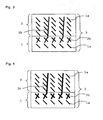
- the ultra fine fiber employed in the present invention is formed in two kinds of sheet (layer) form in the composite sheet for artificial leather: one is a staple non-woven fabric layer(1) form and the other is a woven or knitted fabric layer(2) form.
- the staple non-woven fabric layer(1) can be made by cutting a yarn(filament) capable of being fine to a fineness less than 0.3 denier into short fibers, then forming a web through a carding-cross lapping process and then needle-punching the same.
- the woven or knitted fabric layer(2) can be made by weaving or knitting with a spun yarn, which is made by carrying out a carding-sliving-twisting process on short fibers(staple) prepared by cutting a yarn(filament) capable of being fine to a fineness less than 0.3 denier, or by weaving or knitting with a continuous filament, which is produced by spin-draw process, through a twisting process. That is, the woven or knitted fabric layer(2) constructed of ultra fine fibers used in the present invention can be woven or knitted from a spun yarn made of staple or continuous filament yarn.
- the ultra fine fibers used in the present invention have a fineness less than 0.3 denier after a fiber fining treatment. In a case that the fineness of the ultra fine fibers is more than 0.3 denier, it is difficult to obtain artificial leather with a soft touch.
- the yarn constituting the woven or knitted fabric layer(2) in the present invention is more preferably constructed of ultra fine fibers having a fineness of 0.01 to 0.3 denier. Larger fineness may cause damage of the woven or knitted fabric due to a needle-punching operation for bonding the woven or knitted fabric(2) to the staple non-woven fabric layer(1) and the damaged fibers often come out to the surface of the artificial leather. Thusly, since the fibers of the woven or knitted fabric layer(2) which come out to the surface has a larger fineness than that of the staple fibers of the non-woven fabric layer(1), this brings about uneven appearance of the artificial leather and lower softness.
- the fibers of the woven or knitted fabric layer(2) exposed to the surface is shown to be a conspicuous defect. Furthermore, since a large fineness of fibers can make the touch of the woven or knitted fabric layer(2) excessively hard, this can spoil the softness of the artificial leather.
- the present invention does not specially limit the lowest value of the denier of the ultra fine fibers constituting the woven or knitted fabric layer(2).
- the yarn constructed of excessively fine fibers is used for the production of the woven or knitted fabric layer(2), it is difficult to uniformly control the fineness of the ultra fine fibers, the degree of elongation is increased during the process after removing the sea component and the physical properties of the final product, such as strength, elongation and the like, is largely decreased, thereby reducing the effect of improving the form-stability. Therefore, the fineness of the ultra fine fibers is more preferably more than 0.01 denier and less than 0.3 denier.
- the total denier of the yarn constituting the woven or knitted fabric layer(2) is preferably 30 to 150 denier. Smaller fineness can cause a decrease in physical properties such as strength, elongation and the like, which may bring about a decrease of the form stability. On the other hand, larger fineness can make the woven or knitted fabric layer(2) excessively hard, and thusly it is difficult to obtain a desirable softness and flexibility for artificial leather even if it becomes ultra fine after dissolution.
- the yarn constituting the woven or knitted fabric layer(2) is preferably constructed of 200 to 10,000 ultra fine fibers. After a fiber fining treatment, if the number of the ultra fine fibers existing in one strand of the yarn is more than 10,000, the fibers becomes excessively fine or the total denier is increased. This eliminates the effect of improving the form stability or increases the risk of losing the softness of the artificial leather, which is not preferable.
- the fibers existing in one strand of the yarn is less than 200 after the fiber fining treatment, the fibers becomes excessively thick or the total denier is decreased. This eliminates the softness or increase the risk of reducing the physical properties such as strength, elongation and the like, which is not preferable.
- the yarn constituting the woven or knitted fabric layer(2) is preferably a twisted yarn having a number of twists of 500 to 4000 twist/meter (hereinafter, shown as t/m). If the number of twits is 500 to 700 t/m, the form-stability is at an average level but the softness is very excellent. So such a yarn is suitable for artificial leather such as clothing or the like which requires a soft touch.
- the yarn has a low elongation and good softness, it is suitable for covering for furniture which requires form-stability.
- the yarn is more suitable for artificial leather such as cover sheet for car chairs which require wear resistance and form-stability.
- the densities of the warp and weft are more than 40 yarns/inch, more preferably, more than 60 yarns/inch.
- the weight of the knitted fabric is preferably 30 to 200g/m 2 .
- the composite sheet which comprises the non-woven fabric layer(1) of the ultra fine fibers combined to the woven or knitted fabric layer(2) can be made by various methods.
- the most common method is a needle-punching method wherein one or more staple non-woven fabric layers and woven or knitted fabric sheets are alternately arranged and are entangled by needle-punching when making a non-woven fabric.
- a woven or knitted fabric sheet of ultra fine fibers can be bonded with a intermediate product having a non-woven fabric of ultra fine fibers filled with polyurethane resin using an adhesive, or a woven or knitted fabric sheet of ultra fine fibers can be boned with the product of which a series ot artificial leather treatment such as buffing or dyeing has been finished.
- a 3 to 15% concentration water soluble polymer solution of polyvinyl alcohol or carboxylmethyl cellulose is padded and dried on the composite sheet of the non-woven fabric and the woven or knitted fabric so as to have the amount of 5 to 20% by weight with respect to the weight of the fibers.
- This process is effective for preventing the touch of the final product from being hard with the polyurethane resin being excessively boned with the fibers converted into a bundle of fine fibers in the later process of impregnating polyurethane resin.
- the polyurethane elastomer used in this step is easily dissolved in a straight-chained polymer material consisting of macroglycol, diisocyanate and a low molecular weight diol or diamine, or in some crosslinking polymer materials such as dimethylformamide (hereinafter, refer to as "DMF").
- DMF dimethylformamide
- the macroglycol used in the present invention may include polyether glycol, polyester glycol, polyether polyester copolymer glycol, polycarbonate glycol and the like.
- the low molecular weight diols in the present invention may include 4,4'-butandiol, ethylene glycol and the like. It also may use a chain extender of diamine base such as methylene-bis-(4,4'-phenylamine).
- An impregnating solution is made by adding a detergent, pigments, functional particles and the like to such a DMF solution of polyurethane elastomer and diluting the resulting solution.
- the composite sheet is dipped in the impregnating solution, coagulated in an aqueous solution, washed in hot water at 50 to 80°C for completely removing temporary filled water soluble polymer, and then dried.
- the content of the polyurethane after drying is preferably 20 to 50% by weight with respect to the weight of the composite sheet.
- the fibers are converted into a bundle of fine fibers by removing the sea component from the fiber constituting the non-woven fabric layer(1) and the woven or knitted fabric layer(2) with a solvent or aqueous solution of sodium hydroxide which is capable of dissolving the sea-component.
- the sea component exists in both fibers of the non-woven fabric layer(1) and fibers of the woven or knitted fabric layer(2). If their types of the sea component are different, fiber fining treatment has to be performed to each of them, which makes the treatment complicated.
- the fiber fining treatment is simultaneously attained by only one dissolution process by making the fibers of the non-woven fabric layer(1) and the fibers of the woven or knitted fabric layer(2) from the same type of the sea component.
- the sea component is a copolymerized polyester
- the sea component is decomposed by a continuous or discontinuous arrangement method with a 5 to 15% aqueous solution of sodium hydroxide.
- the sea component is polyethylene or polystyrene
- the sea component is removed by treating with toluene, perchloroethylene or trichloroethylene.
- the copolymerized polyester of the sea component is completely decomposed and removed by treating with a 10% aqueous solution of sodium hydroxide at 100°C for 5 to 10 minutes.
- a 10% aqueous solution of sodium hydroxide at 100°C for 5 to 10 minutes.
- the sea component is dissolved after impregnating with polyurethane. This is referred to as post dissolution.
- the sea component can be dissolved before impregnating with polyurethane. This is referred to as pre-dissolution.
- This method is applied for the purpose of improving the appearance and physical properties of the artificial leather after the fiber fining treatment
- the surface of the thusly obtained composite sheet of the leather form is buffed by a buffing machine equipped with a sand paper of a proper roughness to thus form raised fibers on the surface and then fluffs are shagged.
- the roughness of the sand paper is differently selected according to its use. Typically, it is preferable to use the sand paper of 150 to 400 meshes.
- the composite sheet for artificial leather with fluffs has the following characteristics from a macrostructual viewpoint. Firstly, on the surface formed with the fluffs, there are a small number of filament fibers or spun fibers of the woven or knitted fabric layer(2) broken during needle-punching and protruded to the surface. Even if there are some fibers of the woven or knitted fabric layer(2) protruded to the surface, the fineness is not more than that of the fibers of the non-woven fabric layer(1).
- the weight ratio of the non-woven fabric layer(1)/woven or knitted fabric layer(2) is 90:10 to 50:50.
- the weight of the non-woven fabric layer(1) is not less than that of the woven or knitted fabric layer(2).
- the weight ratio of the ultra fine fibers/ polyurethane resin is 90:10 to 50:50.
- the amount of the ultra fine fibers constituting the non-woven fabric layer(1) and the woven or knitted fabric layer(2) is not less than that of the polyurethane resin.
- the composite sheet for artificial leather having the above-mentioned structural characteristics is finally treated according to its use.
- the composite sheet is made into an artificial leather of suede type by a dyeing treatment, or is made into an artificial leather of mirror-like type by forming a polyurethane coating layer on the surface.
- the ultra fine fibers located on the surface has a raised structure.
- the used fiber comprises nylon-6
- it is typically dyed with a metal complex dye or milling type acid dye.
- polyester it is dyed with a disperse dye in a high pressure rapid dyeing machine.
- the coating method includes dry or wet coating treatment, if required, laminating treatment.
- the woven or knitted fabric sheet made of ultra fine fibers is combined to a non-woven web when making the non-woven fabric. Besides, as shown in the above procedure, it is also possible to bind the woven or knitted fabric sheet made of the ultra fine fibers to the product of which a series of artificial leather treatment including dyeing or mirror-like coating treatment has been finished.
- various physical properties of the composite sheet for artificial leather are determined as follows.
- the sample of a cross-section of the composite sheet for artificial leather is taken and a preparation process such as gold coating is applied thereto.
- the photograph of the surface of the composite sheet for artificial leather is taken by a scanning electron microscope.
- the cross-sectional area of the ultra fine fibers shown on the photograph is evaluated.
- the obtained value is converted into an actual value in consideration of the magnification of the photograph.
- A is the surface area ( ⁇ m 2 ) of the cross-section of the ultra fine fiber and p is the density (g/cm 3 ) of the ultra fine fiber.
- the applied density of nylon is 1.14 and the applied density of polyethylene terephthalate is 1.38.
- the cross-sectional area A of the ultra fine fiber is obtained by the following formula by measuring the diameter of the cross-section.
- the cross-section is directly obtained through an image analyzer and the like.
- cross-section ⁇ m 2 ⁇ ⁇ D 2 / 4
- One strand of yarn constituting the woven or knitted fabric layer(2) is taken from the prepared composite sheet for artificial leather and a preparation process such as gold coating is applied thereto. Then, the photograph of the cross-section of one strand of yarn constituting the woven or knitted fabric layer(2) is taken by a scanning electron microscope and the number of ultra fine fibers shown on the photograph is counted.
- Two test pieces each having a width of 100mm and a length of 100mm are prepared, respectively, in the longitudinal and transverse directions of the composite sheet for artificial leather.
- One end of a test piece is overlaid on the one end of another test piece.
- sewing(*) a folded part, which is 10mm from the ends of each test piece so as to form two groups of test pieces, respectively, in the longitudinal and transverse directions.
- the stitching strength is measured under the conditions of a clamp distance of 76.2mm (3 inches), a clamp size of a 20mm length and a 30mm width for both upper and lower portions and a pulling speed of 200mm/min.
- the measurements in the two directions are averaged and reported herein as the "stitching strength" of the composite sheet in kg of overhang per mm of composite sheet fineness.
- a high tenacity nylon yarn is used as the sewing yarn and the sewing distance is 4mm.
- the high tenacity nylon yarn has a high strength of about 200 denier. It must have a larger tension strength than those of the test pieces and must not change the test result.
- the stitches at the opposite ends have to be tightly knotted by sewing it with a sewing yarn that is cut to a slightly large length, so that it cannot be loosened.
- test pieces each having a width of 50mm and a length of 250mm are cut out from the composite sheet for artificial leather in the longitudinal and transverse directions and a standard length of 100mm is marked along their center lines.
- l 0 designates the standard length (mm) after suspending the load of 8kg for ten minutes. * As the fatigue tester, 'Marlens fatigue tester' is used.
- test pieces each having a 25mm width and a 200mm length, are taken out of a sample, respectively, in the longitudinal and transverse directions.
- the test pieces are placed on a smooth horizontal table having a 45 degree inclined surface at its pointed end and a scale at its top surface so that the shorter side of the test pieces matches the base line of the scale. Then, the test pieces are pressed by a pressing plate of the same size as the test pieces and are slid toward the inclined surface at a speed of approximately 10mm/sec, and when the one end of the test pieces contacts the inclined surface, the position of the other end of the test pieces is read by the scale.
- the stiffness is indicated by the moving distance (mm) of the test pieces from the base line. The stiffness is measured both for the front surface and for the backside of each test pieces, and expressed in an average obtained from the measurements made for the front surface and backside of five test pieces, respectively, in the longitudinal and transverse directions.
- the surface state is evaluated by 10 panelists.
- the surface state judged by more than 8 persons to be good was designated as " ⁇ "; the case where six or seven persons judged the surface state to be good was designated as " ⁇ "; the case where four or five persons judged the surface state to be good was designated as " ⁇ "; and the case where three or less persons judged the fabric to be good was designated as " ⁇ ".
- a sea-island type composite continuous fiber having a fineness of 3 deniers convertible into a bundle of fine fibers was prepared from 70 by parts weight of polyethylene terephthalate as a fiber-forming component and 30 parts by weight of copolymer polyester as an extraction component through spinning and drawing processes. At this time, the monofilament of the continuous fiber has 16 ultra fine fibers (fiber-forming component) therein. A part of the thusly obtained composite fiber convertible into a bundle of fine fibers was used to produce short fibers by cutting it out at a 40mm length and giving a crimp.
- Another part thereof was used as warp and weft in producing a woven fabric which had a warp density of a 100 yarns/inch, a weft density of 80 yarns/inch and a weight of 100g/yd after twisting it in the form of continuous fibers with a total fineness of 75 deniers at 2500 twists per meter in a twisting machine.
- the above-mentioned short fibers formed a web by a carding-cross lapping process, and this web was combined to the woven fabric by needle-punching during the preparation of a non-woven fabric, thereby forming a composite sheet.
- the composite sheet of the now-woven fabric layer and the woven fabric layer was padded and dried in a 10% aqueous solution of polyvinyl alcohol so as to have the amount of 10% by weight with respect to the weight of the fibers.
- the composite sheet was dipped in a 15% impregnating solution prepared by diluting a polyurethane elastomer of the polyether-polyester copolymer glycol type in dimethylformamide (DMF).
- DMF dimethylformamide
- the polyurethane was coagulated in the aqueous solution, washed in a 70°C hydrothermal solution for removing polyvinyl alcohol polymer, and dried.
- the content of polyurethane after the drying step was found to be 25% by weight.
- the composite sheet constructed of the above-mentioned fibers and polyurethane was converted into a bundle of fine fibers by continuously treating it in a 10% aqueous solution of sodium hydroxide at 100°C for completely removing the sea component, i.e., copolymer polyester, so that only the island component, i.e., the component of polyester fine fibers, was left.
- both the fibers in the non-woven fabric layer and the ultra fine fibers in the woven fabric layer had a fineness of 0.13 denier and the number of ultra fine fibers constituting the filament of woven fabric was 400.
- Example 1 Except that a polyamide multifilament of 75 deniers/24 filaments (monofilament denier: 3.16 denier) was used as the warp and weft of a woven fabric, a composite sheet for artificial leather was prepared in the same manner as that in Example 1. The physical properties were evaluated and shown in Table 2. ⁇ Table 2> Result of Evaluation of Physical Properties Stitching Strength (kg/m) Elongation at Constant Load (%) Stiffness (mm) Surface State (Appearance, Color Difference) Example 1 65 3.5 49 ⁇ Example 2 62 4.8 42 ⁇ Example 3 61 7 38 ⁇ Example 4 48 12 27 ⁇ Example 5 45 2.7 58 ⁇ Comparative Example 1 59 5 86 ⁇ Comparative Example 2 25 22 73 ⁇
- the composite sheet for artificial leather of the present invention include a woven or knitted fabric layer(2) composed of a yarn of ultra fine fibers having a fineness less than 0.3 denier and the ultra fine fibers of woven or knitted fabric layer(2) being entangled with the ultra fine fibers of a non-woven fabric layer(1), it is low in elongation and superior in form-stability.
- the composite sheet for artificial leather of the present invention has an elongation at constant load of less than 20% and thus a form change is not occurred much. Additionally, the stitching strength is more than 30kg/mm and thus shows very strong and wear resistant stitching characteristics. Therefore, the composite sheet for artificial leather of the present invention is very suitable for the production of cover sheet of a car chair and covering for furniture which require superior form-stability and stitching characteristics, and artificial leather for men's clothing which require relatively strong and highly wear resistant.
- both the fibers of the non-woven fabric layer(1) constituting the composite sheet for artificial leather of the present invention and the fibers of the woven or knitted fabric layer(2) are composed of ultra fine fibers of less than 0.3 denier, and thus are superior in softness.
- the composite sheet for artificial leather of the present invention has a stiffness of less than 80mm and thus is very soft.
- the composite sheet for artificial leather of the present invention is excellent in both form-stability and softness, it is very useful for all kinds of leather including natural leather, artificial leather and synthetic leather as well as for cover sheet of a car chair, covering for furniture and clothing.
Landscapes
- Engineering & Computer Science (AREA)
- Textile Engineering (AREA)
- Chemical & Material Sciences (AREA)
- Chemical Kinetics & Catalysis (AREA)
- Dispersion Chemistry (AREA)
- Synthetic Leather, Interior Materials Or Flexible Sheet Materials (AREA)
Claims (12)
- Verbundfolie für Kunstleder mit geringer Dehnung und ausgezeichneter Weichheit, umfassend:eine Faservliesschicht (1), hergestellt aus ultrafeinen Fasern mit einer Feinheit von weniger als 0,3 Denier;eine Gewebe- oder Strickwarenschicht (2), aufgebaut aus einem Garn, das aus ultrafeinen Fasern mit einer Feinheit von weniger als 0,3 Denier hergestellt ist; undPolyurethanharz, das in die Faservliesschicht (1) und die Gewebe- oder Strickwarenschicht (2) imprägniert ist,wobei die ultrafeinen Fasern der Faservliesschicht (1) und die ultrafeinen Fasern der Gewebe- oder Strickwarenschicht (2) miteinander verknäuelt sind, und die Feinheit der ultrafeinen Fasern der Gewebe- oder Strickwarenschicht (2) nicht höher ist als die Feinheit der ultrafeinen Fasern der Faservliesschicht (1).
- Verbundfolie nach Anspruch 1, wobei die ultrafeinen Fasern, die auf der Oberfläche der Verbundfolie für Kunstleder angeordnet sind, aufgerichtet sind.
- Verbundfolie nach Anspruch 1, wobei die Feinheit der ultrafeinen Fasern der Gewebe- oder Strickwarenschicht (2) 0,01 bis 0,3 Denier beträgt.
- Verbundfolie nach Anspruch 1, wobei das Garn, welches die Gewebe- oder Strickwarenschicht (2) aufbaut, aus 200 bis 10.000 ultrafeinen Fasern hergestellt ist.
- Verbundfolie nach Anspruch 1, wobei die Gesamtfeinheit des Garns, welches die Gewebe- oder Strickwarenschicht (2) aufbaut, 30 bis 150 Denier beträgt.
- Verbundfolie nach Anspruch 1, wobei die Anzahl an Zwirnungen des Garns, welches die Gewebe- oder Strickwarenschicht (2) aufbaut, 500 bis 700 Zwirnungen/m beträgt.
- Verbundfolie nach Anspruch 1, wobei die Anzahl an Zwirnungen des Garns, welches die Gewebe- oder Strickwarenschicht (2) aufbaut, 700 bis 2.500 Zwirnungen/m beträgt.
- Verbundfolie nach Anspruch 1, wobei die Anzahl an Zwirnungen des Garns, welches die Gewebe- oder Strickwarenschicht (2) aufbaut, 2.500 bis 4.000 Zwirnungen/m beträgt.
- Verbundfolie nach Anspruch 1, wobei das Garn, welches die Gewebe- oder Strickwarenschicht (2) aufbaut, ein Stapelfasergarn oder Endlosfasergarn ist.
- Verbundfolie nach Anspruch 1, wobei das Garn, welches die Gewebe- oder Strickwarenschicht (2) aufbaut, ein Polyester-basiertes Harz oder Nylon-basiertes Harz ist.
- Verbundfolie nach Anspruch 1, wobei das Gewicht der Gewebe- oder Strickwarenschicht (2) 30 bis 200 g/m2 beträgt.
- Verbundfolie nach Anspruch 1, wobei die Ketten- und Schussdichten der Gewebe- oder Strickwarenschicht (2) mehr als 40 yarns/inch betragen.
Applications Claiming Priority (3)
| Application Number | Priority Date | Filing Date | Title |
|---|---|---|---|
| KR20020005813 | 2002-02-01 | ||
| KR2002005813 | 2002-02-01 | ||
| PCT/KR2003/000204 WO2003064756A1 (en) | 2002-02-01 | 2003-01-29 | A composite sheet used for artificial leather with low elongation and excellent softness |
Publications (3)
| Publication Number | Publication Date |
|---|---|
| EP1470283A1 EP1470283A1 (de) | 2004-10-27 |
| EP1470283A4 EP1470283A4 (de) | 2010-04-28 |
| EP1470283B1 true EP1470283B1 (de) | 2015-07-08 |
Family
ID=27656352
Family Applications (1)
| Application Number | Title | Priority Date | Filing Date |
|---|---|---|---|
| EP03705423.6A Expired - Lifetime EP1470283B1 (de) | 2002-02-01 | 2003-01-29 | Verbundfolie für kunstleder mit geringer dehnung und ausgezeichnetem weichgriff |
Country Status (7)
| Country | Link |
|---|---|
| US (2) | US7820569B2 (de) |
| EP (1) | EP1470283B1 (de) |
| JP (1) | JP4291697B2 (de) |
| KR (1) | KR100534525B1 (de) |
| CN (1) | CN1281812C (de) |
| TW (1) | TWI250239B (de) |
| WO (1) | WO2003064756A1 (de) |
Families Citing this family (24)
| Publication number | Priority date | Publication date | Assignee | Title |
|---|---|---|---|---|
| US7829486B2 (en) * | 2003-02-06 | 2010-11-09 | Kuraray Co., Ltd. | Stretchable leather-like sheet substrate and process for producing same |
| US20050118394A1 (en) * | 2003-11-25 | 2005-06-02 | Kuraray Co., Ltd. | Artificial leather sheet substrate and production method thereof |
| ES2375400T3 (es) * | 2004-08-02 | 2012-02-29 | Toray Industries, Inc. | Lámina similar a la piel y procedimiento para la producción de la misma. |
| CN1308539C (zh) * | 2005-01-18 | 2007-04-04 | 山东同大纺织机械有限公司 | 高强度超细纤维仿真复合革及其制造方法 |
| WO2006134966A1 (ja) * | 2005-06-17 | 2006-12-21 | Kuraray Co., Ltd. | 人工皮革用基材およびその製造方法 |
| KR100658097B1 (ko) * | 2005-12-19 | 2006-12-14 | 주식회사 코오롱 | 강도 및 신율 특성이 우수한 스웨이드조 인공피혁 |
| JP4935721B2 (ja) * | 2007-03-19 | 2012-05-23 | 東レ株式会社 | 伸縮性シートとその製造方法 |
| KR101364601B1 (ko) * | 2007-11-30 | 2014-02-27 | 코오롱인더스트리 주식회사 | 복합시트 |
| CN101926183B (zh) * | 2008-01-22 | 2013-09-11 | 松下电器产业株式会社 | 扬声器用振动板、使用它的扬声器以及扬声器用振动板的制造方法 |
| DE102008014211A1 (de) * | 2008-03-14 | 2009-09-17 | Bayer Materialscience Ag | Wässrige Dispersion aus anionisch modifizierten Polyurethanharnstoffen zur Beschichtung eines textilen Flächengebildes |
| JP5540731B2 (ja) * | 2010-01-27 | 2014-07-02 | 東レ株式会社 | 人工皮革およびその製造方法 |
| KR101664492B1 (ko) * | 2010-06-30 | 2016-10-10 | 코오롱인더스트리 주식회사 | 피혁상 복합시트 및 그 제조방법 |
| CN102971146B (zh) * | 2010-07-12 | 2016-01-20 | 可乐丽股份有限公司 | 被膜形成方法及被膜 |
| BR112012015550A2 (pt) | 2010-11-11 | 2016-05-03 | Weiren Tang | couro artificial de microfibra e o seu método de fabricação |
| CN102061630B (zh) * | 2011-01-13 | 2013-04-24 | 汤为人 | 一种直纺超细纤维人工皮革及其制造方法 |
| US9150986B2 (en) | 2011-05-04 | 2015-10-06 | Nike, Inc. | Knit component bonding |
| EP2597193B1 (de) | 2011-11-24 | 2014-01-15 | Jade Long John Enterprise Co., Ltd | Verfahren zur Herstellung von Stoff, der sich wie ein Kunstlederstoff anfühlt |
| CN102980821B (zh) * | 2012-11-19 | 2015-05-27 | 芜湖华烨新材料有限公司 | 一种测量浸胶帆布硬度的方法及其测量仪器 |
| JP6677540B2 (ja) * | 2016-03-15 | 2020-04-08 | セーレン株式会社 | 車両用複合表皮材 |
| CN106544875B (zh) * | 2016-10-28 | 2018-11-16 | 浙江梅盛实业股份有限公司 | 一种涤纶超纤面料及其制造工艺 |
| US10970252B2 (en) * | 2017-10-06 | 2021-04-06 | Sahadevan Balachandran | Method and apparatus for generating customized digital files with variable data |
| CN109154135B (zh) * | 2018-02-05 | 2021-02-09 | 浙江梅盛新材料有限公司 | 一种超细纤维面料及其制造工艺 |
| CN112195654B (zh) * | 2020-09-10 | 2023-06-30 | 江苏华峰超纤材料有限公司 | 一种pu合成革用的复合无纺布及其制备方法 |
| KR102694870B1 (ko) * | 2023-10-12 | 2024-08-12 | 주식회사 이앤알 | 경량성 및 유연성을 갖는 웹 구조의 재생가죽시트 및 이의 제조방법 |
Family Cites Families (16)
| Publication number | Priority date | Publication date | Assignee | Title |
|---|---|---|---|---|
| US3762984A (en) * | 1969-02-19 | 1973-10-02 | Kimberly Clark Co | Nonwoven applique material |
| CS150413B1 (de) * | 1971-04-30 | 1973-09-04 | ||
| FR2175017B1 (de) * | 1972-03-07 | 1976-11-05 | Toray Industries | |
| US4118529A (en) * | 1975-07-14 | 1978-10-03 | Kuraray Company, Limited | Suede woven fabric and a process of manufacturing the same |
| DE2703654C3 (de) * | 1976-01-30 | 1980-04-03 | Asahi Kasei Kogyo K.K., Osaka (Japan) | Als Trägermaterial für Kunstleder geeigneter Textilverbundstoff, seine Herstellung und Verwendung |
| US4146663A (en) * | 1976-08-23 | 1979-03-27 | Asahi Kasei Kogyo Kabushiki Kaisha | Composite fabric combining entangled fabric of microfibers and knitted or woven fabric and process for producing same |
| WO1979000926A1 (fr) * | 1978-04-13 | 1979-11-15 | Teijin Ltd | Methode et appareil de fabrication d'un tissu a poil ayant l'aspect du suede |
| US5256429A (en) * | 1985-09-27 | 1993-10-26 | Toray Industries, Inc. | Composite sheet for artificial leather |
| JPS6278281A (ja) * | 1985-09-27 | 1987-04-10 | Toray Ind Inc | 高強力柔軟皮革様物の製造方法 |
| KR960014526B1 (ko) * | 1988-10-10 | 1996-10-16 | 엘지전자 주식회사 | 소프트웨어를 이용한 모타정속도 제어방법 |
| KR100232045B1 (ko) * | 1993-10-14 | 1999-12-01 | 카나가와 치히로 | 실라시클로헥산화합물, 그의 제조방법 및 이것을 함유하는 액정조성물 |
| KR0140491B1 (ko) | 1994-12-28 | 1998-06-15 | 백영배 | 부직포 인공피혁의 제조방법 |
| DE69835805T2 (de) * | 1997-11-07 | 2007-03-29 | Toray Industries, Inc. | Verfahren zur herstellung eines nubuck-kunstleders |
| JP4128312B2 (ja) | 1999-02-24 | 2008-07-30 | 株式会社クラレ | 表面立毛を有する皮革様シート |
| JP4376397B2 (ja) | 2000-01-06 | 2009-12-02 | 株式会社クラレ | 人工皮革靴及びその製造方法 |
| TW526303B (en) * | 2000-01-06 | 2003-04-01 | Kuraray Co | Artificial leather shoe and artificial leather suited therefor |
-
2003
- 2003-01-16 KR KR10-2003-0002857A patent/KR100534525B1/ko not_active Expired - Lifetime
- 2003-01-29 TW TW92102355A patent/TWI250239B/zh not_active IP Right Cessation
- 2003-01-29 CN CNB038030128A patent/CN1281812C/zh not_active Expired - Lifetime
- 2003-01-29 US US10/501,910 patent/US7820569B2/en not_active Expired - Lifetime
- 2003-01-29 JP JP2003564338A patent/JP4291697B2/ja not_active Expired - Lifetime
- 2003-01-29 WO PCT/KR2003/000204 patent/WO2003064756A1/en not_active Ceased
- 2003-01-29 EP EP03705423.6A patent/EP1470283B1/de not_active Expired - Lifetime
-
2007
- 2007-03-06 US US11/714,254 patent/US7896997B2/en not_active Expired - Lifetime
Also Published As
| Publication number | Publication date |
|---|---|
| TWI250239B (en) | 2006-03-01 |
| KR100534525B1 (ko) | 2005-12-07 |
| JP2005516131A (ja) | 2005-06-02 |
| WO2003064756A1 (en) | 2003-08-07 |
| EP1470283A4 (de) | 2010-04-28 |
| US20070151654A1 (en) | 2007-07-05 |
| JP4291697B2 (ja) | 2009-07-08 |
| US20050009426A1 (en) | 2005-01-13 |
| US7820569B2 (en) | 2010-10-26 |
| CN1281812C (zh) | 2006-10-25 |
| US7896997B2 (en) | 2011-03-01 |
| EP1470283A1 (de) | 2004-10-27 |
| TW200303951A (en) | 2003-09-16 |
| CN1625626A (zh) | 2005-06-08 |
| KR20030066341A (ko) | 2003-08-09 |
Similar Documents
| Publication | Publication Date | Title |
|---|---|---|
| US7896997B2 (en) | Composite sheet used for artificial leather with low elongation and excellent softness | |
| CA1055808A (en) | Suede-like raised woven fabric and process for the preparation thereof | |
| JP2010222776A (ja) | 強度及び伸び率特性に優れたスエード調人工皮革 | |
| WO1996016212A1 (en) | Nubuck type woven fabric and method of production thereof | |
| EP2075371A1 (de) | Lederartiger stoff und herstellungsverfahren dafür | |
| JP3835616B2 (ja) | ポリアミドマルチフィラメント織物及びその製造法 | |
| EP3943658A1 (de) | Blattförmiges material | |
| JP4992656B2 (ja) | 皮革様シートおよびその製造方法 | |
| KR101885253B1 (ko) | 인공피혁 및 그 제조방법 | |
| JP5155124B2 (ja) | 揚柳調布帛の製造方法および揚柳調布帛 | |
| KR100951976B1 (ko) | 신율 특성이 우수한 차량용 인공피혁 | |
| JP2002069789A (ja) | 人工皮革用織物および人工皮革 | |
| JP3997592B2 (ja) | 人工皮革およびその製造方法 | |
| KR101664492B1 (ko) | 피혁상 복합시트 및 그 제조방법 | |
| JP2008240182A (ja) | パイル編織物およびその製造方法 | |
| KR100601306B1 (ko) | 신축성이 우수한 인공피혁 및 그의 제조방법 | |
| JP6709059B2 (ja) | 広幅且つ伸びを有する人工皮革 | |
| JPH0559648A (ja) | ナイロン66編織物及びその製造方法 | |
| JPS61152849A (ja) | 内装用パイル布帛 | |
| EP4442875A1 (de) | Exzentrischer falsch verdrillter kern-hülle-verbundfaden und web-/strickstoff damit | |
| JPH0128151B2 (de) | ||
| JPH0740541Y2 (ja) | 内装用パイル布帛 | |
| WO2022224666A1 (ja) | 繊維構造体 | |
| JP2025131990A (ja) | 人工皮革およびその製造方法ならびに衣服、雑貨 | |
| JP2025057018A (ja) | 人工皮革および人工皮革の製造方法 |
Legal Events
| Date | Code | Title | Description |
|---|---|---|---|
| PUAI | Public reference made under article 153(3) epc to a published international application that has entered the european phase |
Free format text: ORIGINAL CODE: 0009012 |
|
| 17P | Request for examination filed |
Effective date: 20040714 |
|
| AK | Designated contracting states |
Kind code of ref document: A1 Designated state(s): AT BE BG CH CY CZ DE DK EE ES FI FR GB GR HU IE IT LI LU MC NL PT SE SI SK TR |
|
| AX | Request for extension of the european patent |
Extension state: AL LT LV MK RO |
|
| A4 | Supplementary search report drawn up and despatched |
Effective date: 20100325 |
|
| RIC1 | Information provided on ipc code assigned before grant |
Ipc: D04H 13/00 20060101ALI20100319BHEP Ipc: D06N 3/00 20060101ALI20100319BHEP Ipc: D06N 7/00 20060101AFI20030812BHEP Ipc: B32B 5/26 20060101ALI20100319BHEP |
|
| 17Q | First examination report despatched |
Effective date: 20110128 |
|
| REG | Reference to a national code |
Ref country code: DE Ref legal event code: R079 Ref document number: 60347784 Country of ref document: DE Free format text: PREVIOUS MAIN CLASS: D06N0007000000 Ipc: B32B0005020000 |
|
| GRAP | Despatch of communication of intention to grant a patent |
Free format text: ORIGINAL CODE: EPIDOSNIGR1 |
|
| RIC1 | Information provided on ipc code assigned before grant |
Ipc: B32B 5/06 20060101ALI20150116BHEP Ipc: B32B 5/02 20060101AFI20150116BHEP |
|
| INTG | Intention to grant announced |
Effective date: 20150218 |
|
| GRAS | Grant fee paid |
Free format text: ORIGINAL CODE: EPIDOSNIGR3 |
|
| GRAA | (expected) grant |
Free format text: ORIGINAL CODE: 0009210 |
|
| AK | Designated contracting states |
Kind code of ref document: B1 Designated state(s): DE FR GB IT |
|
| REG | Reference to a national code |
Ref country code: GB Ref legal event code: FG4D |
|
| REG | Reference to a national code |
Ref country code: DE Ref legal event code: R096 Ref document number: 60347784 Country of ref document: DE |
|
| REG | Reference to a national code |
Ref country code: FR Ref legal event code: PLFP Year of fee payment: 14 |
|
| REG | Reference to a national code |
Ref country code: DE Ref legal event code: R097 Ref document number: 60347784 Country of ref document: DE |
|
| PLBE | No opposition filed within time limit |
Free format text: ORIGINAL CODE: 0009261 |
|
| STAA | Information on the status of an ep patent application or granted ep patent |
Free format text: STATUS: NO OPPOSITION FILED WITHIN TIME LIMIT |
|
| 26N | No opposition filed |
Effective date: 20160411 |
|
| REG | Reference to a national code |
Ref country code: FR Ref legal event code: PLFP Year of fee payment: 15 |
|
| REG | Reference to a national code |
Ref country code: FR Ref legal event code: PLFP Year of fee payment: 16 |
|
| PGFP | Annual fee paid to national office [announced via postgrant information from national office to epo] |
Ref country code: FR Payment date: 20211208 Year of fee payment: 20 Ref country code: GB Payment date: 20211206 Year of fee payment: 20 |
|
| PGFP | Annual fee paid to national office [announced via postgrant information from national office to epo] |
Ref country code: DE Payment date: 20211206 Year of fee payment: 20 |
|
| PGFP | Annual fee paid to national office [announced via postgrant information from national office to epo] |
Ref country code: IT Payment date: 20211209 Year of fee payment: 20 |
|
| REG | Reference to a national code |
Ref country code: DE Ref legal event code: R071 Ref document number: 60347784 Country of ref document: DE |
|
| REG | Reference to a national code |
Ref country code: GB Ref legal event code: PE20 Expiry date: 20230128 |
|
| PG25 | Lapsed in a contracting state [announced via postgrant information from national office to epo] |
Ref country code: GB Free format text: LAPSE BECAUSE OF EXPIRATION OF PROTECTION Effective date: 20230128 |