EP1453975B1 - Verfahren zum nachweis von hybridisierungsereignissen in nukleinsäuren - Google Patents
Verfahren zum nachweis von hybridisierungsereignissen in nukleinsäuren Download PDFInfo
- Publication number
- EP1453975B1 EP1453975B1 EP02787794A EP02787794A EP1453975B1 EP 1453975 B1 EP1453975 B1 EP 1453975B1 EP 02787794 A EP02787794 A EP 02787794A EP 02787794 A EP02787794 A EP 02787794A EP 1453975 B1 EP1453975 B1 EP 1453975B1
- Authority
- EP
- European Patent Office
- Prior art keywords
- nucleic acid
- nucleic acids
- dna
- probe nucleic
- sequence
- Prior art date
- Legal status (The legal status is an assumption and is not a legal conclusion. Google has not performed a legal analysis and makes no representation as to the accuracy of the status listed.)
- Expired - Lifetime
Links
- 238000000034 method Methods 0.000 title claims abstract description 39
- 150000007523 nucleic acids Chemical class 0.000 title claims description 187
- 108020004707 nucleic acids Proteins 0.000 title claims description 179
- 102000039446 nucleic acids Human genes 0.000 title claims description 179
- 238000009396 hybridization Methods 0.000 title claims description 41
- 239000000523 sample Substances 0.000 claims abstract description 164
- 230000000295 complement effect Effects 0.000 claims abstract description 11
- 108020004414 DNA Proteins 0.000 claims description 75
- 108091008146 restriction endonucleases Proteins 0.000 claims description 23
- 239000007790 solid phase Substances 0.000 claims description 19
- 238000003776 cleavage reaction Methods 0.000 claims description 11
- 230000007017 scission Effects 0.000 claims description 11
- 230000027455 binding Effects 0.000 claims description 10
- 108091028043 Nucleic acid sequence Proteins 0.000 claims description 6
- 239000000463 material Substances 0.000 abstract description 2
- 102000040430 polynucleotide Human genes 0.000 abstract 3
- 108091033319 polynucleotide Proteins 0.000 abstract 3
- 239000002157 polynucleotide Substances 0.000 abstract 3
- 108091032973 (ribonucleotides)n+m Proteins 0.000 description 23
- 101710163270 Nuclease Proteins 0.000 description 19
- 230000015572 biosynthetic process Effects 0.000 description 17
- FAPWRFPIFSIZLT-UHFFFAOYSA-M Sodium chloride Chemical compound [Na+].[Cl-] FAPWRFPIFSIZLT-UHFFFAOYSA-M 0.000 description 16
- YBJHBAHKTGYVGT-ZKWXMUAHSA-N (+)-Biotin Chemical compound N1C(=O)N[C@@H]2[C@H](CCCCC(=O)O)SC[C@@H]21 YBJHBAHKTGYVGT-ZKWXMUAHSA-N 0.000 description 14
- 239000007787 solid Substances 0.000 description 12
- 239000000243 solution Substances 0.000 description 12
- 238000003786 synthesis reaction Methods 0.000 description 12
- KCXVZYZYPLLWCC-UHFFFAOYSA-N EDTA Chemical compound OC(=O)CN(CC(O)=O)CCN(CC(O)=O)CC(O)=O KCXVZYZYPLLWCC-UHFFFAOYSA-N 0.000 description 11
- 229920001213 Polysorbate 20 Polymers 0.000 description 10
- 238000001514 detection method Methods 0.000 description 10
- 238000005516 engineering process Methods 0.000 description 10
- 238000002493 microarray Methods 0.000 description 10
- 239000002773 nucleotide Substances 0.000 description 10
- 235000010486 polyoxyethylene sorbitan monolaurate Nutrition 0.000 description 10
- 239000000256 polyoxyethylene sorbitan monolaurate Substances 0.000 description 10
- 238000010521 absorption reaction Methods 0.000 description 9
- 239000011159 matrix material Substances 0.000 description 9
- MHMNJMPURVTYEJ-UHFFFAOYSA-N fluorescein-5-isothiocyanate Chemical group O1C(=O)C2=CC(N=C=S)=CC=C2C21C1=CC=C(O)C=C1OC1=CC(O)=CC=C21 MHMNJMPURVTYEJ-UHFFFAOYSA-N 0.000 description 8
- 238000002372 labelling Methods 0.000 description 8
- 239000011780 sodium chloride Substances 0.000 description 8
- -1 Cy5 Chemical compound 0.000 description 7
- SHIBSTMRCDJXLN-UHFFFAOYSA-N Digoxigenin Natural products C1CC(C2C(C3(C)CCC(O)CC3CC2)CC2O)(O)C2(C)C1C1=CC(=O)OC1 SHIBSTMRCDJXLN-UHFFFAOYSA-N 0.000 description 7
- 108091034117 Oligonucleotide Proteins 0.000 description 7
- 229960002685 biotin Drugs 0.000 description 7
- 235000020958 biotin Nutrition 0.000 description 7
- 239000011616 biotin Substances 0.000 description 7
- QONQRTHLHBTMGP-UHFFFAOYSA-N digitoxigenin Natural products CC12CCC(C3(CCC(O)CC3CC3)C)C3C11OC1CC2C1=CC(=O)OC1 QONQRTHLHBTMGP-UHFFFAOYSA-N 0.000 description 7
- SHIBSTMRCDJXLN-KCZCNTNESA-N digoxigenin Chemical compound C1([C@@H]2[C@@]3([C@@](CC2)(O)[C@H]2[C@@H]([C@@]4(C)CC[C@H](O)C[C@H]4CC2)C[C@H]3O)C)=CC(=O)OC1 SHIBSTMRCDJXLN-KCZCNTNESA-N 0.000 description 7
- 239000011535 reaction buffer Substances 0.000 description 7
- 239000011534 wash buffer Substances 0.000 description 7
- 238000005406 washing Methods 0.000 description 7
- JLCPHMBAVCMARE-UHFFFAOYSA-N [3-[[3-[[3-[[3-[[3-[[3-[[3-[[3-[[3-[[3-[[3-[[5-(2-amino-6-oxo-1H-purin-9-yl)-3-[[3-[[3-[[3-[[3-[[3-[[5-(2-amino-6-oxo-1H-purin-9-yl)-3-[[5-(2-amino-6-oxo-1H-purin-9-yl)-3-hydroxyoxolan-2-yl]methoxy-hydroxyphosphoryl]oxyoxolan-2-yl]methoxy-hydroxyphosphoryl]oxy-5-(5-methyl-2,4-dioxopyrimidin-1-yl)oxolan-2-yl]methoxy-hydroxyphosphoryl]oxy-5-(6-aminopurin-9-yl)oxolan-2-yl]methoxy-hydroxyphosphoryl]oxy-5-(6-aminopurin-9-yl)oxolan-2-yl]methoxy-hydroxyphosphoryl]oxy-5-(6-aminopurin-9-yl)oxolan-2-yl]methoxy-hydroxyphosphoryl]oxy-5-(6-aminopurin-9-yl)oxolan-2-yl]methoxy-hydroxyphosphoryl]oxyoxolan-2-yl]methoxy-hydroxyphosphoryl]oxy-5-(5-methyl-2,4-dioxopyrimidin-1-yl)oxolan-2-yl]methoxy-hydroxyphosphoryl]oxy-5-(4-amino-2-oxopyrimidin-1-yl)oxolan-2-yl]methoxy-hydroxyphosphoryl]oxy-5-(5-methyl-2,4-dioxopyrimidin-1-yl)oxolan-2-yl]methoxy-hydroxyphosphoryl]oxy-5-(5-methyl-2,4-dioxopyrimidin-1-yl)oxolan-2-yl]methoxy-hydroxyphosphoryl]oxy-5-(6-aminopurin-9-yl)oxolan-2-yl]methoxy-hydroxyphosphoryl]oxy-5-(6-aminopurin-9-yl)oxolan-2-yl]methoxy-hydroxyphosphoryl]oxy-5-(4-amino-2-oxopyrimidin-1-yl)oxolan-2-yl]methoxy-hydroxyphosphoryl]oxy-5-(4-amino-2-oxopyrimidin-1-yl)oxolan-2-yl]methoxy-hydroxyphosphoryl]oxy-5-(4-amino-2-oxopyrimidin-1-yl)oxolan-2-yl]methoxy-hydroxyphosphoryl]oxy-5-(6-aminopurin-9-yl)oxolan-2-yl]methoxy-hydroxyphosphoryl]oxy-5-(4-amino-2-oxopyrimidin-1-yl)oxolan-2-yl]methyl [5-(6-aminopurin-9-yl)-2-(hydroxymethyl)oxolan-3-yl] hydrogen phosphate Polymers Cc1cn(C2CC(OP(O)(=O)OCC3OC(CC3OP(O)(=O)OCC3OC(CC3O)n3cnc4c3nc(N)[nH]c4=O)n3cnc4c3nc(N)[nH]c4=O)C(COP(O)(=O)OC3CC(OC3COP(O)(=O)OC3CC(OC3COP(O)(=O)OC3CC(OC3COP(O)(=O)OC3CC(OC3COP(O)(=O)OC3CC(OC3COP(O)(=O)OC3CC(OC3COP(O)(=O)OC3CC(OC3COP(O)(=O)OC3CC(OC3COP(O)(=O)OC3CC(OC3COP(O)(=O)OC3CC(OC3COP(O)(=O)OC3CC(OC3COP(O)(=O)OC3CC(OC3COP(O)(=O)OC3CC(OC3COP(O)(=O)OC3CC(OC3COP(O)(=O)OC3CC(OC3COP(O)(=O)OC3CC(OC3COP(O)(=O)OC3CC(OC3CO)n3cnc4c(N)ncnc34)n3ccc(N)nc3=O)n3cnc4c(N)ncnc34)n3ccc(N)nc3=O)n3ccc(N)nc3=O)n3ccc(N)nc3=O)n3cnc4c(N)ncnc34)n3cnc4c(N)ncnc34)n3cc(C)c(=O)[nH]c3=O)n3cc(C)c(=O)[nH]c3=O)n3ccc(N)nc3=O)n3cc(C)c(=O)[nH]c3=O)n3cnc4c3nc(N)[nH]c4=O)n3cnc4c(N)ncnc34)n3cnc4c(N)ncnc34)n3cnc4c(N)ncnc34)n3cnc4c(N)ncnc34)O2)c(=O)[nH]c1=O JLCPHMBAVCMARE-UHFFFAOYSA-N 0.000 description 6
- 238000003491 array Methods 0.000 description 6
- 238000006243 chemical reaction Methods 0.000 description 6
- 238000005259 measurement Methods 0.000 description 6
- 108020004999 messenger RNA Proteins 0.000 description 6
- 125000003729 nucleotide group Chemical group 0.000 description 6
- 230000005284 excitation Effects 0.000 description 5
- 238000002844 melting Methods 0.000 description 5
- 230000008018 melting Effects 0.000 description 5
- 239000012071 phase Substances 0.000 description 5
- 239000001226 triphosphate Substances 0.000 description 5
- 235000011178 triphosphate Nutrition 0.000 description 5
- 241000972773 Aulopiformes Species 0.000 description 4
- 108010042407 Endonucleases Proteins 0.000 description 4
- 102000004533 Endonucleases Human genes 0.000 description 4
- 102000004190 Enzymes Human genes 0.000 description 4
- 108090000790 Enzymes Proteins 0.000 description 4
- 108091027305 Heteroduplex Proteins 0.000 description 4
- 239000007983 Tris buffer Substances 0.000 description 4
- 238000013459 approach Methods 0.000 description 4
- 238000003556 assay Methods 0.000 description 4
- 238000010438 heat treatment Methods 0.000 description 4
- 238000010369 molecular cloning Methods 0.000 description 4
- 235000019515 salmon Nutrition 0.000 description 4
- 125000006850 spacer group Chemical group 0.000 description 4
- LENZDBCJOHFCAS-UHFFFAOYSA-N tris Chemical compound OCC(N)(CO)CO LENZDBCJOHFCAS-UHFFFAOYSA-N 0.000 description 4
- 101001007348 Arachis hypogaea Galactose-binding lectin Proteins 0.000 description 3
- 108010014303 DNA-directed DNA polymerase Proteins 0.000 description 3
- 102000016928 DNA-directed DNA polymerase Human genes 0.000 description 3
- 208000037065 Subacute sclerosing leukoencephalitis Diseases 0.000 description 3
- 206010042297 Subacute sclerosing panencephalitis Diseases 0.000 description 3
- 238000004458 analytical method Methods 0.000 description 3
- 239000000872 buffer Substances 0.000 description 3
- 230000001419 dependent effect Effects 0.000 description 3
- 230000029087 digestion Effects 0.000 description 3
- 238000003500 gene array Methods 0.000 description 3
- 239000011859 microparticle Substances 0.000 description 3
- 239000002105 nanoparticle Substances 0.000 description 3
- 238000007639 printing Methods 0.000 description 3
- 238000012216 screening Methods 0.000 description 3
- 238000011895 specific detection Methods 0.000 description 3
- 239000012089 stop solution Substances 0.000 description 3
- 238000013518 transcription Methods 0.000 description 3
- 230000035897 transcription Effects 0.000 description 3
- 102000002260 Alkaline Phosphatase Human genes 0.000 description 2
- 108020004774 Alkaline Phosphatase Proteins 0.000 description 2
- 238000000018 DNA microarray Methods 0.000 description 2
- 239000003298 DNA probe Substances 0.000 description 2
- 108090000626 DNA-directed RNA polymerases Proteins 0.000 description 2
- 102000004163 DNA-directed RNA polymerases Human genes 0.000 description 2
- 102100031780 Endonuclease Human genes 0.000 description 2
- 108010092799 RNA-directed DNA polymerase Proteins 0.000 description 2
- 108010090804 Streptavidin Proteins 0.000 description 2
- 239000007984 Tris EDTA buffer Substances 0.000 description 2
- 125000003277 amino group Chemical group 0.000 description 2
- 239000007864 aqueous solution Substances 0.000 description 2
- 230000008033 biological extinction Effects 0.000 description 2
- 210000004027 cell Anatomy 0.000 description 2
- 239000002299 complementary DNA Substances 0.000 description 2
- 238000012937 correction Methods 0.000 description 2
- 230000000694 effects Effects 0.000 description 2
- 125000000524 functional group Chemical group 0.000 description 2
- 229910052739 hydrogen Inorganic materials 0.000 description 2
- 239000001257 hydrogen Substances 0.000 description 2
- 239000007788 liquid Substances 0.000 description 2
- 238000000329 molecular dynamics simulation Methods 0.000 description 2
- 230000003287 optical effect Effects 0.000 description 2
- 239000002245 particle Substances 0.000 description 2
- 108090000623 proteins and genes Proteins 0.000 description 2
- 239000011541 reaction mixture Substances 0.000 description 2
- 230000035945 sensitivity Effects 0.000 description 2
- 239000000758 substrate Substances 0.000 description 2
- 125000003396 thiol group Chemical group [H]S* 0.000 description 2
- GZCWLCBFPRFLKL-UHFFFAOYSA-N 1-prop-2-ynoxypropan-2-ol Chemical compound CC(O)COCC#C GZCWLCBFPRFLKL-UHFFFAOYSA-N 0.000 description 1
- 102000013563 Acid Phosphatase Human genes 0.000 description 1
- 108010051457 Acid Phosphatase Proteins 0.000 description 1
- 108010017826 DNA Polymerase I Proteins 0.000 description 1
- 102000004594 DNA Polymerase I Human genes 0.000 description 1
- 108060002716 Exonuclease Proteins 0.000 description 1
- 108010001336 Horseradish Peroxidase Proteins 0.000 description 1
- 108060003951 Immunoglobulin Proteins 0.000 description 1
- 241000192041 Micrococcus Species 0.000 description 1
- 108010086093 Mung Bean Nuclease Proteins 0.000 description 1
- 101710149004 Nuclease P1 Proteins 0.000 description 1
- 108020004711 Nucleic Acid Probes Proteins 0.000 description 1
- 108020005187 Oligonucleotide Probes Proteins 0.000 description 1
- 229910019142 PO4 Inorganic materials 0.000 description 1
- 108020002230 Pancreatic Ribonuclease Proteins 0.000 description 1
- 102000005891 Pancreatic ribonuclease Human genes 0.000 description 1
- 102000003992 Peroxidases Human genes 0.000 description 1
- 108010004729 Phycoerythrin Proteins 0.000 description 1
- 108010065868 RNA polymerase SP6 Proteins 0.000 description 1
- 108091028733 RNTP Proteins 0.000 description 1
- 108010046983 Ribonuclease T1 Proteins 0.000 description 1
- 101710137500 T7 RNA polymerase Proteins 0.000 description 1
- 108010006785 Taq Polymerase Proteins 0.000 description 1
- 241000589500 Thermus aquaticus Species 0.000 description 1
- 238000002835 absorbance Methods 0.000 description 1
- 239000002253 acid Substances 0.000 description 1
- 150000007513 acids Chemical class 0.000 description 1
- 230000003321 amplification Effects 0.000 description 1
- 108010028263 bacteriophage T3 RNA polymerase Proteins 0.000 description 1
- 230000004071 biological effect Effects 0.000 description 1
- 239000007795 chemical reaction product Substances 0.000 description 1
- 238000001218 confocal laser scanning microscopy Methods 0.000 description 1
- 230000008878 coupling Effects 0.000 description 1
- 238000010168 coupling process Methods 0.000 description 1
- 238000005859 coupling reaction Methods 0.000 description 1
- 210000004748 cultured cell Anatomy 0.000 description 1
- 238000007876 drug discovery Methods 0.000 description 1
- 230000009977 dual effect Effects 0.000 description 1
- 238000000295 emission spectrum Methods 0.000 description 1
- 230000007515 enzymatic degradation Effects 0.000 description 1
- 230000002255 enzymatic effect Effects 0.000 description 1
- 238000011156 evaluation Methods 0.000 description 1
- 238000000695 excitation spectrum Methods 0.000 description 1
- 102000013165 exonuclease Human genes 0.000 description 1
- 108010092809 exonuclease Bal 31 Proteins 0.000 description 1
- 238000002474 experimental method Methods 0.000 description 1
- 238000010195 expression analysis Methods 0.000 description 1
- 239000000835 fiber Substances 0.000 description 1
- GNBHRKFJIUUOQI-UHFFFAOYSA-N fluorescein Chemical compound O1C(=O)C2=CC=CC=C2C21C1=CC=C(O)C=C1OC1=CC(O)=CC=C21 GNBHRKFJIUUOQI-UHFFFAOYSA-N 0.000 description 1
- 238000001917 fluorescence detection Methods 0.000 description 1
- 238000002866 fluorescence resonance energy transfer Methods 0.000 description 1
- 239000007850 fluorescent dye Substances 0.000 description 1
- 238000001215 fluorescent labelling Methods 0.000 description 1
- 238000012252 genetic analysis Methods 0.000 description 1
- 239000011521 glass Substances 0.000 description 1
- 102000018358 immunoglobulin Human genes 0.000 description 1
- 229940072221 immunoglobulins Drugs 0.000 description 1
- 238000000338 in vitro Methods 0.000 description 1
- 238000011065 in-situ storage Methods 0.000 description 1
- 238000011534 incubation Methods 0.000 description 1
- 239000011147 inorganic material Substances 0.000 description 1
- 230000000155 isotopic effect Effects 0.000 description 1
- 150000002632 lipids Chemical class 0.000 description 1
- WLHQHAUOOXYABV-UHFFFAOYSA-N lornoxicam Chemical compound OC=1C=2SC(Cl)=CC=2S(=O)(=O)N(C)C=1C(=O)NC1=CC=CC=N1 WLHQHAUOOXYABV-UHFFFAOYSA-N 0.000 description 1
- 238000000504 luminescence detection Methods 0.000 description 1
- 238000004519 manufacturing process Methods 0.000 description 1
- 230000001404 mediated effect Effects 0.000 description 1
- 239000000203 mixture Substances 0.000 description 1
- 239000003068 molecular probe Substances 0.000 description 1
- 238000003199 nucleic acid amplification method Methods 0.000 description 1
- 238000007899 nucleic acid hybridization Methods 0.000 description 1
- 239000002853 nucleic acid probe Substances 0.000 description 1
- 229940046166 oligodeoxynucleotide Drugs 0.000 description 1
- 239000002751 oligonucleotide probe Substances 0.000 description 1
- 238000002515 oligonucleotide synthesis Methods 0.000 description 1
- 238000005457 optimization Methods 0.000 description 1
- 239000011368 organic material Substances 0.000 description 1
- 230000001717 pathogenic effect Effects 0.000 description 1
- 108040007629 peroxidase activity proteins Proteins 0.000 description 1
- 239000010452 phosphate Substances 0.000 description 1
- 238000000013 phosphorescence detection Methods 0.000 description 1
- 229920000642 polymer Polymers 0.000 description 1
- 238000003752 polymerase chain reaction Methods 0.000 description 1
- 238000002360 preparation method Methods 0.000 description 1
- 239000000047 product Substances 0.000 description 1
- 238000000746 purification Methods 0.000 description 1
- 230000002285 radioactive effect Effects 0.000 description 1
- 238000000163 radioactive labelling Methods 0.000 description 1
- 238000010839 reverse transcription Methods 0.000 description 1
- PYWVYCXTNDRMGF-UHFFFAOYSA-N rhodamine B Chemical compound [Cl-].C=12C=CC(=[N+](CC)CC)C=C2OC2=CC(N(CC)CC)=CC=C2C=1C1=CC=CC=C1C(O)=O PYWVYCXTNDRMGF-UHFFFAOYSA-N 0.000 description 1
- 238000000926 separation method Methods 0.000 description 1
- 230000009870 specific binding Effects 0.000 description 1
- 238000001228 spectrum Methods 0.000 description 1
- 108010068698 spleen exonuclease Proteins 0.000 description 1
- 238000012360 testing method Methods 0.000 description 1
- 238000012546 transfer Methods 0.000 description 1
- 241001430294 unidentified retrovirus Species 0.000 description 1
Images

Classifications
-
- C—CHEMISTRY; METALLURGY
- C12—BIOCHEMISTRY; BEER; SPIRITS; WINE; VINEGAR; MICROBIOLOGY; ENZYMOLOGY; MUTATION OR GENETIC ENGINEERING
- C12Q—MEASURING OR TESTING PROCESSES INVOLVING ENZYMES, NUCLEIC ACIDS OR MICROORGANISMS; COMPOSITIONS OR TEST PAPERS THEREFOR; PROCESSES OF PREPARING SUCH COMPOSITIONS; CONDITION-RESPONSIVE CONTROL IN MICROBIOLOGICAL OR ENZYMOLOGICAL PROCESSES
- C12Q1/00—Measuring or testing processes involving enzymes, nucleic acids or microorganisms; Compositions therefor; Processes of preparing such compositions
- C12Q1/68—Measuring or testing processes involving enzymes, nucleic acids or microorganisms; Compositions therefor; Processes of preparing such compositions involving nucleic acids
- C12Q1/6813—Hybridisation assays
- C12Q1/6834—Enzymatic or biochemical coupling of nucleic acids to a solid phase
- C12Q1/6837—Enzymatic or biochemical coupling of nucleic acids to a solid phase using probe arrays or probe chips
Definitions
- the invention relates to a method for the sequence-specific detection of RNA or DNA molecules (referred to below as target nucleic acids) by means of solid phase-bound labeled oligonucleotides, which are referred to below as probe nucleic acids.
- probe nucleic acids which may be DNA or DNA / PNA chimeras, are capable of forming intramolecular secondary structures containing double-stranded regions due to complementary regions in the base sequence. These double-stranded regions contain sequence motifs that can be recognized and cleaved by double strand-specific nucleases (restriction endonucleases), referred to herein as gap modules.
- gap modules sequence motifs that can be recognized and cleaved by double strand-specific nucleases (restriction endonucleases), referred to herein as gap modules.
- the formation of the intramolecular cleavage modules within the probe nucleic acids is prevented by hybridization of the probe nucleic acids with complementary target nucleic acids from the sample to be examined, so that following the digestion with double strand-specific nucleases, the hybridized probe nucleic acids are separated from the unhybridized probe nucleic acids. Nucleases can be distinguished.
- the method comprises in a preferred embodiment the specific detection of different target nucleic acids whose base sequence is not identical, by differently labeled probe nucleic acids, which are all immobilized on a point or a defined area.
- the miniaturized arrangement of many such nucleic acids in the smallest area is well known from biochip technology.
- the probe nucleic acids are organized in the form of so-called “spots" on the surface of the DNA array. It is not possible to determine the amount of nucleic acids immobilized on the solid matrix prior to a hybridization experiment. Only by hybridization of the DNA array with the labeled sample nucleic acid and a second, labeled sample nucleic acid (double labeling, Wang, B., "Quantitative microarray hybridization assays", US Pat No. 6,004,755), which serves as an internal standard , it is possible to computationally equalize differences in the amount of unlabeled probe nucleic acids immobilized on the solid matrix.
- Another method utilizes the principle of nuclease protection testing [Sambrook, J. et al., "Molecular Cloning” 2001, 3rd Edition, Cold Spring Harbor Laboratory] to identify non-hybridized, ie single-stranded, labeled probe nucleic acids single strand-specific nucleases [Kumar, R. et al., "Nuclease protection assays", US Pat. 5,770,370].
- the accuracy of this method is mainly dependent on the stability of the probe and target nucleic acid duplexes and the specificity of the single-strand-specific nucleases used.
- nucleic acid duplex which may be a DNA / DNA, DNA / RNA, DNA / PNA, RNA / RNA, RNA / PNA or PNA / PNA duplex
- the stability of a given nucleic acid duplex is determined by the number and strength of the Watson Crick base pairing between the complementary strands, which are mediated by hydrogen bonds [Lewin, B., "Genes VI”. 1997, Oxford University Press (and other popular molecular biology textbooks)].
- nucleic acid duplexes are influenced by the surrounding medium, H 2 O, exposed, which weakens the hydrogen bonds between the complementary strands.
- Molecular beacons are probe nucleic acids that can form intramolecular secondary structures and whose ends are covalently linked to different fluorophores, which are brought into close spatial proximity due to the intramolecular secondary structure.
- One of the two fluorophores quencher
- absorbs the photons emitted by the other fluorophore emitter
- Hybridization of a molecular beacon to a target nucleic acid resolves the intramolecular secondary structure and the light emitted by the excited fluorophore (emitter) can no longer be absorbed by the quencher.
- spots more than 10,000 "spots” per cm 2 , ie more than 10,000 different nucleic acid probes, can be immobilized on DNA arrays [Bowtell, DDL, "Options available -from start to finish-for obtaining expression data by microarray", Nature Genetics , vol. 21, Jan. 1999].
- the maximum number of mutually distinguishable sample points (“spots") is determined by the smallest technically achievable point size. This is dependent on physical quantities such as viscosity and surface tension of the transferred liquids, since liquid quantities are transferred in the nanoliter scale during the array production.
- sample points Another parameter limiting the size of the sample points downwards is the optical resolution of the light microscope, since all fluorescence, luminescence or phosphorescence detection devices use optical systems similar to those of a Confocal Laser Scanning Microscope. It is therefore not possible to fix any number of sample spots ("spots") on a DNA array.
- probe nucleic acids containing different target sequences are used in one method approach.
- probe nucleic acids are used in a method, which have different gap modules, which can be cleaved again by different double-strand-specific nucleases.
- the probe nucleic acids can also have different markings, the markings being fluorophores and / or parts of a binding pair.
- the probe nucleic acids used according to the invention contain different variables.
- the target sequences can be varied and thereby very different nucleic acid sequences can be detected in the sample to be examined.
- the cleavage modules may include recognition sequences for various restriction endonucleases. This allows the probe nucleic acids to be digested either in parallel or sequentially with various restriction endonucleases.
- the probe nucleic acids may also have different labels.
- the corresponding DNA array can then be configured and several different treatment and evaluation steps can be carried out either in parallel or sequentially and thereby a maximum of information can be obtained.
- the method according to the invention can be carried out with a kit for the detection of hybridizations with target nucleic acids, wherein at least one hybridization with at least one probe nucleic acid used according to the invention can be carried out with the kit.
- sequence-specific detection of target nucleic acids is performed in methods such as Northembots, Southemblots, or nuclease protection assays by detecting the formation of hybrids (duplexes) from target nucleic acids and labeled probe nucleic acids, the DNA, RNA or PNA.
- the unlabelled probe nucleic acid is bound to a solid matrix and is hybridized with labeled cDNA or cRNA (referred to hereinafter as sample nucleic acids).
- hybridization events in nucleic acids are detected by the detection of fluorescence, chemiluminescence, chemifluorescence or radioactivity [Sambrook, J. et al., "Molecular Cloning” 2001, 3rd Edition, Cold Spring Harbor Laboratory].
- fluorescence labeling of sample or probe nucleic acids a number of fluorophores, such as fluorescein, lissamine, phycoerythrin, rhodamine (Perkin Elmer Cetus), Cy2, Cy3, Cy3.5, Cy5, Cy5.5, Cy7, FluorX (Amersham) , are used [Kricka; L .: “Non Isotopic DNA Probe Techniques", 1992, Academic Press, San Diego].
- fluorophores for the labeling of nucleic acids, other fluorophores not mentioned here can be used in addition to the fluorophores listed here. These include all fluorophores that can be covalently linked to nucleic acids and whose excitation and emission maxima lie in the infrared, visible or UV regions of the spectrum. If sample or probe nucleic acids are labeled with parts of a binding pair such as biotin, digoxigenin or other haptens, after hybridization the second part of the binding pair conjugated with a detectable label (streptavidin or anti-digoxigenin AK) is incubated with the duplexes.
- a binding pair such as biotin, digoxigenin or other haptens
- the detectable label of the second part of the binding pair may be a fluorophore or an enzyme (alkaline phosphatase, horseradish peroxidase, etc.) which converts a substrate under light emission (chemiluminescence or chemiluminescence) ["Fluorescent and Luminescent Probes for biological activity", 1999, 2nd Edition , Mason, WT ed.].
- the non-radioactive labeling of nucleic acids takes place by the enzyme-catalyzed synthesis of DNA or RNA in the presence of nucleotide triphosphates whose nucleotide bases are covalently linked to fluorophores, parts of a binding pair (eg biotin, digoxigenin or other haptens) or reactive groups (NH 2 or SH). are linked.
- nucleotide triphosphates whose nucleotide bases are covalently linked to fluorophores, parts of a binding pair (eg biotin, digoxigenin or other haptens) or reactive groups (NH 2 or SH). are linked.
- RNA RNA RNA RNA RNA RNA RNA RNA RNA RNA RNA RNA RNA RNA a probe nucleic acid synthesized by reverse transcription from RNA, by PCR or by in vitro transcription from DNA is, in addition to its base composition, used as template for the synthesis of the labeled sample nucleic acids.
- the shorter a nucleic acid to be labeled the less nucleotide triphosphates (dNTPs or rNTPs) modified with detectable groups become during synthesis incorporated.
- dNTPs or rNTPs nucleotide triphosphates
- RNA population is degraded by RNases
- the sample nucleic acid synthesized from this RNA population is, on the one hand, only very weakly labeled and, on the other, is not representative of the transcription state prevailing in a cell type, tissue or organism to be investigated.
- a representative sample nucleic acid can only be synthesized from absolutely intact mRNA. Nucleotide triphosphates whose bases have been modified with the groups listed above are incorporated by all known DNA or RNA polymerases, which catalyze the synthesis of DNA or RNA, with a significantly lower efficiency than unmodified nucleotide triphosphates [Molecular Dynamics Inc., "Fluorescent DNA Labeling by PCR", 1999, Molecular Dynamics Application Note # 62]. Thus, compared to radioactive systems, the yield of labeled probe nucleic acid is low and the loss of sample material by the purification steps following the synthesis is very high.
- nucleic acids For the synthesis of non-radioactively labeled nucleic acids, which are used for example for the hybridization of DNA arrays, for this reason, relatively large amounts of sample material, such as cultured cells or tissue samples, from which the mRNA to be analyzed is isolated, must be used. Therefore, DNA arrays in areas such. As the clinical diagnostics, in which the amount of available for the analysis Sample material is limited, only limited use. Furthermore, nucleic acids have the property of attaching to the surface of dirt particles. For this reason, the detection of solid phase-bound unlabelled nucleic acids by hybridization with labeled nucleic acids, especially on DNA arrays, can be sensitively disturbed by dirt particles and thus lead to false-positive results.
- the method of the invention can be used for expression analyzes in which the sequence-specific hybridization of unlabelled target nucleic acid with solid phase-bound probes can be quantified independently of the integrity of the sample nucleic acids. While the maximum number of detectable on a surface different probe nucleic acids is limited by physical limits in the field of optics and "microfluidics", the invention discloses a DNA array with a system that, not by the physical limits in the field of optics and the "microfluidics" limited, compared to the prior art systems, the amount of detectable on a defined surface probe nucleic acids can be significantly increased.
- a method for detecting hybridization events on solid phase bound probe nucleic acids which, by using solid phase bound labeled probes, standardizes the measurement results, the use of unlabelled sample or target nucleic acids and the simultaneous analysis of the expression of different target nucleic acids at a defined point.
- the solid phase-bound probe nucleic acids of the invention, the DNA or DNA / PNA chimeras [Finn, PJ et al .: "Synthesis and properties of DNA-PNA chimeric oligomers", 1996, Nuc.Acids.Res., Vol. 24 (17); Ratilainen, T.
- the intramolecular secondary structure and thus the double-stranded region is dissolved and can no longer be recognized and cleaved by double-strand-specific endonucleases.
- Non-hybridized, solid-phase bound probe nucleotides are cleaved enzymatically.
- the labeled part of the probe nucleic acids according to the invention is separated from the surface by the enzymatic cleavage and diffuses into the surrounding medium and can optionally be washed out.
- the fluorescence of the hybridized, non-enzymatically-digested probe nucleic acids is measured.
- the signal-background ratio of the method depends exclusively on the quality of the double-strand-specific endonucleases used and the completeness of the separation of the non-hybridized probe nucleic acids and corresponds to that of a hybridization with radiolabelled nucleic acids.
- probe nucleic acids of different sequence specificity can be immobilized on a defined area or a point on a surface (spot), as there are fluorophores that are in terms of their Spectrally distinguish excitation and emission maxima.
- the sensitivity of the present method can be arbitrarily increased by the number of fluorophores covalently attached to the probe nucleic acid.
- a binding pair such as digoxigenin, biotin or other haptens for labeling the solid phase-bound probes.
- the molecules that specifically bind the different haptens are covalently linked to enzymes of different substrate specificity. These enzymes may be alkaline phosphatase, peroxidase, acid phosphatase and others.
- enzymes may be alkaline phosphatase, peroxidase, acid phosphatase and others.
- the probe or target nucleic acids used for hybridization with the immobilized probe nucleic acids can be unlabeled DNA, cDNA, cRNA or mRNA.
- the portion of the target or sample nucleic acid that is complementary to the detection module of the probe nucleic acid must be used for hybridization, since in the present system the probe nucleic acid is labeled.
- Another advantage of the described system is that the sensitivity of the detection is not dependent on the labeling efficiency of the sample nucleic acids, but solely on the labeling of the probe nucleic acid. However, this can be determined much more accurately.
- the probe is bound to a solid matrix via element (1).
- This solid surface may be, inter alia, a planar surface, which may also be convex or concave, a fiber or a micro or nanoparticle of inorganic or organic material.
- the invention bound to such a solid matrix Probe nucleic acids are referred to below as a DNA array.
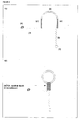
- Sequence segment ⁇ and ⁇ ' are complementary to one another and under suitable conditions can form a double-stranded region, the duplex ⁇ - ⁇ ' (see FIG. 1B).
- the formation of a hairpin structure by intramolecular duplex formation is favored thermodynamically for this molecule over the single-stranded conformation.
- the molecule exists exclusively as a hairpin structure with intramolecular duplex ⁇ - ⁇ ', which can be sequence-specifically cleaved by restriction endonucleases.
- the elements (1), (2) and optionally a few nucleotides of the element ( ⁇ ) remain bound to the solid phase. Labeled elements of the probe diffuse into the surrounding medium and are optionally removed by washing.
- the probe By hybridization with a target nucleic acid, which may be RNA or DNA and whose sequence is complementary to the sequence of sequence segment ⁇ , the probe is partially present as a duplex with the sample nucleic acid.
- a target nucleic acid which may be RNA or DNA and whose sequence is complementary to the sequence of sequence segment ⁇
- the probe is partially present as a duplex with the sample nucleic acid.
- the sequence segments ⁇ and ⁇ ' are single-stranded and can not be cleaved by restriction endonucleases or other double strand-specific nucleases.
- the equilibrium melting temperature T m ( ⁇ ) of sequence section ⁇ must be higher than that of the sequence section ⁇ or ⁇ '; So T m ( ⁇ )> T m ( ⁇ ) [Bonnet, G. et al., "Thermodynamic basis of the enhanced specificity of structured DNA probes", 1999, Proc., vol. 96].
- the equilibrium melting temperature T m ( ⁇ ) of the heteroduplex formed from sample nucleic acid and sequence segment ⁇ is between 10 ° C and 25 ° C higher than the equilibrium melting temperature T m ( ⁇ ) of the intramolecular duplex ⁇ - ⁇ '.
- a probe nucleic acid that can form a secondary structure has increased sequence specificity over a linear probe nucleic acid with the same target nucleic acid.
- the difference in equilibrium melting temperature ⁇ T m of a probe / target nucleic acid duplex having no base mismatch versus a probe / target nucleic acid duplex having a base mismatch is with probe nucleic acids, which can form a secondary structure about twice that of linear probe nucleic acids [Bonnet, G. et al., "Thermodynamic basis of the enhanced specificity of structured DNA probes", 1999, Proc. Natl. Acad. Sci., vol , 96].
- the method according to the invention can preferably be used for multiplex analyzes.
- n different probe nucleic acids which differ from each other in sequence section ⁇ , in the excitation and emission spectrum of the fluorophores [Vet, JAM et al., "Multiplex detection of four pathogenic retroviruses using molecular beacons", 1999, Proc.Natl.Acad. Sci., Vol. 96; Marras, SAE et al., “Multiplex detection of single-nucleotide variations using molecular beacons", 1999, Genetic Analysis; Biomolecular Engineering, vol. 14] and optionally with respect to the recognition sequences for restriction endonucleases contained in sequence section ⁇ and ⁇ 'immobilized on the same surface.
- aqueous solution containing equimolar amounts of these n different probe nucleic acids is deposited and immobilized on a solid surface by printing methods [Cheung, VG et al., "Making and Reading Microarrays", Nature Genetics, vol. 21, Jan. 1999; Bowtell, DDL, "Options available - from start to finish - for obtaining expression data by microarray”, Nature Genetics, vol. 21, Jan. 1999].
- This area can be a "spot” on a DNA array or the surface of a micro or nanoparticle.
- the hybridization of n different target nucleic acids of different sequence with n different probe nucleic acids whose sequence sections ⁇ and ⁇ 'contain the same recognition sequence for a restriction endonuclease can be analyzed in this way simultaneously. If the sequence sections ⁇ and ⁇ 'of the probe nucleic acids contain n different recognition sequences for n different restriction endonucleases, the hybridization of n different target nucleic acids of different sequence with n different probe nucleic acids can be analyzed simultaneously or preferably serially.
- the method according to the invention can be carried out as follows for carrying out a multiplex analysis for hybridizing the probe nucleic acid with target or sample nucleic acids:
- a DNA array of one or more probe nucleic acids of the invention bound to a solid matrix is contacted with unlabeled sample nucleic acid, which may be RNA or DNA, under the preferred conditions set forth below.
- the DNA array is incubated according to the surface to be hybridized with 20 .mu.l - 200 .mu.l of a suitable hybridization buffer at 45 ° C for 10 - 20 minutes.
- 0.1 ⁇ g - 50 ⁇ g unlabeled sample nucleic acid are taken up in 300 ⁇ l of suitable hybridization solution and heated to about 99 ° C for 5 minutes before hybridization with the DNA array and then cooled to about 45 ° C for 5 minutes.
- the hybridization buffer is removed from the DNA array and replaced with the hybridization solution containing the sample nucleic acids.
- the DNA array is incubated for 16 hours at 45 ° C - 60 ° C with the sample nucleic acids. After removal of the sample nucleic acid solution, the DNA array is washed with wash buffers of different ionic strength for each at 50 ° C - 65 ° C.
- the cleavage of the non-hybridized probe nucleic acids by restriction endonucleases in the region of the duplex ⁇ - ⁇ ' is preferably carried out at 25 ° C.-37 ° C. under the reaction conditions recommended by the manufacturer.
- the activity of the restriction endonucleases can be increased up to 34-fold by addition of lipids to the reaction mixture [Kinnunen et al., "Materials and methods for digestion of DNA or RNA using restriction endonucleases", US Pat. 5,879,950].
- cleaved sample nucleic acids, labels, and restriction endonucleases are removed from the surface of the DNA array.
- the signals and data obtained by the method according to the invention are preferably detected and analyzed as follows:
- the concentration of the fluorophores conjugated to the probe nucleic acid is determined by measuring the absorbance of an aqueous solution of the labeled probe nucleic acids at a wavelength corresponding to the absorption maximum of the fluorophores ( ⁇ max ) using Lambert-Beer's law.
- concentration of a nucleic acid conjugated to fluorophores it must be borne in mind that most fluorophores absorb light of a wavelength of 260 nm.
- CF 260 The molar extinction coefficients of various fluorophores and the correction factors for absorption at 260 nm (CF 260 ) are available from the manufacturers of these fluorophores (Molecular Probes, BioRad and others).
- the ratio of the concentration of the fluorophores conjugated to the probe nucleic acid to the concentration of the probe nucleic acid is equal to the amount of fluorophores conjugated to the probe nucleic acid.
- the fluorescence of a fixed amount of these probe nucleic acids is determined.
- the number of probe nucleic acid molecules bound to a solid matrix can be precisely determined prior to hybridization with target or sample nucleic acid.
- Variations in the amount of immobilized probe nucleic acids that affect hybridization with target or sample nucleic acids can thus be accounted for and computationally corrected. Measurements which are carried out with the aid of the hybridization of target or sample nucleic acids with probe nucleic acids according to the invention can therefore be standardized.
- the fluorescence emission from each sample point of the DNA array is preferably determined by confocal laser scanning microscopy.
- Devices for determining fluorescence emission in small areas are offered by a number of manufacturers and are in the field of biotechnology laboratory standard [Cheung, VG et al., "Making and reading microarrays", Nature Genetics, vol. 21, Jan. 1999; Bowtell, DDL, "Options available - from start to finish - for obtaining expression data by microarray", Nature Genetics, vol. 21, Jan. 1999].
- the fluorescence of the immobilized probe nucleic acids is determined before hybridization.
- the fluorescence is excited by light of a wavelength corresponding to the absorption maximum ( ⁇ Abs.max ) of those fluorophores and at one wavelength detected, which corresponds to the emission maximum ( ⁇ Em.max ).
- n different probe nucleic acids of different sequence specificity are immobilized on each sample point of the DNA array and labeled with n different, spectrally distinguishable fluorophores
- the fluorescence of the n different fluorophores is excited by light of a wavelength which corresponds to the absorption maximum ( ⁇ Abs.max ) corresponds to these fluorophores, and detected at a wavelength corresponding to the emission maximum ( ⁇ Em.max ).
- the determination of the fluorescence of different fluorophores can be carried out simultaneously or in succession.
- Double-modified oligodeoxynucleotides whose 5 'and 3' end are each covalently linked to fluorescein isothiocyanate (FITC) or an amino group (NH 2 ) via a C22 spacer (Sequence A: FITC- 5 ' gcccgcgcAATAGGGATGGCTCAACAgcgcgggc 3'- (C22) NH 2 and B: FITC-5 '3'-gcccgcgcTTAGAGTGCAAAATGAAAGCGCCgcgcgggc (C22) NH 2) were added to 100 .mu.l of coupling buffer (500 mM Na 2 HPO 4, pH 8.5, 1 mM EDTA) (concentration: 500 pmol / ml).
- coupling buffer 500 mM Na 2 HPO 4, pH 8.5, 1 mM EDTA
- the wells of the microtiter plate were each sheared with 125 ⁇ l hybridization solution containing 0.1 mg / ml Salmon sperm DNA (Gibco BRULife Technologies); 0.5 mg / ml acetylated BSA (Gibco BRL / Life Technologies); 1X MES (100 mM MES, 1.0 M NaCl, 20 mM EDTA, 0.01% Tween 20) was prehybridized for 4 hours at 60 ° C.
- 1X MES 100 mM MES, 1.0 M NaCl, 20 mM EDTA, 0.01% Tween 20
- the approach is for 20 min. heated to 95 ° C, cooled to 60 ° C in the course of one hour and hybridized for 16 hours at 60 ° C.
- the wells of the microtiter plate with "non-stringent” wash buffer (6X SSPE, 0.01% Tween 20) were incubated ten times for 5 minutes at 25 ° C and then five times with "stringent” wash buffer (100 mM MES; 0.1 M NaCl, 0.01% Tween 20) for 5 minutes at 55 ° C
- "stringent” wash buffer 100 mM MES; 0.1 M NaCl, 0.01% Tween 20
- the wells of the microtiter plate were equilibrated with 150 ⁇ l of 1X reaction buffer (NEB Buffer 3) for 10 minutes at 37 ° C and then with 100 ⁇ l each of 1X reaction buffer containing 2 units of the restriction endonuclease Aci1 (New England Biolabs) was incubated for 1 hour at 37 ° C.
- detectable signal corresponds to the background fluorescence of the system and is detected by the signals detected in the region of the sample nucleic acids A and B. subtracted.
- FITC fluorescein isothiocyanate
- the DNA array is incubated with "non-stringent” wash buffer (6X SSPE, 0.01% Tween 20) ten times for 5 minutes at 25 ° C and then five times with "stringent” wash buffer (100 mM MES; 0.1 M NaCl; 0.01% Tween 20) for 5 minutes at 50 ° C.
- "non-stringent” wash buffer 6X SSPE, 0.01% Tween 20
- the signal detectable in the region of the sample nucleic acid C corresponds to the background fluorescence of the system and is subtracted from the signals detected in the region of the sample nucleic acids A and B.
- sample nucleic acids of sequence A (FITC) - 5 ' gcccgcgcAATAGGGATGGCTCAACA-gcgcgggC 3
- B (Cascade Blue) - 5' gcccgcgcTTAGAGTGCAAAATGAAAGCGCCgcgCgggc 3
- C (BODIPY TR14) - 5 ' gcccgcgcTTTCTCTACCTCCTCACATTGTGgcgcgggc 3' are immobilized together on a defined area A (sample point A).
- the probe nucleic acids D (FITC) - 5 'gcccgcgcGTTTTTTTTTTTTTTTTTTGGTTTTTTTTTTTTTC gcgcgggc-3'
- E (Cascade Blue) - 5 'gcc-cgcgcGTTTTTTTTTTTTTTTTTC-gcgcgggc 3 -
- F (BODIPY TR14) - 5' gcccgcgcGTTTTTTTTTTTTTTTTTTTTTTTC-gcgcgggc 3 ', which are used as a control to determine the background fluorescence, are immobilized together on another defined area B (sample point B).
- cRNA sample RNA
- RNA contains, in 25 pM control RNA, 0.1 mg / ml Salmon sperm DNA sheared (Gibco BRL / Life Technologies); 0.5 mg / ml acetylated BSA (Gibco BRULife Technologies); 1X MES (100 mM MES, 1.0 M NaCl, 20 mM EDTA, 0.01% Tween 20) for 16 hours at 55 ° C.
- the DNA array is incubated with "non-stringent” wash buffer (6X SSPE, 0.01% Tween 20) ten times for 5 minutes at 25 ° C and then five times with "stringent” wash buffer (100 mM MES: 0 , 1 M NaCl, 0.01% Tween 20) for 5 minutes at 50 ° C.
- "non-stringent” wash buffer 6X SSPE, 0.01% Tween 20
- the signals detectable in the region of the sample point B correspond to the background fluorescence of the system and are subtracted from the signals detected in the region of the sample point A.
Landscapes
- Chemical & Material Sciences (AREA)
- Organic Chemistry (AREA)
- Life Sciences & Earth Sciences (AREA)
- Zoology (AREA)
- Wood Science & Technology (AREA)
- Proteomics, Peptides & Aminoacids (AREA)
- Health & Medical Sciences (AREA)
- Engineering & Computer Science (AREA)
- Microbiology (AREA)
- Immunology (AREA)
- Physics & Mathematics (AREA)
- Molecular Biology (AREA)
- Biotechnology (AREA)
- Biophysics (AREA)
- Analytical Chemistry (AREA)
- Biochemistry (AREA)
- Bioinformatics & Cheminformatics (AREA)
- General Engineering & Computer Science (AREA)
- General Health & Medical Sciences (AREA)
- Genetics & Genomics (AREA)
- Measuring Or Testing Involving Enzymes Or Micro-Organisms (AREA)
Applications Claiming Priority (3)
| Application Number | Priority Date | Filing Date | Title |
|---|---|---|---|
| DE10158516 | 2001-11-29 | ||
| DE10158516A DE10158516A1 (de) | 2001-11-29 | 2001-11-29 | Verfahren zum Nachweis von Hybridisierungsereignissen in Nukleinsäuren |
| PCT/EP2002/013215 WO2003046215A1 (de) | 2001-11-29 | 2002-11-25 | Verfahren zum nachweis von hybridisierungsereignissen in nukleinsäuren |
Publications (2)
| Publication Number | Publication Date |
|---|---|
| EP1453975A1 EP1453975A1 (de) | 2004-09-08 |
| EP1453975B1 true EP1453975B1 (de) | 2006-08-09 |
Family
ID=7707346
Family Applications (1)
| Application Number | Title | Priority Date | Filing Date |
|---|---|---|---|
| EP02787794A Expired - Lifetime EP1453975B1 (de) | 2001-11-29 | 2002-11-25 | Verfahren zum nachweis von hybridisierungsereignissen in nukleinsäuren |
Country Status (9)
| Country | Link |
|---|---|
| US (1) | US20060057569A1 (enExample) |
| EP (1) | EP1453975B1 (enExample) |
| JP (1) | JP2005536983A (enExample) |
| CN (1) | CN1610757A (enExample) |
| AT (1) | ATE335853T1 (enExample) |
| AU (1) | AU2002352121A1 (enExample) |
| CA (1) | CA2468411A1 (enExample) |
| DE (2) | DE10158516A1 (enExample) |
| WO (1) | WO2003046215A1 (enExample) |
Families Citing this family (10)
| Publication number | Priority date | Publication date | Assignee | Title |
|---|---|---|---|---|
| US9063156B2 (en) * | 2009-06-12 | 2015-06-23 | Pacific Biosciences Of California, Inc. | Real-time analytical methods and systems |
| EP2545189B1 (en) | 2010-03-08 | 2018-01-10 | Dana-Farber Cancer Institute, Inc. | Full cold-pcr enrichment with reference blocking sequence |
| US11130992B2 (en) | 2011-03-31 | 2021-09-28 | Dana-Farber Cancer Institute, Inc. | Methods and compositions to enable multiplex COLD-PCR |
| JP6941568B2 (ja) * | 2015-06-24 | 2021-09-29 | デイナ ファーバー キャンサー インスティチュート,インコーポレイテッド | ヌクレアーゼを使用する野生型dnaの選択的分解および突然変異体対立遺伝子の濃縮 |
| JP7096812B2 (ja) * | 2016-08-01 | 2022-07-06 | エフ.ホフマン-ラ ロシュ アーゲー | 核酸配列決定調製物からアダプター二量体を除去する方法 |
| WO2018111835A1 (en) | 2016-12-12 | 2018-06-21 | Dana-Farber Cancer Institute, Inc. | Compositions and methods for molecular barcoding of dna molecules prior to mutation enrichment and/or mutation detection |
| JP2019154396A (ja) * | 2018-03-16 | 2019-09-19 | 株式会社リコー | 核酸検出方法、並びに、それに用いる標的核酸検出用プローブ、及び標的核酸検出用デバイス |
| JP7035972B2 (ja) * | 2018-11-09 | 2022-03-15 | 横河電機株式会社 | 核酸配列計測用デバイス |
| WO2021087164A1 (en) * | 2019-10-30 | 2021-05-06 | Shire Human Genetic Therapies, Inc. | Methods for detecting oligonucleotides |
| CN114280128B (zh) * | 2021-12-24 | 2022-11-18 | 清华大学 | 双标记gFET的制备及其在miRNA检测中的应用 |
Family Cites Families (5)
| Publication number | Priority date | Publication date | Assignee | Title |
|---|---|---|---|---|
| US5543292A (en) * | 1992-06-16 | 1996-08-06 | Hitachi, Ltd. | Process for the measurement of nucleic acids |
| US5858659A (en) * | 1995-11-29 | 1999-01-12 | Affymetrix, Inc. | Polymorphism detection |
| CA2170264A1 (en) * | 1993-09-10 | 1995-03-16 | Michael W. Konrad | Optical detection of position of oligonucleotides on large dna molecules |
| US5925517A (en) * | 1993-11-12 | 1999-07-20 | The Public Health Research Institute Of The City Of New York, Inc. | Detectably labeled dual conformation oligonucleotide probes, assays and kits |
| WO2002024955A2 (en) * | 2000-09-19 | 2002-03-28 | Atom Sciences, Inc. | Detection of unlabeled hybridized dna and rna using restriction enzyme digestion |
-
2001
- 2001-11-29 DE DE10158516A patent/DE10158516A1/de not_active Withdrawn
-
2002
- 2002-11-25 AU AU2002352121A patent/AU2002352121A1/en not_active Abandoned
- 2002-11-25 EP EP02787794A patent/EP1453975B1/de not_active Expired - Lifetime
- 2002-11-25 AT AT02787794T patent/ATE335853T1/de not_active IP Right Cessation
- 2002-11-25 US US10/497,130 patent/US20060057569A1/en not_active Abandoned
- 2002-11-25 CA CA002468411A patent/CA2468411A1/en not_active Abandoned
- 2002-11-25 DE DE50207820T patent/DE50207820D1/de not_active Expired - Fee Related
- 2002-11-25 JP JP2003547646A patent/JP2005536983A/ja not_active Ceased
- 2002-11-25 WO PCT/EP2002/013215 patent/WO2003046215A1/de not_active Ceased
- 2002-11-25 CN CNA028265599A patent/CN1610757A/zh active Pending
Also Published As
| Publication number | Publication date |
|---|---|
| US20060057569A1 (en) | 2006-03-16 |
| CN1610757A (zh) | 2005-04-27 |
| WO2003046215A1 (de) | 2003-06-05 |
| DE10158516A1 (de) | 2003-06-12 |
| CA2468411A1 (en) | 2003-06-05 |
| EP1453975A1 (de) | 2004-09-08 |
| ATE335853T1 (de) | 2006-09-15 |
| JP2005536983A (ja) | 2005-12-08 |
| DE50207820D1 (de) | 2006-09-21 |
| AU2002352121A1 (en) | 2003-06-10 |
Similar Documents
| Publication | Publication Date | Title |
|---|---|---|
| DE60223276T2 (de) | Verfahren zur Blockierung von unspezifischen Hybridisierungen von Nukleinsäuresequenzen | |
| DE60125312T2 (de) | Mikroarray | |
| DE69839373T2 (de) | Auf die Verwendung von nukleaseresistenten Fragmenten basierende Verfahren und Kits, die für Nukleinsäuretests mit hohem Durchsatz geeignet sind | |
| DE60128720T2 (de) | Mikroarray-verfahren zur genotypisierung mehrerer proben für mehrere loci | |
| DE60114525T2 (de) | Array-basierende Methoden zur Synthese von Nukleinsäuregemischen | |
| EP2776585B1 (de) | Bifunktionale oligonukleotidsonde zur universellen echtzeit multianalyt detektion | |
| DE60133111T2 (de) | Verfahren zur erkennung und zum assay von nukleinsäuresequenzen | |
| RU2523589C2 (ru) | Способ амплификации и детекции нуклеотидных последовательностей в реакционной смеси и используемый в нем набор | |
| CA2452712C (en) | Methods for detection and quantification of analytes in complex mixtures | |
| DE69928265T2 (de) | Matrizen von biomolekülen und ihre verwendung in sequenzierung | |
| DE19935772C2 (de) | Verfahren zur relativen Quantifizierung der Methylierung von Cytosin Basen in DNA-Proben | |
| US20020001844A1 (en) | Method for label-free detection of hybridized DNA targets | |
| DE102007044664B4 (de) | Verdrängungsassay zur Detektion von Nukleinsäureoligomer-Hybridisierungsereignissen | |
| US20060246475A1 (en) | Compositions and methods for increased dynamic range detection of nucleic acids | |
| CN109477095A (zh) | 用于单分子检测的阵列及其应用 | |
| US20070009915A1 (en) | Microarray analysis of RNA | |
| CA2759992A1 (en) | Detection of multiple nucleic acid sequences in a reaction cartridge | |
| EP1453975B1 (de) | Verfahren zum nachweis von hybridisierungsereignissen in nukleinsäuren | |
| DE102011056606B3 (de) | Verfahren zur elektrochemischen Detektion von Nukleinsäureoligomer-Hybridisierungsereignissen | |
| EP1064408A1 (de) | Verfahren zum nachweis einer nukleotidsequenz | |
| DE10253966B4 (de) | Microarray-basiertes Verfahren zur Amplifikation und Detektion von Nukleinsäuren in einem kontinuierlichen Prozess | |
| US20040009514A1 (en) | Assembly for label-free detection of hybridized nucleic targets | |
| DE102006014879B4 (de) | RNA-Markierungsverfahren | |
| EP1711627B1 (de) | Verfahren zur geno- und pathotypisierung von pseudomonas aeruginosa | |
| DE10325098B3 (de) | Verfahren zur SNP-Analyse auf Biochips mit Oligonukleotid-Arealen |
Legal Events
| Date | Code | Title | Description |
|---|---|---|---|
| PUAI | Public reference made under article 153(3) epc to a published international application that has entered the european phase |
Free format text: ORIGINAL CODE: 0009012 |
|
| 17P | Request for examination filed |
Effective date: 20040518 |
|
| AK | Designated contracting states |
Kind code of ref document: A1 Designated state(s): AT BE BG CH CY CZ DE DK EE ES FI FR GB GR IE IT LI LU MC NL PT SE SK TR |
|
| AX | Request for extension of the european patent |
Extension state: AL LT LV MK RO SI |
|
| GRAP | Despatch of communication of intention to grant a patent |
Free format text: ORIGINAL CODE: EPIDOSNIGR1 |
|
| GRAS | Grant fee paid |
Free format text: ORIGINAL CODE: EPIDOSNIGR3 |
|
| GRAA | (expected) grant |
Free format text: ORIGINAL CODE: 0009210 |
|
| AK | Designated contracting states |
Kind code of ref document: B1 Designated state(s): AT BE BG CH CY CZ DE DK EE ES FI FR GB GR IE IT LI LU MC NL PT SE SK TR |
|
| PG25 | Lapsed in a contracting state [announced via postgrant information from national office to epo] |
Ref country code: NL Free format text: LAPSE BECAUSE OF FAILURE TO SUBMIT A TRANSLATION OF THE DESCRIPTION OR TO PAY THE FEE WITHIN THE PRESCRIBED TIME-LIMIT Effective date: 20060809 Ref country code: IT Free format text: LAPSE BECAUSE OF FAILURE TO SUBMIT A TRANSLATION OF THE DESCRIPTION OR TO PAY THE FEE WITHIN THE PRESCRIBED TIME-LIMIT;WARNING: LAPSES OF ITALIAN PATENTS WITH EFFECTIVE DATE BEFORE 2007 MAY HAVE OCCURRED AT ANY TIME BEFORE 2007. THE CORRECT EFFECTIVE DATE MAY BE DIFFERENT FROM THE ONE RECORDED. Effective date: 20060809 Ref country code: SK Free format text: LAPSE BECAUSE OF FAILURE TO SUBMIT A TRANSLATION OF THE DESCRIPTION OR TO PAY THE FEE WITHIN THE PRESCRIBED TIME-LIMIT Effective date: 20060809 Ref country code: IE Free format text: LAPSE BECAUSE OF FAILURE TO SUBMIT A TRANSLATION OF THE DESCRIPTION OR TO PAY THE FEE WITHIN THE PRESCRIBED TIME-LIMIT Effective date: 20060809 Ref country code: CZ Free format text: LAPSE BECAUSE OF FAILURE TO SUBMIT A TRANSLATION OF THE DESCRIPTION OR TO PAY THE FEE WITHIN THE PRESCRIBED TIME-LIMIT Effective date: 20060809 Ref country code: FI Free format text: LAPSE BECAUSE OF FAILURE TO SUBMIT A TRANSLATION OF THE DESCRIPTION OR TO PAY THE FEE WITHIN THE PRESCRIBED TIME-LIMIT Effective date: 20060809 Ref country code: GB Free format text: LAPSE BECAUSE OF FAILURE TO SUBMIT A TRANSLATION OF THE DESCRIPTION OR TO PAY THE FEE WITHIN THE PRESCRIBED TIME-LIMIT Effective date: 20060809 |
|
| REG | Reference to a national code |
Ref country code: GB Ref legal event code: FG4D Free format text: NOT ENGLISH |
|
| REG | Reference to a national code |
Ref country code: CH Ref legal event code: EP |
|
| REG | Reference to a national code |
Ref country code: IE Ref legal event code: FG4D Free format text: LANGUAGE OF EP DOCUMENT: GERMAN |
|
| REF | Corresponds to: |
Ref document number: 50207820 Country of ref document: DE Date of ref document: 20060921 Kind code of ref document: P |
|
| PG25 | Lapsed in a contracting state [announced via postgrant information from national office to epo] |
Ref country code: DK Free format text: LAPSE BECAUSE OF FAILURE TO SUBMIT A TRANSLATION OF THE DESCRIPTION OR TO PAY THE FEE WITHIN THE PRESCRIBED TIME-LIMIT Effective date: 20061109 Ref country code: SE Free format text: LAPSE BECAUSE OF FAILURE TO SUBMIT A TRANSLATION OF THE DESCRIPTION OR TO PAY THE FEE WITHIN THE PRESCRIBED TIME-LIMIT Effective date: 20061109 Ref country code: BG Free format text: LAPSE BECAUSE OF FAILURE TO SUBMIT A TRANSLATION OF THE DESCRIPTION OR TO PAY THE FEE WITHIN THE PRESCRIBED TIME-LIMIT Effective date: 20061109 |
|
| PG25 | Lapsed in a contracting state [announced via postgrant information from national office to epo] |
Ref country code: ES Free format text: LAPSE BECAUSE OF FAILURE TO SUBMIT A TRANSLATION OF THE DESCRIPTION OR TO PAY THE FEE WITHIN THE PRESCRIBED TIME-LIMIT Effective date: 20061120 |
|
| PG25 | Lapsed in a contracting state [announced via postgrant information from national office to epo] |
Ref country code: MC Free format text: LAPSE BECAUSE OF NON-PAYMENT OF DUE FEES Effective date: 20061130 Ref country code: LI Free format text: LAPSE BECAUSE OF NON-PAYMENT OF DUE FEES Effective date: 20061130 Ref country code: BE Free format text: LAPSE BECAUSE OF NON-PAYMENT OF DUE FEES Effective date: 20061130 Ref country code: CH Free format text: LAPSE BECAUSE OF NON-PAYMENT OF DUE FEES Effective date: 20061130 |
|
| PG25 | Lapsed in a contracting state [announced via postgrant information from national office to epo] |
Ref country code: PT Free format text: LAPSE BECAUSE OF FAILURE TO SUBMIT A TRANSLATION OF THE DESCRIPTION OR TO PAY THE FEE WITHIN THE PRESCRIBED TIME-LIMIT Effective date: 20070109 |
|
| NLV1 | Nl: lapsed or annulled due to failure to fulfill the requirements of art. 29p and 29m of the patents act | ||
| GBV | Gb: ep patent (uk) treated as always having been void in accordance with gb section 77(7)/1977 [no translation filed] |
Effective date: 20060809 |
|
| REG | Reference to a national code |
Ref country code: IE Ref legal event code: FD4D |
|
| EN | Fr: translation not filed | ||
| PG25 | Lapsed in a contracting state [announced via postgrant information from national office to epo] |
Ref country code: DE Free format text: LAPSE BECAUSE OF NON-PAYMENT OF DUE FEES Effective date: 20070601 |
|
| PLBE | No opposition filed within time limit |
Free format text: ORIGINAL CODE: 0009261 |
|
| STAA | Information on the status of an ep patent application or granted ep patent |
Free format text: STATUS: NO OPPOSITION FILED WITHIN TIME LIMIT |
|
| REG | Reference to a national code |
Ref country code: CH Ref legal event code: PL |
|
| 26N | No opposition filed |
Effective date: 20070510 |
|
| BERE | Be: lapsed |
Owner name: FOCUSGENOMICS G.M.B.H. Effective date: 20061130 |
|
| PG25 | Lapsed in a contracting state [announced via postgrant information from national office to epo] |
Ref country code: AT Free format text: LAPSE BECAUSE OF NON-PAYMENT OF DUE FEES Effective date: 20061125 |
|
| PG25 | Lapsed in a contracting state [announced via postgrant information from national office to epo] |
Ref country code: GR Free format text: LAPSE BECAUSE OF FAILURE TO SUBMIT A TRANSLATION OF THE DESCRIPTION OR TO PAY THE FEE WITHIN THE PRESCRIBED TIME-LIMIT Effective date: 20061110 Ref country code: FR Free format text: LAPSE BECAUSE OF FAILURE TO SUBMIT A TRANSLATION OF THE DESCRIPTION OR TO PAY THE FEE WITHIN THE PRESCRIBED TIME-LIMIT Effective date: 20070511 |
|
| PG25 | Lapsed in a contracting state [announced via postgrant information from national office to epo] |
Ref country code: EE Free format text: LAPSE BECAUSE OF FAILURE TO SUBMIT A TRANSLATION OF THE DESCRIPTION OR TO PAY THE FEE WITHIN THE PRESCRIBED TIME-LIMIT Effective date: 20060809 |
|
| PG25 | Lapsed in a contracting state [announced via postgrant information from national office to epo] |
Ref country code: TR Free format text: LAPSE BECAUSE OF FAILURE TO SUBMIT A TRANSLATION OF THE DESCRIPTION OR TO PAY THE FEE WITHIN THE PRESCRIBED TIME-LIMIT Effective date: 20060809 Ref country code: LU Free format text: LAPSE BECAUSE OF NON-PAYMENT OF DUE FEES Effective date: 20061125 |
|
| PG25 | Lapsed in a contracting state [announced via postgrant information from national office to epo] |
Ref country code: FR Free format text: LAPSE BECAUSE OF FAILURE TO SUBMIT A TRANSLATION OF THE DESCRIPTION OR TO PAY THE FEE WITHIN THE PRESCRIBED TIME-LIMIT Effective date: 20060809 Ref country code: CY Free format text: LAPSE BECAUSE OF FAILURE TO SUBMIT A TRANSLATION OF THE DESCRIPTION OR TO PAY THE FEE WITHIN THE PRESCRIBED TIME-LIMIT Effective date: 20060809 |