EP1443539B1 - Entladungsröhre - Google Patents
Entladungsröhre Download PDFInfo
- Publication number
- EP1443539B1 EP1443539B1 EP04250245A EP04250245A EP1443539B1 EP 1443539 B1 EP1443539 B1 EP 1443539B1 EP 04250245 A EP04250245 A EP 04250245A EP 04250245 A EP04250245 A EP 04250245A EP 1443539 B1 EP1443539 B1 EP 1443539B1
- Authority
- EP
- European Patent Office
- Prior art keywords
- discharge tube
- discharge
- gas
- discharging
- filler
- Prior art date
- Legal status (The legal status is an assumption and is not a legal conclusion. Google has not performed a legal analysis and makes no representation as to the accuracy of the status listed.)
- Expired - Lifetime
Links
- 239000007789 gas Substances 0.000 claims description 76
- 238000007599 discharging Methods 0.000 claims description 58
- 239000000945 filler Substances 0.000 claims description 57
- 239000000203 mixture Substances 0.000 claims description 26
- 229910052786 argon Inorganic materials 0.000 claims description 24
- UFHFLCQGNIYNRP-UHFFFAOYSA-N Hydrogen Chemical compound [H][H] UFHFLCQGNIYNRP-UHFFFAOYSA-N 0.000 claims description 18
- XKRFYHLGVUSROY-UHFFFAOYSA-N Argon Chemical compound [Ar] XKRFYHLGVUSROY-UHFFFAOYSA-N 0.000 claims description 16
- 229910045601 alloy Inorganic materials 0.000 claims description 9
- 239000000956 alloy Substances 0.000 claims description 9
- RYGMFSIKBFXOCR-UHFFFAOYSA-N Copper Chemical compound [Cu] RYGMFSIKBFXOCR-UHFFFAOYSA-N 0.000 claims description 8
- 229910052802 copper Inorganic materials 0.000 claims description 8
- 239000010949 copper Substances 0.000 claims description 8
- 239000011261 inert gas Substances 0.000 claims description 8
- 239000007769 metal material Substances 0.000 claims description 8
- 238000007747 plating Methods 0.000 claims description 7
- 229910001030 Iron–nickel alloy Inorganic materials 0.000 claims description 5
- 229910018487 Ni—Cr Inorganic materials 0.000 claims description 4
- 229910000833 kovar Inorganic materials 0.000 claims description 4
- 229910052754 neon Inorganic materials 0.000 claims description 2
- GKAOGPIIYCISHV-UHFFFAOYSA-N neon atom Chemical compound [Ne] GKAOGPIIYCISHV-UHFFFAOYSA-N 0.000 claims description 2
- 229910052724 xenon Inorganic materials 0.000 claims description 2
- FHNFHKCVQCLJFQ-UHFFFAOYSA-N xenon atom Chemical compound [Xe] FHNFHKCVQCLJFQ-UHFFFAOYSA-N 0.000 claims description 2
- 238000010586 diagram Methods 0.000 description 28
- 238000005259 measurement Methods 0.000 description 12
- 230000007704 transition Effects 0.000 description 12
- 239000000126 substance Substances 0.000 description 11
- 230000007423 decrease Effects 0.000 description 9
- 238000012360 testing method Methods 0.000 description 8
- 230000000052 comparative effect Effects 0.000 description 6
- 150000002431 hydrogen Chemical class 0.000 description 5
- 239000001257 hydrogen Substances 0.000 description 5
- 229910052739 hydrogen Inorganic materials 0.000 description 5
- 239000000463 material Substances 0.000 description 5
- 239000000919 ceramic Substances 0.000 description 4
- 238000002242 deionisation method Methods 0.000 description 4
- 239000011810 insulating material Substances 0.000 description 3
- 238000005219 brazing Methods 0.000 description 2
- 230000003111 delayed effect Effects 0.000 description 2
- 238000001465 metallisation Methods 0.000 description 2
- 238000013459 approach Methods 0.000 description 1
- 239000003990 capacitor Substances 0.000 description 1
- 230000006866 deterioration Effects 0.000 description 1
- 238000011161 development Methods 0.000 description 1
- 230000005611 electricity Effects 0.000 description 1
- 150000002500 ions Chemical class 0.000 description 1
- 238000012986 modification Methods 0.000 description 1
- 230000004048 modification Effects 0.000 description 1
- 230000003449 preventive effect Effects 0.000 description 1
- 230000006641 stabilisation Effects 0.000 description 1
- 238000011105 stabilization Methods 0.000 description 1
Images



Classifications
-
- H—ELECTRICITY
- H01—ELECTRIC ELEMENTS
- H01T—SPARK GAPS; OVERVOLTAGE ARRESTERS USING SPARK GAPS; SPARKING PLUGS; CORONA DEVICES; GENERATING IONS TO BE INTRODUCED INTO NON-ENCLOSED GASES
- H01T4/00—Overvoltage arresters using spark gaps
- H01T4/10—Overvoltage arresters using spark gaps having a single gap or a plurality of gaps in parallel
- H01T4/12—Overvoltage arresters using spark gaps having a single gap or a plurality of gaps in parallel hermetically sealed
-
- H—ELECTRICITY
- H05—ELECTRIC TECHNIQUES NOT OTHERWISE PROVIDED FOR
- H05B—ELECTRIC HEATING; ELECTRIC LIGHT SOURCES NOT OTHERWISE PROVIDED FOR; CIRCUIT ARRANGEMENTS FOR ELECTRIC LIGHT SOURCES, IN GENERAL
- H05B41/00—Circuit arrangements or apparatus for igniting or operating discharge lamps
- H05B41/14—Circuit arrangements
- H05B41/36—Controlling
- H05B41/38—Controlling the intensity of light
- H05B41/382—Controlling the intensity of light during the transitional start-up phase
-
- H—ELECTRICITY
- H01—ELECTRIC ELEMENTS
- H01J—ELECTRIC DISCHARGE TUBES OR DISCHARGE LAMPS
- H01J17/00—Gas-filled discharge tubes with solid cathode
- H01J17/02—Details
- H01J17/20—Selection of substances for gas fillings; Specified operating pressures or temperatures
-
- H—ELECTRICITY
- H01—ELECTRIC ELEMENTS
- H01J—ELECTRIC DISCHARGE TUBES OR DISCHARGE LAMPS
- H01J17/00—Gas-filled discharge tubes with solid cathode
- H01J17/38—Cold-cathode tubes
- H01J17/40—Cold-cathode tubes with one cathode and one anode, e.g. glow tubes, tuning-indicator glow tubes, voltage-stabiliser tubes, voltage-indicator tubes
-
- H—ELECTRICITY
- H01—ELECTRIC ELEMENTS
- H01T—SPARK GAPS; OVERVOLTAGE ARRESTERS USING SPARK GAPS; SPARKING PLUGS; CORONA DEVICES; GENERATING IONS TO BE INTRODUCED INTO NON-ENCLOSED GASES
- H01T1/00—Details of spark gaps
- H01T1/20—Means for starting arc or facilitating ignition of spark gap
-
- H—ELECTRICITY
- H01—ELECTRIC ELEMENTS
- H01T—SPARK GAPS; OVERVOLTAGE ARRESTERS USING SPARK GAPS; SPARKING PLUGS; CORONA DEVICES; GENERATING IONS TO BE INTRODUCED INTO NON-ENCLOSED GASES
- H01T2/00—Spark gaps comprising auxiliary triggering means
-
- H—ELECTRICITY
- H05—ELECTRIC TECHNIQUES NOT OTHERWISE PROVIDED FOR
- H05B—ELECTRIC HEATING; ELECTRIC LIGHT SOURCES NOT OTHERWISE PROVIDED FOR; CIRCUIT ARRANGEMENTS FOR ELECTRIC LIGHT SOURCES, IN GENERAL
- H05B41/00—Circuit arrangements or apparatus for igniting or operating discharge lamps
- H05B41/02—Details
- H05B41/04—Starting switches
- H05B41/042—Starting switches using semiconductor devices
Definitions
- the present invention generally relates to a discharge tube, and more particularly to a discharge tube in which an upper discharge electrode and a lower discharge electrode are opposed to each other in an airtight cylinder, and an electric discharge is repeatedly generated between the discharging surfaces of the upper and lower discharge electrodes.
- a HID (high intensity discharge) headlamp for automotive vehicle requires an ignitor circuit which generates a high-voltage trigger in order to turn on the light.
- the ignitor circuit is mainly comprised of a capacitor which charges the electricity, a transformer which generates the high-voltage trigger, and a switching discharge tube which generates a stable voltage pulse.
- this switching discharge tube will be called the discharge tube.
- the above-mentioned discharge tube is comprised of an airtight cylinder made of an insulating material, such as ceramics, and first and second discharge electrodes arranged to the end openings of the airtight cylinder.
- a discharging gap is formed between the first discharge electrode and the second discharge electrode within the airtight cylinder, and the filler gas is enclosed in the airtight cylinder in an airtight manner.
- the filler gas used is a mixture of argon (Ar) gas as the major component and hydrogen (H 2 ) gas in a volume concentration above 0.5% and below 20%.
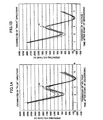
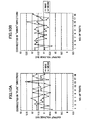
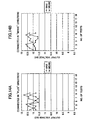
- FIG. 1A and FIG. 1B are diagrams for explaining a transition of the operating voltage of a conventional discharge tube immediately after a start of discharging.
- the filler gas of the discharge tube of FIG. 1A and FIG. 1B is composed of 90% by volume of argon (Ar) gas and 10% by volume of hydrogen (H 2 ) gas.
- Ar argon
- H 2 hydrogen
- all the chemical composition (%) of the filler gas is expressed in the volume concentration (percent by volume) unless otherwise specified.
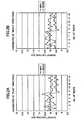
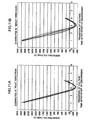
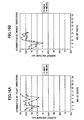
- FIG. 2A and FIG. 2B are diagrams for explaining the results of measurement of an output voltage of the secondary coil of the transformer of the ignitor circuit to which the conventional discharge tube (the composition of the filler gas: 90%Ar + 10%H 2 ) of FIG. 1A and FIG. 1B is applied.
- the conventional discharge tube the composition of the filler gas: 90%Ar + 10%H 2
- connection of the discharge tube is made in the "plus” direction and the "minus” direction, respectively. Namely, the direction of the connection is reversed between the cases of FIG. 1A and FIG. 1B .
- the actual output voltage of the secondary coil of the transformer of the ignitor circuit at this time declines greatly, although the desired value of the output voltage is about 11 kV. This is because the decline of the output voltage is caused by the above mentioned rebound phenomenon.
- An object of the present invention is to provide an improved discharge tube in which the above-mentioned problems are eliminated.
- An object of the present invention is to provide a discharge tube which can effectively suppress the occurrence of the rebound phenomenon.
- the present invention provides a discharge tube comprising:
- the discharge tube of the present invention it is possible to suppress the occurrence of the rebound phenomenon immediately after a start of discharging. Moreover, according to the discharge tube of the present invention, it is possible to suppress the decline of the discharge life of the discharge electrode. Moreover, according to the discharge tube of the present invention, it is possible to provide stable generation of the discharge starting voltage.
- FIG. 1A and FIG. 1B are diagrams for explaining a transition of the operating voltage of a conventional discharge tube after a start of discharging.
- FIG. 2A and FIG. 2B are diagrams for explaining results of measurement of an output voltage of the secondary coil of the transformer with the conventional discharge tube used.
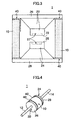
- FIG. 3 is a cross-sectional view of an embodiment of the discharge tube of the invention.
- FIG. 4 is a perspective view of an embodiment of the discharge tube of the invention.
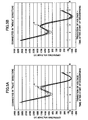
- FIG. 5A and FIG. 5B are diagrams for explaining a transition of the operating voltage of a first preferred embodiment of the discharge tube after a start of discharging, which is not however according to the invention.
- FIG. 6A and FIG. 6B are diagrams for explaining results of measurement of an output voltage of the secondary coil of the transformer with the discharge tube of the first preferred embodiment used.
- FIG. 7A, FIG. 7B, FIG. 7C, and FIG. 7D are diagrams for explaining the results of the discharge life test of the discharge tube of the first preferred embodiment.
- FIG. 8A, FIG. 8B and FIG. 8C are diagrams for explaining the results of the discharge life test of a discharge tube of a comparative example.
- FIG. 9A and FIG. 9B are diagrams for explaining a transition of the operating voltage of a second preferred embodiment of the discharge tube after a start of discharging which is not however according to the invention.
- FIG. 10A and FIG. 10B are diagrams for explaining results of measurement of an output voltage of the secondary coil of the transformer with the discharge tube of the second preferred embodiment used.
- FIG. 11A and FIG. 11B are diagrams for explaining a transition of the operating voltage of a third preferred embodiment of the discharge tube after a start of discharging, which is according to the invention.
- FIG. 12A and FIG. 12B are diagrams for explaining results of measurement of an output voltage of the secondary coil of the transformer with the discharge tube of the third preferred embodiment used.
- FIG. 13A and FIG. 13B are diagrams for explaining a transition of the operating voltage of a fourth preferred embodiment of the discharge tube after a start of discharging which is according to the invention.
- FIG. 14A and FIG. 14B are diagrams for explaining results of measurement of an output voltage of the secondary coil of the transformer with the discharge tube of the fourth preferred embodiment used.
- FIG. 15A and FIG. 15B are diagrams for explaining a transition of the operating voltage of a fifth preferred embodiment of the discharge tube after a start of discharging which is according to the invention.
- FIG. 16A and FIG. 16B are diagrams for explaining results of measurement of an output voltage of the secondary coil of the transformer with the discharge tube of the fifth preferred embodiment used.
- FIG. 3 and FIG. 4 show an embodiment of the discharge tube of the present invention. Specifically, FIG. 3 is a cross-sectional view of the discharge tube 1, and FIG. 4 is a perspective view of the appearance of the discharge tube 1.
- the discharge tube 1 is generally comprised of an airtight cylinder 10, an upper discharge electrode 22, a lower discharge electrode 24, and a filler gas contained in the airtight cylinder 10.
- the airtight cylinder 10 is in the shape of a cylinder and it is made of an insulating material, such as ceramics.
- the material of the upper and lower discharge electrodes 22 and 24 is not limited to the 42 Fe-Ni alloy.
- other materials, such as Kovar and Fe-Ni-Cr alloy may be used for the discharge electrodes 22 and 24.
- a disk-shaped lid member 26 and a disk-shaped lid member 28 are integrally formed with the upper discharge electrode 22 and the lower discharge electrode 24 respectively, and metallization surfaces 40 are formed on the upper and lower end openings of the airtight cylinder 10.
- the upper discharge electrode 22 and the lower discharge electrode 24 are joined to the airtight cylinder 10 by brazing of the lid members 26 and 28 integrally formed with the discharge electrodes 22 and 24, to the metallization surfaces 40 formed on the end openings of the airtight cylinder 10.
- the filler gas is enclosed when performing the above joining of the electrodes 22 and 24.
- the hermetic seal of the filler gas enclosed in the airtight cylinder 10 is carried out to the airtight cylinder 10 by joining of the upper discharging surface 23 and the upper discharge electrode 22.
- the upper discharge electrode 22 projects towards the center of the airtight cylinder 10 from the lid member 26, and the leading edge of the discharge electrode 22 is formed into the shape of a pillar having a small diameter. Moreover, the discharging surface 23 (which will be called the upper discharging surface 23) is formed at the leading edge of the discharge electrode 22 where the small-diameter pillar is formed. Moreover, the cavity 27 for making the generation of electric discharge stable is formed in the upper discharging surface 23.
- the lower discharge electrode 24 projects towards the center of the airtight cylinder 10 from the lid member 28, and the leading edge of the discharge electrode 24 is formed into the shape of a pillar having a small diameter.
- the discharging surface 25 (which will be called the lower discharging surface 25) is formed at the leading edge of the discharge electrode 24 where the small-diameter pillar is formed.
- the cavity 27 for making the generation of electric discharge stable which is opposed to the cavity 27 in the upper discharging surface 23, is formed also in the lower discharging surface 25.
- copper plating is performed on each of the upper discharging surface 23 and the lower discharging surface 25.
- the electric discharge in the discharge tube 1 is generated at an intermediate portion which is distant from both the upper discharging surface 23 and the lower discharging surface 25.
- the intermediate portion between the upper discharging surface 23 and the lower discharging surface 25 will be called the discharging gap 29.
- the discharge tube 1 of the present embodiment copper plating is performed on each of the upper discharging surface 23 of the upper discharge electrode 22 and the lower discharging surface 25 of the lower discharge electrode 24.
- any of the metallic materials including the 42 Fe-Ni alloy, Kovar, Fe-Ni-Cr alloy, etc. is used as the material of the upper and lower discharge electrodes 22 and 24. It is desirable that the thickness of the copper plating is in a range from several micrometers to 20 micrometers.
- the airtight cylinder 10 is made of the insulating material, such as ceramics, and each of the discharge electrodes 22 and 24 is brazed to the airtight cylinder 10.
- the metallic material such as 42 Fe-Ni alloy, Kovar, Fe-Ni-Cr alloy, etc. that has a coefficient of thermal expansion with a small difference from that of the ceramics as the material of the discharge electrodes 22 and 24, reliable brazing junction of the airtight cylinder 10 and the electrodes 22 and 24 can be attained, and the reliability of the discharge tube 1 can be raised.
- the decline of the electric discharge life of the discharge electrodes 22 and 24 according to the present embodiment can be suppressed by using the above-mentioned metallic material for the discharge electrodes 22 and 24.
- the occurrence of a corona discharge in the dark place will be delayed because the metallic material has a comparatively low electrical conductivity when the above-mentioned metallic material is used as the material of each of the discharge electrodes 22 and 24. If the discharge tube 1 using the above metallic material starts the discharging with the delayed occurrence of the corona discharge, the phenomenon in which the value of the first discharge starting voltage (FVs) is higher than the value of the subsequent discharge starting voltage (Vs) may take place.
- copper plating is performed all over each of the discharging surfaces 23 and 25 of the respective discharge electrodes 22 and 24. Accordingly, it is possible for the present embodiment to make the value of the first discharge starting voltage (FVs) close to the value of the subsequent discharge starting voltage (Vs). In addition, it is possible for the present embodiment to increase the electric discharge life of the discharge electrodes 22 and 24 and minimize the variations in the electric discharge characteristics of the electrodes 22 and 24.
- FIG. 7A through FIG. 7D are diagrams for explaining the results of the discharge life test of the discharge tube 1 of the first preferred embodiment. The discharge life test is actually carried out for four test pieces of the discharge tube 1.
- FIG. 8A through FIG. 8C are diagrams for explaining the results of the discharge life test of a discharge tube of a comparative example.
- This comparative example has the same specifications as the discharge tube 1 of the present embodiment, but copper plating is not performed onto the discharging surfaces of the discharge tube of the comparative example.
- the discharge life test which is the same as that of FIG. 7A - FIG. 7D is actually carried out for three test pieces of the discharge tube of the comparative example.
- the discharge tube 1 of the present embodiment maintains the electric discharge operating voltage, which remains almost unchanged from the initial value thereof, even when the total of electric discharges reaches 10 million times. It is turned out that the discharge tube 1 of the present embodiment has a long discharge life.
- the filler gas in the discharge tube 1 serves to eliminate the ions created within the airtight cylinder 10 during the electric discharge operation of the discharge tube 1, which will be called the deionization function.
- the preventive measure against the deterioration of the deionization function of the filler gas is taken by mixing a small amount of hydrogen gas with the inert gas (Ar gas).
- the discharge tube is characterized by setting the concentration of hydrogen gas in the filler gas in a range from 40% (percent by volume) to 80% (percent by volume).
- the discharge tube 1 of the first preferred embodiment (which is not according to one invention) is characterized by using a particularly selected chemical composition of the filler gas in which the concentration of the argon gas in the filler gas is set in 80% by volume and the concentration of the hydrogen gas in the filler gas is set in 20 percent by volume.
- the chemical composition of the filler gas for the present embodiment is expressed as like (80%Ar + 20%H 2 ).
- FIG. 5A and FIG. 5B are diagrams for explaining a transition of the operating voltage of the discharge tube 1 (80%Ar + 20%H 2 ) of the first preferred embodiment immediately after a start of discharging.
- the operating voltage of the discharge tube 1 is set in a voltage range from 400V to 6000V.
- FIG. 6A and FIG. 6B are diagrams for explaining the results of measurement of an output voltage of the secondary coil of the transformer of the ignitor circuit to which the discharge tube 1 of the first preferred embodiment (the composition of the filler gas: 80%Ar + 20%H 2 ) is applied.
- connection of the discharge tube 1 is made in the "plus” direction and the "minus” direction, respectively. Namely, the direction of the connection is reversed between the cases of FIG. 5A and FIG. 5B .
- the same discussion is applicable to the subsequent preferred embodiments which will be explained later.
- the rebound phenomenon similar to the case of the conventional discharge tube can be seen in which the operating voltage of the discharge tube 1 of the present embodiment after a start of discharging is not reduced to the ground in a straight manner, but the discharge voltage is raised for a certain period after the start of discharging as indicated by the arrow A in FIG. 5A and FIG. 5B .
- the rebound phenomenon in the present embodiment is small in magnitude when compared with the conventional case ( FIG. 1A and FIG. 1B ).
- the actual output voltage of the secondary coil of the transformer of the ignitor circuit for the present embodiment does not decline greatly, and it is nearly equal to 11 kV which is the desired value of the output voltage.
- the discharge tube of the present embodiment can meet the demand of high-density assembly of the ignitor circuit in the automotive HID headlamp.
- composition of the discharge tube in each of the second and subsequent preferred embodiments is essentially the same as that of the discharge tube 1 in the first preferred embodiment except the chemical composition of the filler gas enclosed therein, and a description thereof will be omitted.
- the discharge tube of the second preferred embodiment (which is not according to the invention) is characterized by setting the chemical composition of the filler gas to 70%Ar + 30%H 2 .
- FIG. 9A and FIG. 9B are diagrams for explaining a transition of the operating voltage of the discharge tube (70%Ar + 30%H 2 ) of the second preferred embodiment immediately after a start of discharging.
- the operating voltage of the discharge tube of the present embodiment is also set in the range from 400V to 6000V.
- FIG. 10A and FIG. 10B are diagrams for explaining the results of measurement of an output voltage of the secondary coil of the transformer of the ignitor circuit to which the discharge tube of the second preferred embodiment (the composition of the filler gas: 70%Ar + 30%H 2 ) is applied.
- the rebound phenomenon similar to that of the conventional discharge tube can also be seen in which the operating voltage of the discharge tube of the present embodiment after a start of discharging is not reduced to the ground in a straight manner, but the discharge voltage is raised for a certain period after the start of discharging as indicated by the arrow A in FIG. 9A and FIG. 9B .
- the rebound phenomenon in the present embodiment is very small in magnitude when compared with that of the discharge tube 1 of the first preferred embodiment ( FIG. 5A and FIG. 5B ).
- the actual output voltage of the secondary coil of the transformer of the ignitor circuit for the present embodiment does not decline greatly. Although there are variations of the output voltage, it is nearly equal to 11 kV which is the desired value of the output voltage of the secondary coil of the transformer of the ignitor circuit.
- the output voltage for the present embodiment approaches the desired value (11 kV) more closely.
- the decline of the output voltage of the secondary coil for the present embodiment can be suppressed more effectively, and the discharge tube of the present embodiment can meet the demand of high-density assembly of the ignitor circuit of the automotive HID headlamp.
- the discharge tube of the third preferred embodiment is characterized by setting the chemical composition of the filler gas to 60%Ar + 40%H 2 .
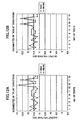
- FIG. 11A and FIG. 11B are diagrams for explaining a transition of the operating voltage of the discharge tube (60%Ar + 40%H 2 ) of the third preferred embodiment immediately after a start of discharging.
- the operating voltage of the discharge tube of the present embodiment is also set in the voltage ranging from 400V to 6000V.
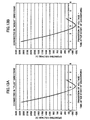
- FIG. 12A and FIG. 12B are diagrams for explaining the results of measurement of an output voltage of the secondary coil of the transformer of the ignitor circuit to which the discharge tube of the third preferred embodiment (the composition of the filler gas: 60%Ar + 40%H 2 ).
- the operating voltage of the discharge tube of the present embodiment immediately after a start of discharging is reduced to the ground in a straight manner, although there are some variations of the operating voltage.
- the rebound phenomenon as in the conventional case does not take place after the start of discharging.
- the concentration of the hydrogen gas in the filler gas is set to be above 40 percent by volume.
- the actual output voltage of the secondary coil of the transformer of the ignitor circuit for the present embodiment is approximately equal to the desired value (11 kV) of the output voltage of the secondary coil.
- the variations of the output voltage for the present embodiment are smaller than those for the second preferred embodiment ( FIG. 10A and FIG. 10B ).
- the decline of the output voltage of the secondary coil for the third preferred embodiment can be suppressed more effectively by increasing the volume concentration of the hydrogen gas in the filler gas from that of the second preferred embodiment.
- the discharge tube of the fourth preferred embodiment is characterized by setting the chemical composition of the filler gas to 40%Ar + 60%H 2 .
- FIG. 13A and FIG. 13B are diagrams for explaining a transition of the operating voltage of the discharge tube (40%Ar + 60%H 2 ) of the fourth preferred embodiment immediately after a start of discharging.
- the operating voltage of the discharge tube of the present embodiment is also set in the range from 400V to 6000V.
- FIG. 14A and FIG. 14B are diagrams for explaining the results of measurement of an output voltage of the secondary coil of the transformer of the ignitor circuit to which the discharge tube of the four preferred embodiment (the composition of the filler gas: 40%Ar + 60%H 2 ).
- the operating voltage of the discharge tube of the present embodiment immediately after a start of discharging is reduced to the ground in a straight manner.
- the rebound phenomenon as in the conventional case does not take place after the start of discharging.
- the variations of the operating voltage for the present embodiment are remarkably reduced when compared with those for the third preferred embodiment, and the operating voltage for the present embodiment is stable.
- the output voltage of the secondary coil of the transformer of the ignitor circuit for the present embodiment is higher than the desired value (11 kV) of the output voltage, although there are some variations of the output voltage.
- the output voltage of the secondary coil of the transformer of the ignitor circuit for the present embodiment can be raised by increasing the volume concentration of the hydrogen gas in the filler gas further from that of the third preferred embodiment.
- the discharge tube of the fifth preferred embodiment is characterized by setting the composition of the filler gas to 20%Ar + 80%H 2 .
- FIG. 15A and FIG. 15B are diagrams for explaining a transition of the operating voltage of the discharge tube (20%Ar + 80%H 2 ) of the fifth preferred embodiment immediately after a start of discharging. As shown, the operating voltage of the discharge tube of the present embodiment is also set in the range from 400V to 6000V.
- FIG. 16A and FIG. 16B are diagrams for explaining the results of measurement of an output voltage of the secondary coil of the transformer of the ignitor circuit to which the discharge tube of the fifth preferred embodiment (the composition of the filler gas: 20%Ar + 80%H 2 ) is applied.
- the operating voltage of the discharge tube of the present embodiment immediately after a start of discharging is reduced to the ground in a straight manner, which is similar to the fourth preferred embodiment.
- the rebound phenomenon as in the conventional case does not take place after the start of discharging.
- the variations of the operating voltage for the present embodiment are remarkably reduced, and the operating voltage for the present embodiment is stable.
- the output voltage of the secondary coil of the transformer of the ignitor circuit for the present embodiment is higher than the desired value (11 kV) of the output voltage, although there are some variations of the output voltage.
- the output voltage of the secondary coil of the transformer of the ignitor circuit for the present embodiment can be raised by increasing the volume concentration of the hydrogen gas in the filler gas further.
- the discharge tube of the present invention is characterized by setting the concentration of the hydrogen gas in the filler gas in a range from 40% by volume to 80% by volume.
- the filler gas enclosed in the discharge tube is composed of a mixture of argon (Ar) gas and hydrogen (H 2 ) gas.
- the chemical composition of the filler gas according to the present invention is not limited to the above-described embodiments.
- a mixture of argon (Ar) gas, neon (Ne) gas, and hydrogen (H 2 ) gas may be suitably used for the filler gas in the discharge tube of the invention if the concentration of the hydrogen gas in the filler gas is set in the range from 40% by volume to 80% by volume.
- the operating voltage of the discharge tube is set in a voltage range from 200V to 3000V.
- a mixture of argon (Ar) gas, xenon (Xe) gas, and hydrogen (H 2 ) gas may be suitably used for the filler gas in the discharge tube of the invention if the concentration of the hydrogen gas in the filler gas is set in the range from 40% by volume to 80% by volume.
- the operating voltage of the discharge tube is set in a voltage range from 5000V to 8000V.
- the discharge tube of the invention it is possible to suppress the occurrence of the rebound phenomenon immediately after a start of discharging. Moreover, according to the discharge tube of the invention, it is possible to suppress the decline of the electric discharge life of the discharge electrode. Moreover, according to the discharge tube of the invention, it is possible to attain the stabilization of the discharge starting voltage.
Landscapes
- Discharge Lamp (AREA)
- Gas-Filled Discharge Tubes (AREA)
- Circuit Arrangements For Discharge Lamps (AREA)
Claims (8)
- Entladungsröhre (1), welche umfasst:ein Füllgas, welches aus einer Mischung aus einem inerten Gas und Wasserstoffgas zusammengesetzt ist;einen luftdichten Zylinder (10), in welchem das Füllgas luftdicht eingeschlossen ist; undeinem Paar aus erster und zweiter Entladungselektrode (22, 24), die innerhalb eines Innenraums des luftdichten Zylinders einander gegenüberliegen, so dass eine elektrische Entladung zwischen Entladungsflächen der ersten und der zweiten Entladungselektrode erzeugt wird;wobei eine Konzentration des Wasserstoffgases auf einen Bereich von 20 Volumenprozent bis 80 Volumenprozent eingestellt ist,
das inerte Gas, welches im Füllgas enthalten ist, Argongas aufweist,
dadurch gekennzeichnet,
dass die Konzentration des Wasserstoffgases im Füllgas so eingestellt ist, dass sie zumindest 40 Volumenprozent ist, um zuzulassen, dass die Betriebsspannung der Entladungsröhre nach dem Entladungsbeginn auf eine Masse-Spannung geradlinig reduziert wird und um ein Rückkehr-Phänomen zu vermeiden. - Entladungsröhre nach Anspruch 1, wobei eine Betriebsspannung der Entladungsröhre nach einem Entladungsbeginn auf einen Bereich von 400V bis 6000V eingestellt ist.
- Entladungsröhre nach Anspruch 1 oder 2, wobei die erste und die zweite Entladungselektrode (22, 24) aus einem metallischen Material hergestellt ist, welche ausgewählt ist unter Kovar, einer Fe-Ni-Legierung und einer Fe-Ni-Cr-Legierung.
- Entladungsröhre nach einem der Ansprüche 1 bis 3, wobei jede von der ersten und der zweiten Entladungselektrode (22, 24) auf ihrer Entladungsfläche eine Kupferplattierung aufweist.
- Entladungsröhre nach Anspruch 1, wobei das inerte Gas, welches in dem Füllgas enthalten ist, außerdem Xenon-Gas aufweist.
- Entladungsröhre nach Anspruch 5, wobei eine Betriebsspannung von der Entladungsröhre nach dem Entladungsbeginn auf einen Bereich von 5000V bis 8000V eingestellt ist.
- Entladungsröhre nach Anspruch 1, wobei das inerte Gas, welches im Füllgas enthalten ist, außerdem Neon-Gas aufweist.
- Entladungsröhre nach Anspruch 7, wobei eine Betriebsspannung der Entladungsröhre nach dem Entladungsbeginn auf einen Bereich von 200V bis 3000V eingestellt ist.
Applications Claiming Priority (2)
| Application Number | Priority Date | Filing Date | Title |
|---|---|---|---|
| JP2003022188 | 2003-01-30 | ||
| JP2003022188A JP4421191B2 (ja) | 2003-01-30 | 2003-01-30 | 放電管 |
Publications (3)
| Publication Number | Publication Date |
|---|---|
| EP1443539A2 EP1443539A2 (de) | 2004-08-04 |
| EP1443539A3 EP1443539A3 (de) | 2006-01-04 |
| EP1443539B1 true EP1443539B1 (de) | 2009-12-09 |
Family
ID=32652894
Family Applications (1)
| Application Number | Title | Priority Date | Filing Date |
|---|---|---|---|
| EP04250245A Expired - Lifetime EP1443539B1 (de) | 2003-01-30 | 2004-01-19 | Entladungsröhre |
Country Status (5)
| Country | Link |
|---|---|
| US (1) | US7116049B2 (de) |
| EP (1) | EP1443539B1 (de) |
| JP (1) | JP4421191B2 (de) |
| KR (1) | KR101018321B1 (de) |
| DE (1) | DE602004024470D1 (de) |
Families Citing this family (4)
| Publication number | Priority date | Publication date | Assignee | Title |
|---|---|---|---|---|
| JP4880904B2 (ja) * | 2005-02-15 | 2012-02-22 | 新光電気工業株式会社 | 放電管 |
| DE102005036265A1 (de) * | 2005-08-02 | 2007-02-08 | Epcos Ag | Funkenstrecke |
| DE102013109393A1 (de) | 2013-08-29 | 2015-03-05 | Epcos Ag | Überspannungsableiter |
| WO2022115275A1 (en) | 2020-11-24 | 2022-06-02 | Mattson Technology, Inc. | Arc lamp with forming gas for thermal processing systems |
Family Cites Families (15)
| Publication number | Priority date | Publication date | Assignee | Title |
|---|---|---|---|---|
| US1648293A (en) * | 1922-11-29 | 1927-11-08 | Gen Electric | Electric-discharge device |
| US2103038A (en) * | 1933-08-24 | 1937-12-21 | Gen Electric | Gaseous electric arc discharge lamp device |
| US2291864A (en) * | 1941-06-28 | 1942-08-04 | Electronic Res Corp | Electric discharge device |
| US3454811A (en) | 1967-04-18 | 1969-07-08 | Bell Telephone Labor Inc | Gas tube surge (overload) protection device |
| SE360507B (de) | 1972-11-08 | 1973-09-24 | Ericsson Telefon Ab L M | |
| US3858077A (en) | 1973-11-20 | 1974-12-31 | Gen Instrument Corp | Gas tube transient voltage protector for telecommunication systems |
| US4437845A (en) | 1981-10-05 | 1984-03-20 | Tii Industries, Inc. | Method for manufacturing a gas-filled discharge tube for use as transient protection |
| JPH0697603B2 (ja) * | 1987-04-02 | 1994-11-30 | 東芝ライテック株式会社 | 希ガス放電灯 |
| US4801841A (en) * | 1987-07-30 | 1989-01-31 | Hnu Systems, Inc. | Gas discharge lamp with built-in resistance to color center formation in ultraviolet-transmissive window |
| JP2752017B2 (ja) * | 1991-12-18 | 1998-05-18 | 矢崎総業株式会社 | 放電管 |
| DE19632417C1 (de) | 1996-08-05 | 1998-05-07 | Siemens Ag | Gasgefüllter Überspannungsableiter mit Elektroden-Aktivierungsmasse |
| JPH10335042A (ja) * | 1997-03-31 | 1998-12-18 | Shinko Electric Ind Co Ltd | 放電管 |
| US6121730A (en) * | 1998-06-05 | 2000-09-19 | Matsushita Electric Works R&D Laboratory, Inc. | Metal hydrides lamp and fill for the same |
| DE19920043A1 (de) | 1999-04-23 | 2000-10-26 | Epcos Ag | Gasgefüllter Überspannungsableiter mit einer aus mehreren Komponenten bestehenden Aktivierungsmasse |
| JP2002270329A (ja) * | 2001-03-09 | 2002-09-20 | Shinko Electric Ind Co Ltd | ガス封入スイッチング放電管 |
-
2003
- 2003-01-30 JP JP2003022188A patent/JP4421191B2/ja not_active Expired - Fee Related
-
2004
- 2004-01-16 US US10/759,968 patent/US7116049B2/en not_active Expired - Lifetime
- 2004-01-19 EP EP04250245A patent/EP1443539B1/de not_active Expired - Lifetime
- 2004-01-19 DE DE602004024470T patent/DE602004024470D1/de not_active Expired - Lifetime
- 2004-01-29 KR KR1020040005569A patent/KR101018321B1/ko not_active Expired - Fee Related
Also Published As
| Publication number | Publication date |
|---|---|
| US7116049B2 (en) | 2006-10-03 |
| DE602004024470D1 (de) | 2010-01-21 |
| KR101018321B1 (ko) | 2011-03-04 |
| EP1443539A3 (de) | 2006-01-04 |
| KR20040070035A (ko) | 2004-08-06 |
| JP4421191B2 (ja) | 2010-02-24 |
| JP2004235017A (ja) | 2004-08-19 |
| US20040150346A1 (en) | 2004-08-05 |
| EP1443539A2 (de) | 2004-08-04 |
Similar Documents
| Publication | Publication Date | Title |
|---|---|---|
| EP1335403B1 (de) | Entladungslampe | |
| KR100973110B1 (ko) | 엑시머 램프 | |
| EP1391916B1 (de) | Lichtquellenvorrichtung | |
| US8189315B2 (en) | Surge arrester with low response surge voltage | |
| JPS6313290A (ja) | ガス放電避雷器 | |
| US6232704B1 (en) | Spark plug with specific electrode structure | |
| EP1105916B1 (de) | Metallhalogenidlampe | |
| EP1443539B1 (de) | Entladungsröhre | |
| KR20010074913A (ko) | 유전적인 방해 방전을 포함하는 방전 램프용 전자 안정기 | |
| JP2003086133A (ja) | 高圧放電ランプ及びこれを用いた高圧放電ランプシステム | |
| US6606230B2 (en) | Chip-type surge absorber and method for producing the same | |
| US20070297479A1 (en) | Triggered spark gap | |
| US6313581B1 (en) | Electrical discharge tube having trigger wires | |
| US11431154B2 (en) | Triggerable spark gap, switching circuit having a triggerable spark gap, and process for manufacturing a triggerable spark gap | |
| JP3125268U (ja) | 放電管 | |
| US4450383A (en) | Electric arrangement for starting and supplying a low-pressure discharge lamp | |
| JP3114203U7 (de) | ||
| JP4437616B2 (ja) | サージ吸収素子 | |
| JP3122348U (ja) | 放電管 | |
| JP3123309U (ja) | 放電管 | |
| JP3125270U (ja) | 放電管 | |
| JP3122349U (ja) | 放電管 | |
| KR100464284B1 (ko) | 글로우 방전램프, 조명기구 및 글로우 방전램프용 전극 | |
| JP2007520034A (ja) | 低圧放電ランプ | |
| JPH11163443A (ja) | パルスガスレーザ装置およびその励起方法 |
Legal Events
| Date | Code | Title | Description |
|---|---|---|---|
| PUAI | Public reference made under article 153(3) epc to a published international application that has entered the european phase |
Free format text: ORIGINAL CODE: 0009012 |
|
| AK | Designated contracting states |
Kind code of ref document: A2 Designated state(s): AT BE BG CH CY CZ DE DK EE ES FI FR GB GR HU IE IT LI LU MC NL PT RO SE SI SK TR |
|
| AX | Request for extension of the european patent |
Extension state: AL LT LV MK |
|
| PUAL | Search report despatched |
Free format text: ORIGINAL CODE: 0009013 |
|
| AK | Designated contracting states |
Kind code of ref document: A3 Designated state(s): AT BE BG CH CY CZ DE DK EE ES FI FR GB GR HU IE IT LI LU MC NL PT RO SE SI SK TR |
|
| AX | Request for extension of the european patent |
Extension state: AL LT LV MK |
|
| 17P | Request for examination filed |
Effective date: 20060126 |
|
| AKX | Designation fees paid |
Designated state(s): DE IT NL |
|
| 17Q | First examination report despatched |
Effective date: 20081117 |
|
| GRAP | Despatch of communication of intention to grant a patent |
Free format text: ORIGINAL CODE: EPIDOSNIGR1 |
|
| GRAS | Grant fee paid |
Free format text: ORIGINAL CODE: EPIDOSNIGR3 |
|
| GRAA | (expected) grant |
Free format text: ORIGINAL CODE: 0009210 |
|
| AK | Designated contracting states |
Kind code of ref document: B1 Designated state(s): DE IT NL |
|
| REF | Corresponds to: |
Ref document number: 602004024470 Country of ref document: DE Date of ref document: 20100121 Kind code of ref document: P |
|
| REG | Reference to a national code |
Ref country code: NL Ref legal event code: T3 |
|
| PLBE | No opposition filed within time limit |
Free format text: ORIGINAL CODE: 0009261 |
|
| STAA | Information on the status of an ep patent application or granted ep patent |
Free format text: STATUS: NO OPPOSITION FILED WITHIN TIME LIMIT |
|
| 26N | No opposition filed |
Effective date: 20100910 |
|
| PGFP | Annual fee paid to national office [announced via postgrant information from national office to epo] |
Ref country code: NL Payment date: 20171213 Year of fee payment: 15 |
|
| PGFP | Annual fee paid to national office [announced via postgrant information from national office to epo] |
Ref country code: DE Payment date: 20180110 Year of fee payment: 15 |
|
| PGFP | Annual fee paid to national office [announced via postgrant information from national office to epo] |
Ref country code: IT Payment date: 20180122 Year of fee payment: 15 |
|
| REG | Reference to a national code |
Ref country code: DE Ref legal event code: R119 Ref document number: 602004024470 Country of ref document: DE |
|
| REG | Reference to a national code |
Ref country code: NL Ref legal event code: MM Effective date: 20190201 |
|
| PG25 | Lapsed in a contracting state [announced via postgrant information from national office to epo] |
Ref country code: NL Free format text: LAPSE BECAUSE OF NON-PAYMENT OF DUE FEES Effective date: 20190201 Ref country code: DE Free format text: LAPSE BECAUSE OF NON-PAYMENT OF DUE FEES Effective date: 20190801 |
|
| PG25 | Lapsed in a contracting state [announced via postgrant information from national office to epo] |
Ref country code: IT Free format text: LAPSE BECAUSE OF NON-PAYMENT OF DUE FEES Effective date: 20190119 |