EP1374884A1 - Neutralisator von proteotoxinen - Google Patents
Neutralisator von proteotoxinen Download PDFInfo
- Publication number
- EP1374884A1 EP1374884A1 EP02707206A EP02707206A EP1374884A1 EP 1374884 A1 EP1374884 A1 EP 1374884A1 EP 02707206 A EP02707206 A EP 02707206A EP 02707206 A EP02707206 A EP 02707206A EP 1374884 A1 EP1374884 A1 EP 1374884A1
- Authority
- EP
- European Patent Office
- Prior art keywords
- hop
- toxin
- proteotoxin
- neutralizer
- liquid
- Prior art date
- Legal status (The legal status is an assumption and is not a legal conclusion. Google has not performed a legal analysis and makes no representation as to the accuracy of the status listed.)
- Withdrawn
Links
Images



Classifications
-
- A—HUMAN NECESSITIES
- A61—MEDICAL OR VETERINARY SCIENCE; HYGIENE
- A61K—PREPARATIONS FOR MEDICAL, DENTAL OR TOILETRY PURPOSES
- A61K36/00—Medicinal preparations of undetermined constitution containing material from algae, lichens, fungi or plants, or derivatives thereof, e.g. traditional herbal medicines
- A61K36/18—Magnoliophyta (angiosperms)
- A61K36/185—Magnoliopsida (dicotyledons)
- A61K36/348—Cannabaceae
- A61K36/3486—Humulus
-
- A—HUMAN NECESSITIES
- A61—MEDICAL OR VETERINARY SCIENCE; HYGIENE
- A61K—PREPARATIONS FOR MEDICAL, DENTAL OR TOILETRY PURPOSES
- A61K31/00—Medicinal preparations containing organic active ingredients
- A61K31/33—Heterocyclic compounds
- A61K31/335—Heterocyclic compounds having oxygen as the only ring hetero atom, e.g. fungichromin
- A61K31/35—Heterocyclic compounds having oxygen as the only ring hetero atom, e.g. fungichromin having six-membered rings with one oxygen as the only ring hetero atom
-
- A—HUMAN NECESSITIES
- A61—MEDICAL OR VETERINARY SCIENCE; HYGIENE
- A61K—PREPARATIONS FOR MEDICAL, DENTAL OR TOILETRY PURPOSES
- A61K31/00—Medicinal preparations containing organic active ingredients
- A61K31/33—Heterocyclic compounds
- A61K31/335—Heterocyclic compounds having oxygen as the only ring hetero atom, e.g. fungichromin
- A61K31/35—Heterocyclic compounds having oxygen as the only ring hetero atom, e.g. fungichromin having six-membered rings with one oxygen as the only ring hetero atom
- A61K31/352—Heterocyclic compounds having oxygen as the only ring hetero atom, e.g. fungichromin having six-membered rings with one oxygen as the only ring hetero atom condensed with carbocyclic rings, e.g. methantheline
- A61K31/353—3,4-Dihydrobenzopyrans, e.g. chroman, catechin
-
- A—HUMAN NECESSITIES
- A61—MEDICAL OR VETERINARY SCIENCE; HYGIENE
- A61K—PREPARATIONS FOR MEDICAL, DENTAL OR TOILETRY PURPOSES
- A61K31/00—Medicinal preparations containing organic active ingredients
- A61K31/70—Carbohydrates; Sugars; Derivatives thereof
- A61K31/7042—Compounds having saccharide radicals and heterocyclic rings
- A61K31/7048—Compounds having saccharide radicals and heterocyclic rings having oxygen as a ring hetero atom, e.g. leucoglucosan, hesperidin, erythromycin, nystatin, digitoxin or digoxin
-
- A—HUMAN NECESSITIES
- A61—MEDICAL OR VETERINARY SCIENCE; HYGIENE
- A61P—SPECIFIC THERAPEUTIC ACTIVITY OF CHEMICAL COMPOUNDS OR MEDICINAL PREPARATIONS
- A61P1/00—Drugs for disorders of the alimentary tract or the digestive system
- A61P1/12—Antidiarrhoeals
-
- A—HUMAN NECESSITIES
- A61—MEDICAL OR VETERINARY SCIENCE; HYGIENE
- A61P—SPECIFIC THERAPEUTIC ACTIVITY OF CHEMICAL COMPOUNDS OR MEDICINAL PREPARATIONS
- A61P39/00—General protective or antinoxious agents
- A61P39/02—Antidotes
-
- Y—GENERAL TAGGING OF NEW TECHNOLOGICAL DEVELOPMENTS; GENERAL TAGGING OF CROSS-SECTIONAL TECHNOLOGIES SPANNING OVER SEVERAL SECTIONS OF THE IPC; TECHNICAL SUBJECTS COVERED BY FORMER USPC CROSS-REFERENCE ART COLLECTIONS [XRACs] AND DIGESTS
- Y02—TECHNOLOGIES OR APPLICATIONS FOR MITIGATION OR ADAPTATION AGAINST CLIMATE CHANGE
- Y02A—TECHNOLOGIES FOR ADAPTATION TO CLIMATE CHANGE
- Y02A50/00—TECHNOLOGIES FOR ADAPTATION TO CLIMATE CHANGE in human health protection, e.g. against extreme weather
- Y02A50/30—Against vector-borne diseases, e.g. mosquito-borne, fly-borne, tick-borne or waterborne diseases whose impact is exacerbated by climate change
Definitions
- the present invention relates to a proteotoxin neutralizer which contains proanthocyanidins obtained from hop as effective components.
- Hop (Humulus lupuls) is a perennial plant of a Cannabaceae family, and the hop cone (a ripe unfertilized female flower) is generally called hop.
- the hop comprises, in addition to the cones, leaves, bines, roots and the like.
- a lupulin part (a yellow granule formed in the root of internal bracts of the hop cone) existing in the hop cone is a source of bitterness and perfume, and it is an important beer material along with yeast and malt in beer brewing.
- the hop can be used as a sedative drug and an anti-aphrodisiac in folk remedies.
- the hop bracts are formed by removing the lupulin part from the hop cone, and these bracts are useless.
- these bracts are removed in beer brewing to be byproducts. In this case, the hop bracts are used as fertilizer. However, since special effective use is not found, it is hoped to develop a method having a high additional value for using the bracts.
- hop particularly the polyphenols derived from hop bracts have antioxidant action, sparkle-stabilizing action of sparkling malt drinks, anticaries action, deodorant action, antimetastatic action of cancer cells, and topoisomeraze-inhibiting action.
- infection diseases cause the death of 20 million all over the world. In spite of great development of medical treatment techniques, infection diseases are one of intimidation to humankind.
- exotoxin produced from Psudomonas aeruginosa is a proteotoxin having ADP-ribosylation toxin having ADP-ribosyltransferase action.
- ADP-ribosyltransferase action means that nicotinamid is cut from NAD of intravital coenzyme and the remaining ADP-ribose part is irreversibly transferred to target protein. The target protein then irreversibly loses the intravital function.
- diphtheria toxin and exotoxin A from Pseudomonas aeruginosa ADP-ribosylate a peptide elongation factor EF-2, and cholera toxin and LT of toxigenic E. coli ADP-ribosylate Gs ⁇ .
- each etiologic bacillus produces exotoxin having RNA N-glycosidase action
- the exotoxin modifies a functional protein in vivo to lose the original function, and diseases are expressed.
- Shiga toxin produced from shigella dysenteriae, vero toxin (or it is called Shiga-like toxin) produced from VETC and the like are proteotoxin having RNA N-glycosidase action (RNA N-glycosylation toxin).
- RNA N-glycosidase action means that an N-glycoside bond of RNA is enzymically hydrolyzed.
- the proteotoxin having such action modifies ribosomal RNA in a ribosome that is a proteosynthesis device of cells to be irreversibly inactivated. Thereby, it is known that the proteiosynthesis of cells is stopped to develop the toxicity.
- Shiga toxin, vero toxin and the like specifically hydrolyze an N-glycoside bond of adenosine that is 4324 th from 5' end of 28S ribosomal.
- infection diseases caused by RNA N-glycosilated toxin occur frequently in the world regardless of developed countries and developing countries. Particularly, when the vero toxin transits into blood, since hemolytic uremic syndrome (HUS) or encephalopathy is affected to die or have sequellae, the infection diseases are serious. In Japan, it remains in people's memory that unprecedented food poisoning occurred in Osaka and over 6000 peoples were infected in 1996.
- HUS hemolytic uremic syndrome
- antibiotics having antibiotic action to pathogenic germs are generally used for treating the infection diseases caused by ADP-ribosylation toxin or RNA N-glycosylation toxin.
- ADP-ribosylation toxin or RNA N-glycosylation toxin since stronger pathogenic germs tolerant to the antibiotics appear by administration of the antibiotics, it causes trouble at practical medical fields. Accordingly, it needs to develop a new method for treating without the antibiotics.
- massive vero toxin is produced by VTEC due to the administration of antibiotics, thereby the symptom becomes serious (Matsushiro et al., J. Bacteriol., 181, 2257-2260 (1999)).
- Accordingly, there are many opinions to deny the administration of antibiotics Namely, in fact, it is asked for establishing urgently a new medical method in which materials such as antibiotics killing germs are not used.
- the inventors of the present invention have tried to find a factor for neutralizing and detoxifying the proteotoxin produced from the germs causing the infection diseases, and thereby to resolve the problems.
- effective factor for neutralizing the proteotoxin particularly, effective factor for neutralizing the proteotoxin having ADP-ribosyltransferase action and RNA N-glycosidase action is found, there are meaningful in medical and industrial fields.
- the inventors of the present invention earnestly have studied and found that a kind of polyphenols in a hop detoxifies effectively ADP-ribosyltransferase action and RNA N-glycosidase action, and completed the present invention.
- the polyphenol is contained in hop stalk and bract parts, especially contained massively in the bract parts.
- the polyphenol is adsorbed to a resin showing affinity with polyphenol such as styrene-divinylbenzene resin.
- the polyphenol is treated with a membrane having fraction molecules of 1000 or more, it shows a property that it does not penetrate the membrane.
- the polyphenol is a proanthocyanidin producing cyanidin when the polyphenol is heated and hydrolysed in an alcohol solution containing about 5% hydrochloric acid.
- the proanthocyanidin gives a chromatogram of Fig. 1 in GPC (a gel penetration chromatogram) analysis and absorbance distribution of Fig. 2 in absorbance analysis.
- the present invention relates to a proteotoxin neutralizer that contains as an effective component the proanthocyanidins contained in hop, preferably in a hop bract part.
- Fig. 1 shows GPC (gel penetration chromatography) analysis result of proanthocyanidins derived from hop.
- Fig. 2 shows absorbance distribution of proanthocyanidins derived from hop.
- Fig. 3 shows HPLC analysis result of proanthocyanidins derived from hop.
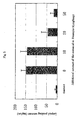
- Fig. 4 shows result of Example 12.
- the longitudinal axis shows radiation activity.
- the control shows experiment result that cholera toxin is not added.
- Fig. 5 shows result of Example 13.
- the longitudinal axis shows weight (mg/cm) per length of liquid that is pooled in a mouse enteric canal loop.
- Fig. 6 shows result of Example 14.
- the longitudinal axis shows radiation activity and the value is represented by 100% when vero toxin is not added.
- Fig. 7 shows result of Example 15.
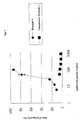
- the longitudinal axis shows a rate of living cells and the horizontal axis shows the addition amounts ( ⁇ g/ml) of materials obtained by the same method as in Example 5 or Comparative example 1.
- the addition amount of vero toxin is 62pg/ml at the final concentration.
- ⁇ shows experimental result of the materials obtained by the same method as in Example 5, and ⁇ shows experimental result of the material obtained by the same method as in Comparative Example 1.
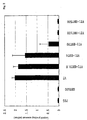
- Fig. 8 shows result of Example 16.
- the longitudinal axis shows liquid weights per loop length (ml/cm).
- the horizontal axis shows experiment result.
- PBS shows the addition of PBS alone
- HBT 500 shows the addition of 500 ⁇ g of materials obtained by the same method as in Example 5
- VT shows the addition of 100ng of vero toxin alone
- VT+HBT 0.8-500 shows the addition of 100 ng of vero toxin and 0.8-500 ⁇ g of materials obtained by the same method as in Example 5.
- the raw materials of the proteotoxin neutralizer of the present invention are preferably used. Particularly, whole parts can be used without separating each part of hop.
- the hop bracts mean that obtained by removing the lupulin part from hop cones.
- the hop bracts are obtained by removing the lupulin part after crushing and sieving the hop cones.
- the hop bracts are formed into pellets. Such obtained hop pellets tend to use in beer brewing. Accordingly, as raw materials in the present invention, materials containing bine and bract parts of hop can be used without limit, and further hop cone and hop pellets containing hop bracts can be used as raw materials without problems.
- a production method of the proteotoxin neutralizer comprises steps that raw materials containing hop bines, bracts, hop cones containing hop bracts, hop pellets, or these hop plant parts were extracted with water, organic solvent such as 80 v/v% or less alcohol, acetone, acetonitrile or the like which can be mixed with water.
- organic solvent such as 80 v/v% or less alcohol, acetone, acetonitrile or the like which can be mixed with water.
- a hydrous solution containing 50 v/v% or less ethanol may be used.
- the ratio of materials and extract solvent is preferably about 1:20-100 w/w, the extract temperature is 4-95°C.
- the mixture is extracted under stirring for 20-60 minutes.
- the extract is obtained by filtration. If necessary, a filter aid such as pearlite may be used.
- Solvent is removed from such obtained extract by using common methods such as concentration, freeze-drying or spray-drying, and powder of the proteotoxin neutralizer may be obtained.
- the resulting proteotoxin neutralizer is very useful and practical as it is, if necessary, it may be purified further by a method using absorbent resin. However, since this process aims to more purify, if unnecessary, it may be omitted.
- the above extract is treated with granular synthetic resin having affinity for polyphenols to concentrate the proteotoxin neutralizer.
- This process may be conducted by passing the hop extract through a column packed with the granular synthetic resin, thoroughly washing the column, and eluting the neutralizer absorbed on the column. Otherwise, the granular resin may be immersed in the hop extract to conduct batch treatment.
- the hop extract When the proteotoxin neutralizer is absorbed on the synthetic resin, the hop extract is cooled to room temperature of 15-30°C, if necessary, for elevating the absorption efficiency, it is preferred that the concentration of organic solvent of the extract is previously lowered.
- the synthetic resin hydroxypropylated dextran, hydrophilicity vinyl polymer, styrene-divinyl benzene polymer and the like may be used.
- the synthetic resin is then washed to further elevate the purity of the proteotoxin neutralizer.
- the solvent for washing preferably water or a 1-10 w/w% aqueous ethanol solution may be used.
- the solvent amount is preferably about 1-10 times of the resin amount to wash the neutralizer.
- the proteotoxin neutralizer is then eluted to remove from the synthetic resin that the polyphenols are absorbed.
- the solvent used for the elution hydrous alcohol, hydrous acetone, hydrous acetonitrile and the like may be used.
- Particularly preferable solvent is 30 w/w% or more aqueous ethanol solution or ethanol.
- the amount of the eluate passing through the resin is preferably about 2-6 times of the amount of the resin.
- the solvent is removed from the resulting elute by using common methods such as concentration, freeze-drying or spray drying, and powder of the proteotoxin neutralizer may be obtained.
- concentration concentration
- powder of the proteotoxin neutralizer may be obtained.
- alcohol; acetone, acetonitrile and the like may be recovered to recycle.
- Used synthetic resin is washed with an aqueous solution of 80 v/v% or more alcohol or about 0.05 N sodium hydroxide and the like, and the resin may be repeatedly recycled.
- Such obtained proteotoxin neutralizer may be used as it is, further the purity may be raised by a method using a ultrafilter film as described in the following. This process is done for raising the purity of the neutralizer, if necessary, it can be omitted.
- the proteotoxin neutralizer prepared by the above method is dissolved in water or organic solvent mixable with water, and treated with a ultrafilter film having the fractional molecule of 1,000 or more.
- the raw materials of the ultrafilter film such as cellulose, cellulose acetate, polysulfone, polypropylene, polyester, polyethersulfone and PVDF and the like may be used without any restriction.
- the ultrafilter film having the fractional molecule of 1,000 or more can be used without any problem. However, when the ultrafilter film having too high fractional molecule weight is used, the yield is lowered extremely. When the molecule weight is low, the treatment time becomes long. Preferable fractional molecule weights of the ultrafilter film are about 5,000-50,000.
- the treatment depends on the kind of solvent, or the ratio of extract solvent to hop or hop bracts, it is preferably done until the amount of the upper rest liquid is lowered to about 1/10-1/100 as compared with the beginning of the treatment.
- the pressure depends on the ultrafilter film or filter device, it is preferably 0.1-10.0 kg/cm 2 . If necessary, the upper rest liquid treated may be diluted with a suitable solvent again, and recycled to raise the purity.
- the solvent or the resulting upper rest liquid is removed by using common methods such as concentration, freeze-drying or spray-drying, and powder of the proteotoxin neutralizer may be obtained.
- concentration concentration
- freeze-drying or spray-drying
- powder of the proteotoxin neutralizer may be obtained.
- alcohol, acetone, acetonitrile and the like may be recovered and reused.
- proteotoxin neutralizer is odorless powder having slight bitter taste and skin color, brown color or pale yellow color.
- the neutralizer adsorbs to synthetic resin having the affinity for polyphenol, and it is proanthocyanidins that does not penetrate the ultrafilter film having a fractional molecule weight of 1,000 or more.
- the yield is 0.5-20.0w/w% converted to a weight of hop bracts, and 0.5-15.0w/w% converted to a weight of hop cone.
- the resulting proteotoxin neutralizer can be formulated with usually used carriers, aids, additives and the like.
- the neutralizer can be used as medical supplies orally or parenterally or as food and drink by mixing with food materials.
- Oral medical supplies are tablets, capsules, granule, syrup and the like, and parenteral medical supplies are external medicines such as ointment, cream and solution, and injectables such as sterility solutions and suspension.
- parenteral medical supplies are external medicines such as ointment, cream and solution, and injectables such as sterility solutions and suspension.
- the administration amounts are 2-1,000mg per day and 2-500mg per one or few times per day to give sufficient effects.
- the medical supplies containing the proteotoxin neutralizer of the present invention can be formulated by a desired unit volume form along with pharmaceutically approved vehicles, carriers, fillers, binders, stabilizers, flavors and the like.
- Adjuvants mixable with tablets or capsules are as follows: binders such as tragacanth, arabic gam, corn starch and gelatin, fillers such as microcellulose, swelling agents such as corn starch, all geratinization starch, alginic acid, lubricants such as magnesium stearate, sweetening agents such as sucrose, nipple and saccharin, and flavors such as peppermint, akamono oil and cherries.
- the capsules can contain liquid carriers such as fats and fatty oils in addition to the above materials.
- the other materials are coating agents. Further, the physical forms of formulations can be changed by the other methods. As examples, tablets can be coated with schellac or sucrose. Syrup or elixir can contain sucrose as a sweetening agent, methyl or propylparaben as an antiseptic, a pigment and a flavor such as a cherry or orange flavor.
- Sterilized constitution for injection can be formulated by common methods that active materials in vehicles such as water for injection, natural plant oils such as sesame oil, coconut oil, peanut oil and cotton seed oil, or synthetic fatty vehicles such as ethyl oleate are dissolved or suspended. Moreover, if necessary, buffer, antiseptic, antioxidant and the like can be formulated. External medicines such as ointment or cream can be obtained by common methods using Vaseline, paraffin, fats and fatty oils, lanolin, macrogol and the like.
- Food and drink containing the proteotoxin neutralizer of the present invention may be formed by the above formulation. Otherwise, it may be processed by general methods by adding requirement into food materials of wheat gluten, Japanese cracker, cookies or drinks.
- the neutralizer is processed and orally taken as health foods or functionality foods of 5-500mg per day by dividing into a few times for ill prevention and health maintenance.
- the neutralizer may be added as powder, in the final concentration of 1-500ppm, and preferably, 10-300ppm in a 1-2% aqueous solution or aqueous alcohol solution or alcoholic solution.
- Example 1 Preparation of the proteotoxin neutralizer from hop cone by using a synthetic adsorbent of a gel type
- Hop cone 20g were crushed in a mortar, and extracted with water 2L by stirring at a temperature of 95°C for 40 minutes. After filtration, extracted water was cooled, passed through a column filled with hydrophilic vinyl polymer resin 80ml, and washed with a 5% ethanol aqueous solution 400ml. 80% ethanol aqueous solution was passed through the column, the eluted solution was recovered and freeze-dried, and the proteotoxin neutralizer 800mg was obtained as pale yellow odorless powder having faint bitter taste. The yield from the hop was 4%.
- Example 2 Preparation of the proteotoxin neutralizer from hop bracts by using a synthetic adsorbent of a gel type
- Hop bracts 20g were extracted with 50% ethanol aqueous solution 600ml by stirring at a temperature of 30°C for 20 minutes. After filtration, extracted liquid was vacuum concentrated, and the concentrated liquid was passed through a column filled with styrene-divinylbenzene resin 80ml and washed with water 400ml. 80% ethanol aqueous solution 400ml was passed through the column, the eluted solution was recovered and freeze-dried, and the proteotoxin neutralizer 1.6g was obtained as pale yellow odorless powder having faint bitter taste. The yield from the hop bracts was 8%.
- Hop cone 20g were crushed in a mortar, and extracted with water 2L by stirring at a temperature of 95°C for 40 minutes. After filtration, extracted liquid was cooled, passed through a ultrafilter film having fraction molecular weight 50,000 at 1.0kg/cm 2 at room temperature to obtain the liquid 20ml. The resulting upper rest liquid was vacuum-dried, and the proteotoxin neutralizer 200mg was obtained as pale yellow odorless powder having faint bitter taste. The yield from the hop was 1%.
- Hop bracts 20g were extracted with a 50% ethanol aqueous solution 600ml by stirring at a temperature of 80°C for 40 minutes. After filtration, extracted liquid was passed through a ultrafilter film having fraction molecular weight 10,000 at 3.0kg/cm 2 at room temperature to obtain the liquid 60ml. The resulting upper rest liquid was freeze-dried, and the proteotoxin neutralizer 0.8g was obtained as pale yellow odorless powder having faint bitter taste. The yield from the hop bacts was 4%.
- the proteotoxin neutralizer 0.8g obtained in Example 2 was dissolved in 10% ethanol aqueous solution 500ml, and treated with a ultrafilter film having fraction molecular weight 5,000 at 1.0kg/cm 2 at room temperature to obtain the liquid 20ml.
- the resulting upper rest liquid was freeze-dried, and the proteotoxin neutralizer 0.4g was obtained as odorless powder having faint bitter taste and a skin color.
- the powder was analyzed by HPLC by using the following conditions, and it had a chromatogram as shown in Fig. 3.
- the powder was analyzed by catechin determination (a food official analysis) which is one of general quantitative analysis of polyphenols, and the neutralizer was 40.6% calculated in terms of catechin content.
- tablets and capsules were obtained by a general method. Instead of the material obtained by the method described in Example 5, by the same method, tablets and capsules were formed from materials obtained by the methods described in Examples 1,2,3 and 4, respectively.
- wheat gluten was made by a general method. Instead of the material obtained by the method described in Example 5, by the same method, wheat gluten was produced from materials obtained by the methods described in Examples 1,2,3 and 4, respectively.
- juice was made by a general method. Instead of the material obtained by the method described in Example 5, by the same method, juice was produced from materials obtained by the methods described in Examples 1,2,3 and 4, respectively.
- cookies were made by a general method. Instead of the material obtained by the method described in Example 5, by the same method, cookies were produced from materials obtained by the methods described in Examples 1,2,3 and 4, respectively.
- the assay was conducted by a Noda et al's method (Noda M. et al., Biochemistry, 28, 7936 (1989)). Firstly, a cholera toxin solution having the following composition and an NAD reaction solution were prepared. Mixture of this cholera toxin solution 20 ⁇ l, PBS solution 20 ⁇ l having several concentrations of the material obtained as shown in Example 5, and distilled water 60 ⁇ l were prepared. To this mixture, the NAD reaction solution 100 ⁇ l was added. The mixture was then incubated at a temperature of 30°C for 90 minutes.
- reaction solution 150 ⁇ l was collected and passed through Dowex AG1-X2 (Bio-Rad Inc.) of a 0.5cm ⁇ 4 cm column to remove unreacted adenine 14 C NAD.
- the amount of the resulting adenine 14 C NAD-ribosylation agmatine was determined by a liquid scintillation counter (Beckman LS6500).
- the amount of adenine 14 C NAD-ribosylation agmatine was used as an indicator to determine ADP-ribosyltransferase activity.
- the result is shown in Fig. 4.
- the material obtained as shown in Example 5 neutralized the ADP-ribosyltransferase action of the cholera toxin in concentration dependence.
- composition of the cholera toxin solution 1mg/ml cholera toxin 180 ⁇ 1, 1M potassium phosphate buffer (pH 7.5) 60 ⁇ l, 1M dithiothreitol aqueous solution 120 ⁇ l and distilled water 840 ⁇ l were mixed and incubated at a temperature of 37°C for 20 minutes to obtain the cholera toxin solution.
- the composition of the NAD reaction solution 1M potassium phosphate buffer (pH 7.5) 190 ⁇ l, 0.1M MgCl 2 aqueous solution 190 ⁇ l, 1M dithiothreitol aqueous solution 76 ⁇ l, 10mg/ml ovalbumin 38 ⁇ l, 1M agmatine 76 ⁇ l, 14 C NAD (25uCi/ml) 19 ⁇ l and distilled water 1311 ⁇ l were mixed to obtain the 14 C NAD reaction solution.
- mice of 5-6 weeks having weight 19-21g were treated by celiotomy under anesthesia.
- the ileum parts of about 5cm were linked to make loops of a bag type.
- a certain amount (2 ⁇ g) of cholera toxin and a solution 200 ⁇ 1 containing each concentration of the material obtained as shown in Example 5 were injected in the loops.
- the abdomen of the mice were closed and kept quiet. Then, the mice were euthanized and the weight of the liquid accumulated in the loops and the loop length were determined. Liquid weight per loop length (mg/cm) was calculated to index the toxicity of cholera toxin. The result was shown in Fig. 5.
- the material obtained as shown in Example 5 neutralized the liquid accumulation of the cholera toxin in concentration dependence.
- a certain concentration (240nM) of a vero toxin aqueous solution 5 ⁇ l and 240-2400 ⁇ g/ml of an aqueous solution of the material obtained as shown in Example 5 were mixed and permitted to stand for one hour at room temperature. Then, 50 ⁇ l of liquid dissolving rabbit reticulocytes was prepared as shown in the following constitution, this liquid was added to the mixture, and protein synthesis reaction was conducted on a water bath at a temperature of 30°C for 20 minutes. After the reaction, the sample was moved on ice, an aqueous solution 1ml of 10% trichloroacetic acid was added, and the mixture was boiled on boiled water for 10 minutes, and the reaction was stopped.
- the synthesized protein was adsorbed on a nitrocellulose filter and washed with a 10% trichloroacetic acid aqueous solution 1ml two times. After drying the protein, the radiation activity was determined with a scintillation counter.
- composition of the liquid dissolving rabbit reticulocytes 50mM adenosin-3 phosphate aqueous solution 15 ⁇ l, 10mM guanosine-3 phosphate aqueous solution 15 ⁇ l, 300mM creatine phosphate aqueous solution 30 ⁇ l, 1 mg/ml creatine kinase aqueous solution 10 ⁇ l, 1M dithiothreitol aqueous solution 4 ⁇ l, 1M HEPES buffer (pH7.5) 10 ⁇ l, 3M potassium chloride aqueous solution 15 ⁇ l, 100mM magnesium acetate aqueous solution 15 ⁇ l, an aqueous solution 15 ⁇ l containing each 5mM amino acid except Leu, 100uCi/ml 14 C-Leu aqueous solution 50 ⁇ l, 4mg/ml hemin aqueous solution 4 ⁇ l and rabbit reticulocytes hemolytic liquid 500 ⁇ l.
- vero cell suspension 100 ⁇ l adjusted to 2.0 ⁇ 10 5 cells/ml was pipetted into a 96 hole plate, and permit to stand one night to prepare unit layer membrane of vero cells.
- the vero toxin of a certain concentration and 10 ⁇ l of PBS solution total 80 ⁇ l containing the materials of every kind which was obtained as shown in Example 5 and Comparative example 1 were added to the holes, and the mixture was cultured in a 5% CO 2 incubator at a temperature of 37°C for 48 hours. After the culture, the survival rate of vero cells was determined with Cell Counting Kit (Dojin Kagaku Co.). The results are shown in Fig. 7.
- the materials obtained as shown in Comparative example did not show any effect, but the materials obtained as shown in Example 5 neutralized concentration-dependently the cell toxicity to vero cells of vero toxin.
- the proteotoxin neutralizer of the present invention contains proanthocyanidins obtained from hop as effective components.
- the agent neutralizes the cell toxin having ADP-ribosyltransferase action and RNA N-glycosidase action, thereby it shows excellent effect for prevention and treatment of the infectious diseases based on the bacilli producing the ADP-ribosyltransferase or the bacilli producing the RNA N-glycosidase.
Landscapes
- Health & Medical Sciences (AREA)
- Life Sciences & Earth Sciences (AREA)
- Public Health (AREA)
- Chemical & Material Sciences (AREA)
- Medicinal Chemistry (AREA)
- Veterinary Medicine (AREA)
- Pharmacology & Pharmacy (AREA)
- Animal Behavior & Ethology (AREA)
- General Health & Medical Sciences (AREA)
- Epidemiology (AREA)
- Natural Medicines & Medicinal Plants (AREA)
- Engineering & Computer Science (AREA)
- Organic Chemistry (AREA)
- Alternative & Traditional Medicine (AREA)
- General Chemical & Material Sciences (AREA)
- Molecular Biology (AREA)
- Chemical Kinetics & Catalysis (AREA)
- Mycology (AREA)
- Microbiology (AREA)
- Nuclear Medicine, Radiotherapy & Molecular Imaging (AREA)
- Biotechnology (AREA)
- Botany (AREA)
- Medical Informatics (AREA)
- Toxicology (AREA)
- Bioinformatics & Cheminformatics (AREA)
- Pharmaceuticals Containing Other Organic And Inorganic Compounds (AREA)
- Medicines Containing Plant Substances (AREA)
- Medicines That Contain Protein Lipid Enzymes And Other Medicines (AREA)
Applications Claiming Priority (5)
| Application Number | Priority Date | Filing Date | Title |
|---|---|---|---|
| JP2001092303 | 2001-03-28 | ||
| JP2001092303 | 2001-03-28 | ||
| JP2001334722 | 2001-10-31 | ||
| JP2001334722 | 2001-10-31 | ||
| PCT/JP2002/003046 WO2002078726A1 (en) | 2001-03-28 | 2002-03-28 | Proteotoxin neutralizer |
Publications (2)
| Publication Number | Publication Date |
|---|---|
| EP1374884A1 true EP1374884A1 (de) | 2004-01-02 |
| EP1374884A4 EP1374884A4 (de) | 2009-08-26 |
Family
ID=26612323
Family Applications (1)
| Application Number | Title | Priority Date | Filing Date |
|---|---|---|---|
| EP02707206A Withdrawn EP1374884A4 (de) | 2001-03-28 | 2002-03-28 | Neutralisator von proteotoxinen |
Country Status (6)
| Country | Link |
|---|---|
| US (2) | US20040220117A1 (de) |
| EP (1) | EP1374884A4 (de) |
| JP (1) | JP4313045B2 (de) |
| AU (1) | AU2002241307B9 (de) |
| NZ (1) | NZ528883A (de) |
| WO (1) | WO2002078726A1 (de) |
Families Citing this family (6)
| Publication number | Priority date | Publication date | Assignee | Title |
|---|---|---|---|---|
| TWI279231B (en) * | 2003-10-02 | 2007-04-21 | Asahi Breweries Ltd | Neutralization agent of vacuolization toxin |
| JPWO2005074961A1 (ja) * | 2004-02-10 | 2007-09-13 | アサヒビール株式会社 | 体脂肪調整剤 |
| SG150510A1 (en) * | 2004-02-17 | 2009-03-30 | Suntory Ltd | Lipase activity inhibitors containing high-molecular weight polyphenol fractions, tea extracts, and processes for producing the same |
| EP1728509A4 (de) * | 2004-03-26 | 2010-03-17 | Asahi Breweries Ltd | Mittel zu schutz des periodontalen ligaments |
| EP2057993A4 (de) | 2006-08-31 | 2014-03-12 | Asahi Group Holdings Ltd | Verfahren zur herstellung einer hopfenzubereitung, hopfenzubereitung, entzündungshemmendes mittel; nahrungsmittel/getränk und orales produkt |
| JP2008214261A (ja) * | 2007-03-02 | 2008-09-18 | Sapporo Breweries Ltd | 芳香性化合物、芳香性組成物、芳香性ホップ抽出物 |
Family Cites Families (14)
| Publication number | Priority date | Publication date | Assignee | Title |
|---|---|---|---|---|
| US4698360B1 (en) * | 1985-04-09 | 1997-11-04 | D Investigations Pharmacologiq | Plant extract with a proanthocyanidins content as therapeutic agent having radical scavenger effect and use thereof |
| EP0397914A1 (de) * | 1989-05-17 | 1990-11-22 | Mitsui Norin Co., Ltd. | Antitoxine gegen bakterielle Exotoxine |
| WO1994003193A1 (fr) * | 1992-07-31 | 1994-02-17 | Tsumura & Co. | Remede contre des maladies intestinales infectieuses bacteriennes dues a des biotoxines |
| US5637576A (en) * | 1995-06-05 | 1997-06-10 | Synsorb Biotech, Inc. | Treatment of traveller's diarrhea |
| EP2060183A3 (de) * | 1996-10-16 | 2009-06-03 | Napo Pharmaceuticals, Inc. | Enteralformulierungen von Proanthocyanidin-Polymer-Zusammensetzungen gegen Diarrhöe |
| US5972985A (en) * | 1997-11-03 | 1999-10-26 | Cytos Pharmaceuticals, Llc | Histidine containing nutriceutical compositions |
| KR20010108193A (ko) * | 1999-02-15 | 2001-12-07 | 마사토시 노다 | 활성성분으로서 프로안토시아니딘을 함유하는에이디피-리보실화 억제제 및 엔테로톡신 타입 세균감염성질환 치료용 조성물 |
| JP2000327582A (ja) * | 1999-05-24 | 2000-11-28 | Asahi Breweries Ltd | 癌細胞転移抑制物質 |
| JP2000342192A (ja) * | 1999-06-08 | 2000-12-12 | Natl Fedelation Of Agricult Coop Assoc | 浮腫病対策用飼料 |
| JP3260134B2 (ja) * | 1999-10-08 | 2002-02-25 | 信孝 鈴木 | 月経困難症、子宮内膜症の治療薬 |
| JP2001226280A (ja) * | 2000-02-18 | 2001-08-21 | Noevir Co Ltd | 黄色ブドウ球菌エンテロトキシン産生抑制剤 |
| GB0026018D0 (en) * | 2000-10-24 | 2000-12-13 | Novartis Nutrition Ag | New composition |
| US20040115285A1 (en) * | 2002-12-13 | 2004-06-17 | Peter Rohdewald | Method of normalizing glucose levels in blood of patients with diabetes mellitus by oral administration of proanthocyanidins containing plant extracts |
| US20050181083A1 (en) * | 2003-04-18 | 2005-08-18 | Toyo Shinyaku Co., Ltd. | Diet food product |
-
2002
- 2002-03-28 NZ NZ528883A patent/NZ528883A/en not_active IP Right Cessation
- 2002-03-28 EP EP02707206A patent/EP1374884A4/de not_active Withdrawn
- 2002-03-28 WO PCT/JP2002/003046 patent/WO2002078726A1/ja not_active Ceased
- 2002-03-28 AU AU2002241307A patent/AU2002241307B9/en not_active Ceased
- 2002-03-28 JP JP2002576991A patent/JP4313045B2/ja not_active Expired - Fee Related
- 2002-03-28 US US10/473,231 patent/US20040220117A1/en not_active Abandoned
-
2006
- 2006-02-14 US US11/353,188 patent/US20060134249A1/en not_active Abandoned
Also Published As
| Publication number | Publication date |
|---|---|
| JP4313045B2 (ja) | 2009-08-12 |
| US20060134249A1 (en) | 2006-06-22 |
| AU2002241307B9 (en) | 2005-08-11 |
| NZ528883A (en) | 2005-12-23 |
| JPWO2002078726A1 (ja) | 2004-10-21 |
| US20040220117A1 (en) | 2004-11-04 |
| WO2002078726A1 (en) | 2002-10-10 |
| EP1374884A4 (de) | 2009-08-26 |
| AU2002241307B2 (en) | 2005-02-17 |
Similar Documents
| Publication | Publication Date | Title |
|---|---|---|
| KR101852840B1 (ko) | 굼벵이 효소처리물을 함유하는 간 보호용 조성물 | |
| US5494661A (en) | Methods for using proanthocyanidin polymers having antiviral activity | |
| US6224872B1 (en) | Composition | |
| US8575368B2 (en) | Proanthocyanidin of cashew apple, composition containing proanthocyanidin, and application thereof | |
| US20140080776A1 (en) | Composition and methods for extracting and using phytochemicals for the treatment of influenza | |
| AU2002241307B9 (en) | Proteotoxin neutralizer | |
| US20080275109A1 (en) | Neutralizing agent for vacuolating toxin | |
| JPH09176010A (ja) | Hsp60ファミリーに属するタンパク質のフラボノイド含有合成抑制剤 | |
| EP1577315A1 (de) | Herstellungsverfahren für polyphenol aus hopfenspelze | |
| JP2018118959A (ja) | クロモジを原料とする抗微生物用組成物 | |
| EP1236724B1 (de) | Neutralisierungsmittel für toxin der zur gattung clostridium gehörende mikroorganismen | |
| KR101894874B1 (ko) | 스트렙토마이세스 프라질리스를 이용한 항염증 조성물 | |
| JPH11228407A (ja) | フラボン誘導体によるメチシリン耐性黄色ブドウ球菌(Methicillin−Resistant Staphylococcus aureus:MRSA)に対するβ−ラクタム剤感受性誘導作用 | |
| Williams et al. | Antidiarrhoeal effects of the root extracts of Guiera senegalensis in male mice | |
| EP1153604A1 (de) | Inhibitoren der adp-ribosylierung und heilmittel für enterische bakterielle endotoxische infektionen die proanthocyanidin als wirkstoff enthalten | |
| CN100349576C (zh) | 蛋白毒素中和剂 | |
| KR102734747B1 (ko) | 한약재 추출물을 유효성분으로 포함하는 코로나바이러스 감염증의 예방, 개선 또는 치료용 조성물 | |
| KR102765993B1 (ko) | 효소 처리된 비단풀 추출물의 비만 예방 또는 치료용 조성물 | |
| JPWO2006115123A1 (ja) | ウィルス不活化剤 | |
| KR102767478B1 (ko) | 사스 코로나바이러스 (SARS-CoV) 감염증 예방 또는 치료용 약학 조성물 | |
| EP1611148B1 (de) | Neues nitrilglycosid als bioverstärker von wirkstoffen und nährstoffen sowie verfahren zu dessen isolierung aus moringa oleifera | |
| KR20240150820A (ko) | 멍석딸기 추출물을 이용한 항균 또는 항진균용 조성물 | |
| HK1020426A (en) | A composition comprising a flavonoid and a processed product of a plant | |
| CN117561003A (zh) | 包含猪胎盘酶水解物和酸水解物的混合物的用于保护肝的组合物 | |
| KR20080092008A (ko) | 자초 추출물을 포함하는 동물면역력 강화용 약학 조성물 |
Legal Events
| Date | Code | Title | Description |
|---|---|---|---|
| PUAI | Public reference made under article 153(3) epc to a published international application that has entered the european phase |
Free format text: ORIGINAL CODE: 0009012 |
|
| 17P | Request for examination filed |
Effective date: 20030925 |
|
| AK | Designated contracting states |
Kind code of ref document: A1 Designated state(s): AT BE CH CY DE DK ES FI FR GB GR IE IT LI LU MC NL PT SE TR |
|
| RAP1 | Party data changed (applicant data changed or rights of an application transferred) |
Owner name: ASAHI BREWERIES, LTD. |
|
| A4 | Supplementary search report drawn up and despatched |
Effective date: 20090723 |
|
| 17Q | First examination report despatched |
Effective date: 20091029 |
|
| STAA | Information on the status of an ep patent application or granted ep patent |
Free format text: STATUS: THE APPLICATION IS DEEMED TO BE WITHDRAWN |
|
| 18D | Application deemed to be withdrawn |
Effective date: 20120726 |