EP1325014B1 - Gamma-hydroxybutyrate compositions containing carbohydrate carriers - Google Patents
Gamma-hydroxybutyrate compositions containing carbohydrate carriers Download PDFInfo
- Publication number
- EP1325014B1 EP1325014B1 EP01971269A EP01971269A EP1325014B1 EP 1325014 B1 EP1325014 B1 EP 1325014B1 EP 01971269 A EP01971269 A EP 01971269A EP 01971269 A EP01971269 A EP 01971269A EP 1325014 B1 EP1325014 B1 EP 1325014B1
- Authority
- EP
- European Patent Office
- Prior art keywords
- compound
- ghb
- chemically modified
- residue
- compounds
- Prior art date
- Legal status (The legal status is an assumption and is not a legal conclusion. Google has not performed a legal analysis and makes no representation as to the accuracy of the status listed.)
- Expired - Lifetime
Links
Images



Classifications
-
- C—CHEMISTRY; METALLURGY
- C07—ORGANIC CHEMISTRY
- C07C—ACYCLIC OR CARBOCYCLIC COMPOUNDS
- C07C69/00—Esters of carboxylic acids; Esters of carbonic or haloformic acids
- C07C69/66—Esters of carboxylic acids having esterified carboxylic groups bound to acyclic carbon atoms and having any of the groups OH, O—metal, —CHO, keto, ether, acyloxy, groups, groups, or in the acid moiety
- C07C69/67—Esters of carboxylic acids having esterified carboxylic groups bound to acyclic carbon atoms and having any of the groups OH, O—metal, —CHO, keto, ether, acyloxy, groups, groups, or in the acid moiety of saturated acids
- C07C69/675—Esters of carboxylic acids having esterified carboxylic groups bound to acyclic carbon atoms and having any of the groups OH, O—metal, —CHO, keto, ether, acyloxy, groups, groups, or in the acid moiety of saturated acids of saturated hydroxy-carboxylic acids
-
- A—HUMAN NECESSITIES
- A61—MEDICAL OR VETERINARY SCIENCE; HYGIENE
- A61P—SPECIFIC THERAPEUTIC ACTIVITY OF CHEMICAL COMPOUNDS OR MEDICINAL PREPARATIONS
- A61P1/00—Drugs for disorders of the alimentary tract or the digestive system
-
- A—HUMAN NECESSITIES
- A61—MEDICAL OR VETERINARY SCIENCE; HYGIENE
- A61P—SPECIFIC THERAPEUTIC ACTIVITY OF CHEMICAL COMPOUNDS OR MEDICINAL PREPARATIONS
- A61P1/00—Drugs for disorders of the alimentary tract or the digestive system
- A61P1/04—Drugs for disorders of the alimentary tract or the digestive system for ulcers, gastritis or reflux esophagitis, e.g. antacids, inhibitors of acid secretion, mucosal protectants
-
- A—HUMAN NECESSITIES
- A61—MEDICAL OR VETERINARY SCIENCE; HYGIENE
- A61P—SPECIFIC THERAPEUTIC ACTIVITY OF CHEMICAL COMPOUNDS OR MEDICINAL PREPARATIONS
- A61P23/00—Anaesthetics
-
- A—HUMAN NECESSITIES
- A61—MEDICAL OR VETERINARY SCIENCE; HYGIENE
- A61P—SPECIFIC THERAPEUTIC ACTIVITY OF CHEMICAL COMPOUNDS OR MEDICINAL PREPARATIONS
- A61P25/00—Drugs for disorders of the nervous system
-
- A—HUMAN NECESSITIES
- A61—MEDICAL OR VETERINARY SCIENCE; HYGIENE
- A61P—SPECIFIC THERAPEUTIC ACTIVITY OF CHEMICAL COMPOUNDS OR MEDICINAL PREPARATIONS
- A61P25/00—Drugs for disorders of the nervous system
- A61P25/04—Centrally acting analgesics, e.g. opioids
-
- A—HUMAN NECESSITIES
- A61—MEDICAL OR VETERINARY SCIENCE; HYGIENE
- A61P—SPECIFIC THERAPEUTIC ACTIVITY OF CHEMICAL COMPOUNDS OR MEDICINAL PREPARATIONS
- A61P25/00—Drugs for disorders of the nervous system
- A61P25/14—Drugs for disorders of the nervous system for treating abnormal movements, e.g. chorea, dyskinesia
- A61P25/16—Anti-Parkinson drugs
-
- A—HUMAN NECESSITIES
- A61—MEDICAL OR VETERINARY SCIENCE; HYGIENE
- A61P—SPECIFIC THERAPEUTIC ACTIVITY OF CHEMICAL COMPOUNDS OR MEDICINAL PREPARATIONS
- A61P25/00—Drugs for disorders of the nervous system
- A61P25/20—Hypnotics; Sedatives
-
- A—HUMAN NECESSITIES
- A61—MEDICAL OR VETERINARY SCIENCE; HYGIENE
- A61P—SPECIFIC THERAPEUTIC ACTIVITY OF CHEMICAL COMPOUNDS OR MEDICINAL PREPARATIONS
- A61P25/00—Drugs for disorders of the nervous system
- A61P25/22—Anxiolytics
-
- A—HUMAN NECESSITIES
- A61—MEDICAL OR VETERINARY SCIENCE; HYGIENE
- A61P—SPECIFIC THERAPEUTIC ACTIVITY OF CHEMICAL COMPOUNDS OR MEDICINAL PREPARATIONS
- A61P25/00—Drugs for disorders of the nervous system
- A61P25/24—Antidepressants
-
- A—HUMAN NECESSITIES
- A61—MEDICAL OR VETERINARY SCIENCE; HYGIENE
- A61P—SPECIFIC THERAPEUTIC ACTIVITY OF CHEMICAL COMPOUNDS OR MEDICINAL PREPARATIONS
- A61P25/00—Drugs for disorders of the nervous system
- A61P25/28—Drugs for disorders of the nervous system for treating neurodegenerative disorders of the central nervous system, e.g. nootropic agents, cognition enhancers, drugs for treating Alzheimer's disease or other forms of dementia
-
- A—HUMAN NECESSITIES
- A61—MEDICAL OR VETERINARY SCIENCE; HYGIENE
- A61P—SPECIFIC THERAPEUTIC ACTIVITY OF CHEMICAL COMPOUNDS OR MEDICINAL PREPARATIONS
- A61P25/00—Drugs for disorders of the nervous system
- A61P25/30—Drugs for disorders of the nervous system for treating abuse or dependence
-
- A—HUMAN NECESSITIES
- A61—MEDICAL OR VETERINARY SCIENCE; HYGIENE
- A61P—SPECIFIC THERAPEUTIC ACTIVITY OF CHEMICAL COMPOUNDS OR MEDICINAL PREPARATIONS
- A61P25/00—Drugs for disorders of the nervous system
- A61P25/30—Drugs for disorders of the nervous system for treating abuse or dependence
- A61P25/32—Alcohol-abuse
-
- A—HUMAN NECESSITIES
- A61—MEDICAL OR VETERINARY SCIENCE; HYGIENE
- A61P—SPECIFIC THERAPEUTIC ACTIVITY OF CHEMICAL COMPOUNDS OR MEDICINAL PREPARATIONS
- A61P25/00—Drugs for disorders of the nervous system
- A61P25/30—Drugs for disorders of the nervous system for treating abuse or dependence
- A61P25/36—Opioid-abuse
-
- A—HUMAN NECESSITIES
- A61—MEDICAL OR VETERINARY SCIENCE; HYGIENE
- A61P—SPECIFIC THERAPEUTIC ACTIVITY OF CHEMICAL COMPOUNDS OR MEDICINAL PREPARATIONS
- A61P29/00—Non-central analgesic, antipyretic or antiinflammatory agents, e.g. antirheumatic agents; Non-steroidal antiinflammatory drugs [NSAID]
-
- A—HUMAN NECESSITIES
- A61—MEDICAL OR VETERINARY SCIENCE; HYGIENE
- A61P—SPECIFIC THERAPEUTIC ACTIVITY OF CHEMICAL COMPOUNDS OR MEDICINAL PREPARATIONS
- A61P3/00—Drugs for disorders of the metabolism
- A61P3/08—Drugs for disorders of the metabolism for glucose homeostasis
- A61P3/10—Drugs for disorders of the metabolism for glucose homeostasis for hyperglycaemia, e.g. antidiabetics
-
- A—HUMAN NECESSITIES
- A61—MEDICAL OR VETERINARY SCIENCE; HYGIENE
- A61P—SPECIFIC THERAPEUTIC ACTIVITY OF CHEMICAL COMPOUNDS OR MEDICINAL PREPARATIONS
- A61P37/00—Drugs for immunological or allergic disorders
- A61P37/02—Immunomodulators
- A61P37/06—Immunosuppressants, e.g. drugs for graft rejection
-
- A—HUMAN NECESSITIES
- A61—MEDICAL OR VETERINARY SCIENCE; HYGIENE
- A61P—SPECIFIC THERAPEUTIC ACTIVITY OF CHEMICAL COMPOUNDS OR MEDICINAL PREPARATIONS
- A61P39/00—General protective or antinoxious agents
-
- A—HUMAN NECESSITIES
- A61—MEDICAL OR VETERINARY SCIENCE; HYGIENE
- A61P—SPECIFIC THERAPEUTIC ACTIVITY OF CHEMICAL COMPOUNDS OR MEDICINAL PREPARATIONS
- A61P39/00—General protective or antinoxious agents
- A61P39/06—Free radical scavengers or antioxidants
-
- A—HUMAN NECESSITIES
- A61—MEDICAL OR VETERINARY SCIENCE; HYGIENE
- A61P—SPECIFIC THERAPEUTIC ACTIVITY OF CHEMICAL COMPOUNDS OR MEDICINAL PREPARATIONS
- A61P43/00—Drugs for specific purposes, not provided for in groups A61P1/00-A61P41/00
-
- A—HUMAN NECESSITIES
- A61—MEDICAL OR VETERINARY SCIENCE; HYGIENE
- A61P—SPECIFIC THERAPEUTIC ACTIVITY OF CHEMICAL COMPOUNDS OR MEDICINAL PREPARATIONS
- A61P5/00—Drugs for disorders of the endocrine system
-
- A—HUMAN NECESSITIES
- A61—MEDICAL OR VETERINARY SCIENCE; HYGIENE
- A61P—SPECIFIC THERAPEUTIC ACTIVITY OF CHEMICAL COMPOUNDS OR MEDICINAL PREPARATIONS
- A61P5/00—Drugs for disorders of the endocrine system
- A61P5/06—Drugs for disorders of the endocrine system of the anterior pituitary hormones, e.g. TSH, ACTH, FSH, LH, PRL, GH
-
- A—HUMAN NECESSITIES
- A61—MEDICAL OR VETERINARY SCIENCE; HYGIENE
- A61P—SPECIFIC THERAPEUTIC ACTIVITY OF CHEMICAL COMPOUNDS OR MEDICINAL PREPARATIONS
- A61P9/00—Drugs for disorders of the cardiovascular system
-
- A—HUMAN NECESSITIES
- A61—MEDICAL OR VETERINARY SCIENCE; HYGIENE
- A61P—SPECIFIC THERAPEUTIC ACTIVITY OF CHEMICAL COMPOUNDS OR MEDICINAL PREPARATIONS
- A61P9/00—Drugs for disorders of the cardiovascular system
- A61P9/10—Drugs for disorders of the cardiovascular system for treating ischaemic or atherosclerotic diseases, e.g. antianginal drugs, coronary vasodilators, drugs for myocardial infarction, retinopathy, cerebrovascula insufficiency, renal arteriosclerosis
-
- C—CHEMISTRY; METALLURGY
- C07—ORGANIC CHEMISTRY
- C07C—ACYCLIC OR CARBOCYCLIC COMPOUNDS
- C07C229/00—Compounds containing amino and carboxyl groups bound to the same carbon skeleton
- C07C229/02—Compounds containing amino and carboxyl groups bound to the same carbon skeleton having amino and carboxyl groups bound to acyclic carbon atoms of the same carbon skeleton
- C07C229/04—Compounds containing amino and carboxyl groups bound to the same carbon skeleton having amino and carboxyl groups bound to acyclic carbon atoms of the same carbon skeleton the carbon skeleton being acyclic and saturated
- C07C229/22—Compounds containing amino and carboxyl groups bound to the same carbon skeleton having amino and carboxyl groups bound to acyclic carbon atoms of the same carbon skeleton the carbon skeleton being acyclic and saturated the carbon skeleton being further substituted by oxygen atoms
-
- C—CHEMISTRY; METALLURGY
- C07—ORGANIC CHEMISTRY
- C07C—ACYCLIC OR CARBOCYCLIC COMPOUNDS
- C07C229/00—Compounds containing amino and carboxyl groups bound to the same carbon skeleton
- C07C229/02—Compounds containing amino and carboxyl groups bound to the same carbon skeleton having amino and carboxyl groups bound to acyclic carbon atoms of the same carbon skeleton
- C07C229/04—Compounds containing amino and carboxyl groups bound to the same carbon skeleton having amino and carboxyl groups bound to acyclic carbon atoms of the same carbon skeleton the carbon skeleton being acyclic and saturated
- C07C229/24—Compounds containing amino and carboxyl groups bound to the same carbon skeleton having amino and carboxyl groups bound to acyclic carbon atoms of the same carbon skeleton the carbon skeleton being acyclic and saturated having more than one carboxyl group bound to the carbon skeleton, e.g. aspartic acid
-
- C—CHEMISTRY; METALLURGY
- C07—ORGANIC CHEMISTRY
- C07C—ACYCLIC OR CARBOCYCLIC COMPOUNDS
- C07C229/00—Compounds containing amino and carboxyl groups bound to the same carbon skeleton
- C07C229/02—Compounds containing amino and carboxyl groups bound to the same carbon skeleton having amino and carboxyl groups bound to acyclic carbon atoms of the same carbon skeleton
- C07C229/34—Compounds containing amino and carboxyl groups bound to the same carbon skeleton having amino and carboxyl groups bound to acyclic carbon atoms of the same carbon skeleton the carbon skeleton containing six-membered aromatic rings
- C07C229/36—Compounds containing amino and carboxyl groups bound to the same carbon skeleton having amino and carboxyl groups bound to acyclic carbon atoms of the same carbon skeleton the carbon skeleton containing six-membered aromatic rings with at least one amino group and one carboxyl group bound to the same carbon atom of the carbon skeleton
-
- C—CHEMISTRY; METALLURGY
- C07—ORGANIC CHEMISTRY
- C07C—ACYCLIC OR CARBOCYCLIC COMPOUNDS
- C07C233/00—Carboxylic acid amides
- C07C233/01—Carboxylic acid amides having carbon atoms of carboxamide groups bound to hydrogen atoms or to acyclic carbon atoms
- C07C233/45—Carboxylic acid amides having carbon atoms of carboxamide groups bound to hydrogen atoms or to acyclic carbon atoms having the nitrogen atom of at least one of the carboxamide groups bound to a carbon atom of a hydrocarbon radical substituted by carboxyl groups
- C07C233/46—Carboxylic acid amides having carbon atoms of carboxamide groups bound to hydrogen atoms or to acyclic carbon atoms having the nitrogen atom of at least one of the carboxamide groups bound to a carbon atom of a hydrocarbon radical substituted by carboxyl groups with the substituted hydrocarbon radical bound to the nitrogen atom of the carboxamide group by an acyclic carbon atom
- C07C233/47—Carboxylic acid amides having carbon atoms of carboxamide groups bound to hydrogen atoms or to acyclic carbon atoms having the nitrogen atom of at least one of the carboxamide groups bound to a carbon atom of a hydrocarbon radical substituted by carboxyl groups with the substituted hydrocarbon radical bound to the nitrogen atom of the carboxamide group by an acyclic carbon atom having the carbon atom of the carboxamide group bound to a hydrogen atom or to a carbon atom of an acyclic saturated carbon skeleton
-
- C—CHEMISTRY; METALLURGY
- C07—ORGANIC CHEMISTRY
- C07C—ACYCLIC OR CARBOCYCLIC COMPOUNDS
- C07C233/00—Carboxylic acid amides
- C07C233/01—Carboxylic acid amides having carbon atoms of carboxamide groups bound to hydrogen atoms or to acyclic carbon atoms
- C07C233/45—Carboxylic acid amides having carbon atoms of carboxamide groups bound to hydrogen atoms or to acyclic carbon atoms having the nitrogen atom of at least one of the carboxamide groups bound to a carbon atom of a hydrocarbon radical substituted by carboxyl groups
- C07C233/46—Carboxylic acid amides having carbon atoms of carboxamide groups bound to hydrogen atoms or to acyclic carbon atoms having the nitrogen atom of at least one of the carboxamide groups bound to a carbon atom of a hydrocarbon radical substituted by carboxyl groups with the substituted hydrocarbon radical bound to the nitrogen atom of the carboxamide group by an acyclic carbon atom
- C07C233/49—Carboxylic acid amides having carbon atoms of carboxamide groups bound to hydrogen atoms or to acyclic carbon atoms having the nitrogen atom of at least one of the carboxamide groups bound to a carbon atom of a hydrocarbon radical substituted by carboxyl groups with the substituted hydrocarbon radical bound to the nitrogen atom of the carboxamide group by an acyclic carbon atom having the carbon atom of the carboxamide group bound to a carbon atom of an acyclic unsaturated carbon skeleton
-
- C—CHEMISTRY; METALLURGY
- C07—ORGANIC CHEMISTRY
- C07C—ACYCLIC OR CARBOCYCLIC COMPOUNDS
- C07C69/00—Esters of carboxylic acids; Esters of carbonic or haloformic acids
- C07C69/66—Esters of carboxylic acids having esterified carboxylic groups bound to acyclic carbon atoms and having any of the groups OH, O—metal, —CHO, keto, ether, acyloxy, groups, groups, or in the acid moiety
- C07C69/67—Esters of carboxylic acids having esterified carboxylic groups bound to acyclic carbon atoms and having any of the groups OH, O—metal, —CHO, keto, ether, acyloxy, groups, groups, or in the acid moiety of saturated acids
-
- C—CHEMISTRY; METALLURGY
- C07—ORGANIC CHEMISTRY
- C07H—SUGARS; DERIVATIVES THEREOF; NUCLEOSIDES; NUCLEOTIDES; NUCLEIC ACIDS
- C07H13/00—Compounds containing saccharide radicals esterified by carbonic acid or derivatives thereof, or by organic acids, e.g. phosphonic acids
- C07H13/02—Compounds containing saccharide radicals esterified by carbonic acid or derivatives thereof, or by organic acids, e.g. phosphonic acids by carboxylic acids
- C07H13/04—Compounds containing saccharide radicals esterified by carbonic acid or derivatives thereof, or by organic acids, e.g. phosphonic acids by carboxylic acids having the esterifying carboxyl radicals attached to acyclic carbon atoms
Definitions
- GHB Gamma-hydroxybutyric acid or "gamma-hydroxybutyrate”
- GHB is an endogenous compound with hypnotic properties that is found in many human body tissues.
- GHB is present, for example, in the mammalian brain, the human nervous system and other tissues.
- the extraordinary range of the pharmacological effects of GHB or its salts has attracted scientific attention for more than three decades.
- GHB has been found to have tissue-protective effects in animals and man in many different organs including brain, liver, lung, heart, kidney, gut and pancreatic B cells.
- brain the highest GHB concentration is found in the hypothalamus and basal ganglia and GHB is postulated to function as a neurotransmitter (Snead and Morley, 1981).
- GHB neuropharmacologic effects include increases in brain dopamine, depression of glucose utilization but not oxygen consumption in the brain, and hypothermia. GHB is converted to succinate and then metabolized via the Krebs cycle. Clinical trials have shown that GHB increases delta sleep and improves the continuity of sleep (Ladinsky et al., 1983; Stock et al., 1973; Laborit, 1973; Lapierre et al., 1990; Yamada et al., 1967; Grove-White and Kelman, 1971; Scharf, 1985).
- GHB monosodium salt sodium oxybate
- GHB monosodium salt sodium oxybate
- These low doses also can induce REM and slow wave sleep and, in contrast to the hypnotics in common use, without the development of tolerance to these sleep-inducing effects in time.
- GHB increases total sleep time and REM sleep, and it decreases REM latency (Mamelak et al., 1973; Yamada et al., 1967; Bedard et al., 1989), reduces sleep apnea (Series et al., 1992; Scrima et al., 1987), and improves general anesthesia (Hasenbos and Gielen, 1985).
- GHB has several clinical applications other than the treatment of sleep disorders. GHB has been reported to reduce alcohol craving, the number of daily drinks consumed, and the symptoms of alcohol withdrawal in patients (Gallimberti et al., 1989; Gallimberti et al., 1992; Gessa et al., 1992). GHB has been used to decrease the symptoms of opiate withdrawal, including both heroin and methadone withdrawal (Gallimberti et al., 1994; Gallimberti et al., 1993). It has analgesic effects that make it suitable as a pain reliever ( U.S. Patent No. 4,393,236 ). Intravenous administration of GHB has been reported to reduce intracranial pressure in patients (Strong, A. 1984).
- GHB is also an effective therapeutic agent for the treatment of chronic fatigue syndrome and fibromyalgia ( Scharf, U.S. Patent No. 5,990,162 ).
- US 5753708 A discloses amides formed between GHB and the amine function of carbohydrate derivatives for use as narcotics.
- the present invention is defined in the claims and provides a compound of formula (I): wherein Y is H or a hydroxyl-protecting group, X is the residue of a carbohydrate and n has a value of 1 to the number of available hydroxyl groups in said carbohydrate, or a pharmaceutically acceptable salt thereof.
- X is a saccharide
- Y is H, a (C 4 -C 6 ) acetal, (C 1 -C 5 ) acyl or (C 1 -C 5 ) alkyl.
- Preferred carbohydrates are water-soluble or water-dispersible.
- X is the residue of a monosaccharide, the residue of a disaccharide or the residue of a polysaccharide.
- Examples of compounds of formula (I) includes 1,2,3,4,6-pentakis(4-hydroxy-butyroyl)hexanose; 6-(4-hydroxy-butyroyl)hexanose and 1,2,3,4,6-pentakis(4-acetoxybutyroyl)hexanose.
- X is the residue of a chemically-modified cellulose.
- chemically-modified cellulose compositions include water-soluble or water-dispersible celluloses such as hydroxypropyl-methylcellulose, hydroxypropylcellulose or hydroxyethylcellulose.
- An embodiment of the compound of formula II is a compound of formula (III): wherein R 1 is H or a hydroxyl-protecting group, R is H, (C 1 -C 4 alkyl or benzyl, X is a residue of a hydroxy group-containing amino acids, Z is a residue of a hydroxy group-containing amino acid or a bis(carboxy)amino acid, Y is a moiety covalently linking X and Z, n is O-1, m is 1 to the number of hydroxy groups on amino acid X, p is 1 to the number of CO 2 H groups on the amino acid X or Z, or a pharmaceutically acceptable salt thereof.
- m, p, q and k are individually 0-5, more preferably 0-3, and most preferably 0-2.
- n 1
- the disclosure also provides for reference a compound of formula (IV): wherein L and L' are individually H, (C 1 -C 6 )alkyl or a hydroxyl protecting group or an organic moiety comprising at least one fatty alcohol, ester or analog thereof At least one of L and L' is said moiety (the FA moiety).
- the FA moiety is (A)(Y)(Z) n , and wherein A is (C 2 -C 6 )alkyl, Y is H, OH, N(R 1 )(R 2 )(R 3 ) or [-O(PO 3 - )-L-N(R 1 )(R 2 )(R 3 )] wherein R 1 , R 2 and R 3 are each (C 1 -C 4 )alkyl or R 1 and R 2 together with N are a (C 5 -C 7 )heterocyclic ring, optionally substituted with 1 or 2 N(R 3 ), S, non-peroxide O or a combination thereof; n is 1-2 and Z is YR, wherein Y is O S, NH, N(CH 3 ), NHC(O) or OC(O) and R is (C 8 -C 22 )alkyl, optionally substituted with 1-2 double bonds.
- L' is a 2-substituted lecithin moiety, i.e., the C 2 OC(O)R 2 moiety of lecithin is replaced by C 2 OC(O)(CH 2 ) 3 OL and Y is hexadecanoyl; L is not H.
- n 1 and (A)(Y)(Z) n is -CH[CH 2 Y][CH 2 Z], e.g., is derived by replacement of the 2'-acyloxyl moiety of lecithin with L-O(CH 2 ) 3 C(O)-.
- L or L' is 1,3-dihexdecanoylprop-2-yl, the other is not H.
- L and L' are derived from organic polyols, such as glycerol, ethylene glycol, propylene glycol, 2,2'-hydroxyethyl ether and the like.
- the organic moieties L and L' can also be simple fatty acid esters of C 4 -OH or fatty alcohol esters of CO 2 H.
- the disclosure also provides for reference compounds of formula (V): wherein L is defined above, n is 2-6, preferably 2-5, most preferably 2-3, and L" is (C 2 -C 12 ) alkyl, preferably (C 3 -C 10 )alkyl, most preferably (C 3 -C 6 )alkyl, wherein the alkyl chain is optionally interrupted by about 1-3-O- moieties, i.e., is the residue of an alkylene polyol, preferably a 1, ⁇ -alkylene diol such as 1,3-propane diol, or a polyoxyalkylene glycol.
- Examples of compounds of formula (V) include 1,2,3-tris(4-hydroxy-butyroyl)propane and 1,3-bis(4-acetoxybutyroyl)propane.
- the present invention also provides a pharmaceutical composition comprising an effective amount of the compound of formula (I), in combination with a pharmaceutically acceptable carrier.
- the pharmaceutical composition of the present invention may be adapted for parenteral, oral, topical or local administration.
- a therapeutic method comprising administering to a mammal afflicted with a pathology or condition ameliorated by GHB, an amount of a compound of formula I, II, III, IV and/or V effective to treat said pathology or condition.
- the term "effective amount” means that the composition can deliver an amount of GHB to a target cell, tissue or organ effective to accomplish a therapeutic objective, i.e., to alter cellular metabolism or energetics or to ameliorate at least one symptom of one of the pathologies discussed herein.
- amino acid comprises the residues of the natural amino acids (e.g. Ala, Arg, Asn, Asp, Cys, Glu, Gln, Gly, His, Hyl, Hyp, Ile, Leu, Lys, Met, Phe, Pro, Ser, Thr, Trp, Tyr, and Val) in D or L form, as well as unnatural amino acids (e.g.
- the term also comprises natural and unnatural amino acids bearing a conventional amino protecting group (e.g.
- acetyl or benzyloxycarbonyl as well as natural and unnatural amino acids protected at the carboxy terminus (e.g. as a (C 1 -C 6 )alkyl, phenyl or benzyl ester or amide; or as an ⁇ -methylbenzyl amide).
- suitable amino and carboxy protecting groups are known to those skilled in the art (See for example, T. W. Greene, Protecting Groups In Organic Synthesis; Wiley: New York, 1981 , and references cited therein).
- An amino acid can be linked to the remainder of a compound of formula I through the carboxy terminus, the amino terminus, or through any other convenient point of attachment, such as, for example, through the sulfur of cysteine.
- hydroxy amino acid includes naturally occurring, synthetic and semi-synthetic amino acids, such as serine, threonine, tyrosine and hydroxyproline.
- amino acids are ⁇ -amino acids, most preferably with ⁇ -hydroxyl groups.
- carbohydrate as used herein is defmed to include polyhydroxy aldehydes, or polyhydroxy ketones or substances that yield such compounds on hydrolysis.
- carbohydrate includes monosaccharides, oligosaccharides, disaccharides, trisaccharides, tetrasaccharides, pentasaccharides, hexasaccharides, polysaccharides, homopolysaccharides, and heteropolysaccharides.
- the term includes any of the aldoses, as well as glucose, dextrose, mannose, galactose arabinose, xylose, ribose, fructose, sucrose, altrose, allose, idose, gulose, talose, lyxose, threose, erythrose, apiose, and any of the same in acid form.
- the term also includes deoxy sugars and deoxy-aldoses, including rhamnose and fucose.
- the term further includes glyceraldehyde, cellulose, starch, glycogen, and amylose.
- carbohydrate derivatives such as acetals, ketals, acyl esters and the like.
- saccharide includes monosaccharides, disaccharides, trisaccharides and polysaccharides.
- the term includes glucose, sucrose, fructose and ribose, as well as deoxy sugars such as deoxyribose and the like. Saccharide derivatives can conveniently be prepared as described in International Patent Applications Publication Numbers WO 96/34005 and 97/03995 .
- oligopeptide describes a sequence of 2 to 25 amino acids (e.g. as defined hereinabove) or peptidyl residues.
- the sequence may be linear, branched or cyclic.
- a cyclic peptide can be prepared or may result from the formation of disulfide bridges between two cysteine residues in a sequence.
- An oligopeptide can be linked to the remainder of a compound of formula I through the carboxy terminus, the amino terminus, or through any other convenient point of attachment, such as, for example, through the sulfur of a cysteine.
- a peptide comprises 3 to 25, or 5 to 21 amino acids.
- Peptide derivatives can be prepared as disclosed in U.S. Patent Numbers 4,612,302 ; 4,853,371 ; and 4,684,620 .
- linking moiety refers to an at least divalent organic molecule that can join two amino acids or oligopeptidyl residues by reaction with functional groups therein.
- moieties include alkane and alkene dicarboxylic acids and diamines.
- alkyl includes branched, straight-chain and cyclic alkyl groups, including (cycloalkyl)alkyl.
- a fatty alcohol is a (C 8 -C 22 )alkanol, preferably a (C 10 -C 20 )alkanol, optionally comprising 1-3 double bonds;
- a fatty acid is a (C 8 -C 22 )alkanoic acid (i.e., (C 1 -C 11 )C(O)OH), optionally comprising 1-3 double bonds.
- hydroxyl protecting group includes removable hydroxy moiety protecting groups known to the art, such as acid- or base-labile groups such as acetals (THP, (1-ethoxy)ethyl), tris(alkyl)silyl groups (Me 3 , Si, (t-Bu(Me 2 )Si)), (C 2 -C 7 )acyl groups (acetyl), as well as groups that can be removed by hydrogenolysis, such as benzyl. See, also, part (C)(a), hereinbelow, which references additional OH protecting groups.
- acid- or base-labile groups such as acetals (THP, (1-ethoxy)ethyl), tris(alkyl)silyl groups (Me 3 , Si, (t-Bu(Me 2 )Si)), (C 2 -C 7 )acyl groups (acetyl), as well as groups that can be removed by hydrogenolysis, such as benzyl. See, also, part (C)
- GHB has been shown to be effective in treating narcolepsy and sleep disorders (Lee, 1977; Mamelak, 1977; Hoes, 1980; Scharf, 1985; Scrima, 1990; Gallimberti, 1992; Series, 1992; Lammers, 1993), reducing alcohol craving and alcohol withdrawal symptoms (Gallimberti et al., 1989; Gallimberti et al., 1992; Gessa et al., 1992), reducing opiate withdrawal symptoms (Gallimberti et al., 1994; Gallimberti et al., 1993), reducing pain ( U.S. Patent No.
- GHB has been used with other analgesics, neuroleptics, or with a subliminal barbiturate dose for use as an anesthesia.
- GHB has been used in closed cranio-cerebral trauma and as soporifics ( U.S. 5,380,937 ). Therefore, the compounds of the present invention can also be used in combination with analgesics, neuroleptics or barbiturates for use as an anesthesia.
- the inventors contemplate the use of the GHB compositions of the present invention as a narcotic, hypnotic, or as a soporific.
- the present invention provides compounds and Pharmaceutical compositions that can be used in the treatments of hypnosis; narcolepsy (particularly cataplexy); drug abuse; anxiety; cerebrovascular diseases; central nervous system disorders, neurological disorders, including Parkinson's Disease and Alzheimer Disease; Multiple Sclerosis; autism; depression; inflammatory disorders, including those of the bowel, such as irritable bowel disorder, regional illitis, and ulcerative collitis; autoimmune inflammatory disorders; certain endocrine disturbances and diabetes.
- the present compounds can also be administered for the purpose of tissue protection, including protection following hypoxia/anoxia such as in stroke, organ transplantation, organ preservation, myocardial infarction or ischemia/reperfusion injury; protection following radiation, progeria, or an increased level of intracranial pressure, e.g., due to head trauma.
- tissue protection including protection following hypoxia/anoxia such as in stroke, organ transplantation, organ preservation, myocardial infarction or ischemia/reperfusion injury; protection following radiation, progeria, or an increased level of intracranial pressure, e.g., due to head trauma.
- the present compounds can be used to treat other pathologies believed to be caused or exacerbated by lipid peroxidation and/or free radicals, such as pathologies associated with oxidative stress, including normal aging.
- GHB is available from the Aldrich Chemical Co., Milwaukee, WI, and can be employed to prepare the compounds within the scope of formula (I) or (II).
- the GHB compositions of the present invention can be prepared by and administered by any of the means described herein, particularly those described in the section and the examples, or by any means as would be known to those of skill in the art.
- a compound of the present invention can be employed as the free acid or alcohol, or as a pharmaceutically acceptable salt or ester thereof.
- Such salts can be formed from acids or amino groups described herein, by methods available to one or ordinary skill in the art. In cases where compounds are sufficiently basic or acidic to form stable salts with nontoxic organic acids or metal salts, administration of the compounds as salts may be appropriate.
- pharmaceutically acceptable salts are organic acid addition salts formed with acids which can form a physiological acceptable anion, for example, tosylate, methanesulfonate, acetate, citrate, malonate, tartarate, succinate, benzoate, ascorbate, ⁇ -ketoglutarate, and ⁇ -glycerophosphate.
- Suitable inorganic salts may also be formed, including hydrochloride, sulfate, nitrate, bicarbonate, and carbonate salts.
- Pharmaceutically acceptable salts may be obtained using standard procedures well known in the art, for example by reacting a sufficiently basic compound such as an amine with a suitable acid affording a physiologically acceptable anion.
- Alkali metal (for example, sodium, potassium or lithium) or alkaline earth metal (for example calcium) salts of carboxylic acids can also be made.
- the cations can also be readily exchanged with other metal or organic cations, such as Ca + , K + , Li + , or (R) 4 N + wherein each R is H, phenyl, (C 1 -C 6 )alkyl or hydroxy(C 1 -C 6 )alkyl, i.e., ammonium or hydroxyethyl amine salts.
- other metal or organic cations such as Ca + , K + , Li + , or (R) 4 N + wherein each R is H, phenyl, (C 1 -C 6 )alkyl or hydroxy(C 1 -C 6 )alkyl, i.e., ammonium or hydroxyethyl amine salts.
- Hydroxy protecting groups such as esters, ethers, acetals and ketals may be utilized in the present compounds.
- Useful hydroxy protecting groups are descried in Greene, T. W.; Wutz, P. G. M., "Protecting Groups in Organic Synthesis", 2nd ed., John Wiley & Sons, Inc (1991 ).
- GHB can be esterified with (C 1 -C 4 )alkanols or the benzyl ester prepared.
- ester preparation methods see S. Ege, Organic Chemistry, p. 454-455, 459, 466-467 (D.C. Heath and Co., 1984 ). See also, Pouillart et al., Eur. J. Pharm. Sci., 7, 93-106 (1998 ). Then the OH group can be protected by formation of an acetal or by alkanoylation or benzoylation with an alkanoyl or benzoyl chloride or with anhydrides.
- Other useful acid- and base-labile hydroxy-protecting groups are described in Greene, T. W.; Wutz, P. G. M. "Protecting Groups In Organic Synthesis” second edition, 1991, New York, John Wiley & Sons, Inc .
- the ester can be removed and the acid can be activated if necessary, i.e., by formation of an acid chloride or anhydride.
- an acid chloride or anhydride for preparation methods for 4-hydroxy-butanoic acid and its derivatives, see, Marvel et al., J. Am. Chem. Soc., 51, 260 (1929 ); Japanese patent 63174947 , German Pat. Nos. 237310 , 237308 and 237309 .
- the activated carboxyl group of GHB can be reacted with the target hydroxyl groups in various sugars via ester bonds, as described, for example, in P. Pouillart et al., Eur. J. Pharm. Sci., 7, 93 (1998 ), P. R. Pouillart, Life Sciences, 63, 1739 (1998 ); P. Pouillart et al., J. Pharm. Sci., 81, 241 (1992 ), and references cited therein.
- Most types of sugars including triose (or glycerol) tetroses, pentoses and hexoses can be used to make the compounds of the present invention.
- the open chain and ring (pyranoses and furanoses) forms may be used as scaffolds.
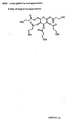
- An example of hexopyranose is depicted in Figure 1a , where a maximum of 5 GHB molecules can be anchored to each sugar monomer.
- GHB compounds can be synthesized from sucrose (containing a furanose and a pyranose ring), glucose and one from any open chain hexose. These compounds may be synthesized by a single step from free GHB or from its lactone.
- hydrocarbon chains may provide adequate protection from enzymes present in the digestive tract.
- These compositions may be susceptible to acid catalyzed hydrolysis, which depends on the steric environments around each ester bond. For example, the 6-OH ester bond will be readily hydrolyzed.
- These molecules may be viewed as miniature micelles and can be transported into the circulatory system via the fat absorption mechanism.
- Linking GHB to partially charged sugars may provide for better uptake and delivery of the drug.
- the depicted compound has only 3-GHBs attached to the sugar.
- the choice of hydroxyl groups for esterification can be based on the rates of hydrolysis of the corresponding esters so that desired levels of free GHB can be maintained within the cells of the target organ.
- Free hydroxyl groups can be used to anchor various groups. Steric shielding of GHB-ester linkages enhances the stability of the compounds in acidic medium. For example, one or more pairs of adjacent OH group groups on the sugar ring can be protected as acetals or as ketals, as taught by Pouillart et al., cited above, using acetals. The ketone can be varied in bulk, in order to shield the ester linkages to a greater or lesser extent. The attachment of lipophilic groups, such as steroids or fatty acids, to GHB via e.g., ketal or acetal linkages, can enhance the transfer across the blood-brain barrier.
- lipophilic groups such as steroids or fatty acids
- a lipophilic composition may also be useful for delivery of GHB via salves or dermal patches. Free hydroxyl groups of the sugar may also be used to attach a second complementary therapeutic agent to the GHB composition.
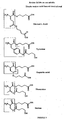
- Amino acids (AA), serine, threonine, tyrosine, aspartic acid and glutamic acid contain side chains containing OH groups and/or second CO 2 H groups that can be coupled to GHB by ester linkages, following N-protection (See Fig. 3 ). Each of these compounds could be linked to two GHB molecules. Alternatively, the carboxylic acid of GHB can be reacted with an acid-protected amino acid to form the amide from the amine of the amino acid. Because the ester linkages of these compounds have different steric environments, the hydrolysis rates of these compounds in vivo will vary. A significantly slow rate of hydrolysis will be seen with serine and threonine, due to the ester linkages associated with their side chains.
- AA-(GHB) 2 the ester linkage associated with the phenoxy side chain can be very rapidly hydrolyzed.
- Single amino acid compounds, i.e., AA-(GHB) 2 can only deliver 2 GHB molecules, and due to the lack of steric shielding, these compounds may have limited stability in the stomach pH.
- tailored small peptides having 3 to 5 amino acids can significantly improve the quantity of GHB delivered and have enhanced stability.
- the above compounds may comprise two or more amino acids.
- Such compounds can be constructed by using covalent linking moieties such as succinic acid to couple the amino acids tyrosine and threonine, or using maleic acid to couple aspartic and glutamic acids.
- Each of these conjugates comprises 4 GHB per molecule, where each ester linkage is in a significantly different steric shielding. (See Fig. 4 ).
- the succinic and maleic acid linkers have significantly different degrees of flexibility.
- Succinic acid has full rotational freedom, whereas using maleic acid, GHB molecules will be held in a cis orientation.
- Each compound, having two amide and four ester linkages can give rise to distinct srtuctural organizations with different stability and cellular uptake.
- Analogs of naturally occurring phospholipids and lipids are known to the art.
- the compounds of formula III can be prepared as disclosed in PCT WO 92/03462 ; U.S. Pat. No. 5,223,263 ; PCT/US91/04289 ; or PCT/US94/05855 .
- Lecithin or a sphingolipid can be partially hydrolyzed to yield one or more free OH groups and GHB attached as discussed above.
- Compounds of formula (V) can be prepared by the reaction of polyols (L"(OH) n ) with 4-halobutyroylchloride, which is then hydrolyzed and the 4-hydroxyl group protected, or the 4-halo group is displaced by L"O - or an equivalent thereof.
- the invention provides a pharmaceutical formulation comprising a compound of formula (I) together with one or more pharmaceutically acceptable carriers therefor and, optionally, other therapeutic and/or prophylactic ingredients.
- the cations and carrier(s) must be "acceptable" in the sense of being compatible with the other ingredients of the formulation and not deleterious to the recipient thereof, i.e., they do not produce an adverse, allergic, or other untoward reaction when administered to an animal, or a human, at appropriate levels.
- compositions include those suitable for oral or parenteral (including intramuscular, subcutaneous and intravenous) administration.
- forms suitable for parenteral administration also include forms suitable for administration by inhalation or insufflation or for nasal, or topical (including buccal, rectal, vaginal, transdermal or sublingual) administration.
- the formulations may, where appropriate, be conveniently presented in discrete unit dosage forms, by bringing the active compound into association with liquid carriers, solid matrices, semi-solid carriers, finely divided solid carriers or combinations thereof, and then, if necessary, shaping the product into the desired delivery system.
- the active compounds of the invention may be formulated for parenteral administration, e.g., formulated for injection via intravenous, intraarterial, intramuscular, subcutaneous, intralesional, intraperitoneal or other parenteral routes.
- parenteral administration e.g., formulated for injection via intravenous, intraarterial, intramuscular, subcutaneous, intralesional, intraperitoneal or other parenteral routes.
- the preparation of an aqueous composition that contains a GHB agent as an active component or ingredient will be known to those of skill in the art in light of the present disclosure.
- the pharmaceutical dosage forms suitable for injection or infusion can include sterile aqueous solutions or dispersions or sterile powders comprising the active ingredient which are adapted for the extemporaneous preparation of sterile injectable or infusible solutions or dispersions.
- the compounds of the invention may be lyophilized for more ready formulation into a desired vehicle where appropriate.
- the active agent can optionally be encapsulated in liposomes. In all cases, the ultimate dosage form should be sterile, fluid and stable under the conditions of manufacture and storage.
- the liquid carrier or vehicle can be a solvent or liquid dispersion medium comprising, for example, water, ethanol, glycerol, a polyol (for example, glycerol, propylene glycol, liquid polyethylene glycols, and the like), vegetable oils, nontoxic glyceryl esters, and suitable mixtures thereof.
- the proper fluidity can be maintained, for example, by the formation of liposomes, by the maintenance of the required particle size in the case of dispersions, by the use of surfactants, or by the use of a substance, such as lecithin (e.g., a coating).
- Solutions of the active compounds as free acid or pharmacologically acceptable salts can be prepared in water suitably mixed with hydroxypropylcellulose and/or a pharmaceutically acceptable surfactant.
- the prevention of the action of microorganisms can be brought about by various antibacterial and antifungal agents, for example, parabens, chlorobutanol, phenol, sorbic acid, thimerosal, and the like.
- isotonic agents for example, sugars, buffers or sodium chloride.
- Prolonged absorption of the injectable compositions can be brought about by the use in the compositions of agents delaying absorption, for example, aluminum monostearate and gelatin.
- Sterile injectable solutions are prepared by incorporating the active compounds in the required amount in the appropriate solvent with various of the other ingredients as required, followed by filtered sterilization.
- dispersions are prepared by incorporating the various sterilized active ingredients into a sterile vehicle which contains the basic dispersion medium and the required other ingredients from those enumerated above.
- the preferred methods of preparation are vacuum-drying and freeze-drying techniques which yield a powder of the active ingredient plus any additional desired ingredient from a previously sterile-filtered, pyrogen-free solution thereof.
- the compounds according to the invention may be presented in unit dose form in ampules, pre-filled syringes, small volume infusion containers, multidose containers with an added preservative, or indwelling pumps or dispensers, or in devices which allow for sustained release of the compounds.
- the active GHB agent may be included within a therapeutic composition to comprise about 0.1 to about 100 grams GHB per unit dosage form, and multiple doses can also be administered.
- one dosage could be dissolved in 1 ml of isotonic NaCl solution and either added to 1000 ml of fluid or injected at the proposed site of infusion (see, for example, " Remington's Pharmaceutical Sciences” 15th Edition, pages 1035-1038 and 1570-1580 ).
- Some variation in dosage will necessarily occur depending on the condition of the subj ect being treated. The person responsible for administration will, in any event, determine the appropriate dose for the individual subject.
- other pharmaceutically acceptable forms include, e.g., tablets or other solids; liposomal formulations; time release capsules; and any other form currently used, including creams or lotions, which then may be admixed with an aqueous medium for oral administration.
- compositions suitable for oral administration may be presented as discrete unit dosage forms such as hard or soft gelatin capsules, cachets or tablets each containing a predetermined amount of the active ingredient; as a powder or as granules; as a solution, a suspension or as an emulsion; or in a chewable base such as a synthetic resin or chicle for ingestion of the active ingredient from a chewing gum.
- the active ingredient may also be presented as a bolus, syrup, electuary or paste.
- Tablets and capsules for oral administration may contain conventional excipients such as binding agents, fillers, lubricants, disintegrants, or wetting agents.
- the tablets may be coated according to methods well known in the art, i.e., with enteric coatings.
- the tablets, troches, pills, capsules and the like may also contain the following: a binder, natural as gum tragacanth, acacia, cornstarch, or gelatin or synthetic as polyvinyl acetate; excipients, such as dicalcium phosphate; a disintegrating agent, such as corn starch, potato starch, alginic acid and the like; a lubricant, such as magnesium stearate; and a sweetening agent, such as sucrose, lactose, aspartame or saccharin may be added or a natural or synthetic flavoring agent.
- a binder natural as gum tragacanth, acacia, cornstarch, or gelatin or synthetic as polyvinyl acetate
- excipients such as dicalcium phosphate
- a disintegrating agent such as corn starch, potato starch, alginic acid and the like
- a lubricant such as magnesium stearate
- a sweetening agent such as sucrose, lac
- the dosage unit form When the dosage unit form is a capsule for admixing with a specific volume of an aqueous medium, it may contain, in addition to materials of the above type, a liquid carrier, such as vegetable oil or a polyethylene glycol. Various other materials may be present as coatings or to otherwise modify the physical form of the dosage unit. For instance, tablets, pills, or capsules may be coated with gelatin, wax, shellac, sugar, natural or synthetic polymers, or both. A syrup or elixir may contain the active compounds, sucrose or fructose as a sweetening agent, a preservative, a dye and/or a flavoring. Of course, any material used in preparing any unit dosage form should be pharmaceutically acceptable and substantially non-toxic in the amounts employed.
- compositions and preparations should contain at least 0.1% of the active compound.
- the percentage of the compositions and preparations may, of course, be varied and may conveniently be between about 2 to about 75% of the weight of the unit, or preferably between 25-60%.
- the amount of active compounds in such therapeutically useful compositions is such that a suitable dosage will be obtained.
- the GHB-containing agent may be packaged separately from or in combination with the excipients, salts, flavorings or any other components described herein, to be admixed with an aqueous medium in the case of oral or injectable formulations, or they may be incorporated directly with the food (i.e., a beverage, candy bar or cake) of the diet.
- the present compounds may be applied in pure form, i.e., when they are liquids. However, it will generally be desirable to administer them to the skin as compositions or formulations, in combination with a dermatologically acceptable carrier, which may be a solid or a liquid.
- a dermatologically acceptable carrier which may be a solid or a liquid.
- useful dermatological compositions which can be used to deliver the compounds of formula I, II, or III to the skin are known to the art; for example, see Jacquet et al. (U.S. Pat. No. 4,608,392 ), Geria (U.S. Pat. No. 4,992,478 ), Smith et al. (U.S. Pat. No. 4,559,157 ) and Wortzman (U.S. Pat. No. 4,820,508 ).
- Useful solid carriers for dermatological compositions include finely divided solids such as talc, clay, microcrystalline cellulose, silica, alumina and the like.
- Useful liquid carriers include water, alcohols or glycols or water-alcohol/glycol blends, in which the present compounds can be dissolved or dispersed at effective levels, optionally with the aid of non-toxic surfactants.
- Adjuvants such as fragrances and additional antimicrobial agents can be added to optimize the properties for a given use.
- the resultant liquid compositions can be applied from absorbent pads, used to impregnate bandages and other dressings, or sprayed onto the affected area using pump-type or aerosol sprayers.
- Ointments, pastes, gels, lotions, soaps and creams may, for example, be formulated with an aqueous or oily base with the addition of suitable thickening and/or gelling agents.
- Lotions may be formulated with an aqueous or oily base and will in general also contain one or more emulsifying agents, stabilizing agents, dispersing agents, suspending agents, thickening agents, or coloring agents.
- Thickeners such as synthetic polymers, fatty acids, fatty acid salts and esters, fatty alcohols, modified celluloses or modified mineral materials can be employed.
- compound(s) of formula (I), formula (II), or formula (III) may be formulated as the active ingredient of a transdermal patch.
- Suitable transdermal delivery systems are disclosed, for example, in A. Fisher et al. (U.S. Pat. No. 4,788,603 ), Chien et al. (U.S. Pat. No. 5,145,682 ) or R. Bawa et al. (U.S. Pat. Nos. 4,931,279 , 4,668,506 and 4,713,224 ).
- the active ingredient can also be delivered via iontophoresis, e.g., as disclosed in U.S. Pat. Nos. 4,140,122 , 4,383,529 , or 4,051,842 .
- Formulations suitable for topical administration in the mouth include unit dosage forms such as lozenges comprising active ingredient in a flavored base, usually sucrose and acadia or tragacanth; pastilles comprising the active ingredient in an inert base such as gelatin and glycerin or sucrose and acacia; mucoadherent gels, and mouthwashes comprising the active ingredient in a suitable liquid carrier.
- the above-described formulations can be adapted to provide sustained release of the active ingredient employed, e.g., by combination with certain hydrophilic polymer matrices, e.g., comprising natural gels, synthetic polymer gels or mixtures thereof.
- compositions suitable for rectal administration wherein the carrier is a solid are most preferably presented as unit dose suppositories.
- Suitable carriers include cocoa butter and other materials commonly used in the art, and the suppositories may be conveniently formed by admixture of the active compound with the softened or melted carrier(s) followed by chilling and shaping in molds.
- Formulations suitable for vaginal administration may be presented as pessaries, tampons, creams, gels, pastes, foams or sprays containing, in addition to the active ingredient, such carriers as are known in the art to be appropriate.
- the compounds according to the invention are conveniently delivered form an insufflator, nebulizer or a pressurized pack or other convenient means of delivering an aerosol spray.
- Pressurized packs may comprise a suitable propellant such as dichlorodifluoromethane, trichlorofluoromethane, dichlorotetrafluoroethane, carbon dioxide or other suitable gas.
- the dosage unit may be determined by providing a valve to deliver a metered amount.
- the compounds according to the invention may take the form of a dry powder composition, for example, a powder mix of the compound and a suitable powder base such as lactose or starch.
- the powder composition may be presented in unit dosage form in, for example, capsules or cartridges or, e.g., gelatin or blister packs from which the powder may be administered with the aid of an inhalator or insufflator.
- the compounds of the invention may be administered via a liquid spray, such as via a plastic bottle atomizer.
- a liquid spray such as via a plastic bottle atomizer.
- Typical of these are the Mistometer ® (Wintrop) and the Medihaler ® (Riker).
- Nasal solutions are usually aqueous solutions designed to be administered to the nasal passages in drops or sprays. Nasal solutions are prepared so that they are similar in many respects to nasal secretions, so that normal ciliary action is maintained.
- the aqueous nasal solutions usually are isotonic and lightly buffered to maintain a pH of 5.5 to 6.5, though other pH ranges disclosed herein the specific example, such as pH 3 to about pH 9, or pH 6 to about 7.5, are contemplated.
- preservatives similar to those used in ophthalmic preparations, and appropriate drug stabilizers, if required, may be included in the formulation.
- Various commercial nasal preparations are known and include, for example, antibiotics and antihistamines and are used for asthma prophylaxis.
- GHB has typically been administered in clinical trials as an oral solution (Lee, 1977; Mamelak, 1977; Hoes, 1980; Scharf, 1985; Scrima, 1990; Gallimberti, 1992; Series, 1992; Lammers, 1993).
- the dosages When used as an oral solution, the dosages have ranged from 20-45 milligrams per kilogram body weight, twice daily. (Mamelak, 1977.)
- the amount of the compound of formula (I), (II), (III), (IV) or (V) required for use in treatment will vary not only with the particular compound selected but also with the route of administration, the severity of the condition being treated and the age and condition of the patient and will be ultimately at the discretion of the attendant physician or clinician.
- Useful dosages of the compounds of formula (I), (II), (III), (IV) or (V) can be determined by comparing their in vitro activity, and in vivo activity in animal models. Methods for the extrapolation of effective dosages in mice, and other animals, to humans are known to the art; for example, see U.S. Pat. No. 4,938,949 .
- the concentration of the compound(s) of formula (I), (II), (III), (IV) or (V) in a liquid composition, such as a lotion will be from about 0.01-25 wt-%, preferably from about 0.5-10 wt-%.
- concentration in a semi-solid or solid composition such as a gel or a powder will be about 0.01-15 wt-%, preferably about 0.5-2.5 wt-%.
- a suitable dose will be in the range of from about 0.05 to 50 gm per day; or preferably from about 0.05 to about 500 mg per kilogram body weight of the recipient per day, preferably in the range of 0.1 to 200 mg/kg/day.
- the compound is conveniently administered in unit dosage form; for example, containing 0.1-20 g, conveniently 1-7.5 g, or more conveniently, 2-5 g of active ingredient per unit dosage form.
- the total daily dose i.e., of about 0.05-50 g, may be administered for about 1-4 months, or longer, as needed.
- the active ingredient should be administered to achieve peak plasma concentrations of the active compound of from about 0.5 to about 75 ⁇ M, preferably, about 1 to 50 ⁇ M, most preferably, about 2 to about 30 ⁇ M. This may be achieved, for example, by the intravenous injection of a 0.05 to 5% solution of the active ingredient, optionally in saline, or orally administered as a bolus containing about 1-100 mg of the active ingredient. Desirable blood levels may be maintained by continuous infusion to provide about 0.01-5.0 mg/kg/hr or by intermittent infusions containing about 0.4-15 mg/kg of the active ingredient(s).
- the desired dose may conveniently be presented in a single dose or as divided doses administered at appropriate intervals, for example, as two, three, four or more sub-doses per day.
- the sub-dose itself may be further divided, e.g., into a number of discrete loosely spaced administrations; such as multiple inhalations from an insufflator or by application of a plurality of drops into the eye.
- reaction mixture was washed with 300 ml H 2 O, the organic layer was isolated and washed with 100 ml in HCl aq, 100 ml NaCl aq and dried over MgSO 4 (anhydrous). The solvents were removed in vacuo to yield the product (VII) as a translucent low viscosity oil.
Landscapes
- Health & Medical Sciences (AREA)
- Chemical & Material Sciences (AREA)
- Organic Chemistry (AREA)
- Life Sciences & Earth Sciences (AREA)
- Engineering & Computer Science (AREA)
- General Health & Medical Sciences (AREA)
- Pharmacology & Pharmacy (AREA)
- Veterinary Medicine (AREA)
- Bioinformatics & Cheminformatics (AREA)
- Medicinal Chemistry (AREA)
- Animal Behavior & Ethology (AREA)
- General Chemical & Material Sciences (AREA)
- Public Health (AREA)
- Nuclear Medicine, Radiotherapy & Molecular Imaging (AREA)
- Chemical Kinetics & Catalysis (AREA)
- Neurosurgery (AREA)
- Neurology (AREA)
- Biomedical Technology (AREA)
- Addiction (AREA)
- Diabetes (AREA)
- Psychiatry (AREA)
- Biochemistry (AREA)
- Pain & Pain Management (AREA)
- Immunology (AREA)
- Endocrinology (AREA)
- Biotechnology (AREA)
- Genetics & Genomics (AREA)
- Molecular Biology (AREA)
- Toxicology (AREA)
- Anesthesiology (AREA)
- Heart & Thoracic Surgery (AREA)
- Cardiology (AREA)
- Urology & Nephrology (AREA)
- Psychology (AREA)
- Transplantation (AREA)
- Vascular Medicine (AREA)
- Rheumatology (AREA)
- Hospice & Palliative Care (AREA)
- Obesity (AREA)
- Hematology (AREA)
Applications Claiming Priority (3)
| Application Number | Priority Date | Filing Date | Title |
|---|---|---|---|
| US23472000P | 2000-09-22 | 2000-09-22 | |
| US234720P | 2000-09-22 | ||
| PCT/US2001/029569 WO2002024715A2 (en) | 2000-09-22 | 2001-09-21 | Gamma-hydroxybutyrate compositions containing carbohydrate, lipid or amino acid carriers |
Publications (2)
| Publication Number | Publication Date |
|---|---|
| EP1325014A2 EP1325014A2 (en) | 2003-07-09 |
| EP1325014B1 true EP1325014B1 (en) | 2012-05-23 |
Family
ID=22882520
Family Applications (1)
| Application Number | Title | Priority Date | Filing Date |
|---|---|---|---|
| EP01971269A Expired - Lifetime EP1325014B1 (en) | 2000-09-22 | 2001-09-21 | Gamma-hydroxybutyrate compositions containing carbohydrate carriers |
Country Status (7)
| Country | Link |
|---|---|
| US (4) | US7015200B2 (https=) |
| EP (1) | EP1325014B1 (https=) |
| JP (2) | JP2004509900A (https=) |
| AU (1) | AU2001291173A1 (https=) |
| CA (1) | CA2423358C (https=) |
| ES (1) | ES2383673T3 (https=) |
| WO (1) | WO2002024715A2 (https=) |
Families Citing this family (57)
| Publication number | Priority date | Publication date | Assignee | Title |
|---|---|---|---|---|
| AU2001292683A1 (en) | 2000-09-15 | 2002-03-26 | Bruder Healthcare Company | Wound and therapy compress and dressing |
| US10105259B2 (en) | 2000-09-15 | 2018-10-23 | Bruder Healthcare Company, Llc | Wound and therapy compress and dressing |
| US9925087B2 (en) | 2000-09-15 | 2018-03-27 | Bruder Healthcare Company, Llc | Wound and therapy compress and dressing |
| ES2383673T3 (es) * | 2000-09-22 | 2012-06-25 | Jpi Commercial, Llc | Composiciones de gamma-hidroxibutirato que contienen portadores de hidrato de carbonos |
| CA2510196C (en) * | 2002-12-20 | 2014-04-01 | Generipharm, Inc. | Intracutaneous injection |
| US8133881B2 (en) | 2003-01-13 | 2012-03-13 | Shire Llc | Carbohydrate conjugates to prevent abuse of controlled substances |
| JP2006515622A (ja) * | 2003-01-13 | 2006-06-01 | ニュー リバー ファーマシューティカルズ インコーポレイテッド | 規制物質の乱用を防止するための炭水化物共役体 |
| KR20070100686A (ko) * | 2004-09-07 | 2007-10-11 | 오르펀 메디칼, 인크. | 개선된 ghb 조성물 |
| US8193211B2 (en) * | 2004-09-30 | 2012-06-05 | Supernus Pharmaceuticals, Inc. | Controlled release compositions of gamma-hydroxybutyrate |
| KR20070085838A (ko) * | 2004-11-10 | 2007-08-27 | 더 트러스티이스 오브 콜롬비아 유니버시티 인 더 시티 오브 뉴욕 | 운동 장애의 치료 방법 |
| US20120142618A1 (en) * | 2007-02-13 | 2012-06-07 | Btg International Limited | Ketogenic saccharides |
| US8778398B2 (en) * | 2008-11-04 | 2014-07-15 | Jazz Pharmaceuticals, Inc. | Immediate release formulations and dosage forms of gamma-hydroxybutyrate |
| US8771735B2 (en) | 2008-11-04 | 2014-07-08 | Jazz Pharmaceuticals, Inc. | Immediate release dosage forms of sodium oxybate |
| EP2421808B1 (en) | 2009-04-23 | 2013-07-31 | Concert Pharmaceuticals Inc. | 4-hydroxybutyric acid analogs |
| CA2794171C (en) | 2010-03-24 | 2018-07-03 | Jazz Pharmaceuticals, Inc. | Controlled release dosage forms for high dose, water soluble and hygroscopic drug substances |
| KR101976218B1 (ko) * | 2011-02-14 | 2019-05-07 | 콘서트 파마슈티컬즈, 인크. | 4-히드록시부티르산 중수소화 유사체 |
| EP2961738B1 (en) | 2012-11-14 | 2019-12-25 | CJ CheilJedang Corporation | Production of salts of 4-hydroxybutyrate using biobased raw materials |
| US8591922B1 (en) | 2012-12-14 | 2013-11-26 | Jazz Pharmacuticals, Inc. | Gamma-hydroxybutyrate compositions and their use for the treatment of disorders |
| US9050302B2 (en) | 2013-03-01 | 2015-06-09 | Jazz Pharmaceuticals Ireland Limited | Method of administration of gamma hydroxybutyrate with monocarboxylate transporters |
| WO2014143139A1 (en) | 2013-03-15 | 2014-09-18 | Bruder Healthcare Company | Wound and therapy compress and dressing |
| US10398662B1 (en) | 2015-02-18 | 2019-09-03 | Jazz Pharma Ireland Limited | GHB formulation and method for its manufacture |
| CA2999367C (en) | 2015-09-23 | 2023-09-26 | Xw Laboratories Inc. | Prodrugs of gamma-hydroxybutyric acid, compositions and uses thereof |
| US12156831B2 (en) | 2016-03-01 | 2024-12-03 | The Hilsinger Company Parent, Llc | Therapeutic eye compress system |
| US12011388B2 (en) | 2016-03-01 | 2024-06-18 | The Hilsinger Company Parent, Llc | Therapeutic thermal compress with phase-change material |
| US12029681B2 (en) | 2016-03-01 | 2024-07-09 | The Hilsinger Company Parent, Llc | Therapeutic eye mask system |
| UY37341A (es) | 2016-07-22 | 2017-11-30 | Flamel Ireland Ltd | Formulaciones de gamma-hidroxibutirato de liberación modificada con farmacocinética mejorada |
| US11602512B1 (en) | 2016-07-22 | 2023-03-14 | Flamel Ireland Limited | Modified release gamma-hydroxybutyrate formulations having improved pharmacokinetics |
| US11000498B2 (en) | 2016-07-22 | 2021-05-11 | Flamel Ireland Limited | Modified release gamma-hydroxybutyrate formulations having improved pharmacokinetics |
| US12186296B1 (en) | 2016-07-22 | 2025-01-07 | Flamel Ireland Limited | Modified release gamma-hydroxybutyrate formulations having improved pharmacokinetics |
| US12478604B1 (en) | 2016-07-22 | 2025-11-25 | Flamel Ireland Limited | Modified release gamma-hydroxybutyrate formulations having improved pharmacokinetics |
| US11986451B1 (en) | 2016-07-22 | 2024-05-21 | Flamel Ireland Limited | Modified release gamma-hydroxybutyrate formulations having improved pharmacokinetics |
| US11504347B1 (en) | 2016-07-22 | 2022-11-22 | Flamel Ireland Limited | Modified release gamma-hydroxybutyrate formulations having improved pharmacokinetics |
| US11602513B1 (en) | 2016-07-22 | 2023-03-14 | Flamel Ireland Limited | Modified release gamma-hydroxybutyrate formulations having improved pharmacokinetics |
| USD871598S1 (en) | 2016-11-30 | 2019-12-31 | Bruder Healthcare Company, Llc | Therapeutic eye mask |
| USD844795S1 (en) | 2016-11-30 | 2019-04-02 | Bruder Healthcare Company, Llc | Therapeutic eye mask |
| US20180263936A1 (en) | 2017-03-17 | 2018-09-20 | Jazz Pharmaceuticals Ireland Limited | Gamma-hydroxybutyrate compositions and their use for the treatment of disorders |
| EP3609485A4 (en) * | 2017-04-11 | 2021-01-06 | John K. Thottathil | NEW PRODUCTS OF GAMMA-HYDROXYBUTYRATE (GHB) BASED ON ALPHA-HYDROXY CARBOXYLIC ACID AND DERIVATIVES AND OTHER FAT AND THEIR USES |
| CA3085941A1 (en) | 2017-12-18 | 2019-06-27 | Tris Pharma, Inc. | Ghb pharmaceutical compositions comprising a floating interpenetrating polymer network forming system |
| WO2019126214A1 (en) | 2017-12-18 | 2019-06-27 | Tris Pharma, Inc. | Pharmaceutical composition comprising ghb gastro-retentive raft forming systems having trigger pulse drug release |
| CA3097737A1 (en) | 2017-12-18 | 2019-06-27 | Tris Pharma, Inc. | Pharmaceutical compositions comprising a floating interpenetrating polymer network forming system |
| AU2018388577B2 (en) | 2017-12-18 | 2024-06-06 | Tris Pharma, Inc. | Modified release drug powder composition comprising gastro-retentive raft forming systems having trigger pulse drug release |
| CA3115122A1 (en) | 2018-11-19 | 2020-05-28 | Jazz Pharmaceuticals Ireland Limited | Alcohol-resistant drug formulations |
| EP3930702A1 (en) | 2019-03-01 | 2022-01-05 | Flamel Ireland Limited | Gamma-hydroxybutyrate compositions having improved pharmacokinetics in the fed state |
| TW202135790A (zh) | 2019-12-24 | 2021-10-01 | 愛爾蘭商爵士製藥愛爾蘭有限責任公司 | Ghb給藥 |
| TW202139986A (zh) | 2020-02-21 | 2021-11-01 | 愛爾蘭商爵士製藥愛爾蘭有限責任公司 | 治療原發性嗜睡症之方法 |
| CN115038432B (zh) | 2020-06-18 | 2023-12-26 | 凯瑞康宁生物工程(武汉)有限公司 | 水溶性活性药物成分的控制释放制粒 |
| WO2022020621A1 (en) | 2020-07-24 | 2022-01-27 | XWPharma Ltd. | Pharmaceutical compositions and pharmacokinetics of a gamma-hydroxybutyric acid derivative |
| EP4225274A1 (en) | 2020-10-05 | 2023-08-16 | XWPharma Ltd. | Modified release compositions of a gamma-hydroxybutyric acid derivative |
| WO2022076824A1 (en) | 2020-10-08 | 2022-04-14 | Jazz Pharmaceuticals Ireland Limited | Sodium oxybate to treat idiopathic hypersomnia |
| EP4228620A2 (en) | 2020-10-16 | 2023-08-23 | Jazz Pharmaceuticals Ireland Limited | Treatment methods using ghb |
| JP2024511991A (ja) | 2021-03-19 | 2024-03-18 | エックスダブリューファーマ リミテッド | ガンマ-ヒドロキシ酪酸誘導体の組み合わされた放出製剤の薬物動態 |
| WO2023062018A1 (en) | 2021-10-11 | 2023-04-20 | Jazz Pharmaceuticals Ireland Limited | Method of administering oxybate |
| US20250073191A1 (en) | 2022-01-11 | 2025-03-06 | Jazz Pharmaceuticals Ireland Limited | Method of administering oxybate |
| US11779557B1 (en) | 2022-02-07 | 2023-10-10 | Flamel Ireland Limited | Modified release gamma-hydroxybutyrate formulations having improved pharmacokinetics |
| US11583510B1 (en) | 2022-02-07 | 2023-02-21 | Flamel Ireland Limited | Methods of administering gamma hydroxybutyrate formulations after a high-fat meal |
| IL314441A (en) * | 2022-04-21 | 2024-09-01 | Zevra Therapeutics Inc | Gamma-Hydroxybutyrate providing compounds and processes for their production and use |
| JP2026513019A (ja) | 2023-02-03 | 2026-04-22 | トリス・フアルマ・インコーポレーテツド | 1晩1回の低ナトリウムオキシベート組成物 |
Family Cites Families (22)
| Publication number | Priority date | Publication date | Assignee | Title |
|---|---|---|---|---|
| DE2226398A1 (de) * | 1972-05-31 | 1973-12-13 | Boehringer Sohn Ingelheim | Neue herzglykoside und verfahren zu ihrer herstellung |
| DE2702687A1 (de) * | 1977-01-24 | 1978-07-27 | Boehringer Sohn Ingelheim | Neue herzglykosidderivate und verfahren zu ihrer herstellung |
| JPS60168044A (ja) | 1984-02-10 | 1985-08-31 | Sharp Corp | 感湿素子 |
| US5223263A (en) | 1988-07-07 | 1993-06-29 | Vical, Inc. | Liponucleotide-containing liposomes |
| GB8508508D0 (en) | 1985-04-01 | 1985-05-09 | Creighton A M | Pharmaceutical compositions |
| US4738985A (en) | 1986-03-19 | 1988-04-19 | The University Of Toronto Innovations Foundations | Pharmaceutical composition and treatment |
| IT1238344B (it) * | 1989-10-20 | 1993-07-13 | Sigma Tau Ind Farmaceuti | Estere della l-carnitina con l'acido gamma-idrossibutirrico e composizioni farmaceutiche che lo contengono per l'inibizione della degenerazione neuronale e nel trattamento del coma |
| IT1240760B (it) | 1990-02-12 | 1993-12-17 | Sigma Tau Ind Farmaceuti | Esteri di acil-l-carnitine con l'acido gamma-idrossibutirrico e composizioni farmaceutiche che li contengono per l'inibizione della degenerazione neuronale e nel trattamento del coma. |
| DE4026265A1 (de) | 1990-08-20 | 1992-02-27 | Boehringer Mannheim Gmbh | Neue phospholipid-derivate von nucleosiden, deren herstellung sowie deren verwendung als antivirale arzneimittel |
| DE4113984C2 (de) | 1991-04-29 | 2002-05-08 | Koehler Chemie Dr Franz | Salze der 4-Hydroxy-Buttersäure |
| GB9112212D0 (en) | 1991-06-06 | 1991-07-24 | Gregoriadis Gregory | Pharmaceutical compositions |
| IT1261485B (it) | 1993-06-24 | 1996-05-23 | Sigma Tau Ind Farmaceuti | Uso di acil l-carnitine gamma-idrossibutirrato per il trattamento di tossicodipendenze. |
| JP2746079B2 (ja) * | 1993-09-07 | 1998-04-28 | 正和薬品株式会社 | 血糖上昇抑制剤および脂質代謝改善剤 |
| SE502990C2 (sv) * | 1993-11-22 | 1996-03-04 | Perstorp Ab | Användning av en inositoltrisfosfatester för beredning av ett smärtstillande läkemedel |
| SE503122C2 (sv) * | 1993-11-22 | 1996-03-25 | Perstorp Ab | Användning av en inositoltrisfosfatester för behandling av inflammatoriska tillstånd |
| SE502989C2 (sv) * | 1993-11-22 | 1996-03-04 | Perstorp Ab | Användning av en inositoltrisfosfatester för beredning av läkemedel |
| CA2283642C (en) * | 1997-03-17 | 2012-05-15 | Btg International Limited | Therapeutic compositions |
| US5990162A (en) | 1997-08-29 | 1999-11-23 | Orphan Medical, Inc. | Method for treatment of fibromyalgia and chronic fatigue syndrome |
| WO2001019361A2 (en) * | 1999-09-14 | 2001-03-22 | Tepha, Inc. | Therapeutic uses of polymers and oligomers comprising gamma-hydroxybutyrate |
| ES2383673T3 (es) | 2000-09-22 | 2012-06-25 | Jpi Commercial, Llc | Composiciones de gamma-hidroxibutirato que contienen portadores de hidrato de carbonos |
| US7686215B2 (en) | 2005-05-21 | 2010-03-30 | Apple Inc. | Techniques and systems for supporting podcasting |
| US9405855B2 (en) | 2014-03-27 | 2016-08-02 | Sap Ag | Processing diff-queries on property graphs |
-
2001
- 2001-09-21 ES ES01971269T patent/ES2383673T3/es not_active Expired - Lifetime
- 2001-09-21 JP JP2002529123A patent/JP2004509900A/ja active Pending
- 2001-09-21 EP EP01971269A patent/EP1325014B1/en not_active Expired - Lifetime
- 2001-09-21 CA CA2423358A patent/CA2423358C/en not_active Expired - Fee Related
- 2001-09-21 AU AU2001291173A patent/AU2001291173A1/en not_active Abandoned
- 2001-09-21 WO PCT/US2001/029569 patent/WO2002024715A2/en not_active Ceased
- 2001-09-21 US US10/381,224 patent/US7015200B2/en not_active Expired - Lifetime
-
2005
- 2005-07-18 US US11/183,482 patent/US7572605B2/en not_active Expired - Lifetime
-
2009
- 2009-05-13 US US12/465,069 patent/US8778301B2/en not_active Expired - Fee Related
-
2012
- 2012-09-06 JP JP2012196299A patent/JP2012246312A/ja active Pending
-
2013
- 2013-05-20 US US13/897,748 patent/US20130324759A1/en not_active Abandoned
Also Published As
| Publication number | Publication date |
|---|---|
| CA2423358A1 (en) | 2002-03-28 |
| CA2423358C (en) | 2011-05-17 |
| ES2383673T3 (es) | 2012-06-25 |
| EP1325014A2 (en) | 2003-07-09 |
| US7015200B2 (en) | 2006-03-21 |
| US20090215890A1 (en) | 2009-08-27 |
| JP2012246312A (ja) | 2012-12-13 |
| JP2004509900A (ja) | 2004-04-02 |
| US20100022643A2 (en) | 2010-01-28 |
| US20130324759A1 (en) | 2013-12-05 |
| WO2002024715A3 (en) | 2003-05-08 |
| US8778301B2 (en) | 2014-07-15 |
| AU2001291173A1 (en) | 2002-04-02 |
| US20050250848A1 (en) | 2005-11-10 |
| US20040092455A1 (en) | 2004-05-13 |
| WO2002024715A2 (en) | 2002-03-28 |
| US7572605B2 (en) | 2009-08-11 |
Similar Documents
| Publication | Publication Date | Title |
|---|---|---|
| EP1325014B1 (en) | Gamma-hydroxybutyrate compositions containing carbohydrate carriers | |
| EP0401301B1 (en) | Fatty acid-drug conjugate for delivery of the drug across the blood-brain barrier | |
| CA1340475C (en) | Dopamine analog amide | |
| US5519007A (en) | Lysosphingolipid derivatives | |
| EP2399899B1 (en) | Geranyl compounds | |
| ES2274080T3 (es) | Nuevo glicolipido y agente terapeutico para la enfermedad autoinmune que lo contiene como ingrediente activo. | |
| US20060240097A1 (en) | TRPV1 agonist compounds and methods for making and using the same | |
| US4639437A (en) | Kit or device and method for administering gangliosides and derivatives thereof by inhalation and pharmaceutical compositions suitable therefor | |
| US20210299079A1 (en) | Monomethyl fumarate-carrier conjugates and methods of their use | |
| CA1329591C (en) | Pharmaceutical products and new lactosyl compounds and the preparation thereof | |
| CN1651397B (zh) | 一种含有脂肪酸的薄荷醇衍生物及含有该衍生物的制剂 | |
| EP0410883B1 (en) | Di-lysogangliosides derivatives | |
| US7304039B2 (en) | Glucose-based compounds with affinity to P-selectin | |
| CA1228295A (en) | Kit or device and method for administering gangliosides and derivatives thereof by inhalation and pharmaceutical composition suitable thereof | |
| AU2008200719B2 (en) | Geranyl compounds | |
| BRPI0216272B1 (pt) | Derivados do ácido mevalônico, agente antitumoral, composição farmacêutica, e, uso de um derivado do ácido mevalônico |
Legal Events
| Date | Code | Title | Description |
|---|---|---|---|
| PUAI | Public reference made under article 153(3) epc to a published international application that has entered the european phase |
Free format text: ORIGINAL CODE: 0009012 |
|
| 17P | Request for examination filed |
Effective date: 20030320 |
|
| AK | Designated contracting states |
Designated state(s): AT BE CH CY DE DK ES FI FR GB GR IE IT LI LU MC NL PT SE TR |
|
| AX | Request for extension of the european patent |
Extension state: AL LT LV MK RO SI |
|
| RAP1 | Party data changed (applicant data changed or rights of an application transferred) |
Owner name: ORPHAN MEDICAL INC. |
|
| 17Q | First examination report despatched |
Effective date: 20050722 |
|
| GRAP | Despatch of communication of intention to grant a patent |
Free format text: ORIGINAL CODE: EPIDOSNIGR1 |
|
| RTI1 | Title (correction) |
Free format text: GAMMA-HYDROXYBUTYRATE COMPOSITIONS CONTAINING CARBOHYDRATE CARRIERS |
|
| GRAS | Grant fee paid |
Free format text: ORIGINAL CODE: EPIDOSNIGR3 |
|
| GRAA | (expected) grant |
Free format text: ORIGINAL CODE: 0009210 |
|
| RAP1 | Party data changed (applicant data changed or rights of an application transferred) |
Owner name: JPI COMMERCIAL, LLC |
|
| AK | Designated contracting states |
Kind code of ref document: B1 Designated state(s): AT BE CH CY DE DK ES FI FR GB GR IE IT LI LU MC NL PT SE TR |
|
| REG | Reference to a national code |
Ref country code: GB Ref legal event code: FG4D |
|
| REG | Reference to a national code |
Ref country code: CH Ref legal event code: EP |
|
| REG | Reference to a national code |
Ref country code: AT Ref legal event code: REF Ref document number: 559034 Country of ref document: AT Kind code of ref document: T Effective date: 20120615 |
|
| REG | Reference to a national code |
Ref country code: IE Ref legal event code: FG4D |
|
| REG | Reference to a national code |
Ref country code: ES Ref legal event code: FG2A Ref document number: 2383673 Country of ref document: ES Kind code of ref document: T3 Effective date: 20120625 |
|
| REG | Reference to a national code |
Ref country code: DE Ref legal event code: R096 Ref document number: 60146586 Country of ref document: DE Effective date: 20120726 |
|
| REG | Reference to a national code |
Ref country code: NL Ref legal event code: VDEP Effective date: 20120523 |
|
| PG25 | Lapsed in a contracting state [announced via postgrant information from national office to epo] |
Ref country code: FI Free format text: LAPSE BECAUSE OF FAILURE TO SUBMIT A TRANSLATION OF THE DESCRIPTION OR TO PAY THE FEE WITHIN THE PRESCRIBED TIME-LIMIT Effective date: 20120523 Ref country code: SE Free format text: LAPSE BECAUSE OF FAILURE TO SUBMIT A TRANSLATION OF THE DESCRIPTION OR TO PAY THE FEE WITHIN THE PRESCRIBED TIME-LIMIT Effective date: 20120523 Ref country code: CY Free format text: LAPSE BECAUSE OF FAILURE TO SUBMIT A TRANSLATION OF THE DESCRIPTION OR TO PAY THE FEE WITHIN THE PRESCRIBED TIME-LIMIT Effective date: 20120523 |
|
| REG | Reference to a national code |
Ref country code: AT Ref legal event code: MK05 Ref document number: 559034 Country of ref document: AT Kind code of ref document: T Effective date: 20120523 |
|
| PG25 | Lapsed in a contracting state [announced via postgrant information from national office to epo] |
Ref country code: GR Free format text: LAPSE BECAUSE OF FAILURE TO SUBMIT A TRANSLATION OF THE DESCRIPTION OR TO PAY THE FEE WITHIN THE PRESCRIBED TIME-LIMIT Effective date: 20120824 Ref country code: PT Free format text: LAPSE BECAUSE OF FAILURE TO SUBMIT A TRANSLATION OF THE DESCRIPTION OR TO PAY THE FEE WITHIN THE PRESCRIBED TIME-LIMIT Effective date: 20120924 |
|
| PG25 | Lapsed in a contracting state [announced via postgrant information from national office to epo] |
Ref country code: BE Free format text: LAPSE BECAUSE OF FAILURE TO SUBMIT A TRANSLATION OF THE DESCRIPTION OR TO PAY THE FEE WITHIN THE PRESCRIBED TIME-LIMIT Effective date: 20120523 |
|
| PG25 | Lapsed in a contracting state [announced via postgrant information from national office to epo] |
Ref country code: NL Free format text: LAPSE BECAUSE OF FAILURE TO SUBMIT A TRANSLATION OF THE DESCRIPTION OR TO PAY THE FEE WITHIN THE PRESCRIBED TIME-LIMIT Effective date: 20120523 Ref country code: DK Free format text: LAPSE BECAUSE OF FAILURE TO SUBMIT A TRANSLATION OF THE DESCRIPTION OR TO PAY THE FEE WITHIN THE PRESCRIBED TIME-LIMIT Effective date: 20120523 Ref country code: AT Free format text: LAPSE BECAUSE OF FAILURE TO SUBMIT A TRANSLATION OF THE DESCRIPTION OR TO PAY THE FEE WITHIN THE PRESCRIBED TIME-LIMIT Effective date: 20120523 |
|
| PLBE | No opposition filed within time limit |
Free format text: ORIGINAL CODE: 0009261 |
|
| STAA | Information on the status of an ep patent application or granted ep patent |
Free format text: STATUS: NO OPPOSITION FILED WITHIN TIME LIMIT |
|
| PG25 | Lapsed in a contracting state [announced via postgrant information from national office to epo] |
Ref country code: MC Free format text: LAPSE BECAUSE OF NON-PAYMENT OF DUE FEES Effective date: 20120930 |
|
| REG | Reference to a national code |
Ref country code: CH Ref legal event code: PL |
|
| 26N | No opposition filed |
Effective date: 20130226 |
|
| REG | Reference to a national code |
Ref country code: DE Ref legal event code: R097 Ref document number: 60146586 Country of ref document: DE Effective date: 20130226 |
|
| PG25 | Lapsed in a contracting state [announced via postgrant information from national office to epo] |
Ref country code: LI Free format text: LAPSE BECAUSE OF NON-PAYMENT OF DUE FEES Effective date: 20120930 Ref country code: CH Free format text: LAPSE BECAUSE OF NON-PAYMENT OF DUE FEES Effective date: 20120930 |
|
| PGFP | Annual fee paid to national office [announced via postgrant information from national office to epo] |
Ref country code: IE Payment date: 20130925 Year of fee payment: 13 Ref country code: ES Payment date: 20130926 Year of fee payment: 13 Ref country code: DE Payment date: 20130927 Year of fee payment: 13 |
|
| PGFP | Annual fee paid to national office [announced via postgrant information from national office to epo] |
Ref country code: GB Payment date: 20130927 Year of fee payment: 13 Ref country code: FR Payment date: 20130919 Year of fee payment: 13 |
|
| PGFP | Annual fee paid to national office [announced via postgrant information from national office to epo] |
Ref country code: IT Payment date: 20130924 Year of fee payment: 13 |
|
| PG25 | Lapsed in a contracting state [announced via postgrant information from national office to epo] |
Ref country code: TR Free format text: LAPSE BECAUSE OF FAILURE TO SUBMIT A TRANSLATION OF THE DESCRIPTION OR TO PAY THE FEE WITHIN THE PRESCRIBED TIME-LIMIT Effective date: 20120523 |
|
| PG25 | Lapsed in a contracting state [announced via postgrant information from national office to epo] |
Ref country code: LU Free format text: LAPSE BECAUSE OF NON-PAYMENT OF DUE FEES Effective date: 20120921 |
|
| REG | Reference to a national code |
Ref country code: DE Ref legal event code: R119 Ref document number: 60146586 Country of ref document: DE |
|
| GBPC | Gb: european patent ceased through non-payment of renewal fee |
Effective date: 20140921 |
|
| REG | Reference to a national code |
Ref country code: IE Ref legal event code: MM4A |
|
| REG | Reference to a national code |
Ref country code: DE Ref legal event code: R119 Ref document number: 60146586 Country of ref document: DE Effective date: 20150401 |
|
| REG | Reference to a national code |
Ref country code: FR Ref legal event code: ST Effective date: 20150529 |
|
| PG25 | Lapsed in a contracting state [announced via postgrant information from national office to epo] |
Ref country code: GB Free format text: LAPSE BECAUSE OF NON-PAYMENT OF DUE FEES Effective date: 20140921 Ref country code: DE Free format text: LAPSE BECAUSE OF NON-PAYMENT OF DUE FEES Effective date: 20150401 |
|
| PG25 | Lapsed in a contracting state [announced via postgrant information from national office to epo] |
Ref country code: FR Free format text: LAPSE BECAUSE OF NON-PAYMENT OF DUE FEES Effective date: 20140930 Ref country code: IT Free format text: LAPSE BECAUSE OF NON-PAYMENT OF DUE FEES Effective date: 20140921 Ref country code: IE Free format text: LAPSE BECAUSE OF NON-PAYMENT OF DUE FEES Effective date: 20140921 |
|
| REG | Reference to a national code |
Ref country code: ES Ref legal event code: FD2A Effective date: 20151028 |
|
| PG25 | Lapsed in a contracting state [announced via postgrant information from national office to epo] |
Ref country code: ES Free format text: LAPSE BECAUSE OF NON-PAYMENT OF DUE FEES Effective date: 20140922 |