EP1249275A1 - Katalysator und Verfahren zur Entfernung von Kohlenmonoxid aus einem Reformatgas - Google Patents
Katalysator und Verfahren zur Entfernung von Kohlenmonoxid aus einem Reformatgas Download PDFInfo
- Publication number
- EP1249275A1 EP1249275A1 EP01109243A EP01109243A EP1249275A1 EP 1249275 A1 EP1249275 A1 EP 1249275A1 EP 01109243 A EP01109243 A EP 01109243A EP 01109243 A EP01109243 A EP 01109243A EP 1249275 A1 EP1249275 A1 EP 1249275A1
- Authority
- EP
- European Patent Office
- Prior art keywords
- catalyst
- reformate
- oxide
- carbon monoxide
- gold
- Prior art date
- Legal status (The legal status is an assumption and is not a legal conclusion. Google has not performed a legal analysis and makes no representation as to the accuracy of the status listed.)
- Granted
Links
Images
Classifications
-
- B—PERFORMING OPERATIONS; TRANSPORTING
- B01—PHYSICAL OR CHEMICAL PROCESSES OR APPARATUS IN GENERAL
- B01J—CHEMICAL OR PHYSICAL PROCESSES, e.g. CATALYSIS OR COLLOID CHEMISTRY; THEIR RELEVANT APPARATUS
- B01J23/00—Catalysts comprising metals or metal oxides or hydroxides, not provided for in group B01J21/00
- B01J23/38—Catalysts comprising metals or metal oxides or hydroxides, not provided for in group B01J21/00 of noble metals
- B01J23/54—Catalysts comprising metals or metal oxides or hydroxides, not provided for in group B01J21/00 of noble metals combined with metals, oxides or hydroxides provided for in groups B01J23/02 - B01J23/36
- B01J23/56—Platinum group metals
- B01J23/63—Platinum group metals with rare earths or actinides
-
- C—CHEMISTRY; METALLURGY
- C10—PETROLEUM, GAS OR COKE INDUSTRIES; TECHNICAL GASES CONTAINING CARBON MONOXIDE; FUELS; LUBRICANTS; PEAT
- C10K—PURIFYING OR MODIFYING THE CHEMICAL COMPOSITION OF COMBUSTIBLE GASES CONTAINING CARBON MONOXIDE
- C10K3/00—Modifying the chemical composition of combustible gases containing carbon monoxide to produce an improved fuel, e.g. one of different calorific value, which may be free from carbon monoxide
- C10K3/02—Modifying the chemical composition of combustible gases containing carbon monoxide to produce an improved fuel, e.g. one of different calorific value, which may be free from carbon monoxide by catalytic treatment
- C10K3/04—Modifying the chemical composition of combustible gases containing carbon monoxide to produce an improved fuel, e.g. one of different calorific value, which may be free from carbon monoxide by catalytic treatment reducing the carbon monoxide content, e.g. water-gas shift [WGS]
-
- B—PERFORMING OPERATIONS; TRANSPORTING
- B01—PHYSICAL OR CHEMICAL PROCESSES OR APPARATUS IN GENERAL
- B01J—CHEMICAL OR PHYSICAL PROCESSES, e.g. CATALYSIS OR COLLOID CHEMISTRY; THEIR RELEVANT APPARATUS
- B01J23/00—Catalysts comprising metals or metal oxides or hydroxides, not provided for in group B01J21/00
- B01J23/38—Catalysts comprising metals or metal oxides or hydroxides, not provided for in group B01J21/00 of noble metals
-
- B—PERFORMING OPERATIONS; TRANSPORTING
- B01—PHYSICAL OR CHEMICAL PROCESSES OR APPARATUS IN GENERAL
- B01J—CHEMICAL OR PHYSICAL PROCESSES, e.g. CATALYSIS OR COLLOID CHEMISTRY; THEIR RELEVANT APPARATUS
- B01J23/00—Catalysts comprising metals or metal oxides or hydroxides, not provided for in group B01J21/00
- B01J23/38—Catalysts comprising metals or metal oxides or hydroxides, not provided for in group B01J21/00 of noble metals
- B01J23/48—Silver or gold
- B01J23/52—Gold
-
- C—CHEMISTRY; METALLURGY
- C01—INORGANIC CHEMISTRY
- C01B—NON-METALLIC ELEMENTS; COMPOUNDS THEREOF; METALLOIDS OR COMPOUNDS THEREOF NOT COVERED BY SUBCLASS C01C
- C01B3/00—Hydrogen; Gaseous mixtures containing hydrogen; Separation of hydrogen from mixtures containing it; Purification of hydrogen; Reversible storage of hydrogen
- C01B3/50—Separation of hydrogen or hydrogen-containing gases from gaseous mixtures, e.g. purification
- C01B3/56—Separation of hydrogen or hydrogen-containing gases from gaseous mixtures, e.g. purification by contacting with solids; Regeneration of used solids
- C01B3/58—Separation of hydrogen or hydrogen-containing gases from gaseous mixtures, e.g. purification by contacting with solids; Regeneration of used solids including a catalytic reaction
- C01B3/583—Separation of hydrogen or hydrogen-containing gases from gaseous mixtures, e.g. purification by contacting with solids; Regeneration of used solids including a catalytic reaction the reaction being the selective oxidation of carbon monoxide
-
- H—ELECTRICITY
- H01—ELECTRIC ELEMENTS
- H01M—PROCESSES OR MEANS, e.g. BATTERIES, FOR THE DIRECT CONVERSION OF CHEMICAL ENERGY INTO ELECTRICAL ENERGY
- H01M8/00—Fuel cells; Manufacture thereof
- H01M8/06—Combination of fuel cells with means for production of reactants or for treatment of residues
- H01M8/0662—Treatment of gaseous reactants or gaseous residues, e.g. cleaning
-
- B—PERFORMING OPERATIONS; TRANSPORTING
- B01—PHYSICAL OR CHEMICAL PROCESSES OR APPARATUS IN GENERAL
- B01J—CHEMICAL OR PHYSICAL PROCESSES, e.g. CATALYSIS OR COLLOID CHEMISTRY; THEIR RELEVANT APPARATUS
- B01J23/00—Catalysts comprising metals or metal oxides or hydroxides, not provided for in group B01J21/00
- B01J23/38—Catalysts comprising metals or metal oxides or hydroxides, not provided for in group B01J21/00 of noble metals
- B01J23/40—Catalysts comprising metals or metal oxides or hydroxides, not provided for in group B01J21/00 of noble metals of the platinum group metals
- B01J23/46—Ruthenium, rhodium, osmium or iridium
- B01J23/462—Ruthenium
-
- C—CHEMISTRY; METALLURGY
- C01—INORGANIC CHEMISTRY
- C01B—NON-METALLIC ELEMENTS; COMPOUNDS THEREOF; METALLOIDS OR COMPOUNDS THEREOF NOT COVERED BY SUBCLASS C01C
- C01B2203/00—Integrated processes for the production of hydrogen or synthesis gas
- C01B2203/04—Integrated processes for the production of hydrogen or synthesis gas containing a purification step for the hydrogen or the synthesis gas
- C01B2203/0435—Catalytic purification
- C01B2203/044—Selective oxidation of carbon monoxide
-
- C—CHEMISTRY; METALLURGY
- C01—INORGANIC CHEMISTRY
- C01B—NON-METALLIC ELEMENTS; COMPOUNDS THEREOF; METALLOIDS OR COMPOUNDS THEREOF NOT COVERED BY SUBCLASS C01C
- C01B2203/00—Integrated processes for the production of hydrogen or synthesis gas
- C01B2203/04—Integrated processes for the production of hydrogen or synthesis gas containing a purification step for the hydrogen or the synthesis gas
- C01B2203/0465—Composition of the impurity
- C01B2203/047—Composition of the impurity the impurity being carbon monoxide
-
- Y—GENERAL TAGGING OF NEW TECHNOLOGICAL DEVELOPMENTS; GENERAL TAGGING OF CROSS-SECTIONAL TECHNOLOGIES SPANNING OVER SEVERAL SECTIONS OF THE IPC; TECHNICAL SUBJECTS COVERED BY FORMER USPC CROSS-REFERENCE ART COLLECTIONS [XRACs] AND DIGESTS
- Y02—TECHNOLOGIES OR APPLICATIONS FOR MITIGATION OR ADAPTATION AGAINST CLIMATE CHANGE
- Y02E—REDUCTION OF GREENHOUSE GAS [GHG] EMISSIONS, RELATED TO ENERGY GENERATION, TRANSMISSION OR DISTRIBUTION
- Y02E60/00—Enabling technologies; Technologies with a potential or indirect contribution to GHG emissions mitigation
- Y02E60/30—Hydrogen technology
- Y02E60/50—Fuel cells
Definitions
- the present invention relates to a catalyst and a method for removal of carbon monoxide from a reformate gas.
- PEM fuel cells Polymer electrolyte fuel cells
- reformate gases also contain carbon monoxide, Carbon dioxide and water vapor.
- Carbon monoxide is a strong poison for those in the Platinum catalysts used in fuel cells and must therefore have several cleaning stages removed from the reformate as much as possible.
- the reformate usually leaves this stage containing carbon monoxide of about 1 vol .-% and a temperature between 200 and 250 ° C.
- the remaining CO content of the reformate after the LTS stage must be reduced further, since even CO-tolerant platinum / ruthenium catalysts only tolerate concentrations of about 100 vol.ppm carbon monoxide.
- the aim is therefore to achieve residual CO contents in the reformate of less than 50 vol.ppm.
- the method of preferential oxidation has been proposed many times to achieve this goal.
- the carbon monoxide is selectively oxidized to carbon dioxide on a catalyst.
- ⁇ 2 x mole O 2 y moles of CO .
- x denotes the number of moles of oxygen and y the number of moles of CO in the reaction mixture.
- catalysts made from highly disperse gold on transition metal oxides such as manganese oxide, titanium oxide, cobalt oxide, nickel oxide and ⁇ -Fe 2 O 3 already show complete conversion of CO to CO 2 in temperature ranges below 0 ° C.
- transition metal oxides such as manganese oxide, titanium oxide, cobalt oxide, nickel oxide and ⁇ -Fe 2 O 3
- transition metal oxides such as manganese oxide, titanium oxide, cobalt oxide, nickel oxide and ⁇ -Fe 2 O 3
- transition metal oxides such as manganese oxide, titanium oxide, cobalt oxide, nickel oxide and ⁇ -Fe 2 O 3 already show complete conversion of CO to CO 2 in temperature ranges below 0 ° C.
- the oxidation of hydrogen sets in in competition with CO oxidation, which is particularly undesirable when CO is removed from reformate gases.
- a reverse water gas shift reaction is observed at a working temperature of 80 ° C., especially for the Au / ⁇ -Fe 2 O 3 system , that is to say an increase in
- catalysts which are produced by the co-precipitation of gold and transition metal oxide are suitable for use at low temperatures, while a preparation by impregnation of a transition metal oxide with a Gold solution and subsequent calcination leads to catalysts that have the desired oxidation activity for CO at over 60 ° C.
- the optimal working point of the proposed catalyst When removing CO from reformate gases for the fuel supply of PEM fuel cells, the optimal working point of the proposed catalyst must be based on the intended area of application of the PROX reactor. There are two options for this: On the one hand, it is conceivable to arrange the PROX reactor behind a low-temperature water gas shift reactor that works at temperatures of 200 to 300 ° C. Then the working temperature of the PROX catalyst should be between 180 and 250 ° C. None of the gold-containing catalyst systems described so far works with sufficient selectivity in this temperature range. On the other hand, it would be conceivable to use it directly in front of the PEM fuel cell with a working temperature of 80 ° C. Only the described Au / ⁇ -Fe 2 O 3 catalyst is suitable for this. Residual CO contents of 30 ppm by volume are stated for this catalyst. However, no statements are made regarding the residence time of the reaction gas on the catalyst.
- a gold-containing catalyst described in WO 99/16546 is said to be suitable for use at temperatures up to 100 ° C.
- This catalyst contains 0.1 to 2.5% gold and a reducible transition metal oxide (together a maximum of 6% of the catalyst mass) on an oxidic support material (30 to 70% CeO 2 , 5 to 25% TiO 2 and 5 to 25% ZrO 2 ) , It completely converts 1 vol .-% CO in air at a space velocity of 60,000 h -1 .
- no statements are made about the selectivity of the catalyst in the presence of hydrogen for this system.
- FR 2771310 describes a bimetallic catalyst which, in addition to gold, is also a Platinum group metal (Pd, Pt, Rh, Ru or Ir) contains.
- Pd, Pt, Rh, Ru or Ir Platinum group metal
- a mixed oxide is used as a carrier the base of cerium oxide used. Information on working temperature and sales performance in the oxidation of carbon monoxide are missing in the published patent application.
- US 5,895,772 discloses a catalyst for higher working temperatures. It contains a noble metal (Au, Pt, Pd, Rh or Ag), preferably gold, and a transition metal oxide in spinel structure (Co 3 O 4 or Fe 3 O 4 ) on a CeO 2 / ZrO 2 support .
- a noble metal Au, Pt, Pd, Rh or Ag
- a transition metal oxide in spinel structure Co 3 O 4 or Fe 3 O 4
- the carrier is doped with an oxide of the elements of the second main group of the periodic table, a lanthanum dioxide and silicon dioxide, wherein the doping should amount to 2 to 10% by weight of the total mass of the catalyst.
- This powder catalyst can then be applied to a support body.
- the catalyst For working temperatures between 250 and 500 ° C, the catalyst contains 0.5% by weight of gold, 19.5% by weight of cobalt and 70% by weight of ZrO 2 / CeO 2 . It achieves 100% CO sales. When doped with 5% by weight of lanthanum oxide and 5% by weight of neodymium oxide, the optimal working range shifts to 300 to 700 ° C.
- the patent specification lacks essential information on the composition of the reformate gas used and the space velocity, so that the suitability of the catalyst for the preferential oxidation of carbon monoxide in reformate gases cannot be adequately assessed.
- Ruthenium catalysts on oxidic support materials have been used primarily for Developed for the removal of CO from reformate gases of methanol, being used as Purification reaction in addition to the selective oxidation of CO, the selective methanation has been exploited by CO.
- EP 0 787 679 A1 describes a two-stage process which, in the first stage, uses the Ru / RuO x catalyst system (2 to 4% by weight) on TiO 2 / Al 2 O 3 for selective methanation at temperatures up to a maximum of 200 ° C is used, while the subsequent selective oxidation of residual CO is carried out on a platinum catalyst on TiO 2 and Al 2 O 3 .
- Ru / RuO x catalyst system 2 to 4% by weight
- WO 00/17097 relates to a catalyst system which is also based on the catalytic action of Ru (0.5%) on ⁇ -Al 2 O 3 .
- Ru 0.5%) on ⁇ -Al 2 O 3 .
- the working range is increased to 120 to 160 ° C (preferably 130 ° C).
- Another oxidic carrier namely zeolite A with Na, K, Ca or Mg as the cationic Species, uses EP 0 764 466 A2.
- catalytic active components here the precious metals Pt, Pd, Ru, Au, Rh and Ir or alloys of the same, ie also the combination Ru / Au used.
- ruthenium catalysts on oxidic supports are basically suitable for removing CO from reformate gases at working temperatures of 80 to 120 ° C or 180 to 250 ° C (depending on the formulation) however, when using pure ruthenium, a loss of hydrogen through methanation of CO must always be expected. This is also borne out by the test results of the inventors, according to which a catalyst with 1.6% by weight Ru on a TiO 2 -doped Al 2 O 3 support and a monolithic support body already produces methane below 100 ° C., the methane content in the product stream increasing temperature increases significantly.
- the object of the present invention is to provide a catalyst and a process for the Specify removal of carbon monoxide from reformate gases, which is in a working temperature range between 80 and 120 ° C (low temperature PROX) and between 120 and 250 ° C (high temperature PROX) has a high activity and selectivity.
- a catalyst based on a support material Aluminum oxide, titanium oxide, zirconium oxide, cerium oxide, lanthanum oxide and mixtures or Mixed oxides of which gold and ruthenium in a weight ratio between 5: 1 and 1: 5 contains.
- Aluminum oxide is particularly suitable as a carrier material for the catalyst.
- An active aluminum oxide with a specific surface area of more than 50 m 2 / g is advantageous.
- the loading of this support material with gold and ruthenium is preferably in the range between 0.1 and 10% by weight, based on the total weight of the catalyst. It was found that the optimum range of the working temperature can be shifted by the amount of gold and ruthenium loaded on the carrier material. The higher the load, the further the temperature range shifts to low temperatures. However, the catalytic properties of the catalyst deteriorate slightly as the load increases. It has been found that this trend can be counteracted if the support material additionally contains 1 to 10% by weight of titanium oxide, based on the total weight of the support material, in a physical mixture with the active aluminum oxide.
- the catalyst according to the invention can be processed into tablets or extrudates. However, it is preferred in the form of a coating on an inert support body applied.
- Monolithic ceramic honeycomb bodies are suitable as inert support bodies or metal, open-cell, ceramic or metallic foam bodies, metal sheets, Heat exchanger plates or irregularly shaped components.
- the carrier material which is in powder form, is suspended in water.
- a binder can be added.
- the grain size of the solids in the suspension is then adjusted to a value between 2 and 10 ⁇ m by grinding.
- the carrier body can be immersed in the suspension with the carrier material, for example be coated.
- concentration of the coating should preferably be the body should be between 30 and 150g / l volume of the body.
- the coating can be dried and calcined by immersing it in a solution of Precursor compounds of gold and ruthenium with the catalytically active components be impregnated. Suitable precursor compounds of gold and ruthenium are, for example, tetrachloroauric acid and ruthenium trichloride.
- the drying of the fresh coating on the support body is usually increased Temperature between 80 and 200 ° C.
- the subsequent calcination the coating takes place at temperatures between 300 and about 600 ° C.
- the duration of the calcination should be between 1 and 10 hours.
- the calcination can also increase in several stages Temperatures are made.
- the specific design of the Caicinier discipline has only a negligible influence on the activity of the later catalyst, so that they only meet the requirements for producing an adhesive coating have to suffice. Even the calcination after impregnation of the coating the catalytically active components can be used within a wide range, as long as the temperature during the calcination does not reach a value of 600 ° C exceeds.
- the maximum temperature of 600 ° C ensures that the oxide coating and also the catalytically active components not due to thermal influences be harmed.
- the final reduction can also be in the wide temperature range between 300 and 600 ° C.
- Suitable support bodies for the catalytic coating are the honeycomb bodies made of ceramic (for example cordierite) and metal known from automotive exhaust gas catalysis. These honeycomb bodies are traversed by parallel flow channels for the reaction gas. The density of these channels across the cross-section of the honeycomb body is called the cell density. Honeycomb bodies with cell densities between 50 and 100 cm -2 are preferably used.
- Al 2 O 3 pellets or extrudates are used, which can optionally be pre-impregnated with a titanium solution, calcined and then impregnated, calcined and reduced with a noble metal solution, the concentrations of the optional titanium doping and the catalytically active noble metal having to be reduced since it such pellet catalysts are shell catalysts. The actual concentrations then depend on the thickness of the shell, which in turn depends on whether and how the Al 2 O 3 pellets are pretreated.
- the catalyst according to the invention is outstandingly suitable for removing carbon monoxide from reformate gases of various origins (methanol reformate, gasoline reformate or diesel reformate).
- the reformate is passed over the catalyst at a space velocity of 5,000 to 200,000 h -1 at a temperature between 100 and 250 ° C.
- the air ratio of the reformate is increased to a value between 1 and 10 by contacting the catalyst with oxygen.
- the process is preferably carried out in several stages, the supply of Oxygen is regulated before each catalyst stage so that the content decreases of the reformate of carbon monoxide, the air ratio increases and across all process stages average air ratio is between 1.2 and 4.0.
- the air ratio in the first stage of the process is preferably chosen equal to 1.
- Honeycomb bodies made of cordierite with a cell density of 93 cm -2 were used as support bodies for the catalysts of the following examples.
- active aluminum oxide with a specific surface area of 140 m 2 / g was suspended in water and homogenized by grinding to a particle size of 3 to 10 ⁇ m.
- the coating suspension thus formed had a solids content of 30% by weight.
- This coating suspension was then applied to a monolithic honeycomb body Cordierite grown. After drying, the load on the honeycomb body was and Calcination of the coating 75 g / l honeycomb body volume. After calcination at The coating was dipped in the honeycomb body at 500 ° C. for 3 hours impregnated in a solution of tetrachloroauric acid and ruthenium trichloride. After calcination again, the catalyst was in the forming gas stream at a Temperature reduced to 500 ° C for 2 hours and then chloride-free washed. The loading of the catalyst with gold and ruthenium was in each case 1.6% by weight, based on the total weight of the coating.
- Cat. 2 Another catalyst (cat. 2) was produced analogously to example 1.
- the finished one Catalyst contained approximately twice the concentration of gold and ruthenium (each 3.13% by weight).
- Cat. 3 Another catalyst (Cat. 3) was produced analogously to Example 1.
- a mixture of titanium dioxide and aluminum oxide was used as the carrier material.
- the oxide mixture contained 96% by weight of the active aluminum oxide already used in the previous examples and 4% by weight of titanium dioxide (anatase) with a specific surface area of 40 m 2 / g.
- the noble metal loading of the catalyst corresponded to that of Example 1.
- the loss of hydrogen through methanation and H 2 oxidation was determined by measuring the methane formed and the residual CO content in the product gas stream and converting the amount of O 2 consumed after the preferential oxidation into an equivalent H 2 loss through hydrogen combustion. Taking into account safety margins when determining the methane concentration, only 1.8% of the hydrogen used was lost through methanation and H 2 oxidation.
- Cat. 2 achieves a CO conversion of 98.6% at an optimal working point of 180 ° C. The remaining CO content in the reformate is then below 40 ppm. Methanation and H 2 oxidation lost 2.1% of the hydrogen used.
- the low-temperature catalytic converter cat. 3 reduces the CO content in the reformate at 110 to 120 C to 50 to 60 ppm by volume. Methanation and H 2 oxidation lost 1.5% of the hydrogen used.
Landscapes
- Chemical & Material Sciences (AREA)
- Engineering & Computer Science (AREA)
- Chemical Kinetics & Catalysis (AREA)
- Organic Chemistry (AREA)
- Combustion & Propulsion (AREA)
- Materials Engineering (AREA)
- General Chemical & Material Sciences (AREA)
- Sustainable Development (AREA)
- Life Sciences & Earth Sciences (AREA)
- Manufacturing & Machinery (AREA)
- Inorganic Chemistry (AREA)
- Sustainable Energy (AREA)
- Electrochemistry (AREA)
- Oil, Petroleum & Natural Gas (AREA)
- Catalysts (AREA)
- Hydrogen, Water And Hydrids (AREA)
- Industrial Gases (AREA)
- Fuel Cell (AREA)
- Exhaust Gas Treatment By Means Of Catalyst (AREA)
- Carbon And Carbon Compounds (AREA)
Abstract
Description
wobei die Dotierung 2 bis 10 Gew.-% der Gesamtmasse des Katalysators betragen soll. Dieser Pulverkatalysator kann dann auf einen Tragkörper aufgebracht werden.
wobei zur Prüfung ein Gasgemisch mit 0,85 Vol.-% H2, 900 ppm CO und 800 ppm O2 (Das entspricht einer Luftzahl λ = 1,8) in einer Stickstoffinatrix eingesetzt wurde, das die tatsächliche Gaszusammensetzung eines Reformatgases nur unzureichend widerspiegelt. Der Katalysator zeigte vollständigen CO-Umsatz im Arbeitsbereich 100 bis 300 °C bei einem H2-Umsatz von unter 3 % der eingesetzten Menge bei einer sorgfältig gewählten Steuerung der Sauerstoffzufuhr. Der Verlust des Wasserstoffes wurde auf dessen Oxidation zu Wasser als Nebenreaktion zurückgeführt.
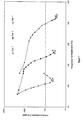
- Figur 1:
- Leistungskurven der Ru/Au-Katalysatoren bei GHSV = 10000/h, p = 2 bar (abs.), λ = 4
Claims (10)
- Katalysator zur Entfernung von Kohlenmonoxid aus einem Reformatgas,
dadurch gekennzeichnet, daß der Katalysator auf einem Trägermaterial aus Aluminiumoxid, Titanoxid, Zirkonoxid, Ceroxid, Lanthanoxid und Mischungen oder Mischoxiden davon Gold und Ruthenium in einem Gewichtsverhältnis zwischen 5:1 und 1:5 enthält. - Katalysator nach Anspruch 1,
dadurch gekennzeichnet, daß das Trägermaterial ein aktives Aluminiumoxid mit einer spezifischen Oberfläche von mehr als 50 m2/g ist. - Katalysator nach Anspruch 2,
dadurch gekennzeichnet, daß als Trägermaterial zusätzlich 1 bis 10 Gew.-% Titanoxid, bezogen auf das Gesamtgewicht des Trägermaterials, in physikalischer Mischung mit dem aktiven Aluminiumoxid vorliegen. - Katalysator nach Anspruch 2 oder 3,
dadurch gekennzeichnet, daß er 0,1 bis 10 Gew.-% Gold und Ruthenium, bezogen auf das Gesamtgewicht des Katalysators, enthält. - Katalysator nach einem der vorstehenden Ansprüche,
dadurch gekennzeichnet, daß der Katalysator in Form einer Beschichtung auf einem inerten Tragkörper aufgebracht ist. - Verfahren nach Anspruch 5,
dadurch gekennzeichnet, daß als inerte Tragkörper monolithische Wabenkörper aus Keramik oder Metall, offenzellige, keramische oder metallische Schaumkörper, Metallbleche, Wärmetauscherplatten oder unregelmäßig geformte Bauteile eingesetzt werden. - Verfahren zur Herstellung eines Katalysators nach Anspruch 5 oder 6,
dadurch gekennzeichnet, daß der inerte Tragkörper mit einer wäßrigen Suspension der Trägermaterialien beschichtet, getrocknet und calciniert wird und daß danach die Beschichtung mit Gold und Ruthenium unter Verwendung einer Lösung von löslichen Vorläuferverbindungen imprägniert und abschließend getrocknet, calciniert und reduziert wird. - Verfahren zur Entfernung von Kohlenmonoxid aus einem Reformatgas durch Überleiten des Reformatgases über einen Katalysator nach einem der Ansprüche 1 bis 6,
dadurch gekennzeichnet, daß das Reformat mit einer Raumgeschwindigkeit von 5.000 bis 200.000 h-1 und bei einer Temperatur zwischen 100 und 250 °C über den Katalysator geleitet wird, wobei die Luftzahl des Reformates vor dem Kontakt mit dem Katalysator durch Zuführen von Sauerstoff auf einen Wert zwischen 1 und 10 erhöht wird. - Verfahren nach Anspruch 6,
dadurch gekennzeichnet, daß das Verfahren in mehreren Stufen durchgeführt wird, wobei die Zufuhr von Sauerstoff vor jeder Katalysatorstufe so geregelt wird, daß mit abnehmendem Gehalt des Reformates an Kohlenmonoxid die Luftzahl ansteigt und die über alle Verfahrensstufen gemittelte Luftzahl zwischen 1,2 und 4,0 liegt. - Verfahren nach Anspruch 7,
dadurch gekennzeichnet, daß die Luftzahl in der ersten Stufe gleich 1 gewählt wird.
Priority Applications (8)
| Application Number | Priority Date | Filing Date | Title |
|---|---|---|---|
| EP01109243A EP1249275B1 (de) | 2001-04-14 | 2001-04-14 | Katalysator und Verfahren zur Entfernung von Kohlenmonoxid aus einem Reformatgas, und Verfahren zur Herstellung des Katalysators |
| AT01109243T ATE366619T1 (de) | 2001-04-14 | 2001-04-14 | Katalysator und verfahren zur entfernung von kohlenmonoxid aus einem reformatgas, und verfahren zur herstellung des katalysators |
| DE50112711T DE50112711D1 (de) | 2001-04-14 | 2001-04-14 | Katalysator und Verfahren zur Entfernung von Kohlenmonoxid aus einem Reformatgas, und Verfahren zur Herstellung des Katalysators |
| US10/120,277 US20030012719A1 (en) | 2001-04-14 | 2002-04-10 | Catalyst and process for removing carbon monoxide from a reformate gas |
| CA002382236A CA2382236A1 (en) | 2001-04-14 | 2002-04-15 | A catalyst and process for removing carbon monoxide from a reformate gas |
| KR1020020020488A KR20020079612A (ko) | 2001-04-14 | 2002-04-15 | 개질 가스로부터 일산화탄소를 제거하기 위한 촉매 및 공정 |
| JP2002112710A JP4195786B2 (ja) | 2001-04-14 | 2002-04-15 | 改質油ガスから一酸化炭素を除去するための触媒およびプロセス |
| BR0201294-4A BR0201294A (pt) | 2001-04-14 | 2002-04-15 | Catalisador e processo para remover monóxido de carbono de um gás reformado |
Applications Claiming Priority (1)
| Application Number | Priority Date | Filing Date | Title |
|---|---|---|---|
| EP01109243A EP1249275B1 (de) | 2001-04-14 | 2001-04-14 | Katalysator und Verfahren zur Entfernung von Kohlenmonoxid aus einem Reformatgas, und Verfahren zur Herstellung des Katalysators |
Publications (2)
| Publication Number | Publication Date |
|---|---|
| EP1249275A1 true EP1249275A1 (de) | 2002-10-16 |
| EP1249275B1 EP1249275B1 (de) | 2007-07-11 |
Family
ID=8177144
Family Applications (1)
| Application Number | Title | Priority Date | Filing Date |
|---|---|---|---|
| EP01109243A Expired - Lifetime EP1249275B1 (de) | 2001-04-14 | 2001-04-14 | Katalysator und Verfahren zur Entfernung von Kohlenmonoxid aus einem Reformatgas, und Verfahren zur Herstellung des Katalysators |
Country Status (8)
| Country | Link |
|---|---|
| US (1) | US20030012719A1 (de) |
| EP (1) | EP1249275B1 (de) |
| JP (1) | JP4195786B2 (de) |
| KR (1) | KR20020079612A (de) |
| AT (1) | ATE366619T1 (de) |
| BR (1) | BR0201294A (de) |
| CA (1) | CA2382236A1 (de) |
| DE (1) | DE50112711D1 (de) |
Cited By (4)
| Publication number | Priority date | Publication date | Assignee | Title |
|---|---|---|---|---|
| KR100460433B1 (ko) * | 2001-12-11 | 2004-12-08 | (주)에너피아 | 개질가스 정제용 촉매 및 이를 이용하여 수소가 풍부한개질가스 내의 일산화탄소를 선택적으로 제거하는 방법 |
| DE102006019406B4 (de) * | 2006-04-23 | 2008-07-24 | Zentrum für Brennstoffzellen-Technik GmbH | Selektiver Oxidations-Reaktor zur Kohlenmonoxidfeinreinigung |
| EP2098291A4 (de) * | 2006-12-20 | 2012-07-18 | Nippon Oil Corp | Katalysator zur verringerung der kohlenmonoxidkonzentration |
| CN103157475A (zh) * | 2013-03-22 | 2013-06-19 | 北京神雾环境能源科技集团股份有限公司 | 用于焦炉煤气三重整的催化剂及其制备方法 |
Families Citing this family (11)
| Publication number | Priority date | Publication date | Assignee | Title |
|---|---|---|---|---|
| US7169376B2 (en) | 2004-06-10 | 2007-01-30 | Chevron U.S.A. Inc. | Method for making hydrogen using a gold containing water-gas shift catalyst |
| CA2739540C (en) * | 2003-06-13 | 2013-01-08 | Chevron U.S.A., Inc. | A method for oxidizinc co |
| GB2408956A (en) * | 2003-12-11 | 2005-06-15 | Johnson Matthey Plc | Reforming catalyst |
| JP4824332B2 (ja) * | 2005-03-29 | 2011-11-30 | エヌ・イーケムキャット株式会社 | 一酸化炭素除去用触媒 |
| KR100651785B1 (ko) * | 2005-12-22 | 2006-12-01 | 재단법인 포항산업과학연구원 | 일산화탄소 제거용 산화 촉매 및 이를 이용한 일산화탄소제거 방법 |
| KR100740131B1 (ko) * | 2006-08-31 | 2007-07-16 | 삼성에스디아이 주식회사 | 연료 전지 시스템의 개질기용 일산화탄소 산화 촉매, 이의제조 방법, 및 이를 포함하는 연료 전지 시스템 |
| JP4806613B2 (ja) | 2006-09-25 | 2011-11-02 | バブコック日立株式会社 | ガス浄化方法,ガス浄化装置及びガス浄化触媒 |
| JP5322733B2 (ja) | 2009-03-31 | 2013-10-23 | Jx日鉱日石エネルギー株式会社 | 一酸化炭素の選択的酸化反応用触媒の製造方法 |
| GB2508511B (en) * | 2012-11-30 | 2017-02-22 | Johnson Matthey Plc | Bimetallic catalyst |
| CN103301853B (zh) * | 2013-06-20 | 2015-11-18 | 武汉大学 | 一种去除一氧化碳、甲醛和乙烯的金催化剂及制备与应用 |
| KR102287846B1 (ko) * | 2018-12-21 | 2021-08-06 | 한화솔루션 주식회사 | 염소 제조를 위한 염화수소 산화반응용 촉매 및 이의 제조방법 |
Citations (3)
| Publication number | Priority date | Publication date | Assignee | Title |
|---|---|---|---|---|
| EP0764466A2 (de) * | 1995-08-18 | 1997-03-26 | Matsushita Electric Industrial Co., Ltd. | Katalysatorwerkstoff zur Entfernung von Kohlenmonoxid und Brennstoffzelle damit ausgestattet |
| WO1997043212A1 (fr) * | 1995-01-25 | 1997-11-20 | L'air Liquide, Societe Anonyme Pour L'etude Et L'exploitation Des Procedes Georges Claude | Procede pour l'elimination d'impuretes contenues dans un compose gazeux |
| FR2771310A1 (fr) * | 1997-11-24 | 1999-05-28 | Rhone Poulenc Chimie | Composition a base d'or et d'au moins un autre metal sur un support d'oxyde de cerium, d'oxyde de zirconium ou d'un melange de ces oxydes, procede de preparation et utilisation comme catalyseur |
Family Cites Families (14)
| Publication number | Priority date | Publication date | Assignee | Title |
|---|---|---|---|---|
| US3901827A (en) * | 1972-09-27 | 1975-08-26 | Exxon Research Engineering Co | Multimetallic catalysts |
| GB1558762A (en) * | 1975-07-04 | 1980-01-09 | Johnson Matthey Co Ltd | Metal or alloy coated powders |
| US4162235A (en) * | 1976-06-17 | 1979-07-24 | Johnson, Matthey & Co., Limited | Catalysts |
| GB1604246A (en) * | 1977-06-08 | 1981-12-02 | Johnson Matthey Co Ltd | Catalysts for oxidation and reduction processes |
| US4444901A (en) * | 1981-12-21 | 1984-04-24 | The Standard Oil Company | Catalyst for upgrading synthesis gas |
| EP0172280B1 (de) * | 1983-03-14 | 1988-03-09 | E.I. Du Pont De Nemours And Company | Katalysatorzusammensetzung |
| US5149680A (en) * | 1987-03-31 | 1992-09-22 | The British Petroleum Company P.L.C. | Platinum group metal alloy catalysts for hydrogenation of carboxylic acids and their anhydrides to alcohols and/or esters |
| US5013703A (en) * | 1989-09-05 | 1991-05-07 | Uop | Noble metal exchange of hydrophobic molecular sieves |
| US5409877A (en) * | 1991-08-22 | 1995-04-25 | Director-General Of Agency Of Industrial Science And Technology | Catalyst for producing aldehyde and alcohol from olefin, carbon monoxide and hydrogen |
| EP0661089B1 (de) * | 1993-12-28 | 1998-03-11 | Kabushiki Kaisha Riken | Vorrichtung und Verfahren zur Reinigung von Abgas |
| EP0761289A3 (de) * | 1995-09-08 | 1997-05-02 | Riken Kk | Abgasreiniger und Verfahren zur Reinigung von Abgas |
| DE19623609A1 (de) * | 1996-06-13 | 1997-12-18 | Basf Ag | Oxidationskatalysator und Verfahren zur Herstellung von Epoxiden aus Olefinen, Wasserstoff und Sauerstoff unter Verwendung des Oxidationskatalysators |
| US5981427A (en) * | 1996-09-04 | 1999-11-09 | Engelhard Corporation | Catalyst composition |
| DE10013894A1 (de) * | 2000-03-21 | 2001-10-04 | Dmc2 Degussa Metals Catalysts | Verfahren zur katalytischen Umsetzung von Kohlenmonoxid in einem Wasserstoff enthaltenden Gasgemisch mit verbessertem Kaltstartverhalten und Katalysator hierfür |
-
2001
- 2001-04-14 AT AT01109243T patent/ATE366619T1/de active
- 2001-04-14 EP EP01109243A patent/EP1249275B1/de not_active Expired - Lifetime
- 2001-04-14 DE DE50112711T patent/DE50112711D1/de not_active Expired - Lifetime
-
2002
- 2002-04-10 US US10/120,277 patent/US20030012719A1/en not_active Abandoned
- 2002-04-15 CA CA002382236A patent/CA2382236A1/en not_active Abandoned
- 2002-04-15 KR KR1020020020488A patent/KR20020079612A/ko not_active Withdrawn
- 2002-04-15 JP JP2002112710A patent/JP4195786B2/ja not_active Expired - Fee Related
- 2002-04-15 BR BR0201294-4A patent/BR0201294A/pt not_active Application Discontinuation
Patent Citations (3)
| Publication number | Priority date | Publication date | Assignee | Title |
|---|---|---|---|---|
| WO1997043212A1 (fr) * | 1995-01-25 | 1997-11-20 | L'air Liquide, Societe Anonyme Pour L'etude Et L'exploitation Des Procedes Georges Claude | Procede pour l'elimination d'impuretes contenues dans un compose gazeux |
| EP0764466A2 (de) * | 1995-08-18 | 1997-03-26 | Matsushita Electric Industrial Co., Ltd. | Katalysatorwerkstoff zur Entfernung von Kohlenmonoxid und Brennstoffzelle damit ausgestattet |
| FR2771310A1 (fr) * | 1997-11-24 | 1999-05-28 | Rhone Poulenc Chimie | Composition a base d'or et d'au moins un autre metal sur un support d'oxyde de cerium, d'oxyde de zirconium ou d'un melange de ces oxydes, procede de preparation et utilisation comme catalyseur |
Cited By (5)
| Publication number | Priority date | Publication date | Assignee | Title |
|---|---|---|---|---|
| KR100460433B1 (ko) * | 2001-12-11 | 2004-12-08 | (주)에너피아 | 개질가스 정제용 촉매 및 이를 이용하여 수소가 풍부한개질가스 내의 일산화탄소를 선택적으로 제거하는 방법 |
| DE102006019406B4 (de) * | 2006-04-23 | 2008-07-24 | Zentrum für Brennstoffzellen-Technik GmbH | Selektiver Oxidations-Reaktor zur Kohlenmonoxidfeinreinigung |
| EP2098291A4 (de) * | 2006-12-20 | 2012-07-18 | Nippon Oil Corp | Katalysator zur verringerung der kohlenmonoxidkonzentration |
| CN103157475A (zh) * | 2013-03-22 | 2013-06-19 | 北京神雾环境能源科技集团股份有限公司 | 用于焦炉煤气三重整的催化剂及其制备方法 |
| CN103157475B (zh) * | 2013-03-22 | 2015-10-28 | 北京神雾环境能源科技集团股份有限公司 | 用于焦炉煤气三重整的催化剂及其制备方法 |
Also Published As
| Publication number | Publication date |
|---|---|
| EP1249275B1 (de) | 2007-07-11 |
| KR20020079612A (ko) | 2002-10-19 |
| JP2003010683A (ja) | 2003-01-14 |
| ATE366619T1 (de) | 2007-08-15 |
| CA2382236A1 (en) | 2002-10-14 |
| BR0201294A (pt) | 2003-03-11 |
| JP4195786B2 (ja) | 2008-12-10 |
| US20030012719A1 (en) | 2003-01-16 |
| DE50112711D1 (de) | 2007-08-23 |
Similar Documents
| Publication | Publication Date | Title |
|---|---|---|
| EP1063011B1 (de) | Verwendung eines Katalysators für die Dampfreformierung von Methanol | |
| US5242881A (en) | Perovskite-type rare earth complex oxide combustion catalysts | |
| EP1136441B1 (de) | Verfahren zur katalytischen Umsetzung von Kohlenmonoxid in einem Wasserstoff enthaltenden Gasgemisch | |
| DE69910791T2 (de) | Abgaskatalysator enthaltend rhodium, zirkon-, cer- und lanthanoxid | |
| EP1440731B1 (de) | Ce/Cu/Mn-Katalysatoren und Verfahren zu deren Herstellung | |
| EP1249275B1 (de) | Katalysator und Verfahren zur Entfernung von Kohlenmonoxid aus einem Reformatgas, und Verfahren zur Herstellung des Katalysators | |
| EP1136442A2 (de) | Verfahren zur katalytischen Umsetzung von Kohlenmonoxid in einem Wasserstoff enthaltenden Gasgemisch mit verbessertem Kaltstartverhalten und Katalysator hierfür | |
| DE2818824C2 (de) | ||
| DE69417889T2 (de) | Zusammengesetzten schichtkatalysator | |
| DE69516281T2 (de) | Zusammengesetzter katalysator mit schichtstruktur | |
| DE69917746T2 (de) | Dreiwegkatalysator | |
| DE2841158C2 (de) | ||
| EP2049249B1 (de) | Katalysator für die tieftemperaturkonvertierung und verfahren zur tieftemperaturkonvertierung von kohlenmonoxid und wasser zu kohlendioxid und wasserstoff | |
| EP2490804B1 (de) | Katalysator für die wasserdampfreformierung von methanol | |
| DE69101701T2 (de) | Katalytische Zusammensetzung zur Reinigung von Abgasen und Verfahren zu seiner Herstellung. | |
| DE112021000826T5 (de) | Katalysator für CO2-Methanisierungsreaktion mit hoher Aktivität und Langzeitstabilität sowie Verfahren dafür | |
| DE10392445T5 (de) | Katalysator für die Erzeugung von Wasserstoff | |
| DE60225404T2 (de) | Verfahren zur katalytischen autothermen Dampfreformierung von Gemischen von höheren Alkoholen, insbesondere Ethanol mit Kohlenwasserstoffen | |
| DE102017124761A1 (de) | Katalysatoren mit atomar dispergierten platingruppenkomplexen und einer zwischen den komplexen angeordneten barriere | |
| EP0358125A2 (de) | Abgaskatalysator mit verminderter Neigung zur Speicherung von Schwefeloxiden und Schwefelwasserstoffemission | |
| DE60030198T2 (de) | Verfahren zur Herstellung eines Dreiwegkatalysators | |
| DE102017201568A1 (de) | Perowskit basierte sauerstoff-speichermaterialien | |
| DE10058365A1 (de) | Katalysator und Verfahren zur selektiven Oxidation von Kohlenmonoxid in einem Wasserstoff-enthaltenden Gas sowie Brennstoffzellsystem vom Festpolymerelektrolyttyp, welches einen solchen Katalysator nutzt | |
| EP2175968A1 (de) | VERFAHREN ZUR ENTFERNUNG VON CO, H2 UND/ODER CH4 AUS DEM ANODENABGAS EINER BRENNSTOFFZELLE MIT MISCHOXIDKATALYSATOREN UMFASSEND Cu, Mn UND GEGEBENENFALLS MINDESTENS EIN SELTENERDMETALL | |
| EP2125201A1 (de) | Katalysator und verfahren zur selektiven methanisierung von kohlenmonoxid |
Legal Events
| Date | Code | Title | Description |
|---|---|---|---|
| PUAI | Public reference made under article 153(3) epc to a published international application that has entered the european phase |
Free format text: ORIGINAL CODE: 0009012 |
|
| 17P | Request for examination filed |
Effective date: 20010424 |
|
| AK | Designated contracting states |
Kind code of ref document: A1 Designated state(s): AT BE CH CY DE DK ES FI FR GB GR IE IT LI LU MC NL PT SE TR |
|
| AX | Request for extension of the european patent |
Free format text: AL;LT;LV;MK;RO;SI |
|
| AKX | Designation fees paid |
Designated state(s): AT BE CH CY DE DK ES FI FR GB GR IE IT LI LU MC NL PT SE TR |
|
| RAP1 | Party data changed (applicant data changed or rights of an application transferred) |
Owner name: UMICORE AG & CO. KG |
|
| 17Q | First examination report despatched |
Effective date: 20040831 |
|
| GRAP | Despatch of communication of intention to grant a patent |
Free format text: ORIGINAL CODE: EPIDOSNIGR1 |
|
| RTI1 | Title (correction) |
Free format text: CATALYST AND PROCESS FOR THE REMOVAL OF CARBON MONOXIDE FROM REFORMATE GAS AND PROCESS FOR PREPARING THE CATALYST |
|
| GRAS | Grant fee paid |
Free format text: ORIGINAL CODE: EPIDOSNIGR3 |
|
| GRAA | (expected) grant |
Free format text: ORIGINAL CODE: 0009210 |
|
| RTI1 | Title (correction) |
Free format text: CATALYST AND METHOD FOR THE REMOVAL OF CARBON MONOXIDE FROM A REFORMATE GAS AND METHOD FOR THE PREPARATION OF THE CATALYST |
|
| AK | Designated contracting states |
Kind code of ref document: B1 Designated state(s): AT BE CH CY DE DK ES FI FR GB GR IE IT LI LU MC NL PT SE TR |
|
| REG | Reference to a national code |
Ref country code: GB Ref legal event code: FG4D Free format text: NOT ENGLISH |
|
| REG | Reference to a national code |
Ref country code: CH Ref legal event code: EP |
|
| REF | Corresponds to: |
Ref document number: 50112711 Country of ref document: DE Date of ref document: 20070823 Kind code of ref document: P |
|
| GBT | Gb: translation of ep patent filed (gb section 77(6)(a)/1977) |
Effective date: 20070815 |
|
| REG | Reference to a national code |
Ref country code: IE Ref legal event code: FG4D Free format text: LANGUAGE OF EP DOCUMENT: GERMAN |
|
| PG25 | Lapsed in a contracting state [announced via postgrant information from national office to epo] |
Ref country code: PT Free format text: LAPSE BECAUSE OF FAILURE TO SUBMIT A TRANSLATION OF THE DESCRIPTION OR TO PAY THE FEE WITHIN THE PRESCRIBED TIME-LIMIT Effective date: 20071211 Ref country code: FI Free format text: LAPSE BECAUSE OF FAILURE TO SUBMIT A TRANSLATION OF THE DESCRIPTION OR TO PAY THE FEE WITHIN THE PRESCRIBED TIME-LIMIT Effective date: 20070711 Ref country code: NL Free format text: LAPSE BECAUSE OF FAILURE TO SUBMIT A TRANSLATION OF THE DESCRIPTION OR TO PAY THE FEE WITHIN THE PRESCRIBED TIME-LIMIT Effective date: 20070711 Ref country code: ES Free format text: LAPSE BECAUSE OF FAILURE TO SUBMIT A TRANSLATION OF THE DESCRIPTION OR TO PAY THE FEE WITHIN THE PRESCRIBED TIME-LIMIT Effective date: 20071022 |
|
| NLV1 | Nl: lapsed or annulled due to failure to fulfill the requirements of art. 29p and 29m of the patents act | ||
| REG | Reference to a national code |
Ref country code: IE Ref legal event code: FD4D |
|
| EN | Fr: translation not filed | ||
| PG25 | Lapsed in a contracting state [announced via postgrant information from national office to epo] |
Ref country code: DK Free format text: LAPSE BECAUSE OF FAILURE TO SUBMIT A TRANSLATION OF THE DESCRIPTION OR TO PAY THE FEE WITHIN THE PRESCRIBED TIME-LIMIT Effective date: 20070711 Ref country code: GR Free format text: LAPSE BECAUSE OF FAILURE TO SUBMIT A TRANSLATION OF THE DESCRIPTION OR TO PAY THE FEE WITHIN THE PRESCRIBED TIME-LIMIT Effective date: 20071012 |
|
| PLBE | No opposition filed within time limit |
Free format text: ORIGINAL CODE: 0009261 |
|
| STAA | Information on the status of an ep patent application or granted ep patent |
Free format text: STATUS: NO OPPOSITION FILED WITHIN TIME LIMIT |
|
| PG25 | Lapsed in a contracting state [announced via postgrant information from national office to epo] |
Ref country code: IE Free format text: LAPSE BECAUSE OF FAILURE TO SUBMIT A TRANSLATION OF THE DESCRIPTION OR TO PAY THE FEE WITHIN THE PRESCRIBED TIME-LIMIT Effective date: 20070711 |
|
| 26N | No opposition filed |
Effective date: 20080414 |
|
| PG25 | Lapsed in a contracting state [announced via postgrant information from national office to epo] |
Ref country code: SE Free format text: LAPSE BECAUSE OF FAILURE TO SUBMIT A TRANSLATION OF THE DESCRIPTION OR TO PAY THE FEE WITHIN THE PRESCRIBED TIME-LIMIT Effective date: 20071011 |
|
| PG25 | Lapsed in a contracting state [announced via postgrant information from national office to epo] |
Ref country code: FR Free format text: LAPSE BECAUSE OF FAILURE TO SUBMIT A TRANSLATION OF THE DESCRIPTION OR TO PAY THE FEE WITHIN THE PRESCRIBED TIME-LIMIT Effective date: 20080307 |
|
| BERE | Be: lapsed |
Owner name: UMICORE A.G. & CO. KG Effective date: 20080430 |
|
| PG25 | Lapsed in a contracting state [announced via postgrant information from national office to epo] |
Ref country code: MC Free format text: LAPSE BECAUSE OF NON-PAYMENT OF DUE FEES Effective date: 20080430 |
|
| PG25 | Lapsed in a contracting state [announced via postgrant information from national office to epo] |
Ref country code: BE Free format text: LAPSE BECAUSE OF NON-PAYMENT OF DUE FEES Effective date: 20080430 |
|
| PG25 | Lapsed in a contracting state [announced via postgrant information from national office to epo] |
Ref country code: CY Free format text: LAPSE BECAUSE OF FAILURE TO SUBMIT A TRANSLATION OF THE DESCRIPTION OR TO PAY THE FEE WITHIN THE PRESCRIBED TIME-LIMIT Effective date: 20070711 |
|
| PG25 | Lapsed in a contracting state [announced via postgrant information from national office to epo] |
Ref country code: LU Free format text: LAPSE BECAUSE OF NON-PAYMENT OF DUE FEES Effective date: 20080414 |
|
| PG25 | Lapsed in a contracting state [announced via postgrant information from national office to epo] |
Ref country code: TR Free format text: LAPSE BECAUSE OF FAILURE TO SUBMIT A TRANSLATION OF THE DESCRIPTION OR TO PAY THE FEE WITHIN THE PRESCRIBED TIME-LIMIT Effective date: 20070711 |
|
| PG25 | Lapsed in a contracting state [announced via postgrant information from national office to epo] |
Ref country code: IT Free format text: LAPSE BECAUSE OF NON-PAYMENT OF DUE FEES Effective date: 20080430 |
|
| PGFP | Annual fee paid to national office [announced via postgrant information from national office to epo] |
Ref country code: AT Payment date: 20120411 Year of fee payment: 12 |
|
| PGFP | Annual fee paid to national office [announced via postgrant information from national office to epo] |
Ref country code: GB Payment date: 20130410 Year of fee payment: 13 Ref country code: DE Payment date: 20130508 Year of fee payment: 13 Ref country code: CH Payment date: 20130412 Year of fee payment: 13 |
|
| REG | Reference to a national code |
Ref country code: DE Ref legal event code: R119 Ref document number: 50112711 Country of ref document: DE |
|
| REG | Reference to a national code |
Ref country code: CH Ref legal event code: PL |
|
| REG | Reference to a national code |
Ref country code: AT Ref legal event code: MM01 Ref document number: 366619 Country of ref document: AT Kind code of ref document: T Effective date: 20140414 |
|
| GBPC | Gb: european patent ceased through non-payment of renewal fee |
Effective date: 20140414 |
|
| REG | Reference to a national code |
Ref country code: DE Ref legal event code: R119 Ref document number: 50112711 Country of ref document: DE Effective date: 20141101 |
|
| PG25 | Lapsed in a contracting state [announced via postgrant information from national office to epo] |
Ref country code: DE Free format text: LAPSE BECAUSE OF NON-PAYMENT OF DUE FEES Effective date: 20141101 Ref country code: GB Free format text: LAPSE BECAUSE OF NON-PAYMENT OF DUE FEES Effective date: 20140414 Ref country code: LI Free format text: LAPSE BECAUSE OF NON-PAYMENT OF DUE FEES Effective date: 20140430 Ref country code: CH Free format text: LAPSE BECAUSE OF NON-PAYMENT OF DUE FEES Effective date: 20140430 |
|
| PG25 | Lapsed in a contracting state [announced via postgrant information from national office to epo] |
Ref country code: AT Free format text: LAPSE BECAUSE OF NON-PAYMENT OF DUE FEES Effective date: 20140414 |