EP1228106B1 - Halogenated terpolymers of isobutylene, diolefin monomer and styrenic monomer - Google Patents
Halogenated terpolymers of isobutylene, diolefin monomer and styrenic monomer Download PDFInfo
- Publication number
- EP1228106B1 EP1228106B1 EP00960245.9A EP00960245A EP1228106B1 EP 1228106 B1 EP1228106 B1 EP 1228106B1 EP 00960245 A EP00960245 A EP 00960245A EP 1228106 B1 EP1228106 B1 EP 1228106B1
- Authority
- EP
- European Patent Office
- Prior art keywords
- monomer
- weight
- process according
- polymer
- styrenic
- Prior art date
- Legal status (The legal status is an assumption and is not a legal conclusion. Google has not performed a legal analysis and makes no representation as to the accuracy of the status listed.)
- Expired - Lifetime
Links
- 239000000178 monomer Substances 0.000 title claims description 70
- 229920001897 terpolymer Polymers 0.000 title claims description 38
- VQTUBCCKSQIDNK-UHFFFAOYSA-N Isobutene Chemical group CC(C)=C VQTUBCCKSQIDNK-UHFFFAOYSA-N 0.000 title claims description 7
- 150000001993 dienes Chemical class 0.000 title 1
- 229920000642 polymer Polymers 0.000 claims description 51
- 239000000203 mixture Substances 0.000 claims description 29
- 125000000484 butyl group Chemical group [H]C([*])([H])C([H])([H])C([H])([H])C([H])([H])[H] 0.000 claims description 25
- 238000000034 method Methods 0.000 claims description 19
- 150000005673 monoalkenes Chemical class 0.000 claims description 17
- 230000008569 process Effects 0.000 claims description 17
- PPBRXRYQALVLMV-UHFFFAOYSA-N Styrene Chemical compound C=CC1=CC=CC=C1 PPBRXRYQALVLMV-UHFFFAOYSA-N 0.000 claims description 14
- RRHGJUQNOFWUDK-UHFFFAOYSA-N Isoprene Chemical compound CC(=C)C=C RRHGJUQNOFWUDK-UHFFFAOYSA-N 0.000 claims description 10
- 239000003795 chemical substances by application Substances 0.000 claims description 8
- 230000002140 halogenating effect Effects 0.000 claims description 8
- 238000004519 manufacturing process Methods 0.000 claims description 7
- 230000003679 aging effect Effects 0.000 claims description 6
- JLBJTVDPSNHSKJ-UHFFFAOYSA-N 4-Methylstyrene Chemical compound CC1=CC=C(C=C)C=C1 JLBJTVDPSNHSKJ-UHFFFAOYSA-N 0.000 claims description 5
- 239000003054 catalyst Substances 0.000 claims description 5
- 229910052736 halogen Inorganic materials 0.000 claims description 5
- 150000002367 halogens Chemical class 0.000 claims description 5
- UAJRSHJHFRVGMG-UHFFFAOYSA-N 1-ethenyl-4-methoxybenzene Chemical compound COC1=CC=C(C=C)C=C1 UAJRSHJHFRVGMG-UHFFFAOYSA-N 0.000 claims description 4
- MGNZXYYWBUKAII-UHFFFAOYSA-N cyclohexa-1,3-diene Chemical compound C1CC=CC=C1 MGNZXYYWBUKAII-UHFFFAOYSA-N 0.000 claims description 4
- ZSWFCLXCOIISFI-UHFFFAOYSA-N cyclopentadiene Chemical compound C1C=CC=C1 ZSWFCLXCOIISFI-UHFFFAOYSA-N 0.000 claims description 4
- 238000004073 vulcanization Methods 0.000 claims description 4
- 239000000945 filler Substances 0.000 claims description 3
- 230000026030 halogenation Effects 0.000 claims description 3
- 238000005658 halogenation reaction Methods 0.000 claims description 3
- KTZVZZJJVJQZHV-UHFFFAOYSA-N 1-chloro-4-ethenylbenzene Chemical compound ClC1=CC=C(C=C)C=C1 KTZVZZJJVJQZHV-UHFFFAOYSA-N 0.000 claims description 2
- JLSUFZZPRVNDIW-UHFFFAOYSA-N 1-ethenylcyclohexa-1,3-diene Chemical compound C=CC1=CC=CCC1 JLSUFZZPRVNDIW-UHFFFAOYSA-N 0.000 claims description 2
- YHQXBTXEYZIYOV-UHFFFAOYSA-N 3-methylbut-1-ene Chemical compound CC(C)C=C YHQXBTXEYZIYOV-UHFFFAOYSA-N 0.000 claims description 2
- XYLMUPLGERFSHI-UHFFFAOYSA-N alpha-Methylstyrene Chemical compound CC(=C)C1=CC=CC=C1 XYLMUPLGERFSHI-UHFFFAOYSA-N 0.000 claims description 2
- NFWSQSCIDYBUOU-UHFFFAOYSA-N methylcyclopentadiene Chemical compound CC1=CC=CC1 NFWSQSCIDYBUOU-UHFFFAOYSA-N 0.000 claims description 2
- GQIJYUMTOUBHSH-IJIVKGSJSA-N piperyline Chemical compound C=1C=C2OCOC2=CC=1/C=C/C=C/C(=O)N1CCCC1 GQIJYUMTOUBHSH-IJIVKGSJSA-N 0.000 claims description 2
- WKBOTKDWSSQWDR-UHFFFAOYSA-N Bromine atom Chemical compound [Br] WKBOTKDWSSQWDR-UHFFFAOYSA-N 0.000 description 14
- GDTBXPJZTBHREO-UHFFFAOYSA-N bromine Substances BrBr GDTBXPJZTBHREO-UHFFFAOYSA-N 0.000 description 14
- 229910052794 bromium Inorganic materials 0.000 description 14
- 229920001971 elastomer Polymers 0.000 description 13
- 239000005060 rubber Substances 0.000 description 13
- VLKZOEOYAKHREP-UHFFFAOYSA-N n-Hexane Chemical compound CCCCCC VLKZOEOYAKHREP-UHFFFAOYSA-N 0.000 description 12
- 230000032683 aging Effects 0.000 description 10
- 238000006116 polymerization reaction Methods 0.000 description 9
- 125000003118 aryl group Chemical group 0.000 description 8
- 230000031709 bromination Effects 0.000 description 8
- 238000005893 bromination reaction Methods 0.000 description 8
- 229920005555 halobutyl Polymers 0.000 description 8
- 229920005549 butyl rubber Polymers 0.000 description 7
- 230000003247 decreasing effect Effects 0.000 description 7
- 239000000243 solution Substances 0.000 description 7
- YMWUJEATGCHHMB-UHFFFAOYSA-N Dichloromethane Chemical compound ClCCl YMWUJEATGCHHMB-UHFFFAOYSA-N 0.000 description 6
- 229920001577 copolymer Polymers 0.000 description 6
- YBYIRNPNPLQARY-UHFFFAOYSA-N 1H-indene Chemical compound C1=CC=C2CC=CC2=C1 YBYIRNPNPLQARY-UHFFFAOYSA-N 0.000 description 4
- LFQSCWFLJHTTHZ-UHFFFAOYSA-N Ethanol Chemical compound CCO LFQSCWFLJHTTHZ-UHFFFAOYSA-N 0.000 description 4
- PCLIMKBDDGJMGD-UHFFFAOYSA-N N-bromosuccinimide Chemical compound BrN1C(=O)CCC1=O PCLIMKBDDGJMGD-UHFFFAOYSA-N 0.000 description 4
- XLOMVQKBTHCTTD-UHFFFAOYSA-N Zinc monoxide Chemical compound [Zn]=O XLOMVQKBTHCTTD-UHFFFAOYSA-N 0.000 description 4
- VSCWAEJMTAWNJL-UHFFFAOYSA-K aluminium trichloride Chemical compound Cl[Al](Cl)Cl VSCWAEJMTAWNJL-UHFFFAOYSA-K 0.000 description 4
- 238000006243 chemical reaction Methods 0.000 description 4
- NEHMKBQYUWJMIP-UHFFFAOYSA-N chloromethane Chemical compound ClC NEHMKBQYUWJMIP-UHFFFAOYSA-N 0.000 description 4
- AFCARXCZXQIEQB-UHFFFAOYSA-N N-[3-oxo-3-(2,4,6,7-tetrahydrotriazolo[4,5-c]pyridin-5-yl)propyl]-2-[[3-(trifluoromethoxy)phenyl]methylamino]pyrimidine-5-carboxamide Chemical compound O=C(CCNC(=O)C=1C=NC(=NC=1)NCC1=CC(=CC=C1)OC(F)(F)F)N1CC2=C(CC1)NN=N2 AFCARXCZXQIEQB-UHFFFAOYSA-N 0.000 description 3
- HEMHJVSKTPXQMS-UHFFFAOYSA-M Sodium hydroxide Chemical compound [OH-].[Na+] HEMHJVSKTPXQMS-UHFFFAOYSA-M 0.000 description 3
- CJZGTCYPCWQAJB-UHFFFAOYSA-L calcium stearate Chemical compound [Ca+2].CCCCCCCCCCCCCCCCCC([O-])=O.CCCCCCCCCCCCCCCCCC([O-])=O CJZGTCYPCWQAJB-UHFFFAOYSA-L 0.000 description 3
- 239000008116 calcium stearate Substances 0.000 description 3
- 235000013539 calcium stearate Nutrition 0.000 description 3
- 239000004568 cement Substances 0.000 description 3
- 150000001875 compounds Chemical class 0.000 description 3
- 238000002156 mixing Methods 0.000 description 3
- XLYOFNOQVPJJNP-UHFFFAOYSA-N water Substances O XLYOFNOQVPJJNP-UHFFFAOYSA-N 0.000 description 3
- WWUVJRULCWHUSA-UHFFFAOYSA-N 2-methyl-1-pentene Chemical compound CCCC(C)=C WWUVJRULCWHUSA-UHFFFAOYSA-N 0.000 description 2
- 238000001069 Raman spectroscopy Methods 0.000 description 2
- 235000021355 Stearic acid Nutrition 0.000 description 2
- QVGXLLKOCUKJST-UHFFFAOYSA-N atomic oxygen Chemical compound [O] QVGXLLKOCUKJST-UHFFFAOYSA-N 0.000 description 2
- 150000001768 cations Chemical class 0.000 description 2
- 238000002485 combustion reaction Methods 0.000 description 2
- 238000004132 cross linking Methods 0.000 description 2
- 230000007423 decrease Effects 0.000 description 2
- DMBHHRLKUKUOEG-UHFFFAOYSA-N diphenylamine Chemical compound C=1C=CC=CC=1NC1=CC=CC=C1 DMBHHRLKUKUOEG-UHFFFAOYSA-N 0.000 description 2
- 238000005516 engineering process Methods 0.000 description 2
- QIQXTHQIDYTFRH-UHFFFAOYSA-N octadecanoic acid Chemical compound CCCCCCCCCCCCCCCCCC(O)=O QIQXTHQIDYTFRH-UHFFFAOYSA-N 0.000 description 2
- OQCDKBAXFALNLD-UHFFFAOYSA-N octadecanoic acid Natural products CCCCCCCC(C)CCCCCCCCC(O)=O OQCDKBAXFALNLD-UHFFFAOYSA-N 0.000 description 2
- 229910052760 oxygen Inorganic materials 0.000 description 2
- 239000001301 oxygen Substances 0.000 description 2
- 239000011414 polymer cement Substances 0.000 description 2
- 230000035484 reaction time Effects 0.000 description 2
- 230000009257 reactivity Effects 0.000 description 2
- 239000003381 stabilizer Substances 0.000 description 2
- 239000008117 stearic acid Substances 0.000 description 2
- 239000011787 zinc oxide Substances 0.000 description 2
- JIGUICYYOYEXFS-UHFFFAOYSA-N 3-tert-butylbenzene-1,2-diol Chemical compound CC(C)(C)C1=CC=CC(O)=C1O JIGUICYYOYEXFS-UHFFFAOYSA-N 0.000 description 1
- WSSSPWUEQFSQQG-UHFFFAOYSA-N 4-methyl-1-pentene Chemical compound CC(C)CC=C WSSSPWUEQFSQQG-UHFFFAOYSA-N 0.000 description 1
- ZAMOUSCENKQFHK-UHFFFAOYSA-N Chlorine atom Chemical compound [Cl] ZAMOUSCENKQFHK-UHFFFAOYSA-N 0.000 description 1
- 238000005033 Fourier transform infrared spectroscopy Methods 0.000 description 1
- 241001441571 Hiodontidae Species 0.000 description 1
- NINIDFKCEFEMDL-UHFFFAOYSA-N Sulfur Chemical compound [S] NINIDFKCEFEMDL-UHFFFAOYSA-N 0.000 description 1
- 238000010521 absorption reaction Methods 0.000 description 1
- 239000000654 additive Substances 0.000 description 1
- 150000001336 alkenes Chemical class 0.000 description 1
- 125000000217 alkyl group Chemical group 0.000 description 1
- 238000004458 analytical method Methods 0.000 description 1
- 239000003963 antioxidant agent Substances 0.000 description 1
- 230000003078 antioxidant effect Effects 0.000 description 1
- 230000015572 biosynthetic process Effects 0.000 description 1
- 229920005557 bromobutyl Polymers 0.000 description 1
- 238000004364 calculation method Methods 0.000 description 1
- 239000006229 carbon black Substances 0.000 description 1
- 238000010538 cationic polymerization reaction Methods 0.000 description 1
- 239000003518 caustics Substances 0.000 description 1
- 239000012986 chain transfer agent Substances 0.000 description 1
- 229910052801 chlorine Inorganic materials 0.000 description 1
- 239000000460 chlorine Substances 0.000 description 1
- 230000015271 coagulation Effects 0.000 description 1
- 238000005345 coagulation Methods 0.000 description 1
- 230000000052 comparative effect Effects 0.000 description 1
- 239000013068 control sample Substances 0.000 description 1
- 239000006184 cosolvent Substances 0.000 description 1
- 239000003431 cross linking reagent Substances 0.000 description 1
- 238000005520 cutting process Methods 0.000 description 1
- 239000006185 dispersion Substances 0.000 description 1
- 238000009826 distribution Methods 0.000 description 1
- 230000000694 effects Effects 0.000 description 1
- 238000010828 elution Methods 0.000 description 1
- 238000011156 evaluation Methods 0.000 description 1
- 239000011521 glass Substances 0.000 description 1
- 230000006872 improvement Effects 0.000 description 1
- 230000006698 induction Effects 0.000 description 1
- 239000004615 ingredient Substances 0.000 description 1
- 239000003112 inhibitor Substances 0.000 description 1
- 238000002347 injection Methods 0.000 description 1
- 239000007924 injection Substances 0.000 description 1
- 230000003993 interaction Effects 0.000 description 1
- 229920002521 macromolecule Polymers 0.000 description 1
- 239000003550 marker Substances 0.000 description 1
- 229940050176 methyl chloride Drugs 0.000 description 1
- 239000003921 oil Substances 0.000 description 1
- 235000019198 oils Nutrition 0.000 description 1
- 239000003960 organic solvent Substances 0.000 description 1
- 238000000425 proton nuclear magnetic resonance spectrum Methods 0.000 description 1
- 229920005604 random copolymer Polymers 0.000 description 1
- 238000000518 rheometry Methods 0.000 description 1
- 229920006395 saturated elastomer Polymers 0.000 description 1
- 239000002002 slurry Substances 0.000 description 1
- 238000007613 slurry method Methods 0.000 description 1
- 239000007787 solid Substances 0.000 description 1
- 239000002904 solvent Substances 0.000 description 1
- 235000012424 soybean oil Nutrition 0.000 description 1
- 239000003549 soybean oil Substances 0.000 description 1
- 238000001228 spectrum Methods 0.000 description 1
- 229910001220 stainless steel Inorganic materials 0.000 description 1
- 239000010935 stainless steel Substances 0.000 description 1
- 238000007655 standard test method Methods 0.000 description 1
- 238000003756 stirring Methods 0.000 description 1
- 230000035882 stress Effects 0.000 description 1
- 229910052717 sulfur Inorganic materials 0.000 description 1
- 239000011593 sulfur Substances 0.000 description 1
- 239000000725 suspension Substances 0.000 description 1
- 238000009864 tensile test Methods 0.000 description 1
- 239000004636 vulcanized rubber Substances 0.000 description 1
- 239000003643 water by type Substances 0.000 description 1
- 229910052725 zinc Inorganic materials 0.000 description 1
Images



Classifications
-
- C—CHEMISTRY; METALLURGY
- C08—ORGANIC MACROMOLECULAR COMPOUNDS; THEIR PREPARATION OR CHEMICAL WORKING-UP; COMPOSITIONS BASED THEREON
- C08F—MACROMOLECULAR COMPOUNDS OBTAINED BY REACTIONS ONLY INVOLVING CARBON-TO-CARBON UNSATURATED BONDS
- C08F8/00—Chemical modification by after-treatment
- C08F8/18—Introducing halogen atoms or halogen-containing groups
- C08F8/20—Halogenation
Definitions
- the present invention relates to a halogenated butyl polymer. In another of its aspects, the present invention relates to a process for production of a butyl polymer.
- Butyl polymer or rubber is well known in the art, particularly in its application in the production of tires.
- halogenated butyl rubbers are known since such rubbers have particularly advantageous adhesion behaviour, flexural strength, service life and impermeability to air and water.
- the present invention provides a halogenated butyl polymer having improved curing and/or aging properties, the butyl polymer derived from a monomer mixture comprising a C 4 to C 8 monoolefin monomer, a C 4 to C 14 multiolefin monomer and a styrenic monomer.
- the present invention provides a process for preparing a halogenated butyl polymer having improved curing and/or aging properties, the process comprising the steps of:
- the present invention provides a vulcanizate derived from a vulcanizable mixture comprising: a halogenated butyl polymer derived from a monomer mixture comprising a C 4 to C 8 monoolefin monomer, a C 4 to C 14 multiolefin monomer and a styrenic monomer; a filler; and a vulcanization agent.
- butyl rubber polymers relates to butyl rubber polymers.
- the terms "butyl rubber”, “butyl polymer” and “butyl rubber polymer” are used throughout this specification interchangeably and each is intended to denote polymers prepared by reacting a monomer mixture comprising a C 4 to C 8 monoolefin monomer, a C 4 to C 14 multiolefin monomer and a styrenic monomer.
- halogenating a terpolymer derived from a monomer mixture comprising a C 4 to C 8 monoolefin monomer, a C 4 to C 14 multiolefin monomer and a styrenic monomer results in a polymer having improved properties compared to a polymer produced by halogenating a copolymer derived from a monomer mixture comprising a C 4 to C 8 monoolefin monomer and a C 4 to C 14 multiolefin monomer.
- the improved properties include faster cure, higher maximum torque, higher delta torque, relatively stable modulus over time, improved hot air aging properties and improved aged flexure properties. These improved properties are believed to result from direct interaction between the styrenic moieties in the polymer backbone with a crosslinking agent added to vulcanize the halogenated butyl rubber.
- the present terpolymers are derived from and the present process relates to the use of a monomer mixture comprising a C 4 to C 8 monoolefin monomer, a C 4 to C 14 multiolefin monomer and a styrenic monomer.
- the monomer mixture comprises from 80% to 99% by weight C 4 to C 8 monoolefin monomer, from 0.5% to 5% by weight C 4 to C 14 multiolefin monomer and from 0.5% to 15% by weight styrenic monomer. More preferably, the monomer mixture comprises from 85% to 99% by weight C 4 to C 8 monoolefin monomer, from 0.5% to 5% by weight C 4 to C 14 multiolefin monomer and from 0.5% to 10% by weight styrenic monomer.
- the monomer mixture comprises from 87% to 94% by weight C 4 to C 8 monoolefin monomer, from 1% to 3% by weight C 4 to C 14 multiolefin monomer and from 5% to 10% by weight styrenic monomer.
- the preferred C 4 to C 8 monoolefin monomer may be selected from the group comprising isobutylene, 2-methylpropene-1, 3-methylbutene-1, 4-methylpentene-1, 2-methylpentene-1, 4-ethylbutene-1, 4-ethylpentene-1 and mixtures thereof.
- the most preferred C 4 to C 8 monoolefin monomer comprises isobutylene.
- the preferred C 4 to C 14 multiolefin monomer may be selected from the group comprising isoprene, butadiene-1,3, 2,4-dimethylbutadiene-1,3, piperyline, 3-methylpentadiene-1,3, hexadiene-2,4, 2-neopentylbutadiene-1,3, 2-methlyhexadiene-1,5, 2,5-dimethlyhexadiene-2,4, 2-methylpentadiene-1,4, 2-methylheptadiene-1,6, cyclopentadiene, methylcyclopentadiene, cyclohexadiene, 1-vinyl-cyclohexadiene and mixtures thereof.
- the most preferred C 4 to C 14 multiolefin monomer comprises isoprene.
- the preferred styrenic monomer may be selected from the group comprising p-methylstyrene, styrene, ⁇ -methylstyrene, p-chlorostyrene, p-methoxystyrene, indene (including indene derivatives) and mixtures thereof.
- the most preferred styrenic monomer may be selected from the group comprising styrene, p-methylstyrene and mixtures thereof.
- the butyl polymer is halogenated.
- the butyl polymer is brominated or chlorinated.
- the amount of halogen is in the range of from 0.1 to 8%, more preferably from 0.5% to 4%, most preferably from 1.5% to 3.0%, by weight of the polymer.
- the halogenated butyl polymer is produced by halogenating a previously produced butyl polymer derived from the monomer mixture described hereinabove.
- the manner by which the butyl polymer is produced is conventional and within the purview of a person of ordinary skill in the art.
- the process for producing the butyl polymer may be conducted at a temperature conventional in the production of butyl polymers (e.g., in the range of from about -100°C to about +50°C; usually less than -90°C) in the presence of a conventional catalyst (e.g., aluminum trichloride).
- the butyl polymer may be produced in a conventional manner, by polymerization in solution or by a slurry polymerization method. Polymerization is preferably conducted in suspension (the slurry method).
- the butyl polymer may then be halogenated in a conventional manner. See, for example, United States patent 5,886,106 .
- the halogenated butyl rubber may be produced either by treating finely divided butyl rubber with a halogenating agent, such as chlorine or bromine, preferably bromine, or by producing brominated butyl rubber by intensive mixing, in a mixing apparatus, of brominating agents such as N-bromosuccinimide with a previously made butyl rubber.
- a halogenating agent such as chlorine or bromine, preferably bromine
- brominating agents such as N-bromosuccinimide
- the halogenated butyl rubber may be produced by treating a solution or a dispersion in a suitable organic solvent of a previously made butyl rubber with corresponding brominating agents.
- the present halogenated butyl rubber may be used for the production of vulcanized rubber products.
- useful vulcanizates may be produced by mixing the halogenated butyl rubber with carbon black and/or other known ingredients (additives) and crosslinking the mixture with a conventional curing agent in a conventional manner.
- isobutylene (IB, Matheson, 99%) and methyl chloride (MeCl, Matheson, 99%) were used as received.
- styrene (St, Aldrich 99%) were passed through a t-butyl catechol inhibitor remover prior to usage.
- Aluminum trichloride (Aldrich 99.99%), stearic acid (NBS, technical grade) and zinc oxide (Midwest Zinc Co., technical grade) were used as received.
- a saturated catalyst solution was prepared by combining approximately 1g of AlCl 3 with 100 mL of MeCl. This solution was stirred for a period of 30 minutes at a temperature of -30°C.
- IB, IP, p-MeSt and St were charged, according to the concentrations reported in Table 1, into a 2 litre baffled glass reactor which was equipped with a stainless steel stirrer and a thermocouple.
- the reactor containing the monomers was cooled to -95°C, after which 10 mL of catalyst solution was introduced into the reactor.
- the polymerizations were carried out until a maximum temperature was reached.
- the polymerizations were terminated with the addition to the reactor of 10 mL of ethanol.
- the polymer was recovered by dissolving in hexane, followed by ethanol coagulation.
- the polymer was then dried in a vacuum oven at 40°C until a constant weight was reached.
- Example 1 As will be apparent, neither p-MeSt nor St were used in Example 1. Accordingly, this Example is provided for comparative purposes only and is outside the scope of the invention.
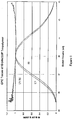
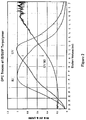
- Figures 1 and 2 illustrate the R.I. and U.V. (256 nm) traces of the GPC chromatogram of a p-MeSt terpolymer (Example 4) and a St terpolymer (Example 7), respectively.
- Comparison of the R.I. and U.V. traces provides information about the compositional homogeneity of the polymer as a function of molecular weight.
- the R.I. signal is proportional to the total mass of the polymer chain.
- the U.V. signal is proportional to the number of aromatic monomer units incorporated into the chain, since U.V. absorption of IB and IP units are negligible at 256 nm compared to that of the aromatic ring.
- the St terpolymer exhibits non-overlapping U.V. and R.I. traces.
- the U.V./R.I. ratio i.e., the styrene content of the polymer increases by a factor of about four as molecular weight decreases (elution volume increases), which is an indication that St acts as a chain transfer agent and has lower reactivity toward the IB capped growing cation than IB.
- the polymer product was dissolved in hexane to produce a polymer cement to which 0.08 phr octylated diphenylamine (ODPA) and 0.017 phr IrganoxTM 1010 was added. Thereafter, the cement was solvent stripped and mill dried.
- ODPA octylated diphenylamine
- the resulting homogeneous rubber was once again cut into pieces and redissolved in hexane.
- the so-produced polymer cement was then transferred to a 12 litre baffled reactor equipped with a mechanical stirrer and two syringe ports.
- the cement container was rinsed with hexane and dichloromethane. Water was then added to the reactor and the mixture was stirred for several minutes.
- Bromination of the polymer product was started by injecting the appropriate amount of bromine into the reactor. After 4 minutes of reaction time, the reaction was terminated by the injection of caustic solution (6.4 wt% NaOH). The mixture was allowed to stir for an additional 10 minutes and a stabilizer solution containing 0.25 phr epoxidized soybean oil (ESBO), 0.02 phr ODPA and 0.003 phr IrganoxTM 1076 was then added to the mixture. The brominated rubber mixture was then washed three times after which additional ESBO (0.65 phr) and calcium stearate (1.5 phr) were added to the cement prior to steam stripping. The polymer was finally dried on a hot mill.
- caustic solution 6.4 wt% NaOH
- Bromine concentration, rubber concentration (solids), water content and reaction time were all kept constant.
- 30 vol% dichloromethane was used as a polar co-solvent in order to obtain improved control over the extent of reaction and, thereby, to obtain the same concentration of brominated structures (approximately 1.0 mol%) in all brominated polymer products.
- Stabilizer and antioxidant levels of the brominated terpolymers were kept constant.
- Calcium stearate level was set at 1.5 phr and ESBO level at 0.9 phr.
- composition of the brominated terpolymers is reported in Table 2.
- the p-MeSt and St content determined before and after bromination are substantially consistent with one another. According to the results, the amount of primary brominated structures was lower in the terpolymer than in the control and decreased with increasing p-MeSt or St content. This is believed to be an indication that the aromatic ring underwent bromination in addition to the 1,4-IP enchainments.
- the presence of a brominated aromatic ring was estimated from a mass balance: total bromine content of the samples minus the amount of bromine attached to the 1,4-IP units. The total bromine content of the samples was determined by oxygen flask combustion.
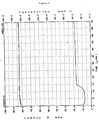
- the amount of bromine attached to the 1,4-IP units was calculated from the HNMR results. Specifically, the calculation was derived from the sum of bromine containing structures: Exo. + Rearr.Exo. + Endo. + hydrobrominated - see Figure 3 for a depiction of these various bromine containing structures. The results are reported in Table 3.
- the two values for bromine content are reasonably matched in Example 2, indicating that the bromination of the aromatic ring is negligible.
- the two values for bromine content deviate indicating that the aromatic ring underwent bromination.
- the deviation between the two values is even more pronounced in the case of the styrene terpolymers (i.e., Examples 5-7). This is not surprising since, from a steric hinderance viewpoint, the more accessible para-position is not blocked in the case of styrene, and the ortho and para orienting affect of the alkyl group (polymer backbone).
- a gum vulcanizate was prepared by adding 1 phr of stearic acid and 5 phr of zinc oxide to the brominated polymer on a mill set to 40°C (i.e., no filler or oil was used during vulcanization). Cure behaviour was determined by ODR Monsanto Rheometer (3 degree arc, 166°C). Full (6x6 inches) and half sized (3x3 inches) macro sheets were prepared from these compounds by curing the compound at 166°C for 30 minutes.
- Figures 4 , 5 and 6 show the cure behaviour of the polymers of Examples 1 (control), 2 (low p-MeSt content terpolymer) and 6 (medium St content terpolymer), respectively. Cure time and torque values obtained for all the compounds are listed in Table 4.
- the rubber produced in Example 1 shows a large trough or long induction period before the onset of curing. Specifically, the copolymer produced in Example 1 reaches a Tc50 point (half cured state) in approximately 13 minutes and a Tc90 point in approximately -20 minutes.
- the terpolymers produced in Examples 2 (low p-MeSt content terpolymer) and 6 (medium St content terpolymer) possess narrower torque curves and are observed to reach their Tc50 point in less than half the time in spite of the fact that the Examples 2 and 6 terpolymers contained 10 - 35 % less Exo than the Example 1 copolymer. This is evidence that the aromatic rings take part in the curing reaction.
- the Mh and Mh-Ml values of the terpolymers produced in Examples 2 (low p-MeSt content terpolymer) and 6 (medium St content terpolymer) decreased with increasing p-MeSt or St content due to the decreasing Exo content.
- the obtained torque values were at least the same or even higher than that of the control.
- the rubber was cured at 166°C for 30 minutes.
- the cured sheets were placed at room temperature for a period of sixteen hours prior to cutting them into tensile test pieces according to standard test methods (ASTM D412-68).
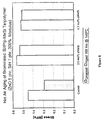
- Each vulcanizate was subjected to hot air aging tests (ASTM D573-81) under two different conditions: 120°C for 168 hours and 140°C for 168 hours.
- Table 5 also summarizes the unaged stress strain results of the St terpolymers and the results of the limited hot air aging study carried out using the low St content terpolymer (Example 5).
- the modulus of the terpolymers is somewhat higher than that of the control.
- the 100% modulus of the St terpolymer decreased by 30% and the 300% modulus by 16% as a result of 168 hrs/140°C hot air aging, indicating a better aging resistance over the copolymer of Example 1.
Landscapes
- Chemical & Material Sciences (AREA)
- General Chemical & Material Sciences (AREA)
- Health & Medical Sciences (AREA)
- Chemical Kinetics & Catalysis (AREA)
- Medicinal Chemistry (AREA)
- Polymers & Plastics (AREA)
- Organic Chemistry (AREA)
- Addition Polymer Or Copolymer, Post-Treatments, Or Chemical Modifications (AREA)
- Compositions Of Macromolecular Compounds (AREA)
Applications Claiming Priority (3)
| Application Number | Priority Date | Filing Date | Title |
|---|---|---|---|
| CA2282900 | 1999-09-20 | ||
| CA2282900A CA2282900C (en) | 1999-09-20 | 1999-09-20 | Halogenated terpolymers of isobutylene, diolefin monomer and styrenic monomer |
| PCT/CA2000/001044 WO2001021672A1 (en) | 1999-09-20 | 2000-09-19 | Halogenated terpolymers of isobutylene, diolefin monomer and styrenic monomer |
Publications (2)
| Publication Number | Publication Date |
|---|---|
| EP1228106A1 EP1228106A1 (en) | 2002-08-07 |
| EP1228106B1 true EP1228106B1 (en) | 2016-03-16 |
Family
ID=4164170
Family Applications (1)
| Application Number | Title | Priority Date | Filing Date |
|---|---|---|---|
| EP00960245.9A Expired - Lifetime EP1228106B1 (en) | 1999-09-20 | 2000-09-19 | Halogenated terpolymers of isobutylene, diolefin monomer and styrenic monomer |
Country Status (10)
| Country | Link |
|---|---|
| US (4) | US6960632B2 (enExample) |
| EP (1) | EP1228106B1 (enExample) |
| JP (2) | JP2003510380A (enExample) |
| CN (1) | CN1159351C (enExample) |
| AU (1) | AU7262900A (enExample) |
| BR (2) | BR0017502B1 (enExample) |
| CA (1) | CA2282900C (enExample) |
| RU (1) | RU2002110664A (enExample) |
| TW (1) | TW591042B (enExample) |
| WO (1) | WO2001021672A1 (enExample) |
Families Citing this family (39)
| Publication number | Priority date | Publication date | Assignee | Title |
|---|---|---|---|---|
| CA2282900C (en) | 1999-09-20 | 2011-02-01 | Bayer Inc. | Halogenated terpolymers of isobutylene, diolefin monomer and styrenic monomer |
| US7241831B2 (en) | 2001-12-10 | 2007-07-10 | Exxonmobil Chemical Patents Inc. | Elastomeric compositions |
| CN100513476C (zh) | 2001-12-10 | 2009-07-15 | 埃克森美孚化学专利公司 | 弹性体组合物 |
| CN100455605C (zh) * | 2001-12-10 | 2009-01-28 | 埃克森美孚化学专利公司 | 卤化异烯烃类三元共聚物 |
| CA2383474A1 (en) * | 2002-04-26 | 2003-10-26 | Bayer Inc. | Rubber composition for tire treads |
| CA2438024C (en) * | 2003-08-14 | 2013-05-28 | Bayer Inc. | Peroxide curable butyl formulations |
| CA2465407C (en) * | 2004-04-28 | 2012-11-13 | Rui Resendes | Peroxide curable butyl formulations |
| CA2551997C (en) * | 2005-08-26 | 2014-05-27 | Lanxess Inc. | Novel methods for the preparation of butyl graft copolymers |
| US7294768B1 (en) | 2005-09-27 | 2007-11-13 | Monsanto Technology Llc | Soybean variety 0384279 |
| EP2502742B1 (en) | 2005-10-27 | 2017-06-21 | ExxonMobil Chemical Patents Inc. | Construction comprising tie layer for pneumatic tire |
| US7585914B2 (en) * | 2005-11-09 | 2009-09-08 | Exxonmobil Chemical Patents Inc. | Thermoplastic elastomer compositions and methods for making the same |
| CA2575652A1 (en) * | 2006-02-15 | 2007-08-15 | Lanxess Inc. | Method of halogenating butyl rubber without acid neutralization agents |
| US7767743B2 (en) * | 2006-03-10 | 2010-08-03 | Exxonmobil Chemical Patents Inc. | Processable branched isoolefin-alkylstyrene elastomers |
| BRPI0823330A2 (pt) * | 2007-10-19 | 2013-10-29 | Lanxess Inc | Compostos de borracha de butila compreendendo um sistema modificador de três componentes mistos, e seu processo de preparação |
| SG2014012165A (en) | 2009-02-13 | 2014-09-26 | Lanxess Inc | Recycled butyl ionomers and recycling processes |
| EP2396374B1 (en) | 2009-02-13 | 2020-08-05 | ARLANXEO Deutschland GmbH | Butyl ionomers for use in reducing a population of and/or preventing accumulation of organisms and coatings made therefrom |
| GB2474356A (en) * | 2009-10-07 | 2011-04-13 | Bromine Compounds Ltd | Preparation of bromine-containing copolymers |
| US20130203943A1 (en) | 2010-03-24 | 2013-08-08 | Lanxess International Sa | Process for the production of water and solvent-free halobutyl rubbers |
| KR101412845B1 (ko) | 2010-03-24 | 2014-06-27 | 란세스 인터내쇼날 에스에이 | 무수 무용매 중합체의 제조 방법 |
| RU2601756C2 (ru) | 2010-03-24 | 2016-11-10 | Ланксесс Интернасьональ Са | Способ производства каучуковых иономеров и полимерных нанокомпозитов |
| MY165660A (en) | 2010-08-13 | 2018-04-18 | Arlanxeo Canada Inc | Butyl ionomer latex |
| TW201235359A (en) | 2010-11-24 | 2012-09-01 | Lanxess Inc | Ionomers comprising pendant vinyl groups and processes for preparing same |
| CN104011092A (zh) * | 2011-12-22 | 2014-08-27 | 朗盛国际股份公司 | 叠氮化共聚物及其制备方法 |
| JP2015500915A (ja) | 2011-12-22 | 2015-01-08 | ランクセス・インターナショナル・エス・アー | 硬化重合体の製造方法 |
| WO2014205567A1 (en) * | 2013-06-27 | 2014-12-31 | Lanxess Inc. | Cured elastomers and process for preparing same |
| CN104592466B (zh) * | 2013-10-30 | 2018-02-02 | 中国石油化工股份有限公司 | 一种卤化聚合物及其制备方法 |
| CN104592465B (zh) * | 2013-10-30 | 2017-03-08 | 中国石油化工股份有限公司 | 一种多嵌段卤化聚合物及其制备方法 |
| CN111971339A (zh) | 2018-02-20 | 2020-11-20 | 埃克森美孚化学专利公司 | 含异丁烯的组合物及由其制得的制品 |
| EP3793843A1 (en) * | 2018-05-17 | 2021-03-24 | ExxonMobil Chemical Patents Inc. | Isobutylene-containing compositions and articles made thereof |
| US20230029797A1 (en) | 2019-12-17 | 2023-02-02 | Exxonmobil Chemical Patents Inc. | Functionalized Polymers Tread Additive For Improved Wet Braking And Rolling Resistance In Low Silica Summer Tire |
| CN114867614B (zh) | 2019-12-17 | 2025-03-07 | 埃克森美孚化学专利公司 | 用于改进不混溶四季胎面的轮胎性能的官能化聚合物胎面添加剂 |
| EP4077537A1 (en) | 2019-12-17 | 2022-10-26 | ExxonMobil Chemical Patents Inc. | Functionalized polymers tread additive to improve tire performance for all-season tread containing high polybutadiene level |
| US20230022627A1 (en) | 2019-12-17 | 2023-01-26 | Exxonmobil Chemical Patents Inc. | Functionalized Polymers Tread Additive For Improved Wet Braking And Rolling Resistance In High Silica Summer Tire |
| EP4076979A1 (en) | 2019-12-17 | 2022-10-26 | ExxonMobil Chemical Patents Inc. | Functionalized polymers tread additive to improve truck and bus radial tire performance |
| EP4077528B1 (en) | 2019-12-17 | 2024-09-18 | ExxonMobil Chemical Patents Inc. | Functionalized polymers tread additive to improve all-season tire performance |
| CN114901490B (zh) | 2019-12-17 | 2024-03-15 | 埃克森美孚化学专利公司 | 用于改进冬季轮胎性能的官能化聚合物胎面添加剂 |
| CN113968926B (zh) * | 2021-10-29 | 2023-01-13 | 大连理工大学 | 一类乙烯/α-烯烃/功能化苯乙烯衍生物三元共聚物及其制备方法 |
| US20240408795A1 (en) | 2021-10-29 | 2024-12-12 | ExxonMobil Technology and Engineering Company | Extruder Systems and Processes Thereof |
| WO2023076070A1 (en) | 2021-10-29 | 2023-05-04 | Exxonmobil Chemical Patents Inc. | Extrusion processes for functionalized polymer compositions |
Citations (1)
| Publication number | Priority date | Publication date | Assignee | Title |
|---|---|---|---|---|
| US2631984A (en) * | 1950-04-18 | 1953-03-17 | Goodrich Co B F | Isoolefin polyolefin interpolymer derivatives and compositions comprising the same |
Family Cites Families (47)
| Publication number | Priority date | Publication date | Assignee | Title |
|---|---|---|---|---|
| US2513183A (en) * | 1945-02-09 | 1950-06-27 | Sun Oil Co | Copolymer products |
| US2497458A (en) * | 1945-05-26 | 1950-02-14 | Sun Oil Co | Butadiene-styrene copolymer tackified with isoolefin-diolefin-styrene copolymer |
| US2539523A (en) * | 1947-02-14 | 1951-01-30 | Atlantic Refining Co | Polymerization of olefin mixtures |
| US2631953A (en) * | 1949-03-12 | 1953-03-17 | Standard Oil Dev Co | Bonding isoolefin-diolefin rubber to metal by an isoolefin-styrenediolefin resin and a modified natural rubber tie ply |
| NL170646B (nl) * | 1951-06-30 | Western Electric Co | Werkwijze voor het in een vlak oppervlak van een voorwerp vormen van verdiepte delen. | |
| US2676950A (en) * | 1951-11-29 | 1954-04-27 | Standard Oil Dev Co | Low unsaturation curable tripolymer resins from a diolefin, an alkene and styrene orhomologue thereof |
| US2804448A (en) * | 1954-06-01 | 1957-08-27 | Goodrich Co B F | Novel method for preparing rubbery chlorinated isoolefin-polyolefin interpolymer derivatives |
| GB842557A (en) | 1956-07-16 | 1960-07-27 | Exxon Research Engineering Co | Chemical modification of isoolefin-multiolefin copolymers |
| US2891595A (en) * | 1956-07-31 | 1959-06-23 | Exxon Research Engineering Co | Chlorinated rubbery copolymers |
| US2994578A (en) * | 1957-04-04 | 1961-08-01 | Equipment Des Ind Chimiques S | Method of selectively separating hydrogen sulphide from gases containing hydrogen sulphide and carbon dioxide |
| US2968041A (en) * | 1958-09-25 | 1961-01-17 | John F Skold | Applicator for surgical clamps |
| US2965621A (en) * | 1959-01-02 | 1960-12-20 | Exxon Research Engineering Co | Process for halogenating rubbery copolymers |
| US3042662A (en) * | 1959-05-26 | 1962-07-03 | Exxon Research Engineering Co | Process for halogenating copolymers |
| US3560458A (en) * | 1964-05-01 | 1971-02-02 | Exxon Research Engineering Co | Process for polymerization of cationically polymerizable monomers |
| US3948868A (en) * | 1969-04-03 | 1976-04-06 | Exxon Research And Engineering Company | Homogeneous styrene/isoolefin copolymers |
| US3808177A (en) * | 1971-06-08 | 1974-04-30 | Exxon Research Engineering Co | High molecular weight,high unsaturation c4-c10 isoolefin conjugated diene copolymers |
| US4026966A (en) * | 1974-12-09 | 1977-05-31 | Exxon Research And Engineering Company | Preparation of modified elastomers |
| CA1061941A (en) * | 1975-02-24 | 1979-09-04 | Goodyear Tire And Rubber Company (The) | Hydrocarbon tackifying resin |
| US4145490A (en) * | 1975-09-25 | 1979-03-20 | E. I. Du Pont De Nemours And Company | Carboxylated copolymers of isobutylene and a vinylbenzene |
| JPS53130737A (en) * | 1977-04-09 | 1978-11-15 | Tokai Rubber Ind Ltd | Adhesive composition |
| JPS5714636A (en) * | 1980-06-13 | 1982-01-25 | Exxon Research Engineering Co | Chlorinated butyl rubber/brominated butyl rubber blend compound with improved adhesive properties |
| US5162445A (en) * | 1988-05-27 | 1992-11-10 | Exxon Chemical Patents Inc. | Para-alkylstyrene/isoolefin copolymers and functionalized copolymers thereof |
| US4779657A (en) * | 1987-12-28 | 1988-10-25 | Polysar Limited | Rubber compositions |
| US6013727A (en) | 1988-05-27 | 2000-01-11 | Exxon Chemical Patents, Inc. | Thermoplastic blend containing engineering resin |
| CA1338546C (en) * | 1988-05-27 | 1996-08-20 | Kenneth William Powers | Para-alkylstyrene/isoolefin copolymers |
| EP0494857B1 (en) | 1989-10-03 | 1995-07-19 | Exxon Chemical Patents Inc. | Thermoplastic graft copolymers and their use as compatibilizers |
| CA2024532C (en) * | 1990-03-26 | 1999-11-16 | George Jalics | Comb polymers having a halobutyl rubber backbone |
| EP0563251A1 (en) * | 1990-12-20 | 1993-10-06 | Exxon Chemical Patents Inc. | Uv/eb curable butyl copolymers for lithographic and corrosion-resistant coating applications |
| JPH05330307A (ja) * | 1992-06-02 | 1993-12-14 | Polytec Design:Kk | タイヤのインナーライナー |
| DE4401934A1 (de) * | 1994-01-24 | 1995-07-27 | Sp Reifenwerke Gmbh | Kautschukmischung, daraus hergestellte Reifenlauffläche und Reifen mit dieser Reifenlauffläche |
| DE19528766C1 (de) | 1995-08-04 | 1997-01-16 | Siemens Ag | Thyristorgeschaltete Kondensatorbank |
| US5907234A (en) | 1995-08-04 | 1999-05-25 | Siemens Aktiengesellschaft | Thyristor-switched capacitor bank |
| JP2889156B2 (ja) * | 1995-08-31 | 1999-05-10 | 住友ゴム工業株式会社 | 空気入りタイヤ |
| CA2174794C (en) | 1996-04-23 | 2009-09-22 | Gabor Kaszas | Improved polymer bromination process in solution |
| US5681901A (en) * | 1996-07-24 | 1997-10-28 | Exxon Chemical Patents Inc. | Process for halogenating isomonoolefin copolymers |
| US5698640A (en) * | 1996-08-01 | 1997-12-16 | Exxon Chemical Patents Inc. | Low bromine isobutylene-co-4-bromomethylstyrene compositions for severe duty elastomer applications |
| DE19631731A1 (de) * | 1996-08-06 | 1998-02-12 | Bayer Ag | Halogenierte Butylkautschuke mit einem geringen Halogengehalt |
| CA2282900C (en) * | 1999-09-20 | 2011-02-01 | Bayer Inc. | Halogenated terpolymers of isobutylene, diolefin monomer and styrenic monomer |
| JP3529313B2 (ja) | 1999-12-27 | 2004-05-24 | 住友ゴム工業株式会社 | トレッド用ゴム組成物 |
| JP2002065898A (ja) | 2000-08-28 | 2002-03-05 | Sumitomo Rubber Ind Ltd | 糸巻きゴルフボール |
| WO2002098927A1 (en) * | 2001-06-04 | 2002-12-12 | Exxonmobil Chemical Patents Inc. | Cured robber components for use with pharmaceutical devices |
| ITMI20012168A1 (it) * | 2001-10-18 | 2003-04-18 | Enichem Spa | Polimeri vinilaromatici espandibili e procedimento per la loro preparazione |
| CN100513476C (zh) | 2001-12-10 | 2009-07-15 | 埃克森美孚化学专利公司 | 弹性体组合物 |
| US7241831B2 (en) * | 2001-12-10 | 2007-07-10 | Exxonmobil Chemical Patents Inc. | Elastomeric compositions |
| CA2383474A1 (en) * | 2002-04-26 | 2003-10-26 | Bayer Inc. | Rubber composition for tire treads |
| WO2004044051A1 (en) * | 2002-11-07 | 2004-05-27 | Exxonmobil Chemical Patents Inc. | Elastomeric blend for air barriers comprising low glass transition temperature petroleum hydrocarbon resins |
| DE10360592A1 (de) | 2003-12-19 | 2005-07-28 | Beiersdorf Ag | Pflastersystem zur Verabreichung von Antihistaminika |
-
1999
- 1999-09-20 CA CA2282900A patent/CA2282900C/en not_active Expired - Lifetime
-
2000
- 2000-09-19 RU RU2002110664/04A patent/RU2002110664A/ru not_active Application Discontinuation
- 2000-09-19 CN CNB00813135XA patent/CN1159351C/zh not_active Expired - Lifetime
- 2000-09-19 JP JP2001525244A patent/JP2003510380A/ja not_active Revoked
- 2000-09-19 WO PCT/CA2000/001044 patent/WO2001021672A1/en not_active Ceased
- 2000-09-19 BR BRPI0017502-1A patent/BR0017502B1/pt not_active IP Right Cessation
- 2000-09-19 EP EP00960245.9A patent/EP1228106B1/en not_active Expired - Lifetime
- 2000-09-19 AU AU72629/00A patent/AU7262900A/en not_active Abandoned
- 2000-09-19 BR BR0014125-9A patent/BR0014125A/pt not_active Application Discontinuation
- 2000-09-20 TW TW089119287A patent/TW591042B/zh not_active IP Right Cessation
-
2003
- 2003-03-17 US US10/390,113 patent/US6960632B2/en not_active Expired - Lifetime
-
2005
- 2005-08-19 US US11/208,320 patent/US7402633B2/en not_active Expired - Lifetime
-
2008
- 2008-06-03 US US12/156,501 patent/US20090018297A1/en not_active Abandoned
- 2008-06-25 US US12/146,078 patent/US7868100B2/en not_active Expired - Fee Related
-
2012
- 2012-01-04 JP JP2012000222A patent/JP5450671B2/ja not_active Expired - Lifetime
Patent Citations (1)
| Publication number | Priority date | Publication date | Assignee | Title |
|---|---|---|---|---|
| US2631984A (en) * | 1950-04-18 | 1953-03-17 | Goodrich Co B F | Isoolefin polyolefin interpolymer derivatives and compositions comprising the same |
Also Published As
| Publication number | Publication date |
|---|---|
| CN1374972A (zh) | 2002-10-16 |
| BR0017502B1 (pt) | 2013-03-05 |
| US20030220454A1 (en) | 2003-11-27 |
| JP2012062492A (ja) | 2012-03-29 |
| HK1050539A1 (en) | 2003-06-27 |
| JP2003510380A (ja) | 2003-03-18 |
| CN1159351C (zh) | 2004-07-28 |
| US20060116484A1 (en) | 2006-06-01 |
| US7868100B2 (en) | 2011-01-11 |
| RU2002110664A (ru) | 2003-11-20 |
| CA2282900C (en) | 2011-02-01 |
| US6960632B2 (en) | 2005-11-01 |
| JP5450671B2 (ja) | 2014-03-26 |
| AU7262900A (en) | 2001-04-24 |
| BR0014125A (pt) | 2002-05-14 |
| WO2001021672A1 (en) | 2001-03-29 |
| US20080275190A1 (en) | 2008-11-06 |
| US7402633B2 (en) | 2008-07-22 |
| US20090018297A1 (en) | 2009-01-15 |
| TW591042B (en) | 2004-06-11 |
| EP1228106A1 (en) | 2002-08-07 |
| CA2282900A1 (en) | 2001-03-20 |
Similar Documents
| Publication | Publication Date | Title |
|---|---|---|
| US7868100B2 (en) | Halogenated terpolymers of isobutylene, diolefin monomer and styrenic monomer | |
| KR100195663B1 (ko) | 타이어 트레드용 조성물 | |
| EP1820808A1 (en) | Method of halogenating butyl rubber without acid neutralization agents | |
| EP0540617B1 (en) | Composition for tire carcass | |
| JP5904951B2 (ja) | ハロブチルアイオノマーの製造方法 | |
| EP2643361B1 (en) | Phosphonium ionomers comprising pendant vinyl groups and processes for preparing same | |
| JP2557304B2 (ja) | タイヤのサイドウォール用組成物 | |
| EP1359189B1 (en) | Rubber composition for tire treads | |
| EP0582586B1 (en) | Composition for mold curing elements | |
| EP3774959B1 (en) | Isobutylene-based polymers with olefinic side chain substituents and curable compositions containing the same | |
| CN109844013B (zh) | 多峰聚异烯烃组合物及其方法 | |
| WO1991019761A1 (en) | Composition for dynamic means | |
| CZ20014424A3 (cs) | Kaučuková kompozice vhodná pro výrobu vzduąnic, způsob její výroby a vzduąnice obsahující tuto kompozici | |
| HK1050539B (en) | Halogenated terpolymers of isobutylene, diolefin monomer and styrenic monomer | |
| WO1992016587A2 (en) | Composition for mold curing elements |
Legal Events
| Date | Code | Title | Description |
|---|---|---|---|
| PUAI | Public reference made under article 153(3) epc to a published international application that has entered the european phase |
Free format text: ORIGINAL CODE: 0009012 |
|
| 17P | Request for examination filed |
Effective date: 20020422 |
|
| AK | Designated contracting states |
Kind code of ref document: A1 Designated state(s): AT BE CH CY DE DK ES FI FR GB GR IE IT LI LU MC NL PT SE |
|
| AX | Request for extension of the european patent |
Free format text: AL;LT;LV;MK;RO;SI |
|
| RBV | Designated contracting states (corrected) |
Designated state(s): BE DE ES FR GB IT |
|
| 17Q | First examination report despatched |
Effective date: 20040927 |
|
| RAP1 | Party data changed (applicant data changed or rights of an application transferred) |
Owner name: LANXESS INC. |
|
| 17Q | First examination report despatched |
Effective date: 20040927 |
|
| GRAP | Despatch of communication of intention to grant a patent |
Free format text: ORIGINAL CODE: EPIDOSNIGR1 |
|
| INTG | Intention to grant announced |
Effective date: 20151126 |
|
| GRAS | Grant fee paid |
Free format text: ORIGINAL CODE: EPIDOSNIGR3 |
|
| GRAA | (expected) grant |
Free format text: ORIGINAL CODE: 0009210 |
|
| AK | Designated contracting states |
Kind code of ref document: B1 Designated state(s): BE DE ES FR GB IT |
|
| REG | Reference to a national code |
Ref country code: DE Ref legal event code: R081 Ref document number: 60049233 Country of ref document: DE Owner name: ARLANXEO CANADA INC., SARNIA, CA Free format text: FORMER OWNER: BAYER INC., SARNIA, ONTARIO, CA Ref country code: GB Ref legal event code: FG4D |
|
| REG | Reference to a national code |
Ref country code: DE Ref legal event code: R096 Ref document number: 60049233 Country of ref document: DE |
|
| RAP2 | Party data changed (patent owner data changed or rights of a patent transferred) |
Owner name: ARLANXEO CANADA INC. |
|
| REG | Reference to a national code |
Ref country code: FR Ref legal event code: PLFP Year of fee payment: 17 |
|
| REG | Reference to a national code |
Ref country code: DE Ref legal event code: R081 Ref document number: 60049233 Country of ref document: DE Owner name: ARLANXEO CANADA INC., SARNIA, CA Free format text: FORMER OWNER: LANXESS INC., SARNIA, ONTARIO, CA |
|
| PG25 | Lapsed in a contracting state [announced via postgrant information from national office to epo] |
Ref country code: ES Free format text: LAPSE BECAUSE OF FAILURE TO SUBMIT A TRANSLATION OF THE DESCRIPTION OR TO PAY THE FEE WITHIN THE PRESCRIBED TIME-LIMIT Effective date: 20160316 |
|
| REG | Reference to a national code |
Ref country code: DE Ref legal event code: R097 Ref document number: 60049233 Country of ref document: DE |
|
| PLBE | No opposition filed within time limit |
Free format text: ORIGINAL CODE: 0009261 |
|
| STAA | Information on the status of an ep patent application or granted ep patent |
Free format text: STATUS: NO OPPOSITION FILED WITHIN TIME LIMIT |
|
| 26N | No opposition filed |
Effective date: 20161219 |
|
| REG | Reference to a national code |
Ref country code: FR Ref legal event code: PLFP Year of fee payment: 18 |
|
| REG | Reference to a national code |
Ref country code: FR Ref legal event code: PLFP Year of fee payment: 19 |
|
| PGFP | Annual fee paid to national office [announced via postgrant information from national office to epo] |
Ref country code: GB Payment date: 20180919 Year of fee payment: 19 |
|
| REG | Reference to a national code |
Ref country code: DE Ref legal event code: R082 Ref document number: 60049233 Country of ref document: DE |
|
| PGFP | Annual fee paid to national office [announced via postgrant information from national office to epo] |
Ref country code: FR Payment date: 20190815 Year of fee payment: 20 Ref country code: IT Payment date: 20190917 Year of fee payment: 20 Ref country code: DE Payment date: 20190903 Year of fee payment: 20 |
|
| PGFP | Annual fee paid to national office [announced via postgrant information from national office to epo] |
Ref country code: BE Payment date: 20190716 Year of fee payment: 20 |
|
| GBPC | Gb: european patent ceased through non-payment of renewal fee |
Effective date: 20190919 |
|
| REG | Reference to a national code |
Ref country code: DE Ref legal event code: R071 Ref document number: 60049233 Country of ref document: DE |
|
| REG | Reference to a national code |
Ref country code: BE Ref legal event code: MK Effective date: 20200919 |
|
| PG25 | Lapsed in a contracting state [announced via postgrant information from national office to epo] |
Ref country code: GB Free format text: LAPSE BECAUSE OF NON-PAYMENT OF DUE FEES Effective date: 20190919 |