EP1185702B1 - Nucleic acid probes and methods for detecting clinically important fungal pathogens - Google Patents
Nucleic acid probes and methods for detecting clinically important fungal pathogens Download PDFInfo
- Publication number
- EP1185702B1 EP1185702B1 EP00940266.0A EP00940266A EP1185702B1 EP 1185702 B1 EP1185702 B1 EP 1185702B1 EP 00940266 A EP00940266 A EP 00940266A EP 1185702 B1 EP1185702 B1 EP 1185702B1
- Authority
- EP
- European Patent Office
- Prior art keywords
- seq
- probes
- candida
- species
- aspergillus
- Prior art date
- Legal status (The legal status is an assumption and is not a legal conclusion. Google has not performed a legal analysis and makes no representation as to the accuracy of the status listed.)
- Expired - Lifetime
Links
Images
Classifications
-
- C—CHEMISTRY; METALLURGY
- C12—BIOCHEMISTRY; BEER; SPIRITS; WINE; VINEGAR; MICROBIOLOGY; ENZYMOLOGY; MUTATION OR GENETIC ENGINEERING
- C12Q—MEASURING OR TESTING PROCESSES INVOLVING ENZYMES, NUCLEIC ACIDS OR MICROORGANISMS; COMPOSITIONS OR TEST PAPERS THEREFOR; PROCESSES OF PREPARING SUCH COMPOSITIONS; CONDITION-RESPONSIVE CONTROL IN MICROBIOLOGICAL OR ENZYMOLOGICAL PROCESSES
- C12Q1/00—Measuring or testing processes involving enzymes, nucleic acids or microorganisms; Compositions therefor; Processes of preparing such compositions
- C12Q1/68—Measuring or testing processes involving enzymes, nucleic acids or microorganisms; Compositions therefor; Processes of preparing such compositions involving nucleic acids
- C12Q1/6876—Nucleic acid products used in the analysis of nucleic acids, e.g. primers or probes
- C12Q1/6888—Nucleic acid products used in the analysis of nucleic acids, e.g. primers or probes for detection or identification of organisms
- C12Q1/6895—Nucleic acid products used in the analysis of nucleic acids, e.g. primers or probes for detection or identification of organisms for plants, fungi or algae
Definitions
- the current invention relates to the field of detection and identification of clinically important fungi. More particularely, the present invention relates to species specific probes originating from the Internal Transcribed Spacer (ITS) region 1 of rDNA for the detection of fungal species such as Candida albicans, Candida parapsilosis, Candida tropicalis, Candida krusei, Candida glabrata, Aspergillus flavus, Aspergillus versicolor, Aspergillus nidulans, Aspergillus fumigatus and Cryptococcus neoformans in clinical samples, and methods using said probes.
- ITS Internal Transcribed Spacer
- Fungi occur in a wide variety of forms, from yeasts (single-celled organisms which reproduce by budding) and moulds (which occur in long filaments known as hyphae) to the dimorphic fungi which have a chameleon-like ability to behave as yeasts in one environment and mould in another.
- Deep mycoses involving the internal organs, are often life-threatening.
- the fungi Aspergillus, Blastomyces, Candida, Coccidioides, Cryptococcus, Histoplasma are responsible for deep mycoses, and pose tremendous challenges for clinicians.
- candidiasis and aspergillosis account for between 80% and 90% of systemic fungal infections in immunocompromised patients. Recently, infections caused by Pneumocystis carinii are more frequently found in AIDS patients.
- PCP P. carinii pneumonia
- Candidoses comprise a range of human opportunistic infections which may occur in either acute or chronic forms.
- Candida infections frequently arise on the mucosal surfaces of the mouth or vagina.
- Chronic hyperplastic candidosis of the oral mucosa is of particular importance since it has been associated with the development of squamous cell carcinoma.
- deeper candida infections such as esophagitis and endocarditis, may occur, particularly in immunocompromised individuals (Heimdahl et al ., 1990).
- Genotypic methods have been used for the detection and typing of Candida strains (Bart-Delabesse et al ., 1993; Holmes et al. , 1994), but have been used less frequently for differentiation of species.
- Candida species next to the most frequently isolated pathogen C . albicans, are C . glabrata, C. krusei and C . tropicalis. The latter species are much less susceptible to classical antifungal drugs.
- Cryptococcus neoformans The genus Cryptococcus contains many species, wherein Cryptococcus neoformans is considered the only human pathogen.
- Initial cryptococcal infection begins by inhalation of the fungus into the lungs, usually followed by hematogeneous spread to the brain and meninges. Involvement of the skin, bones, and joints is seen, and Cryptococcus neoformans is often cultured from the urine of patients with disseminated infection.
- cryptococcosis particularly cryptococcal meningitis, usually is seen in association with underlying conditions such as lupus erythematosis, sarcoidosis, leukemia, lymphomas, and Cushing's syndrome (Chuck et al. , 1989).
- Cryptococcosis is one of the defining diseases associated with AIDS. Patients with cryptococcosis and serologic evidence of HIV infections are considered to have AIDS. In nearly 45% of AIDS patients, cryptococcosis was reported as the first AIDS-defining illness. Because none of the representing signs or symptoms of cryptococcal meningitis (such as headache, fever, and malaise) are sufficiently characteristic to distinguish it from other infections that occur in patients with AIDS, determining cryptococcal antigen titers and culturing blood and cerebrospinal fluid are useful in making a diagnosis (Chuck et al. , 1989).
- Aspergillosis is now considered the second most common fungal infection requiring hospitalization.
- Aspergillus species are the second most common isolate after Candida species (Goodwin et al., 1992).
- the pathological responses caused by members of the genus Aspergillus vary in severity and clinical course and may occur as both primary and secondary infections (Rinaldi, M.G., 1988).
- IA Invasive aspergillosis
- PCR has been used to detect DNA specific for Aspergillus species in bronchoalveolar lavage (BAL) fluid from patients with IA (Bretage et al. , 1995).
- the diagnostics of mycoses is an area where there is a great need for new sophisticated techniques.
- the use of specific DNA probes, accompanied by DNA or RNA amplification systems, for the diagnosis of fungal infection may prove useful, and may revolutionize laboratory diagnosis and management of patients with serious fungal disease.
- ITS-2 probes for different Candida species and methods for detection and differentiation after a general amplification step with universal primers ITS3 and ITS4.
- Elie et al. (1998) and several related patent applications ( WO98/11257 ; WO99/06596 ; US 5,426,027 ) describe a set of 18 Candida species probes originating from the ITS-2 region.
- Shin et al. (1999) describe detection and differentation of three Candida species in a single reaction tube, using amplification with the universal primers ITS3 and ITS4 and hybridization to ITS-2 probes.
- Botelho and Planta (1994) describe probes for Candida albicans, derived from the ITS-1 or ITS-2 regions. The ITS-2 region probes show a better species specificity.
- Species specific probes originating from the ITS-region of other medically important fungal species such as species belonging to Aspergillus, Cryptococcus, or Pneumocystis have not been described yet.
- methods for simultaneous detection and differentiation of a wide variety of fungal species with clinical importance have not been described yet. Such methods would provide an answer to the need for rapid, highly sensitive and species specific detection of fungal pathogens in clinical samples, allowing a quick installment of efficient treatment regimens, and close monitoring of a patient's progression.
- nucleic acid molecules hybridizing specifically with the ITS region of different fungal species with clinical importance. More particularely, probes are described hybridizing selectively with the ITS-1 and/or ITS-2 region of several Candida species, Aspergillus species, Cryptococcus neoformans and Pneumocystis carinii.
- the most preferred probes of the current invention are located in the ITS-1 region, which separates the 18S and 5.8S rRNA genes.
- methods are described for quick, sensitive and specific detection and differentiation of these fungal pathogenic species.
- methods are described for the simultaneous detection and differentiation of different fungal species in one single hybridization assay.
- Such multi parameter detection methods may be particularly useful in the detection of opportunistic infections in patients with impaired immunity systems, such as organ transplant patients, patients receiving intensive anticancer treatments, diabetics or AIDS patients.
- the methods and probes described are useful tools in clinical diagnosis of fungal infections. Moreover, they may be used to monitor the disease and to guide an appropiate antifungal therapy. The probes and methods described may also be used as laboratory research tools to study the different fungal organisms, and their phylogenetic relationship.
- the fungal species detected and identified by the probes and methods of the description include Candida albicans, Candida parapsilosis, Candida tropicalis, Candida kefyr, Candida krusei, Candida glabrata, Candida dubliniensis, Aspergillus flavus, Aspergillus versicolor, Aspergillus nidulans, Aspergillus fumigatus, Cryptococcus neoformans and Pneumocystis carinii .
- the methods of the current description allow to detect any of the aforementioned species either alone, or in combinattion with each other, depending on the set of probes applied in the method. All probes are designed such that they are functional under identical hybridization conditions, thus allowing any possible combination.
- the particular set of probes combined in a given method may depend on several ad hoc parameters, such as: the type of sample (respiratory tract, urogenitary tract, gastrointestinal tract, cerebrospinal fluid, blood samples, skin or tissue biopsies%), the clinical symptoms of the patient, the desired level of specificity (genus, species, strain), the type of application (screening assay, confirmation assay, therapy monitoring, research tool for strain characterization, epidemiology).
- ITS Internal Transcribed Spacer
- Candida species including C. albicans, C. parapsilosis, C. tropicalis, C. kefyr, C. krusei, C. glabrata and C. dubliniensis, of several Aspergillus species, including A. flavus, A. versicolor, A. nidulans and A. fumigatus, of Cryptococcus neoformans and Pneumocystis carinii.
- Candida species including C. albicans, C. parapsilosis, C. tropicalis, C. kefyr, C. krusei, C. glabrata and C. dubliniensis
- Aspergillus species including A. flavus, A. versicolor, A. nidulans and A. fumigatus, of Cryptococcus neoformans and Pneumocystis carinii.
- the "core sequence” of the probe is the central part, and represents more than 70%, preferably more than 80%, most often more than 90% of the total probe sequence.
- the probes of the current invention specifically hybridize to the fungal species for which they are designed. This species specific hybridization behaviour will be illustrated amply in the examples section. Throughout this invention, the sequences of the probes are always represented from the 5' end to the 3' end. They are represented as single stranded DNA molecules. It should be understood however that these probes may also be used in their RNA form (wherein T is replaced by U), or in their complementary form.
- the probes of the current invention may be formed by cloning of recombinant plasmids containing inserts comprising the corresponding nucleotide sequences, if need be by cleaving the latter out from the cloned plasmids upon using the adequate nucleases and recovering them, e.g. by fractionation according to molecular weight.
- the probes according to the present invention can also be synthesized chemically, for instance by the conventional phospho-triester method.
- the probes of the current invention have a length from about 10 to about 30 nucleotides. Variations are possible in the length of the probes and it should be clear that, since the central part of the probe is essential for its hybridization characteristics, possible deviations of the probe sequence versus the target sequence may be allowable towards head and tail of the probe, especially when longer probe sequences are used. These variant probes, which may be conceived from the common knowledge in the art, should however always be evaluated experimentally, in order to check if they result in equivalent hybridization characteristics than the original probes.
- isolated means that the oligonucleotides of the current invention are isolated from the environment in which they naturally occur. In particular, it means that they are not anymore part of the genome of the respective fungal species, and thus liberated from the remaining flanking nucleotides in the ITS region of said fungal species.
- nucleic acid sequences can form a perfect base-paired double helix with each other.
- Species specificity is a feature which has to be experimentally determined. Although it may sometimes be theoretically predictable, species specificity can only refer to those non-target organisms which have been tested experimentally.
- primer refers to an isolated single stranded oligonucleotide sequence capable of acting as a point of initiation for synthesis of a primer extension product which is complementary to the nucleic acid strand to be copied.
- the length and the sequence of the primer must be such that they allow to prime the synthesis of the extension products.
- the primer is about 5-50 nucleotides long, more preferably from 10 to 40 nucleotides long. Specific length and sequence will depend on the complexity of the required DNA or RNA targets, as well as on the conditions of primer use such as temperature and ionic strength.
- oligonucleotides used as primers or probes may also comprise nucleotide analogues such as phosphorothiates (Matsukura et al., 1987), alkylphosphorothiates (Miller et al., 1979) or peptide nucleic acids (Nielsen et al., 1991; Nielsen et al., 1993) or may contain intercalating agents (Asseline et al., 1984).
- nucleotide analogues such as phosphorothiates (Matsukura et al., 1987), alkylphosphorothiates (Miller et al., 1979) or peptide nucleic acids (Nielsen et al., 1991; Nielsen et al., 1993) or may contain intercalating agents (Asseline et al., 1984).
- sample represents any material possibly containing fungal nucleic acids, which may have to be released from the cells.
- sample refers to a clinical sample, such as a sample taken from blood, from the respiratory tract (sputum, bronchoalveolar lavage (BAL)), from cerebrospinal fluid (CSF), from the urogenital tract (vaginal secretions, urine), from the gastrointestinal tract (saliva, faeces) or biopsies taken from organs, tissue, skin e.a.
- sample may also refer to a sample of cultured fungal cells, either cultured in liquid medium or on solid growth media. Fungal DNA proesent in said samples may be prepared or extracted according to any of the techniques known in the art.
- ITS Internal Transcribed Spacer region located between the 18S and the 28S rRNA genes in the rRNA operon of the fungal species' nuclear DNA (for a review, see White et al. 1990).
- the ITS region is subdivided in the ITS-1 region, which separates the 18S and 5.8S rRNA genes, and the ITS-2 region which is found between the 5.8S and 28S rRNA genes.
- the target sequence is that part of the ITS sequence which is fully complementary to the core part of the probe.
- the present invention provides a method for the simultaneous detection and differentiation of the following different fungal pathogenic species Candida albicans, Candida parapsilosis, Candida tropicalis, Candida krusei, Candida glabrata, Aspergillus flavus, Aspergillus versicolor, Aspergillus nidulans, Aspergillus fumigatus and Cryptococcus neoformans in combination with each, other in one single assay, including:
- the present invention also relates to a set of isolated oligonucleotide molecules comprising the oligonucleotide molecules as disclosed in claim 5, or variants of said probes, said variants differing from the sequences cited above by the deletion and/or addition of one or two nucleotides at the 5'and/or 3'extremity of the nucleotide sequence, without affecting the species specific hybridization behaviour of the probe, or the RNA equivalents of said probes, wherein T is replaced by U, or the complementary molecules of said probes.
- the probes used in the method for detection of fungal pathogens are all hybridizing to the Internal Transcribed Spacer region of fungal species. More particularely, as illustrated further in the examples section (see Table 1), the above-cited probes hybridize selectively to the following target regions: ITS-1 region of Candida albicans (probes represented by SEQ ID NO 1, 2, 3, 33, 34, 35), ITS-1 region of C. parapsilosis (probes represented by SEQ ID NO 4,5), ITS-1 region of C. tropicalis (probes represented by SEQ ID NO 6, 36), ITS-1 region of C. kefyr (probes represented by SEQ ID NO 7, 8), ITS-1 region of C.
- ITS-1 region of Candida albicans probes represented by SEQ ID NO 1, 2, 3, 33, 34, 35
- ITS-1 region of C. parapsilosis probes represented by SEQ ID NO 4,5
- ITS-1 region of C. tropicalis probes represented by SEQ ID NO 6, 36
- ITS-1 region of Cryptococcus neoformans probes represented by SEQ ID NO 14, 15, 16, 39
- ITS-2 region of Cryptococcus neoformans probes represented by SEQ ID NO 17
- ITS-1 region of Aspergillus flavus probes represented by SEQ ID NO 18, 19, 20, 42
- ITS-1 region of Aspergillus versicolor probes represented by SEQ ID NO 21, 43
- ITS-1 region of Aspergillus nidulans probes represented by SEQ ID NO 22, 23, 24, 25
- ITS-1 region of Aspergillus fumigatus probes represented by SEQ ID NO 26, 41
- ITS-2 region of Aspergillus fumigatus probes represented by SEQ ID NO 27, 40
- ITS-1 region of Pneumocystis carinii probes represented by SEQ ID NO 31, 32
- ITS-2 region of Pneumocystis carinii probes represented by SEQ ID NO 31, 32
- variants of the probes encompasses probes represented by a variant sequence which differs from any of the sequences cited above by the deletion and/or addition of 1 or 2 nucleotides at the 3' and/or 5' extremity of the probe sequence, in so far as such deletion or addition does not change the species specific character of the respective probe. It will be understood that the addition of 1 or 2 nucleotides at the extremities of the probes will usually be done in accordance with the sequence flanking the target sequence in the ITS region from which the probe is isolated. This means that one shall normally not choose "any" nucleotide to extend the probe sequence, but only those nucleotides which are flanking the probe sequence in the ITS region.
- the information about the flanking sequences of the probes can easily be obtained by aligning the probe sequence to the ITS sequence.
- the ITS sequence itself may be obtained by sequencing the ITS region, after cloning or e.g. PCR amplification of the ITS region with fungal universal primer pairs, or may be retrieved from publicly available sources.
- the above-described method may be applied for the detection of one single fungal species, so called “single analyte detection”, e.g. in microtiter plates, or for the detection of several fungal species simultaneously, so called “multi parameter detection”, e.g. in a Line Probe Assay (LiPA).
- the probes described have been selected such that they may all be functional (i.e. show the desired species specificity) under the same hybridization and wash conditions. This allows the method to be used for the simultaneous detection and differentiation of several fungal species in one single hybridization assay.
- fungal universal primer pair means that the primer pair amplifies the Internal Transcribed Spacer region of most, if not all, fungal species.
- sequences of "fungal universal primer pairs” are phylogenetically conserved in order to enable amplification within different species of fungi. They are located in the rRNA genes flanking the ITS region, i.e. in the 18S, 5.8S or 28S rRNA genes. Amplification of the full ITS region, the ITS-1 or the ITS-2 region may be envisaged.
- "Fungal universal primer pairs” suitable for the methods described in the current invention have been described by a.o. White et al. (1990).
- the method described above includes an amplification step using a fungal universal primer pair which is chosen from the following group of primer pairs, as described by White et al. (1990):
- the full ITS region may be amplified using a combination of the ITS1 and ITS4 primer, or the ITS5 and ITS4 primer.
- the ITS-1 region may be amplified using a combination of the ITS1 and ITS2 primer, or the ITS5 and ITS2 primer, while the ITS-2 region may be amplified using a combination of the ITS3 and ITS4 primer.
- amplification of the ITS-1 region is envisaged, and probes will be chosen from the ITS-1 region.
- the current invention shows that methods based on amplification of and hybridization to the ITS-1 region usually show a higher sensitivity than methods based on amplification of and hybridization to the full ITS region, or the ITS-2 amplified region.
- the present description furthermore shows that identification and differentiation of most, if not all, of the different fungal species listed can be accomplished by using probe sequences originating from the ITS-1 region only.
- the present description provides for a method for the detection and identification of fungal pathogenic species in a sample, comprising at least the following steps:
- Amplification of the nucleic acids may be carried out according to any method known in the art, including the polymerase chain reaction (PCR; Saiki et al., 1988), ligase chain reaction (LCR; Landgren et al., 1988), nucleic acid sequence-based amplification (NASBA; Guatelli et al., 1990), transcription-based amplification system (TAS; Kwoh et al., 1989), strand displacement amplification (SDA; Duck, 1990) or amplification by means of Qß replicase (Lomeli et al., 1989) or any other suitable method to amplify nucleic acid molecules known in the art.
- PCR polymerase chain reaction
- LCR Landgren et al., 1988
- NASBA nucleic acid sequence-based amplification
- TAS transcription-based amplification system
- SDA strand displacement amplification
- Duck, 1990 Duck, 1990
- Qß replicase Limeli et al., 1989
- Amplification of the nucleic acids to be detected has of course the advantage of increasing the sensitivity of detection.
- methods for simultaneous detection can be developed including simultaneous amplification of the ITS region of several fungal species, followed by species specific hybridization.
- Amplification also allows the incorporation of a label into the amplified nucleic acids, which opens different ways of detecting the hybridization complexes formed, and which may increase the sensitivity of detection again.
- Labelling may be carried out by the use of labelled nucleotides incorporated during the polymerase step of the amplification such as illustrated by e.g. Bej et al. (1990) or labelled primers, or by any other method known to the person skilled in the art.
- the nature of the label may be isotopic ( 32 P, 35 S, etc.) or non-isotopic (biotin, digoxigenin, fluorescein etc.).
- the probes of the invention may be labelled.
- Hybridization of the nucleic acids is carried out according to standard methods.
- stringent hybridization conditions are used, i.e. conditions enabling differentiation by hybridization between nucleic acids which differ by only one single nucleotide.
- the design of hybridization conditions to meet certain stringency criteria is common knowledge in the art of hybridization.
- Hybridization may be carried out in solution or on a solid support, with either the probes being immobilized to the solid support or the nucleic acids to be detected being immobilized. Immobilization of the nucleic acids to a solid support may be done covalently, or using non-covalent binding forces.
- the oligonucleotide probes of the description are immobilized to a solid support, and reverse hybridization is carried out.
- solid support in the current invention refers to any substrate to which an oligonucleotide probe can be coupled, provided that its hybridization characteristics are retained and provided that the background of hybridization remains low.
- the solid support will be a microtiter plate, a membrane (e.g. nylon or nitrocellulose) or a microsphere (bead).
- a membrane e.g. nylon or nitrocellulose
- a microsphere bead
- modifications may encompass homopolymer tailing, coupling with different reactive groups such as aliphatic groups, NH2 groups, SH groups, carboxylic groups, or coupling with biotin, haptens or proteins.
- the oligonucleotides used in the above described methods of detection are immobilized to a solid support by means of a homopolymer tailing sequence (e.g. polyT) which is added at the 3' or 5' extremity of the probe.
- a homopolymer tailing sequence e.g. polyT
- Said tailing may be done during chemical synthesis of the oligonucleotide, usually resulting in a 5' polyT tail, or afterwards, e.g. via enzymatic tailing using terminal deoxynucleotidyl transferase (Pharmacia), resulting in a 3' polyT tail.
- Detection of the hybridization complexes formed may be done according to any methods known in the art, the type of detection of course depending on the type of label used.
- streptavidin conjugated detection agents may be used, such as e.g. streptavidin conjugated alkaline phosphatase, causing a blue precipitation signal, or streptavidin conjugated horse raddish peroxidase, causing a color reaction in solution.
- the invention provides for a LiPA (Line Probe Assay) method for detecting and identifying fungal pathogens in a sample, as shown below in the examples section.
- LiPA is a reverse hybridization assay using oligonucleotide probes immobilized as parallel lines on a solid support strip (as described by Stuyver et al. (1993) and WO 94/12670 ).
- LiPA is particularly advantageous since it is fast and simple to perform.
- this method is amenable to automation (Auto-LiPA, Innogenetics, Zwijnaarde, Belgium) and thus particularly suitable for clinical settings where multiple samples can be processed simultaneously. It is to be understood however, that any other type of hybridization assay or format using any of the selected probes as described further, is also covered by the present invention.
- the method described above may be applied for the simultaneaous detection and differentiation of fungal pathogens present in a particular type of sample.
- the methods of the invention may comprise detection and differentiation of Candida species, Aspergillus species, and Cryptococcus species.
- the methods of the current invention may comprise detection and differentiation of Candida species, most often species other than Candida albicans, Aspergillus species, Cryptococcus species and Pneumocystis carinii.
- the methods of the invention may comprise detection and differentiaton of Candida species, Aspergillus species, Cryptococcus species and Pneumocystis carinii.
- the methods of the invention may comprise detection and differentiation of Aspergillus species, Candida species, Cryptococcus species.
- the methods of the invention enable detection and differentiation of different types of Candida species.
- the current description provides for a method as described above, wherein said fungal pathogen is a Candida species, and wherein the probes of step (iii) are chosen from among SEQ ID NO 1, 2, 3, 33, 34 and 35 for C. albicans, SEQ ID NO 4 and 5 for C. parapsilosis, SEQ ID NO 6 and 36 for C. tropicalis, SEQ ID NO 7 and 8 for C. kefyr, SEQ ID NO 9 and 37 for C. krusei, SEQ ID NO 10 for C. glabrata , and SEQ ID NO 11, 12 , 13 and 38 for C. dubliniensis.
- the probes of step (iii) are chosen from among SEQ ID NO 1, 2, 3, 33, 34 and 35 for C. albicans, SEQ ID NO 4 and 5 for C. parapsilosis, SEQ ID NO 6 and 36 for C. tropicalis, SEQ ID NO 7 and 8 for C. kefyr, SEQ ID NO 9 and 37 for C. kruse
- the current description provides for a method to detect Candida albicans in a sample, said method including
- the current description provides for a method to detect Candida parapsilosis in a sample, said method including
- the current description provides for a method to detect Candida tropicalis in a sample, said method including
- the current description provides for a method to detect Candida kefyr in a sample, said method including
- the current description provides for a method to detect Candida krusei in a sample, said method including
- the current description provides for a method to detect Candida glabrata in a sample, said method including
- the current description provides for a method to detect Candida dubliniensis in a sample, said method including
- the current description provides for a method to detect and identify fungal pathogenic species as described above, wherein said fungal pathogen is an Aspergillus species, and wherein the probes of step (iii) are chosen from among SEQ ID NO 18, 19 , 20 and 42 for A. flavus , SEQ ID NO 21 and 43 for A. versicolor, SEQ ID NO 22, 23, 24 and 25 for A. nidulans, and SEQ ID NO 26, 27, 40 and 41 for A. fumigatus .
- the current description provides for a method to detect Aspergillus flavus in a sample, said method including
- the current description provides for a method to detect Aspergillus versicolor in a sample, said method including
- the current description provides for a method to detect Aspergillus nidulans in a sample, said method including
- the current description provides for a method to detect Aspergillus fumigatus in a sample, said method including
- the present description provides for a method to detect Cryptococcus neoformans in a sample, including
- the present description provides for a method to detect Pneumocystis carinii in a sample, including
- the oligonucleotide probes used in the above described methods of detection are immobilized to a solid support.
- the current description provides for a method for detection and identification of fungal pathogens in a sample as described above, whereby the amplification of step (ii) is mandatory, and includes the labelling of the nucleic acids to be detected.
- the current description provides for a method for the simultaneous detection and differentiation of at least two fungal pathogenic species in one single assay, including
- the probes of the description are immobilized on a solid support on specific locations, e.g. as discrete parallel lines or spots on a membrane strip, or in different wells of a microtiter plate. Each location contains a determined amount of at least one species specific probe, and can therefore be considered as a "species specific location". If necessary, several probes hybridizing to the same species may be combined on one single location. By locating the hybridization signal obtained on the solid support, it is thus possible to identify the fungal species present in the sample (step (v) of the above described method).
- the immobilization of the probes to the solid support occurs via the non-covalent binding of a polyT tail which is attached to one of the extremities of the probe. If enzymatic tailing occurs, the polyT tail is added at the 3' end. If synthetic tailing (SGS) occurs, the polyT tail is usually added at the 5' end. Both types of tailing may be applied to the probes of the invention. If a different type of tailing results in a different hybridization behaviour of the probe, the oligonucleotide sequence may have to be adapted slightly. Examples of such slight variations are illustrated in Table 1 furtheron, where a certain type of probe may be mentioned twice: e.g. Calb2 (SEQ ID NO 2) and Calb2 (SGS) (SEQ ID NO 33), the former probe mentioned being functional with a 3' polyT tail, the latter probe being functional with a 5' polyT tail.
- the current description also provides for an isolated oligonucleotide molecule having a nucleotide sequence represented by any of the sequences SEQ ID NO 1 to 43, or variants of said probes, said variants differing from the sequences cited above by the deletion and/or addition of one or two nucleotides at the 5' and/or 3' extremity of the nucleotide sequence, without affecting the species specific hybridization behaviour of the probe, or the RNA equivalents of said probes, wherein T is replaced by U, or the complementary nucleic acids of said probes.
- Preferred nucleic acids of the description consist of a nucleotide sequence represented by any of the sequences SEQ ID NO 1-43.
- addition and/or deletion of 1 or 2 nucleotides at the 5' and/or 3' extremity may result in functional equivalent molecules, which are also encompassed by the current invention.
- the current description provides for an isolated oligonucleotide molecule as described above for use as a species specific primer or probe in the detection of one of the following fungal pathogenic species: Candida albicans, Candida parapsilosis, Candida tropicalis, Candida kefyr, Candida krusei, Candida glabrata, Candida dubliniensis, Aspergillus flavus, Aspergillus versicolor, Aspergillus nidulans, Aspergillus fumigatus, Cryptococcus neoformans or Pneumocystis carinii.
- Candida albicans Candida parapsilosis, Candida tropicalis, Candida kefyr, Candida krusei, Candida glabrata, Candida dubliniensis, Aspergillus flavus, Aspergillus versicolor, Aspergillus nidulans, Aspergillus fumigatus, Cryptococcus neoformans or Pneumocy
- step (i) includes
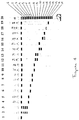
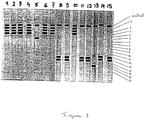
- Fig. 1 Hybridization results of full ITS, ITS-1 or ITS-2 amplicons to LiPA strips containing species-specific probes.
- krusei (10: full ITS, 11: ITS-1) lanes 12,13 : C. dubliniensis (12: full ITS, 13: ITS-2) lanes 14,15 : Cr. neoformans (14: full ITS, 15: ITS-1) lanes 16,17 : A. fumigatus (16: full ITS, 17: ITS-1) lanes 18 : A. nidulans (full ITS) lane 19 : A.
- Table 1 ITS probe sequences for fungal detection and differentiation Probe Sequence SEQ ID NO Organism Spacer region Calb1 GTCTAAACTTACAACCAATT SEQ ID NO 1 Candida albicans ITS1 Calb2 T GTCACACCAGATTATTACT SEQ ID NO 2 Candida albicans ITS1 Calb2 (SGS) TTGTCACACCAGATTATTACT T SEQ ID NO 33 Candida albicans ITS1 Calb3 TATCAACTTGTCACACCAGA SEQ ID NO 3 Candida albicans ITS1 Calb3 (SGS1) GGT TTATCAACTTGTCACACCAGA SEQ ID NO 34 Candida albicans ITS1 Calb3 (SGS2) GG TATCAACTTGTCACACCAGA TT SEQ ID NO 35 Candida albicans ITS1 Cpara1 GTAGGCCTTCTATATGGG SEQ ID NO 4 Candida parapsilosis ITS1 Cpara2 TGCCAGAGATTAAACTCAAC SEQ ID NO 5 Candida para
- a rapid extraction method based on physical disruption of the fungal cells followed by crude separation of the cell debris from the genomic DNA was used for the production of DNA from single colonies of yeasts (Roberts, 1997).
- a more elaborate sample preparation method based on a combination of beadbeating and lysis with a GuSCN buffer followed by capturing of the DNA on silica was used.
- PCR reactions contained per 100 ⁇ l reaction : 200 ⁇ M of each dNTP's, 1 x Taq buffer, 3 mM MgCl2, 15% glycerol, 40 pmol of each biotinylated primer (ITS5 and ITS4 for amplification of the full ITS region, ITS5 and ITS2 for amplification of ITS-1 only), 1 U Uracil N glycosylase and 2.5 U Taq polymerase.
- PCR thermal cycling conditions were the following : 95°C for 10 min for 1 cycle (hotstart), 94°C for 30 sec., 55°C for 30 sec., 72°C for 2 min. for 30 cycles, and a final extension at 72°C for 10 min. for 1 cycle.
- Synthetic probes were provided enzymatically at the 3' end with a poly-T-tail using terminal deoxynucleotidyl transferase (Pharmacia) in a standard reaction buffer. After one hour incubation, the reaction was stopped and the tailed probes were precipitated and washed with ice-cold ethanol.
- the oligonucleotide probe sequences of the invention are indicated in Table 1.
- the poly-T-tail was attached at the 5' end of the oligonucleotide probe.
- Chemically tailed probes may need a small modification (deletion and/or addition of a few nucleotides at one or both of the extremities) of the probe sequence as compared to the enzymatically tailed probe, in order to show comparable hybridization characteristics.
- the chemically tailed modified probes are indicated with the extension "(SGS)" in Table 1 and, if the modification is an addition of nucleotides, it is indicated in bold.
- Probes were dissolved in 6x SSC at their respective specific concentrations and applied as horizontal lines on membrane strips. Biotinylated DNA was applied alongside as positive control. The oligonucleotides were fixed to the membrane by baking at 80°C for 12 hours. The membrane was than sliced into 4mm strips.
- Equal volumes (5 to 10 ⁇ l) of the biotinylated PCR fragments and of the denaturation solution (400 mM NaOH/10mM EDTA) were mixed in test troughs and incubated at room temperature for 5 min. Subsequently, 2 ml of the 50°C prewarmed hybridization solution (2x SSC/ 0.1% SDS) was added followed by the addition of one strip per test trough. Hybridization occurred for 1 hour at 50°C in a closed shaking water bath. The strips were washed twice with 2 ml of stringent was solution (2x SSC/ 0.1% SDS) at room temperature for 20 sec., and once at 50°C for 15 min.
- strips were rinsed two times with 2 ml of the Innogenetics standard Rinse Solution (RS). Strips were incubated on a rotating platform with the alkaline phosphatase-labelled streptavidin conjugate, diluted in standard Conjugate Solution (CS) for 3 min. at room temperature. Strips were then washed twice with 2 ml of RS and once with standard Substrate Buffer (SB), and the colour reaction was started by adding BCIP and NBT to the SB. After 30 min. at room temperature, the colour reaction was stopped by replacing the colour compounds by distilled water. Immediately after drying, the strips were interpreted.
- RS Innogenetics standard Rinse Solution
- Fig. 1 represents an example of LiPA strips.
- Amplification experiments were performed on dilution series of genomic DNA (ranging from 50 or 100 ng to 50 or 100 fg) using different primersets, either combination of ITS5/ITS2 amplifying the ITS-1 region only or ITS5/ITS4 amplifying the full ITS region. Amplicons generated were visualised on ethidium-bromide stained gels and hybridized to LiPA strips containing the appropriate probes.
- Table 3 summarizes the detection limits obtained with dilution series of genomic DNA isolated from the following organisms : C. albicans, C. neoformans and A. fumigatus .
- Organism Amplification Agarosegel LiPA Hybridization C. albicans ITS1 10 pg 100 fg Full ITS 1 pg 100 fg C. neoformans ITS1 100 pg 1 pg Full ITS 10 pg 10 pg A. fumigatus ITS1 500 fg 50 fg Full ITS 5 pg 5 pg
- LiPA When hybridized to probes immobilized on LiPA strips (see e.g. figure 1 ), it is clearly seen that amplification of the ITS-1 region (smaller amplicon) results in a more sensitive detection limit compared to full ITS amplification.
- LiPA was able to specifically detect C. albicans DNA down to 100 fg, Cryptococcus neoformans DNA down to 1 pg, and A. fumigatus DNA down to 50 fg.
- ITS-1 amplification was performed using primer combination ITS5 + ITS2 and amplification of the full ITS region was performed using ITS5 and ITS4 primers.
- 200 ⁇ l, 1 ml and 5 ml blood samples were inoculated with decreasing concentrations of C . albicans cells (10 5 -10 1 cells).
- the inoculated blood samples were pre-treated to lyse and remove the red blood cells.
- Blood samples of 200 ⁇ l were lysed in 800 ⁇ l of lysis buffer (10 mM Tris-HCl, [pH 7.5], 10 mM EDTA, 50 mM NaCl) at room temperature for 10 minutes and centrifuged at 13,000 rpm for 5 min, the supernatant discarded and the pellet was resuspended in 100 ⁇ l of sterile H 2 O.
- PCR amplification of the ITS region was performed in a final volume of 100 ⁇ l with 20 ⁇ l of DNA extracted from the blood samples (for DNA extracted from 5 ml blood samples, 20 ⁇ l of a 1/10 dilution is included in the PCR reaction) added to the PCR reaction containing a final concentration 0.25 mM deoxynucleotidetriphosphates (DU/dNTP's[2:1]), 1x reaction buffer (Promega, USA), 3 mM MgCl 2 , 1 unit Uracil DNA glycosylase (Longo et al.
- PCR amplification was performed in a TouchdownTM Thermocycler (Hybaid, UK), with the following cycling conditions: 37 °C for 10 minutes for 1 cycle followed by 94 °C for 2 minutes for 1 cycle followed by 40 cycles of DNA denaturation at 94 °C for 30 seconds, primer annealing at 55 °C for 30 seconds and DNA extension at 72 °C for 2 minutes, with a final extension cycle at 72 °C for 10 minutes. 50 ng of C . albicans DNA extracted as described above was included as a positive control in the PCR reaction along with a no template negative control in each PCR run.
- PCR-LiPA and associated extraction of fungal DNA from blood samples can be performed in a single working day while the technology itself may be easily integrated into a clinical testing laboratory that is already engaged in PCR as it does not require any specialised equipment.
- the PCR-LiPA assay described in the current invention is also a multi-parameter test as a single LiPA membrane includes DNA probes for the detection of a wide range of different Candida species. It therefore has the potential to detect and identify mixed Candida infections. Moreover, a universal approach for the preparation of fungal DNA from Candida, Cryptococcus and Aspergillus ssp. in blood and/or respiratory specimens has been developed, as described above (see 4.1).
- LiPA strips for fungal pathogens were evaluated on 100 clinical isolates.
- the full ITS region was amplified from 75 clinical isolates of dimorphic yeasts following the application of the rapid preparation method (Roberts et al. 1997) from a single colony.
- the full ITS region was amplified from 25 clinical isolates of filamentous fungi, following preparation of the DNA using the modified Boom et al. method.
Landscapes
- Chemical & Material Sciences (AREA)
- Life Sciences & Earth Sciences (AREA)
- Analytical Chemistry (AREA)
- Engineering & Computer Science (AREA)
- Organic Chemistry (AREA)
- Proteomics, Peptides & Aminoacids (AREA)
- Health & Medical Sciences (AREA)
- Biotechnology (AREA)
- Zoology (AREA)
- Wood Science & Technology (AREA)
- Immunology (AREA)
- Mycology (AREA)
- Microbiology (AREA)
- Molecular Biology (AREA)
- Botany (AREA)
- Biophysics (AREA)
- Physics & Mathematics (AREA)
- Biochemistry (AREA)
- Bioinformatics & Cheminformatics (AREA)
- General Engineering & Computer Science (AREA)
- General Health & Medical Sciences (AREA)
- Genetics & Genomics (AREA)
- Measuring Or Testing Involving Enzymes Or Micro-Organisms (AREA)
Priority Applications (1)
| Application Number | Priority Date | Filing Date | Title |
|---|---|---|---|
| EP00940266.0A EP1185702B1 (en) | 1999-05-28 | 2000-05-24 | Nucleic acid probes and methods for detecting clinically important fungal pathogens |
Applications Claiming Priority (6)
| Application Number | Priority Date | Filing Date | Title |
|---|---|---|---|
| EP99870109 | 1999-05-28 | ||
| EP99870109 | 1999-05-28 | ||
| US13862199P | 1999-06-11 | 1999-06-11 | |
| US138621P | 1999-06-11 | ||
| PCT/EP2000/004714 WO2000073499A2 (en) | 1999-05-28 | 2000-05-24 | Nucleic acid probes and methods for detecting clinically important fungal pathogens |
| EP00940266.0A EP1185702B1 (en) | 1999-05-28 | 2000-05-24 | Nucleic acid probes and methods for detecting clinically important fungal pathogens |
Publications (2)
| Publication Number | Publication Date |
|---|---|
| EP1185702A2 EP1185702A2 (en) | 2002-03-13 |
| EP1185702B1 true EP1185702B1 (en) | 2017-02-08 |
Family
ID=46506639
Family Applications (1)
| Application Number | Title | Priority Date | Filing Date |
|---|---|---|---|
| EP00940266.0A Expired - Lifetime EP1185702B1 (en) | 1999-05-28 | 2000-05-24 | Nucleic acid probes and methods for detecting clinically important fungal pathogens |
Country Status (7)
| Country | Link |
|---|---|
| US (2) | US6858387B1 (enExample) |
| EP (1) | EP1185702B1 (enExample) |
| JP (2) | JP4963765B2 (enExample) |
| AU (1) | AU782305B2 (enExample) |
| CA (1) | CA2374878C (enExample) |
| ES (1) | ES2621547T3 (enExample) |
| WO (1) | WO2000073499A2 (enExample) |
Families Citing this family (45)
| Publication number | Priority date | Publication date | Assignee | Title |
|---|---|---|---|---|
| JP4963765B2 (ja) * | 1999-05-28 | 2012-06-27 | イノジェネティックス・ナムローゼ・フェンノートシャップ | 臨床的に重要な真菌病原体を検出するための核酸プローブおよび方法 |
| WO2001083821A2 (en) * | 2000-05-01 | 2001-11-08 | Gen-Probe Incorporated | Polynucleotide probes for detection and quantitation of candida species |
| WO2002079512A2 (en) * | 2001-03-29 | 2002-10-10 | University Of Nevada - Las Vegas | Method for detection and quantification of the fungus aspergillus fumigatus using quantitative pcr |
| WO2003080866A1 (en) * | 2002-03-26 | 2003-10-02 | Council Of Scientific And Industrial Research | Novel primers for identifying aflatoxinogenic aspergilli and an improved use thereof |
| JP4377810B2 (ja) | 2002-05-17 | 2009-12-02 | アメリカ合衆国 | アスペルギルス種の分子的同定方法 |
| JP2004290171A (ja) * | 2003-02-07 | 2004-10-21 | Akira Hiraishi | 微生物の分子生物学的同定技術 |
| EP1690938A1 (de) * | 2005-02-11 | 2006-08-16 | Qiagen GmbH | Verfahren zur Isolierung von Nukleinsäuren, wobei die Nukleinsäuren bei erhöhter Temperatur an einer Matrix immobilisiert werden |
| US20100311041A1 (en) | 2005-06-14 | 2010-12-09 | Statens Serum Institut | Pcr diagnostics of dermatophytes and other pathogenic fungi |
| US20070050311A1 (en) * | 2005-08-30 | 2007-03-01 | Caterpillar Inc. | Assembly should cost application |
| EP1945810B1 (en) * | 2005-09-20 | 2015-07-01 | AdvanDx, Inc. | Reagents, methods and kits for classification of fungi and direction of anti-fungal therapy |
| JP2007159411A (ja) | 2005-12-09 | 2007-06-28 | Canon Inc | プローブセット、プローブ固定担体及び遺伝子検査方法 |
| WO2007101664A2 (de) * | 2006-03-08 | 2007-09-13 | Fungus Bioscience Gmbh | Verbesserter aspergillosetest in klinischen proben |
| RU2348695C2 (ru) | 2006-05-23 | 2009-03-10 | Закрытое акционерное общество "Молекулярно-медицинские технологии" | Дифференцирующий и специфический олигонуклеотиды для идентификации последовательностей днк инфекционных агентов в биологических материалах, способ видовой идентификации инфекционных агентов, биочип и набор для осуществления этого способа |
| JP5015518B2 (ja) * | 2006-08-04 | 2012-08-29 | 東洋鋼鈑株式会社 | ハウスダストアレルギーの原因となるダニ・カビ類の検出・識別用マイクロアレイ |
| PT103729A (pt) * | 2007-05-04 | 2008-11-04 | Stab Vida Investigacao E Servi | Estojo e processo para a detecção e identificação de leveduras de interesse clínico, através de uma amplificação isotérmica de adn seguida de hibridação com oligonucleótidos específicos, e respectivas utilizações. |
| JP5196847B2 (ja) * | 2007-05-14 | 2013-05-15 | キヤノン株式会社 | プローブセット、プローブ担体及び検査方法 |
| JP5196850B2 (ja) * | 2007-05-14 | 2013-05-15 | キヤノン株式会社 | プローブセット、プローブ担体及び検査方法 |
| JP5196843B2 (ja) | 2007-05-14 | 2013-05-15 | キヤノン株式会社 | プローブセット、プローブ担体及び検査方法 |
| JP5317430B2 (ja) * | 2007-05-14 | 2013-10-16 | キヤノン株式会社 | プローブセット、プローブ担体、及び真菌の判別同定方法 |
| JP5196866B2 (ja) * | 2007-05-14 | 2013-05-15 | キヤノン株式会社 | プローブセット、プローブ担体及び検査方法 |
| JP5196845B2 (ja) * | 2007-05-14 | 2013-05-15 | キヤノン株式会社 | プローブセット、プローブ担体及び検査方法 |
| JP5196846B2 (ja) * | 2007-05-14 | 2013-05-15 | キヤノン株式会社 | プローブセット、プローブ担体、検査方法及びdna検出用キット |
| JP5196856B2 (ja) * | 2007-05-14 | 2013-05-15 | キヤノン株式会社 | プローブセット、プローブ担体及び検査方法 |
| JP5196861B2 (ja) | 2007-05-14 | 2013-05-15 | キヤノン株式会社 | プローブセット、プローブ担体及び検査方法 |
| JP5196853B2 (ja) * | 2007-05-14 | 2013-05-15 | キヤノン株式会社 | プローブセット、プローブ担体及び検査方法 |
| JP5196859B2 (ja) * | 2007-05-14 | 2013-05-15 | キヤノン株式会社 | プローブセット、プローブ担体、検査方法及びdna検出用キット |
| JP5196865B2 (ja) * | 2007-05-14 | 2013-05-15 | キヤノン株式会社 | プローブセット、プローブ担体及び検査方法 |
| JP5196860B2 (ja) * | 2007-05-14 | 2013-05-15 | キヤノン株式会社 | プローブセット、プローブ担体及び検査方法 |
| JP5196858B2 (ja) * | 2007-05-14 | 2013-05-15 | キヤノン株式会社 | プローブセット、プローブ担体、検査方法及びdna検出用キット |
| JP5196854B2 (ja) * | 2007-05-14 | 2013-05-15 | キヤノン株式会社 | プローブセット、プローブ担体及び検査方法 |
| US7829735B2 (en) * | 2007-10-26 | 2010-11-09 | Northwestern University | Universal phosphoramidite for preparation of modified biomolecules and surfaces |
| CA2715991A1 (en) | 2007-12-26 | 2009-07-09 | Gen-Probe Incorporated | Amplification oligomers and methods to detect candida albicans 26s rrna or encoding dna |
| CA2720292A1 (en) * | 2008-04-01 | 2009-10-08 | Metametrix Clinical Laboratory | Process and method for monitoring gastrointestinal microbiota |
| ES2335179B1 (es) * | 2008-09-19 | 2011-09-14 | Instituto De Salud Carlos Iii | Metodo para la deteccion simultanea de histoplasma capsulatum y paracoccidioides brasiliensis. |
| MX352246B (es) | 2009-03-18 | 2017-10-25 | Instituto Potosino De Investig Cientifica Y Tecnologica A C | Metodo in vitro para la deteccion de candida glabrata, kit de diagnostico y usos de los mismos. |
| PL2536850T3 (pl) | 2010-02-15 | 2017-09-29 | Council Of Scientific & Industrial Research | Sposób wykrywania patogenów grzybiczych |
| US10214780B2 (en) | 2012-03-09 | 2019-02-26 | City University Of Hong Kong | Method and means for identification of animal species |
| EP2636753B1 (en) * | 2012-03-09 | 2018-07-25 | City University of Hong Kong | Method and means for identification of animal species |
| US10253353B2 (en) * | 2013-12-06 | 2019-04-09 | The Broad Institute, Inc. | Enhanced methods of ribonucleic acid hybridization |
| CN105420372A (zh) * | 2015-12-17 | 2016-03-23 | 安徽出入境检验检疫局检验检疫技术中心 | 检测梨黑斑病菌的pcr引物以及使用该引物的检测方法 |
| CN107130015B (zh) * | 2016-02-29 | 2023-07-11 | 上海翔琼生物技术有限公司 | 一种检测烟曲霉菌的荧光定量pcr试剂盒 |
| CN106497796A (zh) * | 2016-07-20 | 2017-03-15 | 辽宁省微生物科学研究院 | 一种食用菌菌种的单克隆高效选育方法 |
| CN112626263B (zh) * | 2021-01-20 | 2022-08-05 | 中国人民解放军总医院 | 酶切探针恒温检测呼吸道感染真菌病原体的试剂盒 |
| CN112941231A (zh) * | 2021-04-26 | 2021-06-11 | 南方海洋科学与工程广东省实验室(湛江) | 一种用于白色念珠菌检测的探针、方法及应用 |
| EP4577673A1 (en) * | 2022-08-26 | 2025-07-02 | Denka Company Limited | Methods for the detection and identification of fungal species |
Family Cites Families (21)
| Publication number | Priority date | Publication date | Assignee | Title |
|---|---|---|---|---|
| US546027A (en) * | 1895-09-10 | Edgar charles parker | ||
| US4617102A (en) * | 1985-03-21 | 1986-10-14 | Lifecodes Corp. | Process and apparatus for purifying and concentrating DNA from crude mixtures containing DNA |
| US5541308A (en) * | 1986-11-24 | 1996-07-30 | Gen-Probe Incorporated | Nucleic acid probes for detection and/or quantitation of non-viral organisms |
| AU7429591A (en) * | 1990-04-18 | 1991-10-24 | Gene-Trak Systems | Nucleic acid probes for the detection of giardia lamblia |
| DE69332202T2 (de) | 1992-05-18 | 2003-05-28 | Richard David Cannon | Methoden zur diagnose von pilzinfektionen |
| US5426027A (en) | 1993-05-20 | 1995-06-20 | The Government Of The United States Of America As Represented By The Secretary | Nucleic acid probes and methods for detecting Candida DNA cells in blood |
| US6017699A (en) * | 1993-09-15 | 2000-01-25 | The University Of Pittsburgh | PCR identification and quantification of important Candida species |
| US5585238A (en) * | 1994-04-25 | 1996-12-17 | Ciba-Geigy Corporation | Detection of fungal pathogens using the polymerase chain reaction |
| US5763169A (en) * | 1995-01-13 | 1998-06-09 | Chiron Diagnostics Corporation | Nucleic acid probes for the detection and identification of fungi |
| US5693501A (en) | 1995-03-08 | 1997-12-02 | Indiana University Advanced Research & Technology Institute | Compounds and methods to determine presence of Histoplasma capsulatum |
| EP0846186B1 (de) | 1995-08-17 | 2008-02-20 | Myconostica Limited | Extraktion, amplifikation und sequentielle hybridisierung von pilzzellen-dna sowie verfahren zum nachweisen von pilzzellen in klinischem material |
| FR2749011B1 (fr) | 1996-03-22 | 1998-08-28 | Univ Claude Bernard Lyon | Sonde, sequence nucleiques et procede notamment, de detection et d'identification de levures, de meme que les outils genetiques correspondants |
| US5874221A (en) | 1996-08-28 | 1999-02-23 | The United States Of America As Represented By The Secretary Of Agriculture | Species specific method for the PCR detection of phythophthora |
| US6235890B1 (en) * | 1996-09-16 | 2001-05-22 | The United States Of America As Represented By The Department Of Health And Human Services | Methods and compositions for the detection of Candida spp. |
| US5814453A (en) | 1996-10-15 | 1998-09-29 | Novartis Finance Corporation | Detection of fungal pathogens using the polymerase chain reaction |
| US5800997A (en) | 1996-11-01 | 1998-09-01 | Novartis Finance Corporation | Detection of maize fungal pathogens using the polymerase chain reaction |
| ATE320506T1 (de) * | 1997-05-02 | 2006-04-15 | Us Gov Health & Human Serv | Nukleinsäuren zur erkennung von aspergillus spezien |
| US6242178B1 (en) * | 1997-07-30 | 2001-06-05 | Centers For Disease Control And Prevention | Nucleic acid probes for detecting Candida species |
| US5827695A (en) | 1997-08-04 | 1998-10-27 | Novartis Finance Corporation | Detection of wheat fungal pathogens using the polymerase chain reaction |
| US6080543A (en) | 1997-12-08 | 2000-06-27 | E. & J. Gallo Winery | Detection of fungal pathogens |
| JP4963765B2 (ja) * | 1999-05-28 | 2012-06-27 | イノジェネティックス・ナムローゼ・フェンノートシャップ | 臨床的に重要な真菌病原体を検出するための核酸プローブおよび方法 |
-
2000
- 2000-05-24 JP JP2001500809A patent/JP4963765B2/ja not_active Expired - Lifetime
- 2000-05-24 WO PCT/EP2000/004714 patent/WO2000073499A2/en not_active Ceased
- 2000-05-24 AU AU55255/00A patent/AU782305B2/en not_active Ceased
- 2000-05-24 CA CA2374878A patent/CA2374878C/en not_active Expired - Lifetime
- 2000-05-24 EP EP00940266.0A patent/EP1185702B1/en not_active Expired - Lifetime
- 2000-05-24 ES ES00940266.0T patent/ES2621547T3/es not_active Expired - Lifetime
- 2000-09-15 US US09/662,462 patent/US6858387B1/en not_active Expired - Lifetime
-
2004
- 2004-10-19 US US10/967,254 patent/US7741461B2/en not_active Expired - Fee Related
-
2012
- 2012-01-26 JP JP2012014151A patent/JP2012120535A/ja active Pending
Non-Patent Citations (1)
| Title |
|---|
| None * |
Also Published As
| Publication number | Publication date |
|---|---|
| ES2621547T3 (es) | 2017-07-04 |
| US20050164243A1 (en) | 2005-07-28 |
| CA2374878C (en) | 2014-10-14 |
| JP4963765B2 (ja) | 2012-06-27 |
| JP2012120535A (ja) | 2012-06-28 |
| WO2000073499A2 (en) | 2000-12-07 |
| WO2000073499A3 (en) | 2001-08-09 |
| US6858387B1 (en) | 2005-02-22 |
| EP1185702A2 (en) | 2002-03-13 |
| JP2003501049A (ja) | 2003-01-14 |
| AU5525500A (en) | 2000-12-18 |
| AU782305B2 (en) | 2005-07-21 |
| CA2374878A1 (en) | 2000-12-07 |
| US7741461B2 (en) | 2010-06-22 |
Similar Documents
| Publication | Publication Date | Title |
|---|---|---|
| EP1185702B1 (en) | Nucleic acid probes and methods for detecting clinically important fungal pathogens | |
| Martin et al. | Development of a PCR-based line probe assay for identification of fungal pathogens | |
| US7052836B2 (en) | Nucleic acids for detecting fusarium species | |
| Iwen et al. | Utilization of the internal transcribed spacer regions as molecular targets to detect and identify human fungal pathogens | |
| JP4456182B2 (ja) | Candida spp.の検出のための方法および組成物 | |
| JP2002504817A (ja) | 真菌の検出および同定のための核酸プローブ | |
| EP1945812B1 (en) | Compositions and methods for the detection of candida species | |
| EP0996745B1 (en) | Nucleic acid probes for detecting candida species | |
| EP1558758B1 (en) | Molecular identification of aspergillus species | |
| CA2211850A1 (en) | Amplification primers and nucleic acid probes for the detection of coccidioides immitis | |
| EP2284276A1 (en) | Identifying organisms by detecting intronic nucleic acid or encoded proteins | |
| US8501408B2 (en) | Methods and compositions for detecting and identifying species of Candida | |
| EP1294940B1 (en) | Polynucleotide probes for detection and quantitation of candida albicans and candida dubliniensis | |
| Meletiadis et al. | Evaluation of a polymerase chain reaction reverse hybridization line probe assay for the detection and identification of medically important fungi in bronchoalveolar lavage fluids | |
| Arancia et al. | Construction and use of PCR primers from a 65 kDa mannoprotein gene for identification of C. albicans | |
| Arancia et al. | Construction and use of PCR primers from a 70 kDa heat shock protein gene for identification ofCandida albicans | |
| Rodriguez-Villalobos et al. | Cross reaction between a pan-Candida genus probe and Fusarium spp. in a fatal case of Fusarium oxysporum pneumonia | |
| Rossau et al. | Development of a PCR-Based Line Probe | |
| Racil et al. | Species-Specific Identification of a Wide |
Legal Events
| Date | Code | Title | Description |
|---|---|---|---|
| PUAI | Public reference made under article 153(3) epc to a published international application that has entered the european phase |
Free format text: ORIGINAL CODE: 0009012 |
|
| 17P | Request for examination filed |
Effective date: 20011224 |
|
| AK | Designated contracting states |
Kind code of ref document: A2 Designated state(s): AT BE CH CY DE DK ES FI FR GB GR IE IT LI LU MC NL PT SE |
|
| AX | Request for extension of the european patent |
Free format text: AL PAYMENT 20011224;LT PAYMENT 20011224;LV PAYMENT 20011224;MK PAYMENT 20011224;RO PAYMENT 20011224;SI PAYMENT 20011224 |
|
| RAP1 | Party data changed (applicant data changed or rights of an application transferred) |
Owner name: NATIONAL UNIVERSITY OF IRELAND GALWAY Owner name: ENTERPRISE IRELAND (TRADING AS BIORESEARCH IRELAND Owner name: INNOGENETICS N.V. |
|
| 17Q | First examination report despatched |
Effective date: 20090923 |
|
| RAP1 | Party data changed (applicant data changed or rights of an application transferred) |
Owner name: NATIONAL UNIVERSITY OF IRELAND GALWAY Owner name: FUJIREBIO EUROPE N.V. Owner name: ENTERPRISE IRELAND (TRADING AS BIORESEARCH IRELAND |
|
| GRAP | Despatch of communication of intention to grant a patent |
Free format text: ORIGINAL CODE: EPIDOSNIGR1 |
|
| RIN1 | Information on inventor provided before grant (corrected) |
Inventor name: VAN DER WEIDE, MARJO Inventor name: ROSSAU, RUDI Inventor name: SMITH, TERRY Inventor name: MAHER, MAJELLA Inventor name: MARTIN, CARA Inventor name: JANNES, GEERT |
|
| INTG | Intention to grant announced |
Effective date: 20160928 |
|
| GRAS | Grant fee paid |
Free format text: ORIGINAL CODE: EPIDOSNIGR3 |
|
| GRAA | (expected) grant |
Free format text: ORIGINAL CODE: 0009210 |
|
| AK | Designated contracting states |
Kind code of ref document: B1 Designated state(s): AT BE CH CY DE DK ES FI FR GB GR IE IT LI LU MC NL PT SE |
|
| AX | Request for extension of the european patent |
Extension state: AL LT LV MK RO SI |
|
| REG | Reference to a national code |
Ref country code: GB Ref legal event code: FG4D |
|
| REG | Reference to a national code |
Ref country code: CH Ref legal event code: EP Ref country code: AT Ref legal event code: REF Ref document number: 866901 Country of ref document: AT Kind code of ref document: T Effective date: 20170215 |
|
| REG | Reference to a national code |
Ref country code: IE Ref legal event code: FG4D |
|
| REG | Reference to a national code |
Ref country code: DE Ref legal event code: R096 Ref document number: 60049543 Country of ref document: DE |
|
| REG | Reference to a national code |
Ref country code: SE Ref legal event code: TRGR |
|
| REG | Reference to a national code |
Ref country code: FR Ref legal event code: PLFP Year of fee payment: 18 |
|
| REG | Reference to a national code |
Ref country code: LT Ref legal event code: MG9D |
|
| REG | Reference to a national code |
Ref country code: NL Ref legal event code: MP Effective date: 20170208 |
|
| REG | Reference to a national code |
Ref country code: ES Ref legal event code: FG2A Ref document number: 2621547 Country of ref document: ES Kind code of ref document: T3 Effective date: 20170704 |
|
| REG | Reference to a national code |
Ref country code: AT Ref legal event code: MK05 Ref document number: 866901 Country of ref document: AT Kind code of ref document: T Effective date: 20170208 |
|
| PG25 | Lapsed in a contracting state [announced via postgrant information from national office to epo] |
Ref country code: GR Free format text: LAPSE BECAUSE OF FAILURE TO SUBMIT A TRANSLATION OF THE DESCRIPTION OR TO PAY THE FEE WITHIN THE PRESCRIBED TIME-LIMIT Effective date: 20170509 Ref country code: FI Free format text: LAPSE BECAUSE OF FAILURE TO SUBMIT A TRANSLATION OF THE DESCRIPTION OR TO PAY THE FEE WITHIN THE PRESCRIBED TIME-LIMIT Effective date: 20170208 |
|
| PG25 | Lapsed in a contracting state [announced via postgrant information from national office to epo] |
Ref country code: NL Free format text: LAPSE BECAUSE OF FAILURE TO SUBMIT A TRANSLATION OF THE DESCRIPTION OR TO PAY THE FEE WITHIN THE PRESCRIBED TIME-LIMIT Effective date: 20170208 Ref country code: PT Free format text: LAPSE BECAUSE OF FAILURE TO SUBMIT A TRANSLATION OF THE DESCRIPTION OR TO PAY THE FEE WITHIN THE PRESCRIBED TIME-LIMIT Effective date: 20170608 Ref country code: LU Free format text: LAPSE BECAUSE OF NON-PAYMENT OF DUE FEES Effective date: 20170531 Ref country code: AT Free format text: LAPSE BECAUSE OF FAILURE TO SUBMIT A TRANSLATION OF THE DESCRIPTION OR TO PAY THE FEE WITHIN THE PRESCRIBED TIME-LIMIT Effective date: 20170208 |
|
| REG | Reference to a national code |
Ref country code: DE Ref legal event code: R097 Ref document number: 60049543 Country of ref document: DE |
|
| PG25 | Lapsed in a contracting state [announced via postgrant information from national office to epo] |
Ref country code: DK Free format text: LAPSE BECAUSE OF FAILURE TO SUBMIT A TRANSLATION OF THE DESCRIPTION OR TO PAY THE FEE WITHIN THE PRESCRIBED TIME-LIMIT Effective date: 20170208 |
|
| PLBE | No opposition filed within time limit |
Free format text: ORIGINAL CODE: 0009261 |
|
| STAA | Information on the status of an ep patent application or granted ep patent |
Free format text: STATUS: NO OPPOSITION FILED WITHIN TIME LIMIT |
|
| REG | Reference to a national code |
Ref country code: HK Ref legal event code: WD Ref document number: 1047452 Country of ref document: HK |
|
| REG | Reference to a national code |
Ref country code: CH Ref legal event code: PL |
|
| 26N | No opposition filed |
Effective date: 20171109 |
|
| PG25 | Lapsed in a contracting state [announced via postgrant information from national office to epo] |
Ref country code: MC Free format text: LAPSE BECAUSE OF FAILURE TO SUBMIT A TRANSLATION OF THE DESCRIPTION OR TO PAY THE FEE WITHIN THE PRESCRIBED TIME-LIMIT Effective date: 20170208 |
|
| REG | Reference to a national code |
Ref country code: IE Ref legal event code: MM4A |
|
| PG25 | Lapsed in a contracting state [announced via postgrant information from national office to epo] |
Ref country code: CH Free format text: LAPSE BECAUSE OF NON-PAYMENT OF DUE FEES Effective date: 20170531 Ref country code: LI Free format text: LAPSE BECAUSE OF NON-PAYMENT OF DUE FEES Effective date: 20170531 |
|
| PG25 | Lapsed in a contracting state [announced via postgrant information from national office to epo] |
Ref country code: LU Free format text: LAPSE BECAUSE OF NON-PAYMENT OF DUE FEES Effective date: 20170524 |
|
| REG | Reference to a national code |
Ref country code: BE Ref legal event code: MM Effective date: 20170531 |
|
| PG25 | Lapsed in a contracting state [announced via postgrant information from national office to epo] |
Ref country code: IE Free format text: LAPSE BECAUSE OF NON-PAYMENT OF DUE FEES Effective date: 20170524 |
|
| REG | Reference to a national code |
Ref country code: FR Ref legal event code: PLFP Year of fee payment: 19 |
|
| PG25 | Lapsed in a contracting state [announced via postgrant information from national office to epo] |
Ref country code: BE Free format text: LAPSE BECAUSE OF NON-PAYMENT OF DUE FEES Effective date: 20170531 |
|
| PGFP | Annual fee paid to national office [announced via postgrant information from national office to epo] |
Ref country code: ES Payment date: 20190620 Year of fee payment: 20 Ref country code: DE Payment date: 20190521 Year of fee payment: 20 Ref country code: IT Payment date: 20190527 Year of fee payment: 20 |
|
| PGFP | Annual fee paid to national office [announced via postgrant information from national office to epo] |
Ref country code: SE Payment date: 20190521 Year of fee payment: 20 Ref country code: FR Payment date: 20190522 Year of fee payment: 20 |
|
| PG25 | Lapsed in a contracting state [announced via postgrant information from national office to epo] |
Ref country code: CY Free format text: LAPSE BECAUSE OF NON-PAYMENT OF DUE FEES Effective date: 20170208 |
|
| PGFP | Annual fee paid to national office [announced via postgrant information from national office to epo] |
Ref country code: GB Payment date: 20190521 Year of fee payment: 20 |
|
| REG | Reference to a national code |
Ref country code: DE Ref legal event code: R071 Ref document number: 60049543 Country of ref document: DE |
|
| REG | Reference to a national code |
Ref country code: GB Ref legal event code: PE20 Expiry date: 20200523 |
|
| REG | Reference to a national code |
Ref country code: SE Ref legal event code: EUG |
|
| PG25 | Lapsed in a contracting state [announced via postgrant information from national office to epo] |
Ref country code: GB Free format text: LAPSE BECAUSE OF EXPIRATION OF PROTECTION Effective date: 20200523 |
|
| REG | Reference to a national code |
Ref country code: ES Ref legal event code: FD2A Effective date: 20201204 |
|
| PG25 | Lapsed in a contracting state [announced via postgrant information from national office to epo] |
Ref country code: ES Free format text: LAPSE BECAUSE OF EXPIRATION OF PROTECTION Effective date: 20200525 |