EP1157532B1 - Unified directory for caller id and electronic mail addresses - Google Patents
Unified directory for caller id and electronic mail addresses Download PDFInfo
- Publication number
- EP1157532B1 EP1157532B1 EP00916193A EP00916193A EP1157532B1 EP 1157532 B1 EP1157532 B1 EP 1157532B1 EP 00916193 A EP00916193 A EP 00916193A EP 00916193 A EP00916193 A EP 00916193A EP 1157532 B1 EP1157532 B1 EP 1157532B1
- Authority
- EP
- European Patent Office
- Prior art keywords
- message
- entry
- name
- caller
- Prior art date
- Legal status (The legal status is an assumption and is not a legal conclusion. Google has not performed a legal analysis and makes no representation as to the accuracy of the status listed.)
- Expired - Lifetime
Links
- 238000000034 method Methods 0.000 claims abstract description 11
- 230000004044 response Effects 0.000 abstract description 2
- 238000010586 diagram Methods 0.000 description 4
- 230000006870 function Effects 0.000 description 4
- COCAUCFPFHUGAA-MGNBDDOMSA-N n-[3-[(1s,7s)-5-amino-4-thia-6-azabicyclo[5.1.0]oct-5-en-7-yl]-4-fluorophenyl]-5-chloropyridine-2-carboxamide Chemical compound C=1C=C(F)C([C@@]23N=C(SCC[C@@H]2C3)N)=CC=1NC(=O)C1=CC=C(Cl)C=N1 COCAUCFPFHUGAA-MGNBDDOMSA-N 0.000 description 4
- 238000006243 chemical reaction Methods 0.000 description 1
- 230000001419 dependent effect Effects 0.000 description 1
Images

Classifications
-
- H—ELECTRICITY
- H04—ELECTRIC COMMUNICATION TECHNIQUE
- H04L—TRANSMISSION OF DIGITAL INFORMATION, e.g. TELEGRAPHIC COMMUNICATION
- H04L51/00—User-to-user messaging in packet-switching networks, transmitted according to store-and-forward or real-time protocols, e.g. e-mail
- H04L51/21—Monitoring or handling of messages
-
- H—ELECTRICITY
- H04—ELECTRIC COMMUNICATION TECHNIQUE
- H04M—TELEPHONIC COMMUNICATION
- H04M3/00—Automatic or semi-automatic exchanges
- H04M3/42—Systems providing special services or facilities to subscribers
- H04M3/50—Centralised arrangements for answering calls; Centralised arrangements for recording messages for absent or busy subscribers ; Centralised arrangements for recording messages
- H04M3/53—Centralised arrangements for recording incoming messages, i.e. mailbox systems
- H04M3/5307—Centralised arrangements for recording incoming messages, i.e. mailbox systems for recording messages comprising any combination of audio and non-audio components
-
- H—ELECTRICITY
- H04—ELECTRIC COMMUNICATION TECHNIQUE
- H04M—TELEPHONIC COMMUNICATION
- H04M2242/00—Special services or facilities
- H04M2242/22—Automatic class or number identification arrangements
-
- H—ELECTRICITY
- H04—ELECTRIC COMMUNICATION TECHNIQUE
- H04M—TELEPHONIC COMMUNICATION
- H04M3/00—Automatic or semi-automatic exchanges
- H04M3/42—Systems providing special services or facilities to subscribers
- H04M3/42025—Calling or Called party identification service
- H04M3/42034—Calling party identification service
- H04M3/42059—Making use of the calling party identifier
-
- H—ELECTRICITY
- H04—ELECTRIC COMMUNICATION TECHNIQUE
- H04Q—SELECTING
- H04Q3/00—Selecting arrangements
- H04Q3/72—Finding out and indicating number of calling subscriber
Definitions
- the present invention relates to a method for automatically providing a destination address for a reply in a first communications medium to a message received in a second communications medium.
- Telephone instruments with caller ID capabilities have been in use for some time. When such instruments receive a telephone call, they also receive the telephone number of the calling telephone and the name of the person owning the calling telephone. The telephone number and/or name may be displayed when the telephone call is received. The subscriber can then know the person making the call, and prepare for the conversation or not answer the call at all.
- the caller ID capabilities are often combined with answering machine capabilities, a combination termed voice mail. Should the intended recipient be unable to receive a telephone call, the caller records a message, which may be retrieved later by the subscriber. The caller ID information is associated with the recorded message, and also stored. Should the subscriber wish to return the telephone call, the associated caller ID information is retrieved and allows the call to be automatically placed to the originating telephone number.
- Electronic mail communications devices have also been in use for some time. Such devices are coupled to a communications network, and have the capability of receiving e-mail messages from others also connected to that communications network.
- e-mail messages are textual in nature, and are generally typed at a alphanumeric keyboard by the originator. The recipient can read the message on an alphanumeric display. Extensions to the basic e-mail system permit inclusion of, for example, sound files, image files, or other data files which may be seen in-line or processed as separate attachments.
- the message is packaged in an electronic envelope, which is sent, via the communications network, to the recipient.
- the envelope includes, among other things, the e-mail address of the recipient, the e-mail address of the originator, and the e-mail name of the originator.
- e-mail messages for a subscriber are stored in a system coupled to the communications network termed a mail box or mail server.
- the mail box is accessed from the e-mail device and the accumulated e-mail messages forwarded to the recipient and read.
- the information from the envelope including the originating e-mail address and e-mail name, is retrieved along with the message. Should the recipient wish to reply to the e-mail message, the retrieved recipient e-mail address from the envelope allows the return e-mail to be addressed automatically.
- U.S. Patent 4,612,416, issued September 16, 1986 to Emerson et al. illustrates a PBX system including different communications functions for corresponding communications media (i.e. voice mail, e-mail, facsimile, etc.).
- communications media i.e. voice mail, e-mail, facsimile, etc.
- U.S. Patent 4,837,798, issued June 6, 1989 to Cohen et al. illustrates a communications system including a centralized, unified repository for received messages in any communications medium, including voice mail, e-mail, and any other media such as facsimile.
- the central location receives notification of each message received, and then notifies the recipient of the receipt of the message.
- the centralized repository also performs conversion of the message from one medium to another (for example, from e-mail to voice mail via text-to-voice generation) to the extent possible to permit the recipient to retrieve all messages in whatever medium desired.
- U.S. Patent 5,239,577 issued August 24, 1993 to Bates et al. illustrates a telephone system in which all telephone numbers (for example, home, home fax, business, business fax, mobile, etc.) for an individual are accessible through a publically available, centrally located, directory of directories for that individual.
- a call intended for one of the telephone numbers may be completed by specifying another telephone number (e.g. home telephone), and requesting the desired other number (e.g. business telephone).
- the desired telephone number is found by consulting the centrally located directory of directories, and then the directory containing that individual's business telephone number.
- U.S. Patent 5,671,269 issued September 23, 1997 to Egan et al. , illustrates a personal computer based telephone system in which a telephone number, derived in any of a number of different ways, is associated with each incoming telephone call, and if a return phone call is desired, the associated telephone number is used to place the return call.
- U.S. Patent 5,692,038, issued November 25, 1997 to Kraus et al. illustrates a centrally controlled communications system involving several communications media in which a personal identification number is assigned to an individual, and each telephone number (or other identification such as e-mail address) associated with that individual is searched in an order set by the individual when that individual receives a message.
- Microsoft Outlook e-mail client maintains a single mail box containing both e-mail and facsimile messages.
- a received voice mail message be replied to with an e-mail message, or vice versa.
- a phone request for a document is best answered with an e-mail message to which the desired document is attached.
- an e-mail message containing a document for which approval is sought may be best answered with a telephone call giving that approval.
- none of the above systems extract information associated with a message received in one communications medium and use that information to permit a user to reply to that message using a different communications medium.
- WO 98/23058 discloses a multimedia communication system in which a user has a personal on-line directory for storing contact data of individuals with whom he communicates, and these individuals may provide the contact data themselves and may specify a preferred communication medium by which they want to be contacted.
- the object of the present invention is to provide a method for managing contact data of a user of a multimedia communication system which assists the user in the task of entering contact data of communication partners.
- a communications device permits a user to easily reply to an incoming message in any communications medium by a reply message in whatever communications media is most convenient, regardless of which communications medium was used to send the incoming message.
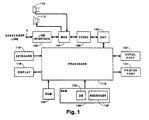
- Fig. 1 is a block diagram of a communications device 10 according to the present invention.
- a subscriber telephone line is coupled to an bi-directional terminal 5.
- Terminal 5 may, for example, be an easy-connect RJ11 type connector.
- Terminal 5 is bidirectionally coupled to a processor 110 through a serial connection of a line interface circuit 102, a multiplexer (MUX) 104, a coder/decoder (codec) 106 and a digital signal processor (DSP) 108.
- An output terminal of the multiplexer 104 is coupled to an input terminal of a speaker 112 and an output terminal of a microphone 114 is coupled to an input terminal of the multiplexer 104.
- MUX multiplexer
- codec coder/decoder
- DSP digital signal processor
- An output terminal of a keyboard 116 is coupled to an input terminal of the processor 110 and an output terminal of the processor 110 is coupled to an input terminal of a display device 118.
- a bi-directional terminal of the processor 110 is coupled to a serial port 120, and an output terminal of the processor 110 is coupled to an output port 122 to which a printer may be connected.
- An output terminal of a non-volatile read-only memory (ROM) 124 is coupled to an input terminal of the processor 110 and a bi-directional terminal of a read/write random access memory (RAM) 126 is coupled to a corresponding terminal of the processor 110.
- ROM non-volatile read-only memory
- RAM read/write random access memory
- the processor 110 controls the operation of the communications device 10.
- the processor reads and executes the stored program code in the ROM 124, accesses constants in the ROM 124 and reads and writes variable data from and to the RAM 126. Further the processor exchanges data with the various input/output (I/O) ports: the serial port 120, the printer port 122, the keyboard 116, the display device 118, and the telephone line port coupled to the DSP 108, all in a known manner.
- Images are displayed on the display device 118 to provide information to the user, and depression of the keys on the keyboard 116 are detected to accept information from the user.
- a least some of the keys in the keyboard 116 are physically adjacent to the display device 118.
- the image displayed on the display device can provides the labels for at least some of the buttons on the keyboard, thus providing dynamic functioning for those buttons, all in a known manner.
- the communications device illustrated in Fig. 1 operates as both a telephone caller ID and answering machine, and an e-mail terminal.
- the subscriber line is used to couple the device 10 to the public telephone system.
- the public telephone system is used in the normal way in a telephone mode of operation, and connects the device 10 to an e-mail server or mailbox in an e-mail mode of operation.
- an incoming telephone call from the subscriber line causes the device 10 to ring, either via a separate ringer (not shown) or using the speaker-phone speaker 112.
- caller ID information including the telephone number of the originating telephone and the name associated with the originating telephone, is extracted from the incoming telephone call by the processor 110 via the codec 106 and DSP 108, and displayed in the display device 118, all in a known manner.
- the caller ID information is further inserted into a database of correspondent information 130, maintained in a portion 130 of the RAM 126 in a manner to be described in more detail below.
- the processor 110 retrieves from the ROM 124 or RAM 126 a digitized version of a message for the originator of the incoming telephone call, for example asking the originator to leave a message.
- the combination of the codec 106 and DSP 108 converts the digitized message into an audio message and supplies it to the originating telephone via the multiplexer 104.
- the originator can choose to dictate a message for the user. That message is received by the device 10, and digitized via the combination of the codec 106 and DSP 108.
- the processor stores the digitized message in a portion 128 of the RAM 126 allocated to storing such messages.
- the caller ID information associated with this message is also stored with the message.
- Other information about the incoming message such as the date and time it was received, is also stored with the message in the message portion 128 of the RAM 126.
- the processor 110 accesses the e-mail server by dialing the telephone number of that server, in a known manner.
- E-mail messages for the user are retrieved, and stored in the RAM 126, also in the message portion 128.
- Each e-mail message includes identification information, including the e-mail address and e-mail name of the originator of the message. Other e-mail information relating to that message may also be included, such as the date and time the message was sent, the location from which it was sent, routing information, etc.
- the e-mail identification information is also stored with the message in the message portion 128 of the RAM 126.
- the e-mail information is also inserted into the database of correspondent information 130, maintained in a portion 130 of the RAM 126 in a manner to be described in more detail below.
- the identification information relating to that message e.g. originating telephone number and name for telephone messages and originating e-mail address and e-mail name for e-mail messages, and possibly other related information
- a common database as referred to above. In this manner the content of the database is maintained.
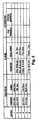
- Fig. 2 is a table describing the structure and contents of a database used to contain correspondent information in the communications device illustrated in Fig. 1 .
- the structure of the correspondent database is represented in Fig. 2 as a table.
- Each row of the table represents an entry in the correspondent database and represents one correspondent.
- Each entry contains a plurality of fields able to hold information relating to the correspondent represented by that entry.
- the fields are partitioned into: a group of fields able to contain caller ID information including the telephone number, caller ID name, and other attributes (represented by an ellipsis) related to the telephone for that correspondent; a group of fields able to contain e-mail identification information including the e-mail address, e-mail name, and other attributes (represented by an ellipsis) related to e-mail of that correspondent; and a group of fields able to contain extensions to the correspondent information, including, for example, the facsimile telephone number, postal address and other such information (represented by an ellipsis).
- the caller ID telephone number and name is extracted from the originating message in a known manner, as described above.
- the originating telephone number is compared to the telephone numbers stored in the caller ID number field of all the entries in the database. If a match is found, then the caller ID name field of that entry is updated with the originating caller ID name, in case the name for that telephone number has changed. If this happens, one of the caller ID attributes, a status attribute, is changed to "new". For example, if the caller ID information for the originating telephone call is the number 555-4321 and the name is "John Ray ", then this search finds entry 1. The database field containing the caller ID name is replaced with the name "John Ray".
- the originating caller ID name is compared with the names in the e-mail name field of all the entries in the database. In one embodiment, an exact match of the originating name is searched for. In another embodiment, recognizing that the e-mail and telephone caller ID names may not be exactly the same, a closest match is searched for. Such a search may be made by parsing both the originating message name and extracting last names and first name or first initial, then comparing them. Or a search may be made on like sounding names using the known Soundex system.
- a new entry is created, and the caller ID number and name fields of that entry are filled with the caller ID number and name, respectively, of the originating telephone call. For example, if a telephone call is received with a number 555-6789 and a name of "Dave May ", there is neither a match for the caller ID number nor the e-mail name for such a person.
- a new entry is created (for example, entry 7) and the caller ID number, 555-6789 , is inserted into the caller ID number field of entry 7, and the caller ID name, Dave May, is inserted into the caller ID name field of entry 7.
- a new entry is created (for example, entry 7) and the caller ID number, 555-6789, is inserted into the caller ID number field of entry 7, and the caller ID name, Bill Bey Jr., is inserted into the caller ID name field of entry 7.
- the caller ID number and name fields of that entry are empty, then it is assumed that this entry represents the same correspondent as that of the originating telephone message.
- the caller ID number and name of the originating telephone message are inserted into the caller ID number and name fields, respectively, of the entry. However, this assumption may not be correct.
- data from this entry is displayed on the display device 118, and the user allowed to indicate whether this entry represents the same correspondent via the keyboard 116. If not, then a new entry is made, as described above.
- a list of entries which have e-mail names close to the originating message caller ID name is displayed on the display device 118, and the user selects one of the listed entries, or none at all, using the keyboard. If an entry is selected, it is updated with the caller ID information, otherwise, a new entry is created.
- the communications device 10 when it receives an e-mail message, it parses the e-mail address and e-mail name from the message. The originating e-mail address is compared to the e-mail address fields of all the entries in the database. If an entry with a matching e-mail address is found, the e-mail name is updated to the e-mail name in the originating message. If no entry with a matching e-mail address is found in the database, the originating e-mail name is compared to the caller ID name fields in all the entries in the database.
- the user is allowed to indicate whether the originating e-mail message comes from the same person as represented by that entry, as described above in more detail. If so, the e-mail address and e-mail name is inserted into the e-mail address and e-mail name fields, respectively, of the entry. Otherwise, a new entry is created with the e-mail address and e-mail name of the originating message, as described above.
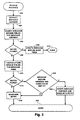
- Fig. 3 in general when a message is received (301) in either communications medium, the message address (i.e. caller ID number for telephone messages, and e-mail address for e-mail messages) is extracted from the message (302).
- the message address field is compared to the address field for the communications medium of the message (i.e., for telephone messages, the caller ID number is compared to the caller ID number field, and for e-mail messages, the e-mail address is compared to the e-mail address field) for all the entries in the database (304). If a matching entry is found (306), then the name field for the message communications medium is updated with the message name (i.e. caller ID name for telephone messages, e-mail name for e-mail messages). The database updating is then complete (310).
- the message name field is compared to the name field in the other communications medium (i.e. e-mail name for telephone messages, and caller ID name for e-mail messages) for all the entries in the database (312). If a matching entry is found (314), then the address and name fields for the message medium (i.e. caller ID number and name for telephone messages, and e-mail address and name for e-mail messages) are checked to determine if they are empty (320). If not, then a new entry is created with the message address and message name in the message medium address and name fields in the new entry (316). The database updating is then complete 318.
- the message name field is compared to the name field in the other communications medium (i.e. e-mail name for telephone messages, and caller ID name for e-mail messages) for all the entries in the database (312). If a matching entry is found (314), then the address and name fields for the message medium (i.e. caller ID number and name for telephone messages, and e-mail address and name for
- the message address and name fields are empty, then the message address and name are inserted into the message medium address and name fields, respectively (322), possibly with the approval of the user, and possibly with the user selecting one of a number of possible matching entries, all as described above.
- the database updating is then complete (318).
- the display screen 118 displays general information, such as the current date and time, the number of messages received, etc.
- the display screen also displays an integrated list of all messages which have been received, both telephone messages and e-mail messages, in a list window.
- Each entry in the list of messages shows the originator name -- e.g. caller ID name for telephone messages and e-mail name for e-mail messages.
- the keyboard 116 the user is able to highlight entries in the message list.
- a detail window provides further information about the highlighted entry, such as whether it is a telephone or e-mail message, the caller ID name and number for telephone messages or e-mail address and e-mail name for e-mail messages, the date and time associated with the message, etc.
- the user may perform several functions for each message. For example, the message may be retrieved. For telephone messages, the digitized voice message is retrieved from the message portion 128 of the RAM 126, converted to audio and played back through the speaker 112 by the codec 106 and DSP 108 under the control of the processor 110. For e-mail messages the textual body of the message is retrieved from the message portion 128 of the RAM 126, and displayed on the display device 118. For another example, the user may desire to reply to the message.
- the message may be retrieved.
- the digitized voice message is retrieved from the message portion 128 of the RAM 126, converted to audio and played back through the speaker 112 by the codec 106 and DSP 108 under the control of the processor 110.
- the textual body of the message is retrieved from the message portion 128 of the RAM 126, and displayed on the display device 118.
- the user may desire to reply to the message.
- the user may reply to any message in either communications medium. That is, the reply to any message may be by either a telephone message or an e-mail message.
- the reply to any message may be by either a telephone message or an e-mail message.
- a question is displayed on the display device 118 asking which communications medium is desired for the reply. The user supplies the answer to the question via the keyboard 116.
- the user may specify that the reply be sent in the same communications medium as that of the received message, in which case, the destination address of the reply is the address in the originating message. I.e., for a telephone medium message the destination address is the caller ID number of the telephone message, and for an e-mail medium message the destination address is the originating e-mail address in the e-mail message. More specifically, to reply to a telephone message by placing a telephone call, the communications device 10 dials the telephone which sent the message using the stored caller ID telephone number. To reply to an e-mail message, a reply e-mail envelope is prepared using the e-mail address in the received e-mail.
- the user may also specify that the reply be sent in the other communications medium. If a user wishes, for example, to reply to a telephone message by sending an e-mail message, the entry in the database containing the originating caller ID telephone number of the telephone message in the caller ID number field is found. Then the e-mail address field of that entry is checked. If there is an e-mail address in that field of that entry, an e-mail message header is automatically composed using that e-mail address, and an e-mail composition screen is displayed on the display screen 118. The user can then type in the body of the e-mail message using the keyboard 116, and send the e-mail message when done.
- the entry containing that telephone number in the caller ID number field is found (entry 2).
- the e-mail address field of entry 2 is then checked.
- the e-mail address field is not empty but contains an e-mail address (Bbey@iil.com).
- an e-mail header containing the destination address of Bbey@iil.com is automatically prepared, the user types the message, then sends the e-mail message.
- the originating caller ID name is compared to the names in the e-mail name fields in all the entries in the database. As described above, an exact match may be searched for, a match of last and first names, or a match of like sounding names. The user may also be allowed to accept or reject the matching entry, or select one from a number of closely matching entries or none at all. If a matching entry is accepted, or one is selected by the user, then the e-mail address and name from the matching entry is merged with the caller ID number and name in the originating message entry to form a single entry. An e-mail message header is then automatically composed, and a message composed and sent by the user, as described above.
- the entry containing that number is found (entry 1).
- the e-mail address field for entry 1 is empty.
- the caller ID name John Ray
- an entry with a corresponding name, John Ray is found (entry 3).
- the data in entry 3 is merged with the data in entry 1 to form a single entry with the combined information.
- a single entry is formed having a caller ID number field containing 555-4321 , a caller ID name field containing John Ray, an e-mail address field containing JRay@ab.com and an e-mail name field containing John Ray.
- This entry could be either entry 1 (deleting entry 3), entry 3 (deleting entry 1) or a new entry, e.g. entry 7 (deleting both entries 1 and 3).
- An e-mail header containing the destination address of JRay@ab.com is then automatically prepared, the user types the message, then sends the e-mail message.
- a message is displayed on the display screen 118 asking the user for the destination e-mail address for the reply to the telephone message.
- the user enters the destination e-mail address using the keyboard 116.
- the destination e-mail address entered by the user is inserted into the e-mail address field of the entry containing the caller ID information for the originating message, and the caller ID name is inserted into the e-mail name field of that entry.
- An e-mail message header is then automatically composed, and a message entered and sent by the user, as described above.
- the entry containing that number is found (entry 5).
- the e-mail address for entry 5 is empty, and there is no other entry having data in the e-mail name field which the user finds matches the caller ID name Hank Day.
- an e-mail address for Hank Day is requested from the user, which the user supplies via the keyboard 116.
- the e-mail address for example Hday@cba.com, is inserted into the e-mail address field of entry 5, and the caller ID name, Hank Day, is inserted into the e-mail name field of entry 5.
- An e-mail header containing the destination address of HDay@cba.com is then automatically prepared, the user types the message, then sends the e-mail message.
- the entry in the database containing the originating e-mail address of the e-mail message is found.
- the caller ID number field of that entry is then checked. If there is a telephone number in that field of that entry then the telephone number is automatically dialed by the processor 110 via the DSP/08 and coder 106. If, however, there is no telephone number in the caller ID number field in that entry, then the originating e-mail name is compared to the caller ID name fields in all the entries in the database. As described above, this search may be for an exact match, a match of last and first names, or a match of like sounding names.
- the user may be given the opportunity to accept or reject the matching entry, or select one from a number of closer matching entries, or none at all. If a matching entry is found, or one is selected by the user, then the telephone number in the caller ID number field of the matching entry is automatically dialed by the processor 110 via the DSP 108 and codec 106. In addition, the caller ID number and name from the matching entry is merged with the e-mail number and name in the originating message entry to form a single entry. If no matching entry is found, or none is selected by the user, then the user may insert caller ID information by entering a destination telephone number.
- the destination telephone number entered by the user is inserted into the caller ID number field of the entry containing the originating e-mail message information, and the e-mail name is inserted into the caller ID name field of that entry.
- the user-entered telephone number is then automatically dialed, as described above.
- a single entry in the database is formed by merging the information contained in the entry relating to the communications medium of the original message with the information contained in the matching entry relating to the other communications medium (416). Then a message in the other communications medium is composed and sent using the address in the address field relating to the other communications medium of the found entry (418).
- a new record is created (422).
- the user is prompted for the destination address for the message in the other communications medium.
- the destination address is inserted into the address field for the other communications medium, and the name field for the message communications medium is inserted into the name field for the other communications medium (422).
- a message in the other communications medium is composed and sent using the address in the address field relating to the other communications medium of the found entry (424).
- the reply process then ends (426).
- a communications device operating according to the present invention permits automatic replies in any communications medium to any received message.
Landscapes
- Engineering & Computer Science (AREA)
- Signal Processing (AREA)
- Multimedia (AREA)
- Computer Networks & Wireless Communication (AREA)
- Telephonic Communication Services (AREA)
- Information Transfer Between Computers (AREA)
- Data Exchanges In Wide-Area Networks (AREA)
- Computer And Data Communications (AREA)
Applications Claiming Priority (3)
| Application Number | Priority Date | Filing Date | Title |
|---|---|---|---|
| US266477 | 1988-11-02 | ||
| US09/266,477 US6298128B1 (en) | 1999-03-11 | 1999-03-11 | Unified directory for caller ID and electronic mail addresses |
| PCT/US2000/006175 WO2000054487A1 (en) | 1999-03-11 | 2000-03-09 | Unified directory for caller id and electronic mail addresses |
Publications (2)
| Publication Number | Publication Date |
|---|---|
| EP1157532A1 EP1157532A1 (en) | 2001-11-28 |
| EP1157532B1 true EP1157532B1 (en) | 2009-09-23 |
Family
ID=23014747
Family Applications (1)
| Application Number | Title | Priority Date | Filing Date |
|---|---|---|---|
| EP00916193A Expired - Lifetime EP1157532B1 (en) | 1999-03-11 | 2000-03-09 | Unified directory for caller id and electronic mail addresses |
Country Status (11)
| Country | Link |
|---|---|
| US (1) | US6298128B1 (enExample) |
| EP (1) | EP1157532B1 (enExample) |
| JP (1) | JP4499296B2 (enExample) |
| KR (1) | KR100729336B1 (enExample) |
| CN (1) | CN1214656C (enExample) |
| AU (1) | AU3733700A (enExample) |
| BR (1) | BR0008861A (enExample) |
| CA (1) | CA2364486C (enExample) |
| DE (1) | DE60043001D1 (enExample) |
| SG (1) | SG121837A1 (enExample) |
| WO (1) | WO2000054487A1 (enExample) |
Families Citing this family (60)
| Publication number | Priority date | Publication date | Assignee | Title |
|---|---|---|---|---|
| US6603846B1 (en) * | 1999-04-07 | 2003-08-05 | Agere Systems, Inc. | Methods and devices for selecting preferred call back numbers using CID data |
| US6760428B2 (en) * | 1999-07-30 | 2004-07-06 | Avaya Technology Corp. | Modification of voice prompting based on prior communication in a call center |
| US20060121938A1 (en) * | 1999-08-12 | 2006-06-08 | Hawkins Jeffrey C | Integrated handheld computing and telephony device |
| US6885739B2 (en) * | 1999-11-05 | 2005-04-26 | Agere Systems Inc. | Adaptive caller ID storage based on answer status of incoming call |
| JP2001186276A (ja) * | 1999-12-27 | 2001-07-06 | Nec Corp | 携帯通信端末及び通信サービスシステム |
| US6661438B1 (en) * | 2000-01-18 | 2003-12-09 | Seiko Epson Corporation | Display apparatus and portable information processing apparatus |
| US6765996B2 (en) * | 2000-03-02 | 2004-07-20 | John Francis Baxter, Jr. | Audio file transmission method |
| GB0007224D0 (en) * | 2000-03-24 | 2000-05-17 | Dean Alan D | System for constructing electronic mail addresses |
| AU2001271024A1 (en) * | 2000-07-10 | 2002-01-21 | Wataru Michizeki | Information distribution device, information distribution system, system, medium, information aggregate, and program |
| US6738462B1 (en) * | 2000-07-19 | 2004-05-18 | Avaya Technology Corp. | Unified communications automated personal name addressing |
| US7546351B1 (en) * | 2000-08-17 | 2009-06-09 | Mxgo | Methods and systems for filtering, sorting, and dispatching messages to wired and wireless devices |
| US7039177B1 (en) * | 2000-09-13 | 2006-05-02 | International Business Machines Corp. | Automatic update of a directory entry within a directory of an electronic communication device by electronic notification |
| JP2002118626A (ja) * | 2000-10-06 | 2002-04-19 | Nec Corp | 携帯電話機 |
| JP2002171332A (ja) * | 2000-11-30 | 2002-06-14 | Toshiba Corp | 通信端末装置 |
| US7295836B2 (en) * | 2001-03-09 | 2007-11-13 | Research In Motion Limited | Advanced voice and data operations in a mobile data communication device |
| US7096009B2 (en) * | 2001-03-09 | 2006-08-22 | Research In Motion Limited | Advanced voice and data operations in a mobile data communication device |
| US8406389B2 (en) | 2001-03-09 | 2013-03-26 | Research In Motion Limited | Advanced voice and data operations in a mobile data communication device |
| JP4859276B2 (ja) * | 2001-03-21 | 2012-01-25 | 富士通東芝モバイルコミュニケーションズ株式会社 | 通信端末装置及び表示方法 |
| US7603379B2 (en) * | 2001-04-11 | 2009-10-13 | Lg Electronics Inc. | Unified management method of various types of messages of a personal information terminal |
| FI117663B (fi) * | 2005-12-02 | 2006-12-29 | Bookit Oy Ajanvarauspalvelu | Menetelmä ja järjestelmä viestien massalähetystä varten |
| US6650735B2 (en) * | 2001-09-27 | 2003-11-18 | Microsoft Corporation | Integrated voice access to a variety of personal information services |
| US6961420B2 (en) * | 2001-11-13 | 2005-11-01 | Danger, Inc. | Apparatus and method for recording incoming call information |
| US6721406B1 (en) * | 2001-11-28 | 2004-04-13 | Bellsouth Intellectual Property Corporation | Telephone caller location data retrieval |
| US6873692B1 (en) * | 2002-03-29 | 2005-03-29 | Bellsouth Intellectual Property Corporation | Telephone synchronization with software applications and documents |
| US7263178B1 (en) * | 2002-09-24 | 2007-08-28 | Verizon Laboratories Inc. | Automated communications assistant and method |
| US7295852B1 (en) | 2003-05-01 | 2007-11-13 | Palm, Inc. | Automated telephone conferencing method and system |
| US7734027B2 (en) * | 2003-06-04 | 2010-06-08 | Alcatel-Lucent Usa Inc. | Call control component collection of communication device identification information for internet protocol endpoint |
| US8984118B2 (en) * | 2003-06-30 | 2015-03-17 | Comverse, Ltd. | Automatic messaging client launcher for a communication device |
| US7929670B2 (en) * | 2003-09-29 | 2011-04-19 | Aspect Software, Inc. | Contact manipulaton and retrieval system |
| US7747690B2 (en) * | 2003-12-29 | 2010-06-29 | International Business Machines Corporation | Method for extracting and managing message addresses |
| US20050166160A1 (en) * | 2004-01-23 | 2005-07-28 | Sharp Laboratories Of America, Inc. | User interfaces which display aggregations of records that include fields whose values can be set null or empty |
| WO2005120003A1 (en) * | 2004-05-28 | 2005-12-15 | Telefonaktiebolaget Lm Ericsson (Publ) | Communications method and apparatus, database information retrieval method and apparatus |
| US7571319B2 (en) * | 2004-10-14 | 2009-08-04 | Microsoft Corporation | Validating inbound messages |
| KR100669945B1 (ko) | 2005-05-31 | 2007-01-16 | 삼성전자주식회사 | 개선한 전자우편 장치 및 전자우편 방법 |
| DE102006006073B4 (de) * | 2006-02-09 | 2015-02-12 | Unify Gmbh & Co. Kg | Verfahren, Kommunikationssystem und Kommunikationsendeinrichtung zur Übermittlung von Daten |
| CN101098503B (zh) * | 2006-06-28 | 2012-08-08 | 华为技术有限公司 | 一种消息昵称个性化显示的方法和装置 |
| US20080013712A1 (en) * | 2006-07-11 | 2008-01-17 | Karsten Gopinath | Unified Communication Directory Service |
| US8879702B1 (en) | 2007-10-17 | 2014-11-04 | Accudata Technologies, Inc. | Method and system for providing additional information to called parties |
| US8811575B2 (en) * | 2007-06-13 | 2014-08-19 | I D You, Llc | Delivering additional information to receiving parties for text messaging based caller ID |
| US8488754B1 (en) | 2007-10-17 | 2013-07-16 | Accudata Technologies, Inc. | IP-enabled information delivery |
| US8625762B1 (en) | 2007-06-13 | 2014-01-07 | Accudata Technologies, Inc. | Providing additional information to called parties |
| US10958781B2 (en) | 2007-06-13 | 2021-03-23 | First Orion Corp. | Providing audio content to a device |
| US8548140B2 (en) | 2007-06-13 | 2013-10-01 | I D You, Llc | Providing audio announcement to called parties |
| US11297180B2 (en) | 2007-06-13 | 2022-04-05 | First Orion Corp. | Method and system for providing additional information to called parties |
| US12425512B2 (en) | 2007-06-13 | 2025-09-23 | First Orion Corp. | Delivering additional information to receiving parties for text messaging based caller ID |
| DE102007044885A1 (de) * | 2007-09-20 | 2009-04-02 | Siemens Enterprise Communications Gmbh & Co. Kg | Verfahren und Kommunikationssystem zum Betreiben einer Kommunikationsverbindung |
| DE102007046978A1 (de) * | 2007-09-28 | 2009-04-02 | Siemens Enterprise Communications Gmbh & Co. Kg | Verfahren und Kommunikations-Endgerät zum Austausch von Daten während oder nach einer Kommunikationsverbindung |
| US11811966B2 (en) | 2007-10-17 | 2023-11-07 | First Orion Corp. | IP-enabled information delivery |
| US12256041B2 (en) | 2007-10-17 | 2025-03-18 | First Orion Corp. | IP-enabled information delivery |
| CN101465905B (zh) * | 2007-12-19 | 2011-12-07 | 深圳富泰宏精密工业有限公司 | 邮件地址搜寻系统及方法 |
| US20090161845A1 (en) * | 2007-12-21 | 2009-06-25 | Research In Motion Limited | Enhanced phone call context information |
| US8290126B2 (en) | 2008-12-19 | 2012-10-16 | CenturyLing Intellectual Property LLC | System and method for a visual voicemail interface |
| WO2012106726A1 (en) | 2011-02-04 | 2012-08-09 | Nextplane | Method and system for federation of proxy-based and proxy-free communications systems |
| US9203799B2 (en) | 2011-03-31 | 2015-12-01 | NextPlane, Inc. | Method and system for advanced alias domain routing |
| US9716619B2 (en) | 2011-03-31 | 2017-07-25 | NextPlane, Inc. | System and method of processing media traffic for a hub-based system federating disparate unified communications systems |
| US9077726B2 (en) | 2011-03-31 | 2015-07-07 | NextPlane, Inc. | Hub based clearing house for interoperability of distinct unified communication systems |
| US8644471B1 (en) | 2011-08-15 | 2014-02-04 | Sprint Communications Company L.P. | Caller name detection and export |
| KR101319832B1 (ko) * | 2012-03-23 | 2013-10-18 | 에스케이텔레콤 주식회사 | 모바일 컨텐츠 제공 방법 및 이를 위한 로컬 캐싱 장치 |
| US9705840B2 (en) | 2013-06-03 | 2017-07-11 | NextPlane, Inc. | Automation platform for hub-based system federating disparate unified communications systems |
| US9819636B2 (en) * | 2013-06-10 | 2017-11-14 | NextPlane, Inc. | User directory system for a hub-based system federating disparate unified communications systems |
Family Cites Families (20)
| Publication number | Priority date | Publication date | Assignee | Title |
|---|---|---|---|---|
| US4612416A (en) | 1985-01-22 | 1986-09-16 | At&T Information Systems Inc. | Integrated message service system |
| US4837798A (en) | 1986-06-02 | 1989-06-06 | American Telephone And Telegraph Company | Communication system having unified messaging |
| US4932022A (en) | 1987-10-07 | 1990-06-05 | Telenova, Inc. | Integrated voice and data telephone system |
| US5239577A (en) | 1990-12-03 | 1993-08-24 | Bell Communications Research, Inc. | Network and method for providing cross-media connections |
| JP3454822B2 (ja) | 1992-08-26 | 2003-10-06 | ベルサウス インテレクチャル プロパティ コーポレイション | 個人番号通信システム |
| ATE136183T1 (de) | 1993-06-22 | 1996-04-15 | Vmx Inc | Elektronisches mitteilungssystem mit integrierten sprachnachrichten |
| JPH07250146A (ja) * | 1994-03-08 | 1995-09-26 | Fujitsu Ltd | 音声電話帳自動作成システム |
| JPH08181793A (ja) | 1994-10-04 | 1996-07-12 | Canon Inc | 電話通信装置 |
| US5754636A (en) * | 1994-11-01 | 1998-05-19 | Answersoft, Inc. | Computer telephone system |
| US5615252A (en) | 1995-01-05 | 1997-03-25 | Lucent Technologies Inc. | System and apparatus for recording and displaying received information at a remote location |
| US5657378A (en) | 1995-04-11 | 1997-08-12 | M Power Corporation | Digital screen phone terminal with graphical user interface |
| JPH08331359A (ja) | 1995-06-01 | 1996-12-13 | Brother Ind Ltd | ネットワークシステムの端末装置 |
| US5647002A (en) | 1995-09-01 | 1997-07-08 | Lucent Technologies Inc. | Synchronization of mailboxes of different types |
| US5930350A (en) * | 1996-06-27 | 1999-07-27 | Mci Communications Corporation | System, method and computer program for automated speed dialing |
| JPH10145482A (ja) * | 1996-11-13 | 1998-05-29 | Casio Comput Co Ltd | 通信端末装置 |
| CA2272096A1 (en) | 1996-11-18 | 1998-05-28 | David Gregory Smith | System for integrated management of messaging and communications |
| JPH10155038A (ja) * | 1996-11-20 | 1998-06-09 | Casio Comput Co Ltd | 情報通信端末 |
| US6005928A (en) * | 1997-04-15 | 1999-12-21 | Mci Communication Corporation | Method and system for automatic distribution addressing |
| JP3636266B2 (ja) * | 1997-05-15 | 2005-04-06 | 株式会社日立製作所 | ウェブ・フォーン・ダイヤラー・システム |
| JPH1168986A (ja) * | 1997-08-13 | 1999-03-09 | Casio Comput Co Ltd | ネットワークサービスセンタ、電話サービスネットワークシステム、通信端末、及び記録媒体 |
-
1999
- 1999-03-11 US US09/266,477 patent/US6298128B1/en not_active Expired - Lifetime
-
2000
- 2000-03-09 SG SG200307133A patent/SG121837A1/en unknown
- 2000-03-09 AU AU37337/00A patent/AU3733700A/en not_active Abandoned
- 2000-03-09 CA CA002364486A patent/CA2364486C/en not_active Expired - Fee Related
- 2000-03-09 BR BR0008861-7A patent/BR0008861A/pt not_active Application Discontinuation
- 2000-03-09 EP EP00916193A patent/EP1157532B1/en not_active Expired - Lifetime
- 2000-03-09 DE DE60043001T patent/DE60043001D1/de not_active Expired - Lifetime
- 2000-03-09 JP JP2000604597A patent/JP4499296B2/ja not_active Expired - Fee Related
- 2000-03-09 KR KR1020017011401A patent/KR100729336B1/ko not_active Expired - Fee Related
- 2000-03-09 WO PCT/US2000/006175 patent/WO2000054487A1/en not_active Ceased
- 2000-03-09 CN CNB008048878A patent/CN1214656C/zh not_active Expired - Fee Related
Also Published As
| Publication number | Publication date |
|---|---|
| BR0008861A (pt) | 2002-01-08 |
| CA2364486A1 (en) | 2000-09-14 |
| SG121837A1 (en) | 2006-05-26 |
| CA2364486C (en) | 2008-06-17 |
| WO2000054487A1 (en) | 2000-09-14 |
| CN1214656C (zh) | 2005-08-10 |
| JP4499296B2 (ja) | 2010-07-07 |
| EP1157532A1 (en) | 2001-11-28 |
| US6298128B1 (en) | 2001-10-02 |
| KR100729336B1 (ko) | 2007-06-18 |
| AU3733700A (en) | 2000-09-28 |
| DE60043001D1 (de) | 2009-11-05 |
| CN1343417A (zh) | 2002-04-03 |
| KR20010112309A (ko) | 2001-12-20 |
| JP2002539682A (ja) | 2002-11-19 |
Similar Documents
| Publication | Publication Date | Title |
|---|---|---|
| EP1157532B1 (en) | Unified directory for caller id and electronic mail addresses | |
| US6738462B1 (en) | Unified communications automated personal name addressing | |
| CA2299387C (en) | Automatic synchronization of address directories for unified messaging | |
| US6020980A (en) | Facsimile delivery to electronic mail | |
| US6563912B1 (en) | System and method for providing integrated messaging | |
| US8611512B2 (en) | System for integrated electronic communications | |
| US8068589B2 (en) | Interface for a multi-messaging system | |
| US7508924B2 (en) | Electronic mail distribution system for integrated electronic communications | |
| US20020126814A1 (en) | Apparatus, method and computer program product for automatic directory entry generation via caller-id | |
| JPH0644157A (ja) | データ処理ネットワーク、データ処理ネットワークにおいてメッセージへのアクセスを可能にする方法、データ処理システム、およびコードモジュール | |
| GB2354667A (en) | Telephone call internet functionality | |
| US7376220B2 (en) | Automatically updating a voice mail greeting | |
| US6795536B1 (en) | Automatic user preference selection for message playback based on caller line identification data | |
| US7457398B2 (en) | Methods and systems for providing voicemail services | |
| US6754316B2 (en) | Method and apparatus for registering unanswered telephone calls | |
| EP1156630A1 (en) | Method for automatically returning a phone call upon receipt of an electronic mail and using directory inquiries services to obtain the phone number | |
| EP1129565A1 (en) | A method for storing and forwarding voice and facsimile messages using an e-mail platform | |
| MXPA01009052A (en) | Unified directory for caller id and electronic mail addresses | |
| JP3474130B2 (ja) | ボイス・メール・システムに記憶されたメッセージをインターネット・ワールド・ワイド・ウェブを介してアクセスするための方法 | |
| JPH07250166A (ja) | ボイスメールシステム | |
| GB2347307A (en) | Dial by name feature for messaging system | |
| WO2007072055A1 (en) | Messaging systems for use in telecommunications networks |
Legal Events
| Date | Code | Title | Description |
|---|---|---|---|
| PUAI | Public reference made under article 153(3) epc to a published international application that has entered the european phase |
Free format text: ORIGINAL CODE: 0009012 |
|
| 17P | Request for examination filed |
Effective date: 20010824 |
|
| AK | Designated contracting states |
Kind code of ref document: A1 Designated state(s): AT BE CH CY DE DK ES FI FR GB GR IE IT LI LU MC NL PT SE |
|
| AX | Request for extension of the european patent |
Free format text: AL;LT;LV;MK;RO;SI |
|
| 17Q | First examination report despatched |
Effective date: 20040311 |
|
| RBV | Designated contracting states (corrected) |
Designated state(s): DE ES FR GB IT |
|
| RAP1 | Party data changed (applicant data changed or rights of an application transferred) |
Owner name: THOMSON LICENSING |
|
| APBK | Appeal reference recorded |
Free format text: ORIGINAL CODE: EPIDOSNREFNE |
|
| APBN | Date of receipt of notice of appeal recorded |
Free format text: ORIGINAL CODE: EPIDOSNNOA2E |
|
| APBR | Date of receipt of statement of grounds of appeal recorded |
Free format text: ORIGINAL CODE: EPIDOSNNOA3E |
|
| APBV | Interlocutory revision of appeal recorded |
Free format text: ORIGINAL CODE: EPIDOSNIRAPE |
|
| GRAP | Despatch of communication of intention to grant a patent |
Free format text: ORIGINAL CODE: EPIDOSNIGR1 |
|
| GRAS | Grant fee paid |
Free format text: ORIGINAL CODE: EPIDOSNIGR3 |
|
| GRAA | (expected) grant |
Free format text: ORIGINAL CODE: 0009210 |
|
| RIN1 | Information on inventor provided before grant (corrected) |
Inventor name: CAFFREY, JOHN, JUSTIN Inventor name: WANG, MINGHENG Inventor name: RAMEY, BLAINE, EDWARD |
|
| AK | Designated contracting states |
Kind code of ref document: B1 Designated state(s): DE ES FR GB IT |
|
| REG | Reference to a national code |
Ref country code: GB Ref legal event code: FG4D |
|
| REF | Corresponds to: |
Ref document number: 60043001 Country of ref document: DE Date of ref document: 20091105 Kind code of ref document: P |
|
| RAP2 | Party data changed (patent owner data changed or rights of a patent transferred) |
Owner name: THOMSON LICENSING |
|
| PG25 | Lapsed in a contracting state [announced via postgrant information from national office to epo] |
Ref country code: ES Free format text: LAPSE BECAUSE OF FAILURE TO SUBMIT A TRANSLATION OF THE DESCRIPTION OR TO PAY THE FEE WITHIN THE PRESCRIBED TIME-LIMIT Effective date: 20100103 |
|
| PLBE | No opposition filed within time limit |
Free format text: ORIGINAL CODE: 0009261 |
|
| STAA | Information on the status of an ep patent application or granted ep patent |
Free format text: STATUS: NO OPPOSITION FILED WITHIN TIME LIMIT |
|
| 26N | No opposition filed |
Effective date: 20100624 |
|
| REG | Reference to a national code |
Ref country code: GB Ref legal event code: 746 Effective date: 20100914 |
|
| PG25 | Lapsed in a contracting state [announced via postgrant information from national office to epo] |
Ref country code: IT Free format text: LAPSE BECAUSE OF FAILURE TO SUBMIT A TRANSLATION OF THE DESCRIPTION OR TO PAY THE FEE WITHIN THE PRESCRIBED TIME-LIMIT Effective date: 20090923 |
|
| REG | Reference to a national code |
Ref country code: FR Ref legal event code: PLFP Year of fee payment: 17 |
|
| REG | Reference to a national code |
Ref country code: FR Ref legal event code: PLFP Year of fee payment: 18 |
|
| REG | Reference to a national code |
Ref country code: DE Ref legal event code: R082 Ref document number: 60043001 Country of ref document: DE Representative=s name: HOFSTETTER, SCHURACK & PARTNER PATENT- UND REC, DE |
|
| REG | Reference to a national code |
Ref country code: FR Ref legal event code: PLFP Year of fee payment: 19 |
|
| PGFP | Annual fee paid to national office [announced via postgrant information from national office to epo] |
Ref country code: DE Payment date: 20180323 Year of fee payment: 19 Ref country code: GB Payment date: 20180327 Year of fee payment: 19 |
|
| PGFP | Annual fee paid to national office [announced via postgrant information from national office to epo] |
Ref country code: FR Payment date: 20180329 Year of fee payment: 19 |
|
| REG | Reference to a national code |
Ref country code: DE Ref legal event code: R119 Ref document number: 60043001 Country of ref document: DE |
|
| GBPC | Gb: european patent ceased through non-payment of renewal fee |
Effective date: 20190309 |
|
| PG25 | Lapsed in a contracting state [announced via postgrant information from national office to epo] |
Ref country code: DE Free format text: LAPSE BECAUSE OF NON-PAYMENT OF DUE FEES Effective date: 20191001 Ref country code: GB Free format text: LAPSE BECAUSE OF NON-PAYMENT OF DUE FEES Effective date: 20190309 |
|
| PG25 | Lapsed in a contracting state [announced via postgrant information from national office to epo] |
Ref country code: FR Free format text: LAPSE BECAUSE OF NON-PAYMENT OF DUE FEES Effective date: 20190331 |
|
| P01 | Opt-out of the competence of the unified patent court (upc) registered |
Effective date: 20230527 |