EP1156151A1 - Mittel zur schmutzhemmenden Ausrüstung für textile Flächen - Google Patents
Mittel zur schmutzhemmenden Ausrüstung für textile Flächen Download PDFInfo
- Publication number
- EP1156151A1 EP1156151A1 EP01109812A EP01109812A EP1156151A1 EP 1156151 A1 EP1156151 A1 EP 1156151A1 EP 01109812 A EP01109812 A EP 01109812A EP 01109812 A EP01109812 A EP 01109812A EP 1156151 A1 EP1156151 A1 EP 1156151A1
- Authority
- EP
- European Patent Office
- Prior art keywords
- agent
- active ingredient
- particular according
- ingredient solution
- polymer particles
- Prior art date
- Legal status (The legal status is an assumption and is not a legal conclusion. Google has not performed a legal analysis and makes no representation as to the accuracy of the status listed.)
- Granted
Links
- 239000004753 textile Substances 0.000 title claims abstract description 13
- 239000003795 chemical substances by application Substances 0.000 claims abstract description 42
- 239000002245 particle Substances 0.000 claims abstract description 25
- 229920000642 polymer Polymers 0.000 claims abstract description 17
- 239000000835 fiber Substances 0.000 claims abstract description 14
- 239000002250 absorbent Substances 0.000 claims abstract description 8
- 239000000654 additive Substances 0.000 claims abstract description 3
- 239000002904 solvent Substances 0.000 claims abstract description 3
- XLYOFNOQVPJJNP-UHFFFAOYSA-N water Substances O XLYOFNOQVPJJNP-UHFFFAOYSA-N 0.000 claims description 19
- 230000002401 inhibitory effect Effects 0.000 claims description 18
- 239000004480 active ingredient Substances 0.000 claims description 17
- 239000012876 carrier material Substances 0.000 claims description 17
- NBVXSUQYWXRMNV-UHFFFAOYSA-N fluoromethane Chemical compound FC NBVXSUQYWXRMNV-UHFFFAOYSA-N 0.000 claims description 15
- 239000011347 resin Substances 0.000 claims description 15
- 229920005989 resin Polymers 0.000 claims description 15
- 239000012459 cleaning agent Substances 0.000 claims description 13
- 239000004094 surface-active agent Substances 0.000 claims description 11
- 239000000203 mixture Substances 0.000 claims description 10
- -1 polysiloxane Polymers 0.000 claims description 9
- 229920001296 polysiloxane Polymers 0.000 claims description 9
- 239000000126 substance Substances 0.000 claims description 9
- 230000002745 absorbent Effects 0.000 claims description 7
- 238000002360 preparation method Methods 0.000 claims description 5
- 229920002125 Sokalan® Polymers 0.000 claims description 2
- 229920000058 polyacrylate Polymers 0.000 claims description 2
- 239000004584 polyacrylic acid Substances 0.000 claims description 2
- 229920006395 saturated elastomer Polymers 0.000 claims description 2
- 159000000000 sodium salts Chemical class 0.000 claims description 2
- 238000004140 cleaning Methods 0.000 description 14
- 229920002678 cellulose Polymers 0.000 description 10
- 239000001913 cellulose Substances 0.000 description 10
- 239000000463 material Substances 0.000 description 7
- 239000003755 preservative agent Substances 0.000 description 7
- 239000007788 liquid Substances 0.000 description 6
- NIXOWILDQLNWCW-UHFFFAOYSA-N Acrylic acid Chemical compound OC(=O)C=C NIXOWILDQLNWCW-UHFFFAOYSA-N 0.000 description 5
- 238000010586 diagram Methods 0.000 description 4
- NIXOWILDQLNWCW-UHFFFAOYSA-M Acrylate Chemical compound [O-]C(=O)C=C NIXOWILDQLNWCW-UHFFFAOYSA-M 0.000 description 3
- 239000003945 anionic surfactant Substances 0.000 description 3
- 125000002091 cationic group Chemical group 0.000 description 3
- 238000011109 contamination Methods 0.000 description 3
- 239000003599 detergent Substances 0.000 description 3
- 230000000694 effects Effects 0.000 description 3
- 239000002304 perfume Substances 0.000 description 3
- 230000002829 reductive effect Effects 0.000 description 3
- 239000013543 active substance Substances 0.000 description 2
- 239000002280 amphoteric surfactant Substances 0.000 description 2
- 125000000129 anionic group Chemical group 0.000 description 2
- 239000002736 nonionic surfactant Substances 0.000 description 2
- 230000002335 preservative effect Effects 0.000 description 2
- 229920003043 Cellulose fiber Polymers 0.000 description 1
- 239000004952 Polyamide Substances 0.000 description 1
- 239000002216 antistatic agent Substances 0.000 description 1
- 230000001680 brushing effect Effects 0.000 description 1
- 239000000969 carrier Substances 0.000 description 1
- 239000003093 cationic surfactant Substances 0.000 description 1
- ZPUCINDJVBIVPJ-LJISPDSOSA-N cocaine Chemical group O([C@H]1C[C@@H]2CC[C@@H](N2C)[C@H]1C(=O)OC)C(=O)C1=CC=CC=C1 ZPUCINDJVBIVPJ-LJISPDSOSA-N 0.000 description 1
- 230000006735 deficit Effects 0.000 description 1
- 230000007613 environmental effect Effects 0.000 description 1
- 238000003912 environmental pollution Methods 0.000 description 1
- 239000004744 fabric Substances 0.000 description 1
- 238000009408 flooring Methods 0.000 description 1
- 238000009472 formulation Methods 0.000 description 1
- 239000003205 fragrance Substances 0.000 description 1
- 238000010348 incorporation Methods 0.000 description 1
- 230000007774 longterm Effects 0.000 description 1
- 229920002647 polyamide Polymers 0.000 description 1
- 230000001681 protective effect Effects 0.000 description 1
- 239000002689 soil Substances 0.000 description 1
- 239000007921 spray Substances 0.000 description 1
- 238000005507 spraying Methods 0.000 description 1
- 239000000080 wetting agent Substances 0.000 description 1
Images


Classifications
-
- C—CHEMISTRY; METALLURGY
- C11—ANIMAL OR VEGETABLE OILS, FATS, FATTY SUBSTANCES OR WAXES; FATTY ACIDS THEREFROM; DETERGENTS; CANDLES
- C11D—DETERGENT COMPOSITIONS; USE OF SINGLE SUBSTANCES AS DETERGENTS; SOAP OR SOAP-MAKING; RESIN SOAPS; RECOVERY OF GLYCEROL
- C11D3/00—Other compounding ingredients of detergent compositions covered in group C11D1/00
- C11D3/16—Organic compounds
- C11D3/37—Polymers
-
- C—CHEMISTRY; METALLURGY
- C11—ANIMAL OR VEGETABLE OILS, FATS, FATTY SUBSTANCES OR WAXES; FATTY ACIDS THEREFROM; DETERGENTS; CANDLES
- C11D—DETERGENT COMPOSITIONS; USE OF SINGLE SUBSTANCES AS DETERGENTS; SOAP OR SOAP-MAKING; RESIN SOAPS; RECOVERY OF GLYCEROL
- C11D3/00—Other compounding ingredients of detergent compositions covered in group C11D1/00
- C11D3/0005—Other compounding ingredients characterised by their effect
- C11D3/0031—Carpet, upholstery, fur or leather cleansers
-
- C—CHEMISTRY; METALLURGY
- C11—ANIMAL OR VEGETABLE OILS, FATS, FATTY SUBSTANCES OR WAXES; FATTY ACIDS THEREFROM; DETERGENTS; CANDLES
- C11D—DETERGENT COMPOSITIONS; USE OF SINGLE SUBSTANCES AS DETERGENTS; SOAP OR SOAP-MAKING; RESIN SOAPS; RECOVERY OF GLYCEROL
- C11D3/00—Other compounding ingredients of detergent compositions covered in group C11D1/00
- C11D3/0005—Other compounding ingredients characterised by their effect
- C11D3/0036—Soil deposition preventing compositions; Antiredeposition agents
-
- C—CHEMISTRY; METALLURGY
- C11—ANIMAL OR VEGETABLE OILS, FATS, FATTY SUBSTANCES OR WAXES; FATTY ACIDS THEREFROM; DETERGENTS; CANDLES
- C11D—DETERGENT COMPOSITIONS; USE OF SINGLE SUBSTANCES AS DETERGENTS; SOAP OR SOAP-MAKING; RESIN SOAPS; RECOVERY OF GLYCEROL
- C11D3/00—Other compounding ingredients of detergent compositions covered in group C11D1/00
- C11D3/16—Organic compounds
- C11D3/37—Polymers
- C11D3/3703—Macromolecular compounds obtained otherwise than by reactions only involving carbon-to-carbon unsaturated bonds
- C11D3/373—Macromolecular compounds obtained otherwise than by reactions only involving carbon-to-carbon unsaturated bonds containing silicones
-
- D—TEXTILES; PAPER
- D06—TREATMENT OF TEXTILES OR THE LIKE; LAUNDERING; FLEXIBLE MATERIALS NOT OTHERWISE PROVIDED FOR
- D06M—TREATMENT, NOT PROVIDED FOR ELSEWHERE IN CLASS D06, OF FIBRES, THREADS, YARNS, FABRICS, FEATHERS OR FIBROUS GOODS MADE FROM SUCH MATERIALS
- D06M15/00—Treating fibres, threads, yarns, fabrics, or fibrous goods made from such materials, with macromolecular compounds; Such treatment combined with mechanical treatment
- D06M15/01—Treating fibres, threads, yarns, fabrics, or fibrous goods made from such materials, with macromolecular compounds; Such treatment combined with mechanical treatment with natural macromolecular compounds or derivatives thereof
- D06M15/03—Polysaccharides or derivatives thereof
- D06M15/05—Cellulose or derivatives thereof
-
- D—TEXTILES; PAPER
- D06—TREATMENT OF TEXTILES OR THE LIKE; LAUNDERING; FLEXIBLE MATERIALS NOT OTHERWISE PROVIDED FOR
- D06M—TREATMENT, NOT PROVIDED FOR ELSEWHERE IN CLASS D06, OF FIBRES, THREADS, YARNS, FABRICS, FEATHERS OR FIBROUS GOODS MADE FROM SUCH MATERIALS
- D06M15/00—Treating fibres, threads, yarns, fabrics, or fibrous goods made from such materials, with macromolecular compounds; Such treatment combined with mechanical treatment
- D06M15/19—Treating fibres, threads, yarns, fabrics, or fibrous goods made from such materials, with macromolecular compounds; Such treatment combined with mechanical treatment with synthetic macromolecular compounds
- D06M15/21—Macromolecular compounds obtained by reactions only involving carbon-to-carbon unsaturated bonds
- D06M15/244—Macromolecular compounds obtained by reactions only involving carbon-to-carbon unsaturated bonds of halogenated hydrocarbons
- D06M15/256—Macromolecular compounds obtained by reactions only involving carbon-to-carbon unsaturated bonds of halogenated hydrocarbons containing fluorine
-
- D—TEXTILES; PAPER
- D06—TREATMENT OF TEXTILES OR THE LIKE; LAUNDERING; FLEXIBLE MATERIALS NOT OTHERWISE PROVIDED FOR
- D06M—TREATMENT, NOT PROVIDED FOR ELSEWHERE IN CLASS D06, OF FIBRES, THREADS, YARNS, FABRICS, FEATHERS OR FIBROUS GOODS MADE FROM SUCH MATERIALS
- D06M15/00—Treating fibres, threads, yarns, fabrics, or fibrous goods made from such materials, with macromolecular compounds; Such treatment combined with mechanical treatment
- D06M15/19—Treating fibres, threads, yarns, fabrics, or fibrous goods made from such materials, with macromolecular compounds; Such treatment combined with mechanical treatment with synthetic macromolecular compounds
- D06M15/21—Macromolecular compounds obtained by reactions only involving carbon-to-carbon unsaturated bonds
- D06M15/263—Macromolecular compounds obtained by reactions only involving carbon-to-carbon unsaturated bonds of unsaturated carboxylic acids; Salts or esters thereof
-
- D—TEXTILES; PAPER
- D06—TREATMENT OF TEXTILES OR THE LIKE; LAUNDERING; FLEXIBLE MATERIALS NOT OTHERWISE PROVIDED FOR
- D06M—TREATMENT, NOT PROVIDED FOR ELSEWHERE IN CLASS D06, OF FIBRES, THREADS, YARNS, FABRICS, FEATHERS OR FIBROUS GOODS MADE FROM SUCH MATERIALS
- D06M15/00—Treating fibres, threads, yarns, fabrics, or fibrous goods made from such materials, with macromolecular compounds; Such treatment combined with mechanical treatment
- D06M15/19—Treating fibres, threads, yarns, fabrics, or fibrous goods made from such materials, with macromolecular compounds; Such treatment combined with mechanical treatment with synthetic macromolecular compounds
- D06M15/37—Macromolecular compounds obtained otherwise than by reactions only involving carbon-to-carbon unsaturated bonds
- D06M15/643—Macromolecular compounds obtained otherwise than by reactions only involving carbon-to-carbon unsaturated bonds containing silicon in the main chain
-
- D—TEXTILES; PAPER
- D06—TREATMENT OF TEXTILES OR THE LIKE; LAUNDERING; FLEXIBLE MATERIALS NOT OTHERWISE PROVIDED FOR
- D06M—TREATMENT, NOT PROVIDED FOR ELSEWHERE IN CLASS D06, OF FIBRES, THREADS, YARNS, FABRICS, FEATHERS OR FIBROUS GOODS MADE FROM SUCH MATERIALS
- D06M23/00—Treatment of fibres, threads, yarns, fabrics or fibrous goods made from such materials, characterised by the process
- D06M23/08—Processes in which the treating agent is applied in powder or granular form
Definitions
- the invention relates to an agent for dirt-inhibiting Equipment for textile surfaces, in particular textile Flooring.
- agents for anti-soiling equipment serve to delay the re-soiling of the carpet, in particular after the carpet has been treated with a carpet cleaning agent.
- Such agents for delaying soiling are generally based on fluorocarbon resin and are sprayed in liquid form onto the surface to be equipped and then massaged and distributed using a brush device or the like. It proves disadvantageous here that the agent sprayed on, for example, with household spray bottles, cannot be distributed evenly. Even incorporation with a brush device does not achieve an even distribution. The liquid containing the agent is not brought to every fiber of the textile floor covering by the bristles. In addition, the environment, such as skirting boards, furniture, hard floors, etc., is contaminated when the agent is sprayed.
- the agent containing a carrier material and an active ingredient solution consisting of a dirt-inhibiting substance, optionally solvent and optionally further additives, the carrier material being composed of highly absorbent, swollen polymer particles and organic fiber particles is formed.
- the active ingredient solution has a fluorocarbon resin or a polysiloxane derivative or, alternatively, a combination of a fluorocarbon resin preparation and a polysiloxane derivative.
- the dirt-inhibiting active ingredient solution such as fluorocarbon resin
- an intermediate carrier such as. B. cellulose or other known carriers.
- the agent according to the invention is sprinkled in the simplest manner on the textile floor covering to be upgraded and then worked into the floor covering, for example by means of a brushing device.
- Environmental pollution is avoided.
- Another advantage of the composition according to the invention is the improved soiling behavior compared to conventional, dirt-inhibiting agents. The result of this is that a degree of contamination after cleaning the textile floor covering is correspondingly significantly reduced, so that after cleaning a degree of contamination is achieved which corresponds to that of a floor treated with a conventional cleaning agent.
- the agent further contains a textile cleaning agent, which preferably has a surfactant or a surfactant mixture.
- the composition according to the invention with a carrier material such as cellulose proves to be advantageous in that the active substances attached to it remain active. It is known that anti-soiling products containing cationic particles are not compatible with anionic surfactants for cleaning. These neutralize in solutions and become ineffective.
- the two active ingredients need their charge in order to connect with the carpet fibers (antisoil; dirt-inhibiting agent) and with the dirt (surfactant; cleaning agent).
- the carrier material in particular cellulose, has a different affinity for the respective components, which are therefore absorbed by the carrier material in different concentrations and attached to the outside of the fibers.
- the cationic and anionic particles do not neutralize, after which both components remain effective due to the catalyst-like support material.
- water is added to the carrier material, a further mixture of the organic fiber particles attached to the surface of the water-saturated polymer particles with an active ingredient solution being provided.
- highly absorbent, subsequently swollen polymer particles — so-called superabsorbers — are used as carrier material, together with organic fiber particles, which fiber particles are attached to the surface of the polymer particles.
- the highly absorbent, swollen polymer particles create the necessary volume and surface area through a high bond in the polymer particles. Water content.
- the backing material or the absorbent material is fully available to the carpet surface. It tends to form agglomerates so that it does not "silt up" in the carpet.
- the organic fiber particles are deposited on the surface of the swollen polymer particles. They are therefore very well distributed and only a small amount of organic fiber particles is required.
- Another major advantage is the fact that very variable formulations, particularly of the dirt-inhibiting substance, are possible. E.g. In this regard, fluorocarbon resin preparations and / or polysiloxane derivatives can be used as dirt-inhibiting agents in conjunction with an intermediate carrier of the type mentioned.
- the polymer particles consist of a polyacrylate.
- a cross-linked polyacrylic acid which is present in part as the sodium salt, is particularly preferred.
- Such highly absorbent polymers can absorb several times their own weight in aqueous liquids. This forms a gel, the nature of which can vary. Such highly absorbent polymers do not release the aqueous liquid, ie generally ordinary water which they have taken up, or only to a relatively small extent even under pressure.
- the gel has the nature of a granular mass (caviar structure). In this way, very small polymer particles are formed globular structure, having a diameter of about 10-1000 ⁇ m in the swollen state.
- the organic fibers may have a diameter of 5-30 ⁇ m and a length of 50-400 ⁇ m. These are preferably cellulose fibers. Furthermore, customary auxiliaries and fragrances, such as preservatives, antistatic agents, etc., can be provided.
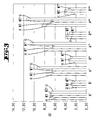
- FIG. 1 shows the re-soiling behavior of an untreated carpet (Line U), one with a conventional carpet cleaner (Line H), one with a conventional one Active ingredient solution with dirt-inhibiting substance (line W) and one with the agent according to the invention (line WT), consisting of a dirt-inhibiting substance and a Backing material, treated carpet.
- the bar chart shows that compared to the invention Solution WT improved cleaning effect of the extended solution WT '.
- the latter shows the good cleaning properties of conventional carpet cleaning agents with improved behavior regarding the Re-pollution.
- Fluorocarbon resin as an anti-soiling agent is used in Dependence on the fixed proportion of the active substance in 1.0 to 70 percent by weight used.
- Other example recipes can be: Backing material cellulose 35% by weight Swollen acrylic 5% by weight Active ingredient solution water 57.35% by weight Surfactants (cleaning agents) 1.45% by weight Perfume oil 0.20% by weight Preservative 1.00% by weight Polysiloxane derivative (anti-soiling agent) 2.95% by weight or Backing material cellulose 35% by weight Swollen acrylic 5% by weight Active ingredient solution water 57.45% by weight Surfactants (cleaning agents) 1.45% by weight Perfume oil 0.20% by weight Preservative 1.00% by weight Combination of polysiloxane derivative and fluorocarbon resin preparation (anti-soiling agent) 2.85% by weight
- Anti-soiling agents Polysiloxane derivative 1.0 - 30% by weight Fluorocarbon resin 1.0 - 70% by weight Combination of polysiloxane derivative and fluorocarbon resin preparation 1.0-20% by weight cleaning supplies for example surfactants 0.5-10% by weight Backing material for example cellulose 10 - 50% by weight other fabrics water 5.0 - 70% by weight Auxiliaries 0 - 5% by weight swollen polymer particles 1.0-20% by weight
- the arrangement of the protective By means of and the cleaning agent on the carrier material ensures that these are not neutralized but for connection to the carpet fibers (dirt-inhibiting agent) or with the dirt (cleaning agent) remain effective.
Landscapes
- Chemical & Material Sciences (AREA)
- Engineering & Computer Science (AREA)
- Chemical Kinetics & Catalysis (AREA)
- Textile Engineering (AREA)
- Life Sciences & Earth Sciences (AREA)
- Oil, Petroleum & Natural Gas (AREA)
- Wood Science & Technology (AREA)
- Organic Chemistry (AREA)
- Treatments For Attaching Organic Compounds To Fibrous Goods (AREA)
- Detergent Compositions (AREA)
Abstract
Description
Die das Mittel aufweisende Flüssigkeit wird von den, Borsten nicht an jede Faser des textilen Bodenbelages gebracht. Darüber hinaus wird beim Versprühen des Mittels das Umfeld, wie bspw. Fussleisten, Möbel, Hartboden usw., verschmutzt.
- Fig. 1
- ein Diagramm zur Darstellung der Wiederanschmutzung eines Teppichbodens;
- Fig. 2
- ein Balkendiagramm zur Darstellung des Reinigungs- und Anschmutzverhaltens auf einem Polyamid-Velours-Teppichboden;
- Fig. 3
- ein der Fig. 2 entsprechendes Balkendiagramm mit einem erfindungsgemäßen Mittel in einer weiteren Ausführungsform.
- 4,9525
- Anteile Wasser
- 0,0225
- Anteile Konservierungsmittel
- 0,0250
- Anteile Acrylat
- 24,8500
- Anteile Wasser
- 1,4500
- Anteile Reinigungsmittel (bevorzugt Tenside)
- 32,5000
- Anteile Wirkstofflösung (schmutzhemmende Substanz, bspw. Fluorcarbonharz)
- 0,2000
- Anteile Parfümöl
- 1,0000
- Anteile Konservierungsmittel
- 35,0000
- Anteile Trägermaterial (bspw. Zellulose).
- 4,9525
- Anteile Wasser
- 0,0225
- Anteile Konservierungsmittel
- 0,0250
- Anteile Acrylat
- 25,9000
- Anteile Wasser
- 0,4000
- Anteile Reinigungsmittel (bevorzugt Tenside)
- 32,5000
- Anteile Wirkstofflösung (schmutzhemmende Substanz, bspw. Fluorcarbonharz)
- 35,0000
- Trägermaterial (bspw. Zellulose)
- 4,9525
- Anteile Wasser
- 0,0225
- Anteile Konservierungsmittel
- 0,0250
- Anteile Acrylat
- 25,6500
- Anteile Wasser
- 1,4500
- Anteile Netzmittel
- 0,40000
- Anteile Reinigungsmittel (bevorzugt Tensid)
- 32,5000
- Anteile Wirkstofflösung (schmutzhemmen de Substanz, bspw. Fluorcarbonharz)
- 35,0000
- Anteile Trägermaterial (bspw. Zellulo se)
| Trägermaterial | |
| Zellulose | 35 Gew.% |
| Acrylat gequollen | 5 Gew.% |
| Wirkstofflösung | |
| Wasser | 57,35 Gew.% |
| Tenside (Reinigungsmittel) | 1,45 Gew.% |
| Parfümöl | 0,20 Gew.% |
| Konservierungsmittel | 1,00 Gew.% |
| Polysiloxan-Derivat (schmutzhemmendes Mittel) | 2,95 Gew.% |
| Trägermaterial | |
| Zellulose | 35 Gew.% |
| Acrylat gequollen | 5 Gew.% |
| Wirkstofflösung | |
| Wasser | 57,45 Gew.% |
| Tenside (Reinigungsmittel) | 1,45 Gew.% |
| Parfümöl | 0,20 Gew.% |
| Konservierungsmittel | 1,00 Gew.% |
| Kombination aus Polysiloxan-Derivat und Fluorcarbonharz-Zubereitung (schmutzhemmendes Mittel) | 2,85 Gew.% |
| Schmutzhemmende Mittel | |
| Polysiloxan-Derivat | 1,0 - 30 Gew.% |
| Fluorcarbonharz | 1,0 - 70 Gew.% |
| Kombination aus Polysiloxan-Derivat und Fluorcarbonharz-Zubereitung | 1,0 - 20 Gew.% |
| Reinigungsmittel | |
| zum Beispiel Tenside | 0,5 - 10 Gew.% |
| Trägermaterial | |
| zum Beispiel Zellulose | 10 - 50 Gew.% |
| weitere Stoffe | |
| Wasser | 5,0 - 70 Gew.% |
| Hilfsstoffe | 0 - 5 Gew.% |
| gequollene Polymer-Teilchen | 1,0 - 20 Gew.% |
Claims (10)
- Mittel zur schmutzhemmenden Ausrüstung für textile Flächen, insbesondere textile Bodenbeläge, dadurch gekennzeichnet, dass das Mittel ein Trägermaterial und eine Wirkstofflösung, bestehend aus einer schmutzhemmenden Substanz, gegebenenfalls Lösungsmittel und gegebenenfalls weiterer Zusatzstoffe, enthält, wobei das Trägermaterial durch hochsaugfähige, gequollene Polymer-Teilchen und organische Faserteilchen gebildet ist.
- Mittel nach Anspruch 1 oder insbesondere danach, dadurch gekennzeichnet, dass die Wirkstofflösung ein Fluorcarbonharz aufweist.
- Mittel nach einem oder mehreren der vorhergehenden Ansprüche oder insbesondere danach, dadurch gekennzeichnet, dass die Wirkstofflösung ein Polysiloxan-Derivat aufweist.
- Mittel nach einem oder mehreren der vorhergehenden Ansprüche oder insbesondere danach, dadurch gekennzeichnet, dass die Wirkstofflösung eine Kombination aus einer Fluorcarbonharz-Zubereitung und einem Polysiloxan-Derivat aufweist.
- Mittel nach einem oder mehreren der vorhergehenden Ansprüche oder insbesondere danach, dadurch gekennzeichnet, dass das Mittel weiter ein Textilreinigungsmittel enthält.
- Mittel nach einem oder mehreren der vorhergehenden Ansprüche oder insbesondere danach, dadurch gekennzeichnet, dass das Textilreinigungsmittel ein Tensid aufweist.
- Mittel nach einem oder mehreren der vorhergehenden Ansprüche oder insbesondere danach, dadurch gekennzeichnet, dass das Trägermaterial mit Wasser versetzt ist.
- Mittel nach einem oder mehreren der vorhergehenden Ansprüche oder insbesondere danach, gekennzeichnet durch eine Mischung der an der Oberfläche der mit Wasser gesättigten Polymer-Teilchen angelagerten, organischen Faserteilchen mit einer Wirkstofflösung.
- Mittel nach einem oder mehreren der vorhergehenden Ansprüche oder insbesondere danach, dadurch gekennzeichnet, dass die Polymer-Teilchen aus einem Polyacrylat bestehen.
- Mittel nach einem oder mehreren der vorhergehenden Ansprüche oder insbesondere danach, dadurch gekennzeichnet, dass die Polymer-Teilchen aus quer vernetzter, teilweise als Natriumsalz vorliegender Polyacrylsäure bestehen.
Applications Claiming Priority (6)
| Application Number | Priority Date | Filing Date | Title |
|---|---|---|---|
| DE10024777 | 2000-05-19 | ||
| DE10024777 | 2000-05-19 | ||
| DE10032983 | 2000-07-06 | ||
| DE10032983 | 2000-07-06 | ||
| DE10046685 | 2000-09-21 | ||
| DE10046685A DE10046685B4 (de) | 2000-05-19 | 2000-09-21 | Mittel zur schmutzhemmenden Ausrüstung für textile Flächen |
Publications (2)
| Publication Number | Publication Date |
|---|---|
| EP1156151A1 true EP1156151A1 (de) | 2001-11-21 |
| EP1156151B1 EP1156151B1 (de) | 2005-06-22 |
Family
ID=27213868
Family Applications (1)
| Application Number | Title | Priority Date | Filing Date |
|---|---|---|---|
| EP01109812A Expired - Lifetime EP1156151B1 (de) | 2000-05-19 | 2001-04-21 | Mittel zur schmutzhemmenden Ausrüstung für textile Flächen |
Country Status (3)
| Country | Link |
|---|---|
| EP (1) | EP1156151B1 (de) |
| AT (1) | ATE298378T1 (de) |
| ES (1) | ES2240272T3 (de) |
Cited By (1)
| Publication number | Priority date | Publication date | Assignee | Title |
|---|---|---|---|---|
| WO2007042489A1 (de) * | 2005-10-14 | 2007-04-19 | Vorwerk & Co. Interholding Gmbh | Schmutzabweisendes ausrüstungsmittel enthaltendes mittel |
Families Citing this family (2)
| Publication number | Priority date | Publication date | Assignee | Title |
|---|---|---|---|---|
| DE102008027573A1 (de) | 2008-03-19 | 2009-09-24 | Greving, Jens, Dr. | Teppich |
| DE202008007978U1 (de) | 2008-03-19 | 2008-11-20 | Vorwerk & Co. Interholding Gmbh | Teppich |
Citations (4)
| Publication number | Priority date | Publication date | Assignee | Title |
|---|---|---|---|---|
| US4279796A (en) * | 1980-03-20 | 1981-07-21 | Ann Ward Tarkinson | Carpet cleaning/coating mixture and method |
| EP0392248A1 (de) * | 1989-04-13 | 1990-10-17 | Vorwerk & Co. Interholding GmbH | Pulverförmiges Reiningungsmittel |
| WO1996038622A1 (en) * | 1995-06-02 | 1996-12-05 | Minnesota Mining And Manufacturing Company | Improved aqueous anti-soiling composition |
| JPH09188847A (ja) * | 1996-01-08 | 1997-07-22 | Japan Synthetic Rubber Co Ltd | コーティング用水系分散体 |
-
2001
- 2001-04-21 EP EP01109812A patent/EP1156151B1/de not_active Expired - Lifetime
- 2001-04-21 ES ES01109812T patent/ES2240272T3/es not_active Expired - Lifetime
- 2001-04-21 AT AT01109812T patent/ATE298378T1/de active
Patent Citations (4)
| Publication number | Priority date | Publication date | Assignee | Title |
|---|---|---|---|---|
| US4279796A (en) * | 1980-03-20 | 1981-07-21 | Ann Ward Tarkinson | Carpet cleaning/coating mixture and method |
| EP0392248A1 (de) * | 1989-04-13 | 1990-10-17 | Vorwerk & Co. Interholding GmbH | Pulverförmiges Reiningungsmittel |
| WO1996038622A1 (en) * | 1995-06-02 | 1996-12-05 | Minnesota Mining And Manufacturing Company | Improved aqueous anti-soiling composition |
| JPH09188847A (ja) * | 1996-01-08 | 1997-07-22 | Japan Synthetic Rubber Co Ltd | コーティング用水系分散体 |
Non-Patent Citations (1)
| Title |
|---|
| DATABASE WPI Section Ch Week 199739, Derwent World Patents Index; Class A14, AN 1997-420683, XP002177330 * |
Cited By (1)
| Publication number | Priority date | Publication date | Assignee | Title |
|---|---|---|---|---|
| WO2007042489A1 (de) * | 2005-10-14 | 2007-04-19 | Vorwerk & Co. Interholding Gmbh | Schmutzabweisendes ausrüstungsmittel enthaltendes mittel |
Also Published As
| Publication number | Publication date |
|---|---|
| ES2240272T3 (es) | 2005-10-16 |
| EP1156151B1 (de) | 2005-06-22 |
| ATE298378T1 (de) | 2005-07-15 |
Similar Documents
| Publication | Publication Date | Title |
|---|---|---|
| DE2450713C2 (de) | Mittel für die Gewebebehandlung in einem automatischen Wäschetrockner | |
| DE69831750T2 (de) | Biozide und biozide tücher | |
| DE69530692T2 (de) | Teppichreinigung- und- regeneriermittel | |
| EP0392248B1 (de) | Pulverförmiges Reiningungsmittel | |
| DE69819007T2 (de) | Handreinigungsmittel | |
| EP0753039B1 (de) | Streufähiges teppichreinigungsmittel mit rollfähigen partikeln | |
| DE2732011C2 (de) | Reinigungsmittel für textile Flächen auf der Basis von Harnstoff-Formaldehyd-Harzschaum | |
| EP1064350A1 (de) | Flüssiges mehrphasiges reinigungsmittel | |
| DE202014010956U1 (de) | Dreiphasen-Vollwaschmitteltuch | |
| EP1515755B1 (de) | Verfahren zur Verringerung des Wirkstoffverlustes | |
| DE102013014015A1 (de) | Dreiphasen-Vollwaschmitteltuch | |
| WO2000024852A2 (de) | Flüssige reinigungs- oder waschmittelzusammensetzung | |
| EP3253570A1 (de) | Wischtuch | |
| EP0766725B1 (de) | Streufähiges teppichreinigungsmittel | |
| EP1156151B1 (de) | Mittel zur schmutzhemmenden Ausrüstung für textile Flächen | |
| DE69821585T2 (de) | Schleifmittel zum Reinigen und Polieren von Metall und Glasfasern | |
| EP3186351B1 (de) | Vollwaschmitteltuch mit waschaktivem substrat | |
| DE10046685B4 (de) | Mittel zur schmutzhemmenden Ausrüstung für textile Flächen | |
| DE2004784C3 (de) | Aerosolspray-Reinigungs- und Poliermasse | |
| DE69720039T2 (de) | Mehrzweckreiniger und poliermittel in einer scheuerauftragsvorrichtung | |
| EP3158050B1 (de) | Vollwaschmitteltuch mit regulierter phasenaustrittsdiffusion der waschaktiven substanzen | |
| DE102009010606A1 (de) | Feuchttuchprodukt mit verschiedenen Trägermaterialien | |
| WO2001021751A1 (de) | Flüssiges mehrphasiges reiningungsmittel | |
| DE102004018364A1 (de) | Wischgerät | |
| EP4605506A1 (de) | Feuchttuch zur oberflächendesinfektion |
Legal Events
| Date | Code | Title | Description |
|---|---|---|---|
| PUAI | Public reference made under article 153(3) epc to a published international application that has entered the european phase |
Free format text: ORIGINAL CODE: 0009012 |
|
| AK | Designated contracting states |
Kind code of ref document: A1 Designated state(s): AT BE CH CY DE DK ES FI FR GB GR IE IT LI LU MC NL PT SE TR |
|
| AX | Request for extension of the european patent |
Free format text: AL;LT;LV;MK;RO;SI |
|
| 17P | Request for examination filed |
Effective date: 20020415 |
|
| 17Q | First examination report despatched |
Effective date: 20020613 |
|
| AKX | Designation fees paid |
Free format text: AT BE CH CY DE DK ES FI FR GB GR IE IT LI LU MC NL PT SE TR |
|
| AXX | Extension fees paid |
Free format text: LT PAYMENT 20020415;LV PAYMENT 20020415;SI PAYMENT 20020415 |
|
| GRAP | Despatch of communication of intention to grant a patent |
Free format text: ORIGINAL CODE: EPIDOSNIGR1 |
|
| GRAS | Grant fee paid |
Free format text: ORIGINAL CODE: EPIDOSNIGR3 |
|
| GRAA | (expected) grant |
Free format text: ORIGINAL CODE: 0009210 |
|
| AK | Designated contracting states |
Kind code of ref document: B1 Designated state(s): AT BE CH CY DE DK ES FI FR GB GR IE IT LI LU MC NL PT SE TR |
|
| AX | Request for extension of the european patent |
Extension state: LT LV SI |
|
| PG25 | Lapsed in a contracting state [announced via postgrant information from national office to epo] |
Ref country code: IE Free format text: LAPSE BECAUSE OF FAILURE TO SUBMIT A TRANSLATION OF THE DESCRIPTION OR TO PAY THE FEE WITHIN THE PRESCRIBED TIME-LIMIT Effective date: 20050622 Ref country code: FI Free format text: LAPSE BECAUSE OF FAILURE TO SUBMIT A TRANSLATION OF THE DESCRIPTION OR TO PAY THE FEE WITHIN THE PRESCRIBED TIME-LIMIT Effective date: 20050622 Ref country code: NL Free format text: LAPSE BECAUSE OF FAILURE TO SUBMIT A TRANSLATION OF THE DESCRIPTION OR TO PAY THE FEE WITHIN THE PRESCRIBED TIME-LIMIT Effective date: 20050622 Ref country code: GB Free format text: LAPSE BECAUSE OF FAILURE TO SUBMIT A TRANSLATION OF THE DESCRIPTION OR TO PAY THE FEE WITHIN THE PRESCRIBED TIME-LIMIT Effective date: 20050622 |
|
| REG | Reference to a national code |
Ref country code: GB Ref legal event code: FG4D Free format text: NOT ENGLISH |
|
| REG | Reference to a national code |
Ref country code: CH Ref legal event code: EP |
|
| REG | Reference to a national code |
Ref country code: IE Ref legal event code: FG4D Free format text: LANGUAGE OF EP DOCUMENT: GERMAN |
|
| REF | Corresponds to: |
Ref document number: 50106569 Country of ref document: DE Date of ref document: 20050728 Kind code of ref document: P |
|
| PG25 | Lapsed in a contracting state [announced via postgrant information from national office to epo] |
Ref country code: GR Free format text: LAPSE BECAUSE OF FAILURE TO SUBMIT A TRANSLATION OF THE DESCRIPTION OR TO PAY THE FEE WITHIN THE PRESCRIBED TIME-LIMIT Effective date: 20050922 Ref country code: DK Free format text: LAPSE BECAUSE OF FAILURE TO SUBMIT A TRANSLATION OF THE DESCRIPTION OR TO PAY THE FEE WITHIN THE PRESCRIBED TIME-LIMIT Effective date: 20050922 Ref country code: SE Free format text: LAPSE BECAUSE OF FAILURE TO SUBMIT A TRANSLATION OF THE DESCRIPTION OR TO PAY THE FEE WITHIN THE PRESCRIBED TIME-LIMIT Effective date: 20050922 |
|
| REG | Reference to a national code |
Ref country code: ES Ref legal event code: FG2A Ref document number: 2240272 Country of ref document: ES Kind code of ref document: T3 |
|
| LTIE | Lt: invalidation of european patent or patent extension |
Effective date: 20050622 |
|
| PG25 | Lapsed in a contracting state [announced via postgrant information from national office to epo] |
Ref country code: PT Free format text: LAPSE BECAUSE OF FAILURE TO SUBMIT A TRANSLATION OF THE DESCRIPTION OR TO PAY THE FEE WITHIN THE PRESCRIBED TIME-LIMIT Effective date: 20051129 |
|
| NLV1 | Nl: lapsed or annulled due to failure to fulfill the requirements of art. 29p and 29m of the patents act | ||
| GBV | Gb: ep patent (uk) treated as always having been void in accordance with gb section 77(7)/1977 [no translation filed] |
Effective date: 20050622 |
|
| REG | Reference to a national code |
Ref country code: IE Ref legal event code: FD4D |
|
| ET | Fr: translation filed | ||
| PG25 | Lapsed in a contracting state [announced via postgrant information from national office to epo] |
Ref country code: BE Free format text: LAPSE BECAUSE OF NON-PAYMENT OF DUE FEES Effective date: 20060430 Ref country code: LI Free format text: LAPSE BECAUSE OF NON-PAYMENT OF DUE FEES Effective date: 20060430 Ref country code: MC Free format text: LAPSE BECAUSE OF NON-PAYMENT OF DUE FEES Effective date: 20060430 Ref country code: CH Free format text: LAPSE BECAUSE OF NON-PAYMENT OF DUE FEES Effective date: 20060430 |
|
| PLBE | No opposition filed within time limit |
Free format text: ORIGINAL CODE: 0009261 |
|
| STAA | Information on the status of an ep patent application or granted ep patent |
Free format text: STATUS: NO OPPOSITION FILED WITHIN TIME LIMIT |
|
| 26N | No opposition filed |
Effective date: 20060323 |
|
| REG | Reference to a national code |
Ref country code: CH Ref legal event code: PL |
|
| PGFP | Annual fee paid to national office [announced via postgrant information from national office to epo] |
Ref country code: TR Payment date: 20070327 Year of fee payment: 7 |
|
| BERE | Be: lapsed |
Owner name: VORWERK & CO. INTERHOLDING G.M.B.H. Effective date: 20060430 |
|
| PG25 | Lapsed in a contracting state [announced via postgrant information from national office to epo] |
Ref country code: LU Free format text: LAPSE BECAUSE OF NON-PAYMENT OF DUE FEES Effective date: 20060421 |
|
| PG25 | Lapsed in a contracting state [announced via postgrant information from national office to epo] |
Ref country code: CY Free format text: LAPSE BECAUSE OF FAILURE TO SUBMIT A TRANSLATION OF THE DESCRIPTION OR TO PAY THE FEE WITHIN THE PRESCRIBED TIME-LIMIT Effective date: 20050622 |
|
| PG25 | Lapsed in a contracting state [announced via postgrant information from national office to epo] |
Ref country code: TR Free format text: LAPSE BECAUSE OF NON-PAYMENT OF DUE FEES Effective date: 20100924 |
|
| PG25 | Lapsed in a contracting state [announced via postgrant information from national office to epo] |
Ref country code: TR Free format text: LAPSE BECAUSE OF NON-PAYMENT OF DUE FEES Effective date: 20080421 |
|
| REG | Reference to a national code |
Ref country code: FR Ref legal event code: PLFP Year of fee payment: 15 |
|
| PGFP | Annual fee paid to national office [announced via postgrant information from national office to epo] |
Ref country code: FR Payment date: 20150318 Year of fee payment: 15 |
|
| PGFP | Annual fee paid to national office [announced via postgrant information from national office to epo] |
Ref country code: DE Payment date: 20150416 Year of fee payment: 15 Ref country code: ES Payment date: 20150416 Year of fee payment: 15 |
|
| PGFP | Annual fee paid to national office [announced via postgrant information from national office to epo] |
Ref country code: IT Payment date: 20150428 Year of fee payment: 15 Ref country code: AT Payment date: 20150413 Year of fee payment: 15 |
|
| REG | Reference to a national code |
Ref country code: DE Ref legal event code: R119 Ref document number: 50106569 Country of ref document: DE |
|
| REG | Reference to a national code |
Ref country code: AT Ref legal event code: MM01 Ref document number: 298378 Country of ref document: AT Kind code of ref document: T Effective date: 20160421 |
|
| REG | Reference to a national code |
Ref country code: FR Ref legal event code: ST Effective date: 20161230 |
|
| PG25 | Lapsed in a contracting state [announced via postgrant information from national office to epo] |
Ref country code: FR Free format text: LAPSE BECAUSE OF NON-PAYMENT OF DUE FEES Effective date: 20160502 Ref country code: DE Free format text: LAPSE BECAUSE OF NON-PAYMENT OF DUE FEES Effective date: 20161101 |
|
| PG25 | Lapsed in a contracting state [announced via postgrant information from national office to epo] |
Ref country code: IT Free format text: LAPSE BECAUSE OF NON-PAYMENT OF DUE FEES Effective date: 20160421 Ref country code: AT Free format text: LAPSE BECAUSE OF NON-PAYMENT OF DUE FEES Effective date: 20160421 |
|
| REG | Reference to a national code |
Ref country code: ES Ref legal event code: FD2A Effective date: 20180507 |
|
| PG25 | Lapsed in a contracting state [announced via postgrant information from national office to epo] |
Ref country code: ES Free format text: LAPSE BECAUSE OF NON-PAYMENT OF DUE FEES Effective date: 20160422 |