EP1135552B1 - Waschverfahren - Google Patents
Waschverfahren Download PDFInfo
- Publication number
- EP1135552B1 EP1135552B1 EP98937909A EP98937909A EP1135552B1 EP 1135552 B1 EP1135552 B1 EP 1135552B1 EP 98937909 A EP98937909 A EP 98937909A EP 98937909 A EP98937909 A EP 98937909A EP 1135552 B1 EP1135552 B1 EP 1135552B1
- Authority
- EP
- European Patent Office
- Prior art keywords
- laundry
- water intake
- water
- intake valve
- pressure
- Prior art date
- Legal status (The legal status is an assumption and is not a legal conclusion. Google has not performed a legal analysis and makes no representation as to the accuracy of the status listed.)
- Expired - Lifetime
Links
Images
Classifications
-
- D—TEXTILES; PAPER
- D06—TREATMENT OF TEXTILES OR THE LIKE; LAUNDERING; FLEXIBLE MATERIALS NOT OTHERWISE PROVIDED FOR
- D06F—LAUNDERING, DRYING, IRONING, PRESSING OR FOLDING TEXTILE ARTICLES
- D06F34/00—Details of control systems for washing machines, washer-dryers or laundry dryers
- D06F34/14—Arrangements for detecting or measuring specific parameters
- D06F34/18—Condition of the laundry, e.g. nature or weight
-
- D—TEXTILES; PAPER
- D06—TREATMENT OF TEXTILES OR THE LIKE; LAUNDERING; FLEXIBLE MATERIALS NOT OTHERWISE PROVIDED FOR
- D06F—LAUNDERING, DRYING, IRONING, PRESSING OR FOLDING TEXTILE ARTICLES
- D06F2103/00—Parameters monitored or detected for the control of domestic laundry washing machines, washer-dryers or laundry dryers
- D06F2103/02—Characteristics of laundry or load
- D06F2103/04—Quantity, e.g. weight or variation of weight
-
- D—TEXTILES; PAPER
- D06—TREATMENT OF TEXTILES OR THE LIKE; LAUNDERING; FLEXIBLE MATERIALS NOT OTHERWISE PROVIDED FOR
- D06F—LAUNDERING, DRYING, IRONING, PRESSING OR FOLDING TEXTILE ARTICLES
- D06F2103/00—Parameters monitored or detected for the control of domestic laundry washing machines, washer-dryers or laundry dryers
- D06F2103/02—Characteristics of laundry or load
- D06F2103/06—Type or material
-
- D—TEXTILES; PAPER
- D06—TREATMENT OF TEXTILES OR THE LIKE; LAUNDERING; FLEXIBLE MATERIALS NOT OTHERWISE PROVIDED FOR
- D06F—LAUNDERING, DRYING, IRONING, PRESSING OR FOLDING TEXTILE ARTICLES
- D06F2103/00—Parameters monitored or detected for the control of domestic laundry washing machines, washer-dryers or laundry dryers
- D06F2103/14—Supply, recirculation or draining of washing liquid
-
- D—TEXTILES; PAPER
- D06—TREATMENT OF TEXTILES OR THE LIKE; LAUNDERING; FLEXIBLE MATERIALS NOT OTHERWISE PROVIDED FOR
- D06F—LAUNDERING, DRYING, IRONING, PRESSING OR FOLDING TEXTILE ARTICLES
- D06F2103/00—Parameters monitored or detected for the control of domestic laundry washing machines, washer-dryers or laundry dryers
- D06F2103/38—Time, e.g. duration
-
- D—TEXTILES; PAPER
- D06—TREATMENT OF TEXTILES OR THE LIKE; LAUNDERING; FLEXIBLE MATERIALS NOT OTHERWISE PROVIDED FOR
- D06F—LAUNDERING, DRYING, IRONING, PRESSING OR FOLDING TEXTILE ARTICLES
- D06F2105/00—Systems or parameters controlled or affected by the control systems of washing machines, washer-dryers or laundry dryers
- D06F2105/02—Water supply
Definitions
- This invention relates to a washing method and, more especially, this invention relates to a washing method with a washing machine having electronic control means for detecting the quantity and type of laundry in a load of laundry to be washed.
- Washing machines comprising electronic control means for detecting the quantity and type of laundry in a load to be washed.
- the ability to detect the quantity and type of the laundry in a load enables the electronic control means to adjust to the detected quantity and type of the laundry in a load, and thereby always provide optimum washing conditions irrespective of the quantity and type of the laundry in the load.
- the electronic control means in the known washing machines are all relatively similar because only a relatively small number of properties of the laundry are suitable for detection. Typical of such properties are the water absorbent properties of the laundry and the water release properties of the laundry. Washing machines having generally similar electronic control means are disclosed in DE 4122307, EP 787848 and EP 717139.
- the electronic control means relies on time intervals following the first two intakes of water, but only considers the differences between the time intervals.
- the electronic control means requires major changes to the initial phase of the washing program, as well as to the duration of the first two water intakes and to the duration of the following agitation periods.
- the decision parameter is the value of a ratio that is obtained by dividing the time of a third non-preset water intake by the time of a first water intake.
- An agitation phase follows with a preset duration. After completion of the agitation phase, the time until a lowered water level is restored is measured.
- the duration of the agitation phase and the water intake are strictly controlled or predetermined.
- the washing machine is fed with information about the quantity of the laundry in the load.
- the aim is merely to detect the type of the laundry in the load.
- the washing machine operates with a water circulation installation giving jets of water.
- the electronic control means looks at the percentage of water being soaked up by the load, after filling a definite amount of water into the drum and subsequently agitating the drum for a certain number of revolutions.
- the washing machine disclosed in EP 717139 utilises a relatively direct way of detecting the type of laundry in a load
- the present invention provides a washing method with the features of claim 1.
- the washing machine used in the washing method of the present invention is such that the electronic control means is able to take into account characteristics of the laundry that depend upon the type and quality of fibre of the laundry, as well as the structure of the fabric of the laundry. In order to achieve this identification, the initial phase of water intake and agitation, until an introduced load is completely wet, is altered in such a way that it supplies sufficient information for the identification of the laundry.
- the washing machine used in the washing method of the present invention may operate such that the interval between water pressure levels for opening and closing of the water intake valve may be decreased by setting the required pressure for opening the water intake valve to a higher value. This achieves a smaller amount of water per intake, which enables more precise control in the amount of water needed for any one particular load.
- the washing machine used in the washing method of the present invention may give a very high resolution of detection of the quantity of the laundry in the load in the washing machine.
- the washing machine may be one in which the control of the water intake is effected by the pressure sensor measuring the pressure, and in which the measuring of the pressure signals is in dependence upon water absorption and water release properties of the laundry in the load.
- the washing machine may be one in which the electronic control means operates to determine the quantity of the laundry in the load by counting the number of openings of the water intake valve and a stabilised pressure value in the pressure signal measured by the pressure sensor , and in which the electronic control means operates to determine the type of the laundry in the load by utilising (i) the time interval between a second opening of the water intake valve and a first closing of the water intake valve, and the time interval between a third opening of the water intake valve and a second closing of the water intake valve, (ii) the time values of the first closing of the water intake valve, the second closing of the water intake valve, the second opening of the water intake valve, and the third opening of the water intake valve, and (iii) the water release properties of the laundry in the load as indicated by pressure changes measured by the pressure sensor.
- the washing machine may be one in which the electronic control means determines the quantity of the laundry in the load by counting the number of openings of the water intake valve at a plurality of different first decision levels.
- the six different first decision levels are an almost empty level, a very low volume level, a low volume level, a medium volume level, a high volume level, and a very high volume level.
- the washing machine may be one in which the electronic control means determines the type of laundry in the load by utilising (i) the time interval between a second opening of the water intake valve and a first closing of the water intake valve, and the time interval between a third opening of the water intake valve and a second closing of the water intake valve; (ii) the time values of the first closing of the water intake valve, the second closing of the water intake valve, the second opening of the water intake valve, and the third opening of the water intake valve, and (iii) the water release properties of the laundry in the load as indicated by pressure changes measured by the pressure sensor, at a plurality of different second decision levels.
- the three different second decision levels are for the laundry being such that it has high water absorption and respective water release properties, for the laundry being such that it has medium water absorption and respective water release properties, and for the laundry being such that it has low water absorption and respective water release properties.
- laundry having high water absorption and respective water release properties are cotton terry towels and knitted wool articles.
- laundry having medium water absorption and respective water release properties are standard cotton articles.
- laundry having low water absorption and respective water release properties are synthetic fabrics and jeans.
- the washing machine used in the washing method is one in which the electronic control means controls the water intake by the following steps:
- the washing machine used in the washing method is one in which the electronic control means controls the water intake by the following steps:
- the washing machine may be such that the electronic control means determines the quantity of the laundry in the load by utilising the number of openings of the water intake valve and the mean of the pressure value where the measured pressure signal is stabilised. Also, the washing machine may be such that the electronic control means determines the type of the laundry in the load by utilising the timing of the openings and closings of the water intake valve and the water release properties of the laundry in the load.
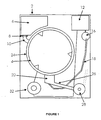
- the washing machine 2 comprises a drum 4 for receiving a load of laundry to be washed.
- the washing machine 2 also comprises a detergent chamber 6 for receiving detergent to be used in the washing of the laundry.
- the washing machine 2 has a water intake valve 8 for allowing a water intake into the washing machine via a water intake hose 10.
- Electronic control means 12 provides washing programs for the washing machine 2 and detects the quantity and type of the laundry in the load.
- a pressure sensor 16 measures the pressure level in the tub 24.
- the pressure sensor 16 is connected to a sump 20 through a pressure sensor pipe 18.
- the washing machine 2 is such that the drum 4 is housed in a tub 24.
- the water intake hose 10 extends between the detergent chamber 6 and the tub 24 as shown.
- the sump 20 leads via a conduit 26 to a liquor pump 28.
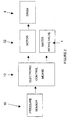
- the pressure sensor 16 connects to the electronic control means 12.
- the electronic control means 12 controls the water intake valve 8 and a motor 32.
- the motor 32 drives the drum 4.
- the pressure sensor 16 measures the water level in the drum 4.
- the pressure sensor 16 sends the measured pressure value to the electronic control means 12.
- the electronic control means 12 opens and closes the water intake valve 8 as appropriate.
- the electronic control means 12 records the time interval between the openings and closings of the water intake valve.
- the electronic control means 12 also counts the number of openings and closings of the water intake valve 8.
- the electronic control means 12 further controls the duration of agitation of the drum 4, by sending appropriate control signals to the motor 32.
- the electronic control means 12 determines the quantity of the laundry in the load by counting the number of openings of the water intake valve at six different first decision levels.
- the six different first decision levels are an almost empty level, a very low volume level, a low volume level, a medium volume level, a high volume level, and a very high volume level.
- the almost empty level may be OKg ⁇ weight of the laundry ⁇ 0.5Kg
- the very low volume level may be 0.5Kg ⁇ weight of the laundry ⁇ 1.5Kg
- the low volume level may be 1.5Kg ⁇ weight of the laundry ⁇ 2.5Kg
- the medium volume level may be 2.5Kg ⁇ weight of the laundry ⁇ 3.5Kg
- the high volume level may be 3.5Kg ⁇ weight of the laundry ⁇ 4.5Kg
- the very high volume level may be 4.5Kg ⁇ weight of the laundry ⁇ 5Kg.
- the electronic control means 12 determines the type of the laundry in the load by utilising the timing of the openings and closings of the water intake valve and the water release properties of the laundry in the load at three different second decision levels. These three different second decision levels are for the laundry being such that it has high water absorption and respective water release properties (typically laundry in the form of cotton terry towels and knitted wool), for the laundry being such that it has medium water absorption and respective water release properties (typically for the laundry being standard cotton), and for the laundry being such that it has low water absorption and respective water release properties (typically for the laundry being synthetic fabrics and jeans).
- These three different second decision levels are for the laundry being such that it has high water absorption and respective water release properties (typically laundry in the form of cotton terry towels and knitted wool), for the laundry being such that it has medium water absorption and respective water release properties (typically for the laundry being standard cotton), and for the laundry being such that it has low water absorption and respective water release properties (typically for the laundry being synthetic fabrics and jeans).
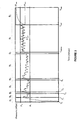
- the electronic control means 12 controls the water intake by the following steps:
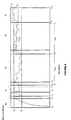
- the electronic control means 12 controls the water intake by the following steps:
- the advantage of the second method of operation is that it has a significantly shorter detection time than in the first method of operation.
- the two methods of washing as described above with reference to Figures 3 and 4 are both such that the laundry in the washing machine 2 absorbs water, and the pressure measured by the pressure sensor 16 decreases until the laundry is completely wet. Therefore, at an optimum of pressure settings (P U and P L ) for opening and closing of the water intake valve 8, and optimised setting of agitation, the number of openings of the water intake valve 8 is directly proportional to the quantity of the laundry introduced into the washing machine 2. Also, the timing of the openings is directly proportional to the absorption properties of the laundry introduced into the washing machine 2.
- the space of time is looked at between the closing of the water intake valve 8 and the opening of the water intake valve 8 for the phases following the first two water intakes (T 2 -T 1 and T 4 -T 3 ).
- the agitation causes the load to soak up water.
- the ratio (T 4 -T 3 )/(T 2 -T 1 ) is a means for the detection of the type of the introduced load.
- each single time value T 1 , T 2 , T 3 and T 4 , and water release properties are also used in association with (T 4 -T 3 )/ (T 2 -T 1 ).
- the electronic control means utilizes the measured pressure values to detect the quantity and type of the laundry in the load, whilst the same signal is also used to control the water intake valve.
- the water absorption and release properties of the laundry in the load are used for detection purposes, and, only, upper and lower threshold values control the water intake.
- the number of openings of the water intake valve are detected, and this information is used to determine the quantity of the water.
- This information is actually a map (indirect sensing) of the amount of water taken into the washing machine 2.
- a disadvantage of this first method is that it requires a relatively long duration in order to detect the quantity and type of the laundry in the load.
- the second method described above is similar to the first method but it overcomes the disadvantage of the first method. More specifically, the duration required to detect the volume and type is determined adaptively according to the quantity of the laundry in the load. The duration required to detect lower quantities is shorter than for higher quantities.
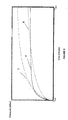
- Curve A for a fabric having low water release properties.
- Curve B is for a fabric having medium water release properties.
- Curve C is for a fabric having high water release properties.
- the curves A, B and C are for pressure (mBar) against time (minutes) and are exploitation of experimental results.
- Electronic control means 12 first, determines the quantity of the laundry in the load. Then, electronic control means 12 compares (T 2 -T 1 ), (T 4 -T 3 ), (T 4 -T 3 )/(T 2 -T 1 ), T 1 , T 2 , T 3 , T 4 and (P max -P min ) with predetermined threshold values and determines the type of the laundry in the load.
Landscapes
- Engineering & Computer Science (AREA)
- Textile Engineering (AREA)
- Control Of Washing Machine And Dryer (AREA)
- Centrifugal Separators (AREA)
- Iron Core Of Rotating Electric Machines (AREA)
Claims (8)
- Waschverfahren mit einer Waschmaschine (2), die eine Trommel (4) zur Aufnahme einer Ladung von zu waschender Wäsche, eine Waschmittelkammer (6) zur Aufnahme von Waschmittel, das zum Waschen der Wäsche verwendet wird, ein Wassereinlassventil (8), das einen Wassereinlass in die Waschmaschine (2) erlaubt, einen Drucksensor (16) zum Messen von Drucksignalen, und eine elektronische Steuereinrichtung (12) für Waschprogramme der Waschmaschine (2) und zum Erfassen der Menge und des Typs der Wäsche in der Ladung aufweist,
wobei die elektronische Steuereinrichtung (12) erstens zum Erfassen der Menge der Wäsche in der Ladung durch Zählen der Anzahl Öffnungen des Wassereinlassventiles (8) wirksam ist, und
wobei die elektronische Steuereinrichtung (12) zweitens zum Bestimmen des Typs der Wäsche in der Ladung durch die Benutzung der Zeitmessung der Öffnungen und Absperrungen des Wassereinlassventiles und der Wasserfreigabeeigenschaften der Wäsche in der Ladung wirksam ist,
wobei die elektronische Steuereinrichtung (12) den Wassereinlass durch die folgenden Schritte steuert:(i) Öffnen des Wassereinlassventiles (8), bis ein vorbestimmter oberer Schwellwert des Druckes, der durch den Drucksensor (12) gemessen wird, erreicht ist,(ii) Schließen des Wassereinlassventiles (8), Beginnen mit der Bewegung, und Einweichen der Wäsche mit Wasser, bis ein vorbestimmter unterer Schwellwert des Druckes erreicht ist,
wobei die elektronische Steuereinrichtung (12) außerdem den Wassereinlass durch die folgenden Schritte steuert:(iii) Wiederholen der Schritte (i) und (ii), bis die Wäsche komplett nass ist und der gemessene Druck sich auf einem Niveau stabilisiert, und(iv) Vorsehen einer Zeitdauer, während der keine Bewegung der Wäsche und kein Wassereinlass stattfindet, wodurch die Wäsche Wasser freigibt und eine Druckzunahme verursacht, und der Drucksensor (16) die Druckzunahme misst, um Information über den Typ der Wäsche in der Ladung zu erhalten,
oder die elektronische Steuereinrichtung (12) des weiteren den Wassereinlass durch die folgenden Schritte steuert:(iii) Wiederholen der Schritte (i) und (ii) während einer vorbestimmten Zeitdauer, bis der untere Schwellwert des Druckes erreicht ist,(iv) Schließen des Wassereinlassventiles (8), Beginnen mit der Bewegung und Aufrechterhaltung der Bewegung während einer vorbestimmten Zeitdauer, selbst wenn das Druckniveau unter den vorbestimmten minimalen unteren Schwellwert abfällt,(v) Öffnen des Wassereinlassventiles (8) am Ende der vorbestimmten Zeitdauer im Schritt (iv), wenn das Druckniveau im Schritt (iv) unter den vorbestimmten minimalen unteren Schwellwert abgefallen ist,(vi) Wiederholen der Schritte (iv) und (v), bis die Wäsche vollständig durchfeuchtet ist, wie durch eine Stabilisierung des Druckes angezeigt wird,(vii) Überprüfen nach einer vorbestimmten Zeit, dass der Druck noch immer stabil ist, und noch einmal Wiederholen des Schrittes (v), wenn der Druck abgefallen ist, und(viii) Vorsehen einer Zeitdauer, während der keine Bewegung und kein Einlass von Wasser erfolgt, wodurch die Wäsche Wasser freigibt und eine Druckzunahme verursacht, und der Drucksensor (16) die Druckzunahme misst, um Information über den Typ der Wäsche in der Ladung zu erhalten. - Waschverfahren nach Anspruch 1, wobei die elektronische Steuereinrichtung (12) zur Bestimmung des Typs der Wäsche in der Ladung arbeitet mittels(i) des Zeitintervalls zwischen einer zweiten Öffnung des Wassereinlassventiles (8) und einem ersten Verschluss des Wassereinlassventiles (8) und des Zeitintervalls zwischen einem dritten Öffnen des Wassereinlassventiles (8) und einem zweiten Verschließen des Wassereinlassventiles (8)(ii) der Zeitwerte des ersten Verschlusses des Wassereinlassventiles (8), des zweiten Verschlusses des Wassereinlassventiles (8), der zweiten Öffnung des Wassereinlassventiles (8) und der dritten Öffnung des Wassereinlassventiles (8), und(iii) der Wasserfreigabeeigenschaften der Wäsche in der Ladung, wie sie durch Druckänderungen angezeigt werden, die durch den Drucksensor (16) gemessen werden.
- Waschverfahren nach einem der vorhergehenden Ansprüche, wobei die elektronische Steuereinrichtung (12) die Menge der Wäsche in der Ladung durch die Messung der Drucksignale an einer Vielzahl von unterschiedlichen ersten Entscheidungsniveaus bestimmt.
- Waschverfahren nach Anspruch 3, wobei sechs unterschiedliche erste Entscheidungsniveaus vorhanden sind.
- Waschverfahren nach Anspruch 4, wobei die sechs unterschiedlichen ersten Entscheidungsniveaus ein nahezu leeres Niveau, ein sehr kleines Volumenniveau, ein kleines Volumenniveau, ein mittleres Volumenniveau, ein großes Volumenniveau und sehr großes Volumenniveau sind.
- Waschverfahren nach einem der vorhergehenden Ansprüche, wobei die elektronische Steuereinrichtung (12) den Typ der Wäsche in der Ladung durch die Messung der Drucksignale an einer Vielzahl von unterschiedlichen zweiten Entscheidungsniveaus bestimmt.
- Waschverfahren nach Anspruch 6, wobei drei unterschiedliche zweite Entscheidungsniveaus vorhanden sind.
- Waschverfahren nach Anspruch 7, wobei die drei unterschiedlichen zweiten Entscheidungsniveaus für die Wäsche wie folgt sind, dass sie eine große Wasseraufnahme und entsprechende Wasserfreigabeeigenschaften besitzt, dass sie eine mittlere Wasseraufnahme und entsprechende Wasserfreigabeeigenschaften besitzt, und dass sie eine geringe Wasseraufnahme und entsprechende Wasserfreigabeeigenschaften besitzt.
Applications Claiming Priority (1)
| Application Number | Priority Date | Filing Date | Title |
|---|---|---|---|
| PCT/TR1998/000015 WO2000009792A1 (en) | 1998-08-10 | 1998-08-10 | A washing machine |
Publications (2)
| Publication Number | Publication Date |
|---|---|
| EP1135552A1 EP1135552A1 (de) | 2001-09-26 |
| EP1135552B1 true EP1135552B1 (de) | 2004-10-20 |
Family
ID=21621359
Family Applications (1)
| Application Number | Title | Priority Date | Filing Date |
|---|---|---|---|
| EP98937909A Expired - Lifetime EP1135552B1 (de) | 1998-08-10 | 1998-08-10 | Waschverfahren |
Country Status (7)
| Country | Link |
|---|---|
| US (1) | US6634191B1 (de) |
| EP (1) | EP1135552B1 (de) |
| AT (1) | ATE280258T1 (de) |
| AU (1) | AU8655098A (de) |
| DE (1) | DE69827169T2 (de) |
| TR (1) | TR200100456T2 (de) |
| WO (1) | WO2000009792A1 (de) |
Cited By (1)
| Publication number | Priority date | Publication date | Assignee | Title |
|---|---|---|---|---|
| CN104088113A (zh) * | 2014-07-15 | 2014-10-08 | 无锡飞翎电子有限公司 | 一种滚筒洗衣机负载大小识别方法 |
Families Citing this family (13)
| Publication number | Priority date | Publication date | Assignee | Title |
|---|---|---|---|---|
| KR20030021348A (ko) * | 2001-09-05 | 2003-03-15 | 주식회사 엘지이아이 | 드럼세탁기의 세탁 제어 방법 |
| KR100929228B1 (ko) * | 2002-11-28 | 2009-12-01 | 엘지전자 주식회사 | 드럼세탁기의 급수방법 |
| DE102004039662A1 (de) * | 2004-08-16 | 2006-02-23 | BSH Bosch und Siemens Hausgeräte GmbH | Programmgesteuerte Waschmaschine |
| PL1734169T3 (pl) * | 2005-06-16 | 2008-07-31 | Electrolux Home Products Corp Nv | Domowa maszyna pralnicza do tkanin z obiegiem wody o automatycznym pomiarze rodzaju wsadu prania i sposób jej działania |
| US7685849B2 (en) * | 2005-11-28 | 2010-03-30 | General Electric Company | Methods and apparatus for monitoring a washing machine |
| US8505139B2 (en) * | 2007-01-18 | 2013-08-13 | Electrolux Home Products, Inc. | Adaptive automatic laundry washer water fill |
| US8245342B2 (en) * | 2008-07-30 | 2012-08-21 | Whirlpool Corporation | Method for determining load size in a washing machine |
| US8381341B2 (en) * | 2008-09-12 | 2013-02-26 | Whirlpool Corporation | Method and apparatus for determining load size in a washing machine |
| CN102666964B (zh) * | 2009-12-31 | 2015-11-25 | 阿塞里克股份有限公司 | 能够检测衣服的类型和数量的洗衣机 |
| US9598808B2 (en) | 2011-10-12 | 2017-03-21 | Whirlpool Corporation | Laundry treating appliance with method to detect the type and size of a load |
| CN103290650B (zh) * | 2012-02-24 | 2017-09-12 | 博西华电器(江苏)有限公司 | 洗衣机的控制方法 |
| DE102013214978A1 (de) | 2013-07-31 | 2015-02-05 | BSH Bosch und Siemens Hausgeräte GmbH | Füllstandsbestimmung für Waschmaschine |
| US9551103B2 (en) | 2013-08-13 | 2017-01-24 | Whirlpool Corporation | Method to detect the type of a load in a laundry treating appliance |
Family Cites Families (11)
| Publication number | Priority date | Publication date | Assignee | Title |
|---|---|---|---|---|
| JPS6057880B2 (ja) * | 1977-05-17 | 1985-12-17 | 株式会社日立製作所 | 電気洗濯機 |
| AU525345B2 (en) * | 1978-04-04 | 1982-11-04 | Tokyo Shibaura Denki Kabushiki Kaisha | Automatic washer |
| JPS54147661A (en) * | 1978-05-10 | 1979-11-19 | Hitachi Ltd | Electric washing machine |
| US4503575A (en) * | 1982-12-02 | 1985-03-12 | Whirlpool Corporation | Automatic liquid control system for a clothes washing machine |
| JPH02164393A (ja) * | 1988-12-16 | 1990-06-25 | Sanyo Electric Co Ltd | 洗濯機 |
| JP2892749B2 (ja) * | 1990-02-28 | 1999-05-17 | 株式会社日立製作所 | 洗濯機の制御方法 |
| IT1243140B (it) | 1990-09-05 | 1994-05-24 | Osvaldo Tonello | Sistema di rilevamento e di correzione dello squilibrio durante la centrifuga in macchine lavatrici industriali |
| DE4038802A1 (de) | 1990-12-05 | 1992-06-11 | Bosch Siemens Hausgeraete | Steuerung fuer ein elektrisches hausgeraet |
| US5715555A (en) * | 1995-09-12 | 1998-02-10 | Motorola Inc. | Smart laundry system and methods therefor |
| CA2242994C (en) * | 1997-07-14 | 2008-09-16 | Lg Electronics Inc. | Method for detecting cloth amount in drum washing machine |
| KR19990021190A (ko) * | 1997-08-30 | 1999-03-25 | 전주범 | 세탁기의 수위 감지 최적화 방법 |
-
1998
- 1998-08-10 DE DE69827169T patent/DE69827169T2/de not_active Expired - Lifetime
- 1998-08-10 EP EP98937909A patent/EP1135552B1/de not_active Expired - Lifetime
- 1998-08-10 WO PCT/TR1998/000015 patent/WO2000009792A1/en not_active Ceased
- 1998-08-10 TR TR2001/00456T patent/TR200100456T2/xx unknown
- 1998-08-10 AT AT98937909T patent/ATE280258T1/de not_active IP Right Cessation
- 1998-08-10 AU AU86550/98A patent/AU8655098A/en not_active Abandoned
- 1998-08-10 US US09/914,273 patent/US6634191B1/en not_active Expired - Lifetime
Cited By (2)
| Publication number | Priority date | Publication date | Assignee | Title |
|---|---|---|---|---|
| CN104088113A (zh) * | 2014-07-15 | 2014-10-08 | 无锡飞翎电子有限公司 | 一种滚筒洗衣机负载大小识别方法 |
| CN104088113B (zh) * | 2014-07-15 | 2018-02-16 | 无锡飞翎电子有限公司 | 一种滚筒洗衣机负载大小识别方法 |
Also Published As
| Publication number | Publication date |
|---|---|
| TR200100456T2 (tr) | 2001-07-23 |
| DE69827169T2 (de) | 2005-10-20 |
| ATE280258T1 (de) | 2004-11-15 |
| EP1135552A1 (de) | 2001-09-26 |
| DE69827169D1 (de) | 2004-11-25 |
| US6634191B1 (en) | 2003-10-21 |
| WO2000009792A1 (en) | 2000-02-24 |
| AU8655098A (en) | 2000-03-06 |
Similar Documents
| Publication | Publication Date | Title |
|---|---|---|
| US6634191B1 (en) | Washing machine | |
| US8627524B2 (en) | Household-type water-recirculating clothes washing machine with automatic control of the washload weight, and operating method thereof | |
| US8468857B2 (en) | Apparatus for determining load size in a washing machine | |
| US8510887B2 (en) | Method for eliminating foam in a drum washing machine and drum washing machine suitable therefor | |
| US6269666B1 (en) | Control for an automatic washer with spray pretreatment | |
| KR100924445B1 (ko) | 세탁기의 프로그램 제어 방법 및 그 방법을 사용하는 세탁기 | |
| US8381341B2 (en) | Method and apparatus for determining load size in a washing machine | |
| US20050197264A1 (en) | Process for eliminating foam in the lye container of a drum washing machine | |
| KR100403026B1 (ko) | 세탁물의 흡수특성을 고려한 세탁기의 제어방법 | |
| CN112760913B (zh) | 排水泵的控制方法、装置、洗衣机、存储介质及处理器 | |
| KR100929228B1 (ko) | 드럼세탁기의 급수방법 | |
| CN112746435B (zh) | 衣物处理装置的进水控制方法、装置和衣物处理装置 | |
| WO2008148844A2 (en) | A washer/dryer and the control method thereof | |
| EP1096052A3 (de) | Verfahren zur Überwachung der Flusenfilter in einer Waschmachine | |
| US5714939A (en) | Method of detecting the clogging of a filter installed in a washing machine | |
| KR101054431B1 (ko) | 세탁기 및 그 탈수 제어 방법 | |
| EP1096051B1 (de) | Verfahren zur Überwachung der gemessenen Menge Waschmittel in einer automatischen Waschmaschine oder ähnlichem | |
| KR101711838B1 (ko) | 세탁기 및 세탁기의 제어방법 | |
| JP2000102691A (ja) | ドラム式洗濯機 | |
| KR0130377B1 (ko) | 세탁기의 구동제어방법 | |
| KR0168124B1 (ko) | 드럼세탁기의 세탁제어방법 | |
| KR20000014588A (ko) | 드럼세탁기의 거품감지방법 | |
| KR19990055473A (ko) | 드럼세탁기의 탈수제어방법 | |
| KR19980036290A (ko) | 세탁기의 포량 감지장치 및 방법 | |
| KR19990038083A (ko) | 세탁기의 급/배수가설정시간의 설정 방법 및 그에 따른 시간 표시 방법 |
Legal Events
| Date | Code | Title | Description |
|---|---|---|---|
| PUAI | Public reference made under article 153(3) epc to a published international application that has entered the european phase |
Free format text: ORIGINAL CODE: 0009012 |
|
| 17P | Request for examination filed |
Effective date: 20010207 |
|
| AK | Designated contracting states |
Kind code of ref document: A1 Designated state(s): AT BE CH CY DE DK ES FI FR GB GR IE IT LI LU MC NL PT SE |
|
| AX | Request for extension of the european patent |
Free format text: AL PAYMENT 20010207;LT PAYMENT 20010207;LV PAYMENT 20010207;MK PAYMENT 20010207;RO PAYMENT 20010207;SI PAYMENT 20010207 |
|
| 17Q | First examination report despatched |
Effective date: 20021118 |
|
| RTI1 | Title (correction) |
Free format text: WASHING METHOD |
|
| GRAP | Despatch of communication of intention to grant a patent |
Free format text: ORIGINAL CODE: EPIDOSNIGR1 |
|
| GRAS | Grant fee paid |
Free format text: ORIGINAL CODE: EPIDOSNIGR3 |
|
| GRAA | (expected) grant |
Free format text: ORIGINAL CODE: 0009210 |
|
| AK | Designated contracting states |
Kind code of ref document: B1 Designated state(s): AT BE CH CY DE DK ES FI FR GB GR IE IT LI LU MC NL PT SE |
|
| AX | Request for extension of the european patent |
Extension state: AL LT LV MK RO SI |
|
| PG25 | Lapsed in a contracting state [announced via postgrant information from national office to epo] |
Ref country code: NL Free format text: LAPSE BECAUSE OF FAILURE TO SUBMIT A TRANSLATION OF THE DESCRIPTION OR TO PAY THE FEE WITHIN THE PRESCRIBED TIME-LIMIT Effective date: 20041020 Ref country code: LI Free format text: LAPSE BECAUSE OF FAILURE TO SUBMIT A TRANSLATION OF THE DESCRIPTION OR TO PAY THE FEE WITHIN THE PRESCRIBED TIME-LIMIT Effective date: 20041020 Ref country code: IT Free format text: LAPSE BECAUSE OF FAILURE TO SUBMIT A TRANSLATION OF THE DESCRIPTION OR TO PAY THE FEE WITHIN THE PRESCRIBED TIME-LIMIT;WARNING: LAPSES OF ITALIAN PATENTS WITH EFFECTIVE DATE BEFORE 2007 MAY HAVE OCCURRED AT ANY TIME BEFORE 2007. THE CORRECT EFFECTIVE DATE MAY BE DIFFERENT FROM THE ONE RECORDED. Effective date: 20041020 Ref country code: FR Free format text: LAPSE BECAUSE OF FAILURE TO SUBMIT A TRANSLATION OF THE DESCRIPTION OR TO PAY THE FEE WITHIN THE PRESCRIBED TIME-LIMIT Effective date: 20041020 Ref country code: FI Free format text: LAPSE BECAUSE OF FAILURE TO SUBMIT A TRANSLATION OF THE DESCRIPTION OR TO PAY THE FEE WITHIN THE PRESCRIBED TIME-LIMIT Effective date: 20041020 Ref country code: CH Free format text: LAPSE BECAUSE OF FAILURE TO SUBMIT A TRANSLATION OF THE DESCRIPTION OR TO PAY THE FEE WITHIN THE PRESCRIBED TIME-LIMIT Effective date: 20041020 Ref country code: BE Free format text: LAPSE BECAUSE OF FAILURE TO SUBMIT A TRANSLATION OF THE DESCRIPTION OR TO PAY THE FEE WITHIN THE PRESCRIBED TIME-LIMIT Effective date: 20041020 Ref country code: AT Free format text: LAPSE BECAUSE OF FAILURE TO SUBMIT A TRANSLATION OF THE DESCRIPTION OR TO PAY THE FEE WITHIN THE PRESCRIBED TIME-LIMIT Effective date: 20041020 |
|
| REG | Reference to a national code |
Ref country code: GB Ref legal event code: FG4D |
|
| RIN1 | Information on inventor provided before grant (corrected) |
Inventor name: MURACH, STEFANIE Inventor name: GUELER, EMIN CAGATAY |
|
| REG | Reference to a national code |
Ref country code: CH Ref legal event code: EP |
|
| REG | Reference to a national code |
Ref country code: IE Ref legal event code: FG4D |
|
| REF | Corresponds to: |
Ref document number: 69827169 Country of ref document: DE Date of ref document: 20041125 Kind code of ref document: P |
|
| PG25 | Lapsed in a contracting state [announced via postgrant information from national office to epo] |
Ref country code: SE Free format text: LAPSE BECAUSE OF FAILURE TO SUBMIT A TRANSLATION OF THE DESCRIPTION OR TO PAY THE FEE WITHIN THE PRESCRIBED TIME-LIMIT Effective date: 20050120 Ref country code: GR Free format text: LAPSE BECAUSE OF FAILURE TO SUBMIT A TRANSLATION OF THE DESCRIPTION OR TO PAY THE FEE WITHIN THE PRESCRIBED TIME-LIMIT Effective date: 20050120 Ref country code: DK Free format text: LAPSE BECAUSE OF FAILURE TO SUBMIT A TRANSLATION OF THE DESCRIPTION OR TO PAY THE FEE WITHIN THE PRESCRIBED TIME-LIMIT Effective date: 20050120 |
|
| PG25 | Lapsed in a contracting state [announced via postgrant information from national office to epo] |
Ref country code: ES Free format text: LAPSE BECAUSE OF FAILURE TO SUBMIT A TRANSLATION OF THE DESCRIPTION OR TO PAY THE FEE WITHIN THE PRESCRIBED TIME-LIMIT Effective date: 20050131 |
|
| LTIE | Lt: invalidation of european patent or patent extension |
Effective date: 20041020 |
|
| REG | Reference to a national code |
Ref country code: CH Ref legal event code: PL |
|
| NLV1 | Nl: lapsed or annulled due to failure to fulfill the requirements of art. 29p and 29m of the patents act | ||
| PG25 | Lapsed in a contracting state [announced via postgrant information from national office to epo] |
Ref country code: LU Free format text: LAPSE BECAUSE OF NON-PAYMENT OF DUE FEES Effective date: 20050810 Ref country code: IE Free format text: LAPSE BECAUSE OF NON-PAYMENT OF DUE FEES Effective date: 20050810 Ref country code: GB Free format text: LAPSE BECAUSE OF NON-PAYMENT OF DUE FEES Effective date: 20050810 Ref country code: CY Free format text: LAPSE BECAUSE OF FAILURE TO SUBMIT A TRANSLATION OF THE DESCRIPTION OR TO PAY THE FEE WITHIN THE PRESCRIBED TIME-LIMIT Effective date: 20050810 |
|
| PLBE | No opposition filed within time limit |
Free format text: ORIGINAL CODE: 0009261 |
|
| STAA | Information on the status of an ep patent application or granted ep patent |
Free format text: STATUS: NO OPPOSITION FILED WITHIN TIME LIMIT |
|
| PG25 | Lapsed in a contracting state [announced via postgrant information from national office to epo] |
Ref country code: MC Free format text: LAPSE BECAUSE OF NON-PAYMENT OF DUE FEES Effective date: 20050831 |
|
| 26N | No opposition filed |
Effective date: 20050721 |
|
| EN | Fr: translation not filed | ||
| GBPC | Gb: european patent ceased through non-payment of renewal fee |
Effective date: 20050810 |
|
| REG | Reference to a national code |
Ref country code: IE Ref legal event code: MM4A |
|
| PG25 | Lapsed in a contracting state [announced via postgrant information from national office to epo] |
Ref country code: PT Free format text: LAPSE BECAUSE OF NON-PAYMENT OF DUE FEES Effective date: 20050320 |
|
| PGFP | Annual fee paid to national office [announced via postgrant information from national office to epo] |
Ref country code: DE Payment date: 20160822 Year of fee payment: 19 |
|
| REG | Reference to a national code |
Ref country code: DE Ref legal event code: R119 Ref document number: 69827169 Country of ref document: DE |
|
| PG25 | Lapsed in a contracting state [announced via postgrant information from national office to epo] |
Ref country code: DE Free format text: LAPSE BECAUSE OF NON-PAYMENT OF DUE FEES Effective date: 20180301 |