EP1117385B1 - Aqueous enteric coating composition with low gastric permeability - Google Patents
Aqueous enteric coating composition with low gastric permeability Download PDFInfo
- Publication number
- EP1117385B1 EP1117385B1 EP99951447A EP99951447A EP1117385B1 EP 1117385 B1 EP1117385 B1 EP 1117385B1 EP 99951447 A EP99951447 A EP 99951447A EP 99951447 A EP99951447 A EP 99951447A EP 1117385 B1 EP1117385 B1 EP 1117385B1
- Authority
- EP
- European Patent Office
- Prior art keywords
- weight percent
- composition
- weight
- water
- enteric
- Prior art date
- Legal status (The legal status is an assumption and is not a legal conclusion. Google has not performed a legal analysis and makes no representation as to the accuracy of the status listed.)
- Expired - Lifetime
Links
- 239000000203 mixture Substances 0.000 title claims description 52
- 238000009505 enteric coating Methods 0.000 title claims description 36
- 239000002702 enteric coating Substances 0.000 title claims description 36
- 230000002496 gastric effect Effects 0.000 title description 18
- 230000035699 permeability Effects 0.000 title 1
- 229920000642 polymer Polymers 0.000 claims description 52
- 239000000463 material Substances 0.000 claims description 37
- 239000007787 solid Substances 0.000 claims description 28
- XLYOFNOQVPJJNP-UHFFFAOYSA-N water Substances O XLYOFNOQVPJJNP-UHFFFAOYSA-N 0.000 claims description 26
- 239000000454 talc Substances 0.000 claims description 22
- 229910052623 talc Inorganic materials 0.000 claims description 22
- 230000002209 hydrophobic effect Effects 0.000 claims description 21
- 229920003132 hydroxypropyl methylcellulose phthalate Polymers 0.000 claims description 19
- 150000001875 compounds Chemical class 0.000 claims description 18
- 229940031704 hydroxypropyl methylcellulose phthalate Drugs 0.000 claims description 18
- 150000003839 salts Chemical class 0.000 claims description 17
- 229920000623 Cellulose acetate phthalate Polymers 0.000 claims description 14
- -1 C20 alcohols Chemical class 0.000 claims description 13
- 229940081734 cellulose acetate phthalate Drugs 0.000 claims description 13
- 239000002245 particle Substances 0.000 claims description 10
- 239000007864 aqueous solution Substances 0.000 claims description 9
- 229920000639 hydroxypropylmethylcellulose acetate succinate Polymers 0.000 claims description 9
- 229940100467 polyvinyl acetate phthalate Drugs 0.000 claims description 8
- 239000006185 dispersion Substances 0.000 claims description 6
- ZUAAPNNKRHMPKG-UHFFFAOYSA-N acetic acid;butanedioic acid;methanol;propane-1,2-diol Chemical compound OC.CC(O)=O.CC(O)CO.OC(=O)CCC(O)=O ZUAAPNNKRHMPKG-UHFFFAOYSA-N 0.000 claims description 5
- 239000000654 additive Substances 0.000 claims description 4
- 229920002301 cellulose acetate Polymers 0.000 claims description 4
- 238000000034 method Methods 0.000 claims description 4
- 229920002744 polyvinyl acetate phthalate Polymers 0.000 claims description 4
- 230000008569 process Effects 0.000 claims description 4
- 239000007909 solid dosage form Substances 0.000 claims description 4
- 125000005591 trimellitate group Chemical group 0.000 claims description 4
- PNJWIWWMYCMZRO-UHFFFAOYSA-N pent‐4‐en‐2‐one Natural products CC(=O)CC=C PNJWIWWMYCMZRO-UHFFFAOYSA-N 0.000 claims description 3
- 230000000996 additive effect Effects 0.000 claims description 2
- CERQOIWHTDAKMF-UHFFFAOYSA-N Methacrylic acid Chemical compound CC(=C)C(O)=O CERQOIWHTDAKMF-UHFFFAOYSA-N 0.000 claims 2
- WZNRVWBKYDHTKI-UHFFFAOYSA-N cellulose, acetate 1,2,4-benzenetricarboxylate Chemical compound OC1C(O)C(O)C(CO)OC1OC1C(CO)OC(O)C(O)C1O.OC1C(O)C(O)C(CO)OC1OC1C(CO)OC(O)C(O)C1O.CC(=O)OCC1OC(OC(C)=O)C(OC(C)=O)C(OC(C)=O)C1OC1C(OC(C)=O)C(OC(C)=O)C(OC(C)=O)C(COC(C)=O)O1.CC(=O)OCC1OC(OC(C)=O)C(OC(C)=O)C(OC(C)=O)C1OC1C(OC(C)=O)C(OC(C)=O)C(OC(C)=O)C(COC(C)=O)O1.OC(=O)C1=CC(C(=O)O)=CC=C1C(=O)OCC1C(OC2C(C(OC(=O)C=3C(=CC(=CC=3)C(O)=O)C(O)=O)C(OC(=O)C=3C(=CC(=CC=3)C(O)=O)C(O)=O)C(COC(=O)C=3C(=CC(=CC=3)C(O)=O)C(O)=O)O2)OC(=O)C=2C(=CC(=CC=2)C(O)=O)C(O)=O)C(OC(=O)C=2C(=CC(=CC=2)C(O)=O)C(O)=O)C(OC(=O)C=2C(=CC(=CC=2)C(O)=O)C(O)=O)C(OC(=O)C=2C(=CC(=CC=2)C(O)=O)C(O)=O)O1 WZNRVWBKYDHTKI-UHFFFAOYSA-N 0.000 claims 2
- 229920001577 copolymer Polymers 0.000 claims 2
- 238000000576 coating method Methods 0.000 description 41
- 239000011248 coating agent Substances 0.000 description 36
- GLDOVTGHNKAZLK-UHFFFAOYSA-N octadecan-1-ol Chemical compound CCCCCCCCCCCCCCCCCCO GLDOVTGHNKAZLK-UHFFFAOYSA-N 0.000 description 36
- 239000012530 fluid Substances 0.000 description 18
- GOQYKNQRPGWPLP-UHFFFAOYSA-N n-heptadecyl alcohol Natural products CCCCCCCCCCCCCCCCCO GOQYKNQRPGWPLP-UHFFFAOYSA-N 0.000 description 18
- 239000000243 solution Substances 0.000 description 16
- 230000000968 intestinal effect Effects 0.000 description 15
- 239000004480 active ingredient Substances 0.000 description 10
- 239000008199 coating composition Substances 0.000 description 8
- 239000000945 filler Substances 0.000 description 8
- FLKPEMZONWLCSK-UHFFFAOYSA-N diethyl phthalate Chemical compound CCOC(=O)C1=CC=CC=C1C(=O)OCC FLKPEMZONWLCSK-UHFFFAOYSA-N 0.000 description 6
- 238000012360 testing method Methods 0.000 description 6
- URAYPUMNDPQOKB-UHFFFAOYSA-N triacetin Chemical compound CC(=O)OCC(OC(C)=O)COC(C)=O URAYPUMNDPQOKB-UHFFFAOYSA-N 0.000 description 6
- 239000002253 acid Substances 0.000 description 5
- 239000002585 base Substances 0.000 description 5
- 230000000694 effects Effects 0.000 description 5
- 239000004014 plasticizer Substances 0.000 description 5
- 210000002784 stomach Anatomy 0.000 description 5
- 238000003860 storage Methods 0.000 description 5
- VHUUQVKOLVNVRT-UHFFFAOYSA-N Ammonium hydroxide Chemical compound [NH4+].[OH-] VHUUQVKOLVNVRT-UHFFFAOYSA-N 0.000 description 4
- 239000000908 ammonium hydroxide Substances 0.000 description 4
- 239000002552 dosage form Substances 0.000 description 4
- 210000000936 intestine Anatomy 0.000 description 4
- 238000011068 loading method Methods 0.000 description 4
- 239000003960 organic solvent Substances 0.000 description 4
- 238000005303 weighing Methods 0.000 description 4
- QGZKDVFQNNGYKY-UHFFFAOYSA-N Ammonia Chemical compound N QGZKDVFQNNGYKY-UHFFFAOYSA-N 0.000 description 3
- BSYNRYMUTXBXSQ-UHFFFAOYSA-N Aspirin Chemical compound CC(=O)OC1=CC=CC=C1C(O)=O BSYNRYMUTXBXSQ-UHFFFAOYSA-N 0.000 description 3
- KFZMGEQAYNKOFK-UHFFFAOYSA-N Isopropanol Chemical compound CC(C)O KFZMGEQAYNKOFK-UHFFFAOYSA-N 0.000 description 3
- DOOTYTYQINUNNV-UHFFFAOYSA-N Triethyl citrate Chemical compound CCOC(=O)CC(O)(C(=O)OCC)CC(=O)OCC DOOTYTYQINUNNV-UHFFFAOYSA-N 0.000 description 3
- 229960001138 acetylsalicylic acid Drugs 0.000 description 3
- 150000007824 aliphatic compounds Chemical class 0.000 description 3
- 125000003178 carboxy group Chemical group [H]OC(*)=O 0.000 description 3
- 125000002843 carboxylic acid group Chemical group 0.000 description 3
- 230000003247 decreasing effect Effects 0.000 description 3
- 239000001087 glyceryl triacetate Substances 0.000 description 3
- 235000013773 glyceryl triacetate Nutrition 0.000 description 3
- 239000011550 stock solution Substances 0.000 description 3
- 239000000758 substrate Substances 0.000 description 3
- 238000009492 tablet coating Methods 0.000 description 3
- 239000002700 tablet coating Substances 0.000 description 3
- 229960002622 triacetin Drugs 0.000 description 3
- 239000001069 triethyl citrate Substances 0.000 description 3
- VMYFZRTXGLUXMZ-UHFFFAOYSA-N triethyl citrate Natural products CCOC(=O)C(O)(C(=O)OCC)C(=O)OCC VMYFZRTXGLUXMZ-UHFFFAOYSA-N 0.000 description 3
- 235000013769 triethyl citrate Nutrition 0.000 description 3
- RZVAJINKPMORJF-UHFFFAOYSA-N Acetaminophen Chemical compound CC(=O)NC1=CC=C(O)C=C1 RZVAJINKPMORJF-UHFFFAOYSA-N 0.000 description 2
- PYGXAGIECVVIOZ-UHFFFAOYSA-N Dibutyl decanedioate Chemical compound CCCCOC(=O)CCCCCCCCC(=O)OCCCC PYGXAGIECVVIOZ-UHFFFAOYSA-N 0.000 description 2
- ULGZDMOVFRHVEP-RWJQBGPGSA-N Erythromycin Chemical compound O([C@@H]1[C@@H](C)C(=O)O[C@@H]([C@@]([C@H](O)[C@@H](C)C(=O)[C@H](C)C[C@@](C)(O)[C@H](O[C@H]2[C@@H]([C@H](C[C@@H](C)O2)N(C)C)O)[C@H]1C)(C)O)CC)[C@H]1C[C@@](C)(OC)[C@@H](O)[C@H](C)O1 ULGZDMOVFRHVEP-RWJQBGPGSA-N 0.000 description 2
- 239000004793 Polystyrene Substances 0.000 description 2
- GWEVSGVZZGPLCZ-UHFFFAOYSA-N Titan oxide Chemical compound O=[Ti]=O GWEVSGVZZGPLCZ-UHFFFAOYSA-N 0.000 description 2
- 230000002378 acidificating effect Effects 0.000 description 2
- 150000008044 alkali metal hydroxides Chemical class 0.000 description 2
- 229920001688 coating polymer Polymers 0.000 description 2
- 239000000084 colloidal system Substances 0.000 description 2
- 239000013078 crystal Substances 0.000 description 2
- 229960001193 diclofenac sodium Drugs 0.000 description 2
- 238000004090 dissolution Methods 0.000 description 2
- 238000011156 evaluation Methods 0.000 description 2
- 238000001704 evaporation Methods 0.000 description 2
- 230000008020 evaporation Effects 0.000 description 2
- 239000007888 film coating Substances 0.000 description 2
- 238000009501 film coating Methods 0.000 description 2
- 239000008187 granular material Substances 0.000 description 2
- 230000007062 hydrolysis Effects 0.000 description 2
- 238000006460 hydrolysis reaction Methods 0.000 description 2
- CGIGDMFJXJATDK-UHFFFAOYSA-N indomethacin Chemical compound CC1=C(CC(O)=O)C2=CC(OC)=CC=C2N1C(=O)C1=CC=C(Cl)C=C1 CGIGDMFJXJATDK-UHFFFAOYSA-N 0.000 description 2
- 238000006386 neutralization reaction Methods 0.000 description 2
- 230000003472 neutralizing effect Effects 0.000 description 2
- 239000000546 pharmaceutical excipient Substances 0.000 description 2
- 239000000049 pigment Substances 0.000 description 2
- 229920002223 polystyrene Polymers 0.000 description 2
- 210000000813 small intestine Anatomy 0.000 description 2
- JGMJQSFLQWGYMQ-UHFFFAOYSA-M sodium;2,6-dichloro-n-phenylaniline;acetate Chemical compound [Na+].CC([O-])=O.ClC1=CC=CC(Cl)=C1NC1=CC=CC=C1 JGMJQSFLQWGYMQ-UHFFFAOYSA-M 0.000 description 2
- 238000013112 stability test Methods 0.000 description 2
- ZFXYFBGIUFBOJW-UHFFFAOYSA-N theophylline Chemical compound O=C1N(C)C(=O)N(C)C2=C1NC=N2 ZFXYFBGIUFBOJW-UHFFFAOYSA-N 0.000 description 2
- AZSNMRSAGSSBNP-UHFFFAOYSA-N 22,23-dihydroavermectin B1a Natural products C1CC(C)C(C(C)CC)OC21OC(CC=C(C)C(OC1OC(C)C(OC3OC(C)C(O)C(OC)C3)C(OC)C1)C(C)C=CC=C1C3(C(C(=O)O4)C=C(C)C(O)C3OC1)O)CC4C2 AZSNMRSAGSSBNP-UHFFFAOYSA-N 0.000 description 1
- SPBDXSGPUHCETR-JFUDTMANSA-N 8883yp2r6d Chemical compound O1[C@@H](C)[C@H](O)[C@@H](OC)C[C@@H]1O[C@@H]1[C@@H](OC)C[C@H](O[C@@H]2C(=C/C[C@@H]3C[C@@H](C[C@@]4(O[C@@H]([C@@H](C)CC4)C(C)C)O3)OC(=O)[C@@H]3C=C(C)[C@@H](O)[C@H]4OC\C([C@@]34O)=C/C=C/[C@@H]2C)/C)O[C@H]1C.C1C[C@H](C)[C@@H]([C@@H](C)CC)O[C@@]21O[C@H](C\C=C(C)\[C@@H](O[C@@H]1O[C@@H](C)[C@H](O[C@@H]3O[C@@H](C)[C@H](O)[C@@H](OC)C3)[C@@H](OC)C1)[C@@H](C)\C=C\C=C/1[C@]3([C@H](C(=O)O4)C=C(C)[C@@H](O)[C@H]3OC\1)O)C[C@H]4C2 SPBDXSGPUHCETR-JFUDTMANSA-N 0.000 description 1
- QZCLKYGREBVARF-UHFFFAOYSA-N Acetyl tributyl citrate Chemical compound CCCCOC(=O)CC(C(=O)OCCCC)(OC(C)=O)CC(=O)OCCCC QZCLKYGREBVARF-UHFFFAOYSA-N 0.000 description 1
- VWFCHDSQECPREK-LURJTMIESA-N Cidofovir Chemical compound NC=1C=CN(C[C@@H](CO)OCP(O)(O)=O)C(=O)N=1 VWFCHDSQECPREK-LURJTMIESA-N 0.000 description 1
- JIGUQPWFLRLWPJ-UHFFFAOYSA-N Ethyl acrylate Chemical compound CCOC(=O)C=C JIGUQPWFLRLWPJ-UHFFFAOYSA-N 0.000 description 1
- 229920003134 Eudragit® polymer Polymers 0.000 description 1
- HEFNNWSXXWATRW-UHFFFAOYSA-N Ibuprofen Chemical compound CC(C)CC1=CC=C(C(C)C(O)=O)C=C1 HEFNNWSXXWATRW-UHFFFAOYSA-N 0.000 description 1
- GUBGYTABKSRVRQ-QKKXKWKRSA-N Lactose Natural products OC[C@H]1O[C@@H](O[C@H]2[C@H](O)[C@@H](O)C(O)O[C@@H]2CO)[C@H](O)[C@@H](O)[C@H]1O GUBGYTABKSRVRQ-QKKXKWKRSA-N 0.000 description 1
- VVQNEPGJFQJSBK-UHFFFAOYSA-N Methyl methacrylate Chemical compound COC(=O)C(C)=C VVQNEPGJFQJSBK-UHFFFAOYSA-N 0.000 description 1
- 229920000168 Microcrystalline cellulose Polymers 0.000 description 1
- BPQQTUXANYXVAA-UHFFFAOYSA-N Orthosilicate Chemical compound [O-][Si]([O-])([O-])[O-] BPQQTUXANYXVAA-UHFFFAOYSA-N 0.000 description 1
- FAPWRFPIFSIZLT-UHFFFAOYSA-M Sodium chloride Chemical class [Na+].[Cl-] FAPWRFPIFSIZLT-UHFFFAOYSA-M 0.000 description 1
- CZMRCDWAGMRECN-UGDNZRGBSA-N Sucrose Chemical compound O[C@H]1[C@H](O)[C@@H](CO)O[C@@]1(CO)O[C@@H]1[C@H](O)[C@@H](O)[C@H](O)[C@@H](CO)O1 CZMRCDWAGMRECN-UGDNZRGBSA-N 0.000 description 1
- 229930006000 Sucrose Natural products 0.000 description 1
- YKTSYUJCYHOUJP-UHFFFAOYSA-N [O--].[Al+3].[Al+3].[O-][Si]([O-])([O-])[O-] Chemical compound [O--].[Al+3].[Al+3].[O-][Si]([O-])([O-])[O-] YKTSYUJCYHOUJP-UHFFFAOYSA-N 0.000 description 1
- 150000007513 acids Chemical class 0.000 description 1
- 230000009471 action Effects 0.000 description 1
- 238000005054 agglomeration Methods 0.000 description 1
- 230000002776 aggregation Effects 0.000 description 1
- 125000001931 aliphatic group Chemical group 0.000 description 1
- 229910052782 aluminium Inorganic materials 0.000 description 1
- XAGFODPZIPBFFR-UHFFFAOYSA-N aluminium Chemical compound [Al] XAGFODPZIPBFFR-UHFFFAOYSA-N 0.000 description 1
- 229910021529 ammonia Inorganic materials 0.000 description 1
- 239000003146 anticoagulant agent Substances 0.000 description 1
- 230000004888 barrier function Effects 0.000 description 1
- 239000011324 bead Substances 0.000 description 1
- 230000009286 beneficial effect Effects 0.000 description 1
- 230000008901 benefit Effects 0.000 description 1
- 239000008280 blood Substances 0.000 description 1
- 210000004369 blood Anatomy 0.000 description 1
- 229920002678 cellulose Polymers 0.000 description 1
- 238000006243 chemical reaction Methods 0.000 description 1
- 239000003795 chemical substances by application Substances 0.000 description 1
- 230000007797 corrosion Effects 0.000 description 1
- 238000005260 corrosion Methods 0.000 description 1
- 230000007423 decrease Effects 0.000 description 1
- 239000002274 desiccant Substances 0.000 description 1
- 102000038379 digestive enzymes Human genes 0.000 description 1
- 108091007734 digestive enzymes Proteins 0.000 description 1
- HSUGRBWQSSZJOP-RTWAWAEBSA-N diltiazem Chemical compound C1=CC(OC)=CC=C1[C@H]1[C@@H](OC(C)=O)C(=O)N(CCN(C)C)C2=CC=CC=C2S1 HSUGRBWQSSZJOP-RTWAWAEBSA-N 0.000 description 1
- 229960004166 diltiazem Drugs 0.000 description 1
- 239000007884 disintegrant Substances 0.000 description 1
- 238000007922 dissolution test Methods 0.000 description 1
- 239000003814 drug Substances 0.000 description 1
- 230000007613 environmental effect Effects 0.000 description 1
- 229960003276 erythromycin Drugs 0.000 description 1
- 238000002474 experimental method Methods 0.000 description 1
- 210000004211 gastric acid Anatomy 0.000 description 1
- 210000004051 gastric juice Anatomy 0.000 description 1
- 210000001156 gastric mucosa Anatomy 0.000 description 1
- 210000001035 gastrointestinal tract Anatomy 0.000 description 1
- 239000011521 glass Substances 0.000 description 1
- 229920001903 high density polyethylene Polymers 0.000 description 1
- 239000004700 high-density polyethylene Substances 0.000 description 1
- 230000003301 hydrolyzing effect Effects 0.000 description 1
- 229960001680 ibuprofen Drugs 0.000 description 1
- 238000011065 in-situ storage Methods 0.000 description 1
- 229960000905 indomethacin Drugs 0.000 description 1
- 229910052500 inorganic mineral Inorganic materials 0.000 description 1
- 229960002418 ivermectin Drugs 0.000 description 1
- 239000008101 lactose Substances 0.000 description 1
- 239000010410 layer Substances 0.000 description 1
- 231100000053 low toxicity Toxicity 0.000 description 1
- 239000000314 lubricant Substances 0.000 description 1
- HCWCAKKEBCNQJP-UHFFFAOYSA-N magnesium orthosilicate Chemical compound [Mg+2].[Mg+2].[O-][Si]([O-])([O-])[O-] HCWCAKKEBCNQJP-UHFFFAOYSA-N 0.000 description 1
- 239000000391 magnesium silicate Substances 0.000 description 1
- 229910052919 magnesium silicate Inorganic materials 0.000 description 1
- 235000019792 magnesium silicate Nutrition 0.000 description 1
- 238000004519 manufacturing process Methods 0.000 description 1
- 229920003145 methacrylic acid copolymer Polymers 0.000 description 1
- 235000019813 microcrystalline cellulose Nutrition 0.000 description 1
- 239000008108 microcrystalline cellulose Substances 0.000 description 1
- 229940016286 microcrystalline cellulose Drugs 0.000 description 1
- 238000002156 mixing Methods 0.000 description 1
- CDBRNDSHEYLDJV-FVGYRXGTSA-M naproxen sodium Chemical compound [Na+].C1=C([C@H](C)C([O-])=O)C=CC2=CC(OC)=CC=C21 CDBRNDSHEYLDJV-FVGYRXGTSA-M 0.000 description 1
- 229960003940 naproxen sodium Drugs 0.000 description 1
- 229960005489 paracetamol Drugs 0.000 description 1
- 239000008188 pellet Substances 0.000 description 1
- 229920000058 polyacrylate Polymers 0.000 description 1
- 229920006254 polymer film Polymers 0.000 description 1
- 239000002897 polymer film coating Substances 0.000 description 1
- 235000020004 porter Nutrition 0.000 description 1
- 239000000843 powder Substances 0.000 description 1
- AQHHHDLHHXJYJD-UHFFFAOYSA-N propranolol Chemical compound C1=CC=C2C(OCC(O)CNC(C)C)=CC=CC2=C1 AQHHHDLHHXJYJD-UHFFFAOYSA-N 0.000 description 1
- 230000001681 protective effect Effects 0.000 description 1
- 229910052903 pyrophyllite Inorganic materials 0.000 description 1
- 230000009467 reduction Effects 0.000 description 1
- 230000003381 solubilizing effect Effects 0.000 description 1
- 239000007921 spray Substances 0.000 description 1
- 238000005507 spraying Methods 0.000 description 1
- 238000003756 stirring Methods 0.000 description 1
- 238000009498 subcoating Methods 0.000 description 1
- 239000000126 substance Substances 0.000 description 1
- 239000005720 sucrose Substances 0.000 description 1
- 239000003826 tablet Substances 0.000 description 1
- 238000012956 testing procedure Methods 0.000 description 1
- 229960000278 theophylline Drugs 0.000 description 1
- 238000011287 therapeutic dose Methods 0.000 description 1
- 239000004034 viscosity adjusting agent Substances 0.000 description 1
- 239000003039 volatile agent Substances 0.000 description 1
Images
Classifications
-
- A—HUMAN NECESSITIES
- A61—MEDICAL OR VETERINARY SCIENCE; HYGIENE
- A61K—PREPARATIONS FOR MEDICAL, DENTAL OR TOILETRY PURPOSES
- A61K9/00—Medicinal preparations characterised by special physical form
- A61K9/20—Pills, tablets, discs, rods
- A61K9/28—Dragees; Coated pills or tablets, e.g. with film or compression coating
- A61K9/2806—Coating materials
- A61K9/282—Organic compounds, e.g. fats
-
- A—HUMAN NECESSITIES
- A61—MEDICAL OR VETERINARY SCIENCE; HYGIENE
- A61K—PREPARATIONS FOR MEDICAL, DENTAL OR TOILETRY PURPOSES
- A61K9/00—Medicinal preparations characterised by special physical form
- A61K9/20—Pills, tablets, discs, rods
- A61K9/28—Dragees; Coated pills or tablets, e.g. with film or compression coating
- A61K9/2806—Coating materials
- A61K9/2813—Inorganic compounds
-
- A—HUMAN NECESSITIES
- A61—MEDICAL OR VETERINARY SCIENCE; HYGIENE
- A61K—PREPARATIONS FOR MEDICAL, DENTAL OR TOILETRY PURPOSES
- A61K9/00—Medicinal preparations characterised by special physical form
- A61K9/20—Pills, tablets, discs, rods
- A61K9/28—Dragees; Coated pills or tablets, e.g. with film or compression coating
- A61K9/2806—Coating materials
- A61K9/2833—Organic macromolecular compounds
- A61K9/286—Polysaccharides, e.g. gums; Cyclodextrin
- A61K9/2866—Cellulose; Cellulose derivatives, e.g. hydroxypropyl methylcellulose
-
- A—HUMAN NECESSITIES
- A61—MEDICAL OR VETERINARY SCIENCE; HYGIENE
- A61K—PREPARATIONS FOR MEDICAL, DENTAL OR TOILETRY PURPOSES
- A61K9/00—Medicinal preparations characterised by special physical form
- A61K9/20—Pills, tablets, discs, rods
- A61K9/28—Dragees; Coated pills or tablets, e.g. with film or compression coating
- A61K9/2886—Dragees; Coated pills or tablets, e.g. with film or compression coating having two or more different drug-free coatings; Tablets of the type inert core-drug layer-inactive layer
Definitions
- the present invention relates to the field of enteric coating polymers.
- the present invention more particularly relates to the field of aqueous compositions of enteric coating polymers.
- enteric coatings resists dissolution in acidic gastric media, but dissolves in the alkaline intestinal environment. Enteric coatings are useful for protecting the stomach wall from the effect of active ingredients in dosage form. For example, if aspirin is directly exposed to gastric mucosa, it can cause corrosion of the stomach wall. Enteric coatings are also used to protect active ingredients in the tablet core from chemical attack from stomach acids and digestive enzymes. Enteric coatings can also be used to promote the delivery of active ingredients in the core tablet to a particular region of the intestine such as the upper part of the small intestine, in order to enhance the bioavailability of the active ingredient.
- Polymers useful as enteric coatings contain ionizable carboxylic groups and include cellulose acetate phthalates(C-A-P), cellulose acetate trimellitates (C-A-T), hydroxypropyl methyl cellulose phthalates(HPMCP), hydroxypropyl methyl cellulose acetate succinate (HPMCAS), polyvinyl acetate phthalate (PVAP), and certain acrylic polymers.
- C-A-P cellulose acetate phthalates
- C-A-T cellulose acetate trimellitates
- HPMCP hydroxypropyl methyl cellulose phthalates
- HPMCAS hydroxypropyl methyl cellulose acetate succinate
- PVAP polyvinyl acetate phthalate
- certain acrylic polymers In the low pH stomach environment, the carboxylic acid groups in the polymers remain un-ionized. Therefore, the polymeric coating remains insoluble in gastric fluid. The polymeric coating disintegrates or dissolves in the higher pH intestinal environment to allow dissolution of
- the use of organic solvents has been avoided by applying the polymers as aqueous solutions or dispersions of their water-soluble salts.
- the enteric polymers are water-solubilized with a water soluble base through neutralization of a sufficient number of carboxyl groups so that the polymer becomes water soluble or water dispersible.
- Useful water soluble bases include alkali metal hydroxides and ammonium hydroxide.
- the water soluble salts of enteric cellulose esters have been found to be somewhat hydrolytically unstable, hydrolyzing slowly upon exposure to atmospheric moisture or gastric juices. A resulting film of partly hydrolyzed polymer is partially insoluble in intestinal fluid, causing the active ingredient to be released too slowly in the intestinal tract.
- JP(A) 8109126 discloses granules with a coating comprising an enteric coating layer wherein a composition comprising HPMCAS is used.
- US-A-5733575 discloses an enteric coating composition
- an enteric coating composition comprising an enteric film forming polymer, a detackifier, a viscosity modifier, an alkylizing/anticoagulating agent and optionally a plasticizer such as triethyl citrate.
- WO-A-9748386 describes a tablet comprising a therapeutic dose of diltiazem with a coating composition comprising HPMCP, talc and acetyl tributyl citrate.
- WO-A-9516451 discloses an enteric coating comprising Eudragit, diethyl phthalate and talc.
- aqueous enteric coating composition containing a water soluble salt of a film-forming enteric polymer wherein the film coating provides a higher water resistance than was previously achievable and maintains good mechanical strength.
- the present invention is an aqueous enteric coating composition which comprises a dispersion of 5 to 45 weight percent of a hydrophobic compound having from 12 to 20 aliphatic carbon atoms selected from C 12 to C 20 alcohols and 5 to 50 weight percent of a water-insoluble flake material, dispersed in an aqueous solution of 35 to 70 weight percent of a water-soluble salt of an enteric polymer, with the weight percentages being based on a total solids weight.
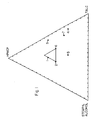
- FIG. 1 is a triangular coordinate graph illustrating a preferred embodiment of the invention wherein the composition contains HPMCP, stearyl alcohol, and talc.
- the apex of the graph represents 100 weight percent HPMCP enteric polymer.
- the lower right corner of the graph represents 100 weight percent talc.
- the lower left hand corner represents 100 weight percent stearyl alcohol.
- Compositions containing various concentrations of those three components are represented graphically by the numerals 1-7 and correspond to coating compositions illustrated in Table 1.
- the present combination of flake material and hydrophobic aliphatic compound selected from C 12 to C 20 alcohols adds a "shingle effect" to the enteric coating.
- This shingle effect is evidenced by the fact that the moisture resistance provided is equivalent to that which would be provided by a coating containing a much higher percentage of solid filler. Since mechanical strength decreases with an increased concentration of solid filler, the present invention is beneficial in providing an increased water resistance without decreasing the mechanical strength of the coating. Additionally, the water resistant composition of the present invention can usefully be applied to a tablet as a relatively thin coat for the purpose of quick intestinal disintegration.
- the aqueous enteric coating composition of the present invention comprises an aqueous dispersion of 5 to 45 weight percent of a hydrophobic compound having between 12 to 20 aliphatic carbons selected from C 12 to C 20 alcohols and 5 to 50 weight percent of a water-insoluble flake, dispersed in an aqueous solution comprising 35 to 70 weight percent of a water soluble salt of an enteric polymer which dissolves only at a pH above 5.0.
- the above listed weight percentages are based on the total weight of solids in the composition.
- the composition preferably contains a sufficient amount of water to provide a total solids content between 5 to 20 weight percent, preferably between 10 to 15 weight percent, based on the total weight of the composition.
- the present composition comprises 35 to 70 weight percent enteric polymer salt.
- the presence of more than 70 weight percent polymer salt would provide a coating with insufficient resistance to water permeation in a gastric environment. But at least 35 weight percent enteric polymer is needed in order for a sufficient protective film to be formed around the tablet core and to hold the flake material and hydrophobic compound onto the core.
- the preferred concentration range of the soluble enteric polymer salt is 40 to 55 weight percent.
- enteric polymer is herein defined as a polymer having a polystyrene equivalent weight average molecular weight (M w ) of approximately 50,000 to 150,000, and containing carboxyl groups which remain insoluble at a pH below 4 (gastric pH range), but which ionize, and thus cause the polymer to dissolve, at a pH above 5.0 (intestinal pH range).
- M w polystyrene equivalent weight average molecular weight
- the enteric polymer used in the present composition is preferably a film-forming polymer.
- the most useful film-forming enteric polymers are cellulose acetate phthalate (C-A-P), cellulose acetate trimellitate (C-A-T), hydroxypropylmethylcellulose phthalate (HPMCP), copolymer of methacrylic acid and ethyl acrylate, hydroxypropylmethylcellulose acetate succinate (HPMCAS), and polyvinyl acetate phthalate (PVAP).
- the preferred Mw for HPMCP is between 80,000 and 110,000, most preferably between 95,000 and 100,000.
- the preferred Mw for C-A-P is between 55,000 and 75,000, with a Mw between 68,000 and 80,000 being more preferred.
- a concentration of 5 to 45 weight percent of a hydrophobic compound is dispersed throughout the present aqueous composition.
- the hydrophobic compound is a compound having 12 to 20 aliphatic carbon atoms selected from C 12 to C 20 alcohols. This hydrophobic component chemically repels aqueous, acidic medium away from the enteric polymer. At least 5 weight percent is needed to provide the shingle effect. The presence of more than 45 weight percent hydrophobic aliphatic compound causes agglomeration in the coating process. A concentration of 20 to 35 weight percent hydrophobic compound is preferable.
- the hydrophobic compound used may be any linear or branched chain compound having less than 1 percent solubility in water, a hydrophile-lipophile balance (HLB) value less than about 6, and which does not interfere chemically with the other components of the composition.
- HLB hydrophile-lipophile balance
- Such useful C 12 to C 20 hydrophobic compounds are C 12 to C 20 alcohols, with stearyl alcohol being most preferred because of it's low toxicity.
- the insoluble solid flake material dispersed throughout the aqueous composition of the present invention is present at a concentration of 5 to 50 weight percent. More than 50 weight percent solid flake material reduces the mechanical strength too much. A concentration of 25 to 40 weight percent flake material is preferred.
- the flake material (sheet-like) is water-insoluble, preferably an inorganic mineral.
- the more preferred flake material is one of the inert hydrous magnesium silicate materials referred to commonly as "talc" or pyrophyllite, which is essentially aluminum silicate having similar crystal structure and other properties to the talc materials.
- talc inert hydrous magnesium silicate materials
- Other inert, powders whose crystals have a sheet-like or flake structure include materials such as aluminum flake, TiO 2 flakes, and silicate flakes.
- the solid filler material has a flake or sheet-like shape.
- the shingle effect is most enhanced when the solid filler material is a flake material.
- the average particle size of the flake material is preferably less than 50 micrometers, with the average particle size being measured in equivalent circular diameters. It was a surprising aspect of the present invention to find that the water permeation barrier is further improved as the particle size of the solid flake material is decreased, using the same concentration of flake material.
- the preferred particle size of the flake material is less than 10 micrometers, with a size less than 1 micrometer (1,000 nanometers) being more preferable.
- An exemplary embodiment of the preferred composition of the present invention is an approximately 10 percent solids content aqueous composition containing 40 to 55 weight percent ammoniated HPMCP, with 20 to 35 weight percent stearyl alcohol and 25 to 40 weight percent talc dispersed therein, based on the total weight of solids.
- This particular composition is shown graphically by the smaller, triangular area indicated within FIG. 1.
- the composition may also contain additive materials within the size range of 0.1 to 100 micrometers.
- Additives used should be relatively hydrophobic.
- Plasticizers are especially useful for forming a flexible soft coating. Examples of suitable plasticizers include triacetin, diethyl phthalate (DEP), triethyl citrate (TEC), and dibutyl sebacate (DBS). Solid pigments may also be used.
- the weight percent of such additives should be less than 15 weight percent, more preferably less than 5 weight percent, based on the total weight of solids in the composition.
- the present invention further includes a process of making an aqueous enteric coating composition
- a process of making an aqueous enteric coating composition comprising reacting 35 to 70 weight percent of a enteric polymer with a solubilizing amount of a water-soluble base to provide an aqueous solution or dispersion of a salt of the enteric polymer and, dispersing 5 to 45 weight percent of a hydrophobic compound having from 12 to 20 aliphatic carbon atoms selected from C 12 to C 20 alcohols and 5 to 50 weight percent of a water insoluble flake material in the aqueous polymer solution.
- the present process is preferably conducted under conditions providing a total solids content of 5 to 20 weight percent solids.
- the water-insoluble components are preferably dispersed throughout the solution through high shear mixing using a homogenizer or a colloid mill.
- the enteric polymer salt of the aqueous coating composition is preferably formed in situ by adding the non-ionized enteric polymer and a water-soluble base to the aqueous solution separately for reaction.
- Suitable water-soluble bases for neutralization of the polymer include NH 4 + OH - , and alkali metal hydroxides, with ammonium hydroxide being the preferred neutralizing agent.
- the aqueous enteric coating solution of the present invention is applied to a core substrate by any traditional coating means such as by spray coating.
- Suitable core substrates to which the aqueous enteric coating solution of the present invention can be applied includes pharmaceutically active tablets, pellets, granules, and beads.
- a coating weighing 5 to 15 weight percent of the total coated core is preferable so that the core is fully coated, yet the coating is thin enough so that it dissolves quickly in the intestines.
- a sufficient amount of ionized carboxyl salt groups must be converted back to the non-ionized free acid form. This can be done via different routes, depending on the exact polymer salt used. Heat may be applied to the coated tablets to convert the carboxylic acid groups into the free acid form upon evaporation of ammonia or water. Alternatively, the polymer carboxylic acid groups of the coated tablets can be reprotonated by treatment with an acid during production or by the gastric acid upon entry into the stomach environment.
- the present invention further includes the enteric coating formed from the composition of the present invention.
- the coating of the present invention is preferably a film coating formed from a film-forming enteric polymer.
- the present coating dissolves only at a pH above approximately 5.0.
- the coating of the present invention may contain enteric polymer in the ionized salt form, enteric polymer in the protonated non-ionized enteric polymer form, or a combination thereof.
- the coating is formed upon evaporation of the water and other volatiles of the present aqueous composition.
- the components of the coating should be dispersed evenly throughout the coating in order to provide the maximum benefit.
- the present invention further includes an enterically active dosage form, meaning that the active ingredient is released according to an enteric profile.
- the active dosage form of the present invention is a pharmaceutically active core enveloped by the enteric coating of the present invention.
- the core will typically contain an active ingredient and various excipients.
- useful pharmaceutically active ingredients for use in the present invention include aspirin, ibuprofen, ivermectin, acetaminophen, naproxen sodium, indomethacin, theophylline, propanolol, sucrose, erythromycin, pharmaceuticals such as diclofenac sodium, and the like. It is necessary that the tablet core is hard enough to resist attack by the coating solution and that it does not react with the components of the coating.
- the enterically active solid dosage form of the present invention preferably has a coating weighing between about 5 to 15 weight percent of the total coated dosage form so that the active core is adequately protected from water permeation, yet the active ingredient is released quickly enough in the intestines
- Accelerated storage stability evaluations were performed by placing the coated tablets in high density polyethylene bottles that contained a desiccant cartridge and were fitted with a tamper-proof seal. The bottles were placed in a glass desiccator over saturated sodium chloride solution. The desiccator and contents were stored in a 37°C oven. The desiccator interior relative humidity was equilibrated at 75%.
- a stock coating solution was first prepared. To prepare the stock solution, HPMCP (polystyrene equivalent Mw 96,000) was added to water and mixed with a laboratory stirrer. Triacetin plasticizer was then added and the mixture was stirred for 5 minutes. Then, a fully neutralizing amount of ammonium hydroxide (approximately 28%, aqueous) was added and the mixture was stirred for 30 minutes. The resulting stock solution contained 25 weight percent plasticizer (triacetin) and 12.4 weight percent ammonium hydroxide, based upon polymer weight.
- HPMCP polystyrene equivalent Mw 96,000
- Talc and stearyl alcohol were added to the stock coating solution to prepare Examples 1-7.
- Talc (3MgO.4SiO 2 .H 2 O) having average particle size of about 40 to 50 micrometers was added to the stock solution and the mixture was stirred for 5 minutes. Then a solution of stearyl alcohol in warm isopropyl alcohol was added with stirring. The mixture was passed through a colloid mill (Greerco, Model W200V). Each of the individual coating compositions prepared from the stock coating solution contained 13.8 weight percent solids.
- 500 gram tablet cores (7.3 weight percent diclofenac sodium, 92.7 weight percent excipients (59.7 wt% lactose, 24.8 wt% microcrystalline cellulose, and 8.2 wt% lubricants and other disintegrants) were sub-coated with a 13 weight percent solution of HPMCP in water to a level of 2 percent of the core tablet weight prior to application of the enteric coating, in order to protect the tablet cores from the basic coating solution. After the subcoat was allowed to dry, the aqueous enteric coating compositions prepared above were applied. Each aqueous coating composition prepared was applied in two different thicknesses, providing coatings weighing approximately 6 percent and 11 percent, based on the total weight of the coated tablet.
- Both the subcoat and the enteric coatings were applied by means of a fluid bed coater (STREA-1, manufactured by Niro-Aromatic, Inc., Columbia, Maryland).
- the coating conditions were as follows: SUBCOAT ENTERIC Container Charge 400 g 400 g Atomizer Pressure 2.0 bar 3 bar Inlet Temp 70° C 60° C Outlet Temp 47° C 42° C Spray Rate 14 mL/min 15 mL/min Spray Time 4.3 min 11 min for 6% coat 22 min for 11% coat
- the Storage Stability Test was conducted on the tablets coated as described above. All of the coated tablets passed the disintegration test in simulated intestinal fluid after 3 months of storage under the accelerated storage conditions. This shows that the coatings formed from the aqueous composition of the present invention were stable under heat and humidity.
- the coated tablets were tested to determine the effectiveness of films formed from the different aqueous enteric coating compositions.
- the effectiveness of the coating in protecting the active pharmaceutical from the action of simulated gastric fluid was determined by the Simulated Gastric Fluid Uptake Test.
- the effectiveness of the coating in allowing ready disintegration of the active pharmaceutical in simulated intestinal fluid was determined by conducting the Dissolution Test in Simulated Intestinal Fluid. The results of these tests are shown illustrated Table 1.
- the test results in Table 1 show, at two different coating thickness levels, the number of tablet coatings (18 tablet samples were tested for each example) that completely failed in Simulated Gastric Fluid. "Failure” means that the coating broke away from the tablet so that the tablet was not protected. Failure is due to low mechanical strength. A failure of more than 3 out of 18 was considered to be unacceptable.
- the % SGF Uptake results show the weight percent of simulated gastric fluid absorbed by the coated tablets. The higher SGF uptake causes the tablet to loose efficacy. About 10 weight percent SGF uptake is acceptable. The intestinal disintegration time after being exposed to gastric fluid is also shown. It is desirable for the intestinal disintegration time to be short.
- Table 1 The results shown in Table 1 indicate the boundaries of the particular useful concentration of polymer, talc, and stearyl alcohol. The results show that both an approximately 6 weight percent coating and an approximately 12 weight percent coating are useful, depending specifically on the coating composition.
- C-A-P was used as the enteric polymer instead of HPMCP, and aspirin was the substrate.
- the data from Table 1 was compiled in a triangular coordinate graph shown in FIG 1.
- the data points were used to plot out an area within which the preferred composition concentrations of HPMPC, stearyl alcohol, and talc were outlined.
- the area mapped out in the triangular coordinate graph corresponds to a preferred composition comprising 40 to 55 weight percent HPMCP, between 20 to 35 weight percent stearyl alcohol, and between 25 to 40 weight percent talc.
Landscapes
- Health & Medical Sciences (AREA)
- Chemical & Material Sciences (AREA)
- Epidemiology (AREA)
- Bioinformatics & Cheminformatics (AREA)
- Medicinal Chemistry (AREA)
- Pharmacology & Pharmacy (AREA)
- Engineering & Computer Science (AREA)
- Life Sciences & Earth Sciences (AREA)
- Animal Behavior & Ethology (AREA)
- General Health & Medical Sciences (AREA)
- Public Health (AREA)
- Veterinary Medicine (AREA)
- Inorganic Chemistry (AREA)
- Medicinal Preparation (AREA)
Applications Claiming Priority (3)
| Application Number | Priority Date | Filing Date | Title |
|---|---|---|---|
| US162282 | 1998-09-29 | ||
| US09/162,282 US6139875A (en) | 1998-09-29 | 1998-09-29 | Aqueous enteric coating composition and low gastric permeability enteric coating |
| PCT/US1999/021072 WO2000018376A1 (en) | 1998-09-29 | 1999-09-13 | Aqueous enteric coating composition with low gastric permeability |
Publications (2)
| Publication Number | Publication Date |
|---|---|
| EP1117385A1 EP1117385A1 (en) | 2001-07-25 |
| EP1117385B1 true EP1117385B1 (en) | 2005-11-23 |
Family
ID=22584979
Family Applications (1)
| Application Number | Title | Priority Date | Filing Date |
|---|---|---|---|
| EP99951447A Expired - Lifetime EP1117385B1 (en) | 1998-09-29 | 1999-09-13 | Aqueous enteric coating composition with low gastric permeability |
Country Status (5)
| Country | Link |
|---|---|
| US (1) | US6139875A (enExample) |
| EP (1) | EP1117385B1 (enExample) |
| JP (1) | JP4662634B2 (enExample) |
| DE (1) | DE69928555T2 (enExample) |
| WO (1) | WO2000018376A1 (enExample) |
Families Citing this family (55)
| Publication number | Priority date | Publication date | Assignee | Title |
|---|---|---|---|---|
| GB0102342D0 (en) * | 2001-01-30 | 2001-03-14 | Smithkline Beecham Plc | Pharmaceutical formulation |
| US7842308B2 (en) * | 2001-01-30 | 2010-11-30 | Smithkline Beecham Limited | Pharmaceutical formulation |
| US7883721B2 (en) * | 2001-01-30 | 2011-02-08 | Smithkline Beecham Limited | Pharmaceutical formulation |
| KR100461566B1 (ko) * | 2001-11-15 | 2004-12-14 | 삼성정밀화학 주식회사 | 수계 분산 히드록시프로필메틸 셀룰로오스 프탈레이트나노입자의 제조방법 |
| SE0103839D0 (sv) * | 2001-11-16 | 2001-11-16 | Astrazeneca Ab | Pharmaceutical formulation & product |
| TW200526274A (en) * | 2003-07-21 | 2005-08-16 | Smithkline Beecham Plc | Pharmaceutical formulations |
| KR100511086B1 (ko) * | 2003-09-17 | 2005-08-30 | 삼성정밀화학 주식회사 | 장용성의 수계 분산 히드록시프로필 메틸셀룰로오스프탈레이트 나노입자의 제조방법 |
| KR20050080626A (ko) * | 2004-02-10 | 2005-08-17 | 삼성정밀화학 주식회사 | 수계분산 히드록시프로필 메틸셀룰로오스 프탈레이트나노입자 조성물의 제조방법 |
| TW200539903A (en) | 2004-03-12 | 2005-12-16 | Smithkline Beecham Plc | Pharmaceutical formulations |
| US20080126195A1 (en) | 2004-07-22 | 2008-05-29 | Ritter Andrew J | Methods and Compositions for Treating Lactose Intolerance |
| US20060018957A1 (en) * | 2004-07-26 | 2006-01-26 | Lerner E I | Pharmaceutical dosage forms including rasagiline |
| AU2006275476A1 (en) * | 2005-08-01 | 2007-02-08 | Alpharma Inc. | Alcohol resistant pharmaceutical formulations |
| US20070122477A1 (en) * | 2005-10-12 | 2007-05-31 | Cytochroma, Inc. | Methods and articles for treating 25-hydroxyvitamin D insufficiency and deficiency |
| US20070092559A1 (en) * | 2005-10-24 | 2007-04-26 | Jinghua Yuan | Liquid dosage forms having enteric properties of delayed and then sustained release |
| PT3095447T (pt) | 2006-02-03 | 2022-01-24 | Opko Renal Llc | Tratamento da insuficiência e deficiência de vitamina d com 25-hidroxivitamina d2 e 25-hidroxivitamina d3 |
| DK2037936T3 (da) | 2006-06-21 | 2014-09-22 | Opko Renal Llc | Fremgangsmåde til behandling og forebyggelse af sekundær hyperparathyroidisme |
| US8968799B2 (en) * | 2006-09-01 | 2015-03-03 | Rise-N-Shine L.L.C. | Time delayed release mechanism for energizing composition and method of use |
| KR101691876B1 (ko) | 2007-04-25 | 2017-01-02 | 사이토크로마 인코포레이티드 | 비타민 d 화합물과 밀랍성 담체를 포함하는 경구 조절성 방출 조성물 |
| EP2148685A4 (en) * | 2007-04-25 | 2010-07-28 | Cytochroma Inc | METHODS AND COMPOUNDS FOR THERAPY BASED ON VITAMIN D |
| CA2683628C (en) * | 2007-04-25 | 2018-03-06 | Cytochroma Inc. | Method of treating vitamin d insufficiency and deficiency |
| ES3047207T3 (en) | 2007-04-25 | 2025-12-03 | Opko Renal Llc | Method of safely and effectively treating and preventing secondary hyperparathyroidism in chronic kidney disease |
| ES2593356T3 (es) | 2008-04-02 | 2016-12-07 | Opko Ireland Global Holdings, Ltd. | Métodos, composiciones, usos y kits útiles para la deficiencia de la vitamina D y trastornos relacionados |
| CA2984935C (en) | 2009-02-24 | 2021-01-12 | Ritter Pharmaceuticals, Inc. | Prebiotic formulations and methods of use |
| US20120189670A1 (en) * | 2009-09-14 | 2012-07-26 | Kirkpatrick D Lynn | Pharmaceutical compositions and formulations including inhibitors of the pleckstrin homology domain and methods for using same |
| US20110217426A1 (en) * | 2010-03-04 | 2011-09-08 | Perry Stephen C | Enteric coating composition |
| US11672809B2 (en) | 2010-03-29 | 2023-06-13 | Eirgen Pharma Ltd. | Methods and compositions for reducing parathyroid levels |
| WO2011137249A1 (en) | 2010-04-28 | 2011-11-03 | Ritter Pharmaceuticals, Inc. | Prebiotic formulations and methods of use |
| JP6357292B2 (ja) | 2012-12-14 | 2018-07-11 | フューシス セラピューティクス、インク. | Cnksr1を阻害するための方法及び組成物 |
| KR101847947B1 (ko) | 2013-03-15 | 2018-05-28 | 옵코 아이피 홀딩스 Ⅱ 인코포레이티드 | 안정화되고 변형된 비타민 d 방출 제형 |
| WO2015153841A1 (en) | 2014-04-04 | 2015-10-08 | Ritter Pharmaceuticals, Inc. | Methods and compositions for microbiome alteration |
| US10220047B2 (en) | 2014-08-07 | 2019-03-05 | Opko Ireland Global Holdings, Ltd. | Adjunctive therapy with 25-hydroxyvitamin D and articles therefor |
| CA2983260C (en) | 2015-04-20 | 2024-01-23 | Phusis Therapeutics, Inc. | Sulfonamide compounds, compositions and methods for inhibiting cnksr1 |
| US20170042806A1 (en) | 2015-04-29 | 2017-02-16 | Dexcel Pharma Technologies Ltd. | Orally disintegrating compositions |
| US20160331689A1 (en) | 2015-05-12 | 2016-11-17 | SE Tylose USA, Inc. | Aqueous enteric coating composition |
| JP6855469B2 (ja) | 2015-10-16 | 2021-04-07 | メルク・シャープ・アンド・ドーム・コーポレーションMerck Sharp & Dohme Corp. | 消化器標的療法のための処方物を調製するための工程 |
| KR20180093903A (ko) | 2015-11-03 | 2018-08-22 | 더 브리검 앤드 우먼즈 하스피털, 인크. | 음식 알레르기의 치료 및/또는 예방을 위한 치료용 미생물총 |
| KR20180123100A (ko) | 2016-03-28 | 2018-11-14 | 옵코 아일랜드 글로벌 홀딩스 리미티드 | 비타민 d 치료 방법 |
| US10076494B2 (en) | 2016-06-16 | 2018-09-18 | Dexcel Pharma Technologies Ltd. | Stable orally disintegrating pharmaceutical compositions |
| EP3473245A1 (en) | 2017-10-20 | 2019-04-24 | Veru Inc. | Controlled release oral tamsulosin hydrochloride |
| EP3473244A1 (en) | 2017-10-20 | 2019-04-24 | Veru Inc. | Controlled release oral tamsulosin hydrochloride |
| CN111566128B (zh) | 2017-11-10 | 2022-06-21 | 营养与生物科学美国4公司 | 独特形态的多糖 |
| WO2019118674A1 (en) | 2017-12-14 | 2019-06-20 | E. I. Du Pont De Nemours And Company | Alpha-1,3-glucan graft copolymers |
| EP3723775A4 (en) | 2017-12-15 | 2022-04-13 | Solarea Bio, Inc. | MICROBIAL COMPOSITIONS AND METHODS OF TREATING TYPE 2 DIABETES, OBESITY AND METABOLIC SYNDROME |
| FR3083545A1 (fr) | 2018-07-04 | 2020-01-10 | Institut National De La Recherche Agronomique | Utilisation d'une souche de roseburia intestinalis pour la prevention et le traitement de l'inflammation de l'intestin |
| WO2020051379A1 (en) | 2018-09-05 | 2020-03-12 | Solarea Bio, Inc. | Methods and compositions for treating musculoskeletal diseases |
| US11980647B2 (en) | 2018-09-05 | 2024-05-14 | Solarea Bio, Inc. | Methods and compositions for treating musculoskeletal diseases, treating inflammation, and managing symptoms of menopause |
| CN113574074B (zh) | 2018-10-25 | 2023-03-21 | 营养与生物科学美国第四公司 | α-1,3-葡聚糖接枝共聚物 |
| CN113543658A (zh) | 2018-11-05 | 2021-10-22 | 奇迹生物公司 | 包含鞣花单宁的微生物组合物及使用方法 |
| WO2020257722A2 (en) | 2019-06-19 | 2020-12-24 | Solarea Bio, Inc. | Microbial compositions and methods for producing upgraded probiotic assemblages |
| EP4055063A1 (en) | 2019-11-06 | 2022-09-14 | Nutrition & Biosciences USA 4, Inc. | Highly crystalline alpha-1,3-glucan |
| US11733011B2 (en) * | 2020-11-24 | 2023-08-22 | Raytheon Company | Steering system with power take-off from actuators |
| EP4436407A1 (en) | 2021-11-22 | 2024-10-02 | Solarea Bio, Inc. | Methods and compositions for treating musculoskeletal diseases, treating inflammation, and managing symptoms of menopause |
| US20230190834A1 (en) | 2021-12-21 | 2023-06-22 | Solarea Bio, Inc. | Immunomodulatory compositions comprising microbial entities |
| WO2025064621A1 (en) | 2023-09-19 | 2025-03-27 | Flagship Pioneering Innovations Vi, Llc | Compositions and methods for treating colorectal cancer |
| WO2025064645A1 (en) | 2023-09-19 | 2025-03-27 | Flagship Pioneering Innovations Vi, Llc | Compositions and methods for treating inflammatory bowel disease |
Family Cites Families (17)
| Publication number | Priority date | Publication date | Assignee | Title |
|---|---|---|---|---|
| US4150111A (en) * | 1974-05-28 | 1979-04-17 | Allister Warren | Enteric coated magnesium chloride |
| GB1509866A (en) * | 1975-06-10 | 1978-05-04 | Johnson & Johnson | Enteric coated digestive enzyme compositions |
| CH649216A5 (de) * | 1979-08-16 | 1985-05-15 | Sandoz Ag | Verfahren zur auftragung eines magensaftresistenten filmes auf einen heilmittelkern und feste einheitsdosierungsform mit magensaftresistentem film. |
| JPH07552B2 (ja) * | 1987-11-06 | 1995-01-11 | 田辺製薬株式会社 | 持効性製剤 |
| US5026559A (en) * | 1989-04-03 | 1991-06-25 | Kinaform Technology, Inc. | Sustained-release pharmaceutical preparation |
| US5104922A (en) * | 1990-10-22 | 1992-04-14 | E. I. Du Pont De Nemours And Company | Stable aqueous aluminum flake dispersion |
| JP2925346B2 (ja) * | 1991-03-18 | 1999-07-28 | 田辺製薬株式会社 | 腸溶性製剤およびその製法 |
| WO1995016451A1 (fr) * | 1992-06-22 | 1995-06-22 | Franck Arno Gouchet | Comprimes a liberation controlee de 4-asa |
| US5330759A (en) * | 1992-08-26 | 1994-07-19 | Sterling Winthrop Inc. | Enteric coated soft capsules and method of preparation thereof |
| US5733575A (en) * | 1994-10-07 | 1998-03-31 | Bpsi Holdings, Inc. | Enteric film coating compositions, method of coating therewith, and coated forms |
| JPH08109126A (ja) * | 1994-10-07 | 1996-04-30 | Amano Pharmaceut Co Ltd | 耐衝撃性腸溶性顆粒剤およびこれを含有する錠剤 |
| US5612397A (en) * | 1994-12-19 | 1997-03-18 | Rohm And Haas Company | Composition having wet state clarity |
| JPH08245423A (ja) * | 1995-03-06 | 1996-09-24 | Shionogi & Co Ltd | 水系腸溶性コーティング液 |
| JPH08333240A (ja) * | 1995-06-02 | 1996-12-17 | Shin Etsu Chem Co Ltd | 粉末またはペレット状ワックスを用いる無溶媒腸溶性コーティング剤で被覆した腸溶性製剤 |
| GB9514842D0 (en) * | 1995-07-20 | 1995-09-20 | Smithkline Beecham Plc | Novel formulation |
| US5830503A (en) * | 1996-06-21 | 1998-11-03 | Andrx Pharmaceuticals, Inc. | Enteric coated diltiazem once-a-day formulation |
| US5756008A (en) * | 1996-08-14 | 1998-05-26 | E. I. Du Pont De Nemours And Company | Water cleanable silver composition |
-
1998
- 1998-09-29 US US09/162,282 patent/US6139875A/en not_active Expired - Lifetime
-
1999
- 1999-09-13 WO PCT/US1999/021072 patent/WO2000018376A1/en not_active Ceased
- 1999-09-13 DE DE69928555T patent/DE69928555T2/de not_active Expired - Lifetime
- 1999-09-13 JP JP2000571896A patent/JP4662634B2/ja not_active Expired - Fee Related
- 1999-09-13 EP EP99951447A patent/EP1117385B1/en not_active Expired - Lifetime
Also Published As
| Publication number | Publication date |
|---|---|
| JP4662634B2 (ja) | 2011-03-30 |
| US6139875A (en) | 2000-10-31 |
| WO2000018376A1 (en) | 2000-04-06 |
| JP2002525313A (ja) | 2002-08-13 |
| EP1117385A1 (en) | 2001-07-25 |
| DE69928555T2 (de) | 2006-03-30 |
| DE69928555D1 (de) | 2005-12-29 |
Similar Documents
| Publication | Publication Date | Title |
|---|---|---|
| US6139875A (en) | Aqueous enteric coating composition and low gastric permeability enteric coating | |
| RU2528095C2 (ru) | Системы пленочного покрытия для препаратов с немедленным высвобождением, создающие усиленный барьер от влаги, и субстраты с таким покрытием | |
| CA2903375C (en) | Delayed release film coatings containing calcium silicate and substrates coated therewith | |
| US6974591B2 (en) | Method for producing a controlled-release preparation | |
| JP4641075B2 (ja) | ベンズイミダゾール誘導体を活性成分とする経口投与用の安定な薬剤形およびその製造方法 | |
| EP0648487A1 (en) | Dispersion of enteric coating agent | |
| CN1964704A (zh) | 包含酸不稳定药物的稳定药用组合物 | |
| WO2008129517A2 (en) | A stabilized delayed release pharmaceutical composition of rabeprazole | |
| Bruce et al. | Properties of enteric coated sodium valproate pellets | |
| EP1748764B1 (en) | An amine drug-containing slow-release granule preparation based on particles with a coating layer and the corresponding method of production | |
| US20070141150A1 (en) | Pharmaceutical composition | |
| KR20200033773A (ko) | 방습 코팅용 조성물 | |
| WO2003096874A2 (en) | Coated sustained release tablets of a hygroscopic compound for once-a-day therapy | |
| WO2006066264A1 (en) | Enteric film coating composition containing enteric polymer micronized with detackifier | |
| GB2353215A (en) | Aqueous enteric coating formulation, with buffer (eg ammonium hydrogen carbonate) which solubilises enteric polymer yet decomposes on drying of the coating | |
| WO2013045961A1 (en) | Coating composition | |
| JPH0559098B2 (enExample) | ||
| US20060073204A1 (en) | Modified release oral pharmaceutical composition | |
| WO2006085723A1 (en) | The enteric coated pharmaceutical oral formulations comprising acid-labile active substances, and a method thereof | |
| WO2006020111A1 (en) | Formulation stabilizer for proton pump inhibitors | |
| HK1078002A (en) | A controlled-release preparation having specific pore forming agents in the coating | |
| WO2007128107A1 (en) | Modified release tablets comprising tramadol |
Legal Events
| Date | Code | Title | Description |
|---|---|---|---|
| PUAI | Public reference made under article 153(3) epc to a published international application that has entered the european phase |
Free format text: ORIGINAL CODE: 0009012 |
|
| 17P | Request for examination filed |
Effective date: 20010305 |
|
| AK | Designated contracting states |
Kind code of ref document: A1 Designated state(s): AT BE CH CY DE DK ES FI FR GB GR IE IT LI LU MC NL PT SE |
|
| RBV | Designated contracting states (corrected) |
Designated state(s): DE FR GB IT NL |
|
| 17Q | First examination report despatched |
Effective date: 20041013 |
|
| GRAP | Despatch of communication of intention to grant a patent |
Free format text: ORIGINAL CODE: EPIDOSNIGR1 |
|
| GRAS | Grant fee paid |
Free format text: ORIGINAL CODE: EPIDOSNIGR3 |
|
| GRAA | (expected) grant |
Free format text: ORIGINAL CODE: 0009210 |
|
| AK | Designated contracting states |
Kind code of ref document: B1 Designated state(s): DE FR GB IT NL |
|
| REG | Reference to a national code |
Ref country code: GB Ref legal event code: FG4D |
|
| REF | Corresponds to: |
Ref document number: 69928555 Country of ref document: DE Date of ref document: 20051229 Kind code of ref document: P |
|
| ET | Fr: translation filed | ||
| PLBE | No opposition filed within time limit |
Free format text: ORIGINAL CODE: 0009261 |
|
| STAA | Information on the status of an ep patent application or granted ep patent |
Free format text: STATUS: NO OPPOSITION FILED WITHIN TIME LIMIT |
|
| 26N | No opposition filed |
Effective date: 20060824 |
|
| PGFP | Annual fee paid to national office [announced via postgrant information from national office to epo] |
Ref country code: NL Payment date: 20130912 Year of fee payment: 15 |
|
| PGFP | Annual fee paid to national office [announced via postgrant information from national office to epo] |
Ref country code: GB Payment date: 20130827 Year of fee payment: 15 Ref country code: FR Payment date: 20130826 Year of fee payment: 15 |
|
| PGFP | Annual fee paid to national office [announced via postgrant information from national office to epo] |
Ref country code: IT Payment date: 20130918 Year of fee payment: 15 |
|
| PGFP | Annual fee paid to national office [announced via postgrant information from national office to epo] |
Ref country code: DE Payment date: 20130930 Year of fee payment: 15 |
|
| REG | Reference to a national code |
Ref country code: DE Ref legal event code: R119 Ref document number: 69928555 Country of ref document: DE |
|
| GBPC | Gb: european patent ceased through non-payment of renewal fee |
Effective date: 20140913 |
|
| REG | Reference to a national code |
Ref country code: DE Ref legal event code: R119 Ref document number: 69928555 Country of ref document: DE Effective date: 20150401 |
|
| REG | Reference to a national code |
Ref country code: FR Ref legal event code: ST Effective date: 20150529 |
|
| PG25 | Lapsed in a contracting state [announced via postgrant information from national office to epo] |
Ref country code: NL Free format text: LAPSE BECAUSE OF NON-PAYMENT OF DUE FEES Effective date: 20150401 |
|
| PG25 | Lapsed in a contracting state [announced via postgrant information from national office to epo] |
Ref country code: DE Free format text: LAPSE BECAUSE OF NON-PAYMENT OF DUE FEES Effective date: 20150401 Ref country code: GB Free format text: LAPSE BECAUSE OF NON-PAYMENT OF DUE FEES Effective date: 20140913 |
|
| PG25 | Lapsed in a contracting state [announced via postgrant information from national office to epo] |
Ref country code: IT Free format text: LAPSE BECAUSE OF NON-PAYMENT OF DUE FEES Effective date: 20140913 Ref country code: FR Free format text: LAPSE BECAUSE OF NON-PAYMENT OF DUE FEES Effective date: 20140930 |