EP1069124B1 - Dérivés de 2-benzimidazolamine comme agonistes du récepteur ORL1 - Google Patents
Dérivés de 2-benzimidazolamine comme agonistes du récepteur ORL1 Download PDFInfo
- Publication number
- EP1069124B1 EP1069124B1 EP00305981A EP00305981A EP1069124B1 EP 1069124 B1 EP1069124 B1 EP 1069124B1 EP 00305981 A EP00305981 A EP 00305981A EP 00305981 A EP00305981 A EP 00305981A EP 1069124 B1 EP1069124 B1 EP 1069124B1
- Authority
- EP
- European Patent Office
- Prior art keywords
- alkyl
- amino
- halo
- independently selected
- alkoxy
- Prior art date
- Legal status (The legal status is an assumption and is not a legal conclusion. Google has not performed a legal analysis and makes no representation as to the accuracy of the status listed.)
- Expired - Lifetime
Links
Classifications
-
- C—CHEMISTRY; METALLURGY
- C07—ORGANIC CHEMISTRY
- C07D—HETEROCYCLIC COMPOUNDS
- C07D401/00—Heterocyclic compounds containing two or more hetero rings, having nitrogen atoms as the only ring hetero atoms, at least one ring being a six-membered ring with only one nitrogen atom
- C07D401/02—Heterocyclic compounds containing two or more hetero rings, having nitrogen atoms as the only ring hetero atoms, at least one ring being a six-membered ring with only one nitrogen atom containing two hetero rings
- C07D401/04—Heterocyclic compounds containing two or more hetero rings, having nitrogen atoms as the only ring hetero atoms, at least one ring being a six-membered ring with only one nitrogen atom containing two hetero rings directly linked by a ring-member-to-ring-member bond
-
- A—HUMAN NECESSITIES
- A61—MEDICAL OR VETERINARY SCIENCE; HYGIENE
- A61P—SPECIFIC THERAPEUTIC ACTIVITY OF CHEMICAL COMPOUNDS OR MEDICINAL PREPARATIONS
- A61P1/00—Drugs for disorders of the alimentary tract or the digestive system
- A61P1/14—Prodigestives, e.g. acids, enzymes, appetite stimulants, antidyspeptics, tonics, antiflatulents
-
- A—HUMAN NECESSITIES
- A61—MEDICAL OR VETERINARY SCIENCE; HYGIENE
- A61P—SPECIFIC THERAPEUTIC ACTIVITY OF CHEMICAL COMPOUNDS OR MEDICINAL PREPARATIONS
- A61P11/00—Drugs for disorders of the respiratory system
- A61P11/06—Antiasthmatics
-
- A—HUMAN NECESSITIES
- A61—MEDICAL OR VETERINARY SCIENCE; HYGIENE
- A61P—SPECIFIC THERAPEUTIC ACTIVITY OF CHEMICAL COMPOUNDS OR MEDICINAL PREPARATIONS
- A61P11/00—Drugs for disorders of the respiratory system
- A61P11/14—Antitussive agents
-
- A—HUMAN NECESSITIES
- A61—MEDICAL OR VETERINARY SCIENCE; HYGIENE
- A61P—SPECIFIC THERAPEUTIC ACTIVITY OF CHEMICAL COMPOUNDS OR MEDICINAL PREPARATIONS
- A61P13/00—Drugs for disorders of the urinary system
- A61P13/02—Drugs for disorders of the urinary system of urine or of the urinary tract, e.g. urine acidifiers
-
- A—HUMAN NECESSITIES
- A61—MEDICAL OR VETERINARY SCIENCE; HYGIENE
- A61P—SPECIFIC THERAPEUTIC ACTIVITY OF CHEMICAL COMPOUNDS OR MEDICINAL PREPARATIONS
- A61P25/00—Drugs for disorders of the nervous system
-
- A—HUMAN NECESSITIES
- A61—MEDICAL OR VETERINARY SCIENCE; HYGIENE
- A61P—SPECIFIC THERAPEUTIC ACTIVITY OF CHEMICAL COMPOUNDS OR MEDICINAL PREPARATIONS
- A61P25/00—Drugs for disorders of the nervous system
- A61P25/04—Centrally acting analgesics, e.g. opioids
-
- A—HUMAN NECESSITIES
- A61—MEDICAL OR VETERINARY SCIENCE; HYGIENE
- A61P—SPECIFIC THERAPEUTIC ACTIVITY OF CHEMICAL COMPOUNDS OR MEDICINAL PREPARATIONS
- A61P25/00—Drugs for disorders of the nervous system
- A61P25/06—Antimigraine agents
-
- A—HUMAN NECESSITIES
- A61—MEDICAL OR VETERINARY SCIENCE; HYGIENE
- A61P—SPECIFIC THERAPEUTIC ACTIVITY OF CHEMICAL COMPOUNDS OR MEDICINAL PREPARATIONS
- A61P25/00—Drugs for disorders of the nervous system
- A61P25/08—Antiepileptics; Anticonvulsants
-
- A—HUMAN NECESSITIES
- A61—MEDICAL OR VETERINARY SCIENCE; HYGIENE
- A61P—SPECIFIC THERAPEUTIC ACTIVITY OF CHEMICAL COMPOUNDS OR MEDICINAL PREPARATIONS
- A61P25/00—Drugs for disorders of the nervous system
- A61P25/14—Drugs for disorders of the nervous system for treating abnormal movements, e.g. chorea, dyskinesia
-
- A—HUMAN NECESSITIES
- A61—MEDICAL OR VETERINARY SCIENCE; HYGIENE
- A61P—SPECIFIC THERAPEUTIC ACTIVITY OF CHEMICAL COMPOUNDS OR MEDICINAL PREPARATIONS
- A61P25/00—Drugs for disorders of the nervous system
- A61P25/14—Drugs for disorders of the nervous system for treating abnormal movements, e.g. chorea, dyskinesia
- A61P25/16—Anti-Parkinson drugs
-
- A—HUMAN NECESSITIES
- A61—MEDICAL OR VETERINARY SCIENCE; HYGIENE
- A61P—SPECIFIC THERAPEUTIC ACTIVITY OF CHEMICAL COMPOUNDS OR MEDICINAL PREPARATIONS
- A61P25/00—Drugs for disorders of the nervous system
- A61P25/18—Antipsychotics, i.e. neuroleptics; Drugs for mania or schizophrenia
-
- A—HUMAN NECESSITIES
- A61—MEDICAL OR VETERINARY SCIENCE; HYGIENE
- A61P—SPECIFIC THERAPEUTIC ACTIVITY OF CHEMICAL COMPOUNDS OR MEDICINAL PREPARATIONS
- A61P25/00—Drugs for disorders of the nervous system
- A61P25/22—Anxiolytics
-
- A—HUMAN NECESSITIES
- A61—MEDICAL OR VETERINARY SCIENCE; HYGIENE
- A61P—SPECIFIC THERAPEUTIC ACTIVITY OF CHEMICAL COMPOUNDS OR MEDICINAL PREPARATIONS
- A61P25/00—Drugs for disorders of the nervous system
- A61P25/24—Antidepressants
-
- A—HUMAN NECESSITIES
- A61—MEDICAL OR VETERINARY SCIENCE; HYGIENE
- A61P—SPECIFIC THERAPEUTIC ACTIVITY OF CHEMICAL COMPOUNDS OR MEDICINAL PREPARATIONS
- A61P25/00—Drugs for disorders of the nervous system
- A61P25/28—Drugs for disorders of the nervous system for treating neurodegenerative disorders of the central nervous system, e.g. nootropic agents, cognition enhancers, drugs for treating Alzheimer's disease or other forms of dementia
-
- A—HUMAN NECESSITIES
- A61—MEDICAL OR VETERINARY SCIENCE; HYGIENE
- A61P—SPECIFIC THERAPEUTIC ACTIVITY OF CHEMICAL COMPOUNDS OR MEDICINAL PREPARATIONS
- A61P25/00—Drugs for disorders of the nervous system
- A61P25/30—Drugs for disorders of the nervous system for treating abuse or dependence
-
- A—HUMAN NECESSITIES
- A61—MEDICAL OR VETERINARY SCIENCE; HYGIENE
- A61P—SPECIFIC THERAPEUTIC ACTIVITY OF CHEMICAL COMPOUNDS OR MEDICINAL PREPARATIONS
- A61P25/00—Drugs for disorders of the nervous system
- A61P25/30—Drugs for disorders of the nervous system for treating abuse or dependence
- A61P25/32—Alcohol-abuse
-
- A—HUMAN NECESSITIES
- A61—MEDICAL OR VETERINARY SCIENCE; HYGIENE
- A61P—SPECIFIC THERAPEUTIC ACTIVITY OF CHEMICAL COMPOUNDS OR MEDICINAL PREPARATIONS
- A61P27/00—Drugs for disorders of the senses
- A61P27/16—Otologicals
-
- A—HUMAN NECESSITIES
- A61—MEDICAL OR VETERINARY SCIENCE; HYGIENE
- A61P—SPECIFIC THERAPEUTIC ACTIVITY OF CHEMICAL COMPOUNDS OR MEDICINAL PREPARATIONS
- A61P29/00—Non-central analgesic, antipyretic or antiinflammatory agents, e.g. antirheumatic agents; Non-steroidal antiinflammatory drugs [NSAID]
-
- A—HUMAN NECESSITIES
- A61—MEDICAL OR VETERINARY SCIENCE; HYGIENE
- A61P—SPECIFIC THERAPEUTIC ACTIVITY OF CHEMICAL COMPOUNDS OR MEDICINAL PREPARATIONS
- A61P3/00—Drugs for disorders of the metabolism
- A61P3/08—Drugs for disorders of the metabolism for glucose homeostasis
- A61P3/10—Drugs for disorders of the metabolism for glucose homeostasis for hyperglycaemia, e.g. antidiabetics
-
- A—HUMAN NECESSITIES
- A61—MEDICAL OR VETERINARY SCIENCE; HYGIENE
- A61P—SPECIFIC THERAPEUTIC ACTIVITY OF CHEMICAL COMPOUNDS OR MEDICINAL PREPARATIONS
- A61P31/00—Antiinfectives, i.e. antibiotics, antiseptics, chemotherapeutics
- A61P31/04—Antibacterial agents
-
- A—HUMAN NECESSITIES
- A61—MEDICAL OR VETERINARY SCIENCE; HYGIENE
- A61P—SPECIFIC THERAPEUTIC ACTIVITY OF CHEMICAL COMPOUNDS OR MEDICINAL PREPARATIONS
- A61P37/00—Drugs for immunological or allergic disorders
- A61P37/08—Antiallergic agents
-
- A—HUMAN NECESSITIES
- A61—MEDICAL OR VETERINARY SCIENCE; HYGIENE
- A61P—SPECIFIC THERAPEUTIC ACTIVITY OF CHEMICAL COMPOUNDS OR MEDICINAL PREPARATIONS
- A61P43/00—Drugs for specific purposes, not provided for in groups A61P1/00-A61P41/00
-
- A—HUMAN NECESSITIES
- A61—MEDICAL OR VETERINARY SCIENCE; HYGIENE
- A61P—SPECIFIC THERAPEUTIC ACTIVITY OF CHEMICAL COMPOUNDS OR MEDICINAL PREPARATIONS
- A61P7/00—Drugs for disorders of the blood or the extracellular fluid
- A61P7/08—Plasma substitutes; Perfusion solutions; Dialytics or haemodialytics; Drugs for electrolytic or acid-base disorders, e.g. hypovolemic shock
-
- A—HUMAN NECESSITIES
- A61—MEDICAL OR VETERINARY SCIENCE; HYGIENE
- A61P—SPECIFIC THERAPEUTIC ACTIVITY OF CHEMICAL COMPOUNDS OR MEDICINAL PREPARATIONS
- A61P9/00—Drugs for disorders of the cardiovascular system
-
- A—HUMAN NECESSITIES
- A61—MEDICAL OR VETERINARY SCIENCE; HYGIENE
- A61P—SPECIFIC THERAPEUTIC ACTIVITY OF CHEMICAL COMPOUNDS OR MEDICINAL PREPARATIONS
- A61P9/00—Drugs for disorders of the cardiovascular system
- A61P9/02—Non-specific cardiovascular stimulants, e.g. drugs for syncope, antihypotensives
-
- A—HUMAN NECESSITIES
- A61—MEDICAL OR VETERINARY SCIENCE; HYGIENE
- A61P—SPECIFIC THERAPEUTIC ACTIVITY OF CHEMICAL COMPOUNDS OR MEDICINAL PREPARATIONS
- A61P9/00—Drugs for disorders of the cardiovascular system
- A61P9/14—Vasoprotectives; Antihaemorrhoidals; Drugs for varicose therapy; Capillary stabilisers
Definitions
- This invention relates to novel 1-(substituted-piperidin-4-yl)-2-benzimidazolylamine compounds, and their salts, pharmaceutical compositions containing them and their medical uses.
- the compounds of this invention have activity as selective ORL1-receptor agonists, and as such are useful in treating or preventing disorders or medical conditions selected from pain, inflammatory diseases and the like.
- the agonist compounds for ORL1-receptor be effective in neurogenic inflammation ( Tips , Vol. 18, pp. 293-300, August 1997). It is also suggested that the agonist compounds be potent analgesics having less psychological side effects and addiction (D. Julius, Nature, Vol. 377, p. 476, October 12,1995).
- Schering Corporation's WO 00/06545 discloses use of a nociceptin receptor ORL1-agonist, alone or in combination with a second agent for treating pain, anxiety, asthma, depression, alcohol abuse, cough or allergy.
- the present invention provides a compound of the following formula: or a salt thereof wherein
- This invention also relates to a method of treating a disorder or condition, or anesthetizing a mammal including a human, the treatment and anesthetization of which can be effected or facilitated by agonising ORL1-receptor in a mammal including a human, comprising administering to a mammal in need of such treatment an effective amount of a compound of formula (I) or a pharmaceutically acceptable salt thereof.
- heteroaryl refers to a monocyclic aromatic hydrocarbon group having five to six ring atoms comprising one to four heteroatoms each independently selected from N, O and S.
- heteroaryl include furyl, thiophenyl, pyrrolyl, pyrazolyl, imidazolyl, triazolyl, tetrazolyl, isoxazolyl, oxazolyl, thiazolyl, isothiazolyl, oxadiazolyl, pyridyl, pyridazinyl, pyrimidinyl, pyrazinyl, triazinyl, indolyl, benzofuranyl, benzothiophenyl, isoindolyl and isobenzofuranyl.
- More preferred compounds of this invention are those compounds of formula (I), wherein
- a specific preferred compound of this invention is N-cyclohexyl-1-[1-(cyclooctylmethyl)-4-piperidinyl]-1 H -benzimidazol-2-amine, or a salt thereof.
- More preferred compounds of this invention are those compounds of formula (I), wherein
- More preferred compounds of this invention are those compounds of formula (I), wherein R 1 and R 2 are both hydrogen; R 3 and R 4 , together with the nitrogen atom to which they are attached, form piperazinyl substituted with (C 1 -C 4 )alkyl; and R 5 is unsubstituted (C 5 -C 8 )cycloalkyl.
- this invention relates to a pharmaceutical composition for the treatment of a disorder or condition selected from the group consisting of inflammatory diseases, inflammation-related hyperalgesia, eating disorders, arterial blood pressure disorders, tolerance to narcotic analgesics, dependence on narcotic analgesics, anxiety, stress disorders, psychic trauma, schizophrenia, Parkinson's disease, chorea, depressant, Alzheimer's disease, dementias, epilepsy, convulsions, migraine, non insulin dependent diabetes mellitus (type II diabetes), sepsis, incontinence, vasomotor disturbances including the peripheral vasomotor including hot flushes, alleviating symptoms of drug withdrawal including abstinence symptoms occurring during withdrawal from abusive drugs, anxiety, asthma, alcohol abuse, cough and allegy; useful as analgesics, anesthetics, neuroprotective agents or analgesic enhancers; or useful for controlling water balance, hearing regulation, controlling sodium ion excretion or ameliorating brain function, comprising an amount of a compound of formula (I), or a
- This invention also relates to a pharmaceutical composition
- a pharmaceutical composition comprising a compound of formula (I) or a salt thereof in combination with a second agent for treating cough, allergy or asthma symptoms, specifically cough.
- ORL1 agonist compounds of Formula (I) of this invention may be prepared according to the following methods.
- amino protections and removal of the amino protecting groups with reactants and reagents used may be carried out according to known procedures such as those described in Protective Groups in Organic Synthesis edited by T. W. Greene et al. (John Wiely & Sons, 1991).
- Typical amino protecting groups include benzyl, C 2 H 5 CO 2 - and t-But CO 2 - represented as t-Boc or Boc.
- Scheme 1 illustrates an embodiment of preparation process for a compound of formula (I).
- a compound of formula (I) via a compound of formula (Ia), wherein L represents a leaving group such as halo may be obtained from benzimidazolylpiperidine compound of formula (II) via intermediate compound of formula (IV).
- a compound formula (II) may be subjected to a reductive amination with an aldehyde compound of formula (III) to give the compound of formula (IV).
- the compound of formula (IV) may be reacted with a suitable nucleophilic reagent to yield the compound of formula (Ia) by introducing a leaving group to the compound of formula (IV) in the presence or absence of a catalyst.
- the compound of formula (Ia) may be subjected to a nucleophilic aromatic substitution reaction with an amino nucleophile to give the compound of formula (I).
- Suitable reaction inert solvents include alcohols such as methanol, ethanol, isopropyl alcohol, tert-butyl alcohol, and N,N-dimethylformamide (DMF) and the like. If appropriate, this reaction may be carried out in a suitable reaction chamber such as an autoclave.
- a substitution reaction of a compound of formula (Ia) wherein L is Cl with an imide may also be carried out according to the procedures reported by C. H. Senanayake, et al., Tetrahedron Lett. , Vol. 38, pp. 5607-5610, 1997. In the report, Pd-catalyst is used in the presence of a base in toluene with heating.
- the piperidine group in a compound of formula (II) may be masked with a suitable amino-protecting group represented by Z.
- Suitable amino-protecting groups are benzyl-type protecting groups such as benzyl group.
- Benzyl group may conveniently be introduced to the compounds of formula (II) in the presence of NaBH(OAc) 3 or K 2 CO 3 in DMF and removed by hydrogenolysis over Pd/C. Subsequent steps comprising leaving group introduction, enamine formation and reductive amination may be carried out according to the procedures illustrated in Scheme 1.
- a compound of formula (II) may be coupled with a carbonyl chloride compound of formula (IIIb) to give the amide compound of formula (If) then reduced to the compound of formula (IV).
- the former coupling reaction may be carried out in the presence of a base such as triethylamine in a reaction inert solvent such as dichloromethane (CH 2 Cl 2 ).
- a reaction inert solvent such as dichloromethane (CH 2 Cl 2 ).
- Suitable reaction temperature ranges from 0° to 40°C, preferably at about 0°C.
- Suitable reaction time ranges from about 30 minutes to about 48 hours, preferably from about 1 to about 24 hours.
- the latter reduction may be carried out in the presence of a reducing reagent such as LiAlH 4 in a reaction inert solvent such as THF.
- Suitable reaction temperature ranges from about -78° to about 20°C, preferably from about -30° to about 0°C.
- a compound of formula (II) may be prepared via carbonylation of an intermediate diamine compound of formula (V) according to the procedures illustrated in Scheme 4.
- benzyl-type amino protecting groups may conveniently be introduced to or removed from the compound according to the similar conditions illustrated with Scheme 2.
- a compound of formula (IX) may be subjected to a coupling reaction with an isothiocyanate compound and a subsequent desulfurization under known conditions to give a compound of formula (I) wherein either R 3 or R 4 is hydrogen.
- the first coupling reaction may be carried out in a reaction inert solvent such as an alcohol (e.g., ethanol) at from about room temperature to 100° C from 30 minutes to 48 hours under stirring.
- the desulfurization may be carried out in the presence of an alkyl halide under reflux for from about 30 minutes to 48 hours.
- a compound of formula (I) wherein (R 3 )(R 4 )N-group has an amino or an imino group (e.g., piperidinyl, piperazinyl and the like) at its terminal position may be further reacted with a desired reactant under known conditions to modify the Y.
- these amine or imine compounds may be reacted with an alkylcarbonyl halide at about room temperature in a basic solvent to give an amide compound.
- the amine or imine compounds may be reacted with an amino acid, or an amino acid sulfone or sulfoxide in the presence or absence of a coupling reagent known to those skilled in the art in peptide synthesis.
- Suitable coupling reagents are those typically used in peptide synthesis including WSC, dicyclohexylcarbodiimide (DCC), N,N'-carbonyldiimidazole (CDI), POCl 3 , TiCl 4 , SO 2 ClF, benzotriazol-1-yl diethyl phosphate, Ti(Obu) 4 , molecular sieves, N,N,N',N'-tetramethyl(succinimido)uronium tetrafluoroborate, CBMIT, Lawesson's reagent, chlorosulfonyl isocyanate, P 2 I 4 , pyridinium salts-Bu 3 N, and a mixture of Bu 3 P and PhCNO.
- WSC dicyclohexylcarbodiimide
- CDI N,N'-carbonyldiimidazole
- POCl 3 TiCl 4 , SO 2 ClF
- the amine or imine compounds may be also reacted with a guanidine compound under known conditions.
- a suitable reaction condition comprises reaction with an amino-protected guanidine compound in a reaction inert solvent such as THF at about room temperature (see M.S. Bernatowicz, et al.,Tetrahedron Lett. , Vol. 34,
- the starting materials (III), (IIIb), (V) and (IIV) and the other reactants are known or commercially available compounds, or may be prepared according to known procedures for a person skilled in the art.
- reaction pressure is not critical. Generally, the reactions will be conducted at a pressure of about one to about three atmospheres, preferably at ambient pressure (about one atmosphere).
- the subject invention also includes isotopically-labelled compounds, which are identical to those recited in formula (I), but for the fact that one or more atoms are replaced by an atom having an atomic mass or mass number different from the atomic mass or mass number usually found in nature.
- isotopes that can be incorporated into compounds of the invention include isotopes of hydrogen, carbon, nitrogen, oxygen, phosphorus, fluorine and chlorine, such as 2 H, 3 H, 13 C, 14 C, 15 N, 18 O, 17 O, 31 P, 32 P, 35 S, 18 F, and 36 Cl, respectively.
- Isotopically labelled compounds of formula (I) of this invention and prodrugs thereof can generally be prepared by carrying out the procedure disclosed in above-disclosed Schemes and/or Examples and Preparations below, by submitting a readily available isotopically labelled reagent for a non-isotopically labelld reagent.
- the compounds of Formula (I) of this invention are basic, therefore they will form acid-addition salts. All such salts are within the scope of this invention. However, it is necessary to use an acid addition salts which is pharmaceutically-acceptable for administration to a mammal.
- the acid-addition salts can be prepared by standard methods. For example, the salts may be prepared by contacting the basic compounds with acid in substantially equivalent proportions in water or an organic solvent such as methanol or ethanol, or a mixture thereof. The salts can be isolated by crystallization from or evaporation of the solvent.
- Typical salts which can be formed are the hydrochloride, nitrate, sulfate, bisulfate, phosphate, acetate, lactate, citrate, tartrate, succinate, maleate, fumarate, gluconate, saccharate, benzoate, methanesulfonate, ethanesulfonate, benzenesulfonate, p-toluenesulfonate, oxalate and pamoate (1,1'-methylene-bis-(2-hydroxy-3-naphtoate)) salts.
- the compounds of Formula (I) have been found to possess selective affinity for ORL1-receptors and ORL-1 receptor agonist activity.
- these compounds are useful as an analgesic, anti-inflammatory, diuretic, anesthetic, neuroprotective, antihypertensive and anti-anxiety agent, and the like, in mammalian subjects, especially humans in need of such agents.
- the affinity, agonist activities and analgesic activity can be demonstrated by the following tests respectively.
- the ORL1 receptor binding affinity of the compounds of this invention are determined by the following procedures. Human ORL1 receptor transfected HEK-293 cell membranes and wheat-germ agglutinin coated SPA beads are combined with 0.4nM[ 3 H]nociceptin and unlabeled test compounds in 200 ⁇ l of 50mM Hepes buffer pH7.4 containing 10mM MgCl 2 and 1mM EDTA. This mixture is incubated at room temperature (abbreviated as rt) for 30min to 60min. Non specific binding is determined by the addition of 1 ⁇ M nociceptin. Radioactivity is counted by Wallac 1450 MicroBeta.
- the mu ( ⁇ ) opioid receptor binding affinity of the compounds of this invention are determined by the following procedures. Human-mu opioid receptor transfected CHO-K1 cell membranes and wheat-germ agglutinin coated SPA beads are combined with 1.0nM[ 3 H]DAMGO and unlabeled test compounds in 200 ⁇ l of 50mM Hepes buffer pH7.4 containing 10mM MgCl 2 and 1mM EDTA. This mixture is incubated at rt for 30min to 60min. Non specific binding is determined by the addition of 1 ⁇ M DAMGO. Radioactivity was counted by Wallac 1450 MicroBeta.
- the kappa ( ⁇ ) opioid receptor binding affinity of the compounds of this invention are determined by the following procedures. Human kappa-opioid receptor transfected CHO-K1 cell membranes and wheat-germ agglutinin coated SPA beads are combined with 0.5nM[ 3 H]CI-977 and unlabeled test compounds in 200 ⁇ l of 50mM Hepes buffer pH7.4 containing 10mM MgCl 2 and 1mM EDTA. This mixture is incubated at rt for 30min to 60min. Non specific binding is determined by the addition of 1 ⁇ M CI-977. Radio activity is counted by Wallac 1450 MicroBeta.
- the delta ( ⁇ ) opioid receptor binding affinity of the compounds of this invention are determined by the following procedures. Human delta opioid receptor transfected CHO-K1 cell membranes and wheat-germ agglutinin coated SPA beads are combined with 2.0nM[ 3 H]DPDPE and unlabeled test compounds in 200 ⁇ l of 50mM Hepes buffer pH7.4 containing 10mM MgCl 2 and 1mM EDTA. The assay is incubated at room temperature for 30min to 60min. Non specific binding are determined by the addition of 1 ⁇ M of each non-labeled ligands. Radioactivity is counted by Wallac 1450 MicroBeta.
- Each percent non specific binding thus obtained is graphed as a function of compound concentration.
- a sigmoidal curve is used to determine 50% bindings (i.e., IC 50 values).
- each opioid receptor can be determined in 35S-GTP S binding system according to the procedures reported by L. J. Sim, R. Xiao and S. Childers Neuroreort Vol. 7, pp. 729-733, 1996.
- Each human ORL1-, mu-, kappa- and delta- receptor transfected CHO-K1 or HEK cell membranes are used.
- the membranes are suspended in ice-cold 20mM HEPES buffer pH 7.4, containing 100 mM NaCl, 10 mM MgCl 2 and 1mM EDTA. 0.17 mg/ml of Dithiothreitol (DTT) is added to this buffer prior to use.
- DTT Dithiothreitol
- Membranes are incubated at 25°C for 30 minutes with the appropriate concentration of test compounds in the presence of 5 ⁇ M GDP, 0.4 nM of 35S-GTP ⁇ S and Wheat-germ agglutinin (WGA) coated SPA bead (1.5 mg) in a 0.2 ml total volume. Basal binding is assessed in the absence of agonist, and non-specific binding is determined with 10 ⁇ M GTP ⁇ S. Radio activity is counted by Wallac 1450 MicroBeta. Some compounds of this invention prepared in Examples exhibited good ORL1 agonists activity in this assay.
- mice Male ICR mice, 4 weeks old and weighing 19-25g, are used. The training sessions are performed until mice can flick their tails within 4.0 sec by using Analgesia Meter MK-330A (Muromachi Kikai, Japan). Selected mice are used in this experiment. The latency time is recorded twice at 0.5, 1.0, and 2.0h after administration of the compound. The intensity of the beam is set to 80. Cut-off time is set to 8.0 sec. A compound of this invention is subcutaneously administered 30 min before the test. The ED 50 value is defined as the dose of a compound tested which halves the tail flicking observed in a control group.
- mice Male ICR mice, 4 weeks old and weighing 21-26g, are used. They are fasted the day before use. Acetic acid is diluted with saline to the concentration of 0.7%(v/v) and injected intraperitoneally (0.2ml/10g of body weight) to mice with a 26 gauge needle. A compound of this invention is dissolved in 0.1% methyl cellulose(MC)-saline and subcutaneously administered to mice 0.5h before acetic acid injection. After the acetic acid injection, each animal is placed in a 1L beaker and recorded by a video tape recorder. Number of writhing is counted from 5 to 15 min after acetic acid injection. The ED 50 value, defined as the dose of the compounds tested which halves the writhing is observed in the control group. Some compounds of this invention demonstrated good analgesic activity in this test.
- mice Male SD rats (80-100 g) are injected subcutaneously with a test compound dissolved in 0.1% methyl cellulose(MC)-saline or vehicle. After 30 min, 50 ⁇ l of a 2 % formalin are injected into a hind paw. The number of licking the injected paw per observation period is measured from 15 to 30 min. after the injection of formalin and expressed as % inhibition compared to the respective vehicle group.
- This testing method is described in, for example, (1) R.L. Follieri, et.al., Br. J. Pharmacol. 93, 85-92 (1988); (2) H. Rogers, et.al., Br. J. Pharmacol. 106, 783-789 (1992); and (3) H. Wheeler-Aceto, et al., Psychopharmacology, 104, 35-44 (1991).
- the compounds of Formula (I) of this invention can be administered by conventional pharmaceutical practice via either the oral, parenteral or topical routes to mammals, for the treatment of the indicated diseases.
- the dosage is in the range of about 0.01mg/kg to about 3000mg/kg body weight of the patient per day, preferably about 0.01mg/kg to about 1000mg/kg body weight per day administered singly or as a divided dose.
- variations will necessarily occur depending upon the weight and condition of the subject being treated, compound employed, the disease state being treated and the particular route of administration chosen.
- the compounds of the present invention may be administered alone or in combination with pharmaceutically acceptable carriers by either of the above routes previously indicated, and such administration can be carried out in single or multiple doses.
- the compounds can be combined with various pharmaceutically acceptable carriers in the form of tablets, powders, capsules, lozenges, trochees, hard candies, powders, sprays, creams, salves, suppositories, jellies, gels, pastes, lotions, ointments, suspensions, solutions, elixirs, syrups or the like.
- Such pharmaceutical carriers include solvents, excipients, coating agents, bases, binders, lubricants, disintegrants, solubilizing agents, suspending agents, emulsifing agents, stabilizers, buffering agents, tonicity agents, preservatives, flavorating agents, aromatics, coloring agents and the like.
- the tablets can contain various excipients such as starch, lactose, glucose, microcrystalline cellulose, calcium sulfate, calcium carbonate, talc, titanium oxide and the like, coating agents such as gelatin, hydroxypropylcellulose and the like, binding agents such as gelatin, gum arabic, methylcellulose and the like, and the disintegrating agents such as starch, agar, gelatine, sodium hydrogencarbonate and the like. Additionally, lubricating agents such as magnesium stearate and talc are often very useful for tabletting purposes. Solid compositions of a similar type may also be employed as fillers in gelatine capsules; preferred materials in this connection also include lactose as well as high molecular weight polyethylene glycols.
- excipients such as starch, lactose, glucose, microcrystalline cellulose, calcium sulfate, calcium carbonate, talc, titanium oxide and the like
- coating agents such as gelatin, hydroxypropylcellulose and the like, binding agents such as gelatin, gum arabic
- the active ingredient may be combined with various sweetening or flavoring agents, coloring matter or dyes, and, if so desired, emulsifying and/or suspending agents as well, together with diluents such as water, ethanol, propylene glycol, glycerin and various like combinations thereof.
- the therapeutically-effective compounds of this invention are present in such oral dosage forms at concentration levels ranging 5% to 70% by weight, preferably 10% to 50% by weight.
- the compounds of the present invention in the form of a solution may be injected parenterlly such as intradermaly, subcutaneously, intravenously or intramuscularly.
- the solutions are sterile aqueous solutions, aqueous suspensions and an edible oil solutions.
- the aqueous solutions may be suitably buffered (preferably pH>8), and may contain enough salts or glucose to make the solution isotonic with blood.
- the aqueous solutions are suitable for intravenous injection purposes.
- the aqueous suspensions may contain a suitable dispersing or suspending agents such as sodium carboxymethylcellulose, methylcellulose, polyvinylpyrrolidone or gelatin.
- the aqueous suspensions can be used for subcutaneous or intramuscular injections.
- the edible oil such as cottonseed oil, sesame oil, coconut oil or peanut oil can be employed for the edible oil solutions.
- the oil solutions are suitable for intra-articular, intra-muscular and subcutaneous injection. The preparation of all these solutions under sterile conditions is readily accomplished by standard pharmaceutical techniques well-known to those skilled in the art.
- a compound of this invention or a salt thereof may be administered to a mammal including a human in an aerosol formulation.
- the formulation may be prepared according to a method known to those skilled in the art.
- a compound of this invention in combination with a second agent disclosed above may also be administered to a mammal including a human by a formulation described in this specification.
- Those formulation may be prepared according to a method known to those skilled in the art (e.g., WO 00/06545).
Landscapes
- Health & Medical Sciences (AREA)
- Chemical & Material Sciences (AREA)
- Organic Chemistry (AREA)
- Engineering & Computer Science (AREA)
- Bioinformatics & Cheminformatics (AREA)
- Chemical Kinetics & Catalysis (AREA)
- Public Health (AREA)
- General Chemical & Material Sciences (AREA)
- Medicinal Chemistry (AREA)
- Nuclear Medicine, Radiotherapy & Molecular Imaging (AREA)
- Veterinary Medicine (AREA)
- Pharmacology & Pharmacy (AREA)
- Life Sciences & Earth Sciences (AREA)
- Animal Behavior & Ethology (AREA)
- General Health & Medical Sciences (AREA)
- Neurosurgery (AREA)
- Neurology (AREA)
- Biomedical Technology (AREA)
- Psychiatry (AREA)
- Pain & Pain Management (AREA)
- Pulmonology (AREA)
- Cardiology (AREA)
- Diabetes (AREA)
- Heart & Thoracic Surgery (AREA)
- Addiction (AREA)
- Psychology (AREA)
- Hematology (AREA)
- Communicable Diseases (AREA)
- Obesity (AREA)
- Oncology (AREA)
- Vascular Medicine (AREA)
- Hospice & Palliative Care (AREA)
- Emergency Medicine (AREA)
- Endocrinology (AREA)
- Rheumatology (AREA)
- Immunology (AREA)
- Urology & Nephrology (AREA)
- Nutrition Science (AREA)
- Pharmaceuticals Containing Other Organic And Inorganic Compounds (AREA)
- Plural Heterocyclic Compounds (AREA)
Claims (15)
- Composé de la formule suivante:ou un sel de ce dernier, dans lequel
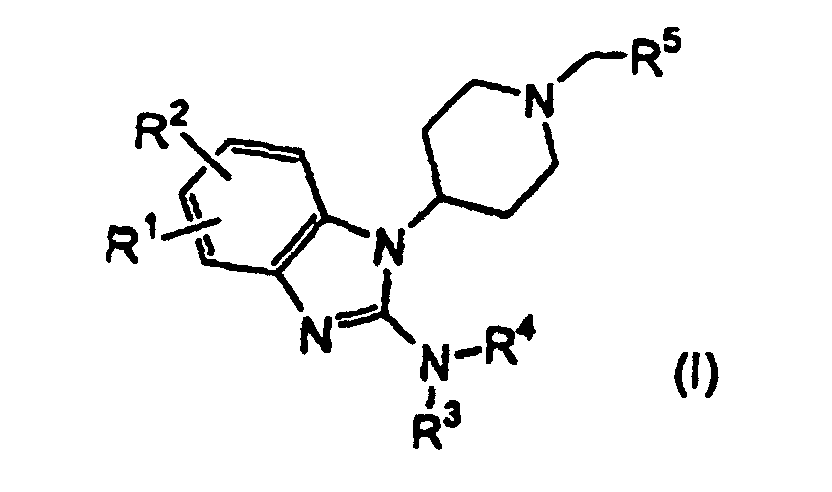
R1 et R2 sont sélectionnés indépendamment parmi l'hydrogène ; les radicaux halogène ; hydroxy ; (C1-C4)alkyle, (C2-C4)alcényle ; (C2-C4)alcynyle ; halo(C1-C4)alkyle ; (C1-C4)alkoxy ; (C1-C4) alkylsulfonyle ; (C1-C4)alkyl-C(=O)- ; carboxy ; (C1-C4) alkyl-C(=O)O- ; amino ; NH2-C(=O)- ; (C1-C4)alkyl-C(=O)-NH- ; (C1-C4)alkyl-SO2-NH- ; phényle et naphtyle ;
R3 et R4 sont indépendamment sélectionnés parmi les radicaux halo (C1-C10) alkyle ;
(C1-C6)alkyle, substitué par un à deux substituants indépendamment sélectionnés parmi les radicaux hydroxy, (C1-C4)alkoxy, (C1-C4)alkyl-S-, phénoxy, amino, oxo, mono[(C1-C4)alkyl]amino, di[(C1-C4)alkyl] amino, N-[(C7-C9)cycloalkyl-(C1-C4)alkyl]-N-(C1-C4)alkyl-amino, (C1-C4)alkoxy-C(=O)-, aryle, sélectionnés parmi les radicaux phényle et naphtyle, dans lequel le radical aryle est substitué en option par de un à trois substituants indépendamment sélectionnés parmi les radicaux halogène, hydroxy, (C1-C4)alkoxy et
trifluoro(C1-C4)alkoxy, et les radicaux hétérocycliques sélectionnés parmi les radicaux pyrrolidyle et pipéridinyle, dans lesquels le radical hétérocyclique est substitué en option par des radicaux (C1-C4)alkyle ;
(C3-C8)cycloalkyle, substitué en option par un radical (C1-C4) alkyle ;
un radical (C3-C8)cycloalcényle, substitué en option par un radical (C1-C4)alkoxy-C(=O)- ;
les radicaux hétérocycliques de 5 à 6 membres, hérérocyclyl-C(=O) de 5 à 6 membres et hétérocyclyl-(C1-C4)alkyles de 5 à 6 membres, dans lesquels chaque radical hétérocyclique contient, dans le cycle, de un à trois hétéroatomes sélectionnés indépendamment parmi l'oxygène, l'azote et le soufre, est accolé en option à un cycle phényle et est substitué en option par de un à deux substituants sélectionnés indépendamment parmi les radicaux halogène, (C1-C4)alkyle, benzyle et oxo ;
un radical phényle, substitué en option par de un à trois substituants indépendamment sélectionnés parmi les radicaux halogène, (C1-C4)alkyle, halo (C1-C4)alkyle et (C1-C4)alkoxy ; et
un radical hétéroaryl-(C1-C4)alkyle de 5 à 6 membres, dans lequel ledit radical hétéroaryle contient de un à quatre atomes de cycle, indépendamment sélectionnés parmi l'oxygène, l'azote et le soufre, et est accolé en option à un cycle phényle ; ou
R3 et R4, conjointement avec l'azote auquel ils sont attachés, forment un cycle hétérocyclique, contenant de l'azote, complètement saturé, partiellement saturé ou complètement insaturé, de 5 à 8 membres, dans lequel ledit cycle hétérocyclique contient, dans le cycle, un ou deux hétéroatomes supplémentaires, sélectionnés indépendamment parmi l'azote, l'oxygène et le soufre, contient, en option, dans le cycle, un groupement CR6R7, dans lequel R6 et R7, pris ensemble, forment un groupement oxo ou un acétal cyclique, et est accolé en option à un radical phényle, naphtalène ou un cycle (C5-C8)cycloalkyle, et est substitué en option par de un à deux substituants sélectionnés indépendamment parmi les radicaux halogène ; (C1-C4)alkyle ; halo(C1-C4)alkyle ; (C1-C4)alkoxy ; hydroxy ; carbonyle ; benzhydryle ; hydroxy-(C1-C4)alkyle ; (C1-C4)alkoxy-(C1-C4)alkyl- ; amino ; amino(C1-C4)alkyl-amino- ; mercapto ; (C1-C4)alkoxy-C(=O)- ; pyrrolidino-(C1-C4)alkyle ; amino-C(=O)- ; (C1-C4)alkyl-C(=O)- ; (C1-C4)alkoxy-C(=O)-amino- ; un radical pipéridinyle, substitué en option par un ou deux substituants, sélectionnés indépendamment parmi les radicaux amino, mono[(C1-C4)alkyl]amino-, di((C1-C4)alkyl]amino-, benzylamino et di-(benzyl)amino; un radical phényle, substitué en option de un à trois substituants sélectionnés indépendamment parmi les radicaux halogène et (C1-C4)alkoxy ; phényl-(C1-C4)alkyle ; phényl-(C1-C4)alcényle ; phényl-(C1-C4)alkoxy-C(=O)- ; 1,3-benzodioxolyl-(C1-C4)alkyl- ; trifluorométhyle ; nitro ; un radical pyridyle, substitué en option par de un à trois substituants sélectionnés indépendamment parmi les radicaux halogène et trifluorométhyle ; un radical quinolinyle, substitué en option par de un à trois substituants sélectionnés indépendamment parmi les radicaux halogène et trifluorométhyle ; pyrrolidinyl-(C1-C4) alkyle ; et pyrrolidinyl-(CH2)m-CR8R9-(CH2)n-, dans lequel m et n sont indépendamment 1, 2, 3 ou 4, et R8 et R9, pris ensemble, conjointement à l'atome de carbone auquel ils sont attachés, forment un radical (C3-C6)cycloalkyle ; et
R5 est un radical phényle ou (C4-C11)cycloalkyle, substitué en option par de un à trois substituants, sélectionnés indépendamment parmi le groupe constitué de l'hydrogène, des radicaux halogène, hydroxy, (C1-C4)alkyle, halo (C1-C4)alkyle, (C1-C4)alkoxy, (C1-C4)alkylsulfonyle, (C1-C4)alkyl-C(=O)-, carboxy, (C1-C4)alkyl-C(=O)O-, amino, NH2-C(=O)-, (C1-C4)alkyl-C(=O)-NH-, (C1-C4)alkyl-SO2-NH-, phényle et naphtyle. - Composé selon la revendication 1, dans lequel
R1 et R2 sont indépendamment sélectionnés parmi l'hydrogène, les radicaux halogène, (C1-C4)alkyle, (C2-C4)alcényle, (C2-C4)alcynyle, halo (C1-C4) alkyle et (C1-C4)alkoxy ;
R3 et R4 sont indépendamment sélectionnés parmi les radicaux halo (C1-C10) alkyle ; (C1-C6)alkyle, substitués par de un à deux substituants sélectionnés indépendamment parmi les radicaux hydroxy, (C1-C4)alkoxy, phénoxy, amino, mono[(C1-C4)alkyl]amino, di[(C1-C4)alkyl]amino, phényle et naphtyle ; (C3-C8)cycloalkyle ; un radical hétérocyclyl-(C1-C4)alkyle de 5 à 6 membres, dans lequel ledit radical hétérocyclique est sélectionné parmi les radicaux pyrrolidino, pipéridino, morpholino, pipérazinyle et homopipérazinyle et est substitué en option par de un à deux substituants sélectionnés indépendamment parmi les radicaux halogène et oxo ; un radical phényle, substitué, en option, par de un à trois substituants indépendamment sélectionnés parmi les radicaux halogène, (C1-C4)alkyle, halo(C1-C4)alkyle et (C1-C4)alkoxy ; et le radical hétéroaryl-(C1-C4)alkyle, dans lequel ledit radical hétéroaryle est sélectionné parmi les radicaux furyle, thiophényle, pyrrolyle, pyrazolyle, imidazolyle, triazolyle, tétrazolyle, isoxazolyle, oxazolyle, thiazolyle, isothiazolyle, oxadiazolyle, pyridyle, pyridazinyle, pyrimidinyle, pyrazinyle, triazinyle, indolyle, benzofuranyle, benzothiophényle, isoindolyle et isobenzofuranyle ; ou R3 et R4, conjointement à l'atome d'azote auquel ils sont attachés, forment un cycle hétérocyclique complètement saturé, partiellement saturé ou complètement insaturé, dans lequel ledit cycle hétérocyclique est sélectionné parmi les radicaux pyrrolidinyle, pipéridinyle, morpholinyle, pipérazinyle, homopipéridinyle, homopipérazinyle, azocanyle, tétrahydropyridinyle, octahydroquinolyle, quinolyle, tétrahydroquinolyle, isoquinolyle, tétrahydroisoquinolyle et octahydroisoquinolyle et substitué en option par de un à deux substituants sélectionnés indépendamment parmi les résidus halo ; (C1-C4)alkyle ; halo(C1-C4)alkyle ; (C1-C4)alkoxy ; hydroxy ; hydroxy-(C1-C4)alkyle ; (C1-C4)alkoxy-(C1-C4)alkyl- ; amino ; amino-(C1-C4)alkyle- ; mercapto ; (C1-C4)alkoxy-C(=O)- ; pyrrolidino-(C1-C4)alkyle ; amino-C(=O)- ; (C1-C4)alkyl-C(=O)- ; (C1-C4)alkoxy-C(=O)-amino- ; un radical pipéridinyle, substitué en option par de un à deux substituants, sélectionnés indépendamment parmi les radicaux amino, mono[(C1-C4)alkyl]amino-, di[(C1-C4)alkyl]amino-, benzylamino et di-(benzyl)amino ; un radical phényle, substitué en option par de un à trois substituants sélectionnés parmi les radicaux halogène et (C1-C4)alkoxy ; phényl-(C1-C4)alkyle ; phényl-(C1-C4)alcényle ; phényl-(C1-C4)alkoxy-C(=O)- ; 1,3-benzodioxolyl-(C1-C4)alkyl- ; un radical pyridyle, substitué en option de un à trois substituants sélectionnés indépendamment parmi les radicaux halogène et trifluorométhyle ; un radical quinolinyle, substitué en option de un à trois substituants sélectionnés indépendamment parmi les radicaux halogène et trifluorométhyle ; les radicaux pyrrolidinyl-(C1-C4)alkyle et pyrrolidinyl-(CH2)m-CR8R9-(CH2)n-, dans lequel m et n sont indépendamment 1, 2, 3 ou 4, et R8 et R9, pris ensemble, conjointement à l'atome de carbone auquel ils sont attachés, forment un radical (C3-C6)cycloalkyle ; et
R5 est un radical (C4-C11)cycloalkyle non substitué. - Composé selon la revendication 2, dans lequel
R1 et R2 sont indépendamment sélectionnés parmi l'hydrogène, les radicaux halogène, (C1-C4)alkyle, (C2-C4)alcényle, (C2-C4)alcynyle, halo(C1-C4)alkyle et (C1-C4)alkoxy ;
R3 et R4 sont indépendamment sélectionnés parmi un radical halo (C1-C10)alkyle ; (C1-C6)alkyle, substitué par de un à deux substituants sélectionnés indépendamment des radicaux hydroxy, (C1-C4)alkoxy, phénoxy, amino, mono[(C1-C4)alkyl]amino, di[(C1-C4)alkyl]amino, phényle et naphtyle ; (C3-C8)cycloalkyle ; un radical hétérocyclyl-(C1-C4)alkyle, dans lequel ledit radical hétérocyclique est sélectionné parmi les radicaux pyrrolidino, pipéridino, morpholino, pipérazinyle et homopipérazinyle et substitué en option par de un à deux substituants sélectionnés indépendamment parmi les radicaux halogène et oxo ; un radical phényle substitué en option par de un à trois substituants indépendamment sélectionnés parmi les radicaux halogène, (C1-C4)alkyle, halo(C1-C4)alkyle et (C1-C4)alkoxy ; et hétéroaryl-(C1-C4)alkyle, dans lequel ledit radical hétéroaryle est sélectionné parmi les radicaux furyle, thiophényle, pyrrolyle, pyrazolyle, imidazolyle, triazolyle, tétrazolyle, isoxazolyle, oxazolyle, thiazolyle, isothiazolyle, oxadiazolyle, pyridyle, pyridazinyle, pyrimidinyle, pyrazinyle, triazinyle, indolyle, benzofuranyle, benzothiophényle, isoindolyle et isobenzofuranyle ; et
R5 est un radical (C4-C11)cycloalkyle non substitué. - Composé selon la revendication 3, dans lequel
R1 et R2 sont tous les deux l'hydrogène ;
R3 et R4 sont sélectionnés indépendamment parmi les radicaux (C1-C6)alkyle, substitués par de un à trois substituants sélectionnés indépendamment parmi les radicaux hydroxy, (C1-C4)alkoxy, phénoxy, di[C1-C4]alkyl]amino, phényle et naphtyle ; (C3-C8)cycloalkyle ; un radical hétérocyclyl-(C1-C4)alkyle, dans lequel ledit radical hétérocyclique est sélectionné parmi les radicaux pyrrolidino, pipéridino, morpholino et pipérazinyle et substitué en option par de un à deux substituants sélectionnés indépendamment parmi les radicaux halogène et oxo ; phényle substitué en option par de un à trois halogènes ; et hétéroaryl-(C1-C4)alkyle, dans lequel ledit radical hétéroarayle est sélectionné parmi les radicaux furyle, pyridyle et indolyle ; et
R5 est un radical (C5-C8)cycloalkyle non substitué. - Composé selon la revendication 4, dans lequel R1 et R2 sont l'hydrogène ; R3 et R4 sont sélectionnés indépendamment parmi les radicaux (C1-C6)alkyle, substitués par de un à trois substituants sélectionnés indépendamment parmi les radicaux hydroxy, (C1-C4)alkoxy, phénoxy, di[C1-C4]alkyl]amino, phényle et naphthyle ; et R5 est un radical (C5-C8)cycloalkyle non substitué.
- Composé selon la revendication 2, dans lequel
R1 et R2 sont indépendamment sélectionnés parmi l'hydrogène, les radicaux halogène, (C1-C4)alkyle, (C2-C4)alcényle, (C2-C4)alcynyle, halo(C1-C4)alkyle et (C1-C4)alkoxy ;
R3 et R4, conjointement à l'atome d'azote auquel ils sont attachés, forment un cycle hétérocyclique de 5 à 6 membres, sélectionné parmi les radicaux pyrrolidino, pipéridino, morpholino, pipérazinyle et homopipérazinyle, et substitué en option par de un à deux substituants sélectionnés indépendamment parmi les radicaux (C1-C4)alkyle, hydroxy, hydroxy-(C1-C4)alkyle, amino, amino-(C1-C4)alkyle et pipéridinyle, substitué en option par de un à deux substituants sélectionnés indépendamment parmi les radicaux amino, benzylamino, di-(benzyl)amino, (C1-C4)alkyl-C(=O)- et pyrrolidino-(CH2)m-CR7R8-(CH2)n-, dans lequel m et n sont indépendamment 1, 2, 3 ou 4, et R7 et R8, pris ensemble avec l'atome de carbone auquel ils sont attachés, forment un radical (C3-C6)cycloalkyle ; et
R5 est un radical (C4-C11)cycloalkyle non substitué. - Composé selon la revendication 6, dans lequel
R1 et R2 sont tous les deux l'hydrogène ;
R3 et R4, conjointement à l'atome d'azote auquel ils sont attachés, forment un cycle hétérocyclique de 5 à 6 membres, sélectionné parmi les radicaux pyrrolidino, pipéridino, morpholino, et pipérazinyle, et substitué en option par de un à deux substituants sélectionnés indépendamment parmi les radicaux (C1-C4)alkyle, hydroxy, hydroxy-(C1-C4)alkyle, amino, amino-(C1-C4)alkyle, (C1-C4)alkyle-C(=O)- et pipéridinyle, substitué en option par un ou deux substituants sélectionnés indépendamment parmi les radicaux amino, benzylamino, di-(benzyl)amino et pyrrolidino-(CH2)m-CR7R8-(CH2)n-, dans lequel m et n sont indépendamment 1, 2, 3 ou 4, et R7 et R8, pris ensemble avec l'atome de carbone auquel ils sont attachés, forment un radical (C3-C6)cycloalkyle ; et
R5 est un radical (C5-C8)cycloalkyle non substitué. - Composé selon la revendication 7, dans lequel R1 et R2 sont l'hydrogène ; R3 et R4, conjointement à l'atome d'azote auquel ils sont attachés, forment un radical pipérazinyle substitué par un radical (C1-C4)alkyle ; et R5 est un radical (C5-C8)cycloalkyle non substitué.
- Composé selon la revendication 8, sélectionné parmi le groupe constitué des radicaux 1-(1-cyclooctylméthyl-4-pipéridinyly-2-(4-méthylpipérazinyl)-1H-benzimidazole ; 1-(1-cyclohexylméthyl-4-pipéridinyl)-2-(4-méthylpipérazinyl)-1H-benzimidazole ; et 1-(1-cyclohexylméthyl-4-pipéridinyl)-2-(4-méthylpipérazinyl)-1H-benzimidazole ou un sel de ce dernier.
- Composition pharmaceutique pour le traitement d'un désordre ou d'un trouble à médiation par un récepteur ORL1 et ses ligands endogènes, chez un mammifère, y compris un homme ou une femme, ou pour l'anesthésie d'un mammifère, y compris un homme ou une femme, qui comprend une quantité efficace du composé de la revendication 1 ou d'un sel, acceptable du point de vue pharmaceutique, de ce dernier, et un excipient, acceptable du point de vue pharmaceutique.
- Composition pharmaceutique pour le traitement d'un désordre ou d'un trouble sélectionné parmi le groupe constitué des maladies inflammatoires, de l'hyperalgie associée à une inflammation, des troubles de l'alimentation, des désordres de la pression sanguine artérielle, de la tolérance aux agents analgésiques narcotiques, de la dépendance vis-à-vis des agents analgésiques narcotiques, de l'anxiété, des troubles de stress, des traumatismes psychiques, de la schizophrénie, de la maladie de Parkinson, de la chorée, des agents dépresseurs, de la maladie d'Alzheimer, des démences, de l'épilepsie, des convulsions, de la migraine, du diabète sucré non dépendant de l'insuline (diabète de type II), de la sepsie, de l'incontinence, des perturbations vasomotrices y compris les bouffées de chaleur, des symptômes atténuants se produisant lors du retrait de médicaments y compris les symptômes d'abstinence se produisant au cours du retrait de médicaments abusifs, de l'anxiété, de l'asthme, de l'abus d'alcool et de la toux et de l'allergie ; utile en tant qu'agents analgésiques, agents anesthétiques, en tant qu'agents neuro protecteurs ou agents de promotion analgésiques ou utile pour le contrôle de l'équilibre en eau, pour la régulation de l'ouïe, pour le contrôle de l'excrétion des ions sodium ou pour l'amélioration des fonctions cérébrales, comprenant une quantité d'un composé selon la revendication 1, ou d'un sel, acceptable du point de vue pharmaceutique, de ce dernier qui est efficace pour le traitement d'un désordre ou d'un trouble de ce genre, ou efficace dans l'utilisation chez un mammifère, y compris un homme ou une femme, et un excipient, acceptable du point de vue pharmaceutique.
- Utilisation d'une quantité efficace d'un composé selon la revendication 1 ou un sel, acceptable du point de vue pharmaceutique, de ce dernier, en vue de la préparation d'un médicament pour le traitement d'un désordre ou d'un trouble ou pour l'anesthésie d'un animal, y compris un homme ou une femme, dont le traitement d'anesthésie est effectué ou facilité par la mise en agoniste d'un récepteur ORL1 chez un mammifère, y compris un homme ou une femme.
- Utilisation d'une quantité efficace d'un composé selon la revendication 1 pour la préparation d'un médicament en vue du traitement d'un désordre ou d'un trouble, où le désordre ou le trouble est sélectionné parmi le groupe constitué des maladies inflammatoires, de l'hyperalgie associée à une inflammation, des troubles de l'alimentation, des désordres de la pression sanguine artérielle, de la tolérance aux agents analgésiques narcotiques, de la dépendance vis-à-vis des agents analgésiques narcotiques, de l'anxiété, des troubles de stress, des traumatismes psychiques, de la schizophrénie, de la maladie de Parkinson, de la chorée, des agents dépresseurs, de la maladie d'Alzheimer, des démences, de l'épilepsie, des convulsions, de la migraine, du diabète sucré non dépendant de l'insuline (diabète de type II), de la sepsie, de l'incontinence, des perturbations vasomotrices, y compris les bouffées de chaleur, des symptômes atténuants se produisant lors du retrait de médicaments, y compris les symptômes d'abstinence se produisant au cours du retrait de médicaments abusifs, de l'anxiété, de l'asthme, de l'abus d'alcool et de la toux et de l'allergie ; ou qui est utile en tant qu'agent analgésique, agent anesthétique, agent neuro protecteur ou agent d'amélioration analgésique ; ou qui est utile pour le contrôle de l'équilibre d'eau, pour la régulation de l'ouïe, pour le contrôle de la sécrétion des ions sodium ou pour l'amélioration de la fonction cérébrale chez un mammifère, y compris un homme ou une femme.
- Composition pharmaceutique, comprenant un composé selon la revendication 1 ou un sel de ce dernier, en combinaison à un deuxième agent pour le traitement de la toux, des symptômes d'allergie ou d'asthme, dans laquelle le deuxième agent est sélectionné parmi le groupe constitué des antihistamines ; des inhibiteurs de la 5-lipoxygénase ; des inhibiteurs du leukotriène; des inhibiteurs de H3; des agonistes à récepteurs β-adrénergiques ; des dérivés du xanthane ;des agonistes à récepteurs α-adrénergiques ; des stabilisateurs de mastocyte ; d'agents antitussifs ; d'agents expectorants ; des agonistes de récepteurs NK1, NK2 ou NK3 ; et des agonistes GABAB.
- Utilisation d'un composé selon la revendication 1, ou d'un sel de ce dernier, en combinaison à un deuxième agent sélectionné du groupe constitué des antihistamines ; des inhibiteurs de la 5-lipoxygénase ; des inhibiteurs du leukotriène ; des inhibiteurs de H3; des agonistes à récepteurs β-adrénergiques ; des dérivés du xanthane ; des agonistes à récepteurs α-adrénergiques ; des stabilisateurs de mastocyte ; des agents antitussifs ; des agents expectorants ; des antagonistes de récepteurs NK1, NK2 ou NK3 ; et des agonistes GABAB pour la préparation d'un médicament pour le traitement de la toux, des symptômes d'allergie ou d'asthme chez un mammifère, y compris un homme ou une femme.
Applications Claiming Priority (2)
| Application Number | Priority Date | Filing Date | Title |
|---|---|---|---|
| WOPCT/IB99/01290 | 1999-07-16 | ||
| IBPCT/IB99/01290 | 1999-07-16 |
Publications (2)
| Publication Number | Publication Date |
|---|---|
| EP1069124A1 EP1069124A1 (fr) | 2001-01-17 |
| EP1069124B1 true EP1069124B1 (fr) | 2004-05-12 |
Family
ID=11004878
Family Applications (1)
| Application Number | Title | Priority Date | Filing Date |
|---|---|---|---|
| EP00305981A Expired - Lifetime EP1069124B1 (fr) | 1999-07-16 | 2000-07-14 | Dérivés de 2-benzimidazolamine comme agonistes du récepteur ORL1 |
Country Status (10)
| Country | Link |
|---|---|
| US (1) | US6340681B1 (fr) |
| EP (1) | EP1069124B1 (fr) |
| JP (2) | JP3276111B2 (fr) |
| AT (1) | ATE266657T1 (fr) |
| BR (1) | BR0002796A (fr) |
| CA (1) | CA2314008A1 (fr) |
| DE (1) | DE60010585T2 (fr) |
| DK (1) | DK1069124T3 (fr) |
| ES (1) | ES2219272T3 (fr) |
| PT (1) | PT1069124E (fr) |
Cited By (8)
| Publication number | Priority date | Publication date | Assignee | Title |
|---|---|---|---|---|
| US6949643B2 (en) | 2001-04-12 | 2005-09-27 | Astrazeneca Ab | Thiazolopytimidines and their use as modulators of chemokine receptor activity |
| US6958343B2 (en) | 2000-02-11 | 2005-10-25 | Astrazeneca, Ab | Thiazolopyrimidines and their use as modulators of chemokine receptor activity |
| US7071193B2 (en) | 2000-10-20 | 2006-07-04 | Astrazeneca Ab | 7-amino-2-alkylthiopteridin-4-yl-amines for the treatment of chemokine-related diseases |
| US7579342B2 (en) | 2000-02-23 | 2009-08-25 | Astrazeneca | Pteridine compounds for the treatment of psoriasis |
| US7585867B2 (en) | 2002-09-20 | 2009-09-08 | Astrazeneca Ab | Substituted thiazolo[4,5-d]pyrimidin-2(3H)-one |
| US7790883B2 (en) | 2003-12-05 | 2010-09-07 | Astrazeneca Ab | Process for the preparation of thiazolopyrimidines |
| US9440957B2 (en) | 2012-06-06 | 2016-09-13 | Novartis Ag | Compounds and compositions for modulating EGFR Activity |
| US9931347B2 (en) | 2013-12-03 | 2018-04-03 | Iomet Pharma Ltd. | Pharmaceutical compound |
Families Citing this family (43)
| Publication number | Priority date | Publication date | Assignee | Title |
|---|---|---|---|---|
| EP1418175A1 (fr) * | 1999-06-28 | 2004-05-12 | Janssen Pharmaceutica N.V. | Inhibiteurs de réplication du virus respiratoire syncytial |
| SE9903544D0 (sv) | 1999-10-01 | 1999-10-01 | Astra Pharma Prod | Novel compounds |
| GB2359078A (en) | 2000-02-11 | 2001-08-15 | Astrazeneca Uk Ltd | Pharmaceutically active pyrimidine derivatives |
| GB0005642D0 (en) | 2000-03-10 | 2000-05-03 | Astrazeneca Uk Ltd | Chemical compounds |
| BR0209129A (pt) | 2001-04-18 | 2005-12-20 | Euro Celtique Sa | Compostos, composições farmacêuticas, métodos para tratamento de dores, métodos para modulação de uma resposta farmacológica e usos de compostos |
| US20030040479A1 (en) * | 2001-07-02 | 2003-02-27 | Omeros Corporation | Rotational intrathecal analgesia method and device |
| EP1406629A1 (fr) * | 2001-07-02 | 2004-04-14 | Omeros Corporation | Procede visant a induire une analgesie, qui comprend l'administration alternee d'un agoniste de recepteur d'opioides et d'un agoniste de recepteur 1 du type recepteur d'opioides, et pompe a perfusion implantable |
| PT1491212E (pt) | 2002-03-29 | 2012-11-16 | Mitsubishi Tanabe Pharma Corp | Medicamento para distúrbios de sono |
| US7332508B2 (en) * | 2002-12-18 | 2008-02-19 | Novo Nordisk A/S | Substituted homopiperidine, piperidine or pyrrolidine derivatives |
| US7582635B2 (en) * | 2002-12-24 | 2009-09-01 | Purdue Pharma, L.P. | Therapeutic agents useful for treating pain |
| CN1784226A (zh) * | 2003-05-09 | 2006-06-07 | 麦克公司 | 苯并咪唑化合物、含有苯并咪唑化合物的组合物以及使用方法 |
| US7439241B2 (en) | 2003-05-27 | 2008-10-21 | Galderma Laboratories, Inc. | Compounds, formulations, and methods for treating or preventing rosacea |
| AR045843A1 (es) * | 2003-10-03 | 2005-11-16 | Solvay Pharm Bv | Derivados de bencimidazolonas y quinazolinonas sustituidas con hidronopol como agonistas en receptores orl 1 humanos |
| US20050228023A1 (en) * | 2003-12-19 | 2005-10-13 | Sri International | Agonist and antagonist ligands of the nociceptin receptor |
| AU2005274927B2 (en) | 2004-07-15 | 2011-11-03 | Albany Molecular Research, Inc. | Aryl-and heteroaryl-substituted tetrahydroisoquinolines and use thereof to block reuptake of norepinephrine, dopamine, and serotonin |
| DE102005012874A1 (de) * | 2005-03-19 | 2006-09-21 | Sanofi-Aventis Deutschland Gmbh | Amid substituierte 8-N-Benzimidazole, Verfahren zu ihrer Herstellung und ihre Verwendung als Arzneimittel |
| DE102005012873B4 (de) | 2005-03-19 | 2007-05-03 | Sanofi-Aventis Deutschland Gmbh | Aminocarbonyl substituierte 8-N-Benzimidazole, Verfahren zu ihrer Herstellung und ihre Verwendung als Arzneimittel |
| DE102005012875B4 (de) | 2005-03-19 | 2006-11-16 | Sanofi-Aventis Deutschland Gmbh | Verwendung von Amino substituierten 8-N-Benzimidazolen |
| WO2007039462A2 (fr) | 2005-09-30 | 2007-04-12 | F. Hoffmann-La Roche Ag | Derives d'indane utilises comme antagonistes du recepteur mch |
| GB0526042D0 (en) | 2005-12-21 | 2006-02-01 | Syngenta Participations Ag | Chemical compounds |
| KR20140139125A (ko) | 2007-08-31 | 2014-12-04 | 퍼듀 퍼머 엘피 | 치환-퀴녹살린-형 피페리딘 화합물 및 그의 용도 |
| US9156812B2 (en) | 2008-06-04 | 2015-10-13 | Bristol-Myers Squibb Company | Crystalline form of 6-[(4S)-2-methyl-4-(2-naphthyl)-1,2,3,4-tetrahydroisoquinolin-7-yl]pyridazin-3-amine |
| UY32138A (es) | 2008-09-25 | 2010-04-30 | Boehringer Ingelheim Int | Amidas sustituidas del ácido 2-(2,6-dicloro-fenilamino)-6-fluoro-1-metil-1h-bencimidazol-5-carboxílico y sus sales farmacéuticamente aceptables |
| UY32470A (es) | 2009-03-05 | 2010-10-29 | Boehringer Ingelheim Int | Derivados de 2-{2-cloro-5-[(sustituido) metil]fenilamino} -1-metil]fenilamino}-1-metilbencimidazol-5-carboxamidas-n-(sustituidas) y sus sales fisiológicamente aceptables, composiciones conteniéndolos y aplicaciones |
| US8802696B2 (en) * | 2009-05-12 | 2014-08-12 | Albany Molecular Research, Inc. | 7-([1,2,4]triazolo[1,5-a]pyridin-6-yl)-4-(3,4-dichlorophenyl)-1,2,3,4-tetrahydroisoqu inoli and use thereof |
| CN102458123A (zh) * | 2009-05-12 | 2012-05-16 | 阿尔巴尼分子研究公司 | 芳基、杂芳基和杂环取代的四氢异喹啉及其用途 |
| WO2010132487A1 (fr) | 2009-05-12 | 2010-11-18 | Bristol-Myers Squibb Company | Formes cristallines de (s)-7-([1,2,4]triazolo[1,5-a] pyridin -6-yl)-4-(3,4-dichlorophenyl)-1,2,3,4-tetrahydroisoquinoline et leurs utilisations |
| TW201105681A (en) | 2009-06-10 | 2011-02-16 | Janssen Pharmaceutica Nv | Benzimidazole derivatives useful as TRPM8 channel modulators |
| MX2013001313A (es) | 2010-08-05 | 2013-06-13 | Amgen Inc | Compuestos de bencimidazol y azabencimidazol que inhiben la cinasa del linfoma anaplasico. |
| US8759537B2 (en) | 2010-08-20 | 2014-06-24 | Boehringer Ingelheim International Gmbh | 3H-imidazo [4, 5-C] pyridine-6-carboxamides as anti-inflammatory agents |
| US8586604B2 (en) | 2010-08-20 | 2013-11-19 | Boehringer Ingelheim International Gmbh | Inhibitors of the microsomal prostaglandin E2 synthase-1 |
| UY33779A (es) | 2010-12-10 | 2012-07-31 | Boehringer Ingelheim Int | ?2-(fenilamino)-1H-bencimidazol-5-carboxamidas novedosas? |
| US8466186B2 (en) | 2010-12-10 | 2013-06-18 | Boehringer Ingelheim International Gmbh | Compounds |
| US8486968B2 (en) | 2010-12-10 | 2013-07-16 | Boehringer Ingelheim International Gmbh | Compounds |
| WO2014102594A2 (fr) | 2012-12-27 | 2014-07-03 | Purdue Pharma L.P. | Composés de pipéridine de type benzimidazole substitué et leurs utilisations |
| US9656994B2 (en) * | 2013-03-22 | 2017-05-23 | The Scripps Research Institute | Substituted benzimidazoles as nociceptin receptor modulators |
| EP3010912A4 (fr) * | 2013-06-20 | 2016-12-07 | Novasaid Ab | Nouveaux dérivés pipéridinyle benzoimidazole utilisés comme inhibiteurs de la mpges-1 |
| BR112016018604A2 (pt) | 2014-02-11 | 2017-08-08 | Bayer Pharma AG | Benzimidazol-2-aminas como inibidores de midh1 |
| CA2939021C (fr) | 2014-02-11 | 2022-07-12 | Bayer Pharma Aktiengesellschaft | Benzimidazol-2-amines utilisees en tant qu'inhibiteurs de midh1 |
| WO2016062677A1 (fr) | 2014-10-23 | 2016-04-28 | Bayer Pharma Aktiengesellschaft | Benzimidazol-2-amines en tant qu'inhibiteurs midh1 |
| EP3209660B1 (fr) | 2014-10-23 | 2020-06-17 | Deutsches Krebsforschungszentrum Stiftung des öffentlichen Rechts | 1-cyclohexyl -2-phénylaminobenzimidazoles en tant qu'inhibiteurs de midh1 dans le traitement de tumeurs |
| EP3303302B1 (fr) * | 2015-06-08 | 2019-03-20 | Bayer Pharma Aktiengesellschaft | N-menthylbenzimidazoles à titre d'inhibiteurs de midh1 |
| US10414734B2 (en) | 2015-07-16 | 2019-09-17 | Bayer Pharma Aktiengesellschaft | 5-hydroxyalkylbenzimidazoles as mIDH1 inhibitors |
Family Cites Families (5)
| Publication number | Priority date | Publication date | Assignee | Title |
|---|---|---|---|---|
| US4048058A (en) | 1975-08-13 | 1977-09-13 | Standard Oil Company (Indiana) | Methods to be used in reforming processes employing multi-metallic catalysts |
| US6180649B1 (en) | 1996-04-19 | 2001-01-30 | Nerosearch A/S | 1-(4-piperidyl)-benzimidazoles having neurotrophic activity |
| US6258825B1 (en) * | 1997-05-30 | 2001-07-10 | Banyu Pharmaceutical Co., Ltd. | 2-oxoimidazole derivatives |
| ID29137A (id) * | 1998-07-27 | 2001-08-02 | Schering Corp | Ligan-ligan afinitas tinggi untuk reseptor nosiseptin orl-1 |
| MA26659A1 (fr) * | 1998-08-06 | 2004-12-20 | Pfizer | Dérivés de benzimidazole nouveaux, compositions pharmaceutiques les contenant et procédé pour leur préparation. |
-
2000
- 2000-06-29 US US09/606,921 patent/US6340681B1/en not_active Expired - Fee Related
- 2000-07-11 JP JP2000209374A patent/JP3276111B2/ja not_active Expired - Fee Related
- 2000-07-12 JP JP2000211264A patent/JP2001039974A/ja active Pending
- 2000-07-14 PT PT00305981T patent/PT1069124E/pt unknown
- 2000-07-14 AT AT00305981T patent/ATE266657T1/de not_active IP Right Cessation
- 2000-07-14 EP EP00305981A patent/EP1069124B1/fr not_active Expired - Lifetime
- 2000-07-14 ES ES00305981T patent/ES2219272T3/es not_active Expired - Lifetime
- 2000-07-14 DE DE60010585T patent/DE60010585T2/de not_active Expired - Fee Related
- 2000-07-14 BR BR0002796-0A patent/BR0002796A/pt not_active IP Right Cessation
- 2000-07-14 DK DK00305981T patent/DK1069124T3/da active
- 2000-07-17 CA CA002314008A patent/CA2314008A1/fr not_active Abandoned
Cited By (8)
| Publication number | Priority date | Publication date | Assignee | Title |
|---|---|---|---|---|
| US6958343B2 (en) | 2000-02-11 | 2005-10-25 | Astrazeneca, Ab | Thiazolopyrimidines and their use as modulators of chemokine receptor activity |
| US7579342B2 (en) | 2000-02-23 | 2009-08-25 | Astrazeneca | Pteridine compounds for the treatment of psoriasis |
| US7071193B2 (en) | 2000-10-20 | 2006-07-04 | Astrazeneca Ab | 7-amino-2-alkylthiopteridin-4-yl-amines for the treatment of chemokine-related diseases |
| US6949643B2 (en) | 2001-04-12 | 2005-09-27 | Astrazeneca Ab | Thiazolopytimidines and their use as modulators of chemokine receptor activity |
| US7585867B2 (en) | 2002-09-20 | 2009-09-08 | Astrazeneca Ab | Substituted thiazolo[4,5-d]pyrimidin-2(3H)-one |
| US7790883B2 (en) | 2003-12-05 | 2010-09-07 | Astrazeneca Ab | Process for the preparation of thiazolopyrimidines |
| US9440957B2 (en) | 2012-06-06 | 2016-09-13 | Novartis Ag | Compounds and compositions for modulating EGFR Activity |
| US9931347B2 (en) | 2013-12-03 | 2018-04-03 | Iomet Pharma Ltd. | Pharmaceutical compound |
Also Published As
| Publication number | Publication date |
|---|---|
| JP2001048879A (ja) | 2001-02-20 |
| BR0002796A (pt) | 2001-04-03 |
| ES2219272T3 (es) | 2004-12-01 |
| DK1069124T3 (da) | 2004-09-13 |
| ATE266657T1 (de) | 2004-05-15 |
| JP3276111B2 (ja) | 2002-04-22 |
| EP1069124A1 (fr) | 2001-01-17 |
| DE60010585T2 (de) | 2005-05-19 |
| PT1069124E (pt) | 2004-09-30 |
| US6340681B1 (en) | 2002-01-22 |
| JP2001039974A (ja) | 2001-02-13 |
| CA2314008A1 (fr) | 2001-01-16 |
| DE60010585D1 (de) | 2004-06-17 |
Similar Documents
| Publication | Publication Date | Title |
|---|---|---|
| US6340681B1 (en) | 2-benzimidazolylamine compounds as ORL-1-receptor agonists | |
| EP1102762B1 (fr) | Composes de 1-piperidyl benzimidazole substitue en 2, agonistes du recepteur orl1 | |
| US6423725B1 (en) | 4-(2-keto-1-benzimidazolinyl)piperidine compounds as ORL1-receptor agonists | |
| US6200978B1 (en) | Compounds as delta opioid agonists | |
| US5574044A (en) | Muscarine antagonists | |
| US20030078279A1 (en) | Spiropiperidine compounds as ligands for ORL-1receptor | |
| EP1122257B1 (fr) | Composés de benzimidazole comme agonistes du récepteur ORL1 | |
| ES2334517T3 (es) | Derivados de triazol sustituidos como antagonistas de oxitocina. | |
| SK286917B6 (sk) | 4-Substituované N-acylované deriváty piperidínu, farmaceutický prípravok s ich obsahom a ich použitie | |
| KR20140124398A (ko) | 오렉신 수용체 길항제로서 치환된 프롤린 / 피페리딘 | |
| CA2242579A1 (fr) | Antagonistes benzimidazolyles du recepteur du neuropeptide y | |
| EP3381913B1 (fr) | Dérivés de 2-(((pyrrolidin-3-yl)carbonyl)amino)-1h-imidazole en tant qu'agonistes du récepteur 1 de la mélanocortine (mcr1) pour le traitement de l'arthrite rhumatoïde | |
| EP1716135B1 (fr) | Piperidinyl-carbonyl-pyrrolidines et leur utilisation en tant que agonistes de la melanocortine | |
| CN100516040C (zh) | 具有2,6-二取代苯乙烯基的含氮杂环衍生物 | |
| EP3512832B1 (fr) | Antagonistes opioïdes kappa de tétrahydroisoquinoline | |
| AU2004246817A1 (en) | Substituted 1, 4-di-piperidin-4-yl-piperazine derivative combined with an opioid analgesic and their use for the treatment of pain and side-effects associated with opioid-based treatments | |
| US20050148583A1 (en) | Phenoxyalkylamine derivatives useful as opioid delta receptor ligands | |
| EP2587919B1 (fr) | Procédés permettant de traiter le trouble de stress post-traumatique | |
| CN121335897A (zh) | 作为cd38抑制剂用于治疗cns病症的1,3-噻唑和1,2,4-噻二唑 | |
| US6333326B1 (en) | Quinoxalinediones | |
| US20030109549A1 (en) | 2-Substituted-1-piperidyl benzimidazole compounds as ORL1-receptor agonists | |
| US11613547B2 (en) | G-protein biased opioid receptor agonist/analgesics with reduced arrestin recruitment | |
| HK1258668B (en) | Compounds for use in the treatment of intermittent explosive disorder | |
| HK1184640A (en) | Methods for treating post traumatic stress disorder | |
| HK1184640B (en) | Methods for treating post traumatic stress disorder |
Legal Events
| Date | Code | Title | Description |
|---|---|---|---|
| PUAI | Public reference made under article 153(3) epc to a published international application that has entered the european phase |
Free format text: ORIGINAL CODE: 0009012 |
|
| 17P | Request for examination filed |
Effective date: 20000727 |
|
| AK | Designated contracting states |
Kind code of ref document: A1 Designated state(s): AT BE CH CY DE DK ES FI FR GB GR IE IT LI LU MC NL PT SE |
|
| AX | Request for extension of the european patent |
Free format text: AL;LT;LV;MK;RO;SI |
|
| 17Q | First examination report despatched |
Effective date: 20010622 |
|
| AKX | Designation fees paid |
Free format text: AT BE CH CY DE DK ES FI FR GB GR IE IT LI LU MC NL PT SE |
|
| GRAH | Despatch of communication of intention to grant a patent |
Free format text: ORIGINAL CODE: EPIDOS IGRA |
|
| GRAS | Grant fee paid |
Free format text: ORIGINAL CODE: EPIDOSNIGR3 |
|
| GRAA | (expected) grant |
Free format text: ORIGINAL CODE: 0009210 |
|
| AK | Designated contracting states |
Kind code of ref document: B1 Designated state(s): AT BE CH CY DE DK ES FI FR GB GR IE IT LI LU MC NL PT SE |
|
| REG | Reference to a national code |
Ref country code: GB Ref legal event code: FG4D |
|
| REG | Reference to a national code |
Ref country code: CH Ref legal event code: EP |
|
| REG | Reference to a national code |
Ref country code: IE Ref legal event code: FG4D |
|
| REF | Corresponds to: |
Ref document number: 60010585 Country of ref document: DE Date of ref document: 20040617 Kind code of ref document: P |
|
| REG | Reference to a national code |
Ref country code: GR Ref legal event code: EP Ref document number: 20040402305 Country of ref document: GR |
|
| REG | Reference to a national code |
Ref country code: SE Ref legal event code: TRGR |
|
| REG | Reference to a national code |
Ref country code: DK Ref legal event code: T3 |
|
| REG | Reference to a national code |
Ref country code: CH Ref legal event code: NV Representative=s name: E. BLUM & CO. PATENTANWAELTE |
|
| REG | Reference to a national code |
Ref country code: PT Ref legal event code: SC4A Free format text: AVAILABILITY OF NATIONAL TRANSLATION Effective date: 20040810 |
|
| REG | Reference to a national code |
Ref country code: ES Ref legal event code: FG2A Ref document number: 2219272 Country of ref document: ES Kind code of ref document: T3 |
|
| ET | Fr: translation filed | ||
| PLBE | No opposition filed within time limit |
Free format text: ORIGINAL CODE: 0009261 |
|
| STAA | Information on the status of an ep patent application or granted ep patent |
Free format text: STATUS: NO OPPOSITION FILED WITHIN TIME LIMIT |
|
| 26N | No opposition filed |
Effective date: 20050215 |
|
| PGFP | Annual fee paid to national office [announced via postgrant information from national office to epo] |
Ref country code: AT Payment date: 20050614 Year of fee payment: 6 |
|
| PGFP | Annual fee paid to national office [announced via postgrant information from national office to epo] |
Ref country code: DK Payment date: 20050615 Year of fee payment: 6 |
|
| PGFP | Annual fee paid to national office [announced via postgrant information from national office to epo] |
Ref country code: NL Payment date: 20050616 Year of fee payment: 6 |
|
| PGFP | Annual fee paid to national office [announced via postgrant information from national office to epo] |
Ref country code: PT Payment date: 20050627 Year of fee payment: 6 |
|
| PGFP | Annual fee paid to national office [announced via postgrant information from national office to epo] |
Ref country code: IE Payment date: 20050630 Year of fee payment: 6 |
|
| PGFP | Annual fee paid to national office [announced via postgrant information from national office to epo] |
Ref country code: MC Payment date: 20050701 Year of fee payment: 6 |
|
| PGFP | Annual fee paid to national office [announced via postgrant information from national office to epo] |
Ref country code: SE Payment date: 20050704 Year of fee payment: 6 |
|
| PGFP | Annual fee paid to national office [announced via postgrant information from national office to epo] |
Ref country code: ES Payment date: 20050721 Year of fee payment: 6 |
|
| PGFP | Annual fee paid to national office [announced via postgrant information from national office to epo] |
Ref country code: FR Payment date: 20050722 Year of fee payment: 6 |
|
| PGFP | Annual fee paid to national office [announced via postgrant information from national office to epo] |
Ref country code: GR Payment date: 20050726 Year of fee payment: 6 |
|
| PGFP | Annual fee paid to national office [announced via postgrant information from national office to epo] |
Ref country code: FI Payment date: 20050727 Year of fee payment: 6 |
|
| PGFP | Annual fee paid to national office [announced via postgrant information from national office to epo] |
Ref country code: BE Payment date: 20050728 Year of fee payment: 6 |
|
| PGFP | Annual fee paid to national office [announced via postgrant information from national office to epo] |
Ref country code: DE Payment date: 20050729 Year of fee payment: 6 |
|
| PGFP | Annual fee paid to national office [announced via postgrant information from national office to epo] |
Ref country code: GB Payment date: 20050802 Year of fee payment: 6 |
|
| PGFP | Annual fee paid to national office [announced via postgrant information from national office to epo] |
Ref country code: CH Payment date: 20050826 Year of fee payment: 6 |
|
| PGFP | Annual fee paid to national office [announced via postgrant information from national office to epo] |
Ref country code: LU Payment date: 20050916 Year of fee payment: 6 |
|
| PGFP | Annual fee paid to national office [announced via postgrant information from national office to epo] |
Ref country code: CY Payment date: 20051010 Year of fee payment: 6 |
|
| PG25 | Lapsed in a contracting state [announced via postgrant information from national office to epo] |
Ref country code: GB Free format text: LAPSE BECAUSE OF NON-PAYMENT OF DUE FEES Effective date: 20060714 Ref country code: FI Free format text: LAPSE BECAUSE OF NON-PAYMENT OF DUE FEES Effective date: 20060714 Ref country code: IE Free format text: LAPSE BECAUSE OF NON-PAYMENT OF DUE FEES Effective date: 20060714 Ref country code: AT Free format text: LAPSE BECAUSE OF NON-PAYMENT OF DUE FEES Effective date: 20060714 |
|
| PG25 | Lapsed in a contracting state [announced via postgrant information from national office to epo] |
Ref country code: SE Free format text: LAPSE BECAUSE OF NON-PAYMENT OF DUE FEES Effective date: 20060715 |
|
| PG25 | Lapsed in a contracting state [announced via postgrant information from national office to epo] |
Ref country code: LI Free format text: LAPSE BECAUSE OF NON-PAYMENT OF DUE FEES Effective date: 20060731 Ref country code: BE Free format text: LAPSE BECAUSE OF NON-PAYMENT OF DUE FEES Effective date: 20060731 Ref country code: MC Free format text: LAPSE BECAUSE OF NON-PAYMENT OF DUE FEES Effective date: 20060731 Ref country code: CH Free format text: LAPSE BECAUSE OF NON-PAYMENT OF DUE FEES Effective date: 20060731 Ref country code: DK Free format text: LAPSE BECAUSE OF NON-PAYMENT OF DUE FEES Effective date: 20060731 |
|
| PGFP | Annual fee paid to national office [announced via postgrant information from national office to epo] |
Ref country code: IT Payment date: 20060731 Year of fee payment: 7 |
|
| PG25 | Lapsed in a contracting state [announced via postgrant information from national office to epo] |
Ref country code: PT Free format text: LAPSE BECAUSE OF NON-PAYMENT OF DUE FEES Effective date: 20070115 |
|
| PG25 | Lapsed in a contracting state [announced via postgrant information from national office to epo] |
Ref country code: DE Free format text: LAPSE BECAUSE OF NON-PAYMENT OF DUE FEES Effective date: 20070201 Ref country code: NL Free format text: LAPSE BECAUSE OF NON-PAYMENT OF DUE FEES Effective date: 20070201 |
|
| REG | Reference to a national code |
Ref country code: PT Ref legal event code: MM4A Free format text: LAPSE DUE TO NON-PAYMENT OF FEES Effective date: 20070115 |
|
| REG | Reference to a national code |
Ref country code: DK Ref legal event code: EBP |
|
| REG | Reference to a national code |
Ref country code: CH Ref legal event code: PL |
|
| EUG | Se: european patent has lapsed | ||
| GBPC | Gb: european patent ceased through non-payment of renewal fee |
Effective date: 20060714 |
|
| NLV4 | Nl: lapsed or anulled due to non-payment of the annual fee |
Effective date: 20070201 |
|
| REG | Reference to a national code |
Ref country code: IE Ref legal event code: MM4A |
|
| REG | Reference to a national code |
Ref country code: FR Ref legal event code: ST Effective date: 20070330 |
|
| REG | Reference to a national code |
Ref country code: ES Ref legal event code: FD2A Effective date: 20060715 |
|
| BERE | Be: lapsed |
Owner name: *PFIZER INC. Effective date: 20060731 |
|
| PG25 | Lapsed in a contracting state [announced via postgrant information from national office to epo] |
Ref country code: ES Free format text: LAPSE BECAUSE OF NON-PAYMENT OF DUE FEES Effective date: 20060715 |
|
| PG25 | Lapsed in a contracting state [announced via postgrant information from national office to epo] |
Ref country code: FR Free format text: LAPSE BECAUSE OF NON-PAYMENT OF DUE FEES Effective date: 20060731 |
|
| PG25 | Lapsed in a contracting state [announced via postgrant information from national office to epo] |
Ref country code: CY Free format text: LAPSE BECAUSE OF NON-PAYMENT OF DUE FEES Effective date: 20060714 |
|
| PG25 | Lapsed in a contracting state [announced via postgrant information from national office to epo] |
Ref country code: LU Free format text: LAPSE BECAUSE OF NON-PAYMENT OF DUE FEES Effective date: 20060714 |
|
| PG25 | Lapsed in a contracting state [announced via postgrant information from national office to epo] |
Ref country code: GR Free format text: LAPSE BECAUSE OF NON-PAYMENT OF DUE FEES Effective date: 20070202 |
|
| PG25 | Lapsed in a contracting state [announced via postgrant information from national office to epo] |
Ref country code: IT Free format text: LAPSE BECAUSE OF NON-PAYMENT OF DUE FEES Effective date: 20070714 |