EP1034075B1 - Kunststoffolie, welche wasserdicht und wasserdampfdurchlässig ist - Google Patents
Kunststoffolie, welche wasserdicht und wasserdampfdurchlässig ist Download PDFInfo
- Publication number
- EP1034075B1 EP1034075B1 EP98963366A EP98963366A EP1034075B1 EP 1034075 B1 EP1034075 B1 EP 1034075B1 EP 98963366 A EP98963366 A EP 98963366A EP 98963366 A EP98963366 A EP 98963366A EP 1034075 B1 EP1034075 B1 EP 1034075B1
- Authority
- EP
- European Patent Office
- Prior art keywords
- sheet
- plastic
- sheet layer
- layer
- film
- Prior art date
- Legal status (The legal status is an assumption and is not a legal conclusion. Google has not performed a legal analysis and makes no representation as to the accuracy of the status listed.)
- Expired - Lifetime
Links
- 239000002985 plastic film Substances 0.000 title claims abstract description 41
- XLYOFNOQVPJJNP-UHFFFAOYSA-N water Substances O XLYOFNOQVPJJNP-UHFFFAOYSA-N 0.000 title abstract description 26
- 239000004033 plastic Substances 0.000 claims abstract description 23
- 229920003023 plastic Polymers 0.000 claims abstract description 23
- 239000000463 material Substances 0.000 claims abstract description 15
- 229910052500 inorganic mineral Inorganic materials 0.000 claims abstract description 11
- 239000011707 mineral Substances 0.000 claims abstract description 11
- 239000000654 additive Substances 0.000 claims abstract description 9
- 238000010521 absorption reaction Methods 0.000 claims abstract description 6
- 239000000126 substance Substances 0.000 claims abstract description 6
- 230000007704 transition Effects 0.000 claims abstract description 4
- 238000000034 method Methods 0.000 claims description 8
- -1 polypropylene Polymers 0.000 claims description 8
- 238000004519 manufacturing process Methods 0.000 claims description 6
- 238000003795 desorption Methods 0.000 claims description 5
- 229920002614 Polyether block amide Polymers 0.000 claims description 4
- 239000004698 Polyethylene Substances 0.000 claims description 4
- 239000004743 Polypropylene Substances 0.000 claims description 4
- 229920000728 polyester Polymers 0.000 claims description 4
- 229920000573 polyethylene Polymers 0.000 claims description 4
- 229920001155 polypropylene Polymers 0.000 claims description 4
- 229920002635 polyurethane Polymers 0.000 claims description 4
- 239000004814 polyurethane Substances 0.000 claims description 4
- 239000004831 Hot glue Substances 0.000 claims description 3
- 229920001634 Copolyester Polymers 0.000 claims description 2
- 238000001125 extrusion Methods 0.000 claims description 2
- 238000011065 in-situ storage Methods 0.000 claims description 2
- 239000012764 mineral filler Substances 0.000 claims description 2
- 239000000203 mixture Substances 0.000 claims description 2
- 230000000996 additive effect Effects 0.000 claims 1
- 230000005540 biological transmission Effects 0.000 abstract 2
- 230000037361 pathway Effects 0.000 abstract 2
- 229920006255 plastic film Polymers 0.000 description 28
- 239000012876 carrier material Substances 0.000 description 6
- VTYYLEPIZMXCLO-UHFFFAOYSA-L Calcium carbonate Chemical compound [Ca+2].[O-]C([O-])=O VTYYLEPIZMXCLO-UHFFFAOYSA-L 0.000 description 4
- TZCXTZWJZNENPQ-UHFFFAOYSA-L barium sulfate Chemical compound [Ba+2].[O-]S([O-])(=O)=O TZCXTZWJZNENPQ-UHFFFAOYSA-L 0.000 description 4
- 239000011888 foil Substances 0.000 description 3
- 239000012528 membrane Substances 0.000 description 3
- 239000011148 porous material Substances 0.000 description 3
- 230000008901 benefit Effects 0.000 description 2
- 229910000019 calcium carbonate Inorganic materials 0.000 description 2
- 239000001913 cellulose Substances 0.000 description 1
- 229920002678 cellulose Polymers 0.000 description 1
- 239000002131 composite material Substances 0.000 description 1
- 239000000470 constituent Substances 0.000 description 1
- 238000010276 construction Methods 0.000 description 1
- 230000007423 decrease Effects 0.000 description 1
- 239000004744 fabric Substances 0.000 description 1
- 239000004746 geotextile Substances 0.000 description 1
- 238000003860 storage Methods 0.000 description 1
- 239000004753 textile Substances 0.000 description 1
Images
Classifications
-
- E—FIXED CONSTRUCTIONS
- E04—BUILDING
- E04D—ROOF COVERINGS; SKY-LIGHTS; GUTTERS; ROOF-WORKING TOOLS
- E04D5/00—Roof covering by making use of flexible material, e.g. supplied in roll form
- E04D5/10—Roof covering by making use of flexible material, e.g. supplied in roll form by making use of compounded or laminated materials, e.g. metal foils or plastic films coated with bitumen
-
- A—HUMAN NECESSITIES
- A41—WEARING APPAREL
- A41D—OUTERWEAR; PROTECTIVE GARMENTS; ACCESSORIES
- A41D31/00—Materials specially adapted for outerwear
- A41D31/04—Materials specially adapted for outerwear characterised by special function or use
- A41D31/10—Impermeable to liquids, e.g. waterproof; Liquid-repellent
- A41D31/102—Waterproof and breathable
-
- B—PERFORMING OPERATIONS; TRANSPORTING
- B29—WORKING OF PLASTICS; WORKING OF SUBSTANCES IN A PLASTIC STATE IN GENERAL
- B29C—SHAPING OR JOINING OF PLASTICS; SHAPING OF MATERIAL IN A PLASTIC STATE, NOT OTHERWISE PROVIDED FOR; AFTER-TREATMENT OF THE SHAPED PRODUCTS, e.g. REPAIRING
- B29C55/00—Shaping by stretching, e.g. drawing through a die; Apparatus therefor
- B29C55/02—Shaping by stretching, e.g. drawing through a die; Apparatus therefor of plates or sheets
- B29C55/023—Shaping by stretching, e.g. drawing through a die; Apparatus therefor of plates or sheets using multilayered plates or sheets
-
- B—PERFORMING OPERATIONS; TRANSPORTING
- B32—LAYERED PRODUCTS
- B32B—LAYERED PRODUCTS, i.e. PRODUCTS BUILT-UP OF STRATA OF FLAT OR NON-FLAT, e.g. CELLULAR OR HONEYCOMB, FORM
- B32B27/00—Layered products comprising a layer of synthetic resin
- B32B27/06—Layered products comprising a layer of synthetic resin as the main or only constituent of a layer, which is next to another layer of the same or of a different material
- B32B27/08—Layered products comprising a layer of synthetic resin as the main or only constituent of a layer, which is next to another layer of the same or of a different material of synthetic resin
-
- E—FIXED CONSTRUCTIONS
- E04—BUILDING
- E04D—ROOF COVERINGS; SKY-LIGHTS; GUTTERS; ROOF-WORKING TOOLS
- E04D12/00—Non-structural supports for roofing materials, e.g. battens, boards
- E04D12/002—Sheets of flexible material, e.g. roofing tile underlay
-
- B—PERFORMING OPERATIONS; TRANSPORTING
- B29—WORKING OF PLASTICS; WORKING OF SUBSTANCES IN A PLASTIC STATE IN GENERAL
- B29K—INDEXING SCHEME ASSOCIATED WITH SUBCLASSES B29B, B29C OR B29D, RELATING TO MOULDING MATERIALS OR TO MATERIALS FOR MOULDS, REINFORCEMENTS, FILLERS OR PREFORMED PARTS, e.g. INSERTS
- B29K2995/00—Properties of moulding materials, reinforcements, fillers, preformed parts or moulds
- B29K2995/0037—Other properties
- B29K2995/0068—Permeability to liquids; Adsorption
-
- B—PERFORMING OPERATIONS; TRANSPORTING
- B32—LAYERED PRODUCTS
- B32B—LAYERED PRODUCTS, i.e. PRODUCTS BUILT-UP OF STRATA OF FLAT OR NON-FLAT, e.g. CELLULAR OR HONEYCOMB, FORM
- B32B38/00—Ancillary operations in connection with laminating processes
- B32B38/0012—Mechanical treatment, e.g. roughening, deforming, stretching
- B32B2038/0028—Stretching, elongating
-
- B—PERFORMING OPERATIONS; TRANSPORTING
- B32—LAYERED PRODUCTS
- B32B—LAYERED PRODUCTS, i.e. PRODUCTS BUILT-UP OF STRATA OF FLAT OR NON-FLAT, e.g. CELLULAR OR HONEYCOMB, FORM
- B32B2307/00—Properties of the layers or laminate
- B32B2307/70—Other properties
- B32B2307/724—Permeability to gases, adsorption
-
- B—PERFORMING OPERATIONS; TRANSPORTING
- B32—LAYERED PRODUCTS
- B32B—LAYERED PRODUCTS, i.e. PRODUCTS BUILT-UP OF STRATA OF FLAT OR NON-FLAT, e.g. CELLULAR OR HONEYCOMB, FORM
- B32B2307/00—Properties of the layers or laminate
- B32B2307/70—Other properties
- B32B2307/726—Permeability to liquids, absorption
- B32B2307/7265—Non-permeable
-
- B—PERFORMING OPERATIONS; TRANSPORTING
- B32—LAYERED PRODUCTS
- B32B—LAYERED PRODUCTS, i.e. PRODUCTS BUILT-UP OF STRATA OF FLAT OR NON-FLAT, e.g. CELLULAR OR HONEYCOMB, FORM
- B32B37/00—Methods or apparatus for laminating, e.g. by curing or by ultrasonic bonding
- B32B37/14—Methods or apparatus for laminating, e.g. by curing or by ultrasonic bonding characterised by the properties of the layers
- B32B37/15—Methods or apparatus for laminating, e.g. by curing or by ultrasonic bonding characterised by the properties of the layers with at least one layer being manufactured and immediately laminated before reaching its stable state, e.g. in which a layer is extruded and laminated while in semi-molten state
- B32B37/153—Methods or apparatus for laminating, e.g. by curing or by ultrasonic bonding characterised by the properties of the layers with at least one layer being manufactured and immediately laminated before reaching its stable state, e.g. in which a layer is extruded and laminated while in semi-molten state at least one layer is extruded and immediately laminated while in semi-molten state
Definitions
- the invention relates to a plastic film which is waterproof and is permeable to water vapor as well as a method their manufacture.
- Plastic films that are waterproof and water vapor permeable are in a variety of technical fields used, especially for roofing membranes, for textiles, for hygienic articles and the like.
- the physically transporting films have holes or Capillaries through which the water vapor on physical Ways can be transported.
- Through the pores or capillaries in the film can be made of a plastic material are produced, for example from polypropylene or polyethylene, which is the negative property of the Does not swell and is therefore stable in area.
- a such a film can be permanently with a simple Fleece are connected, but here there is no risk of detachment exists because the film does not swell.
- a disadvantage of these plastic films is that they are not are always completely waterproof.
- the capillaries will also generated by the fact that mineral additives in the Plastic material of the film can be stored and the film is then stretched, the mechanical strength decreases further down.
- the storage of mineral additives, for example barium sulfate or calcium carbonate which keep the pore or capillary sizes small can also make such films expensive to manufacture.
- the object of the invention is to provide a plastic film, which is waterproof and water vapor permeable to create which is inexpensive to manufacture, sufficient mechanical Has strength and which is permanent if necessary connectable with a carrier material such as a fleece is. Another task is to provide a procedure to produce such a film.
- the waterproof and water vapor permeable Plastic film made of at least three insoluble with each other connected film layers, with a first film layer consists of a plastic, which is the transport of water vapor chemically through absorption / desorption enables, and being the second and third film layers are provided with mineral additives, through which when stretching at the phase transition boundary between plastic and mineral additives, or about formed the entire cross section of the plastic film capillaries which are through the second film layer extend and transport water vapor on physical Enable paths.
- a layer that chemically removes water vapor transported can be according to an advantageous embodiment the invention from polyurethane, from Poyetherblockamid, from one Copolyamide, from a polyester derivative, from polyester, consist of a copolyester or mixtures of these substances, which makes this film layer absolutely waterproof.
- the second layer made of a plastic, which is the transport of water vapor in a physical way on the other hand, not absolutely waterproof, but swells not, although this layer is particularly suitable for to be connected with a fleece.
- both layers can be designed thin, in particular the layer formed by inclusions of mineral Components has pores. Because this layer is more advantageous Way consists of a plastic, such as polyethylene or polypropylene, which does not swell this layer permanently with a fleece or with other carrier materials get connected.
- both layers of film can be laid out so thin become as they would not be manageable alone or not sufficient would have mechanical strength in the composite however possess these properties.
- the plastic film three layers, such that the top and bottom of the first film layer are each connected to a second film layer. hereby it is possible to get both sides of the won Plastic film with a carrier material such as a fleece connect what in particular the mechanical strength of the Overall network benefits. Should the invention Plastic film in the construction sector, for example as a sarking membrane The plastic film and / or that can be used with the associated carrier material so that the flame retardance requirement according to DIN standard 4102 B2 is met.
- the top of the second film layer with a Backing material preferably connected with a fleece according to further embodiments of the invention, that the fleece is glued to the second film layer, especially with a hot melt adhesive.
- carrier materials but other suitable materials can also be considered, for example knitted fabrics and scrims, geotextiles, cellulose-containing materials and the like.
- the first film layer has a thickness of 2 to 20 microns and that the second film layer has a thickness of 1 to 10 ⁇ m. It has been shown that such Thickness of the layers, by itself no longer would be practically manageable or insufficient mechanical would have more strength in the invention Plastic film is sufficient to ensure adequate one hand to ensure mechanical strength and on the other hand the requirements for complete watertightness on the one hand and sufficient water vapor transport on the other hand suffice.
- the plastic film according to the invention is in accordance with claim 11 produced by a method in which in a first Step the plastic of the first film layer and the one with mineral fillers provided plastic of the second Foil layer to be melted separately, and that in one second process step via a common film production process, preferably a common extrusion system, the plastics of the first film layer and the second film layer are connected to each other in situ, and in a third step, the one with the other connected film layers are stretched together, whereby the capillaries of the second film layer are formed become.
- a common film production process preferably a common extrusion system
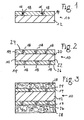
- Fig. 1 is a first embodiment of the invention Plastic film 10 shown.
- This plastic film 10 consists of a first film layer 12 and one second film layer 14.
- the first film layer 12 is made from a plastic, which the transport through the plastic film 10 chemically by absorption / desorption enables, for example made of polyurethane or polyether block amide.
- the second film layer 14 consists of a Plastic, for example made of polyethylene or polypropylene, in the mineral constituents 16, for example Barium sulfate or calcium carbonate, are stored.
- the Plastics of the first film layer 12 and the second film layer 14 were extruded together and then also stretched together, causing phase transition boundaries between the plastic material of the second film layer 14 and the mineral additives 16 and so on Capillaries 18 form, which extend over the entire cross section of the second film layer 14. Through this Capillaries 18 can physically transport water vapor water vapor through the first layer of film 12 is transported by chemical means.
- FIG. 2 is a second embodiment of the invention Plastic film 10 shown.
- Plastic film 10 creates a sandwich-like plastic film 10, the top 24 and bottom 26 each by a second film layer 14 is formed with capillaries 18.
- FIG. 3 is a third embodiment of the invention Plastic film 10 shown.
- This fleece 28 can be on is known to be connected to the second film layers 14 are, especially by thermal bonding, by hot melt adhesives or similar.
Landscapes
- Engineering & Computer Science (AREA)
- Architecture (AREA)
- Civil Engineering (AREA)
- Structural Engineering (AREA)
- Textile Engineering (AREA)
- Mechanical Engineering (AREA)
- Laminated Bodies (AREA)
- Gloves (AREA)
- Absorbent Articles And Supports Therefor (AREA)
- Building Environments (AREA)
Description
- Fig. 1
- ein Ausführungsbeispiel einer bekannten Kunststoffolie im Querschnitt,
- Fig. 2
- ein Ausführungsbeispiel der erfindungsgemäßen Kunststoffolie im Querschnitt,
- Fig. 3
- ein Ausführungsbeispiel der erfindungsgemäßen Kunststoffolie im Querschnitt, und
Claims (11)
- Kunststoffolie (10), welche wasserdicht und wasserdampfdurchlässig ist, bestehend aus mindesten drei unlösbar miteinander verbundenen Folienschichten (12, 14), wobei eine erste Folienschicht (12) aus einem Kunststoff besteht, welcher den Transport von Wasserdampf auf chemischem Wege durch Absorption/Desorption ermöglicht, und wobei eine zweite Folienschicht (14) mit mineralischen Zusatzstoffen (16) versehen ist, durch welche bei der Dehnung an Phasenübergangsgrenzen zwischen Kunststoff und mineralischen Zusatzstoffen (16) Kapillaren (18) ausgebildet sind, welche sich durch die zweite Folienschicht (14) hindurch erstrecken und den Transport von Wasserdampf auf physikalischem Wege ermöglichen, dadurch gekennzeichnet, daß die Kunststoffolie (10) dreischichtig ist, derart, daß die Oberseite (20) und die Unterseite (22) der ersten Folienschicht (12) jeweils mit einer zweiten Folienschicht (14) verbunden sind.
- Kunststoffolie nach Anspruch 1, dadurch gekennzeichnet, daß die erste Folienschicht (12) aus Polyurethan, aus Polyetherblockamid, aus einem Copolyamid, aus einem Poyesterderivat, aus Polyester, aus einem Copolyester oder aus einer Mischung dieser Stoffe besteht.
- Kunststoffolie nach Anspruch 1 oder 2, dadurch gekennzeichnet, daß die zweite Folienschicht (14) aus Polypropylen oder aus Polyethylen besteht.
- Kunststoffolie nach Anspruch 1 - 3, dadurch gekennzeichnet, daß die Oberseite (24; 26) der zweiten Folienschicht (14) mit einem Trägermaterial (28) verbunden ist.
- Kunststoffolie nach Anspruch 4, dadurch gekennzeichnet, daß das Trägermaterial (28) ein Vlies (28) ist.
- Kunststoffolie nach Anspruch 4 oder 5, dadurch gekennzeichnet, daß das Trägermaterial (28) mit der zweiten Folienschicht (14) verklebt ist.
- Kunststoffolie nach Anspruch 6, dadurch gekennzeichnet, daß das Trägermaterial (28) durch einen auf die zweite Folienschicht (14) vollflächig aufgetragenen Hotmelt-Klebstoff (30) aufgeklebt ist.
- Kunststoffolie nach Anspruch 1, dadurch gekennzeichnet, daß die erste Folienschicht (12) eine Dicke von 2 bis 20 µm aufweist.
- Kunststoffolie nach Anspruch 1, dadurch gekennzeichnet, daß die zweite Folienschicht (14) eine Dicke von 1 bis 10 µm aufweist.
- Verfahren zur Herstellung einer Kunststoffolie nach Anspruch 1, umfassend folgende Schritte:1. Der Kunststoff der ersten Folienschicht (12) und der mit mineralischen Füllstoffen (16) versehene Kunststoff der zweiten Folienschicht (14) werden getrennt geschmolzen,2. über eine gemeinsames Folienherstellverfahren werden die Kunststoffe der ersten Folienschicht (12) und der zweiten Folienschicht (14) in situ miteinander verbunden,3. die miteinander verbundenen Folienschichten (12, 14) werden gemeinsam verstreckt, wodurch die Kapillaren (18) der zweiten Folienschicht (14) gebildet werden.
- Verfahren nach Anspruch 10, dadurch gekennzeichnet, daß das gemeinsame Folienherstellverfahren ein gemeinsames Extrusionssystem umfaßt.
Applications Claiming Priority (3)
| Application Number | Priority Date | Filing Date | Title |
|---|---|---|---|
| DE19754251 | 1997-12-06 | ||
| DE19754251A DE19754251C2 (de) | 1997-12-06 | 1997-12-06 | Kunststoffolie, welche wasserdicht und wasserdampfdurchlässig ist |
| PCT/DE1998/003396 WO1999029499A1 (de) | 1997-12-06 | 1998-11-12 | Kunststoffolie, welche wasserdicht und wasserdampfdurchlässig ist |
Publications (2)
| Publication Number | Publication Date |
|---|---|
| EP1034075A1 EP1034075A1 (de) | 2000-09-13 |
| EP1034075B1 true EP1034075B1 (de) | 2003-05-14 |
Family
ID=7851018
Family Applications (1)
| Application Number | Title | Priority Date | Filing Date |
|---|---|---|---|
| EP98963366A Expired - Lifetime EP1034075B1 (de) | 1997-12-06 | 1998-11-12 | Kunststoffolie, welche wasserdicht und wasserdampfdurchlässig ist |
Country Status (6)
| Country | Link |
|---|---|
| EP (1) | EP1034075B1 (de) |
| AT (1) | ATE240206T1 (de) |
| DE (2) | DE19754251C2 (de) |
| DK (1) | DK1034075T3 (de) |
| ES (1) | ES2199479T3 (de) |
| WO (1) | WO1999029499A1 (de) |
Cited By (2)
| Publication number | Priority date | Publication date | Assignee | Title |
|---|---|---|---|---|
| WO2011019478A1 (en) | 2009-08-12 | 2011-02-17 | Precision Fabrics Group, Inc. | Protective apparel having breathable film layer |
| DE112010002882T5 (de) | 2009-08-12 | 2012-08-16 | Pliant. LLC | Atmungsaktiver Film mit innerer Virus- und Alkohol-Sperrlage |
Families Citing this family (10)
| Publication number | Priority date | Publication date | Assignee | Title |
|---|---|---|---|---|
| DE19819085A1 (de) * | 1998-04-29 | 1999-11-11 | Braas Gmbh | Wasserdichtes wasserdampfdurchlässiges Flachmaterial |
| FR2808470B1 (fr) * | 2000-05-03 | 2003-04-11 | Trioplanex France | Film multicouche microporeux respirable a impermeabilite renforcee aux liquides et procede de production |
| EP1291166B1 (de) * | 2001-09-07 | 2005-06-01 | Mitsui Chemicals, Inc. | Verfahren zur Herstellung einer Verbundfolie |
| US20090170392A1 (en) * | 2006-03-10 | 2009-07-02 | Basf Se | Composite element made from polyurethane and polyolefin |
| FR2931853B1 (fr) * | 2008-05-29 | 2013-06-07 | Xl Mat | Complexe d'isolation multicouche |
| DE102010021439A1 (de) * | 2010-05-25 | 2011-12-01 | Fraunhofer-Gesellschaft zur Förderung der angewandten Forschung e.V. | Abdichtungsanordnung für einen Dachaufbau |
| US11318421B2 (en) * | 2019-05-10 | 2022-05-03 | Xergy Inc. | Thin wall polyether block amide membrane tubing and module |
| DE102017003364A1 (de) * | 2017-04-06 | 2018-10-11 | Ewald Dörken Ag | Unterdachbahn, insbesondere vorgesehen zur Verwendung als Unterdeckbahn und/oder Unterspannbahn |
| DE102018006401A1 (de) * | 2018-08-15 | 2020-02-20 | Ewald Dörken Ag | Unterdachbahn |
| DE102021121559A1 (de) | 2021-08-19 | 2023-02-23 | BMI Group Management UK Limited | Dachunterspannbahn |
Family Cites Families (13)
| Publication number | Priority date | Publication date | Assignee | Title |
|---|---|---|---|---|
| US4734324A (en) * | 1987-03-27 | 1988-03-29 | Hercules Incorporated | Heat sealable microporous polypropylene films |
| JPH067772B2 (ja) * | 1989-04-26 | 1994-02-02 | 日東電工株式会社 | 農産物栽培用微孔性フィルム及びこれを用いた農産物の栽培方法 |
| US5032450A (en) * | 1990-01-31 | 1991-07-16 | Ppg Industries, Inc. | Microporous material having a coating of hydrophobic polymer |
| US5520998A (en) * | 1992-10-12 | 1996-05-28 | Toray Industries, Inc. | Highly water-pressure-resistant and highly moisture-permeable waterproof sheet and method for producing same |
| AU7317194A (en) * | 1994-05-06 | 1995-11-29 | W.L. Gore & Associates, Inc. | Three-dimensional seamless waterproof breathable flexible composite articles |
| DE4437521A1 (de) * | 1994-10-20 | 1996-04-25 | Doerken Ewald Ag | Unterspannbahn, insbesondere für geneigte, wärmegedämmte Dächer |
| WO1996016562A1 (en) * | 1994-11-28 | 1996-06-06 | Langley John D | A breathable non-woven composite fabric |
| ZA9510604B (en) * | 1994-12-20 | 1996-07-03 | Kimberly Clark Co | Low gauge films and film/nonwoven laminates |
| US6309736B1 (en) * | 1994-12-20 | 2001-10-30 | Kimberly-Clark Worldwide, Inc. | Low gauge films and film/nonwoven laminates |
| DE19526044C2 (de) * | 1995-07-17 | 1999-03-18 | M & W Verpackungen Gmbh | Flauschige Verbundfolie und Verfahren zur Herstellung einer solchen Verbundfolie |
| US5922492A (en) * | 1996-06-04 | 1999-07-13 | Tonen Chemical Corporation | Microporous polyolefin battery separator |
| US5843057A (en) * | 1996-07-15 | 1998-12-01 | Kimberly-Clark Worldwide, Inc. | Film-nonwoven laminate containing an adhesively-reinforced stretch-thinned film |
| DE29700987U1 (de) * | 1997-01-22 | 1997-04-03 | Wirz, Peter, 53721 Siegburg | Diffussionsoffene Dachunterspannbahn mit innerer Folienschicht |
-
1997
- 1997-12-06 DE DE19754251A patent/DE19754251C2/de not_active Expired - Fee Related
-
1998
- 1998-11-12 DE DE59808392T patent/DE59808392D1/de not_active Expired - Fee Related
- 1998-11-12 WO PCT/DE1998/003396 patent/WO1999029499A1/de not_active Ceased
- 1998-11-12 ES ES98963366T patent/ES2199479T3/es not_active Expired - Lifetime
- 1998-11-12 EP EP98963366A patent/EP1034075B1/de not_active Expired - Lifetime
- 1998-11-12 AT AT98963366T patent/ATE240206T1/de not_active IP Right Cessation
- 1998-11-12 DK DK98963366T patent/DK1034075T3/da active
Cited By (5)
| Publication number | Priority date | Publication date | Assignee | Title |
|---|---|---|---|---|
| WO2011019478A1 (en) | 2009-08-12 | 2011-02-17 | Precision Fabrics Group, Inc. | Protective apparel having breathable film layer |
| DE112010002882T5 (de) | 2009-08-12 | 2012-08-16 | Pliant. LLC | Atmungsaktiver Film mit innerer Virus- und Alkohol-Sperrlage |
| DE112010003266T5 (de) | 2009-08-12 | 2013-01-03 | Precision Fabrics Group, Inc. | Schutzkleidung mit einer atmungsaktiven Filmschicht |
| US9174420B2 (en) | 2009-08-12 | 2015-11-03 | Pliant, Llc | Breathable film with internal viral and alcohol barrier layer |
| DE112010002882B4 (de) | 2009-08-12 | 2022-03-03 | Pliant. LLC | Atmungsaktiver Film mit innerer Virus- und Alkohol-Sperrlage und Verfahren zu dessen Herstellung |
Also Published As
| Publication number | Publication date |
|---|---|
| ATE240206T1 (de) | 2003-05-15 |
| DK1034075T3 (da) | 2003-09-08 |
| EP1034075A1 (de) | 2000-09-13 |
| DE59808392D1 (de) | 2003-06-18 |
| WO1999029499A1 (de) | 1999-06-17 |
| DE19754251C2 (de) | 2003-04-17 |
| ES2199479T3 (es) | 2004-02-16 |
| DE19754251A1 (de) | 1999-06-17 |
Similar Documents
| Publication | Publication Date | Title |
|---|---|---|
| DE3432813C2 (de) | Laminierte bituminöse Abdeckhaut | |
| EP1034075B1 (de) | Kunststoffolie, welche wasserdicht und wasserdampfdurchlässig ist | |
| EP0441241B1 (de) | Selbstklebende bituminöse Dach- und Dichtungsbahn mit Abdeckfolie | |
| DE10307174A1 (de) | Mehrschicht-Monofilament und Verfahren zur Herstellung eines Mehrschicht-Monofilamentes | |
| EP1471125B1 (de) | Kunststoffschaumplatten grosser Dicke | |
| DE19851667C2 (de) | Mehrschichtiges Verbundmaterial | |
| DE60013142T2 (de) | Dichtungsbahn | |
| EP1455612B1 (de) | Flexible flussigkeitsdichte materialbahn | |
| WO1998040581A1 (de) | Folie aus kunststoff mit mineralischen zusatzstoffen, verfahren zu deren herstellung sowie verwendung der folie | |
| DE3922028C2 (de) | ||
| DE102006035922B4 (de) | Fahrzeugverkleidungsteil mit im Wesentlichen symmetrisch vorgesehenem Schichtaufbau und Verfahren zur Herstellung eines Fahrzeugverkleidungsteils | |
| EP0562447A1 (de) | Dichtungsbahn | |
| EP1342563A1 (de) | Verfahren zur Herstellung einer elastischen Verbundfolie mit textiler Oberfläche | |
| EP0284714A2 (de) | Verbundbahn | |
| DE10116477B4 (de) | Dampfdiffusionsoffene und wasserdichte Dachunterspannbahn | |
| DE4114839A1 (de) | Mikrofaservlies sowie mikrofasern enthaltendes verbundvliesmaterial | |
| EP0885716B1 (de) | Kratz- und reissfester Verbund aus Trägerschicht und Kunststoffschicht, insbesondere für Unterspannbahnen | |
| DE2062014A1 (de) | Fasenges Folienmatenal und Verfahren zu seiner Herstellung | |
| DE60119737T2 (de) | Wasserdichtes Schuhwerk und Herstellungsverfahren | |
| DE69208479T2 (de) | Schichtstoff und verfahren zu seiner herstellung | |
| DE102022112540A1 (de) | Verfahren zur Herstellung einer Fahrzeugkomponente mit einer Dekoroberfläche, Fahrzeugkomponente und Kraftfahrzeug | |
| WO2004000535A1 (de) | Gewebe, gewirke oder gelege aus kunststoff, sowie verfahren zur herstellung eines solchen | |
| DE8133741U1 (de) | "kunststoff-formteil" | |
| DE10308574A1 (de) | Kunststoffformteil für Kraftfahrzeuginnenverkleidungen mit Herstellungsverfahren | |
| DE1929611A1 (de) | Schichtstoff mit Verstaerkungseinlage und Verfahren zu seiner Herstellung |
Legal Events
| Date | Code | Title | Description |
|---|---|---|---|
| PUAI | Public reference made under article 153(3) epc to a published international application that has entered the european phase |
Free format text: ORIGINAL CODE: 0009012 |
|
| 17P | Request for examination filed |
Effective date: 20000413 |
|
| AK | Designated contracting states |
Kind code of ref document: A1 Designated state(s): AT BE CH CY DE DK ES FI FR GB GR IE IT LI LU MC NL PT SE |
|
| GRAH | Despatch of communication of intention to grant a patent |
Free format text: ORIGINAL CODE: EPIDOS IGRA |
|
| GRAH | Despatch of communication of intention to grant a patent |
Free format text: ORIGINAL CODE: EPIDOS IGRA |
|
| GRAA | (expected) grant |
Free format text: ORIGINAL CODE: 0009210 |
|
| AK | Designated contracting states |
Designated state(s): AT BE CH CY DE DK ES FI FR GB GR IE IT LI LU MC NL PT SE |
|
| PG25 | Lapsed in a contracting state [announced via postgrant information from national office to epo] |
Ref country code: NL Free format text: LAPSE BECAUSE OF FAILURE TO SUBMIT A TRANSLATION OF THE DESCRIPTION OR TO PAY THE FEE WITHIN THE PRESCRIBED TIME-LIMIT Effective date: 20030514 Ref country code: IE Free format text: LAPSE BECAUSE OF FAILURE TO SUBMIT A TRANSLATION OF THE DESCRIPTION OR TO PAY THE FEE WITHIN THE PRESCRIBED TIME-LIMIT Effective date: 20030514 Ref country code: FI Free format text: LAPSE BECAUSE OF FAILURE TO SUBMIT A TRANSLATION OF THE DESCRIPTION OR TO PAY THE FEE WITHIN THE PRESCRIBED TIME-LIMIT Effective date: 20030514 |
|
| REG | Reference to a national code |
Ref country code: GB Ref legal event code: FG4D Free format text: NOT ENGLISH |
|
| REG | Reference to a national code |
Ref country code: CH Ref legal event code: EP |
|
| REG | Reference to a national code |
Ref country code: IE Ref legal event code: FG4D Free format text: GERMAN |
|
| PGFP | Annual fee paid to national office [announced via postgrant information from national office to epo] |
Ref country code: DE Payment date: 20030618 Year of fee payment: 6 |
|
| REF | Corresponds to: |
Ref document number: 59808392 Country of ref document: DE Date of ref document: 20030618 Kind code of ref document: P |
|
| PG25 | Lapsed in a contracting state [announced via postgrant information from national office to epo] |
Ref country code: SE Free format text: LAPSE BECAUSE OF FAILURE TO SUBMIT A TRANSLATION OF THE DESCRIPTION OR TO PAY THE FEE WITHIN THE PRESCRIBED TIME-LIMIT Effective date: 20030814 Ref country code: PT Free format text: LAPSE BECAUSE OF FAILURE TO SUBMIT A TRANSLATION OF THE DESCRIPTION OR TO PAY THE FEE WITHIN THE PRESCRIBED TIME-LIMIT Effective date: 20030814 Ref country code: GR Free format text: LAPSE BECAUSE OF FAILURE TO SUBMIT A TRANSLATION OF THE DESCRIPTION OR TO PAY THE FEE WITHIN THE PRESCRIBED TIME-LIMIT Effective date: 20030814 |
|
| REG | Reference to a national code |
Ref country code: DK Ref legal event code: T3 |
|
| GBT | Gb: translation of ep patent filed (gb section 77(6)(a)/1977) | ||
| NLV1 | Nl: lapsed or annulled due to failure to fulfill the requirements of art. 29p and 29m of the patents act | ||
| PGFP | Annual fee paid to national office [announced via postgrant information from national office to epo] |
Ref country code: FR Payment date: 20031110 Year of fee payment: 6 |
|
| PG25 | Lapsed in a contracting state [announced via postgrant information from national office to epo] |
Ref country code: LU Free format text: LAPSE BECAUSE OF NON-PAYMENT OF DUE FEES Effective date: 20031112 Ref country code: CY Free format text: LAPSE BECAUSE OF FAILURE TO SUBMIT A TRANSLATION OF THE DESCRIPTION OR TO PAY THE FEE WITHIN THE PRESCRIBED TIME-LIMIT Effective date: 20031112 Ref country code: AT Free format text: LAPSE BECAUSE OF NON-PAYMENT OF DUE FEES Effective date: 20031112 |
|
| PGFP | Annual fee paid to national office [announced via postgrant information from national office to epo] |
Ref country code: GB Payment date: 20031112 Year of fee payment: 6 |
|
| PGFP | Annual fee paid to national office [announced via postgrant information from national office to epo] |
Ref country code: DK Payment date: 20031114 Year of fee payment: 6 |
|
| PG25 | Lapsed in a contracting state [announced via postgrant information from national office to epo] |
Ref country code: MC Free format text: LAPSE BECAUSE OF NON-PAYMENT OF DUE FEES Effective date: 20031130 Ref country code: LI Free format text: LAPSE BECAUSE OF NON-PAYMENT OF DUE FEES Effective date: 20031130 Ref country code: CH Free format text: LAPSE BECAUSE OF NON-PAYMENT OF DUE FEES Effective date: 20031130 |
|
| PGFP | Annual fee paid to national office [announced via postgrant information from national office to epo] |
Ref country code: ES Payment date: 20031209 Year of fee payment: 6 |
|
| REG | Reference to a national code |
Ref country code: IE Ref legal event code: FD4D Ref document number: 1034075E Country of ref document: IE |
|
| PGFP | Annual fee paid to national office [announced via postgrant information from national office to epo] |
Ref country code: BE Payment date: 20040127 Year of fee payment: 6 |
|
| REG | Reference to a national code |
Ref country code: ES Ref legal event code: FG2A Ref document number: 2199479 Country of ref document: ES Kind code of ref document: T3 |
|
| ET | Fr: translation filed | ||
| PLBE | No opposition filed within time limit |
Free format text: ORIGINAL CODE: 0009261 |
|
| STAA | Information on the status of an ep patent application or granted ep patent |
Free format text: STATUS: NO OPPOSITION FILED WITHIN TIME LIMIT |
|
| 26N | No opposition filed |
Effective date: 20040217 |
|
| REG | Reference to a national code |
Ref country code: CH Ref legal event code: PL |
|
| PG25 | Lapsed in a contracting state [announced via postgrant information from national office to epo] |
Ref country code: GB Free format text: LAPSE BECAUSE OF NON-PAYMENT OF DUE FEES Effective date: 20041112 |
|
| PG25 | Lapsed in a contracting state [announced via postgrant information from national office to epo] |
Ref country code: ES Free format text: LAPSE BECAUSE OF NON-PAYMENT OF DUE FEES Effective date: 20041113 |
|
| PG25 | Lapsed in a contracting state [announced via postgrant information from national office to epo] |
Ref country code: DK Free format text: LAPSE BECAUSE OF NON-PAYMENT OF DUE FEES Effective date: 20041130 Ref country code: BE Free format text: LAPSE BECAUSE OF NON-PAYMENT OF DUE FEES Effective date: 20041130 |
|
| BERE | Be: lapsed |
Owner name: *CORONOR COMPOSITES G.M.B.H. Effective date: 20041130 |
|
| PG25 | Lapsed in a contracting state [announced via postgrant information from national office to epo] |
Ref country code: DE Free format text: LAPSE BECAUSE OF NON-PAYMENT OF DUE FEES Effective date: 20050601 |
|
| REG | Reference to a national code |
Ref country code: DK Ref legal event code: EBP |
|
| GBPC | Gb: european patent ceased through non-payment of renewal fee |
Effective date: 20041112 |
|
| PG25 | Lapsed in a contracting state [announced via postgrant information from national office to epo] |
Ref country code: FR Free format text: LAPSE BECAUSE OF NON-PAYMENT OF DUE FEES Effective date: 20050729 |
|
| REG | Reference to a national code |
Ref country code: FR Ref legal event code: ST |
|
| PG25 | Lapsed in a contracting state [announced via postgrant information from national office to epo] |
Ref country code: IT Free format text: LAPSE BECAUSE OF NON-PAYMENT OF DUE FEES Effective date: 20051112 |
|
| REG | Reference to a national code |
Ref country code: ES Ref legal event code: FD2A Effective date: 20041113 |
|
| BERE | Be: lapsed |
Owner name: *CORONOR COMPOSITES G.M.B.H. Effective date: 20041130 |