EP1015593B1 - Hepatitis b virus polypeptides - Google Patents
Hepatitis b virus polypeptides Download PDFInfo
- Publication number
- EP1015593B1 EP1015593B1 EP98944071A EP98944071A EP1015593B1 EP 1015593 B1 EP1015593 B1 EP 1015593B1 EP 98944071 A EP98944071 A EP 98944071A EP 98944071 A EP98944071 A EP 98944071A EP 1015593 B1 EP1015593 B1 EP 1015593B1
- Authority
- EP
- European Patent Office
- Prior art keywords
- fragment
- region
- amino acids
- polypeptide
- hbv
- Prior art date
- Legal status (The legal status is an assumption and is not a legal conclusion. Google has not performed a legal analysis and makes no representation as to the accuracy of the status listed.)
- Expired - Lifetime
Links
Images



Classifications
-
- C—CHEMISTRY; METALLURGY
- C12—BIOCHEMISTRY; BEER; SPIRITS; WINE; VINEGAR; MICROBIOLOGY; ENZYMOLOGY; MUTATION OR GENETIC ENGINEERING
- C12N—MICROORGANISMS OR ENZYMES; COMPOSITIONS THEREOF; PROPAGATING, PRESERVING, OR MAINTAINING MICROORGANISMS; MUTATION OR GENETIC ENGINEERING; CULTURE MEDIA
- C12N15/00—Mutation or genetic engineering; DNA or RNA concerning genetic engineering, vectors, e.g. plasmids, or their isolation, preparation or purification; Use of hosts therefor
- C12N15/09—Recombinant DNA-technology
- C12N15/11—DNA or RNA fragments; Modified forms thereof; Non-coding nucleic acids having a biological activity
-
- C—CHEMISTRY; METALLURGY
- C07—ORGANIC CHEMISTRY
- C07K—PEPTIDES
- C07K14/00—Peptides having more than 20 amino acids; Gastrins; Somatostatins; Melanotropins; Derivatives thereof
- C07K14/005—Peptides having more than 20 amino acids; Gastrins; Somatostatins; Melanotropins; Derivatives thereof from viruses
-
- A—HUMAN NECESSITIES
- A61—MEDICAL OR VETERINARY SCIENCE; HYGIENE
- A61P—SPECIFIC THERAPEUTIC ACTIVITY OF CHEMICAL COMPOUNDS OR MEDICINAL PREPARATIONS
- A61P1/00—Drugs for disorders of the alimentary tract or the digestive system
- A61P1/16—Drugs for disorders of the alimentary tract or the digestive system for liver or gallbladder disorders, e.g. hepatoprotective agents, cholagogues, litholytics
-
- A—HUMAN NECESSITIES
- A61—MEDICAL OR VETERINARY SCIENCE; HYGIENE
- A61P—SPECIFIC THERAPEUTIC ACTIVITY OF CHEMICAL COMPOUNDS OR MEDICINAL PREPARATIONS
- A61P31/00—Antiinfectives, i.e. antibiotics, antiseptics, chemotherapeutics
- A61P31/12—Antivirals
-
- C—CHEMISTRY; METALLURGY
- C07—ORGANIC CHEMISTRY
- C07K—PEPTIDES
- C07K14/00—Peptides having more than 20 amino acids; Gastrins; Somatostatins; Melanotropins; Derivatives thereof
- C07K14/195—Peptides having more than 20 amino acids; Gastrins; Somatostatins; Melanotropins; Derivatives thereof from bacteria
- C07K14/33—Peptides having more than 20 amino acids; Gastrins; Somatostatins; Melanotropins; Derivatives thereof from bacteria from Clostridium (G)
-
- A—HUMAN NECESSITIES
- A61—MEDICAL OR VETERINARY SCIENCE; HYGIENE
- A61K—PREPARATIONS FOR MEDICAL, DENTAL OR TOILETRY PURPOSES
- A61K39/00—Medicinal preparations containing antigens or antibodies
- A61K2039/51—Medicinal preparations containing antigens or antibodies comprising whole cells, viruses or DNA/RNA
-
- A—HUMAN NECESSITIES
- A61—MEDICAL OR VETERINARY SCIENCE; HYGIENE
- A61K—PREPARATIONS FOR MEDICAL, DENTAL OR TOILETRY PURPOSES
- A61K39/00—Medicinal preparations containing antigens or antibodies
- A61K2039/51—Medicinal preparations containing antigens or antibodies comprising whole cells, viruses or DNA/RNA
- A61K2039/53—DNA (RNA) vaccination
-
- A—HUMAN NECESSITIES
- A61—MEDICAL OR VETERINARY SCIENCE; HYGIENE
- A61K—PREPARATIONS FOR MEDICAL, DENTAL OR TOILETRY PURPOSES
- A61K38/00—Medicinal preparations containing peptides
-
- A—HUMAN NECESSITIES
- A61—MEDICAL OR VETERINARY SCIENCE; HYGIENE
- A61K—PREPARATIONS FOR MEDICAL, DENTAL OR TOILETRY PURPOSES
- A61K39/00—Medicinal preparations containing antigens or antibodies
-
- A—HUMAN NECESSITIES
- A61—MEDICAL OR VETERINARY SCIENCE; HYGIENE
- A61K—PREPARATIONS FOR MEDICAL, DENTAL OR TOILETRY PURPOSES
- A61K48/00—Medicinal preparations containing genetic material which is inserted into cells of the living body to treat genetic diseases; Gene therapy
-
- C—CHEMISTRY; METALLURGY
- C07—ORGANIC CHEMISTRY
- C07K—PEPTIDES
- C07K2319/00—Fusion polypeptide
-
- C—CHEMISTRY; METALLURGY
- C12—BIOCHEMISTRY; BEER; SPIRITS; WINE; VINEGAR; MICROBIOLOGY; ENZYMOLOGY; MUTATION OR GENETIC ENGINEERING
- C12N—MICROORGANISMS OR ENZYMES; COMPOSITIONS THEREOF; PROPAGATING, PRESERVING, OR MAINTAINING MICROORGANISMS; MUTATION OR GENETIC ENGINEERING; CULTURE MEDIA
- C12N2730/00—Reverse transcribing DNA viruses
- C12N2730/00011—Details
- C12N2730/10011—Hepadnaviridae
- C12N2730/10111—Orthohepadnavirus, e.g. hepatitis B virus
- C12N2730/10122—New viral proteins or individual genes, new structural or functional aspects of known viral proteins or genes
Definitions
- This invention relates to fusion polypeptides derived from the surface antigen of hepatitis B virus and their use in vaccine compositions.
- Hepatitis B infection and consequential diseases which include chronic liver disease, cirrhosis and hepatocellular carcinoma are a major health problem throughout the world.
- Systematic vaccination of individuals at risk of exposure to the virus has been the main method of controlling infection.
- the first hepatitis B virus (HBV) vaccine was manufactured by the purification and inactivation of HBV surface antigen (HBsAg) obtained from the plasma of chronic carriers. This was soon followed by the production of HBsAg using recombinant DNA techniques.
- HBV surface antigen HBV surface antigen
- the present invention provides a polypeptide comprising tetanus toxin fragment C, or a fragment thereof, fused to the pre-S1 region of hepatitis B virus (HBV), or a fragment thereof, and/or the pre-S2 region of HBV or a fragment thereof.
- HBV hepatitis B virus
- said fragment of the pre-S1 region and pre-S2 region comprises at least 5 amino acids, more preferably at least 6 amino acids, most preferably 10, 15 or 20 amino acids.
- the tetanus toxin fragment C or fragment thereof may be fused to the pre-S1 region, or fragment thereof, of hepatitis B virus (HBV) or the pre-S2 region of HBV, or fragment thereof, via a "hinge” linker region.
- HBV hepatitis B virus
- pre-S1 region and a fragment of the pre-S2 region may be joined together by a "hinge” linker region.
- the present invention further provides a polynucleotide encoding a polypeptide of the invention
- the present invention also provides vectors comprising a polynucleotide encoding a polypeptide of the invention operably linked to a regulatory sequence.
- a regulatory sequence allows expression of the polypeptide in a host cell.
- the host cell is a bacterium, which may be attenuated or a cell of an animal, more preferably a mammal, including primates and humans.
- the present invention provides a vaccine composition comprising a polypeptide, polynucleotide or vector of the invention together with a pharmaceutically acceptable carrier or diluent.
- the vaccine composition may comprise attenuated bacterium transformed with a polynucleotide of the invention. It may be preferred to use the polypeptides of the invention in combination with the active constituents of other HBV vaccine compositions to increase their effectiveness.
- the vaccine composition of the invention preferably further comprises, for example, the polypeptide components of the HBV vaccine described in WO88/10301 (i.e. the S, S+pre-S2 and S+amino acids 20 to 47 of pre-S1 antigenic components of both subtypes adw and ayw ).
- the polypeptides of the invention may also be used to induce antibody responses in non-human animals.
- the resulting antibodies may be polyclonal antibodies or monoclonal antibodies, or fragments thereof. These antibodies may be used in a method of treating HBV infection in a human or animal.
- polypeptides, polynucleotides, vectors and antibodies of the invention may also be used as tools to determine, for example, antigenic determinants within the pre-S1 and/or pre-S2 regions of the HBV surface antigen (HBsAg). Both regions are believed to play important roles in augmenting anti-HBsAg responses which prevent attachment of the virus to hepatocytes and elicit antibodies which are effective in viral clearance, stimulating cellular immune responses and circumventing genetic non-responsiveness to the S region alone.
- HBV surface antigen HBV surface antigen
- polypeptides of the invention comprise tetanus toxin fragment C or an epitope containing fragment thereof fused to a fragment of the pre-S1 region of hepatitis B virus (HBV) and/or a fragment of the pre-S2 region of HBV.
- HBV hepatitis B virus
- Fragment C is a 50 kDa polypeptide generated by papain cleavage and comprises or substantially corresponds to the 451 amino acids at the C-teminus. Fragments of tetanus toxin fragment C that contain epitopes may also be used in the polypeptides of the invention. These fragments will comprise at least 5 or 6 amino acids, preferably at least 10 amino acids, more preferably at least 15, 20, 50 or 100 amino acids.
- Particularly preferred fragments include from about amino acids 80 to 180, which is a good B-cell epitope, and from about amino acids 83 to 103 and 409 to 420 which are good T-cell epitopes (numbering assumes that amino acid 1 of fragment C is amino acid 864 of the complete tetanus toxin).
- the fragment of the pre-S1 region and pre-S2 region comprises at least 5 amino acids, more preferably at least 6 amino acids, most preferably 10, 15 or 20 amino acids.
- the fragment may include, for example, amino acids 1 to 19, 20 to 39,40 to 59, 60 to 79, 80 to 99 or 100 to 119 of pre-S1, or I to 19,20 to 39 or 40 to 55 of pre-S2.
- Suitable fragments which may be used in the polypeptides of the invention are described in the Examples. Particularly preferred fragments include amino acids 20 or 21 to 47 of pre-S 1 (the hepatocyte binding site) and amino acids 1 to 26 and 14 to 32 of pre-S2.
- amino acid sequence of tetanus toxin fragment C and the fragments of the pre-S1 and pre-S2 regions can be modified to provide polypeptides of the invention. For example, this may be carried out to enhance the immunogenicity of the polypeptides of the invention. Amino acid substitutions may be made, for example from 1, 2 or 3 to 10, 20 or 30 substitutions provided that the modified polypeptide retains epitopes.
- the tetanus toxin fragment C may be fused to the fragment of the pre-S 1 region of hepatitis B virus (HBV) or the fragment of the pre-S2 region of HBV via a "hinge” linker region.
- HBV hepatitis B virus
- the fragment of the pre-S2 region of HBV via a "hinge” linker region.
- both a fragment of the pre-S1 region and a fragment of the pre-S2 region are present, they may be joined together by a "hinge” linker region.
- the "hinge” linker region is a region designed to promote the independent folding of both the tetanus toxin fragment C, fragment of the pre-S1 region and the fragment of the pre-S2 region by providing both spatial and temporal separation between the domains.
- the hinge region typically is a sequence encoding a high proportion of proline and/or glycine amino acids.
- the hinge region may be composed entirely of proline and/or glycine amino acids.
- the hinge region may comprise one or more glycine-proline dipeptide units.
- the hinge region may comprise the carboxy terminal of tetanus toxin fragment C.
- the hinge region may, for example, contain up to about fifteen amino acids, for example at least 4 and preferably from 6 to 14 amino acids, the number of amino acids being such as to impart flexibility between the different polypeptide domains.
- the hinge region can correspond substantially to the hinge domain of an antibody immunoglobulin.
- the hinge regions of IgG antibodies in particular are rich in prolines (T.E. Michaelson et al . (1977) J. Biol. Chem. 252 , p883-9), which are thought to provide a flexible joint between the antigen binding and tail domains.
- amino acids may be substituted for glycine, particularly those without bulky side-chains, such as alanine, serine, asparagine and threonine.
- the hinge region is a chain of four or more amino acids defining the sequence: - [X]p-Pro-[Y]q-Pro-[Z]r- wherein Pro is proline, X and Y are each glycine, or an amino acid having a non-bulky side chain; Z is any amino acid; p is a positive integer; q is a positive integer of from one to ten; and r is zero or a positive integer greater than zero.
- Polynucleotides of the invention comprise nucleic acid sequences encoding the polypeptides of the invention.
- Polynucleotides of the invention may comprise DNA or RNA. They may also be polynucleotides which include within them synthetic or modified nucleotides. A number of different types of modification to oligonucleotides are known in the art. These include methylphosphonate and phosphorothioate backbones, addition of acridine or polylysine chains at the 3' and/or 5' ends of the molecule.
- the polynucleotides described herein may be modified by any method available in the art. Such modifications may be carried out in order to enhance the in vivo activity or life span of polynucleotides of the invention.
- Preferred polynucleotides of the invention also include polynucleotide encoding any of the polypeptides of the invention described above. It will be understood by a skilled person that numerous different polynucleotides can encode the same polypeptide as a result of the degeneracy of the genetic code.
- Polynucleotides of the invention comprise can be incorporated into a recombinant replicable vector.
- the vector may be used to replicate the nucleic acid in a compatible host cell.
- the invention provides a method of making polynucleotides of the invention by introducing a polynucleotide of the invention into a replicable vector, introducing the vector into a compatible host cell, and growing the host cell under conditions which bring about replication of the vector.
- the vector may be recovered from the host cell.
- Suitable host cells include bacteria such as E. coli , yeast, mammalian cell lines and other eukaryotic cell lines, for example insect Sf9 cells.
- a polynucleotide of the invention in a vector is operably linked to a regulatory sequence that is capable of providing for the expression of the coding sequence by the host cell, i.e. the vector is an expression vector.
- operably linked refers to a juxtaposition wherein the components described are in a relationship permitting them to function in their intended manner.
- a regulatory sequence "operably linked" to a coding sequence is ligated in such a way that expression of the coding sequence is achieved under condition compatible with the control sequences.
- Such vectors may be transformed or transfected into a suitable host cell as described above to provide for expression of a polypeptide of the invention.
- This process may comprise culturing a host cell transformed with an expression vector as described above under conditions to provide for expression by the vector of a coding sequence encoding the polypeptides.
- the expressed polypeptides may be recovered in vitro .
- Host cells transformed to provide stable expression of the polypeptides may also be used in vivo .
- a host cell such as an attenuated bacterium transformed to express a polypeptide of the invention may be used as a vaccine.
- the attenuated bacterium may be selected from Salmonella, Bordetella, Vibrio , Haemophilus, Neisseria and Yersinia . More preferably the attenuated bacterium is an enterobacteria such as E.coli or Salmonella, such as, S.typhis, S.typhimurium or S.enteritidis .
- the vectors may be for example, plasmid or virus vectors provided with an origin of replication, optionally a promoter for the expression of the said polynucleotide and optionally a regulator of the promoter.
- the vectors may contain one or more selectable marker genes, for example an ampicillin resistance gene in the case of a bacterial plasmid or a neomycin resistance gene for a mammalian vector.
- Vectors may be used in vitro , for example for the production of RNA or used to transfect or transform a host cell.
- the vector may also be adapted to be used in vivo , for example in a method of gene therapy.
- Promoters/enhancers and other expression regulation signals may be selected to be compatible with the host cell for which the expression vector is designed.
- prokaryotic promoters may be used, in particular those suitable for use in E. coli strains (such as E . coli HB101).
- a promoter whose activity is induced in response to a change in the surrounding environment, such as anaerobic conditions is used.
- an htrA or nirB promoter may be used.
- These promoters may be used in particular to express the polypeptides in attenuated bacterium for example for use as a vaccine.
- mammalian promoters When expression of the polypeptides of the invention in carried out in mammalian cells, either in vitro or in vivo , mammalian promoters may be used. Tissues-specific promoters, for example hepatocyte cell-specific promoters, may also be used. Viral promoters may also be used, for example the Moloney murine leukaemia virus long terminal repeat (MMLV LTR), the promoter rous sarcoma virus (RSV) LTR promoter, the SV40 promoter, the human cytomegalovirus (CMV) IE promoter, herpes simplex virus promoters or adenovirus promoters. All these promoters are readily available in the art.
- MMLV LTR Moloney murine leukaemia virus long terminal repeat
- RSV promoter rous sarcoma virus
- CMV human cytomegalovirus
- IE herpes simplex virus promoters or adenovirus promoters. All these
- the polypeptides of the invention may be administered by direct injection.
- the polypeptides are combined with a pharmaceutically acceptable carrier or diluent to produce a pharmaceutical composition.
- Suitable carriers and diluents include isotonic saline solutions, for example phosphate-buffered saline.
- the composition may be formulated for parenteral, intramuscular, intravenous, intranasal, subcutaneous, intraocular or transdermal administration.
- each polypeptide is administered at a dose of from 0.01 to 30 ⁇ g/kg body weight, preferably from 0.1 to 10 ⁇ g/kg, more preferably from 0.1 to 1 ⁇ g/kg body weight.
- the polynucleotides of the invention may be administered directly as a naked nucleic acid construct, preferably further comprising flanking sequences homologous to the host cell genome.
- the amount of nucleic acid administered is typically in the range of from 1 ⁇ g to 10 mg, preferably from 100 ⁇ g to 1 mg.
- Uptake of naked nucleic acid constructs by mammalian cells is enhanced by several known transfection techniques for example those including the use of transfection agents.
- transfection agents include cationic agents (for example calcium phosphate and DEAE-dextran) and lipofectants (for example lipofectamTM and transfectamTM).
- cationic agents for example calcium phosphate and DEAE-dextran
- lipofectants for example lipofectamTM and transfectamTM.
- nucleic acid constructs are mixed with the transfection agent to produce a composition.
- the polynucleotide or vector of the invention is combined with a pharmaceutically acceptable carrier or diluent to produce a pharmaceutical composition.
- Suitable carriers and diluents include isotonic saline solutions, for example phosphate-buffered saline.
- the composition may be formulated for parenteral, intramuscular, intravenous, subcutaneous, intraocular or transdermal administration.
- Vaccines may be prepared from one or more polypeptides of the invention. They may also include one or more immunogenic HBV polypeptides, for example immunogenic HBV polypeptides known in the art. Thus a vaccine of the invention may comprise one or more polypeptides of the invention and optionally, one or more polypeptides selected from HBV S, pre-S1, pre-S2 polypeptides and immunogenic fragments thereof.
- the polypeptides of the invention may be formulated into the vaccine as neutral or salt forms.
- Pharmaceutically acceptable salts include the acid addition salts (formed with free amino groups of the peptide) and which are formed with inorganic acids such as, for example, hydrochloric or phosphoric acids, or such organic acids such as acetic, oxalic, tartaric and maleic. Salts formed with the free carboxyl groups may also be derived from inorganic bases such as, for example, sodium, potassium, ammonium, calcium, or ferric hydroxides, and such organic bases as isopropylamine, trimethylamine, 2-ethylamino ethanol, histidine and procaine.
- vaccines which contain an immunogenic polypeptide(s) as active ingredient(s), is known to one skilled in the art.
- vaccines are prepared as injectables, either as liquid solutions or suspensions; solid forms suitable for solution in, or suspension in, liquid prior to injection may also be prepared.
- the preparation may also be emulsified, or the protein encapsulated in liposomes.
- the vaccine may comprise an attenuated bacterium capable of expressing the polypeptide of the invention.
- the active immunogenic ingredients are often mixed with excipients which are pharmaceutically acceptable and compatible with the active ingredient.
- excipients are, for example, water, saline, dextrose, glycerol, ethanol, or the like and combinations thereof.
- the vaccine may contain minor amounts of auxiliary substances such as wetting or emulsifying agents, pH buffering agents, and/or adjuvants which enhance the effectiveness of the vaccine.
- auxiliary substances such as wetting or emulsifying agents, pH buffering agents, and/or adjuvants which enhance the effectiveness of the vaccine.
- adjuvants which may be effective include but are not limited to: aluminum hydroxide, N-acetyl-muramyl-L-threonyl-D-isoglutamine (thr-MDP), N-acetyl-normuramyl-L-alanyl-D-isoglutamine (CGP 11637, referred to as nor-MDP), N-acetylmuramyl-L-alanyl-D-isoglutaminyl-L-alanine-2-(1'-2'-dipalmitoyl-sn-glycero-3-hydroxyphosphoryloxy)-ethylamine (CGP 19835A, referred
- the vaccines are conventionally administered parenterally, by injection, for example, either subcutaneously or intramuscularly.
- Additional formulations which are suitable for other modes of administration include suppositories and intranasal formulations.
- Oral formulations may be provided, in particular for administration of attenuated bacterium.
- traditional binders and carriers may include, for example, polyalkylene glycols or triglycerides; such suppositories may be formed from mixtures containing the active ingredient in the range of 0.5% to 10%, preferably 1% to 2%.
- Oral formulations include such normally employed excipients as, for example, pharmaceutical grades of mannitol, lactose, starch, magnesium stearate, sodium saccharine, cellulose, magnesium carbonate, and the like. These compositions take the form of solutions, suspensions, tablets, pills, capsules, sustained release formulations or powders and contain 10% to 95% of active ingredient, preferably 25% to 70%.
- the vaccine for example, comprising an attenuated bacterium is advantageously presented in lyophilised form, for example in capsular form, for oral administration to a patient.
- Such capsules, tablets and pills for oral administration to a patient may be provided with an enteric coating comprising, for example, Eudragit "S", Eudragit "L”, cellulose acetate, cellulose acetate phthalate or hydroxypropylmethyl cellulose.
- These capsules may be used as such, or alternatively, the lyophilised material may be reconstituted prior to administration, e.g. as a suspension. Reconstitution is advantageously effected in buffer at a suitable pH to ensure the viability of the organisms.
- a sodium bicarbonate preparation is advantageously administered before each administration of the vaccine.
- the vaccines are administered in a manner compatible with the dosage formulation, and in such amount as will be prophylactically and/or therapeutically effective.
- the quantity to be administered which is generally in the range of 5 ⁇ g to 250 ⁇ g of antigen per dose, depends on the subject to be treated, capacity of the subject's immune system to synthesize antibodies, and the degree of protection desired. Precise amounts of active ingredient required to be administered may depend on the judgement of the practitioner and may be peculiar to each subject
- the vaccine may be given in a single dose schedule, or preferably in a multiple dose schedule.
- a multiple dose schedule is one in which a primary course of vaccination may be with 1-10 separate doses, followed by other doses given at subsequent time intervals required to maintain and or reinforce the immune response, for example, at 1 to 4 months for a second dose, and if needed, a subsequent dose(s) after several months.
- the dosage regimen will also, at least in part, be determined by the need of the individual and be dependent upon the judgement of the practitioner.
- the vaccine containing the immunogenic HBV antigen(s) may be administered in conjunction with other immunoregulatory agents, for example, immunoglobulins.
- the immunogenic polypeptides prepared as described above can be used to produce antibodies, both polyclonal and monoclonal. If polyclonal antibodies are desired, a selected mammal (e.g., mouse, rabbit, goat, horse, etc.) is immunised with an immunogenic polypeptide bearing an HBV epitope(s). Serum from the immunised animal is collected and treated according to known procedures. If serum containing polyclonal antibodies to an HBV epitope contains antibodies to other antigens, the polyclonal antibodies can be purified by immunoaffinity chromatography. Techniques for producing and processing polyclonal antisera are known in the art.
- Monoclonal antibodies directed against HBV epitopes in the polypeptides of the invention can also be readily produced by one skilled in the art.
- the general methodology for making monoclonal antibodies by hybridomas is well known.
- Immortal antibody-producing cell lines can be created by cell fusion, and also by other techniques such as direct transformation of B lymphocytes with oncogenic DNA, or transfection with Epstein-Barr virus.
- Panels of monoclonal antibodies produced against HBV epitopes can be screened for various properties; i.e., for isotype and epitope affinity.
- Antibodies both monoclonal and polyclonal, which are directed against HBV epitopes are particularly useful in diagnosis, and those which are neutralising are useful in passive immunotherapy.
- Monoclonal antibodies in particular, may be used to raise anti-idiotype antibodies.
- Anti-idiotype antibodies are immunoglobulins which carry an "internal image" of the antigen of the infectious agent against which protection is desired.
- anti-idiotype antibodies may also be useful for treatment of HBV, as well as for an elucidation of the immunogenic regions of HBV antigens.
- Both the polypeptides of the invention, and antibodies produced using the polypeptides of the inventions may be used in immunoassay methods, for example which react immunologically with serum containing HBV antibodies, for example to detect presence of HBV antibodies, or the presence of viral antigens, in biological samples, including for example, blood or serum samples.
- the polypeptides and antibodies of the invention may be used to map highly immunogenic regions within the pre-S1 and pre-S2 regions of HBsAg. Design of the immunoassays is subject to a great deal of variation, and a variety of these immunoassays are known in the art.
- the immunoassay may utilise one viral antigen, for example, a polypeptide of the invention; or alternatively, the immunoassay may use a combination of viral antigens including a polypeptide of the invention. It may also use, for example, an antibody obtained using a method of the invention or a combination of these antibodies directed towards one viral antigen or several viral antigens. Protocols may be based, for example, upon competition, or direct reaction, or sandwich type assays. The immunoassay protocols used may also, for example, use solid supports, or may be by immunoprecipitation. Most assays involve the use of labelled antibody or polypeptide; the labels may be, for example, fluorescent, chemiluminescent, radioactive, or dye molecules. Assays which amplify the signals from the probe are also known; examples of which are assays which utilise biotin and avidin, and enzyme-labelled and mediated immunoassays, such as ELISA assays.
- Plasmid pTECH-3 the basic expression vector used in these examples, was prepared as shown in Figure 1 from pTECH-2 and pTEThtrA-1 as described in our earlier application PCT/GB95/00196.
- pTECH-3 comprises a sequence encoding the tetanus toxin fragment C and containing a hinge region, operably linked to the htrA promoter.
- Plasmid pMBdS1RN/44 (containing the ayw hepatitis B pre-S1(20-47)/S gene) was used as template for constructing pTECH3/S1, pTECH3/SB and pTECH3/S1/S2.
- pMByS2/8 (containing the ayw hepatitis B pre-S2(1-55)/S gene) was used as the template for pTECH3/S2 and pTECH3/S1/S2 and pRIT12793 (containing the entire adw hepatitis B pre-S1/S2 gene in pBR322) was used for pTECH3/S ⁇ S1/S2, pTECH3/B ⁇ S1/S2, and pTECH3/WS1/S2.
- Each PCR fragment was digested with restriction enzymes, gel purified and ligated with a 3.76 kbp pTECH3 fragment.
- the first four constructs were made by digesting the pTECH3 plasmid with XbaI/SpeI/CIAP to produce the 3.76 kbp fragment.
- the appropriate HBV PCR fragment which had been pre-cut with NheI was then ligated to the 3.76 kbp fragment.
- the last two constructs were made by digesting pTECH3 plasmid with XbaI/CIAP to produce the 3.76 kbp fragment which was then ligated with the appropriate HBV PCR product which had been pre-cut with NheI.
- Plasmids were transformed into E. coli strain HB 101 using standard techniques. Expression of fusion polypeptides was induced by heat stress at 37°C. Expression was tested by western blotting E . coli cellular extracts with anti-tetanus toxin fragment C antibody and specific antibodies for each insert sequence (see Table 2).
- the fusion polypeptides produced in Example 2 from plasmids pTECH3/s ⁇ S1/S2 and pTECH3/B ⁇ S1/S2 were purified from E. coli cellular extracts by affinity chromatography using anti-tetanus toxin fragment C as the ligand immobilised to the sepharose 4B column. Purified proteins were prepared for injection and administered to mice (B10, female, 6-8 weeks old) using standard techniques and as detailed below.
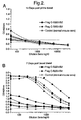
- responses were detected to both pre-S 1 and pre-S2 components of the fusion proteins, and the fragment C carrier protein.
Landscapes
- Health & Medical Sciences (AREA)
- Chemical & Material Sciences (AREA)
- Life Sciences & Earth Sciences (AREA)
- Organic Chemistry (AREA)
- Genetics & Genomics (AREA)
- General Health & Medical Sciences (AREA)
- Medicinal Chemistry (AREA)
- Molecular Biology (AREA)
- Biochemistry (AREA)
- Biophysics (AREA)
- Gastroenterology & Hepatology (AREA)
- Engineering & Computer Science (AREA)
- Proteomics, Peptides & Aminoacids (AREA)
- Biomedical Technology (AREA)
- Virology (AREA)
- Bioinformatics & Cheminformatics (AREA)
- Nuclear Medicine, Radiotherapy & Molecular Imaging (AREA)
- General Engineering & Computer Science (AREA)
- Public Health (AREA)
- Animal Behavior & Ethology (AREA)
- Pharmacology & Pharmacy (AREA)
- General Chemical & Material Sciences (AREA)
- Chemical Kinetics & Catalysis (AREA)
- Zoology (AREA)
- Wood Science & Technology (AREA)
- Veterinary Medicine (AREA)
- Biotechnology (AREA)
- Physics & Mathematics (AREA)
- Plant Pathology (AREA)
- Microbiology (AREA)
- Communicable Diseases (AREA)
- Oncology (AREA)
- Peptides Or Proteins (AREA)
- Medicines Containing Antibodies Or Antigens For Use As Internal Diagnostic Agents (AREA)
- Micro-Organisms Or Cultivation Processes Thereof (AREA)
- Medicines That Contain Protein Lipid Enzymes And Other Medicines (AREA)
Applications Claiming Priority (3)
| Application Number | Priority Date | Filing Date | Title |
|---|---|---|---|
| GBGB9720033.1A GB9720033D0 (en) | 1997-09-19 | 1997-09-19 | Hepatitis B virus polypeptides |
| GB9720033 | 1997-09-19 | ||
| PCT/GB1998/002852 WO1999015671A1 (en) | 1997-09-19 | 1998-09-21 | Hepatitis b virus polypeptides |
Publications (2)
| Publication Number | Publication Date |
|---|---|
| EP1015593A1 EP1015593A1 (en) | 2000-07-05 |
| EP1015593B1 true EP1015593B1 (en) | 2003-05-21 |
Family
ID=10819394
Family Applications (1)
| Application Number | Title | Priority Date | Filing Date |
|---|---|---|---|
| EP98944071A Expired - Lifetime EP1015593B1 (en) | 1997-09-19 | 1998-09-21 | Hepatitis b virus polypeptides |
Country Status (15)
| Country | Link |
|---|---|
| US (1) | US20040258709A1 (enExample) |
| EP (1) | EP1015593B1 (enExample) |
| JP (1) | JP2001517447A (enExample) |
| KR (1) | KR100637282B1 (enExample) |
| AT (1) | ATE241013T1 (enExample) |
| AU (1) | AU751646B2 (enExample) |
| CA (1) | CA2304255C (enExample) |
| CZ (1) | CZ297131B6 (enExample) |
| DE (1) | DE69814884T2 (enExample) |
| ES (1) | ES2199460T3 (enExample) |
| GB (1) | GB9720033D0 (enExample) |
| HU (1) | HUP0003511A3 (enExample) |
| NO (1) | NO20001397L (enExample) |
| PL (1) | PL195242B1 (enExample) |
| WO (1) | WO1999015671A1 (enExample) |
Families Citing this family (6)
| Publication number | Priority date | Publication date | Assignee | Title |
|---|---|---|---|---|
| GB0009470D0 (en) | 2000-04-17 | 2000-06-07 | Univ Southampton | Materials and methods relating to immune responses to fusion proteins |
| EP1281761A1 (en) * | 2001-07-27 | 2003-02-05 | Institut National De La Sante Et De La Recherche Medicale (Inserm) | Hepatitis B virus pre-S1 derived synthetic polypeptides and their use thereof. |
| ATE414535T1 (de) | 2003-06-23 | 2008-12-15 | Baxter Int | Trägerproteine für impfstoffe |
| CN100537762C (zh) * | 2004-06-24 | 2009-09-09 | 中国人民解放军军事医学科学院野战输血研究所 | 一种嵌合型病毒样颗粒疫苗载体蛋白及其制备方法与应用 |
| EP2917231B1 (en) | 2012-11-12 | 2019-03-06 | Ruprecht-Karls-Universität Heidelberg | Lipopeptides for use in treating liver diseases and cardiovascular diseases |
| WO2024263918A2 (en) * | 2023-06-23 | 2024-12-26 | Brii Biosciences, Inc. | Assessment and treatment of chronic hepatitis b |
Family Cites Families (6)
| Publication number | Priority date | Publication date | Assignee | Title |
|---|---|---|---|---|
| ATE207535T1 (de) * | 1987-06-22 | 2001-11-15 | Medeva Holdings Bv | Hepatitis-b-oberflächenantigen enthaltendes peptid |
| EP0389983A3 (en) * | 1989-03-31 | 1991-01-16 | Abbott Laboratories | Monoclonal antibodies to pres2 and pres1 polypeptides of the hepatitis b viral envelope |
| AU4659993A (en) * | 1992-07-07 | 1994-01-31 | Merck & Co., Inc. | Vaccine comprising mixed pres1+pres2+s and core particle |
| KR950702635A (ko) * | 1992-07-31 | 1995-07-29 | 크리스틴 헬렌 수덴 | 감쇠 박테리아에서 재조합 융합 단백질의 발현(Expression of recombinant fusion proteins in attenuated bacteria) |
| WO1995004151A2 (en) * | 1993-07-30 | 1995-02-09 | Medeva Holdings B.V. | Vaccine compositions containing recombinant tetc-fusion proteins |
| GB9401795D0 (en) * | 1994-01-31 | 1994-03-23 | Medeva Holdings Bv | Vaccines |
-
1997
- 1997-09-19 GB GBGB9720033.1A patent/GB9720033D0/en not_active Ceased
-
1998
- 1998-09-21 ES ES98944071T patent/ES2199460T3/es not_active Expired - Lifetime
- 1998-09-21 PL PL98339366A patent/PL195242B1/pl not_active IP Right Cessation
- 1998-09-21 JP JP2000512962A patent/JP2001517447A/ja active Pending
- 1998-09-21 AT AT98944071T patent/ATE241013T1/de not_active IP Right Cessation
- 1998-09-21 CA CA002304255A patent/CA2304255C/en not_active Expired - Fee Related
- 1998-09-21 HU HU0003511A patent/HUP0003511A3/hu unknown
- 1998-09-21 DE DE69814884T patent/DE69814884T2/de not_active Expired - Fee Related
- 1998-09-21 EP EP98944071A patent/EP1015593B1/en not_active Expired - Lifetime
- 1998-09-21 KR KR1020007002945A patent/KR100637282B1/ko not_active Expired - Fee Related
- 1998-09-21 AU AU91744/98A patent/AU751646B2/en not_active Ceased
- 1998-09-21 WO PCT/GB1998/002852 patent/WO1999015671A1/en not_active Ceased
- 1998-09-21 CZ CZ20000978A patent/CZ297131B6/cs not_active IP Right Cessation
-
2000
- 2000-03-17 NO NO20001397A patent/NO20001397L/no not_active Application Discontinuation
-
2004
- 2004-07-15 US US10/892,018 patent/US20040258709A1/en not_active Abandoned
Also Published As
| Publication number | Publication date |
|---|---|
| NO20001397L (no) | 2000-05-05 |
| US20040258709A1 (en) | 2004-12-23 |
| PL195242B1 (pl) | 2007-08-31 |
| PL339366A1 (en) | 2000-12-18 |
| CA2304255A1 (en) | 1999-04-01 |
| CZ297131B6 (cs) | 2006-09-13 |
| AU751646B2 (en) | 2002-08-22 |
| DE69814884T2 (de) | 2004-03-11 |
| ES2199460T3 (es) | 2004-02-16 |
| CA2304255C (en) | 2009-07-07 |
| GB9720033D0 (en) | 1997-11-19 |
| CZ2000978A3 (cs) | 2001-01-17 |
| DE69814884D1 (de) | 2003-06-26 |
| HUP0003511A3 (en) | 2003-08-28 |
| AU9174498A (en) | 1999-04-12 |
| WO1999015671A1 (en) | 1999-04-01 |
| NO20001397D0 (no) | 2000-03-17 |
| HUP0003511A2 (hu) | 2001-02-28 |
| EP1015593A1 (en) | 2000-07-05 |
| JP2001517447A (ja) | 2001-10-09 |
| ATE241013T1 (de) | 2003-06-15 |
| KR20010024176A (ko) | 2001-03-26 |
| KR100637282B1 (ko) | 2006-10-24 |
Similar Documents
| Publication | Publication Date | Title |
|---|---|---|
| Thanavala et al. | Immunogenicity of transgenic plant-derived hepatitis B surface antigen. | |
| Wu et al. | Expression of immunogenic epitopes of hepatitis B surface antigen with hybrid flagellin proteins by a vaccine strain of Salmonella. | |
| US5780036A (en) | Peptides for inducing cytotoxic T lymphocyte responses to hepattis B virus | |
| EP0522030B1 (en) | Hepatitis b vaccine | |
| ES2217303T3 (es) | Proteinas de micobacterias, microorganismos que las producen y utilizaciones vacunales y para la deteccion de la tuberculosis. | |
| FI84558C (fi) | Foerfarande foer framstaellning av ett vaccin mot hepatitis b-virus. | |
| CN116019906A (zh) | 新型冠状病毒免疫原性组合物、其制备方法和应用 | |
| Brown et al. | Antibody responses to recombinant and plasma derived hepatitis B vaccines. | |
| Hui et al. | Immunization with a plasmid encoding a modified hepatitis B surface antigen carrying the receptor binding site for hepatocytes | |
| US6919203B2 (en) | Peptides for inducing cytotoxic T lymphocyte responses to hepatitis B virus | |
| PT85137B (pt) | Processo de preparacao de um polipeptido de composito imunogenico, de melhoramento da imunogenicidade de um imunogenio e de atenuacao da falta de capacidade de resposta a uma vacina do virus da hepatite b | |
| EP1015593B1 (en) | Hepatitis b virus polypeptides | |
| JP3000569B2 (ja) | B型肝炎ウイルスコア抗原のアミノ酸残基配列 | |
| Zuckerman | Subunit, recombinant and synthetic hepatitis B vaccines | |
| CN1737147B (zh) | 热休克蛋白65-多表位乙型肝炎病毒核心抗原重组融合蛋白(HSP65-HBcAg) | |
| MXPA00002577A (en) | Hepatitis b virus polypeptides | |
| Zuckerman | Novel hepatitis B vaccines | |
| JP2003517021A (ja) | 抗原送達 | |
| CN114891120B (zh) | 一种二价禽腺病毒特异性抗原融合蛋白 | |
| WO1991017768A1 (en) | Epitopes of the pre-s region of hepatitis b virus surface antigen | |
| WO1989006658A1 (en) | Immunogenic peptides | |
| Parizad et al. | Comparison of Immune Response in Mice Immunized with Recombinant PreS2/S-C18-27 Protein Derived from Hepatitis B Virus with Commercial Vaccine | |
| HOWARD et al. | Hepatitis Β Virus: Approaches to Control and Vaccination | |
| AU642729C (en) | Hepatitis B vaccine | |
| an Isolated | Priming Biologically Active Antibody |
Legal Events
| Date | Code | Title | Description |
|---|---|---|---|
| PUAI | Public reference made under article 153(3) epc to a published international application that has entered the european phase |
Free format text: ORIGINAL CODE: 0009012 |
|
| 17P | Request for examination filed |
Effective date: 20000308 |
|
| AK | Designated contracting states |
Kind code of ref document: A1 Designated state(s): AT BE CH CY DE DK ES FI FR GB GR IE IT LI LU MC NL PT SE |
|
| AX | Request for extension of the european patent |
Free format text: AL PAYMENT 20000308;LT PAYMENT 20000308;LV PAYMENT 20000308;MK PAYMENT 20000308;RO PAYMENT 20000308;SI PAYMENT 20000308 |
|
| GRAH | Despatch of communication of intention to grant a patent |
Free format text: ORIGINAL CODE: EPIDOS IGRA |
|
| RAP1 | Party data changed (applicant data changed or rights of an application transferred) |
Owner name: CELLTECH PHARMA EUROPE LIMITED |
|
| GRAH | Despatch of communication of intention to grant a patent |
Free format text: ORIGINAL CODE: EPIDOS IGRA |
|
| GRAA | (expected) grant |
Free format text: ORIGINAL CODE: 0009210 |
|
| AK | Designated contracting states |
Designated state(s): AT BE CH CY DE DK ES FI FR GB GR IE IT LI LU MC NL PT SE |
|
| AX | Request for extension of the european patent |
Extension state: AL LT LV MK RO SI |
|
| PG25 | Lapsed in a contracting state [announced via postgrant information from national office to epo] |
Ref country code: FI Free format text: LAPSE BECAUSE OF FAILURE TO SUBMIT A TRANSLATION OF THE DESCRIPTION OR TO PAY THE FEE WITHIN THE PRESCRIBED TIME-LIMIT Effective date: 20030521 Ref country code: AT Free format text: LAPSE BECAUSE OF FAILURE TO SUBMIT A TRANSLATION OF THE DESCRIPTION OR TO PAY THE FEE WITHIN THE PRESCRIBED TIME-LIMIT Effective date: 20030521 |
|
| REG | Reference to a national code |
Ref country code: GB Ref legal event code: FG4D |
|
| REG | Reference to a national code |
Ref country code: CH Ref legal event code: EP |
|
| REG | Reference to a national code |
Ref country code: IE Ref legal event code: FG4D |
|
| REF | Corresponds to: |
Ref document number: 69814884 Country of ref document: DE Date of ref document: 20030626 Kind code of ref document: P |
|
| PG25 | Lapsed in a contracting state [announced via postgrant information from national office to epo] |
Ref country code: SE Free format text: LAPSE BECAUSE OF FAILURE TO SUBMIT A TRANSLATION OF THE DESCRIPTION OR TO PAY THE FEE WITHIN THE PRESCRIBED TIME-LIMIT Effective date: 20030821 Ref country code: PT Free format text: LAPSE BECAUSE OF FAILURE TO SUBMIT A TRANSLATION OF THE DESCRIPTION OR TO PAY THE FEE WITHIN THE PRESCRIBED TIME-LIMIT Effective date: 20030821 Ref country code: GR Free format text: LAPSE BECAUSE OF FAILURE TO SUBMIT A TRANSLATION OF THE DESCRIPTION OR TO PAY THE FEE WITHIN THE PRESCRIBED TIME-LIMIT Effective date: 20030821 Ref country code: DK Free format text: LAPSE BECAUSE OF FAILURE TO SUBMIT A TRANSLATION OF THE DESCRIPTION OR TO PAY THE FEE WITHIN THE PRESCRIBED TIME-LIMIT Effective date: 20030821 |
|
| PG25 | Lapsed in a contracting state [announced via postgrant information from national office to epo] |
Ref country code: LU Free format text: LAPSE BECAUSE OF NON-PAYMENT OF DUE FEES Effective date: 20030921 Ref country code: CY Free format text: LAPSE BECAUSE OF FAILURE TO SUBMIT A TRANSLATION OF THE DESCRIPTION OR TO PAY THE FEE WITHIN THE PRESCRIBED TIME-LIMIT Effective date: 20030921 |
|
| PG25 | Lapsed in a contracting state [announced via postgrant information from national office to epo] |
Ref country code: IE Free format text: LAPSE BECAUSE OF NON-PAYMENT OF DUE FEES Effective date: 20030922 |
|
| PG25 | Lapsed in a contracting state [announced via postgrant information from national office to epo] |
Ref country code: MC Free format text: LAPSE BECAUSE OF NON-PAYMENT OF DUE FEES Effective date: 20030930 |
|
| LTIE | Lt: invalidation of european patent or patent extension |
Effective date: 20030521 |
|
| REG | Reference to a national code |
Ref country code: CH Ref legal event code: NV Representative=s name: PATENTANWAELTE SCHAAD, BALASS, MENZL & PARTNER AG |
|
| REG | Reference to a national code |
Ref country code: ES Ref legal event code: FG2A Ref document number: 2199460 Country of ref document: ES Kind code of ref document: T3 |
|
| ET | Fr: translation filed | ||
| PLBE | No opposition filed within time limit |
Free format text: ORIGINAL CODE: 0009261 |
|
| STAA | Information on the status of an ep patent application or granted ep patent |
Free format text: STATUS: NO OPPOSITION FILED WITHIN TIME LIMIT |
|
| 26N | No opposition filed |
Effective date: 20040224 |
|
| REG | Reference to a national code |
Ref country code: IE Ref legal event code: MM4A |
|
| PGFP | Annual fee paid to national office [announced via postgrant information from national office to epo] |
Ref country code: DE Payment date: 20070913 Year of fee payment: 10 |
|
| PGFP | Annual fee paid to national office [announced via postgrant information from national office to epo] |
Ref country code: CH Payment date: 20070913 Year of fee payment: 10 |
|
| PGFP | Annual fee paid to national office [announced via postgrant information from national office to epo] |
Ref country code: GB Payment date: 20070919 Year of fee payment: 10 |
|
| PGFP | Annual fee paid to national office [announced via postgrant information from national office to epo] |
Ref country code: NL Payment date: 20070903 Year of fee payment: 10 Ref country code: IT Payment date: 20070927 Year of fee payment: 10 Ref country code: ES Payment date: 20071024 Year of fee payment: 10 |
|
| PGFP | Annual fee paid to national office [announced via postgrant information from national office to epo] |
Ref country code: BE Payment date: 20071130 Year of fee payment: 10 |
|
| PGFP | Annual fee paid to national office [announced via postgrant information from national office to epo] |
Ref country code: FR Payment date: 20070914 Year of fee payment: 10 |
|
| BERE | Be: lapsed |
Owner name: *CELLTECH PHARMA EUROPE LTD Effective date: 20080930 |
|
| REG | Reference to a national code |
Ref country code: CH Ref legal event code: PL |
|
| GBPC | Gb: european patent ceased through non-payment of renewal fee |
Effective date: 20080921 |
|
| PG25 | Lapsed in a contracting state [announced via postgrant information from national office to epo] |
Ref country code: NL Free format text: LAPSE BECAUSE OF NON-PAYMENT OF DUE FEES Effective date: 20090401 |
|
| NLV4 | Nl: lapsed or anulled due to non-payment of the annual fee |
Effective date: 20090401 |
|
| REG | Reference to a national code |
Ref country code: FR Ref legal event code: ST Effective date: 20090529 |
|
| PG25 | Lapsed in a contracting state [announced via postgrant information from national office to epo] |
Ref country code: BE Free format text: LAPSE BECAUSE OF NON-PAYMENT OF DUE FEES Effective date: 20080930 |
|
| PG25 | Lapsed in a contracting state [announced via postgrant information from national office to epo] |
Ref country code: IT Free format text: LAPSE BECAUSE OF NON-PAYMENT OF DUE FEES Effective date: 20080921 Ref country code: DE Free format text: LAPSE BECAUSE OF NON-PAYMENT OF DUE FEES Effective date: 20090401 |
|
| PG25 | Lapsed in a contracting state [announced via postgrant information from national office to epo] |
Ref country code: LI Free format text: LAPSE BECAUSE OF NON-PAYMENT OF DUE FEES Effective date: 20080930 Ref country code: FR Free format text: LAPSE BECAUSE OF NON-PAYMENT OF DUE FEES Effective date: 20080930 Ref country code: CH Free format text: LAPSE BECAUSE OF NON-PAYMENT OF DUE FEES Effective date: 20080930 |
|
| REG | Reference to a national code |
Ref country code: ES Ref legal event code: FD2A Effective date: 20080922 |
|
| PG25 | Lapsed in a contracting state [announced via postgrant information from national office to epo] |
Ref country code: GB Free format text: LAPSE BECAUSE OF NON-PAYMENT OF DUE FEES Effective date: 20080921 |
|
| PG25 | Lapsed in a contracting state [announced via postgrant information from national office to epo] |
Ref country code: ES Free format text: LAPSE BECAUSE OF NON-PAYMENT OF DUE FEES Effective date: 20080922 |