EP0952573B1 - Recording medium for storing defect management information for recording real time data and defect managing method therefore - Google Patents
Recording medium for storing defect management information for recording real time data and defect managing method therefore Download PDFInfo
- Publication number
- EP0952573B1 EP0952573B1 EP99303057A EP99303057A EP0952573B1 EP 0952573 B1 EP0952573 B1 EP 0952573B1 EP 99303057 A EP99303057 A EP 99303057A EP 99303057 A EP99303057 A EP 99303057A EP 0952573 B1 EP0952573 B1 EP 0952573B1
- Authority
- EP
- European Patent Office
- Prior art keywords
- linear replacement
- replacement
- defect
- information representing
- disc
- Prior art date
- Legal status (The legal status is an assumption and is not a legal conclusion. Google has not performed a legal analysis and makes no representation as to the accuracy of the status listed.)
- Expired - Lifetime
Links
Images




Classifications
-
- G—PHYSICS
- G11—INFORMATION STORAGE
- G11B—INFORMATION STORAGE BASED ON RELATIVE MOVEMENT BETWEEN RECORD CARRIER AND TRANSDUCER
- G11B7/00—Recording or reproducing by optical means, e.g. recording using a thermal beam of optical radiation by modifying optical properties or the physical structure, reproducing using an optical beam at lower power by sensing optical properties; Record carriers therefor
- G11B7/007—Arrangement of the information on the record carrier, e.g. form of tracks, actual track shape, e.g. wobbled, or cross-section, e.g. v-shaped; Sequential information structures, e.g. sectoring or header formats within a track
- G11B7/00736—Auxiliary data, e.g. lead-in, lead-out, Power Calibration Area [PCA], Burst Cutting Area [BCA], control information
-
- G—PHYSICS
- G11—INFORMATION STORAGE
- G11B—INFORMATION STORAGE BASED ON RELATIVE MOVEMENT BETWEEN RECORD CARRIER AND TRANSDUCER
- G11B20/00—Signal processing not specific to the method of recording or reproducing; Circuits therefor
- G11B20/10—Digital recording or reproducing
- G11B20/18—Error detection or correction; Testing, e.g. of drop-outs
- G11B20/1883—Methods for assignment of alternate areas for defective areas
-
- G—PHYSICS
- G11—INFORMATION STORAGE
- G11B—INFORMATION STORAGE BASED ON RELATIVE MOVEMENT BETWEEN RECORD CARRIER AND TRANSDUCER
- G11B20/00—Signal processing not specific to the method of recording or reproducing; Circuits therefor
- G11B20/10—Digital recording or reproducing
- G11B2020/10935—Digital recording or reproducing wherein a time constraint must be met
- G11B2020/10944—Real-time recording or reproducing, e.g. for ensuring seamless playback of AV data
-
- G—PHYSICS
- G11—INFORMATION STORAGE
- G11B—INFORMATION STORAGE BASED ON RELATIVE MOVEMENT BETWEEN RECORD CARRIER AND TRANSDUCER
- G11B20/00—Signal processing not specific to the method of recording or reproducing; Circuits therefor
- G11B20/10—Digital recording or reproducing
- G11B20/18—Error detection or correction; Testing, e.g. of drop-outs
- G11B20/1883—Methods for assignment of alternate areas for defective areas
- G11B2020/1893—Methods for assignment of alternate areas for defective areas using linear replacement to relocate data from a defective block to a non-contiguous spare area, e.g. with a secondary defect list [SDL]
-
- G—PHYSICS
- G11—INFORMATION STORAGE
- G11B—INFORMATION STORAGE BASED ON RELATIVE MOVEMENT BETWEEN RECORD CARRIER AND TRANSDUCER
- G11B20/00—Signal processing not specific to the method of recording or reproducing; Circuits therefor
- G11B20/10—Digital recording or reproducing
- G11B20/18—Error detection or correction; Testing, e.g. of drop-outs
- G11B20/1883—Methods for assignment of alternate areas for defective areas
- G11B2020/1896—Methods for assignment of alternate areas for defective areas using skip or slip replacement to relocate data from a defective block to the next usable block, e.g. with a primary defect list [PDL]
-
- G—PHYSICS
- G11—INFORMATION STORAGE
- G11B—INFORMATION STORAGE BASED ON RELATIVE MOVEMENT BETWEEN RECORD CARRIER AND TRANSDUCER
- G11B2220/00—Record carriers by type
- G11B2220/20—Disc-shaped record carriers
-
- G—PHYSICS
- G11—INFORMATION STORAGE
- G11B—INFORMATION STORAGE BASED ON RELATIVE MOVEMENT BETWEEN RECORD CARRIER AND TRANSDUCER
- G11B2220/00—Record carriers by type
- G11B2220/20—Disc-shaped record carriers
- G11B2220/21—Disc-shaped record carriers characterised in that the disc is of read-only, rewritable, or recordable type
- G11B2220/215—Recordable discs
- G11B2220/216—Rewritable discs
-
- G—PHYSICS
- G11—INFORMATION STORAGE
- G11B—INFORMATION STORAGE BASED ON RELATIVE MOVEMENT BETWEEN RECORD CARRIER AND TRANSDUCER
- G11B2220/00—Record carriers by type
- G11B2220/20—Disc-shaped record carriers
- G11B2220/25—Disc-shaped record carriers characterised in that the disc is based on a specific recording technology
- G11B2220/2537—Optical discs
- G11B2220/2562—DVDs [digital versatile discs]; Digital video discs; MMCDs; HDCDs
- G11B2220/2575—DVD-RAMs
-
- G—PHYSICS
- G11—INFORMATION STORAGE
- G11B—INFORMATION STORAGE BASED ON RELATIVE MOVEMENT BETWEEN RECORD CARRIER AND TRANSDUCER
- G11B7/00—Recording or reproducing by optical means, e.g. recording using a thermal beam of optical radiation by modifying optical properties or the physical structure, reproducing using an optical beam at lower power by sensing optical properties; Record carriers therefor
- G11B7/004—Recording, reproducing or erasing methods; Read, write or erase circuits therefor
- G11B7/005—Reproducing
Definitions
- the present invention relates to the field of managing a disk and its defects, and more particularly, to a recording medium for storing defect management information with respect to whether linear replacement is used and a method of effectively managing defects to record and/or reproduce video and/or audio data from a digital versatile disc random access memory (DVD-RAM) in real time.
- DVD-RAM digital versatile disc random access memory
- Real time recording or reproduction means that a given amount of data is necessarily recorded or reproduced within a given time since input information is lost if it is not processed at the moment data is input, and since a phenomenon such as pause of an image or temporary interruption of music occurs with reproduction of data as abnormal information if data is not recorded or reproduced at a predetermined speed.
- the above-described problems are caused since the input of information cannot be temporally controlled by a recording and reproducing apparatus.
- International patent application WO 98/14938 describes a method of recording a file which uses an information recording disc which has a plurality of sectors on/from which data are recorded/reproduced.
- the method includes a step in which it is judged whether inputted data is AV or not, a step in which defective sectors existing in allocated data recording areas are detected, a step in which, when it is judged that the inputted data is AV data and the defective sectors are detected in the data recording areas, defective extents including defective sectors are allocated, a step in which AV data is recorded on the successive sectors while the defect extents are skipped, and a step in which a region where sectors on which AV data only are recorded is allocated one AV extent.
- US 5,528,571 describes a disc driving apparatus using SSA (Sector Slipping Algorithm) for defective sectors and LRA (Linear Replacement Algorithm).
- the disc driving apparatus can reproduce data at high speed on the basis of attribute data representing whether a defective sector is processed by the SSA or the LRA.
- the first method processes defects detected in an initializing process; and the second method replaces an error correction code (ECC) block unit (16-sector unit) including a sector having a defect generated during use of the disc with a defect-free ECC block in a spare area.
- ECC error correction code
- the slipping replacement is used to minimize a reduction in the recording or reproduction speed due to defects, in which a logical sector number to be provided to a defective sector is provided to a sector next to the defective sector detected during a certification process for investigating defects of a disc when the disc is initialized, that is, data is recorded or reproduced by slipping a sector on which a defect is generated during recording or reproduction.
- a real physical sector number is pushed back by the sector number designated by slipping the defective sector.
- Such a left-behind phenomenon is solved by using as many sectors as there are defects in a spare area located at the end portion of a corresponding recording area.
- the slipping replacement cannot be used for a defect generated while a disc is used.
- discontinuity is generated on logical sector numbering, which means that the slipping replacement violates file system rules.
- the linear replacement is used when a defect is generated during use of the disc, which means the replacement of an ECC block including a defective sector with an ECC block existing in a spare area.
- a DVD-RAM drive according to the DVD-RAM standard version 1.0 processes all of this defect management to reduce the burden of the host computer used in the drive.
- the host computer is designed to transmit a command ordered not to manage defects to the drive using a command denoted in an interface standard. That is, if the host computer determines whether defect management will be performed, the defect management itself is supposed to be performed by the drive.
- the DVD-RAM disc according to the DVD-RAM standard version 1.0 must necessarily manage defects recorded in a primary defect list (PDL) and a secondary defect list (SDL) according to a defect management rule if an area slipping replaced or linear replaced due to defect management performed by another drive exists.
- PDL primary defect list
- SDL secondary defect list
- the position of a defective sector replaced according to slipping replacement should be recorded in the PDL
- the position of a defective block replaced according to linear replacement should be recorded in the SDL. That is, when data is recorded after setting the fact that a specific drive should not perform defect management using the linear replacement, it cannot be ensured that other drives must also not perform the linear replacement on the same disc.
- a defect managing method for an optical storage medium and recording and/or reproducing apparatus comprising the steps of: (a) designating defective units for linear replacement and recording defect management information representing whether replacement or non-replacement by a linear replacement operation of a defective unit of said optical storage medium is required; and (b) if the recorded defect management information indicates that a defective unit requires replacement by linear replacement, then replacing the defective unit by a block in a spare area of the storage medium and, if the defect management information indicates that the defective unit is not to be replaced by linear replacement, then not replacing the defective unit even if the defective unit was previously designated for linear replacement.
- step (a) information representing use or non-use of linear replacement for the entire disc is recorded in a reserved area of a disc certification flag in the DDS provided by the DVD-RAM.
- step (a) information representing use or non-use of linear replacement for the specific area of the disc is recorded in a reserved area of a group certification flag in the DDS provided by the DVD-RAM.
- step (a) information representing use or non-use of linear replacement is recorded upon initialization of the disc.
- step (a) information representing use or non-use of linear replacement is recorded just before real time data is recorded on the disc.
- information representing use or non-use of linear replacement is information for showing a plurality of defect management modes, and this information is recorded in a reserved area of the DDS.
- defect management information showing the plurality of defect management modes includes information representing that slipping replacement and linear replacement is applied with respect to all data on the recording medium, information representing that linear replacement is selectively applied according to the type of data, and information representing that linear replacement is not applied to all data on the recording medium.
- information representing use or non-use of linear replacement denotes the use of a defect managing method dedicated for real time recording in which linear replacement is not performed by allocating only a spare area for slipping replacement.
- the spare area for slipping replacement is allocated to the last group of a disc, and the information representing use or non-use of linear replacement is recorded in the reserved area of the DDS and the PDL.
- step (b) when information representing use or non-use of linear replacement represents the non-use of linear replacement, linear replacement is not used for real time data, but linear replacement is used for data other than real time data.
- step (b) when information representing use or non-use of linear replacement represents the non-use of linear replacement, linear replacement is not used regardless of whether data is real time data.
- the method may further comprise the step of: (c) cancelling the linear replacement of a defect on an area where real time data is to be recorded, when the information representing use or non-use of linear replacement represents the non-use of linear replacement.
- step (c) the linear replacement is canceled using a flag representing that the linear replacement has been cancelled using a reserved bit in an SDL, information representing that a defective block has been replaced is stored in an FRM bit of the SDL entry, and the start sector number of the defective block and the start sector number of a replacement block are stored in the SDL entry.
- step (c) only the start sector number of a defective block is left in an SDL, information representing that a defective block has not been replaced is stored in an FRM bit of the SDL entry showing whether the defective block has been replaced, and information representing that the defective block has not been replaced is stored in the start sector number of a replacement block are stored in the SDL entry.
- the method may further comprise the step of: (d) recording only the start sector number of a block having a defect generated while using a disc on which information that the linear replacement defect management will not be used has been recorded, in an SDL, recording information representing that a deflective block has not been replaced in the FRM bit of the SDL entry showing whether the deflective block has been replaced, and recording information that the deflective block has not been replaced in the start sector number of a replacement block in the SDL entry.
- the method may further comprise the step of: (e) performing defect management based on linear replacement when a defect is generated during use of a disc on which information that the linear replacement defect management will be used has been recorded.
- information representing replacement of the defective unit includes the positions of the defective unit and the replaced unit.
- an optical data storage medium comprising: a user data area where user data is stored; at least one spare area to replace defective units of the user data area; and a defect management information area where defect management information for a defective unit is stored, wherein the defect management information includes information representing whether replacement or non-replacement of the defective unit by linear replacement is required, wherein if the defect management information indicates that the defective unit is not to be replaced by linear replacement, then not replacing the defective unit even if the defective unit was previously designated for linear replacement.
- a flag represents information representing that a linear replacement of the recording has been used, said flag being stored as a reserved bit of the SDL.
- a flag represents information representing that a linear replacement of the recording has not been used, said flag being stored as a set bit of the SDL.
- information representing replacement of the defective unit includes the positions of the defective unit and the replaced unit.
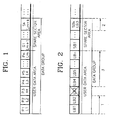
- Figure 1 is a view for explaining a defect management method using the slipping replacement.
- Physical addresses on a disc shown in Figure 1 are recorded as P1, P2, P3, ..., Pn, and logical addresses must be provided to record real data in this physically-segmented sector. These logical addresses act as addresses allowing a real file system to search for its own data. However, the relationship between the physical addresses and the logical addresses is made in a disc initialization process. If a defect is detected on the third physical sector P3 as shown in Figure 1, a logical address is not designated to this defective sector, and a logical sector number L3 is designated to the next physical sector P4.
- the logical sectors are sequentially pushed back by the number of defective sectors, and a spare area located at the end of a corresponding data group is used by the pushed portion.
- this slipping replacement method effective processing in sector units is possible by simply slipping a defective region, and a pickup does not need to move to a different place upon recording and reproduction by simply disregarding and skipping a defective portion.
- the defective region can be avoided while minimizing the delay time.
- the position of a defective sector replaced by the slipping replacement is recorded in the PDL.
- Figure 2 is a view for explaining a defect management method using linear replacement.
- the defects are managed in an ECC block unit, i.e., in units of 16 sectors.
- an ECC block unit i.e., in units of 16 sectors.
- the error correction unit of each data previously recorded in a disc must be changed.
- processing in an ECC block unit must be performed, and the slipping replacement method of slipping a defective sector and designating a logical sector cannot be used since the logical address of an area where data has already been recorded cannot be changed.
- the defective region is recorded in the SDL to be prevented from being used, and the defective portion is replaced with a usable block existing in a spare area.
- the replaced block (SBk in Figure 2) in the spare area has the same logical block number (LB3) as the erroneous block.
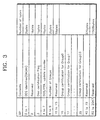
- Figure 3 is a table of a disc definition structure (DDS) existing in a defect management area (DMA) of a DVD-RAM.
- DDS disc definition structure
- DMA defect management area
- BP byte position
- BPs 16 through 39 group certification flags, record the contents of certification of 24 data groups.
- BPs 0 and 1 are DDS identifiers
- BPs 4 through 7 are the values of counters for updating DDS/PDL representing the total number of times in which a DDS/PDL block is updated and rewritten. That is, when initialization starts, the value of a counter is set to be "0", and increases by one whenever the DDS/PDL is updated or rewritten. All DDS/PDL and SDL blocks must have the same counter value after formatting is completed.
- BPs 8 and 9 denote the number of groups, and, for example, 24 groups are recorded as "0018" (hexadecimal).
- Figure 4A illustrates the structures of the disc certification flag shown in Figure 3.
- a bit b7 among three bits b7, b6 and b5 representing an in-process state is "0b”
- when the bit b7 is "1b” it indicates an under-formation state.
- the bit b6 is "0b”
- the bit b6 is "1b”
- the bit b5 is "0b”
- the bit b5 is "1b”
- Figure 4B illustrates the structure of each of the group certification flags of the bit positions 16 through 39 shown in Figure 3.
- bit b1 representing user certification is “0b”
- bit b1 indicates that the group has never been certified by a user
- bit b1 indicates that the group has been certified one or more times by a user.
- Other bits b5, b4, b3, b2, and b0 are reserved.
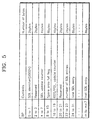
- Figure 5 is a table showing the contents of a secondary defect list (SDL).
- RBP is the position of a relative byte starting with 0.
- Relative byte positions 0 and 1 are SDL identifiers, and relative byte positions 2 and 3 are reserved.
- Relative byte positions 4 through 7 denote the total number of updated SDL blocks, and SDL updating counter values increases by one whenever the content of SDL is updated.
- Relative byte positions 8 through 15 denote spare area full flags, and relative byte positions 16 through 19 denote DDS/PDL updating counter values each indicating the total number of times the DDS/PDL block is updated and rewritten.
- the counter value is set to be "0" when initialization starts, and increases by 1 whenever the DDS/PLD is updated or rewritten.
- Relative byte positions 20 and 21 are reserved, and relative byte positions 22 and 23 indicate the number of entries in the SDL. The remaining relative byte positions indicate each SDL entry.
- Figure 6 illustrates the structure of the spare area full flag of the relative byte positions 8 through 15 shown in Figure 5.
- a bit representing a corresponding group is "1”
- bit is "0”
- Figure 7 illustrates the structure of the SDL entry shown in Figure 5.
- FRM is a bit representing whether a defective block has been replaced. When the defective block has been replaced, FRM records a binary "0", and when the defective block has not been replaced or no spare areas exist, FRM records a binary "1".
- the SDL entry includes the sector number of the first sector of a defective block, and the sector number of the first sector of a replacement block. Here, if the defective block has not been replaced, a hexadecimal "000000" is recorded in an area where the first sector number of the replacement block is recorded.
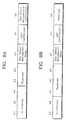
- Figures 8A and 8B illustrate the structures of the disc certification flag and the group certification flag of the DDS proposed by the present invention to record real time data, respectively.
- the structures of the disc certification flag and the group certification flag of Figures 8A and 88 are the same as those of Figures 4A and 4B except for a bit position b2. That is, as shown in Figure 8A, when the entire corresponding disc is used without the linear replacement, the bit position b2 of the disc certification flag is set as "1", and when the corresponding disc is used by the linear replacement as in the prior art, the bit position b2 is set as "0".
- information associated with use or non-use of the linear replacement stored in the bit position 2(b2) is called a disc defect management mode.
- bit position 2(b2) of the group certification flag for a corresponding group is set as "1" to indicate that linear replacement is not performed on a data region in the corresponding group.
- bit positions 2(b2) of the disc certification flag and the group certification flag are used as shown in Figures 8A and 8B, but another reserved bit can be used.
- each existing b2 region is reserved, and its value is recorded as "0".
- the SDL When the bit b2 for a disc defect management mode of the disc certification flag or group certification flag is set as "1" upon initialization of a disc, the SDL records only the start sector address of a block having a defect generated during use of the disc, records an FRM bit of the SDL entry as "1", and the linear replacement is not performed. A hexadecimal "000000" is recorded in an area for recording the first sector number of a replacement block of the SDL entry.
- a determination of whether a defective region will be replaced by a block existing in a spare area using linear replacement is made by information associated with use or non-use of linear replacement defect management recorded in a defect management region on the entire disc or a specific area of the disc regardless of the type of data to be recorded in a corresponding area.
- a determination of whether a defective region will be replaced by a block existing in a spare area using the linear replacement is made by information associated with use or non-use of linear replacement defect management recorded in a defect management region on the entire disc or in a specific area on the disc in the case of only data required to be recorded in real time.
- a disc defect management mode when a disc defect management mode is set as "1", it can be used as information that the linear replacement is not performed with respect to a block having a defect in an area of a disc for recording information requiring real time recording and reproduction, but the linear replacement can be performed with respect to an area of a disc not requiring real time recording.
- the disc defect management mode when data not requiring real time recording has already been recorded in an area in which real time data must be recorded, and a defective region is thus linearly replaced, the linear replacement of the defective region must be capable of being canceled. Therefore, when the disc defect management mode is set as "1", this can mean that the linear replacement of the defect can be canceled when real time information is recorded.
- information associated with the disc defect management mode is set as "1" upon initialization.
- the disc defect management mode is set as "1" just before the real time data is recorded.
- a determination of whether a corresponding disc is suitable for recording real time data is made on the basis of the amount or distribution of a defect generated on the disc.
- the disc defect management mode is set as "1". Otherwise, a process for informing a user that the disc is not suitable for recording real time data is required.
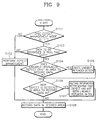
- Figure 9 is a flowchart illustrating a method of recording data in real time without performing defect management using linear replacement with respect to only data desired to be recorded when the disc defect management mode is "1".
- step S101 a determination of whether a disc defect management mode is "1" is set before recording of data on a disc begins, in step S101. If the disc defect management mode is "1", it is determined whether data to be recorded is real time data, in step S103. If the defect management mode is "0", every data is recorded on the basis of a general defect managing method defined in the standard book version 1.0, in steps S102 and S108. When it is determined in step S103 that data to be recorded is not real time data, step S102 of performing general defect management is performed. When it is determined in step S103 that data to be recorded is real time data, it is determined whether an already-linearly-replaced defect exists in an area where data is to be recorded, in step S104.
- step S104 When it is determined in step S104 that the linearly-replaced defect exists in the area to record data in, the linearly-replaced defect is canceled, in step S105. When no linearly-replaced defect exists in the area to record data in, it is determined whether a newly-detected defect exists in the area to record data in, in step S106.
- step S106 When it is determined in step S106 that a new defect is detected, information representing that a defect has not been linearly replaced is recorded in a secondary defect list (SDL) of a defect management area, in step S107. Next, data is recorded in a desired area in step S108. Also, when a new defect is not detected in step S106, step S108 of recording real time data in a desired region is performed.
- SDL secondary defect list
- Step S105 of canceling a linearly-replaced defect, and step S107 of recording information representing that a defect has not been linearly replaced are performed by recording the first sector number of a replacement block as a hexadecimal "000000", among linearly-replaced defect information recorded in the SDL, and by recording the FRM information as "1".
- the disc defect management mode since the disc defect management mode is set as "1", it can be recognized from the comparison of this mode information with FRM information that the meaning of the FRM information becomes different from that of existing FRM information.
- the FRM information based on the existing standard book denotes that a block having a defect generated for a certain reason has not been replaced with a block in a spare area or no spare areas can be replaced.
- FRM information based on a new definition is added to the meaning of the existing FRM and can be information representing that when the disc defect management mode is "1", the linear replacement of a defective block replaced by an existing linear replacement method has been canceled for real time recording, or the defective block has not been linearly replaced for real time recording.
- the disc can be utilized as information of prohibiting reallocation of information on a disc without consideration of real time information.
- Piece collection of collecting the pieces of a file on a disc, and read after reallocation can be included as a method of reallocating the information on a disc.
- the read after allocation is a method of reading data and then replacing a data block likely to have a defect with a block located in a spare area.
- Figure 10 illustrates the structure of an improved SDL entry for canceling linear replacement proposed by the present invention.
- a method of recording the information of an area, in which the first sector number of the replacement block as described above is recorded, as a hexadecimal "000000” and setting an FRM bit as "1" is exemplified as a process for canceling the linear replacement.
- This method can minimize the change in the existing standard.
- the information of a block which is determined as defective and replaced must be deleted, so that linear replacement may be arbitrarily performed, canceled, and again performed without sequentially using a spare area.
- information associated with the linearly-replaced defective block in the spare area is lost.
- blocks in a corresponding spare area are sequentially used when linear replacement occurs, and that even when the linear replacement is canceled, information associated with a block in the spare area replacing a corresponding defect block is maintained.
- a region recording an FRM bit and the first sector number of a replacement block is used to maintain information associated with the replaced sector number of the spare area, it is not possible to tell if the corresponding replaced block has again been replaced on account of a defect or if the linear replacement has been canceled to record real time data.
- a canceled linear replacement (CLR) flag is newly defined by using a spare bit of the SDL entry which is not in use.
- CLR flag When linear replacement with respect to a corresponding SDL entry is canceled for recording real time data, a method of setting the CLR flag as "1" can be used.
- the CLR flag when the CLR flag is set as "0", it indicates a replacement block allocated without being used by real time data.
- a bit b31 not in use is used as the CLR flag.
- defect management information for recording real time data can be roughly divided into three cases in which: (1) real time data is not recorded on the entire disc; (2) two types of data, i.e., real time data and non-real time data, coexist on a disc, and a linear replacement defect managing method is not used with respect to only the real time data; and (3) only the real time data is recorded in the entire disc, i.e., the linear replacement defect managing method is not used with respect to all recorded data.
- defect management mode information capable of representing linear replacement or non-linear replacement depending on a plurality of different defect management modes is stored in a reserved byte located in the DDS of the defect management area (DMA) on a disc. That is, Figure 11 shows the case of using two significant bits b7 and b6 of the relative byte position BP10 of DDS, i.e., the eleventh byte thereof, by taking defect management (DM) mode depending on use or non-use of linear replacement as an example.
- DM defect management
- the DM mode information is "00b”
- the slipping replacement and the linear replacement are mandatory, and this mode is only for data other than real time data in the first case described above.
- the DM mode information is "01b”
- the linear replacement is mandatory, but the linear replacement for real time data is optional.
- This mode is defect management for a hybrid disc including both real time data and non-real time data in the second case described above.
- the DM mode information is "10b” only the slipping replacement is allowable, and this mode is defect management for only real data in the third case described above.
- the DM mode information is "10b"
- the physical layout of a disc can be changed.
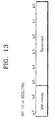
- the spare area set in the last group (here, a thirty fourth group) allocates 7680 sectors (480 ECC blocks) to a spare area for slipping replacement to process a maximum of 7679 entries capable of being registered in a primary defect list (PDL).
- PDL primary defect list
- sect denotes a sector
- blk denotes block
- rev denotes revolutions.
- a flag capable of discriminating a case in which spare areas for only slipping replacement are allocated only for real time recording from a case in which spare areas for linear replacement and slipping replacement are allocated according to an existing defect management method, is represented with significant bits b7 and b6 of the relative byte position BP 10 in the DDS and the PDL, as shown in Figure 13.
- information representing a plurality of different defect management modes depending on the type of data to be recorded is stored, so that various correspondences are possible according to the purpose of use of the recording medium.
- the recording medium can be more effectively used.
- spare areas are allocated to be used for only real time.
- the effectiveness due to the application of the space of a disc can be increased.
Landscapes
- Engineering & Computer Science (AREA)
- Signal Processing (AREA)
- Signal Processing For Digital Recording And Reproducing (AREA)
- Optical Recording Or Reproduction (AREA)
Priority Applications (5)
| Application Number | Priority Date | Filing Date | Title |
|---|---|---|---|
| EP02026965A EP1298660B1 (en) | 1998-04-20 | 1999-04-20 | Apparatus for managing defects and recording data to a recording medium |
| EP02026749A EP1300847A1 (en) | 1998-04-20 | 1999-04-20 | Recording medium for storing defect management information for recording real time data, defect managing method therefor, and real time data recording method |
| EP02026964A EP1298659B1 (en) | 1998-04-20 | 1999-04-20 | Defect managing method and real time data recording method |
| EP03077453A EP1365406B1 (en) | 1998-04-20 | 1999-04-20 | Recording medium, method for recording real time data and reproducing method |
| DE29924574U DE29924574U1 (de) | 1998-04-20 | 1999-04-20 | Aufzeichnungsmedium zum Speichern von Defektverwaltungsinformationen zum Aufzeichnen von Daten in Echtzeit |
Applications Claiming Priority (10)
| Application Number | Priority Date | Filing Date | Title |
|---|---|---|---|
| KR19980014059 | 1998-04-20 | ||
| KR9814059 | 1998-04-20 | ||
| KR19980023913 | 1998-06-24 | ||
| KR9823913 | 1998-06-24 | ||
| KR19980029733 | 1998-07-23 | ||
| KR9829733 | 1998-07-23 | ||
| KR19980034880 | 1998-08-27 | ||
| KR9834880 | 1998-08-27 | ||
| KR9835847 | 1998-09-01 | ||
| KR1019980035847A KR100354739B1 (ko) | 1998-04-20 | 1998-09-01 | 실시간데이터를기록하기위한결함관리정보를저장하는기록매체와그결함관리방법 |
Related Child Applications (4)
| Application Number | Title | Priority Date | Filing Date |
|---|---|---|---|
| EP02026749A Division EP1300847A1 (en) | 1998-04-20 | 1999-04-20 | Recording medium for storing defect management information for recording real time data, defect managing method therefor, and real time data recording method |
| EP02026965A Division EP1298660B1 (en) | 1998-04-20 | 1999-04-20 | Apparatus for managing defects and recording data to a recording medium |
| EP03077453A Division EP1365406B1 (en) | 1998-04-20 | 1999-04-20 | Recording medium, method for recording real time data and reproducing method |
| EP02026964A Division EP1298659B1 (en) | 1998-04-20 | 1999-04-20 | Defect managing method and real time data recording method |
Publications (3)
| Publication Number | Publication Date |
|---|---|
| EP0952573A2 EP0952573A2 (en) | 1999-10-27 |
| EP0952573A3 EP0952573A3 (en) | 1999-11-03 |
| EP0952573B1 true EP0952573B1 (en) | 2004-03-03 |
Family
ID=36686122
Family Applications (1)
| Application Number | Title | Priority Date | Filing Date |
|---|---|---|---|
| EP99303057A Expired - Lifetime EP0952573B1 (en) | 1998-04-20 | 1999-04-20 | Recording medium for storing defect management information for recording real time data and defect managing method therefore |
Country Status (11)
| Country | Link |
|---|---|
| US (12) | US6480446B1 (enExample) |
| EP (1) | EP0952573B1 (enExample) |
| JP (4) | JP2000003562A (enExample) |
| CN (5) | CN1242389C (enExample) |
| BR (1) | BR9901372A (enExample) |
| DE (1) | DE69915157T2 (enExample) |
| HK (2) | HK1039677B (enExample) |
| ID (1) | ID21952A (enExample) |
| RU (1) | RU2192673C2 (enExample) |
| SG (3) | SG93198A1 (enExample) |
| TW (1) | TW424232B (enExample) |
Cited By (1)
| Publication number | Priority date | Publication date | Assignee | Title |
|---|---|---|---|---|
| US8341456B2 (en) | 2004-08-16 | 2012-12-25 | Lg Electronics, Inc. | Method and apparatus of recording data on write-once recording medium |
Families Citing this family (128)
| Publication number | Priority date | Publication date | Assignee | Title |
|---|---|---|---|---|
| EP0964399B1 (en) * | 1996-03-18 | 2002-09-18 | Matsushita Electric Industrial Co., Ltd. | Recording defect substitution method, and a recording and reproducing apparatus for a disc-shaped recording medium |
| KR100292093B1 (ko) * | 1998-03-02 | 2001-06-01 | 구자홍 | 기록매체의 결함영역 관리자료 생성방법 및 생성장치 그리고 이에 의한 광기록매체 |
| SG93198A1 (en) | 1998-04-20 | 2002-12-17 | Samsung Electronics Co Ltd | Recording medium for storing defect management information for recording real time data, defect managing method therefor, and real time data recording method |
| KR100429179B1 (ko) * | 1998-07-01 | 2004-06-16 | 엘지전자 주식회사 | 광기록매체의결함영역관리장치및그방법 |
| EP1018116B1 (en) | 1998-07-28 | 2005-09-21 | Lg Electronics Inc. | Method and apparatus of recording data in the optical recording medium |
| KR100407931B1 (ko) * | 1998-07-29 | 2004-03-30 | 엘지전자 주식회사 | 실시간기록/재생시의파일관리방법및실시간데이터기록방법및그광기록/재생매체 |
| JP2000057713A (ja) | 1998-08-05 | 2000-02-25 | Mitsubishi Electric Corp | 光ディスクの欠陥管理方法、光ディスク装置、及び、光ディスク |
| US6408408B1 (en) * | 1998-11-10 | 2002-06-18 | Samsung Electronics Co., Ltd. | Recording medium having spare area for defect management and information on defect management, and method of allocating spare area and method of managing defects |
| DE60001993T2 (de) * | 1999-01-27 | 2004-01-08 | Matsushita Electric Industrial Co., Ltd., Kadoma | Audiovisueller Daten und Rechnerdaten Aufzeichnungsverfahren und Wiedergabeverfahren, und Aufzeichnungsgerät und Wiedergabegerät, Informationsaufzeichnungssystem und Informationswiedergabesystem, und Informationsaufzeichnungsträger zur Anwendung dieser Verfahren |
| KR100544175B1 (ko) * | 1999-05-08 | 2006-01-23 | 삼성전자주식회사 | 링킹 타입 정보를 저장하는 기록 매체와 결함 영역 처리 방법 |
| JP3370953B2 (ja) * | 1999-06-25 | 2003-01-27 | 日本ビクター株式会社 | ディスク記録装置及び方法 |
| JP3735498B2 (ja) * | 1999-11-09 | 2006-01-18 | 株式会社東芝 | 情報記録媒体、情報記録装置、情報記録方法 |
| MXPA02004748A (es) * | 1999-11-10 | 2004-01-19 | Thomson Licensing Sa | Un metodo para la recuperacion de desastre para un medio de disco de re-escritrua. |
| US6925580B2 (en) * | 1999-12-03 | 2005-08-02 | Seagate Technology Llc | Full volume slip defect management in a disc drive |
| US7072256B2 (en) | 2000-03-08 | 2006-07-04 | Matsushita Electric Industrial Co., Ltd. | Information recording medium, information recording method and information reproduction method |
| EP1282125A4 (en) * | 2000-03-29 | 2006-04-12 | Matsushita Electric Industrial Co Ltd | OPTICAL PLATE, REPRODUCTION DEVICE AND RECORDING DEVICE |
| US6978404B2 (en) * | 2000-04-05 | 2005-12-20 | Matsushita Electric Industrial Co., Ltd. | Information recording device, information recording method, and program |
| US6782494B2 (en) * | 2000-04-08 | 2004-08-24 | Samsung Electronics, Co., Ltd | Method of verifying defect management area information of disc and test apparatus for performing the same |
| US6779137B2 (en) | 2000-04-08 | 2004-08-17 | Samsung Electronics Co., Ltd. | Method of verifying defect management area information of disc and test apparatus for performing the same |
| US6785839B2 (en) * | 2000-04-08 | 2004-08-31 | Samsung Electronics, Co., Ltd. | Method of verifying defect management area information of disc and test apparatus for performing the same |
| US6892327B2 (en) | 2000-04-08 | 2005-05-10 | Samsung Electronics Co., Ltd | Method of verifying defect management area information of optical disc upon initialization with certification and test apparatus for performing the same |
| US6845473B2 (en) * | 2000-04-08 | 2005-01-18 | Samsung Electronics Co., Ltd. | Method of verifying defect management area information of optical disc |
| JP2002023902A (ja) * | 2000-07-11 | 2002-01-25 | Mitsubishi Electric Corp | 半導体装置 |
| WO2002037491A1 (en) * | 2000-10-31 | 2002-05-10 | Matsushita Electric Industrial Co., Ltd. | Recording/reproducing apparatus, recording/reproducing method, medium, and program |
| JP4090879B2 (ja) | 2000-11-07 | 2008-05-28 | 松下電器産業株式会社 | 記録媒体、その制御装置及びその制御方法 |
| JP3674531B2 (ja) * | 2001-04-12 | 2005-07-20 | 株式会社日立製作所 | ファイル管理方法、ファイル管理装置、プログラム |
| JP2002312947A (ja) * | 2001-04-17 | 2002-10-25 | Hitachi Ltd | 記録制限のある情報記録媒体及び記録制御方法 |
| US7024534B2 (en) | 2001-08-02 | 2006-04-04 | Matsushita Electric Industrial Co., Ltd. | Information recording medium, information recording method, information recording apparatus, information reproduction method, and information reproduction apparatus |
| CN1920996B (zh) * | 2001-08-02 | 2010-05-26 | 松下电器产业株式会社 | 信息再现方法 |
| CN101281768A (zh) | 2002-01-22 | 2008-10-08 | 松下电器产业株式会社 | 多层信息记录媒介,信息记录设备,和记录方法 |
| US20030161980A1 (en) * | 2002-02-27 | 2003-08-28 | Nelson Brent S. | Plastic container |
| KR100925213B1 (ko) | 2002-06-07 | 2009-11-06 | 엘지전자 주식회사 | 고밀도 멀티 레이어 광디스크와, 그에 따른 광 파워조절방법 |
| KR20030094855A (ko) | 2002-06-08 | 2003-12-18 | 엘지전자 주식회사 | 고밀도 멀티 레이어 광디스크와, 그에 따른 포맷팅관리방법 |
| TW591615B (en) * | 2002-06-25 | 2004-06-11 | Mediatek Inc | Method for accessing data of defect optical disk |
| KR100716965B1 (ko) * | 2002-08-17 | 2007-05-10 | 삼성전자주식회사 | 광정보 저장매체 및 그 기록 방법 |
| CN100386814C (zh) * | 2002-09-19 | 2008-05-07 | 联发科技股份有限公司 | 一种在光学记录媒体中搜索与记录数字数据的方法及系统 |
| KR20040027259A (ko) | 2002-09-26 | 2004-04-01 | 엘지전자 주식회사 | 1 회 기록 가능한 광디스크의 디펙트 영역 관리방법 |
| TWI286744B (en) | 2002-09-26 | 2007-09-11 | Lg Electronics Inc | Method for managing defective area on write-once optical recording medium, and optical recording medium using the same |
| CA2479505C (en) * | 2002-09-26 | 2012-12-18 | Lg Electronics Inc. | Optical disc, method and apparatus for managing a defective area on an optical disc of write once type |
| US7233550B2 (en) | 2002-09-30 | 2007-06-19 | Lg Electronics Inc. | Write-once optical disc, and method and apparatus for recording management information on write-once optical disc |
| KR20040028469A (ko) | 2002-09-30 | 2004-04-03 | 엘지전자 주식회사 | 1 회 기록 가능한 광디스크의 디펙트 영역 관리방법 |
| KR100930239B1 (ko) * | 2002-10-18 | 2009-12-09 | 삼성전자주식회사 | 갱신가능한 결함 관리 영역을 사용한 결함 관리 방법, 그장치 및 그 디스크 |
| KR100667749B1 (ko) * | 2002-10-18 | 2007-01-11 | 삼성전자주식회사 | 임시 결함 관리 영역을 사용한 결함 관리 방법, 그 장치및 그디스크 |
| US7200771B2 (en) * | 2002-11-15 | 2007-04-03 | Plasmon Lms, Inc. | Relocation batch processing for disk drives |
| AU2003282447B2 (en) | 2002-12-11 | 2010-03-11 | Lg Electronics Inc. | Method of managing overwrite and method of recording management information on an optical disc write once |
| EP1579443A1 (en) | 2002-12-11 | 2005-09-28 | LG Electronics Inc. | Method and apparatus for managing overwrite on an optical disc write once |
| US7372788B2 (en) * | 2003-01-14 | 2008-05-13 | Lg Electronics Inc. | Method for managing defective area on write-once optical recording medium, and optical recording medium using the same |
| KR20040067349A (ko) * | 2003-01-22 | 2004-07-30 | 주식회사 히타치엘지 데이터 스토리지 코리아 | 광디스크의 대체 기록 데이터 재생방법 |
| JP2004227685A (ja) * | 2003-01-23 | 2004-08-12 | Matsushita Electric Ind Co Ltd | 記録媒体の管理情報訂正装置 |
| TWI314315B (en) | 2003-01-27 | 2009-09-01 | Lg Electronics Inc | Optical disc of write once type, method, and apparatus for managing defect information on the optical disc |
| US7672204B2 (en) | 2003-01-27 | 2010-03-02 | Lg Electronics Inc. | Optical disc, method and apparatus for managing a defective area on an optical disc |
| JP2004253109A (ja) * | 2003-01-27 | 2004-09-09 | Ricoh Co Ltd | 情報記録再生装置とプログラムとコンピュータ読み取り可能な記録媒体と欠陥領域管理方法 |
| US20040160799A1 (en) | 2003-02-17 | 2004-08-19 | Park Yong Cheol | Write-once optical disc, and method and apparatus for allocating spare area on write-once optical disc |
| TWI335587B (en) | 2003-02-21 | 2011-01-01 | Lg Electronics Inc | Write-once optical recording medium and defect management information management method thereof |
| US7499383B2 (en) | 2003-02-21 | 2009-03-03 | Lg Electronics Inc. | Write-once optical disc and method for managing spare area thereof |
| US7477581B2 (en) | 2003-02-25 | 2009-01-13 | Lg Electronics Inc. | Defect management method for optical recording medium and optical recording medium using the same |
| US7188271B2 (en) | 2003-02-25 | 2007-03-06 | Lg Electronics Inc. | Write-once optical disc, and method and apparatus for recording management information on write-once optical disc |
| US7675828B2 (en) | 2003-02-25 | 2010-03-09 | Lg Electronics Inc. | Recording medium having data structure for managing at least a data area of the recording medium and recording and reproducing methods and apparatuses |
| TWI253062B (en) * | 2003-02-28 | 2006-04-11 | Pioneer Corp | Write-once-type recording medium, recording apparatus and reproducing apparatus |
| WO2004079740A1 (en) | 2003-03-04 | 2004-09-16 | Lg Electronics Inc. | Method for recording on optical recording medium and apparatus using the same |
| JP4101088B2 (ja) * | 2003-03-07 | 2008-06-11 | パイオニア株式会社 | 情報記録装置、情報読取装置、情報記録方法、情報読取方法およびコンピュータプログラム |
| TWI405196B (zh) | 2003-03-13 | 2013-08-11 | Lg Electronics Inc | 光學記錄媒體及其缺陷區域管理方法及其裝置 |
| RU2321080C2 (ru) * | 2003-03-13 | 2008-03-27 | Самсунг Электроникс Ко. Лтд | Однократно записываемый диск, способ распределения области данных однократно записываемого диска и способ воспроизведения данных с такого диска |
| CN101051504B (zh) * | 2003-03-17 | 2011-02-16 | 日本先锋公司 | 记录装置、重放装置及记录方法 |
| KR100739681B1 (ko) * | 2003-03-24 | 2007-07-13 | 삼성전자주식회사 | 한번 기록 정보 저장 매체에 있어서 오버라이트 방법 |
| US8184513B2 (en) * | 2003-04-15 | 2012-05-22 | Samsung Electronics Co., Ltd. | Recording/reproducing method, recording/reproducing apparatus, optical recording medium, and computer readable recording medium having recorded thereon program for the recording/reproducing method |
| CN100428338C (zh) * | 2003-04-15 | 2008-10-22 | 三星电子株式会社 | 记录/再现设备 |
| KR101086400B1 (ko) * | 2003-04-15 | 2011-11-25 | 삼성전자주식회사 | 기록/재생 방법, 재생 장치 및 그 방법을 수행하는 프로그램이 기록된 컴퓨터 판독가능한 기록매체 |
| TWI309816B (en) * | 2003-04-26 | 2009-05-11 | Samsung Electronics Co Ltd | Method of and drive for recording medium defect management, and defect managed recording medium |
| KR100677113B1 (ko) * | 2003-04-30 | 2007-02-01 | 삼성전자주식회사 | 한번 기록 정보 저장 매체에 임시결함리스트 기록 방법,그 재생 방법, 그 기록 및/또는 재생 장치 및 그 한번기록 정보 저장 매체 |
| KR100739674B1 (ko) * | 2003-05-01 | 2007-07-13 | 삼성전자주식회사 | 결함 관리 방법, 그 장치 및 그 디스크 |
| TWI405191B (zh) | 2003-05-09 | 2013-08-11 | Lg Electronics Inc | 單寫型光碟及由單寫型光碟回復碟片管理資訊的方法與裝置 |
| BRPI0410197A (pt) | 2003-05-09 | 2006-06-06 | Lg Electronics Inc | meio fìsico de gravação do tipo gravação única, método de formatação, método de gravar informação de gerenciamento no mesmo, método de gravar dados de gerenciamento no mesmo, método de reproduzir dados do mesmo e aparelho para gravar dados de gerenciamento no mesmo |
| CN101504856B (zh) * | 2003-05-09 | 2012-09-12 | Lg电子株式会社 | 从记录介质中恢复管理信息的方法和设备 |
| US7522501B2 (en) | 2003-05-09 | 2009-04-21 | Lg Electronics Inc. | Recording, reproducing and product for management of data having a temporary defect management area containing at least one pointer |
| MXPA05012044A (es) | 2003-05-09 | 2006-02-03 | Lg Electronics Inc | Disco optico de una sola escritura, metodo y aparato par recuperacion de informacion de administracion de disco del disco optico de una sola escritura. |
| EP1647014B1 (en) | 2003-07-04 | 2012-09-05 | LG Electronics Inc. | Method and apparatus for managing a overwrite recording on a write-once optical disc |
| RU2355047C2 (ru) | 2003-07-14 | 2009-05-10 | Эл Джи Электроникс Инк. | Оптический диск однократной записи, способ и устройство для записи на него информации управления |
| KR20050009031A (ko) | 2003-07-15 | 2005-01-24 | 엘지전자 주식회사 | 1회 기록 가능한 광디스크 및 광디스크의 관리정보 기록방법 |
| KR101014703B1 (ko) | 2003-07-15 | 2011-02-21 | 엘지전자 주식회사 | 광디스크의 결함영역 관리방법 및 광디스크의 기록방법과기록재생장치 |
| CN101046991A (zh) * | 2003-07-23 | 2007-10-03 | 日本先锋公司 | 一次写入型记录介质,记录和重放装置及方法,计算机程序 |
| KR20070036179A (ko) * | 2003-07-23 | 2007-04-02 | 파이오니아 가부시키가이샤 | 추기형 기록 매체, 추기형 기록 매체용의 기록 장치 및기록 방법, 추기형 기록 매체용의 재생 장치 및 재생 방법,기록 또는 재생 제어용의 컴퓨터 프로그램, 및 데이터구조 |
| US7313065B2 (en) | 2003-08-05 | 2007-12-25 | Lg Electronics Inc. | Write-once optical disc, and method and apparatus for recording/reproducing management information on/from optical disc |
| ATE447228T1 (de) * | 2003-08-05 | 2009-11-15 | Lg Electronics Inc | Einmalbeschreibbarer optischer datenträger und verfahren und vorrichtung zum aufzeichnen/wiedergeben von verwaltungsinformationen auf dem optischen datenträger bzw. daraus |
| CN101241741B (zh) | 2003-08-05 | 2012-04-11 | Lg电子株式会社 | 一次写入光盘以及在/从光盘上记录/再现管理信息的方法和装置 |
| RU2361289C2 (ru) * | 2003-08-05 | 2009-07-10 | Эл Джи Электроникс Инк. | Оптический диск однократной записи и способ и устройство для записи/воспроизведения управляющей информации на/с оптического диска |
| RU2361290C2 (ru) * | 2003-08-05 | 2009-07-10 | Эл Джи Электроникс Инк. | Оптический диск однократной записи и способ и устройство для записи/воспроизведения управляющей информации на/с оптического диска |
| CN1828760B (zh) * | 2003-08-12 | 2012-04-04 | 日本先锋公司 | 记录装置和重放装置 |
| RU2361295C2 (ru) | 2003-09-08 | 2009-07-10 | ЭлДжи ЭЛЕКТРОНИКС ИНК. | Оптический диск однократной записи и способ записи на нем управляющей информации |
| JP2007505433A (ja) | 2003-09-08 | 2007-03-08 | エルジー エレクトロニクス インコーポレーテッド | 追記型光ディスク、並びに追記型光ディスク上に管理情報を記録する方法、および装置 |
| CA2537889C (en) | 2003-09-08 | 2013-10-22 | Lg Electronics Inc. | Write-once optical disc, and method and apparatus for recording management information on the write-once optical disc |
| KR100964685B1 (ko) | 2003-10-20 | 2010-06-21 | 엘지전자 주식회사 | 1회 기록가능한 광디스크 및 광디스크의 기록재생방법과기록재생장치 |
| KR101057998B1 (ko) * | 2003-12-05 | 2011-08-19 | 삼성전자주식회사 | 기록 장치, 기록 방법 및 그 기록 방법을 수행하는프로그램이 기록된 컴퓨터 판독가능한 기록매체 |
| KR20050072036A (ko) * | 2004-01-05 | 2005-07-08 | 삼성전자주식회사 | 광 기록 정보 저장 매체, 결함 관리 장치/방법 및 그방법을 수행하는 프로그램이 기록된 컴퓨터 판독가능한기록매체 |
| JP4223431B2 (ja) * | 2004-01-27 | 2009-02-12 | 株式会社リコー | 欠陥管理情報設定方法、記録方法及び情報記録装置 |
| JP4262611B2 (ja) * | 2004-02-05 | 2009-05-13 | 株式会社日立製作所 | データ記録方法、及びデータ記録装置 |
| KR100584614B1 (ko) * | 2004-02-14 | 2006-06-01 | 삼성전자주식회사 | 한번 기록 디스크에 데이터 기록 장치, 그 방법 및 그한번 기록 디스크 |
| MXPA06010602A (es) * | 2004-03-18 | 2006-12-14 | Lg Electronics Inc | Aparato y metodos para grabacion y/o reproduccion de datos hasta/desde un medio de grabacion. |
| US7710853B2 (en) * | 2004-03-18 | 2010-05-04 | Lg Electronics, Inc. | Recording medium with segment information thereon and apparatus and methods for forming, recording, and reproducing the recording medium |
| KR101113866B1 (ko) | 2004-03-19 | 2012-03-02 | 엘지전자 주식회사 | 기록매체내에 기록되는 데이터 구조 및 데이터 기록방법과기록장치 |
| JP4611376B2 (ja) * | 2004-03-19 | 2011-01-12 | エルジー エレクトロニクス インコーポレイティド | 物理的アクセス制御を備えた記録媒体、記録媒体を形成、記録および再生する装置並びに方法 |
| KR101024916B1 (ko) * | 2004-03-19 | 2011-03-31 | 엘지전자 주식회사 | 1회 기록 가능한 고밀도 광디스크의 데이터 기록 방법 및장치 |
| US7970988B2 (en) * | 2004-03-19 | 2011-06-28 | Lg Electronics Inc. | Recording medium with status information thereon which changes upon reformatting and apparatus and methods for forming, recording, and reproducing the recording medium |
| CN1680807B (zh) * | 2004-04-06 | 2010-04-28 | 联发科技股份有限公司 | 光学存储装置决定缺陷检测模式的方法 |
| US20050234994A1 (en) * | 2004-04-19 | 2005-10-20 | Tadashi Nakamura | Recording apparatus, host apparatus, semiconductor integlated circuit, recording method, program and information recording medium |
| KR100619020B1 (ko) * | 2004-05-22 | 2006-08-31 | 삼성전자주식회사 | 광 기록 정보 저장 매체 및 기록/재생 장치 |
| KR101049117B1 (ko) | 2004-06-08 | 2011-07-14 | 엘지전자 주식회사 | 1회 기록 가능한 광디스크 및 광디스크의 관리정보 기록방법, 디스크 클로징 방법 및 기록재생 장치 |
| KR20050121540A (ko) * | 2004-06-22 | 2005-12-27 | 삼성전자주식회사 | 정보 저장 매체, 기록/재생 장치 및 기록/재생 방법 |
| KR101014727B1 (ko) | 2004-06-23 | 2011-02-16 | 엘지전자 주식회사 | 1회 기록 가능한 광디스크의 중첩 기록 방법 및 장치 |
| TWI276089B (en) * | 2004-07-19 | 2007-03-11 | Mediatek Inc | Method and device for detecting the defect of an optical disc |
| KR101041811B1 (ko) | 2004-08-02 | 2011-06-17 | 엘지전자 주식회사 | 광 저장매체의 기록 재생 방법 및 장치 |
| EP1789968A4 (en) | 2004-09-14 | 2012-05-16 | Lg Electronics Inc | RECORDING MEDIUM, METHOD AND APPARATUS FOR RECORDING AND REPRODUCING DATA ON THIS MEDIUM |
| US7693284B2 (en) * | 2004-09-23 | 2010-04-06 | Motorola, Inc. | Method and apparatus for encryption of over-the-air communications in a wireless communication system |
| US7613874B2 (en) | 2004-10-14 | 2009-11-03 | Lg Electronics, Inc. | Recording medium, and a method and apparatus for overwriting data in the same |
| KR100667780B1 (ko) * | 2004-11-22 | 2007-01-11 | 삼성전자주식회사 | 검정 방법, 기록/재생 장치 및 정보 저장 매체 |
| JP4892900B2 (ja) * | 2005-09-13 | 2012-03-07 | ソニー株式会社 | 情報処理装置、情報記録媒体製造装置、情報記録媒体、および方法、並びにコンピュータ・プログラム |
| KR101227485B1 (ko) | 2005-11-25 | 2013-01-29 | 엘지전자 주식회사 | 기록매체 및 기록매체의 결함관리 정보 기록방법과기록장치 |
| KR20070058292A (ko) | 2005-12-02 | 2007-06-08 | 엘지전자 주식회사 | 기록매체, 기록매체 기록재생 방법 및 장치와 기록매체클로징 방법 |
| JP2007164929A (ja) * | 2005-12-16 | 2007-06-28 | Fujitsu Ltd | 記憶媒体管理装置、記憶媒体管理プログラム、記憶媒体管理方法 |
| CN100593817C (zh) * | 2006-04-30 | 2010-03-10 | 凌阳科技股份有限公司 | 录制有音频视频交错结构文件的光学储存媒体及录制方法 |
| JP2010514086A (ja) * | 2006-12-21 | 2010-04-30 | コーニンクレッカ フィリップス エレクトロニクス エヌ ヴィ | 光ディスクへの信頼性のあるビデオ記録 |
| EP2117006B1 (en) * | 2007-02-27 | 2015-11-04 | Mitsubishi Electric Corporation | Information delivering method, information recording method, information reproducing method, and information recording medium for copyright protection of dvd content |
| JP2008251086A (ja) * | 2007-03-30 | 2008-10-16 | Toshiba Corp | ディスクレコーダ管理装置およびディスクレコーダ管理方法 |
| US8316258B2 (en) * | 2007-05-03 | 2012-11-20 | Oracle America, Inc. | System and method for error detection in a data storage system |
| RU2351025C1 (ru) * | 2007-09-14 | 2009-03-27 | Государственное образовательное учреждение высшего профессионального образования "Воронежский государственный университет" | Способ записи/воспроизведения потоков кодовых групп на/с оптического носителя с защитой от дефектов носителя |
| EP2223950B1 (en) * | 2007-12-12 | 2018-03-07 | Mitsubishi Chemical Corporation | Aliphatic polyester resin and method for producing the same |
| US20100157750A1 (en) * | 2008-12-24 | 2010-06-24 | Shih-Hsin Chen | Defect detecting method and system for optical disc |
| CN106504779A (zh) * | 2015-09-08 | 2017-03-15 | 株式会社东芝 | 对记录介质上的缺陷进行管理的缺陷管理方法以及盘装置 |
Family Cites Families (50)
| Publication number | Priority date | Publication date | Assignee | Title |
|---|---|---|---|---|
| US4656532A (en) * | 1985-07-29 | 1987-04-07 | International Business Machines Corporation | Sector identification method for hard sectored hard files |
| US5173886A (en) | 1986-02-07 | 1992-12-22 | Matsushita Electric Industrial Co., Ltd. | Composite optical disc having both a data read-only area and a data rewritable area, and a recording/reproducing system for use therewith |
| US4819218A (en) | 1986-12-19 | 1989-04-04 | Eastman Kodak Company | Quasi-constant linear-velocity disk having corresponding radii of adjacent annular zones related by a rational number for distributing prerecorded indicia to form a coherent write clock signal |
| EP0272029B1 (en) | 1986-12-19 | 1993-09-15 | Matsushita Electric Industrial Co., Ltd. | Erasable optical disk and optical information recording and reproducing apparatus having means for managing defective sector |
| US4873679A (en) | 1986-12-25 | 1989-10-10 | Matsushita Electric Industrial Co., Ltd. | Optical information recording disk and optical information recording disk apparatus |
| US5146571A (en) * | 1988-03-28 | 1992-09-08 | Emc Corporation | Remapping defects in a storage system through the use of a tree structure |
| JPH0223417A (ja) * | 1988-07-13 | 1990-01-25 | Matsushita Electric Ind Co Ltd | 情報記録方式と情報記録媒体 |
| US5138599A (en) | 1988-11-21 | 1992-08-11 | Matsushita Electric Industrial Co., Ltd. | Information recording medium having dummy tracks and information recording and reproducing apparatus |
| RU2095857C1 (ru) * | 1989-01-17 | 1997-11-10 | Филипс Электроникс Н.В. | Способ передачи информации с использованием носителя данных, носитель информации и устройство для воспроизведения информации с такого носителя |
| US5214627A (en) | 1989-02-08 | 1993-05-25 | Fujitsu Limited | Optical disk having read-exclusive and write-enable regions |
| US5130969A (en) | 1989-02-15 | 1992-07-14 | Sony Corporation | Apparatus having defective sector compensation coupled with analog information mode and digital information mode recording/reproducing capability |
| JP2802102B2 (ja) | 1989-06-27 | 1998-09-24 | 日立マクセル株式会社 | 情報記録デイスク |
| US5233576A (en) | 1989-10-25 | 1993-08-03 | Hewlett-Packard Company | Multi-function optical disk drive and media |
| JP2642752B2 (ja) | 1989-10-30 | 1997-08-20 | 三田工業株式会社 | 感光体ドラムの製造方法 |
| US5327553A (en) * | 1989-12-22 | 1994-07-05 | Tandem Computers Incorporated | Fault-tolerant computer system with /CONFIG filesystem |
| JPH03194774A (ja) | 1989-12-25 | 1991-08-26 | Hitachi Ltd | 外部記憶装置の不良ブロック交替処理方式 |
| US5185733A (en) | 1990-03-01 | 1993-02-09 | International Business Machines Corporation | Calibrating lasers for optical recording using a maximal readback signal amplitude as a criterion |
| GB9007924D0 (en) | 1990-04-07 | 1990-06-06 | Ciba Geigy Ag | Production of pigments |
| US5271018A (en) * | 1990-04-27 | 1993-12-14 | Next, Inc. | Method and apparatus for media defect management and media addressing |
| JPH0428061A (ja) * | 1990-05-24 | 1992-01-30 | Matsushita Electric Ind Co Ltd | 情報記録媒体と情報記録再生装置 |
| US5265230A (en) | 1990-08-29 | 1993-11-23 | Hewlett-Packard Company | Method and apparatus for determining sector status in a data storage device by writing a status of read-only, writable, or obliterated in an error recovery area of each sector |
| CA2068886C (en) * | 1990-09-19 | 2002-03-26 | Jozef Maria Karel Timmermans | Picture retrieval system, and record carrier and device for use in the system |
| US5305302A (en) | 1990-12-04 | 1994-04-19 | Conner Peripherals, Inc. | Track format and record carrier system for split data field support |
| JP2887949B2 (ja) * | 1991-06-27 | 1999-05-10 | 松下電器産業株式会社 | 情報記録再生装置、情報再生装置、dma記録方法及びdma検証方法 |
| RU2024966C1 (ru) * | 1991-07-02 | 1994-12-15 | Курский Политехнический Институт | Устройство для определения начала блока данных во внешней памяти |
| US5303219A (en) * | 1991-09-09 | 1994-04-12 | International Business Machines Corporation | Reclamation of dust contaminated sectors in optical disk apparatus |
| EP0532356B1 (en) * | 1991-09-13 | 2000-03-08 | Canon Kabushiki Kaisha | Method of recording data and information regarding defects |
| DE69424078T2 (de) * | 1993-02-19 | 2000-10-05 | Canon K.K., Tokio/Tokyo | Datenwiedergabeverfahren und Datenwiedergabegerät |
| JP3453843B2 (ja) * | 1993-06-08 | 2003-10-06 | ソニー株式会社 | ディスク装置 |
| US5418767A (en) * | 1993-10-28 | 1995-05-23 | International Business Machines Corporation | Detection of overusage of spare sectors in an optical disk |
| EP0748504A1 (en) * | 1994-03-03 | 1996-12-18 | Cirrus Logic, Inc. | Defect management for automatic track processing without id field |
| JP3338196B2 (ja) * | 1994-09-01 | 2002-10-28 | 株式会社東芝 | 光ディスク装置 |
| WO1996027882A1 (en) * | 1995-03-03 | 1996-09-12 | Cirrus Logic, Inc. | Defect management for automatic track processing without id field |
| US5715221A (en) * | 1995-04-21 | 1998-02-03 | Matsushita Electric Industrial | Method for managing defects in an information recording medium, and a device and information recording medium using said method |
| US6223302B1 (en) | 1995-08-18 | 2001-04-24 | Matsushita Electric Industrial Co., Ltd. | Information recording/reproducing unit and information recording/reproducing data |
| JP3113200B2 (ja) * | 1996-03-25 | 2000-11-27 | 株式会社東芝 | 交替処理方法 |
| JP2848809B2 (ja) * | 1996-03-25 | 1999-01-20 | 株式会社東芝 | 交替処理方法 |
| JP3113201B2 (ja) * | 1996-03-25 | 2000-11-27 | 株式会社東芝 | 交替処理方法 |
| JP3029400B2 (ja) * | 1996-03-25 | 2000-04-04 | 株式会社東芝 | 交替処理方法 |
| JP3029399B2 (ja) * | 1996-03-25 | 2000-04-04 | 株式会社東芝 | 交替処理方法 |
| JPH09259537A (ja) * | 1996-03-25 | 1997-10-03 | Toshiba Corp | 交替領域を持つ情報記録ディスク |
| EP1282127B1 (en) * | 1996-09-30 | 2005-08-10 | Matsushita Electric Industrial Co., Ltd. | Recording method for recording AV data on disk and information processing system |
| KR100292093B1 (ko) * | 1998-03-02 | 2001-06-01 | 구자홍 | 기록매체의 결함영역 관리자료 생성방법 및 생성장치 그리고 이에 의한 광기록매체 |
| SG93198A1 (en) * | 1998-04-20 | 2002-12-17 | Samsung Electronics Co Ltd | Recording medium for storing defect management information for recording real time data, defect managing method therefor, and real time data recording method |
| US6674697B1 (en) | 1998-04-20 | 2004-01-06 | Samsung Electronics Co., Ltd. | Apparatus for managing defects and recording and/or reproducing real time data |
| EP1018116B1 (en) * | 1998-07-28 | 2005-09-21 | Lg Electronics Inc. | Method and apparatus of recording data in the optical recording medium |
| US6414923B1 (en) * | 1998-08-17 | 2002-07-02 | Lg Electronics Inc. | Recording/reproducing method of optical recording medium |
| US6408408B1 (en) * | 1998-11-10 | 2002-06-18 | Samsung Electronics Co., Ltd. | Recording medium having spare area for defect management and information on defect management, and method of allocating spare area and method of managing defects |
| US6594963B1 (en) * | 1999-11-12 | 2003-07-22 | Eldon R. Bennett | Self supporting privacy wall system |
| KR100619023B1 (ko) * | 2004-05-25 | 2006-08-31 | 삼성전자주식회사 | 광 기록 정보 저장 매체, 기록/재생 방법, 기록/재생 장치 |
-
1999
- 1999-04-19 SG SG9901679A patent/SG93198A1/en unknown
- 1999-04-19 RU RU99108118/28A patent/RU2192673C2/ru active
- 1999-04-19 SG SG200203298A patent/SG129225A1/en unknown
- 1999-04-19 SG SG200203302A patent/SG103868A1/en unknown
- 1999-04-20 CN CNB021505926A patent/CN1242389C/zh not_active Expired - Lifetime
- 1999-04-20 JP JP11112666A patent/JP2000003562A/ja not_active Ceased
- 1999-04-20 TW TW088106276A patent/TW424232B/zh active
- 1999-04-20 BR BR9901372A patent/BR9901372A/pt not_active Application Discontinuation
- 1999-04-20 CN CNB011170107A patent/CN1156848C/zh not_active Expired - Lifetime
- 1999-04-20 CN CNB021505934A patent/CN1303600C/zh not_active Expired - Lifetime
- 1999-04-20 CN CNB991051351A patent/CN100380506C/zh not_active Expired - Lifetime
- 1999-04-20 US US09/294,344 patent/US6480446B1/en not_active Expired - Lifetime
- 1999-04-20 EP EP99303057A patent/EP0952573B1/en not_active Expired - Lifetime
- 1999-04-20 ID IDP990360D patent/ID21952A/id unknown
- 1999-04-20 DE DE69915157T patent/DE69915157T2/de not_active Expired - Lifetime
-
2000
- 2000-07-05 US US09/610,382 patent/US6377524B1/en not_active Expired - Lifetime
- 2000-10-19 JP JP2000319956A patent/JP2001143402A/ja not_active Ceased
-
2001
- 2001-04-18 CN CNB011170077A patent/CN1180427C/zh not_active Expired - Lifetime
-
2002
- 2002-02-18 HK HK02101159.3A patent/HK1039677B/zh not_active IP Right Cessation
- 2002-02-18 HK HK02101160.0A patent/HK1039678B/zh not_active IP Right Cessation
- 2002-03-28 US US10/107,395 patent/US6643232B2/en not_active Expired - Lifetime
- 2002-07-08 JP JP2002199238A patent/JP2003109322A/ja not_active Withdrawn
- 2002-07-08 JP JP2002199228A patent/JP4128814B2/ja not_active Expired - Lifetime
-
2003
- 2003-08-01 US US10/631,826 patent/US7133333B2/en not_active Expired - Lifetime
- 2003-08-01 US US10/631,830 patent/US6894963B2/en not_active Expired - Lifetime
- 2003-08-01 US US10/631,815 patent/US6952385B2/en not_active Expired - Lifetime
- 2003-08-01 US US10/631,785 patent/US6937552B2/en not_active Expired - Lifetime
-
2005
- 2005-12-07 US US11/295,593 patent/US7499384B2/en not_active Expired - Fee Related
-
2008
- 2008-01-28 US US12/020,807 patent/US7554887B2/en not_active Expired - Fee Related
- 2008-01-30 US US12/022,377 patent/US7554888B2/en not_active Expired - Fee Related
- 2008-01-30 US US12/022,350 patent/US7542388B2/en not_active Expired - Fee Related
-
2009
- 2009-05-28 US US12/473,615 patent/US7911897B2/en not_active Expired - Fee Related
Cited By (1)
| Publication number | Priority date | Publication date | Assignee | Title |
|---|---|---|---|---|
| US8341456B2 (en) | 2004-08-16 | 2012-12-25 | Lg Electronics, Inc. | Method and apparatus of recording data on write-once recording medium |
Also Published As
Similar Documents
| Publication | Publication Date | Title |
|---|---|---|
| EP1365406B1 (en) | Recording medium, method for recording real time data and reproducing method | |
| US6952385B2 (en) | Recording medium for storing defect management information of recording real time data, defect managing method therefor, and real time data recording method | |
| EP1258881A2 (en) | Recording medium and method for managing data | |
| US6674697B1 (en) | Apparatus for managing defects and recording and/or reproducing real time data | |
| US6658588B1 (en) | Recording medium for storing start position information for each zone and method and apparatus of managing data using the information | |
| CN101241742B (zh) | 光存储介质的缺陷管理方法 |
Legal Events
| Date | Code | Title | Description |
|---|---|---|---|
| PUAI | Public reference made under article 153(3) epc to a published international application that has entered the european phase |
Free format text: ORIGINAL CODE: 0009012 |
|
| PUAL | Search report despatched |
Free format text: ORIGINAL CODE: 0009013 |
|
| 17P | Request for examination filed |
Effective date: 19990510 |
|
| AK | Designated contracting states |
Kind code of ref document: A2 Designated state(s): DE FR GB NL |
|
| AX | Request for extension of the european patent |
Free format text: AL;LT;LV;MK;RO;SI |
|
| AK | Designated contracting states |
Kind code of ref document: A3 Designated state(s): AT BE CH CY DE DK ES FI FR GB GR IE IT LI LU MC NL PT SE |
|
| AX | Request for extension of the european patent |
Free format text: AL;LT;LV;MK;RO;SI |
|
| RIC1 | Information provided on ipc code assigned before grant |
Free format text: 6G 11B 20/18 A |
|
| AKX | Designation fees paid |
Free format text: DE FR GB NL |
|
| 17Q | First examination report despatched |
Effective date: 20021112 |
|
| GRAP | Despatch of communication of intention to grant a patent |
Free format text: ORIGINAL CODE: EPIDOSNIGR1 |
|
| RTI1 | Title (correction) |
Free format text: RECORDING MEDIUM FOR STORING DEFECT MANAGEMENT INFORMATION FOR RECORDING REAL TIME DATA AND DEFECT MANAGING METHOD THEREF |
|
| GRAS | Grant fee paid |
Free format text: ORIGINAL CODE: EPIDOSNIGR3 |
|
| GRAA | (expected) grant |
Free format text: ORIGINAL CODE: 0009210 |
|
| AK | Designated contracting states |
Kind code of ref document: B1 Designated state(s): DE FR GB NL |
|
| REG | Reference to a national code |
Ref country code: GB Ref legal event code: FG4D |
|
| REF | Corresponds to: |
Ref document number: 69915157 Country of ref document: DE Date of ref document: 20040408 Kind code of ref document: P |
|
| ET | Fr: translation filed | ||
| PLBE | No opposition filed within time limit |
Free format text: ORIGINAL CODE: 0009261 |
|
| STAA | Information on the status of an ep patent application or granted ep patent |
Free format text: STATUS: NO OPPOSITION FILED WITHIN TIME LIMIT |
|
| 26N | No opposition filed |
Effective date: 20041206 |
|
| REG | Reference to a national code |
Ref country code: FR Ref legal event code: PLFP Year of fee payment: 18 |
|
| REG | Reference to a national code |
Ref country code: FR Ref legal event code: PLFP Year of fee payment: 19 |
|
| REG | Reference to a national code |
Ref country code: FR Ref legal event code: PLFP Year of fee payment: 20 |
|
| PGFP | Annual fee paid to national office [announced via postgrant information from national office to epo] |
Ref country code: GB Payment date: 20180321 Year of fee payment: 20 Ref country code: NL Payment date: 20180321 Year of fee payment: 20 |
|
| PGFP | Annual fee paid to national office [announced via postgrant information from national office to epo] |
Ref country code: FR Payment date: 20180322 Year of fee payment: 20 |
|
| PGFP | Annual fee paid to national office [announced via postgrant information from national office to epo] |
Ref country code: DE Payment date: 20180320 Year of fee payment: 20 |
|
| REG | Reference to a national code |
Ref country code: DE Ref legal event code: R071 Ref document number: 69915157 Country of ref document: DE |
|
| REG | Reference to a national code |
Ref country code: NL Ref legal event code: MK Effective date: 20190419 |
|
| REG | Reference to a national code |
Ref country code: GB Ref legal event code: PE20 Expiry date: 20190419 |
|
| PG25 | Lapsed in a contracting state [announced via postgrant information from national office to epo] |
Ref country code: GB Free format text: LAPSE BECAUSE OF EXPIRATION OF PROTECTION Effective date: 20190419 |