EP0937044B1 - Composes activateurs du canal cftr, et compositions pharmaceutiques les contenant - Google Patents
Composes activateurs du canal cftr, et compositions pharmaceutiques les contenant Download PDFInfo
- Publication number
- EP0937044B1 EP0937044B1 EP97936724A EP97936724A EP0937044B1 EP 0937044 B1 EP0937044 B1 EP 0937044B1 EP 97936724 A EP97936724 A EP 97936724A EP 97936724 A EP97936724 A EP 97936724A EP 0937044 B1 EP0937044 B1 EP 0937044B1
- Authority
- EP
- European Patent Office
- Prior art keywords
- formula
- compound
- atom
- group
- iii
- Prior art date
- Legal status (The legal status is an assumption and is not a legal conclusion. Google has not performed a legal analysis and makes no representation as to the accuracy of the status listed.)
- Expired - Lifetime
Links
- 0 *=CC=CC=CCCC=C([C@](CC=C1)C(N)=C1Cl)O Chemical compound *=CC=CC=CCCC=C([C@](CC=C1)C(N)=C1Cl)O 0.000 description 9
- DGFJMAZQNOMNEA-JIBDQCPFSA-O CCC/C=C(/C=C(C1C=CC(F)=CC11)O)\[N]1(=C)=[Eu] Chemical compound CCC/C=C(/C=C(C1C=CC(F)=CC11)O)\[N]1(=C)=[Eu] DGFJMAZQNOMNEA-JIBDQCPFSA-O 0.000 description 1
- PNGZNVIVYSKINL-UHFFFAOYSA-O Nc1cc(cccc2)[n+]2c2c1cccc2Cl Chemical compound Nc1cc(cccc2)[n+]2c2c1cccc2Cl PNGZNVIVYSKINL-UHFFFAOYSA-O 0.000 description 1
- RTLDJHACRZJMMP-UHFFFAOYSA-O Oc1cc(cccc2)[n+]2c2c1c(Cl)ccc2 Chemical compound Oc1cc(cccc2)[n+]2c2c1c(Cl)ccc2 RTLDJHACRZJMMP-UHFFFAOYSA-O 0.000 description 1
Images





Classifications
-
- C—CHEMISTRY; METALLURGY
- C07—ORGANIC CHEMISTRY
- C07D—HETEROCYCLIC COMPOUNDS
- C07D213/00—Heterocyclic compounds containing six-membered rings, not condensed with other rings, with one nitrogen atom as the only ring hetero atom and three or more double bonds between ring members or between ring members and non-ring members
- C07D213/02—Heterocyclic compounds containing six-membered rings, not condensed with other rings, with one nitrogen atom as the only ring hetero atom and three or more double bonds between ring members or between ring members and non-ring members having three double bonds between ring members or between ring members and non-ring members
- C07D213/04—Heterocyclic compounds containing six-membered rings, not condensed with other rings, with one nitrogen atom as the only ring hetero atom and three or more double bonds between ring members or between ring members and non-ring members having three double bonds between ring members or between ring members and non-ring members having no bond between the ring nitrogen atom and a non-ring member or having only hydrogen or carbon atoms directly attached to the ring nitrogen atom
- C07D213/24—Heterocyclic compounds containing six-membered rings, not condensed with other rings, with one nitrogen atom as the only ring hetero atom and three or more double bonds between ring members or between ring members and non-ring members having three double bonds between ring members or between ring members and non-ring members having no bond between the ring nitrogen atom and a non-ring member or having only hydrogen or carbon atoms directly attached to the ring nitrogen atom with substituted hydrocarbon radicals attached to ring carbon atoms
- C07D213/28—Radicals substituted by singly-bound oxygen or sulphur atoms
- C07D213/30—Oxygen atoms
-
- A—HUMAN NECESSITIES
- A61—MEDICAL OR VETERINARY SCIENCE; HYGIENE
- A61K—PREPARATIONS FOR MEDICAL, DENTAL OR TOILETRY PURPOSES
- A61K31/00—Medicinal preparations containing organic active ingredients
- A61K31/33—Heterocyclic compounds
- A61K31/395—Heterocyclic compounds having nitrogen as a ring hetero atom, e.g. guanethidine or rifamycins
- A61K31/435—Heterocyclic compounds having nitrogen as a ring hetero atom, e.g. guanethidine or rifamycins having six-membered rings with one nitrogen as the only ring hetero atom
- A61K31/47—Quinolines; Isoquinolines
- A61K31/4738—Quinolines; Isoquinolines ortho- or peri-condensed with heterocyclic ring systems
- A61K31/4745—Quinolines; Isoquinolines ortho- or peri-condensed with heterocyclic ring systems condensed with ring systems having nitrogen as a ring hetero atom, e.g. phenantrolines
-
- A—HUMAN NECESSITIES
- A61—MEDICAL OR VETERINARY SCIENCE; HYGIENE
- A61P—SPECIFIC THERAPEUTIC ACTIVITY OF CHEMICAL COMPOUNDS OR MEDICINAL PREPARATIONS
- A61P1/00—Drugs for disorders of the alimentary tract or the digestive system
-
- A—HUMAN NECESSITIES
- A61—MEDICAL OR VETERINARY SCIENCE; HYGIENE
- A61P—SPECIFIC THERAPEUTIC ACTIVITY OF CHEMICAL COMPOUNDS OR MEDICINAL PREPARATIONS
- A61P11/00—Drugs for disorders of the respiratory system
-
- A—HUMAN NECESSITIES
- A61—MEDICAL OR VETERINARY SCIENCE; HYGIENE
- A61P—SPECIFIC THERAPEUTIC ACTIVITY OF CHEMICAL COMPOUNDS OR MEDICINAL PREPARATIONS
- A61P35/00—Antineoplastic agents
-
- A—HUMAN NECESSITIES
- A61—MEDICAL OR VETERINARY SCIENCE; HYGIENE
- A61P—SPECIFIC THERAPEUTIC ACTIVITY OF CHEMICAL COMPOUNDS OR MEDICINAL PREPARATIONS
- A61P43/00—Drugs for specific purposes, not provided for in groups A61P1/00-A61P41/00
-
- C—CHEMISTRY; METALLURGY
- C07—ORGANIC CHEMISTRY
- C07D—HETEROCYCLIC COMPOUNDS
- C07D455/00—Heterocyclic compounds containing quinolizine ring systems, e.g. emetine alkaloids, protoberberine; Alkylenedioxy derivatives of dibenzo [a, g] quinolizines, e.g. berberine
- C07D455/03—Heterocyclic compounds containing quinolizine ring systems, e.g. emetine alkaloids, protoberberine; Alkylenedioxy derivatives of dibenzo [a, g] quinolizines, e.g. berberine containing quinolizine ring systems directly condensed with at least one six-membered carbocyclic ring, e.g. protoberberine; Alkylenedioxy derivatives of dibenzo [a, g] quinolizines, e.g. berberine
- C07D455/04—Heterocyclic compounds containing quinolizine ring systems, e.g. emetine alkaloids, protoberberine; Alkylenedioxy derivatives of dibenzo [a, g] quinolizines, e.g. berberine containing quinolizine ring systems directly condensed with at least one six-membered carbocyclic ring, e.g. protoberberine; Alkylenedioxy derivatives of dibenzo [a, g] quinolizines, e.g. berberine containing a quinolizine ring system condensed with only one six-membered carbocyclic ring, e.g. julolidine
Definitions
- the present invention relates to compounds activating the channel CFTR, pharmaceutical compositions containing these, as well as their use in the treatment of pathologies such as cystic fibrosis.
- cystic fibrosis is also considered a pathology ion channels insofar as the protein involved is a channel chloride, the CFTR channel for "Cystic Fibrosis Transmembrane conductance Regulator ".
- Cystic Fibrosis (CF) in the terminology Anglo-Saxon is the most common autosomal recessive genetic disorder in Caucasian populations. In the United States and most countries in Europe, the frequency of carriers of the CF gene is 1 in 20 to 1 in 30.
- the Cystic fibrosis affects the exocrine glands of the human body.
- the main expression sites of the CFTR protein are the exocrine pancreas, lungs, sweat glands, gut and heart tissue.
- cystic fibrosis mutations in the CF gene alter the properties and function of the CFTR channel.
- the electrolytic transport then becomes abnormal and leads to disorders chronic obstructive pulmonary disease, pancreatic insufficiency, bacterial lung disease, abnormally sweat secretion concentrated and male infertility.
- the secretion defect is linked to operation of selective ion channels for chloride ions (channels CFTR), located in the apical membrane of cells and whose activity is controlled by the cyclic AMP route.
- the CFTR protein is a glycoprotein of 1480 amino acids, with a weight molecular mass of 170 kD divided into five domains (Riordan et al., 1989), two transmembrane segments with each 6 alpha helices (numbered from 1 to 12 each with 21 to 22 amino acids), two domains of binding nucleotides (NBF1 and 2) and a broad hydrophilic regulatory domain (domain R).
- the CFTR protein by its molecular structure belongs to the family membrane transporters (ABC for ATP-binding cassette).
- ABC transporters are a family of membrane proteins very preserved in evolution. They are involved in the translocation of Various substrates across cell membranes. However, while at the prokaryotes of many carrier / substrate pairs have been defined, these information is more scarce in eukaryotes. In mammals, the most ABC transporters are associated with pathology. Let's quote protein CFTR involved in cystic fibrosis, P glycoprotein (MDR; Multi Drug Resistance) involved in the rejection of cytotoxic anti-tumor drugs and the newly described protein ABC1 which plays an essential role in endocytosis of apoptotic bodies by the macrophage.
- MDR Multi Drug Resistance
- the CFTR controls the transport of transepithelial chloride and hydration of the compartments mucosal, while one of the MDR isoforms is involved in the translocation of phosphatidylcholine.
- These three ABC proteins that have a structure with twice 6 transmembrane segments, have two domains that bind and hydrolyze nucleotides (NBF) and a domain regulator. The regulation of CFTR has been particularly studied.
- CFTR channel Two complex processes control the activity of the CFTR channel: phosphorylation of the R domain by protein kinases and fixation (and perhaps hydrolysis) of ATP on the two NBF domains.
- the dephosphorylation of CFTR channel causes a loss of activity of the channel until its closure (Tabcharani et al., 1991, Becq et al., 1993a, Becq et al., 1994).
- the CFTR channel is associated with a membrane phosphatase which controls the activity and the state of channel phosphorylation (Becq et al., 1993b, Becq et al., 1994).
- the gene coding for the protein CFTR was isolated by molecular cloning and identified on chromosome 7 (Kerem et al., 1989, Riordan et al., 1989). The identification of the gene and its implication in cystic fibrosis have been confirmed by the location of a deletion of three base pairs in a coding region (exon 10) of the CF gene from CF patients. This mutation corresponds to the deletion of a phenylalanine in position 508 ( ⁇ F508) of the protein in NBFI. The frequency of occurrence of this mutation is 70% on average in genetic analyzes (Tsui & Buchwald, 1991).
- the mutation G551D corresponds to the substitution of a glycine residue (G) in position 551 of protein with aspartic acid (D). Patients with this mutant have severe pathology with pancreatic insufficiency and disorders severe lung disease (Cutting et al., 1990). The frequency of observation and this mutation reaches 3 to 5% in certain CF populations. Unlike deletion ⁇ F508, the CFTR protein carrying the G551D mutation is mature and is incorporated into the membrane (Gregory et al., 1991). However, the mutation results in membrane impermeability and stimulation of the cAMP pathway does not open the channel associated with the expression of this mutant (Gregory et al., 1991, Becq et al., 1994).
- the three mutants are capable, however, of responding to stimulation from the path of AMP by opening channels.
- the amplitude of the currents, the unit conductance and the probability of opening the channel associated with each of the three mutants are modified from the normal CFTR channel (Sheppard and al., 1993, Becq et al., 1994). Regulation by kinases / phosphatases seems however normal for these different mutants, including the G551D and ⁇ F508 (Becq et al., 1994).
- levamisole and bromotetramisole make it possible, by inhibiting a membrane phosphatase, to control the activity and the level of phosphorylation of the CFTR channel (Becq et al., 1994,). These compounds open the CFTR channel in a dose-dependent manner (Becq et al 1996) and act on the CFTR channel presenting mutations which cause the disease (Becq et al., 1994). The mode of action of these activators is still uncertain. These molecules do not act by the conventional cAMP or intracellular calcium pathways.
- bromotetramisole The compounds of the bromotetramisole family already have a therapeutic use (Grem, 1990) and levamisole is used in certain pulmonary therapies (Van Eygen et al., 1976, Dils, 1979). These latter properties represent a definite advantage for initiating clinical tests. However, these molecules do not seem to be able to act in all cells. The intestinal cells respond poorly and the opening of the CFTR after expression in the Xenope oocyte cannot be triggered. In addition, in a transgenic mouse model with the G551D / G551D mutation, bromotetramisole does not have the expected activating effect. The effects of these molecules therefore seem limited.
- NS004 a compound (benzimidazolone) derived from the imidazole nucleus like levamisole can in certain conditions (when the CFTR has been phosphorylated) open the channel.
- the benzimidazolones are however also activators of many channels potassium (Olesen et al., 1994) and are therefore not very specific for CFTR.
- Xanthines such as IBMX (3-isobutyl-1-methylxanthine) are CFIR activators. The mechanism of action is still poorly understood and several possibilities exist. Xanthines can by inhibiting phosphodiesterases intracellular (cAMP degradation enzymes) increase the rate of cAMP and therefore activate CFTR. Other possibilities are advanced today like binding of xanthines to the binding sites for nucleotides (NBF) of CFTR.
- cAMP degradation enzymes phosphodiesterases intracellular
- NEF nucleotides
- the object of the present invention is to provide compounds which activate the CFTR channel which are more specific to CFTR than compounds CFTR channel activators described so far.
- the present invention aims to provide new drugs intended for the treatment of pathologies associated with disorders of the transmembrane ion fluxes, especially chlorine, in cells epithelial from a human or animal organism.
- the object of the present invention is more particularly to provide new drugs that may be used to treat cystic fibrosis, prevention of rejection of cytotoxic drugs (including anti-tumor), or the prevention or treatment of obstructed pathways bronchial or digestive tract (including pancreatic or intestinal) or again as part of the treatment of cardiovascular disease.
- cytotoxic drugs including anti-tumor
- obstructed pathways bronchial or digestive tract including pancreatic or intestinal
- Another object of the present invention is to provide a method of preparation of the compounds and pharmaceutical compositions of the invention.
- the invention also relates to any pharmaceutical composition
- any pharmaceutical composition comprising, as active principle (s), at least one of the compounds of formula general (III) described above, in association with a physiologically vehicle acceptable.
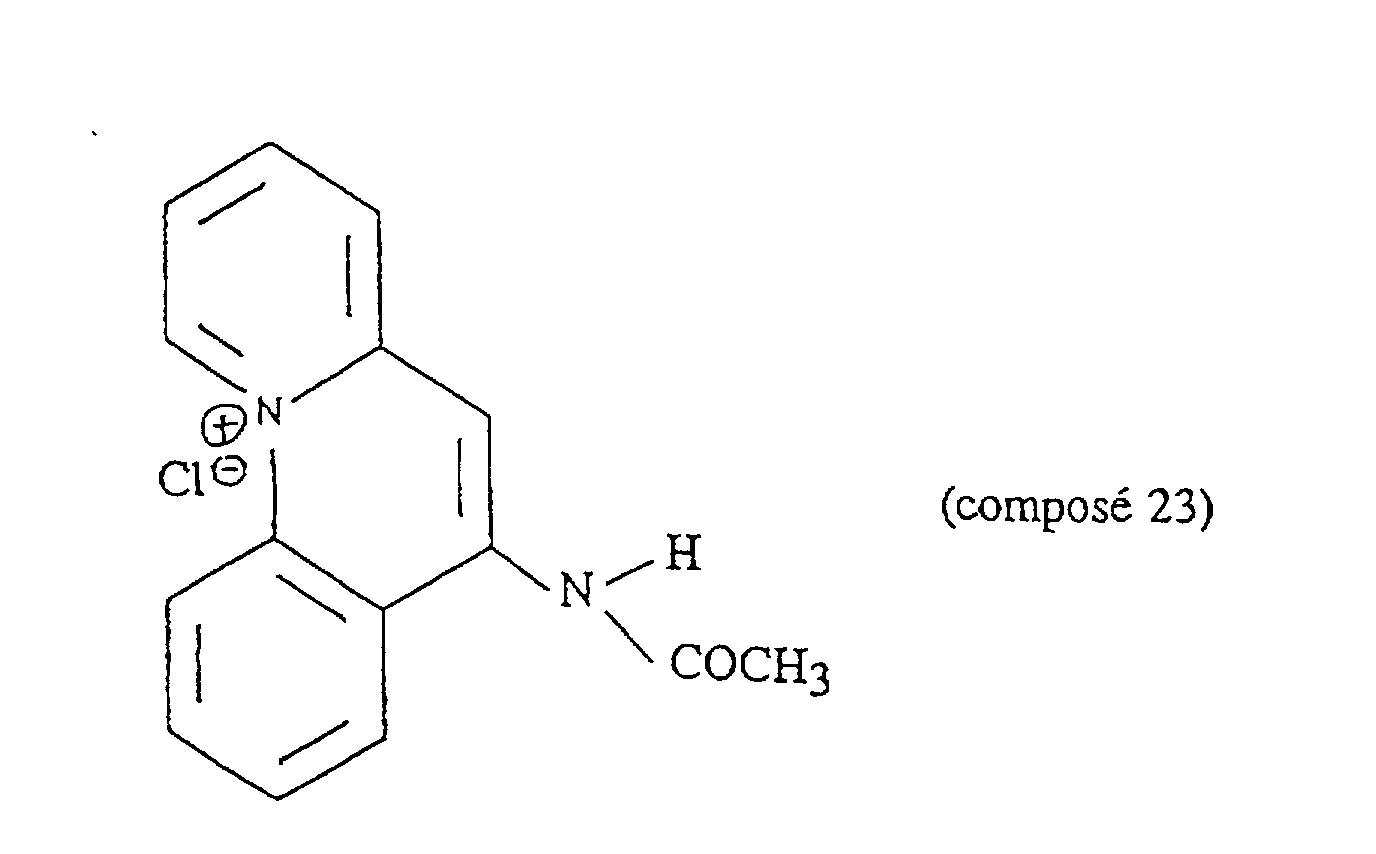
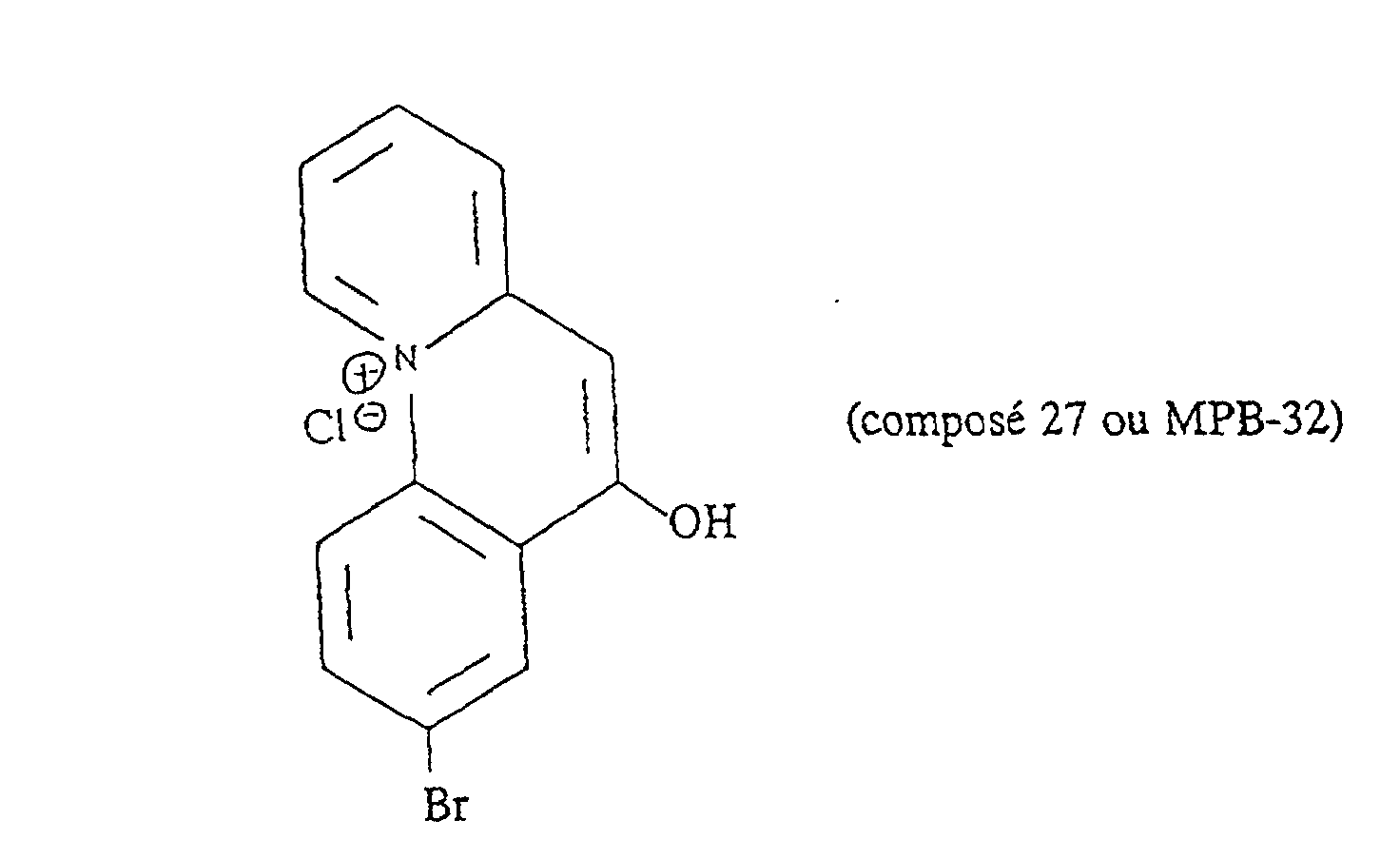
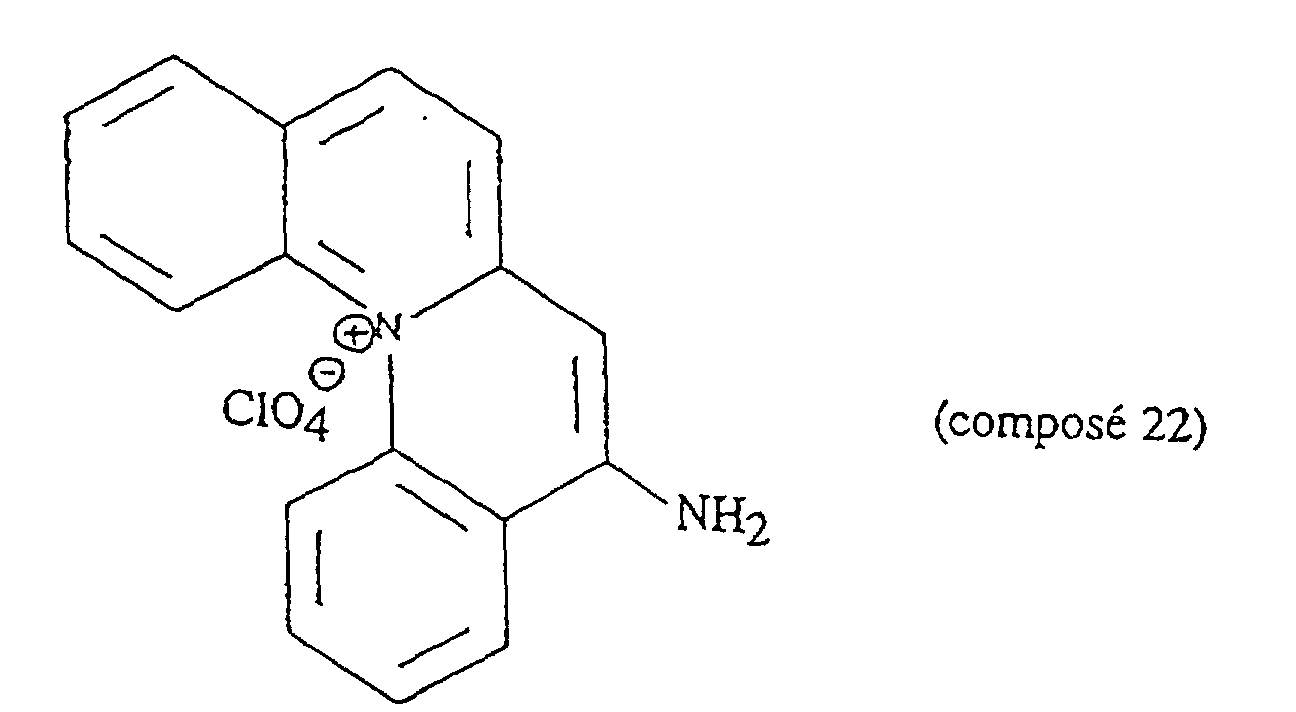
- composition pharmaceutical as described above, comprising, as a principle (s) active (s), at least one of the compounds of formula (III), and more particularly of formula (IIIa), as defined above, and in particular at least one of compounds 11 to 27 described above, and more particularly still of formula (IIIb), as defined above, and in particular at least one of the compounds G to L described above.
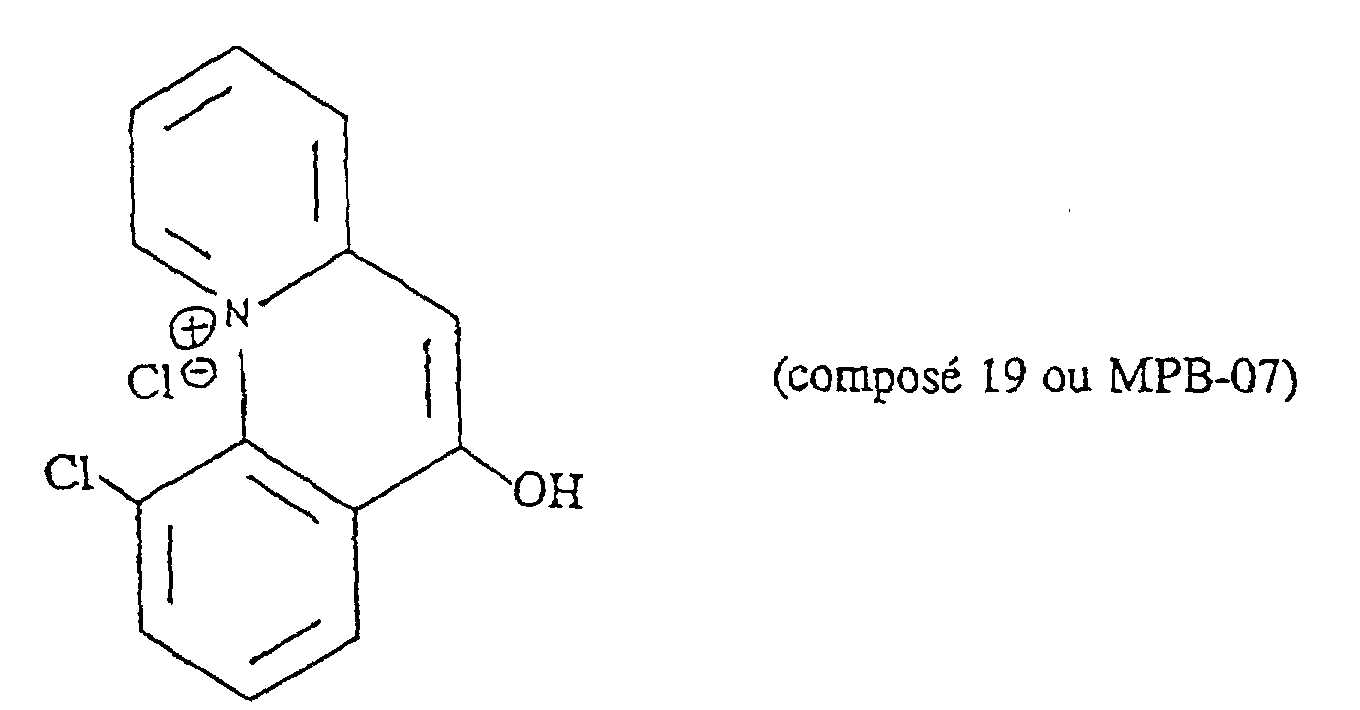
- Preferred pharmaceutical compositions of the invention are those comprising compound 19 (also designated MPB-07), where appropriate in association with one (or more) other compound (s) of the invention described above.
- compositions according to the invention are present in a form which can be administered orally, in particular in the form tablets, or capsules, or in an administrable form parenteral, especially in the form of injectable preparations intravenous, intramuscular, or subcutaneous, or even by air, especially by pulmonary route in the form of aerosols.
- compositions according to the invention are characterized in that the amounts of active ingredient (s) are such that the daily dosage in active ingredient (s) is approximately 0.1 mg / kg at 5 mg / kg, in particular approximately 3 mg / kg, in one or more doses.
- the invention also relates to the compounds of general formula (III) described above, as such, with the exclusion of the compounds of the following formulas:
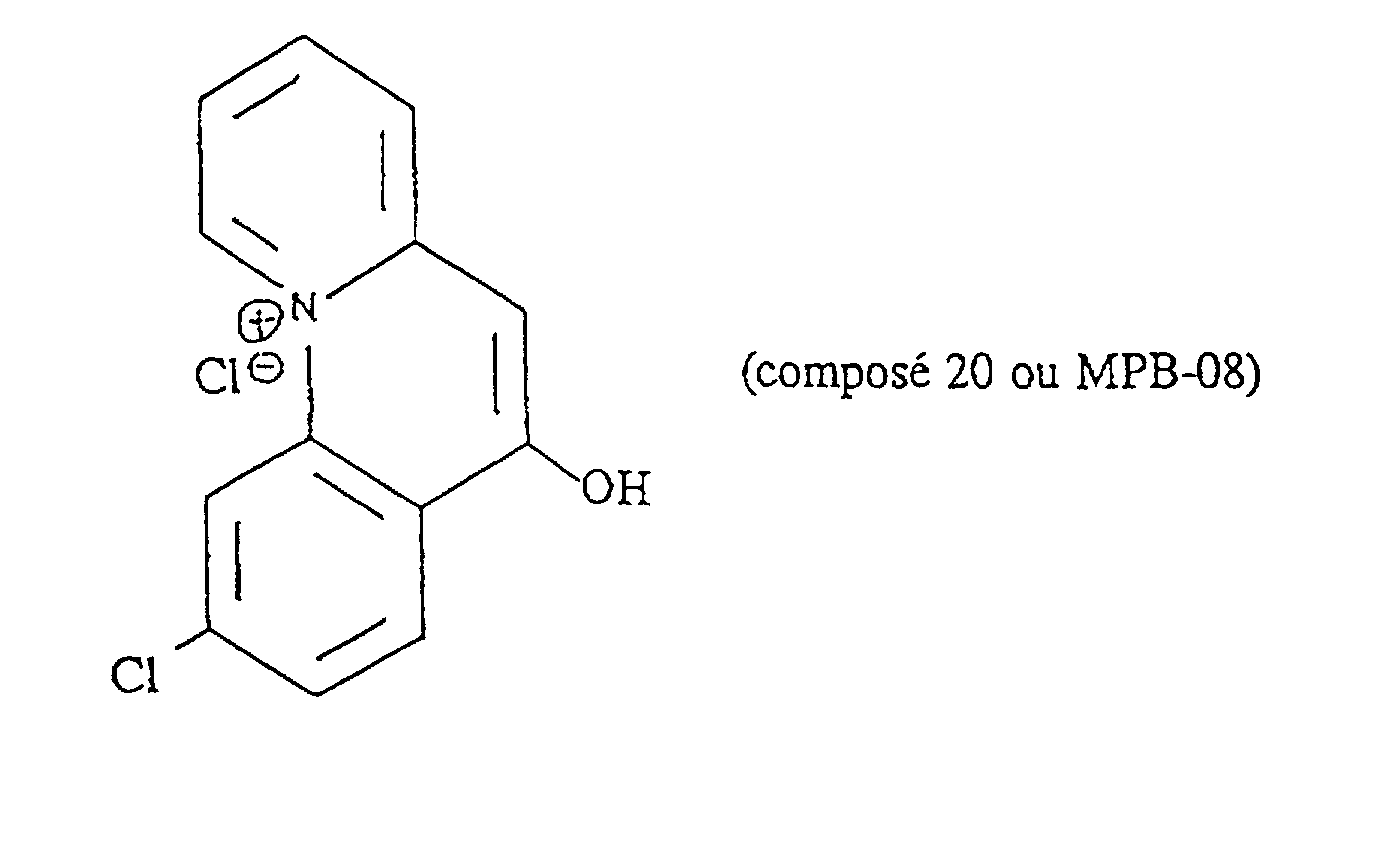
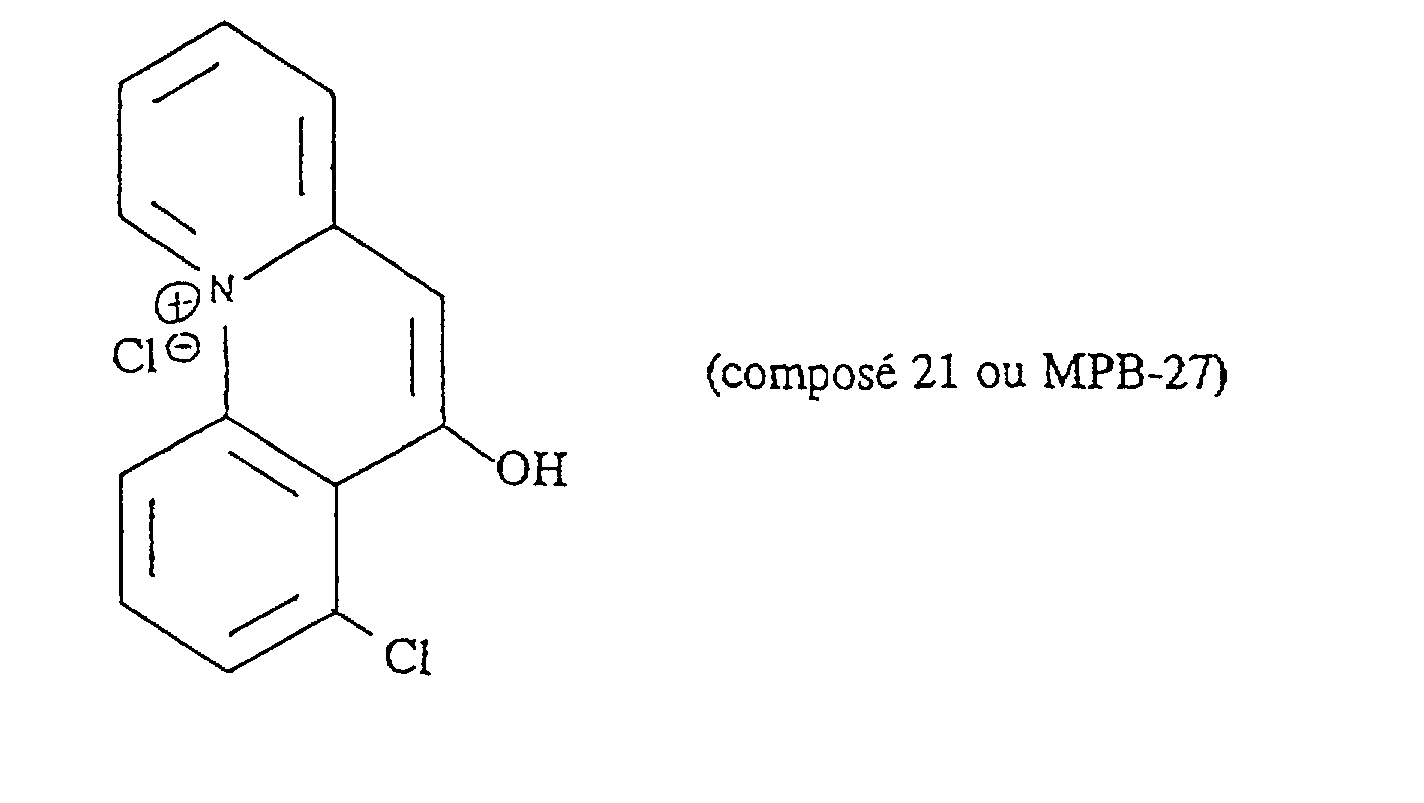
- the invention relates more particularly to the compounds of formula general (IIIa) described above, including in particular compounds 13, 14, 15, 16, 17, 18, 19, 20, 21, 25, 26 and 27 described above.
- the invention relates more particularly still to the compounds of general formula (IIIb) described above, including in particular compounds G to L described above.
- the compounds A to L described above are advantageously obtained by treatment of the harmalane with butyl lithium (Buli, 2 eq) at -40 ° C, then addition of 2-chlorobenzonitrile (optionally substituted with one or more of groups R 7 , R 8 , R 9 and R 10 as defined above), which leads to obtaining the compounds of formula A to F which, by heating to 195 ° C. under nitrogen, lead respectively to compounds G to L.
- Compound 1 is prepared according to a procedure identical to that described below in the context of the preparation of compound 2, but with the use of benzonitrile instead of 2-chlorobenzonitrile.
- Compound 3 is prepared according to a procedure identical to that described above in the context of the preparation of compound 2, but without the hydrolysis step by addition of H 2 SO 4 .
- Compound 4 is prepared according to a procedure identical to that described above in the context of the preparation of compound 2, but with the use of 2-bromobenzonitrile instead of 2-chlorobenzonitrile.
- Compound 6 is prepared according to a procedure identical to that described above in the context of the preparation of compound 2, but with the use of 2-4-dichiorobenzonitrile instead of 2-chlorobenzonitrile.
- Compound 7 is prepared according to a procedure identical to that described above in the context of the preparation of compound 2, but with the use of 2-5-dichlorobenzonitrile instead of 2-chlorobenzonitrile.
- Compound 8 is prepared according to a procedure identical to that described above in the context of the preparation of compound 2, but with the use of 2-6-dichlorobenzonitrile instead of 2-chlorobenzonitrile.
- Compound 9 is prepared according to a procedure identical to that described above in the context of the preparation of compound 2, but with the use of 2-methylquinoline instead of 2-methylpyridine.
- Compound 10 is prepared according to a procedure identical to that described above in the context of the preparation of compound 9, but without the hydrolysis step by addition of H 2 SO 4 .
- Compound 13 is prepared according to a procedure identical to that described above in the context of the preparation of compound 11, but with use of 2-bromobenzonitrile instead of 2-chlorobenzonitrile.
- Compound 14 is prepared according to a procedure identical to that described above in the context of the preparation of compound 11, but with use of 2,3-dichlorobenzonitrile instead of 2-chlorobenzonitrile.
- Compound 15 is prepared according to a procedure identical to that described above in the context of the preparation of compound 11, but with use of 2,4-dichlorobenzonitrile instead of 2-chlorobenzonitrile.
- Compound 16 is prepared according to a procedure identical to that described above in the context of the preparation of compound 11, but with use of 2,6-dichlorobenzonitrile instead of 2-chlorobenzonitrile.
- Compound 17 is prepared according to a procedure identical to that described above in the context of the preparation of compound 11, but with use of 2,5-dichlorobenzonitrile instead of 2-chlorobenzonitrile.
- Compound 20 is prepared according to a procedure identical to that described above in the context of the preparation of compound 19, but carried out at from compound 6 instead of compound 5.
- Compound 21 is prepared according to a procedure identical to that described above in the context of the preparation of compound 19, but carried out at from compound 8 instead of compound 5.
- Compound B is prepared according to a procedure identical to that described above in the context of the preparation of compound A but with the use of orthochlorobenzonitrile instead of 2.6 dichlorobenzonitrile.
- Compound C is prepared according to a procedure identical to that described above in the context of the preparation of compound A but with the use of 2.5 dichlorobenzonitrile instead of 2.6 dichlorobenzonitrile.
- Compound F is prepared according to a procedure identical to that described above in the context of the preparation of compound A but with the use of 2-chloro-4 bromobenzonitrile instead of 2,6 dichlorobenzonitrile.
- the purified enamine A is heated under nitrogen; around 150 ° C the product liquefies, then at 195 ° C white fumes appear and the product solidifies. The heating is maintained at this temperature for 10 min.
- the CCM shows the disappearance of the yellow fluorescent spot of the imine of an Rf of 0.3 on silica in CH 2 Cl 2 and the appearance of a yellow-green fluorescent spot of the cyclized product of an Rf of 0.1 on alumina in alcohol.
- the product is purified by washing with acetone, then recrystallization from alcohol or by chromatography: alumina - alcohol.
- Compound K is prepared according to a procedure identical to that described above in the context of the preparation of compound G but with the use of compound E instead of compound A.
- CHO-K1 Chinese-Hamster-Ovary cells
- the cells are maintained in this specific medium and then seeded at low density on glass coverslips and cultured at 37 ° C. (5% CO 2 ) before the patch-clamp experiments.
- the cell survival medium is composed of ⁇ MEM with fetal beef serum (7%) and antibiotics: antibiotics: 50 IU / ml penicillin and 50 ⁇ g / ml streptomycin and methotrexate (100 ⁇ M to 200 ⁇ M).
- Ion channels are proteins whose conformational state can be modified in response to various factors: the transmembrane electric field, the binding of ligands or post-transcriptional biochemical reactions.
- thermodynamic background noise is at least a hundred times greater than the current flowing through a single ion channel. In under such conditions, the flow in a channel is masked by this noise, the variance increases with the mean current. Erwin Neher and Bert Sackman (see Hamill et al., 1981) of the Max Planck Institute in Gôttingen have shown that could by noise analysis estimate the current flowing in an ion channel.
- the thermodynamic background noise is proportional to the surface of the membrane. Thus, by limiting this, the background noise becomes lower than current flowing through the channel.
- the interaction forces between the glass of the pipette and the phospholipids of the membrane make it possible to reduce the leakage currents, an essential step for the measurement of the current passing through an ion channel.
- the configuration thus obtained is designated by the term "cell-attached” or attached cell.
- An electronic assembly makes it possible to impose (to clamp) a potential difference (Vref-Vp) between the reference electrode of the bath (Vref) and the pipette (Vp) and to measure the resulting current I. If the ionic composition is the same on both sides of the membrane (symmetrical media), the intensity of the current I is then directly proportional to the potential difference imposed on the membrane. Points I (V) are generally distributed on a straight line whose slope and position define the unit conductance (g) of the channel and the current inversion potential, Erev, At inversion potential, the charge flow through the membrane is zero.
- the potential of the electrode is added to that of the membrane which is around -60 mV.
- the concentrations of potassium ions (K + ) and chlorine (Cl - ) are around 150 mM and 10 mM respectively.
- the Nernst potentials for the K + (E K ) and Cl - (E Cl ) ions will be close to zero and -50 mV, respectively.
- Patch-clamp experiments are carried out on confluent cells.
- a fragment of the glass slide (cell support) is placed in an experimental tank (volume 600 ⁇ l or 1 ml) on the stage of an inverted microscope, equipped with phase contrast lighting (Olympus IMT2).
- the cell-attached and inside-out configurations are used (Hamill et al., 1981).
- the experiments are carried out at room temperature (20-22 ° C).
- the currents are amplified with a LIST EPC 7 amplifier (Darmstadt, Germany) (3 kHz filter) with a 2-5 kHz low pass filter (6-pole Bessel filter) and recorded with a DAT (Digital Audio Tape) after digitalization (16 bits) at 44 kHz.
- the data is then transferred to an Olivetti M28PC computer.
- the pipettes are made from 1 mm diameter glass tubes (Clark Electromedical Instrument) in two or three stages with a horizontal drawing machine (Flaming / Brown type, model P-87. Sutter Inst. Co. USA) .
- the pipettes filled with a 150 mM NaCl solution have a resistance of between 4 and 12M ⁇ .
- the potentials are expressed as the difference between the potential of the patch electrode and that of the bath. In the cell-attached configuration, they represent the change in potential with respect to the cell's resting potential.
- the junction potentials are evaluated by the potential of the electrode corresponding to a zero current (when the channels are closed).
- the current inversion potential and the unit conductance of the channels are obtained from the current-voltage relationship (I / V) by linear regression.
- the composition of the saline solutions is (in mM); 150 NaCl, 2 MgCl 2 , 10 TES (pH 7.4).
- the cell perfusion bath contains (in mM): 145 NaCl, 4 KCl, 2 MgCl 2 , 0.5 CaCl 2 , 10 TES (pH 7.4).
- the transepithelial transport will depend on the nature of the permeases present in the two apical or basolateral domains, on either side of the tight junction.
- the properties of the epithelium, which result in the passage of charged molecules, can be easily deduced from the measurement of the transepithelial potential or of the short-circuit current. When the molecules are neutral we use marked molecules to follow their movements.
- transepithelial transport is the balance of cell transport and selective diffusion across the junction.
- Cell transport results from the activity of pairs of specific permeases located respectively on the apical pole and on the basal pole of the cell (Na + and Na + / K + ATPase channel, Cl - channel and Na + / K + / cotransporter Cl - , Na / glucose cotransporter and diffusional glucose transporter ).
- the tight junction isolates two parts of the membrane which have a different potential compared to the medium.
- Vm micous
- Vs seerous
- An adjustable current i is introduced into the circuit, which uses the resistance tissue to create a potential difference that will be added algebraically to the existing one.
- Isc short-circuit current
- a potential difference is imposed on the circuit. chosen and the resistance is measured by assessing the deviation of the current Isc which results.
- the cups are mounted in a Ussing changed.
- a "current-voltage clamp” control unit WPI
- WPI current-voltage clamp
- the collected signal is digitized (MacLab) and processed using Chart software on an Apple Macintosh computer.
- the epithelium formed by the cells HT29 First we will use the epithelium formed by the cells HT29. Adding glucose to the base medium (symmetrical saline medium, absence stimulator) in the mucous compartment causes an elevation of the transepithelial potential and short-circuit current without affecting the resistance.
- the epithelium functions as a glucose absorber which uses on the side mucosal a glucose dependent Na transporter, and presumably a diffusional transporter on the serous side.
- the transport of sodium associated with glucose causes a potential difference which can be inhibited by phlorizine while net glucose flux is measured with analogs of radiolabelled glucose placed in the mucous or serous compartments.
- This technique tracks the kinetics of iodide output.
- the cells are cultured in 12-well plates with dilution with 1/10 after passage.
- the drugs to be tested are dissolved in medium B (37 ° C) depending on the desired concentration.
- Wells are washed 2 times with 1 ml of NaOH medium B, 0.1% glucose, which is then replaced by 1 ml of loading solution for 30 min.
- the kinetics of iodide exit are carried out after eliminating the loading solution and washed the wells 3 times with 1.5 ml of medium B. For this 1 ml of medium B is left for 1 min in the well and recovered in a hemolysis tube to be replaced by 1 ml of new medium B. The first minute serves as control, the product to be tested is added from the second minute. The operation is repeated over 10 min then, those are removed with 1 ml of 0.1N NaOH 0.1% SDS. The content of each well is collected in a tube hemolysis after 25 min of stirring and the tubes are counted for 2 min in a gamma counter.
- the study concerns molecules of the benzoquinolizinium family, described above. They are tested for their ability to activate the CFTR channel.
- the screening of molecules as openers of the CFTR channel was carried out in measuring their effect on the efflux of radioactive iodide and on the chloride streams transmembrane (Becq et al., 1993a). These data have been supplemented by measuring the intracellular cyclic AMP (cAMP) rate and its variations in various experimental situations
- CFTR RNA coding for CFTR
- cRNA-CFTR RNA coding for CFTR
- cRNA-CFTR RNA coding for CFTR
- the CFTR channel being mainly regulated by proteins kinases A stimulated by the level of intracellular cAMP, the control experiments used cAMP derivatives capable of passing the membrane cell, and forskolin activator of the enzyme adenylate cyclase leading to the synthesis of cAMP in a cell.
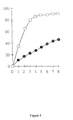
- Figure 1 shows such activation obtained with 500 ⁇ M of cpt-cAMP (8- (4-chlorphenylthio) -adenosine-3 ', 5'-monophosphate, cyclic), a cAMP analog crossing the membrane of cells.
- cpt-cAMP 4- (4-chlorphenylthio) -adenosine-3 ', 5'-monophosphate, cyclic
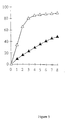
- Figures 2 A and 2 B show the activation of CFTR by 500 ⁇ M of cpt-AMPc in the CHO recombinant cell expressing CFTR.
- CFTR- control cpt-AMPc has no effect.
- cell HT29 the channel CFTR is stimulable by cAMP as shown by the increase in the amplitude of the iodide flow in the presence of 500 ⁇ M of cpt-AMPc ( Figure 3 A and B).
- Figure 4 shows the effect of the MPB-07 derivative (500 ⁇ M) on the efflux iodide in the CHO (CFTR +) and CHO (CFTR-) cell.
- Activation of the efflux of iodide in the CHO cell (CFTR +) is comparable, in intensity and speed, at that induced by forskolin (5 ⁇ M), activator of cAMP, in CHO cells (CFTR +) ( Figure 5).
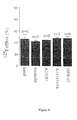
- the results concerning the effects of the derivative MPB-07 on the iodide efflux in CHO (CFTR-) and CHO (CFTR +) cells are summarized in the histograms of Figures 6 and 7, respectively.
- MPB-07 (500 ⁇ M) stimulates iodide efflux as effectively as forskolin does (5 ⁇ M) on CHO cells (CFTR +) ( Figure 7). On these same cells, A23187 (10 ⁇ M) has no effect. In CHO (CFTR-) cells, forskolin (5 ⁇ M) A23187 (10 ⁇ M), either separately or added together, as well as MPB-07 (500 ⁇ M) do not significantly modify the basal efflux level iodide ( Figure 6).
- MPB-07 stimulates the efflux of iodide in the Xenopus oocyte.
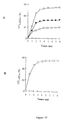
- This activation ( Figure 10 A) is comparable to that obtained by the application of 500 ⁇ M cpt-cAMP ( Figure 10 B) and significantly different (Figure 11) from the efflux measured in the stimulated uninjected oocyte (cAMP, and MPB-07) and not stimulated (basal) ( Figure 11, water) and in the unstimulated but expressing oocyte CFTR ( Figure 10 A, efflux noted CFTR basal).
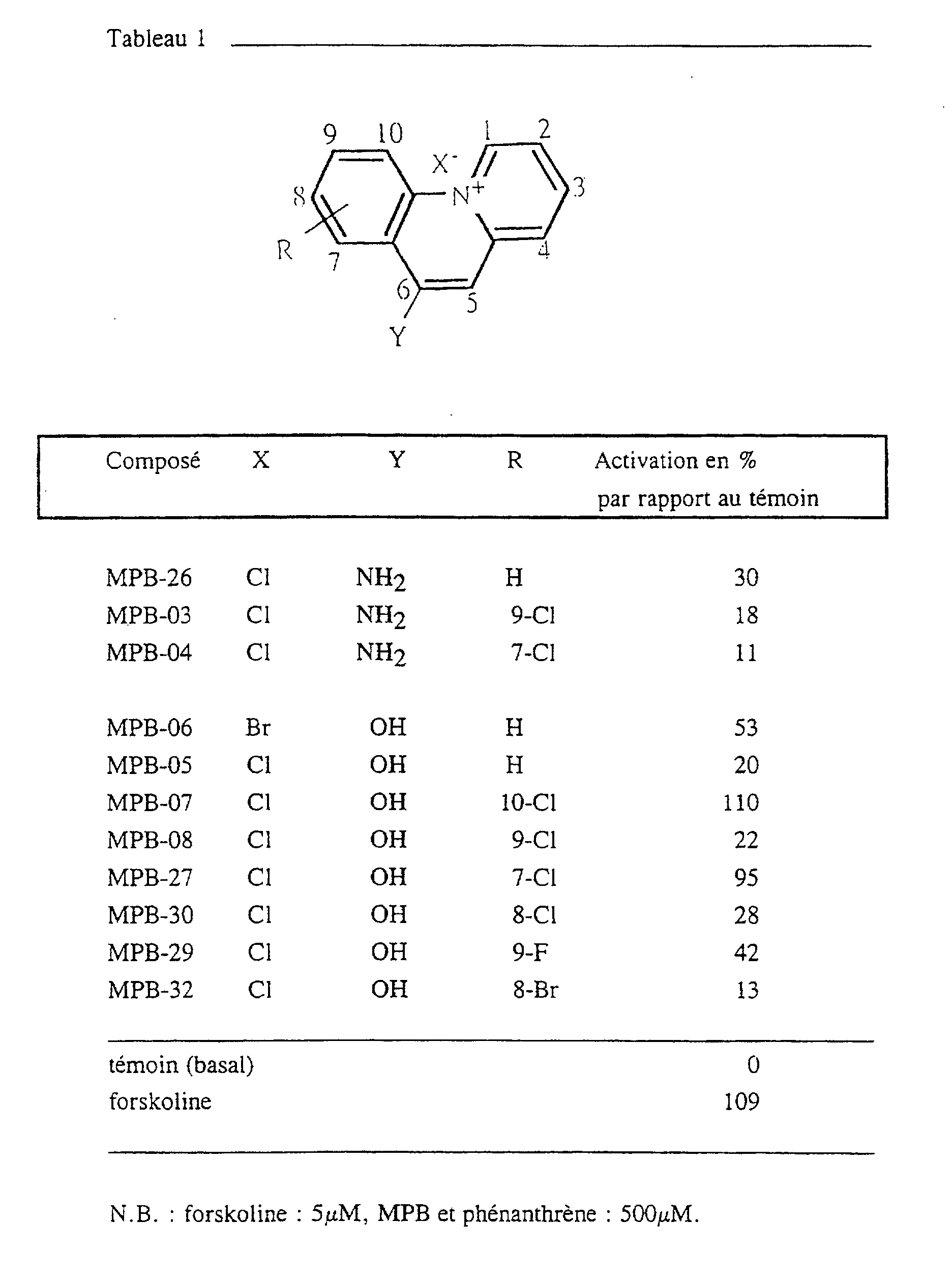
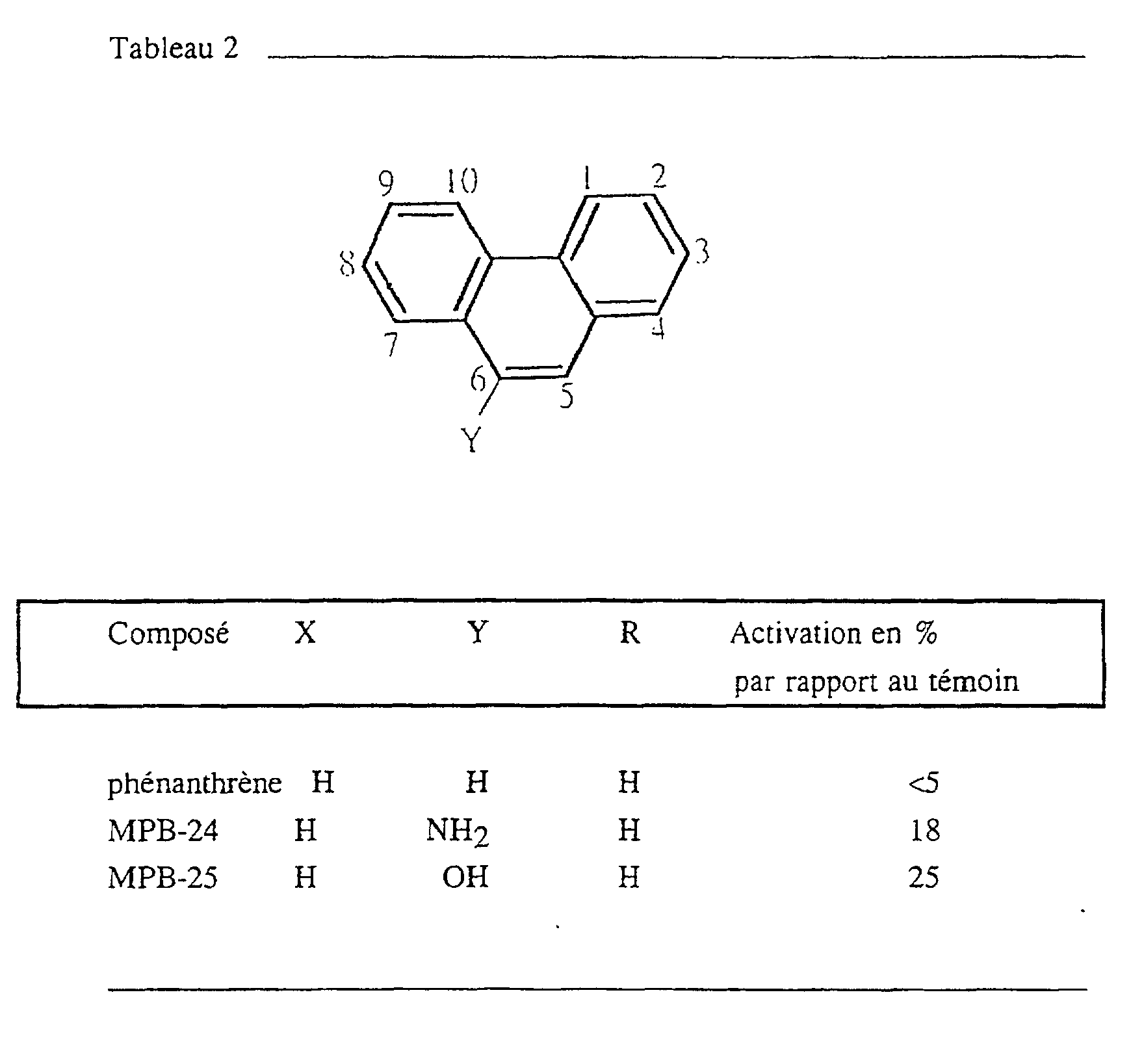
- Tables 1 and 2 show the chemical structure of the compounds of family of benzoquinoliziniums tested here as activator of the CFTR channel.
- Tables 1 and 2 present the results relating to the efflux measured in the presence of the various compounds tested on the recombinant CHO (CFTR +) cell.
- the base compound, phenanthrene (Table 2) does not activate the CFTR channel.
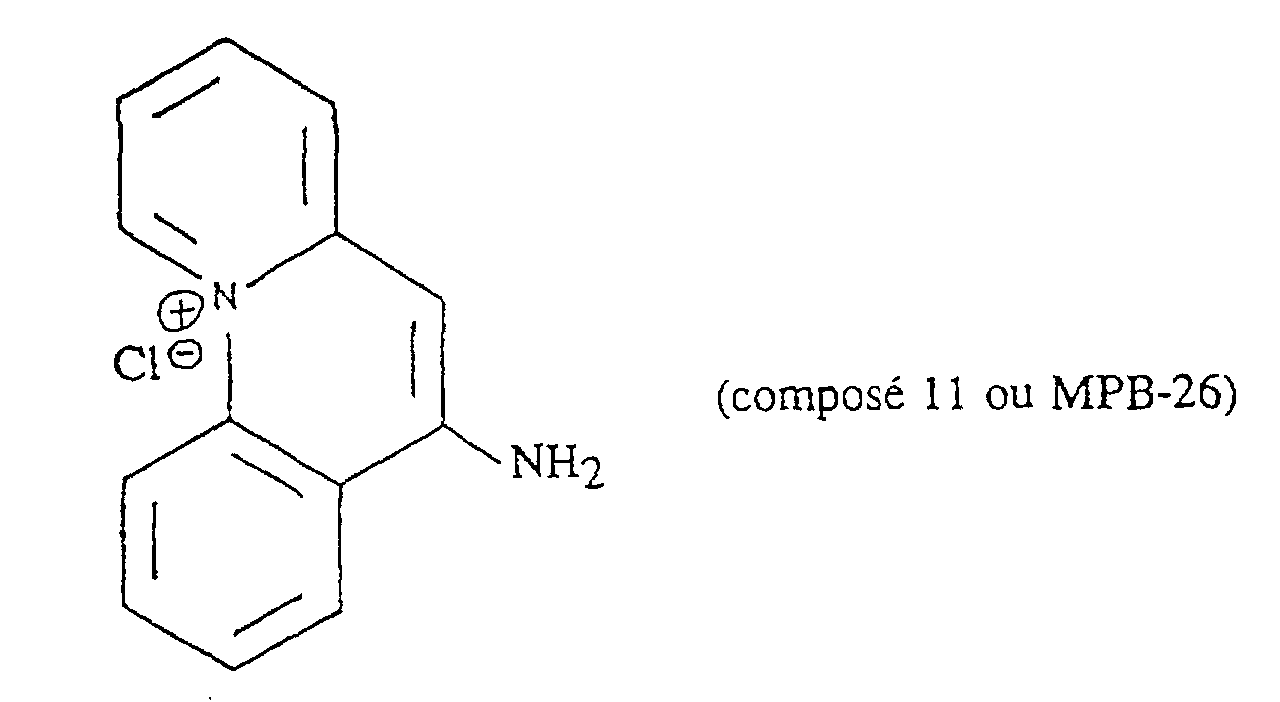
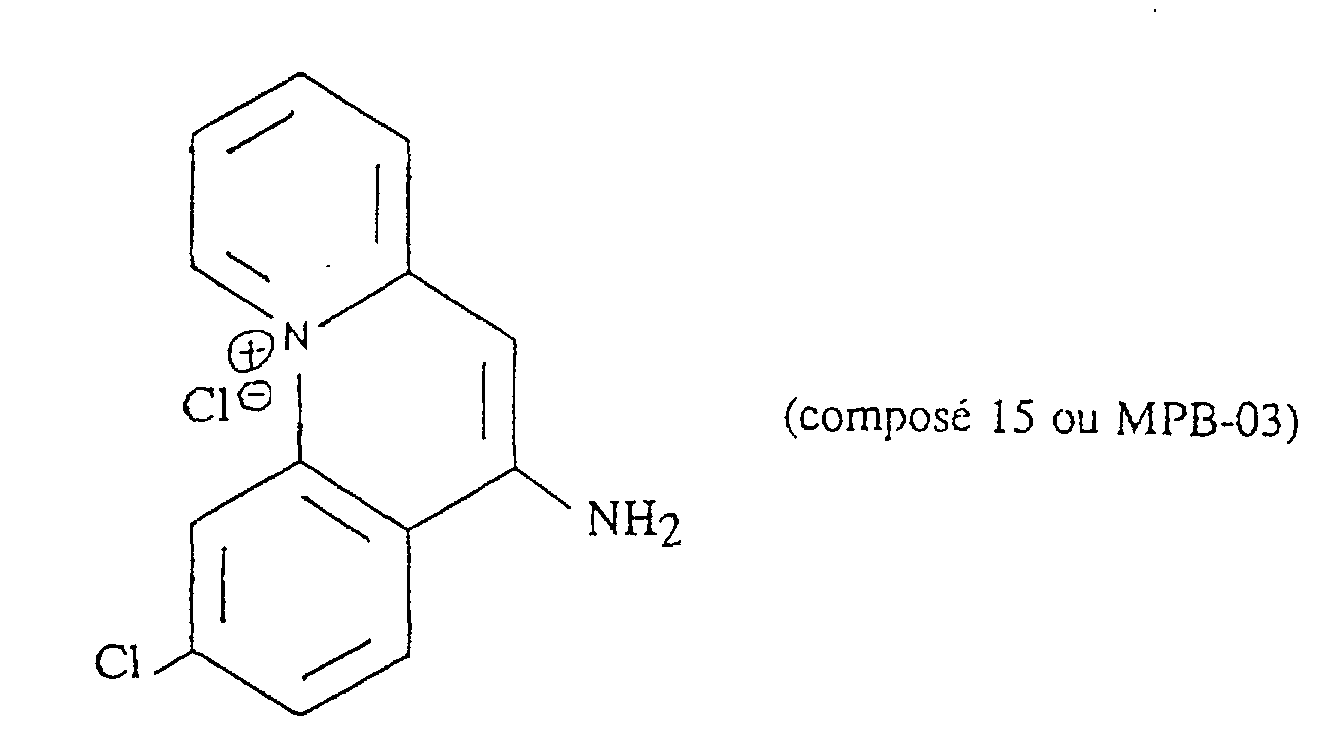
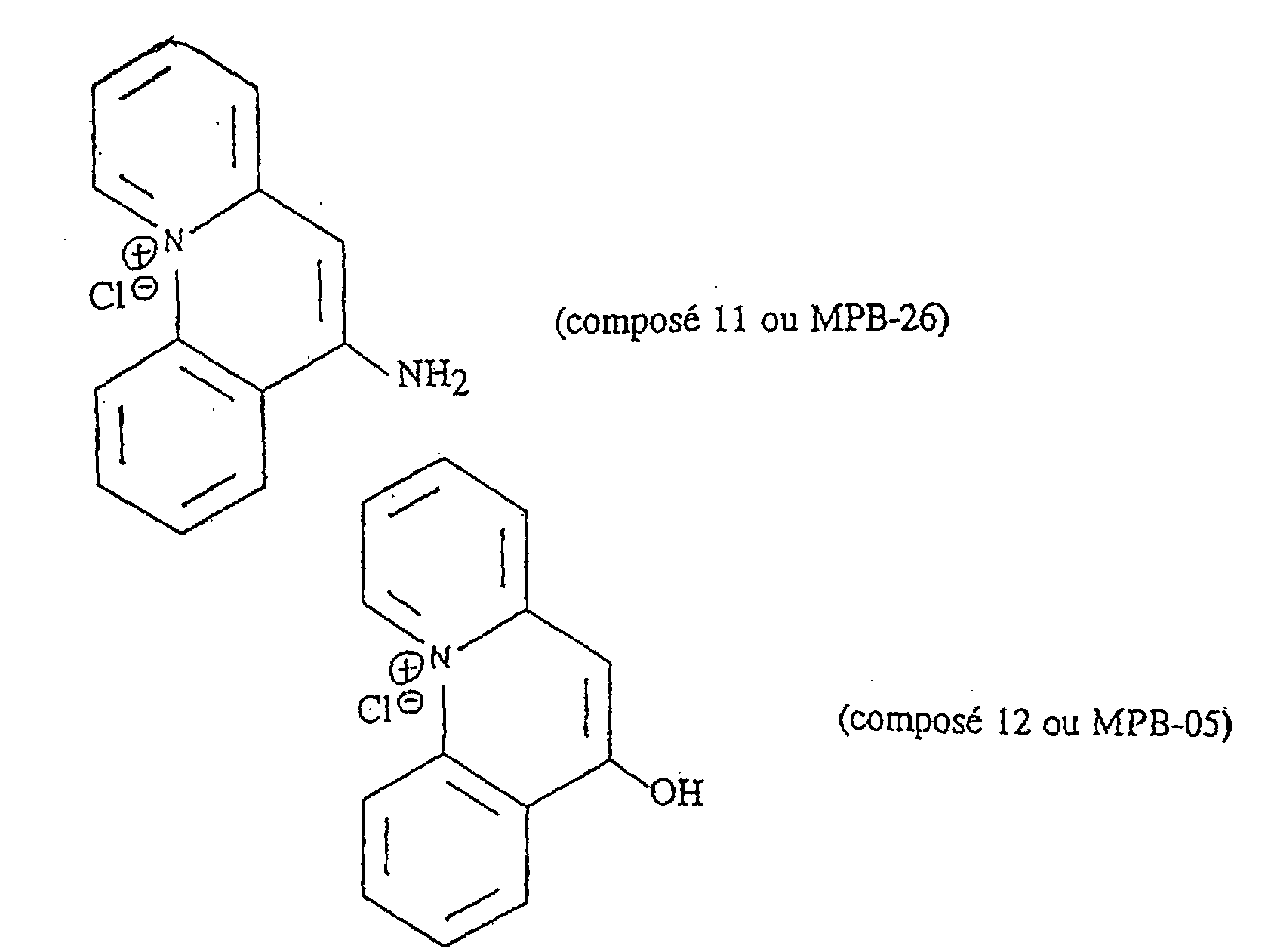
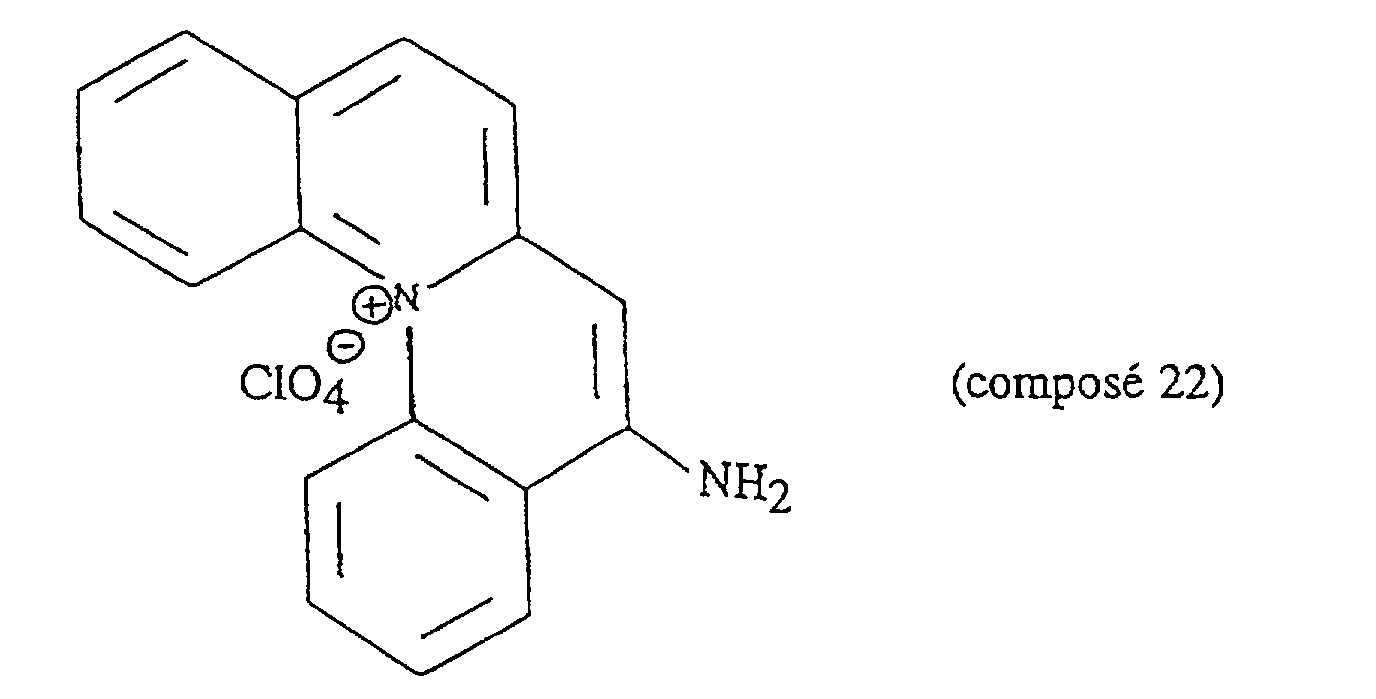
- Two series of molecules were tested: NH 2 series (table 1, MPB-26, MPB-01 to 04; table 2: MPB-24) and OH series (table 1, MPB-05 to 08, MPB-27, 29 , 30 and 32; Table 2: MPB-25).
- the activation percentages of the CFTR channel are given in the corresponding tables. They show that the OH series activates CFTR with percentages between 15 and 110%.
- the NH 2 series is less active (10 to 30%).
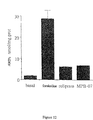
- FIG. 12 shows the levels of cellular cAMP in the CHO cell recombinant measured after 5 min in the presence of 5 ⁇ M of forskolin (activator cAMP synthesis enzyme; adenylate cyclase), 10 ⁇ M rolipram (an inhibitor of the cAMP degradation enzyme: phosphodiesterase from type IV) and 500 ⁇ M of MPB-07.
- forskolin activator cAMP synthesis enzyme
- adenylate cyclase an inhibitor of the cAMP degradation enzyme: phosphodiesterase from type IV
- MPB-07 an inhibitor of the cAMP degradation enzyme: phosphodiesterase from type IV
- the same level of cAMP is reached in presence of compounds MPB-07 and rolipram but only MPB-07 triggers activation of the CFTR channel.
- the forskolin effect on cAMP is multiplied by a factor of about 4 suggesting that this effect is purely dependent on cAMP.
- Rolipram has no CF
Landscapes
- Chemical & Material Sciences (AREA)
- Organic Chemistry (AREA)
- Health & Medical Sciences (AREA)
- Life Sciences & Earth Sciences (AREA)
- Veterinary Medicine (AREA)
- Public Health (AREA)
- General Health & Medical Sciences (AREA)
- Medicinal Chemistry (AREA)
- Animal Behavior & Ethology (AREA)
- Pharmacology & Pharmacy (AREA)
- General Chemical & Material Sciences (AREA)
- Nuclear Medicine, Radiotherapy & Molecular Imaging (AREA)
- Chemical Kinetics & Catalysis (AREA)
- Engineering & Computer Science (AREA)
- Bioinformatics & Cheminformatics (AREA)
- Epidemiology (AREA)
- Pulmonology (AREA)
- Pharmaceuticals Containing Other Organic And Inorganic Compounds (AREA)
- Nitrogen Condensed Heterocyclic Rings (AREA)
- Quinoline Compounds (AREA)
- Pyridine Compounds (AREA)
- Acyclic And Carbocyclic Compounds In Medicinal Compositions (AREA)
Description

- l'hétérocycle A est aromatique ou non, étant entendu que dans ce dernier cas l'atome d'azote de cet hétérocycle est lié par une double liaison au carbone en position 4a,
- R1, R2, R3, R4, R5, R7, R8, R9 et R10, représentent, indépendamment
les uns des autres :
- un atome d'hydrogène, ou de brome, ou de fluor, ou
- un atome d'halogène, notamment un atome de chlore, ou
- un groupe alkyle, alkoxy, carbonyle, ou oxycarbonyle, linéaire ou ramifié, d'environ 1 à environ 10 atomes de carbone, ces groupes étant le cas échéant substitués, notamment par un halogène, et/ou par un hydroxyle, et/ou par une amine (primaire, secondaire ou tertiaire), et/ou par un cycle aromatique et/ou aliphatique, d'environ 5 à environ 10 atomes de carbone dans le cycle, ces cycles étant eux-mêmes, le cas échéant, substitués notamment par un halogène, et/ou par un hydroxyle, et/ou par une amine (primaire, secondaire ou tertiaire), et/ou par un groupe alkyle, alkoxy, carbonyle, ou oxycarbonyle, ces groupes étant tels que définis ci-dessus, ou
- un cycle aromatique ou aliphatique, d'environ 5 à environ 10 atomes de carbone dans le cycle, ce cycle étant lui-même, le cas échéant, substitué notamment par un halogène, et/ou par un hydroxyle, et/ou par une amine (primaire, secondaire ou tertiaire), et/ou par un groupe alkyle, alkoxy, carbonyle, ou oxycarbonyle, ces groupes étant tels que définis ci-dessus, ou
- un groupe -ORa, Ra représentant un atome d'hydrogène, ou un groupe alkyle, carbonyle, ou oxycarbonyle, linéaire ou ramifié, ces groupes étant tels que définis ci-dessus, ou un cycle aromatique ou aliphatique, ces cycles étant tels que définis ci-dessus, ou
- un groupe -NRbRc, Rb et Rc, indépendamment l'un de l'autre, représentant un groupe alkyle, alkoxy, carbonyle, ou oxycarbonyle, linéaire ou ramifié, ces groupes étant tels que définis ci-dessus, ou un cycle aromatique ou aliphatique, ces cycles étant tels que définis ci-dessus, ou
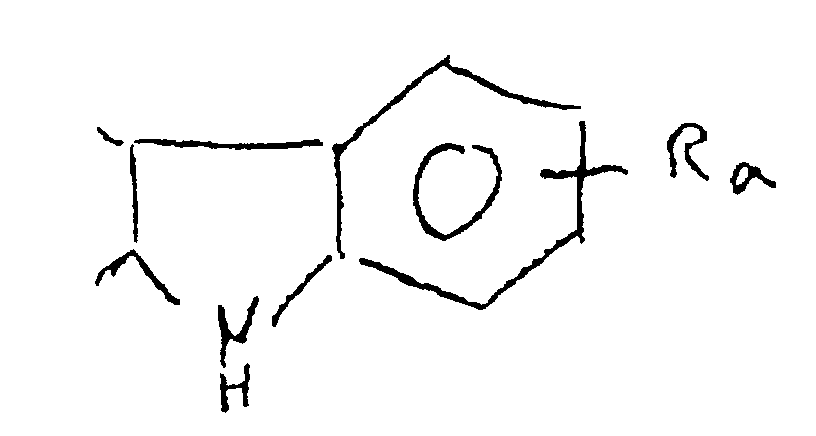
- lorsque R1 et R2, ou R3 et R4, et/ou R4 et R5, et/ou R7 et R8, et/ou R8 et R9, et/ou R9 et R10, ne représentent pas les différents atomes ou groupes ou cycles mentionnés ci-dessus, alors R1 en association avec R2, ou R2 en association avec R3, et/ou R3 en association avec R4, et/ou R4 en association avec R5, et/ou R7 en association avec R8, et/ou R8 en association avec R9, et/ou R9 en association avec R10, forment respectivement avec C1 et C2, ou avec C2 et C3, ou avec C3 et C4, ou avec C4, C4a et C5, ou avec C7 et C8, ou avec C8 et C9, ou avec C9 et C10, un cycle aromatique ou aliphatique de 5 à 10 atomes de carbone, ce cycle étant le cas échéant substitué, notamment par un halogène, et/ou par un groupe alkyle, alkoxy, carbonyle, ou oxycarbonyle, et/ou par un cycle aromatique ou aliphatique, ces groupes ou cycles étant tels que définis ci-dessus, ou
- lorsque R3 et R4 ne représentent pas les différents atomes ou groupes
ou cycles mentionnés ci-dessus, alors R3 en association avec R4 forment un
groupe indole de formule
- Y représente :
- un groupe -ORd, Rd représentant un atome d'hydrogène, ou un groupe alkyle, carbonyle, ou oxycarbonyle, linéaire ou ramifié, ces groupes étant tels que définis ci-dessus, ou un cycle aromatique ou aliphatique, ces cycles étant tels que définis ci-dessus, ou
- un groupe -NReRf, Re et Rf indépendamment l'un de l'autre, représentant un groupe alkyle, alkoxy, carbonyle, ou oxycarbonyle, linéaire ou ramifié, ces groupes étant tels que définis ci-dessus, ou un cycle aromatique ou aliphatique, ces cycles étant tels que définis ci-dessus,
- étant entendu que lorsque Rd, ou l'un au moins de Re ou de Rf, ne représentent pas l'un des différents atomes ou groupes ou cycles mentionnés ci-dessus, alors Rd, ou l'un au moins de Re ou de Rf, en association avec R5, ou en association avec R7, forment respectivement avec C5 et C6, ou avec C6, C6a et C7, un hétérocycle aromatique ou aliphatique de 5 à 10 atomes de carbone, le cas échéant substitué, notamment par un halogène, et/ou par un groupe alkyle, alkoxy, carbonyle, ou oxycarbonyle, et/ou par un cycle aromatique ou aliphatique, ces groupes ou cycles étant tels que définis ci-dessus,
- X représente un atome sous forme anionique, tel qu'un atome d'halogène, notamment un atome de brome ou de chlore, ou un groupe d'atomes sous forme anionique, tel qu'un perchlorate, et l'azote de l'hétérocycle A de la formule (I) est sous forme quaternaire et est lié d'une part par liaison covalente au carbone en position 11, et, d'autre part, par liaison ionique à X défini ci-dessus,
- étant entendu que lorsque R1 et R10 ne représentent pas l'un des différents atomes ou groupes ou cycles mentionnés ci-dessus, alors R1 en association avec R10 forment avec C1, l'azote de l'hétérocycle A de la formule (I), C11, et C10, un hétérocycle aromatique ou aliphatique de 5 à 10 atomes de carbone, le cas échéant substitué, notamment par un halogène, et/ou par un groupe alkyle, alkoxy, carbonyle; ou oxycarbonyle, et/ou par un cycle aromatique ou aliphatique, ces groupes ou cycles étant tels que définis ci-dessus, pour la préparation de médicaments destinés au traitement de pathologies, notamment pulmonaires, digestives ou cardiaques, liées à des troubles des flux ioniques transmembranaires, notamment de chlore et, le cas échéant, de bicarbonate, dans l'organisme (humain ou animal), notamment pour la préparation de médicaments destinés au traitement de la mucoviscidose, ou à la prévention du rejet de drogues cytotoxiques (notamment antitumorales), ou au traitement des obstructions des voies bronchiques ou des voies digestives (notamment pancréatique ou intestinale)

- R1 et R2 représentent un atome d'hydrogène, ou forment en association avec C1 et C2 un cycle aromatique à 6 atomes de carbone,
- Y représente un groupe -OH ou -NH2, ou -NHCOCH3,
- R7, R8, R9 et R10 représentent un atome d'hydrogène, ou l'un de R7, R8, R9 ou R10, représente un atome d'halogène, notamment un atome de chlore. de brome ou de fluor,
- X représente un atome d'halogène sous forme anionique, notamment un atome de brome Br-, ou de chlore Cl-, ou un groupe d'atomes sous forme anionique, notamment un perchlorate ClO4 -.
- R1 et R2 représentent un atome d'hydrogène,
- Y représente un groupe -OH,
- X représente un atome d'halogène sous forme anionique, notamment un atome de brome Br-, ou de chlore Cl-, ou un groupe d'atomes sous forme anionique, notamment un perchlorate ClO4 -,
- R7, R8, R9 et R10 représentent indépendamment les uns des autres un atome d'hydrogène ou un atome d'halogène, notamment un atome de chlore, de brome ou de fluor.


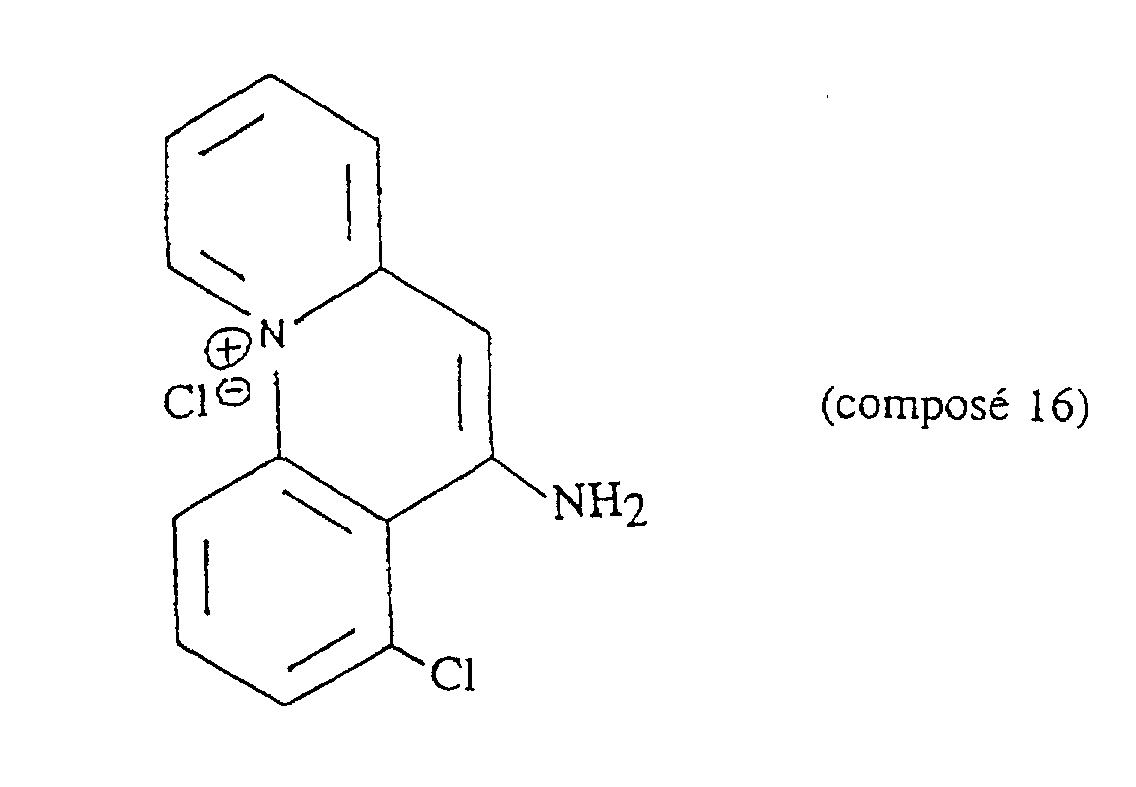


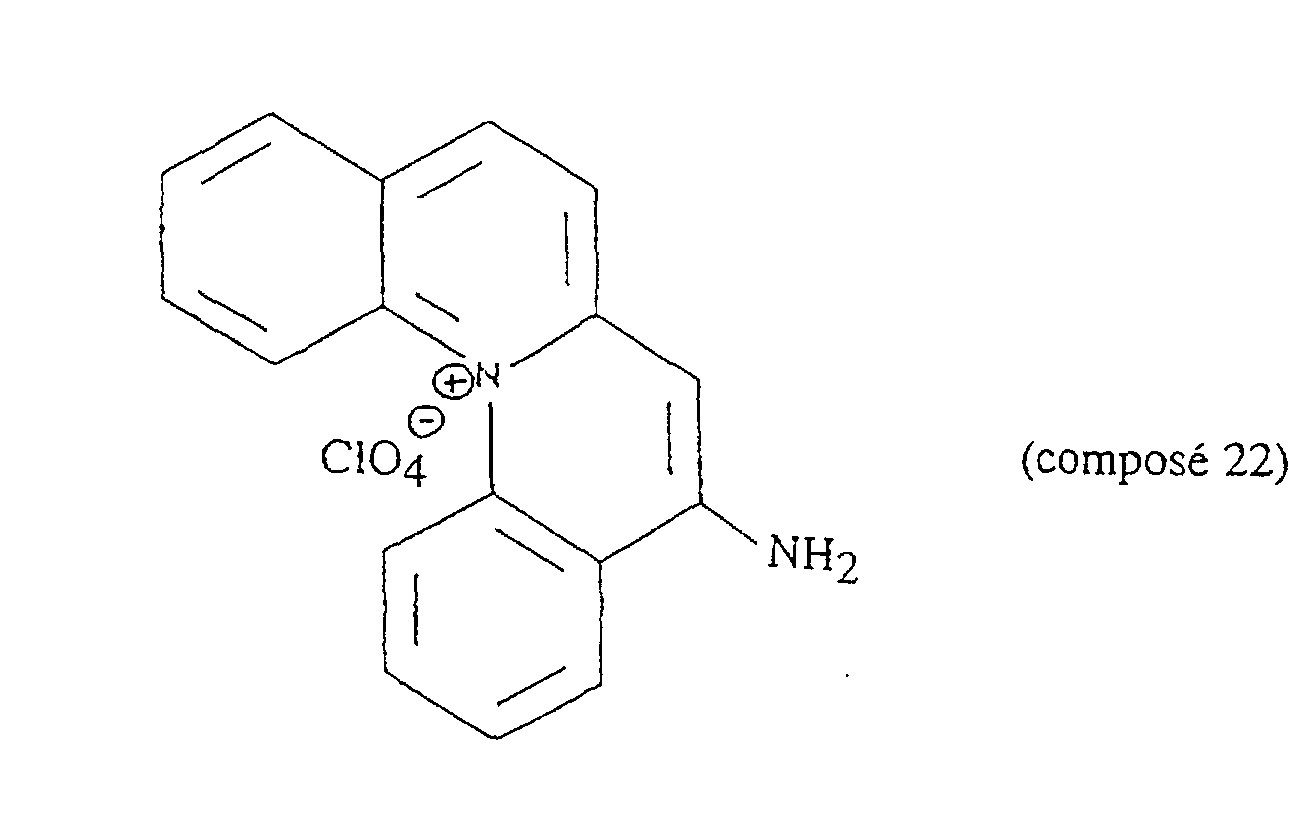


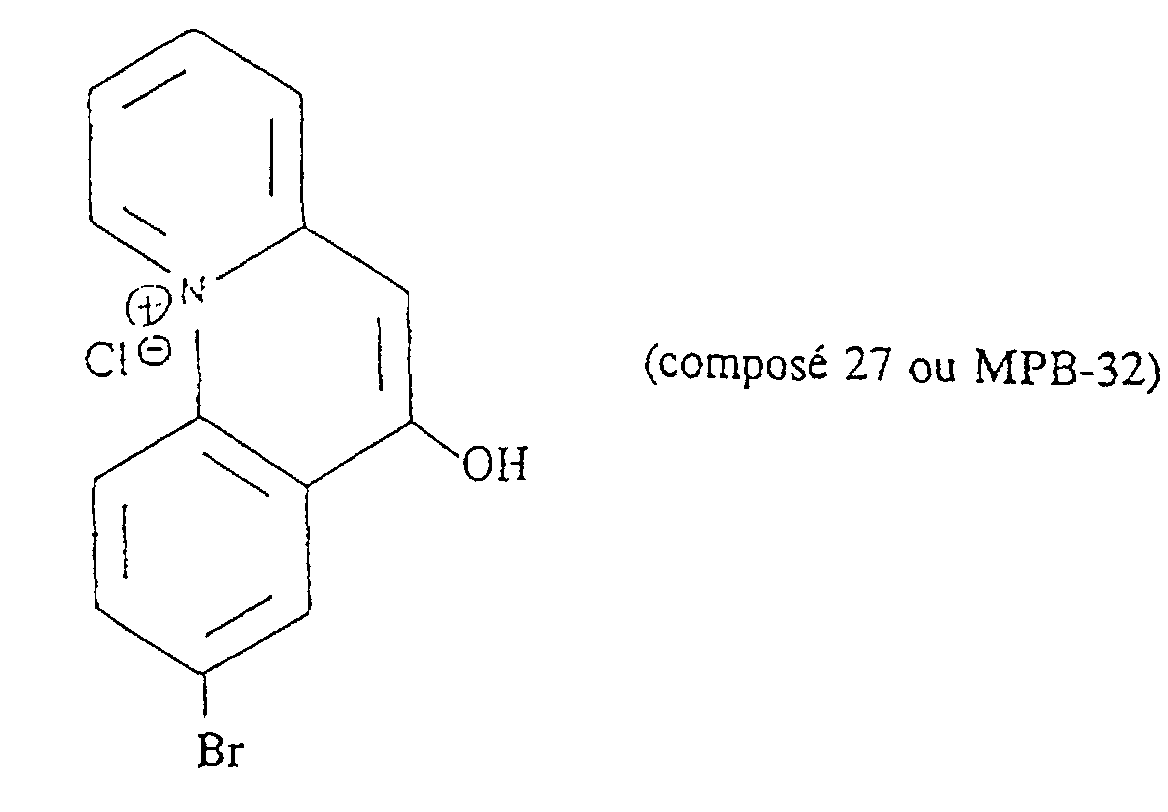

- Ra représente un atome d'hydrogène,
- R1 et R2 représentent un atome d'hydrogène, et il n'y a pas de double liaison entre les deux carbones portant R1 et R2,
- R5 représente un atome d'hydrogène,
- R7, R8, R9 et R10 représentent un atome d'hydrogène, ou l'un de R7, R8, R9 ou R10 représente un atome d'halogène, notamment un atome de chlore, de brome ou de fluor,
- Y représente -NH2,
- X représente un atome d'halogène sous forme anionique, notamment un atome de brome Br-, ou de chlore Cl-, ou un groupe d'atomes sous forme anionique, notamment un perchlorate ClO4 -.

- composé G : R7 = Cl, R8 = R9 = R10 = H,
- composé H : R7 = R8 = R9 = R10 = H,
- composé 1 : R8 = Cl, R7 = R9 = R10 = H,
- composé J : R9 = Cl, R7 = R8 = R10 = H,
- composé K : R10 = Cl, R7 = R8 = R9 = H,
- composé L : R9 = Br, R7 = R8 = R10 = H.


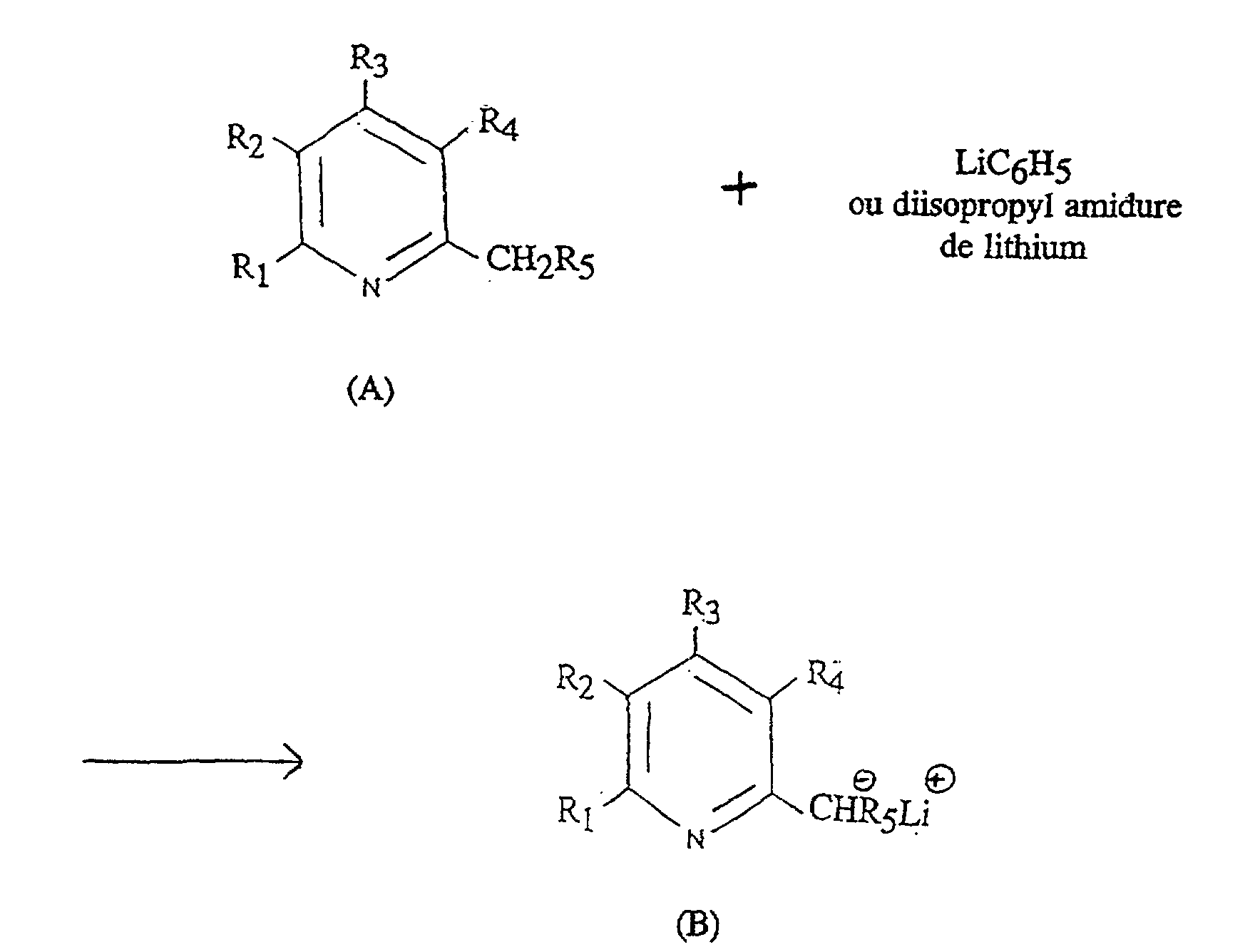
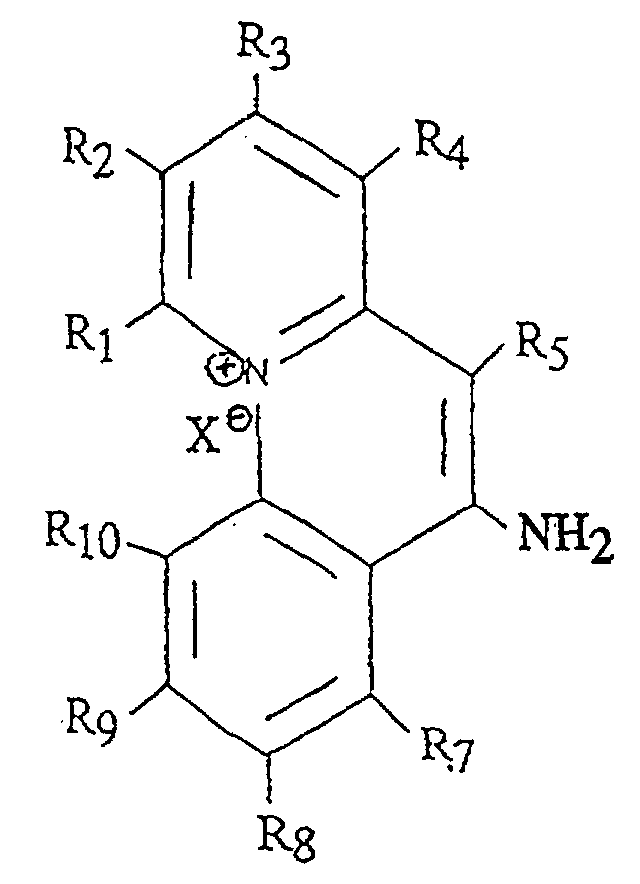
- traitement du dérivé de formule (A) dans laquelle R1, R2, R3, R4; et
R5, sont tels que définis dans la formule (III), par le phényllithium ou le
diisopropyl amidure de lithium, avantageusement dans l'éther ou le THF, ce qui
conduit à l'obtention de dérivés de formule (B) dans laquelle R1, R2, R3, R4, et
R5, sont tels que définis dans la formule (III), selon le schéma réactionnel
suivant:
- condensation du dérivé de formule (B) obtenu à l'étape précédente avec
le dérivé de formule (C) dans laquelle R7, R8, R9, R10, et X sont tels que
définis dans la formule (III), ce qui conduit à l'obtention de dérivés de formule
(B) dans laquelle R1, R2, R3, R4, R5, R7, R8, R9, R10, et X sont tels que
définis dans la formule (III), selon le schéma réactionnel suivant :

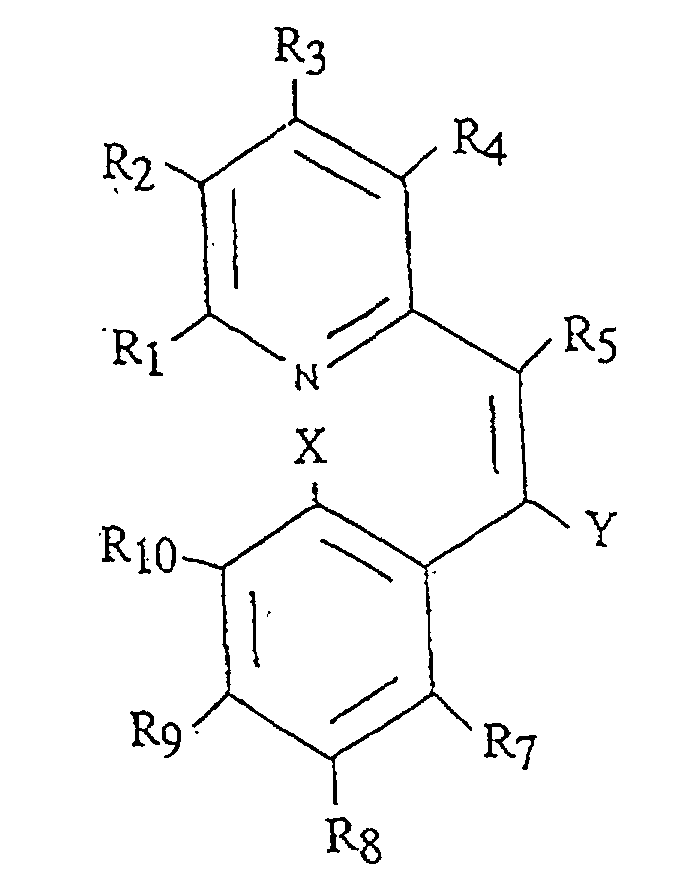
- traitement du composé de formule (D) par addition d'H2O, ce qui
conduit à l'obtention du dérivé de formule (II) suivante,
dans laquelle R1 à R5, R7 à R10, et X
sont tels que définis dans la formule (III), et Y représente -NH2,
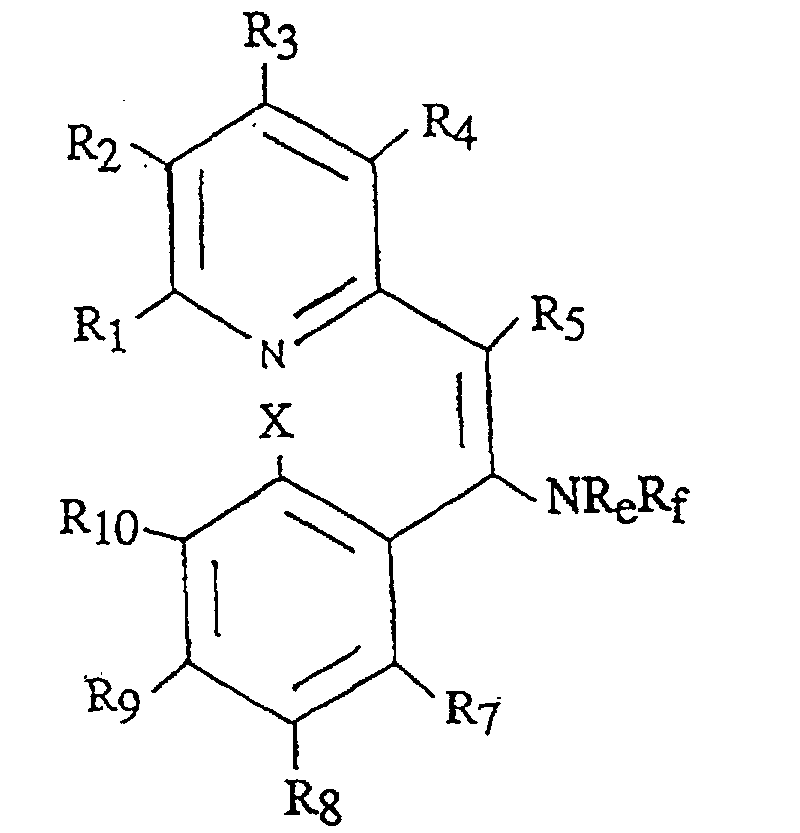
- le cas échéant, traitement du composé de formule (II) susmentionnée, par
un dérivé comportant les groupes Re et Rf tels que définis dans la formule (III)
ce dérivé étant susceptible de réagir avec l'atome d'azote lié au carbone en
position 6 du composé de formule (II) susmentionnée, notamment par un
halogénure de Re et/ou de Rf tout en ayant, si nécessaire, pris soin de protéger
au préalable celles des autres fonctions présentes sur le composé de formule (II)
susmentionnée et susceptibles de réagir avec le dérivé comportant les groupes
Re et Rf susmentionnés, ce qui conduit à l'obtention du composé de formule (II)
suivante dans laquelle R1 à R5, R7 à R10, et X sont tels que définis ci-dessus,
et Y représente un groupe -NReRf tel que défini dans la formule (III)
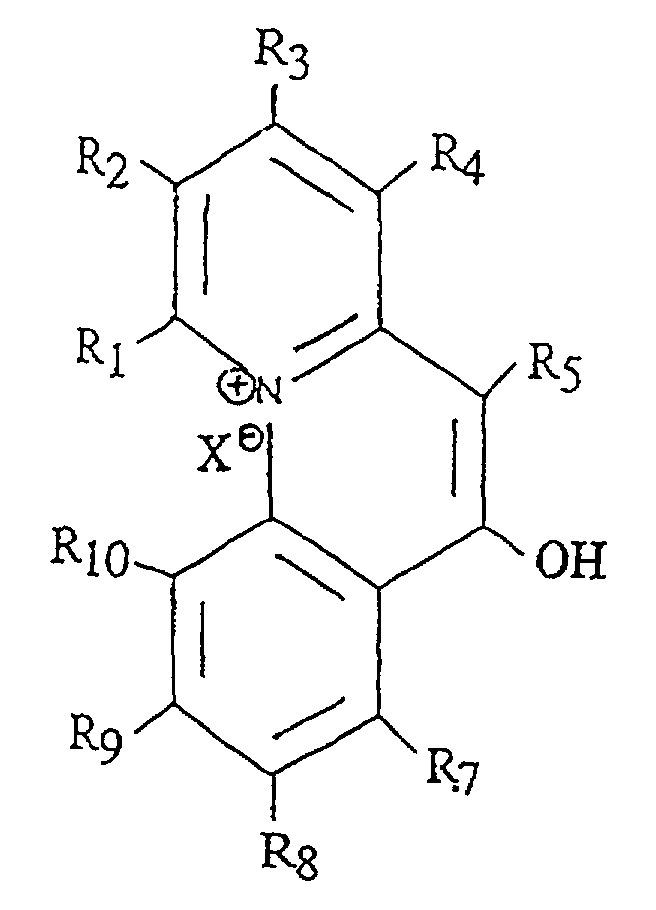
- le cas échéant, hydrolyse, notamment par action de l'acide sulfurique
(pH3) à 40°C, du composé de formule (II) susmentionnée dans laquelle Y
représente NH2, ce qui conduit à l'obtention du composé de formule (II)
suivante, correspondant à un dérivé de formule (II) décrite ci-dessus, dans
laquelle R1 à R5, R7 à R10, et X sont tels que définis dans la formule (III) et Y
représente un groupe -OH,

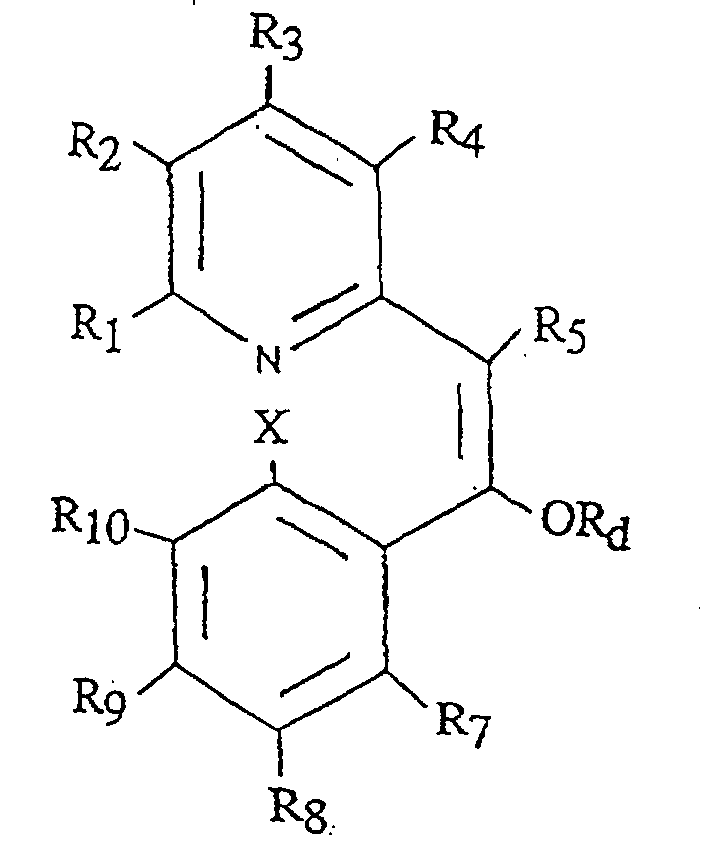
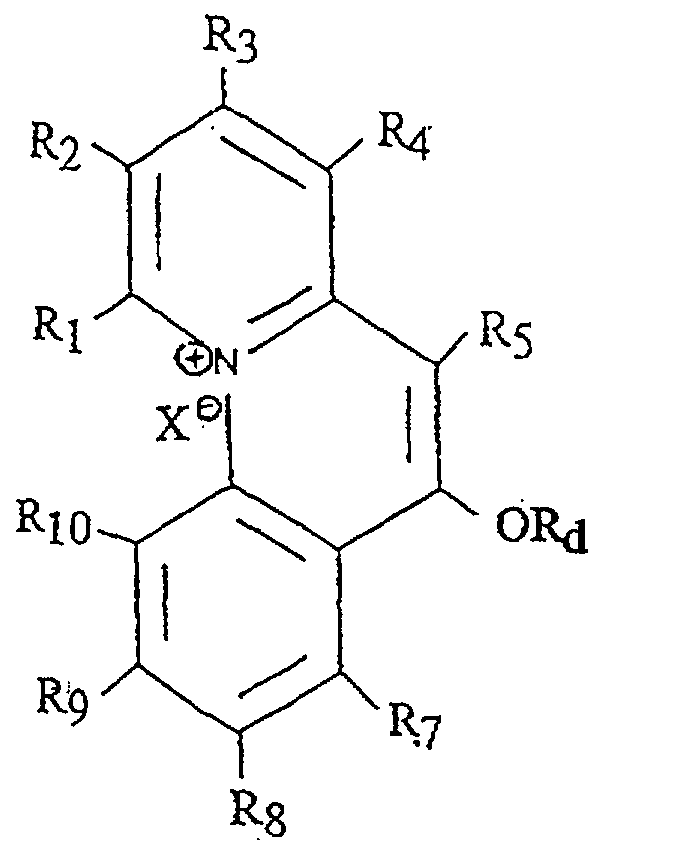
- le cas échéant, traitement du composé de formule (II) susmentionnée,
dans laquelle Y représente un groupe -OH, par un dérivé comportant le groupe
Rd, tel que défini dans la formule (III), ce dérivé étant susceptible de réagir avec
l'atome d'oxygène lié au carbone en position 7 du composé de formule (II)
susmentionnée, notamment par un halogénure de Rd, tout en ayant, si
nécessaire, pris soin de protéger au préalable celles des autres fonctions
présentes sur le composé de formule (II) susmentionnée et susceptibles de réagir
avec le dérivé comportant le groupe Rd susmentionné, ce qui conduit à
l'obtention du composé de formule (II) suivante dans laquelle R1 à R5, R7 à
R10, et X sont tels que définis ci-dessus, et Y représente un groupe -ORd tel
que défini dans la formule (III),
- le cas échéant, chauffage, avantageusement à 200°C, des composés de
formule (II) susmentionnée dans laquelle Y représente -NH2 ou -OH, ce qui
conduit respectivement aux composés de formules (III) suivantes, correspondant
aux composés de formule (III) décrite ci-dessus, dans laquelle R1 à R5, R7 à
R10, et X sont tels que définis dans la formule (III), et Y représente un groupe -NH2 ou -OH,
- le cas échéant, traitement du composé de formule (III) susmentionnée,
dans laquelle Y représente un groupe -NH2, par un dérivé comportant les
groupes Re et Rf tels que définis dans la formule (III), ce dérivé étant susceptible
de réagir avec l'atome d'azote lié au carbone en position 6 du composé de
formule (III) susmentionnée, notamment par un halogénure de Re et/ou de Rf,
tout en ayant, si nécessaire, pris soin de protéger au préalable celles des autres
fonctions présentes sur le composé de formule (III) susmentionnée et
susceptibles de réagir avec le dérivé comportant les groupes Re et Rf
susmentionnés, ce qui conduit à l'obtention du composé de formule (III)
suivante dans laquelle R1 à R5, R7 à R10, et X sont tels que définis ci-dessus,
et Y représente un groupe -NReRf tel que défini dans la formule (III),

- le cas échéant, traitement du composé de formule (III) susmentionnée,
dans laquelle Y représente un groupe -OH, par un dérivé comportant le groupe
Rd, tel que défini dans la formule (III), ce dérivé étant susceptible de réagir avec
l'atome d'oxygène lié au carbone en position 7 du composé de formule (III)
susmentionnée, notamment par un halogénure de Rd, tout en ayant, si
nécessaire, pris soin de protéger au préalable celles des autres fonctions
présentes sur le composé de formule (III) susmentionnée et susceptibles de
réagir avec le dérivé comportant le groupe Rd susmentionné, ce qui conduit à
l'obtention du composé de formule (III) suivante dans laquelle R1 à R5, R7 à
R10, et X sont tels que définis ci-dessus, et Y représente un groupe -ORd tel
que défini dans la formule (III),
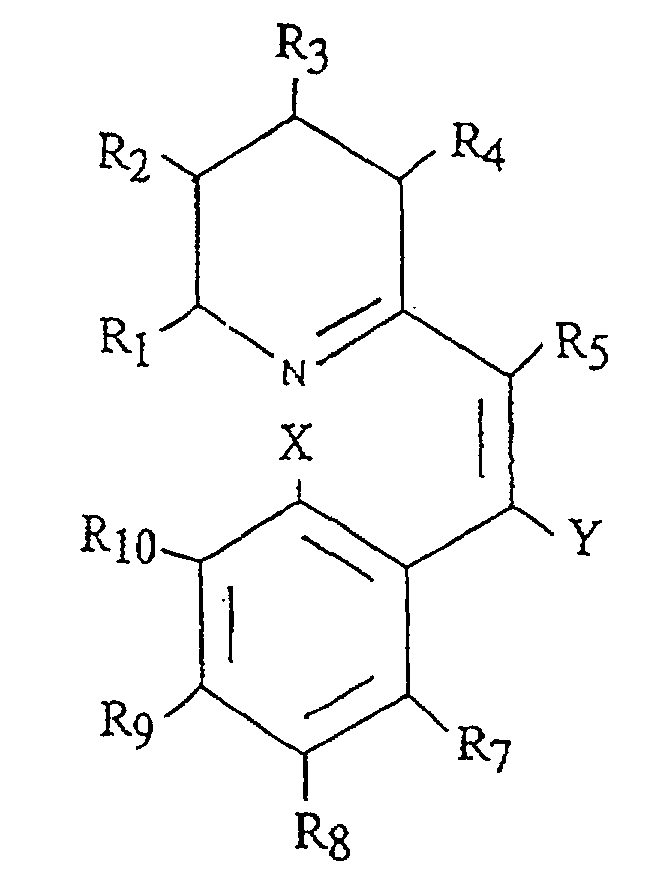
- le cas échéant, hydrogénation des composés de formules (II) ou (III)
susmentionnées, notamment par hydrogénation catalytique en présence d'oxyde
de platine à pression réduite, ce qui conduit à l'obtention des composés de
formules (II) ou (III) suivantes :

- Point de fusion (Pf) = 190 °C
- Analyse élémentaire : C13 H11 Cl N2 O
Calculé % C : 58,20 H : 4,10 N : 5,20 Trouvé % C : 58,00 H : 4,10 N : 5,30
- Point de fusion (Pf) = 112°C
- Analyse élémentaire : C13 H9 N O Cl2
Calculé % C : 58,67 H : 3,41 N : 5,26 Trouvé % C : 58,53 H : 3,63 N : 5,34 - Spectre de 1H RMN (CDCl3) (δ ppm, signal, N protons, attribution) : 8, doublet, H en 6 pyridine ; 7,6,5, multiplet, 6, H aromatiques. 5,55, s, 1 ( 80%) H vinylique ; 4,25, s s2 (20 %) CH2.
- Analyse élémentaire : C13 H10 N O Cl3 :
Calculé % C : 51,60 H : 3,33 N : 4,63 Trouvé % C : 51,75 H : 3,52 N : 4,58
- Point de fusion (Pf) = décomposition vers 280°C
- Analyse élémentaire : C13 H13 C1 N2 O (C13 H11 C1 N2, H2O)
Calculé % C : 62,78 H : 5,27 N: 11,26 Trouvé % C : 62,86 H : 5,03 N : 11,25 - Spectre de masse : m/e 194 (M+ - HCl - H2O).
- Spectre infrarouge (KBr) (ν cm-1, attribution) : 3460, 3360, NH2; 1660, 1640, 1600, C=N, C=C ; 760 benzène orthosubstitué.
- Spectre de 1H RMN (DMSOd6) (δ ppm, signal, n protons, attribution): 3,2 à 4, pic échangeable D2O (NH2 + H2O); 7,1 singulet, H en 5; 7,4 à 8,15, 2 massifs, 5H aromatiques; 9,00, 2H, aromatiques ; 9,8, doublet J=8 Hz, H en 1.
- Point de fusion (Pf) = 256°C (décomposition)
- Analyse élémentaire : C13 H10 Cl N O, H2O soit C13 H12 Cl N O
(M=231,5 + 18=249,5)
Calculé % C : 62,53 H : 4,85 N : 5,61 Trouvé % C : 62,40 H : 5,00 N : 5,80 - Spectre de masse : m/e 195 (M+ - HCl - H2O), 167 (M+ - HCl - H2O - CO).
- Spectre infrarouge (KBr) (ν cm-1, attribution) : 3250, OH; 1640, C=N, 770, benzène orthosubstitué.
- Spectre de 1H RMN (DMSOd6) (δ ppm, signal, n protons, attribution): 6,60, pic large échangeable D2O, HO; 7,75, singulet, H en 5 ; 7,9 à 8,6, multiplet, 6H, aromatiques; 9,15, doublet, J = 6,5 Hz, 1H ; 10, doublet, J = 6Hz, H en 1.
- Pf = 196 °C (décomposition)
- Analyse élémentaire : C13 H10 N O Cl2
Calculé % C : 56,75 H : 3,66 N : 4,63 Trouvé % C : 56,25 H : 3,31 N : 4,78
- Analyse élémentaire : C17 H13 Cl N2 O4
Calculé % C : 59,22 H : 3,80 N : 8,13 Trouvé % C : 59,39 H : 3,95 N : 8,26 - Spectre infrarouge (Kbr) (ν cm-1, attribution) : 3400, 3280, NH2; 1650, 1600, 1000, bande large, ClO4.
- Spectre de 1H RMN (DMSOd6) (δ ppm, signal, n protons, attribution) : 7,0, singulet, 1H en 5 ; 7,5 à 8,7, multiplet, 10H aromatiques ; 9,0 singulet, 2H, échangeables D2O.
- Pf = > à 280°C
- Analyse élémentaire : C15 H13 Cl N2 O
Calculé % C : 66,05 H : 4,80 N : 10,27 Trouvé % C : 65,85 H : 5,01 N : 10,31 - Spectre infrarouge (KBr) (ν cm-1, attribution) : 3450, NH; 1700, C = O.
- Pf = 240°C
- Analyse élémentaire : C13 H15 Cl N2 O4
Calculé % C : 52,27 H : 5,06 N : 9,38 Trouvé % C : 52,30 H : 5,16 N : 9,46 - Spectre infrarouge (KBr) (ν cm-1, attribution) : 3460,3360,NH2; 1650, 1600, 1100, bande large, CL04.
- Spectre de 1H RMN (DMSOd6) (δ ppm, signal, n protons, attribution) : 2,1, multiplet, CH2 en 2 et 3; 3,20, triplet, CH2 en 4; 4,45, triplet, CH2 en 1,; 6,60, singulet, H en 5; 7,6 à 8,4, multiplet, 4H, aromatiques; 8,6 singulet, 2H, échangeables D2O.
- Pf = 228°C
- Analyse élémentaire : C19 H15 N3 Cl2
Calculé % C : 64,06 H : 4,24 N : 11,79 Trouvé % C : 64,21 H : 4,37 N : 11,62 - Spectre infrarouge (KBr) (ν cm-1, attribution) :
- 3428, 3255, 3134 cm-1, NH; NH2
- 3134 cm-1, C=C-H
- 2932, 2843 cm-1, CH2
- Spectre 1 H RMN (CDCl3) ( δ ppm, signal, n protons, attibution) :
- 8.40 singulet échangeable par D2O, 3 H, NH et NH2
- 7.20, multiplet, 7 H, protons aromatiques
- 5.00, singulet, 1 H, H vinylique
- 3.70, triplet, J=6Hz, 2 H, CH2
- 3.00, triplet, J=6Hz, 2 H, CH2
- Pf = 228°C.
- Analyse élémentaire : C19 H15 N3 Cl2, 1/2 H2O
Calculé % C : 62,48 H : 4,41 N : 11,50 Trouvé % C : 62,29 H : 4,47 N : 11,43 - Spectre 1 H RMN (CF3 COOD) ( δ ppm, signal, n protons, attibution) :
- 8.10 - 6.20, massif, 11 H, protons aromatiques + NH + NH2
- 3.90, triplet mal résolu, 2 H, CH2 en 6
- 3.00, triplet mal résolu, 2 H, CH2 en 7
- Spectres infrarouge (KBr) (ν cm-1, attribution) présentent tous les
mêmes absorptions :
- 3458, 3371 cm-1, NH; NH2
- 3073 cm-1, C=C-H
- 1638 cm-1, C=N, C=C
- Pf supérieur à 260°C.
- Analyse élémentaire : C19 H16 N3 Cl
Calculé % C : 70,91 H : 5,01 N : 13,06 Trouvé % C : 70,33 H : 5,06 N : 12,71
- Pf supérieur à 260°C.
- Analyse élémentaire : C19 H15 N3 Cl2, H2O
Calculé % C : 60,97 H : 4,38 N : 11,22 Trouvé % C : 61,32 H : 5,03 N : 10,52
- Pf supérieur à 260°C.
- Analyse élémentaire : C19 H15 N3 Cl2
Calculé % C : 64,06 H : 4,24 N : 11,79 Trouvé % C : 63,89 H : 4,48 N : 11,58
- Pf supérieur à 260°C.
- Analyse élémentaire : C19H15 N3 Cl2, H2O
Calculé % C : 60,97 H : 4,58 N : 11,22 Trouvé % C : 60,56 H : 4,66 N : 10,84
- Pf supérieur à 260°C.
- Analyse élémentaire : C19 H15 N3 Cl, Br, 2H2O
Calculé % C : 52,25 H : 4,38 N : 9,62 Trouvé % C : 52,28 H : 4,36 N : 9,66
- ovocytes injectés avec l'ARNc-CFTR (notés CFTR sur la figure 1 B);
- les mêmes ovocytes en présence d'activateurs de la voie AMPc (cpt-AMPc, forskoline);
- ovocytes injectés avec de l'eau (notés "eau" sur la figure 1 B) aux lieu et place de l'ARNc-CFTR;
- les mêmes ovocytes mis en présence d'activateurs, ci-dessus mentionnés, de la voie AMPc.
- cellules CHO non transfectées avec la protéine CFTR (notées, CHO-CFTR(-) sur la figure 2 B) en présence ou non d'activateurs, ci-dessus mentionnés;
- cellules CHO transfectées avec le gène CFTR (notées, CHO-CFTR(+) sur la figure 2 B) en présence ou non des activateurs, ci-dessus mentionnés.
- cellules HT29 en l'absence d'activateur (notées basal sur la figure 3);
- cellules en présence d'activateurs (notées AMPc sur la figure 3), ci-dessus mentionnés.
- 9 composés avec OH en position 6 : 45 % d'activation du canal CFTR
- 6 composés avec NH2 en position 6 : 13 % d'activation du canal CFTR.
- Figure 1 : effet du cpt-AMPc sur l'efflux d'iodure radioactif, dans
l'ovocyte de Xénope ;
- figure 1 A : courbes de l'efflux de 125I (% en ordonnée) en fonction de temps (mn en abscisse) ; la courbe passant par des points représentés par des carrés noirs correspond à l'efflux de 125I mesuré en fonction de temps dans des ovocytes injectés avec l'ARNc-CFTR (courbe désignée CFTR basal) ; la courbe passant par des points représentés par des carrés blancs correspond à l'efflux de 125I mesuré en fonction de temps dans des ovocytes injectés avec l'ARNc-CFTR et activés par cpt-AMPc (courbe désignée CFTR+AMPc) ;
- figure 1 B : histogrammes de l'efflux de 125I dans les ovocytes non activés par cpt-AMPc (représentés en noir) et dans les ovocytes activés par cpt-AMPc (représentés en blanc) ; à gauche sont représentés les ovocytes activés ou non par cpt-AMPc et injectées avec de l'eau (notés "eau") ; à droite sont représentés les ovocytes activés ou non par cpt-AMPc et injectés avec l'ARNc-CFTR (notés "CFTR") ; n représente le nombre d'expériences.
- Figure 2 : effet du cpt-AMPc sur l'efflux d'iodure radioactif dans les
cellules CHO ;
- figure 2 A : courbes de l'efflux de 125I (% en ordonnée) en fonction de temps (mn en abscisse) ; la courbe passant par des points représentés par des triangles noirs correspond à l'efflux de 125I mesuré en fonction de temps dans des cellules CHO non activées par cpt-AMPc (courbe désignée basal) ; la courbe passant par des points représentés par des triangles blancs correspond à l'efflux de 125I mesuré en fonction de temps dans des cellules CHO activées par cpt-AMPc (courbe désignée AMPc) ;
- figure 2 B : histogrammes de l'efflux de 125I dans les cellules CHO non activées par cpt-AMPc (représentées en blanc) ; à gauche sont représentées les cellules CHO activées ou non par cpt-AMPc et non transfectées avec le gène CFTR (notées CHO (CFTR-)) ; à droite sont représentées les cellules CHO activées ou non par cpt-AMPc et transfectées avec le gène CFTR (notées CHO (CFTR+)) ; n représente le nombre d'expériences.
- Figure 3 : effet du cpt-AMPc sur l'efflux d'iodure radioactif dans les
cellules HT29 ;
- figure 3 A : courbes de l'efflux de 125I (% en ordonnée) en fonction de temps (mn en abscisse) ; la courbe passant par des points représentés par des carrés noirs correspond à l'efflux de 125I mesuré en fonction de temps dans des cellules HT29 non activées par cpt-AMPc (courbe désignée basal) ; la courbe passant par des points représentés par des carrés blancs correspond à l'efflux de 125I mesuré en fonction de temps dans les cellules HT29 activées par cpt-AMPc (courbe désignée AMPc) ;
- figure 3 B : histogrammes de l'efflux de 125I dans les cellules HT29 non activées par cpt-AMPc (en noir), et dans les cellules HT29 activées par cpt-AMPc (en blanc).
- Figure 4 : effet du dérivé MPB-07 (500µM) sur l'efflux de 125I (% en ordonnée) en fonction de temps (mn en abscisse) dans la cellule CHO ; la courbe passant par des points représentés par des cercles blancs correspond à la mesure de l'efflux de 125I en fonction de temps dans les cellules CHO activées par MPB-07 et transfectées avec le gène CFTR (courbe désignée MPB-07 (CFTR+); la courbe passant par des points représentés par des cercles noirs correspond à la mesure de l'efflux 125I en fonction de temps dans les cellules CHO activées par MPB-07 mais pas transfectées avec le gène CFTR (courbe désignée MPB-07 (CFTR-)).
- Figure 5 : effet de la "forskoline" (500 µM) sur l'efflux de 125I (% en ordonnée) en fonction de temps (mn en abscisse) dans la cellule CHO ; la courbe passant par des points représentés par des triangles blancs correspond à la mesure de l'efflux de 125I en fonction de temps dans les cellules CHO activées par la forskoline et transfectées avec le gène CFTR (courbe désignée forskoline CHO (CFTR+)) ; la courbe passant par des points représentés par des triangles noirs correspond à la mesure de l'efflux 125I en fonction de temps dans les cellules CHO non activées par la forskoline et transfectées avec le gène CFTR (courbe désignée basal CHO (CFTR+)).
- Figure 6 : histogrammes de l'efflux de 125I dans les cellules CHO non
transfectées avec le gène CFTR (désignées CHO (CFTR-)) et :
- non activées (basal)
- activées par la forskoline (forskoline)
- activées par A23187 (A23187)
- activées par A23187 et la forskoline (A23187+fsk)
- activées par MPB-07 (MPB-07)
n représente le nombre d'expériences.
- Figure 7 : histogrammes de l'efflux de 125I dans les cellules CHO
transfectées avec le gène CFTR (désignées CHO (CFTR+)) et :
- non activées (basal)
- activées par la forskoline (forskoline)
- activées par MPB-07
- activées par A23187 (A23187)
n représente le nombre d'expériences.
- Figure 8 : effets comparés du cpt-AMPc (500 µM) et du MPB-07 (500 µ
M) sur l'efflux de 125I (% en ordonnée) en fonction du temps (mn en abscisse)
dans les cellules HT29 ;
- figure 8 A : la courbe passant par des points représentés par des carrés noirs correspond à la mesure de l'efflux de 125I en fonction du temps dans les cellules HT29 non activées (courbe désignée basal) ; la courbe passant par des points représentés par des carrés blancs correspond à la mesure de l'efflux de 125I en fonction du temps dans les cellules HT29 activées par cpt-AMPc (courbe désignée AMPc) ;
- figure 8 B : la courbe passant par des points représentés par des carrés blancs correspond à la mesure de 125I en fonction du temps dans les cellules HT29 non activées (courbe désignée basal) ; la courbe passant par des points représentés par des carrés noirs correspond à la mesure de l'efflux de 125I en fonction du temps dans les cellules HT29 activées par MPB-07 (courbe désignée MPB-07).
- Figure 9 : histogramme de l'efflux de 125I dans les cellules HT29 non activées (basal), activées par cpt-AMPc (AMPc) et activées par MPB-07 (MPB-07) ; n représente le nombre d'expériences.
- Figure 10 : effets comparés du cpt-AMPc (500µM) sur l'efflux de 125I
(% en ordonnée) en fonction du temps (non en abscisse) dans les ovocytes de
Xénope :
- figure 10 A : la courbe passant par des points représentés par des cercles blancs correspond à la mesure de l'efflux de 125I en fonction du temps dans les ovocytes injectés avec de l'eau (courbe désignée eau basal) ; la courbe passant par des points représentés par des carrés noirs correspond à la mesure de l'efflux de 125I en fonction du temps dans les ovocytes injectés avec l'ARNc-CFTR (courbe désignée CFTR basal) ; la courbe passant par des points représentés par des carrés blancs correspond à la mesure de l'efflux de 125I en fonction du temps dans les ovocytes injectés avec l'ARNc-CFTR et activés avec cpt-AMPc (courbe désignée CFTR + AMPc) ;
- figure 10 B : la courbe passant par des points représentés par des carrés blancs correspond à la mesure de l'efflux de 125I en fonction du temps dans les ovocytes injectés avec l'ARNc-CFTR et activés par MPB-07 (courbe désignée MPB-07).
- Figure 11 : histogrammes de l'efflux de 125I dans les ovocytes de Xénope non activés (basal), ou activés par cpt-AMPc (AMPc), ou activés par MPB-07 (MPB-07), ces ovocytes étant soit injectés avec de l'eau (notés "eau" sur la gauche), soit injectés avec de l'ARNc-CFTR (notés "CFTR" sur la droite); n représente le nombre d'expériences.
- Figure 12 : histogrammes représentant les taux en AMPc (mesurés en
nmole par mg de protéine) dans les cellules CHO transfectées avec le gène
CFTR et non activées (basal), ou activées par la forskoline (forskoline), ou
activées par le rolipran (rolipran), ou activées par MPB-07 (MPB-07).
Claims (16)
- Utilisation de dérivés des benzo[c] quinoliziniums de formule générale (III) suivante :dans laquelle :
 dans laquelle Ra est tel que défini ci-dessus,l'hétérocycle A est aromatique ou non, étant entendu que dans ce dernier cas l'atome d'azote de cet hétérocycle est lié par une double liaison au carbone en position 4a,R1, R2, R3, R4, R5, R7, R8, R9 et R10, représentent, indépendamment les uns des autres:un atome d'hydrogène, ou de brome, ou de fluor, ouun atome d'halogène, notamment un atome de chlore, ouun groupe alkyle, alkoxy, carbonyle, ou oxycarbonyle, linéaire ou ramifié, de 1 à 10 atomes de carbone, ces groupes étant le cas échéant substitués, notamment par un halogène, et/ou par un hydroxyle, et/ou par une amine (primaire, secondaire ou tertiaire), et/ou par un cycle aromatique et/ou aliphatique, de 5 à 10 atomes de carbone dans le cycle, ces cycles étant eux-mêmes, le cas échéant, substitués notamment par un halogène, et/ou par un hydroxyle, et/ou par une amine (primaire, secondaire ou tertiaire), et/ou par un groupe alkyle, alkoxy, carbonyle, ou oxycarbonyle, ces groupes étant tels que définis ci-dessus, ouun cycle aromatique ou aliphatique, de 5 à 10 atomes de carbone dans le cycle, ce cycle étant lui-même, le cas échéant, substitué notamment par un halogène, et/ou par un hydroxyle, et/ou par une amine (primaire, secondaire ou tertiaire), et/ou par un groupe alkyle, alkoxy, carbonyle, ou oxycarbonyle, ces groupes étant tels que définis ci-dessus, ouun groupe -ORa, Ra représentant un atome d'hydrogène, ou un groupe alkyle, carbonyle, ou oxycarbonyle, linéaire ou ramifié, ces groupes étant tels que définis ci-dessus, ou un cycle aromatique ou aliphatique, ces cycles étant tels que définis ci-dessus, ouun groupe -NRbRc, Rb et Rc, indépendamment l'un de l'autre, représentant un groupe alkyle, alkoxy, carbonyle, ou oxycarbonyle, linéaire ou ramifié, ces groupes étant tels que définis ci-dessus, ou un cycle aromatique ou aliphatique, ces cycles étant tels que définis ci-dessus, oulorsque R1 et R2, ou R3 et R4, et/ou R4 et R5, et/ou R7 et R8, et/ou R8 et R9, et/ou R9 et R10, ne représentent pas les différents atomes ou groupes ou cycles mentionnés ci-dessus, alors R1 en association avec R2, ou R2 en association avec R3, et/ou R3 en association avec R4, et/ou R4 en association avec R5, et/ou R7 en association avec R8, et/ou R8 en association avec R9, et/ou R9 en association avec R10, forment respectivement avec C1 et C2, ou avec C2 et C3, ou avec C3 et C4, ou avec C4, C4a et C5, ou avec C7 et C8, ou avec C8 et C9, ou avec C9 et C10, un cycle aromatique ou aliphatique de 5 à 10 atomes de carbone, ce cycle étant le cas échéant substitué, notamment par un halogène, et/ou par un groupe alkyle, alkoxy, carbonyle, ou oxycarbonyle, et/ou par un cycle aromatique ou aliphatique, ces groupes ou cycles étant tels que définis ci-dessus, oulorsque R3 et R4 ne représentent pas les différents atomes ou groupes ou cycles mentionnés ci-dessus, alors R3 en association avec R4 forment un groupe indole de formule
 Y représente :un groupe -ORd, Rd représentant un atome d'hydrogène, ou un groupe alkyle, carbonyle, ou oxycarbonyle, linéaire ou ramifié, ces groupes étant tels que définis ci-dessus, ou un cycle aromatique ou aliphatique, ces cycles étant tels que définis ci-dessus, ouun groupe -NReRf Re et Rf indépendamment l'un de l'autre, représentant un groupe alkyle, alkoxy, carbonyle, ou oxycarbonyle, linéaire ou ramifié, ces groupes étant tels que définis ci-dessus, ou un cycle aromatique ou aliphatique, ces cycles étant tels que définis ci-dessus,étant entendu que lorsque Rd, ou l'un au moins de Re ou de Rf, ne représentent pas l'un des différents atomes ou groupes ou cycles mentionnés ci-dessus, alors Rd, ou l'un au moins de Re ou de Rf, en association avec R5, ou en association avec R7, forment respectivement avec C5 et C6, ou avec C6, C6a et C7, un hétérocycle aromatique ou aliphatique de 5 à 10 atomes de carbone, le cas échéant substitué, notamment par un halogène, et/ou par un groupe alkyle, alkoxy, carbonyle, ou oxycarbonyle, et/ou par un cycle aromatique ou aliphatique, ces groupes ou cycles étant tels que définis ci-dessus,X représente un atome sous forme anionique, tel qu'un atome d'halogène, notamment un atome de brome ou de chlore, ou un groupe d'atomes sous forme anionique, tel qu'un perchlorate, et l'azote de l'hétérocycle A de la formule (I) est sous forme quaternaire et est lié d'une part par liaison covalente au carbone en position 11, et, d'autre part, par liaison ionique à X défini ci-dessus,pour la préparation de médicaments destinés au traitement de pathologies, notamment pulmonaires, digestives ou cardiaques, liées à des troubles des flux ioniques transmembranaires, notamment de chlore et, le cas échéant, de bicarbonate, dans l'organisme (humain ou animal), notamment pour la préparation de médicaments destinés au traitement de la mucoviscidose, ou à la prévention du rejet de drogues cytotoxiques (notamment antitumorales), ou au traitement des obstructions des voies bronchiques ou des voies digestives (notamment pancréatique ou intestinale)étant entendu que lorsque R1 et R10 ne représentent pas l'un des différents atomes ou groupes ou cycles mentionnés ci-dessus, alors R1 en association avec R10 forment avec C1, l'azote de l'hétérocycle A de la formule (I), C11, et C10, un hétérocycle aromatique ou aliphatique de 5 à 10 atomes de carbone, le cas échéant substitué, notamment par un halogène, et/ou par un groupe alkyle, alkoxy, carbonyle, ou oxycarbonyle, et/ou par un cycle aromatique ou aliphatique, ces groupes ou cycles étant tels que définis ci-dessus,
 - Utilisation selon la revendication 1 de dérivés de formule générale (IIIa) suivante :dans laquelle :
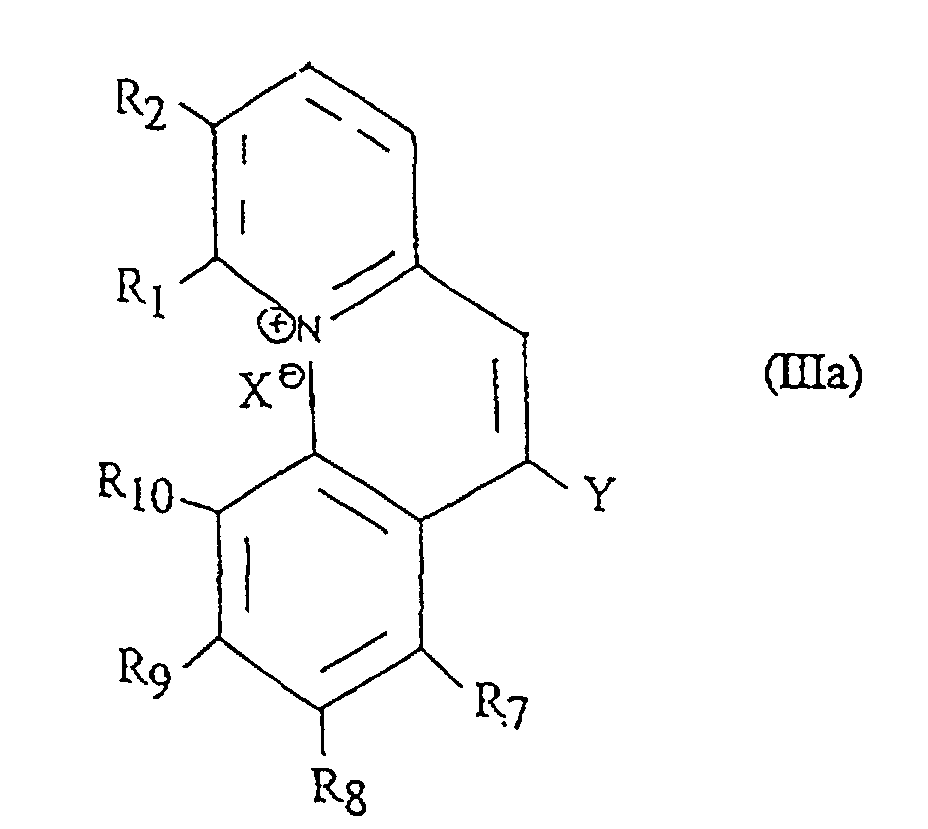 R1 et R2 représentent un atome d'hydrogène, ou forment en association avec C1 et C2 un cycle aromatique à 6 atomes de carbone,Y représente un groupe -OH ou -NH2, ou -NHCOCH3,R7, R8, R9 et R10 représentent un atome d'hydrogène, ou l'un de R7, R8, R9 ou R10, représente un atome d'halogène, notamment un atome de chlore, de brome ou de fluor,X représente un atome d'halogène sous forme anionique, notamment un atome de brome Br-, ou de chlore Cl-, ou un groupe d'atomes sous forme anionique, notamment un perchlorate ClO4 -.
 - Utilisation selon la revendication 1 ou la revendication 2, de composés de formule (IIIa) dans laquelle :R1 et R2 représentent un atome d'hydrogène,Y représente un groupe -OH,X représente un atome d'halogène sous forme anionique, notamment un atome de brome Br-, ou de chlore Cl-, ou un groupe d'atomes sous forme anionique, notamment un perchlorate ClO4 -,R7, R8, R9 et R10 représentent indépendamment les uns des autres un atome d'hydrogène ou un atome d'halogène, notamment un atome de chlore, de brome ou de fluor.
- Utilisation selon l'une des revendications 1 à 3, de dérivés des benzo[c]quinoliziniums de formule générale (IIIa) choisis parmi les suivants :
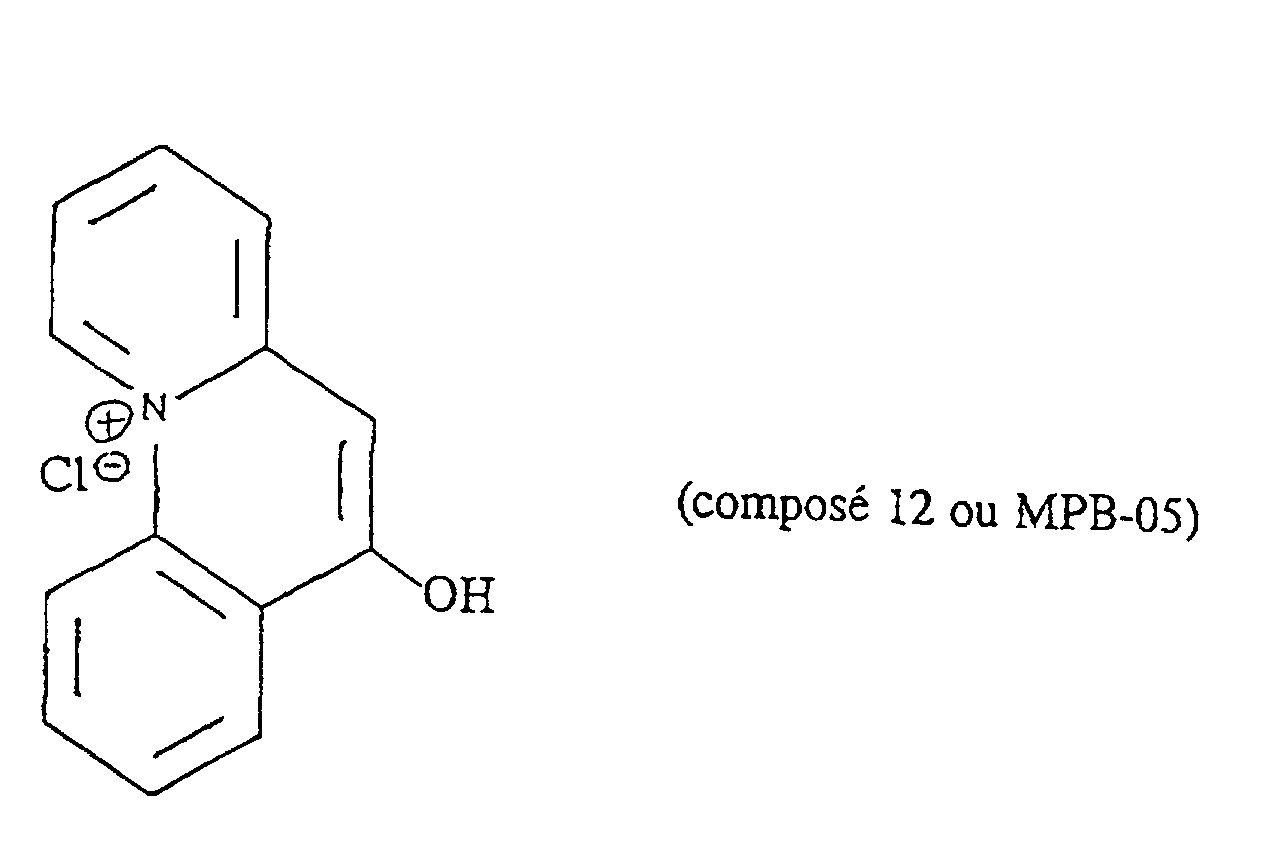

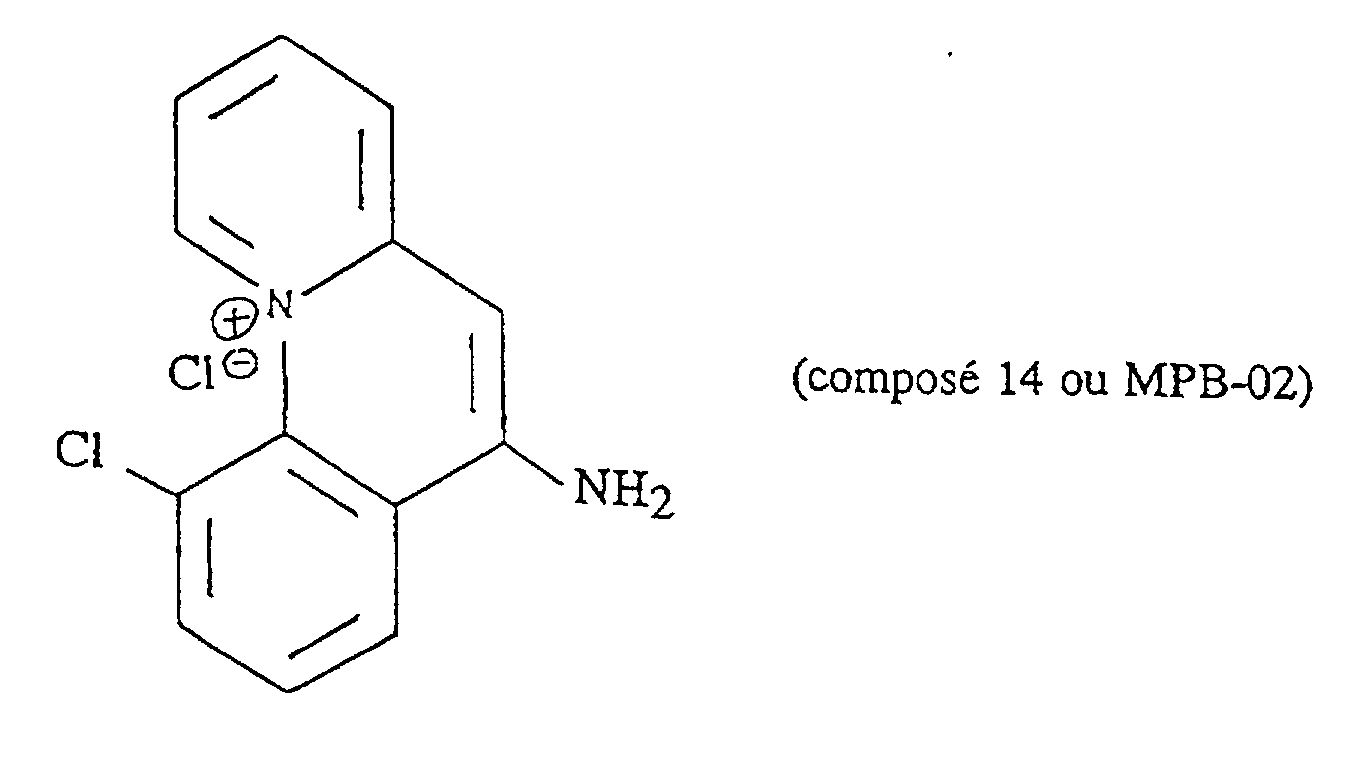


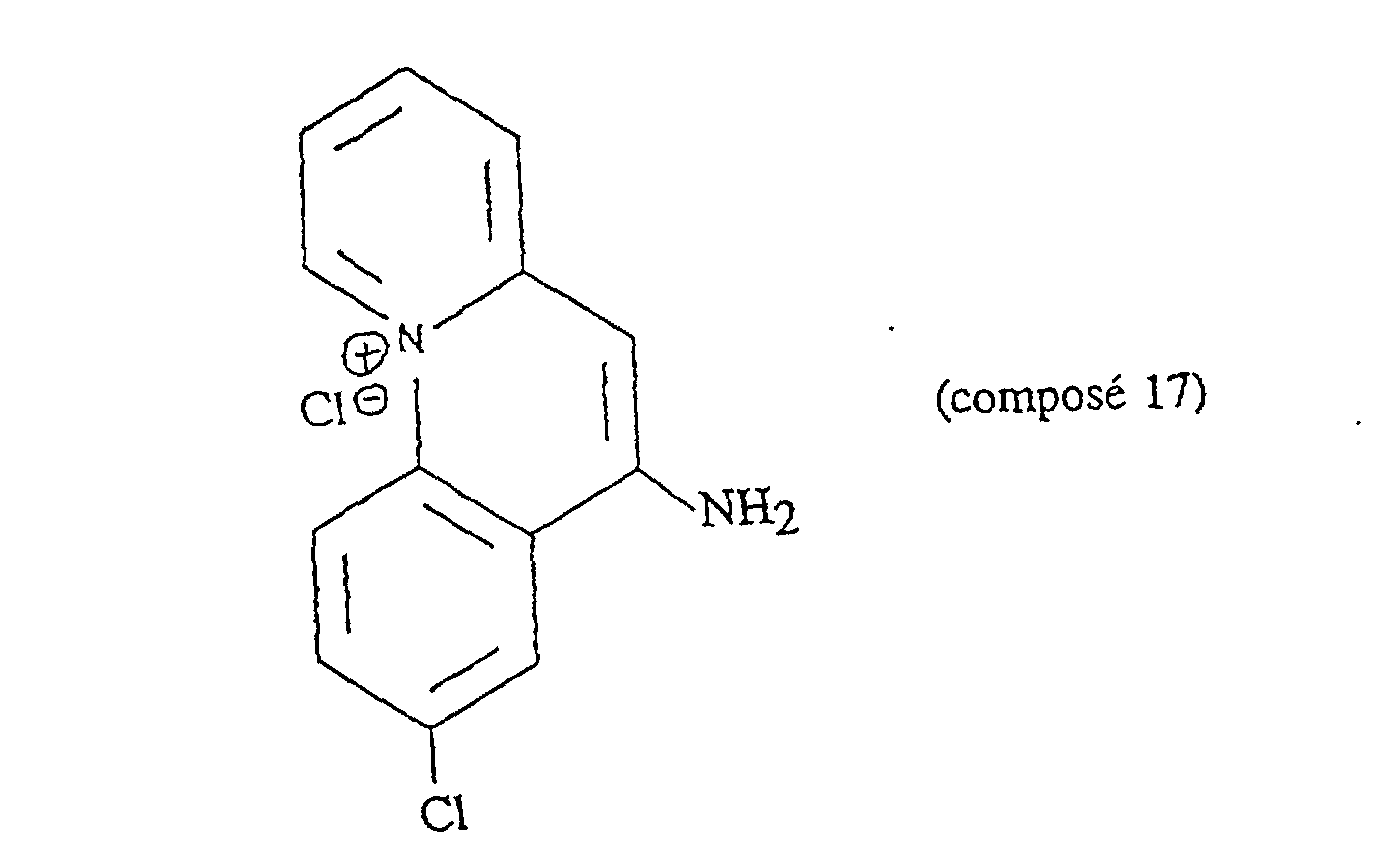
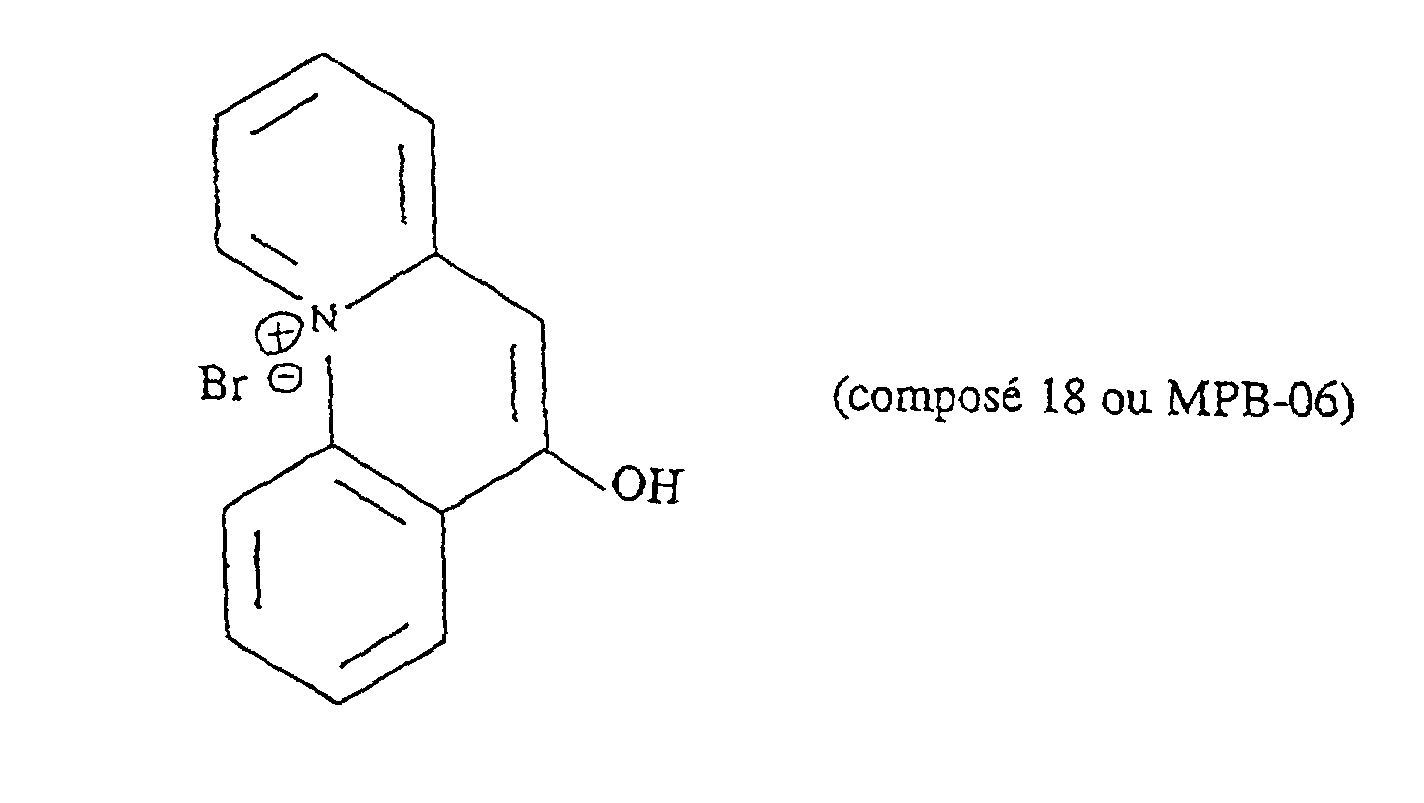


- Utilisation selon la revendication 1, de dérivés de formule générale (IIIb) suivante :dans laquelle :
 Ra représente un atome d'hydrogène,R1 et R2 représentent un atome d'hydrogène, et il n'y a pas de double liaison entre les deux carbones portant R1 et R2,R5 représente un atome d'hydrogène,R7, R8, R9 et R10 représentent un atome d'hydrogène, ou l'un de R7, R8, R9 ou R10 représente un atome d'halogène, notamment un atome de chlore, de brome ou de fluor,Y représente -NH2,X représente un atome d'halogène sous forme anionique, notamment un atome de brome Br-, ou de chlore Cl-, ou un groupe d'atomes sous forme anionique, notamment un perchlorate ClO4 -.
 - Utilisation selon la revendication 1, de dérivés de formule générale (IIIb) choisis parmi les suivants :
 composé G : R7 = Cl, R8 = R9 = R10 = H,composé H : R7 = R8 = R9 = R10 = H,composé I : R8 = Cl, R7 = R9 = R10 = H,composé J : R9 = Cl, R7 = R8 = R10 = H,composé K : R10 = Cl, R7 = R8 = R9 = H,composé L : R9 = Br, R7 = R8 = R10 = H.
 - Compositions pharmaceutiques caractérisées en ce qu'elles comprennent, à titre de principe(s) actif(s), au moins un des dérivés de formule générale (III) telle que définis dans l'une des revendications 1 à 6, en association avec un véhicule physiologiquement acceptable.
- Compositions pharmaceutiques selon la revendication 7, caractérisées en ce qu'elles se présentent sous une forme administrable par voie orale, notamment sous forme de comprimés, ou de gélules, ou sous une forme administrable par voie parentérale, notamment sous forme de préparations injectables par voie intraveineuse, intramusculaire, ou sous-cutanée, ou encore par voie aérienne, notamment par voie pulmonaire sous forme d'aérosols.
- Compositions pharmaceutiques selon la revendication 7 ou la revendication 8, caractérisées en ce que les quantités de principe(s) actif(s) sont telles que la posologie journalière en principe(s) actif(s) est d'environ 0,1 mg/kg à 5 mg/kg, notamment d'environ 3 mg/kg, en une ou plusieurs prises.
- Dérivés des benzo[c]quinoliziniums de formule (III) suivante :dans laquelle R1, R2, R3, R4, R5, R7, R8, R9, R10, X et Y sont tels que définis dans la revendication 1,

les composés de formule suivante étant exclus :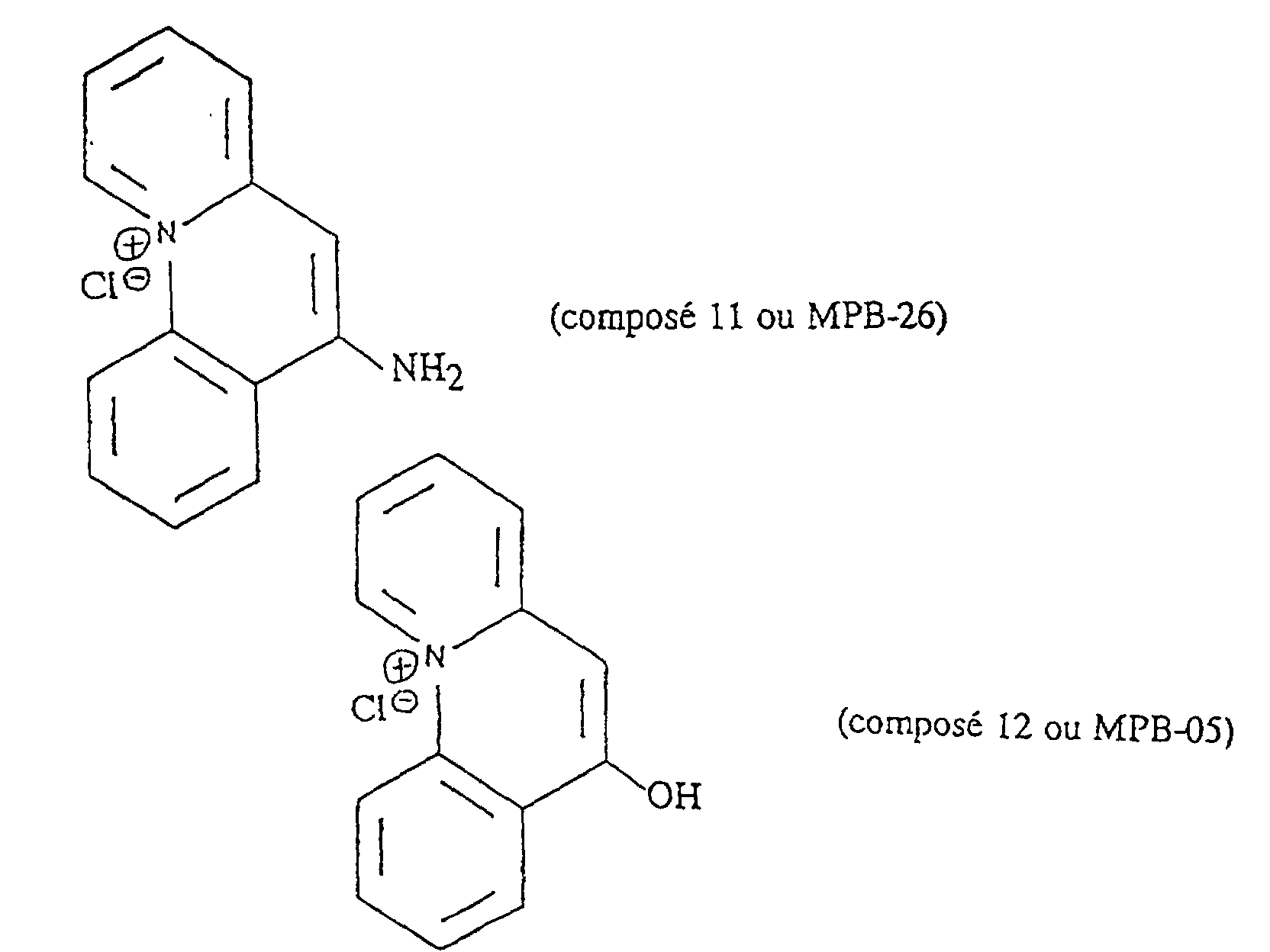

- Dérivés selon la revendication 10, de formule générale (IIIa) suivante :dans laquelle :
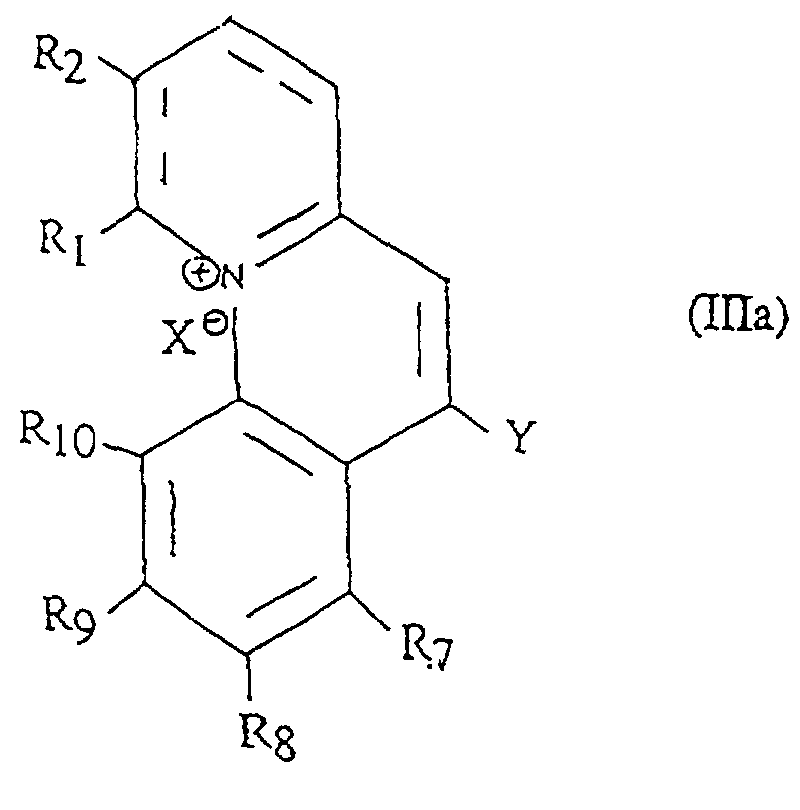 R1 et R2 représentent un atome d'hydrogène, ou forment en association avec C1 et C2 un cycle aromatique à 6 atomes de carbone,Y représente un groupe -OH ou -NH2, ou -NHCOCH3,R7, R8, R9 et R10 représentent un atome d'hydrogène, ou l'un de R7, R8, R9 ou R10, représente un atome d'halogène, notamment un atome de chlore. de brome ou de fluor,X représente un atome d'halogène sous forme anionique, notamment un atome de brome Br-, ou de chlore Cl-, ou un groupe d'atomes sous forme anionique, notamment un perchlorate ClO4 -.
 - Dérivés selon la revendication 11, de formule (IIIa) dans laquelle :R1 et R2 représentent un atome d'hydrogène,Y représente un groupe -OH,X représente un atome d'halogène sous forme anionique, notamment un atome de brome Br-, ou de chlore Cl-, ou un groupe d'atomes sous forme anionique, notamment un perchlorate ClO4 -,R7, R8, R9 et R10 représentent indépendamment les uns des autres un atome d'hydrogène ou un atome d'halogène, notamment un atome de chlore, de brome ou de fluor.
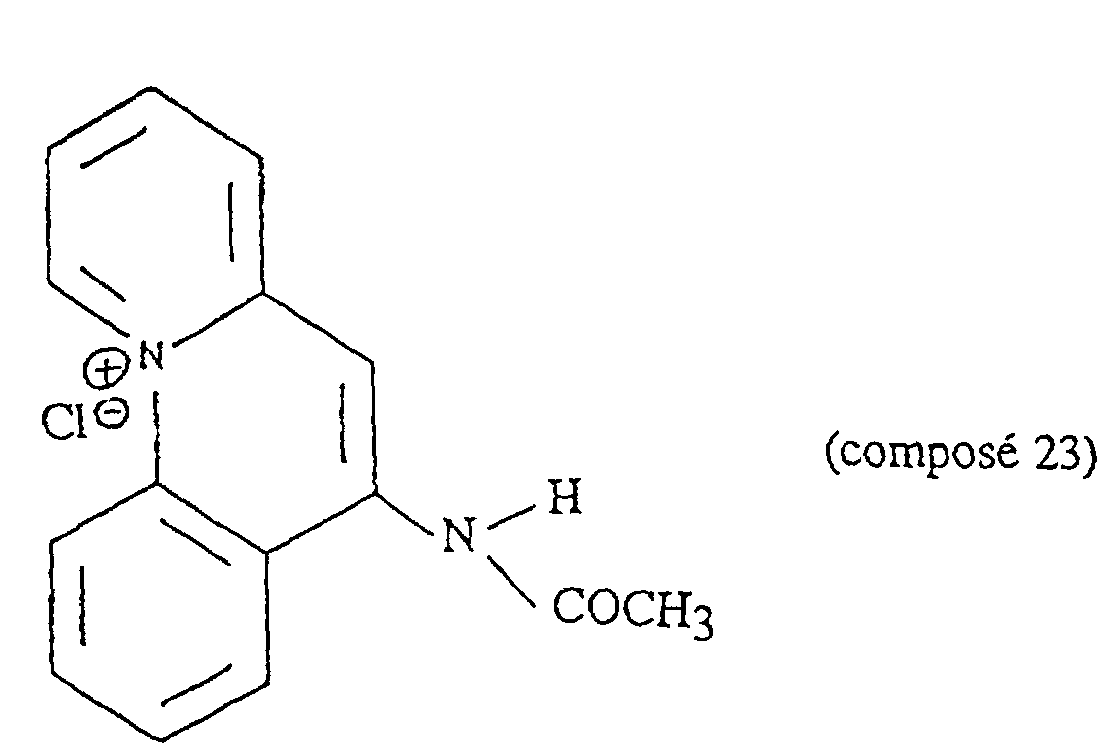
- Dérivés des benzo[c]quinoliziniums selon l'une des revendications 10 à 12, de formule générale (IIIa) choisis parmi les suivants :

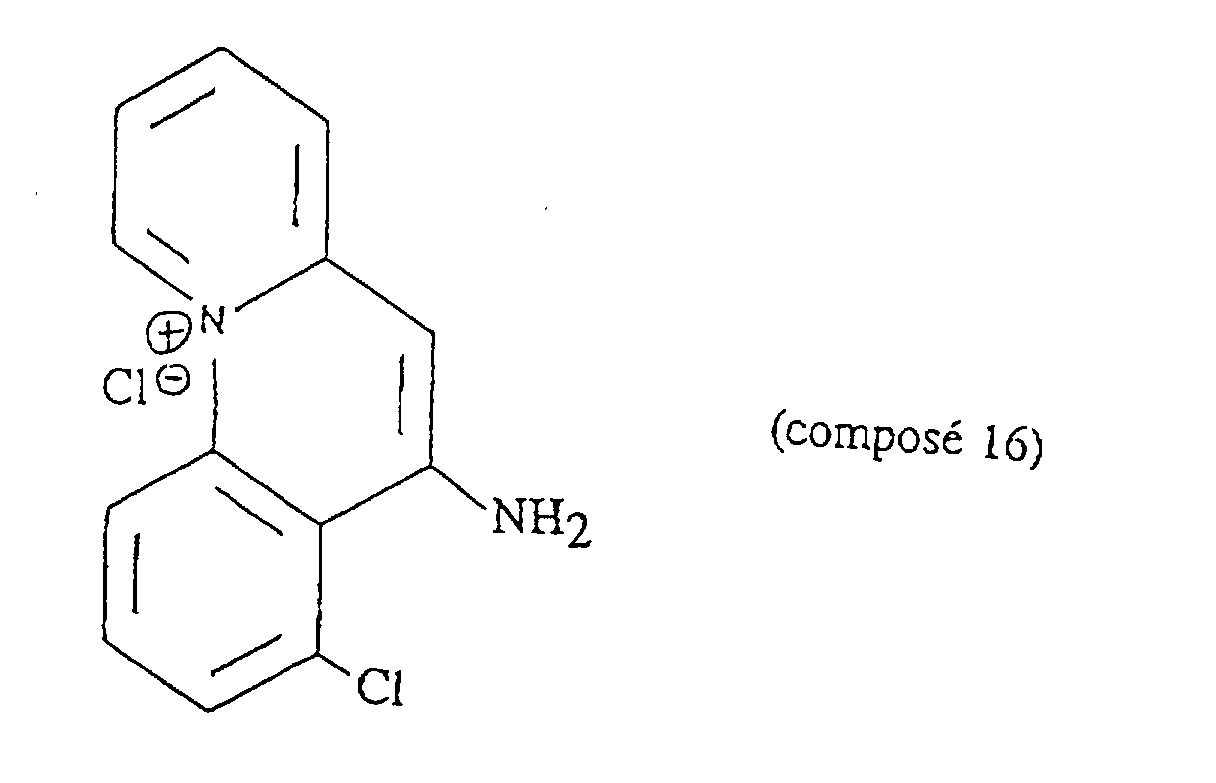
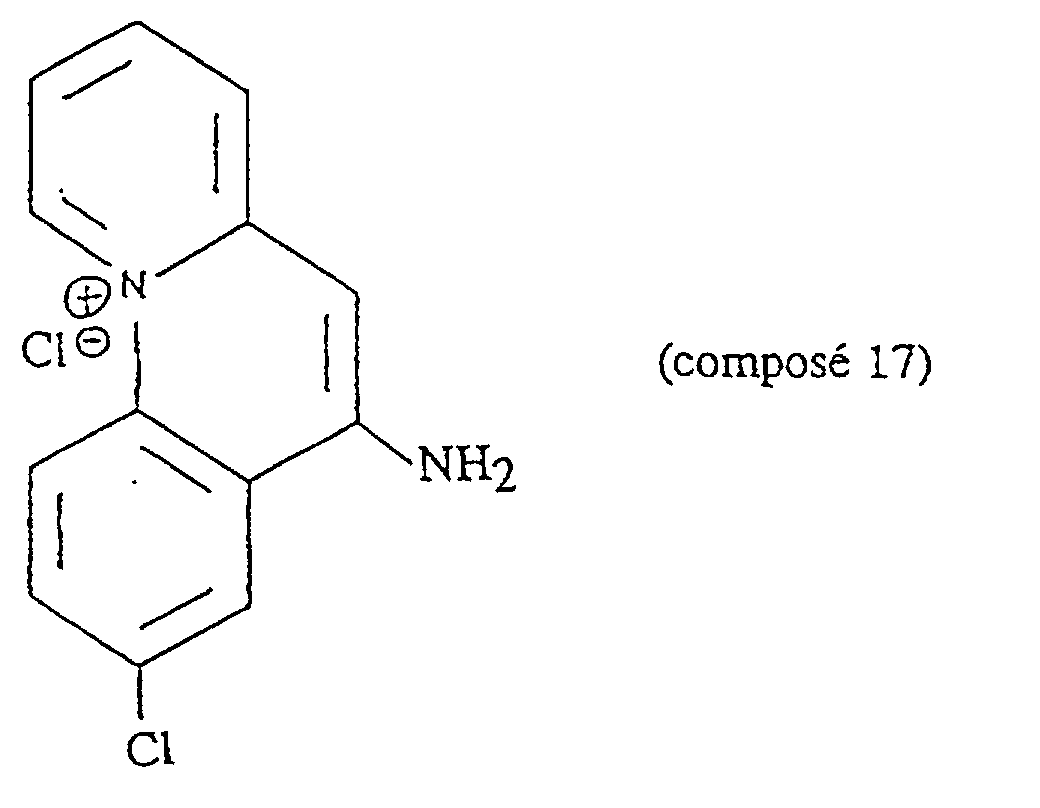


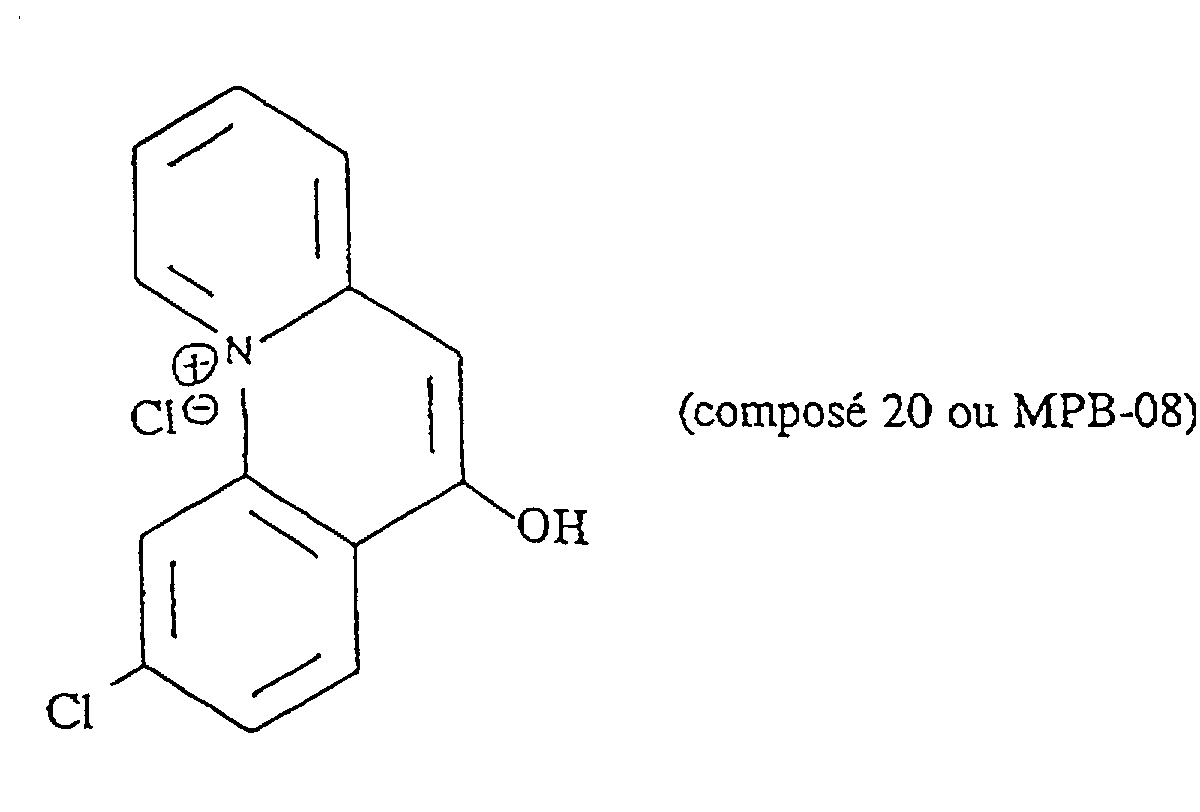

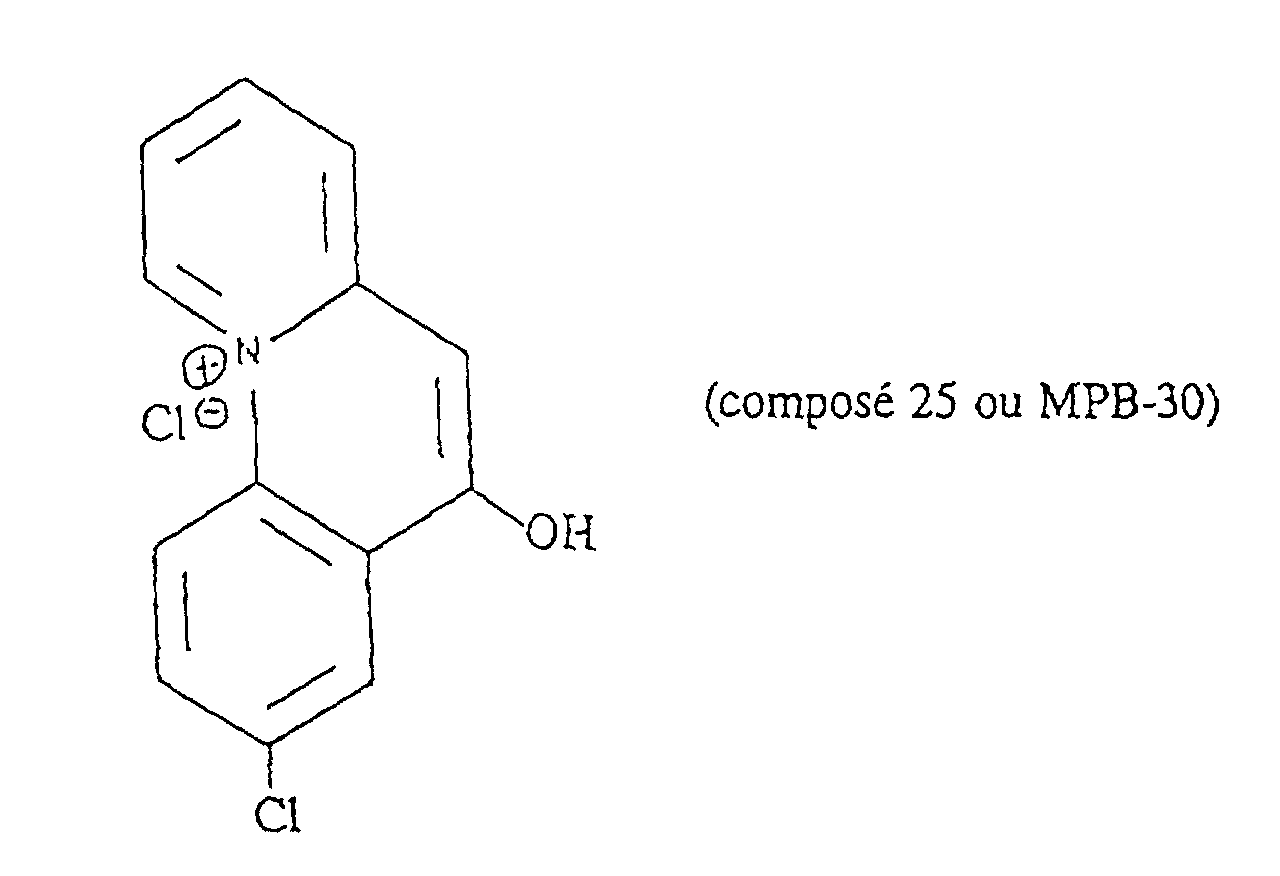


- Dérivés selon la revendication 10, de formule générale (IIIb) suivante :dans laquelle Ra, R1, R2, R5, R7, R8, R9, R10, X et Y sont tels que définis dans la revendication 1, et notamment les composés de formule (IIIb) dans laquelle :
 Ra représente un atome d'hydrogène,R1 et R2 représentent un atome d'hydrogène, et il n'y a pas de double liaison entre les deux carbones portant R1 et R2,R5 représente un atome d'hydrogène,R7, R8, R9 et R10 représentent un atome d'hydrogène, ou l'un de R7, R8, R9 ou R10 représente un atome d'halogène, notamment un atome de chlore, de brome ou de fluor,Y représente -NH2,X représente un atome d'halogène sous forme anionique, notamment un atome de brome Br-, ou de chlore Cl-, ou un groupe d'atomes sous forme anionique, notamment un perchlorate ClO4 -.
 - Dérivés selon la revendication 14, de formule générale (IIIb) choisis parmi les suivants :
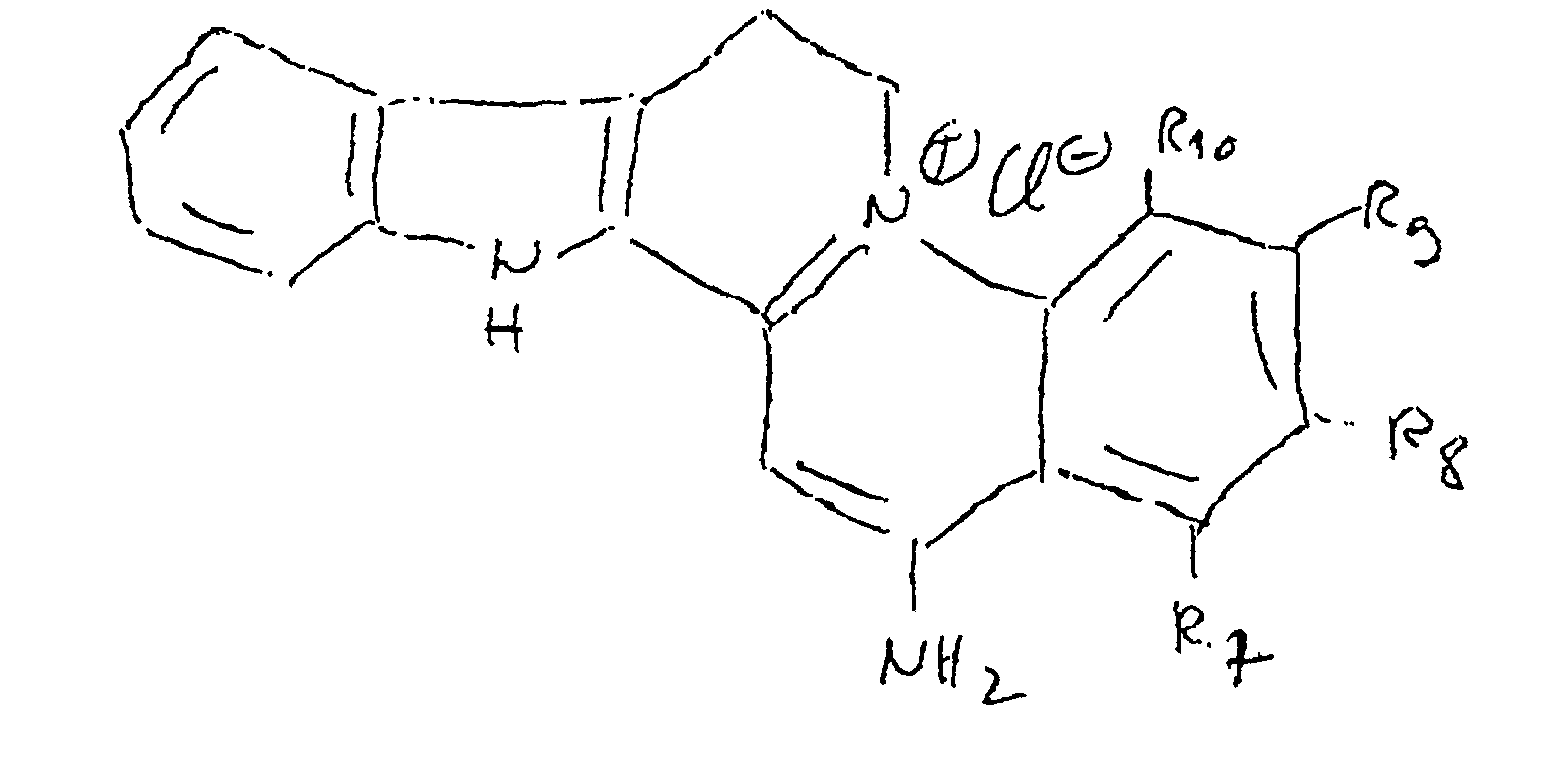 composé G : R7 = Cl, R8 = R9 = R10 = H,composé H : R7 = R8 = R9 = R10 = H,composé I : R8 = Cl, R7 = R9 = R10 = H,composé J : R9 = Cl, R7 = R8 = R10 = H,composé K : R10 = Cl, R7 = R8 = R9 = H,composé L : R9 = Br, R7 = R8 = R10 = H.
 - Procédé de préparation de dérivés tels que définis dans la revendication 1, caractérisé en ce qu'il comprend les étapes suivantes :dans lesquelles R1 à R5, R7 à R10, X et Y sont tels que définis ci-dessus.traitement du dérivé de formule (A) dans laquelle R1, R2, R3, R4, et R5, sont tels que définis dans la revendication 1, par le phényllithium ou le diisopropyl amidure de lithium, avantageusement dans l'éther ou le THF, ce qui conduit à l'obtention de dérivés de formule (B) dans laquelle R1, R2, R3, R4, et R5, sont tels que définis dans la revendication 1, selon le schéma réactionnel suivant:
 condensation du dérivé de formule (B) obtenu à l'étape précédente avec le dérivé de formule (C) dans laquelle R7, R8, R9, R10, et X sont tels que définis dans la formule (I), ce qui conduit à l'obtention de dérivés de formule (D) dans laquelle R1, R2, R3, R4, R5, R7, R8, R9, R10, et X sont tels que définis dans la revendication 1, selon le schéma réactionnel suivant :
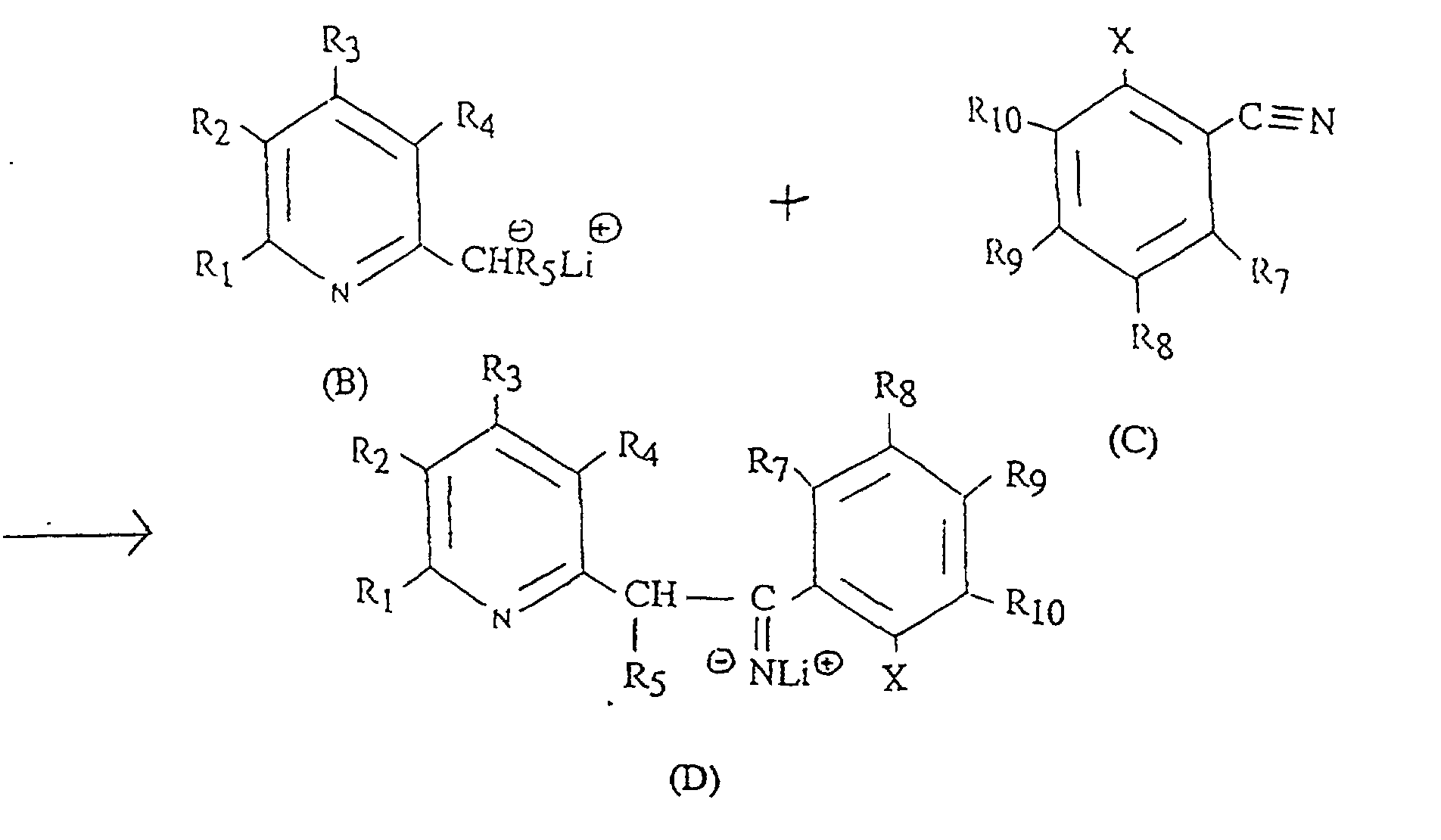 traitement du composé de formule (D) par addition d'H2O, ce qui conduit à l'obtention du dérivé de formule (II) suivante, dans laquelle R1 à R5, R7 à R10, et X sont tels que définis dans la revendication 1, et Y représente -NH2,
 le cas échéant, traitement du composé de formule (II) susmentionnée, par un dérivé comportant les groupes Re et Rf tels que définis dans la revendication 1, ce dérivé étant susceptible de réagir avec l'atome d'azote lié au carbone en position 6 du composé de formule (II) susmentionnée, notamment par un halogénure de Re et/ou de Rf tout en ayant, si nécessaire, pris soin de protéger au préalable celles des autres fonctions présentes sur le composé de formule (II) susmentionnée et susceptibles de réagir avec le dérivé comportant les groupes Re et Rf susmentionnés, ce qui conduit à l'obtention du composé de formule (II) suivante dans laquelle R1 à R5, R7 à R10, et X sont tels que définis ci-dessus, et Y représente un groupe -NReRf tel que défini dans la revendication 1,
 le cas échéant, hydrolyse, notamment par action de l'acide sulfurique (pH3) à 40°C, du composé de formule (II) susmentionnée dans laquelle Y représente NH2, ce qui conduit à l'obtention du composé de formule (II) suivante, dans laquelle R1 à R5, R7 à R10, et X sont tels que définis dans 11a revendication 1, et Y représente un groupe -OH,
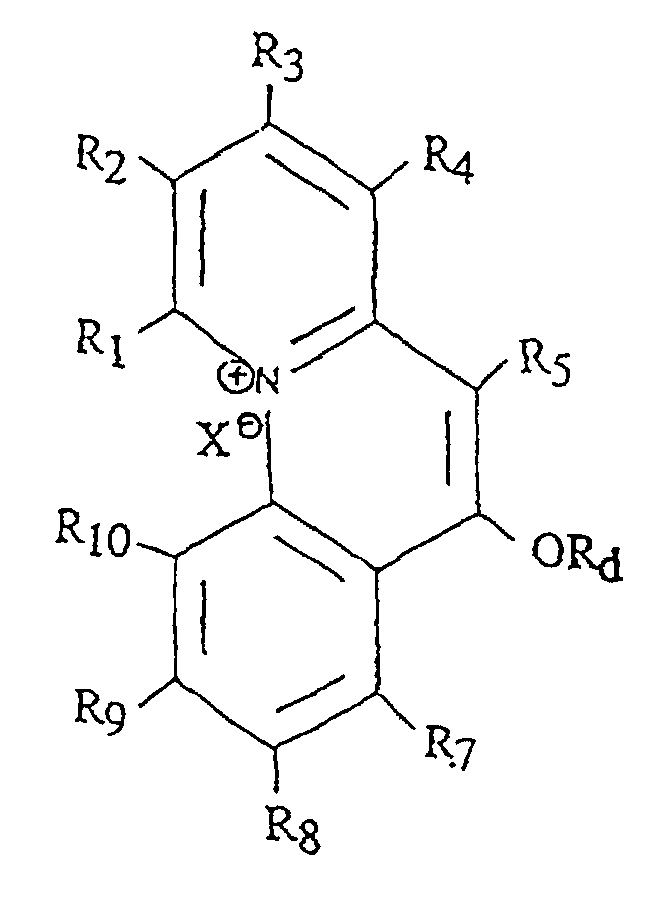
 le cas échéant, traitement du composé de formule (II) susmentionnée, dans laquelle Y représente un groupe -OH, par un dérivé comportant le groupe Rd, tel que défini dans la revendication 1, ce dérivé étant susceptible de réagir avec l'atome d'oxygène lié au carbone en position 7 du composé de formule (II) susmentionnée, notamment par un halogénure de Rd, tout en ayant, si nécessaire, pris soin de protéger au préalable celles des autres fonctions présentes sur le composé de formule (II) susmentionnée et susceptibles de réagir avec le dérivé comportant le groupe Rd susmentionné, ce qui conduit à l'obtention du composé de formule (II) suivante dans laquelle R1 à R5, R7 à R10, et X sont tels que définis ci-dessus, et Y représente un groupe -ORd tel que défini dans la revendication 1,
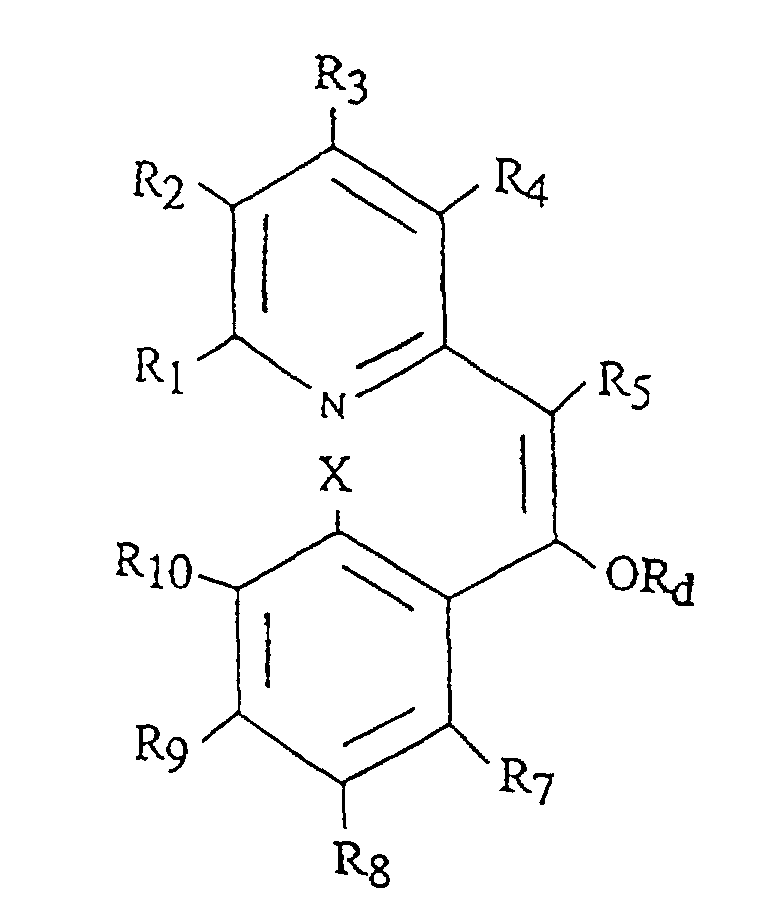 chauffage, avantageusement à 200°C, des composés de formule (II) susmentionnée dans laquelle Y représente -NH2 ou -OH, ce qui conduit respectivement aux composés de formules (III) suivantes, dans laquelle R1 à R5, R7 à R10, et X sont tels que définis dans la revendication 1, et Y représente un groupe -NH2 ou -OH,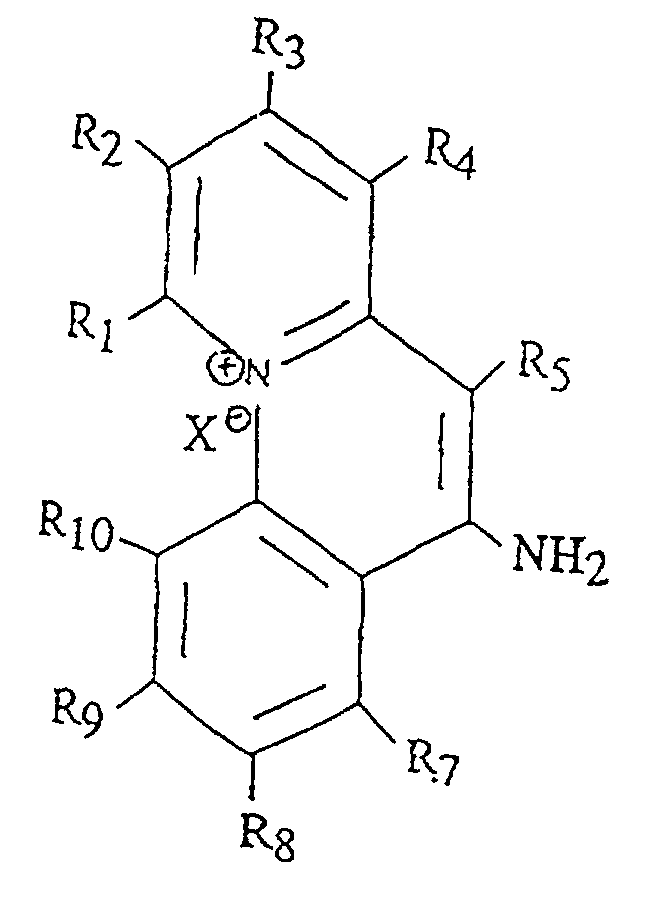
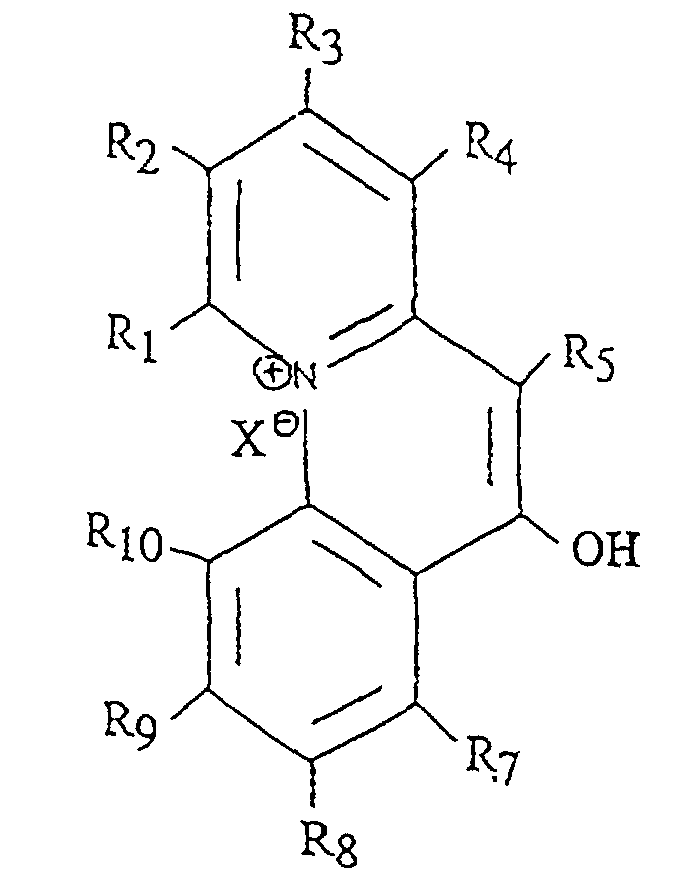 le cas échéant, traitement du composé de formule (III) susmentionnée, dans laquelle Y représente un groupe -NH2, par un dérivé comportant les groupes Re et Rf tels que définis dans la revendication 1, ce dérivé étant susceptible de réagir avec l'atome d'azote lié au carbone en position 6 du composé de formule (III) susmentionnée, notamment par un halogénure de Re et/ou de Rf, tout en ayant, si nécessaire, pris soin de protéger au préalable celles des autres fonctions présentes sur le composé de formule (III) susmentionnée et susceptibles de réagir avec le dérivé comportant les groupes Re et Rf susmentionnés, ce qui conduit à l'obtention du composé de formule (III) suivante dans laquelle R1 à R5, R7 à R10, et X sont tels que définis ci-dessus, et Y représente un groupe -NReRf tel que défini dans la revendication 1,
 le cas échéant, traitement du composé de formule (III) susmentionnée, dans laquelle Y représente un groupe -OH, par un dérivé comportant le groupe Rd, tel que défini dans la revendication 1, ce dérivé étant susceptible de réagir avec l'atome d'oxygène lié au carbone en position 7 du composé de formule (III) susmentionnée, notamment par un halogénure de Rd, tout en ayant, si nécessaire, pris soin de protéger au préalable celles des autres fonctions présentes sur le composé de formule (III) susmentionnée et susceptibles de réagir avec le dérivé comportant le groupe Rd susmentionné, ce qui conduit à l'obtention du composé de formule (III) suivante dans laquelle R1 à R5, R7 à R10, et X sont tels que définis ci-dessus, et Y représente un groupe -ORd tel que défini dans la revendication 1,
 le cas échéant, hydrogénation des composés de formules (II) ou (III) susmentionnées, notamment par hydrogénation catalytique en présence d'oxyde de platine à pression réduite, ce qui conduit à l'obtention des composés de formules (II) ou (III) suivantes :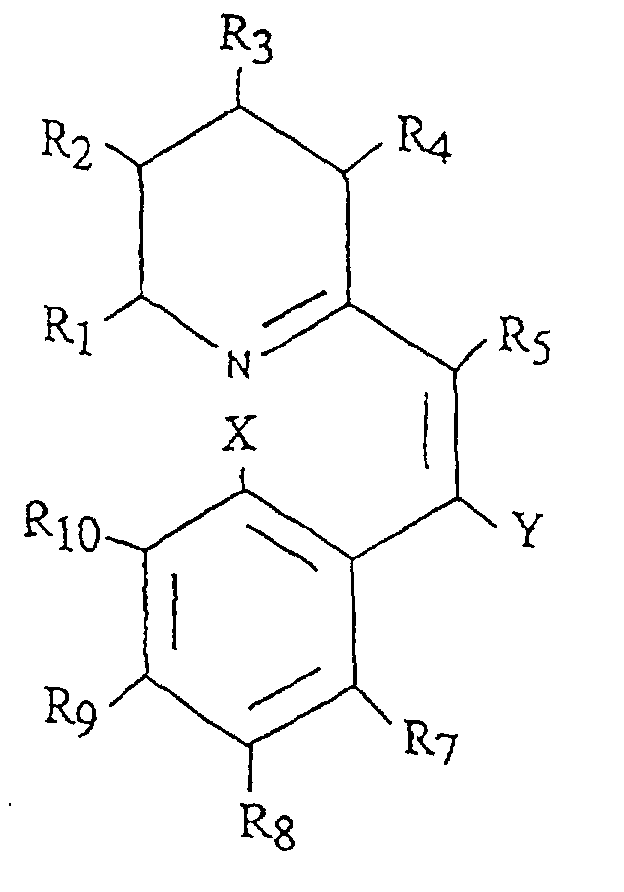

Applications Claiming Priority (3)
| Application Number | Priority Date | Filing Date | Title |
|---|---|---|---|
| FR9609721A FR2751969B1 (fr) | 1996-08-01 | 1996-08-01 | Composes activateurs du canal cftr, et compositions pharmaceutiques les contenant |
| FR9609721 | 1996-08-01 | ||
| PCT/FR1997/001436 WO1998005642A1 (fr) | 1996-08-01 | 1997-07-31 | Composes activateurs du canal cftr, et compositions pharmaceutiques les contenant |
Publications (2)
| Publication Number | Publication Date |
|---|---|
| EP0937044A1 EP0937044A1 (fr) | 1999-08-25 |
| EP0937044B1 true EP0937044B1 (fr) | 2002-01-30 |
Family
ID=9494728
Family Applications (1)
| Application Number | Title | Priority Date | Filing Date |
|---|---|---|---|
| EP97936724A Expired - Lifetime EP0937044B1 (fr) | 1996-08-01 | 1997-07-31 | Composes activateurs du canal cftr, et compositions pharmaceutiques les contenant |
Country Status (7)
| Country | Link |
|---|---|
| US (1) | US6630482B1 (fr) |
| EP (1) | EP0937044B1 (fr) |
| JP (1) | JP4376971B2 (fr) |
| CA (1) | CA2258924C (fr) |
| DE (1) | DE69710208T2 (fr) |
| FR (1) | FR2751969B1 (fr) |
| WO (1) | WO1998005642A1 (fr) |
Families Citing this family (18)
| Publication number | Priority date | Publication date | Assignee | Title |
|---|---|---|---|---|
| FR2840610B1 (fr) * | 2002-06-05 | 2008-04-04 | Centre Nat Rech Scient | UTILISATION DE DERIVES DES BENZO[c]QUINOLIZINIUMS POUR LE TRAITEMENT DES PATHOLOGIES LIEES AUX PHENOMENES DE CONSTRICTION DES CELLULES MUSCULAIRES LISSES |
| FR2856926B1 (fr) | 2003-07-02 | 2005-09-30 | Centre Nat Rech Scient | Utilisation des n-alkanols comme activateurs du canal cftr |
| CN101675928A (zh) * | 2003-11-14 | 2010-03-24 | 沃泰克斯药物股份有限公司 | 可用作atp-结合弹夹转运蛋白调控剂的噻唑和噁唑 |
| JP5385605B2 (ja) * | 2005-03-11 | 2014-01-08 | バーテックス ファーマシューティカルズ インコーポレイテッド | Atp結合カセットトランスポーターのモジュレーター |
| EP2142498A2 (fr) * | 2007-04-02 | 2010-01-13 | Institute for Oneworld Health | Composés inhibiteurs de cftr et leurs utilisations |
| EP2278879B1 (fr) | 2008-04-21 | 2016-06-15 | PATH Drug Solutions | Composés, compositions et traitements comprenant des dérivés d'oxydiazoles |
| WO2009131958A2 (fr) * | 2008-04-21 | 2009-10-29 | Institute For Oneworld Health | Composés, compositions et procédés à base de dérivés de triazine |
| US20090270398A1 (en) * | 2008-04-21 | 2009-10-29 | Institute For Oneworld Health | Compounds, Compositions and Methods Comprising Pyridazine Derivatives |
| US8236838B2 (en) * | 2008-04-21 | 2012-08-07 | Institute For Oneworld Health | Compounds, compositions and methods comprising isoxazole derivatives |
| JP2012503005A (ja) * | 2008-09-19 | 2012-02-02 | インスティテュート フォア ワンワールド ヘルス | イミダゾール誘導体およびトリアゾール誘導体を含む、化合物、組成物ならびに方法。 |
| US8511216B2 (en) * | 2009-03-30 | 2013-08-20 | Kanzaki Kokyukoki Mfg. Co., Ltd. | Hydraulic actuator unit |
| US8343976B2 (en) * | 2009-04-20 | 2013-01-01 | Institute For Oneworld Health | Compounds, compositions and methods comprising pyrazole derivatives |
| EP2464354B1 (fr) * | 2009-08-10 | 2015-04-01 | The Regents of The University of California | Inhibiteurs pyrimido-pyrrolo-quinoxaline dione de la protéine régulatrice de la conductance transmembranaire impliquée dans la fibrose kystique et leurs utilisations |
| USRE48842E1 (en) | 2011-05-27 | 2021-12-07 | The Regents Of The University Of California | Pyrimido-pyrrolo-oxazine-dione compound inhibitors of the cystic fibrosis transmembrane conductance regulator protein and uses therefor |
| CR20200464A (es) | 2018-03-08 | 2021-04-14 | Incyte Corp | Compuestos diólicos de aminopirazina como inhibidores de pi3k-y |
| EP3773582B1 (fr) | 2018-03-31 | 2023-10-25 | Molecular International Research, Inc. | Agent anti-cancéreux sélectif efficace pour la prévention et le traitement |
| WO2020010003A1 (fr) | 2018-07-02 | 2020-01-09 | Incyte Corporation | DÉRIVÉS D'AMINOPYRAZINE UTILISÉS EN TANT QU'INHIBITEURS DE PI3K-γ |
| US12029728B2 (en) | 2018-10-30 | 2024-07-09 | New Mexico Tech University Research Park Corporation | Small molecules with anti-protozoan activity |
Family Cites Families (11)
| Publication number | Priority date | Publication date | Assignee | Title |
|---|---|---|---|---|
| US3320269A (en) * | 1963-07-19 | 1967-05-16 | Parke Davis & Co | beta-amino-alpha-phenoxy-2-stilbazole derivatives |
| US3306896A (en) * | 1963-10-10 | 1967-02-28 | Parke Davis & Co | Amino derivatives of 2-stilbazole |
| US3462446A (en) * | 1966-11-25 | 1969-08-19 | Parke Davis & Co | Substituted beta-amino-2-stilbazole compounds |
| FI770346A7 (fr) * | 1976-02-27 | 1977-08-28 | Ciba Geigy Ag | |
| DE3027619A1 (de) * | 1979-07-25 | 1981-02-19 | Sandoz Ag | 6-alkyl-7-phenyl-1,6-naphtyradin- 5(6h)-on-derivate |
| US4329349A (en) * | 1979-07-25 | 1982-05-11 | Sandoz, Inc. | 6-C1-4 Alkyl-7-phenyl or substituted phenyl-1,6-naphthyridine-5(6H)-ones |
| EP0227932B1 (fr) * | 1985-12-13 | 1993-01-13 | American Cyanamid Company | Composés pyridiniques condensés, produits intermédiaires pour leur préparation et leur utilisation comme agents herbicides |
| HU222344B1 (hu) * | 1990-10-12 | 2003-06-28 | Merck Frosst Canada & Co. | Eljárás telítetlen hidroxi-alkil-kinolinsavak, és ezeket tartalmazó gyógyszerkészítmények előállítására |
| GB9216768D0 (en) * | 1992-08-07 | 1992-09-23 | Leo Pharm Prod Ltd | Chemical compounds |
| US5877179A (en) * | 1992-09-29 | 1999-03-02 | The United States Of America As Represented By The Department Of Health And Human Services | Xanthines for identifying CFTR--binding compounds useful for activating chloride conductance in animal cells |
| JPH08198875A (ja) | 1995-01-27 | 1996-08-06 | Chugai Pharmaceut Co Ltd | インドリジノン誘導体 |
-
1996
- 1996-08-01 FR FR9609721A patent/FR2751969B1/fr not_active Expired - Lifetime
-
1997
- 1997-07-31 WO PCT/FR1997/001436 patent/WO1998005642A1/fr not_active Ceased
- 1997-07-31 US US09/230,747 patent/US6630482B1/en not_active Expired - Lifetime
- 1997-07-31 EP EP97936724A patent/EP0937044B1/fr not_active Expired - Lifetime
- 1997-07-31 JP JP50767798A patent/JP4376971B2/ja not_active Expired - Fee Related
- 1997-07-31 CA CA002258924A patent/CA2258924C/fr not_active Expired - Fee Related
- 1997-07-31 DE DE69710208T patent/DE69710208T2/de not_active Expired - Lifetime
Also Published As
| Publication number | Publication date |
|---|---|
| JP4376971B2 (ja) | 2009-12-02 |
| JP2000515863A (ja) | 2000-11-28 |
| FR2751969B1 (fr) | 1998-12-04 |
| EP0937044A1 (fr) | 1999-08-25 |
| CA2258924A1 (fr) | 1998-02-12 |
| FR2751969A1 (fr) | 1998-02-06 |
| WO1998005642A1 (fr) | 1998-02-12 |
| CA2258924C (fr) | 2009-10-06 |
| US6630482B1 (en) | 2003-10-07 |
| DE69710208T2 (de) | 2002-07-18 |
| DE69710208D1 (de) | 2002-03-14 |
Similar Documents
| Publication | Publication Date | Title |
|---|---|---|
| CA2258924C (fr) | Composes activateurs du canal cftr, et compositions pharmaceutiques les contenant | |
| Gomez-Sintes et al. | Targeting retinoic acid receptor alpha-corepressor interaction activates chaperone-mediated autophagy and protects against retinal degeneration | |
| TWI699363B (zh) | 四氫-吡啶并[3,4-b]吲哚雌激素受體調節劑及其用途 | |
| EP1987010B1 (fr) | Dérivés de n-heteroaryl-carboxamides tricycliques contenant un motif benzimidazole, leur préparation et leur application en thérapeutique | |
| EP2046775B1 (fr) | Derives de n- (amino-heteroaryl) - 1h-indole-2 -carboxamides comme antagonistes des recepteurs de type trpv1 ou vr1 | |
| AU2016296878B2 (en) | Chiral diaryl macrocycles and uses thereof | |
| Hassani et al. | Novel lavendamycin analogues as antitumor agents: synthesis, in vitro cytotoxicity, structure− metabolism, and computational molecular modeling studies with NAD (P) H: quinone oxidoreductase 1 | |
| WO2021110168A1 (fr) | Composé spiro servant d'inhibiteur d'erk et son application | |
| EP3578561A1 (fr) | Spirocomposés | |
| JP2021527687A (ja) | Oga阻害剤化合物 | |
| CA2310250A1 (fr) | Traitement contre la maladie d'alzheimer | |
| TW200811142A (en) | Pyrimidinyl sulfonamide compounds which inhibit leukocyte adhesion mediated by VLA-4 | |
| EP1663219B1 (fr) | Derives d'indole pour le traitement de maladies liees au processus d'epissage | |
| HUE024426T2 (en) | Imidazo [4,5-c] quinolin-2-one and its use as P13 kinase / mTOR double inhibitor | |
| KR20180011314A (ko) | Notch 경로 신호전달 억제제 화합물 | |
| JP2000501080A (ja) | アセチルコリン受容体の修飾因子として役立つ新規置換アリール化合物 | |
| EP1912644B1 (fr) | Derives de n-(arylalkyl)-1h-pyrrolopyridine-2-carboxamides, leur preparation et leur application en therapeutique | |
| JP2002541189A (ja) | 細胞膜透過性インジゴイドビスインドール誘導体の使用 | |
| EP1776340A1 (fr) | Derives de n-(1 h-indolyl)-i h-ind0le-2-carb0xamides, leur preparation et leur application en therapeutique | |
| FR2861304A1 (fr) | Modulateurs des canaux cftr | |
| TW202016093A (zh) | Oga抑制劑化合物 | |
| CN115583938A (zh) | 靶向BCL9/β-连环蛋白互相作用的小分子化合物 | |
| KR20230016194A (ko) | 취약한 x 관련 장애 치료를 위한 새로운 맥시-k 칼륨 채널 개방제 | |
| Chevalier et al. | Synthesis, Biological Evaluation, and in Vivo Imaging of the first Camptothecin–Fluorescein Conjugate | |
| JP3949196B2 (ja) | 免疫抑制剤 |
Legal Events
| Date | Code | Title | Description |
|---|---|---|---|
| PUAI | Public reference made under article 153(3) epc to a published international application that has entered the european phase |
Free format text: ORIGINAL CODE: 0009012 |
|
| 17P | Request for examination filed |
Effective date: 19981214 |
|
| AK | Designated contracting states |
Kind code of ref document: A1 Designated state(s): CH DE FR GB IT LI |
|
| 17Q | First examination report despatched |
Effective date: 20000330 |
|
| GRAG | Despatch of communication of intention to grant |
Free format text: ORIGINAL CODE: EPIDOS AGRA |
|
| GRAG | Despatch of communication of intention to grant |
Free format text: ORIGINAL CODE: EPIDOS AGRA |
|
| GRAH | Despatch of communication of intention to grant a patent |
Free format text: ORIGINAL CODE: EPIDOS IGRA |
|
| GRAH | Despatch of communication of intention to grant a patent |
Free format text: ORIGINAL CODE: EPIDOS IGRA |
|
| GRAA | (expected) grant |
Free format text: ORIGINAL CODE: 0009210 |
|
| REG | Reference to a national code |
Ref country code: GB Ref legal event code: IF02 |
|
| AK | Designated contracting states |
Kind code of ref document: B1 Designated state(s): CH DE FR GB IT LI |
|
| REG | Reference to a national code |
Ref country code: CH Ref legal event code: EP |
|
| REG | Reference to a national code |
Ref country code: CH Ref legal event code: NV Representative=s name: ABREMA AGENCE BREVETS ET MARQUES GANGUILLET & HUMP |
|
| GBT | Gb: translation of ep patent filed (gb section 77(6)(a)/1977) |
Effective date: 20020130 |
|
| REF | Corresponds to: |
Ref document number: 69710208 Country of ref document: DE Date of ref document: 20020314 |
|
| PLBE | No opposition filed within time limit |
Free format text: ORIGINAL CODE: 0009261 |
|
| STAA | Information on the status of an ep patent application or granted ep patent |
Free format text: STATUS: NO OPPOSITION FILED WITHIN TIME LIMIT |
|
| 26N | No opposition filed | ||
| REG | Reference to a national code |
Ref country code: FR Ref legal event code: PLFP Year of fee payment: 19 |
|
| PGFP | Annual fee paid to national office [announced via postgrant information from national office to epo] |
Ref country code: GB Payment date: 20150626 Year of fee payment: 19 Ref country code: CH Payment date: 20150622 Year of fee payment: 19 |
|
| PGFP | Annual fee paid to national office [announced via postgrant information from national office to epo] |
Ref country code: FR Payment date: 20150625 Year of fee payment: 19 |
|
| PGFP | Annual fee paid to national office [announced via postgrant information from national office to epo] |
Ref country code: DE Payment date: 20150623 Year of fee payment: 19 |
|
| PGFP | Annual fee paid to national office [announced via postgrant information from national office to epo] |
Ref country code: IT Payment date: 20150629 Year of fee payment: 19 |
|
| REG | Reference to a national code |
Ref country code: DE Ref legal event code: R119 Ref document number: 69710208 Country of ref document: DE |
|
| REG | Reference to a national code |
Ref country code: CH Ref legal event code: PL |
|
| GBPC | Gb: european patent ceased through non-payment of renewal fee |
Effective date: 20160731 |
|
| PG25 | Lapsed in a contracting state [announced via postgrant information from national office to epo] |
Ref country code: DE Free format text: LAPSE BECAUSE OF NON-PAYMENT OF DUE FEES Effective date: 20170201 Ref country code: CH Free format text: LAPSE BECAUSE OF NON-PAYMENT OF DUE FEES Effective date: 20160731 Ref country code: LI Free format text: LAPSE BECAUSE OF NON-PAYMENT OF DUE FEES Effective date: 20160731 Ref country code: FR Free format text: LAPSE BECAUSE OF NON-PAYMENT OF DUE FEES Effective date: 20160801 |
|
| REG | Reference to a national code |
Ref country code: FR Ref legal event code: ST Effective date: 20170331 |
|
| PG25 | Lapsed in a contracting state [announced via postgrant information from national office to epo] |
Ref country code: GB Free format text: LAPSE BECAUSE OF NON-PAYMENT OF DUE FEES Effective date: 20160731 |
|
| PG25 | Lapsed in a contracting state [announced via postgrant information from national office to epo] |
Ref country code: IT Free format text: LAPSE BECAUSE OF NON-PAYMENT OF DUE FEES Effective date: 20160731 |