EP0927410B1 - Verfahren und einrichtung zur erfassung von verkehrsdaten von fahrzeugen - Google Patents
Verfahren und einrichtung zur erfassung von verkehrsdaten von fahrzeugen Download PDFInfo
- Publication number
- EP0927410B1 EP0927410B1 EP97943779A EP97943779A EP0927410B1 EP 0927410 B1 EP0927410 B1 EP 0927410B1 EP 97943779 A EP97943779 A EP 97943779A EP 97943779 A EP97943779 A EP 97943779A EP 0927410 B1 EP0927410 B1 EP 0927410B1
- Authority
- EP
- European Patent Office
- Prior art keywords
- data
- unit
- collection
- decentralized
- esg
- Prior art date
- Legal status (The legal status is an assumption and is not a legal conclusion. Google has not performed a legal analysis and makes no representation as to the accuracy of the status listed.)
- Expired - Lifetime
Links
- 238000000034 method Methods 0.000 title claims abstract description 37
- 230000006870 function Effects 0.000 claims abstract description 37
- 230000008569 process Effects 0.000 claims abstract description 11
- 238000012545 processing Methods 0.000 claims abstract description 4
- 238000010295 mobile communication Methods 0.000 claims abstract 3
- 230000001133 acceleration Effects 0.000 claims description 15
- 238000004891 communication Methods 0.000 claims description 15
- 238000001514 detection method Methods 0.000 description 11
- 230000015654 memory Effects 0.000 description 8
- 230000006399 behavior Effects 0.000 description 7
- 230000005540 biological transmission Effects 0.000 description 7
- 230000008859 change Effects 0.000 description 7
- 238000013480 data collection Methods 0.000 description 6
- 230000004807 localization Effects 0.000 description 6
- 238000012423 maintenance Methods 0.000 description 4
- 238000013479 data entry Methods 0.000 description 3
- 238000005259 measurement Methods 0.000 description 3
- 238000012935 Averaging Methods 0.000 description 2
- 238000004364 calculation method Methods 0.000 description 2
- 238000011156 evaluation Methods 0.000 description 2
- 230000004044 response Effects 0.000 description 2
- 238000003860 storage Methods 0.000 description 2
- 238000013459 approach Methods 0.000 description 1
- 230000015556 catabolic process Effects 0.000 description 1
- 238000012217 deletion Methods 0.000 description 1
- 230000037430 deletion Effects 0.000 description 1
- 230000001419 dependent effect Effects 0.000 description 1
- 238000010586 diagram Methods 0.000 description 1
- 230000000694 effects Effects 0.000 description 1
- 125000000524 functional group Chemical group 0.000 description 1
- 230000008676 import Effects 0.000 description 1
- 230000006698 induction Effects 0.000 description 1
- 238000003754 machining Methods 0.000 description 1
- 238000004519 manufacturing process Methods 0.000 description 1
- 238000007620 mathematical function Methods 0.000 description 1
- 238000000691 measurement method Methods 0.000 description 1
- 230000007246 mechanism Effects 0.000 description 1
- 238000012986 modification Methods 0.000 description 1
- 230000004048 modification Effects 0.000 description 1
- 238000012544 monitoring process Methods 0.000 description 1
- 230000002093 peripheral effect Effects 0.000 description 1
- 238000012797 qualification Methods 0.000 description 1
- 230000009467 reduction Effects 0.000 description 1
- 230000000717 retained effect Effects 0.000 description 1
- 230000003068 static effect Effects 0.000 description 1
- 238000012546 transfer Methods 0.000 description 1
- 230000001960 triggered effect Effects 0.000 description 1
Images
Classifications
-
- G—PHYSICS
- G08—SIGNALLING
- G08G—TRAFFIC CONTROL SYSTEMS
- G08G1/00—Traffic control systems for road vehicles
- G08G1/01—Detecting movement of traffic to be counted or controlled
- G08G1/0104—Measuring and analyzing of parameters relative to traffic conditions
Definitions
- the invention relates to a method for detecting Traffic data of vehicles and facilities for Implementation, according to the respective generic term of independent claims.
- Methods for traffic data acquisition are known which are: Use stationary detection sensors, e.g. Induction loops etc.
- EP-A-0 715 285 describes a method for reduction one from the vehicles of a vehicle fleet known amount of data transferred.
- the fleet's vehicles are with a decentralized unit for position determination and communication with a higher-level traffic computer equipped.
- the traffic computer controls accordingly Processes and programs in the decentralized unit, whereby the vehicles are specified under what conditions Data to be transmitted to the traffic computer.
- the object of the invention is the vehicle-side effort to decrease and one from a traffic point of view optimized, flexible recording and reporting procedure and to implement appropriate facilities.
- FCD floating Called Car Data
- Mobile traffic data collection distinguishes between the event-related recording and the route or network-related basic data acquisition.
- the recognition of one Event such as B. a traffic jam occurs autonomously through the Terminal-side application process (EA) and is directly on the central application process (ZA) reported.
- the ZA controlled, the capture orders of the traffic department converted into specific control information for the EA and this - if possible via broadcast medium.
- the Basic data acquisition takes place statically on and between virtual registration points (ES), in a view of the Digital map set up and in non-volatile memory of the EA are filed.
- the ZA divides the entire federal territory into Registration point areas (ESG) and generated for each ESG a collection point description (ESB), which the Macro commands for recording and reporting behavior as well as a List of ES contains.
- ESG Registration point areas
- EB collection point description
- the Mobile Traffic Data Collection application is based on the IntraGSM platform and uses in particular their Communication and localization subsystems.
- Fig. 1 shows the functions of the FCD method on three levels of abstraction.
- Level 1 is the central one Function of obtaining traffic data broken down by Types of data.
- Level 2 below describes the 'Main loop' of the FCD process of creation & maintenance, via control, acquisition, FCD transmission to Interpretation of the data.
- Level 3 finally includes FCD-independent basic functions of Terminal and control center such as communication, location, statistics and General Basic Functions. which are level 2 for Will be provided.
- FCD procedure is described in the following sections this structure is presented in functional groups.
- the following sections contain a description of the processes traffic data collection and some examples of Measurement algorithms for traffic data acquisition.
- Event-based traffic data collection serves the purpose of Detection of traffic-related events.
- the detection of events takes place autonomously in the EA via parameterizable ones Algorithms. Examples of events are: Entry into a traffic jam, exit from a traffic jam, entry into slow-moving traffic, exit from slow-moving traffic, Route type and network type change and weather change (planned).
- the route-related collection of traffic data is part of the Basic data acquisition, which is controlled by the ZA, and happens with the help of the registration point concept.
- the traffic data are measured on and between the ES and according to the ES attribute Route type classified.
- the following dates will be at least recorded: average speed, variance of Speed, travel time, possibly status values such as Windscreen wiper, fog lamp, ABS, ASR, Outside temperature sensor etc.
- the network-related collection of traffic data is part of the Basic data acquisition, which is controlled by the ZA, and happens with the help of the registration point concept.
- the traffic data are measured on and between the ES and according to the ES attribute Network type classified. Source-target relationships can also be used evaluated with the help of OD matrices become.
- ES-ID Attributes of the ES in the map view: ES-ID, global coordinates (e.g. WGS84), geometry class (circle / rectangle, extension), direction class (including opening angle), plug type, network type Attributes of the ES in the ESB: ES-ID, relative coordinates (in relation to the ESG umbrella), geometry class (circle / rectangle, extension), direction class (including opening angle), plug type, network type
- ESG Registration point areas
- BAB-ESG Creation of an ESG for the BAB network
- AB-ESG Creation of regional ESG for the "home region”.
- Each ESG has an ESG umbrella (rectangle, center point with global coordinates, extent) and possibly edge umbrellas.
- Each end device contains the BAB-ESG and at least one regional ESG
- the size of the regional ESG depends on a fixed one Storage space specification, size of the ESG is independent of Device versions and capacities, devices with higher ones Storage capacity may contain several regional ESG about reloading ESB when leaving a regional ESG (indicated by the use of edge umbrellas or similar) must with regard to the expandability of the procedure be decided
- the ESB contains the application data of an ESG including the ES for the interpreter EA.
- the ESB contains ESG type (BAB, regional), ESG umbrella (coordinates, extension), possibly edge umbrellas, possibly reference to neighboring ESG, breakdown of the geometry and direction classes, macro definitions (freely definable), list of ES with Attributes (see definition of the ES) EA is able to combine and work through several ESBs.
- the BAB-ESG and the regional / s ESG are always active (see control).
- acquisition umbrellas can be defined for special, regional and temporary acquisition tasks.
- a reference to certain route or network types is possible.
- Each registration umbrella has a validity period, a reference to BAB or regional ESG, a separate macro type that specifies specific measurement routines, optional route or network classification.
- the special macro type within a data entry umbrella overwrites the macro type for the basic data entry.
- the ZA converts registration orders from traffic editors into specific control information for the EA.
- the acquisition and reporting behavior is controlled via parameter sets specified by the ZA.
- the parameter sets for event-related as well as route and network-related recording can be changed by the ZA.
- Route or network-related recording For each ESG (BAB-ESG and regional ESG) there is a specified parameter set (including macro commands) that specifies the basic recording and the reporting behavior.
- the different regional ESG can have specific parameter sets.
- the parameter sets are classified according to route and network types.
- Control information is implemented using macro commands.
- a macro command consists of any number of logical links between basic commands. Macros can be nested as required; a macro can link other macro commands. There are intrinsic macros (specified in the program code) and freely definable macros (defined in the ESB). There is a requirement to be able to import new macros into the end device.
- Line and network type recognition EA recognizes route and network type based on the attributes of the recognized ES. On route sections without ES, the route and network type recognition is carried out retrospectively in the ZA based on the ES history
- location history EA creates a history of the passed ES. History becomes given to the ZA with FCD.
- Anonymization The anonymity of the participant is guaranteed within the framework of a comprehensive data protection concept.
- Encryption Appropriate methods are used to encrypt the recorded traffic data in order to prevent unauthorized access to the data.
- FCD protocol A uniform FCD protocol is used. area-related transmission of control information (simple areas: circles, rectangles) The area-related transmission of control information is implemented via CB.
- FCD accesses the basic functions of the IntraGSM communication subsystem back, which is described in the specification "Definition of the range of functions and the interfaces of a multifunctional traffic telematics terminal", Version 1.2, February 1996.
- uniform VT protocol required Transmission of control information via CB required Authentication of the sender of the control information requested at CB "Reverse charging" required for FCD
- the FCD application accesses the basic functions of the IntraGSM subsystem localization back, which is described in the specification "Definition of the range of functions and the interfaces of a multifunctional traffic telematics terminal", Version 1.2, February 1996.
- a basic inventory of mathematical functions (such as B. for average and variance calculation) provided.
- the process enables freely programmable data acquisition Reporting behavior communication Control.
- Traffic data acquisition is activated as soon as the end device is switched on (ignition key inserted).
- the umbrella waypoint of the BAB-ESG as well as the regional ESG with the edge umbrellas are loaded into the basic function "waypoint".
- the traffic data is recorded on the one hand via the event-oriented macro commands. These macro commands are initialized at the start (e.g. monitoring the speed of the vehicle). When an event occurs (such as falling below a certain speed threshold as an indication of a traffic jam), the commands linked to it are executed (e.g. message to the ZA). On the other hand, there is route or network-related data collection that is linked to the ES.
- the EA determines the distances to all ES of all existing ESG and arranges the ES in a list of registration points (ESL) according to the smallest distance.
- ESL registration points
- ) and then to sort the first 100 ES more precisely (with 2-standard distance square d 2 ( ⁇ x) 2 + ( ⁇ y) 2 ).
- the ESL is updated again and again after a certain time step. "Removing" ES are deliberately deleted from the FIFO of the basic function "Waypoint" before newly added neighboring detection points are loaded into the FIFO.
- the commands specified by the ZA are processed by the control module of the EA. To do this, the corresponding macros are started and the associated measurement or communication commands are executed.
- the EA anonymously transmits individual event and ES-related data to the ZA.
- the control information specified by the ZA determines which data are transmitted to the ZA. In general, not all of the recorded data is also transmitted.
- the version of the ESB and the number of the ESG are included. Examples of route or network-related data: ES-ID, average speed since the last ES and variance, braking and acceleration profiles etc.
- the ZA assigns the individual ES-related driving data to the map view. From the individual driving data, statistical data such as averaging are used to obtain traffic data which are made available to the traffic editors. Since not all sections of the route can be provided with two ES for reasons of memory space, the VD messages from the EA often refer to several sections of the route. For this reason, a participant's VD messages must first be used to determine which sections of the route he has traveled. For this purpose, the ZA compares the route length traveled between the two ES with the route lengths of the possible routes from the map view and uses this to determine the route actually traveled (ie the route section sequence).
- the subscriber's ES-related traffic data are then converted into traffic data for this route section sequence.
- the route-related traffic data can be obtained from the traffic data of many participants who have traveled through different route section sequences by setting up and solving systems of equations.
- Statistical processing can also be activated and parameterized for event-related data in the ZA. If a traffic disruption occurs, the traffic department can instruct the ZA to activate the red ES of special road sections for a certain period of time.
- the ZA can also proactively activate the red ES.
- the ZA informs all affected EA that now activate all affected red ES. After the specified period has expired or when the ZA withdraws it, the EA deactivates all affected red ES again.
- the red ES should be loaded via SMS-CB.
- the EA may pick up one or more neighboring ESBs from the ZA's mailbox. However, the current ESB is not overwritten, but is retained in the EA. If the vehicle crosses the border to a neighboring ESG, this becomes the current ESG and the "old" ESG becomes the neighboring ESG. The ES in the ES list remain valid across borders. Even if a new ESB is set to "currently valid", ES of another ESB can remain in the waypoint FIFO of the basic function "waypoint""as the closest ES".
- the current ESB differs from the other ESBs stored in the VTG only in that its ESG umbrella and its edge umbrellas are valid and loaded in the "Waypoint" basic function.
- the terminal is switched off (pulling the ignition key)
- if the ZA has specified it any existing data is transmitted to the control center. It must be ensured that all ESBs loaded in the VTG are saved in a non-volatile manner.
- Macros are triggered by certain conditions Commands started by referencing to a Feature macro
- Average value memories are required to determine variables such as average speed, average travel time on a section of the route, etc. Setting up an average value memory, type of averaging (e.g. arithmetic or standard deviation) Entry in mean value memory Query of the mean value memory with threshold value and reference to a macro. Start the referenced macro if the threshold was exceeded (or fallen below). Remove a mean value memory Delete all mean value memories Remove all mean stores
- time trigger identifier is returned
- the localization subsystem delivers the speed and direction of the vehicle every second.
- Speed-oriented commands are used to observe the speed values and to evaluate whether certain threshold values are exceeded or not reached.
- Query of the current speed and direction Creation of a speed profile including direction course Setting up a speed trigger with threshold value, response direction (speed exceeded or fallen below) and reference to a macro (speed trigger identifier is returned) Remove a speed trigger Remove all speed triggers
- the EA determines the acceleration from the speeds that are provided every second by the localization subsystem. Acceleration-oriented commands are used to monitor the acceleration values and to evaluate whether certain threshold values are exceeded or not reached. Calculation of the current acceleration from the changes in speed Creation of an acceleration profile Setting up an acceleration trigger with a threshold value, response direction (acceleration overshoot or overshoot) and reference to a macro (acceleration trigger identifier is returned) Remove an acceleration trigger Remove all acceleration triggers
- each ESB contains the ESG numbers of the neighboring registration point areas. Adjacent TSG are staggered so that only three ESG can touch each other at the corners.
- one or more neighboring ESBs should be picked up from the ZA if necessary, if they are not yet saved in the EA.
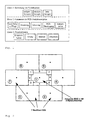
- so-called ESG edge umbrellas are set in the edge regions of the ESG umbrella (see Fig. 2: Current detection point area (ESG 1), which is surrounded by offset neighboring ESG. The edge of the ESG is covered by 8 edge umbrellas).
- the AM-VD can, for example, be parameterized so that only 2 ESB are stored in the EA: a "long-distance ESB" for the user's home country and a "regional ESB". Only the most important long-distance ES are stored in the long-distance ESB, and the remaining long-distance ES and other regional ES are stored in the regional ESB. Both ESB remain semi-permanent in the EA. The ESB change occurs only if the user has left his region for a long time, so that a threshold value of "page faults" has been exceeded.
- All ESB are provided by the AM-VD ZA in an ESB mailbox, where they can be picked up by the EA under the ESG number as a mailbox subaddress.
- the ZG of the AM-VD continuously maintains the ESG and its ESB. If the ESG and its ESB are updated (e.g. deletion and re-establishment of registration points, modification of macro commands, creation of new measuring orders, shifting the limits of an ESG), the new ESG version is given a new ESG number.
- the ZA of the AM-VD decides at which point in time (by broadcast) it informs the EA concerned about a new ESG version by specifying the new ESG number and asks them to pick up the new ESB from the ESB mailbox. It makes sense to develop a default ESB for all ESBs, which is stored in the EA of the affected vehicles. If the traffic department issues a data entry order at short notice and for a limited period of time (e.g. increased traffic on the GmbHer Ring during rush hour, vacation start in NRW), the ZA of the AM-VD only transfers the resulting changes for the ESB a start and stop time directly via SMS-CB to the affected EA.
- a limited period of time e.g. increased traffic on the GmbHer Ring during rush hour, vacation start in NRW
- the EA installs the changes in the ESB at the specified start time and deletes them again at the stop time. Then the default ESB is activated again. It is accepted that not all affected registration vehicles can be reached with the SMS-CB. With a longer period of validity, a repetition, e.g. B. every 30 minutes, makes sense. The number of the corresponding ESB is included in the transmission of traffic data. If the ESB is out of date, the ZA, if necessary, asks its EA to collect a new ESB from the ESB mailbox. A newly charged ESB is only activated when it has been fully received.
Landscapes
- Chemical & Material Sciences (AREA)
- Analytical Chemistry (AREA)
- Physics & Mathematics (AREA)
- General Physics & Mathematics (AREA)
- Traffic Control Systems (AREA)
Description
Attribute der ES in der Kartensicht: ES-ID, globale Koordinaten (z. B. WGS84), Geometrieklasse (Kreis/Rechteck, Ausdehnung), Richtungsklasse (inkl. Öffnungswinkel), Stecken-typ, Netztyp
Attribute der ES in der ESB: ES-ID, relative Koordinaten (in Bezug zum ESG-Umbrella), Geometrieklasse (Kreis/Rechteck, Ausdehnung), Richtungsklasse (inkl. Öffnungswinkel), Stecken-typ, Netztyp
Erstellung eines ESG für das BAB-Netz (BAB-ESG)
Erstellung von regionalen ESG für die "Heimatregion".
jedes ESG hat einen ESG-Umbrella (Rechteck, Mittelpunkt mit globalen Koordinaten, Ausdehnung) sowie evtl. Randumbrellas jedes Endgerät enthält das BAB-ESG sowie mindestens ein regionales ESG
Die ESB enthält die Anwendungsdaten eines ESG inkl. der ES für den Interpreter EA.
Die ESB enthält ESG-Typ (BAB, regional), ESG-Umbrella (Koordinaten, Ausdehnung), evtl. Randumbrellas, evtl. Verweis auf Nachbar-ESG, Aufschlüsselung der Geometrie- und Richtungsklassen, Makrodefinitionen (frei definierbar), Liste von ES mit Attributen (siehe Def. der ES)
EA ist in der Lage, mehrere ESB zu vereinigen und gemeinsam abzuarbeiten.
Das BAB-ESG sowie das/die regionale/n ESG sind immer aktiv (siehe Steuerung).
Zusätzlich können für spezielle, regional und zeitlich begrenzte Erfassungsaufgaben sogenannte Erfassungsumbrellas definiert werden. Dabei ist ein Bezug auf bestimmte Strecken- oder Netztypen möglich.
Jeder Erfassungsumbrella hat eine Gültigkeitsdauer, einen Verweis auf BAB- oder regionales ESG, einen separaten Makrotyp, der spezifische Meßroutinen vorgibt, optional Strecken- oder Netzklassifizierung.
Der spezielle Makrotyp innerhalb eines Erfassungsumbrellas überschreibt dort den Makrotyp für die Grunddatenerfassung.
Das Ausblenden bestimmter Regionen für die Erfassung ist möglich durch die Definition eines Erfassungsumbrellas mit Makrotyp "keine Erfassung".
Definition von Strecken sowie Strecken- und Netztypen der Kartensicht
Versorgung und Pflege des Streckennetzes mit ES in der Kartensicht
Die Steuerung des Erfassungs- und Meldeverhaltens erfolgt über Parametersätze, die der ZA vorgibt.
Die Parametersätze für ereignisbezogene als auch strecken- und netzbezogene Erfassung können vom ZA geändert werden. strecken- oder netzbezogene Erfassung: Für jedes ESG (BAB-ESG und regionale ESG) gibt es einen vorgegebenen Parametersatz (inkl. Makrobefehle), der die Grunderfassung sowie das Meldeverhalten vorgibt. Die verschiedenen regionalen ESG können spezifische Parametersätze haben. Die Parametersätze sind nach Strecken- und Netztypen klassifiziert.
Regional begrenzte "Feinerfassung" erfolgt durch Definition von Erfassungsumbrellas (siehe Erstellung und Pflege), die an den EA übertragen werden.
Makrointerpreter
Es besteht die Anforderung, neue Makros in das Endgerät einspielen zu können.
Folgende Ereignisse werden erkannt und qualifiziert:
Erkennung von Strecken- und Netztypwechsel durch den EA über die Attribute der ES
- Strecken- und netztypbezogene Datensammlung innerhalb des BAB-ESG und des regionalen ESG entlang der duchfahrenen ES anhand der vorgegebenen Parametersätze
- "Feinerfassung" innerhalb der Erfassungsumbrellas
- Ausblenden der Erfassung innerhalb Erfassungsumbrellas mit Makrotyp "Keine Erfassung"
EA erkennt Strecken- und Netztyp anhand der Attribute der erkannten ES.
Auf Streckenabschnitten ohne ES erfolgt die Strecken- und Netztyperkennung nachträglich im ZA anhand der ES-Historie
Ereignistyp, Streckentyp, Netztyp, Gültigkeitsgebiet (Erfassungsumbrellas), Gültigkeitsdauer, Fahrtrichtung Trigger
out of range, out of time, out of region, Paketlänge erreicht
Im Rahmen eines umfassenden Datenschutzkonzeptes wird die Anonymisierung des Teilnehmers gewährleistet.
Es werden entsprechende Verfahren zur Verschlüsselung der erfaßten Verkehrsdaten eingesetzt, um unbefugten Zugang zu den Daten zu verhindern.
Es wird ein einheitliches FCD-Protokoll angewendet.
gebietsbezogene Übertragung von Steuerungsinformationen (einfache Gebiete: Kreise, Rechtecke)
Die gebietsbezogene Übertragung von Steuerungsinformationen wird über CB realisiert.
über die ES-Historie inkl. der ES-Attribute
durch temporäre Fahrt-ID
IntraGSM-Subsystems Kommunikation zurück, das in der Spezifikation "Festlegung des Funktionsumfangs und der Schnittstellen eines multifunktionalen Verkehrstelematik-Endgeräts", Version 1.2, Februar 1996, beschrieben ist.
einheitliches VT-Protokoll gefordert
Aussenden der Steuerungsinformationen über CB gefordert Authentifizierung des Absenders der Steuerungsinformationen bei CB gefordert
"Reverse Charging" für FCD gefordert
IntraGSM-Subsystems Lokalisierung zurück, das in der Spezifikation "Festlegung des Funktionsumfangs und der Schnittstellen eines multifunktionalen Verkehrstelematik-Endgeräts", Version 1.2, Februar 1996, beschrieben ist.
Meldeverhalten
Kommunikation
Steuerung.
Der Umbrella-Wegepunkt des BAB-ESG sowie sowie des/r regionalen ESG mit den Randumbrellas werden in die Basisfunktion "Wegepunkt" geladen.
Die Verkehrsdatenerfassung erfolgt einerseits über die ereignisorientierten Makrobefehle. Diese Makrobefehle werden beim Start initialisiert (z. B. Überwachung der Geschwindigkeit des Fahrzeugs). Beim Eintreffen eines Ereignisses (wie z. B. Unterschreiten einer bestimmten Geschwindigkeitsschwelle als Hinweis auf einen Stau) werden die daran geknüpften Befehle ausgeführt (z. B. Meldung an den ZA).
Andererseits erfolgt die strecken- oder netzbezogene Datensammlung, die an die ES geknüpft sind.
Aus der aktuellen Position des Fahrzeugs ermittelt der EA die Abstände zu allen ES aller vorhandenen ESG und ordnet die ES in einer Erfassungsstellen-Liste (ESL) nach kleinstem Abstand. Eine bestimmte Anzahl von nächstliegenden ES (Nachbarerfassungsstellen) werden als Wegepunkte in das Subsystem Lokalisierung geladen.
Die Ordnung der ES in der ESL nach kleinstem Abstand sollte zeit- und recheneffizient erfolgen. Es bietet sich an, alle ES zunächst grob zu ordnen (mit 1-Norm-Abstand d = |Δx| + |Δy| ) und anschließend die ersten 100 ES genauer zu ordnen (mit 2-Norm-Abstandsquadrat d2 = (Δx)2 + (Δy)2 ).
Die ESL wird nach einem bestimmten Zeitschritt immer wieder aktualisiert. "Sich entfernende" ES werden aus dem FIFO der Basisfunktion "Wegepunkt" gezielt gelöscht, bevor neu hinzukommende Nachbarerfassungsstellen in den FIFO geladen werden.
Der EA überträgt zum ZA anonymisiert individuelle ereignis- und ES-bezogene Daten. Durch die vom ZA vorgegebenen Steuerungsinformationen wird festgelegt, welche Daten zum ZA übertragen werden. Es werden i. a. nicht alle erfaßten Daten auch übertragen. Bei der Übertragung von Verkehrsdaten an den ZA wird die Version der ESB sowie die Nummer des ESG mitgeliefert.
Beispiele für strecken- oder netzbezogene Daten: ES-ID, mittlere Geschwindigkeit seit der letzten ES sowie Varianz, Brems- und Beschleunigungsprofile etc. Beispiele für ereignisbezogene Daten: aktuelle Position oder aktuelle ES-ID, Art des Ereignisses z.B. "Stauanfang", "Unfall".
Der ZA ordnet die individuellen ES-bezogenen Fahrdaten der Kartensicht zu. Aus den individuellen Fahrdaten werden durch statistische Verfahren wie Mittelwertbildung Verkehrsdaten gewonnen, welche der Verkehrsredaktion zur Verfügung gestellt werden.
Da aus Speicherplatzgründen nicht alle Streckenabschnitte mit zwei ES versehen werden können, beziehen sich die VD-Meldungen des EA häufig auf mehrere Streckenabschnitte. Daher muß aus den VD-Meldungen eines Teilnehmers zunächst ermittelt werden, welche Streckenabschnitte er durchfahren hat. Dazu vergleicht der ZA die gefahrene Weglänge zwischen den beiden ES mit den Weglängen der möglichen Wege aus der Kartensicht und bestimmt daraus den tatsächlich gefahrenen Weg (d. h. die Streckenabschnittsfolge).
Auch für ereignisbezogene Daten kann im ZA eine statistische Aufbereitung aktiviert und parametrisiert werden.
Tritt eine Verkehrsstörung auf, so kann die Verkehrsredaktion den ZA beauftragen, die roten ES spezieller Straßenabschnitte für einen bestimmten Zeitraum zu aktivieren. Auch der ZA kann initiativ die roten ES aktivieren. Der ZA informiert alle betroffenen EA, die nun alle betroffenen roten ES aktivieren. Nach Ablauf des vorgegebenen Zeitraums bzw. bei Zurücknahme durch den ZA deaktiviert der EA alle betroffenen roten ES wieder. Die roten ES sollten über SMS-CB zugeladen werden.
Erreicht das Fahrzeug die Randregion des aktuellen regionalen ESG (was durch die Meldung eines Randumbrellas angezeigt wird), so holt der EA ggf. eine oder mehrere Nachbar-ESB aus der Mailbox des ZA ab. Die aktuelle ESB wird jedoch nicht überschrieben, sondern bleibt im EA erhalten.
Überschreitet das Fahrzeug die Grenze zu einem Nachbar-ESG, so wird dieses zum aktuellen ESG und das "alte" ESG wird zum Nachbar-ESG. Die ES in der ES-Liste bleiben grenzüberschreitend gültig. Auch wenn eine neue ESB auf "aktuell gültig" gesetzt wird, können somit ES einer anderen ESB im Wegepunkt-FIFO der Basisfunktion "Wegepunkt" "als nächstliegende ES" verbleiben. Die aktuelle ESB zeichnet sich gegenüber den anderen im VTG gespeicherten ESB nur dadurch aus, daß dessen ESG-Umbrella sowie dessen Randumbrellas gültig und in der Basisfunktion "Wegepunkt" geladen sind.
Beim Ausschalten des Endgerätes (Ziehen des Zündschlüssels) werden, falls vom ZA vorgegeben, noch vorhandene Erfassungsdaten an die Zentrale übermittelt. Es ist sicherzustellen, daß alle im VTG geladenen ESB nichtflüchtig gespeichert werden.
Liste von n ESBs löschen
Entfernen aller Makros
Dekrementieren eines Zählers um einen bestimmten Wert und Rückgabe des Zählerstandes. Starten des referenzierten Makro, wenn der Wert Null erreicht bzw. unterschritten wurde.
Setzen eines neuen Startwertes in einem bestehenden Zähler Abfrage des Zählerstandes mit Schwellwert und Referenz zu einem Makro. Starten des referenzierten Makro, wenn der Schwellwert über- oder unterschritten wurde.
Entfernen eines Zählers
Löschen aller Zähler
Entfernen aller Zähler
Einrichten eines Mittelwertspeichers, Art der Mittelung (z.B. arithmetisch oder Standardabweichung)
Eingabe in Mittelwertspeicher
Abfrage des Mittelwertspeichers mit Schwellwert und Referenz zu einem Makro. Starten des referenzierten Makro, wenn der Schwellwert über- (oder unter)schritten wurde.
Entfernen eines Mittelwertspeichers
Löschen aller Mittelwertspeicher
Entfernen aller Mittelwertspeicher
Rücksetzen des Zeittriggers
Abfrage des Zeittriggers mit Schwellwert und Referenz zu einem Makro. Starten des referenzierten Makro, wenn der Schwellwert über- oder unterschritten wurde.
Entfernen eines Zeittriggers
Rücksetzen aller Zeittrigger
Entfernen aller Zeittrigger
Abfrage der aktuellen Geschwindigkeit und Richtung Erstellung eines Geschwindigkeitsprofils inkl. Richtungsverlauf
Einrichten eines Geschwindigkeits-Triggers mit Schwellwert, Ansprechrichtung (Geschwindigkeitsüberschreitung oder - unterschreitung) und Referenz zu einem Makro (Geschwindigkeits-Trigger-Kennung wird zurückgegeben)
Entfernen eines Geschwindigkeits-Triggers
Entfernen aller Geschwindigkeits-Trigger
Berechnung der aktuellen Beschleunigung aus den Geschwindigkeitsänderungen
Erstellung eines Beschleunigungsprofils
Einrichten eines Beschleunigungs-Triggers mit Schwellwert, Ansprechrichtung (Beschleunigungsüberschreitung oder - unterschreitung) und Referenz zu einem Makro (Beschleunigungs-Trigger-Kennung wird zurückgegeben)
Entfernen eines Beschleunigungs-Triggers
Entfernen aller Beschleunigungs-Trigger
Der AM-VD kann z.B. so parametrisiert werden, daß nur 2 ESB im EA gespeichert werden: ein "Fernstrecken-ESB" für das Heimatland des Benutzers und ein "Regional-ESB". Im Fernstrecken-ESB sind nur die wichtigsten Fernstrecken-ES, in den Regional-ESB die übrigen Fernstrecken-ES und anderen regionalen ES gespeichert. Beide ESB verbleiben semipermanent im EA. Nur wenn der Benutzer über längere Zeit seine Region verlassen hat, so daß ein Schwellwert von "Seitenfehlern" überschritten wurde, kommt es zum ESB-Wechsel. (Ohne SMS-CB oder GPRS ist eine Parametrisierung mit hoher ESB-Wechselfrequenz unwirtschaftlich.)
Alle ESB werden vom ZA des AM-VD in einer ESB-Mailbox bereitgestellt, wo sie vom EA unter der ESG-Nummer als Mailbox-Subadresse abgeholt werden können.
Das ESG sowie ihre ESB werden vom ZA des AM-VD laufend gepflegt. Werden ESG sowie ihre ESB aktualisiert (z. B. Löschen und Neueinrichtung von Erfassungsstellen, Modifikation Makrobefehle, Einrichtung neuer Meßaufträge, Verschiebung der Grenzen eines ESG), so erhält die neue ESG-Version eine neue ESG-Nummer. Der ZA des AM-VD entscheidet, zu welchem Zeitpunkt er die betroffenen EA (per Broadcast) über eine neue ESG-Version durch Angabe der neuen ESG-Nummer informiert und sie auffordert, sich die neue ESB aus der ESB-Mailbox abzuholen.
Es ist sinnvoll, für alle ESB eine Default-ESB zu entwickeln, die im EA der betroffenen Fahrzeuge abgespeichert ist. Stellt die Verkehrsredaktion kurzfristig und für einen begrenzten Zeitraum einen Erfassungsauftrag (z. B. erhöhtes Verkehrsaufkommen auf dem Kölner Ring während der Rush-hour, Ferienbeginn in NRW), so überträgt der ZA des AM-VD nur die daraus resultierenden Änderungen für die ESB mit einem Start- und Stopzeitpunkt direkt über SMS-CB an die betroffenen EA. Der EA baut die Änderungen zur angegebenen Startzeit in die ESB ein und löscht sie zum Stopzeitpunkt wieder. Anschließend wird wieder die Default-ESB aktiviert.
Es wird in Kauf genommen, daß nicht alle betroffenen Erfassungsfahrzeuge mit dem SMS-CB erreicht werden. Bei längerem Gültigkeitszeitraum ist eine Wiederholung, z. B. alle 30 Minuten, sinnvoll.
Bei der Übertragung von Verkehrsdaten wird die Nummer des entsprechenden ESB mitgeliefert. Ist die ESB veraltet, so fordert der ZA, falls notwendig, seinen EA auf, eine neue ESB aus der ESB-Mailbox abzuholen.
Eine neugeladene ESB wird erst aktiviert, wenn sie vollständig empfangen wurde.
Claims (10)
- Verfahren zur Erfassung und Meldung von Verkehrsdaten von Fahrzeugen, wobei diese Fahrzeuge jeweils mit mindestens einer dezentralen Einheit ausgerüstet sind, die mindestens eine erste Funktion zur Positionsbestimmung und mindestens eine zweite Funktion zur Mobilkommunikation aufweist, wobei mehreren dezentralen Einheiten mindestens eine Zentraleinheit mit Steuerungsfunktionen und Verarbeitungsfunktionen für die erfaßten Verkehrsdaten zugeordnet ist, und daß die Zentraleinheit durch Steuersignale in der dezentralen Einheit angeordnete Prozesse und/oder Programme aktiviert, und daß eine Datenbasis in der dezentralen Einheit eine Untermenge einer Datenbasis der Zentraleinheit ist, wobei in Abhängigkeit von bestimmten vorgegebenen Kriterien das Meldeverhalten der dezentralen Einheit an die Zentraleinheit gesteuert wird,
dadurch gekennzeichnet,
daß ein zentraler Anwendungsprozess (ZA) das gesamte zu erfassende Gebiet in Erfassungsstellengebiete (ESG) gliedert und für jedes Erfassungsstellengebiet eine zugeordnete Erfassungsstellenbeschreibung (ESB) generiert, die Makrobefehle für Erfassung und Meldeverhalten sowie eine Liste von Erfassungsstellen enthält. - Verfahren gemäß Patentanspruch 1, dadurch gekennzeichnet, daß eine wiederholte Positionsbestimmung von Fahrzeugen durchgeführt wird und daß die Datenbasis in der dezentralen Einheit Datensätze enthält, die unter anderem Positionsdaten darstellen und daß die Datensätze mit Attributen verknüpft sind, die in Kombination mit Signalen der zentralen Steuereinheit in Abhängigkeit von vorgegebenen logischen Verknüpfungen den Ablauf von Meßprogrammen auslösen.
- Verfahren gemäß den Patentansprüchen 1 oder 2, dadurch gekennzeichnet, daß die Datenbasis in der dezentralen Einheit Datensätze enthält und daß die Datensätze mindestens definierte Positionsdaten von Erfassungsstellen enthalten und daß mittels wiederholter Positionsbestimmung des Fahrzeuges genaue aktuelle Fahrzeugpositionsdaten mit den definierten Erfassungsstellenpositionsdaten verglichen werden.
- Verfahren gemäß einem oder mehreren der Patentansprüche 1 bis 3, dadurch gekennzeichnet, daß bei der Positionsbestimmung in Abhängigkeit vom aktuell benutzten Positionsermittlungsverfahren unter Berücksichtigung der aktuell herrschenden Randbedingungen die Ungenauigkeit der jeweiligen Fahrzeugposition bei dem Vergleichsverfahren berücksichtigt wird.
- Verfahren gemäß einem oder mehreren der Patentansprüche 1 bis 4, dadurch gekennzeichnet, daß das Erreichen einer Erfassungsstelle durch das Fahrzeug unter Berücksichtigung der Ungenauigkeit des Positionsbestimmungsverfahrens durch das Ergebnis des Vergleichsverfahrens signalisiert wird und daß dann in der dezentralen Einheit der Ablauf von Meßprogrammen ausgelöst wird.
- Verfahren gemäß einem oder mehreren der Patentansprüche 1 bis 5, dadurch gekennzeichnet, daß die Datensätze in der dezentralen Einheit Datenelemente enthalten, die Attribute von Erfassungsstellen repräsentieren und eine Typisierung der Erfassungsstellen in verschiedene Klassen ermöglichen und daß eine gezielte Steuerung der Erfassung über eine Auswahl der Datenelemente entsprechend den zugeordneten Klassen erfolgt.
- Verfahren gemäß einem oder mehreren der Patentansprüche 1 bis 6, dadurch gekennzeichnet, daß die ermittelten Verkehrsdaten mindestens eine der folgenden Größen umfassen:mittlere GeschwindigkeitVarianz der GeschwindigkeitReisezeitGeschwindigkeitsprofilBeschleunigungsprofilumfeldbezogene Daten, wie z.B. Status Scheibenwischer,
Regensensor, Außentemperatur, Nebelleuchten, Warnblinker, Abstandsmeßsystem, Antiblockiersystem, Antischlupfregelung. - Verfahren gemäß Patentanspruch 1, dadurch gekennzeichnet, daß eine wiederholte Positionsbestimmung des Fahrzeugs durchgeführt wird und daß die Datenbasis in der dezentralen Einheit Datensätze enthält, die unter anderem Positionsdaten darstellen und daß die Datensätze mit Attributen verknüpft sind, die in Kombination mit Signalen der zentralen Steuereinheit in Abhängigkeit von vorgegebenen logischen Verknüpfungen den Ablauf von Meldeprogrammen auslösen.
- Verfahren nach einem der Patentansprüche 1 oder 8,
dadurch gekennzeichnet, daß als Kriterien für die Steuerung des Meldeverhaltens folgende Elemente einzeln oder in logischer Verknüpfung gemäß Boole'scher Algebra wirksam werden:GültigkeitsgebieteGültigkeitsdauerGültigkeitszeitmarkenWegenetztypFahrtrichtungstypTelekommunikationsweg - Einrichtung mit Mitteln zur Durchführung des Verfahrens zur Erfassung und Meldung von Verkehrsdaten von Fahrzeugen nach einem oder mehreren der Ansprüche 1 - 9, wobei diese Fahrzeuge jeweils mit mindestens einer dezentralen Einheit ausgerüstet sind, die mindestens eine erste Funktion zur Positionsbestimmung und mindestens eine zweite Funktion zur Mobilkommunikation aufweist, wobei mehreren dezentralen Einheiten mindestens eine Zentraleinheit mit Steuerungsfunktionen und Verarbeitungsfunktionen für die erfaßten Verkehrsdaten zugeordnet ist, und daß die Zentraleinheit durch Steuersignale in der dezentralen Einheit angeordnete Prozesse und/oder Programme aktiviert, und daß eine Datenbasis in einer dezentralen Einheit eine Untermenge einer Datenbasis der Zentraleinheit ist, wobei in Abhängigkeit von bestimmten vorgegebenen Kriterien das Meldeverhalten der dezentralen Einheit an die Zentraleinheit gesteuert wird,
dadurch gekennzeichnet,
daß das gesamte zu erfassende Gebiet in Erfassungsstellengebiete (ESG) gegliedert ist und für jedes Erfassungsstellengebiet eine zugeordnete Erfassungsstellenbeschreibung (ESB) generiert ist, die Makrobefehle für Erfassung und Meldeverhalten sowie eine Liste von Erfassungsstellen enthält.
Applications Claiming Priority (3)
| Application Number | Priority Date | Filing Date | Title |
|---|---|---|---|
| DE19638069 | 1996-09-18 | ||
| DE19638069.3A DE19638069B4 (de) | 1996-09-18 | 1996-09-18 | Verfahren und Einrichtung zur Erfassung von Verkehrsdaten von Fahrzeugen |
| PCT/DE1997/002086 WO1998012682A1 (de) | 1996-09-18 | 1997-09-17 | Verfahren und einrichtung zur erfassung von verkehrsdaten von fahrzeugen |
Publications (2)
| Publication Number | Publication Date |
|---|---|
| EP0927410A1 EP0927410A1 (de) | 1999-07-07 |
| EP0927410B1 true EP0927410B1 (de) | 2001-07-04 |
Family
ID=7806023
Family Applications (1)
| Application Number | Title | Priority Date | Filing Date |
|---|---|---|---|
| EP97943779A Expired - Lifetime EP0927410B1 (de) | 1996-09-18 | 1997-09-17 | Verfahren und einrichtung zur erfassung von verkehrsdaten von fahrzeugen |
Country Status (6)
| Country | Link |
|---|---|
| EP (1) | EP0927410B1 (de) |
| AT (1) | ATE202870T1 (de) |
| AU (1) | AU4549497A (de) |
| DE (2) | DE19638069B4 (de) |
| ES (1) | ES2160973T3 (de) |
| WO (1) | WO1998012682A1 (de) |
Families Citing this family (15)
| Publication number | Priority date | Publication date | Assignee | Title |
|---|---|---|---|---|
| DE19836089A1 (de) * | 1998-07-31 | 2000-02-03 | Inst Halbleiterphysik Gmbh | Verfahren zur Ermittlung von dynamischen Verkehrsinformationen |
| DE19917154B4 (de) * | 1999-04-16 | 2013-09-05 | Deutsche Telekom Ag | Verfahren zum Erkennen von Stausituationen auf Straßen und Fahrzeuggeräte mit einer Einheit zur Durchführung des Verfahrens |
| DE10004524A1 (de) * | 2000-02-02 | 2001-08-09 | Volkswagen Ag | Verfahren und Vorrichtung zum Erfassen und Beurteilen von Verkehrslagedaten |
| DE10014365B4 (de) * | 2000-03-16 | 2011-08-11 | DDG Gesellschaft für Verkehrsdaten mbH, 40547 | Funktionale Telematikendgeräte-Steuerung |
| DE10018562C1 (de) * | 2000-04-14 | 2002-02-07 | Daimler Chrysler Ag | Verfahren zur Gewinnung von Verkehrsdaten für ein Verkehrsnetz mit verkehrsgeregelten Netzknoten durch Meldefahrzeuge |
| DE10029816A1 (de) * | 2000-06-16 | 2002-01-03 | Daimler Chrysler Ag | Fahrerunterstützendes Assistenzsystem |
| WO2002007125A1 (de) * | 2000-07-19 | 2002-01-24 | Volkswagen Aktiengesellschaft | Verfahren zur ermittlung von verkehrslageinformationen |
| DE10043797A1 (de) * | 2000-09-06 | 2002-03-28 | Daimler Chrysler Ag | Integriertes Verkehrsüberwachungssystem |
| DE10045944B4 (de) * | 2000-09-16 | 2013-11-07 | Volkswagen Ag | Verfahren zur Regelung des Abstandes und/oder der Geschwindigkeit eines Fahrzeuges bei einem Überholvorgang |
| JP3849435B2 (ja) * | 2001-02-23 | 2006-11-22 | 株式会社日立製作所 | プローブ情報を利用した交通状況推定方法及び交通状況推定・提供システム |
| DE10219531A1 (de) * | 2002-05-02 | 2003-11-20 | Volkswagen Ag | Verfahren und Datenprotokoll zum Austausch von Informationen zwischen einer Verkehrszentrale und einem Stichprobenfahrzeug |
| AU2003302160A1 (en) * | 2003-09-10 | 2005-03-29 | Evgueni Essaoulov | Automatic vehicle traffic control system |
| JP4840069B2 (ja) | 2006-10-12 | 2011-12-21 | アイシン・エィ・ダブリュ株式会社 | ナビゲーションシステム |
| JP2016119547A (ja) * | 2014-12-19 | 2016-06-30 | トヨタ自動車株式会社 | 車両データのリモート収集システム |
| DE102018203178B4 (de) | 2018-03-02 | 2026-02-19 | Audi Ag | Verfahren und Steuervorrichtung zum Ermitteln von zumindest einem Ereignisdatensatz eines Auslöseereignisses in einem Kraftfahrzeug sowie Kraftfahrzeug |
Family Cites Families (18)
| Publication number | Priority date | Publication date | Assignee | Title |
|---|---|---|---|---|
| US3646580A (en) * | 1969-07-18 | 1972-02-29 | Raytheon Co | Surface vehicle fleet command and control system |
| DE2136321B2 (de) * | 1971-07-21 | 1980-01-03 | Robert Bosch Gmbh, 7000 Stuttgart | Verfahren zum Überwachen von Fahrzeugen |
| GB8311303D0 (en) * | 1983-04-26 | 1983-06-02 | British Telecomm | Vehicle route finding system |
| AU614893B2 (en) * | 1989-01-18 | 1991-09-12 | Sharp Kabushiki Kaisha | Mobile object navigation system |
| FR2642875B1 (fr) * | 1989-02-03 | 1994-02-18 | Urba 2000 | Systeme de collecte et de diffusion d'informations pour automobilistes |
| US5182555A (en) * | 1990-07-26 | 1993-01-26 | Farradyne Systems, Inc. | Cell messaging process for an in-vehicle traffic congestion information system |
| DE4105584C1 (en) * | 1991-02-22 | 1992-02-20 | Audi Ag, 8070 Ingolstadt, De | Traffic information system using mobile telephones - provides two=way communication between subscribers and central via organisation channel(s) |
| JPH04319991A (ja) * | 1991-04-19 | 1992-11-10 | Pioneer Electron Corp | 移動体の遠方監視制御装置 |
| GB2261977B (en) * | 1991-11-29 | 1994-09-28 | John Bernard Leonard | Method and apparatus for controlling movements of vehicles and/or persons |
| FR2693820B1 (fr) * | 1992-07-15 | 1994-09-09 | Sagem | Procédé d'acquisition de données sur la circulation urbaine, central et véhicule pour la mise en Óoeuvre du procédé. |
| DE4411125C2 (de) * | 1993-04-01 | 1996-05-09 | Man Nutzfahrzeuge Ag | Informationssystem |
| DE4321437A1 (de) * | 1993-06-28 | 1994-02-17 | Kraiss Karl Friedrich Prof Dr | Verfahren zur Verkehrsregelung und zur Ermittlung zielführender Verkehrsinformation an Bord von Kraftfahrzeugen auf Fernstraßen |
| DE4410896A1 (de) * | 1994-03-29 | 1995-10-05 | Bosch Gmbh Robert | Fahrzeuggerät für Transponderbetrieb |
| DE4439708A1 (de) * | 1994-11-05 | 1996-05-09 | Bosch Gmbh Robert | Verfahren zur Positionsbestimmung eines Fahrzeugs auf einer Straße |
| DE19513640C2 (de) * | 1994-11-28 | 1997-08-07 | Mannesmann Ag | Verfahren zur Reduzierung einer aus den Fahrzeugen einer Fahrzeugflotte zu übertragenden Datenmenge |
| DE19521917C2 (de) * | 1994-11-28 | 2001-03-01 | Mannesmann Ag | Verfahren und Vorrichtung zur Positionsbestimmung eines Fahrzeugs |
| DE19604084A1 (de) * | 1995-03-23 | 1996-10-02 | Deutsche Telekom Mobil | Verfahren und Einrichtung zur Ermittlung von Dynamischen Verkehrsinformationen |
| WO1997029470A1 (de) * | 1996-02-08 | 1997-08-14 | Mannesmann Ag | Verfahren zur erfassung von verkehrslagedaten |
-
1996
- 1996-09-18 DE DE19638069.3A patent/DE19638069B4/de not_active Expired - Lifetime
-
1997
- 1997-09-17 ES ES97943779T patent/ES2160973T3/es not_active Expired - Lifetime
- 1997-09-17 AU AU45494/97A patent/AU4549497A/en not_active Abandoned
- 1997-09-17 AT AT97943779T patent/ATE202870T1/de active
- 1997-09-17 DE DE59703970T patent/DE59703970D1/de not_active Expired - Lifetime
- 1997-09-17 EP EP97943779A patent/EP0927410B1/de not_active Expired - Lifetime
- 1997-09-17 WO PCT/DE1997/002086 patent/WO1998012682A1/de not_active Ceased
Also Published As
| Publication number | Publication date |
|---|---|
| DE59703970D1 (de) | 2001-08-09 |
| EP0927410A1 (de) | 1999-07-07 |
| AU4549497A (en) | 1998-04-14 |
| ATE202870T1 (de) | 2001-07-15 |
| WO1998012682A1 (de) | 1998-03-26 |
| ES2160973T3 (es) | 2001-11-16 |
| DE19638069B4 (de) | 2014-05-08 |
| DE19638069A1 (de) | 1998-03-19 |
Similar Documents
| Publication | Publication Date | Title |
|---|---|---|
| EP1026649B1 (de) | Verfahren und Vorrichtung zur Bereitstellung von Verkehrsinformation | |
| DE19912859B4 (de) | Kommunikationsfähiges Navigationssystem | |
| EP2149132B1 (de) | Verfahren und vorrichtung zur erkennung von verkehrsrelevanten informationen | |
| EP3625785B1 (de) | Verfahren zum erzeugen einer überholwahrscheinlichkeitssammlung, verfahren zum betreiben einer steuereinrichtung eines kraftfahrzeugs, überholwahrscheinlichkeitssammeleinrichtung und steuereinrichtung | |
| DE19638069B4 (de) | Verfahren und Einrichtung zur Erfassung von Verkehrsdaten von Fahrzeugen | |
| EP4025470A1 (de) | Querführung eines fahrzeugs mittels von anderen fahrzeugen erfassten umgebungsdaten | |
| DE112018006665T5 (de) | Verfahren zum zugreifen auf ergänzende wahrnehmungsdaten von anderen fahrzeugen | |
| EP0879459B1 (de) | Verfahren zur erfassung von verkehrslagedaten | |
| DE102018222601A1 (de) | Verfahren und Fahrerassistenzsystem zum Unterstützen eines Fahrers eines Fahrzeugs beim Führen des Fahrzeugs | |
| EP0752692A1 (de) | Verfahren und System zur Aktualisierung von digitalen Strassenkarten | |
| DE102017201665A1 (de) | Verfahren zur Einbindung eines dynamischen Objektes in eine digitale Karte eines hochautomatisierten Fahrzeugs (HAF) | |
| DE102019002790A1 (de) | Verfahren zur Prädiktion einer Verkehrssituation für ein Fahrzeug | |
| DE19521919C2 (de) | Verfahren und Vorrichtung zur Reduzierung einer aus Fahrzeugen einer Stichprobenfahrzeugflotte zu übertragenden Datenmenge | |
| DE10146898B4 (de) | Verfahren und System zum Steuern der Übertragung und der Annahme von Nachrichten durch eine Telekommunikationsvorrichtung | |
| EP1017965B1 (de) | Verfahren zur aktualisierung einer digitalen strassenkarte | |
| DE19740602B4 (de) | Verkehrsleit-, Informations- und Positionierungssystem (VIPS) | |
| DE102017218397A1 (de) | Verfahren zur Kartierung eines Streckenabschnitts | |
| EP0715288B1 (de) | Verfahren und Vorrichtung zur Reduzierung einer aus Fahrzeugen einer Stichprobenfahrzeugflotte zu übertragenden Datenmenge | |
| EP0715286A1 (de) | Verfahren zur Reduzierung einer aus den Fahrzeugen einer Stichprobenfahrzeugflotte zu übertragenden Datenmenge | |
| EP0731400A1 (de) | Verfahren und Vorrichtung zur Reduzierung einer aus einem Fahrzeug zu übertragenden Datenmenge | |
| EP2690601B1 (de) | Mautkontrollverfahren und Mautkontrolleinrichtungen sowie Mautsystem mit derartigen Mautkontrolleinrichtungen | |
| EP0715291B1 (de) | Verfahren und Vorrichtung zur Positionsbestimmung eines Fahrzeugs | |
| DE10063588A1 (de) | Verfahren zum Übermitteln von Daten zur Verkehrslagebeurteilung und ein Endgerät in einem mobilen Detektor | |
| EP3062301A1 (de) | Verfahren zum zuordnen einer fahrlinie zu einem fahrzeug und verfahren zur steuerung eines verkehrssystems | |
| DE102021206506B4 (de) | Verfahren zum Aktualisieren einer digitalen Karte einer Umgebung eines Kraftfahrzeugs mittels eines Kartierungssystems, Computerprogramm sowie Kartierungssystem |
Legal Events
| Date | Code | Title | Description |
|---|---|---|---|
| PUAI | Public reference made under article 153(3) epc to a published international application that has entered the european phase |
Free format text: ORIGINAL CODE: 0009012 |
|
| 17P | Request for examination filed |
Effective date: 19990327 |
|
| AK | Designated contracting states |
Kind code of ref document: A1 Designated state(s): AT BE CH DE DK ES FI FR GB IT LI LU NL SE |
|
| 17Q | First examination report despatched |
Effective date: 19990906 |
|
| GRAG | Despatch of communication of intention to grant |
Free format text: ORIGINAL CODE: EPIDOS AGRA |
|
| GRAG | Despatch of communication of intention to grant |
Free format text: ORIGINAL CODE: EPIDOS AGRA |
|
| GRAH | Despatch of communication of intention to grant a patent |
Free format text: ORIGINAL CODE: EPIDOS IGRA |
|
| GRAH | Despatch of communication of intention to grant a patent |
Free format text: ORIGINAL CODE: EPIDOS IGRA |
|
| GRAA | (expected) grant |
Free format text: ORIGINAL CODE: 0009210 |
|
| AK | Designated contracting states |
Kind code of ref document: B1 Designated state(s): AT BE CH DE DK ES FI FR GB IT LI LU NL SE |
|
| REF | Corresponds to: |
Ref document number: 202870 Country of ref document: AT Date of ref document: 20010715 Kind code of ref document: T |
|
| REG | Reference to a national code |
Ref country code: CH Ref legal event code: EP |
|
| REF | Corresponds to: |
Ref document number: 59703970 Country of ref document: DE Date of ref document: 20010809 |
|
| PG25 | Lapsed in a contracting state [announced via postgrant information from national office to epo] |
Ref country code: LU Free format text: LAPSE BECAUSE OF NON-PAYMENT OF DUE FEES Effective date: 20010917 |
|
| ITF | It: translation for a ep patent filed | ||
| PG25 | Lapsed in a contracting state [announced via postgrant information from national office to epo] |
Ref country code: DK Free format text: LAPSE BECAUSE OF FAILURE TO SUBMIT A TRANSLATION OF THE DESCRIPTION OR TO PAY THE FEE WITHIN THE PRESCRIBED TIME-LIMIT Effective date: 20011004 |
|
| REG | Reference to a national code |
Ref country code: CH Ref legal event code: NV Representative=s name: LUCHS & PARTNER PATENTANWAELTE |
|
| GBT | Gb: translation of ep patent filed (gb section 77(6)(a)/1977) |
Effective date: 20011018 |
|
| REG | Reference to a national code |
Ref country code: ES Ref legal event code: FG2A Ref document number: 2160973 Country of ref document: ES Kind code of ref document: T3 |
|
| ET | Fr: translation filed | ||
| REG | Reference to a national code |
Ref country code: GB Ref legal event code: IF02 |
|
| PLBE | No opposition filed within time limit |
Free format text: ORIGINAL CODE: 0009261 |
|
| STAA | Information on the status of an ep patent application or granted ep patent |
Free format text: STATUS: NO OPPOSITION FILED WITHIN TIME LIMIT |
|
| 26N | No opposition filed | ||
| NLT1 | Nl: modifications of names registered in virtue of documents presented to the patent office pursuant to art. 16 a, paragraph 1 |
Owner name: T-MOBILE DEUTSCHLAND GMBH |
|
| REG | Reference to a national code |
Ref country code: CH Ref legal event code: PFA Free format text: DETEMOBIL DEUTSCHE TELEKOM MOBILNET GMBH TRANSFER- T-MOBILE DEUTSCHLAND GMBH |
|
| REG | Reference to a national code |
Ref country code: FR Ref legal event code: PLFP Year of fee payment: 20 |
|
| PGFP | Annual fee paid to national office [announced via postgrant information from national office to epo] |
Ref country code: FI Payment date: 20160921 Year of fee payment: 20 Ref country code: DE Payment date: 20160922 Year of fee payment: 20 Ref country code: NL Payment date: 20160922 Year of fee payment: 20 Ref country code: GB Payment date: 20160921 Year of fee payment: 20 Ref country code: CH Payment date: 20160926 Year of fee payment: 20 |
|
| PGFP | Annual fee paid to national office [announced via postgrant information from national office to epo] |
Ref country code: FR Payment date: 20160922 Year of fee payment: 20 Ref country code: SE Payment date: 20160926 Year of fee payment: 20 Ref country code: AT Payment date: 20160921 Year of fee payment: 20 |
|
| PGFP | Annual fee paid to national office [announced via postgrant information from national office to epo] |
Ref country code: BE Payment date: 20160922 Year of fee payment: 20 Ref country code: ES Payment date: 20160923 Year of fee payment: 20 |
|
| PGFP | Annual fee paid to national office [announced via postgrant information from national office to epo] |
Ref country code: IT Payment date: 20160922 Year of fee payment: 20 |
|
| REG | Reference to a national code |
Ref country code: DE Ref legal event code: R071 Ref document number: 59703970 Country of ref document: DE |
|
| REG | Reference to a national code |
Ref country code: NL Ref legal event code: MK Effective date: 20170916 |
|
| REG | Reference to a national code |
Ref country code: CH Ref legal event code: PL |
|
| REG | Reference to a national code |
Ref country code: GB Ref legal event code: PE20 Expiry date: 20170916 |
|
| REG | Reference to a national code |
Ref country code: SE Ref legal event code: EUG |
|
| REG | Reference to a national code |
Ref country code: AT Ref legal event code: MK07 Ref document number: 202870 Country of ref document: AT Kind code of ref document: T Effective date: 20170917 |
|
| PG25 | Lapsed in a contracting state [announced via postgrant information from national office to epo] |
Ref country code: GB Free format text: LAPSE BECAUSE OF EXPIRATION OF PROTECTION Effective date: 20170916 |
|
| REG | Reference to a national code |
Ref country code: BE Ref legal event code: MK Effective date: 20170917 |
|
| REG | Reference to a national code |
Ref country code: ES Ref legal event code: FD2A Effective date: 20180508 |
|
| PG25 | Lapsed in a contracting state [announced via postgrant information from national office to epo] |
Ref country code: ES Free format text: LAPSE BECAUSE OF EXPIRATION OF PROTECTION Effective date: 20170918 |