EP0926612A2 - Kommunikationsapparat für elektronische Post, System für elektronische Post und Kommunikationsverfahren für elektronische Post - Google Patents
Kommunikationsapparat für elektronische Post, System für elektronische Post und Kommunikationsverfahren für elektronische Post Download PDFInfo
- Publication number
- EP0926612A2 EP0926612A2 EP98124557A EP98124557A EP0926612A2 EP 0926612 A2 EP0926612 A2 EP 0926612A2 EP 98124557 A EP98124557 A EP 98124557A EP 98124557 A EP98124557 A EP 98124557A EP 0926612 A2 EP0926612 A2 EP 0926612A2
- Authority
- EP
- European Patent Office
- Prior art keywords
- electronic mail
- subaddress
- reception
- communication
- Prior art date
- Legal status (The legal status is an assumption and is not a legal conclusion. Google has not performed a legal analysis and makes no representation as to the accuracy of the status listed.)
- Withdrawn
Links
Images








Classifications
-
- G—PHYSICS
- G06—COMPUTING OR CALCULATING; COUNTING
- G06Q—INFORMATION AND COMMUNICATION TECHNOLOGY [ICT] SPECIALLY ADAPTED FOR ADMINISTRATIVE, COMMERCIAL, FINANCIAL, MANAGERIAL OR SUPERVISORY PURPOSES; SYSTEMS OR METHODS SPECIALLY ADAPTED FOR ADMINISTRATIVE, COMMERCIAL, FINANCIAL, MANAGERIAL OR SUPERVISORY PURPOSES, NOT OTHERWISE PROVIDED FOR
- G06Q10/00—Administration; Management
- G06Q10/10—Office automation; Time management
- G06Q10/107—Computer-aided management of electronic mailing [e-mailing]
-
- H—ELECTRICITY
- H04—ELECTRIC COMMUNICATION TECHNIQUE
- H04L—TRANSMISSION OF DIGITAL INFORMATION, e.g. TELEGRAPHIC COMMUNICATION
- H04L51/00—User-to-user messaging in packet-switching networks, transmitted according to store-and-forward or real-time protocols, e.g. e-mail
- H04L51/48—Message addressing, e.g. address format or anonymous messages, aliases
-
- H—ELECTRICITY
- H04—ELECTRIC COMMUNICATION TECHNIQUE
- H04L—TRANSMISSION OF DIGITAL INFORMATION, e.g. TELEGRAPHIC COMMUNICATION
- H04L51/00—User-to-user messaging in packet-switching networks, transmitted according to store-and-forward or real-time protocols, e.g. e-mail
- H04L51/21—Monitoring or handling of messages
- H04L51/224—Monitoring or handling of messages providing notification on incoming messages, e.g. pushed notifications of received messages
-
- H—ELECTRICITY
- H04—ELECTRIC COMMUNICATION TECHNIQUE
- H04L—TRANSMISSION OF DIGITAL INFORMATION, e.g. TELEGRAPHIC COMMUNICATION
- H04L51/00—User-to-user messaging in packet-switching networks, transmitted according to store-and-forward or real-time protocols, e.g. e-mail
- H04L51/58—Message adaptation for wireless communication
Definitions
- the present invention relates to an electronic mail communication apparatus, electronic mail system, and electronic mail communication method which use subaddress, each of which is added to a mail address corresponding to each account to classify the mail address into a plurality of destinations.
- An electronic mail application as one of the typical network applications can connect different types of communication systems, e.g., the Internet and a personal computer LAN, as well as the same type of communication systems, and hence is used as an indispensable communication means.
- a portable terminal such as a notebook personal computer or PDA (Personal Digital Assistant) can transmit/receive electronic mail on the move by a PHS (Personal Handyphone System: second-generation cordless phone system) capable of digital transmission at 32 kbps or a digital portable telephone set that can receive a packet communication service.
- PHS Personal Handyphone System: second-generation cordless phone system
- An electronic mail sender accesses the mail server at the transmitting end through a public telephone network or the like to searches for a mail server at the receiving end (destination) in accordance with a predetermined program.
- the electronic mail is stored in the receiver's mail box in the mail server at the receiving end.
- the receiver reads out the electronic mail addressed to him/her and transmits a reply electronic mail.
- one mail address conforming to the rule "ID (user's name or the like)" @ "organization to which the user belongs” "country name” is generally allocated to one account.
- the user at the transmitting end designates the mail address of the transmission destination as a destination, and transmits electronic mail to the mail server in which the mail address of the transmission destination is registered.
- the user at the receiving end reads out the electronic mail addressed to him/her from the his/her mail box in the mail server.
- a user may receive an electronic mail addressed to another user allocated to the same account even if there is no mail addressed to him/her, resulting in waste in various points, e.g., communication expenses, time, and the power consumed by a communication terminal.
- the present invention has been made in consideration of the above situation, and has as its object to provide an electronic mail communication apparatus, electronic mail system, electronic mail communication method, and electronic mail transmission method which can send electronic mail to a plurality of destinations, as needed, by adding each of subaddress to the mail address allocated to one account.
- the present invention has the following characteristics.
- An electronic mail communication apparatus preferably comprises subaddress designating means for designating a subaddress which is added to a mail address to classify the mail address into a plurality of destinations, and reception means for receiving electronic mail to which the subaddress designated by the subaddress designating means is added.
- the electronic mail communication apparatus at the transmitting end can transmit electronic mail to the mail server after adding a subaddress to the mail address of the electronic mail by using the subaddress adding means.
- the electronic mail communication apparatus at the receiving end designates a subaddress by using the subaddress designating means, and receives the electronic mail to which the designated subaddress is added from the mail server. This allows electronic mall communication using mail addresses to which subaddress are respectively added.
- a user cannot therefore access any electronic mail addressed to others, and hence privacy can be protected unlike the conventional case in which all the members allocated to the same account can access every electronic mail.
- the electronic mail communication apparatus further comprise reception means for receiving electronic mail to which no subaddress is added.
- the electronic mail communication apparatus further comprises reception condition storage means for storing reception conditions corresponding to subaddress, and in which the reception means selectively receives an electronic mail based on the reception condition corresponding to the subaddress added to the mail address.
- an electronic mail communication apparatus comprising reception condition storage means for storing reception conditions corresponding to subaddress, the subaddress being added to a mail address to classify a mail address into a plurality of destinations, and reception means for selectively receiving an electronic mail based on the reception condition corresponding to the subaddress added to the mail address.
- reception means receives an electronic mail to which no subaddress is added.
- an electronic mail communication apparatus comprising reception means for receiving an electronic mail, terminal information storage means for storing terminal information which makes communication terminals correspond to a subaddress which is added to a mail address to classify the mail address into a plurality of destinations, and notification means for specifying a communication terminal corresponding to the subaddress added to electronic mail received by the reception means on the basis of the terminal information, and informing the specified communication terminal, of the reception of the electronic mail addressed to the specified communication terminal.
- the communication terminal corresponding to the subaddress added to the electronic mail received by the reception means can be specified on the basis of the terminal information, and the electronic mail to which the subaddress is added can be transmitted to the specified communication terminal.
- the terminal information By registering the terminal information, therefore, electronic mail can be received regardless of whether the terminal is located indoors or outdoors.
- the electronic mail communication system comprises a mail server for managing electronic mail in units of mail addresses allocated to accounts, and an electronic mail communication apparatus communicated with the mail server, the mail server comprising in which reception means for receiving electronic mails having an address and a subaddress classifying a mail address into a plurality of destinations and storage means for storing the electronic mail received by the reception means in units of the subaddress.
- the reception means receives electronic mails having an address and a subaddress, and each of electronic mails is stored in the storage means in units of subaddress, thereby allowing electronic mail management based on the subaddress.
- the mail server comprises storage means for storing terminal information which makes the respective subaddress correspond to other communication terminals and transmission means for transmitting the electronic mail to one of the mail communication terminals corresponding to the subaddress added to the electronic mail received the reception means on the basis of the terminal information stored in the storage means.
- the mail server transmits the electronic mail to the mail communication terminal corresponding to the subaddress added to the electronic mail on the basis of the terminal information stored in the storage means.
- the terminal information By storing the terminal information, therefore, electronic mail can be received regardless of whether the terminal is located indoors or outdoors.
- an electronic mail communication system comprising a mail server for managing electronic mail in units of mail addresses allocated to accounts, and an electronic mail communication apparatus, wherein the electronic mail communication apparatus comprises subaddress adding means for adding the first subaddress to a mail address, the subaddress classifying the mail address into a plurality of destinations, transmission means of transmitting an electronic mail to which the first subaddress is added by the subaddress adding means, reception means for receiving an electronic mail having a mail address to which a predetermined subaddress is added, the mail server comprises reception means for receiving electronic mail having a mail address to which the second subaddress is added, and storage means for storing the electronic mail received by the reception means in units of the second subaddress.
- the electronic mail communication apparatus causes the subaddress adding means to add the first subaddress to a mail address
- the mail server causes the reception means to receive a electronic mail having a mail address to which a predetermined subaddress is added.
- the mail server causes the reception means to receive the electronic mail having a mail address to which the second subaddress is added
- the mail server causes the storage means to storage the electronic mail received by the reception means in unit of the second subaddress.
- Electronic mail communication can therefore be performed by using mail addresses to which subaddress are respectively added. This allows individual management of electronic mail without individually acquiring an account.
- the mail server causes the reception means to receive the electronic mail having an address and a subaddress, and stores the electronic mail in the storage means in units of subaddress. This allows electronic mail management using subaddress.
- the mail server preferably comprises storage means for storing terminal information which makes the respective subaddress correspond to other communication terminals and transmission means for transmitting the electronic mail to one of the mail communication terminals corresponding to the subaddress added to the electronic mail received the reception means on the basis of the terminal information stored in the storage means.
- the mail server transmits the electronic mail to the communication terminal corresponding to the subaddress added to the electronic mail received by the reception means on the basis of the terminal information stored in the storage means.
- the position information received from the base station is collated with each reception condition input by the user in advance and stored in the storage means to discriminate a subaddress corresponding to the condition that allows reception, and the electronic mail to which the subaddress is added is received by the reception means.
- reception conditions therefore, the reception of electronic mail can be controlled in accordance with the conditions.
- the user can selectively receive business electronic mail and private electronic mail.
- electronic mail communication can be performed by using mail addresses to which subaddress are respectively added. This allows individual management of electronic mail without individually acquiring an account.
- an electronic mail communication method in an electronic mail system comprising receiving an electronic mail to which a mail address corresponding to an account is added, and an electronic mail to which a subaddress is added, the subaddress classifying the mail address as a plurality of destinations.
- electronic mail can be transmitted to all the users by only adding the mail address corresponding to the account to the electronic mail. This can save the trouble of transmitting electronic mail to each user.
- FIG. 1 shows the schematic configuration of an electronic mail communication system 1 according to the first embodiment.
- a radio telephone set e.g., PHS or cellular phone
- a PDA 5 incorporating a radio communication function (e.g., PHS or cellular phone) or notebook PC 8 is accessing, through a radio base station 4, a mail server 3 connected to a public network 2.
- a personal computer 6 can access the mail server 3 through a communication line such as a telephone line, ISDN (Integrated Services Digital Network) line, or leased line.
- a communication line such as a telephone line, ISDN (Integrated Services Digital Network) line, or leased line.
- the mail server 3 is a computer conforming to the electronic mail transfer protocol SMTP (Simple Mail Transfer Protocol) (an electronic mail protocol to be used under a TCP/IP environment) or the like.
- SMTP Simple Mail Transfer Protocol
- the mail server 3 is connected to the public network 2 through a router (not shown), and serves to manage electronic mail in units of mail addresses assigned to the respective accounts. More specifically, the mail server 3 transmits electronic mail to the address of a predetermined user, receives electronic mail addressed to a registered user, and stores it in a predetermined memory area.
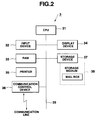
- FIG. 2 is a block diagram showing the schematic configuration of the mail server 3.
- the mail server 3 is comprised of a CPU 31, an input unit 32, a RAM 33, a display unit 34, a printer 35, a communication control section 36, a storage unit 37, and a storage medium 38.
- the respective components except for the storage medium 38 are connected to each other through a bus 39.
- the CPU (Central Processing Unit) 31 reads out an electronic mail management application program from the storage medium 38 in the storage unit 37, stores it in the work memory area in the RAM 33, and executes various types of electronic mail management processes in accordance with the electronic mail management application program stored in the RAM 33. Each of these electronic mail management processes is performed in units of mail addresses assigned to the respective accounts.
- the process result is stored in the work memory in the RAM 33 and displayed on the display unit 34.
- the process result stored in the work memory is stored in a corresponding memory area in the storage medium 38 in the storage unit 37.
- the CPU 31 stores the electronic mail received from another mail server in a mail memory area (referred to a mailbox) corresponding to the mail address in accordance with the electronic mail management application Program.
- a mail memory area referred to a mailbox
- Identifiers are defined for classifying a mail address into a plurality of destinations as subaddresses and a plurality of memory areas corresponding to the subaddresses in the mailbox corresponding to the mail address as submailboxes.
- the CPU 31 discriminate the subaddress to store the received electronic mail in the submailbox.
- this system may have mailboxes prepared in units of subaddress instead of dividing the mailbox corresponding to a given mail address into submailboxes corresponding to the respective subaddresses.
- the login user can access only the mailbox corresponding to his/her subaddress and the mailbox corresponding to his/her mail address having no subaddress, but cannot access other mailboxes.
- the CPU 31 transmits the electronic mail to which the subaddress of the login user terminal is added or the electronic mail having no subaddress.
- the input unit 32 includes a keyboard having cursor keys, numeric keys, various function keys, and the like and a mouse as a pointing device.
- the input unit 32 outputs the depression signal obtained by depressing a key of the keyboard to the CPU 31, and also outputs the operation signal obtained by operating the mouse to the CPU 31.
- the RAM (Random Access Memory) 33 has a work memory area for storing the above electronic mail management application program, input instructions, input data, process results, and the like.
- the display unit 34 is a CRT (Cathode Ray Tube), a liquid crystal display unit, or the like, and displays the display data input from the CPU 31.
- CTR Cathode Ray Tube
- LCD liquid crystal display unit
- the printer 35 prints, for example, the data created by the electronic mail management application program corresponding to the mail server 3.
- the communication control section 36 is constituted by a modem (MODEM: MOdulator/DEModulator), a terminal adapter (TA), a router, and the like, and performs control to communicate with an external device through a communication line such as a telephone line, ISDN line, or leased line.
- the modem is a modulator/demodulator for modulating the digital data processed by the CPU 31 into an analog signal in the frequency band of the telephone line so as to communicate with an external device such as the personal computer 6 through the telephone line, and demodulating the analog signal input through the telephone line into a digital signal.
- the terminal adapter is a device for converting an existing interface into an I interface corresponding to an ISDN to allow communication with an external device such as the personal computer 6 through the ISDN line.
- the router serves as a device for connecting the LAN on the provider side including the mail server 3 to the LAN including the personal computer 6.
- the storage unit 37 has the storage medium 38 in which programs, data, and the like are stored in advance.
- this storage medium 38 is a magnetic recording medium called a hard disk allowing high-speed access as compared with other types of storage media.
- the storage medium 38 is used to store the electronic mail management application program corresponding to the mail server 3, the data processed by this program, and the like.
- the electron mail management application stored in the storage medium 38 in the storage unit 37 is a server application for managing transmission/reception of electronic mail by performing communication with communication terminals such as the PDA 5 incorporating the PHS communication function and connected through the public network 2 or the radio base station 4, the PHS terminal 7 connected to the notebook PC 8, and the personal computer 6.
- Mailboxes corresponding to the mail addresses of the respective users are set in the storage medium 38.
- the electronic mail received from another mail server is stored in the mailbox corresponding to the mail address as the destination of the mail.
- Each mailbox set in the storage medium 38 is divided into submailboxes in correspondence with subaddress classifying a mail address into a plurality of destinations.
- each submailbox the electronic mail having the corresponding subaddress added thereto and received as a destination from another mail server is stored.
- An access right is set in advance for the above mailbox or submailbox.
- a login name and a password are set in advance in correspondence with each address and subaddress. Only the user who is discriminated as a user having an access right on the basis of the login name and password input by the user in accessing the mail server 3 can access the electronic mail having the subaddress or the submailbox.
- devices such as the input unit 32, the display unit 34, the printer 35, and the terminal adapter, router, or the like as the communication control section 36 may not be dedicated to the mail server 3 and may be shared among various servers prepared in providers.
- FIG. 3 is a block diagram showing the configuration of the PDA 5 incorporating the communication function in FIG. 1.
- the PDA 5 is comprised of a communication processing section 501, an antenna 502, a radio section 503, a speech conversion circuit 504, a loudspeaker 505, a microphone 506, a control section 507, a key input section 508, a display section 509, an interface 510, a RAM 512, a storage unit 513, and a storage medium 514.
- the communication processing section 501 converts the compressed speech signal input from the speech conversion circuit 504 or the compressed coded communication data input from the control section 507 into a signal conforming to a predetermined radio communication scheme, and outputs it to the radio section 503.
- the communication processing section 501 demodulates the reception signal input from the radio section 503, converts the signal into digital data that can be read by the control section 507, and outputs the data to the control section 507.
- the communication processing section 501 converts the signal into a compressed speech signal and outputs it to the speech conversion circuit 504.
- the antenna 502 transmits/receives radio transmission signals/radio reception signals in a predetermined frequency range between the radio base stations 4.
- the radio section 503 is constituted by an RF modulation circuit and the like.
- the radio section 503 modulates the signal input from the communication processing section 501 in accordance with a predetermined modulation scheme, converts it into a radio transmission signal in a predetermined frequency band, and outputs the signal to the antenna 502.
- the radio section 503 also demodulates the radio reception signal in a predetermined frequency band which is input from through the antenna 502, and outputs the resultant signal to the communication processing section 501.
- the speech conversion circuit speech codec 504 compression-codes the speech input through the microphone 506, and outputs the resultant signal to the communication processing section 501.
- the speech conversion circuit 504 decodes the compressed speech signal input from the communication processing section 501, converts it into an analog signal, and outputs it to the loudspeaker 505.
- the loudspeaker 505 outputs the analog speech signal input from the speech conversion circuit 504 as an audible sound.
- the microphone 506 senses user's speech and converts it into an analog speech signal, and outputs it to the speech conversion circuit 504.
- the control section 507 stores the designated application program of various application programs corresponding to the PDA 5 incorporating the PHS communication function and stored in the storage medium 514 in the storage unit 513 and various instructions or data input through the key input section 508 in the work memory area in the RAM 512, and executes various processes in accordance with the input instructions and input data and the application program stored in the RAM 512.
- the control section 507 stores the process result in the work memory area in the RAM 512, and displays it on the display section 509.
- the control section 507 also stores the process result, stored in the work memory area, in the predetermined memory area in the storage medium 514 in the storage unit 513 which is designated by the input from the key input section 508.
- control section 507 executes the electronic mail application stored in the storage medium 514 in the storage unit 513 to perform electronic mail transmission processing (see FIG. 6) to be described later. Upon determining that a subaddress is designated in transmission, the control section 507 adds the subaddress as an identifier to the mail address of the destination.
- the control section 507 accesses a given mailbox set in the storage medium 38 in the storage unit 37 of the mail server 3 according to a POP command. If there is new electronic mail received by the mail server 3, the control section 507 discriminates the subaddress by referring to the header of the electronic mail, and receives the electronic mail having the mail address corresponding to the account or the subaddress for the receiver from the mail server 3.
- the key input section 508 has various keys such as a power key, an off-hook key, an on-hook key, a ten-key pad, and a playback key, and outputs various operation keys corresponding to key input operations to the control section 507.
- the display section 509 is constituted by a liquid crystal panel and the like, and displays the display data input or designated by the control section 507. Note that a touch panel as an input section may be prepared on the surface of the display section 509.
- the interface 510 is comprised of an RS-232C terminal, an IrDA port, a PC card slot, and the like.
- the PDA 5 can be connected to another portable terminal, a desktop personal computer, or the like through the interface 510.
- the RAM 512 forms a work memory area in which various data to be processed are temporarily stored when various control processes are executed by the control section 507.
- the storage medium 514 is permanently or detachably mounted in the storage unit 513.
- the storage medium 514 is a magnetic or optical recording medium or semiconductor memory.
- This storage medium 514 stores various control programs to be executed by the control section 507 to control the respective components of the PDA 5 incorporating the PHS communication function. These control programs are stored in the form of program codes that can be read by the control section 507.
- the storage medium 514 also stores various application programs corresponding to the PDA 5 incorporating the PHS communication function, the data processed by the respective processing programs, and the like. Data can be exchanged by mounting this storage medium 514 on a desktop personal computer, another portable terminal, and the like.
- the application programs stored in the storage medium 514 include an electronic mail application.
- This electronic mail application is used to transmit/receive electronic mail by performing communication with the mail server 3 connected through a communication line according to an electronic mail protocol such as SMTP or POP (Post Office Protocol) (both of which are electronic mail protocols to be used under the TCP/IP environment).
- This electronic mail application has various functions of assisting the electronic mail transmitting/receiving operation of the user.
- the application serves to perform management (edition, display, storage, deletion, and the like) of transmission/reception electronic mail files, management of a mail address book, setting of a transmission/reception schedule, encryption, decryption, and the like.
- the mail address book created by the electronic mail application is stored in the storage medium 514.
- mail addresses, user names, user telephone numbers, addresses, and memos, and the like are registered in correspondence with each other.
- each of subaddress for classifying a mail address corresponding to one account into a plurality of destinations is added to the mail address to allow a plurality of users to use the same mail address account.
- a plurality of sets of mail addresses, user names, user telephone numbers, addresses, memos, subaddress designated for the respective users, mail addresses corresponding to accounts and the like are registered in the mail address book.
- FIG. 4 is a block diagram showing the configuration of the personal computer 6.
- the personal computer 6 is constituted by a CPU 61, an input unit 62, a RAM 63, a display unit 64, a printer 65, a communication control section 66, a storage unit 67, and a storage medium 68.
- the respective components except for the storage medium 68 are connected to each other through a bus 69.
- the CPU 61 stores the designated application program of the various application programs corresponding to the personal computer 6 and stored in the storage unit 67 and the various instructions and data input through the input unit 62 in the work memory area in the RAM 63, and executes various processes in accordance with the input instructions, the input data, and the application program stored in the RAM 63.
- the CPU 61 stores the process result in the work memory area in the RAM 63, and displays it on the display unit 64.
- the CPU 61 then stores the process result, stored in the work memory area, in the location in the storage medium 68 in the storage unit 67 which is designated by the input from the input unit 62.
- the CPU 61 executes the electronic mail application stored in the storage medium 68 in the storage unit 67 to execute electronic mail transmission processing (see FIG. 6) and electronic mail reception processing (see FIG. 7) (to be described later).
- the input unit 62 includes a keyboard having cursor keys, numeric keys, various function keys, and the like and a mouse as a pointing device.
- the input unit 62 outputs the depression signal obtained by depressing a key of the keyboard to the CPU 61, and also outputs the operation signal obtained by operating the mouse to the CPU 61.
- the RAM 63 has a work memory area for storing a designated application program, input instructions, input data, process results, and the like.
- the display unit 64 is a CRT (Cathode Ray Tube), a liquid crystal display unit, or the like, and displays the display data input from the CPU 61.
- CTR Cathode Ray Tube
- LCD liquid crystal display unit
- the printer 65 prints, for example, the data created by various application programs corresponding to the personal computer 6.
- the communication control section 66 is constituted by a modem, a terminal adapter, a router, and the like, and performs control to communicate with an external device through a communication line such as a telephone line, ISDN line, or leased line.
- the storage medium 67 has the storage medium 68 in which programs, data, and the like are stored in advance.
- This storage medium 68 is a magnetic or optical recording medium or semiconductor memory.
- the storage medium 68 is permanently or detachably mounted in the storage unit 67.
- the storage medium 68 stores various application programs corresponding to the personal computer 6, the data processed by the respective processing programs, and the like.
- the application programs stored in the storage medium 68 in the storage unit 67 include an electronic mail application.
- This electronic mail application is used to transmit/receive electronic mail by performing communication with the mail server 3 connected through a communication line according to an electronic mail protocol such as SMTP, POP, or the like.
- This electronic mail application has various functions for assisting the electronic mail transmitting/receiving operation of the user.
- the application serves to perform management (edition, display, storage, deletion, and the like) of transmission/reception electronic mail files, management of a mail address book, setting of a transmission/reception schedule, encryption, decryption, and the like.
- the mail address book created by the electronic mail application is stored in the storage medium 68.
- this mail address book a plurality of sets of mail addresses, user names, user telephone numbers, addresses, and memos, and the like are registered in correspondence with each other.
- each of subaddress for classifying a mail address corresponding to one account into a plurality of destinations is added to the mail address to allow a plurality of users to use the account.
- a plurality of sets of mail addresses, distant user names, distant user telephone numbers, addresses, mail addresses, subaddresses, memos, and the like are registered in the mail address book in subaddress designated for the respective users, mail addresses corresponding to accounts.
- the programs, data, and the like to be stored in the storage medium 68 may be received from another device connected through a communication line or the like.
- a storage unit having the storage medium 68 may be mounted in another device connected through a communication line or the like to allow the use of the programs, data, and the like stored in the storage medium 68 through the communication line.
- the notebook PC (Personal Computer) 8 in FIG. 1 has substantially the same configuration as that of the personal computer 6 in FIG. 4 except that the PC 8 in FIG. 1 is connected to the PHS terminal 7 through a PC card slot or the like to perform communication through the PHS terminal 7.
- the PHS terminal (radio telephone set) 7 in FIG. 1 has the same configuration as that of the communication-function of the PDA 5 incorporating the radio communication function in FIG. 3. Since the communication performed by connecting this radio telephone set 7 to the notebook PC 8 is almost the same as that performed by the PDA 5 incorporating the radio communication function, illustration and a detailed description of the corresponding configuration will be omitted.
- FIG. 6 is a flow chart showing the electronic mail transmission processing to be performed when the electronic mail created by the PDA 5 incorporating the radio communication function is to be transmitted to the mail server 3 through the radio base station 4 and the public network 2.
- the control section 507 reads out the electronic mail application program from the storage medium 514 and stores it in the work memory area in the RAM 512, and starts executing the program.
- the control section 507 executes the mail edition (or creating) program of the electronic mail application, and displays the mail edition window on the display section 509 (step S1).
- control section 507 determines whether an instruction to transmit the edited (or created) mail is input or not(step S2).
- step S2 If it is determined in step S2 that no mail transmission instruction is input, the transmission of the mail is suspended, and the edited mail is stored in a predetermined memory area in the storage medium 514 (step S3).
- the suspended mail stored in the storage medium 514 is transmitted later, when a transmission instruction for the suspended mail is input.
- step S2 If it is determined in step S2 that a mail transmission instruction is input, the control section 507 refers to the mail address book stored in the storage medium 514 on the basis of the input contents in step S2 to determine whether the mail address and subaddress of the destination are registered or not (step S4).
- step S4 If it is determined in step S4 that subaddress corresponding to the destination is registered in address book, the control section 507 add the subaddress to the mail address as an identifier (step S5), and starts transmitting the mail to the mail server 3 (step S6). Upon completion of the transmission, the control section 507 terminates the electronic mail transmission processing.
- step S4 If it is determined in step S4 that no subaddress is registered in the address book, the control section 507 starts transmitting the edited mail to the mail server 3 in FIG. 1 without adding any subaddress to the mail address (step S6). Upon completion of the transmission, the control section 507 terminates the electronic mail transmission processing.
- the subaddress as the identifier is added as follows:
- This subaddress can be arbitrarily set except for the limitations that the period ".” and "@" used in the format of a main address (a mail address assigned to one account) cannot be used.
- both the electronic mail application in the mail server 3 and the electronic mail application in the PDA 5 or personal computer 6 must be programmed to be capable of recognizing subaddress identifiers.
- the method of adding subaddress is not limited to this. For example, a subaddress may be added as extension information to the header of an electric mail.
- step S4 If it is determined in step S4 that no subaddress is designated for the address of the destination, the control section 507 starts transmitting the edited mail to the destination by regarding the address as a usual mail address having no subaddress (step S6). Upon completion of this transmission processing, the control section 507 terminates the electronic mail transmission processing.
- the control section 507 reads out the electronic mail application program from the storage medium 514, stores it in the work memory area in the RAM 512, and starts executing the program.
- the control section 507 performs dial-up connection (i.e., the dial-up connection is to connect with a provider's server using a internet protocol through a public network) with a provider, personal computer communication company, or the like that has a mail server for managing the mail address of the user, in accordance with the dial-up connection settings set by the user.
- the control section 507 transmits a communication channel allocation request signal to the radio base station 4 through a control channel, receives the communication channel allocated by the radio base station 4 in response to the allocation request, and shifts to the allocated communication channel.
- the control section 507 then reads out the dial-up connection setting data stored in the storage medium 514 in the storage unit 513, and transfers the telephone number data set in the dial-up connection setting data to the communication processing section 501.
- the communication processing section 501 converts the telephone number data into a signal conforming to the TDMA/TDD scheme, and outputs it to the radio section 503.
- the radio section 503 converts this signal into a transmission signal in a predetermined frequency band in accordance with the ⁇ /4 shift QPSK scheme, and outputs it to the antenna 502.
- the radio transmission signal representing an originating request is transmitted from the antenna 502 to the radio base station 4.
- the mail server 3 Upon reception of the signal representing the originating request from the PDA 5 incorporating the radio communication function through the radio base station 4, the public network 2, and the communication channel, the mail server 3 performs termination response processing to set a call with the PDA 5.
- the control section 507 transmits/receives data to/from the mail server 3 in accordance with the TCP/IP protocol setting data set in the dial-up connection setting data.
- the control section 507 is performed a login process (including a certification process) according to a login data (e.g., a login name (account), a password, etc.).
- a login data e.g., a login name (account), a password, etc.
- the PDA 5 TCP-connected to the mail server 3 in the above manner accesses the corresponding mailbox set in the storage medium 38 in the storage unit 37 of the mail server 3 according to a POP command. If newly received electronic mail is present in the mail server 3, the control section 507 refers to the header of the electronic mail to determine whether a subaddress as an identifier is added to the destination mail address of the electronic mail (or in the header of the electronic mail) or not. The control section 507 performs this determination processing for each electronic mail (step S11).
- control section 507 receives the electronic mail having the mail address corresponding to the account from the mail server 3 (step S14), and stores the received electronic mail in the storage medium 514.
- the control section 507 displays the received electronic mail on the basis of a user's instruction (step S15).
- the control section 507 then disconnects the communication channel from the mail server 3, and terminates the electronic mail reception processing. That is, the control section 507 is performed a logout process.
- step S11 If it is determined in step S11 that a subaddress is added to the newly received electronic mail, the control section 507 determines whether the subaddress of the newly received electronic mail corresponds to the login user or not (step S12).
- control section 507 determines that the electronic mail is addressed to another user, and performs the logout without receiving any electronic mail from the mailbox set in the storage medium 38 in the storage unit 37 of the mail server 3 (step S13).
- step S12 If it is determined in step S12 that the subaddress of the newly received electronic mail corresponds to the login user, the control section 507 designates the subaddress and receives the electronic mail from the mail server 3 (step S14), and stores the received electronic mail in the storage medium 514. The control section 507 displays the received electronic mail on the basis of the user's instruction (step S15). The control section 507 then disconnects the communication channel and terminates the electronic mail reception processing (logout).
- the PDA 5 incorporating the radio communication function is used to access the mail server 3 through the radio base stations 4 and the public network 2.
- this description applies to a case wherein access is made by using the personal computer 6 or the radio communication unit 7 to which the notebook PC 8 is connected.
- control section 507 may perform a login process to access the mailbox or submailbox on the basis of the login name (including subaddress) and password input for the right.
- the control section 507 may access only the folder corresponding to the self-subaddress and the common folder. That is, the mail server 3 limits to access to the mailbox corresponding to the mail address by the login process including the subaddress.
- the control section 507 of the PDA 5 incorporating the radio communication function reads out the electronic mail application program from the storage medium 514 in response to the instruction input from the key input section 508, stores it in the work memory area of the RAM 512, and starts executing the program.
- the control section 507 edits the electronic mail, and detects whether a transmission instruction is input for the edited electronic mail. If it is detected that the transmission instruction is input, the control section 507 detects, on the basis of the mail address book stored in the storage medium 514, whether the mail address and subaddress of the destination are registered or not.
- the subaddress corresponding to the destination is added as an identifier to the mail address, and the electronic mail is transmitted to the mail server 3. If it is determined that no subaddress is registered, the electronic mail is transmitted to the mail server 3 without adding any subaddress to the mail address.
- the control section 507 of the PDA 5 incorporating the radio communication function performs TCP connection with the mail server 3 by predetermined communication processing, and accesses the corresponding mail box set in the storage medium 38 in the storage unit 37 of the mail server 3 according to a POP command. If newly received electronic mail is present in the mail server 3, the control section 507 refers to the header of the electronic mail to determine whether a subaddress as an identifier is added to the destination mail address of the electronic mail (or in the header of the electronic mail) or not. The control section 507 then receives the electronic mail having the mail address corresponding to the account and the mail added the self-subaddress from the mail server 3.
- the CPU 31 limits to access to the mailbox or submailbox on the basis of the login name, the subaddress and password input for the right.
- control section 507 may access only the folder corresponding to the self-subaddress and the common folder.
- each user can receive only electronic mail to which the subaddress of the user is added, and hence can protects his/her privacy.
- all the users of the same account receive electronic mail to which only the mail address assigned to the account is added.
- the common electronic mail can therefore be transmitted to all the users by transmitting it upon adding the mail address assigned to the account thereto. This can save the labor of transmitting electronic mail to each user.
- this system is designed to allow each user to receive only electronic mail addressed to himself/herself, the time required for connection to a provider can be minimized, thereby eliminating waste in various points, e.g., communication expenses, time, and the power consumed by the communication terminal.
- a subaddress for classifying the mail address corresponding to one account into a plurality of destinations is used to allow a plurality of users to the same mail address.
- one user may use a subaddress for classifying the mail address corresponding to one account into a plurality of destinations.
- the user can selectively use subaddress for electronic mail reception depending on a situation, e.g., a subaddress for business electronic mail and a subaddress for private electronic mail.
- the user uses one mail address for a plurality of destinations by using subaddress, and reception of electronic mail is controlled based on a reception condition table.
- the reception condition table stores a reception allowable status for every subaddress.
- the reception allowable status denotes a time zone during which the reception of an electronic mail having the subaddress is allowed or a place in which the reception (download) of an electronic mail having the subaddress is allowed. This system will be described below with reference to FIG. 8.
- FIGS. 1 to 4 As the same components of the basic configuration of the electronic mail communication system of the second embodiment as those of the first embodiment, the components shown in FIGS. 1 to 4 are used without any change, and a detailed description thereof will be omitted.
- a position detection means is provided in a radio base station 4 in FIG. 1 or a host center station of the radio base station 4 so that the base station information or area information obtained on the basis of position registration performed by the radio communication function can be provided.
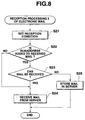
- a control section 507 of a PDA 5 incorporating a radio communication function in FIG. 3 reads out an electronic mail application from a storage medium 514, and executes electronic mail reception processing (to be referred to as electronic mail reception processing 2 hereinafter) according to the second embodiment.
- the control section 507 reads out the reception conditions registered in advance by the user from the storage medium 514, together with the application program, and sets and executes them.
- This reception condition is used to selectively use a subaddress that allows reception in accordance with a time zone or place or limit the use of a subaddress in accordance with a time zone or place in which reception is allowed.
- the control section 507 accesses the corresponding mailbox set in a storage medium 38 of a mail server 3 in response to a POP command. If there is newly received electronic mail in the mail server 3, the control section 507 refers to the header of the electronic mail to determine whether or not a subaddress is added to the mail.
- the control section 507 has a clocking function of measuring the time to detect a current status.
- the control section 507 also receives position information from the radio base station 4 to detect a current status.
- the control section 507 collates the current status such as the time and the position information with a reception allowable status corresponding to the subaddress added the received mail, thereby determining whether or not the reception of the newly received mail is allowed.
- the control section 507 receives (downloads) the electronic mail having a subaddress when the current status coincides with the reception allowable status corresponding to the subaddress. Otherwise, the control section 507 disconnects the communication channel and terminates electronic mail reception processing 2 without receiving the electronic mail newly received by the mail server 3.
- the control section 507 reads out the electronic mail application program from the storage medium 514, stores it in the work memory area in a RAM 512, and starts executing the program.
- the control section 507 then reads out reception conditions from the storage medium 514, and sets the reception allowable statuses and the corresponding subaddress in the RAM 512 (step S21).
- reception allowable statuses and the corresponding subaddress are input/registered by the user in advance and stored in the storage medium 514 in a storage unit 513.
- this reception allowable status for example, time information indicating that "only business mail can be received until 17 : 00" or the like and place information indicating that "only business mail can be received in office” or the like can be set corresponding to the subaddress. Note that this time measuring is performed by the clocking section of the control section 507, and detection of a place is realized by the base station information or area information obtained on the basis of position registration performed by the radio communication function.
- control section 507 When the user inputs an instruction to receive the mail with the key input section 508, as mentioned about, the control section 507 performs dial-up connection and login process with a provider.
- the PDA 5 TCP-connected to the mail server 3 in the above manner accesses the corresponding mailbox set in the storage medium 38 in a storage unit 37 of the mail server 3. If there is electronic mail newly received by the mail server 3, the control section 507 refers to the header of the electronic mail to determine whether or not a subaddress as an identifier is added to the destination mail address of the electronic mail (or in the header of the electronic mail) (step S22).
- control section 507 receives all the electronic mail having the mail address corresponding to the account from the mail server 3 (step S24), and disconnects the communication channel, thereby terminating the electronic mail reception processing.
- step S22 If it is determined in step S22 that a subaddress is added to the newly received electronic mail, the control section 507 receives the position information from the radio base station 4, and measures the time by using the clocking function. The control section 507 then collates the position information received from the radio base station 4 and the time measured by the clocking function with the reception allowable status corresponding to the subaddress, to determine whether or not the electronic mail having the subaddress can be received (step S23).
- control section 507 determines that the reception of the electronic mail is not allowed. The control section 507 then performs logout process without receiving the electronic mail from the mailbox set in the storage medium 38 in the storage unit 37 of the mail server 3 (step S25).
- control section 507 receives the electronic mail from the mail server 3 (step S24). The control section 507 then performs logout process and terminates the electronic mail reception processing.
- the PDA 5 incorporating the radio communication function is used to access the mail server 3 through the radio base stations 4 and the public network 2.
- each mailbox set in the storage medium 38 is divided into submailboxes in correspondence with subaddress for classifying a mail address into a plurality of destinations, or folders are prepared for the respective subaddress in the mail server 3 and classified according to the respective subaddress.
- the control section 507 may receive position information and measures the time to perform collation with the reception allowable status. Then, the control section 507 may access only the summaibox (folder) having the subaddress corresponding to the reception allowable status that coincides with the measured time and the mailbox (common folder) corresponding to the account, and receive the electronic mail.
- the control section 507 reads out the electronic mail application from the storage medium 514 and the input/registered reception allowable statuses, executes the application, and sets the reception allowable statuses.
- the PDA 5 incorporating the radio communication function is TCP-connected to the mail server 3 by predetermined connection processing, and accesses the corresponding mail box set in the storage medium 38 in the storage unit 37 of the mail server 3 according to a POP command.
- control section 507 refers to the header of the electronic mail to determine whether or not a subaddress as an identifier is added to the destination mail address of the electronic mail (or in the header of the electronic mail). If it is determined that no subaddress is added to the newly received electronic mail, the control section 507 receives the electronic mail to which only the mail address corresponding to the account is added from the mail server 3.
- control section 507 collates the position information received from the radio base station 4 and the time measured by the clocking function with the reception allowable status corresponding to the subaddress to determine whether or not the reception of the electronic mail having the subaddress is allowable.
- control section 507 determines that the electronic mail cannot be received. The control section 507 then disconnects the communication channel and terminates the electronic mail reception processing without receiving any electronic mail from the mail box set in the storage medium 38 in the storage unit 37 of the mail server 3. If it is determined that the reception of the electronic mail having the subaddress is allowed, the control section 507 determines that the electronic mail can be received. The control section 507 then receives the electronic mail from the mail server 3 and disconnects the communication channel, thereby terminating the electronic mail reception processing.
- each electronic mail can be manage independently.
- the following results can be obtained.
- each user need not acquire a plurality of accounts, and hence can save the charges for accounts.
- electronic mails can be selectively received as, for example, business mail and private mail, by making reception allowable statuses correspond to subaddress.
- reception allowable statuses are input/registered in advance to the storage medium 514, the reception allowable statuses are made to correspond to subaddress, and reception control is performed by using the base station information or area information based on position registration performed by clocking function of the control section 507 and the radio communication function, can be applied to the first embodiment.
- radio communication is performed through the radio base stations 4.
- the personal computer 6 is directly connected to the public network 2.
- subaddress and users are made to correspond to each other, and one mail address corresponding to each account is classified into addresses of respective users by the subaddress, thereby allowing a plurality of users to use the common account.
- the subaddress are made to correspond to the reception conditions, and one mail address corresponding to each account is classified into plural reception condition by the subaddress, thereby allowing each user to use the subaddress.
- radio communication is performed by using a so-called indoor base station (or parents base station of a cordless phone) 9 as a master unit with respect to a PDA 5 incorporating a radio communication function or a radio communication unit 7, and a personal computer 6 is wired to the indoor base station 9 to be used.
- Subaddress are made to correspond to the PDA 5, the radio communication unit 7, and the wired personal computer 6 which are used as subsidiary units so that one mail address corresponding to each account is classified into addresses of plural communication devices, e.g., personal computers, thereby allowing a plurality of devices to use the common account.
- the PDA 5 having the radio communication function, the radio communication unit 7, and the personal computer 6 wired to the indoor base station 9 can be used.
- the PDA 5 is used as a subsidiary unit of the indoor base station 9 will be exclusively described below.
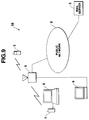
- FIG. 9 shows the configuration of an electronic mail system 10 according to the third embodiment.
- the PDA 5 having the radio communication function
- the personal computer 6, or the radio communication unit 7 connected to a notebook PC 8 can access, through the indoor base station 9, a mail server 3 connected to a public network 2.
- the indoor base station 9 can be used as a telephone set connected to the public network 2 through a line (e.g., a subscriber line) and also serves as a master unit when the PDA 5 or the radio communication unit 7 is used as a cordless phone.
- a line e.g., a subscriber line
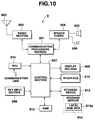
- FIG. 10 is a block diagram showing the configuration of the indoor base station 9.
- the indoor base station 9 is comprised of a communication processing section 901, an antenna 902, a radio section 903, a speech conversion circuit 904, a loudspeaker 905, a microphone 906, a control section 907, a key input section 908, a display section 909, an interface 910, a RAM 912, a storage unit 913, a storage medium 914, and an NCU 915.
- the communication processing section 901 converts the compressed speech signal input from the speech conversion circuit 904 or the compressed coded communication data input from the control section 907 into a signal conforming to a predetermined radio communication scheme, and outputs it to the radio section 903.
- the communication processing section 901 outputs the reception data string input from the radio section 903 to the control section 907 or outputs the received compressed speech signal to the speech conversion circuit 904.
- the antenna 902 transmits/receives radio transmission signals and radio reception signals in a predetermined frequency band between the PDA 5 incorporating the radio communication function and the radio communication unit 7.
- the radio section 903 is constituted by an RF conversion/modulation circuit and the like.
- the radio section 903 modulates the signal conforming to a predetermined communication scheme and input from the communication processing section 901 in accordance with a predetermined modulation scheme, converts the modulated signal into a transmission signal in a predetermined frequency band, and outputs it to the antenna 902.
- the radio section 903 also converts the radio signal in the predetermined frequency band which is input through the antenna 902 into an intermediate frequency signal, demodulates the radio reception signal conforming to the predetermined modulation scheme, converts the signal into a data string, and outputs it to the communication processing section 901.
- the speech conversion circuit 904 compressioncodes the speech input from the microphone 906, and outputs the resultant data to the communication processing section 901. In addition, the speech conversion circuit 904 decodes the compressed speech signal input from the communication processing section 901, converts the signal into an analog signal, and outputs it to the loudspeaker 905.
- the loudspeaker 905 outputs the analog speech signal input from the speech conversion circuit 904 as sounds.
- the microphone 906 senses user's speech, converts it into an analog speech signal, and outputs it to the speech conversion circuit 904.
- the loudspeaker 905 and the microphone 906 constitute a handset when the indoor base station 9 is used as a telephone set.
- the control section 907 reads out the designated application program of the application programs corresponding to the indoor base station 9 and stored in the storage medium 914 in the storage unit 913, and stores the program in the work memory area in the RAM 912, together with various instructions and data input with the key input section 908.
- the control section 907 then executes various processes in accordance with the input instruction and input data and the program stored in the RAM 912, stores the process result in the work memory area in the RAM 912, and displays it on the display section 909.
- the control section 907 stores the process result, stored in the work memory area, in the location in the storage medium 914 in the storage unit 913 which is designated by the input from the key input section 908.
- the control section 907 executes electronic mail termination notification processing (see FIG. 12) (to be described later) or executes electronic mail transfer processing (see FIG. 14) when an electronic mail transmission request in response to the mail termination notification is transmitted from the PDA 5 incorporating the radio communication function.
- the control section 907 installs a communication driver corresponding to a useable communication port, terminal, slot and the like (describe after) in a communication program. That is, the control section 907 communicates with an external apparatus through the communication port, terminal, slot or the like.
- the key input section 908 has various keys such as a power key, an off-hook key, an on-hook key, a ten-key pad, and a playback key, and outputs various operation keys corresponding to key input operations to the control section 907.
- the display section 909 is constituted by a liquid crystal panel and the like, and displays the display data input or designated by the control section 907.
- the interface 910 is comprised of an RS-232C terminal, an IrDA port, a PC card slot, and the like.
- the indoor base station 9 can be connected to a portable terminal, a desktop personal computer, or the like through the interface 910 using the communication program installed in the each communication driver.
- the personal computer 6 is connected through the RS-233C terminal.
- the RAM 912 forms a work memory area in which various data to be processed are temporarily stored when various control processes are executed by the control section 907.
- the storage medium 914 is permanently or detachably mounted in the storage unit 913.
- the storage medium 914 is a magnetic or optical recording medium or semiconductor memory.
- This storage medium 914 stores various control programs to be executed by the control section 907. These control programs are stored in the form of program codes that can be read by the control section 907.
- the above control programs include an electronic mail application.
- This electronic mail application is used to receive electronic mail by performing communication with the mail server 3 connected through a communication line according to an electronic mail protocol such as POP.
- This electronic mail application includes a program for electronic mail termination notification processing (see FIG. 12) (to be described later) and a program for electronic mail transfer processing (see FIG. 14) (to be described later), and manages the electronic mail sent to a plurality of subaddress corresponding to the respective terminals such as the PDA 5 incorporating the radio communication function, the personal computer 6, and the radio communication unit 7 in a unified way.
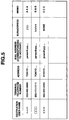
- a local mailbox 914a like the one shown in FIG. 11 is set in the storage medium 914 in the storage unit 913.
- a plurality of sets of terminal telephone numbers and terminal abilities are stored in the local mailbox 914a in correspondence with the respective subaddress, and received mail data are stored at the respective subaddress.
- Each of subaddress is added to a mail address allocated to one account when the mail address is to be classified into a plurality of destinations.
- the subaddress are the same as those described in detail in the first embodiment.
- the terminal telephone numbers are data for making the respective subaddress correspond to the respective terminals.
- data indicating the devices to which the terminal used by the user is to be connected are stored in correspondence with the respective subaddress.
- the telephone numbers of the PDA 5 incorporating the radio communication function and the radio communication unit 7 or the identification numbers of the terminals to be locally used, e.g., subsidiary unit numbers) are designated.
- the communication port number of the port, the terminal, or the slot to which the terminal is connected is designated.
- the terminal abilities are data representing the various abilities or specifications of the respective terminals corresponding to the respective subaddress.
- the types of terminals are set in FIG. 11, data indicating display performance, the presence/absence of a sound function, or graphic performance can be set in detail in practice.
- the ability information of each type of terminal may be stored in a ROM 911 in advance, and data indicating "terminal ability" may be automatically acquired by setting the product name of each terminal.
- the image data added to mail can be selectively processed. For example, this image data is not transferred to a terminal having no image display function, e.g., the PDA 5 incorporating the radio communication function.
- the NCU (Network Control Unit) 915 is a device (e.g., a TA (Terminal Adapter) as an ISDN network terminating device) to be used when the indoor base station 9 is connected to the public network 2 through a subscriber line to transmit/receive data.
- the NCU 915 performs control to make transmission/reception data pass through a switching apparatus.
- the electronic mail reception notification processing performed by the indoor base station 9 in FIG. 9 will be described first with reference to the flow chart of FIG. 12.
- the reception notification processing all the mails are simultaneously received from the mail server 3 through the public network 2, and each of the terminals corresponding to the respective subaddress is notified of reception of new mail.
- the control section 907 monitors whether the current time coincides with a predetermined time set by the user in advance (step S31) or not. If the current time does not coincide with the predetermined time, the control section 907 keeps monitoring whether the current time coincides with the predetermined time. If it is determined in step S31 that the current time coincides with the predetermined time, the control section 907 performs dial-up connection with a provider, personal computer communication company, or the like which has a mail server for managing the mail address of the user, in accordance with the dial-up connection settings set by the user, and performs login process corresponding to a login data (e.g., login name, password, etc.), and starts a reception procedure (step S32). In this case, the mail server is accessed at predetermined intervals. However, the mail server may be accessed upon reception of a termination notification based on an electronic mail termination notification service (the service of notifying the termination of electronic mail when the electronic mail is terminated by the server).
- an electronic mail termination notification service the service of notifying the termination
- the control section 907 reads out the dial-up connection setting data stored in the storage medium 914 in the storage unit 913, and outputs the telephone number data set in the dial-up connection setting data to the NCU 915.
- the NCU 915 transmits an originating request to the public network 2.
- the CPU 31 of the mail server 3 Upon reception of the signal representing the originating request from the NCU 915 of the indoor base station 9 through the public network 2, the CPU 31 of the mail server 3 performs termination response processing to connect a communication path to the indoor base station 9.
- the control section 907 transmits/receive data to/from the mail server 3 in accordance with the TCP/IP protocol setting data set in the dial-up connection setting data.
- control section 907 accesses the corresponding mail box set in a storage medium 38 in a storage unit 37 of the mail server 3 according to a POP command to determine whether there is newly received mail that is not downloaded yet (step S33). If it is determined that there is no non-downloaded mail, the control section 907 disconnects the call from the mail server 3 and terminates the electronic mail termination notification processing.
- control section 907 downloads the non-downloaded mail from the mail server 3 and receives it (step S34). The control section 907 then refers to the header of the received mail to determine whether a subaddress identifier is added to the destination mail address (or as extension information) of the received mail (step S35).
- step S35 If it is determined in step S35 that a subaddress is added to the received mail, the control section 907 stores the received mail in the corresponding memory area of the local mailbox 914a set for mail having subaddress in the storage medium 914 in the storage unit 913 (step S36).
- control section 907 stores the received mail in the common memory area in FIG. 11, which is set as an area used upon reception of general mail, in the storage medium 914 in the storage unit 913 (step S37).
- control section 907 refers to the terminal number set in correspondence with each subaddress in the local mailbox 914a in FIG. 11 to determine whether the terminal corresponding to the destination (subaddress) of the received mail is ready for communication or not(step S38).
- step S38 If it is determined in step S38 that the terminal corresponding to the destination of the received mail is not ready for communication because, for example, the terminal is not connected to the indoor base station 9, the power is OFF, or the terminal is outside the communication range, the control section 907 keeps monitoring whether the terminal corresponding the destination of the received mail is ready for communication or not. If it is determined in step S38 that the corresponding terminal is ready for communication, a mail reception notification is transmitted to the corresponding terminal to inform the terminal of the reception of a new mail addressed to the terminal (step S39). When the transmission of this mail termination notification is complete, the control section 907 disconnects the call from the mail server 3 and terminates the electronic mail termination notification processing.
- the above mail reception notification may be performed with character data. If the notification is addressed to the PDA 5 incorporating the radio communication function or the radio communication unit 7, the notification may be performed by using a speech message.
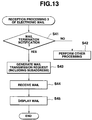
- the electronic mail reception processing performed by the PDA 5 incorporating the radio communication function in FIG. 9 will be described next with reference to the flow chart of FIG. 13.
- this reception processing when the PDA 5 receives an electronic mail reception notification upon electronic mail reception notification processing performed by the indoor base station 9, the PDA 5 receives the electronic mail addressed to itself from the indoor base station 9.
- control section 507 of the PDA 5 incorporating the radio communication function determines whether the mail reception notification is received from the indoor base station 9 or not(step S41). If it is determined that no mail reception notification is received, the control section 507 performs processing other than that associated with the mail server 3 (step S42).
- step S41 If it is determined in step S41 that the mail reception notification is received from the indoor base station 9, the control section 507 performs radio communication with the indoor base station 9 to transmit a transmission request (include subaddress) for the electronic mail corresponding to the mail reception notification received from the indoor base station 9 (step S43).
- the indoor base station 9 executes electronic mail transmission processing in accordance with the flow chart of FIG. 14, as will be described later.
- the PDA 5 receives the transmitted electronic mail (step S44), and stores the received electronic mail in the storage medium 514, and displays the received electronic mail (step S45).
- the control section 507 then disconnects the communication channel from the indoor base station 9 and terminates electronic mail reception processing 3 (step S46).
- the electronic mail transmission processing to be performed when the indoor base station 9 in FIG. 9 receives a mail transmission request from the PDA 5 incorporating the radio communication function will be described next with reference to the flow chart of FIG. 13.
- This transfer processing corresponds to the electronic mail transfer processing performed by the indoor base station 9 between steps S43 and S44 performed by the PDA 5, as shown in FIG. 14.
- control section 907 of the indoor base station 9 detects whether a mail transmission request is received from each terminal or not(step S51). If a reception of a mail transmission is not detected, the control section 907 performs processing other than that associated with the electronic mail transfer processing (step S52).
- the control section 907 of the indoor base station 9 connects a communication path to the mail server 3 and refers to the "terminal ability" set, in correspondence with each "subaddress", in the local mailbox 914a, shown in FIG. 11, set in the storage medium 914 in the storage unit 913 to determine the terminal as the transmission source of the mail transmission request.
- the control section 907 then transmits common (general) mail corresponding to the subaddress of the determined terminal and the mail address allocated to the account (step S53).
- the PDA 5 incorporating the radio communication function and the radio communication unit 7 perform radio communication by using the indoor base station 9 as a master unit.
- dial-up connection may be performed with respect to the telephone number set in the indoor base station 9.
- the indoor base station 9 executes the electronic mail termination notification processing shown in FIG. 12, and accesses the corresponding mail box of the mail server 3 at a predetermined timing (predetermined time set by the user in advance, an electronic mail termination notification service, or the like).
- a predetermined timing predetermined time set by the user in advance, an electronic mail termination notification service, or the like.
- the indoor base station 9 downloads the non-downloaded mail from the mail server 3, and refers to the header of the received mail to determine whether a subaddress identifier is added to the destination mail address of the received mail or not.
- the received mail is stored in the corresponding memory area in the local mail box 914a.
- the indoor base station 9 then refers to the "terminal number" set in correspondence with each "subaddress" in the local mailbox 914a in FIG. 11 to determine whether the terminal corresponding to the subaddress indicating the destination of the received mail is ready for communication or not. If it is determined that the corresponding terminal is ready for communication, a mail termination notification is transmitted to the corresponding terminal.
- the communication terminal Upon reception of the mail termination notification from the indoor base station 9, the communication terminal (the PDA 5 incorporating the radio communication function, the radio communication unit 7, the personal computer 6, or the like) transmits a transmission request for the electronic mail corresponding to the received mail termination notification to the indoor base station 9.
- the indoor base station 9 executes electronic mail transfer processing (see FIG. 14) and refers to the "terminal ability" set in correspondence with each "subaddress" in the local mail box 914a, thereby transmitting the mail corresponding to the communication terminal.
- the communication terminal receives and stores the transmitted electronic mail.
- the indoor base station 9 that has collectively received electronic mail from the mail server 3 can transmit a mail termination notification to each terminal, the user of each terminal can know the reception of electronic mail at any time. This can enhance the usefulness of the electronic mail service.
- the radio communication performed by the PDA 5 incorporating the radio communication function, the radio communication unit 7, and the like may be performed by a mobile communication scheme using a mobile telephone, portable telephone, PHS, or the like.
- the first to third embodiments of the present invention have exemplified the electronic mail communication systems 1 and 10 designed to provide electronic mail services.
- the present invention can be applied to other mail services (voice mail, character mail for pagers, and the like).
- the indoor base station 9 serves as a master unit for the PDA 5 incorporating the radio communication function and the radio communication unit 7 to perform radio communication.
- a file server in a personal computer LAN may have the same function as that of the indoor base station 9 to connect a public network to the LAN through a gateway device, and mail notification processing may be performed for the terminal or personal computer connected to the LAN.
- the file server having the same function as that of the indoor base station 9 may be an electronic mail communication system for receiving electronic mail having undergone communication protocol conversion and the like from the mail server 3 through the gateway device, and performing mail termination notification and mail transmission with respect to the PDA 5 incorporating the radio communication function, the radio telephone unit 7, and the PC 6 wired to the LAN on the basis of the local mail box 914a.
- the PCs 6 need not be connected to each other through wires. That is, the present invention can be applied to a so-called radio LAN in which PCs are connected to each other through radio waves, infrared rays, laser beams, or the like.
- the same effects as those of the third embodiment can be obtained in a personal computer LAN in an office or the like.
- reception control is performed such that a reception condition and a subaddress can be set in each terminal as in the second embodiment, in particular, the user of each terminal can know the reception of electronic mail at any time even on the move. This can further enhance the usefulness of electronic mail services.
- the configuration of the second embodiment i.e., the configuration in which a reception condition is input to the storage medium 514 in advance, the reception condition is made to correspond to a subaddress, and reception control is performed by using the clocking function of the control section 507 and the base station information or area information based on position registration performed by the radio communication function, can be applied to the third embodiment.
- an electronic mail communication apparatus As described in the first to third embodiments, there are provided an electronic mail communication apparatus, electronic mail system, electronic mail communication method, and electronic mail transmission method which can send electronic mail to a plurality of destinations, as needed, by adding each subaddress to the mail address allocated to one account.
Landscapes
- Engineering & Computer Science (AREA)
- Business, Economics & Management (AREA)
- Human Resources & Organizations (AREA)
- Strategic Management (AREA)
- Entrepreneurship & Innovation (AREA)
- Marketing (AREA)
- Physics & Mathematics (AREA)
- Computer Hardware Design (AREA)
- Signal Processing (AREA)
- Economics (AREA)
- Computer Networks & Wireless Communication (AREA)
- Operations Research (AREA)
- Quality & Reliability (AREA)
- Tourism & Hospitality (AREA)
- Data Mining & Analysis (AREA)
- General Business, Economics & Management (AREA)
- General Physics & Mathematics (AREA)
- Theoretical Computer Science (AREA)
- Information Transfer Between Computers (AREA)
- Data Exchanges In Wide-Area Networks (AREA)
- Mobile Radio Communication Systems (AREA)
- Computer And Data Communications (AREA)
Applications Claiming Priority (2)
| Application Number | Priority Date | Filing Date | Title |
|---|---|---|---|
| JP9361402A JPH11196121A (ja) | 1997-12-26 | 1997-12-26 | メール通信装置、メールシステム、及びメール通信方法 |
| JP36140297 | 1997-12-26 |
Publications (2)
| Publication Number | Publication Date |
|---|---|
| EP0926612A2 true EP0926612A2 (de) | 1999-06-30 |
| EP0926612A3 EP0926612A3 (de) | 2000-06-07 |
Family
ID=18473438
Family Applications (1)
| Application Number | Title | Priority Date | Filing Date |
|---|---|---|---|
| EP98124557A Withdrawn EP0926612A3 (de) | 1997-12-26 | 1998-12-22 | Kommunikationsapparat für elektronische Post, System für elektronische Post und Kommunikationsverfahren für elektronische Post |
Country Status (3)
| Country | Link |
|---|---|
| US (1) | US6393463B1 (de) |
| EP (1) | EP0926612A3 (de) |
| JP (1) | JPH11196121A (de) |
Cited By (7)
| Publication number | Priority date | Publication date | Assignee | Title |
|---|---|---|---|---|
| WO2002046957A1 (en) * | 2000-12-05 | 2002-06-13 | Nokia Corporation | A method of distributing messages |
| EP1173037A3 (de) * | 2000-07-14 | 2002-07-10 | NTT DoCoMo, Inc. | Standortsregistrationsverfahren mit Unterstützung für mehrere SIM Karten mit unterschiedlichen Funktionen |
| WO2002062027A1 (en) * | 2001-02-01 | 2002-08-08 | Emidex Oy | Method, system and server for sending and receiving e-mails with different addresses |
| US6832244B1 (en) * | 2000-09-21 | 2004-12-14 | International Business Machines Corporation | Graphical e-mail content analyser and prioritizer including hierarchical email classification system in an email |
| EP1190335A4 (de) * | 2000-03-07 | 2007-05-16 | Sun Microsystems Inc | Vorrangsregeln in elektronischen narchrichtenservern |
| EP1944931A1 (de) * | 2007-01-15 | 2008-07-16 | NTT DoCoMo, Inc. | Mobiles Endgerät, Servervorrichtung und mobiles Kommunikationsnetzwerksystem zum Erzeugen von Webmails nach einer Bearbeitungsunterbrechung |
| US7801979B2 (en) | 2002-11-18 | 2010-09-21 | Brother Kogyo Kabushiki Kaisha | Communication system having common e-mail address for plurality of devices |
Families Citing this family (30)
| Publication number | Priority date | Publication date | Assignee | Title |
|---|---|---|---|---|
| US20020049818A1 (en) * | 1998-05-29 | 2002-04-25 | Gilhuly Barry J. | System and method for pushing encrypted information between a host system and a mobile data communication device |
| US7209949B2 (en) | 1998-05-29 | 2007-04-24 | Research In Motion Limited | System and method for synchronizing information between a host system and a mobile data communication device |
| US6219694B1 (en) * | 1998-05-29 | 2001-04-17 | Research In Motion Limited | System and method for pushing information from a host system to a mobile data communication device having a shared electronic address |
| US9374435B2 (en) | 1998-05-29 | 2016-06-21 | Blackberry Limited | System and method for using trigger events and a redirector flag to redirect messages |
| US6721954B1 (en) * | 1999-06-23 | 2004-04-13 | Gateway, Inc. | Personal preferred viewing using electronic program guide |
| US6247045B1 (en) | 1999-06-24 | 2001-06-12 | International Business Machines Corporation | Method and apparatus for sending private messages within a single electronic message |
| US6606648B1 (en) * | 1999-06-25 | 2003-08-12 | Qwest Communications International Inc. | Method for handling accesses to a mailbox |
| US7058683B1 (en) | 1999-07-20 | 2006-06-06 | Sun Microsystems, Inc. | Methods and apparatus for providing a virtual host in electronic messaging servers |
| US9092535B1 (en) | 1999-09-21 | 2015-07-28 | Google Inc. | E-mail embedded textual hyperlink object |
| US6360221B1 (en) * | 1999-09-21 | 2002-03-19 | Neostar, Inc. | Method and apparatus for the production, delivery, and receipt of enhanced e-mail |
| US6622161B1 (en) * | 1999-11-02 | 2003-09-16 | International Business Machines Corporation | Information transfer applications |
| EP1137236A1 (de) * | 2000-03-24 | 2001-09-26 | BRITISH TELECOMMUNICATIONS public limited company | Verarbeitung von Netzadressenidentifikatoren |
| EP1137235A1 (de) * | 2000-03-24 | 2001-09-26 | BRITISH TELECOMMUNICATIONS public limited company | Verarbeitung von Netzkommunikationssteuernachrichten |
| JP2001306463A (ja) * | 2000-04-20 | 2001-11-02 | Matsushita Graphic Communication Systems Inc | メール通知装置及び携帯電話装置 |
| JP3575790B2 (ja) * | 2000-05-08 | 2004-10-13 | 株式会社コムアップ | 情報共有システム及び方法 |
| US7200634B2 (en) * | 2000-05-10 | 2007-04-03 | Chikka Pte Ltd. | Instant messaging account system |
| JP2001337182A (ja) * | 2000-05-26 | 2001-12-07 | Matsushita Electric Ind Co Ltd | 携帯端末装置 |
| WO2001097142A2 (en) * | 2000-06-15 | 2001-12-20 | Bellsouth Intellectual Property Corporation | Electronic mail (email) internet appliance methods and systems |
| JP2004535608A (ja) * | 2000-10-19 | 2004-11-25 | フェザーズ カーク | インターネットの関連性を動的に維持するための方法およびシステム |
| WO2003001825A1 (en) * | 2001-06-25 | 2003-01-03 | Ram Jethanand Balani | Method and device for effecting venue specific wireless communication |
| JP2003085131A (ja) * | 2001-09-14 | 2003-03-20 | Sony Corp | ネットワーク情報処理システム及び情報処理方法 |
| KR100421019B1 (ko) * | 2001-12-18 | 2004-03-04 | 삼성전자주식회사 | 인증절차를 구비하는 전자메일 프린터 및 프린팅 방법 |
| US20030172118A1 (en) * | 2002-03-05 | 2003-09-11 | International Business Machines Corporation | Method and apparatus for providing post office protocol 3 support for limited storage devices |
| US20040078433A1 (en) * | 2002-10-17 | 2004-04-22 | Cheng-Shing Lai | Electronic mail retrieval and notice system for cellular phones |
| US7200637B2 (en) * | 2003-07-16 | 2007-04-03 | Thomas John Klos | System for processing electronic mail messages with specially encoded addresses |
| JP2005227825A (ja) * | 2004-02-10 | 2005-08-25 | Matsushita Electric Works Ltd | 機器監視制御装置 |
| US20060062358A1 (en) * | 2004-09-23 | 2006-03-23 | Sbc Knowledge Ventures L.P. | Method and apparatus for shared line FMFM sub-mailbox determination, dynamic out dialing and call path duplication in a telephone system |
| US20100161737A1 (en) * | 2008-12-23 | 2010-06-24 | Microsoft Corporation | Techniques to manage electronic mail personal archives |
| JP5062210B2 (ja) * | 2009-03-26 | 2012-10-31 | 株式会社デンソー | 近距離無線通信機能付きメール操作装置 |
| US8301662B2 (en) * | 2009-03-31 | 2012-10-30 | Microsoft Corporation | Sub-mailbox folder hierarchy to represent a separate physical mailbox to a user |
Family Cites Families (10)
| Publication number | Priority date | Publication date | Assignee | Title |
|---|---|---|---|---|
| US5200994A (en) * | 1988-08-12 | 1993-04-06 | Kabushiki Kaisha Toshiba | Communication terminal apparatus and control method with party identification features |
| GB8918553D0 (en) | 1989-08-15 | 1989-09-27 | Digital Equipment Int | Message control system |
| JP3130529B2 (ja) * | 1990-09-13 | 2001-01-31 | 株式会社東芝 | 通信端末装置 |
| JPH04326226A (ja) | 1991-04-25 | 1992-11-16 | Ricoh Co Ltd | Isdnとlanの接続方式 |
| KR100227181B1 (ko) * | 1992-07-20 | 1999-10-15 | 비센트 비.인그라시아 | 무선 데이타 인터페이스 장치 |
| US5521719A (en) | 1993-03-22 | 1996-05-28 | Ricoh Company, Ltd. | Communication apparatus having improved group 3 facsimile subaddress communication function |
| CA2152942C (en) | 1993-11-01 | 2000-08-01 | Michael David Fehnel | A message transmission system and method for a radiocommunication system |
| US5742905A (en) | 1994-09-19 | 1998-04-21 | Bell Communications Research, Inc. | Personal communications internetworking |
| JP3503435B2 (ja) * | 1996-08-30 | 2004-03-08 | カシオ計算機株式会社 | データベースシステム、データ管理システム、携帯通信端末、及び、データ提供方法 |
| US6097797A (en) * | 1997-05-19 | 2000-08-01 | Ricoh Company, Ltd. | Network facsimile apparatus capable of E-mail communications |
-
1997
- 1997-12-26 JP JP9361402A patent/JPH11196121A/ja active Pending
-
1998
- 1998-12-18 US US09/216,432 patent/US6393463B1/en not_active Expired - Lifetime
- 1998-12-22 EP EP98124557A patent/EP0926612A3/de not_active Withdrawn
Cited By (8)
| Publication number | Priority date | Publication date | Assignee | Title |
|---|---|---|---|---|
| EP1190335A4 (de) * | 2000-03-07 | 2007-05-16 | Sun Microsystems Inc | Vorrangsregeln in elektronischen narchrichtenservern |
| EP1173037A3 (de) * | 2000-07-14 | 2002-07-10 | NTT DoCoMo, Inc. | Standortsregistrationsverfahren mit Unterstützung für mehrere SIM Karten mit unterschiedlichen Funktionen |
| US7349697B2 (en) | 2000-07-14 | 2008-03-25 | Ntt Docomo, Inc. | Mobile communication system, mobile terminal, subscriber information management apparatus, mobile network system, location area information registration method and call control method |
| US6832244B1 (en) * | 2000-09-21 | 2004-12-14 | International Business Machines Corporation | Graphical e-mail content analyser and prioritizer including hierarchical email classification system in an email |
| WO2002046957A1 (en) * | 2000-12-05 | 2002-06-13 | Nokia Corporation | A method of distributing messages |
| WO2002062027A1 (en) * | 2001-02-01 | 2002-08-08 | Emidex Oy | Method, system and server for sending and receiving e-mails with different addresses |
| US7801979B2 (en) | 2002-11-18 | 2010-09-21 | Brother Kogyo Kabushiki Kaisha | Communication system having common e-mail address for plurality of devices |
| EP1944931A1 (de) * | 2007-01-15 | 2008-07-16 | NTT DoCoMo, Inc. | Mobiles Endgerät, Servervorrichtung und mobiles Kommunikationsnetzwerksystem zum Erzeugen von Webmails nach einer Bearbeitungsunterbrechung |
Also Published As
| Publication number | Publication date |
|---|---|
| JPH11196121A (ja) | 1999-07-21 |
| EP0926612A3 (de) | 2000-06-07 |
| US6393463B1 (en) | 2002-05-21 |
Similar Documents
| Publication | Publication Date | Title |
|---|---|---|
| US6393463B1 (en) | Electronic mail communication apparatus, electronic mail system, and electronic mail communication method | |
| US7596374B2 (en) | Data backup system and method for mobile communication terminal, mobile communication terminal and backup device used for same, and backup data transmission method | |
| US7085253B2 (en) | System and method for notifying a user of the status of other mobile terminals | |
| US7395313B2 (en) | Method and system for controlling multiple remote mailboxes simultaneously connected to a plurality of PDP connections of a GPRS system | |
| EP0889660B1 (de) | Schnurloses Informationsverarbeitungsendgerät und Steuerungsverfahren dazu | |
| EP1179950A2 (de) | System zur Kommunikationssteuerung mittels eines Telefonverzeichnises | |
| US6865385B1 (en) | Status notification method and status notification system | |
| JP2002261834A (ja) | 通信処理方法及び装置 | |
| US7194507B2 (en) | Method and apparatus for setting communication parameter in information terminal | |
| JP4163322B2 (ja) | 通信制御方法及び移動通信端末 | |
| US7543028B2 (en) | Electronic mail distribution method, communications terminal, and server device | |
| JP2000032168A (ja) | 情報提供サービスシステム | |
| JP2000341749A (ja) | モバイル端末の接続管理方法及び方式 | |
| JP3925573B2 (ja) | 情報通信システムおよび情報通信方法 | |
| MXPA04010707A (es) | Metodos y aparatos para la comunicacion de informacion de red celular entre una red de area local inalambrica y una estacion movil. | |
| HK1022357A (en) | Electronic mail communication apparatus, electronic mail system and electronic mail communication method | |
| GB2367205A (en) | Opening up a connection across a computer network | |
| KR100467544B1 (ko) | 유무선 통신단말장치에서의 메시지 통합관리방법 | |
| JP4166674B2 (ja) | 端末情報管理装置、端末装置、電子機器装着端末情報通知システム、及び、電子機器装着端末情報通知方法 | |
| JP2002328872A (ja) | 電子メールシステム及び電子メール返信方法 | |
| KR20050070175A (ko) | 무선랜을 이용한 브이오아이피 무선전화간 직접 정보교환방법 | |
| JP2001053881A (ja) | 移動体通信端末システム | |
| JP2003259449A (ja) | 構内無線通信システム及びWebサーバ | |
| JP2998620B2 (ja) | 無線通信システム | |
| JP2000069075A (ja) | アウェアネスを用いたコミュニケーションシステム、サーバ装置および端末装置 |
Legal Events
| Date | Code | Title | Description |
|---|---|---|---|
| PUAI | Public reference made under article 153(3) epc to a published international application that has entered the european phase |
Free format text: ORIGINAL CODE: 0009012 |
|
| 17P | Request for examination filed |
Effective date: 19981222 |
|
| AK | Designated contracting states |
Kind code of ref document: A2 Designated state(s): DE FR GB |
|
| AX | Request for extension of the european patent |
Free format text: AL;LT;LV;MK;RO;SI |
|
| PUAL | Search report despatched |
Free format text: ORIGINAL CODE: 0009013 |
|
| AK | Designated contracting states |
Kind code of ref document: A3 Designated state(s): AT BE CH CY DE DK ES FI FR GB GR IE IT LI LU MC NL PT SE |
|
| AX | Request for extension of the european patent |
Free format text: AL;LT;LV;MK;RO;SI |
|
| AKX | Designation fees paid |
Free format text: DE FR GB |
|
| STAA | Information on the status of an ep patent application or granted ep patent |
Free format text: STATUS: THE APPLICATION HAS BEEN WITHDRAWN |
|
| 18W | Application withdrawn |
Effective date: 20051019 |
|
| REG | Reference to a national code |
Ref country code: HK Ref legal event code: WD Ref document number: 1022357 Country of ref document: HK |