EP0907074B1 - Capteur optique pour la détection d'espèces chimiques - Google Patents
Capteur optique pour la détection d'espèces chimiques Download PDFInfo
- Publication number
- EP0907074B1 EP0907074B1 EP98890284A EP98890284A EP0907074B1 EP 0907074 B1 EP0907074 B1 EP 0907074B1 EP 98890284 A EP98890284 A EP 98890284A EP 98890284 A EP98890284 A EP 98890284A EP 0907074 B1 EP0907074 B1 EP 0907074B1
- Authority
- EP
- European Patent Office
- Prior art keywords
- optical sensor
- sensor according
- luminescence
- oxygen
- matrix
- Prior art date
- Legal status (The legal status is an assumption and is not a legal conclusion. Google has not performed a legal analysis and makes no representation as to the accuracy of the status listed.)
- Expired - Lifetime
Links
Images


Classifications
-
- G—PHYSICS
- G01—MEASURING; TESTING
- G01N—INVESTIGATING OR ANALYSING MATERIALS BY DETERMINING THEIR CHEMICAL OR PHYSICAL PROPERTIES
- G01N21/00—Investigating or analysing materials by the use of optical means, i.e. using sub-millimetre waves, infrared, visible or ultraviolet light
- G01N21/62—Systems in which the material investigated is excited whereby it emits light or causes a change in wavelength of the incident light
- G01N21/63—Systems in which the material investigated is excited whereby it emits light or causes a change in wavelength of the incident light optically excited
- G01N21/64—Fluorescence; Phosphorescence
- G01N21/6408—Fluorescence; Phosphorescence with measurement of decay time, time resolved fluorescence
-
- G—PHYSICS
- G01—MEASURING; TESTING
- G01N—INVESTIGATING OR ANALYSING MATERIALS BY DETERMINING THEIR CHEMICAL OR PHYSICAL PROPERTIES
- G01N21/00—Investigating or analysing materials by the use of optical means, i.e. using sub-millimetre waves, infrared, visible or ultraviolet light
- G01N21/62—Systems in which the material investigated is excited whereby it emits light or causes a change in wavelength of the incident light
- G01N21/63—Systems in which the material investigated is excited whereby it emits light or causes a change in wavelength of the incident light optically excited
- G01N21/64—Fluorescence; Phosphorescence
- G01N21/6428—Measuring fluorescence of fluorescent products of reactions or of fluorochrome labelled reactive substances, e.g. measuring quenching effects, using measuring "optrodes"
-
- G—PHYSICS
- G01—MEASURING; TESTING
- G01N—INVESTIGATING OR ANALYSING MATERIALS BY DETERMINING THEIR CHEMICAL OR PHYSICAL PROPERTIES
- G01N21/00—Investigating or analysing materials by the use of optical means, i.e. using sub-millimetre waves, infrared, visible or ultraviolet light
- G01N21/62—Systems in which the material investigated is excited whereby it emits light or causes a change in wavelength of the incident light
- G01N21/63—Systems in which the material investigated is excited whereby it emits light or causes a change in wavelength of the incident light optically excited
- G01N21/64—Fluorescence; Phosphorescence
- G01N21/6428—Measuring fluorescence of fluorescent products of reactions or of fluorochrome labelled reactive substances, e.g. measuring quenching effects, using measuring "optrodes"
- G01N2021/6432—Quenching
-
- G—PHYSICS
- G01—MEASURING; TESTING
- G01N—INVESTIGATING OR ANALYSING MATERIALS BY DETERMINING THEIR CHEMICAL OR PHYSICAL PROPERTIES
- G01N21/00—Investigating or analysing materials by the use of optical means, i.e. using sub-millimetre waves, infrared, visible or ultraviolet light
- G01N21/62—Systems in which the material investigated is excited whereby it emits light or causes a change in wavelength of the incident light
- G01N21/63—Systems in which the material investigated is excited whereby it emits light or causes a change in wavelength of the incident light optically excited
- G01N21/64—Fluorescence; Phosphorescence
- G01N21/6428—Measuring fluorescence of fluorescent products of reactions or of fluorochrome labelled reactive substances, e.g. measuring quenching effects, using measuring "optrodes"
- G01N2021/6434—Optrodes
-
- G—PHYSICS
- G01—MEASURING; TESTING
- G01N—INVESTIGATING OR ANALYSING MATERIALS BY DETERMINING THEIR CHEMICAL OR PHYSICAL PROPERTIES
- G01N21/00—Investigating or analysing materials by the use of optical means, i.e. using sub-millimetre waves, infrared, visible or ultraviolet light
- G01N21/75—Systems in which material is subjected to a chemical reaction, the progress or the result of the reaction being investigated
- G01N21/77—Systems in which material is subjected to a chemical reaction, the progress or the result of the reaction being investigated by observing the effect on a chemical indicator
- G01N21/7703—Systems in which material is subjected to a chemical reaction, the progress or the result of the reaction being investigated by observing the effect on a chemical indicator using reagent-clad optical fibres or optical waveguides
- G01N2021/7706—Reagent provision
- G01N2021/773—Porous polymer jacket; Polymer matrix with indicator
-
- G—PHYSICS
- G01—MEASURING; TESTING
- G01N—INVESTIGATING OR ANALYSING MATERIALS BY DETERMINING THEIR CHEMICAL OR PHYSICAL PROPERTIES
- G01N21/00—Investigating or analysing materials by the use of optical means, i.e. using sub-millimetre waves, infrared, visible or ultraviolet light
- G01N21/75—Systems in which material is subjected to a chemical reaction, the progress or the result of the reaction being investigated
- G01N21/77—Systems in which material is subjected to a chemical reaction, the progress or the result of the reaction being investigated by observing the effect on a chemical indicator
- G01N2021/7756—Sensor type
- G01N2021/7763—Sample through flow
-
- G—PHYSICS
- G01—MEASURING; TESTING
- G01N—INVESTIGATING OR ANALYSING MATERIALS BY DETERMINING THEIR CHEMICAL OR PHYSICAL PROPERTIES
- G01N21/00—Investigating or analysing materials by the use of optical means, i.e. using sub-millimetre waves, infrared, visible or ultraviolet light
- G01N21/75—Systems in which material is subjected to a chemical reaction, the progress or the result of the reaction being investigated
- G01N21/77—Systems in which material is subjected to a chemical reaction, the progress or the result of the reaction being investigated by observing the effect on a chemical indicator
- G01N2021/7769—Measurement method of reaction-produced change in sensor
- G01N2021/7786—Fluorescence
-
- Y—GENERAL TAGGING OF NEW TECHNOLOGICAL DEVELOPMENTS; GENERAL TAGGING OF CROSS-SECTIONAL TECHNOLOGIES SPANNING OVER SEVERAL SECTIONS OF THE IPC; TECHNICAL SUBJECTS COVERED BY FORMER USPC CROSS-REFERENCE ART COLLECTIONS [XRACs] AND DIGESTS
- Y10—TECHNICAL SUBJECTS COVERED BY FORMER USPC
- Y10T—TECHNICAL SUBJECTS COVERED BY FORMER US CLASSIFICATION
- Y10T436/00—Chemistry: analytical and immunological testing
- Y10T436/20—Oxygen containing
-
- Y—GENERAL TAGGING OF NEW TECHNOLOGICAL DEVELOPMENTS; GENERAL TAGGING OF CROSS-SECTIONAL TECHNOLOGIES SPANNING OVER SEVERAL SECTIONS OF THE IPC; TECHNICAL SUBJECTS COVERED BY FORMER USPC CROSS-REFERENCE ART COLLECTIONS [XRACs] AND DIGESTS
- Y10—TECHNICAL SUBJECTS COVERED BY FORMER USPC
- Y10T—TECHNICAL SUBJECTS COVERED BY FORMER US CLASSIFICATION
- Y10T436/00—Chemistry: analytical and immunological testing
- Y10T436/20—Oxygen containing
- Y10T436/207497—Molecular oxygen
Definitions
- the invention relates to an optical chemical sensor with a matrix which has a luminescence indicator whose luminescence can be quenched or quenched with oxygen.
- optical sensors hereinafter referred to simply as “optical sensors” or “sensors”, are now widely used, preferably in the form of membranes, in sensor configurations to detect certain substances, such as oxygen or glucose, in a sample
- Optical sensors are used, for example, in environmental measurement technology and in emergency medicine (blood gas analysis)
- the operation of optical sensors and the basic structure of a sensor configuration which generally comprises a multilayer optical sensor, an excitation light source and an optoelectronic detection system , is described in the literature (eg Sensors and Actuators B 11 (1993), pp. 281-289, Sensors and Actuators B 29 (1995), pp. 169-173).
- Lübbers US Pat. No. RE 31,879 describes a luminescence-optical oxygen sensor with the indicator pyrenebutyric acid, optionally stirred into a high-permeability oxygen-permeable silicon matrix whose sensitive layer is between a light-permeable cover layer and an oxygen-permeable base layer which is in contact with the fluid under investigation. is installed.
- Marsoner describes an oxygen sensor with modified dyes which are readily soluble in silicone and thus offer increased stability of the sensor against aggregation of the dye molecules.
- the sensor is going through Stir the dye into a prepolymer and then polymerize to silicone.
- US-A-5,242,835 to Jensen discloses a method of increasing the concentration of oxygen in a sample by detecting the emission of the singlet oxygen itself excited by energy transfer upon quenching of the luminescence, which occurs at about a wavelength of 1270 nm determine.
- This method is also susceptible to photo-decomposition of indicator or matrix by just this reactive singlet oxygen, since the latter in a photochemical reaction falls back radiationless in the ground state and also the sensitizer molecules (indicators), which are used for the production of singlet oxygen, attacked become.
- optical chemical sensors generally contain dyes which react to a change in concentration of the substance to be analyzed within the sensitive layer with a change in their photophysical properties. For example, luminescence intensity and decay time of oxygen sensors decrease with increasing oxygen concentration in the sensitive layer.
- a mere decrease in the luminescence intensity leads to a relative increase in the background fluorescence and thus to a change in the calibration curves.
- a decrease in the luminescence intensity is a problem for all sensor systems, as a result, the amount of radiation to be measured decreases so far that the dynamic range of the receiver electronics is left.
- Particularly problematic is the decrease of the luminescence intensity for sensor systems based on intensity measurement of the luminescence, but also for measuring systems which evaluate a phase shift of the luminescence due to the finite lifetime of the excited states of the dye molecules.
- K SV is the Stern-Volmer constant
- k q is the bimolecular deactivation rate
- [Q] is the concentration of the quencher.
- I is the luminescence intensity and ⁇ is its decay time. The index 0 indicates the absence of the quencher.
- the luminescence decay function can be described by a multi-exponential model (equation 2).
- i (t) is the time course of the emission after a comparatively short excitation pulse.
- B i are the amplitudes.
- ⁇ i are the time constants, and
- m is the number of simple exponential model functions (index i) whose sum can be used to describe the decay function.
- f 0i is the relative proportion of the ith cooldown component.
- ⁇ av is a mean decay time, weighted by the amplitudes B i .
- Such a sensor system generally has the well-known optical arrangement, as shown schematically in FIG.
- This sensor system comprises: a light source 1 for excitation light of a suitable wavelength (suitable for the absorption spectrum of the luminescent dye), a detector 2 for detecting the luminescence of the sensor 3, which comprises a sensitive layer 4 containing the luminescence indicator, an optical insulating layer 5 and a transparent support 6, filters 7, 8 for the excitation light or the emitted light, a beam splitter 9 and a measuring cell 10, which may be, for example, a flow tube through which the sample to be examined is transported.
- the transport direction of the sample is symbolized in FIG. 1 by an arrow.
- the sample to be analyzed e.g. Blood in which the oxygen concentration is to be determined is transported through the flow tube 10 and comes into contact with the optical insulating layer 5, which is permeable to oxygen.
- the oxygen passes through the optical isolation layer 5 into the sensitive layer 4, which comprises a matrix of e.g. a polymer in which the luminescence indicator for oxygen is located.
- the luminescence indicator is excited by excitation light 11, which comes from the light source 1, for luminescence, which is quenched by oxygen concentration-dependent.
- the emission 12 is detected electronically in the detector 2, and this value is used to calculate the oxygen concentration in the sample.
- the object of the invention is to propose an optical sensor which does not have the above-mentioned disadvantage and has an increased stability to photoinduced decomposition.
- the optical sensor according to the invention with a matrix which has a luminescence indicator whose luminescence can be quenched with oxygen is characterized in that the sensor for stabilizing the luminescence indicator and the matrix has at least one means which can deactivate singlet oxygen.
- the invention is based on the recognition that, in sensors which contain molecular oxygen in the matrix during operation, it is because oxygen is the analyte or, in the case of a other analytes - because molecular oxygen, together with the analyte as an adjunct to the sample to be analyzed, has diffused into the sensor, the photoinduced decomposition is primarily due to singlet oxygen, and it is possible to detect the singlet oxygen present in the sensor is so effectively deactivated that the photoinduced decomposition of the luminescence indicator is pushed back.
- Atkinson describes in "Use of tertiary amino-groups as substituents to stabilize compounds toward attack by singlet oxygen" (Journal of the Chemical Society, Perkin Transactions 1, 1973, pp. 960-964) the possibility of chemically bonding a tertiary amino group via an alkyl group on anthracene, this dye is effectively protected against decomposition by singlet oxygen, which has come about methylene blue in the excited state.
- Mahoney describes the stabilization of laser dyes by the controlled addition of trialkylamines, which convert carbonyl groups of the laser dye into fewer photosensitive alcohol groups and serve as radical scavengers.
- HALS hindered amine light stabilizers
- Particularly effective agents for deactivating singlet oxygen have been found in the present invention, which have at least one amino group, preferably a tertiary amino group.
- deactivating singlet oxygen has been shown to be particularly effective: a hindered amine light stabilizer (HALS), a transition metal complex, preferably a complex of a dialkyl dithiocarbamate, dialkyl dithiophosphate or a Schiff base and a transition metal ion, wherein the transition metal ion on the Ni (II), Co (II), Zn (II) or Fe (III), a salt with the anions Cl - , Br - , J - or NO 3 - , or a carotenoid.
- HALS hindered amine light stabilizer
- the means for deactivating singlet oxygen may be included in the matrix, i. in the form of a mixture with the matrix. However, it can also be bound to the matrix, which effectively prevents diffusion out of the matrix.
- the agent can also be bound to the luminescence indicator, optionally via a group - (CH 2 ) n -, in which n is an integer from 3 to 20. This has the advantage that a particularly effective protection against photodecomposition is given, since the agent is in the immediate vicinity of the indicator.
- the matrix is preferably a polymer, especially polystyrene, polyvinyl chloride, plasticized polyvinyl chloride, polymethyl methacrylate, plasticized polymethylmethacrylate, a polymethylmethacrylate / cellulose-acetyl-butyral mixture, a silica gel, a sol gel, a hydrogel, a silicone, poly- ⁇ methylstyrene, a polysulfone, ethylcellulose, cellulose triacetate, polytetrafluoroethylene, a polyester, polybutadiene, polystyrene-co-butadiene, polyurethane, polyvinyl butyral, polyethyl acrylate or poly-2-hydroxyethyl methacrylate.
- a polymer especially polystyrene, polyvinyl chloride, plasticized polyvinyl chloride, polymethyl methacrylate, plasticized polymethylmethacrylate, a polymethylmethacrylate / cellulose-ace
- polymers which are prepared from monomers which at least partially carry an amino group, preferably a tertiary amino group.
- a luminescence indicator particularly suitable as a luminescence indicator are: a tris-chelate complex of ruthenium (II), osmium (II), rhodium (III) or iridium (III), a metal porphyrin or a metal porphyrin ketone of platinum or palladium, a lanthanide Complex of terbium, or a polycyclic aromatic hydrocarbon, such as Pyrene, pyrene butyric acid and decacyclene.
- the invention also relates to an optical sensor configuration with an optical sensor, a light source for generating light for exciting the luminescence indicator and a measuring device for measuring at least one optical property of the luminescence indicator, which is characterized in that an inventive optical sensor is provided.
- the invention further relates to a method for the determination of an analyte in a gaseous or liquid sample by means of an optical sensor which is brought into direct or indirect contact with the sample, which is characterized in that a sensor configuration according to the invention is used.
- the principle of the invention is also applicable to other optical chemical sensors, such as pH sensors or pCO 2 sensors, provided reactive oxygen can also be produced in these sensors.
- pH sensors such as pH sensors or pCO 2 sensors
- reactive oxygen can also be produced in these sensors.
- the well-known pH-sensitive indicator 1-hydroxy-pyrene-3,6,8-trisulfonate (HPTS) has a significant cross-sensitivity to oxygen (See Leiner, Sensors and Actuators B 11, 281-289, 1993) also has a negative effect on the photostability of the indicator.
- a singlet state of the molecular oxygen "singlet oxygen” can arise from an excited state collision complex between an indicator molecule and molecular oxygen by energy transfer from the indicator molecule, which after diffusive separation of the collision complex is either radiationless or emitting radiation at one wavelength 1270 nm back to the ground state, or is deactivated by the polymer matrix without radiation, or causes a chemical reaction and thus conversion of the indicator, or causes a chemical reaction with the matrix, which changes the molecular environment of the dye.
- this highly reactive singlet oxygen can also be deactivated by the added stabilizing additives, either by energy transfer, charge transfer or a chemical reaction (or by combinations of these mechanisms), and is therefore no longer dangerous for the sensor.
- the agents or additives is in all embodiments to ensure that there is no strong background luminescence by the added substances, or that they do not significantly alter the photophysical properties or even the chemical consistency of the indicator, so that the Function of the sensor is no longer guaranteed. Furthermore, a strong volatility of the added substances would negate the benefits of stabilization again, especially if the added substance has an influence on the photophysical properties of the indicator, which also change when the concentration of the added substance changes.
- ruthenium (II) perchlorate which is homogeneously dissolved in a concentration of 5mM in a polystyrene matrix
- the cyclic amine becomes 1,4 Diazabicyclo [2.2.2] octane (DABCO) at a concentration of, for example, 90mM: Dissolve 2g of polystyrene in 15ml of methyl ethyl ketone, weigh 13.5mg of the ruthenium indicator and 20mg DABCO and dissolve by stirring on.
- the solution is applied by known methods, for example by knife coating or spin coating, as a thin layer on a support (Mylar, glass, etc.). The solvent is evaporated.
- the carrier serves at the same time to protect the sensitive layer of the sensor membrane against undesired influence of oxygen from the environment of the membrane.
- an optical insulating layer made of an oxygen-permeable material can also be applied to optically decouple the sample from the sensor.
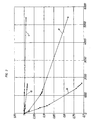
- the abscissa indicates the illumination time in minutes.
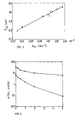
- Fig. 4 shows the concentration dependence (abscissa: wt .-% DABCO) of the stabilization.
- Fig. 5 shows the reduction of the cooldown with increasing concentration of DABCO (abscissa: wt .-% DABCO): However, this effect is not very large in this case, measured on the effect of stabilization and neither the effectiveness of the additive against photodecomposition nor the sensitivity of the sensor in question.
Landscapes
- Health & Medical Sciences (AREA)
- Chemical & Material Sciences (AREA)
- Immunology (AREA)
- Physics & Mathematics (AREA)
- General Physics & Mathematics (AREA)
- Analytical Chemistry (AREA)
- Biochemistry (AREA)
- General Health & Medical Sciences (AREA)
- Life Sciences & Earth Sciences (AREA)
- Nuclear Medicine, Radiotherapy & Molecular Imaging (AREA)
- Pathology (AREA)
- Chemical Kinetics & Catalysis (AREA)
- Optics & Photonics (AREA)
- Investigating Or Analysing Materials By The Use Of Chemical Reactions (AREA)
- Investigating, Analyzing Materials By Fluorescence Or Luminescence (AREA)
- Investigating Or Analyzing Non-Biological Materials By The Use Of Chemical Means (AREA)
Claims (14)
- Capteur optique avec une matrice, qui comprend un indicateur à luminescence dont la luminescence peut être atténuée avec de l'oxygène, caractérisé en ce que le capteur comprend au moins un moyen permettant de stabiliser l'indicateur à luminescence et la matrice, qui peut désactiver l'oxygène singulet, où ce moyen est lié à la matrice ou à l'indicateur à luminescence.
- Capteur optique selon la revendication 1, caractérisé en ce que le moyen de désactivation de l'oxygène singulet comprend au moins un groupe amino, de préférence un groupe amino tertiaire.
- Capteur optique selon la revendication 1, caractérisé en ce que le moyen de désactivation de l'oxygène singulet est un « hindered amine light stabiliser »(HALS).
- Capteur optique selon la revendication 1, caractérisé en ce que le moyen de désactivation de l'oxygène singulet est un complexe métallique de transition.
- Capteur optique selon la revendication 4, caractérisé en ce que le complexe métallique de transition est un complexe constitué de dialkyldithiocarbamate, de dialkyldithiophosphate, ou d'une base de Schiff et d'un ion métallique de transition.
- Capteur optique selon la revendication 5, caractérisé en ce que l'ion métallique de transition est le Ni(II), le Co(II), le Zn(II) ou le Fe(III).
- Capteur optique selon la revendication 1, caractérisé en ce que le moyen de désactivation de l'oxygène singulet est un caroténoïde.
- Capteur optique selon l'une des revendications 1 à 3, caractérisé en ce que le moyen est lié à l'indicateur à luminescence par l'intermédiaire d'un groupe -(CH2)n-, où n est un nombre entier de 3 à 20.
- Capteur optique selon l'une des revendications 1 à 8, caractérisé en ce que la matrice est un polymère.
- Capteur optique selon la revendication 9, caractérisé en ce que le polymère est du polystyrol, du polychlorure de vinyle, du polychlorure de vinyle assoupli, du polyméthacrylate, du polyméthacrylate assoupli, un mélange polyméthacrylate/butyral d'acétylcellulose, du gel de silice, un gel de sol, un hydrogel, un silicone, du poly-α-méthylstyrol, un polysulfone, de l'éthylcellulose, du triacétate de cellulose, du polytétrafluoréthylène, un polyester, du polybutadiène, du polystryrol-co-butadiène, du polyuréthane, du polybutyral de vinyle, du polyéthylacrylate ou du poly-2-hydroxyéthylméthacrylate.
- Capteur optique selon la revendication 9, caractérisé en ce que le polymère est constitué de monomères qui comprennent au moins partiellement un groupe amino, de préférence un groupe amino tertiaire.
- Capteur optique selon l'une des revendications 1 à 11, caractérisé en ce que l'indicateur à luminescence est un complexe tris-chélate de ruthénium(II), d'osmium(II), de rhodium(III) ou d'iridium(III), une porphyrine métallique ou un métal-porphyrine-cétone de platine ou de palladium, un complexe lanthanide de Terbium ou un hydrocarbure polycyclique aromatique.
- Conception de capteur optique avec un capteur optique, une source de lumière pour la production d'une lumière d'excitation de l'indicateur à luminescence et un dispositif de mesure permettant de mesurer au moins une propriété optique de l'indicateur à luminescence, caractérisé en ce que le capteur optique est conçu selon l'une des revendications 1 à 12.
- Procédé de détermination d'un analyte dans un échantillon gazeux ou liquide à l'aide d'un capteur optique pouvant être mis en contact directement ou indirectement avec l'échantillon, caractérisé en ce qu'un capteur selon l'une des revendications 1 à 12 est utilisé.
Priority Applications (1)
| Application Number | Priority Date | Filing Date | Title |
|---|---|---|---|
| EP06022007A EP1757924B1 (fr) | 1997-10-03 | 1998-10-02 | Capteur chimique optique |
Applications Claiming Priority (3)
| Application Number | Priority Date | Filing Date | Title |
|---|---|---|---|
| AT0167897A AT409306B (de) | 1997-10-03 | 1997-10-03 | Optisch chemischer sensor |
| AT1678/97 | 1997-10-03 | ||
| AT167897 | 1997-10-03 |
Related Child Applications (1)
| Application Number | Title | Priority Date | Filing Date |
|---|---|---|---|
| EP06022007A Division EP1757924B1 (fr) | 1997-10-03 | 1998-10-02 | Capteur chimique optique |
Publications (3)
| Publication Number | Publication Date |
|---|---|
| EP0907074A2 EP0907074A2 (fr) | 1999-04-07 |
| EP0907074A3 EP0907074A3 (fr) | 1999-09-08 |
| EP0907074B1 true EP0907074B1 (fr) | 2006-12-06 |
Family
ID=3518628
Family Applications (2)
| Application Number | Title | Priority Date | Filing Date |
|---|---|---|---|
| EP06022007A Expired - Lifetime EP1757924B1 (fr) | 1997-10-03 | 1998-10-02 | Capteur chimique optique |
| EP98890284A Expired - Lifetime EP0907074B1 (fr) | 1997-10-03 | 1998-10-02 | Capteur optique pour la détection d'espèces chimiques |
Family Applications Before (1)
| Application Number | Title | Priority Date | Filing Date |
|---|---|---|---|
| EP06022007A Expired - Lifetime EP1757924B1 (fr) | 1997-10-03 | 1998-10-02 | Capteur chimique optique |
Country Status (5)
| Country | Link |
|---|---|
| US (1) | US6254829B1 (fr) |
| EP (2) | EP1757924B1 (fr) |
| JP (1) | JPH11194094A (fr) |
| AT (1) | AT409306B (fr) |
| DE (2) | DE59814271D1 (fr) |
Cited By (3)
| Publication number | Priority date | Publication date | Assignee | Title |
|---|---|---|---|---|
| DE102017114535A1 (de) | 2017-06-29 | 2019-01-03 | Endress+Hauser Conducta Gmbh+Co. Kg | Sensormembran, Sensorkappe und optischer Sensor |
| DE102017118504A1 (de) | 2017-08-14 | 2019-02-14 | Endress+Hauser Conducta Gmbh+Co. Kg | Schutzvorrichtung für einen optochemischen Sensor und entsprechender optochemischer Sensor |
| DE102022134274A1 (de) | 2022-12-21 | 2024-06-27 | Endress+Hauser Conducta Gmbh+Co. Kg | Sensorelement für einen optochemischen Sensor |
Families Citing this family (40)
| Publication number | Priority date | Publication date | Assignee | Title |
|---|---|---|---|---|
| US6395506B1 (en) * | 1991-04-18 | 2002-05-28 | Becton, Dickinson And Company | Device for monitoring cells |
| WO1997019188A1 (fr) | 1995-11-22 | 1997-05-29 | Minimed, Inc. | Detection de molecules biologiques par amplification chimique et au moyen de detecteurs optiques |
| EP1062498B1 (fr) * | 1998-03-07 | 2006-07-26 | Robert Bosch Gmbh | Capteur optique |
| US20050147534A1 (en) | 1998-05-05 | 2005-07-07 | Massachusetts Institute Of Technology | Emissive sensors and devices incorporating these sensors |
| EP1080162B1 (fr) | 1998-05-05 | 2004-03-10 | Massachusetts Institute Of Technology | Polymeres emissifs et dispositifs renfermant ces polymeres |
| US6331438B1 (en) | 1999-11-24 | 2001-12-18 | Iowa State University Research Foundation, Inc. | Optical sensors and multisensor arrays containing thin film electroluminescent devices |
| NL1014464C2 (nl) * | 2000-02-22 | 2001-08-24 | Tno | Optische sensor voor het meten van zuurstof. |
| DE10101576B4 (de) * | 2001-01-15 | 2016-02-18 | Presens Precision Sensing Gmbh | Optischer Sensor und Sensorfeld |
| DE10123079A1 (de) * | 2001-05-11 | 2002-11-21 | Draeger Medical Ag | Sauerstoffkonzentrationsmessung |
| GB0302489D0 (en) * | 2003-02-04 | 2003-03-05 | Bae Systems Plc | Improvements relating to pressure sensitive paint |
| US20040241880A1 (en) * | 2003-05-30 | 2004-12-02 | Leproust Eric M. | Ligand array assays having reduced fluorescent dye degradation and compositions for practicing the same |
| WO2006034081A2 (fr) * | 2004-09-17 | 2006-03-30 | Massachusetts Institute Of Technology | Polymeres destines a la detection d'analytes |
| WO2007009125A2 (fr) * | 2005-07-14 | 2007-01-18 | Nano-Ditech Corporation | Dispositifs microfluidiques et leurs methodes de preparation et d'utilisation |
| JP4727349B2 (ja) * | 2005-08-30 | 2011-07-20 | 三菱瓦斯化学株式会社 | 酸素検知剤組成物 |
| US20070143032A1 (en) * | 2005-09-15 | 2007-06-21 | Carl Zeiss Smt Ag | Apparatus and method for the detection of a surface reaction, especially for cleaning of an arbitrary two-dimensional surface or three-dimensional body |
| DE102006001642B4 (de) * | 2006-01-11 | 2008-02-21 | Sartorius Biotech Gmbh | Sauerstoffsensor und Messverfahren |
| US20070243618A1 (en) * | 2006-04-11 | 2007-10-18 | Oxysense, Inc. | Device and method for non-invasive oxygen sensing of sealed packages |
| US8283423B2 (en) | 2006-09-29 | 2012-10-09 | Massachusetts Institute Of Technology | Polymer synthetic technique |
| US8802447B2 (en) * | 2006-10-05 | 2014-08-12 | Massachusetts Institute Of Technology | Emissive compositions with internal standard and related techniques |
| US20090215189A1 (en) | 2006-10-27 | 2009-08-27 | Massachusetts Institute Of Technology | Sensor of species including toxins and chemical warfare agents |
| WO2008155606A2 (fr) * | 2006-11-20 | 2008-12-24 | Gas Sensor Solutions Ltd | Matériau sensible à l'oxygène, détecteurs, systèmes détecteurs présentant une photostabilité améliorée |
| DK2989975T3 (en) | 2007-02-06 | 2018-09-24 | Medtronic Minimed Inc | OPTICAL SYSTEMS AND PROCEDURES FOR RATIOMETRIC MEASUREMENT OF BLOOD GLUCOSE CONCENTRATION |
| US8088097B2 (en) | 2007-11-21 | 2012-01-03 | Glumetrics, Inc. | Use of an equilibrium intravascular sensor to achieve tight glycemic control |
| EP2162057A1 (fr) * | 2007-05-10 | 2010-03-17 | Glumetrics, Inc. | Capteur de fluorescence d'équilibre de non consommation permettant de mesurer le taux de glucose intravasculaire en temps réel |
| EP2020597A1 (fr) | 2007-08-02 | 2009-02-04 | Mettler-Toledo AG | Capteur optochimique |
| DE102008019889B4 (de) * | 2008-04-21 | 2018-06-14 | Compur Monitors Gmbh & Co. Kg | Indikator und Indikatorplakette zum Nachweis von Gasen |
| CN102132145A (zh) * | 2008-07-28 | 2011-07-20 | 医药及科学传感器公司 | 用于分析物浓度的光学测量的系统和方法 |
| JP2013506503A (ja) | 2009-09-30 | 2013-02-28 | グルメトリクス, インコーポレイテッド | 抗血栓性コーティングを備えたセンサー |
| US8467843B2 (en) | 2009-11-04 | 2013-06-18 | Glumetrics, Inc. | Optical sensor configuration for ratiometric correction of blood glucose measurement |
| US8940544B2 (en) * | 2010-02-08 | 2015-01-27 | Medtronic Minimed, Inc. | Antioxidant protection of a chemical sensor |
| DE102011007546A1 (de) | 2011-04-15 | 2012-10-18 | Humboldt-Universität Zu Berlin | Messvorrichtung für eine Messung einer Singulettsauerstoff-Lumineszenz |
| DE102012104688A1 (de) | 2012-05-30 | 2013-12-05 | Hamilton Bonaduz Ag | Optisches Sensorelement |
| DE102012111686A1 (de) * | 2012-11-30 | 2014-06-05 | Hamilton Bonaduz Ag | Chemisch stabiler Sensor |
| JP7041674B2 (ja) | 2016-10-14 | 2022-03-24 | シー3ナノ・インコーポレイテッド | 安定化された薄く広がった金属導電性フィルム、および安定化化合物の供給のための溶液 |
| AT520591B1 (de) * | 2017-10-30 | 2020-10-15 | Technische Farben Ges B R | Sensortinte, Verfahren zur Herstellung eines Fluoreszenzsensors mit der Sensortinte sowie Sensor |
| DE102018116345A1 (de) * | 2018-07-05 | 2020-01-09 | Endress+Hauser Conducta Gmbh+Co. Kg | Sensormembran, Sensorkappe und Verfahren zum Aufbringen einer Sensormembran |
| CN111693515B (zh) * | 2020-05-07 | 2022-06-17 | 四川轻化工大学 | 一种流式电化学发光实时检测装置及检测方法 |
| US11874221B2 (en) | 2021-01-26 | 2024-01-16 | Yokogawa Electric Corporation | Measurement of dissolved oxygen using optical radiation induced luminescence |
| EP4437340A4 (fr) * | 2021-11-26 | 2025-10-01 | Ip Science Ltd | Dispositif et procédé de traitement d'états déficients en oxygène tissulaire |
| GB2638199A (en) * | 2024-02-15 | 2025-08-20 | Senoptica Tech Limited | Colorimetric Sensor and use thereof |
Family Cites Families (37)
| Publication number | Priority date | Publication date | Assignee | Title |
|---|---|---|---|---|
| US3612866A (en) | 1969-07-08 | 1971-10-12 | Brian Stevens | Instrument for determining oxygen quantities by measuring oxygen quenching of fluorescent radiation |
| DE2508637C3 (de) | 1975-02-28 | 1979-11-22 | Max-Planck-Gesellschaft Zur Foerderung Der Wissenschaften E.V., 3400 Goettingen | Anordnung zur optischen Messung von Blutgasen |
| US4720356A (en) | 1982-03-22 | 1988-01-19 | American Optical Corporation | Photochromic composition resistant to fatigue |
| US4428859A (en) | 1982-11-12 | 1984-01-31 | University Patents, Inc. | Stabilizer of organic dye lasers |
| AT379688B (de) * | 1982-11-22 | 1986-02-10 | List Hans | Sensorelement zur bestimmung des o2-gehaltes einer probe |
| AT377095B (de) * | 1982-11-23 | 1985-02-11 | List Hans | Sensorelement zur bestimmung des o2-gehaltes einer probe sowie verfahren zur herstellung desselben |
| US5030420A (en) | 1982-12-23 | 1991-07-09 | University Of Virginia Alumni Patents Foundation | Apparatus for oxygen determination |
| CA1261717A (fr) * | 1982-12-23 | 1989-09-26 | John R. Bacon | Methode et appareil pour mesurer l'oxygene |
| DE3320752A1 (de) | 1983-06-09 | 1984-12-13 | Wolfgang Prof. Dr.Dr. 6500 Mainz Barnikol | Lumineszierende schichten zur verwendung in vorrichtungen zur bestimmung der sauerstoffkonzentration in gasen und dergleichen durch messung der lumineszensverringerung |
| US4752115A (en) | 1985-02-07 | 1988-06-21 | Spectramed, Inc. | Optical sensor for monitoring the partial pressure of oxygen |
| US5043286A (en) | 1985-07-03 | 1991-08-27 | Abbott Laboratories | Method and sensor for measuring oxygen concentration |
| US4810655A (en) | 1985-07-03 | 1989-03-07 | Abbott Laboratories | Method for measuring oxygen concentration |
| US4849172A (en) * | 1986-04-18 | 1989-07-18 | Minnesota Mining And Manufacturing Company | Optical sensor |
| JPS6312942A (ja) | 1986-07-03 | 1988-01-20 | Rikagaku Kenkyusho | 酸素濃度測定用素子 |
| GB8621261D0 (en) | 1986-09-03 | 1986-10-08 | Barnard G J R | Enhanced luminescent assay |
| US5070158A (en) | 1987-03-12 | 1991-12-03 | Hewlett-Packard Company | Covalently labeled siloxane polymers |
| DE3778363D1 (de) | 1987-09-11 | 1992-05-21 | Agfa Gevaert Nv | Polymerisches phosphoniumbeizmittel und photographisches element, das dieses enthaelt. |
| DK576187D0 (da) * | 1987-11-03 | 1987-11-03 | Radiometer As | Fremgangsmaade til bestemmelse af oxygenkoncentration |
| US5242835A (en) | 1987-11-03 | 1993-09-07 | Radiometer A/S | Method and apparatus for determining the concentration of oxygen |
| US5173432A (en) * | 1987-12-14 | 1992-12-22 | The Dow Chemical Company | Apparatus and method for measuring the concentration or partial pressure of oxygen |
| US5047350A (en) * | 1989-01-19 | 1991-09-10 | Eastman Kodak Company | Material and method for oxygen sensing |
| US5225113A (en) | 1989-02-10 | 1993-07-06 | Enichem Synthesis S.P.A. | Photochromatic composition endowed with light fatigue resistance and photochromatic articles which contain it |
| US5087388A (en) | 1990-02-26 | 1992-02-11 | Research Corporation Technologies, Inc. | Cartridge for extending the lifetime of dyes in dye lasers |
| US5223380A (en) * | 1990-05-14 | 1993-06-29 | Fuji Photo Film Co., Ltd. | Color developing agent and process for forming image |
| IT1243719B (it) | 1990-09-18 | 1994-06-21 | Enichem Sintesi | Miscela stabilizzante per composti ad attivita' fotocromatica |
| US5409666A (en) * | 1991-08-08 | 1995-04-25 | Minnesota Mining And Manufacturing Company | Sensors and methods for sensing |
| JP3464798B2 (ja) * | 1992-07-31 | 2003-11-10 | デイド・ベーリング・マルブルク・ゲゼルシヤフト・ミツト・ベシユレンクテル・ハフツング | 光活性化化学発光基質 |
| US5403834A (en) * | 1992-12-07 | 1995-04-04 | Eukarion, Inc. | Synthetic catalytic free radical scavengers useful as antioxidants for prevention and therapy of disease |
| TW267178B (fr) * | 1993-07-13 | 1996-01-01 | Ciba Geigy | |
| US5462880A (en) | 1993-09-13 | 1995-10-31 | Optical Sensors Incorporated | Ratiometric fluorescence method to measure oxygen |
| US5511547A (en) | 1994-02-16 | 1996-04-30 | Biomedical Sensors, Ltd. | Solid state sensors |
| US5534646A (en) * | 1994-08-31 | 1996-07-09 | Ciba-Geigy Corporation | Substituted 1,3,2,4-diazadiphosphetidines and compositions stabilized therewith |
| CN1071359C (zh) * | 1994-11-28 | 2001-09-19 | 美国3M公司 | 具有耐久的色彩和/或荧光性能的制品 |
| US5816238A (en) * | 1994-11-28 | 1998-10-06 | Minnesota Mining And Manufacturing Company | Durable fluorescent solar collectors |
| US5700077A (en) * | 1995-03-23 | 1997-12-23 | Minnesota Mining And Manufacturing Company | Line light source including fluorescent colorant |
| US5714121A (en) | 1995-09-28 | 1998-02-03 | Optical Sensors Incorporated | Optical carbon dioxide sensor, and associated methods of manufacture |
| US5827904A (en) * | 1996-09-27 | 1998-10-27 | Hahn; David | Medical implant composition |
-
1997
- 1997-10-03 AT AT0167897A patent/AT409306B/de not_active IP Right Cessation
-
1998
- 1998-09-28 US US09/161,841 patent/US6254829B1/en not_active Expired - Lifetime
- 1998-10-02 EP EP06022007A patent/EP1757924B1/fr not_active Expired - Lifetime
- 1998-10-02 EP EP98890284A patent/EP0907074B1/fr not_active Expired - Lifetime
- 1998-10-02 DE DE59814271T patent/DE59814271D1/de not_active Expired - Lifetime
- 1998-10-02 DE DE59813836T patent/DE59813836D1/de not_active Expired - Lifetime
- 1998-10-05 JP JP10283151A patent/JPH11194094A/ja active Pending
Cited By (3)
| Publication number | Priority date | Publication date | Assignee | Title |
|---|---|---|---|---|
| DE102017114535A1 (de) | 2017-06-29 | 2019-01-03 | Endress+Hauser Conducta Gmbh+Co. Kg | Sensormembran, Sensorkappe und optischer Sensor |
| DE102017118504A1 (de) | 2017-08-14 | 2019-02-14 | Endress+Hauser Conducta Gmbh+Co. Kg | Schutzvorrichtung für einen optochemischen Sensor und entsprechender optochemischer Sensor |
| DE102022134274A1 (de) | 2022-12-21 | 2024-06-27 | Endress+Hauser Conducta Gmbh+Co. Kg | Sensorelement für einen optochemischen Sensor |
Also Published As
| Publication number | Publication date |
|---|---|
| JPH11194094A (ja) | 1999-07-21 |
| US6254829B1 (en) | 2001-07-03 |
| AT409306B (de) | 2002-07-25 |
| EP0907074A3 (fr) | 1999-09-08 |
| ATA167897A (de) | 2001-11-15 |
| EP1757924A3 (fr) | 2007-04-11 |
| EP0907074A2 (fr) | 1999-04-07 |
| EP1757924B1 (fr) | 2008-08-13 |
| DE59813836D1 (de) | 2007-01-18 |
| EP1757924A2 (fr) | 2007-02-28 |
| DE59814271D1 (de) | 2008-09-25 |
Similar Documents
| Publication | Publication Date | Title |
|---|---|---|
| EP1757924B1 (fr) | Capteur chimique optique | |
| EP1000345B1 (fr) | Procede et dispositif pour referencer des signaux d'intensite de fluorescence | |
| DE3346810C2 (de) | Vorrichtung zur Messung der Sauerstoffkonzentration in einem gasförmigen oder flüssigen Medium | |
| EP1346223B1 (fr) | Reactif pour la determination optique de luminescence d'un analyte | |
| EP0870189B1 (fr) | Sondes de temperature optiques et optrodes (detecteurs opto-chimiques) a compensation optique de la temperature | |
| DE3876037T2 (de) | Kohlendioxidsensor. | |
| DE69401717T2 (de) | Verfahren zur Aktivierung von polyanionischen,fluoreszierenden Farbstoffen in schwach dielektrischen Medien mit quaternären Oniumverbindungen | |
| AT405103B (de) | Sensorschicht zur quantitativen bestimmung zumindest einer chemischen komponente einer gasförmigen oder flüssigen probe | |
| DE4210970C2 (de) | Verfahren zur simultanen optischen qualitativen und quantitativen Erfassung von verschiedenen mit Fluorochromen oder Fluorogenen markierten Molekülen eines Gemisches mittels Laserspektroskopie | |
| Coldur et al. | Usage of thiocyanate-based ionic liquid as new optical sensor reagent: Absorption and emission based selective determination of Fe (III) ions | |
| EP2856143A1 (fr) | Élément capteur optique | |
| EP0578630A1 (fr) | Membrane d'un capteur optique pour déterminer un paramètre physique ou chimique d'un échantillon | |
| EP1141729B1 (fr) | Detecteur opto-chimique pour la determination des chlorures | |
| DE19829657A1 (de) | Verfahren und Vorrichtung zur Referenzierung von Fluoreszenzintensitätssignalen | |
| EP0397641B1 (fr) | Procédé pour la détermination quantitative d'au moins un paramètre chimique d'un échantillon | |
| DE19935180C2 (de) | Solarzellen-Sensoren, Verfahren zu ihrer Herstellung und ihrer Anwendung | |
| Derinkuyu et al. | Emission based fiber optic pH sensing with Schiff bases bearing dimethylamino groups | |
| AT506177B1 (de) | Optischer sensor | |
| DE19522610C1 (de) | Sensorplatte zur Messung von Ammoniakgehalten, Verfahren zu deren Herstellung und Verwendungen | |
| WO2007014710A2 (fr) | Capteur de gaz passif irreversible | |
| Hrdlovič et al. | Spectral characteristics of probes based on ionic derivatives of pyrene in polar polymer matrices | |
| DE102019124795A1 (de) | Optischer pH-Sensor | |
| DE9200389U1 (de) | Sensormaterial zur Bestimmung von Sauerstoff | |
| DE2656632A1 (de) | Verfahren und vorrichtung zur untersuchung von fluoreszenzmaterial | |
| DE4213268A1 (de) | Verfahren zur Herstellung eines Sensors zum Bestimmen des Sauerstoffgehalts einer Probe |
Legal Events
| Date | Code | Title | Description |
|---|---|---|---|
| PUAI | Public reference made under article 153(3) epc to a published international application that has entered the european phase |
Free format text: ORIGINAL CODE: 0009012 |
|
| AK | Designated contracting states |
Kind code of ref document: A2 Designated state(s): DE FR GB |
|
| AX | Request for extension of the european patent |
Free format text: AL;LT;LV;MK;RO;SI |
|
| PUAL | Search report despatched |
Free format text: ORIGINAL CODE: 0009013 |
|
| AK | Designated contracting states |
Kind code of ref document: A3 Designated state(s): AT BE CH CY DE DK ES FI FR GB GR IE IT LI LU MC NL PT SE |
|
| AX | Request for extension of the european patent |
Free format text: AL;LT;LV;MK;RO;SI |
|
| 17P | Request for examination filed |
Effective date: 20000308 |
|
| AKX | Designation fees paid |
Free format text: DE FR GB |
|
| RAP1 | Party data changed (applicant data changed or rights of an application transferred) |
Owner name: AVL MEDICAL INSTRUMENTS AG |
|
| RAP1 | Party data changed (applicant data changed or rights of an application transferred) |
Owner name: F. HOFFMANN-LA ROCHE AG |
|
| GRAP | Despatch of communication of intention to grant a patent |
Free format text: ORIGINAL CODE: EPIDOSNIGR1 |
|
| GRAS | Grant fee paid |
Free format text: ORIGINAL CODE: EPIDOSNIGR3 |
|
| GRAA | (expected) grant |
Free format text: ORIGINAL CODE: 0009210 |
|
| AK | Designated contracting states |
Kind code of ref document: B1 Designated state(s): DE FR GB |
|
| REG | Reference to a national code |
Ref country code: GB Ref legal event code: FG4D Free format text: NOT ENGLISH |
|
| REF | Corresponds to: |
Ref document number: 59813836 Country of ref document: DE Date of ref document: 20070118 Kind code of ref document: P |
|
| GBV | Gb: ep patent (uk) treated as always having been void in accordance with gb section 77(7)/1977 [no translation filed] |
Effective date: 20061206 |
|
| EN | Fr: translation not filed | ||
| PLBE | No opposition filed within time limit |
Free format text: ORIGINAL CODE: 0009261 |
|
| STAA | Information on the status of an ep patent application or granted ep patent |
Free format text: STATUS: NO OPPOSITION FILED WITHIN TIME LIMIT |
|
| 26N | No opposition filed |
Effective date: 20070907 |
|
| PG25 | Lapsed in a contracting state [announced via postgrant information from national office to epo] |
Ref country code: GB Free format text: LAPSE BECAUSE OF FAILURE TO SUBMIT A TRANSLATION OF THE DESCRIPTION OR TO PAY THE FEE WITHIN THE PRESCRIBED TIME-LIMIT Effective date: 20061206 |
|
| PG25 | Lapsed in a contracting state [announced via postgrant information from national office to epo] |
Ref country code: FR Free format text: LAPSE BECAUSE OF FAILURE TO SUBMIT A TRANSLATION OF THE DESCRIPTION OR TO PAY THE FEE WITHIN THE PRESCRIBED TIME-LIMIT Effective date: 20070727 |
|
| PG25 | Lapsed in a contracting state [announced via postgrant information from national office to epo] |
Ref country code: FR Free format text: LAPSE BECAUSE OF FAILURE TO SUBMIT A TRANSLATION OF THE DESCRIPTION OR TO PAY THE FEE WITHIN THE PRESCRIBED TIME-LIMIT Effective date: 20061206 |
|
| PGFP | Annual fee paid to national office [announced via postgrant information from national office to epo] |
Ref country code: DE Payment date: 20171027 Year of fee payment: 20 |
|
| REG | Reference to a national code |
Ref country code: DE Ref legal event code: R071 Ref document number: 59813836 Country of ref document: DE |