EP0871887B1 - Electrochemiluminescent enzyme immunoassay - Google Patents
Electrochemiluminescent enzyme immunoassay Download PDFInfo
- Publication number
- EP0871887B1 EP0871887B1 EP96923291A EP96923291A EP0871887B1 EP 0871887 B1 EP0871887 B1 EP 0871887B1 EP 96923291 A EP96923291 A EP 96923291A EP 96923291 A EP96923291 A EP 96923291A EP 0871887 B1 EP0871887 B1 EP 0871887B1
- Authority
- EP
- European Patent Office
- Prior art keywords
- electrochemiluminescent
- detectant
- ecl
- enzyme
- substrate
- Prior art date
- Legal status (The legal status is an assumption and is not a legal conclusion. Google has not performed a legal analysis and makes no representation as to the accuracy of the status listed.)
- Expired - Lifetime
Links
- 108090000790 Enzymes Proteins 0.000 title claims abstract description 60
- 102000004190 Enzymes Human genes 0.000 title claims abstract description 60
- 238000003018 immunoassay Methods 0.000 title abstract description 27
- 239000012491 analyte Substances 0.000 claims abstract description 51
- 239000000758 substrate Substances 0.000 claims abstract description 51
- 238000000034 method Methods 0.000 claims abstract description 34
- KJTLSVCANCCWHF-UHFFFAOYSA-N Ruthenium Chemical group [Ru] KJTLSVCANCCWHF-UHFFFAOYSA-N 0.000 claims abstract description 15
- 238000005259 measurement Methods 0.000 claims abstract description 14
- 102000006635 beta-lactamase Human genes 0.000 claims abstract description 4
- 108090000204 Dipeptidase 1 Proteins 0.000 claims abstract 2
- 239000000203 mixture Substances 0.000 claims description 33
- 150000001875 compounds Chemical class 0.000 claims description 19
- 238000001514 detection method Methods 0.000 claims description 15
- 229910052707 ruthenium Inorganic materials 0.000 claims description 13
- 229930027945 nicotinamide-adenine dinucleotide Natural products 0.000 claims description 5
- 108090000765 processed proteins & peptides Proteins 0.000 claims description 4
- 239000003242 anti bacterial agent Substances 0.000 claims description 3
- 230000003115 biocidal effect Effects 0.000 claims description 3
- FCNCGHJSNVOIKE-UHFFFAOYSA-N 9,10-diphenylanthracene Chemical compound C1=CC=CC=C1C(C1=CC=CC=C11)=C(C=CC=C2)C2=C1C1=CC=CC=C1 FCNCGHJSNVOIKE-UHFFFAOYSA-N 0.000 claims description 2
- 102000004316 Oxidoreductases Human genes 0.000 claims description 2
- 108090000854 Oxidoreductases Proteins 0.000 claims description 2
- 108091005804 Peptidases Proteins 0.000 claims description 2
- 239000004365 Protease Substances 0.000 claims description 2
- 239000013522 chelant Substances 0.000 claims description 2
- 229950006238 nadide Drugs 0.000 claims description 2
- 229910052762 osmium Inorganic materials 0.000 claims description 2
- SYQBFIAQOQZEGI-UHFFFAOYSA-N osmium atom Chemical compound [Os] SYQBFIAQOQZEGI-UHFFFAOYSA-N 0.000 claims description 2
- YYMBJDOZVAITBP-UHFFFAOYSA-N rubrene Chemical compound C1=CC=CC=C1C(C1=C(C=2C=CC=CC=2)C2=CC=CC=C2C(C=2C=CC=CC=2)=C11)=C(C=CC=C2)C2=C1C1=CC=CC=C1 YYMBJDOZVAITBP-UHFFFAOYSA-N 0.000 claims description 2
- BAWFJGJZGIEFAR-NNYOXOHSSA-N NAD zwitterion Chemical compound NC(=O)C1=CC=C[N+]([C@H]2[C@@H]([C@H](O)[C@@H](COP([O-])(=O)OP(O)(=O)OC[C@@H]3[C@H]([C@@H](O)[C@@H](O3)N3C4=NC=NC(N)=C4N=C3)O)O2)O)=C1 BAWFJGJZGIEFAR-NNYOXOHSSA-N 0.000 claims 1
- 102100037486 Reverse transcriptase/ribonuclease H Human genes 0.000 claims 1
- 230000008569 process Effects 0.000 abstract description 11
- 230000035945 sensitivity Effects 0.000 abstract description 6
- 230000003197 catalytic effect Effects 0.000 abstract description 4
- 238000007796 conventional method Methods 0.000 abstract description 2
- 238000011984 electrochemiluminescence immunoassay Methods 0.000 abstract 1
- ROFVEXUMMXZLPA-UHFFFAOYSA-N Bipyridyl Chemical compound N1=CC=CC=C1C1=CC=CC=N1 ROFVEXUMMXZLPA-UHFFFAOYSA-N 0.000 description 68
- 230000007062 hydrolysis Effects 0.000 description 44
- 238000006460 hydrolysis reaction Methods 0.000 description 44
- HEMHJVSKTPXQMS-UHFFFAOYSA-M Sodium hydroxide Chemical compound [OH-].[Na+] HEMHJVSKTPXQMS-UHFFFAOYSA-M 0.000 description 27
- AVKUERGKIZMTKX-NJBDSQKTSA-N ampicillin Chemical compound C1([C@@H](N)C(=O)N[C@H]2[C@H]3SC([C@@H](N3C2=O)C(O)=O)(C)C)=CC=CC=C1 AVKUERGKIZMTKX-NJBDSQKTSA-N 0.000 description 25
- 229960000723 ampicillin Drugs 0.000 description 25
- NGHVIOIJCVXTGV-ALEPSDHESA-N 6-aminopenicillanic acid Chemical compound [O-]C(=O)[C@H]1C(C)(C)S[C@@H]2[C@H]([NH3+])C(=O)N21 NGHVIOIJCVXTGV-ALEPSDHESA-N 0.000 description 24
- NGHVIOIJCVXTGV-UHFFFAOYSA-N 6beta-amino-penicillanic acid Natural products OC(=O)C1C(C)(C)SC2C(N)C(=O)N21 NGHVIOIJCVXTGV-UHFFFAOYSA-N 0.000 description 24
- 238000003556 assay Methods 0.000 description 22
- 239000000243 solution Substances 0.000 description 15
- 239000000047 product Substances 0.000 description 13
- 230000001965 increasing effect Effects 0.000 description 11
- 229930182555 Penicillin Natural products 0.000 description 10
- 238000006243 chemical reaction Methods 0.000 description 10
- 230000000694 effects Effects 0.000 description 10
- 238000002474 experimental method Methods 0.000 description 10
- LOKCTEFSRHRXRJ-UHFFFAOYSA-I dipotassium trisodium dihydrogen phosphate hydrogen phosphate dichloride Chemical compound P(=O)(O)(O)[O-].[K+].P(=O)(O)([O-])[O-].[Na+].[Na+].[Cl-].[K+].[Cl-].[Na+] LOKCTEFSRHRXRJ-UHFFFAOYSA-I 0.000 description 9
- 239000002953 phosphate buffered saline Substances 0.000 description 9
- 102000004169 proteins and genes Human genes 0.000 description 9
- 108090000623 proteins and genes Proteins 0.000 description 9
- 239000000523 sample Substances 0.000 description 9
- 230000008859 change Effects 0.000 description 8
- 238000011534 incubation Methods 0.000 description 8
- 238000004020 luminiscence type Methods 0.000 description 8
- 239000012327 Ruthenium complex Substances 0.000 description 7
- 239000011324 bead Substances 0.000 description 7
- 229940127121 immunoconjugate Drugs 0.000 description 7
- -1 ruthenium (II) tris(bipyridyl) Chemical group 0.000 description 7
- WEVYAHXRMPXWCK-UHFFFAOYSA-N Acetonitrile Chemical compound CC#N WEVYAHXRMPXWCK-UHFFFAOYSA-N 0.000 description 6
- 230000008901 benefit Effects 0.000 description 6
- 150000002960 penicillins Chemical class 0.000 description 6
- 238000002360 preparation method Methods 0.000 description 6
- 241000894007 species Species 0.000 description 6
- 239000003153 chemical reaction reagent Substances 0.000 description 5
- 238000004042 decolorization Methods 0.000 description 5
- 239000000463 material Substances 0.000 description 5
- 239000001488 sodium phosphate Substances 0.000 description 5
- 229910000162 sodium phosphate Inorganic materials 0.000 description 5
- 239000000126 substance Substances 0.000 description 5
- RYFMWSXOAZQYPI-UHFFFAOYSA-K trisodium phosphate Chemical compound [Na+].[Na+].[Na+].[O-]P([O-])([O-])=O RYFMWSXOAZQYPI-UHFFFAOYSA-K 0.000 description 5
- 241000193755 Bacillus cereus Species 0.000 description 4
- JGSARLDLIJGVTE-MBNYWOFBSA-N Penicillin G Chemical compound N([C@H]1[C@H]2SC([C@@H](N2C1=O)C(O)=O)(C)C)C(=O)CC1=CC=CC=C1 JGSARLDLIJGVTE-MBNYWOFBSA-N 0.000 description 4
- FAPWRFPIFSIZLT-UHFFFAOYSA-M Sodium chloride Chemical compound [Na+].[Cl-] FAPWRFPIFSIZLT-UHFFFAOYSA-M 0.000 description 4
- WZSDNEJJUSYNSG-UHFFFAOYSA-N azocan-1-yl-(3,4,5-trimethoxyphenyl)methanone Chemical compound COC1=C(OC)C(OC)=CC(C(=O)N2CCCCCCC2)=C1 WZSDNEJJUSYNSG-UHFFFAOYSA-N 0.000 description 4
- 230000015572 biosynthetic process Effects 0.000 description 4
- 230000007071 enzymatic hydrolysis Effects 0.000 description 4
- 238000006047 enzymatic hydrolysis reaction Methods 0.000 description 4
- 150000002148 esters Chemical class 0.000 description 4
- 230000005281 excited state Effects 0.000 description 4
- BOPGDPNILDQYTO-NNYOXOHSSA-N nicotinamide-adenine dinucleotide Chemical compound C1=CCC(C(=O)N)=CN1[C@H]1[C@H](O)[C@H](O)[C@@H](COP(O)(=O)OP(O)(=O)OC[C@@H]2[C@H]([C@@H](O)[C@@H](O2)N2C3=NC=NC(N)=C3N=C2)O)O1 BOPGDPNILDQYTO-NNYOXOHSSA-N 0.000 description 4
- 229940049954 penicillin Drugs 0.000 description 4
- 238000005424 photoluminescence Methods 0.000 description 4
- 239000006228 supernatant Substances 0.000 description 4
- 238000012360 testing method Methods 0.000 description 4
- XLYOFNOQVPJJNP-UHFFFAOYSA-N water Chemical compound O XLYOFNOQVPJJNP-UHFFFAOYSA-N 0.000 description 4
- 108091003079 Bovine Serum Albumin Proteins 0.000 description 3
- 229930186147 Cephalosporin Natural products 0.000 description 3
- 238000002835 absorbance Methods 0.000 description 3
- 239000012472 biological sample Substances 0.000 description 3
- 229940098773 bovine serum albumin Drugs 0.000 description 3
- 229940124587 cephalosporin Drugs 0.000 description 3
- 150000001780 cephalosporins Chemical class 0.000 description 3
- 230000021615 conjugation Effects 0.000 description 3
- 239000012530 fluid Substances 0.000 description 3
- 230000007246 mechanism Effects 0.000 description 3
- 230000000813 microbial effect Effects 0.000 description 3
- VUFNRPJNRFOTGK-UHFFFAOYSA-M sodium;1-[4-[(2,5-dioxopyrrol-1-yl)methyl]cyclohexanecarbonyl]oxy-2,5-dioxopyrrolidine-3-sulfonate Chemical compound [Na+].O=C1C(S(=O)(=O)[O-])CC(=O)N1OC(=O)C1CCC(CN2C(C=CC2=O)=O)CC1 VUFNRPJNRFOTGK-UHFFFAOYSA-M 0.000 description 3
- 108020004256 Beta-lactamase Proteins 0.000 description 2
- 229910021607 Silver chloride Inorganic materials 0.000 description 2
- UIIMBOGNXHQVGW-DEQYMQKBSA-M Sodium bicarbonate-14C Chemical compound [Na+].O[14C]([O-])=O UIIMBOGNXHQVGW-DEQYMQKBSA-M 0.000 description 2
- 238000004458 analytical method Methods 0.000 description 2
- 239000003782 beta lactam antibiotic agent Substances 0.000 description 2
- 230000008033 biological extinction Effects 0.000 description 2
- 238000004140 cleaning Methods 0.000 description 2
- 238000012875 competitive assay Methods 0.000 description 2
- ZYGHJZDHTFUPRJ-UHFFFAOYSA-N coumarin Chemical compound C1=CC=C2OC(=O)C=CC2=C1 ZYGHJZDHTFUPRJ-UHFFFAOYSA-N 0.000 description 2
- 239000008367 deionised water Substances 0.000 description 2
- 229910021641 deionized water Inorganic materials 0.000 description 2
- 239000003623 enhancer Substances 0.000 description 2
- 238000003094 enzyme-multiplied immunoassay technique Methods 0.000 description 2
- 238000013213 extrapolation Methods 0.000 description 2
- 238000004128 high performance liquid chromatography Methods 0.000 description 2
- 208000015181 infectious disease Diseases 0.000 description 2
- 230000002452 interceptive effect Effects 0.000 description 2
- 239000003446 ligand Substances 0.000 description 2
- 230000003647 oxidation Effects 0.000 description 2
- 238000007254 oxidation reaction Methods 0.000 description 2
- 239000012460 protein solution Substances 0.000 description 2
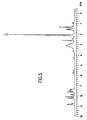
- 238000000425 proton nuclear magnetic resonance spectrum Methods 0.000 description 2
- 230000035484 reaction time Effects 0.000 description 2
- HKZLPVFGJNLROG-UHFFFAOYSA-M silver monochloride Chemical compound [Cl-].[Ag+] HKZLPVFGJNLROG-UHFFFAOYSA-M 0.000 description 2
- 239000011780 sodium chloride Substances 0.000 description 2
- 238000003786 synthesis reaction Methods 0.000 description 2
- YFTHZRPMJXBUME-UHFFFAOYSA-N tripropylamine Chemical compound CCCN(CCC)CCC YFTHZRPMJXBUME-UHFFFAOYSA-N 0.000 description 2
- 229910001868 water Inorganic materials 0.000 description 2
- 239000003643 water by type Substances 0.000 description 2
- FPKVOQKZMBDBKP-UHFFFAOYSA-N 1-[4-[(2,5-dioxopyrrol-1-yl)methyl]cyclohexanecarbonyl]oxy-2,5-dioxopyrrolidine-3-sulfonic acid Chemical compound O=C1C(S(=O)(=O)O)CC(=O)N1OC(=O)C1CCC(CN2C(C=CC2=O)=O)CC1 FPKVOQKZMBDBKP-UHFFFAOYSA-N 0.000 description 1
- HSHGZXNAXBPPDL-HZGVNTEJSA-N 7beta-aminocephalosporanic acid Chemical compound S1CC(COC(=O)C)=C(C([O-])=O)N2C(=O)[C@@H]([NH3+])[C@@H]12 HSHGZXNAXBPPDL-HZGVNTEJSA-N 0.000 description 1
- 241000894006 Bacteria Species 0.000 description 1
- 208000035143 Bacterial infection Diseases 0.000 description 1
- OKTJSMMVPCPJKN-UHFFFAOYSA-N Carbon Chemical compound [C] OKTJSMMVPCPJKN-UHFFFAOYSA-N 0.000 description 1
- 241000192041 Micrococcus Species 0.000 description 1
- BAWFJGJZGIEFAR-NNYOXOHSSA-O NAD(+) Chemical compound NC(=O)C1=CC=C[N+]([C@H]2[C@@H]([C@H](O)[C@@H](COP(O)(=O)OP(O)(=O)OC[C@@H]3[C@H]([C@@H](O)[C@@H](O3)N3C4=NC=NC(N)=C4N=C3)O)O2)O)=C1 BAWFJGJZGIEFAR-NNYOXOHSSA-O 0.000 description 1
- 102000035195 Peptidases Human genes 0.000 description 1
- 102000007056 Recombinant Fusion Proteins Human genes 0.000 description 1
- 108010008281 Recombinant Fusion Proteins Proteins 0.000 description 1
- 239000012506 Sephacryl® Substances 0.000 description 1
- 229920005654 Sephadex Polymers 0.000 description 1
- 239000012507 Sephadex™ Substances 0.000 description 1
- 241000191940 Staphylococcus Species 0.000 description 1
- 238000010521 absorption reaction Methods 0.000 description 1
- 230000009471 action Effects 0.000 description 1
- 125000003277 amino group Chemical group 0.000 description 1
- LSQZJLSUYDQPKJ-NJBDSQKTSA-N amoxicillin Chemical compound C1([C@@H](N)C(=O)N[C@H]2[C@H]3SC([C@@H](N3C2=O)C(O)=O)(C)C)=CC=C(O)C=C1 LSQZJLSUYDQPKJ-NJBDSQKTSA-N 0.000 description 1
- 229960003022 amoxicillin Drugs 0.000 description 1
- 230000003321 amplification Effects 0.000 description 1
- 229940088710 antibiotic agent Drugs 0.000 description 1
- 239000000427 antigen Substances 0.000 description 1
- 102000036639 antigens Human genes 0.000 description 1
- 108091007433 antigens Proteins 0.000 description 1
- 238000013459 approach Methods 0.000 description 1
- 238000002820 assay format Methods 0.000 description 1
- 230000001580 bacterial effect Effects 0.000 description 1
- 208000022362 bacterial infectious disease Diseases 0.000 description 1
- HFACYLZERDEVSX-UHFFFAOYSA-N benzidine Chemical class C1=CC(N)=CC=C1C1=CC=C(N)C=C1 HFACYLZERDEVSX-UHFFFAOYSA-N 0.000 description 1
- 230000001588 bifunctional effect Effects 0.000 description 1
- 239000000872 buffer Substances 0.000 description 1
- 229910052799 carbon Inorganic materials 0.000 description 1
- 125000003178 carboxy group Chemical group [H]OC(*)=O 0.000 description 1
- 229960004841 cefadroxil Drugs 0.000 description 1
- NBFNMSULHIODTC-CYJZLJNKSA-N cefadroxil monohydrate Chemical compound O.C1([C@@H](N)C(=O)N[C@H]2[C@@H]3N(C2=O)C(=C(CS3)C)C(O)=O)=CC=C(O)C=C1 NBFNMSULHIODTC-CYJZLJNKSA-N 0.000 description 1
- FUBBGQLTSCSAON-PBFPGSCMSA-N cefaloglycin Chemical compound C1([C@@H](N)C(=O)N[C@H]2[C@@H]3N(C2=O)C(=C(CS3)COC(=O)C)C(O)=O)=CC=CC=C1 FUBBGQLTSCSAON-PBFPGSCMSA-N 0.000 description 1
- 229950004030 cefaloglycin Drugs 0.000 description 1
- ZAIPMKNFIOOWCQ-UEKVPHQBSA-N cephalexin Chemical compound C1([C@@H](N)C(=O)N[C@H]2[C@@H]3N(C2=O)C(=C(CS3)C)C(O)=O)=CC=CC=C1 ZAIPMKNFIOOWCQ-UEKVPHQBSA-N 0.000 description 1
- 229940106164 cephalexin Drugs 0.000 description 1
- 239000003638 chemical reducing agent Substances 0.000 description 1
- 238000013375 chromatographic separation Methods 0.000 description 1
- 238000004587 chromatography analysis Methods 0.000 description 1
- 238000007398 colorimetric assay Methods 0.000 description 1
- 230000003750 conditioning effect Effects 0.000 description 1
- 230000001268 conjugating effect Effects 0.000 description 1
- 239000012084 conversion product Substances 0.000 description 1
- 229960000956 coumarin Drugs 0.000 description 1
- 235000001671 coumarin Nutrition 0.000 description 1
- 239000003431 cross linking reagent Substances 0.000 description 1
- 230000007423 decrease Effects 0.000 description 1
- 230000003247 decreasing effect Effects 0.000 description 1
- 238000011161 development Methods 0.000 description 1
- 238000003745 diagnosis Methods 0.000 description 1
- VHJLVAABSRFDPM-QWWZWVQMSA-N dithiothreitol Chemical compound SC[C@@H](O)[C@H](O)CS VHJLVAABSRFDPM-QWWZWVQMSA-N 0.000 description 1
- 230000005670 electromagnetic radiation Effects 0.000 description 1
- 238000005516 engineering process Methods 0.000 description 1
- 230000002708 enhancing effect Effects 0.000 description 1
- 230000002255 enzymatic effect Effects 0.000 description 1
- 238000011156 evaluation Methods 0.000 description 1
- ZFKJVJIDPQDDFY-UHFFFAOYSA-N fluorescamine Chemical compound C12=CC=CC=C2C(=O)OC1(C1=O)OC=C1C1=CC=CC=C1 ZFKJVJIDPQDDFY-UHFFFAOYSA-N 0.000 description 1
- PCHJSUWPFVWCPO-UHFFFAOYSA-N gold Chemical compound [Au] PCHJSUWPFVWCPO-UHFFFAOYSA-N 0.000 description 1
- 229910052737 gold Inorganic materials 0.000 description 1
- 239000010931 gold Substances 0.000 description 1
- 230000005283 ground state Effects 0.000 description 1
- 230000000977 initiatory effect Effects 0.000 description 1
- 238000004519 manufacturing process Methods 0.000 description 1
- 238000004949 mass spectrometry Methods 0.000 description 1
- 238000001819 mass spectrum Methods 0.000 description 1
- 238000000691 measurement method Methods 0.000 description 1
- QSHDDOUJBYECFT-UHFFFAOYSA-N mercury Chemical compound [Hg] QSHDDOUJBYECFT-UHFFFAOYSA-N 0.000 description 1
- 229910052753 mercury Inorganic materials 0.000 description 1
- MYWUZJCMWCOHBA-VIFPVBQESA-N methamphetamine Chemical compound CN[C@@H](C)CC1=CC=CC=C1 MYWUZJCMWCOHBA-VIFPVBQESA-N 0.000 description 1
- 238000012009 microbiological test Methods 0.000 description 1
- 244000005700 microbiome Species 0.000 description 1
- 238000012544 monitoring process Methods 0.000 description 1
- 238000003199 nucleic acid amplification method Methods 0.000 description 1
- 102000039446 nucleic acids Human genes 0.000 description 1
- 108020004707 nucleic acids Proteins 0.000 description 1
- 150000007523 nucleic acids Chemical class 0.000 description 1
- 150000002894 organic compounds Chemical class 0.000 description 1
- 150000002902 organometallic compounds Chemical class 0.000 description 1
- LSQZJLSUYDQPKJ-UHFFFAOYSA-N p-Hydroxyampicillin Natural products O=C1N2C(C(O)=O)C(C)(C)SC2C1NC(=O)C(N)C1=CC=C(O)C=C1 LSQZJLSUYDQPKJ-UHFFFAOYSA-N 0.000 description 1
- 230000002572 peristaltic effect Effects 0.000 description 1
- 229920000136 polysorbate Polymers 0.000 description 1
- 150000003141 primary amines Chemical class 0.000 description 1
- 125000002924 primary amino group Chemical group [H]N([H])* 0.000 description 1
- 102000004196 processed proteins & peptides Human genes 0.000 description 1
- 238000000746 purification Methods 0.000 description 1
- 238000012205 qualitative assay Methods 0.000 description 1
- 238000011002 quantification Methods 0.000 description 1
- 239000011541 reaction mixture Substances 0.000 description 1
- 230000009467 reduction Effects 0.000 description 1
- 238000000926 separation method Methods 0.000 description 1
- 239000007787 solid Substances 0.000 description 1
- 238000005406 washing Methods 0.000 description 1
Images






Classifications
-
- G—PHYSICS
- G01—MEASURING; TESTING
- G01N—INVESTIGATING OR ANALYSING MATERIALS BY DETERMINING THEIR CHEMICAL OR PHYSICAL PROPERTIES
- G01N33/00—Investigating or analysing materials by specific methods not covered by groups G01N1/00 - G01N31/00
- G01N33/48—Biological material, e.g. blood, urine; Haemocytometers
- G01N33/50—Chemical analysis of biological material, e.g. blood, urine; Testing involving biospecific ligand binding methods; Immunological testing
- G01N33/53—Immunoassay; Biospecific binding assay; Materials therefor
- G01N33/531—Production of immunochemical test materials
- G01N33/532—Production of labelled immunochemicals
- G01N33/535—Production of labelled immunochemicals with enzyme label or co-enzymes, co-factors, enzyme inhibitors or enzyme substrates
-
- C—CHEMISTRY; METALLURGY
- C07—ORGANIC CHEMISTRY
- C07F—ACYCLIC, CARBOCYCLIC OR HETEROCYCLIC COMPOUNDS CONTAINING ELEMENTS OTHER THAN CARBON, HYDROGEN, HALOGEN, OXYGEN, NITROGEN, SULFUR, SELENIUM OR TELLURIUM
- C07F15/00—Compounds containing elements of Groups 8, 9, 10 or 18 of the Periodic Table
- C07F15/0006—Compounds containing elements of Groups 8, 9, 10 or 18 of the Periodic Table compounds of the platinum group
- C07F15/0046—Ruthenium compounds
- C07F15/0053—Ruthenium compounds without a metal-carbon linkage
-
- C—CHEMISTRY; METALLURGY
- C07—ORGANIC CHEMISTRY
- C07K—PEPTIDES
- C07K16/00—Immunoglobulins [IGs], e.g. monoclonal or polyclonal antibodies
- C07K16/44—Immunoglobulins [IGs], e.g. monoclonal or polyclonal antibodies against material not provided for elsewhere, e.g. haptens, metals, DNA, RNA, amino acids
-
- G—PHYSICS
- G01—MEASURING; TESTING
- G01N—INVESTIGATING OR ANALYSING MATERIALS BY DETERMINING THEIR CHEMICAL OR PHYSICAL PROPERTIES
- G01N33/00—Investigating or analysing materials by specific methods not covered by groups G01N1/00 - G01N31/00
- G01N33/48—Biological material, e.g. blood, urine; Haemocytometers
- G01N33/50—Chemical analysis of biological material, e.g. blood, urine; Testing involving biospecific ligand binding methods; Immunological testing
- G01N33/53—Immunoassay; Biospecific binding assay; Materials therefor
- G01N33/531—Production of immunochemical test materials
- G01N33/532—Production of labelled immunochemicals
- G01N33/533—Production of labelled immunochemicals with fluorescent label
Definitions
- the present invention relates to the development of an electrochemiluminescence (ECL) based enzyme immunoassay for the detection and the quantitative measurement of analytes.
- ECL electrochemiluminescence
- the immunoassay is based on a catalytic process employing -lactamase-conjugated anti-analytes which enzymatically hydrolyze electrochemiluminescent substituted substrates, making them strongly electrochemiluminescent.
- the immunoassay is very sensitive and is suitable for the detection and monitoring of any analyte for which an anti-analyte can be made.
- luminescent labels are of interest. Such labels are known which can be made to luminesce through photoluminescent, chemiluminescent, or electrochemiluminescent techniques.
- Photoluminescence is the process whereby a material luminesces subsequent to the absorption by that material of light (alternatively termed electromagnetic radiation or emr). Fluorescence and phosphorescence are two different types of photoluminescence.
- Chemiluminescent processes entail the creation of the luminescent species by a chemical reaction.
- Electro-chemiluminescence is the process whereby a species luminesces upon the exposure of that species to electrochemical energy in an appropriate surrounding chemical environment.
- the signal in each of these three luminescent techniques is capable of very effective amplification (i.e., high gain) through the use of known instruments (e.g., a photomultiplier tube or pmt) which can respond on an individual photon by photon basis.
- known instruments e.g., a photomultiplier tube or pmt
- the manner in which the luminescent species is generated differs greatly among and between photoluminescent, chemi-luminescent, and electrochemiluminescent processes.
- these mechanistic differences account for the substantial advantages as a bioanalytical tool that electrochemiluminescence enjoys vis a vis photoluminescence and chemiluminescence.
- Some of the advantages possible with electrochemiluminescence include: (1) simpler, less expensive instrumentation; (2) stable, nonhazardous labels; and (3) increased assay performance characteristics such as lower detection limits, higher signal to noise ratios, and lower background levels.
- Beta-lactamases which hydrolyze the amide bonds of the -lactam ring of sensitive penicillins and cephalosporins are widely distributed amongst microorganisms and play a role in microbial resistance to -lactam antibiotics.
- Beta-lactamases constitute a group of related enzymes which are elaborated by a large number of bacterial species but not by mammalian tissues and can vary in substrate specificities. See generally Payne, D.J., L Med. Micro (1993) 39, pp. 93-99; Coulton, S. & Francois, 1., Prog. Med. Chem. (1994) 31, 297-349; Moellering, R.C., Jr., J. Antimicrob. Chemother. (1993) 31 (Suppl. A), pp. 1-8; and Neu, H.C., Science (1992) 257, pp. 1064-1072.
- U.S. Patent No. 5,264,346 discloses a colorimetric assay for -lactamase which has a variety of applications.
- the assay is based on the decolorization of a chromophore formed by oxidation of either the N-alkyl derivative of p-phenylenediamine or the 3,3',5,5'-tetraalkyl derivative of benzidine.
- the decolorization is attributed to the presence of an open -lactam ring product resulting from the hydrolysis of cephalosporin or penicillin.
- Decolorization with the open -lactam product of penicillin requires the presence of a decolorization enhancer such as mercury containing compounds. The enhancer is not required for decolorization with the open -lactam product of cephalosporin.
- WO-A-87/06706 discloses an ECL-based assay in which, inter alia, an enzyme conjugated antibody cleaves a macromolecular substrate into a product (labelled with an ECL-moiety). The product is then exposed to an energy source to induce emission.
- U.S. Patent No. 4,470,459 discloses a rapid method for the detection of the presence of -lactamase from microbial sources which is based on a -lactamase conversion of a -lactam substrate which reverses its ability to fluoresce.
- Specific -lactams mentioned as having this property include ampicillin, cephalexin, amoxicillin, cefadroxil and cephaloglycin. The change in the ability to fluoresce is attributed to the presence of -lactamase.
- WO 84/03303 discloses a microbiological test process for identifying producers of -lactamase.
- the assay relies on changes in acidity which affect the fluorescence of the indicator such as coumarin. This change in acidity is attributed to the conversion product produced by the presence of the -lactamase.
- Robert H. Yolken et al. "Rapid diagnosis of infections caused by -lactamase-producing bacteria by means of an enzyme radioisotopic assay", The Journal of Pediatrics, Vol. 97, No. 5 (Nov. 1980) pp. 715-720 discloses a sensitive enzymatic radioisotopic assay for the measurement of -lactamase as a rapid test for detection of bacterial infection.
- the assay protocol involves an incubation step with sample followed by the separation step on a positively charged column such as DEAE-Sephacel prior to measurement of the radioactivity of eluted fractions.
- the -lactamase converted penicillinic product has an additional carboxyl group which insures its stronger binding to the positively charged column than the penicillin. Differences in radioactivity between the eluted fractions and the original values are attributed to the presence of -lactamase.
- an anti-analyte is labeled with a molecule that is detectable by, for example, absorbance, fluorescence, luminescence, or electrochemiluminescence.
- the antibody can be labeled with an enzyme that creates or destroys a compound with one of these features.
- enzyme immunoassays There are two main types of enzyme immunoassays; enzyme-linked immunosorbant assays (ELISA) and enzyme-multiplied immunoassay techniques (EMIT). S.C. Anderson & S. Cockayne, Clinical Chemistry: Concepts and Applications, W. B. Saunders (1993) Philadelphia, PA.
- enzyme immunoassays the process is catalytic such that multiple detectable labels are formed, giving the possibility of enhanced sensitivity.
- Electrochemiluminescence (ECL) immunoassays are conventionally carried out with antibody conjugated to the label, which is generally a derivative of tris(bipyridyl) ruthenium(II) (abbreviated as Ru(bpy) 3 2+ ) G. Blackburn et al. (1991) Clin. Chem. 37, 1534-1539. In these assays, every antibody has a limited number of Ru(bpy) 3 2+ molecules on its surface (for example, 6-8).
- compositions and methods have now been discovered for the preparation and uses of -lactamase-conjugated antibodies in ECL-based immunoassays.
- the enzyme -lactamase can efficiently hydrolyze Ru(bpy) 3 2+ substituted penicillins.
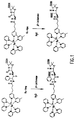
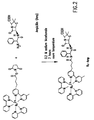
- the penicillins, termed Ru-Amp and Ru-APA are only very weakly electrochemiluminescent, but when they are hydrolyzed by -lactamase according to the present invention they become strongly electrochemiluminescent.
- the presence of - lactamase therefore can be detected with a high level of sensitivity in an ECL instrument using either of these compounds.
- the electrochemiluminescently-active ruthenium complex is catalytically generated by the enzyme attached to the antibody surface.
- one antibody-enzyme complex can generate typically 2000 ruthenium labels per second and could generate as many as 10,000 or more.
- the invention also provides a kit for measuring an analyte in a sample comprising premeasured amounts of enzyme-conjugated binding reagent specific for said analyte and premeasured amounts of an electrochemiluminescent compound and an enzyme substrate and a reference standard wherein the premeasured amounts are sufficient to perform a single sample measurement and wherein said enzyme converts said substrate into a product and wherein (a) a mixture of substrate and electrochemiluminescent compound, or a conjugate of substrate and electrochemiluminescent compound, emits electrochemiluminescence; and (b) a mixture of product and electrochemiluminescent compound, or a conjugate of product and electrochemiluminescent compound, emits electrochemiluminescence; and the electrochemiluminescence emitted by (a) differs from that emitted by (b).
- ECL -based immunoassays employ ruthenium labeled antibodies.
- an immunoassay has been discovered in which the ruthenium-labeled antibody is replaced with an enzyme-labeled antibody.
- the enzyme is - lactamase.
- Tripropylamine (TPA) or similar reductants are omitted from the solution and, for example in the case of infection related assays, ruthenium-labeled penicillins are used instead.
- TPA Tripropylamine
- the ruthenium labeled substrates are catalytically hydrolyzed, generating an enormous increase in ECL.
- the assay is superior to the use of ruthenium-labeled antibody immunoassays because enzyme-generated ECL-active ruthenium is a catalytic process, forming many ECL active molecules.
- the invention contemplates an electrochemiluminescence based immunoassay for the detection of analytes.
- the invention employs enzymes such as - lactamases, proteases or oxido-reductases conjugated to antibodies and ECL labels and enzyme substrates, preferably ECL label substituted substrates such as ECL label substituted antibiotics, peptides, and nicotinamide adenine dinucleotide (NADH) which together provide an antibody-enzyme complex which can catalytically generate up to thousands of ECL active labels per second.
- enzymes such as - lactamases, proteases or oxido-reductases conjugated to antibodies and ECL labels and enzyme substrates, preferably ECL label substituted substrates such as ECL label substituted antibiotics, peptides, and nicotinamide adenine dinucleotide (NADH) which together provide an antibody-enzyme complex which can catalytically generate up to thousands of ECL active labels per second.
- the preferred method of measuring analyte using the electrochemiluminescence based immunoassay is by the following sequential steps:
- an ECL detectant such as Ru(bpy) 3 2+ is substituted on a substrate such as an antibiotic, peptide or NADH.
- An enzyme labeled anti-analyte also is prepared using -lactamase.
- the substrate is catalytically hydrolyzed forming the excited state of the detectant, Ru(bpy) 3 2+* , in substantial quantities.
- the excited state decays to the ground state through a normal fluorescence mechanism, emitting a photon having a wavelength of 620 nm.
- ECL detectants include, for example, rubrene and 9,10-diphenyl anthracene. Many organometallic compounds also are ECL detectants, and the most preferable are Ru-containing compounds, such as ruthenium II tris-bipyridine chelate, and Os-containing compounds. Detectants useful in the presently disclosed invention are described in U.S. Patent No. 5,310,687, the contents of which are incorporated herein by reference.
- detectants are stable for long periods.
- the detectants are safe and relatively inexpensive. They give a highly characteristic signal and do not occur in nature. Measurements based on luminescence of such detectants are sensitive, fast, reproducible and utilize simple instrumentation. The signal is generated repeatedly by each molecule of the detectant, thereby enhancing the sensitivity with which they may be detected.
- the preferred electrochemiluminescent detectants of the present invention are conveniently referred to herein as Ru(bpy) 3 2+ . Various amounts of this detectant, or its equivalent, may be employed. These detectants also have the advantage that they can be used directly in a biological sample without pretreatment of the sample.
- the energy necessary for formation of the excited state arises from the hydrolysis of -lactam or peptide or by reduction of NAD + to NADH.
- the excited-state Ru(bpy) 3 2+* decays through a normal fluorescence mechanism, emitting a photon at 620 nm.
- the heart of the instrument is the electrochemical flow cell, containing the working electrodes and counter electrodes for initiation of the ECL reaction. Both of the electrodes are preferably fabricated from gold, but other materials have been used with various degrees of success.
- a potentiostat is used to apply various voltage waveforms to the electrodes, and a single photomultiplier tube (PMT) is used to detect the light emitted during the ECL reaction.
- An Ag/AgCl reference electrode is placed in the fluid path downstream from the flow cell, and a peristaltic pump is used to draw various fluids through the flow cell.
- the assay fluid is drawn from a test tube into the flow cell and the detectant is quantified by applying a ramp voltage to the electrodes and measuring the emitted light.
- a high pH cleaning solution is drawn into the cell for an electrochemical cleaning procedure.
- a conditioning solution is then drawn into the cell, and a voltage waveform is applied that leaves the surfaces of the electrodes in a highly reproducible state, ready for the next measurement cycle.
- the ECL reaction can be efficiently initiated by many different voltage waveforms. Measurements of the working electrode current and the ECL intensity can be induced, for example, by the application of a triangle wave to the electrodes.
- the applied voltage as shown is actually the voltage measured at the Ag/AgCl reference electrode and includes the effects of a significant uncompensated resistance. Consequently, the actual voltage applied at the working electrode is substantially less than that depicted.
- the triangle waveform rises from 565 to 2800 millivolts (mV) at a rate of 750 millivolts per second (mV/s) and then decreases at the same rate to 1000 mV.
- Oxidation of both the - lactam substrate and Ru(bpy) 3 2- becomes evident when the applied voltage reaches 1100 mV and produces a luminescence.
- the intensity of the luminescence increases with the applied voltage until the substrate at the surface of the electrode is depleted, resulting in decreased intensity.
- the intensity of the observed luminescence is great enough that it can easily be measured with conventional photomultipliers operating either in photon-counting or current modes.
- the preferred method of measuring analyte using the electrochemiluminescence based immunoassay is by the following sequential steps:
- the sample to which the -lactam of interest has been added is then placed in a measuring cell to obtain an initial reading.
- the -lactam of interest is added in concentrations between 10 micromolar and 1.0 millimolar.
- the electrochemiluminescent detectant is typically present at 10 -6 M concentrations (range 1-15 ⁇ M).
- the sample containing cell is then incubated for a sufficient period of time to insure that -lactamase catalyzed hydrolysis can occur if the enzyme is present. This period of time typically varies between 5 minutes and 2 hours. Longer and shorter periods of time are possible depending on sample and reagent concentrations. Since all that is involved is empirical parameters, their values can be determined using conventional techniques.
- electrochemiluminesence molecules for use in the measuring system as detectants include those bidentate aromatic heterocyclic nitrogen-containing ligands of ruthenium and osmium described in U.S. Patent No. 5,310,687.
- Reagent kits containing the materials necessary for the performance of the assays can be assembled to facilitate handling, and foster standardization. Materials to be included in the kit may vary depending on the ultimate purpose. Typically the kit would include the electrochemiluminescent detectant, necessary buffers, and standards. The standards can be chemical reagents or data (empirical) in printed or electronic form necessary for the calibration needed for performance of the assay.
- Ru-AMP was found to be a very good substrate of -lactamase.
- Hydrolysis of Ru-AMP (33 ⁇ M) by -lactamase I from Bacillus cereus (0.3 nM) was monitored spectrophotometrically at 240 nm using a Hitachi U3200 spectrophotometer (Danbury, CT, USA) at 25.0 C in 0.1 M sodium phosphate, pH 7.0.
- Half-time (t 1 /2) analysis gave a k cat /K m for enzymatic hydrolysis of Ru-AMP of 3.9 x 10 8 min -1 M -1 .
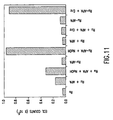
- ECL properties of equimolar mixtures of Ru(bpy) 3 +2 and ampicillin were compared to the same concentration of the Ru-AMP conjugate (hydrolyzed or unhydrolyzed).
- ampicillin and Ru-AMP were hydrolyzed by either 50 mM NaOH (base hydrolysis) or 347 nM -lactam I from Bacillus cereus (enzyme hydrolysis).
- base hydrolysis 50 ⁇ L of 5 M NaOH were added to 1.0 mL solutions of deionized water containing either 30.1 ⁇ M Ru-AMP or a mixture of 30 ⁇ M ampicillin and 30 ⁇ M Ru(bpy) 3 +2 .
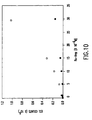
- Figure 10 shows that low concentrations of Ru-AMP can be detected by hydrolysis.
- the lower limit of detection was found to be 50 nM (464 relative ECL counts for hydrolyzed Ru-AMP versus an average instrument reading of-152 relative counts for unhydrolyzed Ru-AMP). This compares favorably to the lower limit for detection of (unconjugated) ampicillin hydrolysis which was 5000 nM.
- Ru-APA might have different ECL properties (before and after hydrolysis) from those of Ru-AMP.
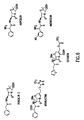
- the differences would be a consequence of the structural differences between APA and AMP, especially the difference in distance between the -lactam ring and the primary amino group used to conjugate Ru(bpy) 3 +2 -NHS ester ( Figure 7).
- the -lactam ring is three bond lengths farther from the amino group than in Ru-APA.
- hydrolysis of Ru-APA (or other -lactam conjugates) may be more or less sensitively detected by ECL than Ru-AMP hydrolysis.
- Ru-APA was found to be a very good substrate of -lactamase.
- Hydrolysis of Ru-APA (23 ⁇ M) by -lactamase I from Bacillus cereus (0.6 nM) was monitored spectrophotometrically at 240 nm using a Hitachi U3200 spectrophotometer (Danbury, CT, USA) at 25.0 C in 0.1 M sodium phosphate, pH 7.0.
- Half-time (t1 ⁇ 2) analysis gave a k cat /K m for enzymatic hydrolysis of Ru-APA of 9.8x10 7 min -1 M -1 .
- Figure 12 shows that the hydrolysis of very low concentrations of Ru-APA can be detected by ECL. More specifically, Figure 12 shows the effect of unhydrolyzed (closed circles) and hydrolyzed (open circles) Ru-APA concentration on the experimentally measured electrochemiluminescence.
- the lower limit of detection was found to be 50 nM (an instrument reading of -33 relative ECL counts for hydrolyzed Ru-APA versus an average of -648 relative ECL counts for unhydrolyzed Ru-APA (conjugated)). This compares favorably to the lower limit for detection of (unconjugated) ampicillin hydrolysis which was 50 ⁇ M (in the presence of 10 ⁇ M Ru(bpy) 3 +2 ).
- Circles represent the electrochemiluminescence effects of unhydrolyzed (closed circles) and hydrolyzed (open circles) 6-APA (0-1000 ⁇ M) in the presence of 10 ⁇ M Ru(bpy) 3 +2 .
- Extrapolation in Figure 13 indicates the electrochemiluminescence change upon hydrolysis of 10 ⁇ M Ru-APA is equivalent to the electrochemiluminescence change upon hydrolysis of 1250 ⁇ M free 6-APA in the presence of 10 ⁇ M Ru(bpy) 3 +2 .
- Antibody- -Lactamase conjugates have been previously prepared (Yolken et al., J. Immunol. Meth. 73 (1984) 109-123; Svensson et al., Bioconj. Chem. 5 (1994) 262-267).
- Conjugates are generally prepared using commercially available bifunctional crosslinking agents such as Sulfo-SMCC (sulfosuccinimidyl 4-[N-maleimidomethyl]cyclohexane-1-carboxylate), which was used here.
- Sulfo-SMCC sulfosuccinimidyl 4-[N-maleimidomethyl]cyclohexane-1-carboxylate
- Other methods of covalently linking two proteins have been established and could also be used. Any method is satisfactory as long as the antibody and the enzyme remain biologically active after conjugation.
- -Lactamase (3.7 mg) was dissolved in 0.500 mL phosphate buffered saline (PBS). Sulfo-SMCC (5 mg) was dissolved in 1.500 mL PBS. The solutions of - lactamase and Sulfo-SMCC were mixed and allowed to react for 45 min. at room temperature.
- a monoclonal antibody raised against the hapten RT1 (5 mg) was buffer-exchanged into PBS using a Centricon 30 concentrator (Amicon).
- Dithiothreitol (DTT, 5 mg) was dissolved in PBS, then mixed with the anti-RT1 antibody to give a total volume of 1.300 mL. The mixture is incubated for 30 min. at room temperature to allow DTT to reduce the disulfide bonds of RT1.
- the proteins in the two reaction mixtures described above were desalted using Sephadex G-25M PD-10 columns (Pharmacia) which had been pre-equilibrated with PBS.
- the recovered proteins were quantitated spectrophotometrically at 280 nm. The yields were found to be 1.0 mg -lactamase and 3.1 mg antibody.
- the protein solutions were then mixed giving a 1.5:1.0 molar ratio of -lactamase to antibody.
- the protein solution was rotated at 4 C for 22 hr. to allow the enzyme-antibody conjugate to form.
- the mixture was chromatographed on a Sephacryl S-300 column (Pharmacia). Three major protein peaks were obtained. Because the chromatographic separation was by size, the first peak to elute from the column was expected to be the enzyme-antibody conjugate.
- An ECL immunoassay using a -lactamase-antibody conjugate can be carried out either with an unconjugated mixture of Ru(bpy) 3 2+ and a -lactam antibiotic (such as APA or Pen G) or, preferably, with a Ru(bpy) 3 2+ - -lactam conjugate (such as Ru-APA).
- a conjugated ECL substrate system is preferred because hydrolysis of Ru(bpy) 3 2+ -labelled substrates is much more sensitively detected by ECL than mixtures of the substrate and Ru(bpy) 3 2+ and the -lactamase substrate, Pen G.
- an ECL enzyme immunoassay was tested using an antibody-enzyme conjugate (anti-RT1 antibody linked to
- the analyte (the RT1 hapten conjugated to Bovine Serum Albumin (BSA)) was incubated for 2 hours at 37 C in a 96-well plate at 0, 0.2, 2.0. and 10.0 ⁇ g/ml to allow it to adhere to the plate. The plate was then washed three times with PBS. To each well was then added 200 ⁇ L of 3% BSA in PBS and the plate was incubated for about 1 hour at 37 C. To each well was added 50 ⁇ L of chromatography fractions from Example 4.
- BSA Bovine Serum Albumin
- the fractions from the first protein peak to elute are suspected to be the antibody-enzyme conjugate while the fractions from the later eluting protein peaks are suspected to be either free antibody or free enzyme, neither of which should give an ECL signal in this experiment.
- the plate was incubated overnight at 4 C to allow the antibody-enzyme conjugate to bind to the analyte.
- the plate was then washed three times with PBS containing 0.05% Tween.
- To each well was added 75 ⁇ L of 10 mM Pen G and the plate was incubated for 30 min. at room temperature to allow any -lactamase present to hydrolyze the Pen G. Following the incubation period, 25 ⁇ L was transferred from each well to test tubes.
- To each tube was added 25 ⁇ L of 120 ⁇ M Ru(bpy) 3 2+ and 250 ⁇ L of 0.1 M sodium phosphate, pH 7.0. ECL of the mixtures was then read in an ORIGEN® Analyzer.
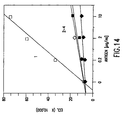
- the results of the ECL enzyme immunoassay are shown in Figure 14.
- the protein used in Line 1 was the expected antibody-enzyme conjugate.
- the ECL counts in Line 1 increase with increasing analyte concentration. This indicates that the antibody-enzyme conjugate bound to the analyte and hydrolyzed Pen G to a form which promotes Ru(bpy) 3 2+ ECL. Even the lowest concentration of analyte tested, 0.2 ⁇ g/mL, was detectable.
- the other lines (2-4) show other chromatographic fractions representing, presumably, free antibody and free enzyme. These lines, which can be considered control experiments, show little increase in ECL with increasing concentrations of analyte.
- the antibody-enzyme conjugate was used in an enzyme immunoassay to sensitively detect an analyte using an unconjugated mixture of Pen G and Ru(bpy) 3 2+ . Because the Ru(bpy) 3 2+ - lactam conjugated substrate is much more sensitive in detecting -lactam hydrolysis by ECL than a mixture of Ru(bpy) 3 2+ and -lactam, the results described here can probably be vastly improved by using a conjugated substrate.
Landscapes
- Health & Medical Sciences (AREA)
- Immunology (AREA)
- Chemical & Material Sciences (AREA)
- Life Sciences & Earth Sciences (AREA)
- Engineering & Computer Science (AREA)
- Molecular Biology (AREA)
- Hematology (AREA)
- Urology & Nephrology (AREA)
- Organic Chemistry (AREA)
- Biomedical Technology (AREA)
- General Health & Medical Sciences (AREA)
- Biochemistry (AREA)
- Medicinal Chemistry (AREA)
- Food Science & Technology (AREA)
- Physics & Mathematics (AREA)
- Analytical Chemistry (AREA)
- Microbiology (AREA)
- Cell Biology (AREA)
- General Physics & Mathematics (AREA)
- Pathology (AREA)
- Biotechnology (AREA)
- Biophysics (AREA)
- Genetics & Genomics (AREA)
- Proteomics, Peptides & Aminoacids (AREA)
- Investigating Or Analysing Materials By The Use Of Chemical Reactions (AREA)
- Measuring Or Testing Involving Enzymes Or Micro-Organisms (AREA)
Applications Claiming Priority (3)
| Application Number | Priority Date | Filing Date | Title |
|---|---|---|---|
| US48476695A | 1995-06-07 | 1995-06-07 | |
| US484766 | 1995-06-07 | ||
| PCT/US1996/010119 WO1996041175A1 (en) | 1995-06-07 | 1996-06-06 | Electrochemiluminescent enzyme immunoassay |
Related Child Applications (1)
| Application Number | Title | Priority Date | Filing Date |
|---|---|---|---|
| EP06001907 Division | 2006-01-31 |
Publications (3)
| Publication Number | Publication Date |
|---|---|
| EP0871887A1 EP0871887A1 (en) | 1998-10-21 |
| EP0871887A4 EP0871887A4 (en) | 2000-04-26 |
| EP0871887B1 true EP0871887B1 (en) | 2007-03-28 |
Family
ID=23925520
Family Applications (1)
| Application Number | Title | Priority Date | Filing Date |
|---|---|---|---|
| EP96923291A Expired - Lifetime EP0871887B1 (en) | 1995-06-07 | 1996-06-06 | Electrochemiluminescent enzyme immunoassay |
Country Status (9)
| Country | Link |
|---|---|
| US (2) | US6524865B1 (enExample) |
| EP (1) | EP0871887B1 (enExample) |
| JP (1) | JP3784072B2 (enExample) |
| AT (1) | ATE358276T1 (enExample) |
| AU (1) | AU718767B2 (enExample) |
| CA (1) | CA2223027A1 (enExample) |
| DE (1) | DE69637001T2 (enExample) |
| ES (1) | ES2285713T3 (enExample) |
| WO (1) | WO1996041175A1 (enExample) |
Cited By (1)
| Publication number | Priority date | Publication date | Assignee | Title |
|---|---|---|---|---|
| CN106645111A (zh) * | 2017-03-01 | 2017-05-10 | 桂林理工大学 | 一种电化学发光快速检测抗生素ZwittermicinA浓度的方法 |
Families Citing this family (53)
| Publication number | Priority date | Publication date | Assignee | Title |
|---|---|---|---|---|
| US5866434A (en) * | 1994-12-08 | 1999-02-02 | Meso Scale Technology | Graphitic nanotubes in luminescence assays |
| US5641623A (en) * | 1995-01-04 | 1997-06-24 | Martin; Mark T. | Electrochemiluminescence assay |
| US6319670B1 (en) | 1995-05-09 | 2001-11-20 | Meso Scale Technology Llp | Methods and apparatus for improved luminescence assays using microparticles |
| AU729118B2 (en) * | 1997-02-06 | 2001-01-25 | University Of North Carolina At Chapel Hill, The | Electrochemical probes for detection of molecular interactions and drug discovery |
| WO2001006260A1 (en) * | 1999-07-19 | 2001-01-25 | California Institute Of Technology | Detection of biomolecules by sensitizer-linked substrates |
| AU2005326758B2 (en) | 2004-06-23 | 2011-07-14 | Board Of Regents Of The University Of Texas System | Methods and compositions for the detection of biological molecules using a two particle complex |
| US7906276B2 (en) | 2004-06-30 | 2011-03-15 | Kimberly-Clark Worldwide, Inc. | Enzymatic detection techniques |
| US7521226B2 (en) | 2004-06-30 | 2009-04-21 | Kimberly-Clark Worldwide, Inc. | One-step enzymatic and amine detection technique |
| US7094528B2 (en) * | 2004-06-30 | 2006-08-22 | Kimberly-Clark Worldwide, Inc. | Magnetic enzyme detection techniques |
| MX2007004079A (es) * | 2004-10-06 | 2007-06-15 | Wellstat Biologics Corp | Detecci??n de niveles elevados de prote??na her-2/neu en celulas cancerosas circulantes y tratamiento. |
| WO2007021810A2 (en) * | 2005-08-11 | 2007-02-22 | Eksigent Technologies, Llc | Microfluidic methods and apparatuses for fluid mixing and valving |
| EP2390312A1 (en) | 2005-11-29 | 2011-11-30 | Gamida Cell Ltd. | Methods of improving stem cell homing and engraftment |
| US7820394B2 (en) | 2005-12-02 | 2010-10-26 | Catassays | Ultrasensitive bioanalytical assays based on the use of high-gain catalytic chemical amplification |
| WO2007121465A2 (en) * | 2006-04-18 | 2007-10-25 | Wellstat Biologics Corporation | Detection of proteins from circulating neoplastic cells |
| CA2684265A1 (en) * | 2007-04-19 | 2008-10-30 | Wellstat Biologics Corporation | Detection of elevated levels of her-2/neu protein from non-isolated circulating cancer cells and treatment |
| JP4887319B2 (ja) | 2008-03-17 | 2012-02-29 | 株式会社日立ハイテクノロジーズ | 自動分析装置、及び光電子増倍管を用いた分析システム |
| AU2009234422B2 (en) * | 2008-04-11 | 2014-05-08 | Board Of Regents Of The University Of Texas System | Method and apparatus for nanoparticle electrogenerated chemiluminescence amplification |
| EP2626693A3 (en) | 2008-05-08 | 2014-10-01 | Board of Regents of the University of Texas System | Luminescent nanostructured materials for use in electrogenerated chemiluminescence |
| JP5209705B2 (ja) | 2008-05-08 | 2013-06-12 | 株式会社日立ハイテクノロジーズ | 自動分析装置 |
| JP5124498B2 (ja) | 2009-01-30 | 2013-01-23 | 株式会社日立ハイテクノロジーズ | 自動分析装置 |
| EP2662385A4 (en) * | 2011-01-07 | 2015-11-11 | Chugai Pharmaceutical Co Ltd | METHOD FOR IMPROVING THE PHYSICAL PROPERTIES OF ANTIBODIES |
| WO2013053953A1 (en) * | 2011-10-14 | 2013-04-18 | Université de Liège | Method for measuring beta-lactam antibiotics |
| US9625465B2 (en) | 2012-05-15 | 2017-04-18 | Defined Diagnostics, Llc | Clinical diagnostic systems |
| US9081001B2 (en) | 2012-05-15 | 2015-07-14 | Wellstat Diagnostics, Llc | Diagnostic systems and instruments |
| US9213043B2 (en) | 2012-05-15 | 2015-12-15 | Wellstat Diagnostics, Llc | Clinical diagnostic system including instrument and cartridge |
| JP6483023B2 (ja) | 2012-12-06 | 2019-03-13 | エンリヴェックス セラピューティクス リミテッド | 治療用アポトーシス細胞調製物、その製造方法及びその使用 |
| EP3258269B1 (en) * | 2015-02-10 | 2019-06-05 | Shenzhen New Industries Biomedical Engineering Co. Ltd. | Reagent kit used for detecting lipoprotein-associated phospholipase a2, and preparation method and application for reagent kit |
| PL3338094T3 (pl) | 2015-08-20 | 2019-09-30 | F. Hoffmann-La Roche Ag | Test immunologiczny oparty na cząstkach z zastosowaniem pegylowanego swoistego względem analitu czynnika wiążącego |
| KR102437995B1 (ko) | 2016-03-07 | 2022-08-29 | 에프. 호프만-라 로슈 아게 | 항-p53 항체의 검출 |
| CN110234995A (zh) | 2017-02-02 | 2019-09-13 | 豪夫迈·罗氏有限公司 | 使用至少两种聚乙二醇化的分析物特异性结合试剂的免疫测定 |
| CN111936522B (zh) | 2018-04-18 | 2024-07-02 | 豪夫迈·罗氏有限公司 | 新型抗胸苷激酶抗体 |
| CN112639475A (zh) | 2018-08-31 | 2021-04-09 | 豪夫迈·罗氏有限公司 | Dlbcl的预后指数中的胸苷激酶(tk-1) |
| WO2020146497A1 (en) * | 2019-01-09 | 2020-07-16 | The Regents Of The University Of California | An electrochemiluminescence elisa for ps129-a-synuclein |
| CN109839501B (zh) * | 2019-01-30 | 2022-04-08 | 东南大学 | 一种测定循环肿瘤细胞的电致化学发光免疫传感器及其制备方法与应用 |
| KR20220024699A (ko) | 2019-07-22 | 2022-03-03 | 에프. 호프만-라 로슈 아게 | 자궁내막증의 비침습적 진단을 위한 혈액 바이오마커로서의 s100a12 |
| EP4004554A1 (en) | 2019-07-22 | 2022-06-01 | F. Hoffmann-La Roche AG | S100a9 as blood biomarker for the non-invasive diagnosis of endometriosis |
| WO2021013781A1 (en) | 2019-07-22 | 2021-01-28 | F. Hoffmann-La Roche Ag | Substance p as blood biomarker for the non-invasive diagnosis of endometriosis |
| WO2021013786A1 (en) | 2019-07-22 | 2021-01-28 | F. Hoffmann-La Roche Ag | S100a6 as blood biomarker for the non-invasive diagnosis of endometriosis |
| WO2021013784A1 (en) | 2019-07-22 | 2021-01-28 | F. Hoffmann-La Roche Ag | S100a8 as blood biomarker for the non-invasive diagnosis of endometriosis |
| KR20220100883A (ko) | 2019-11-15 | 2022-07-18 | 에프. 호프만-라 로슈 아게 | 환자 샘플의 질량분석법 측정을 위한 베타-락탐 항생제의 유도체화 |
| JP2023547505A (ja) | 2020-11-02 | 2023-11-10 | エフ. ホフマン-ラ ロシュ アーゲー | SARS-CoV-2ヌクレオカプシド抗体 |
| CN112964768A (zh) * | 2021-03-23 | 2021-06-15 | 海南微氪生物科技股份有限公司 | 一种Bst DNA聚合酶电致化学发光测定方法 |
| WO2022207628A1 (en) | 2021-03-30 | 2022-10-06 | F. Hoffmann-La Roche Ag | Scf as blood biomarker for the non-invasive diagnosis of endometriosis |
| WO2022207685A1 (en) | 2021-04-01 | 2022-10-06 | F. Hoffmann-La Roche Ag | Psp94 as blood biomarker for the non-invasive diagnosis of endometriosis |
| EP4341700A1 (en) | 2021-05-17 | 2024-03-27 | F. Hoffmann-La Roche AG | Sfrp4 as blood biomarker for the non-invasive diagnosis of adenomyosis |
| US20250042976A1 (en) | 2021-10-26 | 2025-02-06 | Roche Diagnostics Operations, Inc. | Monoclonal antibodies specific for sars-cov-2 rbd |
| WO2023131594A1 (en) | 2022-01-05 | 2023-07-13 | F. Hoffmann-La Roche Ag | Derivatization of compounds in patient samples for therapeutic drug monitoring (tdm) |
| CN119404103A (zh) | 2022-06-23 | 2025-02-07 | 豪夫迈·罗氏有限公司 | 用于诊断子宫内膜异位症及用于对子宫内膜异位症的分期进行分类的方法 |
| WO2024017983A1 (en) | 2022-07-22 | 2024-01-25 | F. Hoffmann-La Roche Ag | Meteorin-like protein (metrnl) as (blood) biomarker for the diagnosis of polycystic ovarian syndrome |
| JP2025524025A (ja) | 2022-07-22 | 2025-07-25 | エフ. ホフマン-ラ ロシュ アーゲー | 多嚢胞性卵巣症候群の診断のための(血液)バイオマーカーとしてのロイコトリエンa4ヒドロラーゼ(lta4h) |
| CN119585618A (zh) | 2022-07-22 | 2025-03-07 | 豪夫迈·罗氏有限公司 | 成纤维细胞生长因子结合蛋白1(fgfbp1)作为(血液)生物标志物用于诊断多囊卵巢综合征 |
| WO2025017135A1 (en) | 2023-07-20 | 2025-01-23 | F. Hoffmann-La Roche Ag | Screening methods for antibody compositions |
| WO2025026908A1 (en) | 2023-07-28 | 2025-02-06 | Roche Diagnostics Gmbh | Serum epha1 as biomarker for endometriosis |
Family Cites Families (23)
| Publication number | Priority date | Publication date | Assignee | Title |
|---|---|---|---|---|
| US4293310A (en) * | 1980-03-14 | 1981-10-06 | University Of Pittsburgh | Photoelectrochemical immunoassay |
| US4818709A (en) * | 1983-01-21 | 1989-04-04 | Primus Frederick J | CEA-family antigens, Anti-CEA antibodies and CEA immunoassay |
| GB8305324D0 (en) | 1983-02-25 | 1983-03-30 | Unilever Plc | Microbiological test processes |
| US4470459A (en) | 1983-05-09 | 1984-09-11 | Halliburton Company | Apparatus and method for controlled temperature heating of volumes of hydrocarbonaceous materials in earth formations |
| US5310687A (en) * | 1984-10-31 | 1994-05-10 | Igen, Inc. | Luminescent metal chelate labels and means for detection |
| US5238808A (en) | 1984-10-31 | 1993-08-24 | Igen, Inc. | Luminescent metal chelate labels and means for detection |
| US5221605A (en) * | 1984-10-31 | 1993-06-22 | Igen, Inc. | Luminescent metal chelate labels and means for detection |
| US4877725A (en) * | 1985-04-01 | 1989-10-31 | New York Blood Center, Inc. | Immunoassays for antibodies which bind to the acquired immunodeficiency virus |
| KR960016340B1 (ko) * | 1986-04-30 | 1996-12-09 | 이겐 인코오포레이팃드 | 전기화학발광 분석법 |
| US5147806A (en) | 1988-04-29 | 1992-09-15 | Igen, Inc. | Method and apparatus for conducting electrochemiluminescence measurements |
| US4931223A (en) * | 1986-07-24 | 1990-06-05 | Tropix, Inc. | Methods of using chemiluminescent 1,2-dioxetanes |
| DE3856567T2 (de) * | 1987-11-04 | 2004-12-16 | Igen International, Inc. | Lumineszente Rhenium-Komplexe und Verfahren zur Herstellung |
| US5296191A (en) | 1988-11-03 | 1994-03-22 | Igen, Inc. | Method and apparatus for conducting electrochemiluminescent measurements |
| US5247243A (en) | 1988-11-03 | 1993-09-21 | Igen, Inc. | Method and apparatus for conducting electrochemiluminescent measurements |
| US5061445A (en) | 1988-11-03 | 1991-10-29 | Igen, Inc. | Apparatus for conducting measurements of electrochemiluminescent phenomena |
| US5068808A (en) | 1988-11-22 | 1991-11-26 | Reality Imaging Corporation | Imager and process |
| US4978613A (en) * | 1989-01-17 | 1990-12-18 | Abbott Laboratories | Beta-lactamase assay employing chromogenic precipitating substrates |
| US5187068A (en) * | 1989-06-09 | 1993-02-16 | Nicolae Luca | Method for determination of lipid moiety and apolipoprotein expressed epitope immunoreactivity on intact lipoprotein |
| US5264346A (en) | 1991-06-03 | 1993-11-23 | Chen Kirk C S | Colorimetric method for beta-lactamase assay and its applications |
| US6030773A (en) * | 1992-07-08 | 2000-02-29 | Agnello; Vincent | Chemiluminescent assay for DSDNA antibodies |
| US5527710A (en) * | 1994-12-02 | 1996-06-18 | Igen, Inc. | Rate measurements of biomolecular reactions using electrochemiluminescence |
| US5641623A (en) * | 1995-01-04 | 1997-06-24 | Martin; Mark T. | Electrochemiluminescence assay |
| FR2729759A1 (fr) * | 1995-01-19 | 1996-07-26 | Pasteur Sanofi Diagnostics | Procede de dosage ultrasensible de la troponine i cardiaque |
-
1996
- 1996-06-06 ES ES96923291T patent/ES2285713T3/es not_active Expired - Lifetime
- 1996-06-06 JP JP50221497A patent/JP3784072B2/ja not_active Expired - Fee Related
- 1996-06-06 AU AU63844/96A patent/AU718767B2/en not_active Ceased
- 1996-06-06 WO PCT/US1996/010119 patent/WO1996041175A1/en not_active Ceased
- 1996-06-06 CA CA002223027A patent/CA2223027A1/en not_active Abandoned
- 1996-06-06 DE DE69637001T patent/DE69637001T2/de not_active Expired - Fee Related
- 1996-06-06 EP EP96923291A patent/EP0871887B1/en not_active Expired - Lifetime
- 1996-06-06 AT AT96923291T patent/ATE358276T1/de not_active IP Right Cessation
-
1997
- 1997-09-11 US US08/928,075 patent/US6524865B1/en not_active Expired - Fee Related
-
2002
- 2002-09-04 US US10/234,874 patent/US7018802B2/en not_active Expired - Fee Related
Non-Patent Citations (2)
| Title |
|---|
| BLACKBURN G.F. ET AL: "Electrochemiluminescence Detection for Development of Immunoassays and DNA Probe Assays for Clinical Diagnostics", CLINICAL CHEMISTRY, vol. 37, no. 9, 1991, WASHINGTON D.C., USA, pages 1534 - 1539 * |
| KNIGHT ET AL, ANALYST, vol. 119, 1994, pages 879 - 890 * |
Cited By (1)
| Publication number | Priority date | Publication date | Assignee | Title |
|---|---|---|---|---|
| CN106645111A (zh) * | 2017-03-01 | 2017-05-10 | 桂林理工大学 | 一种电化学发光快速检测抗生素ZwittermicinA浓度的方法 |
Also Published As
| Publication number | Publication date |
|---|---|
| US7018802B2 (en) | 2006-03-28 |
| WO1996041175A1 (en) | 1996-12-19 |
| ATE358276T1 (de) | 2007-04-15 |
| US6524865B1 (en) | 2003-02-25 |
| EP0871887A1 (en) | 1998-10-21 |
| US20040096918A1 (en) | 2004-05-20 |
| EP0871887A4 (en) | 2000-04-26 |
| AU718767B2 (en) | 2000-04-20 |
| JPH11507726A (ja) | 1999-07-06 |
| CA2223027A1 (en) | 1996-12-19 |
| DE69637001D1 (de) | 2007-05-10 |
| ES2285713T3 (es) | 2007-11-16 |
| DE69637001T2 (de) | 2007-12-06 |
| JP3784072B2 (ja) | 2006-06-07 |
| AU6384496A (en) | 1996-12-30 |
Similar Documents
| Publication | Publication Date | Title |
|---|---|---|
| EP0871887B1 (en) | Electrochemiluminescent enzyme immunoassay | |
| EP0837949B1 (en) | Electrochemiluminescent enzyme biosensors | |
| US6120986A (en) | Electrochemiluminescence assay | |
| US7052864B2 (en) | Bioanalytical measuring method using oxidases and lanthanoid-ligand complexes | |
| JP3997436B2 (ja) | 電気化学発光技術による化合物のモニターリング | |
| US5804400A (en) | Electrochemiluminescent assay | |
| KR20110134426A (ko) | 용액상 균질 검정 | |
| JPH0137693B2 (enExample) | ||
| US5998128A (en) | Use of porphyrins in instrumental detection methods | |
| US20050181443A1 (en) | Coreactant-including electrochemiluminescent compounds, methods, systems and kits utilizing same | |
| US6316180B1 (en) | Electrochemiluminescent monitoring of compounds/electrochemiluminescence assays | |
| US6300143B1 (en) | Electrochemiluminescent assays for eukaryotic cells | |
| AU582341B2 (en) | Assay for immobilized reporter groups | |
| JPH04507194A (ja) | 化学発光組成物、化学発光法、及び分析的検定におけるその使用 | |
| WO1994005742A1 (fr) | Procede rendant un derive d'acridinium luminescent et procede de detection de materiaux d'essai au moyen dudit derive | |
| EP1322670B1 (en) | Electrochemiluminescence from acridan compounds | |
| GB2289334A (en) | Eneyme linked chemiluminescent assay utilising acridinium compounds or analogues thereof involving photon detection | |
| US20070059841A1 (en) | Electrochemiluminescence from acridan compounds | |
| JP3776229B2 (ja) | 化学発光試薬及びその製造方法 | |
| JP2002221521A (ja) | 新規蛍光原 |
Legal Events
| Date | Code | Title | Description |
|---|---|---|---|
| PUAI | Public reference made under article 153(3) epc to a published international application that has entered the european phase |
Free format text: ORIGINAL CODE: 0009012 |
|
| 17P | Request for examination filed |
Effective date: 19971208 |
|
| AK | Designated contracting states |
Kind code of ref document: A1 Designated state(s): AT BE CH DE DK ES FI FR GB GR IE IT LI LU MC NL PT SE |
|
| AX | Request for extension of the european patent |
Free format text: LT PAYMENT 971208;LV PAYMENT 971208 |
|
| RAP1 | Party data changed (applicant data changed or rights of an application transferred) |
Owner name: IGEN INTERNATIONAL, INC. |
|
| RIC1 | Information provided on ipc code assigned before grant |
Free format text: 7G 01N 33/535 A, 7C 07K 16/00 B, 7C 07F 15/00 B, 7G 01N 33/533 B, 7C 07K 16/44 B |
|
| A4 | Supplementary search report drawn up and despatched |
Effective date: 20000315 |
|
| AK | Designated contracting states |
Kind code of ref document: A4 Designated state(s): AT BE CH DE DK ES FI FR GB GR IE IT LI LU MC NL PT SE |
|
| 17Q | First examination report despatched |
Effective date: 20020226 |
|
| RAP1 | Party data changed (applicant data changed or rights of an application transferred) |
Owner name: BIOVERIS CORPORATION |
|
| APBN | Date of receipt of notice of appeal recorded |
Free format text: ORIGINAL CODE: EPIDOSNNOA2E |
|
| APBR | Date of receipt of statement of grounds of appeal recorded |
Free format text: ORIGINAL CODE: EPIDOSNNOA3E |
|
| APBK | Appeal reference recorded |
Free format text: ORIGINAL CODE: EPIDOSNREFNE |
|
| APAF | Appeal reference modified |
Free format text: ORIGINAL CODE: EPIDOSCREFNE |
|
| APBT | Appeal procedure closed |
Free format text: ORIGINAL CODE: EPIDOSNNOA9E |
|
| GRAP | Despatch of communication of intention to grant a patent |
Free format text: ORIGINAL CODE: EPIDOSNIGR1 |
|
| GRAS | Grant fee paid |
Free format text: ORIGINAL CODE: EPIDOSNIGR3 |
|
| APBV | Interlocutory revision of appeal recorded |
Free format text: ORIGINAL CODE: EPIDOSNIRAPE |
|
| GRAA | (expected) grant |
Free format text: ORIGINAL CODE: 0009210 |
|
| AK | Designated contracting states |
Kind code of ref document: B1 Designated state(s): AT BE CH DE DK ES FI FR GB GR IE IT LI LU MC NL PT SE |
|
| AX | Request for extension of the european patent |
Extension state: LT LV |
|
| PG25 | Lapsed in a contracting state [announced via postgrant information from national office to epo] |
Ref country code: NL Free format text: LAPSE BECAUSE OF FAILURE TO SUBMIT A TRANSLATION OF THE DESCRIPTION OR TO PAY THE FEE WITHIN THE PRESCRIBED TIME-LIMIT Effective date: 20070328 Ref country code: LI Free format text: LAPSE BECAUSE OF FAILURE TO SUBMIT A TRANSLATION OF THE DESCRIPTION OR TO PAY THE FEE WITHIN THE PRESCRIBED TIME-LIMIT Effective date: 20070328 Ref country code: FI Free format text: LAPSE BECAUSE OF FAILURE TO SUBMIT A TRANSLATION OF THE DESCRIPTION OR TO PAY THE FEE WITHIN THE PRESCRIBED TIME-LIMIT Effective date: 20070328 Ref country code: CH Free format text: LAPSE BECAUSE OF FAILURE TO SUBMIT A TRANSLATION OF THE DESCRIPTION OR TO PAY THE FEE WITHIN THE PRESCRIBED TIME-LIMIT Effective date: 20070328 Ref country code: BE Free format text: LAPSE BECAUSE OF FAILURE TO SUBMIT A TRANSLATION OF THE DESCRIPTION OR TO PAY THE FEE WITHIN THE PRESCRIBED TIME-LIMIT Effective date: 20070328 Ref country code: AT Free format text: LAPSE BECAUSE OF FAILURE TO SUBMIT A TRANSLATION OF THE DESCRIPTION OR TO PAY THE FEE WITHIN THE PRESCRIBED TIME-LIMIT Effective date: 20070328 |
|
| REG | Reference to a national code |
Ref country code: GB Ref legal event code: FG4D |
|
| REG | Reference to a national code |
Ref country code: CH Ref legal event code: EP |
|
| REF | Corresponds to: |
Ref document number: 69637001 Country of ref document: DE Date of ref document: 20070510 Kind code of ref document: P |
|
| REG | Reference to a national code |
Ref country code: IE Ref legal event code: FG4D |
|
| PGFP | Annual fee paid to national office [announced via postgrant information from national office to epo] |
Ref country code: MC Payment date: 20070521 Year of fee payment: 12 |
|
| PGFP | Annual fee paid to national office [announced via postgrant information from national office to epo] |
Ref country code: NL Payment date: 20070624 Year of fee payment: 12 |
|
| PGFP | Annual fee paid to national office [announced via postgrant information from national office to epo] |
Ref country code: IE Payment date: 20070626 Year of fee payment: 12 Ref country code: ES Payment date: 20070626 Year of fee payment: 12 |
|
| PG25 | Lapsed in a contracting state [announced via postgrant information from national office to epo] |
Ref country code: SE Free format text: LAPSE BECAUSE OF FAILURE TO SUBMIT A TRANSLATION OF THE DESCRIPTION OR TO PAY THE FEE WITHIN THE PRESCRIBED TIME-LIMIT Effective date: 20070628 |
|
| PGFP | Annual fee paid to national office [announced via postgrant information from national office to epo] |
Ref country code: CH Payment date: 20070628 Year of fee payment: 12 |
|
| PGFP | Annual fee paid to national office [announced via postgrant information from national office to epo] |
Ref country code: DK Payment date: 20070629 Year of fee payment: 12 |
|
| PGFP | Annual fee paid to national office [announced via postgrant information from national office to epo] |
Ref country code: LU Payment date: 20070705 Year of fee payment: 12 |
|
| PGFP | Annual fee paid to national office [announced via postgrant information from national office to epo] |
Ref country code: DE Payment date: 20070731 Year of fee payment: 12 |
|
| PG25 | Lapsed in a contracting state [announced via postgrant information from national office to epo] |
Ref country code: PT Free format text: LAPSE BECAUSE OF FAILURE TO SUBMIT A TRANSLATION OF THE DESCRIPTION OR TO PAY THE FEE WITHIN THE PRESCRIBED TIME-LIMIT Effective date: 20070828 |
|
| LTIE | Lt: invalidation of european patent or patent extension |
Effective date: 20070328 |
|
| REG | Reference to a national code |
Ref country code: CH Ref legal event code: PL |
|
| NLV1 | Nl: lapsed or annulled due to failure to fulfill the requirements of art. 29p and 29m of the patents act | ||
| ET | Fr: translation filed | ||
| REG | Reference to a national code |
Ref country code: ES Ref legal event code: FG2A Ref document number: 2285713 Country of ref document: ES Kind code of ref document: T3 |
|
| PGFP | Annual fee paid to national office [announced via postgrant information from national office to epo] |
Ref country code: GB Payment date: 20070628 Year of fee payment: 12 |
|
| PGFP | Annual fee paid to national office [announced via postgrant information from national office to epo] |
Ref country code: IT Payment date: 20070626 Year of fee payment: 12 |
|
| PG25 | Lapsed in a contracting state [announced via postgrant information from national office to epo] |
Ref country code: DK Free format text: LAPSE BECAUSE OF FAILURE TO SUBMIT A TRANSLATION OF THE DESCRIPTION OR TO PAY THE FEE WITHIN THE PRESCRIBED TIME-LIMIT Effective date: 20070328 |
|
| PGFP | Annual fee paid to national office [announced via postgrant information from national office to epo] |
Ref country code: BE Payment date: 20070716 Year of fee payment: 12 |
|
| PLBE | No opposition filed within time limit |
Free format text: ORIGINAL CODE: 0009261 |
|
| STAA | Information on the status of an ep patent application or granted ep patent |
Free format text: STATUS: NO OPPOSITION FILED WITHIN TIME LIMIT |
|
| 26N | No opposition filed |
Effective date: 20080102 |
|
| PG25 | Lapsed in a contracting state [announced via postgrant information from national office to epo] |
Ref country code: GR Free format text: LAPSE BECAUSE OF FAILURE TO SUBMIT A TRANSLATION OF THE DESCRIPTION OR TO PAY THE FEE WITHIN THE PRESCRIBED TIME-LIMIT Effective date: 20070629 |
|
| PGFP | Annual fee paid to national office [announced via postgrant information from national office to epo] |
Ref country code: FR Payment date: 20070618 Year of fee payment: 12 |
|
| PG25 | Lapsed in a contracting state [announced via postgrant information from national office to epo] |
Ref country code: MC Free format text: LAPSE BECAUSE OF NON-PAYMENT OF DUE FEES Effective date: 20080630 |
|
| GBPC | Gb: european patent ceased through non-payment of renewal fee |
Effective date: 20080606 |
|
| PG25 | Lapsed in a contracting state [announced via postgrant information from national office to epo] |
Ref country code: IE Free format text: LAPSE BECAUSE OF NON-PAYMENT OF DUE FEES Effective date: 20080606 Ref country code: DE Free format text: LAPSE BECAUSE OF NON-PAYMENT OF DUE FEES Effective date: 20090101 |
|
| PG25 | Lapsed in a contracting state [announced via postgrant information from national office to epo] |
Ref country code: GB Free format text: LAPSE BECAUSE OF NON-PAYMENT OF DUE FEES Effective date: 20080606 |
|
| REG | Reference to a national code |
Ref country code: ES Ref legal event code: FD2A Effective date: 20080607 |
|
| PG25 | Lapsed in a contracting state [announced via postgrant information from national office to epo] |
Ref country code: IT Free format text: LAPSE BECAUSE OF NON-PAYMENT OF DUE FEES Effective date: 20080606 |
|
| PG25 | Lapsed in a contracting state [announced via postgrant information from national office to epo] |
Ref country code: ES Free format text: LAPSE BECAUSE OF NON-PAYMENT OF DUE FEES Effective date: 20080607 |
|
| PG25 | Lapsed in a contracting state [announced via postgrant information from national office to epo] |
Ref country code: LU Free format text: LAPSE BECAUSE OF NON-PAYMENT OF DUE FEES Effective date: 20080606 |
|
| REG | Reference to a national code |
Ref country code: FR Ref legal event code: ST Effective date: 20110916 |
|
| PG25 | Lapsed in a contracting state [announced via postgrant information from national office to epo] |
Ref country code: FR Free format text: LAPSE BECAUSE OF NON-PAYMENT OF DUE FEES Effective date: 20080630 |