EP0870828B1 - Aus hemophilus paragallinarum abstammendes polypeptid und verfahren zu dessen herstellung - Google Patents
Aus hemophilus paragallinarum abstammendes polypeptid und verfahren zu dessen herstellung Download PDFInfo
- Publication number
- EP0870828B1 EP0870828B1 EP97940361A EP97940361A EP0870828B1 EP 0870828 B1 EP0870828 B1 EP 0870828B1 EP 97940361 A EP97940361 A EP 97940361A EP 97940361 A EP97940361 A EP 97940361A EP 0870828 B1 EP0870828 B1 EP 0870828B1
- Authority
- EP
- European Patent Office
- Prior art keywords
- polypeptide
- dna
- serotype
- seq
- antibody
- Prior art date
- Legal status (The legal status is an assumption and is not a legal conclusion. Google has not performed a legal analysis and makes no representation as to the accuracy of the status listed.)
- Expired - Lifetime
Links
Images






Classifications
-
- C—CHEMISTRY; METALLURGY
- C12—BIOCHEMISTRY; BEER; SPIRITS; WINE; VINEGAR; MICROBIOLOGY; ENZYMOLOGY; MUTATION OR GENETIC ENGINEERING
- C12N—MICROORGANISMS OR ENZYMES; COMPOSITIONS THEREOF; PROPAGATING, PRESERVING, OR MAINTAINING MICROORGANISMS; MUTATION OR GENETIC ENGINEERING; CULTURE MEDIA
- C12N15/00—Mutation or genetic engineering; DNA or RNA concerning genetic engineering, vectors, e.g. plasmids, or their isolation, preparation or purification; Use of hosts therefor
- C12N15/09—Recombinant DNA-technology
- C12N15/11—DNA or RNA fragments; Modified forms thereof; Non-coding nucleic acids having a biological activity
-
- C—CHEMISTRY; METALLURGY
- C07—ORGANIC CHEMISTRY
- C07K—PEPTIDES
- C07K14/00—Peptides having more than 20 amino acids; Gastrins; Somatostatins; Melanotropins; Derivatives thereof
- C07K14/195—Peptides having more than 20 amino acids; Gastrins; Somatostatins; Melanotropins; Derivatives thereof from bacteria
- C07K14/285—Peptides having more than 20 amino acids; Gastrins; Somatostatins; Melanotropins; Derivatives thereof from bacteria from Pasteurellaceae (F), e.g. Haemophilus influenza
-
- A—HUMAN NECESSITIES
- A61—MEDICAL OR VETERINARY SCIENCE; HYGIENE
- A61P—SPECIFIC THERAPEUTIC ACTIVITY OF CHEMICAL COMPOUNDS OR MEDICINAL PREPARATIONS
- A61P31/00—Antiinfectives, i.e. antibiotics, antiseptics, chemotherapeutics
- A61P31/04—Antibacterial agents
-
- A—HUMAN NECESSITIES
- A61—MEDICAL OR VETERINARY SCIENCE; HYGIENE
- A61P—SPECIFIC THERAPEUTIC ACTIVITY OF CHEMICAL COMPOUNDS OR MEDICINAL PREPARATIONS
- A61P37/00—Drugs for immunological or allergic disorders
- A61P37/02—Immunomodulators
- A61P37/04—Immunostimulants
-
- C—CHEMISTRY; METALLURGY
- C12—BIOCHEMISTRY; BEER; SPIRITS; WINE; VINEGAR; MICROBIOLOGY; ENZYMOLOGY; MUTATION OR GENETIC ENGINEERING
- C12P—FERMENTATION OR ENZYME-USING PROCESSES TO SYNTHESISE A DESIRED CHEMICAL COMPOUND OR COMPOSITION OR TO SEPARATE OPTICAL ISOMERS FROM A RACEMIC MIXTURE
- C12P21/00—Preparation of peptides or proteins
- C12P21/02—Preparation of peptides or proteins having a known sequence of two or more amino acids, e.g. glutathione
-
- C—CHEMISTRY; METALLURGY
- C12—BIOCHEMISTRY; BEER; SPIRITS; WINE; VINEGAR; MICROBIOLOGY; ENZYMOLOGY; MUTATION OR GENETIC ENGINEERING
- C12Q—MEASURING OR TESTING PROCESSES INVOLVING ENZYMES, NUCLEIC ACIDS OR MICROORGANISMS; COMPOSITIONS OR TEST PAPERS THEREFOR; PROCESSES OF PREPARING SUCH COMPOSITIONS; CONDITION-RESPONSIVE CONTROL IN MICROBIOLOGICAL OR ENZYMOLOGICAL PROCESSES
- C12Q1/00—Measuring or testing processes involving enzymes, nucleic acids or microorganisms; Compositions therefor; Processes of preparing such compositions
- C12Q1/68—Measuring or testing processes involving enzymes, nucleic acids or microorganisms; Compositions therefor; Processes of preparing such compositions involving nucleic acids
-
- G—PHYSICS
- G01—MEASURING; TESTING
- G01N—INVESTIGATING OR ANALYSING MATERIALS BY DETERMINING THEIR CHEMICAL OR PHYSICAL PROPERTIES
- G01N33/00—Investigating or analysing materials by specific methods not covered by groups G01N1/00 - G01N31/00
- G01N33/48—Biological material, e.g. blood, urine; Haemocytometers
- G01N33/50—Chemical analysis of biological material, e.g. blood, urine; Testing involving biospecific ligand binding methods; Immunological testing
- G01N33/53—Immunoassay; Biospecific binding assay; Materials therefor
-
- A—HUMAN NECESSITIES
- A61—MEDICAL OR VETERINARY SCIENCE; HYGIENE
- A61K—PREPARATIONS FOR MEDICAL, DENTAL OR TOILETRY PURPOSES
- A61K38/00—Medicinal preparations containing peptides
-
- A—HUMAN NECESSITIES
- A61—MEDICAL OR VETERINARY SCIENCE; HYGIENE
- A61K—PREPARATIONS FOR MEDICAL, DENTAL OR TOILETRY PURPOSES
- A61K39/00—Medicinal preparations containing antigens or antibodies
-
- Y—GENERAL TAGGING OF NEW TECHNOLOGICAL DEVELOPMENTS; GENERAL TAGGING OF CROSS-SECTIONAL TECHNOLOGIES SPANNING OVER SEVERAL SECTIONS OF THE IPC; TECHNICAL SUBJECTS COVERED BY FORMER USPC CROSS-REFERENCE ART COLLECTIONS [XRACs] AND DIGESTS
- Y10—TECHNICAL SUBJECTS COVERED BY FORMER USPC
- Y10S—TECHNICAL SUBJECTS COVERED BY FORMER USPC CROSS-REFERENCE ART COLLECTIONS [XRACs] AND DIGESTS
- Y10S435/00—Chemistry: molecular biology and microbiology
- Y10S435/8215—Microorganisms
- Y10S435/822—Microorganisms using bacteria or actinomycetales
- Y10S435/851—Haemophilus
Definitions
- the present invention relates to a polypeptide which can prevent avian infectious coryza. More particularly, the present invention relates to a polypeptide from Haemophilus paragallinarum , the causative agent of avian infectious coryza, a gene coding for said polypeptide and an antibody protein which recognizes said polypeptide. The present invention further relates to a process for preparing said polypeptide and the use of said polypeptide for a vaccine, a diagnostic agent and a therapeutic agent.
- Avian infectious coryza is one of the most important respiratory diseases in poultry, which is an acute respiratory disease caused by infection with Haemophilus paragallinarum (hereinafter also referred to as "HPG") with cardinal symptoms being a running nose, swelling of the face and epiphora.
- HPG Haemophilus paragallinarum
- Avian infectious coryza brings about a great economical damage since it leads to decrease in the breeding rate of poultry, retarding of egg laying, decrease in egg production or failure of egg laying.
- an inactivated vaccine has hitherto been used widely which is obtained by culturing Haemophilus paragalinarum , recovering and inactivating the cells with formalin, thimerosal and the like.
- an effective component from bacterial cells or culture supernatant, or to clone a gene coding for said antigen by the genetic recombination technique, to express said gene in bacteria, yeast, an animal cell, a plant cell, an insect cell and the like, and to purify a product expressed in a large amount, which is then mixed with an appropriate adjuvant together with other vaccines.
- Another approach for laborsaving of vaccination is the use of virus or bacteria as a vector. That is, genes coding for protective antigens from one or plural pathogens have been incorporated into an attenuated virus or bacteria to prepare a polyvalent live vaccine. For fowls, poxvirus, Marek's disease virus and the like have been investigated as a vector.
- a vaccine comprising a viral vector has been put into practice wherein genes coding for HN and F proteins of Newcastle disease virus are incorporated into fowl pox virus.
- HA hemagglutinin
- outer-membrane protein HA is considered a most important antigen since immunization of chicken with HPG increases a hemagglutination-inhibition antibody (hereinafter referred to as "HI antibody") and higher protective effect is observed for chickens with high level of HI antibody (K. Otsuki and Y. Iritani, Avian Dis., 18: 297-304, 1974 and K. Kume et al., Jpn. J. Vet. Sci., 46: 843-850, 1984).
- HI antibody hemagglutination-inhibition antibody
- Serotype of HPG is classified into serotypes A, B and C (Page, Am. J. Vet. Res., 23: 85-95, 1962) or into serotypes 1 and 2 (Sawata et al., Jpn. J. Vet. Sci., 40: 645-652, 1978) based on the agglutination test. It is considered that serotype A by Page corresponds to serotype 1 by Sawata et al. whereas serotype C by Page corresponds to serotype 2 by Sawata et al. (K.Kume, et al., Am. J. Vet. Res., 41: 757-760, 1980 and Sawata et al., Am. J. Vet. Res., 41: 1901-1904, 1980).
- HPG serotype A (serotype 1) has at least three kinds of HA, i.e. HA-L (heat-labile, trypsin-sensitive), HA-HL (heat-labile, trypsin-resistant) and HA-HS (heast-stable, trypsin-resistant), and that HA-L alone exhibits not only HA activity to usual fresh chicken erythrocytes but also to glutaraldehyde-fixed chicken erythrocytes and is involved in protection against infection with HPG serotype A (K. Kume, Jpn. J. Vet. Sci., 45: 783-792, 1983 and Sawata et al., Jpn. J. Vet. Sci., 46: 21-29, 1984).
- HPG serotype A has two kinds of HA, i.e. type 1 HA (heat-labile, protease-sensitive) and type 2 HA (heat-labile, protease-resistant), and that type 1 HA, which is heat-labile and protease-sensitive and consisted of a polypeptide having a molecular weight of about 39 kd as a subunit, is involved in protection against infection (T. Yamaguchi and Y Iritani, Jpn. J. Vet. Sci., 42: 709-711, 1980 and Y. Iritani et al., Am. J. Vet. Res., 41: 2114-2118, 1980).
- HA-L and HA-HL by Kume et al. correspond to type 1 HA and type 2 HA by Iritani et al., respectively.
- HPG serotype C serotype 2
- Sawata et al. reported that an antigen was found which is heat-labile and trypsin-sensitive and exhibits the HA activity to glutaraldehyde-fixed chicken erythrocytes and that this antigen is distinct from HA of HPG serotype A in their antigenicity (Sawata et al., Am. J. Vet. Res., 43: 1311-1314, 1982).
- a protective antigen of HPG has not yet materially identified except for type 1 HA produced by HPG serotype A as reported by Iritani et al.
- the conventional inactivated vaccine obtained by inactivating Haemophilus paragallinarum cells with thimerosal, formalin and the like has provoked problems that the adverse side effects as mentioned above are induced when it is applied to fowls at a large amount since it includes various substances from the cells other than the protective antigen.
- the inventor has earnestly studied in order to solve the problems, and as a result, has successfully purified, from a culture supernatant of Haemophilus paragallinarum serotype A, a polypeptide having about 130 kd of molecular weight from Haemophilus paragallinarum serotype A, said polypeptide inducing production of HI antibody and protecting against avian infectious coryza by Haemophilus paragallinarum serotype A.
- the present inventor has prepared a genomic DNA library from HPG serotype A, cloned a gene fragment coding for the above 130 Kd polypeptide expressed said gene fragment in E. coli and has found that the produced polypeptide could prevent avian infectious coryza by Haemophilus paragallinarum serotype A.
- Said gene fragment coding for the above 130 Kd polypeptide was also used as a probe for cloning a gene fragment hybridizable with said DNA fragment from HPG serotype C to give E. coli which expresses the polypeptide from HPG serotype C.
- the present invention provides a safer, effective vaccine against avian infectious coryza, pathogenic bacteria of which is Haemophilus paragallinarum , with less adverse side effects and a process for preparing the same.
- an object of the present invention is to provide a novel polypeptide from Haemophilus paragallinarum as well as a peptide which shares at least a portion of the amino acid sequence.
- Another object of the present invention is to provide a gene coding for said novel polypeptide from Haemophilus paragallinarum as well as the peptide which shares at least a potion of the amino acid sequence and a recombinant vector for expression of said gene.
- Still another object of the present invention is to provide a process for preparing said novel polypeptide from Haemophilus paragallinarum and the polypeptide which shares at least a portion of the amino acid sequence from microorganisms or cells transformed with said recombinant vector.
- Still further object of the present invention is to provide a monoclonal or polyclonal antibody which is prepared by using as an immunogen the thus prepared novel peptide from Haemophilus paragallinarum or the polypeptide which shares at least a portion of the amino acid sequence.
- Still another object of the present invention is to provide a method for detecting Haemophilus paragallinarum or an antibody thereto by a combination of the above-mentioned peptide, DNA fragment, transformant or antibody.
- Still further object of the present invention is to provide a therapeutic agent for avian infectious coryza which comprises as an active ingredient the antibody against the novel polypeptide from Haemophilus paragallinarum .
- the polypeptide from Haemophilus paragallinarum serotype A of the present invention which induces production of the HI antibody is prepared from a culture supernatant of HPG serotype A or a suspension of ruptured cells by affinity chromatography with the monoclonal antibody having the HI activity as a ligand.
- the monoclonal antibody having the HI activity (hereinafter also referred to as "HI-MCA") is obtained by preparing the hybridomas producing the monoclonal antibodies which bind to Haemophilus paragallinarum serotype A by the conventional cell fusion procedure and then screening the hybridoma producing the monoclonal antibody having the HI activity with HI test.
- Haemophilus paragallinarum serotype A is obtained by the conventional procedure used for usual culture of Haemophilus paragallinarum .
- the cells of HPG strain 221 can be recovered by shaking culture in a chicken meat infusion medium supplemented with chicken serum (including chicken meat infusion 300 ml, chicken serum 10 ml, polypeptone 5 g, glucose 1 g, casamino acid 1 g, sodium glutamate 5 g, sodium chloride 5 g, nicotinamide adenine dinucleotide 0.025 g in 1000 ml medium) at 37°C overnight followed by centrifugation.
- chicken serum including chicken meat infusion 300 ml, chicken serum 10 ml, polypeptone 5 g, glucose 1 g, casamino acid 1 g, sodium glutamate 5 g, sodium chloride 5 g, nicotinamide adenine dinucleotide 0.025 g in 1000 ml medium
- Immunization can be carried out in a usual manner, for example, after inactivating Haemophilus paragallinarum serotype A with thimerosal, formalin and the like, by administering the inactivated cells together with the conventional adjuvant to BALB/c mouse via intraperitoneal, subcutaneous, intradermal or intravenous administration.
- the immunogen includes HPG cells per se, or alternatively, the cells treated with potassium rhodanide, sonication or hyaluronidase, or a processed antigen obtained by treatment with a surfactant such as sodium N-lauroylsarcosinate, Nonidet P-40 or Triton X-100.
- the adjuvant includes Freund's complete adjuvant, Freund's incomplete adjuvant, aluminum hydroxide gel, and the like. More specifically, immunization is conducted as follows: Haemophilus paragallinarum serotype A strain 221 cultured in a chicken meat infusion medium supplemented with chicken serum is inactivated with thimerosal and then sonicated. An emulsion obtained by mixing the resultant suspension of ruptured cells with Freund's complete adjuvant is administered subcutaneously to the back of BALB/c mouse, followed by subcutaneous administration of an emulsion prepared from the same amount of the suspension and Freund's incomplete adjuvant at the back every 2 to 4 weeks. A serum antibody level is monitored, and after confirming the elevated level of antibody titer, a suspension of ruptured cells after sonication is further administered intravenously after additional 2 to 4 weeks as a final immunization.
- Mouse myeloma cells include, for example, NSI-Ag4/1 (Eur. J. Immunol., 6: 511, 1976), P3X63-Ag8.U1 (Curr. Topics Microbiol. Immunol., 81:1, 1978), X63-Ag8.653 (J. Immunol., 123: 1548, 1979), and the like. Fusion of splenocytes with mouse myeloma cells may be carried out in accordance with Milstein et al., Method Enzymol., 73, 3-46,1981.
- a cell fusion promoting agent may be polyethylene glycol having a molecular weight of 1,000-6,000 at a concentration of 30 to 50 % (w/v). More specifically, cell fusion is preferably carried out with about 10 8 splenocytes and about 10 7 P3X63-Ag8.U1 myeloma cells in a culture medium usually used for culture of lymphocytes such as RPMI 1640 medium, containing 45 % polyethylene glycol 4,000, which is previously heated at 37°C.
- Hybridoma may be obtained by culture in HAT medium for a sufficient period of time so that the non-fused cells cannot survive, usually for several days to several weeks.
- the thus obtained hybridomas are then used for selection and cloning of strains producing a desired antibody in accordance with the usual limiting dilution procedure, using the culture supernatant of the hybridomas.
- An antigen used in these methods may be either a suspension of Haemophilus paragallinarum serotype A cells, the cells treated with potassium rhodanide, sonication, hyaluronidase, and the like, or an extraction of said cells with a surfactant.
- HA antigen includes a suspension of Haemophilus paragallinarum cells or the cells treated with potassium rhodanide, sonication, hyaluronidase, and the like.
- Erythrocytes used for HI test may be either 0.5 % fresh chicken erythrocytes, glutaraldehyde-fixed 1 % chicken erythrocytes or formalin-fixed chicken erythrocytes, with glutaraldehyde-fixed chicken erythrocytes being preferable.
- a supernatant obtained after centrifugation of ascites treated with 5 folds amount of a 25 % kaolin solution is added to precipitates of glutaraldehyde-fixed chicken erythrocytes, which is then shaken at 37°C for 60 minutes for sensitization.
- a twofold serial dilution of this supernatant is added the same amount of a suspension of strain 221 cells including 4 hemagglutinin units and the mixture is left to stand for 15 minutes.
- Thereto is added a suspension of glutaraldehyde-fixed 1 % chicken erythrocytes, the mixture is left to stand at room temperature for 60 minutes, and observed at the bottom of microtiter plate.
- An HI antibody titer is defined as a maximum dilution which can block hemagglutination.
- Recovery of monoclonal antibodies having the HI activity from the thus obtained hybridomas is carried out by culturing said hybridomas in a large amount and harvesting said antibodies from the culture supernatant, or by administering said hybridomas to mice compatible with said hybridomas so that said hybridomas are proliferated and harvesting said antibodies from the ascites thereof.
- Purification of the monoclonal antibody may be done by the conventional procedures used in the protein chemistry such as, for example, a salting out, ultrafiltration, an isoelectric precipitation, an electrophoresis, an ion exchange chromatography, a gel filtration chromatography, an affinity chromatography, and the like. More specifically, purification of the monoclonal antibody from ascites may be done using Protein A-Sepharose CL-4B (manufactured by Pharmacia) and MAPS-II Mouse Monoclonal Antibody Purification Kit (manufactured by Bio Rad) in accordance with protocol of the manufacturer.
- Protein A-Sepharose CL-4B manufactured by Pharmacia
- MAPS-II Mouse Monoclonal Antibody Purification Kit manufactured by Bio Rad
- An affinity column with the antibody having the HI activity as a ligand for purification of the polypeptide from Haemophilus paragallinarum serotype A which induces production of the HI antibody may be prepared by a usual procedure, for example, by binding the above purified antibody to HiTrap NHS-Activated Column (manufactured by Pharmacia) in accordance with protocol of the manufacturer.
- the polypeptide from Haemophilus paragallinarum serotype A which induces production of the HI antibody may be obtained from a culture supernatant of HPG serotype A cells or from a suspension of ruptured cells.
- a polypeptide hereinafter referred to as "HPGp130" with a molecular weight of about 130 Kd having a high capacity to produce the HI antibody and the activity to prevent avian infectious coryza was obtained from a culture supernatant of HPG strain 221 cultured in the chicken meat infusion medium supplemented with chicken serum at 37°C for two days.
- amino acid sequence of the thus obtained polypeptide may be determined by the usual procedures such as Edman degradation (P. Edman, Acta Chem. Scand., 4: 283, 1950). The amino acid sequence at the N-terminal of said polypeptide is shown in SEQ ID NO: 2.
- Haemophilus paragallinarum serotype A Cloning of a gene or a gene fragment coding for the polypeptide from Haemophilus paragallinarum serotype A may be done by the usual procedures as described by Sambrook et al. (Molecular Cloning, A Laboratory Manual, 2nd Edition, Cold Spring Harbor Laboratory Press, New York, 1989). That is, Haemophilus paragallinarum serotype A strain 221 cells are cultured and recovered by the above procedures, a genomic DNA is extracted and purified with Sepagene kit (manufactured by Sanko Junyaku K.K.) in accordance with protocol attached thereto.
- Sepagene kit manufactured by Sanko Junyaku K.K.
- the genomic DNA is then cleaved with a commercially available restriction enzyme (preferably EcoRI), the obtained DNA fragments are inserted into a commercially available cloning vector (e.g. ⁇ gt11) to prepare a DNA library, among which such clones expressing the antigen that responds to the desired antibody having the HI activity are screened.
- the antibody having the HI activity includes the culture supernatant of the hybridomas or the ascites of mice obtained as mentioned above.
- Antisera is preferably used which is obtained by immunization with the polypeptide from Haemophilus paragallinarum serotype A isolated by affinity chromatography with the monoclonal antibody having the HI activity as a ligand.
- a nucleotide sequence of the exogenous DNA fragment in the thus obtained recombinant ⁇ gt11 phage DNA may be determined with a DNA sequencer (for example, Applied Biosystems 377). Novelty of the obtained exogenous DNA fragment may be confirmed by homology search between the whole nucleotide sequence and the existing data base (for example, GeneBank, EMBL, and the like).
- Example 3 For example, ten positive ⁇ gt11 phages were obtained from the DNA library and each DNA of these phages included an exogenous DNA fragment of about 1.2 kb (hereinafter also referred to as "HPG1.2k DNA fragment") as demonstrated in an agarose electrophoresis.
- the nucleotide sequence of said exogenous DNA corresponds to the nucleotide sequence of from nucleotides No. 1988 to No. 3157 of SEQ ID NO: 1.
- this DNA fragment is considered to encode a portion of the polypeptide from Haemophilus paragallinarum serotype A.
- a gene coding for a full length of said polypeptide may be obtained by using the HPG1.2k DNA as a probe to give a longer DNA fragment, determining a nucleotide sequence of this DNA fragment and finding out an initiation codon and a termination codon.
- the genomic DNA of Haemophilus paragallinarum serotype A strain 221 is cleaved with a restriction enzyme whose cleavage site is not present in the 1.2 kb DNA (for example, HindIII) and the resulting DNA fragments are separated with an agarose electrophoresis.
- a restriction enzyme whose cleavage site is not present in the 1.2 kb DNA (for example, HindIII)
- the resulting DNA fragments are separated with an agarose electrophoresis.
- DIG-DNA Labeling Kit manufactured by Boehringer Mannheim
- Southern hybridization is carried out using digoxigenin (DIG)-labeled 1.2 kb DNA fragment as a probe for detecting desired DNA fragments.
- HPG3.5k DNA fragment a HindIII-digested DNA fragment of about 3.5 kb which hybridized with the 1.2 kb DNA fragment.
- a nucleotide sequence of the HPG3.5k DNA fragment corresponds to the nucleotide sequence of from nucleotides No. 1 to No. 3450 of SEQ ID NO: 1.
- An identical sequence to the amino acid sequence at the N-terminal of the above HPGp130 polypeptide was found at the amino acid sequence of from amino acid residues No. 1 to No. 13 (corresponding to nucleotide sequence of from No. 453 to No. 491) in SEQ ID NO: 1.
- HPG4.1k DNA fragment A nucleotide sequence of the HPG4.1k DNA fragment corresponds to the nucleotide sequence of from nucleotides No. 2212 to No. 6275 of SEQ ID NO: 1.
- HPG6.7k DNA fragment a XhoI-PstI digested DNA fragment of about 6.7 kb (hereinafter also referred to as "HPG6.7k DNA fragment"; this fragment encompasses the above HPG4.1k DNA fragment) was obtained using the 1.2 kb DNA and the 3.5 kb DNA labeled with DIG.
- a nucleotide sequence of the HPG6.7k DNA fragment corresponds to the nucleotide sequence of from nucleotides No. 2212 to No. 8930 of SEQ ID NO: 1. There existed a termination codon in the HPG6.7k DNA fragment.
- nucleotide sequence of SEQ ID NO: 1 consisting of a total of 8930 nucleotides, included an open reading frame starting from nucleotide No. 243 which can code for 2042 amino acid residues.
- a polypeptide comprising the 2042 amino acid residues is hereinafter also referred to as "serotype A HMTp210".
- Homology search with the existing data base revealed no homology with any known nucleotide and amino acid sequences, indicating that the serotype A HMTp210 polypeptide is a novel substance.
- the DNA fragments from Haemophilus paragallinarum serotype A can also be used as a probe for obtaining DNA fragments from different serotype of Haemophilus paragallinarum such as serotype B or serotype C as well as polypeptides coded by said DNA fragments.
- a genomic DNA is extracted and purified from HPG serotype C strain 53-47 and cleaved with a suitable restriction enzyme (preferably HindIII), the obtained DNA fragments are inserted into a commercially available cloning vector (e.g. ⁇ DASHII) to prepare a DNA library, among which clones are screened by using the serotype A HPG3.5k DNA fragment labeled with DIG as a probe.
- a suitable restriction enzyme preferably HindIII
- Example 5 ten positive ⁇ DASHII phages were obtained from the DNA library and each DNA of these phages included an exogenous DNA fragment of about 13.5 kb (hereinafter also referred to as "HPG-C1 DNA”) as demonstrated in an agarose gel electrophoresis.
- HPG-C1 DNA exogenous DNA fragment of about 13.5 kb
- HPG-C1 DNA fragment of about 13.5 kb is too large to be subcloned into a plasmid vector, it was cleaved with a suitable restriction enzyme (preferably XbaI) and the resulting DNA fragments were inserted into a commercially available cloning vector (for example, pUC119).
- a suitable restriction enzyme preferably XbaI
- pUC119 a commercially available cloning vector
- nucleotide sequence of SEQ ID NO: 5 consisting of a total of 7486 nucleotides, included an open reading frame starting from nucleotide No. 848 which can code for 2039 amino acid residues.
- a polypeptide comprising the 2039 amino acid residues is hereinafter also referred to as "serotype C HMTp210".
- Homology search with the existing data base revealed no homology with any known nucleotide and amino acid sequences, indicating that the serotype C HMTp210 polypeptide is a novel substance.
- These primers were designed such that BamHI recognition sequences were added at the 5' sites, respectively, and a full length of translation region of the serotype A HMTp210 polypeptide can be amplified.
- PCR was carried out using as a template the genomic DNAs from a total of nine strains, i.e.
- the thus obtained DNA fragment or a portion thereof may be incorporated into a suitable expression vector, the resulting expression vector is used for transformation of a microorganism or an animal cell, and the transformant is cultured to produce the polypeptide of the present invention from Haemophilus paragallinarum or a peptide which shares at least a portion of the amino acid sequence of said polypeptide.
- the peptide which shares a portion of the amino acid sequence can also be produced with a peptide synthesizer.
- a suitable signal sequence for secretion in a microorganism or an animal cell can also be linked upstream the DNA coding for the polypeptide of the present invention so that said polypeptide can be secreted into a culture medium.
- the thus modified DNA for secretion is advantageous in that said polypeptide secreted into a culture medium can easily be purified.
- a signal sequence includes pelB signal (S. P. Lei et al., J. Bacteriology, 169: 4379-4383, 1987) for E. coli , signal from ⁇ factor (A. J. Brake, Yeast Genetic Engineering, p269, Butterworth, 1989) for yeast, signal SG-1 from immunoglobulin (H. Maeda et al., Hum. Antibod. Hybridomas, 2: 124-134, 1991), C25 signal (PCT International Publication No. WO94/20632) for an animal cell.
- An expression vector includes a plasmid, a viral vector and the like. Any promoter may be included in the expression vector such as lac, tac, pho5, adh, SV40 early, SV40 late, ⁇ actin and the like, in consideration of a microorganism or an animal cell used as a host, insofar as the polypeptide having the activity to prevent avian infectious coryza is ultimately obtained.
- the polypeptide of the present invention can also be expressed as a fusion protein with another protein or peptide such as ⁇ -galactosidase, glutathione-S-transferase, maltose binding protein, Protein A, histidine hexamer, and the like.
- a marker gene includes, in case of an expression vector for a microorganism cell, ampicillin resistant gene, tetracycline resistant gene for E. coli as a host, ⁇ -isopropyl malate dehydrogenase (Leu2) gene for yeast as a host, and in case of an expression vector for an animal cell, aminoglycoside 3' phosphotransferase (neo) gene, dihydrofolate reductase (dhfr) gene, glutamine synthetase (GS) gene, and the like.
- An additive for selection includes G418, neomycin, methotrexate, and the like.
- Transformation of a host cell may be carried out by the known methods including, for example, a calcium chloride method, a calcium phosphate coprecipitation method, a DEAE dextran method, a lipofectin method, a protoplast polyethylene fusion method, an electroporation, and the like, which can suitably be selected depending on a host used.
- novel polypeptide of the present invention from Haemophilus paragallinarum or a peptide which shares at least a portion of the amino acid sequence of said polypeptide may be prepared as described hereinbelow.
- the HPG3.5k DNA fragment from HGP serotype A is incorporated into an expression vector pTrcHisC (manufactured by Invitrogen), said expression vector is introduced into E. coli strain JM109 for transformation.
- those transformants which produce the target novel polypeptide are screened by a dot blotting with an index of reactivity with the antibody against said polypeptide.
- Chicken immunized with a supernatant obtained after centrifugation of a suspension of the ruptured cells have an elevated protection against challenge with HPG serotype A strain 221.
- novel polypeptide may be purified from an extract of cells or a culture supernatant from a large scale culture of the transformant producing said polypeptide by utilizing the above-mentioned methods used in the field of protein chemistry.
- novel polypeptide from Haemophilus paragallinarum has the activity to prevent avian infectious coryza.
- Said polypeptide from Haemophilus paragallinarum , monoclonal and polyclonal antibodies against said polypeptide and the expression vector as mentioned above may be used as a vaccine or a therapeutic agent for avian infectious coryza either alone or in combination with a suitable carrier, diluent or stabilizing agent in a conventional manner such as injections or oral drugs.
- the above novel polypeptide from Haemophilus paragallinarum or a polypeptide which shares at least a portion of the amino acid sequence of said polypeptide may be used as an immunogen for preparing a polyclonal and monoclonal antibodies in accordance with the procedures described hereinabove.
- Said polypeptide as well as the antibody having the capacity to bind thereto may also be utilized in an antigen or antibody detection system such as Western blot, ELISA, and the like, and may also be a material for constructing a diagnostic agent.
- affinity chromatography with a suitable carrier to which the above antibody is bound may be used for purification of the above polypeptide.
- novel polypeptide from Haemophilus paragallinarum and the gene fragment coding for said polypeptide for prevention of avian infectious coryza and the antibody having the HI activity which can be used as a therapeutic agent.
- the polypeptide from Haemophilus paragallinarum which the present inventor has found, has a molecular weight of about 130 Kd, has the activity to induce production of the HI antibody, and is the novel, important polypeptide for prevention of avian infectious coryza.
- Technical problems associated with the obtention of said polypeptide such as isolation of the gene coding for said polypeptide, construction of the expression vector, preparation of the expression cell, and purification of said polypeptide, are solved by the present invention, which allows for provision of a more effective vaccine than the prior art vaccines. Furthermore, these are useful as a material for providing a rapid, simple diagnostic agent for avian infectious coryza.
- Example 1 Preparation and features of monoclonal antibody
- Haemophilus paragallinarum serotype A strain 221 cells were inoculated to 100 ml of chicken meat infusion medium supplemented with chicken serum and shake-cultured at 37°C overnight, followed by centrifugation (8,000 rpm, 20 minutes) to recover cells. The obtained cells were washed with PBS while centrifugation and then suspended in PBS containing 0.01 % thimerosal at about 5 x 10 10 cells/ml. The suspension was sonicated with Branson Sonifier 350 at 20 kHz, 4°C for 10 minutes (alternative repeat of sonication for 0.5 second and cooling for 0.5 second).
- splenocytes were removed. Said splenocytes (1 x 10 8 cells) were mixed with mouse myeloma cells P3X63-Ag8.U1 (1 x 10 7 cells) by padding, thereto was added RPMI1640 medium containing 45 % polyethylene glycol previously warmed at 37°C to conduct cell fusion.
- the cells after fusion reaction were suspended in HAT medium (RPMI1640 medium containing 5 % fetal calf serum supplemented with 1 x 10 -4 M hypoxanthine, 4 x 10 -7 M aminopterin and 1.6 x 10 -5 M thymidine), and after plated on 96-well microtiter plate for cell culture (manufactured by Coning), cultured under the condition of 37°C and 5 % CO 2 .
- HAT medium RPMI1640 medium containing 5 % fetal calf serum supplemented with 1 x 10 -4 M hypoxanthine, 4 x 10 -7 M aminopterin and 1.6 x 10 -5 M thymidine
- ELISA For the wells where hybridomas propagated, the presence of the monoclonal antibody recognizing Haemophilus paragallinarum in the culture supernatant was determined with ELISA as described hereinbelow.
- microtiter plate was washed with PBS containing 0.05 % Tween 20 (PBS-T) and thereto was added 100 ⁇ l of the culture supernatant of hybridomas diluted 10 folds with PBS-T containing 5 % skim milk for reaction at room temperature for 2 hours. After washing with PBS-T, each 100 ⁇ l of peroxidase-labeled antimouse IgG (manufactured by Bio-Rad) diluted 10,000 folds with PBS-T containing 5 % skim milk was added for reaction at room temperature for 2 hours.
- PBS-T peroxidase-labeled antimouse IgG
- POD ortho-phenylenediamine dihydrochloride
- Hybridomas of the wells where the antibody against Haemophilus paragallinarum serotype A was secreted in the culture supernatant were cloned by a limiting dilution method so that they become monoclonal. Thus, nine clones producing the monoclonal antibody against Haemophilus paragallinarum serotype A were obtained.
- hybridomas were cultured in a large amount and intraperitoneally administered to BALB/c mice, pretreated with an immunosuppressive agent, pristane (2,6,10,14-tetramethylpentadecane; manufactured by Aldrich), where the hybridomas propagated. Ten to twenty days later, the mice were sacrificed and the produced ascites were removed therefrom and HI activity of the ascites was determined.
- an immunosuppressive agent pristane (2,6,10,14-tetramethylpentadecane; manufactured by Aldrich
- a suspension of Haemophilus paragallinarum serotype A strain 221 cells inactivated with thimerosal was used as an HA antigen for HI test and prepared based on HA titer.
- a suspension of a glutaraldehyde-fixed 1 % chicken erythrocytes (0.05 ml) was added to a 2 folds serial dilution of HA antigen (0.05 ml), and after standing at room temperature for 60 minutes, the bottom of the plate was observed.
- a maximum dilution which agglutinates erythrocytes was defined as HA titer and, regarding a concentration of HA antigen at this dilution as 1 unit, a stock solution of HA antigen was prepared so that it contains 4 units.
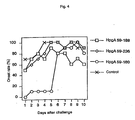
- HpgA 59-40 the monoclonal antibodies from three clones (HpgA 59-40, HpgA 59-145 and HpgA 59-180) exhibited a high HI activity (Table 1).
- the clone HpgA 59-180 has been deposited by the applicant as FERM BP-6084 at National Institute of Bioscience and Human-Technology Agency of Industrial Science and Technology (1-3, Higashi 1-chome, Tsukuba-shi, Ibaraki-ken) on September 5, 1996.
- a mouse ascites (0.3 ml) containing these antibodies was intraperitoneally administered to SPF white leghorn chickens of 4 to 6 weeks old, each group comprising 8 to 10 chickens, and on the next day, about 10 8 cells of Haemophilus paragallinarum serotype A strain 221 were applied dropwise to the nasal cavity of the chickens for challenge.
- a control group which was given no mouse ascites was also used and was challenged in the same manner. Each group was observed for the presence of the coryza symptoms (i.e. a running nose, swelling of the face and epiphora) for 10 days.
- HI-MCA monoclonal antibodies having the HI activity
- Example 2 Purification and property of antigen recognized by HI-MCA
- HI-MCA HpgA 59-180 was purified from mouse ascites using Protein A-Sepharose CL-4B (manufactured by Pharmacia) and MAPS-II Mouse Monoclonal Antibody Purification Kit (manufactured by Bio-Rad) in accordance with protocol attached thereto. First of all, to 4 ml of mouse ascites was added the same amount of a binding buffer included in the Antibody Purification Kit.
- HiTrap NHS-activated column manufactured by Pharmacia
- HiTrap NHS-activated column gel bed volume 1 ml
- 0.2 M sodium hydrogen carbonate solution 10 ml
- 10 mg of the above purified HI-MCA HpgA 59-180
- the obtained HI-MCA-bound HiTrap column was washed each three times alternatively with 0.5 M ethanolamine (pH 8.3) containing 0.5 M sodium chloride, and 0.1 M sodium acetate buffer (pH 4.0) containing 0.5 M sodium chloride and equilibrated with PBS for purification of an antigen recognized by HI-MCA.
- An antigen was purified from a culture of Haemophilus paragallinarum serotype A strain 221 by an affinity chromatography using HI-MCA as a ligand. An antigen was detected by ELISA method as described hereinbelow.
- HI-MCA HpgA 59-40
- 0.05 M sodium carbonate buffer pH 9.0
- the plate was left to stand at 4°C overnight and masked with PBS containing 5 % skim milk at room temperature for 2 hours.
- PBS-T an eluate from the column diluted 10 folds with PBS-T containing 5 % skim milk was reacted at room temperature for 2 hours.
- peroxidase-labeled HI-MCA HpgA 59-180
- a substrate solution containing OPD and hydrogen peroxide was added for reaction at room temperature for 30 minutes.
- Peroxidase-labeled HI-MCA HpgA 59-180 was prepared by binding horseradish peroxidase (manufactured by Toyobo K.K.) to the above purified HI-MCA (HpgA 59-180) as described by Yoshitake et al. (J. Biochem., 92: 1413-1424, 1982).
- Haemophilus paragallinarum serotype A strain 221 cells were inoculated to 100 ml of chicken meat infusion culture supplemented with chicken serum and shake-cultured at 37°C for 2 days. To a culture supernatant obtained after removal of cells by centrifugation at 8,000 rpm for 20 minutes was immediately added a serine protease inhibitor, phenylmethylsulfonyl fluoride, at 1 mM, and the mixture was filtered with 0.45 micron Sterivex filter. The HI-MCA-bound HiTrap column preequilibrated with PBS was added with 60 ml of the above filtrate and washed with PBS.
- the purified HPGp130 polypeptide was treated with 2-mercaptoethanol and then subjected to SDS-PAGE using 5 % polyacrylamide gel. After electrophoresis, the gel was washed with a transfer buffer (10 mM N-cyclohexyl-3-aminopropanesulfonic acid, 10 % methanol, pH 11) and overlaid to polyvinylidene difluoride (PVDF) membrane (manufactured by Millipore), which was previously immersed successively in 100 % methanol and a transfer buffer, followed by transfer with TRANS-BLOT CELL (manufactured by Bio Rad) at 20 V overnight.
- PVDF membrane after transfer was washed with water and stained with 0.1 % Amido Black dissolved in 45 % methanol - 10 % acetic acid for 30 seconds, followed by decolorization with distilled water.
- the stained band of a molecular weight 130 Kd was cut out and analyzed with Protein Sequencer (Applied Biosystems 477A). Thirteen amino acid residues at the N-terminal were analyzed, and as a result, the amino acid sequence was found to be Lys-Trp-Leu-Glu-Val-Tyr-Ser-Ser-SerVal-Lys-Leu-Ser as shown in SEQ ID NO: 2.
- HPGp130 polypeptide could induce production of HI antibody was investigated.
- An emulsion (1 ml; about 20 ⁇ g of HPGp130 polypeptide per animal) prepared by mixing the HPGp130 polypeptide solution (about 40 ⁇ g/ml) with the same amount of Freund's complete adjuvant was subcutaneously injected to guinea pig at two sites of the back for immunization. About three weeks later, 1 ml of an emulsion prepared similarly with Freund's incomplete adjuvant was injected subcutaneously at two sites of the back. Additional two weeks later, the emulsion prepared with Freund's incomplete adjuvant was boosted subcutaneously at two sites of the back and four weeks thereafter the test animals were bled.
- HI antibody titer of the obtained antisera was determined as described above to reveal a high HI antibody titer (5,120 folds). Thus, it was found that the HPGp130 polypeptide induced production of HI antibody deeply involved in protection against avian infectious coryza.
- a polypeptide recognized by anti-HPGp130 polypeptide guinea pig serum was analyzed by Western blot. First, the purified HPGp130 polypeptide and HPG serotype A strain 221 cells cultured in chicken meat infusion medium supplemented with chicken serum were treated with 2-mercaptoethanol and subjected to SDS-PAGE.
- the gel was immersed in a transfer buffer (25 mM Tris, 192 mM glycine, 20 % ethanol, pH 8.3) for 5 minutes and overlaid to PVDF membrane, which was previously immersed in 100 % methanol and the transfer buffer in this order, and a transfer was carried out using TRANS-BLOT SD CELL (manufactured by Bio Rad) at 7 V for 1 hour.
- the membrane was masked with PBS containing 5 % skim milk at 4°C overnight, washed with PBS-T and then reacted with anti-HPGp130 polypeptide guinea pig serum diluted 1,000 folds with PBS-T containing 5 % skim milk at room temperature for 2 hours.
- Immunization group Tested chicken Protected chicken Protection rate (%) Purified HPGp130 10 10 100 Formalin-inactivated strain 221 10 10 100 Non immunization control 8 0 0
- Example 3 Cloning of gene coding for polypeptide (serotype A HMTp210) from Haemophilus paragallinarum serotype A strain 221
- Haemophilus paragallinarum serotype A strain 221 cells were inoculated to 5 ml of chicken meat infusion medium supplemented with chicken serum and shake-cultured at 37°C overnight and the cells were recovered by centrifugation. After washing the obtained cells with PBS by centrifugation, DNA was extracted and purified from the cells with Sepagene kit (manufactured by Sanko Junyaku K.K.) in accordance with protocol attached thereto. The DNA was dissolved in 50 ⁇ l of TE buffer (10 mM Tris-HCl buffer containing 1 mM EDTA, pH 8.0) and the obtained solution was used as a genomic DNA solution.
- TE buffer 10 mM Tris-HCl buffer containing 1 mM EDTA, pH 8.0
- cDNA Rapid Cloning Module- ⁇ gt11 manufactured by Amersham
- 0.2 ⁇ g of the genomic DNA digested with restriction enzyme EcoRI was ligated to 0.5 ⁇ g of ⁇ gt11 arm digested with restriction enzyme EcoRI in accordance with protocol attached thereto.
- ⁇ -DNA In Vitro Packaging Module manufactured by Amersham
- the ligated product was inserted into ⁇ phage in accordance with protocol attached thereto.
- the obtained solutions of recombinant phage were used as a genomic library.
- the mixture was overlaid to LB agar medium (containing tryptone 10 g, yeast extract 5 g, sodium chloride 10 g, ampicillin 50 mg and agar 15 g in 1000 ml, pH 7) and incubated at 42°C for 3 hours.
- LB agar medium containing tryptone 10 g, yeast extract 5 g, sodium chloride 10 g, ampicillin 50 mg and agar 15 g in 1000 ml, pH 7
- IPTG isopropyl- ⁇ -D-thiogalactopyranoside
- the nitrocellulose membrane was then peeled off from the plate, washed with PBS-T and masked with PBS containing 5 % skim milk at room temperature for 2 hours.
- Example 2 (6) Thereafter, the procedures as described in Example 2 (6) were repeated so that anti-HPGp130 polypeptide guinea pig serum, peroxidase-labeled anti-guinea pig IgG and a substrate were successively reacted.
- a series of these procedures gave plaques which express an antigen specifically reactive with anti-HPGp130 guinea pig serum from Haemophilus paragallinarum serotype A strain 221. About 5,000 plaques were immunologically screened as described above to give 43 positive plaques.
- the recombinant ⁇ gt11 phages found positive in the immunological screening were added to a suspension of E. coli strain Y1090 about 10 8 cells in an aqueous solution of 10 mM magnesium sulfate for absorption at 37°C for 15 minutes. Thereto was added 10 ml of LB liquid medium containing 0.4 % maltose, 5 mM calcium chloride and ampicillin 50 ⁇ g/ml and the cells were further cultured at 37°C overnight. After bacteriolysis with addition of several drops of chloroform, the lysis solution was centrifuged to remove the intact E. coli cells and debris.
- HPG1.2k DNA A DNA fragment obtained from the phage of a clone (clone 2) was used in the following test.
- Plasmid pUC119 (manufactured by Takara Shuzo K.K.) was digested with EcoRI and then treated with alkaline phosphatase to dephosphorize the 5' end. The cleaved pUC119 DNA was treated with phenol and chloroform and then harvested by precipitation with ethanol. The cleaved pUC119 and the HPG1.2k DNA fragment were ligated together with DNA Ligation Kit ver. 2 (manufactured by Takara Shuzo K.K.).
- Competent cells of E.coli strain JM109 (manufactured by Takara Shuzo K.K.) were transformed with the ligated product and then cultured on Circle Grow agar medium (manufactured by BIO101) containing 50 ⁇ g/ml of ampicillin at 37°C overnight. Colonies grown on the agar medium were inoculated to 0.5 ml of Circle Grow medium containing 50 ⁇ g/ml of ampicillin and cultured at 37°C for 5 hours.
- Plasmids were extracted from the cells by an alkali method and, after digestion with EcoRI, subjected to 0.8 % agarose gel electrophoresis to detect recombinant plasmids containing DNA fragment with the same length as the 1.2k DNA derived from Haemophilus paragallinarum serotype A strain 221, and thereby transformed E.coli were confirmed.
- the obtained transformants of E.coli were cultured on Circle Grow medium containing 50 ⁇ g/ml of ampicillin and then the recombinant plasmids (hereinafter referred to as "pUA1.2") were recovered from the cells by PEG precipitation method.
- pUA1.2 recombinant plasmids
- pUA1.2 recombinant plasmids
- a nucleotide sequence of the HPG1.2k DNA fragment was analyzed using a DNA sequencer (Applied Biosytems 377). As a result, a sequence of 1170 nucleotides was determined. It was found that the nucleotide sequence of the HPG1.2k DNA corresponds to the sequence of from No. 1988 to No.
- SEQ ID NO: 1 is a nucleotide sequence coding for serotype A HMTp210 polypeptide as described hereinbelow, and codes for 389 amino acid residues with no initiation codon and termination codon within this region.
- a corresponding amino acid sequence was also shown which depicts no sequence equivalent to the N-terminal amino acid sequence of HPGp130 polypeptide. Accordingly, it was considered that HPG1.2k DNA codes for a portion of HPGp130 polypeptide.
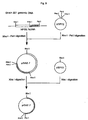
- plasmid pUC119 was digested with HindIII and then treated with alkaline phosphatase to dephosphorize the 5' end.
- the cleaved pUC119 DNA was treated with phenol and chloroform and then recovered by precipitation with ethanol.
- the cleaved pUC119 and the above HindIII digest (about 3.5 kb) from the genome of Haemophilus paragallinarum serotype A strain 221 were ligated together with DNA Ligation Kit ver. 2. Competent cells of E.coli strain JM109 were transformed with the ligated product and then cultured on Circle Grow agar medium containing 50 ⁇ g/ml of ampicillin at 37°C overnight.
- the positive clones were cultured on Circle Grow medium containing 50 ⁇ g/ml of ampicillin. Plasmids were recovered from the cells by PEG precipitation method.
- the obtained recombinant plasmid (hereinafter referred to as "pUA3.5”) was digested with HindIII and then electrophoresed on 0.8 % agarose gel to separate 3.5 kb DNA fragment derived from Haemophilus paragallinarum serotype A strain 221. Using SephaglasTM BandPrep Kit, this DNA fragment (hereinafter referred to as "HPG3.5k DNA”) was eluted and recovered in accordance with protocol attached thereto.
- E.coli UA3.5JM transformed with the recombinant plasmid has been deposited by the applicant as FERM BP-6083 at National Institute of Bioscience and Human-Technology Agency of Industrial Science and Technology (1-3, Higashi 1-chome, Tsukuba-shi, Ibaraki-ken) on September 5, 1996.
- the expression vector pTrcHisC (manufactured by Invitrogen) was digested with HindIII and then treated with alkaline phosphatase to dephosphorize the 5' end.
- the cleaved pTrcHisC DNA was treated with phenol and chloroform and then recovered by precipitation with ethanol.
- the cleaved pTrcHisC and the above HPG3.5k DNA were ligated together with DNA Ligation Kit ver. 2. Competent cells of E.coli strain JM109 were transformed with the ligated product and then cultured on Circle Grow agar medium containing 50 ⁇ g/ml of ampicillin at 37°C overnight.
- Colonies grown on the agar medium were inoculated to 0.5 ml of Circle Grow medium containing 50 ⁇ g/ml of ampicillin and cultured at 37°C for 5 hours. Plasmids were extracted from the cells by an alkali method and, after digestion with HindIII, subjected to 0.8 % agarose gel electrophoresis to detect recombinant plasmids containing DNA fragment with the same length as the 3.5k DNA derived from Haemophilus paragallinarum serotype A strain 221, and thereby transformed E.coli cells were confirmed.
- the obtained transformants of E.coli were plated on 1 ml of Circle Grow medium containing 50 ⁇ g/ml of ampicillin and cultured at 37°C for 3 hours. Thereto was further added IPTG (final concentration of 1 mM) and the transformants were cultured at 37°C for additional 3 hours.
- the cells were harvested from the culture by centrifugation and suspended in 50 ⁇ l of PBS. The suspension of the cells (10 ⁇ l) was mixed with the same amount of 2 % SDS and the mixture was boiled for 5 minutes and 2 ⁇ l was then spotted on a nitrocellulose membrane. The nitrocellulose membrane was air-dried and then masked with PBS containing 5 % skim milk at 4°C overnight.
- Example 2 (6) Thereafter, the procedures as described in Example 2 (6) were repeated so that anti-HPGp130 polypeptide guinea pig serum, peroxidase-labeled anti-guinea pig IgG and a substrate were successively reacted.
- a series of these procedures gave E.coli which was transformed with a recombinant plasmid wherein HPG3.5k DNA was ligated in a right direction and expresses an antigen specifically reactive with anti-HPGp130 guinea pig serum.
- the obtained transformants of E.coli were inoculated to 200 ml of Circle Grow medium containing 50 ⁇ g/ml of ampicillin and cultured at 37°C for 3 hours. Thereto was added IPTG (final concentration of 1 mM) and the transformants were cultured at 37°C for additional 3 hours.
- the cells were harvested from the culture by centrifugation and suspended in 10 ml of PBS. To the suspension was added lysozyme at 100 ⁇ g/ml for reaction at 4°C for 1 hour. The suspension was sonicated with Branson Sonifier 350 at 4°C for 10 minutes for bacteriolysis. Intact cells were removed by centrifugation and the obtained supernatant was used as a crude HPG3.5k-HIS polypeptide.
- Example 2 (7) As a control, as described in Example 2 (7), one group was immunized with formalin-inactivated HPG serotype A strain 221 and another group was not immunized and both control groups were challenged similarly. The results are shown in Table 3. The group immunized with the crude HPG3.5k-HIS polypeptide showed protection against the onset of the disease in seven among ten chicken. The group immunized with the formalin-inactivated cells exhibited protection against the onset of the disease in all the chickens whereas the non-immunization group showed the symptoms in all the chickens. Immunization group Tested chicken Protected chicken Protection rate (%) Crude HPGp3.5k-HIS 10 7 70 Formalin-inactivated strain 221 10 10 100 Non immunization control 8 0 0 0
- a nucleotide sequence of HPG3.5k DNA fragment was analyzed with a DNA sequencer as described above. As a result, a sequence of 3450 nucleotides was determined.
- the nucleotide sequence of HPG3.5k DNA fragment corresponds to the nucleotide sequence of from nucleotides No. 1 to No. 3450 in SEQ ID NO: 1.
- a region was found which codes for an amino acid sequence identical to that of the N-terminal of HPGp130 polypeptide.
- An open reading frame was obtained from HPG3.5k DNA in the same frame as that of HPGp130 polypeptide and it was found that translation starts at nucleotide No. 243 to code for 1069 amino acid residues. There was no termination codon within the region and thus it was assumed that HPG3.5k DNA codes for a portion of HPGp130 polypeptide.
- a corresponding amino acid sequence is also shown.
- the above HPG3.5k DNA fragment was labeled with DIG as described above.
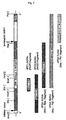
- genomic DNA of Haemophilus paragallinarum serotype A strain 221 was cleaved with restriction enzymes XhoI and XbaI
- a Southern hybridization was carried out as described in Example 3 (3) using the DIG-labeled HPG3.5k DNA or the DIG-labeled HPG1.2k DNA as a probe.
- DNAs of about 5.5 kb, about 4.1 kb and about 1 kb were detected with the DIG-labeled HPG3.5k DNA as a probe.
- DIG-labeled HPG1.2k DNA was used as a probe, DNAs of about 4.1 kb and about 1 kb were detected.
- the DNA of about 5.5 kb was a fragment corresponding to the 5' site from the first XhoI cleavage site
- the DNA of about 4.1 kb was a fragment corresponding to the 3' site from the second XhoI cleavage site
- the DNA of about 1 kb was a fragment between these two XhoI sites.
- the fragment of about 4.1 kb was separated and recovered on 0.8 % agarose gel electrophoresis.
- plasmid pSP72 (manufactured by Promega) was digested with XhoI and XbaI and, after dephosphorizing the 5' end, ligated with the above XhoI-XbaI digest (about 4.1 kb) derived from the genome of Haemophilus paragallinarum serotype A strain 221. E.coli strain JM109 cells were transformed with the ligated product. For the obtained E.coli transformants, a colony hybridization was carried out using the DIG-labeled HPG3.5k DNA as a probe to screen positive clones.
- pSA4.1 The obtained plasmid (hereinafter referred to as "pSA4.1"), in which the XhoI-XbaI digest fragment (hereinafter referred to as "HPG4.1k DNA”) derived from Haemophilus paragallinarum serotype A strain 221 was incorporated, was digested with XhoI and XpnI and then electrophoresed on 0.8 % agarose gel to separate and recover a DNA fragment of about 4.1 kb, which was the above HPG4.1k DNA added with XbaI-KpnI fragment from the plasmid pSP72.
- HPG4.1k DNA XhoI-XbaI digest fragment
- the expression vector pTrcHisC was digested with XhoI and XpnI and, after dephosphorizing the 5' end, ligated with the above XhoI-XpnI digest of about 4.1 kb.
- E.coli strain JM109 cells were transformed with the ligated product. From the obtained transformants of E.coli , there was obtained E.coli which was transformed with a recombinant plasmid wherein HPG4.1k DNA was ligated in a right direction and expresses an antigen specifically reactive with anti-HPGp130 guinea pig serum.
- the obtained transformants of E.coli were inoculated to 200 ml of Circle Grow medium containing 50 ⁇ g/ml of ampicillin and cultured at 37°C for 3 hours. Thereto was added IPTG (final concentration of 1 mM) and the transformants were cultured at 37°C for additional 3 hours.
- the cells were harvested from the culture by centrifugation and suspended in 10 ml of PBS. To the suspension was added lysozyme at 100 ⁇ g/ml for reaction at 4°C for 1 hour. The suspension was sonicated at 4°C for 10 minutes for bacteriolysis. Intact cells were removed by centrifugation and the obtained supernatant was used as a crude HPG4.1k-HIS polypeptide.
- Example 2 (7) As a control, as described in Example 2 (7), one group was immunized with formalin-inactivated HPG serotype A strain 221 and another group was not immunized and both control groups were challenged similarly. The results are shown in Table 4. The group immunized with the crude HPG4.1k-HIS polypeptide showed protection against the onset of the disease in every ten among the tested chickens. The group immunized with the formalin-inactivated cells exhibited protection against the onset of the disease in all the chickens whereas the non-immunization group showed the symptoms in all the chickens. Immunization group Tested chicken Protected chicken Protection rate (%) Crude HPGp4.1k-HIS 10 10 100 Formalin-inactivated strain 221 10 10 100 Non immunization control 10 0 0
- the analyzed nucleotide sequence of HPG4.1k DNA fragment corresponds to the nucleotide sequence of from nucleotides No. 3445 to No. 6275 in SEQ ID NO: 1. No termination codon was found within the region of said DNA fragment. A corresponding amino acid sequence is also shown.
- the DNA of about 9.4 kb was a fragment corresponding to the 5' site from the first XhoI cleavage site
- the DNA of about 6.7 kb was a fragment corresponding to the 3' site from the second XhoI cleavage site
- the DNA of about 1 kb was a fragment between these two XhoI sites.
- the fragment of about 6.7 kb was separated and recovered on 0.8 % agarose gel electrophoresis.
- plasmid pSP72 was digested with XhoI and PstI and, after dephosphorizing the 5' end, ligated with the above XhoI-PstI digest (about 6.7 kb) derived from the genome of Haemophilus Paragallinarum serotype A strain 221.
- E.coli strain JM109 cells were transformed with the ligated product.
- a colony hybridization was carried out using the DIG-labeled HPG3.5k DNA as a probe to screen positive clones.
- pSA6.7 E.coli SA6.7JM transformed with the recombinant plasmid has been deposited by the applicant as FERM BP-6081 at National Institute of Bioscience and Human-Technology Agency of Industrial Science and Technology (1-3, Higashi 1-chome, Tsukuba-shi, Ibaraki-ken) on August 27, 1997.
- HPG6.7k DNA DNA fragment of about 6.7 kb (hereinafter referred to as "HPG6.7k DNA”) incorporated in the obtained recombinant plasmid (pSA6.7) encompasses the above HPG4.1k DNA
- HPG2.7k DNA a fragment of about 2.7 kb (hereinafter referred to as "HPG2.7k DNA”) was subcloned which is a subtraction of HPG4.1k DNA from HPG6.7k DNA.
- pSA6.7 was digested with XbaI and then electrophoresed on 0.8 % agarose gel to separate and recover a DNA fragment of about 2.7 kb which was the above HPG2.7k DNA added with PstI-XbaI fragment from the plasmid pSP72.
- Plasmid pSP72 was then digested with XbaI and, after dephosphorizing the 5' end, ligated with the above XbaI digest of about 2.7 kb.
- E.coli strain JM109 cells were transformed with the ligated product.
- the obtained E.coli transformants were cultured on Circle Grow medium containing 50 ⁇ g/ml of ampicillin. Plasmids were recovered from the cells by PEG precipitation method.
- the obtained recombinant plasmid is hereinafter referred to as "pSA2.7".
- a nucleotide sequence of HPG2.7k DNA fragment was analyzed with a DNA sequencer as described above. As a result, a sequence of 2661 nucleotides was determined.
- the nucleotide sequence of HPG2.7k DNA fragment corresponds to the nucleotide sequence of from nucleotides No. 6270 to No. 8930 in SEQ ID NO: 1.
- a termination codon was found within the region.
- a corresponding amino acid sequence is also shown.
- nucleotide sequence of SEQ ID NO: I consisting of a total of 8930 nucleotides, included an open reading frame starting from nucleotide No. 243 which can code for 2042 amino acid residues.
- a polypeptide comprising the 2042 amino acid residues is hereinafter referred to as serotype A HMTp210.
- Homology search with the existing data base revealed no homology with any known nucleotide and amino acid sequences, indicating that the serotype A HMTp210 polypeptide is a novel substance.
- Example 4 Search for DNA fragment hybridizable to HPG1.2k DNA from other strains than Haemophilus paragallinarum serotype A strain 221
- genomic DNAs were prepared from a total of nine strains, i.e. HPG serotype A strains 221, 083, W, Germany and Georgia, HPG serotype B strains Spross and 0222, and HPG serotype C strains Modesto and 53-47.
- HPG serotype A strains 221, 083, W, Germany and Georgia HPG serotype B strains Spross and 0222
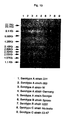
- HPG serotype C strains Modesto and 53-47 After the prepared genomic DNAs were cleaved with restriction enzyme EcoRI, a Southern hybridization was carried out using the DIG-labeled HPG1.2k DNA as a probe as described in Example 3 (3). As a result, fragments hybridizable with HPG1.2k DNA were detected in every strains although size of each fragment was varied depending on the strains (Fig. 10).
- a genomic library of Haemophilus paragallinarum serotype C strain 53-47 was prepared in the same manner as described in Example 3 (1). That is, a genomic DNA of HPG serotype C strain 53-47 digested with restriction enzyme HindIII was ligated to ⁇ DASHII (manufactured by STRATAGENE) arm digested with restriction enzyme HindIII using cDNA Rapid Cloning Module- ⁇ gt11. Using ⁇ -DNA in vitro packaging module, the ligated product was inserted into ⁇ phage. The obtained solutions of recombinant phage were used as a genomic library.
- the recombinant ⁇ DASHII phages found positive in the plaque hybridization were added to a suspension of E. coli strain XL1-Blue MRA (manufactured by STRATAGENE) about 10 8 cells in an aqueous solution of 10 mM magnesium sulfate for absorption at 37°C for 15 minutes.
- the phage DNA was recovered.
- the obtained phage DNA was digested with HindIII and then electrophoresed on 0.8 % agarose gel to separate and recover DNA fragments derived from Haemophilus paragallinarum serotype C strain 53-47. All the DNA fragments obtained from ten positive phages had a length of about 13.5 kb.
- a DNA fragment (hereinafter referred to as "HPG-C1 DNA”) obtained from the phage of a clone (clone 1) was used in the following test.
- HPG-C1 DNA of about 13.5 kb is too large to be subcloned into a plasmid vector, it was cleaved with several restriction enzymes and a suitable amount of the resulting DNA fragments was electrophoresed on 0.8 % agarose gel. As a result, DNA fragments of about 6.9 kb, about 5.6 kb and about 0.9 kb were detected when digested with XbaI.
- Plasmid pUC119 was digested with HindIII and XbaI and, after dephosphorizing the 5' end, ligated with the above XbaI digests of HPG-C1 DNA.
- E.coli strain JM109 cells were transformed with the ligated products.
- E.coli cells transformed with the recombinant plasmid containing either DNA fragment of about 5.6 kb or about 0.9 kb were cultured and the plasmids were recovered from the cells by PEG precipitation method.
- pU-C2 and "pU-C3", containing either DNA fragment of about 5.6 kb and about 0.9 kb, respectively
- pU-C3 recombinant plasmids
- E.coli U-C2JM transformed with the recombinant plasmid pU-C2 has been deposited by the applicant as FERM BP-6082 at National Institute of Bioscience and Human-Technology Agency of Industrial Science and Technology (1-3, Higashi 1-chome, Tsukuba-shi, Ibaraki-ken) on August 27, 1997.
- Plasmid pUC119 was digested with XbaI and, after dephosphorizing the 5' end, ligated with the above XbaI digests of HPG-C1 DNA. E.coli strain JM109 cells were transformed with the ligated products. Furthermore, E.coli cells transformed with the recombinant plasmid containing DNA fragment of about 6.9 kb were cultured and the plasmid was recovered from the cells by PEG precipitation method.
- pU-C4 The obtained recombinant plasmid (hereinafter referred to as "pU-C4") was digested with XbaI and then electrophoresed on 0.8 % agarose gel to separate and recover DNA fragment of about 6.9 kb (hereinafter referred to as "HPG-C4 DNA”).
- E.coli U-C4JM transformed with the recombinant plasmid pU-C4 has been deposited by the applicant as FERM BP-6080 at National Institute of Bioscience and Human-Technology Agency of Industrial Science and Technology (1-3, Higashi 1-chome, Tsukuba-shi, Ibaraki-ken) on August 27, 1997.
- a nucleotide sequence of HPG-C4 DNA fragment was analyzed with a DNA sequencer as described above. As a result, a sequence of 6871 nucleotides was determined.
- the nucleotide sequence of HPG-C4 DNA fragment corresponds to the nucleotide sequence of from nucleotides No. 1 to No. 6871 in SEQ ID NO: 5.
- an open reading frame was obtained from HPG-C4 DNA in the same frame as that of the gene coding for serotype A HMTp210 and it was found that translation starts at nucleotide No. 848 to code for 2008 amino acid residues. However, no termination codon was found within the region of said DNA fragment. A corresponding amino acid sequence was also shown.
- nucleotide sequence of a portion of HPG-C2 DNA fragment corresponds to the nucleotide sequence of from nucleotides No. 6866 to No. 7486 in SEQ ID NO: 5.
- a termination codon was found within the region of this portion of HPG-C2 DNA fragment.
- a corresponding amino acid sequence was also shown.
- nucleotide sequence of SEQ ID NO: 5 consisting of a total of 7486 nucleotides, included an open reading frame starting from nucleotide No. 848 which can code for 2039 amino acid residues.
- a polypeptide comprising the 2039 amino acid residues is hereinafter referred to as "serotype C HMTp210".
- Homology search with the existing data base revealed no homology with any known nucleotide and amino acid sequences, indicating that the serotype C HMTp210 polypeptide is a novel substance.
- Example 6 PCR amplification of HMTp210 gene from genomic DNA of HPG serotypes A, B and C cells
- genomic DNAs were prepared from a total of nine strains, i.e. HPG serotype A strains 221, 083, W, Germany and Georgia, HPG serotype B strains Spross and 0222, and HPG serotype C strains Modesto and 53-47. Based on the nucleotide sequence coding for the Type A HMTp210 polypeptide, there were prepared a synthetic DNA having the nucleotide sequence of SEQ ID NO: 3 as an upstream PCR primer and a synthetic DNA having the nucleotide sequence of SEQ ID NO: 4 as a downstream PCR primer.
- primers were designed such that BamHI recognition sequences were added at the 5' site, respectively, and a full length of translation region of the serotype A HMTp210 polypeptide can be amplified.
- PCR was carried out using the genomic DNAs prepared as mentioned above as a template. PCR was carried out with LA PCR Kit ver. 2 (manufactured by Takara Shuzo K.K.) under the following conditions: after reaction at 94°C for 1 minute, 30 cycles of reactions at 98°C for 40 seconds and at 60°C for 10 minutes, followed by reaction at 72°C for 10 minutes. Analysis of the obtained PCR products on 0.8 % agarose gel electrophoresis confirmed the amplified fragment of about 6.1 Kb in any of these strains (Fig. 12).
- Example 7 Expression of full-length serotypes A and C HMTp210 polypeptides
- the PCR product obtained in Example 6 with the genomic DNA from Haemophilus paragallinarum serotype A strain 221 as a template was digested with BamHI. After separation on 0.8 % agarose gel electrophoresis, the amplified fraction of about 6.1 Kb was eluted and recovered with SephaglasTM BandPrep Kit.
- Plasmid pUC119 was digested with BamHI and, after dephosphorizing the 5' end, ligated with the above amplified fragment of about 6.1 kb.
- E.coli strain JM109 cells were transformed with the ligated product.
- E.coli cells transformed with the recombinant plasmid containing DNA fragment of about 6.1 kb were cultured and the plasmid was recovered from the cells by PEG precipitation method.
- the obtained recombinant plasmid (hereinafter referred to as "pU-AP1”) was digested with BamHI and then electrophoresed on 0.8 % agarose gel to separate and recover DNA fragment of about 6.1 kb (hereinafter referred to as "HPG-AP1 DNA").
- the expression vector pTrcHisA (manufactured by Invitrogen) was digested with BamHI and, after dephosphorizing the 5' end, ligated with the above HPG-AP1 DNA.
- E.coli strain JM109 cells were transformed with the ligated product. From the obtained transformants of E.coli , there was obtained E.coli which was transformed with a recombinant plasmid wherein HPG-AP1 DNA was ligated in a right direction and expressed an antigen specifically reactive with anti-HPGp130 guinea pig serum.
- the PCR product obtained in Example 6 with the genomic DNA from Haemophilus paragallinarum serotype C strain 53-47 as a template was digested with BamHI. After separation on 0.8 % agarose gel electrophoresis, the amplified fraction of about 6.1 kb was recovered.
- Plasmid pUC119 was digested with BamHI and, after dephosphorizing the 5' end, ligated with the above amplified fragment of about 6.1 kb.
- E.coli strain JM109 cells were transformed with the ligated product.
- E.coli cells transformed with the recombinant plasmid containing DNA fragment of about 6.1 kb were cultured and the plasmid was recovered from the cells by PEG precipitation method.
- the obtained recombinant plasmid (hereinafter referred to as "pU-CP1”) was digested with BamHI and then electrophoresed on 0.8 % agarose gel to separate and recover DNA fragment of about 6.1 kb (hereinafter referred to as "HPG-CP1 DNA").
- the expression vector pTrcHisA (manufactured by Invitrogen) was digested with BamHI and, after dephosphorizing the 5' end, ligated with the above HPG-CP1 DNA.
- E.coli strain JM109 cells were transformed with the ligated product. From the obtained transformants of E.coli , there was obtained E.coli which was transformed with a recombinant plasmid wherein HPG-CP1 DNA was ligated in a right direction and expressed an antigen specifically reactive with anti-HPGp130 guinea pig serum.
Landscapes
- Health & Medical Sciences (AREA)
- Life Sciences & Earth Sciences (AREA)
- Chemical & Material Sciences (AREA)
- Organic Chemistry (AREA)
- Engineering & Computer Science (AREA)
- Molecular Biology (AREA)
- Genetics & Genomics (AREA)
- General Health & Medical Sciences (AREA)
- Immunology (AREA)
- Wood Science & Technology (AREA)
- Zoology (AREA)
- Biochemistry (AREA)
- Medicinal Chemistry (AREA)
- Biomedical Technology (AREA)
- Proteomics, Peptides & Aminoacids (AREA)
- Bioinformatics & Cheminformatics (AREA)
- Biotechnology (AREA)
- Microbiology (AREA)
- Biophysics (AREA)
- General Engineering & Computer Science (AREA)
- Communicable Diseases (AREA)
- General Chemical & Material Sciences (AREA)
- Physics & Mathematics (AREA)
- Chemical Kinetics & Catalysis (AREA)
- Veterinary Medicine (AREA)
- Hematology (AREA)
- Urology & Nephrology (AREA)
- Public Health (AREA)
- Animal Behavior & Ethology (AREA)
- Pharmacology & Pharmacy (AREA)
- Analytical Chemistry (AREA)
- Nuclear Medicine, Radiotherapy & Molecular Imaging (AREA)
- Gastroenterology & Hepatology (AREA)
- Cell Biology (AREA)
- Oncology (AREA)
- Food Science & Technology (AREA)
- General Physics & Mathematics (AREA)
- Pathology (AREA)
- Plant Pathology (AREA)
- Peptides Or Proteins (AREA)
Claims (22)
- Rekombinantes Polypeptid aus Haemophilus paragallinarum, das fähig ist, die Produktion von HI-Antikörper auszulösen und/oder gegen Vogel-infektiöse Coryza zu schützen, ausgewählt aus der Gruppe bestehend aus:(a) Polypeptiden, die eine Aminosäuresequenz haben, wie in SEQ ID NO:1 oder in SEQ ID NO:5 gezeigt;(b) Polypeptiden, die eine Aminosäuresequenz am N-terminalen Ende haben, wie in SEQ ID NO:2 gezeigt, und ein Molekulargewicht von etwa 130 kD;(c) Polypeptiden, die eine Aminosäuresequenz haben, die codiert wird durch die Nucleotidsequenz von den Nucleotidresten NO:2212 bis NO:6275 der SEQ ID NO:1; und(d) Polypeptiden, die eine Aminosäuresequenz haben, die codiert wird durch die Nucleotidreste NO:1 bis NO:3450 der SEQ m NO: 1.
- Polypeptid nach Anspruch 1, wobei Haemophilus paragallinarum ein Haemophilus paragallinarum-Serotyp A oder -Serotyp C ist.
- Polypeptid nach Anspruch 1 oder 2, wobei eine oder mehrere Aminosäurereste entfernt, hinzugefügt oder ersetzt sind.
- DNA, die eine Nucleotidsequenz hat, die ein Polypeptid nach einem der Ansprüche 1 bis 3 codiert.
- DNA nach Anspruch 4, welche die Nucleotidsequenz von SEQ ID NO:1 oder SEQ ID NO:5 umfasst.
- DNA, die ein Polypeptid aus Haemophilus paragallinarum codiert, das fähig ist, die Produktion von HI-Antikörpern auszulösen und/oder gegen Vogel-infektiöse Coryza zu schützen, welche mit einer DNA einer Nucleotidsequenz hybridisiert, die komplementär ist zur Nucleotidsequenz, die in SEQ ID NO:1 1 oder SEQ ID NO: 5 gezeigt ist.
- Rekombinantes DNA-Molekül, umfassend die DNA nach einem der Ansprüche 4 bis 6.
- Rekombinantes DNA-Molekül nach Anspruch 7, wobei ein Vektor dieses rekombinanten DNA-Moleküls ausgewählt ist aus der Gruppe bestehend aus einem Plasmid, einem viralen Vektor und einem Cosmid.
- Transformierte Zelle, die transformiert ist mit entweder der DNA nach einem der Ansprüche 4 bis 6 oder dem rekombinanten DNA-Molekül wie in Ansprüchen 7 oder 8 ausgeführt.
- Transformierte Zelle nach Anspruch 9, die ein Wirt ist ausgewählt aus der Gruppe bestehend aus Bakterien, Hefe, Insektenzelle, Tierzelle und Pflanzenzelle.
- Antikörper, der das Polypeptid nach einem der Ansprüche 1 bis 3 erkennt.
- Antikörper nach Anspruch 11, der ein monoclonaler oder polyclonaler Antikörper ist.
- Verfahren zur Herstellung des Polypeptids, wie in Anspruch 1 oder 3 ausgeführt, durch Verwendung eines monoclonalen Antikörpers, der HI-Aktivität hat.
- Verfahren nach Anspruch 13, wobei das Polypeptid von Haemophilus paragallinarum stammt.
- Verfahren nach Anspruch 14, wobei Haemophilus paragallinarum ein Haemophilus paragallinarum-Serotyp A oder -Serotyp C ist.
- Verfahren zur Herstellung des Polypeptids nach einem der Ansprüche 1 bis 3, welches das Züchten der transformierten Zelle, wie in Anspruch 9 oder 10 ausgeführt, umfasst, so dass diese transformierte Zelle das Polypeptid nach einem der Ansprüche 1 bis 3 herstellen kann, und das Reinigen dieses Polypeptids.
- Immunogene Zusammensetzung, umfassend das Polypeptid nach einem der Ansprüche 1 bis 3, die DNA nach einem Ansprüche 4 bis 6, das rekombinante DNA-Molekül wie in Anspruch 7 oder 8 ausgeführt oder die transformierte Zelle wie in Anspruch 9 oder 10 ausgeführt, und gegebenenfalls einen geeigneten Träger, ein Diluens oder ein stabilisierendes Agens.
- Immunogene Zusammensetzung nach Anspruch 17 zum Schutz gegen Vogel-infektiöse Coryza.
- Therapeutisches Agens, umfassend als aktiven Bestandteil den Antikörper wie in Anspruch 11 oder 12 beschrieben, das Polypeptid nach einem der Ansprüche 1 bis 3 oder den Vektor nach Anspruch 8 und gegebenenfalls einen geeigneten Träger, ein Diluens oder ein stabilisierendes Agens.
- Therapeutisches Agens nach Anspruch 19 gegen Vogel-infektiöse Coryza.
- Impfstoff-Zusammensetzung umfassend ein rekombinantes Polypeptid aus Haemophilus paragallinarum, das fähig ist, die Produktion von HI-Antikörpern auszulösen und/oder gegen Vogel-infektiöse Coryza zu schützen, ausgewählt aus der Gruppe bestehend aus:(a) Polypeptiden, die die Aminosäuresequenz am N-terminalen Ende wie in SEQ ID NO:2 gezeigt haben und ein Molekulargewicht von etwa 130 kD;(b) Polypeptiden, die die Aminosäuresequenz haben, die codiert wird durch die Nucleotidsequenz von Nucleotidresten NO:2212 bis NO:6275 der SEQ ID NO:1; und(c) Polypeptiden, die die Aminosäuresequenz haben, die codiert wird durch die Nucleotidreste NO:1 1 bis NO:3450 der SEQ ID NO:1.
- Impfstoff nach Anspruch 21 zum Schutz gegen Vogel-infektiöse Coryza.
Applications Claiming Priority (4)
| Application Number | Priority Date | Filing Date | Title |
|---|---|---|---|
| JP27140896 | 1996-09-19 | ||
| JP271408/96 | 1996-09-19 | ||
| JP8271408A JPH1084969A (ja) | 1996-09-19 | 1996-09-19 | ヘモフィルス・パラガリナルム由来新規ポリペプチド及びその製法 |
| PCT/JP1997/003222 WO1998012331A1 (en) | 1996-09-19 | 1997-09-12 | Novel polypeptide originating in hemophilus paragallinarum and process for producing the same |
Publications (3)
| Publication Number | Publication Date |
|---|---|
| EP0870828A1 EP0870828A1 (de) | 1998-10-14 |
| EP0870828A4 EP0870828A4 (de) | 2002-08-14 |
| EP0870828B1 true EP0870828B1 (de) | 2005-11-30 |
Family
ID=17499641
Family Applications (1)
| Application Number | Title | Priority Date | Filing Date |
|---|---|---|---|
| EP97940361A Expired - Lifetime EP0870828B1 (de) | 1996-09-19 | 1997-09-12 | Aus hemophilus paragallinarum abstammendes polypeptid und verfahren zu dessen herstellung |
Country Status (13)
| Country | Link |
|---|---|
| US (2) | US6544519B1 (de) |
| EP (1) | EP0870828B1 (de) |
| JP (2) | JPH1084969A (de) |
| KR (1) | KR100584904B1 (de) |
| CN (1) | CN1149288C (de) |
| AU (1) | AU702080B2 (de) |
| BR (1) | BR9706813B1 (de) |
| CA (1) | CA2236165A1 (de) |
| DE (1) | DE69734761T2 (de) |
| ES (1) | ES2253784T3 (de) |
| ID (1) | ID20029A (de) |
| TR (1) | TR199800898T2 (de) |
| WO (1) | WO1998012331A1 (de) |
Families Citing this family (8)
| Publication number | Priority date | Publication date | Assignee | Title |
|---|---|---|---|---|
| KR101521123B1 (ko) | 2006-05-28 | 2015-05-19 | 시플라 메드프로 리서치 앤드 디벨롭먼트 (피티와이) 엘티디 | 프로바이오틱 스트레인 및 그로부터 유도된 항균 펩티드 |
| CN102007414B (zh) * | 2008-02-08 | 2015-06-17 | 一般财团法人化学及血清疗法研究所 | 副鸡禽杆菌抗体的检测方法和试剂盒 |
| WO2010047347A1 (ja) | 2008-10-21 | 2010-04-29 | 財団法人化学及血清療法研究所 | 封入体形成タンパク質の製造方法 |
| JP5568017B2 (ja) * | 2008-12-25 | 2014-08-06 | 一般財団法人化学及血清療法研究所 | 組換え鶏伝染性コリーザワクチン及びその製造方法 |
| AU2012298125B2 (en) | 2011-08-19 | 2015-09-24 | Immortal Spirit Limited | Antibody and antibody-containing composition |
| CN105198991A (zh) * | 2015-10-16 | 2015-12-30 | 天津瑞普生物技术股份有限公司 | 一种鸡传染性鼻炎单克隆抗体制备方法 |
| CN110540579B (zh) * | 2018-05-29 | 2022-09-06 | 普莱柯生物工程股份有限公司 | 一种副鸡禽杆菌抗原蛋白、含有副鸡禽杆菌抗原的疫苗组合物、及其制备方法和应用 |
| CN115960185B (zh) * | 2023-01-13 | 2026-03-17 | 乾元浩生物股份有限公司 | 一种c型鸡传染性鼻炎亚单位疫苗及其制备方法与应用 |
Family Cites Families (11)
| Publication number | Priority date | Publication date | Assignee | Title |
|---|---|---|---|---|
| JPS54113422A (en) * | 1978-02-22 | 1979-09-05 | Shionogi & Co Ltd | Hemagglutinin of haemophilus gallinarum |
| JPS56115724A (en) * | 1979-07-30 | 1981-09-11 | Ajinomoto Co Inc | Prophilaxis and remedy for avian infectious coryza |
| JPS5645416A (en) * | 1979-09-21 | 1981-04-25 | Shionogi & Co Ltd | Inactivated vaccine for respiratory disease of chicken |
| US4746613A (en) * | 1984-03-02 | 1988-05-24 | Wichmann Robert W | Poultry diseases bacterin preparation |
| JPS64467A (en) * | 1987-11-20 | 1989-01-05 | Kitasato Inst:The | Measuring system using hemagglutinin of agglutinin deficient strain to fresh red blood cells of haemophilus paragallinarum |
| JP2779447B2 (ja) * | 1988-03-20 | 1998-07-23 | 財団法人阪大微生物病研究会 | 弱毒マレック病ウイルス・ベクターを用いる組換え遺伝子作成法、及び該ウイルスの組換え体 |
| US5196514A (en) * | 1990-03-06 | 1993-03-23 | The University Of Georgia Research Foundation, Inc. | Method of detecting mycoplasma infection in poultry and compositions therefor |
| IL99097A0 (en) * | 1990-09-05 | 1992-07-15 | Akzo Nv | Haemophilus paragallinarum vaccine |
| JP2913229B2 (ja) * | 1991-10-21 | 1999-06-28 | 塩野義製薬株式会社 | 油性アジュバントワクチン製剤 |
| JPH0827028A (ja) * | 1994-07-21 | 1996-01-30 | Nippon Seibutsu Kagaku Kenkyusho | 油性アジュバント及びアルミニウムゲルアジュバントからなる動物用ワクチン製剤 |
| JP3844501B2 (ja) * | 1995-02-08 | 2006-11-15 | タカラバイオ株式会社 | 癌の制御 |
-
1996
- 1996-09-19 JP JP8271408A patent/JPH1084969A/ja active Pending
-
1997
- 1997-09-12 CA CA002236165A patent/CA2236165A1/en not_active Abandoned
- 1997-09-12 DE DE69734761T patent/DE69734761T2/de not_active Expired - Lifetime
- 1997-09-12 AU AU42200/97A patent/AU702080B2/en not_active Ceased
- 1997-09-12 EP EP97940361A patent/EP0870828B1/de not_active Expired - Lifetime
- 1997-09-12 BR BRPI9706813-6A patent/BR9706813B1/pt not_active IP Right Cessation
- 1997-09-12 TR TR1998/00898T patent/TR199800898T2/xx unknown
- 1997-09-12 ES ES97940361T patent/ES2253784T3/es not_active Expired - Lifetime
- 1997-09-12 KR KR1019980703683A patent/KR100584904B1/ko not_active Expired - Lifetime
- 1997-09-12 JP JP51449998A patent/JP4219987B2/ja not_active Expired - Lifetime
- 1997-09-12 ID IDW980010D patent/ID20029A/id unknown
- 1997-09-12 WO PCT/JP1997/003222 patent/WO1998012331A1/ja not_active Ceased
- 1997-09-12 CN CNB971916985A patent/CN1149288C/zh not_active Expired - Lifetime
- 1997-09-17 US US09/077,098 patent/US6544519B1/en not_active Expired - Fee Related
-
2002
- 2002-07-11 US US10/192,584 patent/US6919080B2/en not_active Expired - Fee Related
Also Published As
| Publication number | Publication date |
|---|---|
| AU702080B2 (en) | 1999-02-11 |
| DE69734761T2 (de) | 2006-09-07 |
| TR199800898T2 (xx) | 1999-10-21 |
| JP4219987B2 (ja) | 2009-02-04 |
| CN1149288C (zh) | 2004-05-12 |
| BR9706813B1 (pt) | 2010-06-29 |
| WO1998012331A1 (en) | 1998-03-26 |
| EP0870828A1 (de) | 1998-10-14 |
| JPH1084969A (ja) | 1998-04-07 |
| AU4220097A (en) | 1998-04-14 |
| EP0870828A4 (de) | 2002-08-14 |
| ES2253784T3 (es) | 2006-06-01 |
| US6544519B1 (en) | 2003-04-08 |
| DE69734761D1 (de) | 2006-01-05 |
| KR19990067655A (ko) | 1999-08-25 |
| ID20029A (id) | 1998-09-10 |
| US20030027987A1 (en) | 2003-02-06 |
| US6919080B2 (en) | 2005-07-19 |
| BR9706813A (pt) | 1999-07-20 |
| KR100584904B1 (ko) | 2006-11-30 |
| CA2236165A1 (en) | 1998-03-26 |
| CN1208436A (zh) | 1999-02-17 |
Similar Documents
| Publication | Publication Date | Title |
|---|---|---|
| KR100361562B1 (ko) | 프로테이나제k에대해내성을갖는네이쎄리아메닝기티디스의표면단백질 | |
| EP0870828B1 (de) | Aus hemophilus paragallinarum abstammendes polypeptid und verfahren zu dessen herstellung | |
| JP3236610B2 (ja) | 豚胸膜肺炎用ワクチン | |
| US5489430A (en) | Poultry mycoplasma antigen, gene thereof and recombinant vectors containing the gene as well as vaccines utilizing the same | |
| EP0753577B1 (de) | Gen eines zelloberflächenpolypeptids | |
| JPWO1998012331A1 (ja) | ヘモフィルス・パラガリナルム由来新規ポリペプチド及びその製法 | |
| JPWO1993024646A1 (ja) | 家禽マイコプラズマ抗原、その遺伝子、その遺伝子を含む組み換えベクター、およびそれを利用したワクチン | |
| AU757762B2 (en) | Vaccines for chlamydia psittaci infections | |
| EP1159426B1 (de) | Klonierung und expression von haemophilus somnus transferrin-bindenden proteinen | |
| WO2000047744A1 (en) | Antigen of erysipelothirx rhusiopathiae comprising an immuno-protective epitope | |
| EP1903055A2 (de) | Rekombinante Adhesin-Proteine aus Haemophilus Influenzae | |
| US5827654A (en) | Basal body rod protein genes of campylobacter | |
| MXPA98003979A (en) | Novel polypeptide originating in hemophilus paragallinarum | |
| EP0694560A2 (de) | Herstellung von Pasteurella-Antigenen | |
| US7785609B1 (en) | Recombinant Haemophilus influenzae adhesin proteins | |
| AU2001270348B2 (en) | Haemagglutinin antigen | |
| WO1997044464A1 (en) | Helicobacter pylori acid inhibitory factor 1 | |
| WO2002004485A1 (en) | Haemagglutinin antigen | |
| WO2002038593A1 (en) | Haemophilus antigen | |
| AU2001270348A1 (en) | Haemagglutinin antigen |
Legal Events
| Date | Code | Title | Description |
|---|---|---|---|
| PUAI | Public reference made under article 153(3) epc to a published international application that has entered the european phase |
Free format text: ORIGINAL CODE: 0009012 |
|
| 17P | Request for examination filed |
Effective date: 19980619 |
|
| AK | Designated contracting states |
Kind code of ref document: A1 Designated state(s): BE DE ES FR GB IT NL |
|
| RTI1 | Title (correction) |
Free format text: NOVEL POLYPEPTIDE ORIGINATING IN HEMOPHILUS PARAGALLINARUM AND PROCESS FOR PRODUCING THE SAME |
|
| A4 | Supplementary search report drawn up and despatched |
Effective date: 20020628 |
|
| AK | Designated contracting states |
Kind code of ref document: A4 Designated state(s): BE DE ES FR GB IT NL |
|
| 17Q | First examination report despatched |
Effective date: 20031229 |
|
| GRAP | Despatch of communication of intention to grant a patent |
Free format text: ORIGINAL CODE: EPIDOSNIGR1 |
|
| GRAS | Grant fee paid |
Free format text: ORIGINAL CODE: EPIDOSNIGR3 |
|
| RTI1 | Title (correction) |
Free format text: NOVEL POLYPEPTIDE ORIGINATING FROM HEMOPHILUS PARAGALLINARUM AND PROCESS FOR PRODUCING THE SAME |
|
| GRAA | (expected) grant |
Free format text: ORIGINAL CODE: 0009210 |
|
| AK | Designated contracting states |
Kind code of ref document: B1 Designated state(s): BE DE ES FR GB IT NL |
|
| REG | Reference to a national code |
Ref country code: GB Ref legal event code: FG4D |
|
| REF | Corresponds to: |
Ref document number: 69734761 Country of ref document: DE Date of ref document: 20060105 Kind code of ref document: P |
|
| REG | Reference to a national code |
Ref country code: ES Ref legal event code: FG2A Ref document number: 2253784 Country of ref document: ES Kind code of ref document: T3 |
|
| ET | Fr: translation filed | ||
| PLBE | No opposition filed within time limit |
Free format text: ORIGINAL CODE: 0009261 |
|
| STAA | Information on the status of an ep patent application or granted ep patent |
Free format text: STATUS: NO OPPOSITION FILED WITHIN TIME LIMIT |
|
| 26N | No opposition filed |
Effective date: 20060831 |
|
| PGFP | Annual fee paid to national office [announced via postgrant information from national office to epo] |
Ref country code: DE Payment date: 20101029 Year of fee payment: 14 |
|
| PGFP | Annual fee paid to national office [announced via postgrant information from national office to epo] |
Ref country code: FR Payment date: 20110804 Year of fee payment: 15 |
|
| PGFP | Annual fee paid to national office [announced via postgrant information from national office to epo] |
Ref country code: ES Payment date: 20110728 Year of fee payment: 15 Ref country code: GB Payment date: 20110920 Year of fee payment: 15 |
|
| PGFP | Annual fee paid to national office [announced via postgrant information from national office to epo] |
Ref country code: IT Payment date: 20110916 Year of fee payment: 15 Ref country code: BE Payment date: 20110805 Year of fee payment: 15 |
|
| PGFP | Annual fee paid to national office [announced via postgrant information from national office to epo] |
Ref country code: NL Payment date: 20111004 Year of fee payment: 15 |
|
| BERE | Be: lapsed |
Owner name: *JURIDICAL FOUNDATION THE CHEMO-SERO-THERAPEUTIC R Effective date: 20120930 |
|
| REG | Reference to a national code |
Ref country code: NL Ref legal event code: V1 Effective date: 20130401 |
|
| GBPC | Gb: european patent ceased through non-payment of renewal fee |
Effective date: 20120912 |
|
| REG | Reference to a national code |
Ref country code: FR Ref legal event code: ST Effective date: 20130531 |
|
| REG | Reference to a national code |
Ref country code: DE Ref legal event code: R119 Ref document number: 69734761 Country of ref document: DE Effective date: 20130403 |
|
| PG25 | Lapsed in a contracting state [announced via postgrant information from national office to epo] |
Ref country code: DE Free format text: LAPSE BECAUSE OF NON-PAYMENT OF DUE FEES Effective date: 20130403 Ref country code: BE Free format text: LAPSE BECAUSE OF NON-PAYMENT OF DUE FEES Effective date: 20120930 Ref country code: GB Free format text: LAPSE BECAUSE OF NON-PAYMENT OF DUE FEES Effective date: 20120912 |
|
| PG25 | Lapsed in a contracting state [announced via postgrant information from national office to epo] |
Ref country code: IT Free format text: LAPSE BECAUSE OF NON-PAYMENT OF DUE FEES Effective date: 20120912 Ref country code: NL Free format text: LAPSE BECAUSE OF NON-PAYMENT OF DUE FEES Effective date: 20130401 Ref country code: FR Free format text: LAPSE BECAUSE OF NON-PAYMENT OF DUE FEES Effective date: 20121001 |
|
| REG | Reference to a national code |
Ref country code: ES Ref legal event code: FD2A Effective date: 20131018 |
|
| PG25 | Lapsed in a contracting state [announced via postgrant information from national office to epo] |
Ref country code: ES Free format text: LAPSE BECAUSE OF NON-PAYMENT OF DUE FEES Effective date: 20120913 |