EP0836651B1 - Electrochemiluminescent monitoring of compounds - Google Patents
Electrochemiluminescent monitoring of compounds Download PDFInfo
- Publication number
- EP0836651B1 EP0836651B1 EP96923255A EP96923255A EP0836651B1 EP 0836651 B1 EP0836651 B1 EP 0836651B1 EP 96923255 A EP96923255 A EP 96923255A EP 96923255 A EP96923255 A EP 96923255A EP 0836651 B1 EP0836651 B1 EP 0836651B1
- Authority
- EP
- European Patent Office
- Prior art keywords
- compound
- electrochemiluminescent
- detectable
- ctfc
- luminescence
- Prior art date
- Legal status (The legal status is an assumption and is not a legal conclusion. Google has not performed a legal analysis and makes no representation as to the accuracy of the status listed.)
- Expired - Lifetime
Links
- 0 C*(CCCC1)C1C(CCC1)*1*1N(CCC2)C2C2*1CCC2 Chemical compound C*(CCCC1)C1C(CCC1)*1*1N(CCC2)C2C2*1CCC2 0.000 description 3
- MPQXQLKVMCLCAY-VTNXIEHWSA-N CCC/C=C(/C)\C=C(/C)\C1=CC(CCCCCNC(C(N[C@@H]2C3SC(C)(C)C(C(O)=O)N3C2)=O)c2ccccc2)=CCN1 Chemical compound CCC/C=C(/C)\C=C(/C)\C1=CC(CCCCCNC(C(N[C@@H]2C3SC(C)(C)C(C(O)=O)N3C2)=O)c2ccccc2)=CCN1 MPQXQLKVMCLCAY-VTNXIEHWSA-N 0.000 description 1
- LOHSIDYDRYHISC-UHFFFAOYSA-N CCCC(CCN)CN Chemical compound CCCC(CCN)CN LOHSIDYDRYHISC-UHFFFAOYSA-N 0.000 description 1
- WGKOWTDBSBTNRY-UHFFFAOYSA-N CN1C(c2ncccc2)=CC=CC1 Chemical compound CN1C(c2ncccc2)=CC=CC1 WGKOWTDBSBTNRY-UHFFFAOYSA-N 0.000 description 1
Images





Classifications
-
- C—CHEMISTRY; METALLURGY
- C12—BIOCHEMISTRY; BEER; SPIRITS; WINE; VINEGAR; MICROBIOLOGY; ENZYMOLOGY; MUTATION OR GENETIC ENGINEERING
- C12Q—MEASURING OR TESTING PROCESSES INVOLVING ENZYMES, NUCLEIC ACIDS OR MICROORGANISMS; COMPOSITIONS OR TEST PAPERS THEREFOR; PROCESSES OF PREPARING SUCH COMPOSITIONS; CONDITION-RESPONSIVE CONTROL IN MICROBIOLOGICAL OR ENZYMOLOGICAL PROCESSES
- C12Q1/00—Measuring or testing processes involving enzymes, nucleic acids or microorganisms; Compositions therefor; Processes of preparing such compositions
- C12Q1/34—Measuring or testing processes involving enzymes, nucleic acids or microorganisms; Compositions therefor; Processes of preparing such compositions involving hydrolase
-
- G—PHYSICS
- G01—MEASURING; TESTING
- G01N—INVESTIGATING OR ANALYSING MATERIALS BY DETERMINING THEIR CHEMICAL OR PHYSICAL PROPERTIES
- G01N2333/00—Assays involving biological materials from specific organisms or of a specific nature
- G01N2333/90—Enzymes; Proenzymes
- G01N2333/914—Hydrolases (3)
- G01N2333/978—Hydrolases (3) acting on carbon to nitrogen bonds other than peptide bonds (3.5)
- G01N2333/986—Hydrolases (3) acting on carbon to nitrogen bonds other than peptide bonds (3.5) acting on amide bonds in cyclic amides (3.5.2), e.g. beta-lactamase (penicillinase, 3.5.2.6), creatinine amidohydrolase (creatininase, EC 3.5.2.10), N-methylhydantoinase (3.5.2.6)
-
- G—PHYSICS
- G01—MEASURING; TESTING
- G01N—INVESTIGATING OR ANALYSING MATERIALS BY DETERMINING THEIR CHEMICAL OR PHYSICAL PROPERTIES
- G01N2415/00—Assays, e.g. immunoassays or enzyme assays, involving penicillins or cephalosporins
-
- G—PHYSICS
- G01—MEASURING; TESTING
- G01N—INVESTIGATING OR ANALYSING MATERIALS BY DETERMINING THEIR CHEMICAL OR PHYSICAL PROPERTIES
- G01N2458/00—Labels used in chemical analysis of biological material
- G01N2458/30—Electrochemically active labels
-
- G—PHYSICS
- G01—MEASURING; TESTING
- G01N—INVESTIGATING OR ANALYSING MATERIALS BY DETERMINING THEIR CHEMICAL OR PHYSICAL PROPERTIES
- G01N2458/00—Labels used in chemical analysis of biological material
- G01N2458/40—Rare earth chelates
Definitions
- the present invention is directed generally to analytical biochemistry. More specifically, the present invention is useful for monitoring chemical transformations of detectable compounds having a chemically-transformable first compound covalently linked to an electrochemiluminescent compound.
- luminescent labels are of interest. Such labels are known which can be made to luminesce through photoluminescent, chemiluminescent, or electrochemiluminescent techniques.
- Photoluminescence is the process whereby a material luminesces subsequent to the absorption by that material of light (alternatively termed electromagnetic radiation or emr). Fluorescence and phosphorescence are two different types of photoluminescence.
- Chemilummescent processes entail the creation of the luminescent species by a chemical reaction.
- Electromboiluminescence is the process whereby a species luminesces upon the exposure of that species to electrochemical energy in an appropriate surrounding chemical environment.
- the signal in each of these three luminescent techniques is capable of very effective amplification (i.e., high gain) through the use of known instruments (e.g., a photomultiplier tube or pmt) which can respond on an individual photon by photon basis.
- known instruments e.g., a photomultiplier tube or pmt
- the manner in which the luminescent species is generated differs greatly among and between photoluminescent, chemiluminescent, and electrochemiluminescent processes.
- these mechanistic differences account for the substantial advantages as an bioanalytical tool that electrochemiluminescence [hereinafter, sometimes "ECL”] enjoys vis a vis photoluminescence and chemiluminescence.
- ECL electrochemiluminescence
- Some of the advantages possible with electrochemiluminescence include: (1) simpler, less expensive instrumentation; (2) stable, nonhazardous labels; and (3) increased assay performance characteristics such as lower detection limits, higher signal to noise ratios, and lower background levels.
- the present invention is directed to compounds, processes, and kits useful for electrochemduminescent monitoring of compounds.
- a critical feature of the invention which is common to these compounds, processes, and kits is detectable compounds comprising a chemically-transformable first compound covalently linked to an electrochemiluminescent compound.
- a first object of the invention is to provide electrochemiluminescent detectable compounds comprising a chemically-transformable first compound covalently linked to an electrochemiluminescent compound.
- a second object of the invention is to provide electrochemiluminescent processes for monitoring chemical transformations of the first compound. Consistent with this second object, assays are provided wherein the chemical transformation of the first compound is an integral step in performing that assay.
- a third object of the invention is to provide kits useful for practicing the invention and for implementing the above-described first and second objects of the invention. Consistent with this third object, kits are provided wherein at least one set of solutions containing the detectable compounds is included.
- the present invention is concerned with detectable compounds comprising (A) a chemically-transformable first compound (B) covalently linked to (C) an electrochemilummescent compound.
- detectable compounds comprising (A) a chemically-transformable first compound (B) covalently linked to (C) an electrochemilummescent compound.
- B chemically-transformable first compound
- C an electrochemilummescent compound.
- CTFC chemically-transformable first compound(s)
- EC electrophilicity-sensitive organic compound(s)
- CTFC encompasses the following minor variations: (i) certain changes in the formal redox state caused by reduction or oxidation reactions and certain chemical changes to the CTFC that do not destroy the covalent linkage between it and the EC (e.g., the ejection by the CTFC of H +1 ); and (ii) certain chemical transformations (e.g., the hydrolysis of the CTFC) which alter the measurable luminescence of the detectable compound in comparison to the measurable luminescence before any of such chemical transformations have occurred.
- certain changes in the formal redox state caused by reduction or oxidation reactions and certain chemical changes to the CTFC that do not destroy the covalent linkage between it and the EC e.g., the ejection by the CTFC of H +1
- certain chemical transformations e.g., the hydrolysis of the CTFC
- measurable luminescence before measurable luminescence after none yes (an increase from zero) yes none (a decrease to zero) yes yes (an increase from nonzero) yes yes (a decrease from nonzero) yes yes (no change) INOPERATIVE none none INOPERATIVE
- the measurable luminescence of the detectable compound is altered by the chemical transformation of the CTFC; i.e., the measured luminescence before and after the chemical transformation differ from one another.
- the measured luminescence before and after the chemical transformation differ from one another.
- the fifth and sixth entries in the above chart do not represent compounds encompassed by the present invention while the first four entries do represent compounds encompassed by the present invention.
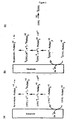
- Figure 3(a-c) shows a proposed ECL mechanism depicting reaction steps associated with the use of a CTFC as a conjugated reductant that is covalently linked to an EC. More particularly, the EC is exemplified by the ruthenium (II) tris-bipyridyl cation (hereinafter "Ru(bpy) 3 +2 ”) throughout Figure 3(a-c).
- Figure 3(a-c) illustrates contemplated minor variations in these two compounds (i.e., in a CTFC and in an EC).
- Figure 3(a) depicts the postulated ECL mechanism for a detectable compound comprising a CTFC covalently linked to an EC.
- the chart below further explains the depicted reactions.
- Symbol Definition CTFC electrochemically unchanged CTFC (starting compound) CTFC* +1 radical, electrochemically oxidized CTFC CTFC*(-H +1 ) radical, electrochemically neutral CTFC formed by H +1 leaving CTFC +1 and able to act as a high-energy reductant in a manner similar to TPA CTFC(-H +1 , -e -1 ) electrochemically neutral, nonradical CTFC formed by CTFC - (-H +1 ) intramolecularly donating an electron (e -1 ) to the covalently linked EC Ru(bpy) 3 +2 nonexcited EC before electrochemical oxidation Ru(bpy) 3 +3 nonexcited EC after electrochemical oxidation *Ru(bpy) 3 +2 excited EC after being intramolecularly reduced
- Figure 3(b) shows, relative to Figure 3(a), all of the analogous reactions to those of Figure 3(a) with the exception that the symbol ⁇ CTFC is consistently used to represent the resulting chemically-transformed ⁇ CTFC that is produced by the interaction between a CTFC and a second compound (hereinafter "SC").
- SC second compound
- Figure 3(c) shows the schematic depiction of the interaction between a CTFC with a SC to form the resulting ⁇ CTFC.
- the detectable compound depicted at Figure 3 (a), (b), (c) represents a compound of the present invention that is able to produce measurable luminescence both before and after the chemical transformation of the CTFC.
- this compound exemplifies the third and fourth possible combinations of measurable luminescence contained in the previously discussed chart.
- the depicted reactions are consistent with postulated reaction mechanisms which culminate in measurable luminescence both before and after the CTFC has been chemically transformed.
- For compounds of the present invention falling within the first and second entries of the previously discussed chart i.e., for those compound that only produce measurable luminescence either before or (exclusively) after the chemical transformation of the CTFC), only the reaction mechanisms of either Figure 3 (a) or (exclusively) Figure 3 (b) is representative for any particular compound.
- both electrochemical redox reactions and non electrochemical redox reactions are encompassed. Additionally, such changes are integral with and associated with the postulated electrochemiluminescent mechanism including (a) steps leading to the formation of a high-energy reductant as a form of the CTFC; and (b) steps leading to the actual luminescence by the EC.
- a critical feature of the CTFC is that it remains covalently linked to the EC throughout all of the postulated reactions.
- the previously discussed changes in and to the CTFC specifically exclude changes which would destroy/break the covalently linkage of the CTFC to the EC.
- the changes in and to the CTFC alter the intramolecular electron-donating ability of the CTFC so that the measurable luminescence differs before and after any such changes.
- the CTFC is chosen so that there is measurable luminescence either before or (exclusively) after, or both before and after, any such changes.
- the CTFC must be able to participate in the ECL mechanisms that cause the EC to luminesce. Specifically, the CTFC must fimction as a high-energy reductant capable of intramolecularly providing an electron to the EC so the EC is reduced into an excited (i.e., emissive) state. Suitable high-energy reductants for forming the excited state EC often have an unpaired electron and are knows as radicals.
- Figure 1 illustrates a proposed ECL mechanisms which uses TPA as a nonconjugated high-energy reductant. This mechanisms generates the actual high-energy reductant in situ subsequent to the initial electrochemical oxidation (triggering) of the TPA precursor. Suitable candidates for the CTFC of the present invention are within the knowledge of the skilled worker based on the disclosure herein.
- the chemical transformation in a CTFC resulting from the interaction with a SC appears to cause this variance in intramolecular electron-donating ability because of structural changes in the CTFC which might effect (i) the route through which the reducing electron has to pass through; (ii) the ability of the reducing electron to begin traveling through any such route; or (iii) stereochemical/spatial orientation considerations.
- the ability of the covalently linked CTFC to act as a high-energy reductant by intramolecularly donating an electron to the EC is greater in comparison to the ability of that same (nonconjugated) CTFC to intermolecularly donate an electron to the EC.
- the measured luminescence for the detectable compounds of the present invention is greater in comparison with the measured luminescence of electrochemiluminescent compounds where the high energy reductant is not covalently linked to the electrochemiluminescent compound.
- Figures 1 and 2 illustrate proposed electrochemiluminescent mechanisms with such nonconjugated reductants. Specifically, Figure 1 depicts electrochemiluminescent reactions which use tri-n-propylamine (hereinafter "TPA") as such a reductant while Figure 2 likewise depicts these reactions with beta-lactam as the reductant.
- TPA tri-n-propylamine
- Figure 2 likewise depicts these reactions with beta-lactam as the reductant.
- the postulated electrochemiluminescence mechanism shown in Figure 1 using nonconjugated TPA and Ru(bpy) 3 +2 has been previously reported in the literature.
- beta-lactam as a nonconjugated reductant generates less electrochemiluminescence than beta-lactam as a conjugated reductant (i.e., as a CTFC).
- the nonconjugated beta-lactam must first diffuse through solution to become sufficiently proximate to the EC and then intermolecular donate an electron thereto.
- the nonconjugated beta-lactam may react with any available species (other than the EC) because it is a very reactive, radical species.
- the CTFC does not have to diffuse through the solution as a free species.
- the CTFC need only intramolecularly donate an electron to the covalently linked EC.
- the covalent linkage comprises a linker group that covalently links one of the chelating ligands of the EC to the CTFC.
- the near end of the linker group terminates with and extends into a covalent bond between an atom of the linker group and an atom of one of the chelating ligands of the EC while the far end of the linker group terminates with and extends into a covalent bond between an atom of the linker group and an atom of the CTFC.
- This linker group must have the following attributes to ensure that applicants' detectable compounds are operative. As detailed below, these attributes are divided into two main categories; namely, noninterfering and enhancing.
- the noninterfering attributes are properties that the linker group must have because otherwise their presence would interfere with the operability of the invention.
- the linking group during the contemplated practice of the invention must not: (i) prohibit the electrochemical reactions; (ii) prohibit the interactions between the CTFC and the SC; (iii) prohibit the overall electrochemiluminescence mechanism; and (iv) be itself destroyed by the necessary reactions of the invention.
- a linker group containing an electrochemically oxidizable species having a formal oxidation potential close to that of the central metal cation of the EC would not serve as an effective linking group.
- the enhancing attributes of the linker group are those attributes that specifically relate to the ability of the CTFC to intramolecularly transfer an electron to the central metal cation of the EC. These enhancing attributes include the length of the linking group and the nature of the bonds within such length. First, the length of the intervening linker group between the CTFC and the EC must (i) allow and permit the appropriate intramolecular electron transfer to occur; and (ii) not prevent any necessary reaction from occurring due to steric or other considerations.
- intramolecular transfer of an electron from the CTFC to the EC encompasses both transfer though bonds and through space. Such "intramolecular” transfers, however, are limited to transfers between a donating compound (i.e., the CTFC) and a corresponding receiving compound (i.e., the EC) which are covalently linked to each other through the linking group.
- the covalent linkage portion of the detectable compounds must allow and permit at least one these two types of intramolecular transfer.
- the linker group For intramolecular transfer through bonds, the linker group must provide sufficient delocalized, conductive electrons (e.g., conjugated ⁇ -systems) to enable the electron to travel through the bonds of the linking group to than reach the central metal cation of the EC.
- conductive electrons e.g., conjugated ⁇ -systems
- the linker group For intramolecular transfer through space, the linker group must enable the CTFC to approach in relative close proximity the central metal cation of the EC.
- the linker group should be long enough and stereochemically flexible enough so that the CTFC attached to the far end of the linker group can swing back towards the metal cation and then the electron can intramolecularly transfer through the space then separating the CTFC and the EC.
- An additional limitation on the appropriate length of the linker group is that it should not be so long that the frequency of the described swinging around effect (which effect is thought to be necessary for intramolecular transfer through space) significantly decreases. In the case of an excessively long linker group, the amount of luminescence produced would be lowered.
- a linking group that is not sufficiently long/flexible to enable intramolecular transfer through space and contains only saturated bonds without any delocalized electrons (e.g., alkyl chains) would not be an effective linker group.
- the linker group imparts to the detectable compounds as compared to the electrochemiluminescent compounds that are used with nonconjugated high-energy reductants.
- the detectable compounds of the present invention avoid the use of any diffusion of free species through solutions. Possible advantages include a more rapid generation of the exited, luminescent-form of the EC and higher signals associated with the more effective intramolecular transfer of applicants' present invention as compared to the intermolecular transfer used with nonconjugated high-energy reductants.
- This linkage also ensures that the ratio of the CTFC and the EC is one-to-one. This ratio is unlike that associated with electrochemiluminescent techniques which use TPA nonconjugated beta-lactams as the high-energy reductant. Because of this ratio between the two portion of the detectable compounds of the present invention, applicants are able to qualitatively and quantitatively monitor chemical transformations in the CTFC. Unlike known electrochemiluminescent techniques, the compound monitored is simultaneously (i) covalently linked to the EC and (ii) capable of intramolecularly donating an electron to the EC.
- Suitable candidates to be tested as linker groups in the present invention are available to those of ordinary skill in the art.
- Vol. 136 Methods in Enzymology, K. Mosbach, Ed., pp. 3-30, Academic Press, NY (1987) discloses a series of "spacer molecules" for immobilized active coenzymes, including NAD and ATP.
- the spacer molecules of this article are examples of such suitable candidates.
- the third and final portion of the detectable compounds are EC. These and their applications in certain contexts have been reported in the literature. See, for example, the issued U.S. Patents previously cited. The attributes and identities of such known EC are known to skilled workers and need not be repeated in detail here. Thus, the term electrochemiluminescent compound is a term of art whose metes and bounds are known to skilled workers. Nonlimiting, nonexclusive examples of particular detectable compounds (including the EC portion) and their uses are later provided.
- the present invention is not directed to EC in and of themselves nor is it directed to any of their known applications.
- the invention is directed to a novel and nonobvious use of EC; namely, their use in detectable compounds comprising a CTFC covalently linked to an EC. Accordingly, the skilled worker can practice the present invention in accordance with the disclosure herein in combination with the existing knowledge of EC. Notwithstanding this, applicants provide guidelines for providing EC operative in the present invention.
- preferred electrochemiluminescent compounds include those wherein the central metal cation is ruthenium Ru or osmium Os.
- a particularly preferred compound is Ru(bpy) 3 +2 .
- electrochemiluminescent compound is a term of art; (ii) guidelines for providing such EC; the term EC as used herein is clear to skilled workers. Nonetheless, applicants later amplify this teaching by providing nonlimiting, nonexclusive particular examples which identify the EC.
- the electrochemiluminescent processes that use the detectable compounds can be viewed as being divided into two main categories; namely, monitoring and assaying.
- the detectable compounds can be used to monitor chemical transformations in the CTFC that alter the effective intramolecular donating ability of that CTFC.
- These monitoring processes are not primarily designed to qualitatively nor quantitatively identify the presence/amount of any particular SC. Rather, the monitoring processes are designed to qualitatively and/or quantitatively indicate the presence/extent of chemical transformations in the CTFC without requiring identifications directed to which particular SC in the sample solution is responsible for any such chemical transformations.
- the CTFC is effectively monitored. More specifically, the presence and extent of such chemical transformations in the CTFC can be monitored.
- the predetermined luminescence standard of the monitoring process is generated in the following manner.
- the preparation of this calibration curve is illustrated for a detectable compound able to produce measurable luminescence before any chemical transformations in the CTFC.
- Known differing amounts of a particular detectable compound are (in the purposeful absence of any SC capable of interacting with the CTFC to cause a chemical transformation) prepared in a series of sample solutions. Each of these sample solutions is caused to electrochemilumineseence upon exposure to electrochemical energy in the form of a positive voltage bias imposed on an electrode of an electrochemiluminescent cell. The resulting experimentally measured luminescence is recorded.
- the predetermined luminescence standard for monitoring techniques comprises a calibration curve having experimentally measured luminescence on a first axis and known amounts of the particular detectable compound on the second axis.
- the CTFC is effectively monitored. Changes in the CTFC caused by interactions with any second compounds in the sample solution will result in measurable differences (deviations) from the calibration curve.
- the monitoring processes can be used to screen suspected solutions for activity against the CTFC. Specifically, a series of sample solutions could be monitored with the detectable compounds. A positive electrochemiluminescence test result (i.e., a result that is either higher or lower than the predetermined standard) for any particular sample solution is indicative of at least one SC in that particular sample solution. Accordingly, that solution would then be an appropriate candidate for further detailed investigations.
- the assaying processes are extensions of the monitoring processes in that the assaying processes are designed to specifically test for the presence and/or amount of a particular SC. As such, the assaying processes likewise are based on the chemical transformations in the CTFC which alter the effective intramolecular donating ability of the CTFC to the EC.
- the particular SC is effectively assayed. More specifically, the presence and amount of the particular SC can be assayed.
- the predetermined luminescence standard of the assaying process is generated in the following manner.
- Known amounts of a particular detectable compound are exposed to a series of sample solutions each containing known differing amounts of a particular SC that is capable of interacting with the CTFC of the detectable compound in accordance with the present invention.
- the exposure is effected under conditions favorable to and consistent with the desired interactions.
- each of these sample solutions is caused to electrochemiluminescence and the experimentally measured luminescence is recorded.
- the predetermined luminescence standard for assaying processes comprises a calibration curve having experimentally measured luminescence on a first axis and known amounts of the particular SC on the second axis.
- the experimentally measured luminescence may be either greater than or less than the luminescence for the applicable predetermined luminescence calibration curve.
- the interaction between the CTFC and the at least one second compound may either increase or decrease the effective intramolecular electron donating ability of that CTFC (which would correspondingly increase or decrease the experimentally measured luminescence).
- Preferred applications of the detectable compounds are monitoring and assaying processes when the CTFC first compound comprises a substrate and the SC comprises an enzyme that is specific to that substrate.
- Particularly preferred substrates are beta-lactams. Such beta-lactams are useful in assaying processes that test for the corresponding beta-lactamase.
- Another application of the detectable compounds of the present invention takes advantages of coupled, regenerative reaction mechanism that involve the conversion of a separate, nonconjugated substrate in solution into a separate, nonconjugated product in solution via exposure to an appropriate enzyme and co-mediators.
- the interactions between the CTFC and the enzyme-catalyzed, co-mediated conversion of a substrate species in solution to a product species in solution forms the theoretical underpinnings for an assay that can be specific to the substrate in solution, the enzyme in solution, and/or the CTFC.
- kits specifically designed to implement the processes of the present invention are provided.
- the monitoring kits each comprise a plurality of sample standard solutions each containing known amounts of a particular detectable compound with the purposeful absence of any SC. These monitoring kits can be used to determine the predetermined luminescence standard calibration curve.
- the assaying kits each comprise a plurality of sample solutions each containing known amounts of a particular detectable compound in addition to a corresponding plurality of test solutions each containing known differing amounts of a particular SC that is capable of interacting with the detectable compound in the described manner.
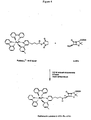
- Ru(bpy) 3 +2 -NHS ester (15.1) mg in acetonitrile (250 ⁇ L) was mixed with ampicillin (29.1 mg) in 0.2 M sodium bicarbonate, pH 8.0 (250 ⁇ L) and the reaction was allowed to proceed at room temperature for 2 hours (Figure 4).
- Ru-AMP was purified using a Waters HPLC system (Milford, MA) equipped with a ProgelTM-TSJ CM-5PW column (7.5 cm x 7.5 mm) (Supelco, Inc., Bellefonte, PA) using a 1.0 mL/minute, 15-minute linear gradient from 20-180 mM sodium phosphate, pH 7.0.
- Substrate was quantitated spectrophotometrically by measuring the absorbance of the ruthenium complex (the molar extinction coefficient at 453 nm is 13,700 M -1 cm -1 ). Following formation of the ammonium hexafluorophosphate salt, the structure and purity of Ru-AMP was confirmed by mass spectroscopy and proton NMR ( Figures 5-6).
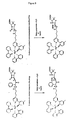
- Ru(bpy) 3 +2 -NHS ester (15 mg) (IGEN, Inc., Gaithersburg, MD) in acetonitrile (250 ⁇ L) was mixed with 6-aminopenicillanic acid (12.4 mg) in 0.2 M sodium bicarbonate, pH 8.0 (350 ⁇ L) and the reaction was allowed to proceed at room temperature for 2 hours (Figure 7).
- Ru-APA was purified with a Waters HPLC system (Milford, MA) equipped with a ProgelTM-TSK CM-5PW column (7.5 cm x 7.5 mm) (Supelco, Inc., Bellefonte, PA) using a 1.0 mL/minute, 20-minute linear gradient from 20-100 mM sodium phosphate, pH 7.0. Substrate was quantitated spectrophotometrically by measuring the absorbance of the ruthenium complex (the molar extinction coefficient at 453 nm is 13,700 M -1 cm -1 ).
- beta-lactams such as 7-aminocephalosporanic acid, that have a primary amine in their structures can also react with Ru(bpy) 3 +2 -NHS ester to form similar conjugates as described above.
- the reaction and purification conditions will be similar, potentially differing somewhat in ways solvable by one skilled in the art.
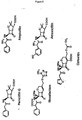
- Figure 8 shows the structure of 5 specific beta-lactams.
- Ru-AMP was found to be a very good substrate of beta-lactamase.
- Hydrolysis of Ru-AMP (33 ⁇ M) by beta-lactamase I from Bacillus cereus (0.3 nM) was monitored spectrophotometrically at 240 nm using a Hitachi U3200 spectrophotometer (Danbury, CT) at 25.0°C in 0.1 M sodium phosphate, pH 7.0.
- Half-time (t 1/2 ) analysis gave a k cat /K m for enzymatic hydrolysis of Ru-AMP of 3.9 x 10 8 min -1 M -1 .
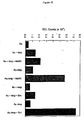
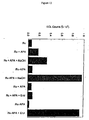
- ECL properties of equimolar mixtures of Ru(bpy) 3 +2 and ampicillin were compared to the same concentration of the Ru-AMP conjugate (hydrolyzed or unhydrolyzed).
- ampicillin and Ru-AMP were hydrolyzed by either 250 mM NaOH (base hydrolysis) or 441 nM beta-lactam I from Bacillus cereus (enzyme hydrolysis).
- base hydrolysis 50 ⁇ L, of 5 M NaOH were added to 1.0 mL solutions of deionized water containing either 24.85 ⁇ M Ru-AMP or a mixture of 25 ⁇ M ampicillin and 25 ⁇ M Ru(bpy) 3 +2 .
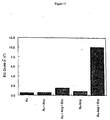
- Figure 12 shows that low concentrations of Ru-AMP can be detected by hydrolysis.
- the lower limit of detection was found to be 50 nM (464 relative ECL counts for hydrolyzed Ru-AMP versus an average instrument reading of -152 relative counts for unhydrolyzed Ru-AMP). This compares favorable to the lower limit for detection of (unconjugated) ampicillin hydrolysis which was 5000 nM.
- Ru-APA might have different ECL properties (before and after hydrolysis) from those of Ru-AMP.
- the differences would be a consequence of the structural differences between APA and AMP, especially the difference in distance between the beta-lactam ring and the primary amino group used to conjugate Ru(bpy) 3 +2 -NHS ester ( Figure 9, right side).
- the beta-lactam ring is three bond lengths farther from the amino group than in Ru-APA.
- hydrolysis of Ru-APA (or other beta-lactam conjugates) may be more or less sensitively detected by ECL than Ru-AMP hydrolysis.
- Ru-APA was found to be a very good substrate of beta-lactamase.
- Hydrolysis of Ru-APA (23 ⁇ M) by beta-lactamase I from Bacillus cereus (0.6 nM) was monitored spectrophotometrically at 240 nm using a Hitachi U3200 spectrophotometer (Danbury, CT) at 25.0°C in 0.1 M sodium phosphate, pH 7.0.
- Half-time (t 1/2 ) analysis gave a k cat /K m for enzymatic hydrolysis of Ru-APA of 9.8 x 10 7 min -1 M -1 . This rate indicates that the enzyme hydrolyzed Ru-APA with a 4-fold lower efficiency than Ru-AMP, but that Ru-APA hydrolysis by beta-lactamase is still exceptionally efficient.
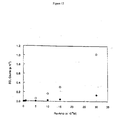
- Figure 14 shows that the hydrolysis of very low concentrations of Ru-APA can be detected by ECL. More specifically, Figure 14 shows the effect of unhydrolyzed (closed circles) and hydrolyzed (open circles) Ru-APA concentration on the experimentally measured electrochemiluminescence.
- the lower limit of detection was found to be 50 nM (an instrument reading of -33 relative ECL counts for hydrolyzed Ru-APA versus an average of-648 relative ECL counts for unhydrolyzed Ru-APA (conjugated).) This compares favorably to the lower limit for detection of (unconjugated) APA hydrolysis which was 50 ⁇ M (in the presence of 10 ⁇ M Ru(bpy) 3 +2 ).
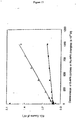
- Circles represent the electrochemiluminescence effects of unhydrolyzed (closed circles) and hydrolyzed (open circles) 6-APA (0-1000 ⁇ M) in the presence of 10 ⁇ M Ru(bpy) 3 +2 .
- Extrapolation in Figure 15 indicates the electrochemiluminescence change upon hydrolysis of 10 ⁇ M Ru-APA is equivalent to the electrochemiluminescence change upon hydrolysis of 1250 ⁇ M free 6-APA in the presence of 10 ⁇ M Ru(bpy) 3 +2.
- ⁇ -Nicotinamide adenine cofactors are widely used in nature by oxidoreductase enzymes as oxidants or reductants during reduction or oxidation of metabolites.
- oxidoreductase enzymes include many dehydrogenases (lactate dehydrogenase, alcohol dehydrogenase, glucose dehydrogenase, etc.).
- the oxidized forms of these cofactors (NAD + or NADP + ) have little or no TPA-like effects in ECL.
- the reduced forms (NADH or NADPH) behave like TPA in promoting Ru(bpy) 3 +2 electrochemiluminescence (1, 2).
- ECL can be used to measure the enzyme-catalyzed formation or disappearance of the reduced forms of these cofactors.
- substrates glucose, ethanol, etc.
- dehydrogenases can be detected by ECL since their chemical-transformations by the appropriate enzyme stoichiometrically results in oxidation or reduction of nicotinamide adenine cofactors.
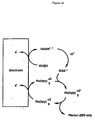
- nicotinamide cofactors are not believed to be destroyed during the ECL reactions as are TPA and beta-lactams, but are instead converted to their oxidized forms (NAD + or NADP + ). This means that, in the presence of an appropriate dehydrogenase enzyme, nicotinamide adenine cofactors can be reused such that a single cofactor molecule that is covalently linked to an electrochemiluminescent compound can participate in multiple ECL reactions ( Figure 16).
- Ru(bpy) 3 +2 is also regenerated so that it is possible for a single detectable compound comprising such a cofactor covalently linked to an electrochemiluminescent compound can possibly emit multiple photons one after another.
- Nicotinamide adenine cofactors have advantages over present electrochemiluminescent techniques that use TPA. Specifically, these cofactors (i) can participate in regenerative ECL reaction mechanisms; (ii) can be used to detect and quantitate dehydrogenases and their corresponding substrates.
- One disadvantage is that the ECL signal (i.e., the experimentally measured luminescence) is less in an ECL reaction with NADH or NADPH than in an ECL reaction with TPA. This disadvantage could be reduced or obviated by using a conjugate of derivatives of Ru(bpy) 3 +2 and the nicotinamide adenine cofactor.
- Ru(bpy) 3 +2 when Ru(bpy) 3 +2 is conjugated to a chemically-transformable first compound which can act as a high energy reductant and intramolecularly donate an electron to the covalently linked electrochemiluminescent compound (such as a beta-lactam), the ECL signal generated is much greater than when the CTFC is not conjugated with the EC.
- a Ru(bPy) 3 +2 -nicotinamide adenine cofactor (reduced form) conjugate will also have more ECL than a nonconjugated mixture of Ru(bpy) 3 +2 and the reduced cofactor.
- the difference in ECL signal between the reduced (NADH or NADPH) and oxidized forms (NAD + NADP + ) of the cofactors will be greater when the cofactors are covalently linked to the Ru(bpy) 3 +2 than when they are not conjugated.
- Conjugates of nicotinamide adenine cofactor derivatives are known and are enzymatically functional (3,4).
- One such cofactor derivative N 6 -([6-aminohexyl]carbamoylmethyl) nicotinamide adenine dinucleotide, is commercially available (Sigma Chem. Co., St. Louis, MO).
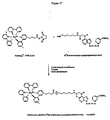
- the primary amino group of this compound can be used to couple this compound to the same Ru(bpy) 3 +2 -NHS ester described above (obtainable from IGEN, Inc., Gaithersburg, MD) by the same or similar method (Figure 17) (3,4).
- Other similar coupling methods will also work.
- the conjugate (Ru-NAD) can be purified by HPLC in a similar manner as described for purification of Ru-AMP and Ru-APA
- the four references noted above are (1) Downey, T.M. & Nieman, T.A. (1992) Anal. Chem. 64, 261-268; (2) Martin, A.F. & Nieman, T.A. (1993) Anal. Chem. Acta. 281 , 475-481 ; (3) Mansson, M.-O., Larsson, P.-O., & Mosbach, K. (1982) Methods Enzym. 89, 457-468; and (4) Persson, M., Mansson, M.O., Bulow, L., Mosbach, K. (1991) Bio/Technology 9 , 280-284.
- Figure 17 shows the preparation of Ru-NAD.
- the oxidized form of Ru-NAD can be used in enzyme assays in an ECL instrument to detect and quantitate a dehydrogenase enzyme or a substrate of a dehydrogenase (or some compound that gives rise to either).
- the assays will be performed according to conventional protocols (duration, temperature, pH, buffer, salt, substrate and enzyme concentrations, etc.) except that NAD + normally included will be excluded and Ru-NAD + will be used in place.
- the concentration of Ru-NAD + may be lower or higher than the conventional assays owing to differences in substrate specificity, solubility, cost, or other factors.
- the mixture will be analyzed in an ECL instrument (IGEN, Inc., Gaithersburg, MD). No additional Ru(bpy) 3 +2 will be added. Reduction of Ru-NAD + will be recognized by an increase in ECL signal over background and will indicate the presence of the relevant dehydrogenase and substrate.
- Ru-NADH reduced form of Ru-NAD
- ECL oxidation of the reduced form of Ru-NAD
- Ru-NADH can be detected by ECL.
- conditions, and the presence of relevant enzyme and enzyme substrate will be considered and will be derived from known conditions for assays involving nonconjugated NADH.
- NADH will be omitted from the assay and Ru-NADH (at an appropriate concentration that may not be the conventional concentration) will be included.
- the mixture will be analyzed with an ECL instrument. Any decrease in ECL from the initial Ru-NADH signal will indicate that some Ru-NADH has been oxidized and will be evidence of the presence of the relevant enzyme or substrate.
- Ru-NAD was functional as an enzyme cofactor
- a reaction involving oxidation of D-glucose-6-phosphate by glucose-6-phosphate dehydrogenase was tested. The reaction was monitored spectrophotometrically at 340 nm. This wavelength is commonly used to observe the interconversion of NAD + and NADH.
- a mixture of 63 ⁇ M Ru-NAD, 400 ⁇ M glucose-6-phosphate, and 22 nM enzyme in 55 mM Tris buffer, pH 7.8 containing 33 mM MgCl 2 was incubated at 30° C in a cuvette. Continuous absorbance readings showed that absorbance increased over approximately 40 minutes in a fashion characteristic of enzymatic reduction of NAD + . This indicated that Ru-NAD was indeed accepted as a functional cofactor by glucose-6-phosphate dehydrogenase.
- Ru-NAD was found to be accepted as a cofactor by the dehydrogenase, glucose-6-phosphate dehydrogenase.
- An experiment was performed involving oxidation of glucose-6-phosphate by this enzyme with concurrent reduction of Ru-NAD.
- ECL measurements were made to determine if; (1) the ECL-inducing effects of NADH (but not NAD + ) are also present in Ru-NADH (but not Ru-NAD) and (2) if conjugation of Ru(bpy) 3 2+ with NADH causes an increase in ECL measurement sensitivity as compared to the ECL of a mixture of unconjugated Ru(bpy) 3 2+ and NADH.
- Ru-NAD behaves in the same way as free Ru(bpy) 3 2+ plus free NAD + in an ECL instrument (enzyme addition causes an increase in ECL), but Ru-NAD is much more sensitively detected. This indicated that low concentrations of dehydrogenases or their substrates can be sensitively detected by ECL of Ru-NAD + reduction or Ru-NADH oxidation.
Landscapes
- Chemical & Material Sciences (AREA)
- Organic Chemistry (AREA)
- Life Sciences & Earth Sciences (AREA)
- Health & Medical Sciences (AREA)
- Wood Science & Technology (AREA)
- Proteomics, Peptides & Aminoacids (AREA)
- Zoology (AREA)
- Engineering & Computer Science (AREA)
- Immunology (AREA)
- General Engineering & Computer Science (AREA)
- Microbiology (AREA)
- Molecular Biology (AREA)
- Analytical Chemistry (AREA)
- Biotechnology (AREA)
- Physics & Mathematics (AREA)
- Biochemistry (AREA)
- Bioinformatics & Cheminformatics (AREA)
- Biophysics (AREA)
- General Health & Medical Sciences (AREA)
- Genetics & Genomics (AREA)
- Investigating Or Analysing Materials By The Use Of Chemical Reactions (AREA)
- Measuring Or Testing Involving Enzymes Or Micro-Organisms (AREA)
- Nitrogen Condensed Heterocyclic Rings (AREA)
- Electroluminescent Light Sources (AREA)
- Plural Heterocyclic Compounds (AREA)
- Saccharide Compounds (AREA)
Applications Claiming Priority (3)
| Application Number | Priority Date | Filing Date | Title |
|---|---|---|---|
| US485419 | 1990-02-27 | ||
| US08/485,419 US5643713A (en) | 1995-06-07 | 1995-06-07 | Electrochemiluminescent monitoring of compounds |
| PCT/US1996/009805 WO1996040978A1 (en) | 1995-06-07 | 1996-06-07 | Electrochemiluminescent monitoring of compounds |
Publications (3)
| Publication Number | Publication Date |
|---|---|
| EP0836651A1 EP0836651A1 (en) | 1998-04-22 |
| EP0836651A4 EP0836651A4 (en) | 2004-07-14 |
| EP0836651B1 true EP0836651B1 (en) | 2006-02-15 |
Family
ID=23928088
Family Applications (1)
| Application Number | Title | Priority Date | Filing Date |
|---|---|---|---|
| EP96923255A Expired - Lifetime EP0836651B1 (en) | 1995-06-07 | 1996-06-07 | Electrochemiluminescent monitoring of compounds |
Country Status (8)
| Country | Link |
|---|---|
| US (2) | US5643713A (enExample) |
| EP (1) | EP0836651B1 (enExample) |
| JP (2) | JP3997436B2 (enExample) |
| AT (1) | ATE317913T1 (enExample) |
| CA (1) | CA2222926C (enExample) |
| DE (1) | DE69635822T2 (enExample) |
| ES (1) | ES2258777T3 (enExample) |
| WO (1) | WO1996040978A1 (enExample) |
Families Citing this family (76)
| Publication number | Priority date | Publication date | Assignee | Title |
|---|---|---|---|---|
| US6316180B1 (en) * | 1995-01-04 | 2001-11-13 | Igen International, Inc. | Electrochemiluminescent monitoring of compounds/electrochemiluminescence assays |
| US20010003647A1 (en) * | 1995-06-07 | 2001-06-14 | Ji Sun | Coreatant-including electrochemiluminescent compounds, methods, systems and kits utilizing same |
| US5641623A (en) * | 1995-01-04 | 1997-06-24 | Martin; Mark T. | Electrochemiluminescence assay |
| US6319670B1 (en) | 1995-05-09 | 2001-11-20 | Meso Scale Technology Llp | Methods and apparatus for improved luminescence assays using microparticles |
| US6613583B1 (en) | 1997-06-27 | 2003-09-02 | Igen International, Inc. | Electrochemiluminescent label based on multimetallic assemblies |
| US6312896B1 (en) * | 1998-09-17 | 2001-11-06 | Igen Inaternational, Inc. | Assays for measuring nucleic acid binding proteins and enzyme activities |
| US7141436B2 (en) * | 1999-11-03 | 2006-11-28 | Science And Technology Corp. | Immunoassay and reagents and kits for performing the same |
| JP2004534226A (ja) | 2001-06-29 | 2004-11-11 | メソ スケイル テクノロジーズ,エルエルシー | 発光試験測定用のアッセイプレート、リーダシステム及び方法 |
| US8815577B2 (en) | 2001-07-30 | 2014-08-26 | Meso Scale Technologies, Llc | Assay electrode having immobilized lipid/protein layers, methods of making the same and methods of using the same for luminescence test measurements |
| EP1451348B1 (en) | 2001-09-10 | 2015-08-12 | Meso Scale Technologies, LLC | Methods, reagents, kits and apparatus for protein function analysis |
| AU2003295495A1 (en) * | 2002-11-15 | 2004-06-15 | Applera Corporation | Nucleic acid sequence detection |
| CA2587945A1 (en) * | 2004-11-17 | 2007-04-12 | Bioveris | Electrochemiluminescent assay |
| US20060275841A1 (en) * | 2004-12-20 | 2006-12-07 | Martin Blankfard | Assay method and apparatus with reduced sample matrix effects |
| EP1854160B1 (en) * | 2005-02-10 | 2017-06-21 | Yeda Research And Development Co., Ltd. | Redox-active structures and devices utilizing the same |
| US20070116600A1 (en) * | 2005-06-23 | 2007-05-24 | Kochar Manish S | Detection device and methods associated therewith |
| PL2271938T3 (pl) | 2008-04-11 | 2014-07-31 | Univ Texas | Sposób i urządzenie do wzmacniania elektrogenerowanej chemiluminescencji nanocząsteczek |
| AU2009244904B2 (en) | 2008-05-08 | 2014-04-17 | Board Of Regents Of The University Of Texas System | Luminescent nanostructured materials for use in electrogenerated chemiluminescence |
| US20100261292A1 (en) * | 2009-04-10 | 2010-10-14 | Meso Scale Technologies, Llc | Methods for Conducting Assays |
| EP2470914B1 (en) * | 2009-07-27 | 2020-05-13 | Meso Scale Technologies, LLC | Assay apparatuses and methods |
| CA3139049C (en) | 2010-10-14 | 2024-10-15 | Meso Scale Technologies, Llc | REAGENT STORAGE IN A TEST DEVICE |
| WO2012055815A1 (en) | 2010-10-25 | 2012-05-03 | Roche Diagnostics Gmbh | Use of signal enhancing compounds in electrochemiluminescence detection |
| DK2776833T3 (da) | 2011-11-11 | 2019-01-02 | Eli N Glezer | Cobinder-understøttet testfremgangsmåde |
| US9081001B2 (en) | 2012-05-15 | 2015-07-14 | Wellstat Diagnostics, Llc | Diagnostic systems and instruments |
| US9625465B2 (en) | 2012-05-15 | 2017-04-18 | Defined Diagnostics, Llc | Clinical diagnostic systems |
| US9213043B2 (en) | 2012-05-15 | 2015-12-15 | Wellstat Diagnostics, Llc | Clinical diagnostic system including instrument and cartridge |
| CN105209886B (zh) | 2013-01-04 | 2019-04-02 | 梅索磅秤技术有限公司 | 适合询问样品的仪器和方法 |
| ES2942031T3 (es) | 2013-03-11 | 2023-05-29 | Meso Scale Technologies Llc | Métodos mejorados para realizar ensayos multiplexados |
| CN117288934A (zh) | 2013-03-13 | 2023-12-26 | 中尺度技术有限责任公司 | 改进的测定方法 |
| US10114015B2 (en) | 2013-03-13 | 2018-10-30 | Meso Scale Technologies, Llc. | Assay methods |
| CN105209532B (zh) | 2013-03-15 | 2017-11-28 | 路博润先进材料公司 | 不含重金属的cpvc组合物 |
| IL229525A0 (en) | 2013-11-20 | 2014-01-30 | Yeda Res & Dev | Metal complexes of tris-bipyridyl and their uses in electrochromic applications |
| CA2947747C (en) | 2014-05-09 | 2024-03-05 | Meso Scale Technologies, Llc. | Graphene-modified electrodes |
| KR102757668B1 (ko) | 2014-05-15 | 2025-01-21 | 메소 스케일 테크놀러지즈, 엘엘시 | 개선된 분석 방법 |
| WO2016091755A1 (en) | 2014-12-08 | 2016-06-16 | F. Hoffmann-La Roche Ag | Method for measurement of vitamin d |
| KR102601323B1 (ko) | 2015-08-20 | 2023-11-10 | 에프. 호프만-라 로슈 아게 | 페길화 분석물-특이적 결합제를 사용하는 입자-기반 면역어세이 |
| BR112018017336A2 (pt) | 2016-03-07 | 2018-12-26 | Hoffmann La Roche | método in vitro para detectar um anticorpo para p53 (anticorpo anti-p53) em uma amostra e polipeptídeo de fusão |
| ES2974284T3 (es) | 2016-03-11 | 2024-06-26 | Roche Diagnostics Gmbh | Aminas de cadena ramificada en la detección de electroquimioluminiscencia |
| JP7068323B2 (ja) | 2017-02-02 | 2022-05-16 | エフ.ホフマン-ラ ロシュ アーゲー | 少なくとも2種のペグ化された分析物特異的結合剤を使用する免疫アッセイ |
| WO2019164180A1 (ko) * | 2018-02-21 | 2019-08-29 | 고려대학교 세종산학협력단 | 유기전계발광소자용 조성물, 이로부터 제조된 정공주입층 재료 및 정공주입층을 포함하는 유기전계발광소자 |
| EP3756009B1 (en) | 2018-02-23 | 2023-09-06 | Meso Scale Technologies, LLC | Methods of screening antigen-binding molecules by normalizing for the concentration of antigen-binding molecule |
| EP3781600A1 (en) | 2018-04-18 | 2021-02-24 | F. Hoffmann-La Roche AG | Novel anti-thymidine kinase antibodies |
| ES2983797T3 (es) | 2018-08-31 | 2024-10-24 | Hoffmann La Roche | Timidina cinasa (TK-1) en índices pronóstico para LDLBG |
| SG11202106924VA (en) | 2019-01-03 | 2021-07-29 | Meso Scale Technologies Llc | Compositions and methods for carrying out assay measurements |
| CN120098057A (zh) | 2019-03-01 | 2025-06-06 | 中尺度技术有限责任公司 | 用于免疫方法的被电化学发光标记的探针、使用这类探针的方法和包含这类探针的试剂盒 |
| CN120665985A (zh) | 2019-06-07 | 2025-09-19 | 豪夫迈·罗氏有限公司 | 杂交全lna寡核苷酸 |
| IL325928A (en) | 2019-07-16 | 2026-03-01 | Meso Scale Technologies Llc | Assay apparatuses, methods and reagents |
| JP2022542056A (ja) | 2019-07-22 | 2022-09-29 | エフ.ホフマン-ラ ロシュ アーゲー | 子宮内膜症の非侵襲的診断のための血液バイオマーカーとしてのs100a6 |
| JP7315781B2 (ja) | 2019-07-22 | 2023-07-26 | エフ. ホフマン-ラ ロシュ アーゲー | 子宮内膜症の非侵襲的診断のための血液バイオマーカーとしてのs100a12 |
| JP7421631B2 (ja) | 2019-07-22 | 2024-01-24 | エフ. ホフマン-ラ ロシュ アーゲー | 子宮内膜症の非侵襲的診断のための血液バイオマーカーとしてのs100a8 |
| KR20220016210A (ko) | 2019-07-22 | 2022-02-08 | 에프. 호프만-라 로슈 아게 | 자궁내막증의 비-침습적 진단용 혈액 생물표지자로써 s100a9 |
| EP4004551A1 (en) | 2019-07-22 | 2022-06-01 | F. Hoffmann-La Roche AG | Substance p as blood biomarker for the non-invasive diagnosis of endometriosis |
| BR112022009371A2 (pt) | 2019-11-15 | 2022-08-09 | Hoffmann La Roche | Métodos para determinar a quantidade ou concentração de um ou mais analitos antibióticos, tubos de amostragem, usos de um reagente de derivatização nucleofílica e analito antibiótico |
| US20240018571A1 (en) | 2020-05-19 | 2024-01-18 | Meso Scale Technologies, Llc. | Methods, compositions, and kits for nucleic acid detection |
| JP7875821B2 (ja) | 2020-07-01 | 2026-06-18 | メソ スケール テクノロジーズ エルエルシー | アッセイ測定のための組成物及び方法 |
| KR20230065272A (ko) | 2020-08-21 | 2023-05-11 | 메소 스케일 테크놀러지즈, 엘엘시 | 정의된 계면 전위를 갖는 보조 전극을 구비한 전기화학 셀 및 이를 사용하는 방법 |
| WO2022090455A1 (en) | 2020-11-02 | 2022-05-05 | F. Hoffmann-La Roche Ag | Sars-cov-2 nucleocapsid antibodies |
| WO2022136234A1 (en) | 2020-12-22 | 2022-06-30 | F. Hoffmann-La Roche Ag | Method for detecting an analyte of interest in a sample |
| WO2022207628A1 (en) | 2021-03-30 | 2022-10-06 | F. Hoffmann-La Roche Ag | Scf as blood biomarker for the non-invasive diagnosis of endometriosis |
| CN117099001A (zh) | 2021-04-01 | 2023-11-21 | 豪夫迈·罗氏有限公司 | Psp94作为血液生物标志物用于子宫内膜异位症的非侵入性诊断 |
| EP4341700A1 (en) | 2021-05-17 | 2024-03-27 | F. Hoffmann-La Roche AG | Sfrp4 as blood biomarker for the non-invasive diagnosis of adenomyosis |
| AU2022304570A1 (en) | 2021-06-28 | 2024-01-18 | Meso Scale Technologies, Llc. | Methods, compositions, and kits for assay signal amplification |
| AU2022325891B2 (en) | 2021-08-13 | 2026-03-26 | Meso Scale Technologies, Llc. | Electrochemical cell devices and methods of manufacturing |
| US20250042976A1 (en) | 2021-10-26 | 2025-02-06 | Roche Diagnostics Operations, Inc. | Monoclonal antibodies specific for sars-cov-2 rbd |
| CN118922555A (zh) | 2021-12-30 | 2024-11-08 | 中尺度技术有限责任公司 | 用于电化学发光检测的方法 |
| JP2025501000A (ja) | 2022-01-04 | 2025-01-15 | メソ スケール テクノロジーズ エルエルシー | 電気化学セルデバイスおよびその製造方法 |
| WO2023131594A1 (en) | 2022-01-05 | 2023-07-13 | F. Hoffmann-La Roche Ag | Derivatization of compounds in patient samples for therapeutic drug monitoring (tdm) |
| WO2023156510A1 (en) | 2022-02-18 | 2023-08-24 | F. Hoffmann-La Roche Ag | Method for detecting an analyte of interest in a sample |
| WO2023247752A1 (en) | 2022-06-23 | 2023-12-28 | F. Hoffmann-La Roche Ag | Method for diagnosing endometriosis and for classifying the stage of endometriosis |
| EP4558826A1 (en) | 2022-07-22 | 2025-05-28 | F. Hoffmann-La Roche AG | Fibroblast growth factor binding protein 1 (fgfbp1) as (blood) biomarker for the diagnosis of polycystic ovarian syndrome |
| JP2025524025A (ja) | 2022-07-22 | 2025-07-25 | エフ. ホフマン-ラ ロシュ アーゲー | 多嚢胞性卵巣症候群の診断のための(血液)バイオマーカーとしてのロイコトリエンa4ヒドロラーゼ(lta4h) |
| EP4558825A1 (en) | 2022-07-22 | 2025-05-28 | F. Hoffmann-La Roche AG | Meteorin-like protein (metrnl) as (blood) biomarker for the diagnosis of polycystic ovarian syndrome |
| IL322791A (en) | 2023-02-15 | 2025-10-01 | Meso Scale Technologies Llc | Electrochemical cell devices and methods for their manufacture |
| EP4747637A1 (en) | 2023-07-20 | 2026-05-27 | F. Hoffmann-La Roche AG | Screening methods for antibody compositions |
| JP2026526931A (ja) | 2023-07-28 | 2026-08-10 | エフ ホフマン-ラ ロッシュ アクチェン ゲゼルシャフト | 子宮内膜症のバイオマーカーとしての血清EphA1 |
| WO2026039455A1 (en) | 2024-08-13 | 2026-02-19 | Meso Scale Technologies, Llc. | Detection of nucleic acids |
| WO2026120128A1 (en) | 2024-12-05 | 2026-06-11 | Roche Diagnostics Gmbh | Serum transcriptional regulator erg as biomarker for endometriosis |
Family Cites Families (17)
| Publication number | Priority date | Publication date | Assignee | Title |
|---|---|---|---|---|
| US3905871A (en) * | 1971-05-14 | 1975-09-16 | Syva Co | Lactam conjugates to enzymes |
| US4238195A (en) * | 1979-01-18 | 1980-12-09 | Miles Laboratories, Inc. | Fluorescer-labeled specific binding assays |
| US4372745A (en) * | 1979-12-19 | 1983-02-08 | Electro-Nucleonics, Inc. | Chemical luminescence amplification substrate system for immunochemistry involving microencapsulated fluorescer |
| EP0050965A1 (en) * | 1980-10-23 | 1982-05-05 | Takeda Chemical Industries, Ltd. | Beta-lactamase inhibitory composition |
| US4396579A (en) * | 1981-08-06 | 1983-08-02 | Miles Laboratories, Inc. | Luminescence detection device |
| US4713328A (en) * | 1981-09-30 | 1987-12-15 | Yolken Robert H | Microbial Enzyme assays |
| JPS60200167A (ja) * | 1984-03-24 | 1985-10-09 | Toyobo Co Ltd | 化学発光法による過酸化水素の定量法 |
| US5310687A (en) * | 1984-10-31 | 1994-05-10 | Igen, Inc. | Luminescent metal chelate labels and means for detection |
| US5221605A (en) * | 1984-10-31 | 1993-06-22 | Igen, Inc. | Luminescent metal chelate labels and means for detection |
| US4764462A (en) * | 1985-08-23 | 1988-08-16 | Georgetown University | Detectably labeled cephalosporin assay for beta-lactamase |
| EP0261591B1 (en) * | 1986-09-22 | 1993-03-10 | Nippon Kayaku Kabushiki Kaisha | Method for assaying 1,5-anhydroglucitol and kit therefor |
| US5057302A (en) * | 1987-02-13 | 1991-10-15 | Abbott Laboratories | Bifunctional chelating agents |
| JPH0630628B2 (ja) * | 1987-12-16 | 1994-04-27 | キング醸造株式会社 | 生細胞数及び活力の測定方法 |
| US5321143A (en) * | 1988-05-26 | 1994-06-14 | Massachusetts Institute Of Technology | Ruthenium-catalyzed production of cyclic sulfates |
| US5238610A (en) * | 1988-10-06 | 1993-08-24 | The United States Of America As Represented By The Secretary Of The Navy | Method of detecting oxidizing agents in aqueous media through the use of chemiluminescent microemulsions |
| US5264346A (en) * | 1991-06-03 | 1993-11-23 | Chen Kirk C S | Colorimetric method for beta-lactamase assay and its applications |
| US5321243A (en) * | 1992-02-18 | 1994-06-14 | International Verifact Inc. | Card reader apparatus with read head mounting structure and card guide |
-
1995
- 1995-06-07 US US08/485,419 patent/US5643713A/en not_active Expired - Lifetime
-
1996
- 1996-06-07 WO PCT/US1996/009805 patent/WO1996040978A1/en not_active Ceased
- 1996-06-07 EP EP96923255A patent/EP0836651B1/en not_active Expired - Lifetime
- 1996-06-07 DE DE69635822T patent/DE69635822T2/de not_active Expired - Fee Related
- 1996-06-07 JP JP50202097A patent/JP3997436B2/ja not_active Expired - Fee Related
- 1996-06-07 CA CA002222926A patent/CA2222926C/en not_active Expired - Fee Related
- 1996-06-07 AT AT96923255T patent/ATE317913T1/de not_active IP Right Cessation
- 1996-06-07 ES ES96923255T patent/ES2258777T3/es not_active Expired - Lifetime
-
1997
- 1997-06-23 US US08/880,209 patent/US6165708A/en not_active Expired - Fee Related
-
2006
- 2006-12-13 JP JP2006335216A patent/JP2007176939A/ja not_active Abandoned
Also Published As
| Publication number | Publication date |
|---|---|
| WO1996040978A1 (en) | 1996-12-19 |
| AU6381796A (en) | 1996-12-30 |
| JP3997436B2 (ja) | 2007-10-24 |
| EP0836651A1 (en) | 1998-04-22 |
| US6165708A (en) | 2000-12-26 |
| ES2258777T3 (es) | 2006-09-01 |
| DE69635822T2 (de) | 2006-10-19 |
| CA2222926A1 (en) | 1996-12-19 |
| DE69635822D1 (de) | 2006-04-20 |
| US5643713A (en) | 1997-07-01 |
| JPH11507533A (ja) | 1999-07-06 |
| EP0836651A4 (en) | 2004-07-14 |
| JP2007176939A (ja) | 2007-07-12 |
| ATE317913T1 (de) | 2006-03-15 |
| AU708865B2 (en) | 1999-08-12 |
| CA2222926C (en) | 2008-09-16 |
Similar Documents
| Publication | Publication Date | Title |
|---|---|---|
| US6165708A (en) | Electrochemiluminescent monitoring of compounds | |
| US5804400A (en) | Electrochemiluminescent assay | |
| EP0871887B1 (en) | Electrochemiluminescent enzyme immunoassay | |
| EP0755458B1 (en) | Electrogenerated chemiluminescence labels for analysis and/or referencing | |
| EP0837949B1 (en) | Electrochemiluminescent enzyme biosensors | |
| IE904317A1 (en) | Use of a sparingly soluble salt of a heteropoly acid for the determination of an analyte, a corresponding method of determination as well as a suitable agent therefor | |
| US20050181443A1 (en) | Coreactant-including electrochemiluminescent compounds, methods, systems and kits utilizing same | |
| US6316180B1 (en) | Electrochemiluminescent monitoring of compounds/electrochemiluminescence assays | |
| AU708865C (en) | Electrochemiluminescent monitoring of compounds | |
| US6099760A (en) | Hydrogen peroxide based ECL | |
| JP4199119B2 (ja) | 目視判定可能なatp測定方法およびその試薬 | |
| WO2012050536A1 (en) | Method of the adenosine diphosphate quantitative determination | |
| AU2002215610B2 (en) | Electrochemiluminescence from acridan compounds | |
| JP4660750B2 (ja) | Atp増幅−サイクリング法による微量atpの定量方法およびキット | |
| JPH04507194A (ja) | 化学発光組成物、化学発光法、及び分析的検定におけるその使用 | |
| US3749645A (en) | Free radical assay for redox enzymes | |
| JPH0698030B2 (ja) | Nadphの化学発光法による定量法 | |
| WO1989011544A1 (en) | Riboflavin-linked assay procedures and materials |
Legal Events
| Date | Code | Title | Description |
|---|---|---|---|
| PUAI | Public reference made under article 153(3) epc to a published international application that has entered the european phase |
Free format text: ORIGINAL CODE: 0009012 |
|
| 17P | Request for examination filed |
Effective date: 19971208 |
|
| AK | Designated contracting states |
Kind code of ref document: A1 Designated state(s): AT BE CH DE DK ES FI FR GB GR IE IT LI LU MC NL PT SE |
|
| AX | Request for extension of the european patent |
Free format text: LT PAYMENT 971208;LV PAYMENT 971208 |
|
| RAP1 | Party data changed (applicant data changed or rights of an application transferred) |
Owner name: IGEN INTERNATIONAL, INC. |
|
| A4 | Supplementary search report drawn up and despatched |
Effective date: 20040601 |
|
| RAP1 | Party data changed (applicant data changed or rights of an application transferred) |
Owner name: BIOVERIS CORPORATION |
|
| GRAP | Despatch of communication of intention to grant a patent |
Free format text: ORIGINAL CODE: EPIDOSNIGR1 |
|
| GRAS | Grant fee paid |
Free format text: ORIGINAL CODE: EPIDOSNIGR3 |
|
| GRAA | (expected) grant |
Free format text: ORIGINAL CODE: 0009210 |
|
| AK | Designated contracting states |
Kind code of ref document: B1 Designated state(s): AT BE CH DE DK ES FI FR GB GR IE IT LI LU MC NL PT SE |
|
| AX | Request for extension of the european patent |
Extension state: LT LV |
|
| PG25 | Lapsed in a contracting state [announced via postgrant information from national office to epo] |
Ref country code: NL Free format text: LAPSE BECAUSE OF FAILURE TO SUBMIT A TRANSLATION OF THE DESCRIPTION OR TO PAY THE FEE WITHIN THE PRESCRIBED TIME-LIMIT Effective date: 20060215 Ref country code: LI Free format text: LAPSE BECAUSE OF FAILURE TO SUBMIT A TRANSLATION OF THE DESCRIPTION OR TO PAY THE FEE WITHIN THE PRESCRIBED TIME-LIMIT Effective date: 20060215 Ref country code: FI Free format text: LAPSE BECAUSE OF FAILURE TO SUBMIT A TRANSLATION OF THE DESCRIPTION OR TO PAY THE FEE WITHIN THE PRESCRIBED TIME-LIMIT Effective date: 20060215 Ref country code: CH Free format text: LAPSE BECAUSE OF FAILURE TO SUBMIT A TRANSLATION OF THE DESCRIPTION OR TO PAY THE FEE WITHIN THE PRESCRIBED TIME-LIMIT Effective date: 20060215 Ref country code: BE Free format text: LAPSE BECAUSE OF FAILURE TO SUBMIT A TRANSLATION OF THE DESCRIPTION OR TO PAY THE FEE WITHIN THE PRESCRIBED TIME-LIMIT Effective date: 20060215 Ref country code: AT Free format text: LAPSE BECAUSE OF FAILURE TO SUBMIT A TRANSLATION OF THE DESCRIPTION OR TO PAY THE FEE WITHIN THE PRESCRIBED TIME-LIMIT Effective date: 20060215 |
|
| REG | Reference to a national code |
Ref country code: GB Ref legal event code: FG4D Ref country code: CH Ref legal event code: EP |
|
| REG | Reference to a national code |
Ref country code: IE Ref legal event code: FG4D |
|
| REF | Corresponds to: |
Ref document number: 69635822 Country of ref document: DE Date of ref document: 20060420 Kind code of ref document: P |
|
| PG25 | Lapsed in a contracting state [announced via postgrant information from national office to epo] |
Ref country code: SE Free format text: LAPSE BECAUSE OF FAILURE TO SUBMIT A TRANSLATION OF THE DESCRIPTION OR TO PAY THE FEE WITHIN THE PRESCRIBED TIME-LIMIT Effective date: 20060515 Ref country code: DK Free format text: LAPSE BECAUSE OF FAILURE TO SUBMIT A TRANSLATION OF THE DESCRIPTION OR TO PAY THE FEE WITHIN THE PRESCRIBED TIME-LIMIT Effective date: 20060515 |
|
| PGFP | Annual fee paid to national office [announced via postgrant information from national office to epo] |
Ref country code: MC Payment date: 20060519 Year of fee payment: 11 |
|
| PGFP | Annual fee paid to national office [announced via postgrant information from national office to epo] |
Ref country code: LU Payment date: 20060630 Year of fee payment: 11 |
|
| PG25 | Lapsed in a contracting state [announced via postgrant information from national office to epo] |
Ref country code: PT Free format text: LAPSE BECAUSE OF FAILURE TO SUBMIT A TRANSLATION OF THE DESCRIPTION OR TO PAY THE FEE WITHIN THE PRESCRIBED TIME-LIMIT Effective date: 20060717 |
|
| LTIE | Lt: invalidation of european patent or patent extension |
Effective date: 20060215 |
|
| NLV1 | Nl: lapsed or annulled due to failure to fulfill the requirements of art. 29p and 29m of the patents act | ||
| REG | Reference to a national code |
Ref country code: CH Ref legal event code: PL |
|
| REG | Reference to a national code |
Ref country code: ES Ref legal event code: FG2A Ref document number: 2258777 Country of ref document: ES Kind code of ref document: T3 |
|
| ET | Fr: translation filed | ||
| PLBE | No opposition filed within time limit |
Free format text: ORIGINAL CODE: 0009261 |
|
| STAA | Information on the status of an ep patent application or granted ep patent |
Free format text: STATUS: NO OPPOSITION FILED WITHIN TIME LIMIT |
|
| 26N | No opposition filed |
Effective date: 20061116 |
|
| PGFP | Annual fee paid to national office [announced via postgrant information from national office to epo] |
Ref country code: IE Payment date: 20070626 Year of fee payment: 12 |
|
| PG25 | Lapsed in a contracting state [announced via postgrant information from national office to epo] |
Ref country code: MC Free format text: LAPSE BECAUSE OF NON-PAYMENT OF DUE FEES Effective date: 20070630 |
|
| PG25 | Lapsed in a contracting state [announced via postgrant information from national office to epo] |
Ref country code: GR Free format text: LAPSE BECAUSE OF FAILURE TO SUBMIT A TRANSLATION OF THE DESCRIPTION OR TO PAY THE FEE WITHIN THE PRESCRIBED TIME-LIMIT Effective date: 20060516 |
|
| PG25 | Lapsed in a contracting state [announced via postgrant information from national office to epo] |
Ref country code: IE Free format text: LAPSE BECAUSE OF NON-PAYMENT OF DUE FEES Effective date: 20080609 |
|
| PGFP | Annual fee paid to national office [announced via postgrant information from national office to epo] |
Ref country code: ES Payment date: 20090626 Year of fee payment: 14 |
|
| PG25 | Lapsed in a contracting state [announced via postgrant information from national office to epo] |
Ref country code: LU Free format text: LAPSE BECAUSE OF NON-PAYMENT OF DUE FEES Effective date: 20070607 |
|
| PGFP | Annual fee paid to national office [announced via postgrant information from national office to epo] |
Ref country code: FR Payment date: 20090617 Year of fee payment: 14 |
|
| PGFP | Annual fee paid to national office [announced via postgrant information from national office to epo] |
Ref country code: GB Payment date: 20090625 Year of fee payment: 14 Ref country code: DE Payment date: 20090629 Year of fee payment: 14 |
|
| PGFP | Annual fee paid to national office [announced via postgrant information from national office to epo] |
Ref country code: IT Payment date: 20090627 Year of fee payment: 14 |
|
| GBPC | Gb: european patent ceased through non-payment of renewal fee |
Effective date: 20100607 |
|
| REG | Reference to a national code |
Ref country code: FR Ref legal event code: ST Effective date: 20110228 |
|
| PG25 | Lapsed in a contracting state [announced via postgrant information from national office to epo] |
Ref country code: IT Free format text: LAPSE BECAUSE OF NON-PAYMENT OF DUE FEES Effective date: 20100607 |
|
| PG25 | Lapsed in a contracting state [announced via postgrant information from national office to epo] |
Ref country code: DE Free format text: LAPSE BECAUSE OF NON-PAYMENT OF DUE FEES Effective date: 20110101 |
|
| PG25 | Lapsed in a contracting state [announced via postgrant information from national office to epo] |
Ref country code: FR Free format text: LAPSE BECAUSE OF NON-PAYMENT OF DUE FEES Effective date: 20100630 |
|
| REG | Reference to a national code |
Ref country code: ES Ref legal event code: FD2A Effective date: 20110715 |
|
| PG25 | Lapsed in a contracting state [announced via postgrant information from national office to epo] |
Ref country code: ES Free format text: LAPSE BECAUSE OF NON-PAYMENT OF DUE FEES Effective date: 20110705 Ref country code: GB Free format text: LAPSE BECAUSE OF NON-PAYMENT OF DUE FEES Effective date: 20100607 |
|
| PG25 | Lapsed in a contracting state [announced via postgrant information from national office to epo] |
Ref country code: ES Free format text: LAPSE BECAUSE OF NON-PAYMENT OF DUE FEES Effective date: 20100608 |