EP0807671B1 - Composition de résine de polyoléfine modifiée pour laques pour polyoléfines et procédé pour leur préparation - Google Patents
Composition de résine de polyoléfine modifiée pour laques pour polyoléfines et procédé pour leur préparation Download PDFInfo
- Publication number
- EP0807671B1 EP0807671B1 EP97302455A EP97302455A EP0807671B1 EP 0807671 B1 EP0807671 B1 EP 0807671B1 EP 97302455 A EP97302455 A EP 97302455A EP 97302455 A EP97302455 A EP 97302455A EP 0807671 B1 EP0807671 B1 EP 0807671B1
- Authority
- EP
- European Patent Office
- Prior art keywords
- modified
- polyolefin
- polyolefin resin
- resin composition
- solution
- Prior art date
- Legal status (The legal status is an assumption and is not a legal conclusion. Google has not performed a legal analysis and makes no representation as to the accuracy of the status listed.)
- Expired - Lifetime
Links
- 229920000098 polyolefin Polymers 0.000 title claims description 47
- 229920005672 polyolefin resin Polymers 0.000 title claims description 34
- 239000011342 resin composition Substances 0.000 title claims description 21
- 239000003973 paint Substances 0.000 title claims description 16
- 238000004519 manufacturing process Methods 0.000 title claims description 8
- 239000004033 plastic Substances 0.000 title description 2
- 229920003023 plastic Polymers 0.000 title description 2
- 238000000034 method Methods 0.000 claims description 35
- 229920005989 resin Polymers 0.000 claims description 33
- 239000011347 resin Substances 0.000 claims description 33
- 150000001875 compounds Chemical class 0.000 claims description 30
- 125000003700 epoxy group Chemical group 0.000 claims description 20
- 239000007787 solid Substances 0.000 claims description 18
- 239000004593 Epoxy Substances 0.000 claims description 12
- 239000002253 acid Substances 0.000 claims description 9
- 150000008065 acid anhydrides Chemical class 0.000 claims description 9
- 150000007934 α,β-unsaturated carboxylic acids Chemical class 0.000 claims description 8
- 239000003381 stabilizer Substances 0.000 claims description 5
- 230000008569 process Effects 0.000 description 24
- YXFVVABEGXRONW-UHFFFAOYSA-N Toluene Chemical compound CC1=CC=CC=C1 YXFVVABEGXRONW-UHFFFAOYSA-N 0.000 description 21
- 239000000203 mixture Substances 0.000 description 21
- 239000002245 particle Substances 0.000 description 17
- 239000002904 solvent Substances 0.000 description 17
- 238000000576 coating method Methods 0.000 description 13
- 238000011156 evaluation Methods 0.000 description 13
- -1 for example Polymers 0.000 description 12
- 238000002156 mixing Methods 0.000 description 11
- 239000011229 interlayer Substances 0.000 description 10
- ZAMOUSCENKQFHK-UHFFFAOYSA-N Chlorine atom Chemical compound [Cl] ZAMOUSCENKQFHK-UHFFFAOYSA-N 0.000 description 9
- 239000004743 Polypropylene Substances 0.000 description 9
- 230000015572 biosynthetic process Effects 0.000 description 9
- 239000000460 chlorine Substances 0.000 description 9
- 229910052801 chlorine Inorganic materials 0.000 description 9
- 239000011248 coating agent Substances 0.000 description 9
- 229920001155 polypropylene Polymers 0.000 description 9
- FPYJFEHAWHCUMM-UHFFFAOYSA-N maleic anhydride Chemical compound O=C1OC(=O)C=C1 FPYJFEHAWHCUMM-UHFFFAOYSA-N 0.000 description 8
- 238000006243 chemical reaction Methods 0.000 description 7
- 238000009472 formulation Methods 0.000 description 7
- 239000003960 organic solvent Substances 0.000 description 7
- IJGRMHOSHXDMSA-UHFFFAOYSA-N Atomic nitrogen Chemical compound N#N IJGRMHOSHXDMSA-UHFFFAOYSA-N 0.000 description 6
- HEDRZPFGACZZDS-UHFFFAOYSA-N Chloroform Chemical compound ClC(Cl)Cl HEDRZPFGACZZDS-UHFFFAOYSA-N 0.000 description 6
- 238000003860 storage Methods 0.000 description 6
- XLYOFNOQVPJJNP-UHFFFAOYSA-N water Substances O XLYOFNOQVPJJNP-UHFFFAOYSA-N 0.000 description 6
- 230000000052 comparative effect Effects 0.000 description 5
- 238000010438 heat treatment Methods 0.000 description 5
- 239000000126 substance Substances 0.000 description 5
- 239000000758 substrate Substances 0.000 description 5
- VTYYLEPIZMXCLO-UHFFFAOYSA-L Calcium carbonate Chemical compound [Ca+2].[O-]C([O-])=O VTYYLEPIZMXCLO-UHFFFAOYSA-L 0.000 description 4
- KZBUYRJDOAKODT-UHFFFAOYSA-N Chlorine Chemical compound ClCl KZBUYRJDOAKODT-UHFFFAOYSA-N 0.000 description 4
- GWEVSGVZZGPLCZ-UHFFFAOYSA-N Titan oxide Chemical compound O=[Ti]=O GWEVSGVZZGPLCZ-UHFFFAOYSA-N 0.000 description 4
- 238000004132 cross linking Methods 0.000 description 4
- 230000035939 shock Effects 0.000 description 4
- 238000007592 spray painting technique Methods 0.000 description 4
- UOCLXMDMGBRAIB-UHFFFAOYSA-N 1,1,1-trichloroethane Chemical compound CC(Cl)(Cl)Cl UOCLXMDMGBRAIB-UHFFFAOYSA-N 0.000 description 3
- ZWEHNKRNPOVVGH-UHFFFAOYSA-N 2-Butanone Chemical compound CCC(C)=O ZWEHNKRNPOVVGH-UHFFFAOYSA-N 0.000 description 3
- KFZMGEQAYNKOFK-UHFFFAOYSA-N Isopropanol Chemical compound CC(C)O KFZMGEQAYNKOFK-UHFFFAOYSA-N 0.000 description 3
- 150000008064 anhydrides Chemical class 0.000 description 3
- 230000015556 catabolic process Effects 0.000 description 3
- 238000005660 chlorination reaction Methods 0.000 description 3
- 229920001577 copolymer Polymers 0.000 description 3
- 238000006731 degradation reaction Methods 0.000 description 3
- 238000005238 degreasing Methods 0.000 description 3
- 230000000694 effects Effects 0.000 description 3
- 230000001976 improved effect Effects 0.000 description 3
- 229910052757 nitrogen Inorganic materials 0.000 description 3
- 239000008188 pellet Substances 0.000 description 3
- 238000007711 solidification Methods 0.000 description 3
- 230000008023 solidification Effects 0.000 description 3
- 239000007921 spray Substances 0.000 description 3
- 238000005406 washing Methods 0.000 description 3
- OZAIFHULBGXAKX-UHFFFAOYSA-N 2-(2-cyanopropan-2-yldiazenyl)-2-methylpropanenitrile Chemical compound N#CC(C)(C)N=NC(C)(C)C#N OZAIFHULBGXAKX-UHFFFAOYSA-N 0.000 description 2
- XMNIXWIUMCBBBL-UHFFFAOYSA-N 2-(2-phenylpropan-2-ylperoxy)propan-2-ylbenzene Chemical compound C=1C=CC=CC=1C(C)(C)OOC(C)(C)C1=CC=CC=C1 XMNIXWIUMCBBBL-UHFFFAOYSA-N 0.000 description 2
- 239000004342 Benzoyl peroxide Substances 0.000 description 2
- OMPJBNCRMGITSC-UHFFFAOYSA-N Benzoylperoxide Chemical compound C=1C=CC=CC=1C(=O)OOC(=O)C1=CC=CC=C1 OMPJBNCRMGITSC-UHFFFAOYSA-N 0.000 description 2
- LFQSCWFLJHTTHZ-UHFFFAOYSA-N Ethanol Chemical compound CCO LFQSCWFLJHTTHZ-UHFFFAOYSA-N 0.000 description 2
- VZCYOOQTPOCHFL-OWOJBTEDSA-N Fumaric acid Chemical compound OC(=O)\C=C\C(O)=O VZCYOOQTPOCHFL-OWOJBTEDSA-N 0.000 description 2
- FQYUMYWMJTYZTK-UHFFFAOYSA-N Phenyl glycidyl ether Chemical compound C1OC1COC1=CC=CC=C1 FQYUMYWMJTYZTK-UHFFFAOYSA-N 0.000 description 2
- 150000007513 acids Chemical class 0.000 description 2
- XAGFODPZIPBFFR-UHFFFAOYSA-N aluminium Chemical compound [Al] XAGFODPZIPBFFR-UHFFFAOYSA-N 0.000 description 2
- 229910052782 aluminium Inorganic materials 0.000 description 2
- 235000019400 benzoyl peroxide Nutrition 0.000 description 2
- 230000001588 bifunctional effect Effects 0.000 description 2
- IISBACLAFKSPIT-UHFFFAOYSA-N bisphenol A Chemical compound C=1C=C(O)C=CC=1C(C)(C)C1=CC=C(O)C=C1 IISBACLAFKSPIT-UHFFFAOYSA-N 0.000 description 2
- 238000007664 blowing Methods 0.000 description 2
- 229910000019 calcium carbonate Inorganic materials 0.000 description 2
- 230000003247 decreasing effect Effects 0.000 description 2
- LSXWFXONGKSEMY-UHFFFAOYSA-N di-tert-butyl peroxide Chemical compound CC(C)(C)OOC(C)(C)C LSXWFXONGKSEMY-UHFFFAOYSA-N 0.000 description 2
- 239000003822 epoxy resin Substances 0.000 description 2
- 238000001704 evaporation Methods 0.000 description 2
- 230000008020 evaporation Effects 0.000 description 2
- 238000007654 immersion Methods 0.000 description 2
- 239000001023 inorganic pigment Substances 0.000 description 2
- 238000004898 kneading Methods 0.000 description 2
- 230000007246 mechanism Effects 0.000 description 2
- 238000006011 modification reaction Methods 0.000 description 2
- 150000007524 organic acids Chemical class 0.000 description 2
- 235000005985 organic acids Nutrition 0.000 description 2
- 239000012860 organic pigment Substances 0.000 description 2
- TWNQGVIAIRXVLR-UHFFFAOYSA-N oxo(oxoalumanyloxy)alumane Chemical compound O=[Al]O[Al]=O TWNQGVIAIRXVLR-UHFFFAOYSA-N 0.000 description 2
- 238000011056 performance test Methods 0.000 description 2
- 229920000647 polyepoxide Polymers 0.000 description 2
- 229920000642 polymer Polymers 0.000 description 2
- QQONPFPTGQHPMA-UHFFFAOYSA-N propylene Natural products CC=C QQONPFPTGQHPMA-UHFFFAOYSA-N 0.000 description 2
- 238000005507 spraying Methods 0.000 description 2
- 238000003756 stirring Methods 0.000 description 2
- 239000000454 talc Substances 0.000 description 2
- 229910052623 talc Inorganic materials 0.000 description 2
- CIHOLLKRGTVIJN-UHFFFAOYSA-N tert‐butyl hydroperoxide Chemical compound CC(C)(C)OO CIHOLLKRGTVIJN-UHFFFAOYSA-N 0.000 description 2
- 239000004408 titanium dioxide Substances 0.000 description 2
- VZCYOOQTPOCHFL-UHFFFAOYSA-N trans-butenedioic acid Natural products OC(=O)C=CC(O)=O VZCYOOQTPOCHFL-UHFFFAOYSA-N 0.000 description 2
- HGXJDMCMYLEZMJ-UHFFFAOYSA-N (2-methylpropan-2-yl)oxy 2,2-dimethylpropaneperoxoate Chemical compound CC(C)(C)OOOC(=O)C(C)(C)C HGXJDMCMYLEZMJ-UHFFFAOYSA-N 0.000 description 1
- KNDQHSIWLOJIGP-UMRXKNAASA-N (3ar,4s,7r,7as)-rel-3a,4,7,7a-tetrahydro-4,7-methanoisobenzofuran-1,3-dione Chemical compound O=C1OC(=O)[C@@H]2[C@H]1[C@]1([H])C=C[C@@]2([H])C1 KNDQHSIWLOJIGP-UMRXKNAASA-N 0.000 description 1
- 239000001124 (E)-prop-1-ene-1,2,3-tricarboxylic acid Substances 0.000 description 1
- VXNZUUAINFGPBY-UHFFFAOYSA-N 1-Butene Chemical compound CCC=C VXNZUUAINFGPBY-UHFFFAOYSA-N 0.000 description 1
- GVJRTUUUJYMTNQ-UHFFFAOYSA-N 2-(2,5-dioxofuran-3-yl)acetic acid Chemical compound OC(=O)CC1=CC(=O)OC1=O GVJRTUUUJYMTNQ-UHFFFAOYSA-N 0.000 description 1
- LWAMAEOQFTYZCQ-UHFFFAOYSA-N 2-(2-phenylphenyl)-3-[[3-(2-phenylphenyl)oxiran-2-yl]methoxymethyl]oxirane Chemical compound O1C(C=2C(=CC=CC=2)C=2C=CC=CC=2)C1COCC1OC1C1=CC=CC=C1C1=CC=CC=C1 LWAMAEOQFTYZCQ-UHFFFAOYSA-N 0.000 description 1
- JAHNSTQSQJOJLO-UHFFFAOYSA-N 2-(3-fluorophenyl)-1h-imidazole Chemical compound FC1=CC=CC(C=2NC=CN=2)=C1 JAHNSTQSQJOJLO-UHFFFAOYSA-N 0.000 description 1
- YSUQLAYJZDEMOT-UHFFFAOYSA-N 2-(butoxymethyl)oxirane Chemical compound CCCCOCC1CO1 YSUQLAYJZDEMOT-UHFFFAOYSA-N 0.000 description 1
- HQCSZRIVJVOYSU-UHFFFAOYSA-N 2-(ethoxymethyl)oxirane Chemical compound CCOCC1CO1 HQCSZRIVJVOYSU-UHFFFAOYSA-N 0.000 description 1
- LKMJVFRMDSNFRT-UHFFFAOYSA-N 2-(methoxymethyl)oxirane Chemical compound COCC1CO1 LKMJVFRMDSNFRT-UHFFFAOYSA-N 0.000 description 1
- QYYCPWLLBSSFBW-UHFFFAOYSA-N 2-(naphthalen-1-yloxymethyl)oxirane Chemical compound C=1C=CC2=CC=CC=C2C=1OCC1CO1 QYYCPWLLBSSFBW-UHFFFAOYSA-N 0.000 description 1
- NWLUZGJDEZBBRH-UHFFFAOYSA-N 2-(propan-2-yloxymethyl)oxirane Chemical compound CC(C)OCC1CO1 NWLUZGJDEZBBRH-UHFFFAOYSA-N 0.000 description 1
- KFUSXMDYOPXKKT-UHFFFAOYSA-N 2-[(2-methylphenoxy)methyl]oxirane Chemical compound CC1=CC=CC=C1OCC1OC1 KFUSXMDYOPXKKT-UHFFFAOYSA-N 0.000 description 1
- SFJRUJUEMVAZLM-UHFFFAOYSA-N 2-[(2-methylpropan-2-yl)oxymethyl]oxirane Chemical compound CC(C)(C)OCC1CO1 SFJRUJUEMVAZLM-UHFFFAOYSA-N 0.000 description 1
- KSLSZOOZWRMSAP-UHFFFAOYSA-N 2-[(4-chlorophenoxy)methyl]oxirane Chemical compound C1=CC(Cl)=CC=C1OCC1OC1 KSLSZOOZWRMSAP-UHFFFAOYSA-N 0.000 description 1
- AVWGFHZLPMLKBL-UHFFFAOYSA-N 2-[(4-methoxyphenoxy)methyl]oxirane Chemical compound C1=CC(OC)=CC=C1OCC1OC1 AVWGFHZLPMLKBL-UHFFFAOYSA-N 0.000 description 1
- HHRACYLRBOUBKM-UHFFFAOYSA-N 2-[(4-tert-butylphenoxy)methyl]oxirane Chemical compound C1=CC(C(C)(C)C)=CC=C1OCC1OC1 HHRACYLRBOUBKM-UHFFFAOYSA-N 0.000 description 1
- WFUGQJXVXHBTEM-UHFFFAOYSA-N 2-hydroperoxy-2-(2-hydroperoxybutan-2-ylperoxy)butane Chemical compound CCC(C)(OO)OOC(C)(CC)OO WFUGQJXVXHBTEM-UHFFFAOYSA-N 0.000 description 1
- AYKYXWQEBUNJCN-UHFFFAOYSA-N 3-methylfuran-2,5-dione Chemical compound CC1=CC(=O)OC1=O AYKYXWQEBUNJCN-UHFFFAOYSA-N 0.000 description 1
- OFNISBHGPNMTMS-UHFFFAOYSA-N 3-methylideneoxolane-2,5-dione Chemical compound C=C1CC(=O)OC1=O OFNISBHGPNMTMS-UHFFFAOYSA-N 0.000 description 1
- 229920000298 Cellophane Polymers 0.000 description 1
- BRLQWZUYTZBJKN-UHFFFAOYSA-N Epichlorohydrin Chemical compound ClCC1CO1 BRLQWZUYTZBJKN-UHFFFAOYSA-N 0.000 description 1
- JOYRKODLDBILNP-UHFFFAOYSA-N Ethyl urethane Chemical compound CCOC(N)=O JOYRKODLDBILNP-UHFFFAOYSA-N 0.000 description 1
- VEXZGXHMUGYJMC-UHFFFAOYSA-N Hydrochloric acid Chemical compound Cl VEXZGXHMUGYJMC-UHFFFAOYSA-N 0.000 description 1
- 229920000877 Melamine resin Polymers 0.000 description 1
- CTQNGGLPUBDAKN-UHFFFAOYSA-N O-Xylene Chemical compound CC1=CC=CC=C1C CTQNGGLPUBDAKN-UHFFFAOYSA-N 0.000 description 1
- CBENFWSGALASAD-UHFFFAOYSA-N Ozone Chemical compound [O-][O+]=O CBENFWSGALASAD-UHFFFAOYSA-N 0.000 description 1
- CYTYCFOTNPOANT-UHFFFAOYSA-N Perchloroethylene Chemical group ClC(Cl)=C(Cl)Cl CYTYCFOTNPOANT-UHFFFAOYSA-N 0.000 description 1
- OFOBLEOULBTSOW-UHFFFAOYSA-N Propanedioic acid Natural products OC(=O)CC(O)=O OFOBLEOULBTSOW-UHFFFAOYSA-N 0.000 description 1
- 238000010306 acid treatment Methods 0.000 description 1
- 229940091181 aconitic acid Drugs 0.000 description 1
- 125000000217 alkyl group Chemical group 0.000 description 1
- 239000002635 aromatic organic solvent Substances 0.000 description 1
- 230000008901 benefit Effects 0.000 description 1
- IAQRGUVFOMOMEM-UHFFFAOYSA-N butene Natural products CC=CC IAQRGUVFOMOMEM-UHFFFAOYSA-N 0.000 description 1
- 239000003054 catalyst Substances 0.000 description 1
- GTZCVFVGUGFEME-IWQZZHSRSA-N cis-aconitic acid Chemical compound OC(=O)C\C(C(O)=O)=C\C(O)=O GTZCVFVGUGFEME-IWQZZHSRSA-N 0.000 description 1
- HNEGQIOMVPPMNR-IHWYPQMZSA-N citraconic acid Chemical compound OC(=O)C(/C)=C\C(O)=O HNEGQIOMVPPMNR-IHWYPQMZSA-N 0.000 description 1
- 229940018557 citraconic acid Drugs 0.000 description 1
- 238000004140 cleaning Methods 0.000 description 1
- 238000001816 cooling Methods 0.000 description 1
- 238000003851 corona treatment Methods 0.000 description 1
- 230000006378 damage Effects 0.000 description 1
- GYZLOYUZLJXAJU-UHFFFAOYSA-N diglycidyl ether Chemical compound C1OC1COCC1CO1 GYZLOYUZLJXAJU-UHFFFAOYSA-N 0.000 description 1
- QZYRMODBFHTNHF-UHFFFAOYSA-N ditert-butyl benzene-1,2-dicarboperoxoate Chemical compound CC(C)(C)OOC(=O)C1=CC=CC=C1C(=O)OOC(C)(C)C QZYRMODBFHTNHF-UHFFFAOYSA-N 0.000 description 1
- 238000005485 electric heating Methods 0.000 description 1
- 150000002118 epoxides Chemical class 0.000 description 1
- 239000000945 filler Substances 0.000 description 1
- 239000010408 film Substances 0.000 description 1
- 239000001530 fumaric acid Substances 0.000 description 1
- 125000000524 functional group Chemical group 0.000 description 1
- 150000008282 halocarbons Chemical class 0.000 description 1
- 230000020169 heat generation Effects 0.000 description 1
- IXCSERBJSXMMFS-UHFFFAOYSA-N hydrogen chloride Substances Cl.Cl IXCSERBJSXMMFS-UHFFFAOYSA-N 0.000 description 1
- 229910000041 hydrogen chloride Inorganic materials 0.000 description 1
- 230000006872 improvement Effects 0.000 description 1
- 239000012770 industrial material Substances 0.000 description 1
- 150000002576 ketones Chemical class 0.000 description 1
- 239000010410 layer Substances 0.000 description 1
- VZCYOOQTPOCHFL-UPHRSURJSA-N maleic acid Chemical compound OC(=O)\C=C/C(O)=O VZCYOOQTPOCHFL-UPHRSURJSA-N 0.000 description 1
- 239000011976 maleic acid Substances 0.000 description 1
- 239000000463 material Substances 0.000 description 1
- JDSHMPZPIAZGSV-UHFFFAOYSA-N melamine Chemical compound NC1=NC(N)=NC(N)=N1 JDSHMPZPIAZGSV-UHFFFAOYSA-N 0.000 description 1
- HNEGQIOMVPPMNR-NSCUHMNNSA-N mesaconic acid Chemical compound OC(=O)C(/C)=C/C(O)=O HNEGQIOMVPPMNR-NSCUHMNNSA-N 0.000 description 1
- LVHBHZANLOWSRM-UHFFFAOYSA-N methylenebutanedioic acid Natural products OC(=O)CC(=C)C(O)=O LVHBHZANLOWSRM-UHFFFAOYSA-N 0.000 description 1
- HNEGQIOMVPPMNR-UHFFFAOYSA-N methylfumaric acid Natural products OC(=O)C(C)=CC(O)=O HNEGQIOMVPPMNR-UHFFFAOYSA-N 0.000 description 1
- 238000000465 moulding Methods 0.000 description 1
- 238000013021 overheating Methods 0.000 description 1
- 238000010422 painting Methods 0.000 description 1
- 238000007591 painting process Methods 0.000 description 1
- 150000002978 peroxides Chemical class 0.000 description 1
- SBNFWQZLDJGRLK-UHFFFAOYSA-N phenothrin Chemical compound CC1(C)C(C=C(C)C)C1C(=O)OCC1=CC=CC(OC=2C=CC=CC=2)=C1 SBNFWQZLDJGRLK-UHFFFAOYSA-N 0.000 description 1
- 238000009832 plasma treatment Methods 0.000 description 1
- 229920000058 polyacrylate Polymers 0.000 description 1
- 125000004805 propylene group Chemical group [H]C([H])([H])C([H])([*:1])C([H])([H])[*:2] 0.000 description 1
- 230000005855 radiation Effects 0.000 description 1
- 239000002994 raw material Substances 0.000 description 1
- 230000009467 reduction Effects 0.000 description 1
- 238000011160 research Methods 0.000 description 1
- 238000007789 sealing Methods 0.000 description 1
- 239000011343 solid material Substances 0.000 description 1
- 230000006641 stabilisation Effects 0.000 description 1
- 238000011105 stabilization Methods 0.000 description 1
- GJBRNHKUVLOCEB-UHFFFAOYSA-N tert-butyl benzenecarboperoxoate Chemical compound CC(C)(C)OOC(=O)C1=CC=CC=C1 GJBRNHKUVLOCEB-UHFFFAOYSA-N 0.000 description 1
- 125000000999 tert-butyl group Chemical group [H]C([H])([H])C(*)(C([H])([H])[H])C([H])([H])[H] 0.000 description 1
- 229950011008 tetrachloroethylene Drugs 0.000 description 1
- GTZCVFVGUGFEME-UHFFFAOYSA-N trans-aconitic acid Natural products OC(=O)CC(C(O)=O)=CC(O)=O GTZCVFVGUGFEME-UHFFFAOYSA-N 0.000 description 1
- 239000008096 xylene Substances 0.000 description 1
Classifications
-
- C—CHEMISTRY; METALLURGY
- C09—DYES; PAINTS; POLISHES; NATURAL RESINS; ADHESIVES; COMPOSITIONS NOT OTHERWISE PROVIDED FOR; APPLICATIONS OF MATERIALS NOT OTHERWISE PROVIDED FOR
- C09D—COATING COMPOSITIONS, e.g. PAINTS, VARNISHES OR LACQUERS; FILLING PASTES; CHEMICAL PAINT OR INK REMOVERS; INKS; CORRECTING FLUIDS; WOODSTAINS; PASTES OR SOLIDS FOR COLOURING OR PRINTING; USE OF MATERIALS THEREFOR
- C09D151/00—Coating compositions based on graft polymers in which the grafted component is obtained by reactions only involving carbon-to-carbon unsaturated bonds; Coating compositions based on derivatives of such polymers
- C09D151/06—Coating compositions based on graft polymers in which the grafted component is obtained by reactions only involving carbon-to-carbon unsaturated bonds; Coating compositions based on derivatives of such polymers grafted on to homopolymers or copolymers of aliphatic hydrocarbons containing only one carbon-to-carbon double bond
-
- C—CHEMISTRY; METALLURGY
- C08—ORGANIC MACROMOLECULAR COMPOUNDS; THEIR PREPARATION OR CHEMICAL WORKING-UP; COMPOSITIONS BASED THEREON
- C08F—MACROMOLECULAR COMPOUNDS OBTAINED BY REACTIONS ONLY INVOLVING CARBON-TO-CARBON UNSATURATED BONDS
- C08F8/00—Chemical modification by after-treatment
- C08F8/18—Introducing halogen atoms or halogen-containing groups
- C08F8/20—Halogenation
-
- C—CHEMISTRY; METALLURGY
- C09—DYES; PAINTS; POLISHES; NATURAL RESINS; ADHESIVES; COMPOSITIONS NOT OTHERWISE PROVIDED FOR; APPLICATIONS OF MATERIALS NOT OTHERWISE PROVIDED FOR
- C09D—COATING COMPOSITIONS, e.g. PAINTS, VARNISHES OR LACQUERS; FILLING PASTES; CHEMICAL PAINT OR INK REMOVERS; INKS; CORRECTING FLUIDS; WOODSTAINS; PASTES OR SOLIDS FOR COLOURING OR PRINTING; USE OF MATERIALS THEREFOR
- C09D123/00—Coating compositions based on homopolymers or copolymers of unsaturated aliphatic hydrocarbons having only one carbon-to-carbon double bond; Coating compositions based on derivatives of such polymers
- C09D123/26—Coating compositions based on homopolymers or copolymers of unsaturated aliphatic hydrocarbons having only one carbon-to-carbon double bond; Coating compositions based on derivatives of such polymers modified by chemical after-treatment
- C09D123/28—Coating compositions based on homopolymers or copolymers of unsaturated aliphatic hydrocarbons having only one carbon-to-carbon double bond; Coating compositions based on derivatives of such polymers modified by chemical after-treatment by reaction with halogens or compounds containing halogen
Definitions
- the present invention relates to a modified polyolefin resin composition used as primers for paints of molded bodies or films containing polyolefin resins, for example, polypropylene, ethylene - propylene copolymers or ethylene - propylene - butene copolymers, as main components, and a method for producing the same.
- polyolefin resins for example, polypropylene, ethylene - propylene copolymers or ethylene - propylene - butene copolymers, as main components, and a method for producing the same.
- the invention relates to a modified chlorinated polyolefin resin composition containing epoxy compounds having one epoxy group in the molecule or resins thereof that can provide a coating film having good properties in the adhesion to substrates, the interlayer adhesion to base-coats and/or top-coats, gasohol resistance, moisture resistance, shock resistance, flex resistance, which are obtained when applied onto the surface of polyolefin substrates without steam-washing or degreasing with chlorine-based organic solvents such as trichloroethane, and also relates to a method for producing the same.
- Polyolefin resins which have in general relatively low prices and excellent properties such as chemical resistance, water resistance and heat resistance, are widely used as industrial materials for parts of automobiles or the like. Having such characteristics, however, the polyolefin resins are crystalline with no reactive functional groups on the surface, making it difficult to attain painting or adhesion on polyolefin molded bodies or films. For improvement of this difficulty, attempts have been made to modify the resin surface by acid treatment or by physical processes such as corona discharge or plasma treatment so that the adhesion force of coating films is enhanced.
- a cured paint composition as disclosed in Japanese Patent Publication No. HEI 1-16414, which is obtained by a crosslinking reaction of chlorinated polyolefins, which have been modified with unsaturated polycarboxylic acids or their anhydrides and further chlorinated, with a compound having two or more epoxy groups per molecule and/or resins thereof, although improved in the gasohol resistance, has a problem that particles are formed during the storage period before use in the spray painting or other coating processes.
- a crosslinking reaction would occur due to high temperature in the solidification equipment, as seen in Japanese Patent Laid-Open Publication No. SHO 59-112021, such that gel formation would occur when the solid is re-dissolved.
- An object of the present invention is to provide a modified chlorinated polyolefin solid which has an adhesion property to polyolefin substrates without the need of steam-washing or degreasing the polyolefin surface with chlorine-based organic solvents such as trichloroethane, and which is improved in such properties as interlayer adhesion to base-coats and/or top-coats and gasohol resistance.
- Another object of the invention is to solve such problems as the formation of particles during the storage of cured paint compositions as seen in Japan Patent Publication HEI 1-16414, or the formation of a gel that would occur when the solid materials obtained are re-dissolved.
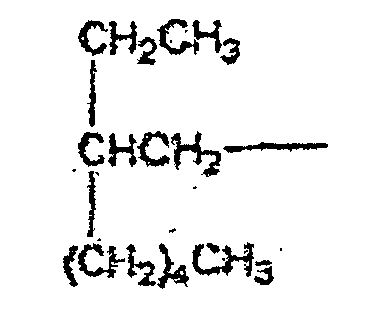
- the present invention provides a modified polyolefin resin composition in solid form for polyolefin resin paints, comprising (1) a modified chlorinated polyolefin having an acid value of 1 to 500 mg ⁇ KOH/g, which is obtained by chlorinating a polyolefin modified with one or more compounds selected from the group consisting of ⁇ , ⁇ -unsaturated carboxylic acids and acid anhydrides thereof in a range of 5 to 50% by weight; and (2) a compound for use as a stabilizer and/or a resin thereof having one epoxy group per molecule represented by the following structural formula and having an epoxy valve within a range of 10 to 1000 g/equivalent: wherein R represents CH 3 ⁇ , CH 3 ⁇ CH 2 ⁇ CH 2 ⁇ CH 2 ⁇ , the ratio in parts by weight of (1) : (2) being within a range of 100 : 0.1 to 50
- the present invention provides a method for producing a modified polyolefin resin composition in solid form for polyolefin resin paints, comprising a step of: desolvating and solidifying a solution of a modified polyolefin resin composition comprising (1) a modified chlorinated polyolefin having an acid value of 1 to 500 mg.KOH/g, which is obtained by chlorinating a polyolefin modified with one or more compounds selected from the group consisting of ⁇ , ⁇ -unsaturated carboxylic acids and acid anhydrides thereof in a range of 5 to 50% by weight; and (2) a compound for use as a stabilizer and/or a resin thereof having one epoxy group per molecule represented by the foregoing structural formula and having an epoxy value within a range of 10 to 1000 g/equivalent the ratio in parts by weight of (1) : (2) being within a range of 100 : 0.1 to 50
- the present invention provides the method according to the second aspect of the invention, characterized by desolvating and solidifying the solution of the modified polyolefin resin composition by supplying the solution to an extruder with vent stacks which has a desolvating suction member provided at a screw shaft having an opening at an upper portion of the screw shaft and which has an underwater cut pelletizer at a discharge port of the extruder.
- the present invention provides a method according to the second aspect of the invention characterized by desolvating and solidifying the solution of the modified polyolefin resin composition by supplying the solution to an extruder with vent stacks which has a desolvating suction member provided at a screw shaft having an opening at an upper portion of the screw shaft and which has a cooling-drum type flaker at a discharge port of the extruder.
- the modified polyolefin resin compositions of the invention to be used as paints for polyolefin resin molded bodies or films can advantageously yield coating films having excellent adhesion to polyolefin substrates as well as interlayer adhesion to base-coats and/or top-coats, and having good properties such as gasohol resistance, moisture resistance, shock resistance and flex resistance.
- the epoxy value of the compounds having one epoxy group per molecule and/or resins thereof (2) is less than 10 g/equivalent, the effect as a compound having an epoxy group and/or resin thereof is not exhibited.
- the epoxy value exceeds 1000 g/equivalent the modified polyolefin resin composition cannot be used for spray painting because of increased viscosity of the polyolefin resin composition.
- cured paint composition for polypropylene resins as disclosed in the aforementioned Japanese Patent Publication No. HEI 1-16414, which comprises a chlorinated polyolefin compound modified with unsaturated polycarboxylic acids or acid anhydrides thereof, and compounds having two or more epoxy groups per molecule and/or resins thereof
- the solution stability before use in the spray painting or other coating processes is problematic because of the use of the compound having two or more epoxy groups per molecule and/or resins thereof.
- the modified polyolefin resin composition has a drawback that particles would be formed during the storage of the solution.
- the modified polyolefin resin composition for polyolefin resin paints can yield coating films having an excellent adhesion to polyolefin-based substrates or films, interlayer adhesion to base-coats and/or top-coats, and good properties such as gasohol resistance, moisture resistance, shock resistance and flex resistance.
- the modified chlorinated polyolefin of the invention is produced in a solution state, such as toluene solution, whereas the product for actual use is transported in the form of a modified chlorinated polyolefin solid from the viewpoints of transportation costs and safety security, for example in the cases of remote places, whether abroad or domestic, which could be said reasonable.
- a solution state such as toluene solution
- the product for actual use is transported in the form of a modified chlorinated polyolefin solid from the viewpoints of transportation costs and safety security, for example in the cases of remote places, whether abroad or domestic, which could be said reasonable.
- HEI 7-59607 an apparatus that the present applicant previously described in Japanese Patent Publication No. HEI 7-59607 is used.
- the present inventors have found that when the compound having one epoxy group per molecule and/or resins thereof (2) are used as stabilizers, the formation of particles or gel upon solidification can be suppressed.
- the solidification process may be a process of producing a solid-state modified chlorinated polyolefin in a moment from a halogenated-solvent solution of a modified chlorinated polyolefin solution by feeding the modified chlorinated polyolefin solution dissolved in the halogenated solvent ranging from dilute to any concentration to an extruder with vent stacks which has a desolventing suction mechanism provided at its screw shaft and which has an underwater cut pelletizer provided at the discharge port of the extruder, or a process of producing a solid-state modified chlorinated polyolefin in a moment from a halogenated-solvent solution of a modified chlorinated polyolefin solution by feeding the modified chlorinated polyolefin solution dissolved in the halogenated solvent, via a flash concentrator, to an extruder with vent stacks which has a desolventing suction mechanism at its screw shaft and which has an underwater cut pelletizer at the discharge port of the extruder.
- halogenated hydrocarbons such as tetrachloroethylene may be used as halogenated solvents for use in this invention
- chloroform is especially preferable.
- the extruder equipped with vent stacks to be used in this invention is described in detail below. While biaxial, four-axial or other multi-axial extruders equipped with vent stacks are known, anisotropic and isotropic multi-axial extruders of the biaxial or four-axial type are suitable for renewing the resin surface and for obtaining self-cleaning characteristic, respectively.
- vent stacks As for the configuration of the axis of the extruder equipped with vent stacks, various kinds of configurations such as discs, seal rings and rotors as well as the spiral configuration can be used in combination for the purposes of mixing or kneading in the cylinder, enhanced heat generation due to mechanical kneading, sealing characteristic and the like.
- the vent stack for removing the evaporated solvent may be provided either singly or more than one, but preferably 2 to 5 in number, in which arrangement the solvent evaporated from the vent port is preferably condensed and recovered through condensers. While the pressure in each vent zone may be atmospheric or reduced, a degree of pressure reduction of 6.6 kPa (50 mmHg ⁇ abs). to 53.3 kPa (400 mmHg ⁇ abs).
- the pressure may be given in a combination of 26.6 kPa (200 mmHg ⁇ abs)., 20 kPa (150 mmHg ⁇ abs). and 6.6 kPa (50 mmHg ⁇ abs.), as viewed from the supply side of the raw solution, but it is not limited to these values.
- the method of heating the cylinder part of the extruder equipped with vent stacks may be electric heating, steam heating, warm-water heating, and the like as conventionally available.
- the heating device in this invention is divided into several blocks, where the blocks can be temperature controlled independently of one another.
- the evaporation temperature on the supply side of the raw material where the concentration of the modified chlorinated polyolefin is low may be, for example, in the range of 60 to 170°C
- the temperature on the discharge side where the concentration of the modified chlorinated polyolefin becomes high as a result of evaporation needs to be adjusted to within the range of 70 to 150°C to prevent the modified chlorinated polyolefin from being deteriorated in quality due to heat degradation.
- the halogenated-solvent solution of the modified chlorinated polyolefin supplied to the extruder is evaporated from the vent port by being heated with the cylinder of the extruder.
- vent stuffs are inserted into several cylinders having no openings or into the vent portions to suppress the vent-up phenomenon of the modified chlorinated polyolefin, thereby making it possible to produce the modified chlorinated polyolefin of the invention from resin solutions of low concentrations.
- the modified chlorinated polyolefin resin after completing the solvent removal is cut into pellets by using an underwater cut pelletizer, which is unique to the present invention, attached to the discharge port at the front end of the extruder.
- An alternative method available is that the modified chlorinated polyolefin resin after completing the solvent removal is solidified by using a cooling-drum type flaker without being passed through the underwater cut pelletizer. This method has a high cooling efficiency, bearing an advantage that chemical changes of the resin can be prevented because the resin is kept out of contact with water.
- the chlorinated polyolefin (1) to be used in this invention can be produced by methods known in the art. In one example of the production method, it can be produced by the steps comprising: mixing and dissolving one kind, or more than one kind, of polyolefin resins such as polypropylene, ethylene - propylene copolymer, or ethylene - propylene - butene copolymer; modifying the molten polyolefin resin, denatured by heat degradation if necessary, with ⁇ , ⁇ -unsaturated carboxylic acids and/or anhydrides thereof in the presence of a radical generator followed by dissolving in a chlorinated solvent; and blowing chlorine gas in under atmospheric pressure or compressed pressure at a temperature of 50 to 150°C under UV radiation or in the presence of catalysts, thereby allowing the resin to react.
- polyolefin resins such as polypropylene, ethylene - propylene copolymer, or ethylene - propylene - butene copoly
- radical generators for use in the modification reactions include peroxides such as di-tert-butyl perphthalate, tert-butyl hydroperoxide, di-cumyl peroxide, benzoyl peroxide, tert-butyl peroxybenzoate, tert-butyl peroxyethylhexanoate, tert-butyl peroxypivalate, methylethyl ketone peroxide and di-tert-butyl peroxide; and azonitriles such as azobis-isobutyronitrile and azobis-isopropionitrile.
- peroxides such as di-tert-butyl perphthalate, tert-butyl hydroperoxide, di-cumyl peroxide, benzoyl peroxide, tert-butyl peroxybenzoate, tert-butyl peroxyethylhexanoate, tert-butyl peroxypivalate,
- Examples of ⁇ , ⁇ -unsaturated carboxylic acids and/or acid anhydrides thereof for use in the modification reactions include maleic acid, maleic anhydride, fumaric acid, citraconic acid, citraconic anhydride, mesaconic acid, itaconic acid, itaconic anhydride, aconitic acid, aconitic anhydride and himic anhydride.
- the degree of chlorination of the chlorinated polyolefin (1) modified with ⁇ , ⁇ -unsaturated carboxylic acids and/or acid anhydrides thereof for use in this invention may be in the range of 1 to 50% by weight, the degree of 15 to 35% by weight being preferable. When the degree of chlorination is lower than 5% by weight, the condition of the solution becomes worse while, when the degree of chlorination is higher than 50% by weight, the adhesion property with polyolefin resins and solvent resistance will be deteriorated.
- the acid value of the chlorinated polyolefin (1) is in the range of 1 to 500 mg ⁇ KOH/g, the value of 10 to 400 mg ⁇ KOH/g being preferable. When the acid value is lower than 1 mg ⁇ KOH/g, solvent resistance will be decreased while, when the acid value is higher than 500 mg ⁇ KOH/g, the interlayer adhesion property to base-coats and/or top-coats will be weakened.
- the compound having one epoxy group per molecule and/or resin thereof (2) to be used in this invention has a good compatibility with chlorinated polyolefin (1).
- the compound are phenylglycidyl ether, 2-methylphenylglycidyl ether, tert-butylphenylglycidyl ether, 4-chlorophenylglycidyl ether, 4-methoxyphenylglycidyl ether, 2-biphenylglycidyl ether, 1-naphthylglycidyl ether, methylglycidyl ether', isopropylglycidyl ether, butylglycidyl ether, tert-butylglycidyl ether, 2-ethylglycidyl ether.
- These compounds may be used either singly or in combination, where mixing and using two or more kinds gives improved effect.
- the blending ratio of chlorinated polyolefin (1) with the compound having one epoxy group per molecule and/or resin thereof (2) is in the range of 100 : 0.1 to 50 in parts by weight from the viewpoint of embodying the invention.
- the ratio of the compound having an epoxy group and resin thereof (2) is less than 0.1, its stabilization effect becomes insufficient while, when the ratio exceeds 50, its adhesion property to molded bodies or films of the polyolefin resin would be decreased.
- the compound having an epoxy group and/or resin thereof (2) is advantageous in that crosslinking reactions of bifunctional epoxy compounds with acid anhydrides or organic acids is suppressed during the period of storage before use in the spray painting or other coating processes.
- the primer of paints that is the object of this invention may of course be practically applied by using the resin composition of the invention alone.
- the resin composition of the invention is formed into a paint by being blended with acrylic polymers, urethane polymers and/or polymers like alkid resins, inorganic pigments such as aluminum paste, aluminum oxide, titanium dioxide, talc and calcium carbonate, and other organic pigments, and organic solvents with a view to improving the durability of coating films.
- Aromatic organic solvents like toluene or xylene are most preferable as solvents to be used for the paint compositions according to the present invention.
- Fillers that can be used suitably are inorganic pigments such as aluminum paste, aluminum oxide, titanium dioxide, talc and calcium carbonate, or other organic pigments.
- the structural formula of the compound having one epoxy group per molecule and/or resins thereof (2) to be used in the present invention is as shown previously.
- Denacol EX-141 made by Nagase Chemical Industry, Inc., an epoxy compound having an epoxy value of 154 modified with phenylglycidyl ether
- the chlorinated polyolefin was desolvated in the cylinder resulted in a solid by an underwater cut pelletizer.
- a polypropylene plate (a press-molding of Mitsui Noblene SB-E3 by prescribed process, 100 mm x 50 mm, 2 mm thick) was washed at the surface with isopropyl alcohol, while solutions of the compositions of Examples 1 to 12 and Comparative Examples 1 to 3 dissolved in toluene were adjusted in viscosity by thinner to a value of 12 seconds, as measured by Ford viscosity cup No. 4. Thereafter, the plate was spray-coated by using an air-spray gun (made by Meiji Kikai Seisakusho, Co., Type F-88). The coated plate was dried at 80°C for 30 minutes and allowed to cool to room temperature.
- a melamine paint made by Kansai Paint K.K.
- thinner were mixed to give a coating amount of 50 to 60 g/m 2 , and coated on the plate by using the air-spray gun.
- the coated plate was dried at 120°C for 30 minutes and, after allowing to stand at room temperature for 24 hours, subjected to performance tests.
- 25 meshes were formed on the coating surface so as to reach the ground, and then cellophane tape was applied and bonded onto the coating surface and torn off at an angle of 90° with respect to the coating surface, where the number of the remaining meshes was calculated.
- a polypropylene plate coated by the method of (1) was immersed in city water kept at 40°C for 240 hours, and evaluated in the same way as in (1).
- a 20% by weight toluene solution of the composition was left in a thermostatic oven kept at 40°C for one month, and its difference in viscosity before and after the elapse was determined ( ⁇ : 0 - 0.05 Pas (0 - 0.5 poise); ⁇ : 0.05 - 0.1 Pas (0.5 - 1 poise); ⁇ : over 0.1 Pas (over 1 poise)).
- Solid pellets were obtained by the same process as in Example 1, except that Epolite M1230 (made by Kyoeisha Yushi Kagaku Kogyo K.K., an epoxy resin composed of a glycidyl ether mixture of long chain alkyl with an epoxy equivalence of 300 to 340) was added instead of Denacol EX-141.
- Epolite M1230 made by Kyoeisha Yushi Kagaku Kogyo K.K., an epoxy resin composed of a glycidyl ether mixture of long chain alkyl with an epoxy equivalence of 300 to 340
- the blending formulation and the results of performance evaluation are shown in Table 1 and Table 2, respectively.
- Solid pellets were obtained by the same process and conditions as in Example 1, except that Epicoat 828 (made by Shell Chemicals, Inc., an epoxy resin with epoxy equivalence 184 - 194, which is a condensate of bisphenol A and epichlorohydrin) was added instead of Denacol EX-141.
- Epicoat 828 made by Shell Chemicals, Inc., an epoxy resin with epoxy equivalence 184 - 194, which is a condensate of bisphenol A and epichlorohydrin
- Epolite M-1230 was added instead of Denacol EX-141 under the same process and conditions as in Example 5.
- the blending formulation and the results of performance evaluation are listed in Table 1 and table 2, respectively.
- Epicoat 828 was added instead of Denacol EX-141 under the same process and conditions as in Example 5.
- the blending formulation and the results of performance evaluation are listed in Table 1 and table 2, respectively.
- Epolite M-1230 was added instead of Denacol EX-141 under the same process and conditions as in Example 9.
- the blending formulation and the results of performance evaluation are listed in Table 1 and Table 2, respectively.
- Epicoat 828 was added instead of Denacol EX-141 under the same process and conditions as in Example 9.
- the blending formulation and the results of performance evaluation are listed in Table 1 and Table 2, respectively.
- a modified chlorinated polyolefin (1) obtained by chlorinating a polyolefin modified with one kind, or more than one kind, of compounds selected from a group consisting of ⁇ , ⁇ -unsaturated carboxylic acids and/or anhydrides thereof is blended with a compound having one epoxy group per molecule and/or resin thereof (2), and then desolvated in an extruder with vent stacks and solidifed by an underwater cut pelletizer or a cooling-drum type flaker.
- the composition obtained in this way has good characteristics in addition to molded products of polyolefin such as polypropylene, interlayer adhesion to base-coats and/or top-coats, gasohol resistance, moisture resistance, shock resistance and flex resistance.
- the composition also shows less viscosity increase and remarkably less formation of particles, as compared with those blended with compounds having bifunctional epoxy groups.
Landscapes
- Chemical & Material Sciences (AREA)
- Chemical Kinetics & Catalysis (AREA)
- Organic Chemistry (AREA)
- General Chemical & Material Sciences (AREA)
- Life Sciences & Earth Sciences (AREA)
- Engineering & Computer Science (AREA)
- Materials Engineering (AREA)
- Wood Science & Technology (AREA)
- Health & Medical Sciences (AREA)
- Medicinal Chemistry (AREA)
- Polymers & Plastics (AREA)
- Addition Polymer Or Copolymer, Post-Treatments, Or Chemical Modifications (AREA)
- Processes Of Treating Macromolecular Substances (AREA)
Claims (4)
- Composition de résine de polyoléfine modifiée sous forme solide pour des peintures de résine de polyoléfine, comprenantdans laquelle R représente(1) une polyoléfine chlorée modifiée ayant une valeur de pH de 1 à 500 mg KOH/g, qui est obtenue en chlorant une polyoléfine modifiée avec un ou plusieurs composés choisis dans le groupe comprenant les acides carboxyliques α,β-insaturés et les anhydrides acides de ceux-ci dans une plage de 5 à 50 % en poids,
et(2) un composé pour une utilisation comme stabilisant et/ou une résine de celui-ci ayant un groupe époxy par molécule représentée par la formule structurale suivante et ayant une valeur époxy comprise dans une plage allant de 10 à 1000 g/équivalent :

 le rapport des parties en poids de (1):(2) étant compris dans une plage allant de 100:0,1 à 50.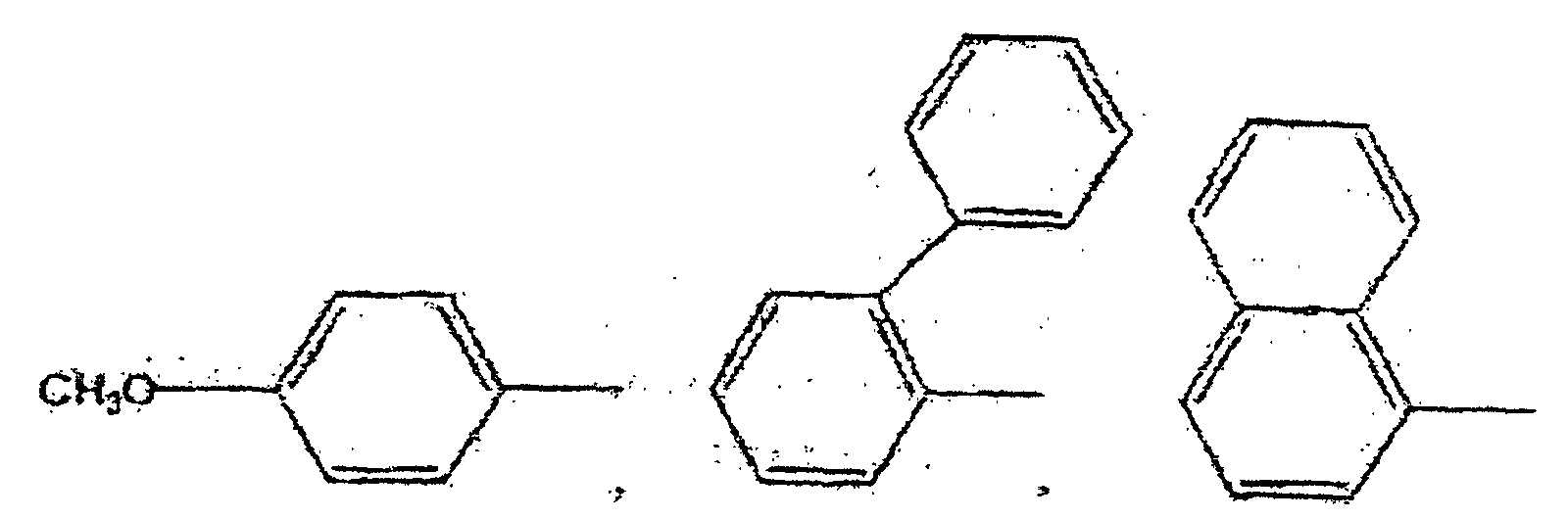
- Procédé pour produire une composition de résine de polyoléfine modifiée sous forme solide pour des peintures de résine de polyoléfine, comprenant une étape de : désolvatation et solidification d'une solution d'une composition de résine de polyoléfine modifiée comprenantdans laquelle R représente(1) une polyoléfine chlorée modifiée ayant une valeur de pH de 1 à 500 mg KOH/g, qui est obtenue en chlorant une polyoléfine modifiée avec un ou plusieurs composés choisis dans le groupe comprenant les acides carboxyliques α,β-insaturés et les anhydrides acides de ceux-ci dans une plage de 5 à 50 % en poids,
et(2) un composé pour une utilisation comme stabilisant et/ou une résine de celui-ci ayant un groupe époxy par molécule représenté par la formule structurale suivante et ayant une valeur époxy comprise dans une plage allant de 10 à 1000 g/équivalent :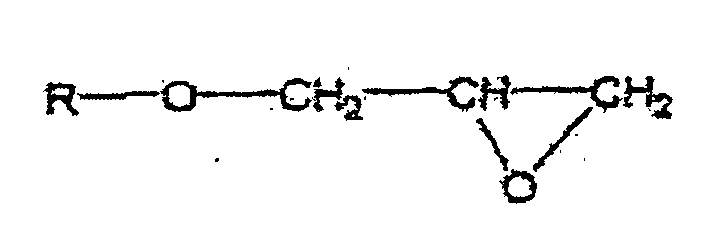
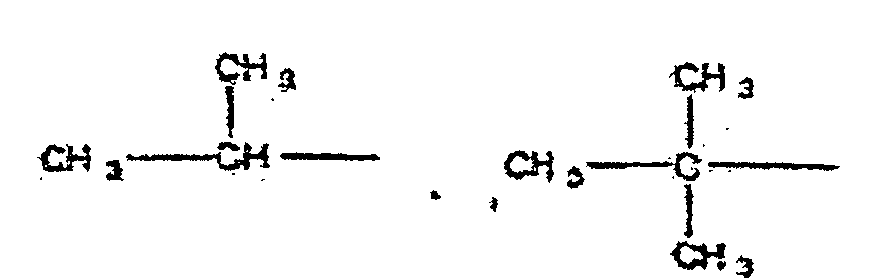
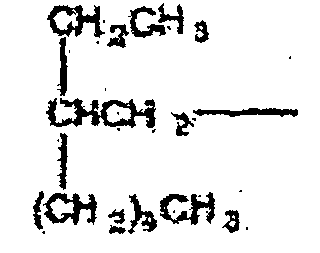
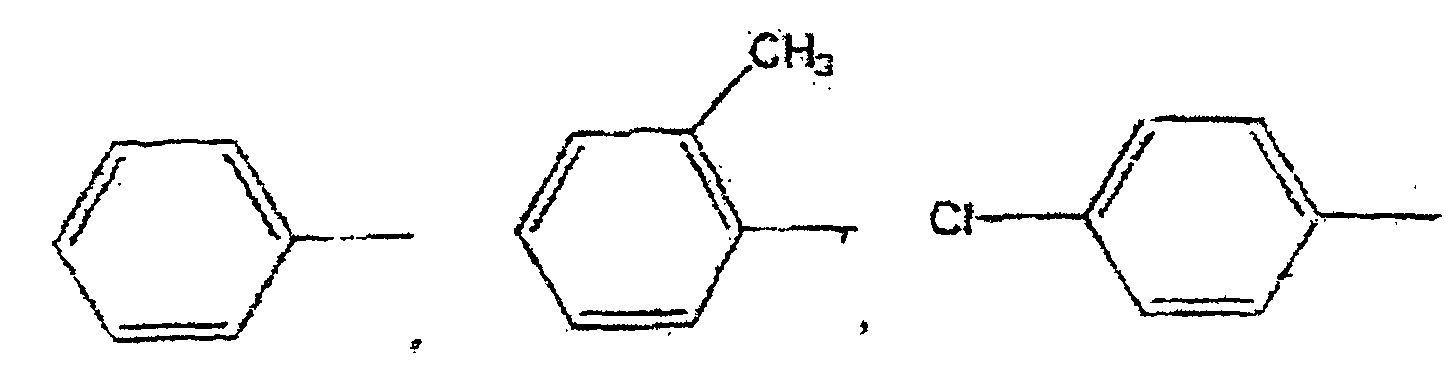 le rapport des parties en poids de (1):(2) étant compris dans une plage allant de 100:0,1 à 50.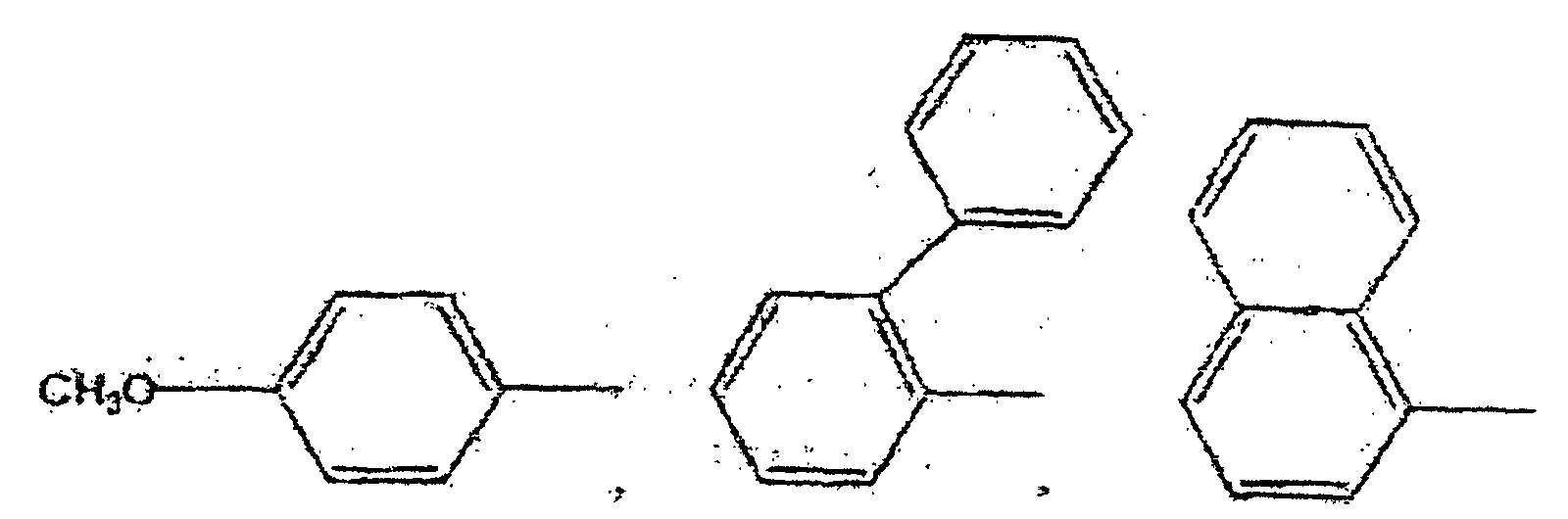
- Procédé selon la revendication 2, caractérisé par la désolvatation et la solidification de la solution de la composition de résine de polyoléfine modifiée en fournissant la solution à un extrudeur ayant des colonnes de ventilation qui a un membre de succion de désolvatation fourni à un arbre à vis ayant une ouverture au niveau d'une partie supérieure de l'arbre à vis et qui a un granulateur à coupe sous l'eau au niveau d'un orifice de décharge de l'extrudeur.
- Procédé selon la revendication 2, caractérisé par la désolvatation et la solidification de la solution de la composition de résine de polyoléfine modifiée en fournissant la solution à un extrudeur ayant des colonnes de ventilation qui a un membre de succion de désolvatation fourni au niveau d'un arbre à vis ayant une ouverture à une partie supérieure de l'arbre à vis et qui a un fragmenteur de type tambour de refroidissement au niveau d'un orifice de décharge de l'extrudeur.
Applications Claiming Priority (4)
| Application Number | Priority Date | Filing Date | Title |
|---|---|---|---|
| JP146841/96 | 1996-05-15 | ||
| JP14684196A JP3828611B2 (ja) | 1995-12-29 | 1996-05-15 | 変性ポリオレフィン系樹脂組成物の固形物とそれを配合した塗料プライマー |
| JP14684196 | 1996-05-15 | ||
| US08/835,568 US5821301A (en) | 1996-05-15 | 1997-04-09 | Modified polyolefin resin composition for polyolefin plastic paints, and method for producing the same |
Publications (2)
| Publication Number | Publication Date |
|---|---|
| EP0807671A1 EP0807671A1 (fr) | 1997-11-19 |
| EP0807671B1 true EP0807671B1 (fr) | 2004-03-10 |
Family
ID=26477551
Family Applications (1)
| Application Number | Title | Priority Date | Filing Date |
|---|---|---|---|
| EP97302455A Expired - Lifetime EP0807671B1 (fr) | 1996-05-15 | 1997-04-10 | Composition de résine de polyoléfine modifiée pour laques pour polyoléfines et procédé pour leur préparation |
Country Status (2)
| Country | Link |
|---|---|
| US (1) | US5821301A (fr) |
| EP (1) | EP0807671B1 (fr) |
Families Citing this family (8)
| Publication number | Priority date | Publication date | Assignee | Title |
|---|---|---|---|---|
| US6379802B2 (en) * | 1998-06-22 | 2002-04-30 | Honda Giken Kogyo Kabushiki Kaisha | Thermoplastic skin sheet for interior parts of automobiles and method for producing such skin sheet |
| JP2002241669A (ja) * | 2000-12-15 | 2002-08-28 | Toyo Kasei Kogyo Co Ltd | 塗料または接着剤用の樹脂溶液組成物 |
| US8058354B2 (en) * | 2001-02-09 | 2011-11-15 | Eastman Chemical Company | Modified carboxylated polyolefins and their use as adhesion promoters |
| US8058355B2 (en) * | 2004-10-06 | 2011-11-15 | Eastman Chemical Company | Modified chlorinated carboxylated polyolefins and their use as adhesion promoters |
| US20080188627A1 (en) * | 2007-02-05 | 2008-08-07 | Basf Corporation | Method for making chlorinated polyolefin solutions and coatings |
| CN101417863B (zh) * | 2007-10-25 | 2011-08-24 | 鸿富锦精密工业(深圳)有限公司 | 壳体及表面处理方法 |
| CN104185650B (zh) * | 2012-03-28 | 2016-10-19 | 日本制纸株式会社 | 氯化聚烯烃系树脂组合物 |
| CN104371440A (zh) * | 2014-11-14 | 2015-02-25 | 无锡中洁能源技术有限公司 | 一种热塑性氟树脂水性涂料及其制备方法 |
Family Cites Families (5)
| Publication number | Priority date | Publication date | Assignee | Title |
|---|---|---|---|---|
| JPS5949206A (ja) * | 1982-09-16 | 1984-03-21 | Asahi Denka Kogyo Kk | 塩素化ポリオレフイン系樹脂の製造法 |
| JPS59149944A (ja) * | 1983-02-15 | 1984-08-28 | Toyo Seikan Kaisha Ltd | ホツトメルト接着剤 |
| JPS60223831A (ja) * | 1984-04-23 | 1985-11-08 | Sanyo Kokusaku Pulp Co Ltd | ポリプロピレン系樹脂用硬化塗料組成物 |
| JPH04372641A (ja) * | 1991-06-20 | 1992-12-25 | Sanyo Chem Ind Ltd | 変性塩素化ポリオレフィンからなるバインダ− |
| US5759703A (en) * | 1995-10-25 | 1998-06-02 | Bee Chemical Company | Zero VOC aqueous dispersion of an acid-modified polyolefin and a monoepoxide/polymeric acid adduct |
-
1997
- 1997-04-09 US US08/835,568 patent/US5821301A/en not_active Expired - Lifetime
- 1997-04-10 EP EP97302455A patent/EP0807671B1/fr not_active Expired - Lifetime
Also Published As
| Publication number | Publication date |
|---|---|
| US5821301A (en) | 1998-10-13 |
| EP0807671A1 (fr) | 1997-11-19 |
Similar Documents
| Publication | Publication Date | Title |
|---|---|---|
| EP0700424B1 (fr) | Composition de peinture a base d'eau, procede de peinture et pellicules de peinture | |
| JPS5975958A (ja) | ポリプロピレン系樹脂用塗料組成物 | |
| JP2975303B2 (ja) | ポリオレフィン用の接着促進剤 | |
| US5821301A (en) | Modified polyolefin resin composition for polyolefin plastic paints, and method for producing the same | |
| US6586525B1 (en) | Binder resin for polyolefin resin, process for producing the same, and uses thereof | |
| JP3175234B2 (ja) | ポリアミド系樹脂組成物成形品の表面処理方法および塗装方法 | |
| JP2022048218A (ja) | 塩素化ポリオレフィン系樹脂組成物 | |
| JPH0116414B2 (fr) | ||
| KR20040074107A (ko) | 결합제 수지 조성물, 이의 제조방법 및 이의 용도 | |
| EP1516890B1 (fr) | Composition de dispersion de resine aqueuse et son procede de production | |
| KR100328378B1 (ko) | 안정성이뛰어난염소화폴리올레핀조성물 | |
| JP2003012999A (ja) | ハイソリッドプライマー用バインダー樹脂組成物 | |
| JP3727744B2 (ja) | 塩素化ポリオレフィン組成物の製造法 | |
| JP3828611B2 (ja) | 変性ポリオレフィン系樹脂組成物の固形物とそれを配合した塗料プライマー | |
| JP2610566B2 (ja) | ポリオレフィン成形物用コーテイング樹脂組成物及びその製造方法 | |
| US7262247B2 (en) | Binder resin solution composition, coatings, inks, adhesives and primers | |
| JP2001114961A (ja) | バインダー樹脂組成物及びその製造方法 | |
| JP3045498B2 (ja) | バインダ―樹脂組成物及びその製造方法 | |
| JP2000273389A (ja) | バインダー樹脂組成物およびその用途 | |
| JPS59147027A (ja) | 樹脂成形物の表面処理方法 | |
| WO2000042103A1 (fr) | Composition de resine liante et son procede de production | |
| JPH05279431A (ja) | 樹脂組成物の製造方法 | |
| DE69727995T2 (de) | Modifizierte Polyolefinharz-Zusammensetzung für Lacke für Polyolefine und Verfahren zur Herstellung derselben | |
| JP2004189794A (ja) | バインダー樹脂溶液組成物 | |
| FI101709B (fi) | Pinnoitekoostumus |
Legal Events
| Date | Code | Title | Description |
|---|---|---|---|
| PUAI | Public reference made under article 153(3) epc to a published international application that has entered the european phase |
Free format text: ORIGINAL CODE: 0009012 |
|
| AK | Designated contracting states |
Kind code of ref document: A1 Designated state(s): DE FR GB |
|
| 17P | Request for examination filed |
Effective date: 19980110 |
|
| 17Q | First examination report despatched |
Effective date: 20010615 |
|
| REG | Reference to a national code |
Ref country code: GB Ref legal event code: FG4D |
|
| GRAP | Despatch of communication of intention to grant a patent |
Free format text: ORIGINAL CODE: EPIDOSNIGR1 |
|
| GRAS | Grant fee paid |
Free format text: ORIGINAL CODE: EPIDOSNIGR3 |
|
| GRAA | (expected) grant |
Free format text: ORIGINAL CODE: 0009210 |
|
| AK | Designated contracting states |
Kind code of ref document: B1 Designated state(s): DE FR GB |
|
| REF | Corresponds to: |
Ref document number: 69727995 Country of ref document: DE Date of ref document: 20040415 Kind code of ref document: P |
|
| ET | Fr: translation filed | ||
| PLBE | No opposition filed within time limit |
Free format text: ORIGINAL CODE: 0009261 |
|
| STAA | Information on the status of an ep patent application or granted ep patent |
Free format text: STATUS: NO OPPOSITION FILED WITHIN TIME LIMIT |
|
| 26N | No opposition filed |
Effective date: 20041213 |
|
| REG | Reference to a national code |
Ref country code: GB Ref legal event code: 732E Free format text: REGISTERED BETWEEN 20101125 AND 20101201 |
|
| REG | Reference to a national code |
Ref country code: FR Ref legal event code: TP |
|
| REG | Reference to a national code |
Ref country code: FR Ref legal event code: PLFP Year of fee payment: 20 |
|
| PGFP | Annual fee paid to national office [announced via postgrant information from national office to epo] |
Ref country code: FR Payment date: 20160309 Year of fee payment: 20 |
|
| PGFP | Annual fee paid to national office [announced via postgrant information from national office to epo] |
Ref country code: GB Payment date: 20160406 Year of fee payment: 20 Ref country code: DE Payment date: 20160405 Year of fee payment: 20 |
|
| REG | Reference to a national code |
Ref country code: DE Ref legal event code: R071 Ref document number: 69727995 Country of ref document: DE |
|
| REG | Reference to a national code |
Ref country code: GB Ref legal event code: PE20 Expiry date: 20170409 |
|
| PG25 | Lapsed in a contracting state [announced via postgrant information from national office to epo] |
Ref country code: GB Free format text: LAPSE BECAUSE OF EXPIRATION OF PROTECTION Effective date: 20170409 |