EP0755145A2 - Telekonferenz - Google Patents
Telekonferenz Download PDFInfo
- Publication number
- EP0755145A2 EP0755145A2 EP96304891A EP96304891A EP0755145A2 EP 0755145 A2 EP0755145 A2 EP 0755145A2 EP 96304891 A EP96304891 A EP 96304891A EP 96304891 A EP96304891 A EP 96304891A EP 0755145 A2 EP0755145 A2 EP 0755145A2
- Authority
- EP
- European Patent Office
- Prior art keywords
- conference
- user
- representation
- party
- visual
- Prior art date
- Legal status (The legal status is an assumption and is not a legal conclusion. Google has not performed a legal analysis and makes no representation as to the accuracy of the status listed.)
- Withdrawn
Links
Images


Classifications
-
- H—ELECTRICITY
- H04—ELECTRIC COMMUNICATION TECHNIQUE
- H04M—TELEPHONIC COMMUNICATION
- H04M3/00—Automatic or semi-automatic exchanges
- H04M3/42—Systems providing special services or facilities to subscribers
- H04M3/56—Arrangements for connecting several subscribers to a common circuit, i.e. affording conference facilities
-
- H—ELECTRICITY
- H04—ELECTRIC COMMUNICATION TECHNIQUE
- H04N—PICTORIAL COMMUNICATION, e.g. TELEVISION
- H04N7/00—Television systems
- H04N7/14—Systems for two-way working
- H04N7/15—Conference systems
-
- H—ELECTRICITY
- H04—ELECTRIC COMMUNICATION TECHNIQUE
- H04N—PICTORIAL COMMUNICATION, e.g. TELEVISION
- H04N7/00—Television systems
- H04N7/14—Systems for two-way working
- H04N7/15—Conference systems
- H04N7/152—Multipoint control units therefor
-
- H—ELECTRICITY
- H04—ELECTRIC COMMUNICATION TECHNIQUE
- H04M—TELEPHONIC COMMUNICATION
- H04M2201/00—Electronic components, circuits, software, systems or apparatus used in telephone systems
- H04M2201/42—Graphical user interfaces
-
- H—ELECTRICITY
- H04—ELECTRIC COMMUNICATION TECHNIQUE
- H04M—TELEPHONIC COMMUNICATION
- H04M3/00—Automatic or semi-automatic exchanges
- H04M3/42—Systems providing special services or facilities to subscribers
- H04M3/42136—Administration or customisation of services
- H04M3/42153—Administration or customisation of services by subscriber
- H04M3/42161—Administration or customisation of services by subscriber via computer interface
Definitions
- Teleconferencing is a telecommunications facility to allow more than two parties to take part in a conversation. It is normally achieved by means of a 'Conference Bridge' in a Private Automatic Branch Exchange (PABX) which terminals utilise in order to create the teleconference. Simply put, the conference bridge mixes the transmit paths from each participant to form a single signal which is delivered to each participant. Thus, each party in a conference hears the conversation of the other parties in the conference.
- PABX Private Automatic Branch Exchange
- Teleconferencing is widely used, but has limitations, mainly due to the constraints of the analogue telephone network. Users often complain that they cannot tell which member of a conference is talking and they cannot differentiate between individual voices.
- the present invention addresses these limitations, but also goes much further.
- a telecommunications apparatus including a conference bridge, processing means and a visual display whereby participants in a conference using the conference bridge and connected thereto are represented on the display.
- a conference bridge is described to provide stereo signals to each conference participant.
- the left and right signals to each participant are constructed from the transmit paths of each of the other conference members and are processed to give spatial information providing a stereo image. Delivery of these stereo signals to participants would use existing communication capabilities, e.g. a pair of Integrated Services Digital Network (ISDN) B channels. Users with legacy equipment which is incompatible with the provision of the stereo capability could participate in such a bridge using existing conference techniques.
- ISDN Integrated Services Digital Network
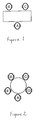
- a three party conference could be spatially arranged for a user A as shown in Figure 1.
- a seven party conference could be provided as shown in Figure 3.
- DSP Digital Signal Processor
- user communication with the bridge may be carried out via signalling messages, e.g. ISDN D-channel messages, such that the user interface is left largely to the terminating devices.
- signalling messages e.g. ISDN D-channel messages
- An additional aid to teleconferencing as described above or a stand-alone feature is to provide a visual representation of a conference for a user so as to automate the tracking of activities within the conference.
- the two embodiments can be independent of each other but the combination of the two can further enhance the use of the conference facility.
- a computer application is run in, for example, a user's desktop computing environment (e.g. Windows. OS/2, Macintosh, Unix) to provide a visual representation of the conference occurring at the user's telephone.
- a user's desktop computing environment e.g. Windows. OS/2, Macintosh, Unix
- the representation could include:-
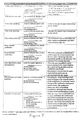
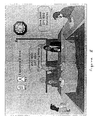
- Figure 8 illustrates some possibilities for the main components of a visual representation of a conference.
- FIG. 9 A typical architecture is illustrated in Figure 9.
- the application will typically reside in the user's PC. It is linked to the switch, where the teleconference is centred, by a CTI command and control interface.
- the application does not require a speech link, the user interacts with the conference via the telephone.
- the CTI link may be one of the following types:
- Control of the conference is described below and includes the provision of an interface by which the user can control the conference.
- Typical features are:
- control features are only appropriate to specific (controller) parties in the conference as they provide the ability to affect how other parties participate in the conference.
- Configuration of the conference could be a mode of operation in which the application would act as a front end, as a Graphical User Interface (GUI), to control the form of conference where the soundscape (audible 3D representation of the conference) perceived by the user is configurable by that user.
- GUI Graphical User Interface
- the conference uses a soundscape profile for each party which determines how the user hears that party (acoustic properties).
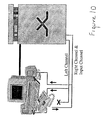
- the stereo output may be fed to the PC which is equipped to provide stereo sound output. This would avoid having to use a specially developed telephone handset which was capable of outputting stereo sound. It would also allow for the possibility of compressing and multiplexing the stereo channels down into a single channel with the PC doing the decoding.
- an iconised video window could be used showing each party.
- This video feed could be integrated into the conference scene (e.g. sized to fit) instead of a figure representation but still provide all the services that would have been provided to a figure representation (e.g. speaker induction).
- the video would normally be a live video of the party but could also be a still snapshot.
- a flexible approach to visualising a telephone conference is provided. This visual application could also be used with the soundscape conference application to synchronise the visual and audible representation of a conference.
- the visual interface provides an intuitive method for controlling a normal or stereo enhanced conference.
Landscapes
- Engineering & Computer Science (AREA)
- Multimedia (AREA)
- Signal Processing (AREA)
- Telephonic Communication Services (AREA)
- Two-Way Televisions, Distribution Of Moving Picture Or The Like (AREA)
Applications Claiming Priority (2)
| Application Number | Priority Date | Filing Date | Title |
|---|---|---|---|
| GB9514864A GB2303517A (en) | 1995-07-20 | 1995-07-20 | Teleconferencing |
| GB9514864 | 1995-07-20 |
Publications (2)
| Publication Number | Publication Date |
|---|---|
| EP0755145A2 true EP0755145A2 (de) | 1997-01-22 |
| EP0755145A3 EP0755145A3 (de) | 1999-05-19 |
Family
ID=10777977
Family Applications (1)
| Application Number | Title | Priority Date | Filing Date |
|---|---|---|---|
| EP96304891A Withdrawn EP0755145A3 (de) | 1995-07-20 | 1996-07-02 | Telekonferenz |
Country Status (2)
| Country | Link |
|---|---|
| EP (1) | EP0755145A3 (de) |
| GB (1) | GB2303517A (de) |
Cited By (2)
| Publication number | Priority date | Publication date | Assignee | Title |
|---|---|---|---|---|
| WO2000018119A1 (en) * | 1998-09-23 | 2000-03-30 | Koninklijke Philips Electronics N.V. | Including a person's image in a store |
| WO2006068911A3 (en) * | 2004-12-22 | 2006-08-31 | Sony Ericsson Mobile Comm Ab | Communications devices including positional circuits and methods of operating the same |
Family Cites Families (6)
| Publication number | Priority date | Publication date | Assignee | Title |
|---|---|---|---|---|
| DE3823219C1 (de) * | 1988-07-08 | 1989-05-18 | Telenorma Telefonbau Und Normalzeit Gmbh, 6000 Frankfurt, De | |
| JP3308563B2 (ja) * | 1991-07-15 | 2002-07-29 | 株式会社日立製作所 | 多地点テレビ会議システム |
| GB9215662D0 (en) * | 1992-07-23 | 1992-09-09 | Workspace Technologies Limited | Conference assisting apparatus |
| GB2278516A (en) * | 1993-05-24 | 1994-11-30 | Adam Taub | Video conference system |
| US5689641A (en) * | 1993-10-01 | 1997-11-18 | Vicor, Inc. | Multimedia collaboration system arrangement for routing compressed AV signal through a participant site without decompressing the AV signal |
| GB2303516A (en) * | 1995-07-20 | 1997-02-19 | Plessey Telecomm | Teleconferencing |
-
1995
- 1995-07-20 GB GB9514864A patent/GB2303517A/en not_active Withdrawn
-
1996
- 1996-07-02 EP EP96304891A patent/EP0755145A3/de not_active Withdrawn
Cited By (2)
| Publication number | Priority date | Publication date | Assignee | Title |
|---|---|---|---|---|
| WO2000018119A1 (en) * | 1998-09-23 | 2000-03-30 | Koninklijke Philips Electronics N.V. | Including a person's image in a store |
| WO2006068911A3 (en) * | 2004-12-22 | 2006-08-31 | Sony Ericsson Mobile Comm Ab | Communications devices including positional circuits and methods of operating the same |
Also Published As
| Publication number | Publication date |
|---|---|
| GB9514864D0 (en) | 1995-09-20 |
| GB2303517A (en) | 1997-02-19 |
| EP0755145A3 (de) | 1999-05-19 |
Similar Documents
| Publication | Publication Date | Title |
|---|---|---|
| EP0762717A2 (de) | Fernkonferenz | |
| JP3764003B2 (ja) | 通信会議システム及びその運用方法 | |
| US6327567B1 (en) | Method and system for providing spatialized audio in conference calls | |
| JPH03155257A (ja) | 分散制御通信会議装置 | |
| JPH0870321A (ja) | 改良されたマルチポイント制御ユニットを使用するシームレスマルチメディア会議システム | |
| US6813360B2 (en) | Audio conferencing with three-dimensional audio encoding | |
| JP3929248B2 (ja) | 電話会議システム | |
| JP2005057781A (ja) | 改良型グループ通信システム | |
| US6512823B2 (en) | Multiline telephone including interacting call appearances | |
| CN1849834B (zh) | 语音通信的方法、设备和系统 | |
| JP2012019416A (ja) | 情報処理端末、通話制御方法およびプログラム | |
| GB2303517A (en) | Teleconferencing | |
| Horn et al. | A versatile audio bridge for multimedia conferencing | |
| JPH10243110A (ja) | 電話会議システム | |
| JPS6315560A (ja) | 電子会議システムの伝送制御装置 | |
| US20090074169A1 (en) | Multi-Line Communication System | |
| JP3818630B2 (ja) | 電話会議システム | |
| JP2828685B2 (ja) | 参加者着信規制方式 | |
| JPH02296448A (ja) | 回線交換回路 | |
| JP3679437B2 (ja) | 通信端末装置 | |
| JP2007534200A (ja) | パーテイ配置識別証明を伴うマルチパーテイ通話 | |
| JPH09261350A (ja) | 特定通話者グループ自動構成方法及び装置 | |
| JP2002027144A (ja) | 通信端末および通話システムおよび回線確立方法 | |
| JP2702135B2 (ja) | 会議電話方式 | |
| JPS62294367A (ja) | 会議通話方式 |
Legal Events
| Date | Code | Title | Description |
|---|---|---|---|
| PUAI | Public reference made under article 153(3) epc to a published international application that has entered the european phase |
Free format text: ORIGINAL CODE: 0009012 |
|
| AK | Designated contracting states |
Kind code of ref document: A2 Designated state(s): DE FR IE NL SE |
|
| RAP1 | Party data changed (applicant data changed or rights of an application transferred) |
Owner name: SIEMENS GEC COMMUNICATION SYSTEMS LIMITED |
|
| 17P | Request for examination filed |
Effective date: 19980511 |
|
| PUAL | Search report despatched |
Free format text: ORIGINAL CODE: 0009013 |
|
| RAP1 | Party data changed (applicant data changed or rights of an application transferred) |
Owner name: SIEMENS PLC |
|
| AK | Designated contracting states |
Kind code of ref document: A3 Designated state(s): DE FR IE NL SE |
|
| STAA | Information on the status of an ep patent application or granted ep patent |
Free format text: STATUS: THE APPLICATION HAS BEEN WITHDRAWN |
|
| 18W | Application withdrawn |
Withdrawal date: 19991216 |