EP0750507B2 - Proteasome regulation of nf-kappa-b activity - Google Patents
Proteasome regulation of nf-kappa-b activity Download PDFInfo
- Publication number
- EP0750507B2 EP0750507B2 EP95914075A EP95914075A EP0750507B2 EP 0750507 B2 EP0750507 B2 EP 0750507B2 EP 95914075 A EP95914075 A EP 95914075A EP 95914075 A EP95914075 A EP 95914075A EP 0750507 B2 EP0750507 B2 EP 0750507B2
- Authority
- EP
- European Patent Office
- Prior art keywords
- leu
- proteasome
- inhibitor
- alkyl
- inhibitors
- Prior art date
- Legal status (The legal status is an assumption and is not a legal conclusion. Google has not performed a legal analysis and makes no representation as to the accuracy of the status listed.)
- Expired - Lifetime
Links
- 108090000708 Proteasome Endopeptidase Complex Proteins 0.000 title claims description 75
- 102000004245 Proteasome Endopeptidase Complex Human genes 0.000 title claims description 74
- 230000000694 effects Effects 0.000 title abstract description 25
- 230000033228 biological regulation Effects 0.000 title description 3
- 108010057466 NF-kappa B Proteins 0.000 claims abstract description 29
- 102000003945 NF-kappa B Human genes 0.000 claims abstract description 29
- 239000003112 inhibitor Substances 0.000 claims description 75
- 125000000217 alkyl group Chemical group 0.000 claims description 33
- 108090000848 Ubiquitin Proteins 0.000 claims description 25
- 102000044159 Ubiquitin Human genes 0.000 claims description 25
- 102000035195 Peptidases Human genes 0.000 claims description 16
- 108091005804 Peptidases Proteins 0.000 claims description 16
- 125000003118 aryl group Chemical group 0.000 claims description 15
- 230000002797 proteolythic effect Effects 0.000 claims description 14
- 108010022579 ATP dependent 26S protease Proteins 0.000 claims description 13
- 230000021615 conjugation Effects 0.000 claims description 13
- 229910052739 hydrogen Inorganic materials 0.000 claims description 13
- 125000000753 cycloalkyl group Chemical group 0.000 claims description 11
- 239000001257 hydrogen Substances 0.000 claims description 11
- 239000003814 drug Substances 0.000 claims description 10
- 238000004519 manufacturing process Methods 0.000 claims description 9
- RJWLAIMXRBDUMH-ULQDDVLXSA-N N-Acetylleucyl-leucyl-methioninal Chemical compound CSCC[C@@H](C=O)NC(=O)[C@H](CC(C)C)NC(=O)[C@H](CC(C)C)NC(C)=O RJWLAIMXRBDUMH-ULQDDVLXSA-N 0.000 claims description 8
- 125000003178 carboxy group Chemical group [H]OC(*)=O 0.000 claims description 8
- 235000019833 protease Nutrition 0.000 claims description 8
- FMYKJLXRRQTBOR-BZSNNMDCSA-N acetylleucyl-leucyl-norleucinal Chemical compound CCCC[C@@H](C=O)NC(=O)[C@H](CC(C)C)NC(=O)[C@H](CC(C)C)NC(C)=O FMYKJLXRRQTBOR-BZSNNMDCSA-N 0.000 claims description 7
- 125000002877 alkyl aryl group Chemical group 0.000 claims description 7
- 125000003710 aryl alkyl group Chemical group 0.000 claims description 7
- TZYWCYJVHRLUCT-VABKMULXSA-N N-benzyloxycarbonyl-L-leucyl-L-leucyl-L-leucinal Chemical compound CC(C)C[C@@H](C=O)NC(=O)[C@H](CC(C)C)NC(=O)[C@H](CC(C)C)NC(=O)OCC1=CC=CC=C1 TZYWCYJVHRLUCT-VABKMULXSA-N 0.000 claims description 6
- 125000002252 acyl group Chemical group 0.000 claims description 5
- 125000005248 alkyl aryloxy group Chemical group 0.000 claims description 4
- 229910052798 chalcogen Inorganic materials 0.000 claims description 4
- 150000001787 chalcogens Chemical class 0.000 claims description 4
- 230000004968 inflammatory condition Effects 0.000 claims description 4
- 125000000959 isobutyl group Chemical group [H]C([H])([H])C([H])(C([H])([H])[H])C([H])([H])* 0.000 claims description 4
- 125000001624 naphthyl group Chemical group 0.000 claims description 4
- 125000003342 alkenyl group Chemical group 0.000 claims description 3
- 125000003545 alkoxy group Chemical group 0.000 claims description 3
- 125000000304 alkynyl group Chemical group 0.000 claims description 3
- 125000004104 aryloxy group Chemical group 0.000 claims description 3
- IYKLZBIWFXPUCS-VIFPVBQESA-N (2s)-2-(naphthalen-1-ylamino)propanoic acid Chemical compound C1=CC=C2C(N[C@@H](C)C(O)=O)=CC=CC2=C1 IYKLZBIWFXPUCS-VIFPVBQESA-N 0.000 claims description 2
- 208000031886 HIV Infections Diseases 0.000 claims description 2
- 208000037357 HIV infectious disease Diseases 0.000 claims description 2
- 125000000113 cyclohexyl group Chemical group [H]C1([H])C([H])([H])C([H])([H])C([H])(*)C([H])([H])C1([H])[H] 0.000 claims description 2
- 208000033519 human immunodeficiency virus infectious disease Diseases 0.000 claims description 2
- SNDPXSYFESPGGJ-UHFFFAOYSA-N 2-aminopentanoic acid Chemical compound CCCC(N)C(O)=O SNDPXSYFESPGGJ-UHFFFAOYSA-N 0.000 claims 2
- LRQKBLKVPFOOQJ-YFKPBYRVSA-N L-norleucine Chemical compound CCCC[C@H]([NH3+])C([O-])=O LRQKBLKVPFOOQJ-YFKPBYRVSA-N 0.000 claims 2
- 125000004435 hydrogen atom Chemical group [H]* 0.000 claims 2
- SNDPXSYFESPGGJ-BYPYZUCNSA-N L-2-aminopentanoic acid Chemical compound CCC[C@H](N)C(O)=O SNDPXSYFESPGGJ-BYPYZUCNSA-N 0.000 claims 1
- 238000000034 method Methods 0.000 abstract description 22
- 229940079156 Proteasome inhibitor Drugs 0.000 abstract description 7
- 239000003207 proteasome inhibitor Substances 0.000 abstract description 7
- 230000001105 regulatory effect Effects 0.000 abstract description 5
- 241001465754 Metazoa Species 0.000 abstract description 3
- 102100023050 Nuclear factor NF-kappa-B p105 subunit Human genes 0.000 description 41
- 238000012545 processing Methods 0.000 description 39
- 108090000623 proteins and genes Proteins 0.000 description 32
- 101710128765 Enhancer of filamentation 1 Proteins 0.000 description 27
- 108090000765 processed proteins & peptides Proteins 0.000 description 26
- 235000018102 proteins Nutrition 0.000 description 24
- 102000004169 proteins and genes Human genes 0.000 description 24
- XEKOWRVHYACXOJ-UHFFFAOYSA-N Ethyl acetate Chemical compound CCOC(C)=O XEKOWRVHYACXOJ-UHFFFAOYSA-N 0.000 description 23
- 239000000203 mixture Substances 0.000 description 23
- CSNNHWWHGAXBCP-UHFFFAOYSA-L Magnesium sulfate Chemical compound [Mg+2].[O-][S+2]([O-])([O-])[O-] CSNNHWWHGAXBCP-UHFFFAOYSA-L 0.000 description 21
- SJRJJKPEHAURKC-UHFFFAOYSA-N N-Methylmorpholine Chemical compound CN1CCOCC1 SJRJJKPEHAURKC-UHFFFAOYSA-N 0.000 description 21
- -1 peptidyl boronates Chemical class 0.000 description 20
- 125000004432 carbon atom Chemical group C* 0.000 description 19
- 0 CC(C(N)=O)N* Chemical compound CC(C(N)=O)N* 0.000 description 18
- WYURNTSHIVDZCO-UHFFFAOYSA-N Tetrahydrofuran Chemical compound C1CCOC1 WYURNTSHIVDZCO-UHFFFAOYSA-N 0.000 description 18
- ZMXDDKWLCZADIW-UHFFFAOYSA-N N,N-Dimethylformamide Chemical compound CN(C)C=O ZMXDDKWLCZADIW-UHFFFAOYSA-N 0.000 description 17
- 239000000284 extract Substances 0.000 description 17
- 210000004027 cell Anatomy 0.000 description 16
- 238000006243 chemical reaction Methods 0.000 description 16
- 230000001419 dependent effect Effects 0.000 description 14
- 230000006870 function Effects 0.000 description 13
- 230000008569 process Effects 0.000 description 13
- 230000015556 catabolic process Effects 0.000 description 12
- UIIMBOGNXHQVGW-UHFFFAOYSA-M Sodium bicarbonate Chemical class [Na+].OC([O-])=O UIIMBOGNXHQVGW-UHFFFAOYSA-M 0.000 description 11
- 238000006731 degradation reaction Methods 0.000 description 11
- 235000019439 ethyl acetate Nutrition 0.000 description 11
- XLYOFNOQVPJJNP-UHFFFAOYSA-N water Substances O XLYOFNOQVPJJNP-UHFFFAOYSA-N 0.000 description 11
- 102000004190 Enzymes Human genes 0.000 description 10
- 108090000790 Enzymes Proteins 0.000 description 10
- VEXZGXHMUGYJMC-UHFFFAOYSA-N Hydrochloric acid Chemical compound Cl VEXZGXHMUGYJMC-UHFFFAOYSA-N 0.000 description 10
- 102100039337 NF-kappa-B inhibitor alpha Human genes 0.000 description 10
- 239000012267 brine Substances 0.000 description 10
- 150000001875 compounds Chemical class 0.000 description 10
- 229910052943 magnesium sulfate Inorganic materials 0.000 description 10
- 239000012044 organic layer Substances 0.000 description 10
- HPALAKNZSZLMCH-UHFFFAOYSA-M sodium;chloride;hydrate Chemical compound O.[Na+].[Cl-] HPALAKNZSZLMCH-UHFFFAOYSA-M 0.000 description 10
- 239000000243 solution Substances 0.000 description 10
- YMWUJEATGCHHMB-UHFFFAOYSA-N Dichloromethane Chemical compound ClCCl YMWUJEATGCHHMB-UHFFFAOYSA-N 0.000 description 9
- 101000617805 Homo sapiens Staphylococcal nuclease domain-containing protein 1 Proteins 0.000 description 9
- 101000830894 Homo sapiens Targeting protein for Xklp2 Proteins 0.000 description 9
- 108010052419 NF-KappaB Inhibitor alpha Proteins 0.000 description 9
- 101000942603 Schizosaccharomyces pombe (strain 972 / ATCC 24843) Condensin complex subunit 3 Proteins 0.000 description 9
- 102100021996 Staphylococcal nuclease domain-containing protein 1 Human genes 0.000 description 9
- 101000963191 Xenopus laevis Maternal DNA replication licensing factor mcm3 Proteins 0.000 description 9
- IXCSERBJSXMMFS-UHFFFAOYSA-N hydrogen chloride Substances Cl.Cl IXCSERBJSXMMFS-UHFFFAOYSA-N 0.000 description 9
- 229910000041 hydrogen chloride Inorganic materials 0.000 description 9
- 239000002245 particle Substances 0.000 description 9
- 239000002243 precursor Substances 0.000 description 9
- 239000007787 solid Substances 0.000 description 9
- YLQBMQCUIZJEEH-UHFFFAOYSA-N tetrahydrofuran Natural products C=1C=COC=1 YLQBMQCUIZJEEH-UHFFFAOYSA-N 0.000 description 9
- 239000004365 Protease Substances 0.000 description 8
- DTQVDTLACAAQTR-UHFFFAOYSA-N Trifluoroacetic acid Chemical compound OC(=O)C(F)(F)F DTQVDTLACAAQTR-UHFFFAOYSA-N 0.000 description 8
- 125000002496 methyl group Chemical group [H]C([H])([H])* 0.000 description 8
- KRKPYFLIYNGWTE-UHFFFAOYSA-N n,o-dimethylhydroxylamine Chemical compound CNOC KRKPYFLIYNGWTE-UHFFFAOYSA-N 0.000 description 8
- LMDZBCPBFSXMTL-UHFFFAOYSA-N 1-Ethyl-3-(3-dimethylaminopropyl)carbodiimide Substances CCN=C=NCCCN(C)C LMDZBCPBFSXMTL-UHFFFAOYSA-N 0.000 description 7
- PJUPKRYGDFTMTM-UHFFFAOYSA-N 1-hydroxybenzotriazole;hydrate Chemical compound O.C1=CC=C2N(O)N=NC2=C1 PJUPKRYGDFTMTM-UHFFFAOYSA-N 0.000 description 7
- FPQQSJJWHUJYPU-UHFFFAOYSA-N 3-(dimethylamino)propyliminomethylidene-ethylazanium;chloride Chemical compound Cl.CCN=C=NCCCN(C)C FPQQSJJWHUJYPU-UHFFFAOYSA-N 0.000 description 7
- 150000001413 amino acids Chemical class 0.000 description 7
- 230000001413 cellular effect Effects 0.000 description 7
- 210000000172 cytosol Anatomy 0.000 description 7
- 125000001495 ethyl group Chemical group [H]C([H])([H])C([H])([H])* 0.000 description 7
- 150000002431 hydrogen Chemical group 0.000 description 7
- 238000000338 in vitro Methods 0.000 description 7
- 230000037361 pathway Effects 0.000 description 7
- 102000004196 processed proteins & peptides Human genes 0.000 description 7
- 235000019419 proteases Nutrition 0.000 description 7
- CSCPPACGZOOCGX-UHFFFAOYSA-N Acetone Chemical compound CC(C)=O CSCPPACGZOOCGX-UHFFFAOYSA-N 0.000 description 6
- 102100022399 Ribosome biogenesis protein NOP53 Human genes 0.000 description 6
- 150000001299 aldehydes Chemical class 0.000 description 6
- 229940024606 amino acid Drugs 0.000 description 6
- 235000001014 amino acid Nutrition 0.000 description 6
- 230000003197 catalytic effect Effects 0.000 description 6
- 230000002401 inhibitory effect Effects 0.000 description 6
- 230000005764 inhibitory process Effects 0.000 description 6
- VLKZOEOYAKHREP-UHFFFAOYSA-N n-Hexane Chemical compound CCCCCC VLKZOEOYAKHREP-UHFFFAOYSA-N 0.000 description 6
- 125000001436 propyl group Chemical group [H]C([*])([H])C([H])([H])C([H])([H])[H] 0.000 description 6
- 230000017854 proteolysis Effects 0.000 description 6
- 210000001995 reticulocyte Anatomy 0.000 description 6
- 125000000484 butyl group Chemical group [H]C([*])([H])C([H])([H])C([H])([H])C([H])([H])[H] 0.000 description 5
- 230000001086 cytosolic effect Effects 0.000 description 5
- 239000000137 peptide hydrolase inhibitor Substances 0.000 description 5
- 230000034190 positive regulation of NF-kappaB transcription factor activity Effects 0.000 description 5
- 238000002360 preparation method Methods 0.000 description 5
- 239000000758 substrate Substances 0.000 description 5
- 241000725303 Human immunodeficiency virus Species 0.000 description 4
- 240000004808 Saccharomyces cerevisiae Species 0.000 description 4
- 235000014680 Saccharomyces cerevisiae Nutrition 0.000 description 4
- 230000004913 activation Effects 0.000 description 4
- 230000015572 biosynthetic process Effects 0.000 description 4
- 230000000903 blocking effect Effects 0.000 description 4
- 230000037012 chymotrypsin-like activity Effects 0.000 description 4
- 239000000833 heterodimer Substances 0.000 description 4
- 230000002209 hydrophobic effect Effects 0.000 description 4
- 238000001727 in vivo Methods 0.000 description 4
- 239000012280 lithium aluminium hydride Substances 0.000 description 4
- 230000007246 mechanism Effects 0.000 description 4
- 210000003205 muscle Anatomy 0.000 description 4
- 229920001184 polypeptide Polymers 0.000 description 4
- 230000002829 reductive effect Effects 0.000 description 4
- 239000002904 solvent Substances 0.000 description 4
- 239000000126 substance Substances 0.000 description 4
- 230000034512 ubiquitination Effects 0.000 description 4
- 238000010798 ubiquitination Methods 0.000 description 4
- JTNCEQNHURODLX-UHFFFAOYSA-N 2-phenylethanimidamide Chemical compound NC(=N)CC1=CC=CC=C1 JTNCEQNHURODLX-UHFFFAOYSA-N 0.000 description 3
- 102000007566 ATP-Dependent Proteases Human genes 0.000 description 3
- 108010071550 ATP-Dependent Proteases Proteins 0.000 description 3
- WEVYAHXRMPXWCK-UHFFFAOYSA-N Acetonitrile Chemical compound CC#N WEVYAHXRMPXWCK-UHFFFAOYSA-N 0.000 description 3
- 108010032088 Calpain Proteins 0.000 description 3
- 108090000227 Chymases Proteins 0.000 description 3
- 108010005705 Ubiquitinated Proteins Proteins 0.000 description 3
- 238000009825 accumulation Methods 0.000 description 3
- 125000000539 amino acid group Chemical group 0.000 description 3
- 229940019748 antifibrinolytic proteinase inhibitors Drugs 0.000 description 3
- 238000013459 approach Methods 0.000 description 3
- 238000003556 assay Methods 0.000 description 3
- 210000004899 c-terminal region Anatomy 0.000 description 3
- 210000004748 cultured cell Anatomy 0.000 description 3
- XUJNEKJLAYXESH-UHFFFAOYSA-N cysteine Natural products SCC(N)C(O)=O XUJNEKJLAYXESH-UHFFFAOYSA-N 0.000 description 3
- 235000018417 cysteine Nutrition 0.000 description 3
- 201000010099 disease Diseases 0.000 description 3
- 208000037265 diseases, disorders, signs and symptoms Diseases 0.000 description 3
- 238000010494 dissociation reaction Methods 0.000 description 3
- 230000005593 dissociations Effects 0.000 description 3
- USZLCYNVCCDPLQ-UHFFFAOYSA-N hydron;n-methoxymethanamine;chloride Chemical compound Cl.CNOC USZLCYNVCCDPLQ-UHFFFAOYSA-N 0.000 description 3
- 230000002452 interceptive effect Effects 0.000 description 3
- 229910000343 potassium bisulfate Inorganic materials 0.000 description 3
- 238000011160 research Methods 0.000 description 3
- SDUKGQWMFNNWGA-LYRMKLHLSA-N (2S)-2-amino-4-methylpentanal (2S)-2-amino-4-methylpentanoic acid (2S)-4-methyl-2-(phenylmethoxycarbonylamino)pentanoic acid Chemical compound CC(C)C[C@H](N)C=O.CC(C)C[C@H](N)C(O)=O.CC(C)C[C@@H](C(O)=O)NC(=O)OCC1=CC=CC=C1 SDUKGQWMFNNWGA-LYRMKLHLSA-N 0.000 description 2
- KNMKPNFNAWSBCW-ZGPOVESTSA-N (2S)-2-amino-4-methylpentanoic acid (2S)-2-aminopentanal (2S)-4-methyl-2-(phenylmethoxycarbonylamino)pentanoic acid Chemical compound CCC[C@H](N)C=O.CC(C)C[C@H](N)C(O)=O.CC(C)C[C@@H](C(O)=O)NC(=O)OCC1=CC=CC=C1 KNMKPNFNAWSBCW-ZGPOVESTSA-N 0.000 description 2
- IJGRMHOSHXDMSA-UHFFFAOYSA-N Atomic nitrogen Chemical compound N#N IJGRMHOSHXDMSA-UHFFFAOYSA-N 0.000 description 2
- 102000007590 Calpain Human genes 0.000 description 2
- 229940121926 Calpain inhibitor Drugs 0.000 description 2
- 102100035037 Calpastatin Human genes 0.000 description 2
- 102000004225 Cathepsin B Human genes 0.000 description 2
- 108090000712 Cathepsin B Proteins 0.000 description 2
- 102000003858 Chymases Human genes 0.000 description 2
- 108090000695 Cytokines Proteins 0.000 description 2
- 241000588724 Escherichia coli Species 0.000 description 2
- IMROMDMJAWUWLK-UHFFFAOYSA-N Ethenol Chemical group OC=C IMROMDMJAWUWLK-UHFFFAOYSA-N 0.000 description 2
- UFHFLCQGNIYNRP-UHFFFAOYSA-N Hydrogen Chemical compound [H][H] UFHFLCQGNIYNRP-UHFFFAOYSA-N 0.000 description 2
- 239000004395 L-leucine Substances 0.000 description 2
- GDBQQVLCIARPGH-UHFFFAOYSA-N Leupeptin Natural products CC(C)CC(NC(C)=O)C(=O)NC(CC(C)C)C(=O)NC(C=O)CCCN=C(N)N GDBQQVLCIARPGH-UHFFFAOYSA-N 0.000 description 2
- TWRXJAOTZQYOKJ-UHFFFAOYSA-L Magnesium chloride Chemical compound [Mg+2].[Cl-].[Cl-] TWRXJAOTZQYOKJ-UHFFFAOYSA-L 0.000 description 2
- MDXGYYOJGPFFJL-QMMMGPOBSA-N N(alpha)-t-butoxycarbonyl-L-leucine Chemical compound CC(C)C[C@@H](C(O)=O)NC(=O)OC(C)(C)C MDXGYYOJGPFFJL-QMMMGPOBSA-N 0.000 description 2
- USPFMEKVPDBMCG-LBPRGKRZSA-N N-benzyloxycarbonyl-L-leucine Chemical compound CC(C)C[C@@H](C(O)=O)NC(=O)OCC1=CC=CC=C1 USPFMEKVPDBMCG-LBPRGKRZSA-N 0.000 description 2
- DRBBFCLWYRJSJZ-UHFFFAOYSA-N N-phosphocreatine Chemical compound OC(=O)CN(C)C(=N)NP(O)(O)=O DRBBFCLWYRJSJZ-UHFFFAOYSA-N 0.000 description 2
- 101150070524 Rel gene Proteins 0.000 description 2
- 108010022999 Serine Proteases Proteins 0.000 description 2
- 102000012479 Serine Proteases Human genes 0.000 description 2
- NINIDFKCEFEMDL-UHFFFAOYSA-N Sulfur Chemical compound [S] NINIDFKCEFEMDL-UHFFFAOYSA-N 0.000 description 2
- 208000007536 Thrombosis Diseases 0.000 description 2
- 241000209140 Triticum Species 0.000 description 2
- 235000021307 Triticum Nutrition 0.000 description 2
- 108060008682 Tumor Necrosis Factor Proteins 0.000 description 2
- 125000001584 benzyloxycarbonyl group Chemical group C(=O)(OCC1=CC=CC=C1)* 0.000 description 2
- 102000005936 beta-Galactosidase Human genes 0.000 description 2
- 108010005774 beta-Galactosidase Proteins 0.000 description 2
- 108010053420 calpain inhibitor 2 Proteins 0.000 description 2
- 108010079785 calpain inhibitors Proteins 0.000 description 2
- 108010044208 calpastatin Proteins 0.000 description 2
- 125000002915 carbonyl group Chemical group [*:2]C([*:1])=O 0.000 description 2
- 210000000805 cytoplasm Anatomy 0.000 description 2
- 230000003413 degradative effect Effects 0.000 description 2
- 229940079593 drug Drugs 0.000 description 2
- 230000003301 hydrolyzing effect Effects 0.000 description 2
- 230000028993 immune response Effects 0.000 description 2
- 238000003318 immunodepletion Methods 0.000 description 2
- 238000001114 immunoprecipitation Methods 0.000 description 2
- 230000002779 inactivation Effects 0.000 description 2
- 239000000411 inducer Substances 0.000 description 2
- 230000028709 inflammatory response Effects 0.000 description 2
- 150000004715 keto acids Chemical class 0.000 description 2
- 150000004797 ketoamides Chemical class 0.000 description 2
- 229960003136 leucine Drugs 0.000 description 2
- 108010091798 leucylleucine Proteins 0.000 description 2
- GDBQQVLCIARPGH-ULQDDVLXSA-N leupeptin Chemical compound CC(C)C[C@H](NC(C)=O)C(=O)N[C@@H](CC(C)C)C(=O)N[C@H](C=O)CCCN=C(N)N GDBQQVLCIARPGH-ULQDDVLXSA-N 0.000 description 2
- 239000006166 lysate Substances 0.000 description 2
- 210000004962 mammalian cell Anatomy 0.000 description 2
- 230000004060 metabolic process Effects 0.000 description 2
- 229910052757 nitrogen Inorganic materials 0.000 description 2
- 210000004940 nucleus Anatomy 0.000 description 2
- 239000008188 pellet Substances 0.000 description 2
- 239000008194 pharmaceutical composition Substances 0.000 description 2
- 125000001997 phenyl group Chemical group [H]C1=C([H])C([H])=C(*)C([H])=C1[H] 0.000 description 2
- UYWQUFXKFGHYNT-UHFFFAOYSA-N phenylmethyl ester of formic acid Natural products O=COCC1=CC=CC=C1 UYWQUFXKFGHYNT-UHFFFAOYSA-N 0.000 description 2
- 108700021653 rel Genes Proteins 0.000 description 2
- 230000004044 response Effects 0.000 description 2
- 238000012552 review Methods 0.000 description 2
- 238000010898 silica gel chromatography Methods 0.000 description 2
- 238000002415 sodium dodecyl sulfate polyacrylamide gel electrophoresis Methods 0.000 description 2
- 229910052717 sulfur Inorganic materials 0.000 description 2
- 239000011593 sulfur Substances 0.000 description 2
- 230000007704 transition Effects 0.000 description 2
- INWOAUUPYIXDHN-ZETCQYMHSA-N (2s)-2-[(2-methylpropan-2-yl)oxycarbonylamino]pentanoic acid Chemical compound CCC[C@@H](C(O)=O)NC(=O)OC(C)(C)C INWOAUUPYIXDHN-ZETCQYMHSA-N 0.000 description 1
- SQGBTKIDTKOYMS-RYUDHWBXSA-N (2s)-2-[[(2s)-2-acetamido-4-methylpentanoyl]amino]-4-methylpentanoic acid Chemical compound CC(C)C[C@@H](C(O)=O)NC(=O)[C@H](CC(C)C)NC(C)=O SQGBTKIDTKOYMS-RYUDHWBXSA-N 0.000 description 1
- MZOFCQQQCNRIBI-VMXHOPILSA-N (3s)-4-[[(2s)-1-[[(2s)-1-[[(1s)-1-carboxy-2-hydroxyethyl]amino]-4-methyl-1-oxopentan-2-yl]amino]-5-(diaminomethylideneamino)-1-oxopentan-2-yl]amino]-3-[[2-[[(2s)-2,6-diaminohexanoyl]amino]acetyl]amino]-4-oxobutanoic acid Chemical compound OC[C@@H](C(O)=O)NC(=O)[C@H](CC(C)C)NC(=O)[C@H](CCCN=C(N)N)NC(=O)[C@H](CC(O)=O)NC(=O)CNC(=O)[C@@H](N)CCCCN MZOFCQQQCNRIBI-VMXHOPILSA-N 0.000 description 1
- SUNMBRGCANLOEG-UHFFFAOYSA-N 1,3-dichloroacetone Chemical class ClCC(=O)CCl SUNMBRGCANLOEG-UHFFFAOYSA-N 0.000 description 1
- HZAXFHJVJLSVMW-UHFFFAOYSA-N 2-Aminoethan-1-ol Chemical compound NCCO HZAXFHJVJLSVMW-UHFFFAOYSA-N 0.000 description 1
- 208000030507 AIDS Diseases 0.000 description 1
- 108091011108 ATP binding proteins Proteins 0.000 description 1
- 102000021527 ATP binding proteins Human genes 0.000 description 1
- 108091006112 ATPases Proteins 0.000 description 1
- SQGBTKIDTKOYMS-UHFFFAOYSA-N Ac-Leu-Leu Natural products CC(C)CC(C(O)=O)NC(=O)C(CC(C)C)NC(C)=O SQGBTKIDTKOYMS-UHFFFAOYSA-N 0.000 description 1
- 241000186361 Actinobacteria <class> Species 0.000 description 1
- 102000057290 Adenosine Triphosphatases Human genes 0.000 description 1
- 102000007347 Apyrase Human genes 0.000 description 1
- 108010007730 Apyrase Proteins 0.000 description 1
- 208000023275 Autoimmune disease Diseases 0.000 description 1
- ZVAWWHGDKYORFA-WCZYLIBNSA-N CC(C)CC(CS([C@@H](CCC(OCC1=C(C)CCCC1)=C)CC(C)C)=O)C(N[C@@H](CC=C)C=O)=O Chemical compound CC(C)CC(CS([C@@H](CCC(OCC1=C(C)CCCC1)=C)CC(C)C)=O)C(N[C@@H](CC=C)C=O)=O ZVAWWHGDKYORFA-WCZYLIBNSA-N 0.000 description 1
- XXGXTHDNIOFDBO-KEKNWZKVSA-N CC(C)CCC(C(NC(C=O)=C(C)C)=O)NC([C@H](CC(C)C)NC(OCc1ccccc1)=O)=O Chemical compound CC(C)CCC(C(NC(C=O)=C(C)C)=O)NC([C@H](CC(C)C)NC(OCc1ccccc1)=O)=O XXGXTHDNIOFDBO-KEKNWZKVSA-N 0.000 description 1
- QUKGYYKBILRGFE-UHFFFAOYSA-N CC(OCc1ccccc1)=O Chemical compound CC(OCc1ccccc1)=O QUKGYYKBILRGFE-UHFFFAOYSA-N 0.000 description 1
- UCIWFGBBRIXELK-XQRVVYSFSA-N CC1C(C)=CC=CC1/C=C\C Chemical compound CC1C(C)=CC=CC1/C=C\C UCIWFGBBRIXELK-XQRVVYSFSA-N 0.000 description 1
- 102100025566 Chymotrypsin-like protease CTRL-1 Human genes 0.000 description 1
- 102000005927 Cysteine Proteases Human genes 0.000 description 1
- 108010005843 Cysteine Proteases Proteins 0.000 description 1
- 102000004127 Cytokines Human genes 0.000 description 1
- 150000008574 D-amino acids Chemical class 0.000 description 1
- 108020004414 DNA Proteins 0.000 description 1
- 230000004568 DNA-binding Effects 0.000 description 1
- 108010024212 E-Selectin Proteins 0.000 description 1
- 102000015689 E-Selectin Human genes 0.000 description 1
- 102000004269 Granulocyte Colony-Stimulating Factor Human genes 0.000 description 1
- 108010017080 Granulocyte Colony-Stimulating Factor Proteins 0.000 description 1
- 102100036242 HLA class II histocompatibility antigen, DQ alpha 2 chain Human genes 0.000 description 1
- 101710154606 Hemagglutinin Proteins 0.000 description 1
- 241000282412 Homo Species 0.000 description 1
- 101000856199 Homo sapiens Chymotrypsin-like protease CTRL-1 Proteins 0.000 description 1
- 101000898310 Homo sapiens Enhancer of filamentation 1 Proteins 0.000 description 1
- 101000930801 Homo sapiens HLA class II histocompatibility antigen, DQ alpha 2 chain Proteins 0.000 description 1
- 101000979342 Homo sapiens Nuclear factor NF-kappa-B p105 subunit Proteins 0.000 description 1
- AVXURJPOCDRRFD-UHFFFAOYSA-N Hydroxylamine Chemical compound ON AVXURJPOCDRRFD-UHFFFAOYSA-N 0.000 description 1
- 108700005091 Immunoglobulin Genes Proteins 0.000 description 1
- 206010061218 Inflammation Diseases 0.000 description 1
- 102000000588 Interleukin-2 Human genes 0.000 description 1
- 108010002350 Interleukin-2 Proteins 0.000 description 1
- 102000010789 Interleukin-2 Receptors Human genes 0.000 description 1
- 108010038453 Interleukin-2 Receptors Proteins 0.000 description 1
- 108090001005 Interleukin-6 Proteins 0.000 description 1
- 102000004889 Interleukin-6 Human genes 0.000 description 1
- 102100027612 Kallikrein-11 Human genes 0.000 description 1
- KDXKERNSBIXSRK-YFKPBYRVSA-N L-lysine Chemical compound NCCCC[C@H](N)C(O)=O KDXKERNSBIXSRK-YFKPBYRVSA-N 0.000 description 1
- FFEARJCKVFRZRR-BYPYZUCNSA-N L-methionine Chemical compound CSCC[C@H](N)C(O)=O FFEARJCKVFRZRR-BYPYZUCNSA-N 0.000 description 1
- 239000004472 Lysine Substances 0.000 description 1
- KDXKERNSBIXSRK-UHFFFAOYSA-N Lysine Natural products NCCCCC(N)C(O)=O KDXKERNSBIXSRK-UHFFFAOYSA-N 0.000 description 1
- 102000043129 MHC class I family Human genes 0.000 description 1
- 108091054437 MHC class I family Proteins 0.000 description 1
- 241000124008 Mammalia Species 0.000 description 1
- 101710143111 Mothers against decapentaplegic homolog 3 Proteins 0.000 description 1
- 102000007474 Multiprotein Complexes Human genes 0.000 description 1
- 108010085220 Multiprotein Complexes Proteins 0.000 description 1
- 101710093908 Outer capsid protein VP4 Proteins 0.000 description 1
- 101710135467 Outer capsid protein sigma-1 Proteins 0.000 description 1
- 229940124158 Protease/peptidase inhibitor Drugs 0.000 description 1
- 101710176177 Protein A56 Proteins 0.000 description 1
- 206010040047 Sepsis Diseases 0.000 description 1
- 102000004380 Transcription factor RelB Human genes 0.000 description 1
- 108090000952 Transcription factor RelB Proteins 0.000 description 1
- 239000007983 Tris buffer Substances 0.000 description 1
- 101710152431 Trypsin-like protease Proteins 0.000 description 1
- 102000000852 Tumor Necrosis Factor-alpha Human genes 0.000 description 1
- 108010067390 Viral Proteins Proteins 0.000 description 1
- 230000002159 abnormal effect Effects 0.000 description 1
- 108010091545 acetylleucyl-leucyl-norleucinal Proteins 0.000 description 1
- 230000002378 acidificating effect Effects 0.000 description 1
- 239000012190 activator Substances 0.000 description 1
- NLTUCYMLOPLUHL-KQYNXXCUSA-N adenosine 5'-[gamma-thio]triphosphate Chemical compound C1=NC=2C(N)=NC=NC=2N1[C@@H]1O[C@H](COP(O)(=O)OP(O)(=O)OP(O)(O)=S)[C@@H](O)[C@H]1O NLTUCYMLOPLUHL-KQYNXXCUSA-N 0.000 description 1
- 150000001336 alkenes Chemical class 0.000 description 1
- 125000002947 alkylene group Chemical group 0.000 description 1
- 108010087408 alpha-beta T-Cell Antigen Receptors Proteins 0.000 description 1
- 230000003466 anti-cipated effect Effects 0.000 description 1
- 239000000427 antigen Substances 0.000 description 1
- 230000030741 antigen processing and presentation Effects 0.000 description 1
- 230000000890 antigenic effect Effects 0.000 description 1
- 108091007433 antigens Proteins 0.000 description 1
- 102000036639 antigens Human genes 0.000 description 1
- QVGXLLKOCUKJST-UHFFFAOYSA-N atomic oxygen Chemical compound [O] QVGXLLKOCUKJST-UHFFFAOYSA-N 0.000 description 1
- 230000009286 beneficial effect Effects 0.000 description 1
- 125000000051 benzyloxy group Chemical group [H]C1=C([H])C([H])=C(C([H])=C1[H])C([H])([H])O* 0.000 description 1
- 108010042128 benzyloxycarbonyl-leucyl-leucyl-phenylalanine Proteins 0.000 description 1
- 230000027455 binding Effects 0.000 description 1
- 230000003115 biocidal effect Effects 0.000 description 1
- 210000004556 brain Anatomy 0.000 description 1
- 235000010633 broth Nutrition 0.000 description 1
- 239000000872 buffer Substances 0.000 description 1
- 229910052799 carbon Inorganic materials 0.000 description 1
- 230000021164 cell adhesion Effects 0.000 description 1
- 210000003855 cell nucleus Anatomy 0.000 description 1
- 239000003153 chemical reaction reagent Substances 0.000 description 1
- 239000002299 complementary DNA Substances 0.000 description 1
- 239000013068 control sample Substances 0.000 description 1
- 230000008878 coupling Effects 0.000 description 1
- 238000010168 coupling process Methods 0.000 description 1
- 238000005859 coupling reaction Methods 0.000 description 1
- 125000001511 cyclopentyl group Chemical group [H]C1([H])C([H])([H])C([H])([H])C([H])(*)C1([H])[H] 0.000 description 1
- 230000006378 damage Effects 0.000 description 1
- 230000000593 degrading effect Effects 0.000 description 1
- 230000001627 detrimental effect Effects 0.000 description 1
- 238000011161 development Methods 0.000 description 1
- 238000010586 diagram Methods 0.000 description 1
- 229940042399 direct acting antivirals protease inhibitors Drugs 0.000 description 1
- 229940000406 drug candidate Drugs 0.000 description 1
- 239000002158 endotoxin Substances 0.000 description 1
- 150000002118 epoxides Chemical class 0.000 description 1
- 210000003743 erythrocyte Anatomy 0.000 description 1
- 125000004185 ester group Chemical group 0.000 description 1
- 150000002148 esters Chemical class 0.000 description 1
- LONYOMRPNGXPGP-UHFFFAOYSA-N ethene-1,1-diol Chemical group [CH2][C](O)O LONYOMRPNGXPGP-UHFFFAOYSA-N 0.000 description 1
- 210000003527 eukaryotic cell Anatomy 0.000 description 1
- 238000002474 experimental method Methods 0.000 description 1
- 210000002950 fibroblast Anatomy 0.000 description 1
- 102000034356 gene-regulatory proteins Human genes 0.000 description 1
- 108091006104 gene-regulatory proteins Proteins 0.000 description 1
- 230000036541 health Effects 0.000 description 1
- 239000000185 hemagglutinin Substances 0.000 description 1
- 230000023597 hemostasis Effects 0.000 description 1
- 238000004128 high performance liquid chromatography Methods 0.000 description 1
- 102000047410 human NFKB1 Human genes 0.000 description 1
- DCPMPXBYPZGNDC-UHFFFAOYSA-N hydron;methanediimine;chloride Chemical compound Cl.N=C=N DCPMPXBYPZGNDC-UHFFFAOYSA-N 0.000 description 1
- 125000001165 hydrophobic group Chemical group 0.000 description 1
- 238000011534 incubation Methods 0.000 description 1
- 230000004054 inflammatory process Effects 0.000 description 1
- 238000001802 infusion Methods 0.000 description 1
- 108091006086 inhibitor proteins Proteins 0.000 description 1
- 230000003834 intracellular effect Effects 0.000 description 1
- 150000002512 isocoumarins Chemical class 0.000 description 1
- IQZZFVDIZRWADY-UHFFFAOYSA-N isocumarine Natural products C1=CC=C2C(=O)OC=CC2=C1 IQZZFVDIZRWADY-UHFFFAOYSA-N 0.000 description 1
- 125000001449 isopropyl group Chemical group [H]C([H])([H])C([H])(*)C([H])([H])[H] 0.000 description 1
- 108010052968 leupeptin Proteins 0.000 description 1
- 230000000670 limiting effect Effects 0.000 description 1
- 229920006008 lipopolysaccharide Polymers 0.000 description 1
- 239000011777 magnesium Substances 0.000 description 1
- 229910001629 magnesium chloride Inorganic materials 0.000 description 1
- 230000001404 mediated effect Effects 0.000 description 1
- 229930182817 methionine Natural products 0.000 description 1
- 125000000956 methoxy group Chemical group [H]C([H])([H])O* 0.000 description 1
- 230000000813 microbial effect Effects 0.000 description 1
- 125000004108 n-butyl group Chemical group [H]C([H])([H])C([H])([H])C([H])([H])C([H])([H])* 0.000 description 1
- IGQWOPTVKBMZNB-ZLTKDMPESA-N n-cyclohexylcyclohexanamine;(2s)-2-[(2-methylpropan-2-yl)oxycarbonylamino]pentanoic acid Chemical compound C1CCCCC1NC1CCCCC1.CCC[C@@H](C(O)=O)NC(=O)OC(C)(C)C IGQWOPTVKBMZNB-ZLTKDMPESA-N 0.000 description 1
- 125000004123 n-propyl group Chemical group [H]C([H])([H])C([H])([H])C([H])([H])* 0.000 description 1
- 230000000626 neurodegenerative effect Effects 0.000 description 1
- 230000014511 neuron projection development Effects 0.000 description 1
- 125000004433 nitrogen atom Chemical group N* 0.000 description 1
- 102000039446 nucleic acids Human genes 0.000 description 1
- 108020004707 nucleic acids Proteins 0.000 description 1
- 150000007523 nucleic acids Chemical class 0.000 description 1
- 210000000056 organ Anatomy 0.000 description 1
- 229910052760 oxygen Inorganic materials 0.000 description 1
- 239000001301 oxygen Substances 0.000 description 1
- 230000007170 pathology Effects 0.000 description 1
- 239000000816 peptidomimetic Substances 0.000 description 1
- 150000004633 phorbol derivatives Chemical class 0.000 description 1
- 239000002644 phorbol ester Substances 0.000 description 1
- 239000002504 physiological saline solution Substances 0.000 description 1
- 230000003389 potentiating effect Effects 0.000 description 1
- 125000002924 primary amino group Chemical group [H]N([H])* 0.000 description 1
- 239000011541 reaction mixture Substances 0.000 description 1
- 230000009467 reduction Effects 0.000 description 1
- 238000004007 reversed phase HPLC Methods 0.000 description 1
- 239000000523 sample Substances 0.000 description 1
- 229920006395 saturated elastomer Polymers 0.000 description 1
- 125000002914 sec-butyl group Chemical group [H]C([H])([H])C([H])([H])C([H])(*)C([H])([H])[H] 0.000 description 1
- 230000008684 selective degradation Effects 0.000 description 1
- 230000019491 signal transduction Effects 0.000 description 1
- 210000002027 skeletal muscle Anatomy 0.000 description 1
- 229910000030 sodium bicarbonate Inorganic materials 0.000 description 1
- 238000004611 spectroscopical analysis Methods 0.000 description 1
- 125000001424 substituent group Chemical group 0.000 description 1
- 125000000547 substituted alkyl group Chemical group 0.000 description 1
- 125000003107 substituted aryl group Chemical group 0.000 description 1
- 125000005346 substituted cycloalkyl group Chemical group 0.000 description 1
- OBTWBSRJZRCYQV-UHFFFAOYSA-N sulfuryl difluoride Chemical class FS(F)(=O)=O OBTWBSRJZRCYQV-UHFFFAOYSA-N 0.000 description 1
- 238000003786 synthesis reaction Methods 0.000 description 1
- 125000000999 tert-butyl group Chemical group [H]C([H])([H])C(*)(C([H])([H])[H])C([H])([H])[H] 0.000 description 1
- JQPFIWONJYTOMV-VIFPVBQESA-N tert-butyl n-[(2s)-1-[methoxy(methyl)amino]-1-oxopentan-2-yl]carbamate Chemical compound CON(C)C(=O)[C@H](CCC)NC(=O)OC(C)(C)C JQPFIWONJYTOMV-VIFPVBQESA-N 0.000 description 1
- IKRXSZUARJIXLZ-JTQLQIEISA-N tert-butyl n-[(2s)-1-[methoxy(methyl)amino]-4-methyl-1-oxopentan-2-yl]carbamate Chemical compound CON(C)C(=O)[C@H](CC(C)C)NC(=O)OC(C)(C)C IKRXSZUARJIXLZ-JTQLQIEISA-N 0.000 description 1
- 238000012360 testing method Methods 0.000 description 1
- 238000004809 thin layer chromatography Methods 0.000 description 1
- HNKJADCVZUBCPG-UHFFFAOYSA-N thioanisole Chemical compound CSC1=CC=CC=C1 HNKJADCVZUBCPG-UHFFFAOYSA-N 0.000 description 1
- 150000003573 thiols Chemical class 0.000 description 1
- 230000002103 transcriptional effect Effects 0.000 description 1
- LENZDBCJOHFCAS-UHFFFAOYSA-N tris Chemical compound OCC(N)(CO)CO LENZDBCJOHFCAS-UHFFFAOYSA-N 0.000 description 1
- 230000001810 trypsinlike Effects 0.000 description 1
- 230000006663 ubiquitin-proteasome pathway Effects 0.000 description 1
- 238000005199 ultracentrifugation Methods 0.000 description 1
Images


Classifications
-
- C—CHEMISTRY; METALLURGY
- C07—ORGANIC CHEMISTRY
- C07K—PEPTIDES
- C07K5/00—Peptides containing up to four amino acids in a fully defined sequence; Derivatives thereof
- C07K5/04—Peptides containing up to four amino acids in a fully defined sequence; Derivatives thereof containing only normal peptide links
- C07K5/06—Dipeptides
- C07K5/06008—Dipeptides with the first amino acid being neutral
- C07K5/06078—Dipeptides with the first amino acid being neutral and aromatic or cycloaliphatic
-
- A—HUMAN NECESSITIES
- A61—MEDICAL OR VETERINARY SCIENCE; HYGIENE
- A61K—PREPARATIONS FOR MEDICAL, DENTAL OR TOILETRY PURPOSES
- A61K38/00—Medicinal preparations containing peptides
- A61K38/04—Peptides having up to 20 amino acids in a fully defined sequence; Derivatives thereof
- A61K38/05—Dipeptides
-
- A—HUMAN NECESSITIES
- A61—MEDICAL OR VETERINARY SCIENCE; HYGIENE
- A61K—PREPARATIONS FOR MEDICAL, DENTAL OR TOILETRY PURPOSES
- A61K38/00—Medicinal preparations containing peptides
- A61K38/04—Peptides having up to 20 amino acids in a fully defined sequence; Derivatives thereof
- A61K38/06—Tripeptides
-
- A—HUMAN NECESSITIES
- A61—MEDICAL OR VETERINARY SCIENCE; HYGIENE
- A61K—PREPARATIONS FOR MEDICAL, DENTAL OR TOILETRY PURPOSES
- A61K38/00—Medicinal preparations containing peptides
- A61K38/16—Peptides having more than 20 amino acids; Gastrins; Somatostatins; Melanotropins; Derivatives thereof
- A61K38/55—Protease inhibitors
-
- A—HUMAN NECESSITIES
- A61—MEDICAL OR VETERINARY SCIENCE; HYGIENE
- A61P—SPECIFIC THERAPEUTIC ACTIVITY OF CHEMICAL COMPOUNDS OR MEDICINAL PREPARATIONS
- A61P25/00—Drugs for disorders of the nervous system
-
- A—HUMAN NECESSITIES
- A61—MEDICAL OR VETERINARY SCIENCE; HYGIENE
- A61P—SPECIFIC THERAPEUTIC ACTIVITY OF CHEMICAL COMPOUNDS OR MEDICINAL PREPARATIONS
- A61P29/00—Non-central analgesic, antipyretic or antiinflammatory agents, e.g. antirheumatic agents; Non-steroidal antiinflammatory drugs [NSAID]
-
- A—HUMAN NECESSITIES
- A61—MEDICAL OR VETERINARY SCIENCE; HYGIENE
- A61P—SPECIFIC THERAPEUTIC ACTIVITY OF CHEMICAL COMPOUNDS OR MEDICINAL PREPARATIONS
- A61P31/00—Antiinfectives, i.e. antibiotics, antiseptics, chemotherapeutics
-
- A—HUMAN NECESSITIES
- A61—MEDICAL OR VETERINARY SCIENCE; HYGIENE
- A61P—SPECIFIC THERAPEUTIC ACTIVITY OF CHEMICAL COMPOUNDS OR MEDICINAL PREPARATIONS
- A61P31/00—Antiinfectives, i.e. antibiotics, antiseptics, chemotherapeutics
- A61P31/12—Antivirals
-
- A—HUMAN NECESSITIES
- A61—MEDICAL OR VETERINARY SCIENCE; HYGIENE
- A61P—SPECIFIC THERAPEUTIC ACTIVITY OF CHEMICAL COMPOUNDS OR MEDICINAL PREPARATIONS
- A61P31/00—Antiinfectives, i.e. antibiotics, antiseptics, chemotherapeutics
- A61P31/12—Antivirals
- A61P31/14—Antivirals for RNA viruses
- A61P31/18—Antivirals for RNA viruses for HIV
-
- A—HUMAN NECESSITIES
- A61—MEDICAL OR VETERINARY SCIENCE; HYGIENE
- A61P—SPECIFIC THERAPEUTIC ACTIVITY OF CHEMICAL COMPOUNDS OR MEDICINAL PREPARATIONS
- A61P37/00—Drugs for immunological or allergic disorders
-
- A—HUMAN NECESSITIES
- A61—MEDICAL OR VETERINARY SCIENCE; HYGIENE
- A61P—SPECIFIC THERAPEUTIC ACTIVITY OF CHEMICAL COMPOUNDS OR MEDICINAL PREPARATIONS
- A61P43/00—Drugs for specific purposes, not provided for in groups A61P1/00-A61P41/00
-
- C—CHEMISTRY; METALLURGY
- C07—ORGANIC CHEMISTRY
- C07K—PEPTIDES
- C07K5/00—Peptides containing up to four amino acids in a fully defined sequence; Derivatives thereof
- C07K5/04—Peptides containing up to four amino acids in a fully defined sequence; Derivatives thereof containing only normal peptide links
- C07K5/06—Dipeptides
- C07K5/06008—Dipeptides with the first amino acid being neutral
- C07K5/06017—Dipeptides with the first amino acid being neutral and aliphatic
- C07K5/06034—Dipeptides with the first amino acid being neutral and aliphatic the side chain containing 2 to 4 carbon atoms
- C07K5/06043—Leu-amino acid
Definitions
- the present invention relates to a method for reducing the cellular content and activity of NF- ⁇ B by use of inhibitors of proteasome function or ubiquitin conjugation.
- NF- ⁇ B The transcription factor NF- ⁇ B and other members of the rel family of protein complexes play a central role in the regulation of a remarkably diverse set of genes involved in the immune and inflammatory responses (Grilli et al., International Review of Cytology 143:1-62 (1993)).
- NF- ⁇ B is required for the expression of a number of immune response genes, including the lg- ⁇ light chain immunoglobulin gene, the IL-2 receptor a chain gene, the T cell receptor ⁇ chain gene, and class I and II major histocompatibility genes.
- NF- ⁇ B has been shown to be required for a number of genes involved in the inflammatory response, such as the TNF- ⁇ gene and the cell adhesion genes, E-selectin, I-cam, and V-cam. NF- ⁇ B is also required for the expression of a large number of cytokine genes such as IL-2, IL-6, G-CSF, and 1 FN- ⁇ . Finally, NF- ⁇ B is essential forthe expression of the human immunodeficiency virus (HIV).
- HAV human immunodeficiency virus
- This multicomponent system is known to catalyze the selective degradation of highly abnormal proteins and short-lived regulatory proteins. However, the system also appears to be responsible for the breakdown of most proteins in maturing reticulocytes (Boches et al. , Science 215:978-980 (1982); Spenser et al., J. Biol. Chem.257:14122-14127 (1985)), in growing fibroblasts (Ciechanover et al ., Cell 37:57-66 (1984); Gronostajski et al., J. Biol. Chem. 260:3344-3349 (1985)), and in atrophying skeletal muscle.
- the first step in degradation of many proteins involves their conjugation to Ub by an ATP-requiring process.
- the ubiquitinated proteins are then degraded by an ATP-dependent proteolytic complex, referred to above, known as the 26S proteasome complex.
- 26S proteasome complex The precise nature of the 26S proteasome complex is unclear, although it has been shown that the 1000-1500 kDa (26S) complex can be formed in extracts of energy-depleted reticulocytes by an ATP-dependent association of three components, referred to as CF-1, CF-2, and CF-3 (Ganoth, D. et al., J . Biol. Chem. 263 :12412-12419 (1988)).
- the proteasome is believed to make up the catalytic core of the large 26S multisubunit cytoplasmic particle necessary for the ubiquitin-dependent pathway of intracellular proteolysis (Driscoll et al., J. Biol. Chem. 265:4789-4692 (1990); Eytan et al., Proc. Natl. Acad. Sci. U.S.A. 86:7751-7755 (1989); Hough et al., Biochemistry 262:8303-8313 (1987); McGuire et al., Biochim. Biophys. Acta 967:195-203 (1988); Rechsteiner et al., A. Rev. Cell. Biol.
- proteasome is unable to degrade ubiquitinated proteins, but provides most of the proteolytic activity of the 26S proteasome complex.
- the complex formed between multipain and proteasome in vitro appears very similar or identical to the 1500 kDa Ub-conjugate, degrading enzyme, or 26S proteolytic complex, isolated from reticulocytes and muscle.
- the complexes contain the characteristic 20-30 kDa proteasome subunits, plus a number of larger subunits, including the six large polypeptides found in multipain.
- the complex formed contains at least 10-12 polypeptides of 40-150 kDa.
- a 40 kDa polypeptide regulator of the proteasome which inhibits the proteasome's proteolytic activities has been purified from reticulocytes and shown to be an ATP-binding protein whose release appears to activate proteolysis.
- the isolated regulator exists as a 250 kDa multimer and is quite labile (at 42°C). It can be stabilized by the addition of ATP or a nonhydrolyzable ATP analog, although the purified regulator does not require ATP to inhibit proteasome function and lacks ATPase activity.
- the regulator has been shown to correspond to an essential component of the 1500 kDa proteolytic complex. The regulator appears identical to CF-2 by many criteria.
- the 20S proteasome is composed of about 15 distinct 20-30 kDa subunits. It contains at least three different peptidases that cleave specifically on the carboxyl side of the hydrophobic, basic, and acidic amino acids (Goldberg et al., Nature 357:375-379 (1992); Goldberg, Eur. J. Biochem. 203.9-23 (1992); Orlowski, Biochemistry 29: 10289-10297 (1990); Rivett et al., Archs. Biochem. Biophys. 218:1 (1989); Rivett et al., J. Biol. Chem. 264: 12,215-12,219 (1989); Tanaka et al., New Biol. 4:1-11 (1992)).
- peptidases are referred to as the chymotrypsin-like peptidase, the trypsin-like peptidase, and the peptidylglutamyl peptidase. Which subunits are responsible for these activities is unknown, although the cDNA's encoding several subunits have been cloned (Tanaka et al., New BioL 4: 1-11 (1992)).
- proteasome activities include the 240 kDa and the 200 kDa inhibitors isolated from human erythrocytes (Murakami et al., Proc. Natl. Acad. Sci. U.S.A. 83:7588-7592 (1986); Li et al., Biochemistry30:9709-9715 (1991)) and purified CF-2 (Goldberg, Eur. J. Biochem. 203:9-23 (1992)).
- Novel molecules can also be obtained and tested for inhibitory activity.
- various strategies are known in the art for obtaining the inhibitors for a given protease.
- Compound or extract libraries can be screened for inhibitors using peptidase assays.
- peptide and peptidomimetic molecules can be designed based on knowledge of the substrates of the protease.
- substrate analogs can be synthesized containing a reactive group likely to interact with the catalytic site of the protease (see, e.g., Siman et al. , WO 91/13904; Powers et al. , in Proteinase Inhibitors, Barrett et al.
- the inhibitors can be stable analogs of catalytic transition states (transition state analog inhibitors), such as Z-Gly-Gly-Leu-H, which inhibits the chymotrypsin-like activity of the proteasome (Orlowski, Biochemistry 29:10289-10297 (1990); see also Kennedy and Schultz, Biochemistry 18 :349 (1979)).
- transition state analog inhibitors such as Z-Gly-Gly-Leu-H
- peptides containing an ⁇ -diketone or an ⁇ -keto ester include peptide chloromethyl ketones, isocoumarins, peptide sulfonyl fluorides, peptidyl boronates, peptide epoxides, and peptidyl diazomethanes (Angelastro et al., J. Med Chem.
- peptide aldehydes (benzyloxycarbonyl) - Leu - Leu - phenylalaninal (Z-LLF-H), N-acetyl- Leu - Leu - Norleucinal (Ac-LLnL-H), and N-acetyl - Leu - Leu - methioninal (Ac-LLM-H) were found to be slow binding inhibitors with K 1 values of 0.46, 5.7, and 33 ⁇ M, respectively.
- Z - Leu - Leu - Phe - COOEt was the most potent inhibitor of the chymotrypsin-like activity with a K i of 53 ⁇ M. Many such compounds exist.
- tripeptides that have been described in the literature include Ac-Leu-Leu-Leu-H, Ac-Leu-Leu-Met-OR, Ac-Leu-leu-Nle-OR, Ac-Leu-Leu-Leu-OR Ac-Leu-Leu-Arg-H, Z-Leu-Leu-Leu-H, Z-Arg-Leu-Phe-H, and Z-Arg-IIe-Phe-H, where OR, along with the carbonyl of the preceding amino acid residue, represents an ester group.
- Goldberg in U.S. Patent Application Serial No. 07/699,184, filed May 13, 1991, discloses that the ATP-ubiquitin-dependent process has been shown to be responsible for the excessive protein degradation that occurs in conditions or disease states in which there is severe loss of body mass and negative nitrogen balance.
- a method of inhibiting the accelerated or enhanced proteolysis, a method of identifying inhibitors of the process, multipain and proteasome inhibitors are also disclosed.
- Goldberg et al. In U.S. Patent Application Serial No. 08/016,066, filed February 10, 1993, disclose methods and drugs that inhibit the processing of antigens for presentation by major histocompatibility complex class I molecules. Specifically, inhibitors of the ATP-ubiquitin-dependent proteolytic pathway are described, which can inhibit MHC-I antigen presentation. These methods and drugs may be useful for the treatment of autoimmune diseases and for reducing rejection of organs and graft transplants. See, also, Michalek et al., Nature 363 :552-554 (1993).
- Z-Leu-Leu-Val-H Z-Leu-Leu-Nva-H, Z-Leu-Leu-Phe-H, Z-Leu-Leu-Leu-H, Bz-Leu-Leu-Leu-H, Ac-Leu-Leu-Leu-H, Z-Leu-Leu-Leu.sc, Z-Leu-Leu-Leu.ol, Z-Leu-Leu-Leu, Dns-Leu-Leu-Leu-H, Dns-Leu-Leu-Leu-CH 2 Cl, and Leupeptin.
- Siman et al. disclose chymotrypsin-like proteases and their Inhibitors.
- the inhibitors have the formula R-A4-A3-A2-y, wherein R is hydrogen, or a N-tenninal blocking group; A4 is a covalent bond, an amino acid or a peptide; A3 Is a covalent bond, a D-amino acid, Phe, Tyr, Val, or a conservative amino acid substituent of Val; A2 Is a hydrophobic amino acid or lysine or a conservative amino add substituent thereof, or when A4 Includes at least two amino acids, A2 is any amino acid; and Y is a group reactive with the active site of said protease.
- Powers discloses peptide ketoamides, ketoacids, and ketoesters and their use In inhibiting serine proteases and cysteine proteases.
- Bartus et al . disclose uses for Calpain inhibitor compounds and pharmaceutical compositions containing them.
- One use of these compounds is in the treatment of a neurodegenerative pathology In a human patient.
- the disclosure also provides additional uses and pharmaceutical compositions containing Calpain inhibitor compounds, such as peptide ketoamides, peptide ketoacids, and peptide ketoesters.
- the present invention relates to uses of inhibitors of proteasome function of ubiquitin conjugation.
- the present invention relates to the use of an inhibitor of ubiquitin conjugation for the manufacture of a medicament for use in the treatment of an inflammatory condition.
- the present invention relates to the use of an inhibitor of a peptidase or proteolytic activity of a 20S proteasome or 26S proteasome complex in the manufacture of a medicament for use in the treatment of an inflammatory condition.
- the present invention relates to the use of an inhibitor of proteasome function or ubiquitin conjungation for the manufacture of a medicament for the treatment of HIV infection.
- the present invention relates to the use of an inhibitor of proteasome function or ubiquitin conjugation for the manufacture of a medicament for use in a method of treatment to reduce cellular content and activity of NF- ⁇ B.
- mammals are preferably mammals. Both terms are intended to include humans.
- NF- ⁇ B exists in an inactive form in the cytosol complexed with an inhibitor protein, I ⁇ B.
- I ⁇ B inhibitor protein
- the NF- ⁇ B In order for the NF- ⁇ B to become active and perform its function, it must enter the cell nucleus. It cannot do this, however, until the I ⁇ B portion of the complex is removed, a process referred to by those skilled in the art as the activation of, or processing of, NF- ⁇ B.
- the normal performance of its function by the NF- ⁇ B can be detrimental to the health of the patient.
- NF- ⁇ B is essential for the expression of the human immunodeficiency virus (HIV). Accordingly, a process that would prevent the activation of the NF- ⁇ B in patients suffering from such diseases could be therapeutically beneficial.
- the inhibitors employed in the practice of the present invention are capable of preventing this activation.
- blocking NF- ⁇ B activity or production could have important application in various areas of medicine, e.g., inflammation, sepsis,
- NF- ⁇ B comprises two subunits, p50 and an additional member of the rel gene family, e.g., p65 (also known as Rel A).
- p50 and p65 are present in an inactive precursor form in the cytoplasm, bound to I ⁇ B.
- the p50 subunit of NF- ⁇ B is generated by the proteolytic processing of a 105 kD precursor protein NF- ⁇ B 1 (p105), and this processing is also regulated.
- the sequence of the N-terminal 50 kD portion of p105 is similar to that of p65 and other members of the rel gene family (the rel homology domain).
- the C-terminal 55 kD of p105 bears a striking resemblance to l ⁇ B- ⁇ (also known as MAD3).
- unprocessed p105 can associate with p65 and other members of the rel family to form a p65/p1 05 heterodimer.
- Processing of p105 results in the production of p50, which can form the transcriptionally active p50/p65 heterodimer.
- the C-terminal l ⁇ B- ⁇ -homologous sequence of p105 is rapidly degraded upon processing.
- NF- ⁇ B 2 NF- ⁇ B 2
- p100 NF- ⁇ B 2
- p52 DNA binding subunit
- p52 DNA binding subunit
- Bours et al. Molecular and Cellular Biology 12 :685 (1992); Mercurio et al., DNA Cell Biology 11 :523 (1992)
- Many of the structural and regulatory features of p100 are similar to p105.
- the p100 protein can also form a heterodimer with p65 and other rel family members.
- the transcriptional activity of heterodimers consisting of p50 and one of the many rel family proteins, such as p65, can be regulated by at least two mechanisms.
- the heterodimers associate with l ⁇ B- ⁇ to form an inactive ternary cytoplasmic complex.
- the rel family members associate with p105 and p100 to form inactive complexes.
- the ternary complex can be activated by the dissociation and destruction of I ⁇ B- ⁇ , while the p65/p105 and p65/p100 heterodimer can be activated by processing p105 and p100, respectively.
- I ⁇ B- ⁇ The dissociation of I ⁇ B- ⁇ can be induced by a remarkably large number of extracellular signals, such as lipopolysaccharides, phorbol esters, TNF- ⁇ , and a variety of cytokines. The I ⁇ B- ⁇ is then rapidly degraded. Recent studies suggest that p105 and p100 processing can also be induced by at least some of these extracellular signals. Neither the signal transduction pathways leading to NF- ⁇ B activation, nor the mechanisms of I ⁇ B- ⁇ inactivation or p105/p100 processing are understood. Accordingly, the inventors do not wish to be limited by any theory of the mechanism(s) by which the inhibitors employed in the practice of the present invention achieve their useful effects.
- the inventors do have clear evidence of effects with certain inhibitors that block the hydrophobic site on the 20S (core) proteasome particle, but it must be realized that other essential sites exist on this particle, which constitutes the catalytic core on the 26S proteasome complex. Consequently, similar effects would be anticipated with inhibitors of other essential activities of the proteasome. Removal of the proteasome particle by ultracentrifugation or immunoprecipitation prevents the activation of NF- ⁇ B. There are many other catalytic functions on this particle that, if blocked, would also be expected by those skilled in the art to prevent its ability to process NP- ⁇ B and/or destroy I ⁇ B.
- the effects achieved by the inhibitors used in the process of the present invention may be achieved by inhibition of the ubiquitination of NF- ⁇ B and/or I ⁇ B.
- the inventors have discovered that ubiquitin-conjugation is necessary for their degradation. Accordingly, there may be specific E-2s or E-3s involved in the processing of NF- ⁇ B and/or I ⁇ B whereby one could predict that any inhibitor of E-1, E-2, or E-3-dependent Ub-conjugation would prevent NF- ⁇ B activation by blocking the ubiquitin-proteasome pathway.
- p105 or a truncated form of p105 can be processed to p50 in vitro (Fan et al., Nature 354:395-398 (1991)).
- Certain of the requirements and characteristics of this in vitro processing reaction e.g., ATP/Mg ++ dependency
- the ATP-dependent protease complex of the ubiquitin-mediated protein degradation pathway was involved (i.e. proteasome; Rechsteiner, 1991, Goldberg, Eur. J. Biochem. 203:9-23 (1992), Hershko et al., Annu. Rev. Biochem. 61:761-807 (1992)).
- this structure was only known to catalyze the complete degradation of proteins to small acid-soluble peptides and was not believed capable of processing precursors to generate active proteins, such as p50 NF- ⁇ B.
- the present inventors have proven that the proteasome is indeed required for the processing of p105 to p50.
- First it was found that the p105/p60 Tth proteins are not processed in mammalian cell cytoplasmic extracts depleted of proteasome activity. However, addition of purified 26S proteasomes to these depleted extracts restores the processing activity. Second, specific inhibitors of the proteasome block the formation of p50 in mammalian cell extracts and in vivo.
- mammalian p1 05 is processed to p50 in Saccharomyces cerevisiae in vivo, and a mutant in the chymotrypsin-like activity of the proteasome results in a significant decrease in p105 processing.
- p60T th is ubiquitinated in vitro and this ubiquitination is a pre-requisite for p105 processing.
- the C-terminal half of the p105 (p105C') is rapidly degraded during the formation of p50 and the sequence of p105C' is remarkably similarto that of I ⁇ B. Because of the similarity in the structures and activities of p105C' and I ⁇ B- ⁇ , the present inventors initiated studies to determine whether the proteasome is also involved in the inactivation of I ⁇ B- ⁇ .
- I ⁇ B- ⁇ is rapidly degraded in response to NF- ⁇ B inducers and this degradation has been shown to be necessary forthe activation (Mellits et al., NucleicAcids Research 21(22) :5059-5066 (1993); Henkel et al., Nature 365:182-185 (1993); Beg et al., Molecular and Cellular Biology 13(6):3301-3310 (1993)).
- the present inventors have now shown that I ⁇ B- ⁇ degradation and the activation of NF- ⁇ B is indeed blocked by inhibitors of proteasome function or ubiquitin conjugation.
- the proteasome plays an essential role in the regulation of NF- ⁇ B activity.
- the proteasome is required forthe processing of p105 and possibly p100.
- the degradation of the inhibitory C-terminus may also require the proteasome.
- the proteasome appears to be required for the degradation of I ⁇ B- ⁇ in response to extracellular inducers.
- the P moiety of the proteasome inhibitor is (2) and R 7 is alkyl, aryl, alkaryl, aralkyl, alkoxy, aryloxy, alkaryloxy, or aralkoxy.
- R 7 is alkyl, it is preferably alkyl of from 1 to 4 carbon atoms, e.g., methyl, ethyl, propyl, butyl, or isomers thereof. Additionally, where R 7 is alkaryl, aralkyl, alkoxy, alkaryloxy, or aralkoxy, the alkyl moiety thereof is also preferably one having from 1 to 4 carbon atoms.
- R 7 is aryl, it is preferably aryl of from 6 to 10 carbon atoms, e.g., phenyl or naphthyl, which may, if desired, be ring substituted. Additionally, where R 7 is alkaryl, aralkyl, aryloxy, alkaryloxy, or aralkoxy, the aryl moiety thereof is also preferably one having from 6 to 10 carbon atoms.
- R 7 be alkyl or aralkoxy, most preferably methyl or benzyloxy, i.e.,
- X represents a peptide bond or an isostere that can be used as a peptide bond replacement in the proteasome inhibitors to increase bioavailability and reduce hydrolytic metabolism.
- X is
- peptide bond reduced peptide bond hydroxyethylene isostere dihydroxyethylene isostere hydroxyethylamine isostere alkene isostere
- hydroxyethylene isostere can be prepared to eliminate this reaction:
- Another isostere within the scope of the present invention is the aza-peptide isostere. This is the result of the replacement of the ⁇ -carbon atom of an amino acid with a nitrogen atom, e.g.,
- a in structure (1) can be either 0 or 1.
- a in structure (1) can be either 0 or 1.
- the amino acid residue within the brackets is not present and the inhibitor is a tripeptide.
- a is 1 the amino acid residue within the brackets is present and the inhibitor is a tetrapeptide. It is preferred that A be 0.
- R 1 and R 2 in structure (1) be independently selected from the group consisting of alkyl and ⁇ CH 2 ⁇ R 5 . More preferably, R 1 and R 2 are independently selected from the group consisting of alkyl groups of from 1 to 4 carbon atoms, e.g., methyl, ethyl, propyl, butyl, or isomers thereof, e.g., isopropyl, isobutyl, sec-butyl, t-butyl, or ⁇ CH 2 ⁇ R 5 , where R 5 is cycloalkyl or naphthyl. It is more preferred that at least one of R 1 and R 2 be isobutyl, and most preferred that both R 1 and R 2 be isobutyl.
- R 3 is alkyl, it is preferably alkyl of from 1 to 4 carbon atoms, e.g., methyl, ethyl, propyl, butyl, or isomers thereof, which groups may be substituted or unsubstituted.
- R 3 is aryl, it is preferably aryl of from 6 to 10 carbon atoms, e.g., phenyl or naphthyl, which groups may be substituted or unsubstituted.
- R 3 is a substituted alkyl, it is preferably an alkyl of from 1 to 4 carbon atoms substituted with at least one aryl group of from 6 to 10 carbon atoms or at least one cycloalkyl group, preferably a cycloalkyl group having 5 or 6 carbon atoms, which groups may be substituted or unsubstituted.
- R 3 is substituted aryl, it is preferably substituted with at least one alkyl group of from 1 to 4 carbon atoms, which groups may be substituted or unsubstituted.
- R 3 is cycloalkyl, it is preferably cycloalkyl of from 5 to 6 carbon atoms, e.g., cyclopentyl or cyclohexyl, which groups may be substituted or unsubstituted.
- R 3 is substituted cycloalkyl, it is preferably substituted with at least one aryl group of from 6 to 10 carbon atoms or at least one alkyl group, preferably an alkyl group having 1 to 4 carbon atoms, which groups may be substituted or unsubstituted.
- R 3 is -Y-R 6
- Y is a chalcogen, preferably oxygen or sulfur, more preferably sulfur
- R 6 is alkyl, preferably alkyl of from 1 to 4 carbon atoms, e.g., methyl, ethyl, propyl, butyl, or isomers thereof.
- R in the structure shown above is hydrogen, alkyl, acyl, or carboxyl.
- R is alkyl, it is preferably alkyl of from 1 to 4 carbon atoms, e.g., methyl, ethyl, propyl, bulyl, or isomers thereof.
- R is acyl, it preferably comprises a carbonyl moiety covalently bonded to an alkyl moiety of from I to 4 carbon atoms, e.g., methyl, ethyl, propyl, butyl, or isomers thereof, which may be substituted or unsubstituted.
- R is carboxyl
- it is preferably a carboxyl of the structure [R 8 ] n -COO-, where R 8 is alkylene of from 1 to 4 carbon atoms, e.g., methylene, ethylene, propylene, butylene, and isomers thereof, and n is 0 or 1, and where the final O is normally bound to an alkyl group of 1 to 4 carbon atoms, which may be substituted or unsubstituted, thereby forming an ester.
- R is preferably hydrogen, alkyl, or carboxyl; more preferably, hydrogen.
- proteasome inhibitors are:
- the present invention relates to uses of inhibitors of proteasome function or ubiquitin conjugation.
- the accelerated proteolysis is inhibited by interfering with the ATP-Ub-dependent pathway at one or more possible steps (e.g., by interfering with activity of the 26S proteasome complex, or by interfering with activity of one of its components).
- a particularly useful approach to testing drug candidates for their ability to inhibit the ATP-ubiquitin-dependent degradative process is to do so in cultured cells in which a short-lived protein whose degradation is ubiquitin-dependent is produced. Inhibition of the process leads to accumulation of the protein in the cytosol.
- the extent to which the protein accumulates in the cytosol can be determined, using known methods. For example, a potential inhibitor of the process can be introduced into cultured cells producing a short-lived enzyme and the extent to which the enzyme is present in the cytosol in the presence of the potential inhibitor can be compared with the extent to which it occurs in its absence. Accumulation of the enzyme in the presence of the potential inhibitor is indicative of inhibition of the ATP-ubiquitin-dependent processes by the potential inhibitor being tested.
- Cultured cells such as COS cells, which are stably transformed with a gene encoding a short-lived protein whose degradation is ubiquitin-dependent (e.g., a short-lived enzyme, such as a mutant ⁇ -galactosidase from E. coli, whose half-life is about 15 minutes and whose degradation is ubiquitin-dependent) can be used (Bachmair, A. et al., Science 234:179-186 (1986); Gonda, D.K. et al., J. Biol. Chem. 264: 16700-16712 (1989)). Other mutant forms of enzymes that are rapidly degraded can also be used.
- a short-lived protein whose degradation is ubiquitin-dependent
- a short-lived enzyme such as a mutant ⁇ -galactosidase from E. coli, whose half-life is about 15 minutes and whose degradation is ubiquitin-dependent
- MG 101 and MG 102 also known as Calpain Inhibitor I and II, were purchased from Calbiochem as catalogue products.
- MG 101 is an inhibitor of the 26S ATP-dependent protease and an inhibitor of the proteasome (macropain, multi-catalytic protease) (Table IV).
- Table IV MG 101 Inhibits Different Forms of Muscle Proteasome Enzyme Preparation No Inhibitor Relative Catalytic Efficiency MG 101 K i ( ⁇ M) 20S Proteasome 1 7 26S Proteasome Complex 2 3 20S Proteasome + Muscle 180 kDa Activator 50 0.6 20S Proteasome + SDS 140 0.14
- the inhibitors can be used in vitro or in vivo. They can be administered by any number of known routes, including orally, intravenously, intramuscularly, topically, and by infusion (Platt et al., U.S. Patent No. 4,510,130; Badalêt et al., Proc. Natl. Acad. Sci. U.S.A. 86:5983-5987 (1989); Staubli et al., Brain Research 444:153-158 (1988)) and will generally be administered in combination with a physiologically acceptable carrier (e.g., physiological saline).
- a physiologically acceptable carrier e.g., physiological saline
- the effective quantity of inhibitor to be given will be determined empirically and will be based on such considerations as the particular inhibitor used, the condition of the individual, and the size and weight of the individual. They can be administered alone or in combination with another inhibitor or an inhibitor of another pathway.
- Table V summarizes data for the inhibition of the 20S proteasome by various tripeptide aldehyde inhibitors.
- N-Boc-L-norvaline N,O-dimethylhydroxylamide (546 mg) and trifluoroacetic acid (8 mL) was stirred at 0°C for 3 hours. The solvent was evaporated under reduced pressure and the residue was dried under vacuum. To this flask was added Z-L-leucine-L-leucine (794 mg), 1-hydroxybenzotriazole monohydrate (340 mg), N-methylmorpholine (0.28 mL), and DMF (20 mL). 1-Ethyl-3-(3-dimethylaminopropyi)carbodiimide hydrochloride (442 mg) was then added at 0°C.
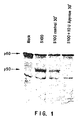
- the p60Tth precursor (or p105) was translated in wheat germ extract.
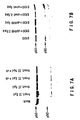
- the substrate protein was mixed with HeLa cell cytoplasmic extract (S100) in a processing buffer containing 12 mM Tris, pH 7.5, 60 mM KCl, 20 mM creatine phosphate, 3.5 mM MgCl 2 and 1 mM ATP. After incubation at 30° C for one hour, the reaction mixtures were subjected to immunoprecipitation with anti-p50 Ab and the proteins were resolved by SDS-PAGE.
- the p60 was incubated with 10 U of enzyme at 37° C for 30 minutes to inactivate residual ATP in the wheat germ extract before adding the HeLa cell S100. The control sample did not receive the enzyme or ATP.
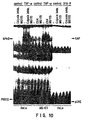
- Figure 1 The results are shown in Figure 1.
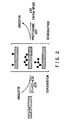
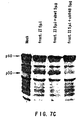
- HeLa cell S100 was centrifuged for six hours at 100,000xg to remove proteasomes. Loss of proteasome activity was verified using a fluorogenic peptide assay specific for the proteasome. The results from two different depleted extracts [Pr(I & II)] are shown. The pellet contains most of the proteasome activity.
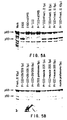
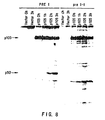
- the processing reactions were carried out as described in Example 4 and the reactions were immunoprecipitated with either anti-p50 Ab or anti-myc peptide mAb. The anti-myc mAb will recognize the N-terminal myc-peptide on a tagged p60 precursor protein. The results are shown in Figure 3.
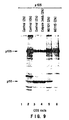
- the p60Tth precursor protein is ubiquitinated.
Landscapes
- Health & Medical Sciences (AREA)
- Life Sciences & Earth Sciences (AREA)
- Chemical & Material Sciences (AREA)
- Medicinal Chemistry (AREA)
- General Health & Medical Sciences (AREA)
- Organic Chemistry (AREA)
- Pharmacology & Pharmacy (AREA)
- Animal Behavior & Ethology (AREA)
- Public Health (AREA)
- Veterinary Medicine (AREA)
- Proteomics, Peptides & Aminoacids (AREA)
- Bioinformatics & Cheminformatics (AREA)
- Engineering & Computer Science (AREA)
- General Chemical & Material Sciences (AREA)
- Nuclear Medicine, Radiotherapy & Molecular Imaging (AREA)
- Chemical Kinetics & Catalysis (AREA)
- Immunology (AREA)
- Epidemiology (AREA)
- Gastroenterology & Hepatology (AREA)
- Molecular Biology (AREA)
- Biophysics (AREA)
- Biochemistry (AREA)
- Genetics & Genomics (AREA)
- Virology (AREA)
- Oncology (AREA)
- Communicable Diseases (AREA)
- Rheumatology (AREA)
- Neurosurgery (AREA)
- AIDS & HIV (AREA)
- Tropical Medicine & Parasitology (AREA)
- Neurology (AREA)
- Biomedical Technology (AREA)
- Pain & Pain Management (AREA)
- Peptides Or Proteins (AREA)
- Medicines That Contain Protein Lipid Enzymes And Other Medicines (AREA)
- Enzymes And Modification Thereof (AREA)
- Detergent Compositions (AREA)
- Distillation Of Fermentation Liquor, Processing Of Alcohols, Vinegar And Beer (AREA)
- Medicines Containing Plant Substances (AREA)
- Preparation Of Compounds By Using Micro-Organisms (AREA)
Priority Applications (1)
| Application Number | Priority Date | Filing Date | Title |
|---|---|---|---|
| SI9530636T SI0750507T2 (sl) | 1994-03-18 | 1995-03-17 | Proteazomska regulacija NF-k-B aktivnosti |
Applications Claiming Priority (3)
| Application Number | Priority Date | Filing Date | Title |
|---|---|---|---|
| US08/210,381 US6660268B1 (en) | 1994-03-18 | 1994-03-18 | Proteasome regulation of NF-KB activity |
| US210381 | 1994-03-18 | ||
| PCT/US1995/003315 WO1995025533A1 (en) | 1994-03-18 | 1995-03-17 | PROTEASOME REGULATION OF NF-λB ACTIVITY |
Publications (4)
| Publication Number | Publication Date |
|---|---|
| EP0750507A1 EP0750507A1 (en) | 1997-01-02 |
| EP0750507A4 EP0750507A4 (en) | 1999-03-31 |
| EP0750507B1 EP0750507B1 (en) | 2002-11-20 |
| EP0750507B2 true EP0750507B2 (en) | 2006-03-01 |
Family
ID=22782682
Family Applications (1)
| Application Number | Title | Priority Date | Filing Date |
|---|---|---|---|
| EP95914075A Expired - Lifetime EP0750507B2 (en) | 1994-03-18 | 1995-03-17 | Proteasome regulation of nf-kappa-b activity |
Country Status (11)
| Country | Link |
|---|---|
| US (2) | US6660268B1 (enExample) |
| EP (1) | EP0750507B2 (enExample) |
| JP (1) | JPH09510710A (enExample) |
| AT (1) | ATE228002T1 (enExample) |
| CA (1) | CA2184727C (enExample) |
| DE (1) | DE69528888T3 (enExample) |
| DK (1) | DK0750507T4 (enExample) |
| ES (1) | ES2182897T5 (enExample) |
| PT (1) | PT750507E (enExample) |
| SI (1) | SI0750507T2 (enExample) |
| WO (1) | WO1995025533A1 (enExample) |
Families Citing this family (50)
| Publication number | Priority date | Publication date | Assignee | Title |
|---|---|---|---|---|
| US6083903A (en) | 1994-10-28 | 2000-07-04 | Leukosite, Inc. | Boronic ester and acid compounds, synthesis and uses |
| US6838477B2 (en) * | 1995-04-12 | 2005-01-04 | President And Fellows Of Harvard College | Lactacystin analogs |
| US5834487A (en) * | 1996-09-24 | 1998-11-10 | Cv Therapeutics | Inhibition of 26S and 20S proteasome by indanones |
| DE69814618T2 (de) * | 1997-02-15 | 2004-03-25 | Millenium Pharmaceuticals, Inc., Cambridge | Behandlung von infarkten durch inhibierung von nf-kappab |
| US6831057B2 (en) | 1997-10-28 | 2004-12-14 | The University Of North Carolina At Chapel Hill | Use of NF-κB inhibition in combination therapy for cancer |
| US6207412B1 (en) * | 1997-11-13 | 2001-03-27 | The Regents Of The University Of California | Identification of a G protein-coupled receptor transcriptionally regulated by protein tyrosine kinase signaling in hematopoietic cells |
| US6075150A (en) | 1998-01-26 | 2000-06-13 | Cv Therapeutics, Inc. | α-ketoamide inhibitors of 20S proteasome |
| US6617171B2 (en) * | 1998-02-27 | 2003-09-09 | The General Hospital Corporation | Methods for diagnosing and treating autoimmune disease |
| US6902721B1 (en) | 1998-07-10 | 2005-06-07 | Osteoscreen, Inc. | Inhibitors of proteasomal activity for stimulating bone growth |
| US6462019B1 (en) | 1998-07-10 | 2002-10-08 | Osteoscreen, Inc. | Inhibitors of proteasomal activity and production for stimulating bone growth |
| US6838436B1 (en) | 1998-07-10 | 2005-01-04 | Osteoscreen Inc. | Inhibitors of proteasomal activity for stimulating bone growth |
| EP0995757A3 (en) * | 1998-08-26 | 2002-05-22 | Max-Planck-Gesellschaft zur Förderung der Wissenschaften e.V. | Bivalent inhibitors of the proteasome |
| EP0982317A1 (en) * | 1998-08-26 | 2000-03-01 | Max-Planck-Gesellschaft zur Förderung der Wissenschaften e.V. | Bivalent inhibitors of the proteasome |
| NZ511197A (en) | 1998-10-20 | 2003-08-29 | Millenium Pharmaceuticals Inc | Method for monitoring proteasome inhibitor drug action |
| US6599710B1 (en) | 1999-03-10 | 2003-07-29 | The General Hospital Corporation | Treatment of autoimmune disease |
| US20030165492A1 (en) * | 2000-06-08 | 2003-09-04 | Alberto Panerai | Method of treatment of alzheimer's disease with a protein extractable from mammalian organs |
| US7628988B2 (en) | 2002-06-27 | 2009-12-08 | The General Hospital Corporation | Methods and compositions for treating type 1 diabetes |
| US7582313B2 (en) | 2002-06-27 | 2009-09-01 | The General Hospital Corporation | Methods of organ regeneration using Hox 11-expressing pluripotent cells |
| JP5354836B2 (ja) * | 2002-11-06 | 2013-11-27 | デイナ ファーバー キャンサー インスティチュート,インコーポレイテッド | プロテアソームインヒビターを使用する癌を処置するための方法および組成物 |
| JP5717937B2 (ja) | 2002-12-06 | 2015-05-13 | ミレニアム ファーマシューティカルズ, インコーポレイテッドMillennium Pharmaceuticals, Inc. | プロテアソーム阻害療法を用いた患者の同定、判定および治療方法 |
| US7576206B2 (en) | 2003-08-14 | 2009-08-18 | Cephalon, Inc. | Proteasome inhibitors and methods of using the same |
| US7223745B2 (en) | 2003-08-14 | 2007-05-29 | Cephalon, Inc. | Proteasome inhibitors and methods of using the same |
| WO2005077389A1 (en) * | 2004-02-06 | 2005-08-25 | The University Of Chicago | An anti-inflammatory, cytoprotective factor derivable from a probiotic organism |
| WO2006062732A2 (en) * | 2004-11-19 | 2006-06-15 | Synta Pharmaceuticals Corp. | Compounds acting at the centrosome |
| US7468383B2 (en) | 2005-02-11 | 2008-12-23 | Cephalon, Inc. | Proteasome inhibitors and methods of using the same |
| DE102005009784B4 (de) * | 2005-03-03 | 2009-06-18 | Technische Universität Darmstadt | Peptid-Mimetika, Verfahren zur deren Herstellung, diese enthaltende pharmazeutische Zusammensetzung und deren Verwendung als Inhibitoren von Proteasomen und zur Induktion von Apoptose |
| MY145757A (en) | 2005-11-09 | 2012-04-13 | Proteolix Inc | Compounds for enzyme inhibition |
| KR101441703B1 (ko) | 2006-06-19 | 2014-09-17 | 오닉스 세라퓨틱스, 인크. | 프로테아좀 저해를 위한 펩티드 에폭시케톤 |
| CL2008002966A1 (es) * | 2007-10-04 | 2010-06-25 | Onyx Therapeutics Inc | Compuesto tetrapeptido ceto-epoxido cristalino; sal citrato cristalina del compuesto; metodos de preparacion; compuesto intermediario cristalino; metodo de preparacion; y uso para tratar cancer, enfermedad autoinmune, afeccion relacionada con trasplante, enfermedad neurodegenerativa, afeccion asociada con fibrosis, entre otros. |
| US9181296B2 (en) * | 2008-03-26 | 2015-11-10 | Novozymes A/S | Stabilized liquid enzyme compositions |
| MX368109B (es) | 2008-10-21 | 2019-09-18 | Onyx Therapeutics Inc | Terapia de combinacion con epoxicetonas peptidicas. |
| TWI504598B (zh) | 2009-03-20 | 2015-10-21 | Onyx Therapeutics Inc | 結晶性三肽環氧酮蛋白酶抑制劑 |
| JP5919196B2 (ja) | 2009-11-13 | 2016-05-18 | オニキス セラピューティクス, インク.Onyx Therapeutics, Inc. | 転移抑制のためのペプチドエポキシケトンの使用 |
| JP5783659B2 (ja) | 2009-12-22 | 2015-09-24 | セファロン、インク. | プロテアソーム阻害剤およびその調製、精製および使用のための方法 |
| EA201290844A1 (ru) | 2010-03-01 | 2013-03-29 | Оникс Терапьютикс, Инк. | Соединения для ингибирования иммунопротеасом |
| BR112012025264A2 (pt) | 2010-04-07 | 2019-09-24 | Onyx Therapeutics Inc | inibidor de imunoproteassoma de e´poxicetona peptídica cristalina. |
| CA2855368A1 (en) | 2011-11-11 | 2013-05-16 | Millennium Pharmaceuticals, Inc. | Biomarkers of response to proteasome inhibitors |
| JP5540340B2 (ja) * | 2012-02-29 | 2014-07-02 | 独立行政法人理化学研究所 | 炎症性疾患の判定方法 |
| US20140105921A1 (en) | 2012-07-09 | 2014-04-17 | Onyx Therapeutics, Inc. | Prodrugs of Peptide Epoxy Ketone Protease Inhibitors |
| WO2014124134A1 (en) | 2013-02-07 | 2014-08-14 | The General Hospital Corporation | Methods for expansion or depletion of t-regulatory cells |
| WO2015057968A2 (en) | 2013-10-17 | 2015-04-23 | The General Hospital Corporation | Methods of identifying subjects responsive to treatment for an autoimmune disease and compositions for treating the same |
| US10906982B2 (en) | 2015-05-15 | 2021-02-02 | The General Hospital Corporation | Antagonistic anti-tumor necrosis factor receptor 2 antibodies |
| US20190135929A1 (en) | 2015-08-28 | 2019-05-09 | The General Hospital Corporation | Agonistic anti-tumor necrosis factor receptor 2 antibodies |
| EP3355914B1 (en) | 2015-09-29 | 2024-03-06 | The General Hospital Corporation | A composition comprising bcg for reducing cholesterol. |
| CN109476745B (zh) | 2016-05-13 | 2023-11-24 | 综合医院公司 | 拮抗性抗肿瘤坏死因子受体超家族抗体 |
| CN112955179A (zh) | 2018-08-20 | 2021-06-11 | 综合医院公司 | 拮抗性抗肿瘤坏死因子受体超家族多肽 |
| US12509521B2 (en) | 2018-11-15 | 2025-12-30 | The General Hospital Corporation | Agonistic tumor necrosis factor receptor superfamily polypeptides |
| CN116981681A (zh) * | 2020-11-24 | 2023-10-31 | 普罗基莱弗公司 | 用于治疗节段性类早衰综合征的化合物 |
| CN116997560A (zh) * | 2020-11-24 | 2023-11-03 | 普罗基莱弗公司 | 用于治疗包膜病毒感染的化合物 |
| WO2022112357A1 (en) * | 2020-11-24 | 2022-06-02 | Progelife | Compounds for treating segmental progeroid syndromes |
Family Cites Families (16)
| Publication number | Priority date | Publication date | Assignee | Title |
|---|---|---|---|---|
| US4510130A (en) | 1983-05-20 | 1985-04-09 | Genetic Diagnostics Corporation | Promoting animal and plant growth with leupeptin |
| US6410516B1 (en) | 1986-01-09 | 2002-06-25 | President & Fellows Of Harvard College | Nuclear factors associated with transcriptional regulation |
| SE8702550D0 (sv) | 1987-06-18 | 1987-06-18 | Anders Grubb | Cysteinproteashemmare |
| CA1340174C (en) | 1988-03-01 | 1998-12-08 | Patrick A. Baeuerle | Activation of nf-kb precursor |
| ZA897514B (en) | 1988-10-07 | 1990-06-27 | Merrell Dow Pharma | Novel peptidase inhibitors |
| JP2701932B2 (ja) | 1989-04-10 | 1998-01-21 | サントリー株式会社 | タンパク質分解酵素阻害剤 |
| IE910713A1 (en) | 1990-03-05 | 1991-09-11 | Cephalon Inc | Chymotrypsin-like proteases |
| CA2098702A1 (en) | 1990-12-28 | 1992-06-29 | James C. Powers | Peptide ketoamides, ketoacids, and ketoesters |
| EP0564552A1 (en) | 1990-12-28 | 1993-10-13 | Cortex Pharmaceuticals, Inc. | Use of calpain inhibitors in the inhibition and treatment of neurodegeneration |
| WO1992013549A1 (en) * | 1991-02-07 | 1992-08-20 | Research Corporation Technologies, Inc. | Inhibition of cell proliferation by hydrophobic peptides |
| EP0504938A3 (en) * | 1991-03-22 | 1993-04-14 | Suntory Limited | Prophylactic and therapeutic agent for bone diseases comprising di- or tripeptide derivative as active ingredient |
| EP0584238A1 (en) | 1991-05-17 | 1994-03-02 | Chiron Corporation | INHIBITOR OF NF-$g(k)B TRANSCRIPTIONAL ACTIVATOR AND USES THEREOF |
| CA2138124A1 (en) * | 1992-06-24 | 1994-01-06 | David D. Eveleth, Jr. | Use of calpain inhibitors in the inhibition and treatment of medical conditions associated with increased calpain activity |
| DE4311835A1 (de) | 1993-04-07 | 1994-10-13 | Boehringer Ingelheim Int | Verfahren zur Inhibierung der Transkription von Genen |
| US5693617A (en) * | 1994-03-15 | 1997-12-02 | Proscript, Inc. | Inhibitors of the 26s proteolytic complex and the 20s proteasome contained therein |
| KR970060809A (ko) * | 1996-01-19 | 1997-08-12 | 김광호 | 자동응답전화기에서 예약 시각에 등록 음성메세지 전송 방법 |
-
1994
- 1994-03-18 US US08/210,381 patent/US6660268B1/en not_active Expired - Lifetime
-
1995
- 1995-03-17 PT PT95914075T patent/PT750507E/pt unknown
- 1995-03-17 ES ES95914075T patent/ES2182897T5/es not_active Expired - Lifetime
- 1995-03-17 DK DK95914075T patent/DK0750507T4/da active
- 1995-03-17 SI SI9530636T patent/SI0750507T2/sl unknown
- 1995-03-17 CA CA002184727A patent/CA2184727C/en not_active Expired - Lifetime
- 1995-03-17 EP EP95914075A patent/EP0750507B2/en not_active Expired - Lifetime
- 1995-03-17 WO PCT/US1995/003315 patent/WO1995025533A1/en not_active Ceased
- 1995-03-17 AT AT95914075T patent/ATE228002T1/de active
- 1995-03-17 JP JP7524716A patent/JPH09510710A/ja active Pending
- 1995-03-17 DE DE69528888T patent/DE69528888T3/de not_active Expired - Lifetime
-
2003
- 2003-01-28 US US10/352,512 patent/US20040097420A1/en not_active Abandoned
Non-Patent Citations (8)
| Title |
|---|
| B. Sander Cardell S, Moller E, Scand J Immunol. 33(3):287-96 (1991 Mar) "Interleukin 4 and interferon gamma production in restimulated CD4+ and CD8+ cells indicates memory type responsiveness" † |
| Cellular and Molecular Immunology (W.B. Saunders Company) 1991 ABAS A.K. et al pages 131-134 † |
| E. Bazerque, Busch L, Bazerque PM, Acta Odontol Latinoam. 7(1):13-21 (1993) "Comparative effect of antiinflammatory drugs on rat paw edema induced by human sterile dental plaque extract, carrageenan or dextran" † |
| M. Gaczynska, Rock KL, and Goldberg AL, Enzyme Protein 47, 354-369 (1993) "Role of proteasomes in antigen presentation" † |
| P.C. Doherty, Allan JE, and Ceredig R, Cellular immunology 116, 475-481 (1988) "Contributions of Host and Donor T cells to the inflammatory process in Murine Lymphocytic choriomeningitis" † |
| R.R. Caspi, Chan CC, Grubbs BG, Silver PB, Wiggert B, Parsa CF, Bahmanyar S, Billiau A, J Immunol. 152(2):890-9 (1994 Jan 15) "Endogenous systemic IFN-gamma has a protective role against ocular autoimmunity in mice" † |
| Stedman's Medical Dictionary 26th Edition, 1995, page 4120. † |
| Y.C. Huang, Chuang LY, Hung WC, Mol Pharmacol. 62(6):1515-21 (2002) "Mechanisms underlying nonsteroidal anti-inflammatory drug-induced p27(Kip1) expression" † |
Also Published As
| Publication number | Publication date |
|---|---|
| EP0750507B1 (en) | 2002-11-20 |
| SI0750507T2 (sl) | 2006-08-31 |
| DE69528888D1 (de) | 2003-01-02 |
| JPH09510710A (ja) | 1997-10-28 |
| ATE228002T1 (de) | 2002-12-15 |
| CA2184727C (en) | 2007-08-28 |
| US6660268B1 (en) | 2003-12-09 |
| ES2182897T5 (es) | 2006-10-16 |
| EP0750507A1 (en) | 1997-01-02 |
| SI0750507T1 (en) | 2003-04-30 |
| CA2184727A1 (en) | 1995-09-28 |
| DK0750507T4 (da) | 2006-07-03 |
| ES2182897T3 (es) | 2003-03-16 |
| DE69528888T3 (de) | 2006-10-05 |
| DK0750507T3 (da) | 2003-02-17 |
| WO1995025533A1 (en) | 1995-09-28 |
| PT750507E (pt) | 2003-04-30 |
| EP0750507A4 (en) | 1999-03-31 |
| AU682264B2 (en) | 1997-09-25 |
| US20040097420A1 (en) | 2004-05-20 |
| DE69528888T2 (de) | 2003-10-23 |
| AU2121595A (en) | 1995-10-09 |
Similar Documents
| Publication | Publication Date | Title |
|---|---|---|
| EP0750507B1 (en) | Proteasome regulation of nf-kappa-b activity | |
| US5693617A (en) | Inhibitors of the 26s proteolytic complex and the 20s proteasome contained therein | |
| Li et al. | Peptide. alpha.-keto ester,. alpha.-keto amide, and. alpha.-keto acid inhibitors of calpains and other cysteine proteases | |
| CA2000342C (en) | Novel peptidase inhibitors | |
| RU2192429C2 (ru) | α-КЕТОАМИДНЫЕ ИНГИБИТОРЫ 20S ПРОТЕАСОМЫ | |
| EP0915700B1 (en) | Use of beta-sheet mimetics as protease and kinase inhibitors and as inhibitors of transcription factors | |
| CZ298625B6 (cs) | Inhibitory enzymu konvertujícího interleukin-1beta, zpusob jejich selekce a farmaceutické prostredky, které je obsahují | |
| AU712581B2 (en) | Beta-sheet mimetics and use thereof as inhibitors of biologically active peptides or proteins | |
| CA2138124A1 (en) | Use of calpain inhibitors in the inhibition and treatment of medical conditions associated with increased calpain activity | |
| EP1076563A1 (en) | Dipeptide caspase inhibitors and the use thereof | |
| JP2001512744A (ja) | C型肝炎ウイルス阻害ペプチドアナログ | |
| CZ277998A3 (cs) | Inhibitory serinproteázy a farmaceutický prostředek | |
| AU6524296A (en) | Cysteine protease inhibitors for use in treatment of ige mediated allergic diseases | |
| AU682264C (en) | Proteasome regulation of NF-kappa B activity | |
| Baldisserotto et al. | C-terminal constrained phenylalanine as a pharmacophoric unit in peptide-based proteasome inhibitors | |
| EP0979241B1 (en) | (3r)-3-amino-4-carboxybutyraldehyde derivatives inhibiting the release of interleukin-1/beta | |
| US6699869B1 (en) | β-sheet mimetics and use thereof as inhibitors of biologically active peptides or proteins | |
| Fisher et al. | Synthetic inhibitors of carboxypeptidase N | |
| CZ20002721A3 (cs) | : Alfa-ketoamidové inhibitory 20S proteasomu |
Legal Events
| Date | Code | Title | Description |
|---|---|---|---|
| PUAI | Public reference made under article 153(3) epc to a published international application that has entered the european phase |
Free format text: ORIGINAL CODE: 0009012 |
|
| 17P | Request for examination filed |
Effective date: 19960903 |
|
| AK | Designated contracting states |
Kind code of ref document: A1 Designated state(s): AT BE CH DE DK ES FR GB GR IE IT LI LU MC NL PT SE |
|
| AX | Request for extension of the european patent |
Free format text: LT PAYMENT 960903;SI PAYMENT 960903 |
|
| A4 | Supplementary search report drawn up and despatched |
Effective date: 19990216 |
|
| AK | Designated contracting states |
Kind code of ref document: A4 Designated state(s): AT BE CH DE DK ES FR GB GR IE IT LI LU MC NL PT SE |
|
| 17Q | First examination report despatched |
Effective date: 20000229 |
|
| GRAG | Despatch of communication of intention to grant |
Free format text: ORIGINAL CODE: EPIDOS AGRA |
|
| RTI1 | Title (correction) |
Free format text: PROTEASOME REGULATION OF NF-KAPPA-B ACTIVITY |
|
| RIC1 | Information provided on ipc code assigned before grant |
Free format text: 7A 61K 38/06 A, 7A 61K 38/07 B, 7C 07K 5/08 B, 7A 61P 29/00 B, 7A 61P 31/18 B |
|
| RTI1 | Title (correction) |
Free format text: PROTEASOME REGULATION OF NF-KAPPA-B ACTIVITY |
|
| GRAG | Despatch of communication of intention to grant |
Free format text: ORIGINAL CODE: EPIDOS AGRA |
|
| GRAH | Despatch of communication of intention to grant a patent |
Free format text: ORIGINAL CODE: EPIDOS IGRA |
|
| GRAH | Despatch of communication of intention to grant a patent |
Free format text: ORIGINAL CODE: EPIDOS IGRA |
|
| GRAA | (expected) grant |
Free format text: ORIGINAL CODE: 0009210 |
|
| AK | Designated contracting states |
Kind code of ref document: B1 Designated state(s): AT BE CH DE DK ES FR GB GR IE IT LI LU MC NL PT SE |
|
| AX | Request for extension of the european patent |
Free format text: LT PAYMENT 19960903;SI PAYMENT 19960903 |
|
| REF | Corresponds to: |
Ref document number: 228002 Country of ref document: AT Date of ref document: 20021215 Kind code of ref document: T |
|
| REG | Reference to a national code |
Ref country code: GB Ref legal event code: FG4D |
|
| REG | Reference to a national code |
Ref country code: CH Ref legal event code: EP |
|
| REG | Reference to a national code |
Ref country code: IE Ref legal event code: FG4D |
|
| REG | Reference to a national code |
Ref country code: CH Ref legal event code: NV Representative=s name: A. BRAUN, BRAUN, HERITIER, ESCHMANN AG PATENTANWAE |
|
| REF | Corresponds to: |
Ref document number: 69528888 Country of ref document: DE Date of ref document: 20030102 |
|
| REG | Reference to a national code |
Ref country code: DK Ref legal event code: T3 |
|
| REG | Reference to a national code |
Ref country code: ES Ref legal event code: FG2A Ref document number: 2182897 Country of ref document: ES Kind code of ref document: T3 |
|
| REG | Reference to a national code |
Ref country code: GR Ref legal event code: EP Ref document number: 20030400472 Country of ref document: GR |
|
| ET | Fr: translation filed | ||
| REG | Reference to a national code |
Ref country code: PT Ref legal event code: SC4A Free format text: AVAILABILITY OF NATIONAL TRANSLATION Effective date: 20030219 |
|
| PLBQ | Unpublished change to opponent data |
Free format text: ORIGINAL CODE: EPIDOS OPPO |
|
| PLBI | Opposition filed |
Free format text: ORIGINAL CODE: 0009260 |
|
| PLBQ | Unpublished change to opponent data |
Free format text: ORIGINAL CODE: EPIDOS OPPO |
|
| PLAX | Notice of opposition and request to file observation + time limit sent |
Free format text: ORIGINAL CODE: EPIDOSNOBS2 |
|
| PLAB | Opposition data, opponent's data or that of the opponent's representative modified |
Free format text: ORIGINAL CODE: 0009299OPPO |
|
| 26 | Opposition filed |
Opponent name: BAYER AG Effective date: 20030813 |
|
| R26 | Opposition filed (corrected) |
Opponent name: BAYER AG, BAYER HEALTHCARE Effective date: 20030813 |
|
| NLR1 | Nl: opposition has been filed with the epo |
Opponent name: BAYER AG, BAYER HEALTHCARE Opponent name: BAYER AG |
|
| PLAX | Notice of opposition and request to file observation + time limit sent |
Free format text: ORIGINAL CODE: EPIDOSNOBS2 |
|
| PLAX | Notice of opposition and request to file observation + time limit sent |
Free format text: ORIGINAL CODE: EPIDOSNOBS2 |
|
| PLBB | Reply of patent proprietor to notice(s) of opposition received |
Free format text: ORIGINAL CODE: EPIDOSNOBS3 |
|
| PLAY | Examination report in opposition despatched + time limit |
Free format text: ORIGINAL CODE: EPIDOSNORE2 |
|
| REG | Reference to a national code |
Ref country code: SI Ref legal event code: IF |
|
| PLAY | Examination report in opposition despatched + time limit |
Free format text: ORIGINAL CODE: EPIDOSNORE2 |
|
| PLAY | Examination report in opposition despatched + time limit |
Free format text: ORIGINAL CODE: EPIDOSNORE2 |
|
| PLBC | Reply to examination report in opposition received |
Free format text: ORIGINAL CODE: EPIDOSNORE3 |
|
| PUAH | Patent maintained in amended form |
Free format text: ORIGINAL CODE: 0009272 |
|
| STAA | Information on the status of an ep patent application or granted ep patent |
Free format text: STATUS: PATENT MAINTAINED AS AMENDED |
|
| 27A | Patent maintained in amended form |
Effective date: 20060301 |
|
| AK | Designated contracting states |
Kind code of ref document: B2 Designated state(s): AT BE CH DE DK ES FR GB GR IE IT LI LU MC NL PT SE |
|
| AX | Request for extension of the european patent |
Extension state: LT SI |
|
| REG | Reference to a national code |
Ref country code: CH Ref legal event code: AEN Free format text: AUFRECHTERHALTUNG DES PATENTES IN GEAENDERTER FORM |
|
| NLR2 | Nl: decision of opposition |
Effective date: 20060301 |
|
| REG | Reference to a national code |
Ref country code: SE Ref legal event code: RPEO |
|
| REG | Reference to a national code |
Ref country code: GR Ref legal event code: EP Ref document number: 20060401584 Country of ref document: GR |
|
| REG | Reference to a national code |
Ref country code: DK Ref legal event code: T4 |
|
| NLR3 | Nl: receipt of modified translations in the netherlands language after an opposition procedure | ||
| REG | Reference to a national code |
Ref country code: ES Ref legal event code: DC2A Date of ref document: 20060529 Kind code of ref document: T5 |
|
| ET3 | Fr: translation filed ** decision concerning opposition | ||
| REG | Reference to a national code |
Ref country code: CH Ref legal event code: PFA Owner name: THE PRESIDENT AND FELLOWS OF HARVARD COLLEGE Free format text: THE PRESIDENT AND FELLOWS OF HARVARD COLLEGE#17 QUINCY STREET#CAMBRIDGE, MA 02114 (US) -TRANSFER TO- THE PRESIDENT AND FELLOWS OF HARVARD COLLEGE#17 QUINCY STREET#CAMBRIDGE, MA 02114 (US) |
|
| PGFP | Annual fee paid to national office [announced via postgrant information from national office to epo] |
Ref country code: IE Payment date: 20140327 Year of fee payment: 20 Ref country code: MC Payment date: 20140304 Year of fee payment: 20 Ref country code: SE Payment date: 20140327 Year of fee payment: 20 Ref country code: CH Payment date: 20140327 Year of fee payment: 20 Ref country code: DK Payment date: 20140325 Year of fee payment: 20 Ref country code: NL Payment date: 20140326 Year of fee payment: 20 |
|
| PGFP | Annual fee paid to national office [announced via postgrant information from national office to epo] |
Ref country code: IT Payment date: 20140324 Year of fee payment: 20 Ref country code: FR Payment date: 20140317 Year of fee payment: 20 Ref country code: ES Payment date: 20140326 Year of fee payment: 20 Ref country code: AT Payment date: 20140305 Year of fee payment: 20 Ref country code: GR Payment date: 20140327 Year of fee payment: 20 Ref country code: LU Payment date: 20140407 Year of fee payment: 20 |
|
| PGFP | Annual fee paid to national office [announced via postgrant information from national office to epo] |
Ref country code: PT Payment date: 20140310 Year of fee payment: 20 Ref country code: GB Payment date: 20140327 Year of fee payment: 20 |
|
| REG | Reference to a national code |
Ref country code: CH Ref legal event code: PCAR Free format text: NEW ADDRESS: HOLBEINSTRASSE 36-38, 4051 BASEL (CH) |
|
| PGFP | Annual fee paid to national office [announced via postgrant information from national office to epo] |
Ref country code: BE Payment date: 20140328 Year of fee payment: 20 |
|
| PGFP | Annual fee paid to national office [announced via postgrant information from national office to epo] |
Ref country code: DE Payment date: 20140327 Year of fee payment: 20 |
|
| REG | Reference to a national code |
Ref country code: DE Ref legal event code: R071 Ref document number: 69528888 Country of ref document: DE |
|
| REG | Reference to a national code |
Ref country code: DK Ref legal event code: EUP Effective date: 20150317 |
|
| REG | Reference to a national code |
Ref country code: NL Ref legal event code: V4 Effective date: 20150317 Ref country code: PT Ref legal event code: MM4A Free format text: MAXIMUM VALIDITY LIMIT REACHED Effective date: 20150317 |
|
| REG | Reference to a national code |
Ref country code: CH Ref legal event code: PL |
|
| REG | Reference to a national code |
Ref country code: GB Ref legal event code: PE20 Expiry date: 20150316 |
|
| PG25 | Lapsed in a contracting state [announced via postgrant information from national office to epo] |
Ref country code: PT Free format text: LAPSE BECAUSE OF EXPIRATION OF PROTECTION Effective date: 20150325 |
|
| REG | Reference to a national code |
Ref country code: SE Ref legal event code: EUG |
|
| REG | Reference to a national code |
Ref country code: IE Ref legal event code: MK9A |
|
| REG | Reference to a national code |
Ref country code: AT Ref legal event code: MK07 Ref document number: 228002 Country of ref document: AT Kind code of ref document: T Effective date: 20150317 |
|
| REG | Reference to a national code |
Ref country code: GR Ref legal event code: MA Ref document number: 20060401584 Country of ref document: GR Effective date: 20150318 |
|
| PG25 | Lapsed in a contracting state [announced via postgrant information from national office to epo] |
Ref country code: GB Free format text: LAPSE BECAUSE OF EXPIRATION OF PROTECTION Effective date: 20150316 |
|
| REG | Reference to a national code |
Ref country code: ES Ref legal event code: FD2A Effective date: 20150826 |
|
| PG25 | Lapsed in a contracting state [announced via postgrant information from national office to epo] |
Ref country code: IE Free format text: LAPSE BECAUSE OF EXPIRATION OF PROTECTION Effective date: 20150317 |
|
| PG25 | Lapsed in a contracting state [announced via postgrant information from national office to epo] |
Ref country code: ES Free format text: LAPSE BECAUSE OF EXPIRATION OF PROTECTION Effective date: 20150318 |