EP0637591A2 - Neuer Expressionsvektor für Phytolacca-Antivirales-Protein - Google Patents
Neuer Expressionsvektor für Phytolacca-Antivirales-Protein Download PDFInfo
- Publication number
- EP0637591A2 EP0637591A2 EP93119118A EP93119118A EP0637591A2 EP 0637591 A2 EP0637591 A2 EP 0637591A2 EP 93119118 A EP93119118 A EP 93119118A EP 93119118 A EP93119118 A EP 93119118A EP 0637591 A2 EP0637591 A2 EP 0637591A2
- Authority
- EP
- European Patent Office
- Prior art keywords
- pap
- expression vector
- recombinant
- pmj12
- transformed
- Prior art date
- Legal status (The legal status is an assumption and is not a legal conclusion. Google has not performed a legal analysis and makes no representation as to the accuracy of the status listed.)
- Withdrawn
Links
Images



Classifications
-
- C—CHEMISTRY; METALLURGY
- C12—BIOCHEMISTRY; BEER; SPIRITS; WINE; VINEGAR; MICROBIOLOGY; ENZYMOLOGY; MUTATION OR GENETIC ENGINEERING
- C12N—MICROORGANISMS OR ENZYMES; COMPOSITIONS THEREOF; PROPAGATING, PRESERVING, OR MAINTAINING MICROORGANISMS; MUTATION OR GENETIC ENGINEERING; CULTURE MEDIA
- C12N15/00—Mutation or genetic engineering; DNA or RNA concerning genetic engineering, vectors, e.g. plasmids, or their isolation, preparation or purification; Use of hosts therefor
- C12N15/09—Recombinant DNA-technology
- C12N15/63—Introduction of foreign genetic material using vectors; Vectors; Use of hosts therefor; Regulation of expression
- C12N15/70—Vectors or expression systems specially adapted for E. coli
-
- A—HUMAN NECESSITIES
- A61—MEDICAL OR VETERINARY SCIENCE; HYGIENE
- A61K—PREPARATIONS FOR MEDICAL, DENTAL OR TOILETRY PURPOSES
- A61K47/00—Medicinal preparations characterised by the non-active ingredients used, e.g. carriers or inert additives; Targeting or modifying agents chemically bound to the active ingredient
- A61K47/50—Medicinal preparations characterised by the non-active ingredients used, e.g. carriers or inert additives; Targeting or modifying agents chemically bound to the active ingredient the non-active ingredient being chemically bound to the active ingredient, e.g. polymer-drug conjugates
- A61K47/51—Medicinal preparations characterised by the non-active ingredients used, e.g. carriers or inert additives; Targeting or modifying agents chemically bound to the active ingredient the non-active ingredient being chemically bound to the active ingredient, e.g. polymer-drug conjugates the non-active ingredient being a modifying agent
- A61K47/68—Medicinal preparations characterised by the non-active ingredients used, e.g. carriers or inert additives; Targeting or modifying agents chemically bound to the active ingredient the non-active ingredient being chemically bound to the active ingredient, e.g. polymer-drug conjugates the non-active ingredient being a modifying agent the modifying agent being an antibody, an immunoglobulin or a fragment thereof, e.g. an Fc-fragment
- A61K47/6801—Drug-antibody or immunoglobulin conjugates defined by the pharmacologically or therapeutically active agent
- A61K47/6803—Drugs conjugated to an antibody or immunoglobulin, e.g. cisplatin-antibody conjugates
- A61K47/6811—Drugs conjugated to an antibody or immunoglobulin, e.g. cisplatin-antibody conjugates the drug being a protein or peptide, e.g. transferrin or bleomycin
- A61K47/6817—Toxins
- A61K47/6819—Plant toxins
- A61K47/6825—Ribosomal inhibitory proteins, i.e. RIP-I or RIP-II, e.g. Pap, gelonin or dianthin
-
- A—HUMAN NECESSITIES
- A61—MEDICAL OR VETERINARY SCIENCE; HYGIENE
- A61P—SPECIFIC THERAPEUTIC ACTIVITY OF CHEMICAL COMPOUNDS OR MEDICINAL PREPARATIONS
- A61P31/00—Antiinfectives, i.e. antibiotics, antiseptics, chemotherapeutics
- A61P31/12—Antivirals
-
- A—HUMAN NECESSITIES
- A61—MEDICAL OR VETERINARY SCIENCE; HYGIENE
- A61P—SPECIFIC THERAPEUTIC ACTIVITY OF CHEMICAL COMPOUNDS OR MEDICINAL PREPARATIONS
- A61P31/00—Antiinfectives, i.e. antibiotics, antiseptics, chemotherapeutics
- A61P31/12—Antivirals
- A61P31/14—Antivirals for RNA viruses
- A61P31/18—Antivirals for RNA viruses for HIV
-
- C—CHEMISTRY; METALLURGY
- C07—ORGANIC CHEMISTRY
- C07K—PEPTIDES
- C07K14/00—Peptides having more than 20 amino acids; Gastrins; Somatostatins; Melanotropins; Derivatives thereof
- C07K14/415—Peptides having more than 20 amino acids; Gastrins; Somatostatins; Melanotropins; Derivatives thereof from plants
-
- A—HUMAN NECESSITIES
- A61—MEDICAL OR VETERINARY SCIENCE; HYGIENE
- A61K—PREPARATIONS FOR MEDICAL, DENTAL OR TOILETRY PURPOSES
- A61K38/00—Medicinal preparations containing peptides
Definitions
- the present invention relates to a novel expression vector for antiviral protein, more specifically, a recombinant expression vector for Phytolacca antiviral protein isolated from Phytolacca americana L. and a microorganism transformed therewith.
- PAP pokeweed antiviral protein(or Phytolacca antiviral protein, hereinafter referred to as "PAP") isolated from crude extract of Phytolacca americana L.[ see : Irvin, J. D., Arch. Biochem. Biophys., 169: 522-528(1975)].
- PAP pokeweed antiviral protein
- PAP from Phytolacca americana L. is classified as PAP-I, PAP-II and PAP-S that appear in spring leaves, summer leaves and seeds, respectively; and it is reported that antiserum reactions of these PAPs are different one another[ see : Irvin, J. D. et al., Arch. Biochem. Biophys., 200: 418-425(1980)]. Further, it has been known that ribosome of Phytolacca americana L. is depurinated by RNA N-glycosidase activity of PAP. On the other hand, immunoconjugate of PAP with CD4 or CD19 has been reported to inhibit the replication of human immunodificiency virus type 1[ see : Jansen, B.
- PAP gene has been restrictive in light of host organism, i.e, it has been only expressed in plant; and, therefore, needs have continued to exist for the development of a practical expression vector, which produces PAP in a versatile microorganism with high expression level.
- the present inventors for the first time, developed a recombinant vector which expresses the PAP gene in a microorganism transformed therewith.
- a primary object of the present invention is, therefore, to provide a novel recombinant expression vector containing PAP gene isolated from cDNA library of the Phytolacca americana L., which can be expressed in microorganisms with high yield.
- Another object of the present invention is to provide a microorganism transformed therewith which expresses PAP gene in large quantities.
- the present inventors developed a recombinant expression vector pMJ12 containing PAP gene isolated from cDNA library of Phytolacca americana L., which produces recombinant PAP in microorganism transformed therewith.
- PAP gene To isolate PAP gene, the inventors purified total cellular mRNA from leaves of Phytolacca americana L. obtained in Korea and construction of cDNA library thereof is followed. PAP gene is selected by immunoscreening method employing anti-PAP antibody; and, deletion mutant is prepared from the isolated PAP gene using Erase-a-Base system(Promega, U.S.A.). DNA sequence of a cDNA clone containing PAP gene is determined by Sanger's dideoxy chain termination method[ see : Sanger, F., Science, 214: 1205-1210(1981)].
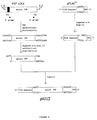
- a commercially available FLAGTM vector (International Biotechnologies Inc., U.S.A.) is employed. Since isolated PAP gene has signal peptide, coding region of mature PAP is amplified by Thermal CyclerTM, which employes synthesized N-terminal primer and C-terminal primer. DNA thus amplified is electroeluted, digested with HindIII, ligated into FLAGTM and recombinant expression vector pMJ12 is constructed. Said pMJ12 is deposited with the Korean Collection of Culture and Microorganism(KCCM), an International Depository Authority(IDA) on June 30, 1993 as deposition No. KCCM 10037; and claimed in the invention.
- KCCM Korean Collection of Culture and Microorganism
- IDA International Depository Authority
- pMJ12 thus constructed is transformed into competent E. coli HB101 and colonies transformed with pMJ12 are selected. Then, recombinant PAP is induced for 6hrs, by culturing said colony on LB broth media containing IPTG(isopropyl- ⁇ -D-thiogalactoside) and ampicillin. After recombinant PAP induction, cells thus cultured are harvested, washed with phosphate buffered saline(PBS: 0.01M NaH2PO4, 0.15M NaCl, pH 7.4) solution two times; and lysis of cell pellet is carried out by freezing in dry ice-methanol bath and thawing at 37°C, repeatedly.
- PBS phosphate buffered saline
- recombinant PAP For the purification of recombinant PAP, said supernatant is loaded on anti-FLAG M1 affinity column and eluted with the PBS solution containing 1.0mM CaCl2. Biological activity of recombinant PAP is determined by in vitro translation method.
- Example 1 Isolation of PAP gene from cDNA library
- PAP was isolated in accordance with Irvin's method[ see : J.D. Irvin, et al., Arch. Biochem. Biophys., 169: 522-528(1975)]. 480 ⁇ g of PAP was dissolved in PBS solution and combined with Freund's complete adjuvant with a ratio of 1:1(v/v), and mixture thereof was administrated to a rabbit( ⁇ 3Kg of body weight) intramuscularly. After 3 weeks, antibody formation was detected in a small amount of blood collected from the rabbit, and 750 ⁇ g of PAP was combined with Freund's incomplete adjuvant for boosting with a ratio of 1:1(v/v).
- Plasma fraction was fractionated from blood by centrifugation; and Protein-A agarose column chromatography was employed to isolate antiplasma. Immunodiffusion assay and electrophoresis technique were employed to determine antibody formation and homogeniety of isolated anti-PAP antibody, respectively. Purified anti-PAP antibody was stored at -70°C and employed to isolate PAP gene from cDNA library.
- 1st strand cDNA was synthesized from template mRNA employing M-MuLV reverse transcriptase; and, 2nd strand cDNA synthesis by E. coli DNA polymerase was followed.
- Synthesized cDNA was linked to EcoRI adaptor and subjected to Sephacryl S-400 spun column to fractionate DNA fragments in accordance with molecular size of cDNA.
- Fractionated cDNA was ligated into Uni-Zap XR vector(Stratagene Co., U.K.), and in vitro packaging using packaging extract was followed. Then, immunoscreening employing anti-PAP antibody was carried out to isolate PAP gene from cDNA library thus prepared.
- coli SURE was infected with phage to form plaques of 2 x 10⁴ pfu. Said bacteria was incubated at 37°C for 15min, and further cultured at 42°C for 3.5 hours after plating with 3ml of top agarose. Then, plate was covered with Hybond-N+(Amersham) and incubated for 5 hours. After incubation, Hybond-N+ was blocked with bovine serum albumin and treated with 5mg/ml of anti-PAP antibody. After the removal of free anti-PAP antibody which was not bound, peroxidase conjugated 2nd antibody was reacted with anti-PAP antibody; and, antigen-antibody complexes thus formed were detected by chloronaphthol treatment.
- plasmids from 2 clones were isolated, and PAP cDNA insert was sequenced by dideoxy chain termination method.
- DNA was purified from microorganisms harboring PAP gene. DNA thus purified was digested with SacII and BamHI and deletion was made by intermittent ExoIII excision reaction using Erase-a-Base system (Promega, U.S.A.). Deleted DNAs were ligated each other by T4 DNA ligase and the resultant was transformed into competent XL1-BLUE cell prepared by the treatment of CaCl2 solution. Deletion mutants fractionated by molecular size were employed to determine DNA sequence.
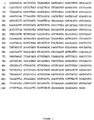
- PAP cDNA comprises 1195bp of one open reading frame; and cDNA insert of PAP codes 313 amino acid residues, 22 residues of which functions as signal peptide.
- PAP gene for the expression of PAP gene in E. coli HB101, commercially available FLAGTM vector(International Biotechnologies Inc., U.S.A.) was employed. Primers such as 5' -CCAAGCTTGTGAATACAATCAAC-3' and 5' -GGAAGCTTTGATCAGAATCCTTCAAA-3' synthesized by DNA Synthesizer(Applied Biosystems Inc., U.S.A.), were employed as N-terminal primer and C-terminal primer, respectively; and mature PAP gene was amplified by polymerase chain reaction using VentTM DNA polymerase(New England Biolab., U.S.A.).
- S, E, X and K are employed to mean SacI, EcoRI, XhoI and KpnI restriction enzymes, respectively; and, ( ) indicates signal peptide.
- pMJ12 thus constructed was transformed into competent E. coli HB101 prepared by the treatment of CaCl2 solution; and, transformant harboring pMJ12 was selected from the colonies cultured on LB media containing 50 ⁇ g/ml ampicilin, based on plasmid DNA isolation technique employing alkaline lysis method.
- E. coli HB101 thus transformed was claimed in the invention and deposited with the Korean Culture Center of Microorganisms(KCCM), an International Depository Authority(IDA) on June 30, 1993 as deposition No. KCCM 10037.
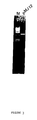
- FIG. 3 is a photograph showing 0.8% agarose gel electrophoresis pattern of pMJ12 digested with HindIII.
- M is molecular marker lane, i.e., ⁇ DNA fragments digested with HindIII
- pMJ12 lane shows expression vector pMJ12 of the present invention.
- molecular size of pMJ12 vector was determined to be about 0.8kb.
- Example 3 Growth inhibition of microorganism transformed with pMJ12
- Ricin a kind of ribosome inactivating protein(RIP) has been reported to provide no effect on the growth of host microorganism, while expression of MAP gene inhibit growth of its transformant. Under the circumstance, whether recombinant PAP produced from the expression vector pMJ12 inhibits growth of transformant or not, was studied through the investigation of cell growth pattern of host organism. Non-transformed E. coli HB101 and E. coli HB101 transformed with pFLAG or pMJ12 were inoculated on LB liquid media containing 50 ⁇ g/ml ampicilin, and incubated overnight.
- each culture of the same cell concentration was pipetted, inoculated on LB liquid media containing 0.7mM IPTG(isopropyl- ⁇ -D-thiogalactoside) and cultured on shaking incubator at 37°C, 200rpm; and, cell concentration of each culture was determined as absorbance at 600nm.
- the growth of HB101(o-o) harboring pMJ12 which produce recombinant PAP was inhibited remarkably, while those of non-transformed HB101 ( ⁇ - ⁇ ) and HB101( ⁇ - ⁇ ) transformed with pFLAG were normal. Accordingly, it was determined that recombinant PAP inhibits the growth of E. coli HB101 transformed with pMJ12 by virtue of PAP's RNA N-glycosidase activity.
- Example 4 Expression of recombinant PAP from E. coli HB101 transformed with vector pMJ12
- E. coli HB101(KCCM 10037) was cultured on 50ml of LB medium containing 50 ⁇ g/ml ampicilin; and recombinant PAP was induced by the addition of IPTG(0.75mM) when OD600 of the culture was reached to the level of 1.0. After PAP induction for 6hrs, cells thus cultured were harvested by centrifugation, washed 2 times with phosphate buffered saline(PBS: 0.01M NaH2PO4, 0.15M NaCl, pH 7.4); and subjected to freezing in dry ice-methanol bath and thawing at 37°C.
- PBS phosphate buffered saline
- cell lysate was emulsified with said buffer solution(pH 8.4) containing 0.25mg/ml lysozyme; and freezing in dry ice-methanol bath and thawing process was repeated 3 times. Said solution was shaked at an interval of 10 min, kept in 37°C for 30min and centrifuged at 25,000 x g for 45min, at 4°C. 10 ⁇ l of supernatant thus obtained was analyzed by 15% SDS-PAGE, stained with Coomassie brilliant blue R, and destained with destaining solution; and production of recombinant PAP was determined by Western blot analysis in accordance with the Example 6.
- Example 5 Isolation of recombinant PAP from E. coli HB101 transformed with vector pMJ12
- Recombinant PAP produced from E. coli HB101(KCCM 10037) was isolated under the temperature of 4°C, in accordance with the following procedures: To the total protein fractionated in Example 4 was added 1M CaCl2 solution to the final concentration of 1.0mM; and said solution was loaded on anti-FLAG M1 affinity gel column, after washing with 5ml glycine-HCl(pH 3.0) and PBS solution 3 times. Then, said column was washed with 12ml PBS/Ca solution(PBS solution containing 1.0mM CaCl2 solution) 3 times.
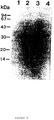
- FIG. 5 is a photograph showing SDS-PAGE pattern of purified recombinant PAP.
- M shows low-molecular size marker(Pharmacia, U.S.A.) lane; recombinant PAP is shown on the right hand.
- Example 6 Determination of recombinant PAP from E. coli HB101 transformed with vector pMJ12
- Example 7 Activity determination of recombinant PAP
- FIG. 7 is a photograph showing the results of SDS-PAGE after in vitro translation experiment. As clearly illustrated in Figure 7, protein synthesis of luciferase(62KD) is appeared in control group(lane 1), while no protein is detected in recombinant PAP(lane 2) group.
- the present invention provides a novel expression vector for PAP, a microorganism transformed with said PAP expression vector.
- biologically active PAP could be produced in a massive manner from the microorganism transformed with expression vector of the invention; and, therefore, the recombinant PAP would be applied to various fields, e.g., the molecular studies on PAP and treatment of AIDS employing immunoconjugate.
Landscapes
- Health & Medical Sciences (AREA)
- Life Sciences & Earth Sciences (AREA)
- Chemical & Material Sciences (AREA)
- Engineering & Computer Science (AREA)
- Genetics & Genomics (AREA)
- Organic Chemistry (AREA)
- Bioinformatics & Cheminformatics (AREA)
- General Health & Medical Sciences (AREA)
- Molecular Biology (AREA)
- Medicinal Chemistry (AREA)
- General Engineering & Computer Science (AREA)
- Wood Science & Technology (AREA)
- Zoology (AREA)
- Biochemistry (AREA)
- Biotechnology (AREA)
- Biophysics (AREA)
- Biomedical Technology (AREA)
- Botany (AREA)
- Veterinary Medicine (AREA)
- Public Health (AREA)
- Pharmacology & Pharmacy (AREA)
- Toxicology (AREA)
- Animal Behavior & Ethology (AREA)
- Plant Pathology (AREA)
- Gastroenterology & Hepatology (AREA)
- Proteomics, Peptides & Aminoacids (AREA)
- Microbiology (AREA)
- Physics & Mathematics (AREA)
- Virology (AREA)
- General Chemical & Material Sciences (AREA)
- Oncology (AREA)
- Chemical Kinetics & Catalysis (AREA)
- Epidemiology (AREA)
- Nuclear Medicine, Radiotherapy & Molecular Imaging (AREA)
- Communicable Diseases (AREA)
- Immunology (AREA)
- AIDS & HIV (AREA)
- Tropical Medicine & Parasitology (AREA)
- Preparation Of Compounds By Using Micro-Organisms (AREA)
- Micro-Organisms Or Cultivation Processes Thereof (AREA)
Applications Claiming Priority (2)
| Application Number | Priority Date | Filing Date | Title |
|---|---|---|---|
| KR9312360 | 1993-07-02 | ||
| KR1019930012360A KR960015747B1 (ko) | 1993-07-02 | 1993-07-02 | 양자리공의 항바이러스성 단백질(pap)을 발현하는 미생물 |
Publications (2)
| Publication Number | Publication Date |
|---|---|
| EP0637591A2 true EP0637591A2 (de) | 1995-02-08 |
| EP0637591A3 EP0637591A3 (de) | 1995-05-24 |
Family
ID=19358572
Family Applications (1)
| Application Number | Title | Priority Date | Filing Date |
|---|---|---|---|
| EP93119118A Withdrawn EP0637591A3 (de) | 1993-07-02 | 1993-11-26 | Neuer Expressionsvektor für Phytolacca-Antivirales-Protein. |
Country Status (6)
| Country | Link |
|---|---|
| US (1) | US5648234A (de) |
| EP (1) | EP0637591A3 (de) |
| JP (1) | JP2531930B2 (de) |
| KR (1) | KR960015747B1 (de) |
| AU (1) | AU662844B2 (de) |
| CA (1) | CA2102859C (de) |
Cited By (1)
| Publication number | Priority date | Publication date | Assignee | Title |
|---|---|---|---|---|
| EP0808902A3 (de) * | 1996-05-22 | 1998-02-04 | Jinro Limited | Für antivirale Proteine aus Phytolacca insularis Nakai kodierende Gene und diese Proteine exprimierende rekombinante Mikroorganismen |
Families Citing this family (3)
| Publication number | Priority date | Publication date | Assignee | Title |
|---|---|---|---|---|
| KR970001565B1 (ko) * | 1993-08-28 | 1997-02-11 | 장기하 | 섬자리공 항바이러스성 단백질(pip) 유전자 및 이를 발현하는 미생물 |
| KR970007864B1 (ko) * | 1994-07-21 | 1997-05-17 | 진로 주식회사 | 섬자리공의 항바이러스성 단백질(pip)을 발현하는 식물체의 제조방법 |
| CN110016470A (zh) * | 2019-05-09 | 2019-07-16 | 江苏森瑞谱生物制药有限公司 | 一种从商陆中提取纯化商陆抗病毒蛋白的方法 |
Family Cites Families (5)
| Publication number | Priority date | Publication date | Assignee | Title |
|---|---|---|---|---|
| JPS57106625A (en) * | 1980-12-22 | 1982-07-02 | Teijin Ltd | Cytotoxic protein complex and its preparation |
| US5101025A (en) * | 1989-04-04 | 1992-03-31 | Genelabs Incorporated | Recombinant trichosanthin and coding sequence |
| WO1992006106A1 (en) * | 1990-10-09 | 1992-04-16 | New York University | A plant protein useful for treating tumors and hiv infection |
| US5376546A (en) * | 1991-11-04 | 1994-12-27 | Xoma Corporation | Analogs of ribosome-inactivating proteins |
| KR970001565B1 (ko) * | 1993-08-28 | 1997-02-11 | 장기하 | 섬자리공 항바이러스성 단백질(pip) 유전자 및 이를 발현하는 미생물 |
-
1993
- 1993-07-02 KR KR1019930012360A patent/KR960015747B1/ko not_active Expired - Fee Related
- 1993-11-10 CA CA002102859A patent/CA2102859C/en not_active Expired - Fee Related
- 1993-11-11 AU AU50642/93A patent/AU662844B2/en not_active Ceased
- 1993-11-26 EP EP93119118A patent/EP0637591A3/de not_active Withdrawn
- 1993-12-28 JP JP5337947A patent/JP2531930B2/ja not_active Expired - Lifetime
-
1994
- 1994-11-21 US US08/342,786 patent/US5648234A/en not_active Expired - Fee Related
Non-Patent Citations (4)
| Title |
|---|
| FEBS LETT., vol.320, 1993 pages 31 - 34 J. KATAOKA ET AL.; 'Expression of a pokeweed antiviral protein in Escherichia coli and its characterization' * |
| HYBRIDOMA, vol.11, 1992 pages 715 - 727 X. SU ET AL.; 'Equine tumor necrosis factor alpha: cloning and expression in Escherichia coli, generation of monoclonal antibodies, and development of a sensitive enzyme-linked immunosorbent assay' * |
| PHYSIOL. MOL. PLANT PATHOL., vol.42, 1993 pages 236 - 247 Z.-C. CHEN ET AL.; 'Expression of pokeweed (Phytolacca americana) antiviral protein cDNA in Escherichia coli and its antiviral activity' * |
| PLANT MOL. BIOL., vol.20, 1992 pages 879 - 886 J. KATAOKA ET AL.; 'Isolation and analysis of a genomic clone encoding a pokeweed antiviral protein' * |
Cited By (1)
| Publication number | Priority date | Publication date | Assignee | Title |
|---|---|---|---|---|
| EP0808902A3 (de) * | 1996-05-22 | 1998-02-04 | Jinro Limited | Für antivirale Proteine aus Phytolacca insularis Nakai kodierende Gene und diese Proteine exprimierende rekombinante Mikroorganismen |
Also Published As
| Publication number | Publication date |
|---|---|
| AU5064293A (en) | 1995-01-19 |
| KR950003445A (ko) | 1995-02-16 |
| US5648234A (en) | 1997-07-15 |
| JPH0767660A (ja) | 1995-03-14 |
| CA2102859A1 (en) | 1995-01-03 |
| AU662844B2 (en) | 1995-09-14 |
| EP0637591A3 (de) | 1995-05-24 |
| CA2102859C (en) | 1998-04-28 |
| KR960015747B1 (ko) | 1996-11-20 |
| JP2531930B2 (ja) | 1996-09-04 |
Similar Documents
| Publication | Publication Date | Title |
|---|---|---|
| US5571896A (en) | Production of recombinant human lactoferrin | |
| Bednarek et al. | A small GTP-binding protein from Arabidopsis thaliana functionally complements the yeast YPT6 null mutant | |
| US20010020300A1 (en) | Transgenic pathogen-resistant organism | |
| CA2064752A1 (en) | Antifungal preparations, process for making such preparations, process for obtaining plants with decreased susceptibility to fungi | |
| CN109280656A (zh) | 重组布氏白僵菌蛋白酶k突变体pk-m1及制备方法 | |
| CA2048040A1 (en) | Plant acetyl-coa carboxylase polypetide and gene | |
| KR20000022313A (ko) | 에이에이티티 프로모터 요소 및 전사 인자 | |
| EP0655499A1 (de) | Neues Phytolacca-Antiviralprotein kodierendes Gen | |
| AU662844B2 (en) | A novel expression vector for phytolacca antiviral protein | |
| CN113528538B (zh) | 黄瓜CsSTK基因、蛋白、表达载体及应用 | |
| EP0585554B1 (de) | Verfahren zur Herstellung einer transgenen Pflanze, die das antivirale Protein aus Phytolacca exprimiert | |
| EP0285361A2 (de) | Reinigung von Apase-1 und Wiedererlangung des Nematodenresistenzgens | |
| KR100328507B1 (ko) | 나팔꽃 종자로부터 유래된 항균성 펩타이드의 cDNA를 포함하는 재조합 식물체 발현벡터 | |
| WO1997015656A1 (en) | A soybean peroxidase gene family and an assay for detecting soybean peroxidase activity | |
| Kovaleva et al. | Synthesis and secretion of bacterial α-amylase by the yeast Saccharomyces cerevisiae | |
| KR100270927B1 (ko) | 흰명아주로부터 분리한 항바이러스성 단백질 cap30 | |
| KR960007190B1 (ko) | 사람 인터루킨-6 단백질을 생산하는 식물 및 그의 제조방법 | |
| KR100346912B1 (ko) | 박테리아에 고온내성을 부여하는 담배 유전자 NtLHS1 | |
| KR100441755B1 (ko) | 분자 샤페론을 핵 내부로 이동시키는 방법 | |
| KR100417805B1 (ko) | 박테리아 또는 진핵세포에 고온내성을 부여하는 식물유전자 gcyc1 | |
| KR100506485B1 (ko) | T7 박테리오 파아지 gene9 단백질에 대한 모노클로날 항체를 생산하는 융합세포 및 그에 의해 생산되는 모노클로날 항체 | |
| US5840558A (en) | Soybean peroxidase gene family and an assay for detecting soybean peroxidase activity | |
| EP0808902A2 (de) | Für antivirale Proteine aus Phytolacca insularis Nakai kodierende Gene und diese Proteine exprimierende rekombinante Mikroorganismen | |
| KR19990067302A (ko) | 벼 nadh-의존성 환원효소, 그의 유전자 및 그의 용도 | |
| Zhang et al. | Cloning and prokaryotic expression of translationally controlled tumor protein (TaTCTP) gene from wheat and preparation of antiserum |
Legal Events
| Date | Code | Title | Description |
|---|---|---|---|
| PUAI | Public reference made under article 153(3) epc to a published international application that has entered the european phase |
Free format text: ORIGINAL CODE: 0009012 |
|
| 17P | Request for examination filed |
Effective date: 19931126 |
|
| AK | Designated contracting states |
Kind code of ref document: A2 Designated state(s): BE CH DE FR GB LI NL |
|
| PUAL | Search report despatched |
Free format text: ORIGINAL CODE: 0009013 |
|
| RHK1 | Main classification (correction) |
Ipc: C12N 15/70 |
|
| AK | Designated contracting states |
Kind code of ref document: A3 Designated state(s): BE CH DE FR GB LI NL |
|
| 17Q | First examination report despatched |
Effective date: 19970523 |
|
| STAA | Information on the status of an ep patent application or granted ep patent |
Free format text: STATUS: THE APPLICATION IS DEEMED TO BE WITHDRAWN |
|
| 18D | Application deemed to be withdrawn |
Effective date: 19971203 |