EP0542815B1 - Sinterformkörper und seine verwendung - Google Patents
Sinterformkörper und seine verwendung Download PDFInfo
- Publication number
- EP0542815B1 EP0542815B1 EP91914130A EP91914130A EP0542815B1 EP 0542815 B1 EP0542815 B1 EP 0542815B1 EP 91914130 A EP91914130 A EP 91914130A EP 91914130 A EP91914130 A EP 91914130A EP 0542815 B1 EP0542815 B1 EP 0542815B1
- Authority
- EP
- European Patent Office
- Prior art keywords
- zirconium dioxide
- oxide
- vol
- sintered moulding
- sintered
- Prior art date
- Legal status (The legal status is an assumption and is not a legal conclusion. Google has not performed a legal analysis and makes no representation as to the accuracy of the status listed.)
- Expired - Lifetime
Links
Images


Classifications
-
- C—CHEMISTRY; METALLURGY
- C04—CEMENTS; CONCRETE; ARTIFICIAL STONE; CERAMICS; REFRACTORIES
- C04B—LIME, MAGNESIA; SLAG; CEMENTS; COMPOSITIONS THEREOF, e.g. MORTARS, CONCRETE OR LIKE BUILDING MATERIALS; ARTIFICIAL STONE; CERAMICS; REFRACTORIES; TREATMENT OF NATURAL STONE
- C04B35/00—Shaped ceramic products characterised by their composition; Ceramics compositions; Processing powders of inorganic compounds preparatory to the manufacturing of ceramic products
- C04B35/01—Shaped ceramic products characterised by their composition; Ceramics compositions; Processing powders of inorganic compounds preparatory to the manufacturing of ceramic products based on oxide ceramics
- C04B35/10—Shaped ceramic products characterised by their composition; Ceramics compositions; Processing powders of inorganic compounds preparatory to the manufacturing of ceramic products based on oxide ceramics based on aluminium oxide
- C04B35/111—Fine ceramics
- C04B35/117—Composites
- C04B35/119—Composites with zirconium oxide
Definitions
- DE-A-36 08 854 specifies the use of an oxide ceramic material for pressing tools for molding components made of glass or glass-containing ceramic.
- an oxide ceramic material for pressing tools for molding components made of glass or glass-containing ceramic.
- aluminum oxide, chromium oxide, spinel and an Al-Cr mixed oxide [Al, Cr] 2O3 which is not defined in terms of its quantitative composition are specified as matrix materials.
- the individual proposals for the matrix components stand side by side on an equal footing, so that for the selection of a special matrix component as well as for the proportion of the quantity to be stored in the matrix, e.g. B. zirconia no teaching is taught.
- stabilizing oxides such as yttrium oxide (Y2O3) in an amount of 3.5 to 12, preferably 8 to 10 or magnesium oxide (MgO) in an amount of 6.0 to 16, preferably 8 to 14 mol. % and cerium oxide (CeO2) in an amount of 3.5 to 12 mol.%, preferably 8 to 10 mol.%, Based on the oxide ceramic material.
- Y2O3 yttrium oxide
- MgO magnesium oxide
- CeO2 cerium oxide
- particle size for the particles embedded in a polycrystalline matrix called a size between 5 and 5000 nm corresponding to 0.005 to 5 ⁇ m.
- a further proposal for a so-called "conversion-reinforced" ceramic composition in which a finely divided solid solution of ZrO2-HfO2 is given in a solid solution of either chromium-containing aluminum oxide or chromium-containing mullite, can be found in WO 85/01936 and is there for high-temperature applications , such as proposed for diesel engines and gas turbines.
- the chromium oxide content between 3 and 30 mol%, in particular a proportion of 20 mol% chromium oxide in combination with a proportion of 10 to 20 mol% of hafnium dioxide, is intended to improve the hardness and to establish a low thermal conductivity. Increasing proportions of chromium and hafnium dioxide lead to a decrease in thermal conductivity.
- EP-A-199 459 relates to ceramic compositions of high toughness and sees an interaction of zirconium dioxide, partly stabilized zirconium dioxide, solid solutions of zirconium dioxide / hafnium dioxide, solid solutions of partly stabilized zirconium dioxide / hafnium dioxide, partly stabilized hafnium dioxide and hafnium dioxide with mixtures of metal oxides, in particular y metal oxide, YNbO4) or yttrium tantalum oxide (YTaO4), the yttrium ion of the mixed oxides also being replaced in part by a cation of an SE metal, for example La +3, Ce +4 Ce +3 Pr +2, Tm +3.
- an SE metal for example La +3, Ce +4 Ce +3 Pr +2, Tm +3.
- the ceramic alloy described e.g. ZrO2 with the addition of YNbO4 in an amount of at least 5 vol.% With e.g. ⁇ -Alumina or Al2O3-Cr2O3, mullite or titanium carbide, are mixed.
- the disadvantage of this known composition can be seen in the fact that, as a result of the mixed oxides containing Nb or Ta, a further grain boundary phase arises in the ceramic products produced and a softening point which is not yet high enough for many areas of application is established.
- US Pat. No. 4,770,673 describes a ceramic cutting tool which consists of 20 to 45% of a zirconia alloy containing 1 to 4 mol% of a mixed metal oxide and 55 to 80% by weight of a hard ceramic composition, wherein the mixed metal oxides from the group YNbO4, YTaO4, MNbO4, MTaO4 and mixtures thereof, and M consists of a cation which is provided for the substitution of the yttrium cation and Mg+2, Ca+2, Sc+3 and rare earth metal ions is selected, consisting of the group La+3, Ce+4, Ce+3, Pr+3, Nd+3, Sm+3, Eu+3, Gd+3, Tb+3, Dy+3, Ho +3, Er+3, Tm+3, and Lu+3 and their mixtures.
- Al2O3-Cr2O3 is also suitable as hard ceramic, with a Cr2O3 content of up to approximately 5 mol% being provided.
- a Cr2O3 content of up to approximately 5 mol% being provided.
- US Pat. No. 4,316,964 relates to a composition of 95-5% by volume of aluminum oxide and 5-95% by volume of zirconium dioxide, also considered for the production of cutting inserts, with the addition of approximately 0.5-5.5% by mol of yttrium oxide , 0.5 to 10 mol% cerium oxide, 0.4 to 4 mol% erbium oxide and 0.5 to 5 mol% lanthanum oxide, based on zirconium dioxide.
- a sintered shaped body provided according to EP-A-282 879 also for use as a cutting insert consists of a whisker-containing matrix, which also contains particles of e.g. B. contains silicon carbide, silicon nitride, sialon, aluminum oxide and zirconium dioxide.
- the whiskers can consist of the same materials as the particles.
- zirconium dioxide is mentioned here as the matrix material.
- the sintered molded body can also contain the usual sintering aids, such as. B. the oxides of magnesium, chromium or yttrium.
- the oxides of Lanthanum, samarium, gadolinium, dysprosium, holmium, erbium, thulium, ytterbium and lutetium are stated.
- a ceramic of very high toughness and wear resistance for use as a cutting tool is known from DE-A-35 29 265.
- the material composition provides 0.1 to 2% by weight of a sintering aid which is selected from the group: MgO, CaO, SiO2, ZrO2, NiO, Th2O3 , AlN, TiO, TiO2, Cr2O3 and / or at least one rare earth oxide is selected.
- Rare earth oxides are: Y2O3, Dy2O3, Er2O3, Ho2O3, Gd2O3 and / or Tb4O7.
- the sintering aids serve to prevent grain growth in the aluminum oxide and form a compound with it which promotes the sintering process of the ceramic.
- a sintered body containing 40 to 99 mol% partially stabilized zirconium dioxide and 1 to 60 mol% aluminum oxide is known, which as a sintering aid also contains small amounts of the oxides of Mn, Fe, Co, Ni, Cu and Contains Zn to accelerate the sintering process.
- the oxides of yttrium, magnesium, calcium or cerium are proposed for setting a tetragonal phase fraction of 65% or more.
- the amount of yttrium oxide to be added is 1.3 to 4 mol%, which can be replaced in whole or in part by the remaining stabilizing oxides in an amount of 0.01 to 12 mol%.
- EP-A-236 507 specifies a zirconium dioxide with more than 65% tetragonal phase, which is contained in a high-density ceramic body consisting of 60 to 99 mol% of aluminum oxide.
- a high-density ceramic body consisting of 60 to 99 mol% of aluminum oxide.
- the material also contains transition metal oxides of Mn, Fe, Co, Ni, Cu and Zn, which as such or as hydroxides, nitrates, chlorides and the like. ⁇ .
- the starting composition can be added.
- a disadvantage of this known material is the hardness of max. Not yet sufficient for many areas of application, in particular for cutting tools for machining. 1,750 kg / mm2.
- chromium oxide is also used together with Alumina and zirconia are used in the manufacture of refractory articles.
- the amount of chromium oxide here is 5 to 25% by weight, preferably 16% by weight.
- the porosity is in the range of approx. 14 to 15%, the addition of stabilizing oxides and the presence of the zirconium dioxide in a certain modification are not addressed.
- WO 90/11980 relates to a ceramic, in the platelet-shaped grains of strontium aluminate in a molar ratio of SrO / Al2O3 between 0.02 and 0.2 in a matrix of ZrO2, Al2O3 or a mixture consisting mainly of ZrO2 of Al2O3 and ZrO2 are.
- the hardness values achieved are relatively low even with higher proportions of aluminum oxide.
- EP-A-0 284 584 relates to a sintered shaped body with a proportion of hard materials in the form of grains or fibers in an amount of 5 to 50% by weight.
- the carbides, nitrides or borides of groups IVb to VIb of the PSE are specified as suitable hard materials.
- the hard materials mentioned are present in addition to zirconium dioxide, for which an addition amount of 2 to 16% by weight is proposed, and chromium oxide in an amount of 1 to 20% by weight. More than 70% of the zirconium dioxide is said to be present in the tetragonal modification.
- the document contains no information about the addition of stabilizing oxides for the zirconium dioxide and its grain size.
- EP-A-0 300 716 relates to a ceramic composition which essentially consists of 6 to 95% by weight of zirconium dioxide and 5 to 94% by weight of a matrix formed from an aluminum oxide / chromium oxide mixed crystal with a chromium oxide content of up to 50 mol.%, Based on aluminum oxide.
- the zirconium dioxide is partly in the monoclinic, partly in the tetragonal modification.
- the invention aims to provide a sintered shaped body that meets these requirements and, due to its range of properties, has a higher wear resistance, so that the sintered shaped body is suitable as a cutting tool, in particular as a cutting plate, particularly as a cutting plate for the machining of cast and steel materials.
- a further object is seen in proposing a sintered shaped body which can be used as a cutting plate in an interrupted cut.
- the invention provides a mixed crystal of aluminum oxide / chromium oxide as a matrix. Furthermore, the invention provides that the zirconium dioxide embedded in the matrix and the chromium oxide forming the mixed crystal together with the aluminum oxide are in a certain molar ratio to one another. For the first time, this measure enables hardness values to be achieved even with higher zirconium dioxide fractions, which may be necessary to obtain particularly good fracture toughness, which were not previously achievable with corresponding zirconium dioxide fractions.
- the invention therefore provides a sintered material according to claim 1 to solve the problem at hand.
- the zirconium dioxide and chromium oxide containing the stabilizing oxides should be present in a certain molar ratio, inevitably also results in certain ratios for the other components, since e.g. B. with a decreasing proportion of zirconium dioxide, the proportions of the stabilizing oxides, based on the shaped sintered body, decrease, while on the other hand the proportion of alumina increases.
- the chromium oxide is present in an amount by weight of 0.004 to 6.57% by weight, but it should not be forgotten that chromium oxide and the zirconium dioxide containing the stabilizing oxides are in the molar ratio given.
- cerium oxide has proven to be very particularly preferred.
- the proportion of the matrix material in the sintered shaped body is at least 70% by volume and is formed from an aluminum oxide / chromium oxide mixed crystal with a chromium oxide proportion of 0.01 to 2.32% by weight, based on aluminum oxide, 2 up to 30 vol.% zirconium dioxide are embedded in the matrix, and the zirconium dioxide contains 0.27 to 2.85 mol.% yttrium oxide, based on the mixture of zirconium dioxide and yttrium oxide, and the zirconium dioxide in an average grain size not exceeding 2 ⁇ m predominantly in the tetragonal modification is present.
- the sintered molded body consists of 60 to 98% by volume of a matrix material, 67.1 to 99.2% by volume of this being composed of an aluminum oxide / chromium oxide mixed crystal and 0.8 to 32% 9 vol.% Consists of another mixed crystal of the formula SrAl 12-x Cr x O19, where x has a value from 0.0007 to 0.045.
- the zirconium dioxide embedded in the mixed crystal matrix has a toughness-increasing effect, while the addition of chromium can counteract a drop in hardness values caused by the zirconium dioxide content.
- the mixed crystal of the formula SrAl 12-x Cr x O19 additionally formed by the addition of strontium oxide now has the additional effect that it gives the sintered shaped body a further improved toughness even at a higher temperature.
- the wear resistance of these sintered moldings under the influence of elevated temperature is therefore also improved.
- the cerium oxide has proven to be particularly suitable.
- mixed crystal is not to be understood in the sense of single crystal, but rather means a solid solution of chromium oxide in aluminum oxide or strontium aluminate.
- the shaped sintered body according to the invention is polycrystalline.
- the wear resistance of the sintered shaped bodies can also be increased by the incorporation of 2 to 25% by volume of one or more carbides, nitrides or carbonitrides of the metals of FIG. 4. and 5.
- Subgroup of the periodic system of the elements - based on the matrix material - can be improved in these.
- the proportion of these hard materials is preferably 6 to 15% by volume. Titanium nitride, titanium carbide and titanium carbonitride are particularly suitable.
- the molar ratio of the zirconium dioxide to chromium oxide containing the stabilizing oxides is adjusted as a function of the zirconium dioxide content present in the sintered shaped bodies according to the invention in such a way that small amounts of chromium oxide are also present in the case of low zirconium dioxide contents.
- Setting the molar ratio of zirconium dioxide: chromium oxide in the range of 2 to 5% by volume zirconia 1,000: 1 to 100: 1 > 5 - 15 vol.% Zirconium dioxide 200: 1 to 40: 1 > 15 - 30 vol.% Zirconia 100: 1 to 20: 1 > 30 - 40 vol.% Zirconium dioxide 40: 1 to 20: 1 is.
- the setting of a zirconium oxide grain size not exceeding 2 ⁇ m is necessary according to the invention.
- a volume of 5% by volume of zirconium dioxide in a cubic modification there are also small amounts of monoclinic modification allowed, but these should also be a quantity of max.
- the sintered shaped body since the sintered shaped body only contains, in addition to the components specified in the claims, inevitably entrained impurities which, according to a further preferred embodiment of the invention, do not amount to more than 0.5% by volume, the sintered shaped body consists only of the aluminum oxide-chromium oxide mixed crystal or from this mixed crystal and the mixed crystal of the formula SrAl 12-x Cr x O19 as well as from the zirconium dioxide containing the stabilizing oxides and embedded in the matrix from the said mixed crystals. Other phases, such as B.
- grain boundary phases which are formed when aluminum oxide and magnesium oxide are used together, or other crystalline phases, such as those formed with the additions of substances known from the prior art, such as YNbO4 or YTaO und and which do not have a sufficiently high softening point, are in the sintered molded body according to the invention not before.
- the zirconia is preferably present in an amount of not more than 30% by volume.
- the zirconium dioxide is preferably also not present in an amount of less than 15% by volume. If there is between 15 and 30% by volume of zirconium dioxide, the molar ratio between the zirconium dioxide and chromium oxide containing the stabilizing oxides is very particularly preferably between 40: 1 and 25: 1.
- the proportion of the zirconium dioxide present in tetragonal modification is more than 95% by volume, with only up to 5% by volume in total being present in the cubic and / or monoclinic modification. Maintaining a grain size of the incorporated zirconium dioxide in the range of 0.2 to 1.5 ⁇ m is very particularly preferred. In contrast, an average grain size of the aluminum oxide / chromium oxide mixed crystal in the range from 0.8 to 1.5 ⁇ m has proven to be particularly suitable. If carbides, nitrides and carbonitrides of the metals of the 4th and 5th subgroups of the PSE are also used, these are used in a grain size of 0.8 to 3 ⁇ m.
- the grains of the mixed crystal of the formula SrAl 12-x Cr x O19 have a length / thickness ratio in the range from 5: 1 to 15: 1. Their maximum length is 12 ⁇ m and their maximum thickness is 1.5 ⁇ m.
- the Vickers hardness of the sintered shaped bodies according to the invention is greater than 1,750 [HV 0.5 ], but is preferably more than 1,800 [HV 0.5 ].
- the microstructure of the sintered shaped bodies according to the invention is free from microcracks and has a degree of porosity of not more than 1.0%.
- the sintered molded body can also contain whiskers, but not made of silicon carbide.
- the sintered molded body does not contain any of the substances frequently used as grain growth inhibitors, such as. B. magnesium oxide.
- the stabilizer oxides dissolve in the ZrO2 lattice and stabilize its tetragonal modification.
- High-purity raw materials are preferably used to produce the sintered shaped bodies and to achieve a microstructure free of further undesired phases, i. H.
- Aluminum oxide and zirconium dioxide with a purity of more than 99%.
- the degree of contamination is preferably still significantly lower.
- SiO2 contents of more than 0.5% by volume, based on the finished sintered molded body, are undesirable.
- An exception to this regulation is the unavoidable presence of hafnium oxide in a small amount of up to 2% by weight within the zirconium dioxide.
- the sintered molded body according to the invention is produced by pressure-free sintering or hot pressing a mixture of aluminum oxide / zirconium dioxide / chromium oxide and stabilizing oxides or a mixture of these components is used which additionally contains strontium oxide and / or one or more nitrides, carbides and carbonitrides from FIG. 4. and 5th subgroup of PSE are added.
- Yttrium oxide and chromium oxide can also be added in the form of yttrium chromium oxide (YCrO3), while the strontium oxide addition can preferably be carried out in the form of strontium salts, in particular as strontium carbonate (SrCO3).
- pressure-less sintering includes both sintering under atmospheric conditions and under protective gas or in a vacuum.
- the shaped body is preferably first sintered without pressure to 90 to 95% theoretical density and then subsequently compressed by hot isostatic pressing or gas pressure sintering. The theoretical density can thereby be increased to a value of more than 99.5%.
- the sintered molded body is preferably used in its use as a cutting tool for cutting paper, textile goods and foils, but it is particularly preferred to use the sintered molded body as a cutting plate for machining cast iron or steel materials, in particular in interrupted cutting. This is to be understood to mean that many small, smooth cuts are made in succession on the workpiece, the cutting plate heating up strongly during the engagement with the workpiece to be machined and cooling briefly before the next intervention, so that the cutting insert is subjected to alternating thermal loads.
- the proportion of matrix in vol.% Given in the last transverse column of Table 1 comprises all parts of the stated composition with the exception of the zirconium dioxide and the stabilizing oxides.
- Table 2 summarizes the test results of the examples in Table 1.
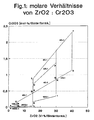
- Figure 1 shows a graphical representation according to the present invention preferably to be set molar ratio of ZrO2: Cr2O3, which corresponds to an area through the points A, B, C, D, E, F, G, H, I, K, L , M and N is defined.
- the zirconium dioxide is present in an amount of 15 to 30% by volume
- the molar ratio between zirconium dioxide and chromium oxide is determined by the area defined by the square with the points 0, P, R and Q is defined.
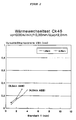
- FIG. 2 shows the result of an investigation on a commercialized cutting plate in which tetragonal zirconium dioxide is embedded in an aluminum oxide matrix with the simultaneous use of magnesium oxide.
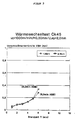
- FIG. 3 corresponds to Example 11 and Figure 4 Example 12.
- FIGS. 3 to 4 demonstrate a considerably improved wear resistance of sintered shaped bodies when they are used as cutting inserts in accordance with the present invention compared to known standard cutting inserts.
- FIGS. 5 to 7 show microphotographs on cutting edge according to the heat change test described for FIGS. 2 to 4, FIGS. 5 and 6 showing the state after an engagement time of 4 minutes and FIG. 7 after 10 minutes.
- Figure 5 corresponds to Example 2;
- FIG. 6 corresponds to example 10 and
- FIG. 7 corresponds to example 12.
- FIGS. 5 and 6 show the formation of fewer longitudinal cracks and suggestively the occurrence of transverse cracks, the occurrence of transverse cracks cannot be deduced from FIG. 7. From this, it can be concluded that wear behavior is particularly favorable in practice - even when temperature changes occur - since spontaneous breakouts are avoided, which significantly increases the manufacturing reliability in the machining process. Although from FIG. 6 The comparatively largest transverse crack formation is still to be concluded, the test results of Example 10 on which FIG. 6 is based show an enormously high fracture toughness with high hardness and flexural strength at the same time, so that sintered molded articles made of this material are outstanding for cutting applications with slightly lower thermal shock loads compared to the heat exchange tests described above are suitable.
Landscapes
- Chemical & Material Sciences (AREA)
- Engineering & Computer Science (AREA)
- Ceramic Engineering (AREA)
- Compositions Of Oxide Ceramics (AREA)
- Composite Materials (AREA)
- Manufacturing & Machinery (AREA)
- Materials Engineering (AREA)
- Structural Engineering (AREA)
- Organic Chemistry (AREA)
- Inorganic Fibers (AREA)
- Cutting Tools, Boring Holders, And Turrets (AREA)
- Materials For Medical Uses (AREA)
Description
- In der DE-A-36 08 854 ist die Verwendung eines Oxidkeramik-Werkstoffes für Preßwerkzeuge zum Ausformen von Bauteilen aus Glas oder glashaltiger Keramik angegeben. Als Matrixwerkstoffe werden neben kubischem und tetragonalem Zirkoniumdioxid auch Aluminiumoxid, Chromoxid, Spinell und ein hinsichtlich seiner mengenmäßigen Zusammensetzung nicht definiertes Al-Cr-Mischoxid [Al, Cr]₂O₃ angegeben. Die einzelnen Vorschläge für die Matrixkomponenten stehen dabei gleichberechtigt nebeneinander, so daß zur Auswahl einer besonderen Matrixkomponente wie auch zum Anteil der in die Matrix einzulagernden Menge an z. B. Zirkoniumdioxid keine Lehre vermittelt wird. Neben den vorstehend genannten Komponenten können noch stabilisierende Oxide wie z.B. Yttriumoxid (Y₂O₃) in einer Menge von 3,5 bis 12, vorzugsweise 8 bis 10 oder Magnesiumoxid (MgO) in einer Menge von 6,0 bis 16, vorzugsweise 8 bis 14 Mol.% und Ceroxid (CeO₂) in einer Menge von 3,5 bis 12 Mol.%, vorzugsweise von 8 bis 10 Mol.%, bezogen auf den Oxidkeramik-Werkstoff, vorliegen. Als Partikelgröße für die in eine polykristalline Matrix eingelagerten Teilchen wird eine Größe zwischen 5 und 5000 nm entsprechend 0,005 bis 5 µm genannt.
- Ein weiterer Vorschlag zu einer sogenannten "umwandlungsverstärkten" Keramikzusammensetzung, bei der eine feinverteilte feste Lösung aus ZrO₂-HfO₂ in einer festen Lösung aus entweder Chromoxid enthaltendem Aluminiumoxid oder Chromoxid enthaltendem Mullit angegeben ist, findet sich in der WO 85/01936 und wird dort für Hochtemperaturanwendungsbereiche, wie z.B. für Dieselmotoren und Gasturbinen vorgeschlagen. Der in Erwägung gezogene Chromoxidanteil zwischen 3 und 30 Mol.%, insbesondere ein Anteil von 20 Mol.% Chromoxid im Zusammenwirken mit einem Anteil von 10 bis 20 Mol.% Hafniumdioxid, soll zur Verbesserung der Härte und zur Einstellung einer niedrigen Wärmeleitfähigkeit dienen. Steigende Anteile an Chrom- und Hafniumdioxid führen zu einer Abnahme der Wärmeleitfähigkeit. Merkliche Härtesteigerungen werden erst bei relativ hohen Chromoxid-Konzentrationen gefunden - ca. 20 Mol.%, bezogen auf 20 Mol.% HfO₂. Zu der Korngröße der eingelagerten ZrO₂-HfO₂-Phase wird in den Beispielen dieser Schrift eine Größenordnung von 5 µm angegeben, und der Nichterhalt der tetragonalen Modifikation darauf zurückgeführt, daß es nicht gelungen ist, die dispergierte ZrO₂-HfO₂-feste Lösung in ausreichender Feinheit zu erhalten. Der Zusatz stabilisierender Oxide ist in dieser Schrift nicht erwähnt. Die erzielten Bruchzähigkeitswerte liegen im Bereich zwischen 5 und ca. 6,5 MPa √ m.
- Die EP-A- 199 459 betrifft keramische Zusammensetzungen hoher Zähigkeit und sieht ein Zusammenwirken von Zirkoniumdioxid, teilstabilisiertem Zirkoniumdioxid, festen Lösungen von Zirkoniumdioxid/Hafniumdioxid, festen Lösungen von teilstabilisiertem Zirkoniumdioxid/Hafniumdioxid, teilstabilisiertem Hafniumdioxid und Hafniumdioxid mit Mischungen von Metalloxiden, insbesondere von Yttriumnioboxid (YNbO₄) oder Yttriumtantaloxid (YTaO₄) vor, wobei das Yttriumion der Mischoxide auch zum Teil durch ein Kation eines SE-Metalls, z B. La ⁺³, Ce ⁺⁴ Ce ⁺³ Pr ⁺², Tm ⁺³ ersetzt ist. Gemäß einer weiteren Variante dieser Schrift kann die beschriebene keramische Legierung, also z.B. ZrO₂ unter Zusatz von YNbO₄ in einer Menge von wenigstens 5 Vol.% mit z.B. α-Aluminiumoxid oder auch Al₂O₃-Cr₂O₃, Mullit oder Titaniumcarbid, abgemischt werden. Der Nachteil dieser bekannten Zusammensetzung ist darin zu sehen, daß in Folge der Nb oder Ta enthaltenden Mischoxide bei den hergestellten Keramikprodukten eine weitere Korngrenzenphase entsteht und sich ein für viele Anwendungsbereiche noch nicht ausreichend hoher Erweichungspunkt einstellt.
- In ähnlicher Weise beschreibt die US-PS 47 70 673 ein keramisches Schneidwerkzeug, das zu 20 bis 45 % aus einer 1 bis 4 Mol.% eines gemischten Metalloxids enthaltenden Zirkoniumdioxid-Legierung und 55 bis 80 Gew.% einer Hartkeramik-Zusammensetzung besteht, wobei die gemischten Metalloxide aus der Gruppe YNbO₄, YTaO₄, MNbO₄, MTaO₄ und deren Mischungen bestehen, und M aus einem Kation besteht, das zur Substitution des Yttriumkations vorgesehen ist und aus Mg⁺², Ca⁺², Sc⁺³ und Seltenerdmetallionen ausgewählt ist, bestehend aus der Gruppe La⁺³, Ce⁺⁴, Ce⁺³, Pr⁺³, Nd⁺³, Sm⁺³, Eu⁺³, Gd⁺³, Tb⁺³, Dy⁺³, Ho⁺³, Er⁺³, Tm⁺³, und Lu⁺³ und deren Mischungen besteht. Als Hartkeramik kommt neben Aluminiumoxid und z.B. Sialon, SiC, Si₃N₄ auch Al₂O₃-Cr₂O₃ in Betracht, wobei ein Cr₂O₃-Anteil bis zu ungefähr 5 Mol.% vorgesehen ist. Auch hier besteht wiederum der Nachteil, daß sich durch die dem ZrO₂ zugefügten Legierungsbestandteile in Form der Niob bzw. Tantal enthaltenden Mischoxide in der Keramik ein zu niedriger Erweichungsbereich ergibt.
- Die US-PS 43 16 964 betrifft eine auch zur Herstellung von Schneidplatten in Erwägung gezogene Zusammensetzung aus 95 - 5 Vol.% Aluminiumoxid und 5 - 95 Vol.% Zirkoniumdioxid unter Zusatz von ca. 0,5 - 5,5 Mol.% Yttriumoxid, 0,5 bis 10 Mol.% Ceroxid, 0,4 bis 4 Mol.% Erbiumoxid und 0,5 bis 5 Mol.% Lanthanoxid, bezogen auf Zirkoniumdioxid.
- Ein gemäß der EP-A-282 879 auch zur Verwendung als Schneidplatte vorgesehener Sinterformkörper besteht aus einer Whisker enthaltenden Matrix, die außerdem noch Partikel aus z. B. Siliziumkarbid, Siliziumnitrid, Sialon, Aluminiumoxid und Zirkoniumdioxid enthält. Die Whisker können aus den gleichen Werkstoffen wie die Partikel bestehen. Zirkoniumdioxid wird hier neben Mullit und Aluminiumoxid als Matrixwerkstoff genannt. Außerdem kann der Sinterformkörper noch die üblichen Sinterhilfsmittel enthalten, wie z. B. die Oxide des Magnesiums, Chroms oder Yttriums. Von den seltenen Erdoxiden werden als bevorzugt geeignet die Oxide des Lanthans, Samariums, Gadoliniums, Dysprosiums, Holmiums, Erbiums, Thuliums, Ytterbiums und Lutetiums genannt. Es werden Bruchzähigkeiten von mehr als 10 MPam1/2 angegeben.
- Eine Keramik sehr hoher Zähigkeit und Verschleißfestigkeit zur Verwendung als spanabhebendes Schneidwerkzeug ist aus der DE-A-35 29 265 bekannt. Die stoffliche Zusammensetzung sieht neben 20 bis 50 Gew.% Titankarbid und 18 bis 79,9 Gew.% Aluminiumoxid 0,1 bis 2 Gew.% eines Sinterhilfsmittels vor, das aus der Gruppe: MgO, CaO, SiO₂, ZrO₂, NiO, Th₂O₃, AlN, TiO, TiO₂, Cr₂O₃ und/oder zumindestens einem Oxid der seltenen Erden ausgewählt ist. Als seltene Erdoxide werden genannt: Y₂O₃, Dy₂O₃, Er₂O₃, Ho₂O₃, Gd₂O₃ und/oder Tb₄O₇. Die Sinterhilfsmittel dienen zur Verhinderung des Kornwachstums beim Aluminiumoxid und gehen mit diesem eine Verbindung ein, die den Sintervorgang der Keramik fördert.
- Aus der EP-A-214 291 ist ein zu 40 bis 99 Mol.% teilstabilisiertes Zirkoniumdioxid und 1 bis 60 Mol.% Aluminiumoxid enthaltender Sinterkörper bekannt, der als Sinterhilfsmittel ferner geringe Mengen der Oxide von Mn, Fe, Co, Ni, Cu und Zn zur Beschleunigung des Sintervorganges enthält. Zur Einstellung eines tetragonalen Phasenanteils von 65 % oder mehr werden die Oxide des Yttriums, Magnesiums, Calciums oder Cers vorgeschlagen. Als zuzusetzende Menge des Yttriumoxids werden 1,3 bis 4 Mol.% genannt, die ganz oder teilweise durch die übrigen stabilisierenden Oxide in einer Menge von 0,01 bis 12 Mol.% ersetzt sein können.
- In der EP-A-236 507 ist ein Zirkoniumdioxid mit mehr als 65 % tetragonaler Phase angegeben, das in einem zu 60 bis 99 Mol.% aus Aluminiumoxid bestehenden hochdichten Keramikkörper enthalten ist. Zur Stabilisierung des Zirkoniumoxids werden weniger als 3 Mol.% Y₂O₃, weniger als 12 Mol.% MgO oder CaO und weniger als 14 Mol.% CeO₂, bezogen auf die keramische Zusammensetzung, vorgeschlagen. Zur Verbesserung der Sinterfähigkeit und zur Unterdrückung des Kornwachstums und damit zur Erzielung einer besonders hohen Dichte enthält der Werkstoff noch Übergangsmetalloxide von Mn, Fe, Co, Ni, Cu und Zn, die als solche oder als Hydroxide, Nitrate, Chloride u. ä. der Ausgangszusammensetzung zugegeben werden können. Nachteilig bei diesem bekannten Material ist die für viele Anwendungsbereiche, insbesondere bei Schneidwerkzeugen für die spanabhebende Bearbeitung noch nicht ausreichende Härte von max. 1.750 kg/mm².
- Der Zusatz von Chromoxid zu Aluminiumoxid, wobei mindestens 10 Gew.% Chromoxid zum Einsatz kommen, wurde für die Herstellung eines feuerfesten Materials in der US-A-4 823 359 vorgeschlagen. Alternativ kann statt des Aluminiumoxids auch eine aus Aluminiumoxid/Zirkoniumdioxid bestehende Mischung zum Einsatz kommen. Aus der bis zu 50 µm zugelassenen Größe der Körner vor dem Sintern ist auf die für Feuerfestartikel gewünschte relativ hohe Porosität und eine geringe Bruchzähigkeit zu schließen. Die Verwendung von stabilisierenden Oxiden und das Vorliegen des ggf. eingesetzten Zirkoniumdioxids in einer bestimmten Modifikation ist nicht erwähnt. Auch gemäß der US-A-4 792 538 wird Chromoxid zusammen mit Aluminiumoxid und Zirkoniumdioxid zur Herstellung von Feuerfestartikeln eingesetzt. Die Chromoxidmenge liegt hier bei 5 bis 25 Gew.%, vorzugsweise werden 16 Gew.% eingesetzt. Die Porosität liegt hier im Bereich von ca. 14 bis 15 %, der Zusatz von stabilisierenden Oxiden und das Vorliegen des Zirkoniumdioxids in einer bestimmten Modifikation ist nicht angesprochen.
- Die WO 90/11980 betrifft eine Keramik, in der plättchenförmige Körner aus Strontiumaluminat in einem molaren Verhältnis von SrO/Al₂O₃ zwischen 0,02 und 0,2 in eine Matrix aus ZrO₂, Al₂O₃ oder eine überwiegend aus ZrO₂ bestehende Mischung aus Al₂O₃ und ZrO₂ eingelagert sind. Die erreichten Härtewerte sind auch bei höheren Aluminiumoxidanteilen relativ niedrig.
- Die EP-A-O 284 584 betrifft einen Sinterformkörper mit einem Anteil von Hartstoffen in Form von Körnern oder Fasern in einer Menge von 5 bis 50 Gew.%. Als geeignete Hartstoffe werden die Karbide, Nitride oder Boride der Gruppe IVb bis VIb des PSE angegeben. Die genannten Hartstoffe liegen neben Zirkoniumdioxid, für das eine Zugabemenge von 2 bis 16 Gew.% vorgeschlagen wird und Chromoxid in einer Menge von 1 bis 20 Gew.% vor. Das Zirkoniumdioxid soll zu mehr als 70 % in der tetragonalen Modifikation vorliegen. über die Zugabe von stabilisierenden Oxiden für das Zirkoniumdioxid und dessen Korngröße enthält die Schrift keine Angaben.
- Die EP-A-0 300 716 betrifft eine Keramik-Zusammensetzung, die im wesentlichen aus 6 bis 95 Gew.% Zirkoniumdioxid und 5 bis 94 Gew.% einer Matrix, gebildet aus einem Aluminiumoxid-/Chromoxid-Mischkristall mit einem Chromoxidanteil von bis zu 50 Mol.%, bezogen auf Aluminiumoxid, besteht. Das Zirkoniumdioxid liegt teils in der monoklinen, teils in der tetragonalen Modifikation vor.
- Es besteht nach wie vor die Aufgabe, die bekannten Werkstoffe zu verbessern und Sinterformkörper zur Verfügung zu stellen, die ein hohes Festigkeitsniveau aufweisen und bei denen eine gute Bruchzähigkeit mit gleichzeitig hoher Härte kombiniert ist. Die Erfindung will einen Sinterformkörper zur Verfügung stellen, der diese Anforderungen erfüllt und infolge seines Eigenschaftsspektrums über eine höhere Verschleißfestigkeit verfügt, so daß der Sinterformkörper als Schneidwerkzeug, insbesondere als Schneidplatte, ganz besonders als Schneidplatte für die spanabhebende Bearbeitung von Guß- und Stahlwerkstoffen geeignet ist, wobei eine weitere Aufgabe darin gesehen wird, einen Sinterformkörper vorzuschlagen, der als Schneidplatte im unterbrochenen Schnitt eingesetzt werden kann.
- Es wurde nun gefunden, daß die Lösung der anstehenden Aufgabe einen Sinterformkörper mit einer ganz speziellen Zusammensetzung erfordert. Neben der Umwandlungsverstärkung, die durch die Einlagerung eines stabilisierende Oxide enthaltenden Zirkoniumdioxids in einer Keramikmatrix erzielt wird, sieht die Erfindung gemäß einer ersten Ausführungsform als Matrix einen Mischkristall aus Aluminiumoxid/Chromoxid vor. Desweiteren sieht die Erfindung vor, daß das in die Matrix eingelagerte Zirkoniumdioxid und das zusammen mit dem Aluminiumoxid den Mischkristall bildende Chromoxid in einem bestimmten molaren Verhältnis zueinander stehen. Diese Maßnahme ermöglicht erstmalig, daß auch bei höheren Zirkoniumdioxidanteilen, die zum Erhalt einer besonders guten Bruchzähigkeit erforderlich sein können, Härtewerte erzielt werden, wie sie bei entsprechenden Zirkoniumdioxidanteilen bisher nicht erzielbar waren. Andererseits können bei niedrigen Zirkoniumdioxidanteilen auch relativ geringe Chromoxidgehalte vorliegen, womit einer Versprödung des Werkstoffes entgegengewirkt wird. Gemäß ihrer ersten Ausführungsform sieht die Erfindung daher zur Lösung des anstehenden Problems einen Sinterwerkstoff nach Anspruch 1 vor.
- Die Angabe, daß das die stabilisierenden Oxide enthaltende Zirkoniumdioxid und Chromoxid in einem bestimmten molaren Verhältnis vorliegen sollen, ergibt zwangsläufig auch bestimmte Verhältnisse für die übrigen Komponenten, da z. B. mit sinkendem Anteil an Zirkoniumdioxid auch die Anteile der stabilisierenden Oxide, bezogen auf den Sinterformkörper, abnehmen, während andererseits der Anteil des Aluminiumoxids ansteigt. Bezogen auf das Aluminiumoxid des Sinterformkörpers liegt das Chromoxid in einer Gewichtsmenge von 0,004 bis 6,57 Gew.% vor, wobei jedoch nicht außer acht gelassen werden darf, daß Chromoxid und das die stabilisierenden Oxide enthaltende Zirkoniumdioxid in dem angegebenen molaren Verhältnis stehen. Von den stabilisierenden Oxiden hat sich das Ceroxid als ganz besonders bevorzugt erwiesen.
- Entsprechend einer weiteren vorteilhaften Ausführungsform beträgt der Anteil des Matrixwerkstoffes am Sinterformkörper mindestens 70 Vol.% und ist aus einem Aluminiumoxid-/Chromoxid-Mischkristall mit einem Chromoxidanteil von 0,01 bis 2,32 Gew.%, bezogen auf Aluminiumoxid, gebildet, wobei 2 bis 30 Vol.% Zirkoniumdioxid in die Matrix eingelagert sind, und das Zirkoniumdioxid 0,27 bis 2,85 Mol.% Yttriumoxid, bezogen auf die Mischung aus Zirkoniumdioxid und Yttriumoxid, enthält und das Zirkoniumdioxid in einer 2 µm nicht überschreitenden durchschnittlichen Korngröße überwiegend in der tetragonalen Modifikation vorliegt. Eine Menge von 0,27 bis 2,85 Mol.% Yttriumoxid, bezogen auf die Mischung aus Zirkoniumdioxid und Yttriumoxid entspricht 0,5 bis 5,4 Gew.% Yttriumoxid, bezogen auf Zirkoniumdioxid. Bei einem solchen Sinterformkörper liegt vorzugsweise zwischen dem das Yttriumoxid enthaltenden Zirkoniumdioxid und Chromoxid ein molares Verhältnis von 370 : 1 bis 34 : 1 vor.
- Gemäß einer weiteren besonders bevorzugten Ausführungsform der Erfindung besteht der Sinterformkörper aus 60 bis 98 Vol. % eines Matrixwerkstoffes, wobei dieser zu 67,1 bis 99,2 Vol.% aus einem Aluminiumoxid-/Chromoxid-Mischkristall und zu 0,8 bis 32,9 Vol.% aus einem weiteren Mischkristall der Formel SrAl12-x Crx O₁₉ besteht, wobei x einen Wert von 0,0007 bis 0,045 hat. Auch bei dieser Ausführungsform, die im übrigen der ersten Ausführungsform entspricht, geht von dem in die Mischkristall-Matrix eingelagerten Zirkoniumdioxid eine zähigkeitssteigernde Wirkung aus, während der Chromzusatz einem durch den Zirkoniumdioxidanteil hervorgerufenen Abfall der Härtewerte entgegenwirken kann. Der durch den Zusatz von Strontiumoxid zusätzlich gebildete Mischkristall der Formel SrAl12-x CrxO₁₉ hat nun den zusätzlichen Effekt, daß er dem Sinterformkörper auch bei höherer Temperatur eine weiter verbesserte Zähigkeit verleiht. Die Verschleißfestigkeit dieser Sinterformkörper unter Einfluß erhöhter Temperatur ist daher ebenfalls verbessert. Auch bei dieser Ausführungsform hat sich das Ceroxid als besonders geeignet gezeigt.
- Der in Ansprüchen und Beschreibung verwendete Begriff: Mischkristall ist nicht im Sinne von Einkristall zu verstehen, vielmehr ist damit gemeint eine feste Lösung von Chromoxid in Aluminiumoxid bzw. Strontiumaluminat. Der erfindungsgemäße Sinterformkörper ist polykristallin.
- Gemäß einer weiteren Ausführungsform kann die Verschleißfestigkeit der Sinterformkörper noch durch die Einlagerung von 2 bis 25 Vol.% eines oder mehrerer Karbide, Nitride oder Karbonitride der Metalle der 4. und 5. Nebengruppe des periodischen Systems der Elemente - bezogen auf den Matrixwerkstoff - in diesen verbessert werden. Vorzugsweise liegt der Anteil dieser Hartstoffe bei 6 bis 15 Vol.%. Insbesondere sind Titannitrid, Titankarbid und Titankarbonitrid geeignet.
- Gemäß einer besonders bevorzugten weiteren Ausführungsform der Erfindung wird das molare Verhältnis des die stabilisierenden Oxide enthaltenden Zirkoniumdioxids zu Chromoxid in Abhängigkeit des in den erfindungsgemäßen Sinterformkörpern vorliegenden Zirkoniumdioxidanteils so eingestellt, daß bei niedrigen Zirkoniumdioxidanteilen auch geringe Chromoxidmengen vorliegen. Ganz besonders hat sich dabei eine Einstellung des molaren Verhältnisses Zirkoniumdioxid : Chromoxid erwiesen, die im Bereich von
2 bis 5 Vol.% Zirkoniumdioxid 1.000 : 1 bis 100 : 1
> 5 - 15 Vol.% Zirkoniumdioxid 200 : 1 bis 40 : 1
>15 - 30 Vol.% Zirkoniumdioxid 100 : 1 bis 20 : 1
>30 - 40 Vol.% Zirkoniumdioxid 40 : 1 bis 20 : 1
beträgt. - Zum Vorliegen der Einstellung des Zirkoniumdioxids überwiegend in der tetragonalen Modifikation ist erfindungsgemäß die Einstellung einer 2 µm nicht überschreitenden Korngröße des Zirkoniumdioxids erforderlich. Außer den bis zu einer Menge von 5 Vol.% zugelassenen Anteilen von Zirkoniumdioxid in kubischer Modifikation sind auch noch geringe Mengen der monoklinen Modifikation zugelassen, diese sollen aber ebenfalls eine Menge von max. 5 Vol.% nicht überschreiten und liegen vorzugsweise bei weniger als 2 Vol.%, ganz besonders bevorzugt sogar bei weniger als 1 Vol.%, so daß vorzugsweise mehr als 90 Vol.% in der tetragonalen Modifikation vorliegen.
- Da der Sinterformkörper außer den in den Patentansprüchen angegebenen Komponenten lediglich noch in unvermeidbarer Weise eingeschleppte Verunreinigungen enthält, die gemäß einer weiteren vorzugsweisen Ausführungsform der Erfindung nicht mehr als 0,5 Vol.% betragen, besteht der Sinterformkörper lediglich aus dem Aluminiumoxid-Chromoxid-Mischkristall oder aus diesem Mischkristall und dem Mischkristall der Formel SrAl12-x Crx O₁₉ sowie aus dem die stabilisierenden Oxide enthaltenden und in die Matrix aus den genannten Mischkristallen eingelagertem Zirkoniumdioxid. Weitere Phasen, wie z. B. Korngrenzphasen, die beim gemeinsamen Einsatz von Aluminiumoxid und Magnesiumoxid gebildet werden oder weitere kristalline Phasen, wie sie bei den aus dem Stand der Technik bekannten Zusätzen von Stoffen, wie YNbO₄ oder YTaO₄ entstehen und die einen nicht ausreichend hohen Erweichungspunkt aufweisen, liegen im Sinterformkörper nach der Erfindung nicht vor. Auch die aus dem Stand der Technik bekannten Oxide von Mn, Cu, Fe, die ebenfalls zur Ausbildung weiterer Phasen führen, bewirken einen erniedrigten Erweichungspunkt und haben eine geringe Kantenfestigkeit zur Folge. Der Einsatz dieser Werkstoffe ist daher bei der Erfindung ausgeschlossen.
- Vorzugsweise liegt das Zirkoniumdioxid in einer Menge von nicht mehr als 30 Vol.% vor. Vorzugsweise liegt das Zirkoniumdioxid auch nicht in einer Menge von weniger als 15 Vol.% vor. Liegen zwischen 15 und 30 Vol.% Zirkoniumdioxid vor, liegt das molare Verhältnis zwischen dem die stabilisierenden Oxide enthaltenden Zirkoniumdioxid und Chromoxid ganz besonders bevorzugt zwischen 40 : 1 und 25 : 1.
- Gemäß einer weiteren ganz besonders bevorzugten Ausführungsform liegt der Anteil des in tetragonaler Modifikation vorliegenden Zirkoniumdioxids bei mehr als 95 Vol.%, wobei lediglich bis zu 5 Vol.% insgesamt in der kubischen und/oder monoklinen Modifikation vorliegen. Ganz besonders bevorzugt ist die Einhaltung einer Korngröße des eingelagerten Zirkoniumdioxids im Bereich von 0,2 bis 1,5 µm. Demgegenüber hat sich eine durchschnittliche Korngröße des Aluminiumoxid-/Chromoxid-Mischkristalls im Bereich von 0,8 bis 1,5 µm als besonders geeignet erwiesen. Kommen zusätzlich noch Karbide, Nitride und Karbonitride der Metalle der 4. und 5. Nebengruppe des PSE zum Einsatz, werden diese in einer Korngröße von 0,8 bis 3 µm eingesetzt. Die Körner des Mischkristalls der Formel SrAl12-x Crx O₁₉ weisen ein Längen/Dickenverhältnis im Bereich von 5 : 1 bis 15 : 1 auf. Ihre Maximallänge beträgt dabei 12 µm, ihre Maximaldicke 1,5 µm.
- Die Vickershärte der erfindungsgemäßen Sinterformkörper ist größer als 1.750 [ HV0,5], liegt aber vorzugsweise bei mehr als 1.800 [ HV0,5].
- Die Mikrostruktur der erfindungsgemäßen Sinterformkörper ist frei von Mikrorissen und weist einen Porositätsgrad von nicht mehr als 1,0 % auf. Der Sinterformkörper kann ferner noch Whisker, jedoch nicht aus Siliziumkarbid, enthalten.
- Der Sinterformkörper enthält keine der vielfach als Kornwachstumshemmer verwendeten Substanzen, wie z. B. Magnesiumoxid.
- Beim Sintern lösen sich die Stabilsatoroxide im ZrO₂-Gitter und stabilisieren dessen tetragonale Modifikation. Zur Herstellung der Sinterformkörper und zur Erzielung einer von weiteren unerwünschten Phasen freien Gefügestruktur werden vorzugsweise hochreine Rohstoffe eingesetzt, d. h. Aluminiumoxid und Zirkoniumdioxid mit einer Reinheit von mehr als 99 %. Vorzugsweise ist der Grad der Verunreinigungen noch wesentlich geringer. Insbesondere sind SiO₂-Anteile von mehr als 0,5 Vol.%, bezogen auf den fertigen Sinterformkörper, unerwünscht. Ausgenommen von dieser Regelung ist das unvermeidbare Vorliegen von Hafniumoxid in geringer Menge von bis zu 2 Gew.% innerhalb des Zirkoniumdioxids.
- Die Herstellung des erfindungsgemäßen Sinterformkörpers erfolgt durch druckloses Sintern oder Heißpressen einer Mischung aus Aluminiumoxid/Zirkoniumdioxid/Chromoxid und stabilisierenden Oxiden bzw. kommt eine Mischung dieser Komponenten zum Einsatz, der zusätzlich noch Strontiumoxid und/oder eins oder mehrere Nitride, Karbide und Karbonitride der 4. und 5. Nebengruppe des PSE zugefügt sind. Die Zugabe von Yttriumoxid und Chromoxid kann auch in Form von Yttriumchromoxid (YCrO₃) erfolgen, während die Strontiumoxidzugabe vorzugsweise in Form von Strontiumsalzen, insbesondere als Strontiumcarbonat (SrCO₃) vorgenommen werden kann. Der Begriff druckloses Sintern umfaßt dabei sowohl ein Sintern unter atmosphärischen Bedingungen, als auch unter Schutzgas oder im Vakuum. Vorzugsweise wird der geformte Körper zunächst auf 90 bis 95 % theoretischer Dichte drucklos vorgesintert und anschließend durch heißisostatisches Pressen oder Gasdrucksintern nachverdichtet. Die theoretische Dichte kann dadurch bis auf einen Wert von mehr als 99,5 % gesteigert werden.
- Vorzugsweise Anwendungsbereiche des Sinterformkörpers liegen in seiner Verwendung als Schneidwerkzeug zum Schneiden von Papier, Textilgut und von Folien, besonders bevorzugt ist jedoch die Verwendung des Sinterformkörpers als Schneidplatte für die spanabhebende Bearbeitung von Gußeisen oder von Stahlwerkstoffen, insbesondere im unterbrochenen Schnitt. Darunter ist zu verstehen, daß am Werkstück viele kleine glatte Schnitte zeitlich aufeinanderfolgend durchgeführt werden, wobei sich die Schneidplatte während des Eingriffs mit dem zu bearbeitenden Werkstück stark erhitzt und vor dem nächstfolgenden Eingriff kurz abkühlt, so daß eine thermische Wechselbelastung der Schneidplatte erfolgt.
- Die nachfolgenden Beispiele dienen der Erläuterung der Erfindung.
- Verschiedene keramische Mischungen wurden durch Mischmahlung hergestellt. Den gemahlenen Mischungen wurde ein temporäres Bindemittel zugegeben und die Mischungen anschließend sprühgetrocknet. Anschließend wurden aus den sprühgetrockneten Mischungen Grünkörper gepreßt und diese entsprechend den Angaben in der Tabelle entweder drucklos gesintert oder vorgesintert und unter Argon einem Gasdrucksinterprozeß unterworfen. In Tabelle 1 sind die errechneten Zusammensetzungen der hergestellten Sinterformkörper angegeben.
- Der in der letzten Querspalte von Tabelle 1 angegebene Matrixanteil in Vol.% umfaßt alle Anteile der angegebenen Zusammensetzung mit Ausnahme des Zirkoniumdioxids und der stabilisierenden Oxide.
- In Tabelle 2 sind die Untersuchungsergebnisse der Beispiele lt. Tabelle 1 zusammengefaßt.
- In den Tabellen bedeutet:
- A:
- drucklos gesintert
- B:
- drucklos vorgesintert, nach dem Vorsintern unter Argon gasdruckgesintert.
- D:
- prozentuale Dichte im Vergleich zur theoretischen Dichte
- E:
- Elastizitätsmodul
- σ4B:
- Biegebruchfestigkeit, gemessen nach der 4 Punkt Methode, (DIN 51110)
- KIc:
- Bruchzähigkeit
- HV0,5:
- Vickershärte, gemessen nach DIN 50113
- σ3B1.200 oC:
- Biegebruchfestigkeit bei 1.200 °C, nach der 3 Punkt Methode gemessen
- σ3B RT:
- Biegebruchfestigkeit bei Raumtemperatur, nach der 3 Punkt Methode gemessen, (Vergleichswert zur Biegebruchfestigkeit σ3B1.200 oC).
- Figur 1 zeigt in graphischer Darstellung das gemäß der vorliegenden Erfindung vorzugsweise einzustellende molare Verhältnis von ZrO₂ : Cr₂O₃, das einer Fläche entspricht, die durch die Punkte A, B, C, D, E, F, G, H, I, K, L, M und N definiert ist. Gemäß einer ganz besonders bevorzugten Ausführungsform der Erfindung, bei der das Zirkoniumdioxid in einer Menge von 15 bis 30 Vol.% vorliegt, ist das molare Verhältnis zwischen Zirkoniumdioxid und Chromoxid durch die Fläche bestimmt, die durch das Viereck mit den Punkten 0, P, R und Q definiert ist.
- Die Figuren 2 bis 4 zeigen in graphischer Form die Ergebnisse eines Schneidplatten-Wärmewechseltests. In Figur 2 ist das Ergebnis einer Untersuchung an einer kommerzialisierten Schneidplatte festgehalten, bei der tetragonales Zirkoniumdioxid in eine Aluminiumoxidmatrix bei gleichzeitiger Mitverwendung von Magnesiumoxid eingelagert ist.
- Figur 3 entspricht dem Beispiel 11 und Figur 4 Beispiel 12.
- In den Figuren 2 bis 4 bedeuten:
- Ck 45:
- Stahlwerkstoff
- vc:
- Schnittgeschwindigkeit
- f:
- Vorschub
- ap:
- Schnittiefe
- ASB:
- bezeichnet den Zeitpunkt, zu dem Ausbröckelungen nicht größer als die Verschleißmarkenbreite erfolgen.
- Die den Figuren 3 bis 4 zu entnehmenden Ergebnisse belegen eine erheblich verbesserte Verschleißbeständigkeit von Sinterformkörpern, wenn sie gemäß der vorliegenden Erfindung als Schneidplatten eingesetzt werden im Vergleich zu bekannten Standardschneidplatten.
- Die Figuren 5 bis 7 zeigen Mikrofotos an Schneidplattenkanten nach dem zu den Figuren 2 bis 4 beschriebenen Wärmewechseltest, wobei die Figuren 5 und 6 den Zustand nach einer Eingriffzeit von 4 Minuten und Figur 7 nach 10 Minuten zeigen. Figur 5 entspricht Beispiel 2; Figur 6 dem Beispiel 10 und Figur 7 entspricht Beispiel 12.
- Während die Figuren 5 und 6 die Ausbildung weniger Längsrisse und andeutungsweise das Auftreten von Querrissen zeigen, ist aus Figur 7 das Auftreten von Querrissen nicht zu entnehmen. Daraus ist auf ein für die Praxis besonders günstiges Verschleißverhalten - auch bei Auftreten von Temperaturwechseln - zu schließen, da spontane Ausbrüche vermieden werden, wodurch sich die Fertigungssicherheit im Zerspanungsprozeß deutlich erhöht. Obwohl aus Figur 6 noch auf die vergleichsweise größte Querrißbildung zu schließen ist, zeigen die Untersuchungsergebnisse des der Figur 6 zugrundeliegenden Beispiels 10 eine enorm hohe Bruchzähigkeit bei gleichzeitig hoher Härte und Biegebruchfestigkeit, so daß Sinterformkörper aus diesem Werkstoff hervorragend für Schneidanwendungen bei im Vergleich zu den vorbeschriebenen Wärmewechseltests etwas niedrigeren Temperaturwechselbelastungen geeignet sind.


Claims (17)
- Sinterformkörper aus:a) 60 bis 98 Vol.% eines Matrixwerkstoffes, gebildet aus einem Aluminiumoxid-/Chromoxid-Mischkristall,b) 2 bis 40 Vol.% in den Matrixwerkstoff eingelagertem Zirkoniumdioxid, dasc) als stabilisierende Oxide mehr als 10 bis 15 Mol.% eines oder mehrerer der Oxide von Cer, Praseodym und Terbium und/oder 0,2 bis 3,5 Mol.% Yttriumoxid, bezogen auf die Mischung aus Zirkoniumdioxid und stabilisierenden Oxiden, enthält, wobeid) die Zugabemenge der stabilisierenden Oxide so gewählt ist, daß das Zirkoniumdioxid zu mehr als 90 Vol.% in der tetragonalen Modifikation vorliegt unde) das molare Verhältnis zwischen dem die stabilisierenden Oxide enthaltenden Zirkoniumdioxid und Chromoxid 1.000 : 1 bis 20 : 1 beträgt,f) sich die Anteile aller Komponenten zu 100 Vol.% des Sinterformkörpers ergänzen,g) das Zirkoniumdioxid eine 2 µm nicht überschreitende Korngröße aufweist.
- Sinterformkörper nach Anspruch 1 aus:a) mindestens 70 Vol.% eines Matrixwerkstoffes, gebildet aus einem Aluminiumoxid-/Chromoxid-Mischkristall mit einem Chromoxidanteil von 0,01 bis 2,32 Gew.%, bezogen auf Aluminiumoxid,b) 2 bis 30 Vol.% in die Matrix eingelagertem Zirkoniumdioxid, dasc) 0,27 bis 2,85 Mol.% Yttriumoxid, bezogen auf die Mischung aus Zirkoniumdioxid und Yttriumoxid, enthält, wobei die Zugabemenge des Yttriumoxids so gewählt ist, daß das Zirkoniumdioxid zu mehr als 90 Vol % in der tetragonalen Modifikation vorliegt undd) das Zirkoniumdioxid in einer 2 µm nicht überschreitenden durchschnittlichen Korngröße vorliegt unde) das molare Verhältnis zwischen dem die stabilisierenden Oxide enthaltenden Zirkoniumdioxid und Chromoxid 1.000 : 1 bis 20 : 1 beträgt undf) sich die Anteile aller Komponenten zu 100 Vol.% des Sinterformkörpers ergänzen.
- Sinterformkörper nach Anspruch 2, wobei das molare Verhältnis zwischen dem die stabilisierenden Oxide enthaltenden Zirkoniumdioxid und Chromoxid 370 : 1 bis 34 : 1 beträgt.
- Sinterformkörper aus:a1)60 bis 98 Vol.% eines Matrixwerkstoffes, wobei dieser zua2)67,1 bis 99,2 Vol.% aus einem Aluminiumoxid-/Chromoxid-Mischkristalla3)zu 0,8 bis 32,9 Vol.% aus einem Mischkristall der Formel SrAl12-x Crx O₁₉ besteht, wobei x einem Wert von 0,0007 bis 0,045 entspricht,b) 2 bis 40 Vol.% in den Matrixwerkstoff eingelagertem Zirkoniumdioxid, dasc) als stabilisierende Oxide mehr als 10 bis 15 Mol.% eines oder mehrerer der Oxide von Cer, Praseodym und Terbium und/oder 0,2 bis 3,5 Mol.% Yttriumoxid, bezogen auf die Mischung aus Zirkoniumdioxid und stabilisierenden Oxiden enthält, wobeid) die Zugabemenge der stabilisierenden Oxide so gewählt ist, daß das Zirkoniumdioxid zu mehr als 90 Vol.% in der tetragonalen Modifikation vorliegt unde) das molare Verhältnis zwischen dem die stabilisierenden Oxide enthaltenden Zirkoniumdioxid und Chromoxid 1.000 : 1 bis 20 : 1 beträgt,f) sich die Anteile der Komponenten zu 100 Vol.% des Sinterformkörpers ergänzen undg) das Zirkoniumdioxid eine 2 µm nicht überschreitende Korngröße aufweist,
- Sinterformkörper nach einem der Ansprüche 1 oder 2, wobei der Matrixwerkstoff außerdem noch 2 bis 25 Vol.% eines oder mehrere der Karbide, Nitride und Carbonitride der Metalle der vierten und fünften Nebengruppe des PSE - bezogen auf Matrixwerkstoff - enthält.
- Sinterformkörper nach Anspruch 4, wobei der Matrixwerkstoff außerdem noch 2 bis 25 Vol.% eines oder mehrere der Karbide, Nitride und Carbonitride der Metalle der vierten und fünften Nebengruppe des PSE - bezogen auf Matrixwerkstoff - enthält.
- Sinterformkörper nach einem der Ansprüche 1, 2, 4 oder 6 mit einem molaren Verhältnis des die stabilisierenden Oxide enthaltenden Zirkoniumdioxids zu Chromoxid, das im Bereich von
2 - 5 Vol.% Zirkoniumdioxid 1.000:1 - 100:1
> 5 - 15 Vol.% Zirkoniumdioxid 200:1 - 40:1
> 15 - 30 Vol.% Zirkoniumdioxid 100:1 - 20:1
> 30 - 40 Vol.% Zirkoniumdioxid 40:1 - 20:1
beträgt. - Sinterformkörper nach einem der Ansprüche 1. 4, 5 oder 6 und nach Anspruch 7 mit einer Zirkoniumdioxidmenge von nicht mehr als 30 Vol.%.
- Sinterformkörper nach einem der Ansprüche 1, 2, 4, 5 oder 6 und nach den Ansprüchen 7 und 8, wobei das Zirkoniumdioxid zu mindestens 95 Vol.% die tetragonale Modifikation aufweist.
- Sinterformkörper nach einem der Ansprüche 1, 2, 4, 5 oder 6 und nach den Ansprüchen 7 bis 9, wobei das Zirkoniumdioxid insgesamt zu 0 bis 5 Vol.% in der kubischen und/oder monoklinen Modifikation vorliegt.
- Sinterformkörper nach einem der Ansprüche 1, 2, 4, 5 oder 6 und nach den Ansprüchen 7 bis 10 mit einer durchschnittlichen Korngröße des Aluminiumoxid-/Chromoxid-Mischkristalls von 0,8 bis 1,5 µm.
- Sinterformkörer nach einem der Ansprüche 1, 2, 4, 5 oder 6 und nach den Ansprüchen 7 bis 11 mit einer Körngröße des Zirkoniumdioxids zwischen 0,2 und 1,5 µm.
- Sinterformkörper nach einem der Ansprüche 1, 2, 4, 5 oder 6 und nach den Ansprüchen 7 bis 12 mit nicht mehr als 0,5 Vol.% unvermeidbarer Verunreinigungen, bezogen auf den Sinterformkörper.
- Sinterformkörper nach einem der Ansprüche 1, 2, 4, 5 oder 6 und nach den Ansprüchen 7 bis 13 mit einer Härte nach Vickers [ Hv 0,5] > 1.800.
- Verwendung eines Sinterformkörpers nach einem der Ansprüche 1 bis 14 als Schneidwerkzeug zum Schneiden von Papier, Textilgut und von Folien.
- Verwendung eines Sinterformkörpers nach einem der Ansprüche 1 bis 14 als Schneidplatte für die spanabhebende Bearbeitung von Gußeisen oder von Stahlwerkstoffen.
- Verwendung eines Sinterformkörpers nach einem der Ansprüche 1 bis 14 als Schneidplatte für den unterbrochenen Schnitt von Gußeisen und Stahlwerkstoffen.
Applications Claiming Priority (5)
| Application Number | Priority Date | Filing Date | Title |
|---|---|---|---|
| DE4024877 | 1990-08-06 | ||
| DE19904024877 DE4024877C2 (de) | 1990-08-06 | 1990-08-06 | Sinterformkörper, Verfahren zu seiner Herstellung und seine Verwendung |
| DE19914116008 DE4116008A1 (de) | 1991-05-16 | 1991-05-16 | Sinterformkoerper und seine verwendung |
| DE4116008 | 1991-05-16 | ||
| PCT/EP1991/001473 WO1992002470A1 (de) | 1990-08-06 | 1991-08-05 | Sinterformkörper und seine verwendung |
Publications (2)
| Publication Number | Publication Date |
|---|---|
| EP0542815A1 EP0542815A1 (de) | 1993-05-26 |
| EP0542815B1 true EP0542815B1 (de) | 1994-08-03 |
Family
ID=25895675
Family Applications (1)
| Application Number | Title | Priority Date | Filing Date |
|---|---|---|---|
| EP91914130A Expired - Lifetime EP0542815B1 (de) | 1990-08-06 | 1991-08-05 | Sinterformkörper und seine verwendung |
Country Status (7)
| Country | Link |
|---|---|
| EP (1) | EP0542815B1 (de) |
| JP (1) | JP3222134B2 (de) |
| KR (1) | KR0184846B1 (de) |
| AT (1) | ATE109441T1 (de) |
| DE (1) | DE59102452D1 (de) |
| ES (1) | ES2057911T3 (de) |
| WO (1) | WO1992002470A1 (de) |
Cited By (6)
| Publication number | Priority date | Publication date | Assignee | Title |
|---|---|---|---|---|
| EP1188729A2 (de) | 2000-09-13 | 2002-03-20 | CeramTec AG Innovative Ceramic Engineering | Verbundwerkstoff mit plateletverstärkter Aluminiumoxidkeramik-Matrix |
| US6452957B1 (en) | 1997-10-31 | 2002-09-17 | Ceramtec Ag Innovative Ceramic Engineering | Sintered shaped body reinforced with platelets |
| DE102014113416A1 (de) | 2013-11-21 | 2015-05-21 | Oximatec Gmbh Oxide Material Technologies | Keramikwerkstoff |
| EP2947061A1 (de) | 2014-05-19 | 2015-11-25 | BBL Technology Transfer GmbH & Co. KG | Biokeramische Komponente |
| DE102015212258A1 (de) | 2014-07-09 | 2016-01-14 | Ceramtec Gmbh | Vollkeramischer Kniegelenksersatz mit poröser knochenzugewandter Rückseite |
| WO2016005236A1 (de) | 2014-07-09 | 2016-01-14 | Ceramtec Gmbh | Vollkeramische oberflächenersatzprothese mit poröser innenseite |
Families Citing this family (9)
| Publication number | Priority date | Publication date | Assignee | Title |
|---|---|---|---|---|
| DE4313305C2 (de) * | 1993-04-23 | 1995-06-01 | Cerasiv Gmbh | Schneidwerkzeug |
| WO2000061517A1 (de) * | 1999-04-11 | 2000-10-19 | Ceramtec Ag | Medizinische instrumente |
| US8932971B2 (en) | 2007-04-27 | 2015-01-13 | Ceramtec Gmbh | Ceramic material |
| DE102007020473B4 (de) | 2007-04-27 | 2016-03-03 | Ceramtec Gmbh | Keramischer Werkstoff, seine Verwendung und Sinterformkörper |
| DE102007020471A1 (de) * | 2007-04-27 | 2008-11-06 | Ceramtec Ag Innovative Ceramic Engineering | Sinterformkörper |
| JP2011526500A (ja) | 2008-07-03 | 2011-10-13 | セラムテック ゲゼルシャフト ミット ベシュレンクテル ハフツング | 椎間板エンドプロテーゼ |
| WO2010112589A2 (de) * | 2009-04-01 | 2010-10-07 | Ceramtec Ag | Schnittschablone aus keramik |
| CN102448385A (zh) * | 2009-04-01 | 2012-05-09 | 陶瓷技术有限责任公司 | 陶瓷切割模板 |
| EP3192628B1 (de) * | 2016-01-15 | 2019-09-04 | CeramTec GmbH | Herstellung von dickwandigen bauteilen mittels spritzgiessen |
Family Cites Families (7)
| Publication number | Priority date | Publication date | Assignee | Title |
|---|---|---|---|---|
| NL7903661A (nl) * | 1979-05-10 | 1980-11-12 | Philips Nv | Gereedschap voor het verspanend bewerken van materiaal. |
| US4533647A (en) * | 1983-10-27 | 1985-08-06 | The Board Of Regents Acting For And On Behalf Of The University Of Michigan | Ceramic compositions |
| EP0199459B1 (de) * | 1985-04-11 | 1992-01-15 | Corning Glass Works | Keramische Legierung hoher Zähigkeit |
| US4804645A (en) * | 1987-03-27 | 1989-02-14 | Sandvik Aktiebolag | Ceramic material based on alumina and refractory hard constituents |
| DE3881113T2 (de) * | 1987-07-22 | 1993-12-02 | Champion Spark Plug Co | Aluminiumoxid-Zirkonoxid-Keramik. |
| US5002911A (en) * | 1989-04-07 | 1991-03-26 | Cerametec, Inc. | Ceramics with high toughness, strength and hardness |
| US5188908A (en) * | 1990-02-23 | 1993-02-23 | Mitsubishi Materials Corporation | Al2 O3 Based ceramics |
-
1991
- 1991-08-05 AT AT91914130T patent/ATE109441T1/de not_active IP Right Cessation
- 1991-08-05 WO PCT/EP1991/001473 patent/WO1992002470A1/de not_active Ceased
- 1991-08-05 ES ES91914130T patent/ES2057911T3/es not_active Expired - Lifetime
- 1991-08-05 EP EP91914130A patent/EP0542815B1/de not_active Expired - Lifetime
- 1991-08-05 KR KR1019930700147A patent/KR0184846B1/ko not_active Expired - Lifetime
- 1991-08-05 JP JP51315291A patent/JP3222134B2/ja not_active Expired - Lifetime
- 1991-08-05 DE DE59102452T patent/DE59102452D1/de not_active Expired - Lifetime
Non-Patent Citations (1)
| Title |
|---|
| Journal of Materials Science, vol. 23, no. 5, May 1988, T. Arahori et al.: "Microstructure and mechanical properties of A1203-Cr203-Zr02 composites", pages 1605-1609, see the whole document * |
Cited By (10)
| Publication number | Priority date | Publication date | Assignee | Title |
|---|---|---|---|---|
| US6452957B1 (en) | 1997-10-31 | 2002-09-17 | Ceramtec Ag Innovative Ceramic Engineering | Sintered shaped body reinforced with platelets |
| EP1188729A2 (de) | 2000-09-13 | 2002-03-20 | CeramTec AG Innovative Ceramic Engineering | Verbundwerkstoff mit plateletverstärkter Aluminiumoxidkeramik-Matrix |
| DE102014113416A1 (de) | 2013-11-21 | 2015-05-21 | Oximatec Gmbh Oxide Material Technologies | Keramikwerkstoff |
| WO2015074921A1 (de) | 2013-11-21 | 2015-05-28 | Oximatec Gmbh Oxide Material Technologies | Keramikwerkstoff |
| DE102014113416B4 (de) * | 2013-11-21 | 2017-09-28 | Oximatec Gmbh Oxide Material Technologies | Keramikwerkstoff |
| EP2947061A1 (de) | 2014-05-19 | 2015-11-25 | BBL Technology Transfer GmbH & Co. KG | Biokeramische Komponente |
| DE102015212258A1 (de) | 2014-07-09 | 2016-01-14 | Ceramtec Gmbh | Vollkeramischer Kniegelenksersatz mit poröser knochenzugewandter Rückseite |
| WO2016005235A1 (de) | 2014-07-09 | 2016-01-14 | Ceramtec Gmbh | Vollkeramischer kniegelenksersatz mit poröser knochenzugewandter rückseite |
| WO2016005236A1 (de) | 2014-07-09 | 2016-01-14 | Ceramtec Gmbh | Vollkeramische oberflächenersatzprothese mit poröser innenseite |
| DE102015212260A1 (de) | 2014-07-09 | 2016-01-14 | Ceramtec Gmbh | Vollkeramische Oberflächenersatzprothese mit poröser Innenseite |
Also Published As
| Publication number | Publication date |
|---|---|
| JP3222134B2 (ja) | 2001-10-22 |
| JPH06500762A (ja) | 1994-01-27 |
| ATE109441T1 (de) | 1994-08-15 |
| WO1992002470A1 (de) | 1992-02-20 |
| DE59102452D1 (de) | 1994-09-08 |
| EP0542815A1 (de) | 1993-05-26 |
| KR0184846B1 (ko) | 1999-05-01 |
| ES2057911T3 (es) | 1994-10-16 |
Similar Documents
| Publication | Publication Date | Title |
|---|---|---|
| DE19850366B4 (de) | Plateletverstärkter Sinterformkörper, dessen Verwendung und Verfahren zu seiner Herstellung | |
| DE69022045T2 (de) | Keramiken mit hoher zähigkeit, festigkeit und härte. | |
| DE69104862T2 (de) | Keramisches Material auf Basis von Tonerde. | |
| DE3610041C2 (de) | Keramik auf Zirkoniumdioxidbasis mit Aluminiumoxid, Spinell, Mullit oder Spinell und Mullit und mit verbesserter hydrothermaler und thermischer Stabilität | |
| DE3874006T2 (de) | Zirkonoxid-sinterkoerper mit hoher zaehigkeit und verfahren zur herstellung desselben. | |
| DE3787885T2 (de) | Durch Kristallumwandlung gehärtete Zirkonium-Titan-Yttriumoxid-Keramik. | |
| DE69403054T2 (de) | Gesinterter keramischer Körper, der hauptsächlich Alumina enthält | |
| AT389870B (de) | Keramisches material und verfahren zu seiner herstellung | |
| DE2741295C2 (de) | Keramischer Formkörper | |
| DE3874380T2 (de) | Keramisches material auf der basis von aluminiumoxid und feuerfesten hartbestandteilen. | |
| DE4331877A1 (de) | Verbundmaterial auf der Basis von Zirconiumoxid und Verfahren zu dessen Herstellung | |
| DE102007020473B4 (de) | Keramischer Werkstoff, seine Verwendung und Sinterformkörper | |
| DE69620215T2 (de) | Whiskerarmiertes keramisches schneidwerkzeug und zusammensetzung davon | |
| WO1992002470A1 (de) | Sinterformkörper und seine verwendung | |
| DE69016021T2 (de) | Aluminiumoxid-titancarbid-siliciumcarbid-zusammensetzung für schneidwerkzeuge. | |
| DE69427722T2 (de) | Sinterkörper aus Aluminiumnitriol und Verfahren zu seiner Herstellung | |
| DE102010003605A1 (de) | Schnittschablone aus Keramik | |
| DE60006358T2 (de) | Magnesiumoxid-teilstabilisiertes zirkonoxid hoher festigkeit | |
| DE4217721C1 (de) | Gesintertes verbundschleifkorn, verfahren zu seiner herstellung sowie seine verwendung | |
| DE68910986T2 (de) | Zusammensetzungen aus aluminiumoxid-zirconiumoxid-siliciumcarbid enthaltend magnesiumoxid und schneidwerkzeuge. | |
| DE69108472T2 (de) | Keramischer Werkstoff, verstärkt durch Aluminiumoxid-Fibers und Verfahren zu seiner Herstellung. | |
| EP0247528B1 (de) | Polykristalline Sinterkörper auf Basis von Siliciumnitrid mit hoher Bruchzähigkeit und Härte | |
| DE3853349T2 (de) | Gesinterter Aluminiumoxidkörper von hoher Festigkeit und Verfahren zu seiner Herstellung. | |
| DE69016179T2 (de) | Mit Whiskern verstärktes keramisches Schneidwerkzeugmaterial. | |
| DE3840573C2 (de) | Whisker-verstärkte Keramik |
Legal Events
| Date | Code | Title | Description |
|---|---|---|---|
| PUAI | Public reference made under article 153(3) epc to a published international application that has entered the european phase |
Free format text: ORIGINAL CODE: 0009012 |
|
| 17P | Request for examination filed |
Effective date: 19921228 |
|
| AK | Designated contracting states |
Kind code of ref document: A1 Designated state(s): AT BE CH DE ES FR GB IT LI NL SE |
|
| 17Q | First examination report despatched |
Effective date: 19940107 |
|
| GRAA | (expected) grant |
Free format text: ORIGINAL CODE: 0009210 |
|
| AK | Designated contracting states |
Kind code of ref document: B1 Designated state(s): AT BE CH DE ES FR GB IT LI NL SE |
|
| REF | Corresponds to: |
Ref document number: 109441 Country of ref document: AT Date of ref document: 19940815 Kind code of ref document: T |
|
| ITF | It: translation for a ep patent filed | ||
| REF | Corresponds to: |
Ref document number: 59102452 Country of ref document: DE Date of ref document: 19940908 |
|
| ET | Fr: translation filed | ||
| REG | Reference to a national code |
Ref country code: ES Ref legal event code: FG2A Ref document number: 2057911 Country of ref document: ES Kind code of ref document: T3 |
|
| GBT | Gb: translation of ep patent filed (gb section 77(6)(a)/1977) |
Effective date: 19941028 |
|
| EAL | Se: european patent in force in sweden |
Ref document number: 91914130.9 |
|
| PLBE | No opposition filed within time limit |
Free format text: ORIGINAL CODE: 0009261 |
|
| STAA | Information on the status of an ep patent application or granted ep patent |
Free format text: STATUS: NO OPPOSITION FILED WITHIN TIME LIMIT |
|
| 26N | No opposition filed | ||
| REG | Reference to a national code |
Ref country code: GB Ref legal event code: IF02 |
|
| REG | Reference to a national code |
Ref country code: CH Ref legal event code: PCAR Free format text: ISLER & PEDRAZZINI AG;POSTFACH 1772;8027 ZUERICH (CH) |
|
| PGFP | Annual fee paid to national office [announced via postgrant information from national office to epo] |
Ref country code: NL Payment date: 20100813 Year of fee payment: 20 Ref country code: ES Payment date: 20100825 Year of fee payment: 20 Ref country code: CH Payment date: 20100824 Year of fee payment: 20 |
|
| PGFP | Annual fee paid to national office [announced via postgrant information from national office to epo] |
Ref country code: FR Payment date: 20100901 Year of fee payment: 20 Ref country code: SE Payment date: 20100812 Year of fee payment: 20 Ref country code: IT Payment date: 20100824 Year of fee payment: 20 Ref country code: AT Payment date: 20100812 Year of fee payment: 20 |
|
| PGFP | Annual fee paid to national office [announced via postgrant information from national office to epo] |
Ref country code: GB Payment date: 20100819 Year of fee payment: 20 |
|
| PGFP | Annual fee paid to national office [announced via postgrant information from national office to epo] |
Ref country code: BE Payment date: 20100810 Year of fee payment: 20 Ref country code: DE Payment date: 20101029 Year of fee payment: 20 |
|
| REG | Reference to a national code |
Ref country code: DE Ref legal event code: R071 Ref document number: 59102452 Country of ref document: DE |
|
| REG | Reference to a national code |
Ref country code: DE Ref legal event code: R071 Ref document number: 59102452 Country of ref document: DE |
|
| REG | Reference to a national code |
Ref country code: CH Ref legal event code: PL |
|
| REG | Reference to a national code |
Ref country code: NL Ref legal event code: V4 Effective date: 20110805 |
|
| REG | Reference to a national code |
Ref country code: GB Ref legal event code: PE20 Expiry date: 20110804 |
|
| BE20 | Be: patent expired |
Owner name: *CERASIV G.M.B.H. INNOVATIVES KERAMIK-ENGINEERING Effective date: 20110805 |
|
| REG | Reference to a national code |
Ref country code: SE Ref legal event code: EUG |
|
| PG25 | Lapsed in a contracting state [announced via postgrant information from national office to epo] |
Ref country code: GB Free format text: LAPSE BECAUSE OF EXPIRATION OF PROTECTION Effective date: 20110804 |
|
| PG25 | Lapsed in a contracting state [announced via postgrant information from national office to epo] |
Ref country code: NL Free format text: LAPSE BECAUSE OF EXPIRATION OF PROTECTION Effective date: 20110805 |
|
| REG | Reference to a national code |
Ref country code: ES Ref legal event code: FD2A Effective date: 20120110 |
|
| PG25 | Lapsed in a contracting state [announced via postgrant information from national office to epo] |
Ref country code: ES Free format text: LAPSE BECAUSE OF EXPIRATION OF PROTECTION Effective date: 20110806 |
|
| PG25 | Lapsed in a contracting state [announced via postgrant information from national office to epo] |
Ref country code: DE Free format text: LAPSE BECAUSE OF EXPIRATION OF PROTECTION Effective date: 20110806 |