EP0502173B1 - Mechanismus zur regelung der anzeige des dargestellten bildes - Google Patents
Mechanismus zur regelung der anzeige des dargestellten bildes Download PDFInfo
- Publication number
- EP0502173B1 EP0502173B1 EP91917852A EP91917852A EP0502173B1 EP 0502173 B1 EP0502173 B1 EP 0502173B1 EP 91917852 A EP91917852 A EP 91917852A EP 91917852 A EP91917852 A EP 91917852A EP 0502173 B1 EP0502173 B1 EP 0502173B1
- Authority
- EP
- European Patent Office
- Prior art keywords
- image
- digitized
- stored
- border
- digital database
- Prior art date
- Legal status (The legal status is an assumption and is not a legal conclusion. Google has not performed a legal analysis and makes no representation as to the accuracy of the status listed.)
- Revoked
Links
Images



Classifications
-
- H—ELECTRICITY
- H04—ELECTRIC COMMUNICATION TECHNIQUE
- H04N—PICTORIAL COMMUNICATION, e.g. TELEVISION
- H04N1/00—Scanning, transmission or reproduction of documents or the like, e.g. facsimile transmission; Details thereof
- H04N1/21—Intermediate information storage
-
- H—ELECTRICITY
- H04—ELECTRIC COMMUNICATION TECHNIQUE
- H04N—PICTORIAL COMMUNICATION, e.g. TELEVISION
- H04N1/00—Scanning, transmission or reproduction of documents or the like, e.g. facsimile transmission; Details thereof
- H04N1/32—Circuits or arrangements for control or supervision between transmitter and receiver or between image input and image output device, e.g. between a still-image camera and its memory or between a still-image camera and a printer device
- H04N1/32101—Display, printing, storage or transmission of additional information, e.g. ID code, date and time or title
- H04N1/32128—Display, printing, storage or transmission of additional information, e.g. ID code, date and time or title attached to the image data, e.g. file header, transmitted message header, information on the same page or in the same computer file as the image
-
- H—ELECTRICITY
- H04—ELECTRIC COMMUNICATION TECHNIQUE
- H04N—PICTORIAL COMMUNICATION, e.g. TELEVISION
- H04N2201/00—Indexing scheme relating to scanning, transmission or reproduction of documents or the like, and to details thereof
- H04N2201/32—Circuits or arrangements for control or supervision between transmitter and receiver or between image input and image output device, e.g. between a still-image camera and its memory or between a still-image camera and a printer device
- H04N2201/3201—Display, printing, storage or transmission of additional information, e.g. ID code, date and time or title
- H04N2201/3225—Display, printing, storage or transmission of additional information, e.g. ID code, date and time or title of data relating to an image, a page or a document
- H04N2201/3242—Display, printing, storage or transmission of additional information, e.g. ID code, date and time or title of data relating to an image, a page or a document of processing required or performed, e.g. for reproduction or before recording
-
- H—ELECTRICITY
- H04—ELECTRIC COMMUNICATION TECHNIQUE
- H04N—PICTORIAL COMMUNICATION, e.g. TELEVISION
- H04N2201/00—Indexing scheme relating to scanning, transmission or reproduction of documents or the like, and to details thereof
- H04N2201/32—Circuits or arrangements for control or supervision between transmitter and receiver or between image input and image output device, e.g. between a still-image camera and its memory or between a still-image camera and a printer device
- H04N2201/3201—Display, printing, storage or transmission of additional information, e.g. ID code, date and time or title
- H04N2201/3225—Display, printing, storage or transmission of additional information, e.g. ID code, date and time or title of data relating to an image, a page or a document
- H04N2201/3243—Display, printing, storage or transmission of additional information, e.g. ID code, date and time or title of data relating to an image, a page or a document of type information, e.g. handwritten or text document
-
- H—ELECTRICITY
- H04—ELECTRIC COMMUNICATION TECHNIQUE
- H04N—PICTORIAL COMMUNICATION, e.g. TELEVISION
- H04N2201/00—Indexing scheme relating to scanning, transmission or reproduction of documents or the like, and to details thereof
- H04N2201/32—Circuits or arrangements for control or supervision between transmitter and receiver or between image input and image output device, e.g. between a still-image camera and its memory or between a still-image camera and a printer device
- H04N2201/3201—Display, printing, storage or transmission of additional information, e.g. ID code, date and time or title
- H04N2201/3225—Display, printing, storage or transmission of additional information, e.g. ID code, date and time or title of data relating to an image, a page or a document
- H04N2201/3254—Orientation, e.g. landscape or portrait; Location or order of the image data, e.g. in memory
-
- H—ELECTRICITY
- H04—ELECTRIC COMMUNICATION TECHNIQUE
- H04N—PICTORIAL COMMUNICATION, e.g. TELEVISION
- H04N2201/00—Indexing scheme relating to scanning, transmission or reproduction of documents or the like, and to details thereof
- H04N2201/32—Circuits or arrangements for control or supervision between transmitter and receiver or between image input and image output device, e.g. between a still-image camera and its memory or between a still-image camera and a printer device
- H04N2201/3201—Display, printing, storage or transmission of additional information, e.g. ID code, date and time or title
- H04N2201/3274—Storage or retrieval of prestored additional information
- H04N2201/3277—The additional information being stored in the same storage device as the image data
Definitions
- the present invention relates in general to digitized image data processing systems and is particularly directed to a mechanism for controlling the manner in which digitized images are to be accessed from a digital database for presentation by an image playback device.
- Digital imaging systems such as those employed for converting still color photographic film (e.g. 35mm) images into digital format for storage in a digital database and subsequent playback, as by way of a color television monitor, customarily encode the output of an opto-electronic film scanning device to some prescribed resolution and store the encoded image in an associated database as a respective image file.
- the contents of the respective addresses of the database in which the digitized image has been stored are read out and coupled to display driver circuitry for energizing corresponding pixels on the TV monitor.
- each frame of a typical roll of 35mm film has different horizontal and vertical frame dimensions, for example a dimension of 36mm in the horizontal direction, parallel to the lengthwise direction of the film, and a dimension of 24 mm in the vertical direction, orthogonal to the lengthwise direction of the film (a horizontal:vertical aspect ratio of 3:2)
- a photographer often rotates the camera ninety degrees about the lens axis in order to capture a subject in what is conventionally referred to as a 'vertical' condition. Since the digitizing mechanism that scans the film strip digitizes each frame as though it contains a 'horizontally shot' image, then, when a 'vertically shot' image is displayed, it will be rotated unless the recording and playback system has been designed to accommodate vertical images.
- a third solution is to allow for different image orientations to be stored, together with digital control data indicative of the orientations of the images, and to employ an image playback device designed to read the orientation control data to properly orient the images on playback.
- Some conventional computer image file formats for example, the Tag Image File Format (TIFF), Revision 5.0, developed jointly by Aldus Corporation, Seattle, Washington, and Microsoft Corporation, Redmond, Washington, and described in "An Aldus/Microsoft Technical Memorandum, August 8, 1988, include the provision for an optional "tag”, which can be used to indicate the orientation of the image.
- TIFF Tag Image File Format
- Revision 5.0 developed jointly by Aldus Corporation, Seattle, Washington, and Microsoft Corporation, Redmond, Washington, and described in "An Aldus/Microsoft Technical Memorandum, August 8, 1988, include the provision for an optional "tag", which can be used to indicate the orientation of the image.
- Page 25 of this document describes the TIFF 'orientation tag', which can have eight different values, indicating whether the zeroth row and zeroth column of the pixel data matrix represents the top and left, top and right, bottom and right, bottom and left, left and top, right and top, right and bottom, or left and bottom of the visual image, respectively.
- the Aldus document further states that such a field is recommended for private (non- interchange) use only.
- the default condition, where the zeroth row represents the visual top of the image, and the zeroth column of the pixel data matrix represents the visual left hand side of the image is recommended for all non-private applications, including those involving importing and printing.
- the TIFF orientation tag is never used to re-orient for display images which have been stored in different orientations in an image database.
- captured images may have different aspect ratios.
- dedicated use panoramic cameras such as the Kodak Stretch (TM) camera have an aspect ratio of 3:1 which is considerably wider than the above- referenced 3:2 aspect ratio of conventional 35mm cameras.
- Other camera types such as those which employ 126 type film also have aspect ratios other than 3:2.
- US-A-4,520,401 describes a digital video signal recording system and reproducing apparatus using header signals indicating the type of picture that is used. Nowhere in this document it is mentioned or suggested to solve the problem relating to the physical orientation of an image.
- EP-A-0,251,177 describes an image processing method and apparatus. None is mentioned in this document to solve the above mentioned problems.
- the present invention is directed to an improved storage and retrieval mechanism for a digital image processing system wherein a plurality of photographic images that have been captured on a photographic film strip are digitized for processing and subsequent display.
- the film strip can be expected to include both horizontally-shot (whether upright or inverted) and vertically-shot (in either a right or left hand rotation) images.
- Digitized images are stored on a digital data storage recording medium, such as a compact disc, which is capable of being coupled to an image playback device for reproduction of a digitized image on a display such as a color TV monitor.
- each image on the film strip is scanned and digitized as though it were horizontally oriented, irrespective of its actual orientation on the film.
- the digitized image is entered into a frame store and displayed on a display monitor of a system workstation, so that the image may be viewed by the operator.
- a workstation input device e.g. keyboard or mouse
- the operator may then enter a set of 'presentation' control codes that are incorporated within a presentation control file associated with a respective image file.
- presentation control codes preferably include a first digital code representative of the orientation in which the image is currently displayed (corresponding to its orientation as digitized from the film strip) and a second digital code representative of its aspect ratio.
- the playback device decodes the presentation control file information in the course of reading out the digitized image, and uses the presentation control file to control the playback device in such a way as to display the image in an upright orientation and at the correct aspect ratio for the display.
- a border generator fills in non-accessed pixel addresses to complete the image on the display.
- the playback apparatus may respond to user- generated control signals for defining the limits of an auxiliary border to be injected onto the displayed image, so that cropping of selected portions of an image may be controlled by the user.
- Figure 1 diagrammatically illustrates a photographic color film processing system in which the present invention may be employed.
- a photographic color film processing system in which the present invention may be employed.
- such a system may be of the type described, for example, in co-pending Patent application Serial Number , filed , by S. Kristy, entitled “Multiresolution Digital Imagery Photofinishing System,” assigned to the assignee of the present application and the disclosure of which is incorporated herein.
- the system described in the above-referenced co-pending application is merely an example of one type of system in which the invention may be used and is not to be considered limitative of the invention.
- the invention may be incorporated in any digitized image processing system.
- photographic images such as a set of twenty- four or thirty-six 36mmX24mm image frames of a 35mm film strip 10, are scanned by a high resolution opto- electronic film scanner 12, such as a commercially available Eikonix Model 1435 scanner.
- Scanner 12 outputs digitally encoded data (e.g. a 3072X2048 pixel matrix) representative of the internal electronic scanning of a high resolution image sensing array onto which a respective photographic image frame of film strip 10 is projected.
- This digitally encoded data, or 'digitized' image is coupled in the form of an imaging pixel array- representative bit map to an attendant image processing workstation 14, which contains a frame store and image processing application software through which the digitized image may be processed (e.g. enlarged, rotated, cropped, subjected to scene balance correction, etc.) to achieve a desired image appearance.
- an image file Once an image file has been prepared, it is stored on a transportable medium, such as a write-once optical compact disc, using an optical compact disc recorder 16, for subsequent playback by a disc player 20, which allows the image to be displayed, for example, on a relatively moderate resolution consumer television set 22 (e.g. having an NTSC display containing and array of 485 lines by 640 pixels per line), or printed as a finished color print, using a high resolution thermal color printer 24.
- a transportable medium such as a write-once optical compact disc, using an optical compact disc recorder 16
- a disc player 20 which allows the image to be displayed, for example, on
- each high resolution captured image is stored as a respective image data file containing a low, or base, resolution image bit map file and a plurality of higher resolution residual image files associated with respectively increasing degrees of image resolution.
- a reproduction device such as a color monitor display or hard copy printer.
- spatial data values representative of a high resolution 3072X2048 (3KX2K) image scan of a 36mm-by-24mm image frame of a 35mm film strip 10 may be stored as a respective image data file including a base resolution image bit map file containing data values associated with a spatial image array of 512 rows and 768 columns of pixels and an associated set of residual image files to be stored on the disc.
- the base resolution image may be further subsampled to derive an even lower resolution sub-array of image values (e.g. on the order of 128X192 pixels) for display on a segment of the system operator's workstation for the purpose of identifying image orientation and specifying aspect ratio.
- the present invention takes advantage of the information storage capability of the compact disc to incorporate, within a header file associated with each digitized image, additional presentation control files for each stored image for the purpose of specifying how the image was captured on film and has been correspondingly digitized and stored on disc, so that, when played back, the image will have an upright orientation and the correct aspect ratio for the display device.
- Figure 2 diagrammatically illustrates a portion of a film strip 10 that contains a plurality of successive image frames 21...25, on each of which an image of an arrow 30 has been recorded.
- frame 21 the arrow has been recorded with the camera held by the photographer in its normal horizontal position.
- frame 22 the arrow has been recorded with the camera held by the photographer in its normal vertical position, rotated counter-clockwise 90° relative to its normal horizontal position.
- frame 23 the arrow has been recorded with the camera held by the photographer in its flipped or inverted horizontal vertical position, rotated 180° relative to its normal horizontal position.
- frame 24 the arrow has been recorded with the camera held by the photographer in its flipped vertical position, rotated clockwise 90° relative to its normal horizontal position.
- frame 25 the arrow has been recorded with the camera held by the photographer in its normal vertical position.
- each image on the film strip is scanned and digitized as though it were horizontally oriented, irrespective of its actual orientation on the film.
- the digitized image is then stored in the workstation's frame store, as is, and a lower resolution version of the digitized image is then displayed on the display monitor of workstation 14, so that the image may be viewed by the operator.
- a workstation input device e.g. a keyboard or mouse
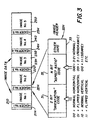
- FIG. 3 The format of a presentation control file, such as header file 22H associated with image data file 22D, into which normal vertical image frame 22 on film strip 10 has been digitized by scanner 12, is shown in Figure 3 as comprising an M-bit orientation filed 31, and N-bit aspect ratio field 33 and a supplemental field 35, in which additional information, such as title, date, etc. may be inserted by the operator in the course of formatting a digitized image for storage on the disc.
- the code width of aspect ratio field 33 depends upon the number of allowable image aspect ratios; providing a three bit code width will accommodate up to eight different aspect ratios.
- Figure 4 diagrammatically illustrates the signal processing architecture of an image retrieval mechanism in accordance with the present invention, which may be incorporated in a commercially available digital data storage and retrieval device, such as a compact disc player, for supplying video signals to an associated display device, such as a color television monitor.
- data read from a disc 40 is coupled over input bus 41 to a deformatter 42, which separates the control data (the header field) from the (512X768) data.
- the header data is coupled over link 44 to a memory controller 46, while the image data is coupled over link 48 to a random access memory 50 the storage capacity of which corresponds to the size of the base resolution image (512X768 pixels) stored on the disc.
- Memory read out controller 46 may be incorporated as part of the CD player's microcontroller or may be a separate dedicated combinational logic circuit driven by the microcontroller for controlling the generation of read out address/clock signals which are supplied over respective address bus links 52 and 54 to a set of associated column and address counters 56 and 58, respectively, for controlling the rate and order in which contents of memory 50 are accessed.
- the "clock” signal lines allow counters 56 and 58 to be incremented (when the up/down signal is asserted) or decremented (when the up/down signal is not asserted), the "preset value” lines allow the counters to be preset to the value indicated by these lines, and the "3:2 decimate” line instructs the counters to skip over every third value (i.e. to provide addresses 0, 1, 3, 4, 6, 7, 9, 10, etc.) and the "6:5 decimate” line instructs the counters to skip every sixth value (i.e. to provide addresses 0, 1, 2, 3, 4, 6, 7, 8, 9, 10, 12, 13, etc.).
- each field of image data for a respective digitized image is formatted as though the image is a normal horizontal image and when downloaded from the disc into memory 50, the image data is simply written directly into memory 50 in this format.
- the manner in which the image is read out from memory 50 in accordance with the contents of its associated header determines the orientation and display of the image on an associated display device (TV monitor).
- image data is read out from memory 50, it is coupled over link 60 to a border generator 62 which controllably substitutes for the pixel code values accessed from memory 50 an alternate code value, representative of a prescribed border color (e.g. black).
- border generator 62 preferably comprises a multiplexer switch 63 which connects the digital-to-analog converter 70 to either receive the pixel code data values from memory 50, or to instead receive a "border" code value representing a prescribed border color.
- the position of multiplexer switch 63 is controlled by the control signal on link 64 from memory controller 46.
- border generator 62 selectively injects 'border' pixel values, as instructed by memory controller 46, which fills in border regions of the 512X768 image array, for the image files where the aspect ratio code within the header field specifies that the size and shape of the image being read out from memory should occupy less than the entirety of the display.
- the resulting combined image and border data is then output to digital-to-analog converter 70 for application to a display device, such as a color TV monitor, so that a reproduction of the original 35mm image will be presented to the viewer.
- Figure 5 illustrates the overlay of a rectangular perimeter frame 80, the size and shape of which effectively correspond to a 484 row by 640 column pixel array that substantially matches the 484X640 "square pixel" display capacity of an NTSC TV monitor, 'centered' on a 512X768 pixel array represented by the contents of memory 50 for a horizontal normal image, where the contents of the image correspond to an 'upright' picture. Since, for either an upright (normal) or inverted horizontal image, the size of the stored image exceeds the size of the NTSC display matrix, memory controller 46 confines its column and row output addresses to a set of boundaries that encompasses a 484X640 sub-matrix of addresses centered in frame 80 within memory array 50.
- Those data entries of memory 50 that fall outside of frame 80 are not accessed for display and the associated 484X640 NTSC display will display a normal horizontal image of the pixels bounded by frame 80.
- the same 484X640 frame of addresses is accessed except that the order of read-out of the successive 484 lines is reversed from that of a normal horizontal image.
- a higher frequency pixel rate clock (approximately 12 MHz) is applied over link 52 to the column address counter 56, while a lower frequency rate (approximately 15.7 KHz) line or row clock is applied over link 54 to row address counter 58, in order to read out the image data in a line by line fashion.
- sequence of row addresses provided by row counter 58 to memory 60 is 13, 15, 17, ... 495, for field one and 14, 16, 18, ... 496 for field two for "normal” horizontal images, and 496, 494, 492, ... 14 for field one and 495, 493, 491, ... 13 for field two for "inverted" horizontal images.
- Figure 6 illustrates a rotated rectangular perimeter frame overlay 82 associated with a decimated sub-array portion of the 512X768 data entries of memory 50 on a 484X640 NTSC pixel matrix 84, where the contents of the image correspond to a 90° rotated picture that has been slightly demagnified so that most of its vertical dimension fits within the vertical boundaries of the TV display matrix.
- Figure 6 illustrates a "three-to-two" decimation of the 512X768 memory array in which the scanned addresses output by column counter 56 and row counter 58 of Figure 4 skip every third row address and every third column address, so that the original 512X768 image is decimated, or demagnified, to a 342X512 image matrix which, when rotated 90° and centered on the 484X640 TV display matrix, allows almost the entire 768 pixel vertical content of the image to be displayed on the 484 line TV receiver with only very slight cropping (approximately three percent of picture height) of top portion 91 and bottom portion 92 of the image.
- border generator 62 supplements the 342X484 sub-array of pixel values read out from memory 50 with border color representative (e.g. black) pixel values to fill in the tow 149X484 pixel side regions 94 and 95 of the displayed image.
- border color representative e.g. black
- the lower frequency (approximately 15.7 KHz) line rate clock is applied over link 52 to the column address counter 56, while the higher frequency (approximately 12 MHz) pixel rate clock is applied over link 54 to row address counter 58, in order to read out the image data in a column by column fashion.
- the 'flipped vertical' code within the header field will cause memory controller 46 to cause the row counter to count either up or down.
- Figure 7 illustrates the manner in which the entire horizontal dimension of the stored 512X768 image may be displayed using a 484X640 pixel matrix display by performing a "six-to-five" decimation of column and row addresses of a normal or inverted horizontal image.
- memory controller 46 instructs column counter 56 and row counter 58 to provide column and row output addresses such that every sixth pixel and every sixth line is excluded, thereby performing a 5/6 demagnification of the full horizontal image to a 427X640 pixel sub-array.
- the same 427X640 frame of addresses is accessed except that the order of read-out of the successive 427 lines is reversed from that of a normal horizontal image.
- border generator 62 supplements the 427X640 sub-array of pixel values read out from memory 50 with border color representative (e.g. black) pixel values to fill in regions 101 and 102 of the displayed image.
- border color representative e.g. black
- read-out of the stored image involves the same "six-to-five" decimation of the column and row addresses of memory 50, described above with reference to Figure 7.
- border generator 62 supplements the 213X640 sub-array of pixel values read out from memory 50 with border color representative (e.f. black) pixel values to fill in regions 111 and 112 of the displayed image.
- the aspect ratio code 33 shown in Figure 3 can also be utilized when making a thermal print via printer 24 in Figure 1.
- the printer can recognize that only the middle half of the rows of the 3:2 aspect ratio stored data file contain useful image data. The top and bottom rows of the stored data file will not be printed by thermal printer 24, thus conserving expensive print media, or allowing two 3:1 aspect ratio images to be printed next to one another in the same space normally used to print a single 3:2 aspect ratio image.
- memory controller 46 may be coupled to respond to user-generated control signals for defining the limits of an auxiliary border to be injected onto the image output by border generator 62 via line 64, so that further cropping of selected portions of an image may be directed by the user, as shown by border regions 121, 122, 123 and 124 in Figure 9 in order to alter the aspect ratio of the displayed image to provide a more pleasing composition.
- a "window 1A" signal 120 may be used to drive signal line 64 of Figure 4 of the present invention to create the auxiliary border of Figure 9.
- the present invention is able to obviate the need to physically rotate the film scanner relative to the film for vertical images, thereby significantly reducing the complexity and cost of the scanner and simplifying the storage mechanism.
- the invention takes advantage of the information storage capability of the compact disc database and incorporates an additional presentation control file, so that images can be digitized and stored 'as is'. Since the presentation control file contains orientation and aspect ratio information, the image playback device will know how each image has been stored in the database.
- the playback device is readily able to decode the header information in the course of reading out the digitized image, so that the image will be displayed in an upright orientation and at the correct aspect ratio for the display.
Landscapes
- Engineering & Computer Science (AREA)
- Multimedia (AREA)
- Signal Processing (AREA)
- General Engineering & Computer Science (AREA)
- Editing Of Facsimile Originals (AREA)
- Television Signal Processing For Recording (AREA)
- Controls And Circuits For Display Device (AREA)
- Automotive Seat Belt Assembly (AREA)
- Air Bags (AREA)
- Processing Or Creating Images (AREA)
- Devices For Indicating Variable Information By Combining Individual Elements (AREA)
Claims (32)
- Zur Verwendung bei einem digitalen Bildverarbeitungssystem, in dem Bilder durch eine optoelektronische Einrichtung (12) für die Speicherung in einer digitalen Datenbank (16) digitalisiert werden, ein Verfahren zur Speicherung der digitalisierten Bilder mit folgenden Schritten:(a) Speichern in der digitalen Datenbank die jeweiligen Dateien, die jedem der digitalisierten Bilder zugeordnet sind, wobei jedes digitalisierte Bild eine bestimmte Ausrichtung und ein Aspektverhältnis aufweist; und(b) Speichern einer Präsentationssteuerungsdatei (21H - 25H) für jede der in der digitalen Datenbank gespeicherten Dateien (21D - 25D),dadurch gekennzeichnet, daß die Präsentationssteuerungsdatei mindestens erste Daten (31), welche die Ausrichtung des zugeordneten, in der digitalen Datenbank gespeicherten Digitalbildes darstellen, oder zweite Daten (33), welche das Aspektverhältnis des zugeordneten, in der digitalen Datenbank gespeicherten Digitalbildes darstellen.
- Verfahren nach Anspruch 1, gekennzeichnet durch folgenden zusätzlichen Schritt:
(c) Auslesen aus der Datenbank von Daten, die ein digitalisiertes Bild darstellen, welches in Schritt (a) in einer Weise gespeichert wurde, die vom Inhalt seiner zugeordneten, in Schritt (b) gespeicherten Präsentationssteuerungsdatei abhängt, und Zuführen der ausgelesenen Daten an eine Bildreproduktionseinrichtung (22), so daß das reproduzierte Bild durch die Einrichtung (22) im Hochformat wiedergegeben wird. - Verfahren nach Anspruch 2, dadurch gekennzeichnet, daß die Bildreproduktionseinrichtung (22) ein Fernsehschirm ist.
- Verfahren nach Anspruch 3, dadurch gekennzeichnet, daß der Fernsehschirm (22) ein Bild mit einer Auflösung wiedergibt die sich von der Auflösung eines in Schritt (a) gespeicherten, digitalisierten Bildes unterscheidet.
- Verfahren nach Anspruch 2, dadurch gekennzeichnet, daß Schritt (c) das steuerbare Erzeugen von Bildrandsignalen umfaßt, die Bildmerkmale von mindestens einem Randbereich darstellen, der mit den ausgelesenen, digitalisierten Bilddaten zu kombinieren ist, und Zuführen der Bildrandsignale zur Reproduktionseinrichtung (22), so daß das von ihr wiedergegebene Bild von zumindest einem Randbereich bestimmt ist.
- Verfahren nach Anspruch 5, dadurch gekennzeichnet, daß Schritt (c) das steuerbare Erzeugen von Bildrandsignalen nach dem Inhalt der Präsentationssteuerungsdatei (21H-25H) umfaßt.
- Verfahren nach Anspruch 1, dadurch gekennzeichnet, daß eine Vielzahl von fotografischen Bildern auf einem fotografischen Medium (10), das Bilder (21 - 25) im Querund Hochformat aufweisen kann, festgehalten wurden, wobei die digitale Datenbank mit einer Bildwiedergabeeinrichtung (22) für die Sichtbarmachung eines Bildes verbindbar ist, jedes der Bilder so digitalisiert wird, als ob es im Querformat aufgezeichnet worden wäre, ungeachtet seiner tatsächlichen Ausrichtung auf dem fotografischen Medium, und wobei der Inhalt der Präsentationssteuerungsdatei (21H-25H) der tatsächlichen Ausrichtung des Bildes auf dem fotografischen Medium (10) zugeordnet ist.
- Verfahren nach Anspruch 7, dadurch gekennzeichnet, daß die Präsentationssteuerungsdatei (21H - 25H) einen ersten Digitalcode (31) enthält, der die Ausrichtung betrifft, in der das Bild auf dem fotografischen Medium aufgezeichnet wurde, und einen zweiten Digitalcode (33), der das Aspektverhältnis des aufgezeichneten Bildes darstellt.
- Verfahren nach Anspruch 1, dadurch gekennzeichnet, daß die digitale Datenbank mit einer Bildwiedergabeeinrichtung (22) für die Sichtbarmachung eines Bildes verbindbar ist, wobei das Verfahren zusätzlich folgenden Schritt umfaßt:
(c) Auslesen eines entsprechenden, in der Datenbank in Schritt (a) gespeicherten Digitalbildes und Zuführen des ausgelesenen Digitalbildes zur Bildwiedergabeeinrichtung (22) gemäß dem Inhalt der in Schritt (b) gespeicherten Präsentationssteuerungsdatei. - Verfahren nach Anspruch 9, dadurch gekennzeichnet, daß Schritt (c) das steuerbare Erzeugen von Bildrandsignalen umfaßt, die Bildmerkmale von mindestens einem Randbereich darstellen, der mit dem Digitalbild zu kombinieren ist, und Zuführen der Bildrandsignale zur Wiedergabeeinrichtung (22), so daß das von ihr reproduzierte Bild von zumindest einem Randbereich bestimmt ist.
- Verfahren nach Anspruch 1, dadurch gekennzeichnet, daß die digitale Datenbank mit einer Wiedergabeeinrichtung (22) zur Wiedergabe eines gespeicherten Bildes aus der digitalen Datenbank verbindbar ist, wobei das Verfahren zusätzlich folgende Schritte umfaßt:(c) Zugriff auf eine Datei aus digitalisierten Bilddaten, die in der digitalen Datenbank gespeichert wurde, und Verbinden eines ausgewählten Teils der Datei mit einer Reproduktionseinrichtung (22); und(d) steuerbares Erzeugen von Bildrandsignalen, die Bildmerkmale von mindestens einem Randbereich darstellen, der mit dem ausgewählten Teil der Datei aus digitalisierten Bilddaten zu kombinieren ist, und Zuführen der Bildrandsignale zur Reproduktionseinrichtung (22), so daß das von ihr reproduzierte Bild von zumindest einem Randbereich bestimmt ist.
- Verfahren nach Anspruch 11, dadurch gekennzeichnet, daß die Präsentationssteuerungsdatei sowohl erste (31) als auch zweite (33) Daten enthält, wobei Schritt (d) in dem steuerbaren Erzeugen von Bildrandsignalen in Abhängigkeit von den ersten und zweiten Daten besteht, und von zweiten Randsignalen zum Bestimmen von mindestens einem Randbereich, unabhängig von den ersten und zweiten Daten.
- Zur Verwendung bei einem digitalen Bildverarbeitungssystem, in welchem Bilder digitalisiert und als Dateien aus digitalisierten Bilddaten in einer digitalen Datenbank gespeichert werden, eine Vorrichtung zum Speichern der digitalisierten Bilder in einer digitalen Datenbank zur Präsentation in einer Bildreproduktionseinrichtung (22), die in Kombination folgende Komponenten aufweist:- erste Mittel (14, 16) zum Speichern in der digitalen Datenbank entsprechender Dateien (21D - 25D), die jedem der digitalisierten Bilder zugeordnet sind, wobei jede der Dateien digitalisierte Bilddaten enthält, die ein in der digitalen Datenbank digitalisiertes und gespeichertes Bild darstellen; und- zweite Mittel (14, 16) zum Speichern in der digitalen Datenbank, in Zuordnung zu jeder der entsprechenden Dateien, einer Präsentationssteuerungsdatei (21H - 25H),dadurch gekennzeichnet, daß die Präsentationsteuerungsdatei (21H - 25H) mindestens erste Daten (31), welche die Ausrichtung der zugeordneten, in der digitalen Datenbank gespeicherten Digitalbilder darstellen, oder zweite Daten (33), welche das Aspektverhältnis des zugeordneten, in der digitalen Datenbank gespeicherten Digitalbildes darstellen.
- Vorrichtung nach Anspruch 13, dadurch gekennzeichnet, daß das System zusätzlich ein drittes Mittel (20) aufweist, das die digitalisierten Bilddaten einer entsprechenden, in der digitalen Datenbank gemäß dem Inhalt ihrer Präsentationssteuerungsdatei gespeicherten Datei ausliest und die ausgelesenen Bilddaten der Bildreproduktionseinrichtung (22, 24) zuführt, so daß das durch die Einrichtung reproduzierte Bild im Hochformat wiedergegeben wird.
- Vorrichtung nach Anspruch 14, dadurch gekennzeichnet, daß die Bildreproduktionseinrichtung ein Fernsehschirm (22) ist.
- Vorrichtung nach Anspruch 15, dadurch gekennzeichnet, daß auf dem Fernsehschirm (22) eine Anordnung von Pixeln mit einer Auflösung wiedergegeben wird, die sich von der Auflösung einer jeweils gespeicherten Bilddatendatei unterscheidet.
- Vorrichtung nach Anspruch 16, dadurch gekennzeichnet, daß das dritte Mittel (20) ein Mittel (62) zum steuerbaren Erzeugen von Bildrandsignalen umfaßt, die Bildmerkmale von mindestens einem Randbereich darstellen, der mit den ausgelesenen, digitalisierten Bilddaten zu kombinieren ist, und Zuführen der Bildrandsignale zur Reproduktionseinrichtung (22), so daß das von ihr wiedergegebene Bild von zumindest einem Randbereich bestimmt ist.
- Vorrichtung nach Anspruch 17, dadurch gekennzeichnet, daß das dritte Mittel ein Mittel (62) zum steuerbaren Erzeugen der Bildrandsignale gemäß dem Inhalt der Präsentationssteuerungsdatei aufweist.
- Vorrichtung nach Anspruch 13, dadurch gekennzeichnet, daß die Bilder nach einer vorgeschriebenen Ausrichtung digitalisiert sind, ungeachtet ihrer tatsächlichen Ausrichtung auf einem fotografischen Medium (10), auf dem sie aufgezeichnet wurden, und wobei der Inhalt der Präsentationssteuerungsdatei (21H - 25H) der tatsächlichen Ausrichtung des Bildes auf dem fotografischen Medium (10) zugeordnet ist.
- Vorrichtung nach Anspruch 19, dadurch gekennzeichnet, daß die zweiten Mittel ein Mittel zum Speichern in der jeweiligen Präsentationssteuerungsdatei (21H - 25H) von das Aspektverhältnis des Bildes darstellenden Daten.
- Vorrichtung nach Anspruch 13, die zusätzlich folgende Komponenten aufweist:- eine mit der digitalen Datenbank verbundene Wiedergabeeinrichtung (22);- eine Steuerung (46) für die Wiedergabeeinrichtung mit dritten Mitteln zum Auslesen des jeweiligen, in der digitalen Datenbank gespeicherten digitalisierten Bildes und Zuführen des digitalisierten Bildes zur Bildwiedergabeeinrichtung (22) gemäß dem zumindest einen Digitalcode.
- Vorrichtung nach Anspruch 21, dadurch gekennzeichnet, daß die Steuerung (46) für die Wiedergabeeinrichtung vierte Mittel zum steuerbaren Erzeugen von Bildrandsignalen umfaßt, die Bildmerkmale von mindestens einem Randbereich darstellen, der mit den von den dritten Mitteln ausgelesenen, digitalisierten Bilddaten zu kombinieren ist, und Zuführen der Bildrandsignale zur Wiedergabeeinrichtung, so daß das von ihr wiedergegebene Bild von zumindest einem Randbereich bestimmt ist.
- Vorrichtung nach Anspruch 22, die zusätzlich folgende Komponenten aufweist:- eine Reproduktionseinrichtung (24) zum Wiedergeben eines Bildes aus der Datei von digitalisierten Bilddaten, die in der digitalen Datenbank gespeichert ist;- Mittel für den Zugriff auf eine Datei aus digitalisierten Bilddaten, die in der digitalen Datenbank gespeichert wurde, und Verbinden eines ausgewählten Teils der Datei mit der Reproduktionseinrichtung (22); und- Mittel (62) zum steuerbaren Erzeugen von Bildrandsignalen, die Bildmerkmale von mindestens einem Randbereich darstellen, der mit dem ausgewählten Teil der Datei aus digitalisierten Bilddaten zu kombinieren ist, und Zuführen der Bildrandsignale zur Reproduktionseinrichtung (24), so daß das von ihr reproduzierte Bild von zumindest einem Randbereich bestimmt ist.
- Vorrichtung nach Anspruch 23, dadurch gekennzeichnet, daß die digitale Datenbank kodierte Information enthält, die das Aspektverhältnis des Bildes darstellt, und daß das Erzeugungsmittel (62) Mittel zum steuerbaren Erzeugen von Bildrandsignalen in Abhängigkeit von der kodierten Information umfaßt.
- Vorrichtung nach Anspruch 23, dadurch gekennzeichnet, daß die digitale Datenbank eine erste kodierte Information enthält, welche die Ausrichtung des Bildes betrifft, und daß das Erzeugungsmittel (62) Mittel zum steuerbaren Erzeugen von Bildrandsignalen in Abhängigkeit von der ersten kodierten Information umfaßt.
- Vorrichtung nach Anspruch 25, dadurch gekennzeichnet, daß die digitale Datenbank eine zweite kodierte Information enthält, die das Aspektverhältnis des Bildes betrifft, und daß das Erzeugungsmittel (62) Mittel zum steuerbaren Erzeugen von Bildrandsignalen in Abhängigkeit von der zweiten kodierten Information umfaßt.
- Vorrichtung nach Anspruch 26, dadurch gekennzeichnet, daß das Erzeugungsmittel (62) Mittel zum steuerbaren Erzeugen von ersten Randsignalen in Abhängigkeit von der ersten und zweiten kodierten Information und von zweiten Randsignalen zum Bestimmen von zumindest einem Randbereich, unabhängig von der ersten und zweiten kodierten Information.
- Zur Verwendung in einer Bildwiedergabeeinrichtung geeignete digitale Datenbank, welche auf einem Informationsträger gespeichert ist und digitalisierte Bilder enthält, gekennzeichnet durch(a) eine erste Vielzahl von Speicherplätzen (21D - 25D), in denen Dateien für digitalisierte Bilddaten, die jeweils digitalisierte Bilder darstellen, gespeichert sind, wobei jedes der Digitalbilder eine digitalisierte Darstellung eines Bildes mit einer bestimmten Ausrichtung und einem Aspektverhältnis ist; und(b) eine zweite Vielzahl von Speicherplätzen (21H - 25H), in denen Präsentationssteuerungsdateien, die jeweils den digitalisierten Bildern zugeordnet sind, gespeichert sind,wobei die digitale Datenbank dadurch gekennzeichnet ist, daß jede Präsentationssteuerungsdatei mindestens erste Daten (31), welche die Ausrichtung des zugeordneten, in der digitalen Datenbank gespeicherten Bildes darstellen, oder zweite Daten (33), welche das Aspektverhältnis des zugeordneten, in der digitalen Datenbank gespeicherten Bildes darstellen.
- Digitale Datenbank nach Anspruch 28, dadurch gekennzeichnet, daß der Inhalt der jeweiligen Präsentationssteuerungsdatei die Ausrichtung (31) des zugeordneten, in der digitalen Datenbank gespeicherten Bildes darstellt.
- Digitale Datenbank nach Anspruch 28, dadurch gekennzeichnet, daß der Inhalt der jeweiligen Präsentationssteuerungsdatei das Aspektverhältnis (33) des zugeordneten, in der digitalen Datenbank gespeicherten Bildes darstellt.
- Digitale Datenbank nach Anspruch 28, dadurch gekennzeichnet, daß der Inhalt einer jeweiligen Präsentationssteuerungsdatei sowohl die ersten, die Ausrichtung des zugeordneten Bildes darstellenden Daten (31) als auch die zweiten Daten (33) umfaßt, die das Aspektverhältnis des zugeordneten, in der digitalen Datenbank gespeicherten Bildes darstellen.
- Digitale Datenbank nach einem der Ansprüche 28 bis 31, dadurch gekennzeichnet, daß der Informationsträger eine optische Compact disk ist.
Applications Claiming Priority (3)
| Application Number | Priority Date | Filing Date | Title |
|---|---|---|---|
| US07/583,265 US5270831A (en) | 1990-09-14 | 1990-09-14 | Storage and playback of digitized images in digital database together with presentation control file to define image orientation/aspect ratio |
| US583265 | 1990-09-14 | ||
| PCT/US1991/006616 WO1992005656A2 (en) | 1990-09-14 | 1991-09-12 | Mechanism for controlling presentation of displayed image |
Publications (2)
| Publication Number | Publication Date |
|---|---|
| EP0502173A1 EP0502173A1 (de) | 1992-09-09 |
| EP0502173B1 true EP0502173B1 (de) | 1997-04-16 |
Family
ID=24332385
Family Applications (1)
| Application Number | Title | Priority Date | Filing Date |
|---|---|---|---|
| EP91917852A Revoked EP0502173B1 (de) | 1990-09-14 | 1991-09-12 | Mechanismus zur regelung der anzeige des dargestellten bildes |
Country Status (12)
| Country | Link |
|---|---|
| US (2) | US5270831A (de) |
| EP (1) | EP0502173B1 (de) |
| JP (1) | JP3144802B2 (de) |
| KR (1) | KR920702588A (de) |
| CN (1) | CN1062251A (de) |
| AU (1) | AU8726391A (de) |
| BR (1) | BR9105920A (de) |
| CA (1) | CA2068318C (de) |
| CZ (1) | CZ142092A3 (de) |
| DE (1) | DE69125701T2 (de) |
| MX (1) | MX9101091A (de) |
| WO (1) | WO1992005656A2 (de) |
Families Citing this family (95)
| Publication number | Priority date | Publication date | Assignee | Title |
|---|---|---|---|---|
| US5270831A (en) * | 1990-09-14 | 1993-12-14 | Eastman Kodak Company | Storage and playback of digitized images in digital database together with presentation control file to define image orientation/aspect ratio |
| BR9106863A (pt) * | 1990-09-19 | 1993-06-15 | Philips Nv | Processo para transferir informacoes de imagem atraves de um meio de base de dados,aparelho para armazenar informacoes de imagem em um meio de base de dados,aparelho para ler as imagens digitalizadas a partir de um meio de base de dados,e o respectivo meio de base de dados |
| NL9002108A (nl) * | 1990-09-19 | 1992-04-16 | Koninkl Philips Electronics Nv | Registratiedrager waarop een hoofddatabestand en een besturingsdatabestand is opgetekend, een werkwijze en inrichting voor het optekenen van het hoofddatabestand en het besturingsbestand alsmede een inrichting voor het uitlezen van de registratiedrager. |
| US5428456A (en) * | 1991-03-15 | 1995-06-27 | Eastman Kodak Company | Method and apparatus for adaptively reducing interline flicker of TV-displayed image |
| DE69231942T2 (de) | 1991-11-22 | 2002-04-04 | Eastman Kodak Co., Rochester | Verfahren und Gerät zum Steuern der raschen Anzeige mehrere Bilder aus einer digitalen Bilddatenbank |
| CA2125788A1 (en) * | 1991-12-13 | 1993-06-24 | Eric Charles Peters | Buffer and frame indexing |
| US5448372A (en) * | 1991-12-18 | 1995-09-05 | Eastman Kodak Company | Storage and retrieval of digitized photographic images |
| US5652643A (en) * | 1992-03-17 | 1997-07-29 | Sony Corporation | Photographic and video image system |
| US5570147A (en) | 1992-03-17 | 1996-10-29 | Sony Corporation | Photographic camera system |
| US6470152B2 (en) | 1992-03-17 | 2002-10-22 | Sony Corporation | Photographic and video image system |
| US6600880B2 (en) | 1992-03-17 | 2003-07-29 | Sony Corporation | Photographic camera system |
| US5752114A (en) | 1992-03-17 | 1998-05-12 | Sony Corporation | Photographic and video image system |
| US6583851B2 (en) | 1992-03-17 | 2003-06-24 | Sony Corporation | Photographic and video image system |
| US6151456A (en) | 1993-03-04 | 2000-11-21 | Sony Corporation | Photographic camera system |
| EP0562845B1 (de) * | 1992-03-24 | 1999-02-03 | Kabushiki Kaisha Toshiba | Vorrichtung zum Aufzeichnen/Wiedergeben von Kodes mit variablen Längen für einen Videorekorder |
| US5946445A (en) * | 1992-04-10 | 1999-08-31 | Avid Technology, Inc. | Media recorder for capture and playback of live and prerecorded audio and/or video information |
| US6678461B1 (en) | 1992-04-10 | 2004-01-13 | Avid Technology, Inc. | Media recorder for capture and playback of live and prerecorded audio and/or video information |
| JP3237103B2 (ja) * | 1992-05-25 | 2001-12-10 | 船井電機株式会社 | 写真データの再生方法 |
| EP0592136B1 (de) * | 1992-10-09 | 1999-12-08 | Sony Corporation | Erzeugung und Aufzeichnung von Bildern |
| JP3290769B2 (ja) * | 1993-07-20 | 2002-06-10 | 富士通株式会社 | プリンタ装置 |
| US5581362A (en) * | 1993-08-04 | 1996-12-03 | Matsushita Electric Industrial Co., Ltd. | Video camera system which multiplexes internal, external, and sensing parameters onto the video signal in order to identify individual segments |
| JP3528214B2 (ja) | 1993-10-21 | 2004-05-17 | 株式会社日立製作所 | 画像表示方法及び装置 |
| JP3007523B2 (ja) * | 1994-01-26 | 2000-02-07 | ブラザー工業株式会社 | 映像再生装置 |
| JPH07284050A (ja) * | 1994-04-08 | 1995-10-27 | Fuji Photo Film Co Ltd | 画像表示装置および方法 |
| US5467472A (en) * | 1994-04-15 | 1995-11-14 | Microsoft Corporation | Method and system for generating and maintaining property sets with unique format identifiers |
| EP0724810B1 (de) * | 1994-08-22 | 2000-05-31 | Koninklijke Philips Electronics N.V. | Verfahren zur aufzeichnung und darstellung von bildern auf einem aufzeichnungsträger in mindestens einem ersten und einem zweiten datenstrom |
| JP3511625B2 (ja) * | 1994-09-21 | 2004-03-29 | ソニー株式会社 | 静止画像システム |
| US5642443A (en) * | 1994-10-12 | 1997-06-24 | Eastman Kodak Company | Whole order orientation method and apparatus |
| TW250565B (en) * | 1994-10-20 | 1995-07-01 | Digital Audio Disc Corp | Mass production of multisession discs |
| JP4047943B2 (ja) * | 1995-01-31 | 2008-02-13 | 富士フイルム株式会社 | ディジタル画像データ記録装置および方法ならびにディジタル画像データ再生装置および方法ならびに固体電子撮像装置およびその信号電荷読出し方法 |
| JP3696678B2 (ja) * | 1995-02-01 | 2005-09-21 | 富士写真フイルム株式会社 | ディジタル画像データ記録装置および方法ならびにディジタル画像データ再生装置および方法 |
| US7623754B1 (en) | 1995-02-23 | 2009-11-24 | Avid Technology, Inc. | Motion picture recording device using digital, computer-readable non-linear media |
| US5999406A (en) | 1995-02-23 | 1999-12-07 | Avid Technology, Inc. | Dockable electronic equipment container |
| US6977673B1 (en) | 1995-02-23 | 2005-12-20 | Avid Technology, Inc. | Portable moving picture recording device including switching control for multiple data flow configurations |
| EP0758178B1 (de) * | 1995-02-28 | 2002-08-28 | Sony Corporation | Vorrichtung zum drucken von bilddaten und vorrichtung zum erzeugen von bilddaten |
| US7532807B2 (en) | 1995-04-07 | 2009-05-12 | Avid Technology, Inc. | Combined editing system and digital moving picture recording system |
| JPH08336069A (ja) * | 1995-04-13 | 1996-12-17 | Eastman Kodak Co | 電子スチルカメラ |
| JP3674095B2 (ja) * | 1995-08-31 | 2005-07-20 | ソニー株式会社 | カメラ設定データの記録再生方法及び記録再生装置 |
| JP3384659B2 (ja) * | 1995-10-16 | 2003-03-10 | 三洋電機株式会社 | 縮小映像信号処理回路 |
| US6011585A (en) | 1996-01-19 | 2000-01-04 | Apple Computer, Inc. | Apparatus and method for rotating the display orientation of a captured image |
| JPH10173845A (ja) * | 1996-12-13 | 1998-06-26 | Fuji Photo Film Co Ltd | 画像形成装置 |
| US5982941A (en) * | 1997-02-07 | 1999-11-09 | Eastman Kodak Company | Method of producing digital image with improved performance characteristic |
| US6985248B2 (en) * | 1997-11-24 | 2006-01-10 | Eastman Kodak Company | Printing digital images using a print utilization file |
| US20010029513A1 (en) * | 1997-03-05 | 2001-10-11 | Hideyuki Kuwano | Integrated apparatus and system for storing, retrieving, and transmitting documents using document IDs and document ID marks |
| US5867112A (en) * | 1997-05-14 | 1999-02-02 | Kost; James F. | Software method of compressing text and graphic images for storage on computer memory |
| AU722579B2 (en) * | 1997-06-30 | 2000-08-10 | Fuji Photo Film Co., Ltd. | Image communication system and method |
| US5973734A (en) * | 1997-07-09 | 1999-10-26 | Flashpoint Technology, Inc. | Method and apparatus for correcting aspect ratio in a camera graphical user interface |
| US6262769B1 (en) * | 1997-07-31 | 2001-07-17 | Flashpoint Technology, Inc. | Method and system for auto rotating a graphical user interface for managing portrait and landscape images in an image capture unit |
| JP3798124B2 (ja) * | 1997-08-07 | 2006-07-19 | 松下電器産業株式会社 | プリント出力システム、プリント出力方法、デジタルスチルカメラ、プリンタ |
| US6473123B1 (en) | 1997-08-21 | 2002-10-29 | Flash Point Technology, Inc. | Method and system for organizing DMA transfers to support image rotation |
| US6101000A (en) * | 1998-01-30 | 2000-08-08 | Eastman Kodak Company | Photographic processing apparatus and method |
| US6535228B1 (en) | 1998-11-18 | 2003-03-18 | Eastman Kodak Company | Method and system for sharing images using a digital media frame |
| US6509910B1 (en) | 1998-11-18 | 2003-01-21 | Eastman Kodak Company | Method and system for interfacing with a digital media frame network |
| US7155679B2 (en) * | 1998-11-18 | 2006-12-26 | Eastman Kodak Company | Digital media frame |
| JP3307350B2 (ja) * | 1998-12-16 | 2002-07-24 | ソニー株式会社 | 画像処理装置 |
| US6317141B1 (en) | 1998-12-31 | 2001-11-13 | Flashpoint Technology, Inc. | Method and apparatus for editing heterogeneous media objects in a digital imaging device |
| JP3824440B2 (ja) * | 1999-03-09 | 2006-09-20 | 三菱電機株式会社 | 撮像装置 |
| EP1670233A1 (de) | 1999-12-28 | 2006-06-14 | Sony Corporation | System für kommerzielle Transaktionen von photographischen Bildern unter Verwendung eines tragbaren Musikwiedergabegeräts |
| US20070220173A1 (en) * | 1999-12-28 | 2007-09-20 | Sony Corporation | Image commercial transactions system and method |
| DE60044179D1 (de) | 1999-12-28 | 2010-05-27 | Sony Corp | System und Verfahren für den kommerziellen Verkehr von Bildern |
| US7064491B2 (en) * | 2000-11-30 | 2006-06-20 | Semequip, Inc. | Ion implantation system and control method |
| US7087556B2 (en) * | 2001-04-16 | 2006-08-08 | Wsp Chemicals & Technology, L.L.C. | Compositions for treating subterranean zones penetrated by well bores |
| US6961148B2 (en) * | 2001-10-31 | 2005-11-01 | Hewlett-Packard Development Company, L.P. | Web-based imaging service supporting specialized media detected through multipurpose tray |
| US20030189579A1 (en) * | 2002-04-05 | 2003-10-09 | Pope David R. | Adaptive enlarging and/or sharpening of a digital image |
| US20030201987A1 (en) * | 2002-04-25 | 2003-10-30 | Samsung Electronics Co., Ltd. | Device and method for adjusting inverted image in display system |
| US7246322B2 (en) | 2002-07-09 | 2007-07-17 | Kaleidescope, Inc. | Grid-like guided user interface for video selection and display |
| US20070245247A1 (en) * | 2002-05-14 | 2007-10-18 | Kaleidescape, Inc. | Grid-like guided user interface for video selection and display |
| US7231607B2 (en) * | 2002-07-09 | 2007-06-12 | Kaleidescope, Inc. | Mosaic-like user interface for video selection and display |
| US20040083487A1 (en) * | 2002-07-09 | 2004-04-29 | Kaleidescape, A Corporation | Content and key distribution system for digital content representing media streams |
| US7003131B2 (en) * | 2002-07-09 | 2006-02-21 | Kaleidescape, Inc. | Watermarking and fingerprinting digital content using alternative blocks to embed information |
| US7702101B2 (en) * | 2002-07-09 | 2010-04-20 | Kaleidescape, Inc. | Secure presentation of media streams in response to encrypted digital content |
| US7111171B2 (en) * | 2002-07-09 | 2006-09-19 | Kaleidescope, Inc. | Parallel distribution and fingerprinting of digital content |
| US7283277B2 (en) * | 2002-12-18 | 2007-10-16 | Hewlett-Packard Development Company, L.P. | Image borders |
| US8225194B2 (en) | 2003-01-09 | 2012-07-17 | Kaleidescape, Inc. | Bookmarks and watchpoints for selection and presentation of media streams |
| WO2004070585A2 (en) * | 2003-01-31 | 2004-08-19 | Kaleidescape, Inc. | Detecting collusion among multiple recipients of fingerprinted information |
| US8572104B2 (en) | 2003-04-18 | 2013-10-29 | Kaleidescape, Inc. | Sales of collections excluding those already purchased |
| US20050086069A1 (en) * | 2003-07-15 | 2005-04-21 | Kaleidescape, Inc. | Separable presentation control rules with distinct control effects |
| US20050050103A1 (en) * | 2003-07-15 | 2005-03-03 | Kaleidescape | Displaying and presenting multiple media streams from multiple DVD sets |
| US20070118812A1 (en) * | 2003-07-15 | 2007-05-24 | Kaleidescope, Inc. | Masking for presenting differing display formats for media streams |
| WO2005009024A2 (en) * | 2003-07-15 | 2005-01-27 | Kaleidescape, Inc. | Masking for presenting differing display formats for media streams |
| JP4286192B2 (ja) * | 2003-08-25 | 2009-06-24 | オリンパス株式会社 | 画像処理装置及び画像処理方法 |
| US7443404B2 (en) * | 2003-10-17 | 2008-10-28 | Casio Computer Co., Ltd. | Image display apparatus, image display controlling method, and image display program |
| CN101677383B (zh) * | 2004-04-28 | 2013-05-29 | 松下电器产业株式会社 | 流生成装置和方法,流再现装置、方法和系统,流记录方法 |
| US7496736B2 (en) * | 2004-08-27 | 2009-02-24 | Siamack Haghighi | Method of efficient digital processing of multi-dimensional data |
| US20060061599A1 (en) * | 2004-09-17 | 2006-03-23 | Matsushita Electric Industrial Co., Ltd. | Method and apparatus for automatic image orientation normalization |
| US7519234B2 (en) * | 2004-11-17 | 2009-04-14 | Seiko Epson Corporation | Apparatuses and methods for incorporating a border region within an image region |
| US8400569B2 (en) * | 2004-11-30 | 2013-03-19 | Broadcom Corporation | Video system and method supporting display of different size pictures |
| US20070004451A1 (en) * | 2005-06-30 | 2007-01-04 | C Anderson Eric | Controlling functions of a handheld multifunction device |
| TWI299466B (en) * | 2005-10-27 | 2008-08-01 | Premier Image Technology Corp | System and method for providing presentation files for an embedded system |
| US9224145B1 (en) | 2006-08-30 | 2015-12-29 | Qurio Holdings, Inc. | Venue based digital rights using capture device with digital watermarking capability |
| DE102008062664A1 (de) * | 2008-12-17 | 2010-06-24 | Arnold & Richter Cine Technik Gmbh & Co. Betriebs Kg | Filmscanner |
| KR101527387B1 (ko) * | 2009-03-09 | 2015-06-09 | 삼성전자 주식회사 | 디스플레이장치 및 그 제어방법 |
| US20120086723A1 (en) * | 2010-10-08 | 2012-04-12 | John Fairfield | Dynamic Cropping of Visual Content |
| US10847073B2 (en) * | 2016-10-17 | 2020-11-24 | Huawei Technologies Co., Ltd. | Image display optimization method and apparatus |
| US12177563B2 (en) | 2022-12-30 | 2024-12-24 | Akap Innovation, Llc | Image capture device having an event mode and method thereof |
Citations (1)
| Publication number | Priority date | Publication date | Assignee | Title |
|---|---|---|---|---|
| EP0327931A2 (de) * | 1988-02-06 | 1989-08-16 | Dainippon Screen Mfg. Co., Ltd. | Verfahren zur Speicherung und Übertragung von Bilddaten als Bilddatengruppe, passend zur Bildsuche |
Family Cites Families (24)
| Publication number | Priority date | Publication date | Assignee | Title |
|---|---|---|---|---|
| US4751583A (en) * | 1984-06-04 | 1988-06-14 | Levine Alfred B | Off line photocopying system using portable electronic camera, visual previewing and image processing |
| US4222076A (en) * | 1978-09-15 | 1980-09-09 | Bell Telephone Laboratories, Incorporated | Progressive image transmission |
| JPS58100124A (ja) * | 1981-12-10 | 1983-06-14 | Fuji Photo Film Co Ltd | 写真焼付におけるトリミング範囲制御システム |
| JPS58108885A (ja) * | 1981-12-23 | 1983-06-29 | Nippon Kogaku Kk <Nikon> | 静止画像信号変換装置 |
| US4520401A (en) * | 1982-04-16 | 1985-05-28 | Victor Company Of Japan, Ltd. | Digital video signal recording system and reproducing apparatus |
| US4506304A (en) * | 1982-05-03 | 1985-03-19 | Eastman Kodak Company | Apparatus for transferring pre-recorded image signal information from one recording medium to a master recording medium |
| US4691238A (en) * | 1982-10-21 | 1987-09-01 | Dainippon Screen Mfg. Co., Ltd. | Method and apparatus of storing image data into a memory in a layout scanner system |
| JPS59225677A (ja) * | 1983-06-06 | 1984-12-18 | Denki Onkyo Co Ltd | 水平偏向回路 |
| JPS60144078A (ja) * | 1983-12-30 | 1985-07-30 | Fuji Photo Film Co Ltd | 写真画像の映像信号作成方法及び装置 |
| JPS60144082A (ja) * | 1983-12-30 | 1985-07-30 | Fuji Photo Film Co Ltd | 写真画像の記録方法及び装置 |
| US4742558A (en) * | 1984-02-14 | 1988-05-03 | Nippon Telegraph & Telephone Public Corporation | Image information retrieval/display apparatus |
| US4700237A (en) * | 1984-10-15 | 1987-10-13 | Canon Kabushiki Kaisha | Film image processing apparatus |
| US4788578A (en) * | 1985-06-24 | 1988-11-29 | Dai Nippon Insatsu Kabushiki Kaisha | Apparatus for preparing mounting sheet of originals to be scanned |
| US4603966A (en) * | 1985-08-28 | 1986-08-05 | Eastman Kodak Company | Film video player/printer with cropping control |
| US4672444A (en) * | 1985-11-14 | 1987-06-09 | Rca Corporation | Method for transmitting a high-resolution image over a narrow-band communication channel |
| US4829453A (en) * | 1987-03-05 | 1989-05-09 | Sharp Kabushiki Kaisha | Apparatus for cataloging and retrieving image data |
| USRE33316E (en) * | 1986-03-18 | 1990-08-28 | Sharp Kabushiki Kaisha | Apparatus for cataloging and retrieving image data |
| JPS62264606A (ja) * | 1986-05-07 | 1987-11-17 | Toshiba Corp | 磁場補正用コイル装置 |
| JPS635477A (ja) * | 1986-06-25 | 1988-01-11 | Fuji Photo Film Co Ltd | 画像処理方法 |
| JPS636672A (ja) * | 1986-06-27 | 1988-01-12 | Fuji Photo Film Co Ltd | 医用画像蓄積再生方法 |
| GB8619458D0 (en) * | 1986-08-08 | 1986-09-17 | Crosfield Electronics Ltd | Generating colour displays |
| JPH0833586B2 (ja) * | 1988-05-27 | 1996-03-29 | 富士写真フイルム株式会社 | モニタ付写真焼付装置 |
| JP2712371B2 (ja) * | 1988-09-19 | 1998-02-10 | ブラザー工業株式会社 | 画像露光装置 |
| US5270831A (en) * | 1990-09-14 | 1993-12-14 | Eastman Kodak Company | Storage and playback of digitized images in digital database together with presentation control file to define image orientation/aspect ratio |
-
1990
- 1990-09-14 US US07/583,265 patent/US5270831A/en not_active Expired - Lifetime
-
1991
- 1991-09-12 KR KR1019920701131A patent/KR920702588A/ko not_active Withdrawn
- 1991-09-12 EP EP91917852A patent/EP0502173B1/de not_active Revoked
- 1991-09-12 JP JP51671791A patent/JP3144802B2/ja not_active Expired - Lifetime
- 1991-09-12 BR BR919105920A patent/BR9105920A/pt unknown
- 1991-09-12 AU AU87263/91A patent/AU8726391A/en not_active Abandoned
- 1991-09-12 CA CA002068318A patent/CA2068318C/en not_active Expired - Lifetime
- 1991-09-12 WO PCT/US1991/006616 patent/WO1992005656A2/en not_active Ceased
- 1991-09-12 DE DE69125701T patent/DE69125701T2/de not_active Expired - Fee Related
- 1991-09-13 MX MX9101091A patent/MX9101091A/es unknown
- 1991-09-14 CN CN91109776A patent/CN1062251A/zh active Pending
-
1992
- 1992-05-12 CZ CS921420A patent/CZ142092A3/cs unknown
-
1993
- 1993-09-30 US US08/130,073 patent/US5410415A/en not_active Expired - Fee Related
Patent Citations (1)
| Publication number | Priority date | Publication date | Assignee | Title |
|---|---|---|---|---|
| EP0327931A2 (de) * | 1988-02-06 | 1989-08-16 | Dainippon Screen Mfg. Co., Ltd. | Verfahren zur Speicherung und Übertragung von Bilddaten als Bilddatengruppe, passend zur Bildsuche |
Also Published As
| Publication number | Publication date |
|---|---|
| AU8726391A (en) | 1992-04-15 |
| BR9105920A (pt) | 1993-01-05 |
| US5410415A (en) | 1995-04-25 |
| MX9101091A (es) | 1992-05-04 |
| CZ142092A3 (en) | 1993-04-14 |
| DE69125701T2 (de) | 1997-11-13 |
| WO1992005656A2 (en) | 1992-04-02 |
| DE69125701D1 (de) | 1997-05-22 |
| CN1062251A (zh) | 1992-06-24 |
| CA2068318C (en) | 1997-12-23 |
| US5270831A (en) | 1993-12-14 |
| JPH05502573A (ja) | 1993-04-28 |
| EP0502173A1 (de) | 1992-09-09 |
| KR920702588A (ko) | 1992-09-04 |
| CA2068318A1 (en) | 1992-03-15 |
| JP3144802B2 (ja) | 2001-03-12 |
| WO1992005656A3 (en) | 1992-04-30 |
Similar Documents
| Publication | Publication Date | Title |
|---|---|---|
| EP0502173B1 (de) | Mechanismus zur regelung der anzeige des dargestellten bildes | |
| EP0547633B1 (de) | Speicherung und Wiedergewinnung von digitalen photographischen Bildern | |
| US5633726A (en) | Digitized picture display system with added control files | |
| EP0500883B1 (de) | Bilddatenbank mit indexbilddaten niedriger resolution | |
| KR100242755B1 (ko) | 화상 정보를 저장하고 재생하는 방법, 판독/재생 장치 및 기록매체 | |
| EP0500898B1 (de) | Fotobehandlungsgerät zur erzeugung von digitalen bildern mit mehrfacher auflösung | |
| HK1006484B (en) | Method and apparatus for controlling presentation of displayed picture | |
| EP0543414B1 (de) | Verfahren und Vorrichtung zur Steuerung der schnellen Wiedergabe von mehreren Bildern aus einem digitalen Bildmassenspeicher | |
| EP0503041B1 (de) | Vorrichtung mit abnehmbarem zusatzspeicher zum speichern von bildparameterdaten | |
| US5428456A (en) | Method and apparatus for adaptively reducing interline flicker of TV-displayed image | |
| AU8761191A (en) | Mechanism for accessing digitized image database to provide iteratively improved display resolution | |
| JPH0984050A (ja) | 画像記録方法 |
Legal Events
| Date | Code | Title | Description |
|---|---|---|---|
| PUAI | Public reference made under article 153(3) epc to a published international application that has entered the european phase |
Free format text: ORIGINAL CODE: 0009012 |
|
| AK | Designated contracting states |
Kind code of ref document: A1 Designated state(s): DE FR GB IT NL |
|
| RIN1 | Information on inventor provided before grant (corrected) |
Inventor name: AXMAN, MICHAEL, STUART Inventor name: CAINE, HOLDEN, RICHARD EASTMAN KODAK CIE Inventor name: BROWNSTEIN, SCOTT, ALAN Inventor name: PARULSKI, KENNETH, ALAN |
|
| 17P | Request for examination filed |
Effective date: 19920925 |
|
| 17Q | First examination report despatched |
Effective date: 19940812 |
|
| GRAG | Despatch of communication of intention to grant |
Free format text: ORIGINAL CODE: EPIDOS AGRA |
|
| GRAH | Despatch of communication of intention to grant a patent |
Free format text: ORIGINAL CODE: EPIDOS IGRA |
|
| GRAH | Despatch of communication of intention to grant a patent |
Free format text: ORIGINAL CODE: EPIDOS IGRA |
|
| GRAA | (expected) grant |
Free format text: ORIGINAL CODE: 0009210 |
|
| AK | Designated contracting states |
Kind code of ref document: B1 Designated state(s): DE FR GB NL |
|
| REF | Corresponds to: |
Ref document number: 69125701 Country of ref document: DE Date of ref document: 19970522 |
|
| ET | Fr: translation filed | ||
| NLR4 | Nl: receipt of corrected translation in the netherlands language at the initiative of the proprietor of the patent | ||
| PLBQ | Unpublished change to opponent data |
Free format text: ORIGINAL CODE: EPIDOS OPPO |
|
| PLBI | Opposition filed |
Free format text: ORIGINAL CODE: 0009260 |
|
| 26 | Opposition filed |
Opponent name: SPANDERN, UWE Effective date: 19980116 |
|
| NLR1 | Nl: opposition has been filed with the epo |
Opponent name: SPANDERN, UWE |
|
| PLBF | Reply of patent proprietor to notice(s) of opposition |
Free format text: ORIGINAL CODE: EPIDOS OBSO |
|
| PLBF | Reply of patent proprietor to notice(s) of opposition |
Free format text: ORIGINAL CODE: EPIDOS OBSO |
|
| PLBF | Reply of patent proprietor to notice(s) of opposition |
Free format text: ORIGINAL CODE: EPIDOS OBSO |
|
| PLBQ | Unpublished change to opponent data |
Free format text: ORIGINAL CODE: EPIDOS OPPO |
|
| RDAH | Patent revoked |
Free format text: ORIGINAL CODE: EPIDOS REVO |
|
| PLAB | Opposition data, opponent's data or that of the opponent's representative modified |
Free format text: ORIGINAL CODE: 0009299OPPO |
|
| R26 | Opposition filed (corrected) |
Opponent name: SPANDERN, UWE Effective date: 19980116 |
|
| APAC | Appeal dossier modified |
Free format text: ORIGINAL CODE: EPIDOS NOAPO |
|
| APAE | Appeal reference modified |
Free format text: ORIGINAL CODE: EPIDOS REFNO |
|
| NLR1 | Nl: opposition has been filed with the epo |
Opponent name: SPANDERN, UWE |
|
| APAC | Appeal dossier modified |
Free format text: ORIGINAL CODE: EPIDOS NOAPO |
|
| APAC | Appeal dossier modified |
Free format text: ORIGINAL CODE: EPIDOS NOAPO |
|
| REG | Reference to a national code |
Ref country code: GB Ref legal event code: IF02 |
|
| APAC | Appeal dossier modified |
Free format text: ORIGINAL CODE: EPIDOS NOAPO |
|
| PLAY | Examination report in opposition despatched + time limit |
Free format text: ORIGINAL CODE: EPIDOSNORE2 |
|
| PLBC | Reply to examination report in opposition received |
Free format text: ORIGINAL CODE: EPIDOSNORE3 |
|
| PGFP | Annual fee paid to national office [announced via postgrant information from national office to epo] |
Ref country code: NL Payment date: 20040809 Year of fee payment: 14 |
|
| PGFP | Annual fee paid to national office [announced via postgrant information from national office to epo] |
Ref country code: GB Payment date: 20040812 Year of fee payment: 14 |
|
| PGFP | Annual fee paid to national office [announced via postgrant information from national office to epo] |
Ref country code: FR Payment date: 20040902 Year of fee payment: 14 |
|
| PGFP | Annual fee paid to national office [announced via postgrant information from national office to epo] |
Ref country code: DE Payment date: 20040930 Year of fee payment: 14 |
|
| PG25 | Lapsed in a contracting state [announced via postgrant information from national office to epo] |
Ref country code: GB Free format text: LAPSE BECAUSE OF NON-PAYMENT OF DUE FEES Effective date: 20050912 |
|
| APAH | Appeal reference modified |
Free format text: ORIGINAL CODE: EPIDOSCREFNO |
|
| PLAB | Opposition data, opponent's data or that of the opponent's representative modified |
Free format text: ORIGINAL CODE: 0009299OPPO |
|
| R26 | Opposition filed (corrected) |
Opponent name: SPANDERN, UWE Effective date: 19980116 |
|
| PG25 | Lapsed in a contracting state [announced via postgrant information from national office to epo] |
Ref country code: NL Free format text: LAPSE BECAUSE OF NON-PAYMENT OF DUE FEES Effective date: 20060401 Ref country code: DE Free format text: LAPSE BECAUSE OF NON-PAYMENT OF DUE FEES Effective date: 20060401 |
|
| NLR1 | Nl: opposition has been filed with the epo |
Opponent name: SPANDERN, UWE |
|
| GBPC | Gb: european patent ceased through non-payment of renewal fee |
Effective date: 20050912 |
|
| PG25 | Lapsed in a contracting state [announced via postgrant information from national office to epo] |
Ref country code: FR Free format text: LAPSE BECAUSE OF NON-PAYMENT OF DUE FEES Effective date: 20060531 |
|
| NLV4 | Nl: lapsed or anulled due to non-payment of the annual fee |
Effective date: 20060401 |
|
| RDAD | Information modified related to despatch of communication that patent is revoked |
Free format text: ORIGINAL CODE: EPIDOSCREV1 |
|
| REG | Reference to a national code |
Ref country code: FR Ref legal event code: ST Effective date: 20060531 |
|
| RDAG | Patent revoked |
Free format text: ORIGINAL CODE: 0009271 |
|
| STAA | Information on the status of an ep patent application or granted ep patent |
Free format text: STATUS: PATENT REVOKED |
|
| 27W | Patent revoked |
Effective date: 20060709 |