EP0478348B2 - Methods for sheet scheduling in an imaging system having an endless duplex paper path loop - Google Patents
Methods for sheet scheduling in an imaging system having an endless duplex paper path loop Download PDFInfo
- Publication number
- EP0478348B2 EP0478348B2 EP91308828A EP91308828A EP0478348B2 EP 0478348 B2 EP0478348 B2 EP 0478348B2 EP 91308828 A EP91308828 A EP 91308828A EP 91308828 A EP91308828 A EP 91308828A EP 0478348 B2 EP0478348 B2 EP 0478348B2
- Authority
- EP
- European Patent Office
- Prior art keywords
- duplex
- sheet
- sheets
- simplex
- scheduling
- Prior art date
- Legal status (The legal status is an assumption and is not a legal conclusion. Google has not performed a legal analysis and makes no representation as to the accuracy of the status listed.)
- Expired - Lifetime
Links
- 238000000034 method Methods 0.000 title claims description 136
- 238000003384 imaging method Methods 0.000 title claims description 103
- 239000011295 pitch Substances 0.000 claims description 124
- 238000007639 printing Methods 0.000 claims description 79
- 230000007704 transition Effects 0.000 claims description 65
- 238000003780 insertion Methods 0.000 claims description 60
- 230000037431 insertion Effects 0.000 claims description 60
- 230000003134 recirculating effect Effects 0.000 claims description 8
- 238000012544 monitoring process Methods 0.000 claims description 7
- 239000000872 buffer Substances 0.000 description 21
- 230000003044 adaptive effect Effects 0.000 description 11
- 230000006870 function Effects 0.000 description 11
- 230000008569 process Effects 0.000 description 8
- 230000006872 improvement Effects 0.000 description 7
- 238000012545 processing Methods 0.000 description 7
- 238000012546 transfer Methods 0.000 description 6
- 230000001174 ascending effect Effects 0.000 description 4
- 230000003139 buffering effect Effects 0.000 description 4
- 238000006243 chemical reaction Methods 0.000 description 4
- 239000003086 colorant Substances 0.000 description 4
- 108091008695 photoreceptors Proteins 0.000 description 4
- 238000012163 sequencing technique Methods 0.000 description 4
- 230000008901 benefit Effects 0.000 description 3
- 238000010586 diagram Methods 0.000 description 3
- 238000010926 purge Methods 0.000 description 3
- 238000003860 storage Methods 0.000 description 3
- 101001067188 Mus musculus Plexin-A1 Proteins 0.000 description 2
- 239000011230 binding agent Substances 0.000 description 2
- 230000005540 biological transmission Effects 0.000 description 2
- 230000008859 change Effects 0.000 description 2
- 238000004040 coloring Methods 0.000 description 2
- 238000001514 detection method Methods 0.000 description 2
- 230000008030 elimination Effects 0.000 description 2
- 238000003379 elimination reaction Methods 0.000 description 2
- 239000000463 material Substances 0.000 description 2
- 235000019988 mead Nutrition 0.000 description 2
- 238000011084 recovery Methods 0.000 description 2
- 238000003491 array Methods 0.000 description 1
- 230000009286 beneficial effect Effects 0.000 description 1
- 230000004087 circulation Effects 0.000 description 1
- 238000004891 communication Methods 0.000 description 1
- 238000007906 compression Methods 0.000 description 1
- 230000006835 compression Effects 0.000 description 1
- 238000010276 construction Methods 0.000 description 1
- 238000012937 correction Methods 0.000 description 1
- 238000013144 data compression Methods 0.000 description 1
- 238000000354 decomposition reaction Methods 0.000 description 1
- 230000007423 decrease Effects 0.000 description 1
- 230000001934 delay Effects 0.000 description 1
- 230000003111 delayed effect Effects 0.000 description 1
- 238000001035 drying Methods 0.000 description 1
- 230000009977 dual effect Effects 0.000 description 1
- 238000005516 engineering process Methods 0.000 description 1
- 238000001914 filtration Methods 0.000 description 1
- 230000002452 interceptive effect Effects 0.000 description 1
- 230000008707 rearrangement Effects 0.000 description 1
- 230000009467 reduction Effects 0.000 description 1
- 230000004044 response Effects 0.000 description 1
- 238000012216 screening Methods 0.000 description 1
- 238000004904 shortening Methods 0.000 description 1
Images







Classifications
-
- H—ELECTRICITY
- H04—ELECTRIC COMMUNICATION TECHNIQUE
- H04N—PICTORIAL COMMUNICATION, e.g. TELEVISION
- H04N1/00—Scanning, transmission or reproduction of documents or the like, e.g. facsimile transmission; Details thereof
- H04N1/00567—Handling of original or reproduction media, e.g. cutting, separating, stacking
- H04N1/0057—Conveying sheets before or after scanning
- H04N1/00572—Conveying sheets before or after scanning with refeeding for double-sided scanning, e.g. using one scanning head for both sides of a sheet
- H04N1/00575—Inverting the sheet prior to refeeding
- H04N1/00578—Inverting the sheet prior to refeeding using at least part of a loop, e.g. using a return loop
-
- G—PHYSICS
- G03—PHOTOGRAPHY; CINEMATOGRAPHY; ANALOGOUS TECHNIQUES USING WAVES OTHER THAN OPTICAL WAVES; ELECTROGRAPHY; HOLOGRAPHY
- G03G—ELECTROGRAPHY; ELECTROPHOTOGRAPHY; MAGNETOGRAPHY
- G03G15/00—Apparatus for electrographic processes using a charge pattern
- G03G15/22—Apparatus for electrographic processes using a charge pattern involving the combination of more than one step according to groups G03G13/02 - G03G13/20
- G03G15/23—Apparatus for electrographic processes using a charge pattern involving the combination of more than one step according to groups G03G13/02 - G03G13/20 specially adapted for copying both sides of an original or for copying on both sides of a recording or image-receiving material
- G03G15/231—Arrangements for copying on both sides of a recording or image-receiving material
- G03G15/232—Arrangements for copying on both sides of a recording or image-receiving material using a single reusable electrographic recording member
- G03G15/234—Arrangements for copying on both sides of a recording or image-receiving material using a single reusable electrographic recording member by inverting and refeeding the image receiving material with an image on one face to the recording member to transfer a second image on its second face, e.g. by using a duplex tray; Details of duplex trays or inverters
-
- H—ELECTRICITY
- H04—ELECTRIC COMMUNICATION TECHNIQUE
- H04N—PICTORIAL COMMUNICATION, e.g. TELEVISION
- H04N1/00—Scanning, transmission or reproduction of documents or the like, e.g. facsimile transmission; Details thereof
- H04N1/00567—Handling of original or reproduction media, e.g. cutting, separating, stacking
-
- H—ELECTRICITY
- H04—ELECTRIC COMMUNICATION TECHNIQUE
- H04N—PICTORIAL COMMUNICATION, e.g. TELEVISION
- H04N1/00—Scanning, transmission or reproduction of documents or the like, e.g. facsimile transmission; Details thereof
- H04N1/00567—Handling of original or reproduction media, e.g. cutting, separating, stacking
- H04N1/0057—Conveying sheets before or after scanning
- H04N1/00572—Conveying sheets before or after scanning with refeeding for double-sided scanning, e.g. using one scanning head for both sides of a sheet
-
- H—ELECTRICITY
- H04—ELECTRIC COMMUNICATION TECHNIQUE
- H04N—PICTORIAL COMMUNICATION, e.g. TELEVISION
- H04N1/00—Scanning, transmission or reproduction of documents or the like, e.g. facsimile transmission; Details thereof
- H04N1/00567—Handling of original or reproduction media, e.g. cutting, separating, stacking
- H04N1/0057—Conveying sheets before or after scanning
- H04N1/00572—Conveying sheets before or after scanning with refeeding for double-sided scanning, e.g. using one scanning head for both sides of a sheet
- H04N1/00575—Inverting the sheet prior to refeeding
- H04N1/0058—Inverting the sheet prior to refeeding using at least one dead-end path, e.g. using a sheet ejection path
-
- H—ELECTRICITY
- H04—ELECTRIC COMMUNICATION TECHNIQUE
- H04N—PICTORIAL COMMUNICATION, e.g. TELEVISION
- H04N1/00—Scanning, transmission or reproduction of documents or the like, e.g. facsimile transmission; Details thereof
- H04N1/00567—Handling of original or reproduction media, e.g. cutting, separating, stacking
- H04N1/0057—Conveying sheets before or after scanning
- H04N1/00599—Using specific components
- H04N1/00602—Feed rollers
-
- H—ELECTRICITY
- H04—ELECTRIC COMMUNICATION TECHNIQUE
- H04N—PICTORIAL COMMUNICATION, e.g. TELEVISION
- H04N1/00—Scanning, transmission or reproduction of documents or the like, e.g. facsimile transmission; Details thereof
- H04N1/00567—Handling of original or reproduction media, e.g. cutting, separating, stacking
- H04N1/0057—Conveying sheets before or after scanning
- H04N1/00599—Using specific components
- H04N1/0061—Feed belts
-
- H—ELECTRICITY
- H04—ELECTRIC COMMUNICATION TECHNIQUE
- H04N—PICTORIAL COMMUNICATION, e.g. TELEVISION
- H04N1/00—Scanning, transmission or reproduction of documents or the like, e.g. facsimile transmission; Details thereof
- H04N1/00567—Handling of original or reproduction media, e.g. cutting, separating, stacking
- H04N1/0062—Removing sheets from a stack or inputting media
-
- H—ELECTRICITY
- H04—ELECTRIC COMMUNICATION TECHNIQUE
- H04N—PICTORIAL COMMUNICATION, e.g. TELEVISION
- H04N1/00—Scanning, transmission or reproduction of documents or the like, e.g. facsimile transmission; Details thereof
- H04N1/00567—Handling of original or reproduction media, e.g. cutting, separating, stacking
- H04N1/00631—Ejecting or stacking
Definitions
- the present invention is directed generally to printing duplex and simplex copy sheets from electronic page information, especially suitable for low cost electrostatographic, ink jet, ionographic or other on-demand page printers with an endless duplex paper path loop.
- copiers and “printers”, as well as “copies” and “prints”, are regarded herein as interchangeable.
- imaging and “marking” are also regarded herein as interchangeable and refer to the entire process of putting an image (digital or analog source) onto paper. The image can then be permanently fixed to the paper by fusing, drying, or other means.
- printers can desirably provide more flexibility in page sequencing (page, copying presentation order) than copiers with physical document sheet input.
- the printer input is electronically manipulatable electronic page media, rather than physical sheets of paper which are much more difficult to reorder or manipulate into a desired sequence.
- certain such reordered or hybrid document page copying orders or sequences may be copied onto a corresponding sequential train of copy sheets in an appropriate copier or printer to provide higher copying machine productivity yet correct page order copy output, especially for duplex copies made with a copier with trayless duplexing, i.e., providing a limited length endless buffer loop duplexing path for the copy sheets being duplexed.
- the system disclosed herein provides for improvements therein.
- the Xerox Corporation "9700" printer, duplex version for example, has a long duplex paper path, and is suited to print long jobs. It operates in essentially a trayless mode, with a long duplex loop path. Initially, prints (copies) of only the even sides are made, with one skip cycle between each print until the entire paper path is filled with even side prints alternated with skipped cycles. When the first completed even side (page 2) reaches the transfer area for the second side print (page 1), that page is printed on the back side. The next print to be made, however, is the next even side in the sequence printed on a blank sheet, and interleaved in the blank spaces (previously skipped cycles) left between sheets on the first pass.
- the job then proceeds at full productivity, intermixing even sides printed on blank sheets for the first pass with odd sides printed on the back of previously completed even sides on their second pass.
- the system resumes the skip cycle operation until all the odd sides are printed on the last of the even side prints.
- the sequence used on Xerox Corporation "5700" printer is somewhat similar, except that it is not a trayless duplex loop system. All the completed first side sheets are stacked into a duplex buffer tray and later re- fed for side two printing. With this system, printer skip cycles are not required during the first stage of the job. The skip cycles are also not required for the third stage since the completed side ones can be fed at full thruput from the duplex tray. Thus, the "5700" duplexing is much more efficient than in the "9700". However, such duplex tray systems are inherently less reliable in some respects. The required duplex tray stacking, reseparating, and refeeding is implicated in the vast majority of duplex paper jams, and complicates job recovery. That is eliminated with the "9700" and other endless moving path duplex buffer loop systems.
- the Hewlett Packard HP "2000” uses a stack and re-feed method of duplex in which all even sides of the entire job are printed, followed by printing all of the odd sides.
- the entire job all the page images
- the entire job must be stored in memory in order to insure jam recovery.
- one or more simplex sheets are to be imaged following the imaging of one or more duplex sheets, it is necessary to schedule the simplex sheets for side one imaging after scheduling the duplex sheets for side two imaging if the output order of the sheets from the imaging device must be preserved.
- skipped pitches are usually required to be scheduled after the duplex side one scheduling until the duplex paper path loop is "filled" (i.e., filled with duplex side ones and skipped pitches).
- the duplex sheets imaged with side one images are then scheduled for side two imaging upon being recirculated through the duplex loop, and then the subsequent simplex sheets are scheduled in order to preserve the output order of the sheets.
- undesirable skipped pitches are required.
- a "skip request” can emanate from, for example, the paper path when a sheet of paper is not ready for insertion into the paper path, the xerographic control system, or the Input-Output Terminal (IOT) when it is informed that an image is not ready to be printed (e.g., the image to be printed has not yet been completely retrieved from memory).
- IOT Input-Output Terminal
- any unexpected gaps which exist in the side one sheet stream also exist in the side two sheet stream.
- the gaps in the side two sheet stream which result from unexpected gaps in the side one sheet stream are also referred to as the "back of the skip request". While the gap in sheet scheduling due to the skip request cannot be avoided, it is desirable to eliminate scheduling of the back of the skip request. If the back of the skip request can be eliminated, the number of gaps which are produced during duplex imaging due to skip requests can be reduced by 50%.
- Ascending or forward (1 to N) page order is also very helpful for duplexing, since a decision as to the last page being even or odd (simplex) does not have to be made until that last page is downloaded, nor does any separate job handling instruction have to be sent in advance for that last odd (simplex) page situation.
- the printer can handle that situation on its own.
- U.S. Patent No. 4,453,841 apparently converts a simplex sheet to a duplex sheet having a blank back side (see the odd document page number examples of Fig. 6 as well as col. 7, lines 42-45), but apparently only for the special situation where the last sheet of a document being coped is an odd numbered sheet.
- the criteria as well as the procedure for printing a simplex sheet as a duplex sheet with a blank back side are not discussed.
- This patent also apparently does not address the situation where a simplex sheet is located at an intermediate position within a copy set, only when it is the last sheet (or first sheet) in the set. Additionally, as demonstrated by the 16 and 22 page examples provided, skipped pitchs exist between consecutive sets being scheduled.
- U.S. Patent No. 4,918,490 issued April 17, 1990 to Denis J. Stemmle discloses an endless duplex paper path loop having a single sheet inverter for inverting sheets in the duplex loop after side one image. Sheets are consecutively inserted into the duplex loop to avoid the first and third stage skipped pitches discussed above with reference to the "9700" system. Sheets are scheduled in 1-N order, with each multipage job set being electronically divided into consecutive batches, each batch containing a small number of pages equal to approximately twice the copy sheet length.
- U.S. Patent No. 4,935,786 issued June 19, 1990 to Veeder discloses another printer having an endless duplex paper path loop with a sheet inverter. Sheets appear to be scheduled for duplex printing somewhat like the "9700" printer duplex schedule in that skipped pitches are provided during a first stage of operation. See column 3, line 46-column 4, line 14; column 6, lines 48-64; column 15, line 17-column 16, line 68; and Fig. 8. Thus, skipped pitches will exist at the beginning and end of every printing operation.
- This patent also appears to disclose beginning printing of one document or job unit before the last sheets of a previous document are discharged. See column 24, line 39-column 25, line 11 and Fig. 15. However, all descriptions and examples are directed to homogeneous duplex jobs. No reference is made to jobs containing simplex and duplex sheets and consequently no reference is made to handling simplex to duplex and duplex to simplex transitions.
- U.S. Patent Nos. 4,934,681 and 4,941,023 to Holmes et al disclose a duplex copying process wherein pitches are shuffled within the same duplex copy set for minimizing the number of skipped pitches that occur during a duplex copy cycle.
- a shuffling process used for a 2 pitch duplexing copy loop path length wherein pitch skips are inserted into an odd document set size duplex copy cycle and shuffling algorithms that are used to minimize pitch skips are specifically discussed for a 3 page simplex document/4 duplex copies job.
- U.S. Patent No. 4,278,344 to Sahay (Xerox Corporation) and U.S. Patent No. 4,385,825 to Kaneko (Ricoh Co. Ltd.) disclose duplex paper path loops which are somewhat structurally similar to the present invention, but which include buffer trays therein.
- U.S. Patent No. 4,782,363 to Britt et al (Xerox Corporation) also shows a duplex paper path loop similar to the present invention, but which includes an inverting duplex buffer tray therein.
- the 4,782,363 patent also discloses a type of post-collation "bindexer" unit which is usable with the present invention for collating the output from the duplex loop when necessary.
- the present invention provides a method for scheduling sheets in an imaging system having an endless duplex paper path loop, which method involves consecutively inserting copy sheets to be imaged into the duplex loop without placing any skipped pitches therebetween regardless of set or job boundaries.
- Duplex side ones from subsequent sets or jobs are used to fill any gaps which exist in the duplex side one sheet stream of earlier sets or jobs. Additional refinements include using simplex sheets to fill potential skipped pitches in a duplex side one sheet stream by converting simplex sheets located immediately subsequent to the duplex sheets into duplex sheets having a blank back side and scheduling the side one imaging of the now-converted duplex sheets into the potential skipped pitches.
- Potential skipped pitches can also be filled by shifting an appropriate number of simplex sheets at a simplex-to-duplex transition into any potential skipped pitches in an immediately subsequent duplex side one sheet stream.
- the duplex loop includes a single sheet inverter without a buffer tray so as to eliminate the problems associated therewith.
- the two-side printed duplex copy sheet may be outputted from said endless duplex paper path loop in collated order.
- said scheduling may be operable in a multiple-imaging mode, wherein the same images are printed on both sides of a number of consecutive sheets, so that the sheets outputted from said duplex loop are not collated, collation being performed by sorting and selectively placing said outputted sheets into different output bins.
- said scheduling may include electronically dividing each set in each job to be printed into batches of plural page images per batch with the number of page images per batch corresponding to said copy sheet capacity of said duplexing path; determining whether any of said batches includes skip pitches due to the number of page images in a set not being an integer multiple of said copy sheet capacity of said duplexing path; and electronically reconfiguring said batches by placing sheets from a subsequent batch into any preceding batch which contains skip pitches so that each batch is filled to said copy sheet capacity of said duplexing path.
- a method in accordance with the invention may further comprise monitoring said inserting, and determining whether and where any unscheduled sheet gaps exist between sheets in said duplex loop which have been printed with a side one image; and modifying said scheduling so that each said unexpected gap is filled when said gap is located adjacent a sheet insertion station by inserting and scheduling the next available sheet for side one imaging into said unexpected gap.
- Said modifying may occur only if said next available sheet is one of a duplex sheet and a simplex sheet having a final destination different from a destination of the next sheet in said duplex paper path loop to pass said insertion station.
- the next available sheet may be converted to a duplex sheet having a blank back side if said next available sheet is a simplex sheet having a destination the same as the destination of the next sheet to pass said insertion station, said modifying occurring after said converting.
- the method may further comprise determining whether said simplex sheet is to be printed on paper which can be inverted, and converting said simplex sheet to a duplex sheet only if said simplex sheet is determined to be on paper which can be inverted.
- the sheets to be scheduled by a method in accordance with the invention may include a plurality of duplex sheets having simplex sheets interspersed individually or in groups therein.
- the simplex sheets interspersed within the duplex sheets may be located at an intermediate location within a copy set.
- said scheduling includes converting any simplex sheets to be inserted into said duplex paper path loop into a duplex sheet having a blank back if an immediately previously scheduled sheet is duplex and said duplex paper path loop will not be filled with scheduled duplex or simplex sheets upon insertion of said immediately previously scheduled sheet, and the method may then further comprise determining whether said simplex sheet is to be printed on paper which can be inverted, and converting said simplex sheet to a duplex sheet only if said simplex sheet is determined to be on paper which can be inverted.
- said scheduling includes locating any simplex-to-duplex transitions in said series of sheets; determining whether any sheet gaps exist between the side one image printing and the side two image printing of the duplex sheets located immediately after said simplex-to-duplex transition; and modifying said scheduling if said gaps exist therein by inserting simplex sheets located immediately prior to said transition into said gaps. If the number of sheet gaps determined is G, said modifying may include shifting a number S of simplex sheets located prior to said transition into said gaps, wherein S is the lesser of the total number of consecutive simplex sheets located immediately prior to said transition and M-G, (M being the capacity, in sheets, of said duplex paper path loop).
- the method may further comprise monitoring said inserting, and determining whether and where any unscheduled sheet gaps exist between sheets in said duplex loop which have been printed with a side one image; and modifying said scheduling so that each said unexpected gap is filled when said gap is located adjacent a sheet insertion station by inserting and scheduling the next available sheet for side one imaging into said unexpected gap.
- Said modifying may occur only if said next available sheet is one of a duplex sheet and a simplex sheet having a final destination different from a destination of the next sheet in said duplex paper path loop to pass said insertion station.
- the next available sheet may be converted to a duplex sheet having a blank back side if said next available sheet is a simplex sheet having a destination the same as the destination of the next sheet to pass said insertion station, said modifying occurring after said converting.
- the method may further comprise determining whether said simplex sheet is to be printed on paper which can be inverted, and converting said simplex sheet to a duplex sheet only if said simplex sheet is determined to be on paper which can be inverted.
- the present invention may provide additionally, in a method of scheduling a series of sheets for insertion into, forming of images on, and outputting from an imaging system, said imaging system having an endless duplex paper path loop providing a plural copy sheet capacity duplexing path equal to M pitches for recirculating therein plural copy sheets imaged on one side back to be imaged on their opposite side to make duplex copies, said imaging system including means for forming images on sheets in a portion of said duplex paper path loop, means for inverting copy sheets imaged on one side prior to being recirculated back to be imaged on their opposite side, and control means for controlling the flow of copy sheets through said duplex paper path loop so that sheets to be duplex imaged are inverted and recirculated back to said means for forming images after being imaged on one side while sheets to be simplex imaged are outputted from said duplex paper path loop after being imaged on one side, said method of scheduling including scheduling sheets for simplex imaging by determining a pitch of said duplex paper path loop into which the sheet will be inserted and
- the method may also comprise inserting said series of sheets into consecutive pitches of said duplex paper path loop according to said schedule.
- the method may then further comprise monitoring said inserting, and determining whether and where any unscheduled sheet gaps exist between sheets in said duplex loop which have been printed with a side one image; and modifying said scheduling so that each said unexpected gap is filled when said gap is located adjacent a sheet insertion station by inserting and scheduling the next available sheet for side one imaging into said unexpected gap.
- Said modifying may occur only if said next available sheet is one of a duplex sheet or a simplex sheet having a final destination different from a destination of the next sheet in said duplex paper path loop to pass said insertion station.
- the next available sheet may be converted to a duplex sheet having a blank back side if said next available sheet is a simplex sheet having a destination the same as the destination of the next sheet to pass said insertion station, said modifying occurring after said converting.
- the method may further comprise determining whether any simplex sheet to be converted is to be printed on duplexable stock, and converting simplex sheets to duplex sheets only if said simplex sheet is on duplexable stock.
- the sheets to be scheduled by a method in accordance with the above may include a plurality of duplex sheets having simplex sheets interspersed individually or in groups therein.
- the simplex sheets interspersed within the duplex sheets may be located at an intermediate location within a copy set.
- said scheduling includes converting any simplex sheets to be inserted into said duplex paper path loop into a duplex sheet having a blank back if an immediately previously scheduled sheet is duplex and said duplex paper path loop will not be filled with scheduled duplex or simplex sheets upon insertion of said immediately previously scheduled sheet, and the method may then further comprise determining whether any simplex sheet to be converted is to be printed on duplexable stock, and converting simplex sheets to duplex sheets only if said simplex sheet is on duplexable stock.
- said method further comprises, prior to performing step (b):
- the present invention may provide additionally a method of scheduling sheets for printing and outputting collated sets of plural copy sheets from a multiple job set of multiple electronically reorderable page images, wherein said collated outputted copy sheets include at least duplex sheets having one said page image printed on one side of a copy sheet and another page image printed on an opposite side of said copy sheet, and wherein said printer includes an endless duplex paper path loop providing a plural copy sheet capacity duplexing path for recirculating therein plural copy sheets imaged on one side back to be imaged on their opposite side to make said duplex copies, said method comprising: scheduling a series of sheets for being passed through said duplex loop, said scheduling including: determining when each sheet is to be inserted into the duplex loop; determining when a side one image for each sheet in the duplex loop is to be printed on each sheet; determining when a side two image for each sheet in the duplex loop which has been printed with a side one image is to be printed on an opposite side of each sheet; and determining when each sheet is to be outputted from said duplex
- the present invention may provide additionally, in a method, of scheduling a series of sheets for insertion into, forming of images on, and outputting from an imaging system, said imaging system having an endless duplex paper path loop providing a plural copy sheet capacity duplexing path equal to M pitches for recirculating wherein plural copy sheets imaged on one side back to be imaged on their opposite side to make duplex copies, said imaging system including means for forming images on sheets in a portion of said duplex paper path loop, means for inverting copy sheets imaged on one side prior to being recirculated back to be imaged on their opposite side, and control means for controlling the flow of copy sheets through said duplex paper path loop so that sheets to be duplex imaged are inverted and recirculated back to said means for forming images after being imaged on one side while sheets to be simplex imaged are outputted from said duplex paper path loop after being imaged on one side, said method of scheduling including scheduling sheets for simplex imaging by determining a pitch of said duplex paper path loop into which the sheet will be inserted
- the sheets to be scheduled by a method in accordance with this aspect of the invention may include a plurality of duplex sheets having simplex sheets interspersed individually or in groups therein.
- the simplex sheets interspersed within the duplex sheets may be located at an intermediate location within a copy set.
- said scheduling includes prior to step (a), converting any simplex sheets to be inserted into said duplex paper path loop into a duplex sheet having a blank back if an immediately previously scheduled sheet is duplex and said duplex paper path loop will not be filled with scheduled duplex or simplex sheets upon insertion of said immediately previously scheduled sheet, and the method may then further comprise determining whether any simplex sheet to be converted is to be printed on duplexable stock, and converting simplex sheets to duplex sheets only if said simplex sheet is on duplexable stock.
- said method further comprises, prior to performing step (b):
- a method in accordance with the said still further aspect of the invention may comprise prior to performing step (b):
- the present invention may provide a method of scheduling sheets for printing and outputting collated sets of plural copy sheets from a multiple job set of multiple electronically reorderable page images, wherein said collated outputted copy sheets include at least duplex sheets having one said page image printed on one side of a copy sheet and another page image printed on an opposite side of said copy sheet, and wherein said printer includes an endless duplex paper path loop providing a plural copy sheet capacity duplexing path for recirculating therein plural copy sheets imaged on one side back to be imaged on their opposite side to make said duplex copies, said method comprising: determining a duplex printing schedule for printing a series of sheets to be passed through said duplex loop and having duplex printing performed thereon, said determining including: determining when each sheet is to be inserted into the duplex loop; determining when a side one image for each sheet in the duplex loop is to be printed on each sheet; determining when a side two image for each sheet in the duplex loop which has been printed with a side one image is to be printed on an opposite side of each
- the sheets to be scheduled by a method in accordance with this form of the invention may include a plurality of duplex sheets having simplex sheets interspersed individually or in groups therein.
- the simplex sheets interspersed within the duplex sheets may be located at an intermediate location within a copy set. If the number of sheets gaps determined is G, said modifying may include shifting a number S of simplex sheets which have been scheduled for printing immediately prior to said duplex printing schedule into said gaps, wherein S is the lesser of the total number of consecutive simplex sheets scheduled immediately prior to said duplex sheets and M-G, (M being the capacity, in sheets, of said duplex paper path loop).
- the present invention may provide additionally in a method of scheduling a series of sheets for insertion into, forming of images on, and outputting from an imaging system, said imaging system having an endless duplex paper path loop providing a plural copy sheet capacity duplexing path equal to M pitches for recirculating therein plural copy sheets imaged on one side back to be imaged on their opposite side to make duplex copies, said imaging system including means for forming images on sheets in a portion of said duplex paper path loop, means for inverting copy sheets imaged on one side prior to being recirculated back to be imaged on their opposite side, and control means for controlling the flow of copy sheets through said duplex paper path loop, so that sheets to be duplex imaged are inverted and recirculated back to said means for forming images after being imaged on one side while sheets to be simplex imaged are outputted from said duplex paper path loop after being imaged on one side, said method of scheduling including scheduling sheets for simplex imaging by determining a pitch of said duplex paper path loop into which the sheet will be inserted and
- the present invention may provide additionally, in a method of scheduling a series of sheets for insertion into, forming of images on, and outputting from an imaging system, said imaging system having an endless duplex paper path loop providing a plural copy sheet capacity duplexing path equal to M pitches for recirculating therein plural copy sheets imaged on one side back to be imaged on their opposite side to make duplex copies, said imaging system including means for forming images on sheets in a portion of said duplex paper path loop, means for inverting copy sheets imaged on their opposite side, and control means for controlling the flow of copy sheets through said duplex paper path loop so that sheets to be duplex imaged are inverted and recirculated back to said means for forming images after being imaged on one side while sheets to be simplex imaged are outputted from said duplex paper path loop after being imaged on one side, said method of scheduling including scheduling sheets for simplex imaging by determining a pitch of said duplex paper path loop into which the sheet will be inserted and imaged on one side and scheduling sheets for duplex imaging by determining
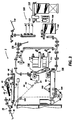
- Printing system 2 for purposes of explanation, is divided into a scanner section 6, controller section 7, and printer section 8. While a specific printing system is shown and described, the present invention may be used with other types of printing systems such as ink jet, ionographic, etc.
- scanner section 6 incorporates a transparent platen 20 on which the document 22 to be scanned is located.
- One or more linear arrays 24 are supported for reciprocating scanning movement below platen 20.
- Lens 27 and mirrors 28, 29, 30 cooperate to focus array 24 on a line like segment of platen 20 and the document being scanned thereon.
- Array 24 provides image signals or pixels representative of the image scanned which, after suitable processing by processor 25, are output to controller section 7.
- Processor 25 converts the analog image signals output by array 24 to digital image signals and processes the image signals as required to enable system 2 to store and handle the image data in the form required to carry out the job programmed. Processor 25 also provides enhancements and changes to the image signals such as filtering, thresholding, screening, cropping, reduction/enlarging, etc. Following any changes and adjustments in the job program, the document must be rescanned.
- Documents 22 to be scanned may be located on platen 20 for scanning by automatic document handler (ADF) 35 operable in either a Recirculating Document Handling (RDH) mode or a Semi-Automatic Document Handling (SADH) mode.
- a manual mode including a Book mode and a Computer Forms Feeder (CFF) mode are also provided, the latter to accommodate documents in the form of computer fanfold.
- document handler 35 has a document tray 37 in which documents 22 are arranged in stacks or batches. The documents 22 in tray 37 are advanced by vacuum feed belt 42 onto platen 20 where the document is scanned by array 24. Following scanning, the document is removed from platen 20 and discharged into catch tray 48.
- computer forms material is fed through slot 46 and advanced by feed rolls 49 to document feed belt 42 which in turn advances a page of the fanfold material into position on platen 20.
- printer section 8 comprises a laser type printer and, for purposes of explanation, is separated into a Raster Output Scanner (ROS) section 87, Print Module Section 95, Paper Supply section 107, and Finisher 120.
- ROS 95 has a laser 91, the beam of which is split into two imaging beams 94.
- Each beam 94 is modulated in accordance with the content of an image signal input by acousto-optic modulator 92 to provide dual imaging beams 94.
- Beams 94 are scanned across a moving photoreceptor 98 of Print Module 95 by the mirrored facets of a rotating polygon 100 to expose two image lines on photoreceptor 98 with each scan and create the latent electrostatic images represented by the image signal input to modulator 92.
- Photoreceptor 98 is uniformly charged by corotrons 102 at a charging station preparatory to exposure by imaging beams 94.
- the latent electrostatic images are developed by developer 104 and transferred at transfer station 106 to a print media 108 delivered by Paper Supply section 107.
- Media 108 as will appear may comprise any of a variety of sheet sizes, types, and colors.
- the print media is brought forward in timed registration with the developed image on photoreceptor 98 from either a main paper tray 110 or from auxiliary paper trays 112, or 114.
- the developed image transferred to the print media 108 is permanently fixed or fused by fuser 116 and the resulting prints discharged to either output tray 118, or to finisher 120.
- Finisher 120 includes a stitcher 122 for stitching or stapling the prints together to form books and a thermal binder 124 for adhesively binding the prints into books.
- controller section 7 is, for explanation purposes, divided into an image input controller 50, User Interface(UI) 52, system controller 54, main memory 56, image manipulation section 58, and image output controller 60.
- the scanned image data input from processor 25 of scanner section 6 to controller section 7 is compressed by image compressor/processor 51 of image output input controller 50 on PWB 70-3. As the image data passes through compressor/processor 51, it is segmented into slices N scanlines wide, each slice having a slice pointer.
- the compressed image data together with slice pointers and any related image descriptors providing image specific information are placed in an image file.
- the image files, which represent different print jobs, are temporarily stored in system memory 61 which comprises a Random Access Memory or RAM pending transfer to main memory 56 where the data is held pending use.
- UI 52 includes a combined operator controller/CRT display consisting of an interactive touchscreen 62, keyboard 64, and mouse 66.
- UI 52 interfaces the operator with printing system 2, enabling the operator to program print jobs and other instructions, to obtain system operating information, instructions, programming information, diagnostic information, etc.
- Items displayed on touchscreen 62 such as files and icons are actuated by either touching the displayed item on screen 62 with a finger or by using mouse 66 to point cursor 67 to the item selected and keying the mouse.
- Main memory 56 has plural hard disks 90-1, 90-2, 90-3 for storing machine Operating System software, machine operating data, and the scanned image data currently being processed.
- main memory 56 When the compressed image data in main memory 56 requires further processing, or is required for display on touchscreen 62 of UI 52, or is required by printer section 8, the data is accessed in main memory 56. Where further processing other than that provided by processor 25 is required, the data is transferred to image manipulation section 58 on PWB 70-6 where the additional processing steps such as collation, make ready, decomposition, etc. are carried out. Following processing, the data may be returned to main memory 56, sent to UI 52 for display on touchscreen 62, or sent to image output controller 60.
- Image data output to image output controller 60 is decompressed and readied for printing by image generating processors 86 of PWBs 70-7, 70-8 (seen in Figure 5A). Following this, the data is output by dispatch processors 88, 89 on PWB 70-9 to printer section 8. Image data sent to printer section 8 for printing is normally purged from memory 56 to make room for new image data.
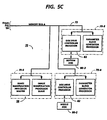
- control section 7 includes a plurality of Printed Wiring Boards (PWBs) 70, PWBs 70 being coupled with one another and with System Memory 61 by a pair of memory buses 72, 74.
- Memory controller 76 couples System Memory 61 with buss 72, 74.
- PWBs 70 include system processor PWB 70-1 having plural system processors 78; low speed I/O processor PWB 70-2 having UI communication controller 80 for transmitting data to and from UI 52; PWBs 70-3, 70-4, 70-5 having disk drive controller/processors 82 for transmitting data to and from disks 90-1, 90-2, 90-3 respectively of main memory 56 (image compressor/processor 51 for compressing the image data is on PWB 70-3); image manipulation PWB 70-6 with image manipulation processors of image manipulation section 58; image generation processor PWBs 70-7, 70- 8 with image generation processors 86 for processing the image data for printing by printer section 8; dispatch processor PWB 70-9 having dispatch processors 88, 89 for controlling transmission of data to and from printer section 8; and boot control-arbitration-scheduler PWB 70- 10.
- system processor PWB 70-1 having plural system processors 78
- low speed I/O processor PWB 70-2 having UI communication controller 80 for transmitting data to and from
- system control signals are distributed via a plurality of printed wiring boards (PWBs). These include EDN (electronic data node) core PWB 130, Marking Imaging core PWB 132, Paper Handling core PWB 134, and Finisher Binder core PWB 136 together with various Input/Output (I/O) PWBs 138.
- a system bus 140 couples the core PWBs 130, 132, 134, 136 with each other and with controller section 7 while local buses 142 serve to couple the I/O PWBs 138 with each other and with their associated core PWB.
- the Operating System software is loaded from memory 56 to EDN core PWB 130 and from there to remaining core PWBs 132, 134, 136 via bus 140, each core PWB 130, 132, 134, 136 having a boot ROM 147 for controlling downloading of Operating System software to PWB, fault detection, etc.
- Boot ROMs 147 also enable transmission of Operating System software and control data to and from PWBs 130, 132, 134, 136 via bus 140 and control data to and from I/O PWBs 138 via local buses 142.
- Additional ROM, RAM, and NVM memory types are resident at various locations within system 2.
- jobs are programmed in a Job Program mode in which there is displayed on touchscreen 62 a Job Ticket 150 and a Job Scorecard 152 for the job being programmed.
- Job Ticket 150 displays various job selections programmed while Job Scorecard 152 displays the basic instructions to the system for printing the job.
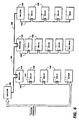
- Figure 8 is a plan view illustrating the duplex and simplex paper paths through which sheets are conveyed in the system of Figure 3.
- the path through which a sheet travels during duplex imaging is illustrated by the arrowed solid lines, whereas the path through which a sheet to be simplex imaged is illustrated by the arrowed broken lines.
- the sheet will be conveyed directly to finisher 120. If the sheet is a duplex sheet printed only with a side one image, the gate will deflect the sheet into inverter 170, where the sheet will be inverted and then fed to belt 174 for recirculation past transfer station 106 and fuser 116 for receiving and permanently fixing the side two image to the backside of the sheet.
- single sheet inverters are disclosed in the previously-mentioned U.S. Patent Nos. 4,918,490; 4,935,786; 4,934,681; and 4,453,841. Unlike some previously designed duplex paper feed paths, the arrangement shown in Fig.
- duplex paper path architecture offers a shorter duplex loop time because there is no sheet settling time nor sheet reacquisition time which is typically required with duplex architectures having a buffer tray therein.
- the absence of sheet buffering for the present architecture decreases the size of the duplex sheet tracking buffers in the IOT control system and reduces the maximum number of duplex path purge sheets. By eliminating buffering and reacquisition of sheets, this architecture eliminates the job integrity problems associated with delayed detection of duplex tray multifeeds.
- the single sheet inverter and duplex paper path employed in the present invention is capable of handling sheets ranging in width from 8 to 17 inches and ranging in length from 10 to 14.33 inches.
- the methods to be described are directed to the efficient scheduling of sheets for insertion into the duplex paper path loop, imaging, and outputting from the duplex paper path loop for simplex and/or duplex imaging.
- the methods make full use of the ability to rearrange the order of presentation of sheets to the duplex paper path, which ability is made available with electronic scanning systems due to the ability of these systems to scan documents and store data relating to the information contained on these documents in a memory.
- the scheduling methods are usable in any system which stores at least part of a job or jobs to be printed prior to starting the printing of the job(s).
- Stream Printing involves starting to print a job prior to completing the scanning of the job (i.e., starting to print at a time during scanning) which optimizes the overlap of scanning and printing while constantly maintaining an image to be printed available for the printer so that no skips are required to be inserted into the printing schedule.
- stream printing optimizes the time at which printing of a job begins during scanning so that the printer will never have to pause to wait for a document sheet to be scanned, and the last sheet of the document (or job) will be completely scanned and stored in memory just prior to starting to print the image corresponding to this last document sheet.
- a set is, for example, a document or multiple documents which belong together.
- each of the pages in one chapter of a book can be considered to be a set (or a document) because all pages in the chapter belong together.
- a book made from multiple chapters (or documents) can also be considered a set since all of the pages in all of the chapters belong together.
- a job is equal to one or more identical output sets.
- the methods to be described make use of the ability of imaging systems (such as shown in Figs. 1-8) to store in memory data representing information required to mark multiple sheets (containing the same or different images).
- the present printer is operable in what is known as "Burst Mode” printing wherein data representing plural sets or jobs is available to the printer at essentially the same time.
- a user of the printer system 2 may frequently present this system with a series of pre-recorded sheets and/or documents stored on, for example, a disc which he desires to be printed one or more times.
- the system efficiently presents the data representative of each sheet in one or more jobs to be printed to the duplex paper path loop so that few, if any, skipped pitches are placed in the duplex paper path loop.
- a skipped pitch is a gap between sheets in the duplex paper path loop which is large enough to contain a sheet. Since many commercial users of a printer system may make up to one million copies per month, any improvements that can be achieved in the efficiency of operation will increase productivity by a significant and noticeable amount.
- each set of each job to be printed is initially electronically divided into batches of plural page images per batch, with the number of page images per batch corresponding to the copy sheet capacity of the duplex path.
- This dividing is similar to what is disclosed in the above-referenced and incorporated U.S. Patent No. 4,918,490 to Stemmle.
- the present arrangement goes beyond that disclosed in the above Stemmle patent by further optimizing imaging efficiency, is applicable regardless of the duplex paper path capacity, and specifically addresses intermixed duplex and simplex sheets.
- the control of all machine functions, including all sheetfeeding, is, conventionally, by a machine controller.
- the controller is preferably a known programmable microprocessor system, as exemplified by extensive prior art, e.g., U.S. Patent No. 4,475,156 and its references. Plural but interconnecting microprocessors may also be used at different locations.
- the controller conventionally controls all the machine steps and functions described herein, and others, including the operation of the document feeder, all the document and copy sheet deflectors or gates, the sheet feeder drives, the finisher 120, etc.
- the copier controller also conventionally provides for storage and comparison of the counts of the copy sheets, the number of documents recirculated in a document set, the desired number of copy sets and other selections and controls by the operator through the console or other panel of switches connected to the controller, etc.
- the controller is also programmed for time delays, jam correction, etc.
- Conventional path sensors or switches may be utilized to help keep track of the position of the documents and the copy sheets and the moving components of the apparatus by connection to the controller.
- the controller variably regulates the various positions of the gates depending upon which mode of operation is selected.
- the controllers which control the sheet scheduling described below are Image Output Control 60 and EDN Core 130 of Figs. 2 and 6, respectively.
- the majority of the sheet scheduling functions are performed by the EDN Core 130.
- the Image Output 60 is responsible for converting simplex sheets to duplex with blank back sides (to be described below). The reason for this difference in responsibility is that the controller 7 needs to know the 'plex of all sheets to prepare the images correctly.
- other controller structures are possible depending on the hardware and software used.
- Methods in accordance with the present invention can be used to increase the efficiency of copy sheet imaging regardless of whether the sheets are imaged in 1-N or N-1 order.
- conventional copiers which, for example, image sheets as they are fed through, for example, an RDH
- duplex imaging could not begin until the entire document was fed through the RDH once so that the number of pages in a simplex document being copied in duplex form could be determined. This is because if an odd number of pages existed in the document being copied, the last sheet in the duplex copy of this document would be a simplex sheet having an image on only one side of its respective sheet.
- the system could not determine whether the first sheet to be printed (which would be the last chronological sheet in the set) should be simplex or duplex.
- the system will know whether each sheet in the set to be copied needs to be simplex or duplex based upon information which is also stored in memory.
- the data representing the information contained on original documents is initially presented to the scheduler (the controller which controls the scheduling functions is hereinafter referred to as a "scheduler" so as to distinguish it from other controllers in the system) in a manner which indicates, for each sheet of each set to be printed, whether the sheet is to be simplex or duplex imaged, and the appropriate image to be placed on the respective side(s) of each sheet.
- the chronological order of the information is usually 1-N or N-1, although the scheduler need not know this since the controller (which is arranged higher in the system control hierarchy and controls the entire imaging and sheet outputting process) controls the orientation and final destination of each sheet outputted from the duplex paper path based upon information also provided to the controller. Additional information provided to the controller includes the number of copies of each set to be marked as well as the number of sets in each job and the number and order of jobs to be marked.
- the printer can be controlled to consecutively image multiple copies of the set or document (in which case the output from the duplex paper path will be collated and each copy of the set or document can be stacked upon each other or directed to different output trays) or the printer can operate in a multiple imaging mode.
- the printer functions to consecutively image multiple copies of each page of the set or document to be copied plural times. For example, if three copies of a document were required and the document was to be printed in 1-N order, three consecutive sheets would receive the page 1 image, followed by the next three sheets receiving the page 3 image, etc. until the duplex paper path is filled to its capacity M.
- each sheet Upon being recirculated back to the imaging station, each sheet would then have the appropriate side 2 image placed on the side opposite from that receiving the side 1 image.
- the upper hierarchy controller Prior to performing the scheduling methods, the upper hierarchy controller would determine an initial sheet presentation order (i.e., in the present example, three duplex sheets to receive the page 1 and 2 images, followed by 3 sheets to receive the page 3 and 4 images, etc. up to page N).
- an initial sheet presentation order i.e., in the present example, three duplex sheets to receive the page 1 and 2 images, followed by 3 sheets to receive the page 3 and 4 images, etc. up to page N.
- the output from the duplex paper path is not collated.
- collation of the final output copies of the set or document is achieved using, for example, a bindexer such as disclosed in the above cited and incorporated U.S. Patent No. 4,782,363.
- each copy sheet to be imaged is not considered as part of scheduling methods in accordance with the present invention.
- the ordering of the actual content of each copy sheet to be printed is determined by other copy system control methods and algorithms.
- a stream of consecutive sheets to be printed, wherein each sheet is identified as being either simplex or duplex with, for example, software pointers indicating the file location of the image information to be printed on each side of the sheet, is presented to the sheet scheduler.
- the scheduler determines when and where to insert each copy sheet into the duplex paper path so that the printing operation will proceed as efficiently as possible, i.e., with the minimum amount of skipped pitches, while still outputting the sheets in the same order which they were originally presented to the scheduler if necessary.
- methods in accordance with the present invention can be used in printing systems which are also capable of printing in multiple colors orwhich use "highlight coloring” wherein images are printed in both red and black colors on the same sheet.
- Multiple color printing or highlight coloring can be performed by printing both colors on each sheet at the same time or by scheduling separate passes of each sheet by the imaging station for each separate color.
- the scheduling must be modified slightly in a manner which can be determined by one of ordinary skill in the art based on this disclosure to provide for more than two passes of a duplex sheet through the duplex loop or more than one pass of each sheet for simplex printing.
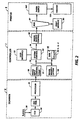
- Figure 9 is a flowchart illustrating conceptually the procedures of a controller for filling a duplex paper path loop to capacity regardless of set or job boundaries or the type of sheet (simplex or duplex) for being printed.
- the procedures illustrated in Figure 9 control the scheduling (i.e., the insertion of sheets into the duplex paper path loop) while eliminating as many skipped pitches as possible without disturbing the output order of sheets from the loop.
- the procedure illustrated in Figure 9 achieves this result by scheduling the sheets and images to be printed on each sheet for being passed through the duplex loop so that the duplex path is filled to capacity, if possible, with sheets.
- the capacity, M, of the duplex paper path loop is eight sheets (also known as eight pitches).
- the procedure is applicable to a paper path having other capacities.
- the same paper path loop is capable of holding different numbers of sheets depending on the size of the sheets.
- each sheet which is to be duplex printed is inverted by inverter 170 so that the side of the sheet opposite from the side containing the first image is conveyed by imaging station 106 for receiving a side two image on its second side.
- Each sheet is then outputfrom the duplex paper path loop and conveyed to finisher 120.
- finisher 120 After the simplex or duplex sheet is output from the duplex paper path loop, its previous location or pitch in the stream of sheets remaining in the duplex paper path loop is filled with a subsequent sheet to be printed.
- the system functions to continuously fill the duplex paper path loop with subsequent sheets whenever a pitch in the paper path loop adjacent the appropriate insertion station is empty regardless of the set or job from which the subsequent sheet is obtained.
- Previous systems which function to insert consecutive sheets into the duplex paper path loop without providing gaps between each consecutive sheet, schedule the sheets in a manner which results in skipped pitches existing in the duplex paper path loop sheet schedule between the side one imaging and side two imaging of the last sheets in the set or job being printed if the number of sheets in the set or job is not an integer multiple of the duplex loop capacity.
- interset duplex burst mode scheduling in which sheets from a set are inserted into the duplex paper path loop for imaging prior to side two imaging is performed on duplex sheets from a previous set is illustrated below: INTER SET DUPLEX BURST MODE SCHEDULING EXAMPLE Pitch Set Sheet Side 1 1 1 1 2 1 2 1 3 1 3 1 4 2 1 1 5 2 2 1 6 2 3 1 7 3 1 1 8 3 2 1 9 1 1 2 10 1 2 2 11 1 3 2 12 2 1 2 13 2 2 2 14 2 3 2 15 3 1 2 16 3 2 2 17 3 3 1 18 4 1 1 19 4 2 1 20 4 3 1 21 5 1 1 22 5 2 1 23 5 3 1 24 6 1 1
- the example job includes at least six sets, each set containing 3 duplex sheets.
- step S-1 the scheduling procedure begins.
- step S-2 a determination is made as to whether any additional sheets are present at the insertion station for being inserted into and scheduled for printing in the duplex paper path loop. If no sheets exist, the scheduling ends in step S-3. If sheets do exist, the scheduling procedure proceeds to step S-4 where it is determined whether the pitch adjacent the insertion station has been reserved for receiving a side two image. In other words, at step S-4, a determination is made as to whether a sheet exists in the pitch adjacent the insertion station, which sheet is to receive a side two image.
- step S-5 the side two image is scheduled for being imaged onto the sheet already existing in the duplex paper path loop. If the pitch is not reserved, a determination is made in step S-6 as to the number of pitches which have passed the insertion station since the last non-duplex sheet was scheduled. In this procedure, a "non-duplex sheet" is either a simplex sheet or a duplex side 2 image. If the number determined in step S-6 is greater than or equal to the duplex paper path loop capacity, M, the procedure proceeds to step S-7 and S-7.5 where the sheet is scheduled.
- the insertion station can be any of the areas adjacent feed trays 110, 112 or 114.
- step S-6 If the number determined in step S-6 is less than the duplex paper path loop capacity, M, a duplex side one image has been scheduled in the duplex paper path loop and its pitch which is reserved for receiving the side two image has not yet passed the insertion station. As such, it would not be desirable to place a simplex sheet into the duplex paper path loop unless the previously scheduled sheet was a simplex sheet.
- step S-8 a determination is made as to whether the next available unscheduled sheet is duplex and if it is duplex, the sheet is scheduled for side one imaging and the corresponding pitch is reserved for side two imaging in steps S-9 and S-10.
- step S-11 a determination is made as to whether the previously scheduled sheet was a duplex side one. If the last scheduled pitch was a duplex side two or simplex, the procedure proceeds to step S-12 where the simplex sheet is scheduled and inserted into the duplex paper path. If the previously scheduled pitch was for a duplex side one, the procedure proceeds to step S-13 and a pitch is skipped. This pitch must be skipped because if it were filled with the simplex sheet, the printing of the simplex sheet would be completed prior to the side two imaging of the previously scheduled duplex sheet, and thus the simplex sheet would be output from the paper path loop out of order with the duplex sheet.
- the simplex sheet were converted to a duplex sheet having a blank second side, it could be inserted into the duplex paper path loop immediately after the previously scheduled duplex side one sheet and recirculated through the loop but have a blank image "printed" on one of its sides so that the duplex sheets following the simplex sheet could be immediately scheduled.
- a set or job or combination of sets or jobs results in intermixed simplex and duplex sheets, and it is desirable to convert one or more of the simplex sheets to a duplex sheet so that the scheduling will proceed in a more efficient manner.
- the inverter skip is required in situations where a transition occurs in the sheets output from the duplex paper path, from sheets which must be inverted by a finisher-inverter 176 (see Fig. 3) to sheets which are not inverted by finisher-inverter 176.
- An inverter skip pitch is the same duration as any other skip pitch, it is simply a skip pitch dedicated to preventing sheet overlap in the finisher-inverter.
- typically duplex sheets are inverted by finisher-inverted 176 but simplex sheets are not inverted.
- the finisher-inverter subsystem can invert sheets at the printer's full output rate (e.g., 137 prints per minute) during steady state operation.
- the finisher- inverter 176 is a reversing roll type inverter, similar in concept to duplex paper path inverter 170, which effectively increases the paper path length for inverted sheets.
- a transition from inverted to non-inverted sheets shortens the effective paper length thereby shortening the distance between an inverted sheet and a trailing non-inverted sheet.
- the intersheet gap is shortened so much that sheet overlap (sheet collision) would occur if an inverted to non-inverted transition were permitted without a one pitch interval between sheet arrivals.
- step S-30 the scheduling of a sheet, sheet N, is initiated. However prior to scheduling sheet N, steps S-31 through S-35 take place to determine whether and if sheet N needs to be, and can be converted to a duplex sheet having a blank second side.
- step S-31 a determination is made as to whether the sheet is simplex or duplex. If the sheet is duplex, it is scheduled in step S-36. If the sheet is simplex, in step S-32 a determination is made as to the'plex of the previous (N-1) sheet. If the previous sheet was simplex, the current simplex sheet is scheduled as simplex.
- the current sheet can be scheduled as simplex because it will not disturb the output order of sheets since the previously scheduled sheet was also simplex and will therefor exit the duplex paper path loop just prior to the current (N) simplex sheet. If in step S-32, the previous sheet was duplex, a determination is made in step S-33 as to whether the duplex loop is full. If the duplex loop is full, the current sheet can be scheduled as simplex in step S-36 because it will not disturb the output order of sheets from the duplex paper path. If the duplex paper path loop is not full, the sheet is converted to a duplex sheet in step S-35, but preferably only if the current sheet (N) is to be printed on duplexable paper stock S-34. Although step S-34 can be left out, the risk of inverter jams increases. After scheduling sheet N in step S-36, the value of N is incremented in step S-37, and the procedure is performed for the next sheet.
- non-duplexable paper stock examples include some prepunched stocks (depending on printer paper path characteristics), transparencies (specifically, transparencies which have no backing sheet and which have an opaque lead edge), and tab stock.
- steps S-33, S-34, S- 35 and S-36 can be substituted for step S-13 in Figure 9 so that instead of skipping a pitch, the simplex sheet is converted to a duplex sheet if possible.
- Skip requests result from, for example, the paper path when a sheet of paper is not ready to be inserted into the duplex paper path loop at the desired pitch, the xerographic control system, or the Input Output Terminal when the IOT is informed that an image is not ready (i.e., when attempting to insert a sheet into the duplex paper path, the image to be placed upon that sheet has not been found or fully retrieved from memory - this can occur when the graphics in the image is very complex).
- this requested skip would show up in the side two sheet stream and is referred to as the back side of the skip request or an unexpected gap.
- the system is capable of monitoring the insertion of sheets into the duplex paper path loop and determining whether and where any unscheduled sheet gaps exist between sheets in the duplex paper path loop.
- the determination can be made when the skip request is issued or by sensing gaps in a stream of duplex sheets which have been printed with a side one image as they pass the insertion station.
- the system modifies the scheduling so that the unexpected gap which exists between the duplex sheets printed with a side one image is filled when the gap passes by the insertion station by inserting and scheduling the next available sheet for side one imaging in the unexpected gap.
- burst mode duplex scheduling is insensitive to set or job boundaries
- the sheets in the above example can be located in more than one set or job.
- the above example illustrates the use of adaptive duplex scheduling for only duplex sheets, it can also be used with a series of duplex sheets which include one or more simplex sheets interspersed therein. The simplex sheets can be inserted into the unexpected, unscheduled gaps whenever the simplex sheet is being routed to a final destination which is dif ferent than the duplex sheet following it.
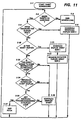
- FIG 11 is a flow chart illustrating conceptually the procedures of a controller for filling unexpected sheet gaps in a duplex side two sheet stream. Steps S-1 through S-5 are the same as in Figure 9. If in step S-4 the pitch which is located adjacent the insertion station is not reserved for a duplex side two image, the procedure proceeds to step S-20 where a determination is made as to whether this unscheduled sheet is simplex or duplex. If the sheet is duplex, it is scheduled for side one imaging and the appropriate pitch is reserved for receiving the duplex sheet side two image in steps S-21 and S-22.
- step S-20 If the sheet is determined to be simplex in step S-20, a series of determinations are made in steps S-23 through S- 25 which will determine whether this sheet can be scheduled in the unexpected sheet gap or if the pitch must be skipped.
- the next available sheet will be scheduled in step S-26 for side one imaging unless it has a final destination which is the same as the immediately previously scheduled sheet, the immediately previously scheduled sheet is duplex, and pitches which are reserved for receiving duplex side two images exist in the duplex paper path loop. If any of the above-recited situations do not exist, the sheet can be scheduled in the unexpected sheet gap without disrupting the order of outputting of sheets from the duplex paper path loop.
- Another method for increasing the efficiency of printing with a printer having an endless duplex paper path loop without a buffer tray involves selectively altering the sheet scheduling sequence at simplex-to-duplex sheet transitions.
- This productivity improvement is achieved at simplex-to-duplex transitions in the sheet stream to be scheduled by advancing the scheduling of some of the duplex side one sheets ahead of the last simplex sheet(s) to avoid skipping pitches while waiting for the duplex sheets to travel the duplex loop for receiving their side two images.
- some of the duplex side ones should be scheduled prior to the last simplex print:
- FIGS 12 and 13 are flow charts illustrating conceptually alternative procedures of a controller for shifting simplex or duplex sheets at a slmplex-to-duplex transition to reduce the number of skipped pitches, if any, in the duplex side one sheet stream.
- steps S-1 through S-5 are the same as in Figure 9.
- the procedure proceeds to step S-40.
- step S- 40 the controller which controls scheduling looks at the next M sheets which are to be scheduled in the duplex paper path loop and determines whether a simplex-to-duplex side one transition occurs in those sheets. If no such transition occurs, the procedure proceeds to step S-42, to be explained below.
- step S-41 the next M number of sheets are locally reordered.
- This reordering includes shifting all sheets in a first subgroup of contiguous duplex sheets within the group of M sheets ahead of a first simplex sheet in that group of M sheets. This reordering will be performed regardless of whether or not the series of duplex sheets located Immediately subsequent to the simplex-to-duplex transition will fill the duplex paper path loop. This occurs because, in the example of Figure 12, the controller is not capable of looking" far enough into the series of unscheduled sheets to determine whether there are enough duplex sheets after the simplex-to-duplex transition to fill the duplex paper path loop.
- step S-42 normal sheet scheduling can be the steps of proceeding to step S-6 in the control procedure illustrated in Figure 9.
- the procedure illustrated in Figure 12 can be implemented by inserting steps S-40 and S-41 between steps S-4 and S-6 in the procedure of Figure 9.
- the control procedure illustrated in Figure 13 is similar to that of Figure 12 except that it is usable with a controller which can look at least 2M-1 number of sheets into the series of sheets which have not yet been scheduled for insertion into the duplex paper path.
- the procedure of Figure 13 can determine whether the number of duplex sheets which are to be output after the simplex-to- duplex transition will fill or exceed the duplex paper path loop capacity M.
- steps S-50 and S-52 of Figure 13 are the same as steps S-40 and S-42 of Figure 12, the determination made in steps S-51 and S-51.5 differs from that made in S-41 of Figure 12.
- steps S- 51 and S-51.5 all sheets, G, in a first subgroup of contiguous duplex sheets located after the simplex-to- duplex transition are shifted ahead of a number M minus G of simplex sheets located just prior to the transition if the number of duplex sheets in the first subgroup, G, is less than the capacity of the duplex paper path loop, M.
- a variety of scheduling procedures are provided which improve the efficiency of operation of an imaging device having an endless duplex paper path loop, particularly without a buffer tray.
- scheduling procedures which are "predictive" (i.e., the scheduling of sheets is determined prior to attempting to insert sheets into the duplex paper path loop, and the scheduling is inflexible to what actually occurs during the sheet insertion process and to the duplex paper path loop capacity)
- the described procedures base the scheduling of sheets on, among other things, what is actually occurring in the duplex paper path loop (i.e., whether the loop is full, whether any unexpected sheet gaps exist, whether surrounding sheets are simplex or duplex, etc.).
- procedures according to the present invention can be applied to many existing scheduling schemes to further improve their efficiency.
- procedures in accordance with the present invention can also be used in schemes which alternately insert sheets such as described above in reference to the Xerox "9700" copier and U.S. Patent No. 4,935,786.
- the procedures for filling unexpected sheet gaps, for converting simplex sheets to duplex sheets having blank back sides, and for reordering sheets at simplex-to- duplex transitions can be applied to copiers which alternately insert sheets.
- duplex is facilitated without a staging (buffer) tray.
- the elimination of requirements for a staging tray is accomplished because the system computer can predict any race-track (loop number) of documents, the arrival of the second side requirement, and intersperse second side imaging with first side imaging.
- An ancillary benefit of this type of duplexing is that even for small sheets, purging in the event of a problem does not require purging of an entire tray content but only the race track content which typically numbers only a very few sheets.
- Systems utilizing scheduling procedures in accordance with the invention also facilitate doing a variety of special duplexing operations such as signature making which previously were impossible or very difficult and cumbersome to do in light/lens systems.
- the disclosed system provides for efficient non- directly-sequential document page copying order or sequencing yet is capable of providing collated duplex copy sets therefrom, without requiring a large number of page images to be stored in electronic memory buffers even for jobs with a large number of pages.
Landscapes
- Engineering & Computer Science (AREA)
- Multimedia (AREA)
- Signal Processing (AREA)
- Physics & Mathematics (AREA)
- General Physics & Mathematics (AREA)
- Counters In Electrophotography And Two-Sided Copying (AREA)
- Accessory Devices And Overall Control Thereof (AREA)
- Conveyance By Endless Belt Conveyors (AREA)
- Paper Feeding For Electrophotography (AREA)
- Exposure Or Original Feeding In Electrophotography (AREA)
- Control Or Security For Electrophotography (AREA)
- Collation Of Sheets And Webs (AREA)
- Facsimiles In General (AREA)
- Handling Of Cut Paper (AREA)
- Record Information Processing For Printing (AREA)
Applications Claiming Priority (2)
| Application Number | Priority Date | Filing Date | Title |
|---|---|---|---|
| US590236 | 1990-09-28 | ||
| US07/590,236 US5095342A (en) | 1990-09-28 | 1990-09-28 | Methods for sheet scheduling in an imaging system having an endless duplex paper path loop |
Publications (4)
| Publication Number | Publication Date |
|---|---|
| EP0478348A2 EP0478348A2 (en) | 1992-04-01 |
| EP0478348A3 EP0478348A3 (en) | 1992-04-15 |
| EP0478348B1 EP0478348B1 (en) | 1994-12-28 |
| EP0478348B2 true EP0478348B2 (en) | 2005-02-09 |
Family
ID=24361419
Family Applications (1)
| Application Number | Title | Priority Date | Filing Date |
|---|---|---|---|
| EP91308828A Expired - Lifetime EP0478348B2 (en) | 1990-09-28 | 1991-09-27 | Methods for sheet scheduling in an imaging system having an endless duplex paper path loop |
Country Status (6)
| Country | Link |
|---|---|
| US (1) | US5095342A (ja) |
| EP (1) | EP0478348B2 (ja) |
| JP (1) | JP3323214B2 (ja) |
| AU (1) | AU637751B2 (ja) |
| CA (1) | CA2046549C (ja) |
| DE (1) | DE69106300T3 (ja) |
Families Citing this family (187)
| Publication number | Priority date | Publication date | Assignee | Title |
|---|---|---|---|---|
| US5159395A (en) * | 1991-08-29 | 1992-10-27 | Xerox Corporation | Method of scheduling copy sheets in a dual mode duplex printing system |
| US5184185A (en) * | 1991-08-29 | 1993-02-02 | Xerox Corporation | Method for duplex printing scheduling system combining finisher interset skipped pitches with duplex sheet scheduling |
| US5227853A (en) * | 1991-10-16 | 1993-07-13 | Xerox Corporation | Compliant fusing roller |
| IL101374A0 (en) * | 1992-03-25 | 1992-11-15 | Scitex Corp Ltd | Apparatus for automatic scanning of a plurality of input media |
| US5272511A (en) * | 1992-04-30 | 1993-12-21 | Xerox Corporation | Sheet inserter and methods of inserting sheets into a continuous stream of sheets |
| DE59308238D1 (de) * | 1992-06-26 | 1998-04-16 | Gretag Imaging Ag | Verfahren zum Betrieb einer fotografischen Verarbeitungsanlage und fotografische Verarbeitungsanlage |
| IL103801A0 (en) * | 1992-11-19 | 1993-04-04 | Scitex Corp Ltd | Apparatus for scanning more than one input medium |
| JPH06247591A (ja) * | 1993-02-20 | 1994-09-06 | Minolta Camera Co Ltd | 画像形成装置 |
| US5381220A (en) * | 1993-05-04 | 1995-01-10 | Xerox Corporation | Sheet handling system for plural cycle printing machines |
| JPH0772767A (ja) * | 1993-06-15 | 1995-03-17 | Xerox Corp | 対話型ユーザ支援システム |
| US5337135A (en) * | 1993-09-30 | 1994-08-09 | Xerox Corporation | Higher productivity trayless duplex printer with variable path velocity |
| US5703693A (en) * | 1994-05-02 | 1997-12-30 | Minolta Co., Ltd. | Digital copy machine allowing duplex copying in short time through novel recirculation timing |
| US5452068A (en) * | 1994-05-31 | 1995-09-19 | Xerox Corporation | Apparatus and method for reducing productivity losses in a marking engine |
| JP3459688B2 (ja) * | 1994-07-25 | 2003-10-20 | キヤノン株式会社 | 画像出力装置および画像出力方法 |
| US5467182A (en) | 1994-11-18 | 1995-11-14 | Xerox Corporation | Sheet transport for high productivity trayless duplex |
| US5579447A (en) | 1994-11-25 | 1996-11-26 | Xerox Corporation | System for developing and displaying a representation of a total estimated time to print a job |
| US5559595A (en) * | 1994-12-12 | 1996-09-24 | Xerox Corporiation | Apparatus and method for scheduling inversions of post printing inserts |
| US5596389A (en) * | 1994-12-12 | 1997-01-21 | Xerox Corporation | Apparatus and method for scheduling an imagable substrate and a special sheet to be fed in the same pitch |
| US5557367A (en) * | 1995-03-27 | 1996-09-17 | Xerox Corporation | Method and apparatus for optimizing scheduling in imaging devices |
| US5489969A (en) * | 1995-03-27 | 1996-02-06 | Xerox Corporation | Apparatus and method of controlling interposition of sheet in a stream of imaged substrates |
| US5504568A (en) * | 1995-04-21 | 1996-04-02 | Xerox Corporation | Print sequence scheduling system for duplex printing apparatus |
| US5668942A (en) * | 1995-06-07 | 1997-09-16 | Xerox Corporation | Generic system for describing and using resources for print engine scheduling |
| US5694529A (en) * | 1995-06-07 | 1997-12-02 | Xerox Corporation | System for automatically configuring print engine software from print engine module capabilities |
| US5835688A (en) * | 1995-06-07 | 1998-11-10 | Xerox Corporation | Generic method for automatically generating finite-state machines for schedudling from print engine capabilities |
| US5696893A (en) * | 1995-06-07 | 1997-12-09 | Xerox Corporation | System for generically describing and scheduling operation of modular printing machine |
| US5781710A (en) * | 1995-06-07 | 1998-07-14 | Xerox Corporation | Generic method for scheduling print engines using print engine capabilities |
| US5771339A (en) * | 1995-06-07 | 1998-06-23 | Xerox Corporation | Method for automatically deriving print engine capabilities for incremental scheduling from compositional print engine models |
| US5933686A (en) * | 1995-12-31 | 1999-08-03 | Minolta Co., Ltd. | Image processing unit having reserve function |
| US6204927B1 (en) * | 1996-07-08 | 2001-03-20 | Canon Kabushiki Kaisha | Image forming apparatus and method of controlling same |
| EP0841601A1 (en) * | 1996-10-08 | 1998-05-13 | Océ-Technologies B.V. | Method of scheduling a sequence of pages to be printed with a duplex printer |
| US5812273A (en) * | 1997-01-21 | 1998-09-22 | Xerox Corporation | Operation scheduling system for a digital printing apparatus, using a table of executed operations to revise a schedule in real time |
| JP3772498B2 (ja) * | 1997-11-27 | 2006-05-10 | コニカミノルタビジネステクノロジーズ株式会社 | 画像形成装置 |
| JP3256681B2 (ja) * | 1998-05-22 | 2002-02-12 | シャープ株式会社 | 画像形成装置および画像形成方法 |
| DE19836745C2 (de) * | 1998-08-13 | 2003-07-24 | Oce Printing Systems Gmbh | Tandem-Drucksystem |
| JP3504522B2 (ja) * | 1998-12-21 | 2004-03-08 | シャープ株式会社 | 画像形成装置 |
| US6064840A (en) * | 1999-05-26 | 2000-05-16 | Xerox Corporation | Method and apparatus for scheduling duplex copy jobs by shifting copy sheet into an available pitch to create a skipped pitch between copy sets |
| US6728006B1 (en) | 2000-03-24 | 2004-04-27 | International Business Machines Corporation | Method, system, and program for generating a blank side of a page in a print job |
| US6608990B1 (en) | 2000-10-19 | 2003-08-19 | Heidelberger Druckmaschinen Ag | Job ordering system for an image-forming machine |
| US6985250B2 (en) * | 2002-01-07 | 2006-01-10 | Xerox Corporation | Alternate imaging mode for multipass direct marking |
| US7233405B2 (en) * | 2002-10-30 | 2007-06-19 | Palo Alto Research Center, Incorporated | Planning and scheduling reconfigurable systems with regular and diagnostic jobs |
| US7230736B2 (en) * | 2002-10-30 | 2007-06-12 | Palo Alto Research Center, Incorporated | Planning and scheduling reconfigurable systems with alternative capabilities |
| US8315898B2 (en) * | 2002-10-30 | 2012-11-20 | Palo Alto Research Center, Incorporated | Planning and scheduling reconfigurable systems around off-line resources |
| US6895197B2 (en) * | 2002-11-21 | 2005-05-17 | Kabushiki Kaisha Toshiba | Method and apparatus for forming an image |
| US6814004B2 (en) | 2003-03-05 | 2004-11-09 | Xerox Corporation | Face-to-face printing within booklet |
| US6856845B2 (en) | 2003-04-28 | 2005-02-15 | Palo Alto Research Center Inc. | Monitoring and reporting incremental job status system and method |
| US7139629B2 (en) * | 2003-04-28 | 2006-11-21 | Palo Alto Research Center Incorporated | Planning and scheduling for failure recovery system and method |
| US6895292B2 (en) | 2003-04-28 | 2005-05-17 | Palo Alto Research Center Inc. | Predictive and preemptive planning and scheduling for different job priorities system and method |
| US20040222374A1 (en) * | 2003-05-07 | 2004-11-11 | Scheidemann Adi A. | Ion detector array assembly and devices comprising the same |
| US7226049B2 (en) * | 2003-06-06 | 2007-06-05 | Xerox Corporation | Universal flexible plural printer to plural finisher sheet integration system |
| US8064520B2 (en) * | 2003-09-07 | 2011-11-22 | Microsoft Corporation | Advanced bi-directional predictive coding of interlaced video |
| US7426043B2 (en) * | 2003-10-22 | 2008-09-16 | Xerox Corporation | Asymmetric IDZ precession in a multi-pass direct marking system |
| US7532342B2 (en) * | 2003-10-22 | 2009-05-12 | Xerox Corporation | Dynamic IDZ precession in a multi-pass direct marking system |
| US20050146739A1 (en) * | 2003-12-26 | 2005-07-07 | Cody Rayl | Method and apparatus for print driver simplex/duplex control |
| US7130574B2 (en) * | 2004-03-26 | 2006-10-31 | Lexmark International, Inc. | Image forming device with multimode duplexer |
| US7512455B2 (en) * | 2004-03-29 | 2009-03-31 | Palo Alto Research Center Incorporated | Method for self-synchronization of modular production systems |
| US7185888B2 (en) * | 2004-03-29 | 2007-03-06 | Palo Alto Research Center Incorporated | Rotational jam clearance apparatus |
| US7396012B2 (en) * | 2004-06-30 | 2008-07-08 | Xerox Corporation | Flexible paper path using multidirectional path modules |
| US7188929B2 (en) * | 2004-08-13 | 2007-03-13 | Xerox Corporation | Parallel printing architecture with containerized image marking engines |
| US7206532B2 (en) * | 2004-08-13 | 2007-04-17 | Xerox Corporation | Multiple object sources controlled and/or selected based on a common sensor |
| US7742185B2 (en) * | 2004-08-23 | 2010-06-22 | Xerox Corporation | Print sequence scheduling for reliability |
| US7308218B2 (en) * | 2005-06-14 | 2007-12-11 | Xerox Corporation | Warm-up of multiple integrated marking engines |
| US7024152B2 (en) * | 2004-08-23 | 2006-04-04 | Xerox Corporation | Printing system with horizontal highway and single pass duplex |
| US7493055B2 (en) * | 2006-03-17 | 2009-02-17 | Xerox Corporation | Fault isolation of visible defects with manual module shutdown options |
| US8407077B2 (en) * | 2006-02-28 | 2013-03-26 | Palo Alto Research Center Incorporated | System and method for manufacturing system design and shop scheduling using network flow modeling |
| US7302199B2 (en) * | 2005-05-25 | 2007-11-27 | Xerox Corporation | Document processing system and methods for reducing stress therein |
| US7542059B2 (en) * | 2006-03-17 | 2009-06-02 | Xerox Corporation | Page scheduling for printing architectures |
| US9250967B2 (en) * | 2004-08-23 | 2016-02-02 | Palo Alto Research Center Incorporated | Model-based planning with multi-capacity resources |
| US7649645B2 (en) | 2005-06-21 | 2010-01-19 | Xerox Corporation | Method of ordering job queue of marking systems |
| US7619769B2 (en) * | 2005-05-25 | 2009-11-17 | Xerox Corporation | Printing system |
| US7787138B2 (en) * | 2005-05-25 | 2010-08-31 | Xerox Corporation | Scheduling system |
| US7224913B2 (en) * | 2005-05-05 | 2007-05-29 | Xerox Corporation | Printing system and scheduling method |
| US20070002085A1 (en) * | 2005-06-30 | 2007-01-04 | Xerox Corporation | High availability printing systems |
| US7136616B2 (en) * | 2004-08-23 | 2006-11-14 | Xerox Corporation | Parallel printing architecture using image marking engine modules |
| US7245838B2 (en) * | 2005-06-20 | 2007-07-17 | Xerox Corporation | Printing platform |
| US7123873B2 (en) * | 2004-08-23 | 2006-10-17 | Xerox Corporation | Printing system with inverter disposed for media velocity buffering and registration |
| US7324779B2 (en) * | 2004-09-28 | 2008-01-29 | Xerox Corporation | Printing system with primary and secondary fusing devices |
| US7336920B2 (en) * | 2004-09-28 | 2008-02-26 | Xerox Corporation | Printing system |
| US7751072B2 (en) * | 2004-09-29 | 2010-07-06 | Xerox Corporation | Automated modification of a marking engine in a printing system |
| US20060114497A1 (en) * | 2004-11-30 | 2006-06-01 | Xerox Corporation | Printing system |
| US7162172B2 (en) * | 2004-11-30 | 2007-01-09 | Xerox Corporation | Semi-automatic image quality adjustment for multiple marking engine systems |
| US7305194B2 (en) * | 2004-11-30 | 2007-12-04 | Xerox Corporation | Xerographic device streak failure recovery |
| US7412180B2 (en) * | 2004-11-30 | 2008-08-12 | Xerox Corporation | Glossing system for use in a printing system |
| US7245856B2 (en) * | 2004-11-30 | 2007-07-17 | Xerox Corporation | Systems and methods for reducing image registration errors |
| US7791751B2 (en) * | 2004-11-30 | 2010-09-07 | Palo Alto Research Corporation | Printing systems |
| US7283762B2 (en) * | 2004-11-30 | 2007-10-16 | Xerox Corporation | Glossing system for use in a printing architecture |
| US7310108B2 (en) * | 2004-11-30 | 2007-12-18 | Xerox Corporation | Printing system |
| JP4450205B2 (ja) * | 2004-12-24 | 2010-04-14 | ブラザー工業株式会社 | インクジェット記録装置 |
| JP2006218850A (ja) * | 2005-01-17 | 2006-08-24 | Ricoh Co Ltd | 記録装置 |
| US7226158B2 (en) * | 2005-02-04 | 2007-06-05 | Xerox Corporation | Printing systems |
| US7791741B2 (en) * | 2005-04-08 | 2010-09-07 | Palo Alto Research Center Incorporated | On-the-fly state synchronization in a distributed system |
| US7873962B2 (en) * | 2005-04-08 | 2011-01-18 | Xerox Corporation | Distributed control systems and methods that selectively activate respective coordinators for respective tasks |
| US8819103B2 (en) * | 2005-04-08 | 2014-08-26 | Palo Alto Research Center, Incorporated | Communication in a distributed system |
| US8081329B2 (en) | 2005-06-24 | 2011-12-20 | Xerox Corporation | Mixed output print control method and system |
| US8014024B2 (en) * | 2005-03-02 | 2011-09-06 | Xerox Corporation | Gray balance for a printing system of multiple marking engines |
| US7697151B2 (en) * | 2005-03-25 | 2010-04-13 | Xerox Corporation | Image quality control method and apparatus for multiple marking engine systems |
| US7258340B2 (en) * | 2005-03-25 | 2007-08-21 | Xerox Corporation | Sheet registration within a media inverter |
| US7416185B2 (en) * | 2005-03-25 | 2008-08-26 | Xerox Corporation | Inverter with return/bypass paper path |
| US7206536B2 (en) * | 2005-03-29 | 2007-04-17 | Xerox Corporation | Printing system with custom marking module and method of printing |
| US7245844B2 (en) * | 2005-03-31 | 2007-07-17 | Xerox Corporation | Printing system |
| US7444108B2 (en) * | 2005-03-31 | 2008-10-28 | Xerox Corporation | Parallel printing architecture with parallel horizontal printing modules |
| US7305198B2 (en) * | 2005-03-31 | 2007-12-04 | Xerox Corporation | Printing system |
| US7272334B2 (en) * | 2005-03-31 | 2007-09-18 | Xerox Corporation | Image on paper registration alignment |
| US7706007B2 (en) * | 2005-04-08 | 2010-04-27 | Palo Alto Research Center Incorporated | Synchronization in a distributed system |
| US7566053B2 (en) * | 2005-04-19 | 2009-07-28 | Xerox Corporation | Media transport system |
| US7593130B2 (en) * | 2005-04-20 | 2009-09-22 | Xerox Corporation | Printing systems |
| US20060244980A1 (en) * | 2005-04-27 | 2006-11-02 | Xerox Corporation | Image quality adjustment method and system |
| US20060268287A1 (en) * | 2005-05-25 | 2006-11-30 | Xerox Corporation | Automated promotion of monochrome jobs for HLC production printers |
| US7486416B2 (en) * | 2005-06-02 | 2009-02-03 | Xerox Corporation | Inter-separation decorrelator |
| US8004729B2 (en) * | 2005-06-07 | 2011-08-23 | Xerox Corporation | Low cost adjustment method for printing systems |
| US7387297B2 (en) * | 2005-06-24 | 2008-06-17 | Xerox Corporation | Printing system sheet feeder using rear and front nudger rolls |
| US7310493B2 (en) * | 2005-06-24 | 2007-12-18 | Xerox Corporation | Multi-unit glossing subsystem for a printing device |
| US7451697B2 (en) * | 2005-06-24 | 2008-11-18 | Xerox Corporation | Printing system |
| US7433627B2 (en) * | 2005-06-28 | 2008-10-07 | Xerox Corporation | Addressable irradiation of images |
| US8259369B2 (en) | 2005-06-30 | 2012-09-04 | Xerox Corporation | Color characterization or calibration targets with noise-dependent patch size or number |
| US8203768B2 (en) * | 2005-06-30 | 2012-06-19 | Xerox Corporaiton | Method and system for processing scanned patches for use in imaging device calibration |
| US7647018B2 (en) * | 2005-07-26 | 2010-01-12 | Xerox Corporation | Printing system |
| US7496412B2 (en) | 2005-07-29 | 2009-02-24 | Xerox Corporation | Control method using dynamic latitude allocation and setpoint modification, system using the control method, and computer readable recording media containing the control method |
| US7466940B2 (en) * | 2005-08-22 | 2008-12-16 | Xerox Corporation | Modular marking architecture for wide media printing platform |
| US7474861B2 (en) * | 2005-08-30 | 2009-01-06 | Xerox Corporation | Consumable selection in a printing system |
| US7911652B2 (en) * | 2005-09-08 | 2011-03-22 | Xerox Corporation | Methods and systems for determining banding compensation parameters in printing systems |
| US7495799B2 (en) * | 2005-09-23 | 2009-02-24 | Xerox Corporation | Maximum gamut strategy for the printing systems |
| US7430380B2 (en) * | 2005-09-23 | 2008-09-30 | Xerox Corporation | Printing system |
| US7444088B2 (en) * | 2005-10-11 | 2008-10-28 | Xerox Corporation | Printing system with balanced consumable usage |
| US7811017B2 (en) * | 2005-10-12 | 2010-10-12 | Xerox Corporation | Media path crossover for printing system |
| US8711435B2 (en) * | 2005-11-04 | 2014-04-29 | Xerox Corporation | Method for correcting integrating cavity effect for calibration and/or characterization targets |
| US7719716B2 (en) * | 2005-11-04 | 2010-05-18 | Xerox Corporation | Scanner characterization for printer calibration |
| US7660460B2 (en) * | 2005-11-15 | 2010-02-09 | Xerox Corporation | Gamut selection in multi-engine systems |
| US7280771B2 (en) * | 2005-11-23 | 2007-10-09 | Xerox Corporation | Media pass through mode for multi-engine system |
| US7519314B2 (en) * | 2005-11-28 | 2009-04-14 | Xerox Corporation | Multiple IOT photoreceptor belt seam synchronization |
| US7922288B2 (en) * | 2005-11-30 | 2011-04-12 | Xerox Corporation | Printing system |
| US7636543B2 (en) * | 2005-11-30 | 2009-12-22 | Xerox Corporation | Radial merge module for printing system |
| US7575232B2 (en) * | 2005-11-30 | 2009-08-18 | Xerox Corporation | Media path crossover clearance for printing system |
| US7706737B2 (en) | 2005-11-30 | 2010-04-27 | Xerox Corporation | Mixed output printing system |
| US7912416B2 (en) * | 2005-12-20 | 2011-03-22 | Xerox Corporation | Printing system architecture with center cross-over and interposer by-pass path |
| US7756428B2 (en) * | 2005-12-21 | 2010-07-13 | Xerox Corp. | Media path diagnostics with hyper module elements |
| US7826090B2 (en) * | 2005-12-21 | 2010-11-02 | Xerox Corporation | Method and apparatus for multiple printer calibration using compromise aim |
| US8102564B2 (en) * | 2005-12-22 | 2012-01-24 | Xerox Corporation | Method and system for color correction using both spatial correction and printer calibration techniques |
| US7624981B2 (en) * | 2005-12-23 | 2009-12-01 | Palo Alto Research Center Incorporated | Universal variable pitch interface interconnecting fixed pitch sheet processing machines |
| US7746524B2 (en) * | 2005-12-23 | 2010-06-29 | Xerox Corporation | Bi-directional inverter printing apparatus and method |
| US7963518B2 (en) * | 2006-01-13 | 2011-06-21 | Xerox Corporation | Printing system inverter apparatus and method |
| US8477333B2 (en) * | 2006-01-27 | 2013-07-02 | Xerox Corporation | Printing system and bottleneck obviation through print job sequencing |
| US7630669B2 (en) * | 2006-02-08 | 2009-12-08 | Xerox Corporation | Multi-development system print engine |
| US7672006B2 (en) * | 2006-02-22 | 2010-03-02 | Xerox Corporation | Multi-marking engine printing platform |
| US8194262B2 (en) * | 2006-02-27 | 2012-06-05 | Xerox Corporation | System for masking print defects |
| US7965397B2 (en) * | 2006-04-06 | 2011-06-21 | Xerox Corporation | Systems and methods to measure banding print defects |
| US8330965B2 (en) | 2006-04-13 | 2012-12-11 | Xerox Corporation | Marking engine selection |
| US7681883B2 (en) * | 2006-05-04 | 2010-03-23 | Xerox Corporation | Diverter assembly, printing system and method |
| US7800777B2 (en) * | 2006-05-12 | 2010-09-21 | Xerox Corporation | Automatic image quality control of marking processes |
| US7679631B2 (en) | 2006-05-12 | 2010-03-16 | Xerox Corporation | Toner supply arrangement |
| US7382993B2 (en) * | 2006-05-12 | 2008-06-03 | Xerox Corporation | Process controls methods and apparatuses for improved image consistency |
| US7865125B2 (en) * | 2006-06-23 | 2011-01-04 | Xerox Corporation | Continuous feed printing system |
| US7856191B2 (en) * | 2006-07-06 | 2010-12-21 | Xerox Corporation | Power regulator of multiple integrated marking engines |
| US7924443B2 (en) * | 2006-07-13 | 2011-04-12 | Xerox Corporation | Parallel printing system |
| DE102006040527A1 (de) * | 2006-08-30 | 2008-03-27 | Eastman Kodak Co. | Verfahren zur Durchführung eines Druckauftrages mit einer Druckmaschine |
| US8607102B2 (en) * | 2006-09-15 | 2013-12-10 | Palo Alto Research Center Incorporated | Fault management for a printing system |
| US7766327B2 (en) * | 2006-09-27 | 2010-08-03 | Xerox Corporation | Sheet buffering system |
| US7857309B2 (en) * | 2006-10-31 | 2010-12-28 | Xerox Corporation | Shaft driving apparatus |
| US7819401B2 (en) * | 2006-11-09 | 2010-10-26 | Xerox Corporation | Print media rotary transport apparatus and method |
| US8159713B2 (en) * | 2006-12-11 | 2012-04-17 | Xerox Corporation | Data binding in multiple marking engine printing systems |
| US7969624B2 (en) * | 2006-12-11 | 2011-06-28 | Xerox Corporation | Method and system for identifying optimal media for calibration and control |
| US7945346B2 (en) * | 2006-12-14 | 2011-05-17 | Palo Alto Research Center Incorporated | Module identification method and system for path connectivity in modular systems |
| US8100523B2 (en) * | 2006-12-19 | 2012-01-24 | Xerox Corporation | Bidirectional media sheet transport apparatus |
| US8145335B2 (en) | 2006-12-19 | 2012-03-27 | Palo Alto Research Center Incorporated | Exception handling |
| US7559549B2 (en) | 2006-12-21 | 2009-07-14 | Xerox Corporation | Media feeder feed rate |
| US8693021B2 (en) * | 2007-01-23 | 2014-04-08 | Xerox Corporation | Preemptive redirection in printing systems |
| US7934825B2 (en) * | 2007-02-20 | 2011-05-03 | Xerox Corporation | Efficient cross-stream printing system |
| US7676191B2 (en) | 2007-03-05 | 2010-03-09 | Xerox Corporation | Method of duplex printing on sheet media |
| US20080260445A1 (en) * | 2007-04-18 | 2008-10-23 | Xerox Corporation | Method of controlling automatic electrostatic media sheet printing |
| US20080268839A1 (en) * | 2007-04-27 | 2008-10-30 | Ayers John I | Reducing a number of registration termination massages in a network for cellular devices |
| US7894107B2 (en) * | 2007-04-27 | 2011-02-22 | Xerox Corporation | Optical scanner with non-redundant overwriting |
| US8253958B2 (en) * | 2007-04-30 | 2012-08-28 | Xerox Corporation | Scheduling system |
| US8169657B2 (en) * | 2007-05-09 | 2012-05-01 | Xerox Corporation | Registration method using sensed image marks and digital realignment |
| US7925366B2 (en) * | 2007-05-29 | 2011-04-12 | Xerox Corporation | System and method for real-time system control using precomputed plans |
| US7689311B2 (en) * | 2007-05-29 | 2010-03-30 | Palo Alto Research Center Incorporated | Model-based planning using query-based component executable instructions |
| US7590464B2 (en) * | 2007-05-29 | 2009-09-15 | Palo Alto Research Center Incorporated | System and method for on-line planning utilizing multiple planning queues |
| US8203750B2 (en) | 2007-08-01 | 2012-06-19 | Xerox Corporation | Color job reprint set-up for a printing system |
| US7697166B2 (en) * | 2007-08-03 | 2010-04-13 | Xerox Corporation | Color job output matching for a printing system |
| US7590501B2 (en) | 2007-08-28 | 2009-09-15 | Xerox Corporation | Scanner calibration robust to lamp warm-up |
| US20090080955A1 (en) * | 2007-09-26 | 2009-03-26 | Xerox Corporation | Content-changing document and method of producing same |
| US8000645B2 (en) * | 2008-05-29 | 2011-08-16 | Eastman Kodak Company | Print engine productivity module inverter |
| US7976012B2 (en) | 2009-04-28 | 2011-07-12 | Xerox Corporation | Paper feeder for modular printers |
| JP5867986B2 (ja) * | 2010-03-31 | 2016-02-24 | キヤノン株式会社 | 印刷制御装置、方法及びプログラム |
| JP5653089B2 (ja) * | 2010-06-29 | 2015-01-14 | キヤノン株式会社 | 印刷装置、印刷装置の制御方法、及びプログラム |
| JP6185890B2 (ja) * | 2014-07-25 | 2017-08-23 | 京セラドキュメントソリューションズ株式会社 | 画像形成装置 |
| US9491328B2 (en) * | 2015-02-28 | 2016-11-08 | Xerox Corporation | System and method for setting output plex format using automatic page detection |
| US10082757B1 (en) * | 2017-10-02 | 2018-09-25 | Lexmark International, Inc. | Method to control transfer of black and color toned images during combined simplex duplex printing |
| US10963201B1 (en) * | 2019-10-24 | 2021-03-30 | Xerox Corporation | System, apparatus, and method for minimizing the impact of delays in printing path schedules |
Family Cites Families (23)
| Publication number | Priority date | Publication date | Assignee | Title |
|---|---|---|---|---|
| US4099254A (en) * | 1976-10-04 | 1978-07-04 | International Business Machines Corporation | Method and apparatus for electronic collation |
| JPS54149636A (en) * | 1978-05-16 | 1979-11-24 | Ricoh Co Ltd | Copier |
| US4278344A (en) * | 1979-08-31 | 1981-07-14 | Xerox Corporation | Recirculating duplex documents copier |
| US4348101A (en) * | 1980-09-30 | 1982-09-07 | Sperry Corporation | Duplex printing apparatus |
| US4453841A (en) * | 1982-03-08 | 1984-06-12 | The Mead Corporation | Duplex printing system and method therefor |
| US4466733A (en) * | 1982-09-21 | 1984-08-21 | Xerox Corporation | Higher productivity recirculative document copying |
| US4561772A (en) * | 1983-05-25 | 1985-12-31 | Xerox Corporation | Recirculative document duplex copying |
| DK152315C (da) * | 1984-10-25 | 1988-07-11 | Hans Christian Hyltoft | Elektrofotografisk informationsskriver med automatisk tosidet arktrykning |
| US4639126A (en) * | 1985-11-07 | 1987-01-27 | International Business Machines Corporation | Method for producing duplex copy sets from a duplex original set |
| US4708462A (en) * | 1985-12-30 | 1987-11-24 | Xerox Corporation | Auto duplex reproduction machine |
| US4681428A (en) * | 1986-04-11 | 1987-07-21 | Eastman Kodak Company | Apparatus for producing interleaved copy sheets |
| JPH07104638B2 (ja) * | 1986-05-29 | 1995-11-13 | ミノルタ株式会社 | 複写機 |
| JPH0615385B2 (ja) * | 1986-06-16 | 1994-03-02 | シャープ株式会社 | 用紙多重搬送装置 |
| JPS63234268A (ja) * | 1987-03-23 | 1988-09-29 | Minolta Camera Co Ltd | 作像装置 |
| EP0295612B1 (en) * | 1987-06-16 | 1991-12-04 | Canon Kabushiki Kaisha | Control method for a both-surface/multiplex recording apparatus |
| US4782363A (en) * | 1987-09-17 | 1988-11-01 | Xerox Corporation | Copying system for on-line finishing |
| US4934681A (en) * | 1988-11-22 | 1990-06-19 | Xerox Corporation | Hybrid output duplex copying system |
| US4941023A (en) * | 1988-11-22 | 1990-07-10 | Xerox Corporation | Hybrid sequenced document copying system |
| JPH02196250A (ja) * | 1989-01-25 | 1990-08-02 | Ricoh Co Ltd | 両面画像形成方法 |
| US4928128A (en) * | 1989-05-30 | 1990-05-22 | Xerox Corporation | Sheet circulation in a duplex printer |
| US4928127A (en) * | 1989-05-30 | 1990-05-22 | Xerox Corporation | Sheet circulation in a duplex printer |
| US4935786A (en) * | 1989-06-28 | 1990-06-19 | Digital Equipment Corporation | Method and apparatus for duplex printing |
| US4918490A (en) * | 1989-07-19 | 1990-04-17 | Xerox Corporation | Batch mode duplex printing |
-
1990
- 1990-09-28 US US07/590,236 patent/US5095342A/en not_active Expired - Lifetime
-
1991
- 1991-07-09 CA CA002046549A patent/CA2046549C/en not_active Expired - Lifetime
- 1991-07-12 AU AU80418/91A patent/AU637751B2/en not_active Expired
- 1991-09-20 JP JP24202591A patent/JP3323214B2/ja not_active Expired - Fee Related
- 1991-09-27 EP EP91308828A patent/EP0478348B2/en not_active Expired - Lifetime
- 1991-09-27 DE DE69106300T patent/DE69106300T3/de not_active Expired - Lifetime
Also Published As
| Publication number | Publication date |
|---|---|
| DE69106300D1 (de) | 1995-02-09 |
| CA2046549C (en) | 1996-03-12 |
| EP0478348A2 (en) | 1992-04-01 |
| AU8041891A (en) | 1992-04-02 |
| US5095342A (en) | 1992-03-10 |
| DE69106300T2 (de) | 1995-09-14 |
| AU637751B2 (en) | 1993-06-03 |
| CA2046549A1 (en) | 1992-03-29 |
| EP0478348A3 (en) | 1992-04-15 |
| DE69106300T3 (de) | 2006-04-27 |
| JPH04288564A (ja) | 1992-10-13 |
| EP0478348B1 (en) | 1994-12-28 |
| JP3323214B2 (ja) | 2002-09-09 |
Similar Documents
| Publication | Publication Date | Title |
|---|---|---|
| EP0478348B2 (en) | Methods for sheet scheduling in an imaging system having an endless duplex paper path loop | |
| US5184185A (en) | Method for duplex printing scheduling system combining finisher interset skipped pitches with duplex sheet scheduling | |
| US5159395A (en) | Method of scheduling copy sheets in a dual mode duplex printing system | |
| US5095369A (en) | Method and apparatus for improved job stream printing in an electronic printer with various finishing function | |
| US5124731A (en) | Generation of document covers in an electronic reprographic system using memory | |
| JP2848695B2 (ja) | 複写方法 | |
| EP0409627A2 (en) | Batch mode duplex printing | |
| US5596389A (en) | Apparatus and method for scheduling an imagable substrate and a special sheet to be fed in the same pitch | |
| JPH07152209A (ja) | 両面原稿取扱い装置および画像形成装置 | |
| US6393252B1 (en) | Duplex image recording method and apparatus with interleaf control | |
| US4934681A (en) | Hybrid output duplex copying system | |
| US4949949A (en) | Hybrid sequenced dadf duplexing system | |
| US4941023A (en) | Hybrid sequenced document copying system | |
| EP0478356B1 (en) | Electronic reprographic system | |
| US5187587A (en) | Handling of copy sensitive jobs in an electronic reprographic printing system using unidirectional and bidirectional delivery of copies to plural bins | |
| US5418607A (en) | Two side recording method and apparatus therefor | |
| US5559595A (en) | Apparatus and method for scheduling inversions of post printing inserts | |
| JP3844876B2 (ja) | 画像形成装置 | |
| US5128772A (en) | Handling of copy sensitive jobs in an electronic reprogaphic printing system | |
| US6064840A (en) | Method and apparatus for scheduling duplex copy jobs by shifting copy sheet into an available pitch to create a skipped pitch between copy sets | |
| US5708508A (en) | Image recording apparatus with one-side and two-side copying modes | |
| JP2003341915A (ja) | 用紙処理装置および用紙処理方法 | |
| JPS62243475A (ja) | 画像処理システム | |
| JPH0766962A (ja) | 画像形成装置 | |
| JPH089097A (ja) | 画像処理装置 |
Legal Events
| Date | Code | Title | Description |
|---|---|---|---|
| PUAI | Public reference made under article 153(3) epc to a published international application that has entered the european phase |
Free format text: ORIGINAL CODE: 0009012 |
|
| PUAL | Search report despatched |
Free format text: ORIGINAL CODE: 0009013 |
|
| AK | Designated contracting states |
Kind code of ref document: A2 Designated state(s): DE FR GB |
|
| AK | Designated contracting states |
Kind code of ref document: A3 Designated state(s): DE FR GB |
|
| 17P | Request for examination filed |
Effective date: 19920929 |
|
| 17Q | First examination report despatched |
Effective date: 19940302 |
|
| GRAA | (expected) grant |
Free format text: ORIGINAL CODE: 0009210 |
|
| AK | Designated contracting states |
Kind code of ref document: B1 Designated state(s): DE FR GB |
|
| REF | Corresponds to: |
Ref document number: 69106300 Country of ref document: DE Date of ref document: 19950209 |
|
| ET | Fr: translation filed | ||
| PLBI | Opposition filed |
Free format text: ORIGINAL CODE: 0009260 |
|
| 26 | Opposition filed |
Opponent name: OCE-NEDERLAND B.V. Effective date: 19950922 |
|
| PLBF | Reply of patent proprietor to notice(s) of opposition |
Free format text: ORIGINAL CODE: EPIDOS OBSO |
|
| PLBF | Reply of patent proprietor to notice(s) of opposition |
Free format text: ORIGINAL CODE: EPIDOS OBSO |
|
| PLAW | Interlocutory decision in opposition |
Free format text: ORIGINAL CODE: EPIDOS IDOP |
|
| PLAW | Interlocutory decision in opposition |
Free format text: ORIGINAL CODE: EPIDOS IDOP |
|
| APAC | Appeal dossier modified |
Free format text: ORIGINAL CODE: EPIDOS NOAPO |
|
| APAE | Appeal reference modified |
Free format text: ORIGINAL CODE: EPIDOS REFNO |
|
| APAC | Appeal dossier modified |
Free format text: ORIGINAL CODE: EPIDOS NOAPO |
|
| REG | Reference to a national code |
Ref country code: GB Ref legal event code: IF02 |
|
| APBU | Appeal procedure closed |
Free format text: ORIGINAL CODE: EPIDOSNNOA9O |
|
| PUAH | Patent maintained in amended form |
Free format text: ORIGINAL CODE: 0009272 |
|
| STAA | Information on the status of an ep patent application or granted ep patent |
Free format text: STATUS: PATENT MAINTAINED AS AMENDED |
|
| 27A | Patent maintained in amended form |
Effective date: 20050209 |
|
| AK | Designated contracting states |
Kind code of ref document: B2 Designated state(s): DE FR GB |
|
| APAH | Appeal reference modified |
Free format text: ORIGINAL CODE: EPIDOSCREFNO |
|
| ET3 | Fr: translation filed ** decision concerning opposition | ||
| PGFP | Annual fee paid to national office [announced via postgrant information from national office to epo] |
Ref country code: FR Payment date: 20100921 Year of fee payment: 20 |
|
| PGFP | Annual fee paid to national office [announced via postgrant information from national office to epo] |
Ref country code: GB Payment date: 20100922 Year of fee payment: 20 |
|
| PGFP | Annual fee paid to national office [announced via postgrant information from national office to epo] |
Ref country code: DE Payment date: 20100922 Year of fee payment: 20 |
|
| REG | Reference to a national code |
Ref country code: DE Ref legal event code: R071 Ref document number: 69106300 Country of ref document: DE |
|
| REG | Reference to a national code |
Ref country code: DE Ref legal event code: R071 Ref document number: 69106300 Country of ref document: DE |
|
| REG | Reference to a national code |
Ref country code: GB Ref legal event code: PE20 Expiry date: 20110926 |
|
| PG25 | Lapsed in a contracting state [announced via postgrant information from national office to epo] |
Ref country code: GB Free format text: LAPSE BECAUSE OF EXPIRATION OF PROTECTION Effective date: 20110926 |
|
| PG25 | Lapsed in a contracting state [announced via postgrant information from national office to epo] |
Ref country code: DE Free format text: LAPSE BECAUSE OF EXPIRATION OF PROTECTION Effective date: 20110928 |