EP0418648B1 - 4-Hydroxytetrahydropyran-2-one sowie die entsprechenden Dihydroxycarbonsäurederivate, Salze und Ester, Verfahren zu ihrer Herstellung, pharmazeutische Präparate sowie Vorprodukte - Google Patents
4-Hydroxytetrahydropyran-2-one sowie die entsprechenden Dihydroxycarbonsäurederivate, Salze und Ester, Verfahren zu ihrer Herstellung, pharmazeutische Präparate sowie Vorprodukte Download PDFInfo
- Publication number
- EP0418648B1 EP0418648B1 EP90117043A EP90117043A EP0418648B1 EP 0418648 B1 EP0418648 B1 EP 0418648B1 EP 90117043 A EP90117043 A EP 90117043A EP 90117043 A EP90117043 A EP 90117043A EP 0418648 B1 EP0418648 B1 EP 0418648B1
- Authority
- EP
- European Patent Office
- Prior art keywords
- formula
- mmol
- isopropyl
- salts
- esters
- Prior art date
- Legal status (The legal status is an assumption and is not a legal conclusion. Google has not performed a legal analysis and makes no representation as to the accuracy of the status listed.)
- Expired - Lifetime
Links
- 238000000034 method Methods 0.000 title claims abstract description 161
- 230000008569 process Effects 0.000 title claims abstract description 134
- 150000002148 esters Chemical class 0.000 title claims abstract description 37
- 150000003839 salts Chemical class 0.000 title claims abstract description 36
- 238000002360 preparation method Methods 0.000 title claims abstract description 11
- 239000000825 pharmaceutical preparation Substances 0.000 title claims abstract description 4
- WMHRYMDGHQIARA-UHFFFAOYSA-N 4-hydroxyoxan-2-one Chemical class OC1CCOC(=O)C1 WMHRYMDGHQIARA-UHFFFAOYSA-N 0.000 title claims 2
- 239000002253 acid Substances 0.000 title description 8
- OKTJSMMVPCPJKN-UHFFFAOYSA-N Carbon Chemical compound [C] OKTJSMMVPCPJKN-UHFFFAOYSA-N 0.000 title description 5
- 239000002243 precursor Substances 0.000 title description 2
- 229910052799 carbon Inorganic materials 0.000 title 1
- 150000001875 compounds Chemical class 0.000 claims abstract description 139
- MMCOUVMKNAHQOY-UHFFFAOYSA-N carbonoperoxoic acid Chemical class OOC(O)=O MMCOUVMKNAHQOY-UHFFFAOYSA-N 0.000 claims abstract description 22
- 125000001449 isopropyl group Chemical group [H]C([H])([H])C([H])(*)C([H])([H])[H] 0.000 claims description 76
- 125000002496 methyl group Chemical group [H]C([H])([H])* 0.000 claims description 27
- 239000001301 oxygen Substances 0.000 claims description 20
- 229910052760 oxygen Inorganic materials 0.000 claims description 20
- AFVFQIVMOAPDHO-UHFFFAOYSA-N Methanesulfonic acid Chemical compound CS(O)(=O)=O AFVFQIVMOAPDHO-UHFFFAOYSA-N 0.000 claims description 18
- QVGXLLKOCUKJST-UHFFFAOYSA-N atomic oxygen Chemical group [O] QVGXLLKOCUKJST-UHFFFAOYSA-N 0.000 claims description 17
- 239000001257 hydrogen Substances 0.000 claims description 15
- 229910052739 hydrogen Inorganic materials 0.000 claims description 15
- WKBOTKDWSSQWDR-UHFFFAOYSA-N Bromine atom Chemical compound [Br] WKBOTKDWSSQWDR-UHFFFAOYSA-N 0.000 claims description 13
- QWOJMRHUQHTCJG-UHFFFAOYSA-N CC([CH2-])=O Chemical compound CC([CH2-])=O QWOJMRHUQHTCJG-UHFFFAOYSA-N 0.000 claims description 13
- GDTBXPJZTBHREO-UHFFFAOYSA-N bromine Substances BrBr GDTBXPJZTBHREO-UHFFFAOYSA-N 0.000 claims description 13
- 229910052794 bromium Inorganic materials 0.000 claims description 13
- 125000001255 4-fluorophenyl group Chemical group [H]C1=C([H])C(*)=C([H])C([H])=C1F 0.000 claims description 11
- NINIDFKCEFEMDL-UHFFFAOYSA-N Sulfur Chemical compound [S] NINIDFKCEFEMDL-UHFFFAOYSA-N 0.000 claims description 11
- 229910052717 sulfur Inorganic materials 0.000 claims description 11
- UFHFLCQGNIYNRP-UHFFFAOYSA-N Hydrogen Chemical compound [H][H] UFHFLCQGNIYNRP-UHFFFAOYSA-N 0.000 claims description 10
- 125000000217 alkyl group Chemical group 0.000 claims description 10
- 125000004432 carbon atom Chemical group C* 0.000 claims description 10
- 125000003545 alkoxy group Chemical group 0.000 claims description 9
- 150000002989 phenols Chemical class 0.000 claims description 9
- 239000011593 sulfur Substances 0.000 claims description 9
- 125000002023 trifluoromethyl group Chemical group FC(F)(F)* 0.000 claims description 9
- 125000001559 cyclopropyl group Chemical group [H]C1([H])C([H])([H])C1([H])* 0.000 claims description 8
- 125000004435 hydrogen atom Chemical class [H]* 0.000 claims description 8
- 125000002777 acetyl group Chemical group [H]C([H])([H])C(*)=O 0.000 claims description 7
- PXGOKWXKJXAPGV-UHFFFAOYSA-N Fluorine Chemical compound FF PXGOKWXKJXAPGV-UHFFFAOYSA-N 0.000 claims description 6
- CIUQDSCDWFSTQR-UHFFFAOYSA-N [C]1=CC=CC=C1 Chemical compound [C]1=CC=CC=C1 CIUQDSCDWFSTQR-UHFFFAOYSA-N 0.000 claims description 6
- 125000006239 protecting group Chemical group 0.000 claims description 5
- ZAMOUSCENKQFHK-UHFFFAOYSA-N Chlorine atom Chemical compound [Cl] ZAMOUSCENKQFHK-UHFFFAOYSA-N 0.000 claims description 4
- 150000001768 cations Chemical class 0.000 claims description 4
- 239000000460 chlorine Substances 0.000 claims description 4
- 229910052801 chlorine Inorganic materials 0.000 claims description 4
- 229910052731 fluorine Inorganic materials 0.000 claims description 4
- 239000011737 fluorine Substances 0.000 claims description 4
- 229910052736 halogen Inorganic materials 0.000 claims description 4
- 150000002367 halogens Chemical class 0.000 claims description 4
- 125000000753 cycloalkyl group Chemical group 0.000 claims description 3
- 125000001495 ethyl group Chemical group [H]C([H])([H])C([H])([H])* 0.000 claims description 3
- 238000004519 manufacturing process Methods 0.000 claims description 3
- 125000004430 oxygen atom Chemical group O* 0.000 claims description 3
- 125000004434 sulfur atom Chemical group 0.000 claims description 2
- 230000003301 hydrolyzing effect Effects 0.000 claims 1
- 239000003814 drug Substances 0.000 abstract description 4
- 229940079593 drug Drugs 0.000 abstract description 2
- 239000000243 solution Substances 0.000 description 107
- NNPPMTNAJDCUHE-UHFFFAOYSA-N isobutane Chemical compound CC(C)C NNPPMTNAJDCUHE-UHFFFAOYSA-N 0.000 description 93
- 238000005481 NMR spectroscopy Methods 0.000 description 91
- RTZKZFJDLAIYFH-UHFFFAOYSA-N Diethyl ether Chemical compound CCOCC RTZKZFJDLAIYFH-UHFFFAOYSA-N 0.000 description 69
- XEKOWRVHYACXOJ-UHFFFAOYSA-N Ethyl acetate Chemical compound CCOC(C)=O XEKOWRVHYACXOJ-UHFFFAOYSA-N 0.000 description 67
- YXFVVABEGXRONW-UHFFFAOYSA-N Toluene Chemical compound CC1=CC=CC=C1 YXFVVABEGXRONW-UHFFFAOYSA-N 0.000 description 65
- LFQSCWFLJHTTHZ-UHFFFAOYSA-N Ethanol Chemical compound CCO LFQSCWFLJHTTHZ-UHFFFAOYSA-N 0.000 description 64
- 238000006243 chemical reaction Methods 0.000 description 64
- HVYWMOMLDIMFJA-DPAQBDIFSA-N cholesterol Chemical compound C1C=C2C[C@@H](O)CC[C@]2(C)[C@@H]2[C@@H]1[C@@H]1CC[C@H]([C@H](C)CCCC(C)C)[C@@]1(C)CC2 HVYWMOMLDIMFJA-DPAQBDIFSA-N 0.000 description 59
- WYURNTSHIVDZCO-UHFFFAOYSA-N Tetrahydrofuran Chemical compound C1CCOC1 WYURNTSHIVDZCO-UHFFFAOYSA-N 0.000 description 54
- UHOVQNZJYSORNB-MZWXYZOWSA-N benzene-d6 Chemical compound [2H]C1=C([2H])C([2H])=C([2H])C([2H])=C1[2H] UHOVQNZJYSORNB-MZWXYZOWSA-N 0.000 description 52
- 239000000047 product Substances 0.000 description 43
- YMWUJEATGCHHMB-UHFFFAOYSA-N Dichloromethane Chemical compound ClCCl YMWUJEATGCHHMB-UHFFFAOYSA-N 0.000 description 42
- VEXZGXHMUGYJMC-UHFFFAOYSA-N Hydrochloric acid Chemical compound Cl VEXZGXHMUGYJMC-UHFFFAOYSA-N 0.000 description 41
- 239000011541 reaction mixture Substances 0.000 description 41
- 239000007787 solid Substances 0.000 description 34
- OKKJLVBELUTLKV-UHFFFAOYSA-N Methanol Chemical compound OC OKKJLVBELUTLKV-UHFFFAOYSA-N 0.000 description 33
- HEMHJVSKTPXQMS-UHFFFAOYSA-M Sodium hydroxide Chemical compound [OH-].[Na+] HEMHJVSKTPXQMS-UHFFFAOYSA-M 0.000 description 33
- 239000001282 iso-butane Substances 0.000 description 32
- XDTMQSROBMDMFD-UHFFFAOYSA-N Cyclohexane Chemical compound C1CCCCC1 XDTMQSROBMDMFD-UHFFFAOYSA-N 0.000 description 31
- IJGRMHOSHXDMSA-UHFFFAOYSA-N Atomic nitrogen Chemical compound N#N IJGRMHOSHXDMSA-UHFFFAOYSA-N 0.000 description 28
- 239000000203 mixture Substances 0.000 description 28
- -1 oxy radicals Chemical class 0.000 description 28
- 230000015572 biosynthetic process Effects 0.000 description 27
- 239000002904 solvent Substances 0.000 description 27
- UIIMBOGNXHQVGW-UHFFFAOYSA-M Sodium bicarbonate Chemical compound [Na+].OC([O-])=O UIIMBOGNXHQVGW-UHFFFAOYSA-M 0.000 description 26
- 239000003921 oil Substances 0.000 description 26
- 235000019198 oils Nutrition 0.000 description 26
- ISWSIDIOOBJBQZ-UHFFFAOYSA-N phenol group Chemical group C1(=CC=CC=C1)O ISWSIDIOOBJBQZ-UHFFFAOYSA-N 0.000 description 26
- FAPWRFPIFSIZLT-UHFFFAOYSA-M Sodium chloride Chemical compound [Na+].[Cl-] FAPWRFPIFSIZLT-UHFFFAOYSA-M 0.000 description 25
- QTBSBXVTEAMEQO-UHFFFAOYSA-N Acetic acid Chemical compound CC(O)=O QTBSBXVTEAMEQO-UHFFFAOYSA-N 0.000 description 24
- ZMANZCXQSJIPKH-UHFFFAOYSA-N Triethylamine Chemical compound CCN(CC)CC ZMANZCXQSJIPKH-UHFFFAOYSA-N 0.000 description 24
- XLYOFNOQVPJJNP-UHFFFAOYSA-N water Substances O XLYOFNOQVPJJNP-UHFFFAOYSA-N 0.000 description 24
- 238000010992 reflux Methods 0.000 description 22
- 125000000999 tert-butyl group Chemical group [H]C([H])([H])C(*)(C([H])([H])[H])C([H])([H])[H] 0.000 description 21
- IAZDPXIOMUYVGZ-WFGJKAKNSA-N Dimethyl sulfoxide Chemical compound [2H]C([2H])([2H])S(=O)C([2H])([2H])[2H] IAZDPXIOMUYVGZ-WFGJKAKNSA-N 0.000 description 20
- 108010007622 LDL Lipoproteins Proteins 0.000 description 20
- 102000007330 LDL Lipoproteins Human genes 0.000 description 20
- 125000001424 substituent group Chemical group 0.000 description 20
- VYPSYNLAJGMNEJ-UHFFFAOYSA-N Silicium dioxide Chemical compound O=[Si]=O VYPSYNLAJGMNEJ-UHFFFAOYSA-N 0.000 description 19
- WFDIJRYMOXRFFG-UHFFFAOYSA-N Acetic anhydride Chemical compound CC(=O)OC(C)=O WFDIJRYMOXRFFG-UHFFFAOYSA-N 0.000 description 18
- 235000012000 cholesterol Nutrition 0.000 description 18
- 230000005764 inhibitory process Effects 0.000 description 18
- BWHMMNNQKKPAPP-UHFFFAOYSA-L potassium carbonate Chemical compound [K+].[K+].[O-]C([O-])=O BWHMMNNQKKPAPP-UHFFFAOYSA-L 0.000 description 18
- 229960003912 probucol Drugs 0.000 description 18
- 239000002585 base Substances 0.000 description 17
- FYPMFJGVHOHGLL-UHFFFAOYSA-N probucol Chemical compound C=1C(C(C)(C)C)=C(O)C(C(C)(C)C)=CC=1SC(C)(C)SC1=CC(C(C)(C)C)=C(O)C(C(C)(C)C)=C1 FYPMFJGVHOHGLL-UHFFFAOYSA-N 0.000 description 17
- 239000000725 suspension Substances 0.000 description 17
- 239000012071 phase Substances 0.000 description 16
- 238000001816 cooling Methods 0.000 description 15
- 239000000284 extract Substances 0.000 description 15
- 125000000951 phenoxy group Chemical group [H]C1=C([H])C([H])=C(O*)C([H])=C1[H] 0.000 description 15
- 239000000741 silica gel Substances 0.000 description 15
- 229910002027 silica gel Inorganic materials 0.000 description 15
- 239000007858 starting material Substances 0.000 description 15
- HEDRZPFGACZZDS-UHFFFAOYSA-N Chloroform Chemical compound ClC(Cl)Cl HEDRZPFGACZZDS-UHFFFAOYSA-N 0.000 description 14
- KDLHZDBZIXYQEI-UHFFFAOYSA-N Palladium Chemical compound [Pd] KDLHZDBZIXYQEI-UHFFFAOYSA-N 0.000 description 14
- JUJWROOIHBZHMG-UHFFFAOYSA-N Pyridine Chemical compound C1=CC=NC=C1 JUJWROOIHBZHMG-UHFFFAOYSA-N 0.000 description 14
- 229910052757 nitrogen Inorganic materials 0.000 description 14
- 239000012074 organic phase Substances 0.000 description 14
- 238000012360 testing method Methods 0.000 description 14
- UHOVQNZJYSORNB-UHFFFAOYSA-N Benzene Chemical compound C1=CC=CC=C1 UHOVQNZJYSORNB-UHFFFAOYSA-N 0.000 description 13
- 102100029077 3-hydroxy-3-methylglutaryl-coenzyme A reductase Human genes 0.000 description 12
- IAZDPXIOMUYVGZ-UHFFFAOYSA-N Dimethylsulphoxide Chemical compound CS(C)=O IAZDPXIOMUYVGZ-UHFFFAOYSA-N 0.000 description 12
- 108090000895 Hydroxymethylglutaryl CoA Reductases Proteins 0.000 description 12
- 239000012230 colorless oil Substances 0.000 description 12
- 125000002887 hydroxy group Chemical group [H]O* 0.000 description 12
- 235000017557 sodium bicarbonate Nutrition 0.000 description 12
- 229910000030 sodium bicarbonate Inorganic materials 0.000 description 12
- 150000005208 1,4-dihydroxybenzenes Chemical class 0.000 description 11
- 235000011121 sodium hydroxide Nutrition 0.000 description 11
- QIGBRXMKCJKVMJ-UHFFFAOYSA-N Hydroquinone Chemical compound OC1=CC=C(O)C=C1 QIGBRXMKCJKVMJ-UHFFFAOYSA-N 0.000 description 10
- PCZOHLXUXFIOCF-UHFFFAOYSA-N Monacolin X Natural products C12C(OC(=O)C(C)CC)CC(C)C=C2C=CC(C)C1CCC1CC(O)CC(=O)O1 PCZOHLXUXFIOCF-UHFFFAOYSA-N 0.000 description 10
- 238000004587 chromatography analysis Methods 0.000 description 10
- 238000004440 column chromatography Methods 0.000 description 10
- 238000005859 coupling reaction Methods 0.000 description 10
- PCZOHLXUXFIOCF-BXMDZJJMSA-N lovastatin Chemical compound C([C@H]1[C@@H](C)C=CC2=C[C@H](C)C[C@@H]([C@H]12)OC(=O)[C@@H](C)CC)C[C@@H]1C[C@@H](O)CC(=O)O1 PCZOHLXUXFIOCF-BXMDZJJMSA-N 0.000 description 10
- QLJODMDSTUBWDW-UHFFFAOYSA-N lovastatin hydroxy acid Natural products C1=CC(C)C(CCC(O)CC(O)CC(O)=O)C2C(OC(=O)C(C)CC)CC(C)C=C21 QLJODMDSTUBWDW-UHFFFAOYSA-N 0.000 description 10
- HPALAKNZSZLMCH-UHFFFAOYSA-M sodium;chloride;hydrate Chemical compound O.[Na+].[Cl-] HPALAKNZSZLMCH-UHFFFAOYSA-M 0.000 description 10
- 238000003786 synthesis reaction Methods 0.000 description 10
- VZGDMQKNWNREIO-UHFFFAOYSA-N tetrachloromethane Chemical compound ClC(Cl)(Cl)Cl VZGDMQKNWNREIO-UHFFFAOYSA-N 0.000 description 10
- 0 C[C@](C*O1)CC1=O Chemical compound C[C@](C*O1)CC1=O 0.000 description 9
- 241001465754 Metazoa Species 0.000 description 9
- 239000012267 brine Substances 0.000 description 9
- 230000003647 oxidation Effects 0.000 description 9
- 238000007254 oxidation reaction Methods 0.000 description 9
- 229910000027 potassium carbonate Inorganic materials 0.000 description 9
- 235000011181 potassium carbonates Nutrition 0.000 description 9
- 239000000843 powder Substances 0.000 description 9
- 230000009467 reduction Effects 0.000 description 9
- 238000007127 saponification reaction Methods 0.000 description 9
- OFBQJSOFQDEBGM-UHFFFAOYSA-N Pentane Chemical compound CCCCC OFBQJSOFQDEBGM-UHFFFAOYSA-N 0.000 description 8
- 241000700159 Rattus Species 0.000 description 8
- CDBYLPFSWZWCQE-UHFFFAOYSA-L Sodium Carbonate Chemical compound [Na+].[Na+].[O-]C([O-])=O CDBYLPFSWZWCQE-UHFFFAOYSA-L 0.000 description 8
- DTQVDTLACAAQTR-UHFFFAOYSA-N Trifluoroacetic acid Chemical compound OC(=O)C(F)(F)F DTQVDTLACAAQTR-UHFFFAOYSA-N 0.000 description 8
- 230000008878 coupling Effects 0.000 description 8
- 238000010168 coupling process Methods 0.000 description 8
- 230000000694 effects Effects 0.000 description 8
- GNOIPBMMFNIUFM-UHFFFAOYSA-N hexamethylphosphoric triamide Chemical compound CN(C)P(=O)(N(C)C)N(C)C GNOIPBMMFNIUFM-UHFFFAOYSA-N 0.000 description 8
- 150000002596 lactones Chemical class 0.000 description 8
- 150000003254 radicals Chemical class 0.000 description 8
- 210000002966 serum Anatomy 0.000 description 8
- UDWXLZLRRVQONG-UHFFFAOYSA-M sodium hexanoate Chemical compound [Na+].CCCCCC([O-])=O UDWXLZLRRVQONG-UHFFFAOYSA-M 0.000 description 8
- XEZNGIUYQVAUSS-UHFFFAOYSA-N 18-crown-6 Chemical compound C1COCCOCCOCCOCCOCCO1 XEZNGIUYQVAUSS-UHFFFAOYSA-N 0.000 description 7
- 238000005160 1H NMR spectroscopy Methods 0.000 description 7
- UMJSCPRVCHMLSP-UHFFFAOYSA-N pyridine Natural products COC1=CC=CN=C1 UMJSCPRVCHMLSP-UHFFFAOYSA-N 0.000 description 7
- 230000035484 reaction time Effects 0.000 description 7
- 159000000000 sodium salts Chemical class 0.000 description 7
- DANUJARGWMPVQX-UHFFFAOYSA-N tert-butyl hexanoate Chemical compound CCCCCC(=O)OC(C)(C)C DANUJARGWMPVQX-UHFFFAOYSA-N 0.000 description 7
- QGJOPFRUJISHPQ-UHFFFAOYSA-N Carbon disulfide Chemical compound S=C=S QGJOPFRUJISHPQ-UHFFFAOYSA-N 0.000 description 6
- 102000004190 Enzymes Human genes 0.000 description 6
- 108090000790 Enzymes Proteins 0.000 description 6
- PEDCQBHIVMGVHV-UHFFFAOYSA-N Glycerine Chemical compound OCC(O)CO PEDCQBHIVMGVHV-UHFFFAOYSA-N 0.000 description 6
- WMFOQBRAJBCJND-UHFFFAOYSA-M Lithium hydroxide Chemical compound [Li+].[OH-] WMFOQBRAJBCJND-UHFFFAOYSA-M 0.000 description 6
- LXZBFUBRYYVRQJ-UHFFFAOYSA-M Lovastatin hydroxy acid Chemical class [Na+].C1=CC(C)C(CCC(O)CC(O)CC([O-])=O)C2C(OC(=O)C(C)CC)CC(C)C=C21 LXZBFUBRYYVRQJ-UHFFFAOYSA-M 0.000 description 6
- QAOWNCQODCNURD-UHFFFAOYSA-N Sulfuric acid Chemical compound OS(O)(=O)=O QAOWNCQODCNURD-UHFFFAOYSA-N 0.000 description 6
- 239000008346 aqueous phase Substances 0.000 description 6
- 239000003054 catalyst Substances 0.000 description 6
- 210000004027 cell Anatomy 0.000 description 6
- 239000003153 chemical reaction reagent Substances 0.000 description 6
- 239000013078 crystal Substances 0.000 description 6
- 229940088598 enzyme Drugs 0.000 description 6
- 238000000338 in vitro Methods 0.000 description 6
- 230000002401 inhibitory effect Effects 0.000 description 6
- 230000003859 lipid peroxidation Effects 0.000 description 6
- HRDXJKGNWSUIBT-UHFFFAOYSA-N methoxybenzene Chemical group [CH2]OC1=CC=CC=C1 HRDXJKGNWSUIBT-UHFFFAOYSA-N 0.000 description 6
- VLKZOEOYAKHREP-UHFFFAOYSA-N n-Hexane Chemical compound CCCCCC VLKZOEOYAKHREP-UHFFFAOYSA-N 0.000 description 6
- 125000001997 phenyl group Chemical group [H]C1=C([H])C([H])=C(*)C([H])=C1[H] 0.000 description 6
- LVTJOONKWUXEFR-FZRMHRINSA-N protoneodioscin Natural products O(C[C@@H](CC[C@]1(O)[C@H](C)[C@@H]2[C@]3(C)[C@H]([C@H]4[C@@H]([C@]5(C)C(=CC4)C[C@@H](O[C@@H]4[C@H](O[C@H]6[C@@H](O)[C@@H](O)[C@@H](O)[C@H](C)O6)[C@@H](O)[C@H](O[C@H]6[C@@H](O)[C@@H](O)[C@@H](O)[C@H](C)O6)[C@H](CO)O4)CC5)CC3)C[C@@H]2O1)C)[C@H]1[C@H](O)[C@H](O)[C@H](O)[C@@H](CO)O1 LVTJOONKWUXEFR-FZRMHRINSA-N 0.000 description 6
- AZQWKYJCGOJGHM-UHFFFAOYSA-N 1,4-benzoquinone Chemical group O=C1C=CC(=O)C=C1 AZQWKYJCGOJGHM-UHFFFAOYSA-N 0.000 description 5
- QTBSBXVTEAMEQO-UHFFFAOYSA-M Acetate Chemical compound CC([O-])=O QTBSBXVTEAMEQO-UHFFFAOYSA-M 0.000 description 5
- CSCPPACGZOOCGX-UHFFFAOYSA-N Acetone Chemical class CC(C)=O CSCPPACGZOOCGX-UHFFFAOYSA-N 0.000 description 5
- ROSDSFDQCJNGOL-UHFFFAOYSA-N Dimethylamine Chemical compound CNC ROSDSFDQCJNGOL-UHFFFAOYSA-N 0.000 description 5
- 229940121710 HMGCoA reductase inhibitor Drugs 0.000 description 5
- 208000035150 Hypercholesterolemia Diseases 0.000 description 5
- FYYHWMGAXLPEAU-UHFFFAOYSA-N Magnesium Chemical compound [Mg] FYYHWMGAXLPEAU-UHFFFAOYSA-N 0.000 description 5
- SOTVBGCKOWOZJT-UHFFFAOYSA-N [3-(4-fluorophenyl)-4-hydroxy-5-propan-2-ylphenyl] thiocyanate Chemical compound CC(C)C1=CC(SC#N)=CC(C=2C=CC(F)=CC=2)=C1O SOTVBGCKOWOZJT-UHFFFAOYSA-N 0.000 description 5
- 210000004369 blood Anatomy 0.000 description 5
- 239000008280 blood Substances 0.000 description 5
- 239000006227 byproduct Substances 0.000 description 5
- 239000007795 chemical reaction product Substances 0.000 description 5
- 238000000354 decomposition reaction Methods 0.000 description 5
- 201000010099 disease Diseases 0.000 description 5
- 208000037265 diseases, disorders, signs and symptoms Diseases 0.000 description 5
- 239000000706 filtrate Substances 0.000 description 5
- 150000002431 hydrogen Chemical class 0.000 description 5
- 239000002471 hydroxymethylglutaryl coenzyme A reductase inhibitor Substances 0.000 description 5
- 239000012535 impurity Substances 0.000 description 5
- 238000001727 in vivo Methods 0.000 description 5
- 239000011261 inert gas Substances 0.000 description 5
- 229910052740 iodine Inorganic materials 0.000 description 5
- 239000011777 magnesium Substances 0.000 description 5
- 229910052749 magnesium Inorganic materials 0.000 description 5
- NFHFRUOZVGFOOS-UHFFFAOYSA-N palladium;triphenylphosphane Chemical compound [Pd].C1=CC=CC=C1P(C=1C=CC=CC=1)C1=CC=CC=C1.C1=CC=CC=C1P(C=1C=CC=CC=1)C1=CC=CC=C1.C1=CC=CC=C1P(C=1C=CC=CC=1)C1=CC=CC=C1.C1=CC=CC=C1P(C=1C=CC=CC=1)C1=CC=CC=C1 NFHFRUOZVGFOOS-UHFFFAOYSA-N 0.000 description 5
- 229940096701 plain lipid modifying drug hmg coa reductase inhibitors Drugs 0.000 description 5
- 150000004053 quinones Chemical class 0.000 description 5
- 239000011780 sodium chloride Substances 0.000 description 5
- 238000001228 spectrum Methods 0.000 description 5
- 150000003573 thiols Chemical class 0.000 description 5
- AITNMTXHTIIIBB-UHFFFAOYSA-N 1-bromo-4-fluorobenzene Chemical compound FC1=CC=C(Br)C=C1 AITNMTXHTIIIBB-UHFFFAOYSA-N 0.000 description 4
- VHYFNPMBLIVWCW-UHFFFAOYSA-N 4-Dimethylaminopyridine Chemical compound CN(C)C1=CC=NC=C1 VHYFNPMBLIVWCW-UHFFFAOYSA-N 0.000 description 4
- ZCYVEMRRCGMTRW-UHFFFAOYSA-N 7553-56-2 Chemical compound [I] ZCYVEMRRCGMTRW-UHFFFAOYSA-N 0.000 description 4
- 101000966429 Chlamydomonas reinhardtii Dynein, 70 kDa intermediate chain, flagellar outer arm Proteins 0.000 description 4
- XTHFKEDIFFGKHM-UHFFFAOYSA-N Dimethoxyethane Chemical compound COCCOC XTHFKEDIFFGKHM-UHFFFAOYSA-N 0.000 description 4
- CPELXLSAUQHCOX-UHFFFAOYSA-N Hydrogen bromide Chemical compound Br CPELXLSAUQHCOX-UHFFFAOYSA-N 0.000 description 4
- MHAJPDPJQMAIIY-UHFFFAOYSA-N Hydrogen peroxide Chemical compound OO MHAJPDPJQMAIIY-UHFFFAOYSA-N 0.000 description 4
- KFZMGEQAYNKOFK-UHFFFAOYSA-N Isopropanol Chemical compound CC(C)O KFZMGEQAYNKOFK-UHFFFAOYSA-N 0.000 description 4
- CSNNHWWHGAXBCP-UHFFFAOYSA-L Magnesium sulfate Chemical compound [Mg+2].[O-][S+2]([O-])([O-])[O-] CSNNHWWHGAXBCP-UHFFFAOYSA-L 0.000 description 4
- VMHLLURERBWHNL-UHFFFAOYSA-M Sodium acetate Chemical compound [Na+].CC([O-])=O VMHLLURERBWHNL-UHFFFAOYSA-M 0.000 description 4
- 230000021736 acetylation Effects 0.000 description 4
- 238000006640 acetylation reaction Methods 0.000 description 4
- BJEPYKJPYRNKOW-UHFFFAOYSA-N alpha-hydroxysuccinic acid Natural products OC(=O)C(O)CC(O)=O BJEPYKJPYRNKOW-UHFFFAOYSA-N 0.000 description 4
- VSCWAEJMTAWNJL-UHFFFAOYSA-K aluminium trichloride Chemical compound Cl[Al](Cl)Cl VSCWAEJMTAWNJL-UHFFFAOYSA-K 0.000 description 4
- 230000003078 antioxidant effect Effects 0.000 description 4
- 238000013459 approach Methods 0.000 description 4
- 125000003118 aryl group Chemical group 0.000 description 4
- 239000003613 bile acid Substances 0.000 description 4
- 230000037396 body weight Effects 0.000 description 4
- 230000003197 catalytic effect Effects 0.000 description 4
- 230000008859 change Effects 0.000 description 4
- 230000000295 complement effect Effects 0.000 description 4
- 238000006389 diacetylation reaction Methods 0.000 description 4
- YMWUJEATGCHHMB-DICFDUPASA-N dichloromethane-d2 Chemical compound [2H]C([2H])(Cl)Cl YMWUJEATGCHHMB-DICFDUPASA-N 0.000 description 4
- 239000003112 inhibitor Substances 0.000 description 4
- 239000011630 iodine Substances 0.000 description 4
- 239000000155 melt Substances 0.000 description 4
- 235000019799 monosodium phosphate Nutrition 0.000 description 4
- 229910052763 palladium Inorganic materials 0.000 description 4
- 239000011734 sodium Substances 0.000 description 4
- 229910052708 sodium Inorganic materials 0.000 description 4
- 239000001632 sodium acetate Substances 0.000 description 4
- 235000017281 sodium acetate Nutrition 0.000 description 4
- 229910000029 sodium carbonate Inorganic materials 0.000 description 4
- AJPJDKMHJJGVTQ-UHFFFAOYSA-M sodium dihydrogen phosphate Chemical compound [Na+].OP(O)([O-])=O AJPJDKMHJJGVTQ-UHFFFAOYSA-M 0.000 description 4
- ZMZDMBWJUHKJPS-UHFFFAOYSA-N thiocyanic acid Chemical compound SC#N ZMZDMBWJUHKJPS-UHFFFAOYSA-N 0.000 description 4
- JOXIMZWYDAKGHI-UHFFFAOYSA-N toluene-4-sulfonic acid Chemical compound CC1=CC=C(S(O)(=O)=O)C=C1 JOXIMZWYDAKGHI-UHFFFAOYSA-N 0.000 description 4
- BJEPYKJPYRNKOW-REOHCLBHSA-N (S)-malic acid Chemical compound OC(=O)[C@@H](O)CC(O)=O BJEPYKJPYRNKOW-REOHCLBHSA-N 0.000 description 3
- FCKMTZVSVBPWAX-UHFFFAOYSA-N 2-bromo-6-propan-2-ylphenol Chemical compound CC(C)C1=CC=CC(Br)=C1O FCKMTZVSVBPWAX-UHFFFAOYSA-N 0.000 description 3
- ZAFNJMIOTHYJRJ-UHFFFAOYSA-N Diisopropyl ether Chemical compound CC(C)OC(C)C ZAFNJMIOTHYJRJ-UHFFFAOYSA-N 0.000 description 3
- MYMOFIZGZYHOMD-UHFFFAOYSA-N Dioxygen Chemical compound O=O MYMOFIZGZYHOMD-UHFFFAOYSA-N 0.000 description 3
- 102000004895 Lipoproteins Human genes 0.000 description 3
- 108090001030 Lipoproteins Proteins 0.000 description 3
- ZMZDMBWJUHKJPS-UHFFFAOYSA-M Thiocyanate anion Chemical compound [S-]C#N ZMZDMBWJUHKJPS-UHFFFAOYSA-M 0.000 description 3
- FZNCGRZWXLXZSZ-CIQUZCHMSA-N Voglibose Chemical compound OCC(CO)N[C@H]1C[C@](O)(CO)[C@@H](O)[C@H](O)[C@H]1O FZNCGRZWXLXZSZ-CIQUZCHMSA-N 0.000 description 3
- WKDLTMZUSCLYDR-UHFFFAOYSA-N [3-(4-fluorophenyl)-4-hydroxy-2,5,6-tri(propan-2-yl)phenyl] acetate Chemical compound CC(=O)OC1=C(C(C)C)C(C(C)C)=C(O)C(C=2C=CC(F)=CC=2)=C1C(C)C WKDLTMZUSCLYDR-UHFFFAOYSA-N 0.000 description 3
- WETWJCDKMRHUPV-UHFFFAOYSA-N acetyl chloride Chemical compound CC(Cl)=O WETWJCDKMRHUPV-UHFFFAOYSA-N 0.000 description 3
- 239000012346 acetyl chloride Substances 0.000 description 3
- 239000012345 acetylating agent Substances 0.000 description 3
- 239000000654 additive Substances 0.000 description 3
- 239000012298 atmosphere Substances 0.000 description 3
- 150000001555 benzenes Chemical class 0.000 description 3
- 238000009835 boiling Methods 0.000 description 3
- 150000001732 carboxylic acid derivatives Chemical class 0.000 description 3
- 238000004821 distillation Methods 0.000 description 3
- 238000010828 elution Methods 0.000 description 3
- 238000002474 experimental method Methods 0.000 description 3
- 210000000497 foam cell Anatomy 0.000 description 3
- 239000011521 glass Substances 0.000 description 3
- 238000010438 heat treatment Methods 0.000 description 3
- 238000011534 incubation Methods 0.000 description 3
- 230000007246 mechanism Effects 0.000 description 3
- 238000002844 melting Methods 0.000 description 3
- 230000008018 melting Effects 0.000 description 3
- 239000002207 metabolite Substances 0.000 description 3
- QARBMVPHQWIHKH-UHFFFAOYSA-N methanesulfonyl chloride Chemical compound CS(Cl)(=O)=O QARBMVPHQWIHKH-UHFFFAOYSA-N 0.000 description 3
- 229910000403 monosodium phosphate Inorganic materials 0.000 description 3
- 239000003960 organic solvent Substances 0.000 description 3
- 230000001590 oxidative effect Effects 0.000 description 3
- 239000003208 petroleum Substances 0.000 description 3
- 230000003389 potentiating effect Effects 0.000 description 3
- 102000004169 proteins and genes Human genes 0.000 description 3
- 108090000623 proteins and genes Proteins 0.000 description 3
- 238000001953 recrystallisation Methods 0.000 description 3
- 238000000926 separation method Methods 0.000 description 3
- 238000003756 stirring Methods 0.000 description 3
- 239000000126 substance Substances 0.000 description 3
- 150000003568 thioethers Chemical class 0.000 description 3
- HSINOMROUCMIEA-FGVHQWLLSA-N (2s,4r)-4-[(3r,5s,6r,7r,8s,9s,10s,13r,14s,17r)-6-ethyl-3,7-dihydroxy-10,13-dimethyl-2,3,4,5,6,7,8,9,11,12,14,15,16,17-tetradecahydro-1h-cyclopenta[a]phenanthren-17-yl]-2-methylpentanoic acid Chemical compound C([C@@]12C)C[C@@H](O)C[C@H]1[C@@H](CC)[C@@H](O)[C@@H]1[C@@H]2CC[C@]2(C)[C@@H]([C@H](C)C[C@H](C)C(O)=O)CC[C@H]21 HSINOMROUCMIEA-FGVHQWLLSA-N 0.000 description 2
- RWGMANKDYBWNNP-UHFFFAOYSA-N 1,2,4-tri(propan-2-yl)benzene Chemical compound CC(C)C1=CC=C(C(C)C)C(C(C)C)=C1 RWGMANKDYBWNNP-UHFFFAOYSA-N 0.000 description 2
- IPNJBXVFAOGIEQ-UHFFFAOYSA-N 1-(4-fluorophenyl)-2,4,5-tri(propan-2-yl)benzene Chemical compound C1=C(C(C)C)C(C(C)C)=CC(C(C)C)=C1C1=CC=C(F)C=C1 IPNJBXVFAOGIEQ-UHFFFAOYSA-N 0.000 description 2
- XXTIXSLAPNMECP-UHFFFAOYSA-N 1-[2,5-di(propan-2-yl)phenyl]ethanone Chemical compound CC(C)C1=CC=C(C(C)C)C(C(C)=O)=C1 XXTIXSLAPNMECP-UHFFFAOYSA-N 0.000 description 2
- HKJFHOJQLRVTJT-UHFFFAOYSA-N 1-bromo-2,4,5-tri(propan-2-yl)benzene Chemical compound CC(C)C1=CC(C(C)C)=C(C(C)C)C=C1Br HKJFHOJQLRVTJT-UHFFFAOYSA-N 0.000 description 2
- HEWZVZIVELJPQZ-UHFFFAOYSA-N 2,2-dimethoxypropane Chemical compound COC(C)(C)OC HEWZVZIVELJPQZ-UHFFFAOYSA-N 0.000 description 2
- FTHYZYPMTKILQM-UHFFFAOYSA-N 2-(4-fluoro-3-methylphenyl)-4-(4-fluorophenyl)sulfanyl-6-propan-2-ylphenol Chemical compound C=1C(C=2C=C(C)C(F)=CC=2)=C(O)C(C(C)C)=CC=1SC1=CC=C(F)C=C1 FTHYZYPMTKILQM-UHFFFAOYSA-N 0.000 description 2
- HGULROGBSHIQBW-UHFFFAOYSA-N 2-(4-fluoro-3-methylphenyl)-6-propan-2-ylphenol Chemical compound CC(C)C1=CC=CC(C=2C=C(C)C(F)=CC=2)=C1O HGULROGBSHIQBW-UHFFFAOYSA-N 0.000 description 2
- UQTXCGWRKAOMIA-UHFFFAOYSA-N 2-(4-fluorophenyl)-4-phenylsulfanyl-6-propan-2-ylphenol Chemical compound C=1C(C=2C=CC(F)=CC=2)=C(O)C(C(C)C)=CC=1SC1=CC=CC=C1 UQTXCGWRKAOMIA-UHFFFAOYSA-N 0.000 description 2
- KKYVMCWREQRNHW-UHFFFAOYSA-N 2-(4-fluorophenyl)-6-propan-2-yl-4-propan-2-ylsulfanylphenol Chemical compound CC(C)SC1=CC(C(C)C)=C(O)C(C=2C=CC(F)=CC=2)=C1 KKYVMCWREQRNHW-UHFFFAOYSA-N 0.000 description 2
- CUECVGVQCWXPGY-UHFFFAOYSA-N 2-(4-fluorophenyl)-6-propan-2-yl-4-sulfanylphenol Chemical compound CC(C)C1=CC(S)=CC(C=2C=CC(F)=CC=2)=C1O CUECVGVQCWXPGY-UHFFFAOYSA-N 0.000 description 2
- UHRYWYIPLUGDQN-UHFFFAOYSA-N 2-(4-fluorophenyl)-6-propan-2-ylphenol Chemical compound CC(C)C1=CC=CC(C=2C=CC(F)=CC=2)=C1O UHRYWYIPLUGDQN-UHFFFAOYSA-N 0.000 description 2
- FHUMVXUHOQLRBA-UHFFFAOYSA-N 2-[2,5-di(propan-2-yl)phenyl]propan-2-ol Chemical compound CC(C)C1=CC=C(C(C)C)C(C(C)(C)O)=C1 FHUMVXUHOQLRBA-UHFFFAOYSA-N 0.000 description 2
- WHEZUXLUMWCJAP-UHFFFAOYSA-N 2-bromo-6-cyclopropylphenol Chemical compound OC1=C(Br)C=CC=C1C1CC1 WHEZUXLUMWCJAP-UHFFFAOYSA-N 0.000 description 2
- VRJFKPALTDODKU-UHFFFAOYSA-N 2-cyclopropyl-6-(4-fluorophenyl)-4-(4-fluorophenyl)sulfanylphenol Chemical compound C1=C(C=2C=CC(F)=CC=2)C(O)=C(C2CC2)C=C1SC1=CC=C(F)C=C1 VRJFKPALTDODKU-UHFFFAOYSA-N 0.000 description 2
- KAFDNHSDMJQYJD-UHFFFAOYSA-N 2-cyclopropyl-6-(4-fluorophenyl)phenol Chemical compound OC1=C(C2CC2)C=CC=C1C1=CC=C(F)C=C1 KAFDNHSDMJQYJD-UHFFFAOYSA-N 0.000 description 2
- CRBJBYGJVIBWIY-UHFFFAOYSA-N 2-isopropylphenol Chemical compound CC(C)C1=CC=CC=C1O CRBJBYGJVIBWIY-UHFFFAOYSA-N 0.000 description 2
- NLXLAEXVIDQMFP-UHFFFAOYSA-N Ammonia chloride Chemical compound [NH4+].[Cl-] NLXLAEXVIDQMFP-UHFFFAOYSA-N 0.000 description 2
- XKRFYHLGVUSROY-UHFFFAOYSA-N Argon Chemical compound [Ar] XKRFYHLGVUSROY-UHFFFAOYSA-N 0.000 description 2
- BPYKTIZUTYGOLE-IFADSCNNSA-N Bilirubin Chemical compound N1C(=O)C(C)=C(C=C)\C1=C\C1=C(C)C(CCC(O)=O)=C(CC2=C(C(C)=C(\C=C/3C(=C(C=C)C(=O)N\3)C)N2)CCC(O)=O)N1 BPYKTIZUTYGOLE-IFADSCNNSA-N 0.000 description 2
- QOSSAOTZNIDXMA-UHFFFAOYSA-N Dicylcohexylcarbodiimide Chemical compound C1CCCCC1N=C=NC1CCCCC1 QOSSAOTZNIDXMA-UHFFFAOYSA-N 0.000 description 2
- 239000007818 Grignard reagent Substances 0.000 description 2
- DGAQECJNVWCQMB-PUAWFVPOSA-M Ilexoside XXIX Chemical compound C[C@@H]1CC[C@@]2(CC[C@@]3(C(=CC[C@H]4[C@]3(CC[C@@H]5[C@@]4(CC[C@@H](C5(C)C)OS(=O)(=O)[O-])C)C)[C@@H]2[C@]1(C)O)C)C(=O)O[C@H]6[C@@H]([C@H]([C@@H]([C@H](O6)CO)O)O)O.[Na+] DGAQECJNVWCQMB-PUAWFVPOSA-M 0.000 description 2
- XEEYBQQBJWHFJM-UHFFFAOYSA-N Iron Chemical compound [Fe] XEEYBQQBJWHFJM-UHFFFAOYSA-N 0.000 description 2
- 241000283973 Oryctolagus cuniculus Species 0.000 description 2
- 101100073357 Streptomyces halstedii sch2 gene Proteins 0.000 description 2
- HEDRZPFGACZZDS-MICDWDOJSA-N Trichloro(2H)methane Chemical compound [2H]C(Cl)(Cl)Cl HEDRZPFGACZZDS-MICDWDOJSA-N 0.000 description 2
- MACSUXFYYBVAEW-UHFFFAOYSA-N [3-(4-fluoro-3-methylphenyl)-4-hydroxy-5-propan-2-ylphenyl] thiocyanate Chemical compound CC(C)C1=CC(SC#N)=CC(C=2C=C(C)C(F)=CC=2)=C1O MACSUXFYYBVAEW-UHFFFAOYSA-N 0.000 description 2
- PIZJNRIPKWJUDS-UHFFFAOYSA-N [3-cyclopropyl-5-(4-fluorophenyl)-4-hydroxyphenyl] thiocyanate Chemical compound OC1=C(C2CC2)C=C(SC#N)C=C1C1=CC=C(F)C=C1 PIZJNRIPKWJUDS-UHFFFAOYSA-N 0.000 description 2
- UVRYRNHKEUGLMA-UHFFFAOYSA-N [4-acetyloxy-2-(4-fluorophenyl)-3,5,6-tri(propan-2-yl)phenyl] acetate Chemical compound CC(=O)OC1=C(C(C)C)C(C(C)C)=C(OC(C)=O)C(C(C)C)=C1C1=CC=C(F)C=C1 UVRYRNHKEUGLMA-UHFFFAOYSA-N 0.000 description 2
- 238000010521 absorption reaction Methods 0.000 description 2
- 150000007513 acids Chemical class 0.000 description 2
- 230000009471 action Effects 0.000 description 2
- 239000004480 active ingredient Substances 0.000 description 2
- 150000001298 alcohols Chemical class 0.000 description 2
- 150000001336 alkenes Chemical class 0.000 description 2
- 238000004458 analytical method Methods 0.000 description 2
- 150000008064 anhydrides Chemical class 0.000 description 2
- 239000003963 antioxidant agent Substances 0.000 description 2
- 150000001499 aryl bromides Chemical class 0.000 description 2
- 150000005840 aryl radicals Chemical class 0.000 description 2
- 230000031709 bromination Effects 0.000 description 2
- 238000005893 bromination reaction Methods 0.000 description 2
- CODNYICXDISAEA-UHFFFAOYSA-N bromine monochloride Chemical compound BrCl CODNYICXDISAEA-UHFFFAOYSA-N 0.000 description 2
- 230000005587 bubbling Effects 0.000 description 2
- 125000003178 carboxy group Chemical group [H]OC(*)=O 0.000 description 2
- 230000015556 catabolic process Effects 0.000 description 2
- 238000006555 catalytic reaction Methods 0.000 description 2
- 238000004113 cell culture Methods 0.000 description 2
- KNHUKKLJHYUCFP-UHFFFAOYSA-N clofibrate Chemical compound CCOC(=O)C(C)(C)OC1=CC=C(Cl)C=C1 KNHUKKLJHYUCFP-UHFFFAOYSA-N 0.000 description 2
- 208000029078 coronary artery disease Diseases 0.000 description 2
- DDRJAANPRJIHGJ-UHFFFAOYSA-N creatinine Chemical compound CN1CC(=O)NC1=N DDRJAANPRJIHGJ-UHFFFAOYSA-N 0.000 description 2
- 238000002425 crystallisation Methods 0.000 description 2
- 230000008025 crystallization Effects 0.000 description 2
- 230000002354 daily effect Effects 0.000 description 2
- 238000011161 development Methods 0.000 description 2
- 230000018109 developmental process Effects 0.000 description 2
- 229940079919 digestives enzyme preparation Drugs 0.000 description 2
- IPZJQDSFZGZEOY-UHFFFAOYSA-N dimethylmethylene Chemical compound C[C]C IPZJQDSFZGZEOY-UHFFFAOYSA-N 0.000 description 2
- 125000002573 ethenylidene group Chemical group [*]=C=C([H])[H] 0.000 description 2
- RIFGWPKJUGCATF-UHFFFAOYSA-N ethyl chloroformate Chemical compound CCOC(Cl)=O RIFGWPKJUGCATF-UHFFFAOYSA-N 0.000 description 2
- 230000007717 exclusion Effects 0.000 description 2
- 230000029142 excretion Effects 0.000 description 2
- 235000013305 food Nutrition 0.000 description 2
- 239000005350 fused silica glass Substances 0.000 description 2
- 238000003304 gavage Methods 0.000 description 2
- 150000004795 grignard reagents Chemical class 0.000 description 2
- 238000005658 halogenation reaction Methods 0.000 description 2
- 239000001307 helium Substances 0.000 description 2
- 229910052734 helium Inorganic materials 0.000 description 2
- SWQJXJOGLNCZEY-UHFFFAOYSA-N helium atom Chemical compound [He] SWQJXJOGLNCZEY-UHFFFAOYSA-N 0.000 description 2
- 229930195733 hydrocarbon Natural products 0.000 description 2
- 150000002430 hydrocarbons Chemical class 0.000 description 2
- 229910000042 hydrogen bromide Inorganic materials 0.000 description 2
- 150000002440 hydroxy compounds Chemical class 0.000 description 2
- 239000012442 inert solvent Substances 0.000 description 2
- 238000002347 injection Methods 0.000 description 2
- 239000007924 injection Substances 0.000 description 2
- PNDPGZBMCMUPRI-UHFFFAOYSA-N iodine Chemical class II PNDPGZBMCMUPRI-UHFFFAOYSA-N 0.000 description 2
- 150000002632 lipids Chemical class 0.000 description 2
- 239000012280 lithium aluminium hydride Substances 0.000 description 2
- 210000004185 liver Anatomy 0.000 description 2
- 210000001853 liver microsome Anatomy 0.000 description 2
- 230000002132 lysosomal effect Effects 0.000 description 2
- 210000002540 macrophage Anatomy 0.000 description 2
- 229910052943 magnesium sulfate Inorganic materials 0.000 description 2
- 235000019341 magnesium sulphate Nutrition 0.000 description 2
- VXWPONVCMVLXBW-UHFFFAOYSA-M magnesium;carbanide;iodide Chemical compound [CH3-].[Mg+2].[I-] VXWPONVCMVLXBW-UHFFFAOYSA-M 0.000 description 2
- 239000000463 material Substances 0.000 description 2
- YLGXILFCIXHCMC-JHGZEJCSSA-N methyl cellulose Chemical compound COC1C(OC)C(OC)C(COC)O[C@H]1O[C@H]1C(OC)C(OC)C(OC)OC1COC YLGXILFCIXHCMC-JHGZEJCSSA-N 0.000 description 2
- 230000003228 microsomal effect Effects 0.000 description 2
- 230000004048 modification Effects 0.000 description 2
- 238000012986 modification Methods 0.000 description 2
- 230000000269 nucleophilic effect Effects 0.000 description 2
- KJIFKLIQANRMOU-UHFFFAOYSA-N oxidanium;4-methylbenzenesulfonate Chemical compound O.CC1=CC=C(S(O)(=O)=O)C=C1 KJIFKLIQANRMOU-UHFFFAOYSA-N 0.000 description 2
- 230000001717 pathogenic effect Effects 0.000 description 2
- 239000011148 porous material Substances 0.000 description 2
- 239000002244 precipitate Substances 0.000 description 2
- 230000035755 proliferation Effects 0.000 description 2
- 238000000746 purification Methods 0.000 description 2
- 239000002516 radical scavenger Substances 0.000 description 2
- 230000002829 reductive effect Effects 0.000 description 2
- 239000012279 sodium borohydride Substances 0.000 description 2
- 229910000033 sodium borohydride Inorganic materials 0.000 description 2
- JHJLBTNAGRQEKS-UHFFFAOYSA-M sodium bromide Chemical compound [Na+].[Br-] JHJLBTNAGRQEKS-UHFFFAOYSA-M 0.000 description 2
- GEHJYWRUCIMESM-UHFFFAOYSA-L sodium sulfite Chemical compound [Na+].[Na+].[O-]S([O-])=O GEHJYWRUCIMESM-UHFFFAOYSA-L 0.000 description 2
- VGTPCRGMBIAPIM-UHFFFAOYSA-M sodium thiocyanate Chemical compound [Na+].[S-]C#N VGTPCRGMBIAPIM-UHFFFAOYSA-M 0.000 description 2
- CRWJEUDFKNYSBX-UHFFFAOYSA-N sodium;hypobromite Chemical compound [Na+].Br[O-] CRWJEUDFKNYSBX-UHFFFAOYSA-N 0.000 description 2
- 238000010186 staining Methods 0.000 description 2
- 239000000758 substrate Substances 0.000 description 2
- 230000001225 therapeutic effect Effects 0.000 description 2
- 230000009466 transformation Effects 0.000 description 2
- URAYPUMNDPQOKB-UHFFFAOYSA-N triacetin Chemical compound CC(=O)OCC(OC(C)=O)COC(C)=O URAYPUMNDPQOKB-UHFFFAOYSA-N 0.000 description 2
- RIOQSEWOXXDEQQ-UHFFFAOYSA-N triphenylphosphine Chemical compound C1=CC=CC=C1P(C=1C=CC=CC=1)C1=CC=CC=C1 RIOQSEWOXXDEQQ-UHFFFAOYSA-N 0.000 description 2
- 238000005292 vacuum distillation Methods 0.000 description 2
- 238000005406 washing Methods 0.000 description 2
- BJEPYKJPYRNKOW-UWTATZPHSA-N (R)-malic acid Chemical compound OC(=O)[C@H](O)CC(O)=O BJEPYKJPYRNKOW-UWTATZPHSA-N 0.000 description 1
- SPPWGCYEYAMHDT-UHFFFAOYSA-N 1,4-di(propan-2-yl)benzene Chemical compound CC(C)C1=CC=C(C(C)C)C=C1 SPPWGCYEYAMHDT-UHFFFAOYSA-N 0.000 description 1
- IODGUBBOOOMZRL-UHFFFAOYSA-N 2-(4-fluorophenyl)-3,5,6-tri(propan-2-yl)cyclohexa-2,5-diene-1,4-dione Chemical compound O=C1C(C(C)C)=C(C(C)C)C(=O)C(C=2C=CC(F)=CC=2)=C1C(C)C IODGUBBOOOMZRL-UHFFFAOYSA-N 0.000 description 1
- TZHAPZSLCPMGFD-UHFFFAOYSA-N 2-(4-fluorophenyl)-4-(4-fluorophenyl)sulfanyl-6-propan-2-ylphenol Chemical compound C=1C(C=2C=CC(F)=CC=2)=C(O)C(C(C)C)=CC=1SC1=CC=C(F)C=C1 TZHAPZSLCPMGFD-UHFFFAOYSA-N 0.000 description 1
- NPHULPIAPWNOOH-UHFFFAOYSA-N 2-[4-[2-(2,3-dihydro-1H-inden-2-ylamino)pyrimidin-5-yl]-3-(2,3-dihydroindol-1-ylmethyl)pyrazol-1-yl]-1-(2,4,6,7-tetrahydrotriazolo[4,5-c]pyridin-5-yl)ethanone Chemical compound C1C(CC2=CC=CC=C12)NC1=NC=C(C=N1)C=1C(=NN(C=1)CC(=O)N1CC2=C(CC1)NN=N2)CN1CCC2=CC=CC=C12 NPHULPIAPWNOOH-UHFFFAOYSA-N 0.000 description 1
- HVTQDSGGHBWVTR-UHFFFAOYSA-N 2-[4-[2-(2,3-dihydro-1H-inden-2-ylamino)pyrimidin-5-yl]-3-phenylmethoxypyrazol-1-yl]-1-morpholin-4-ylethanone Chemical compound C(C1=CC=CC=C1)OC1=NN(C=C1C=1C=NC(=NC=1)NC1CC2=CC=CC=C2C1)CC(=O)N1CCOCC1 HVTQDSGGHBWVTR-UHFFFAOYSA-N 0.000 description 1
- IHCCLXNEEPMSIO-UHFFFAOYSA-N 2-[4-[2-(2,3-dihydro-1H-inden-2-ylamino)pyrimidin-5-yl]piperidin-1-yl]-1-(2,4,6,7-tetrahydrotriazolo[4,5-c]pyridin-5-yl)ethanone Chemical compound C1C(CC2=CC=CC=C12)NC1=NC=C(C=N1)C1CCN(CC1)CC(=O)N1CC2=C(CC1)NN=N2 IHCCLXNEEPMSIO-UHFFFAOYSA-N 0.000 description 1
- FPQQSJJWHUJYPU-UHFFFAOYSA-N 3-(dimethylamino)propyliminomethylidene-ethylazanium;chloride Chemical compound Cl.CCN=C=NCCCN(C)C FPQQSJJWHUJYPU-UHFFFAOYSA-N 0.000 description 1
- 101710158485 3-hydroxy-3-methylglutaryl-coenzyme A reductase Proteins 0.000 description 1
- XKTYXVDYIKIYJP-UHFFFAOYSA-N 3h-dioxole Chemical compound C1OOC=C1 XKTYXVDYIKIYJP-UHFFFAOYSA-N 0.000 description 1
- VXKYOKPNAXNAFU-UHFFFAOYSA-N 4-bromo-1-fluoro-2-methylbenzene Chemical compound CC1=CC(Br)=CC=C1F VXKYOKPNAXNAFU-UHFFFAOYSA-N 0.000 description 1
- 229960000549 4-dimethylaminophenol Drugs 0.000 description 1
- DFGKGUXTPFWHIX-UHFFFAOYSA-N 6-[2-[4-[2-(2,3-dihydro-1H-inden-2-ylamino)pyrimidin-5-yl]piperazin-1-yl]acetyl]-3H-1,3-benzoxazol-2-one Chemical compound C1C(CC2=CC=CC=C12)NC1=NC=C(C=N1)N1CCN(CC1)CC(=O)C1=CC2=C(NC(O2)=O)C=C1 DFGKGUXTPFWHIX-UHFFFAOYSA-N 0.000 description 1
- 108010082126 Alanine transaminase Proteins 0.000 description 1
- 206010002091 Anaesthesia Diseases 0.000 description 1
- 206010003210 Arteriosclerosis Diseases 0.000 description 1
- 206010003211 Arteriosclerosis coronary artery Diseases 0.000 description 1
- 108010003415 Aspartate Aminotransferases Proteins 0.000 description 1
- 102000004625 Aspartate Aminotransferases Human genes 0.000 description 1
- 201000001320 Atherosclerosis Diseases 0.000 description 1
- WSGVSTAREBVATE-UHFFFAOYSA-N C=C(CC1(CC1)C1)OC1=O Chemical compound C=C(CC1(CC1)C1)OC1=O WSGVSTAREBVATE-UHFFFAOYSA-N 0.000 description 1
- UXVMQQNJUSDDNG-UHFFFAOYSA-L Calcium chloride Chemical compound [Cl-].[Cl-].[Ca+2] UXVMQQNJUSDDNG-UHFFFAOYSA-L 0.000 description 1
- 239000004215 Carbon black (E152) Substances 0.000 description 1
- CURLTUGMZLYLDI-UHFFFAOYSA-N Carbon dioxide Chemical compound O=C=O CURLTUGMZLYLDI-UHFFFAOYSA-N 0.000 description 1
- 229920001268 Cholestyramine Polymers 0.000 description 1
- 229920000858 Cyclodextrin Polymers 0.000 description 1
- KCXVZYZYPLLWCC-UHFFFAOYSA-N EDTA Chemical compound OC(=O)CN(CC(O)=O)CCN(CC(O)=O)CC(O)=O KCXVZYZYPLLWCC-UHFFFAOYSA-N 0.000 description 1
- 206010014476 Elevated cholesterol Diseases 0.000 description 1
- 229940123457 Free radical scavenger Drugs 0.000 description 1
- 238000005727 Friedel-Crafts reaction Methods 0.000 description 1
- 208000031226 Hyperlipidaemia Diseases 0.000 description 1
- 102000000853 LDL receptors Human genes 0.000 description 1
- 108010001831 LDL receptors Proteins 0.000 description 1
- 239000002841 Lewis acid Substances 0.000 description 1
- 239000012359 Methanesulfonyl chloride Substances 0.000 description 1
- LSDPWZHWYPCBBB-UHFFFAOYSA-N Methanethiol Chemical compound SC LSDPWZHWYPCBBB-UHFFFAOYSA-N 0.000 description 1
- NIPNSKYNPDTRPC-UHFFFAOYSA-N N-[2-oxo-2-(2,4,6,7-tetrahydrotriazolo[4,5-c]pyridin-5-yl)ethyl]-2-[[3-(trifluoromethoxy)phenyl]methylamino]pyrimidine-5-carboxamide Chemical compound O=C(CNC(=O)C=1C=NC(=NC=1)NCC1=CC(=CC=C1)OC(F)(F)F)N1CC2=C(CC1)NN=N2 NIPNSKYNPDTRPC-UHFFFAOYSA-N 0.000 description 1
- FIWILGQIZHDAQG-UHFFFAOYSA-N NC1=C(C(=O)NCC2=CC=C(C=C2)OCC(F)(F)F)C=C(C(=N1)N)N1N=C(N=C1)C1(CC1)C(F)(F)F Chemical compound NC1=C(C(=O)NCC2=CC=C(C=C2)OCC(F)(F)F)C=C(C(=N1)N)N1N=C(N=C1)C1(CC1)C(F)(F)F FIWILGQIZHDAQG-UHFFFAOYSA-N 0.000 description 1
- 101100030361 Neurospora crassa (strain ATCC 24698 / 74-OR23-1A / CBS 708.71 / DSM 1257 / FGSC 987) pph-3 gene Proteins 0.000 description 1
- LCMXMGMRDAGQNR-UHFFFAOYSA-N O=C1OCCC2(CC2)C1 Chemical compound O=C1OCCC2(CC2)C1 LCMXMGMRDAGQNR-UHFFFAOYSA-N 0.000 description 1
- OZJPLYNZGCXSJM-UHFFFAOYSA-N O=C1OCCCC1 Chemical compound O=C1OCCCC1 OZJPLYNZGCXSJM-UHFFFAOYSA-N 0.000 description 1
- 229910019142 PO4 Inorganic materials 0.000 description 1
- 239000002202 Polyethylene glycol Substances 0.000 description 1
- 241000700157 Rattus norvegicus Species 0.000 description 1
- FKNQFGJONOIPTF-UHFFFAOYSA-N Sodium cation Chemical compound [Na+] FKNQFGJONOIPTF-UHFFFAOYSA-N 0.000 description 1
- 229920002472 Starch Polymers 0.000 description 1
- 238000000692 Student's t-test Methods 0.000 description 1
- 235000019486 Sunflower oil Nutrition 0.000 description 1
- YZCKVEUIGOORGS-NJFSPNSNSA-N Tritium Chemical compound [3H] YZCKVEUIGOORGS-NJFSPNSNSA-N 0.000 description 1
- KXIOYQBKPQECOU-UHFFFAOYSA-N [2-(4-fluorophenyl)-4-hydroxy-3,5,6-tri(propan-2-yl)phenyl] acetate Chemical compound CC(=O)OC1=C(C(C)C)C(C(C)C)=C(O)C(C(C)C)=C1C1=CC=C(F)C=C1 KXIOYQBKPQECOU-UHFFFAOYSA-N 0.000 description 1
- XJLXINKUBYWONI-DQQFMEOOSA-N [[(2r,3r,4r,5r)-5-(6-aminopurin-9-yl)-3-hydroxy-4-phosphonooxyoxolan-2-yl]methoxy-hydroxyphosphoryl] [(2s,3r,4s,5s)-5-(3-carbamoylpyridin-1-ium-1-yl)-3,4-dihydroxyoxolan-2-yl]methyl phosphate Chemical compound NC(=O)C1=CC=C[N+]([C@@H]2[C@H]([C@@H](O)[C@H](COP([O-])(=O)OP(O)(=O)OC[C@@H]3[C@H]([C@@H](OP(O)(O)=O)[C@@H](O3)N3C4=NC=NC(N)=C4N=C3)O)O2)O)=C1 XJLXINKUBYWONI-DQQFMEOOSA-N 0.000 description 1
- 238000009825 accumulation Methods 0.000 description 1
- 230000004913 activation Effects 0.000 description 1
- 230000002730 additional effect Effects 0.000 description 1
- AZDRQVAHHNSJOQ-UHFFFAOYSA-N alumane Chemical class [AlH3] AZDRQVAHHNSJOQ-UHFFFAOYSA-N 0.000 description 1
- 235000019270 ammonium chloride Nutrition 0.000 description 1
- 230000037005 anaesthesia Effects 0.000 description 1
- 239000003957 anion exchange resin Substances 0.000 description 1
- 150000001450 anions Chemical class 0.000 description 1
- 239000000010 aprotic solvent Substances 0.000 description 1
- 239000007864 aqueous solution Substances 0.000 description 1
- 229910052786 argon Inorganic materials 0.000 description 1
- 150000004945 aromatic hydrocarbons Chemical class 0.000 description 1
- 208000011775 arteriosclerosis disease Diseases 0.000 description 1
- 150000001503 aryl iodides Chemical class 0.000 description 1
- 238000006254 arylation reaction Methods 0.000 description 1
- 230000003143 atherosclerotic effect Effects 0.000 description 1
- 230000008901 benefit Effects 0.000 description 1
- 230000033228 biological regulation Effects 0.000 description 1
- 125000001246 bromo group Chemical group Br* 0.000 description 1
- 239000001110 calcium chloride Substances 0.000 description 1
- 229910001628 calcium chloride Inorganic materials 0.000 description 1
- 239000002775 capsule Substances 0.000 description 1
- 235000011089 carbon dioxide Nutrition 0.000 description 1
- 239000000969 carrier Substances 0.000 description 1
- 238000009903 catalytic hydrogenation reaction Methods 0.000 description 1
- 150000001840 cholesterol esters Chemical class 0.000 description 1
- 238000013375 chromatographic separation Methods 0.000 description 1
- 238000003776 cleavage reaction Methods 0.000 description 1
- 229960001214 clofibrate Drugs 0.000 description 1
- 239000003026 cod liver oil Substances 0.000 description 1
- 235000012716 cod liver oil Nutrition 0.000 description 1
- 238000011109 contamination Methods 0.000 description 1
- ARUVKPQLZAKDPS-UHFFFAOYSA-L copper(II) sulfate Chemical compound [Cu+2].[O-][S+2]([O-])([O-])[O-] ARUVKPQLZAKDPS-UHFFFAOYSA-L 0.000 description 1
- 229910000366 copper(II) sulfate Inorganic materials 0.000 description 1
- 229940109239 creatinine Drugs 0.000 description 1
- 239000012043 crude product Substances 0.000 description 1
- 230000001472 cytotoxic effect Effects 0.000 description 1
- 238000010908 decantation Methods 0.000 description 1
- 230000003247 decreasing effect Effects 0.000 description 1
- 238000007257 deesterification reaction Methods 0.000 description 1
- 230000002950 deficient Effects 0.000 description 1
- 238000007872 degassing Methods 0.000 description 1
- SBZXBUIDTXKZTM-UHFFFAOYSA-N diglyme Chemical compound COCCOCCOC SBZXBUIDTXKZTM-UHFFFAOYSA-N 0.000 description 1
- IJKVHSBPTUYDLN-UHFFFAOYSA-N dihydroxy(oxo)silane Chemical compound O[Si](O)=O IJKVHSBPTUYDLN-UHFFFAOYSA-N 0.000 description 1
- LOKCTEFSRHRXRJ-UHFFFAOYSA-I dipotassium trisodium dihydrogen phosphate hydrogen phosphate dichloride Chemical compound P(=O)(O)(O)[O-].[K+].P(=O)(O)([O-])[O-].[Na+].[Na+].[Cl-].[K+].[Cl-].[Na+] LOKCTEFSRHRXRJ-UHFFFAOYSA-I 0.000 description 1
- 238000002845 discoloration Methods 0.000 description 1
- 150000002019 disulfides Chemical class 0.000 description 1
- 239000002552 dosage form Substances 0.000 description 1
- 238000001035 drying Methods 0.000 description 1
- 230000008030 elimination Effects 0.000 description 1
- 238000003379 elimination reaction Methods 0.000 description 1
- 239000003480 eluent Substances 0.000 description 1
- 210000003038 endothelium Anatomy 0.000 description 1
- 230000032050 esterification Effects 0.000 description 1
- 238000005886 esterification reaction Methods 0.000 description 1
- 150000002170 ethers Chemical class 0.000 description 1
- NLFBCYMMUAKCPC-KQQUZDAGSA-N ethyl (e)-3-[3-amino-2-cyano-1-[(e)-3-ethoxy-3-oxoprop-1-enyl]sulfanyl-3-oxoprop-1-enyl]sulfanylprop-2-enoate Chemical compound CCOC(=O)\C=C\SC(=C(C#N)C(N)=O)S\C=C\C(=O)OCC NLFBCYMMUAKCPC-KQQUZDAGSA-N 0.000 description 1
- 238000003810 ethyl acetate extraction Methods 0.000 description 1
- 230000003203 everyday effect Effects 0.000 description 1
- 230000005284 excitation Effects 0.000 description 1
- 238000004992 fast atom bombardment mass spectroscopy Methods 0.000 description 1
- 238000003818 flash chromatography Methods 0.000 description 1
- 239000003269 fluorescent indicator Substances 0.000 description 1
- 238000004817 gas chromatography Methods 0.000 description 1
- 210000001035 gastrointestinal tract Anatomy 0.000 description 1
- 150000004676 glycans Chemical class 0.000 description 1
- 235000013773 glyceryl triacetate Nutrition 0.000 description 1
- 239000001087 glyceryl triacetate Substances 0.000 description 1
- 150000004820 halides Chemical class 0.000 description 1
- 125000005843 halogen group Chemical group 0.000 description 1
- 230000026030 halogenation Effects 0.000 description 1
- 125000005842 heteroatom Chemical group 0.000 description 1
- 239000012456 homogeneous solution Substances 0.000 description 1
- IXCSERBJSXMMFS-UHFFFAOYSA-N hydrogen chloride Substances Cl.Cl IXCSERBJSXMMFS-UHFFFAOYSA-N 0.000 description 1
- 229910000041 hydrogen chloride Inorganic materials 0.000 description 1
- 238000005984 hydrogenation reaction Methods 0.000 description 1
- 230000000260 hypercholesteremic effect Effects 0.000 description 1
- 208000020346 hyperlipoproteinemia Diseases 0.000 description 1
- 230000000871 hypocholesterolemic effect Effects 0.000 description 1
- JBFYUZGYRGXSFL-UHFFFAOYSA-N imidazolide Chemical compound C1=C[N-]C=N1 JBFYUZGYRGXSFL-UHFFFAOYSA-N 0.000 description 1
- 150000007928 imidazolide derivatives Chemical class 0.000 description 1
- 238000011065 in-situ storage Methods 0.000 description 1
- 238000010348 incorporation Methods 0.000 description 1
- 239000013067 intermediate product Substances 0.000 description 1
- 230000003902 lesion Effects 0.000 description 1
- 150000007517 lewis acids Chemical class 0.000 description 1
- 230000000670 limiting effect Effects 0.000 description 1
- 239000007788 liquid Substances 0.000 description 1
- OTCKOJUMXQWKQG-UHFFFAOYSA-L magnesium bromide Chemical compound [Mg+2].[Br-].[Br-] OTCKOJUMXQWKQG-UHFFFAOYSA-L 0.000 description 1
- 229910001623 magnesium bromide Inorganic materials 0.000 description 1
- BRKADVNLTRCLOW-UHFFFAOYSA-M magnesium;fluorobenzene;bromide Chemical compound [Mg+2].[Br-].FC1=CC=[C-]C=C1 BRKADVNLTRCLOW-UHFFFAOYSA-M 0.000 description 1
- 235000011090 malic acid Nutrition 0.000 description 1
- 239000001630 malic acid Substances 0.000 description 1
- 238000001819 mass spectrum Methods 0.000 description 1
- 238000005259 measurement Methods 0.000 description 1
- 230000002503 metabolic effect Effects 0.000 description 1
- 229910052751 metal Inorganic materials 0.000 description 1
- 239000002184 metal Substances 0.000 description 1
- 229910000000 metal hydroxide Inorganic materials 0.000 description 1
- 150000004692 metal hydroxides Chemical class 0.000 description 1
- 229920000609 methyl cellulose Polymers 0.000 description 1
- 239000001923 methylcellulose Substances 0.000 description 1
- 235000010981 methylcellulose Nutrition 0.000 description 1
- 210000001589 microsome Anatomy 0.000 description 1
- 208000010125 myocardial infarction Diseases 0.000 description 1
- WISBTQFQQVVPFL-UHFFFAOYSA-N n-bromo-n-methylmethanamine Chemical compound CN(C)Br WISBTQFQQVVPFL-UHFFFAOYSA-N 0.000 description 1
- 238000011587 new zealand white rabbit Methods 0.000 description 1
- 229930027945 nicotinamide-adenine dinucleotide Natural products 0.000 description 1
- 231100000252 nontoxic Toxicity 0.000 description 1
- 230000003000 nontoxic effect Effects 0.000 description 1
- JRZJOMJEPLMPRA-UHFFFAOYSA-N olefin Natural products CCCCCCCC=C JRZJOMJEPLMPRA-UHFFFAOYSA-N 0.000 description 1
- 150000007524 organic acids Chemical class 0.000 description 1
- 235000005985 organic acids Nutrition 0.000 description 1
- 239000007800 oxidant agent Substances 0.000 description 1
- 238000006025 oxidative dimerization reaction Methods 0.000 description 1
- 108010071584 oxidized low density lipoprotein Proteins 0.000 description 1
- 230000020477 pH reduction Effects 0.000 description 1
- 230000036961 partial effect Effects 0.000 description 1
- 239000002245 particle Substances 0.000 description 1
- 230000008506 pathogenesis Effects 0.000 description 1
- 230000003950 pathogenic mechanism Effects 0.000 description 1
- ANRQGKOBLBYXFM-UHFFFAOYSA-M phenylmagnesium bromide Chemical compound Br[Mg]C1=CC=CC=C1 ANRQGKOBLBYXFM-UHFFFAOYSA-M 0.000 description 1
- NBIIXXVUZAFLBC-UHFFFAOYSA-K phosphate Chemical compound [O-]P([O-])([O-])=O NBIIXXVUZAFLBC-UHFFFAOYSA-K 0.000 description 1
- 239000010452 phosphate Substances 0.000 description 1
- 239000002953 phosphate buffered saline Substances 0.000 description 1
- 239000002798 polar solvent Substances 0.000 description 1
- 229920000570 polyether Polymers 0.000 description 1
- 229920001223 polyethylene glycol Polymers 0.000 description 1
- 229940068918 polyethylene glycol 400 Drugs 0.000 description 1
- 229920000642 polymer Polymers 0.000 description 1
- 229920001282 polysaccharide Polymers 0.000 description 1
- 239000005017 polysaccharide Substances 0.000 description 1
- 239000001267 polyvinylpyrrolidone Substances 0.000 description 1
- 229920000036 polyvinylpyrrolidone Polymers 0.000 description 1
- 235000013855 polyvinylpyrrolidone Nutrition 0.000 description 1
- 235000015497 potassium bicarbonate Nutrition 0.000 description 1
- 229910000028 potassium bicarbonate Inorganic materials 0.000 description 1
- 239000011736 potassium bicarbonate Substances 0.000 description 1
- TYJJADVDDVDEDZ-UHFFFAOYSA-M potassium hydrogencarbonate Chemical compound [K+].OC([O-])=O TYJJADVDDVDEDZ-UHFFFAOYSA-M 0.000 description 1
- 229940086066 potassium hydrogencarbonate Drugs 0.000 description 1
- TUZYXOIXSAXUGO-PZAWKZKUSA-N pravastatin Chemical compound C1=C[C@H](C)[C@H](CC[C@@H](O)C[C@@H](O)CC(O)=O)[C@H]2[C@@H](OC(=O)[C@@H](C)CC)C[C@H](O)C=C21 TUZYXOIXSAXUGO-PZAWKZKUSA-N 0.000 description 1
- 229960002965 pravastatin Drugs 0.000 description 1
- 238000011533 pre-incubation Methods 0.000 description 1
- 230000001376 precipitating effect Effects 0.000 description 1
- 230000002265 prevention Effects 0.000 description 1
- 230000002035 prolonged effect Effects 0.000 description 1
- 230000001902 propagating effect Effects 0.000 description 1
- 238000000425 proton nuclear magnetic resonance spectrum Methods 0.000 description 1
- 230000001172 regenerating effect Effects 0.000 description 1
- 230000004044 response Effects 0.000 description 1
- 230000002441 reversible effect Effects 0.000 description 1
- 230000033764 rhythmic process Effects 0.000 description 1
- 102000014452 scavenger receptors Human genes 0.000 description 1
- 108010078070 scavenger receptors Proteins 0.000 description 1
- HFHDHCJBZVLPGP-UHFFFAOYSA-N schardinger α-dextrin Chemical compound O1C(C(C2O)O)C(CO)OC2OC(C(C2O)O)C(CO)OC2OC(C(C2O)O)C(CO)OC2OC(C(O)C2O)C(CO)OC2OC(C(C2O)O)C(CO)OC2OC2C(O)C(O)C1OC2CO HFHDHCJBZVLPGP-UHFFFAOYSA-N 0.000 description 1
- 230000007017 scission Effects 0.000 description 1
- 238000007086 side reaction Methods 0.000 description 1
- RYMZZMVNJRMUDD-HGQWONQESA-N simvastatin Chemical compound C([C@H]1[C@@H](C)C=CC2=C[C@H](C)C[C@@H]([C@H]12)OC(=O)C(C)(C)CC)C[C@@H]1C[C@@H](O)CC(=O)O1 RYMZZMVNJRMUDD-HGQWONQESA-N 0.000 description 1
- 210000000329 smooth muscle myocyte Anatomy 0.000 description 1
- VZVPJHYYBJIVOY-UHFFFAOYSA-M sodium 2-[2-(4-fluorophenyl)-4,6-di(propan-2-yl)phenoxy]hexanoate Chemical compound [Na+].FC1=CC=C(C=C1)C1=C(OC(C(=O)[O-])CCCC)C(=CC(=C1)C(C)C)C(C)C VZVPJHYYBJIVOY-UHFFFAOYSA-M 0.000 description 1
- 229910000162 sodium phosphate Inorganic materials 0.000 description 1
- 235000010265 sodium sulphite Nutrition 0.000 description 1
- AKHNMLFCWUSKQB-UHFFFAOYSA-L sodium thiosulfate Chemical compound [Na+].[Na+].[O-]S([O-])(=O)=S AKHNMLFCWUSKQB-UHFFFAOYSA-L 0.000 description 1
- 235000019345 sodium thiosulphate Nutrition 0.000 description 1
- 239000007921 spray Substances 0.000 description 1
- 239000008107 starch Substances 0.000 description 1
- 235000019698 starch Nutrition 0.000 description 1
- 238000006467 substitution reaction Methods 0.000 description 1
- 238000000967 suction filtration Methods 0.000 description 1
- 150000005846 sugar alcohols Polymers 0.000 description 1
- 239000002600 sunflower oil Substances 0.000 description 1
- 230000001629 suppression Effects 0.000 description 1
- 238000012353 t test Methods 0.000 description 1
- 239000003826 tablet Substances 0.000 description 1
- 125000000037 tert-butyldiphenylsilyl group Chemical group [H]C1=C([H])C([H])=C([H])C([H])=C1[Si]([H])([*]C(C([H])([H])[H])(C([H])([H])[H])C([H])([H])[H])C1=C([H])C([H])=C([H])C([H])=C1[H] 0.000 description 1
- YLQBMQCUIZJEEH-UHFFFAOYSA-N tetrahydrofuran Natural products C=1C=COC=1 YLQBMQCUIZJEEH-UHFFFAOYSA-N 0.000 description 1
- CZDYPVPMEAXLPK-UHFFFAOYSA-N tetramethylsilane Chemical compound C[Si](C)(C)C CZDYPVPMEAXLPK-UHFFFAOYSA-N 0.000 description 1
- 150000003567 thiocyanates Chemical class 0.000 description 1
- DTMHTVJOHYTUHE-UHFFFAOYSA-N thiocyanogen Chemical compound N#CSSC#N DTMHTVJOHYTUHE-UHFFFAOYSA-N 0.000 description 1
- 238000012546 transfer Methods 0.000 description 1
- 238000000844 transformation Methods 0.000 description 1
- 229960002622 triacetin Drugs 0.000 description 1
- 150000003626 triacylglycerols Chemical class 0.000 description 1
- 229910052722 tritium Inorganic materials 0.000 description 1
- 238000005199 ultracentrifugation Methods 0.000 description 1
- 239000003981 vehicle Substances 0.000 description 1
- 235000019786 weight gain Nutrition 0.000 description 1
- 239000002023 wood Substances 0.000 description 1
- 238000010626 work up procedure Methods 0.000 description 1
Classifications
-
- C—CHEMISTRY; METALLURGY
- C07—ORGANIC CHEMISTRY
- C07C—ACYCLIC OR CARBOCYCLIC COMPOUNDS
- C07C17/00—Preparation of halogenated hydrocarbons
- C07C17/093—Preparation of halogenated hydrocarbons by replacement by halogens
- C07C17/10—Preparation of halogenated hydrocarbons by replacement by halogens of hydrogen atoms
- C07C17/12—Preparation of halogenated hydrocarbons by replacement by halogens of hydrogen atoms in the ring of aromatic compounds
-
- A—HUMAN NECESSITIES
- A61—MEDICAL OR VETERINARY SCIENCE; HYGIENE
- A61P—SPECIFIC THERAPEUTIC ACTIVITY OF CHEMICAL COMPOUNDS OR MEDICINAL PREPARATIONS
- A61P3/00—Drugs for disorders of the metabolism
- A61P3/06—Antihyperlipidemics
-
- A—HUMAN NECESSITIES
- A61—MEDICAL OR VETERINARY SCIENCE; HYGIENE
- A61P—SPECIFIC THERAPEUTIC ACTIVITY OF CHEMICAL COMPOUNDS OR MEDICINAL PREPARATIONS
- A61P43/00—Drugs for specific purposes, not provided for in groups A61P1/00-A61P41/00
-
- A—HUMAN NECESSITIES
- A61—MEDICAL OR VETERINARY SCIENCE; HYGIENE
- A61P—SPECIFIC THERAPEUTIC ACTIVITY OF CHEMICAL COMPOUNDS OR MEDICINAL PREPARATIONS
- A61P9/00—Drugs for disorders of the cardiovascular system
- A61P9/10—Drugs for disorders of the cardiovascular system for treating ischaemic or atherosclerotic diseases, e.g. antianginal drugs, coronary vasodilators, drugs for myocardial infarction, retinopathy, cerebrovascula insufficiency, renal arteriosclerosis
-
- C—CHEMISTRY; METALLURGY
- C07—ORGANIC CHEMISTRY
- C07C—ACYCLIC OR CARBOCYCLIC COMPOUNDS
- C07C1/00—Preparation of hydrocarbons from one or more compounds, none of them being a hydrocarbon
- C07C1/20—Preparation of hydrocarbons from one or more compounds, none of them being a hydrocarbon starting from organic compounds containing only oxygen atoms as heteroatoms
- C07C1/24—Preparation of hydrocarbons from one or more compounds, none of them being a hydrocarbon starting from organic compounds containing only oxygen atoms as heteroatoms by elimination of water
-
- C—CHEMISTRY; METALLURGY
- C07—ORGANIC CHEMISTRY
- C07C—ACYCLIC OR CARBOCYCLIC COMPOUNDS
- C07C17/00—Preparation of halogenated hydrocarbons
- C07C17/26—Preparation of halogenated hydrocarbons by reactions involving an increase in the number of carbon atoms in the skeleton
- C07C17/263—Preparation of halogenated hydrocarbons by reactions involving an increase in the number of carbon atoms in the skeleton by condensation reactions
-
- C—CHEMISTRY; METALLURGY
- C07—ORGANIC CHEMISTRY
- C07C—ACYCLIC OR CARBOCYCLIC COMPOUNDS
- C07C17/00—Preparation of halogenated hydrocarbons
- C07C17/26—Preparation of halogenated hydrocarbons by reactions involving an increase in the number of carbon atoms in the skeleton
- C07C17/263—Preparation of halogenated hydrocarbons by reactions involving an increase in the number of carbon atoms in the skeleton by condensation reactions
- C07C17/2632—Preparation of halogenated hydrocarbons by reactions involving an increase in the number of carbon atoms in the skeleton by condensation reactions involving an organo-magnesium compound, e.g. Grignard synthesis
-
- C—CHEMISTRY; METALLURGY
- C07—ORGANIC CHEMISTRY
- C07C—ACYCLIC OR CARBOCYCLIC COMPOUNDS
- C07C323/00—Thiols, sulfides, hydropolysulfides or polysulfides substituted by halogen, oxygen or nitrogen atoms, or by sulfur atoms not being part of thio groups
- C07C323/10—Thiols, sulfides, hydropolysulfides or polysulfides substituted by halogen, oxygen or nitrogen atoms, or by sulfur atoms not being part of thio groups containing thio groups and singly-bound oxygen atoms bound to the same carbon skeleton
- C07C323/18—Thiols, sulfides, hydropolysulfides or polysulfides substituted by halogen, oxygen or nitrogen atoms, or by sulfur atoms not being part of thio groups containing thio groups and singly-bound oxygen atoms bound to the same carbon skeleton having the sulfur atom of at least one of the thio groups bound to a carbon atom of a six-membered aromatic ring of the carbon skeleton
- C07C323/20—Thiols, sulfides, hydropolysulfides or polysulfides substituted by halogen, oxygen or nitrogen atoms, or by sulfur atoms not being part of thio groups containing thio groups and singly-bound oxygen atoms bound to the same carbon skeleton having the sulfur atom of at least one of the thio groups bound to a carbon atom of a six-membered aromatic ring of the carbon skeleton with singly-bound oxygen atoms bound to carbon atoms of the same non-condensed six-membered aromatic ring
-
- C—CHEMISTRY; METALLURGY
- C07—ORGANIC CHEMISTRY
- C07C—ACYCLIC OR CARBOCYCLIC COMPOUNDS
- C07C331/00—Derivatives of thiocyanic acid or of isothiocyanic acid
- C07C331/02—Thiocyanates
- C07C331/10—Thiocyanates having sulfur atoms of thiocyanate groups bound to carbon atoms of hydrocarbon radicals substituted by singly-bound oxygen atoms
-
- C—CHEMISTRY; METALLURGY
- C07—ORGANIC CHEMISTRY
- C07C—ACYCLIC OR CARBOCYCLIC COMPOUNDS
- C07C45/00—Preparation of compounds having >C = O groups bound only to carbon or hydrogen atoms; Preparation of chelates of such compounds
- C07C45/45—Preparation of compounds having >C = O groups bound only to carbon or hydrogen atoms; Preparation of chelates of such compounds by condensation
- C07C45/46—Friedel-Crafts reactions
-
- C—CHEMISTRY; METALLURGY
- C07—ORGANIC CHEMISTRY
- C07C—ACYCLIC OR CARBOCYCLIC COMPOUNDS
- C07C46/00—Preparation of quinones
- C07C46/02—Preparation of quinones by oxidation giving rise to quinoid structures
- C07C46/04—Preparation of quinones by oxidation giving rise to quinoid structures of unsubstituted ring carbon atoms in six-membered aromatic rings
-
- C—CHEMISTRY; METALLURGY
- C07—ORGANIC CHEMISTRY
- C07C—ACYCLIC OR CARBOCYCLIC COMPOUNDS
- C07C50/00—Quinones
- C07C50/24—Quinones containing halogen
-
- C—CHEMISTRY; METALLURGY
- C07—ORGANIC CHEMISTRY
- C07C—ACYCLIC OR CARBOCYCLIC COMPOUNDS
- C07C69/00—Esters of carboxylic acids; Esters of carbonic or haloformic acids
- C07C69/66—Esters of carboxylic acids having esterified carboxylic groups bound to acyclic carbon atoms and having any of the groups OH, O—metal, —CHO, keto, ether, acyloxy, groups, groups, or in the acid moiety
- C07C69/67—Esters of carboxylic acids having esterified carboxylic groups bound to acyclic carbon atoms and having any of the groups OH, O—metal, —CHO, keto, ether, acyloxy, groups, groups, or in the acid moiety of saturated acids
- C07C69/708—Ethers
- C07C69/712—Ethers the hydroxy group of the ester being etherified with a hydroxy compound having the hydroxy group bound to a carbon atom of a six-membered aromatic ring
-
- C—CHEMISTRY; METALLURGY
- C07—ORGANIC CHEMISTRY
- C07D—HETEROCYCLIC COMPOUNDS
- C07D309/00—Heterocyclic compounds containing six-membered rings having one oxygen atom as the only ring hetero atom, not condensed with other rings
- C07D309/16—Heterocyclic compounds containing six-membered rings having one oxygen atom as the only ring hetero atom, not condensed with other rings having one double bond between ring members or between a ring member and a non-ring member
- C07D309/28—Heterocyclic compounds containing six-membered rings having one oxygen atom as the only ring hetero atom, not condensed with other rings having one double bond between ring members or between a ring member and a non-ring member with hetero atoms or with carbon atoms having three bonds to hetero atoms with at the most one bond to halogen, e.g. ester or nitrile radicals, directly attached to ring carbon atoms
- C07D309/30—Oxygen atoms, e.g. delta-lactones
-
- C—CHEMISTRY; METALLURGY
- C07—ORGANIC CHEMISTRY
- C07C—ACYCLIC OR CARBOCYCLIC COMPOUNDS
- C07C2601/00—Systems containing only non-condensed rings
- C07C2601/02—Systems containing only non-condensed rings with a three-membered ring
Definitions
- HMG-CoA reductase The enzyme 3-hydroxy-3-methylglutaryl-coenzyme A reductase (HMG-CoA reductase) plays a central role in the biosynthesis of cholesterol [A. Endo, J. Med. Chem. 28 , 401 (1985)].
- Inhibitors of this enzyme, particularly mevinolin, synvinolin and eptastatin, have been clinically tested for the treatment of hypercholesterolemics. Structurally simplified, fully synthetic analogues of these compounds have been described [T.-J. Lee, TIPS 8 , 442 (1987)].
- the involvement of lipid peroxidation in the formation of arteriosclerotic lesions has also been discussed for some time.
- LDL low-density lipoprotein
- probucol becomes the formula used to treat hyperlipoproteinemia.
- Probucol lowers both LDL and HDL.
- Probucol increases the rate of catabolism of LDL [PJ Nestel, T. Billington, Atherosclerosis 38 , 203 (1981)] and increases biliary cholesterol excretion.
- a potent cholesterol biosynthesis inhibitor such as mevinolin
- the plasma cholesterol-lowering effect of probucol is only weakly pronounced.
- the therapeutic benefit of Probucol is mainly attributed to the fact that Probucol prevents the oxidative change in LDL in vivo [Symposium: New Developments in the Treatment of Hypercholesterolemia - Probucol, Various Authors, Am. J. Cardiol. 57 , 1H-54H (1986)].
- Probucol intercepts free radicals which advance a radical chain reaction ("chain propagating radicals") by releasing the hydrogen atoms of its hydroxyl groups.
- Probucol turns into oxy radicals, which are electronically stabilized due to the resonance with the para-sulfur atoms and are not able to continue the radical chain due to the sterically shielding ortho-tert-butyl substituents [WA Pryor et al., J. Am. Chem. Soc. 110 , 2224 (1988)].
- Hypercholesterolemia is, among other things, the result of pathologically slowed LDL clearing due to defective LDL receptor regulation and (or) structure.
- the prolonged half-life of the LDL particles in plasma increases the likelihood of their oxidative modification.
- Foam cell formation and SMC proliferation are considered anatomically and pathologically as early processes of a clinically not yet manifest arterosclerosis.
- Preferred compounds are those in which the substituents R1 and R5 are not simultaneously phenyl and substituted phenyl or differently substituted phenyl.
- the compounds of the general formulas I and II and their salts and esters were prepared optically pure with the absolute configuration shown.
- the compounds form a particularly preferred subject of the invention.
- malic acid the starting material for the preparation of the mesylate of formula IV, is also commercially available in the reverse absolute configuration [D (+) - malic acid] or as racemate [DL-malic acid]
- the antipodes of the compounds of general formulas I and II and their salts and esters or the racemates of the compounds of general formulas I and II and their salts and esters are prepared.
- optically enriched compounds of both absolute configurations can be obtained from the racemates of the compounds of the general formulas I and II and their salts and esters by the classic methods of racemate resolution.
- the antipodes of the compounds of general formulas I and II and their salts and esters, the racemates, and optically enriched compounds are therefore also part of the subject of the invention.
- the mesylate of formula IV is mesylated by the optically pure hydroxy compound of formula VI receive.
- the preparation of the compound of formula VI from commercially available L (-) - malic acid is described in US Pat EP A-0 319 847.
- the reaction of the hydroxy compound VI to the mesylate IV takes place, for. B. by reaction with methanesulfonyl chloride in the presence of a weak base.
- the methanesulfonic acid chloride is advantageously used in a slight excess (1.05-1.5 equivalents). It is advantageous to use a methylene chloride / pyridine mixture as the solvent.
- the reaction temperature is advantageously kept near 0 ° C. by ice cooling.
- the coupling of III with IV is preferably carried out in the presence of a base in aprotic, polar solvents.
- a base in aprotic, polar solvents.
- the use of potassium carbonate as the base and DMSO or HMPT as the solvent has proven particularly useful.
- HMPT is expediently used as the solvent.
- the use of a catalytic amount of 18-crown-6 accelerates the reaction and increases the yield of V.
- the mesylate IV is advantageously used in a slight excess (approx. 1.1 equivalents).
- the coupling can be carried out in the temperature range of 40 - approx. 90 ° C. The purity of the raw product drops significantly with increasing reaction temperature.
- the optimum temperature and the associated reaction time depend on the nature of the substituents, in particular the steric shielding of the nucleophilic group XH, in the compound of the formula III.
- a reaction temperature of 60-70 ° C. and a reaction time of approximately 12-18 hours were advantageous.
- the Both hydroxyl groups of the mesylate IV can of course also be provided with other protective groups which are stable to the basic coupling conditions, for example tert-butyldiphenylsilyl groups.
- any of the numerous methods described in the literature for the cleavage of ketals can be used to prepare the compounds of the formula II / 1. Preference is given to using 2-normal aqueous hydrochloric acid as a catalyst in homogeneous organic solution (THF / ethanol) at room temperature.
- This step represents basic ester saponification. It can be carried out with a large number of pharmacologically acceptable bases in aqueous, aqueous-organic or, if metal hydroxides are used as the base, also in organic-aprotic solvents.
- the use of a 1: 1 (vol / vol) mixture of exactly 1.0 equivalents of an aqueous 1-normal sodium hydroxide solution and ethanol at room temperature is preferred. Excess caustic soda should be avoided, since sodium hydroxide and sodium salt II / 2 both have relatively good water solubility and are therefore difficult to separate.
- the course of the saponification can be followed with silica gel TLC (chloroform / methanol 5: 1). In most (but not all) esters of the formula II / 1, the extensive saponification can also be recognized under the conditions mentioned by the fact that the initial suspension changes into a clear, homogeneous solution.
- tert-butyl esters of the general Formula II / 1 in the hydroxylactones of formula I succeed with an excess of a number of strong acids, preferably organic acids.
- any organic solvent is suitable which has good dissolving power for the tert-butyl esters II / 1 and is sufficiently inert to the strong acid.
- the use of trifluoroacetic acid in methylene chloride solution at room temperature is preferred.
- the response time is usually 1-5 hours. To avoid side reactions, it is advisable to monitor the course of the reaction by TLC. It is advantageous to blunt the reaction mixture by adding sodium bicarbonate with cooling and then to neutralize it with sodium carbonate. Excess sodium carbonate should be avoided since the lactones I are very easily saponified to the salts II / 2 even under weakly basic conditions. Lactones I can be obtained extractively in high yield and purity.
- Lactones I can be obtained from salts II / 2 by various procedures.
- the salts II / 2 are converted into the free dihydroxycarboxylic acids of the formula II by careful acidification, followed by ethyl acetate extraction.
- These can be treated by treating with 1-1.5 equivalents of a water-releasing reagent, for example N, N'-dicyclohexylcarbodiimide or preferably a water-soluble carbodiimide such as N-cyclohexyl-N '- [2' - (N ⁇ -methylmorpholinium) -ethyl] carbodiimide- para-toluenesulfonate (cf. M.
- a water-releasing reagent for example N, N'-dicyclohexylcarbodiimide or preferably a water-soluble carbodiimide such as N-cyclohexyl-N '- [2' - (N ⁇ -methylmorpholinium) -ethyl
- Fieser "Reagents for Organic Synthesis" 1 , 181 and 11 , 151) can be cyclized to lactone I in an inert organic solvent, preferably methylene chloride, at 10-35 ° C., preferably at room temperature. Better yields and product purities are generally obtained if, instead, the carboxyl group of the free dihydroxycarboxylic acids of the formula II is converted into an intermediate derivative which is activated with respect to an intramolecular nucleophilic attack by the ⁇ -hydroxy group.
- the Literature describes a large number of such methods for carboxy activation. The formation of acid halides, acid imidazolides, active esters or mixed anhydrides is very common.
- the carboxylic acid of the formula II is preferably reacted at 0-10 ° C. in absolute THF with 1.1 equivalents of triethylamine and 1.0 equivalent of ethyl chloroformate.
- the lactones of the formula I are formed in almost quantitative yield in reaction times of 1-2 hours.
- the compounds of formula III were constructed using this reaction as a key step.
- the thiophenols can be prepared from the phenols in accordance with the information in DE-A 36 32 893.
- N-haloamines can be used to achieve a region-specific ortho -halogenation of phenols [E. Schmitz, I. Pagenkopf, J. Prakt. Chem. 327: 998 (1985)].
- Schmitz and Pagenkopf have described the scope of application and process variants in detail.
- 1.1 equivalents of a commercially available 40% aqueous dimethylamine solution are reacted at about -10 ° C. with the aqueous sodium hypobromide solution consisting of 3.2 equivalents of sodium hydroxide and 1.02 equivalents of bromine to form the N-bromodimethylamine, which contains carbon tetrachloride extracted, then dried. This solution is then added dropwise at about -10 ° C.
- thioethers of the general formula III / 1 are obtained if a solution of a thiocyanate of the general formula X is dripped, preferably at 25-50 ° C., preferably 6 equivalents of an alkyl or arylgrignard compound R3-MgBr, preferably in THF as solvent. If R3 is an aliphatic radical, the thioethers III / 1 are also obtained if a solution of the thiocyanate of the general formula X and an excess of the sodium alcoholate R3ONa (preferably about 2 equivalents) in Alcohol R3OH boils under reflux.
- the thioethers of the formula III / 1 correspond to the general formula III, with the restriction that the Y must be sulfur.
- the reaction time depends on the nature of the substituents R1, R2, R4, R5 and is usually 2-12 hours.
- the intermediate product of the reaction is the polar, mixed oxygen / sulfur ketal of the general formula XI, which is the main product when the reaction is carried out at room temperature (1-2 hours). It changes slowly in the reaction mixture at room temperature, rapidly at about 80 ° C. into the less polar product of the formula III / 3.
- the thioketals of the formula III / 3 correspond to the general formula III, with the restriction that Y is sulfur and R3 is the rest is.
- V / 1 and XII can easily be separated by column chromatography. They always arise in the coupling, but their proportion can be influenced via the reaction conditions. If you use e.g. B. only 1.2 moles of the mesylate IV per mole of thioketal III / 3, V / 1 and XII are formed approximately in a ratio of 2: 1 (approx. 70% overall yield). However, if 2.5 moles of mesylate IV are used per mole of thioketal III / 3 and the reaction time is extended, the ratio V / 1 to XII is ⁇ 1: 3.
- the isopropyl group and the substituent R7 of the formula III / 5 thus correspond to the substituents R1 and R5 of the general formulas I to III, while the substituents R6 and R8 of III / 5 correspond to R2 and R4 of I to III.
- the pairs of substituents R6 / R8 and i-Pr / R7 can confer meta substituents R2 / R4 in the end products of the general formulas I and II.
- the direct chemoselective esterification on compounds of the general formula III / 4 is always complementary to the two-stage process of diacetylation, followed by chemoselective saponification.
- the pair of substituents i-Pr / R7 has either a higher or a lower steric requirement than the pair of substituents R6 / R8.
- the starting material for the synthesis of the hydroquinones III / 4 or the complementarily protected hydroquinones of the formulas III / 5 and III / 6 are the substituted benzenes of the formula XIII, which are known from the literature and for the most part are commercially available.
- R6 has the meaning given for R1 or R5 in formula I
- R7 has the meaning given for R2 or R4 in formula I - or vice versa.
- Compounds of the general formula XIV are obtained by Friedel-Crafts acetylation of the benzenes XIII.
- reaction is carried out using a small molar excess, preferably about 1.05 equivalents, of acetyl chloride in the presence of an excess of a Lewis acid, preferably about 1.2 Equivalents of aluminum chloride, carried out in an inert, dry solvent, preferably carbon disulfide.
- a Lewis acid preferably about 1.2 Equivalents of aluminum chloride
- Optimal reaction temperature and time depend on the nature of the substituents R6 and R7. As a rule, a temperature close to -10 ° C and a time of 1-6 hours is preferred.
- the acetylation takes place almost exclusively in the ortho position to the substituents R6 or R7. If R6 and R7 are identical, only one product is created. If R6 and R7 are different, two products are created that must be separated.
- methyl ketones XIV can generally be carried out by high vacuum distillation.
- the alcohols of the general formula XV are obtained in a practically quantitative yield if an excess, preferably about 1.4 equivalents, of a commercial ethereal methylmagnesium halide solution (for example a commercially available ethereal methylmagnesium iodide solution) is thus converted into an ethereal solution of the methyl ketone XIV drips that a reflux is maintained.
- a commercial ethereal methylmagnesium halide solution for example a commercially available ethereal methylmagnesium iodide solution
- these reactions can be worked up extractively and the alcohols XV can be purified by crystallization.
- a water separator in the presence of a catalytic amount of a strong acid, preferably para-toluenesulfonic acid, in a solvent which forms a low-boiling azeotrope with water, but only with it is not very miscible, preferably benzene or toluene boils under reflux.
- a strong acid preferably para-toluenesulfonic acid
- the crude olefins of formula XVI are converted into the compound of formula XVII by catalytic hydrogenation.
- a large number of catalysts which are suitable for such reactions have been described in the literature.
- the hydrogenation is preferably carried out at room temperature under 1 atm of hydrogen.
- the use of 1-2% by weight of 10% palladium on carbon and of n-hexane as a solvent has proven itself.
- the compounds of the formula XVII can generally be purified by vacuum distillation, but other physical separation processes, such as recrystallization or chromatography, can of course also be used.
- the electrophilic aromatic bromination takes place under mild conditions with high regioselectivity to form compounds of the general formula XVIII. To avoid multiple brominations, an excess of bromine should be avoided.
- Carbon tetrachloride has proven to be an inert solvent, and a spatula tip of iron powder has proven to be a catalyst. The reaction is preferably carried out at or below -10 ° C. to achieve high selectivity.
- the exchange of the bromine atom from XVIII with a (substituted) aryl radical R8 is best carried out in such a way that XVIII is reacted with an equivalent of magnesium shavings in THF under reflux to the corresponding Grignard compound.
- This Grignard solution is then converted to a solution of about 1.05 equivalents of a (substituted) aryl bromide or aryl iodide Rod-Hal and about 0.01 equivalents of a palladium (0) catalyst, preferably tetrakis (triphenylphosphine) palladium (0 ), pressed into THF and the reaction mixture boiled under reflux.
- the reaction can often also be carried out by preparing the Grignard compound R8-MgHal and then adding this to a solution of the aryl bromide XVIII and a catalytic amount of Pd (PPh3) 4 in THF.
- Pd Pd
- the products of the general formula XIX can generally be purified by distillation in a pump vacuum.
- reaction of the hydrocarbons of the general formula XIX to the quinones of the general formula XX can be achieved with a number of oxidizing agents.
- the yield of the reaction generally increases significantly with increasing substitution of the starting compound.
- the quinones of the general formula XX can be reduced to the hydroquinones of the general formula III / 4 using various reagents.
- H. Ulrich, R. Richter provide an overview in "Methods of Organic Chemistry (Houben-Weyl)", Vol. VII / 3a "Chinone Part 1", Georg Thieme Verlag, Stuttgart (1977), pp. 648-653: “Transformation of p-quinones by reduction ". It is advantageous to add about 5 molar equivalents of sodium borohydride under an inert gas to a solution of the quinones XX in ethanol. The course of the reaction can be recognized by the discoloration of the original yellow solution.
- the hydroquinones of the general formula III / 4 remain as colorless powders which are mixed with e.g. B. washed n-pentane and suction filtered under inert gas. These hydroquinones undergo oxidation very easily, especially in solution, during which they convert back to the yellow quinones XX. When manufacturing III / 4, all solvents should therefore be oxygen-free. The hydroquinones III / 4 are best converted directly, also under oxygen-free conditions, to the monoacetates III / 5 or III / 6, which are hardly sensitive to oxidation.
- the hydroquinones of the formula III / 4 with 1.1-1.5 equivalents of acetic anhydride in the presence of a base, preferably in anhydrous pyridine as solvent.
- the reaction time is 1-3 days depending on the nature of the substituents R6, R7, R8.
- the two monoacetates III / 5 and III / 6 are obtained with a selectivity which, depending on the nature of the substituents R6, R7, R8, is from 4: 1 to about 20: 1 .
- the two monoacetates can be separated from one another by column chromatography on silica gel, and also from the quinone XX and from the diacetate XXI.
- the mobile phase cyclohexane / ethyl acetate 9: 1 the sterically more hindered (to a lesser extent) monoacetate has a slightly higher R f value than the sterically less hindered (to a greater extent) monoacetate (main product).
- Diacetate XXI is significantly more polar.
- Mono- and diacetates of the general formulas III / 5, III / 6 and XXI are solids which can be further purified by recrystallization if necessary.
- the hydroquinones of the formula III / 4 are reacted with an excess, preferably 3-4 equivalents of acetic anhydride, in the presence of a base, preferably in anhydrous pyridine as solvent.
- a base preferably in anhydrous pyridine as solvent.
- the reaction temperature is about 0-40 ° C, the reaction time is about 1 hour to several days.
- acetylating agents can be used instead of acetic anhydride, e.g. Acetyl chloride, mixed anhydrides of acetic acid, acetic acid imidazolide etc.
- High cholesterol levels, as well as the oxidative modification of LDL and the resulting formation of "foam cells" with pathogenic follow-up processes have been associated with a number of diseases that are considered to be consequences of arteriosclerosis, such as coronary artery disease and heart attack. Therefore, lowering high cholesterol and avoiding LDL oxidation to prevent and treat such diseases is a therapeutic goal.
- One approach is to inhibit or reduce endogenous cholesterol synthesis.
- HMG-CoA reductase inhibitors block cholesterol biosynthesis at an early stage. They are therefore suitable for the prevention and treatment of diseases caused by an elevated cholesterol level. A reduction or decrease in endogenous synthesis leads to an increased absorption of cholesterol from the plasma into the cells.
- bile acid-binding substances such as anion exchangers.
- the increased bile acid excretion leads to increased new synthesis and thus to an increased cholesterol breakdown (MS Brown, PT Kovanen, JL Goldstein, Science 212 , 628 (1981); MS Brown, JL Goldstein, Spektrum dermaschine 1985 , 96).
- the compounds according to the invention are inhibitors of HMG-CoA reductase. They are therefore suitable for inhibiting or reducing cholesterol biosynthesis and thus for preventing or treating diseases caused by increased Cholesterol levels are caused in the blood, especially coronary artery disease, atherosclerosis and similar diseases. There are indications (cf.
- the compounds according to the invention also have a plasma cholesterol-lowering action by a different type of mechanism which increases the plasma cholesterol reduction achieved by the mechanism of HMG-CoA reductase inhibition.
- the compounds according to the invention and (or) their building blocks of the general formula III also have an antioxidative, free-radical-inhibiting action.
- the building blocks of the general formula III are also metabolites of the compounds according to the invention.
- the invention therefore also relates to pharmaceutical preparations based on the compounds of the formula I or the corresponding dihydroxycarboxylic acids of the formula II, their salts and esters, and the use of these compounds as medicaments, in particular for the treatment of hypercholesterolemia.
- the compounds of the formula I or II and the corresponding salts or esters are administered in various dosage forms, preferably orally in the form of tablets, capsules or liquids.
- the daily dose varies depending on the body weight and constitution of the patient in the range of 1 mg to 2500 mg, but preferably in the dose range 10 to 100 mg.
- the compounds according to the invention can be used as lactones of the general formula I, in the form of the free acids of the formula II or in the form of pharmaceutically acceptable salts or esters, in particular in solution or suspension in pharmacologically acceptable organic solvents such as monohydric or polyhydric alcohols such as ethanol or glycerol, in triacetin, oils such as sunflower oil or cod liver oil, ethers such as diethylene glycol dimethyl ether or polyethers such as polyethylene glycol or in the presence of other pharmacologically acceptable polymer carriers such as polyvinylpyrrolidone or other pharmaceutically acceptable additives such as starch , Cyclodextrin or polysaccharides.
- organic solvents such as monohydric or polyhydric alcohols such as ethanol or glycerol, in triacetin, oils such as sunflower oil or cod liver oil, ethers such as diethylene glycol dimethyl ether or polyethers such as polyethylene glycol or in the presence of other pharmacologically acceptable polymer carriers
- the compounds according to the invention can be combined with additives which bind bile acids, in particular non-toxic, basic anion exchange resins which bind bile acids in a non-absorbable form in the gastrointestinal tract.
- additives which bind bile acids in particular non-toxic, basic anion exchange resins which bind bile acids in a non-absorbable form in the gastrointestinal tract.
- the salts of the dihydroxycarboxylic acids can also be administered as an aqueous solution.
- HMG-CoA reductase activity was measured on solubilized enzyme preparations from liver microsomes of rats, which were induced with cholestyramine (®Cuemid) after switching in a day-night rhythm.
- S, R 14C-HMG-CoA served as the substrate, the concentration of NADPH was maintained during the incubation by a regenerating system.
- the separation of 1 MC-mevalonate from substrate and other products was carried out via column elution, the Elution profile of each individual sample was determined.
- the 3H-Mevalonate was not carried on a permanent basis because the determination is a relative statement of the inhibitory effect.
- the sodium salts of the dihydroxycarboxylic acids of the general formula II were always used as the preparation in this test. Each individual value was averaged from 3 parallel samples. The significance of the differences in mean values between specimen-free and specimen-containing samples was assessed according to the t-test. According to the method described above, the following inhibitory values on the HMG-CoA reductase, for example, were determined from the sodium salts of the compounds of the general formula II according to the invention (IC50- (mol / l); molar concentration of the compound per liter, which is necessary for a 50% inhibition is required).
- Monolayers of HEP G2 cells in lipoprotein-free medium were preincubated for 1 hour with various concentrations of the sodium salts of the dihydroxycarboxylic acids of the formula II. After adding 1 C-labeled sodium acetate, the incubation was continued for 3 hours. Tritium-labeled cholesterol was added as an internal standard and an aliquot of the cells was saponified with alkaline. The lipids were extracted with chloroform / methanol 2: 1. After adding carrier cholesterol, the lipid mixture was preparatively separated on TLC plates with chloroform / acetone 9: 1. The cholesterol zone was made visible by staining with iodine vapor, also detected with a DC radio scanner and then scraped off.
- the amount of 14C-cholesterol formed was determined by scintigraphy and based on mg cell protein. The same procedure was carried out with cells from the same culture without preincubation with a test compound (so-called “solvent control”). The potency of the test compounds was determined by comparing the biosynthesized 14C-cholesterol in test runs and in "solvent control".
- the external standard was mevinolin sodium salt.
- the last (7th) application was made 24 hours before the blood was taken and killed. There was free access to food and water during the trial. The food was withdrawn 24 hours before the blood was drawn, which was carried out retroorbitally under light ether anesthesia before and after the treatment period (i.e. on the 1st and 8th day).
- Total cholesterol was determined in the serum of each individual animal [CHODPAP high performance method from Boehringer Mannheim], from which the serum pool of all animals in a group was determined analytically as a measure of the triglycerides and total glycerol [GPO-PAP high performance method, Boehringer Mannheim].
- the animals were killed by spinal distortion, and the relative liver weight, body weight gain and feed consumption were determined.
- the serum of all rats in a group was pooled.
- the serum lipoproteins were separated using the preparative ultracentrifuge.
- VLDL density ⁇ 1.006 2nd LDL density 1.006 to 1.04 3rd HDL density 1.04 to 1.21 4th Subnatant of the HDL (VHDL) density > 1.21
- the protein was determined by the method of Lowry et al. LOWRY, OH, ROSEBOROUGH, NJ, FARR, AL, and RANDELL, RJ: J. Biol. Chem. 193 , 265 (1951)]
- the groups each received one of the test compounds (sodium salts of the compounds of the general formula II), suspended in 1% aqueous methyl cellulose (®Tylose MH 300), 5, 10 or 20 mg / kg / day, daily in the morning by gavage.
- the animals in the control groups received only Tylose MH 300. Every 3-4 days, 20 hours after oral administration, samples of venous blood were taken from all animals. In these, the serum total cholesterol was determined enzymatically with the test combination from Boehringer-Mannheim (CHOD-PAP-high performance method). The serum cholesterol levels of the treated animals were compared with those of the control groups. The 20-day “treatment phase” was followed by an "skip phase” in which the change in serum cholesterol levels was followed up.
- the safety parameters (SGOT, SGPT, aP, bilirubin and creatinine in serum) of the animals in the control group and in the treated groups were also determined. They showed no significant changes.
- IC50 means the concentration of the test compound in moles per liter, which causes a 50% inhibition of lipid peroxidation.
- LDL was isolated from porcine plasma containing EDTA (1 mg / ml) by ultracentrifugation in saline solutions of NaCl / NaBr between densities 1,019 and 1,063 g / ml (see RJ Havel et al., J. Clin. Invest. 43 , 1345 (1955)). LDL was then dialyzed against saline solution buffered with phosphate (160 mM NaCl, 10 mM NaH2PO4), pH 7.4 and stored under nitrogen at 4 ° C.
- phosphate 160 mM NaCl, 10 mM NaH2PO4
- the LDL fractions were included Phosphate-buffered saline diluted to a final protein concentration of 0.1 mg / ml and 2.5 mL aliquots were preincubated with the test compounds (25 ⁇ L ethanolic solution) for 1 hour at 37 ° C under nitrogen (see Mc. Lean et al., Biochemistry 1989, 28 , 321).
- the test compounds 25 ⁇ L ethanolic solution
- 12.5 ⁇ L of a 1 mM CuSO4 solution was added to each sample, causing a 5 ⁇ M Cu2+ concentration. The incubation was carried out for 2 hours at 37 ° C. and in an air atmosphere.
- the fluorescence intensity was measured at 430 nm (excitation wavelength 365 nm) (cf. Steinbrecher, UP, J. Biol. Chem. 1987, 262 , 3603).
- Table 6 Process example example IC50 ⁇ Mol / l Inhibition at 10 ⁇ 5 M 6 1.0 25th 0.15 1 > 10 41% 8th 1.1 9 6.0 10th > 10 23% Standard probucol 0.50
- reactions were carried out in glass apparatus under a nitrogen inert gas atmosphere. Unless otherwise stated, technical solvents were used for reactions and chromatography without further purification or drying. Reagents were at least 97% pure (mostly> 99%). Unless otherwise stated, reaction extracts were dried with magnesium sulfate. Thin-layer chromatographic analyzes (TLC) were carried out on glass TLC ready-to-use silica gel 60 plates with fluorescent indicator F2 Firma (Merck). The product stains were detected by UV, and by using spray reagents for staining.
- TLC Thin-layer chromatographic analyzes
- Mass spectra were recorded with a ®Kratos MS9 (FAB) or MS80 (CI) spectrometer.
- the reaction mixture was poured onto 400 g of ice / 400 ml of 2N hydrochloric acid and extracted with 4 ⁇ 200 ml of toluene. The extracts were washed with aqueous sodium sulfite solution, filtered, washed with saturated sodium chloride solution, dried and concentrated in vacuo.
- a THF solution (100 ml) of p-fluorophenyl magnesium bromide [from 3.11 g (128 mmol) of magnesium and 22.0 g (13.8 ml, 126 mmol) of p-bromofluorobenzene] was prepared as in Process Example 2.
- the solution of 6.04 g (21 mmol) of 2- (p-fluorophenyl) -4-thiocyanato-6-isopropylphenol (from process example 3) in 50 ml of THF was added dropwise at 50 ° C. and another 2 hours at 40- 50 ° C stirred.
- the mixture was cooled and poured onto 500 ml of ice-cold 2N hydrochloric acid. It was extracted three times with 200 ml of ether.
- the combined extracts were washed with brine, dried and the solvent removed in vacuo.
- a spatula tip of iron powder was added at -10 ° C. to the solution of 301.3 g (1.47 mol) of 1,2,5-triisopropylbenzene in 600 ml of carbon tetrachloride, and the solution of 76 ml (236.2 g , 1.48 mol) of bromine in 600 ml of carbon tetrachloride.
- the solution of 76 ml (236.2 g , 1.48 mol) of bromine in 600 ml of carbon tetrachloride.
Landscapes
- Chemical & Material Sciences (AREA)
- Organic Chemistry (AREA)
- Health & Medical Sciences (AREA)
- Chemical Kinetics & Catalysis (AREA)
- Engineering & Computer Science (AREA)
- Bioinformatics & Cheminformatics (AREA)
- Animal Behavior & Ethology (AREA)
- Veterinary Medicine (AREA)
- General Chemical & Material Sciences (AREA)
- Medicinal Chemistry (AREA)
- Nuclear Medicine, Radiotherapy & Molecular Imaging (AREA)
- Public Health (AREA)
- Pharmacology & Pharmacy (AREA)
- Life Sciences & Earth Sciences (AREA)
- General Health & Medical Sciences (AREA)
- Heart & Thoracic Surgery (AREA)
- Diabetes (AREA)
- Obesity (AREA)
- Urology & Nephrology (AREA)
- Vascular Medicine (AREA)
- Cardiology (AREA)
- Hematology (AREA)
- Organic Low-Molecular-Weight Compounds And Preparation Thereof (AREA)
- Pharmaceuticals Containing Other Organic And Inorganic Compounds (AREA)
- Saccharide Compounds (AREA)
- Heterocyclic Compounds That Contain Two Or More Ring Oxygen Atoms (AREA)
- Pyrane Compounds (AREA)
- Acyclic And Carbocyclic Compounds In Medicinal Compositions (AREA)
- Nitrogen Condensed Heterocyclic Rings (AREA)
Description
- Das Enzym 3-Hydroxy-3-methylglutaryl-Coenzym-A- Reduktase (HMG-CoA-Reduktase) spielt eine zentrale Rolle bei der Biosynthese des Cholesterins [A. Endo, J. Med. Chem. 28, 401 (1985)]. Hemmstoffe dieses Enzyms, insbesondere Mevinolin, Synvinolin und Eptastatin wurden zur Behandlung von Hypercholesterolämikern klinisch getestet. Strukturell vereinfachte, vollsynthetische Analoga dieser Verbindungen wurden beschrieben [T.-J. Lee, TIPS 8, 442 (1987)].
Seit geraumer Zeit wird auch eine Beteiligung der Lipidperoxidation bei der Bildung arteriosklerotischer Läsionen diskutiert. So wurde beobachtet, daß oxidativ modifizierte Formen von low-density-Lipoprotein (LDL) eine große Anreicherung von Cholesterinestern in Makrophagen bewirken [M.A. Fogelman et al., Proc. Natl. Acad. Sci. USA 77, 2214 (1980)] und außerdem zur verstärkten Freisetzung einer Anzahl lysosomaler Enzyme und pathogener Mediatoren führen. Erst in jüngster Zeit wurde an Hand der Probucolanwendung gezeigt, daß die Unterdrückung der LDL-Oxidation für die Vermeidung atherosklerotischer Vorgänge wesentlicher als dessen Wirkung auf den Serumcholesterin-Spiegel ist [D. Steinberg et al., Proc. Natl. Acad. Sci. USA 84, 7725 (1987)]. - In der Humanmedizin wird Probucol der Formel

zur Behandlung der Hyperlipoproteinämie verwendet. - Nach einem unvollständig erforschten Mechanismus senkt Probucol sowohl LDL als auch HDL. Probucol erhöht die Geschwindigkeit des Katabolismus von LDL [P.J. Nestel, T. Billington, Atherosclerosis 38, 203 (1981)] und erhöht die biliäre Cholesterinausscheidung. Verglichen mit einem potenten Cholesterinbiosyntheseinhibitor (wie Mevinolin) ist die Plasmacholesterin-senkende Wirkung von Probucol allerdings nur schwach ausgeprägt. Neuerdings wird der therapeutische Nutzen von Probucol hauptsächlich darauf zurückgeführt, daß Probucol in vivo die oxidative Veränderung der LDL verhindert [Symposium: New Developments in the Treatment of Hypercholesterolemia - Probucol, verschiedene Autoren, Am. J. Cardiol. 57, 1H-54H (1986)].
- Die antioxidativen und Radikalfänger-Eigenschaften von Probucol sind darauf zurückzuführen, daß Probucol freie, eine Radikalkettenreaktion weiterführende Radikale ("chain propagating radicals") durch Abgabe der Wasserstoffatome seiner Hydroxygruppen abfängt. Probucol geht dabei in Oxy-Radikale über, die wegen der Resonanz mit den para-ständigen Schwefelatomen elektronisch stabilisiert und wegen der sterisch abschirmenden ortho-tert.-Butyl-Substituenten nicht zur Fortführung der Radikalkette in der Lage sind [W.A. Pryor et al., J. Am. Chem. Soc. 110, 2224 (1988)].
- Zusammengefaßt ergibt sich somit zur Zeit folgendes Partial-Bild zur Pathogenese der Arterosklerose:
Hypercholesterolämie ist u.a. die Folge eines pathologisch verlangsamten LDL-Clearings aufgrund defekter LDL-Rezeptor-Regulation und (oder) -Struktur. Die verlängerte Halbwertszeit der LDL-Partikel im Plasma steigert die Wahrscheinlichkeit ihrer oxidativen Modifizierung.
Oxidierte LDL schädigen das Endothel aufgrund cytotoxischer Eigenschaften und werden von Makrophagen über einen speziellen Scavengerreceptor ohne Feedback-Kontrolle aufgenommen, wobei letztere in Form von Lipid-überladenen "Schaumzellen" absterben, Endothelschädigende lysosomale Enzyme freisetzen und andere pathogene Mechanismen [SMC-Proliferation (SMC = smooth muscle cell in der Gefäßwand) u.s.w] in Gang setzen. Schaumzellbildung und SMC-Proliferation gelten anatomisch-pathologisch als Frühvorgänge einer klinisch noch nicht manifesten Arterosklerose. - Folglich erscheint es äußerst wünschenswert, Wirkstoffe aufzufinden, die nach oraler Gabe und guter Resorption über eine potente Hemmung der HMG-CoA-Reduktase eine starke Senkung der Plasma-Cholesterinspiegel bewirken und gleichzeitig die Probucol-typischen antioxidativen Radikalfänger-Eigenschaften besitzen. Unter allen bisher bekannten, lipidsenkenden Wirkstoffen [Übersicht: D.R. Illingworth, Drugs 33, 259 (1987)] ist diese Kombination von Eigenschaften jedoch unbekannt.
- Eine Chance für Probucol-typische Eigenschaften sollten nur diejenigen HMG-CoA-Reduktase-Inhibitoren besitzen, die die notwendige Bedingung erfüllen, daß ein geeignet substituierter Aromat über ein Heteroatom X an den für HMG-CoA-Reduktase-Hemmung essentiellen 4(R)-Hydroxy-6(S)-methylen-3,4,5,6-tetrahydro-2H-pyran-2-on-Rest (Formel A) oder dessen ringgeöffnete Dihydroxycarbonsäure-Form (Formel B)

gebunden ist.
Verbindungen der allgemeinen Formeln A und B, in denen X Sauerstoff oder Schwefel bedeutet, wurden beschrieben in - a) Europäische Patentanmeldung A-0216127;
- b) Deutsche Offenlegungsschrift 3632893 (=Derwent Referat 88-99366/15);
- c) Deutsche Offenlegungsschrift 38 19 999 (entsprechend EP-A-0341681, entsprechend US Patentanmeldung Nr. 350,428);
- d) C. E. Stokker et al., J. Med. Chem, 28, 347 (1985) Seite 350.
- Gemäß deutscher Offenlegungsschrift 38 19 999 liegen besonders potente HMG-CoA-Reduktase-Inhibitoren vor, wenn R1' in Formel A bzw. B die Bedeutung Isopropyl oder Cyclopropyl und R5' die Bedeutung eines substituierten Phenyls, insbesondere p-Fluorphenyl, besitzt. Derartige Verbindungen waren in vitro und in vivo wirksamer als Mevinolin.
- Obwohl diese ortho-Substituenten bezüglich ihres sterischen Anspruchs den beiden tert.-Butyl-Substituenten des Probucols nahe kommen, besaßen die Verbindungn der Anmeldung c) keine Probucol-analogen Eigenschaften.
- Es wurde nun überraschenderweise gefunden, daß bei Ersatz des p-Substituenten R3' durch die Gruppierung Y-R³, wobei
Y ein Schwefel- oder Sauerstoffatom bedeutet und
R³ einen dem Probucol analogen Rest
bedeutet,
Verbindungen der allgemeinen Formel I erhalten werden, die sowohl mit den antioxidativen Eigenschaften des Probucol ausgestattet, als auch z.T. sehr starke HMG-CoA-Reduktase-Inhibitoren sind. - Es wurde gefunden, daß Verbindungen der allgemeinen Formeln I und II

sowie deren pharmakologisch verträgliche Salze mit Basen und deren Ester - a) das Enzym HMG-CoA-Reduktase stärker als Mevinolin und in etwa gleichem Maße wie Verbindung C (3(R),5(S)-Dihydroxy-6[2-(4-fluorphenyl)-4,6-diisopropyl-phenoxy]-hexansäure-Natriumsalz, vergl. deutsche Offenlegungsschrift 38 19 999, Beispiel 8a) inhibieren,
- b) in Zellkultur die Cholesterinbiosynthese bzw. den Cholesteringehalt stärker als Mevinolin und Verbindung C senken, insbesondere aber wesentlich stärker senken als man allein aufgrund ihrer Hemmwirkung auf die HMG-CoA-Reduktase vermuten würde.
- c) nach p.o. Gabe an Kaninchen (5 mg/kg/Tag) die Plasmacholesterinspiegel wesentlich stärker senken als Mevinolin in gleicher Dosis, insbesondere aber die Plasmacholesterinspeigel wesentlich stärker senken, als man allein aufgrund ihrer Hemmwirkung auf die HMG-CoA-Reduktase vermuten würde (vgl. Tabelle 4, hier auch Angaben zu Verbindung C).
- d) nach p.o. Gabe an Wistar-Ratten (100 mg/kg/Tag) eine VLDL-Senkung und eine starke LDL-Senkung bewirken, ohne daß (im Gegensatz zu Clofibrat und Probucol) das HDL erniedrigt wird. Die Plasmacholesterinsenkung im Rattenversuch ist zweifelsfrei nicht auf HMG-CoA-Reduktase-Hemmung zurückzuführen, da wegen rascher und starker Gegenregulation der Enzymsynthese ("Enzyminduktion") HMG-CoA-Reduktasehemmer an der Ratte keine Plasmacholesterinsenkung bewirken [siehe z.B. Y. Tsujita et al., Biochim. Biophys. Acta 877, 50 (1986)].
- e) in vitro die mikrosomale Lipidperoxidation hemmen und folglich Radikalinhibitoren/Antioxidantien sind. In Fällen, in denen Verbindungen der Formeln I oder II diese Eigenschaften nicht (nennenswert) besaßen, wurde sie bei den zugrundeliegenden Phenolbausteinen der Formel III

- Gegenstand der vorliegenden Erfindung sind darum Verbindungen der allgemeinen Formel I,

in der - X und Y
- gleich oder verschieden sind und ein Sauerstoffatom oder ein Schwefelatom bedeuten,
- R¹ und R⁵
- beide Isopropyl bedeuten oder verschieden sind und einen Isopropyl-, Cyclopropyl- oder Phenylrest bedeuten, wobei letzterer im Kern 1- bis 3-fach substituiert sein kann mit Fluor, Chlor, Brom, Trifluormethyl und/oder Alkyl oder Alkoxy mit je 1 bis 4 Kohlenstoffatomen,
- R² und R⁴
- gleich oder verschieden sind und Wasserstoff oder einen Isopropyl-, Cyclopropyl- oder Phenylrest bedeuten, wobei letzterer im Kern 1-3-fach substituiert sein kann mit Fluor, Chlor, Brom, Trifluormethyl und/oder Alkyl oder Alkoxy mit 1 bis 4 Kohlenstoffatomen,
- R³
-
- a) Wasserstoff, Methyl oder Ethyl
- b) einen geradkettigen oder verzweigten Alkylrest mit 3 bis 8 Kohlenstoffatomen, der substituiert sein kann mit dem Rest der Formel


- c) Cycloalkyl mit 3 bis 8 Kohlenstoffatomen oder einen Phenylrest, der im Kern 1- bis 3-fach substituiert sein kann mit Halogen, Trifluormethyl und/oder Alkyl oder Alkoxy mit je 1 bis 4 Kohlenstoffatomen, oder
- d) Acetyl unter der Voraussetzung, daß Y Sauerstoff ist, bedeutet,
- Bevorzugt sind solche Verbindungen, in denen die Substituenten R¹ und R⁵ nicht gleichzeitig Phenyl und substituiertes Phenyl oder unterschiedlich substituiertes Phenyl darstellen.
- Bevorzugt haben die Reste in den allgemeinen Formeln I und II folgende Bedeutung:
- X
- : Sauerstoff
- Y
- : Sauerstoff oder Schwefel
- R¹
- : Isopropyl oder Cyclopropyl
- R²
- : Wasserstoff, Isopropyl oder p-Fluorphenyl
- R³
- : Wasserstoff, Acetyl, Isopropyl, p-Fluorphenyl,


- R⁴
- : Wasserstoff, Isopropyl oder p-Fluorphenyl
- R⁵
- : Isopropyl oder p-Fluorphenyl
- Die Erfindung betrifft ferner ein Verfahren zur Herstellung der Verbindungen der Formel I, sowie der entsprechenden offenkettigen Dihydroxycarbonsäuren der Formel II, von deren pharmakologisch verträglichen Salzen mit Basen und deren pharmakologisch verträglichen Estern.
Das Verfahren ist dadurch gekennzeichnet, daß man - a) entsprechend substituierte Phenole oder Thiophenole der Formel III,

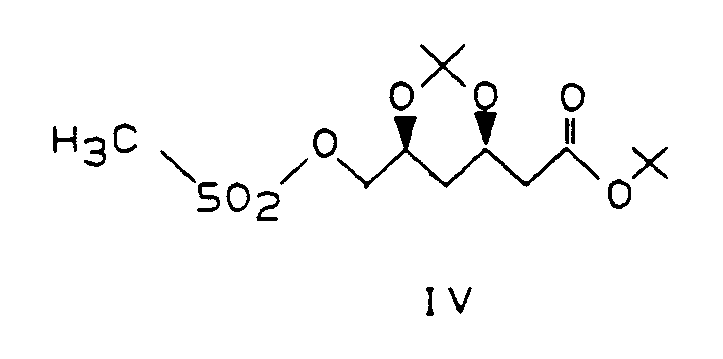

- b) Verbindungen der Formel V unter Abspaltung der Schutzgruppe in β,δ-Dihydroxycarbonsäuretert.-butylester der Formel II/1,

- c) die tert.-Butylester der Formel II/1 zu Salzen der Formel

- d) die tert.-Butylester der Formel II/1 oder gegebenenfalls die Salze der Formel II/2 zu den β-Hydroxylaktonen der Formel I cyclisiert,

- e) gegebenenfalls die Hydroxylaktone der Formel I in die entsprechenden offenkettigen Dihydroxycarbonsäuren der Formel II, deren Salze oder deren Ester überführt, gegebenenfalls die Salze oder Ester in die freien Dihydroxycarbonsäuren der Formel II oder gegebenenfalls die Dihydroxycarbonsäuren II in die Salze oder Ester überführt.
- Wie sich aus dem beschriebenen Verfahren ergibt, wurden die Verbindungen der allgemeinen Formeln I und II und deren Salze und Ester optisch rein mit der gezeichneten Absolutkonfiguration hergestellt. Die Verbindungen bilden in dieser Absolutkonfiguration einen besonders bevorzugten Gegenstand der Erfindung. Da die Äpfelsäure, das Ausgansmaterial zur Herstellung des Mesylats der Formel IV, auch in der umgekehrten Absolutkofiguration [D(+)-Äpfelsäure] oder als Racemat [DL-Äpfelsäure] kommerziell verfügbar ist, können auf die gleiche Weise auch die Antipoden der Verbindungen der allgemeinen Formeln I und II und deren Salze und Ester beziehungsweise die Racemate der Verbindungen der allgemeinen Formeln I und II und deren Salze und Ester hergestellt werden. Weiterhin kann man aus den Racematen der Verbindungen der allgemeinen Formeln I und II und deren Salzen und Estern durch die klassischen Methoden der Racematspaltung mehr oder weniger optisch angereicherte Verbindungen beider Absolutkonfigurationen gewinnen. Die Antipoden der Verbindungen der allgemeinen Formeln I und II und deren Salze und Ester, die Racemate, sowie optisch angereicherte Verbindungen gehören damit ebenso zum Gegenstand der Erfindung.
- Das Mesylat der Formel IV wird durch Mesylierung der optisch reinen Hydroxyverbindung der Formel VI

erhalten. Die Herstellung der Verbindung der Formel VI aus kommerziell verfügbarer L(-)-Äpfelsäure ist in der EP A-0 319 847 beschrieben. Die Reaktion der Hydroxyverbindung VI zum Mesylat IV erfolgt z. B. durch Umsetzung mit Methansulfonsäurechlorid in Gegenwart einer schwachen Base. Das Methansulfonsäurechlorid wird vorteilhaft im geringen Überschuß (1,05 - 1,5 Äquivalente) eingesetzt. Vorteilhaft ist der Einsatz einer Methylenchlorid/Pyridin-Mischung als Lösungsmittel. Wegen der geringen thermischen Stabilität vieler Mesylate empfiehlt es sich, die Reaktion unter Kühlung durchzuführen. Vorteilhaft wird die Reaktionstemperatur durch Eiskühlung nahe 0 °C gehalten. Bei zweckmäßiger Aufarbeitung (siehe Verfahrensbeispiel 26) kristallisiert das Mesylat IV spontan und kann durch Absaugen und Waschen in hoher Ausbeute und Reinheit erhalten werden. - Die Kupplung von III mit IV erfolgt bevorzugt in Gegenwart einer Base in aprotischen, polaren Lösungsmitteln. Besonders bewährt hat sich die Verwendung von Kaliumcarbonat als Base und DMSO oder HMPT als Lösunsgsmittel. Beim Einsatz von schwefelhaltigen Verbindungen III (d.h. X und/oder Y = S) wird zweckmäßigerweise HMPT als Lösungsmittel verwendet. Gelegentlich beschleunigt der Einsatz einer katalytischen Menge 18-Krone-6 die Reaktion und steigert die Ausbeute an V. Das Mesylat IV wird zweckmäßig in geringem Überschuß (ca. 1,1 Äquivalente) eingesetzt. Die Kupplung kann im Temperaturbereich von 40 - ca. 90 °C durchgeführt werden. Die Reinheit des Rohprodukts sinkt deutlich mit steigender Reaktionstemperatur. Die optimale Temperatur und die zugehörige Reaktionsdauer hängen von der Natur der Substituenten, insbesondere der sterischen Abschirmung der nucleophilen Gruppe XH, in der Verbindung der Formel III ab. Zur Herstellung der besonders bevorzugten Verbindungen war eine Reaktionstemperatur von 60-70 °C und eine Reaktionsdauer von ca. 12 - 18 Std. vorteilhaft. Außer mit der Acetonidgruppierung können die beiden Hydroxygruppen des Mesylats IV selbstverständlich auch mit anderen Schutzgruppen versehen sein, die gegenüber den basischen Kupplungsbedingungen stabil sind, z.B. tert.-Butyldiphenylsilyl-Gruppen.
- Zur Herstellung der Verbindungen der Formel II/1 kann im Prinzip jede der zahlreichen Methoden herangezogen werden, die in der Literatur zur Spaltung von Ketalen beschrieben wurden. Bevorzugt ist die Verwendung von 2-normaler wäßriger Salzsäure als Katalysator in homogener organischer Lösung (THF/Ethanol) bei Raumtemperatur.
- Dieser Schritt stellt eine basische Esterverseifung dar. Sie kann mit einer großen Anzahl pharmakologisch verträglicher Basen in wäßrigem, wäßrig-organischem oder, falls als Base Metallhydroxide verwendet werden, auch in organisch-aprotischen Lösungsmitteln durchgeführt werden. Bevorzugt ist die Verwendung eines 1:1 (Vol/Vol) Gemischs von exakt 1,0 Äquivalenten einer wäßrigen 1-normalen Natronlauge und Ethanol bei Raumtemperatur. Natronlaugeüberschüsse sollten vermieden werden, da Natriumhydroxid und das Natriumsalz II/2 beide relativ gute Wasserlöslichkeit besitzen und darum nur schwer getrennt werden können. Der Ablauf der Verseifung kann mit Kieselgel-DC (Chloroform/Methanol 5:1) verfolgt werden. Bei den meisten (aber nicht bei allen) Estern der Formel II/1 erkennt man die weitgehende Verseifung unter den genannten Bedingungen auch daran, daß die anfängliche Suspension in eine klare, homogene Lösung übergeht.
- Die direkte Umwandlung von tert.-Butylestern der allgemeinen Formel II/1 in die Hydroxylaktone der Formel I gelingt mit einem Überschuß einer Reihe starker Säuren, bevorzugt organischer Säuren. Im Prinzip ist jedes organische Lösungsmittel geeignet, das gutes Lösungsvermögen für die tert.-Butylester II/1 besitzt und genügend inert gegenüber der starken Säure ist. Der Einsatz von Trifluoressigsäure in Methylenchloridlösung bei Raumtemperatur ist bevorzugt. Die Reaktionszeit beträgt in der Regel 1-5 Stunden. Es empfiehlt sich zur Vermeidung von Nebenreaktionen die DC-Kontrolle des Reaktionsablaufs. Es ist vorteilhaft, das Reaktionsgemisch durch Zugabe von Natriumhydrogencarbonat unter Kühlung abzustumpfen und dann mit Natriumcarbonat neutral zu stellen. Natriumcarbonat-Überschuß ist zu vermeiden, da die Lactone I auch unter schwach basischen Bedingungen sehr leicht zu den Salzen II/2 verseift werden. Die Laktone I können extraktiv in hoher Ausbeute und Reinheit gewonnen werden.
- Aus den Salzen II/2 kann man die Laktone I nach verschiedenen Prozeduren erhalten. In jedem Fall werden die Salze II/2 durch vorsichtiges Ansäuern, gefolgt von Ethylacetat-Extraktion, in die freien Dihydroxycarbonsäuren der Formel II umgewandelt. Diese können durch Behandlung mit 1-1,5 Äquivalenten eines wasserabspaltenden Reagenzes, z.B. N,N′-Dicyclohexylcarbodiimid oder bevorzugt eines wasserlöslichen Carbodiimids wie N-Cyclohexyl-N′-[2′-(N˝-methylmorpholinium)-ethyl] carbodiimid-para-toluolsulfonat (vgl. M. Fieser "Reagents for Organic Synthesis" 1, 181 und 11, 151) in einem inerten organischen Lösungsmittel, bevorzugt Methylenchlorid, bei 10-35 °C, bevorzugt bei Raumtemperatur, zum Lakton I cyclisiert werden. Bessere Ausbeuten und Produktreinheiten erhält man in der Regel, wenn man stattdessen die Carboxylgruppe der freien Dihydroxycarbonsäuren der Formel II zu einem intermediären Derivat umsetzt, das bezüglich einem intramolekularen nucleophilen Angriff der δ-Hydroxygruppe aktiviert ist. Die Literatur beschreibt eine große Zahl von derartigen Methoden zur Carboxylaktivierung. Sehr verbreitet ist die Bildung von Säurehalogeniden, Säureimidazoliden, Aktivestern oder gemischten Anhydriden. Vorzugsweise wird die Carbonsäure der Formel II bei 0 - -10°C in absolutem THF mit 1,1 Äquivalenten Triäthylamin und 1,0 Äquivalenten Chlorameisensäureethylester umgesetzt. In Reaktionszeiten von 1-2 Std. bilden sich die Laktone der Formel I in fast quantitativer Ausbeute.
- Diese Tranformationen sind trivial und sind entsprechend den Angaben im Stand der Technik durchzuführen z. B. mit Basen im Falle der Salzbildung.
- Zur Durchführung des Verfahrensschritts a) werden als Ausgangsmaterialien substituierte Phenole oder Thiophenole der Formel III benötigt. Verbindungen der Formel III, worin X, Y, R¹, R², R³, R⁴, R⁵ die zur Formel I angegebenen Bedeutungen haben, sind neu. Sie gehören deshalb ebenfalls zum Gegenstand der vorliegenden Erfindung.
- In der deutschen Offenlegungsschrift 38 19 999 wird ein Verfahren zur Arylierung von Phenolen vorgeschlagen, das darin besteht, die Phenole zunächst einer elektrophilen aromatischen Halogenierung zu unterwerfen (Halogen = Brom oder Jod) und das Monohalogenphenol dann unter Palladium-(O)-Katalyse mit einer Arylgrignardverbindung zu behandeln, wobei es zu einem positionsspezifischen Halogen-Aryl-Austausch kommt: der Arylrest tritt nur in die Position ein, in der sich vorher das Halogenatom befand. Die Verbindungen der Formel III wurden unter Verwendung dieser Reaktion als Schlüsselschritt aufgebaut. Aus den Phenolen sind die Thiophenole entsprechend den Angaben in der DE-A 36 32 893 herstellbar.

Ausgangsmaterialien für die Synthese von Verbindungen der Formel III sind gemäß Schema 1 Phenole oder Thiophenole der allgemeinen Formel VII bzw. gemäß Schema 3 Benzole der Formel XIII. Die Verbindungen VII sind kommerziell erhältlich oder literaturbekannt, soweit R² oder R⁴ nicht die Bedeutung eines (substituierten) Phenylrests haben. Soll R² oder R⁴ in Formel III die Bedeutung eines (substituieren) Phenylrests besitzen, so können die Verbindungen VII analog der oben beschriebenen Reaktion erhalten werden, oder es kommt die Synthese gemäß Schema 3 zur Anwendung. - Mit N-Haloaminen kann man ensprechend den Angaben in der Literatur eine regiospezifische ortho-Halogenierung von Phenolen erreichen [E. Schmitz, I. Pagenkopf, J. Prakt. Chem. 327, 998 (1985)]. Anwendungsbreite und Verfahrensvarianten wurden von Schmitz und Pagenkopf ausführlich beschrieben. Vorzugsweise werden 1,1 Äquivalente einer kommerziell erhältlichen 40 %igen wäßrigen Dimethylamin-Lösung bei ca. -10 °C mit der wäßrigen Natriumhypobromid-Lösung aus 3,2 Äquivalenten Natriumhydroxid und 1,02 Äquivalenten Brom zum N-Bromdimethylamin umgesetzt, das mit Tetrachlorkohlenstoff extrahiert, dann getrocknet wird. Diese Lösung wird dann bei ca. -10 °C zur Lösung von 1 Äquivalent der Verbindung VII in Tetrachlorkohlenstoff getropft. Das ortho-bromierte Dimethylammoniumsalz fällt aus, wird abgesaugt und durch Kochen mit 2N Schwefelsäure in die freie Verbindung VIII überführt. Da gemäß Schema 1 als Rest R⁵ Phenyl oder substituiertes Phenyl eingeführt wird, wird Verbindung VIII unter Palladium-Katalyse mit dem Phenylgrignard-Reagenz R⁵-MgBr umgesetzt zu Verbindungen der Formel IX. Die Durchführungsvarianten der Kupplungsreaktion und Alternativen für Palladium wurden in der deutschen Patentanmeldung 38 19 999.8 vorgeschlagen. Für die Umwandlung von VIII und IX werden bevorzugt 3 Äquivalente des Grignard-Reagenzes aus R⁵-Br und einem geringen Überschuß Magnesiumspänen in THF hergestellt und diese Lösung wird dann bei 60 °C zu der Lösung von 1 Äquivalent der Verbindung VIII und 3-5 Mol% Tetrakis(triphenylphosphin)-Palladium(O) in THF transferiert. Vollständige Reaktion erfolgt, je nach der Natur der Substituenten R¹, R², R⁴ und R⁵ während 1 Std. - 12 Std. bei 60 °C. Die Einführung der Schwefelfunktionalität in die para-Position, wobei Verbindungen X entstehen, erfolgt durch Rhodanierung. Für diesen Schritt gibt es mehrere Verfahrensweisen, die ausführlich beschrieben und verglichen wurden [z. B. J. L. Wood in Org. React. 3, 240-266 (1946) und J.H. Clark et al., J. Chem. Soc. Chem. Commun., 81 (1989)]. Vorzugsweise werden 1 Äquivalent der Verbindung der allgemeinen Formel IX und 5 Äquivalente Natriumthiocyanat in Methanol suspendiert und bei ca. 15 °C die Lösung von 1,5 Äquivalenten Brom in Methanol langsam zugetropft. Die Reaktion beruht auf der Bildung und in situ-Umsetzung von Dirhodan (SCN)₂.
- Tropft man eine Lösung eines Thiocyanats der allgemeinen Formel X, bevorzugt bei 25-50 °C, zu bevorzugt 6 Äquivalenten einer Alkyl- oder Arylgrignard-Verbindung R³-MgBr, bevorzugt in THF als Lösungsmittel, so erhält man Thioether der allgemeinen Formel III/1. Wenn es sich bei R³ um einen aliphatischen Rest handelt, erhält man die Thioether III/1 auch, wenn man eine Lösung des Thiocyanats der allgemeinen Formel X und eines Überschusses des Natriumalkoholats R³ONa (bevorzugt ca. 2 Äquivalente) im Alkohol R³OH unter Rückfluß kocht. Die Thioether der Formel III/1 entsprechen der allgemeinen Formel III, mit der Einschränkung, daß das Y Schwefel sein muß.
Es sind zahlreiche Methoden bekannt, um Thiocyanate in die entsprechenden Thiole zu überführen. Eine Übersicht findet man z. B. bei K.-D. Gundermann, K. Hümke in "Methoden der Organischen Chemie" (Houben-Weyl), Band E 11; "Organische Schwefelverbindungen, Teil 1", Thieme Verlag (Stuttgart, 1985) Seite 59: "Thiole aus Thiocyansäureestern". Vorzugsweise wird die reduktive Spaltung der Thiocyanate der allgemeinen Formel X zu Thiolen der allgemeinen Formel III/2 mit ca. 1,7 Mol-Äquivalenten Lithiumaluminiumhydrid in Tetrahydrofuran unter Rückfluß durchgeführt. Die Ausbeuten sind bei dieser Verfahrensweise sehr hoch (> 90 %). In Gegenwart von Luftsauerstoff erleiden die Thiole der allgemeinen Formel III/2 rasche oxidative Dimerisierung zu den entsprechenden Disulfiden. Ihre Herstellung erfolgt darum zweckmäßigerweise nach gründlicher Entgasung der Reaktionslösung unter einer Inertgasatmosphäre. Die Thiole der Formel III/2 entsprechen der Formel III, mit der Einschränkung, daß Y Schwefel und R³ Wasserstoff ist. - Es gibt mehrere alternative Verfahren zur Einführung der Thiol-Gruppierung in Aromaten der allgemeinen Formel IX. Eine Überschicht findet man z. B. bei K.-D. Gundermann, J. Hümke in "Methoden der organischen Chemie" (Houben-Weyl), Band E11, "Organische Schwefelverbindungen, Teil 1", Thieme Verlag (Stuttgart 1985), Seite 32-63: "Herstellung von Thiolen". In Schema 1 ist ein Syntheseweg ausführlich beschrieben.
- Die Umsetzung der Thiole der allgemeinen Formel III/2 zu den Aceton-dithioketalen der allgemeinen Formel III/3 ist im Prinzip mit Aceton in Gegenwart eines sauren Katalysators analog der für Probucol beschriebenen Methode möglich. [M. B. Neuworth et al., J. Med. Chem. 13, 722 (1970)].
Verbindungen der Formel III/3 werden in 85-100 %iger Ausbeute erhalten, wenn man die Thiole der Formel III/2 in einem inerten Lösungsmittel, bevorzugt Benzol, mit 1,25-1,50 Äquivalenten 2,2-Dimethoxypropan in Gegenwart katalytischer Mengen p-Toluolsulfonsäure auf ca. 80 °C erwärmt. Die Reaktionszeit hängt von der Natur der Substituenten R¹, R², R⁴, R⁵ ab und beträgt in der Regel 2-12 Std. Als Zwischenprodukt der Reaktion tritt das polare, gemischte Sauerstoff/Schwefel-Ketal der allgemeinen Formel XI auf,
das bei der Durchführung der Reaktion bei Raumtemperatur (1-2 Std.) das Hauptprodukt darstellt. Es wandelt sich im Reaktionsgemisch bei Raumtemperatur langsam, bei ca. 80 °C rasch in das weniger polare Produkt der Formel III/3 um. Die Thioketale der Formel III/3 entsprechen der allgemeinen Formel III, mit der Einschränkung, daß Y Schwefel und R³ der Rest
ist. - Das erfindungsgemäße Verfahren wird nachfolgend durch die Umsetzung von Verbindung III/3 zu den Endprodukten der Formel I gemäß Schema 2 erläutert.
- Die Umsetzung der Thioketale der Formel III/3 mit dem Mesylat IV gemäß Verfahrensschritt a) führt zu zwei unterschiedlichen Kupplungsprodukten, nämlich dem Monokupplungsprodukt V/1 und dem Dikupplungsproudkt XII. V/1 und XII können säulenchromatographisch problemlos getrennt werden. Sie entstehen bei der Kupplung stets beide, jedoch kann man ihren Anteil über die Reaktionsbedingungen beeinflussen. Verwendet man z. B. nur 1,2 Mol des Mesylats IV pro Mol Thioketal III/3, so entstehen V/1 und XII etwa im Verhältnis 2:1 (ca. 70 % Gesamtausbeute). Werden hingegen 2,5 Mol des Mesylats IV pro Mol Thioketal III/3 eingesetzt und die Reaktionszeit verlängert, ist das Verhältnis V/1 zu XII < 1:3.
- Die getrennten Produkte V/1 und XII können dann gemäß den Verfahrensschritten b), c), d) und gegebenenfalls e) in die Mono-(hydroxylaktone) der Formel I/1, die Bis-(hydroxylaktone) der Formel I/2 (beide Formeln sind Spezialfälle der allgemeinen Formel I), deren offenkettige Dihydroxycarbonsäuren der allgemeinen Formel II, deren Salze oder deren Ester überführt werden.
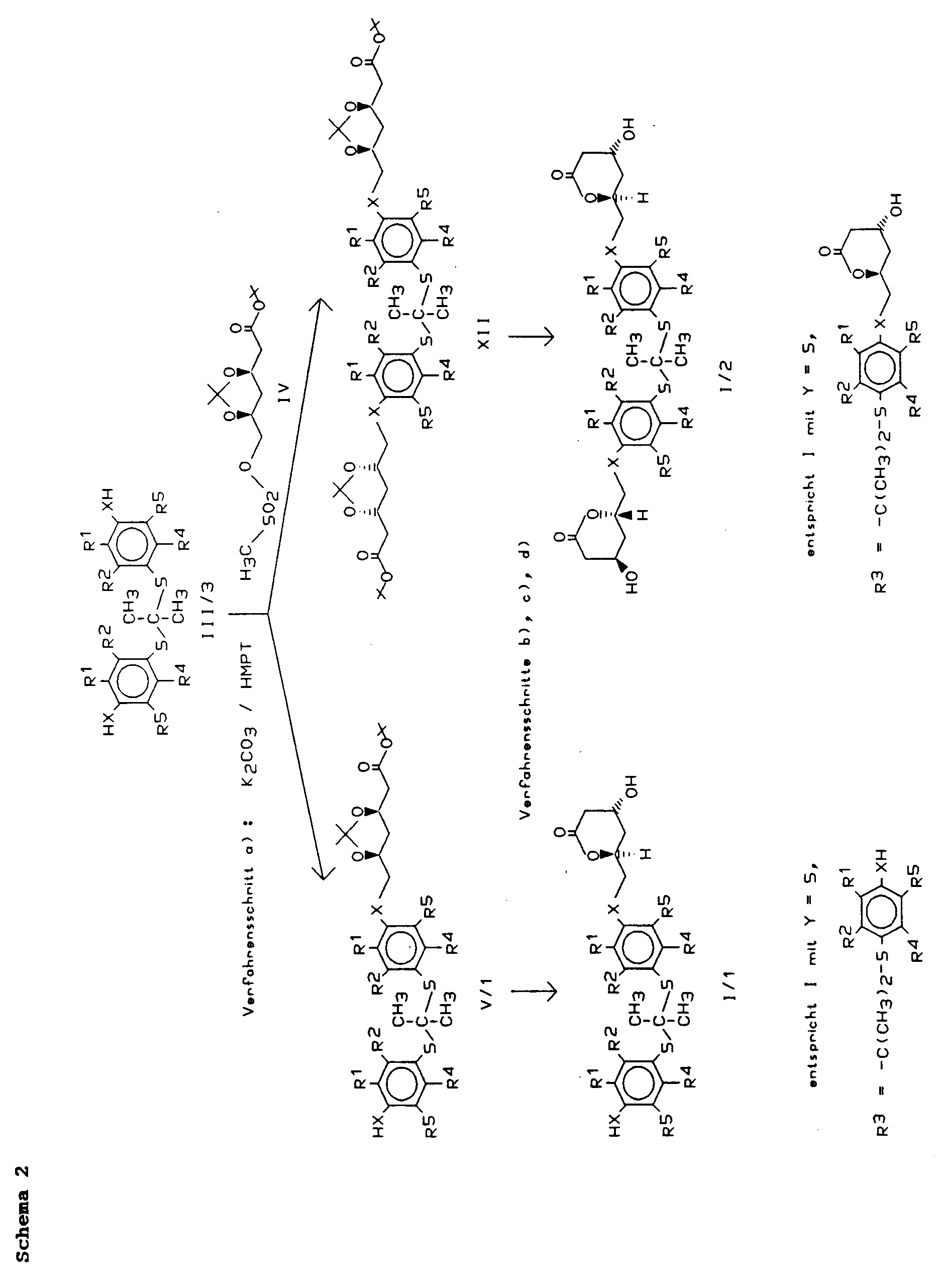

Substituierte Hydrochinone (Phenole der Formel III, worin X und Y Sauerstoff darstellen) der allgemeinen Formeln III/4, III/5 und III/6, die allesamt Spezialfälle der Bausteine mit der allgemeinen Formel III darstellen, können gemäß der in Schema 3 angegebenen Synthesesequenz hergestellt werden. Besonderheit dieses Verfahrens ist, daß die beiden Hydroxygruppen erst am Sequenzende in den aromatischen Kohlenwasserstoff der allgemeinen Formel XIX eingeführt werden. Weiterhin können die beiden Hydroxygruppen der Verbindungen der allgemeinen Formel III/4 durch komplementäre Verfahren derart differenziert werden, daß sowohl die eine, als auch die andere Hydroxygruppe spezifisch die Kupplung mit dem Mesylat IV begehen können. In Monoacetaten der allgemeinen Formel III/5 wurde z.B. die "obere" Hydroxygruppe der Hydrochinone III/4 geschützt; nur die "untere Hydroxygruppe verbleibt kupplungsfähig für die Umsetzung mit Verbindungen der Formel IV und erhält somit die Bedeutung der XH-Gruppe der allgemeinen Formel III mit X = Sauerstoff. Die Isopropylgruppe und der Substituent R⁷ der Formel III/5 entsprechen damit den Substituenten R¹ und R⁵ der allgemeinen Formeln I bis III, während die Substituenten R⁶ und R⁸ von III/5 R² und R⁴ von I bis III entsprechen. - Im Monoacetat der allgemeinen Formel III/6 ist hingegen die "untere" Hydroxygruppe der Hydrochinone III/4 geschützt. In III/6 besitzt folglich die "obere" Hydroxygruppe die Bedeutung der XH-Gruppe der allgemeinen Formel III mit X = Sauerstoff. Die Isopropylgruppe und der Substituent R⁷ der Formel III/6 entsprechen damit den Substituenten R² und R⁴ der allgemeinen Formeln I bis III, wahrend die Substituenten R⁶ und R⁸ von III/6 R¹ und R⁵ von I bis III entsprechen.
- Man erkennt, daß man je nach Wahl der komplementären Monoacetylierungsverfahren, den Substituentenpaaren R⁶/R⁸ und i-Pr/R⁷ die Bedeutung von ortho-Substituenten R¹/R⁵ oder meta-Substituenten R²/R⁴ in den Endprodukten der allgemeinen Formeln I und II verleihen kann.
Die direkte chemoselektive Veresterung ist an Verbindungen der allgemeinen Formel III/4 stets komplementär zum zweistufigen Verfahren der Diacetylierung, gefolgt von chemoselektiver Verseifung. Das Substituentenpaar i-Pr/R⁷ hat entweder einen höheren oder einen geringeren sterischen Anspruch als das Substituentenpaar R⁶/R⁸. - Unter milden Bedingungen erfolgt die Monoacetylierung deutlich rascher an der weniger sterisch gehinderten der beiden Hydroxygruppen von III/4. Erzwingt man hingegen durch drastischere Reaktionsbedingungen und einen Überschuß des Acetylierungsmittel eine Diacetylierung zu XXI, so wird bei der anschließenden Verseifung die sterisch weniger gehinderte Hydroxygruppe deutlich rascher freigesetzt als die gehindertere. Man erhält also verglichen mit der direkten Monoacetylierung bevorzugt das entgegengesetzte Produkt.
- Ausgangsmaterial für die Synthese der Hydrochinone III/4 bzw. der komplementär geschützten Hydrochinone der Formeln III/5 und III/6 sind die substituierten Benzole der Formel XIII, die literaturbekannt und größtenteils kommerziell erhältlich sind.
Je nachdem, welche der beiden komplementären Acetylierungen später durchgeführt wird, hat R⁶ die Bedeutung die für R¹ bzw. R⁵ in der Formel I angegeben wurde und R⁷ die Bedeutung die für R² bzw. R⁴ in der Formel I angegeben wurde - oder umgekehrt.
Verbindungen der allgemeinen Formel XIV erhält man durch Friedel-Crafts Acetylierung der Benzole XIII. Die Reaktion wird unter Verwendung eines geringen molaren Überschusses, bevorzugt ca. 1,05 Äquivalenten, Acetylchlorid in Gegenwart eines Überschusses einer Lewis-Säure, bevorzugt ca. 1,2 Äquivalenten Aluminiumchlorid, in einem inerten, trockenen Lösungsmittel, bevorzugt Schwefelkohlenstoff, durchgeführt. Optimale Reaktionstemperatur und -zeit hängen von der Natur der Substituenten R⁶ und R⁷ ab. In der Regel wird eine Temperatur nahe -10 °C und eine Zeit von 1 - ca. 6 Std. bevorzugt. Die Acetylierung erfolgt fast ausschließlich in ortho-Position zu den Substituenten R⁶ bzw. R⁷. Sind R⁶ und R⁷ identisch, so entsteht nur ein Produkt. Sind R⁶ und R⁷ unterschiedlich, so entstehen zwei Produkte, die getrennt werden müssen. Reinigung bzw. Trennung der Methylketone XIV können in der Regel durch Hochvakuum-Destillation erfolgen.
Die Alkohole der allgemeinen Formel XV erhält man in praktisch quantitativer Ausbeute, wenn man einen Überschuß, bevorzugt ca. 1,4 Äquivalente, einer kommerziellen etherischen Methylmagnesiumhalogenid-Lösung (z. B. einer kommerziell erhältlichen etherischen Methylmagnesiumjodid-Lösung) so zu einer etherischen Lösung des Methylketons XIV tropft, daß ein Rückfluß erhalten bleibt. Diese Reaktionen können im Prinzip extraktiv aufgearbeitet und die Alkohole XV durch Kristallisation gereinigt werden. Es ist jedoch vorteilhaft, direkt aus den rohen Alkoholen XV Wasser abzuspalten, indem man sie an einem Wasserabscheider in Gegenwart einer katalytischen Menge einer starken Säure, bevorzugt para-Toluolsulfonsäure, in einem Lösungsmittel, das mit Wasser ein niedrigsiedendes Azeotrop bildet, mit diesem aber nur wenig mischbar ist, bevorzugt Benzol oder Toluol unter Rückfluß kocht. - Die rohen Olefine der Formel XVI werden durch katalytische Hydrierung in die Verbindung der Formel XVII überführt. In der Literatur wurde eine große Anzahl von Katalysatoren beschrieben, die für derartige Reaktionen geeignet sind. Aus Gründen der Sicherheit und leichteren Durchführbarkeit wird die Hydrierung vorzugsweise bei Raumtemperatur unter 1 atm Wasserstoff durchgeführt. Dazu hat sich die Verwendung von 1-2 Gew.-% von 10 % Palladium auf Kohle und von n-Hexan als Lösungsmittel bewährt. Die Verbindungen der Formel XVII lassen sich in der Regel durch Vakuumdestillation reinigen, doch kommen selbstverständlich auch andere physikalische Trennverfahren, wie Umkristallisieren oder Chromatographie in Betracht.
- Aufgrund einer Kombination von elektronischen und sterischen Faktoren erfolgt die elektrophile aromatische Bromierung unter milden Bedingungen mit hoher Regioselektivität unter Bildung von Verbindungen der allgemeinen Formel XVIII. Zur Vermeidung von Mehrfachbromierungen soll ein Überschuß Brom vermieden werden. Als inertes Lösungsmittel hat sich Tetrachlorkohlenstoff, als Katalysator eine Spatelspitze Eisenpulver bewährt. Die Reaktion wird zur Erzielung hoher Selektivität bevorzugt bei oder unterhalb -10°C durchgeführt.
- Der Austausch des Bromatoms von XVIII gegen einen (substituierten) Arylrest R⁸ erfolgt am besten in der Weise, daß XVIII mit einem Äquivalent Magnesiumspänen in THF unter Rückfluß zur entsprechenden Grignardverbindung umgesetzt wird. Diese Grignardlösung wird dann unter Inertgas zu einer Lösung von ca. 1,05 Äquivalenten eines (substituierten) Arylbromids oder Aryljodids R⁸-Hal und ca. 0,01 Äquivalenten eines Palladium (0)-Katalysators, bevorzugt Tetrakis(triphenylphosphin)-palladium(0), in THF gedrückt und das Reaktionsgemisch unter Rückfluß gekocht. Häufig kann man die Reaktion auch durchführen, indem man die Grignard-Verbindung R⁸-MgHal herstellt und diese dann zu einer Lösung des Arylbromids XVIII und einer katalytischen Menge Pd(PPh₃)₄ in THF gibt. Durchführungsvarianten der Kupplungsreaktion und Alternativen für Palladium wurden vorgeschlagen (vgl. deutsche Offenlegungsschrift 3 819 999). Die Produkte der allgemeinen Formel XIX können in der Regel durch Destillation im Pumpenvakuum gereinigt werden.
- Die Umsetzung der Kohlenwasserstoffe der allgemeinen Formel XIX zu den Chinonen der allgemeinen Formel XX kann mit einer Reihe von Oxidationsmitteln erzielt werden. Die Ausbeute der Reaktion steigt in der Regel deutlich mit zunehmender Substitution der Ausgangsverbindung.
- Bevorzugt ist die Zugabe eines großen Überschusses eines 5:1 (Vol/Vol)-Gemisches aus Trifluoressigsäure und 70 %igem wäßrigem Wasserstoffperoxid bei ca. -20°C zu dem Kohlenwasserstoff XIX. Bei dieser Temperatur beobachtet man keine Wärmetönung oder Reaktion. Entfernt man dann das Kältebad und läßt unter Erwärmung auf Raumtemperatur rühren, so beobachtet man im Temperaturbereich von ca. +10°C bis +20°C ein plötzliches, außerst exothermes Anspringen der Reaktion. Intensive Kühlung des Reaktionskolbens und des Rückflußkühlers ist dann nötig, um die Reaktion unter Kontrolle zu halten. Aus dem rohen Reaktionsprodukt gewinnt man die reinen, intensiv gelben Chinone XX durch Säulenchromatographie oder einfacher durch Umkristallisieren. Die Chinone der allgemeinen Formel XX können mit verschiedenen Reagenzien zu den Hydrochinonen der allgemeinen Formel III/4 reduziert werden. Eine Übersicht geben H. Ulrich, R. Richter in "Methoden der Organischen Chemie (Houben-Weyl)", Bd. VII/3a "Chinone Teil 1", Georg Thieme Verlag, Stuttgart (1977), Seite 648-653: "Umwandlung von p-Chinonen durch Reduktion". Es ist vorteilhaft, ca. 5 Mol-Äquivalente Natriumborhydrid unter Inertgas zu einer Lösung der Chinone XX in Ethanol zu geben. Den Ablauf der Reaktion erkennt man an der Entfärbung der ursprünglich gelben Lösung. Dann wird das Ethanol im Vakuum entfernt und der Rückstand unter intensiver Kühlung mit entgaster Salzsäure zersetzt. Die wäßrige Phase wird sofort mit entgastem Diethylether extrahiert und der Ether im Vakuum entfernt. Die Hydrochinone der allgemeinen Formel III/4 verbleiben als farblose Pulver, die mit z. B. n-Pentan gewaschen und unter Inertgas abgesaugt werden. Diese Hydrochinone erleiden, insbesondere in Lösung, sehr leicht Oxidation, wobei sie sich in die gelben Chinone XX zurückverwandeln. Bei der Herstellung von III/4 sollten darum alle Lösungsmittel sauerstofffrei sein. Die Hydrochinone III/4 werden am besten direkt, ebenfalls unter sauerstofffreien Bedingungen, zu den Monoacetaten III/5 oder III/6 umgesetzt, die kaum oxidationsempfindlich sind.
- Zur regioselektiven Herstellung der Monoacetate der Formeln III/5 und (oder) III/6 setzt man z.B. bei 0°C die Hydrochinone der Formel III/4 mit 1,1-1,5 Äquivalenten Acetanhydrid in Anwesenheit einer Base, bevorzugt in wasserfreiem Pyridin als Lösungsmittel um. Die Reaktionszeit beträgt 1-3 Tage in Abhängigkeit von der Natur der Substituenten R⁶, R⁷, R⁸. Neben wenig Ausgangsmaterial III/4 und Diacetat XXI erhält man die beiden Monoacetate III/5 und III/6 mit einer Selektivität, die in Abhängigkeit von der Natur der Substituenten R⁶, R⁷, R⁸, bei 4:1 bis ca. 20:1 liegt.
- Die beiden Monoacetate können säulenchromatographisch auf Kieselgel voneinander, sowie vom Chinon XX und vom Diacetat XXI getrennt werden. Im Laufmittel Cyclohexan/Ethylacetat 9:1 hat das sterisch stärker gehinderte (in geringerem Umfang gebildete) Monoacetat einen etwas größeren Rf-Wert als das sterisch weniger gehinderte (in größerem Umfang gebildete) Monoacetat (Hauptprodukt). Das Diacetat XXI ist deutlich polarer.
Mono- und Diacetate der allgemeinen Formeln III/5, III/6 und XXI sind Feststoffe, die bei Bedarf durch Umkristallisieren weiter gereinigt werden können. - Zur gezielten Herstellung der Diacetate der allgemeinen Formel XXI setzt man die Hydrochinone der Formel III/4 mit einem Überschuß, bevorzugt 3-4 Äquivalenten Acetanhydrid, in Anwesenheit einer Base, bevorzugt in wasserfreiem Pyridin als Lösungsmittel, um. Die Reaktionstemperatur liegt in Abhängigkeit von der Natur der Substituenten R⁶, R⁷, R⁸ bei ca. 0-40°C, die Reaktionszeit bei ca. 1 Stunde bis mehreren Tagen.
- Sowohl bei der Mono- als auch der Diacetylierung können anstatt Acetanhydrid auch andere Acetylierungsmittel eingesetzt werden, z.B. Acetylchlorid, gemischte Anhydride der Essigsäure, Essigsäureimidazolid etc..
- Gelegentlich werden die Ausbeuten bei der Mono- oder Diacetylierung deutlich gesteigert, wenn man als Katalysator 4-Dimethylaminopyridin (DMAP, bevorzugt 5-10 Mol-%), Triethylamin als Base und Acetanhydrid als Acetylierungsmittel einsetzt [G. Höfle, W. Steglich, H. Vorbrüggen, Angew. Chem. Int. Ed. 17, 569 (1978)]. Zur chemoselektiven (regioselektiven) Verseifung der Diacetate der allgemeinen Formel XXI sind im Prinzip alle milden Methoden der Esterspaltung verwendbar. Diese Methoden sind Stand der Technik. Entscheidend ist, daß nur wenig mehr als 1 Äquivalent der Base eingesetzt wird (um die Verseifung beider Acetylgruppen weitgehend zu vermeiden) und daß die Reaktionstemperatur so niedrig gehalten wird, daß die Verseifung mehrere Tage erfordert (maximale Selektivität).
- Zweckmäßig ist die Verwendung von 1,1 Äquivalenten Lithiumhydroxid in 1,2-Dimethoxyethan/Wasser 3:1 (Vol/Vol). Optimale Reaktionstemperatur und -zeit hängen von der Natur der Substituenten R⁶, R⁷, R⁸ ab. In der Regel führt eine Verseifung bei Raumtemperatur, die meistens 1-5 Tage erfordert, zu Selektivitäten von 2-5 zu 1.
- Hohe Cholesterinspiegel, sowie die oxidative Modifizierung der LDL und die daraus resultierende Bildung von "Schaumzellen" mit pathogenen Folgeprozessen wurden mit einer Reihe von Erkrankungen in Verbindung gebracht, die als Folgen der Arteriosclerose betrachtet werden, z.B. koronare Herzkrankheit und Herzinfarkt. Daher ist die Senkung erhöhter Cholesterinspiegel und die Vermeidung der LDL-Oxidation zur Vorbeugung und Behandlung solcher Erkrankungen ein therapeutisches Ziel. Ein Ansatzpunkt liegt in der Hemmung bzw. Verminderung der endogenen Cholesterinsynthese. Hemmstoffe der HMG-CoA-Reduktase blockieren die Cholesterin-Biosynthese auf einer frühen Stufe. Sie eignen sich daher zur Vorbeugung und Behandlung von Erkrankungen, die durch einen erhöhten Cholesterinspiegel verursacht werden. Eine Reduktion bzw. Verminderung der endogenen Synthese führt zu einer erhöhten Aufnahme von Cholesterin aus dem Plasma in die Zellen. Ein zusätzlicher Effekt läßt sich durch gleichzeitige Gabe Gallensäure-bindender Stoffe wie Anionenaustauscher erzielen. Die erhöhte Gallensäurenausscheidung führt zu einer verstärkten Neusynthese und damit zu einem erhöhten Cholesterinabbau (M.S. Brown, P.T. Kovanen, J.L. Goldstein, Science 212, 628 (1981); M.S. Brown, J.L. Goldstein, Spektrum der Wissenschaft 1985, 96). Die erfindungsgemäßen Verbindungen sind Hemmstoffe der HMG-CoA-Reduktase. Sie eignen sich daher zur Hemmung bzw. Verminderung der Cholesterin-Biosynthese und damit zur Vorbeugung oder Behandlung von Erkrankungen, die durch erhöhte Cholesterinspiegel im Blut verursacht werden, insbesondere koronare Herzkrankheit, Atherosklerose und ähnliche Erkrankungen. Es gibt Hinweise dafür (vergl. Tab. 1-4), daß die erfindungsgemäßen Verbindungen darüber hinaus eine Plasmacholesterin-senkende Wirkung nach einem andersartigen Mechanismus haben, der die nach dem Mechanismus der HMG-CoA-Reduktase-Hemmung erzielte Plasmacholesterin-Senkung verstärkt. Die erfindungsgemäßen Verbindungen und (oder) deren Bausteine der allgemeinen Formel III haben darüber hinaus eine antioxidative, radikalinhibitorische Wirkung. Bei den Bausteinen der allgemeinen Formel III handelt es sich darüber hinaus um Metaboliten der erfindungsgemäßen Verbindungen.
- Die Erfindung betrifft daher auch pharmazeutische Präparate auf Basis der Verbindungen der Formel I bzw. der entsprechenden Dihydroxycarbonsäuren der Formel II, deren Salze und Ester, sowie die Verwendung dieser Verbindungen als Arzneimittel, insbesondere zur Behandlung der Hypercholesterinämie.
- Die Verbindungen der Formel I bzw. II sowie die entsprechenden Salze oder Ester werden in verschiedenen Dosierungsformen verabreicht, vorzugsweise oral in Form von Tabletten, Kapseln oder Flüssigkeiten. Die tägliche Dosis bewegt sich je nach Körpergewicht und Konstitution des Patienten im Bereich von 1 mg bis 2500 mg, vorzugsweise jedoch im Dosisbereich 10 bis 100 mg.
- Die erfindungsgemäßen Verbindungen können als Laktone der allgemeinen Formel I, in Form der freien Säuren der Formel II oder in Form pharmazeutisch annehmbarer Salze oder Ester zur Anwendung kommen, und zwar gelöst oder suspendiert in pharmakologisch unbedenklichen organischen Lösungsmitteln wie ein- oder mehrwertigen Alkoholen wie z.B. Ethanol oder Glycerin, in Triacetin, Ölen wie z.B. Sonnenblumenöl oder Lebertran, Ethern wie z.B. Diethylenglykoldimethylether oder auch Polyethern wie z.B. Polyethylenglykol oder auch in Gegenwart anderer pharmakologisch unbedenklicher Polymerträger wie z.B. Polyvinylpyrrolidon oder anderen pharmazeutisch annehmbaren Zusatzstoffen wie Stärke, Cyclodextrin oder Polysacchariden. Ferner können die erfindungsgemäßen Verbindungen kombiniert werden mit Zusatzstoffen, die Gallensäuren binden, insbesondere nicht toxische, basische Anionenaustauscherharze, die Gallensäuren in einer nichtresorbierbaren Form im Gastrointestinaltrakt binden. Die Salze der Dihydroxycarbonsäuren können auch als wäßrige Lösung verabreicht werden.
- Die Hemmung der Cholesterinbiosynthese bzw. die Plasmacholesterinsenkung durch die erfindungsgemäßen Verbindungen der Formeln I und II wurden an verschiedenen in vitro- und in vivo-Testsystemen bestimmt.
- Die HMG-CoA-Reduktase-Aktivität wurde an solubilisierten Enzympräparationen aus Lebermikrosomen von Ratten gemessen, die nach Umstellung im Tag-Nacht-Rhythmus mit Cholestyramin (®Cuemid) induziert wurden. Als Substrat diente (S,R) ¹⁴C-HMG-CoA, die Konzentration von NADPH wurde während der Inkubation durch ein regenerierendes System aufrechterhalten. Die Abtrennung von ¹⁴C-Mevalonat von Substrat und anderen Produkten (z.B. ¹⁴C-HMG) erfolgte über Säulenelution, wobei das Elutionsprofil jeder Einzelprobe ermittelt wurde. Auf die ständige Mitführung von ³H-Mevalonat wurde verzichtet, weil es sich bei der Bestimmung um die Relativangabe der Hemmwirkung handelt. In einer Versuchsreihe wurden jeweils die enzymfreie Kontrolle, der enzymhaltige Normalansatz (= 100 %) und solche mit Präparatezusätzen zusammen behandelt. Als Präparat wurden bei diesem Test stets die Natriumsalze der Dihydroxycarbonsäuren der allgemeinen Formel II eingesetzt. Jeder Einzelwert wurde als Mittelwert aus 3 Parallelproben gebildet. Die Signifikanz der Mittelwertsunterschiede zwischen präparatefreien und präparatehaltigen Proben wurde nach dem t-Test beurteilt. Nach der oben beschriebenen Methode wurden von den Natriumsalzen der erfindungsgemäßen Verbindungen der allgemeinen Formel II z.B. folgende Hemmwerte auf die HMG-CoA-Reduktase ermittelt (IC₅₀-(mol/l); molare Konzentration der Verbindung pro Liter, die für eine 50 %ige Hemung erforderlich ist).
Tabelle 1 IC₅₀ (Mol/l) Standard Mevinolin-Natriumsalz 8 · 10⁻⁹ Verbindung C (deutsche Offenlegungsschrift 3 819 999 dort Beispiel 8a) 2,3 · 10⁻⁹ Beispiel IC₅₀ (Mol/l) 1 6 · 10⁻⁹ 2 2 · 10⁻⁹ 3 4 · 10⁻⁹ 4 8 · 10⁻⁹ 5 8 · 10⁻⁹ 6 3 · 10⁻⁸ 7 1 · 10⁻⁸ 8 2 · 10⁻⁸ 9 4 · 10⁻⁹ - Monolayers von HEP G2-Zellen in lipoproteinfreiem Medium wurden 1 Stunde mit verschiedenen Konzentrationen der Natriumsalze der Dihydroxycarbonsäuren der Formel II präinkubiert. Nach Zugabe von ¹⁴C-markiertem Natriumacetat wurde die Inkubation 3 Stunden fortgesetzt. Tritium-markiertes Cholesterin wurde als interner Standard zugefügt und ein Aliquot der Zellen alkalisch verseift. Die Lipide wurden mit Chloroform/Methanol 2:1 extrahiert. Nach Zugabe von Carrier-Cholesterin wurde das Lipidgemisch präparativ auf DC-Platten mit Chloroform/Aceton 9:1 getrennt. Die Cholesterin-Zone wurde durch Anfärben mit Joddampf sichtbar gemacht, außerdem mit einem DC-Radioscanner detektiert und dann abgeschabt. Die gebildete Menge ¹⁴C-Cholesterin wurde szintigraphisch bestimmt und auf mg Zell-Protein bezogen. Dieselbe Prozedur wurde mit Zellen der gleichen Kultur ohne Präinkubation mit einer Testverbindung durchgeführt (sogenannte "Lösungsmittelkontrolle"). Die Wirkstärke der Testverbindungen wurde bestimmt durch Vergleich des biosynthetisierten ¹⁴C-Cholesterins in Testläufen und bei "Lösungsmittelkontrolle". Externer Standard war Mevinolin-Natriumsalz. Die IC₅₀- und IC₇₀-Werte (IC₅₀ bzw IC₇₀ ist die molare (Mol/Liter) Konzentration der Verbindung, die für eine 50 bzw. 70 %ige Hemmung erforderlich ist) variierten etwas für unterschiedliche Versuchsansätze. Die Mittelwerte für Mevinolin-Natriumsalz waren IC₅₀ = 5·10⁻⁸M, IC₇₀ = 1,5·10⁻⁷M.
Die gemessen IC's für Testverbindungen (Natriumsalze der Dihydroxycarbonsäuren der Formel II) (Tabelle 2) wurden um die Abweichung von Mevinolin-Natrium von seinem Durchschnittswert korrigiert. Mevinolin-Natrium wurde eine relative Wirkstärke von 100 zugewiesen.Tabelle 2 IC₅₀ (M) IC₇₀ (M) relative Wirkstärke in % Standard Mevinolin-Natriumsalz 5,0 · 10⁻⁸ 1,5 · 10⁻⁷ 100 Verbindung C 2,7 · 10⁻⁸ 7 · 10⁻⁸ 185 (214) Beispiel 1 4,3 · 10⁻⁹ ∼ 8 · 10⁻¹⁰ 1163 (18750) 2 2,2 · 10⁻⁹ 2273 3 3,8 · 10⁻⁹ 1316 4 8,0 · 10⁻⁹ 625 5 9,2 · 10⁻⁹ 543 6 1,7 · 10⁻⁶ 3 7 9,2 · 10⁻⁷ 5 8 4,0 · 10⁻⁹ 1250 9 7,5 · 10⁻⁹ 1,2 · 10⁻⁸ 667 (1250) - Gruppen männlicher Ratten des Stammes HOE: WISKf (SPF 71) mit einem Ausgangsgewicht über 180 g, erhielten täglich morgens die Prüfpräparate (Natriumsalze der Dihydroxycarbonsäuren der allgemeinen Formel II) in Polyäthylenglykol 400 per Schlundsonde; die jeweilige Kontrollgruppe erhielt nur das Vehikel. Die letzte (7.) Applikation erfolgte 24 Stunden vor Blutentnahme und Tötung. Zu Futter und Wasser bestand freier Zugang während des Versuches. 24 Stunden vor der Blutentnahme, die retroorbital unter leichter Äthernarkose vor und nach der Behandlungsperiode (also am 1. und 8. Tag) erfolgte, wurde das Futter entzogen. Im Serum jedes einzelnen Tieres wurde Totalcholesterin bestimmt [CHODPAP high performance Methode von Boehringer Mannheim], aus dem Serumpool aller Tiere einer Gruppe wurde, als Maß für die Triglyceride, Gesamtglycerin ebenfalls analytisch bestimmt [GPO-PAP high performance Methode, Boehringer Mannheim].
- Unmittelbar nach der Blutentnahme wurden die Tiere durch Distorsion der Wirbelsäule getötet, und das relative Lebergewicht, die Körpergewichtsentwicklung und der Futterverbrauch bestimmt.
- Zur Analyse der Serum Lipoproteine wurde das Serum aller Ratten einer Gruppe gepoolt. Die Serum-Lipoproteine wurden mit der präparativen Ultrazentrifuge getrennt.
- Folgende Bedingungen wurden für die Trennung der Fraktionen VLDL, LDL und HDL verwendet:
1. VLDL Dichte < 1,006 2. LDL Dichte 1,006 bis 1,04 3. HDL Dichte 1,04 bis 1,21 4. Subnatant der HDL (VHDL) Dichte > 1,21 - Die Bestimmung des Proteins erfolgte nach der Methode von Lowry et al. LOWRY, O.H., ROSEBOROUGH, N.J., FARR, A.L., und RANDELL, R. J.: J. Biol. Chem. 193, 265 (1951)]

- Normolipämische, männliche, weiße Neuseeland-Kaninchen, Körpergewicht 3-3,5 kg, wurden in Gruppen von 5 Tieren eingeteilt. Die Gruppen erhielten jeweils eine der Testverbindungen (Natriumsalze der Verbindungen der allgemeinen Formel II), suspendiert in 1 % wäßriger Methyl-Cellulose (®Tylose MH 300), 5,10 oder 20 mg/kg/Tag, täglich morgens per Schlundsonde. Die Tiere der Kontrollgruppen erhielten nur Tylose MH 300. Alle 3-4 Tage wurden 20 Stunden nach der oralen Administration allen Tieren Proben venösen Blutes abgenommen. In diesen wurde mit der Test-Kombination von Boehringer-Mannheim (CHOD-PAP-high performance method) enzymatisch das Serumtotalcholesterin bestimmt. Die Serumcholesterinspiegel der behandelten Tiere wurden mit denen der Kontrollgruppen verglichen. An die 20-tägige "Behandlungsphase" schloß sich eine "Auslaßphase" an, in der die Veränderung der Serumcholesterinspiegel weiter verfolgt wurde.
- Vor, dreimal während der Behandlungsphase und in der Auslaßphase wurden auch die Safety-Parameter (SGOT, SGPT, aP, Bilirubin und Kreatinin im Serum) der Tiere in der Kontrollgruppe und in den behandelten Gruppen bestimmt. Sie zeigten keine signifikanten Veränderungen.
- Vor, sechsmal während der Behandlungsphase und in der Auslaßphase wurde auch das Körpergewicht der Tiere in der Kontrollgruppe und in den behandelten Gruppen bestimmt. Es erfolgte keine signifikante Veränderung gegenüber dem Ausgangswert (± 1 %).

- Aus Tabelle 4 ist ersichtlich, daß die Verbindung aus Beispiel 1 trotz niedrigerer Dosierung eine wesentlich stärkere Plasmacholesterin-Senkung bewirkt, als Mevinolin oder die Verbindung C. Weiterhin ist ersichtlich, daß die Wirkung der Verbindung aus Beispiel 1 sehr früh einsetzt. Bereits bei der ersten Messung nach 3 Behandlungstagen war die Maximalwirkung praktisch erreicht.
- Die Hemmung der Lipidperoxidation wurde unter den von H. Wefers, H. Sies, Eur. J. Biochem. 174, 353-357 (1988) beschriebenen Versuchsbedingungen gemessen. Die Mikrosomen wurden gemäß der dort zitierten Literatur gewonnen. IC₅₀ bedeutet die Konzentration der Testverbindung in Mol pro Liter, die eine 50 %ige Hemmung der Lipidperoxidation bewirkt.
Tabelle 5 Verfahrensbsp./Beispiel IC₅₀ Hemmung bei 10⁻⁵ Mol/l 4 4,4 · 10⁻⁶ 90 % 5 - 11 % 6 3,0 · 10⁻⁶ 95 % 7 4,0 · 10⁻⁶ 92 % 8 - 1 % 12 1,5 · 10⁻⁶ 99 % 22 1,6 · 10⁻⁶ 99 % 23 2,8 · 10⁻⁶ 98 % 25 4,8 · 10⁻⁶ 83 % 1 - <10 % 2 - <10 % 5 - 0 % 6 2,7 · 10⁻⁶ 98 % 7 - <10 % 8 - 27 % 9 - <10 % - LDL wurde aus Schweineplasma, welches EDTA (1 mg/ml) enthielt, durch Ultrazentrifugation in Salzlösungen von NaCl/NaBr zwischen den Dichten 1.019 und 1.063 g/ml isoliert (vergl. R.J. Havel et al., J. Clin. Invest. 43, 1345 (1955)). LDL wurde anschließend gegen mit Phosphat gepufferte Salzlösung (160 mM NaCl, 10 mM NaH₂PO₄), pH 7,4 dialysiert und unter Stickstoff bei 4 °C aufbewahrt. Vor dem Oxidationsprozeß wurden die LDL-Fraktionen mit Phosphat-gepufferter Salzlösung auf eine Protein-Endkonzentration von 0,1 mg/ml verdünnt und 2,5 mL aliquoter Teile wurden mit den Testverbindungen (25 µL ethanolischer Lösung) über 1 Stunde bei 37 °C unter Stickstoff vorinkubiert (vergl. Mc. Lean et al., Biochemistry 1989, 28, 321). Für die Cu²⁺-katalysierte Oxidation von LDL wurden zu jeder Probe 12,5 µL einer 1 mM CuSO₄-Lösung gegeben, wobei eine 5 µM Cu²⁺-Konzentration bewirkt wurde. Die Inkubation wurde über 2 Stunden bei 37 °C und Luftatmosphäre durchgeführt. Die Fluoreszenzintensität wurde bei 430 nm (Anregungswellenlänge 365 nm) gemessen (vergl. Steinbrecher, U. P., J. Biol. Chem. 1987, 262, 3603). Der IC₅₀-Wert (Konzentration der Testverbindung in Mol pro Liter, die eine 50 %ige Hemmung der LDL-Oxidation bewirkt) wurde aus der Abnahme der relativen Fluoreszenzintensität (LDLOx=100) ermittelt. Die Werte sind in Tabelle 6 zusammengestellt. Außerdem ist die Hemmung mit 10⁻⁵ M Konzentration der Testverbindung in % angegeben.
Tabelle 6 Verfahrensbeispiel Beispiel IC₅₀ µMol/l Hemmung bei 10⁻⁵ M 6 1,0 25 0,15 1 > 10 41 % 8 1,1 9 6,0 10 > 10 23 % Standard Probucol 0,50 - In den folgenden Verfahrensbeispielen wird die Synthese von Vorprodukten beschrieben, die zur Herstellung der erfindungsgemäßen Verbindungen der allgemeinen Formeln I und II benötigt werden. In den Beispielen wird die Herstellung von erfindungsgemäßen Verbindungen der allgemeinen Formeln I und II, deren Estern und Salzen beschrieben. Die Verfahrensbeispiele und die Beisipele haben keinen limitierenden Charakter für den Umfang der Erfindung.
- Reaktionen wurden in Glasapparaturen unter Stickstoff-Inertgasatmosphäre durchgeführt. Wenn nicht anders angegeben, wurden technische Lösungsmittel ohne weitere Reinigung oder Trocknung für Reaktionen und Chromatographie verwendet. Reagenzien hatten eine Reinheit von mindestens 97 % (meistens >99 %). Trocknungen von Reaktionsextrakten wurden, wenn nicht anders angegeben, mit Magnesiumsulfat durchgeführt. Dünnschichtchromatographische Analysen (DC) wurden auf Glas-DC-Fertigplatten Kieselgel 60 mit Fluoreszenzindikator F₂₅₄ (Firma Merck) durchgeführt. Die Detektion der Produktflecken erfolgte mittels UV, sowie durch Verwendung von Sprühreagenzien zur Anfärbung.
- Säulenchromatographische Trennungen wurden in Glassäulen und unter Bedingungen durchgeführt, wie sie für die Flash-Chromatographie beschrieben wurden [W.C. Still et al., J. Org. Chem. 43, 2923 (1978)]. Verwendet wurde Kieselgel der Korngröße 35-70 µm, Porendurchmesser 60Å bzw. 70-200 µm, Porendurchmesser 60Å der Firma Amicon.
- ¹H-NMR Spektren wurden mit einem ®Bruker WP60 oder WM270 Spektrometer aufgenommen. Wenn nicht anders angegeben, diente CDCl₃ als Lösungsmittel. Chemische Verschiebungen sind in ppm, bezogen auf Tetramethylsilan als interner Standard, angegeben.
- Massenspektren wurden mit einem ®Kratos MS9 (FAB) oder MS80 (CI)-Spektrometer aufgenommen.
- Schmelzpunkte wurden mit einem Büchi Kapillar-Schmelzpunktapparat (nach Dr. Tottoli) ermittelt und sind unkorrigiert.
- 198,1 ml (3,85 Mol) Brom wurden bei -5 bis 0°C zur Lösung von 470 g Natriumhydroxid in 2 l Wasser getropft. Das Gemisch wurde noch 10 Min. bei dieser Temperatur gerührt. Die entstandene Natriumhypobromid-Lösung wurde bei -5 bis 0°C zur Lösung von 464 g einer 40 %igen wäßrigen Dimethylamin-Lösung (4,11 Mol) in 50 ml Wasser getropft.
Das Gemisch wurde noch 30 Min. gerührt, dann wurde die organische Phase abgetrennt und die wäßrige Phase mit 2 mal 750 ml Methylenchlorid extrahiert. Die vereinigten organischen Phasen wurden kurz über Magnesiumsulfat getrocknet und filtriert. Das Filtrat wurde bei -10°C zur Lösung von 500 g (3,67 Mol) ortho-Isopropylphenol in 900 ml Methylenchlorid getropft. Nach Zugabe von ca. 2/3 des Filtrats bildete sich ein Feststoff und das Reaktionsgemisch wurde viskos und schwer rührbar. 500 ml Methylenchlorid wurden bei -10°C zugegeben und das Gemisch wurde eine weitere Stunde gerührt. Der Feststoff wurde abgesaugt, mit wenig kaltem Methylenchlorid gewaschen, in 1,5 l 2N Schwefelsäure suspendiert und bei Raumtemperatur gerührt, bis sich sämtlicher Feststoff in ein Öl umgewandelt hatte. Die organische Phase wurde abgetrennt, die wäßrige Phase mit Methylenchlorid extrahiert. Die vereinigten organischen Phasen wurden mit Kochsalzlösung gewaschen, getrocknet und das Lösungsmittel wurde im Vakuum entfernt. Der Rückstand wurde im Wasserstrahlvakuum durch eine 30 cm Vigreux-Kolonne destilliert.
391,7 g (1,82 Mol) farbloses Öl, Sdp. 122-124°C/2793 Pa (21 Torr);
Ausbeute 49,6 % - NMR (60 MHz):
- δ = 1,20 (d, 6H, CH₃), 3,23 (sept., 1H, CH), 5,42 (s, 1H, OH), 6,4-7,2 (m, 3H, arom.-H).
-
- a) Zu 18,7 g (0,77 Mol) Magnesiumspänen wurden drei Jodkristalle gegeben und die Zugabestelle mit einem Heißluftgerät (®Fön) erhitzt, bis Joddämpfe im Kolben sichtbar waren. Es wurde auf Raumtemperatur abgekühlt und 20 ml absol. THF zugegeben. 131,3 g (0,75 Mol) p-Bromfluorbenzol wurden in einen 500 ml Tropftrichter gefüllt und davon ca. 2 ml in den Reaktionskolben gegeben. Die braune Farbe des Reaktionsgemischs verschwand rasch und es erfolgte starke Wärmeentwicklung zum Rückfluß. Sofort wurden weitere 50 ml absol. THF zum Reaktionsgemisch gegeben und das p-Bromfluorbenzol im Tropftrichter mit 200 ml THF verdünnt. Diese Lösung wurde dann so zugetropft, daß ein gelinder Rückfluß aufrecht erhalten wurde. Anschließend wurde das Reaktionsgemisch noch 1 Stunde unter Rückfluß gekocht und dann auf 50°C abgekühlt.
- b) In einem zweiten Kolben wurde aus der Lösung von 52,0 g (0,24 Mol) 2-Brom-6-isopropyl-phenol in 150 ml absol. THF mittels 20 minütigem Durchleiten von Stickstoff der gelöste Sauerstoff vertrieben. 1,7 g (1,5 mMol) Tetrakis(triphenylphosphin)-palladium(O) wurden unter Minimierung des Sauerstoffkontakts zugegeben.
- Dann wurde die Grignard-Lösung aus Stufe a) mittels einer Doppelkanüle ("®Flex-Needle", Firma Aldrich) unter Stickstoffdruck in diese Lösung transferiert, wobei eine Wärmeentwicklung auftrat. Die Geschwindigkeit des Transfers wurde so gewählt, daß ein gelinder Rückfluß aufrecht erhalten wurde. Anschließend wurde noch 6 Stunden zum Rückfluß erhitzt. Das Reaktionsgemisch wurde abgekühlt und auf 500 g Eis/100 ml konz. Salzsäure gegossen. Die organische Phase wurde abgetrennt und die wäßrige Phase wurde mit 3 x 100 ml Ether extrahiert. Die vereinigten organischen Phasen wurden mit 100 ml gesättigter Kochsalzlösung gewaschen, getrocknet und die Lösungsmittel abgezogen. Der Rückstand wurde im Pumpenvakuum durch eine 30 cm Vigreux-Kolonne destilliert. Nach einem Vorlauf (30-65°C/26,6 Pa (0,2 Torr)) destillierte das reine Produkt (Sdp. 107-109°C/66,5 Pa (0,5 Torr)) als farbloses Öl, das in der Vorlage und z.T. auch schon in der Destillationsbrücke kristallisierte (Schmp. 44-46°C). Um ein Verstopfen der Brücke zu vermeiden, wurde diese auf ca. 50°C temperiert. Ausbeute 37,8 g Titelverbindung (164 mMol); 68,4 % d. Th. GC-Analyse (30 m fused silica-Säule DB-5 "Polydiphenyldimethylsiloxan", Schichtdicke 0,25 µm, Innendurchmesser 0,32 mm, 180°C, Inj. 240°C, 1 bar H₂): tret: 4,46 Min; Reinheit > 99,9 %.
- NMR (270 MHz):
- δ = 1,28 (d, 6H, CH₃); 3,32 (sept., 1H, CH); 5,08 (s, 1H, OH); 6,9-7,5 (m, 7H, arom.-H).
- MS (DCI, Isobutan):
- m/e = 231 (M+H⁺), 230 (M⁺), 215 (M⁺-CH₃)
- Die Suspension von 70,9 g (838 mMol, 5,0 Äquivalenten) Natriumthiocyanat in 200 ml Methanol wurde 20 Min. bei Raumtemperatur gerührt. 40,0 g (173,8 mMol, 1,0 Äquiv.) 2-(p-Fluorphenyl)-6-isopropyl-phenol wurden zugegeben und das Gemisch wurde 20 Minuten gerührt. 14,32 ml (277,8 mMol, 1,6 Äquiv.) Brom wurden in 50 ml Methanol gelöst (exotherm) und diese Lösung wurde bei 15-20°C wahrend 20 Minuten zu obiger Reaktionslösung getropft. Das Reaktionsgemisch färbte sich gelb und das Phenol löste sich vollständig. Das Reaktionsgemisch wurde 30 Min. gerührt. DC (Toluol/Cyclohexan 1:1) zeigte vollständigen Umsatz des Ausgangsmaterials (Rf=0,54) an. Neben der Titelverbindung (Rf=0,32) entstand als Verunreinigung nur eine geringe Menge der entsprechenden para-Brom-Verbindung, die mit dem Ausgangsmaterial cochromatographiert (Rf=0,54), aber aufgrund anderer Anfärbung unterschieden werden kann. Das Reaktionsgemisch wurde auf 400 g Eis/400 ml 2 N Salzsäure gegossen und mit 4 x 200 ml Toluol extrahiert. Die Extrakte wurden mit wäßriger Natriumsulfit-Lösung gewaschen, filtriert, mit gesättigter Kochsalzlösung gewaschen, getrocknet und im Vakuum eingeengt.
- Der zurückbleibende gelbe Feststoff wurde in 500 ml heißem Cyclohexan gelöst und es wurden 5 g Aktivkohle zugesetzt. Danach wurde 5 Minuten unter Rückfluß gekocht und die heiße Suspension im Vakuum filtriert. Die abgesaugte Aktivkohle wurde mit 20 ml heißem Cyclohexan nachgewaschen. Das fast farblose Filtrat kühlte langsam ab und wurde dann noch 12 Std. auf 10°C gekühlt.
- Die farblosen Kristalle (Titelverbindungen) wurden abgesaugt und im Vakuum getrocknet. 47,6 g (165,7 m Mol) Ausbeute entsprech. 95,3 %; Schmp.: 94,5-96 °C.
- NMR (60 MHz):
- δ = 1,26 (d, 6H, CH₃), 3,32 (sept., 1H, CH); 5,46 (s, 1H, OH); 7,0-7,6 (m, 6H, arom.-H).
- MS (DCI, Isobutan) :
- m/e = 288 (M+H⁺), 272 (M⁺-CH₃), 261 (M⁺-CN)
- Zu einer Suspension von 7,5 g (198 mMol) Lithiumaluminiumhydrid in 20 ml absol. THF tropfte man die Lösung von 32,5 g (113 mMol) 2-(p-Fluorphenyl)-4-thiocyanato-6-isopropyl-phenol in 150 ml absol. THF. Das Reaktionsgemisch wurde 90 Min. unter Rückfluß gekocht. DC (CH/EE 9:1; Rf des Thiocyanats: 0,16; Rf des Mercaptans: 0,26) zeigte quantitative Reaktion an. Zum Gemisch wurden unter Trockeneiskühlung vorsichtig 100 ml konz. Salzsäure getropft. Dabei gingen die Aluminiumsalze in Lösung. Das Reaktionsgemisch wurde mehrmals mit Ether extrahiert. Die vereinigten Extrakte wurden mit gesättigter Kochsalzlösung gewaschen, getrocknet und die Lösungsmittel im Vakuum entfernt. Der Rückstand wurde unter Stickstoffdruck mit obigem Laufmittel über eine Kieselgelsäule filtriert. Man erhielt 27,3 g (104 mMol) des reinen Produkts (Titelverbindung) als farbloses Öl (Ausbeute 92,1 %).
- NMR (60 MHz):
- δ = 1,27 (d, 6H, CH₃), 3,30, (sept., 1H, CH), 3,40 (s, 1H, SH), 5,06 (s, 1H, OH) 6,93-7,63 (m, 6H, arom.-H).
- MS (DCI, Isobutan):
- m/e = 262 (M⁺), 247 (M⁺-CH₃)
- IR (CHCl₃):
- 3555 (OH), 2560 (schwach, SH), 1510, 1455, 1223, 840 cm⁻¹
- 27,3 g (104 mMol) 2-(p-Fluorphenyl)-4-mercapto-6-isopropyl-phenol wurden in 100 ml Benzol gelöst, das zuvor mittels Durchperlen von Stickstoff vom Sauerstoff befreit worden war. 13,5 g (16 ml, 130 mMol) 2,2-Dimethoxypropan, gefolgt von ca. 100 mg (∼ 0,5 mMol) p-Toluolsulfonsäure-Monohydrat wurden zugegeben. Das Reaktionsgemisch wurde 30 Min. bei Raumtemperatur, dann 8 Stunden unter Rückfluß gerührt. Es wurde mit wäßriger Natriumacetat-Lösung, dann mit gesättigter Kochsalzlösung gewaschen, getrocknet und im Vakuum eingeengt. Das zurückbleibende Öl (29,0 g) wurde mit Cyclohexan/Toluol 1:1 + 1 o/oo Triethylamin über Kieselgel chromatographiert und ergab 26,0 g Titelverbindung (46,0 mMol, Ausb. 88,5 %) als ein gelbliches Öl, das im Kühlschrank kristallisierte. Es schmolz nahe Raumtemperatur.
- NMR (60 MHz):
- δ = 1,28 (d, 12H, C(CH₃)₂); 1,53 (s, 6H, -S-C(CH₃)₂-S); 3,32 (sept., 2H, CH); 5,26 (s, 2H, OH); 7,0-7,7 (m, 12H, arom.-H)
- MS (FAB, 3-NBA/LiI):
- m/e = 571 (M+Li⁺);

- Eine THF-Lösung (100 ml) von p-Fluorphenylmagnesiumbromid [aus 3,11 g (128 mMol) Magnesium und 22,0 g (13,8 ml, 126 mMol) p-Bromfluorbenzol] wurde wie in Verfahrensbeispiel 2 hergestellt. Die Lösung von 6,04 g (21 mMol) 2-(p-Fluorphenyl)-4-thiocyanato-6-isopropyl-phenol (aus Verfahrensbeispiel 3) in 50 ml THF wurde bei 50°C zugetropft und noch 2 Stunden bei 40-50°C gerührt. Das Gemisch wurde abgekühlt und auf 500 ml eiskalte 2N Salzsäure gegossen. Es wurde dreimal mit 200 ml Ether extrahiert. Die vereinigten Extrakte wurden mit Kochsalzlösung gewaschen, getrocknet und das Lösungsmittel im Vakuum entfernt.
- Das zurückbleibende Öl (Titelverbindung) (7,5 g, 21 mMol, Ausbeute ∼ 100 %) war gemäß DC (Cyclohexan/Ethylacetat 9:1) und ¹H-NMR rein.
- NMR (60 MHz):
- δ = 1,25 (d, 6H, CH₃); 3,31 (sept., 1H, CH); 5,22 (s, 1H, OH); 6,8-7,8 (m, 10H, arom.-H)
- MS (DCI, Isobutan):
- m/e = 357 (M+H⁺); 356 (M⁺)
- In Analogie zu Verfahrensbeispiel 6 ergab die Einwirkung von 6 Äquivalenten Phenylmagnesiumbromid auf 2-(p-Fluorphenyl)-4-thiocyanato-6-isopropyl-phenol (aus Verfahrensbeispiel 3) in THF bei 40-50°C in 95 %iger Ausbeute die Titelverbindung.
- NMR (60MHz):
- δ = 1,25 (d, 6H, CH₃); 3,30 (sept., 1H, CH); 5,20 (s, 1H, OH); 6,9-7,8 (m, 11H, arom.-H)
- MS (DCI, Isobutan):
- m/e = 339 (M+H⁺); 338 (M⁺)
- Zu 20 ml Isopropanol wurden 910 mg (39,6 mMol) Natriumstücke gegeben und man rührte, bis das Metall vollständig verschwunden war. Zur erhaltenen Lösung wurde während einer Stunde die Lösung von 2,5 g (8,7 mMol) 2-(p-Fluorphenyl)-4-thiocyanato-6-isopropyl-phenol (aus Verfahrensbeispiel 3) in 50 ml Isopropanol getropft. Das Reaktionsgemisch wurde 30 Min. unter Rückfluß gekocht, dann in 100 ml 2N Schwefelsäure gegossen und mit 3x 100 ml Ether extrahiert. Die vereinigten Extrakte wurden mit gesättigter Kochsalzlösung gewaschen, getrocknet und im Vakuum eingeengt. Der ölige Rückstand (2,42 g) wurde mit Cyclohexan/Ethylacetat 2:1, später 1:1 chromatographiert und lieferte 640 mg (2,1 mMol, Ausbeute 24,1 %) eines zähen, gelblichen Öls (Titelverbindung).
- NMR (60MHz):
- δ = 0,97 (d, 6H, SC(CH₃)₂); 1,20 (d, 6H, C(CH₃)₂); 3,00-3,90 (2x sept., 2H, CH); 5,20 (s, 1H, OH); 6,9-7,7 (m, 6H, arom.-H)
- MS (DCI, Isobutan):
- m/e = 305 (M+H⁺); 304 (M⁺)
- In Analogie zu Verfahrensbeispiel 1 wurde aus ortho-Cyclopropylphenol Y.S. Shaborov, V.K. Potapov, R.Y. Levina, J. Gen. Chem. USSR 34, 3171 (1964)] die Titelverbindung in 38 % Ausbeute als farbloses Öl erhalten.
- NMR (60MHz):
- δ = 0,73 (m, 4H, CH₂); 1,77 (qui, 1H, CH); 5,42 (s, 1H, OH), 6,4-7,2 (m, 3H, arom.-H)
- MS (DCI, Isobutan):
- m/e = 213/215 (M+H⁺); 212/214 (M⁺)
- In Analogie zu Verfahrensbeispiel 2 wurde aus 2-Brom-6-cyclopropyl-phenol die Titelverbindung in 47 % Ausbeute als farbloser Feststoff erhalten.
- NMR (60 MHz):
- δ = 0,78 (m, 4H, CH₂); 1,85 (qui, 1H, CH); 5,00 (s, 1H, OH); 6,7-7,5 (m, 7H, arom.-H)
- MS (DCI, Isobutan):
- m/e = 229 (M+H⁺), 228 (M⁺)
- In Analogie zu Verfahrensbeispiel 3 wurde aus 2-(p-Fluorphenyl)-6-cyclopropyl-phenol die Titelverbindung in 62 % Ausbeute als blaßgelber Feststoff (Schmp. 82-85°C) erhalten.
- NMR (60 MHz):
- δ = 0,79 (m, 4H, CH₂); 1,88 (qui, 1H, CH); 5,36 (s, 1H, OH), 6,9-7,6 (m, 6H, arom.-H)
- MS (DCI, Isobutan):
- m/e = 286 (M+H⁺); 259 (M⁺-CN)
- In Analogie zu Verfahrensbeispiel 6 wurde aus 2-(p-Fluorphenyl)-4-thiocyanato-6-cyclopropyl-phenol die Titelverbindung als zähes, blaßgelbes Öl erhalten.
- NMR (60 MHz):
- δ = 0,78 (m, 4H, CH₂); 1,87 (qui, 1H, CH); 5,12 (s, 1H, OH); 6,7-7,7 (m, 10H, arom.-H)
- MS (DCI, Isobutan):
- m/e = 355 (M+H⁺); 354 (M⁺)
- In Analogie zu Verfahrensbeispiel 2 wurde aus 2-Brom-6-isopropyl-phenol (aus Verfahrensbeispiel 1) und dem Grignard-Reagenz aus p-Fluor-m-methyl-brombenzol die Titelverbindung in 68 % Ausbeute als farbloser Feststoff erhalten.
- NMR (60 MHz):
- δ = 1,25 (d, 6H, CH₃); 2.35 (s, 3H, CH₃); 3,30 (sept., 1H, CH), 5,00 (s, br, 1H, OH), 6,7-7,5 (m, 6H, arom.-H)
- MS (DCI, Isobutan):
- m/e = 245 (M+H⁺), 244 (M⁺); 229 (M⁺-CH₃)
- In Analogie zu Verfahrensbeispiel 3 wurde aus 2-(p-Fluor-m-methyl-phenyl)-6-isopropyl-phenol die Titelverbindung in 59 % Ausbeute als blaßgelber Feststoff (Schmp. 96-98°C) erhalten.
- NMR (60 MHz):
- δ = 1,26 (d, 6H, CH₃); 2.35 (s, 3H, CH₃); 3,32 (sept., 1H, OH); 5,47 (s, 1H, OH); 7,0-7,6 (m, 5H, arom.-H)
- MS (DCI, Isobutan):
- m/e = 302 (M+H⁺), 286 (M⁺-CH₃), 275 (M⁺-CN)
- In Analogie zu Verfahrensbeispiel 6 wurde aus 2-(p-Fluor-m-methyl-phenyl)-4-thiocyanato-6-isopropylphenol die Titelverbindung als zähes, blaßgelbes Öl erhalten.
- NMR (60 MHz):
- δ = 1,25 (d, 6H, CH₃); 2,34 (s, 3H, CH₃); 3,31 (sept., 1H, CH); 5,23 (s, 1H, OH); 6,8-7,8 (m, 9H, arom.-H)
- MS (DCI, Isobutan):
- m/e = 371 (M+H⁺), 370 (M⁺).
- Zu einer auf -10°C gekühlten Suspension von 200 g (1,5 Mol) Aluminiumtrichlorid in 260 ml Schwefelkohlenstoff tropfte man während 2 Std. die Lösung von 142 ml (157 g, 2,0 Mol) Acetylchlorid in 362 ml (310 g, 1,91 Mol) 1,4-Diisopropylbenzol. Man rührte weitere 1,5 Std. bei -10°C, wobei die Chlorwasserstoff-Entwicklung stark abnahm, setzte dann weitere 100 g (0,75 Mol) Aluminiumtrichlorid in Portionen zu und rührte eine weitere Stunde. Das Reaktionsgemisch wurde vorsichtig auf 1 kg Eis/100 ml 2 N Salzsäure geschüttet (stark exotherm!). Die ölige organische Phase wurde abgetrennt und die Wasserphase 2mal ausgeethert. Die vereinigten organischen Phasen wurden mit verdünnter Natriumcarbonatlösung, dann mit Wasser gewaschen und über Calciumchlorid getrocknet. Die Lösungsmittel wurden abgezogen und der Rückstand wurde im Pumpenvakuum durch eine 30 cm Vigreux-Kolonne destilliert. Nach einem Vorlauf (Sdp. 70-91°C/79,8 Pa (0,6 Torr), farbloses Öl, 10,9 g) erhielt man die Titelverbindung (Sdp. 92-95°C/79,8 Pa (0,6 Torr), farbloses Öl, 344,3 g, 1,69 Mol), Ausbeute 88,4 %. Beim Nachlauf (Sdp. 97-104°C/133 Pa (1,0 Torr), 10.25 g) handelt es sich um ein farbloses Öl, das sofort erstarrt.
Das Produkt ist rein gemäß DC (Cyclohexan/Ethylacetat 5:1, Rf= 0,45). - Zu 468 ml (1,4 Mol) einer kommerziellen, 3-molaren Lösung von Methylmagnesiumjodid in Ether tropfte man 197 g (0,97 Mol) 1-Acetyl-2,5-diisopropyl-benzol so zu, daß ein gelinder Rückfluß aufrecht erhalten wurde. Man kochte noch 1 Std. unter Rückfluß, goß dann vorsichtig auf 1,5 l eiskalte, wäßrige Ammoniumchlorid-Lösung, trennte die organische Phase ab und etherte noch zweimal aus. Die vereinigten organischen Phasen wurden mit gesättigter Kochsalzlösung gewaschen, getrocknet und das Lösungsmittel wurde im Vakuum entfernt.
- Man erhielt 213,1 g (Ausbeute 100 %) eines zähen Öls (DC: Cyclohexan/Ethylacetat 5:1, Rf=0,26). Aus diesem Rohprodukt kann man reines 1-(2-Hydroxy-2-propyl)-2,5-diisopropylbenzol durch Kristallisation aus ca. 400 ml Petrolether bei -20°C erhalten. Die Kristallbildung erfordert häufig mehrere Tage.
- NMR (60 MHz):
- δ = 1,25 (d, 12H, CH₃), 1,68 (s, 6H, CH₃), 1,74 (s, 1H, OH), 2,86 (sept. 1H, CH), 3,82 (sept., 1H, CH), 6,96-7,42 (m, 3H, arom.-H)
- Der rohe Alkohol aus Verfahrensbeispiel 17 (213,1 g, 0,97 Mol) wurde mit 800 ml Toluol und zwei Spatelspitzen para-Toluolsulfonsäure-Hydrat am Wasserabscheider unter Rückfluß gekocht. Innerhalb 1 Stunde wurden 15 ml Wasser abgeschieden. DC (100 % Toluol) zeigte vollständige Umsetzung des Alkohols (Rf = 0,17) zum Olefin (Rf = 0,79) an. Das Toluol wurde im Vakuum bei 20°C Badtemperatur entfernt. Der ölige Rückstand wurde in 160 ml n-Hexan gelöst. Unter Stickstoff wurden 4,7 g 10 % Palladium auf Kohle zugesetzt und das Gemisch bei Raumtemperatur unter 1 atm Wasserstoffdruck geschüttelt. Innerhalb 12 Stunden wurden 21,2 l Wasserstoff aufgenommen. Der Katalysator wurde über Kieselgur (z.B. ®Celite) abgesaugt und mit n-Hexan gewaschen. Das Filtrat wurde im Vakuum bei 20°C Badtemperatur eingeengt. Der ölige Rückstand wurde im Wasserstrahlvakuum durch eine 30 cm Vigreux-Kolonne destilliert. Das Destillat im Siedebereich 70-128°C/12 Torr (178,5 g) wurde in Fraktionen gesammelt. Alle Fraktionen enthielten nach DC-Analyse (100 % Cyclohexan) das Produkt (Rf = 0,65) neben einer polaren Verunreinigung (Rf = 0,05), deren Anteil mit fortschreitender Destillation zunahm. Die Verunreinigung wurde durch Säulenchromatographie (100 % Cyclohexan) entfernt.
Erhalten wurden 166, 2 g (0,81 Mol) der Titelverbindung als farbloses Öl. Ausbeute 83,8 %. - NMR (60 MHz):
- δ = 1,18 (d, 18H, CH₃); 2,63-3,60 (3xsept., 3H, CH), 6,87-7,30 (m, 3H, arom.-H)
- MS (DCI, Isobutan):
- m/e = 205 (M+H⁺), 204 (M⁺), 189 (M⁺-CH₃)
- Zur Lösung von 301,3 g (1,47 Mol) 1,2,5-Triisopropylbenzol in 600 ml Tetrachlorkohlenstoff gab man bei -10°C eine Spatelspitze Eisenpulver und tropfte dann unter weitgehendem Lichtausschluß die Lösung von 76 ml (236,2 g, 1,48 Mol) Brom in 600 ml Tetrachlorkohlenstoff zu. Zunächst erfolgte keine nennenswerte Bromwasserstoff-Entwicklung und die Bromfarbe der Reaktionslösung blieb bestehen. Nach vollständiger Zugabe ließ man auf 0°C erwärmen, worauf eine kräftige Bromwasserstoff-Entwicklung einsetzte. Man rührte noch weitere 90 Min. bei Raumtemperatur, worauf DC (100 % Cyclohexan) weitgehendes Verschwinden des Ausgangsmaterials (Rf = 0,51) anzeigte (Produkt Rf = 0,57; Nebenprodukt Rf = 0,64).
- Die Reaktionslösung wurde zwischen Methylenchlorid und 10 %iger Natriumthiosulfatlösung verteilt. Die organische Phase wurde abgetrennt und die wäßrige Phase noch einmal mit Methylenchlorid extrahiert. Die vereinigten organischen Phasen wurden mit Natriumchloridlösung gewaschen, getrocknet und im Vakuum eingeengt. Der ölige Rückstand wurde im Pumpenvakuum durch eine 20 cm-Vigreux-Kolonne fraktioniert:
- 1) Vorlauf, 5,3 g farbloses Öl, Sdp. 71-103°C/133 Pa (1 Torr)
- 2) Hauptlauf, 265,4 g (0,94 Mol) der Titelverbindung, Sdp. 105-112°C/ 133 Pa (1 Torr), sehr blaß gelbes Öl, Ausbeute 64,0 %
- 3) Nachlauf 35,8 g gelbes Öl, Spd. 114-120°C/133 Pa (1 Torr), Titelverbindung + Nebenprodukt.
- GC des Hauptlaufs (Säule DB-5, Bedingungen wie in Verfahrensbeispiel 18):tret 8,81 Min., Reinheit: 98,4 %
- NMR (60 MHZ):
- δ = 1,24 (d, 18H, CH₃); 3,19 (sept., 1H, CH); 7,12 (s, 1H, arom.-H); 7,33 (s, 1H, arom.-H)
- MS (PCI, Isobutan):
- m/e = 285/283 (M+H⁺), 284/282 (M⁺), 269/267 (M⁺-CH₃), 243/241 (M⁺- .)

- Zu 22,3 g (0,92 Mol) Magnesiumspänen gab man einige Jodkristalle und erhitzte mit einem Heißluftgerät (®Fön) bis zur Bildung der violetten Joddämpfe. Man gab ca. 50 ml absol. THF zu, gefolgt von ca. 20 ml von insgesamt 251 g (0,89 Mol) 1-Brom-2,4,5-triisopropylbenzol. Sobald die Reaktion angesprungen war (evtl. Erhitzen zum Rückfluß notwendig) gab man 150 ml absol. THF durch den Rückflußkühler zu, verdünnte die restliche Bromverbindung im Tropftrichter mit ca. 300 ml THF und tropfte diese Lösung so zu, daß ein gelinder Rückfluß erhalten blieb. Nach vollständiger Zugabe kochte man noch 30 Min. unter Rückfluß und erhielt eine klare, schwach grünliche Lösung, die auf ca. 40°C abgekühlt wurde.
- In einer zweiten Apparatur vertrieb man aus der Lösung von 162,6 g (0,93 Mol) 4-Bromfluorbenzol in 800 ml absol. THF den Sauerstoff mit durchperlendem Stickstoff (30 Min.). Man gab 10 g (8,6 mMol) Tetrakis(triphenylphosphin)-Palladium(O) zu und rührte die Lösung 10 Min. bei Raumtemperatur. Dann drückte man die obige Grignardlösung mittels einer Doppelkanüle mit Stickstoff in diese Lösung (ca. 15 Min.). Man erhitzte 2 Stunden unter Rückfluß, wobei aus der anfangs klaren Reaktionslösung ein weißer Niederschlag ausfiel. Man ließ abkühlen und goß das Reaktionsgemisch auf Ether und 2N Salzsäure, wobei das ausgefallene Magnesiumbromid weitgehend dekantierend entfernt wurde. Die organische Phase wurde abgetrennt und nacheinander mit 2N Salzsäure, Wasser, gesättigter Natriumhydrogencarbonatlösung und gesättigter Kochsalzlösung gewaschen, dann getrocknet, filtriert und im Vakuum eingeengt.
- Der Rückstand wurde im Pumpenvakuum ohne Kolonne unter Verwendung einer kurzen, luftgekühlten Brücke destilliert. Nach einem Vorlauf (25,5 g, Sdp. 25-101°C/19,95 Pa (0,15 Torr)) destillierte das Produkt (187,5 g, 628 mMol, Sdp. 114°C/6,65 Pa (0,05 Torr)), das sofort zu einem farblosen, harten Teststoff (Titelverbindung) kristallisierte (Schmp. 75-78°C).
- NMR (60 MHz):
- δ = 1,10-1,36 (3xd, 18H, CH₃); 2,80-3,56 (m, 3H, CH); 6,86-7,40 (m, 6H, arom.-H)
- MS (DCI, Isobutan):
- m/e = 299 (M+H⁺), 298 (M⁺), 257 (M+-C₃H₅.)
- 60,0 g (201 mMol) 1-(p-Fluorphenyl)-2,4,5-triisopropylbenzol wurden in einem 2 l-Kolben mit mechanischem Rührer, leistungsfähigem Rückflußkühler, Tropftrichter, Innenthermometer und Inertgaszuleitung/Blasenzähler vorgelegt. Bei -20°C wurde die Lösung von 68 ml 70 %igen wäßrigem Wasserstoffperoxid in 333 ml Trifluoressigsäure zugetropft. Das Kältebad wurde entfernt, aber zum sofortigen erneuten Einsatz bereit gehalten. Das Reaktionsgemisch erwärmte sich innerhalb 30 Min. auf ca. +20°C. Hier setzte eine sehr exotherme Reaktion ein, deren Kontrolle die sofortige Kühlung mit einem Trockeneis/Kältebad erforderte. Trotz dieser Kühlung erwärmte sich das Reaktionsgemisch zum Rückfluß. Die Kühlung wurde dann so gehandhabt, daß ein geringer Rückfluß aufrecht erhalten wurde. Nach 10-15 Min. flaute die exotherme Reaktion ab und DC (Cyclohexan/Toluol 1:1) zeigte die vollständige Umsetzung des Ausgangsmaterials (Rf = 0,72) zum gelben Reaktionsprodukt (Rf = 0,45) und polaren Nebenprodukten an.
- Das Reaktionsgemisch wurde vorsichtig auf eiskalte Natriumhydrogencarbonatlösung gegossen und 3mal mit Ether extrahiert. Die vereinigten Etherphasen wurden 2mal mit Natriumhydrogencarbonatlösung, dann mit Kochsalzlösung gewaschen, getrocknet und eingeengt. Der Rückstand wurde mit Cyclohexan/Toluol 2:1 durch Kieselgel chromatographiert und ergab 14,6 g (44,5 mMol, Ausb. 22,1 %) eines intensiv gelben Feststoffs (Titelverbindung), Schmp. 122-124°C.
- Gemäß ¹H-NMR und MS enthielt die so hergestellte Titelverbindung ca. 10 % einer chromatographisch nicht abtrennbaren Verunreinigung (MG = 344).
- NMR (270 MHz):
- δ = 1,15-1,40 (m, 18H, CH₃); 1,98 (sept., 1H, CH); 2,63 (sept., 1H, CH); 3,24 (sept., 1H, CH); 7,08 (AA′BB′-System, 4H, arom.-H).
- MS (CDI, Isobutan):
- m/e = 329 (M+H⁺)
- Zur Lösung von 11,1 g (33,8 mMol) des Chinons aus Verfahrensbeispiel 21 in 740 ml Ethanol wurden bei Raumtemperatur unter Stickstoff 6,3 g (166,5 mMol) Natriumborhydrid gegeben. Nach einstündigem Rühren trat Entfärbung der gelben Lösung ein. Das Ethanol wurde im Vakuum entfernt und mit Stickstoff belüftet (bei Sauerstoff-Zutritt erfolgt Rückoxidation des gebildeten Hydrochinons unter Gelbfärbung). Der Rückstand wurde unter Eiskühlung vorsichtig mit 500 ml stickstoffgespülter, 2-normaler Salzsäure versetzt (starke Wasserstoffentwicklung, Wärmetönung) und mit 500 ml Ether geschüttelt, der von Lithiumaluminiumhydrid abdekantiert wurde. Die Etherphase wurde abgetrennt, im Vakuum eingeengt und mit Stickstoff belüftet. Der Rückstand wurde im Hochvakuum getrocknet, mit n-Pentan verrührt, unter Stickstoff abgesaugt und mit n-Pentan gewaschen, dann im Hochvakuum getrocknet. Erhalten wurden 9,65 g (29,2 mMol, 86,4 % Ausbeute) farbloser Feststoff (Titelverbindung), Schmp. 193-196°C.
- NMR (270 MHz):
- δ = 1,23 (d, 6H, CH₃); 1,34 (d, 6H, CH₃); 1,42 (d, 6H, CH₃); 2,66 (sept. 1H, CH); 3,40-3,70 (s, sehr breit, wahrscheinlich eingeschränkte Rotation der Isopropylgruppen, 2H, CH); 4,12 (s, 1H, OH); 4,39 (s, 1H, OH); 7,12-7,28 (m, 4H, arom.-H)
- MS (DCI, Isobutan):
- m/e = 330 (M⁺)
- Zu 4,04 g (12,23 mMol) des Hydrochinons aus Verfahrensbeispiel 22 gab man unter Eiskühlung 1,73 ml (18,34 mMol, 1,5 Äquiv.) Essigsäureanhydrid, gefolgt von 23 ml entgastem, trockenem Pyridin. Man ließ das Reaktionsgemisch unter Argon und Feuchtigkeitsausschluß 3 Tage im Kühlschrank bei 0°C stehen. DC (Cyclohexan/Diisopropylether 4:1) zeigte weitgehende Umsetzung des Ausgangsmaterials (Rf = 0,60) und Bildung der Titelverbindung (Rf = 0,36) als Hauptprodukt, neben dem Diacetat (Schema 3, Formel XXI) (Rf = 0,21) und dem regioisomeren Monoacetat (Schema 3, Formel III/6) (Rf = 0,41) als Nebenprodukten an. Das Reaktionsgemisch wurde auf 200 ml 2N Salzsäure und 500 ml Ether gegossen und geschüttelt. Die Etherphase wurde nacheinander mit 2mal 100 ml 2N Salzsäure, 100 ml Natriumhydrogencarbonat-Lösung, 50 ml gesättigter Kochsalzlösung gewaschen, getrocknet, filtriert und eingeengt.
- Der Rückstand (4,10 g) wurde unter Erwärmen in wenig Toluol gelöst, diese Lösung auf eine Kieselgelsäule aufgetragen und mit Cyclohexan/Diisopropylether 5:1 eluiert. Nach wenig Ausgangsmaterial (200 mg, 0,61 mMol) wurden zunächst 150 mg (0,40 Mol) 2,3,5-Triisopropyl-4-acetoxy-6-(p-fluorphenyl)-phenol (Schema 3, Formel III/6) eluiert, gefolgt von 2,14 g (5,75 mMol, Ausbeute 47,0 %) der Titelverbindung, gefolgt von 940 mg (2,27 mMol) 1,4-Diacetoxy-2,3,5-triisopropyl-6-(p-fluorphenyl)-benzol (Schema 3, Formel XXI). Gesamtausbeute aller Acetylierungsprodukte, bezogen auf umgesetztes Ausgangsmaterial 72,5 %.
Die Titelverbindung wurde als farbloser Feststoff, Schmp. 192-195°C erhalten. - NMR (60 MHz):
- δ = 1,15-1,53 (3xd, 18H, CH₃); 1,72 (s, 3H, CO-CH₃); 2,3-3,8 (m, 3H, CH); 4,81 (s, 1H, OH), 6,98-7,26 (AA′BB′-System, 4H, arom.-H)
- MS (DCI, Isobutan):
- m/e = 373 (M+H⁺), 372 (M⁺), 330 (M+H⁺-CH₃CO)
- Zu 4,04 g (12,23 mMol) des Hydrochinons aus Verfahrensbeispiel 22 gab man unter Eiskühlung 3,46 ml (36,7 mMol, 3,0 Äquiv.) Essigsäureanhydrid, gefolgt von 23 ml trockenem Pyridin. Reaktionsdurchführung, Aufarbeitung und chromatographische Reinigung erfolgte wie in Verfahrensbeispiel 23 angegeben. Erhalten wurden neben geringen Mengen der regioselektiven Monoacetate 3,06 g (8,22 mMol, Ausbeute 67,2 %) der Titelverbindung als farbloser Feststoff, Schmp. 172-173°C.
- NMR (60 MHz):
- δ = 0,9-1,6 (m, 18H, CH₃, gehinderte Rotation), 1,70 (s, 3H, CO-CH₃), 2,35 (s, 3H, CO-CH₃), 2,43-3,73 (m, 3H, CH), 6,97-7,20 (AA′BB′-System, 4H, arom.-H).
- MS (DCI, Isobutan):
- m/e= 415 (M+H⁺), 414 (M⁺), 373 (M+H⁺-CH₂=C=O), 372 (M⁺-CH₂=C=O), 331 (M+H⁺-2 CH₂=C=O), 330 (M⁺-2 CH₂=C=O).
- Zur Lösung von 1,8 g (4,34 mMol) des Diacetats aus Verfahrensbeispiel 24 in 30 ml 1,2-Dimethoxyethan wurde die Lösung von 114,2 mg (4,77 mMol, 1,1 Äquivalente) Lithiumhydroxid in 9,83 ml Wasser gegeben. Das Reaktionsgemisch wurde bei Raumtemperatur gerührt. Nach kurzer Zeit fiel ein farbloser Feststoff aus, nach dreitägigem Rühren wurde eine klare Lösung erhalten. DC (vgl. Verfahrensbeispiel 20) zeigte nur noch Spuren des Diacetats an, die Titelverbindung als Hauptprodukt neben dem regioisomeren Monoacetat als Nebenprodukt.
- Das Reaktionsgemisch wurde auf 2 N Salzsäure gegossen und mit Ether extrahiert. Das Extrakt wurde mit Natriumhydrogencarbonat-Lösung, dann mit gesättigter Kochsalzlösung gewaschen, getrocknet und eingeengt. Säulenchromatographie (vgl. Verfahrensbeispiel 23) ergab 980 mg (2,63 mMol, 60,6 % Ausbeute) der Titelverbindung als farblosen Feststoff, Schmp. 174-177°C. Darüber hinaus wurden 480 mg (1,29 mMol, 29,7 % Ausbeute) einer Verbindung erhalten, die identisch mit der aus Verfahrensbeispiel 23 war.
- NMR (60 MHz):
- δ = 0,85-1,53 (m, 18H, CH₃, gehinderte Rotation), 2,32 (s, 3H, CO-CH₃), 2,40-3,65 (m, 3H, CH), 4,40 (s, 1H, OH), 7,0-7,36 (m, 4H, arom.-H).
- Zur Lösung von 175,7 g (676 mMol) (3R,5S)-6-Hydroxy-3,5-O-isopropyliden-3,5-dihydroxyhexansäure-tert.-butylester (siehe EPA 0 319 847) in 1,7 l absol. Methylenchlorid und 1,7 l absol. Pyridin tropfte man bei 0-5°C 116,2 g (1,01 Mol, 1,5 Äquiv.) Methansulfonsäurechlorid. Man rührte 90 Min. unter Eiskühlung, engte dann das Reaktionsgemisch bei 30°C im Vakuum ein und entfernte die Hauptmenge des restlichen Pyridins nach Aufnehmen in Toluol durch Abziehen im Vakuum. Der Rückstand wurde in Toluol aufgenommen und zweimal mit Wasser, einmal mit gesättigter Natriumhydrogencarbonat-Lösung, einmal mit gesättigter Natriumchloridlösung gewaschen, dann getrocknet, filtriert und im Vakuum eingeengt. Das zurückbleibende Öl kristallisierte bei Raumtemperpatur innerhalb weniger Minuten praktisch vollständig. Die Kristalle wurden abgesaugt,
auf der Nutsche zerstoßen, mit kaltem Petrolether gewaschen und im Vakuum getrocknet. - Man erhielt 192,0 g (568 mMol) farblosen Feststoff, Schmp. 75-76°C. Einengen des Filtrats, Absaugen der Kristalle und Waschen mit wenig kaltem Petrolether lieferte weitere 34,8 g (103 mMol) leicht verunreinigtes Produkt, Schmp. 69-73°C. Gesamtausbeute an Titelverbindung: 226,8 g (671 mMol, 99,3 %).
- NMR (270 MHz, CD₂Cl₂):
- δ = 1,18-1,33 (m, 1H, CH₂, axial), 1,36 (s, 3H, CH₃), 1,42 (s, 9H, tert.-Bu), 1,46 (s, 3H, CH₃), 1,56 (dt, 1H, CH₂, äquat.), 2,36 (AB-Teil von ABX-System, 2H, CH₂), 3,03 (s, 3H, CH₃-SO₂), 4,09-4,23 (m, 3H, OCH₂ und O-CH), 4,24-4,37 (m, 1H, OCH).
- MS (DCI-Isobutan):
- m/e= 283 (M+H⁺ - >= )
- Zur Lösung von 4,0 g (11,2 mMol) 2-(p-Fluorphenyl)-4-p-fluorphenylthio)-6-isopropyl-phenol (Verfahrensbeispiel 6) in 25 ml trockenem Hexamethylphosphorsäuretriamid (HMPT) gab man 2,02 g (14,6 mMol, 1,3 Äquiv.) gepulvertes Kaliumcarbonat und ca. 10 mg Kronen-Ether 18-Crown-6 (Firma Aldrich). Man rührte die Suspension 20 Min. bei Raumtemperatur, gab dann 4,55 g (13,5 mMol, 1,2 Äquiv.) (3R,5S)-6-Methylsulfonyloxy-3,5-O-isopropyliden-3,5-dihydroxyhexansäure-tert.-butylester (Verfahrensbeispiel 26) hinzu und rührte 2 Tage bei 75-80°C. Das Reaktionsgemisch färbte sich dunkel und wurde dickflüssiger. Es wurde in 200 ml wäßrige Natriumdihydrogenphosphat-Lösung gegossen und mehrmals mit Ether extrahiert. Die vereinigten Extrakte wurden mit gesättigter Kochsalzlösung gewaschen, getrocknet und im Vakuum eingeengt und ergaben 8,64 g eines bräunlichen Öls. Säulenchromatographie (Cyclohexan/Ethylacetat 10:1 plus 1 o/oo Triethylamin) gab 4,96 g (8,28 mMol, 74,0 % Ausbeute) eines blaßgelben, zähen Öls (Titelverbindung).
- NMR (270 MHz, C₆D₆):
- δ = 0,98-1,07 (m, 2H, CH₂), 1,19 + 1,20 (2xd, 6H, CH(CH₃)₂), 1,38 (s, 9H, tert.-Bu), 1,39 + 1,41 (2xs, 6H, OC(CH₃)₂), 2,12 (dd, 1H, CH₂CO₂), 2,42 (dd, 1H, CH₂CO₂), 3,27 (dd, 1H, O-CH₂), 3,37 (dd, 1H, O-CH₂), 3,65 (sept., 1H, CH(CH₃)₂), 3,65-3,76 (m, 1H, O-CH), 4,10-4,21 (m, 1H, O-CH), 6,60+6,82 (AA'BB'-System, 4H, arom.-H), 7,12-7,18 (m, 2H, arom.-H), 7,22-7,29 (m, 3H, arom.-H), 7,45 (d, 1H, arom-H)
- MS (DCI, Isobutan):
- m/e = 598 (M⁺), 543 (M + H⁺ - >= ), 485.
- Die Lösung von 4,47 g (7,47 mMol) des Acetonids aus Verfahrensbeispiel 27 in 50 ml Tetrahydrofuran, 50 ml Ethanol und 5 ml 2 N Salzsäure wurde 16 Std. bei Raumtemperatur gerührt. DC (Cyclohexan/Ethylacetat 1:1) zeigte fast quantitative Umwandlung des Ausgangsmaterials (Rf = 0,78) ins Produkt (Rf = 0,59) an. Das Reaktionsgemisch wurde in wäßrige Natriumhydrogencarbonat-Lösung geschüttet und mehrmals mit Ether extrahiert. Die Extrakte wurden mit gesättigter Kochsalzlösung gewaschen, getrocknet und im Vakuum eingeengt. Der Rückstand (4,46 g bräunliches Öl) wurde durch Säulenchromatographie (Cyclohexan/Ethylacetat 2:1) gereinigt und ergab 3,37 g (6,03 mMol) Titelverbindung als farbloses Öl (Ausbeute 80,8 %).
- NMR (270 MHz, C₆D₆):
- δ = 1,1 - ca. 1,4 (m, partiell verdeckt durch starke Singuletts, 2H, CH₂), 1,18 (d, 6H, CH(CH₃)₂, 1,31 (s, 9H, tert.-Bu), 2,00 (dd, 1H, CH₂-CO₂), 2,13 (dd, 1H, CH₂-CO₂), 3,15 (s, breit, 1H, OH), 3,36 (AB-Teil von ABX-Systemen, 2H, OCH₂), 3,52 (s, breit, 1H, OH), 3,56 (sept., 1H, CH(CH₃)₂, 3,76-3,96 (m, 2H, 2x CHOH), 6,61+6,79 (AA'BB′-System, 4H, arom.-H), 7,14-7,27 (m, 5H, arom.-H), 7,45 (d, 1H, arom.-H).
- MS (FAB, 3-NBA):
- m/e = 558 (M⁺), 519, 503 (M⁺ - >= + H⁺), 356 (M⁺ des Phenolbausteins).
- In Analogie zu Verfahrensbeispiel 27 wurden aus 2,0 g (5,6 mMol) 2-(p-Fluorphenyl)-4-(p-fluorphenylthio)-6-cyclopropylphenol (Verfahrensbeispiel 12) 2,44 g (4,09 mMol, 73,0 % Ausbeute) der Titelverbindung als blaßgelbes, zähes Öl erhalten.
- NMR (270 MHz, C₆D₆):
- δ = 0,78 (m, 4H, CH₂), 0,98-1,07 (m, 2H, CH₂), 1,38 (s, 9H, tert.-Bu), 1,39+1,41 (2xs, 6H, OC(CH₃)₂), 1,87 (qui, 1H, CH), 2,13 (dd, 1H, CH₂CO₂), 2,42 (dd, 1H, CH₂CO₂), 3,32 (AB-Teil von ABX-System, 2H, OCH₂), 3,64-3,77 (m, 1H, O-CH), 4,10-4,22 (m, 1H, O-CH), 6,61+6,83 (AA′BB′-System, 4H, arom.-H), 7,10-7,30 (m, 5H, arom.-H), 7,46 (d, 1H, arom.-H).
- MS (DCI, Isobutan):
- m/e= 596 (M⁺), 541 (M+H⁺ - >=).
- In Analogie zu Verfahrensbeispiel 28 wurden aus 2,44 g (4,09 mMol) des Acetonids aus Verfahrensbeispiel 29 1,64 g (2,95 mMol, 72,1 % Ausbeute) der Titelverbindung als farbloses, zähes Öl erhalten.
- NMR (270 MHz, C₆D₆):
- δ = 0,77 (m, 4H, CH₂), 1,10-1,35 (m, partiell verdeckt, 2H, CH₂), 1,31 (s, 9H, tert.-Bu), 1,87 (qui, 1H, CH), 1,95-2,18 (AB-Teil von ABX-System, 2H, CH₂CO₂-), 3,15 (s, breits, 1H, OH), 3,37 (AB-Teil von ABX-System, 2H, OCH₂), 3,53 (s, breit, 1H, OH), 3,75-3,97 (m, 2H, CHOH), 6,61+6,80 (AA′BB′-System, 4H, arom.-H), 7,13-7,28 (m, 5H, arom.-H), 7,45 (d, 1H, arom.-H).
- MS (FAB, 3-NBA):
- m/e = 556 (M⁺), 354 (M⁺ des Phenolbausteins)
- In Analogie zu Verfahrensbeispiel 27 wurden aus 4,2 g (11,35 mMol) 2-(p-Fluor-m-methyl-phenyl)-4-(p-fluorphenylthio)-6-isopropyl-phenol (Verfahrensbeispiel 15) und 4,55 g (13,5 mMol) des Mesylats (Verfahrensbeispiel 26) nach Chromatographie 5,15 g (8,41 mMol, 74,1 % Ausbeute) der reinen Titelverbindung als farbloses, zähes Öl erhalten.
- NMR (270 MHz, C₆D₆):
- δ = 0,97 -1,09 (m, 2H, CH₂), 1,20 (d, fein aufgespalten, 6H, CH(CH₃)₂), 1,38 (s, 9H, tert.-Bu), 1,39-1,41 (2xs, 6H, OC(CH₃)₂), 2,13 (dd, 1H, CH₂CO₂), 2,35 (s, 3H, CH₃), 2,43 (dd, 1H, CH₂CO₂), 3,28 (dd, 1H, O-CH₂), 3,38 (dd, 1H, O-CH₂), 3,65 (sept., 1H, CH(CH₃)₂), 3,65-3,76 (m, 1H, O-CH), 4,09-4,22 (m, 1H, O-CH), 6,60-7,44 (m, 9H, arom.-H).
- MS (DCI, Isobutan):
- m/e = 612 (M⁺), 557 (M+H⁺ - >=).
- In Analogie zu Verfahrensbeispiel 28 wurden aus 5,10 g (8,33 mMol) des Acetonids aus Verfahrensbeispiel 31 nach Chromatographie 3,70 g (6,47 mMol, Ausbeute 77,7 %) farbloses Öl erhalten.
- MS (FAB, 3-NBA):
- m/e = 572 (M⁺), 517 (M⁺ ->= + H⁺), 370 (M⁺ des Phenolbausteins)
- In Analogie zu Verfahrensbeispiel 27 erhielt man aus 4,7 g (13,90 mMol) 2-p-Fluorphenyl-4-phenylthio-6-isopropyl-phenol (Verfahrensbeispiel 7) nach Chromatographie 5,4 g (9,31 mMol, 67,0 % Ausbeute) eines farblosen, zähen Öls.
- NMR (270 MHz, C₆D₆):
- δ = 0,97 -1,08 (m, 2H, CH₂), 1,20 (2xd, 6H, CH(CH₃)₂), 1,37 (s, 9H, tert.-Bu), 1,39+1,41 (2xs, 6H, OC(CH₃)₂), 2,13 (dd, 1H, CH₂CO₂), 2,42 (dd, 1H, CH₂CO₂), 3,32 (AB-Teil von ABX-System, 2H, OCH₂), 3,66 (sept., 1H, CH(CH₃)₂), ∼3,65-3,77 (m, 1H, O-CH), 4,09-4,22 (m, 1H, O-CH), 6,62-7,28 (m, 11H, arom.-H).
- MS (DCI, Isobutan):
- m/e = 580 (M⁺), 525 (M+H⁺ - >=), 467.
- In Analogie zu Verfahrensbeispiel 28 erhielt man aus 5,35 g (9,2 mMol) des Acetonids aus Verfahrensbeispiel 33 nach Chromatographie 3,65 g (6,76 mMol, Ausbeute 73,3 %) farbloses, zähes Öl.
- MS (FAB, 3-NBA):
- m/e = 540 (M⁺), 501, 485 (M⁺ ->= + H⁺), 338 (M⁺ des Phenolbausteins).
- Die Suspension von 206 mg (0,68 mMol) 2-(p-Fluorphenyl)-4-(isopropylthio)-6-isopropyl-phenol (Verfahrensbeispiel 8), 271 mg (0,80 mMol) (3R,5S)-6-Methylsulfonyloxy-3,5-O-isopropyliden-3,5-dihydroxyhexansäure-tert.-butylester (Verfahrensbeispiel 26), 221 mg (1,60 mMol) gepulvertem Kaliumcarbonat und einer Mikrospatelspitze (1-2 mg) Kronenether 18-Crown-6 in 6.8 ml trockenem Hexamethylphosphorsäuretriamid wurde 12 Std. auf 65-70°C, dann noch 6 Std. auf 80°C erwärmt. DC (Cyclohexan/Ethylacetat 5:1) zeigte vollständige Umsetzung des Ausgangsphenols an. Das Reaktionsgemisch wurde abgekühlt, auf Natriumhydrogencarbonatlösung gegossen und zweimal mit Ether extrahiert. Die vereinigten Etherphasen wurden zweimal mit Wasser, einmal mit gesättigter Kochsalzlösung gewaschen, getrocknet, filtriert und eingeengt. Der Rückstand wurde mit Toluol/Ethylacetat 30:1, später 20:1 über Kieselgel chromatographiert und ergab:
- in Frkt. 6-8
- 40,1 mg eines nicht identifizierten Reaktionsprodukts, Rf (Toluol/Ethylacetat, 20:1):0,40,
- in Frkt. 10-15
- 110,3 mg der Titelverbindung, Rf: 0,32, blaßgelbes, zähes Öl,
- in Frkt. 23-27
- 32,5 mg einer Verbindung, der auf Grund von ¹H-NMR und MS die Struktur

- in Frkt. 30-35
- 40,7 mg einer Verbindung, der auf Grund von ¹H-NMR und MS die Struktur

-
- NMR (270 MHz):
- δ = 0,97 (d, 6H, SC(CH₃)₂, 1,22 (d, fein aufgespalten, 6H, CH(CH₃)₂), 1,15-1,33 (m, 1H, CH₂), 1,38 (s, 3H, CH₃), 1,42 (s, 3H, CH₃), 1,45 (s, 9H, tert.-Bu), 1,82 (dt, 1H, CH₂), 2,37 (AB-Teil von ABX-System, 2H, CH₂), 2,87 (dd, 1H, OCH₂), 3,09 (dd, 1H, OCH₂), 3,45 (sept. 1H, CH), 3,64 (sept. 1H, CH), 4,02 (m, 1H, CH), 4,23 (m, 1H, CH), 7,03 - 7,53 (m, 6H, arom.-H).
- MS (DCI, Isobutan):
- m/e = 546 (M⁺), 489 (M⁺-tert.-Bu), 433
-
- NMR (270 MHz):
- δ = 1,06 (AB-System, 4H, CH₂), 1,20+1,21 (2xd, 12H, CH(CH₃)₂), 1,32 (s, 6H, C(CH₃)₂), 1,40 (s, 6H, C(CH₃)₂), 1,43 (s, 18H, tert.-Bu), 2,33 (AB-Teil von ABX-System, 4H, CH₂CO₂), 3,20-3,51 (m, 6H, OCH₂ und CH(CH₃)₂), 3,89 (m, 2H, CH), 4,19 (m, 2H, CH), 7,00-7,51 (m, 12H, arom.-H).
- MS (FAB):
- m/e = 1006 (M⁺), 223.
-
- NMR (270 MHz):
- δ = 1,07 (∼ qua, 1H, CH₂), 1,16-∼1,30 (verdeckt, 2H, CH₂), 1,24 (2xd, 6H, CH(CH₃)₂, 1,32 (s, 3H, CH₃), 1,37 (s, 3H, CH₃), 1,39 (s, 3H, CH₃), 1,41 (s, 3H, CH₃), 1,43+1,44 (2xs, 18H, tert.-Bu), 1,80 (dt, 1H, CH₂), 2,21-2,48 (2xAB-Teil von ABX-System, 4H, CH₂CO₂), 2,87 (dd, 1H, SCH₂), 3,08 (dd, 1H, SCH₂), 3,26 (dd, 1H, OCH₂), 3,37 (dd, 1H, OCH₂), 3,47 (sept., 1H, CH(CH₃)₂), 3,89 (m, 1H, CH), 4,02 (m, 1H, CH), 4,22 (m, 2H, CH), 7,03-7,26 (m, 4H, arom.-H), 7,45-7,52 (m, 2H, arom.-H).
- MS (DCI, Isobutan):
- m/e = 748 (M⁺), 689 (M⁺ - tert.-Bu), 577, 519.
- In Analogie zu Verfahrensbeispiel 28 erhielt man aus 100 mg des Acetonids (Verfahrensbeispiel 35, Frkt. 10-15) nach Chromatographie 74 mg farbloses, zähes Öl.
- MS (FAB, 3-NBA):
- m/e = 506 (M⁺), 451 (M⁺ - >= + H⁺), 304 (M⁺ des Phenolbausteins).
-

und -

- Die Suspension aus 4,30 g (7,61 mMol) 4,4-(Isopropylidendithio)-bis-[2-isopropyl-6-p-fluorphenyl)phenol] (Verfahrensbeispiel 5), 2,50 g (18,09 mMol) gepulvertem Kaliumcarbonat und 10 mg Kronenether 18-Crown-6 in 50 ml trockenem HMPT wurde 30 Min. bei Raumtemperatur gerührt. 3,09 g (9,13 mMol, 1,2 Äquivalente) (3R,5S)-6-Methylsulfonyloxy-3,5-O-isopropyliden-3,5-dihydroxyhexansäure-tert.-butyl ester (Verfahrensbeispiel 26) wurde zugegeben und das Reaktionsgemisch wurde 12 Std. bei 80-85°C gerührt. Das abgekühlte Gemisch wurde in 25%ige wäßrige Natriumdihydrogenphosphatlösung gegossen und zweimal mit Ether extrahiert. Die Extrakte wurden mit gesättigter Kochsalzlösung gewaschen, getrocknet und eingeengt. Der Rückstand zeigte bei DC-Analyse (Cyclohexan/Toluol/Ethylacetat/Triethylamin 10:10:1:10⁻³) neben einer Spur des Ausgangsphenols (Rf=0,49) zwei Produkte (Rf=0,34 und 0,26). Säulenchromatographie über Kieselgel mit diesem Laufmittel ergab 2,598 g (3,22 mMol) des weniger polaren Monokupplungsprodukts, Ausb. 42,3 %, als farblosen Feststoff, Schmp. 47-50°C und 1,704 g (1,62 mMol) des polaren Doppelkupplungsprodukts, Ausb. 21,3 %, als farblosen Feststoff, Schmp. 48-51°C.
-
- NMR (270 MHz, C₆D₆):
- δ = 0,98-1,07 (m, 2H, CH₂), 1,24/1,28/1,30 (3xs, 12H, CH(CH₃)₂), 1,38 (s, 9H, tert.-Bu), 1,38/1,39 (2xs, 6H, OC(CH₃)₂), 1,67 (s, 6H, S-C(CH₃)₂-S), 2,12 (dd, 1H, CH₂CO₂), 2,42 (dd, 1H, CH₂CO₂), 3,22-3,42 (m, 3H, OCH₂+CH(CH₃)₂), 3,62-3,68 (m, 2H, CH + CH(CH₃)₂), 4,10-4,22 (m, 1H, CH), 6,62-7,15 (m, 6H, arom.-H), 7,32-7,41 (m, 2H, arom.-H), 7,51/7,67/7,78/7,87 (4xd, 4x1H, arom.-H).
- MS (FAB, 3-NBA/LiI):
- m/e = 813 (M+Li⁺), 625, 303.
-
- NMR (270 MHz, C₆D₆):
- δ = 0,90-1,08 (m, 4H, CH₂), 1,28 und 1,32 (d, 12H, CH(CH₃)₂), 1,39 (s, 18H, tert.-Bu), 1,40 (2xs, 12H, OC(CH₃)₂), 1,66 (s, 6H, S-C(CH₃)₂-S), 2,12 (dd, 2H, CH₂CO₂), 2,43 (dd, 2H, CH₂CO₂), 3,27 (dd, 2H, OCH₂), 3,39 (dd, 2H, OCH₂), 3,63-3,78 (m, 4H, CH(CH₃)₂ und CH), 4,11-4,23 (m, 2H, CH), 6,82-6,91 (m, 4H, arom.-H), 7,32-7,42 (m, 4H, arom.-H), 7,68 (d, 2H, arom.-H), 7,88 (d, 2H, arom.-H).
- MS (FAB, 3-NBA/LiI):
- m/e = 1055 (M+Li⁺), 746, 625, 431, 303.
- Die Suspension aus 26,0 g (46 mMol) des Phenols (Verfahrensbeispiel 5), 15,3 g (110,4 mMol, 2,4 Äquivalenten) Kaliumcarbonat und 50 mg 18-Crown-6 in 150 ml trockenem HMPT wurde 15 Min. bei Raumtemperatur gerührt. 23,3 g (69 mMol, 1,5 Äquivalente) des Mesylats (Verfahrensbeispiel 26) wurden zugegeben und das Reaktionsgemisch wurde 15 Std. bei 85°C gerührt. Das zähflüssige Reaktionsgemisch wurde mit weiteren 100 ml HMPT verdünnt und noch 4 Std. auf 85°C erwärmt. Das abgekühlte Reaktionsgemisch wurde auf 2 N Salzsäure/Eis (1:1) gegossen, mit Ether extrahiert, die Extrakte mit Kochsalzlösung gewaschen, getrocknet und eingeengt. Säulenchromatographie (Cyclohexan/Toluol/Ethylacetat 30:10:1 → 10:10:1) gab
11,84 g (31,9 % Ausbeute) des Monokupplungsprodukts und
19,80 g (41,0 % Ausbeute) des Doppelkupplungsprodukts. - Die Lösung von 11,84 g (14,7 mMol) des Monokupplungsprodukts (Verfahrensbeispiel 37, Ansatz 2) in 50 ml THF, 50 ml Ethanol und 10 ml 2 N Salzsäure wurde 16 Std. bei Raumtemperatur gerührt. Das Reaktionsgemisch wurde in Natriumhydrogencarbonatlösung gegossen, dreimal mit Ether extrahiert und die Extrakte mit Kochsalzlösung gewaschen, getrocknet und eingeengt. Der Rückstand wurde mit Toluol/Ethylacetat (20:1 → 5:1) über Kieselgel chromatographiert und ergab 7,8 g (10,17 mMol, 69,3 % Ausbeute) eines farblosen, zähen Öls.
- NMR (270 MHz, C₆D₆):
- δ = 1,08-1,22 (m, 2H, CH₂), 1,26/1,27 (2xd, 12H, CH(CH₃)₂), 1,32 (s, 9H, tert.-Bu), 1,67 (s, 6H, S-C(CH₃)₂-S), 2,00 (dd, 1H, CH₂CO₂), 2,14 (dd, 1H, CH₂CO₂), 3,08 (d, 1H, OH), 3,28-3,42 (m, 3H, OCH₂ und CH(CH₃)₂), 3,51 (d, 1H, OH), 3,59 (sept., 1H, CH(CH₃)₂), 3,77-3,96 (m, 2H, CH), 4,97 (s, 1H, OH), 6,63-6,98 (m, 6H, arom.-H), 7,32 (m, 2H, arom.-H), 7,51/7,67/7,78/7,87 (4xd, 4x1H, arom.-H).
- MS (FAB, 3-NBA/LiI):
- m/e = 773 (M+Li⁺), 415, 303.
- Die Lösung von 12,2 g (11,3 mMol) des Doppelkupplungsprodukts (Verfahrensbeispiel 37, Ansatz 2) in 250 ml THF, 250 ml Ethanol und 20 ml 2 N Salzsäure wurde 12 Std. bei Raumtemperatur gerührt. Das Reaktionsgemisch wurde in wäßrige Natriumdihydrogenphosphatlösung gegossen, dreimal mit Ether extrahiert und die Extrakte wurden mit Kochsalzlösung gewaschen, getrocknet und eingeengt. Säulenchromatographie (Kieselgel) des Rückstands mit Toluol/Ethylacetat 6:1 ergab 798 mg (6,8 % Ausbeute) eines farblosen Öls, bei dem nur eine der beiden Acetonidgruppen hydrolysiert war und folgende Formel aufwies:

- MS (FAB, 3-NBA/LiI):
- m/e = 1015 (M+Li⁺), 449, 303.
- Weiteres Eluieren mit Methylenchlorid/Methanol 10:1 gab 8,67 g (77 % Ausbeute) der Titelverbindung als zähes Öl.
- NMR (270 MHz, C₆D₆):
- δ = 1,12-1,23 (m, 2H, CH₂), 1,28 (d, 12H, CH(CH₃)₂), 1,32 (s, 18H, tert.-Bu), ∼1,35-1,42 (m, 2H, CH₂), 1,66 (s, 6H, S-C(CH₃)₂-S), 2,01 (dd, 2H, CH₂CO₂), 2,14 (dd, 2H, CH₂CO₂), 3,13 (d, 2H, OH), 3,36 (AB-Teil vom ABX-System, 4H, OCH₂), 3,53 (d, 2H, OH), 3,60 (2H, sept., CH(CH₃)₂, 3,78-3,96 (4H, m, CH), 6,82 (m, 4H, arom.-H), 7,32 (m, 4H, arom.-H), 7,56 (d, 2H, arom.-H), 7,87 (d, 2H, arom.-H).
- MS (FAB, 3-NBA/LiI):
- m/e = 975 (M+Li⁺), 455, 449, 415.
- Die Suspension von 650 mg (1,75 mMol) 2,3,5-Triisopropyl-4-acetoxy-6-p-fluorphenyl-phenol (Verfahrensbeispiel 25), 652 mg (1,90 mMol) (3R,5S)-6-Methylsulfonyloxy-3,5-O-isopropyliden-3,5-dihydroxy-hexansäure-tert.-butylester (Verfahrensbeispiel 26), 518 mg (3,75 mMol) Kaliumcarbonat-Pulver und einem Kristall 18-Crown-6 in 9,6 ml absol. DMSO wurde 12 Std. bei 70°C gerührt. Die Suspension wurde zähflüssig. Es wurden weitere 9,6 ml DMSO zugegeben und die Temperatur auf 75-80°C erhöht. Nach 30 Min. wurden weitere 320 mg (0,95 mMol) des Mesylats und 240 mg (1,75 mMol) Kaliumcarbonat-Pulver zugegeben. Nach 10 Std. ließ man abkühlen, goß das Reaktionsgemisch auf wäßrige Natriumhydrogencarbonatlösung und extrahierte dreimal mit Ether. Die vereinigten Etherphasen wurden mit Natriumhydrogencarbonat-Lösung, dann mit Wasser, dann mit NaCl-Lösung gewaschen, getrocknet, filtriert und eingeengt. Der Rückstand wurde mit Cyclohexan/Ethylacetat 10:1 + 1 o/oo Triethylamin durch Kieselgel 35-70 µm chromatographiert. Man erhielt 770 mg (1,25 mMol, 71,4 % Ausbeute) eines farblosen Feststoffs (Titelverbindung), Schmp. 145-147°C.
- NMR (270 MHz, C₆D₆):
- δ = [1,08 (m), 1,22 (d), 1,27 (s), 1,32 (d), 1,41 (s), 1,47 (d), insgesamt 35H, 3xCH(CH₃)₂, CH₂, O-C(CH₃)₂-O, tert.-Bu, offenbar gehinderte Rotation der Isopropylgruppen], 1,94 (s, 3H, OAc), 2,17 (dd, 1H, CH₂CO₂), 2,48 (dd, 1H, CH₂CO₂), 3,01 (sept., 1H, CH(CH₃)₂), 3,2-4,0 (m, 5H, OCH₂, CH, 2xCH(CH₃)₂, Signale der Isopropylgruppen sehr breit, offenbar gehinderte Rotation), 4,16 (m, 1H, CH), 6,71-7,28 (m, 4H, arom.-H).
- MS (DCI, Isobutan):
- m/e = 614 (M⁺), 599 (M⁺-CH₃), 572 (M⁺-CH₂=C=O), 559, 557, (M⁺-tert.-Bu), 501.
- Die Lösung aus 765 mg (1,15 mMol) des Acetonids (Verfahrensbeispiel 40) in 13 ml Ethanol, 13 ml THF und 1,3 ml 2 N Salzsäure wurde 18 Std. bei Raumtemperatur gerührt. DC (Cyclohexan/Ethylacetat 2:1) zeigte saubere, praktisch quantitative Umsetzung des Acetonids (Rf=0,63) zum Produkt (Rf=0,26) an. Das Reaktionsgemisch wurde mit Kaliumhydrogencarbonat-Pulver neutralisiert, Ether und Wasser wurden zugefügt und nach kräftigem Schütteln wurde die Etherphase abgetrennt. Sie wurde mit Kochsalzlösung gewaschen, getrocknet, filtriert, eingeengt. Der Rückstand wurde mit Cyclohexan/Ethylacetat 2:1 + 1 o/oo Triethylamin über Kieselgel chromatographiert und ergab 632 mg (1,10 mMol, 95,6 % Ausbeute) farblosen Feststoff (Titelverbindung), Schmelzpunkt 119-122°C.
- NMR (270 MHz, C₆D₆):
- δ = 0,9-1,5 (m, 29H, 3xCH(CH₃)₂, tert.-Bu, CH₂; offenbar gehinderte Rotation der Isopropylgruppen), 1,93 (s, 3H, OAc), 2,12 (AB-Teil von ABX-System, 2H, CH₂CO₂, [2,99 (m, 2H) und 3,38-4,12 (m, 7H), 3xCH(CH₃)₂, OCH₂, 2xCH, 2x0H, offenbar gehinderte Rotation der Isopropylgruppen], 6,78 (m, 2H, arom.-H), 7,03 (m, 2H, arom.-H).
- MS (DCI, Isobutan):
- m/e = 575 (M+H⁺), 574 (M⁺), 519 (M+H⁺ - >=), 330 (M⁺ des Hydrochinon-Bausteins)
- Die Suspension von 1,28 g (3,4 mMol) 2,5,6-Triisopropyl-3-p-fluorphenyl-4-acetoxy)-phenol (Verfahrensbeispiel 23), 1,28 g (3,8 mMol) (3R,5S)-6-Methylsulfonyloxy-3,5-O-isopropyliden-3,5-dihydroxyhexansäure-tert.-butylester (Verfahrensbeispiel 26), 1,02 g (7,6 mMol) Kaliumcarbonat-Pulver und einem Kristall 18-Crown-6 in 19 ml absol. DMSO wurde 12 Std. bei 70°C gerührt, dann wurde die Temperatur auf 75-80°C erhöht. Nach 30 Min. wurden weitere 575 mg (1,7 mMol) des Mesylats und 470 mg (3,4 mMol) Kaliumcarbonat-Pulver zugegeben. Nach 10 Std. ließ man abkühlen.
- Aufarbeitung und Chromatographie erfolgten wie im Verfahrensbeispiel 40. Man erhielt 1,23 g (2,0 mMol, Ausbeute 60 %) farblosen Feststoff (Titelverbindung), Schmp. 151-153°C.
- NMR (270 MHz, C₆D₆):
- δ = 1,04-1,55 [m, 38H, 3xCH(CH₃)₂, O-C(CH₃)₂-O, tert.-Bu, CH₂, OAc; offenbar gehinderte Rotation der Isopropylgruppen], 2,22 (dd, 1H, CH₂CO₂), 2,51 (dd, 1H, CH₂CO₂), 3,39 (m, breit 1H, CH(CH₃)₂), 3,58 (sept., 1H, CH(CH₃)₂), 3,71 (AB-Teil von ABX-System, 2H, OCH₂), 4,08-4,37 (m, 3H, CH, CH(CH₃)₂), 6,71-7,42 (m, 4H, arom.-H).
- MS (DCI, Isobutan):
- m/e = 614 (M⁺), 572, 559, 501
- Die Lösung von 1,22 g (2,0 mMol) des Acetonids (Verfahrensbeispiel 42) in 25 ml Ethanol, 25 ml THF und 2,5 ml 2 N Salzsäure wurde 18 Std. bei Raumtemperatur gerührt. Aufarbeitung und Chromatographie wie in Verfahrensbeispiel 41 gab 1,03 g (1,8 mMol, Ausbeute 90 %) der Titelverbindung als farblosen Feststoff, Schmp. 61-63°C. Gemäß ¹H-NMR enthielt dieses Produkt ca. 5 % einer Verunreinigung.
- NMR:
- Bei 27°C (C₆D₆) waren die meisten Signale breit und komplex. Im gleichen Lösungsmittel bei 70°C wurden die Signale definiert:
δ = 1,17 (2xd, 6H, CH(CH₃)₂), 1,37 (s, 9H, tert.-Bu), 1,42-1,47 (2xd+1xs, 15H, 2xCH(CH₃)₂+ OAc), 1,69 (AB-System, 2H, CH₂), 2,25 (AB-Teil von ABX-System, 2H, CH₂CO₂), 3,03 (s, 1H, OH), 3,31 (s, 1H, OH), 3,35 (sept., 1H, CH(CH₃)₂), 3,56 (sept., 1H, CH(CH₃)₂), 3,77 (AB-Teil von ABX-System, 2H, OCH₂), 4,02 (sept., 1H, CH(CH₃)₂), 4,17 (∼qui, 1H, CH), 4,28 (∼qui, 1H, CH), 6,83 (m, 2H, arom.-H), 6,98-7,17 (m, 2H, arom.-H). - MS (DCI, Isobutan):
- m/e = 575 (M+H⁺), 574 (M⁺), 519 (M+H⁺->=), 330 (M⁺ des Hydrochinonbausteins)
- Die Suspension von 3,07 g (5,50 mMol) des tert.-Butylesters (Verfahrensbeispiel 28) in 30 ml Ethanol und 5,56 ml (5,56 mMol, 1,01 Äquivalente) 1 N-Natronlauge wurde 3 Std. bei Raumtemperatur gerührt. Dabei entstand eine klare Lösung und DC (Chloroform/Methanol 4:1) zeigte vollständige Umsetzung des tert.-Butylesters (Rf=0,82) zum polaren Produkt (Rf=0,62) an. Die Lösungsmittel wurden im Vakuum entfernt. Zweimal wurde dem Rückstand Toluol zugesetzt und jeweil im Vakuum abgezogen, um Wasserreste azeotrop zu entfernen. Der kristalline Rückstand wurde mit Cyclohexan gewaschen, dann im Hochvakuum zur Gewichtskonstanz getrocknet.
- Man erhielt 2,67 g (93 % Ausbeute) eines schwachgelben Feststoffs (Titelverbindung), der bei 192-195°C unter Zersetzung (dunkelbraun-Färbung) schmilzt.
- NMR (270 MHz, DMSO-d₆):
- δ= 1,18 (d, 6H, CH(CH₃)₂), 1,29 (t, 2H, CH₂), 1,40 (s, 1H, OH), 1,77 (dd, 1H, CH₂CO₂), 1,99 (dd, 1H, CH₂CO₂), 3,21 (AB-Teil von ABX-System, 2H, OCH₂), 3,46 (sept., 1H, CH(CH₃)₂), 3,66 (m, 2H, CH), 4,88 (s, br., 1H, OH), 7,04 (d, 1H, arom.-H), 7,18-7,28 (m, 5H, arom.-H), 7,37-7,57 (m, 4H, arom.-H).
-
- In Analogie zu Beispiel 1 erhielt man aus 1,63 g (2,93 mMol) des tert.-Butylesters (Verfahrensbeispiel 30) 1,25 g eines Feststoffs (Titelverbindung), der bei 190-197°C unter Zersetzung schmilzt.
- NMR (270 MHz, DMSO-d₆):
- δ= 0,78 (m, 4H, CH₂), 1,29 (t, 2H, CH₂), 1,41 (s, 1H, OH), 1,78 (dd, 1H, CH₂CO₂), 1,88 (qui, 1H, CH), 2,00 (dd, 1H, CH₂CO₂), 3,22 (AB-Teil von ABX-System, 2H, OCH₂), 3,67 (m, 2H, CH), 4,89 (s, br., 1H, OH), 7,05 (d, 1H, arom.-H), 7,16-7,29 (m, 5H, arom.-H), 7,36-7,58 (m, 4H, arom.-H).
- In Analogie zu Beispiel 1 erhielt man aus 3,69 g (6,45 mMol) des tert.-Butylesters (Verfahrensbeispiel 32) 3,21 g farblosen Feststoff (Titelverbindung), der bei 197-201°C unter Zersetzung schmilzt.
- NMR (270 MHz, DMSO-d₆):
- δ= 1,19 (d, 6H, CH(CH₃)₂), 1,29 (t, 2H, CH₂), 1,41 (s, 1H, OH), 1,78 (dd, 1H, CH₂CO₂), 1,98 (dd, 1H, CH₂CO₂), 2,35 (s, 3H, CH₃), 3,22 (AB-Teil von ABX-System, 2H, OCH₂), 3,47 (sept., 1H, CH(CH₃)₂, 3,66 (m, 2H, CH), 4,90 (s, br., 1H, OH), 7,05 (d, 1H, arom.-H), 7,17-7,56 (m, 8H, arom.-H).
- In Analogie zu Beispiel 1 erhielt man aus 3,64 g (6,74 mMol) des tert.-Butylesters (Verfahrensbeispiel 34) 3,13 g blaßgelben Feststoff (Titelverbindung), der bei 190-193°C unter Zersetzung schmilzt.
- In Analogie zu Beispiel 1 erhielt man aus 65 mg (0,13 mMol) des tert.-Butylesters (Verfahrensbeispiel 36) 54 mg gelblichen Feststoff (Titelverbindung).
- Zur Lösung von 7,8 g (10,17 mMol) des tert.-Butylesters (Verfahrensbeispiel 38) in 75 ml Ethanol gab man 20,5 ml (20,5 mMol, 2,02 Äquivalente) 1 N-Natronlauge und rührte 2 Stunden bei Raumtemperatur. DC (Methylenchlorid/Methanol 10:1) zeigte vollständige Umsetzung des Esters (Rf=0,70) zum polaren Produkt (Rf=0,37) an. Lösungsmittel wurden im Vakuum entfernt. Man nahm viermal in Ethanol auf und zog das Lösungsmittel jeweils im Vakuum ab. Der Rückstand wurde mit Cyclohexan gewaschen, dann im Hochvakuum zur Gewichtskonstanz getrocknet. Man erhielt 7,35 g (9,74 mMol, 95,7 % Ausbeute) eines gelblichen Feststoffs (Titelverbindung), der bei 185°C unter Zersetzung zu schmelzen beginnt und bei 200-210°C in eine schwarze Schmelze übergeht.
- NMR (270 MHz, DMSO-d₆):
- δ= 1,14 (d, fein aufgespalten, 6H, CH(CH₃)₂), 1,22 (d, 6H, CH(CH₃)₂), 1,32 (t, 2H, CH₂), 1,40 (s, 6H, S-C(CH₃)₂-S), 1,82 (dd, 1H, CH₂CO₂), 2,03 (dd, 1H, CH₂CO₂), 3,15-3,55 (m, 6H, OCH₂, 2xOH, 2xCH(CH₃)₂), 3,68 (∼qui, 2H, CH), 6,86 (d, 1H, arom.-H), 7,00 (AA′BB′, 2H, arom.-H), 7,07 (d, 1H, arom.-H), 7,22 (AA′BB′, 2H, arom.-H), 7,33 (d, 1H, arom.-H), 7,50-7,62 (m, 3H, arom.-H).
- Zur Lösung von 5,5 g (5,65 mMol) des tert.-Butylesters (Verfahrensbeispiel 39) in 73 ml Ethanol gab man 11,4 ml (11,4 mMol, 2,02 Äquivalente) 1 N-Natronlauge und rührte 2 Std. bei Raumtemperatur. Das Lösungsmittel wurde im Vakuum entfernt, der Rückstand fünfmal in Methanol aufgenommen und jeweils im Vakuum zur Trockne eingeengt. Der Rückstand wurde mit Cyclohexan gewaschen, dann im Hochvakuum zur Gewichtskonstanz getrocknet. Man erhielt 5,08 g (5,64 mMol, 100 % Ausbeute) eines farblosen Feststoffs, der sich bei 225-250°C unter Dunkelfärbung zersetzt.
- NMR (270 MHz, DMSO-d₆):
- δ= 1,21 (d, 12H, CH(CH₃)₂), 1,32 (t, 2H, CH₂), 1,50 (s, 6H, S-C(CH₃)₂-S)), 1,78 (dd, 1H, CH₂CO₂), 2,01 (dd, 1H, CH₂CO₂), 3,23 (m, 4H, OCH₂), 3,39-3,56 (m, 2H, CH(CH₃)₂), 3,58-3,74 (m, 4H, CH), 4,90 (s, br., 2H, OH), 7,12-7,37 und 7,48-7,62 (m, 12H, arom.-H).
- Die Suspension von 363 mg (0,63 mMol) des tert.-Butylesters (Verfahrensbeispiel 41) in 3,6 ml absol. Ethanol wurde in einem Eisbad gekühlt und mit einer Spritze 1,21 ml (1,21 mMol, 2,02 Äquivalente) 1 N-Natronlauge zugefügt. Das Reaktionsgemisch wurde bei Raumtemperatur gerührt und ging rasch in eine klare Lösung über. DC ((Chloroform/Methanol 5:1) nach 3 Stunden zeigte praktisch vollständige Umwandlung des Ausgangsmaterials (Rf=0,97) ins Produkt (Rf=0,28) an. Die Lösungsmittel wurden abgezogen, der Rückstand zweimal in Toluol aufgenommen und jeweils im Vakuum zur Trockne eingeengt. Der Rückstand wurde zweimal mit Diisopropylether, einmal mit Ether gewaschen und ergab 345 mg eines farblosen, feinen Pulvers, das sich bei 239-242°C unter Braunfärbung zersetzte und schmolz. Dieses Material enthielt 1 Mol-Äquivalent Natriumacetat. Seine Bruttoformel betrug somit C₂₇H₃₆FO₆Na x C₂H₃O₂Na = C₂₉H₃₉FO₈Na₂ (MG 580,60)
Die Ausbeute betrug 94 % an Titelverbindung. - Die Suspension von 549 mg (0,96 mMol) des tert.-Butylesters (Verfahrensbeispiel 43) in 5,8 ml absol. Ethanol wurde in einem Eisbad gekühlt und es wurden mit einer Spritze 1,94 ml (1,94 mMol, 2,02 Äquiv.) 1 N-Natronlauge zugefügt. Im Gegensatz zu Beispiel 8 blieb das Reaktionsgemisch eine Suspension. Trotzdem zeigte DC nach 3 Std. eine praktisch quantitative Umwandlung an. Aufarbeitung wie in Beispiel 8 gab 519 mg eines farblosen Feststoffs, der sich bei 239-240°C unter Braunfärbung zersetzte und schmolz. Dieses Material enthielt 1 Mol-Äquivalent Natriumacetat. Seine Bruttoformel betrug somit C₂₉H₃₉FO₈Na₂ (MG 580,60). Die Ausbeute an Titelverbindung betrug 93,6 %.
- Zur Lösung von 5,59 g (10,0 mMol) des tert.-Butylesters (Verfahrensbeispiel 28) in 20 ml Methylenchlorid wurden 5 ml Trifluoressigsäure zugetropft. Das Reaktionsgemisch wurde 2 Std. bei Raumtemperatur gerührt. DC (Cyclohexan/Ethylacetat 1:1) zeigte quantitative Umwandlung des tert.-Butylesters (Rf=0,37) zum Lakton (Rf=0,12) und geringfügigen unpolareren Verunreinigungen an. Das Reaktionsgemisch wurde mit Natriumhydrogencarbonat-Pulver abgestumpft, dann mit Natriumcarbonat-Pulver neutral gestellt, anschließend in Wasser geschüttet und mehrmals ausgeethert. Die vereinigten organischen Phasen wurden mit Natriumhydrogencarbonat-Lösung, dann mit Kochsalzlösung gewaschen, getrocknet, filtriert und eingeengt. Der Rückstand wurde mit Cyclohexan/Ethylacetat 1:1 durch eine Kieselgelsäule chromatographiert und ergab 3,88 g (8,0 mMol, Ausbeute 80 %) eines farblosen Feststoffs (Titelverbindung), Schmp. 108-110°C.
- NMR (270 MHz):
- δ = 1,30+1,32 (2xd, 6H, CH(CH₃)₂), 1,72-1,94 (m, 3H, CH₂ und OH), 2,67 (AB-Teil von ABX-System, 2H, CH₂CO₂), 3,47 (sept., 1H, CH(CH₃)₂), 3,59 (AB-Teil von ABX-System, 2H, OCH₂), 4,40 (m, 1H, CH-OH), 4,72 (m, 1H, CH-OCO), 6,80-7,55 (m, 1OH, arom.-H).
- MS (DCI, Isobutan):
- m/e = 484 (M⁺), 467 (M⁺-OH),

- Zur Lösung von 485 mg (1,0 mMol) des Laktons (Beispiel 10) in 10 ml Ethanol gab man unter Eiskühlung 1,0 ml (1,0 mMol) 1 N-Natronlauge und rührte 2 Std. bei 0°C. Die Lösungsmittel wurden im Vakuum entfernt. Der Rückstand wurde zweimal in Toluol aufgenommen und jeweils im Vakuum zur Trockne eingeengt. Der Rückstand wurde mit n-Pentan gewaschen und im Hochvakuum zur Gewichtskonstanz getrocknet. Man erhielt 512 mg (0,98 mMol), 97,6 % Ausbeute) eines Feststoffs (Titelverbindung), der mit dem aus Beispiel 1 identisch ist.
- 1,05 g (2,0 mMol) des Natriumcarboxylats (Beispiel 1) wurden in 32 ml dest. Wasser weitgehend gelöst. Unter Eiskühlung wurden 2 ml 2 N-Salzsäure (4,0 mMol, 2 Äquivalente) zugegeben. Die kristallin ausgefallene Carbonsäure wurde mit Essigester (2x20 ml) extrahiert. Die Extrakte wurden zweimal mit gesättigter Kochsalzlösung gewaschen, kurz getrocknet, filtriert, im Vakuum eingeengt und der Rückstand wurde im Hochvakuum getrocknet. Ausbeute 1,00 g (1,99 mMol) farbloser Feststoff. Diese freie Carbonsäure wurde in 10 ml abs. THF gelöst und bei 0-10°C wurde 302 µl (221,5 mg, 2,19 mMol, 1,1 Äquivalente) Triethylamin schnell zugetropft, 10 Min. bei 0°C gerührt, dann auf -10°C abgekühlt und 200 µl (226,8 mg, 2,09 mMol, 1,05 Äquivalente) Chlorameisensäureethylester langsam zugetropft. Das Reaktionsgemisch wurde 1 Std. bei -5°C gerührt, zwischen Ether und halbgesättigter Kochsalzlösung verteilt und die Phasen wurden getrennt. Die wäßrige Phase wurde noch zweimal mit Ether extrahiert und die vereinigten Extrakte wurden nochmals mit Kochsalzlösung gewaschen.
- Die Extrakte wurden getrocknet, filtriert, im Vakuum eingeengt und mit Cyclohexan/Ethylacetat 1:1 durch eine Kieselgelsäule chromatographiert.
- Erhalten wurden 820 mg (1,69 mMol, 85 % Ausbeute) eines farblosen Feststoffs (Titelverbindung), der identisch mit dem aus Beispiel 10 war.
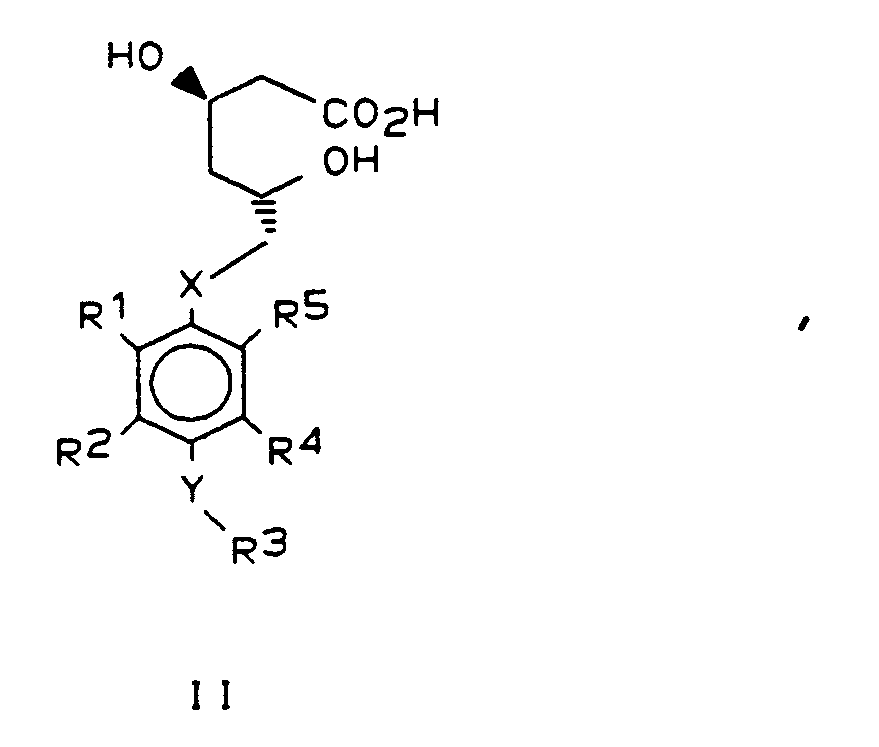
deren pharmakologisch verträgliche Salze mit Basen und deren pharmakologisch verträglich Ester.
Besonders bevorzugt sind die folgenden Verbindungen der allgemeinen Formel I

sowie die entsprechenden offenkettigen Dihydroxycarbonsäuren der allgemeinen Formel II, deren pharmakologisch verträglich Salze mit Basen und deren pharmakologisch verträgliche Ester.
Das Produkt ist oxidationsempfindlich und muß unter weitgehendem Sauerstoffausschluß gehandhabt werden.
Es ist vorteilhaft, den rohen Alkohol direkt weiter umzusetzen.
GC (30 m fused silica-Säule DB-5
"Polydiphenyldimethylsiloxan", Schichtdicke 0,25 µm, Innendurchmesser 0,32 mm, 160°C, Inj. 240°C, 1 bar Helium):tret 4,39 Min., Reinheit 97,1 %
Claims (7)
- Verfahren zur Herstellung von 4-Hydroxytetrahydropyran-2-onen der Formel I
 X und Y gleich oder verschieden sind und ein Sauerstoffatom oder ein Schwefelatom bedeuten,R¹ und R⁵ beide Isopropyl bedeuten oder verschieden sind und einen Isopropyl-, Cyclopropyl- oder Phenylrest bedeuten, wobei letzterer im Kern 1- bis 3-fach substituiert sein kann mit Fluor, Chlor, Brom, Trifluormethyl und/oder Alkyl oder Alkoxy mit je 1 bis 4 Kohlenstoffatomen.R² und R⁴ gleich oder verschieden sind und Wasserstoff oder einen Isopropyl-, Cyclopropyl- oder Phenylrest bedeuten, wobei letzterer im Kern 1-3-fach substituiert sein kann mit Fluor, Chlor, Brom, Trifluormethyl und/oder Alkyl oder Alkoxy mit 1 bis 4 Kohlenstoffatomen,R³von den entsprechenden offenkettigen Dihydroxycarbonsäuren der Formel IIa) Wasserstoff, Methyl oder Ethylb) einen geradkettigen oder verzweigten Alkylrest mit 3 bis 8 Kohlenstoffatomen, der substituiert sein kann mit dem Rest der Formel

 c) Cycloalkyl mit 3 bis 8 Kohlenstoffatomen oder einen Phenylrest, der im Kern 1- bis 3-fach substituiert sein kann mit Halogen, Trifluormethyl und/oder Alkyl oder Alkoxy mit je 1 bis 4 Kohlenstoffatomen, oderd) Acetyl unter der Voraussetzung, daß Y Sauerstoff ist, bedeutet,
deren pharmakologisch verträglichen Salzen mit Basen und deren pharmakologisch verträgliche Estern, dadurch gekennzeichnet, daß mana) ensprechend substituierte Phenole oder Thiophenole der Formel III,

 b) Verbindungen der Formel V unter Abspaltung der Schutzgruppe in β,δ-Dihydroxycarbonsäuretert.-butylester der Formel II/1,
 c) die tert.-Butylester der Formel II/1 zu Salzen der Formel
 d) die tert.-Butylester der Formel II/1 oder gegebenenfalls die Salze der Formel II/2 zu den β-Hydroxylaktonen der Formel I cyclisiert.
 e) gegebenenfalls die Hydroxylaktone der Formel I in die entsprechenden offenkettigen Dihydroxycarbonsäuren der Formel II, deren Salze oder deren Ester überführt, gegebenenfalls die Salze oder Ester in die freien Dihydroxycarbonsäuren der Formel II oder gegebenenfalls die Dihydroxycarbonsäuren II in die Salze oder Ester überführt.
 - Verfahren gemäß Anspruch 1, dadurch gekennzeichnet, daß man Verbindungen der Formel I bzw. II, worinX SauerstoffY Sauerstoff oder SchwefelR¹ Isopropyl oder CyclopropylR² Wasserstoff, Isopropyl oder p-FluorphenylR³ Wasserstoff, Acetyl, Isopropyl, p-Fluorphenyl oder einen der Reste
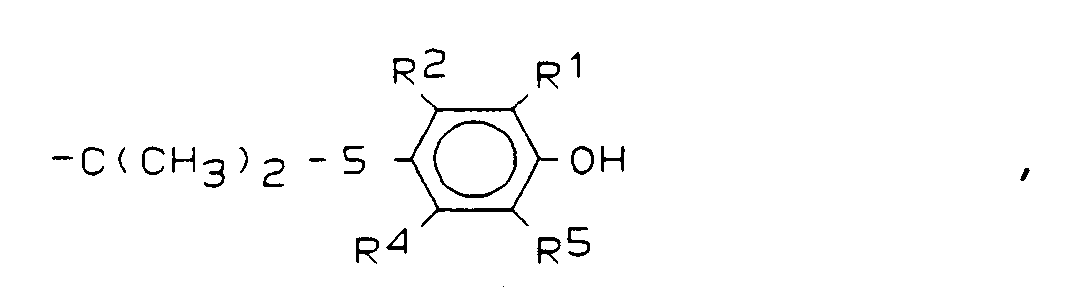
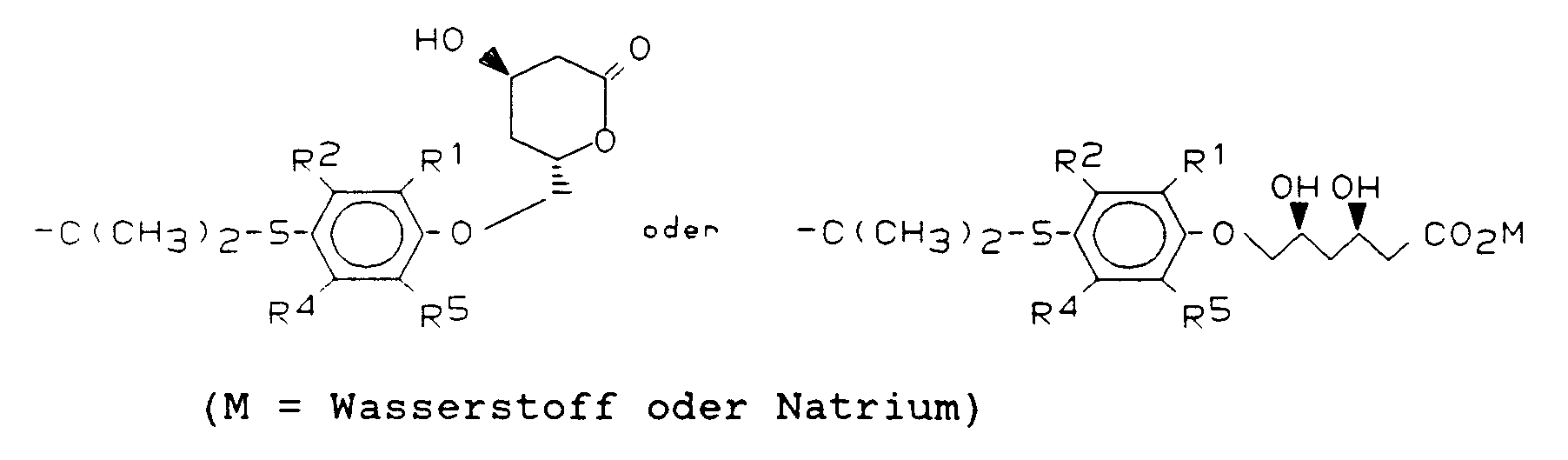 R⁴ Wasserstoff, Isopropyl oder p-FluorphenylR⁵ Isopropyl oder p-Fluorphenylbedeuten, deren pharmakologisch verträgliche Salze mit Basen oder deren pharmakologisch verträglichen Ester herstellt.
 - Verfahren gemäß Anspruch 1, dadurch gekennzeichnet, daß man eine Verbindung der folgenden Formeln (I)
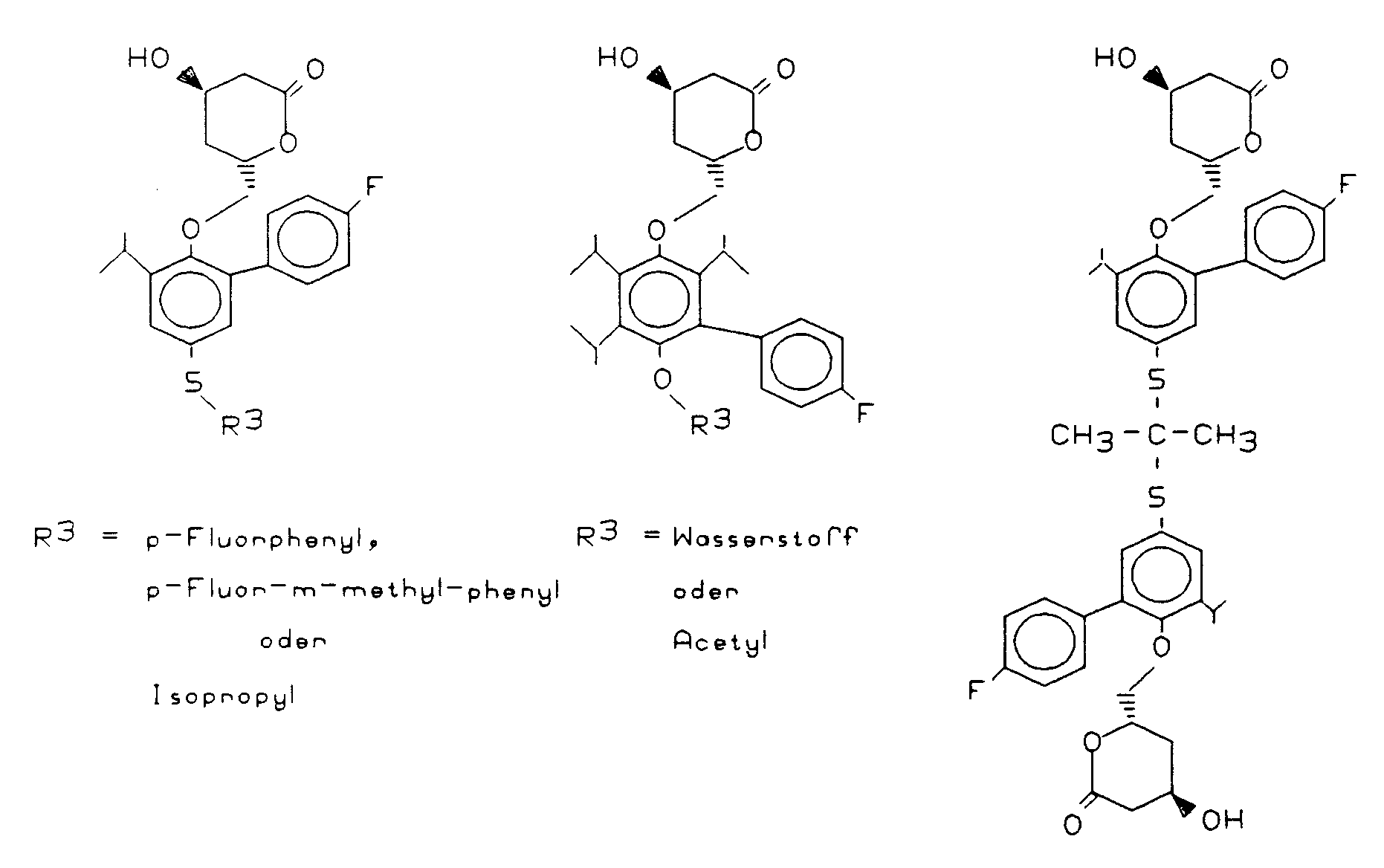
- Verfahren zur Herstellung eines pharmazeutischen Präparates, dadurch gekennzeichnet, daß man eine Verbindung erhältlich gemäß Anspruch 1 in eine geeignete Darreichungsform überführt.
- Verbindungen der Formel III
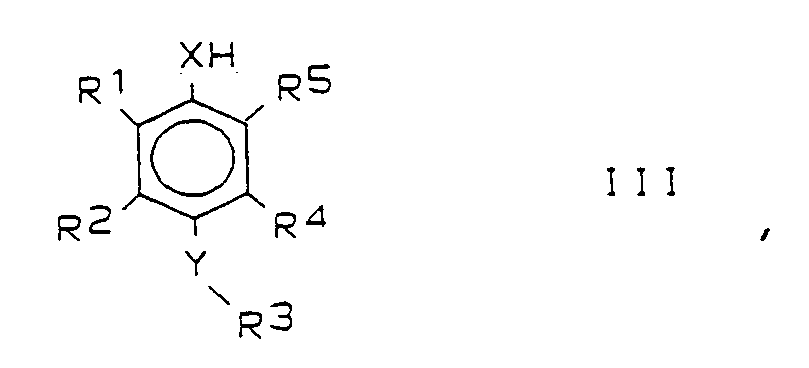
Applications Claiming Priority (2)
| Application Number | Priority Date | Filing Date | Title |
|---|---|---|---|
| DE3929913 | 1989-09-08 | ||
| DE3929913A DE3929913A1 (de) | 1989-09-08 | 1989-09-08 | 4-hydroxytetrahydropyran-2-one sowie die entsprechenden dihydroxycarbonsaeurederivate, salze und ester, verfahren zu ihrer herstellung, ihre verwendung als arzneimittel, pharmazeutische praeparate sowie vorprodukte |
Publications (2)
| Publication Number | Publication Date |
|---|---|
| EP0418648A1 EP0418648A1 (de) | 1991-03-27 |
| EP0418648B1 true EP0418648B1 (de) | 1995-01-11 |
Family
ID=6388931
Family Applications (1)
| Application Number | Title | Priority Date | Filing Date |
|---|---|---|---|
| EP90117043A Expired - Lifetime EP0418648B1 (de) | 1989-09-08 | 1990-09-05 | 4-Hydroxytetrahydropyran-2-one sowie die entsprechenden Dihydroxycarbonsäurederivate, Salze und Ester, Verfahren zu ihrer Herstellung, pharmazeutische Präparate sowie Vorprodukte |
Country Status (19)
| Country | Link |
|---|---|
| US (1) | US5294724A (de) |
| EP (1) | EP0418648B1 (de) |
| JP (1) | JP3053417B2 (de) |
| KR (1) | KR0162081B1 (de) |
| AT (1) | ATE116979T1 (de) |
| AU (1) | AU629977B2 (de) |
| CA (1) | CA2024849C (de) |
| DE (2) | DE3929913A1 (de) |
| DK (1) | DK0418648T3 (de) |
| ES (1) | ES2067609T3 (de) |
| FI (1) | FI108642B (de) |
| GR (1) | GR3015360T3 (de) |
| HU (1) | HU212103B (de) |
| IE (1) | IE66106B1 (de) |
| IL (1) | IL95599A (de) |
| NO (1) | NO175002C (de) |
| NZ (1) | NZ235194A (de) |
| PT (1) | PT95237B (de) |
| ZA (1) | ZA907134B (de) |
Cited By (3)
| Publication number | Priority date | Publication date | Assignee | Title |
|---|---|---|---|---|
| US6828447B2 (en) | 1997-05-14 | 2004-12-07 | Atherogenics, Inc. | Compounds and methods for the inhibition of the expression of VCAM-1 |
| US7071158B2 (en) | 1997-07-01 | 2006-07-04 | Atherogenics, Inc. | Antioxidant enhancement of therapy for hyperproliferative conditions |
| US7638524B2 (en) | 1997-11-05 | 2009-12-29 | Genzyme Corporation | Combination therapy for treating hypercholesterolemia |
Families Citing this family (22)
| Publication number | Priority date | Publication date | Assignee | Title |
|---|---|---|---|---|
| IL90249A (en) * | 1988-05-13 | 1994-01-25 | Hoechst Ag | Hydroxytethrahydropyran-2-ones, the corresponding dihydroxycarboxylic acid derivatives and salts, process of preparation and pharmaceutical compositions containing them |
| US5248793A (en) * | 1990-10-17 | 1993-09-28 | Warner-Lambert Company | Process for the synthesis of (4R-cis)-1,1-dimethylethyl 6-iodomethyl or 6-(phenyl-substituted)sulfonyloxymethyl-2,2-dimethyl-1,3-dioxane-4-acetate |
| US5103024A (en) * | 1990-10-17 | 1992-04-07 | Warner-Lambert Company | Process for the synthesis of (4r-cis)-1,1-dimethylethyl 6-cyanomethyl-2,2-dimethyl-1,3-dioxane-4-acetate |
| DE4312034A1 (de) * | 1993-04-13 | 1994-10-20 | Hesch Rolf Dieter Prof Dr Med | Neuartige Androgene und Anabolika |
| IL113567A0 (en) * | 1994-05-06 | 1995-08-31 | Upjohn Co | Compounds useful to treat retroviral infections |
| IL129871A (en) * | 1994-05-06 | 2003-11-23 | Pharmacia & Upjohn Inc | Process for preparing 4-phenyl-substituted octanoyl-oxazolidin-2-one intermediates that are useful for preparing pyran-2-ones useful for treating retroviral infections |
| US5925672A (en) | 1996-12-06 | 1999-07-20 | Neurosciences Research Foundation, Inc. | Methods of treating mental diseases, inflammation and pain |
| US6852878B2 (en) | 1998-05-14 | 2005-02-08 | Atherogenics, Inc. | Thioketals and thioethers for inhibiting the expression of VCAM-1 |
| EP1468989A3 (de) * | 1997-05-14 | 2008-12-03 | Atherogenics, Inc. | Verbindungen und Methoden zur Hemmung der VCAM-1 Expression |
| US6670398B2 (en) | 1997-05-14 | 2003-12-30 | Atherogenics, Inc. | Compounds and methods for treating transplant rejection |
| WO1999063994A1 (en) | 1998-06-08 | 1999-12-16 | Advanced Medicine, Inc. | MULTIBINDING INHIBITORS OF HMG-CoA REDUCTASE |
| AU2001247651B2 (en) * | 2000-03-21 | 2007-01-04 | Atherogenics, Inc | Thioketals and thioethers for inhibiting the expression of vcam-1 |
| JP2003530383A (ja) | 2000-04-11 | 2003-10-14 | アセロジエニクス・インコーポレイテツド | 血漿hdlコレステロールレベルを上昇させ、hdl機能性を向上させる化合物および方法 |
| NL1015744C2 (nl) * | 2000-07-19 | 2002-01-22 | Dsm Nv | Werkwijze voor de bereiding van 2-(6-gesubstitueerde-1,3-dioxan-4-yl) azijnzuurderivaten. |
| JP4334233B2 (ja) * | 2001-04-11 | 2009-09-30 | アセロジエニクス・インコーポレイテツド | プロブコールモノエステルによって血漿hdlコレステロールレベルを上昇させ、hdlの機能性を改善するための方法 |
| JP4550800B2 (ja) | 2003-01-13 | 2010-09-22 | アセロジエニクス・インコーポレイテツド | プロブコールおよびその誘導体のエステルおよびエーテルの製造方法 |
| US20050113445A1 (en) * | 2003-02-20 | 2005-05-26 | Daniele Piomelli | Methods of treating mental diseases, inflammation and pain |
| US7294737B2 (en) | 2004-04-20 | 2007-11-13 | Atherogenics, Inc. | Process of preparing esters and ethers of probucol and derivatives thereof |
| US20060194981A1 (en) * | 2005-02-26 | 2006-08-31 | Jass Paul A | Process for preparation of probucol derivatives |
| BRPI0809423A2 (pt) | 2007-03-26 | 2014-09-09 | Salutria Pharmaceuticals Llc | Usos e composições de derivados de probucol para o tratamento de diabetes |
| US20080280985A1 (en) * | 2007-03-27 | 2008-11-13 | Scott Robert A D | Methods and Compositions Using Certain Phenolic Derivatives for the Treatment of Diabetes |
| CN111225672B (zh) | 2017-10-16 | 2023-09-29 | 清华大学 | 甲羟戊酸通路抑制剂及其药物组合物 |
Family Cites Families (9)
| Publication number | Priority date | Publication date | Assignee | Title |
|---|---|---|---|---|
| US4077805A (en) | 1974-10-25 | 1978-03-07 | Shirow Asakawa | Light-sensitive composition containing antioxidant |
| EP0216127B1 (de) * | 1985-08-29 | 1990-09-26 | Hoechst Aktiengesellschaft | 6-Phenoxymethyl-4-hydroxytetrahydropyran-2-one, Verfahren zu ihrer Herstellung, ihre Verwendung als Arzneimittel, pharmazeutische Präparate und Zwischenprodukte |
| DE3632893A1 (de) * | 1986-09-27 | 1988-04-07 | Hoechst Ag | 4-(r)-hydroxy-6(s)-arylthiomethyl-tetrahydropyran-2-one, deren entsprechende sulfoxide und sulfone, verfahren zu ihrer herstellung, ihre verwendung als arzneimittel, pharmazeutische praeparate und zwischenprodukte |
| US4789682A (en) * | 1987-03-17 | 1988-12-06 | Merck & Co., Inc. | Antihypercholesterolemic compounds |
| DE3722809A1 (de) * | 1987-07-10 | 1989-01-19 | Hoechst Ag | 3-desmethyl-4-fluor-mevalonsaeurederivate, verfahren zu ihrer herstellung, pharmazeutische praeparate auf basis dieser verbindungen, ihre verwendung und zwischenprodukte |
| IT1217402B (it) * | 1988-04-12 | 1990-03-22 | Donegani Guido Ist | Procedimento per la preparazione di difenoli monoesteri sostituiti con gruppi arilici e prodotti cosi' ottenuti |
| DE3819999A1 (de) * | 1988-06-11 | 1989-12-21 | Hoechst Ag | Neue 6-phenoxymethyl-4-hydroxytetrahydropyran-2-one und 6-thiphenoxymethyl-4-hydroxytetrahydropyran-2 -one, sowie die entsprechenden dihydroxycarbonsaeurederivate, salze und ester, verfahren zur herstellung dieser verbindung, ihre verwendung als arzneimittel, pharmazeutische praeparate und neue phenole sowie thiophenole |
| IL90249A (en) * | 1988-05-13 | 1994-01-25 | Hoechst Ag | Hydroxytethrahydropyran-2-ones, the corresponding dihydroxycarboxylic acid derivatives and salts, process of preparation and pharmaceutical compositions containing them |
| US5093363A (en) * | 1989-08-22 | 1992-03-03 | Shionogi & Co., Ltd. | 2,4,6-substituted phenol derivatives |
-
1989
- 1989-09-08 DE DE3929913A patent/DE3929913A1/de not_active Withdrawn
-
1990
- 1990-09-05 DE DE59008238T patent/DE59008238D1/de not_active Expired - Lifetime
- 1990-09-05 DK DK90117043.1T patent/DK0418648T3/da active
- 1990-09-05 EP EP90117043A patent/EP0418648B1/de not_active Expired - Lifetime
- 1990-09-05 ES ES90117043T patent/ES2067609T3/es not_active Expired - Lifetime
- 1990-09-05 AT AT90117043T patent/ATE116979T1/de not_active IP Right Cessation
- 1990-09-06 NZ NZ235194A patent/NZ235194A/en unknown
- 1990-09-06 US US07/578,240 patent/US5294724A/en not_active Expired - Lifetime
- 1990-09-06 IL IL9559990A patent/IL95599A/en active IP Right Grant
- 1990-09-06 FI FI904395A patent/FI108642B/fi active IP Right Grant
- 1990-09-07 AU AU62277/90A patent/AU629977B2/en not_active Expired
- 1990-09-07 CA CA002024849A patent/CA2024849C/en not_active Expired - Lifetime
- 1990-09-07 JP JP2235998A patent/JP3053417B2/ja not_active Expired - Lifetime
- 1990-09-07 HU HU905827A patent/HU212103B/hu unknown
- 1990-09-07 ZA ZA907134A patent/ZA907134B/xx unknown
- 1990-09-07 IE IE326290A patent/IE66106B1/en not_active IP Right Cessation
- 1990-09-07 NO NO903911A patent/NO175002C/no not_active IP Right Cessation
- 1990-09-07 PT PT95237A patent/PT95237B/pt not_active IP Right Cessation
- 1990-09-07 KR KR1019900014100A patent/KR0162081B1/ko not_active Expired - Lifetime
-
1995
- 1995-03-10 GR GR950400518T patent/GR3015360T3/el unknown
Cited By (3)
| Publication number | Priority date | Publication date | Assignee | Title |
|---|---|---|---|---|
| US6828447B2 (en) | 1997-05-14 | 2004-12-07 | Atherogenics, Inc. | Compounds and methods for the inhibition of the expression of VCAM-1 |
| US7071158B2 (en) | 1997-07-01 | 2006-07-04 | Atherogenics, Inc. | Antioxidant enhancement of therapy for hyperproliferative conditions |
| US7638524B2 (en) | 1997-11-05 | 2009-12-29 | Genzyme Corporation | Combination therapy for treating hypercholesterolemia |
Also Published As
| Publication number | Publication date |
|---|---|
| FI108642B (fi) | 2002-02-28 |
| NO903911D0 (no) | 1990-09-07 |
| DE59008238D1 (de) | 1995-02-23 |
| ZA907134B (en) | 1991-06-26 |
| CA2024849A1 (en) | 1991-03-09 |
| IL95599A0 (en) | 1991-06-30 |
| IL95599A (en) | 1999-07-14 |
| KR910006263A (ko) | 1991-04-29 |
| HUT56085A (en) | 1991-07-29 |
| CA2024849C (en) | 2002-01-01 |
| US5294724A (en) | 1994-03-15 |
| DE3929913A1 (de) | 1991-04-04 |
| JP3053417B2 (ja) | 2000-06-19 |
| AU6227790A (en) | 1991-03-14 |
| IE66106B1 (en) | 1995-12-13 |
| ATE116979T1 (de) | 1995-01-15 |
| NO175002B (no) | 1994-05-09 |
| AU629977B2 (en) | 1992-10-15 |
| GR3015360T3 (en) | 1995-06-30 |
| HU905827D0 (en) | 1991-03-28 |
| JPH0399075A (ja) | 1991-04-24 |
| EP0418648A1 (de) | 1991-03-27 |
| NZ235194A (en) | 1992-06-25 |
| IE903262A1 (en) | 1991-03-13 |
| NO175002C (no) | 1994-08-17 |
| NO903911L (no) | 1991-03-11 |
| PT95237A (pt) | 1991-05-22 |
| HU212103B (en) | 1996-02-28 |
| KR0162081B1 (ko) | 1998-12-01 |
| ES2067609T3 (es) | 1995-04-01 |
| FI904395A0 (fi) | 1990-09-06 |
| PT95237B (pt) | 1997-06-30 |
| DK0418648T3 (da) | 1995-06-12 |
Similar Documents
| Publication | Publication Date | Title |
|---|---|---|
| EP0418648B1 (de) | 4-Hydroxytetrahydropyran-2-one sowie die entsprechenden Dihydroxycarbonsäurederivate, Salze und Ester, Verfahren zu ihrer Herstellung, pharmazeutische Präparate sowie Vorprodukte | |
| EP0361273B1 (de) | 7-Substituierte Derivate der 3,5-Dihydroxyhept-6-insäure, Verfahren zu ihrer Herstellung, ihre Verwendung als Arzneimittel, sowie Zwischenprodukte | |
| DE69811905T2 (de) | Cyclohexenon langketten alkohol und diese enthaltendes arzneimittel | |
| DE3024855C2 (de) | ||
| EP0263492A1 (de) | Neue Retinoide, deren Herstellung und Verwendung als Pharmazeutika | |
| EP0025192B1 (de) | Substituierte Oxirancarbonsäuren, Verfahren zu ihrer Herstellung, ihre Verwendung und sie enthaltende Arzneimittel | |
| CH638483A5 (de) | 2,2-difluor-6a-carba-pgi2-verbindungen. | |
| EP0046961B1 (de) | Epoxi-cycloalkylalkancarbonsäuren, Verfahren zu ihrer Herstellung, ihre Verwendung sowie sie enthaltende Arzneimittel | |
| EP0133935B1 (de) | p-Oxibenzoesäurederivate, Verfahren zu ihrer Herstellung und ihre Verwendung zur Herstellung von Arzneimitteln mit hypolipämischer Wirkung | |
| EP0282898A2 (de) | Propiolophenonderivate | |
| EP0216127B1 (de) | 6-Phenoxymethyl-4-hydroxytetrahydropyran-2-one, Verfahren zu ihrer Herstellung, ihre Verwendung als Arzneimittel, pharmazeutische Präparate und Zwischenprodukte | |
| EP0301421A2 (de) | Neue Schwefelverbindungen, Verfahren zu ihrer Herstellung sowie Arzneimittel | |
| EP0306649B1 (de) | Neue 3,5-Dihydroxycarbonsäuren und deren Derivate, Verfahren zu ihrer Herstellung, ihre Verwendung als Arzneimittel, pharmazeutische Präparate und Zwischenprodukte | |
| EP0300249B1 (de) | 7-[1H-Pyrrol-3-yl]-substituierte 3,5-Dihydroxy-heptansäuren, ihre entsprechenden delta-Lactone und Salze, Verfahren zu ihrer Herstellung, ihre Verwendung als Arzneimittel, pharmazeutische Präparate und Zwischenprodukte | |
| EP0337885B1 (de) | Trienische Derivate mit chromenischer Struktur, Verfahren zu deren Herstellung und diese enthaltende pharmazeutische Zusammenstellungen | |
| DE3632893A1 (de) | 4-(r)-hydroxy-6(s)-arylthiomethyl-tetrahydropyran-2-one, deren entsprechende sulfoxide und sulfone, verfahren zu ihrer herstellung, ihre verwendung als arzneimittel, pharmazeutische praeparate und zwischenprodukte | |
| DE3007367C2 (de) | 2-Alkyl-5-hydroxy-1,4-naphthochinone, Verfahren zu ihrer Herstellung sowie Arzneimittel | |
| EP0341681B1 (de) | Neue 6-Phenoxymethyl-4-hydroxytetrahydropyran-2-one und 6-Thiophenoxymethyl-4-hydroxytetrahydropyran-2-one, sowie die entsprechenden Dihydroxycarbonsäurederivate, Salze und Ester, Verfahren zur Herstellung dieser Verbindungen, ihre Verwendung als Arzneimittel, pharmazeutische Präparate und neue Phenole sowie Thiophenole | |
| DE2843870A1 (de) | N-hydroxypropylamide der all-e- und 13-z-retinsaeure | |
| EP0202529A2 (de) | Neue Phenolderivate, diese enthaltende Arzneimittel und Verfahren zur Herstellung dieser Verbindungen und Arzneimittel | |
| EP0001255B1 (de) | Neue fluorhaltige Prostaglandinderivate, Verfahren zu ihrer Herstellung und ihre Verwendung als Arzneimittel | |
| CH652712A5 (fr) | Adducts de dihydroxy-1,8 anthrone-9 et compositions destinees a la medecine humaine ou veterinaire et a la cosmetique les contenant. | |
| DE4109735A1 (de) | Neue sulfonamide, verfahren zu ihrer herstellung und arzneimittel, die diese verbindungen enthalten | |
| AT388162B (de) | 4(r)-substituierte 6(s)-phenoxymethyl-, 6(s)-beta-phenylaethyl- und 6(s)-beta-styryltetrahydropyran-2-one, ein hochstereoselektives verfahren zu ihrer herstellung und pharmazeutische praeparate auf basis dieser verbindungen | |
| EP0481253A2 (de) | Neue p-Oxibenzoesäurederivate, Verfahren zu ihrer Herstellung und ihre Verwendung als Arzneimittel |
Legal Events
| Date | Code | Title | Description |
|---|---|---|---|
| PUAI | Public reference made under article 153(3) epc to a published international application that has entered the european phase |
Free format text: ORIGINAL CODE: 0009012 |
|
| 17P | Request for examination filed |
Effective date: 19901221 |
|
| AK | Designated contracting states |
Kind code of ref document: A1 Designated state(s): AT BE CH DE DK ES FR GB GR IT LI LU NL SE |
|
| 17Q | First examination report despatched |
Effective date: 19931029 |
|
| GRAA | (expected) grant |
Free format text: ORIGINAL CODE: 0009210 |
|
| AK | Designated contracting states |
Kind code of ref document: B1 Designated state(s): AT BE CH DE DK ES FR GB GR IT LI LU NL SE |
|
| REF | Corresponds to: |
Ref document number: 116979 Country of ref document: AT Date of ref document: 19950115 Kind code of ref document: T |
|
| REF | Corresponds to: |
Ref document number: 59008238 Country of ref document: DE Date of ref document: 19950223 |
|
| ET | Fr: translation filed | ||
| ITF | It: translation for a ep patent filed | ||
| REG | Reference to a national code |
Ref country code: ES Ref legal event code: FG2A Ref document number: 2067609 Country of ref document: ES Kind code of ref document: T3 |
|
| GBT | Gb: translation of ep patent filed (gb section 77(6)(a)/1977) |
Effective date: 19950317 |
|
| REG | Reference to a national code |
Ref country code: GR Ref legal event code: FG4A Free format text: 3015360 |
|
| REG | Reference to a national code |
Ref country code: DK Ref legal event code: T3 |
|
| PLBE | No opposition filed within time limit |
Free format text: ORIGINAL CODE: 0009261 |
|
| STAA | Information on the status of an ep patent application or granted ep patent |
Free format text: STATUS: NO OPPOSITION FILED WITHIN TIME LIMIT |
|
| 26N | No opposition filed | ||
| REG | Reference to a national code |
Ref country code: GB Ref legal event code: IF02 |
|
| PGFP | Annual fee paid to national office [announced via postgrant information from national office to epo] |
Ref country code: DK Payment date: 20090914 Year of fee payment: 20 |
|
| PGFP | Annual fee paid to national office [announced via postgrant information from national office to epo] |
Ref country code: GB Payment date: 20090902 Year of fee payment: 20 Ref country code: AT Payment date: 20090911 Year of fee payment: 20 Ref country code: SE Payment date: 20090910 Year of fee payment: 20 Ref country code: LU Payment date: 20090929 Year of fee payment: 20 Ref country code: NL Payment date: 20090903 Year of fee payment: 20 |
|
| PGFP | Annual fee paid to national office [announced via postgrant information from national office to epo] |
Ref country code: ES Payment date: 20091006 Year of fee payment: 20 Ref country code: DE Payment date: 20090930 Year of fee payment: 20 Ref country code: CH Payment date: 20091006 Year of fee payment: 20 |
|
| PGFP | Annual fee paid to national office [announced via postgrant information from national office to epo] |
Ref country code: BE Payment date: 20090917 Year of fee payment: 20 |
|
| PGFP | Annual fee paid to national office [announced via postgrant information from national office to epo] |
Ref country code: FR Payment date: 20091012 Year of fee payment: 20 Ref country code: IT Payment date: 20090912 Year of fee payment: 20 |
|
| PGFP | Annual fee paid to national office [announced via postgrant information from national office to epo] |
Ref country code: GR Payment date: 20090819 Year of fee payment: 20 |
|
| REG | Reference to a national code |
Ref country code: CH Ref legal event code: PL Ref country code: NL Ref legal event code: V4 Effective date: 20100905 |
|
| REG | Reference to a national code |
Ref country code: DK Ref legal event code: EUP |
|
| REG | Reference to a national code |
Ref country code: GB Ref legal event code: PE20 Expiry date: 20100904 |
|
| BE20 | Be: patent expired |
Owner name: *HOECHST A.G. Effective date: 20100905 |
|
| EUG | Se: european patent has lapsed | ||
| PG25 | Lapsed in a contracting state [announced via postgrant information from national office to epo] |
Ref country code: GB Free format text: LAPSE BECAUSE OF EXPIRATION OF PROTECTION Effective date: 20100904 |
|
| PG25 | Lapsed in a contracting state [announced via postgrant information from national office to epo] |
Ref country code: NL Free format text: LAPSE BECAUSE OF EXPIRATION OF PROTECTION Effective date: 20100905 |
|
| REG | Reference to a national code |
Ref country code: ES Ref legal event code: FD2A Effective date: 20120424 |
|
| PG25 | Lapsed in a contracting state [announced via postgrant information from national office to epo] |
Ref country code: ES Free format text: LAPSE BECAUSE OF EXPIRATION OF PROTECTION Effective date: 20100906 |
|
| PG25 | Lapsed in a contracting state [announced via postgrant information from national office to epo] |
Ref country code: DE Free format text: LAPSE BECAUSE OF EXPIRATION OF PROTECTION Effective date: 20100905 |