EP0368684A1 - Cloning immunoglobulin variable domain sequences. - Google Patents
Cloning immunoglobulin variable domain sequences. Download PDFInfo
- Publication number
- EP0368684A1 EP0368684A1 EP89311731A EP89311731A EP0368684A1 EP 0368684 A1 EP0368684 A1 EP 0368684A1 EP 89311731 A EP89311731 A EP 89311731A EP 89311731 A EP89311731 A EP 89311731A EP 0368684 A1 EP0368684 A1 EP 0368684A1
- Authority
- EP
- European Patent Office
- Prior art keywords
- sequence
- primers
- variable domain
- dna
- primer
- Prior art date
- Legal status (The legal status is an assumption and is not a legal conclusion. Google has not performed a legal analysis and makes no representation as to the accuracy of the status listed.)
- Granted
Links
Images







Classifications
-
- C—CHEMISTRY; METALLURGY
- C07—ORGANIC CHEMISTRY
- C07K—PEPTIDES
- C07K14/00—Peptides having more than 20 amino acids; Gastrins; Somatostatins; Melanotropins; Derivatives thereof
- C07K14/435—Peptides having more than 20 amino acids; Gastrins; Somatostatins; Melanotropins; Derivatives thereof from animals; from humans
- C07K14/575—Hormones
- C07K14/655—Somatostatins
-
- C—CHEMISTRY; METALLURGY
- C07—ORGANIC CHEMISTRY
- C07K—PEPTIDES
- C07K16/00—Immunoglobulins [IG], e.g. monoclonal or polyclonal antibodies
- C07K16/46—Hybrid immunoglobulins
- C07K16/461—Igs containing Ig-regions, -domains or -residues form different species
-
- C—CHEMISTRY; METALLURGY
- C12—BIOCHEMISTRY; BEER; SPIRITS; WINE; VINEGAR; MICROBIOLOGY; ENZYMOLOGY; MUTATION OR GENETIC ENGINEERING
- C12Q—MEASURING OR TESTING PROCESSES INVOLVING ENZYMES, NUCLEIC ACIDS OR MICROORGANISMS; COMPOSITIONS OR TEST PAPERS THEREFOR; PROCESSES OF PREPARING SUCH COMPOSITIONS; CONDITION-RESPONSIVE CONTROL IN MICROBIOLOGICAL OR ENZYMOLOGICAL PROCESSES
- C12Q1/00—Measuring or testing processes involving enzymes, nucleic acids or microorganisms; Compositions therefor; Processes of preparing such compositions
- C12Q1/68—Measuring or testing processes involving enzymes, nucleic acids or microorganisms; Compositions therefor; Processes of preparing such compositions involving nucleic acids
- C12Q1/6876—Nucleic acid products used in the analysis of nucleic acids, e.g. primers or probes
-
- A—HUMAN NECESSITIES
- A61—MEDICAL OR VETERINARY SCIENCE; HYGIENE
- A61K—PREPARATIONS FOR MEDICAL, DENTAL OR TOILETRY PURPOSES
- A61K38/00—Medicinal preparations containing peptides
-
- C—CHEMISTRY; METALLURGY
- C07—ORGANIC CHEMISTRY
- C07K—PEPTIDES
- C07K2317/00—Immunoglobulins specific features
- C07K2317/20—Immunoglobulins specific features characterized by taxonomic origin
- C07K2317/24—Immunoglobulins specific features characterized by taxonomic origin containing regions, domains or residues from different species, e.g. chimeric, humanized or veneered
Definitions
- the present invention relates to single domain ligands derived from molecules in the immunoglobulin (Ig) superfamily, receptors comprising at least one such ligand, methods for cloning, amplifying and expressing DNA sequences encoding such ligands, methods for the use of said DNA sequences in the production of Ig-type molecules and said ligands or receptors, and the use of said ligands or receptors in therapy, diagnosis or catalysis.
- Ig immunoglobulin
- the Ig superfamily includes not only the Igs themselves but also such molecules as receptors on lymphoid cells such as T lymphocytes.
- Immunoglobulins comprise at least one heavy and one light chain covalently bonded together. Each chain is divided into a number of domains. At the N terminal end of each chain is a variable domain. The variable domains on the heavy and light chains fit together to form a binding site designed to receive a particular target molecule. In the case of Igs, the target molecules are antigens.
- T-cell receptors have two chains of equal size, the ⁇ and ⁇ chains, each consisting of two domains.
- variable domains on the ⁇ and ⁇ chains are believed to fit together to form a binding site for target molecules, in this case peptides presented by a histocompatibility antigen.
- the variable domains are so called because their amino acid sequences vary particularly from one molecule to another. This variation in sequence enables the molecules to recognise an extremely wide variety of target molecules.
- each variable domain comprises a number of areas of relatively conserved sequence and three areas of hypervariable sequence.
- the three hypervariable areas are generally known as complementarity determining regions (CDRs).
- Boss The Boss application also relates to the cloning and expression of chimeric antibodies.
- Chimeric antibodies are Ig-type molecules in which the variable domains from one Ig are fused to constant domains from another Ig.
- the variable domains are derived from an Ig from one species (often a mouse Ig) and the constant domains are derived from an Ig from a different species (often a human Ig).
- EP-A-0 125 023 (Genentech) relates to much the same subject as the Boss application, but also relates to the production by recombinant DNA technology of other variations of Ig-type molecules.
- EP-A-0 194 276 discloses not only chimeric antibodies of the type disclosed in the Boss application but also chimeric antibodies in which some or all of the constant domains have been replaced by non-Ig derived protein sequences.
- the heavy chain CH2 and CH3 domains may be replaced by protein sequences derived from an enzyme or a protein toxin.
- EP-A-0 239 400 discloses a different approach to the production of Ig molecules.
- this approach only the CDRs from a first type of Ig are grafted onto a second type of Ig in place of its normal CDRs.
- the Ig molecule thus produced is predominantly of the second type, since the CDRs form a relatively small part of the whole Ig.
- the CDRs are the parts which define the specificity of the Ig, the Ig molecule thus produced has its specificity derived from the first Ig.
- chimeric antibodies, CDR-grafted Igs, the altered antibodies described by Genentech, and fragments, of such Igs such as F(ab′)2 and Fv fragments are referred to herein as modified antibodies.
- MAbs monoclonal antibodies
- MAbs directed against cancer antigens have been produced. It is envisaged that these MAbs could be covalently attached or fused to toxins to provide "magic bullets" for use in cancer therapy. MAbs directed against normal tissue or cell surface antigens have also been produced. Labels can be attached to these so that they can be used for in vivo imaging.
- MAbs in therapy or in vivo diagnosis
- the vast majority of MAbs which are produced are of rodent, in particular mouse, origin. It is very difficult to produce human MAbs. Since most MAbs are derived from non-human species, they are antigenic in humans. Thus, administration of these MAbs to humans generally results in an anti-Ig response being mounted by the human. Such a response can interfere with therapy or diagnosis, for instance by destroying or clearing the antibody quickly, or can cause allergic reactions or immune complex hypersensitivity which has adverse effects on the patient.
- modified Igs have been proposed to ensure that the Ig administered to a patient is as "human” as possible, but still retains the appropriate specificity. It is therefore expected that modified Igs will be as effective as the MAb from which the specificity is derived but at the same time not very antigenic. Thus, it should be possible to use the modified Ig a reasonable number of times in a treatment or diagnosis regime.
- heavy chain variable domains are encoded by a "rearranged" gene which is built from three gene segments: an "unrearranged" VH gene (encoding the N-terminal three framework regions, first two complete CDRs and the first part of the third CDR), a diversity (DH)-segment (DH) (encoding the central portion of the third CDR) and a joining segment (JH) (encoding the last part of the third CDR and the fourth framework region).
- VH gene encoding the N-terminal three framework regions, first two complete CDRs and the first part of the third CDR
- DH diversity-segment
- JH joining segment
- light chain variable domains are encoded by an "unrearranged" VL gene and a JL gene.
- VL gene There are two types of light chains, kappa ( ⁇ ) or lambda ( ⁇ ), which are built respectively from unrearranged V ⁇ genes and J ⁇ segments, and from unrearranged V ⁇ genes and J ⁇ segments.
- Ig heavy chain variable domains can bind to antigen in a 1:1 ratio and with binding constants of equivalent magnitude to those of complete antibody molecules. In view of what was known up until now and in view of the assumptions made by those skilled in the art, this is highly surprising.
- a single domain ligand consisting at least part of the variable domain of one chain of a molecule from the Ig superfamily.
- the ligand consists of the variable domain of an Ig light, or, most preferably, heavy chain.
- the ligand may be produced by any known technique, for instance by controlled cleavage of Ig superfamily molecules or by peptide synthesis. However, preferably the ligand is produced by recombinant DNA technology. For instance, the gene encoding the rearranged gene for a heavy chain variable domain may be produced, for instance by cloning or gene synthesis, and placed into a suitable expression vector. The expression vector is then used to transform a compatible host cell which is then cultured to allow the ligand to be expressed and, preferably, secreted.
- the gene for the ligand can be mutated to improve the properties of the expressed domain, for example to increase the yields of expression or the solubility of the ligand, to enable the ligand to bind better, or to introduce a second site for covalent attachment (by introducing chemically reactive residues such as cysteine and histidine) or non-covalent binding of other molecules.
- a second site for binding to serum components to prolong the residence time of the domains in the serum; or for binding to molecules with effector functions, such as components of complement, or receptors on the surfaces of cells.
- hydrophobic residues which would normally be at the interface of the heavy chain variable domain with the light chain variable domain could be mutated to more hydrophilic residues to improve solubility; residues in the CDR loops could be mutated to improve antigen binding; residues on the other loops or parts of the ⁇ -sheet could be mutated to introduce new binding activities. Mutations could include single point mutations, multiple point mutations or more extensive changes and could be introduced by any of a variety of recombinant DNA methods, for example gene synthesis, site directed mutagenesis or the polymerase chain reaction.
- the ligands of the present invention have equivalent binding affinity to that of complete Ig molecules
- the ligands can be used in many of the ways as are Ig molecules or fragments.
- Ig molecules have been used in therapy (such as in treating cancer, bacterial and viral diseases), in diagnosis (such as pregnancy testing), in vaccination (such as in producing anti-idiotypic antibodies which mimic antigens), in modulation of activities of hormones or growth factors, in detection, in biosensors and in catalysis.
- the small size of the ligands of the present invention may confer some advantages over complete antibodies, for example, in neutralising the activity of low molecular weight drugs (such as digoxin) and allowing their filtration from the kidneys with drug attached; in penetrating tissues and tumours; in neutralising viruses by binding to small conserved regions on the surfaces of viruses such as the "canyon" sites of viruses [16]; in high resolution epitope mapping of proteins; and in vaccination by ligands which mimic antigens.
- low molecular weight drugs such as digoxin
- viruses such as digoxin
- the present invention also provides receptors comprising a ligand according to the first aspect of the invention linked to one or more of an effector molecule, a label, a surface, or one or more other ligands having the same or different specificity.
- a receptor comprising a ligand linked to an effector molecule may be of use in therapy.
- the effector molecule may be a toxin, such as ricin or pseudomonas exotoxin, an enzyme which is able to activate a prodrug, a binding partner or a radio-isotope.
- the radio-isotope may be directly linked to the ligand or may be attached thereto by a chelating structure which is directly linked to the ligand.
- Such ligands with attached isotopes are much smaller than those based on Fv fragments, and could penetrate tissues and access tumours more readily.
- a receptor comprising a ligand linked to a label may be of use in diagnosis.
- the label may be a heavy metal atom or a radio-isotope, in which case the receptor can be used for in vivo imaging using X-ray or other scanning apparatus.
- the metal atom or radio-isotope may be attached to the ligand either directly or via a chelating structure directly linked to the ligand.
- the label may be a heavy metal atom, a radio-isotope, an enzyme, a fluorescent or coloured molecule or a protein or peptide tag which can be detected by an antibody, an antibody fragment or another protein.
- Such receptors would be used in any of the known diagnostic tests, such as ELISA or fluorescence-linked assays.
- a receptor comprising a ligand linked to a surface could be used for purification of other molecules by affinity chromatography.
- Linking of ligands to cells for example to the outer membrane proteins of E. coli or to hydrophobic tails which localise the ligands in the cell membranes, could allow a simple diagnostic test in which the bacteria or cells would agglutinate in the presence of molecules bearing multiple sites for binding the ligand(s).
- Receptors comprising at least two ligands can be used, for instance, in diagnostic tests.
- the first ligand will bind to a test antigen and the second ligand will bind to a reporter molecule, such as an enzyme, a fluorescent dye, a coloured dye, a radio-isotope or a coloured-, fluorescently- ⁇ or radio-labelled protein.
- such receptors may be useful in increasing the binding to an antigen.
- the first ligand will bind to a first epitope of the antigen and the second ligand will bind to a second epitope.
- Such receptors may also be used for increasing the affinity and specificity of binding to different antigens in close proximity on the surface of cells.
- the first ligand will bind to the first antigen and the second epitope to the second antigen: strong binding will depend on the co-expression of the epitopes on the surface of the cell. This may be useful in therapy of tumours, which can have elevated expression of several surface markers. Further ligands could be added to further improve binding or specificity.
- the use of strings of ligands with the same or multiple specificities, creates a larger molecule which is less readily filtered from the circulation by the kidney.
- the use of strings of ligands may prove more effective than single ligands, due to repetition of the immunising epitopes.
- such receptors with multiple ligands could include effector molecules or labels so that they can be used in therapy or diagnosis as described above.
- the ligand may be linked to the other part of the receptor by any suitable means, for instance by covalent or non-covalent chemical linkages.
- the receptor comprises a ligand and another protein molecule, it is preferred that they are produced by recombinant DNA technology as a fusion product. If necessary, a linker peptide sequence can be placed between the ligand and the other protein molecule to provide flexibility.
- the ligand is to be used for in vivo diagnosis or therapy in humans, it is humanised, for instance by CDR replacement as described in EP-A-0 239 400.
- a further problem with the production of ligands, and also receptors according to the invention and modified Igs, by recombinant DNA technology is the cloning of the variable domain encoding sequences from the hybridoma which produces the MAb from which the specificity is to be derived.
- This can be a relatively long method involving the production of a suitable probe, construction of a clone library from cDNA or genomic DNA, extensive probing of the clone library, and manipulation of any isolated clones to enable the cloning into a suitable expression vector. Due to the inherent variability of the DNA sequences encoding Ig variable domains, it has not previously been possible to avoid such time consuming work. It is therefore a further aim of the present invention to provide a method which enables substantially any sequence encoding an Ig superfamily molecule variable domain (ligand) to be cloned in a reasonable period of time.
- a method of cloning a sequence (the target sequence) which encodes at least part of the variable domain of an Ig superfamily molecule which method comprises:
- the method of the present invention further includes the step (f) of repeating steps (c) to (e) on the denatured mixture a plurality of times.
- the method of the present invention is used to clone complete variable domains from Ig molecules, most preferably from Ig heavy chains.
- the method will produce a DNA sequence encoding a ligand according to the present invention.
- step (c) recited above the forward primer becomes annealed to the sense strand of the target sequence at or adjacent the 3′ end of the strand.
- the back primer becomes annealed to the antisense strand of the target sequence at or adjacent the 3′ end of the strand.
- the forward primer anneals at or adjacent the region of the ds nucleic acid which encodes the C terminal end of the variable region or domain.
- the back primer anneals at or adjacent the region of the ds nucleic acid which encodes the N-terminal end of the variable domain.
- step (d) nucleotides are added onto the 3′ end of the forward and back primers in accordance with the sequence of the strand to which they are annealed. Primer extension will continue in this manner until stopped by the beginning of the denaturing step (e). It must therefore be ensured that step (d) is carried out for a long enough time to ensure that the primers are extended so that the extended strands totally overlap one another.
- step (e) the extended primers are separated from the ds nucleic acid.
- the ds nucleic acid can then serve again as a substrate to which further primers can anneal.
- the extended primers themselves have the necessary complementary sequences to enable the primers to anneal thereto.
- step (f) the amount of extended primers will increase exponentially so that at the end of the cycles there will be a large quantity of cDNA having sequences complementary to the sense and antisense strands of the target sequence.
- the method of the present invention will result in the accumulation of a large quantity of cDNA which can form ds cDNA encoding at least part of the variable domain.
- the forward and back primers may be provided as isolated oligonucleotides, in which case only two oligonucleotides will be used. However, alternatively the forward and back primers may each be supplied as a mixture of closely related oligonucleotides. For instance, it may be found that at a particular point in the sequence to which the primer is to anneal, there is the possibility of nucleotide variation. In this case a primer may be used for each possible nucleotide variation. Furthermore it may be possible to use two or more sets of "nested" primers in the method to enhance the specific cloning of variable region genes.
- RNA may be isolated in known manner from a cell or cell line which is known to produce Igs.
- mRNA may be separated from other RNA by oligo-dT chromatography.
- a complementary strand of cDNA may then be synthesised on the mRNA template, using reverse transcriptase and a suitable primer, to yield an RNA/DNA heteroduplex.
- a second strand of DNA can be made in one of several ways, for example, by priming with RNA fragments of the mRNA strand (made by incubating RNA/DNA heteroduplex with RNase H) and using DNA polymerase, or by priming with a synthetic oligodeoxynucleotide primer which anneals to the 3′ end of the first strand and using DNA polymerase. It has been found that the method of the present invention can be carried out using ds cDNA prepared in this way.
- a forward primer which anneals to a sequence in the CH1 domain (for a heavy chain variable domain) or the C ⁇ or C ⁇ domain (for a light chain variable domain). These will be located in close enough proximity to the target sequence to allow the sequence to be cloned.
- the back primer may be one which anneals to a sequence at the N-terminal end of the VH1, V ⁇ or V ⁇ domain.
- the back primer may consist of a plurality of primers having a variety of sequences designed to be complementary to the various families of VH1, V ⁇ or V ⁇ sequences known.
- the back primer may be a single primer having a consensus sequence derived from all the families of variable region genes.
- the method of the present invention can be carried out using genomic DNA. If genomic DNA is used, there is a very large amount of DNA present, including actual coding sequences, introns and untranslated sequences between genes. Thus, there is considerable scope for non-specific annealing under the conditions used. However, it has surprisingly been found that there is very little non-specific annealing. It is therefore unexpected that it has proved possible to clone the genes of Ig-variable domains from genomic DNA.
- genomic DNA may prove advantageous compared with use of mRNA, as the mRNA is readily degraded, and especially difficult to prepare from clinical samples of human tissue.
- the ds nucleic acid used in step (a) is genomic DNA.
- genomic DNA As the ds nucleic acid source, it will not be possible to use as the forward primer an oligonucleotide having a sequence complementary to a sequence in a constant domain. This is because, in genomic DNA, the constant domain genes are generally separated from the variable domain genes by a considerable number of base pairs. Thus, the site of annealing would be too remote from the sequence to be cloned.
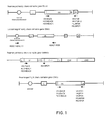
- the method of the present invention can be used to clone both rearranged and unrearranged variable domain sequences from genomic DNA. It is known that in germ line genomic DNA the three genes, encoding the VH, DH and JH respectively, are separated from one another by considerable numbers of base pairs. On maturation of the immune response, these genes are rearranged so that the VH, DH and JH genes are fused together to provide the gene encoding the whole variable domain (see Figure 1). By using a forward primer specific for a sequence at or adjacent the 3′ end of the sense strand of the genomic "unrearranged" VH gene, it is possible to clone the "unrearranged" VH gene alone, without also cloning the DH and JH genes. This can be of use in that it will then be possible to fuse the VH gene onto pre-cloned or synthetic DH and DH genes. In this way, rearrangement of the variable domain genes can be carried out in vitro .
- the oligonucleotide primers used in step (c) may be specifically designed for use with a particular target sequence. In this case, it will be necessary to sequence at least the 5′ and 3′ ends of the target sequence so that the appropriate oligonucleotides can be synthesised. However, the present inventors have discovered that it is not necessary to use such specifically designed primers. Instead, it is possible to use a species specific general primer or a mixture of such primers for annealing to each end of the target sequence. This is not particularly surprising as regards the 3′ end of the target sequence. It is known that this end of the variable domain encoding sequence leads into a segment encoding JH which is known to be relatively conserved. However, it was surprisingly discovered that, within a single species, the sequence at the 5′ end of the target sequence is sufficiently well conserved to enable a species specific general primer or a mixture thereof to be designed for the 5′ end of the target sequence.
- the two primers which are used are species specific general primers, whether used as single primers or as mixtures of primers. This greatly facilitates the cloning of any undetermined target sequence since it will avoid the need to carry out any sequencing on the target sequence in order to produce target sequence-specific primers.
- the method of this aspect of the invention provides a general method for cloning variable region or domain encoding sequences of a particular species.
- variable domain gene Once the variable domain gene has been cloned using the method described above, it may be directly inserted into an expression vector, for instance using the PCR reaction to paste the gene into a vector.
- each primer includes a sequence including a restriction enzyme recognition site.
- the sequence recognised by the restriction enzyme need not be in the part of the primer which anneals to the ds nucleic acid, but may be provided as an extension which does not anneal.
- the use of primers with restriction sites has the advantage that the DNA can be cut with at least one restriction enzyme which leaves 3′ or 5′ overhanging nucleotides. Such DNA is more readily cloned into the corresponding sites on the vectors than blunt end fragments taken directly from the method. The ds cDNA produced at the end of the cycles will thus be readily insertable into a cloning vector by use of the appropriate restriction enzymes.
- restriction sites is such that the ds cDNA is cloned directly into an expression vector, such that the ligand encoded by the gene is expressed.
- the restriction site is preferably located in the sequence which is annealed to the ds nucleic acid.
- the primers may not have a sequence exactly complementary to the target sequence to which it is to be annealed, for instance because of nucleotide variations or because of the introduction of a restriction enzyme recognition site, it may be necessary to adjust the conditions in the annealing mixture to enable the primers to anneal to the ds nucleic acid. This is well within the competence of the person skilled in the art and needs no further explanation.
- any DNA polymerase may be used.
- Such polymerases are known in the art and are available commercially. The conditions to be used with each polymerase are well known and require no further explanation here.
- the polymerase reaction will need to be carried out in the presence of the four nucleoside triphosphates. These and the polymerase enzyme may already be present in the sample or may be provided afresh for each cycle.
- the denaturing step (e) may be carried out, for instance, by heating the sample, by use of chaotropic agents, such as urea or guanidine, or by the use of changes in ionic strength or pH.
- chaotropic agents such as urea or guanidine
- denaturing is carried out by heating since this is readily reversible.
- thermostable DNA polymerase such as Taq polymerase, since this will not need replenishing at each cycle.
- a suitable cycle of heating comprises denaturation at about 95°C for about 1 minute, annealing at from 30°C to 65°C for about 1 minute and primer extension at about 75°C for about 2 minutes.
- the mixture after the final cycle is preferably held at about 60°C for about 5 minutes.
- the product ds cDNA may be separated from the mixture for instance by gel electrophoresis using agarose gels.
- the ds cDNA may be used in unpurified form and inserted directly into a suitable cloning or expression vector by conventional methods. This will be particularly easy to accomplish if the primers include restriction enzyme recognition sequences.
- the method of the present invention may be used to make variations in the sequences encoding the variable domains. For example this may be acheived by using a mixture of related oligonucleotide primers as at least one of the primers.
- the primers are particularly variable in the middle of the primer and relatively conserved at the 5′ and 3′ ends.
- the ends of the primers are complementary to the framework regions of the variable domain, and the variable region in the middle of the primer covers all or part of a CDR.
- a forward primer is used in the area which forms the third CDR. If the method is carried out using such a mixture of oligonucleotides, the product will be a mixture of variable domain encoding sequences.
- variations in the sequence may be introduced by incorporating some mutagenic nucleotide triphosphates in step (d), such that point mutations are scattered throughout the target region.
- point mutations are introduced by performing a large number of cycles of amplification, as errors due to the natural error rate of the DNA polymerase are amplified, particularly when using high concentrations of nucleoside triphosphates.
- the method of this aspect of the present invention has the advantage that it greatly facilitates the cloning of variable domain encoding sequences directly from mRNA or genomic DNA. This in turn will facilitate the production of modified Ig-type molecules by any of the prior art methodes referred to above.
- target genes can be cloned from tissue samples containing antibody producing cells, and the genes can be sequenced. By doing this, it will be possible to look directly at the immune repertoire of a patient. This "fingerprinting" of a patient's immune repertoire could be of use in diagnosis, for instance of auto-immune diseases.
- a single set of primers is used in several cycles of copying via the polymerase chain reaction.
- steps (a) to (d) as above which further includes the steps of:
- the second method may further include the steps of:
- fragments are separated from the vector and from other fragments of the incorrect size by gel electrophoresis.
- steps (a) to (d) then (g) to (h) can be followed once, but preferably the entire cycle (c) to (d) and (g) to (j) is repeated at least once.
- a priming step in which the genes are specifically copied, is followed by a cloning step, in which the amount of genes is increased.
- the ds cDNA is derived from mRNA.
- the mRNA is preferably be isolated from lymphocytes which have been stimulated to enhance production of mRNA.
- the set of primers are preferably different from the previous step (c), so as to enhance the specificity of copying.
- the sets of primers form a nested set.
- the first set of primers may be located within the signal sequence and constant region, as described by Larrick et al., [18], and the second set of primers entirely within the variable region, as described by Orlandi et al., [19].
- the primers of step (c) include restriction sites to facilitate subsequent cloning.
- the set of primers used in step (c) should preferably include restriction sites for introduction into expression vectors.
- step (g) possible mismatches between the primers and the template strands are corrected by "nick translation".
- step (h) the ds cDNA is preferably cleaved with restriction enzymes at sites introduced into the primers to facilitate the cloning.
- the product ds cDNA is cloned directly into an expression vector.
- the host may be prokaryotic or eukaryotic, but is preferably bacterial.
- restriction sites in the primers and in the vector, and other features of the vector will allow the expression of complete ligands, while preserving all those features of the amino acid sequence which are typical of the (methoded) ligands.
- the primers would be chosen to allow the cloning of target sequences including at least all the three CDR sequences.
- the cloning vector would then encode a signal sequence (for secretion of the ligand), and sequences encoding the N-terminal end of the first framework region, restriction sites for cloning and then the C-terminal end of the last (fourth) framework region.
- the primers would be chosen to allow the cloning of target sequences including at least the first two CDRs.
- the cloning vector could then encode signal sequence, the N-terminal end of the first framework region, restriction sites for cloning and then the C-terminal end of the third framework region, the third CDR and fourth framework region.
- Primers and cloning vectors may likewise be devised for expression of single CDRs, particularly the third CDR, as parts of complete ligands.
- the advantage of cloning repertoires of single CDRs would permit the design of a "universal" set of framework regions, incorporating desirable properties such as solubility.
- Single ligands could be expressed alone or in combination with a complementary variable domain.
- a heavy chain variable domain can be expressed either as an individual domain or, if it is expressed with a complementary light chain variable domain, as an antigen binding site.
- the two partners would be expressed in the same cell, or secreted from the same cell, and the proteins allowed to associate non-covalently to form an Fv fragment.
- the two genes encoding the complementary partners can be placed in tandem and expressed from a single vector, the vector including two sets of restriction sites.
- the genes are introduced sequentially: for example the heavy chain variable domain can be cloned first and then the light chain variable domain.
- the two genes are introduced into the vector in a single step, for example by using the polymerase chain reaction to paste together each gene with any necessary intervening sequence, as essentially described by Yon and Fried [29].
- the two partners could be also expressed as a linked protein to produce a single chain Fv fragment, using similar vectors to those described above.
- the two genes may be placed in two different vectors, for example in which one vector is a phage vector and the other is a plasmid vector.
- the cloned ds cDNA may be inserted into an expression vector already containing sequences encoding one or more constant domains to allow the vector to express Ig-type chains.
- the expression of Fab fragments would have the advantage over Fv fragments that the heavy and light chains would tend to associate through the constant domains in addition to the variable domains.
- the final expression product may be any of the modified Ig-type molecules referred to above.
- the cloned sequence may also be inserted into an expression vector so that it can be expressed as a fusion protein.
- the variable domain encoding sequence may be linked directly or via a linker sequence to a DNA sequence encoding any protein effector molecule, such as a toxin, enzyme, label or another ligand.
- the variable domain sequences may also be linked to proteins on the outer side of bacteria or phage.
- the method of this aspect of the invention may be used to produce receptors according to the invention.
- the cloning of ds cDNA directly for expression permits the rapid construction of expression libraries which can be screened for binding activities.
- the ds cDNA may comprise variable genes isolated as complete rearranged genes from the animal, or variable genes built from several different sources, for example a repertoire of unrearranged VH genes combined with a synthetic repertoire of DH and JH genes.
- repertoires of genes encoding Ig heavy chain variable domains are prepared from lymphocytes of animals immunised with an antigen.
- the screening method may take a range of formats well known in the art.
- Ig heavy chain variable domains secreted from bacteria may be screened by binding to antigen on a solid phase, and detecting the captured domains by antibodies.
- the domains may be screened by growing the bacteria in liquid culture and binding to antigen coated on the surface of ELISA plates.
- bacterial colonies or phage plaques which secrete ligands (or modified ligands, or ligand fusions with proteins) are screened for antigen binding on membranes.
- Either the ligands are bound directly to the membranes (and for example detected with labelled antigen), or captured on antigen coated membranes (and detected with reagents specific for ligands).
- the use of membranes offers great convenience in screening many clones, and such techniques are well known in the art.
- the screening method may also be greatly facilitated by making protein fusions with the ligands, for example by introducing a peptide tag which is recognised by an antibody at the N-terminal or C-terminal end of the ligand, or joining the ligand to an enzyme which catalyses the conversion of a colourless substrate to a coloured product.
- the binding of antigen may be detected simply by adding substrate.
- joining of the ligand and a domain of a transcriptional activator such as the GAL4 protein of yeast, and joining of antigen to the other domain of the GAL4 protein, could form the basis for screening binding activities, as described by Fields and Song [21].
- the preparation of proteins, or even cells with multiple copies of the ligands may improve the avidity of the ligand for immobilised antigen, and hence the sensitivity of the screening method.
- the ligand may be joined to a protein subunit of a multimeric protein, to a phage coat protein or to an outer membrane protein of E. coli such as ompA or lamB.
- Such fusions to phage or bacterial proteins also offers possibilities of selecting bacteria displaying ligands with antigen binding activities.
- bacteria may be precipitated with antigen bound to a solid support, or may be subjected to affinity chromatography, or may be bound to larger cells or particles which have been coated with antigen and sorted using a fluorescence activated cell sorter (FACS).
- FACS fluorescence activated cell sorter
- the proteins or peptides fused to the ligands are preferably encoded by the vector, such that cloning of the ds cDNA repertoire creates the fusion product.
- the associated Ig heavy and light chain variable domains For example, repertoires of heavy and light chain variable genes may be cloned such that two domains are expressed together. Only some of the pairs of domains may associate, and only some of these associated pairs may bind to antigen.
- the repertoires of heavy and light chain variable domains could be cloned such that each domain is paired at random. This approach may be most suitable for isolation of associated domains in which the presence of both partners is required to form a cleft. Alternatively, to allow the binding of hapten.
- a small repertoire of light chain variable domains for example including representative members of each family of domains, may be combined with a large repertoire of heavy chain variable domains.
- a repertoire of heavy chain variable domains is screened first for antigen binding in the absence of the light chain partner, and then only those heavy chain variable domains binding to antigen are combined with the repertoire of light chain variable domains. Binding of associated heavy and light chain variable domains may be distinguished readily from binding of single domains, for example by fusing each domain to a different C-terminal peptide tag which are specifically recognised by different monoclonal antibodies.
- the hierarchical approach of first cloning heavy chain variable domains with binding activities, then cloning matching light chain variable domains may be particularly appropriate for the construction of catalytic antibodies, as the heavy chain may be screened first for substrate binding.
- a light chain variable domain would then be identified which is capable of association with the heavy chain, and "catalytic" residues such as cysteine or histidine (or prosthetic groups) would be introduced into the CDRs to stabilise the transition state or attack the substrate, as described by Baldwin and Schultz [22].
- Fab fragments are more likely to be associated than the Fv fragments, as the heavy chain variable domain is attached to a single heavy chain constant domain, and the light chain variable domain is attached to a single light chain variable domain, and the two constant domains associate together.
- the heavy and light chain variable domains are covalently linked together with a peptide, as in the single chain antibodies, or peptide sequences attached, preferably at the C-terminal end which will associate through forming cysteine bonds or through non-covalent interactions, such as the introduction of "leucine zipper” motifs.
- the Fv fragments are preferably used.
- variable domains isolated from a repertoire of variable region genes offer a way of building complete antibodies, and an alternative to hybridoma technology.
- complete antibodies may be made and should possess natural effector functions, such as complement lysis.
- This route is particularly attractive for the construction of human monoclonal antibodies, as hybridoma technology has proved difficult, and for example, although human peripheral blood lymphocytes can be immortalised with Epstein Barr virus, such hybridomas tend to secrete low affinity IgM antibodies.
- lymphocytes do not generally secrete antibodies directed against host proteins.
- human antibodies directed against human proteins for example to human cell surface markers to treat cancers, or to histocompatibility antigens to treat auto-immune diseases.
- the construction of human antibodies built from the combinatorial repertoire of heavy and light chain variable domains may overcome this problem, as it will allow human antibodies to be built with specificities which would normally have been eliminated.
- the method also offers a new way of making bispecific antibodies.
- Antibodies with dual specificity can be made by fusing two hybridomas of different specificities, so as to make a hybrid antibody with an Fab arm of one specificity, and the other Fab arm of a second specificity.
- the yields of the bispecific antibody are low, as heavy and light chains also find the wrong partners.
- the construction of Fv fragments which are tightly associated should preferentially drive the association of the correct pairs of heavy with light chains. (It would not assist in the correct pairing of the two heavy chains with each other.)
- the improved production of bispecific antibodies would have a variety of applications in diagnosis and therapy, as is well known.
- the invention provides a species specific general oligonucleotide primer or a mixture of such primers useful for cloning variable domain encoding sequences from animals of that species.
- the method allows a single pair or pair of mixtures of species specific general primers to be used to clone any desired antibody specificity from that species. This eliminates the need to carry out any sequencing of the target sequence to be cloned and the need to design specific primers for each specificity to be recovered.
- variable genes for the expression of the variable genes directly on cloning, for the screening of the encoded domains for binding activities and for the assembly of the domains with other variable domains derived from the repertoire.
- mouse splenic ds mRNA or genomic DNA may be obtained from a hyperimmunised mouse. This could be cloned using the method of the present invention and then the cloned ds DNA inserted into a suitable expression vector.
- the expression vector would be used to transform a host cell, for instance a bacterial cell, to enable it to produce an Fv fragment or a Fab fragment.
- the Fv or Fab fragment would then be built into a monoclonal antibody by attaching constant domains and expressing it in mammalian cells.
- VH1FOR is designed to anneal with the 3′ end of the sense strand of any mouse heavy chain variable domain encoding sequence. It contains a BstEII recognition site.
- VK1FOR is designed to anneal with the 3′ end of the sense strand of any mouse kappa-type light chain variable domain encoding sequence and contains a BglII recognition site.
- VH1BACK is designed to anneal with the 3′ end of the antisense strand of any mouse heavy chain variable domain and contains a PstI recognition site.
- VK1 ⁇ BACK is designed to anneal with the 3′ end of the antisense strand of any mouse kappa-type light chain variable domain encoding sequence and contains a PvuII recognition site.
- MAbs monoclonal antibodies
- MBr1 BW431/26 [24]
- BW494/32 BW494/32 [25]
- BW250/183 [24,26] BW704/152 [27].
- MAb MBr1 is particularly interesting in that it is known to be specific for a saccharide epitope on a human mammary carcinoma line MCF-7 [28].
- a 50 ⁇ l reaction solution which contains 10 ⁇ g mRNA, 20 pmole VH1FOR primer, 250 ⁇ M each of dATP, dTTP, dCTP and dGTP, 10 mM dithiothreitol (DTT), 100 mM Tris.HCl, 10 mM MgCl2 and 140 mM KCl, adjusted to pH 8.3 was prepared.
- the reaction solution was heated at 70°C for ten minutes and allowed to cool to anneal the primer to the 3′ end of the variable domain encoding sequence in the mRNA.
- To the reaction solution was then added 46 units of reverse transcriptase (Anglian Biotec) and the solution was then incubated at 42°C for 1 hour to cause first strand cDNA synthesis.
- variable domain encoding sequences were amplified as follows.
- a 50 ⁇ l reaction solution containing 5 ⁇ l of the ds RNA/DNA hybrid-containing solution, 25 pmole each of VH1FOR and VH1BACK primers, 250 ⁇ M of dATP, dTTP, dCTP and dGTP, 67 mM Tris.HCl, 17 mM ammonium sulphate, 10 mM MgCl2, 200 ⁇ g/ml gelatine and 2 units Taq polymerase (Cetus) was prepared.
- the reaction solution was overlaid with paraffin oil and subjected to 25 rounds of temperature cycling using a Techne PHC-1 programmable heating block. Each cycle consisted of 1 minute and 95°C (to denature the nucleic acids), 1 minute at 30°C (to anneal the primers to the nucleic acids) and 2 minutes at 72°C (to cause elongation from the primers). After the 25 cycles, the reaction solution and the oil were extracted twice with ether, once with phenol and once with phenol/CHCl3. Thereafter ds cDNA was precipitated with ethanol. The precipitated ds cDNA was then taken up in 50 ⁇ l of water and frozen.
- VK1FOR and VK1BACK primers were used in place of the VH1FOR and VH1BACK primers respectively.
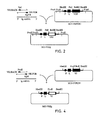
- a BstEII recognition site was introduced into the vector M13-HuVHNP [31] by site directed mutagenesis [32,33] to produce the vector M13-VHPCR1 ( Figures 2 and 3).
- Each amplified heavy chain variable domain encoding sequence was digested with the restriction enzymes PstI and BstEII.
- the fragments were phenol extracted, purified on 2% low melting point agarose gels and force cloned into vector M13-VHPCR1 which had been digested with PstI and BstEII and purified on an 0.8% agarose gel.
- Clones containing the variable domain inserts were identified directly by sequencing [34] using primers based in the 3′ non-coding variable gene in the M13-VHPCR1 vector.
- variable domain encoding sequences of BW431/26 There is an internal PstI site in the heavy chain variable domain encoding sequences of BW431/26. This variable domain encoding sequence was therefore assembled in two steps. The 3′ PstI-BstEII fragment was first cloned into M13-VHPCR1, followed in a second step by the 5′ PstI fragment.
- Vector M13mp18 [35] was cut with PvuII and the vector backbone was blunt ligated to a synthetic HindIII-BamHI polylinker.
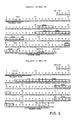
- Vector M13-HuVKLYS [36] was digested with HindIII and BamHI to isolate the HuVKLYS gene. This HindIII-BamHI fragment was then inserted into the HindIII-BamHI polylinker site to form a vector M13-VKPCR1 which lacks any PvuII sites in the vector backbone ( Figures 4 and 5). This vector was prepared in E Coli JM110 [22] to avoid dam methylation at the BclI site.
- Each amplified light chain variable domain encoding sequence was digested with PvuII and BglII.
- the fragments were phenol extracted, purified on 2% low melting point agarose gels and force cloned into vector M13-VKPCR1 which had been digested with PvuII and BclI, purified on an 0.8% agarose gel and treated with calf intestinal phosphatase.
- Clones containing the light chain variable region inserts were identified directly by sequencing [34] using primers based in the 3′ non-coding region of the variable domain in the M13-VKPCR1 vector.
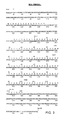
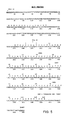
- nucleotide sequences of the MBr1 heavy and light chain variable domains are shown in Figure 6 with part of the flanking regions of the M13-VHPCR1 and M13-VKPCR1 vectors.
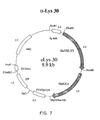
- the HindIII-BamHI fragment carrying the MBr1 heavy chain variable domain encoding sequence in M13-VHPCR1 was recloned into a pSV-gpt vector with human ⁇ 1 constant regions [37] ( Figure 7).
- the MBr1 light chain variable domain encoding sequence in M13-VKPCR1 was recloned as a HindIII-BamHI fragment into a pSV vector, PSV-hyg-HuCK with a hygromycin resistance marker and a human kappa constant domain (Figure 8).
- the assembly of the genes is summarised in Figure 9.
- the vectors thus produced were linearised with PvuI (in the case of the pSV-hygro vectors the PvuI digest is only partial) and cotransfected into the non-secreting mouse myeloma line NSO [38] by electroporation [39].
- PvuI mycophenolic acid
- cells were selected in 0.3 ⁇ g/ml mycophenolic acid (MPA) and after seven days in 1 ⁇ g/ml MPA. After 14 days, four wells, each containing one or two major colonies, were screened by incorporation of 14C-lysine [40] and the secreted antibody detected after precipitation with protein-A SepharoseTM (Pharmacia) on SDS-PAGE [41].
- the gels were stained, fixed, soaked in a fluorographic reagent, AmplifyTM (Amersham), dried and autoradiographed on preflashed film at -70°C for 2 days.
- the chimeric antibody in the supernatant like the parent mouse MBr1 antibody, was found to bind to MCF-7 cells but not the HT-29 cells, thus showing that the specificity had been properly cloned and expressed.
- the DNA from the mouse spleen was prepared in one of two ways (although other ways can be used).
- a mouse spleen was cut into two pieces and each piece was put into a standard Eppendorf tube with 200 ⁇ l of PBS. The tip of a 1 ml glass pipette was closed and rounded in the blue flame of a Bunsen burner. The pipette was used to squash the spleen piece in each tube. The cells thus produced were transferred to a fresh Eppendorf tube and the method was repeated three times until the connective tissue of the spleen appeared white. Any connective tissue which has been transferred with the cells was removed using a drawn-out Pasteur pipette. The cells were then washed in PBS and distributed into four tubes.
- mice spleen cells were then sedimented by a 2 minute spin in a Microcentaur centrifuge at low speed setting. All the supernatant was aspirated with a drawn out Pasteur pipette. If desired, at this point the cell sample can be frozen and stored at -20°C
- the supernatant was transferred to a new tube and to this was added 125 ⁇ l 5M NaCl and 30 ⁇ l 1M MOPS adjusted to pH 7.0.
- the DNA in the supernatant was absorbed on a Quiagen 5 tip and purified following the manufacturer's instructions for lambda DNA. After isopropanol precipitation, the DNA was resuspended in 500 ⁇ l water.
- the white cells were precipitated by spinning in the Microcentaur centrifuge at low speed for one minute. The cells were washed a further two times with 500 ⁇ l PBS, and were finally resuspended in 200 ⁇ l PBS. The white cells were added to 2.5 ml 25 mM EDTA and 10 mM Tris.Cl, pH 7.4, and vortexed slowly. While vortexing 25 ⁇ l 20% SDS was added. The cells lysed immediately and the solution became viscous and clear. 100 ⁇ l of 20 mg/ml proteinase K was added and incubated one to three hours at 50°C.
- the sample was extracted with an equal volume of phenol and the same volume of chloroform, and vortexed. After centrifuging, the aqueous phase was removed and 1/10 volume 3M ammonium acetate was added. This was overlaid with three volumes of cold ethanol and the tube rocked carefully until the DNA strands became visible.
- the DNA was spooled out with a Pasteur pipette, the ethanol allowed to drip off, and the DNA transferred to 1 ml of 10 mM Tris.Cl pH 7.4, 0.1 mM EDTA in an Eppendorf tube. The DNA was allowed to dissolve in the cold overnight on a roller.
- the DNA solution was diluted 1/10 in water and boiled for 5 min prior to using the polymerase chain reaction (PCR).
- PCR polymerase chain reaction
- typically 50-200 ng of DNA were used.
- the heavy and light chain variable domain encoding sequences in the genomic DNA isolated from the human PBL or the mouse spleen cells was then amplified and cloned using the general protocol described in the first two paragraphs of the section headed "Amplification from RNA/DNA Hybrid" in Example 1, except that during the annealing part of each cycle, the temperature was held at 65°C and that 30 cycles were used. Furthermore, to minimise the annealing between the 3′ ends of the two primers, the sample was first heated to 95°C, then annealed at 65°C, and only then was the Taq polymerase added. At the end of the 30 cycles, the reaction mixture was held at 60°C for five minutes to ensure that complete elongation and renaturation of the amplified fragments had taken place.
- VH1FOR and VH1BACK The primers used to amplify the mouse spleen genomic DNA were VH1FOR and VH1BACK, for the heavy chain variable domain and VK2FOR and VK1BACK, for the light chain variable domain. (VK2FOR only differs from VK1FOR in that it has an extra C residue on the 5′ end.)
- VH1FOR Likewise mixtures of VH1FOR, MOJH1FOR, MOJH2FOR, MOJH3FOR and MOJH4FOR were used as forward primers and mixtures of VH1BACK, MOVHIBACK, MOVHIIABACK, MOVHIIBBACK, MOVHIIIBACK were used as backward primers for amplification of VH genes.
- All these heavy chain FOR primers referred to above contain a BstEII site and all the BACK primers referred to above contain a PstI site. These light chain FOR and BACK primers referred to above all contain BglII and PvuII sites respectively.
- Light chain primers VK3FOR and VK2BACK were also devised which utilised different restriction sites, SacI and XhoI.
- the preferred amplification conditions for mouse VH genes are as follows: the sample was made in a volume of 50-100 ⁇ l, 50-100 ng of DNA, VH1FOR-2 and VH1BACK primers (25 pmole of each), 250 ⁇ M of each deoxynucleotide triphosphate, 10 mM Tris.HCl, pH 8.8, 50 mM KCl, 1.5 mM MgCl2, and 100 ⁇ g/ml gelatine.
- the sample was overlaid with paraffin oil, heated to 95° C for 2 min, 65° C for 2 min, and then to 72°C: taq polymerase was added after the sample had reached the elongation temperature and the reaction continued for 2 min at 72° C.
- the sample was subjected to a further 29 rounds of temperature cycling using the Techne PHC-1 programmable heating block.
- the preferred amplification conditions for mouse Vk genes from genomic DNA are as follows: the sample treated as above except with V ⁇ primers, for example VK3FOR and VK2BACK, and using a cycle of 94° C for one minute, 60° C for one minute and 72° C for one minute.
- V ⁇ primers for example VK3FOR and VK2BACK
- the conditions which were devised for genomic DNA are also suitable for amplification from the cDNA derived from mRNA from mouse spleen or mouse hybridoma.
- the reaction mixture was then extracted twice with 40 ⁇ l of water-saturated diethyl ether. This was followed by a standard phenol extraction and ethanol precipitation as described in Example 1.
- the DNA pellet was then dissolved in 100 ⁇ l 10 mM Tris.Cl, 0.1 mM EDTA.
- Each reaction mixture containing a light chain variable domain encoding sequence was digested with SacI and XhoI (or with PvuII and BglII) to enable it to be ligated into a suitable expression vector.
- Each reaction mixture containing a heavy chain variable domain encoding sequence was digested with PstI and BstEII for the same purpose.
- the heavy chain variable genes isolated as above from a mouse hyperimmunised with lysozyme were cloned into M13VHPCR1 vector and sequenced.
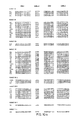
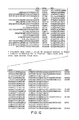
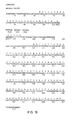
- the complete sequences of 48 VH gene clones were determined ( Figure 10). All but two of the mouse VH gene families were represented, with frequencies of: VA (1), IIIC (1), IIIB (8), IIIA (3), IIB (17), IIA (2), IB (12), IA (4).
- the D segments could be assigned to families SP2 (14), FL16 (11) and Q52 (5), and in 38 clones the JH minigenes to families JH1 (3), JH2 (7), JH3 (14) and JH4 (14).
- the different sequences of CDR3 marked out each of the 48 clones as unique. Nine pseudogenes and 16 unproductive rearrangements were identified. Of the clones sequenced, 27 have open reading frames.
- the method is capable of generating a diverse repertoire of heavy chain variable genes from mouse spleen DNA.
- the cells were pelleted again and lysed with 7 ml 5M guanidine isothiocyanate, 50 mM Tris, 10 mM EDTA, 0.1 mM dithiothreitol.
- the cells were vortexed vigorously and 7 volumes of 4M LiCl added.
- the mixture was incubated at 4°C for 15-20 hrs.
- the suspension was spun and the supernatant resuspended in 3M LiCl and centrifuged again.
- the pellet was dissolved in 2ml 0.1 % SDS, 10 mM Tris HCl and 1 mM EDTA.
- the suspension was frozen at -20°C, and thawed by vortexing for 20 s every 10 min for 45 min.
- RNA was precipitated by adding 1/10 volume 3M sodium acetate and 2 vol ethanol and leaving overnight at -20°C. The pellet was suspended in 0.2 ml water and reprecipitated with ethanol. Aliquots for cDNA synthesis were taken from the ethanol precipitate which had been vortexed to create a fine suspension.
- the back primers for the amplification of human DNA were designed to match the available human heavy and light chain sequences, in which the different families have slightly different nucleotide sequences at the 5′ end.
- the primers Hu2VHIBACK, HuVHIIBACK, Hu2VHIIIBACK and HuVH1VBACK were designed as back primers, and HUJH1FOR, HUJH2FOR and HUJH4FOR as forward primers based entirely in the variable gene.
- Another set of forward primers Hu1VHFOR, Hu2VHFOR, Hu3VHFOR, and Hu4VHFOR was also used, which were designed to match the human J-regions and the 5′ end of the constant regions of different human isotopes.
- the amplified DNA from the separate primings was then pooled, digested with restriction enzymes PstI and BstEII as above, and then cloned into the vector M13VHPCR1 for sequencing.
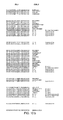
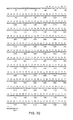
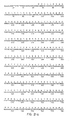
- the sequences reveal a diverse repertoire (Fig. 11) at this stage of the disease.
- HuJK1FOR, HUJK3FOR, HUJK4FOR and HUJK5FOR were used as forward primers and VK1BACK as back primer. Using these primers it was possible to see a band of amplified ds cDNA of the correct size by gel electrophoresis.
- Human peripheral blood lymphocytes of a patient with non-Hodgkins lymphoma were prepared as in Example 3 (Method 1).
- the genomic DNA was prepared from the PBL using the technique described in Example 2 (Method 2).
- the VH region in the isolated genomic DNA was then amplified and cloned using the general protocol described in the first two paragraphs of the section headed "Amplification from RNA/DNA hybrid" in Example 1 above, except that during the annealing part of each cycle, the temperature was held at 55°C and that 30 cycles were used. At the end of the 30 cycles, the reaction mixture was held at 60°C for five minutes to ensure that complete elongation and renaturation of the amplified fragments had taken place.
- the forward primer used was HuHep1FOR, which contains a SacI site. This primer is designed to anneal to the 3′ end of the unrearranged human VH region gene, and in particular includes a sequence complementary to the last three codons in the VH region gene and nine nucleotides downstream of these three codons.
- the heavy chain variable domain (VHLYS) of the D1.3 (anti-lysozyme) antibody was cloned into a vector similar to that described previously [42] but under the control of the lac z promoter, such that the VHLYS domain is attached to a pelB leader sequence for export into the periplasm.
- the vector was constructed by synthesis of the pelB leader sequence [43], using overlapping oligonucleotides, and cloning into a pUC 19 vector [35].
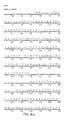
- the VHLYS domain of the D1.3 antibody was derived from a cDNA clone [44] and the construct (pSW1) sequenced ( Figure 13).
- VKLYS light chain variable region
- the colonies were inoculated into 50 ml 2 x TY (with 1% glucose and 100 ⁇ g/ml ampicillin) and grown in flasks at 37°C with shaking for 12-16 hr.
- the cells were centrifuged, the pellet washed twice with 50 mM sodium chloride, resuspended in 2 x TY medium containing 100 ⁇ g/ml ampicillin and the inducer IPTG (1 mM) and grown for a further 30 hrs at 37°C.
- the cells were centrifuged and the supernatant was passed through a Nalgene filter (0.45 ⁇ m) and then down a 1 - 5 ml lysozyme-Sepharose affinity column.
- the column was derived by coupling lysozyme at 10 mg/ml to CNBr activated Sepharose.
- the column was first washed with phosphate buffered saline (PBS), then with 50 mM diethylamine to elute the VHLYS domain (from pSW1) or VHLYS in association with VKLYS (from pSW2).
- PBS phosphate buffered saline
- VHLYS and VKLYS domains were identified by SDS polyacrylamide electrophoresis as the correct size.
- N-terminal sequence determination of VHLYS and VKLYS isolated from a polyacrylamide gel showed that the signal peptide had been produced correctly.
- both the Fv fragment and the VHLYS domains are able to bind to the lysozyme affinity column, suggesting that both retain at least some of the affinity of the original antibody.
- VHLYS domain was compared by FPLC with that of the Fv fragment on Superose 12. This indicates that the VHLYS domain is a monomer.
- the binding of the VHLYS and Fv fragment to lysozyme was checked by ELISA, and equilibrium and rapid reaction studies were carried out using fluorescence quench.
- the ELISA for lysozyme binding was undertaken as follows:
- the reaction was stopped by adding 0.05% sodium azide in 50 mM citric acid pH 4.3.
- ELISA plates were read in a Titertek Multiscan plate reader. Supernatant from the induced bacterial cultures of both pSW1 (VHLYS domain) or pSW2 (Fv fragment) was found to bind to lysozyme in the ELISA.
- the purified VHLYS and Fv fragments were titrated with lysozyme using fluorescence quench (Perkin Elmer LS5B Luminescence Spectrometer) to measure the stoichiometry of binding and the affinity constant for lysozyme [48,49].
- fluorescence quench Perkin Elmer LS5B Luminescence Spectrometer
- the titration of the Fv fragment at a concentration of 30 nM indicates a dissociation constant of 2.8 nM using a Scatchard analysis.
- VHLYS was titrated with lysozyme as above using fluorescence quench.
- the on-rates for VHLYS and Fv fragments with lysozyme were determined by stopped-flow analysis (HI Tech Stop Flow SHU machine) under pseudo-first order conditions with the fragment at a ten fold higher concentration than lysozyme [50].
- the concentration of lysozyme binding sites was first measured by titration with lysozyme using fluorescence quench as above. The on rates were calculated per mole of binding site (rather than amount of VHLYS protein).
- the on-rate for the Fv fragment was found to be 2.2 x 10⁶ M ⁇ 1 s ⁇ 1 at 25°C.
- the on-rate for the VHLYS fragment found to be 3.8 x 10⁶ M ⁇ 1 s ⁇ 1 and the off-rate 0.075 s ⁇ 1 at 20°C.
- the calculated affinity constant is 19 nM.
- the VHLYS binds to lysozyme with a dissociation constant of about 19 nM, compared with that of the Fv of 3 nM.
- a mouse was immunised with hen egg white lysozyme (100 ⁇ g i.p. day 1 in complete Freunds adjuvant), after 14 days immunised i.p. again with 100 ⁇ g lysozyme with incomplete Freunds adjuvant, and on day 35 i.v. with 50 ⁇ g lysozyme in saline. On day 39, spleen was harvested. A second mouse was immunised with keyhole limpet haemocyanin (KLH) in a similar way. The DNA was prepared from the spleen according to Example 2 (Method 2). The VH genes were amplified according to the preferred method in Example 2.
- KLH keyhole limpet haemocyanin
- Human peripheral blood lymphocytes from a patient infected with HIV were prepared as in Example 3 (Method 2) and mRNA prepared.
- the VH genes were amplified according to the method described in Example 3, using primers designed for human VH gene families.
- the reaction mixture and oil were extracted twice with ether, once with phenol and once with phenol/CHCl3.
- the double stranded DNA was then taken up in 50 ⁇ l of water and frozen. 5 ⁇ l was digested with PstI and BstEII (encoded within the amplification primers) and loaded on an agarose gel for electrophoresis. The band of amplified DNA at about 350 bp was extracted.
- the repertoire of amplified heavy chain variable domains was then cloned directly into the expression vector pSW1HPOLYMYC.
- This vector is derived from pSW1 except that the VHLYS gene has been removed and replaced by a polylinker restriction site.
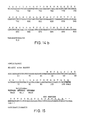
- a sequence encoding a peptide tag was inserted ( Figure 15). Colonies were toothpicked into 1 ml cultures. After induction (see Example 5 for details), 10 ⁇ l of the supernatant from fourteen 1 ml cultures was loaded on SDS-PAGE gels and the proteins transferred electrophoretically to nitrocellulose. The blot was probed with antibody 9E10 directed against the peptide tag.
- the probing was undertaken as follows.
- the nitrocellulose filter was incubated in 3% bovine serum albumin (BSA)/TBS buffer for 20 min (10 x TBS buffer is 100 mM Tris.HCl, pH 7.4, 9% w/v NaCl).
- the filter was incubated in a suitable dilution of antibody 9E10 (about 1/500) in 3% BSA/TBS for 1 - 4 hrs.
- TBS 100 ml per wash, each wash for 10 min
- the filter was incubated with 1:500 dilution of anti-mouse antibody (peroxidase conjugated anti-mouse Ig (Dakopats)) in 3% BSA/TBS for 1 - 2 hrs.
- anti-mouse antibody peroxidase conjugated anti-mouse Ig (Dakopats)
- Colonies were then toothpicked individually into wells of an ELISA plate (200 ⁇ l) for growth and induction. They were assayed for lysozyme binding with the 9E10 antibody (as in Examples 5 and 7). Wells with lysozyme-binding activity were identified. Two positive wells (of 200) were identified from the amplified mouse spleen DNA and one well from the human cDNA. The heavy chain variable domains were purified on a column of lysozyme-Sepharose. The affinity for lysozyme of the clones was estimated by fluorescence quench titration as >50nM.
- VH3 and VH8 The affinities of the two clones (VH3 and VH8) derived from the mouse genes were also estimated by stop flow analysis (ratio of k on /k off ) as 12 nM and 27 nM respectively. Thus both these clones have a comparable affinity to the VHLYS domain.
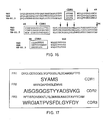
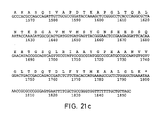
- the encoded amino acid sequences of of VH3 and VH8 are given in Figure 16, and that of the human variable domain in Figure 17.
- a library of VH domains made from the mouse immunised with lysozyme was screened for both lysozyme and keyhole limpet haemocyanin (KLH) binding activities. Two thousand colonies were toothpicked in groups of five into wells of ELISA plates, and the supernatants tested for binding to lysozyme coated plates and separately to KLH coated plates. Twenty one supernatants were shown to have lysozyme binding activities and two to have KLH binding activities.
- a second expression library, prepared from a mouse immunised with KLH was screened as above. Fourteen supernatants had KLH binding activities and a single supernatant had lysozyme binding activity.
- a single rearranged VH gene it may be possible to derive entirely new antigen binding activities by extensively mutating each of the CDRs.
- the mutagenesis might be entirely random, or be derived from pre-existing repertoires of CDRs.
- a repertoire of CDR3s might be prepared as in the preceding examples by using "universal" primers based in the flanking sequences, and likewise repertoires of the other CDRs (singly or in combination).
- the CDR repertoires could be stitched into place in the flanking framework regions by a variety of recombinant DNA techniques.
- CDR3 appears to be the most promising region for mutagenesis as CDR3 is more variable in size and sequence than CDRs 1 and 2. This region would be expected to make a major contribution to antigen binding.
- the heavy chain variable region (VHLYS) of the anti-lysozyme antibody D1.3 is known to make several important contacts in the CDR3 region.
- the source of the heavy chain variable domain was an M13 vector containing the VHLYS gene.
- the body of the sequence encoding the variable region was amplified using the polymerase chain reaction (PCR) with the mutagenic primer VHMUT1 based in CDR3 and the M13 primer which is based in the M13 vector backbone.
- the mutagenic primer hypermutates the central four residues of CDR3 (Arg-Asp-Tyr-Arg).
- the PCR was carried out for 25 cycles on a Techne PHC-1 programmable heat block using 100 ng single stranded M13mp19SW0 template, with 25 pmol of VHMUT1 and the M13 primer, 0.5 mM each dNTP, 67mM Tris.HCl, pH 8.8, 10 mM MgCl2, 17 mM (NH4)2SO4, 200 ⁇ g/ml gelatine and 2.5 units Taq polymerase in a final volume of 50 ⁇ l.
- the temperature regime was 95°C for 1.5 min, 25°C for 1.5 min and 72°C for 3 min (However a range of PCR conditions could be used).
- the reaction products were extracted with phenol/chloroform, precipitated with ethanol and resuspended in 10 mM Tris. HCl and 0.1 mM EDTA, pH 8.0.
- the products from the PCR were digested with PstI and BstEII and purified on a 1.5% LGT agarose gel in Tris acetate buffer using Geneclean (Bio 101, LaJolla).
- the gel purified band was ligated into pSW2HPOLY ( Figure 19).
- the vector was first digested with BstEII and PstI and treated with calf-intestinal phosphatase. Aliquots of the reaction mix were used to transform E. coli BMH 71-18 to ampicillin resistance. Colonies were selected on ampicillin (100 ⁇ g/ml) rich plates containing glucose at 0.8% w/v.
- Colonies resulting from transfection were picked in pools of five into two 96 well Corning microtitre plates, containing 200 ⁇ l 2 x TY medium and 100 ⁇ l TY medium, 100 ⁇ g/ml ampicillin and 1% glucose. The colonies were grown for 24 hours at 37°C and then cells were washed twice in 200 ⁇ l 50 mM NaCl, pelleting the cells in an IEC Centra-3 bench top centrifuge with microtitre plate head fitting. Plates were spun at 2,500 rpm for 10 min at room temperature. Cells were resuspended in 200 ⁇ l 2 x TY, 100 ⁇ g/ml ampicillin and 1 mM IPTG (Sigma) to induce expression, and grown for a further 24 hr.
- plasmids were prepared and the VKLYS gene excised by cutting with EcoRI and religating. Thus the plasmids should only direct the expression of the VHLYS mutants. 1.5 ml cultures were grown and induced for expression as above. The cells were spun down and supernatant shown to bind lysozyme as above. (Alternatively the amplified mutant VKLYS genes could have been cloned directly into the pSW1HPOLY vector for expression of the mutant activities in the absence of VKLYS.)
- An ELISA method was devised in which the activities of bacterial supernatants for binding of lysozyme (or KLH) were compared. Firstly a vector was devised for tagging of the VH domains at its C-terminal region with a peptide from the c-myc protein which is recognised by a monoclonal antibody 9E10.
- the vector was derived from pSW1 by a BstEII and SmaI double digest, and ligation of an oligonucleotide duplex made from 5′ GTC ACC GTC TCC TCA GAA CAA AAA CTC ATC TCA GAA GAG GAT CTG AAT TAA TAA 3′ and 5′ TTA TTA ATT CAG ATC CTC TTC TGA GAT GAG TTT TTG TTC TGA GGA GAC G 3′.
- the VHLYSMYC protein domain expressed after induction was shown to bind to lysozyme and to the 9E10 antibody by ELISA as follows:
- reaction was stopped by adding 0.05% sodium azide in 50 mM citric acid, pH 4.3.
- ELISA plates were read in an Titertek Multiscan plate reader.
- VHLYSMUT59 To check the affinity of the VHLYSMUT59 domain directly, the clone was grown at the 1l scale and 200-300 ⁇ g purified on lysozyme-Sepharose as in Example 5. By fluorescence quench titration of samples of VHLYS and VHLYSMUT59, the number of binding sites for lysozyme were determined. The samples of VHLYS and VHLYSMUT59 were then compared in the competition ELISA with VHLYSMYC over two orders of magnitude. In the competition assay each microtitre well contained a constant amount of VHLYSMYC (approximately 0.6 ⁇ g VHLYSMYC).
- VHLYS or VHLYSMUT59 Varying amounts of VHLYS or VHLYSMUT59 (3.8 ⁇ M in lysozyme binding sites) were added (0.166 - 25 ⁇ l). The final volume and buffer concentration in all wells was constant. 9E10 (anti-myc) antibody was used to quantitate bound VHLYSMYC in each assay well. The % inhibition of VHLYSMYC binding was calculated for each addition of VHLYS or VHLYSMUT59, after subtraction of background binding. Assays were carried out in duplicate. The results indicate that VHLYSMUT59 has a higher affinity for lysozyme than VHLYS.
- VHLYSMUT59 gene was sequenced (after recloning into M13) and shown to be identical to the VHLYS gene except for the central residues of CDR3 (Arg-Asp-Tyr-Arg). These were replaced by Thr-Gln-Arg-Pro: (encoded by ACACAAAGGCCA).
- a library of 2000 mutant VH clones was screened for lysozyme and also for KLH binding (toothpicking 5 colonies per well as described in Example 6).
- Nineteen supernatants were identified with lysozyme binding activities and four with KLH binding activities. This indicates that new specificites and improved affinities can be derived by making a random repertoire of CDR3.
- Two copies of the cloned heavy chain variable gene of the D1.3 antibody were linked by a nucleotide sequence encoding a flexible linker Gly-Gly-Gly-Ala-Pro-Ala-Ala-Ala-Pro-Ala-Gly-Gly-Gly- (by several steps of cutting, pasting and site directed mutagenesis) to yield the plasmid pSW3 ( Figure 20).
- the expression was driven by a lacz promoter and the protein was secreted into the periplasm via a pelB leader sequence (as described in Example 5 for expression of pSW1 and PSW2).
- the protein could be purified to homogeneity on a lysozyme affinity column.
- a cysteine residue was introduced at the C-terminus of the VHLYS domain in the vector pSW2.
- the cysteine was introduced by cleavage of the vector with the restriction enzymes BstI and SmaI (which excises the C-terminal portion of the J segment) and ligation of a short oligonucleotide duplex 5′ GTC ACC GTC TCC TCA TGT TAA TAA 3′ and 5′ TTA TTA ACA TGA GGA GAC G 3′.
- BstI and SmaI which excises the C-terminal portion of the J segment
- ligation of a short oligonucleotide duplex 5′ GTC ACC GTC TCC TCA TGT TAA TAA 3′ and 5′ TTA TTA ACA TGA GGA GAC G 3′.
- Example 5 coli strain BMH71-18 as in Example 5 and screened for phosphatase activity using 1 mg/ml p-nitrophenylphosphate as substrate in 10mM diethanolamine and 0.5 mM MgCl2, pH 9.5) and also on SDS polyacrylamide gels which had been Western blotted (detecting with anti-idiotypic antiserum). No evidence was found for the secretion of the linked VHLYS-alkaline phosphatase as detected by Western blots (see Example 5), or for secretion of phosphatase activity.
- linker sequences could then be introduced at the BstEII site to improve the spacing between the two domains.
- V ⁇ genes were derived by PCR using primers as described in Example 2 from DNA prepared from mouse spleen and also from mouse spleen mRNA using the primers VK3FOR and VK2BACK and a cycle of 94°C for 1 min, 60°C for 1 min, 72°C for 2 min.
- the PCR amplified DNA was fractionated on the agarose gel, the band excised and cloned into a vector which carries the VHLYS domain (from the D1.3 antibody), and a cloning site (SacI and XhoI) for cloning of the light chain variable domains with a myc tail (pSW1VHLYS-VKPOLYMYC, Figure 22).
- Clones were screened for lysozyme binding activities as described in Examples 5 and 7 via the myc tag on the light chain variable domain, as this should permit the following kinds of V ⁇ domains to be identified:
- VHLYS domain was replaced by the heavy chain variable domain VH3 which had been isolated from the repertoire (see Example 6), and then the V ⁇ domains cloned into the vector. (Note that the VH3 domain has an internal SacI site and this was first removed to allow the cloning of the V ⁇ repertoire as SacI-XhoI fragments.)
- the present invention enables the cloning, amplification and expression of heavy and light chain variable domain encoding sequences in a much more simple manner than was previously possible. It also shows that isolated variable domains or such domains linked to effector molecules are unexpectedly useful.
Landscapes
- Chemical & Material Sciences (AREA)
- Health & Medical Sciences (AREA)
- Organic Chemistry (AREA)
- Life Sciences & Earth Sciences (AREA)
- Proteomics, Peptides & Aminoacids (AREA)
- Immunology (AREA)
- Genetics & Genomics (AREA)
- Biophysics (AREA)
- General Health & Medical Sciences (AREA)
- Molecular Biology (AREA)
- Zoology (AREA)
- Biochemistry (AREA)
- Engineering & Computer Science (AREA)
- Analytical Chemistry (AREA)
- Wood Science & Technology (AREA)
- Medicinal Chemistry (AREA)
- Bioinformatics & Cheminformatics (AREA)
- General Engineering & Computer Science (AREA)
- Microbiology (AREA)
- Biotechnology (AREA)
- Physics & Mathematics (AREA)
- Gastroenterology & Hepatology (AREA)
- Toxicology (AREA)
- Endocrinology (AREA)
- Peptides Or Proteins (AREA)
- Measuring Or Testing Involving Enzymes Or Micro-Organisms (AREA)
- Medicines Containing Antibodies Or Antigens For Use As Internal Diagnostic Agents (AREA)
- Preparation Of Compounds By Using Micro-Organisms (AREA)
- Nitrogen Condensed Heterocyclic Rings (AREA)
- Steroid Compounds (AREA)
- Polymers With Sulfur, Phosphorus Or Metals In The Main Chain (AREA)
- Heterocyclic Carbon Compounds Containing A Hetero Ring Having Nitrogen And Oxygen As The Only Ring Hetero Atoms (AREA)
- Organic Low-Molecular-Weight Compounds And Preparation Thereof (AREA)
Abstract
Description
- The present invention relates to single domain ligands derived from molecules in the immunoglobulin (Ig) superfamily, receptors comprising at least one such ligand, methods for cloning, amplifying and expressing DNA sequences encoding such ligands, methods for the use of said DNA sequences in the production of Ig-type molecules and said ligands or receptors, and the use of said ligands or receptors in therapy, diagnosis or catalysis.
- A list of references is appended to the end of the description. The documents listed therein are referred to in the description by number, which is given in square brackets [].
- The Ig superfamily includes not only the Igs themselves but also such molecules as receptors on lymphoid cells such as T lymphocytes. Immunoglobulins comprise at least one heavy and one light chain covalently bonded together. Each chain is divided into a number of domains. At the N terminal end of each chain is a variable domain. The variable domains on the heavy and light chains fit together to form a binding site designed to receive a particular target molecule. In the case of Igs, the target molecules are antigens. T-cell receptors have two chains of equal size, the α and β chains, each consisting of two domains. At the N-terminal end of each chain is a variable domain and the variable domains on the α and β chains are believed to fit together to form a binding site for target molecules, in this case peptides presented by a histocompatibility antigen. The variable domains are so called because their amino acid sequences vary particularly from one molecule to another. This variation in sequence enables the molecules to recognise an extremely wide variety of target molecules.
- Much research has been carried out on Ig molecules to determine how the variable domains are produced. It has been shown that each variable domain comprises a number of areas of relatively conserved sequence and three areas of hypervariable sequence. The three hypervariable areas are generally known as complementarity determining regions (CDRs).
- Crystallographic studies have shown that in each variable domain of an Ig molecule the CDRs are supported on framework areas formed by the areas of conserved sequences. The three CDRs are brought together by the framework areas and, together with the CDRs on the other chain, form a pocket in which the target molecule is received.
- Since the advent of recombinant DNA technology, there has been much interest in the use of such technology to clone and express Ig molecules and derivatives thereof. This interest is reflected in the numbers of patent applications and other publications on the subject.
- The earliest work on the cloning and expression of full Igs in the patent literature is EP-
A-0 120 694 (Boss). The Boss application also relates to the cloning and expression of chimeric antibodies. Chimeric antibodies are Ig-type molecules in which the variable domains from one Ig are fused to constant domains from another Ig. Usually, the variable domains are derived from an Ig from one species (often a mouse Ig) and the constant domains are derived from an Ig from a different species (often a human Ig). - A later European patent application, EP-A-0 125 023 (Genentech), relates to much the same subject as the Boss application, but also relates to the production by recombinant DNA technology of other variations of Ig-type molecules.
- EP-
A-0 194 276 (Neuberger) discloses not only chimeric antibodies of the type disclosed in the Boss application but also chimeric antibodies in which some or all of the constant domains have been replaced by non-Ig derived protein sequences. For instance, the heavy chain CH2 and CH3 domains may be replaced by protein sequences derived from an enzyme or a protein toxin. - EP-A-0 239 400 (Winter) discloses a different approach to the production of Ig molecules. In this approach, only the CDRs from a first type of Ig are grafted onto a second type of Ig in place of its normal CDRs. The Ig molecule thus produced is predominantly of the second type, since the CDRs form a relatively small part of the whole Ig. However, since the CDRs are the parts which define the specificity of the Ig, the Ig molecule thus produced has its specificity derived from the first Ig.
- Hereinafter, chimeric antibodies, CDR-grafted Igs, the altered antibodies described by Genentech, and fragments, of such Igs such as F(ab′)₂ and Fv fragments are referred to herein as modified antibodies.
- One of the main reasons for all the activity in the Ig field using recombinant DNA technology is the desire to use Igs in therapy. It is well known that, using the hybridoma technique developed by Kohler and Milstein, it is possible to produce monoclonal antibodies (MAbs) of almost any specificity. Thus, MAbs directed against cancer antigens have been produced. It is envisaged that these MAbs could be covalently attached or fused to toxins to provide "magic bullets" for use in cancer therapy. MAbs directed against normal tissue or cell surface antigens have also been produced. Labels can be attached to these so that they can be used for in vivo imaging.
- The major obstacle to the use of such MAbs in therapy or in vivo diagnosis is that the vast majority of MAbs which are produced are of rodent, in particular mouse, origin. It is very difficult to produce human MAbs. Since most MAbs are derived from non-human species, they are antigenic in humans. Thus, administration of these MAbs to humans generally results in an anti-Ig response being mounted by the human. Such a response can interfere with therapy or diagnosis, for instance by destroying or clearing the antibody quickly, or can cause allergic reactions or immune complex hypersensitivity which has adverse effects on the patient.
- The production of modified Igs has been proposed to ensure that the Ig administered to a patient is as "human" as possible, but still retains the appropriate specificity. It is therefore expected that modified Igs will be as effective as the MAb from which the specificity is derived but at the same time not very antigenic. Thus, it should be possible to use the modified Ig a reasonable number of times in a treatment or diagnosis regime.
- At the level of the gene, it is known that heavy chain variable domains are encoded by a "rearranged" gene which is built from three gene segments: an "unrearranged" VH gene (encoding the N-terminal three framework regions, first two complete CDRs and the first part of the third CDR), a diversity (DH)-segment (DH) (encoding the central portion of the third CDR) and a joining segment (JH) (encoding the last part of the third CDR and the fourth framework region). In the maturation of B-cells, the genes rearrange so that each unrearranged VH gene is linked to one DH gene and one JH gene. The rearranged gene corresponds to VH-DH-JH. This rearranged gene is linked to a gene which encodes the constant portion of the Ig chain.
- For light chains, the situation is similar, except that for light chains there is no diversity region. Thus light chain variable domains are encoded by an "unrearranged" VL gene and a JL gene. There are two types of light chains, kappa (κ) or lambda (λ), which are built respectively from unrearranged Vκ genes and Jκ segments, and from unrearranged Vλ genes and Jλ segments.
- Previous work has shown that it is necessary to have two variable domains in association together for efficient binding. For example, the associated heavy and light chain variable domains were shown to contain the antigen binding site [1]. This assumption is borne out by X-ray crystallographic studies of crystallised antibody/antigen complexes [2-6] which show that both the heavy and light chains of the antibody's variable domains contact the antigen. The expectation that association of heavy and light chain variable domains is necessary for efficient antigen binding underlies work to co-secrete these domains from bacteria [1], and to link the domains together by a short section of polypeptide as in the single chain antibodies [8, 9].
- Binding of isolated heavy and light chains had also been detected. However the evidence suggested strongly that this was a property of heavy or light chain dimers. Early work, mainly with polyclonal antibodies, in which antibody heavy and light chains had been separated under denaturing conditions [10] suggested that isolated antibody heavy chains could bind to protein antigens [11] or hapten [12]. The binding of protein antigen was not characterised, but the hapten-binding affinity of the heavy chain fragments was reduced by two orders of magnitude [12] and the number of hapten molecules binding were variously estimated as 0.14 or 0.37 [13] or 0.26 [14] per isolated heavy chain. Furthermore binding of haptens was shown to be a property of dimeric heavy or dimeric light chains [14]. Indeed light chain dimers have been crystallised. It has been shown that in light chain dimers the two chains form a cavity which is able to bind to a single molecule of hapten [15].
- This confirms the assumption that, in order to obtain efficient binding, it is necessary to have a dimer, and preferably a heavy chain/light chain dimer, containing the respective variable domains. This assumption also underlies the teaching of the patent references cited above, wherein the intention is always to produce dimeric, and preferably heavy/light chain dimeric, molecules.
- It has now been discovered, contrary to expectations, that isolated Ig heavy chain variable domains can bind to antigen in a 1:1 ratio and with binding constants of equivalent magnitude to those of complete antibody molecules. In view of what was known up until now and in view of the assumptions made by those skilled in the art, this is highly surprising.
- Therefore, according to a first aspect of the present invention, there is provided a single domain ligand consisting at least part of the variable domain of one chain of a molecule from the Ig superfamily.
- Preferably, the ligand consists of the variable domain of an Ig light, or, most preferably, heavy chain.
- The ligand may be produced by any known technique, for instance by controlled cleavage of Ig superfamily molecules or by peptide synthesis. However, preferably the ligand is produced by recombinant DNA technology. For instance, the gene encoding the rearranged gene for a heavy chain variable domain may be produced, for instance by cloning or gene synthesis, and placed into a suitable expression vector. The expression vector is then used to transform a compatible host cell which is then cultured to allow the ligand to be expressed and, preferably, secreted.
- If desired, the gene for the ligand can be mutated to improve the properties of the expressed domain, for example to increase the yields of expression or the solubility of the ligand, to enable the ligand to bind better, or to introduce a second site for covalent attachment (by introducing chemically reactive residues such as cysteine and histidine) or non-covalent binding of other molecules. In particular it would be desirable to introduce a second site for binding to serum components, to prolong the residence time of the domains in the serum; or for binding to molecules with effector functions, such as components of complement, or receptors on the surfaces of cells.
- Thus, hydrophobic residues which would normally be at the interface of the heavy chain variable domain with the light chain variable domain could be mutated to more hydrophilic residues to improve solubility; residues in the CDR loops could be mutated to improve antigen binding; residues on the other loops or parts of the β-sheet could be mutated to introduce new binding activities. Mutations could include single point mutations, multiple point mutations or more extensive changes and could be introduced by any of a variety of recombinant DNA methods, for example gene synthesis, site directed mutagenesis or the polymerase chain reaction.
- Since the ligands of the present invention have equivalent binding affinity to that of complete Ig molecules, the ligands can be used in many of the ways as are Ig molecules or fragments. For example, Ig molecules have been used in therapy (such as in treating cancer, bacterial and viral diseases), in diagnosis (such as pregnancy testing), in vaccination (such as in producing anti-idiotypic antibodies which mimic antigens), in modulation of activities of hormones or growth factors, in detection, in biosensors and in catalysis.
- It is envisaged that the small size of the ligands of the present invention may confer some advantages over complete antibodies, for example, in neutralising the activity of low molecular weight drugs (such as digoxin) and allowing their filtration from the kidneys with drug attached; in penetrating tissues and tumours; in neutralising viruses by binding to small conserved regions on the surfaces of viruses such as the "canyon" sites of viruses [16]; in high resolution epitope mapping of proteins; and in vaccination by ligands which mimic antigens.
- The present invention also provides receptors comprising a ligand according to the first aspect of the invention linked to one or more of an effector molecule, a label, a surface, or one or more other ligands having the same or different specificity.
- A receptor comprising a ligand linked to an effector molecule may be of use in therapy. The effector molecule may be a toxin, such as ricin or pseudomonas exotoxin, an enzyme which is able to activate a prodrug, a binding partner or a radio-isotope. The radio-isotope may be directly linked to the ligand or may be attached thereto by a chelating structure which is directly linked to the ligand. Such ligands with attached isotopes are much smaller than those based on Fv fragments, and could penetrate tissues and access tumours more readily.
- A receptor comprising a ligand linked to a label may be of use in diagnosis. The label may be a heavy metal atom or a radio-isotope, in which case the receptor can be used for in vivo imaging using X-ray or other scanning apparatus. The metal atom or radio-isotope may be attached to the ligand either directly or via a chelating structure directly linked to the ligand. For in vitro diagnostic testing, the label may be a heavy metal atom, a radio-isotope, an enzyme, a fluorescent or coloured molecule or a protein or peptide tag which can be detected by an antibody, an antibody fragment or another protein. Such receptors would be used in any of the known diagnostic tests, such as ELISA or fluorescence-linked assays.
- A receptor comprising a ligand linked to a surface, such as a chromatography medium, could be used for purification of other molecules by affinity chromatography. Linking of ligands to cells, for example to the outer membrane proteins of E. coli or to hydrophobic tails which localise the ligands in the cell membranes, could allow a simple diagnostic test in which the bacteria or cells would agglutinate in the presence of molecules bearing multiple sites for binding the ligand(s).
- Receptors comprising at least two ligands can be used, for instance, in diagnostic tests. The first ligand will bind to a test antigen and the second ligand will bind to a reporter molecule, such as an enzyme, a fluorescent dye, a coloured dye, a radio-isotope or a coloured-, fluorescently-` or radio-labelled protein.
- Alternatively, such receptors may be useful in increasing the binding to an antigen. The first ligand will bind to a first epitope of the antigen and the second ligand will bind to a second epitope. Such receptors may also be used for increasing the affinity and specificity of binding to different antigens in close proximity on the surface of cells. The first ligand will bind to the first antigen and the second epitope to the second antigen: strong binding will depend on the co-expression of the epitopes on the surface of the cell. This may be useful in therapy of tumours, which can have elevated expression of several surface markers. Further ligands could be added to further improve binding or specificity. Moreover, the use of strings of ligands, with the same or multiple specificities, creates a larger molecule which is less readily filtered from the circulation by the kidney.
- For vaccination with ligands which mimic antigens, the use of strings of ligands may prove more effective than single ligands, due to repetition of the immunising epitopes.
- If desired, such receptors with multiple ligands could include effector molecules or labels so that they can be used in therapy or diagnosis as described above.
- The ligand may be linked to the other part of the receptor by any suitable means, for instance by covalent or non-covalent chemical linkages. However, where the receptor comprises a ligand and another protein molecule, it is preferred that they are produced by recombinant DNA technology as a fusion product. If necessary, a linker peptide sequence can be placed between the ligand and the other protein molecule to provide flexibility.
- The basic techniques for manipulating Ig molecules by recombinant DNA technology are described in the patent references cited above. These may be adapted in order to allow for the production of ligands and receptors according to the invention by means of recombinant DNA technology.
- Preferably, where the ligand is to be used for in vivo diagnosis or therapy in humans, it is humanised, for instance by CDR replacement as described in EP-A-0 239 400.
- In order to obtain a DNA sequence encoding a ligand, it is generally necessary firstly to produce a hybridoma which secretes an appropriate MAb. This can be a very time consuming method. Once an immunised animal has been produced, it is necessary to fuse separated spleen cells with a suitable myeloma cell line, grow up the cell lines thus produced, select appropriate lines, reclone the selected lines and reselect. This can take some long time. This problem also applies to the production of modified Igs.
- A further problem with the production of ligands, and also receptors according to the invention and modified Igs, by recombinant DNA technology is the cloning of the variable domain encoding sequences from the hybridoma which produces the MAb from which the specificity is to be derived. This can be a relatively long method involving the production of a suitable probe, construction of a clone library from cDNA or genomic DNA, extensive probing of the clone library, and manipulation of any isolated clones to enable the cloning into a suitable expression vector. Due to the inherent variability of the DNA sequences encoding Ig variable domains, it has not previously been possible to avoid such time consuming work. It is therefore a further aim of the present invention to provide a method which enables substantially any sequence encoding an Ig superfamily molecule variable domain (ligand) to be cloned in a reasonable period of time.
- According to another aspect of the present invention therefore, there is provided a method of cloning a sequence (the target sequence) which encodes at least part of the variable domain of an Ig superfamily molecule, which method comprises:
- (a) providing a sample of double stranded (ds) nucleic acid which contains the target sequence;
- (b) denaturing the sample so as to separate the two strands;
- (c) annealing to the sample a forward and a back oligonucleotide primer, the forward primer being specific for a sequence at or adjacent the 3′ end of the sense strand of the target sequence, the back primer being specific for a sequence at or adjacent the 3′ end of the antisense strand of the target sequence, under conditions which allow the primers to hybridise to the nucleic acid at or adjacent the target sequence;
- (d) treating the annealed sample with a DNA polymerase enzyme in the presence of deoxynucleoside triphosphates under conditions which cause primer extension to take place; and
- (e) denaturing the sample under conditions such that the extended primers become separated from the target sequence.
- Preferably, the method of the present invention further includes the step (f) of repeating steps (c) to (e) on the denatured mixture a plurality of times.
- Preferably, the method of the present invention is used to clone complete variable domains from Ig molecules, most preferably from Ig heavy chains. In the most preferred instance, the method will produce a DNA sequence encoding a ligand according to the present invention.
- In step (c) recited above, the forward primer becomes annealed to the sense strand of the target sequence at or adjacent the 3′ end of the strand. In a similar manner, the back primer becomes annealed to the antisense strand of the target sequence at or adjacent the 3′ end of the strand. Thus, the forward primer anneals at or adjacent the region of the ds nucleic acid which encodes the C terminal end of the variable region or domain. Similarly, the back primer anneals at or adjacent the region of the ds nucleic acid which encodes the N-terminal end of the variable domain.
- In step (d), nucleotides are added onto the 3′ end of the forward and back primers in accordance with the sequence of the strand to which they are annealed. Primer extension will continue in this manner until stopped by the beginning of the denaturing step (e). It must therefore be ensured that step (d) is carried out for a long enough time to ensure that the primers are extended so that the extended strands totally overlap one another.
- In step (e), the extended primers are separated from the ds nucleic acid. The ds nucleic acid can then serve again as a substrate to which further primers can anneal. Moreover, the extended primers themselves have the necessary complementary sequences to enable the primers to anneal thereto.
- During further cycles, if step (f) is used, the amount of extended primers will increase exponentially so that at the end of the cycles there will be a large quantity of cDNA having sequences complementary to the sense and antisense strands of the target sequence. Thus, the method of the present invention will result in the accumulation of a large quantity of cDNA which can form ds cDNA encoding at least part of the variable domain.
- As will be apparent to the skilled person, some of the steps in the method may be carried out simultaneously or sequentially as desired.
- The forward and back primers may be provided as isolated oligonucleotides, in which case only two oligonucleotides will be used. However, alternatively the forward and back primers may each be supplied as a mixture of closely related oligonucleotides. For instance, it may be found that at a particular point in the sequence to which the primer is to anneal, there is the possibility of nucleotide variation. In this case a primer may be used for each possible nucleotide variation. Furthermore it may be possible to use two or more sets of "nested" primers in the method to enhance the specific cloning of variable region genes.
- The method described above is similar to the method described by Saiki et al. [17]. A similar method is also used in the methods described in EP-
A-0 200 362. In both cases the method described is carried out using primers which are known to anneal efficiently to the specified nucleotide sequence. In neither of these disclosures was it suggested that the method could be used to clone Ig parts of variable domain encoding sequences, where the target sequence contains inherently highly variable areas. - The ds nucleic acid sequence used in the method of the present invention may be derived from mRNA. For instance, RNA may be isolated in known manner from a cell or cell line which is known to produce Igs. mRNA may be separated from other RNA by oligo-dT chromatography. A complementary strand of cDNA may then be synthesised on the mRNA template, using reverse transcriptase and a suitable primer, to yield an RNA/DNA heteroduplex. A second strand of DNA can be made in one of several ways, for example, by priming with RNA fragments of the mRNA strand (made by incubating RNA/DNA heteroduplex with RNase H) and using DNA polymerase, or by priming with a synthetic oligodeoxynucleotide primer which anneals to the 3′ end of the first strand and using DNA polymerase. It has been found that the method of the present invention can be carried out using ds cDNA prepared in this way.
- When making such ds cDNA, it is possible to use a forward primer which anneals to a sequence in the CH1 domain (for a heavy chain variable domain) or the Cλ or Cκ domain (for a light chain variable domain). These will be located in close enough proximity to the target sequence to allow the sequence to be cloned.
- The back primer may be one which anneals to a sequence at the N-terminal end of the VH1, Vκ or Vλ domain. The back primer may consist of a plurality of primers having a variety of sequences designed to be complementary to the various families of VH1, Vκ or Vλ sequences known. Alternatively the back primer may be a single primer having a consensus sequence derived from all the families of variable region genes.
- Surprisingly, it has been found that the method of the present invention can be carried out using genomic DNA. If genomic DNA is used, there is a very large amount of DNA present, including actual coding sequences, introns and untranslated sequences between genes. Thus, there is considerable scope for non-specific annealing under the conditions used. However, it has surprisingly been found that there is very little non-specific annealing. It is therefore unexpected that it has proved possible to clone the genes of Ig-variable domains from genomic DNA.
- Under some circumstances the use of genomic DNA may prove advantageous compared with use of mRNA, as the mRNA is readily degraded, and especially difficult to prepare from clinical samples of human tissue.
- Thus, in accordance with an aspect of the present invention, the ds nucleic acid used in step (a) is genomic DNA.
- When using genomic DNA as the ds nucleic acid source, it will not be possible to use as the forward primer an oligonucleotide having a sequence complementary to a sequence in a constant domain. This is because, in genomic DNA, the constant domain genes are generally separated from the variable domain genes by a considerable number of base pairs. Thus, the site of annealing would be too remote from the sequence to be cloned.
- It should be noted that the method of the present invention can be used to clone both rearranged and unrearranged variable domain sequences from genomic DNA. It is known that in germ line genomic DNA the three genes, encoding the VH, DH and JH respectively, are separated from one another by considerable numbers of base pairs. On maturation of the immune response, these genes are rearranged so that the VH, DH and JH genes are fused together to provide the gene encoding the whole variable domain (see Figure 1). By using a forward primer specific for a sequence at or adjacent the 3′ end of the sense strand of the genomic "unrearranged" VH gene, it is possible to clone the "unrearranged" VH gene alone, without also cloning the DH and JH genes. This can be of use in that it will then be possible to fuse the VH gene onto pre-cloned or synthetic DH and DH genes. In this way, rearrangement of the variable domain genes can be carried out in vitro.
- The oligonucleotide primers used in step (c) may be specifically designed for use with a particular target sequence. In this case, it will be necessary to sequence at least the 5′ and 3′ ends of the target sequence so that the appropriate oligonucleotides can be synthesised. However, the present inventors have discovered that it is not necessary to use such specifically designed primers. Instead, it is possible to use a species specific general primer or a mixture of such primers for annealing to each end of the target sequence. This is not particularly surprising as regards the 3′ end of the target sequence. It is known that this end of the variable domain encoding sequence leads into a segment encoding JH which is known to be relatively conserved. However, it was surprisingly discovered that, within a single species, the sequence at the 5′ end of the target sequence is sufficiently well conserved to enable a species specific general primer or a mixture thereof to be designed for the 5′ end of the target sequence.
- Therefore according to a preferred aspect of the present invention, in step (c) the two primers which are used are species specific general primers, whether used as single primers or as mixtures of primers. This greatly facilitates the cloning of any undetermined target sequence since it will avoid the need to carry out any sequencing on the target sequence in order to produce target sequence-specific primers. Thus the method of this aspect of the invention provides a general method for cloning variable region or domain encoding sequences of a particular species.
- Once the variable domain gene has been cloned using the method described above, it may be directly inserted into an expression vector, for instance using the PCR reaction to paste the gene into a vector.
- Advantageously, however, each primer includes a sequence including a restriction enzyme recognition site. The sequence recognised by the restriction enzyme need not be in the part of the primer which anneals to the ds nucleic acid, but may be provided as an extension which does not anneal. The use of primers with restriction sites has the advantage that the DNA can be cut with at least one restriction enzyme which leaves 3′ or 5′ overhanging nucleotides. Such DNA is more readily cloned into the corresponding sites on the vectors than blunt end fragments taken directly from the method. The ds cDNA produced at the end of the cycles will thus be readily insertable into a cloning vector by use of the appropriate restriction enzymes. Preferably the choice of restriction sites is such that the ds cDNA is cloned directly into an expression vector, such that the ligand encoded by the gene is expressed. In this case the restriction site is preferably located in the sequence which is annealed to the ds nucleic acid.
- Since the primers may not have a sequence exactly complementary to the target sequence to which it is to be annealed, for instance because of nucleotide variations or because of the introduction of a restriction enzyme recognition site, it may be necessary to adjust the conditions in the annealing mixture to enable the primers to anneal to the ds nucleic acid. This is well within the competence of the person skilled in the art and needs no further explanation.
- In step (d), any DNA polymerase may be used. Such polymerases are known in the art and are available commercially. The conditions to be used with each polymerase are well known and require no further explanation here. The polymerase reaction will need to be carried out in the presence of the four nucleoside triphosphates. These and the polymerase enzyme may already be present in the sample or may be provided afresh for each cycle.
- The denaturing step (e) may be carried out, for instance, by heating the sample, by use of chaotropic agents, such as urea or guanidine, or by the use of changes in ionic strength or pH. Preferably, denaturing is carried out by heating since this is readily reversible. Where heating is used to carry out the denaturing, it will be usual to use a thermostable DNA polymerase, such as Taq polymerase, since this will not need replenishing at each cycle.
- If heating is used to control the method, a suitable cycle of heating comprises denaturation at about 95°C for about 1 minute, annealing at from 30°C to 65°C for about 1 minute and primer extension at about 75°C for about 2 minutes. To ensure that elongation and renaturation is complete, the mixture after the final cycle is preferably held at about 60°C for about 5 minutes.
- The product ds cDNA may be separated from the mixture for instance by gel electrophoresis using agarose gels. However, if desired, the ds cDNA may be used in unpurified form and inserted directly into a suitable cloning or expression vector by conventional methods. This will be particularly easy to accomplish if the primers include restriction enzyme recognition sequences.
- The method of the present invention may be used to make variations in the sequences encoding the variable domains. For example this may be acheived by using a mixture of related oligonucleotide primers as at least one of the primers. Preferably the primers are particularly variable in the middle of the primer and relatively conserved at the 5′ and 3′ ends. Preferably the ends of the primers are complementary to the framework regions of the variable domain, and the variable region in the middle of the primer covers all or part of a CDR. Preferably a forward primer is used in the area which forms the third CDR. If the method is carried out using such a mixture of oligonucleotides, the product will be a mixture of variable domain encoding sequences. Moreover, variations in the sequence may be introduced by incorporating some mutagenic nucleotide triphosphates in step (d), such that point mutations are scattered throughout the target region. Alternatively such point mutations are introduced by performing a large number of cycles of amplification, as errors due to the natural error rate of the DNA polymerase are amplified, particularly when using high concentrations of nucleoside triphosphates.
- The method of this aspect of the present invention has the advantage that it greatly facilitates the cloning of variable domain encoding sequences directly from mRNA or genomic DNA. This in turn will facilitate the production of modified Ig-type molecules by any of the prior art methodes referred to above. Further, target genes can be cloned from tissue samples containing antibody producing cells, and the genes can be sequenced. By doing this, it will be possible to look directly at the immune repertoire of a patient. This "fingerprinting" of a patient's immune repertoire could be of use in diagnosis, for instance of auto-immune diseases.
- In the method for amplifying the amount of a gene encoding a variable domain, a single set of primers is used in several cycles of copying via the polymerase chain reaction. As a less preferred alternative, there is provided a second method which comprises steps (a) to (d) as above, which further includes the steps of:
- (g) treating the sample of ds cDNA with traces of DNAse in the presence of DNA polymerase I to allow nick translation of the DNA; and
- (h) cloning the ds cDNA into a vector.
- If desired, the second method may further include the steps of:
- (i) digesting the DNA of recombinant plasmids to release DNA fragments containing genes encoding variable domains; and
- (j) treating the fragments in a further set of steps (c) to (h).
- Preferably the fragments are separated from the vector and from other fragments of the incorrect size by gel electrophoresis.
- The steps (a) to (d) then (g) to (h) can be followed once, but preferably the entire cycle (c) to (d) and (g) to (j) is repeated at least once. In this way a priming step , in which the genes are specifically copied, is followed by a cloning step, in which the amount of genes is increased.
- In step (a) the ds cDNA is derived from mRNA. For Ig derived variable domains, the mRNA is preferably be isolated from lymphocytes which have been stimulated to enhance production of mRNA.
- In each step (c) the set of primers are preferably different from the previous step (c), so as to enhance the specificity of copying. Thus the sets of primers form a nested set. For example, for cloning of Ig heavy chain variable domains, the first set of primers may be located within the signal sequence and constant region, as described by Larrick et al., [18], and the second set of primers entirely within the variable region, as described by Orlandi et al., [19]. Preferably the primers of step (c) include restriction sites to facilitate subsequent cloning. In the last cycle the set of primers used in step (c) should preferably include restriction sites for introduction into expression vectors. In step (g) possible mismatches between the primers and the template strands are corrected by "nick translation". In step (h), the ds cDNA is preferably cleaved with restriction enzymes at sites introduced into the primers to facilitate the cloning.
- According to another aspect of the present invention the product ds cDNA is cloned directly into an expression vector. The host may be prokaryotic or eukaryotic, but is preferably bacterial. Preferably the choice of restriction sites in the primers and in the vector, and other features of the vector will allow the expression of complete ligands, while preserving all those features of the amino acid sequence which are typical of the (methoded) ligands. For example, for expression of the rearranged variable genes, the primers would be chosen to allow the cloning of target sequences including at least all the three CDR sequences. The cloning vector would then encode a signal sequence (for secretion of the ligand), and sequences encoding the N-terminal end of the first framework region, restriction sites for cloning and then the C-terminal end of the last (fourth) framework region.
- For expression of unrearranged VH genes as part of complete ligands, the primers would be chosen to allow the cloning of target sequences including at least the first two CDRs. The cloning vector could then encode signal sequence, the N-terminal end of the first framework region, restriction sites for cloning and then the C-terminal end of the third framework region, the third CDR and fourth framework region.
- Primers and cloning vectors may likewise be devised for expression of single CDRs, particularly the third CDR, as parts of complete ligands. The advantage of cloning repertoires of single CDRs would permit the design of a "universal" set of framework regions, incorporating desirable properties such as solubility.
- Single ligands could be expressed alone or in combination with a complementary variable domain. For example, a heavy chain variable domain can be expressed either as an individual domain or, if it is expressed with a complementary light chain variable domain, as an antigen binding site. Preferably the two partners would be expressed in the same cell, or secreted from the same cell, and the proteins allowed to associate non-covalently to form an Fv fragment. Thus the two genes encoding the complementary partners can be placed in tandem and expressed from a single vector, the vector including two sets of restriction sites.
- Preferably the genes are introduced sequentially: for example the heavy chain variable domain can be cloned first and then the light chain variable domain. Alternatively the two genes are introduced into the vector in a single step, for example by using the polymerase chain reaction to paste together each gene with any necessary intervening sequence, as essentially described by Yon and Fried [29]. The two partners could be also expressed as a linked protein to produce a single chain Fv fragment, using similar vectors to those described above. As a further alternative the two genes may be placed in two different vectors, for example in which one vector is a phage vector and the other is a plasmid vector.
- Moreover, the cloned ds cDNA may be inserted into an expression vector already containing sequences encoding one or more constant domains to allow the vector to express Ig-type chains. The expression of Fab fragments, for example, would have the advantage over Fv fragments that the heavy and light chains would tend to associate through the constant domains in addition to the variable domains. The final expression product may be any of the modified Ig-type molecules referred to above.
- The cloned sequence may also be inserted into an expression vector so that it can be expressed as a fusion protein. The variable domain encoding sequence may be linked directly or via a linker sequence to a DNA sequence encoding any protein effector molecule, such as a toxin, enzyme, label or another ligand. The variable domain sequences may also be linked to proteins on the outer side of bacteria or phage. Thus, the method of this aspect of the invention may be used to produce receptors according to the invention.
- According to another aspect of the invention, the cloning of ds cDNA directly for expression permits the rapid construction of expression libraries which can be screened for binding activities. For Ig heavy and light chain variable genes, the ds cDNA may comprise variable genes isolated as complete rearranged genes from the animal, or variable genes built from several different sources, for example a repertoire of unrearranged VH genes combined with a synthetic repertoire of DH and JH genes. Preferably repertoires of genes encoding Ig heavy chain variable domains are prepared from lymphocytes of animals immunised with an antigen.
- The screening method may take a range of formats well known in the art. For example Ig heavy chain variable domains secreted from bacteria may be screened by binding to antigen on a solid phase, and detecting the captured domains by antibodies. Thus the domains may be screened by growing the bacteria in liquid culture and binding to antigen coated on the surface of ELISA plates. However, preferably bacterial colonies (or phage plaques) which secrete ligands (or modified ligands, or ligand fusions with proteins) are screened for antigen binding on membranes. Either the ligands are bound directly to the membranes (and for example detected with labelled antigen), or captured on antigen coated membranes (and detected with reagents specific for ligands). The use of membranes offers great convenience in screening many clones, and such techniques are well known in the art.
- The screening method may also be greatly facilitated by making protein fusions with the ligands, for example by introducing a peptide tag which is recognised by an antibody at the N-terminal or C-terminal end of the ligand, or joining the ligand to an enzyme which catalyses the conversion of a colourless substrate to a coloured product. In the latter case, the binding of antigen may be detected simply by adding substrate. Alternatively, for ligands expressed and folded correctly inside eukaryotic cells, joining of the ligand and a domain of a transcriptional activator such as the GAL4 protein of yeast, and joining of antigen to the other domain of the GAL4 protein, could form the basis for screening binding activities, as described by Fields and Song [21].
- The preparation of proteins, or even cells with multiple copies of the ligands, may improve the avidity of the ligand for immobilised antigen, and hence the sensitivity of the screening method. For example, the ligand may be joined to a protein subunit of a multimeric protein, to a phage coat protein or to an outer membrane protein of E. coli such as ompA or lamB. Such fusions to phage or bacterial proteins also offers possibilities of selecting bacteria displaying ligands with antigen binding activities. For example such bacteria may be precipitated with antigen bound to a solid support, or may be subjected to affinity chromatography, or may be bound to larger cells or particles which have been coated with antigen and sorted using a fluorescence activated cell sorter (FACS). The proteins or peptides fused to the ligands are preferably encoded by the vector, such that cloning of the ds cDNA repertoire creates the fusion product.
- In addition to screening for binding activities of single ligands, it may be necessary to screen for binding or catalytic activities of associated ligands, for example, the associated Ig heavy and light chain variable domains. For example, repertoires of heavy and light chain variable genes may be cloned such that two domains are expressed together. Only some of the pairs of domains may associate, and only some of these associated pairs may bind to antigen. The repertoires of heavy and light chain variable domains could be cloned such that each domain is paired at random. This approach may be most suitable for isolation of associated domains in which the presence of both partners is required to form a cleft. Alternatively, to allow the binding of hapten. Alternatively, since the repertoires of light chain sequences are less diverse than those of heavy chains, a small repertoire of light chain variable domains, for example including representative members of each family of domains, may be combined with a large repertoire of heavy chain variable domains.
- Preferably however, a repertoire of heavy chain variable domains is screened first for antigen binding in the absence of the light chain partner, and then only those heavy chain variable domains binding to antigen are combined with the repertoire of light chain variable domains. Binding of associated heavy and light chain variable domains may be distinguished readily from binding of single domains, for example by fusing each domain to a different C-terminal peptide tag which are specifically recognised by different monoclonal antibodies.
- The hierarchical approach of first cloning heavy chain variable domains with binding activities, then cloning matching light chain variable domains may be particularly appropriate for the construction of catalytic antibodies, as the heavy chain may be screened first for substrate binding. A light chain variable domain would then be identified which is capable of association with the heavy chain, and "catalytic" residues such as cysteine or histidine (or prosthetic groups) would be introduced into the CDRs to stabilise the transition state or attack the substrate, as described by Baldwin and Schultz [22].
- Although the binding activities of non-covalently associated heavy and light chain variable domains (Fv fragments) may be screened, suitable fusion proteins may drive the association of the variable domain partners. Thus Fab fragments are more likely to be associated than the Fv fragments, as the heavy chain variable domain is attached to a single heavy chain constant domain, and the light chain variable domain is attached to a single light chain variable domain, and the two constant domains associate together.
- Alternatively the heavy and light chain variable domains are covalently linked together with a peptide, as in the single chain antibodies, or peptide sequences attached, preferably at the C-terminal end which will associate through forming cysteine bonds or through non-covalent interactions, such as the introduction of "leucine zipper" motifs. However, in order to isolate pairs of tightly associated variable domains, the Fv fragments are preferably used.
- The construction of Fv fragments isolated from a repertoire of variable region genes offers a way of building complete antibodies, and an alternative to hybridoma technology. For example by attaching the variable domains to light or suitable heavy chain constant domains, as appropriate, and expressing the assembled genes in mammalian cells, complete antibodies may be made and should possess natural effector functions, such as complement lysis. This route is particularly attractive for the construction of human monoclonal antibodies, as hybridoma technology has proved difficult, and for example, although human peripheral blood lymphocytes can be immortalised with Epstein Barr virus, such hybridomas tend to secrete low affinity IgM antibodies.
- Moreover, it is known that immmunological mechanisms ensure that lymphocytes do not generally secrete antibodies directed against host proteins. However it is desirable to make human antibodies directed against human proteins, for example to human cell surface markers to treat cancers, or to histocompatibility antigens to treat auto-immune diseases. The construction of human antibodies built from the combinatorial repertoire of heavy and light chain variable domains may overcome this problem, as it will allow human antibodies to be built with specificities which would normally have been eliminated.
- The method also offers a new way of making bispecific antibodies. Antibodies with dual specificity can be made by fusing two hybridomas of different specificities, so as to make a hybrid antibody with an Fab arm of one specificity, and the other Fab arm of a second specificity. However the yields of the bispecific antibody are low, as heavy and light chains also find the wrong partners. The construction of Fv fragments which are tightly associated should preferentially drive the association of the correct pairs of heavy with light chains. (It would not assist in the correct pairing of the two heavy chains with each other.) The improved production of bispecific antibodies would have a variety of applications in diagnosis and therapy, as is well known.
- Thus the invention provides a species specific general oligonucleotide primer or a mixture of such primers useful for cloning variable domain encoding sequences from animals of that species. The method allows a single pair or pair of mixtures of species specific general primers to be used to clone any desired antibody specificity from that species. This eliminates the need to carry out any sequencing of the target sequence to be cloned and the need to design specific primers for each specificity to be recovered.
- Furthermore it provides for the construction of repertoires of variable genes, for the expression of the variable genes directly on cloning, for the screening of the encoded domains for binding activities and for the assembly of the domains with other variable domains derived from the repertoire.
- Thus the use of the method of the present invention will allow for the production of heavy chain variable domains with binding activities and variants of these domains. It allows for the production of monoclonal antibodies and bispecific antibodies, and will provide an alternative to hybridoma technology. For instance, mouse splenic ds mRNA or genomic DNA may be obtained from a hyperimmunised mouse. This could be cloned using the method of the present invention and then the cloned ds DNA inserted into a suitable expression vector. The expression vector would be used to transform a host cell, for instance a bacterial cell, to enable it to produce an Fv fragment or a Fab fragment. The Fv or Fab fragment would then be built into a monoclonal antibody by attaching constant domains and expressing it in mammalian cells.
- The present invention is now described, by way of example only, with reference to the accompanying drawings in which:
- Figure 1 shows a schematic representation of the unrearranged and rearranged heavy and light chain variable genes and the location of the primers;
- Figure 2 shows a schematic representation of the M13-VHPCR1 vector and a cloning scheme for amplified heavy chain variable domains;
- Figure 3 shows the sequence of the Ig variable region derived sequences in M13-VHPCR1;
- Figure 4 shows a schematic representation of the M13-VKPCR1 vector and a cloning scheme for light chain variable domains;
- Figure 5 shows the sequence of the Ig variable region derived sequences in M13-VKPCR1;
- Figure 6 shows the nucleotide sequences of the heavy and light chain variable domain encoding sequences of MAb MBr1;
- Figure 7 shows a schematic representation of the pSV-gpt vector (also known as α-Lys 30) which contains a variable region cloned as a HindIII-BamHI fragment, which is excised on introducing the new variable region. The gene for human IgG1 has also been engineered to remove a BamHI site, such that the BamHI site in the vector is unique;
- Figure 8 shows a schematic representation of the pSV-hygro vector (also known as α-Lys 17). It is derived from pSV gpt vector with the gene encoding mycophenolic acid replaced by a gene coding for hygromycin resistance. The construct contains a variable gene cloned as a HindIII-BamHI fragment which is excised on introducing the new variable region. The gene for human Cκ has also been engineered to remove a BamHI site, such that the BamHI site in the vector is unique;
- Figure 9 shows the assembly of the mouse: human MBr1 chimaeric antibody;
- Figure 10 shows encoded amino acid sequences of 48 mouse rearranged VH genes;
- Figure 11 shows encoded amino acid sequences of human rearranged VH genes;
- Figure 12 shows encoded amino acid sequences of unrearranged human VH genes;
- Figure 13 shows the sequence of part of the plasmid pSW1: essentially the sequence of a pectate lyase leader linked to VHLYS in pSW1 and cloned as an SphI-EcoRI fragment into pUC19 and the translation of the open reading frame encoding the pectate lyase leader-VHLYS polypeptide being shown;
- Figure 14 shows the sequence of part of the plasmid pSW2: essentially the sequence of a pectate lyase leader linked to VHLYS and to VKLYS, and cloned as an SphI-EcoRI-EcoRI fragment into pUC19 and the translation of open reading frames encoding the pectate lyase leader-VHLYS and pectate lyase leader-VKLYS polypeptides being shown;
- Figure 15 shows the sequence of part of the plasmid pSW1HPOLYMYC which is based on pSW1 and in which a polylinker sequence has replaced the variable domain of VHLYS, and acts as a cloning site for amplified VH genes, and a peptide tag is introduced at the C-terminal end;
- Figure 16 shows the encoded amino acid sequences of two VH domains derived from mouse spleen and having lysozyme binding activity, and compared with the VH domain of the D1,3 antibody. The arrows mark the points of difference between the two VH domains;
- Figure 17 shows the encoded amino acid sequence of a VH domain derived from human peripheral blood lymphocytes and having lysozyme binding activity;
- Figure 18 shows a scheme for generating and cloning mutants of the VHLYS gene, which is compared with the scheme for cloning natural repertoires of VH genes;
- Figure 19 shows the sequence of part of the vector pSW2HPOLY;
- Figure 20 shows the sequence of part of the vector pSW3 which encodes the two linked VHLYS domains;
- Figure 21 shows the sequence of the VHLYS domain and pelB leader sequence fused to the alkaline phosphatase gene;
- Figure 22 shows the sequence of the vector pSW1VHLYSVKPOLYMYC for expression of a repertoire of Vκ light chain variable domains in association with the VHLYS domain; and
- Figure 23 shows the sequence of VH domain which is secreted at high levels from E. coli. The differences with VHLYS domain are marked.
- In the Examples described below, the following oligonucleotide primers, or mixed primers were used. Their locations are marked on Figure 1 and sequences are as follows:
VH1FOR 5′TGAGGAGACGGTGACCGTGGTCCCTTGGCCCCAG 3′;
VH1FOR-2 5′TGAGGAGACGGTGACCGTGGTCCCTTGGCCCC 3′;
Hu1VHFOR 5′CTTGGTGGAGGCTGAGGAGACGGTGACC 3′;
Hu2VHFOR 5′CTTGGTGGAGGCTGAGGAGACGGTGACC 3′;
Hu3VHFOR 5′CTTGGTGGATGCTGAGGAGACGGTGACC 3′;
Hu4VHFOR 5′CTTGGTGGATGCTGATGAGACGGTGACC 3′;
MOJH1FOR 5′TGAGGAGACGGTGACCGTGGTCCCTGCGCCCCAG 3′;
MOJH2FOR 5′TGAGGAGACGGTGACCGTGGTGCCTTGGCCCCAG 3′;
MOJH3FOR 5′TGCAGAGACGGTGACCAGAGTCCCTTGGCCCCAG 3′;
MOJH4FOR 5′TGAGGAGACGGTGACCGAGGTTCCTTGACCCCAG 3′;
HUJH1FOR 5′TGAGGAGACGGTGACCAGGGTGCCCTGGCCCCAG 3′;
HUJH2FOR 5′TGAGGAGACGGTGACCAGGGTGCCACGGCCCCAG 3′;
HUJH4FOR 5′TGAGGAGACGGTGACCAGGGTTCCTTGGCCCCAG 3′;
VK1FOR 5′GTTAGATCTCCAGCTTGGTCCC 3′;
VK2FOR 5′CGTTAGATCTCCAGCTTGGTCCC 3′;
VK3FOR 5′CCGTTTCAGCTCGAGCTTGGTCCC 3′;
MOJK1FOR 5′CGTTAGATCTCCAGCTTGGTGCC 3′;
MOJK3FOR 5′GGTTAGATCTCCAGTCTGGTCCC 3′;
MOJK4FOR 5′CGTTAGATCTCCAACTTTGTCCC 3′;
HUJK1FOR 5′CGTTAGATCTCCACCTTGGTCCC 3′;
HUJK3FOR 5′CGTTAGATCTCCACTTTGGTCCC 3′;
HUJK4FOR 5′CGTTAGATCTCCACCTTGGTCCC 3′;
HUJK5FOR 5′CGTTAGATCTCCAGTCGTGTCCC 3′;
VH1BACK 5′ AGGT(C/G)(C/A)A(G/A)CTGCAG(G/C)AGTC(T/A)GG 3′;
Hu2VHIBACK: 5′CAGGTGCAGCTGCAGCAGTCTGG 3′;
HuVHIIBACK: 5′CAGGTGCAGCTGCAGGAGTCGGG 3′;
Hu2VHIIIBACK: 5′GAGGTGCAGCTGCAGGAGTCTGG 3′;
HuVHIVBACK: 5′CAGGTGCAGCTGCAGCAGTCTGG 3′;
MOVHIBACK 5′AGGTGCAGCTGCAGGAGTCAG 3′;
MOVHIIABACK 5′ AGGTCCAGCTGCAGCA(G/A)TCTGG 3′;
MOVHIIBBACK 5′AGGTCCAACTGCAGCAGCCTGG 3′
;MOVHIIBACK 5′AGGTGAAGCTGCAGGAGTCTGG 3′;
VK1BACK 5′GACATTCAGCTGACCCAGTCTCCA 3′;
VK2BACK 5′GACATTGAGCTCACCCAGTCTCCA 3′;
MOVKIIABACK 5′GATGTTCAGCTGACCCAAACTCCA 3′
MOVKIIBBACK 5′GATATTCAGCTGACCCAGGATGAA 3′;
HuHep1FOR 5′ C(A/G)(C/G)TGAGCTCACTGTGTCTCTCGCACA 3′;
HuOcta1BACK 5′CGTGAATATGCAAATAA 3′;
HuOcta2BACK 5′AGTAGGAGACATGCAAAT 3′; and
HuOcta3BACK 5′CACCACCCACATGCAAAT 3′;
VHMUT1 5′GGAGACGGTGACCGTGGTCCCTTGGCCCCAGTAGTCAAG NNNNNNNNNNNNCTCTCTGGC 3′ (where N is an equimolar mixture of T, C, G and A)
M13 pRIMER 5′AACAGCTATGACCATG 3′ (New England Biolabs *1201) - VH1FOR is designed to anneal with the 3′ end of the sense strand of any mouse heavy chain variable domain encoding sequence. It contains a BstEII recognition site. VK1FOR is designed to anneal with the 3′ end of the sense strand of any mouse kappa-type light chain variable domain encoding sequence and contains a BglII recognition site. VH1BACK is designed to anneal with the 3′ end of the antisense strand of any mouse heavy chain variable domain and contains a PstI recognition site. VK1`BACK is designed to anneal with the 3′ end of the antisense strand of any mouse kappa-type light chain variable domain encoding sequence and contains a PvuII recognition site.
- In this Example five mouse hybridomas were used as a source of ds nucleic acid. The hybridomas produce monoclonal antibodies (MAbs) designated MBr1 [23], BW431/26 [24], BW494/32 [25], BW250/183 [24,26] and BW704/152 [27]. MAb MBr1 is particularly interesting in that it is known to be specific for a saccharide epitope on a human mammary carcinoma line MCF-7 [28].
- Each of the five hybridomas referred to above was grown up in roller bottles and about 5 x 10⁸ cells of each hybridoma were used to isolate RNA. mRNA was separated from the isolated RNA using oligodT cellulose [29]. First strand cDNA was synthesised according to the procedure described by Maniatis et al. [30] as set out below.
- In order to clone the heavy chain variable domain encoding sequence, a 50 µl reaction solution which contains 10 µg mRNA, 20 pmole VH1FOR primer, 250 µM each of dATP, dTTP, dCTP and dGTP, 10 mM dithiothreitol (DTT), 100 mM Tris.HCl, 10 mM MgCl₂ and 140 mM KCl, adjusted to pH 8.3 was prepared. The reaction solution was heated at 70°C for ten minutes and allowed to cool to anneal the primer to the 3′ end of the variable domain encoding sequence in the mRNA. To the reaction solution was then added 46 units of reverse transcriptase (Anglian Biotec) and the solution was then incubated at 42°C for 1 hour to cause first strand cDNA synthesis.
- In order to clone the light chain variable domain encoding sequence, the same procedure as set out above was used except that the VK1FOR primer was used in place of the VH1FOR primer.
- Once the ds RNA/DNA hybrids had been produced, the variable domain encoding sequences were amplified as follows. For heavy chain variable domain encoding sequence amplification, a 50 µl reaction solution containing 5 µl of the ds RNA/DNA hybrid-containing solution, 25 pmole each of VH1FOR and VH1BACK primers, 250 µM of dATP, dTTP, dCTP and dGTP, 67 mM Tris.HCl, 17 mM ammonium sulphate, 10 mM MgCl₂, 200 µg/ml gelatine and 2 units Taq polymerase (Cetus) was prepared. The reaction solution was overlaid with paraffin oil and subjected to 25 rounds of temperature cycling using a Techne PHC-1 programmable heating block. Each cycle consisted of 1 minute and 95°C (to denature the nucleic acids), 1 minute at 30°C (to anneal the primers to the nucleic acids) and 2 minutes at 72°C (to cause elongation from the primers). After the 25 cycles, the reaction solution and the oil were extracted twice with ether, once with phenol and once with phenol/CHCl3. Thereafter ds cDNA was precipitated with ethanol. The precipitated ds cDNA was then taken up in 50 µl of water and frozen.
- The procedure for light chain amplification was exactly as described above, except that the VK1FOR and VK1BACK primers were used in place of the VH1FOR and VH1BACK primers respectively.
- 5 µl of each sample of amplified cDNA was fractionated on 2% agarose gels by electrophoresis and stained with ethidium bromide. This showed that the amplified ds cDNA gave a major band of the expected size (about 330 bp). (However the band for VK DNA of MBr1 was very weak. It was therefore excised from the gel and reamplified in a second round.) Thus by this simple procedure, reasonable quantities of ds DNA encoding the light and heavy chain variable domains of the five MAbs were produced.
- A BstEII recognition site was introduced into the vector M13-HuVHNP [31] by site directed mutagenesis [32,33] to produce the vector M13-VHPCR1 (Figures 2 and 3).
- Each amplified heavy chain variable domain encoding sequence was digested with the restriction enzymes PstI and BstEII. The fragments were phenol extracted, purified on 2% low melting point agarose gels and force cloned into vector M13-VHPCR1 which had been digested with PstI and BstEII and purified on an 0.8% agarose gel. Clones containing the variable domain inserts were identified directly by sequencing [34] using primers based in the 3′ non-coding variable gene in the M13-VHPCR1 vector.
- There is an internal PstI site in the heavy chain variable domain encoding sequences of BW431/26. This variable domain encoding sequence was therefore assembled in two steps. The 3′ PstI-BstEII fragment was first cloned into M13-VHPCR1, followed in a second step by the 5′ PstI fragment.
- Vector M13mp18 [35] was cut with PvuII and the vector backbone was blunt ligated to a synthetic HindIII-BamHI polylinker. Vector M13-HuVKLYS [36] was digested with HindIII and BamHI to isolate the HuVKLYS gene. This HindIII-BamHI fragment was then inserted into the HindIII-BamHI polylinker site to form a vector M13-VKPCR1 which lacks any PvuII sites in the vector backbone (Figures 4 and 5). This vector was prepared in E Coli JM110 [22] to avoid dam methylation at the BclI site.
- Each amplified light chain variable domain encoding sequence was digested with PvuII and BglII. The fragments were phenol extracted, purified on 2% low melting point agarose gels and force cloned into vector M13-VKPCR1 which had been digested with PvuII and BclI, purified on an 0.8% agarose gel and treated with calf intestinal phosphatase. Clones containing the light chain variable region inserts were identified directly by sequencing [34] using primers based in the 3′ non-coding region of the variable domain in the M13-VKPCR1 vector.
- The nucleotide sequences of the MBr1 heavy and light chain variable domains are shown in Figure 6 with part of the flanking regions of the M13-VHPCR1 and M13-VKPCR1 vectors.
- The HindIII-BamHI fragment carrying the MBr1 heavy chain variable domain encoding sequence in M13-VHPCR1 was recloned into a pSV-gpt vector with human γ1 constant regions [37] (Figure 7). The MBr1 light chain variable domain encoding sequence in M13-VKPCR1 was recloned as a HindIII-BamHI fragment into a pSV vector, PSV-hyg-HuCK with a hygromycin resistance marker and a human kappa constant domain (Figure 8). The assembly of the genes is summarised in Figure 9.
- The vectors thus produced were linearised with PvuI (in the case of the pSV-hygro vectors the PvuI digest is only partial) and cotransfected into the non-secreting mouse myeloma line NSO [38] by electroporation [39]. One day after cotransfection, cells were selected in 0.3 µg/ml mycophenolic acid (MPA) and after seven days in 1µg/ml MPA. After 14 days, four wells, each containing one or two major colonies, were screened by incorporation of ¹⁴C-lysine [40] and the secreted antibody detected after precipitation with protein-A Sepharose™ (Pharmacia) on SDS-PAGE [41]. The gels were stained, fixed, soaked in a fluorographic reagent, Amplify™ (Amersham), dried and autoradiographed on preflashed film at -70°C for 2 days.
- Supernatant was also tested for binding to the mammary carcinoma line MCF-7 and the colon carcinoma line HT-29, essentially as described by Menard et al. [23], either by an indirect immunoflorescence assay on cell suspensions (using a fluorescein-labelled goat anti-human IgG (Amersham)) or by a solid phase RIA on monolayers of fixed cells (using ¹²⁵I-protein A (Amersham)).
- It was found that one of the supernatants from the four wells contained secreted antibody. The chimeric antibody in the supernatant, like the parent mouse MBr1 antibody, was found to bind to MCF-7 cells but not the HT-29 cells, thus showing that the specificity had been properly cloned and expressed.
- The DNA from the mouse spleen was prepared in one of two ways (although other ways can be used).
- A mouse spleen was cut into two pieces and each piece was put into a standard Eppendorf tube with 200 µl of PBS. The tip of a 1 ml glass pipette was closed and rounded in the blue flame of a Bunsen burner. The pipette was used to squash the spleen piece in each tube. The cells thus produced were transferred to a fresh Eppendorf tube and the method was repeated three times until the connective tissue of the spleen appeared white. Any connective tissue which has been transferred with the cells was removed using a drawn-out Pasteur pipette. The cells were then washed in PBS and distributed into four tubes.
- The mouse spleen cells were then sedimented by a 2 minute spin in a Microcentaur centrifuge at low speed setting. All the supernatant was aspirated with a drawn out Pasteur pipette. If desired, at this point the cell sample can be frozen and stored at -20°C
- To the cell sample (once thawed if it had been frozen) was added 500 µl of water and 5 µl of a 10% solution of NP-40, a non-ionic detergent. The tube was closed and a hole was punched in the lid. The tube was placed on a boiling water bath for 5 minutes to disrupt the cells and was then cooled on ice for 5 minutes. The tube was then spun for 2 minutes at high speed to remove cell debris.
- The supernatant was transferred to a new tube and to this was added 125 µl 5M NaCl and 30 µl 1M MOPS adjusted to pH 7.0. The DNA in the supernatant was absorbed on a
Quiagen 5 tip and purified following the manufacturer's instructions for lambda DNA. After isopropanol precipitation, the DNA was resuspended in 500 µl water. - This method is based on the technique described in Maniatis et al. [30]. A mouse spleen was cut into very fine pieces and put into a 2 ml glass homogeniser. The cells were then freed from the tissue by several slow up and down strokes with the piston. The cell suspension was made in 500 µl phosphate buffered saline (PBS) and transferred to an Eppendorf tube. The cells were then spun for 2 min at low speed in a Microcentaur centrifuge. This results in a visible separation of white and red cells. The white cells, sedimenting slower, form a layer on top of the red cells. The supernatant was carefully removed and spun to ensure that all the white cells had sedimented. The layer of white cells was resuspended in two portions of 500 µl PBS and transferred to another tube.
- The white cells were precipitated by spinning in the Microcentaur centrifuge at low speed for one minute. The cells were washed a further two times with 500 µl PBS, and were finally resuspended in 200 µl PBS. The white cells were added to 2.5
ml 25 mM EDTA and 10 mM Tris.Cl, pH 7.4, and vortexed slowly. Whilevortexing 25µl 20% SDS was added. The cells lysed immediately and the solution became viscous and clear. 100 µl of 20 mg/ml proteinase K was added and incubated one to three hours at 50°C. - The sample was extracted with an equal volume of phenol and the same volume of chloroform, and vortexed. After centrifuging, the aqueous phase was removed and 1/10 volume 3M ammonium acetate was added. This was overlaid with three volumes of cold ethanol and the tube rocked carefully until the DNA strands became visible. The DNA was spooled out with a Pasteur pipette, the ethanol allowed to drip off, and the DNA transferred to 1 ml of 10 mM Tris.Cl pH 7.4, 0.1 mM EDTA in an Eppendorf tube. The DNA was allowed to dissolve in the cold overnight on a roller.
- The DNA solution was diluted 1/10 in water and boiled for 5 min prior to using the polymerase chain reaction (PCR). For each PCR reaction, typically 50-200 ng of DNA were used.
- The heavy and light chain variable domain encoding sequences in the genomic DNA isolated from the human PBL or the mouse spleen cells was then amplified and cloned using the general protocol described in the first two paragraphs of the section headed "Amplification from RNA/DNA Hybrid" in Example 1, except that during the annealing part of each cycle, the temperature was held at 65°C and that 30 cycles were used. Furthermore, to minimise the annealing between the 3′ ends of the two primers, the sample was first heated to 95°C, then annealed at 65°C, and only then was the Taq polymerase added. At the end of the 30 cycles, the reaction mixture was held at 60°C for five minutes to ensure that complete elongation and renaturation of the amplified fragments had taken place.
- The primers used to amplify the mouse spleen genomic DNA were VH1FOR and VH1BACK, for the heavy chain variable domain and VK2FOR and VK1BACK, for the light chain variable domain. (VK2FOR only differs from VK1FOR in that it has an extra C residue on the 5′ end.)
- Other sets of primers, designed to optimise annealing with different families of mouse VH and Vκ genes were devised and used in mixtures with the primers above. For example, mixtures of VK1FOR, MOJK1FOR, MOJK3FOR and MOJK4FOR were used as forward primers and mixtures of VK1BACK, MOVKIIABACK and MOVKIIBBACK as back primers for amplification of Vκ genes. Likewise mixtures of VH1FOR, MOJH1FOR, MOJH2FOR, MOJH3FOR and MOJH4FOR were used as forward primers and mixtures of VH1BACK, MOVHIBACK, MOVHIIABACK, MOVHIIBBACK, MOVHIIIBACK were used as backward primers for amplification of VH genes.
- All these heavy chain FOR primers referred to above contain a BstEII site and all the BACK primers referred to above contain a PstI site. These light chain FOR and BACK primers referred to above all contain BglII and PvuII sites respectively. Light chain primers (VK3FOR and VK2BACK) were also devised which utilised different restriction sites, SacI and XhoI.
- Typically all these primers yielded amplified DNA of the correct size on gel electrophoresis, although other bands were also present. However, a problem was identified in which the 5′ and 3′ ends of the forward and backward primers for the VH genes were partially complementary, and this could yield a major band of "primer-dimer" in which the two oligonucleotides prime on each other. For this reason an improved forward primer, VH1FOR-2 was devised in which the two 3′ nucleotides were removed from VH1FOR.
- Thus, the preferred amplification conditions for mouse VH genes are as follows: the sample was made in a volume of 50-100 µl, 50-100 ng of DNA, VH1FOR-2 and VH1BACK primers (25 pmole of each), 250 µM of each deoxynucleotide triphosphate, 10 mM Tris.HCl, pH 8.8, 50 mM KCl, 1.5 mM MgCl₂, and 100 µg/ml gelatine. The sample was overlaid with paraffin oil, heated to 95° C for 2 min, 65° C for 2 min, and then to 72°C: taq polymerase was added after the sample had reached the elongation temperature and the reaction continued for 2 min at 72° C. The sample was subjected to a further 29 rounds of temperature cycling using the Techne PHC-1 programmable heating block.
- The preferred amplification conditions for mouse Vk genes from genomic DNA are as follows: the sample treated as above except with Vκ primers, for example VK3FOR and VK2BACK, and using a cycle of 94° C for one minute, 60° C for one minute and 72° C for one minute.
- The conditions which were devised for genomic DNA are also suitable for amplification from the cDNA derived from mRNA from mouse spleen or mouse hybridoma.
- The reaction mixture was then extracted twice with 40 µl of water-saturated diethyl ether. This was followed by a standard phenol extraction and ethanol precipitation as described in Example 1. The DNA pellet was then dissolved in 100
µl 10 mM Tris.Cl, 0.1 mM EDTA. - Each reaction mixture containing a light chain variable domain encoding sequence was digested with SacI and XhoI (or with PvuII and BglII) to enable it to be ligated into a suitable expression vector. Each reaction mixture containing a heavy chain variable domain encoding sequence was digested with PstI and BstEII for the same purpose.
- The heavy chain variable genes isolated as above from a mouse hyperimmunised with lysozyme were cloned into M13VHPCR1 vector and sequenced. The complete sequences of 48 VH gene clones were determined (Figure 10). All but two of the mouse VH gene families were represented, with frequencies of: VA (1), IIIC (1), IIIB (8), IIIA (3), IIB (17), IIA (2), IB (12), IA (4). In 30 clones, the D segments could be assigned to families SP2 (14), FL16 (11) and Q52 (5), and in 38 clones the JH minigenes to families JH1 (3), JH2 (7), JH3 (14) and JH4 (14). The different sequences of CDR3 marked out each of the 48 clones as unique. Nine pseudogenes and 16 unproductive rearrangements were identified. Of the clones sequenced, 27 have open reading frames.
- Thus the method is capable of generating a diverse repertoire of heavy chain variable genes from mouse spleen DNA.
- Human peripheral blood lymphocytes were purified and mRNA prepared directly (Method 1), or mRNA was prepared after addition of Epstein Barr virus (Method 2).
- 20 ml of heparinised human blood from a healthy volunteer was diluted with an equal volume of phosphate buffered saline (PBS) and distributed equally into 50 ml Falcon tubes. The blood was then underlayed with 15ml Ficoll Hypaque (Pharmacia 10-A-001-07). To separate the lymphocytes from the red blood cells, the tubes were spun for 10 minutes at 1800 rpm at room temperature in an IEC Centra 3E table centrifuge. The peripheral blood lymphocytes (PBL) were then collected from the interphase by aspiration with a Pasteur pipette. The cells were diluted with an equal volume of PBS and spun again at 1500 rpm for 15 minutes. The supernatant was aspirated, the cell pellet was resuspended in 1 ml PBS and the cells were distributed into two Eppendorf tubes.
- 40 ml human blood from a patient with HIV in the pre-AIDS condition was layered on Ficoll to separate the white cells (see
Method 1 above). The white cells were then incubated in tissue culture medium for 4-5 days. Onday 3, they were infected with Epstein Barr virus. The cells were pelleted (approx 2 x 10⁷ cells) and washed in PBS. - The cells were pelleted again and lysed with 7 ml 5M guanidine isothiocyanate, 50 mM Tris, 10 mM EDTA, 0.1 mM dithiothreitol. The cells were vortexed vigorously and 7 volumes of 4M LiCl added. The mixture was incubated at 4°C for 15-20 hrs. The suspension was spun and the supernatant resuspended in 3M LiCl and centrifuged again. The pellet was dissolved in 2ml 0.1 % SDS, 10 mM Tris HCl and 1 mM EDTA. The suspension was frozen at -20°C, and thawed by vortexing for 20 s every 10 min for 45 min. A large white pellet was left behind and the clear supernatant was extracted with phenol chloroform, then with chloroform. The RNA was precipitated by adding 1/10 volume 3M sodium acetate and 2 vol ethanol and leaving overnight at -20°C. The pellet was suspended in 0.2 ml water and reprecipitated with ethanol. Aliquots for cDNA synthesis were taken from the ethanol precipitate which had been vortexed to create a fine suspension.
- 100 µl of the suspension was precipitated and dissolved in 20 µl water for cDNA synthesis [30] using 10 pmole of a HUFOR primer (see below) in final volume of 50 µl. A sample of 5 µl of the cDNA was amplified as in Example 2 except using the primers for the human VH gene families (see below) using a cycle of 95°C, 60°C and 72°C.
- The back primers for the amplification of human DNA were designed to match the available human heavy and light chain sequences, in which the different families have slightly different nucleotide sequences at the 5′ end. Thus for the human VH genes, the primers Hu2VHIBACK, HuVHIIBACK, Hu2VHIIIBACK and HuVH1VBACK were designed as back primers, and HUJH1FOR, HUJH2FOR and HUJH4FOR as forward primers based entirely in the variable gene. Another set of forward primers Hu1VHFOR, Hu2VHFOR, Hu3VHFOR, and Hu4VHFOR was also used, which were designed to match the human J-regions and the 5′ end of the constant regions of different human isotopes.
- Using sets of these primers it was possible to demonstrate a band of amplified ds cDNA by gel electrophoresis.
- One such experiment was analysed in detail to establish whether there was a diverse repertoire in a patient with HIV infection. It is known that during the course of AIDS, that T-cells and also antibodies are greatly diminished in the blood. Presumably the repertoire of lymphocytes is also diminished. In this experiment, for the forward priming, an equimolar mixture of primers Hu1VHFOR, Hu2VHFOR, Hu3VHFOR, and Hu4VHFOR (in
PCR 25 pmole ofprimer 5′ ends) was used. For the back priming, the primers Hu2VHIBACK, HuVHIIBACK, Hu2VHIIIBACK and HuVH1VBACK were used separately in four separate primings. The amplified DNA from the separate primings was then pooled, digested with restriction enzymes PstI and BstEII as above, and then cloned into the vector M13VHPCR1 for sequencing. The sequences reveal a diverse repertoire (Fig. 11) at this stage of the disease. - For human Vκ genes the primers HuJK1FOR, HUJK3FOR, HUJK4FOR and HUJK5FOR were used as forward primers and VK1BACK as back primer. Using these primers it was possible to see a band of amplified ds cDNA of the correct size by gel electrophoresis.
- Human peripheral blood lymphocytes of a patient with non-Hodgkins lymphoma were prepared as in Example 3 (Method 1). The genomic DNA was prepared from the PBL using the technique described in Example 2 (Method 2). The VH region in the isolated genomic DNA was then amplified and cloned using the general protocol described in the first two paragraphs of the section headed "Amplification from RNA/DNA hybrid" in Example 1 above, except that during the annealing part of each cycle, the temperature was held at 55°C and that 30 cycles were used. At the end of the 30 cycles, the reaction mixture was held at 60°C for five minutes to ensure that complete elongation and renaturation of the amplified fragments had taken place.
- The forward primer used was HuHep1FOR, which contains a SacI site. This primer is designed to anneal to the 3′ end of the unrearranged human VH region gene, and in particular includes a sequence complementary to the last three codons in the VH region gene and nine nucleotides downstream of these three codons.
- As the back primer, an equimolar mixture of HuOcta1BACK, HuOcta2BACK and HuOcta3BACK was used. These primers anneal to a sequence in the promoter region of the genomic DNA VH gene (see Figure 1). 5µl of the amplified DNA was checked on 2% agarose gels in TBE buffer and stained with ethidium bromide. A double band was seen of about 620 nucleotides which corresponds to the size expected for the unrearranged VH gene. The ds cDNA was digested with SacI and cloned into an M13 vector for sequencing. Although there are some sequences which are identical, a range of different unrearranged human VH genes were identified (Figure 12).
- The heavy chain variable domain (VHLYS) of the D1.3 (anti-lysozyme) antibody was cloned into a vector similar to that described previously [42] but under the control of the lac z promoter, such that the VHLYS domain is attached to a pelB leader sequence for export into the periplasm. The vector was constructed by synthesis of the pelB leader sequence [43], using overlapping oligonucleotides, and cloning into a pUC 19 vector [35]. The VHLYS domain of the D1.3 antibody was derived from a cDNA clone [44] and the construct (pSW1) sequenced (Figure 13).
- To express both heavy and light chain variable domains together, the light chain variable region (VKLYS) of the D1.3 antibody was introduced into the pSW1 vector, with a pelB signal sequence to give the construct pSW2 (Figure 14).
- A strain of E. coli (BMH71-18) [45] was then transformed [46,47] with the plasmid pSW1 or pSW2, and colonies resistant to ampicillin (100 µg/ml) were selected on a rich (2 x TY = per litre of water, 16g Bacto-tryptone, 10g yeast extract, 5g NaCl) plate which contained 1% glucose to repress the expression of variable domain(s) by catabolite repression.
- The colonies were inoculated into 50 ml 2 x TY (with 1% glucose and 100 µg/ml ampicillin) and grown in flasks at 37°C with shaking for 12-16 hr. The cells were centrifuged, the pellet washed twice with 50 mM sodium chloride, resuspended in 2 x TY medium containing 100 µg/ml ampicillin and the inducer IPTG (1 mM) and grown for a further 30 hrs at 37°C. The cells were centrifuged and the supernatant was passed through a Nalgene filter (0.45 µm) and then down a 1 - 5 ml lysozyme-Sepharose affinity column. (The column was derived by coupling lysozyme at 10 mg/ml to CNBr activated Sepharose.) The column was first washed with phosphate buffered saline (PBS), then with 50 mM diethylamine to elute the VHLYS domain (from pSW1) or VHLYS in association with VKLYS (from pSW2).
- The VHLYS and VKLYS domains were identified by SDS polyacrylamide electrophoresis as the correct size. In addition, N-terminal sequence determination of VHLYS and VKLYS isolated from a polyacrylamide gel showed that the signal peptide had been produced correctly. Thus both the Fv fragment and the VHLYS domains are able to bind to the lysozyme affinity column, suggesting that both retain at least some of the affinity of the original antibody.
- The size of the VHLYS domain was compared by FPLC with that of the Fv fragment on Superose 12. This indicates that the VHLYS domain is a monomer. The binding of the VHLYS and Fv fragment to lysozyme was checked by ELISA, and equilibrium and rapid reaction studies were carried out using fluorescence quench.
- The ELISA for lysozyme binding was undertaken as follows:
- (1) The plates (Dynatech Immulon) were coated with 200 µl per well of 300 µg/ml lysozyme in 50 mM NaHCO₃, pH 9.6 overnight ar room tempeature;
- (2) The wells were rinsed with three washes of PBS, and blocked with 300 µl per well of 1% Sainsbury's instant dried skimmed milk powder in PBS for 2 hours at 37°C;
- (3) The wells were rinsed with three washes of PBS and 200 µl of VHLYS or Fv fragment (VHLYS associated with VKLYS) were added and incubated for 2 hours at room temperature;
- (4) The wells were washed three times with 0.05
% Tween 20 in PBS and then three times with PBS to remove detergent; - (5) 200 µl of a suitable dilution (1:1000) of rabbit polyclonal antisera raised against the FV fragment in 2% skimmed milk powder in PBS was added to each well and incubated at room temperature for 2 hours;
- (6) Washes were repeated as in (4);
- (7) 200 µl of a suitable dilution (1:1000) of goat anti-rabbit antibody (ICN Immunochemicals) coupled to horse radish peroxidase, in 2% skimmed milk powder in PBS, was added to each well and incubated at room temperature for 1 hour;
- (8) Washes were repeated as in (4); and
- (9) 200
µl µl 20% hydrogen peroxide: water per 10 ml) was added to each well and the colour allowed to develop for up to 10 minutes at room temperature. - The reaction was stopped by adding 0.05% sodium azide in 50 mM citric acid pH 4.3. ELISA plates were read in a Titertek Multiscan plate reader. Supernatant from the induced bacterial cultures of both pSW1 (VHLYS domain) or pSW2 (Fv fragment) was found to bind to lysozyme in the ELISA.
- The purified VHLYS and Fv fragments were titrated with lysozyme using fluorescence quench (Perkin Elmer LS5B Luminescence Spectrometer) to measure the stoichiometry of binding and the affinity constant for lysozyme [48,49]. The titration of the Fv fragment at a concentration of 30 nM indicates a dissociation constant of 2.8 nM using a Scatchard analysis.
- A similar analysis using fluorescence quench and a Scatchard plot was carried out for VHLYS, at a VHLYS concentration of 100 nM. The stoichiometry of antigen binding is about 1 mole of lysozyme per mole of VHLYS (calculated from plot). (The concentration of VH domains was calculated from optical density at 280 nM using the typical extinction coefficient for complete immunoglobulins.) Due to possible errors in measuring low optical densities and the assumption about the extinction coefficient, the stoichiometry was also measured more carefully. VHLYS was titrated with lysozyme as above using fluorescence quench. To determine the concentration of VHLYS a sample of the stock solution was removed, a known amount of norleucine added, and the sample subjected to quantitative amino acid analysis. This showed a stoichiometry of 1.2 mole of lysozyme per mole of VHLYS domain. The dissociation constant was calculated at about 12 nM.
- The on-rates for VHLYS and Fv fragments with lysozyme were determined by stopped-flow analysis (HI Tech Stop Flow SHU machine) under pseudo-first order conditions with the fragment at a ten fold higher concentration than lysozyme [50]. The concentration of lysozyme binding sites was first measured by titration with lysozyme using fluorescence quench as above. The on rates were calculated per mole of binding site (rather than amount of VHLYS protein). The on-rate for the Fv fragment was found to be 2.2 x 10⁶ M⁻¹ s⁻¹ at 25°C. The on-rate for the VHLYS fragment found to be 3.8 x 10⁶ M⁻¹ s⁻¹ and the off-rate 0.075 s⁻¹ at 20°C. The calculated affinity constant is 19 nM. Thus the VHLYS binds to lysozyme with a dissociation constant of about 19 nM, compared with that of the Fv of 3 nM.
- A mouse was immunised with hen egg white lysozyme (100 µg i.p.
day 1 in complete Freunds adjuvant), after 14 days immunised i.p. again with 100 µg lysozyme with incomplete Freunds adjuvant, and onday 35 i.v. with 50 µg lysozyme in saline. On day 39, spleen was harvested. A second mouse was immunised with keyhole limpet haemocyanin (KLH) in a similar way. The DNA was prepared from the spleen according to Example 2 (Method 2). The VH genes were amplified according to the preferred method in Example 2. - Human peripheral blood lymphocytes from a patient infected with HIV were prepared as in Example 3 (Method 2) and mRNA prepared. The VH genes were amplified according to the method described in Example 3, using primers designed for human VH gene families.
- After the PCR, the reaction mixture and oil were extracted twice with ether, once with phenol and once with phenol/CHCl₃. The double stranded DNA was then taken up in 50 µl of water and frozen. 5 µl was digested with PstI and BstEII (encoded within the amplification primers) and loaded on an agarose gel for electrophoresis. The band of amplified DNA at about 350 bp was extracted.
- The repertoire of amplified heavy chain variable domains (from mouse immunised with lysozyme and from human PBLs) was then cloned directly into the expression vector pSW1HPOLYMYC. This vector is derived from pSW1 except that the VHLYS gene has been removed and replaced by a polylinker restriction site. A sequence encoding a peptide tag was inserted (Figure 15). Colonies were toothpicked into 1 ml cultures. After induction (see Example 5 for details), 10 µl of the supernatant from fourteen 1 ml cultures was loaded on SDS-PAGE gels and the proteins transferred electrophoretically to nitrocellulose. The blot was probed with antibody 9E10 directed against the peptide tag.
- The probing was undertaken as follows. The nitrocellulose filter was incubated in 3% bovine serum albumin (BSA)/TBS buffer for 20 min (10 x TBS buffer is 100 mM Tris.HCl, pH 7.4, 9% w/v NaCl). The filter was incubated in a suitable dilution of antibody 9E10 (about 1/500) in 3% BSA/TBS for 1 - 4 hrs. After three washes in TBS (100 ml per wash, each wash for 10 min), the filter was incubated with 1:500 dilution of anti-mouse antibody (peroxidase conjugated anti-mouse Ig (Dakopats)) in 3% BSA/TBS for 1 - 2 hrs. After three washes in TBS and 0.1% Triton X-100 (about 100 ml per wash, each wash for 10 min), a solution containing 10 ml chloronapthol in methanol (3 mg/ml), 40 ml TBS and 50 µl hydrogen peroxide solution was added over the blot and allowed to react for up to 10 min. The substrate was washed out with excess water. The blot revealed bands similar in mobility to VHLYSMYC on the Western blot, showing that other VH domains could be expressed.
- Colonies were then toothpicked individually into wells of an ELISA plate (200 µl) for growth and induction. They were assayed for lysozyme binding with the 9E10 antibody (as in Examples 5 and 7). Wells with lysozyme-binding activity were identified. Two positive wells (of 200) were identified from the amplified mouse spleen DNA and one well from the human cDNA. The heavy chain variable domains were purified on a column of lysozyme-Sepharose. The affinity for lysozyme of the clones was estimated by fluorescence quench titration as >50nM. The affinities of the two clones (VH3 and VH8) derived from the mouse genes were also estimated by stop flow analysis (ratio of kon/koff) as 12 nM and 27 nM respectively. Thus both these clones have a comparable affinity to the VHLYS domain. The encoded amino acid sequences of of VH3 and VH8 are given in Figure 16, and that of the human variable domain in Figure 17.
- A library of VH domains made from the mouse immunised with lysozyme was screened for both lysozyme and keyhole limpet haemocyanin (KLH) binding activities. Two thousand colonies were toothpicked in groups of five into wells of ELISA plates, and the supernatants tested for binding to lysozyme coated plates and separately to KLH coated plates. Twenty one supernatants were shown to have lysozyme binding activities and two to have KLH binding activities. A second expression library, prepared from a mouse immunised with KLH was screened as above. Fourteen supernatants had KLH binding activities and a single supernatant had lysozyme binding activity.
- This shows that antigen binding activities can be prepared from single VH domains, and that immunisation facilitates the isolation of these domains.
- Taking a single rearranged VH gene, it may be possible to derive entirely new antigen binding activities by extensively mutating each of the CDRs. The mutagenesis might be entirely random, or be derived from pre-existing repertoires of CDRs. Thus a repertoire of CDR3s might be prepared as in the preceding examples by using "universal" primers based in the flanking sequences, and likewise repertoires of the other CDRs (singly or in combination). The CDR repertoires could be stitched into place in the flanking framework regions by a variety of recombinant DNA techniques.
- CDR3 appears to be the most promising region for mutagenesis as CDR3 is more variable in size and sequence than
CDRs - Multiple mutations were made in CDR3. The polymerase chain reaction (PCR) and a highly degenerate primer were used to make the mutations and by this means the original sequence of CDR3 was destroyed. (It would also have been possible to construct the mutations in CDR3 by cloning a mixed oligonucleotide duplex into restriction sites flanking the CDR or by other methods of site-directed mutagenesis). Mutants expressing heavy chain variable domains with affinities for lysozyme were screened and those with improved affinities or new specificities were identified.
- The source of the heavy chain variable domain was an M13 vector containing the VHLYS gene. The body of the sequence encoding the variable region was amplified using the polymerase chain reaction (PCR) with the mutagenic primer VHMUT1 based in CDR3 and the M13 primer which is based in the M13 vector backbone. The mutagenic primer hypermutates the central four residues of CDR3 (Arg-Asp-Tyr-Arg). The PCR was carried out for 25 cycles on a Techne PHC-1 programmable heat block using 100 ng single stranded M13mp19SW0 template, with 25 pmol of VHMUT1 and the M13 primer, 0.5 mM each dNTP, 67mM Tris.HCl, pH 8.8, 10 mM MgCl2, 17 mM (NH₄)₂SO₄, 200 µg/ml gelatine and 2.5 units Taq polymerase in a final volume of 50 µl. The temperature regime was 95°C for 1.5 min, 25°C for 1.5 min and 72°C for 3 min (However a range of PCR conditions could be used). The reaction products were extracted with phenol/chloroform, precipitated with ethanol and resuspended in 10 mM Tris. HCl and 0.1 mM EDTA, pH 8.0.
- The products from the PCR were digested with PstI and BstEII and purified on a 1.5% LGT agarose gel in Tris acetate buffer using Geneclean (Bio 101, LaJolla). The gel purified band was ligated into pSW2HPOLY (Figure 19). (This vector is related to pSW2 except that the body of the VHLYS gene has been replaced by a polylinker.) The vector was first digested with BstEII and PstI and treated with calf-intestinal phosphatase. Aliquots of the reaction mix were used to transform E. coli BMH 71-18 to ampicillin resistance. Colonies were selected on ampicillin (100 µg/ml) rich plates containing glucose at 0.8% w/v.
- Colonies resulting from transfection were picked in pools of five into two 96 well Corning microtitre plates, containing 200 µl 2 x TY medium and 100 µl TY medium, 100 µg/ml ampicillin and 1% glucose. The colonies were grown for 24 hours at 37°C and then cells were washed twice in 200
µl 50 mM NaCl, pelleting the cells in an IEC Centra-3 bench top centrifuge with microtitre plate head fitting. Plates were spun at 2,500 rpm for 10 min at room temperature. Cells were resuspended in 200 µl 2 x TY, 100 µg/ml ampicillin and 1 mM IPTG (Sigma) to induce expression, and grown for a further 24 hr. - Cells were spun down and the supernatants used in ELISA with lysozyme coated plates and anti-idiotypic sera (raised in rabbits against the Fv fragment of the D1.3 antibody). Bound anti-idiotypic serum was detected using horse radish peroxidase conjugated to anti-rabbit sera (ICN Immunochemicals). Seven of the wells gave a positive result in the ELISA. These pools were restreaked for single colonies which were picked, grown up, induced in microtitre plates and rescreened in the ELISA as above. Positive clones were grown up at the 50 ml scale and expression was induced. Culture supernatants were purified as in Example 5 on columns of lysozyme-Sepharose and eluates analysed on SDS-PAGE and staining with Page Blue 90 (BDH). On elution of the column with diethylamine, bands corresponding to the VHLYS mutant domains were identified, but none to the VKLYS domains. This suggested that although the mutant domains could bind to lysozyme, they could no longer associate with the VKYLS domains.
- For seven clones giving a positive reaction in ELISA, plasmids were prepared and the VKLYS gene excised by cutting with EcoRI and religating. Thus the plasmids should only direct the expression of the VHLYS mutants. 1.5 ml cultures were grown and induced for expression as above. The cells were spun down and supernatant shown to bind lysozyme as above. (Alternatively the amplified mutant VKLYS genes could have been cloned directly into the pSW1HPOLY vector for expression of the mutant activities in the absence of VKLYS.)
- An ELISA method was devised in which the activities of bacterial supernatants for binding of lysozyme (or KLH) were compared. Firstly a vector was devised for tagging of the VH domains at its C-terminal region with a peptide from the c-myc protein which is recognised by a monoclonal antibody 9E10. The vector was derived from pSW1 by a BstEII and SmaI double digest, and ligation of an oligonucleotide duplex made from
5′ GTC ACC GTC TCC TCA GAA CAA AAA CTC ATC TCA GAA GAG GAT CTGAAT TAA TAA 3′ and
5′ TTA TTA ATT CAG ATC CTC TTC TGA GAT GAG TTT TTG TTC TGAGGA GAC G 3′.
The VHLYSMYC protein domain expressed after induction was shown to bind to lysozyme and to the 9E10 antibody by ELISA as follows: - (1) Falcon (3912) flat bottomed wells were coated with 180 µl lysozyme (3 mg/ml) or KLH (50 µg/ml) per well in 50 mM NaHCO3, pH 9.6, and left to stand at room temperature overnight;
- (2) The wells were washed with PBS and blocked for 2 hrs at 37°C with 200
µl 2% Sainsbury's instant dried skimmed milk powder in PBS per well; - (3) The Blocking solution was discarded, and the walls washed out with PBS (3 washes) and 150 µl test solution (supernatant or purified tagged domain) pipetted into each well. The sample was incubated at 37°C for 2 hrs;
- (4) The test solution was discarded, and the wells washed out with PBS (3 washes). 100 µl of 4 µg/ml purified 9E10 antibody in 2% Sainsbury's instant dried skimmed milk powder in PBS was added, and incubated at 37°C for 2 hrs;
- (5) The 9E10 antibody was discarded, the wells washed with PBS (3 washes). 100 µl of 1/500 dilution of anti-mouse antibody (peroxidase conjugated anti-mouse Ig (Dakopats)) was added and incubated at 37°C for 2 hrs;
- (6) The second antibody was discarded and wells washed three times with PBS; and
- (7) 100
µl µl 20% hydrogen peroxide: water per 10 ml) was added to each well and the colour allowed to develop for up to 10 minutes at room temperature. - The reaction was stopped by adding 0.05% sodium azide in 50 mM citric acid, pH 4.3. ELISA plates were read in an Titertek Multiscan plate reader.
- The activities of the mutant supernatants were compared with VHLYS supernatant by competition with the VHLYSMYC domain for binding to lysozyme. The results show that supernatant from clone VHLYSMUT59 is more effective than wild type VHLYS supernatant in competing for VHLYSMYC. Furthermore, Western blots of SDS-PAGE aliquots of supernatant from the VHLYS and VHLYSMUT59 domain (using anti-Fv antisera) indicated comparable amounts of the two samples. Thus assuming identical amounts of VHLYS and VHLYSMUT59, the affinity of the mutant appears to be greater than that of the VHLYS domain.
- To check the affinity of the VHLYSMUT59 domain directly, the clone was grown at the 1l scale and 200-300 µg purified on lysozyme-Sepharose as in Example 5. By fluorescence quench titration of samples of VHLYS and VHLYSMUT59, the number of binding sites for lysozyme were determined. The samples of VHLYS and VHLYSMUT59 were then compared in the competition ELISA with VHLYSMYC over two orders of magnitude. In the competition assay each microtitre well contained a constant amount of VHLYSMYC (approximately 0.6 µg VHLYSMYC). Varying amounts of VHLYS or VHLYSMUT59 (3.8 µM in lysozyme binding sites) were added (0.166 - 25 µl). The final volume and buffer concentration in all wells was constant. 9E10 (anti-myc) antibody was used to quantitate bound VHLYSMYC in each assay well. The % inhibition of VHLYSMYC binding was calculated for each addition of VHLYS or VHLYSMUT59, after subtraction of background binding. Assays were carried out in duplicate. The results indicate that VHLYSMUT59 has a higher affinity for lysozyme than VHLYS.
- The VHLYSMUT59 gene was sequenced (after recloning into M13) and shown to be identical to the VHLYS gene except for the central residues of CDR3 (Arg-Asp-Tyr-Arg). These were replaced by Thr-Gln-Arg-Pro: (encoded by ACACAAAGGCCA).
- A library of 2000 mutant VH clones was screened for lysozyme and also for KLH binding (
toothpicking 5 colonies per well as described in Example 6). Nineteen supernatants were identified with lysozyme binding activities and four with KLH binding activities. This indicates that new specificites and improved affinities can be derived by making a random repertoire of CDR3. - The finding that single domains have excellent binding activities should allow the construction of strings of domains (concatamers). Thus, multiple specificities could be built into the same molecule, allowing binding to different epitopes spaced apart by the distance between domain heads. Flexible linker regions could be built to space out the domains. In principle such molecules could be devised to have exceptional specificity and affinity.
- Two copies of the cloned heavy chain variable gene of the D1.3 antibody were linked by a nucleotide sequence encoding a flexible linker
Gly-Gly-Gly-Ala-Pro-Ala-Ala-Ala-Pro-Ala-Gly-Gly-Gly-
(by several steps of cutting, pasting and site directed mutagenesis) to yield the plasmid pSW3 (Figure 20). The expression was driven by a lacz promoter and the protein was secreted into the periplasm via a pelB leader sequence (as described in Example 5 for expression of pSW1 and PSW2). The protein could be purified to homogeneity on a lysozyme affinity column. On SDS polyacrylamide gels, it gave a band of the right size (molecular weight about 26,000). The protein also bound strongly to lysozyme as detected by ELISA (see Example 5) using anti-idiotypic antiserum directed against the Fv fragment of the D1.3 antibody to detect the protein. Thus, such constructs are readily made and secreted and at least one of the domains binds to lysozyme. - A cysteine residue was introduced at the C-terminus of the VHLYS domain in the vector pSW2. The cysteine was introduced by cleavage of the vector with the restriction enzymes BstI and SmaI (which excises the C-terminal portion of the J segment) and ligation of a short oligonucleotide duplex
5′ GTC ACC GTC TCC TCATGT TAA TAA 3′ and
5′ TTA TTA ACA TGAGGA GAC G 3′.
By purification on an affinity column of lysozyme Sepharose it was shown that the VHLYS-Cys domain was expressed in association with the VKLYS variable domain, but the overall yields were much lower than the wild type Fv fragment. Comparison of non-reducing and reducing SDS polyacrylamide gels of the purified Fv-Cys protein indicated that the two VH-Cys domains had become linked through the introduced cysteine residue. - Linking of enzyme activities to VH domains should be possible by either cloning the enzyme on either the N-terminal or the C-terminal side of the VH domain. Since both partners must be active, it may be necessary to design a suitable linker (see Example 8) between the two domains. For secretion of the VH-enzyme fusion, it would be preferable to utilise an enzyme which is usually secreted. In Figure 21, there is shown the sequence of a fusion of a VH domain with alkaline phosphatase. The alkaline phosphatase gene was cloned from a plasmid carrying the E. coli alkaline phosphatase gene in a plasmid pEK48 [51] using the polymerase chain reaction. The gene was amplified with the primers
5′ CAC CAC GGT CAC CGT CTC CTC ACG GAC ACC AGA AAT GCCTGT TCT G 3′ and
5′ GCG AAA ATT CAC TCC CGG GCG CGGTTT TAT TTC 3′. The gene was introduced into the vector pSW1 by cutting at BstEII and SmaI. The construction (Figure 21) was expressed in E. coli strain BMH71-18 as in Example 5 and screened for phosphatase activity using 1 mg/ml p-nitrophenylphosphate as substrate in 10mM diethanolamine and 0.5 mM MgCl², pH 9.5) and also on SDS polyacrylamide gels which had been Western blotted (detecting with anti-idiotypic antiserum). No evidence was found for the secretion of the linked VHLYS-alkaline phosphatase as detected by Western blots (see Example 5), or for secretion of phosphatase activity. - However when the construct was transfected into a bacterial strain BL21DE3 [52] which is deficient in proteases, a band of the correct size (as well as degraded products) was detected on the Western blots. Furthermore phosphatase activity could now be detected in the bacterial supernatant. Such activity is not present in supernatant from the strain which had not been transfected with the construct.
- A variety of linker sequences could then be introduced at the BstEII site to improve the spacing between the two domains.
- A repertoire of Vκ genes was derived by PCR using primers as described in Example 2 from DNA prepared from mouse spleen and also from mouse spleen mRNA using the primers VK3FOR and VK2BACK and a cycle of 94°C for 1 min, 60°C for 1 min, 72°C for 2 min. The PCR amplified DNA was fractionated on the agarose gel, the band excised and cloned into a vector which carries the VHLYS domain (from the D1.3 antibody), and a cloning site (SacI and XhoI) for cloning of the light chain variable domains with a myc tail (pSW1VHLYS-VKPOLYMYC, Figure 22).
- Clones were screened for lysozyme binding activities as described in Examples 5 and 7 via the myc tag on the light chain variable domain, as this should permit the following kinds of Vκ domains to be identified:
- (1) those which bind to lysozyme in the absence of the VHLYS domain;
- (2) those which associate with the heavy chain and make no contribution to binding of lysozyme; and
- (3) those which associate with the heavy chain and also contribute to binding of lysozyme (either helping or hindering).
- This would not identify those Vκ domains which associated with the VHLYS domain and completely abolished its binding to lysozyme.
- In a further experiment, the VHLYS domain was replaced by the heavy chain variable domain VH3 which had been isolated from the repertoire (see Example 6), and then the Vκ domains cloned into the vector. (Note that the VH3 domain has an internal SacI site and this was first removed to allow the cloning of the Vκ repertoire as SacI-XhoI fragments.)
- By screening the supernatant using the ELISA described in Example 6, bacterial supernatants will be identified which bind lysozyme.
- By screening several clones from a VH library derived from a mouse immunised with lysozyme via a Western blot, using the 9E10 antibody directed against the peptide tag, one clone was noted with very high levels of expression of the domain (estimated as 25 - 50 mg/l). The clone was sequenced to determine the nature of the sequence. The sequence proved to be closely related to that of the VHLYS domain, except with a few amino acid changes (Figure 23). The result was unexpected, and shows that a limited number of amino acid changes, perhaps even a single amino acid substitution, can cause greatly elevated levels of expression.
- By making mutations of the high expressing domain at these residues, it was found that a single amino acid change in the VHLYS domain(
Asn 35 to His) is sufficient to cause the domain to be expressed at high levels. - It can thus be seen that the present invention enables the cloning, amplification and expression of heavy and light chain variable domain encoding sequences in a much more simple manner than was previously possible. It also shows that isolated variable domains or such domains linked to effector molecules are unexpectedly useful.
- It will be appreciated that the present invention has been described above by way of example only and that variations and modifications may be made by the skilled person without departing from the scope of the invention.
-
- [1] Inbar et al., PNAS-USA, 69, 2659-2662, 1972.
- [2] Amit et al., Science, 233, 747, 1986.
- [3] Satow et al., J. Mol. Biol., 190, 593, 1986.
- [4] Colman et al., Nature, 326, 358, 1987.
- [5] Sheriff et al., PNAS-USA, 84, 8075-8079, 1987.
- [6] Padlan et al., PNAS-USA, 86, 5938-5942, 1989.
- [7] Skerra and Plückthun, Science, 240, 1038-1041, 1988.
- [8] Bird et al., Science, 242, 423-426, 1988.
- [9] Huston et al., PNAS-USA, 85, 5879-5833, 1988.
- [10] Fleischman, Arch. Biochem. Biophys. Suppl., 1, 174, 1966.
- [11] Porter and Weir, J. Cell. Physiol. Suppl., 1, 51, 1967.
- [12] Jaton et al., Biochemistry, 7, 4185, 1968.
- [13] Rockey, J. Exp. Med., 125, 249, 1967.
- [14] Stevenson, Biochem. J., 133, 827-836, 1973.
- [15] Edmundson et al., Biochemistry, 14, 3953, 1975.
- [16] Rossman et al., Nature, 317, 145-153, 1985.
- [17] Saiki et al., Science, 230, 1350-1354, 1985.
- [18] Larrick et al., Biochem. Biophys. Res. Comm., 160, 1250, 1989.
- [19] Orlandi et al., PNAS-USA, 86, 3833, 1989.
- [20] Yon and Fried, Nuc. Acids Res., 17, 4895, 1989.
- [21] Fields and Song, Nature, 340, 245-246, 1989.
- [22] Baldwin and Schultz, Science, 245, 1104-1107, 1989.
- [23] Menard et al., Cancer Res., 43, 1295-1300, 1983.
- [24] Bosslet et al., Eur. J. Nuc. Med., 14, 523-528, 1988.
- [25] Bosslet et al., Cancer Immunol. Immunother., 23, 185-191, 1986.
- [26] Bosslet et al., Int. J. Cancer, 36, 75-84, 1985.
- [27]
- [28] Bremer et al., J. Biol. Chem., 259, 14773-14777, 1984.
- [29] Griffiths & Milstein, Hybridoma Technology in the Biosciences and Medicine, 103-115, 1985.
- [30] Maniatis et al., Molecular Cloning: a Laboratory Manual, Cold Spring Harbour Laboratory, 1982.
- [31] Jones et al., Nature, 321, 522-525, 1986.
- [32] Zoller & Smith, Nuc. Acids Res., 10, 6457-6500, 1982.
- [33] Carter et al., Nuc. Acids Res., 13, 4431-4443, 1985.
- [34] Sanger et al., PNAS-USA, 74, 5463-5467, 1977.
- [35] Yannisch-Perron et al., Gene, 33, 103-119, 1985.
- [36]
- [37] Riechmann et al., Nature, 332, 323-327, 1988.
- [38] Kearney et al., J. Immunol., 123, 1548-1550, 1979.
- [39] Potter et al., PNAS-USA, 81, 7161-7163, 1984.
- [40] Galfre & Milstein, Meth. Enzym., 73, 1-46, 1981.
- [41] Laemmli, Nature, 227, 680-685, 1970.
- [42] Better et al., Science, 240, 1041, 1988.
- [43] Lei et al., J. Bacteriol., 169, 4379, 1987.
- [44] Verhoeyen et al., Science, 239, 1534, 1988.
- [45] Gronenborn, Mol. Gen. Genet, 148, 243, 1976.
- [46] Dagert et al., Gene, 6, 23, 1974.
- [47] Hanahan, J. Mol. Biol., 166, 557, 1983.
- [48] Jones et al., Nature, 321, 522, 1986.
- [49] Segal, Enzyme Kinetics, 73, Wiley, New York, 1975.
- [50] Gutfreund, Enzymes, Physical Principles, Wiley Interscience, London, 1972.
- [51] Chaidaroglou, Biochem., 27, 8338, 1988.
- [52] Grodberg and Dunn, J. Bacteriol., 170, 1245-1253, 1988.
Claims (32)
Priority Applications (1)
| Application Number | Priority Date | Filing Date | Title |
|---|---|---|---|
| AT89311731T ATE102631T1 (en) | 1988-11-11 | 1989-11-13 | CLONING OF IMMUNOGLOBULIN SEQUENCES FROM THE VARIABLE DOMAINS. |
Applications Claiming Priority (14)
| Application Number | Priority Date | Filing Date | Title |
|---|---|---|---|
| GB8826444 | 1988-11-11 | ||
| GB888826444A GB8826444D0 (en) | 1988-11-11 | 1988-11-11 | Cloning immunoglobulin variable domains for expression by polymerase chain reaction |
| GB898906034A GB8906034D0 (en) | 1989-03-16 | 1989-03-16 | Recombinant dna method |
| GB8906034 | 1989-03-16 | ||
| GB898909217A GB8909217D0 (en) | 1989-04-22 | 1989-04-22 | Antibody binding |
| GB8909217 | 1989-04-22 | ||
| GB898911047A GB8911047D0 (en) | 1989-05-15 | 1989-05-15 | Antibody binding |
| GB8911047 | 1989-05-15 | ||
| GB898912652A GB8912652D0 (en) | 1989-06-02 | 1989-06-02 | Antibody binding |
| GB8912652 | 1989-06-02 | ||
| GB8913900 | 1989-06-16 | ||
| GB898913900A GB8913900D0 (en) | 1989-06-16 | 1989-06-16 | Antibody binding |
| GB8918543 | 1989-08-15 | ||
| GB898918543A GB8918543D0 (en) | 1989-08-15 | 1989-08-15 | Antibody binding |
Publications (3)
| Publication Number | Publication Date |
|---|---|
| EP0368684A1 true EP0368684A1 (en) | 1990-05-16 |
| EP0368684B1 EP0368684B1 (en) | 1994-03-09 |
| EP0368684B2 EP0368684B2 (en) | 2004-09-29 |
Family
ID=27562806
Family Applications (1)
| Application Number | Title | Priority Date | Filing Date |
|---|---|---|---|
| EP89311731A Expired - Lifetime EP0368684B2 (en) | 1988-11-11 | 1989-11-13 | Cloning immunoglobulin variable domain sequences. |
Country Status (13)
| Country | Link |
|---|---|
| US (5) | US6248516B1 (en) |
| EP (1) | EP0368684B2 (en) |
| JP (1) | JP2919890B2 (en) |
| KR (1) | KR0184860B1 (en) |
| AT (1) | ATE102631T1 (en) |
| AU (1) | AU634186B2 (en) |
| CA (1) | CA2002868C (en) |
| DE (1) | DE68913658T3 (en) |
| DK (1) | DK175392B1 (en) |
| ES (1) | ES2052027T5 (en) |
| FI (1) | FI903489A7 (en) |
| NO (1) | NO903059L (en) |
| WO (1) | WO1990005144A1 (en) |
Cited By (574)
| Publication number | Priority date | Publication date | Assignee | Title |
|---|---|---|---|---|
| WO1993022332A3 (en) * | 1992-04-24 | 1994-02-17 | Univ Texas | Recombinant production of immunoglobulin-like domains in prokaryotic cells |
| EP0587312A3 (en) * | 1992-08-11 | 1995-05-24 | Unilever Plc | Polypeptide production. |
| WO1996004557A3 (en) * | 1994-08-03 | 1996-04-25 | Dgi Technologies Inc | Target specific screens and their use for discovering small organic molecular pharmacophores |
| EP0727436A1 (en) * | 1989-03-24 | 1996-08-21 | BEHRINGWERKE Aktiengesellschaft | Monoclonal antibodies against tumor associated antigen, their preparation and use |
| WO1997008320A1 (en) * | 1995-08-18 | 1997-03-06 | Morphosys Gesellschaft Für Proteinoptimierung Mbh | Protein/(poly)peptide libraries |
| EP0744958A4 (en) * | 1994-01-31 | 1997-07-30 | Univ Boston | POLYCLONAL ANTIBODY BANKS |
| WO1997043409A3 (en) * | 1996-05-10 | 1998-02-26 | Novo Nordisk As | Method of providing novel dna sequences |
| US5914111A (en) * | 1991-03-12 | 1999-06-22 | Biogen Inc. | CD2-binding domain of lymphocyte function associated antigen-3 |
| US5928643A (en) * | 1991-03-12 | 1999-07-27 | Biogen, Inc. | Method of using CD2-binding domain of lymphocyte function associated antigen 3 to initiate T cell activation |
| WO1999023221A3 (en) * | 1997-10-27 | 1999-10-07 | Unilever Plc | Multivalent antigen-binding proteins |
| US6054297A (en) * | 1991-06-14 | 2000-04-25 | Genentech, Inc. | Humanized antibodies and methods for making them |
| EP0472638B1 (en) * | 1989-05-16 | 2000-10-11 | Medical Research Council | Method for isolating receptors having a preselected specificity |
| US6180370B1 (en) | 1988-12-28 | 2001-01-30 | Protein Design Labs, Inc. | Humanized immunoglobulins and methods of making the same |
| US6399368B1 (en) | 1992-01-17 | 2002-06-04 | Board Of Regents, The University Of Texas System | Secretion of T cell receptor fragments from recombinant Escherichia coli cells |
| US6407213B1 (en) | 1991-06-14 | 2002-06-18 | Genentech, Inc. | Method for making humanized antibodies |
| US6521404B1 (en) | 1991-12-02 | 2003-02-18 | Medical Research Council | Production of anti-self antibodies from antibody segment repertoires and displayed on phage |
| WO2003038098A2 (en) | 2001-11-02 | 2003-05-08 | Oxford Biomedica (Uk) Limited | 5t4 ligand |
| WO2003054016A3 (en) * | 2001-12-21 | 2004-02-19 | Vlaams Interuniv Inst Biotech | Method for cloning of variable domain sequences |
| WO2004058821A3 (en) * | 2002-12-27 | 2004-08-19 | Domantis Ltd | Dual specific single domain antibodies specific for a ligand and for the receptor of the ligand |
| EP0616640B1 (en) * | 1991-12-02 | 2004-09-01 | Medical Research Council | Production of anti-self antibodies from antibody segment repertoires and displayed on phage |
| WO2004003019A3 (en) * | 2002-06-28 | 2004-09-10 | Domantis Ltd | Immunoglobin single variant antigen-binding domains and dual-specific constructs |
| US6800738B1 (en) | 1991-06-14 | 2004-10-05 | Genentech, Inc. | Method for making humanized antibodies |
| US6806079B1 (en) | 1990-07-10 | 2004-10-19 | Medical Research Council | Methods for producing members of specific binding pairs |
| WO2005056592A1 (en) | 2003-12-10 | 2005-06-23 | Ludwig Institute For Cancer Research | Tumour suppressor protein |
| US6919189B2 (en) | 2000-12-11 | 2005-07-19 | Alexion Pharmaceuticals, Inc. | Nested oligonucleotides containing a hairpin for nucleic acid amplification |
| WO2004058820A3 (en) * | 2002-12-27 | 2005-09-29 | Domantis Ltd | Single-domain-effector group and its uses |
| US6958213B2 (en) | 2000-12-12 | 2005-10-25 | Alligator Bioscience Ab | Method for in vitro molecular evolution of protein function |
| US6969586B1 (en) | 1989-05-16 | 2005-11-29 | Scripps Research Institute | Method for tapping the immunological repertoire |
| US6972324B2 (en) | 2001-05-18 | 2005-12-06 | Boehringer Ingelheim Pharmaceuticals, Inc. | Antibodies specific for CD44v6 |
| US6989250B2 (en) | 1997-01-24 | 2006-01-24 | Bioinvent International Ab | Method for in vitro molecular evolution of protein function |
| WO2006038027A2 (en) | 2004-10-08 | 2006-04-13 | Domantis Limited | SINGLE DOMAIN ANTIBODIES AGAINST TNFRl AND METHODS OF USE THEREFOR |
| EP1566442A3 (en) * | 1990-02-01 | 2006-06-07 | Dade Behring Marburg GmbH, Abteilung Patente und Lizenzen | Preparation and use of a human antibody gene bank (human antibody libraries) |
| US7083784B2 (en) | 2000-12-12 | 2006-08-01 | Medimmune, Inc. | Molecules with extended half-lives, compositions and uses thereof |
| US7132100B2 (en) | 2002-06-14 | 2006-11-07 | Medimmune, Inc. | Stabilized liquid anti-RSV antibody formulations |
| WO2006125202A2 (en) | 2005-05-19 | 2006-11-23 | Centocor, Inc. | Anti- mcp-1 antibodies, compositions, methods and uses |
| US7151169B2 (en) | 1999-04-30 | 2006-12-19 | Cambridge Antibody Technology Limited | Specific binding members for TGFβ1 |
| EP1808176A2 (en) | 2002-06-14 | 2007-07-18 | The University Of Edinburgh | 5 alpha reduced glucocorticoid metabolites for the treatment of inflammation |
| US7306907B2 (en) | 1988-11-11 | 2007-12-11 | Cambridge Antibody Technology Limited | Single domain ligands, receptors comprising said ligands, methods for their production, and use of said ligands and receptors |
| WO2007141280A2 (en) | 2006-06-06 | 2007-12-13 | Oxford Genome Sciences (Uk) Ltd | Proteins |
| WO2008030611A2 (en) | 2006-09-05 | 2008-03-13 | Medarex, Inc. | Antibodies to bone morphogenic proteins and receptors therefor and methods for their use |
| WO2008046902A2 (en) | 2006-10-18 | 2008-04-24 | The Provost, Fellows And Scholars Of The College Of The Holy And Undivided Trinity Of Queen Elizabeth, Near Dublin | Compounds and methods for the modulation of toll-like receptor function |
| US7368111B2 (en) | 1995-10-06 | 2008-05-06 | Cambridge Antibody Technology Limited | Human antibodies specific for TGFβ2 |
| WO2008054603A2 (en) | 2006-10-02 | 2008-05-08 | Amgen Inc. | Il-17 receptor a antigen binding proteins |
| WO2008070569A2 (en) | 2006-12-01 | 2008-06-12 | Medarex, Inc. | Human antibodies that bind cd22 and uses thereof |
| WO2008074004A2 (en) | 2006-12-14 | 2008-06-19 | Medarex, Inc. | Human antibodies that bind cd70 and uses thereof |
| EP1947113A1 (en) | 2002-10-07 | 2008-07-23 | Ludwig Institute For Cancer Research | P53 binding polypeptide |
| EP1967529A1 (en) | 2004-07-20 | 2008-09-10 | Symphogen A/S | Anti-rhesus D recombinant polyclonal antibody and methods of manufacture |
| US7425618B2 (en) | 2002-06-14 | 2008-09-16 | Medimmune, Inc. | Stabilized anti-respiratory syncytial virus (RSV) antibody formulations |
| EP1978032A2 (en) | 2004-07-22 | 2008-10-08 | Erasmus University Medical Center Rotterdam | Binding molecules |
| WO2008132516A1 (en) | 2007-04-26 | 2008-11-06 | Opsona Therapeutics Limited | Toll-like receptor binding epitope and compositions for binding thereto |
| EP1997890A1 (en) | 2004-12-30 | 2008-12-03 | Agency for Science, Technology and Research | Chinese hamster apoptosis-related genes |
| EP2009097A1 (en) | 2004-03-19 | 2008-12-31 | Procure Therapeutics Limited | Normal prostate stem cells |
| WO2009009116A2 (en) | 2007-07-12 | 2009-01-15 | Tolerx, Inc. | Combination therapies employing gitr binding molecules |
| WO2009019260A2 (en) | 2007-08-03 | 2009-02-12 | Opsona Therapeutics Limited | Composition and method for treatment of reperfusion injury and tissue damage |
| EP2042518A2 (en) | 2000-06-29 | 2009-04-01 | Abbott Laboratories | Dual specificity antibodies and methods of making and using |
| WO2009054863A2 (en) | 2006-12-13 | 2009-04-30 | Medarex, Inc. | Human antibodies that bind cd19 and uses thereof |
| US7534605B2 (en) | 1999-06-08 | 2009-05-19 | Yissum Research Development Company Of The Hebrew University Of Jerusalem | CD44 polypeptides, polynucleotides encoding same, antibodies directed thereagainst and method of using same for diagnosing and treating inflammatory diseases |
| US7563443B2 (en) | 2004-09-17 | 2009-07-21 | Domantis Limited | Monovalent anti-CD40L antibody polypeptides and compositions thereof |
| EP2090657A2 (en) | 2000-08-07 | 2009-08-19 | Centocor Ortho Biotech Inc. | Anti-IL-12 antibodies, compositions, methods and uses |
| US7608265B2 (en) | 2004-07-02 | 2009-10-27 | Neutec Pharma Ltd. | Treatment for bacterial infections |
| EP2116618A1 (en) | 2008-05-09 | 2009-11-11 | Agency for Science, Technology And Research | Diagnosis and treatment of Kawasaki disease |
| WO2009138519A1 (en) | 2008-05-16 | 2009-11-19 | Ablynx Nv | AMINO ACID SEQUENCES DIRECTED AGAINST CXCR4 AND OTHER GPCRs AND COMPOUNDS COMPRISING THE SAME |
| US7635666B1 (en) | 1990-07-10 | 2009-12-22 | Medical Research Council | Methods for producing members of specific binding pairs |
| WO2010011944A2 (en) | 2008-07-25 | 2010-01-28 | Wagner Richard W | Protein screeing methods |
| US7658921B2 (en) | 2000-12-12 | 2010-02-09 | Medimmune, Llc | Molecules with extended half-lives, compositions and uses thereof |
| EP2151689A1 (en) | 2008-08-08 | 2010-02-10 | Genetix Limited | Cell detection |
| WO2010016806A1 (en) | 2008-08-08 | 2010-02-11 | Agency For Science, Technology And Research (A*Star) | Vhz for diagnosis and treatment of cancers |
| US7662551B2 (en) | 2000-12-22 | 2010-02-16 | Alligator Bioscience Ab | Synthesis of hybrid polynucleotide molecules using single-stranded polynucleotide molecules |
| EP2159230A1 (en) | 2000-08-07 | 2010-03-03 | Centocor Ortho Biotech Inc. | Anti-TNF antibodies, compositions, methods and uses |
| WO2010028646A1 (en) | 2008-09-12 | 2010-03-18 | Dako Denmark A/S | Prostate cancer biomarker |
| EP2166511A1 (en) | 2008-09-18 | 2010-03-24 | Genetix Limited | Colony detection |
| US7691977B2 (en) | 2003-08-01 | 2010-04-06 | Genentech, Inc. | Anti-VEGF antibodies |
| US7704505B2 (en) | 1994-08-15 | 2010-04-27 | Medimmune, Llc | Human-murine chimeric antibodies against respiratory syncytial virus |
| US7722871B2 (en) | 1992-08-21 | 2010-05-25 | Vrije Universiteit Brussel | Immunoglobulins devoid of light chains |
| US7758859B2 (en) | 2003-08-01 | 2010-07-20 | Genentech, Inc. | Anti-VEGF antibodies |
| US20100183614A1 (en) * | 2008-04-23 | 2010-07-22 | Sudhir Paul | Immunoglobulins directed to bacterial, viral and endogeneous polypeptides |
| WO2010085590A1 (en) | 2009-01-23 | 2010-07-29 | Biosynexus Incorporated | Opsonic and protective antibodies specific for lipoteichoic acid gram positive bacteria |
| WO2010084408A2 (en) | 2009-01-21 | 2010-07-29 | Oxford Biotherapeutics Ltd. | Pta089 protein |
| US7771947B2 (en) | 2007-02-23 | 2010-08-10 | Investigen, Inc. | Methods and compositions for rapid light-activated isolation and detection of analytes |
| WO2010094283A1 (en) | 2009-02-19 | 2010-08-26 | Dako Denmark A/S | Conjugate molecules |
| US7785903B2 (en) | 2004-04-09 | 2010-08-31 | Genentech, Inc. | Variable domain library and uses |
| WO2010100437A2 (en) | 2009-03-05 | 2010-09-10 | University Of Sheffield | Production of protein |
| WO2010100135A1 (en) | 2009-03-05 | 2010-09-10 | Ablynx N.V. | Novel antigen binding dimer-complexes, methods of making/avoiding and uses thereof |
| WO2010102175A1 (en) | 2009-03-05 | 2010-09-10 | Medarex, Inc. | Fully human antibodies specific to cadm1 |
| WO2010109165A2 (en) | 2009-03-24 | 2010-09-30 | Erasmus University Medical Center Rotterdam | Binding molecules |
| US7812135B2 (en) | 2005-03-25 | 2010-10-12 | Tolerrx, Inc. | GITR-binding antibodies |
| EP2253646A1 (en) | 2000-08-07 | 2010-11-24 | Centocor Ortho Biotech Inc. | Anti-dual integrin antibody and compositions and conjugates comprising said antibody |
| US7858359B2 (en) | 1989-05-16 | 2010-12-28 | Stratagene | Method for tapping the immunological repertoire |
| US7858559B2 (en) | 2000-11-17 | 2010-12-28 | University Of Rochester | In vitro methods of producing and identifying immunoglobulin molecules in eukaryotic cells |
| WO2011003622A1 (en) | 2009-07-10 | 2011-01-13 | Ablynx N.V. | Method for the production of variable domains |
| WO2011003925A1 (en) | 2009-07-06 | 2011-01-13 | Opsona Therapeutics Limited | Humanised antibodies to toll-like receptor 2 and uses thereof |
| DE112009000507T5 (en) | 2008-03-05 | 2011-02-10 | Ablynx Nv | Novel antigen-binding dimer complexes, process for their preparation and their use |
| EP2289909A1 (en) | 2005-11-30 | 2011-03-02 | Abbott Laboratories | Screening method, process for purifying of non-diffusible a-beta oligomers, selective antibodies against said non-diffusible a-beta oligomers and a process for manufacturing of said antibodies |
| WO2011026948A1 (en) | 2009-09-03 | 2011-03-10 | Ablynx N.V. | Stable formulations of polypeptides and uses thereof |
| US7910098B2 (en) | 2007-11-30 | 2011-03-22 | Genentech, Inc. | Anti-VEGF antibodies |
| WO2011036460A1 (en) | 2009-09-25 | 2011-03-31 | Ucb Pharma S.A. | Disulfide stabilised multivalent antibodies |
| WO2011046958A1 (en) | 2009-10-12 | 2011-04-21 | Amgen Inc. | Use of il-17 receptor a antigen binding proteins |
| WO2011047083A1 (en) | 2009-10-13 | 2011-04-21 | Oxford Biotherapeutics Ltd. | Antibodies against epha10 |
| EP2314622A1 (en) | 2002-05-22 | 2011-04-27 | ESBATech, an Alcon Biomedical Research Unit LLC | Immunoglobulin frameworks which demonstrate enhanced stability in the intracellular environment and methods of identifying same |
| WO2011047680A1 (en) | 2009-10-20 | 2011-04-28 | Dako Denmark A/S | Immunochemical detection of single target entities |
| EP2316852A1 (en) * | 2002-11-08 | 2011-05-04 | Ablynx N.V. | Stabilized single domain antibodies |
| WO2011054007A1 (en) | 2009-11-02 | 2011-05-05 | Oxford Biotherapeutics Ltd. | Ror1 as therapeutic and diagnostic target |
| WO2011054893A2 (en) | 2009-11-05 | 2011-05-12 | Novartis Ag | Biomarkers predictive of progression of fibrosis |
| WO2011056997A1 (en) | 2009-11-04 | 2011-05-12 | Fabrus Llc | Methods for affinity maturation-based antibody optimization |
| WO2011064382A1 (en) | 2009-11-30 | 2011-06-03 | Ablynx N.V. | Improved amino acid sequences directed against human respiratory syncytial virus (hrsv) and polypeptides comprising the same for the prevention and/or treatment of respiratory tract infections |
| EP2330120A2 (en) | 2004-06-02 | 2011-06-08 | AdAlta Pty Ltd | Binding moieties based on Shark IgNAR domains |
| EP2336160A2 (en) | 2003-01-31 | 2011-06-22 | Abbott GmbH & Co. KG | Amyloid-beta(1-42) oligomers, derivatives thereof, antibodies for the same, method for production and use thereof. |
| WO2011073180A1 (en) | 2009-12-14 | 2011-06-23 | Ablynx N.V. | Single variable domain antibodies against ox40l, constructs and therapeutic use |
| WO2011083140A1 (en) | 2010-01-08 | 2011-07-14 | Ablynx Nv | Immunoglobulin single variable domain directed against human cxcr4 |
| US7985840B2 (en) | 2002-06-03 | 2011-07-26 | Genentech, Inc | Synthetic antibody phage libraries |
| WO2011098520A1 (en) | 2010-02-10 | 2011-08-18 | Novartis Ag | Agonist dr5 binding polypeptides |
| WO2011098449A1 (en) | 2010-02-10 | 2011-08-18 | Novartis Ag | Methods and compounds for muscle growth |
| WO2011098552A2 (en) | 2010-02-11 | 2011-08-18 | Ablynx Nv | Methods and compositions for the preparation of aerosols |
| EP2365000A2 (en) | 2005-05-18 | 2011-09-14 | Ablynx N.V. | Improved nanobodiesTM against tumor necrosis factor-alpha |
| EP2364999A2 (en) | 2001-06-28 | 2011-09-14 | Domantis Limited | Dual-specific ligand and its use |
| US8021839B2 (en) | 2006-02-24 | 2011-09-20 | Investigen, Inc. | Methods and compositions for detecting polynucleotides |
| EP2371390A2 (en) | 2004-10-08 | 2011-10-05 | Domantis Limited | Antagonists and methods of use therefor |
| WO2011138391A1 (en) | 2010-05-06 | 2011-11-10 | Novartis Ag | Compositions and methods of use for therapeutic low density lipoprotein - related protein 6 (lrp6) multivalent antibodies |
| WO2011138392A1 (en) | 2010-05-06 | 2011-11-10 | Novartis Ag | Compositions and methods of use for therapeutic low density lipoprotein -related protein 6 (lrp6) antibodies |
| WO2011144749A1 (en) | 2010-05-20 | 2011-11-24 | Ablynx Nv | Biological materials related to her3 |
| WO2011150079A1 (en) | 2010-05-25 | 2011-12-01 | Carnegie Mellon University | Targeted probes of cellular physiology |
| US8084198B2 (en) | 2005-05-11 | 2011-12-27 | Sanofi-Aventis | Use of a GIP promoter polymorphism |
| WO2011161263A1 (en) | 2010-06-25 | 2011-12-29 | Ablynx Nv | Pharmaceutical compositions for cutaneous administration |
| WO2011161545A2 (en) | 2010-06-04 | 2011-12-29 | The Netherlands Cancer Institute | Non-hydrolyzable protein conjugates, methods and compositions related thereto |
| EP2402372A2 (en) | 2005-10-18 | 2012-01-04 | Medella Therapeutics Ltd | Therapeutic agent |
| US8114398B2 (en) | 2005-10-12 | 2012-02-14 | Sanofi-Aventis | EGLN2 variants and use thereof in preventing or treating thromboembolic disorders and coronary heart disease |
| WO2012022814A1 (en) | 2010-08-20 | 2012-02-23 | Novartis Ag | Antibodies for epidermal growth factor receptor 3 (her3) |
| WO2012032433A1 (en) | 2010-09-09 | 2012-03-15 | Pfizer Inc. | 4-1bb binding molecules |
| WO2012038744A2 (en) | 2010-09-22 | 2012-03-29 | Genome Research Limited | Detecting mutations |
| EP2437057A1 (en) | 2010-09-30 | 2012-04-04 | Genetix Limited | Method |
| EP2441775A1 (en) | 2007-02-26 | 2012-04-18 | Oxford Biotherapeutics Ltd. | Protein |
| EP2447719A1 (en) | 2007-02-26 | 2012-05-02 | Oxford Biotherapeutics Ltd. | Proteins |
| WO2012056000A1 (en) | 2010-10-29 | 2012-05-03 | Ablynx Nv | Method for the production of immunoglobulin single variable domains |
| WO2012062713A1 (en) | 2010-11-08 | 2012-05-18 | Novartis Ag | Cxcr2 binding polypeptides |
| WO2012062318A1 (en) | 2010-11-08 | 2012-05-18 | Dako Denmark A/S | Quantification of single target molecules in histological samples |
| US8193321B2 (en) | 2008-09-03 | 2012-06-05 | Genentech, Inc. | Multispecific antibodies |
| WO2012076010A1 (en) | 2010-12-06 | 2012-06-14 | Dako Denmark A/S | Combined histological stain |
| EP2481424A1 (en) | 2005-03-19 | 2012-08-01 | Medical Research Council | Improvements in or relating to treatment and prevention of hepatitis C viral infections |
| EP2486941A1 (en) | 2006-10-02 | 2012-08-15 | Medarex, Inc. | Human antibodies that bind CXCR4 and uses thereof |
| WO2012109624A2 (en) | 2011-02-11 | 2012-08-16 | Zyngenia, Inc. | Monovalent and multivalent multispecific complexes and uses thereof |
| WO2012130872A1 (en) | 2011-03-28 | 2012-10-04 | Ablynx Nv | Method for producing solid formulations comprising immunoglobulin single variable domains |
| EP2508596A2 (en) | 2002-02-21 | 2012-10-10 | Bayer Healthcare | MN/CA IX-specific monoclonal antibodies generated from MN/CA IX-deficient mice and methods of use |
| EP2514767A1 (en) | 2006-12-19 | 2012-10-24 | Ablynx N.V. | Amino acid sequences directed against a metalloproteinase from the ADAM family and polypeptides comprising the same for the treatment of ADAM-related diseases and disorders |
| WO2012142662A1 (en) | 2011-04-21 | 2012-10-26 | Garvan Institute Of Medical Research | Modified variable domain molecules and methods for producing and using them b |
| WO2012143010A1 (en) | 2011-04-19 | 2012-10-26 | Dako Denmark A/S | New method for enzyme-mediated signal amplification |
| WO2012153123A1 (en) | 2011-05-06 | 2012-11-15 | Nvip Pty Ltd | Anti-nerve growth factor antibodies and methods of preparing and using the same |
| WO2012152823A1 (en) | 2011-05-09 | 2012-11-15 | Ablynx Nv | Method for the production of immunoglobulin single variable domains |
| WO2012153122A1 (en) | 2011-05-06 | 2012-11-15 | Nvip Pty Ltd | Anti-nerve growth factor antibodies and methods of preparing and using the same |
| WO2012153121A1 (en) | 2011-05-06 | 2012-11-15 | Nvip Pty Ltd | Anti-nerve growth factor antibodies and methods of preparing and using the same |
| WO2012156219A1 (en) | 2011-05-05 | 2012-11-22 | Ablynx Nv | Amino acid sequences directed against il-17a, il-17f and/or il17-a/f and polypeptides comprising the same |
| WO2012163887A1 (en) | 2011-05-27 | 2012-12-06 | Ablynx Nv | Inhibition of bone resorption with rankl binding peptides |
| EP2535349A1 (en) | 2007-09-26 | 2012-12-19 | UCB Pharma S.A. | Dual specificity antibody fusions |
| US8338107B2 (en) | 1989-05-16 | 2012-12-25 | Scripps Research Institute | Method for producing polymers having a preselected activity |
| WO2012175741A2 (en) | 2011-06-23 | 2012-12-27 | Ablynx Nv | Techniques for predicting, detecting and reducing aspecific protein interference in assays involving immunoglobulin single variable domains |
| WO2012175740A1 (en) | 2011-06-23 | 2012-12-27 | Ablynx Nv | Immunoglobulin single variable domains directed against ige |
| WO2013001369A2 (en) | 2011-06-28 | 2013-01-03 | Oxford Biotherapeutics Ltd. | Therapeutic and diagnostic target |
| WO2013003625A2 (en) | 2011-06-28 | 2013-01-03 | Oxford Biotherapeutics Ltd. | Antibodies |
| US8349567B2 (en) | 2008-03-26 | 2013-01-08 | Sanofi | Cathepsin C-based screening methods for identifying modulators of pain |
| WO2013016220A1 (en) | 2011-07-22 | 2013-01-31 | Amgen Inc. | Il-17 receptor a is required for il-17c biology |
| US8367586B2 (en) | 2010-11-19 | 2013-02-05 | Morphosys Ag | Collection and methods for its use |
| US8372398B2 (en) | 2005-05-20 | 2013-02-12 | Ablynx N.V. | Single domain VHH antibodies against Von Willebrand Factor |
| EP2557090A2 (en) | 2006-12-19 | 2013-02-13 | Ablynx N.V. | Amino acid sequences directed against GPCRs and polypeptides comprising the same for the treatment of GPCR-related diseases and disorders |
| EP2559702A1 (en) | 2007-02-08 | 2013-02-20 | Domantis Limited | Antibody single variable domains against serum albumin |
| WO2013030568A1 (en) | 2011-08-30 | 2013-03-07 | Nvip Pty Ltd | Caninised tumour necrosis factor antibodies and methods of using the same |
| WO2013034900A1 (en) | 2011-09-06 | 2013-03-14 | Nvip Pty Ltd | Caninised antibodies and method for the production of same |
| WO2013043933A2 (en) | 2011-09-22 | 2013-03-28 | Amgen Inc. | Cd27l antigen binding proteins |
| WO2013041962A1 (en) | 2011-09-19 | 2013-03-28 | Axon Neuroscience Se | Protein-based therapy and diagnosis of tau-mediated pathology in alzheimer's disease |
| WO2013067355A1 (en) | 2011-11-04 | 2013-05-10 | Novartis Ag | Low density lipoprotein-related protein 6 (lrp6) - half life extender constructs |
| WO2013068571A1 (en) | 2011-11-11 | 2013-05-16 | Ucb Pharma S.A. | Albumin binding antibodies and binding fragments thereof |
| EP2594590A1 (en) | 2007-12-14 | 2013-05-22 | Bristol-Myers Squibb Company | Binding molecules to the human OX40 receptor |
| WO2013084147A2 (en) | 2011-12-05 | 2013-06-13 | Novartis Ag | Antibodies for epidermal growth factor receptor 3 (her3) |
| EP2629094A1 (en) | 2007-01-24 | 2013-08-21 | Carnegie Mellon University | Optical biosensors |
| WO2013124451A1 (en) | 2012-02-22 | 2013-08-29 | Ucb Pharma S.A. | Sequence symmetric modified igg4 bispecific antibodies |
| WO2013128168A1 (en) | 2012-03-01 | 2013-09-06 | The University Of Warwick | Modified bacterial cell |
| EP2650014A2 (en) | 2008-06-20 | 2013-10-16 | Wyeth LLC | Compositions and methods of use of ORF1358 from beta-hemolytic streptococcal strains |
| EP2650311A2 (en) | 2007-11-27 | 2013-10-16 | Ablynx N.V. | Amino acid sequences directed against heterodimeric cytokines and/or their receptors and polypeptides comprising the same |
| WO2013166594A1 (en) | 2012-05-10 | 2013-11-14 | Zymeworks Inc. | Heteromultimer constructs of immunoglobulin heavy chains with mutations in the fc domain |
| WO2013168108A2 (en) | 2012-05-09 | 2013-11-14 | Novartis Ag | Chemokine receptor binding polypeptides |
| WO2013174003A1 (en) | 2012-05-24 | 2013-11-28 | Mountgate Group Limited | Compositions and methods related to prevention and treatment of rabies infection |
| WO2014020331A1 (en) | 2012-08-01 | 2014-02-06 | Oxford Biotherapeutics Ltd. | Therapeutic and diagnostic target |
| US8680239B2 (en) | 2000-12-22 | 2014-03-25 | Max-Planck-Gesellschaft Zur Foerderung Der Wissenschaften E.V. | Use of RGM and its modulators |
| US8685896B2 (en) | 2009-05-29 | 2014-04-01 | Morphosys Ag | Collection and methods for its use |
| WO2014089335A2 (en) | 2012-12-07 | 2014-06-12 | Amgen Inc. | Bcma antigen binding proteins |
| US8775090B2 (en) | 2008-12-12 | 2014-07-08 | Medimmune, Llc | Crystals and structure of a human IgG Fc variant with enhanced FcRn binding |
| WO2014114801A1 (en) | 2013-01-25 | 2014-07-31 | Amgen Inc. | Antibodies targeting cdh19 for melanoma |
| US8815563B2 (en) | 2004-07-23 | 2014-08-26 | Psioxus Therapeutics Limited | Modified virus |
| WO2014133855A1 (en) | 2013-02-28 | 2014-09-04 | Caprion Proteomics Inc. | Tuberculosis biomarkers and uses thereof |
| WO2014159239A2 (en) | 2013-03-14 | 2014-10-02 | Novartis Ag | Antibodies against notch 3 |
| US8858940B2 (en) | 2008-12-10 | 2014-10-14 | Ablynx N.V. | Amino acid sequences directed against the Angiopoietin/Tie system and polypeptides comprising the same for the treatment of diseases and disorders related to angiogenesis |
| US8865431B2 (en) | 2001-08-10 | 2014-10-21 | University Of Maryland | Antigen binding domains |
| WO2014177595A1 (en) | 2013-04-29 | 2014-11-06 | Agrosavfe N.V. | Agrochemical compositions comprising antibodies binding to sphingolipids |
| US8906864B2 (en) | 2005-09-30 | 2014-12-09 | AbbVie Deutschland GmbH & Co. KG | Binding domains of proteins of the repulsive guidance molecule (RGM) protein family and functional fragments thereof, and their use |
| US8933011B2 (en) | 2008-09-24 | 2015-01-13 | The Provost, Fellows And Scholars Of The College Of The Holy And Undivided Trinity Of Queen Elizabeth Near Dublin | Treatment of preterm labor with toll-like receptor 9 antagonists |
| US8937164B2 (en) | 2010-03-26 | 2015-01-20 | Ablynx N.V. | Biological materials related to CXCR7 |
| WO2015015401A2 (en) | 2013-08-02 | 2015-02-05 | Pfizer Inc. | Anti-cxcr4 antibodies and antibody-drug conjugates |
| US8993249B2 (en) | 2010-07-09 | 2015-03-31 | Genentech, Inc. | Anti-neuropilin antibodies and methods of use |
| US9005963B2 (en) | 2008-10-14 | 2015-04-14 | Ablynx N.V. | Amino acid sequences directed against cellular receptors for viruses and bacteria |
| EP1824884B1 (en) | 2004-12-16 | 2015-05-13 | Centre National De La Recherche Scientifique (Cnrs) | Production of antibody formats and immunological applications of said formats |
| WO2015084264A1 (en) | 2013-12-03 | 2015-06-11 | Agency For Science, Technology And Research | Polypeptides, nucleic acids and uses thereof |
| US20150183853A1 (en) * | 2003-09-09 | 2015-07-02 | Integrigen, Inc. | Methods and compositions for generation of germline human antibody genes |
| US9102722B2 (en) | 2012-01-27 | 2015-08-11 | AbbVie Deutschland GmbH & Co. KG | Composition and method for the diagnosis and treatment of diseases associated with neurite degeneration |
| WO2015127134A2 (en) | 2014-02-20 | 2015-08-27 | Allergan, Inc. | Complement component c5 antibodies |
| WO2015130826A1 (en) | 2014-02-27 | 2015-09-03 | Allergan, Inc. | COMPLEMENT FACTOR Bb ANTIBODIES |
| US9175075B2 (en) | 2009-12-08 | 2015-11-03 | AbbVie Deutschland GmbH & Co. KG | Methods of treating retinal nerve fiber layer degeneration with monoclonal antibodies against a retinal guidance molecule (RGM) protein |
| EP2944653A1 (en) | 2011-06-23 | 2015-11-18 | Ablynx N.V. | Techniques for predicting, detecting and reducing aspecific protein interference in assays involving immunoglobin single variable domains |
| EP2947097A1 (en) | 2008-04-07 | 2015-11-25 | Ablynx N.V. | Amino acid sequences directed against the Notch pathways and uses thereof |
| WO2015193452A1 (en) | 2014-06-18 | 2015-12-23 | Ablynx Nv | Kv1.3 binding immunoglobulins |
| US9221902B2 (en) | 2008-11-07 | 2015-12-29 | Fabrus, Inc. | Combinatorial antibody libraries and uses thereof |
| EP2982690A1 (en) | 2009-04-30 | 2016-02-10 | Ablynx N.V. | Method for the production of domain antibodies |
| EP3009454A2 (en) | 2009-04-20 | 2016-04-20 | Oxford Bio Therapeutics Limited | Antibodies specific to cadherin-17 |
| US9321831B2 (en) | 2007-06-01 | 2016-04-26 | Medimmune Limited | RSV-specific binding molecules and means for producing them |
| US9320792B2 (en) | 2002-11-08 | 2016-04-26 | Ablynx N.V. | Pulmonary administration of immunoglobulin single variable domains and constructs thereof |
| US9371381B2 (en) | 2002-11-08 | 2016-06-21 | Ablynx, N.V. | Single domain antibodies directed against tumor necrosis factor-alpha and uses therefor |
| WO2016097313A1 (en) | 2014-12-19 | 2016-06-23 | Ablynx N.V. | Cysteine linked nanobody dimers |
| WO2016124568A1 (en) | 2015-02-03 | 2016-08-11 | INSERM (Institut National de la Santé et de la Recherche Médicale) | Anti-rho gtpase conformational single domain antibodies and uses thereof |
| WO2016135066A1 (en) | 2015-02-26 | 2016-09-01 | INSERM (Institut National de la Santé et de la Recherche Médicale) | Fusion proteins and antibodies comprising thereof for promoting apoptosis |
| US9441208B2 (en) | 2003-09-23 | 2016-09-13 | The University Of North Carolina At Chapel Hill | Methods and compositions for producing vitamin K dependent proteins |
| KR20160116056A (en) | 2008-08-14 | 2016-10-06 | 테바 파마슈티컬즈 오스트레일리아 피티와이 엘티디 | Anti-il-12/il-23 antibodies |
| US9499634B2 (en) | 2012-06-25 | 2016-11-22 | Zymeworks Inc. | Process and methods for efficient manufacturing of highly pure asymmetric antibodies in mammalian cells |
| US9512236B2 (en) | 2006-12-19 | 2016-12-06 | Ablynx N.V. | Amino acid sequences directed against GPCRS and polypeptides comprising the same for the treatment of GPCR-related diseases and disorders |
| US9562109B2 (en) | 2010-11-05 | 2017-02-07 | Zymeworks Inc. | Stable heterodimeric antibody design with mutations in the Fc domain |
| US9574010B2 (en) | 2011-11-04 | 2017-02-21 | Zymeworks Inc. | Stable heterodimeric antibody design with mutations in the Fc domain |
| WO2017046335A1 (en) | 2015-09-18 | 2017-03-23 | INSERM (Institut National de la Santé et de la Recherche Médicale) | T cell receptors (tcr) and uses thereof for the diagnosis and treatment of diabetes |
| US9605069B2 (en) | 2008-02-29 | 2017-03-28 | AbbVie Deutschland GmbH & Co. KG | Antibodies against the RGM a protein and uses thereof |
| WO2017055484A1 (en) | 2015-09-29 | 2017-04-06 | INSERM (Institut National de la Santé et de la Recherche Médicale) | Methods for determining the metabolic status of lymphomas |
| WO2017064034A1 (en) | 2015-10-12 | 2017-04-20 | INSERM (Institut National de la Santé et de la Recherche Médicale) | An agent capable of depleting cd8 t cells for the treatment of myocardial infarction or acute myocardial infarction |
| US9631002B2 (en) | 2010-12-21 | 2017-04-25 | The University Of North Carolina At Chapel Hill | Methods and compositions for producing active vitamin K-dependent proteins |
| WO2017081190A1 (en) | 2015-11-13 | 2017-05-18 | INSERM (Institut National de la Santé et de la Recherche Médicale) | Anti- nkg2d single domain antibodies and uses thereof |
| WO2017118634A1 (en) | 2016-01-04 | 2017-07-13 | INSERM (Institut National de la Santé et de la Recherche Médicale) | Use of pd-1 and tim-3 as a measure for cd8+ cells in predicting and treating renal cell carcinoma |
| EP3192807A1 (en) | 2007-11-27 | 2017-07-19 | The University Of British Columbia | 14-3-3 eta antibodies and uses thereof for the diagnosis and treatment of arthritis |
| WO2017129763A1 (en) | 2016-01-28 | 2017-08-03 | INSERM (Institut National de la Santé et de la Recherche Médicale) | Methods and pharmaceutical compositions for the treatment of signet ring cell gastric cancer |
| WO2017129769A1 (en) | 2016-01-28 | 2017-08-03 | INSERM (Institut National de la Santé et de la Recherche Médicale) | Methods for enhancing the potency of the immune checkpoint inhibitors |
| WO2017129790A1 (en) | 2016-01-28 | 2017-08-03 | INSERM (Institut National de la Santé et de la Recherche Médicale) | Methods and pharmaceutical composition for the treatment of cancer |
| WO2017129558A1 (en) | 2016-01-25 | 2017-08-03 | INSERM (Institut National de la Santé et de la Recherche Médicale) | Methods for predicting or treating myelopoiesis-driven cardiometabolic diseases and sepsis |
| EP3205670A1 (en) | 2009-06-05 | 2017-08-16 | Ablynx N.V. | Improved amino acid sequences directed against human respiratory syncytial virus (hrsv) and polypeptides comprising the same for the prevention and/or treatment of respiratory tract infections |
| US9745375B2 (en) | 2008-07-09 | 2017-08-29 | Biogen Ma Inc. | Compositions comprising antibodies to LINGO or fragments thereof |
| WO2017172771A2 (en) | 2016-03-29 | 2017-10-05 | Janssen Biotech, Inc. | Method of treating psoriasis with increased interval dosing of anti-il12/23 antibody |
| WO2017174681A1 (en) | 2016-04-06 | 2017-10-12 | INSERM (Institut National de la Santé et de la Recherche Médicale) | Methods and pharmaceutical compositions for the treatment of age-related cardiometabolic diseases |
| US9796780B2 (en) | 2012-05-14 | 2017-10-24 | Biogen Ma Inc. | LINGO-2 antagonists for treatment of conditions involving motor neurons |
| WO2017182609A1 (en) | 2016-04-22 | 2017-10-26 | INSERM (Institut National de la Santé et de la Recherche Médicale) | Methods and pharmaceutical composition for the treatment of inflammatory skin diseases associated with desmoglein-1 deficiency |
| WO2017191108A1 (en) | 2016-05-02 | 2017-11-09 | Ablynx Nv | Treatment of rsv infection |
| WO2017191214A1 (en) | 2016-05-03 | 2017-11-09 | Institut National De La Sante Et De La Recherche Medicale (Inserm) | Cd31shed as a molecular target for imaging of inflammation |
| WO2017191300A1 (en) | 2016-05-06 | 2017-11-09 | INSERM (Institut National de la Santé et de la Recherche Médicale) | Pharmaceutical compositions for the treatment of chemoresistant acute myeloid leukemia (aml) |
| WO2017194554A1 (en) | 2016-05-10 | 2017-11-16 | Inserm (Institut National De La Sante Et De La Recherche Medicale) | Combinations therapies for the treatment of cancer |
| US9822171B2 (en) | 2010-04-15 | 2017-11-21 | AbbVie Deutschland GmbH & Co. KG | Amyloid-beta binding proteins |
| WO2017202890A1 (en) | 2016-05-27 | 2017-11-30 | INSERM (Institut National de la Santé et de la Recherche Médicale) | Methods and compositions for predicting and treating myeloma |
| WO2017202962A1 (en) | 2016-05-24 | 2017-11-30 | INSERM (Institut National de la Santé et de la Recherche Médicale) | Methods and pharmaceutical compositions for the treatment of non small cell lung cancer (nsclc) that coexists with chronic obstructive pulmonary disease (copd) |
| WO2018007442A1 (en) | 2016-07-06 | 2018-01-11 | Ablynx N.V. | Treatment of il-6r related diseases |
| WO2018020000A1 (en) | 2016-07-29 | 2018-02-01 | INSERM (Institut National de la Santé et de la Recherche Médicale) | Antibodies targeting tumor associated macrophages and uses thereof |
| WO2018029182A1 (en) | 2016-08-08 | 2018-02-15 | Ablynx N.V. | Il-6r single variable domain antibodies for treatment of il-6r related diseases |
| WO2018041989A1 (en) | 2016-09-02 | 2018-03-08 | INSERM (Institut National de la Santé et de la Recherche Médicale) | Methods for diagnosing and treating refractory celiac disease type 2 |
| US9914785B2 (en) | 2012-11-28 | 2018-03-13 | Zymeworks Inc. | Engineered immunoglobulin heavy chain-light chain pairs and uses thereof |
| WO2018046610A1 (en) | 2016-09-08 | 2018-03-15 | INSERM (Institut National de la Santé et de la Recherche Médicale) | Methods for diagnosing and treating nephrotic syndrome |
| WO2018050833A1 (en) | 2016-09-15 | 2018-03-22 | Ablynx Nv | Immunoglobulin single variable domains directed against macrophage migration inhibitory factor |
| WO2018064436A1 (en) | 2016-09-30 | 2018-04-05 | Janssen Biotech, Inc. | Safe and effective method of treating psoriasis with anti-il23 specific antibody |
| US9951125B2 (en) | 2006-11-30 | 2018-04-24 | Abbvie Inc. | Aβ conformer selective anti-Aβ globulomer monoclonal antibodies |
| EP3311837A1 (en) | 2011-09-23 | 2018-04-25 | Ablynx NV | Prolonged inhibition of interleukin-6 mediated signaling |
| WO2018087391A1 (en) | 2016-11-14 | 2018-05-17 | INSERM (Institut National de la Santé et de la Recherche Médicale) | Methods and pharmaceutical compositions for modulating stem cells proliferation or differentiation |
| WO2018091621A1 (en) | 2016-11-17 | 2018-05-24 | INSERM (Institut National de la Santé et de la Recherche Médicale) | Methods and pharmaceutical compositions for increasing endogenous protein level |
| WO2018091606A1 (en) | 2016-11-16 | 2018-05-24 | Ablynx Nv | T cell recruiting polypeptides capable of binding cd123 and tcr alpha/beta |
| WO2018093841A1 (en) | 2016-11-16 | 2018-05-24 | Janssen Biotech, Inc. | Method of treating psoriasis with anti-il-23 specific antibody |
| WO2018099968A1 (en) | 2016-11-29 | 2018-06-07 | Ablynx N.V. | Treatment of infection by respiratory syncytial virus (rsv) |
| WO2018100190A1 (en) | 2016-12-02 | 2018-06-07 | INSERM (Institut National de la Santé et de la Recherche Médicale) | Methods and compositions for diagnosing renal cell carcinoma |
| US9994639B2 (en) | 2011-03-28 | 2018-06-12 | Ablynx N.V. | Biological materials related to CXCR7 |
| EP3335723A1 (en) | 2014-06-16 | 2018-06-20 | Ablynx NV | Immunoglobulin single variable domains for use in methods of treating ttp |
| WO2018134389A1 (en) | 2017-01-23 | 2018-07-26 | INSERM (Institut National de la Santé et de la Recherche Médicale) | Methods and compositions for treating infections |
| US10035843B2 (en) | 2009-10-06 | 2018-07-31 | Medimmune Limited | RSV-specific binding molecule |
| WO2018140121A1 (en) | 2017-01-30 | 2018-08-02 | Janssen Biotech, Inc. | Anti-tnf antibodies, compositions, and methods for the treatment of active psoriatic arthritis |
| WO2018146253A1 (en) | 2017-02-10 | 2018-08-16 | INSERM (Institut National de la Santé et de la Recherche Médicale) | Methods and pharmaceutical compositions for the treatment of cancers associated with activation of the mapk pathway |
| WO2018158398A1 (en) | 2017-03-02 | 2018-09-07 | INSERM (Institut National de la Santé et de la Recherche Médicale) | Antibodies having specificity to nectin-4 and uses thereof |
| WO2018158335A1 (en) | 2017-02-28 | 2018-09-07 | Vib Vzw | Means and methods for oral protein delivery |
| US10072075B2 (en) | 2015-09-23 | 2018-09-11 | Genentech, Inc. | Optimized variants of anti-VEGF antibodies and methods of treatment thereof by reducing or inhibiting angiogenesis |
| WO2018172508A1 (en) | 2017-03-24 | 2018-09-27 | INSERM (Institut National de la Santé et de la Recherche Médicale) | Methods and compositions for treating melanoma |
| WO2018178078A1 (en) | 2017-03-28 | 2018-10-04 | INSERM (Institut National de la Santé et de la Recherche Médicale) | New tau species |
| WO2018178029A1 (en) | 2017-03-27 | 2018-10-04 | INSERM (Institut National de la Santé et de la Recherche Médicale) | Methods and compositions for treating degenerative muscular and/or neurological conditions or diseases |
| WO2018178030A1 (en) | 2017-03-27 | 2018-10-04 | INSERM (Institut National de la Santé et de la Recherche Médicale) | Methods and compositions for treating degenerative muscular and/or neurological conditions or diseases |
| US10118962B2 (en) | 2008-10-29 | 2018-11-06 | Ablynx N.V. | Methods for purification of single domain antigen binding molecules |
| WO2018206734A1 (en) | 2017-05-11 | 2018-11-15 | Vib Vzw | Glycosylation of variable immunoglobulin domains |
| WO2018211018A1 (en) | 2017-05-17 | 2018-11-22 | INSERM (Institut National de la Santé et de la Recherche Médicale) | Flt3 inhibitors for improving pain treatments by opioids |
| WO2018218068A1 (en) * | 2017-05-24 | 2018-11-29 | Development Center For Biotechnology | Humanized antibodies against globo h and uses thereof in cancer treatments |
| WO2018220236A1 (en) | 2017-06-02 | 2018-12-06 | Merck Patent Gmbh | Polypeptides binding adamts5, mmp13 and aggrecan |
| WO2018220235A1 (en) | 2017-06-02 | 2018-12-06 | Merck Patent Gmbh | Mmp13 binding immunoglobulins |
| WO2018220225A1 (en) | 2017-06-02 | 2018-12-06 | Ablynx Nv | Aggrecan binding immunoglobulins |
| WO2018220234A1 (en) | 2017-06-02 | 2018-12-06 | Merck Patent Gmbh | Adamts binding immunoglobulins |
| WO2018224615A1 (en) | 2017-06-08 | 2018-12-13 | INSERM (Institut National de la Santé et de la Recherche Médicale) | Methods and compositions for treating hyperpigmentation disorders |
| WO2018224611A1 (en) | 2017-06-08 | 2018-12-13 | INSERM (Institut National de la Santé et de la Recherche Médicale) | Chimeric receptor for use in whole-cell sensors for detecting analytes of interest |
| WO2018234843A1 (en) | 2017-06-22 | 2018-12-27 | INSERM (Institut National de la Santé et de la Recherche Médicale) | Methods and pharmaceutical compositions for the treatment of fibrosis with agents capable of inhibiting the activation of mucosal-associated invariant t (mait) cells |
| WO2019002548A1 (en) | 2017-06-29 | 2019-01-03 | INSERM (Institut National de la Santé et de la Recherche Médicale) | Treating migraine by agonising trek1, trek2 or heteromers including them |
| EP3424526A1 (en) | 2008-06-05 | 2019-01-09 | Ablynx NV | Immunoglobulin single variable domains binding to the g envelope protein of rabies virus and uses thereof for the treatment and prevention of rabies |
| WO2019016237A1 (en) | 2017-07-19 | 2019-01-24 | Vib Vzw | Serum albumin binding agents |
| WO2019016310A1 (en) | 2017-07-20 | 2019-01-24 | INSERM (Institut National de la Santé et de la Recherche Médicale) | Methods and compositions for treating cancers |
| WO2019020480A1 (en) | 2017-07-24 | 2019-01-31 | INSERM (Institut National de la Santé et de la Recherche Médicale) | Antibodies and peptides to treat hcmv related diseases |
| WO2019020593A1 (en) | 2017-07-25 | 2019-01-31 | INSERM (Institut National de la Santé et de la Recherche Médicale) | Methods and pharmaceutical compositions for modulating monocytopoiesis |
| US10202466B2 (en) | 2007-12-03 | 2019-02-12 | Carnegie Mellon University | Linked peptide fluorogenic biosensors |
| US10214588B2 (en) | 2007-07-03 | 2019-02-26 | Ablynx N.V. | Providing improved immunoglobulin sequences by mutating CDR and/or FR positions |
| WO2019043026A1 (en) | 2017-08-30 | 2019-03-07 | INSERM (Institut National de la Santé et de la Recherche Médicale) | Anti-mesothelin radiolabelled single domain antibodies suitable for the imaging and treatment of cancers |
| EP3456743A1 (en) | 2013-05-30 | 2019-03-20 | Kiniksa Pharmaceuticals, Ltd. | Oncostatin m receptor antigen binding proteins |
| EP3457139A1 (en) | 2017-09-19 | 2019-03-20 | Promise Advanced Proteomics | Antibody-like peptides for quantifying therapeutic antibodies |
| WO2019058345A2 (en) | 2017-09-25 | 2019-03-28 | Janssen Biotech, Inc. | Safe and effective method of treating lupus with anti-il12/il23 antibody |
| WO2019057742A1 (en) | 2017-09-20 | 2019-03-28 | INSERM (Institut National de la Santé et de la Recherche Médicale) | Methods and pharmaceutical compositions for modulating autophagy |
| EP3461844A2 (en) | 2009-04-10 | 2019-04-03 | Ablynx N.V. | Improved amino acid sequences directed against il-6r and polypeptides comprising the same for the treatment of il-6r related diseases and disorders |
| WO2019086548A1 (en) | 2017-10-31 | 2019-05-09 | Vib Vzw | Novel antigen-binding chimeric proteins and methods and uses thereof |
| WO2019094595A2 (en) | 2017-11-09 | 2019-05-16 | Pinteon Therapeutics Inc. | Methods and compositions for the generation and use of humanized conformation-specific phosphorylated tau antibodies |
| WO2019096874A1 (en) | 2017-11-15 | 2019-05-23 | Novo Nordisk A/S | Factor x binders enhancing fx activation |
| WO2019101995A1 (en) | 2017-11-27 | 2019-05-31 | INSERM (Institut National de la Santé et de la Recherche Médicale) | Methods and pharmaceutical compositions for cardiac regeneration |
| WO2019134946A1 (en) | 2018-01-04 | 2019-07-11 | INSERM (Institut National de la Santé et de la Recherche Médicale) | Methods and compositions for treating melanoma resistant |
| WO2019145413A1 (en) | 2018-01-25 | 2019-08-01 | INSERM (Institut National de la Santé et de la Recherche Médicale) | Antagonists of il-33 for use in methods for preventing ischemia reperfusion injury in an organ |
| WO2019150309A1 (en) | 2018-02-02 | 2019-08-08 | Hammack Scott | Modulators of gpr68 and uses thereof for treating and preventing diseases |
| WO2019154867A1 (en) | 2018-02-06 | 2019-08-15 | Ablynx Nv | Methods of treating initial episode of ttp with immunoglobulin single variable domains |
| WO2019158675A1 (en) | 2018-02-16 | 2019-08-22 | INSERM (Institut National de la Santé et de la Recherche Médicale) | Methods and compositions for treating vitiligo |
| WO2019166622A1 (en) | 2018-03-01 | 2019-09-06 | Vrije Universiteit Brussel | Human pd-l1-binding immunoglobulins |
| US10407513B2 (en) | 2008-09-26 | 2019-09-10 | Ucb Biopharma Sprl | Biological products |
| WO2019171252A1 (en) | 2018-03-05 | 2019-09-12 | Janssen Biotech, Inc. | Methods of treating crohn's disease with anti-il23 specific antibody |
| WO2019178218A1 (en) | 2018-03-14 | 2019-09-19 | Memorial Sloan Kettering Cancer Center | Anti-polysialic acid antibodies and uses thereof |
| WO2019185040A1 (en) | 2018-03-30 | 2019-10-03 | Nanjing Legend Biotech Co., Ltd. | Single-domain antibodies against lag-3 and uses thereof |
| US10435467B2 (en) | 2015-01-08 | 2019-10-08 | Biogen Ma Inc. | LINGO-1 antagonists and uses for treatment of demyelinating disorders |
| US10434177B2 (en) | 2014-11-17 | 2019-10-08 | Carnegie Mellon University | Activatable two-component photosensitizers |
| WO2019193375A1 (en) | 2018-04-04 | 2019-10-10 | INSERM (Institut National de la Santé et de la Recherche Médicale) | Use of fzd7 inhibitors for the treatment of retinal neovascularization |
| EP3560962A1 (en) | 2010-07-09 | 2019-10-30 | Bioverativ Therapeutics Inc. | Processable single chain molecules and polypeptides made using same |
| WO2019207030A1 (en) | 2018-04-26 | 2019-10-31 | INSERM (Institut National de la Santé et de la Recherche Médicale) | Methods for predicting a response with an immune checkpoint inhibitor in a patient suffering from a lung cancer |
| US10512739B2 (en) | 2014-10-10 | 2019-12-24 | Vectura Gmbh | Inhalation device for use in aerosol therapy of respiratory diseases |
| WO2019244107A1 (en) | 2018-06-21 | 2019-12-26 | Daiichi Sankyo Company, Limited | Compositions including cd3 antigen binding fragments and uses thereof |
| WO2020010250A2 (en) | 2018-07-03 | 2020-01-09 | Elstar Therapeutics, Inc. | Anti-tcr antibody molecules and uses thereof |
| WO2020016838A2 (en) | 2018-07-18 | 2020-01-23 | Janssen Biotech, Inc. | Sustained response predictors after treatment with anti-il23 specific antibody |
| US10557851B2 (en) | 2012-03-27 | 2020-02-11 | Ventana Medical Systems, Inc. | Signaling conjugates and methods of use |
| US10561805B2 (en) | 2014-10-10 | 2020-02-18 | Ablynx N.V. | Methods of treating RSV infections |
| US10584175B2 (en) | 2014-10-23 | 2020-03-10 | La Trobe University | FN14-binding proteins and uses thereof |
| WO2020049026A1 (en) | 2018-09-05 | 2020-03-12 | INSERM (Institut National de la Santé et de la Recherche Médicale) | Methods and compositions for treating asthma and allergic diseases |
| WO2020053125A1 (en) | 2018-09-10 | 2020-03-19 | INSERM (Institut National de la Santé et de la Recherche Médicale) | Methods for the treatment of neurofibromatosis |
| WO2020053147A1 (en) | 2018-09-10 | 2020-03-19 | INSERM (Institut National de la Santé et de la Recherche Médicale) | Use of an inhibitor of ntsr1 activation or expression for preventing weight loss, muscle loss, and protein blood level decrease in subjects in need thereof |
| WO2020053122A1 (en) | 2018-09-10 | 2020-03-19 | INSERM (Institut National de la Santé et de la Recherche Médicale) | Combination of her2/neu antibody with heme for treating cancer |
| WO2020058201A1 (en) | 2018-09-17 | 2020-03-26 | INSERM (Institut National de la Santé et de la Recherche Médicale) | Use of inhibitors of phosphatase activity of soluble epoxide for the treatment of cardiometabolic diseases |
| WO2020058372A1 (en) | 2018-09-19 | 2020-03-26 | INSERM (Institut National de la Santé et de la Recherche Médicale) | Methods and pharmaceutical composition for the treatment of cancers resistant to immune checkpoint therapy |
| WO2020065532A1 (en) | 2018-09-24 | 2020-04-02 | Janssen Biotech, Inc. | Safe and effective method of treating ulcerative colitis with anti-il12/il23 antibody |
| WO2020064702A1 (en) | 2018-09-25 | 2020-04-02 | INSERM (Institut National de la Santé et de la Recherche Médicale) | Use of antagonists of th17 cytokines for the treatment of bronchial remodeling in patients suffering from allergic asthma |
| US10611819B2 (en) | 2014-07-15 | 2020-04-07 | Yissum Research Development Company Of The Hebrew University Of Jerusalem Ltd. | Isolated polypeptides of CD44 and uses thereof |
| WO2020070288A1 (en) | 2018-10-05 | 2020-04-09 | INSERM (Institut National de la Santé et de la Recherche Médicale) | Methods and systems for controlling the agonistic properties of antibody variable domains by light |
| WO2020070240A1 (en) | 2018-10-04 | 2020-04-09 | INSERM (Institut National de la Santé et de la Recherche Médicale) | Methods and pharmaceutical composition for the treatment of mucosal inflammatory diseases |
| WO2020070062A1 (en) | 2018-10-01 | 2020-04-09 | INSERM (Institut National de la Santé et de la Recherche Médicale) | Use of tim-3 inhibitors for the treatment of exacerbations in patients suffering from severe asthma |
| EP3636657A1 (en) | 2018-10-08 | 2020-04-15 | Ablynx N.V. | Chromatography-free antibody purification method |
| WO2020074937A1 (en) | 2018-10-09 | 2020-04-16 | INSERM (Institut National de la Santé et de la Recherche Médicale) | Use of alpha-v-integrin (cd51) inhibitors for the treatment of cardiac fibrosis |
| WO2020079162A1 (en) | 2018-10-18 | 2020-04-23 | INSERM (Institut National de la Santé et de la Recherche Médicale) | Methods for inducing full ablation of hematopoiesis |
| WO2020104479A1 (en) | 2018-11-20 | 2020-05-28 | INSERM (Institut National de la Santé et de la Recherche Médicale) | Methods and compositions for treating cancers and resistant cancers with anti transferrin receptor 1 antibodies |
| WO2020104943A2 (en) | 2018-11-20 | 2020-05-28 | Janssen Biotech, Inc. | Safe and effective method of treating psoriasis with anti-il-23 specific antibody |
| WO2020115261A1 (en) | 2018-12-07 | 2020-06-11 | INSERM (Institut National de la Santé et de la Recherche Médicale) | Methods and compositions for treating melanoma |
| WO2020120592A1 (en) | 2018-12-12 | 2020-06-18 | INSERM (Institut National de la Santé et de la Recherche Médicale) | Methods and compositions for predicting and treating melanoma |
| WO2020120644A1 (en) | 2018-12-13 | 2020-06-18 | INSERM (Institut National de la Santé et de la Recherche Médicale) | New anti tau svqivykpv epitope single domain antibody |
| WO2020127885A1 (en) | 2018-12-21 | 2020-06-25 | INSERM (Institut National de la Santé et de la Recherche Médicale) | Compositions for treating cancers and resistant cancers |
| WO2020128864A1 (en) | 2018-12-18 | 2020-06-25 | Janssen Biotech, Inc. | Safe and effective method of treating lupus with anti-il12/il23 antibody |
| WO2020141199A1 (en) | 2019-01-03 | 2020-07-09 | INSERM (Institut National de la Santé et de la Recherche Médicale) | Methods and pharmaceutical compositions for enhancing cd8+ t cell-dependent immune responses in subjects suffering from cancer |
| WO2020148651A1 (en) | 2019-01-15 | 2020-07-23 | Janssen Biotech, Inc. | Anti-tnf antibody compositions and methods for the treatment of juvenile idiopathic arthritis |
| WO2020152544A1 (en) | 2019-01-23 | 2020-07-30 | Janssen Biotech, Inc. | Anti-tnf antibody compositions for use in methods for the treatment of psoriatic arthritis |
| EP3693395A1 (en) | 2012-05-18 | 2020-08-12 | Amgen Inc. | St2 antigen binding proteins |
| WO2020161083A1 (en) | 2019-02-04 | 2020-08-13 | INSERM (Institut National de la Santé et de la Recherche Médicale) | Methods and compositions for modulating blood-brain barrier |
| WO2020169707A1 (en) | 2019-02-21 | 2020-08-27 | INSERM (Institut National de la Santé et de la Recherche Médicale) | Foxo1 inhibitor for use in the treatment of latent virus infection |
| WO2020178313A1 (en) | 2019-03-05 | 2020-09-10 | INSERM (Institut National de la Santé et de la Recherche Médicale) | New biomarkers and biotargets in renal cell carcinoma |
| EP3706794A1 (en) | 2017-11-06 | 2020-09-16 | Janssen Biotech, Inc. | Safe and effective method of treating psoriatic arthritis with anti-il23 specific antibody |
| WO2020183269A1 (en) | 2019-03-14 | 2020-09-17 | Janssen Biotech, Inc. | Manufacturing methods for producing anti-tnf antibody compositions |
| WO2020183418A1 (en) | 2019-03-14 | 2020-09-17 | Janssen Biotech, Inc. | Manufacturing methods for producing anti-il12/il23 antibody compositions |
| WO2020183271A1 (en) | 2019-03-14 | 2020-09-17 | Janssen Biotech, Inc. | Methods for producing anti-tnf antibody compositions |
| WO2020185763A1 (en) | 2019-03-11 | 2020-09-17 | Memorial Sloan Kettering Cancer Center | Cd22 antibodies and methods of using the same |
| WO2020183270A1 (en) | 2019-03-14 | 2020-09-17 | Janssen Biotech, Inc. | Methods for producing anti-tnf antibody compositions |
| WO2020188466A1 (en) | 2019-03-18 | 2020-09-24 | Janssen Biotech, Inc. | Method of treating psoriasis in pediatric subjects with anti-il12/il23 antibody |
| WO2020193520A1 (en) | 2019-03-25 | 2020-10-01 | INSERM (Institut National de la Santé et de la Recherche Médicale) | Treatment of taupathy disorders by targeting new tau species |
| WO2020201073A1 (en) | 2019-03-29 | 2020-10-08 | INSERM (Institut National de la Santé et de la Recherche Médicale) | Methods for the treatment of keloid, hypertrophic scars and/or hyperpigmentation disorders |
| WO2020201442A1 (en) | 2019-04-03 | 2020-10-08 | Orega Biotech | Combination therapies based on pd1 and il-17b inhibitors |
| WO2020201362A2 (en) | 2019-04-02 | 2020-10-08 | INSERM (Institut National de la Santé et de la Recherche Médicale) | Methods of predicting and preventing cancer in patients having premalignant lesions |
| WO2020221796A1 (en) | 2019-04-30 | 2020-11-05 | INSERM (Institut National de la Santé et de la Recherche Médicale) | Methods and compositions for treating melanoma |
| EP3736293A1 (en) | 2013-02-12 | 2020-11-11 | Boehringer Ingelheim International Gmbh | Therapeutic and diagnostic target for cancer comprising dll3 binding reagents |
| WO2020239934A1 (en) | 2019-05-28 | 2020-12-03 | Vib Vzw | Cd8+ t-cells lacking plexins and their application in cancer treatment |
| WO2020239945A1 (en) | 2019-05-28 | 2020-12-03 | Vib Vzw | Cancer treatment by targeting plexins in the immune compartment |
| US10858666B2 (en) | 2014-11-05 | 2020-12-08 | Biotalys | Transgenic plants expressing a variable domain of a heavy chain antibody (VHH) that binds to a sphingolipid of a fungus |
| WO2020245676A1 (en) | 2019-06-03 | 2020-12-10 | Janssen Biotech, Inc. | Anti-tnf antibody compositions, and methods for the treatment of psoriatic arthritis |
| WO2020245677A1 (en) | 2019-06-03 | 2020-12-10 | Janssen Biotech, Inc. | Anti-tnf antibodies, compositions, and methods for the treatment of active ankylosing spondylitis |
| WO2020254619A1 (en) | 2019-06-20 | 2020-12-24 | INSERM (Institut National de la Santé et de la Recherche Médicale) | Anti- protease nexin-1 conformational single domain antibodies and uses thereof |
| WO2021023644A1 (en) | 2019-08-02 | 2021-02-11 | INSERM (Institut National de la Santé et de la Recherche Médicale) | Neutralizing granzyme b for providing cardioprotection in a subject who experienced a myocardial infarction |
| WO2021028752A1 (en) | 2019-08-15 | 2021-02-18 | Janssen Biotech, Inc. | Anti-tfn antibodies for treating type i diabetes |
| WO2021046331A1 (en) | 2019-09-05 | 2021-03-11 | Memorial Sloan Kettering Cancer Center | Anti-steap1 antibodies and uses thereof |
| US10947319B2 (en) | 2013-11-27 | 2021-03-16 | Zymeworks Inc. | Bispecific antigen-binding constructs targeting HER2 |
| WO2021048292A1 (en) | 2019-09-11 | 2021-03-18 | INSERM (Institut National de la Santé et de la Recherche Médicale) | Methods and compositions for treating melanoma |
| WO2021058729A1 (en) | 2019-09-27 | 2021-04-01 | INSERM (Institut National de la Santé et de la Recherche Médicale) | Anti-müllerian inhibiting substance type i receptor antibodies and uses thereof |
| WO2021058763A1 (en) | 2019-09-27 | 2021-04-01 | INSERM (Institut National de la Santé et de la Recherche Médicale) | Anti-müllerian inhibiting substance antibodies and uses thereof |
| WO2021063968A1 (en) | 2019-09-30 | 2021-04-08 | INSERM (Institut National de la Santé et de la Recherche Médicale) | Method and composition for diagnosing chronic obstructive pulmonary disease |
| WO2021064184A1 (en) | 2019-10-04 | 2021-04-08 | INSERM (Institut National de la Santé et de la Recherche Médicale) | Methods and pharmaceutical composition for the treatment of ovarian cancer, breast cancer or pancreatic cancer |
| WO2021064180A1 (en) | 2019-10-03 | 2021-04-08 | INSERM (Institut National de la Santé et de la Recherche Médicale) | Methods and compositions for modulating macrophages polarization |
| WO2021078359A1 (en) | 2019-10-21 | 2021-04-29 | INSERM (Institut National de la Santé et de la Recherche Médicale) | Use of inhibitors of cubilin for the treatment of chronic kidney diseases |
| US11008401B2 (en) | 2006-08-30 | 2021-05-18 | Genentech, Inc. | Multispecific antibodies |
| WO2021094308A1 (en) | 2019-11-12 | 2021-05-20 | INSERM (Institut National de la Santé et de la Recherche Médicale) | New serological marker for the latent form of toxoplasmosis |
| WO2021116252A1 (en) | 2019-12-12 | 2021-06-17 | Vib Vzw | Glycosylated single chain immunoglobulin domains |
| WO2021116119A1 (en) | 2019-12-09 | 2021-06-17 | INSERM (Institut National de la Santé et de la Recherche Médicale) | Antibodies having specificity to her4 and uses thereof |
| WO2021144426A1 (en) | 2020-01-17 | 2021-07-22 | INSERM (Institut National de la Santé et de la Recherche Médicale) | Methods and compositions for treating melanoma |
| WO2021160133A1 (en) | 2020-02-13 | 2021-08-19 | 湖南华康恒健生物技术有限公司 | Anti-bcma antibody, pharmaceutical composition of same, and applications thereof |
| WO2021170750A1 (en) | 2020-02-28 | 2021-09-02 | Orega Biotech | Combination therapies based on ctla4 and il-17b inhibitors |
| WO2021198396A1 (en) | 2020-03-31 | 2021-10-07 | Biotalys NV | Anti-fungal polypeptides |
| WO2021198511A1 (en) | 2020-04-03 | 2021-10-07 | INSERM (Institut National de la Santé et de la Recherche Médicale) | Methods and compositions for treatment of sars-cov-2 infection |
| EP3896091A1 (en) | 2016-08-10 | 2021-10-20 | Legend Biotech Ireland Limited | Chimeric antigen receptors targeting bcma and methods of use thereof |
| WO2021213435A1 (en) | 2020-04-22 | 2021-10-28 | 迈威(上海)生物科技股份有限公司 | Single variable domain antibody targeting human programmed death ligand 1 (pd-l1) and derivative thereof |
| US11168125B2 (en) | 2003-05-06 | 2021-11-09 | Bioverativ Therapeutics Inc. | Immunoglobulin chimeric monomer-dimer hybrids |
| WO2021224401A1 (en) | 2020-05-07 | 2021-11-11 | INSERM (Institut National de la Santé et de la Recherche Médicale) | Methods and compositions for determining a reference range of β-galactose exposure platelet |
| WO2021229104A1 (en) | 2020-05-15 | 2021-11-18 | Université de Liège | Anti-cd38 single-domain antibodies in disease monitoring and treatment |
| WO2021228956A1 (en) | 2020-05-12 | 2021-11-18 | INSERM (Institut National de la Santé et de la Recherche Médicale) | New method to treat cutaneous t-cell lymphomas and tfh derived lymphomas |
| WO2021234110A1 (en) | 2020-05-20 | 2021-11-25 | Institut Curie | Single domain antibodies and their use in cancer therapies |
| WO2021234104A1 (en) | 2020-05-20 | 2021-11-25 | Institut Curie | Synthetic single domain library |
| EP3917571A1 (en) | 2019-01-31 | 2021-12-08 | Agency For Science, Technology And Research | Cnx/erp57 inhibitor for use in the treatment or prevention of cancer |
| WO2021245224A1 (en) | 2020-06-05 | 2021-12-09 | INSERM (Institut National de la Santé et de la Recherche Médicale) | Methods and pharmaceutical compositions for treating ocular diseases |
| EP3932945A1 (en) | 2015-11-27 | 2022-01-05 | Ablynx NV | Polypeptides inhibiting cd40l |
| WO2022002880A1 (en) | 2020-06-29 | 2022-01-06 | INSERM (Institut National de la Santé et de la Recherche Médicale) | Anti-protein s single-domain antibodies and polypeptides comprising thereof |
| WO2022008597A1 (en) | 2020-07-08 | 2022-01-13 | INSERM (Institut National de la Santé et de la Recherche Médicale) | Methods and pharmaceutical composition for the treatment of infectious diseases |
| WO2022023379A1 (en) | 2020-07-28 | 2022-02-03 | INSERM (Institut National de la Santé et de la Recherche Médicale) | Methods and compositions for preventing and treating a cancer |
| WO2022024065A1 (en) | 2020-07-30 | 2022-02-03 | Janssen Biotech, Inc. | Method of treating psoriasis in pediatric subjects with anti-il12/il23 antibody |
| WO2022029080A1 (en) | 2020-08-03 | 2022-02-10 | INSERM (Institut National de la Santé et de la Recherche Médicale) | Population of treg cells functionally committed to exert a regulatory activity and their use for adoptive therapy |
| WO2022042659A1 (en) | 2020-08-26 | 2022-03-03 | 湖南华康恒健生物技术有限公司 | Anti-ox40 antibody, and pharmaceutical composition and application thereof |
| WO2022063947A1 (en) | 2020-09-24 | 2022-03-31 | Vib Vzw | Combination of p2y6 inhibitors and immune checkpoint inhibitors |
| WO2022064049A1 (en) | 2020-09-28 | 2022-03-31 | INSERM (Institut National de la Santé et de la Recherche Médicale) | Method for diagnosing brucella infection |
| WO2022063957A1 (en) | 2020-09-24 | 2022-03-31 | Vib Vzw | Biomarker for anti-tumor therapy |
| EP3980065A1 (en) | 2019-06-04 | 2022-04-13 | Janssen Biotech, Inc. | Safe and effective method of treating psoriatic arthritis with anti-il23 specific antibody |
| WO2022079270A1 (en) | 2020-10-16 | 2022-04-21 | Université D'aix-Marseille | Anti-gpc4 single domain antibodies |
| WO2022084531A1 (en) | 2020-10-23 | 2022-04-28 | INSERM (Institut National de la Santé et de la Recherche Médicale) | Methods and compositions for treating glioma |
| WO2022084300A1 (en) | 2020-10-20 | 2022-04-28 | INSERM (Institut National de la Santé et de la Recherche Médicale) | Methods for diagnosis and monitoring form of coronavirus infection |
| WO2022096547A1 (en) | 2020-11-05 | 2022-05-12 | INSERM (Institut National de la Santé et de la Recherche Médicale) | Use of il-6 inhibitors for the treatment of acute chest syndrome in patients suffering from sickle cell disease |
| WO2022101481A1 (en) | 2020-11-16 | 2022-05-19 | INSERM (Institut National de la Santé et de la Recherche Médicale) | Methods and compositions for predicting and treating uveal melanoma |
| EP4026845A1 (en) | 2011-05-06 | 2022-07-13 | Zoetis Services LLC | Anti-nerve growth factor antibodies and methods of preparing and using the same |
| WO2022153195A1 (en) | 2021-01-13 | 2022-07-21 | Memorial Sloan Kettering Cancer Center | Anti-dll3 antibody-drug conjugate |
| WO2022153194A1 (en) | 2021-01-13 | 2022-07-21 | Memorial Sloan Kettering Cancer Center | Antibody-pyrrolobenzodiazepine derivative conjugate |
| WO2022153212A1 (en) | 2021-01-13 | 2022-07-21 | Axon Neuroscience Se | Antibodies neutralizing sars-cov-2 |
| WO2022152862A1 (en) | 2021-01-14 | 2022-07-21 | Institut Curie | Her2 single domain antibodies variants and cars thereof |
| WO2022175392A1 (en) | 2021-02-17 | 2022-08-25 | Vib Vzw | Inhibition of slc4a4 in the treatment of cancer |
| WO2022178255A2 (en) | 2021-02-19 | 2022-08-25 | The United States Of America, As Represented By The Secretary, Department Of Health And Human Services | Single domain antibodies that neutralize sars-cov-2 |
| WO2022179613A1 (en) | 2021-02-26 | 2022-09-01 | Nanjing Legend Biotech Co., Ltd. | Engineered immune effector cells expressing exogenously introduced cytokines |
| WO2022190033A1 (en) | 2021-03-12 | 2022-09-15 | Janssen Biotech, Inc. | Safe and effective method of treating psoriatic arthritis with anti-il23 specific antibody |
| WO2022190034A1 (en) | 2021-03-12 | 2022-09-15 | Janssen Biotech, Inc. | Method of treating psoriatic arthritis patients with inadequate response to tnf therapy with anti-il23 specific antibody |
| US11447573B2 (en) | 2016-07-20 | 2022-09-20 | Nanjing Legend Biotech Co., Ltd. | Multispecific antigen binding proteins and methods of use thereof |
| WO2022194908A1 (en) | 2021-03-17 | 2022-09-22 | INSERM (Institut National de la Santé et de la Recherche Médicale) | Methods and compositions for treating melanoma |
| EP4063397A1 (en) | 2015-08-11 | 2022-09-28 | Legend Biotech Ireland Limited | Chimeric antigen receptors based on single-domain antibodies and methods of use thereof |
| WO2022200303A1 (en) | 2021-03-23 | 2022-09-29 | INSERM (Institut National de la Santé et de la Recherche Médicale) | Methods for the diagnosis and treatment of t cell-lymphomas |
| WO2022214681A1 (en) | 2021-04-09 | 2022-10-13 | INSERM (Institut National de la Santé et de la Recherche Médicale) | Methods for the treatment of anaplastic large cell lymphoma |
| WO2022216993A2 (en) | 2021-04-08 | 2022-10-13 | Marengo Therapeutics, Inc. | Multifuntional molecules binding to tcr and uses thereof |
| US11472881B2 (en) | 2016-10-11 | 2022-10-18 | Nanjing Legend Biotech Co., Ltd. | Single-domain antibodies and variants thereof against CTLA-4 |
| WO2022223791A1 (en) | 2021-04-23 | 2022-10-27 | INSERM (Institut National de la Santé et de la Recherche Médicale) | Methods and compositions for treating cell senescence accumulation related disease |
| WO2022223488A1 (en) | 2021-04-19 | 2022-10-27 | INSERM (Institut National de la Santé et de la Recherche Médicale) | Use of splice switching oligonucleotides for exon skipping-mediated knockdown of pim2 |
| WO2022242892A1 (en) | 2021-05-17 | 2022-11-24 | Université de Liège | Anti-cd38 single-domain antibodies in disease monitoring and treatment |
| WO2022269473A1 (en) | 2021-06-23 | 2022-12-29 | Janssen Biotech, Inc. | Materials and methods for hinge regions in functional exogenous receptors |
| WO2023281463A1 (en) | 2021-07-09 | 2023-01-12 | Janssen Biotech, Inc. | Manufacturing methods for producing anti-tnf antibody compositions |
| WO2023281466A1 (en) | 2021-07-09 | 2023-01-12 | Janssen Biotech, Inc. | Manufacturing methods for producing anti-il12/il23 antibody compositions |
| WO2023281462A1 (en) | 2021-07-09 | 2023-01-12 | Janssen Biotech, Inc. | Manufacturing methods for producing anti-tnf antibody compositions |
| WO2023285362A1 (en) | 2021-07-12 | 2023-01-19 | INSERM (Institut National de la Santé et de la Recherche Médicale) | Use of il-36 inhibitors for the treatment of netherton syndrome |
| WO2023006975A2 (en) | 2021-07-30 | 2023-02-02 | INSERM (Institut National de la Santé et de la Recherche Médicale) | Chimeric proteins and methods of immunotherapy |
| EP4146273A1 (en) | 2020-05-05 | 2023-03-15 | Janssen Biotech, Inc. | Methods of treating crohn's disease with anti-il23 specific antibody |
| WO2023057601A1 (en) | 2021-10-06 | 2023-04-13 | Biotalys NV | Anti-fungal polypeptides |
| WO2023073615A1 (en) | 2021-10-29 | 2023-05-04 | Janssen Biotech, Inc. | Methods of treating crohn's disease with anti-il23 specific antibody |
| WO2023078900A1 (en) | 2021-11-03 | 2023-05-11 | INSERM (Institut National de la Santé et de la Recherche Médicale) | Methods and compositions for treating triple negative breast cancer (tnbc) |
| EP4178616A1 (en) | 2020-07-13 | 2023-05-17 | Janssen Biotech, Inc. | Safe and effective method of treating psoriatic arthritis with anti-il23 specific antibody |
| WO2023084488A1 (en) | 2021-11-15 | 2023-05-19 | Janssen Biotech, Inc. | Methods of treating crohn's disease with anti-il23 specific antibody |
| WO2023095000A1 (en) | 2021-11-23 | 2023-06-01 | Janssen Biotech, Inc. | Method of treating ulcerative colitis with anti-il23 specific antibody |
| WO2023110937A1 (en) | 2021-12-14 | 2023-06-22 | INSERM (Institut National de la Santé et de la Recherche Médicale) | Depletion of nk cells for the treatment of adverse post-ischemic cardiac remodeling |
| WO2023116861A1 (en) | 2021-12-23 | 2023-06-29 | 江苏恒瑞医药股份有限公司 | Anti-dll3 antibody and pharmaceutical use thereof, and antibody-drug conjugate containing anti-dll3 antibody |
| WO2023118165A1 (en) | 2021-12-21 | 2023-06-29 | INSERM (Institut National de la Santé et de la Recherche Médicale) | Methods and compositions for treating melanoma |
| EP4209508A1 (en) | 2022-01-11 | 2023-07-12 | Centre national de la recherche scientifique | Nanobodies for the deneddylating enzyme nedp1 |
| US11713353B2 (en) | 2018-01-15 | 2023-08-01 | Nanjing Legend Biotech Co., Ltd. | Single-domain antibodies and variants thereof against PD-1 |
| WO2023144235A1 (en) | 2022-01-27 | 2023-08-03 | INSERM (Institut National de la Santé et de la Recherche Médicale) | Methods for monitoring and treating warburg effect in patients with pi3k-related disorders |
| WO2023144303A1 (en) | 2022-01-31 | 2023-08-03 | INSERM (Institut National de la Santé et de la Recherche Médicale) | Cd38 as a biomarker and biotarget in t-cell lymphomas |
| EP4231017A1 (en) | 2022-02-17 | 2023-08-23 | Promise Proteomics | Detection and quantification of anti-drug antibodies and anti-self antibodies |
| WO2023175171A1 (en) | 2022-03-18 | 2023-09-21 | Inserm (Institut National De La Sante Et De La Recherche Medicale) | Bk polyomavirus antibodies and uses thereof |
| WO2023187707A1 (en) | 2022-03-30 | 2023-10-05 | Janssen Biotech, Inc. | Method of treating mild to moderate psoriasis with il-23 specific antibody |
| US11780911B2 (en) | 2019-05-23 | 2023-10-10 | Janssen Biotech, Inc. | Method of treating inflammatory bowel disease with a combination therapy of antibodies to IL-23 and TNF alpha |
| EP4257609A1 (en) | 2022-04-08 | 2023-10-11 | iOmx Therapeutics AG | Combination therapies based on pd-1 inhibitors and sik3 inhibitors |
| WO2023198851A1 (en) | 2022-04-14 | 2023-10-19 | Institut National de la Santé et de la Recherche Médicale | Methods for controlling the tumor cell killing by light |
| WO2023198874A1 (en) | 2022-04-15 | 2023-10-19 | Institut National de la Santé et de la Recherche Médicale | Methods for the diagnosis and treatment of t cell-lymphomas |
| WO2023198648A1 (en) | 2022-04-11 | 2023-10-19 | Institut National de la Santé et de la Recherche Médicale | Methods for the diagnosis and treatment of t-cell malignancies |
| WO2023217904A1 (en) | 2022-05-10 | 2023-11-16 | Institut National de la Santé et de la Recherche Médicale | Syncitin-1 fusion proteins and uses thereof for cargo delivery into target cells |
| WO2023223265A1 (en) | 2022-05-18 | 2023-11-23 | Janssen Biotech, Inc. | Method for evaluating and treating psoriatic arthritis with il23 antibody |
| US11827713B2 (en) | 2017-06-27 | 2023-11-28 | Nanjing Legend Biotech Co., Ltd. | Chimeric antibody immune effector cell engagers and methods of use thereof |
| WO2023237661A1 (en) | 2022-06-09 | 2023-12-14 | Institut National de la Santé et de la Recherche Médicale | Use of endothelin receptor type b agonists for the treatment of aortic valve stenosis |
| EP4299124A1 (en) | 2022-06-30 | 2024-01-03 | Universite De Montpellier | Anti-mglur2 nanobodies for use as biomolecule transporter |
| WO2024003310A1 (en) | 2022-06-30 | 2024-01-04 | Institut National de la Santé et de la Recherche Médicale | Methods for the diagnosis and treatment of acute lymphoblastic leukemia |
| WO2024008799A1 (en) | 2022-07-06 | 2024-01-11 | Institut National de la Santé et de la Recherche Médicale | Methods for the treatment of proliferative glomerulonephritis |
| WO2024008755A1 (en) | 2022-07-04 | 2024-01-11 | Vib Vzw | Blood-cerebrospinal fluid barrier crossing antibodies |
| WO2024013234A1 (en) | 2022-07-13 | 2024-01-18 | Institut National de la Santé et de la Recherche Médicale | Methods for diagnosis, prognosis, stratification and treating of myocarditis |
| WO2024018003A1 (en) | 2022-07-21 | 2024-01-25 | Institut National de la Santé et de la Recherche Médicale | Extracellular vesicles functionalized with an erv syncitin and uses thereof for cargo delivery |
| WO2024018426A1 (en) | 2022-07-22 | 2024-01-25 | Janssen Biotech, Inc. | Enhanced transfer of genetic instructions to effector immune cells |
| WO2024018046A1 (en) | 2022-07-22 | 2024-01-25 | Institut National de la Santé et de la Recherche Médicale | Garp as a biomarker and biotarget in t-cell malignancies |
| WO2024023283A1 (en) | 2022-07-29 | 2024-02-01 | Institut National de la Santé et de la Recherche Médicale | Lrrc33 as a biomarker and biotarget in cutaneous t-cell lymphomas |
| WO2024028433A1 (en) | 2022-08-04 | 2024-02-08 | Institut National de la Santé et de la Recherche Médicale | Methods for the treatment of lymphoproliferative disorders |
| WO2024033400A1 (en) | 2022-08-10 | 2024-02-15 | Institut National de la Santé et de la Recherche Médicale | Sk2 inhibitor for the treatment of pancreatic cancer |
| WO2024033399A1 (en) | 2022-08-10 | 2024-02-15 | Institut National de la Santé et de la Recherche Médicale | Sigmar1 ligand for the treatment of pancreatic cancer |
| US11905327B2 (en) | 2017-12-28 | 2024-02-20 | Nanjing Legend Biotech Co., Ltd. | Single-domain antibodies and variants thereof against TIGIT |
| WO2024038112A1 (en) | 2022-08-17 | 2024-02-22 | Institut National de la Santé et de la Recherche Médicale | Improved anti-albumin nanobodies and their uses |
| WO2024047110A1 (en) | 2022-08-31 | 2024-03-07 | Institut National de la Santé et de la Recherche Médicale | Method to generate more efficient car-t cells |
| WO2024052503A1 (en) | 2022-09-08 | 2024-03-14 | Institut National de la Santé et de la Recherche Médicale | Antibodies having specificity to ltbp2 and uses thereof |
| WO2024056668A1 (en) | 2022-09-12 | 2024-03-21 | Institut National de la Santé et de la Recherche Médicale | New anti-itgb8 antibodies and its uses thereof |
| EP4350345A2 (en) | 2011-06-23 | 2024-04-10 | Ablynx N.V. | Techniques for predicting, detecting and reducing aspecific protein interference in assays involving immunoglobin single variable domains |
| WO2024074713A1 (en) | 2022-10-07 | 2024-04-11 | Institut National de la Santé et de la Recherche Médicale | Method to generate improving car-t cells |
| WO2024079192A1 (en) | 2022-10-12 | 2024-04-18 | Institut National de la Santé et de la Recherche Médicale | Cd81 as a biomarker and biotarget in t-cell malignancies |
| WO2024084034A1 (en) | 2022-10-21 | 2024-04-25 | Institut National de la Santé et de la Recherche Médicale | Methods and pharmaceutical compositions for the treatment of osteoarthritis |
| WO2024083843A1 (en) | 2022-10-18 | 2024-04-25 | Confo Therapeutics N.V. | Amino acid sequences directed against the melanocortin 4 receptor and polypeptides comprising the same for the treatment of mc4r-related diseases and disorders |
| US11981932B2 (en) | 2020-06-17 | 2024-05-14 | Janssen Biotech, Inc. | Materials and methods for the manufacture of pluripotent stem cells |
| WO2024110898A1 (en) | 2022-11-22 | 2024-05-30 | Janssen Biotech, Inc. | Method of treating ulcerative colitis with anti-il23 specific antibody |
| WO2024115935A1 (en) | 2022-11-29 | 2024-06-06 | Inserm | Methods for the treatment of b-cell lymphoma using cd39 inhibitors |
| WO2024126685A1 (en) | 2022-12-15 | 2024-06-20 | Institut National de la Santé et de la Recherche Médicale | Single-domain antibody targeting von wilebrand factor a3-domain |
| WO2024133723A1 (en) | 2022-12-22 | 2024-06-27 | Institut National de la Santé et de la Recherche Médicale | Methods for decreasing therapeutic acquired resistance to chemotherapy and/or radiotherapy |
| WO2024145551A1 (en) | 2022-12-29 | 2024-07-04 | Biotalys NV | Agrochemical compositions |
| WO2024156881A1 (en) | 2023-01-27 | 2024-08-02 | Vib Vzw | CD8b-BINDING POLYPEPTIDES |
| WO2024156888A1 (en) | 2023-01-27 | 2024-08-02 | Vib Vzw | Cd163-binding conjugates |
| WO2024175760A1 (en) | 2023-02-24 | 2024-08-29 | Institut National de la Santé et de la Recherche Médicale | Methods for the treatment of endometriosis |
| WO2024179470A1 (en) | 2023-02-27 | 2024-09-06 | 苏州盛迪亚生物医药有限公司 | Anti-dll3 antibody, and antibody-drug conjugate and pharmaceutical use thereof |
| WO2024200846A1 (en) | 2023-03-30 | 2024-10-03 | 272BIO Limited | Gnrh-binding polypeptides and uses thereof |
| WO2024208816A1 (en) | 2023-04-03 | 2024-10-10 | Vib Vzw | Blood-brain barrier crossing antibodies |
| WO2024231348A1 (en) | 2023-05-11 | 2024-11-14 | Vib Vzw | Slc4a4/nbce1 inhibitors |
| WO2024236336A1 (en) | 2023-05-17 | 2024-11-21 | Institut National de la Santé et de la Recherche Médicale | Lipc variant in the treatment of hypercholesterolemia and atherosclerotic cardiovascular disease |
| US12152073B2 (en) | 2018-03-14 | 2024-11-26 | Marengo Therapeutics, Inc. | Multifunctional molecules that bind to calreticulin and uses thereof |
| WO2024245951A1 (en) | 2023-05-26 | 2024-12-05 | Institut National de la Santé et de la Recherche Médicale | Combination of slc8a1 inhibitor and mitochondria-targeted antioxidant for treating melanoma |
| WO2024256635A1 (en) | 2023-06-15 | 2024-12-19 | Institut National de la Santé et de la Recherche Médicale | Dpm1 inhibitor for treating cancer |
| WO2024261239A1 (en) | 2023-06-23 | 2024-12-26 | Imcheck Therapeutics | Bispecific antibodies targeting btn3a and the pd-1/pd-l1 inhibitory axis |
| WO2024261302A1 (en) | 2023-06-22 | 2024-12-26 | Institut National de la Santé et de la Recherche Médicale | Nlrp3 inhibitors, pak1/2 inhibitors and/or caspase 1 inhibitors for use in the treatment of rac2 monogenic disorders |
| WO2025012417A1 (en) | 2023-07-13 | 2025-01-16 | Institut National de la Santé et de la Recherche Médicale | Anti-neurotensin long fragment and anti-neuromedin n long fragment antibodies and uses thereof |
| WO2025017186A1 (en) | 2023-07-20 | 2025-01-23 | Institut National de la Santé et de la Recherche Médicale | Extracellular vesicles functionalized with a tethering system for cargo delivery |
| WO2025032158A1 (en) | 2023-08-08 | 2025-02-13 | Institut National de la Santé et de la Recherche Médicale | Method to treat tauopathies |
| WO2025034806A1 (en) | 2023-08-08 | 2025-02-13 | Wisconsin Alumni Research Foundation | Single-domain antibodies and variants thereof against fibroblast activation protein |
| EP4512469A2 (en) | 2017-09-11 | 2025-02-26 | Monash University | Binding proteins to the human thrombin receptor, par4 |
| US12247060B2 (en) | 2018-01-09 | 2025-03-11 | Marengo Therapeutics, Inc. | Calreticulin binding constructs and engineered T cells for the treatment of diseases |
| US12258393B2 (en) | 2020-05-21 | 2025-03-25 | Janssen Biotech, Inc. | Method of treating inflammatory bowel disease with a combination therapy of antibodies to IL-23 and TNF alpha |
| WO2025073890A1 (en) | 2023-10-06 | 2025-04-10 | Institut National de la Santé et de la Recherche Médicale | Method to capture circulating tumor extracellular vesicles |
| WO2025078632A1 (en) | 2023-10-12 | 2025-04-17 | Institut National de la Santé et de la Recherche Médicale | Methods of prognosis and treatment of patients suffering from cancer |
| WO2025093683A1 (en) | 2023-11-03 | 2025-05-08 | Neuvasq Biotechnologies Sa | Wnt7 signaling agonists |
| EP4559477A2 (en) | 2020-05-13 | 2025-05-28 | Adagene AG | Compositions and methods for treating cancer |
| WO2025109119A1 (en) | 2023-11-22 | 2025-05-30 | Priothera Sas | Methods of treatment with multispecific antigen-binding proteins in combination with s1p receptor modulators |
| WO2025109043A2 (en) | 2023-11-22 | 2025-05-30 | Institut National de la Santé et de la Recherche Médicale | Use of neutralizing anti-agr2 antibodies for preventing resistance to chemotherapy |
| WO2025114411A1 (en) | 2023-11-29 | 2025-06-05 | Institut National de la Santé et de la Recherche Médicale | New method to treat brain or neurologic disorders |
| EP4574981A1 (en) | 2023-12-22 | 2025-06-25 | Biotalys NV | Anti-fungal vhh antibodies |
| WO2025132479A1 (en) | 2023-12-18 | 2025-06-26 | Institut National de la Santé et de la Recherche Médicale | Flt3 inhibitor for modulating macrophages polarization |
| WO2025132833A1 (en) | 2023-12-20 | 2025-06-26 | Institut National de la Santé et de la Recherche Médicale | Anti trypsin-3 single domain antibody |
| US12358982B2 (en) | 2019-02-21 | 2025-07-15 | Marengo Therapeutics, Inc. | Multifunctional molecules that bind to T cell related cancer cells and uses thereof |
| WO2025153608A1 (en) | 2024-01-18 | 2025-07-24 | Institut National de la Santé et de la Recherche Médicale | Wip1 inhibitor for the treatment of glomerular disease |
| WO2025162964A1 (en) | 2024-01-30 | 2025-08-07 | Institut National de la Santé et de la Recherche Médicale | Methods for the treatment of endometriosis |
| US12384842B2 (en) | 2019-02-21 | 2025-08-12 | Marengo Therapeutics, Inc. | Antibody molecules that bind to NKP30 and uses thereof |
| WO2025178959A1 (en) | 2024-02-20 | 2025-08-28 | University Of Georgia Research Foundation, Inc. | Single-domain antibodies and variants thereof against tab1 |
| WO2025196691A1 (en) | 2024-03-20 | 2025-09-25 | Janssen Biotech, Inc. | Methods of treating crohn's disease with anti-il23 specific antibody |
| EP4624494A1 (en) | 2024-03-29 | 2025-10-01 | Institut Curie | Her2 single domain antibody and uses thereof |
| WO2025202674A1 (en) | 2024-03-27 | 2025-10-02 | Institut National de la Santé et de la Recherche Médicale | Langerhans cells targeting hiv-1 vaccines |
| WO2025210123A1 (en) | 2024-04-03 | 2025-10-09 | Institut National de la Santé et de la Recherche Médicale | Methods and pharmaceutical composition for treating cancers |
| WO2025219231A1 (en) | 2024-04-15 | 2025-10-23 | Vib Vzw | Computer-implemented means and methods for the de novo design of antibodies targeting a specific epitope |
| WO2025224297A1 (en) | 2024-04-26 | 2025-10-30 | Institut National de la Santé et de la Recherche Médicale | Antibodies having specificity to tgfbi and uses thereof |
| EP4643858A1 (en) | 2024-04-29 | 2025-11-05 | Institut National de la Santé et de la Recherche Médicale | Methods and pharmaceutical composition for the treatment of uterine disease |
| WO2025228998A1 (en) | 2024-04-30 | 2025-11-06 | Institut National de la Santé et de la Recherche Médicale | Use of hdac4 inhibitors for the treatment of melanoma |
| WO2025229161A1 (en) | 2024-05-01 | 2025-11-06 | Commit Biologics Aps | Engineered complement engaging polypeptides |
| EP4653460A1 (en) | 2024-05-23 | 2025-11-26 | Egle Therapeutics | Il18r agonist antibodies and uses thereof |
| WO2025242732A1 (en) | 2024-05-21 | 2025-11-27 | Institut National de la Santé et de la Recherche Médicale | Pan antibodies against sars-cov-2 spike protein and uses thereof for therapeutical purposes |
| WO2025242910A1 (en) | 2024-05-23 | 2025-11-27 | Egle Therapeutics | Il18r agonist antibodies and uses thereof |
| US12486326B2 (en) | 2020-01-03 | 2025-12-02 | Marengo Therapeutics, Inc. | Anti-TCR antibody molecules and uses thereof |
| WO2025247829A1 (en) | 2024-05-27 | 2025-12-04 | Institut National de la Santé et de la Recherche Médicale | Methods and pharmaceutical composition for treating prostate cancer |
| WO2025248097A2 (en) | 2024-05-31 | 2025-12-04 | Gamamabs Pharma | Humanized anti-human her3 antibodies and uses thereof |
| WO2025248102A1 (en) | 2024-05-31 | 2025-12-04 | Institut National de la Santé et de la Recherche Médicale | Tbk1 inhibitor for use in the treatment of vitiligo |
| US12492226B2 (en) | 2020-08-10 | 2025-12-09 | Janssen Biotech, Inc. | Materials and methods for producing bioengineered virus specific lymphocytes |
| WO2025257365A1 (en) | 2024-06-14 | 2025-12-18 | Institut National de la Santé et de la Recherche Médicale | Adenosine a2a antagonists for the treatment of endometriosis |
| WO2025257181A1 (en) | 2024-06-11 | 2025-12-18 | Institut National de la Santé et de la Recherche Médicale | Antibodies targeting trans-active response dna-binding protein-43 (tdp-43) |
| WO2025257151A1 (en) | 2024-06-10 | 2025-12-18 | Institut National de la Santé et de la Recherche Médicale | Methods and pharmaceutical composition for treating ciliopathies |
| WO2025262604A1 (en) | 2024-06-17 | 2025-12-26 | Janssen Biotech, Inc. | Methods of treating crohn's disease with anti-il23 specific antibody |
| WO2026003761A1 (en) | 2024-06-27 | 2026-01-02 | Janssen Biotech, Inc. | Methods of treating ulcerative colits with anti-il23 specific antibody |
| WO2026008785A1 (en) | 2024-07-03 | 2026-01-08 | Biotalys NV | Agrochemical compositions |
| WO2026011013A1 (en) | 2024-07-02 | 2026-01-08 | Epibiologics, Inc. | Binding agents and uses thereof |
| WO2026013071A1 (en) | 2024-07-09 | 2026-01-15 | Institut National de la Santé et de la Recherche Médicale | Setdb1 inhibitor for use in the treatment of uveal melanoma |
| WO2026012976A1 (en) | 2024-07-08 | 2026-01-15 | Institut National de la Santé et de la Recherche Médicale | Use of inhibitor of gasdermind for treatment of rac2 monogenic disorders |
| WO2026013052A1 (en) | 2024-07-09 | 2026-01-15 | Institut National de la Santé et de la Recherche Médicale | Methods of treating familial adenomatous polyposis |
| EP4681780A1 (en) | 2024-07-18 | 2026-01-21 | Egle Therapeutics | Immunocytokine for cancer treatment |
| WO2026017820A1 (en) | 2024-07-18 | 2026-01-22 | Egle Therapeutics | Fusion protein for cancer treatment |
| WO2026037841A1 (en) | 2024-08-12 | 2026-02-19 | ONA Therapeutics S.L. | Anti-fgfr4 molecules and uses thereof |
| WO2026050572A2 (en) | 2024-08-29 | 2026-03-05 | Marengo Therapeutics, Inc. | Multifunctional molecules binding to tcr and uses thereof |
| WO2026057679A1 (en) | 2024-09-11 | 2026-03-19 | Institut National de la Santé et de la Recherche Médicale | Inhibitor of rab30 for use in a method of treatment of metabolic dysfunction-associated steatotic liver disease (masld) |
| US12590166B2 (en) | 2020-07-16 | 2026-03-31 | Legend Biotech Ireland Limited | CD20 binding molecules and uses thereof |
| WO2026086785A1 (en) | 2024-10-21 | 2026-04-30 | Shenzhen Wondercel Biotechnology Limited | Eukaryotic cells expressing exogenous inosine monophosphate dehydrogenase comprising chimeric antigen receptor binding to gucy2c |
| WO2026099253A1 (en) | 2024-11-06 | 2026-05-15 | Institut National de la Santé et de la Recherche Médicale | Vaccine delivery of hiv-1 env trimers to langerhans cells |
| WO2026109764A1 (en) | 2024-11-22 | 2026-05-28 | Novozymes A/S | Stabilized solid formulation of antibodies |
| WO2026139461A1 (en) | 2024-12-23 | 2026-07-02 | Institut National de la Santé et de la Recherche Médicale | Serological marker for the latent form of toxoplasmosis |
| WO2026153969A1 (en) | 2025-01-14 | 2026-07-23 | Biotalys NV | Antifungal combinations |
Families Citing this family (1331)
| Publication number | Priority date | Publication date | Assignee | Title |
|---|---|---|---|---|
| US5229272A (en) * | 1989-04-25 | 1993-07-20 | Igen, Inc. | Catalytic antibody components |
| US5196510A (en) * | 1988-12-29 | 1993-03-23 | Cytogen Corporation | Molecular recognition units |
| EP0376851A3 (en) * | 1988-12-29 | 1991-06-26 | Cytogen Corporation | Molecular recognition units |
| US5225538A (en) * | 1989-02-23 | 1993-07-06 | Genentech, Inc. | Lymphocyte homing receptor/immunoglobulin fusion proteins |
| US5116964A (en) * | 1989-02-23 | 1992-05-26 | Genentech, Inc. | Hybrid immunoglobulins |
| US6406697B1 (en) | 1989-02-23 | 2002-06-18 | Genentech, Inc. | Hybrid immunoglobulins |
| US5658753A (en) * | 1989-04-25 | 1997-08-19 | Paul; Sudhir | Catalytic antibody components |
| US5318897A (en) * | 1989-04-25 | 1994-06-07 | Igen, Inc. | Monoclonal antibody and antibody components elicited to a polypeptide antigen ground state |
| US5599538A (en) * | 1989-04-25 | 1997-02-04 | Igen, Inc. | Autoantibodies which enhance the rate of a chemical reaction |
| US5194585A (en) * | 1989-04-25 | 1993-03-16 | Igen, Inc. | Inhibitors of catalytic antibodies |
| US5602015A (en) * | 1989-04-25 | 1997-02-11 | Igen, Inc. | Autoantibodies which enhance the rate of a chemical reaction |
| US5236836A (en) * | 1989-04-25 | 1993-08-17 | Igen, Inc. | Autoantibodies which enhance the rate of a chemical reaction |
| US6048717A (en) * | 1989-04-25 | 2000-04-11 | Igen International, Inc. | Inhibitors of catalytic antibodies |
| US6291160B1 (en) * | 1989-05-16 | 2001-09-18 | Scripps Research Institute | Method for producing polymers having a preselected activity |
| US6680192B1 (en) | 1989-05-16 | 2004-01-20 | Scripps Research Institute | Method for producing polymers having a preselected activity |
| US6291161B1 (en) * | 1989-05-16 | 2001-09-18 | Scripps Research Institute | Method for tapping the immunological repertiore |
| US5231015A (en) * | 1989-10-18 | 1993-07-27 | Eastman Kodak Company | Methods of extracting nucleic acids and pcr amplification without using a proteolytic enzyme |
| US6274324B1 (en) | 1989-12-01 | 2001-08-14 | Unilever Patent Holdings B.V. | Specific binding reagent comprising a variable domain protein linked to a support or tracer |
| GB8928501D0 (en) * | 1989-12-18 | 1990-02-21 | Unilever Plc | Reagents |
| GB9021671D0 (en) * | 1990-10-05 | 1990-11-21 | Unilever Plc | Delivery of agents |
| US5427908A (en) * | 1990-05-01 | 1995-06-27 | Affymax Technologies N.V. | Recombinant library screening methods |
| US5723286A (en) * | 1990-06-20 | 1998-03-03 | Affymax Technologies N.V. | Peptide library and screening systems |
| GB9206318D0 (en) * | 1992-03-24 | 1992-05-06 | Cambridge Antibody Tech | Binding substances |
| US6172197B1 (en) | 1991-07-10 | 2001-01-09 | Medical Research Council | Methods for producing members of specific binding pairs |
| US7063943B1 (en) | 1990-07-10 | 2006-06-20 | Cambridge Antibody Technology | Methods for producing members of specific binding pairs |
| GB9016299D0 (en) * | 1990-07-25 | 1990-09-12 | Brien Caroline J O | Binding substances |
| DE4033120A1 (en) * | 1990-10-18 | 1992-04-23 | Boehringer Mannheim Gmbh | Genomic DNA fragment encoding antibody variable region prodn. - by attaching primers to hybridoma DNA then subjecting to polymerase chain reaction, for constructing genes encoding chimeric antibodies |
| US5571894A (en) * | 1991-02-05 | 1996-11-05 | Ciba-Geigy Corporation | Recombinant antibodies specific for a growth factor receptor |
| AU1025692A (en) * | 1991-02-06 | 1992-08-13 | Ciba-Geigy Ag | Novel chimeric antiidiotypic monoclonal antibodies |
| PT100379B (en) * | 1991-04-10 | 1999-01-29 | Scripps Research Inst | LIBRARIES OF HETERODYMERIC RECEPTORS USING FAGOMIDEOS |
| US5871907A (en) | 1991-05-15 | 1999-02-16 | Medical Research Council | Methods for producing members of specific binding pairs |
| US6492160B1 (en) | 1991-05-15 | 2002-12-10 | Cambridge Antibody Technology Limited | Methods for producing members of specific binding pairs |
| US5962255A (en) * | 1992-03-24 | 1999-10-05 | Cambridge Antibody Technology Limited | Methods for producing recombinant vectors |
| US5858657A (en) * | 1992-05-15 | 1999-01-12 | Medical Research Council | Methods for producing members of specific binding pairs |
| US6225447B1 (en) | 1991-05-15 | 2001-05-01 | Cambridge Antibody Technology Ltd. | Methods for producing members of specific binding pairs |
| US5939531A (en) * | 1991-07-15 | 1999-08-17 | Novartis Corp. | Recombinant antibodies specific for a growth factor receptor |
| NL9101290A (en) * | 1991-07-23 | 1993-02-16 | Stichting Rega V Z W | RECOMBINANT DNA MOLECULA FOR THE EXPRESSION OF AN FV FRAGMENT OF AN ANTIBODY. |
| US6764681B2 (en) | 1991-10-07 | 2004-07-20 | Biogen, Inc. | Method of prophylaxis or treatment of antigen presenting cell driven skin conditions using inhibitors of the CD2/LFA-3 interaction |
| US5270170A (en) * | 1991-10-16 | 1993-12-14 | Affymax Technologies N.V. | Peptide library and screening method |
| US5733731A (en) * | 1991-10-16 | 1998-03-31 | Affymax Technologies N.V. | Peptide library and screening method |
| DE4142077A1 (en) * | 1991-12-19 | 1993-06-24 | Boehringer Mannheim Gmbh | METHOD FOR EXPRESSING RECOMBINANT ANTIKOERPERS |
| SG49597A1 (en) | 1992-02-06 | 1998-06-15 | Schering Corp | Design cloning and expression of humanized monoclonal antibodies against human interleukin-5 |
| US5733743A (en) * | 1992-03-24 | 1998-03-31 | Cambridge Antibody Technology Limited | Methods for producing members of specific binding pairs |
| DE4233152A1 (en) * | 1992-10-02 | 1994-04-07 | Behringwerke Ag | Antibody-enzyme conjugates for prodrug activation |
| GB9225453D0 (en) | 1992-12-04 | 1993-01-27 | Medical Res Council | Binding proteins |
| US6056957A (en) * | 1994-08-04 | 2000-05-02 | Schering Corporation | Humanized monoclonal antibodies against human interleukin-5 |
| US6828422B1 (en) | 1995-08-18 | 2004-12-07 | Morphosys Ag | Protein/(poly)peptide libraries |
| US6136311A (en) | 1996-05-06 | 2000-10-24 | Cornell Research Foundation, Inc. | Treatment and diagnosis of cancer |
| EP1143006B1 (en) | 1996-08-19 | 2008-04-02 | MorphoSys IP GmbH | Vectors/DNA-sequences from human combinatorial antibody libraries |
| ATE393912T1 (en) | 1998-02-04 | 2008-05-15 | Invitrogen Corp | MICROARRAYS AND THEIR USES |
| ES2299244T3 (en) | 1998-05-13 | 2008-05-16 | Domantis Limited | SYSTEM OF EXPOSURE OF PAYMENTS FOR THE SELECTION OF CORRECTLY FOLDED PROTEINS. |
| US6914128B1 (en) | 1999-03-25 | 2005-07-05 | Abbott Gmbh & Co. Kg | Human antibodies that bind human IL-12 and methods for producing |
| US7297478B1 (en) | 2000-09-22 | 2007-11-20 | Large Scale Biology Corporation | Creation of variable length and sequence linker regions for dual-domain or multi-domain molecules |
| CA2398466A1 (en) | 2000-01-27 | 2001-08-02 | Medimmune, Inc. | Ultra high affinity neutralizing antibodies |
| WO2001062907A1 (en) | 2000-02-22 | 2001-08-30 | Medical & Biological Laboratories Co., Ltd. | Antibody library |
| JP2003525061A (en) | 2000-03-01 | 2003-08-26 | メディミューン,インコーポレイテッド | High potency recombinant antibody and method for producing the same |
| ES2531551T3 (en) * | 2000-04-17 | 2015-03-17 | Dyax Corp. | Methods for building genetic package presentation libraries for members of a diverse peptide family |
| US8288322B2 (en) | 2000-04-17 | 2012-10-16 | Dyax Corp. | Methods of constructing libraries comprising displayed and/or expressed members of a diverse family of peptides, polypeptides or proteins and the novel libraries |
| EP1176200A3 (en) | 2000-06-20 | 2005-01-12 | Switch Biotech Aktiengesellschaft | Use of polyeptides or their encoding nucleic acids for the diagnosis or treatment of skin diseases or wound healing and their use in indentifying pharmacologically acitve substances |
| US20050196755A1 (en) * | 2000-11-17 | 2005-09-08 | Maurice Zauderer | In vitro methods of producing and identifying immunoglobulin molecules in eukaryotic cells |
| US7179900B2 (en) | 2000-11-28 | 2007-02-20 | Medimmune, Inc. | Methods of administering/dosing anti-RSV antibodies for prophylaxis and treatment |
| US6855493B2 (en) | 2000-11-28 | 2005-02-15 | Medimmune, Inc. | Methods of administering/dosing anti-RSV antibodies for prophylaxis and treatment |
| JP4860098B2 (en) | 2000-12-18 | 2012-01-25 | ダイアックス、コープ | Library focused on genetic packaging |
| US20030104402A1 (en) * | 2001-01-23 | 2003-06-05 | University Of Rochester | Methods of producing or identifying intrabodies in eukaryotic cells |
| WO2002060484A1 (en) | 2001-01-31 | 2002-08-08 | Idec Pharmaceuticals Corporation | Use of cd23 antagonists for the treatment of neoplastic disorders |
| GB0110029D0 (en) | 2001-04-24 | 2001-06-13 | Grosveld Frank | Transgenic animal |
| US20060073141A1 (en) * | 2001-06-28 | 2006-04-06 | Domantis Limited | Compositions and methods for treating inflammatory disorders |
| JP4303105B2 (en) * | 2001-06-28 | 2009-07-29 | ドマンティス リミテッド | Dual specific ligands and their use |
| AU2002320352A1 (en) | 2001-07-24 | 2003-02-17 | Biogen Idec Ma Inc. | Methods for treating or preventing sclerotic disorders using cd2-binding agents |
| US6833441B2 (en) | 2001-08-01 | 2004-12-21 | Abmaxis, Inc. | Compositions and methods for generating chimeric heteromultimers |
| WO2003018749A2 (en) * | 2001-08-22 | 2003-03-06 | Shengfeng Li | Compositions and methods for generating antigen-binding units |
| US20040005709A1 (en) * | 2001-10-24 | 2004-01-08 | Hoogenboom Henricus Renerus Jacobus Mattheus | Hybridization control of sequence variation |
| US7175983B2 (en) | 2001-11-02 | 2007-02-13 | Abmaxis, Inc. | Adapter-directed display systems |
| US20050069549A1 (en) | 2002-01-14 | 2005-03-31 | William Herman | Targeted ligands |
| AU2003243139B2 (en) * | 2002-04-05 | 2007-06-21 | Amgen Inc. | Human anti-OPGL neutralizing antibodies as selective OPGL pathway inhibitors |
| US7135310B2 (en) | 2002-04-24 | 2006-11-14 | The Regents Of The University Of California | Method to amplify variable sequences without imposing primer sequences |
| ATE356871T1 (en) | 2002-05-17 | 2007-04-15 | Alligator Bioscience Ab | A METHOD FOR IN VITRO MOLECULAR EVOLUTION OF PROTEIN FUNCTION |
| EP2305710A3 (en) | 2002-06-03 | 2013-05-29 | Genentech, Inc. | Synthetic antibody phage libraries |
| US7696320B2 (en) | 2004-08-24 | 2010-04-13 | Domantis Limited | Ligands that have binding specificity for VEGF and/or EGFR and methods of use therefor |
| US9028822B2 (en) | 2002-06-28 | 2015-05-12 | Domantis Limited | Antagonists against TNFR1 and methods of use therefor |
| ATE512364T1 (en) | 2002-08-07 | 2011-06-15 | Ablynx Nv | MODULATION OF PLATELE ADHESION BASED ON THE SURFACE-EXPOSED BETA-SWITCH LOOP OF THE PLATELET GLYCOPROTEIN IB-ALPHA |
| US20040067532A1 (en) | 2002-08-12 | 2004-04-08 | Genetastix Corporation | High throughput generation and affinity maturation of humanized antibody |
| MXPA05002514A (en) | 2002-09-06 | 2005-05-27 | Amgen Inc | Therapeutic human anti-il-1r1 monoclonal antibody. |
| WO2004034988A2 (en) * | 2002-10-16 | 2004-04-29 | Amgen Inc. | Human anti-ifn-ϝ neutralizing antibodies as selective ifn-ϝ pathway inhibitors |
| US9701754B1 (en) | 2002-10-23 | 2017-07-11 | City Of Hope | Covalent disulfide-linked diabodies and uses thereof |
| GB0230201D0 (en) * | 2002-12-27 | 2003-02-05 | Domantis Ltd | Retargeting |
| JP4538461B2 (en) * | 2003-01-24 | 2010-09-08 | アプライド モレキュラー エボリューション,インコーポレイテッド | Human IL-1β antagonist |
| PL1606409T3 (en) | 2003-03-19 | 2011-02-28 | Biogen Ma Inc | Nogo receptor binding protein |
| US9708410B2 (en) | 2003-05-30 | 2017-07-18 | Janssen Biotech, Inc. | Anti-tissue factor antibodies and compositions |
| US20040248323A1 (en) | 2003-06-09 | 2004-12-09 | Protometrix, Inc. | Methods for conducting assays for enzyme activity on protein microarrays |
| EP1498133A1 (en) | 2003-07-18 | 2005-01-19 | Aventis Pharma Deutschland GmbH | Use of a pak inhibitor for the treatment of a joint disease |
| JP2007501011A (en) * | 2003-08-01 | 2007-01-25 | ジェネンテック・インコーポレーテッド | Binding polypeptide having restriction diversity sequence |
| EP1663290A4 (en) * | 2003-09-15 | 2009-07-01 | Abgenomics Corp | Modulators of p-selectin glycoprotein ligand 1 |
| ATE455174T1 (en) | 2003-09-23 | 2010-01-15 | Univ North Carolina | CELLS THAT COEXPRESS VITAMIN K REDUCTASE AND VITAMIN K DEPENDENT PROTEIN AND THEIR APPLICATION TO IMPROVE THE PRODUCTIVITY OF THIS VITAMIN K DEPENDENT PROTEIN |
| EP2272951B1 (en) | 2003-10-14 | 2014-07-23 | Baxter International Inc. | Vitamin k epoxide recycling polypeptide vkorc1, a therapeutic target of coumarin and their derivatives |
| WO2005047327A2 (en) | 2003-11-12 | 2005-05-26 | Biogen Idec Ma Inc. | NEONATAL Fc RECEPTOR (FcRn)-BINDING POLYPEPTIDE VARIANTS, DIMERIC Fc BINDING PROTEINS AND METHODS RELATED THERETO |
| WO2005054860A1 (en) | 2003-12-01 | 2005-06-16 | Dako Denmark A/S | Methods and compositions for immuno-histochemical detection |
| MX361174B (en) | 2003-12-23 | 2018-11-29 | Genentech Inc | Novel anti-il 13 antibodies and uses thereof. |
| US7981843B2 (en) * | 2004-01-20 | 2011-07-19 | Kalobios Pharmaceuticals, Inc. | Antibody specificity transfer using minimal essential binding determinants |
| BRPI0509367A (en) | 2004-03-30 | 2007-09-11 | Glaxo Group Ltd | antibody, antigen binding fragment, pharmaceutical composition, methods of treating a human patient afflicted with a disease or disorder, screening an antibody, and detecting hosm in a biological sample, use of a therapeutic antibody or antigen binding fragment, drug, vector, polynucleotide, stably transformed or transfected recombinant host cell, and process for the manufacture of a therapeutic antibody |
| AU2005235718B2 (en) | 2004-04-23 | 2011-09-22 | Bundesrepublik Deutschland Letztvertreten Durch Das Robert-Koch-Institut Vertreten Durch Seinen Prasidenten | Method for the treatment of T cell mediated conditions by depletion of icos-positive cells in vivo |
| EP1750747A1 (en) | 2004-05-07 | 2007-02-14 | Astellas US LLC | Soluble lfa-3 polypeptide for treating viral disorders |
| US8921528B2 (en) | 2004-06-01 | 2014-12-30 | Domantis Limited | Bispecific fusion antibodies with enhanced serum half-life |
| PT1776136E (en) | 2004-06-24 | 2012-12-05 | Biogen Idec Inc | Treatment of conditions involving demyelination |
| TWI307630B (en) | 2004-07-01 | 2009-03-21 | Glaxo Group Ltd | Immunoglobulins |
| ES2332524T3 (en) | 2004-07-20 | 2010-02-08 | Symphogen A/S | A PROCEDURE FOR THE CHARACTERIZATION OF A POLYCLONAL CELL LINE. |
| EP1789070B1 (en) | 2004-08-03 | 2012-10-24 | Biogen Idec MA Inc. | Taj in neuronal function |
| PL2343380T3 (en) | 2004-11-16 | 2020-03-31 | Humanigen, Inc. | Immunoglobulin variable region cassette exchange |
| GB0425739D0 (en) * | 2004-11-23 | 2004-12-22 | Procure Therapeutics Ltd | Humanised baculovirus 2 |
| GB0521621D0 (en) | 2005-10-24 | 2005-11-30 | Domantis Ltd | Tumor necrosis factor receptor 1 antagonists for treating respiratory diseases |
| CA2593212A1 (en) | 2005-01-05 | 2006-07-13 | Biogen Idec Ma Inc. | Cripto binding molecules |
| SI1836500T1 (en) | 2005-01-14 | 2010-11-30 | Ablynx Nv | METHODS AND ASSAYS FOR DISTINGUISHING BETWEEN DIFFERENT FORMS OF DISEASES AND DISORDERS CHARACTERIZED BY THROMBOCYTOPENIA AND/OR BY SPONTANEOUS INTERACTION BETWEEN VON WILLEBRAND FACTOR (vWF) AND PLATELETS |
| CN101147066A (en) | 2005-03-11 | 2008-03-19 | 塞诺菲-安万特股份有限公司 | Use of mgc4504 |
| CA2601574C (en) | 2005-03-15 | 2014-12-02 | University Of North Carolina At Chapel Hill | Methods and compositions for producing active vitamin k-dependent proteins |
| ES2547463T3 (en) | 2005-06-17 | 2015-10-06 | Merck Sharp & Dohme Corp. | ILT3 binding molecules and uses thereof |
| WO2007094842A2 (en) | 2005-12-02 | 2007-08-23 | Genentech, Inc. | Binding polypeptides and uses thereof |
| CN103145837A (en) | 2005-06-30 | 2013-06-12 | Abbvie公司 | IL-12/P40 binding proteins |
| SI1904104T1 (en) | 2005-07-08 | 2013-12-31 | Biogen Idec Ma Inc. | Sp35 antibodies and uses thereof |
| EP2500353A3 (en) | 2005-08-19 | 2012-10-10 | Abbott Laboratories | Dual variable domain immunoglobulin and uses thereof |
| US7612181B2 (en) | 2005-08-19 | 2009-11-03 | Abbott Laboratories | Dual variable domain immunoglobulin and uses thereof |
| KR20140053410A (en) | 2005-08-19 | 2014-05-07 | 아보트 러보러터리즈 | Dual variable domain immunoglobulin and uses thereof |
| ME02705B (en) | 2005-08-31 | 2017-10-20 | Merck Sharp & Dohme | ENGINEERED ANTI-IL-23 ANTIBODIES |
| US8277450B2 (en) | 2005-10-03 | 2012-10-02 | Smith & Nephew, Inc. | Locking instrument assembly |
| WO2007053524A2 (en) * | 2005-10-28 | 2007-05-10 | The Florida International University Board Of Trustees | Horse: human chimeric antibodies |
| EP1959979A4 (en) | 2005-11-04 | 2010-01-27 | Biogen Idec Inc | METHODS FOR PROMOTING NEURITY GROWTH AND SURVIVAL OF DOPAMINERGIC NEURONS |
| DK2500030T4 (en) | 2005-11-04 | 2018-10-29 | Genentech Inc | Use of complement pathway inhibitors for the treatment of eye diseases |
| EP1957531B1 (en) | 2005-11-07 | 2016-04-13 | Genentech, Inc. | Binding polypeptides with diversified and consensus vh/vl hypervariable sequences |
| UA96139C2 (en) | 2005-11-08 | 2011-10-10 | Дженентек, Інк. | Anti-neuropilin-1 (nrp1) antibody |
| WO2007062037A2 (en) | 2005-11-21 | 2007-05-31 | Laboratoires Serono Sa | Compositions and methods of producing hybrid antigen binding molecules and uses thereof |
| PL1976877T5 (en) | 2005-11-30 | 2017-09-29 | Abbvie Inc | Monoclonal antibodies against amyloid beta protein and uses thereof |
| CA2632866A1 (en) * | 2005-12-01 | 2007-06-07 | Domantis Limited | Noncompetitive domain antibody formats that bind interleukin 1 receptor type 1 |
| JP2009518314A (en) | 2005-12-02 | 2009-05-07 | ジェネンテック・インコーポレーテッド | Compositions and methods for the treatment of diseases and disorders associated with cytokine signaling comprising antibodies that bind IL-22 and antibodies that bind IL-22R |
| WO2007064919A2 (en) * | 2005-12-02 | 2007-06-07 | Genentech, Inc. | Binding polypeptides with restricted diversity sequences |
| US20090175872A1 (en) | 2005-12-02 | 2009-07-09 | Biogen Idec Ma Inc. | Treatment of Conditions Involving Demyelination |
| EP2526968A3 (en) | 2006-01-27 | 2013-05-22 | Biogen Idec MA Inc. | Nogo receptor antagonists |
| NZ569988A (en) | 2006-02-01 | 2011-09-30 | Cephalon Australia Pty Ltd | Domain antibody construct which binds to human TNF-alpha and contains a modified hinge region sequence and a truncated CH1 domain |
| ATE509033T1 (en) | 2006-03-20 | 2011-05-15 | Univ California | ENGINEERED ANTI-PROSTATE STEM CELL ANTIGEN (PSCA) ANTIBODIES FOR CANCER TARGETING |
| US20100226920A1 (en) * | 2006-03-27 | 2010-09-09 | Ablynx N.V. | Medical delivery device for therapeutic proteins based on single domain antibodies |
| EP2016101A2 (en) * | 2006-05-09 | 2009-01-21 | Genentech, Inc. | Binding polypeptides with optimized scaffolds |
| PT2032606E (en) | 2006-05-30 | 2014-02-05 | Genentech Inc | Antibodies and immunoconjugates and uses therefor |
| WO2008094176A2 (en) | 2006-06-19 | 2008-08-07 | Tolerx, Inc. | Ilt3 binding molecules and uses therefor |
| US8874380B2 (en) | 2010-12-09 | 2014-10-28 | Rutgers, The State University Of New Jersey | Method of overcoming therapeutic limitations of nonuniform distribution of radiopharmaceuticals and chemotherapy drugs |
| WO2008019061A2 (en) * | 2006-08-03 | 2008-02-14 | Vaccinex, Inc. | Anti-il-6 monoclonal antibodies and uses thereof |
| HUE052220T2 (en) | 2006-09-08 | 2021-04-28 | Abbvie Bahamas Ltd | Interleukin-13 binding proteins |
| EP2061906B1 (en) | 2006-09-12 | 2011-08-31 | Genentech, Inc. | Methods and compositions for the diagnosis and treatment of lung cancer using pdgfra, kit or kdr gene as genetic marker |
| PT2845866T (en) | 2006-10-27 | 2017-08-09 | Genentech Inc | ANTIBODIES AND IMMUNOCONUELS AND UTILIZATIONS THEREOF |
| DK2102239T3 (en) | 2006-11-30 | 2012-05-29 | Res Dev Foundation | IMPROVED IMMUNOGLOBULIN LIBRARIES |
| AR064333A1 (en) | 2006-12-14 | 2009-04-01 | Schering Corp | ANTI-TSLP DESIGN ANTIBODY |
| EP2099827B1 (en) | 2006-12-18 | 2018-11-21 | Genentech, Inc. | Antagonist anti-notch3 antibodies and their use in the prevention and treatment of notch3-related diseases |
| US8128926B2 (en) | 2007-01-09 | 2012-03-06 | Biogen Idec Ma Inc. | Sp35 antibodies and uses thereof |
| GEP20125693B (en) | 2007-01-09 | 2012-11-26 | Biogen Idec Inc | Sp35 antibodies and usage thereof |
| WO2008088823A2 (en) | 2007-01-16 | 2008-07-24 | Abbott Laboratories | Methods for treating psoriasis |
| HUE042172T2 (en) | 2007-02-23 | 2019-06-28 | Merck Sharp & Dohme | Engineered anti-il-23p19 antibodies |
| CN103396489A (en) | 2007-02-23 | 2013-11-20 | 默沙东公司 | Engineered anti-IL-23p19 antibodies |
| US8895004B2 (en) | 2007-02-27 | 2014-11-25 | AbbVie Deutschland GmbH & Co. KG | Method for the treatment of amyloidoses |
| CA2679381A1 (en) | 2007-02-28 | 2008-09-04 | Schering Corporation | Engineered anti-il-23r antibodies |
| WO2008121324A2 (en) | 2007-03-30 | 2008-10-09 | Abbott Laboratories | Recombinant expression vector elements (reves) for enhancing expression of recombinant proteins in host cells |
| EP3067368A1 (en) | 2007-04-27 | 2016-09-14 | Genentech, Inc. | Potent, stable and non-immunosuppressive anti-cd4 antibodies |
| US8629245B2 (en) * | 2007-05-01 | 2014-01-14 | Research Development Foundation | Immunoglobulin Fc libraries |
| ES2541051T3 (en) | 2007-05-17 | 2015-07-15 | Genentech, Inc. | Crystal structures of neuropilin fragments and neuropilin-antibody complexes |
| CA2683801A1 (en) * | 2007-06-06 | 2008-12-11 | Domantis Limited | Polypeptides, antibody variable domains and antagonists |
| CA2688434A1 (en) | 2007-06-06 | 2008-12-11 | Domantis Limited | Polypeptides, antibody variable domains and antagonists |
| GB0724331D0 (en) | 2007-12-13 | 2008-01-23 | Domantis Ltd | Compositions for pulmonary delivery |
| WO2008151819A2 (en) | 2007-06-15 | 2008-12-18 | Deutsches Krebsforschungszentrum Stiftung des öffentlichen Rechts | Treatment of tumors using specific anti-l1 antibody |
| US8263072B2 (en) | 2007-06-22 | 2012-09-11 | Genera Istrazivanja, d.o.o. | ADAMTS4 as a blood biomarker and therapeutic target for chronic renal failure |
| EP2023144A1 (en) | 2007-08-01 | 2009-02-11 | Sanofi-Aventis | Novel AS160-like protein, test systems, methods and uses involving it for the identification of diabetes type 2 therapeutics |
| EP2195023B1 (en) * | 2007-08-29 | 2018-03-07 | Sanofi | Humanized anti-cxcr5 antibodies, derivatives thereof and their uses |
| US8940298B2 (en) | 2007-09-04 | 2015-01-27 | The Regents Of The University Of California | High affinity anti-prostate stem cell antigen (PSCA) antibodies for cancer targeting and detection |
| US12529164B2 (en) | 2007-09-14 | 2026-01-20 | Adimab, Llc | Rationally designed, synthetic antibody libraries and uses therefor |
| WO2009036379A2 (en) * | 2007-09-14 | 2009-03-19 | Adimab, Inc. | Rationally designed, synthetic antibody libraries and uses therefor |
| US8877688B2 (en) * | 2007-09-14 | 2014-11-04 | Adimab, Llc | Rationally designed, synthetic antibody libraries and uses therefor |
| CA2698390C (en) | 2007-09-18 | 2018-05-22 | Dako Denmark A/S | A rapid and sensitive method for detection of biological targets |
| ES2687808T3 (en) | 2007-09-26 | 2018-10-29 | Chugai Seiyaku Kabushiki Kaisha | Constant region of modified antibody |
| EP2050764A1 (en) | 2007-10-15 | 2009-04-22 | sanofi-aventis | Novel polyvalent bispecific antibody format and uses thereof |
| US20090202475A1 (en) | 2007-11-07 | 2009-08-13 | Genentech, Inc. | Compositions and methods for treatment of microbial disorders |
| BRPI0817393A2 (en) | 2007-11-19 | 2015-03-31 | Genentech Inc | Monoclonal antibody, isolated soluble polypeptide, tumor progress inhibition method, cell emt inhibition method and method of determining whether a tumor will react to a b2 antagonist or a notch antagonist |
| CA2705486C (en) | 2007-11-19 | 2019-04-02 | Celera Corporation | Lung cancer markers and uses thereof |
| US8557243B2 (en) | 2008-01-03 | 2013-10-15 | The Scripps Research Institute | EFGR antibodies comprising modular recognition domains |
| EA021967B1 (en) | 2008-01-03 | 2015-10-30 | Дзе Скриппс Рисерч Инститьют | Antibody targeting through a modular recognition domain |
| US8454960B2 (en) | 2008-01-03 | 2013-06-04 | The Scripps Research Institute | Multispecific antibody targeting and multivalency through modular recognition domains |
| US8557242B2 (en) | 2008-01-03 | 2013-10-15 | The Scripps Research Institute | ERBB2 antibodies comprising modular recognition domains |
| US8574577B2 (en) | 2008-01-03 | 2013-11-05 | The Scripps Research Institute | VEGF antibodies comprising modular recognition domains |
| EP2098536A1 (en) | 2008-03-05 | 2009-09-09 | 4-Antibody AG | Isolation and identification of antigen- or ligand-specific binding proteins |
| WO2009114815A1 (en) | 2008-03-13 | 2009-09-17 | Dyax Corp | Libraries of genetic packages comprising novel hc cdr3 designs |
| KR20100126515A (en) | 2008-03-18 | 2010-12-01 | 아보트 러보러터리즈 | How to treat psoriasis |
| JP5425180B2 (en) | 2008-03-27 | 2014-02-26 | ザイモジェネティクス, インコーポレイテッド | Compositions and methods for inhibiting PDGFRβ and VEGF-A |
| NZ601815A (en) * | 2008-03-31 | 2014-10-31 | Genentech Inc | Compositions and methods for treating and diagnosing asthma |
| AU2008201871A1 (en) * | 2008-04-16 | 2009-11-26 | Deutsches Krebsforschungszentrum Stiftung Des Oeffentlichen Rechts | Inhibition of angiogenesis and tumor metastasis |
| PT2281078E (en) * | 2008-04-24 | 2015-02-05 | Dyax Corp | Libraries of genetic packages comprising novel hc cdr1, cdr2, and cdr3 and novel lc cdr1, cdr2, and cdr3 designs |
| EP2282769A4 (en) | 2008-04-29 | 2012-04-25 | Abbott Lab | Dual variable domain immunoglobulins and uses thereof |
| CN102089430B (en) | 2008-05-09 | 2015-02-04 | Abbvie公司 | Antibodies against receptor for progressive glycation end products (RAGE) and uses thereof |
| KR20110016959A (en) | 2008-06-03 | 2011-02-18 | 아보트 러보러터리즈 | Dual Variable Domain Immunoglobulins and Uses thereof |
| EP2297209A4 (en) | 2008-06-03 | 2012-08-01 | Abbott Lab | Dual variable domain immunoglobulins and uses thereof |
| US8822645B2 (en) | 2008-07-08 | 2014-09-02 | Abbvie Inc. | Prostaglandin E2 dual variable domain immunoglobulins and uses thereof |
| KR20110040886A (en) | 2008-07-08 | 2011-04-20 | 아보트 러보러터리즈 | Prostaglandin E2 binding protein and uses thereof |
| WO2010027364A1 (en) | 2008-09-07 | 2010-03-11 | Glyconex Inc. | Anti-extended type i glycosphingolipid antibody, derivatives thereof and use |
| WO2010033237A2 (en) * | 2008-09-22 | 2010-03-25 | Calmune Corporation | Methods for creating diversity in libraries and libraries, display vectors and methods, and displayed molecules |
| AU2009293640A1 (en) | 2008-09-22 | 2010-03-25 | Calmune Corporation | Methods and vectors for display of 2G12 -derived domain exchanged antibodies |
| RU2481824C2 (en) | 2008-10-29 | 2013-05-20 | Аблинкс Н.В | Preparations of single domain antigen-binding molecules |
| TW201029662A (en) | 2008-12-19 | 2010-08-16 | Glaxo Group Ltd | Novel antigen binding proteins |
| CA2747644C (en) | 2008-12-19 | 2023-01-24 | Ablynx N.V. | Method for generation of immunoglobulin sequences |
| CN102341411A (en) | 2008-12-31 | 2012-02-01 | 比奥根艾迪克Ma公司 | Anti-lymphotoxin antibodies |
| NZ593905A (en) | 2009-01-29 | 2013-03-28 | Abbott Lab | Il-1 binding proteins |
| EP2219029A1 (en) | 2009-01-30 | 2010-08-18 | Sanofi-Aventis | Test systems, methods and uses involving AS160 protein |
| JP5906090B2 (en) | 2009-02-17 | 2016-04-20 | コーネル・リサーチ・ファンデーション・インコーポレイテッドCornell Research Foundation, Incorporated | Methods and kits for cancer diagnosis and estimation of therapeutic value |
| US8030026B2 (en) | 2009-02-24 | 2011-10-04 | Abbott Laboratories | Antibodies to troponin I and methods of use thereof |
| NZ594514A (en) | 2009-03-05 | 2013-06-28 | Abbott Lab | Interleukin-17 BINDING PROTEINS |
| US8283162B2 (en) | 2009-03-10 | 2012-10-09 | Abbott Laboratories | Antibodies relating to PIVKAII and uses thereof |
| SI3260136T1 (en) | 2009-03-17 | 2021-05-31 | Theraclone Sciences, Inc. | Human immunodeficiency virus (hiv) -neutralizing antibodies |
| TWI544077B (en) | 2009-03-19 | 2016-08-01 | 中外製藥股份有限公司 | Antibody constant region change body |
| PT2417156E (en) | 2009-04-07 | 2015-04-29 | Roche Glycart Ag | Trivalent, bispecific antibodies |
| CA2759506A1 (en) * | 2009-04-23 | 2010-10-28 | Theraclone Sciences, Inc. | Granulocyte-macrophage colony-stimulating factor (gm-csf) neutralizing antibodies |
| AU2010249470B2 (en) * | 2009-05-20 | 2015-06-25 | Novimmune S.A. | Synthetic Polypeptide Libraries And Methods For Generating Naturally Diversified Polypeptide Variants |
| US9676845B2 (en) | 2009-06-16 | 2017-06-13 | Hoffmann-La Roche, Inc. | Bispecific antigen binding proteins |
| CN102549016B (en) * | 2009-06-30 | 2015-05-06 | 研究发展基金会 | Immunoglobulin FC polypeptides |
| CA2766409C (en) | 2009-07-03 | 2023-04-25 | Avipep Pty Ltd | Immuno-conjugates and methods for producing them |
| TW201106972A (en) | 2009-07-27 | 2011-03-01 | Genentech Inc | Combination treatments |
| CA2771575A1 (en) | 2009-08-29 | 2011-03-03 | Abbott Laboratories | Therapeutic dll4 binding proteins |
| EP2293072A1 (en) | 2009-08-31 | 2011-03-09 | Sanofi-Aventis | Use of cathepsin H |
| US8501420B2 (en) | 2009-08-31 | 2013-08-06 | Abbott Laboratories | Biomarkers for prediction of major adverse cardiac events and uses thereof |
| MX2012002651A (en) | 2009-09-01 | 2012-05-22 | Abbott Lab | Dual variable domain immunoglobulins and uses thereof. |
| JP5887270B2 (en) | 2009-09-02 | 2016-03-16 | ジェネンテック, インコーポレイテッド | Mutant SMOOTHENED AND METHOD OF USING THE SAME |
| IN2015DN02826A (en) | 2009-09-03 | 2015-09-11 | Merck Sharp & Dohme | |
| AU2010291927A1 (en) | 2009-09-14 | 2012-04-12 | AbbVie Deutschland GmbH & Co. KG | Methods for treating psoriasis |
| AU2010291902A1 (en) * | 2009-09-14 | 2012-04-05 | Dyax Corp. | Libraries of genetic packages comprising novel HC CDR3 designs |
| CN102712696A (en) | 2009-09-16 | 2012-10-03 | 弗·哈夫曼-拉罗切有限公司 | Protein complexes comprising coiled-coils and/or tethers and uses thereof |
| WO2011035205A2 (en) | 2009-09-18 | 2011-03-24 | Calmune Corporation | Antibodies against candida, collections thereof and methods of use |
| US8518405B2 (en) | 2009-10-08 | 2013-08-27 | The University Of North Carolina At Charlotte | Tumor specific antibodies and uses therefor |
| AR078651A1 (en) | 2009-10-15 | 2011-11-23 | Abbott Lab | IMMUNOGLOBULINS WITH DUAL VARIABLE DOMAIN AND USES OF THE SAME |
| CN102711772A (en) | 2009-10-16 | 2012-10-03 | 奥克兰联合服务有限公司 | Antineoplastic use of ARTEMIN antagonists |
| UY32979A (en) | 2009-10-28 | 2011-02-28 | Abbott Lab | IMMUNOGLOBULINS WITH DUAL VARIABLE DOMAIN AND USES OF THE SAME |
| JO3437B1 (en) | 2009-10-30 | 2019-10-20 | Esai R & D Man Co Ltd | Enhanced anti-human fractalkin antibodies and their uses |
| US8420083B2 (en) | 2009-10-31 | 2013-04-16 | Abbvie Inc. | Antibodies to receptor for advanced glycation end products (RAGE) and uses thereof |
| EP3594356A1 (en) | 2009-11-04 | 2020-01-15 | Merck Sharp & Dohme Corp. | Engineered anti-tslp antibody |
| US20110165648A1 (en) | 2009-11-04 | 2011-07-07 | Menno Van Lookeren Campagne | Co-crystal structure of factor D and anti-factor D antibody |
| EP2499491B1 (en) | 2009-11-11 | 2015-04-01 | Gentian AS | Immunoassay for assessing related analytes of different origin |
| CA3040276A1 (en) | 2009-12-02 | 2011-06-09 | Imaginab, Inc. | J591 minibodies and cys-diabodies for targeting human prostate specific membrane antigen (psma) and methods for their use |
| US8486397B2 (en) | 2009-12-11 | 2013-07-16 | Genentech, Inc. | Anti-VEGF-C antibodies and methods using same |
| CN107095846A (en) | 2009-12-21 | 2017-08-29 | 霍夫曼-拉罗奇有限公司 | Antibody formulations |
| CA2784610C (en) | 2009-12-23 | 2020-07-14 | Avipep Pty Ltd | Immuno-conjugates and methods for producing them |
| MX2012007379A (en) | 2009-12-23 | 2012-08-31 | Genentech Inc | Anti-bv8 antibodies and uses thereof. |
| TWI513466B (en) | 2010-01-20 | 2015-12-21 | Boehringer Ingelheim Int | Anticoagulant antidotes |
| CA2787070A1 (en) | 2010-01-28 | 2011-08-04 | Ian Kirby | Cd127 binding proteins |
| EP2354159A1 (en) | 2010-02-05 | 2011-08-10 | RWTH Aachen | CCL17 inhibitors for use in T helper cell-driven diseases |
| ES2519348T3 (en) | 2010-02-18 | 2014-11-06 | Genentech, Inc. | Neurregulin antagonists and their use in cancer treatment |
| WO2011109298A2 (en) | 2010-03-02 | 2011-09-09 | Abbott Laboratories | Therapeutic dll4 binding proteins |
| UA108227C2 (en) | 2010-03-03 | 2015-04-10 | ANTIGENCY PROTEIN | |
| GB201003701D0 (en) | 2010-03-05 | 2010-04-21 | Cilian Ag | System for the expression of a protein |
| KR20130031247A (en) | 2010-03-17 | 2013-03-28 | 애보트 리서치 비.브이. | Anti-nerve growth factor(ngf) antibody compositions |
| KR101899835B1 (en) | 2010-03-24 | 2018-09-19 | 제넨테크, 인크. | Anti-lrp6 antibodies |
| TW201138821A (en) | 2010-03-26 | 2011-11-16 | Roche Glycart Ag | Bispecific antibodies |
| TWI500427B (en) | 2010-05-14 | 2015-09-21 | Abbvie Inc | Il-1 binding proteins |
| WO2011147834A1 (en) | 2010-05-26 | 2011-12-01 | Roche Glycart Ag | Antibodies against cd19 and uses thereof |
| NZ701208A (en) | 2010-06-03 | 2016-05-27 | Genentech Inc | Immuno-pet imaging of antibodies and immunoconjugates and uses thereof |
| AR081556A1 (en) | 2010-06-03 | 2012-10-03 | Glaxo Group Ltd | HUMANIZED ANTIGEN UNION PROTEINS |
| WO2011158019A1 (en) | 2010-06-16 | 2011-12-22 | Adjuvantix Limited | Polypeptide vaccine |
| CN103080136B (en) | 2010-06-18 | 2015-08-12 | 霍夫曼-拉罗奇有限公司 | Anti-Axl antibody and using method |
| WO2011161119A1 (en) | 2010-06-22 | 2011-12-29 | F. Hoffmann-La Roche Ag | Antibodies against insulin-like growth factor i receptor and uses thereof |
| WO2011161189A1 (en) | 2010-06-24 | 2011-12-29 | F. Hoffmann-La Roche Ag | Anti-hepsin antibodies and methods of use |
| US20120009196A1 (en) | 2010-07-08 | 2012-01-12 | Abbott Laboratories | Monoclonal antibodies against hepatitis c virus core protein |
| UY33492A (en) | 2010-07-09 | 2012-01-31 | Abbott Lab | IMMUNOGLOBULINS WITH DUAL VARIABLE DOMAIN AND USES OF THE SAME |
| WO2012009705A1 (en) | 2010-07-15 | 2012-01-19 | Zyngenia, Inc. | Ang-2 binding complexes and uses thereof |
| MX381912B (en) | 2010-07-16 | 2025-03-13 | Adimab Llc | ANTIBODY COLLECTIONS. |
| JP5972871B2 (en) | 2010-07-20 | 2016-08-17 | テバ・ファーマシューティカルズ・オーストラリア・ピーティワイ・リミテッド | Anti-IL-23 heterodimer specific antibody |
| WO2012010582A1 (en) | 2010-07-21 | 2012-01-26 | Roche Glycart Ag | Anti-cxcr5 antibodies and methods of use |
| US9120862B2 (en) | 2010-07-26 | 2015-09-01 | Abbott Laboratories | Antibodies relating to PIVKA-II and uses thereof |
| KR20130100118A (en) | 2010-08-03 | 2013-09-09 | 아비에 인코포레이티드 | Dual variable domain immunoglobulins and uses therof |
| KR20130045914A (en) | 2010-08-03 | 2013-05-06 | 에프. 호프만-라 로슈 아게 | Chronic lymphocytic leukemia (cll) biomarkers |
| BR112013002532A2 (en) | 2010-08-05 | 2016-05-31 | Hoffmann La Roche | anti-mhc antibody anti-viral cytokine fusion protein |
| JP2013537416A (en) | 2010-08-13 | 2013-10-03 | メディミューン リミテッド | Monomer polypeptide containing mutant Fc region and method of use |
| PE20171512A1 (en) | 2010-08-13 | 2017-10-20 | Roche Glycart Ag | ANTI-FAP ANTIBODIES |
| BR112013002444A2 (en) | 2010-08-13 | 2016-05-24 | Roche Glycart Ag | isolated antibody, polynucleotide and polypeptide, composition, vector, host cell, antibody conjugate, pharmaceutical formulation, use of the antibody, methods of producing an antibody, treating an individual, inducing cell lysis of a tumor cell and diagnosing a disease in an individual |
| US9062101B2 (en) | 2010-08-14 | 2015-06-23 | AbbVie Deutschland GmbH & Co. KG | Amyloid-beta binding proteins |
| WO2012022734A2 (en) | 2010-08-16 | 2012-02-23 | Medimmune Limited | Anti-icam-1 antibodies and methods of use |
| ES2665954T3 (en) | 2010-08-19 | 2018-04-30 | Zoetis Belgium S.A. | Anti-NGF antibodies and their use |
| CN103068846B9 (en) | 2010-08-24 | 2016-09-28 | 弗·哈夫曼-拉罗切有限公司 | Bispecific antibodies comprising disulfide-stabilized Fv fragments |
| KR101603001B1 (en) | 2010-08-25 | 2016-03-11 | 에프. 호프만-라 로슈 아게 | Antibodies against il-18r1 and uses thereof |
| US9046513B2 (en) | 2010-08-26 | 2015-06-02 | Abbvie Inc. | Dual variable domain immunoglobulins and uses thereof |
| CA3201524C (en) | 2010-08-31 | 2026-01-13 | International Aids Vaccine Initiative | Human immunodeficiency virus (hiv)-neutralizing antibodies |
| SG10201408229WA (en) | 2010-08-31 | 2015-02-27 | Genentech Inc | Biomarkers and methods of treatment |
| KR20130096731A (en) | 2010-09-08 | 2013-08-30 | 할로자임, 아이엔씨 | Methods for assessing and identifying or evolving conditionally active therapeutic proteins |
| GB201016494D0 (en) | 2010-09-30 | 2010-11-17 | Queen Mary Innovation Ltd | Polypeptide |
| US8481680B2 (en) | 2010-10-05 | 2013-07-09 | Genentech, Inc. | Mutant smoothened and methods of using the same |
| AU2011326564A1 (en) | 2010-11-10 | 2013-05-09 | Genentech, Inc. | Methods and compositions for neural disease immunotherapy |
| KR101615420B1 (en) | 2010-12-16 | 2016-04-26 | 제넨테크, 인크. | Diagnosis and treatments relating to th2 inhibition |
| TW201239097A (en) | 2010-12-17 | 2012-10-01 | Sanofi Sa | MiRNAs in joint disease |
| TW201241179A (en) | 2010-12-17 | 2012-10-16 | Sanofi Sa | MiRNAs in joint disease |
| TW201238974A (en) | 2010-12-17 | 2012-10-01 | Sanofi Sa | MiRNAs in joint disease |
| TW201238973A (en) | 2010-12-17 | 2012-10-01 | Sanofi Sa | MiRNAs in joint disease |
| AU2011349443B2 (en) | 2010-12-20 | 2015-12-24 | Genentech, Inc. | Anti-mesothelin antibodies and immunoconjugates |
| MX2013007332A (en) | 2010-12-21 | 2014-01-23 | Abbvie Inc | Il-1 -alpha and -beta bispecific dual variable domain immunoglobulins and their use. |
| WO2012088094A2 (en) | 2010-12-21 | 2012-06-28 | Abbott Laboratories | Il-1 binding proteins |
| CN103261230A (en) | 2010-12-22 | 2013-08-21 | 霍夫曼-拉罗奇有限公司 | Anti-PCSK9 antibodies and methods of use |
| EP2659269B1 (en) | 2010-12-23 | 2016-10-26 | Roche Diagniostics GmbH | Detection of a posttranslationally modified polypeptide by a bi-valent binding agent |
| EP2655413B1 (en) | 2010-12-23 | 2019-01-16 | F.Hoffmann-La Roche Ag | Polypeptide-polynucleotide-complex and its use in targeted effector moiety delivery |
| CA2817455C (en) | 2010-12-23 | 2019-04-16 | F. Hoffmann-La Roche Ag | Detection of a polypeptide dimer by a bivalent binding agent |
| CN103384681B (en) | 2010-12-23 | 2018-05-18 | 霍夫曼-拉罗奇有限公司 | Binding agent |
| US20140038842A1 (en) | 2010-12-28 | 2014-02-06 | Xoma Technology | Cell surface display using pdz domains |
| EP2471554A1 (en) | 2010-12-28 | 2012-07-04 | Hexal AG | Pharmaceutical formulation comprising a biopharmaceutical drug |
| CA2826467C (en) | 2011-02-07 | 2019-11-12 | Research Development Foundation | Engineered immunoglobulin fc polypeptides |
| RU2013139267A (en) | 2011-02-10 | 2015-03-20 | Рош Гликарт Аг | IMPROVED IMMUNOTHERAPY |
| WO2012116926A1 (en) | 2011-02-28 | 2012-09-07 | F. Hoffmann-La Roche Ag | Antigen binding proteins |
| JP5768147B2 (en) | 2011-02-28 | 2015-08-26 | エフ.ホフマン−ラ ロシュ アーゲーF. Hoffmann−La Roche Aktiengesellschaft | Monovalent antigen binding protein |
| WO2012122590A1 (en) | 2011-03-14 | 2012-09-20 | Cellmid Limited | Antibody recognizing n-domain of midkine |
| WO2012125775A1 (en) | 2011-03-16 | 2012-09-20 | Sanofi | Uses of a dual v region antibody-like protein |
| LT2691417T (en) | 2011-03-29 | 2018-10-25 | Roche Glycart Ag | Antibody fc variants |
| EA201301090A1 (en) | 2011-03-30 | 2014-05-30 | Бёрингер Ингельхайм Интернациональ Гмбх | ANTI-AUDIO ANTICOAGULANTS |
| CA2828890A1 (en) | 2011-04-07 | 2012-10-11 | Genentech, Inc. | Anti-fgfr4 antibodies and methods of use |
| EP2511293A1 (en) | 2011-04-13 | 2012-10-17 | LEK Pharmaceuticals d.d. | A method for controlling the main complex N-glycan structures and the acidic variants and variability in bioprocesses producing recombinant proteins |
| RU2013150331A (en) | 2011-04-20 | 2015-05-27 | Рош Гликарт Аг | METHOD AND DEVICES FOR A pH-DEPENDENT PASSAGE OF A HEMATOENCEPHALIC BARRIER |
| EP2518157A1 (en) | 2011-04-26 | 2012-10-31 | Sanofi | Test Systems and methods for identifying a compound altering cellular DDR activity |
| WO2012149197A2 (en) | 2011-04-27 | 2012-11-01 | Abbott Laboratories | Methods for controlling the galactosylation profile of recombinantly-expressed proteins |
| EA201892619A1 (en) | 2011-04-29 | 2019-04-30 | Роше Гликарт Аг | IMMUNOCONJUGATES CONTAINING INTERLEUKIN-2 MUTANT POLYPETIPS |
| EP2707723B1 (en) | 2011-05-12 | 2016-02-10 | Genentech, Inc. | Multiple reaction monitoring lc-ms/ms method to detect therapeutic antibodies in animal samples using framework signature pepides |
| WO2012158704A1 (en) | 2011-05-16 | 2012-11-22 | Genentech, Inc. | Fgfr1 agonists and methods of use |
| CN112225798B (en) | 2011-05-17 | 2023-07-18 | 洛克菲勒大学 | Human immunodeficiency virus neutralizing antibodies and methods of use |
| DK2714738T3 (en) | 2011-05-24 | 2019-01-28 | Zyngenia Inc | MULTIVALENT AND MONOVALENT MULTISPECIFIC COMPLEXES AND THEIR APPLICATIONS |
| US9580480B2 (en) | 2011-05-31 | 2017-02-28 | Massachusetts Institute Of Technology | Cell-directed synthesis of multifunctional nanopatterns and nanomaterials |
| AU2012267732A1 (en) | 2011-06-10 | 2014-01-09 | Medimmune Limited | Anti-Pseudomonas Psl binding molecules and uses thereof |
| RU2605595C2 (en) | 2011-06-13 | 2016-12-20 | СиЭсЭл Лимитид | Antibodies against g-csfr and use thereof |
| WO2012171996A1 (en) | 2011-06-15 | 2012-12-20 | F. Hoffmann-La Roche Ag | Anti-human epo receptor antibodies and methods of use |
| EP2537532A1 (en) | 2011-06-22 | 2012-12-26 | J. Stefan Institute | Cathepsin-binding compounds bound to a nanodevice and their diagnostic and therapeutic use |
| RU2013155695A (en) | 2011-06-30 | 2015-08-10 | Дженентек, Инк. | ANTIBODIES AGAINST C-MET |
| SG10201505454SA (en) | 2011-07-13 | 2015-09-29 | Abbvie Inc | Methods and compositions for treating asthma using anti-il-13 antibodies |
| WO2013012733A1 (en) | 2011-07-15 | 2013-01-24 | Biogen Idec Ma Inc. | Heterodimeric fc regions, binding molecules comprising same, and methods relating thereto |
| BR112014003431A2 (en) | 2011-08-17 | 2017-06-13 | Genentech Inc | antibody, nucleic acid, host cell, method of producing an antibody, immunoconjugate, pharmaceutical formulation, pharmaceutical agent, use of the antibody, method of treating an individual who has cancer, and time-lapse method for tumor recurrence |
| KR101870555B1 (en) | 2011-08-23 | 2018-06-22 | 로슈 글리카트 아게 | Bispecific antibodies specific for t-cell activating antigens and a tumor antigen and methods of use |
| LT2748201T (en) | 2011-08-23 | 2018-02-26 | Roche Glycart Ag | Bispecific t cell activating antigen binding molecules |
| WO2013026837A1 (en) | 2011-08-23 | 2013-02-28 | Roche Glycart Ag | Bispecific t cell activating antigen binding molecules |
| JP2014534806A (en) | 2011-08-23 | 2014-12-25 | ロシュ グリクアート アーゲー | Anti-MCSP antibody |
| KR101721301B1 (en) | 2011-08-23 | 2017-03-29 | 로슈 글리카트 아게 | Bispecific antigen binding molecules |
| WO2013033069A1 (en) | 2011-08-30 | 2013-03-07 | Theraclone Sciences, Inc. | Human rhinovirus (hrv) antibodies |
| EP2753356B1 (en) | 2011-09-09 | 2021-12-22 | Medimmune Limited | Anti-siglec-15 antibodies and uses thereof |
| EP2756005B1 (en) | 2011-09-14 | 2016-03-02 | Abeterno Technologies Limited | Intracellular cell selection |
| CN103930781A (en) | 2011-09-15 | 2014-07-16 | 霍夫曼-拉罗奇有限公司 | Methods of promoting differentiation |
| GB201116116D0 (en) | 2011-09-19 | 2011-11-02 | Univ York | Cell differentiation |
| AU2012312515A1 (en) | 2011-09-19 | 2014-03-13 | Genentech, Inc. | Combination treatments comprising c-met antagonists and B-raf antagonists |
| GB201116702D0 (en) | 2011-09-28 | 2011-11-09 | Procure Therapeutics Ltd | Cell surface markers |
| EP3495389A1 (en) | 2011-09-30 | 2019-06-12 | Teva Pharmaceuticals Australia Pty Ltd | Antibodies against tl1a and uses thereof |
| US20130089562A1 (en) | 2011-10-05 | 2013-04-11 | Genenthech, Inc. | Methods of treating liver conditions using notch2 antagonists |
| US9575073B2 (en) | 2011-10-10 | 2017-02-21 | Rutgers, The State University Of New Jersey | Detection of high-risk intraductal papillary mucinous neoplasm and pancreatic adenocarcinoma |
| PE20141562A1 (en) | 2011-10-14 | 2014-11-12 | Genentech Inc | ANTI-HTRA1 ANTIBODIES AND METHODS OF USE |
| US9358250B2 (en) | 2011-10-15 | 2016-06-07 | Genentech, Inc. | Methods of using SCD1 antagonists |
| WO2013059531A1 (en) | 2011-10-20 | 2013-04-25 | Genentech, Inc. | Anti-gcgr antibodies and uses thereof |
| WO2013059740A1 (en) | 2011-10-21 | 2013-04-25 | Foundation Medicine, Inc. | Novel alk and ntrk1 fusion molecules and uses thereof |
| AR088513A1 (en) | 2011-10-24 | 2014-06-18 | Abbvie Inc | IMMUNO LINKERS AGAINST SCLEROSTINE |
| AU2012328921B2 (en) | 2011-10-24 | 2017-05-11 | Abbvie Inc. | Immunobinders directed against TNF |
| UY34410A (en) | 2011-10-24 | 2013-05-31 | Abbvie Inc | BISPECIFIC IMMUNOLIGANTS DIRECTED AGAINST TNF |
| GB201118359D0 (en) | 2011-10-25 | 2011-12-07 | Univ Sheffield | Pulmonary hypertension |
| KR20140097205A (en) | 2011-10-28 | 2014-08-06 | 제넨테크, 인크. | Therapeutic combinations and methods of treating melanoma |
| CN104203982B (en) | 2011-10-28 | 2018-08-31 | 特瓦制药澳大利亚私人有限公司 | Polypeptide constructs and uses thereof |
| JP2015504413A (en) | 2011-10-28 | 2015-02-12 | パトリス リミテッド | PAT-LM1 epitope and methods for using the same |
| GB201118840D0 (en) | 2011-11-01 | 2011-12-14 | Univ Sheffield | Pulmonary hypertension II |
| SG11201402485UA (en) | 2011-11-21 | 2014-06-27 | Genentech Inc | Purification of anti-c-met antibodies |
| US20130143237A1 (en) | 2011-11-29 | 2013-06-06 | Genentech, Inc. | Compositions and methods for prostate cancer analysis |
| US20140017174A1 (en) | 2011-11-30 | 2014-01-16 | Raja Atreya | Methods and compositions for determining responsiveness to treatment with a tnf-alpha inhibitor |
| EP2788382A2 (en) | 2011-12-05 | 2014-10-15 | Novartis AG | Antibodies for epidermal growth factor receptor 3 (her3) directed to domain ii of her3 |
| EP2788024A1 (en) | 2011-12-06 | 2014-10-15 | F.Hoffmann-La Roche Ag | Antibody formulation |
| CN107881196A (en) | 2011-12-22 | 2018-04-06 | 弗·哈夫曼-拉罗切有限公司 | Expression vector tissue, new Cells for production production method and its purposes in restructuring produces polypeptide |
| SG10201700169PA (en) | 2011-12-22 | 2017-02-27 | Hoffmann La Roche | Expression vector element combinations, novel production cell generation methods and their use for the recombinant production of polypeptides |
| AR089434A1 (en) | 2011-12-23 | 2014-08-20 | Genentech Inc | PROCEDURE TO PREPARE FORMULATIONS WITH HIGH CONCENTRATION OF PROTEINS |
| AR089529A1 (en) | 2011-12-30 | 2014-08-27 | Abbvie Inc | UNION PROTEINS SPECIFIC DUALS DIRECTED AGAINST IL-13 AND / OR IL-17 |
| EP2802601B1 (en) | 2012-01-09 | 2019-11-13 | The Scripps Research Institute | Humanized antibodies with ultralong cdr3s |
| US20140050720A1 (en) | 2012-01-09 | 2014-02-20 | The Scripps Research Institute | Ultralong complementarity determining regions and uses thereof |
| CN104159922B (en) | 2012-01-10 | 2018-03-02 | 比奥根Ma公司 | Enhanced transport of therapeutic molecules across the blood-brain barrier |
| RU2014133547A (en) | 2012-01-18 | 2016-03-10 | Дженентек, Инк. | WAYS OF APPLICATION OF FGF19 MODULATORS |
| SG10201601747XA (en) | 2012-01-18 | 2016-04-28 | Genentech Inc | Anti-LRP5 Antibodies And Methods Of Use |
| WO2013113641A1 (en) | 2012-01-31 | 2013-08-08 | Roche Glycart Ag | Use of nkp46 as a predictive biomarker for cancer treatment with adcc- enhanced antibodies |
| MX2014009565A (en) | 2012-02-10 | 2014-11-10 | Genentech Inc | Single-chain antibodies and other heteromultimers. |
| BR112014019741A2 (en) | 2012-02-11 | 2020-12-22 | Genentech, Inc | USES OF AN ANTAGONIST OF THE WNT VIA, USE OF ANTI-CANCER THERAPY, METHOD OF IDENTIFICATION OF AN INDIVIDUAL WITH CANCER, METHODS FOR PREVENTING, METHOD OF INHIBITION OF A CANCER CELL PROLIFERATION, USE OF AN ANGONIST ANTAGONIST TRANSLOCATION OF ISOLATED R-SPONDINA |
| KR102069397B1 (en) | 2012-02-15 | 2020-01-22 | 에프. 호프만-라 로슈 아게 | Fc-receptor based affinity chromatography |
| MX2014010379A (en) | 2012-03-02 | 2015-05-15 | Roche Glycart Ag | PREDICTIVE BIOMARCATOR FOR CANCER TREATMENT WITH IMPROVED ANTIBODIES IN ADCC. |
| US9592289B2 (en) | 2012-03-26 | 2017-03-14 | Sanofi | Stable IgG4 based binding agent formulations |
| WO2013148315A1 (en) | 2012-03-27 | 2013-10-03 | Genentech, Inc. | Diagnosis and treatments relating to her3 inhibitors |
| AR090549A1 (en) | 2012-03-30 | 2014-11-19 | Genentech Inc | ANTI-LGR5 AND IMMUNOCATE PLAYERS |
| US9067990B2 (en) | 2013-03-14 | 2015-06-30 | Abbvie, Inc. | Protein purification using displacement chromatography |
| US9150645B2 (en) | 2012-04-20 | 2015-10-06 | Abbvie, Inc. | Cell culture methods to reduce acidic species |
| US9181572B2 (en) | 2012-04-20 | 2015-11-10 | Abbvie, Inc. | Methods to modulate lysine variant distribution |
| KR20150006000A (en) | 2012-05-01 | 2015-01-15 | 제넨테크, 인크. | Anti-pmel17 antibodies and immunoconjugates |
| WO2013170191A1 (en) | 2012-05-11 | 2013-11-14 | Genentech, Inc. | Methods of using antagonists of nad biosynthesis from nicotinamide |
| EP2666786A1 (en) | 2012-05-21 | 2013-11-27 | PAION Deutschland GmbH | Immunotherapy for intracranial hemorrhage |
| EP2852840B1 (en) | 2012-05-23 | 2019-10-09 | F.Hoffmann-La Roche Ag | Selection method for therapeutic agents |
| US9249182B2 (en) | 2012-05-24 | 2016-02-02 | Abbvie, Inc. | Purification of antibodies using hydrophobic interaction chromatography |
| AR091462A1 (en) | 2012-06-15 | 2015-02-04 | Genentech Inc | ANTI-PCSK9 ANTIBODIES, FORMULATIONS, DOSAGE AND METHODS OF USE |
| CA2871386A1 (en) | 2012-06-27 | 2014-01-03 | F. Hoffmann-La Roche Ag | Method for the selection and production of tailor-made, selective and multi-specific therapeutic molecules comprising at least two different targeting entities and uses thereof |
| ES2597228T3 (en) | 2012-06-27 | 2017-01-17 | F. Hoffmann-La Roche Ag | Procedure for the selection and production of objectification entities, such as targets, highly selective and multi-specific, customized, which contain at least two different binding entities, and use of these |
| KR20150030744A (en) | 2012-06-27 | 2015-03-20 | 에프. 호프만-라 로슈 아게 | Method for making antibody fc-region conjugates comprising at least one binding entity that specifically binds to a target and uses thereof |
| MX354303B (en) | 2012-07-04 | 2018-02-23 | Hoffmann La Roche | Anti-biotin antibodies and methods of use. |
| EP2869837B1 (en) | 2012-07-04 | 2016-09-14 | F. Hoffmann-La Roche AG | Anti-theophylline antibodies and methods of use |
| SG11201407420RA (en) | 2012-07-04 | 2015-02-27 | Hoffmann La Roche | Covalently linked antigen-antibody conjugates |
| PL2870247T3 (en) | 2012-07-05 | 2019-10-31 | Hoffmann La Roche | Expression and secretion system |
| BR112015000437A2 (en) | 2012-07-09 | 2017-06-27 | Genentech Inc | immunoconjugates, pharmaceutical formulation, methods of treating and inhibiting cell proliferation |
| AU2013288932A1 (en) | 2012-07-09 | 2014-12-11 | Genentech, Inc. | Immunoconjugates comprising anti - CD79b antibodies |
| CA2874904A1 (en) | 2012-07-09 | 2014-01-16 | Genentech, Inc. | Immunoconjugates comprising anti-cd22 antibodies |
| KR20150027829A (en) | 2012-07-09 | 2015-03-12 | 제넨테크, 인크. | Immunoconjucates comprising anti-CD22 antibodies |
| AR091755A1 (en) | 2012-07-12 | 2015-02-25 | Abbvie Inc | PROTEINS OF UNION TO IL-1 |
| SI3495387T1 (en) | 2012-07-13 | 2021-12-31 | Roche Glycart Ag | Bispecific antibodies against VEGF / against ANG-2 and their use in the treatment of vascular diseases |
| CN112587671A (en) | 2012-07-18 | 2021-04-02 | 博笛生物科技有限公司 | Targeted immunotherapy for cancer |
| PL3434695T3 (en) | 2012-08-07 | 2021-05-17 | Roche Glycart Ag | Improved immunotherapy |
| US9346872B2 (en) | 2012-08-08 | 2016-05-24 | Roche Glycart Ag | Interleukin-10 fusion proteins |
| WO2014023709A1 (en) | 2012-08-09 | 2014-02-13 | Roche Glycart Ag | Asgpr antibodies and uses thereof |
| HK1211981A1 (en) | 2012-09-02 | 2016-06-03 | Abbvie Inc. | Methods to control protein heterogeneity |
| US9512214B2 (en) | 2012-09-02 | 2016-12-06 | Abbvie, Inc. | Methods to control protein heterogeneity |
| EP2904015A4 (en) | 2012-10-02 | 2016-10-05 | Univ Rutgers | SPECIFIC ADMINISTRATION OF TOXINS CONJUGATED TO ANTIBODIES UNTIL ACTIVATED MATRIPTASE |
| MX2015003616A (en) | 2012-10-08 | 2015-06-05 | Roche Glycart Ag | Fc-free antibodies comprising two fab-fragments and methods of use. |
| PT2908912T (en) | 2012-10-18 | 2020-09-04 | Univ Rockefeller | Broadly-neutralizing anti-hiv antibodies |
| WO2014063194A1 (en) | 2012-10-23 | 2014-05-01 | The University Of Sydney | Elastic hydrogel |
| PE20151179A1 (en) | 2012-11-01 | 2015-09-12 | Abbvie Inc | DUAL ANTI-VEGF / DLL4 VARIABLE DOMAIN IMMUNOGLOBULINS AND USES OF THEM |
| EP2914621B1 (en) | 2012-11-05 | 2023-06-07 | Foundation Medicine, Inc. | Novel ntrk1 fusion molecules and uses thereof |
| EP4223770A3 (en) | 2012-11-05 | 2023-10-18 | Foundation Medicine, Inc. | Novel fusion molecules and uses thereof |
| CN104755500B (en) | 2012-11-08 | 2020-10-02 | 霍夫曼-拉罗奇有限公司 | HER3 antigen binding proteins that bind to the HER3 beta-hairpin |
| BR112015010817A8 (en) | 2012-11-13 | 2018-01-23 | Genentech Inc | isolated anti-hemagglutinin antibodies, method of treating, inhibiting or preventing infections, composition, pharmaceutical composition, isolated nucleic acid, host cell, antibody production method and use of anti-hemagglutinin antibody |
| US10842913B2 (en) | 2012-12-10 | 2020-11-24 | Allergan Pharmaceuticals International Limited | Scalable three-dimensional elastic construct manufacturing |
| US9550986B2 (en) | 2012-12-21 | 2017-01-24 | Abbvie Inc. | High-throughput antibody humanization |
| EP2938637A2 (en) | 2012-12-28 | 2015-11-04 | AbbVie Inc. | Multivalent binding protein compositions |
| CA2898326C (en) | 2013-01-18 | 2022-05-17 | Foundation Medicine, Inc. | Methods of treating cholangiocarcinoma |
| EP2948177A1 (en) | 2013-01-22 | 2015-12-02 | AbbVie Inc. | Methods for optimizing domain stability of binding proteins |
| WO2014114595A1 (en) | 2013-01-23 | 2014-07-31 | Roche Glycart Ag | Predictive biomarker for cancer treatment with adcc-enhanced antibodies |
| WO2014116749A1 (en) | 2013-01-23 | 2014-07-31 | Genentech, Inc. | Anti-hcv antibodies and methods of using thereof |
| EP2948475A2 (en) | 2013-01-23 | 2015-12-02 | AbbVie Inc. | Methods and compositions for modulating an immune response |
| AU2014213009B2 (en) | 2013-02-01 | 2019-01-03 | Kira Biotech Pty Limited | Anti-CD83 antibodies and use thereof |
| PT2953971T (en) | 2013-02-07 | 2023-05-02 | Csl Ltd | Il-11r binding proteins and uses thereof |
| US20140228875A1 (en) | 2013-02-08 | 2014-08-14 | Nidus Medical, Llc | Surgical device with integrated visualization and cauterization |
| WO2014128235A1 (en) | 2013-02-22 | 2014-08-28 | F. Hoffmann-La Roche Ag | Methods of treating cancer and preventing drug resistance |
| WO2014131694A1 (en) | 2013-02-26 | 2014-09-04 | Roche Glycart Ag | Bispecific t cell activating antigen binding molecules |
| CN104936985A (en) | 2013-02-26 | 2015-09-23 | 罗切格利卡特公司 | Bispecific T cell activating antigen binding molecules |
| CN110437337B (en) | 2013-02-26 | 2024-07-30 | 罗切格利卡特公司 | Bispecific T cell activating antigen binding molecules |
| MX2015010789A (en) | 2013-02-26 | 2015-11-26 | Roche Glycart Ag | Anti-mcsp antibodies. |
| JP2016510751A (en) | 2013-03-06 | 2016-04-11 | ジェネンテック, インコーポレイテッド | Methods of treating and preventing anticancer drug resistance |
| SG11201507230PA (en) | 2013-03-12 | 2015-10-29 | Abbvie Inc | Human antibodies that bind human tnf-alpha and methods of preparing the same |
| US20140314778A1 (en) | 2013-03-13 | 2014-10-23 | Genentech, Inc. | Formulations with reduced oxidation |
| US10653779B2 (en) | 2013-03-13 | 2020-05-19 | Genentech, Inc. | Formulations with reduced oxidation |
| SG11201507043SA (en) | 2013-03-13 | 2015-10-29 | Genentech Inc | Formulations with reduced oxidation |
| DK2968494T3 (en) | 2013-03-13 | 2019-03-04 | Seattle Genetics Inc | ACTIVATED CARBON FILTERING FOR CLEANING BENZODIAZEPINE ADCs |
| MX365567B (en) | 2013-03-13 | 2019-06-07 | Genentech Inc | Antibody formulations. |
| HK1212613A1 (en) | 2013-03-13 | 2016-06-17 | 豪夫迈‧罗氏有限公司 | Formulations with reduced oxidation |
| MX362075B (en) | 2013-03-14 | 2019-01-07 | Abbott Lab | Hcv antigen-antibody combination assay and methods and compositions for use therein. |
| WO2014152358A2 (en) | 2013-03-14 | 2014-09-25 | Genentech, Inc. | Combinations of a mek inhibitor compound with an her3/egfr inhibitor compound and methods of use |
| WO2014151878A2 (en) | 2013-03-14 | 2014-09-25 | Abbvie Inc. | Methods for modulating protein glycosylation profiles of recombinant protein therapeutics using monosaccharides and oligosacharides |
| MX2015010777A (en) | 2013-03-14 | 2016-04-25 | Genentech Inc | Anti-b7-h4 antibodies and immunoconjugates. |
| EP2968565A2 (en) | 2013-03-14 | 2016-01-20 | Genentech, Inc. | Methods of treating cancer and preventing cancer drug resistance |
| WO2014159579A1 (en) | 2013-03-14 | 2014-10-02 | Abbvie Inc. | MUTATED ANTI-TNFα ANTIBODIES AND METHODS OF THEIR USE |
| US9017687B1 (en) | 2013-10-18 | 2015-04-28 | Abbvie, Inc. | Low acidic species compositions and methods for producing and using the same using displacement chromatography |
| WO2014143342A1 (en) | 2013-03-14 | 2014-09-18 | Abbott Laboratories | Hcv ns3 recombinant antigens and mutants thereof for improved antibody detection |
| US9562099B2 (en) | 2013-03-14 | 2017-02-07 | Genentech, Inc. | Anti-B7-H4 antibodies and immunoconjugates |
| CN105378099B (en) | 2013-03-14 | 2021-05-11 | 雅培制药有限公司 | HCV core lipid binding domain monoclonal antibodies |
| BR112015021521A2 (en) | 2013-03-15 | 2017-10-10 | Genentech Inc | anti-crth2 antibodies and methods for their use |
| AU2014227732A1 (en) | 2013-03-15 | 2015-09-17 | Abbvie Inc. | Dual specific binding proteins directed against IL-1 beta and IL-17 |
| CA2903589A1 (en) | 2013-03-15 | 2014-09-18 | Genentech, Inc. | Cell culture media and methods of antibody production |
| MX2015013163A (en) | 2013-03-15 | 2016-04-04 | Zyngenia Inc | Multivalent and monovalent multispecific complexes and their uses. |
| SG10201809452RA (en) | 2013-03-15 | 2018-11-29 | Genentech Inc | Cell culture compositions with antioxidants and methods for polypeptide production |
| TW201519904A (en) | 2013-03-15 | 2015-06-01 | Abbvie Inc | Antibody drug conjugate (ADC) purification |
| HK1219044A1 (en) | 2013-03-15 | 2017-03-24 | 艾伯维德国有限责任两合公司 | Anti-egfr antibody drug conjugate formulations |
| MX2015011444A (en) | 2013-03-15 | 2015-12-16 | Genentech Inc | Compositions and methods for diagnosis and treatment of hepatic cancers. |
| US10993420B2 (en) | 2013-03-15 | 2021-05-04 | Erasmus University Medical Center | Production of heavy chain only antibodies in transgenic mammals |
| US20140302037A1 (en) | 2013-03-15 | 2014-10-09 | Amgen Inc. | BISPECIFIC-Fc MOLECULES |
| HK1214533A1 (en) | 2013-03-15 | 2016-07-29 | 基因泰克公司 | Methods of treating cancer and preventing cancer drug resistance |
| MX374811B (en) | 2013-03-15 | 2025-03-06 | Ac Immune Sa | ANTI-TAU ANTIBODIES AND METHODS OF USE. |
| WO2014151910A1 (en) | 2013-03-15 | 2014-09-25 | Amgen Inc. | Heterodimeric bispecific antibodies |
| KR20150131269A (en) | 2013-03-15 | 2015-11-24 | 제넨테크, 인크. | Biomarkers and methods of treating pd-1 and pd-l1 related conditions |
| GB201306589D0 (en) | 2013-04-11 | 2013-05-29 | Abeterno Ltd | Live cell imaging |
| US9963515B2 (en) | 2013-04-29 | 2018-05-08 | Teva Pharmaceuticals Australia Pty Ltd. | Anti-CD38 antibodies and fusions to attenuated interferon alpha-2B |
| SG11201509566RA (en) | 2013-05-20 | 2015-12-30 | Genentech Inc | Anti-transferrin receptor antibodies and methods of use |
| JP6687520B2 (en) | 2013-07-18 | 2020-04-22 | トーラス バイオサイエンシズ リミテッド ライアビリティ カンパニー | Humanized antibody with extremely long complementarity determining regions |
| WO2015017146A2 (en) | 2013-07-18 | 2015-02-05 | Fabrus, Inc. | Antibodies with ultralong complementarity determining regions |
| JP6480926B2 (en) | 2013-07-23 | 2019-03-13 | バイオコン・リミテッド | Methods for controlling fucosylation levels in proteins |
| RU2677637C2 (en) | 2013-08-13 | 2019-01-18 | Эластаджен Пти Лтд | Regeneration of damaged tissue |
| BR112016004450A2 (en) | 2013-09-17 | 2017-10-17 | Genentech Inc | methods for treating a disease, for increasing the effectiveness of a treatment, for postponing and / or preventing the development of recurrence and / or resistance of a disease, for increasing sensitivity to an inhibitor, for extending the sensitivity period for an inhibitor and for extend response time to an inhibitor |
| DK3049441T3 (en) | 2013-09-27 | 2020-02-03 | Hoffmann La Roche | Anti-PDL1 antibody formulations |
| WO2015050959A1 (en) | 2013-10-01 | 2015-04-09 | Yale University | Anti-kit antibodies and methods of use thereof |
| SG11201602522VA (en) | 2013-10-02 | 2016-04-28 | Medimmune Llc | Neutralizing anti-influenza a antibodies and uses thereof |
| US9598667B2 (en) | 2013-10-04 | 2017-03-21 | Abbvie Inc. | Use of metal ions for modulation of protein glycosylation profiles of recombinant proteins |
| BR112016006929A2 (en) | 2013-10-11 | 2017-09-19 | Hoffmann La Roche | ANTIBODY, NUCLEIC ACID, EXPRESSION VECTOR, HOST CELL, METHODS OF PREPARING ANTIBODY, TREATMENT OF PATIENTS AND GENERATION OF AN ANTIBODY, PHARMACEUTICAL COMPOSITION AND USE OF THE ANTIBODY |
| WO2015054670A1 (en) | 2013-10-11 | 2015-04-16 | Genentech, Inc. | Nsp4 inhibitors and methods of use |
| US20150147333A1 (en) | 2013-10-18 | 2015-05-28 | Genentech, Inc. | Anti-rspo antibodies and methods of use |
| US9085618B2 (en) | 2013-10-18 | 2015-07-21 | Abbvie, Inc. | Low acidic species compositions and methods for producing and using the same |
| US8946395B1 (en) | 2013-10-18 | 2015-02-03 | Abbvie Inc. | Purification of proteins using hydrophobic interaction chromatography |
| US9181337B2 (en) | 2013-10-18 | 2015-11-10 | Abbvie, Inc. | Modulated lysine variant species compositions and methods for producing and using the same |
| JP6715767B2 (en) | 2013-10-23 | 2020-07-01 | ジェネンテック, インコーポレイテッド | Method for diagnosing and treating eosinophilic disease |
| WO2015069459A1 (en) | 2013-11-05 | 2015-05-14 | Novartis Ag | Organic compounds |
| US20150139988A1 (en) | 2013-11-15 | 2015-05-21 | Abbvie, Inc. | Glycoengineered binding protein compositions |
| LT3071597T (en) | 2013-11-21 | 2020-10-12 | F. Hoffmann-La Roche Ag | ANTIBODIES TO ALPHA-SUNUCLEIN AND THEIR USES |
| TR201900665T4 (en) | 2013-11-28 | 2019-02-21 | B Creative Sweden Ab | Treatment method of diabetic nephropathy. |
| TW201536320A (en) | 2013-12-02 | 2015-10-01 | Abbvie Inc | Compositions and methods for treating osteoarthritis |
| KR20210125114A (en) | 2013-12-09 | 2021-10-15 | 알라코스 인크. | Anti-siglec-8 antibodies and methods of use thereof |
| AR098743A1 (en) | 2013-12-13 | 2016-06-08 | Genentech Inc | ANTI-CD33 ANTIBODIES AND IMMUNOCATION |
| EP2883883A1 (en) | 2013-12-16 | 2015-06-17 | Cardio3 Biosciences S.A. | Therapeutic targets and agents useful in treating ischemia reperfusion injury |
| ES2763429T5 (en) | 2013-12-17 | 2023-06-21 | Hoffmann La Roche | Methods of treating cancers using PD-1 axis binding antagonists and taxanes |
| US20150210772A1 (en) | 2013-12-17 | 2015-07-30 | Genentech, Inc. | Methods of treating cancer using pd-1 axis binding antagonists and an anti-cd20 antibody |
| MX2016007965A (en) | 2013-12-17 | 2016-10-28 | Genentech Inc | Combination therapy comprising ox40 binding agonists and pd-1 axis binding antagonists. |
| HUE050159T2 (en) | 2013-12-17 | 2020-11-30 | Genentech Inc | Anti-CD3 antibodies and methods of administration |
| CN105979965B (en) | 2013-12-18 | 2021-07-09 | 杰特有限公司 | Method of treating wounds |
| CR20160270A (en) | 2013-12-20 | 2016-09-05 | Hoffmann La Roche | ANTI-TAU ANTIBODIES (pS422) HUMANIZED AND USED METHODS |
| TWI728373B (en) | 2013-12-23 | 2021-05-21 | 美商建南德克公司 | Antibodies and methods of use |
| WO2015101586A1 (en) | 2014-01-03 | 2015-07-09 | F. Hoffmann-La Roche Ag | Bispecific anti-hapten/anti-blood brain barrier receptor antibodies, complexes thereof and their use as blood brain barrier shuttles |
| EP3089758B1 (en) | 2014-01-03 | 2021-01-27 | F.Hoffmann-La Roche Ag | Covalently linked helicar-anti-helicar antibody conjugates and uses thereof |
| BR112016014945A2 (en) | 2014-01-03 | 2018-01-23 | F. Hoffmann-La Roche Ag | conjugate, pharmaceutical formulation and use |
| PL3092251T3 (en) | 2014-01-06 | 2021-08-02 | F. Hoffmann-La Roche Ag | Monovalent blood brain barrier shuttle modules |
| EP3092256B1 (en) | 2014-01-10 | 2022-05-18 | Birdie Biopharmaceuticals Inc. | Compounds and compositions for immunotherapy |
| WO2015112909A1 (en) | 2014-01-24 | 2015-07-30 | Genentech, Inc. | Methods of using anti-steap1 antibodies and immunoconjugates |
| US20170044232A1 (en) | 2014-02-04 | 2017-02-16 | Genentech, Inc. | Mutant smoothened and methods of using the same |
| NZ723884A (en) | 2014-02-08 | 2023-02-24 | Genentech Inc | Methods of treating alzheimer’s disease |
| TW202239429A (en) | 2014-02-08 | 2022-10-16 | 美商建南德克公司 | Methods of treating alzheimer’s disease |
| SI3105253T1 (en) | 2014-02-12 | 2018-10-30 | F. Hoffmann-La Roche Ag | Anti-jagged1 antibodies and methods of use |
| JP2017507939A (en) | 2014-02-21 | 2017-03-23 | ジェネンテック, インコーポレイテッド | Anti-IL-13 / IL-17 bispecific antibody and use thereof |
| JP6825909B2 (en) | 2014-02-28 | 2021-02-03 | アラコス インコーポレイテッド | Methods and Compositions for Treating SIGLEC-8 Related Diseases |
| SG11201607519VA (en) | 2014-03-14 | 2016-10-28 | Genentech Inc | Methods and compositions for secretion of heterologous polypeptides |
| RU2688349C2 (en) | 2014-03-21 | 2019-05-21 | Ф. Хоффманн-Ля Рош Аг | In vitro prediction of antibody half-life in vivo |
| TWI731535B (en) | 2014-03-21 | 2021-06-21 | 美商艾伯維有限公司 | Anti-egfr antibodies and antibody drug conjugates |
| US20170107294A1 (en) | 2014-03-21 | 2017-04-20 | Nordlandssykehuset Hf | Anti-cd14 antibodies and uses thereof |
| EP3122900A1 (en) | 2014-03-24 | 2017-02-01 | F. Hoffmann-La Roche AG | Cancer treatment with c-met antagonists and correlation of the latter with hgf expression |
| KR20160146747A (en) | 2014-03-31 | 2016-12-21 | 제넨테크, 인크. | Combination therapy comprising anti-angiogenesis agents and ox40 binding agonists |
| SG11201607969XA (en) | 2014-03-31 | 2016-10-28 | Genentech Inc | Anti-ox40 antibodies and methods of use |
| EP3131931B1 (en) | 2014-04-18 | 2020-10-21 | Acceleron Pharma Inc. | Methods for increasing red blood cell levels and treating sickle-cell disease |
| WO2015164615A1 (en) | 2014-04-24 | 2015-10-29 | University Of Oslo | Anti-gluten antibodies and uses thereof |
| UA119352C2 (en) | 2014-05-01 | 2019-06-10 | Тева Фармасьютикалз Острейліа Пті Лтд | COMBINATION OF LENALIDOMIDE OR POMALIDOMIDE AND STRUCTURES OF ANTI-CD38 ANTIBODY-ATHENED INTERPHERONE ALPHA-2B AND METHOD OF TREATMENT38 |
| AU2015255883A1 (en) | 2014-05-08 | 2016-10-27 | Novodiax, Inc. | Direct immunohistochemistry assay |
| JP6832709B2 (en) | 2014-05-16 | 2021-02-24 | メディミューン,エルエルシー | Molecules with modified neonatal Fc receptor binding for enhanced therapeutic and diagnostic properties |
| JP2017522861A (en) | 2014-05-22 | 2017-08-17 | ジェネンテック, インコーポレイテッド | Anti-GPC3 antibody and immunoconjugate |
| KR20170005016A (en) | 2014-05-23 | 2017-01-11 | 제넨테크, 인크. | Mit biomarkers and methods using the same |
| US11033620B2 (en) | 2014-06-09 | 2021-06-15 | Biomed Valley Discoveries, Inc. | Combination therapies targeting tumor-associated stroma or tumor cells and microtubules |
| WO2015191568A2 (en) | 2014-06-09 | 2015-12-17 | Biomed Valley Discoveries, Inc. | Combination therapies using agents that target tumor-associated stroma or tumor cells and tumor vasculature |
| WO2015191596A1 (en) | 2014-06-09 | 2015-12-17 | Biomed Valley Discoveries, Inc. | Combination therapies using platinum agents and agents that target tumor-associated stroma or tumor cells |
| WO2015191615A2 (en) | 2014-06-09 | 2015-12-17 | Biomed Valley Discoveries, Inc. | Combination therapies using agents that target tumor-associated stroma or tumor cells and alkylating agents |
| US10758614B2 (en) | 2014-06-09 | 2020-09-01 | The United States Of America, As Represented By The Secretary, Department Of Health And Human Services National Institutes Of Health | Combination therapies targeting tumor-associated stroma or tumor cells and topoisomerase |
| US10758526B2 (en) | 2014-06-09 | 2020-09-01 | The United States Of America, As Represented By The Secretary, Department Of Health And Human Services National Institutes Of Health | Combination therapies using agents that target tumor-associated stroma or tumor cells and other pathways |
| WO2015191617A2 (en) | 2014-06-09 | 2015-12-17 | Biomed Valley Discoveries, Inc. | Combination therapies using anti-metabolites and agents that target tumor-associated stroma or tumor cells |
| MX2016016233A (en) | 2014-06-11 | 2017-03-31 | Genentech Inc | ANTI-LGR5 ANTIBODIES AND ITS USES. |
| CN114699529A (en) | 2014-06-13 | 2022-07-05 | 阿塞勒隆制药公司 | Methods and compositions for treating ulcers |
| WO2015191986A1 (en) | 2014-06-13 | 2015-12-17 | Genentech, Inc. | Methods of treating and preventing cancer drug resistance |
| CN106687476B (en) | 2014-06-26 | 2020-11-13 | 豪夫迈·罗氏有限公司 | Anti-BRDU antibody and method of use |
| AR100978A1 (en) | 2014-06-26 | 2016-11-16 | Hoffmann La Roche | ANTI-Tau HUMANIZED ANTIBODY BRAIN LAUNCHERS (pS422) AND USES OF THE SAME |
| HRP20192243T1 (en) | 2014-07-03 | 2020-03-06 | F. Hoffmann - La Roche Ag | Polypeptide expression systems |
| DK4001311T3 (en) | 2014-07-09 | 2026-02-02 | Birdie Biopharmaceuticals Inc | ANTI-PD-L1/PD-1 COMBINATIONS FOR THE TREATMENT OF TUMORS |
| CN112546230A (en) | 2014-07-09 | 2021-03-26 | 博笛生物科技有限公司 | Combination therapeutic compositions and combination therapeutic methods for treating cancer |
| EP3166627A1 (en) | 2014-07-11 | 2017-05-17 | Genentech, Inc. | Notch pathway inhibition |
| CN106604933B (en) | 2014-07-11 | 2021-08-10 | 文塔纳医疗系统公司 | Anti-PD-L1 antibody and its diagnostic use |
| WO2016011035A2 (en) | 2014-07-15 | 2016-01-21 | Medlmmune, Llc | Neutralizing anti-influenza b antibodies and uses thereof |
| PL3177643T3 (en) | 2014-08-04 | 2019-09-30 | F.Hoffmann-La Roche Ag | Bispecific t cell activating antigen binding molecules |
| DK3186284T3 (en) | 2014-08-28 | 2022-05-09 | Bioatla Inc | CONDITIONALLY ACTIVE CHIMERIC ANTIGEN RECEPTORS FOR MODIFIED T-CELLS |
| CN112546238A (en) | 2014-09-01 | 2021-03-26 | 博笛生物科技有限公司 | anti-PD-L1 conjugates for the treatment of tumors |
| TW201625689A (en) | 2014-09-12 | 2016-07-16 | 建南德克公司 | anti-B7-H4 antibody and immunoconjugate |
| SI3191135T1 (en) | 2014-09-12 | 2021-01-29 | Genentech, Inc. | Anti-her2 antibodies and immunoconjugates |
| MA40579A (en) | 2014-09-12 | 2016-03-17 | Genentech Inc | ANTI-CLL-1 ANTIBODIES AND IMMUNOCONJUGATES |
| ES2949173T3 (en) | 2014-09-15 | 2023-09-26 | Hoffmann La Roche | Antibody formulations |
| CA2957148A1 (en) | 2014-09-17 | 2016-03-24 | Genentech, Inc. | Immunoconjugates comprising anti-her2 antibodies and pyrrolobenzodiazepines |
| CA2979671C (en) | 2014-09-23 | 2020-03-10 | Genentech, Inc. | Methods of using anti-cd79b immunoconjugates |
| JP2017536102A (en) | 2014-10-16 | 2017-12-07 | ジェネンテック, インコーポレイテッド | Anti-alpha-synuclein antibodies and methods of use |
| WO2016059602A2 (en) | 2014-10-16 | 2016-04-21 | Glaxo Group Limited | Methods of treating cancer and related compositions |
| AU2015336931B2 (en) | 2014-10-23 | 2021-04-29 | Kira Biotech Pty Limited | CD83 binding proteins and uses thereof |
| PE20170908A1 (en) | 2014-10-29 | 2017-07-12 | Teva Pharmaceuticals Australia Pty Ltd | VARIANTS OF INTERFERON a2b |
| BR112017008959A2 (en) | 2014-10-29 | 2018-01-16 | Seattle Genetics, Inc. | method for treating a disease. |
| CA2966507A1 (en) | 2014-11-03 | 2016-05-12 | Genentech, Inc. | Methods and biomarkers for predicting efficacy and evaluation of an ox40 agonist treatment |
| KR20170086540A (en) | 2014-11-03 | 2017-07-26 | 제넨테크, 인크. | Assays for detecting t cell immune subsets and methods of use thereof |
| RU2739500C2 (en) | 2014-11-05 | 2020-12-25 | Дженентек, Инк. | Methods for producing double-stranded proteins in bacteria |
| CN108064308B (en) | 2014-11-05 | 2023-06-09 | 豪夫迈·罗氏有限公司 | Method for producing double-stranded protein in bacteria |
| WO2016073157A1 (en) | 2014-11-06 | 2016-05-12 | Genentech, Inc. | Anti-ang2 antibodies and methods of use thereof |
| CA2963974A1 (en) | 2014-11-06 | 2016-05-12 | Genentech, Inc. | Combination therapy comprising ox40 binding agonists and tigit inhibitors |
| JP2018500882A (en) | 2014-11-10 | 2018-01-18 | ジェネンテック, インコーポレイテッド | Animal model of nephropathy and drug for treating it |
| JP6929771B2 (en) | 2014-11-10 | 2021-09-01 | ジェネンテック, インコーポレイテッド | Anti-interleukin-33 antibody and its use |
| ES2788979T3 (en) | 2014-11-14 | 2020-10-23 | Hoffmann La Roche | Antigen-binding molecules comprising a ligand trimer of the TNF family |
| CN106999583A (en) | 2014-11-17 | 2017-08-01 | 豪夫迈·罗氏有限公司 | Combination treatment comprising OX40 combinations activator and the axle binding antagonists of PD 1 |
| JP6779876B2 (en) | 2014-11-19 | 2020-11-04 | ジェネンテック, インコーポレイテッド | Anti-transferrin receptor antibody and how to use it |
| EP3221361B1 (en) | 2014-11-19 | 2021-04-21 | Genentech, Inc. | Anti-transferrin receptor / anti-bace1 multispecific antibodies and methods of use |
| EP3221364B1 (en) | 2014-11-19 | 2020-12-16 | Genentech, Inc. | Antibodies against bace1 and use thereof for neural disease immunotherapy |
| SG11201704056XA (en) | 2014-11-20 | 2017-06-29 | Hoffmann La Roche | Combination therapy of t cell activating bispecific antigen binding molecules cd3 abd folate receptor 1 (folr1) and pd-1 axis binding antagonists |
| RS61010B1 (en) | 2014-11-20 | 2020-11-30 | Hoffmann La Roche | T cell activating bispecific antigen binding molecules against folr1 and cd3 |
| ES2808853T3 (en) | 2014-11-20 | 2021-03-02 | Hoffmann La Roche | Common light chains and usage procedures |
| WO2016087416A1 (en) | 2014-12-03 | 2016-06-09 | F. Hoffmann-La Roche Ag | Multispecific antibodies |
| MA41119A (en) | 2014-12-03 | 2017-10-10 | Acceleron Pharma Inc | METHODS OF TREATMENT OF MYELODYSPLASIC SYNDROMES AND SIDEROBLASTIC ANEMIA |
| MX386587B (en) | 2014-12-05 | 2025-03-19 | Genentech Inc | ANTI-CD79b ANTIBODIES AND METHODS OF USE. |
| SG11201703750XA (en) | 2014-12-10 | 2017-06-29 | Genentech Inc | Blood brain barrier receptor antibodies and methods of use |
| US10093733B2 (en) | 2014-12-11 | 2018-10-09 | Abbvie Inc. | LRP-8 binding dual variable domain immunoglobulin proteins |
| MX2017005774A (en) | 2014-12-19 | 2017-07-28 | Chugai Pharmaceutical Co Ltd | Anti-myostatin antibodies, polypeptides containing variant fc regions, and methods of use. |
| EP3233120A4 (en) | 2014-12-19 | 2018-05-30 | Monash University | Il-21 antibodies |
| EA201791366A1 (en) | 2014-12-19 | 2018-02-28 | Чугаи Сейяку Кабусики Кайся | ANTIBODIES TO C5 AND METHODS OF THEIR APPLICATION |
| DK3242685T3 (en) | 2015-01-09 | 2022-07-25 | Adalta Ltd | CXCR4-BINDING MOLECULES |
| US20180016327A1 (en) | 2015-01-22 | 2018-01-18 | Chugai Seiyaku Kabushiki Kaisha | A Combination of Two or More Anti-C5 Antibodies and Methods of Use |
| EP3247281B1 (en) | 2015-01-23 | 2020-12-02 | The University of North Carolina at Chapel Hill | Apparatuses, systems, and methods for preclinical ultrasound imaging of subjects |
| CN107636170A (en) | 2015-02-04 | 2018-01-26 | 健泰科生物技术公司 | Saltant type Smoothened and its application method |
| CN114773469B (en) | 2015-02-05 | 2025-12-19 | 中外制药株式会社 | Antibodies comprising ion concentration-dependent antigen binding domains, variants of the FC region, IL-8-binding antibodies and uses thereof |
| JP6724023B2 (en) | 2015-02-09 | 2020-07-15 | リサーチ ディベロップメント ファウンデーション | Engineered immunoglobulin FC polypeptides showing improved complement activation |
| US20170151281A1 (en) | 2015-02-19 | 2017-06-01 | Batu Biologics, Inc. | Chimeric antigen receptor dendritic cell (car-dc) for treatment of cancer |
| EP3271723A1 (en) | 2015-03-16 | 2018-01-24 | F. Hoffmann-La Roche AG | Methods of detecting and quantifying il-13 and uses in diagnosing and treating th2-associated diseases |
| WO2016146833A1 (en) | 2015-03-19 | 2016-09-22 | F. Hoffmann-La Roche Ag | Biomarkers for nad(+)-diphthamide adp ribosyltransferase resistance |
| EP3280435B1 (en) | 2015-04-06 | 2021-06-02 | Acceleron Pharma Inc. | Tgf-beta superfamily type i and type ii receptor heteromultimers and uses thereof |
| MA41919A (en) | 2015-04-06 | 2018-02-13 | Acceleron Pharma Inc | ALK4 HETEROMULTIMERS: ACTRIIB AND THEIR USES |
| EP3991748A3 (en) | 2015-04-07 | 2022-08-24 | Alector LLC | Anti-sortilin antibodies and methods of use thereof |
| MX2017012805A (en) | 2015-04-07 | 2018-04-11 | Genentech Inc | Antigen binding complex having agonistic activity and methods of use. |
| JP6815331B2 (en) | 2015-04-21 | 2021-01-20 | ジェネンテック, インコーポレイテッド | Compositions and Methods for Prostate Cancer Analysis |
| EP3286315B1 (en) | 2015-04-24 | 2021-05-26 | F. Hoffmann-La Roche AG | Methods of identifying bacteria comprising binding polypeptides |
| KR20170138570A (en) | 2015-04-30 | 2017-12-15 | 프레지던트 앤드 펠로우즈 오브 하바드 칼리지 | Anti-aP2 antibodies and antigen binding substances for the treatment of metabolic disorders |
| EP3778640A1 (en) | 2015-05-01 | 2021-02-17 | Genentech, Inc. | Masked anti-cd3 antibodies and methods of use |
| CN116196414A (en) | 2015-05-11 | 2023-06-02 | 豪夫迈·罗氏有限公司 | Compositions and methods for treating lupus nephritis |
| DK3294770T4 (en) | 2015-05-12 | 2024-05-21 | Hoffmann La Roche | Therapeutic and diagnostic approaches to cancer |
| EP3095465A1 (en) | 2015-05-19 | 2016-11-23 | U3 Pharma GmbH | Combination of fgfr4-inhibitor and bile acid sequestrant |
| EP3302563A1 (en) | 2015-05-29 | 2018-04-11 | H. Hoffnabb-La Roche Ag | Humanized anti-ebola virus glycoprotein antibodies and methods of use |
| EP3303632B2 (en) | 2015-05-29 | 2023-05-10 | F. Hoffmann-La Roche AG | Therapeutic and diagnostic methods for cancer |
| JP6518917B2 (en) | 2015-05-29 | 2019-05-29 | アッヴィ・インコーポレイテッド | Anti-CD40 antibody and use thereof |
| US20180153884A1 (en) | 2015-05-31 | 2018-06-07 | Curegenix Corporation | Combination compositions for immunotherapy |
| HK1249016A1 (en) | 2015-06-02 | 2018-10-26 | 豪夫迈‧罗氏有限公司 | Compositions and methods for using anti-il-34 antibodies to treat neurological diseases |
| NZ775762A (en) | 2015-06-05 | 2025-02-28 | Genentech Inc | Anti-tau antibodies and methods of use |
| AU2016274585A1 (en) | 2015-06-08 | 2017-12-14 | Genentech, Inc. | Methods of treating cancer using anti-OX40 antibodies |
| EP3303397A1 (en) | 2015-06-08 | 2018-04-11 | H. Hoffnabb-La Roche Ag | Methods of treating cancer using anti-ox40 antibodies and pd-1 axis binding antagonists |
| EP3307779A2 (en) | 2015-06-12 | 2018-04-18 | Alector LLC | Anti-cd33 antibodies and methods of use thereof |
| AU2016276981B2 (en) | 2015-06-12 | 2022-10-06 | Alector Llc | Anti-CD33 antibodies and methods of use thereof |
| TW201710286A (en) | 2015-06-15 | 2017-03-16 | 艾伯維有限公司 | Binding proteins against VEGF, PDGF, and/or their receptors |
| US10017577B2 (en) | 2015-06-15 | 2018-07-10 | Genentech, Inc. | Antibodies and immunoconjugates |
| TW201718647A (en) | 2015-06-16 | 2017-06-01 | 建南德克公司 | Anti-CLL-1 antibodies and methods of use |
| US10323094B2 (en) | 2015-06-16 | 2019-06-18 | Genentech, Inc. | Humanized and affinity matured antibodies to FcRH5 and methods of use |
| EP3310811B1 (en) | 2015-06-16 | 2021-06-16 | Genentech, Inc. | Anti-cd3 antibodies and methods of use |
| ES3043088T3 (en) | 2015-06-17 | 2025-11-24 | Hoffmann La Roche | Anti-her2 antibodies and methods of use |
| HRP20260689T1 (en) | 2015-06-17 | 2026-07-17 | F. Hoffmann-La Roche Ag | Methods of treating locally advanced or metastatic breast cancers using pd-1 axis binding antagonists and taxanes |
| HK1254432A1 (en) | 2015-06-17 | 2019-07-19 | Allakos Inc. | Methods and compositions for treating fibrotic diseases |
| ES2809728T3 (en) | 2015-06-24 | 2021-03-05 | Hoffmann La Roche | Humanized anti-tau (pS422) antibodies and procedures for use |
| JP7021955B2 (en) | 2015-06-24 | 2022-03-03 | エフ・ホフマン-ラ・ロシュ・アクチェンゲゼルシャフト | Trispecific antibodies specific for HER2 and blood-brain barrier receptors and how to use them |
| WO2017004091A1 (en) | 2015-06-29 | 2017-01-05 | Genentech, Inc. | Type ii anti-cd20 antibody for use in organ transplantation |
| JP6786529B2 (en) | 2015-06-29 | 2020-11-18 | バイオメッド バレー ディスカバリーズ,インコーポレイティド | Combination of LPT-723 and Immune Checkpoint Inhibitors and Methods of Treatment |
| ES2878316T3 (en) | 2015-06-29 | 2021-11-18 | Ventana Med Syst Inc | Materials and Procedures for Histochemical Assays for Human Pro-epiregulin and Ampheregulin |
| KR20180021705A (en) | 2015-06-30 | 2018-03-05 | 시애틀 지네틱스, 인크. | Anti-NTB-A antibodies and related compositions and methods |
| WO2017023866A1 (en) | 2015-07-31 | 2017-02-09 | Boston Biomedical, Inc. | Method of targeting stat3 and other non-druggable proteins |
| TW202440903A (en) | 2015-08-04 | 2024-10-16 | 美商再生元醫藥公司 | Taurine supplemented cell culture medium and methods of use |
| WO2017024171A1 (en) | 2015-08-04 | 2017-02-09 | Acceleron Pharma Inc. | Methods for treating myeloproliferative disorders |
| CN108136012B (en) | 2015-08-07 | 2022-10-04 | 伊麦吉纳博公司 | Antigen binding constructs for targeting molecules |
| EP3341415B1 (en) | 2015-08-28 | 2021-03-24 | H. Hoffnabb-La Roche Ag | Anti-hypusine antibodies and uses thereof |
| PE20181336A1 (en) | 2015-09-18 | 2018-08-21 | Chugai Pharmaceutical Co Ltd | ANTIBODIES THAT BIND INTERLEUKIN 8 (IL-8) AND ITS USES |
| JP6904947B2 (en) | 2015-09-22 | 2021-07-21 | スプリング バイオサイエンス コーポレーション | Anti-OX40 antibody and its diagnostic applications |
| ES2768957T3 (en) | 2015-09-24 | 2020-06-24 | Abvitro Llc | HIV Antibody Compositions and Methods of Use |
| SG10202007764TA (en) | 2015-09-25 | 2020-09-29 | Genentech Inc | Anti-tigit antibodies and methods of use |
| AR106188A1 (en) | 2015-10-01 | 2017-12-20 | Hoffmann La Roche | ANTI-CD19 HUMANIZED HUMAN ANTIBODIES AND METHODS OF USE |
| US20180282410A1 (en) | 2015-10-02 | 2018-10-04 | Hoffmann-La Roche Inc. | Anti-cd3xrob04 bispecific t cell activating antigen binding molecules |
| WO2017055393A1 (en) | 2015-10-02 | 2017-04-06 | F. Hoffmann-La Roche Ag | Anti-cd3xtim-3 bispecific t cell activating antigen binding molecules |
| US20170096485A1 (en) | 2015-10-02 | 2017-04-06 | Hoffmann-La Roche Inc. | Bispecific t cell activating antigen binding molecules |
| WO2017055388A2 (en) | 2015-10-02 | 2017-04-06 | F. Hoffmann-La Roche Ag | Bispecific t cell activating antigen binding molecules |
| MY206406A (en) | 2015-10-02 | 2024-12-16 | Hoffmann La Roche | Bispecific antibodies specific for a costimulatory tnf receptor |
| MA43028B1 (en) | 2015-10-02 | 2021-09-30 | Hoffmann La Roche | Bispecific antibodies for pd1 and tim3 |
| WO2017055385A1 (en) | 2015-10-02 | 2017-04-06 | F. Hoffmann-La Roche Ag | Anti-cd3xgd2 bispecific t cell activating antigen binding molecules |
| SI3356404T1 (en) | 2015-10-02 | 2021-11-30 | F. Hoffmann-La Roche Ag | Anti-pd1 antibodies and methods of use |
| EP3356407B1 (en) | 2015-10-02 | 2021-11-03 | F. Hoffmann-La Roche AG | Bispecific anti-cd19xcd3 t cell activating antigen binding molecules |
| CR20180243A (en) | 2015-10-02 | 2018-07-31 | Genentech Inc | PIRROLOBENZODIAZEPIN ANTIBODY-DRUG CONJUGATES AND METHODS OF USE |
| WO2017055392A1 (en) | 2015-10-02 | 2017-04-06 | F. Hoffmann-La Roche Ag | Anti-cd3xcd44v6 bispecific t cell activating antigen binding molecules |
| JP7044700B2 (en) | 2015-10-02 | 2022-03-30 | エフ・ホフマン-ラ・ロシュ・アクチェンゲゼルシャフト | Bispecific anti-CEAXCD3 T cell activating antigen binding molecule |
| PE20181349A1 (en) | 2015-10-07 | 2018-08-22 | Hoffmann La Roche | BIESPECIFIC ANTIBODIES WITH TETRAVALENCE FOR A CO-STIMULATING FNT RECEIVER |
| MA43354A (en) | 2015-10-16 | 2018-08-22 | Genentech Inc | CONJUGATE DRUG CONJUGATES WITH CLOUDY DISULPHIDE |
| JP6852065B2 (en) | 2015-10-20 | 2021-03-31 | ジェネンテック, インコーポレイテッド | Calicaremycin-Antibody-Drug Conjugate and How to Use |
| US10604577B2 (en) | 2015-10-22 | 2020-03-31 | Allakos Inc. | Methods and compositions for treating systemic mastocytosis |
| EP3184547A1 (en) | 2015-10-29 | 2017-06-28 | F. Hoffmann-La Roche AG | Anti-tpbg antibodies and methods of use |
| EP4015533A1 (en) | 2015-10-29 | 2022-06-22 | F. Hoffmann-La Roche AG | Anti-variant fc-region antibodies and methods of use |
| TW201730211A (en) | 2015-10-30 | 2017-09-01 | 建南德克公司 | Anti-Factor D antibodies and conjugates |
| BR112018007703A2 (en) | 2015-10-30 | 2018-11-06 | Genentech Inc | antibodies, isolated nucleic acid, methods of producing an antibody and treating a disorder, pharmaceutical composition, combination therapy and use of the antibody |
| EP3370754B1 (en) | 2015-11-04 | 2026-04-29 | Acceleron Pharma, Inc. | Methods for increasing red blood cell levels and treating ineffective erythropoiesis |
| WO2017079768A1 (en) | 2015-11-08 | 2017-05-11 | Genentech, Inc. | Methods of screening for multispecific antibodies |
| KR102808936B1 (en) | 2015-11-20 | 2025-05-15 | 오스트레일리언 바이오메디컬 컴퍼니 피티와이 리미티드 | Compounds for medical use |
| JP7072507B2 (en) | 2015-11-23 | 2022-05-20 | アクセルロン ファーマ インコーポレイテッド | Methods for treating eye disorders |
| AU2016361462B2 (en) | 2015-11-27 | 2023-09-21 | Csl Limited | CD131 binding proteins and uses thereof |
| IL313608A (en) | 2015-12-09 | 2024-08-01 | Hoffmann La Roche | Type ii anti-cd20 antibody for reducing formation of anti-drug antibodies |
| EP3178848A1 (en) | 2015-12-09 | 2017-06-14 | F. Hoffmann-La Roche AG | Type ii anti-cd20 antibody for reducing formation of anti-drug antibodies |
| EA201891420A1 (en) | 2015-12-18 | 2019-02-28 | Чугаи Сейяку Кабусики Кайся | ANTIBODIES TO MYOSTATIN, POLYPEPTIDES, CONTAINING OPTIONS OF FC-REGIONS, AND METHODS OF THEIR APPLICATION |
| EP4032902A1 (en) | 2015-12-18 | 2022-07-27 | Eisai R&D Management Co., Ltd. | C-terminal lysine conjugated immunoglobulins |
| CN108401431B (en) | 2015-12-18 | 2022-01-25 | 中外制药株式会社 | anti-C5 antibodies and methods of use |
| SG10202103844WA (en) | 2015-12-30 | 2021-06-29 | Genentech Inc | Use of tryptophan derivatives for protein formulations |
| US10525137B2 (en) | 2015-12-30 | 2020-01-07 | Genentech, Inc. | Formulations with reduced degradation of polysorbate |
| CN107531795B (en) | 2016-01-05 | 2021-01-19 | 江苏恒瑞医药股份有限公司 | PCSK9 antibody, antigen-binding fragment thereof and medical application thereof |
| BR112018011029A2 (en) | 2016-01-08 | 2018-11-21 | Hoffmann La Roche | methods for treating or delaying cancer progression and improving immune function in a cancer individual, uses of a binding antagonist and a bispecific antibody, compositions and kits |
| EP3405489A1 (en) | 2016-01-20 | 2018-11-28 | Genentech, Inc. | High dose treatments for alzheimer's disease |
| AU2017213826A1 (en) | 2016-02-04 | 2018-08-23 | Curis, Inc. | Mutant smoothened and methods of using the same |
| WO2017151502A1 (en) | 2016-02-29 | 2017-09-08 | Genentech, Inc. | Therapeutic and diagnostic methods for cancer |
| MY199595A (en) | 2016-03-02 | 2023-11-08 | Eisai R&D Man Co Ltd | Eribulin-based antibody-drug conjugates and methods of use |
| WO2017160954A1 (en) | 2016-03-15 | 2017-09-21 | Seattle Genetics, Inc. | Combinations of pbd-based antibody drug conjugates with bcl-2 inhibitors |
| CN109153719B (en) | 2016-03-15 | 2022-12-30 | 中外制药株式会社 | Methods of treating cancer using PD-1 axis binding antagonists and anti-GPC 3 antibodies |
| WO2017162587A1 (en) | 2016-03-22 | 2017-09-28 | F. Hoffmann-La Roche Ag | Protease-activated t cell bispecific molecules |
| JP7015244B2 (en) | 2016-03-22 | 2022-02-02 | エフ・ホフマン-ラ・ロシュ・アクチェンゲゼルシャフト | Protease-activated T cell bispecific molecule |
| CN108700598A (en) | 2016-03-25 | 2018-10-23 | 豪夫迈·罗氏有限公司 | The drug of the total antibody of multichannel and antibody conjugate quantifies measuring method |
| EP3231813A1 (en) | 2016-03-29 | 2017-10-18 | F. Hoffmann-La Roche AG | Trimeric costimulatory tnf family ligand-containing antigen binding molecules |
| US20170306027A1 (en) | 2016-04-06 | 2017-10-26 | Acceleron Pharma Inc. | Alk7 antagonists and uses thereof |
| EP3443004A1 (en) | 2016-04-14 | 2019-02-20 | H. Hoffnabb-La Roche Ag | Anti-rspo3 antibodies and methods of use |
| PL3443350T3 (en) | 2016-04-15 | 2021-05-31 | F. Hoffmann-La Roche Ag | Methods of monitoring and treating cancer |
| WO2017181079A2 (en) | 2016-04-15 | 2017-10-19 | Genentech, Inc. | Methods for monitoring and treating cancer |
| EP4656204A3 (en) | 2016-04-15 | 2026-06-03 | BioAtla, Inc. | Anti-axl antibodies, antibody fragments and their immunoconjugates and uses thereof |
| WO2017189805A1 (en) | 2016-04-27 | 2017-11-02 | Abbvie Inc. | Methods of treatment of diseases in which il-13 activity is detrimental using anti-il-13 antibodies |
| JP6675017B2 (en) | 2016-05-02 | 2020-04-01 | エフ.ホフマン−ラ ロシュ アーゲーF. Hoffmann−La Roche Aktiengesellschaft | Contrast body-single chain target binding substance |
| JP7089483B2 (en) | 2016-05-11 | 2022-06-22 | エフ・ホフマン-ラ・ロシュ・アクチェンゲゼルシャフト | Modified anti-tenascin antibody and usage |
| EP3243836A1 (en) | 2016-05-11 | 2017-11-15 | F. Hoffmann-La Roche AG | C-terminally fused tnf family ligand trimer-containing antigen binding molecules |
| EP3455254B1 (en) | 2016-05-11 | 2021-07-07 | F. Hoffmann-La Roche AG | Antigen binding molecules comprising a tnf family ligand trimer and a tenascin binding moiety |
| EP3243832A1 (en) | 2016-05-13 | 2017-11-15 | F. Hoffmann-La Roche AG | Antigen binding molecules comprising a tnf family ligand trimer and pd1 binding moiety |
| EP4122958A1 (en) | 2016-05-13 | 2023-01-25 | BioAtla, Inc. | Anti-ror2 antibodies, antibody fragments, their immunoconjugates and uses thereof |
| EP3848393A1 (en) | 2016-05-18 | 2021-07-14 | Boehringer Ingelheim International GmbH | Antibody molecules for cancer treatment |
| CN109152843A (en) | 2016-05-20 | 2019-01-04 | 豪夫迈·罗氏有限公司 | PROTAC antibody conjugates and methods of using the same |
| CN109313200B (en) | 2016-05-27 | 2022-10-04 | 豪夫迈·罗氏有限公司 | Bioanalytical methods for characterizing site-specific antibody-drug conjugates |
| EP3252078A1 (en) | 2016-06-02 | 2017-12-06 | F. Hoffmann-La Roche AG | Type ii anti-cd20 antibody and anti-cd20/cd3 bispecific antibody for treatment of cancer |
| JP7043425B2 (en) | 2016-06-06 | 2022-03-29 | ジェネンテック, インコーポレイテッド | Silvestrol Antibodies-Drug Conjugates and Usage |
| WO2017214456A1 (en) | 2016-06-08 | 2017-12-14 | Abbvie Inc. | Anti-cd98 antibodies and antibody drug conjugates |
| MX2018015284A (en) | 2016-06-08 | 2019-09-18 | Abbvie Inc | Anti-egfr antibody drug conjugates. |
| JP2019526529A (en) | 2016-06-08 | 2019-09-19 | アッヴィ・インコーポレイテッド | Anti-B7-H3 antibody and antibody drug conjugate |
| MX2018015268A (en) | 2016-06-08 | 2019-08-12 | Abbvie Inc | Anti-cd98 antibodies and antibody drug conjugates. |
| CN109562190A (en) | 2016-06-08 | 2019-04-02 | 艾伯维公司 | Anti-EGFR Antibody Drug Conjugates |
| CN116059201A (en) | 2016-06-08 | 2023-05-05 | 艾伯维公司 | Anti-EGFR Antibody Drug Conjugate |
| MX2018015272A (en) | 2016-06-08 | 2019-08-12 | Abbvie Inc | Anti-cd98 antibodies and antibody drug conjugates. |
| CN109641962A (en) | 2016-06-08 | 2019-04-16 | 艾伯维公司 | Anti-B7-H3 Antibodies and Antibody Drug Conjugates |
| RS61828B1 (en) | 2016-06-08 | 2021-06-30 | Abbvie Inc | Anti-b7-h3 antibodies and antibody drug conjugates |
| SG11201810470XA (en) | 2016-06-10 | 2018-12-28 | Eisai R&D Man Co Ltd | Lysine conjugated immunoglobulins |
| GB201610198D0 (en) | 2016-06-10 | 2016-07-27 | Ucb Biopharma Sprl | Anti-ige antibodies |
| TWI760396B (en) | 2016-06-17 | 2022-04-11 | 日商中外製藥股份有限公司 | Anti-myostatin antibodies and methods of use |
| JP7133477B2 (en) | 2016-06-24 | 2022-09-08 | ジェネンテック, インコーポレイテッド | Anti-polyubiquitin multispecific antibody |
| AU2017295704B2 (en) | 2016-07-13 | 2023-07-13 | President And Fellows Of Harvard College | Antigen-presenting cell-mimetic scaffolds and methods for making and using the same |
| AU2017296040C1 (en) | 2016-07-15 | 2023-06-22 | Acceleron Pharma Inc. | Compositions and methods for treating pulmonary hypertension |
| JP7241677B2 (en) | 2016-07-19 | 2023-03-17 | テバ・ファーマシューティカルズ・オーストラリア・ピーティワイ・リミテッド | Anti-CD47 combination therapy |
| LT3490582T (en) | 2016-07-27 | 2024-07-25 | Acceleron Pharma Inc. | Compositions for use in treating myelofibrosis |
| CA3027018A1 (en) | 2016-07-29 | 2018-02-01 | Chugai Seiyaku Kabushiki Kaisha | Bispecific antibody exhibiting increased alternative fviii-cofactor-function activity |
| CN116271014A (en) | 2016-08-05 | 2023-06-23 | 中外制药株式会社 | Composition for preventing or treating IL-8 related diseases |
| EP3494139B1 (en) | 2016-08-05 | 2022-01-12 | F. Hoffmann-La Roche AG | Multivalent and multiepitopic anitibodies having agonistic activity and methods of use |
| WO2018029124A1 (en) | 2016-08-08 | 2018-02-15 | F. Hoffmann-La Roche Ag | Therapeutic and diagnostic methods for cancer |
| WO2018031662A1 (en) | 2016-08-11 | 2018-02-15 | Genentech, Inc. | Pyrrolobenzodiazepine prodrugs and antibody conjugates thereof |
| SG10201607778XA (en) | 2016-09-16 | 2018-04-27 | Chugai Pharmaceutical Co Ltd | Anti-Dengue Virus Antibodies, Polypeptides Containing Variant Fc Regions, And Methods Of Use |
| JOP20190009A1 (en) | 2016-09-21 | 2019-01-27 | Alx Oncology Inc | Antibodies against signal-regulatory protein alpha and methods of use |
| CA3034105A1 (en) | 2016-09-23 | 2018-03-29 | Csl Limited | Coagulation factor binding proteins and uses thereof |
| TWI787203B (en) | 2016-09-23 | 2022-12-21 | 美商建南德克公司 | Uses of il-13 antagonists for treating atopic dermatitis |
| CN109843926B (en) | 2016-09-30 | 2023-01-20 | 豪夫迈·罗氏有限公司 | Bispecific antibodies against CD3 |
| WO2018067740A1 (en) | 2016-10-05 | 2018-04-12 | Acceleron Pharma, Inc. | Compositions and method for treating kidney disease |
| JP7050770B2 (en) | 2016-10-05 | 2022-04-08 | エフ・ホフマン-ラ・ロシュ・アクチェンゲゼルシャフト | Method for preparing antibody drug conjugate |
| CN110678195A (en) | 2016-10-05 | 2020-01-10 | 阿塞勒隆制药公司 | ALK4 ActRIIB heteromultimer and uses thereof |
| KR102804118B1 (en) | 2016-10-06 | 2025-05-09 | 제넨테크, 인크. | Treatment and Diagnosis of Cancer |
| WO2018075564A1 (en) | 2016-10-17 | 2018-04-26 | University Of Maryland, College Park | Multispecific antibodies targeting human immunodeficiency virus and methods of using the same |
| JP2020500508A (en) | 2016-10-28 | 2020-01-16 | バンヤン・バイオマーカーズ・インコーポレーテッド | Antibodies to ubiquitin C-terminal hydrolase L1 (UCH-L1) and glial fibrillary acidic protein (GFAP) and related methods |
| EP3532091A2 (en) | 2016-10-29 | 2019-09-04 | H. Hoffnabb-La Roche Ag | Anti-mic antibidies and methods of use |
| EP3541843A1 (en) | 2016-11-15 | 2019-09-25 | Genentech, Inc. | Dosing for treatment with anti-cd20/anti-cd3 bispecific antibodies |
| TW201829463A (en) | 2016-11-18 | 2018-08-16 | 瑞士商赫孚孟拉羅股份公司 | anti-HLA-G antibody and use thereof |
| WO2018098370A1 (en) | 2016-11-23 | 2018-05-31 | Immunoah Therapeutics, Inc. | 4-1bb binding proteins and uses thereof |
| CA3041279A1 (en) | 2016-11-28 | 2018-05-31 | Chugai Seiyaku Kabushiki Kaisha | Antigen-binding domain, and polypeptide including conveying section |
| EP3551220B1 (en) | 2016-12-07 | 2025-01-29 | Genentech, Inc. | Anti-tau antibodies and methods of use |
| EP3551655A2 (en) | 2016-12-07 | 2019-10-16 | Genentech, Inc. | Anti-tau antibodies and methods of their use |
| WO2018108759A1 (en) | 2016-12-13 | 2018-06-21 | F. Hoffmann-La Roche Ag | Method to determine the presence of a target antigen in a tumor sample |
| EP3554544A4 (en) | 2016-12-16 | 2020-07-29 | Bluefin Biomedicine, Inc. | ANTI-CUB-CONTAINING PROTEIN 1 (CDCP1) ANTIBODIES, ANTIBODY-ACTIVE SUBSTANCE CONJUGATES AND METHOD FOR USE THEREOF |
| BR112019010002A2 (en) | 2016-12-16 | 2019-08-20 | Merck Patent Gmbh | methods for the use of urine-detected galectin-3 binding protein for monitoring the severity and progression of lupus nephritis |
| JP7125400B2 (en) | 2016-12-19 | 2022-08-24 | エフ・ホフマン-ラ・ロシュ・アクチェンゲゼルシャフト | Combination therapy with targeted 4-1BB (CD137) agonists |
| KR102692708B1 (en) | 2016-12-20 | 2024-08-07 | 에프. 호프만-라 로슈 아게 | Combination therapy of anti-CD20/anti-CD3 bispecific antibodies and 4-1BB (CD137) agonists |
| GB201621806D0 (en) | 2016-12-21 | 2017-02-01 | Philogen Spa | Immunocytokines with progressive activation mechanism |
| EP3360898A1 (en) | 2017-02-14 | 2018-08-15 | Boehringer Ingelheim International GmbH | Bispecific anti-tnf-related apoptosis-inducing ligand receptor 2 and anti-cadherin 17 binding molecules for the treatment of cancer |
| CN108261544B (en) | 2016-12-30 | 2023-05-05 | 江苏太平洋美诺克生物药业股份有限公司 | Stable pharmaceutical formulation comprising CD147 monoclonal antibody |
| CN108261391B (en) | 2016-12-30 | 2022-03-01 | 江苏太平洋美诺克生物药业有限公司 | Stable pharmaceutical formulation comprising CD147 monoclonal antibody |
| CA3047070A1 (en) | 2017-01-03 | 2018-07-12 | F.Hoffmann-La Roche Ag | Bispecific antigen binding molecules comprising anti-4-1bb clone 20h4.9 |
| CN110234355B (en) | 2017-02-01 | 2021-11-09 | 浙江时迈药业有限公司 | Monomeric human IgG1Fc and bispecific antibodies |
| KR20240038148A (en) | 2017-02-07 | 2024-03-22 | 얀센 바이오테크 인코포레이티드 | Anti-tnf antibodies, compositions, and methods for the treatment of active ankylosing spondylitis |
| WO2018147960A1 (en) | 2017-02-08 | 2018-08-16 | Imaginab, Inc. | Extension sequences for diabodies |
| CN116715775A (en) | 2017-02-10 | 2023-09-08 | 豪夫迈·罗氏有限公司 | Anti-tryptase antibodies, compositions thereof and uses thereof |
| MX2019010295A (en) | 2017-03-01 | 2019-11-21 | Genentech Inc | DIAGNOSTIC AND THERAPEUTIC METHODS FOR CANCER. |
| EP3600442A1 (en) | 2017-03-22 | 2020-02-05 | Genentech, Inc. | Optimized antibody compositions for treatment of ocular disorders |
| JP7216006B2 (en) | 2017-03-22 | 2023-01-31 | ジェネンテック, インコーポレイテッド | Hydrogel Crosslinked Hyaluronic Acid Prodrug Compositions and Methods |
| CA3056837A1 (en) | 2017-03-27 | 2018-10-04 | F. Hoffmann-La Roche Ag | Improved antigen binding receptors |
| SG11201908784TA (en) | 2017-03-27 | 2019-10-30 | Hoffmann La Roche | Improved antigen binding receptor formats |
| CN117205311A (en) | 2017-03-28 | 2023-12-12 | 基因泰克公司 | Approaches to Treating Neurodegenerative Diseases |
| WO2018178055A1 (en) | 2017-03-29 | 2018-10-04 | F. Hoffmann-La Roche Ag | Bispecific antigen binding molecule for a costimulatory tnf receptor |
| WO2018178076A1 (en) | 2017-03-29 | 2018-10-04 | F. Hoffmann-La Roche Ag | Bispecific antigen binding molecule for a costimulatory tnf receptor |
| WO2018178074A1 (en) | 2017-03-29 | 2018-10-04 | F. Hoffmann-La Roche Ag | Trimeric antigen binding molecules specific for a costimulatory tnf receptor |
| JP2020512348A (en) | 2017-03-30 | 2020-04-23 | デューク ユニバーシティ | Radiolabeled biomolecules and uses thereof |
| KR102461885B1 (en) | 2017-04-03 | 2022-11-03 | 에프. 호프만-라 로슈 아게 | Immunoconjugates of an anti-pd-1 antibody with a mutant il-2 or with il-15 |
| PE20200010A1 (en) | 2017-04-03 | 2020-01-06 | Hoffmann La Roche | ANTIBODIES THAT JOIN STEAP-1 |
| JP7148539B2 (en) | 2017-04-03 | 2022-10-05 | エフ・ホフマン-ラ・ロシュ・アクチェンゲゼルシャフト | immunoconjugate |
| CN110402255B (en) | 2017-04-04 | 2022-12-02 | 豪夫迈·罗氏有限公司 | A novel bispecific antigen-binding molecule capable of specifically binding CD40 and FAP |
| UA128387C2 (en) | 2017-04-05 | 2024-07-03 | Ф. Хоффманн-Ля Рош Аг | Anti-lag3 antibodies |
| CA3052532A1 (en) | 2017-04-05 | 2018-10-11 | F. Hoffmann-La Roche Ag | Bispecific antibodies specifically binding to pd1 and lag3 |
| CN108728444A (en) | 2017-04-18 | 2018-11-02 | 长春华普生物技术股份有限公司 | Immunoregulation polynucleotide and its application |
| CA3058290A1 (en) | 2017-04-18 | 2018-10-25 | Universite Libre De Bruxelles | Biomarkers and targets for proliferative diseases |
| US12460208B2 (en) | 2017-04-18 | 2025-11-04 | Parr Biotechnology Co., Ltd. | Immunomodulatory polynucleotides and uses thereof |
| WO2018195302A1 (en) | 2017-04-19 | 2018-10-25 | Bluefin Biomedicine, Inc. | Anti-vtcn1 antibodies and antibody drug conjugates |
| TW201841656A (en) | 2017-04-21 | 2018-12-01 | 美商建南德克公司 | Use of klk5 antagonists for treatment of a disease |
| TWI791519B (en) | 2017-04-27 | 2023-02-11 | 美商提薩羅有限公司 | Antibody agents directed against lymphocyte activation gene-3 (lag-3) and uses thereof |
| BR112019022912A2 (en) | 2017-05-05 | 2020-05-26 | Allakos Inc. | METHODS AND COMPOSITIONS TO TREAT ALLERGIC EYE DISEASES |
| WO2018213097A1 (en) | 2017-05-15 | 2018-11-22 | University Of Rochester | Broadly neutralizing anti-influenza monoclonal antibody and uses thereof |
| EP3403649A1 (en) | 2017-05-16 | 2018-11-21 | Bayer Pharma Aktiengesellschaft | Inhibitors and antagonists of gpr84 for the treatment of endometriosis |
| EP3406253A1 (en) | 2017-05-24 | 2018-11-28 | Bayer Aktiengesellschaft | Inhibitors and antagonists of human pycr1 |
| EP3409322A1 (en) | 2017-06-01 | 2018-12-05 | F. Hoffmann-La Roche AG | Treatment method |
| JP2020521791A (en) | 2017-06-02 | 2020-07-27 | エフ・ホフマン−ラ・ロシュ・アクチェンゲゼルシャフト | Type II anti-CD20 antibody and anti-CD20/CD30 bispecific antibody for the treatment of cancer |
| WO2018231827A1 (en) | 2017-06-12 | 2018-12-20 | Bluefin Biomedicine, Inc. | Anti-il1rap antibodies and antibody drug conjugates |
| EP3638306A4 (en) * | 2017-06-15 | 2020-07-01 | Development Center for Biotechnology | ANTIBODY-ACTIVE SUBSTANCE CONJUGATES WITH ANTI-GLOBO-H ANTIBODIES AND THEIR USE |
| SG10201913147WA (en) | 2017-07-11 | 2020-02-27 | Compass Therapeutics Llc | Agonist antibodies that bind human cd137 and uses thereof |
| AU2018304458B2 (en) | 2017-07-21 | 2021-12-09 | Foundation Medicine, Inc. | Therapeutic and diagnostic methods for cancer |
| KR20200036889A (en) | 2017-07-28 | 2020-04-07 | 에프. 호프만-라 로슈 아게 | Bispecific antibody formulation |
| MY205541A (en) | 2017-08-03 | 2024-10-25 | Alector Llc | Anti-cd33 antibodies and methods of use thereof |
| EP3444275A1 (en) | 2017-08-16 | 2019-02-20 | Exiris S.r.l. | Monoclonal antibody anti-fgfr4 |
| CN111511762B (en) | 2017-08-21 | 2025-05-06 | 天演药业公司 | Anti-CD 137 molecules and uses thereof |
| JP7382922B2 (en) | 2017-09-20 | 2023-11-17 | 中外製薬株式会社 | Dosing regimen for combination therapy using PD-1 system binding antagonists and GPC3 targeting agents |
| WO2019077092A1 (en) | 2017-10-20 | 2019-04-25 | F. Hoffmann-La Roche Ag | Method for generating multispecific antibodies from monospecific antibodies |
| WO2019081456A1 (en) | 2017-10-24 | 2019-05-02 | Bayer Aktiengesellschaft | Use of activators and stimulators of sgc comprising a beta2 subunit |
| IL274071B2 (en) | 2017-10-30 | 2025-10-01 | Hoffmann La Roche | Method for in vivo generation of multispecific antibodies from monospecific antibodies |
| US11718679B2 (en) | 2017-10-31 | 2023-08-08 | Compass Therapeutics Llc | CD137 antibodies and PD-1 antagonists and uses thereof |
| CN111295392A (en) | 2017-11-01 | 2020-06-16 | 豪夫迈·罗氏有限公司 | Compbody-multivalent target binders |
| EP3704155A2 (en) | 2017-11-01 | 2020-09-09 | F. Hoffmann-La Roche AG | Combination therapy with targeted ox40 agonists |
| CN111246884A (en) | 2017-11-01 | 2020-06-05 | 豪夫迈·罗氏有限公司 | Novel Antigen Binding Molecules Containing Trimers of TNF Family Ligands |
| PE20210844A1 (en) | 2017-11-01 | 2021-05-10 | Hoffmann La Roche | CONTORSBODIES 2 + BI-SPECIFIC |
| WO2019090263A1 (en) | 2017-11-06 | 2019-05-09 | Genentech, Inc. | Diagnostic and therapeutic methods for cancer |
| EP4640703A3 (en) | 2017-11-14 | 2026-04-08 | Chugai Seiyaku Kabushiki Kaisha | Anti-c1s antibodies and methods of use |
| EP3713961A2 (en) | 2017-11-20 | 2020-09-30 | Compass Therapeutics LLC | Cd137 antibodies and tumor antigen-targeting antibodies and uses thereof |
| KR20250134208A (en) | 2017-11-28 | 2025-09-09 | 추가이 세이야쿠 가부시키가이샤 | Polypeptide including antigen-binding domain and carrying section |
| US20210179721A1 (en) | 2017-11-29 | 2021-06-17 | Csl Limited | Method of treating or preventing ischemia-reperfusion injury |
| CA3084495A1 (en) | 2017-12-01 | 2019-06-06 | Seattle Genetics, Inc. | Humanized anti-liv1 antibodies for the treatment of breast cancer |
| AR113862A1 (en) | 2017-12-01 | 2020-06-17 | Seattle Genetics Inc | ANTI-CD47 ANTIBODIES AND THEIR USES TO TREAT CANCER |
| CN111212660A (en) | 2017-12-14 | 2020-05-29 | 豪夫迈·罗氏有限公司 | Use of CEA CD3 bispecific antibodies and PD-1 axis binding antagonists in dosage regimens for the treatment of cancer |
| EA202091521A1 (en) | 2017-12-19 | 2020-10-22 | Дзе Рокфеллер Юниверсити | HUMAN Fc IgG DOMAIN OPTIONS WITH IMPROVED EFFECTIVE FUNCTION |
| WO2019122046A1 (en) | 2017-12-21 | 2019-06-27 | F. Hoffmann-La Roche Ag | Universal reporter cell assay for specificity test of novel antigen binding moieties |
| PE20201149A1 (en) | 2017-12-21 | 2020-10-26 | Hoffmann La Roche | HLA-A2 / WT1 BINDING ANTIBODIES |
| EP3729081B1 (en) | 2017-12-21 | 2025-02-19 | F. Hoffmann-La Roche AG | Car-t cell assay for specificity test of novel antigen binding moieties |
| EP3502140A1 (en) | 2017-12-21 | 2019-06-26 | F. Hoffmann-La Roche AG | Combination therapy of tumor targeted icos agonists with t-cell bispecific molecules |
| US20190211098A1 (en) | 2017-12-22 | 2019-07-11 | Genentech, Inc. | Use of pilra binding agents for treatment of a disease |
| CN111886246B (en) | 2017-12-29 | 2024-12-17 | 艾莱克特有限责任公司 | Anti-TMEM 106B antibodies and methods of use thereof |
| EP3740505A1 (en) | 2018-01-16 | 2020-11-25 | Lakepharma Inc. | Bispecific antibody that binds cd3 and another target |
| EP3746484A4 (en) | 2018-01-31 | 2021-11-17 | Alector LLC | ANTI-MS4A6A ANTIBODIES AND PROCESSES FOR USE |
| EP3746476A1 (en) | 2018-01-31 | 2020-12-09 | Alector LLC | Anti-ms4a4a antibodies and methods of use thereof |
| JP2021511782A (en) | 2018-01-31 | 2021-05-13 | エフ.ホフマン−ラ ロシュ アーゲーF. Hoffmann−La Roche Aktiengesellschaft | Stabilized immunoglobulin domain |
| JP2021511793A (en) | 2018-01-31 | 2021-05-13 | エフ・ホフマン−ラ・ロシュ・アクチェンゲゼルシャフト | Bispecific antibody containing an antigen binding site that binds to LAG3 |
| WO2019148444A1 (en) | 2018-02-02 | 2019-08-08 | Adagene Inc. | Anti-ctla4 antibodies and methods of making and using the same |
| WO2019148445A1 (en) | 2018-02-02 | 2019-08-08 | Adagene Inc. | Precision/context-dependent activatable antibodies, and methods of making and using the same |
| CN111699004A (en) | 2018-02-06 | 2020-09-22 | 豪夫迈·罗氏有限公司 | Treatment of ophthalmic disorders |
| CR20200391A (en) | 2018-02-08 | 2020-10-19 | Genentech Inc | Bispecific antigen-binding molecules and methods of use |
| US12364736B2 (en) | 2018-02-09 | 2025-07-22 | Acceleron Pharma Inc. | Methods for treating heterotopic ossification |
| TWI829667B (en) | 2018-02-09 | 2024-01-21 | 瑞士商赫孚孟拉羅股份公司 | Antibodies binding to gprc5d |
| KR20220098056A (en) | 2018-02-09 | 2022-07-08 | 제넨테크, 인크. | Therapeutic and diagnostic methods for mast cell-mediated inflammatory diseases |
| US20200399376A1 (en) | 2018-02-26 | 2020-12-24 | Genentech, Inc. | Dosing for treatment with anti-tigit and anti-pd-l1 antagonist antibodies |
| EP3759491A1 (en) | 2018-03-01 | 2021-01-06 | H. Hoffnabb-La Roche Ag | Specificity assay for novel target antigen binding moieties |
| TWI841551B (en) | 2018-03-13 | 2024-05-11 | 瑞士商赫孚孟拉羅股份公司 | Combination therapy with targeted 4-1bb (cd137) agonists |
| PL3765489T3 (en) | 2018-03-13 | 2025-02-10 | F. Hoffmann-La Roche Ag | Therapeutic combination of 4-1BB agonists with anti-CD20 antibodies |
| CA3087423A1 (en) | 2018-03-14 | 2019-09-19 | Beijing Xuanyi Pharmasciences Co., Ltd. | Anti-claudin 18.2 antibodies |
| US20200040103A1 (en) | 2018-03-14 | 2020-02-06 | Genentech, Inc. | Anti-klk5 antibodies and methods of use |
| TWI827585B (en) | 2018-03-15 | 2024-01-01 | 日商中外製藥股份有限公司 | Anti-dengue virus antibodies having cross-reactivity to zika virus and methods of use |
| WO2019179420A1 (en) | 2018-03-20 | 2019-09-26 | Wuxi Biologics (Shanghai) Co., Ltd. | Novel anti-tim-3 antibodies |
| JP7438180B2 (en) | 2018-03-20 | 2024-02-26 | ウーシー バイオロジクス アイルランド リミテッド | Novel anti-LAG-3 antibody polypeptide |
| WO2019183266A1 (en) | 2018-03-21 | 2019-09-26 | ALX Oncology Inc. | Antibodies against signal-regulatory protein alpha and methods of use |
| JP7390729B2 (en) | 2018-03-23 | 2023-12-04 | ユニヴェルシテ リブル ドゥ ブリュッセル | Wnt signaling agonist molecules |
| US12281160B2 (en) | 2018-03-23 | 2025-04-22 | Csl Limited | Method of treating asthma |
| JP2021519073A (en) | 2018-03-29 | 2021-08-10 | ジェネンテック, インコーポレイテッド | Regulation of lactogenic activity in mammalian cells |
| WO2019192432A1 (en) | 2018-04-02 | 2019-10-10 | 上海博威生物医药有限公司 | Lymphocyte activation gene-3 (lag-3) binding antibody and use thereof |
| TW202011029A (en) | 2018-04-04 | 2020-03-16 | 美商建南德克公司 | Methods for detecting and quantifying FGF21 |
| JP2021520209A (en) | 2018-04-04 | 2021-08-19 | エフ・ホフマン−ラ・ロシュ・アクチェンゲゼルシャフト | Diagnostic Assay for Detecting Tumor Antigens in Cancer Patients |
| WO2019192973A1 (en) | 2018-04-04 | 2019-10-10 | F. Hoffmann-La Roche Ag | Diagnostic assays to detect tumor antigens in cancer patients |
| EP3552631A1 (en) | 2018-04-10 | 2019-10-16 | Inatherys | Antibody-drug conjugates and their uses for the treatment of cancer |
| CR20200459A (en) | 2018-04-13 | 2020-11-11 | Hoffmann La Roche | Her2-targeting antigen binding molecules comprising 4-1bbl |
| AR115052A1 (en) | 2018-04-18 | 2020-11-25 | Hoffmann La Roche | MULTI-SPECIFIC ANTIBODIES AND THE USE OF THEM |
| AR114789A1 (en) | 2018-04-18 | 2020-10-14 | Hoffmann La Roche | ANTI-HLA-G ANTIBODIES AND THE USE OF THEM |
| CA3096703A1 (en) | 2018-05-03 | 2019-11-07 | University Of Rochester | Anti-influenza neuraminidase monoclonal antibodies and uses thereof |
| MX2020012251A (en) | 2018-05-14 | 2021-04-28 | Werewolf Therapeutics Inc | Activatable interleukin-2 polypeptides and methods of use thereof. |
| WO2019222296A1 (en) | 2018-05-14 | 2019-11-21 | Werewolf Therapeutics, Inc. | Activatable interleukin 12 polypeptides and methods of use thereof |
| US20210130430A1 (en) | 2018-05-14 | 2021-05-06 | Werewolf Therapeutics, Inc. | Activatable cytokine polypeptides and methods of use thereof |
| WO2019219721A1 (en) | 2018-05-18 | 2019-11-21 | F. Hoffmann-La Roche Ag | Targeted intracellular delivery of large nucleic acids |
| EP3569618A1 (en) | 2018-05-19 | 2019-11-20 | Boehringer Ingelheim International GmbH | Antagonizing cd73 antibody |
| CR20200566A (en) | 2018-05-25 | 2021-02-19 | Alector Llc | Anti-sirpa antibodies and methods of use thereof |
| EP3816182A4 (en) | 2018-05-30 | 2022-07-13 | Chugai Seiyaku Kabushiki Kaisha | LIGAND BINDING MOLECULE CONTAINING SINGLE DOMAIN ANTIBODY |
| IL278740B2 (en) | 2018-06-01 | 2024-01-01 | Eisai R&D Man Co Ltd | Methods of using splicing modulators |
| CN119405833A (en) | 2018-06-01 | 2025-02-11 | 卫材R&D管理有限公司 | Splicing modulating antibody-drug conjugates and methods of use thereof |
| US20210230300A1 (en) | 2018-06-04 | 2021-07-29 | Bayer Aktiengesellschaft | Inhibitors of shp2 |
| EP3805400A4 (en) | 2018-06-04 | 2022-06-29 | Chugai Seiyaku Kabushiki Kaisha | Antigen-binding molecule showing changed half-life in cytoplasm |
| TWI848953B (en) | 2018-06-09 | 2024-07-21 | 德商百靈佳殷格翰國際股份有限公司 | Multi-specific binding proteins for cancer treatment |
| WO2019241730A2 (en) | 2018-06-15 | 2019-12-19 | Flagship Pioneering Innovations V, Inc. | Increasing immune activity through modulation of postcellular signaling factors |
| TWI890148B (en) | 2018-06-23 | 2025-07-11 | 美商建南德克公司 | Methods of treating lung cancer with a pd-1 axis binding antagonist, a platinum agent, and a topoisomerase ii inhibitor |
| AU2019293589A1 (en) | 2018-06-29 | 2021-01-21 | Alector Llc | Anti-SIRP-beta1 antibodies and methods of use thereof |
| TW202035447A (en) | 2018-07-04 | 2020-10-01 | 瑞士商赫孚孟拉羅股份公司 | Novel bispecific agonistic 4-1bb antigen binding molecules |
| WO2020008083A1 (en) | 2018-07-05 | 2020-01-09 | Consejo Superior De Investigaciones Científicas | Therapeutic target in chemokine receptors for the screening of compounds useful for the treatment of pathological processes involving chemokine signaling |
| SMT202300110T1 (en) | 2018-07-13 | 2023-05-12 | Alector Llc | Anti-sortilin antibodies and methods of use thereof |
| EP3823611A1 (en) | 2018-07-18 | 2021-05-26 | Genentech, Inc. | Methods of treating lung cancer with a pd-1 axis binding antagonist, an antimetabolite, and a platinum agent |
| JP7072715B2 (en) | 2018-07-20 | 2022-05-20 | サーフィス オンコロジー インコーポレイテッド | Anti-CD112R Compositions and Methods |
| PL3830119T3 (en) | 2018-08-01 | 2026-05-25 | Imcheck Therapeutics | Anti-btn3a antibodies and their use in treating cancer or infectious disorders |
| US12435137B2 (en) | 2018-08-03 | 2025-10-07 | Chugai Seiyaku Kabushiki Kaisha | Antigen-binding molecule containing two antigen-binding domains that are linked to each other |
| IL280525B2 (en) | 2018-08-08 | 2024-11-01 | Genentech Inc | Use of tryptophan and L-methionine for protein formulation |
| MX2021001431A (en) | 2018-08-10 | 2021-05-12 | Chugai Pharmaceutical Co Ltd | MOLECULE FOR BINDING ANTI-DIFFERENTIATION GROUP ANTIGEN 137 (CD137) AND ITS USE. |
| TW202021618A (en) | 2018-08-17 | 2020-06-16 | 美商23與我有限公司 | Anti-il1rap antibodies and methods of use thereof |
| US11548938B2 (en) | 2018-08-21 | 2023-01-10 | Quidel Corporation | DbpA antibodies and uses thereof |
| AR119259A1 (en) | 2018-08-31 | 2021-12-09 | Alector Llc | ANTI-CD33 ANTIBODIES AND METHODS OF USE THEREOF |
| GB201814281D0 (en) | 2018-09-03 | 2018-10-17 | Femtogenix Ltd | Cytotoxic agents |
| GB2576914A (en) | 2018-09-06 | 2020-03-11 | Kymab Ltd | Antigen-binding molecules comprising unpaired variable domains produced in mammals |
| US12441782B2 (en) | 2018-09-14 | 2025-10-14 | The Rockefeller University | Anti-HIV antibody 10-1074 variants |
| TWI846731B (en) | 2018-09-18 | 2024-07-01 | 瑞士商赫孚孟拉羅股份公司 | Use of a cathepsin s inhibitor against the formation of anti-drug antibodies |
| CA3111401A1 (en) | 2018-09-19 | 2020-03-26 | Genentech, Inc. | Therapeutic and diagnostic methods for bladder cancer |
| AU2019342133B8 (en) | 2018-09-21 | 2025-08-07 | Genentech, Inc. | Diagnostic methods for triple-negative breast cancer |
| CN113286812B (en) | 2018-09-27 | 2025-05-30 | 西里欧发展公司 | Masked cytokine peptides |
| CN112654641A (en) | 2018-10-01 | 2021-04-13 | 豪夫迈·罗氏有限公司 | Bispecific antigen binding molecules with trivalent binding to CD40 |
| US11242396B2 (en) | 2018-10-01 | 2022-02-08 | Hoffmann-La Roche Inc. | Bispecific antigen binding molecules comprising anti-FAP clone 212 |
| TW202028244A (en) | 2018-10-09 | 2020-08-01 | 美商建南德克公司 | Methods and systems for determining synapse formation |
| WO2020081493A1 (en) | 2018-10-16 | 2020-04-23 | Molecular Templates, Inc. | Pd-l1 binding proteins |
| EP3867646A1 (en) | 2018-10-18 | 2021-08-25 | F. Hoffmann-La Roche AG | Diagnostic and therapeutic methods for sarcomatoid kidney cancer |
| US12365722B2 (en) | 2018-10-19 | 2025-07-22 | University Of Maryland, College Park | Multispecific antibodies targeting multiple epitopes on the HIV-1 envelope |
| AU2019365238A1 (en) | 2018-10-24 | 2021-05-13 | F. Hoffmann-La Roche Ag | Conjugated chemical inducers of degradation and methods of use |
| CN119033684A (en) | 2018-10-29 | 2024-11-29 | 豪夫迈·罗氏有限公司 | Antibody formulations |
| CN113260626B (en) | 2018-11-05 | 2024-09-13 | 豪夫迈·罗氏有限公司 | Methods for producing double-chain proteins in prokaryotic host cells |
| JP7497351B2 (en) | 2018-11-13 | 2024-06-10 | コンパス セラピューティクス リミテッド ライアビリティ カンパニー | Multispecific binding constructs for checkpoint molecules and uses thereof |
| GB201818477D0 (en) | 2018-11-13 | 2018-12-26 | Emstopa Ltd | Tissue plasminogen activator antibodies and method of use thereof |
| JP7463366B2 (en) | 2018-11-20 | 2024-04-08 | タケダ ワクチン,インコーポレイテッド | Novel anti-Zika virus antibodies and uses thereof |
| BR112021010908A2 (en) | 2018-12-06 | 2021-08-31 | Genentech, Inc. | METHOD FOR TREATMENT OF DIFFUSED LARGE B-CELL LYMPHOMA, KIT AND IMMUNOCONJUGATE |
| EP3894427A1 (en) | 2018-12-10 | 2021-10-20 | Genentech, Inc. | Photocrosslinking peptides for site specific conjugation to fc-containing proteins |
| CN120189526A (en) | 2018-12-13 | 2025-06-24 | 卫材R&D管理有限公司 | Hoplite antibody-drug conjugates and methods of use |
| AR117327A1 (en) | 2018-12-20 | 2021-07-28 | 23Andme Inc | ANTI-CD96 ANTIBODIES AND METHODS OF USE OF THEM |
| JP7560459B2 (en) | 2018-12-21 | 2024-10-02 | ジェネンテック, インコーポレイテッド | Methods for Producing Polypeptides Using Cell Lines Resistant to Apoptosis - Patent application |
| CR20210326A (en) | 2018-12-21 | 2021-09-10 | Hoffmann La Roche | CD28 ANTIGEN BINDING AGONIST MOLECULES ACTING ON THE TUMOR |
| US20200223925A1 (en) | 2018-12-21 | 2020-07-16 | Hoffmann-La Roche Inc. | Tumor-targeted superagonistic cd28 antigen binding molecules |
| SG11202102859TA (en) | 2018-12-21 | 2021-04-29 | Hoffmann La Roche | Antibodies binding to cd3 |
| MX2021007589A (en) | 2018-12-21 | 2021-12-10 | 23Andme Inc | Anti-il-36 antibodies and methods of use thereof. |
| BR112021012631A2 (en) | 2018-12-26 | 2021-12-14 | Xilio Dev Inc | Anti-ctla4 antibodies and methods of using them |
| WO2020141145A1 (en) | 2018-12-30 | 2020-07-09 | F. Hoffmann-La Roche Ag | Anti-rabbit cd19 antibodies and methods of use |
| CN115120716A (en) | 2019-01-14 | 2022-09-30 | 健泰科生物技术公司 | Methods of treating cancer with PD-1 axis binding antagonists and RNA vaccines |
| MX2021008561A (en) | 2019-01-23 | 2021-08-19 | Genentech Inc | METHODS OF PRODUCTION OF MULTIMER PROTEINS IN EUKARYOTIC HOST CELLS. |
| WO2020153467A1 (en) | 2019-01-24 | 2020-07-30 | 中外製薬株式会社 | Novel cancer antigens and antibodies of said antigens |
| US20220073600A1 (en) | 2019-01-28 | 2022-03-10 | Maple Biotech Llc | Methods for treating disease using psmp antagonists |
| GB201901197D0 (en) | 2019-01-29 | 2019-03-20 | Femtogenix Ltd | G-A Crosslinking cytotoxic agents |
| JP7386877B2 (en) | 2019-01-31 | 2023-11-27 | イミューンセント バイオテクノロジー,インコーポレイテッド | Novel anti-IFNAR1 antibody |
| CN113396230A (en) | 2019-02-08 | 2021-09-14 | 豪夫迈·罗氏有限公司 | Methods of diagnosis and treatment of cancer |
| KR102398485B1 (en) | 2019-02-18 | 2022-05-16 | 에이티비 테라퓨틱스 | Methods of Production of Binder-Toxin Fusion Proteins in Plant Cells or Whole Plants |
| WO2020169698A1 (en) | 2019-02-21 | 2020-08-27 | F. Hoffmann-La Roche Ag | Sensitization of cancer cells to tnf by bet inhibition |
| CN113710706A (en) | 2019-02-27 | 2021-11-26 | 豪夫迈·罗氏有限公司 | Administration for anti-TIGIT antibody and anti-CD 20 antibody or anti-CD 38 antibody treatment |
| MX2021010441A (en) | 2019-03-01 | 2021-09-21 | Allogene Therapeutics Inc | CHIMERIC ANTIGEN RECEPTORS AND BINDING AGENTS DIRECTED TO DLL3. |
| BR112021017144A2 (en) | 2019-03-08 | 2021-11-09 | Genentech Inc | Assay to detect a membrane-associated protein, methods to quantify the concentration of circulating protein, to determine whether a patient with b-cell lymphoma is likely to exhibit a response to an anti-cd20 therapy, to determine the affinity of an anti-cd20 antibody cd20, to determine the activation of t cells and method of treating a tumor |
| MA55296A (en) | 2019-03-14 | 2022-03-23 | Hoffmann La Roche | CANCER TREATMENT WITH BISPECIFIC ANTIBODIES TO HER2XCD3 IN COMBINATION WITH AN ANTI-HER2 MAB |
| KR102930430B1 (en) | 2019-03-15 | 2026-02-26 | 카티전 테라퓨틱스, 인코포레이티드 | Anti-bcma chimeric antigen receptors |
| JP7601758B2 (en) | 2019-03-19 | 2024-12-17 | 中外製薬株式会社 | Antigen-binding molecule containing an antigen-binding domain whose antigen-binding activity changes in an MTA-dependent manner, and library for obtaining said antigen-binding domain |
| JP2022527192A (en) | 2019-03-29 | 2022-05-31 | ジェネンテック, インコーポレイテッド | Modulators of cell surface protein interactions and related methods and compositions |
| US20220249458A1 (en) | 2019-04-04 | 2022-08-11 | Bayer Aktiengesellschaft | Agonists Of Adiponectin |
| CN113993534A (en) | 2019-04-09 | 2022-01-28 | 特殊外科医院 | Protein conjugates against iRhom2 |
| CN113692414A (en) | 2019-04-12 | 2021-11-23 | 豪夫迈·罗氏有限公司 | Cancer treatment using CEA CD3 bispecific antibodies and Wnt signaling inhibitors |
| CN113677403B (en) | 2019-04-12 | 2024-12-27 | 豪夫迈·罗氏有限公司 | Bispecific antigen-binding molecules comprising lipocalin muteins |
| KR20220002967A (en) | 2019-04-19 | 2022-01-07 | 제넨테크, 인크. | Anti-MERTK antibodies and methods of use thereof |
| EP3959305A1 (en) | 2019-04-26 | 2022-03-02 | Allogene Therapeutics, Inc. | Methods of manufacturing allogeneic car t cells |
| AU2020266595A1 (en) | 2019-04-30 | 2021-11-25 | Create Medicines, Inc. | Engineered chimeric fusion protein compositions and methods of use thereof |
| MA55805A (en) | 2019-05-03 | 2022-03-09 | Flagship Pioneering Innovations V Inc | METHODS OF MODULATING IMMUNE ACTIVITY |
| MX2021013222A (en) | 2019-05-03 | 2022-01-06 | Genentech Inc | Methods of treating cancer with an anti-pd-l1 antibody. |
| WO2020231954A1 (en) | 2019-05-10 | 2020-11-19 | The University Of North Carolina At Chapel Hill Office Of Technology Commercialization | Methods, systems, and computer readable media for generating images of microvasculature using ultrasound |
| BR112021022815A2 (en) | 2019-05-14 | 2021-12-28 | Genentech Inc | Methods to treat follicular lymphoma, kits, immunoconjugates and polatuzumab vedotin |
| BR112021022666A2 (en) | 2019-05-14 | 2022-03-29 | Werewolf Therapeutics Inc | Separation fractions and their methods and use |
| CA3137649A1 (en) | 2019-05-15 | 2020-11-19 | Chugai Seiyaku Kabushiki Kaisha | An antigen-binding molecule, a pharmaceutical composition, and a method |
| WO2020243021A2 (en) | 2019-05-24 | 2020-12-03 | Foundation Medicine, Inc. | Ntrk fusion molecules and uses thereof |
| CN113905757B (en) | 2019-06-05 | 2026-01-13 | 中外制药株式会社 | Antibody cleavage site binding molecules |
| EP3981428A4 (en) | 2019-06-05 | 2023-07-12 | Chugai Seiyaku Kabushiki Kaisha | PROTEAS SUBSTRATE AND POLYPEPTIDE WITH PROTEAS CLEAVAGE SEQUENCE |
| WO2020246617A1 (en) | 2019-06-07 | 2020-12-10 | 中外製薬株式会社 | Information processing system, information processing method, program, and method for producing antigen-binding molecule or protein. |
| TWI877170B (en) | 2019-06-11 | 2025-03-21 | 美商阿列克特有限責任公司 | Methods of use of anti-sortilin antibodies |
| BR112021026293A2 (en) | 2019-06-26 | 2022-03-03 | Hoffmann La Roche | Binding molecules, humanized antibodies, isolated nucleic acid, host cell, methods for producing the antigen-binding molecule, for treating an individual and upregulating or prolonging the activity of cytotoxic t-cells, pharmaceutical composition and use of the molecule |
| EP3990492A1 (en) | 2019-06-27 | 2022-05-04 | F. Hoffmann-La Roche AG | Novel icos antibodies and tumor-targeted antigen binding molecules comprising them |
| JP2022538139A (en) | 2019-07-02 | 2022-08-31 | エフ・ホフマン-ラ・ロシュ・アクチェンゲゼルシャフト | Immune complex comprising mutant interleukin-2 and anti-CD8 antibody |
| AR119393A1 (en) | 2019-07-15 | 2021-12-15 | Hoffmann La Roche | ANTIBODIES THAT BIND NKG2D |
| MX2022000853A (en) | 2019-07-22 | 2022-03-17 | Seagen Inc | Humanized anti-liv1 antibodies for the treatment of cancer. |
| JP2022543553A (en) | 2019-07-31 | 2022-10-13 | エフ・ホフマン-ラ・ロシュ・アクチェンゲゼルシャフト | Antibody that binds to GPRC5D |
| PH12022550239A1 (en) | 2019-07-31 | 2022-12-19 | Alector Llc | Anti-ms4a4a antibodies and methods of use thereof |
| WO2021018925A1 (en) | 2019-07-31 | 2021-02-04 | F. Hoffmann-La Roche Ag | Antibodies binding to gprc5d |
| CN114502583A (en) | 2019-08-12 | 2022-05-13 | 杰特创新股份有限公司 | Complement C2 binding proteins and uses thereof |
| ES3064633T3 (en) | 2019-09-12 | 2026-04-28 | Hoffmann La Roche | Compositions and methods of treating lupus nephritis |
| WO2021055816A1 (en) | 2019-09-18 | 2021-03-25 | Molecular Templates, Inc. | Pd-l1 binding molecules comprising shiga toxin a subunit scaffolds |
| AU2020349509A1 (en) | 2019-09-18 | 2022-03-31 | Genentech, Inc. | Anti-KLK7 antibodies, anti-KLK5 antibodies, multispecific anti-KLK5/KLK7 antibodies, and methods of use |
| MX2022003266A (en) | 2019-09-20 | 2022-04-11 | Genentech Inc | Dosing for anti-tryptase antibodies. |
| TWI764291B (en) | 2019-09-24 | 2022-05-11 | 財團法人工業技術研究院 | Anti-tigit antibodies and methods of use |
| AU2020351734A1 (en) | 2019-09-27 | 2022-04-14 | Genentech, Inc. | Dosing for treatment with anti-TIGIT and anti-PD-L1 antagonist antibodies |
| US12590171B2 (en) | 2019-09-27 | 2026-03-31 | Nanjing GenScript Biotech Co., Ltd. | Anti-VHH domain antibodies and use thereof |
| WO2021064009A1 (en) | 2019-09-30 | 2021-04-08 | Scirhom Gmbh | Protein binders to irhom2 epitopes |
| TWI878355B (en) | 2019-10-02 | 2025-04-01 | 德商百靈佳殷格翰國際股份有限公司 | Multi-specific binding proteins for cancer treatment |
| CR20220166A (en) | 2019-10-18 | 2022-06-15 | Genentech Inc | METHODS FOR USING ANTI-CD79B IMMUNOCONJUGATES TO TREAT DIFFUSE LARGE B-CELL LYMPHOMA |
| CA3158174A1 (en) | 2019-10-28 | 2021-05-06 | Monash University | Antibodies for binding plasmin |
| US12527839B2 (en) | 2019-11-05 | 2026-01-20 | Acceleron Pharma Inc. | Treatments for systemic sclerosis |
| KR20220093323A (en) | 2019-11-05 | 2022-07-05 | 에프. 호프만-라 로슈 아게 | Treatment of cancer with HLA-A2/WT1 x CD3 bispecific antibody and lenalidomide |
| IL292458A (en) | 2019-11-06 | 2022-06-01 | Genentech Inc | Diagnostic and therapeutic methods for treatment of hematologic cancers |
| WO2021090062A1 (en) | 2019-11-07 | 2021-05-14 | Eisai R&D Management Co., Ltd. | Anti-mesothelin eribulin antibody-drug conjugates and methods of use |
| US20220396839A1 (en) | 2019-11-12 | 2022-12-15 | Foundation Medicine, Inc. | Methods of detecting a fusion gene encoding a neoantigen |
| BR112022009110A2 (en) | 2019-11-14 | 2022-07-26 | Werewolf Therapeutics Inc | ACTIVABLE CYTOKINE POLYPEPTIDES AND METHODS OF USE THEREOF |
| CN115151566A (en) | 2019-11-15 | 2022-10-04 | 普利安特治疗公司 | Compositions and methods for activating integrins |
| TWI774137B (en) | 2019-11-26 | 2022-08-11 | 大陸商上海岸邁生物科技有限公司 | Antibodies against CD3 and BCMA and bispecific binding proteins prepared therefrom |
| EP4069301A1 (en) | 2019-12-04 | 2022-10-12 | Bayer Aktiengesellschaft | Inhibitors of shp2 |
| US10980836B1 (en) | 2019-12-11 | 2021-04-20 | Myeloid Therapeutics, Inc. | Therapeutic cell compositions and methods of manufacturing and use thereof |
| PE20221326A1 (en) | 2019-12-13 | 2022-09-09 | Alector Llc | ANTI-MERTK ANTIBODIES AND METHODS OF USE THEREOF |
| CR20220330A (en) | 2019-12-13 | 2022-08-04 | Genentech Inc | ANTI-LY6G6D ANTIBODIES AND METHODS OF USE. |
| JP2023509359A (en) | 2019-12-17 | 2023-03-08 | フラグシップ パイオニアリング イノベーションズ ブイ,インコーポレーテッド | Combination anticancer therapy with inducers of iron-dependent cell degradation |
| CN114828965B (en) | 2019-12-18 | 2025-09-05 | 豪夫迈·罗氏有限公司 | Antibodies that bind to HLA-A2/MAGE-A4 |
| AU2020408213A1 (en) | 2019-12-19 | 2022-06-23 | Ortho-Clinical Diagnostics, Inc. | Monoclonal antibody fusions |
| JP7807372B2 (en) | 2019-12-20 | 2026-01-27 | ハドソン インスティチュート オブ メディカル リサーチ | CXCL10 binding proteins and uses thereof |
| CN114829408B (en) | 2019-12-20 | 2024-01-26 | 山东博安生物技术股份有限公司 | Optimized anti-CD3 arms in the production of T cell bispecific antibodies for immunotherapy |
| CN115515678A (en) | 2019-12-23 | 2022-12-23 | 基因泰克公司 | Apolipoprotein L1-specific antibodies and methods of use thereof |
| CA3164797A1 (en) | 2019-12-23 | 2021-07-01 | Eisai R&D Management Co., Ltd. | Method of producing eribulin based antibody-drug conjugate |
| MY202559A (en) | 2019-12-27 | 2024-05-08 | Chugai Pharmaceutical Co Ltd | Anti-ctla-4 antibody and use thereof |
| JP7675083B2 (en) | 2020-01-09 | 2025-05-12 | エフ・ホフマン-ラ・ロシュ・アクチェンゲゼルシャフト | Novel 4-1BBL trimer-containing antigen-binding molecule |
| CN110818795B (en) | 2020-01-10 | 2020-04-24 | 上海复宏汉霖生物技术股份有限公司 | anti-TIGIT antibodies and methods of use |
| WO2022050954A1 (en) | 2020-09-04 | 2022-03-10 | Genentech, Inc. | Dosing for treatment with anti-tigit and anti-pd-l1 antagonist antibodies |
| WO2021194481A1 (en) | 2020-03-24 | 2021-09-30 | Genentech, Inc. | Dosing for treatment with anti-tigit and anti-pd-l1 antagonist antibodies |
| BR112022015077A2 (en) | 2020-01-31 | 2022-10-04 | Genentech Inc | METHODS TO INDUCE NEOEPITOPE-SPECIFIC CD8+ T CELLS IN AN INDIVIDUAL WITH A TUMOR AND TO INDUCE CD8+ T CELL TRAFFICKING, RNA VACCINES, RNA VACCINE FOR USE AND BINDING ANTAGONISTS |
| KR20220137698A (en) | 2020-02-05 | 2022-10-12 | 라리마 테라퓨틱스, 인코포레이티드 | TAT peptide binding protein and uses thereof |
| US20230312704A1 (en) | 2020-02-10 | 2023-10-05 | Shanghai Escugen Biotechnology Co., Ltd. | Cldn18.2 antibody and use thereof |
| AU2021218927B2 (en) | 2020-02-10 | 2024-12-19 | Shanghai Escugen Biotechnology Co., Ltd. | Claudin 18.2 antibody and use thereof |
| IL295382B1 (en) | 2020-02-12 | 2026-08-01 | Chugai Seiyaku Kk | Anti-cd137 antigen-binding molecule for use in cancer treatment |
| CN115551894A (en) | 2020-03-12 | 2022-12-30 | 以明生物免疫医疗公司 | Novel Anti-LILRB4 Antibodies and Derivatives |
| EP4118114A1 (en) | 2020-03-13 | 2023-01-18 | Genentech, Inc. | Anti-interleukin-33 antibodies and uses thereof |
| CA3169626A1 (en) | 2020-03-19 | 2021-09-23 | Genentech, Inc. | Isoform-selective anti-tgf-beta antibodies and methods of use |
| CA3169967A1 (en) | 2020-03-24 | 2021-09-30 | Genentech, Inc. | Tie2-binding agents and methods of use |
| US12098365B2 (en) | 2020-03-26 | 2024-09-24 | Genentech, Inc. | Modified mammalian cells |
| WO2021202590A1 (en) | 2020-03-31 | 2021-10-07 | Alector Llc | Anti-mertk antibodies and methods of use thereof |
| JP7736688B2 (en) | 2020-03-31 | 2025-09-09 | 中外製薬株式会社 | Methods for producing multispecific antigen-binding molecules |
| WO2021202235A1 (en) | 2020-04-01 | 2021-10-07 | University Of Rochester | Monoclonal antibodies against the hemagglutinin (ha) and neuraminidase (na) of influenza h3n2 viruses |
| AR121706A1 (en) | 2020-04-01 | 2022-06-29 | Hoffmann La Roche | OX40 AND FAP-TARGETED BSPECIFIC ANTIGEN-BINDING MOLECULES |
| CN115698717A (en) | 2020-04-03 | 2023-02-03 | 基因泰克公司 | Cancer treatment and diagnosis methods |
| CA3168460A1 (en) | 2020-04-15 | 2021-10-21 | F. Hoffmann-La Roche Ag | Immunoconjugates |
| MX2022013173A (en) | 2020-04-24 | 2022-11-30 | Hoffmann La Roche | Enzyme and pathway modulation with sulfhydryl compounds and their derivatives. |
| MX2022013198A (en) | 2020-04-24 | 2022-11-14 | Genentech Inc | Methods of using anti-cd79b immunoconjugates. |
| TW202206100A (en) | 2020-04-27 | 2022-02-16 | 美商西健公司 | Treatment for cancer |
| EP4143345A1 (en) | 2020-04-28 | 2023-03-08 | Genentech, Inc. | Methods and compositions for non-small cell lung cancer immunotherapy |
| US11634477B2 (en) | 2020-04-28 | 2023-04-25 | The Rockefeller University | Neutralizing anti-SARS-CoV-2 antibodies and methods of use thereof |
| JP2023527962A (en) | 2020-05-03 | 2023-07-03 | レヴィーナ (スジョウ) バイオファーマ カンパニー, リミテッド | Antibody Drug Conjugates (ADCs) Comprising Anti-TROP2 Antibodies, Compositions Comprising Such ADCs, and Methods of Making and Using Them |
| WO2021229103A2 (en) | 2020-05-15 | 2021-11-18 | Apogenix Ag | Multi-specific immune modulators |
| JP2023504675A (en) | 2020-05-19 | 2023-02-06 | ベーリンガー インゲルハイム インターナショナル ゲゼルシャフト ミット ベシュレンクテル ハフツング | Binding molecules for cancer treatment |
| US20230324404A1 (en) | 2020-05-20 | 2023-10-12 | Takeda Vaccines, Inc. | Method for detection of zika virus specific antibodies |
| JP2023527169A (en) | 2020-05-20 | 2023-06-27 | タケダ ワクチン,インコーポレイテッド | Methods for Determining Antigen Potency |
| WO2021236225A1 (en) | 2020-05-20 | 2021-11-25 | Takeda Vaccines, Inc. | Method for detection of zika virus specific antibodies |
| PE20230460A1 (en) | 2020-05-29 | 2023-03-10 | 23Andme Inc | ANTI-CD200R1 ANTIBODIES AND METHODS OF USE OF THESE |
| CN115768475A (en) | 2020-06-04 | 2023-03-07 | Csl创新私人有限公司 | Methods of treating or preventing acute respiratory distress syndrome |
| EP4161966A1 (en) | 2020-06-05 | 2023-04-12 | Eisai R&D Management Co., Ltd. | Anti-bcma antibody-drug conjugates and methods of use |
| CA3184495A1 (en) | 2020-06-08 | 2021-12-16 | F. Hoffmann-La Roche Ag | Anti-hbv antibodies and methods of use |
| BR112022025227A2 (en) | 2020-06-11 | 2023-01-03 | Genentech Inc | CONJUGATES, PHARMACEUTICAL COMPOSITION, LIQUID FORMULATION, METHODS TO PREPARE A CONJUGATE, TO INCREASE STABILITY, TO TREAT A SUBJECT, TO DELIVER A POLYPEPTIDE BINDER, TO DELIVER A SHORT PEPTIDE, TO DELIVER A BIOLOGICALLY ACTIVE AGENT, METHOD TO REDUCE LIPID CONJUGATION -SKELETON PROTEIN AND METHOD TO INCREASE BIOLOGICAL ACTIVITY, USE OF THE CONJUGATE AND SYSTEM OR KIT |
| JP2023529206A (en) | 2020-06-12 | 2023-07-07 | ジェネンテック, インコーポレイテッド | Methods and compositions for cancer immunotherapy |
| WO2021257503A1 (en) | 2020-06-16 | 2021-12-23 | Genentech, Inc. | Methods and compositions for treating triple-negative breast cancer |
| WO2021257124A1 (en) | 2020-06-18 | 2021-12-23 | Genentech, Inc. | Treatment with anti-tigit antibodies and pd-1 axis binding antagonists |
| WO2021255146A1 (en) | 2020-06-19 | 2021-12-23 | F. Hoffmann-La Roche Ag | Antibodies binding to cd3 and cea |
| TW202214704A (en) | 2020-06-19 | 2022-04-16 | 瑞士商赫孚孟拉羅股份公司 | Protease-activated t cell bispecific antibodies |
| IL296089A (en) | 2020-06-19 | 2022-11-01 | Hoffmann La Roche | Antibodies binding to cd3 |
| CR20220637A (en) | 2020-06-19 | 2023-01-31 | Hoffmann La Roche | ANTIBODIES THAT BIND CD3 AND CD19 |
| AR122656A1 (en) | 2020-06-19 | 2022-09-28 | Hoffmann La Roche | ANTIBODIES THAT BIND TO CD3/FOLR1 |
| US20230235040A1 (en) | 2020-06-22 | 2023-07-27 | Almirall, S.A. | Anti-il-36 antibodies and methods of use thereof |
| CR20220627A (en) | 2020-06-23 | 2023-02-17 | Hoffmann La Roche | Agonistic cd28 antigen binding molecules targeting her2 |
| EP4172192A1 (en) | 2020-06-24 | 2023-05-03 | Genentech, Inc. | Apoptosis resistant cell lines |
| CN115916830A (en) | 2020-06-25 | 2023-04-04 | 豪夫迈·罗氏有限公司 | Anti-CD3/anti-CD28 bispecific antigen-binding molecules |
| CN116096906A (en) | 2020-06-29 | 2023-05-09 | 旗舰创业创新五公司 | Virus engineered to promote saenox delivery and use thereof in treating cancer |
| CN115698072B (en) | 2020-07-01 | 2023-07-04 | 山东博安生物技术股份有限公司 | anti-GPC 3 antibody, anti-GPC 3 chimeric antigen receptor and GPC3/CD3 bispecific antibody |
| JP2023535302A (en) | 2020-07-13 | 2023-08-17 | ジェネンテック, インコーポレイテッド | A cell-based method for predicting polypeptide immunogenicity |
| CA3186065A1 (en) | 2020-07-16 | 2022-01-20 | Xiaohu FAN | Cd19 binding molecules and uses thereof |
| CA3185122A1 (en) | 2020-07-17 | 2022-01-20 | Cecilia Pui Chi Chiu | Anti-notch2 antibodies and methods of use |
| IL299860A (en) | 2020-07-21 | 2023-03-01 | Genentech Inc | Antibody-conjugated chemical inducers of degradation of brm and methods thereof |
| GB2597532A (en) | 2020-07-28 | 2022-02-02 | Femtogenix Ltd | Cytotoxic compounds |
| WO2022031948A1 (en) | 2020-08-07 | 2022-02-10 | Genentech, Inc. | T cell-based methods for predicting polypeptide immunogenicity |
| WO2022038152A1 (en) | 2020-08-17 | 2022-02-24 | Atb Therapeutics | Recombinant immunotoxin comprising a ribotoxin or rnase |
| JP2023539201A (en) | 2020-08-28 | 2023-09-13 | ジェネンテック, インコーポレイテッド | CRISPR/Cas9 multiplex knockout of host cell proteins |
| WO2022047381A1 (en) | 2020-08-31 | 2022-03-03 | Genentech, Inc. | Methods for producing antibodies |
| PE20231575A1 (en) | 2020-09-14 | 2023-10-04 | Ichnos Sciences SA | ANTIBODIES THAT BIND IL1RAP AND USES OF THESE |
| MX2023002191A (en) | 2020-09-18 | 2023-03-03 | Chugai Pharmaceutical Co Ltd | Anti-hla-dq2.5 antibody and its use for the treatment of celiac disease. |
| IL300543A (en) | 2020-09-24 | 2023-04-01 | Hoffmann La Roche | Prevention or mitigation of t-cell bispecific antibody-related adverse effects |
| TW202229346A (en) | 2020-09-28 | 2022-08-01 | 美商西根公司 | Humanized anti-liv1 antibodies for the treatment of cancer |
| EP4221751A1 (en) | 2020-09-30 | 2023-08-09 | Seagen Inc. | Uveal melanoma treatment using sea-cd40 |
| TW202446417A (en) | 2020-10-05 | 2024-12-01 | 美商建南德克公司 | Dosing for treatment with anti-fcrh5/anti-cd3 bispecific antibodies |
| WO2022076865A1 (en) | 2020-10-09 | 2022-04-14 | Takeda Vaccines, Inc. | Methods for determining complement-fixing antibodies |
| AU2021363536A1 (en) | 2020-10-20 | 2023-02-23 | F. Hoffmann-La Roche Ag | Combination therapy of PD-1 axis binding antagonists and LRRK2 inhitibors |
| WO2022086957A1 (en) | 2020-10-20 | 2022-04-28 | Genentech, Inc. | Peg-conjugated anti-mertk antibodies and methods of use |
| TW202233668A (en) | 2020-10-21 | 2022-09-01 | 德商百靈佳殷格翰國際股份有限公司 | Bispecific anti-vegf and anti-trkb binding molecules for the treatment of eye diseases |
| MX2023004724A (en) | 2020-10-23 | 2024-02-23 | Hq Han | Bifunctional antagonists of activin and tumor necrosis factor-alpha and uses thereof. |
| WO2022093981A1 (en) | 2020-10-28 | 2022-05-05 | Genentech, Inc. | Combination therapy comprising ptpn22 inhibitors and pd-l1 binding antagonists |
| JP2023549062A (en) | 2020-10-30 | 2023-11-22 | エフ・ホフマン-ラ・ロシュ・アクチェンゲゼルシャフト | Treatment of cancer using CEA CD3 bispecific antibodies and TGFβ signaling inhibitors |
| US11919945B2 (en) | 2020-11-04 | 2024-03-05 | The Rockefeller University | Neutralizing anti-SARS-CoV-2 antibodies |
| EP4240367A4 (en) | 2020-11-04 | 2024-10-16 | Myeloid Therapeutics, Inc. | MANIPULATED CHIMERIC FUSION PROTEIN COMPOSITIONS AND METHODS OF USE THEREOF |
| WO2022098638A2 (en) | 2020-11-04 | 2022-05-12 | Genentech, Inc. | Dosing for treatment with anti-cd20/anti-cd3 bispecific antibodies |
| JP7716473B2 (en) | 2020-11-04 | 2025-07-31 | ジェネンテック, インコーポレイテッド | Subcutaneous administration of anti-CD20/anti-CD3 bispecific antibodies |
| EP4240493A2 (en) | 2020-11-04 | 2023-09-13 | Genentech, Inc. | Dosing for treatment with anti-cd20/anti-cd3 bispecific antibodies and anti-cd79b antibody drug conjugates |
| IL302570A (en) | 2020-11-10 | 2023-07-01 | Hoffmann La Roche | Prevention or mitigation of t-cell engaging agent-related adverse effects |
| CR20230253A (en) | 2020-11-16 | 2023-07-26 | Hoffmann La Roche | Fab high mannose glycoforms |
| WO2022101458A1 (en) | 2020-11-16 | 2022-05-19 | F. Hoffmann-La Roche Ag | Combination therapy with fap-targeted cd40 agonists |
| CA3200885A1 (en) | 2020-11-23 | 2022-05-27 | Genentech, Inc. | Methods for modulating host cell surface interactions with sars-cov-2 |
| EP4251187A4 (en) | 2020-11-25 | 2025-09-10 | Xilio Dev Inc | Tumor-specific cleavable linkers |
| WO2022115652A1 (en) | 2020-11-27 | 2022-06-02 | Genentech, Inc. | Methods for modulating host cell surface interactions with human cytomegalovirus |
| TW202229866A (en) | 2020-12-01 | 2022-08-01 | 美商建南德克公司 | Biological vesicles displaying cell surface proteins and methods related to same |
| CN116723861A (en) | 2020-12-02 | 2023-09-08 | 上海复宏汉霖生物技术股份有限公司 | Anti-GARP/TGFβ antibodies and how to use them |
| JP2023553399A (en) | 2020-12-02 | 2023-12-21 | アレクトル エルエルシー | How to use anti-Sortilin antibodies |
| WO2022129120A1 (en) | 2020-12-17 | 2022-06-23 | F. Hoffmann-La Roche Ag | Anti-hla-g antibodies and use thereof |
| US20240058279A1 (en) | 2020-12-21 | 2024-02-22 | Flagship Pioneering Innovations V, Inc. | Use of cell turnover factors for increasing tissue regeneration |
| EP4740951A3 (en) | 2020-12-22 | 2026-08-05 | Foundation Medicine, Inc. | Igh rearrangements and uses thereof |
| CN116829598A (en) | 2021-01-06 | 2023-09-29 | 豪夫迈·罗氏有限公司 | Combination therapy using PD1-LAG3 bispecific antibody and CD20 T cell bispecific antibody |
| EP4277926A1 (en) | 2021-01-15 | 2023-11-22 | The Rockefeller University | Neutralizing anti-sars-cov-2 antibodies |
| AR124681A1 (en) | 2021-01-20 | 2023-04-26 | Abbvie Inc | ANTI-EGFR ANTIBODY-DRUG CONJUGATES |
| US20240101717A1 (en) | 2021-01-22 | 2024-03-28 | Bionecure Therapeutics, Inc. | Anti-her-2/trop-2 constructs and uses thereof |
| CN115209922A (en) | 2021-01-28 | 2022-10-18 | 南京桦冠生物技术有限公司 | Conjugates and uses thereof |
| EP4294916A2 (en) | 2021-02-19 | 2023-12-27 | Theripion, Inc. | Dnase fusion polypeptides and related compositions and methods |
| TW202241941A (en) | 2021-02-22 | 2022-11-01 | 美商建南德克公司 | Methods for modulating host cell surface interactions with herpesviruses |
| CA3211686A1 (en) | 2021-02-26 | 2022-09-01 | Bayer Aktiengesellschaft | Inhibitors of il-11 or il-11ra for use in the treatment of abnormal uterine bleeding |
| MX2023010055A (en) | 2021-03-01 | 2023-11-17 | Scirhom Gmbh | HUMANIZED ANTIBODIES AGAINST IRHOM2. |
| TW202317612A (en) | 2021-03-01 | 2023-05-01 | 美商艾希利歐發展股份有限公司 | Combination of ctla4 and pd1/pdl1 antibodies for treating cancer |
| WO2022187272A1 (en) | 2021-03-01 | 2022-09-09 | Xilio Development, Inc. | Combination of masked ctla4 and pd1/pdl1 antibodies for treating cancer |
| WO2022184082A1 (en) | 2021-03-03 | 2022-09-09 | Sorrento Therapeutics, Inc. | Antibody-drug conjugates comprising an anti-bcma antibody |
| EP4304732A1 (en) | 2021-03-12 | 2024-01-17 | Genentech, Inc. | Anti-klk7 antibodies, anti-klk5 antibodies, multispecific anti-klk5/klk7 antibodies, and methods of use |
| EP4454652A3 (en) | 2021-03-15 | 2025-05-21 | F. Hoffmann-La Roche AG | Compositions and methods for treating lupus nephritis |
| KR20240013094A (en) | 2021-03-17 | 2024-01-30 | 마이얼로이드 테라퓨틱스, 인크. | Engineered chimeric fusion protein compositions and methods of using the same |
| US20220306700A1 (en) | 2021-03-17 | 2022-09-29 | Molecular Templates, Inc. | Pd-l1 binding proteins comprising shiga toxin a subunit scaffolds and cd8+ t cell antigens |
| EP4308603A1 (en) | 2021-03-17 | 2024-01-24 | Receptos Llc | Methods of treating atopic dermatitis with anti il-13 antibodies |
| US20240174746A1 (en) | 2021-03-18 | 2024-05-30 | Alector Llc | Anti-tmem106b antibodies and methods of use thereof |
| WO2022197877A1 (en) | 2021-03-19 | 2022-09-22 | Genentech, Inc. | Methods and compositions for time delayed bio-orthogonal release of cytotoxic agents |
| EP4314063A1 (en) | 2021-03-23 | 2024-02-07 | Alector LLC | Anti-tmem106b antibodies for treating and preventing coronavirus infections |
| US20240174744A1 (en) | 2021-03-29 | 2024-05-30 | Scirhom Gmbh | Methods of treatment using protein binders to irhom2 epitopes |
| WO2022207521A1 (en) | 2021-03-30 | 2022-10-06 | F. Hoffmann-La Roche Ag | Protease-activated polypeptides |
| EP4313109A1 (en) | 2021-03-31 | 2024-02-07 | Flagship Pioneering Innovations V, Inc. | Thanotransmission polypeptides and their use in treating cancer |
| WO2022221409A1 (en) | 2021-04-14 | 2022-10-20 | Villaris Therapeutics, Inc. | Anti-cd122 antibodies and uses thereof |
| AR125344A1 (en) | 2021-04-15 | 2023-07-05 | Chugai Pharmaceutical Co Ltd | ANTI-C1S ANTIBODY |
| JP2024514222A (en) | 2021-04-19 | 2024-03-28 | ジェネンテック, インコーポレイテッド | Modified Mammalian Cells |
| JP2024514281A (en) | 2021-04-23 | 2024-04-01 | エフ・ホフマン-ラ・ロシュ・アクチェンゲゼルシャフト | Prevention or reduction of adverse effects related to NK cell-engaging agents |
| CA3213632A1 (en) | 2021-04-30 | 2022-11-03 | F. Hoffmann-La Roche Ag | Dosing for combination treatment with anti-cd20/anti-cd3 bispecific antibody and anti-cd79b antibody drug conjugate |
| WO2022228706A1 (en) | 2021-04-30 | 2022-11-03 | F. Hoffmann-La Roche Ag | Dosing for treatment with anti-cd20/anti-cd3 bispecific antibody |
| WO2022235867A2 (en) | 2021-05-06 | 2022-11-10 | The Rockefeller University | Neutralizing anti-sars- cov-2 antibodies and methods of use thereof |
| WO2022241029A1 (en) | 2021-05-11 | 2022-11-17 | Myeloid Therapeutics, Inc. | Methods and compositions for genomic integration |
| EP4337266A1 (en) | 2021-05-12 | 2024-03-20 | Genentech, Inc. | Methods of using anti-cd79b immunoconjugates to treat diffuse large b-cell lymphoma |
| WO2022241082A1 (en) | 2021-05-14 | 2022-11-17 | Genentech, Inc. | Agonists of trem2 |
| KR20240007171A (en) | 2021-05-14 | 2024-01-16 | 제넨테크, 인크. | Methods for treating CD20 positive proliferative disorders using mosunetuzumab and polatuzumab vedotin |
| WO2022243261A1 (en) | 2021-05-19 | 2022-11-24 | F. Hoffmann-La Roche Ag | Agonistic cd40 antigen binding molecules targeting cea |
| CN117396599A (en) | 2021-05-21 | 2024-01-12 | 基因泰克公司 | Modified cells used to produce recombinant products of interest |
| EP4347657A1 (en) | 2021-05-25 | 2024-04-10 | Seagen Inc. | Methods of quantifying anti-cd40 antibodies |
| EP4348257B1 (en) | 2021-05-26 | 2026-02-04 | Genentech, Inc. | Methods for modulating host cell surface interactions with human cytomegalovirus |
| AR126009A1 (en) | 2021-06-02 | 2023-08-30 | Hoffmann La Roche | CD28 ANTIGEN-BINDING AGONIST MOLECULES THAT TARGET EPCAM |
| JP2024520261A (en) | 2021-06-04 | 2024-05-24 | 中外製薬株式会社 | Anti-DDR2 Antibodies and Uses Thereof |
| AU2022284373A1 (en) | 2021-06-04 | 2024-01-04 | Boehringer Ingelheim International Gmbh | Anti-sirp-alpha antibodies |
| IL308015A (en) | 2021-06-09 | 2023-12-01 | Hoffmann La Roche | A combination of a specific BRAF inhibitor (paradox breaker) and a PD-1 spindle-binding antagonist for use in cancer treatment |
| WO2022266221A1 (en) | 2021-06-16 | 2022-12-22 | Alector Llc | Monovalent anti-mertk antibodies and methods of use thereof |
| CN117642426A (en) | 2021-06-16 | 2024-03-01 | 艾莱克特有限责任公司 | Bispecific anti-MerTK and anti-PDL1 antibodies and methods of use |
| EP4355778A1 (en) | 2021-06-17 | 2024-04-24 | Boehringer Ingelheim International GmbH | Novel tri-specific binding molecules |
| CN117616123B (en) | 2021-06-25 | 2024-11-08 | 中外制药株式会社 | Anti-CTLA-4 antibodies |
| IL308633B2 (en) | 2021-06-25 | 2025-12-01 | Chugai Pharmaceutical Co Ltd | Use of anti-ctla-4 antibodies |
| US20240316104A1 (en) | 2021-06-29 | 2024-09-26 | Flagship Pioneering Innovations V, Inc. | Immune cells engineered to promote thanotransmission and uses thereof |
| KR20240028452A (en) | 2021-07-02 | 2024-03-05 | 제넨테크, 인크. | Methods and compositions for treating cancer |
| EP4512826A3 (en) | 2021-07-09 | 2025-04-02 | Luxembourg Institute Of Health (LIH) | Dimeric protein complexes and uses thereof |
| PE20240638A1 (en) | 2021-07-14 | 2024-03-27 | Genentech Inc | ANTI-CHEMOKINE RECEPTOR ANTIBODIES OF C-C MOTIQUE 8 (CCR8) AND METHODS OF USE |
| JP2024526880A (en) | 2021-07-22 | 2024-07-19 | ジェネンテック, インコーポレイテッド | Brain targeting compositions and methods of use thereof |
| JP2024528631A (en) | 2021-07-22 | 2024-07-30 | エフ・ホフマン-ラ・ロシュ・アクチェンゲゼルシャフト | Heterodimeric Fc domain antibodies |
| IL309120A (en) | 2021-07-28 | 2024-02-01 | Hoffmann La Roche | Methods and compositions for treating cancer |
| WO2023010080A1 (en) | 2021-07-30 | 2023-02-02 | Seagen Inc. | Treatment for cancer |
| JP2024528217A (en) | 2021-08-03 | 2024-07-26 | エフ・ホフマン-ラ・ロシュ・アクチェンゲゼルシャフト | Bispecific antibodies and methods of use |
| CN117897409A (en) | 2021-08-13 | 2024-04-16 | 基因泰克公司 | Administration of anti-tryptase antibodies |
| WO2023028591A1 (en) | 2021-08-27 | 2023-03-02 | Genentech, Inc. | Methods of treating tau pathologies |
| TW202325727A (en) | 2021-08-30 | 2023-07-01 | 美商建南德克公司 | Anti-polyubiquitin multispecific antibodies |
| TW202313695A (en) | 2021-09-15 | 2023-04-01 | 法商感應檢查療法公司 | Use of anti-btn3a antibody in manufacturing a medicament for use in treating a tumor |
| CN118541392A (en) | 2021-09-28 | 2024-08-23 | 准星生物医药有限公司 | Various forms of molecular complexes |
| JPWO2023053282A1 (en) | 2021-09-29 | 2023-04-06 | ||
| WO2023052541A1 (en) | 2021-09-30 | 2023-04-06 | Imcheck Therapeutics | Combination of an anti-btn3a activating antibody and an il-2 agonist for use in therapy |
| WO2023056403A1 (en) | 2021-09-30 | 2023-04-06 | Genentech, Inc. | Methods for treatment of hematologic cancers using anti-tigit antibodies, anti-cd38 antibodies, and pd-1 axis binding antagonists |
| KR20240099190A (en) | 2021-09-30 | 2024-06-28 | 씨젠 인크. | B7-H4 antibody drug conjugate for cancer treatment |
| EP4413033A1 (en) | 2021-10-04 | 2024-08-14 | Takeda Vaccines, Inc. | Methods for determining norovirus-reactive antibodies |
| US20230190807A1 (en) | 2021-10-06 | 2023-06-22 | Immatics Biotechnologies Gmbh | Tcr compounds, compositions, and methods of treating |
| EP4413998A4 (en) | 2021-10-08 | 2026-02-25 | Chugai Pharmaceutical Co Ltd | METHOD FOR PRODUCING A PRE-FILLED SYRINGE FORMULATION |
| EP4429706A1 (en) | 2021-10-14 | 2024-09-18 | F. Hoffmann-La Roche AG | Alternative pd1-il7v immunoconjugates for the treatment of cancer |
| PE20241627A1 (en) | 2021-10-14 | 2024-08-07 | Hoffmann La Roche | NEW INTERLEUKIN-7 IMMUNOCONJUGATES |
| EP4419558A1 (en) | 2021-10-19 | 2024-08-28 | Alector LLC | Anti-cd300lb antibodies and methods of use thereof |
| US20250129165A1 (en) | 2021-10-27 | 2025-04-24 | Imcheck Therapeutics | Butyrophilin (btn) 3a activating antibodies for use in methods for treating infectious disorders |
| JP2024540174A (en) | 2021-11-01 | 2024-10-31 | エフ・ホフマン-ラ・ロシュ・アクチェンゲゼルシャフト | Treatment of cancer using HLA-A2/WT1×CD3 bispecific antibodies and 4-1BB (CD137) agonists |
| WO2023081925A1 (en) | 2021-11-08 | 2023-05-11 | Immatics Biotechnologies Gmbh | Adoptive cell therapy combination treatment and compositions thereof |
| CA3237437A1 (en) | 2021-11-09 | 2023-05-19 | Robert Pierce | Anti-vista antibodies and uses thereof |
| WO2023086807A1 (en) | 2021-11-10 | 2023-05-19 | Genentech, Inc. | Anti-interleukin-33 antibodies and uses thereof |
| WO2023088889A1 (en) | 2021-11-16 | 2023-05-25 | Apogenix Ag | CD137 ligands |
| WO2023088876A1 (en) | 2021-11-16 | 2023-05-25 | Apogenix Ag | Multi-specific immune modulators |
| WO2023091887A1 (en) | 2021-11-16 | 2023-05-25 | Genentech, Inc. | Methods and compositions for treating systemic lupus erythematosus (sle) with mosunetuzumab |
| DK4186529T3 (en) | 2021-11-25 | 2025-08-25 | Veraxa Biotech Gmbh | IMPROVED ANTIBODY-PAYLOAD CONJUGATES (APC) MANUFACTURED BY SITE-SPECIFIC CONJUGATION USING GENETIC CODE EXPANSION |
| JP2024543916A (en) | 2021-11-25 | 2024-11-26 | ヴェラクサ バイオテック ゲーエムベーハー | Improved antibody-payload complexes (APCs) prepared by site-specific conjugation using genetic code expansion |
| CN118679183A (en) | 2021-11-29 | 2024-09-20 | Ose免疫疗法公司 | Specific antagonist anti-SIRPG antibodies |
| AR127887A1 (en) | 2021-12-10 | 2024-03-06 | Hoffmann La Roche | ANTIBODIES THAT BIND CD3 AND PLAP |
| EP4448560A1 (en) | 2021-12-14 | 2024-10-23 | F. Hoffmann-La Roche AG | Treatment of cancer using a hla-a2/mage-a4 x cd3 bispecific antibody and a 4-1bb (cd137) agonist |
| WO2023114544A1 (en) | 2021-12-17 | 2023-06-22 | Dana-Farber Cancer Institute, Inc. | Antibodies and uses thereof |
| WO2023114543A2 (en) | 2021-12-17 | 2023-06-22 | Dana-Farber Cancer Institute, Inc. | Platform for antibody discovery |
| AU2022411573A1 (en) | 2021-12-17 | 2024-06-27 | Shanghai Henlius Biologics Co., Ltd. | Anti-ox40 antibodies and methods of use |
| CN118488965A (en) | 2021-12-17 | 2024-08-13 | 上海复宏汉霖生物技术股份有限公司 | Anti-OX 40 antibodies, multispecific antibodies, and methods of use thereof |
| CR20240246A (en) | 2021-12-20 | 2024-07-19 | Hoffmann La Roche | AGONIST ANTI-LTBR ANTIBODIES AND BISPECIFIC ANTIBODIES THAT INCLUDE THEM |
| WO2023141445A1 (en) | 2022-01-19 | 2023-07-27 | Genentech, Inc. | Anti-notch2 antibodies and conjugates and methods of use |
| CN118591524A (en) | 2022-01-24 | 2024-09-03 | 北京桦冠生物技术有限公司 | Conjugates and uses thereof |
| AR128330A1 (en) | 2022-01-26 | 2024-04-17 | Genentech Inc | CHEMICAL DEGRADATION INDUCERS CONJUGATED WITH ANTIBODY AND METHODS OF THESE |
| AR128331A1 (en) | 2022-01-26 | 2024-04-17 | Genentech Inc | CHEMICAL DEGRADATION INDUCTORS CONJUGATED WITH ANTIBODIES AND METHODS OF THESE |
| EP4469159A1 (en) | 2022-01-27 | 2024-12-04 | The Rockefeller University | Broadly neutralizing anti-sars-cov-2 antibodies targeting the n-terminal domain of the spike protein and methods of use thereof |
| JP2025508343A (en) | 2022-01-29 | 2025-03-26 | ▲かい▼興生命科技(上海)有限公司 | GPRC5D ANTIBODIES AND USES THEREOF |
| WO2023156634A1 (en) | 2022-02-17 | 2023-08-24 | Atb Therapeutics | Recombinant immunotoxin comprising a ribosome inactivating protein |
| JP2025509286A (en) | 2022-03-10 | 2025-04-11 | ビバソル, インコーポレイテッド | Antibody-drug conjugates and uses thereof |
| AU2023231442B2 (en) | 2022-03-11 | 2026-07-02 | Mablink Bioscience | Antibody-drug conjugates and their uses |
| US20230414750A1 (en) | 2022-03-23 | 2023-12-28 | Hoffmann-La Roche Inc. | Combination treatment of an anti-cd20/anti-cd3 bispecific antibody and chemotherapy |
| KR20240163119A (en) | 2022-03-25 | 2024-11-18 | 상하이 헨리우스 바이오테크, 인크. | Anti-MSLN antibodies and methods of use |
| EP4499229A1 (en) | 2022-03-28 | 2025-02-05 | F. Hoffmann-La Roche AG | Interferon gamma variants and antigen binding molecules comprising these |
| WO2023191816A1 (en) | 2022-04-01 | 2023-10-05 | Genentech, Inc. | Dosing for treatment with anti-fcrh5/anti-cd3 bispecific antibodies |
| WO2023200814A1 (en) | 2022-04-12 | 2023-10-19 | Eisai R & D Management Co., Ltd. | Eribulin-based antibody-drug conjugates and methods of use |
| WO2023198727A1 (en) | 2022-04-13 | 2023-10-19 | F. Hoffmann-La Roche Ag | Pharmaceutical compositions of anti-cd20/anti-cd3 bispecific antibodies and methods of use |
| TW202545564A (en) | 2022-04-13 | 2025-12-01 | 美商建南德克公司 | Pharmaceutical compositions of therapeutic proteins and methods of use |
| CN119487063A (en) | 2022-04-29 | 2025-02-18 | 博闻生物有限责任公司 | Bispecific antibodies and methods for treating eye diseases |
| EP4514844A1 (en) | 2022-04-29 | 2025-03-05 | Broadwing Bio LLC | Complement factor h related 4-specific antibodies and uses thereof |
| AU2023259251A1 (en) | 2022-04-29 | 2024-11-14 | Broadwing Bio, Inc. | Angiopoietin-related protein 7-specific antibodies and uses thereof |
| PE20242350A1 (en) | 2022-05-03 | 2024-12-16 | Genentech Inc | ANTI-LY6E ANTIBODIES, IMMUNOCONJUGATES AND THEIR USES |
| JP2025517650A (en) | 2022-05-11 | 2025-06-10 | ジェネンテック, インコーポレイテッド | Administration for Treatment with Anti-FcRH5/Anti-CD3 Bispecific Antibody |
| AU2023268051A1 (en) | 2022-05-13 | 2025-01-02 | BioNTech SE | Rna compositions targeting hiv |
| US20250282874A1 (en) | 2022-05-17 | 2025-09-11 | Suzhou Transcenta Therapeutics Co., Ltd. | Bifunctional protein, and preparation thereof and use thereof |
| US20230416412A1 (en) | 2022-05-31 | 2023-12-28 | Hoffmann-La Roche Inc. | Prevention or mitigation of t-cell engaging agent-related adverse effects |
| JP2025523387A (en) | 2022-06-07 | 2025-07-23 | ジェネンテック, インコーポレイテッド | Methods for determining efficacy of lung cancer treatments including anti-PD-L1 antagonist and anti-TIGIT antagonist antibodies |
| CN117285643A (en) | 2022-06-16 | 2023-12-26 | 清华大学 | A phase change adjustment kit and its use |
| CN117285644B (en) | 2022-06-16 | 2026-05-15 | 清华大学 | A phase change regulating element and its application |
| WO2024008274A1 (en) | 2022-07-04 | 2024-01-11 | Universiteit Antwerpen | T regulatory cell modification |
| CN119585308A (en) | 2022-07-13 | 2025-03-07 | 基因泰克公司 | Administration of anti-FCRH5/anti-CD3 bispecific antibodies for treatment |
| WO2024013315A1 (en) | 2022-07-15 | 2024-01-18 | Boehringer Ingelheim International Gmbh | Binding molecules for the treatment of cancer |
| KR20250040020A (en) | 2022-07-19 | 2025-03-21 | 제넨테크, 인크. | Dosage regimen for treatment with anti-FCRH5/anti-CD3 bispecific antibodies |
| EP4558529A1 (en) | 2022-07-22 | 2025-05-28 | Bristol-Myers Squibb Company | Antibodies binding to human pad4 and uses thereof |
| WO2024023246A1 (en) | 2022-07-28 | 2024-02-01 | Philogen S.P.A. | Antibody binding to pd1 |
| CN119497721A (en) | 2022-07-29 | 2025-02-21 | 艾莱克特有限责任公司 | Transferrin receptor antigen binding domain and its use |
| AU2023314795A1 (en) | 2022-07-29 | 2025-03-06 | Alector Llc | Anti-gpnmb antibodies and methods of use thereof |
| MA71622A (en) | 2022-07-29 | 2025-05-30 | Alector Llc | CD98HC ANTIGEN-BINDING DOMAINS AND THEIR USES |
| CN119998325A (en) | 2022-08-08 | 2025-05-13 | Atb治疗公司 | Humanized Antibody against CD79b |
| WO2024040020A1 (en) | 2022-08-15 | 2024-02-22 | Absci Corporation | Quantitative affinity activity specific cell enrichment |
| EP4581366A1 (en) | 2022-09-01 | 2025-07-09 | Genentech, Inc. | Therapeutic and diagnostic methods for bladder cancer |
| CN119948048A (en) | 2022-09-29 | 2025-05-06 | 豪夫迈·罗氏有限公司 | Protease-activated peptide |
| JP2025532758A (en) | 2022-10-04 | 2025-10-03 | イムチェック セラピューティクス エスエーエス | Combination of a btn3a activating antibody, a bcl2 inhibitor and a hypomethylating agent for use in the treatment of cancer |
| WO2024077191A1 (en) | 2022-10-05 | 2024-04-11 | Flagship Pioneering Innovations V, Inc. | Nucleic acid molecules encoding trif and additionalpolypeptides and their use in treating cancer |
| WO2024077239A1 (en) | 2022-10-07 | 2024-04-11 | Genentech, Inc. | Methods of treating cancer with anti-c-c motif chemokine receptor 8 (ccr8) antibodies |
| TW202423969A (en) | 2022-10-10 | 2024-06-16 | 瑞士商赫孚孟拉羅股份公司 | Combination therapy of a gprc5d tcb and proteasome inhibitors |
| TW202423970A (en) | 2022-10-10 | 2024-06-16 | 瑞士商赫孚孟拉羅股份公司 | Combination therapy of a gprc5d tcb and cd38 antibodies |
| TW202430211A (en) | 2022-10-10 | 2024-08-01 | 瑞士商赫孚孟拉羅股份公司 | Combination therapy of a gprc5d tcb and imids |
| WO2024086796A1 (en) | 2022-10-20 | 2024-04-25 | Alector Llc | Anti-ms4a4a antibodies with amyloid-beta therapies |
| JP2026500084A (en) | 2022-10-25 | 2026-01-06 | ジェネンテック, インコーポレイテッド | Methods for treating and diagnosing multiple myeloma |
| WO2024091669A1 (en) | 2022-10-28 | 2024-05-02 | Ginkgo Bioworks, Inc. | Chimeric antigen receptors comprising an intracellular domain pair |
| WO2024094741A1 (en) | 2022-11-03 | 2024-05-10 | F. Hoffmann-La Roche Ag | Combination therapy with anti-cd19/anti-cd28 bispecific antibody |
| IL320029A (en) | 2022-11-08 | 2025-06-01 | Genentech Inc | Compositions and methods of treating childhood onset idiopathic nephrotic syndrome |
| KR20250134582A (en) | 2022-11-10 | 2025-09-11 | 이뮤비아 인코포레이티드 | Cytotoxic bispecific antibodies binding to DR5 and MUC16 and uses thereof |
| WO2024100170A1 (en) | 2022-11-11 | 2024-05-16 | F. Hoffmann-La Roche Ag | Antibodies binding to hla-a*02/foxp3 |
| WO2024111657A1 (en) | 2022-11-25 | 2024-05-30 | 中外製薬株式会社 | Method for producing protein |
| TW202440623A (en) | 2022-11-28 | 2024-10-16 | 美商艾洛基因醫療公司 | Claudin 18.2 targeting chimeric antigen receptors and binding agents and uses thereof |
| JP2025538347A (en) | 2022-11-29 | 2025-11-28 | エフ・ホフマン-ラ・ロシュ・アクチェンゲゼルシャフト | Improving Cancer Immunotherapy |
| EP4588936A4 (en) | 2022-12-08 | 2026-08-12 | Changchun Bcht Biotechnology Co | Antibodies specifically binding to RSV |
| EP4634397A1 (en) | 2022-12-12 | 2025-10-22 | Genentech Inc. | Optimizing polypeptide sialic acid content |
| WO2024129756A1 (en) | 2022-12-13 | 2024-06-20 | Seagen Inc. | Site-specific engineered cysteine antibody drug conjugates |
| CN120958025A (en) | 2022-12-16 | 2025-11-14 | 费恩治疗有限公司 | Antibodies against protein 1 (CDCP1) containing the CUB domain and their applications |
| AU2023412611A1 (en) | 2022-12-23 | 2025-07-10 | Chimagen Biosciences, Ltd | Novel anti-gprc5d antibody |
| CN120476149A (en) | 2022-12-23 | 2025-08-12 | 成都恩沐生物科技有限公司 | Multispecific peptide complex targeting GPRC5D |
| EP4644548A1 (en) | 2022-12-27 | 2025-11-05 | Chugai Seiyaku Kabushiki Kaisha | Polypeptide with controlled association |
| CN121127490A (en) | 2022-12-28 | 2025-12-12 | 生物技术欧洲股份公司 | RNA compositions targeting HIV |
| JP2026503002A (en) | 2023-01-06 | 2026-01-27 | アレクトル エルエルシー | Anti-IL18 binding protein antibodies and methods of use thereof |
| WO2024151687A1 (en) | 2023-01-09 | 2024-07-18 | Flagship Pioneering Innovations V, Inc. | Genetic switches and their use in treating cancer |
| WO2024149821A1 (en) | 2023-01-13 | 2024-07-18 | F. Hoffmann-La Roche Ag | Treatment of cancer using a hla-a2/wt1 x cd3 bispecific antibody and venetoclax/azacitidine |
| PE20252286A1 (en) | 2023-01-18 | 2025-09-18 | Genentech Inc | MULTI-SPECIFIC ANTIBODIES AND THEIR USES |
| WO2024155901A2 (en) | 2023-01-20 | 2024-07-25 | Genentech, Inc. | E3 ligase family functions and interactions |
| CN120569216A (en) | 2023-01-20 | 2025-08-29 | 巴斯夫欧洲公司 | Stabilized biopolymer compositions, their manufacture and use |
| WO2024153768A1 (en) | 2023-01-20 | 2024-07-25 | Boehringer Ingelheim International Gmbh | Il-12 fc fusion proteins |
| EP4655322A1 (en) | 2023-01-25 | 2025-12-03 | F. Hoffmann-La Roche AG | Antibodies binding to csf1r and cd3 |
| WO2024163009A1 (en) | 2023-01-31 | 2024-08-08 | Genentech, Inc. | Methods and compositions for treating urothelial bladder cancer |
| TW202436339A (en) | 2023-01-31 | 2024-09-16 | 瑞士商赫孚孟拉羅股份公司 | Use for treating cancer selected from non-small cell lung cancer or triple negative breast cancer |
| WO2024161038A1 (en) | 2023-02-03 | 2024-08-08 | Immusmol Sas | Method of predicting success of a cancer therapy |
| JP2026506893A (en) | 2023-02-23 | 2026-02-27 | イムチェック セラピューティクス エスエーエス | Combination of BTN3A activating antibody and immune checkpoint inhibitor |
| IL322523A (en) | 2023-02-28 | 2025-10-01 | Eisai R&D Man Co Ltd | Anti-psma antibodies, conjugates, and methods of use |
| EP4676951A1 (en) | 2023-03-10 | 2026-01-14 | Genentech Inc. | Fusions with proteases and uses thereof |
| CN120835901A (en) | 2023-03-13 | 2025-10-24 | 豪夫迈·罗氏有限公司 | Combination therapy using PD1-LAG3 bispecific antibodies and HLA-G T cell bispecific antibodies |
| WO2024188966A1 (en) | 2023-03-13 | 2024-09-19 | F. Hoffmann-La Roche Ag | Treatment of cancer using an anti-hla-g/anti-cd3 bispecific antibody and a 4‑1bb (cd137) agonist |
| CN121985963A (en) | 2023-04-05 | 2026-05-05 | 维硕公司 | Antibody-drug conjugates and their uses |
| WO2024211236A2 (en) | 2023-04-05 | 2024-10-10 | Sorrento Therapeutics, Inc. | Antibody-drug conjugates and uses thereof |
| WO2024211234A1 (en) | 2023-04-05 | 2024-10-10 | Sorrento Therapeutics, Inc. | Antibody-drug conjugates and uses thereof |
| KR20260012304A (en) | 2023-04-17 | 2026-01-26 | 피크 바이오, 인크. | Antibodies and antibody-drug conjugates and methods of use and synthetic processes and intermediates |
| TW202506731A (en) | 2023-04-27 | 2025-02-16 | 法商感應檢查療法公司 | Methods for treating multidrug resistant bacterial infections |
| WO2024227154A1 (en) | 2023-04-28 | 2024-10-31 | Broadwing Bio Llc | Complement component 3 (c3)-specific antibodies and uses thereof |
| WO2024233341A1 (en) | 2023-05-05 | 2024-11-14 | Genentech, Inc. | Dosing for treatment with anti-fcrh5/anti-cd3 bispecific antibodies |
| AU2024269754A1 (en) | 2023-05-08 | 2025-10-23 | F. Hoffmann-La Roche Ag | Targeted interferon alpha fusion proteins and methods of use |
| AU2024268933A1 (en) | 2023-05-10 | 2025-11-20 | Chugai Seiyaku Kabushiki Kaisha | Methods and compositions for treating cancer |
| JP2026517390A (en) | 2023-05-16 | 2026-05-29 | エフ・ホフマン-ラ・ロシュ・アクチェンゲゼルシャフト | PD-1-regulated IL-2 immune cytokine and its use |
| KR20260013471A (en) | 2023-05-18 | 2026-01-28 | 클레이드 쎄라퓨틱스 인코포레이티드 | Inhibition of natural killer cell cytotoxicity in cell therapy |
| CN121620371A (en) | 2023-05-19 | 2026-03-06 | 勃林格殷格翰国际公司 | Use of T cell adapter proteins in the treatment of cancer |
| TW202448933A (en) | 2023-05-31 | 2024-12-16 | 美商建南德克公司 | Methods of treating tgf beta-related disorders with anti-transforming growth factor beta 3 antibodies |
| TW202504918A (en) | 2023-06-01 | 2025-02-01 | 瑞士商赫孚孟拉羅股份公司 | Bispecific antibodies targeting bcma and cd28 |
| EP4720121A1 (en) | 2023-06-01 | 2026-04-08 | F. Hoffmann-La Roche AG | Immunostimulatory antigen binding molecules that specifically bind to bcma |
| CN121240857A (en) | 2023-06-05 | 2025-12-30 | 纯生物制剂股份有限公司 | Anti-ROR1 antibody and usage |
| JP2026520908A (en) | 2023-06-05 | 2026-06-25 | ピュア バイオロジクス スプウカ アクツィイナ | Anti-GARP antibody and method of use |
| EP4725969A1 (en) | 2023-06-09 | 2026-04-15 | Latticon (Suzhou) Biopharmaceuticals Co., Ltd. | Anti-her2 complementary bispecific antibody-drug conjugate, preparation method therefor and use thereof |
| EP4477236A1 (en) | 2023-06-14 | 2024-12-18 | Inatherys | Combination therapy for treating a tumor using adc comprising anti-cd71 antibodies and bh3 mimetics |
| WO2024261013A1 (en) | 2023-06-21 | 2024-12-26 | F. Hoffmann-La Roche Ag | Combination therapy with fap-targeted lymphotoxin beta receptor agonists |
| JP2026522631A (en) | 2023-06-22 | 2026-07-08 | ジェネンテック, インコーポレイテッド | Antibodies and their use |
| TW202504929A (en) | 2023-06-22 | 2025-02-01 | 美商建南德克公司 | Methods and compositions for cancer treatment |
| WO2024263904A1 (en) | 2023-06-23 | 2024-12-26 | Genentech, Inc. | Methods for treatment of liver cancer |
| WO2024263195A1 (en) | 2023-06-23 | 2024-12-26 | Genentech, Inc. | Methods for treatment of liver cancer |
| EP4739706A1 (en) | 2023-07-05 | 2026-05-13 | CSL Innovation Pty Ltd | Methods of treating or preventing a complication of sickle cell disease |
| WO2025024265A1 (en) | 2023-07-21 | 2025-01-30 | Bristol-Myers Squibb Company | Methods of assessing citrullination and activity of pad4 modulators |
| PE20260581A1 (en) | 2023-07-26 | 2026-03-11 | Hoffmann La Roche | ANTIBODIES THAT BIND TO CD3 |
| WO2025027529A1 (en) | 2023-07-31 | 2025-02-06 | Advesya | Anti-il-1rap antibody drug conjugates and methods of use thereof |
| CN121866336A (en) | 2023-08-03 | 2026-04-14 | 百欧恩泰欧洲股份公司 | HIV-targeting RNA compositions |
| EP4754130A2 (en) | 2023-08-03 | 2026-06-10 | BioNTech SE | Rna compositions targeting hiv |
| AU2024323186A1 (en) | 2023-08-09 | 2026-01-15 | F. Hoffmann-La Roche Ag | Mono and multispecific anti-trem2 antibodies, methods and uses thereof |
| AU2024320793A1 (en) | 2023-08-09 | 2026-03-12 | F. Hoffmann-La Roche Ag | Mono and multispecific anti-trem2 antibodies, methods and uses thereof |
| EP4761754A2 (en) | 2023-08-18 | 2026-06-24 | Immatics Biotechnologies GmbH | Peptides displayed by mhc for use in immunotherapy against different types of cancer |
| EP4512243A1 (en) | 2023-08-21 | 2025-02-26 | Kymab Limited | Binding molecules |
| CN121712529A (en) | 2023-08-23 | 2026-03-20 | 微粒疗法有限公司 | Anti-CD 203C antibody conjugate and use thereof |
| TW202515614A (en) | 2023-08-25 | 2025-04-16 | 美商建南德克公司 | Methods and compositions for treating non-small cell lung cancer |
| IL326387A (en) | 2023-09-14 | 2026-04-01 | Hoffmann La Roche | Antibody formulation |
| CN122206462A (en) | 2023-09-15 | 2026-06-12 | 巴斯夫欧洲公司 | Stable biopolymer compositions, their manufacture and uses |
| AR133909A1 (en) | 2023-09-25 | 2025-11-12 | Hoffmann La Roche | ANTIBODY THAT BINDS TO C3bBb |
| US12122842B1 (en) | 2023-09-27 | 2024-10-22 | R&D Systems, Inc. | Human CD30-specific binding proteins and uses thereof |
| CN122094710A (en) | 2023-10-06 | 2026-05-26 | 勃林格殷格翰国际有限公司 | Treatment of liver disease or disorders using anti-SIRPα antibodies |
| CN122121894A (en) | 2023-10-06 | 2026-05-29 | 勃林格殷格翰国际有限公司 | Use of anti-SIRP-alpha antibodies for the treatment of cancer |
| TW202517301A (en) | 2023-10-06 | 2025-05-01 | 美商思進公司 | Methods of treating advanced solid tumors with b7-h4 antibody-drug conjugates |
| TW202530697A (en) | 2023-10-13 | 2025-08-01 | 日商衛材R&D企管股份有限公司 | Biomarkers for eribulin-based antibody-drug conjugates and methods of use |
| CN122349614A (en) | 2023-10-13 | 2026-07-07 | 卫材R&D管理有限公司 | Antibody-drug conjugate metabolites |
| CN122422333A (en) | 2023-10-17 | 2026-07-17 | 百时美施贵宝公司 | GSPT1 degradation compounds, anti-CD 33 antibodies and antibody-drug conjugates and uses thereof |
| CN122161849A (en) | 2023-11-09 | 2026-06-05 | 豪夫迈·罗氏有限公司 | Multispecific antibodies with conditional activity |
| WO2025106474A1 (en) | 2023-11-14 | 2025-05-22 | Genentech, Inc. | Therapeutic and diagnostic methods for treating cancer with anti-fcrh5/anti-cd3 bispecific antibodies |
| WO2025106634A1 (en) | 2023-11-17 | 2025-05-22 | Genentech, Inc. | Mcl-1 inhibitor compounds and use in antibody drug conjugates |
| EP4762358A1 (en) | 2023-11-30 | 2026-06-24 | Cytomos Limited | Cell selection |
| CN122349615A (en) | 2023-12-14 | 2026-07-07 | 基因泰克公司 | Method for structure determination using antibodies |
| CN122459340A (en) | 2023-12-14 | 2026-07-24 | 豪夫迈·罗氏有限公司 | Antibodies that bind to FOLR1 and their usage |
| TW202530255A (en) | 2023-12-15 | 2025-08-01 | 法商亞維西亞有限公司 | Anti il-1rap binding domains and antibody-drug conjugates thereof |
| WO2025137086A1 (en) | 2023-12-20 | 2025-06-26 | Genentech, Inc. | Reducing alpha-gal |
| AU2024402334A1 (en) | 2023-12-22 | 2026-05-28 | F. Hoffmann-La Roche Ag | Activatable fusion proteins and methods of use |
| WO2025144700A1 (en) | 2023-12-27 | 2025-07-03 | Absci Corporation | Nanobody library screening using bacterial surface display |
| WO2025151752A1 (en) | 2024-01-10 | 2025-07-17 | Xilio Development, Inc. | Masked il-2 cytokines and methods of use thereof |
| WO2025166042A1 (en) | 2024-01-31 | 2025-08-07 | Alector Llc | Cd98hc antigen-binding domains and uses therefor |
| WO2025166077A1 (en) | 2024-01-31 | 2025-08-07 | Alector Llc | Compositions comprising progranulin and uses thereof |
| WO2025166040A1 (en) | 2024-01-31 | 2025-08-07 | Alector Llc | Multi-specific binding proteins that bind to gpnmb and a blood brain barrier target and methods of use thereof |
| WO2025166045A1 (en) | 2024-01-31 | 2025-08-07 | Alector Llc | β-GLUCOCEREBROSIDASE ENZYMES, FUSION PROTEINS AND COMPLEXES COMPRISING THE SAME, AND METHODS OF USE THEREOF |
| WO2025171411A1 (en) | 2024-02-09 | 2025-08-14 | Herophilus, Inc. | Compositions and methods related to modulating macrophage migration inhibitory factor (mif)-cd74 signaling and related treatments for neuroinflammatory conditions |
| WO2025174974A1 (en) | 2024-02-14 | 2025-08-21 | Bristol-Myers Squibb Company | Anti-cd33 antibodies and uses thereof |
| WO2025180665A1 (en) | 2024-02-28 | 2025-09-04 | Evotec International Gmbh | Antibodies binding to cd2, and multifunctional molecules comprising such antibodies |
| WO2025193454A1 (en) | 2024-03-01 | 2025-09-18 | Prelude Therapeutics Incorporated | Brm and brg1 targeting antibody-drug conjugates and methods of use thereof |
| WO2025181189A1 (en) | 2024-03-01 | 2025-09-04 | F. Hoffmann-La Roche Ag | Antibodies binding to cd3 |
| AU2025227417A1 (en) | 2024-03-01 | 2026-06-18 | Boehringer Ingelheim International Gmbh | Antibodies to connective tissue growth factor (ctgf) and uses thereof |
| WO2025199464A1 (en) | 2024-03-22 | 2025-09-25 | Eisai R&D Management Co., Ltd. | Anti-trop2 antibody-drug conjugates and methods of use |
| WO2025215060A1 (en) | 2024-04-11 | 2025-10-16 | F. Hoffmann-La Roche Ag | Antibodies that specifically bind modified oligonucleotides |
| WO2025215252A1 (en) | 2024-04-12 | 2025-10-16 | Ensocell Ltd | Therapeutic agents and methods for targeting myeloid cell subtypes |
| TW202604943A (en) | 2024-04-24 | 2026-02-01 | 美商建南德克公司 | Compositions and methods of treating lupus nephritis |
| WO2025229338A2 (en) | 2024-05-03 | 2025-11-06 | University Of Southampton | An antibody or antibody fragment |
| WO2025232879A1 (en) | 2024-05-10 | 2025-11-13 | Cytocares (Shanghai) Inc. | Anti-lilrb2 monospecific and bispecific antibody constructs and uses thereof |
| WO2025242726A1 (en) | 2024-05-21 | 2025-11-27 | Onconick Ltd. | Antibody binding to FGFR1 and conjugates comprising the same |
| TW202606758A (en) | 2024-05-31 | 2026-02-16 | 美商維泰克斯製藥公司 | Anti-cd74 antibody compositions and methods |
| WO2025255262A1 (en) | 2024-06-05 | 2025-12-11 | Inito Inc. | Testosterone binding sequences |
| US20250376536A1 (en) | 2024-06-06 | 2025-12-11 | Bristol-Myers Squibb Company | Multispecific anti-cd40 / anti-fap antibodies and uses thereof |
| TW202607016A (en) | 2024-06-06 | 2026-02-16 | 美商必治妥美雅史谷比公司 | Anti-fap antibodies and uses thereof |
| WO2025257715A1 (en) | 2024-06-12 | 2025-12-18 | Seagen Inc. | Anti-ceacam5 antibodies, antibody-drug conjugates and methods of uses thereof |
| WO2025259871A1 (en) | 2024-06-14 | 2025-12-18 | Gilead Sciences, Inc. | Anti-ccr8 antibodies and uses thereof |
| WO2025264572A1 (en) | 2024-06-17 | 2025-12-26 | Alector Llc | Transferrin receptor antigen-binding domains and uses therefor |
| WO2025262247A1 (en) | 2024-06-21 | 2025-12-26 | H. Lundbeck A/S | Treatment of headache disorders and/or psychiatric symptoms using anti-cgrp antibodies, and compositions and methods related thereto |
| WO2026003224A2 (en) | 2024-06-26 | 2026-01-02 | Iomx Therapeutics Ag | Bispecific antigen binding proteins (abp) targeting immune checkpoint molecules and both leukocyte immunoglobulin-like receptor subfamily b1 (lilrb1) and lilrb2; combinations and uses thereof |
| WO2026030464A1 (en) | 2024-07-30 | 2026-02-05 | Genentech, Inc. | Dosage regimen for reducing cytokine release syndrome (crs) with anti-fcrh5/anti-cd3 bispecific antibodies in multiple myeloma therapy |
| WO2026041568A1 (en) | 2024-08-20 | 2026-02-26 | F. Hoffmann-La Roche Ag | Antibodies binding to cd3 and dotam |
| US20260139068A1 (en) | 2024-08-21 | 2026-05-21 | Eisai R&D Management Co., Ltd. | Anti-cd73 antibodies, conjugates, and methods of use |
| WO2026044149A2 (en) | 2024-08-21 | 2026-02-26 | Eisai R&D Management Co., Ltd. | Synthesis of drug-linker combinations for antibody-drug conjugates |
| NL2038589B1 (en) | 2024-09-05 | 2026-03-24 | Academisch Ziekenhuis Leiden | An antibody molecule |
| WO2026052650A1 (en) | 2024-09-05 | 2026-03-12 | F. Hoffmann-La Roche Ag | Use of fap-cd40 bispecific antibody for the modulation of the tumor microenvironment |
| WO2026072685A1 (en) | 2024-09-25 | 2026-04-02 | Genentech, Inc. | Compositions and methods of treating lupus nephritis |
| WO2026068859A1 (en) | 2024-09-30 | 2026-04-02 | Université Libre de Bruxelles | Wnt signaling agonist molecules in the treatment of a bone-related disease or disorder |
| WO2026073840A1 (en) | 2024-10-01 | 2026-04-09 | F. Hoffmann-La Roche Ag | Antibodies that bind to cd3 and uses therefor |
| WO2026078060A1 (en) | 2024-10-08 | 2026-04-16 | Basf Se | Tocopherol alkoxylates for biopolymer stabilization |
| WO2026093255A1 (en) | 2024-10-30 | 2026-05-07 | F. Hoffmann-La Roche Ag | Inhibition of t-cell engaging agent-related adverse effects |
| WO2026094023A1 (en) | 2024-11-04 | 2026-05-07 | Nanodetection Technology, Inc. | Recombinant antibody binding to penicillin binding protein 2a (pbp2a) |
| WO2026098802A1 (en) | 2024-11-05 | 2026-05-15 | ETH Zürich | Ulk1 inhibitor for the treatment of a neurodegenerative disease |
| WO2026102349A1 (en) | 2024-11-08 | 2026-05-15 | Genentech, Inc. | Anti-interleukin-23 receptor vhh antibodies and uses thereof |
| WO2026104330A1 (en) | 2024-11-12 | 2026-05-21 | F. Hoffmann-La Roche Ag | Pd-1-regulated il-2 immunoconjugates and uses thereof |
| WO2026104336A1 (en) | 2024-11-13 | 2026-05-21 | F. Hoffmann-La Roche Ag | Immunoconjugates |
| US20260216330A1 (en) | 2024-11-20 | 2026-07-30 | Boehringer Ingelheim International Gmbh | Use of t-cell engaging proteins in the treatment of cancer |
| WO2026128475A1 (en) | 2024-12-09 | 2026-06-18 | Century Therapeutics, Inc. | Genetically engineered induced pluripotent stem cells and effector cells derived therefrom |
| WO2026128221A1 (en) | 2024-12-12 | 2026-06-18 | University Of Rochester | Antt-tgfbp3 antibodies to treat cancer and sarcopenia |
| WO2026139575A1 (en) | 2024-12-23 | 2026-07-02 | Veraxa Biotech Gmbh | Novel tco-functionalized glycan engineered immunoglobulin molecules, novel tco-functionalized saccharide compounds for preparing the same, and novel antibody payload conjugates |
Family Cites Families (54)
| Publication number | Priority date | Publication date | Assignee | Title |
|---|---|---|---|---|
| US4356270A (en) | 1977-11-08 | 1982-10-26 | Genentech, Inc. | Recombinant DNA cloning vehicle |
| US4714681A (en) | 1981-07-01 | 1987-12-22 | The Board Of Reagents, The University Of Texas System Cancer Center | Quadroma cells and trioma cells and methods for the production of same |
| US4656134A (en) | 1982-01-11 | 1987-04-07 | Board Of Trustees Of Leland Stanford Jr. University | Gene amplification in eukaryotic cells |
| EP0088994B1 (en) | 1982-03-15 | 1991-06-19 | Schering Corporation | Hybrid dna, binding composition prepared thereby and processes therefor |
| US4806471A (en) | 1982-09-16 | 1989-02-21 | A/S Alfred Benzon | Plasmids with conditional uncontrolled replication behavior |
| GB8308235D0 (en) | 1983-03-25 | 1983-05-05 | Celltech Ltd | Polypeptides |
| US4816567A (en) * | 1983-04-08 | 1989-03-28 | Genentech, Inc. | Recombinant immunoglobin preparations |
| US5030565A (en) | 1983-08-17 | 1991-07-09 | Scripps Clinic And Research Foundation | Polypeptide-induced monoclonal receptors to protein ligands |
| US4711845A (en) | 1984-08-31 | 1987-12-08 | Cetus Corporation | Portable temperature-sensitive control cassette |
| JPS6147500A (en) | 1984-08-15 | 1986-03-07 | Res Dev Corp Of Japan | Chimera monoclonal antibody and its preparation |
| EP0173494A3 (en) | 1984-08-27 | 1987-11-25 | The Board Of Trustees Of The Leland Stanford Junior University | Chimeric receptors by dna splicing and expression |
| GB8422238D0 (en) | 1984-09-03 | 1984-10-10 | Neuberger M S | Chimeric proteins |
| US5126258A (en) | 1984-09-07 | 1992-06-30 | Scripps Clinic And Research Foundation | Molecules with antibody combining sites that exhibit catalytic properties |
| JPS61104788A (en) | 1984-10-26 | 1986-05-23 | Teijin Ltd | Nucleic acid base sequence |
| DK171161B1 (en) | 1985-03-28 | 1996-07-08 | Hoffmann La Roche | A method for detecting the presence or absence of at least one specific nucleic acid sequence in a sample or for distinguishing two different nucleic acid sequences in this sample |
| US4965188A (en) | 1986-08-22 | 1990-10-23 | Cetus Corporation | Process for amplifying, detecting, and/or cloning nucleic acid sequences using a thermostable enzyme |
| US4683202A (en) | 1985-03-28 | 1987-07-28 | Cetus Corporation | Process for amplifying nucleic acid sequences |
| US4683195A (en) | 1986-01-30 | 1987-07-28 | Cetus Corporation | Process for amplifying, detecting, and/or-cloning nucleic acid sequences |
| CA1293460C (en) | 1985-10-07 | 1991-12-24 | Brian Lee Sauer | Site-specific recombination of dna in yeast |
| DE3689123T2 (en) * | 1985-11-01 | 1994-03-03 | Xoma Corp | MODULAR UNIT OF ANTIBODY GENES, ANTIBODIES MADE THEREOF AND USE. |
| US5576195A (en) * | 1985-11-01 | 1996-11-19 | Xoma Corporation | Vectors with pectate lyase signal sequence |
| US4800159A (en) | 1986-02-07 | 1989-01-24 | Cetus Corporation | Process for amplifying, detecting, and/or cloning nucleic acid sequences |
| GB8607679D0 (en) | 1986-03-27 | 1986-04-30 | Winter G P | Recombinant dna product |
| US5225539A (en) * | 1986-03-27 | 1993-07-06 | Medical Research Council | Recombinant altered antibodies and methods of making altered antibodies |
| GB8615701D0 (en) | 1986-06-27 | 1986-08-06 | Delta Biotechnology Ltd | Stable gene integration vector |
| SE458555B (en) | 1986-07-21 | 1989-04-10 | Atte Heikkilae | LINFAESTANORDNING |
| US5229292A (en) | 1986-07-28 | 1993-07-20 | Stine Seed Farm, Inc. | Biological control of insects using pseudomonas strains transformed with bacillus thuringiensis insect toxingene |
| JPS63152984A (en) | 1986-08-18 | 1988-06-25 | Wakunaga Pharmaceut Co Ltd | Dna coding l-chain of antipyocyanic human-type antibody |
| US4889818A (en) | 1986-08-22 | 1989-12-26 | Cetus Corporation | Purified thermostable enzyme |
| EP0281604B1 (en) * | 1986-09-02 | 1993-03-31 | Enzon Labs Inc. | Single polypeptide chain binding molecules |
| US4704692A (en) | 1986-09-02 | 1987-11-03 | Ladner Robert C | Computer based system and method for determining and displaying possible chemical structures for converting double- or multiple-chain polypeptides to single-chain polypeptides |
| US4946786A (en) | 1987-01-14 | 1990-08-07 | President And Fellows Of Harvard College | T7 DNA polymerase |
| WO1988006630A1 (en) * | 1987-03-02 | 1988-09-07 | Genex Corporation | Method for the preparation of binding molecules |
| US5091513A (en) * | 1987-05-21 | 1992-02-25 | Creative Biomolecules, Inc. | Biosynthetic antibody binding sites |
| JPH02500329A (en) * | 1987-05-21 | 1990-02-08 | クリエイテイブ・バイオマリキユールズ・インコーポレーテツド | Targeted multifunctional protein |
| US5132405A (en) * | 1987-05-21 | 1992-07-21 | Creative Biomolecules, Inc. | Biosynthetic antibody binding sites |
| CA1341235C (en) | 1987-07-24 | 2001-05-22 | Randy R. Robinson | Modular assembly of antibody genes, antibodies prepared thereby and use |
| FR2629458B2 (en) | 1987-07-31 | 1991-08-09 | Ire Celltarg Sa | NEW NUCLEIC ACID PROBES SPECIFIC TO DIFFERENT TYPES OF HUMAN PAPILLOMA VIRUS |
| DE3732170C1 (en) | 1987-09-24 | 1989-02-16 | Bayer Ag | Process for the continuous extraction of polyamides and extraction tube suitable therefor |
| US4978745A (en) * | 1987-11-23 | 1990-12-18 | Centocor, Inc. | Immunoreactive heterochain antibodies |
| FI903489A7 (en) * | 1988-11-11 | 1990-07-10 | Medical Res Council | Ligands containing one moiety, receptors containing these ligands, methods for their preparation and uses of the ligands and receptors |
| US6291159B1 (en) * | 1989-05-16 | 2001-09-18 | Scripps Research Institute | Method for producing polymers having a preselected activity |
| EP0478627A4 (en) | 1989-05-16 | 1992-08-19 | William D. Huse | Co-expression of heteromeric receptors |
| CA2016841C (en) | 1989-05-16 | 1999-09-21 | William D. Huse | A method for producing polymers having a preselected activity |
| CA2016842A1 (en) | 1989-05-16 | 1990-11-16 | Richard A. Lerner | Method for tapping the immunological repertoire |
| US6291158B1 (en) * | 1989-05-16 | 2001-09-18 | Scripps Research Institute | Method for tapping the immunological repertoire |
| EP0404003A3 (en) | 1989-06-19 | 1991-10-16 | Xoma Corporation | Chimeric mouse-human km10 antibody with specificity to a human tumor cell antigen |
| US5023171A (en) | 1989-08-10 | 1991-06-11 | Mayo Foundation For Medical Education And Research | Method for gene splicing by overlap extension using the polymerase chain reaction |
| GB9015198D0 (en) * | 1990-07-10 | 1990-08-29 | Brien Caroline J O | Binding substance |
| PT1024191E (en) * | 1991-12-02 | 2008-12-22 | Medical Res Council | Production of anti-self antibodies from antibody segment repertoires and displayed on phage |
| US5229072A (en) | 1992-02-03 | 1993-07-20 | Liquid Carbonic Inc. | Use of interhalogen compounds as a sterilizing agent |
| CA2372813A1 (en) * | 1992-02-06 | 1993-08-19 | L.L. Houston | Biosynthetic binding protein for cancer marker |
| EP0859841B1 (en) | 1995-08-18 | 2002-06-19 | MorphoSys AG | Protein/(poly)peptide libraries |
| IL131016A (en) * | 1997-01-21 | 2004-12-15 | Gen Hospital Corp | Selection of proteins using rna-protein fusions |
-
1989
- 1989-11-13 FI FI903489A patent/FI903489A7/en not_active Application Discontinuation
- 1989-11-13 JP JP1511700A patent/JP2919890B2/en not_active Expired - Lifetime
- 1989-11-13 KR KR1019900701475A patent/KR0184860B1/en not_active Expired - Lifetime
- 1989-11-13 WO PCT/GB1989/001344 patent/WO1990005144A1/en not_active Ceased
- 1989-11-13 ES ES89311731T patent/ES2052027T5/en not_active Expired - Lifetime
- 1989-11-13 EP EP89311731A patent/EP0368684B2/en not_active Expired - Lifetime
- 1989-11-13 DE DE68913658T patent/DE68913658T3/en not_active Expired - Lifetime
- 1989-11-13 AT AT89311731T patent/ATE102631T1/en not_active IP Right Cessation
- 1989-11-13 AU AU45201/89A patent/AU634186B2/en not_active Expired
- 1989-11-14 CA CA002002868A patent/CA2002868C/en not_active Expired - Lifetime
-
1990
- 1990-07-09 NO NO90903059A patent/NO903059L/en unknown
- 1990-07-09 DK DK199001647A patent/DK175392B1/en not_active IP Right Cessation
-
1995
- 1995-06-06 US US08/470,031 patent/US6248516B1/en not_active Expired - Lifetime
-
2000
- 2000-11-28 US US09/722,364 patent/US6545142B1/en not_active Expired - Fee Related
-
2002
- 2002-11-08 US US10/290,252 patent/US7306907B2/en not_active Expired - Fee Related
- 2002-11-08 US US10/290,233 patent/US20040110941A2/en not_active Abandoned
-
2008
- 2008-05-27 US US12/127,237 patent/US20080299618A1/en not_active Abandoned
Non-Patent Citations (6)
| Title |
|---|
| "Cambridge Antibody Technology and Settle Patent Disputes", PRES LELEASES, 23 December 2002 (2002-12-23), pages 1 - 3, XP002959725, Retrieved from the Internet <URL:http://www.cambridgeantibody.com> [retrieved on 20030131] |
| BIO ESSAYS, vol. 8, no. 2, February/March 1988, pages 74-78; M. VERHOEYEN AND L. RIECHMANN: "Engineering of antibodies" * |
| PROCEEDINGS OF THE NATIONAL ACADEMY OF SCIENCES OF THE USA, vol. 86, no. 10, May 1989, pages 3833-3837; R. ORLANDI et al.: "Cloning immunoglobulin variable domains for expression by the polymerase chain reaction" * |
| PROGRESS IN BIOTECHNOLOGY, vol. 5, February 1988: "In Vitro Immunization in Hybridoma Technology" (C.A.K. BORREBAECK, ed.), pages 231-246: J.W. LARRICK et al.: "Generation of specific human monoclonal antibodies by in vitro expansion of human B cells: A novel recombinant DNA approach" * |
| SCIENCE, vol. 239, 25th March 1988, pages 1534-1536; M. VERHOEYEN et al.: "Reshaping human antibodies: Grafting an antilysozyme activity" * |
| SCIENCE, vol. 239, 29th January 1988, pages 487-491; R.K. SAIKI et al.: "Primer-directed enzymatic amplification of DNA with a thermostable DNA polymerase" * |
Cited By (823)
| Publication number | Priority date | Publication date | Assignee | Title |
|---|---|---|---|---|
| US7306907B2 (en) | 1988-11-11 | 2007-12-11 | Cambridge Antibody Technology Limited | Single domain ligands, receptors comprising said ligands, methods for their production, and use of said ligands and receptors |
| US7022500B1 (en) | 1988-12-28 | 2006-04-04 | Protein Design Labs, Inc. | Humanized immunoglobulins |
| US6180370B1 (en) | 1988-12-28 | 2001-01-30 | Protein Design Labs, Inc. | Humanized immunoglobulins and methods of making the same |
| EP0727436A1 (en) * | 1989-03-24 | 1996-08-21 | BEHRINGWERKE Aktiengesellschaft | Monoclonal antibodies against tumor associated antigen, their preparation and use |
| US7662383B2 (en) | 1989-03-24 | 2010-02-16 | Aventis Pharma Deutschland Gmbh | Chimeric antibody against tumor associated antigens and its use in diagnosing tumors |
| US6926896B2 (en) | 1989-03-24 | 2005-08-09 | Aventis Pharma Deutschland Gmbh | Monoclonal antibodies (MAbs) against tumor-associated antigens, the preparation and use thereof |
| US8338107B2 (en) | 1989-05-16 | 2012-12-25 | Scripps Research Institute | Method for producing polymers having a preselected activity |
| US6969586B1 (en) | 1989-05-16 | 2005-11-29 | Scripps Research Institute | Method for tapping the immunological repertoire |
| US7858359B2 (en) | 1989-05-16 | 2010-12-28 | Stratagene | Method for tapping the immunological repertoire |
| EP0472638B1 (en) * | 1989-05-16 | 2000-10-11 | Medical Research Council | Method for isolating receptors having a preselected specificity |
| US7189841B2 (en) | 1989-05-16 | 2007-03-13 | Scripps Research Institute | Method for tapping the immunological repertoire |
| EP0440147B2 (en) † | 1990-02-01 | 2014-05-14 | Siemens Healthcare Diagnostics Products GmbH | Preparation and use of a human antibody gene bank (human antibody libraries) |
| EP1566442A3 (en) * | 1990-02-01 | 2006-06-07 | Dade Behring Marburg GmbH, Abteilung Patente und Lizenzen | Preparation and use of a human antibody gene bank (human antibody libraries) |
| US7732377B2 (en) | 1990-07-10 | 2010-06-08 | Medical Research Council | Methods for producing members of specific binding pairs |
| US6806079B1 (en) | 1990-07-10 | 2004-10-19 | Medical Research Council | Methods for producing members of specific binding pairs |
| US7723270B1 (en) | 1990-07-10 | 2010-05-25 | Medical Research Council | Methods for producing members of specific binding pairs |
| US7662557B2 (en) | 1990-07-10 | 2010-02-16 | Medical Research Council | Methods for producing members of specific binding pairs |
| US7635666B1 (en) | 1990-07-10 | 2009-12-22 | Medical Research Council | Methods for producing members of specific binding pairs |
| US5928643A (en) * | 1991-03-12 | 1999-07-27 | Biogen, Inc. | Method of using CD2-binding domain of lymphocyte function associated antigen 3 to initiate T cell activation |
| US5914111A (en) * | 1991-03-12 | 1999-06-22 | Biogen Inc. | CD2-binding domain of lymphocyte function associated antigen-3 |
| US8075890B2 (en) | 1991-06-14 | 2011-12-13 | Genentech, Inc. | Method for making humanized antibodies |
| US6719971B1 (en) | 1991-06-14 | 2004-04-13 | Genentech, Inc. | Method for making humanized antibodies |
| US6054297A (en) * | 1991-06-14 | 2000-04-25 | Genentech, Inc. | Humanized antibodies and methods for making them |
| US6800738B1 (en) | 1991-06-14 | 2004-10-05 | Genentech, Inc. | Method for making humanized antibodies |
| US6407213B1 (en) | 1991-06-14 | 2002-06-18 | Genentech, Inc. | Method for making humanized antibodies |
| US6639055B1 (en) | 1991-06-14 | 2003-10-28 | Genentech, Inc. | Method for making humanized antibodies |
| US7195866B2 (en) | 1991-12-02 | 2007-03-27 | Medical Research Council | Production of anti-self antibodies from antibody segment repertoires and displayed on phage |
| US6555313B1 (en) | 1991-12-02 | 2003-04-29 | Medical Research Council | Production of anti-self antibodies from antibody segment repertoires and displayed on phage |
| US6521404B1 (en) | 1991-12-02 | 2003-02-18 | Medical Research Council | Production of anti-self antibodies from antibody segment repertoires and displayed on phage |
| US6593081B1 (en) | 1991-12-02 | 2003-07-15 | Medical Research Council | Production of anti-self antibodies from antibody segment repertoires and displayed on phage |
| EP0616640B1 (en) * | 1991-12-02 | 2004-09-01 | Medical Research Council | Production of anti-self antibodies from antibody segment repertoires and displayed on phage |
| US6582915B1 (en) | 1991-12-02 | 2003-06-24 | Medical Research Council | Production of anti-self bodies from antibody segment repertories and displayed on phage |
| US6544731B1 (en) | 1991-12-02 | 2003-04-08 | Medical Research Council | Production of anti-self antibodies from antibody segment repertories and displayed on phage |
| US6399368B1 (en) | 1992-01-17 | 2002-06-04 | Board Of Regents, The University Of Texas System | Secretion of T cell receptor fragments from recombinant Escherichia coli cells |
| WO1993022332A3 (en) * | 1992-04-24 | 1994-02-17 | Univ Texas | Recombinant production of immunoglobulin-like domains in prokaryotic cells |
| EP0587312A3 (en) * | 1992-08-11 | 1995-05-24 | Unilever Plc | Polypeptide production. |
| US7786047B2 (en) | 1992-08-21 | 2010-08-31 | Vrije Universiteit Brussel | Immunoglobulins devoid of light chains |
| US7722871B2 (en) | 1992-08-21 | 2010-05-25 | Vrije Universiteit Brussel | Immunoglobulins devoid of light chains |
| US7790367B2 (en) | 1992-08-21 | 2010-09-07 | Vrije Universiteit Brussel | Method for screening a library of VHH polypeptides |
| EP0744958A4 (en) * | 1994-01-31 | 1997-07-30 | Univ Boston | POLYCLONAL ANTIBODY BANKS |
| EP1231268A3 (en) * | 1994-01-31 | 2002-08-21 | Trustees Of Boston University | Polyclonal antibody libraries |
| US6335163B1 (en) | 1994-01-31 | 2002-01-01 | The Trustees Of Boston University | Polyclonal antibody libraries |
| WO1996004557A3 (en) * | 1994-08-03 | 1996-04-25 | Dgi Technologies Inc | Target specific screens and their use for discovering small organic molecular pharmacophores |
| US6010861A (en) * | 1994-08-03 | 2000-01-04 | Dgi Biotechnologies, Llc | Target specific screens and their use for discovering small organic molecular pharmacophores |
| EP1028315A3 (en) * | 1994-08-03 | 2004-01-02 | DGI BioTechnologies, Inc. | Target specific screens and their use for discovering small organic molecular pharmacophores |
| US7704505B2 (en) | 1994-08-15 | 2010-04-27 | Medimmune, Llc | Human-murine chimeric antibodies against respiratory syncytial virus |
| US8562994B2 (en) | 1994-08-15 | 2013-10-22 | Medimmune, Llc | Human-murine chimeric antibodies against respiratory syncytial virus |
| WO1997008320A1 (en) * | 1995-08-18 | 1997-03-06 | Morphosys Gesellschaft Für Proteinoptimierung Mbh | Protein/(poly)peptide libraries |
| US8513164B2 (en) | 1995-08-18 | 2013-08-20 | Morphosys Ag | Protein (poly)peptides libraries |
| US6300064B1 (en) | 1995-08-18 | 2001-10-09 | Morphosys Ag | Protein/(poly)peptide libraries |
| US7368111B2 (en) | 1995-10-06 | 2008-05-06 | Cambridge Antibody Technology Limited | Human antibodies specific for TGFβ2 |
| WO1997043409A3 (en) * | 1996-05-10 | 1998-02-26 | Novo Nordisk As | Method of providing novel dna sequences |
| US7432083B2 (en) | 1997-01-24 | 2008-10-07 | Bioinvent International Ab | Method for in vitro molecular evolution of protein function |
| US6989250B2 (en) | 1997-01-24 | 2006-01-24 | Bioinvent International Ab | Method for in vitro molecular evolution of protein function |
| WO1999023221A3 (en) * | 1997-10-27 | 1999-10-07 | Unilever Plc | Multivalent antigen-binding proteins |
| US7151169B2 (en) | 1999-04-30 | 2006-12-19 | Cambridge Antibody Technology Limited | Specific binding members for TGFβ1 |
| US7534605B2 (en) | 1999-06-08 | 2009-05-19 | Yissum Research Development Company Of The Hebrew University Of Jerusalem | CD44 polypeptides, polynucleotides encoding same, antibodies directed thereagainst and method of using same for diagnosing and treating inflammatory diseases |
| EP2899210A2 (en) | 2000-06-29 | 2015-07-29 | Abbvie Inc. | Dual specificity antibodies and methods of making and using |
| EP2042518A2 (en) | 2000-06-29 | 2009-04-01 | Abbott Laboratories | Dual specificity antibodies and methods of making and using |
| EP2386575A2 (en) | 2000-06-29 | 2011-11-16 | Abbott Laboratories | Dual specificity antibodies and methods of making and using |
| EP2305817A2 (en) | 2000-08-07 | 2011-04-06 | Centocor Ortho Biotech Inc. | Anti-IL-12 antibodies, compositions, methods and uses |
| EP2253646A1 (en) | 2000-08-07 | 2010-11-24 | Centocor Ortho Biotech Inc. | Anti-dual integrin antibody and compositions and conjugates comprising said antibody |
| EP2090657A2 (en) | 2000-08-07 | 2009-08-19 | Centocor Ortho Biotech Inc. | Anti-IL-12 antibodies, compositions, methods and uses |
| EP3597752A1 (en) | 2000-08-07 | 2020-01-22 | Janssen Biotech, Inc. | Anti-il-12 antibodies, compositions, methods and uses |
| EP3118318A1 (en) | 2000-08-07 | 2017-01-18 | Janssen Biotech, Inc. | Anti-tnf antibodies, compositions, methods and uses |
| EP2330129A2 (en) | 2000-08-07 | 2011-06-08 | Centocor Ortho Biotech Inc. | Anti-TNF antibodies, compositions, methods and uses |
| EP2159230A1 (en) | 2000-08-07 | 2010-03-03 | Centocor Ortho Biotech Inc. | Anti-TNF antibodies, compositions, methods and uses |
| US7858559B2 (en) | 2000-11-17 | 2010-12-28 | University Of Rochester | In vitro methods of producing and identifying immunoglobulin molecules in eukaryotic cells |
| US8741810B2 (en) | 2000-11-17 | 2014-06-03 | University Of Rochester | In vitro methods of producing and identifying immunoglobulin molecules in eukaryotic cells |
| US6919189B2 (en) | 2000-12-11 | 2005-07-19 | Alexion Pharmaceuticals, Inc. | Nested oligonucleotides containing a hairpin for nucleic acid amplification |
| USRE41365E1 (en) | 2000-12-11 | 2010-06-01 | Alexion Pharmaceuticals, Inc. | Nested oligonucleotides containing a hairpin for nucleic acid amplification |
| US7282334B2 (en) | 2000-12-12 | 2007-10-16 | Alligator Bioscience, Ab | Method for in vitro molecular evolution of protein function |
| US7704497B2 (en) | 2000-12-12 | 2010-04-27 | Medimmune, Llc | Molecules with extended half-lives, compositions and uses thereof |
| US8012476B2 (en) | 2000-12-12 | 2011-09-06 | Medimmune, Llc | Molecules with extended half-lives, compositions and uses thereof |
| US7083784B2 (en) | 2000-12-12 | 2006-08-01 | Medimmune, Inc. | Molecules with extended half-lives, compositions and uses thereof |
| US9562100B2 (en) | 2000-12-12 | 2017-02-07 | Medimmune Llc | Molecules with extended half-lives, compositions and uses thereof |
| US7670600B2 (en) | 2000-12-12 | 2010-03-02 | MedImmine, LLC | Molecules with extended half-lives, compositions and uses thereof |
| US8795661B2 (en) | 2000-12-12 | 2014-08-05 | Medimmune, Llc | Molecules with extended half-lives, compositions and uses thereof |
| US8475792B2 (en) | 2000-12-12 | 2013-07-02 | Medimmune, Llc | Molecules with extended half-lives, compositions and uses thereof |
| US7658921B2 (en) | 2000-12-12 | 2010-02-09 | Medimmune, Llc | Molecules with extended half-lives, compositions and uses thereof |
| US8323962B2 (en) | 2000-12-12 | 2012-12-04 | Medimmune, Llc | Molecules with extended half-lives, compositions and uses thereof |
| US6958213B2 (en) | 2000-12-12 | 2005-10-25 | Alligator Bioscience Ab | Method for in vitro molecular evolution of protein function |
| US8680239B2 (en) | 2000-12-22 | 2014-03-25 | Max-Planck-Gesellschaft Zur Foerderung Der Wissenschaften E.V. | Use of RGM and its modulators |
| US7662551B2 (en) | 2000-12-22 | 2010-02-16 | Alligator Bioscience Ab | Synthesis of hybrid polynucleotide molecules using single-stranded polynucleotide molecules |
| US6972324B2 (en) | 2001-05-18 | 2005-12-06 | Boehringer Ingelheim Pharmaceuticals, Inc. | Antibodies specific for CD44v6 |
| US7417127B2 (en) | 2001-05-18 | 2008-08-26 | Boehringer Ingelheim Pharmaceuticals, Inc. | Antibodies specific for CD44v6 |
| EP2364999A2 (en) | 2001-06-28 | 2011-09-14 | Domantis Limited | Dual-specific ligand and its use |
| EP2364999A3 (en) * | 2001-06-28 | 2012-01-04 | Domantis Limited | Dual-specific ligand and its use |
| US8865431B2 (en) | 2001-08-10 | 2014-10-21 | University Of Maryland | Antigen binding domains |
| WO2003038098A2 (en) | 2001-11-02 | 2003-05-08 | Oxford Biomedica (Uk) Limited | 5t4 ligand |
| AU2002360068B2 (en) * | 2001-12-21 | 2009-09-03 | Vlaams Interuniversitair Instituut Voor Biotechnologie Vzw | Method for cloning of variable domain sequences |
| WO2003054016A3 (en) * | 2001-12-21 | 2004-02-19 | Vlaams Interuniv Inst Biotech | Method for cloning of variable domain sequences |
| EP2508596A2 (en) | 2002-02-21 | 2012-10-10 | Bayer Healthcare | MN/CA IX-specific monoclonal antibodies generated from MN/CA IX-deficient mice and methods of use |
| EP3031910A1 (en) | 2002-02-21 | 2016-06-15 | Institute Of Virology | Mn/ca ix-specific monoclonal antibodies generated from mn/ca ix-deficient mice and methods of use |
| EP2947095A1 (en) | 2002-05-22 | 2015-11-25 | ESBATech, an Alcon Biomedical Research Unit LLC | Immunoglobulin frameworks which demonstrate enhanced stability in the intracellular environment and methods of identifying same |
| EP3656787A1 (en) | 2002-05-22 | 2020-05-27 | Novartis Ag | Immunoglobulin frameworks which demonstrate enhanced stability in the intracellular environment and methods of identifying same |
| EP2332989A1 (en) | 2002-05-22 | 2011-06-15 | ESBATech, an Alcon Biomedical Research Unit LLC | Immunoglobulin frameworks which demonstrate enhanced stability in the intracellular environment and methods of identifying same |
| EP2314622A1 (en) | 2002-05-22 | 2011-04-27 | ESBATech, an Alcon Biomedical Research Unit LLC | Immunoglobulin frameworks which demonstrate enhanced stability in the intracellular environment and methods of identifying same |
| US7985840B2 (en) | 2002-06-03 | 2011-07-26 | Genentech, Inc | Synthetic antibody phage libraries |
| EP1808176A2 (en) | 2002-06-14 | 2007-07-18 | The University Of Edinburgh | 5 alpha reduced glucocorticoid metabolites for the treatment of inflammation |
| US7294336B2 (en) | 2002-06-14 | 2007-11-13 | Medimmune, Inc. | Stabilized liquid anti-RSV antibody formulations |
| US9879067B2 (en) | 2002-06-14 | 2018-01-30 | Medimmune, Llc | Stabilized liquid anti-RSV antibody formulations |
| US7425618B2 (en) | 2002-06-14 | 2008-09-16 | Medimmune, Inc. | Stabilized anti-respiratory syncytial virus (RSV) antibody formulations |
| US7132100B2 (en) | 2002-06-14 | 2006-11-07 | Medimmune, Inc. | Stabilized liquid anti-RSV antibody formulations |
| US10604560B2 (en) | 2002-06-14 | 2020-03-31 | Arexis Ab | Stabilized liquid anti-RSV antibody formulations |
| US11180542B2 (en) | 2002-06-14 | 2021-11-23 | Arexis Ab | Stabilized liquid anti-RSV antibody formulations |
| WO2004003019A3 (en) * | 2002-06-28 | 2004-09-10 | Domantis Ltd | Immunoglobin single variant antigen-binding domains and dual-specific constructs |
| EP2135879A3 (en) * | 2002-06-28 | 2010-06-23 | Domantis Limited | Ligand |
| EP1600459A2 (en) | 2002-06-28 | 2005-11-30 | Domantis Limited | Ligand |
| EP2366718A3 (en) * | 2002-06-28 | 2012-05-02 | Domantis Limited | Ligand |
| US9321832B2 (en) | 2002-06-28 | 2016-04-26 | Domantis Limited | Ligand |
| EP1947113A1 (en) | 2002-10-07 | 2008-07-23 | Ludwig Institute For Cancer Research | P53 binding polypeptide |
| US9725522B2 (en) | 2002-11-08 | 2017-08-08 | Ablynx N.V. | Pulmonary administration of immunoglobulin single variable domains and constructs thereof |
| EP2316852A1 (en) * | 2002-11-08 | 2011-05-04 | Ablynx N.V. | Stabilized single domain antibodies |
| US9243065B2 (en) | 2002-11-08 | 2016-01-26 | Ablynx N.V. | Polypeptide constructs including VHH directed against EGFR for intracellular delivery |
| US9371381B2 (en) | 2002-11-08 | 2016-06-21 | Ablynx, N.V. | Single domain antibodies directed against tumor necrosis factor-alpha and uses therefor |
| EP2336179A1 (en) * | 2002-11-08 | 2011-06-22 | Ablynx N.V. | Stabilized single domain antibodies |
| US9320792B2 (en) | 2002-11-08 | 2016-04-26 | Ablynx N.V. | Pulmonary administration of immunoglobulin single variable domains and constructs thereof |
| WO2004058820A3 (en) * | 2002-12-27 | 2005-09-29 | Domantis Ltd | Single-domain-effector group and its uses |
| AU2003295139B2 (en) * | 2002-12-27 | 2012-02-02 | Domantis Limited | Single-domain-effector group and its uses |
| WO2004058821A3 (en) * | 2002-12-27 | 2004-08-19 | Domantis Ltd | Dual specific single domain antibodies specific for a ligand and for the receptor of the ligand |
| EP1878750A3 (en) * | 2002-12-27 | 2013-07-31 | Domantis Limited | Single domain - Fc fusion constructs |
| EP2336161A2 (en) | 2003-01-31 | 2011-06-22 | Abbott GmbH & Co. KG | Amyloid-beta(1-42) oligomers, derivatives thereof, antibodies for the same, method for production and use thereof. |
| EP2336159A2 (en) | 2003-01-31 | 2011-06-22 | Abbott GmbH & Co. KG | Amyloid-beta(1-42) oligomers, derivatives thereof, antibodies for the same, method for production and use thereof. |
| EP2336160A2 (en) | 2003-01-31 | 2011-06-22 | Abbott GmbH & Co. KG | Amyloid-beta(1-42) oligomers, derivatives thereof, antibodies for the same, method for production and use thereof. |
| US10464976B2 (en) | 2003-01-31 | 2019-11-05 | AbbVie Deutschland GmbH & Co. KG | Amyloid β(1-42) oligomers, derivatives thereof and antibodies thereto, methods of preparation thereof and use thereof |
| US11168125B2 (en) | 2003-05-06 | 2021-11-09 | Bioverativ Therapeutics Inc. | Immunoglobulin chimeric monomer-dimer hybrids |
| US7758859B2 (en) | 2003-08-01 | 2010-07-20 | Genentech, Inc. | Anti-VEGF antibodies |
| US8512699B2 (en) | 2003-08-01 | 2013-08-20 | Genentech, Inc. | Anti-VEGF antibodies |
| US8975381B2 (en) | 2003-08-01 | 2015-03-10 | Genentech, Inc. | Anti-VEGF antibodies |
| US9018357B2 (en) | 2003-08-01 | 2015-04-28 | Genentech, Inc. | Anti-VEGF antibodies |
| US7691977B2 (en) | 2003-08-01 | 2010-04-06 | Genentech, Inc. | Anti-VEGF antibodies |
| US9353177B2 (en) | 2003-08-01 | 2016-05-31 | Genentech, Inc. | Anti-VEGF antibodies |
| US8492527B2 (en) | 2003-08-01 | 2013-07-23 | Genentech, Inc. | Anti-VEGF antibodies |
| US7811785B2 (en) | 2003-08-01 | 2010-10-12 | Genentech, Inc. | Anti-VEGF antibodies |
| US20150183853A1 (en) * | 2003-09-09 | 2015-07-02 | Integrigen, Inc. | Methods and compositions for generation of germline human antibody genes |
| US9441208B2 (en) | 2003-09-23 | 2016-09-13 | The University Of North Carolina At Chapel Hill | Methods and compositions for producing vitamin K dependent proteins |
| WO2005056592A1 (en) | 2003-12-10 | 2005-06-23 | Ludwig Institute For Cancer Research | Tumour suppressor protein |
| EP2009097A1 (en) | 2004-03-19 | 2008-12-31 | Procure Therapeutics Limited | Normal prostate stem cells |
| US7785903B2 (en) | 2004-04-09 | 2010-08-31 | Genentech, Inc. | Variable domain library and uses |
| US7977071B2 (en) | 2004-06-02 | 2011-07-12 | Adalta Pty Ltd. | Binding moieties based on shark ignar domains |
| EP2330121A2 (en) | 2004-06-02 | 2011-06-08 | AdAlta Pty Ltd | Binding moieties based on Shark IgNAR domains |
| EP2330120A2 (en) | 2004-06-02 | 2011-06-08 | AdAlta Pty Ltd | Binding moieties based on Shark IgNAR domains |
| US7608265B2 (en) | 2004-07-02 | 2009-10-27 | Neutec Pharma Ltd. | Treatment for bacterial infections |
| EP1967529A1 (en) | 2004-07-20 | 2008-09-10 | Symphogen A/S | Anti-rhesus D recombinant polyclonal antibody and methods of manufacture |
| EP4353819A2 (en) | 2004-07-22 | 2024-04-17 | Erasmus University Medical Center Rotterdam | Binding molecules |
| EP2311874A2 (en) | 2004-07-22 | 2011-04-20 | Erasmus University Medical Center Rotterdam | Binding molecules |
| EP1978032A2 (en) | 2004-07-22 | 2008-10-08 | Erasmus University Medical Center Rotterdam | Binding molecules |
| US8815563B2 (en) | 2004-07-23 | 2014-08-26 | Psioxus Therapeutics Limited | Modified virus |
| US7927596B2 (en) | 2004-09-17 | 2011-04-19 | Domantis Limited | Methods of antagonizing binding of CD40 to CD40L with CD40L-specific monovalent polypeptides |
| US7829096B2 (en) | 2004-09-17 | 2010-11-09 | Domantis Ltd. | CD40L-specific monovalent polypeptides |
| US8524236B2 (en) | 2004-09-17 | 2013-09-03 | Domantis Limited | Methods of antagonizing the binding of CD40 to CD40L with CD40L-specific monovalent polypeptides in autoimmune individuals |
| US7563443B2 (en) | 2004-09-17 | 2009-07-21 | Domantis Limited | Monovalent anti-CD40L antibody polypeptides and compositions thereof |
| WO2006038027A2 (en) | 2004-10-08 | 2006-04-13 | Domantis Limited | SINGLE DOMAIN ANTIBODIES AGAINST TNFRl AND METHODS OF USE THEREFOR |
| EP2371390A2 (en) | 2004-10-08 | 2011-10-05 | Domantis Limited | Antagonists and methods of use therefor |
| EP1824884B1 (en) | 2004-12-16 | 2015-05-13 | Centre National De La Recherche Scientifique (Cnrs) | Production of antibody formats and immunological applications of said formats |
| EP1997890A1 (en) | 2004-12-30 | 2008-12-03 | Agency for Science, Technology and Research | Chinese hamster apoptosis-related genes |
| EP2298887A1 (en) | 2004-12-30 | 2011-03-23 | Agency for Science, Technology and Research | Chinese hamster apoptosis-related genes |
| EP2298888A1 (en) | 2004-12-30 | 2011-03-23 | Agency for Science, Technology and Research | Chinese hamster apoptosis-related genes |
| EP2298889A1 (en) | 2004-12-30 | 2011-03-23 | Agency for Science, Technology and Research | Chinese hamster apoptosis-related genes |
| EP2298890A1 (en) | 2004-12-30 | 2011-03-23 | Agency for Science, Technology and Research | Chinese hamster apoptosis-related genes |
| EP2481424A1 (en) | 2005-03-19 | 2012-08-01 | Medical Research Council | Improvements in or relating to treatment and prevention of hepatitis C viral infections |
| US10570209B2 (en) | 2005-03-25 | 2020-02-25 | Gitr, Inc. | Methods for inducing or enhancing an immune response by administering agonistic glucocorticoid-induced TNFR-family-related receptor (GITR) antibodies |
| US9028823B2 (en) | 2005-03-25 | 2015-05-12 | Gitr, Inc. | Methods of inducing or enhancing an immune response in a subject by administering agonistic GITR binding antibodies |
| US8388967B2 (en) | 2005-03-25 | 2013-03-05 | Gitr, Inc. | Methods for inducing or enhancing an immune response by administering agonistic GITR-binding antibodies |
| US9493572B2 (en) | 2005-03-25 | 2016-11-15 | Gitr, Inc. | GITR antibodies and methods of inducing or enhancing an immune response |
| US10030074B2 (en) | 2005-03-25 | 2018-07-24 | Gitr, Inc. | Methods of inducing or enhancing an immune response in a subject having cancer by administering GITR antibodies |
| US7812135B2 (en) | 2005-03-25 | 2010-10-12 | Tolerrx, Inc. | GITR-binding antibodies |
| US8084198B2 (en) | 2005-05-11 | 2011-12-27 | Sanofi-Aventis | Use of a GIP promoter polymorphism |
| EP2365000A2 (en) | 2005-05-18 | 2011-09-14 | Ablynx N.V. | Improved nanobodiesTM against tumor necrosis factor-alpha |
| EP2949668A1 (en) | 2005-05-18 | 2015-12-02 | Ablynx N.V. | Improved nanobodiestm against tumor necrosis factor-alpha |
| EP2479191A2 (en) | 2005-05-18 | 2012-07-25 | Ablynx N.V. | Improved nanobodiesTM against tumor necrosis factor-alpha |
| EP3613767A1 (en) | 2005-05-18 | 2020-02-26 | Ablynx N.V. | Improved nanobodiestm against tumor cecrosis factor-alpha |
| WO2006125202A2 (en) | 2005-05-19 | 2006-11-23 | Centocor, Inc. | Anti- mcp-1 antibodies, compositions, methods and uses |
| US8372398B2 (en) | 2005-05-20 | 2013-02-12 | Ablynx N.V. | Single domain VHH antibodies against Von Willebrand Factor |
| US8906864B2 (en) | 2005-09-30 | 2014-12-09 | AbbVie Deutschland GmbH & Co. KG | Binding domains of proteins of the repulsive guidance molecule (RGM) protein family and functional fragments thereof, and their use |
| US8211427B2 (en) | 2005-10-12 | 2012-07-03 | Sanofi-Aventis | EGLN2 variants and use thereof in preventing or treating thromboembolic disorders and coronary heart diseases |
| US8114398B2 (en) | 2005-10-12 | 2012-02-14 | Sanofi-Aventis | EGLN2 variants and use thereof in preventing or treating thromboembolic disorders and coronary heart disease |
| US8329167B2 (en) | 2005-10-12 | 2012-12-11 | Sanofi | EGLN2 variants and use thereof in preventing or treating thromboembolic disorders and coronary heart diseases |
| EP2402372A2 (en) | 2005-10-18 | 2012-01-04 | Medella Therapeutics Ltd | Therapeutic agent |
| EP2289909A1 (en) | 2005-11-30 | 2011-03-02 | Abbott Laboratories | Screening method, process for purifying of non-diffusible a-beta oligomers, selective antibodies against said non-diffusible a-beta oligomers and a process for manufacturing of said antibodies |
| US8021839B2 (en) | 2006-02-24 | 2011-09-20 | Investigen, Inc. | Methods and compositions for detecting polynucleotides |
| WO2007141280A2 (en) | 2006-06-06 | 2007-12-13 | Oxford Genome Sciences (Uk) Ltd | Proteins |
| EP2375255A1 (en) | 2006-06-06 | 2011-10-12 | Oxford Biotherapeutics Ltd. | Proteins |
| US11008401B2 (en) | 2006-08-30 | 2021-05-18 | Genentech, Inc. | Multispecific antibodies |
| US11851501B2 (en) | 2006-08-30 | 2023-12-26 | Genentech, Inc. | Multispecific antibodies |
| WO2008030611A2 (en) | 2006-09-05 | 2008-03-13 | Medarex, Inc. | Antibodies to bone morphogenic proteins and receptors therefor and methods for their use |
| WO2008054603A2 (en) | 2006-10-02 | 2008-05-08 | Amgen Inc. | Il-17 receptor a antigen binding proteins |
| EP2486941A1 (en) | 2006-10-02 | 2012-08-15 | Medarex, Inc. | Human antibodies that bind CXCR4 and uses thereof |
| EP3165539A1 (en) | 2006-10-02 | 2017-05-10 | Kirin-Amgen, Inc. | Il-17 receptor a antigen binding proteins |
| WO2008046902A2 (en) | 2006-10-18 | 2008-04-24 | The Provost, Fellows And Scholars Of The College Of The Holy And Undivided Trinity Of Queen Elizabeth, Near Dublin | Compounds and methods for the modulation of toll-like receptor function |
| US9951125B2 (en) | 2006-11-30 | 2018-04-24 | Abbvie Inc. | Aβ conformer selective anti-Aβ globulomer monoclonal antibodies |
| WO2008070569A2 (en) | 2006-12-01 | 2008-06-12 | Medarex, Inc. | Human antibodies that bind cd22 and uses thereof |
| WO2009054863A2 (en) | 2006-12-13 | 2009-04-30 | Medarex, Inc. | Human antibodies that bind cd19 and uses thereof |
| WO2008074004A2 (en) | 2006-12-14 | 2008-06-19 | Medarex, Inc. | Human antibodies that bind cd70 and uses thereof |
| EP2514767A1 (en) | 2006-12-19 | 2012-10-24 | Ablynx N.V. | Amino acid sequences directed against a metalloproteinase from the ADAM family and polypeptides comprising the same for the treatment of ADAM-related diseases and disorders |
| EP2557090A2 (en) | 2006-12-19 | 2013-02-13 | Ablynx N.V. | Amino acid sequences directed against GPCRs and polypeptides comprising the same for the treatment of GPCR-related diseases and disorders |
| US9512236B2 (en) | 2006-12-19 | 2016-12-06 | Ablynx N.V. | Amino acid sequences directed against GPCRS and polypeptides comprising the same for the treatment of GPCR-related diseases and disorders |
| EP2629094A1 (en) | 2007-01-24 | 2013-08-21 | Carnegie Mellon University | Optical biosensors |
| EP2559703A1 (en) | 2007-02-08 | 2013-02-20 | Domantis Limited | Antibody single variable domains against serum albumin |
| EP2559704A1 (en) | 2007-02-08 | 2013-02-20 | Domantis Limited | Antibody single variable domains against serum albumin |
| EP2559702A1 (en) | 2007-02-08 | 2013-02-20 | Domantis Limited | Antibody single variable domains against serum albumin |
| US7771947B2 (en) | 2007-02-23 | 2010-08-10 | Investigen, Inc. | Methods and compositions for rapid light-activated isolation and detection of analytes |
| EP2441775A1 (en) | 2007-02-26 | 2012-04-18 | Oxford Biotherapeutics Ltd. | Protein |
| EP2447719A1 (en) | 2007-02-26 | 2012-05-02 | Oxford Biotherapeutics Ltd. | Proteins |
| WO2008132516A1 (en) | 2007-04-26 | 2008-11-06 | Opsona Therapeutics Limited | Toll-like receptor binding epitope and compositions for binding thereto |
| US10059757B2 (en) | 2007-06-01 | 2018-08-28 | Medimmune Limited | RSV-specific binding molecules and means for producing them |
| US10730931B2 (en) | 2007-06-01 | 2020-08-04 | Medimmune Limited | RSV-specific binding molecules and means for producing them |
| US9321831B2 (en) | 2007-06-01 | 2016-04-26 | Medimmune Limited | RSV-specific binding molecules and means for producing them |
| US10214588B2 (en) | 2007-07-03 | 2019-02-26 | Ablynx N.V. | Providing improved immunoglobulin sequences by mutating CDR and/or FR positions |
| US9241992B2 (en) | 2007-07-12 | 2016-01-26 | Gitr, Inc. | Combination therapies employing GITR binding molecules |
| WO2009009116A2 (en) | 2007-07-12 | 2009-01-15 | Tolerx, Inc. | Combination therapies employing gitr binding molecules |
| US8591886B2 (en) | 2007-07-12 | 2013-11-26 | Gitr, Inc. | Combination therapies employing GITR binding molecules |
| WO2009019260A2 (en) | 2007-08-03 | 2009-02-12 | Opsona Therapeutics Limited | Composition and method for treatment of reperfusion injury and tissue damage |
| US8629246B2 (en) | 2007-09-26 | 2014-01-14 | Ucb Pharma S.A. | Dual specificity antibody fusions |
| US11427650B2 (en) | 2007-09-26 | 2022-08-30 | UCB Biopharma SRL | Dual specificity antibody fusions |
| EP2535350A1 (en) | 2007-09-26 | 2012-12-19 | UCB Pharma S.A. | Dual specificity antibody fusions |
| US9828438B2 (en) | 2007-09-26 | 2017-11-28 | Ucb Pharma S.A. | Dual specificity antibody fusions |
| EP2535351A2 (en) | 2007-09-26 | 2012-12-19 | UCB Pharma S.A. | Dual specificity antibody fusions |
| EP2535349A1 (en) | 2007-09-26 | 2012-12-19 | UCB Pharma S.A. | Dual specificity antibody fusions |
| US10100130B2 (en) | 2007-09-26 | 2018-10-16 | Ucb Biopharma Sprl | Dual specificity antibody fusions |
| US9309327B2 (en) | 2007-09-26 | 2016-04-12 | Ucb Pharma S.A. | Dual specificity antibody fusions |
| EP3192807A1 (en) | 2007-11-27 | 2017-07-19 | The University Of British Columbia | 14-3-3 eta antibodies and uses thereof for the diagnosis and treatment of arthritis |
| EP3192808A1 (en) | 2007-11-27 | 2017-07-19 | The University Of British Columbia | 14-3-3 antagonists for the prevention and treatment of arthritis |
| EP2650311A2 (en) | 2007-11-27 | 2013-10-16 | Ablynx N.V. | Amino acid sequences directed against heterodimeric cytokines and/or their receptors and polypeptides comprising the same |
| US8921537B2 (en) | 2007-11-30 | 2014-12-30 | Genentech, Inc. | Anti-VEGF antibodies |
| US7910098B2 (en) | 2007-11-30 | 2011-03-22 | Genentech, Inc. | Anti-VEGF antibodies |
| US10202466B2 (en) | 2007-12-03 | 2019-02-12 | Carnegie Mellon University | Linked peptide fluorogenic biosensors |
| EP2851374A1 (en) | 2007-12-14 | 2015-03-25 | Bristol-Myers Squibb Company | Binding molecules to the human OX40 receptor |
| EP2594590A1 (en) | 2007-12-14 | 2013-05-22 | Bristol-Myers Squibb Company | Binding molecules to the human OX40 receptor |
| EP3239178A1 (en) | 2007-12-14 | 2017-11-01 | Bristol-Myers Squibb Company | Binding molecules to the human ox40 receptor |
| US9605069B2 (en) | 2008-02-29 | 2017-03-28 | AbbVie Deutschland GmbH & Co. KG | Antibodies against the RGM a protein and uses thereof |
| DE112009000507T5 (en) | 2008-03-05 | 2011-02-10 | Ablynx Nv | Novel antigen-binding dimer complexes, process for their preparation and their use |
| US8349567B2 (en) | 2008-03-26 | 2013-01-08 | Sanofi | Cathepsin C-based screening methods for identifying modulators of pain |
| EP2947097A1 (en) | 2008-04-07 | 2015-11-25 | Ablynx N.V. | Amino acid sequences directed against the Notch pathways and uses thereof |
| US20100183614A1 (en) * | 2008-04-23 | 2010-07-22 | Sudhir Paul | Immunoglobulins directed to bacterial, viral and endogeneous polypeptides |
| EP2116618A1 (en) | 2008-05-09 | 2009-11-11 | Agency for Science, Technology And Research | Diagnosis and treatment of Kawasaki disease |
| US9212226B2 (en) | 2008-05-16 | 2015-12-15 | Ablynx N.V. | Amino acid sequences directed against CXCR4 and other GPCRs and compounds comprising the same |
| WO2009138519A1 (en) | 2008-05-16 | 2009-11-19 | Ablynx Nv | AMINO ACID SEQUENCES DIRECTED AGAINST CXCR4 AND OTHER GPCRs AND COMPOUNDS COMPRISING THE SAME |
| EP3424526A1 (en) | 2008-06-05 | 2019-01-09 | Ablynx NV | Immunoglobulin single variable domains binding to the g envelope protein of rabies virus and uses thereof for the treatment and prevention of rabies |
| EP2650014A2 (en) | 2008-06-20 | 2013-10-16 | Wyeth LLC | Compositions and methods of use of ORF1358 from beta-hemolytic streptococcal strains |
| US9745375B2 (en) | 2008-07-09 | 2017-08-29 | Biogen Ma Inc. | Compositions comprising antibodies to LINGO or fragments thereof |
| WO2010011944A2 (en) | 2008-07-25 | 2010-01-28 | Wagner Richard W | Protein screeing methods |
| EP3629022A1 (en) | 2008-07-25 | 2020-04-01 | Richard W. Wagner | Protein screening methods |
| EP2151689A1 (en) | 2008-08-08 | 2010-02-10 | Genetix Limited | Cell detection |
| WO2010016806A1 (en) | 2008-08-08 | 2010-02-11 | Agency For Science, Technology And Research (A*Star) | Vhz for diagnosis and treatment of cancers |
| US8795981B2 (en) | 2008-08-08 | 2014-08-05 | Molecular Devices, Llc | Cell detection |
| KR20160116056A (en) | 2008-08-14 | 2016-10-06 | 테바 파마슈티컬즈 오스트레일리아 피티와이 엘티디 | Anti-il-12/il-23 antibodies |
| US8193321B2 (en) | 2008-09-03 | 2012-06-05 | Genentech, Inc. | Multispecific antibodies |
| US9017686B2 (en) | 2008-09-03 | 2015-04-28 | Genentech, Inc. | Multispecific antibodies |
| WO2010028646A1 (en) | 2008-09-12 | 2010-03-18 | Dako Denmark A/S | Prostate cancer biomarker |
| EP2166511A1 (en) | 2008-09-18 | 2010-03-24 | Genetix Limited | Colony detection |
| US8417011B2 (en) | 2008-09-18 | 2013-04-09 | Molecular Devices (New Milton) Ltd. | Colony detection |
| EP2546803A1 (en) | 2008-09-18 | 2013-01-16 | Molecular Devices (New Milton) Ltd | Colony detection |
| US8933011B2 (en) | 2008-09-24 | 2015-01-13 | The Provost, Fellows And Scholars Of The College Of The Holy And Undivided Trinity Of Queen Elizabeth Near Dublin | Treatment of preterm labor with toll-like receptor 9 antagonists |
| US10407513B2 (en) | 2008-09-26 | 2019-09-10 | Ucb Biopharma Sprl | Biological products |
| US9005963B2 (en) | 2008-10-14 | 2015-04-14 | Ablynx N.V. | Amino acid sequences directed against cellular receptors for viruses and bacteria |
| US9803018B2 (en) | 2008-10-14 | 2017-10-31 | Ablynx N.V. | Amino acid sequences directed against cellular receptors for viruses and bacteria |
| US10118962B2 (en) | 2008-10-29 | 2018-11-06 | Ablynx N.V. | Methods for purification of single domain antigen binding molecules |
| US10774138B2 (en) | 2008-11-07 | 2020-09-15 | Taurus Biosciences, Llc | Combinatorial antibody libraries and uses thereof |
| US9221902B2 (en) | 2008-11-07 | 2015-12-29 | Fabrus, Inc. | Combinatorial antibody libraries and uses thereof |
| US9382333B2 (en) | 2008-12-10 | 2016-07-05 | Ablynx N.V. | Amino acid sequences directed against the Angiopoietin/Tie system and polypeptides comprising the same for the treatment of diseases and disorders related to angiogenesis |
| US9822175B2 (en) | 2008-12-10 | 2017-11-21 | Ablynx N.V. | Amino acid sequences directed against the angiopoietin/tie system and polypeptides comprising the same for the treatment of diseases and disorders related to angiogenesis |
| US8858940B2 (en) | 2008-12-10 | 2014-10-14 | Ablynx N.V. | Amino acid sequences directed against the Angiopoietin/Tie system and polypeptides comprising the same for the treatment of diseases and disorders related to angiogenesis |
| US8775090B2 (en) | 2008-12-12 | 2014-07-08 | Medimmune, Llc | Crystals and structure of a human IgG Fc variant with enhanced FcRn binding |
| WO2010084408A2 (en) | 2009-01-21 | 2010-07-29 | Oxford Biotherapeutics Ltd. | Pta089 protein |
| WO2010085590A1 (en) | 2009-01-23 | 2010-07-29 | Biosynexus Incorporated | Opsonic and protective antibodies specific for lipoteichoic acid gram positive bacteria |
| WO2010094284A1 (en) | 2009-02-19 | 2010-08-26 | Dako Denmark A/S | Methods and compounds for detection of molecular targets |
| WO2010094283A1 (en) | 2009-02-19 | 2010-08-26 | Dako Denmark A/S | Conjugate molecules |
| WO2010102175A1 (en) | 2009-03-05 | 2010-09-10 | Medarex, Inc. | Fully human antibodies specific to cadm1 |
| WO2010100437A2 (en) | 2009-03-05 | 2010-09-10 | University Of Sheffield | Production of protein |
| WO2010100135A1 (en) | 2009-03-05 | 2010-09-10 | Ablynx N.V. | Novel antigen binding dimer-complexes, methods of making/avoiding and uses thereof |
| WO2010109165A2 (en) | 2009-03-24 | 2010-09-30 | Erasmus University Medical Center Rotterdam | Binding molecules |
| EP3461844A2 (en) | 2009-04-10 | 2019-04-03 | Ablynx N.V. | Improved amino acid sequences directed against il-6r and polypeptides comprising the same for the treatment of il-6r related diseases and disorders |
| EP3009454A2 (en) | 2009-04-20 | 2016-04-20 | Oxford Bio Therapeutics Limited | Antibodies specific to cadherin-17 |
| EP3828201A1 (en) | 2009-04-30 | 2021-06-02 | Ablynx N.V. | Method for the production of domain antibodies |
| EP2982690A1 (en) | 2009-04-30 | 2016-02-10 | Ablynx N.V. | Method for the production of domain antibodies |
| US8685896B2 (en) | 2009-05-29 | 2014-04-01 | Morphosys Ag | Collection and methods for its use |
| US9624293B2 (en) | 2009-05-29 | 2017-04-18 | Morphosys Ag | Collection and methods for its use |
| US10647757B2 (en) | 2009-05-29 | 2020-05-12 | Morphosys Ag | Collection and methods for its use |
| EP3205670A1 (en) | 2009-06-05 | 2017-08-16 | Ablynx N.V. | Improved amino acid sequences directed against human respiratory syncytial virus (hrsv) and polypeptides comprising the same for the prevention and/or treatment of respiratory tract infections |
| WO2011003925A1 (en) | 2009-07-06 | 2011-01-13 | Opsona Therapeutics Limited | Humanised antibodies to toll-like receptor 2 and uses thereof |
| US8734794B2 (en) | 2009-07-06 | 2014-05-27 | Opsona Therapeutics Limited | Humanised antibodies to toll-like receptor 2 and uses thereof |
| EP2805973A2 (en) | 2009-07-06 | 2014-11-26 | Opsona Therapeutics Limited | Humanised antibodies to Toll-like receptor 2 and uses thereof |
| WO2011003622A1 (en) | 2009-07-10 | 2011-01-13 | Ablynx N.V. | Method for the production of variable domains |
| EP3725330A1 (en) | 2009-09-03 | 2020-10-21 | Ablynx N.V. | Stable formulations of polypeptides and uses thereof |
| EP2805731A2 (en) | 2009-09-03 | 2014-11-26 | Ablynx N.V. | Stable formulations of polypeptides and uses thereof |
| EP3438126A1 (en) | 2009-09-03 | 2019-02-06 | Ablynx N.V. | Stable formulations of polypeptides and uses thereof |
| WO2011026948A1 (en) | 2009-09-03 | 2011-03-10 | Ablynx N.V. | Stable formulations of polypeptides and uses thereof |
| WO2011026945A1 (en) | 2009-09-03 | 2011-03-10 | Ablynx N.V. | Stable formulations of polypeptides and uses thereof |
| WO2011036460A1 (en) | 2009-09-25 | 2011-03-31 | Ucb Pharma S.A. | Disulfide stabilised multivalent antibodies |
| US10723786B2 (en) | 2009-10-06 | 2020-07-28 | Medimmune, Limited | RSV-specific binding molecule |
| US10035843B2 (en) | 2009-10-06 | 2018-07-31 | Medimmune Limited | RSV-specific binding molecule |
| WO2011046958A1 (en) | 2009-10-12 | 2011-04-21 | Amgen Inc. | Use of il-17 receptor a antigen binding proteins |
| WO2011047083A1 (en) | 2009-10-13 | 2011-04-21 | Oxford Biotherapeutics Ltd. | Antibodies against epha10 |
| WO2011047680A1 (en) | 2009-10-20 | 2011-04-28 | Dako Denmark A/S | Immunochemical detection of single target entities |
| WO2011054007A1 (en) | 2009-11-02 | 2011-05-05 | Oxford Biotherapeutics Ltd. | Ror1 as therapeutic and diagnostic target |
| WO2011056997A1 (en) | 2009-11-04 | 2011-05-12 | Fabrus Llc | Methods for affinity maturation-based antibody optimization |
| US10101333B2 (en) | 2009-11-04 | 2018-10-16 | Taurus Biosciences, Inc. | Methods for affinity maturation-based antibody optimization |
| WO2011054893A2 (en) | 2009-11-05 | 2011-05-12 | Novartis Ag | Biomarkers predictive of progression of fibrosis |
| WO2011064382A1 (en) | 2009-11-30 | 2011-06-03 | Ablynx N.V. | Improved amino acid sequences directed against human respiratory syncytial virus (hrsv) and polypeptides comprising the same for the prevention and/or treatment of respiratory tract infections |
| US9175075B2 (en) | 2009-12-08 | 2015-11-03 | AbbVie Deutschland GmbH & Co. KG | Methods of treating retinal nerve fiber layer degeneration with monoclonal antibodies against a retinal guidance molecule (RGM) protein |
| EP3309176A1 (en) | 2009-12-14 | 2018-04-18 | Ablynx N.V. | Immunoglobulin single variable domain antibodies against ox40l, constructs and therapeutic use |
| WO2011073180A1 (en) | 2009-12-14 | 2011-06-23 | Ablynx N.V. | Single variable domain antibodies against ox40l, constructs and therapeutic use |
| WO2011083140A1 (en) | 2010-01-08 | 2011-07-14 | Ablynx Nv | Immunoglobulin single variable domain directed against human cxcr4 |
| WO2011098520A1 (en) | 2010-02-10 | 2011-08-18 | Novartis Ag | Agonist dr5 binding polypeptides |
| WO2011098449A1 (en) | 2010-02-10 | 2011-08-18 | Novartis Ag | Methods and compounds for muscle growth |
| EP3501499A1 (en) | 2010-02-11 | 2019-06-26 | Ablynx NV | Methods and compositions for the preparation of aerosols |
| WO2011098552A2 (en) | 2010-02-11 | 2011-08-18 | Ablynx Nv | Methods and compositions for the preparation of aerosols |
| US9758584B2 (en) | 2010-03-26 | 2017-09-12 | Ablynx N.V. | Biological materials related to CXCR7 |
| US8937164B2 (en) | 2010-03-26 | 2015-01-20 | Ablynx N.V. | Biological materials related to CXCR7 |
| US9822171B2 (en) | 2010-04-15 | 2017-11-21 | AbbVie Deutschland GmbH & Co. KG | Amyloid-beta binding proteins |
| WO2011138391A1 (en) | 2010-05-06 | 2011-11-10 | Novartis Ag | Compositions and methods of use for therapeutic low density lipoprotein - related protein 6 (lrp6) multivalent antibodies |
| EP4234698A2 (en) | 2010-05-06 | 2023-08-30 | Novartis AG | Compositions and methods of use for therapeutic low density lipoprotein-related protein 6 (lrp6) antibodies |
| EP3345926A1 (en) | 2010-05-06 | 2018-07-11 | Novartis AG | Compositions and methods of use for therapeutic low density lipoprotein-related protein 6 (lrp6) antibodies |
| WO2011138392A1 (en) | 2010-05-06 | 2011-11-10 | Novartis Ag | Compositions and methods of use for therapeutic low density lipoprotein -related protein 6 (lrp6) antibodies |
| WO2011144749A1 (en) | 2010-05-20 | 2011-11-24 | Ablynx Nv | Biological materials related to her3 |
| EP3546483A1 (en) | 2010-05-20 | 2019-10-02 | Ablynx N.V. | Biological materials related to her3 |
| WO2011150079A1 (en) | 2010-05-25 | 2011-12-01 | Carnegie Mellon University | Targeted probes of cellular physiology |
| US9995679B2 (en) | 2010-05-25 | 2018-06-12 | Carnegie Mellon University | Targeted probes of cellular physiology |
| WO2011161545A2 (en) | 2010-06-04 | 2011-12-29 | The Netherlands Cancer Institute | Non-hydrolyzable protein conjugates, methods and compositions related thereto |
| WO2011161263A1 (en) | 2010-06-25 | 2011-12-29 | Ablynx Nv | Pharmaceutical compositions for cutaneous administration |
| US8993249B2 (en) | 2010-07-09 | 2015-03-31 | Genentech, Inc. | Anti-neuropilin antibodies and methods of use |
| US10927362B2 (en) | 2010-07-09 | 2021-02-23 | Bioverativ Therapeutics Inc. | Processable single chain molecules and polypeptides made using same |
| EP3560962A1 (en) | 2010-07-09 | 2019-10-30 | Bioverativ Therapeutics Inc. | Processable single chain molecules and polypeptides made using same |
| WO2012022814A1 (en) | 2010-08-20 | 2012-02-23 | Novartis Ag | Antibodies for epidermal growth factor receptor 3 (her3) |
| US8337850B2 (en) | 2010-09-09 | 2012-12-25 | Pfizer Inc. | 4-1BB binding molecules |
| US9468678B2 (en) | 2010-09-09 | 2016-10-18 | Pfizer Inc. | Method of producing 4-1BB binding molecules and associated nucleic acids |
| US8821867B2 (en) | 2010-09-09 | 2014-09-02 | Pfizer Inc | 4-1BB binding molecules |
| WO2012032433A1 (en) | 2010-09-09 | 2012-03-15 | Pfizer Inc. | 4-1bb binding molecules |
| EP3441404A1 (en) | 2010-09-09 | 2019-02-13 | Pfizer Inc | 4-1bb binding molecules |
| WO2012038744A2 (en) | 2010-09-22 | 2012-03-29 | Genome Research Limited | Detecting mutations |
| EP2437057A1 (en) | 2010-09-30 | 2012-04-04 | Genetix Limited | Method |
| WO2012056000A1 (en) | 2010-10-29 | 2012-05-03 | Ablynx Nv | Method for the production of immunoglobulin single variable domains |
| EP4458858A2 (en) | 2010-10-29 | 2024-11-06 | Ablynx NV | Method for the production of immunoglobulin single variable domains |
| EP3279214A1 (en) | 2010-10-29 | 2018-02-07 | Ablynx NV | Method for the production of immunoglobulin single variable domains |
| US10875931B2 (en) | 2010-11-05 | 2020-12-29 | Zymeworks, Inc. | Stable heterodimeric antibody design with mutations in the Fc domain |
| US9562109B2 (en) | 2010-11-05 | 2017-02-07 | Zymeworks Inc. | Stable heterodimeric antibody design with mutations in the Fc domain |
| WO2012062318A1 (en) | 2010-11-08 | 2012-05-18 | Dako Denmark A/S | Quantification of single target molecules in histological samples |
| WO2012062713A1 (en) | 2010-11-08 | 2012-05-18 | Novartis Ag | Cxcr2 binding polypeptides |
| EP3575321A1 (en) | 2010-11-08 | 2019-12-04 | Ablynx N.V. | Cxcr2 binding polypeptides |
| US10180426B2 (en) | 2010-11-08 | 2019-01-15 | Dako Denmark A/S | Quantification of single target molecules in histological samples |
| EP3578568A2 (en) | 2010-11-08 | 2019-12-11 | Ablynx N.V. | Cxcr2 binding polypeptides |
| US8728981B2 (en) | 2010-11-19 | 2014-05-20 | Morphosys Ag | Collection and methods for its use |
| US9541559B2 (en) | 2010-11-19 | 2017-01-10 | Morphosys Ag | Collection and methods for its use |
| US8367586B2 (en) | 2010-11-19 | 2013-02-05 | Morphosys Ag | Collection and methods for its use |
| WO2012076010A1 (en) | 2010-12-06 | 2012-06-14 | Dako Denmark A/S | Combined histological stain |
| US9631002B2 (en) | 2010-12-21 | 2017-04-25 | The University Of North Carolina At Chapel Hill | Methods and compositions for producing active vitamin K-dependent proteins |
| WO2012109624A2 (en) | 2011-02-11 | 2012-08-16 | Zyngenia, Inc. | Monovalent and multivalent multispecific complexes and uses thereof |
| US9994639B2 (en) | 2011-03-28 | 2018-06-12 | Ablynx N.V. | Biological materials related to CXCR7 |
| WO2012130872A1 (en) | 2011-03-28 | 2012-10-04 | Ablynx Nv | Method for producing solid formulations comprising immunoglobulin single variable domains |
| WO2012143010A1 (en) | 2011-04-19 | 2012-10-26 | Dako Denmark A/S | New method for enzyme-mediated signal amplification |
| WO2012142662A1 (en) | 2011-04-21 | 2012-10-26 | Garvan Institute Of Medical Research | Modified variable domain molecules and methods for producing and using them b |
| EP3103810A2 (en) | 2011-04-21 | 2016-12-14 | Garvan Institute of Medical Research | Modified variable domain molecules and methods for producing and using them |
| EP3363815A1 (en) | 2011-05-05 | 2018-08-22 | Merck Patent GmbH | Amino acid sequences directed against il-17a, il-17f and/or il17-a/f and polypeptides comprising the same |
| EP4105231A1 (en) | 2011-05-05 | 2022-12-21 | Merck Patent GmbH | Amino acid sequences directed against il-17a, il-17f and/or il17-a/f and polypeptides comprising the same |
| WO2012156219A1 (en) | 2011-05-05 | 2012-11-22 | Ablynx Nv | Amino acid sequences directed against il-17a, il-17f and/or il17-a/f and polypeptides comprising the same |
| WO2012153121A1 (en) | 2011-05-06 | 2012-11-15 | Nvip Pty Ltd | Anti-nerve growth factor antibodies and methods of preparing and using the same |
| WO2012153122A1 (en) | 2011-05-06 | 2012-11-15 | Nvip Pty Ltd | Anti-nerve growth factor antibodies and methods of preparing and using the same |
| EP4026845A1 (en) | 2011-05-06 | 2022-07-13 | Zoetis Services LLC | Anti-nerve growth factor antibodies and methods of preparing and using the same |
| WO2012153123A1 (en) | 2011-05-06 | 2012-11-15 | Nvip Pty Ltd | Anti-nerve growth factor antibodies and methods of preparing and using the same |
| EP3502137A1 (en) | 2011-05-06 | 2019-06-26 | Nexvet Australia Pty Ltd | Anti-nerve growth factor antibodies and methods of preparing and using the same |
| EP3502136A1 (en) | 2011-05-06 | 2019-06-26 | Nexvet Australia Pty Ltd | Anti-nerve growth factor antibodies and methods of preparing and using the same |
| EP3498732A1 (en) | 2011-05-06 | 2019-06-19 | Nexvet Australia Pty Ltd | Anti-nerve growth factor antibodies and methods of preparing and using the same |
| WO2012152823A1 (en) | 2011-05-09 | 2012-11-15 | Ablynx Nv | Method for the production of immunoglobulin single variable domains |
| EP3590950A1 (en) | 2011-05-09 | 2020-01-08 | Ablynx NV | Method for the production of immunoglobulin single varible domains |
| WO2012163887A1 (en) | 2011-05-27 | 2012-12-06 | Ablynx Nv | Inhibition of bone resorption with rankl binding peptides |
| EP3363813A1 (en) | 2011-06-23 | 2018-08-22 | Ablynx NV | Techniques for predicting, detecting and reducing aspecific protein interference in assays involving immunoglobin single variable domains |
| EP2974737A1 (en) | 2011-06-23 | 2016-01-20 | Ablynx N.V. | Techniques for predicting, detecting and reducing a specific protein interference in assays involving immunoglobulin single variable domains |
| EP4350345A2 (en) | 2011-06-23 | 2024-04-10 | Ablynx N.V. | Techniques for predicting, detecting and reducing aspecific protein interference in assays involving immunoglobin single variable domains |
| WO2012175740A1 (en) | 2011-06-23 | 2012-12-27 | Ablynx Nv | Immunoglobulin single variable domains directed against ige |
| EP3020728A1 (en) | 2011-06-23 | 2016-05-18 | Ablynx N.V. | Techniques for predicting, detecting and reducing aspecific protein interference in assays involving immunoglobin single variable domains |
| WO2012175741A2 (en) | 2011-06-23 | 2012-12-27 | Ablynx Nv | Techniques for predicting, detecting and reducing aspecific protein interference in assays involving immunoglobulin single variable domains |
| EP2944654A1 (en) | 2011-06-23 | 2015-11-18 | Ablynx N.V. | Techniques for predicting, detecting and reducing aspecific protein interference in assays involving immunoglobin single variable domains |
| EP2944653A1 (en) | 2011-06-23 | 2015-11-18 | Ablynx N.V. | Techniques for predicting, detecting and reducing aspecific protein interference in assays involving immunoglobin single variable domains |
| EP3363812A1 (en) | 2011-06-23 | 2018-08-22 | Ablynx NV | Techniques for predicting, detecting and reducing aspecific protein interference in assays involving immunoglobin single variable domains |
| WO2013003625A2 (en) | 2011-06-28 | 2013-01-03 | Oxford Biotherapeutics Ltd. | Antibodies |
| WO2013001369A2 (en) | 2011-06-28 | 2013-01-03 | Oxford Biotherapeutics Ltd. | Therapeutic and diagnostic target |
| WO2013016220A1 (en) | 2011-07-22 | 2013-01-31 | Amgen Inc. | Il-17 receptor a is required for il-17c biology |
| WO2013030568A1 (en) | 2011-08-30 | 2013-03-07 | Nvip Pty Ltd | Caninised tumour necrosis factor antibodies and methods of using the same |
| WO2013034900A1 (en) | 2011-09-06 | 2013-03-14 | Nvip Pty Ltd | Caninised antibodies and method for the production of same |
| EP3275461A1 (en) | 2011-09-19 | 2018-01-31 | Axon Neuroscience SE | Protein-based therapy and diagnosis of tau-mediated pathology in alzheimer's disease field |
| WO2013041962A1 (en) | 2011-09-19 | 2013-03-28 | Axon Neuroscience Se | Protein-based therapy and diagnosis of tau-mediated pathology in alzheimer's disease |
| WO2013043933A2 (en) | 2011-09-22 | 2013-03-28 | Amgen Inc. | Cd27l antigen binding proteins |
| EP3311837A1 (en) | 2011-09-23 | 2018-04-25 | Ablynx NV | Prolonged inhibition of interleukin-6 mediated signaling |
| EP3290442A1 (en) | 2011-11-04 | 2018-03-07 | Novartis AG | Low density lipoprotein-related protein 6 (lrp6) half-life extender constructs |
| WO2013067355A1 (en) | 2011-11-04 | 2013-05-10 | Novartis Ag | Low density lipoprotein-related protein 6 (lrp6) - half life extender constructs |
| US10457742B2 (en) | 2011-11-04 | 2019-10-29 | Zymeworks Inc. | Stable heterodimeric antibody design with mutations in the Fc domain |
| US9732155B2 (en) | 2011-11-04 | 2017-08-15 | Zymeworks Inc. | Crystal structures of heterodimeric Fc domains |
| EP3252075A1 (en) | 2011-11-04 | 2017-12-06 | Novartis AG | Low density lipoprotein-related protein 6 (lrp6) - half life extender constructs |
| US9988460B2 (en) | 2011-11-04 | 2018-06-05 | Zymeworks Inc. | Crystal structures of heterodimeric Fc domains |
| US9574010B2 (en) | 2011-11-04 | 2017-02-21 | Zymeworks Inc. | Stable heterodimeric antibody design with mutations in the Fc domain |
| US9803004B2 (en) | 2011-11-11 | 2017-10-31 | Ucb Biopharma Sprl | Albumin binding antibodies and binding fragments thereof |
| WO2013068571A1 (en) | 2011-11-11 | 2013-05-16 | Ucb Pharma S.A. | Albumin binding antibodies and binding fragments thereof |
| WO2013084147A2 (en) | 2011-12-05 | 2013-06-13 | Novartis Ag | Antibodies for epidermal growth factor receptor 3 (her3) |
| EP3590538A1 (en) | 2011-12-05 | 2020-01-08 | Novartis AG | Antibodies for epidermal growth factor receptor 3 (her3) |
| US9365643B2 (en) | 2012-01-27 | 2016-06-14 | AbbVie Deutschland GmbH & Co. KG | Antibodies that bind to repulsive guidance molecule A (RGMA) |
| US10106602B2 (en) | 2012-01-27 | 2018-10-23 | AbbVie Deutschland GmbH & Co. KG | Isolated monoclonal anti-repulsive guidance molecule A antibodies and uses thereof |
| US9102722B2 (en) | 2012-01-27 | 2015-08-11 | AbbVie Deutschland GmbH & Co. KG | Composition and method for the diagnosis and treatment of diseases associated with neurite degeneration |
| EP3670531A1 (en) | 2012-02-22 | 2020-06-24 | UCB Biopharma SRL | Asymmetric, modified igg4 bispecific antibodies |
| WO2013124451A1 (en) | 2012-02-22 | 2013-08-29 | Ucb Pharma S.A. | Sequence symmetric modified igg4 bispecific antibodies |
| WO2013128168A1 (en) | 2012-03-01 | 2013-09-06 | The University Of Warwick | Modified bacterial cell |
| US11906523B2 (en) | 2012-03-27 | 2024-02-20 | Ventana Medical Systems, Inc. | Signaling conjugates and methods of use |
| US10557851B2 (en) | 2012-03-27 | 2020-02-11 | Ventana Medical Systems, Inc. | Signaling conjugates and methods of use |
| WO2013168108A2 (en) | 2012-05-09 | 2013-11-14 | Novartis Ag | Chemokine receptor binding polypeptides |
| WO2013166594A1 (en) | 2012-05-10 | 2013-11-14 | Zymeworks Inc. | Heteromultimer constructs of immunoglobulin heavy chains with mutations in the fc domain |
| US9796780B2 (en) | 2012-05-14 | 2017-10-24 | Biogen Ma Inc. | LINGO-2 antagonists for treatment of conditions involving motor neurons |
| EP3693395A1 (en) | 2012-05-18 | 2020-08-12 | Amgen Inc. | St2 antigen binding proteins |
| EP3508497A1 (en) | 2012-05-24 | 2019-07-10 | Mountgate Group Limited | Compositions and methods related to prevention and treatment of rabies infection |
| WO2013174003A1 (en) | 2012-05-24 | 2013-11-28 | Mountgate Group Limited | Compositions and methods related to prevention and treatment of rabies infection |
| US10508154B2 (en) | 2012-06-25 | 2019-12-17 | Zymeworks Inc. | Process and methods for efficient manufacturing of highly pure asymmetric antibodies in mammalian cells |
| US9499634B2 (en) | 2012-06-25 | 2016-11-22 | Zymeworks Inc. | Process and methods for efficient manufacturing of highly pure asymmetric antibodies in mammalian cells |
| WO2014020331A1 (en) | 2012-08-01 | 2014-02-06 | Oxford Biotherapeutics Ltd. | Therapeutic and diagnostic target |
| US9914785B2 (en) | 2012-11-28 | 2018-03-13 | Zymeworks Inc. | Engineered immunoglobulin heavy chain-light chain pairs and uses thereof |
| US12060436B2 (en) | 2012-11-28 | 2024-08-13 | Zymeworks Bc Inc. | Engineered immunoglobulin heavy chain-light chain pairs and uses thereof |
| US11078296B2 (en) | 2012-11-28 | 2021-08-03 | Zymeworks Inc. | Engineered immunoglobulin heavy chain-light chain pairs and uses thereof |
| WO2014089335A2 (en) | 2012-12-07 | 2014-06-12 | Amgen Inc. | Bcma antigen binding proteins |
| WO2014114801A1 (en) | 2013-01-25 | 2014-07-31 | Amgen Inc. | Antibodies targeting cdh19 for melanoma |
| EP3736293A1 (en) | 2013-02-12 | 2020-11-11 | Boehringer Ingelheim International Gmbh | Therapeutic and diagnostic target for cancer comprising dll3 binding reagents |
| WO2014133855A1 (en) | 2013-02-28 | 2014-09-04 | Caprion Proteomics Inc. | Tuberculosis biomarkers and uses thereof |
| EP3611189A1 (en) | 2013-03-14 | 2020-02-19 | Novartis AG | Antibodies against notch 3 |
| WO2014159239A2 (en) | 2013-03-14 | 2014-10-02 | Novartis Ag | Antibodies against notch 3 |
| EP3597758A1 (en) | 2013-04-29 | 2020-01-22 | AgroSavfe nv | Agrochemical compositions comprising polypeptides |
| US10400033B2 (en) | 2013-04-29 | 2019-09-03 | Agrosavfe N.V. | Agrochemical compositions comprising antibodies binding to sphingolipids |
| WO2014191146A1 (en) | 2013-04-29 | 2014-12-04 | Agrosavfe N.V. | Agrochemical compositions comprising antibodies binding to sphingolipids |
| WO2014177595A1 (en) | 2013-04-29 | 2014-11-06 | Agrosavfe N.V. | Agrochemical compositions comprising antibodies binding to sphingolipids |
| US9803003B2 (en) | 2013-04-29 | 2017-10-31 | Agrosavfe N.V. | Agrochemical compositions comprising antibodies binding to sphingolipids |
| US11028154B2 (en) | 2013-04-29 | 2021-06-08 | Biotalys NV | Agrochemical compositions comprising antibodies binding to sphingolipids |
| EP4349864A2 (en) | 2013-05-30 | 2024-04-10 | Kiniksa Pharmaceuticals, Ltd. | Oncostatin m receptor antigen binding proteins |
| EP3456743A1 (en) | 2013-05-30 | 2019-03-20 | Kiniksa Pharmaceuticals, Ltd. | Oncostatin m receptor antigen binding proteins |
| EP3971212A1 (en) | 2013-05-30 | 2022-03-23 | Kiniksa Pharmaceuticals, Ltd. | Oncostatin m receptor antigen binding proteins |
| EP4050033A1 (en) | 2013-08-02 | 2022-08-31 | Pfizer Inc. | Anti-cxcr4 antibodies and antibody-drug conjugates |
| WO2015015401A2 (en) | 2013-08-02 | 2015-02-05 | Pfizer Inc. | Anti-cxcr4 antibodies and antibody-drug conjugates |
| US10947319B2 (en) | 2013-11-27 | 2021-03-16 | Zymeworks Inc. | Bispecific antigen-binding constructs targeting HER2 |
| US11325981B2 (en) | 2013-11-27 | 2022-05-10 | Zymeworks Inc. | Bispecific antigen-binding constructs targeting Her2 |
| US11965036B2 (en) | 2013-11-27 | 2024-04-23 | Zymeworks Bc Inc. | Bispecific antigen-binding constructs targeting HER2 |
| US12215166B2 (en) | 2013-11-27 | 2025-02-04 | Zymeworks Bc Inc. | Bispecific antigen binding constructs targeting HER2 |
| WO2015084264A1 (en) | 2013-12-03 | 2015-06-11 | Agency For Science, Technology And Research | Polypeptides, nucleic acids and uses thereof |
| WO2015127134A2 (en) | 2014-02-20 | 2015-08-27 | Allergan, Inc. | Complement component c5 antibodies |
| US9701743B2 (en) | 2014-02-20 | 2017-07-11 | Allergan, Inc. | Complement component C5 antibodies |
| US10752678B2 (en) | 2014-02-20 | 2020-08-25 | Allergan, Inc. | Complement component C5 antibodies |
| EP4008726A1 (en) | 2014-02-20 | 2022-06-08 | Allergan, Inc. | Complement component c5 antibodies |
| EP3653643A1 (en) | 2014-02-20 | 2020-05-20 | Allergan, Inc. | Complement component c5 antibodies |
| WO2015130826A1 (en) | 2014-02-27 | 2015-09-03 | Allergan, Inc. | COMPLEMENT FACTOR Bb ANTIBODIES |
| EP3335723A1 (en) | 2014-06-16 | 2018-06-20 | Ablynx NV | Immunoglobulin single variable domains for use in methods of treating ttp |
| EP3366305A1 (en) | 2014-06-16 | 2018-08-29 | Ablynx NV | Methods of treating ttp with immunoglobulin single variable domains and uses thereof |
| EP4059513A1 (en) | 2014-06-16 | 2022-09-21 | Ablynx NV | Methods of treating ttp with immunoglobulin single variable domains and uses thereof |
| EP3335724A1 (en) | 2014-06-16 | 2018-06-20 | Ablynx NV | Immunoglobulin single variable domains for use in methods of treating ttp |
| WO2015193452A1 (en) | 2014-06-18 | 2015-12-23 | Ablynx Nv | Kv1.3 binding immunoglobulins |
| US10611819B2 (en) | 2014-07-15 | 2020-04-07 | Yissum Research Development Company Of The Hebrew University Of Jerusalem Ltd. | Isolated polypeptides of CD44 and uses thereof |
| US11560417B2 (en) | 2014-07-15 | 2023-01-24 | Yissum Research Development Company Of The Hebrew University Of Jerusalem Ltd. | Isolated polypeptides of CD44 and uses thereof |
| US10512739B2 (en) | 2014-10-10 | 2019-12-24 | Vectura Gmbh | Inhalation device for use in aerosol therapy of respiratory diseases |
| US10561805B2 (en) | 2014-10-10 | 2020-02-18 | Ablynx N.V. | Methods of treating RSV infections |
| US10584175B2 (en) | 2014-10-23 | 2020-03-10 | La Trobe University | FN14-binding proteins and uses thereof |
| US10858666B2 (en) | 2014-11-05 | 2020-12-08 | Biotalys | Transgenic plants expressing a variable domain of a heavy chain antibody (VHH) that binds to a sphingolipid of a fungus |
| US10434177B2 (en) | 2014-11-17 | 2019-10-08 | Carnegie Mellon University | Activatable two-component photosensitizers |
| US10946098B2 (en) | 2014-11-17 | 2021-03-16 | Carnegie Mellon University | Activatable two-component photosensitizers |
| WO2016097313A1 (en) | 2014-12-19 | 2016-06-23 | Ablynx N.V. | Cysteine linked nanobody dimers |
| US10435467B2 (en) | 2015-01-08 | 2019-10-08 | Biogen Ma Inc. | LINGO-1 antagonists and uses for treatment of demyelinating disorders |
| WO2016124568A1 (en) | 2015-02-03 | 2016-08-11 | INSERM (Institut National de la Santé et de la Recherche Médicale) | Anti-rho gtpase conformational single domain antibodies and uses thereof |
| WO2016135066A1 (en) | 2015-02-26 | 2016-09-01 | INSERM (Institut National de la Santé et de la Recherche Médicale) | Fusion proteins and antibodies comprising thereof for promoting apoptosis |
| EP4063397A1 (en) | 2015-08-11 | 2022-09-28 | Legend Biotech Ireland Limited | Chimeric antigen receptors based on single-domain antibodies and methods of use thereof |
| EP4424376A2 (en) | 2015-08-11 | 2024-09-04 | Legend Biotech Ireland Limited | Chimeric antigen receptors based on single-domain antibodies and methods of use thereof |
| EP4755458A2 (en) | 2015-08-11 | 2026-06-10 | Legend Biotech Ireland Limited | Chimeric antigen receptors based on single-domain antibodies and methods of use thereof |
| EP4755460A2 (en) | 2015-08-11 | 2026-06-10 | Legend Biotech Ireland Limited | Chimeric antigen receptors based on single-domain antibodies and methods of use thereof |
| WO2017046335A1 (en) | 2015-09-18 | 2017-03-23 | INSERM (Institut National de la Santé et de la Recherche Médicale) | T cell receptors (tcr) and uses thereof for the diagnosis and treatment of diabetes |
| US10072075B2 (en) | 2015-09-23 | 2018-09-11 | Genentech, Inc. | Optimized variants of anti-VEGF antibodies and methods of treatment thereof by reducing or inhibiting angiogenesis |
| US10899828B2 (en) | 2015-09-23 | 2021-01-26 | Genentech, Inc. | Optimized variants of anti-vegf antibodies and methods of use thereof in treatment |
| US12121586B2 (en) | 2015-09-23 | 2024-10-22 | Genentech, Inc. | Optimized variants of anti-VEGF antibodies |
| US10906968B2 (en) | 2015-09-23 | 2021-02-02 | Genentech, Inc. | Polynucleotides encoding optimized variants of anti-VEGF antibodies |
| WO2017055484A1 (en) | 2015-09-29 | 2017-04-06 | INSERM (Institut National de la Santé et de la Recherche Médicale) | Methods for determining the metabolic status of lymphomas |
| WO2017064034A1 (en) | 2015-10-12 | 2017-04-20 | INSERM (Institut National de la Santé et de la Recherche Médicale) | An agent capable of depleting cd8 t cells for the treatment of myocardial infarction or acute myocardial infarction |
| WO2017081190A1 (en) | 2015-11-13 | 2017-05-18 | INSERM (Institut National de la Santé et de la Recherche Médicale) | Anti- nkg2d single domain antibodies and uses thereof |
| EP3932945A1 (en) | 2015-11-27 | 2022-01-05 | Ablynx NV | Polypeptides inhibiting cd40l |
| WO2017118634A1 (en) | 2016-01-04 | 2017-07-13 | INSERM (Institut National de la Santé et de la Recherche Médicale) | Use of pd-1 and tim-3 as a measure for cd8+ cells in predicting and treating renal cell carcinoma |
| WO2017129558A1 (en) | 2016-01-25 | 2017-08-03 | INSERM (Institut National de la Santé et de la Recherche Médicale) | Methods for predicting or treating myelopoiesis-driven cardiometabolic diseases and sepsis |
| WO2017129769A1 (en) | 2016-01-28 | 2017-08-03 | INSERM (Institut National de la Santé et de la Recherche Médicale) | Methods for enhancing the potency of the immune checkpoint inhibitors |
| WO2017129790A1 (en) | 2016-01-28 | 2017-08-03 | INSERM (Institut National de la Santé et de la Recherche Médicale) | Methods and pharmaceutical composition for the treatment of cancer |
| EP4035681A1 (en) | 2016-01-28 | 2022-08-03 | Institut National de la Santé et de la Recherche Médicale (INSERM) | Methods and pharmaceutical composition for the treatment of cancer |
| WO2017129763A1 (en) | 2016-01-28 | 2017-08-03 | INSERM (Institut National de la Santé et de la Recherche Médicale) | Methods and pharmaceutical compositions for the treatment of signet ring cell gastric cancer |
| WO2017172771A2 (en) | 2016-03-29 | 2017-10-05 | Janssen Biotech, Inc. | Method of treating psoriasis with increased interval dosing of anti-il12/23 antibody |
| WO2017174681A1 (en) | 2016-04-06 | 2017-10-12 | INSERM (Institut National de la Santé et de la Recherche Médicale) | Methods and pharmaceutical compositions for the treatment of age-related cardiometabolic diseases |
| WO2017182609A1 (en) | 2016-04-22 | 2017-10-26 | INSERM (Institut National de la Santé et de la Recherche Médicale) | Methods and pharmaceutical composition for the treatment of inflammatory skin diseases associated with desmoglein-1 deficiency |
| WO2017191108A1 (en) | 2016-05-02 | 2017-11-09 | Ablynx Nv | Treatment of rsv infection |
| WO2017191214A1 (en) | 2016-05-03 | 2017-11-09 | Institut National De La Sante Et De La Recherche Medicale (Inserm) | Cd31shed as a molecular target for imaging of inflammation |
| WO2017191300A1 (en) | 2016-05-06 | 2017-11-09 | INSERM (Institut National de la Santé et de la Recherche Médicale) | Pharmaceutical compositions for the treatment of chemoresistant acute myeloid leukemia (aml) |
| EP3744348A1 (en) | 2016-05-06 | 2020-12-02 | INSERM (Institut National de la Santé et de la Recherche Médicale) | Pharmaceutical compositions for the treatment of chemoresistant acute myeloid leukemia (aml) |
| WO2017194554A1 (en) | 2016-05-10 | 2017-11-16 | Inserm (Institut National De La Sante Et De La Recherche Medicale) | Combinations therapies for the treatment of cancer |
| WO2017202962A1 (en) | 2016-05-24 | 2017-11-30 | INSERM (Institut National de la Santé et de la Recherche Médicale) | Methods and pharmaceutical compositions for the treatment of non small cell lung cancer (nsclc) that coexists with chronic obstructive pulmonary disease (copd) |
| WO2017202890A1 (en) | 2016-05-27 | 2017-11-30 | INSERM (Institut National de la Santé et de la Recherche Médicale) | Methods and compositions for predicting and treating myeloma |
| WO2018007442A1 (en) | 2016-07-06 | 2018-01-11 | Ablynx N.V. | Treatment of il-6r related diseases |
| US11447573B2 (en) | 2016-07-20 | 2022-09-20 | Nanjing Legend Biotech Co., Ltd. | Multispecific antigen binding proteins and methods of use thereof |
| WO2018020000A1 (en) | 2016-07-29 | 2018-02-01 | INSERM (Institut National de la Santé et de la Recherche Médicale) | Antibodies targeting tumor associated macrophages and uses thereof |
| WO2018029182A1 (en) | 2016-08-08 | 2018-02-15 | Ablynx N.V. | Il-6r single variable domain antibodies for treatment of il-6r related diseases |
| EP4282877A2 (en) | 2016-08-10 | 2023-11-29 | Legend Biotech Ireland Limited | Chimeric antigen receptors targeting bcma and methods of use thereof |
| EP3896091A1 (en) | 2016-08-10 | 2021-10-20 | Legend Biotech Ireland Limited | Chimeric antigen receptors targeting bcma and methods of use thereof |
| EP4282878A2 (en) | 2016-08-10 | 2023-11-29 | Legend Biotech Ireland Limited | Chimeric antigen receptors targeting bcma and methods of use thereof |
| WO2018041989A1 (en) | 2016-09-02 | 2018-03-08 | INSERM (Institut National de la Santé et de la Recherche Médicale) | Methods for diagnosing and treating refractory celiac disease type 2 |
| WO2018046610A1 (en) | 2016-09-08 | 2018-03-15 | INSERM (Institut National de la Santé et de la Recherche Médicale) | Methods for diagnosing and treating nephrotic syndrome |
| WO2018050833A1 (en) | 2016-09-15 | 2018-03-22 | Ablynx Nv | Immunoglobulin single variable domains directed against macrophage migration inhibitory factor |
| WO2018064436A1 (en) | 2016-09-30 | 2018-04-05 | Janssen Biotech, Inc. | Safe and effective method of treating psoriasis with anti-il23 specific antibody |
| EP4714504A2 (en) | 2016-09-30 | 2026-03-25 | Janssen Biotech, Inc. | Safe and effective method of treating psoriasis with anti-il23 specific antibody |
| US11472881B2 (en) | 2016-10-11 | 2022-10-18 | Nanjing Legend Biotech Co., Ltd. | Single-domain antibodies and variants thereof against CTLA-4 |
| WO2018087391A1 (en) | 2016-11-14 | 2018-05-17 | INSERM (Institut National de la Santé et de la Recherche Médicale) | Methods and pharmaceutical compositions for modulating stem cells proliferation or differentiation |
| WO2018091606A1 (en) | 2016-11-16 | 2018-05-24 | Ablynx Nv | T cell recruiting polypeptides capable of binding cd123 and tcr alpha/beta |
| WO2018093841A1 (en) | 2016-11-16 | 2018-05-24 | Janssen Biotech, Inc. | Method of treating psoriasis with anti-il-23 specific antibody |
| WO2018091621A1 (en) | 2016-11-17 | 2018-05-24 | INSERM (Institut National de la Santé et de la Recherche Médicale) | Methods and pharmaceutical compositions for increasing endogenous protein level |
| WO2018099968A1 (en) | 2016-11-29 | 2018-06-07 | Ablynx N.V. | Treatment of infection by respiratory syncytial virus (rsv) |
| WO2018100190A1 (en) | 2016-12-02 | 2018-06-07 | INSERM (Institut National de la Santé et de la Recherche Médicale) | Methods and compositions for diagnosing renal cell carcinoma |
| WO2018134389A1 (en) | 2017-01-23 | 2018-07-26 | INSERM (Institut National de la Santé et de la Recherche Médicale) | Methods and compositions for treating infections |
| WO2018140121A1 (en) | 2017-01-30 | 2018-08-02 | Janssen Biotech, Inc. | Anti-tnf antibodies, compositions, and methods for the treatment of active psoriatic arthritis |
| WO2018146253A1 (en) | 2017-02-10 | 2018-08-16 | INSERM (Institut National de la Santé et de la Recherche Médicale) | Methods and pharmaceutical compositions for the treatment of cancers associated with activation of the mapk pathway |
| WO2018158335A1 (en) | 2017-02-28 | 2018-09-07 | Vib Vzw | Means and methods for oral protein delivery |
| WO2018158398A1 (en) | 2017-03-02 | 2018-09-07 | INSERM (Institut National de la Santé et de la Recherche Médicale) | Antibodies having specificity to nectin-4 and uses thereof |
| WO2018172508A1 (en) | 2017-03-24 | 2018-09-27 | INSERM (Institut National de la Santé et de la Recherche Médicale) | Methods and compositions for treating melanoma |
| WO2018178029A1 (en) | 2017-03-27 | 2018-10-04 | INSERM (Institut National de la Santé et de la Recherche Médicale) | Methods and compositions for treating degenerative muscular and/or neurological conditions or diseases |
| WO2018178030A1 (en) | 2017-03-27 | 2018-10-04 | INSERM (Institut National de la Santé et de la Recherche Médicale) | Methods and compositions for treating degenerative muscular and/or neurological conditions or diseases |
| WO2018178078A1 (en) | 2017-03-28 | 2018-10-04 | INSERM (Institut National de la Santé et de la Recherche Médicale) | New tau species |
| WO2018206734A1 (en) | 2017-05-11 | 2018-11-15 | Vib Vzw | Glycosylation of variable immunoglobulin domains |
| WO2018211018A1 (en) | 2017-05-17 | 2018-11-22 | INSERM (Institut National de la Santé et de la Recherche Médicale) | Flt3 inhibitors for improving pain treatments by opioids |
| WO2018218068A1 (en) * | 2017-05-24 | 2018-11-29 | Development Center For Biotechnology | Humanized antibodies against globo h and uses thereof in cancer treatments |
| WO2018220234A1 (en) | 2017-06-02 | 2018-12-06 | Merck Patent Gmbh | Adamts binding immunoglobulins |
| WO2018220235A1 (en) | 2017-06-02 | 2018-12-06 | Merck Patent Gmbh | Mmp13 binding immunoglobulins |
| WO2018220225A1 (en) | 2017-06-02 | 2018-12-06 | Ablynx Nv | Aggrecan binding immunoglobulins |
| EP4272822A2 (en) | 2017-06-02 | 2023-11-08 | Merck Patent GmbH | Adamts binding immunoglobulins |
| EP4678235A2 (en) | 2017-06-02 | 2026-01-14 | Merck Patent GmbH | Mmp13 binding immunoglobulins |
| EP4729612A2 (en) | 2017-06-02 | 2026-04-22 | Sanofi | Polypeptides binding adamts5, mmp13 and aggrecan |
| WO2018220236A1 (en) | 2017-06-02 | 2018-12-06 | Merck Patent Gmbh | Polypeptides binding adamts5, mmp13 and aggrecan |
| WO2018224615A1 (en) | 2017-06-08 | 2018-12-13 | INSERM (Institut National de la Santé et de la Recherche Médicale) | Methods and compositions for treating hyperpigmentation disorders |
| WO2018224611A1 (en) | 2017-06-08 | 2018-12-13 | INSERM (Institut National de la Santé et de la Recherche Médicale) | Chimeric receptor for use in whole-cell sensors for detecting analytes of interest |
| WO2018234843A1 (en) | 2017-06-22 | 2018-12-27 | INSERM (Institut National de la Santé et de la Recherche Médicale) | Methods and pharmaceutical compositions for the treatment of fibrosis with agents capable of inhibiting the activation of mucosal-associated invariant t (mait) cells |
| US11827713B2 (en) | 2017-06-27 | 2023-11-28 | Nanjing Legend Biotech Co., Ltd. | Chimeric antibody immune effector cell engagers and methods of use thereof |
| WO2019002548A1 (en) | 2017-06-29 | 2019-01-03 | INSERM (Institut National de la Santé et de la Recherche Médicale) | Treating migraine by agonising trek1, trek2 or heteromers including them |
| WO2019016237A1 (en) | 2017-07-19 | 2019-01-24 | Vib Vzw | Serum albumin binding agents |
| WO2019016310A1 (en) | 2017-07-20 | 2019-01-24 | INSERM (Institut National de la Santé et de la Recherche Médicale) | Methods and compositions for treating cancers |
| WO2019020480A1 (en) | 2017-07-24 | 2019-01-31 | INSERM (Institut National de la Santé et de la Recherche Médicale) | Antibodies and peptides to treat hcmv related diseases |
| WO2019020593A1 (en) | 2017-07-25 | 2019-01-31 | INSERM (Institut National de la Santé et de la Recherche Médicale) | Methods and pharmaceutical compositions for modulating monocytopoiesis |
| WO2019043026A1 (en) | 2017-08-30 | 2019-03-07 | INSERM (Institut National de la Santé et de la Recherche Médicale) | Anti-mesothelin radiolabelled single domain antibodies suitable for the imaging and treatment of cancers |
| EP4512469A2 (en) | 2017-09-11 | 2025-02-26 | Monash University | Binding proteins to the human thrombin receptor, par4 |
| EP3457139A1 (en) | 2017-09-19 | 2019-03-20 | Promise Advanced Proteomics | Antibody-like peptides for quantifying therapeutic antibodies |
| WO2019057742A1 (en) | 2017-09-20 | 2019-03-28 | INSERM (Institut National de la Santé et de la Recherche Médicale) | Methods and pharmaceutical compositions for modulating autophagy |
| WO2019058345A2 (en) | 2017-09-25 | 2019-03-28 | Janssen Biotech, Inc. | Safe and effective method of treating lupus with anti-il12/il23 antibody |
| WO2019086548A1 (en) | 2017-10-31 | 2019-05-09 | Vib Vzw | Novel antigen-binding chimeric proteins and methods and uses thereof |
| EP4635987A2 (en) | 2017-10-31 | 2025-10-22 | Vib Vzw | Novel antigen-binding chimeric proteins and methods and uses thereof |
| EP3706794A1 (en) | 2017-11-06 | 2020-09-16 | Janssen Biotech, Inc. | Safe and effective method of treating psoriatic arthritis with anti-il23 specific antibody |
| WO2019094595A2 (en) | 2017-11-09 | 2019-05-16 | Pinteon Therapeutics Inc. | Methods and compositions for the generation and use of humanized conformation-specific phosphorylated tau antibodies |
| WO2019096874A1 (en) | 2017-11-15 | 2019-05-23 | Novo Nordisk A/S | Factor x binders enhancing fx activation |
| EP4667496A2 (en) | 2017-11-15 | 2025-12-24 | Novo Nordisk A/S | Factor x binders enhancing fx activation |
| WO2019101995A1 (en) | 2017-11-27 | 2019-05-31 | INSERM (Institut National de la Santé et de la Recherche Médicale) | Methods and pharmaceutical compositions for cardiac regeneration |
| US11905327B2 (en) | 2017-12-28 | 2024-02-20 | Nanjing Legend Biotech Co., Ltd. | Single-domain antibodies and variants thereof against TIGIT |
| WO2019134946A1 (en) | 2018-01-04 | 2019-07-11 | INSERM (Institut National de la Santé et de la Recherche Médicale) | Methods and compositions for treating melanoma resistant |
| US12247060B2 (en) | 2018-01-09 | 2025-03-11 | Marengo Therapeutics, Inc. | Calreticulin binding constructs and engineered T cells for the treatment of diseases |
| US11713353B2 (en) | 2018-01-15 | 2023-08-01 | Nanjing Legend Biotech Co., Ltd. | Single-domain antibodies and variants thereof against PD-1 |
| WO2019145413A1 (en) | 2018-01-25 | 2019-08-01 | INSERM (Institut National de la Santé et de la Recherche Médicale) | Antagonists of il-33 for use in methods for preventing ischemia reperfusion injury in an organ |
| WO2019150309A1 (en) | 2018-02-02 | 2019-08-08 | Hammack Scott | Modulators of gpr68 and uses thereof for treating and preventing diseases |
| WO2019154867A1 (en) | 2018-02-06 | 2019-08-15 | Ablynx Nv | Methods of treating initial episode of ttp with immunoglobulin single variable domains |
| WO2019158675A1 (en) | 2018-02-16 | 2019-08-22 | INSERM (Institut National de la Santé et de la Recherche Médicale) | Methods and compositions for treating vitiligo |
| WO2019166622A1 (en) | 2018-03-01 | 2019-09-06 | Vrije Universiteit Brussel | Human pd-l1-binding immunoglobulins |
| EP4733320A2 (en) | 2018-03-05 | 2026-04-29 | Janssen Biotech, Inc. | Methods of treating crohn's disease with anti-il23 specific antibody |
| WO2019171252A1 (en) | 2018-03-05 | 2019-09-12 | Janssen Biotech, Inc. | Methods of treating crohn's disease with anti-il23 specific antibody |
| US12138295B2 (en) | 2018-03-05 | 2024-11-12 | Janssen Biotech, Inc. | Methods of treating Crohn's disease with anti-IL23 specific antibody |
| WO2019178218A1 (en) | 2018-03-14 | 2019-09-19 | Memorial Sloan Kettering Cancer Center | Anti-polysialic acid antibodies and uses thereof |
| US12152073B2 (en) | 2018-03-14 | 2024-11-26 | Marengo Therapeutics, Inc. | Multifunctional molecules that bind to calreticulin and uses thereof |
| US11958903B2 (en) | 2018-03-30 | 2024-04-16 | Nanjing Legend Biotech Co., Ltd. | Single-domain antibodies against LAG-3 and uses thereof |
| WO2019185040A1 (en) | 2018-03-30 | 2019-10-03 | Nanjing Legend Biotech Co., Ltd. | Single-domain antibodies against lag-3 and uses thereof |
| WO2019193375A1 (en) | 2018-04-04 | 2019-10-10 | INSERM (Institut National de la Santé et de la Recherche Médicale) | Use of fzd7 inhibitors for the treatment of retinal neovascularization |
| WO2019207030A1 (en) | 2018-04-26 | 2019-10-31 | INSERM (Institut National de la Santé et de la Recherche Médicale) | Methods for predicting a response with an immune checkpoint inhibitor in a patient suffering from a lung cancer |
| WO2019244107A1 (en) | 2018-06-21 | 2019-12-26 | Daiichi Sankyo Company, Limited | Compositions including cd3 antigen binding fragments and uses thereof |
| US12351632B2 (en) | 2018-07-03 | 2025-07-08 | Marengo Therapeutics, Inc. | Anti-TCR antibody molecules and uses thereof |
| US11845797B2 (en) | 2018-07-03 | 2023-12-19 | Marengo Therapeutics, Inc. | Anti-TCR antibody molecules and uses thereof |
| WO2020010250A2 (en) | 2018-07-03 | 2020-01-09 | Elstar Therapeutics, Inc. | Anti-tcr antibody molecules and uses thereof |
| DE202019005887U1 (en) | 2018-07-03 | 2023-06-14 | Marengo Therapeutics, Inc. | Anti-TCR antibody molecules and uses thereof |
| US11965025B2 (en) | 2018-07-03 | 2024-04-23 | Marengo Therapeutics, Inc. | Method of treating solid cancers with bispecific interleukin-anti-TCRß molecules |
| US12286477B2 (en) | 2018-07-03 | 2025-04-29 | Marengo Therapeutics, Inc. | Anti-TCR antibody molecules and uses thereof |
| WO2020016838A2 (en) | 2018-07-18 | 2020-01-23 | Janssen Biotech, Inc. | Sustained response predictors after treatment with anti-il23 specific antibody |
| WO2020049026A1 (en) | 2018-09-05 | 2020-03-12 | INSERM (Institut National de la Santé et de la Recherche Médicale) | Methods and compositions for treating asthma and allergic diseases |
| WO2020053125A1 (en) | 2018-09-10 | 2020-03-19 | INSERM (Institut National de la Santé et de la Recherche Médicale) | Methods for the treatment of neurofibromatosis |
| WO2020053147A1 (en) | 2018-09-10 | 2020-03-19 | INSERM (Institut National de la Santé et de la Recherche Médicale) | Use of an inhibitor of ntsr1 activation or expression for preventing weight loss, muscle loss, and protein blood level decrease in subjects in need thereof |
| WO2020053122A1 (en) | 2018-09-10 | 2020-03-19 | INSERM (Institut National de la Santé et de la Recherche Médicale) | Combination of her2/neu antibody with heme for treating cancer |
| WO2020058201A1 (en) | 2018-09-17 | 2020-03-26 | INSERM (Institut National de la Santé et de la Recherche Médicale) | Use of inhibitors of phosphatase activity of soluble epoxide for the treatment of cardiometabolic diseases |
| WO2020058372A1 (en) | 2018-09-19 | 2020-03-26 | INSERM (Institut National de la Santé et de la Recherche Médicale) | Methods and pharmaceutical composition for the treatment of cancers resistant to immune checkpoint therapy |
| DE202019006083U1 (en) | 2018-09-24 | 2024-10-17 | Janssen Biotech, Inc. | Anti-IL-12/IL-23p40 antibodies for use in the treatment of ulcerative colitis |
| WO2020065532A1 (en) | 2018-09-24 | 2020-04-02 | Janssen Biotech, Inc. | Safe and effective method of treating ulcerative colitis with anti-il12/il23 antibody |
| WO2020064702A1 (en) | 2018-09-25 | 2020-04-02 | INSERM (Institut National de la Santé et de la Recherche Médicale) | Use of antagonists of th17 cytokines for the treatment of bronchial remodeling in patients suffering from allergic asthma |
| WO2020070062A1 (en) | 2018-10-01 | 2020-04-09 | INSERM (Institut National de la Santé et de la Recherche Médicale) | Use of tim-3 inhibitors for the treatment of exacerbations in patients suffering from severe asthma |
| WO2020070240A1 (en) | 2018-10-04 | 2020-04-09 | INSERM (Institut National de la Santé et de la Recherche Médicale) | Methods and pharmaceutical composition for the treatment of mucosal inflammatory diseases |
| WO2020070288A1 (en) | 2018-10-05 | 2020-04-09 | INSERM (Institut National de la Santé et de la Recherche Médicale) | Methods and systems for controlling the agonistic properties of antibody variable domains by light |
| EP3636657A1 (en) | 2018-10-08 | 2020-04-15 | Ablynx N.V. | Chromatography-free antibody purification method |
| WO2020074483A1 (en) | 2018-10-08 | 2020-04-16 | Ablynx Nv | Chromatography-free antibody purification method |
| WO2020074937A1 (en) | 2018-10-09 | 2020-04-16 | INSERM (Institut National de la Santé et de la Recherche Médicale) | Use of alpha-v-integrin (cd51) inhibitors for the treatment of cardiac fibrosis |
| WO2020079162A1 (en) | 2018-10-18 | 2020-04-23 | INSERM (Institut National de la Santé et de la Recherche Médicale) | Methods for inducing full ablation of hematopoiesis |
| US12655207B2 (en) | 2018-11-20 | 2026-06-16 | Janssen Biotech, Inc. | Safe and effective method of treating psoriasis with anti-IL-23 specific antibody |
| WO2020104479A1 (en) | 2018-11-20 | 2020-05-28 | INSERM (Institut National de la Santé et de la Recherche Médicale) | Methods and compositions for treating cancers and resistant cancers with anti transferrin receptor 1 antibodies |
| WO2020104943A2 (en) | 2018-11-20 | 2020-05-28 | Janssen Biotech, Inc. | Safe and effective method of treating psoriasis with anti-il-23 specific antibody |
| US11548941B2 (en) | 2018-11-20 | 2023-01-10 | Janssen Biotech, Inc. | Safe and effective method of treating psoriasis with anti-IL-23 specific antibody |
| WO2020115261A1 (en) | 2018-12-07 | 2020-06-11 | INSERM (Institut National de la Santé et de la Recherche Médicale) | Methods and compositions for treating melanoma |
| WO2020120592A1 (en) | 2018-12-12 | 2020-06-18 | INSERM (Institut National de la Santé et de la Recherche Médicale) | Methods and compositions for predicting and treating melanoma |
| WO2020120644A1 (en) | 2018-12-13 | 2020-06-18 | INSERM (Institut National de la Santé et de la Recherche Médicale) | New anti tau svqivykpv epitope single domain antibody |
| WO2020128864A1 (en) | 2018-12-18 | 2020-06-25 | Janssen Biotech, Inc. | Safe and effective method of treating lupus with anti-il12/il23 antibody |
| WO2020127885A1 (en) | 2018-12-21 | 2020-06-25 | INSERM (Institut National de la Santé et de la Recherche Médicale) | Compositions for treating cancers and resistant cancers |
| EP4059569A1 (en) | 2019-01-03 | 2022-09-21 | Institut National De La Sante Et De La Recherche Medicale (Inserm) | Methods and pharmaceutical compositions for enhancing cd8+ t cell-dependent immune responses in subjects suffering from cancer |
| WO2020141199A1 (en) | 2019-01-03 | 2020-07-09 | INSERM (Institut National de la Santé et de la Recherche Médicale) | Methods and pharmaceutical compositions for enhancing cd8+ t cell-dependent immune responses in subjects suffering from cancer |
| WO2020148651A1 (en) | 2019-01-15 | 2020-07-23 | Janssen Biotech, Inc. | Anti-tnf antibody compositions and methods for the treatment of juvenile idiopathic arthritis |
| WO2020152544A1 (en) | 2019-01-23 | 2020-07-30 | Janssen Biotech, Inc. | Anti-tnf antibody compositions for use in methods for the treatment of psoriatic arthritis |
| EP3917571A1 (en) | 2019-01-31 | 2021-12-08 | Agency For Science, Technology And Research | Cnx/erp57 inhibitor for use in the treatment or prevention of cancer |
| WO2020161083A1 (en) | 2019-02-04 | 2020-08-13 | INSERM (Institut National de la Santé et de la Recherche Médicale) | Methods and compositions for modulating blood-brain barrier |
| US12358982B2 (en) | 2019-02-21 | 2025-07-15 | Marengo Therapeutics, Inc. | Multifunctional molecules that bind to T cell related cancer cells and uses thereof |
| US12384842B2 (en) | 2019-02-21 | 2025-08-12 | Marengo Therapeutics, Inc. | Antibody molecules that bind to NKP30 and uses thereof |
| WO2020169707A1 (en) | 2019-02-21 | 2020-08-27 | INSERM (Institut National de la Santé et de la Recherche Médicale) | Foxo1 inhibitor for use in the treatment of latent virus infection |
| WO2020178313A1 (en) | 2019-03-05 | 2020-09-10 | INSERM (Institut National de la Santé et de la Recherche Médicale) | New biomarkers and biotargets in renal cell carcinoma |
| WO2020185763A1 (en) | 2019-03-11 | 2020-09-17 | Memorial Sloan Kettering Cancer Center | Cd22 antibodies and methods of using the same |
| US12129292B2 (en) | 2019-03-14 | 2024-10-29 | Janssen Biotech, Inc. | Anti-tumor necrosis factor (TNF) antibodies and compositions thereof |
| WO2020183269A1 (en) | 2019-03-14 | 2020-09-17 | Janssen Biotech, Inc. | Manufacturing methods for producing anti-tnf antibody compositions |
| WO2020183418A1 (en) | 2019-03-14 | 2020-09-17 | Janssen Biotech, Inc. | Manufacturing methods for producing anti-il12/il23 antibody compositions |
| WO2020183270A1 (en) | 2019-03-14 | 2020-09-17 | Janssen Biotech, Inc. | Methods for producing anti-tnf antibody compositions |
| WO2020183271A1 (en) | 2019-03-14 | 2020-09-17 | Janssen Biotech, Inc. | Methods for producing anti-tnf antibody compositions |
| US12122825B2 (en) | 2019-03-14 | 2024-10-22 | Janssen Biotech, Inc. | Nucleic acid molecule encoding, and method of producing, a recombinant anti-tumor necrosis factor (TNF) antibody |
| US12180271B2 (en) | 2019-03-14 | 2024-12-31 | Janssen Biotech, Inc. | Manufacturing methods for producing anti-TNF antibody compositions |
| WO2020188466A1 (en) | 2019-03-18 | 2020-09-24 | Janssen Biotech, Inc. | Method of treating psoriasis in pediatric subjects with anti-il12/il23 antibody |
| WO2020193520A1 (en) | 2019-03-25 | 2020-10-01 | INSERM (Institut National de la Santé et de la Recherche Médicale) | Treatment of taupathy disorders by targeting new tau species |
| WO2020201073A1 (en) | 2019-03-29 | 2020-10-08 | INSERM (Institut National de la Santé et de la Recherche Médicale) | Methods for the treatment of keloid, hypertrophic scars and/or hyperpigmentation disorders |
| WO2020201362A2 (en) | 2019-04-02 | 2020-10-08 | INSERM (Institut National de la Santé et de la Recherche Médicale) | Methods of predicting and preventing cancer in patients having premalignant lesions |
| EP4681778A2 (en) | 2019-04-03 | 2026-01-21 | Orega Biotech | Combination therapies based on pd1 and il-17b inhibitors |
| WO2020201442A1 (en) | 2019-04-03 | 2020-10-08 | Orega Biotech | Combination therapies based on pd1 and il-17b inhibitors |
| WO2020221796A1 (en) | 2019-04-30 | 2020-11-05 | INSERM (Institut National de la Santé et de la Recherche Médicale) | Methods and compositions for treating melanoma |
| US11780911B2 (en) | 2019-05-23 | 2023-10-10 | Janssen Biotech, Inc. | Method of treating inflammatory bowel disease with a combination therapy of antibodies to IL-23 and TNF alpha |
| WO2020239945A1 (en) | 2019-05-28 | 2020-12-03 | Vib Vzw | Cancer treatment by targeting plexins in the immune compartment |
| WO2020239934A1 (en) | 2019-05-28 | 2020-12-03 | Vib Vzw | Cd8+ t-cells lacking plexins and their application in cancer treatment |
| WO2020245677A1 (en) | 2019-06-03 | 2020-12-10 | Janssen Biotech, Inc. | Anti-tnf antibodies, compositions, and methods for the treatment of active ankylosing spondylitis |
| WO2020245676A1 (en) | 2019-06-03 | 2020-12-10 | Janssen Biotech, Inc. | Anti-tnf antibody compositions, and methods for the treatment of psoriatic arthritis |
| EP3980065A1 (en) | 2019-06-04 | 2022-04-13 | Janssen Biotech, Inc. | Safe and effective method of treating psoriatic arthritis with anti-il23 specific antibody |
| WO2020254619A1 (en) | 2019-06-20 | 2020-12-24 | INSERM (Institut National de la Santé et de la Recherche Médicale) | Anti- protease nexin-1 conformational single domain antibodies and uses thereof |
| WO2021023644A1 (en) | 2019-08-02 | 2021-02-11 | INSERM (Institut National de la Santé et de la Recherche Médicale) | Neutralizing granzyme b for providing cardioprotection in a subject who experienced a myocardial infarction |
| WO2021028752A1 (en) | 2019-08-15 | 2021-02-18 | Janssen Biotech, Inc. | Anti-tfn antibodies for treating type i diabetes |
| WO2021046331A1 (en) | 2019-09-05 | 2021-03-11 | Memorial Sloan Kettering Cancer Center | Anti-steap1 antibodies and uses thereof |
| WO2021048292A1 (en) | 2019-09-11 | 2021-03-18 | INSERM (Institut National de la Santé et de la Recherche Médicale) | Methods and compositions for treating melanoma |
| WO2021058763A1 (en) | 2019-09-27 | 2021-04-01 | INSERM (Institut National de la Santé et de la Recherche Médicale) | Anti-müllerian inhibiting substance antibodies and uses thereof |
| WO2021058729A1 (en) | 2019-09-27 | 2021-04-01 | INSERM (Institut National de la Santé et de la Recherche Médicale) | Anti-müllerian inhibiting substance type i receptor antibodies and uses thereof |
| WO2021063968A1 (en) | 2019-09-30 | 2021-04-08 | INSERM (Institut National de la Santé et de la Recherche Médicale) | Method and composition for diagnosing chronic obstructive pulmonary disease |
| WO2021064180A1 (en) | 2019-10-03 | 2021-04-08 | INSERM (Institut National de la Santé et de la Recherche Médicale) | Methods and compositions for modulating macrophages polarization |
| WO2021064184A1 (en) | 2019-10-04 | 2021-04-08 | INSERM (Institut National de la Santé et de la Recherche Médicale) | Methods and pharmaceutical composition for the treatment of ovarian cancer, breast cancer or pancreatic cancer |
| WO2021078359A1 (en) | 2019-10-21 | 2021-04-29 | INSERM (Institut National de la Santé et de la Recherche Médicale) | Use of inhibitors of cubilin for the treatment of chronic kidney diseases |
| WO2021094308A1 (en) | 2019-11-12 | 2021-05-20 | INSERM (Institut National de la Santé et de la Recherche Médicale) | New serological marker for the latent form of toxoplasmosis |
| WO2021116119A1 (en) | 2019-12-09 | 2021-06-17 | INSERM (Institut National de la Santé et de la Recherche Médicale) | Antibodies having specificity to her4 and uses thereof |
| WO2021116252A1 (en) | 2019-12-12 | 2021-06-17 | Vib Vzw | Glycosylated single chain immunoglobulin domains |
| US12486326B2 (en) | 2020-01-03 | 2025-12-02 | Marengo Therapeutics, Inc. | Anti-TCR antibody molecules and uses thereof |
| WO2021144426A1 (en) | 2020-01-17 | 2021-07-22 | INSERM (Institut National de la Santé et de la Recherche Médicale) | Methods and compositions for treating melanoma |
| WO2021160133A1 (en) | 2020-02-13 | 2021-08-19 | 湖南华康恒健生物技术有限公司 | Anti-bcma antibody, pharmaceutical composition of same, and applications thereof |
| WO2021170750A1 (en) | 2020-02-28 | 2021-09-02 | Orega Biotech | Combination therapies based on ctla4 and il-17b inhibitors |
| WO2021198396A1 (en) | 2020-03-31 | 2021-10-07 | Biotalys NV | Anti-fungal polypeptides |
| EP4438733A2 (en) | 2020-03-31 | 2024-10-02 | Biotalys NV | Anti-fungal polypeptides |
| WO2021198511A1 (en) | 2020-04-03 | 2021-10-07 | INSERM (Institut National de la Santé et de la Recherche Médicale) | Methods and compositions for treatment of sars-cov-2 infection |
| WO2021213435A1 (en) | 2020-04-22 | 2021-10-28 | 迈威(上海)生物科技股份有限公司 | Single variable domain antibody targeting human programmed death ligand 1 (pd-l1) and derivative thereof |
| EP4146273A1 (en) | 2020-05-05 | 2023-03-15 | Janssen Biotech, Inc. | Methods of treating crohn's disease with anti-il23 specific antibody |
| WO2021224401A1 (en) | 2020-05-07 | 2021-11-11 | INSERM (Institut National de la Santé et de la Recherche Médicale) | Methods and compositions for determining a reference range of β-galactose exposure platelet |
| WO2021228956A1 (en) | 2020-05-12 | 2021-11-18 | INSERM (Institut National de la Santé et de la Recherche Médicale) | New method to treat cutaneous t-cell lymphomas and tfh derived lymphomas |
| EP4559477A2 (en) | 2020-05-13 | 2025-05-28 | Adagene AG | Compositions and methods for treating cancer |
| WO2021229104A1 (en) | 2020-05-15 | 2021-11-18 | Université de Liège | Anti-cd38 single-domain antibodies in disease monitoring and treatment |
| WO2021234104A1 (en) | 2020-05-20 | 2021-11-25 | Institut Curie | Synthetic single domain library |
| WO2021234110A1 (en) | 2020-05-20 | 2021-11-25 | Institut Curie | Single domain antibodies and their use in cancer therapies |
| US12258393B2 (en) | 2020-05-21 | 2025-03-25 | Janssen Biotech, Inc. | Method of treating inflammatory bowel disease with a combination therapy of antibodies to IL-23 and TNF alpha |
| WO2021245224A1 (en) | 2020-06-05 | 2021-12-09 | INSERM (Institut National de la Santé et de la Recherche Médicale) | Methods and pharmaceutical compositions for treating ocular diseases |
| US11981932B2 (en) | 2020-06-17 | 2024-05-14 | Janssen Biotech, Inc. | Materials and methods for the manufacture of pluripotent stem cells |
| US12668781B2 (en) | 2020-06-17 | 2026-06-30 | Janssen Biotech, Inc. | Materials and methods for the manufacture of pluripotent stem cells |
| WO2022002880A1 (en) | 2020-06-29 | 2022-01-06 | INSERM (Institut National de la Santé et de la Recherche Médicale) | Anti-protein s single-domain antibodies and polypeptides comprising thereof |
| WO2022008597A1 (en) | 2020-07-08 | 2022-01-13 | INSERM (Institut National de la Santé et de la Recherche Médicale) | Methods and pharmaceutical composition for the treatment of infectious diseases |
| EP4178616A1 (en) | 2020-07-13 | 2023-05-17 | Janssen Biotech, Inc. | Safe and effective method of treating psoriatic arthritis with anti-il23 specific antibody |
| US12590166B2 (en) | 2020-07-16 | 2026-03-31 | Legend Biotech Ireland Limited | CD20 binding molecules and uses thereof |
| WO2022023379A1 (en) | 2020-07-28 | 2022-02-03 | INSERM (Institut National de la Santé et de la Recherche Médicale) | Methods and compositions for preventing and treating a cancer |
| WO2022024065A1 (en) | 2020-07-30 | 2022-02-03 | Janssen Biotech, Inc. | Method of treating psoriasis in pediatric subjects with anti-il12/il23 antibody |
| WO2022029080A1 (en) | 2020-08-03 | 2022-02-10 | INSERM (Institut National de la Santé et de la Recherche Médicale) | Population of treg cells functionally committed to exert a regulatory activity and their use for adoptive therapy |
| US12492226B2 (en) | 2020-08-10 | 2025-12-09 | Janssen Biotech, Inc. | Materials and methods for producing bioengineered virus specific lymphocytes |
| WO2022042659A1 (en) | 2020-08-26 | 2022-03-03 | 湖南华康恒健生物技术有限公司 | Anti-ox40 antibody, and pharmaceutical composition and application thereof |
| WO2022063947A1 (en) | 2020-09-24 | 2022-03-31 | Vib Vzw | Combination of p2y6 inhibitors and immune checkpoint inhibitors |
| WO2022063957A1 (en) | 2020-09-24 | 2022-03-31 | Vib Vzw | Biomarker for anti-tumor therapy |
| WO2022064049A1 (en) | 2020-09-28 | 2022-03-31 | INSERM (Institut National de la Santé et de la Recherche Médicale) | Method for diagnosing brucella infection |
| WO2022079270A1 (en) | 2020-10-16 | 2022-04-21 | Université D'aix-Marseille | Anti-gpc4 single domain antibodies |
| WO2022084300A1 (en) | 2020-10-20 | 2022-04-28 | INSERM (Institut National de la Santé et de la Recherche Médicale) | Methods for diagnosis and monitoring form of coronavirus infection |
| WO2022084531A1 (en) | 2020-10-23 | 2022-04-28 | INSERM (Institut National de la Santé et de la Recherche Médicale) | Methods and compositions for treating glioma |
| WO2022096547A1 (en) | 2020-11-05 | 2022-05-12 | INSERM (Institut National de la Santé et de la Recherche Médicale) | Use of il-6 inhibitors for the treatment of acute chest syndrome in patients suffering from sickle cell disease |
| WO2022101481A1 (en) | 2020-11-16 | 2022-05-19 | INSERM (Institut National de la Santé et de la Recherche Médicale) | Methods and compositions for predicting and treating uveal melanoma |
| WO2022153194A1 (en) | 2021-01-13 | 2022-07-21 | Memorial Sloan Kettering Cancer Center | Antibody-pyrrolobenzodiazepine derivative conjugate |
| WO2022153195A1 (en) | 2021-01-13 | 2022-07-21 | Memorial Sloan Kettering Cancer Center | Anti-dll3 antibody-drug conjugate |
| WO2022153212A1 (en) | 2021-01-13 | 2022-07-21 | Axon Neuroscience Se | Antibodies neutralizing sars-cov-2 |
| WO2022152862A1 (en) | 2021-01-14 | 2022-07-21 | Institut Curie | Her2 single domain antibodies variants and cars thereof |
| WO2022175392A1 (en) | 2021-02-17 | 2022-08-25 | Vib Vzw | Inhibition of slc4a4 in the treatment of cancer |
| WO2022178255A2 (en) | 2021-02-19 | 2022-08-25 | The United States Of America, As Represented By The Secretary, Department Of Health And Human Services | Single domain antibodies that neutralize sars-cov-2 |
| WO2022179613A1 (en) | 2021-02-26 | 2022-09-01 | Nanjing Legend Biotech Co., Ltd. | Engineered immune effector cells expressing exogenously introduced cytokines |
| US12655206B2 (en) | 2021-03-12 | 2026-06-16 | Janssen Biotech, Inc. | Method of treating psoriatic arthritis patients with inadequate response to TNF therapy with anti-IL23 specific antibody |
| WO2022190033A1 (en) | 2021-03-12 | 2022-09-15 | Janssen Biotech, Inc. | Safe and effective method of treating psoriatic arthritis with anti-il23 specific antibody |
| WO2022190034A1 (en) | 2021-03-12 | 2022-09-15 | Janssen Biotech, Inc. | Method of treating psoriatic arthritis patients with inadequate response to tnf therapy with anti-il23 specific antibody |
| WO2022194908A1 (en) | 2021-03-17 | 2022-09-22 | INSERM (Institut National de la Santé et de la Recherche Médicale) | Methods and compositions for treating melanoma |
| WO2022200303A1 (en) | 2021-03-23 | 2022-09-29 | INSERM (Institut National de la Santé et de la Recherche Médicale) | Methods for the diagnosis and treatment of t cell-lymphomas |
| WO2022216993A2 (en) | 2021-04-08 | 2022-10-13 | Marengo Therapeutics, Inc. | Multifuntional molecules binding to tcr and uses thereof |
| WO2022214681A1 (en) | 2021-04-09 | 2022-10-13 | INSERM (Institut National de la Santé et de la Recherche Médicale) | Methods for the treatment of anaplastic large cell lymphoma |
| WO2022223488A1 (en) | 2021-04-19 | 2022-10-27 | INSERM (Institut National de la Santé et de la Recherche Médicale) | Use of splice switching oligonucleotides for exon skipping-mediated knockdown of pim2 |
| WO2022223791A1 (en) | 2021-04-23 | 2022-10-27 | INSERM (Institut National de la Santé et de la Recherche Médicale) | Methods and compositions for treating cell senescence accumulation related disease |
| WO2022242892A1 (en) | 2021-05-17 | 2022-11-24 | Université de Liège | Anti-cd38 single-domain antibodies in disease monitoring and treatment |
| WO2022269473A1 (en) | 2021-06-23 | 2022-12-29 | Janssen Biotech, Inc. | Materials and methods for hinge regions in functional exogenous receptors |
| WO2023281463A1 (en) | 2021-07-09 | 2023-01-12 | Janssen Biotech, Inc. | Manufacturing methods for producing anti-tnf antibody compositions |
| WO2023281466A1 (en) | 2021-07-09 | 2023-01-12 | Janssen Biotech, Inc. | Manufacturing methods for producing anti-il12/il23 antibody compositions |
| WO2023281462A1 (en) | 2021-07-09 | 2023-01-12 | Janssen Biotech, Inc. | Manufacturing methods for producing anti-tnf antibody compositions |
| US12534524B2 (en) | 2021-07-09 | 2026-01-27 | Janssen Biotech, Inc. | Manufacturing methods for producing anti-TNF antibody compositions |
| WO2023285362A1 (en) | 2021-07-12 | 2023-01-19 | INSERM (Institut National de la Santé et de la Recherche Médicale) | Use of il-36 inhibitors for the treatment of netherton syndrome |
| WO2023006975A2 (en) | 2021-07-30 | 2023-02-02 | INSERM (Institut National de la Santé et de la Recherche Médicale) | Chimeric proteins and methods of immunotherapy |
| WO2023057601A1 (en) | 2021-10-06 | 2023-04-13 | Biotalys NV | Anti-fungal polypeptides |
| WO2023073615A1 (en) | 2021-10-29 | 2023-05-04 | Janssen Biotech, Inc. | Methods of treating crohn's disease with anti-il23 specific antibody |
| WO2023078900A1 (en) | 2021-11-03 | 2023-05-11 | INSERM (Institut National de la Santé et de la Recherche Médicale) | Methods and compositions for treating triple negative breast cancer (tnbc) |
| WO2023084488A1 (en) | 2021-11-15 | 2023-05-19 | Janssen Biotech, Inc. | Methods of treating crohn's disease with anti-il23 specific antibody |
| WO2023095000A1 (en) | 2021-11-23 | 2023-06-01 | Janssen Biotech, Inc. | Method of treating ulcerative colitis with anti-il23 specific antibody |
| WO2023110937A1 (en) | 2021-12-14 | 2023-06-22 | INSERM (Institut National de la Santé et de la Recherche Médicale) | Depletion of nk cells for the treatment of adverse post-ischemic cardiac remodeling |
| WO2023118165A1 (en) | 2021-12-21 | 2023-06-29 | INSERM (Institut National de la Santé et de la Recherche Médicale) | Methods and compositions for treating melanoma |
| WO2023116861A1 (en) | 2021-12-23 | 2023-06-29 | 江苏恒瑞医药股份有限公司 | Anti-dll3 antibody and pharmaceutical use thereof, and antibody-drug conjugate containing anti-dll3 antibody |
| EP4209508A1 (en) | 2022-01-11 | 2023-07-12 | Centre national de la recherche scientifique | Nanobodies for the deneddylating enzyme nedp1 |
| WO2023135142A1 (en) | 2022-01-11 | 2023-07-20 | Centre National De La Recherche Scientifique | Development of nanobodies as first-in-class inhibitors for the deneddylating enzyme nedp1 |
| WO2023144235A1 (en) | 2022-01-27 | 2023-08-03 | INSERM (Institut National de la Santé et de la Recherche Médicale) | Methods for monitoring and treating warburg effect in patients with pi3k-related disorders |
| WO2023144303A1 (en) | 2022-01-31 | 2023-08-03 | INSERM (Institut National de la Santé et de la Recherche Médicale) | Cd38 as a biomarker and biotarget in t-cell lymphomas |
| EP4231017A1 (en) | 2022-02-17 | 2023-08-23 | Promise Proteomics | Detection and quantification of anti-drug antibodies and anti-self antibodies |
| WO2023156583A1 (en) | 2022-02-17 | 2023-08-24 | Promise Proteomics | Detection and quantification of anti-drug antibodies and anti-self antibodies |
| WO2023175171A1 (en) | 2022-03-18 | 2023-09-21 | Inserm (Institut National De La Sante Et De La Recherche Medicale) | Bk polyomavirus antibodies and uses thereof |
| WO2023187707A1 (en) | 2022-03-30 | 2023-10-05 | Janssen Biotech, Inc. | Method of treating mild to moderate psoriasis with il-23 specific antibody |
| WO2023194622A1 (en) | 2022-04-08 | 2023-10-12 | Iomx Therapeutics Ag | Combination therapies based on pd-1 inhibitors and sik3 inhibitors |
| EP4257609A1 (en) | 2022-04-08 | 2023-10-11 | iOmx Therapeutics AG | Combination therapies based on pd-1 inhibitors and sik3 inhibitors |
| WO2023198648A1 (en) | 2022-04-11 | 2023-10-19 | Institut National de la Santé et de la Recherche Médicale | Methods for the diagnosis and treatment of t-cell malignancies |
| WO2023198851A1 (en) | 2022-04-14 | 2023-10-19 | Institut National de la Santé et de la Recherche Médicale | Methods for controlling the tumor cell killing by light |
| WO2023198874A1 (en) | 2022-04-15 | 2023-10-19 | Institut National de la Santé et de la Recherche Médicale | Methods for the diagnosis and treatment of t cell-lymphomas |
| WO2023217904A1 (en) | 2022-05-10 | 2023-11-16 | Institut National de la Santé et de la Recherche Médicale | Syncitin-1 fusion proteins and uses thereof for cargo delivery into target cells |
| WO2023223265A1 (en) | 2022-05-18 | 2023-11-23 | Janssen Biotech, Inc. | Method for evaluating and treating psoriatic arthritis with il23 antibody |
| WO2023237661A1 (en) | 2022-06-09 | 2023-12-14 | Institut National de la Santé et de la Recherche Médicale | Use of endothelin receptor type b agonists for the treatment of aortic valve stenosis |
| WO2024003390A1 (en) | 2022-06-30 | 2024-01-04 | Universite De Montpellier | Anti-mglur2 nanobodies for use as biomolecule transporter |
| EP4299124A1 (en) | 2022-06-30 | 2024-01-03 | Universite De Montpellier | Anti-mglur2 nanobodies for use as biomolecule transporter |
| WO2024003310A1 (en) | 2022-06-30 | 2024-01-04 | Institut National de la Santé et de la Recherche Médicale | Methods for the diagnosis and treatment of acute lymphoblastic leukemia |
| WO2024008755A1 (en) | 2022-07-04 | 2024-01-11 | Vib Vzw | Blood-cerebrospinal fluid barrier crossing antibodies |
| WO2024008799A1 (en) | 2022-07-06 | 2024-01-11 | Institut National de la Santé et de la Recherche Médicale | Methods for the treatment of proliferative glomerulonephritis |
| WO2024013234A1 (en) | 2022-07-13 | 2024-01-18 | Institut National de la Santé et de la Recherche Médicale | Methods for diagnosis, prognosis, stratification and treating of myocarditis |
| WO2024018003A1 (en) | 2022-07-21 | 2024-01-25 | Institut National de la Santé et de la Recherche Médicale | Extracellular vesicles functionalized with an erv syncitin and uses thereof for cargo delivery |
| WO2024018046A1 (en) | 2022-07-22 | 2024-01-25 | Institut National de la Santé et de la Recherche Médicale | Garp as a biomarker and biotarget in t-cell malignancies |
| WO2024018426A1 (en) | 2022-07-22 | 2024-01-25 | Janssen Biotech, Inc. | Enhanced transfer of genetic instructions to effector immune cells |
| WO2024023283A1 (en) | 2022-07-29 | 2024-02-01 | Institut National de la Santé et de la Recherche Médicale | Lrrc33 as a biomarker and biotarget in cutaneous t-cell lymphomas |
| WO2024028433A1 (en) | 2022-08-04 | 2024-02-08 | Institut National de la Santé et de la Recherche Médicale | Methods for the treatment of lymphoproliferative disorders |
| WO2024033400A1 (en) | 2022-08-10 | 2024-02-15 | Institut National de la Santé et de la Recherche Médicale | Sk2 inhibitor for the treatment of pancreatic cancer |
| WO2024033399A1 (en) | 2022-08-10 | 2024-02-15 | Institut National de la Santé et de la Recherche Médicale | Sigmar1 ligand for the treatment of pancreatic cancer |
| WO2024038112A1 (en) | 2022-08-17 | 2024-02-22 | Institut National de la Santé et de la Recherche Médicale | Improved anti-albumin nanobodies and their uses |
| WO2024047110A1 (en) | 2022-08-31 | 2024-03-07 | Institut National de la Santé et de la Recherche Médicale | Method to generate more efficient car-t cells |
| WO2024052503A1 (en) | 2022-09-08 | 2024-03-14 | Institut National de la Santé et de la Recherche Médicale | Antibodies having specificity to ltbp2 and uses thereof |
| WO2024056668A1 (en) | 2022-09-12 | 2024-03-21 | Institut National de la Santé et de la Recherche Médicale | New anti-itgb8 antibodies and its uses thereof |
| WO2024074713A1 (en) | 2022-10-07 | 2024-04-11 | Institut National de la Santé et de la Recherche Médicale | Method to generate improving car-t cells |
| WO2024079192A1 (en) | 2022-10-12 | 2024-04-18 | Institut National de la Santé et de la Recherche Médicale | Cd81 as a biomarker and biotarget in t-cell malignancies |
| WO2024083843A1 (en) | 2022-10-18 | 2024-04-25 | Confo Therapeutics N.V. | Amino acid sequences directed against the melanocortin 4 receptor and polypeptides comprising the same for the treatment of mc4r-related diseases and disorders |
| WO2024084034A1 (en) | 2022-10-21 | 2024-04-25 | Institut National de la Santé et de la Recherche Médicale | Methods and pharmaceutical compositions for the treatment of osteoarthritis |
| WO2024110898A1 (en) | 2022-11-22 | 2024-05-30 | Janssen Biotech, Inc. | Method of treating ulcerative colitis with anti-il23 specific antibody |
| WO2024115935A1 (en) | 2022-11-29 | 2024-06-06 | Inserm | Methods for the treatment of b-cell lymphoma using cd39 inhibitors |
| WO2024126685A1 (en) | 2022-12-15 | 2024-06-20 | Institut National de la Santé et de la Recherche Médicale | Single-domain antibody targeting von wilebrand factor a3-domain |
| WO2024133723A1 (en) | 2022-12-22 | 2024-06-27 | Institut National de la Santé et de la Recherche Médicale | Methods for decreasing therapeutic acquired resistance to chemotherapy and/or radiotherapy |
| WO2024145551A1 (en) | 2022-12-29 | 2024-07-04 | Biotalys NV | Agrochemical compositions |
| WO2024156888A1 (en) | 2023-01-27 | 2024-08-02 | Vib Vzw | Cd163-binding conjugates |
| WO2024156881A1 (en) | 2023-01-27 | 2024-08-02 | Vib Vzw | CD8b-BINDING POLYPEPTIDES |
| WO2024175760A1 (en) | 2023-02-24 | 2024-08-29 | Institut National de la Santé et de la Recherche Médicale | Methods for the treatment of endometriosis |
| EP4674437A1 (en) | 2023-02-27 | 2026-01-07 | Suzhou Suncadia Biopharmaceuticals Co., Ltd. | Anti-dll3 antibody, and antibody-drug conjugate and pharmaceutical use thereof |
| WO2024179470A1 (en) | 2023-02-27 | 2024-09-06 | 苏州盛迪亚生物医药有限公司 | Anti-dll3 antibody, and antibody-drug conjugate and pharmaceutical use thereof |
| WO2024200846A1 (en) | 2023-03-30 | 2024-10-03 | 272BIO Limited | Gnrh-binding polypeptides and uses thereof |
| WO2024208816A1 (en) | 2023-04-03 | 2024-10-10 | Vib Vzw | Blood-brain barrier crossing antibodies |
| WO2024231348A1 (en) | 2023-05-11 | 2024-11-14 | Vib Vzw | Slc4a4/nbce1 inhibitors |
| WO2024236336A1 (en) | 2023-05-17 | 2024-11-21 | Institut National de la Santé et de la Recherche Médicale | Lipc variant in the treatment of hypercholesterolemia and atherosclerotic cardiovascular disease |
| WO2024245951A1 (en) | 2023-05-26 | 2024-12-05 | Institut National de la Santé et de la Recherche Médicale | Combination of slc8a1 inhibitor and mitochondria-targeted antioxidant for treating melanoma |
| WO2024256635A1 (en) | 2023-06-15 | 2024-12-19 | Institut National de la Santé et de la Recherche Médicale | Dpm1 inhibitor for treating cancer |
| WO2024261302A1 (en) | 2023-06-22 | 2024-12-26 | Institut National de la Santé et de la Recherche Médicale | Nlrp3 inhibitors, pak1/2 inhibitors and/or caspase 1 inhibitors for use in the treatment of rac2 monogenic disorders |
| WO2024261239A1 (en) | 2023-06-23 | 2024-12-26 | Imcheck Therapeutics | Bispecific antibodies targeting btn3a and the pd-1/pd-l1 inhibitory axis |
| WO2025012417A1 (en) | 2023-07-13 | 2025-01-16 | Institut National de la Santé et de la Recherche Médicale | Anti-neurotensin long fragment and anti-neuromedin n long fragment antibodies and uses thereof |
| WO2025017186A1 (en) | 2023-07-20 | 2025-01-23 | Institut National de la Santé et de la Recherche Médicale | Extracellular vesicles functionalized with a tethering system for cargo delivery |
| WO2025032158A1 (en) | 2023-08-08 | 2025-02-13 | Institut National de la Santé et de la Recherche Médicale | Method to treat tauopathies |
| WO2025034806A1 (en) | 2023-08-08 | 2025-02-13 | Wisconsin Alumni Research Foundation | Single-domain antibodies and variants thereof against fibroblast activation protein |
| WO2025073890A1 (en) | 2023-10-06 | 2025-04-10 | Institut National de la Santé et de la Recherche Médicale | Method to capture circulating tumor extracellular vesicles |
| WO2025078632A1 (en) | 2023-10-12 | 2025-04-17 | Institut National de la Santé et de la Recherche Médicale | Methods of prognosis and treatment of patients suffering from cancer |
| WO2025093683A1 (en) | 2023-11-03 | 2025-05-08 | Neuvasq Biotechnologies Sa | Wnt7 signaling agonists |
| WO2025109119A1 (en) | 2023-11-22 | 2025-05-30 | Priothera Sas | Methods of treatment with multispecific antigen-binding proteins in combination with s1p receptor modulators |
| WO2025109043A2 (en) | 2023-11-22 | 2025-05-30 | Institut National de la Santé et de la Recherche Médicale | Use of neutralizing anti-agr2 antibodies for preventing resistance to chemotherapy |
| WO2025114411A1 (en) | 2023-11-29 | 2025-06-05 | Institut National de la Santé et de la Recherche Médicale | New method to treat brain or neurologic disorders |
| WO2025132479A1 (en) | 2023-12-18 | 2025-06-26 | Institut National de la Santé et de la Recherche Médicale | Flt3 inhibitor for modulating macrophages polarization |
| WO2025132833A1 (en) | 2023-12-20 | 2025-06-26 | Institut National de la Santé et de la Recherche Médicale | Anti trypsin-3 single domain antibody |
| EP4574981A1 (en) | 2023-12-22 | 2025-06-25 | Biotalys NV | Anti-fungal vhh antibodies |
| WO2025133390A1 (en) | 2023-12-22 | 2025-06-26 | Biotalys NV | Anti-fungal vhh antibodies |
| WO2025153608A1 (en) | 2024-01-18 | 2025-07-24 | Institut National de la Santé et de la Recherche Médicale | Wip1 inhibitor for the treatment of glomerular disease |
| WO2025162964A1 (en) | 2024-01-30 | 2025-08-07 | Institut National de la Santé et de la Recherche Médicale | Methods for the treatment of endometriosis |
| WO2025178959A1 (en) | 2024-02-20 | 2025-08-28 | University Of Georgia Research Foundation, Inc. | Single-domain antibodies and variants thereof against tab1 |
| WO2025196691A1 (en) | 2024-03-20 | 2025-09-25 | Janssen Biotech, Inc. | Methods of treating crohn's disease with anti-il23 specific antibody |
| WO2025202674A1 (en) | 2024-03-27 | 2025-10-02 | Institut National de la Santé et de la Recherche Médicale | Langerhans cells targeting hiv-1 vaccines |
| EP4624494A1 (en) | 2024-03-29 | 2025-10-01 | Institut Curie | Her2 single domain antibody and uses thereof |
| WO2025202462A1 (en) | 2024-03-29 | 2025-10-02 | Institut Curie | Her2 single domain antibody and uses thereof |
| WO2025210123A1 (en) | 2024-04-03 | 2025-10-09 | Institut National de la Santé et de la Recherche Médicale | Methods and pharmaceutical composition for treating cancers |
| WO2025219231A1 (en) | 2024-04-15 | 2025-10-23 | Vib Vzw | Computer-implemented means and methods for the de novo design of antibodies targeting a specific epitope |
| WO2025224297A1 (en) | 2024-04-26 | 2025-10-30 | Institut National de la Santé et de la Recherche Médicale | Antibodies having specificity to tgfbi and uses thereof |
| WO2025228907A1 (en) | 2024-04-29 | 2025-11-06 | Institut National De La Sante Et De La Recherche Medicale | Methods and pharmaceutical composition for the treatment of uterine disease |
| EP4643858A1 (en) | 2024-04-29 | 2025-11-05 | Institut National de la Santé et de la Recherche Médicale | Methods and pharmaceutical composition for the treatment of uterine disease |
| WO2025228998A1 (en) | 2024-04-30 | 2025-11-06 | Institut National de la Santé et de la Recherche Médicale | Use of hdac4 inhibitors for the treatment of melanoma |
| WO2025229161A1 (en) | 2024-05-01 | 2025-11-06 | Commit Biologics Aps | Engineered complement engaging polypeptides |
| WO2025242732A1 (en) | 2024-05-21 | 2025-11-27 | Institut National de la Santé et de la Recherche Médicale | Pan antibodies against sars-cov-2 spike protein and uses thereof for therapeutical purposes |
| WO2025242910A1 (en) | 2024-05-23 | 2025-11-27 | Egle Therapeutics | Il18r agonist antibodies and uses thereof |
| EP4653460A1 (en) | 2024-05-23 | 2025-11-26 | Egle Therapeutics | Il18r agonist antibodies and uses thereof |
| WO2025247829A1 (en) | 2024-05-27 | 2025-12-04 | Institut National de la Santé et de la Recherche Médicale | Methods and pharmaceutical composition for treating prostate cancer |
| WO2025248097A2 (en) | 2024-05-31 | 2025-12-04 | Gamamabs Pharma | Humanized anti-human her3 antibodies and uses thereof |
| WO2025248102A1 (en) | 2024-05-31 | 2025-12-04 | Institut National de la Santé et de la Recherche Médicale | Tbk1 inhibitor for use in the treatment of vitiligo |
| WO2025257151A1 (en) | 2024-06-10 | 2025-12-18 | Institut National de la Santé et de la Recherche Médicale | Methods and pharmaceutical composition for treating ciliopathies |
| WO2025257181A1 (en) | 2024-06-11 | 2025-12-18 | Institut National de la Santé et de la Recherche Médicale | Antibodies targeting trans-active response dna-binding protein-43 (tdp-43) |
| WO2025257365A1 (en) | 2024-06-14 | 2025-12-18 | Institut National de la Santé et de la Recherche Médicale | Adenosine a2a antagonists for the treatment of endometriosis |
| WO2025262604A1 (en) | 2024-06-17 | 2025-12-26 | Janssen Biotech, Inc. | Methods of treating crohn's disease with anti-il23 specific antibody |
| WO2026003761A1 (en) | 2024-06-27 | 2026-01-02 | Janssen Biotech, Inc. | Methods of treating ulcerative colits with anti-il23 specific antibody |
| WO2026011013A1 (en) | 2024-07-02 | 2026-01-08 | Epibiologics, Inc. | Binding agents and uses thereof |
| WO2026008785A1 (en) | 2024-07-03 | 2026-01-08 | Biotalys NV | Agrochemical compositions |
| WO2026012976A1 (en) | 2024-07-08 | 2026-01-15 | Institut National de la Santé et de la Recherche Médicale | Use of inhibitor of gasdermind for treatment of rac2 monogenic disorders |
| WO2026013052A1 (en) | 2024-07-09 | 2026-01-15 | Institut National de la Santé et de la Recherche Médicale | Methods of treating familial adenomatous polyposis |
| WO2026013071A1 (en) | 2024-07-09 | 2026-01-15 | Institut National de la Santé et de la Recherche Médicale | Setdb1 inhibitor for use in the treatment of uveal melanoma |
| WO2026017820A1 (en) | 2024-07-18 | 2026-01-22 | Egle Therapeutics | Fusion protein for cancer treatment |
| EP4681780A1 (en) | 2024-07-18 | 2026-01-21 | Egle Therapeutics | Immunocytokine for cancer treatment |
| WO2026037839A2 (en) | 2024-08-12 | 2026-02-19 | ONA Therapeutics S.L. | Anti-fgfr4 molecules and uses thereof |
| WO2026037841A1 (en) | 2024-08-12 | 2026-02-19 | ONA Therapeutics S.L. | Anti-fgfr4 molecules and uses thereof |
| WO2026050572A2 (en) | 2024-08-29 | 2026-03-05 | Marengo Therapeutics, Inc. | Multifunctional molecules binding to tcr and uses thereof |
| WO2026057679A1 (en) | 2024-09-11 | 2026-03-19 | Institut National de la Santé et de la Recherche Médicale | Inhibitor of rab30 for use in a method of treatment of metabolic dysfunction-associated steatotic liver disease (masld) |
| WO2026086785A1 (en) | 2024-10-21 | 2026-04-30 | Shenzhen Wondercel Biotechnology Limited | Eukaryotic cells expressing exogenous inosine monophosphate dehydrogenase comprising chimeric antigen receptor binding to gucy2c |
| WO2026099253A1 (en) | 2024-11-06 | 2026-05-15 | Institut National de la Santé et de la Recherche Médicale | Vaccine delivery of hiv-1 env trimers to langerhans cells |
| WO2026109764A1 (en) | 2024-11-22 | 2026-05-28 | Novozymes A/S | Stabilized solid formulation of antibodies |
| WO2026139461A1 (en) | 2024-12-23 | 2026-07-02 | Institut National de la Santé et de la Recherche Médicale | Serological marker for the latent form of toxoplasmosis |
| WO2026153969A1 (en) | 2025-01-14 | 2026-07-23 | Biotalys NV | Antifungal combinations |
Also Published As
| Publication number | Publication date |
|---|---|
| ES2052027T5 (en) | 2005-04-16 |
| DK164790D0 (en) | 1990-07-09 |
| KR920700228A (en) | 1992-02-19 |
| CA2002868C (en) | 2007-03-20 |
| NO903059L (en) | 1990-09-07 |
| DK164790A (en) | 1990-09-07 |
| US7306907B2 (en) | 2007-12-11 |
| CA2002868A1 (en) | 1990-05-11 |
| US20030130496A1 (en) | 2003-07-10 |
| EP0368684B1 (en) | 1994-03-09 |
| WO1990005144A1 (en) | 1990-05-17 |
| AU634186B2 (en) | 1993-02-18 |
| KR0184860B1 (en) | 1999-04-01 |
| US6545142B1 (en) | 2003-04-08 |
| US6248516B1 (en) | 2001-06-19 |
| DK175392B1 (en) | 2004-09-20 |
| AU4520189A (en) | 1990-05-28 |
| US20080299618A1 (en) | 2008-12-04 |
| DE68913658T3 (en) | 2005-07-21 |
| DE68913658D1 (en) | 1994-04-14 |
| JPH03502801A (en) | 1991-06-27 |
| DE68913658T2 (en) | 1994-09-08 |
| EP0368684B2 (en) | 2004-09-29 |
| US20030114659A1 (en) | 2003-06-19 |
| US20040110941A2 (en) | 2004-06-10 |
| ES2052027T3 (en) | 1994-07-01 |
| ATE102631T1 (en) | 1994-03-15 |
| JP2919890B2 (en) | 1999-07-19 |
| FI903489A0 (en) | 1990-07-10 |
| FI903489A7 (en) | 1990-07-10 |
| NO903059D0 (en) | 1990-07-09 |
Similar Documents
| Publication | Publication Date | Title |
|---|---|---|
| US7306907B2 (en) | Single domain ligands, receptors comprising said ligands, methods for their production, and use of said ligands and receptors | |
| JP3992290B2 (en) | Development of a new immunological repertoire | |
| JP3540315B2 (en) | Production of Chimeric Antibodies-Combination Approach | |
| US5874060A (en) | Recombinant human anti-Lewis Y antibodies | |
| DE69329974T2 (en) | MULTIVALENTS AND MULTI-SPECIFIC BINDING PROTEINS, THEIR PRODUCTION AND USE | |
| US6291158B1 (en) | Method for tapping the immunological repertoire | |
| US6239259B1 (en) | Multivalent and multispecific antigen-binding protein | |
| US6680192B1 (en) | Method for producing polymers having a preselected activity | |
| US7189841B2 (en) | Method for tapping the immunological repertoire | |
| KR20230057351A (en) | Anti-cleavage variant CALR-CD3 bispecific antibody and pharmaceutical composition | |
| US5919910A (en) | Monoclonal antibodies | |
| AU2018290898B2 (en) | Chimeric antibodies for treatment of amyloid deposition diseases | |
| US20040127688A1 (en) | Altered antibodies | |
| US5976531A (en) | Composite antibodies of human subgroup IV light chain capable of binding to tag-72 | |
| JPH0746998A (en) | Reconstituted human antibody against human interleukin-6 | |
| JP2000508881A (en) | PCR amplification of rearranged genomic variable regions of immunoglobulin genes | |
| EP0618969B1 (en) | Composite antibodies of human subgroup iv light chain capable of binding to tag-72 | |
| Laroche-Traineau et al. | Analysis of the V genes coding for a monospecific human antibody to myosin and functional expression of single chain Fv fragments | |
| DE69133287T2 (en) | COMPOSED ANTIBODIES BINDING TO DAY-72 WITH THE HUMAN LIGHT CHAIN OF SUB-GROUP-IV | |
| Beavis | The Production of Single Chain Antibody Fv Fragments by Phage Display, and From Hybridoma Genes | |
| AU9058291A (en) | Composite antibodies of human subgroup IV light chain capable of binding to tag-72 | |
| HK1014544B (en) | Composite antibodies of human subgroup iv light chain capable of binding to tag-72 |
Legal Events
| Date | Code | Title | Description |
|---|---|---|---|
| PUAI | Public reference made under article 153(3) epc to a published international application that has entered the european phase |
Free format text: ORIGINAL CODE: 0009012 |
|
| AK | Designated contracting states |
Kind code of ref document: A1 Designated state(s): AT BE CH DE ES FR GB GR IT LI LU NL SE |
|
| 17P | Request for examination filed |
Effective date: 19901025 |
|
| 17Q | First examination report despatched |
Effective date: 19930113 |
|
| GRAA | (expected) grant |
Free format text: ORIGINAL CODE: 0009210 |
|
| AK | Designated contracting states |
Kind code of ref document: B1 Designated state(s): AT BE CH DE ES FR GB GR IT LI LU NL SE |
|
| REF | Corresponds to: |
Ref document number: 102631 Country of ref document: AT Date of ref document: 19940315 Kind code of ref document: T |
|
| REF | Corresponds to: |
Ref document number: 68913658 Country of ref document: DE Date of ref document: 19940414 |
|
| ITF | It: translation for a ep patent filed | ||
| ET | Fr: translation filed | ||
| REG | Reference to a national code |
Ref country code: ES Ref legal event code: FG2A Ref document number: 2052027 Country of ref document: ES Kind code of ref document: T3 |
|
| REG | Reference to a national code |
Ref country code: GR Ref legal event code: FG4A Free format text: 3012033 |
|
| PLBI | Opposition filed |
Free format text: ORIGINAL CODE: 0009260 |
|
| EAL | Se: european patent in force in sweden |
Ref document number: 89311731.7 |
|
| 26 | Opposition filed |
Opponent name: MORPHOSYS GMBH Effective date: 19941209 |
|
| NLR1 | Nl: opposition has been filed with the epo |
Opponent name: MORPHOSYS GMBH |
|
| TPAD | Observations filed by third parties |
Free format text: ORIGINAL CODE: EPIDOS TIPA |
|
| PLAW | Interlocutory decision in opposition |
Free format text: ORIGINAL CODE: EPIDOS IDOP |
|
| RAP2 | Party data changed (patent owner data changed or rights of a patent transferred) |
Owner name: MEDICAL RESEARCH COUNCIL Owner name: STRATAGENE Owner name: THE SCRIPPS RESEARCH INSTITUTE |
|
| APAC | Appeal dossier modified |
Free format text: ORIGINAL CODE: EPIDOS NOAPO |
|
| APAE | Appeal reference modified |
Free format text: ORIGINAL CODE: EPIDOS REFNO |
|
| NLT2 | Nl: modifications (of names), taken from the european patent patent bulletin |
Owner name: MEDICAL RESEARCH COUNCIL EN THE SCRIPPS RESEARCH I |
|
| REG | Reference to a national code |
Ref country code: GB Ref legal event code: 732E |
|
| REG | Reference to a national code |
Ref country code: GB Ref legal event code: IF02 |
|
| TPAD | Observations filed by third parties |
Free format text: ORIGINAL CODE: EPIDOS TIPA |
|
| REG | Reference to a national code |
Ref country code: FR Ref legal event code: TP |
|
| APAC | Appeal dossier modified |
Free format text: ORIGINAL CODE: EPIDOS NOAPO |
|
| APCC | Communication from the board of appeal sent |
Free format text: ORIGINAL CODE: EPIDOS OBAPO |
|
| NLS | Nl: assignments of ep-patents |
Owner name: MEDICAL RESEARCH COUNCIL Owner name: THE SCRIPPS RESEARCH INSTITUTE Owner name: STRATAGENE |
|
| APCA | Receipt of observations in appeal recorded |
Free format text: ORIGINAL CODE: EPIDOSNOBA4O |
|
| APCA | Receipt of observations in appeal recorded |
Free format text: ORIGINAL CODE: EPIDOSNOBA4O |
|
| PLBP | Opposition withdrawn |
Free format text: ORIGINAL CODE: 0009264 |
|
| APBI | Information on receipt of observation in appeal deleted |
Free format text: ORIGINAL CODE: EPIDOSDOBA4O |
|
| APBY | Invitation to file observations in appeal sent |
Free format text: ORIGINAL CODE: EPIDOSNOBA2O |
|
| APBU | Appeal procedure closed |
Free format text: ORIGINAL CODE: EPIDOSNNOA9O |
|
| PUAH | Patent maintained in amended form |
Free format text: ORIGINAL CODE: 0009272 |
|
| STAA | Information on the status of an ep patent application or granted ep patent |
Free format text: STATUS: PATENT MAINTAINED AS AMENDED |
|
| 27A | Patent maintained in amended form |
Effective date: 20040929 |
|
| AK | Designated contracting states |
Kind code of ref document: B2 Designated state(s): AT BE CH DE ES FR GB GR IT LI LU NL SE |
|
| RIC2 | Information provided on ipc code assigned after grant |
Ipc: 7C 07K 16/46 A Ipc: 7C 12N 15/13 B Ipc: 7C 12N 15/10 B Ipc: 7C 12Q 1/68 - |
|
| REG | Reference to a national code |
Ref country code: CH Ref legal event code: AEN Free format text: AUFRECHTERHALTUNG DES PATENTES IN GEAENDERTER FORM |
|
| NLR2 | Nl: decision of opposition |
Effective date: 20040929 |
|
| REG | Reference to a national code |
Ref country code: SE Ref legal event code: RPEO |
|
| REG | Reference to a national code |
Ref country code: GB Ref legal event code: 732E |
|
| REG | Reference to a national code |
Ref country code: GR Ref legal event code: EP Ref document number: 20040404443 Country of ref document: GR |
|
| NLR3 | Nl: receipt of modified translations in the netherlands language after an opposition procedure | ||
| REG | Reference to a national code |
Ref country code: ES Ref legal event code: DC2A Date of ref document: 20041213 Kind code of ref document: T5 |
|
| ET3 | Fr: translation filed ** decision concerning opposition | ||
| APAH | Appeal reference modified |
Free format text: ORIGINAL CODE: EPIDOSCREFNO |
|
| REG | Reference to a national code |
Ref country code: FR Ref legal event code: CL |
|
| REG | Reference to a national code |
Ref country code: GB Ref legal event code: 732E |
|
| REG | Reference to a national code |
Ref country code: CH Ref legal event code: PLI Owner name: CAMBRIDGE ANTIBODY TECHNOLOGY LIMITED Free format text: MEDICAL RESEARCH COUNCIL#20 PARK CRESCENT#LONDON W1N 4AL (GB) -TRANSFER TO- CAMBRIDGE ANTIBODY TECHNOLOGY LIMITED#MILSTEIN BUILDING GRANTA PARK#CAMBRIDGE CB1 6GH (GB) |
|
| NLUE | Nl: licence registered with regard to european patents |
Effective date: 20060420 |
|
| REG | Reference to a national code |
Ref country code: ES Ref legal event code: GD2A Effective date: 20061005 |
|
| PGFP | Annual fee paid to national office [announced via postgrant information from national office to epo] |
Ref country code: CH Payment date: 20080924 Year of fee payment: 20 Ref country code: LU Payment date: 20080925 Year of fee payment: 20 |
|
| PGFP | Annual fee paid to national office [announced via postgrant information from national office to epo] |
Ref country code: GB Payment date: 20080919 Year of fee payment: 20 |
|
| PGFP | Annual fee paid to national office [announced via postgrant information from national office to epo] |
Ref country code: DE Payment date: 20080929 Year of fee payment: 20 Ref country code: NL Payment date: 20080926 Year of fee payment: 20 |
|
| PGFP | Annual fee paid to national office [announced via postgrant information from national office to epo] |
Ref country code: AT Payment date: 20080924 Year of fee payment: 20 Ref country code: SE Payment date: 20080924 Year of fee payment: 20 Ref country code: ES Payment date: 20081029 Year of fee payment: 20 |
|
| PGFP | Annual fee paid to national office [announced via postgrant information from national office to epo] |
Ref country code: BE Payment date: 20081013 Year of fee payment: 20 Ref country code: IT Payment date: 20080929 Year of fee payment: 20 |
|
| PGFP | Annual fee paid to national office [announced via postgrant information from national office to epo] |
Ref country code: FR Payment date: 20080924 Year of fee payment: 20 |
|
| PGFP | Annual fee paid to national office [announced via postgrant information from national office to epo] |
Ref country code: GR Payment date: 20080808 Year of fee payment: 20 |
|
| BE20 | Be: patent expired |
Owner name: *STRATAGENE Effective date: 20091113 Owner name: *MEDICAL RESEARCH COUNCIL Effective date: 20091113 Owner name: *THE SCRIPPS RESEARCH INSTITUTE Effective date: 20091113 |
|
| REG | Reference to a national code |
Ref country code: CH Ref legal event code: PL |
|
| REG | Reference to a national code |
Ref country code: GB Ref legal event code: PE20 Expiry date: 20091112 |
|
| NLV7 | Nl: ceased due to reaching the maximum lifetime of a patent |
Effective date: 20091113 |
|
| REG | Reference to a national code |
Ref country code: ES Ref legal event code: FD2A Effective date: 20091114 |
|
| PG25 | Lapsed in a contracting state [announced via postgrant information from national office to epo] |
Ref country code: NL Free format text: LAPSE BECAUSE OF EXPIRATION OF PROTECTION Effective date: 20091113 |
|
| PG25 | Lapsed in a contracting state [announced via postgrant information from national office to epo] |
Ref country code: ES Free format text: LAPSE BECAUSE OF EXPIRATION OF PROTECTION Effective date: 20091114 Ref country code: GB Free format text: LAPSE BECAUSE OF EXPIRATION OF PROTECTION Effective date: 20091112 |