EP0310126B1 - Brenzcatechincarbonsäurederivate, ihre Herstellung und Verwendung als Wirkstoffe für Arzneimittel - Google Patents
Brenzcatechincarbonsäurederivate, ihre Herstellung und Verwendung als Wirkstoffe für Arzneimittel Download PDFInfo
- Publication number
- EP0310126B1 EP0310126B1 EP88116255A EP88116255A EP0310126B1 EP 0310126 B1 EP0310126 B1 EP 0310126B1 EP 88116255 A EP88116255 A EP 88116255A EP 88116255 A EP88116255 A EP 88116255A EP 0310126 B1 EP0310126 B1 EP 0310126B1
- Authority
- EP
- European Patent Office
- Prior art keywords
- hydroxy
- hexyloxy
- dihydroxy
- acid
- propylbenzoic acid
- Prior art date
- Legal status (The legal status is an assumption and is not a legal conclusion. Google has not performed a legal analysis and makes no representation as to the accuracy of the status listed.)
- Expired - Lifetime
Links
- 239000003814 drug Substances 0.000 title claims description 8
- 238000002360 preparation method Methods 0.000 title claims description 7
- 229940079593 drug Drugs 0.000 title description 6
- GLDQAMYCGOIJDV-UHFFFAOYSA-N 2,3-dihydroxybenzoic acid Chemical class OC(=O)C1=CC=CC(O)=C1O GLDQAMYCGOIJDV-UHFFFAOYSA-N 0.000 title description 2
- 239000004480 active ingredient Substances 0.000 title description 2
- 150000001875 compounds Chemical class 0.000 claims description 151
- 239000001257 hydrogen Substances 0.000 claims description 99
- 229910052739 hydrogen Inorganic materials 0.000 claims description 99
- UFHFLCQGNIYNRP-UHFFFAOYSA-N Hydrogen Chemical compound [H][H] UFHFLCQGNIYNRP-UHFFFAOYSA-N 0.000 claims description 53
- 150000002431 hydrogen Chemical class 0.000 claims description 31
- -1 lower-alkyl Inorganic materials 0.000 claims description 31
- 238000000034 method Methods 0.000 claims description 30
- 125000002887 hydroxy group Chemical group [H]O* 0.000 claims description 23
- 125000002777 acetyl group Chemical group [H]C([H])([H])C(*)=O 0.000 claims description 21
- 125000003707 hexyloxy group Chemical group [H]C([H])([H])C([H])([H])C([H])([H])C([H])([H])C([H])([H])C([H])([H])O* 0.000 claims description 19
- 150000003839 salts Chemical group 0.000 claims description 18
- ZAMOUSCENKQFHK-UHFFFAOYSA-N Chlorine atom Chemical group [Cl] ZAMOUSCENKQFHK-UHFFFAOYSA-N 0.000 claims description 16
- 239000000460 chlorine Chemical group 0.000 claims description 16
- 229910052801 chlorine Chemical group 0.000 claims description 16
- 125000004435 hydrogen atom Chemical group [H]* 0.000 claims description 15
- 125000003178 carboxy group Chemical group [H]OC(*)=O 0.000 claims description 14
- 229910052736 halogen Inorganic materials 0.000 claims description 13
- 150000002367 halogens Chemical class 0.000 claims description 13
- 230000008569 process Effects 0.000 claims description 12
- MQSAORRAHSHSTR-UHFFFAOYSA-N 4-[6-(2,3-dihydroxyphenyl)hexoxy]-2-hydroxy-3-propylbenzoic acid Chemical compound CCCC1=C(O)C(C(O)=O)=CC=C1OCCCCCCC1=CC=CC(O)=C1O MQSAORRAHSHSTR-UHFFFAOYSA-N 0.000 claims description 11
- 239000002253 acid Substances 0.000 claims description 11
- 125000001997 phenyl group Chemical group [H]C1=C([H])C([H])=C(*)C([H])=C1[H] 0.000 claims description 10
- 125000002252 acyl group Chemical group 0.000 claims description 9
- 125000004423 acyloxy group Chemical group 0.000 claims description 8
- GDTBXPJZTBHREO-UHFFFAOYSA-N bromine Substances BrBr GDTBXPJZTBHREO-UHFFFAOYSA-N 0.000 claims description 7
- 229910052794 bromium Inorganic materials 0.000 claims description 7
- 125000003118 aryl group Chemical group 0.000 claims description 6
- 125000000753 cycloalkyl group Chemical group 0.000 claims description 6
- 125000001436 propyl group Chemical group [H]C([*])([H])C([H])([H])C([H])([H])[H] 0.000 claims description 6
- QNASFKIAFINXJL-UHFFFAOYSA-N 4-[6-(2,3-dihydroxyphenyl)hexoxy]-2-hydroxybenzoic acid Chemical compound C1=C(O)C(C(=O)O)=CC=C1OCCCCCCC1=CC=CC(O)=C1O QNASFKIAFINXJL-UHFFFAOYSA-N 0.000 claims description 4
- 208000027866 inflammatory disease Diseases 0.000 claims description 4
- 125000002924 primary amino group Chemical group [H]N([H])* 0.000 claims description 4
- PJIOEWKLNXOWIY-UHFFFAOYSA-N 4-[3-(3,4-dihydroxyphenyl)propoxy]-2-hydroxy-3-propylbenzoic acid Chemical compound CCCC1=C(O)C(C(O)=O)=CC=C1OCCCC1=CC=C(O)C(O)=C1 PJIOEWKLNXOWIY-UHFFFAOYSA-N 0.000 claims description 3
- BPLMPQMDFCSUQR-UHFFFAOYSA-N 4-[6-(2,3-diacetyloxyphenyl)hexoxy]-2-hydroxy-3-propylbenzoic acid Chemical compound CCCC1=C(O)C(C(O)=O)=CC=C1OCCCCCCC1=CC=CC(OC(C)=O)=C1OC(C)=O BPLMPQMDFCSUQR-UHFFFAOYSA-N 0.000 claims description 3
- XUUYTPQRTNNDII-UHFFFAOYSA-N 4-[6-(2,3-dihydroxy-4-propan-2-ylphenyl)hexoxy]-2-hydroxy-3-propylbenzoic acid Chemical compound C1=CC(C(O)=O)=C(O)C(CCC)=C1OCCCCCCC1=CC=C(C(C)C)C(O)=C1O XUUYTPQRTNNDII-UHFFFAOYSA-N 0.000 claims description 3
- VPQXTFMMBJZLJL-UHFFFAOYSA-N 4-[6-(3,4-dihydroxyphenyl)-6-oxohexoxy]-2-hydroxy-3-propylbenzoic acid Chemical compound CCCC1=C(O)C(C(O)=O)=CC=C1OCCCCCC(=O)C1=CC=C(O)C(O)=C1 VPQXTFMMBJZLJL-UHFFFAOYSA-N 0.000 claims description 3
- 208000027775 Bronchopulmonary disease Diseases 0.000 claims description 3
- 208000024172 Cardiovascular disease Diseases 0.000 claims description 3
- 150000007513 acids Chemical class 0.000 claims description 3
- 125000001797 benzyl group Chemical group [H]C1=C([H])C([H])=C(C([H])=C1[H])C([H])([H])* 0.000 claims description 3
- 125000001246 bromo group Chemical group Br* 0.000 claims description 3
- 208000017520 skin disease Diseases 0.000 claims description 3
- JXPMSOXQEUXOHG-UHFFFAOYSA-N 4-[4-(2,3-dihydroxyphenyl)butoxy]-2-hydroxy-3-propylbenzoic acid Chemical compound CCCC1=C(O)C(C(O)=O)=CC=C1OCCCCC1=CC=CC(O)=C1O JXPMSOXQEUXOHG-UHFFFAOYSA-N 0.000 claims description 2
- ZJGNCIXUZNEQBP-UHFFFAOYSA-N 4-[6-(2-fluoro-4,5-dihydroxyphenyl)hexoxy]-2-hydroxy-3-propylbenzoic acid Chemical compound CCCC1=C(O)C(C(O)=O)=CC=C1OCCCCCCC1=CC(O)=C(O)C=C1F ZJGNCIXUZNEQBP-UHFFFAOYSA-N 0.000 claims description 2
- VGHICEUIYKSZIA-UHFFFAOYSA-N 4-[6-(3,4-dihydroxyphenyl)hexoxy]-2-hydroxy-3-propylbenzoic acid Chemical compound CCCC1=C(O)C(C(O)=O)=CC=C1OCCCCCCC1=CC=C(O)C(O)=C1 VGHICEUIYKSZIA-UHFFFAOYSA-N 0.000 claims description 2
- ODTLDSUPWFKBAM-UHFFFAOYSA-N 4-[6-(4-tert-butyl-2,3-dihydroxyphenyl)hexoxy]-2-hydroxy-3-propylbenzoic acid Chemical compound CCCC1=C(O)C(C(O)=O)=CC=C1OCCCCCCC1=CC=C(C(C)(C)C)C(O)=C1O ODTLDSUPWFKBAM-UHFFFAOYSA-N 0.000 claims description 2
- OQEIIMAVZDNEPC-UHFFFAOYSA-N 4-[8-(2,3-dihydroxyphenyl)octoxy]-2-hydroxy-3-propylbenzoic acid Chemical compound CCCC1=C(O)C(C(O)=O)=CC=C1OCCCCCCCCC1=CC=CC(O)=C1O OQEIIMAVZDNEPC-UHFFFAOYSA-N 0.000 claims description 2
- 125000003277 amino group Chemical class 0.000 claims description 2
- MHDVGSVTJDSBDK-UHFFFAOYSA-N dibenzyl ether Chemical group C=1C=CC=CC=1COCC1=CC=CC=C1 MHDVGSVTJDSBDK-UHFFFAOYSA-N 0.000 claims description 2
- 125000000956 methoxy group Chemical group [H]C([H])([H])O* 0.000 claims description 2
- JIFSRZONNOZQIN-UHFFFAOYSA-N ethyl 4-[6-(2,3-dihydroxy-4-propan-2-ylphenyl)hexoxy]-2-hydroxy-3-propylbenzoate Chemical compound C1=CC(C(=O)OCC)=C(O)C(CCC)=C1OCCCCCCC1=CC=C(C(C)C)C(O)=C1O JIFSRZONNOZQIN-UHFFFAOYSA-N 0.000 claims 2
- 125000005447 octyloxy group Chemical group [H]C([H])([H])C([H])([H])C([H])([H])C([H])([H])C([H])([H])C([H])([H])C([H])([H])C([H])([H])O* 0.000 claims 2
- IFFXZTGUFHTLRM-UHFFFAOYSA-N 1-[2-hydroxy-3-propyl-4-[6-(2,3,4-trichloro-5,6-dihydroxyphenyl)hexoxy]phenyl]ethanone Chemical compound CCCC1=C(O)C(C(C)=O)=CC=C1OCCCCCCC1=C(O)C(O)=C(Cl)C(Cl)=C1Cl IFFXZTGUFHTLRM-UHFFFAOYSA-N 0.000 claims 1
- UKHQXDMYOHFPMN-UHFFFAOYSA-N 1-[4-[4-(2,3-dihydroxyphenyl)butoxy]-2-hydroxy-3-propylphenyl]ethanone Chemical compound CCCC1=C(O)C(C(C)=O)=CC=C1OCCCCC1=CC=CC(O)=C1O UKHQXDMYOHFPMN-UHFFFAOYSA-N 0.000 claims 1
- UTYUKJISXQLQNT-UHFFFAOYSA-N 1-[4-[6-(2,3-dichloro-5,6-dihydroxyphenyl)hexoxy]-2-hydroxy-3-propylphenyl]ethanone Chemical compound CCCC1=C(O)C(C(C)=O)=CC=C1OCCCCCCC1=C(O)C(O)=CC(Cl)=C1Cl UTYUKJISXQLQNT-UHFFFAOYSA-N 0.000 claims 1
- ZWQPGRCXHKYQSG-UHFFFAOYSA-N 1-[4-[6-(4-tert-butyl-2,3-dihydroxyphenyl)hexoxy]-2-hydroxy-3-propylphenyl]ethanone Chemical compound CCCC1=C(O)C(C(C)=O)=CC=C1OCCCCCCC1=CC=C(C(C)(C)C)C(O)=C1O ZWQPGRCXHKYQSG-UHFFFAOYSA-N 0.000 claims 1
- FZANNRQQJOWIBF-UHFFFAOYSA-N 1-[4-[6-(6-chloro-2,3-dihydroxyphenyl)hexoxy]-2-hydroxy-3-propylphenyl]ethanone Chemical compound CCCC1=C(O)C(C(C)=O)=CC=C1OCCCCCCC1=C(Cl)C=CC(O)=C1O FZANNRQQJOWIBF-UHFFFAOYSA-N 0.000 claims 1
- ZYGXYZJFJCFIOB-UHFFFAOYSA-N 1-[4-[8-(6-fluoro-2,3-dihydroxyphenyl)octoxy]-2-hydroxy-3-propylphenyl]ethanone Chemical compound CCCC1=C(O)C(C(C)=O)=CC=C1OCCCCCCCCC1=C(F)C=CC(O)=C1O ZYGXYZJFJCFIOB-UHFFFAOYSA-N 0.000 claims 1
- RGPYJESYOPVBQK-UHFFFAOYSA-N 2-acetyloxy-4-[6-(3,4-dihydroxyphenyl)hexoxy]-3-propylbenzoic acid Chemical compound C1=CC(C(O)=O)=C(OC(C)=O)C(CCC)=C1OCCCCCCC1=CC=C(O)C(O)=C1 RGPYJESYOPVBQK-UHFFFAOYSA-N 0.000 claims 1
- FKJSHZWUADXQFS-UHFFFAOYSA-N 3-[8-(3,4-dihydroxyphenyl)octoxy]benzoic acid Chemical compound OC(=O)C1=CC=CC(OCCCCCCCCC=2C=C(O)C(O)=CC=2)=C1 FKJSHZWUADXQFS-UHFFFAOYSA-N 0.000 claims 1
- MRDOHWDPORPBSI-UHFFFAOYSA-N 4-[4-(2,3-dihydroxy-4-propan-2-ylphenyl)butoxy]-3,5-dipropylbenzoic acid Chemical compound CCCC1=CC(C(O)=O)=CC(CCC)=C1OCCCCC1=CC=C(C(C)C)C(O)=C1O MRDOHWDPORPBSI-UHFFFAOYSA-N 0.000 claims 1
- DIGWSRWNHXRXJJ-UHFFFAOYSA-N 4-[4-(2,3-dihydroxyphenyl)butoxy]-2-hydroxy-3,5-dipropylbenzoic acid Chemical compound CCCC1=CC(C(O)=O)=C(O)C(CCC)=C1OCCCCC1=CC=CC(O)=C1O DIGWSRWNHXRXJJ-UHFFFAOYSA-N 0.000 claims 1
- CLKIRUBCPZBXTG-UHFFFAOYSA-N 4-[4-(3,4-dihydroxy-2,5-dimethylphenyl)-4-oxobutoxy]-2-hydroxy-3-propylbenzoic acid Chemical compound CCCC1=C(O)C(C(O)=O)=CC=C1OCCCC(=O)C1=CC(C)=C(O)C(O)=C1C CLKIRUBCPZBXTG-UHFFFAOYSA-N 0.000 claims 1
- FBPPOYCWAYKPLA-UHFFFAOYSA-N 4-[4-(3,4-dihydroxy-2,5-dimethylphenyl)butoxy]-2-hydroxy-3-propylbenzoic acid Chemical compound CCCC1=C(O)C(C(O)=O)=CC=C1OCCCCC1=CC(C)=C(O)C(O)=C1C FBPPOYCWAYKPLA-UHFFFAOYSA-N 0.000 claims 1
- FZVWQERVZCWTIR-UHFFFAOYSA-N 4-[4-(3,4-dihydroxy-5-propan-2-ylphenyl)-4-oxobutoxy]-2-hydroxybenzoic acid Chemical compound OC1=C(O)C(C(C)C)=CC(C(=O)CCCOC=2C=C(O)C(C(O)=O)=CC=2)=C1 FZVWQERVZCWTIR-UHFFFAOYSA-N 0.000 claims 1
- RMQSUAHTNXZNPK-UHFFFAOYSA-N 4-[4-(3,4-dihydroxy-5-propan-2-ylphenyl)butoxy]-2-hydroxy-3-propylbenzoic acid Chemical compound C1=CC(C(O)=O)=C(O)C(CCC)=C1OCCCCC1=CC(O)=C(O)C(C(C)C)=C1 RMQSUAHTNXZNPK-UHFFFAOYSA-N 0.000 claims 1
- IGYOHHOJIRTCDV-UHFFFAOYSA-N 4-[4-(3,4-dihydroxyphenyl)-4-oxobutoxy]-2-hydroxy-3-propylbenzoic acid Chemical compound CCCC1=C(O)C(C(O)=O)=CC=C1OCCCC(=O)C1=CC=C(O)C(O)=C1 IGYOHHOJIRTCDV-UHFFFAOYSA-N 0.000 claims 1
- HJPFCVCGDRCVRT-UHFFFAOYSA-N 4-[4-(3-tert-butyl-4,5-dihydroxyphenyl)butoxy]-2-hydroxybenzoic acid Chemical compound OC1=C(O)C(C(C)(C)C)=CC(CCCCOC=2C=C(O)C(C(O)=O)=CC=2)=C1 HJPFCVCGDRCVRT-UHFFFAOYSA-N 0.000 claims 1
- YJWGNUSOCKTBLK-UHFFFAOYSA-N 4-[4-(4-cyclohexyl-2,3-dihydroxyphenyl)butoxy]-2-hydroxy-3-propylbenzoic acid Chemical compound CCCC1=C(O)C(C(O)=O)=CC=C1OCCCCC(C(=C1O)O)=CC=C1C1CCCCC1 YJWGNUSOCKTBLK-UHFFFAOYSA-N 0.000 claims 1
- TWQDTGAPIWCFBV-UHFFFAOYSA-N 4-[4-(4-tert-butyl-2,3-dihydroxyphenyl)butoxy]-2-hydroxy-3-propylbenzoic acid Chemical compound CCCC1=C(O)C(C(O)=O)=CC=C1OCCCCC1=CC=C(C(C)(C)C)C(O)=C1O TWQDTGAPIWCFBV-UHFFFAOYSA-N 0.000 claims 1
- OWPSSSTYDPABTQ-UHFFFAOYSA-N 4-[4-(4-tert-butyl-2,3-dihydroxyphenyl)butoxy]-2-hydroxybenzoic acid Chemical compound OC1=C(O)C(C(C)(C)C)=CC=C1CCCCOC1=CC=C(C(O)=O)C(O)=C1 OWPSSSTYDPABTQ-UHFFFAOYSA-N 0.000 claims 1
- XNMUFOJZYUIFPM-UHFFFAOYSA-N 4-[4-[2,3-dihydroxy-4-(2-methylpropyl)phenyl]butoxy]-2-hydroxy-3-propylbenzoic acid Chemical compound C1=CC(C(O)=O)=C(O)C(CCC)=C1OCCCCC1=CC=C(CC(C)C)C(O)=C1O XNMUFOJZYUIFPM-UHFFFAOYSA-N 0.000 claims 1
- JMIBWCHNTLGIRI-UHFFFAOYSA-N 4-[5-(5-chloro-2,3-dihydroxyphenyl)pentoxy]-2-hydroxy-3-propylbenzoic acid Chemical compound CCCC1=C(O)C(C(O)=O)=CC=C1OCCCCCC1=CC(Cl)=CC(O)=C1O JMIBWCHNTLGIRI-UHFFFAOYSA-N 0.000 claims 1
- MMBPOUOEVIISFF-UHFFFAOYSA-N 4-[6-(2,3-diacetyloxy-4-propan-2-ylphenyl)hexoxy]-2-hydroxy-3-propylbenzoic acid Chemical compound C1=CC(C(O)=O)=C(O)C(CCC)=C1OCCCCCCC1=CC=C(C(C)C)C(OC(C)=O)=C1OC(C)=O MMBPOUOEVIISFF-UHFFFAOYSA-N 0.000 claims 1
- TXSLPMMRKKQWLN-UHFFFAOYSA-N 4-[6-(2,3-dihydroxy-4-methylphenyl)hexoxy]-2-hydroxy-3-propylbenzoic acid Chemical compound CCCC1=C(O)C(C(O)=O)=CC=C1OCCCCCCC1=CC=C(C)C(O)=C1O TXSLPMMRKKQWLN-UHFFFAOYSA-N 0.000 claims 1
- DQBKBAREMMWNFL-UHFFFAOYSA-N 4-[6-(2,3-dihydroxy-4-propan-2-ylphenyl)hexoxy]-3-propylbenzoic acid Chemical compound CCCC1=CC(C(O)=O)=CC=C1OCCCCCCC1=CC=C(C(C)C)C(O)=C1O DQBKBAREMMWNFL-UHFFFAOYSA-N 0.000 claims 1
- HIJBWYRIBUCMRV-UHFFFAOYSA-N 4-[6-(2,3-dihydroxy-4-propan-2-ylphenyl)hexoxy]benzoic acid Chemical compound OC1=C(O)C(C(C)C)=CC=C1CCCCCCOC1=CC=C(C(O)=O)C=C1 HIJBWYRIBUCMRV-UHFFFAOYSA-N 0.000 claims 1
- QHDKFGCSAJWENT-UHFFFAOYSA-N 4-[6-(2,3-dihydroxy-5,6-dimethylphenyl)hexoxy]-2-hydroxy-3-propylbenzoic acid Chemical compound CCCC1=C(O)C(C(O)=O)=CC=C1OCCCCCCC1=C(C)C(C)=CC(O)=C1O QHDKFGCSAJWENT-UHFFFAOYSA-N 0.000 claims 1
- NAWVEMFAZVZNRF-UHFFFAOYSA-N 4-[6-(2-chloro-4,5-dihydroxyphenyl)hexoxy]-2-hydroxy-3-propylbenzoic acid Chemical compound CCCC1=C(O)C(C(O)=O)=CC=C1OCCCCCCC1=CC(O)=C(O)C=C1Cl NAWVEMFAZVZNRF-UHFFFAOYSA-N 0.000 claims 1
- YJGKQLZXGGBXLY-UHFFFAOYSA-N 4-[6-(3,4-diacetyloxyphenyl)hexoxy]-2-hydroxy-3-propylbenzoic acid Chemical compound CCCC1=C(O)C(C(O)=O)=CC=C1OCCCCCCC1=CC=C(OC(C)=O)C(OC(C)=O)=C1 YJGKQLZXGGBXLY-UHFFFAOYSA-N 0.000 claims 1
- LGPRXMYWVNBGHA-UHFFFAOYSA-N 4-[6-(3,4-dihydroxy-2-propan-2-ylphenyl)hexoxy]-2-hydroxy-3-propylbenzoic acid Chemical compound C1=CC(C(O)=O)=C(O)C(CCC)=C1OCCCCCCC1=CC=C(O)C(O)=C1C(C)C LGPRXMYWVNBGHA-UHFFFAOYSA-N 0.000 claims 1
- QGONQPFIHIIIIU-UHFFFAOYSA-N 4-[6-(3,4-dihydroxyphenyl)hexoxy]-2-hydroxybenzoic acid Chemical compound C1=C(O)C(C(=O)O)=CC=C1OCCCCCCC1=CC=C(O)C(O)=C1 QGONQPFIHIIIIU-UHFFFAOYSA-N 0.000 claims 1
- NMXVYFAVBNUPRY-UHFFFAOYSA-N 4-[6-(3,4-dihydroxyphenyl)hexoxy]-3-propylbenzoic acid Chemical compound CCCC1=CC(C(O)=O)=CC=C1OCCCCCCC1=CC=C(O)C(O)=C1 NMXVYFAVBNUPRY-UHFFFAOYSA-N 0.000 claims 1
- SLARNRXZRRPCBZ-UHFFFAOYSA-N 4-[6-(3-fluoro-4,5-dihydroxyphenyl)hexoxy]-2-hydroxy-3-propylbenzoic acid Chemical compound CCCC1=C(O)C(C(O)=O)=CC=C1OCCCCCCC1=CC(O)=C(O)C(F)=C1 SLARNRXZRRPCBZ-UHFFFAOYSA-N 0.000 claims 1
- MUWPMSJUFWTWHE-UHFFFAOYSA-N 4-[6-(6-fluoro-2,3-dihydroxyphenyl)hexoxy]-2-hydroxy-3-propylbenzoic acid Chemical compound CCCC1=C(O)C(C(O)=O)=CC=C1OCCCCCCC1=C(F)C=CC(O)=C1O MUWPMSJUFWTWHE-UHFFFAOYSA-N 0.000 claims 1
- ZALHTLDZVTXPCG-UHFFFAOYSA-N 4-[8-(2,3-dihydroxy-4-propan-2-ylphenyl)octoxy]-2-hydroxybenzoic acid Chemical compound OC1=C(O)C(C(C)C)=CC=C1CCCCCCCCOC1=CC=C(C(O)=O)C(O)=C1 ZALHTLDZVTXPCG-UHFFFAOYSA-N 0.000 claims 1
- OIQBZAVJYAUQMV-UHFFFAOYSA-N 4-[8-(3,4-dihydroxyphenyl)-8-oxooctoxy]-2-hydroxy-3-propylbenzoic acid Chemical compound CCCC1=C(O)C(C(O)=O)=CC=C1OCCCCCCCC(=O)C1=CC=C(O)C(O)=C1 OIQBZAVJYAUQMV-UHFFFAOYSA-N 0.000 claims 1
- MFXIYLHGLFPIDB-UHFFFAOYSA-N 4-[8-(3,4-dihydroxyphenyl)octoxy]-2-hydroxy-3-propylbenzoic acid Chemical compound CCCC1=C(O)C(C(O)=O)=CC=C1OCCCCCCCCC1=CC=C(O)C(O)=C1 MFXIYLHGLFPIDB-UHFFFAOYSA-N 0.000 claims 1
- VMMPEFPRFKGTNO-UHFFFAOYSA-N 4-[8-(3,4-dihydroxyphenyl)octoxy]benzoic acid Chemical compound C1=CC(C(=O)O)=CC=C1OCCCCCCCCC1=CC=C(O)C(O)=C1 VMMPEFPRFKGTNO-UHFFFAOYSA-N 0.000 claims 1
- RZZMXAOWJVRSSO-UHFFFAOYSA-N 5-[8-(3,4-dihydroxyphenyl)octoxy]-2-hydroxybenzoic acid Chemical compound C1=C(O)C(C(=O)O)=CC(OCCCCCCCCC=2C=C(O)C(O)=CC=2)=C1 RZZMXAOWJVRSSO-UHFFFAOYSA-N 0.000 claims 1
- KZKPVNXQPWIBFN-UHFFFAOYSA-N ethyl 4-[3-(3,4-dihydroxyphenyl)propoxy]-2-hydroxy-3-propylbenzoate Chemical compound CCCC1=C(O)C(C(=O)OCC)=CC=C1OCCCC1=CC=C(O)C(O)=C1 KZKPVNXQPWIBFN-UHFFFAOYSA-N 0.000 claims 1
- 238000004519 manufacturing process Methods 0.000 claims 1
- 229960004889 salicylic acid Drugs 0.000 claims 1
- YMWUJEATGCHHMB-UHFFFAOYSA-N Dichloromethane Chemical compound ClCCl YMWUJEATGCHHMB-UHFFFAOYSA-N 0.000 description 256
- CSCPPACGZOOCGX-UHFFFAOYSA-N Acetone Chemical compound CC(C)=O CSCPPACGZOOCGX-UHFFFAOYSA-N 0.000 description 117
- 239000000243 solution Substances 0.000 description 95
- 239000003921 oil Substances 0.000 description 92
- 235000019198 oils Nutrition 0.000 description 92
- BWHMMNNQKKPAPP-UHFFFAOYSA-L potassium carbonate Chemical compound [K+].[K+].[O-]C([O-])=O BWHMMNNQKKPAPP-UHFFFAOYSA-L 0.000 description 88
- XEKOWRVHYACXOJ-UHFFFAOYSA-N Ethyl acetate Chemical compound CCOC(C)=O XEKOWRVHYACXOJ-UHFFFAOYSA-N 0.000 description 87
- OKKJLVBELUTLKV-UHFFFAOYSA-N Methanol Chemical compound OC OKKJLVBELUTLKV-UHFFFAOYSA-N 0.000 description 81
- 239000011541 reaction mixture Substances 0.000 description 81
- HEMHJVSKTPXQMS-UHFFFAOYSA-M sodium hydroxide Inorganic materials [OH-].[Na+] HEMHJVSKTPXQMS-UHFFFAOYSA-M 0.000 description 74
- ZMXDDKWLCZADIW-UHFFFAOYSA-N N,N-Dimethylformamide Chemical compound CN(C)C=O ZMXDDKWLCZADIW-UHFFFAOYSA-N 0.000 description 70
- 239000000203 mixture Substances 0.000 description 67
- 238000003756 stirring Methods 0.000 description 67
- 238000010992 reflux Methods 0.000 description 62
- WYURNTSHIVDZCO-UHFFFAOYSA-N Tetrahydrofuran Chemical compound C1CCOC1 WYURNTSHIVDZCO-UHFFFAOYSA-N 0.000 description 59
- ILAHWRKJUDSMFH-UHFFFAOYSA-N boron tribromide Chemical compound BrB(Br)Br ILAHWRKJUDSMFH-UHFFFAOYSA-N 0.000 description 56
- LFQSCWFLJHTTHZ-UHFFFAOYSA-N Ethanol Chemical compound CCO LFQSCWFLJHTTHZ-UHFFFAOYSA-N 0.000 description 52
- 238000006243 chemical reaction Methods 0.000 description 47
- OAYLNYINCPYISS-UHFFFAOYSA-N ethyl acetate;hexane Chemical compound CCCCCC.CCOC(C)=O OAYLNYINCPYISS-UHFFFAOYSA-N 0.000 description 45
- 239000002904 solvent Substances 0.000 description 45
- 229910000027 potassium carbonate Inorganic materials 0.000 description 44
- 235000011181 potassium carbonates Nutrition 0.000 description 44
- UIIMBOGNXHQVGW-UHFFFAOYSA-M sodium bicarbonate Substances [Na+].OC([O-])=O UIIMBOGNXHQVGW-UHFFFAOYSA-M 0.000 description 44
- VLKZOEOYAKHREP-UHFFFAOYSA-N n-Hexane Chemical compound CCCCCC VLKZOEOYAKHREP-UHFFFAOYSA-N 0.000 description 42
- 238000001953 recrystallisation Methods 0.000 description 42
- RTZKZFJDLAIYFH-UHFFFAOYSA-N Diethyl ether Chemical compound CCOCC RTZKZFJDLAIYFH-UHFFFAOYSA-N 0.000 description 38
- 238000004128 high performance liquid chromatography Methods 0.000 description 35
- 238000012360 testing method Methods 0.000 description 35
- VYPSYNLAJGMNEJ-UHFFFAOYSA-N Silicium dioxide Chemical compound O=[Si]=O VYPSYNLAJGMNEJ-UHFFFAOYSA-N 0.000 description 33
- 239000000706 filtrate Substances 0.000 description 33
- FVAUCKIRQBBSSJ-UHFFFAOYSA-M sodium iodide Chemical compound [Na+].[I-] FVAUCKIRQBBSSJ-UHFFFAOYSA-M 0.000 description 32
- KDLHZDBZIXYQEI-UHFFFAOYSA-N Palladium Chemical compound [Pd] KDLHZDBZIXYQEI-UHFFFAOYSA-N 0.000 description 31
- ZMANZCXQSJIPKH-UHFFFAOYSA-N Triethylamine Chemical compound CCN(CC)CC ZMANZCXQSJIPKH-UHFFFAOYSA-N 0.000 description 30
- NLKNQRATVPKPDG-UHFFFAOYSA-M potassium iodide Chemical compound [K+].[I-] NLKNQRATVPKPDG-UHFFFAOYSA-M 0.000 description 30
- ZKQFHRVKCYFVCN-UHFFFAOYSA-N ethoxyethane;hexane Chemical compound CCOCC.CCCCCC ZKQFHRVKCYFVCN-UHFFFAOYSA-N 0.000 description 29
- 239000000047 product Substances 0.000 description 29
- YLQBMQCUIZJEEH-UHFFFAOYSA-N tetrahydrofuran Natural products C=1C=COC=1 YLQBMQCUIZJEEH-UHFFFAOYSA-N 0.000 description 29
- YXFVVABEGXRONW-UHFFFAOYSA-N Toluene Chemical compound CC1=CC=CC=C1 YXFVVABEGXRONW-UHFFFAOYSA-N 0.000 description 27
- QTBSBXVTEAMEQO-UHFFFAOYSA-N Acetic acid Chemical compound CC(O)=O QTBSBXVTEAMEQO-UHFFFAOYSA-N 0.000 description 24
- VEXZGXHMUGYJMC-UHFFFAOYSA-N Hydrochloric acid Chemical compound Cl VEXZGXHMUGYJMC-UHFFFAOYSA-N 0.000 description 24
- 238000001816 cooling Methods 0.000 description 24
- 235000011121 sodium hydroxide Nutrition 0.000 description 24
- XLYOFNOQVPJJNP-UHFFFAOYSA-N water Substances O XLYOFNOQVPJJNP-UHFFFAOYSA-N 0.000 description 23
- 125000000217 alkyl group Chemical group 0.000 description 22
- 239000012043 crude product Substances 0.000 description 22
- 229910000030 sodium bicarbonate Inorganic materials 0.000 description 22
- 235000017557 sodium bicarbonate Nutrition 0.000 description 22
- 238000000746 purification Methods 0.000 description 20
- 235000019441 ethanol Nutrition 0.000 description 19
- 239000007787 solid Substances 0.000 description 18
- 239000012298 atmosphere Substances 0.000 description 17
- 239000000741 silica gel Substances 0.000 description 17
- 229910002027 silica gel Inorganic materials 0.000 description 17
- 238000004587 chromatography analysis Methods 0.000 description 16
- 150000003254 radicals Chemical class 0.000 description 16
- ZWEHNKRNPOVVGH-UHFFFAOYSA-N 2-Butanone Chemical compound CCC(C)=O ZWEHNKRNPOVVGH-UHFFFAOYSA-N 0.000 description 15
- 0 C*(C)(C1CC1)N Chemical compound C*(C)(C1CC1)N 0.000 description 15
- YZXBAPSDXZZRGB-DOFZRALJSA-N arachidonic acid Chemical compound CCCCC\C=C/C\C=C/C\C=C/C\C=C/CCCC(O)=O YZXBAPSDXZZRGB-DOFZRALJSA-N 0.000 description 15
- WKUGLLRTMGGSPC-UHFFFAOYSA-N methyl 2,4-dihydroxy-3-propylbenzoate Chemical compound CCCC1=C(O)C=CC(C(=O)OC)=C1O WKUGLLRTMGGSPC-UHFFFAOYSA-N 0.000 description 15
- HEDRZPFGACZZDS-UHFFFAOYSA-N Chloroform Chemical compound ClC(Cl)Cl HEDRZPFGACZZDS-UHFFFAOYSA-N 0.000 description 14
- VSCWAEJMTAWNJL-UHFFFAOYSA-K aluminium trichloride Chemical compound Cl[Al](Cl)Cl VSCWAEJMTAWNJL-UHFFFAOYSA-K 0.000 description 14
- 235000009518 sodium iodide Nutrition 0.000 description 11
- MZRVEZGGRBJDDB-UHFFFAOYSA-N N-Butyllithium Chemical compound [Li]CCCC MZRVEZGGRBJDDB-UHFFFAOYSA-N 0.000 description 10
- WFDIJRYMOXRFFG-UHFFFAOYSA-N Acetic anhydride Chemical compound CC(=O)OC(C)=O WFDIJRYMOXRFFG-UHFFFAOYSA-N 0.000 description 9
- 239000002585 base Substances 0.000 description 9
- 239000003054 catalyst Substances 0.000 description 9
- 238000002425 crystallisation Methods 0.000 description 9
- 230000008025 crystallization Effects 0.000 description 9
- 238000010828 elution Methods 0.000 description 9
- CDBYLPFSWZWCQE-UHFFFAOYSA-L sodium carbonate Substances [Na+].[Na+].[O-]C([O-])=O CDBYLPFSWZWCQE-UHFFFAOYSA-L 0.000 description 9
- XKRFYHLGVUSROY-UHFFFAOYSA-N Argon Chemical compound [Ar] XKRFYHLGVUSROY-UHFFFAOYSA-N 0.000 description 8
- DGAQECJNVWCQMB-PUAWFVPOSA-M Ilexoside XXIX Chemical compound C[C@@H]1CC[C@@]2(CC[C@@]3(C(=CC[C@H]4[C@]3(CC[C@@H]5[C@@]4(CC[C@@H](C5(C)C)OS(=O)(=O)[O-])C)C)[C@@H]2[C@]1(C)O)C)C(=O)O[C@H]6[C@@H]([C@H]([C@@H]([C@H](O6)CO)O)O)O.[Na+] DGAQECJNVWCQMB-PUAWFVPOSA-M 0.000 description 8
- JRNVZBWKYDBUCA-UHFFFAOYSA-N N-chlorosuccinimide Chemical compound ClN1C(=O)CCC1=O JRNVZBWKYDBUCA-UHFFFAOYSA-N 0.000 description 8
- 206010009887 colitis Diseases 0.000 description 8
- 125000001495 ethyl group Chemical group [H]C([H])([H])C([H])([H])* 0.000 description 8
- ABDKAPXRBAPSQN-UHFFFAOYSA-N veratrole Chemical compound COC1=CC=CC=C1OC ABDKAPXRBAPSQN-UHFFFAOYSA-N 0.000 description 8
- MUJIAJQCEOAVGZ-UHFFFAOYSA-N 1-(6-bromohexyl)-2,3-dimethoxybenzene Chemical compound COC1=CC=CC(CCCCCCBr)=C1OC MUJIAJQCEOAVGZ-UHFFFAOYSA-N 0.000 description 7
- GNRZDGYOYTYNTR-UHFFFAOYSA-N 1-(6-iodohexyl)-2,3-bis(phenylmethoxy)benzene Chemical compound C=1C=CC=CC=1COC=1C(CCCCCCI)=CC=CC=1OCC1=CC=CC=C1 GNRZDGYOYTYNTR-UHFFFAOYSA-N 0.000 description 7
- 241001465754 Metazoa Species 0.000 description 7
- 206010030113 Oedema Diseases 0.000 description 7
- 229940114079 arachidonic acid Drugs 0.000 description 7
- 235000021342 arachidonic acid Nutrition 0.000 description 7
- 239000002775 capsule Substances 0.000 description 7
- 125000002496 methyl group Chemical group [H]C([H])([H])* 0.000 description 7
- WSLDOOZREJYCGB-UHFFFAOYSA-N 1,2-Dichloroethane Chemical compound ClCCCl WSLDOOZREJYCGB-UHFFFAOYSA-N 0.000 description 6
- CAWYBEAKUURXCV-UHFFFAOYSA-N 1,2-dimethoxy-3-phenylbenzene Chemical group COC1=CC=CC(C=2C=CC=CC=2)=C1OC CAWYBEAKUURXCV-UHFFFAOYSA-N 0.000 description 6
- 125000001617 2,3-dimethoxy phenyl group Chemical group [H]C1=C([H])C(*)=C(OC([H])([H])[H])C(OC([H])([H])[H])=C1[H] 0.000 description 6
- AFVFQIVMOAPDHO-UHFFFAOYSA-N Methanesulfonic acid Chemical compound CS(O)(=O)=O AFVFQIVMOAPDHO-UHFFFAOYSA-N 0.000 description 6
- KWYUFKZDYYNOTN-UHFFFAOYSA-M Potassium hydroxide Chemical compound [OH-].[K+] KWYUFKZDYYNOTN-UHFFFAOYSA-M 0.000 description 6
- 241000700159 Rattus Species 0.000 description 6
- 229910000288 alkali metal carbonate Inorganic materials 0.000 description 6
- 150000008041 alkali metal carbonates Chemical class 0.000 description 6
- FOVCQOSCLFUOLD-UHFFFAOYSA-N benzyl 2,4-dihydroxy-3-propylbenzoate Chemical compound CCCC1=C(O)C=CC(C(=O)OCC=2C=CC=CC=2)=C1O FOVCQOSCLFUOLD-UHFFFAOYSA-N 0.000 description 6
- OAMZXMDZZWGPMH-UHFFFAOYSA-N ethyl acetate;toluene Chemical compound CCOC(C)=O.CC1=CC=CC=C1 OAMZXMDZZWGPMH-UHFFFAOYSA-N 0.000 description 6
- VNYSSYRCGWBHLG-AMOLWHMGSA-N leukotriene B4 Chemical compound CCCCC\C=C/C[C@@H](O)\C=C\C=C\C=C/[C@@H](O)CCCC(O)=O VNYSSYRCGWBHLG-AMOLWHMGSA-N 0.000 description 6
- HQKMJHAJHXVSDF-UHFFFAOYSA-L magnesium stearate Chemical compound [Mg+2].CCCCCCCCCCCCCCCCCC([O-])=O.CCCCCCCCCCCCCCCCCC([O-])=O HQKMJHAJHXVSDF-UHFFFAOYSA-L 0.000 description 6
- 239000012074 organic phase Substances 0.000 description 6
- 229910000029 sodium carbonate Inorganic materials 0.000 description 6
- QAOWNCQODCNURD-UHFFFAOYSA-N sulfuric acid Substances OS(O)(=O)=O QAOWNCQODCNURD-UHFFFAOYSA-N 0.000 description 6
- RYHBNJHYFVUHQT-UHFFFAOYSA-N 1,4-Dioxane Chemical compound C1COCCO1 RYHBNJHYFVUHQT-UHFFFAOYSA-N 0.000 description 5
- XGLVDUUYFKXKPL-UHFFFAOYSA-N 2-(2-methoxyethoxy)-n,n-bis[2-(2-methoxyethoxy)ethyl]ethanamine Chemical compound COCCOCCN(CCOCCOC)CCOCCOC XGLVDUUYFKXKPL-UHFFFAOYSA-N 0.000 description 5
- 239000012359 Methanesulfonyl chloride Substances 0.000 description 5
- 239000011324 bead Substances 0.000 description 5
- 125000004432 carbon atom Chemical group C* 0.000 description 5
- 125000001301 ethoxy group Chemical group [H]C([H])([H])C([H])([H])O* 0.000 description 5
- 238000007327 hydrogenolysis reaction Methods 0.000 description 5
- 230000004054 inflammatory process Effects 0.000 description 5
- QARBMVPHQWIHKH-UHFFFAOYSA-N methanesulfonyl chloride Chemical compound CS(Cl)(=O)=O QARBMVPHQWIHKH-UHFFFAOYSA-N 0.000 description 5
- 229910052763 palladium Inorganic materials 0.000 description 5
- 239000000725 suspension Substances 0.000 description 5
- HBPVGJGBRWIVSX-UHFFFAOYSA-N 6-bromohexanoyl chloride Chemical compound ClC(=O)CCCCCBr HBPVGJGBRWIVSX-UHFFFAOYSA-N 0.000 description 4
- GUBGYTABKSRVRQ-XLOQQCSPSA-N Alpha-Lactose Chemical compound O[C@@H]1[C@@H](O)[C@@H](O)[C@@H](CO)O[C@H]1O[C@@H]1[C@@H](CO)O[C@H](O)[C@H](O)[C@H]1O GUBGYTABKSRVRQ-XLOQQCSPSA-N 0.000 description 4
- 206010061218 Inflammation Diseases 0.000 description 4
- 208000022559 Inflammatory bowel disease Diseases 0.000 description 4
- WSMYVTOQOOLQHP-UHFFFAOYSA-N Malondialdehyde Chemical compound O=CCC=O WSMYVTOQOOLQHP-UHFFFAOYSA-N 0.000 description 4
- 229910052786 argon Inorganic materials 0.000 description 4
- 239000012300 argon atmosphere Substances 0.000 description 4
- 230000015572 biosynthetic process Effects 0.000 description 4
- 125000004106 butoxy group Chemical group [*]OC([H])([H])C([H])([H])C(C([H])([H])[H])([H])[H] 0.000 description 4
- 210000004027 cell Anatomy 0.000 description 4
- 210000001072 colon Anatomy 0.000 description 4
- NUVBSKCKDOMJSU-UHFFFAOYSA-N ethylparaben Chemical compound CCOC(=O)C1=CC=C(O)C=C1 NUVBSKCKDOMJSU-UHFFFAOYSA-N 0.000 description 4
- 238000001914 filtration Methods 0.000 description 4
- 239000008187 granular material Substances 0.000 description 4
- RBBOWEDMXHTEPA-UHFFFAOYSA-N hexane;toluene Chemical compound CCCCCC.CC1=CC=CC=C1 RBBOWEDMXHTEPA-UHFFFAOYSA-N 0.000 description 4
- 125000004051 hexyl group Chemical group [H]C([H])([H])C([H])([H])C([H])([H])C([H])([H])C([H])([H])C([H])([H])* 0.000 description 4
- 239000000543 intermediate Substances 0.000 description 4
- 125000001449 isopropyl group Chemical group [H]C([H])([H])C([H])(*)C([H])([H])[H] 0.000 description 4
- 229910052744 lithium Inorganic materials 0.000 description 4
- 229940118019 malondialdehyde Drugs 0.000 description 4
- LXCFILQKKLGQFO-UHFFFAOYSA-N methylparaben Chemical compound COC(=O)C1=CC=C(O)C=C1 LXCFILQKKLGQFO-UHFFFAOYSA-N 0.000 description 4
- VLTRZXGMWDSKGL-UHFFFAOYSA-N perchloric acid Chemical compound OCl(=O)(=O)=O VLTRZXGMWDSKGL-UHFFFAOYSA-N 0.000 description 4
- 238000001556 precipitation Methods 0.000 description 4
- VZGDMQKNWNREIO-UHFFFAOYSA-N tetrachloromethane Chemical compound ClC(Cl)(Cl)Cl VZGDMQKNWNREIO-UHFFFAOYSA-N 0.000 description 4
- QAEDZJGFFMLHHQ-UHFFFAOYSA-N trifluoroacetic anhydride Chemical compound FC(F)(F)C(=O)OC(=O)C(F)(F)F QAEDZJGFFMLHHQ-UHFFFAOYSA-N 0.000 description 4
- 239000003981 vehicle Substances 0.000 description 4
- SGRHVVLXEBNBDV-UHFFFAOYSA-N 1,6-dibromohexane Chemical compound BrCCCCCCBr SGRHVVLXEBNBDV-UHFFFAOYSA-N 0.000 description 3
- LTKSPZPBTADPFM-UHFFFAOYSA-N 1-(5-bromopentyl)-2,3-dimethoxybenzene Chemical compound COC1=CC=CC(CCCCCBr)=C1OC LTKSPZPBTADPFM-UHFFFAOYSA-N 0.000 description 3
- DQHMQVUPZMRDKN-UHFFFAOYSA-N 3-(6-bromohexyl)benzene-1,2-diol Chemical compound OC1=CC=CC(CCCCCCBr)=C1O DQHMQVUPZMRDKN-UHFFFAOYSA-N 0.000 description 3
- OSPZZUWTMIWKCP-UHFFFAOYSA-N 4-[6-(2-fluoro-4,5-dimethoxyphenyl)-6-oxohexoxy]-2-hydroxy-3-propylbenzoic acid Chemical compound CCCC1=C(O)C(C(O)=O)=CC=C1OCCCCCC(=O)C1=CC(OC)=C(OC)C=C1F OSPZZUWTMIWKCP-UHFFFAOYSA-N 0.000 description 3
- AKUFTARXGQVGLX-UHFFFAOYSA-N 4-[6-(3,4-dimethoxy-2,5-dimethylphenyl)-6-oxohexoxy]-2-hydroxy-3-propylbenzoic acid Chemical compound CCCC1=C(O)C(C(O)=O)=CC=C1OCCCCCC(=O)C1=CC(C)=C(OC)C(OC)=C1C AKUFTARXGQVGLX-UHFFFAOYSA-N 0.000 description 3
- MADDMLYSRSOVMH-UHFFFAOYSA-N 4-[6-(3,4-dimethoxy-5-propan-2-ylphenyl)-6-oxohexoxy]-2-hydroxy-3-propylbenzoic acid Chemical compound C1=CC(C(O)=O)=C(O)C(CCC)=C1OCCCCCC(=O)C1=CC(OC)=C(OC)C(C(C)C)=C1 MADDMLYSRSOVMH-UHFFFAOYSA-N 0.000 description 3
- KFZMGEQAYNKOFK-UHFFFAOYSA-N Isopropanol Chemical compound CC(C)O KFZMGEQAYNKOFK-UHFFFAOYSA-N 0.000 description 3
- GUBGYTABKSRVRQ-QKKXKWKRSA-N Lactose Natural products OC[C@H]1O[C@@H](O[C@H]2[C@H](O)[C@@H](O)C(O)O[C@@H]2CO)[C@H](O)[C@@H](O)[C@H]1O GUBGYTABKSRVRQ-QKKXKWKRSA-N 0.000 description 3
- 102000003820 Lipoxygenases Human genes 0.000 description 3
- 108090000128 Lipoxygenases Proteins 0.000 description 3
- WHXSMMKQMYFTQS-UHFFFAOYSA-N Lithium Chemical compound [Li] WHXSMMKQMYFTQS-UHFFFAOYSA-N 0.000 description 3
- 229920000168 Microcrystalline cellulose Polymers 0.000 description 3
- 229920000881 Modified starch Polymers 0.000 description 3
- 102000003896 Myeloperoxidases Human genes 0.000 description 3
- 108090000235 Myeloperoxidases Proteins 0.000 description 3
- DNIAPMSPPWPWGF-UHFFFAOYSA-N Propylene glycol Chemical compound CC(O)CO DNIAPMSPPWPWGF-UHFFFAOYSA-N 0.000 description 3
- 201000004681 Psoriasis Diseases 0.000 description 3
- 101100545004 Saccharomyces cerevisiae (strain ATCC 204508 / S288c) YSP2 gene Proteins 0.000 description 3
- 239000000443 aerosol Substances 0.000 description 3
- 150000008044 alkali metal hydroxides Chemical class 0.000 description 3
- 125000004453 alkoxycarbonyl group Chemical group 0.000 description 3
- 150000001412 amines Chemical class 0.000 description 3
- 208000006673 asthma Diseases 0.000 description 3
- LDECUSDQMXVUMP-UHFFFAOYSA-N benzyl 3-[6-[[2-(butylamino)-1-[3-methoxycarbonyl-4-(2-methoxy-2-oxoethoxy)phenyl]-2-oxoethyl]-hexylamino]-6-oxohexyl]-4-methyl-2-oxo-6-(4-phenylphenyl)-1,6-dihydropyrimidine-5-carboxylate Chemical compound O=C1NC(C=2C=CC(=CC=2)C=2C=CC=CC=2)C(C(=O)OCC=2C=CC=CC=2)=C(C)N1CCCCCC(=O)N(CCCCCC)C(C(=O)NCCCC)C1=CC=C(OCC(=O)OC)C(C(=O)OC)=C1 LDECUSDQMXVUMP-UHFFFAOYSA-N 0.000 description 3
- KCXMKQUNVWSEMD-UHFFFAOYSA-N benzyl chloride Chemical compound ClCC1=CC=CC=C1 KCXMKQUNVWSEMD-UHFFFAOYSA-N 0.000 description 3
- 229940073608 benzyl chloride Drugs 0.000 description 3
- 235000010418 carrageenan Nutrition 0.000 description 3
- 239000000679 carrageenan Substances 0.000 description 3
- 229920001525 carrageenan Polymers 0.000 description 3
- 229940113118 carrageenan Drugs 0.000 description 3
- 239000003795 chemical substances by application Substances 0.000 description 3
- 238000007796 conventional method Methods 0.000 description 3
- 239000006071 cream Substances 0.000 description 3
- 230000000694 effects Effects 0.000 description 3
- 238000010438 heat treatment Methods 0.000 description 3
- KDCIHNCMPUBDKT-UHFFFAOYSA-N hexane;propan-2-one Chemical compound CC(C)=O.CCCCCC KDCIHNCMPUBDKT-UHFFFAOYSA-N 0.000 description 3
- 238000001727 in vivo Methods 0.000 description 3
- 210000004969 inflammatory cell Anatomy 0.000 description 3
- 239000004615 ingredient Substances 0.000 description 3
- HVTICUPFWKNHNG-UHFFFAOYSA-N iodoethane Chemical compound CCI HVTICUPFWKNHNG-UHFFFAOYSA-N 0.000 description 3
- 229960001375 lactose Drugs 0.000 description 3
- 239000008101 lactose Substances 0.000 description 3
- GWNVDXQDILPJIG-NXOLIXFESA-N leukotriene C4 Chemical compound CCCCC\C=C/C\C=C/C=C/C=C/[C@H]([C@@H](O)CCCC(O)=O)SC[C@@H](C(=O)NCC(O)=O)NC(=O)CC[C@H](N)C(O)=O GWNVDXQDILPJIG-NXOLIXFESA-N 0.000 description 3
- YEESKJGWJFYOOK-IJHYULJSSA-N leukotriene D4 Chemical compound CCCCC\C=C/C\C=C/C=C/C=C/[C@H]([C@@H](O)CCCC(O)=O)SC[C@H](N)C(=O)NCC(O)=O YEESKJGWJFYOOK-IJHYULJSSA-N 0.000 description 3
- 239000006210 lotion Substances 0.000 description 3
- 235000019359 magnesium stearate Nutrition 0.000 description 3
- 229940016286 microcrystalline cellulose Drugs 0.000 description 3
- 235000019813 microcrystalline cellulose Nutrition 0.000 description 3
- 239000008108 microcrystalline cellulose Substances 0.000 description 3
- 210000004877 mucosa Anatomy 0.000 description 3
- 125000004123 n-propyl group Chemical group [H]C([H])([H])C([H])([H])C([H])([H])* 0.000 description 3
- 231100000252 nontoxic Toxicity 0.000 description 3
- 230000003000 nontoxic effect Effects 0.000 description 3
- 230000037361 pathway Effects 0.000 description 3
- 125000002572 propoxy group Chemical group [*]OC([H])([H])C(C([H])([H])[H])([H])[H] 0.000 description 3
- 235000017550 sodium carbonate Nutrition 0.000 description 3
- 239000000126 substance Substances 0.000 description 3
- 230000001225 therapeutic effect Effects 0.000 description 3
- 238000002560 therapeutic procedure Methods 0.000 description 3
- 210000001519 tissue Anatomy 0.000 description 3
- 238000011200 topical administration Methods 0.000 description 3
- UHVMMEOXYDMDKI-JKYCWFKZSA-L zinc;1-(5-cyanopyridin-2-yl)-3-[(1s,2s)-2-(6-fluoro-2-hydroxy-3-propanoylphenyl)cyclopropyl]urea;diacetate Chemical compound [Zn+2].CC([O-])=O.CC([O-])=O.CCC(=O)C1=CC=C(F)C([C@H]2[C@H](C2)NC(=O)NC=2N=CC(=CC=2)C#N)=C1O UHVMMEOXYDMDKI-JKYCWFKZSA-L 0.000 description 3
- ZSQIGHZZDKASES-UHFFFAOYSA-N 1-(5-bromopentyl)-2,3,4-trichloro-5,6-dimethoxybenzene Chemical compound COC1=C(Cl)C(Cl)=C(Cl)C(CCCCCBr)=C1OC ZSQIGHZZDKASES-UHFFFAOYSA-N 0.000 description 2
- POHYPAHTFHBKTR-UHFFFAOYSA-N 1-(6-bromohexyl)-2,3-bis(phenylmethoxy)benzene Chemical compound C=1C=CC=CC=1COC=1C(CCCCCCBr)=CC=CC=1OCC1=CC=CC=C1 POHYPAHTFHBKTR-UHFFFAOYSA-N 0.000 description 2
- LEOGBEDRGFPRNU-UHFFFAOYSA-N 1-(6-bromohexyl)-2,3-dimethoxy-4-phenylbenzene Chemical group COC1=C(CCCCCCBr)C=CC(C=2C=CC=CC=2)=C1OC LEOGBEDRGFPRNU-UHFFFAOYSA-N 0.000 description 2
- QFQGKMXKPIGXKR-UHFFFAOYSA-N 1-(6-bromohexyl)-4-tert-butyl-2,3-dimethoxybenzene Chemical compound COC1=C(CCCCCCBr)C=CC(C(C)(C)C)=C1OC QFQGKMXKPIGXKR-UHFFFAOYSA-N 0.000 description 2
- VBICKXHEKHSIBG-UHFFFAOYSA-N 1-monostearoylglycerol Chemical compound CCCCCCCCCCCCCCCCCC(=O)OCC(O)CO VBICKXHEKHSIBG-UHFFFAOYSA-N 0.000 description 2
- JIVGSHFYXPRRSZ-UHFFFAOYSA-N 2,3-dimethoxybenzaldehyde Chemical compound COC1=CC=CC(C=O)=C1OC JIVGSHFYXPRRSZ-UHFFFAOYSA-N 0.000 description 2
- OTKJBRHPMHJJOA-UHFFFAOYSA-N 2-(5-bromopentyl)-1-chloro-3,4-dimethoxybenzene Chemical compound COC1=CC=C(Cl)C(CCCCCBr)=C1OC OTKJBRHPMHJJOA-UHFFFAOYSA-N 0.000 description 2
- CZLGVOXCTHIPFI-UHFFFAOYSA-N 2-hydroxy-3-propyl-4-[5-(2,3,4-trichloro-5,6-dihydroxyphenyl)pentoxy]benzoic acid Chemical compound CCCC1=C(O)C(C(O)=O)=CC=C1OCCCCCC1=C(O)C(O)=C(Cl)C(Cl)=C1Cl CZLGVOXCTHIPFI-UHFFFAOYSA-N 0.000 description 2
- AUVALWUPUHHNQV-UHFFFAOYSA-N 2-hydroxy-3-propylbenzoic acid Chemical compound CCCC1=CC=CC(C(O)=O)=C1O AUVALWUPUHHNQV-UHFFFAOYSA-N 0.000 description 2
- JUSOJSZNQYVENH-UHFFFAOYSA-N 3-(5-bromopentyl)-1,2-dichloro-4,5-dimethoxybenzene Chemical compound COC1=CC(Cl)=C(Cl)C(CCCCCBr)=C1OC JUSOJSZNQYVENH-UHFFFAOYSA-N 0.000 description 2
- KRZXILQVMVJSEN-UHFFFAOYSA-N 3-[6-[2,3-bis(phenylmethoxy)phenyl]hexoxy]benzoic acid Chemical compound OC(=O)C1=CC=CC(OCCCCCCC=2C(=C(OCC=3C=CC=CC=3)C=CC=2)OCC=2C=CC=CC=2)=C1 KRZXILQVMVJSEN-UHFFFAOYSA-N 0.000 description 2
- SGTQJGBAEGOIEH-UHFFFAOYSA-N 4-(1-hydroxyethyl)-2-propylbenzene-1,3-diol Chemical compound CCCC1=C(O)C=CC(C(C)O)=C1O SGTQJGBAEGOIEH-UHFFFAOYSA-N 0.000 description 2
- BTSAKSUXEFQZCF-UHFFFAOYSA-N 4-(3,4-dimethoxyphenyl)but-3-yn-1-ol Chemical compound COC1=CC=C(C#CCCO)C=C1OC BTSAKSUXEFQZCF-UHFFFAOYSA-N 0.000 description 2
- COWGZRGEFNSWNK-UHFFFAOYSA-N 4-(3-bromopropyl)-1,2-dimethoxybenzene Chemical compound COC1=CC=C(CCCBr)C=C1OC COWGZRGEFNSWNK-UHFFFAOYSA-N 0.000 description 2
- MFAZSNDAZIOBEW-UHFFFAOYSA-N 4-[3-(3,4-dimethoxyphenyl)propoxy]-2-hydroxy-3-propylbenzoic acid Chemical compound CCCC1=C(O)C(C(O)=O)=CC=C1OCCCC1=CC=C(OC)C(OC)=C1 MFAZSNDAZIOBEW-UHFFFAOYSA-N 0.000 description 2
- KMRSYHPGXYKMHY-UHFFFAOYSA-N 4-[3-(3,4-dimethoxyphenyl)propoxy]benzoic acid Chemical compound C1=C(OC)C(OC)=CC=C1CCCOC1=CC=C(C(O)=O)C=C1 KMRSYHPGXYKMHY-UHFFFAOYSA-N 0.000 description 2
- TZWCFKIQUPZJBC-UHFFFAOYSA-N 4-[5-(2,3-dichloro-5,6-dimethoxyphenyl)pentoxy]-2-hydroxy-3-propylbenzoic acid Chemical compound CCCC1=C(O)C(C(O)=O)=CC=C1OCCCCCC1=C(Cl)C(Cl)=CC(OC)=C1OC TZWCFKIQUPZJBC-UHFFFAOYSA-N 0.000 description 2
- BTYXDJLTTKTGSV-UHFFFAOYSA-N 4-[5-(6-chloro-2,3-dimethoxyphenyl)pentoxy]-2-hydroxy-3-propylbenzoic acid Chemical compound CCCC1=C(O)C(C(O)=O)=CC=C1OCCCCCC1=C(Cl)C=CC(OC)=C1OC BTYXDJLTTKTGSV-UHFFFAOYSA-N 0.000 description 2
- DAJNLGKWDNHNCU-UHFFFAOYSA-N 4-[6-(2,3-dihydroxyphenyl)hexoxy]benzoic acid Chemical compound C1=CC(C(=O)O)=CC=C1OCCCCCCC1=CC=CC(O)=C1O DAJNLGKWDNHNCU-UHFFFAOYSA-N 0.000 description 2
- OEGPKTNPRDOTFT-UHFFFAOYSA-N 4-[6-(2,3-dimethoxyphenyl)hexoxy]-2-hydroxy-3-propylbenzoic acid Chemical compound CCCC1=C(O)C(C(O)=O)=CC=C1OCCCCCCC1=CC=CC(OC)=C1OC OEGPKTNPRDOTFT-UHFFFAOYSA-N 0.000 description 2
- IYGOJNFPOMAJJD-UHFFFAOYSA-N 4-[6-(2,3-dimethoxyphenyl)hexoxy]-2-hydroxybenzoic acid Chemical compound COC1=CC=CC(CCCCCCOC=2C=C(O)C(C(O)=O)=CC=2)=C1OC IYGOJNFPOMAJJD-UHFFFAOYSA-N 0.000 description 2
- NYHJQXHKLVLFNG-UHFFFAOYSA-N 4-[6-(2,3-dimethoxyphenyl)hexoxy]-3,5-dipropylbenzoic acid Chemical compound CCCC1=CC(C(O)=O)=CC(CCC)=C1OCCCCCCC1=CC=CC(OC)=C1OC NYHJQXHKLVLFNG-UHFFFAOYSA-N 0.000 description 2
- AJOMTMWFUAZOFP-UHFFFAOYSA-N 4-[6-(2,3-dimethoxyphenyl)hexoxy]-3-propylbenzoic acid Chemical compound CCCC1=CC(C(O)=O)=CC=C1OCCCCCCC1=CC=CC(OC)=C1OC AJOMTMWFUAZOFP-UHFFFAOYSA-N 0.000 description 2
- FCUHVPIJRCMDFC-UHFFFAOYSA-N 4-[6-(2-fluoro-4,5-dimethoxyphenyl)hexoxy]-2-hydroxy-3-propylbenzoic acid Chemical compound CCCC1=C(O)C(C(O)=O)=CC=C1OCCCCCCC1=CC(OC)=C(OC)C=C1F FCUHVPIJRCMDFC-UHFFFAOYSA-N 0.000 description 2
- IBANWOMNEYZVGH-UHFFFAOYSA-N 4-[6-(3,4-dimethoxy-2,5,6-trimethylphenyl)-6-oxohexoxy]-2-hydroxy-3-propylbenzoic acid Chemical compound CCCC1=C(O)C(C(O)=O)=CC=C1OCCCCCC(=O)C1=C(C)C(C)=C(OC)C(OC)=C1C IBANWOMNEYZVGH-UHFFFAOYSA-N 0.000 description 2
- QAYBYGXGNYIECS-UHFFFAOYSA-N 4-[6-(3,4-dimethoxyphenyl)-6-oxohexoxy]-2-hydroxy-3-propylbenzoic acid Chemical compound CCCC1=C(O)C(C(O)=O)=CC=C1OCCCCCC(=O)C1=CC=C(OC)C(OC)=C1 QAYBYGXGNYIECS-UHFFFAOYSA-N 0.000 description 2
- YZKVQCCOKZHFMD-UHFFFAOYSA-N 4-[6-(4-tert-butyl-2,3-dimethoxyphenyl)hexoxy]-2-hydroxy-3-propylbenzoic acid Chemical compound CCCC1=C(O)C(C(O)=O)=CC=C1OCCCCCCC1=CC=C(C(C)(C)C)C(OC)=C1OC YZKVQCCOKZHFMD-UHFFFAOYSA-N 0.000 description 2
- BXFAQFCBPSOHAP-UHFFFAOYSA-N 4-[6-[2,3-bis(phenylmethoxy)phenyl]hexoxy]-3-chlorobenzoic acid Chemical compound ClC1=CC(C(=O)O)=CC=C1OCCCCCCC1=CC=CC(OCC=2C=CC=CC=2)=C1OCC1=CC=CC=C1 BXFAQFCBPSOHAP-UHFFFAOYSA-N 0.000 description 2
- GDUOPHPOPLYRJF-UHFFFAOYSA-N 4-[6-[2,3-bis(phenylmethoxy)phenyl]hexoxy]-5-chloro-2-hydroxy-3-propylbenzoic acid Chemical compound CCCC1=C(O)C(C(O)=O)=CC(Cl)=C1OCCCCCCC1=CC=CC(OCC=2C=CC=CC=2)=C1OCC1=CC=CC=C1 GDUOPHPOPLYRJF-UHFFFAOYSA-N 0.000 description 2
- DAGKHJDZYJFWSO-UHFFFAOYSA-N 4-fluoro-1,2-dimethoxybenzene Chemical compound COC1=CC=C(F)C=C1OC DAGKHJDZYJFWSO-UHFFFAOYSA-N 0.000 description 2
- NQUVCRCCRXRJCK-UHFFFAOYSA-N 4-methylbenzoyl chloride Chemical compound CC1=CC=C(C(Cl)=O)C=C1 NQUVCRCCRXRJCK-UHFFFAOYSA-N 0.000 description 2
- KGIJOOYOSFUGPC-CABOLEKPSA-N 5-HETE Natural products CCCCC\C=C/C\C=C/C\C=C/C=C/[C@H](O)CCCC(O)=O KGIJOOYOSFUGPC-CABOLEKPSA-N 0.000 description 2
- KGIJOOYOSFUGPC-MSFIICATSA-N 5-Hydroxyeicosatetraenoic acid Chemical compound CCCCCC=CCC=CCC=C\C=C\[C@@H](O)CCCC(O)=O KGIJOOYOSFUGPC-MSFIICATSA-N 0.000 description 2
- LOQQWSPKPOJOAM-UHFFFAOYSA-N 5-[6-[2,3-bis(phenylmethoxy)phenyl]hexoxy]-2-hydroxybenzoic acid Chemical compound C1=C(O)C(C(=O)O)=CC(OCCCCCCC=2C(=C(OCC=3C=CC=CC=3)C=CC=2)OCC=2C=CC=CC=2)=C1 LOQQWSPKPOJOAM-UHFFFAOYSA-N 0.000 description 2
- IXKZQAFRUJIBAO-UHFFFAOYSA-N 6-(2-chloro-3,4-dimethoxyphenyl)hexan-1-ol Chemical compound COC1=CC=C(CCCCCCO)C(Cl)=C1OC IXKZQAFRUJIBAO-UHFFFAOYSA-N 0.000 description 2
- LIHBTYSICYLRRT-UHFFFAOYSA-N 6-bromo-1-(2-fluoro-4,5-dimethoxyphenyl)hexan-1-one Chemical compound COC1=CC(F)=C(C(=O)CCCCCBr)C=C1OC LIHBTYSICYLRRT-UHFFFAOYSA-N 0.000 description 2
- GEDYTNADXWTJSU-UHFFFAOYSA-N 6-bromo-1-(3,4-dimethoxy-2,5,6-trimethylphenyl)hexan-1-one Chemical compound COC1=C(C)C(C)=C(C(=O)CCCCCBr)C(C)=C1OC GEDYTNADXWTJSU-UHFFFAOYSA-N 0.000 description 2
- PZJFPWLRMHXGBV-UHFFFAOYSA-N 6-bromo-1-(3,4-dimethoxy-2,5-dimethylphenyl)hexan-1-one Chemical compound COC1=C(C)C=C(C(=O)CCCCCBr)C(C)=C1OC PZJFPWLRMHXGBV-UHFFFAOYSA-N 0.000 description 2
- SNDQIPBGSZUJPY-UHFFFAOYSA-N 6-bromo-1-(3,4-dimethoxy-5-propan-2-ylphenyl)hexan-1-one Chemical compound COC1=CC(C(=O)CCCCCBr)=CC(C(C)C)=C1OC SNDQIPBGSZUJPY-UHFFFAOYSA-N 0.000 description 2
- FTBWBGSIRBQWHC-UHFFFAOYSA-N 6-bromo-1-(3,4-dimethoxyphenyl)hexan-1-one Chemical compound COC1=CC=C(C(=O)CCCCCBr)C=C1OC FTBWBGSIRBQWHC-UHFFFAOYSA-N 0.000 description 2
- KDCGOANMDULRCW-UHFFFAOYSA-N 7H-purine Chemical compound N1=CNC2=NC=NC2=C1 KDCGOANMDULRCW-UHFFFAOYSA-N 0.000 description 2
- QGZKDVFQNNGYKY-UHFFFAOYSA-N Ammonia Chemical compound N QGZKDVFQNNGYKY-UHFFFAOYSA-N 0.000 description 2
- WKBOTKDWSSQWDR-UHFFFAOYSA-N Bromine atom Chemical compound [Br] WKBOTKDWSSQWDR-UHFFFAOYSA-N 0.000 description 2
- VEXZGXHMUGYJMC-UHFFFAOYSA-M Chloride anion Chemical compound [Cl-] VEXZGXHMUGYJMC-UHFFFAOYSA-M 0.000 description 2
- 229910021595 Copper(I) iodide Inorganic materials 0.000 description 2
- IAZDPXIOMUYVGZ-UHFFFAOYSA-N Dimethylsulphoxide Chemical compound CS(C)=O IAZDPXIOMUYVGZ-UHFFFAOYSA-N 0.000 description 2
- XEEYBQQBJWHFJM-UHFFFAOYSA-N Iron Chemical compound [Fe] XEEYBQQBJWHFJM-UHFFFAOYSA-N 0.000 description 2
- 239000000867 Lipoxygenase Inhibitor Substances 0.000 description 2
- CSNNHWWHGAXBCP-UHFFFAOYSA-L Magnesium sulfate Chemical compound [Mg+2].[O-][S+2]([O-])([O-])[O-] CSNNHWWHGAXBCP-UHFFFAOYSA-L 0.000 description 2
- QPJVMBTYPHYUOC-UHFFFAOYSA-N Methyl benzoate Natural products COC(=O)C1=CC=CC=C1 QPJVMBTYPHYUOC-UHFFFAOYSA-N 0.000 description 2
- BAVYZALUXZFZLV-UHFFFAOYSA-N Methylamine Chemical compound NC BAVYZALUXZFZLV-UHFFFAOYSA-N 0.000 description 2
- 239000004368 Modified starch Substances 0.000 description 2
- 240000001307 Myosotis scorpioides Species 0.000 description 2
- XQHJCKOVEKGLMD-UHFFFAOYSA-N OC1=C(C=CC(=C1CCC)OCCCCC1=C(C(=CC=C1)OC)OC)C(C)O Chemical compound OC1=C(C=CC(=C1CCC)OCCCCC1=C(C(=CC=C1)OC)OC)C(C)O XQHJCKOVEKGLMD-UHFFFAOYSA-N 0.000 description 2
- 239000004264 Petrolatum Substances 0.000 description 2
- NBIIXXVUZAFLBC-UHFFFAOYSA-N Phosphoric acid Chemical compound OP(O)(O)=O NBIIXXVUZAFLBC-UHFFFAOYSA-N 0.000 description 2
- NQRYJNQNLNOLGT-UHFFFAOYSA-N Piperidine Chemical compound C1CCNCC1 NQRYJNQNLNOLGT-UHFFFAOYSA-N 0.000 description 2
- 239000002202 Polyethylene glycol Substances 0.000 description 2
- JUJWROOIHBZHMG-UHFFFAOYSA-N Pyridine Chemical compound C1=CC=NC=C1 JUJWROOIHBZHMG-UHFFFAOYSA-N 0.000 description 2
- KEAYESYHFKHZAL-UHFFFAOYSA-N Sodium Chemical compound [Na] KEAYESYHFKHZAL-UHFFFAOYSA-N 0.000 description 2
- FAPWRFPIFSIZLT-UHFFFAOYSA-M Sodium chloride Chemical class [Na+].[Cl-] FAPWRFPIFSIZLT-UHFFFAOYSA-M 0.000 description 2
- 108010093894 Xanthine oxidase Proteins 0.000 description 2
- RPOLEQDSABGWDI-UHFFFAOYSA-N [2-acetyloxy-3-(6-bromohexyl)phenyl] acetate Chemical compound CC(=O)OC1=CC=CC(CCCCCCBr)=C1OC(C)=O RPOLEQDSABGWDI-UHFFFAOYSA-N 0.000 description 2
- ZSNLEVITRPPAPE-UHFFFAOYSA-N [3-(6-bromohexyl)-2-(4-methylbenzoyl)oxyphenyl] 4-methylbenzoate Chemical compound C1=CC(C)=CC=C1C(=O)OC1=CC=CC(CCCCCCBr)=C1OC(=O)C1=CC=C(C)C=C1 ZSNLEVITRPPAPE-UHFFFAOYSA-N 0.000 description 2
- 239000003377 acid catalyst Substances 0.000 description 2
- 150000001299 aldehydes Chemical class 0.000 description 2
- 150000007933 aliphatic carboxylic acids Chemical class 0.000 description 2
- 125000003282 alkyl amino group Chemical group 0.000 description 2
- 125000005907 alkyl ester group Chemical group 0.000 description 2
- BHELZAPQIKSEDF-UHFFFAOYSA-N allyl bromide Chemical compound BrCC=C BHELZAPQIKSEDF-UHFFFAOYSA-N 0.000 description 2
- 239000003963 antioxidant agent Substances 0.000 description 2
- 239000007864 aqueous solution Substances 0.000 description 2
- 206010003246 arthritis Diseases 0.000 description 2
- QDDZCBITPZYPRN-UHFFFAOYSA-N benzyl 3-[6-[2,3-bis(phenylmethoxy)phenyl]hexoxy]-4-nitrobenzoate Chemical compound [O-][N+](=O)C1=CC=C(C(=O)OCC=2C=CC=CC=2)C=C1OCCCCCCC(C=1OCC=2C=CC=CC=2)=CC=CC=1OCC1=CC=CC=C1 QDDZCBITPZYPRN-UHFFFAOYSA-N 0.000 description 2
- JAKPULQUZAQACH-UHFFFAOYSA-N benzyl 4-[6-(2,3-diacetyloxyphenyl)hexoxy]-2-hydroxy-3-propylbenzoate Chemical compound CCCC1=C(O)C(C(=O)OCC=2C=CC=CC=2)=CC=C1OCCCCCCC1=CC=CC(OC(C)=O)=C1OC(C)=O JAKPULQUZAQACH-UHFFFAOYSA-N 0.000 description 2
- CEDRKHFXGSFHNE-UHFFFAOYSA-N benzyl 4-[6-(2,3-dimethoxy-4-propan-2-ylphenyl)hexoxy]-2-hydroxy-3-propylbenzoate Chemical compound C1=CC(C(=O)OCC=2C=CC=CC=2)=C(O)C(CCC)=C1OCCCCCCC1=CC=C(C(C)C)C(OC)=C1OC CEDRKHFXGSFHNE-UHFFFAOYSA-N 0.000 description 2
- WHRGJELPAYQWHA-UHFFFAOYSA-N benzyl 4-[6-(4-tert-butyl-2,3-dimethoxyphenyl)hexoxy]-2-hydroxy-3-propylbenzoate Chemical compound CCCC1=C(O)C(C(=O)OCC=2C=CC=CC=2)=CC=C1OCCCCCCC1=CC=C(C(C)(C)C)C(OC)=C1OC WHRGJELPAYQWHA-UHFFFAOYSA-N 0.000 description 2
- ZESKWTJHFKLYDN-UHFFFAOYSA-N benzyl 4-[6-[2,3-bis(phenylmethoxy)phenyl]hexoxy]-2-hydroxy-3-propylbenzoate Chemical compound CCCC1=C(O)C(C(=O)OCC=2C=CC=CC=2)=CC=C1OCCCCCCC(C=1OCC=2C=CC=CC=2)=CC=CC=1OCC1=CC=CC=C1 ZESKWTJHFKLYDN-UHFFFAOYSA-N 0.000 description 2
- YOYBBBIQVGBXKN-UHFFFAOYSA-N benzyl 4-[6-[2,3-bis(phenylmethoxy)phenyl]hexoxy]-3-nitrobenzoate Chemical compound [O-][N+](=O)C1=CC(C(=O)OCC=2C=CC=CC=2)=CC=C1OCCCCCCC(C=1OCC=2C=CC=CC=2)=CC=CC=1OCC1=CC=CC=C1 YOYBBBIQVGBXKN-UHFFFAOYSA-N 0.000 description 2
- VVHYNRCIIUKRJU-UHFFFAOYSA-N benzyl 4-[6-[2,3-bis[(4-methylbenzoyl)oxy]phenyl]hexoxy]-2-hydroxy-3-propylbenzoate Chemical compound CCCC1=C(O)C(C(=O)OCC=2C=CC=CC=2)=CC=C1OCCCCCCC(C=1OC(=O)C=2C=CC(C)=CC=2)=CC=CC=1OC(=O)C1=CC=C(C)C=C1 VVHYNRCIIUKRJU-UHFFFAOYSA-N 0.000 description 2
- 238000009835 boiling Methods 0.000 description 2
- 238000009903 catalytic hydrogenation reaction Methods 0.000 description 2
- 238000005660 chlorination reaction Methods 0.000 description 2
- WORJEOGGNQDSOE-UHFFFAOYSA-N chloroform;methanol Chemical compound OC.ClC(Cl)Cl WORJEOGGNQDSOE-UHFFFAOYSA-N 0.000 description 2
- LSXDOTMGLUJQCM-UHFFFAOYSA-M copper(i) iodide Chemical compound I[Cu] LSXDOTMGLUJQCM-UHFFFAOYSA-M 0.000 description 2
- 230000006378 damage Effects 0.000 description 2
- NPOMSUOUAZCMBL-UHFFFAOYSA-N dichloromethane;ethoxyethane Chemical compound ClCCl.CCOCC NPOMSUOUAZCMBL-UHFFFAOYSA-N 0.000 description 2
- SPWVRYZQLGQKGK-UHFFFAOYSA-N dichloromethane;hexane Chemical compound ClCCl.CCCCCC SPWVRYZQLGQKGK-UHFFFAOYSA-N 0.000 description 2
- YNHIGQDRGKUECZ-UHFFFAOYSA-N dichloropalladium;triphenylphosphanium Chemical compound Cl[Pd]Cl.C1=CC=CC=C1[PH+](C=1C=CC=CC=1)C1=CC=CC=C1.C1=CC=CC=C1[PH+](C=1C=CC=CC=1)C1=CC=CC=C1 YNHIGQDRGKUECZ-UHFFFAOYSA-N 0.000 description 2
- 201000010099 disease Diseases 0.000 description 2
- 208000037265 diseases, disorders, signs and symptoms Diseases 0.000 description 2
- 238000001035 drying Methods 0.000 description 2
- 150000002148 esters Chemical class 0.000 description 2
- KGSNZOCBZOHLRW-UHFFFAOYSA-N ethyl 4-[3-(3,4-dimethoxyphenyl)propoxy]benzoate Chemical compound C1=CC(C(=O)OCC)=CC=C1OCCCC1=CC=C(OC)C(OC)=C1 KGSNZOCBZOHLRW-UHFFFAOYSA-N 0.000 description 2
- CHQCUADLDBCBQY-UHFFFAOYSA-N ethyl 4-[6-(2,3-dimethoxyphenyl)hexoxy]-3,5-dipropylbenzoate Chemical compound CCCC1=CC(C(=O)OCC)=CC(CCC)=C1OCCCCCCC1=CC=CC(OC)=C1OC CHQCUADLDBCBQY-UHFFFAOYSA-N 0.000 description 2
- PCKUDNLLWVZMKC-UHFFFAOYSA-N ethyl 4-[6-(2,3-dimethoxyphenyl)hexoxy]-3-propylbenzoate Chemical compound CCCC1=CC(C(=O)OCC)=CC=C1OCCCCCCC1=CC=CC(OC)=C1OC PCKUDNLLWVZMKC-UHFFFAOYSA-N 0.000 description 2
- 235000010228 ethyl p-hydroxybenzoate Nutrition 0.000 description 2
- 239000000499 gel Substances 0.000 description 2
- 239000007903 gelatin capsule Substances 0.000 description 2
- 150000008282 halocarbons Chemical class 0.000 description 2
- BXWNKGSJHAJOGX-UHFFFAOYSA-N hexadecan-1-ol Chemical compound CCCCCCCCCCCCCCCCO BXWNKGSJHAJOGX-UHFFFAOYSA-N 0.000 description 2
- 238000005984 hydrogenation reaction Methods 0.000 description 2
- 238000000338 in vitro Methods 0.000 description 2
- 230000001965 increasing effect Effects 0.000 description 2
- 230000008595 infiltration Effects 0.000 description 2
- 238000001764 infiltration Methods 0.000 description 2
- 230000005764 inhibitory process Effects 0.000 description 2
- 229910052740 iodine Inorganic materials 0.000 description 2
- 125000005948 methanesulfonyloxy group Chemical group 0.000 description 2
- BDAGIHXWWSANSR-UHFFFAOYSA-N methanoic acid Natural products OC=O BDAGIHXWWSANSR-UHFFFAOYSA-N 0.000 description 2
- MQVLGWJNQVUNCV-UHFFFAOYSA-N methyl 2,4-dihydroxy-3-prop-2-enylbenzoate Chemical compound COC(=O)C1=CC=C(O)C(CC=C)=C1O MQVLGWJNQVUNCV-UHFFFAOYSA-N 0.000 description 2
- IIFCLXHRIYTHPV-UHFFFAOYSA-N methyl 2,4-dihydroxybenzoate Chemical compound COC(=O)C1=CC=C(O)C=C1O IIFCLXHRIYTHPV-UHFFFAOYSA-N 0.000 description 2
- DACUJKZYKGVLGI-UHFFFAOYSA-N methyl 2-hydroxy-3-propyl-4-[5-(2,3,4-trichloro-5,6-dimethoxyphenyl)pentoxy]benzoate Chemical compound CCCC1=C(O)C(C(=O)OC)=CC=C1OCCCCCC1=C(Cl)C(Cl)=C(Cl)C(OC)=C1OC DACUJKZYKGVLGI-UHFFFAOYSA-N 0.000 description 2
- YKUCHDXIBAQWSF-UHFFFAOYSA-N methyl 3-hydroxybenzoate Chemical compound COC(=O)C1=CC=CC(O)=C1 YKUCHDXIBAQWSF-UHFFFAOYSA-N 0.000 description 2
- BMQMYDONUOWJNS-UHFFFAOYSA-N methyl 4-[3-(3,4-dimethoxyphenyl)propoxy]-2-hydroxy-3-propylbenzoate Chemical compound CCCC1=C(O)C(C(=O)OC)=CC=C1OCCCC1=CC=C(OC)C(OC)=C1 BMQMYDONUOWJNS-UHFFFAOYSA-N 0.000 description 2
- AJYKLEJJTUZOIP-UHFFFAOYSA-N methyl 4-[5-(2,3-dichloro-5,6-dimethoxyphenyl)pentoxy]-2-hydroxy-3-propylbenzoate Chemical compound CCCC1=C(O)C(C(=O)OC)=CC=C1OCCCCCC1=C(Cl)C(Cl)=CC(OC)=C1OC AJYKLEJJTUZOIP-UHFFFAOYSA-N 0.000 description 2
- BTKOBDMXAPKWGM-UHFFFAOYSA-N methyl 4-[5-(6-chloro-2,3-dimethoxyphenyl)pentoxy]-2-hydroxy-3-propylbenzoate Chemical compound CCCC1=C(O)C(C(=O)OC)=CC=C1OCCCCCC1=C(Cl)C=CC(OC)=C1OC BTKOBDMXAPKWGM-UHFFFAOYSA-N 0.000 description 2
- KOVNBWKPPGTMMN-UHFFFAOYSA-N methyl 4-[6-(2,3-dimethoxyphenyl)hexoxy]-2-hydroxy-3-propylbenzoate Chemical compound CCCC1=C(O)C(C(=O)OC)=CC=C1OCCCCCCC1=CC=CC(OC)=C1OC KOVNBWKPPGTMMN-UHFFFAOYSA-N 0.000 description 2
- AETHZWGNFLCAKX-UHFFFAOYSA-N methyl 4-[6-(2,3-dimethoxyphenyl)hexoxy]-2-hydroxybenzoate Chemical compound C1=C(O)C(C(=O)OC)=CC=C1OCCCCCCC1=CC=CC(OC)=C1OC AETHZWGNFLCAKX-UHFFFAOYSA-N 0.000 description 2
- BMYPKDCHWRPOCO-UHFFFAOYSA-N methyl 4-[6-(2-chloro-3,4-dimethoxyphenyl)hexoxy]-2-hydroxy-3-propylbenzoate Chemical compound CCCC1=C(O)C(C(=O)OC)=CC=C1OCCCCCCC1=CC=C(OC)C(OC)=C1Cl BMYPKDCHWRPOCO-UHFFFAOYSA-N 0.000 description 2
- SYELQSXQMSQQRJ-UHFFFAOYSA-N methyl 4-[6-(3,4-dimethoxy-2,5,6-trimethylphenyl)-6-oxohexoxy]-2-hydroxy-3-propylbenzoate Chemical compound CCCC1=C(O)C(C(=O)OC)=CC=C1OCCCCCC(=O)C1=C(C)C(C)=C(OC)C(OC)=C1C SYELQSXQMSQQRJ-UHFFFAOYSA-N 0.000 description 2
- BTQCLOCLXKEJOR-UHFFFAOYSA-N methyl 4-[6-(3,4-dimethoxy-2,5-dimethylphenyl)-6-oxohexoxy]-2-hydroxy-3-propylbenzoate Chemical compound CCCC1=C(O)C(C(=O)OC)=CC=C1OCCCCCC(=O)C1=CC(C)=C(OC)C(OC)=C1C BTQCLOCLXKEJOR-UHFFFAOYSA-N 0.000 description 2
- GTYQATAIYZAJQL-UHFFFAOYSA-N methyl 4-[6-(3,4-dimethoxyphenyl)-6-oxohexoxy]-2-hydroxy-3-propylbenzoate Chemical compound CCCC1=C(O)C(C(=O)OC)=CC=C1OCCCCCC(=O)C1=CC=C(OC)C(OC)=C1 GTYQATAIYZAJQL-UHFFFAOYSA-N 0.000 description 2
- QZYKYLAGKWDKED-UHFFFAOYSA-N methyl 4-[6-[2,3-bis(phenylmethoxy)phenyl]hexoxy]-5-chloro-2-hydroxy-3-propylbenzoate Chemical compound CCCC1=C(O)C(C(=O)OC)=CC(Cl)=C1OCCCCCCC1=CC=CC(OCC=2C=CC=CC=2)=C1OCC1=CC=CC=C1 QZYKYLAGKWDKED-UHFFFAOYSA-N 0.000 description 2
- AQFXAGFRDIGKIR-UHFFFAOYSA-N methyl 5-[6-[2,3-bis(phenylmethoxy)phenyl]hexoxy]-2-hydroxybenzoate Chemical compound C1=C(O)C(C(=O)OC)=CC(OCCCCCCC=2C(=C(OCC=3C=CC=CC=3)C=CC=2)OCC=2C=CC=CC=2)=C1 AQFXAGFRDIGKIR-UHFFFAOYSA-N 0.000 description 2
- 229940095102 methyl benzoate Drugs 0.000 description 2
- XGDPKUKRQHHZTH-UHFFFAOYSA-N methyl gentisate Natural products COC(=O)C1=CC(O)=CC=C1O XGDPKUKRQHHZTH-UHFFFAOYSA-N 0.000 description 2
- 125000001570 methylene group Chemical group [H]C([H])([*:1])[*:2] 0.000 description 2
- 235000019426 modified starch Nutrition 0.000 description 2
- 208000031225 myocardial ischemia Diseases 0.000 description 2
- 210000000440 neutrophil Anatomy 0.000 description 2
- 239000002674 ointment Substances 0.000 description 2
- 229940066842 petrolatum Drugs 0.000 description 2
- 235000019271 petrolatum Nutrition 0.000 description 2
- 239000000546 pharmaceutical excipient Substances 0.000 description 2
- 230000000144 pharmacologic effect Effects 0.000 description 2
- 210000003281 pleural cavity Anatomy 0.000 description 2
- 208000008423 pleurisy Diseases 0.000 description 2
- 229920001223 polyethylene glycol Polymers 0.000 description 2
- 229920006316 polyvinylpyrrolidine Polymers 0.000 description 2
- QELSKZZBTMNZEB-UHFFFAOYSA-N propylparaben Chemical compound CCCOC(=O)C1=CC=C(O)C=C1 QELSKZZBTMNZEB-UHFFFAOYSA-N 0.000 description 2
- 230000009467 reduction Effects 0.000 description 2
- 229930195734 saturated hydrocarbon Natural products 0.000 description 2
- 239000012312 sodium hydride Substances 0.000 description 2
- 229910000104 sodium hydride Inorganic materials 0.000 description 2
- LMBFAGIMSUYTBN-MPZNNTNKSA-N teixobactin Chemical compound C([C@H](C(=O)N[C@@H]([C@@H](C)CC)C(=O)N[C@@H](CO)C(=O)N[C@H](CCC(N)=O)C(=O)N[C@H]([C@@H](C)CC)C(=O)N[C@@H]([C@@H](C)CC)C(=O)N[C@@H](CO)C(=O)N[C@H]1C(N[C@@H](C)C(=O)N[C@@H](C[C@@H]2NC(=N)NC2)C(=O)N[C@H](C(=O)O[C@H]1C)[C@@H](C)CC)=O)NC)C1=CC=CC=C1 LMBFAGIMSUYTBN-MPZNNTNKSA-N 0.000 description 2
- JOXIMZWYDAKGHI-UHFFFAOYSA-N toluene-4-sulfonic acid Chemical compound CC1=CC=C(S(O)(=O)=O)C=C1 JOXIMZWYDAKGHI-UHFFFAOYSA-N 0.000 description 2
- 230000002861 ventricular Effects 0.000 description 2
- 238000010626 work up procedure Methods 0.000 description 2
- VCGRFBXVSFAGGA-UHFFFAOYSA-N (1,1-dioxo-1,4-thiazinan-4-yl)-[6-[[3-(4-fluorophenyl)-5-methyl-1,2-oxazol-4-yl]methoxy]pyridin-3-yl]methanone Chemical compound CC=1ON=C(C=2C=CC(F)=CC=2)C=1COC(N=C1)=CC=C1C(=O)N1CCS(=O)(=O)CC1 VCGRFBXVSFAGGA-UHFFFAOYSA-N 0.000 description 1
- MAYZWDRUFKUGGP-VIFPVBQESA-N (3s)-1-[5-tert-butyl-3-[(1-methyltetrazol-5-yl)methyl]triazolo[4,5-d]pyrimidin-7-yl]pyrrolidin-3-ol Chemical compound CN1N=NN=C1CN1C2=NC(C(C)(C)C)=NC(N3C[C@@H](O)CC3)=C2N=N1 MAYZWDRUFKUGGP-VIFPVBQESA-N 0.000 description 1
- ZGYIXVSQHOKQRZ-COIATFDQSA-N (e)-n-[4-[3-chloro-4-(pyridin-2-ylmethoxy)anilino]-3-cyano-7-[(3s)-oxolan-3-yl]oxyquinolin-6-yl]-4-(dimethylamino)but-2-enamide Chemical compound N#CC1=CN=C2C=C(O[C@@H]3COCC3)C(NC(=O)/C=C/CN(C)C)=CC2=C1NC(C=C1Cl)=CC=C1OCC1=CC=CC=N1 ZGYIXVSQHOKQRZ-COIATFDQSA-N 0.000 description 1
- MOWXJLUYGFNTAL-DEOSSOPVSA-N (s)-[2-chloro-4-fluoro-5-(7-morpholin-4-ylquinazolin-4-yl)phenyl]-(6-methoxypyridazin-3-yl)methanol Chemical compound N1=NC(OC)=CC=C1[C@@H](O)C1=CC(C=2C3=CC=C(C=C3N=CN=2)N2CCOCC2)=C(F)C=C1Cl MOWXJLUYGFNTAL-DEOSSOPVSA-N 0.000 description 1
- BBPSVSNKPINULA-UHFFFAOYSA-N 1,2-dibenzyl-3-(6-bromohexyl)benzene Chemical compound C=1C=CC=CC=1CC=1C(CCCCCCBr)=CC=CC=1CC1=CC=CC=C1 BBPSVSNKPINULA-UHFFFAOYSA-N 0.000 description 1
- IIGQJVPNNAYQFV-UHFFFAOYSA-N 1,2-dimethoxy-3-propan-2-ylbenzene Chemical compound COC1=CC=CC(C(C)C)=C1OC IIGQJVPNNAYQFV-UHFFFAOYSA-N 0.000 description 1
- APWRZPQBPCAXFP-UHFFFAOYSA-N 1-(1-oxo-2H-isoquinolin-5-yl)-5-(trifluoromethyl)-N-[2-(trifluoromethyl)pyridin-4-yl]pyrazole-4-carboxamide Chemical compound O=C1NC=CC2=C(C=CC=C12)N1N=CC(=C1C(F)(F)F)C(=O)NC1=CC(=NC=C1)C(F)(F)F APWRZPQBPCAXFP-UHFFFAOYSA-N 0.000 description 1
- KQDHWTMTRAZTHC-UHFFFAOYSA-N 1-(4-bromobutyl)-2,3-dimethoxybenzene Chemical compound COC1=CC=CC(CCCCBr)=C1OC KQDHWTMTRAZTHC-UHFFFAOYSA-N 0.000 description 1
- ABDDQTDRAHXHOC-QMMMGPOBSA-N 1-[(7s)-5,7-dihydro-4h-thieno[2,3-c]pyran-7-yl]-n-methylmethanamine Chemical compound CNC[C@@H]1OCCC2=C1SC=C2 ABDDQTDRAHXHOC-QMMMGPOBSA-N 0.000 description 1
- LRSZZMFAINTDDR-UHFFFAOYSA-N 1-[4-[5-(3,4-dihydroxyphenyl)pentoxy]-2-hydroxy-3-propylphenyl]ethanone Chemical compound CCCC1=C(O)C(C(C)=O)=CC=C1OCCCCCC1=CC=C(O)C(O)=C1 LRSZZMFAINTDDR-UHFFFAOYSA-N 0.000 description 1
- KQLUGYSMYMZZDH-UHFFFAOYSA-N 1-[4-[5-(3,4-dimethoxyphenyl)pentoxy]-2-hydroxy-3-propylphenyl]ethanone Chemical compound CCCC1=C(O)C(C(C)=O)=CC=C1OCCCCCC1=CC=C(OC)C(OC)=C1 KQLUGYSMYMZZDH-UHFFFAOYSA-N 0.000 description 1
- OGVSYCZHGUMILG-UHFFFAOYSA-N 1-bromo-3-(1-ethoxyethoxy)propane Chemical compound CCOC(C)OCCCBr OGVSYCZHGUMILG-UHFFFAOYSA-N 0.000 description 1
- ODWMMCPEWPQXNM-UHFFFAOYSA-N 1-bromo-5-(2-ethoxyethoxy)pentane Chemical compound CCOCCOCCCCCBr ODWMMCPEWPQXNM-UHFFFAOYSA-N 0.000 description 1
- ANOOTOPTCJRUPK-UHFFFAOYSA-N 1-iodohexane Chemical compound CCCCCCI ANOOTOPTCJRUPK-UHFFFAOYSA-N 0.000 description 1
- MZPUYDKIHQUSMU-UHFFFAOYSA-N 1-tert-butyl-2,3-dimethoxybenzene Chemical compound COC1=CC=CC(C(C)(C)C)=C1OC MZPUYDKIHQUSMU-UHFFFAOYSA-N 0.000 description 1
- HLEBAYYMSSOZHH-UHFFFAOYSA-N 2,3-dimethoxy-1,4,5-trimethylbenzene Chemical compound COC1=C(C)C=C(C)C(C)=C1OC HLEBAYYMSSOZHH-UHFFFAOYSA-N 0.000 description 1
- BLBVJHVRECUXKP-UHFFFAOYSA-N 2,3-dimethoxy-1,4-dimethylbenzene Chemical compound COC1=C(C)C=CC(C)=C1OC BLBVJHVRECUXKP-UHFFFAOYSA-N 0.000 description 1
- WKWPWEFKXHIZNO-UHFFFAOYSA-N 2-(2,3-dimethoxyphenyl)ethanol Chemical compound COC1=CC=CC(CCO)=C1OC WKWPWEFKXHIZNO-UHFFFAOYSA-N 0.000 description 1
- SRQAJMUHZROVHW-UHFFFAOYSA-N 2-(3,4-dimethoxyphenyl)ethanol Chemical compound COC1=CC=C(CCO)C=C1OC SRQAJMUHZROVHW-UHFFFAOYSA-N 0.000 description 1
- ARURRGMZFWJMFE-UHFFFAOYSA-N 2-(diethylamino)ethyl 4-[6-(2,3-dihydroxyphenyl)hexoxy]-2-hydroxy-3-propylbenzoate Chemical compound C1=CC(C(=O)OCCN(CC)CC)=C(O)C(CCC)=C1OCCCCCCC1=CC=CC(O)=C1O ARURRGMZFWJMFE-UHFFFAOYSA-N 0.000 description 1
- BILPKIWAXLHCIH-UHFFFAOYSA-N 2-acetyloxy-4-[6-(2,3-dihydroxyphenyl)hexoxy]-3-propylbenzoic acid Chemical compound C1=CC(C(O)=O)=C(OC(C)=O)C(CCC)=C1OCCCCCCC1=CC=CC(O)=C1O BILPKIWAXLHCIH-UHFFFAOYSA-N 0.000 description 1
- SAWHDJTZESXNMM-UHFFFAOYSA-N 2-chloro-3,4-dimethoxybenzaldehyde Chemical compound COC1=CC=C(C=O)C(Cl)=C1OC SAWHDJTZESXNMM-UHFFFAOYSA-N 0.000 description 1
- YMDNODNLFSHHCV-UHFFFAOYSA-N 2-chloro-n,n-diethylethanamine Chemical compound CCN(CC)CCCl YMDNODNLFSHHCV-UHFFFAOYSA-N 0.000 description 1
- ZIKAYAVFJWLGQD-UHFFFAOYSA-N 2-hydroxy-3-propyl-4-[5-(2,3,4-trichloro-5,6-dimethoxyphenyl)pentoxy]benzoic acid Chemical compound CCCC1=C(O)C(C(O)=O)=CC=C1OCCCCCC1=C(Cl)C(Cl)=C(Cl)C(OC)=C1OC ZIKAYAVFJWLGQD-UHFFFAOYSA-N 0.000 description 1
- RVBUGGBMJDPOST-UHFFFAOYSA-N 2-thiobarbituric acid Chemical compound O=C1CC(=O)NC(=S)N1 RVBUGGBMJDPOST-UHFFFAOYSA-N 0.000 description 1
- 125000003762 3,4-dimethoxyphenyl group Chemical group [H]C1=C([H])C(OC([H])([H])[H])=C(OC([H])([H])[H])C([H])=C1* 0.000 description 1
- HCDMJFOHIXMBOV-UHFFFAOYSA-N 3-(2,6-difluoro-3,5-dimethoxyphenyl)-1-ethyl-8-(morpholin-4-ylmethyl)-4,7-dihydropyrrolo[4,5]pyrido[1,2-d]pyrimidin-2-one Chemical compound C=1C2=C3N(CC)C(=O)N(C=4C(=C(OC)C=C(OC)C=4F)F)CC3=CN=C2NC=1CN1CCOCC1 HCDMJFOHIXMBOV-UHFFFAOYSA-N 0.000 description 1
- BYHQTRFJOGIQAO-GOSISDBHSA-N 3-(4-bromophenyl)-8-[(2R)-2-hydroxypropyl]-1-[(3-methoxyphenyl)methyl]-1,3,8-triazaspiro[4.5]decan-2-one Chemical compound C[C@H](CN1CCC2(CC1)CN(C(=O)N2CC3=CC(=CC=C3)OC)C4=CC=C(C=C4)Br)O BYHQTRFJOGIQAO-GOSISDBHSA-N 0.000 description 1
- WNEODWDFDXWOLU-QHCPKHFHSA-N 3-[3-(hydroxymethyl)-4-[1-methyl-5-[[5-[(2s)-2-methyl-4-(oxetan-3-yl)piperazin-1-yl]pyridin-2-yl]amino]-6-oxopyridin-3-yl]pyridin-2-yl]-7,7-dimethyl-1,2,6,8-tetrahydrocyclopenta[3,4]pyrrolo[3,5-b]pyrazin-4-one Chemical compound C([C@@H](N(CC1)C=2C=NC(NC=3C(N(C)C=C(C=3)C=3C(=C(N4C(C5=CC=6CC(C)(C)CC=6N5CC4)=O)N=CC=3)CO)=O)=CC=2)C)N1C1COC1 WNEODWDFDXWOLU-QHCPKHFHSA-N 0.000 description 1
- UHRSTLDAASTEFE-UHFFFAOYSA-N 3-[6-(2,3-dihydroxyphenyl)hexoxy]benzoic acid Chemical compound OC(=O)C1=CC=CC(OCCCCCCC=2C(=C(O)C=CC=2)O)=C1 UHRSTLDAASTEFE-UHFFFAOYSA-N 0.000 description 1
- ZRUDONPKYRLACI-UHFFFAOYSA-N 3-amino-4-[6-(2,3-dihydroxyphenyl)hexoxy]benzoic acid Chemical compound NC1=CC(C(O)=O)=CC=C1OCCCCCCC1=CC=CC(O)=C1O ZRUDONPKYRLACI-UHFFFAOYSA-N 0.000 description 1
- CNJONWGTMFWPDT-UHFFFAOYSA-N 4-(2,3-dimethoxyphenyl)butan-1-ol Chemical compound COC1=CC=CC(CCCCO)=C1OC CNJONWGTMFWPDT-UHFFFAOYSA-N 0.000 description 1
- HGTHHDQDYLRWAH-UHFFFAOYSA-N 4-(3,4-dimethoxyphenyl)butan-1-ol Chemical compound COC1=CC=C(CCCCO)C=C1OC HGTHHDQDYLRWAH-UHFFFAOYSA-N 0.000 description 1
- OSWFIVFLDKOXQC-UHFFFAOYSA-N 4-(3-methoxyphenyl)aniline Chemical compound COC1=CC=CC(C=2C=CC(N)=CC=2)=C1 OSWFIVFLDKOXQC-UHFFFAOYSA-N 0.000 description 1
- YJRAGEBEWOPFIP-UHFFFAOYSA-N 4-[3-(3,4-dihydroxyphenyl)butoxy]-2-hydroxy-3-propylbenzoic acid Chemical compound C1=CC(C(O)=O)=C(O)C(CCC)=C1OCCC(C)C1=CC=C(O)C(O)=C1 YJRAGEBEWOPFIP-UHFFFAOYSA-N 0.000 description 1
- WUKATOGIASJSNW-UHFFFAOYSA-N 4-[3-(3,4-dihydroxyphenyl)hexoxy]-2-hydroxy-3-propylbenzoic acid Chemical compound C=1C=C(O)C(O)=CC=1C(CCC)CCOC1=CC=C(C(O)=O)C(O)=C1CCC WUKATOGIASJSNW-UHFFFAOYSA-N 0.000 description 1
- QYYQRKCAFPLCAV-UHFFFAOYSA-N 4-[3-(3,4-dihydroxyphenyl)pentoxy]-2-hydroxy-3-propylbenzoic acid Chemical compound C1=CC(C(O)=O)=C(O)C(CCC)=C1OCCC(CC)C1=CC=C(O)C(O)=C1 QYYQRKCAFPLCAV-UHFFFAOYSA-N 0.000 description 1
- LESFUWQODSKAJM-UHFFFAOYSA-N 4-[3-(3,4-dihydroxyphenyl)propoxy]benzoic acid Chemical compound C1=CC(C(=O)O)=CC=C1OCCCC1=CC=C(O)C(O)=C1 LESFUWQODSKAJM-UHFFFAOYSA-N 0.000 description 1
- CCXNZSRLLUZNNG-UHFFFAOYSA-N 4-[3-(3,4-dimethoxyphenyl)butoxy]-2-hydroxy-3-propylbenzoic acid Chemical compound C1=CC(C(O)=O)=C(O)C(CCC)=C1OCCC(C)C1=CC=C(OC)C(OC)=C1 CCXNZSRLLUZNNG-UHFFFAOYSA-N 0.000 description 1
- MJVMBQMLKJQRPL-UHFFFAOYSA-N 4-[3-(3,4-dimethoxyphenyl)hexoxy]-2-hydroxy-3-propylbenzoic acid Chemical compound C=1C=C(OC)C(OC)=CC=1C(CCC)CCOC1=CC=C(C(O)=O)C(O)=C1CCC MJVMBQMLKJQRPL-UHFFFAOYSA-N 0.000 description 1
- ZMKNMIGJZQZTDL-UHFFFAOYSA-N 4-[5-(2,3-dichloro-5,6-dihydroxyphenyl)pentoxy]-2-hydroxy-3-propylbenzoic acid Chemical compound CCCC1=C(O)C(C(O)=O)=CC=C1OCCCCCC1=C(O)C(O)=CC(Cl)=C1Cl ZMKNMIGJZQZTDL-UHFFFAOYSA-N 0.000 description 1
- LFNZMNFJCNDFPK-UHFFFAOYSA-N 4-[5-(2,3-dihydroxyphenyl)pentoxy]-2-hydroxy-3-propylbenzoic acid Chemical compound CCCC1=C(O)C(C(O)=O)=CC=C1OCCCCCC1=CC=CC(O)=C1O LFNZMNFJCNDFPK-UHFFFAOYSA-N 0.000 description 1
- JCLVUJKFJPYWGP-UHFFFAOYSA-N 4-[5-(6-chloro-2,3-dihydroxyphenyl)pentoxy]-2-hydroxy-3-propylbenzoic acid Chemical compound CCCC1=C(O)C(C(O)=O)=CC=C1OCCCCCC1=C(Cl)C=CC(O)=C1O JCLVUJKFJPYWGP-UHFFFAOYSA-N 0.000 description 1
- SNOXJZLEDYSPEA-UHFFFAOYSA-N 4-[6-(2,3-dihydroxyphenyl)decoxy]-2-hydroxy-3-propylbenzoic acid Chemical compound C=1C=CC(O)=C(O)C=1C(CCCC)CCCCCOC1=CC=C(C(O)=O)C(O)=C1CCC SNOXJZLEDYSPEA-UHFFFAOYSA-N 0.000 description 1
- YMMYQAGMGZOOFR-UHFFFAOYSA-N 4-[6-(2,3-dihydroxyphenyl)heptoxy]-2-hydroxy-3-propylbenzoic acid Chemical compound C1=CC(C(O)=O)=C(O)C(CCC)=C1OCCCCCC(C)C1=CC=CC(O)=C1O YMMYQAGMGZOOFR-UHFFFAOYSA-N 0.000 description 1
- WMCJLRMOZXHMGB-UHFFFAOYSA-N 4-[6-(2,3-dihydroxyphenyl)hexoxy]-3,5-dipropylbenzoic acid Chemical compound CCCC1=CC(C(O)=O)=CC(CCC)=C1OCCCCCCC1=CC=CC(O)=C1O WMCJLRMOZXHMGB-UHFFFAOYSA-N 0.000 description 1
- RQMUCWCNOHTAHU-UHFFFAOYSA-N 4-[6-(2,3-dihydroxyphenyl)hexoxy]-3-propylbenzoic acid Chemical compound CCCC1=CC(C(O)=O)=CC=C1OCCCCCCC1=CC=CC(O)=C1O RQMUCWCNOHTAHU-UHFFFAOYSA-N 0.000 description 1
- ZBTXLEXFWCDXMX-UHFFFAOYSA-N 4-[6-(2,3-dihydroxyphenyl)octoxy]-2-hydroxy-3-propylbenzoic acid Chemical compound C1=CC(C(O)=O)=C(O)C(CCC)=C1OCCCCCC(CC)C1=CC=CC(O)=C1O ZBTXLEXFWCDXMX-UHFFFAOYSA-N 0.000 description 1
- XAQHGPYESFJEPH-UHFFFAOYSA-N 4-[6-(2,3-dimethoxy-4-propan-2-ylphenyl)hexoxy]-2-hydroxy-3-propylbenzoic acid Chemical compound C1=CC(C(O)=O)=C(O)C(CCC)=C1OCCCCCCC1=CC=C(C(C)C)C(OC)=C1OC XAQHGPYESFJEPH-UHFFFAOYSA-N 0.000 description 1
- XISJILWDDIMABJ-UHFFFAOYSA-N 4-[6-(2,3-dimethoxyphenyl)decoxy]-2-hydroxy-3-propylbenzoic acid Chemical compound C=1C=CC(OC)=C(OC)C=1C(CCCC)CCCCCOC1=CC=C(C(O)=O)C(O)=C1CCC XISJILWDDIMABJ-UHFFFAOYSA-N 0.000 description 1
- KAQIBTACSDWQFM-UHFFFAOYSA-N 4-[6-(2,3-dimethoxyphenyl)heptoxy]-2-hydroxy-3-propylbenzoic acid Chemical compound C1=CC(C(O)=O)=C(O)C(CCC)=C1OCCCCCC(C)C1=CC=CC(OC)=C1OC KAQIBTACSDWQFM-UHFFFAOYSA-N 0.000 description 1
- TUNBEAIWUWMNDH-UHFFFAOYSA-N 4-[6-(2,3-dimethoxyphenyl)octoxy]-2-hydroxy-3-propylbenzoic acid Chemical compound C1=CC(C(O)=O)=C(O)C(CCC)=C1OCCCCCC(CC)C1=CC=CC(OC)=C1OC TUNBEAIWUWMNDH-UHFFFAOYSA-N 0.000 description 1
- ZCUOGLZSXCTYGP-UHFFFAOYSA-N 4-[6-(2-chloro-3,4-dihydroxyphenyl)hexoxy]-2-hydroxy-3-propylbenzoic acid Chemical compound CCCC1=C(O)C(C(O)=O)=CC=C1OCCCCCCC1=CC=C(O)C(O)=C1Cl ZCUOGLZSXCTYGP-UHFFFAOYSA-N 0.000 description 1
- MFKIYWVTLZIPIR-UHFFFAOYSA-N 4-[6-(2-chloro-3,4-dimethoxyphenyl)hexoxy]-2-hydroxy-3-propylbenzoic acid Chemical compound CCCC1=C(O)C(C(O)=O)=CC=C1OCCCCCCC1=CC=C(OC)C(OC)=C1Cl MFKIYWVTLZIPIR-UHFFFAOYSA-N 0.000 description 1
- OFNBKPZABXZKHC-UHFFFAOYSA-N 4-[6-(2-fluoro-4,5-dihydroxyphenyl)-6-oxohexoxy]-2-hydroxy-3-propylbenzoic acid Chemical compound CCCC1=C(O)C(C(O)=O)=CC=C1OCCCCCC(=O)C1=CC(O)=C(O)C=C1F OFNBKPZABXZKHC-UHFFFAOYSA-N 0.000 description 1
- FZGNZGDVPVQHMO-UHFFFAOYSA-N 4-[6-(3,4-dihydroxy-2,5,6-trimethylphenyl)-6-oxohexoxy]-2-hydroxy-3-propylbenzoic acid Chemical compound CCCC1=C(O)C(C(O)=O)=CC=C1OCCCCCC(=O)C1=C(C)C(C)=C(O)C(O)=C1C FZGNZGDVPVQHMO-UHFFFAOYSA-N 0.000 description 1
- RGWIZKVBCMUNKI-UHFFFAOYSA-N 4-[6-(3,4-dihydroxy-2,5-dimethylphenyl)-6-oxohexoxy]-2-hydroxy-3-propylbenzoic acid Chemical compound CCCC1=C(O)C(C(O)=O)=CC=C1OCCCCCC(=O)C1=CC(C)=C(O)C(O)=C1C RGWIZKVBCMUNKI-UHFFFAOYSA-N 0.000 description 1
- OQQZPFXVYLMRAB-UHFFFAOYSA-N 4-[6-(3,4-dihydroxy-2,5-dimethylphenyl)hexoxy]-2-hydroxy-3-propylbenzoic acid Chemical compound CCCC1=C(O)C(C(O)=O)=CC=C1OCCCCCCC1=CC(C)=C(O)C(O)=C1C OQQZPFXVYLMRAB-UHFFFAOYSA-N 0.000 description 1
- PATZDBSSBZXXBJ-UHFFFAOYSA-N 4-[6-(3,4-dihydroxy-5-propan-2-ylphenyl)-6-oxohexoxy]-2-hydroxy-3-propylbenzoic acid Chemical compound C1=CC(C(O)=O)=C(O)C(CCC)=C1OCCCCCC(=O)C1=CC(O)=C(O)C(C(C)C)=C1 PATZDBSSBZXXBJ-UHFFFAOYSA-N 0.000 description 1
- AYHQWJKUFLTHFN-UHFFFAOYSA-N 4-[6-(5,6-dihydroxy-3,6-dimethylcyclohexa-2,4-dien-1-yl)hexoxy]-2-hydroxy-3-propylbenzoic acid Chemical compound C1=CC(C(O)=O)=C(O)C(CCC)=C1OCCCCCCC1C(O)(C)C(O)=CC(C)=C1 AYHQWJKUFLTHFN-UHFFFAOYSA-N 0.000 description 1
- WMBFRUIUOUXOPF-UHFFFAOYSA-N 4-amino-3-[6-(2,3-dihydroxyphenyl)hexoxy]benzoic acid Chemical compound NC1=CC=C(C(O)=O)C=C1OCCCCCCC1=CC=CC(O)=C1O WMBFRUIUOUXOPF-UHFFFAOYSA-N 0.000 description 1
- KVCQTKNUUQOELD-UHFFFAOYSA-N 4-amino-n-[1-(3-chloro-2-fluoroanilino)-6-methylisoquinolin-5-yl]thieno[3,2-d]pyrimidine-7-carboxamide Chemical compound N=1C=CC2=C(NC(=O)C=3C4=NC=NC(N)=C4SC=3)C(C)=CC=C2C=1NC1=CC=CC(Cl)=C1F KVCQTKNUUQOELD-UHFFFAOYSA-N 0.000 description 1
- KBTMGSMZIKLAHN-UHFFFAOYSA-N 4-bromo-1,2-dimethoxybenzene Chemical compound COC1=CC=C(Br)C=C1OC KBTMGSMZIKLAHN-UHFFFAOYSA-N 0.000 description 1
- XKQPSZONJVJYGZ-UHFFFAOYSA-N 4-chloro-1-(2-fluoro-4,5-dimethoxyphenyl)hexan-1-one Chemical compound CCC(Cl)CCC(=O)C1=CC(OC)=C(OC)C=C1F XKQPSZONJVJYGZ-UHFFFAOYSA-N 0.000 description 1
- CDIIZULDSLKBKV-UHFFFAOYSA-N 4-chlorobutanoyl chloride Chemical compound ClCCCC(Cl)=O CDIIZULDSLKBKV-UHFFFAOYSA-N 0.000 description 1
- ZYSQXFJISCOOQH-UHFFFAOYSA-N 5-(3,4-dimethoxyphenyl)pentan-1-ol Chemical compound COC1=CC=C(CCCCCO)C=C1OC ZYSQXFJISCOOQH-UHFFFAOYSA-N 0.000 description 1
- IRPVABHDSJVBNZ-RTHVDDQRSA-N 5-[1-(cyclopropylmethyl)-5-[(1R,5S)-3-(oxetan-3-yl)-3-azabicyclo[3.1.0]hexan-6-yl]pyrazol-3-yl]-3-(trifluoromethyl)pyridin-2-amine Chemical compound C1=C(C(F)(F)F)C(N)=NC=C1C1=NN(CC2CC2)C(C2[C@@H]3CN(C[C@@H]32)C2COC2)=C1 IRPVABHDSJVBNZ-RTHVDDQRSA-N 0.000 description 1
- JHGZBNKCKJYYMX-UHFFFAOYSA-N 5-[6-(2,3-dihydroxyphenyl)hexoxy]-2-hydroxybenzoic acid Chemical compound C1=C(O)C(C(=O)O)=CC(OCCCCCCC=2C(=C(O)C=CC=2)O)=C1 JHGZBNKCKJYYMX-UHFFFAOYSA-N 0.000 description 1
- KIENBSTZBVWCBO-UHFFFAOYSA-N 5-chloro-4-[6-(2,3-dihydroxyphenyl)hexoxy]-2-hydroxy-3-propylbenzoic acid Chemical compound CCCC1=C(O)C(C(O)=O)=CC(Cl)=C1OCCCCCCC1=CC=CC(O)=C1O KIENBSTZBVWCBO-UHFFFAOYSA-N 0.000 description 1
- RBJTXXSLWDJUGM-UHFFFAOYSA-N 6-(2-chloro-4,5-dimethoxyphenyl)hexan-1-ol Chemical compound COC1=CC(Cl)=C(CCCCCCO)C=C1OC RBJTXXSLWDJUGM-UHFFFAOYSA-N 0.000 description 1
- MKTJEVOPQVKYJZ-UHFFFAOYSA-N 6-(3,4-dimethoxyphenyl)hexan-1-ol Chemical compound COC1=CC=C(CCCCCCO)C=C1OC MKTJEVOPQVKYJZ-UHFFFAOYSA-N 0.000 description 1
- XVMSFILGAMDHEY-UHFFFAOYSA-N 6-(4-aminophenyl)sulfonylpyridin-3-amine Chemical compound C1=CC(N)=CC=C1S(=O)(=O)C1=CC=C(N)C=N1 XVMSFILGAMDHEY-UHFFFAOYSA-N 0.000 description 1
- KCBWAFJCKVKYHO-UHFFFAOYSA-N 6-(4-cyclopropyl-6-methoxypyrimidin-5-yl)-1-[[4-[1-propan-2-yl-4-(trifluoromethyl)imidazol-2-yl]phenyl]methyl]pyrazolo[3,4-d]pyrimidine Chemical compound C1(CC1)C1=NC=NC(=C1C1=NC=C2C(=N1)N(N=C2)CC1=CC=C(C=C1)C=1N(C=C(N=1)C(F)(F)F)C(C)C)OC KCBWAFJCKVKYHO-UHFFFAOYSA-N 0.000 description 1
- NVRVNSHHLPQGCU-UHFFFAOYSA-N 6-bromohexanoic acid Chemical compound OC(=O)CCCCCBr NVRVNSHHLPQGCU-UHFFFAOYSA-N 0.000 description 1
- ZCYVEMRRCGMTRW-UHFFFAOYSA-N 7553-56-2 Chemical compound [I] ZCYVEMRRCGMTRW-UHFFFAOYSA-N 0.000 description 1
- CYJRNFFLTBEQSQ-UHFFFAOYSA-N 8-(3-methyl-1-benzothiophen-5-yl)-N-(4-methylsulfonylpyridin-3-yl)quinoxalin-6-amine Chemical compound CS(=O)(=O)C1=C(C=NC=C1)NC=1C=C2N=CC=NC2=C(C=1)C=1C=CC2=C(C(=CS2)C)C=1 CYJRNFFLTBEQSQ-UHFFFAOYSA-N 0.000 description 1
- NIXOWILDQLNWCW-UHFFFAOYSA-N Acrylic acid Chemical group OC(=O)C=C NIXOWILDQLNWCW-UHFFFAOYSA-N 0.000 description 1
- VHUUQVKOLVNVRT-UHFFFAOYSA-N Ammonium hydroxide Chemical compound [NH4+].[OH-] VHUUQVKOLVNVRT-UHFFFAOYSA-N 0.000 description 1
- 206010002091 Anaesthesia Diseases 0.000 description 1
- PCLCNIBGPWUXHB-UHFFFAOYSA-N C(C1=CC=CC=C1)OC(C1=C(C(=C(C=C1)OCCC(CC)C1=CC(=C(C=C1)OC)OC)CCC)O)=O Chemical compound C(C1=CC=CC=C1)OC(C1=C(C(=C(C=C1)OCCC(CC)C1=CC(=C(C=C1)OC)OC)CCC)O)=O PCLCNIBGPWUXHB-UHFFFAOYSA-N 0.000 description 1
- ZJQOXEJTROYNNJ-UHFFFAOYSA-N C(C1=CC=CC=C1)OC(C1=C(C(=C(C=C1)OCCC(CCC)C1=CC(=C(C=C1)OC)OC)CCC)O)=O Chemical compound C(C1=CC=CC=C1)OC(C1=C(C(=C(C=C1)OCCC(CCC)C1=CC(=C(C=C1)OC)OC)CCC)O)=O ZJQOXEJTROYNNJ-UHFFFAOYSA-N 0.000 description 1
- ZWWZHIFDJCCIOI-UHFFFAOYSA-N COC(C1=C(C(=C(C=C1)OCCC(C)C1=CC(=C(C=C1)OC)OC)CCC)O)=O Chemical compound COC(C1=C(C(=C(C=C1)OCCC(C)C1=CC(=C(C=C1)OC)OC)CCC)O)=O ZWWZHIFDJCCIOI-UHFFFAOYSA-N 0.000 description 1
- 229920000623 Cellulose acetate phthalate Polymers 0.000 description 1
- STBISGYQEAFKRN-UHFFFAOYSA-N Cl.C1=CC(C(=O)OCCN(CC)CC)=C(O)C(CCC)=C1OCCCCCCC1=CC=CC(O)=C1O Chemical compound Cl.C1=CC(C(=O)OCCN(CC)CC)=C(O)C(CCC)=C1OCCCCCCC1=CC=CC(O)=C1O STBISGYQEAFKRN-UHFFFAOYSA-N 0.000 description 1
- XYZZJOZOPGGIJR-UHFFFAOYSA-N ClBr(=O)=O Chemical compound ClBr(=O)=O XYZZJOZOPGGIJR-UHFFFAOYSA-N 0.000 description 1
- 206010009900 Colitis ulcerative Diseases 0.000 description 1
- 229920002261 Corn starch Polymers 0.000 description 1
- 241000699800 Cricetinae Species 0.000 description 1
- 208000011231 Crohn disease Diseases 0.000 description 1
- 206010012438 Dermatitis atopic Diseases 0.000 description 1
- 238000002965 ELISA Methods 0.000 description 1
- 102000004190 Enzymes Human genes 0.000 description 1
- 108090000790 Enzymes Proteins 0.000 description 1
- 239000001856 Ethyl cellulose Substances 0.000 description 1
- ZZSNKZQZMQGXPY-UHFFFAOYSA-N Ethyl cellulose Chemical compound CCOCC1OC(OC)C(OCC)C(OCC)C1OC1C(O)C(O)C(OC)C(CO)O1 ZZSNKZQZMQGXPY-UHFFFAOYSA-N 0.000 description 1
- IAYPIBMASNFSPL-UHFFFAOYSA-N Ethylene oxide Chemical compound C1CO1 IAYPIBMASNFSPL-UHFFFAOYSA-N 0.000 description 1
- PXGOKWXKJXAPGV-UHFFFAOYSA-N Fluorine Chemical compound FF PXGOKWXKJXAPGV-UHFFFAOYSA-N 0.000 description 1
- 208000018522 Gastrointestinal disease Diseases 0.000 description 1
- 201000005569 Gout Diseases 0.000 description 1
- 206010061216 Infarction Diseases 0.000 description 1
- 206010023203 Joint destruction Diseases 0.000 description 1
- 239000004166 Lanolin Substances 0.000 description 1
- 241000699673 Mesocricetus auratus Species 0.000 description 1
- AYCPARAPKDAOEN-LJQANCHMSA-N N-[(1S)-2-(dimethylamino)-1-phenylethyl]-6,6-dimethyl-3-[(2-methyl-4-thieno[3,2-d]pyrimidinyl)amino]-1,4-dihydropyrrolo[3,4-c]pyrazole-5-carboxamide Chemical compound C1([C@H](NC(=O)N2C(C=3NN=C(NC=4C=5SC=CC=5N=C(C)N=4)C=3C2)(C)C)CN(C)C)=CC=CC=C1 AYCPARAPKDAOEN-LJQANCHMSA-N 0.000 description 1
- GRYLNZFGIOXLOG-UHFFFAOYSA-N Nitric acid Chemical compound O[N+]([O-])=O GRYLNZFGIOXLOG-UHFFFAOYSA-N 0.000 description 1
- ZBDVBVHMVWPJSM-UHFFFAOYSA-N OC1=C(C=CC(=C1CCC)OCCCC(CC)C1=C(C(=C(C=C1)C(C)C)O)O)C(C)O Chemical compound OC1=C(C=CC(=C1CCC)OCCCC(CC)C1=C(C(=C(C=C1)C(C)C)O)O)C(C)O ZBDVBVHMVWPJSM-UHFFFAOYSA-N 0.000 description 1
- UNLJBUXNAWTOIT-UHFFFAOYSA-N OC1=C(C=CC(=C1CCC)OCCCC(CC)C1=C(C(=C(C=C1)C(C)C)OC)OC)C(C)O Chemical compound OC1=C(C=CC(=C1CCC)OCCCC(CC)C1=C(C(=C(C=C1)C(C)C)OC)OC)C(C)O UNLJBUXNAWTOIT-UHFFFAOYSA-N 0.000 description 1
- LZLXFUFIHDVXTF-UHFFFAOYSA-N OC1=C(C=CC(=C1CCC)OCCCC(CC)C1=C(C(=CC=C1)O)O)C(C)O Chemical compound OC1=C(C=CC(=C1CCC)OCCCC(CC)C1=C(C(=CC=C1)O)O)C(C)O LZLXFUFIHDVXTF-UHFFFAOYSA-N 0.000 description 1
- YONRWRYIYQUGMO-UHFFFAOYSA-N OC1=C(C=CC(=C1CCC)OCCCC(CC)C1=C(C(=CC=C1)OC)OC)C(C)O Chemical compound OC1=C(C=CC(=C1CCC)OCCCC(CC)C1=C(C(=CC=C1)OC)OC)C(C)O YONRWRYIYQUGMO-UHFFFAOYSA-N 0.000 description 1
- GWPQTJMWAOAEHO-UHFFFAOYSA-N OC1=C(C=CC(=C1CCC)OCCCC(CCCC)C1=C(C(=CC=C1)O)O)C(C)O Chemical compound OC1=C(C=CC(=C1CCC)OCCCC(CCCC)C1=C(C(=CC=C1)O)O)C(C)O GWPQTJMWAOAEHO-UHFFFAOYSA-N 0.000 description 1
- TZZPIGCXEPXBGR-UHFFFAOYSA-N OC1=C(C=CC(=C1CCC)OCCCC(CCCC)C1=C(C(=CC=C1)OC)OC)C(C)O Chemical compound OC1=C(C=CC(=C1CCC)OCCCC(CCCC)C1=C(C(=CC=C1)OC)OC)C(C)O TZZPIGCXEPXBGR-UHFFFAOYSA-N 0.000 description 1
- PRRKKYCRGPEFHN-UHFFFAOYSA-N OC1=C(C=CC(=C1CCC)OCCCCC1=C(C(=CC=C1)O)O)C(C)O Chemical compound OC1=C(C=CC(=C1CCC)OCCCCC1=C(C(=CC=C1)O)O)C(C)O PRRKKYCRGPEFHN-UHFFFAOYSA-N 0.000 description 1
- IDRGFNPZDVBSSE-UHFFFAOYSA-N OCCN1CCN(CC1)c1ccc(Nc2ncc3cccc(-c4cccc(NC(=O)C=C)c4)c3n2)c(F)c1F Chemical compound OCCN1CCN(CC1)c1ccc(Nc2ncc3cccc(-c4cccc(NC(=O)C=C)c4)c3n2)c(F)c1F IDRGFNPZDVBSSE-UHFFFAOYSA-N 0.000 description 1
- 235000019483 Peanut oil Nutrition 0.000 description 1
- 239000004698 Polyethylene Substances 0.000 description 1
- 229920001214 Polysorbate 60 Polymers 0.000 description 1
- 206010037575 Pustular psoriasis Diseases 0.000 description 1
- PMZURENOXWZQFD-UHFFFAOYSA-L Sodium Sulfate Chemical compound [Na+].[Na+].[O-]S([O-])(=O)=O PMZURENOXWZQFD-UHFFFAOYSA-L 0.000 description 1
- 229920002125 Sokalan® Polymers 0.000 description 1
- 229920002472 Starch Polymers 0.000 description 1
- KDYFGRWQOYBRFD-UHFFFAOYSA-N Succinic acid Natural products OC(=O)CCC(O)=O KDYFGRWQOYBRFD-UHFFFAOYSA-N 0.000 description 1
- 102000004338 Transferrin Human genes 0.000 description 1
- 108090000901 Transferrin Proteins 0.000 description 1
- 208000025865 Ulcer Diseases 0.000 description 1
- 201000006704 Ulcerative Colitis Diseases 0.000 description 1
- 102100033220 Xanthine oxidase Human genes 0.000 description 1
- LXRZVMYMQHNYJB-UNXOBOICSA-N [(1R,2S,4R)-4-[[5-[4-[(1R)-7-chloro-1,2,3,4-tetrahydroisoquinolin-1-yl]-5-methylthiophene-2-carbonyl]pyrimidin-4-yl]amino]-2-hydroxycyclopentyl]methyl sulfamate Chemical compound CC1=C(C=C(S1)C(=O)C1=C(N[C@H]2C[C@H](O)[C@@H](COS(N)(=O)=O)C2)N=CN=C1)[C@@H]1NCCC2=C1C=C(Cl)C=C2 LXRZVMYMQHNYJB-UNXOBOICSA-N 0.000 description 1
- UFUVLHLTWXBHGZ-MGZQPHGTSA-N [(2r,3r,4s,5r,6r)-6-[(1s,2s)-2-chloro-1-[[(2s,4r)-1-methyl-4-propylpyrrolidine-2-carbonyl]amino]propyl]-4,5-dihydroxy-2-methylsulfanyloxan-3-yl] dihydrogen phosphate Chemical compound CN1C[C@H](CCC)C[C@H]1C(=O)N[C@H]([C@H](C)Cl)[C@@H]1[C@H](O)[C@H](O)[C@@H](OP(O)(O)=O)[C@@H](SC)O1 UFUVLHLTWXBHGZ-MGZQPHGTSA-N 0.000 description 1
- 206010000269 abscess Diseases 0.000 description 1
- 230000002378 acidificating effect Effects 0.000 description 1
- 125000006241 alcohol protecting group Chemical group 0.000 description 1
- 229910052783 alkali metal Inorganic materials 0.000 description 1
- 229910000272 alkali metal oxide Inorganic materials 0.000 description 1
- 150000001340 alkali metals Chemical class 0.000 description 1
- 229910001860 alkaline earth metal hydroxide Inorganic materials 0.000 description 1
- 125000003545 alkoxy group Chemical group 0.000 description 1
- 150000003973 alkyl amines Chemical class 0.000 description 1
- 150000001348 alkyl chlorides Chemical class 0.000 description 1
- 150000001351 alkyl iodides Chemical class 0.000 description 1
- 238000005804 alkylation reaction Methods 0.000 description 1
- 229910000147 aluminium phosphate Inorganic materials 0.000 description 1
- 229910021529 ammonia Inorganic materials 0.000 description 1
- 239000000908 ammonium hydroxide Substances 0.000 description 1
- BFNBIHQBYMNNAN-UHFFFAOYSA-N ammonium sulfate Chemical class N.N.OS(O)(=O)=O BFNBIHQBYMNNAN-UHFFFAOYSA-N 0.000 description 1
- 230000037005 anaesthesia Effects 0.000 description 1
- 150000008064 anhydrides Chemical class 0.000 description 1
- 229960004977 anhydrous lactose Drugs 0.000 description 1
- 238000010171 animal model Methods 0.000 description 1
- 229940121363 anti-inflammatory agent Drugs 0.000 description 1
- 239000002260 anti-inflammatory agent Substances 0.000 description 1
- 230000003035 anti-peroxidant effect Effects 0.000 description 1
- 230000003078 antioxidant effect Effects 0.000 description 1
- 239000007900 aqueous suspension Substances 0.000 description 1
- 125000003435 aroyl group Chemical group 0.000 description 1
- 201000008937 atopic dermatitis Diseases 0.000 description 1
- OGBUMNBNEWYMNJ-UHFFFAOYSA-N batilol Chemical class CCCCCCCCCCCCCCCCCCOCC(O)CO OGBUMNBNEWYMNJ-UHFFFAOYSA-N 0.000 description 1
- WPYMKLBDIGXBTP-UHFFFAOYSA-N benzoic acid Chemical compound OC(=O)C1=CC=CC=C1 WPYMKLBDIGXBTP-UHFFFAOYSA-N 0.000 description 1
- UDEWPOVQBGFNGE-UHFFFAOYSA-N benzoic acid n-propyl ester Natural products CCCOC(=O)C1=CC=CC=C1 UDEWPOVQBGFNGE-UHFFFAOYSA-N 0.000 description 1
- 125000003236 benzoyl group Chemical group [H]C1=C([H])C([H])=C(C([H])=C1[H])C(*)=O 0.000 description 1
- GZANBRMRCOLBRM-UHFFFAOYSA-N benzyl 2-acetyloxy-4-[6-[2,3-bis(phenylmethoxy)phenyl]hexoxy]-3-propylbenzoate Chemical compound C1=CC(C(=O)OCC=2C=CC=CC=2)=C(OC(C)=O)C(CCC)=C1OCCCCCCC(C=1OCC=2C=CC=CC=2)=CC=CC=1OCC1=CC=CC=C1 GZANBRMRCOLBRM-UHFFFAOYSA-N 0.000 description 1
- NVORGJPULHMIAM-UHFFFAOYSA-N benzyl 4-[6-(2,3-dimethoxyphenyl)decoxy]-2-hydroxy-3-propylbenzoate Chemical compound C(C1=CC=CC=C1)OC(C1=C(C(=C(C=C1)OCCCCCC(CCCC)C1=C(C(=CC=C1)OC)OC)CCC)O)=O NVORGJPULHMIAM-UHFFFAOYSA-N 0.000 description 1
- XUHCVEWXBGOQGE-UHFFFAOYSA-N benzyl 4-[6-(2,3-dimethoxyphenyl)heptoxy]-2-hydroxy-3-propylbenzoate Chemical compound C(C1=CC=CC=C1)OC(C1=C(C(=C(C=C1)OCCCCCC(C)C1=C(C(=CC=C1)OC)OC)CCC)O)=O XUHCVEWXBGOQGE-UHFFFAOYSA-N 0.000 description 1
- AGEZXYOZHKGVCM-UHFFFAOYSA-N benzyl bromide Chemical compound BrCC1=CC=CC=C1 AGEZXYOZHKGVCM-UHFFFAOYSA-N 0.000 description 1
- 230000003115 biocidal effect Effects 0.000 description 1
- YKOQAAJBYBTSBS-UHFFFAOYSA-N biphenyl-2,3-diol Chemical group OC1=CC=CC(C=2C=CC=CC=2)=C1O YKOQAAJBYBTSBS-UHFFFAOYSA-N 0.000 description 1
- 210000004369 blood Anatomy 0.000 description 1
- 239000008280 blood Substances 0.000 description 1
- 239000012267 brine Substances 0.000 description 1
- SXDBWCPKPHAZSM-UHFFFAOYSA-N bromic acid Chemical compound OBr(=O)=O SXDBWCPKPHAZSM-UHFFFAOYSA-N 0.000 description 1
- 239000004044 bronchoconstricting agent Substances 0.000 description 1
- 230000003435 bronchoconstrictive effect Effects 0.000 description 1
- 239000000872 buffer Substances 0.000 description 1
- OTJZCIYGRUNXTP-UHFFFAOYSA-N but-3-yn-1-ol Chemical compound OCCC#C OTJZCIYGRUNXTP-UHFFFAOYSA-N 0.000 description 1
- KDYFGRWQOYBRFD-NUQCWPJISA-N butanedioic acid Chemical compound O[14C](=O)CC[14C](O)=O KDYFGRWQOYBRFD-NUQCWPJISA-N 0.000 description 1
- 125000000484 butyl group Chemical group [H]C([*])([H])C([H])([H])C([H])([H])C([H])([H])[H] 0.000 description 1
- AXCZMVOFGPJBDE-UHFFFAOYSA-L calcium dihydroxide Chemical compound [OH-].[OH-].[Ca+2] AXCZMVOFGPJBDE-UHFFFAOYSA-L 0.000 description 1
- 239000000920 calcium hydroxide Substances 0.000 description 1
- 229910001861 calcium hydroxide Inorganic materials 0.000 description 1
- 235000011116 calcium hydroxide Nutrition 0.000 description 1
- 230000004856 capillary permeability Effects 0.000 description 1
- 125000001589 carboacyl group Chemical group 0.000 description 1
- OSQPUMRCKZAIOZ-UHFFFAOYSA-N carbon dioxide;ethanol Chemical compound CCO.O=C=O OSQPUMRCKZAIOZ-UHFFFAOYSA-N 0.000 description 1
- 150000004649 carbonic acid derivatives Chemical class 0.000 description 1
- JYYOBHFYCIDXHH-UHFFFAOYSA-N carbonic acid;hydrate Chemical compound O.OC(O)=O JYYOBHFYCIDXHH-UHFFFAOYSA-N 0.000 description 1
- 150000001732 carboxylic acid derivatives Chemical class 0.000 description 1
- 229940096529 carboxypolymethylene Drugs 0.000 description 1
- 230000003197 catalytic effect Effects 0.000 description 1
- 150000001768 cations Chemical class 0.000 description 1
- 235000010980 cellulose Nutrition 0.000 description 1
- 229920002678 cellulose Polymers 0.000 description 1
- 239000001913 cellulose Substances 0.000 description 1
- 229940081734 cellulose acetate phthalate Drugs 0.000 description 1
- 229960000541 cetyl alcohol Drugs 0.000 description 1
- 239000007795 chemical reaction product Substances 0.000 description 1
- 239000003153 chemical reaction reagent Substances 0.000 description 1
- 239000005482 chemotactic factor Substances 0.000 description 1
- 150000008280 chlorinated hydrocarbons Chemical class 0.000 description 1
- QSKWJTXWJJOJFP-UHFFFAOYSA-N chloroform;ethoxyethane Chemical compound ClC(Cl)Cl.CCOCC QSKWJTXWJJOJFP-UHFFFAOYSA-N 0.000 description 1
- KDLRVYVGXIQJDK-AWPVFWJPSA-N clindamycin Chemical compound CN1C[C@H](CCC)C[C@H]1C(=O)N[C@H]([C@H](C)Cl)[C@@H]1[C@H](O)[C@H](O)[C@@H](O)[C@@H](SC)O1 KDLRVYVGXIQJDK-AWPVFWJPSA-N 0.000 description 1
- 229960001200 clindamycin hydrochloride Drugs 0.000 description 1
- 229960002291 clindamycin phosphate Drugs 0.000 description 1
- 229940110456 cocoa butter Drugs 0.000 description 1
- 235000019868 cocoa butter Nutrition 0.000 description 1
- 239000003086 colorant Substances 0.000 description 1
- 239000012050 conventional carrier Substances 0.000 description 1
- 239000008120 corn starch Substances 0.000 description 1
- 210000004351 coronary vessel Anatomy 0.000 description 1
- 125000000113 cyclohexyl group Chemical group [H]C1([H])C([H])([H])C([H])([H])C([H])(*)C([H])([H])C1([H])[H] 0.000 description 1
- 125000001511 cyclopentyl group Chemical group [H]C1([H])C([H])([H])C([H])([H])C([H])(*)C1([H])[H] 0.000 description 1
- 125000001559 cyclopropyl group Chemical group [H]C1([H])C([H])([H])C1([H])* 0.000 description 1
- 125000005265 dialkylamine group Chemical group 0.000 description 1
- 125000003963 dichloro group Chemical group Cl* 0.000 description 1
- WGLUMOCWFMKWIL-UHFFFAOYSA-N dichloromethane;methanol Chemical compound OC.ClCCl WGLUMOCWFMKWIL-UHFFFAOYSA-N 0.000 description 1
- HPNMFZURTQLUMO-UHFFFAOYSA-N diethylamine Chemical compound CCNCC HPNMFZURTQLUMO-UHFFFAOYSA-N 0.000 description 1
- 150000002009 diols Chemical class 0.000 description 1
- LOKCTEFSRHRXRJ-UHFFFAOYSA-I dipotassium trisodium dihydrogen phosphate hydrogen phosphate dichloride Chemical compound P(=O)(O)(O)[O-].[K+].P(=O)(O)([O-])[O-].[Na+].[Na+].[Cl-].[K+].[Cl-].[Na+] LOKCTEFSRHRXRJ-UHFFFAOYSA-I 0.000 description 1
- 239000002270 dispersing agent Substances 0.000 description 1
- 238000004821 distillation Methods 0.000 description 1
- 239000003937 drug carrier Substances 0.000 description 1
- 230000002500 effect on skin Effects 0.000 description 1
- 239000003995 emulsifying agent Substances 0.000 description 1
- 238000006911 enzymatic reaction Methods 0.000 description 1
- VIOCBDYDZXBPGG-UHFFFAOYSA-N ethyl 4-[6-(2,3-dihydroxyphenyl)hexoxy]-2-hydroxybenzoate Chemical compound C1=C(O)C(C(=O)OCC)=CC=C1OCCCCCCC1=CC=CC(O)=C1O VIOCBDYDZXBPGG-UHFFFAOYSA-N 0.000 description 1
- CJPSIAJMWMHCKA-UHFFFAOYSA-N ethyl 4-[6-(3,4-dihydroxy-2,5-dimethylphenyl)hexoxy]-2-hydroxy-3-propylbenzoate Chemical compound CCCC1=C(O)C(C(=O)OCC)=CC=C1OCCCCCCC1=CC(C)=C(O)C(O)=C1C CJPSIAJMWMHCKA-UHFFFAOYSA-N 0.000 description 1
- ADTCUYSWDYZSIG-UHFFFAOYSA-N ethyl 4-hydroxy-3,5-dipropylbenzoate Chemical compound CCCC1=CC(C(=O)OCC)=CC(CCC)=C1O ADTCUYSWDYZSIG-UHFFFAOYSA-N 0.000 description 1
- DJQVBFSUDDSEAB-UHFFFAOYSA-N ethyl 4-hydroxy-3-propylbenzoate Chemical compound CCCC1=CC(C(=O)OCC)=CC=C1O DJQVBFSUDDSEAB-UHFFFAOYSA-N 0.000 description 1
- 125000004494 ethyl ester group Chemical group 0.000 description 1
- 235000010944 ethyl methyl cellulose Nutrition 0.000 description 1
- 238000002474 experimental method Methods 0.000 description 1
- 210000000416 exudates and transudate Anatomy 0.000 description 1
- 239000000796 flavoring agent Substances 0.000 description 1
- 235000019634 flavors Nutrition 0.000 description 1
- 229910052731 fluorine Inorganic materials 0.000 description 1
- 239000011737 fluorine Substances 0.000 description 1
- 235000003599 food sweetener Nutrition 0.000 description 1
- 235000019253 formic acid Nutrition 0.000 description 1
- 238000009472 formulation Methods 0.000 description 1
- 125000002485 formyl group Chemical group [H]C(*)=O 0.000 description 1
- 239000012458 free base Substances 0.000 description 1
- 229940083124 ganglion-blocking antiadrenergic secondary and tertiary amines Drugs 0.000 description 1
- 230000002496 gastric effect Effects 0.000 description 1
- 239000003349 gelling agent Substances 0.000 description 1
- 150000002327 glycerophospholipids Chemical class 0.000 description 1
- 229940075507 glyceryl monostearate Drugs 0.000 description 1
- 125000003187 heptyl group Chemical group [H]C([*])([H])C([H])([H])C([H])([H])C([H])([H])C([H])([H])C([H])([H])C([H])([H])[H] 0.000 description 1
- DENZBWIUFDXUNV-UHFFFAOYSA-N hexyl 4-[6-(2,3-dihydroxyphenyl)hexoxy]-2-hydroxy-3-propylbenzoate Chemical compound CCCC1=C(O)C(C(=O)OCCCCCC)=CC=C1OCCCCCCC1=CC=CC(O)=C1O DENZBWIUFDXUNV-UHFFFAOYSA-N 0.000 description 1
- 239000003906 humectant Substances 0.000 description 1
- 150000002430 hydrocarbons Chemical group 0.000 description 1
- 230000007062 hydrolysis Effects 0.000 description 1
- 238000006460 hydrolysis reaction Methods 0.000 description 1
- 229940031704 hydroxypropyl methylcellulose phthalate Drugs 0.000 description 1
- 229920003132 hydroxypropyl methylcellulose phthalate Polymers 0.000 description 1
- 210000003405 ileum Anatomy 0.000 description 1
- 238000011065 in-situ storage Methods 0.000 description 1
- 230000001939 inductive effect Effects 0.000 description 1
- 239000011261 inert gas Substances 0.000 description 1
- 229940060367 inert ingredients Drugs 0.000 description 1
- 239000012442 inert solvent Substances 0.000 description 1
- 230000007574 infarction Effects 0.000 description 1
- 230000004941 influx Effects 0.000 description 1
- 239000003112 inhibitor Substances 0.000 description 1
- 238000002347 injection Methods 0.000 description 1
- 239000007924 injection Substances 0.000 description 1
- 229910052500 inorganic mineral Inorganic materials 0.000 description 1
- 239000011630 iodine Substances 0.000 description 1
- 229910052742 iron Inorganic materials 0.000 description 1
- 230000002427 irreversible effect Effects 0.000 description 1
- 230000000302 ischemic effect Effects 0.000 description 1
- 229940039717 lanolin Drugs 0.000 description 1
- 235000019388 lanolin Nutrition 0.000 description 1
- 239000010410 layer Substances 0.000 description 1
- 230000003902 lesion Effects 0.000 description 1
- 150000002617 leukotrienes Chemical class 0.000 description 1
- 230000003859 lipid peroxidation Effects 0.000 description 1
- 239000007791 liquid phase Substances 0.000 description 1
- 229910003002 lithium salt Inorganic materials 0.000 description 1
- 159000000002 lithium salts Chemical class 0.000 description 1
- 229910052943 magnesium sulfate Inorganic materials 0.000 description 1
- 235000019341 magnesium sulphate Nutrition 0.000 description 1
- 239000012528 membrane Substances 0.000 description 1
- 239000002207 metabolite Substances 0.000 description 1
- 229940098779 methanesulfonic acid Drugs 0.000 description 1
- DOAJWTSNTNAEIY-UHFFFAOYSA-N methyl 2,3-dihydroxybenzoate Chemical compound COC(=O)C1=CC=CC(O)=C1O DOAJWTSNTNAEIY-UHFFFAOYSA-N 0.000 description 1
- ZSBIMTDWIGWJPW-UHFFFAOYSA-N methyl 3-chloro-4-hydroxybenzoate Chemical compound COC(=O)C1=CC=C(O)C(Cl)=C1 ZSBIMTDWIGWJPW-UHFFFAOYSA-N 0.000 description 1
- 229940120152 methyl 3-hydroxybenzoate Drugs 0.000 description 1
- CCFZUMKECURKIH-UHFFFAOYSA-N methyl 4-[2-(3,4-dimethoxyphenyl)ethoxy]-2-hydroxy-3-propylbenzoate Chemical compound CCCC1=C(O)C(C(=O)OC)=CC=C1OCCC1=CC=C(OC)C(OC)=C1 CCFZUMKECURKIH-UHFFFAOYSA-N 0.000 description 1
- QLQYSXZWBYJWTL-UHFFFAOYSA-N methyl 4-[6-(2-fluoro-4,5-dimethoxyphenyl)-6-oxohexoxy]-2-hydroxy-3-propylbenzoate Chemical compound CCCC1=C(O)C(C(=O)OC)=CC=C1OCCCCCC(=O)C1=CC(OC)=C(OC)C=C1F QLQYSXZWBYJWTL-UHFFFAOYSA-N 0.000 description 1
- GYUJLXYDIAXKJH-UHFFFAOYSA-N methyl 4-[6-(3,4-dimethoxy-5-propan-2-ylphenyl)-6-oxohexoxy]-2-hydroxy-3-propylbenzoate Chemical compound C1=CC(C(=O)OC)=C(O)C(CCC)=C1OCCCCCC(=O)C1=CC(OC)=C(OC)C(C(C)C)=C1 GYUJLXYDIAXKJH-UHFFFAOYSA-N 0.000 description 1
- ZDBVQLBGDLXHHR-UHFFFAOYSA-N methyl 4-[6-[2,3-bis(phenylmethoxy)phenyl]hexoxy]-3-chlorobenzoate Chemical compound ClC1=CC(C(=O)OC)=CC=C1OCCCCCCC1=CC=CC(OCC=2C=CC=CC=2)=C1OCC1=CC=CC=C1 ZDBVQLBGDLXHHR-UHFFFAOYSA-N 0.000 description 1
- UMOTVESXRPXYBS-UHFFFAOYSA-N methyl 5-chloro-2,4-dihydroxy-3-propylbenzoate Chemical compound CCCC1=C(O)C(Cl)=CC(C(=O)OC)=C1O UMOTVESXRPXYBS-UHFFFAOYSA-N 0.000 description 1
- ZQVMJXFXTXZCRH-UHFFFAOYSA-N methyl 5-chloro-4-hydroxy-2-(2-hydroxypropyl)benzoate Chemical compound COC(=O)C1=CC(Cl)=C(O)C=C1CC(C)O ZQVMJXFXTXZCRH-UHFFFAOYSA-N 0.000 description 1
- 229920000609 methyl cellulose Polymers 0.000 description 1
- 239000004292 methyl p-hydroxybenzoate Substances 0.000 description 1
- 235000010270 methyl p-hydroxybenzoate Nutrition 0.000 description 1
- 239000001923 methylcellulose Substances 0.000 description 1
- 235000010981 methylcellulose Nutrition 0.000 description 1
- 229920003087 methylethyl cellulose Polymers 0.000 description 1
- 229960002216 methylparaben Drugs 0.000 description 1
- 235000010755 mineral Nutrition 0.000 description 1
- 239000011707 mineral Substances 0.000 description 1
- 150000007522 mineralic acids Chemical class 0.000 description 1
- 239000001788 mono and diglycerides of fatty acids Substances 0.000 description 1
- 230000002107 myocardial effect Effects 0.000 description 1
- 208000010125 myocardial infarction Diseases 0.000 description 1
- 125000001971 neopentyl group Chemical group [H]C([*])([H])C(C([H])([H])[H])(C([H])([H])[H])C([H])([H])[H] 0.000 description 1
- 229910017604 nitric acid Inorganic materials 0.000 description 1
- 150000007524 organic acids Chemical class 0.000 description 1
- 150000007530 organic bases Chemical class 0.000 description 1
- 239000012044 organic layer Substances 0.000 description 1
- 230000004783 oxidative metabolism Effects 0.000 description 1
- 125000004430 oxygen atom Chemical group O* 0.000 description 1
- 238000007911 parenteral administration Methods 0.000 description 1
- 239000002245 particle Substances 0.000 description 1
- 239000000312 peanut oil Substances 0.000 description 1
- 125000001147 pentyl group Chemical group C(CCCC)* 0.000 description 1
- 239000003208 petroleum Substances 0.000 description 1
- 229940124531 pharmaceutical excipient Drugs 0.000 description 1
- 239000000825 pharmaceutical preparation Substances 0.000 description 1
- DNUJWNSCXKCMBG-UHFFFAOYSA-N phenyl 3-hydroxy-4-nitrobenzoate Chemical compound Oc1cc(ccc1[N+]([O-])=O)C(=O)Oc1ccccc1 DNUJWNSCXKCMBG-UHFFFAOYSA-N 0.000 description 1
- ALIRVUJDGVPNLD-UHFFFAOYSA-N phenyl 4-hydroxy-3-nitrobenzoate Chemical compound C1(=CC=CC=C1)OC(C1=CC(=C(C=C1)O)[N+](=O)[O-])=O ALIRVUJDGVPNLD-UHFFFAOYSA-N 0.000 description 1
- 239000002953 phosphate buffered saline Substances 0.000 description 1
- 230000001766 physiological effect Effects 0.000 description 1
- 229920000573 polyethylene Polymers 0.000 description 1
- 229940068918 polyethylene glycol 400 Drugs 0.000 description 1
- 239000000244 polyoxyethylene sorbitan monooleate Substances 0.000 description 1
- 235000010482 polyoxyethylene sorbitan monooleate Nutrition 0.000 description 1
- 239000001818 polyoxyethylene sorbitan monostearate Substances 0.000 description 1
- 235000010989 polyoxyethylene sorbitan monostearate Nutrition 0.000 description 1
- 229920000136 polysorbate Polymers 0.000 description 1
- 229940113124 polysorbate 60 Drugs 0.000 description 1
- 229940068968 polysorbate 80 Drugs 0.000 description 1
- 229920000053 polysorbate 80 Polymers 0.000 description 1
- 229940100467 polyvinyl acetate phthalate Drugs 0.000 description 1
- 229920000036 polyvinylpyrrolidone Polymers 0.000 description 1
- 239000001267 polyvinylpyrrolidone Substances 0.000 description 1
- 235000013855 polyvinylpyrrolidone Nutrition 0.000 description 1
- 230000008092 positive effect Effects 0.000 description 1
- 235000015497 potassium bicarbonate Nutrition 0.000 description 1
- 229910000028 potassium bicarbonate Inorganic materials 0.000 description 1
- 239000011736 potassium bicarbonate Substances 0.000 description 1
- TYJJADVDDVDEDZ-UHFFFAOYSA-M potassium hydrogencarbonate Chemical compound [K+].OC([O-])=O TYJJADVDDVDEDZ-UHFFFAOYSA-M 0.000 description 1
- 239000000843 powder Substances 0.000 description 1
- 239000003755 preservative agent Substances 0.000 description 1
- 150000003141 primary amines Chemical class 0.000 description 1
- 239000003380 propellant Substances 0.000 description 1
- 125000001501 propionyl group Chemical group O=C([*])C([H])([H])C([H])([H])[H] 0.000 description 1
- 239000004405 propyl p-hydroxybenzoate Substances 0.000 description 1
- 235000010232 propyl p-hydroxybenzoate Nutrition 0.000 description 1
- 229960003415 propylparaben Drugs 0.000 description 1
- 230000001185 psoriatic effect Effects 0.000 description 1
- UMJSCPRVCHMLSP-UHFFFAOYSA-N pyridine Natural products COC1=CC=CN=C1 UMJSCPRVCHMLSP-UHFFFAOYSA-N 0.000 description 1
- 239000002516 radical scavenger Substances 0.000 description 1
- 238000003127 radioimmunoassay Methods 0.000 description 1
- 230000009257 reactivity Effects 0.000 description 1
- 230000008707 rearrangement Effects 0.000 description 1
- 238000011160 research Methods 0.000 description 1
- 206010039073 rheumatoid arthritis Diseases 0.000 description 1
- XIIOFHFUYBLOLW-UHFFFAOYSA-N selpercatinib Chemical compound OC(COC=1C=C(C=2N(C=1)N=CC=2C#N)C=1C=NC(=CC=1)N1CC2N(C(C1)C2)CC=1C=NC(=CC=1)OC)(C)C XIIOFHFUYBLOLW-UHFFFAOYSA-N 0.000 description 1
- 208000026775 severe diarrhea Diseases 0.000 description 1
- XGVXKJKTISMIOW-ZDUSSCGKSA-N simurosertib Chemical compound N1N=CC(C=2SC=3C(=O)NC(=NC=3C=2)[C@H]2N3CCC(CC3)C2)=C1C XGVXKJKTISMIOW-ZDUSSCGKSA-N 0.000 description 1
- 206010040882 skin lesion Diseases 0.000 description 1
- 231100000444 skin lesion Toxicity 0.000 description 1
- 229910052708 sodium Inorganic materials 0.000 description 1
- 239000011734 sodium Substances 0.000 description 1
- 229910052938 sodium sulfate Inorganic materials 0.000 description 1
- 235000011152 sodium sulphate Nutrition 0.000 description 1
- AKHNMLFCWUSKQB-UHFFFAOYSA-L sodium thiosulfate Chemical compound [Na+].[Na+].[O-]S([O-])(=O)=S AKHNMLFCWUSKQB-UHFFFAOYSA-L 0.000 description 1
- 235000019345 sodium thiosulphate Nutrition 0.000 description 1
- 241000894007 species Species 0.000 description 1
- 238000011699 spontaneously hypertensive rat Methods 0.000 description 1
- 239000003381 stabilizer Substances 0.000 description 1
- 239000008107 starch Substances 0.000 description 1
- 235000019698 starch Nutrition 0.000 description 1
- 125000001424 substituent group Chemical group 0.000 description 1
- 239000000758 substrate Substances 0.000 description 1
- 235000000346 sugar Nutrition 0.000 description 1
- 239000000829 suppository Substances 0.000 description 1
- 230000004083 survival effect Effects 0.000 description 1
- 239000000375 suspending agent Substances 0.000 description 1
- 239000003765 sweetening agent Substances 0.000 description 1
- 208000024891 symptom Diseases 0.000 description 1
- 210000001179 synovial fluid Anatomy 0.000 description 1
- 239000007916 tablet composition Substances 0.000 description 1
- 239000000454 talc Substances 0.000 description 1
- 229910052623 talc Inorganic materials 0.000 description 1
- 125000000999 tert-butyl group Chemical group [H]C([H])([H])C(*)(C([H])([H])[H])C([H])([H])[H] 0.000 description 1
- 150000003512 tertiary amines Chemical class 0.000 description 1
- 239000002562 thickening agent Substances 0.000 description 1
- 230000000699 topical effect Effects 0.000 description 1
- 231100000331 toxic Toxicity 0.000 description 1
- 230000002588 toxic effect Effects 0.000 description 1
- 238000002627 tracheal intubation Methods 0.000 description 1
- 238000012546 transfer Methods 0.000 description 1
- 239000012581 transferrin Substances 0.000 description 1
- 125000005270 trialkylamine group Chemical group 0.000 description 1
- 125000002023 trifluoromethyl group Chemical group FC(F)(F)* 0.000 description 1
- 230000036269 ulceration Effects 0.000 description 1
- 238000005303 weighing Methods 0.000 description 1
- 238000005550 wet granulation Methods 0.000 description 1
Classifications
-
- C—CHEMISTRY; METALLURGY
- C07—ORGANIC CHEMISTRY
- C07C—ACYCLIC OR CARBOCYCLIC COMPOUNDS
- C07C65/00—Compounds having carboxyl groups bound to carbon atoms of six—membered aromatic rings and containing any of the groups OH, O—metal, —CHO, keto, ether, groups, groups, or groups
- C07C65/01—Compounds having carboxyl groups bound to carbon atoms of six—membered aromatic rings and containing any of the groups OH, O—metal, —CHO, keto, ether, groups, groups, or groups containing hydroxy or O-metal groups
-
- C—CHEMISTRY; METALLURGY
- C07—ORGANIC CHEMISTRY
- C07C—ACYCLIC OR CARBOCYCLIC COMPOUNDS
- C07C229/00—Compounds containing amino and carboxyl groups bound to the same carbon skeleton
- C07C229/52—Compounds containing amino and carboxyl groups bound to the same carbon skeleton having amino and carboxyl groups bound to carbon atoms of six-membered aromatic rings of the same carbon skeleton
- C07C229/54—Compounds containing amino and carboxyl groups bound to the same carbon skeleton having amino and carboxyl groups bound to carbon atoms of six-membered aromatic rings of the same carbon skeleton with amino and carboxyl groups bound to carbon atoms of the same non-condensed six-membered aromatic ring
- C07C229/64—Compounds containing amino and carboxyl groups bound to the same carbon skeleton having amino and carboxyl groups bound to carbon atoms of six-membered aromatic rings of the same carbon skeleton with amino and carboxyl groups bound to carbon atoms of the same non-condensed six-membered aromatic ring the carbon skeleton being further substituted by singly-bound oxygen atoms
-
- A—HUMAN NECESSITIES
- A61—MEDICAL OR VETERINARY SCIENCE; HYGIENE
- A61P—SPECIFIC THERAPEUTIC ACTIVITY OF CHEMICAL COMPOUNDS OR MEDICINAL PREPARATIONS
- A61P11/00—Drugs for disorders of the respiratory system
-
- A—HUMAN NECESSITIES
- A61—MEDICAL OR VETERINARY SCIENCE; HYGIENE
- A61P—SPECIFIC THERAPEUTIC ACTIVITY OF CHEMICAL COMPOUNDS OR MEDICINAL PREPARATIONS
- A61P17/00—Drugs for dermatological disorders
-
- A—HUMAN NECESSITIES
- A61—MEDICAL OR VETERINARY SCIENCE; HYGIENE
- A61P—SPECIFIC THERAPEUTIC ACTIVITY OF CHEMICAL COMPOUNDS OR MEDICINAL PREPARATIONS
- A61P29/00—Non-central analgesic, antipyretic or antiinflammatory agents, e.g. antirheumatic agents; Non-steroidal antiinflammatory drugs [NSAID]
-
- A—HUMAN NECESSITIES
- A61—MEDICAL OR VETERINARY SCIENCE; HYGIENE
- A61P—SPECIFIC THERAPEUTIC ACTIVITY OF CHEMICAL COMPOUNDS OR MEDICINAL PREPARATIONS
- A61P9/00—Drugs for disorders of the cardiovascular system
-
- C—CHEMISTRY; METALLURGY
- C07—ORGANIC CHEMISTRY
- C07C—ACYCLIC OR CARBOCYCLIC COMPOUNDS
- C07C45/00—Preparation of compounds having >C = O groups bound only to carbon or hydrogen atoms; Preparation of chelates of such compounds
- C07C45/45—Preparation of compounds having >C = O groups bound only to carbon or hydrogen atoms; Preparation of chelates of such compounds by condensation
- C07C45/46—Friedel-Crafts reactions
-
- C—CHEMISTRY; METALLURGY
- C07—ORGANIC CHEMISTRY
- C07C—ACYCLIC OR CARBOCYCLIC COMPOUNDS
- C07C45/00—Preparation of compounds having >C = O groups bound only to carbon or hydrogen atoms; Preparation of chelates of such compounds
- C07C45/61—Preparation of compounds having >C = O groups bound only to carbon or hydrogen atoms; Preparation of chelates of such compounds by reactions not involving the formation of >C = O groups
- C07C45/67—Preparation of compounds having >C = O groups bound only to carbon or hydrogen atoms; Preparation of chelates of such compounds by reactions not involving the formation of >C = O groups by isomerisation; by change of size of the carbon skeleton
- C07C45/673—Preparation of compounds having >C = O groups bound only to carbon or hydrogen atoms; Preparation of chelates of such compounds by reactions not involving the formation of >C = O groups by isomerisation; by change of size of the carbon skeleton by change of size of the carbon skeleton
-
- C—CHEMISTRY; METALLURGY
- C07—ORGANIC CHEMISTRY
- C07C—ACYCLIC OR CARBOCYCLIC COMPOUNDS
- C07C45/00—Preparation of compounds having >C = O groups bound only to carbon or hydrogen atoms; Preparation of chelates of such compounds
- C07C45/61—Preparation of compounds having >C = O groups bound only to carbon or hydrogen atoms; Preparation of chelates of such compounds by reactions not involving the formation of >C = O groups
- C07C45/67—Preparation of compounds having >C = O groups bound only to carbon or hydrogen atoms; Preparation of chelates of such compounds by reactions not involving the formation of >C = O groups by isomerisation; by change of size of the carbon skeleton
- C07C45/68—Preparation of compounds having >C = O groups bound only to carbon or hydrogen atoms; Preparation of chelates of such compounds by reactions not involving the formation of >C = O groups by isomerisation; by change of size of the carbon skeleton by increase in the number of carbon atoms
- C07C45/70—Preparation of compounds having >C = O groups bound only to carbon or hydrogen atoms; Preparation of chelates of such compounds by reactions not involving the formation of >C = O groups by isomerisation; by change of size of the carbon skeleton by increase in the number of carbon atoms by reaction with functional groups containing oxygen only in singly bound form
- C07C45/71—Preparation of compounds having >C = O groups bound only to carbon or hydrogen atoms; Preparation of chelates of such compounds by reactions not involving the formation of >C = O groups by isomerisation; by change of size of the carbon skeleton by increase in the number of carbon atoms by reaction with functional groups containing oxygen only in singly bound form being hydroxy groups
-
- C—CHEMISTRY; METALLURGY
- C07—ORGANIC CHEMISTRY
- C07C—ACYCLIC OR CARBOCYCLIC COMPOUNDS
- C07C49/00—Ketones; Ketenes; Dimeric ketenes; Ketonic chelates
- C07C49/76—Ketones containing a keto group bound to a six-membered aromatic ring
- C07C49/84—Ketones containing a keto group bound to a six-membered aromatic ring containing ether groups, groups, groups, or groups
-
- C—CHEMISTRY; METALLURGY
- C07—ORGANIC CHEMISTRY
- C07C—ACYCLIC OR CARBOCYCLIC COMPOUNDS
- C07C65/00—Compounds having carboxyl groups bound to carbon atoms of six—membered aromatic rings and containing any of the groups OH, O—metal, —CHO, keto, ether, groups, groups, or groups
- C07C65/21—Compounds having carboxyl groups bound to carbon atoms of six—membered aromatic rings and containing any of the groups OH, O—metal, —CHO, keto, ether, groups, groups, or groups containing ether groups, groups, groups, or groups
- C07C65/24—Compounds having carboxyl groups bound to carbon atoms of six—membered aromatic rings and containing any of the groups OH, O—metal, —CHO, keto, ether, groups, groups, or groups containing ether groups, groups, groups, or groups polycyclic
-
- C—CHEMISTRY; METALLURGY
- C07—ORGANIC CHEMISTRY
- C07C—ACYCLIC OR CARBOCYCLIC COMPOUNDS
- C07C65/00—Compounds having carboxyl groups bound to carbon atoms of six—membered aromatic rings and containing any of the groups OH, O—metal, —CHO, keto, ether, groups, groups, or groups
- C07C65/32—Compounds having carboxyl groups bound to carbon atoms of six—membered aromatic rings and containing any of the groups OH, O—metal, —CHO, keto, ether, groups, groups, or groups containing keto groups
- C07C65/40—Compounds having carboxyl groups bound to carbon atoms of six—membered aromatic rings and containing any of the groups OH, O—metal, —CHO, keto, ether, groups, groups, or groups containing keto groups containing singly bound oxygen-containing groups
Definitions
- the present invention relates to catechol carboxylic acid derivatives of the formula wherein R1 -C (O) OR, hydrogen, acetyl, hydroxy or alkanoyloxy; R2 -C (O) OR, hydroxy, hydrogen or alkanoyloxy; R is hydrogen, lower alkyl or - (CH2) n N (lower alkyl) 2; R3 is hydrogen, lower alkyl or amino; R4 represents hydrogen, lower alkyl, halogen or amino, A is a group of the formula represents wherein R5 is hydrogen or acyl; R6 is hydrogen, halogen, lower alkyl, aryl or cycloalkyl; and R7 and R8 independently represent hydrogen, lower alkyl or halogen and n is an integer from 2-10, or A is a group of the formula represents wherein R5 is hydrogen or acyl; R9 is hydrogen or lower alkyl; R10 is hydrogen, lower alkyl or halogen; R11 represents hydrogen, lower alkyl, cyclo
- the compounds of formula I are of value as agents for the treatment of inflammatory diseases such as arthritis, inflammatory bowel diseases such as colitis, cardiovascular diseases such as myocardial infarction, skin diseases such as psoriasis (when administered topically) and bronchopulmonary diseases such as asthma.
- inflammatory diseases such as arthritis, inflammatory bowel diseases such as colitis, cardiovascular diseases such as myocardial infarction, skin diseases such as psoriasis (when administered topically) and bronchopulmonary diseases such as asthma.
- lower alkyl used here denotes a straight-chain or branched saturated hydrocarbon radical having 1-7 C atoms, for example methyl, ethyl, propyl, isopropyl, butyl, t-butyl, neopentyl, pentyl, heptyl. Branched saturated hydrocarbon residues are preferred for R6, R9 and R11.
- halogen refers to all halogens, i.e. Bromine, chlorine, fluorine and iodine.
- aryl denotes phenyl or phenyl with one or two substituents from the group halogen, trifluoromethyl, lower alkyl, lower alkoxy, nitro, amino, lower alkylamine and di-lower alkylamino.
- acyl denotes an alkanoyl group derived from an aliphatic carboxylic acid having 1-7 C atoms, for example formyl, acetyl, propionyl; an aroyl group is derived from an aromatic carboxylic acid, an example is benzoyl.
- alkanoyloxy denotes a radical derived from an aliphatic carboxylic acid with 1-7 C atoms, for example formyloxy, acetoxy and propionyloxy.
- cycloalkyl preferably denotes a cyclic hydrocarbon radical with 3-6 C atoms, which may be unsubstituted or substituted by lower alkyl and which preferably contains 5-6 C atoms, for example cyclopropyl, cyclopentyl and cyclohexyl.
- the compounds of the formula I can also be represented by the formulas Ia and Ib, depending on whether the radical A is a radical A 'or A ⁇ : or wherein R1-R11, m and n have the above meaning.
- Preferred compounds of formula Ia are those in which R1 carboxy or acetyl, R2 hydroxy, R3 hydrogen or propyl, R4 hydrogen or chlorine, n is an integer from 2-10, R5 hydrogen or acetyl, R6 hydrogen, lower alkyl or aryl and R7 and R8 are hydrogen.
- Preferred compounds of formula Ib are those in which R1 carboxy or acetyl, R2 hydroxy, R3 hydrogen or propyl, R4 hydrogen or chlorine, m 0 or 1, n is an integer from 2-10, R5 hydrogen or acetyl, R9 and R10 Are hydrogen and R11 are hydrogen or chlorine.
- More preferred compounds of formula Ia are those in which R1 carboxy or acetyl, R2 hydroxy, R3 hydrogen or propyl, R4 hydrogen or chlorine, n is an integer from 4-8, R5 hydrogen or acetyl, R6 hydrogen or lower alkyl and R7 and R8 are hydrogen.
- More preferred compounds of formula Ib are those in which R1 carboxy or acetyl, R2 hydroxy, R3 n-propyl, R4 hydrogen, m 0, n is an integer from 4-6, R5 hydrogen or acetyl, R9 and R10 hydrogen and R11 Are hydrogen or chlorine.
- Most preferred compounds of formula Ia are those in which R1 carboxy or acetyl, R2 hydroxy, R3 n-propyl, R4 hydrogen, n is an integer from 4-8, R5 is hydrogen, R6 is hydrogen or ⁇ -branched lower alkyl and R7 and R8 are hydrogen.
- Most preferred compounds of formula Ib are those in which R1 carboxy or acetyl, R2 hydroxy, R3 n-propyl, R4 hydrogen, m 0, n are an integer from 4-6 and R5, R9, R10 and R11 are hydrogen.
- the preferred compounds according to the invention are: 4- [6- (2,3-dihydroxyphenyl) hexyloxy] -2-hydroxybenzoic acid; 4- [6- (2,3-dihydroxyphenyl) hexyloxy] benzoic acid; 4- [6- (3,4-dihydroxy-2,5-dimethylphenyl) hexyloxy] -2-hydroxy-3-propylbenzoic acid; 4- [5- (2,3,4-trichloro-5,6-dihydroxyphenyl) pentyloxy] -2-hydroxy-3-propylbenzoic acid; 4- [4- (2,3-dihydroxyphenyl) butoxy] -2-hydroxy-3-propylbenzoic acid; 4- [6- (2,3-dihydroxyphenyl) hexyloxy] -2-hydroxy-3-propylbenzoic acid; 4- [8- (2,3-dihydroxyphenyl) octyloxy] -2-hydroxy-3-propyl
- compounds of the formula I can be prepared by adding a compound of the formula with a compound of the formula to connect the formulas implements or a compound of the formula with a compound of the formula to a compound of the formula implements
- R1 ' is hydrogen, lower alkoxycarbonyl or acetyl
- R2 ′ is hydrogen or lower alkoxycarbonyl
- X represents bromine or methanesulfonyloxy and the remaining symbols have the meaning given above, provided that no more than one radical R1 'or R2' is lower alkoxycarbonyl, whereupon the methoxy groups in a compound of the formula XXXIV or XXXVII or the benzyl ester and an optionally present benzyl ether group R12 in a compound of the formula XXXXI are split off, if desired esterifying a hydroxyl group R2 and if desired esterifying a carboxy group R1 or R2 or in
- R6, R7, R8 and n have the above meaning, Ac is acetyl.
- a compound of formula II which is a known compound or can be prepared by methods known per se, into the corresponding known compound of formula III, as in J. Chem. Soc. Perkin I, 2331 (1980).
- a compound of formula II is converted with an alkyl lithium, preferably butyllithium, in the presence of a solvent such as diethyl ether or tetrahydrofuran at a temperature in the range from about -75 ° to 0 ° C. into the corresponding lithium salt, which is added in situ with an excess of a dibromoalkane a temperature in the range of about 0-50 ° C.
- a compound of formula III can be converted to the corresponding compound of formula IV, for example by treatment with boron tribromide in a halogenated hydrocarbon, for example chloroform or 1,2-dichloroethane or preferably methylene chloride, at a temperature in the range from about -75 ° to about 25 ° C .
- a halogenated hydrocarbon for example chloroform or 1,2-dichloroethane or preferably methylene chloride
- the compound of formula IV obtained can be converted into the corresponding compound of formula V in the presence of benzyl chloride or benzyl bromide, potassium iodide or sodium iodide and an alkali metal carbonate, for example sodium or potassium carbonate in a solvent such as acetone or methyl ethyl ketone at the reflux temperature or with dimethylformamide at a temperature in the range of about 50-100 ° C can be converted.
- the compound of formula IV can be converted to a corresponding compound of formula VI by treatment with acetic anhydride and an acid catalyst, for example perchloric acid in a solvent such as ethyl acetate at a temperature in the range from 0 ° to about 25 ° C.
- an acid catalyst for example perchloric acid in a solvent such as ethyl acetate at a temperature in the range from 0 ° to about 25 ° C.
- the compound of formula IV obtained can be converted into a corresponding compound of formula VII by reaction with 4-methylbenzoyl chloride in an organic tertiary amine base such as triethylamine in a solvent such as tetrahydrofuran, dioxane or ethyl ether at a temperature in the range from 0 ° to about 25 ° C.
- an organic tertiary amine base such as triethylamine
- a solvent such as tetrahydrofuran, dioxane or ethyl ether
- R6, R7 and R8 and n have the above meaning.
- an aldehyde of the formula VIII which is a known compound or can be prepared by methods known per se, is converted into the corresponding compound of the formula IX, as described in Chem. Ind. 526 (1974).
- the aldehyde of formula VIII is reacted with a lithium reagent in a solvent such as ethyl ether or tetrahydrofuran at a temperature in the range from about -20 ° to about 35 ° C.
- the alcohol protecting group can be removed from the product by treatment with dilute hydrochloric acid at 25 ° C to give the diol of formula IX.
- Hydrogenolysis of the compound of formula IX gives the corresponding compound of formula X.
- Hydrogenolysis can be carried out by shaking under a hydrogen atmosphere at a pressure of about 2.7-4.1 bar in the presence of a palladium catalyst in the temperature range from about 25 ° to about 50 ° C. a solvent such as ethyl acetate, ethanol or tetrahydrofuran.
- the conversion of a compound of formula X into the corresponding mesylate XI can be carried out under conventional conditions, for example by reaction with methanesulfonyl chloride and triethylamine in a solvent such as methylene chloride in the temperature range from about -20 ° to 25 ° C.
- R9, R10, R11 and n have the above meaning.
- reaction scheme III a compound of formula XII is converted into the corresponding compound of formula XIII, which in turn can be converted into the corresponding compounds of formula XIV and XV under the reaction conditions given in reaction scheme II.
- n has the above meaning.
- a compound of the formula III which is a known compound or can be prepared by methods known per se, is converted into the corresponding monochloro compounds of the formula XVI, the dichloro compounds of the formula XVII and the trichloro compounds of the formula XVIII by treatment with an appropriate amount Chlorine in an inert solvent such as a chlorinated hydrocarbon, for example methylene chloride, chloroform or 1,2-dichloromethane in the temperature range from about -20 ° to 25 ° C.
- an inert solvent such as a chlorinated hydrocarbon, for example methylene chloride, chloroform or 1,2-dichloromethane in the temperature range from about -20 ° to 25 ° C.
- R9, R11 and n have the above meaning.
- a compound of formula XXI is in an acetylenic alcohol of formula XXII by reaction with an acetylenic alcohol in the presence of bis (triphenylphosphine) palladium dichloride, copper (I) iodide and an organic amine (triethylamine), as in Tet . Letters 4467 (1975).
- the reaction is carried out in a solvent, for example a halogenated hydrocarbon such as methylene chloride, chloroform or 1,2-dichloroethane in the temperature range from 25 ° to about 50 ° C.
- a solvent for example a halogenated hydrocarbon such as methylene chloride, chloroform or 1,2-dichloroethane in the temperature range from 25 ° to about 50 ° C.
- the compound of formula XXII obtained is carried out in a compound of formula XXIII under conventional conditions, for example catalytic hydrogenation under atmospheric pressure and at room temperature.
- a compound of formula XXIII obtained can be converted into a compound of formula XXIV under conventional conditions, for example by reaction with methanesulfonyl chloride and triethylamine in methylene chloride in the temperature range from -20 ° to about 25 ° C.
- R9, R11 and n have the above meaning.
- a compound of the formula XXV which is a known compound or can be prepared by methods known per se, is converted into a compound of the formula XXVI by means of customary acylating agents, for example by treatment with a bromic acid and trifluoroacetic anhydride in the temperature range from about 25- 40 ° C without using a solvent or in the presence of a solvent such as methylene chloride or 1,2-dichloroethane.
- a bromic acid chloride and aluminum chloride can be used in a solvent such as methylene chloride or 1,2-dichloroethane in the temperature range from 0-40 ° C.
- the reduction of a compound of the formula XXVI to the corresponding compound of the formula XXVII can be carried out by hydrogenation at about 3.4-4.1 bar in the presence of a palladium catalyst in a solvent such as ethanol, ethyl acetate or tetrahydrofuran in the temperature range from about 25-70 ° C. , a mineral acid catalyst can also be added.
- a palladium catalyst in a solvent such as ethanol, ethyl acetate or tetrahydrofuran in the temperature range from about 25-70 ° C.
- a mineral acid catalyst can also be added.
- R ' is lower alkyl.
- a compound of the formula XXVIII which is a known compound or can be prepared by methods known per se, is converted into the corresponding compound of the formula XXIX by means of conventional alkylation processes, for example using allyl bromide or chloride, an alkali metal carbonate such as sodium carbonate or preferably potassium carbonate a solvent such as methyl ethyl ketone, dimethylformamide or preferably acetone in the temperature range of about 40-60 ° C.
- the rearrangement of a compound of formula XXIX into a compound of formula XXX is carried out by heating under inert gas in the temperature range from about 175 ° to about 200 ° C.
- the hydrogenation of a compound of the formula XXX into the corresponding compound of the formula XXXI can be carried out by means of conventional catalytic hydrogenation processes, for example at atmospheric pressure or at about 3.4 bar in a solvent such as ethyl acetate, tetrahydrofuran or ethanol in the temperature range from about 25-50 ° C.
- the chlorination of a compound of formula XXXI to the corresponding compound of formula XXXII can be carried out using conventional chlorination methods, for example with N-chlorosuccinimide in a solvent such as carbon tetrachloride or chloroform at the reflux temperature.
- R1 'is -COOR' acetyl, hydrogen or hydroxy
- R2 'is -COOR' hydrogen or hydroxy
- R1 ⁇ is carboxy
- R2 ⁇ is carboxy, hydrogen or hydroxy
- X is bromine or methanesulfonyloxy, provided that only one radical R1 'and R2' -COOR 'and that only one radical R1 ⁇ and R2 ⁇ can be carboxy and where R3, R4, R6, R7 and R8 and n are the have the above meaning.
- reaction scheme VIII a compound of the formula III is reacted with a compound of the formula XXXIII to give the corresponding compound of the formula XXXIV.
- the reaction is carried out in the presence of an alkali metal carbonate as the base, for example sodium carbonate and preferably potassium carbonate with the addition of sodium or potassium iodide in a solvent such as acetone, methyl ethyl ketone, dimethylformamide or toluene in the temperature range from about 40-70 ° C.
- Tris [2- (2-methoxyethoxy) ethyl] amine can be used as the solid-liquid phase transfer catalyst if toluene is used as the solvent.
- hydrolysis of a compound of the formula XXXIV to the corresponding compound of the formula XXXV can be carried out under customary conditions, for example using an alkali metal hydroxide such as sodium or potassium hydroxide in a solvent such as methanol or ethanol, optionally with the addition of dioxane, to improve the solubility in the temperature range from about 25-65 ° C.
- an alkali metal hydroxide such as sodium or potassium hydroxide
- a solvent such as methanol or ethanol
- dioxane optionally with the addition of dioxane
- a solvent such as methylene chloride, chloroform or 1,2-dichloroethane in the temperature range from -70 ° to 25 ° C.
- the compound of formula Ia 'obtained is separated off and purified by conventional methods, for example by precipitation, crystallization or chromatography.
- R3, R4, R9, R10, R11, R2 ′, R1 ′, R2 ⁇ , R1 ⁇ , m, n and X have the above meaning, provided that only one radical R1 ′ and R2 ′ is hydroxy or -COOR ′, and that no more than one radical R1 ⁇ and R2 ⁇ is carboxy or hydroxy.
- a compound of the formula XXVI is reacted with a compound of the formula XXXIII to give the corresponding compound of the formula XXXVII.
- the reaction is carried out using an alkali metal carbonate such as sodium or preferably potassium carbonate in a solvent such as acetone, methyl ethyl ketone or dimethylformamide in the temperature range from about 40-70 ° C.
- the conversion of a compound of the formula XXXVII into the corresponding compound of the formula XXXVIII can, for example, by treatment with an alkali metal hydroxide such as sodium or potassium hydroxide in a solvent such as methanol or ethanol, optionally with the addition of dioxane, to improve the solubility in the temperature range of about 25-65 ° C.
- an alkali metal hydroxide such as sodium or potassium hydroxide
- a solvent such as methanol or ethanol
- a solvent such as methylene chloride, chloroform or 1,2-dichloroethane in the temperature range from about -70 ° to 25 ° C.
- the compound of formula Ib 'obtained is separated and purified using conventional methods, for example precipitation, crystallization and chromatography.
- This conversion can be carried out in the presence of catalysts such as palladium in solvents such as ethanol, ethyl acetate or tetrahydrofuran under a hydrogen pressure of 2.7-4.1 bar.
- catalysts such as palladium in solvents such as ethanol, ethyl acetate or tetrahydrofuran under a hydrogen pressure of 2.7-4.1 bar.
- Small amounts of acids such as concentrated sulfuric acid can be added to accelerate the reaction.
- R2, R3, R4, R6, R7, R8 and n have the above meaning
- R12 is benzyl or acyl.
- reaction scheme X a compound of the formula XXXIX is reacted with a compound of the formula XXXX to give a corresponding compound of the formula XXXXI.
- the reaction is carried out in the presence of an alkali metal carbonate such as sodium or potassium carbonate or sodium hydride in a solvent such as acetone, methyl ethyl ketone or dimethylformamide in the temperature range from about 25-70 ° C.
- the hydrogenolysis of a compound of the formula XXXXI into the corresponding compound of the formula Ia ⁇ can be carried out using conventional catalytic hydrogenolysis processes, for example at atmospheric pressure or under a hydrogen pressure of up to 3.4 bar in the temperature range from about 25-50 ° C.
- the compound of formula Ia ⁇ obtained is separated and purified by means of conventional methods, for example precipitation, crystallization or chromatography.
- R3, R4, R6, R7, R8 and n have the above meaning, R2 ⁇ is alkanoyloxy.
- reaction scheme XI a compound of formula XXXXII is converted into the corresponding alkanoyl derivative of formula XXXXIII by treatment with a lower alkylcarboxylic anhydride in the presence of an organic base such as pyridine in the temperature range from about 25-70 ° C.
- the compound of formula XXXXIII obtained can in a compound of formula Ia ⁇ 'by hydrogenolysis, for example by shaking under a hydrogen atmosphere under pressure or under atmospheric pressure at a temperature in the range of about 25-70 ° C in the presence of a catalyst such as palladium in a solvent such as ethyl acetate or tetrahydrofuran.
- a catalyst such as palladium in a solvent such as ethyl acetate or tetrahydrofuran.
- R2, R3, R4, R6, R7, R8 and n have the above meaning, R ⁇ is lower alkyl or - (CH2) n -N- (lower alkyl) 2, provided that R2 is different from carboxy.
- a lower alkyl ester or a basic ester of the formula Ia ⁇ ⁇ 'and the corresponding compound of the formula Ib, in which R5 is hydrogen, can be prepared according to reaction scheme XII.
- a compound of formula Ia wherein R1 or R2 is -C (O) OH i.e. a compound of formula Ia ⁇ ⁇ with a lower alkyl iodide in a solvent such as acetone or dimethylformamide in the presence of an alkali metal carbonate such as sodium or potassium carbonate in the temperature range of about 30-70 ° C.
- reaction schemes I-XII The intermediates occurring in the reaction schemes I-XII are obtained by means of processes known per se, e.g. Precipitation, crystallization or chromatography separated and purified before the next reaction step.
- the end products of the formula I are separated off using similar processes known per se.
- the invention further relates to salts of compounds of the formula I if R is hydrogen, these salts being prepared by reacting the acid with a base which contain a non-toxic, pharmacologically acceptable cation.
- a base which contain a non-toxic, pharmacologically acceptable cation.
- any base that forms a salt with a carboxylic acid and whose pharmacological properties do not have any undesired physiological effects can be considered according to the invention.
- Suitable bases are thus, for example, alkali metal and alkaline earth metal hydroxides and carbonates, for example calcium hydroxide, sodium hydroxide, potassium carbonate, sodium carbonate, ammonia, primary, secondary and tertiary amines such as monoalkylamines, dialkylamines and trialkylamines, for example methylamine, diethylamine and triethylamine, nitrogen-containing heterocyclic amines, for example piperidine.
- a salt prepared in this way is the functional equivalent of the corresponding compound of the formula I, in which R is hydrogen, the choice of the salts according to the invention being limited solely by the criterion that the base used is both non-toxic and physiologically acceptable.
- the invention also relates to addition salts of compounds of the formula I in which R is - (CH2) n -N- (lower alkyl) 2, which salts are prepared by reacting the amines mentioned with a non-toxic, pharmacologically or pharmaceutically acceptable acid .
- the compounds of formula I form pharmaceutically acceptable addition salts with pharmaceutically usable organic and inorganic acids such as acetic acid, succinic acid, formic acid, methanesulfonic acid, p-toluenesulfonic acid, hydrochloric acid, nitric acid, phosphoric acid and sulfuric acid.
- LTC4 and LTD4 are effective bronchoconstrictors of the human bronchial tubes and contribute to the formation of edema in some species by increasing the capillary permeability.
- LTB4 is an effective chemotactic factor for inflammatory cells.
- LTB4 has also been found in synovial fluid from patients with rheumatoid arthritis and gout and can be a mediator of inflammatory processes and joint destruction in these diseases.
- ⁇ 5-LO inhibitors can have therapeutic value in the treatment of asthma and have inflammatory diseases.
- products of the ⁇ 5-LO pathway are present in increased amounts in skin lesions of patients with psoriasis and atopic dermatitis and can represent mediators of these skin diseases.
- the intracutaneous administration of LTB4 in human skin leads to a Quatel reaction followed by an infiltration of neutrophil cells to the application site. Influx of neutrophils is also observed in the course of inflammatory reactions in psoriatic lesions.
- Topical administration of LTB4 to human skin causes abscesses similar to those in pustular psoriasis.
- Free radicals and their metabolites formed on the oxygen atom can contribute to irreversible damage that occurs when new blood is supplied to previously ischemic myocardial tissue. Therapy aimed at avoiding toxic effects of these free radicals by administration of radical scavenger drugs can provide protection against such damage.
- the compounds of formula I are effective as antioxidants and ⁇ 5-lipoxygenase inhibitors.
- the useful pharmacological properties of the compound of Formula I can be demonstrated by the test arrangements set out below.
- the compounds of the formula I are used as agents for the treatment of inflammatory diseases such as arthritis, inflammatory bowel diseases such as colitis, cardiovascular diseases such as myocardial ischemia, as anti-inflammatory agents in the topical therapeutic treatment of leukotriene-induced dermal inflammations including psoriasis and in bronchopulmonary diseases like asthma of value.
- Inflammatory bowel diseases include a variety of gastrointestinal diseases such as Crohn's disease in the colon and ileum, ulcerative colitis and pseudomembrane colitis. Common symptoms of these diseases are inflammation of the affected area of the gastrointestinal mucosa, ulceration of the mucosa, edema, infiltration of the muscosa with inflammatory cells and severe diarrhea. Arachidonic acid metabolites from the ⁇ 5-LO pathway are assumed to be mediators of inflammatory bowel diseases.
- the compounds were also tested in the carrageenan pleuritic test on human rats.
- Pleurisy is caused in the experimental animals by injecting 1% lambda carrageenan into the right pleural cavity.
- the test compounds were administered 1 hour beforehand (for a total test duration of 5 hours) or 1 hour before and 5 hours afterwards (for a 24-hour test duration) by intubation.
- the test was evaluated by measuring the exudate obtained from the pleural cavity.
- the one with the Test values obtained from compounds according to the invention are given in Table I.
- the compounds were also tested in the edema test on the mouse ear. Edema is induced in the ear by the administration of arachidonic acid; see J. Invest. Dermatol. 80:48 (1983) and Advances in Inflammation Research, 11:57 (1986). The experiment was carried out in such a way that a control group received neither arachidonic acid nor test compounds, a second group only contained arachidonic acid and a third group received the test compound first and then arachidonic acid. The test compounds were dissolved in acetone and applied to the dorsal surface of the ear. The arachidonic acid was administered topically in the same manner. The formation of edema was determined by weighing tissue samples. The percentage inhibition of edema formation was calculated using the following formula:
- Colitis induced by acetic acid is characterized by the fact that inflammatory cells migrate into the colon, the number of these cells being measured by the myeloperoxidase activity.
- a positive activity of the test compound is shown by a reduction in the high levels of myeloperoxidase.
- the test animals male rats were pretreated twice daily with either the vehicle or the test compound orally administered in water or dissolved in dimethyl sulfoxide for two days.
- the animals were treated in the same way on the third day, after which 2 ml of 2.5% acetic acid were injected into the colon lumen under anesthesia, followed immediately by rinsing with 3 ml of air and 3 ml of phosphate-buffered saline. After 16 hours, the animals received another dose of the test compound. After 24 hours the colon mucosa was removed and the myeloperoxidase activity in the tissue homogenate was measured (see The Enzyme Linked Immunosorbent Assay Zoological Soc., London [1979], pages 29-30). The experimental values obtained are given in Table II.
- a free radical generating system (purine, xanthine oxidase and iron-loaded transferrin) is infused into the coronary artery of spontaneously hypertensive rats.
- the hearts of the test animals were isolated and dissected 24 hours after the administration of the test substances.
- the left ventricular infarct areas were measured and quantified as a percentage of the total left ventricular volume. Test values from this test are given in Table III.
- the compounds of the formula I or their salts can be administered in a manner known per se.
- the compounds of the formula I can be administered individually or with other pharmaceuticals orally, parenterally, rectally or by inhalation, for example in the form of an aerosol or a micronized powder.
- Oral administration can take the form of tablets, capsules, for example in a mixture with talc, starch, lactose or other inert ingredients, ie pharmaceutically acceptable carriers, or in the form of aqueous solutions, suspensions or aqueous-alcoholic solutions, for example in a mixture with sugar or sweeteners, flavors, colors, thickeners and other conventional pharmaceutical excipients or in the form of beads for oral administration.
- the compounds can be used as solutions or suspensions, for example as an aqueous solution or in solution or suspension with peanut oil using excipients and conventional carriers.
- a suitable pharmaceutically acceptable solvent for example ethyl alcohol or combinations of miscible solvents and in admixture with a pharmaceutically acceptable propellant.
- aerosols can be packed in a pressure container with an atomizer valve.
- the compounds can be used as a suppository using an inert carrier such as cocoa butter.
- the compounds of formula I can be incorporated into ointments, creams, lotions and gels.
- Solutions, ointments and creams generally contain absorbable water-soluble or emulsion-like bases such as petrolatum, lanolin and polyethylene glycol. Solutions can contain the compounds of formula I in a pharmaceutically acceptable solvent such as polyethylene glycol. Suitable lotions are real solutions, aqueous or hydroalcoholic formulations that contain finely divided particles. Lotions can include suspending or dispersing agents such as cellulose derivatives, contain for example methyl cellulose and ethyl cellulose.
- Gels are semi-solid preparations which can be obtained from a solution or suspension of a compound of the formula I in a suitable aqueous or anhydrous vehicle using a gelling agent such as carboxypolymethylene and which are then added to the appropriate consistency by adding alkali metal hydroxides such as sodium hydroxides and amines, for example polyethylene cocosamine to be brought.
- Pharmaceutical preparations for the topical administration of a compound of formula I can also contain conventional ingredients such as preservatives, stabilizers, humectants, emulsifiers and buffers in customary amounts which are adapted to the respective requirements and can be readily determined by the person skilled in the art.
- Dosages of 25-1000 mg per day, preferably 25-250 mg either as a single dose or in divided doses, are suitable for the administration of the compound of the formula I in oral doses.
- Example 17-23 were prepared in analogy to the procedure of Example 16.
- Example 25-30 were prepared in analogy to the procedure of Example 24.
- the crude product was purified by HPLC with 5% ethyl acetate-hexane and provided 0.85 g of 2-hydroxy-4- [6- [2,3-bis [(4-methylbenzoyl) oxy] phenyl] hexyloxy] -3-propylbenzoic acid phenylmethyl ester as an oil.
- Example 95-97 The compounds of Example 95-97 were prepared in analogy to Example 94:
- Example 99-101 were prepared in analogy to Example 98:
- the reaction mixture was worked up as in Example 10 and the oil obtained was dissolved in 25 ml of ethanol. Then 20 ml of water and 2 ml of concentrated hydrochloric acid were added. The solution was left at 25 ° for 45 minutes. Potassium carbonate was then added with stirring until the mixture was basic. The ethanol was removed under reduced pressure and the product extracted with ethyl acetate. The dried extract was concentrated to an oil. The oil was purified by HPLC with 60% ethyl acetate-hexane and gave 2.9 g of 6- (2-chloro-3,4-dimethoxybenzene) -6-hydroxy-hexanol, mp. 65-70 °.
Landscapes
- Chemical & Material Sciences (AREA)
- Organic Chemistry (AREA)
- Health & Medical Sciences (AREA)
- Chemical Kinetics & Catalysis (AREA)
- Life Sciences & Earth Sciences (AREA)
- Animal Behavior & Ethology (AREA)
- Veterinary Medicine (AREA)
- General Chemical & Material Sciences (AREA)
- Medicinal Chemistry (AREA)
- Nuclear Medicine, Radiotherapy & Molecular Imaging (AREA)
- Public Health (AREA)
- Pharmacology & Pharmacy (AREA)
- General Health & Medical Sciences (AREA)
- Engineering & Computer Science (AREA)
- Bioinformatics & Cheminformatics (AREA)
- Heart & Thoracic Surgery (AREA)
- Cardiology (AREA)
- Pain & Pain Management (AREA)
- Rheumatology (AREA)
- Pulmonology (AREA)
- Dermatology (AREA)
- Organic Low-Molecular-Weight Compounds And Preparation Thereof (AREA)
- Pharmaceuticals Containing Other Organic And Inorganic Compounds (AREA)
- Acyclic And Carbocyclic Compounds In Medicinal Compositions (AREA)
Description
- Die vorliegende Erfindung betrifft Brenzcatechincarbonsäurederivate der Formel

worin R₁ -C(O)OR, Wasserstoff, Acetyl, Hydroxy oder Alkanoyloxy; R₂ -C(O)OR, Hydroxy, Wasserstoff oder Alkanoyloxy; R Wasserstoff, nieder-Alkyl oder -(CH₂)nN (nieder-Alkyl)₂; R₃ Wasserstoff, nieder-Alkyl oder Amino; R₄ Wasserstoff, nieder-Alkyl, Halogen oder Amino darstellt, A eine Gruppe der Formel
darstellt, worin R₅ Wasserstoff oder Acyl; R₆ Wasserstoff, Halogen, nieder-Alkyl, Aryl oder Cycloalkyl; und R₇ und R₈ unabhängig voneinander Wasserstoff, nieder-Alkyl oder Halogen darstellen und n eine ganze Zahl von 2-10 ist, oder A eine Gruppe der Formel
darstellt, worin R₅ Wasserstoff oder Acyl; R₉ Wasserstoff oder nieder-Alkyl; R₁₀ Wasserstoff, nieder-Alkyl oder Halogen; R₁₁ Wasserstoff, nieder-Alkyl, Cycloalkyl oder Halogen darstellt, m 0 oder 1 und n eine ganze Zahl von 2-10 ist; vorausgesetzt, dass nicht mehr als ein Rest R₁ oder R₂ Hydroxy, Alkanoyloxy oder -C(O)OR ist,
und, falls R Wasserstoff ist, Salze davon mit pharmazeutisch akzeptablen Basen, und, falls R (CH₂)n-N-(nieder-Alkyl)₂ ist, Säureadditionssalze davon mit pharmazeutisch akzeptablen Säuren. - Die Verbindungen der Formel I sind als Mittel zur Behandlung von entzündlichen Erkrankungen wie Arthritis, entzündlichen Darmerkrankungen wie Colitis, kardiovaskulären Erkrankungen wie Myocardinfarkt, Hauterkrankungen wie Psoriasis (bei topischer Verabreichung) und bronchopulmonärer Erkrankungen wie Asthma von Wert.
- Die hier verwendete Ausduck "nieder-Alkyl" bezeichnet einen geradkettigen oder verzweigten gesättigten Kohlenwasserstoffrest mit 1-7 C-Atomen, beispielsweise Methyl, Aethyl, Propyl, Isopropyl, Butyl, t-Butyl, Neopentyl, Pentyl, Heptyl. Verzweigte gesättigte Kohlenwasserstoffreste sind für R₆, R₉ und R₁₁ bevorzugt. Der Ausdruck "Halogen" bezieht sich auf alle Halogene, d.h. Brom, Chlor, Fluor und Jod. Der Ausdruck "Aryl" bezeichnet Phenyl oder Phenyl mit einem oder zwei Substituenten aus der Gruppe Halogen, Trifluormethyl, nieder-Alkyl, nieder-Alkoxy, Nitro, Amino, nieder-Alkylamin und Di-nieder-Alkylamino. Der Ausdruck "Acyl" bezeichnet eine von einer aliphatischen Carbonsäure mit 1-7 C-Atomen abgeleitete Alkanoylgruppe, beispielsweise Formyl, Acetyl, Propionyl; eine Aroylgruppe leitet sich von einer aromatischen Carbonsäure ab, ein Beispiel ist Benzoyl. Der Ausdruck "Alkanoyloxy" bezeichnet eine von einer aliphatischen Carbonsäure mit 1-7 C-Atomen abgeleiteten Rest, beispielsweise Formyloxy, Acetoxy und Propionyloxy. Der Ausdruck "Cycloalkyl" bezeichnet vorzugsweise einen cyclischen Kohlenwasserstoffrest mit 3-6 C-Atomen, der unsubstituiert oder durch nieder-Alkyl substituiert sein kann und der vorzugsweise 5-6 C-Atome enthält, beispielsweise Cyclopropyl, Cyclopentyl und Cyclohexyl.
- Der Verbindungen der Formel I können auch durch die Formel Ia und Ib dargestellt werden, je nach dem ob der Rest A ein Rest A′ oder A˝ ist:

oder
wobei R₁-R₁₁, m und n die obige Bedeutung haben. - Bevorzugte Verbindungen der Formel Ia sind diejenigen, in denen R₁ Carboxy oder Acetyl, R₂ Hydroxy, R₃ Wasserstoff oder Propyl, R₄ Wasserstoff oder Chlor, n eine ganze Zahl von 2-10, R₅ Wasserstoff oder Acetyl, R₆ Wasserstoff, nieder-Alkyl oder Aryl und R₇ und R₈ Wasserstoff sind.
- Bevorzugte Verbindungen der Formel Ib sind diejenigen, in denen R₁ Carboxy oder Acetyl, R₂ Hydroxy, R₃ Wasserstoff oder Propyl, R₄ Wasserstoff oder Chlor, m 0 oder 1, n eine ganze Zahl von 2-10, R₅ Wasserstoff oder Acetyl, R₉ und R₁₀ Wasserstoff und R₁₁ Wasserstoff oder Chlor sind.
- Mehr bevorzugte Verbindungen der Formel Ia sind diejenigen, in denen R₁ Carboxy oder Acetyl, R₂ Hydroxy, R₃ Wasserstoff oder Propyl, R₄ Wasserstoff oder Chlor, n eine ganze Zahl von 4-8, R₅ Wasserstoff oder Acetyl, R₆ Wasserstoff oder nieder-Alkyl und R₇ und R₈ Wasserstoff sind.
- Mehr bevorzugte Verbindungen der Formel Ib sind diejenigen, in denen R₁ Carboxy oder Acetyl, R₂ Hydroxy, R₃ n-Propyl, R₄ Wasserstoff, m 0, n eine ganze Zahl von 4-6, R₅ Wasserstoff oder Acetyl, R₉ und R₁₀ Wasserstoff und R₁₁ Wasserstoff oder Chlor sind.
- Am meisten bevorzugte Verbindungen der Formel Ia sind diejenigen, in denen R₁ Carboxy oder Acetyl, R₂ Hydroxy, R₃ n-Propyl, R₄ Wasserstoff, n eine ganze Zahl von 4-8, R₅ Wasserstoff, R₆ Wasserstoff oder α-verzweigtes nieder-Alkyl und R₇ und R₈ Wasserstoff sind.
- Am meisten bevorzugte Verbindungen der Formel Ib sind diejenigen, in denen R₁ Carboxy oder Acetyl, R₂ Hydroxy, R₃ n-Propyl, R₄ Wasserstoff, m 0, n eine ganze Zahl von 4-6 und R₅, R₉, R₁₀ und R₁₁ Wasserstoff sind.
- Die bevorzugten erfindungsgemässen Verbindungen sind:
4-[6-(2,3-Dihydroxyphenyl)hexyloxy]-2-hydroxybenzoesäure;
4-[6-(2,3-Dihydroxyphenyl)hexyloxy]benzoesäure;
4-[6-(3,4-Dihydroxy-2,5-dimethylphenyl)hexyloxy]-2-hydroxy-3-propylbenzoesäure;
4-[5-(2,3,4-Trichlor-5,6-dihydroxyphenyl)pentyloxy]-2-hydroxy-3-propylbenzoesäure;
4-[4-(2,3-Dihydroxyphenyl)butoxy]-2-hydroxy-3-propylbenzoesäure;
4-[6-(2,3-Dihydroxyphenyl)hexyloxy]-2-hydroxy-3-propylbenzoesäure;
4-[8-(2,3-Dihydroxyphenyl)octyloxy]-2-hydroxy-3-propylbenzoesäure;
4-[6-[2,3-Bis(acetyloxy)phenyl]hexyloxy]-2-hydroxy-3-propylbenzoesäure;
4-[6-[2,3-Dihydroxy-4-(1-methyläthyl)phenyl]hexyloxy]-2-hydroxy-3-propylbenzoesäure;
4-[3-(3,4-Dihydroxyphenyl)propoxy]-2-hydroxy-3-propylbenzoesäure;
4-[6-(3,4-Dihydroxyphenyl)hexyloxy]-2-hydroxy-3-propylbenzoesäure;
4-[[6-(3,4-Dihydroxyphenyl)-6-oxohexyl]oxy]-2-hydroxy-3-propylbenzoesäure und
1-[2-Hydroxy-4-[4-(2,3-dihydroxyphenyl)butoxy]-3-propyl-phenyl]äthanon.
- Verbindungen der Formel I können erfindungsgemäss dadurch hergestellt werden, dass man eine Verbindung der Formel

mit einer Verbindung der Formel
zu einer Verbindung der Formeln
umsetzt oder
eine Verbindung der Formel
mit einer Verbindung der Formel
zu einer Verbindung der Formel
umsetzt,
Wobei R₁′ Wasserstoff, nieder-Alkoxycarbonyl oder Acetyl; R₂′ Wasserstoff oder nieder-Alkoxycarbonyl; R₁₂ Benzyl oder Acyl; X Brom oder Methansulfonyloxy darstellen und die restlichen Symbole die oben angegebene Bedeutung haben, vorausgesetzt, dass nicht mehr als ein Rest R₁′ oder R₂′ nieder-Alkoxycarbonyl ist,
worauf man die Methoxygruppen in einer Verbindung der Formel XXXIV oder XXXVII oder den Benzylester und eine gegebenenfalls anwesende Benzyläthergruppe R₁₂ in einer Verbindung der Formel XXXXI abspaltet, gewünschtenfalls eine Hydroxygruppe R₂ verestert und gewünschtenfalls eine Carboxygruppe R₁ oder R₂ verestert oder in ein Salz mit einer pharmazeutisch akzeptablen Base überführt oder eine die nieder-Alkyl-substituierte Aminogruppe in ein Salz mit einer pharmazeutisch akzeptablen Säure überführt. - Die Herstellung von Verbindungen der Formel I und Zwischenprodukte dafür ist ausführlicher in den folgenden Reaktionsschemata I-XII dargestellt.
-

R₆, R₇, R₈ und n haben die obige Bedeutung, Ac ist Acetyl. - Im Reaktionsschema I wird eine Verbindung der Formel II, die eine bekannte Verbindung darstellt oder nach an sich bekannten Methoden hergestellt werden kann, in die entsprechende bekannte Verbindung der Formel III, wie in J. Chem. Soc. Perkin I, 2331 (1980) beschrieben, umgewandelt. Eine Verbindung der Formel II wird dabei mit einem Alkyllithium vorzugsweise Butyllithium in Gegenwart eines Lösungsmittels wie Diäthyläther oder Tetrahydrofuran bei einer Temperatur im Bereich von etwa -75° bis 0°C in das entsprechende Lithiumsalz übergeführt, das man in situ mit einem Ueberschuss eines Dibromalkans bei einer Temperatur im Bereich von etwa 0-50°C umsetzt.
- Eine Verbindung der Formel III kann in die entsprechende Verbindung der Formel IV beispielsweise durch Behandlung mit Bortribromid in einem halogenierten Kohlenwasserstoff beispielsweise Chloroform oder 1,2-Dichloräthan oder vorzugsweise Methylenchlorid bei einer Temperatur im Bereich von etwa -75° bis etwa 25°C umgewandelt werden.
- Die erhaltene Verbindung der Formel IV kann in die entsprechende Verbindung der Formel V in Gegenwart von Benzylchlorid oder Benzylbromid, Kaliumjodid oder Natriumjodid und einem Alkalimetallcarbonat, beispielsweise Natrium- oder Kaliumcarbonat in einem Lösungsmittel wie Aceton oder Methyläthylketon bei Rückflusstemperatur oder mit Dimethylformamid bei einer Temperatur im Bereich von etwa 50-100°C umgewandelt werden.
- Die Verbindung der Formel IV kann in eine entsprechende Verbindung der Formel VI durch Behandlung mit Acetanhydrid und einem Säurekatalysator, beispielsweise Perchlorsäure in einem Lösungsmittel wie Aethylacetat bei einer Temperatur im Bereich von 0° bis etwa 25°C umgewandelt werden.
- Alternativ kann die erhaltene Verbindung der Formel IV in eine entsprechende Verbindung der Formel VII durch Umsetzung mit 4-Methylbenzoylchlorid in einer organischen tertiären Aminbase wie Triäthylamin in einem Lösungsmittel wie Tetrahydrofuran, Dioxan oder Aethyläther bei einer Temperatur im Bereich von 0° bis etwa 25°C übergeführt werden.
-

R₆, R₇ und R₈ und n haben die obige Bedeutung. - Im Reaktionsschema II wird ein Aldehyd der Formel VIII, der eine bekannte Verbindung darstellt oder nach an sich bekannten Methoden hergestellt werden kann, in die entsprechende Verbindung der Formel IX, wie in Chem. Ind. 526 (1974) beschrieben, umgewandelt. Der Aldehyd der Formel VIII wird mit einem Lithiumreagens in einem Lösungsmittel wie einem Aethyläther oder Tetrahydrofuran bei einer Temperatur im Bereich von etwa -20° bis etwa 35°C umgesetzt. Die Alkoholschutzgruppe kann aus dem Produkt durch Behandlung mit verdünnter Salzsäure bei 25°C entfernt werden, wobei man das Diol der Formel IX erhält.
- Hydrogenolyse der Verbindung der Formel IX gibt die entsprechende Verbindung der Formel X. Die Hydrogenolyse kann durch Schütteln unter Wasserstoffatmosphäre mit einem Druck von etwa 2,7-4,1 bar in Gegenwart eines Palladiumkatalysators im Temperaturbereich bei etwa 25° bis etwa 50°C in einem Lösungsmittel wie Aethylacetat, Aethanol oder Tetrahydrofuran durchgeführt werden.
- Die Umwandlung einer Verbindung der Formel X in das entsprechende Mesylat XI kann unter konventionellen Bedingungen, beispielsweise durch Umsetzung mit Methansulfonylchlorid und Triäthylamin in einem Lösungsmittel wie Methylenchlorid im Temperaturbereich von etwa -20° bis 25°C durchgeführt werden.
-

R₉, R₁₀, R₁₁ und n haben die obige Bedeutung. - Im Reaktionsschema III wird eine Verbindung der Formel XII in die entsprechende Verbindung der Formel XIII umgewandelt, die wiederum in die entsprechenden Verbindungen der Formel XIV und XV unter den im Reaktionsschema II angegebenen Reaktionsbedingungen übergeführt werden können.
-

n hat die obige Bedeutung. - Im Reaktionsschema IV wird eine Verbindung der Formel III, die eine bekannte Verbindung darstellt oder nach an sich bekannten Methoden hergestellt werden kann, in die entsprechenden Monochlorverbindungen der Formel XVI, die Dichlorverbindungen der Formel XVII und die Trichlorverbindungen der Formel XVIII durch Behandlung mit einer entsprechenden Menge Chlor in einem inerten Lösungsmittel wie einem chlorierten Kohlenwasserstoff, beispielsweise Methylenchlorid, Chloroform oder 1,2-Dichlormethan im Temperaturbereich von etwa -20° bis 25°C umgesetzt.
- Die Umwandlung einer Verbindung der Formel XIX in die entsprechende Verbindung der Formel XX kann unter den weiter oben beschriebenen Bedingungen durchgeführt werden.
-

R₉, R₁₁ und n haben die obige Bedeutung. - Im Reaktionsschema V wird eine Verbindung der Formel XXI in einem acetylenischen Alkohol der Formel XXII durch Umsetzung mit einem acetylenischen Alkohol in Gegenwart von Bis(triphenylphosphin)palladium-dichlorid, Kupfer(I)-jodid und einem organischen Amin (Triäthylamin), wie in Tet. Letters 4467 (1975) beschrieben, übergeführt.
- Die Reaktion wird einem Lösungsmittel, beispielsweise einem halogenierten Kohlenwasserstoff wie Methylenchlorid, Chloroform oder 1,2-Dichloräthan im Temperaturbereich von 25° bis etwa 50°C durchgeführt.
- Die erhaltene Verbindung der Formel XXII wird in eine Verbindung der Formel XXIII unter konventionellen Bedingungen beispielsweise katalytische Hydrierung unter Atmosphärendruck und bei Raumtemperatur durchgeführt.
- Eine erhaltene Verbindung der Formel XXIII kann in eine Verbindung der Formel XXIV unter konventionellen Bedingungen beispielsweise durch Umsetzung mit Methansulfonylchlorid und Triäthylamin in Methylenchlorid im Temperaturbereich von -20° bis etwa 25°C umgewandelt werden.
-

R₉, R₁₁ und n haben die obige Bedeutung. - Im Reaktionsschema VI wird eine Verbindung der Formel XXV, die eine bekannte Verbindung ist oder nach an sich bekannten Methoden hergestellt werden kann, in eine Verbindung der Formel XXVI mittels üblicher Acylierungsmittel übergeführt, beispielsweise durch Behandlung mit einer Bromsäure und Trifluoressigsäureanhydrid im Temperaturbereich von etwa 25-40°C ohne Verwendung eines Lösungsmittels oder in Gegenwart eines Lösungsmittels wie Methylenchlorid oder 1,2-Dichloräthan. Alternativ kann ein Bromsäurechlorid und Aluminiumchlorid in einem Lösungsmittel wie Methylenchlorid oder 1,2-Dichloräthan im Temperaturbereich von 0-40°C eingesetzt werden.
- Die Reduktion einer Verbindung der Formel XXVI zur entsprechenden Verbindung der Formel XXVII kann durch Hydrierung bei etwa 3,4-4,1 bar in Gegenwart eines Palladiumkatalysators in einem Lösungsmittel wie Aethanol, Aethylacetat oder Tetrahydrofuran im Temperaturbereich von etwa 25-70°C durchgeführt werden, wobei zusätzlich ein Mineralsäurekatalysator zugesetzt werden kann.
-

R′ ist nieder-Alkyl. - Im Reaktionsschema VII wird eine Verbindung der Formel XXVIII, die eine bekannte Verbindung darstellt oder nach an sich bekannen Methoden hergestellt werden kann, in die entsprechende Verbindung der Formel XXIX mittels konventioneller Alkylierungsverfahren, beispielsweise mit Allylbromid oder Chlorid, einem Alkalimetallcarbonat wie Natriumcarbonat oder vorzugsweise Kaliumcarbonat in einem Lösungsmittel wie Methyläthylketon, Dimethylformamid oder vorzugsweise Aceton im Temperaturbereich von etwa 40-60°C umgesetzt.
- Die Umlagerung einer Verbindung der Formel XXIX in eine Verbindung der Formel XXX wird durch Erwärmen unter Inertgas im Temperaturbereich von etwa 175° bis etwa 200°C durchgeführt.
- Die Hydrierung einer Verbindung de Formel XXX in die entsprechende Verbindung der Formel XXXI kann mittels üblicher katalytische Hydrierverfahren beispielsweise bei Atmosphärendruck oder bei etwa 3,4 bar in einem Lösungsmittel wie Aethylacetat, Tetrahydrofuran oder Aethanol im Temperaturbereich von etwa 25-50°C durchgeführt werden.
- Die Chlorierung einer Verbindung der Formel XXXI zur entsprechenden Verbindung der Formel XXXII kann mittels üblicher Chloriermethoden beispielsweise mit N-Chlorsuccinimid in einem Lösungsmittel wie Tetrachlorkohlenstoff oder Chloroform bei Rückflusstemperatur durchgeführt werden.
-

R₁′ ist -COOR′, Acetyl, Wasserstoff oder Hydroxy, R₂′ ist -COOR′, Wasserstoff oder Hydroxy, R′ ist nieder-Alkyl, R₁˝ ist Carboxy, Acetyl, Wasserstoff oder Hydroxy, R₂˝ ist Carboxy, Wasserstoff oder Hydroxy, X ist Brom oder Methansulfonyloxy, vorausgesetzt, dass nur ein Rest R₁′ und R₂′ -COOR′ sein kann und dass nur ein Rest R₁˝ und R₂˝ Carboxy sein kann und wobei R₃, R₄, R₆, R₇ und R₈ und n die obige Bedeutung haben. - Im Reaktionsschema VIII wird eine Verbindung der Formel III mit einer Verbindung der Formel XXXIII zur entsprechenden Verbindung de Formel XXXIV umgesetzt. Die Reaktion wird in Gegenwart eines Alkalimetallcarbonats als Base beispielsweise Natriumcarbonat und vorzugsweise Kaliumcarbonat unter Zusatz von Natrium- oder Kaliumjodid in einem Lösungsmittel wie Aceton, Methyläthylketon, Dimethylformamid oder Toluol im Temperaturbereich von etwa 40-70°C durchgeführt. Als Fest-Flüssig-Phasentransferkatalysator kann Tris[2-(2-methoxyäthoxy)äthyl]amin eingesetzt werden, wenn Toluol als Lösungsmittel verwendet wird.
- Die Hydrolyse einer Verbindung der Formel XXXIV zur entsprechenden Verbindung der Formel XXXV kann unter üblichen Bedingungen beispielsweise mittels eines Alkalimetallhydroxids wie Natrium- oder Kaliumhydroxid in einem Lösungsmittel wie Methanol oder Aethanol gegebenenfalls unter Zusatz von Dioxan zur Verbesserung der Löslichkeit im Temperaturbereich von etwa 25-65°C durchgeführt werden.
- Die Umwandlung einer Verbindung der Formel XXXV in die entsprechende Verbindung der Formel Ia′ kann durch Umsetzung mit Bortribromid in einem Lösungsmittel wie Methylenchlorid, Chloroform oder 1,2-Dichloräthan im Temperaturbereich von -70° bis 25°C durchgeführt werden. Die erhaltene Verbindung der Formel Ia′ wird abgetrennt und mittels konventioneller Verfahren beispielsweise durch Ausfällung, Kristallisation oder Chromatographie gereinigt.
-

R₃, R₄, R₉, R₁₀, R₁₁, R₂′, R₁′, R₂˝, R₁˝, m, n und X haben die obige Bedeutung, vorausgesetzt, dass nur ein Rest R₁′ und R₂′ Hydroxy oder -COOR′ ist, und dass nicht mehr als ein Rest R₁˝ und R₂˝ Carboxy oder Hydroxy ist. - Im Reaktionsschema IX wird eine Verbindung der Formel XXVI mit einer Verbindung der Formel XXXIII zur entsprechenden Verbindung der Formel XXXVII umgesetzt. Die Reaktion wird unter Verwendung eines Alkalimetallcarbonats wie Natrium- oder vorzugsweise Kaliumcarbonat in einem Lösungmittel wie Aceton, Methyläthylketon oder Dimethylformamid im Temperaturbereich von etwa 40-70°C vorgenommen.
- Die Umwandlung einer Verbindung der Formel XXXVII in die entsprechende Verbindung der Formel XXXVIII kann beispielsweise durch Behandlung mit einem Alkalimetallhydroxid wie Natrium- oder Kaliumhydroxid in einem Lösungsmittel wie Methanol oder Aethanol gegebenenfalls unter Zusatz von Dioxan zur Verbesserung der Löslichkeit im Temperaturbereich von etwa 25-65°C vorgenommen werden.
- Die Umwandlung einer Verbindung der Formel XXXVIII in die entsprechende Verbindung der Formel Ib′ kann beispielsweise durch Behandlung mit Bortribromid in einem Lösungsmittel wie Methylenchlorid, Chloroform oder 1,2-Dichloräthan im Temperaturbereich von etwa -70° bis 25°C durchgeführt werden. Die erhaltene Verbindung der Formel Ib′ wird mit üblichen Verfahren beispielsweise Ausfällung, Kristallisation und Chromatographie abgetrennt und gereinigt.
- Gewünschtenfalls kann eine Verbindung der Formel XXXVII, XXXVIII oder Ib′, worin m = 1 ist in die entsprechenden Verbindungen, in denen m = 0 ist und die verbindende Kette n+1 Methylengruppen enthält durch Schütteln unter Wasserstoffatmosphäre umgewandelt werden. Diese Umwandlung kann in Gegenwart von Katalysatoren wie Palladium in Lösungsmitteln wie Aethanol, Aethylacetat oder Tetrahydrofuran unter einem Wasserstoffdruck von 2,7-4,1 bar ausgeführt werden. Dabei können kleine Mengen Säuren wie konzentrierte Schwefelsäure zugesetzt werden, um die Reaktion zu beschleunigen.
-

R₂, R₃, R₄, R₆, R₇, R₈ und n haben die obige Bedeutung, R₁₂ ist Benzyl oder Acyl. - Im Reaktionsschema X wird eine Verbindung der Formel XXXIX mit einer Verbindung der Formel XXXX zu einer entsprechenden Verbindung der Formel XXXXI umgesetzt. Die Reaktion wird in Gegenwart eines Alkalimetallcarbonats wie Natrium- oder Kaliumcarbonat oder Natriumhydrid in einem Lösungsmittel wie Aceton, Methyläthylketon oder Dimethylformamid im Temperaturbereich von etwa 25-70°C vorgenommen. Die Hydrogenolyse einer Verbindung der Formel XXXXI in die entsprechende Verbindung der Formel Ia˝ kann mittels üblicher katalytischer Hydrogenolyseverfahren beispielsweise bei Atmosphärendruck oder unter einem Wasserstoffdruck von bis zu 3,4 bar im Temperaturbereich von etwa 25-50°C in einem Lösungsmittel wie Aethylacetat oder Tetrahydrofuran und in Gegenwart eines Katalysators wie Palladium erfolgen. Die erhaltene Verbindung der Formel Ia˝ wird mittels konventioneller Verfahren beispielsweise Ausfällung, Kristallisation oder Chromatographie abgetrennt und gereinigt.
-

- R₃, R₄, R₆, R₇, R₈ und n haben die obige Bedeutung, R₂˝ ist Alkanoyloxy.
- Im Reaktionsschema XI wird eine Verbindung der Formel XXXXII in das entsprechende Alkanoylderivat der Formel XXXXIII durch Behandlung mit einem nieder-Alkylcarbonsäureanhydrid in Gegenwart einer organischen Base wie Pyridin im Temperaturbereich von etwa 25-70°C übergeführt.
- Die erhaltene Verbindung der Formel XXXXIII kann in eine Verbindung der Formel Ia˝′ durch Hydrogenolyse beispielsweise durch Schütteln unter Wasserstoffatmosphäre unter Druck oder unter Atmosphärendruck bei einer Temperatur im Bereich von etwa 25-70°C in Gegenwart eines Katalysators wie Palladium in einem Lösungsmittel wie Aethylacetat oder Tetrahydrofuran umgewandelt werden.
-

R₂, R₃, R₄, R₆, R₇, R₈ und n haben die obige Bedeutung, R˝ ist nieder-Alkyl oder -(CH₂)n-N-(nieder-Alkyl)₂, vorausgesetzt, dass R₂ von Carboxy verschieden ist. - Ein nieder-Alkylester oder ein basischer Ester der Formel Ia˝˝′ und die entsprechende Verbindung der Formel Ib, worin R₅ Wasserstoff ist, können gemäss Reaktionsschema XII hergestellt werden.
- Um einen nieder-Alkylester der Formel Ia˝˝′ herzustellen, wird eine Verbindung der Formel Ia, worin R₁ oder R₂ -C(O)OH ist, d.h. eine Verbindung der Formel Ia˝˝ mit einem nieder-Alkyljodid in einem Lösungsmittel wie Aceton oder Dimethylformamid in Gegenwart eines Alkalimetallcarbonats wie Natrium- oder Kaliumcarbonat im Temperaturbereich von etwa 30-70°C umgestzt.
- Zur Herstellung eines basischen Esters der Formel Ia˝˝′ wird eine Verbindung der Formel Ia, worin R₁ oder R₂ -C(O)OH ist, d.h. eine Verbindung der Formel Ia˝˝ mit einem di-nieder-Alkylamino-nieder-alkylchlorid in einem Lösungsmittel wie Dimethylformamid oder Tetrahydofuran in Gegenwart eines Alkalimetallbicarbonats wie Natrium- oder Kaliumbicarbonat im Temperaturbereich von etwa 30-70°C umgesetzt.
- Die in den Reaktionsschemata I-XII auftretenden Zwischenprodukte werden mittels an sich bekannter Verfahren, z.B. Ausfällung, Kristallisation oder Chromatographie vor dem nächsten Reaktionsschritt abgetrennt und gereinigt. Die Endprodukte der Formel I werden mit ähnlichen an sich bekannten Verfahren abgetrennt.
- Die Erfindung betrifft weiterhin Salze von Verbindungen der Formel I, falls R Wasserstoff ist, wobei diese Salze durch Reaktion der Säure mit einer Base, die ein nicht-toxisches, pharmakologisch akzeptables Kation enthalten, hergestellt werden. Im allgemeinen kommt hierfür jede Base, die ein Salz mit einer Carbonsäure bildet und deren pharmakologischen Eigenschaften keine unerwünschten physiologischen Effekte aufweisen erfindungsgemäss in Betracht. Geeignete Basen sind somit beispielsweise Alkalimetall- und Erdalkalimetallhydroxide und -carbonate, beispielsweise Calciumhydroxid, Natriumhydroxid, Kaliumcarbonat, Natriumcarbonat, Ammoniak, primäre, sekundäre und tertiäre Amine wie Monoalkylamine, Dialkylamine und Trialkylamine, beispielsweise Methylamin, Diäthylamin und Triäthylamin, stickstoffhaltige heterocyclische Amine, beispielsweise Piperidin. Ein so hergestelltes Salz ist das funktionelle Aequivalent der entsprechenden Verbindung der Formel I, worin R Wasserstoff ist, wobei die Auswahl der erfindungsgemässen in Betracht kommenden Salze allein durch das Kriterium limitiert ist, dass die angewandte Base sowohl nicht-toxisch als auch physiologisch akzeptabel ist.
- Die Erfindung betrifft ebenfalls Additionssalze von Verbindungen der Formel I, in denen R -(CH₂)n-N-(nieder-Alkyl)₂ ist, welche Salze durch Umsetzung der genannten Amine mit einer nicht-toxischen, pharmakologisch oder pharmazeutisch akzeptablen Säure hergestellt werden. Im allgemeinen bilden die Verbindungen der Formel I pharmazeutisch akzeptable Additionssalze mit pharmazeutisch anwendbaren organischen und anorganischen Säuren wie Essigsäure, Bernsteinsäure, Ameisensäure, Methansulfonsäure, p-Toluolsulfonsäure, Salzsäure, Salpetersäure, Phosphorsäure und Schwefelsäure.
- Es ist bekannt, dass der oxidative Stoffwechsel von Arachidonsäure über den Δ⁵-Lipoxygenase (Δ⁵-LO) Weg zu Peptidoleukotrienen (LTC₄ und LTD₄) und Leukotrien B₄ (LTB₄) führt. LTC₄ und LTD₄ sind wirksame Bronchokonstriktoren der menschlichen Bronchien und tragen bei zur Bildung von Oedemen bei einigen Spezies durch eine Erhöhung der kapillaren Permeabilität. LTB₄ ist ein wirksamer chemotaktischer Faktor für Entzündungszellen. LTB₄ ist auch in Synovialflüssigkeit von Patienten mit rheumatoider Arthritis und Gicht gefunden worden und kann ein Mediator entzündlicher Vorgänge und Gelenkzerstörung bei diesen Krankheiten sein. Infolgedessen können Δ⁵-LO-Hemmer einen therapeutischen Wert bei der Behandlung von Asthma und entzündlichen Erkrankungen haben.
- Weiterhin sind Produkte des Δ⁵-LO-Weges (LTB₄, LTC₄, LTD₄) in erhöhten Mengen bei Hautläsionen von Patienten mit Psoriasis und atopischer Dermatitis vorhanden und können Mediatoren dieser Hauterkrankungen darstellen. Die intrakutane Verabreichung von LTB₄ in die menschliche Haut führt zu einer Quatelreaktion gefolgt von einer Infiltration neutrophiler Zellen an die Applikationsstelle. Ein Einströmen neutrophiler Zellen wird auch im Verlauf von entzündlichen Reaktionen bei psoriatischen Läsionen beobachtet. Die topische Verabreichung von LTB₄ auf der menschlichen Haut verursacht Abszesse ähnlich denen bei pustulärer Psoriasis.
- Freie am Sauerstoffatom gebildete Radikale und deren Metaboliten können zu irreversiblen Schäden beitragen, die bei der Neudurchblutung von zuvor ischämischen Myocardgewebe auftreten. Eine Therapie, die darauf gerichtet ist, toxische Effekte dieser freien Radikale durch Verabreichung von Radikalfänger-Arzneimitteln zu vermeiden können Schutz gegen solche Schäden bewirken.
- Die Verbindungen der Formel I sind als Antioxidantien und Δ⁵-Lipoxygenasehemmer wirksam. Die nützlichen pharmakologischen Eigenschaften der Verbindung der Formel I können durch die nachstehend ausgeführten Testanordnungen gezeigt werden.
- Die Verbindungen der Formel I sind als Mittel zur Behandlung von entzündlichen Erkrankungen wie Arthritis, entzündliche Darmerkrankungen wie Colitis, kardiovaskuläre Erkrankungen wie Myocard-Ischämie, als anti-inflammatorische Mittel in der topischen therapeutischen Behandlung von Leukotrien-verursachten dermalen Entzündungen einschliesslich Psoriasis und bei bronchopulmonaren Erkrankungen wie Asthma von Wert.
- Entzündliche Darmerkrankungen schliessen eine Vielzahl von Krankheiten des Gastrointestinaltrakts ein wie Morbus Crohn im Colon und Ileum, ulcerative Colitis und Pseudomembran-Colitis. Gemeinsame Symptome dieser Krankheiten sind die Entzündung des betroffenen Gebietes der gastrointestinalen Mucosa, Ulceration der Mucosa, Oedeme, Infiltration der Muscosa mit Entzündungszellen und schwere Diarrhoe. Arachidonsäuremetaboliten aus dem Δ⁵-LO-Weg werden als Mediatoren von entzündlichen Darmerkrankungen angenommen.
- Verbindungen der Formel I wurden auf ihre Wirksamkeit auf die Δ⁵-Lipoxygenase von RBL-1 Zellen geprüft. Ein Lipoxygenase (5-LO)-Präparat wurde durch Aufbrechen der Zellen mittels eines Homogenisators und Abzentrifugieren der Zelltrümmer gewonnen. Das Enzympräparat wurde mit der Testverbindung oder dem Vehikel 10 Minuten bei 30°C inkubiert, danach wurden die Proben bei 37°C mit Arachidonsäure versetzt, um die 5-LO-Aktivität in Gang zu setzen. Die Werte der durch Enzymreaktion gebildeten Menge von 5-HETE wurde durch einen Radioimmunoassay gemessen. In der Tabelle I sind als IC₅₀-Werte diejenigen Konzentrationen der Testverbindung angegeben, die zu einer 50%igen Hemmung der Bildung von 5-HETE im Vergleich zu den Kontrollwerten führte.
- Die Verbindungen wurden weiterhin im Carrageenan-Pleuritistest an menschlichen Ratten geprüft. Dabei wird in den Versuchstieren eine Pleuritis durch Injektion von 1% lambda Carrageenan in die rechte Pleuralhöhle verursacht. Die Testverbindungen wurden 1 Stunde zuvor (bei einer Gesamttestdauer von 5 Stunden) oder 1 Stunde zuvor und 5 Stunden danach (bei einer 24-Stunden-Testdauer) durch Intubation verabreicht. Die Auswertung des Tests wurde durch Messung des aus der Pleuralhöhle gewonnenen Exsudats vorgenommen. Die mit den erfindungsgemässen Verbindungen erhaltenen Versuchswerte sind in Tabelle I angegeben.
- Die Verbindungen wurden weiterhin im Oedemtest am Mäuseohr getestet. Dabei wird durch Verarbreichung von Arachidonsäure in das Ohr ein Oedem induziert; siehe hierzu J. Invest. Dermatol. 80:48 (1983) und Advances in Inflammation Research, 11:57 (1986). Der Versuch wurde so geführt, dass eine Kontrollgruppe weder Arachidonsäure noch Testverbindungen erhielt, eine zweite Gruppe nur Arachidonsäure enthielt und eine dritte Gruppe zunächst die Testverbindung und danach Arachidonsäure erhielt. Die Testverbindungen wurden in Aceton gelöst, auf die dorsale Oberfläche des Ohrs aufgebracht. Die Arachidonsäure wurde in der gleichen Weise topisch verabreicht. Die Oedembildung wurde durch Auswägen von Gewebeproben ermittelt. Die prozentuale Hemmung der Oedembildung wurde nach der folgenden Formel berechnet:

- Die Versuchsdaten sind in Tabelle I angegeben.


- Die Verbindungen wurden weiterhin in einer Testanordnung geprüft, bei der bei Ratten durch Essigsäure eine Colitis verursacht wird, vgl. Amer. J. Proc. Gastro. Col. Rec. Surg. 31: 11-18 (1980) und Gastroenterology 88: 55-63 (1985) und 86: 453-460 (1984). Die durch Essigsäure induzierte Colitis ist dadurch charakterisiert, dass inflammatorische Zellen in das Colon einwandern, wobei die Anzahl dieser Zellen durch die Myeloperoxidase-Aktivität gemessen wird. Eine positive Aktivität der Testverbindung zeigt sich in einer Verminderung der hohen Spiegel von Myeloperoxidase. Die Versuchstiere (männliche Ratten) wurden zwei Tage lang zweimal täglich mit entweder dem Vehikel oder der in Wasser suspendierten oder in Dimethylsulfoxid gelösten, oral verabreichten Testverbindung vorbehandelt. Am dritten Tage wurden die Tiere in gleicher Weise behandelt, danach wurden unter Anästhesie 2 ml 2,5%ige Essigsäure in das Colonlumen injiziert, worauf unmittelbar danach mit 3 ml Luft und 3 ml Phosphat-gepufferter Kochsalzlösung nachgespült wurde. Nach 16 Stunden erhielten die Tiere eine weitere Dosis der Testverbindung. Nach 24 Stunden wurde die Colon-Mucosa entfernt und die Myeloperoxidase-Aktivität im Gewebeshomogenat gemessen (siehe The Enzyme Linked Immunosorbent Assay Zoological Soc., London [1979], Seiten 29-30). Die erhaltene Versuchswerte sind in Tabelle II angegeben.
- In diesem Test erhalten männliche syrisiche Hamster eine Einmaldosis von 175 mg/kg Clindamycin-phosphat oder Clindamycin-hydrochlorid intraperitoneal verabreicht, wobei eine Colitis induziert wird. Etwa 7 Stunden nach der Injektion erhalten die Tiere die Testverbindung oral oder intraperitoneal. Die Therapie wird zweimal täglich während 4 Tagen fortgesetzt. Der Therapieeffekt wird bestimmt durch das Verhältnis der Mortalität der mit der Testverbindung behandelten Tiere zur Mortalität der Tiere, die keine Testverbindung erhalten hatten (Hazard Ratio). Ein Hazard-Ratio von 1,0 bedeutet, dass die Therapie nicht wirksamer war als die Behandlung mit dem Vehikel allein (Kontrollwert). Während ein Hazard-Ratio grösser als 1,0 bedeutet, dass die Ueberlebenszeit im Vergleich zur Kontrollgruppe verlängert wird (vgl. Amer. J. Vet. Res. 39: 1525-1530 [1978]).
- Die mit repräsentativen erfindungsgemässen Verbindungen erhaltenen Werte sind in Tabelle II angegeben.


- Diese Versuchsanordnung beruht auf der Anwendung von Hypoxanthin-Xanthin-Oxidase als Generator von freiem Radikal und gereinigten nativen Rattenherz-Membran-Phosphoglycerid als Substrat. Gemessen wird die durch Lipidperoxidation gebildete Menge von Malondialdehyd. Die Versuchsresultate sind in Tabelle III als IC₅₀ angegeben, die wie folgt berechnet wurde:

- Drug 60′ =
- Aequivalente Malondialdehyd, die nach 60 Minuten in Gegenwart des freien Radikalbildners und der Testsubstanz gebildet wurden.
- Drug 0′ =
- Aequivalente Malondialdehyd, die nach 0 Minuten in Gegenwart des freien Radikalbilders und der Testsubstanz vorhanden waren.
- T 60′ =
- Aequivalente Malondialdehyd, die in Abwesenheit der Testverbindungen nach 60 Minuten gebildet wurden.
- T 0′ =
- Endogene Thiobarbitursäure-Reaktivität des Reaktionsgemisches zum Zeitpunkt null.
- Bei diesem Testsystem wird ein freie Radikale erzeugendes System (Purin, Xanthinoxidase und Eisen-beladenes Transferrin) in die Coronar-Arterie spontan hypertensiver Ratten infundiert. 24 Stunden nach Verabreichung der Testsubstanzen wurden die Herzen der Versuchstiere isoliert und seziert. Die Infarktgebiete aus dem linken Ventrikel wurden gemessen und als Prozentsatz des gesamten linken ventrikulären Volumens quantifiziert. Versuchswerte aus diesem Versuch sind in der Tabelle III angegeben.


- Die Verbindungen der Formel I oder deren Salze können in an sich bekannter Weise verabreicht werden. Die Verbindungen der Formel I können einzeln oder mit anderen Pharmazeutika oral, parenteral, rektal oder durch Inhalierung, beispielsweise in Form eines Aerosols oder eines mikronisierten Pulvers verabreicht werden. Die orale Verabreichung kann in Form von Tabletten, Kapseln, beispielsweise im Gemisch mit Talk, Stärke, Milchzucker oder anderen inerten Ingredienzien, d.h. pharmazeutisch akzeptablen Trägern erfolgen, oder in Form von wässrigen Lösungen, Suspensionen oder wässrig-alkoholischen Lösungen, beispielsweise im Gemisch mit Zucker oder Süßstoffen, Geschmackstoffen, Farbstoffen, Verdickungsmitteln und anderen konventionellen pharmazeutischen Excipientien oder in Form von Kügelchen für die orale Verabreichung. Für die parenterale Verabreichung können die Verbindungen als Lösungen oder Suspensionen, beispielsweise als wässrige Lösung oder in Lösung oder Suspension mit Erdnussöl unter Verwendung von Excipientien und üblichen Trägern angewandt werden. Für die Verabreichung als Aerosole können sie in einem geeigneten pharmazeutisch anwendbaren Lösungsmittel, beispielsweise Aethylalkohol oder Kombinationen mischbarer Lösungsmittel und im Gemisch mit einem pharmazeutisch akzeptablen Treibmittel angewandt werden. Solche Aerosole können in einem Druckbehälter mit Zerstäuberventil abgepackt werden. Für die rektale Verabreichung können die Verbindungen als Suppositorium unter Verwendung eines inerten Trägers wie Kakaobutter eingesetzt werden. Für die topische Verabreichung können die Verbindungen der Formel I in Salben, Crèmes, Lotionen and Gele eingearbeitet werden. Lösungen, Salben und Crèmes enthalten im allgemeinen absorbierbare wasser-lösliche oder emulsions-artige Grundlagen wie Petrolatum, Lanolin und Polyäthylenglykol. Lösungen können die Verbindungen der Formel I in einem pharmazeutisch akzeptablen Lösungsmittel wie Polyäthylenglykol enthalten. Geeignete Lotionen sind echte Lösungen, wässrige oder hydroalkoholische Formulierungen, die fein verteilte Partikel enthalten. Lotionen können Suspendierungs- oder Dispergiermittel wie Cellulosederivate, beispielsweise Methylcellulose und Aethylcellulose enthalten. Gele sind halbfeste Präparate, die aus einer Lösung oder Suspension einer Verbindung der Formel I in einem geeigneten wässrigen oder wasserfreien Vehikel unter Verwendung eines Geliermittels wie Carboxypolymethylen erhalten werden können und die danach durch Zusatz von Alkalimetallhydroxiden wie Natriumhydroxiden und Aminen, beispielsweise Polyäthylenkokosamin auf die geeignete Konsistenz gebracht werden. Pharmazeutische Präparate zur topischen Verabreichung einer Verbindung der Formel I können auch konventionelle Inhaltsstoffe wie Konservierungsmittel, Stabilisatoren, Befeuchtungsmittel, Emulgatoren und Puffer in üblichen Mengen enthalten, die den jeweiligen Erfordernissen angepasst sind und durch den Fachmann ohne weiteres ermittelt werden können.
- Für die Verabreichung der Verbindung der Formel I in oralen Dosen kommen Dosierungen von 25-1000 mg pro Tag in Betracht, vorzugsweise 25-250 mg entweder als Einzeldosis oder in unterteilten Dosen.
- Die nachfolgenden Beispiele erläutern die Erfindung weiter.
- Eine Lösung von 195 ml 1,55M Butyllithium in Hexan wurde tropfenweise im Verlauf von 30 Minuten unter Rühren zu 41,4 g 1,2-Dimethoxybenzol in 700 ml wasserfreiem Tetrahydrofuran bei Raumtemperatur und unter Argon gegeben. Das Reaktionsgemisch wurde 4 Stunden unter Rühren auf 40° erwärmt und dann auf -70° gekühlt. Danach wurde eine Lösung von 46 ml 1,6-Dibromhexan in 250 ml wasserfreiem Tetrahydrofuran tropfenweise im Verlauf von 30 Minuten zugegeben. Das Kühlbad wurde entfernt und das Reaktionsgemisch 1 Stunde gerührt und dann 4 Stunden auf 40° erwärmt. Der Hauptteil des Lösungsmittels wurde entfernt, 90 ml 3N Salzsäure zugesetzt und das Produkt mit Hexan extrahiert. Der Extrakt wurde mit Natriumbicarbonatlösung gewaschen, getrocknet und unter vermindertem Druck zu einem Oel eingedampft. Destillation lieferte 1-(6-Bromhexyl)-2,3-dimethoxybenzol als gelbes Oel, Ausbeute 29%, Siedepunkt 125-140°/20 Pa.
- Dieses Verfahren wurde für die Herstellung von allen Brom-Zwischenprodukten mit n = 3-10 verwendet.
- 266 ml 1M Bortribromid in Methylenchlorid wurden tropfenweise im Verlaufe einer Stunde zu einer auf -65° gekühlten Lösung von 40 g 1-(6-Bromhexyl)-2,3-dimethoxybenzol in 800 ml wasserfreiem Methylenchlorid unter Rühren und Argonatmosphäre gegeben. Das Kühlbad wurde dann entfernt und das Reaktionsgemisch 1,5 Stunden gerührt. Nach Kühlen im Eisbad wurden 100 ml Wasser und 50 ml 3N Salzsäure zugesetzt und das Gemisch 2 Stunden gerührt. Die organische Phase wurde abgetrennt, getrocknet und unter vermindertem Druck zu einem Oel eingedampft, das mittels HPLC unter Verwendung von 5% Methanol-Chloroform gereinigt wurde und 34,7 g 1-(6-Bromhexyl)-2,3-dihydroxybenzol als Oel lieferte. Zu diesem Oel wurden 32 ml Benzylchlorid, 46 g Kaliumjodid, 122 g Kaliumcarbonat und 700 ml wasserfreies Aceton gegeben und das Reaktionsgemisch wurde unter Rückfluss 72 Stunden gerührt. Der Feststoff wurde abfiltriert und das Filtrat unter vermindertem Druck zu einem Oel eingedampft, das durch HPLC mit 1% Aethylacetat-Hexan gereinigt wurde und 47 g 1-(6-Jodhexyl)-2,3-bis(phenylmethoxy)benzol als Oel lieferte.
- Zu 20 g 1,2-Dimethoxybenzol in 300 ml wasserfreiem Tetrahydrofuran wurden bei Raumtemperatur und Argonatmosphäre unter Rühren 90 ml 1,6M Butyllithium in Hexan im Verlauf von 30 Minuten gegeben. Das Reaktionsgemisch wurde unter Rühren auf 40° 4 Stunden erwärmt und dann in einem Eisbad gekühlt. In das durch Eis gekühlte Reaktionsgemisch wurden im Verlauf von 45 Minuten 14 ml Aethylenoxid eindestilliert. Das Reaktionsgemisch wurde dann unter Kühlung weitere 1,5 Stunden gerührt und dann 17 Stunden bei Raumtemperatur. Der Hauptteil des Lösungsmittels wurde unter vermindertem Druck entfernt und der Rückstand mit Wasser versetzt. Das Produkt wurde mit Aether extrahiert und getrocknet und unter vermindertem Druck zu einem Oel eingedampft. Das verbleibende 1,2-Dimethoxybenzol wurde abdestilliert und der Rückstand durch HPLC mit 20% Aethylacetat-Toluol gereinigt, wobei 5 g 1-(2-Hydroxyäthyl)-2,3-dimethoxybenzol erhalten wurden. 5 g dieses Zwischenproduktes wurden in 100 ml wasserfreiem Methylenchlorid gelöst und die Lösung in einem Eisbad gekühlt. Danach wurden nacheinander 7,7 ml Triäthylamin und 2,6 ml Methansulfonylchlorid tropfenweise zugesetzt. Das Reaktionsgemisch wurde unter Eiskühlung 2 Stunden gerührt und dann mit Wasser und Natriumbicarbonatlösung gewaschen, getrocknet und unter vermindertem Druck eingedampft. Man erhielt 7,2 g 1-[(2-Methansulfonyloxy)äthyl]-2,3-dimethoxybenzol als Oel, das ohne weitere Reinigung verwendet wurde.
- Zu 9 g 1-(6-Bromhexyl)-2,3-dihydroxybenzol in 200 ml wasserfreiem Tetrahydrofuran und 13,7 ml Triäthylamin wurde unter Eiskühlung und Rühren 10,9 ml 4-Methylbenzoylchlorid tropfenweise im Verlauf von 30 Minuten zugesetzt. Nach 30 Minuten wurde das Bad entfernt und es wurde bei Raumtemperatur weitere 2,5 Stunden gerührt. Das Reaktionsgemisch wurde unter vermindertem Druck konzentriert, der Rückstand mit Natriumbicarbont behandelt und das Produkt mit Aether extrahiert. Der getrocknete Extrakt wurde zu einem Oel konzentriert, das durch HPLC mit 10% Aethylacetat-Hexan gereinigt wurde und 15,2 g 1-(6-Bromhexyl)-2,3-bis[(4-methylbenzoyl)oxy]benzol als Oel lieferte.
- Zu 1 g 1-(6-Bromhexyl)-2,3-dihydroxybenzol in 150 ml Aethylacetat und 15 ml Acetanhydrid wurden 0,03 ml 70%ige Perchlorsäure gegeben. Die Lösung wurde 1,5 Stunden bei Raumtemperatur belassen und dann mit Natriumbicarbonatlösung gewaschen. Nach Trocknen wurde die organische Phase konzentriert und lieferte 1,3 g 1-(6-Bromhexyl)-2,3-bis(acetyloxy)benzol als Oel.
- Zu 3,3 g 3,4-Dimethoxyphenäthylalkohol in 50 ml Methylenchlorid und 4,2 ml Triäthylamin wurde unter Kühlen in einem Eisbad 1,6 ml Methansulfonylchlorid unter Rühren zugesetzt. Das Reaktionsgemisch wurde 75 Minuten gerührt und dann nacheinander mit Wasser, 1N Salzsäure und Natriumbicarbonatlösung gewaschen. Nach Trocknen wurde der Extrakt unter vermindertem Druck konzentriert und lieferte 1-[(2-Methansulfonyloxy)äthyl]-2,3-dimethoxybenzol als Oel.
- Ein Gemisch von 1 ml 1,2-Dimethoxybenzol und 2 g 6-Bromhexansäure wurde kurz bis zur Homogenität gewärmt und gerührt, wobei 1,7 ml Trifluoracetanhydrid zugesetzt wurden. Das Reaktionsgemisch wurde 17 Stunden bei Raumtemperatur gerührt und dann in Natriumbicarbonatlösung gegossen. Das Produkt wurde mit Aethylacetat extrahiert und der getrocknete Extrakt zu einem Oel konzentriert, das durch Chromatographie an 150 g Silicagel gereinigt wurde. Elution mit 25% Aethylacetat-Hexan lieferte 1,6 g 1-(6-Brom-1-oxohexyl)-3,4-dimethoxybenzol.
- Ein Gemisch von 10 g 1-Brom-3,4-dimethoxybenzol, 3,4 g 3-Butin-1-ol und 8 ml Triäthylamin in 20 ml Methylenchlorid wurde unter Begasung mit Argon gerührt. Das Gemisch wurde mit 0,12 g Kupfer-(I)-jodid und 0,3 g Bis(triphenylphosphin)palladiumdichlorid versetzt. Das Reaktionsgemisch wurde 4 Stunden bei Raumtemperatur gerührt und 16 Stunden unter Rückfluss. Nach Filtration wurde das Filtrat mit Wasser gewaschen, getrocknet und eingedampft. Das Rohprodukt wurde durch HPLC mit 30% Aethylacetat-Toluol gereinigt und lieferte 3 g 4-(3,4-Dimethoxyphenyl)-3-butin-1-ol.
- Ein Gemisch von 2 g 4-(3,4-Dimethoxyphenyl)-3-butin-1-ol und 0,2 g 10% Palladium/Kohle in 40 ml Aethanol wurde 4 Stunden unter Wasserstoffatmosphäre gerührt. Nach Filtration wurde das Filtrat unter vermindertem Druck konzentriert und lieferte 1,9 g 4-(3,4-Dimethoxyphenyl)-butan-1-ol als Oel.
- Zu 0,8 g in kleine Stücke geschnittenem Lithiumband in 50 ml wasserfreiem Aether wurde unter Rühren bei Raumtemperatur und unter Argonatmosphäre 12 g 3-Brom-propan-1-ol-1-äthoxyäthyläther [J. Org. Chem. 37, 1947 (1972)] gegeben. Nach Zusatz von etwa 1 ml wurde das Reaktionsgemisch in einem Eis-Kochsalz-Bad gekühlt und der Rest der Bromverbindung tropfenweise im Verlauf von 35 Minuten zugesetzt. Danach wurde weitere 1,5 Stunden unter Kühlen gerührt. Dann wurden 7,5 g 2,3-Dimethoxybenzaldehyd in 45 ml wasserfreiem Aether tropfenweise im Verlauf von 30 Minuten zugegeben. Nach 1 Stunde wurde das Kühlbad entfernt und es wurde eine weitere Stunde bei Raumtemperatur gerührt. Das Reaktionsgemisch wurde in halbgesättigte Ammoniumsulfatlösung gegossen. Die Aetherschicht wurde abgetrennt, mit Natriumsulfat getrocknet und zu einem Oel konzentriert. Danach wurden 25 ml Aethanol, 25 ml Wasser und 2 ml konzentrierte Salzsäure zugesetzt und die Lösung bei Raumtemperatur 35 Minuten stehen gelassen. Danach wurde Kaliumcarbonat unter Rühren zugesetzt, bis das Gemisch basisch war. Das Aethanol wurde unter vermindertem Druck entfernt und das Produkt mit Aethylacetat extrahiert. Der getrocknete Extrakt wurde zu einem Oel konzentriert. Dieses Oel wurde in 150 ml Aethanol gelöst, mit 1 g 10% Palladium/Kohle versetzt und das Gemisch einem Parr-Hydrierapparat unter einem anfänglichen Wasserstoffdruck von 3,75 bar 5 Stunden geschüttelt. Das Reaktionsgemisch wurde durch Celit filtriert und das Filtrat zu einem Oel konzentriert. Reinigung durch HPLC mit 30% Aethylacetat-Hexan lieferte 7,45 g 4-(2,3-Dimethoxyphenyl)butan-1-ol.
- Ein Gemisch von 102 g Methyl-2,3-dihydroxybenzoat, 54 ml Allylbromid und 126 g wasserfreies Kaliumcarbonat in 300 ml wasserfreiem Aceton wurde unter Rückfluss 3 Stunden gerührt. Das Reaktionsgemisch wurde filtriert und der Feststoff mit Aceton gewaschen. Nach Entfernen des Acetons aus dem Filtrat unter vermindertem Druck wurde der Rückstand destilliert und lieferte 85 g 2-Hydroxy-4-(2-propenyloxy)benzoesäure-methylester, Siedepunkt 106-108°/40 Pa.
- 81 g 2-Hydroxy-4-(2-propenyloxy)benzoesäure-methylester wurden in einem Oelbad unter Argon erwärmt, bis die Innentemperatur 180-185° erreichte. Die Temperatur wurde in diesem Bereich 1,5 Stunden gehalten und dann 1,5 Stunden auf 210° erhöht. Nach Kühlen kristallisierte das Oel und wurde aus Aether-Petroläther umkristallisiert, wobei 37 g 2,4-Dihydroxy-3-(2-propenyl)benzoesäure-methylester, Smp. 65-66° erhalten wurden.
- Eine Lösung von 54 g 2,4-Dihydroxy-3-(2-propenyl)benzoesäure-methylester in 900 ml Aethanol und 3 g 10% Palladium/Kohle wurde 45 Minuten in einer Wasserstoffatmosphäre geschüttelt, bis die Aufnahme aufhörte. Der Katalysator wurde über Celit abfiltriert und das Filtrat konzentriert. Das zurückbleibende Oel verfestigte sich. Nach Rühren mit Hexan wurde das Produkt filtriert und lieferte 51 g 2,4-Dihydroxy-3-propylbenzoesäure-methylester, Smp. 66-68°.
- Eine Lösung von 37 g 2,4-Dihydroxy-3-propylbenzoesäure-methylester in 750 ml Methanol und 415 ml 3N Natriumhydroxid wurde unter Rückfluss 3 Stunden gerührt. Das Methanol wurde unter vermindertem Druck entfernt und der Rückstand mit Wasser und 6N Salzsäure bis zur sauren Reaktion versetzt. Der Feststoff wurde mit Aethylacetat extrahiert und der Extrakt getrocknet und zu einem braunen Rückstand konzentriert, der ohne weitere Reinigung verwendet wurde. Diese rohe Säure (35 g) wurde mit 23 ml Benzylchlorid und 17 g Natriumbicarbonat in 250 ml wasserfreiem Dimethylformamid 23 Stunden unter Rühren auf 60° erwärmt. Das Lösungsmittel wurde unter vermindertem Druck entfernt und der Rückstand mit gesättigter Natriumbicarbonatlösung versetzt und das Produkt mit Aethylacetat extrahiert. Der getrocknete Extrakt wurde unter vermindertem Druck eingedampft und das zurückbleibende Oel durch HPLC mit 15% Aethylacetat-Hexan gereinigt. Man erhielt 36 g 2,4-Dihydroxy-3-propylbenzoesäure-phenylmethylester, Smp. 86-88°.
- Eine Lösung von 2,1 g 2,4-Dihydroxy-3-propylbenzoesäure-methylester und 1,6 g N-Chlorsuccinimid in 50 ml Tetrachlorkohlenstoff wurde unter Rühren 9,5 Stunden zum Rückfluss erhitzt. Weitere 1,6 g N-Chlorsuccinimid wurden zugesetzt und es wurde weitere 17 Stunden zum Rückfluss erhitzt. Danach wurden 0,8 g N-Chlorsuccinimid versetzt und es wurde weitere 8 Stunden am Rückfluss erhitzt. Nach Zusatz von Wasser wurde die organische Phase abgetrennt und mit Natriumthiosulfatlösung und Natriumbicarbonatlösung gewaschen, getrocknet und unter vermindertem Druck eingedampft. Man erhielt 5-Chlor-2,4-dihydroxy-3-propylbenzoesäure-methylester, Smp. 75-76° (aus Hexan).
- Ein Gemisch von 29,2 g 1-(6-Bromhexyl)-2,3-dimethoxybenzol, 18,5 g 2,4-dihydroxy-3-propylbenzoesäure-methylester, 18,2 g wasserfreies Kaliumcarbonat und 21,9 g Kaliumjodid in 550 ml wasserfreiem Aceton wurde 22 Stunden unter Rühren zum Rückfluss erhitzt. Das Reaktionsgemisch wurde filtriert und das Filtrat unter vermindertem Druck zu einem Oel konzentriert, das durch HPLC mit 8% Aethylacetat-Hexan gereinigt wurde. Man erhielt 31,4 g 4-[6-(2,3-Dimethoxyphenyl)hexyloxy]-2-hydroxy-3-propylbenzoesäure-methylester als Oel.
- In Analogie zu dem Verfahren von Beispiel 16 wurden die Verbindungen von Beispiel 17-23 hergestellt.
- 4-[6-(2,3-Dimethoxyphenyl)äthoxy]-2-hydroxy-3-propylbenzoesäure-methylester, Smp. 77-80°.
- 4-[6-(2,3-Dimethoxyphenyl)propoxy]-2-hydroxy-3-propylbenzoesäure-methylester, Smp. 51-53°.
- 4-[6-(2,3-Dimethoxyphenyl)butoxy]-2-hydroxy-3-propylbenzoesäure-methylester, Oel.
- 4-[6-(2,3-Dimethoxyphenyl)heptyloxy]-2-hydroxy-3-propylbenzoesäure-benzylester, Oel.
- 4-[6-(2,3-Dimethoxyphenyl)octyloxy]-2-hydroxy-3-propylbenzoesäure-methylester, Oel.
- 4-[6-(2,3-Dimethoxyphenyl)decyloxy]-2-hydroxy-3-propylbenzoesäure-benzylester, Oel.
- 4-[6-(2,3-Dimethoxy-4-isopropylphenyl)hexyloxy]-2-hydroxy-3-propylbenzoesäure-benzylester, Oel.
- Eine Lösung von 31,4 g 4-[6-(2,3-Dimethoxyphenyl)hexyloxy]-2-hydroxy -3-propylbenzoesäure-methylester in 800 ml Methanol und 365 ml 1N Natriumhydroxid wurde 1,5 Stunden unter Rühren zum Rückfluss erhitzt. Das Methanol wurde unter vermindertem Druck entfernt, der Rückstand angesäuert und das Produkt mit Methylenchlorid extrahiert. Der getrocknete Extrakt wurde unter vermindertem Druck konzentriert und lieferte einen Feststoff, der aus Aether-hexan kristallisiert, 24,8 g 4-[6-(2,3-Dimethoxyphenyl)hexyloxy]-2-hydroxy-3-propylbenzoesäure, Smp. 115-118° lieferte.
- In Analogie zu dem Verfahren von Beispiel 24 wurden die Verbindungen von Beispiel 25-30 hergestellt.
- 4-[6-(2,3-Dimethoxyphenyl)äthoxy]-2-hydroxy-3-propylbenzoesäure, Smp. 154-156°.
- 4-[6-(2,3-Dimethoxyphenyl)propoxy]-2-hydroxy-3-propylbenzoesäure, Smp. 133-134°.
- 4-[6-(2,3-Dimethoxyphenyl)butoxy]-2-hydroxy-3-propylbenzoesäure, Smp. 111-113°.
- 4-[6-(2,3-Dimethoxyphenyl)heptyloxy]-2-hydroxy-3-propylbenzoesäure, Smp. 98-100°.
- 4-[6-(2,3-Dimethoxyphenyl)octyloxy]-2-hydroxy-3-propylbenzoesäure, Smp. 90-92°.
- 4-[6-(2,3-Dimethoxyphenyl)decyloxy]-2-hydroxy-3-propylbenzoesäure, Smp. 77-78°.
- Eine Lösung von 6,96 g 2-Hydroxy-4-[6-(2,3-dimethoxy-4-(1-methyläthyl)phenyl]hexyloxy] -3-propylbenzoesäure-phenylmethylester in 150 ml Aethylacetat und 1,4 g 10% Palladium/Kohle wurde in einer Wasserstoffatmosphäre 3 Stunden gerührt. Das Reaktionsgemisch wurde durch ein Celit-Filterbett filtriert und das Filtrat unter vermindertem Druck eingedampft. Man erhielt 5,45 g 2-Hydroxy-4-[6-[2,3-dimethoxy-4-(1-methyläthyl)phenyl]hexyloxy] -3-propylbenzoesäure, Smp. 106-108°.
- Zu 5 g 4-[6-(2,3-Dimethoxyphenyl)hexyloxy]-2-hydroxy-3-propylbenzoesäure, die in 250 ml wasserfreiem Methlenchlorid suspendiert waren, wurde unter Kühlung bei -70° 36 ml 1M Bortribromid in Methylenchlorid tropfenweise im Verlauf von 30 Minuten gegeben. Das Reaktionsgemisch wurde 30 Minuten bei -70° gerührt und dann 17 Stunden bei -18° stehen gelassen. Danach wurden 150 ml Wasser unter Rühren tropfenweise zugesetzt und das Produkt wurde mit Aether extrahiert. Der Extrakt wurde unter vermindertem Druck konzentriert, der Rückstand in 500 ml Aether aufgenommen und kräftig mit 125 ml 1N Salzsäure geschüttelt. Der Extrakt wurde getrocknet und unter vermindertem Druck zu einem Feststoff eingedampft. Umkristallisation aus Aether-Hexan lieferte 3,7 g 4-[6-(2,3-Dihydroxpyhenyl)hexyloxy]-2-hydroxy -3-propylbenzoesäure Smp. 147-150°.
- In Analogie zu dem Verfahren von Beispiel 32 wurden die Verbindungen von Beispiel 32-39 hergestellt.
- 4-[6-(2,3-Dihydroxyphenyl)äthoxy]-2-hydroxy-3-propylbenzoesäure, Smp. 184-189°.
- 4-[6-(2,3-Dihydroxyphenyl)propoxy]-2-hydroxy-3-propylbenzoesäure, Smp. 189-191°.
- 4-[6-(2,3-Dihydroxyphenyl)butoxy]-2-hydroxy-3-propylbenzoesäure, Smp. 160-162°.
- 4-[6-(2,3-Dihydroxyphenyl)heptyloxy]-2-hydroxy-3-propylbenzoesäure, Smp. 144-146°.
- 4-[6-(2,3-Dihydroxyphenyl)octyloxy]-2-hydroxy-3-propylbenzoesäure, Smp. 136-139°.
- 4-[6-(2,3-Dihydroxyphenyl)decyloxy]-2-hydroxy-3-propylbenzoesäure, Smp. 126-128°.
- 4-[6-(2,3-Dihydroxy-4-isopropylphenyl)hexyloxy]-2-hydroxy-3-propylbenzoesäure, Smp. 104-105°.
- Ein Gemisch von 6,88 g 1-(6-Jodhexyl)-2,3-diphenylmethoxybenzol, 3,6 g 2,4-Dihydroxy-3-propylbenzoesäurephenylmethylester, 2,6 g wasserfreies Kaliumcarbonat und 3,1 g Kaliumjodid und 150 ml wasserfreiem Aceton wurde 42 Stunden unter Rühren zum Rückfluss erhitzt. Das Reaktionsgemisch wurde abfiltriert und das Filtrat unter vermindertem Druck konzentriert. Der Rückstand wurde durch HPLC mit 10% Aethylacetat-Hexan gereinigt und lieferte 7,37 g 2-Hydroxy-4-[5-[2,3-bis(phenylmethoxy)pentyloxy] -3-propylbenzoesäure-phenylmethylester als Oel, das sich verfestigte, Smp. 65-69°.
- Eine Lösung von 7,2 g des vorstehenden Phenylmethylesters in 500 ml Tetrahydrofuran und 1,4 g 10% Palladium/Kohle wurde 25 Stunden unter Wasserstoffatmosphäre gerührt. Das Reaktionsgemisch wurde durch ein Celit-Filterbett filtriert und das Filtrat unter vermindertem Druck zu einem Feststoff konzentriert, der aus Aether-Hexan umkristallisiert wurde und 3,8 g 4-[5-(2,3-Dihydroxyphenyl)pentyloxy]-2-hydroxy-3-propylbenzoesäure, Smp. 155-157° lieferte.
- Ein Gemisch von 1,4 g 1-(6-Bromhexyl)-2,3-dimethoxybenzol, 1 g 4-Hydroxy-3-propylbenzoesäure-äthylester, 1,3 g Kaliumcarbonat und 0,72 g Natriumjodid in 35 ml Aceton wurde 47 Stunden zum Rückfluss erhitzt. Aufarbeitung und Reinigung wie in Beispiel 16 lieferte 2 g 4-[6-(2,3-Dimethoxyphenyl)hexyloxy] -3-propylbenzoesäure-äthylester als Oel.
- Eine Lösung von 2 g 4-[6-(2,3-Dimethoxyphenyl)hexyloxy]-3-propylbenzoesäure-äthylester in 70 ml Methanol und 24 ml 1N Natriumhydroxid wurde 3 Stunden unter Rühren zum Rückfluss erhitzt. Aufarbeitung wie in Beispiel 24 lieferte 1,87 g 4-[6-(2,3-Dimethoxyphenyl)hexyloxy]-3-propylbenzoesäure vom Smp. 107-108°.
- Zu 1,8 g 4-[6-(2,3-Dimethoxyphenyl)hexyloxy]-3-propylbenzoesäure in 125 ml Methylenchlorid wurden unter Kühlung auf -70° 14 ml 1M Bortribromid in Methylenchlorid gegeben. Nach 30 Minuten bei -70° und 5 Stunden bei -20° wurde das Reaktionsgemisch wie in Beispiel 32 aufgearbeitet und das Produkt aus Aether-Hexan umkristallisiert. Man erhielt 1,12 g 4-[6-(2,3-Dihydroxyphenyl)hexyloxy]-3-propylbenzoesäure vom Smp. 123-124°.
- Ein Gemisch von 1,20 g 1-(6-Bromhexyl)-2,3-dimethoxybenzol, 1 g 3,5-Dipropyl-4-hydroxybenzoesäure-äthylester, 1,1 g Kaliumcarbonat und 0,6 g Natriumjodid in 35 ml Aceton wurde 47 Stunden unter Rühren zum Rückfluss erhitzt. Aufarbeitung und Reinigung wie in Beispiel 16 lieferte 4-[6-(2,3-Dimethoxyphenyl)hexyloxy] -3,5-dipropylbenzoesäure-äthylester als Oel.
- Eine Lösung von 1,8 g 4-[6-(2,3-Dimethoxyphenyl)hexyloxy]-3,5-dipropylbenzoesäure-äthylester in 100 ml Methanol und 20 ml 1N Natriumhydroxid wurde 3 Stunden unter Rühren zum Rückfluss erhitzt. Aufarbeitung wie in Beispiel 24 lieferte 4-[6-(2,3-Dimethoxyphenyl)hexyloxy]-3,5-dipropylbenzoesäure, Smp. 61-65°.
- Zu 1,7 g 4-[6-(2,3-Dimethoxyphenyl)hexyloxy]-3,5-dipropylbenzoesäure in 15 ml Methylenchlorid wurde bei -70° 14 ml 1M Bortribromid in Methylenchlorid gegeben. Nach 30 Minuten bei -70° und 5 Stunden bei -20° wurde das Reaktionsgemisch wie in Beispiel 32 aufgearbeitet und das Produkt aus Aether-Hexan umkristallisiert. Man erhielt 0,27 g 4-[6-(2,3-Dihydroxyphenyl)hexyloxy]-3,5-dipropylbenzoesäure vom Smp. 94-96°.
- Ein Gemisch von 0,90 g 4-[6-(2,3-Dihydroxyphenyl)hexyloxy]-2-hydroxy -3-propylbenzoesäure, 1,9 ml Aethyljodid und 0,21 g Natriumbicarbonat in 10 ml wasserfreiem Dimethylformamid wurde 6 Stunden unter Rühren auf 50° erwärmt. Das Lösungsmittel wurde an der Oelpumpe entfernt, der Rückstand mit Natriumbicarbonatlösung versetzt und das Produkt mit Aethylacetat extrahiert. Der getrocknet Extrakt wurde konzentriert und der Rückstand an 35 g Silicagel chromatogrpahiert. Elution mit 10% Aethylacetat-Toluol lieferte 0,89 g eines Oels, das mit Hexan gerührt wurde und nach Filtration 0,71 g 4-[6-(2,3-Dihydroxyphenyl)hexyloxy]-2-hydroxy-3-propylbenzoesäure-äthylester, Smp. 54-57° lieferte.
- Ein Gemisch von 1 g 4-[6-(2,3-Dihydroxyphenyl)hexyloxy]-2-hydroxy -3-propylbenzoesäure, 3,5 g 2-Diäthylaminoäthylchlorid und 0,24 g Natriumbicarbonat in 20 ml wasserfreiem Dimethylformamid wurde 1,5 Stunden unter Rühren auf 50° erwärmt. Das Lösungsmittel wurde an der Oelpumpe entfernt. Der Rückstand wurde mit Natriumbicarbonatlösung versetzt und das Produkt mit Aethylacetat extrahiert. Der getrocknete Extrakt wurde konzentriert und der Rückstand an 50 g Silicagel chromatographiert. Elution mit Methylenchlorid-95% Methanol: Ammoniumhydroxid (95:5:0,05) lieferte 1 g der freien Base 4-[6-(2,3-Dihydroxyphenyl)hexyloxy]-2-hydroxy-3-propylbenzoesäure [2-(diäthylamino)äthyl]ester. Diese wurde in Methylenchlorid gelöst und mit 3,2 ml 2M Salzsäure in Aethanol versetzt. Nach Einengen und Zusatz von Hexan wurden 0,91 g 4-[6-(2,3-Dihydroxyphenyl)hexyloxy]-2-hydroxy-3-propylbenzoesäure [2-(diäthylamino)äthyl]ester-hydrochlorid, Smp. 98-100° erhalten.
- Ein Gemisch von 1,91 g 1-[6-Bromhexyl)-2,3-bis[(4-methylbenzoyl)oxy]benzol, 1,07 g 2,4-Dihydroxy-3-propylbenzoesäure-phenylmethylester, 0,94 g Kaliumjodid und 0,75 g Kaliumcarbonat in 40 ml Aceton wurde 26 Stunden unter Rühren zum Rückfluss erhitzt. Das Reaktionsgemisch wurde filtriert und das Filtrat unter vermindertem Druck eingeengt. Das Rohprodukt wurde durch HPLC mit 5% Aethylacetat-Hexan gereinigt und lieferte 0,85 g 2-Hydroxy-4-[6-[2,3-bis[(4-methylbenzoyl)oxy]phenyl]hexyloxy] -3-propylbenzoesäure-phenylmethylester als Oel.
- Eine Lösung von 0,78 g 2-Hydroxy-4-[6-[2,3-bis[(4-methylbenzoyl)oxy]phenyl]hexyloxy] -3-propylbenzoesäure-phenylmethylester in 65 ml Tetrahydrofuran und 0,16 g 10% Palladium/Kohle wurde 3 Stunden unter Wasserstoffatmosphäre geschüttelt. Das Reaktionsgemisch wurde über Celit abfiltriert und das Filtrat unter vermindertem Druck zu einem Feststoff konzentriert, der aus Methylenchlorid-Hexan umkristallisiert wurde. Man erhielt 0,57 g 2-Hydroxy-4-[6-[2,3-bis[4-methylbenzoyl)oxy]phenyl]hexyloxy] -3-propylbenzoesäure vom Smp. 141-143°.
- Zu einer Suspension von 0,14 g Natriumhydrid (60% in Oel) in 10 ml wasserfreiem Dimethylformamid wurde unter Rühren bei Raumtemperatur 0,88 g 2,4-Dihydroxy-3-propylbenzoesäure-phenylmethylester gegeben. Das Reaktionsgemisch wurde 2 Stunden gerührt und dann tropfenweise mit 1,09 g 1-(6-Bromhexyl)-2,3-bis(acetyloxy)benzol in 10 ml Dimethylformamid versetzt. Danach wurde 16 Stunden bei 50° weitergerührt und das Lösungsmittel dann an der Oelpumpe entfernt. Das Rohprodukt wurde durch HPLC mit 25% Aethylacetat-Hexan gereinigt und lieferte 0,55 g 4-[6-[2,3-Bis(acetyloxy)phenyl]hexyloxy]-2-hydroxy -3-propylbenzoesäure-phenylmethylester als Oel.
- Eine Lösung von 0,53 g 4-[6-[2,3-Bis(acetyloxy)phenyl]hexyloxy]-2-hydroxy -3-propylbenzoesäure-phenylmethylester in 50 ml Tetrahydrofuran und 0,1 g 10% Palladium/Kohle wurde 3 Stunden unter Wasserstoffatmosphäre geschüttelt. Das Reaktionsgemisch wurde über Celit abfiltriert und das Filtrat zu einem Feststoff eingeengt, der nach Umkristallisation aus Aether-Hexan 0,35 g 4-[6-[2,3-Bis(acetyloxy)phenyl]hexyloxy]-2-hydroxy -3-propylbenzoesäure, Smp. 120-122° lieferte.
- Ein Gemisch von 1,31 g 1-(6-Jodhexyl)-2,3-bis(phenylmethoxy)benzol, 0,74 g 2,4-Dihydroxy-3-propylbenzoesäure-phenylmethylester und 0,54 g Kaliumcarbonat in 35 ml Aceton wurde 39 Stunden unter Rühren zum Rückfluss erhitzt. Das Reaktionsgemisch wurde filtriert und das Filtrat unter vermindertem Druck zu einem Oel eingeengt, das durch HPLC mit 8% Aethylacetat-Hexan gereinigt wurde. Man erhielt 1,03 g 2-Hydroxy-4-[6-[2,3-bis(phenylmethoxy)phenyl]hexyloxy] -3-propylbenzoesäure-phenylmethylester als Oel.
- Eine Lösung von 1,15 g 2-Hydroxy-4-[6-[2,3-bis(phenylmethoxy)phenyl]hexyloxy] -3-propylbenzoesäure-phenylmethylester in 15 ml Pyridin und 15 ml Acetanhydrid wurde 15 Stunden unter Rühren zum Rückfluss erhitzt. Das Reaktionsgemisch wurde an der Oelpumpe konzentriert. Der Rückstand wurde in Aethylacetat gelöst, die Lösung mit Natriumbicarbonatlösung gewaschen, getrocknet und unter vermindertem Druck eingedampft, wobei 1,03 g 2-Acetyloxy-4-[6-[2,3-bis(phenylmethoxy)phenyl]hexyloxy] -3-propylbenzoesäure-phenylmethylester als Oel erhalten wurden.
- Eine Lösung von 1,02 g 2-Acetyloxy-4-[6-[2,3-bis(phenylmethoxy)phenyl]hexyloxy] -3-propylbenzoesäure-phenylmethylester in 65 ml Tetrahydrofuran und 0,2 g 10% Palladium/Kohle wurde 24 Stunden unter Wasserstoffatmosphäre gerührt. Das Reaktionsgemisch wurde durch Celit filtriert und das Filtrat eingeengt. Der Rückstand wurde aus Aether-Hexan kristallisiert und lieferte 0.51 g 2-Acetyloxy-4-[6-(2,3-dihydroxyphenyl)hexyloxy] -3-propylbenzoesäure, Smp. 130-132°.
- Ein Gemisch von 0,41 g 1-(6-Jodhexyl)-2,3-bis(phenylmethoxy)benzol, 0,18 g 5-Chlor-2,4-dihydroxypropylbenzoesäure-methylester und 0,22 g Kaliumcarbonat in 15 ml Aceton wurde 16 Stunden unter Rühren zum Rückfluss erhitzt. Das Reaktionsgemisch wurde filtriert und das Filtrat zu einem Oel eingeengt. Chromatographie an 30 g Silicagel und Elution mit 10% Aethylacetat-Hexan lieferte 0,31 g 5-Chlor-2-hydroxy-4-[6-[2,3-bis(phenylmethoxy)phenyl]hexyloxy] -3-propylbenzoesäure-methylester als Oel.
- Eine Lösung von 0,30 g 5-Chlor-2-hydroxy-4-[6-[2,3-bis(phenylmethoxy)phenyl]hexyloxy] -3-propylbenzoesäure-methylester in 10 ml Methanol, 5 ml Dioxan und 2,5 ml 1N Natronlauge wurde 3 Tage bei Raumtemperatur stehengelassen. Das Lösungsmittel wurde unter vermindertem Druck entfernt, der Rückstand angesäuert und mit Aethylacetat extrahiert. Der getrocknete Extrakt wurde konzentriert und an 30 g Silicagel mit Essigsäure:Aethylacetat:Toluol (1:25:75) chromatographiert. Man erhielt 0,21 g 5-Chlor-2-hydroxy-4-[6-[2,3-bis(phenylmethoxy)phenyl]hexyloxy] -3-propylbenzoesäure als Oel.
- Eine Lösung von 0,21 g 5-Chlor-2-hydroxy-4-[6-[2,3-bis(phenylmethoxy)phenyl]hexyloxy] -3-propylbenzoesäure in 30 ml Aethylacetat und 0,073 g 10% Palladium/Kohle wurde 21 Stunden unter Wasserstoff geschüttelt (2-2,7 bar). Das Reaktionsgemisch wurde über Celit abfiltriert und das Filtrat zu einem Oel konzentriert. Chromatographie auf 20 g Silicagel und Elution mit Essigsäure:Aethylacetat:Toluol (5:20:75) lieferte 82 mg 5-Chlor-2-hydroxy-4-[6-(2,3-dihydroxyphenyl)hexyloxy] -3-propylbenzoesäure, Smp. 110-113°.
- Ein Gemisch von 1 g 1-(6-Bromhexyl)-2,3-dimethoxybenzol, 0.55 g 2,4-Dihydroxybenzoesäure-methylester, 1,2 g Kaliumcarbonat und 0,75 g Kaliumjodid in 25 ml Aceton wurde 20 Stunden unter Rühren zum Rückfluss erhitzt. Aufarbeitung wie in Beispiel 16 lieferte 1,2 g 4-[6-(2,3-Dimethoxyphenyl)hexyloxy] -2-hydroxy-benzoesäure-methylester als Oel.
- Eine Lösung von 0,45 g 4-[6-(2,3-Dimethoxyphenyl)hexyloxy] -2-hydroxy-benzoesäure-methylester in 25 ml Methanol und 8 ml 1N Natronlauge wurde 7 Stunden zum Rückfluss erhitzt. Aufarbeitung wie in Beispiel 24 und Umkristallisation aus Methanol lieferte 0,36 g 4-[6-(2,3-Dimethoxyphenyl)hexyloxy]-2-hydroxybenzoesäure, Smp. 115-116°.
- Zu 0,35 g 4-[6-(2,3-Dimethoxyphenyl)hexyloxy]-2-hydroxybenzoesäure in 10 ml Methylenchlorid wurde unter Rühren und Kühlung auf -70° 3,5 ml 1M Bortribromid in Methylenchlorid gegeben. Das Reaktionsgemisch wurde 20 Minuten bei -70° gerührt und 6,5 Stunden bei -20°. Aufarbeitung wie in Beispiel 32 und Umkristallisation aus Methanol lieferte 0,2 g 4-[6-(2,3-Dihydroxyphenyl)hexyloxy]-2-hydroxy-benzoesäure, Smp. 170-180°.
- Ein Gemisch von 1 g 1-(6-Jodhexyl)-2,3-bis(phenylmethoxy)benzol, 0,34 g 2,5-Dihydroxybenzoesäure-methylester und 1 g Kaliumcarbonat in 30 ml Aceton wurde 17 Stunden zum Rückfluss erhitzt. Aufarbeitung wie in Beispiel 16 und Chromatographie an 60 g Silicagel mit 1% Aethylacetat-Toluol lieferte 0,42 g 2-Hydroxy-5-[6 -[2,3-bis(phenylmethoxy)phenyl]hexyloxy]benzoesäure-methylester als Oel.
- Eine Lösung von 0,42 g 2-Hydroxy-5-[6 -[2,3-bis(phenylmethoxy)phenyl]hexyloxy]benzoesäure-methylester in 12 ml Aethanol und 4 ml 1N Natronlauge wurde 1,5 Stunden unter Rühren zum Rückfluss erhitzt. Aufarbeitung wie in Beispiel 24 und Umkristallisation aus Aether-Hexan lieferte 0,25 g 2-Hydroxy-5-[6 -[2,3-bis(phenylmethoxy)phenyl]hexyloxy]benzoesäure, Smp. 97-100°.
- Ein Gemisch von 0,22 g 2-Hydroxy-5-[6 -[2,3-bis(phenylmethoxy)phenyl]hexyloxy]benzoesäure und 30 mg 10% Palladium/Kohle in 10 ml Methanol wurde 5 Stunden unter Wasserstoffatmosphäre gerührt. Aufarbeitung wie in Beispiel 36 und Umkristallisation aus Aceton-Hexan lieferte 0,1 g 2-Hydroxy-5-[6-(2,3-dihydroxyphenyl)hexyloxy]benzoesäure, Smp. 159-161°.
- Ein Gemisch von 1 g 1-(6-Bromhexyl)-2,3-dimethoxybenzol, 0,45 g 4-Hydroxybenzoesäure-methylester, 0,62 g Kaliumcarbonat und 0,75 g Kaliumjodid in 25 ml Aceton wurde 23 Stunden unter Rühren zum Rückfluss erhitzt. Aufarbeitung wie in Beispiel 16 und Reinigung durch HPLC mit 15% Aethylacetat-Hexan lieferte 1,1 g 4-[6-(2,3-Dimethoxyphenyl)hexyloxy]benzoesäure-methylester als Oel.
- Zu 0,8 g 4-[6-(2,3-Dimethoxyphenyl)hexyloxy]benzoesäure-methylester in 25 ml Methylenchlorid wurden bei -70° unter Rühren 8 ml 1M Bortribromid in Methylenchlorid gegeben. Das Gemisch wurde 30 Minuten bei -70° gerührt und dann 7 Stunden bei -20°. Aufarbeitung wie in Beispiel 32 und Umkristallisation aus Aethylacetat-Hexan lieferte 0,3 g 4-[6-(2,3-Dihydroxyphenyl)hexyloxy]benzoesäure vom Smp. 170-172°.
- Ein Gemisch von 0,58 g 1-(6-Jodhexyl)-2,3-bis(phenylmethoxy)benzol, 0,18 g 3-Hydroxybenzoesäure-methylester und 0,25 g Kaliumcarbonat in 15 ml Aceton wurde 18 Stunden unter Rühren zum Rückfluss erhitzt. Aufarbeitung wie in Beispiel 16 und Reinigung durch HPLC mit Toluol lieferte 0,4 g 3-[6-[2,3-Bis(phenylmethoxy)phenyl]hexyloxy]benzoesäure-methylester als Oel.
- Eine Lösung von 0,5 g 3-[6-[2,3 -Bis(phenylmethoxy)phenyl]hexyloxy]benzoesäure-methylester in 15 ml Methanol und 5 ml 1N Natronlauge wurde 2 Stunden unter Rühren zum Rückfluss erhitzt. Aufarbeitung wie in Beispiel 24 und Kristallisation aus Methanol lieferte 0,34 g 3-[6-[2,3-Bis(phenylmethoxy)phenyl]hexyloxy]benzoesäure, Smp. 72-74°.
- Ein Gemisch von 0,33 g 3-[6-[2,3-Bis(phenylmethoxy)phenyl]hexyloxy]benzoesäure und 0,95 mg 10% Palladium/Kohle in 20 ml Aethylacetat und 5 ml Aethanol wurde 11 Stunden unter einer Wasserstoffatmosphäre gerührt. Das Reaktionsgemisch wurde über Celit filtriert und das Filtrat unter vermindertem Druck zu einem Oel eingeengt. Chromatographie an 10 g Silicagel und Elution mit 10% Methanol-Chloroform lieferte einen Feststoff, der nach Umkistallisation aus Aether-Hexan 0,14 g 3-[6-(2,3-Dihydroxyphenyl)hexyloxy]benzoesäure, Smp. 123-125° lieferte.
- Ein Gemisch von 5,6 g 1-(6-Jodhexyl)-2,3-bis(phenylmethoxy)benzol, 2,1 g 3-Chlor-4-hydroxybenzoesäure-methylester und 5 g Kaliumcarbonat in 50 ml Aceton wurde 20 Stunden unter Rühren zum Rückfluss erhitzt. Aufarbeitung wie in Beispiel 16, Chromatographie an 100 g Silicagel mit 15% Aethylacetat-Hexan und Kristallisation aus Aethylacetat-Hexan lieferte 3,7 g 3-Chlor-4-[6-[2,3 -bis(phenylmethoxy)phenyl]hexyloxy]benzoesäure-methylester, Smp. 68-69°.
- Eine Lösung von 3,6 g 3-Chlor-4-[6-[2,3 -bis(phenylmethoxy)phenyl]hexyloxy]benzoesäure-methylester in 90 ml Methanol und 30 ml 1N Natronlauge wurde 2 Stunden zum Rückfluss erhitzt. Aufarbeitung wie in Beispiel 24, Chromatographie an 70 g Silicagel und 50% Aethylacetat-Hexan und Umkristallisation aus Aether-Hexan lieferte 1,3 g 3-Chlor-4-[6-[2,3 -bis(phenylmethoxy)phenyl]hexyloxy]benzoesäure, Smp. 87-89°.
- Ein Gemisch von 0,6 g 3-Chlor-4-[6-[2,3 -bis(phenylmethoxy)phenyl]hexyloxy]benzoesäure und 60 mg 10% Palladium/Kohle in 20 ml Tetrahydrofuran wurde unter Wasserstoff 6 Stunden gerührt. Aufarbeitung wie in Beispiel 36 und Umkristallisation aus Aethylacetat-Hexan lieferte 0,24 g 3-Chlor-4-[6-[2,3-bis(phenylmethoxy)hexyloxy]benzoesäure, Smp. 157-160°.
- Ein Gemisch von 3,4 g 2,4-Dihydroxy-3-propylbenzoesäure-methylester, 4,7 g 1-[(2-Methansulfonyloxy)äthyl]-2,3-dimethoxybenzol, 4,4 g Kaliumcarbonat und 2,7 g Natriumjodid in 90 ml Aceton wurde 18 Stunden unter Rühren zum Rückfluss erhitzt. Danach wurden 4,7 g 1-[(2-Methansulfonyloxy)äthyl]-2,3-dimethoxybenzol und 4,4 g Kaliumcarbonat zugesetzt und das Erhitzen wurde 41 Stunden fortgesetzt. Das Reaktionsgemisch wurde filtriert, das Filtrat konzentriert und das zurückbleibende Oel durch HPLC mit 10% Aethylacetat-Hexan und dann Aethylacetat gereinigt. Man erhielt 4,5 g Oel, das nach Rühren mit Hexan und Filtrieren 1,65 g 4-[2-(3,4-Dimethoxyphenyl)äthoxy]-2-hydroxy -3-propylbenzoesäure-methylester, Smp. 56-58° lieferte.
- Ein Gemisch von 9,5 g 1-(3-Brompropyl)-3,4-dimethoxybenzol, 7 g 2,4-Dihydroxy-3-propylbenzoesäure-methylester, 6,9 g Kaliumcarbonat und 8,3 g Kaliumjodid in 250 ml Aceton wurde 24 Stunden zum Rückfluss erhitzt. Das Reaktionsgemisch wurde filtriert und das Filtrat unter vermindertem Druck zu einem Oel eingeengt, das durch HPLC mit 15% Aethylacetat-Hexan gereinigt wurde und 7,2 g 4-[3-(3,4-Dimethoxyphenyl)propoxy]-2-hydroxy -3-propylbenzoesäure-methylester als Oel lieferte.
- In Analogie zu dem Verfahren von Beispiel 74 wurden die Verbindungen von Beispiel 75-77 hergestellt:
- 4-[3-(3,4-Dimethoxyphenyl)butoxy]-2-hydroxy-3-propylbenzoesäuremethylester, Ausbeute 49%.
- 4-[3-(3,4-Dimethoxyphenyl)pentyloxy]-2-hydroxy-3-propylbenzoesäurebenzylester, Ausbeute 80%.
- 4-[3-(3,4-Dimethoxyphenyl)hexyloxy]-2-hydroxy-3-propylbenzoesäurebenzylester, Ausbeute 77%.
- Eine Lösung von 7,1 g 4-[3-(3,4-Dimethoxyphenyl)propoxy]-2-hydroxy-3-propylbenzoesäuremethylester in 180 ml Methanol und 90 ml 1N Natronlauge wurde 1 Stunde unter Rühren zum Rückfluss erhitzt. Das Lösungsmittel wurde unter vermindertem Druck entfernt, der Rückstand angesäuert und das Produkt mit Methylenchlorid extrahiert. Der mit Magnesiumsulfat getrocknete Extrakt wurde konzentriert und lieferte 6,5 g 4-[3-(3,4-Dimethoxyphenyl)propoxy]-2-hydroxy-3-propylbenzoesäure, Smp. 104-110°.
- In Analogie zu dem Verfahren von Beispiel 78 wurden die Verbindungen von Beispiel 79-83 hergestellt:
- 4-[3-(3,4-Dimethoxyphenyl)äthoxy]-2-hydroxy-3-propylbenzoesäure, Smp. 156-157°.
- 4-[3-(3,4-Dimethoxyphenyl)butoxyl]-2-hydroxy-3-propylbenzoesäure, Smp. 125-127°.
- 4-[3-(3,4-Dimethoxyphenyl)pentyloxy)-2-hydroxy-3-propylbenzoesäure, Smp. 133-136°.
- 4-[3-(3,4-Dimethoxyphenyl)hexyloxy]-2-hydroxy-3-propylbenzoesäure, Smp. 99-101°.
- Zu 3 g 4-[3-(3,4-Dimethoxyphenyl)propoxy]-2-hydroxy-3-propylbenzoesäure, in 250 ml Methylenchlorid suspendiert, wurden bei -70° 24 ml 1M Bortribromid in Methylenchlorid tropfenweise im Verlauf von 30 Minuten gegeben. Das Reaktionsgemisch wurde 1 Stunde bei -70° und 1,5 Stunden in einem Eisbad gerührt. Danach wurden 100 ml Wasser tropfenweise unter Rühren zugesetzt und das Produkt wurde mit Ather extrahiert. Der Extrakt wurde unter vermindertem Druck konzentriert und der Rückstand in 500 ml Aether aufgenommen und kräftig mit 100 ml 1N Salzsäure geschüttelt. Der getrocknete Extrakt wurde eingeengt und der Rückstand aus Aether-Hexan umkristallisiert. Man erhielt 2,2 g 4-[3-(3,4-Dihydroxyphenyl)propoxy]-2-hydroxy-3-propylbenzoesäure, Smp. 194-195°.
- In Analogie zu dem Verfahren von Beispiel 83 wurden die Verbindungen von Beispiel 84-87 hergestellt:
- 4-[3-(3,4-Dihydroxyphenyl)äthoxy]-2-hydroxy-3-propylbenzoesäure, Smp. 164-165°.
- 4-[3-(3,4-Dihydroxyphenyl)butoxy]-2-hydroxy-3-propylbenzoesäure, Smp. 190-193°.
- 4-[3-(3,4-Dihydroxyphenyl)pentyloxy]-2-hydroxy-3-propylbenzoesäure, Smp. 159-162°.
- 4-[3-(3,4-Dihydroxyphenyl)hexyloxy]-2-hydroxy-3-propylbenzoesäure, Smp. 113-114°.
- Ein Gemisch von 2,56 g 1-(3-Brompropyl)-3,4-dimethoxybenzol, 1,5 g 4-Hydroxybenzoesäureäthylester, 1,38 g Kaliumcarbonat und 1,66 g Kaliumjodid in 50 ml Aceton wurde 22 Stunden unter Rühren zum Rückfluss erhitzt. Aufarbeitung wie in Beispiel 16, Reinigung durch HPLC mit Methylenchlorid und Umkristallisation aus 2-Propanol lieferte 1,23 g 4-[3-(3,4-Dimethoxyphenyl)propoxy]benzoesäureäthylester, Smp. 70-71°.
- Eine Lösung von 1,2 g 4-[3-(3,4-Dimethoxyphenyl)propoxy] benzoesäureäthylester in 40 ml Methanol und 18 ml 1N Natronlauge wurde 1 Stunde unter Rühren zum Rückfluss erhitzt. Aufarbeitung wie in Beispiel 24 lieferte 1,1 g 4-[3-(3,4-Dimethoxyphenyl)propoxy]benzoesäure, Smp. 150-154°.
- Zu 1,08 g 4-[3-(3,4-Dimethoxyphenyl)propoxy]benzoesäure, in 60 ml Methylenchlorid suspendiert, wurden bei -70° 10 ml 1M Bortribromid in Methylenchlorid gegeben. Das Reaktionsgemisch wurde 2,5 Stunden bei -70° gerührt und dann wie in Beispiel 32 aufgearbeitet. Umkristallisation aus Aether-Hexan lieferte 0,4 g 4-[3-(3,4-Dihydroxyphenyl)propoxy]benzoesäure, Smp. 180-185°.
- Ein Gemisch von 1,6 g 6-Brom-1-(3,4-dimethoxyphenyl)-1-hexanon, 0,95 g 2,4-Dihydroxy-3-propylbenzoesäuremethylester, 1,38 g Kaliumcarbonat und 0,75 g Natriumjodid in 40 ml Aceton wurde 45 Stunden unter Rühren zum Rückfluss erhitzt. Das Reaktionsgemisch wurde filtriert und das Filtrat konzentriert und mit Wasser versetzt. Das Produkt wurde abfiltriert und aus Methylenchlorid-Methanol umkristallisiert. Man erhielt 1,4 g 4-[[6-(3,4-Dimethoxyphenyl)-6-oxohexyl]oxy]-2-hydroxy -3-propylbenzoesäuremethylester, Smp. 117-119°.
- Eine Lösung von 1,36 g 4-[[6-(3,4-Dimethoxyphenyl)-6-oxo-hexyl]oxy]-2-hydroxy-3-propylbenzoesäuremethylester in 35 ml Methanol und 13 ml 1N Natronlauge wurde 8,5 Stunden unter Rühren zum Rückfluss erhitzt. Das Lösungsmittel wurde unter vermindertem Druck entfernt, der Rückstand angesäuert und das Produkt abfiltriert. Umkristallisation aus Aethylacetat-Hexan lieferte 0,94 g 4-[[6-(3,4-Dimethoxyphenyl)-6-oxohexyl]oxy]-2-hydroxy-3-propyl-benzoesäure, Smp. 114-117°.
- Zu 0,93 g 4-[[6-(3,4-Dimethoxyphenyl)-6-oxohexyl]oxy]-2-hydroxy-3-propylbenzoesäure in 60 ml Methylenchlorid suspendiert, wurden bei -70° 7 ml 1N Bortribromid in Methylenchlorid gegeben. Das Reaktionsgemisch wurde 1 Stunde bei -70° und 20 Stunden bei -80° gerührt. Aufarbeitung wie in Beispiel 32 und Chromatographie des Rohprodukts an 100 g Silicagel mit Essigsäure:Aethylacetat:Toluol (5:25:70) und anschliessende Umkristallisation aus Aethylacetat-Hexan lieferte 0,42 g 4-[[6-(3,4-Dihydroxyphenyl)-6-oxohexyl]oxy]-2-hydroxy-3-propylbenzoesäure, Smp. 188-191°.
- Ein Gemisch von 4,36 g 1-(4-Brombutyl)-2,3-dimethoxybenzol, 3,1 g 1-(2,4-Dihydroxy-3-propylphenyl)äthanon, 4,4 g Kaliumcarbonat und 2,4 g Natriumjodid in 100 ml Aceton wurde 30 Stunden unter Rühren zum Rückfluss erhitzt. Das Reaktionsgemisch wurde filtriert und das Filtrat unter vermindertem Druck konzentriert. Reinigung durch HPLC mit 20% Aethylacetat-Hexan lieferte 5,07 g 1-[2-Hydroxy-4-[4-(2,3-dimethoxyphenyl)butoxy] -3-propylphenyl]äthanon als Oel.
- In Analogie zu Beispiel 94 wurden die Verbindungen von Beispiel 95-97 hergestellt:
- 1-[2-Hydroxy-4-[4-(2,3-dimethoxyphenyl)hexyloxy]-3-propylphenyl]äthanon, Oel.
- 1-[2-Hydroxy-4-[4-(2,3-dimethoxyphenyl)octyloxy]-3-propylphenyl]äthanon, Oel.
- 1-[2-Hydroxy-4-[4-(2,3-dimethoxy-4-isopropylphenyl)hexyloxy]-3-propylphenyl]äthanon, Oel.
- Zu 5,02 g 1-[2-Hydroxy-4-[4-(2,3-dimethoxyphenyl)butoxy]-3-propylphenyl]äthanon in 300 ml Methylenchlorid wurden bei -70° unter Rühren neue 30 ml 1M Bortribromid in Methylenchlorid gegeben. Das Reaktionsgemisch wurde 30 Minuten bei -70° gerührt und 5,5 Stunden bei -20° gehalten. Aufarbeitung wie in Beispiel 32 und Umkristallisation aus Aceton-Hexan lieferten 3,81 g 1-[2-Hydroxy -4-[4-(2,3-dihydroxyphenyl)butoxy]-3-propylphenyl]-äthanon, Smp. 103-105°.
- In Analogie zu Beispiel 98 wurden die Verbindungen von Beispiel 99-101 hergestellt:
- 1-[2-Hydroxy-4-[4-(2,3-dihydroxyphenyl)hexyloxy]-3-propylphenyl]äthanon, Smp. 106-108°.
- 1-[2-Hydroxy-4-[4-(2,3-dihydroxyphenyl)octyloxy]-3-propylphenyl]äthanon, Smp. 116-118°.
- 1-[2-Hydroxy-4-[4-(2,3-dihydroxy-4-isopropylphenyl)hexyloxy]-3-propylphenyl]äthanon, als Oel.
- 3 g 5-(3,4-Dimethoxyphenyl)pentan-1-ol wurde wie in Beispiel 6 beschrieben in das Mesylat übergeführt. Ein Gemisch dieses Mesylats, 2,6 g 1-(2,4-Dihydroxy-3-propylphenyl)äthanon, 2,8 g Kaliumcarbonat und 0,28 ml Tris [2-(2-Methoxyäthoxy)äthyl]amin (TDA-1) in 75 ml Toluol wurde 6,5 Stunden unter Rühren zum Rückfluss erhitzt. Das Reaktionsgemisch wurde mit halbgesättigter Kochsalzlösung und dann mit 1N Natronlauge gewaschen, getrocknet und unter vermindertem Druck zu einem Oel eingeengt. Reinigung durch HPLC mit 25% Aethylacetat-Hexan lieferte 4,05 g 1-[2-Hydroxy-4-[5-(3,4-dimethoxyphenyl)pentyloxy]-3-propylphenyl]-1-äthanon, Smp. 72-75°.
- Zu 3,95 g 1-[2-Hydroxy-4-[5-(3,4-dimethoxyphenyl)pentyloxy)-3-propylphenyl]-1-äthanon in 80 ml Methylenchlorid wurden bei -70° 30 ml 1M Bortribromid in Methylenchorid gegeben. Nach 30 Minuten bei -70° und 6 Stunden bei -20° wurde das Reaktionsgemisch wie in Beispiel 32 aufgearbeitet und das Produkt aus Aether-Hexan umkristallisiert. Man erhielt 3,24 g 1-[4-[5-(3,4-Dihydroxyphenyl)pentyloxy]-2-hydroxy-3-propylphenyl]-1-äthanon, Smp. 126-127°.
- Eine Lösung von 16 ml 2,5M Butyllithium in Hexan wurde im Verlauf von 15 Minuten tropfenweise zu einer gerührten Lösung von 8,3 g 2,3-Dimethoxybiphenyl in 160 ml wasserfreiem Tetrahydrofuran bei 0° und unter Argon gegeben. Das Reaktionsgemisch wurde 2,5 Stunden bei 0° gerührt, dann 30 Minuten zum Rückfluss erhitzt. Nach Kühlen auf 5° wurden 6,3 ml 1,6-Dibromhexan zugesetzt. Danach wurde das Reaktionsgemisch 30 Minuten bei 5° und 30 Minuten bei 25° und 20 Stunden unter Erhitzen zum Rückfluss gerührt. Aufarbeitung wie in Beispiel 1 lieferte ein Oel. Reinigung durch HPLC mit 3% Aethylacetat-Hexan lieferte 5,7 g nicht umgesetztes 2,3-Dimethoxybiphenyl und 3,3 g 4-(6-Bromhexyl)-2,3-dimethoxy-1,1′-biphenyl als Oel.
- Ein Gemisch von 3,3 g 4-(6-Bromhexyl)-2,3-dimethoxy-1,1′-biphenyl, 2,5 g 2,4-Dihydroxy-3-propylbenzoesäurephenylmethylester, 1,8 g Kaliumcarbonat und 0,2 ml Tris[2-(2-Methoxyäthoxy)äthyl]amin in 65 ml wasserfreiem Toluol wurde 30 Stunden unter Rühren zum Rückfluss erhitzt. Das Reaktionsgemisch wurde mit halbgesättigter Kochsalzlösung und dann mit 1N Natronlauge gewaschen. Nach Trocknen der organischen Schicht wurde das Lösungsmittel unter vermindertem Druck entfernt und das erhaltene Oel durch Chromatographie an 100 g Silicagel gereinigt. Elution mit 10% Aethylacetat-Hexan lieferte 3,7 g 2-Hydroxy-4-[[6-(2,3-dimethoxy-1,1′-biphenyl)-4-yl]hexyl]-oxy]-3-propylbenzoesäurephenylmethylester.
- Ein Gemisch von 3,76 g 2-Hydroxy-4-[[6-(2,3-dimethoxy-1,1′-biphenyl)-4-yl]hexyl]oxy]-3-propylbenzoesäurephenylmethylester und 0,3 g 10% Palladium/Kohle in 80 ml Tetrahydrofuran wurde unter Wasserstoffatmosphäre 17 Stunden gerührt. Aufarbeitung wie in Beispiel 36 und Umkristalliation aus Hexan lieferte 2,4 g 2-Hydroxy-4-[[6-(2,3-dimethoxy-1,1′-biphenyl)-4-yl]hexyl]oxy]-3-propylbenzoesäure, Smp. 78-80°.
- Zu 1,72 g 2-Hydroxy-4-[[6-(2,3-dimethoxy-1,1′-biphenyl)-4-hexyl]oxy]-3-propylbenzoesäure, in 150 ml Methylenchlorid suspendiert, wurden bei -70° 10,5 ml 1M Bortribromid in Methylenchlorid gegeben. Das Reaktionsgemisch wurde 20 Minuten bei -70° gerührt und dann 17 Stunden bei -18° gehalten. Aufarbeitung wie in Beispiel 32 und Umkristallisation aus Methylenchlorid lieferte 1,03 g 2-Hydroxy-4-[[6-(2,3-dihydroxy-1,1′-biphenyl)-4-yl]hexyl]oxy]-3-propylbenzoesäure, Smp. 151-155°.
- Zu 0,6 g in kleine Stücke geschnittenem Lithiumband in 40 ml wasserfreiem Aether wurde unter Rühren und Argonatmosphäre bei Raumtemperatur 0,5 g 5-Brompentanol-2-äthoxyäthyläther gegeben. Nachdem etwa 1 ml zugesetzt war wurde das Reaktionsgemisch auf -5° gekühlt und die restliche Bromverbindung tropfenweise zugesetzt. Danach wurde noch 1 Stunde bei -5° gerührt und dann wurden 6,0 g 2-Chlor-3,4-dimethoxybenzaldehyd in 50 ml Aether und 20 ml Tetrahydrofuran tropfenweise im Verlauf einer Stunde zugesetzt. Das Kühlbad wurde entfernt und es wurde noch 1 Stunde gerührt. Das Reaktionsgemisch wurde wie in Beispiel 10 aufgearbeitet und das erhaltene Oel in 25 ml Aethanol gelöst. Danach wurden 20 ml Wasser und 2 ml konzentrierte Salzsäure zugesetzt. Die Lösung wurde 45 Minuten bei 25° stehen gelassen. Danach wurde Kaliumcarbonat unter Rühren zugesetzt bis das Gemisch basisch war. Das Aethanol wurde unter vermindertem Druck entfernt und das Produkt mit Aethylacetat extrahiert. Der getrocknete Extrakt wurde zu einem Oel eingeengt. Das Oel wurde durch HPLC mit 60% Aethylacetat-Hexan gereinigt und lieferte 2,9 g 6-(2-Chlor-3,4-dimethoxybenzol)-6-hydroxy-hexanol, Smp. 65-70°. Dieses Produkt wurde in 50 ml Aethanol gelöst und nach Zusatz von 0,3 g 10% Palladium/Kohle 21 Stunden unter einem anfänglichen Wasserstoffdruck von 54 psi geschüttelt. Das Reaktionsgemisch wurde über Celit abfiltriert und das Filtrat unter vermindertem Druck eingeengt. Reinigung durch HPLC mit 15% Aethylacetat-Toluol lieferte 1,74 g 2-Chlor-3,4-dimethoxybenzolhexanol als Oel.
- Zu 1,74 g 2-Chlor-3,4-dimethoxybenzolhexanol in 25 ml Methylenchlorid wurde unter Kühlung durch ein Eisbad 1,8 ml Triäthylamin gefolgt von 0,65 ml Methansulfonylchlorid gegeben. Das Reaktionsgemisch wurde 80 Minuten unter Kühlung im Eisbad gerührt und dann wie in Beispiel 3 aufgearbeitet. Das erhaltene Mesylat, 1,24 g 2,4-Dihydroxy-3-propylbenzoesäuremethylester, 1,8 g Kaliumcarbonat und 0,2 ml tris[2-(2-Methoxyäthoxy)äthyl]amin wurden in 40 ml Toluol 19 Stunden unter Rühren zum Rückfluss erhitzt. Das Reaktionsgemisch wurde dann filtriert und das Filtrat eingeengt. Das Rohprodukt wurde durch HPLC mit 7% Aethylacetat-Hexan gereinigt und lieferte 2,11 g 4-[6-(2-Chlor-3,4-dimethoxyphenyl)hexyloxy]-2-hydroxy-3-propylbenzoesäuremethylester als Oel.
- Eine Lösung von 2,1 g 4-[6-(2-Chloro-3,4-dimethoxyphenyl)hexyloxy]-2-hydroxy-3-propylbenzoesäuremethylester in 50 ml Methanol und 15 ml Dioxan und 15 ml 1N Natronlauge wurde 8 Stunden zum Rückfluss erhitzt. Die Lösungsmittel wurden unter vermindertem Druck abgedampft, der Rückstand angesäuert und das Produkt mit Aethylacetat extrahiert. Der getrocknete Extrakt wurde eingeengt und der Rückstand aus Aethylacetat-Hexan umkristallisiert. Man erhielt 1,86 g 4-[6-(2-Chlor-3,4-dimethoxyphenyl)hexyloxy]-2-hydroxy-3-propylbenzoesäure, Smp. 107-108°.
- Zu 1,8 g 4-[6-2-Chlor-3,4-dimethoxyphenyl)hexyloxy]-2-hydroxy-3-propylbenzoesäure, in 120 ml Methylenchlorid suspendiert, wurden bei -70° 14 ml 1M Bortribromid in Methylenchlorid gegeben. Das Reaktionsgemisch wurde 15 Minuten bei -70° gerührt und 6 Stunden bei -18° gehalten. Aufarbeitung wie in Beispiel 32 und Umkristallisation aus Aethylacetat-Hexan lieferte 1,03 g 4-[6-(2-Chlor-3,4-dihydroxyphenyl)-hexyloxy]-2-hydroxy -3-propylbenzoesäure, Smp. 145-146°.
- Zu 4 g 1-(5-Brompentyl)-2,3-dimethoxybenzol in 50 ml Methylenchlorid wurde unter Eisbadkühlung 18 ml 0,8M Chlor in Methylenchlorid gegeben. Das Reaktionsgemisch wurde 3 Stunden bei 0° gehalten und dann unter vermindertem Druck zu einem Oel eingeengt. Reinigung durch HPLC mit 30% Toluol-Hexan lieferte 2,6 g 1-(5-Brompentyl)-6-chlor-2,3-dimethoxybenzol.
- Zu 4,0 g 1-(5-Brompentyl)-2,3-dimethoxybenzol in 50 ml Methylenchlorid wurde unter Eisbadkühlung 18 ml 0,8M Chlor in Methylenchlorid gegeben. Nach 15 Minuten wurden 17 ml 0,88M Chlor in Methylenchlorid zugesetzt. Das Reaktionsgemisch wurde 3 Stunden bei 0° gehalten und dann unter vermindertem Druck zu einem Oel eingeengt. Reinigung durch HPLC mit 30% Toluol-Hexan lieferte 2,03 g 1-(5-Brompentyl)-5,6-dichlor-2,3-dimethoxybenzol.
- Zu 1,9 g 1-(5-Brompentyl)-2,3-dimethoxybenzol in 25 ml Methylenchlorid wurde unter Eisbadkühlung 23 ml 0,88M Chlor in Methylenchlorid gegeben. Nach 1,5 Stunden bei 0° wurden 5 ml 1,35M Chlor in Methylenchlorid zugesetzt. Das Reaktionsgemisch wurde 17 Stunden bei 0° gehalten und dann unter vermindertem Druck zu einem Oel eingeengt. Reinigung durch HPLC mit 25% Toluol-Hexan lieferte 1,48 g 1-(5-Brompentyl)-2,3-dimethoxy-4,5,6-trichlorbenzol.
- Zu 1,4 g 6-(3,4-Dimethoxyphenyl)hexan-1-ol in 25 ml Methylenchlorid wurde unter Aethanol Trockeneiskühlung 4,6 ml 1,35M Chlor in Methylenchlorid gegeben. Das Reaktionsgemisch wurde 1,5 Stunden bei -75°, 16 Stunden bei -18° und 24 Stunden bei 0° gehalten. Nach Einengen unter vermindertem Druck wurde das Rohprodukt durch HPLC gereinigt, wobei 6-(6-Chlor-3,4-dimethoxyphenyl)hexan-1-ol als Oel erhalten wurde.
- Eine Lösung von 5 g 3-(1-Methyläthyl)-1,2-dimethoxybenzol in 5 ml Methylenchlorid wurde zu einer eisgekühlten Mischung von 4,4 g Aluminiumchlorid und 7 g 6-Bromhexanoylchlorid in 50 ml Methylenchlorid gegeben. Das Gemisch wurde 18 Stunden bei 0° gehalten. Danach wurde Wasser zugesetzt, die organische Phase abgetrennt und mit Natriumbicarbonatlösung gewaschen. Der getrocknete Extrakt wurde under vermindertem Druck zu einem Oel eingeengt das durch HPLC mit 5% Aethylacetat-Hexan gereinigt wurde. Man erhielt 8,1 g 6-Brom-1-[3,4-dimethoxy-5-(1-methyläthyl)phenyl]-1-hexanon als Oel.
- Eine Lösung von 0,227 g 3,6-Dimethylveratrol in 1 ml Methylenchlorid wurde zu einer eisgekühlten Mischung von 0,245 g Aluminiumchlorid und 0,416 g 6-Bromhexanoylchlorid in 3 ml Methylenchlorid gegeben. Das Reaktionsgemisch wurde 19 Stunden bei 0° gehalten. Danach wurde Wasser zugesetzt und die organische Phase abgetrennt und mit Natriumbicarbonatlösung gewaschen. Der trockene Extrakt wurde eingeengt und das erhaltene Oel an 60 g Silicagel mit 10% Aethylacetat-Hexan chromatographiert. Man erhiert 0,235 g 6-Brom-1-(3,4-dimethoxy-2,5-dimethylphenyl)-1-hexanon als Oel.
- Eine Lösung von 0,1056 g 4-Fluorveratrol in 1 ml Methylenchlorid wurde zu einem Gemisch von 0,2289 g Aluminiumchlorid und 0,09 ml 4-Chlorbutyrylchlorid in 2 ml Methylenchlorid bei 25° gegeben. Das Reaktionsgemisch wurde 22 Stunde bei 25° gerührt. Danach wurde Wasser zugesetzt und die organische Phase abgetrennt und mit Natriumbicarbonatlösung gewaschen. Der getrocknete Extrakt wurde unter vermindertem Druck zu einem Oel eingeengt, das an 10 g Silicagel mit 25% Aethylacetat-Hexan chromatographiert wurde und 0,041 g 4-Chlor-[3,4-dimethoxy-6-fluorphenyl]-1-hexanon, Smp. 81-82° lieferte.
- Ein Gemisch von 2,6 g 1-(5-Brompentyl)-6-chlor-2,3-dimethoxybenzol, 1,65 g 2,4-Dihydroxy-3-propylbenzoesäuremethylester und 5,0 g wasserfreies Kaliumcarbonat in 60 ml Aceton und 6 ml DMF wurde 24 Stunden unter Rühren zum Rückfluss erhitzt. Das Reaktionsgemisch wurde filtriert und das Filtrat unter vermindertem Druck eingeengt. Kristallisation aus Hexan lieferte 2,95 g 4-[5-(2-Chlor-5,6-dimethoxyphenyl)pentyloxy]-2-hydroxy-3-propylbenzoesäure-methylester, Smp. 53-55°.
- Eine Lösung von 2,95 g 4-[5-(2-Chlor-5,6-dimethoxyphenyl)pentyloxy]-2-hydroxy-3-propylbenzoesäuremethylester in 80 ml und 20 ml 1N Natronlauge wurde 4 Stunden unter Rühren zum Rückfluss erhitzt. Aufarbeitung wie in Beispiel 24 und Umkristallisation aus Aether-Hexan lieferte 2,7 g 4-[5-(2-Chlor-5,6-dimethoxyphenyl)pentyloxy]-2-hydroxy-3-propylbenzoesäure, Smp. 140-142°.
- Zu 2,7 g 4-[5-(2-Chlor-5,6-dimethoxyphenyl)pentyloxy]-2-hydroxy-3-propylbenzoesäure, in 250 ml Methylenchlorid suspendiert, wurde unter Rühren bei -60° 18,6 ml 1M Bortribromid in Methylenchlorid gegeben. Das Reaktionsgemisch wurde 20 Minuten bei -60° gerührt und 19 Stunden bei -20° gehalten. Nach Zusatz von Wasser wurde das Produkt mit Aether extrahiert. Der Extrakt wurde under vermindertem Druck eingeengt und der Rückstand in 50 ml Aether gelöst und mit 50 ml 1N Salzsäure 20 Minuten kräftig geschüttelt. Der getrocknete Extrakt wurde unter vermindertem Druck eingedampft und der Rückstand aus Aether-Chloroform kristallisiert. Man erhielt 1,1 g 4-[5-(2-Chlor-5,6-dihydroxy-phenyl)pentyloxy]-2-hydroxy-3-propylbenzoesäure, Smp. 178-181°.
- Ein Gemisch von 2,03 g 1-(5-Brompentyl)-2,3-dichlor-5,6-dimethoxybenzol, 1,15 g 2,4-Dihydroxy-3-propylbenzoesäuremethylester und 3,5 g Kaliumcarbonat in 50 ml Aceton und 5 ml DMF wurde 24 Stunden unter Rühren zum Rückfluss erhitzt. Das Reaktionsgemisch wurde filtriert und das Filtrat unter vermindertem Druck eingeengt. Kristallisation aus Aether-Hexan lieferte 1,5 g 4-[5-(2,3-Dichlor-5,6-dimethoxyphenyl)pentyloxy]-2-hydroxy-3-propylbenzoesäuremethylester, Smp. 113-115°.
- Eine Lösung von 1,5 g 4-[5-(2,3-Dichlor-5,6-dimethoxyphenyl)pentyloxy]-2-hydroxy-3-propylbenzoesäuremethylester in 40 ml Methanol und 10 ml 1N Natronlauge wurde 5 Stunden unter Rühren zum Rückfluss erhitzt. Aufarbeitung wie in Beispiel 24 und Umkristallisation aus Aether-Hexan lieferte 1,2 g 4-[5-(2,3-Dichlor-5,6-dimethoxyphenyl)pentyloxy]-2-hydroxy-3-propylbenzoesäure, Smp. 152-154°.
- Zu 1,2 g 4-[5-(2,3-Dichlor-5,6-dimethoxyphenyl)pentyloxy]-2-hydroxy-3-propylbenzoesäure, in 100 ml Methylenchlorid suspendiert, wurde unter Rühren bei -60° 7,5 ml 1M Bortribromid in Methylenchlorid gegeben. Nach 30 Minuten Rühren bei -60° wurde das Reaktionsgemisch 20 Stunden bei -20° gehalten. Aufarbeitung wie in Beispiel 24 lieferte einen festen Rückstand der aus Aether/Chloroform umkristallisiert, 0,42 g 4-[5-(2,3-Dichlor-5,6-dihydroxyphenyl)pentyloxy]-2-hydroxy-3-propylbenzoesäure, Smp. 159-164° lieferte.
- Ein Gemisch von 1,48 g 1-(5-Brompentyl)-5,6-dimethoxy-2,3,4-trichlorbenzol, 0,76 g 2,4-Dihydroxy-3-propylbenzoesäuremethylester und 4,6 g Kaliumcarbonat in 30 ml Aceton und 3 ml DMF wurde 23 Stunden unter Rühren zum Rückfluss erhitzt. Das Reaktionsgemisch wurde filtriert und das Filtrat unter vermindertem Druck eingeengt. Kristallisation aus Aether-Hexan lieferte 1,5 g 4-[5-(2,3,4-Trichlor-5,6-dimethoxyphenyl)pentyloxy]-2-hydroxy-3-propylbenzoesäuremethylester, Smp. 84-87°.
- Eine Lösung von 1,5 g 4-[5-(2,3,4-Trichlor-5,6-dimethoxyphenyl)pentyloxy]-2-hydroxy-3-propylbenzoesäuremethylester in 40 ml Methanol und 8,7 ml 1N Natronlauge wurde 5 Stunden unter Rühren zum Rückfluss erhitzt. Aufarbeitung wie in Beispiel 24 und Umkristallisation aus Aethylacetat-Hexan lieferte 1,3 g 4-[5-(2,3,4-Trichlor-5,6-dimethoxyphenyl)pentyloxy]-2-hydroxy-3-propylbenzoesäure Smp. 148-150°
- Zu 1,3 g 4-[5-(2,3,4-Trichlor-5,6-dimethoxyphenyl)pentyloxy-2-hydroxy-3-propylbenzoesäure, suspendiert in 110 ml Methylenchlorid wurde, unter Rühren bei -60° 8 ml 1M Bortribromid in Methylenchlorid gegeben. Das Reaktionsgemisch wurde 1 Stunde bei -60° gerührt und dann 18 Stunden bei -20° gehalten. Aufarbeitung wie in Beispiel 24 lieferte einen Feststoff, der nach Umkristallisation aus Aether-Hexan 0,9 g 4-[5-(2,3,4-Trichlor-5,6-dihydroxyphenyl)pentyloxy]-2-hydroxy-3-propylbenzoesäure, Smp. 193-196° lieferte.
- Ein Gemisch von 2,5 g 6-Brom-1-(3,4-dimethoxy-2,5-dimethylphenyl)-1-hexanon, 1,53 g 2,4-Dihydroxy-3-propylbenzoesäuremethylester und 3,3 g Kaliumcarbonat in 50 ml Aceton und 5 ml DMF wurde 26 Stunden unter Rühren zum Rückfluss erhitzt. Nach Aufarbeitung wie in Beispiel 16 wurde das Rohprodukt durch HPLC mit 10% Aethylacetat-Hexan gereinigt und lieferte 3,4 g 4-[[6-(3,4-Dimethoxy2,5-dimethylphenyl)-6-oxohexyl]oxy]-2-hydroxy-3-propylbenzoesäuremethylester als Oel.
- Eine Lösung von 3,4 g 4-[[6-(3,4-Dimethoxy-2,5-dimethylphenyl)-6-oxohexyl]oxy]-2-hydroxy-3-propylbenzoesäuremethylester in 90 ml Methanol und 30 ml 1N Natronlauge wurde 5 Stunden unter Rühren zum Rückfluss erhitzt. Aufarbeitung wie in Beispiel 24 und Umkristallisation des Rohprodukts aus Aether-Hexan lieferte 3 g 4-[[6-(3,4-Dimethoxy-2,5-dimethylphenyl)-6-oxohexyl]oxy]-2-hydroxy-3-propylbenzoesäure, Smp. 92-94°.
- Zu 1 g 4-[[6-(3,4-Dimethoxy-2,5-dimethylphenyl)-6-oxohexyl]oxy]-2-hydroxy-3-propylbenzoesäure in 100 ml Methylenchlorid wurden 6,6 ml 1M Bortribromid in Methylenchlorid bei -70° gegeben. Das Gemisch wurde 1 Stunde bei -70° gerührt und dann 16 Stunden bei-20° gehalten. Aufarbeitung wie in Beispiel 32 und Umkristallisation des Rohprodukts aus Aether-Hexan lieferte 0,6 g 4-[[6-(3,4-Dihydroxy-2,5-dimethylphenyl)-6-oxohexyl]oxy]-2-hydroxy-3-propylbenzoesäure, Smp. 121-125°.
- Ein Gemisch von 6 g 6-Brom-1-[3,4-dimethoxy-5-(1-methyläthyl)phenyl]-1-hexanon, 3,39 g 2,4-Dihydroxy-3-propylbenzoesäuremethylester und 7 g Kaliumcarbonat in 120 ml Aceton und 12 ml DMF wurde 19 Stunden unter Rühren zum Rückfluss erhitzt. Nach Aufarbeitung wie in Beispiel 16 wurde das Rohprodukt durch HPLC mit 16% Aethylacetat-Hexan gereinigt. Man erhielt 7,7 g 4-[[6-[3,4-Dimethoxy-5-(1-methyläthyl)phenyl)-6-oxohexyl]oxy]-2-hydroxy-3-propylbenzoesäuremethylester als Oel.
- Eine Lösung von 7,7 g 4-[[6-[3,4-Dimethoxy-5-(1-methyläthyl-phenyl)-6-oxohexyl]oxy]-2-hydroxy-3-propylbenzoesäuremethylester in 80 ml Methanol und 60 ml 1N Natronlauge wurde 5 Stunden zum Rückfluss erhitzt. Aufarbeitung wie in Beispiel 24 und Umkristallisation des Rohprodukts aus Aethylacetat-Hexan lieferte 6,6 g 4-[[6-[3,4-Dimethoxy-5-(1-methyläthyl)phenyl]-6-oxohexyl]oxy]-2-hydroxy-3-propylbenzoesäure, Smp. 113-115°.
- Zu 2 g 4-[[6-[3,4-Dimethoxy-5-(1-methyläthyl)phenyl]-6-oxohexyl]oxy]-2-hydroxy-3-propylbenzoesäure in 200 ml Methylenchlorid wurde unter Kühlung auf -65° 13 ml 1M Bortribromid in Methylenchlorid gegeben. Die Suspension wurde 2 Stunden bei -50° gerührt und dann 16 Stunden bei -20° gehalten. Aufarbeitung wie in Beispiel 32 und Umkristallisation des Rohprodukts aus Aether-Hexan lieferte 1,5 g 4-[[6-[3,4-Dihydroxy-5-(1-methyläthyl)phenyl] -6-oxohexyl]oxy]-2-hydroxy-3-propylbenzoesäure, Smp. 169-171°.
- Ein Gemisch von 2,5 g 4-[[6-[3,4-Dimethoxy-5-(1-methyläthyl)phenyl]-6-oxohexyl]oxy]-2-hydroxy-3-propylbenzoesäure in 50 ml Tetrahydrofuran die 2 Tropfen konzentrierte Schwefelsäure enthielten und 0,5 g 10% Palladium/Kohle wurde in einem Parr-Hydrierapparat unter einem Anfangswasserstoffdruck von 3,6 bar 20 Stunden geschüttelt. Das Reaktionsgemisch wurde über ein Celitfilterbett filtriert und das Filtrat unter vermindertem Druck eingeengt. Der Rückstand wurde in Aether gelöst und mit Wasser gewaschen. Der Extrakt wurde getrocknet und zu einem Feststoff eingeengt der nach Umkristallisation aus Hexan 1,4 g 4-[[6-[3,4-Dimethoxy-5-(1-methyläthyl)phenyl]hexyloxy]-2-hydroxy-3-propylbenzoesäure, Smp. 106-108° lieferte.
- Zu 2,43 g 4-[[6-(3,4-Dimethoxy-5-(1-methyläthyl)phenyl]hexyloxy]-2-hydroxy-3-propylbenzoesäure in 250 ml Methylenchlorid wurden bei -75° 16 ml 1M Bortribromid in Methylenchlorid gegeben. Das Reaktionsgemisch wurde 1 Stunde bei -75° gerührt und dann 17 Stunden bei -20° erhalten. Aufarbeitung wie in Beispiel 32 und Umkristallisation aus Aether-Hexan lieferte 1,2 g 4-[[6-(3,4-Dimethoxy-5-(1-methyläthyl)phenyl]hexyloxy]-2-hydroxy-3-propylbenzoesäure, Smp. 138-140°.
- Ein Gemisch von 1,45 g 4-[[6-(3,4-Dimethoxy-2,5-dimethylphenyl)-6-oxohexyl]oxy]-2-hydroxy-3-propylbenzoesäure in 40 ml Tetrahydrofuran die 2 Tropfen konzentrierte Schwefelsäure enthielten und 0,4 g 10% Palladium/Kohle wurde in einem Parr-Hydrierapparat unter einem Wasserstoffanfangsdruck von 3,6 bar 20 Stunden hydriert. Das Reaktionsgemisch wurde wie in Beispiel 134 aufgearbeitet und das Produkt aus Aether-Hexan umkristallisiert. Man erhielt 1,2 g 4-[[6-(3,4-Dimethoxy-2,5- -dimethylphenyl)hexyloxy]-2-hydroxy-3-propylbenzoesäure, Smp. 109-112°.
- Zu 1,2 g 4-[[6-(3,4-Dimethoxy-2,5-dimethylphenyl)hexyloxy]-2-hydroxy-3-propylbenzoesäure in 120 ml Methylenchlorid wurden bei -75° 8 ml 1M Bortribromid in Methylenchlorid gegeben. Das Reaktionsgemisch wurde 1 Stunde bei -75° gerührt und 17 Stunden bei -20° gehalten. Aufarbeitung wie in Beispiel 32 und Umkristallisation des Rohprodukts aus Aether-Hexan lieferte 0,6 g 4-[[6-(3,4-Dimethoxy-2,5-dimethylphenyl)hexyloxy]-2-hydroxy-3-propylbenzoesäure, Smp. 170-171°.
- Eine Lösung von 5,3 g 1,2-Dimethoxy-4-fluorbenzol in 25 ml Methylenchlorid wurde unter Eisbadkühlung zu einer Lösung von 5,4 g Aluminiumchlorid und 8,7 g Bromhexanoylchlorid in 60 ml Methylenchlorid gegeben. Die erhaltene Lösung wurde 5 Stunden bei 0° gehalten und dann wie in Beispiel 117 aufgearbeitet. Das Rohprodukt wurde aus Methylenchlorid-Aether kristallisiert und lieferte 6,98 g 6-Brom-1-(2-fluor-4,5-dimethoxyphenyl)-1-hexanon, Smp. 81-83°
- Ein Gemisch von 4 g 6-Brom-1-(2-fluor-4,5-dimethoxyphenyl)-1-hexanon, 2,5 g 2,4-Dihydroxy-3-propylbenzoesäuremethylester und 5 g Kaliumcarbonat in 80 ml Aceton und 8 ml DMF wurde 86 Stunden unter Rühren zum Rückfluss erhitzt. Danach wurden 12 ml DMF und 3 g Kaliumcarbonat zugesetzt und es wurde weitere 18 Stunden zum Rückfluss erhitzt. Aufarbeitung wie in Beispiel 16 und Umkristallisation des Rohprodukts aus Aethylacetat lieferte 4,3 g 4-[[6-(2-Fluor-4,5-dimethoxyphenyl)-6-oxohexyl]oxy]-2-hydroxy-3-propylbenzoesäuremethylester, Smp. 127-129°.
- Eine Lösung von 4,3 g 4-[[6-(2-Fluor-4,5-dimethoxy-6-oxohexyl]oxy]-2-hydroxy-3-propylbenzoesäuremethylester in 135 ml Methanol und 45 ml 1N Natronlauge wurde 5 Stunden unter Rühren zum Rückfluss erhitzt. Aufarbeitung wie in Beispiel 24 und Umkristallisation des Rohprodukts aus Aethylacetat-Hexan lieferte 3,7 g 4-[[6-(2-Fluor-4,5-dimethoxyphenyl)-6-oxohexyl] oxy]-2-hydroxy-3-propylbenzoesäure, Smp. 146-147°.
- Zu 2 g 4-[[6-(2-Fluor-4,5-dimethoxyphenyl)-6-oxohexyl]oxy]-2-hydroxy-3-propylbenzoesäure in 200 ml Methylenchlorid wurden bei -75° 13 ml 1M Bortribromid in Methylenchlorid gegeben. Das Reaktionsgemisch wurde 1 Stunde bei -75° gerührt und 17 Stunden bei -20° gehalten. Danach wurden weitere 7,5 ml Bortribromid zugesetzt und das Gemisch wurde 5 Stunden bei -5° gerührt. Aufarbeitung wie in Beispiel 32 und Umkristallisation des Rohprodukts aus Aether-Hexan lieferte 0,84 g 4-[[6-(2-Fluor-4,5-dihydroxyphenyl)-6-oxohexyl]oxy]-2-hydroxy-3-propylbenzoesäure, Smp. 193-195°.
- Ein Gemisch von 0,4 g 4-[[6-(2-Fluor-4,5-dimethoxyphenyl)-6-oxohexyl]oxy]-2-hydroxy-3-propylbenzoesäure und 0,15 g 10% Palladium/Kohle in 20 ml Tetrahydrofuran die 2 Tropfen konzentrierte Schwefelsäure enthielten wurde unter einem Anfangswasserstoffdruck von 3,5 bar in einem Parr-Hydrierapparat 20 Stunden geschüttelt. Das Reaktionsgemisch wurde über ein Celitfilterbett filtriert und das Filtrat unter vermindertem Druck zu einem Feststoff eingeengt. Umkristallisation aus Aethylacetat-Hexan lieferte 0,37 g 4-[6-(2-Fluor-4,5-dimethoxyphenyl)-hexyloxy]-2-hydroxy-3-propylbenzoesäure, Smp. 127-130°.
- Zu 0,36 g 4-[6-(2-Fluor-4,5-dimethoxyphenyl)hexyloxy]-2-hydroxy-3-propylbenzoesäure in 60 ml Methylenchlorid wurden bei -75° 2,8 ml 1M Bortribromid in Methylenchlorid gegeben. Das Reaktionsgemisch wurde 30 Minuten bei -75° gerührt und dann 20 Stunden bei -20° gehalten. Aufarbeitung wie in Beispiel 32 und Umkristallisation des Rohprodukts aus Aether-Hexan lieferte 0,18 g 4-[6-(2-Fluor-4,5-dihydroxyphenyl)hexyloxy]-2-hydroxy-3-propylbenzoesäure, Smp. 110-111°.
- Eine Lösung von 2,956 g 1,2-Dimethoxy-3,4,6-trimethylbenzol in 10 ml Methylenchlorid wurde unter Eisbadkühlung zu 2,4 g Aluminiumchlorid und 3,8 g 6-Bromhexanoylchlorid in 30 ml Methylenchlorid gegeben. Die Lösung wurde 45 Minuten bei 3° und 42 Stunden bei 23° gehalten. Danach wurde weitere 2 g Aluminiumchlorid und 3 g 6-Bromhexanoylchlorid zugesetzt und das Reaktionsgemisch 22 Stunden unter Rühren zum Rückfluss erhitzt. Aufarbeitung wie in Beispiel 117 und Reinigung durch HPLC mit 4% Aethylacetat-Hexan lieferte 0,95 g 6-Brom-1-(3,4-dimethoxy-2,5,6-trimethylphenyl)-1-hexanon als Oel.
- Ein Gemisch von 0,194 g 6-Brom-1-(3,4-dimethoxy-2,5,6-trimethylphenyl)-1-hexanon, 0,55 g 2,4-Dihydroxy-3-propylbenzoesäuremethylester und 1,1 g Kaliumcarbonat in 20 ml Aceton und 2 ml DMF wurde 17 Stunden unter Rühren zum Rückfluss erhitzt. Nach Aufarbeitung wie in Beispiel 16 wurde das Rohprodukt durch Chromatographie in 100 g Silicagel gereinigt. Elution mit 10% Aethylacetat-Hexan lieferte 1,05 g 4-[[6-(3,4-Dimethoxy-2,5,6-trimethylphenyl)-6-oxohexyl]oxy]-2-hydroxy-3-propylbenzoesäuremethylester.
- Eine Lösung von 1,05 g 4-[[6-(3,4-Dimethoxy-2,5,6-trimethylphenyl)-6-oxohexyl]oxy]-2-hydroxy-3-propylbenzoesäuremethylester in 30 ml Methanol und 7 ml 1N Natronlauge wurde 7 Stunden unter Rühren zum Rückfluss erhitzt. Aufarbeitung wie in Beispiel 24 lieferte 0,98 g 4-[[6-(3,4-Dimethoxy-2,5,6-trimethylphenyl)-6-oxohexyl]oxy]-2-hydroxy-3-propylbenzoesäure, Smp. 108-112°.
- Zu 0,98 g 4-[[6-(3,4-Dimethoxy-2,5,6-trimethylphenyl)-6-oxohexyl]oxy]-2-hydroxy-3-propylbenzoesäure in 100 ml Methylenchlorid wurden bei -75° 7 ml 1M Bortribromid in Methylenchlorid gegeben. Das Reaktionsgemisch wurde 30 Minuten bei -75° gerührt und dann 18 Stunden bei -20° gehalten. Aufarbeitung wie in Beispiel 32 und Umkristallisation des Rohprodukts aus Aether-Hexan lieferte 0,51 g 4-[[6-(3,4-Dihydroxy-2,5,6-trimethylphenyl)-6-oxohexyl]oxy]-2-hydroxy-3-propylbenzoesäure, Smp. 169-170°.
- Ein Gemisch von 1 g 4-[6-(2,3-Dihydroxyphenyl)hexyloxy]-2-hydroxy-3-propylbenzoesäure, 0,76 ml n-Hexyljodid und 0,26 g Natriumbicarbonat in 15 ml wasserfreiem Dimethylformamid wurde 16 Stunden unter Rühren auf 70° erwärmt. Das Lösungsmittel wurde an der Oelpumpe entfernt, Wasser wurde zugesetzt und das Produkt mit Aethylacetat extrahiert. Der getrocknete Extrakt wurde unter vermindertem Druck zu einem Oel eingeengt das durch Chromatographie an Silicagel mit 5% Aethylacetat-Toluol gereinigt wurde. Man erhielt 1,01 g 4-[6-(2,3-Dihydroxyphenyl)hexyloxy]-2-hydroxy-3-propylbenzoesäurehexylester als Oel.
- Ein Gemisch von 5,8 g 1-(6-Bromhexyl)-2,3-bis(phenylmethyl)benzol, 3,5 g 3-Hydroxy-4-nitrobenzoesäurephenylmethylester, 3,5 g wasserfreies Kaliumcarbonat und 2,9 g Natriumjodid in 125 ml Aceton und 13 ml Dimethylformamid wurde 42 Stunden unter Rühren zum Rückfluss erhitzt. Aufarbeitung wie in Beispiel 16 und Reinigung durch HPLC mit 10% Aethylacetat-Hexan lieferte 5,45 g 4-Nitro-3-[6-[2,3-bis(phenylmethoxy)phenyl]hexyloxy]benzoesäurephenylmethylester als Oel.
- Eine Lösung von 5,4 g 4-Nitro-3-[6-[2,3-bis(phenylmethoxy)phenyl]hexyloxy]benzoesäurephenylmethylester in 250 ml Tetrahydrofuran und 1 g 10% Palladium/Kohle wurde 17 Stunden bei Raumtemperatur unter Wasserstoffatmosphäre geschüttelt. Der Katalysator wurde über Celit abfiltriert und das Filtrat unter vermindertem Druck zu einem Feststoff eingeengt. Umkristallisation aus Aether-Methylenchlorid lieferte 1,8 g 4-Amino-3-[6-(2,3-dihydroxyphenyl)hexyloxy]benzoesäure, Smp. 130-132°.
- Ein Gemisch von 5,8 g 1-(6-Bromhexyl)-2,3-bis(phenylmethoxy)benzol, 3,5 g 4-Hydroxy-3-nitrobenzoesäurephenylmethylester, 3,5 g Kaliumcarbonat und 2,9 g Natriumjodid in 125 ml Aceton und 13 ml Dimethylformamid wurde 5 Tage unter Rühren zum Rückfluss erhitzt. Aufarbeitung wie in Beispiel 16 und Reinigung durch HPLC mit 50% Methylenchlorid-Hexan lieferte 6,85 g 3-Nitro-4-[6-[2,3-bis(phenylmethoxy)phenyl]hexyloxy]benzoesäurephenylmethylester als Oel.
- Ein Lösung von 6,8 g 3-Nitro-4-[6-[2,3-bis(phenylmethoxy)phenyl]hexyloxy]benzoesäurephenylmethylester in 250 ml Tetrahydrofuran und 1,3 g 10% Palladium/Kohle wurde 12 Stunden bei Raumtemperatur in einer Wasserstoffatmosphäre geschüttelt. Der Katalysator wurde über Celit abfiltriert und das Filtrat unter vermindertem Druck zu einem Feststoff eingeengt. Umkristallisation aus Aceton-Hexan lieferte 2,36 g 3-Amino-4-[6-(2,3-dihydroxyphenyl)hexyloxy]benzoesäure, Smp. 172-174°.
- Zu 27 g 1,2-Dimethoxy-3-(1,1-dimethyläthyl)benzol in 350 ml wasserfreiem Tetrahydrofuran wurde unter Eiskochsalzkühlung bei -5° 87 ml 1,6M Butyllithium in Hexan im Verlauf von 30 Minuten gegeben. Das Reaktionsgemisch wurde 3 Stunden bei -5° gerührt und dann 1 Stunde unter Rückfluss. Nach Kühlen in einem Eisbad wurden 21,5 ml 1,6-Dibromhexan in 75 ml Tetrahydrofuran tropfenweise zugesetzt. Das Reaktionsgemisch wurde dann 17 Stunden unter Rühren zum Rückfluss erhitzt. Das Lösungsmittel wurde unter vermindertem Druck entfernt, 50 ml 3N Salzsäure wurden zugesetzt und das Produkt mit Aether extrahiert. Der Extrakt wurde mit Natriumbicarbonatlösung gewaschen, getrocknet und unter vermindertem Druck zu einem Oel eingeengt. Reinigung durch HPLC mit 20% Toluol-Hexan lieferte 7,6 g 1-(6-Bromhexyl)-2,3-dimethoxy-4-(1,1-dimethyläthyl)benzol.
- Ein Gemisch von 4 g 1-(6-Bromhexyl)-2,3-dimethoxy-4-(1,1-dimethyläthyl)benzol, 3,2 g 2,4-Dihydroxy-3-propylbenzoesäurephenylmethylester, 3,1 g Kaliumcarbonat und 1,7 g Natriumjodid in 70 ml wasserfreiem Aceton und 7 ml wasserfreiem Dimethylformamid wurde 31 Stunden unter Rühren zum Rückfluss erhitzt. Aufarbeitung wie in Beispiel 16 und Reinigung durch HPLC mit 5% Aethylacetat-Hexan lieferte 5,3 g 2-Hydroxy-4-[6-[2,3-dimethoxy-4-(1,1-dimethyläthyl)phenyl]hexyloxy]-3-propylbenzoesäurephenylmethylester als Oel.
- Eine Lösung von 2-Hydroxy-4-[6-[2,3-dimethoxy-4-(1,1-dimethyläthyl)phenyl]hexyloxy]-3-propylbenzoesäurephenylmethylester in 200 ml Tetrahydrofuran und 0,5 g 10% Palladium/Kohle wurde 3 Stunden in Wasserstoffatmosphäre geschüttelt. Das Reaktionsgemisch wurde durch Celit filtriert und das Filtrat eingeengt wobei 4 g 2-Hydroxy-4-[6-[2,3-dimethoxy-4-(1,1-dimethyläthyl)phenyl]hexyloxy]-3-propylbenzoesäure, Smp. 106-108° erhalten wurden.
- Zu 4 g 2-Hydroxy-4-[6-[2,3-dimethoxy-4-(1,1-dimethyläthyl)phenyl]hexyloxy]-3-propylbenzoesäure, in 200 ml Methylenchlorid suspendiert, wurden bei -70° 26 ml 1M Bortribromid in Methylenchlorid im Verlauf von 30 Minuten zugegeben. Das Reaktionsgemisch wurde 30 Minuten bei 70° gerührt und 41 Stunden bei -20° gehalten. Aufarbeitung wie in Beispiel 32 und Umkristallisation des Rohprodukts aus Aether-Hexan lieferte 1,78 g 4-[6-[2,3-Dihydroxy-4-(1,1-dimethyläthyl)phenyl]hexyloxy]-2-hydroxy-3-propylbenzoesäure, Smp. 85-87°.
- Ein Gemisch von 2,4 g 1-(6-Bromhexyl)-2,3-bis-(phenylmethoxy)benzol, 0,88 g 4-Hydroxybenzoesäureäthylester, 2,6 g Kaliumcarbonat und 0,8 Natriumjodid in 40 ml Aceton wurde 22 Stunden unter Rühren zum Rückfluss erhitzt. Aufarbeitung wie in Beispiel 16 und Umkristallisation des Rohproukts aus Aethylacetat-Hexan lieferte 2,3 g 4-[6-[2,3-bis(Phenylmethoxy)phenyl]hexyloxy]benzoesäureäthylester, Smp. 63-65°.
- Eine Lösung von 2,3 g 4-[6-[2,3-bis(Phenylmethoxy)phenyl]hexyloxy]benzoesäureäthylester in 50 ml Aethylacetat und 0,3 g 10% Palladium/Kohle wurde 22 Stunden in einer Wasserstoffatmosphäre gerührt. Das Reaktionsgemisch wurde durch Celit filtriert und das Filtrat unter vermindertem Druck zu einem Feststoff eingeengt. Umkristallisation aus Aethylacetat-Hexan lieferte 1,3 g 4-[6-(2,3-Dihydroxyphenyl)hexyloxy]benzoesäureäthylester, Smp. 45-47°.
- Ein Gemisch von 1 g 4-[6-(2,3-Dihydroxyphenyl)hexyloxy]-2-hydroxybenzoesäure, 0,295 g Natriumbicarbonat und 2,4 ml Aethyljodid in 10 ml wasserfreiem Dimethylformamid wurde 6 Stunden bei 50° gerührt. Das Lösungsmittel wurde an der Oelpumpe entfernt und der Rückstand mit Natriumbicarbonatlösung versetzt. Das Produkt wurde mit Aethylacetat extrahiert und der getrocknete Extrakt unter vermindertem Druck zu einem Feststoff eingeengt. Umkristallisation aus Aether-Hexan lieferte 0,8 g 4-[6-(2,3-Dihydroxyphenyl)hexyloxy]-2-hydroxybenzoesäure-äthylester, Smp. 63-68°.
- Ein Gemisch von 0,170 g 4-[6-(2,3-Dihydroxy-2,5-dimethylphenyl)hexyloxy]-2-hydroxy-3-propylbenzoesäure, 0,157 g Natriumbicarbonat und 1,4 ml Aethyljodid in 10 ml Dimethylformamid wurde 10 Stunden bei 50° gerührt. Aufarbeitung wie in Beispiel 16 lieferte ein Oel, das durch Chromatographie an 20 g Silicagel gereinigt wurde. Elution mit 25% Aethylacetat-Hexan lieferte ein Produkt das nach Umkristallisation aus Hexan 0,5 g 4-[6-(3,4-Dihydroxy-2,5-dimethylphenyl)hexyloxy]-2-hydroxy-3-propylbenzoesäureäthylester, Smp. 61-64° lieferte.
-
Bestandteil mg/Tablette 100 mg 500mg 1000mg 1. 4-[6-(2,3-Dihydroxyphenyl) hexyloxy]-2-hydroxy-3-propyl-benzoesäure 100 500 1000 2. Lactose 132 -- -- 3. Vorgelatinisierte Stärke 16 30 50 4. Modifizierte Stärke 30 40 50 5. Magnesiumstearat 2 6 8 TOTAL 280 576 1108 -
- 1. Bestandteile 1, 2, 3 und 4 werden gemischt und mit Wasser granuliert.
- 2. Das Granulat wird bei 50° getrocknet.
- 3. Das Granulat wird durch eine geeignete Mühle gegeben.
- 4. Bestandteil 5 wird zugesetzt und 3 Minuten zugemischt, das Gemisch wird verpresst
-
Bestandteil mg/Kapsel 1. 4-[6-(2,3-Dihydroxyphenyl) hexyloxy]-2-hydroxy-3-propylbenzoesäure 25 50 100 500 2. wasserhaltige Lactose 143 168 148 -- 3. Maisstärke 20 20 40 70 4. Talk 10 10 10 25 5. Magnesiumstearat 2 2 2 5 TOTAL 200 250 300 600 -
- 1. Die Bestandteile 1, 2 und 3 werden 30 Minuten gemischt.
- 2. Die Bestandteile 4 und 5 werden 3 Minuten zugemischt.
- 3. Die Masse wird in Kapseln abgefüllt.
-
Bestandteil mg/Tablette 1. 4-[6-(2,3-Dihydroxyphenyl) hexyloxy]- 25 50 2-hydroxy-3-propylbenzoesäure 2. Polyvinylpyrrolidon 5 10 3. wasserfreie Lactose 133 142 4. Microkristalline Cellulose 25 30 5. Modifizierte Stärke 10 15 6. Magnesiumstearat 2 3 TOTAL 200 250 -
- 1. Bestandteil 2 wird in Wasser gelöst.
- 2. Bestandteile 1, 3, 4 und 5 werden gemischt und mit der Lösung von Stufe 1 granuliert.
- 3. Die Masse wird über Nacht bei 45° getrocknet, gesiebt und Bestandteil 6 wird zugemischt. Die Masse wird zu Tabletten verpresst..
-
Bestandteil g/kg möglicher Variationsbereich 1. 4-[6-(2,3-Dihydroxyphenyl) hexyloxy]-2-hydroxy-3-propylbenzoesäure 51.50 -- 2. Glycerylmonostearat 100.00 80 - 120 3. Polysorbat 60 (Tween 69) 20.00 15 - 25 4. Cetylalcohol 50.00 40 - 60 5. Petrolatum 70.00 50-90 6. Methylparaben 1.50 1.25-1.75 7. Propylparaben 0.50 0.4-0.6 8. Propylenglycol 200.00 150-250 9. reines Wasser 521.70 475-575 Total 1015.20 -
Bestandteil mg/Kapsel 1. 4-[6-(2,3-Dihydroxyphenyl) hexyloxy]- 50 150 2-hydroxy-3-propylbenzoesäure 2. Polyäthylenglycol 400 325 550 3. Monoglyceride 100 150 4. Polysorbat 80 25 50 TOTAL 500 1000 -
- 1. Bestandteil 1 wird in Bestandteil 2 gelöst.
- 2. Bestandteil 3 wird zugemischt.
- 3. Bestandteil 4 wird zugemischt.
- 4. Die Masse wird in Weichgelatinekapseln abgefüllt.
-
Bestandteil mg/Kapsel 1. 4-[6-(2,3-Dihydroxyphenyl) hexyloxy]-2-hydroxy-3-propylbenzoesäure 25 100 250 2. Microkristalline Cellulose 100 200 250 3. Polyvinylpyrrolidon K-90 10 20 30 TOTAL 135 320 530 -
- 1. Der Wirkstoff wird mit der mikrokristallinen Cellulose gemischt und mit einer Lösung von Polyvinylpyrrolidon K-90 granuliert.
- 2. Das Granulat wird durch eine Schneckenpresse gegeben und zu Kügelchen verarbeitet.
- 3. Die Kügelchen werden mit einem Ueberzug für enterale Applikation wie Polyvinylacetatphthalat, Hydroxypropylmethylcellulosephthalat, Celluloseacetatphthalat oder einem Acrylsäurepolymer versehen.
- 4. Die Kügelchen werden in Kapseln abgefüllt.
Claims (15)
- Verbindungen der Formel


und, falls R Wasserstoff ist, Salze davon mit pharmazeutisch akzeptablen Basen, und, falls R (CH₂)n-N-(nieder-Alkyl)₂ ist, Säureadditionssalze davon mit pharmazeutisch akzeptablen Säuren. - Verbindungen der Formel

- Verbindungen der Formel

- Verbindungen der Formel I von Anspruch 1, in denen R₆ Wasserstoff, nieder-Alkyl, Aryl oder Cycloalkyl ist und die übrigen Symbole die in Anspruch 1 angegebene Bedeutung haben; und, falls R Wasserstoff ist, Salze davon mit pharmazeutisch akzeptablen Basen, und, falls R-(CH₂)n-N-(nieder-Alkyl)₂ ist, Säureadditionssalze davon mit pharmazeutisch akzeptablen Säuren.
- 4-[6-(2,3-Dihydroxyphenyl)hexyloxy]-2-hydroxybenzoesäure.
- 4-[4-(2,3-Dihydroxyphenyl)butoxy]-2-hydroxy-3-propylbenzoesäure;
4-[6-(2,3-Dihydroxyphenyl)hexyloxy]-2-hydroxy-3-propylbenzoesäure;
4-[8-(2,3-Dihydroxyphenyl)octyloxy]-2-hydroxy-3-propylbenzoesäure;
4-[6-(2,3-Bis(acetyloxy)phenyl]hexyloxy]2-hydroxy-3-propylbenzoesäure; und
4-[6-[2,3-Dihydroxy-4-(1-methylethyl)phenyl]hexyloxy]-2-hydroxy-3-propylbenzoesäure. - 4-[3-(3,4-Dihydroxyphenyl)propoxy]-2-hydroxy-3-propylbenzoesäure;
4-[6-(3,4-Dihydroxyphenyl)hexyloxy]-2-hydroxy-3-propylbenzoesäure;
4-[[6-(3,4-Dihydroxyphenyl)-6-oxohexyl]oxy-2-hydroxy-3-propylbenzoesäure; und
1-[2-Hydroxy-4-[4-(2,3-dihydroxyphenyl)butoxy]-3-propylphenyl]äthanon. - 4-[6-[2,3-Dihydroxy-4-(1,1-dimethyläthyl)phenyl]hexyloxy]-2-hydroxy-3-propylbenzoesäure;
4-[6-[2,3-Dihydroxy-4-methylphenyl]hexyloxy]-2-hydroxy-3-propylbenzoesäure;
4-[4-[2,3-Dihydroxy-4-(2-methylpropyl)phenyl]butoxy]-2-hydroxy-3-propylbenzoesäure;
4-[6-[2,3-Dihydroxy-5,6-dimethylphenyl]hexyloxy]-2-hydroxy-3-propylbenzoesäure;
4-[5-[5-Chlor-2,3-dihydroxyphenyl]pentyloxy]-2-hydroxy-3-propylbenzoesäure;
4-[6-[2,3-Dihydroxy-6-fluorophenyl]hexyloxy]2-hydroxy-3-propylbenzoesäure;
4-[4-[2,3-Dihydroxy-4-cyclohexylphenyl]butoxy]-2-hydroxy-3-propylbenzoesäure;
4-[4-[2,3-Dihydroxy-4-(1,1-dimethyläthyl)phenyl]butoxy]-2-hydroxy-3-propylbenzoesäure;
4-[8-[2,3-Dihydroxy-4-(1,1-dimethyläthyl)phenyl]octyloxy]-2-hydroxy-3-propylbenzoesäure;
4-[4-[2,3-Dihydroxy-4-(1,1-dimethyläthyl)phenyl]butoxy]-2-hydroxybenzoesäure;
4-[8-[2,3-Dihydroxy-4-(1-methyläthyl)phenyl]octyloxy]-2-hydroxybenzoesäure;
4-[4-[2,3-Dihydroxyphenyl]butoxy]-3,5-dipropyl-2-hydroxybenzoesäure;
4-[4-[2,3-Dihydroxy-4-(1-methyläthyl)phenyl]butoxy]-3,5-dipropylbenzoesäure;
4-[6-[2,3-Dihydroxy-4-(1-methyläthyl)phenyl]hexyloxy]-3-propylbenzoesäure;
4-[6-[2,3-Bis(acetyloxy)-4-(1-methyläthyl)phenyl]hexyloxy]-2-hydroxy-3-propylbenzoesäure;
2-Acetyloxy-4-[6-(2,3-dihydroxy-4-(1-methyläthyl)phenyl]hexyloxy]-3-propylbenzoesäure;
4-[6-[2,3-Bis[4-methylbenzoyl)oxy]-4-(1-methyläthyl)phenyl]hexyloxy]-2-hydroxy-3-propylbenzoesäure;
1-[2-Hydroxy-4-[6-[2,3-dihydroxy-4-(1,1-dimethyläthyl)phenyl]hexyloxy]-3-propylphenyl]äthanon;
1-[2-Hydroxy-4-[8-[2,3-dihydroxy-6-fluorphenyl]octyloxy]-3-propylphenyl]äthanon;
1-[2-Hydroxy-4-[6-[6-chlor-2,3-dihydroxyphenyl]hexyloxy]-3-propylphenyl]äthanon;
1-[2-Hydroxy-4-[6-[5,6-dichlor-2,3-dihydroxyphenyl]hexyloxy]-3-propylphenyl]äthanon;
1-[2-Hydroxy-4-[6-[2,3-dihydroxy-4,5,6-trichlorphenyl]hexyloxy]-3-propylphenyl]äthanon;
5-[6-(2,3-Dihydroxy-4-(1-methyläthyl)phenyl]hexyloxy]-2-hydroxybenzoesäure;
4-[6-(2,3-Dihydroxy-4-(1-methyläthyl)phenyl]hexyloxy]benzoesäure;
4-[6-(2,3-Dihydroxy-4-(1-methyläthyl)phenyl]hexyloxy]-2-hydroxy-3-propylbenzoesäure-äthylester;
4-[6-(2,3-Dihydroxy-4-(1-methyläthyl)phenyl]hexyloxy]-2-hydroxy-3-propylbenzoesäure-äthylester;
4-[8-(3,4-Dihydroxyphenyl)octyloxy]-2-hydroxy-3-propylbenzoesäure;
4-[3-(3,4-Dihydroxyphenyl)propoxy]-2-hydroxy-3-propylbenzoesäure-äthylester;
4-[6-(3,4-Dihydroxyphenyl)hexyloxy]-2-hydroxy-benzoesäure;
4-[6-(3,4-Dihydroxyphenyl)hexyloxy]-3-propylbenzoesäure;
4-[8-(3,4-Dihydroxyphenyl)octyloxy]benzoesäure;
3-[8-(3,4-Dihydroxyphenyl)octyloxy]benzoesäure;
5-[8-(3,4-Dihydroxyphenyl)octyloxy]-2-hydroxybenzoesäure;
4-[[8-(3,4-Dihydroxyphenyl)-8-oxooctyl]oxy]-2-hydroxy-3-propylbenzoesäure;
4-[[4-(3,4-Dihydroxyphenyl)-4-oxobutyl]oxy]-2-hydroxy-3-propylbenzoesäure;
4-[6-(3,4-Dihydroxy-5-fluorphenyl)hexyloxy]-2-hydroxy-3-propylbenzoesäure;
4-[6-(3,4-Dihydroxy-6-fluorphenyl)hexyloxy]-2-hydroxy-3-propylbenzoesäure;
4-[6-(3,4-Dihydroxy-6-chlorphenyl)hexyloxy]-2-hydroxy-3-propylbenzoesäure;
4-[4-[3,4-Dihydroxy-5-(1-methyläthyl)phenyl]butoxy]-2-hydroxy-3-propylbenzoesäure;
4-[4-[3,4-Dihydroxy-5-(1,1-dimethyläthyl)phenyl]butoxy]-2-hydroxybenzoesäure;
4-[6-[3,4-Bis(acetyloxy)phenyl]hexyloxy]-2-hydroxy-3-propylbenzoesäure;
2-Acetyloxy-4-[6-(3,4-dihydroxyphenyl)hexyloxy]-3-propylbenzoesäure;
4-[[4-[3,4-Dihydroxy-5-(1-methyläthyl)phenyl]-4-oxobutyl]oxy]-2-hydroxybenzoesäure;
4-[6-[3,4-Dihydroxy-2-(1-methyläthyl)phenyl]hexyloxy]-2-hydroxy-3-propylbenzoesäure;
4-[[4-(3,4-Dihydroxy-2,5-dimethylphenyl)-4-oxobutyl]oxy]-2-hydroxy-3-propylbenzoesäure;
4-[4-(3,4-Dihydroxy-2,5-dimethylphenyl)butoxy]-2-hydroxy-3-propylbenzoesäure;
4-[[6-(3,4-Dihydroxy-2,5-6-trimethylphenyl)-6-oxohexyl]oxy]-2-hydroxy-3-propylbenzoesäure;
4-[6-(3,4-Dihydroxy-5,6-trimethylphenyl)hexyloxy]-2-hydroxy-3-propylbenzoesäure;
1-[2-Hydroxy-4-[6-(3,4-dihydroxyphenyl)hexyloxy]-3-propylphenyl-1-äthanon;
1-[2-Hydroxy-4-[8-(3,4-dihydroxyphenyl)octyloxy]-3-propylphenyl-1-äthanon;
1-[2-Hydroxy-4-[6-(3,4-dihydroxy-2,5-dimethylphenyl)hexyloxy]-3-propylphenyl-1-äthanon;
1-[2-Hydroxy-4-[6-(3,4-dihydroxy-6-chlorphenyl)hexyloxy]-3-propylphenyl-1-äthanon;
1-[2-Hydroxy-4-[6-(3,4-dihydroxy-2-chlorphenyl)hexyloxy]-3-propylphenyl-1-äthanon;
1-[2-Hydroxy-4-[6-(3,4-dihydroxy-6-fluorphenyl)hexyloxy]-3-propylphenyl-1-äthanon. - Verbindungen der Formel

- 4-[6-(2,3-Dimethoxyphenyl)hexyloxy]-2-hydroxy-3-propylbenzoesäure und deren Methylester.
- Verbindungen der Formel

- Die Verbindungen von Anspruch 1-8 zur Anwendung als Heilmittel.
- Die Verbindungen von Anspruch 1-8 zur Verwendung als Wirkstoffe bei der Herstellung von Arzneimitteln zur Behandlung von entzündlichen Erkrankungen, kardiovaskulären Erkrankungen, Hauterkrankungen und bronchopulmonären Erkrankungen.
- Pharmazeutische Präparate enthaltend eine Verbindung der Ansprüche 1-8 und einen pharmazeutischen Trägerstoff.
- Verfahren zur Herstellung von Verbindungen der Ansprüche 1-8, dadurch gekennzeichnet, dass man eine Verbindung der Formel


eine Verbindung der Formel
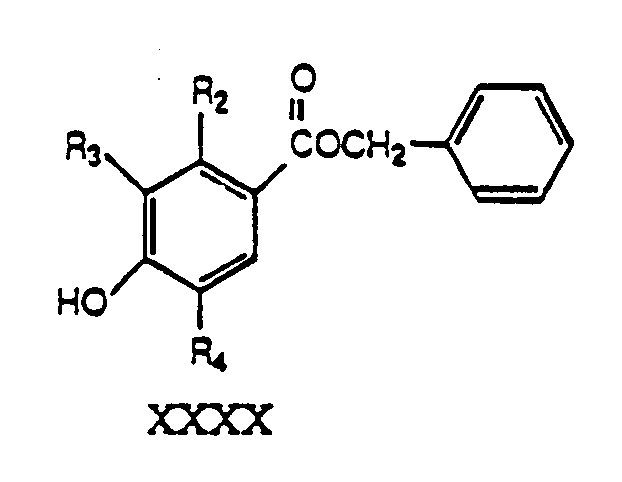

wobei R₁′ Wasserstoff, nieder-Alkoxycarbonyl oder Acetyl; R₂′ Wasserstoff oder nieder-Alkoxycarbonyl; R₁₂ Benzyl oder Acyl; X Brom oder Methansulfonyloxy darstellen und die restlichen Symbole die oben angegebene Bedeutung haben, vorausgesetzt, dass nicht mehr als ein Rest R₁′ oder R₂′ nieder-Alkoxycarbonyl ist,
worauf man die Methoxygruppen in einer Verbindung der Formel XXXIV oder XXXVII oder den Benzylester und eine gegebenenfalls anwesende Benzyläthergruppe R₁₂ in einer Verbindung der Formel XXXXI abspaltet, gewünschtenfalls eine Hydroxygruppe R₂ verestert und gewünschtenfalls eine Carboxygruppe R₁ oder R₂ verestert oder in ein Salz mit einer pharmazeutisch akzeptablen Base überführt oder eine die nieder-Alkyl-substituierte Aminogruppe in ein Salz mit einer pharmazeutisch akzeptablen Säure überführt.
Priority Applications (1)
| Application Number | Priority Date | Filing Date | Title |
|---|---|---|---|
| AT88116255T ATE93226T1 (de) | 1987-10-01 | 1988-09-30 | Brenzcatechincarbonsaeurederivate, ihre herstellung und verwendung als wirkstoffe fuer arzneimittel. |
Applications Claiming Priority (4)
| Application Number | Priority Date | Filing Date | Title |
|---|---|---|---|
| US10378987A | 1987-10-01 | 1987-10-01 | |
| US103789 | 1987-10-01 | ||
| US22347088A | 1988-07-22 | 1988-07-22 | |
| US223470 | 1988-07-22 |
Publications (3)
| Publication Number | Publication Date |
|---|---|
| EP0310126A2 EP0310126A2 (de) | 1989-04-05 |
| EP0310126A3 EP0310126A3 (en) | 1990-09-26 |
| EP0310126B1 true EP0310126B1 (de) | 1993-08-18 |
Family
ID=26800855
Family Applications (1)
| Application Number | Title | Priority Date | Filing Date |
|---|---|---|---|
| EP88116255A Expired - Lifetime EP0310126B1 (de) | 1987-10-01 | 1988-09-30 | Brenzcatechincarbonsäurederivate, ihre Herstellung und Verwendung als Wirkstoffe für Arzneimittel |
Country Status (18)
| Country | Link |
|---|---|
| EP (1) | EP0310126B1 (de) |
| JP (1) | JPH01128953A (de) |
| KR (1) | KR890006559A (de) |
| AR (1) | AR247546A1 (de) |
| AU (1) | AU632266B2 (de) |
| CA (1) | CA1328279C (de) |
| DE (1) | DE3883335D1 (de) |
| DK (1) | DK549888A (de) |
| ES (1) | ES2058203T3 (de) |
| FI (1) | FI92188C (de) |
| HU (1) | HU204751B (de) |
| IL (1) | IL87876A0 (de) |
| MC (1) | MC1981A1 (de) |
| NO (1) | NO169835C (de) |
| NZ (1) | NZ226371A (de) |
| PH (1) | PH25869A (de) |
| PT (1) | PT88634B (de) |
| YU (1) | YU182588A (de) |
Families Citing this family (9)
| Publication number | Priority date | Publication date | Assignee | Title |
|---|---|---|---|---|
| US5191108A (en) * | 1987-10-01 | 1993-03-02 | Hoffmann-La Roche Inc. | Catechol carboxylic acids |
| DE3903988A1 (de) * | 1989-02-10 | 1990-08-30 | Basf Ag | Oxidierte diphenylheteroalkane, ihre herstellung und verwendung |
| US4937371A (en) * | 1989-02-21 | 1990-06-26 | Hoffmann-La Roche Inc. | Dihydroxynaphthalene derivatives |
| FR2653119B1 (fr) * | 1989-10-18 | 1994-08-05 | Lipha | Nouveaux aryloxy alcoyl benzenes, leurs procedes de preparation et les compositions pharmaceutiques en renfermant. |
| US5374772A (en) * | 1992-12-08 | 1994-12-20 | Hoffmann-Laroche Inc. | Substituted benzoic acids, inhibitors of phospholipases A2 |
| WO1998041202A1 (en) * | 1997-03-20 | 1998-09-24 | The Government Of The United States Of America, Represented By The Secretary, Department Of Health And Human Services | Hydroxybenzoate metabolites and hydroxybenzoate analogues as protectors against oxidative stress and chemotherapeutic drug cytotoxicity, cardiotoxicity and extravasation tissue injury |
| CN101735048A (zh) * | 2008-11-05 | 2010-06-16 | 上海慈瑞医药科技有限公司 | 具胰岛素增敏活性的水杨酸类化合物及其制备方法 |
| FR2984730A1 (fr) | 2011-12-22 | 2013-06-28 | Diverchim | Nouvelles compositions cosmetiques anti-age et depigmentantes |
| EP4276089A3 (de) * | 2016-03-03 | 2023-12-20 | Universite De Moncton | Modulatoren der lypoxygenase- und cyclooxygenaseenzymaktivität |
Family Cites Families (1)
| Publication number | Priority date | Publication date | Assignee | Title |
|---|---|---|---|---|
| DE3125059A1 (de) * | 1981-06-26 | 1983-01-05 | Bayer Ag, 5090 Leverkusen | Dioxybenzoletherderivate, diese enthaltende arzneimittel, verfahren zu ihrer herstellung und ihre verwendung |
-
1988
- 1988-09-28 CA CA000578652A patent/CA1328279C/en not_active Expired - Fee Related
- 1988-09-28 NZ NZ226371A patent/NZ226371A/xx unknown
- 1988-09-29 IL IL87876A patent/IL87876A0/xx unknown
- 1988-09-29 FI FI884473A patent/FI92188C/fi not_active IP Right Cessation
- 1988-09-29 YU YU01825/88A patent/YU182588A/xx unknown
- 1988-09-29 MC MC882007A patent/MC1981A1/fr unknown
- 1988-09-30 JP JP63247305A patent/JPH01128953A/ja active Pending
- 1988-09-30 AU AU23324/88A patent/AU632266B2/en not_active Ceased
- 1988-09-30 HU HU885081A patent/HU204751B/hu not_active IP Right Cessation
- 1988-09-30 DK DK549888A patent/DK549888A/da not_active Application Discontinuation
- 1988-09-30 AR AR88312079A patent/AR247546A1/es active
- 1988-09-30 ES ES88116255T patent/ES2058203T3/es not_active Expired - Lifetime
- 1988-09-30 DE DE8888116255T patent/DE3883335D1/de not_active Expired - Fee Related
- 1988-09-30 PT PT88634A patent/PT88634B/pt not_active IP Right Cessation
- 1988-09-30 PH PH37623A patent/PH25869A/en unknown
- 1988-09-30 EP EP88116255A patent/EP0310126B1/de not_active Expired - Lifetime
- 1988-09-30 KR KR1019880012729A patent/KR890006559A/ko not_active Ceased
- 1988-09-30 NO NO884361A patent/NO169835C/no unknown
Also Published As
| Publication number | Publication date |
|---|---|
| AU2332488A (en) | 1989-04-06 |
| IL87876A0 (en) | 1989-03-31 |
| AR247546A1 (es) | 1995-01-31 |
| HUT48192A (en) | 1989-05-29 |
| PT88634A (pt) | 1988-10-01 |
| JPH01128953A (ja) | 1989-05-22 |
| NO884361D0 (no) | 1988-09-30 |
| NO884361L (no) | 1989-04-03 |
| NO169835C (no) | 1992-08-12 |
| PH25869A (en) | 1991-12-02 |
| ES2058203T3 (es) | 1994-11-01 |
| NO169835B (no) | 1992-05-04 |
| DE3883335D1 (de) | 1993-09-23 |
| HU204751B (en) | 1992-02-28 |
| NZ226371A (en) | 1992-12-23 |
| MC1981A1 (fr) | 1989-11-23 |
| DK549888A (da) | 1989-04-02 |
| EP0310126A3 (en) | 1990-09-26 |
| FI92188B (fi) | 1994-06-30 |
| DK549888D0 (da) | 1988-09-30 |
| AU632266B2 (en) | 1992-12-24 |
| KR890006559A (ko) | 1989-06-14 |
| FI92188C (fi) | 1994-10-10 |
| FI884473A0 (fi) | 1988-09-29 |
| YU182588A (en) | 1990-04-30 |
| PT88634B (pt) | 1992-12-31 |
| FI884473A7 (fi) | 1989-04-02 |
| CA1328279C (en) | 1994-04-05 |
| EP0310126A2 (de) | 1989-04-05 |
Similar Documents
| Publication | Publication Date | Title |
|---|---|---|
| CA1116611A (en) | Imidazole derivatives exhibiting anticonvulsant activity | |
| FR2599739A1 (fr) | Acides biphenyl hydroxamiques a action therapeutique | |
| EP0372385A2 (de) | Neue Naphthalincarbonsäuren, deren Herstellung und Verwendung als Heilmittel | |
| EP0310126B1 (de) | Brenzcatechincarbonsäurederivate, ihre Herstellung und Verwendung als Wirkstoffe für Arzneimittel | |
| EP0508842B1 (de) | Acylaminophenolderivate, Verfahren zu deren Herstellung und diese enthaltende pharmazeutische Zusammensetzungen | |
| EP0116360B1 (de) | 1-Phenyl-2-aminocarbonylindol-Verbindungen sowie Verfahren zu ihrer Herstellung und diese Verbindungen enthaltende Arzneimittel | |
| EP0566446B1 (de) | Indan-1,3-Dion und Indan-1,2,3-Trionderivate, Verfahren zu ihrer Herstellung und ihrer therapeutische Verwendung | |
| US4699925A (en) | Biphenylylpropionic acid derivative and pharmaceutical composition containing the same | |
| EP0213984A1 (de) | Indolcarboxamidderivate, ihre Salze, Verfahren und Zwischenprodukte, Anwendung als Heilmittel und Zusammensetzungen die sie enthalten | |
| EP0117771A1 (de) | Imino-2-pyrrolidine, Verfahren zu ihrer Herstellung und ihre therapeutische Verwendung | |
| EP0591046A1 (de) | Chromen-Derivate mit einer Trien-Kette zur Verwendung bei der Behandlung der Osteoporose und der entzündlichen Erkrankungen | |
| EP0072960B1 (de) | 1,5-Diphenylpyrazolin-3-on-Verbindungen sowie Verfahren und Zwischenprodukte zu ihrer Herstellung und diese Verbindungen enthaltende Arzneimittel | |
| DE2854877A1 (de) | N-substituierte omega-thiobutyramide, verfahren zu ihrer herstellung und sie enthaltende arzneimittel | |
| EP0065295A1 (de) | Substituierte Tryptaminderivate von Thienyloxypropanolaminen, Verfahren zu ihrer Herstellung, pharmazeutische Präparate auf Basis dieser Verbindungen sowie ihre Verwendung | |
| FR2637596A1 (fr) | Methyl-4 ((aryl-4 piperazinyl-1)-2 ethyl)-5 thiazole et ses derives, leur procede de preparation et les medicaments en contenant | |
| CH632261A5 (fr) | Nouveaux derives du chromene et leurs procedes de preparation. | |
| EP0135860B1 (de) | 6-Sulfoxyphenolderivate, ihre Herstellung und ihre Verwendung als Cytoprotektiva; Verwendung von Salicylaldehydabkömmlingen als Cytoprotektiva | |
| EP0384350B1 (de) | Dihydroxynaphthalin-Derivate | |
| FR2602767A1 (fr) | Nouveaux benzamides substitues et leurs sels, leur procede de preparation, leur application comme medicaments et les compositions les renfermant | |
| EP0347305B1 (de) | [(Aryl-4-piperazinyl-1)-2-ethoxy]-3p-cymole, die ortho-, meta-, para-monosubstituierten oder disubstituierten Derivate, das Verfahren zu deren Herstellung und die als aktives Prinzip diese Verbindungen enthaltenden Arzneimittel | |
| EP0275221B1 (de) | N-(1H-indol-4-yl)-Benzamidderivate, ihre Salze und deren Anwendung als Heilmittel und Zusammenstellungen, die sie enthalten | |
| EP0275762A1 (de) | Indol-Carboxamid-Derivate und ihre Salze, Verfahren und Zwischenprodukte zur Herstellung, Anwendung als Heilmittel und Zusammenstellungen, die sie enthalten | |
| DE3232968C2 (de) | ||
| CH601228A5 (en) | Antiinflammatory indomethacin esters active topically and orally | |
| BE862201R (fr) | Derives de la 3,4-dihydro-quinazoline a activite anti-allergique et procede pour leur preparation |
Legal Events
| Date | Code | Title | Description |
|---|---|---|---|
| PUAI | Public reference made under article 153(3) epc to a published international application that has entered the european phase |
Free format text: ORIGINAL CODE: 0009012 |
|
| 17P | Request for examination filed |
Effective date: 19880930 |
|
| AK | Designated contracting states |
Kind code of ref document: A2 Designated state(s): AT BE CH DE ES FR GB GR IT LI LU NL SE |
|
| RAP1 | Party data changed (applicant data changed or rights of an application transferred) |
Owner name: F. HOFFMANN-LA ROCHE AG |
|
| PUAL | Search report despatched |
Free format text: ORIGINAL CODE: 0009013 |
|
| AK | Designated contracting states |
Kind code of ref document: A3 Designated state(s): AT BE CH DE ES FR GB GR IT LI LU NL SE |
|
| 17Q | First examination report despatched |
Effective date: 19920921 |
|
| GRAA | (expected) grant |
Free format text: ORIGINAL CODE: 0009210 |
|
| AK | Designated contracting states |
Kind code of ref document: B1 Designated state(s): AT BE CH DE ES FR GB GR IT LI LU NL SE |
|
| REF | Corresponds to: |
Ref document number: 93226 Country of ref document: AT Date of ref document: 19930915 Kind code of ref document: T |
|
| PGFP | Annual fee paid to national office [announced via postgrant information from national office to epo] |
Ref country code: GB Payment date: 19930823 Year of fee payment: 6 Ref country code: FR Payment date: 19930823 Year of fee payment: 6 |
|
| PGFP | Annual fee paid to national office [announced via postgrant information from national office to epo] |
Ref country code: BE Payment date: 19930830 Year of fee payment: 6 |
|
| PGFP | Annual fee paid to national office [announced via postgrant information from national office to epo] |
Ref country code: CH Payment date: 19930910 Year of fee payment: 6 |
|
| PGFP | Annual fee paid to national office [announced via postgrant information from national office to epo] |
Ref country code: ES Payment date: 19930914 Year of fee payment: 6 |
|
| PGFP | Annual fee paid to national office [announced via postgrant information from national office to epo] |
Ref country code: SE Payment date: 19930915 Year of fee payment: 6 Ref country code: LU Payment date: 19930915 Year of fee payment: 6 |
|
| PGFP | Annual fee paid to national office [announced via postgrant information from national office to epo] |
Ref country code: DE Payment date: 19930917 Year of fee payment: 6 |
|
| REF | Corresponds to: |
Ref document number: 3883335 Country of ref document: DE Date of ref document: 19930923 |
|
| PGFP | Annual fee paid to national office [announced via postgrant information from national office to epo] |
Ref country code: GR Payment date: 19930929 Year of fee payment: 6 Ref country code: AT Payment date: 19930929 Year of fee payment: 6 |
|
| PGFP | Annual fee paid to national office [announced via postgrant information from national office to epo] |
Ref country code: NL Payment date: 19930930 Year of fee payment: 6 |
|
| ITF | It: translation for a ep patent filed | ||
| ET | Fr: translation filed | ||
| REG | Reference to a national code |
Ref country code: GR Ref legal event code: FG4A Free format text: 3009180 |
|
| GBT | Gb: translation of ep patent filed (gb section 77(6)(a)/1977) |
Effective date: 19931110 |
|
| EPTA | Lu: last paid annual fee | ||
| PLBE | No opposition filed within time limit |
Free format text: ORIGINAL CODE: 0009261 |
|
| STAA | Information on the status of an ep patent application or granted ep patent |
Free format text: STATUS: NO OPPOSITION FILED WITHIN TIME LIMIT |
|
| 26N | No opposition filed | ||
| PG25 | Lapsed in a contracting state [announced via postgrant information from national office to epo] |
Ref country code: LU Free format text: LAPSE BECAUSE OF NON-PAYMENT OF DUE FEES Effective date: 19940930 Ref country code: LI Effective date: 19940930 Ref country code: GB Effective date: 19940930 Ref country code: CH Effective date: 19940930 Ref country code: BE Effective date: 19940930 Ref country code: AT Effective date: 19940930 |
|
| PG25 | Lapsed in a contracting state [announced via postgrant information from national office to epo] |
Ref country code: SE Effective date: 19941001 Ref country code: ES Free format text: LAPSE BECAUSE OF THE APPLICANT RENOUNCES Effective date: 19941001 |
|
| REG | Reference to a national code |
Ref country code: ES Ref legal event code: FG2A Ref document number: 2058203 Country of ref document: ES Kind code of ref document: T3 |
|
| EAL | Se: european patent in force in sweden |
Ref document number: 88116255.6 |
|
| BERE | Be: lapsed |
Owner name: F. HOFFMANN-LA ROCHE A.G. Effective date: 19940930 |
|
| PG25 | Lapsed in a contracting state [announced via postgrant information from national office to epo] |
Ref country code: GR Free format text: THE PATENT HAS BEEN ANNULLED BY A DECISION OF A NATIONAL AUTHORITY Effective date: 19950331 |
|
| PG25 | Lapsed in a contracting state [announced via postgrant information from national office to epo] |
Ref country code: NL Effective date: 19950401 |
|
| NLV4 | Nl: lapsed or anulled due to non-payment of the annual fee | ||
| GBPC | Gb: european patent ceased through non-payment of renewal fee |
Effective date: 19940930 |
|
| PG25 | Lapsed in a contracting state [announced via postgrant information from national office to epo] |
Ref country code: FR Effective date: 19950531 |
|
| REG | Reference to a national code |
Ref country code: CH Ref legal event code: PL Ref country code: GR Ref legal event code: MM2A Free format text: 3009180 |
|
| PG25 | Lapsed in a contracting state [announced via postgrant information from national office to epo] |
Ref country code: DE Effective date: 19950601 |
|
| EUG | Se: european patent has lapsed |
Ref document number: 88116255.6 |
|
| REG | Reference to a national code |
Ref country code: FR Ref legal event code: ST |
|
| REG | Reference to a national code |
Ref country code: ES Ref legal event code: FD2A Effective date: 19991102 |
|
| PG25 | Lapsed in a contracting state [announced via postgrant information from national office to epo] |
Ref country code: IT Free format text: LAPSE BECAUSE OF NON-PAYMENT OF DUE FEES;WARNING: LAPSES OF ITALIAN PATENTS WITH EFFECTIVE DATE BEFORE 2007 MAY HAVE OCCURRED AT ANY TIME BEFORE 2007. THE CORRECT EFFECTIVE DATE MAY BE DIFFERENT FROM THE ONE RECORDED. Effective date: 20050930 |