EP0300480A2 - Film en polyoxyméthylène à orientation biaxiale - Google Patents
Film en polyoxyméthylène à orientation biaxiale Download PDFInfo
- Publication number
- EP0300480A2 EP0300480A2 EP88111782A EP88111782A EP0300480A2 EP 0300480 A2 EP0300480 A2 EP 0300480A2 EP 88111782 A EP88111782 A EP 88111782A EP 88111782 A EP88111782 A EP 88111782A EP 0300480 A2 EP0300480 A2 EP 0300480A2
- Authority
- EP
- European Patent Office
- Prior art keywords
- film
- polyoxymethylene
- temperature
- stretch
- original
- Prior art date
- Legal status (The legal status is an assumption and is not a legal conclusion. Google has not performed a legal analysis and makes no representation as to the accuracy of the status listed.)
- Granted
Links
Images


Classifications
-
- C—CHEMISTRY; METALLURGY
- C08—ORGANIC MACROMOLECULAR COMPOUNDS; THEIR PREPARATION OR CHEMICAL WORKING-UP; COMPOSITIONS BASED THEREON
- C08J—WORKING-UP; GENERAL PROCESSES OF COMPOUNDING; AFTER-TREATMENT NOT COVERED BY SUBCLASSES C08B, C08C, C08F, C08G or C08H
- C08J5/00—Manufacture of articles or shaped materials containing macromolecular substances
- C08J5/18—Manufacture of films or sheets
-
- B—PERFORMING OPERATIONS; TRANSPORTING
- B29—WORKING OF PLASTICS; WORKING OF SUBSTANCES IN A PLASTIC STATE IN GENERAL
- B29C—SHAPING OR JOINING OF PLASTICS; SHAPING OF MATERIAL IN A PLASTIC STATE, NOT OTHERWISE PROVIDED FOR; AFTER-TREATMENT OF THE SHAPED PRODUCTS, e.g. REPAIRING
- B29C55/00—Shaping by stretching, e.g. drawing through a die; Apparatus therefor
- B29C55/005—Shaping by stretching, e.g. drawing through a die; Apparatus therefor characterised by the choice of materials
-
- B—PERFORMING OPERATIONS; TRANSPORTING
- B29—WORKING OF PLASTICS; WORKING OF SUBSTANCES IN A PLASTIC STATE IN GENERAL
- B29C—SHAPING OR JOINING OF PLASTICS; SHAPING OF MATERIAL IN A PLASTIC STATE, NOT OTHERWISE PROVIDED FOR; AFTER-TREATMENT OF THE SHAPED PRODUCTS, e.g. REPAIRING
- B29C55/00—Shaping by stretching, e.g. drawing through a die; Apparatus therefor
- B29C55/02—Shaping by stretching, e.g. drawing through a die; Apparatus therefor of plates or sheets
- B29C55/10—Shaping by stretching, e.g. drawing through a die; Apparatus therefor of plates or sheets multiaxial
- B29C55/12—Shaping by stretching, e.g. drawing through a die; Apparatus therefor of plates or sheets multiaxial biaxial
- B29C55/14—Shaping by stretching, e.g. drawing through a die; Apparatus therefor of plates or sheets multiaxial biaxial successively
-
- B—PERFORMING OPERATIONS; TRANSPORTING
- B29—WORKING OF PLASTICS; WORKING OF SUBSTANCES IN A PLASTIC STATE IN GENERAL
- B29C—SHAPING OR JOINING OF PLASTICS; SHAPING OF MATERIAL IN A PLASTIC STATE, NOT OTHERWISE PROVIDED FOR; AFTER-TREATMENT OF THE SHAPED PRODUCTS, e.g. REPAIRING
- B29C55/00—Shaping by stretching, e.g. drawing through a die; Apparatus therefor
- B29C55/02—Shaping by stretching, e.g. drawing through a die; Apparatus therefor of plates or sheets
- B29C55/18—Shaping by stretching, e.g. drawing through a die; Apparatus therefor of plates or sheets by squeezing between surfaces, e.g. rollers
-
- B—PERFORMING OPERATIONS; TRANSPORTING
- B29—WORKING OF PLASTICS; WORKING OF SUBSTANCES IN A PLASTIC STATE IN GENERAL
- B29K—INDEXING SCHEME ASSOCIATED WITH SUBCLASSES B29B, B29C OR B29D, RELATING TO MOULDING MATERIALS OR TO MATERIALS FOR MOULDS, REINFORCEMENTS, FILLERS OR PREFORMED PARTS, e.g. INSERTS
- B29K2059/00—Use of polyacetals, e.g. POM, i.e. polyoxymethylene or derivatives thereof, as moulding material
-
- B—PERFORMING OPERATIONS; TRANSPORTING
- B29—WORKING OF PLASTICS; WORKING OF SUBSTANCES IN A PLASTIC STATE IN GENERAL
- B29K—INDEXING SCHEME ASSOCIATED WITH SUBCLASSES B29B, B29C OR B29D, RELATING TO MOULDING MATERIALS OR TO MATERIALS FOR MOULDS, REINFORCEMENTS, FILLERS OR PREFORMED PARTS, e.g. INSERTS
- B29K2995/00—Properties of moulding materials, reinforcements, fillers, preformed parts or moulds
- B29K2995/0037—Other properties
- B29K2995/0072—Roughness, e.g. anti-slip
- B29K2995/0073—Roughness, e.g. anti-slip smooth
-
- C—CHEMISTRY; METALLURGY
- C08—ORGANIC MACROMOLECULAR COMPOUNDS; THEIR PREPARATION OR CHEMICAL WORKING-UP; COMPOSITIONS BASED THEREON
- C08J—WORKING-UP; GENERAL PROCESSES OF COMPOUNDING; AFTER-TREATMENT NOT COVERED BY SUBCLASSES C08B, C08C, C08F, C08G or C08H
- C08J2359/00—Characterised by the use of polyacetals containing polyoxymethylene sequences only
-
- Y—GENERAL TAGGING OF NEW TECHNOLOGICAL DEVELOPMENTS; GENERAL TAGGING OF CROSS-SECTIONAL TECHNOLOGIES SPANNING OVER SEVERAL SECTIONS OF THE IPC; TECHNICAL SUBJECTS COVERED BY FORMER USPC CROSS-REFERENCE ART COLLECTIONS [XRACs] AND DIGESTS
- Y10—TECHNICAL SUBJECTS COVERED BY FORMER USPC
- Y10S—TECHNICAL SUBJECTS COVERED BY FORMER USPC CROSS-REFERENCE ART COLLECTIONS [XRACs] AND DIGESTS
- Y10S428/00—Stock material or miscellaneous articles
- Y10S428/91—Product with molecular orientation
Definitions
- the present invention relates to biaxially oriented films of formed of a film forming composition comprising polyoxymethylene polymer in which the major constituent of the main chains of said polymer each consists substantially of repeating units of oxymethylene group ( ⁇ CH 2 -O ) ⁇ . More particularly, the present invention relates to the above discribed biaxially oriented polyoxymethylene films excellent in surface smoothness.
- polyoxymethylene has a very remarkable tendency to crystallize. While polyoxymethylene films are formed, for instance, by melt compression or melt extrusion followed by quenching, the films thus obtained are opaque or transluent and are additionally characterized with inferior in mechanical properties. it is said that this is because crystallized polyoxymethylene forms highly-grown spherulites. Accordingly, attempts have been made to improve the clarity and mechanical properties of polyoxymethylene films by stretching these films biaxially.
- Japanese Patent Application Kokai (Laid-Open) Nos. 252135 86, 286115 86. and 013318 1 87 (corresponding to Japanese Patent Application Nos. 92246/85, 127132/85. and 151349/85, respectively), filed previously by the present applicants, disclose that a highly biaxially oriented crystalline polyoxymethylene film has a high tensile elastic modulus and a superior dimensional stability, and further reveal techniques for the industrial production of such films, whereby the production of biaxially oriented polyoxymethylene films having excellent properties has become possible.
- biaxially oriented polyoxymethylene films are by far superior in strength, dimensional stability, clarity, etc.
- the surface smoothness of these films is not on a sufficient level as compared with those of other common polymer films, e.g. polyester films.
- the surface smoothness may be a very important factor depending upon the application of the film.
- the improvement of magnetic tapes has been advanced rapidly in recent years and this has been accompanied, in particular, by severe surface quality requirements for the base films.
- the tape function of electric energy-magnetic energy interconversion must be enhanced and for this reason the surface of the base film is required to be smoothed.
- it is required to control the surface roughness of the base film to a centerline-average roughness Ra of 0.1 u or less.
- An object of the present invention is to provide biaxially oriented polyoxymethylene films which have excellent properties, particularly the property of superior surface smoothness, and hence are more suitable for practical use.
- Another object of the invention is to provide a process for producing such films.
- the rate of spherulite growth, speruiite sizes, and distribution thereof, in this case. depend on the temperature and rate of cooling, pressure in cooling, the molecular weight of the polymer, the type and amount of additive, etc.
- the present inventors prepared oolyoxymethylene resins different in the tendency to develop sperulites and evaluated the surface states of films produced from these resins by biaxial stretching.
- the tendency to develop spherulites relates very intimately to the surface smoothness of the biaxiaily stretched film and the difference in surface smoothness appears as a difference in the tendency to develop spherulites.
- this difference in the tendency to develop spherulites has been found to appear more remarkably and clearly, when the biaxially stretched film is remelted and the melt is recrystallized. That is.
- the present invention involves a biaxially oriented film formed of a film forming composition comprising polyoxymethylene polymer in which the major constituent of the main chains of said polymer each consists substantially of repeating units of oxymethylene group ( ⁇ CH 2 -0 ) ⁇ , said film being characterized in that, when said film is remelted at a temperature above the melting point of said film and the resulting melt is recrystallized isothermally at 140' C into a solid film form, the number of polyoxymethylene spherulites in the crystal structure at the surface of the resulting film would be at least 50 per 0.1 mm 2 area of the resulting film surface, as measured with a polarizing microscope through cross-polarizers or cross-nicols.
- the spherulite referred to in this specification is a solid structure found most typically and relatively easily in crystalline polymers.
- the spherulite is a rounded higher-order crystal structure grown in a specific arrangement from a crystal nucleus with the spherulite being situated at the center. This structure can be readily observed with a polarizing microscope through cross-polarizers. When a large number of spherulites grow, they collide with one another and form polyhedrons having distinct boundaries. Further when a larger number of spherulites develop, the boundary of each spherulite becomes obscure. Even in this case, however, it is possible to observe a so-called "Maltese cross" cross-line which is one of the great characteristics of spherulites. Hence, individual spherulites can be identified by observing these cross-lines.
- the number of spherulites per O.imm 2 area that is, the value being desirably determined for the present invention, can be evaluated with relatively high accuracy by counting first, the number of cross-lines in a small area of the surface, for example, an area of 0.01 mm 2 and multiplying the value by 10.
- Figs. 1 and 2 show typical photomicrographs of the samples used to determine the number of spherulites by the above method.
- Fig. 1 is an example of the present inventive biaxially oriented polyoxymethylene film and
- Fig. 2 is an example of a conventional biaxially oriented polyoxymethylene film.
- the film of the present invention When the film of the present invention is remelted and recrystallized, such procedures are necessary in order to provide a solid having a flat film form of uniform thickness.
- this is difficult to obtain by simple remelting and recrystallizing the film, because the biaxially oriented film when heated to form a melt, would shrink and deform on account of the relaxation of orientation which occurs. Therefore it is recommended that the oriented film be held between two glass plates, these plates to be fixed so that any possible deformation of the film would not cause the space between the plates to change, and then be remelted and recrystallized.
- the use of thin glass plates is preferable for the purpose of preventing a change in the recrystallization conditions, due to the glass plates. Desirably, the thickness of each glass plate is 1 mm or less.
- the thickness of the film resulting from recrystallization is preferred to be minimized so as to facilitate the observation of spherulites.
- the thickness is preferably from 5 to 30 u.
- the remelting may be carried out at a temperature above the melting point, preferably at 200°C, for a period of 30 seconds to 2 minutes.
- the recrystallization is requires to be conducted under definite conditions in order to maintain the conditions of spherulite growth constant. In the present invention, the recrystallization is conducted isothermally at 140 ° C. In this case, the remelted resin is quickly brought under the definite temperature condition of 140°C before the crystallization proceeds, and the recrystallization is carried out under this condition.
- the film having the larger number of spherulites as determined by the above method is improved in surface smoothness.
- the surface smoothness is quantified generally by measuring the surface roughness.
- the surface roughness. which can be expressed by various systems, is expressed in terms of the centerline-average roughness Ra(u.).
- the Ra is give by the following equation: and this value is calculated based on the equation by using samples taken according the JIS B-0601 (1976) method.
- an Ra of up to 0.1 and recently a further small Ra have been required of base films for magnetic tape purposes.
- the film of the present invention can sufficiently meet such requirements. That is, the surface of the film is of such superior smoothness so as to give an Ra of 0.001 to 0.1 ⁇ depending on the surface preciseness of rollers used in the production thereof.
- the preferred numbers of spherulites in the film of the present invention are at least 100 per 0.1 mm 2 area.
- Control of the tendency to develop polyoxymethylene spherulites is very important for the film of present invention. While this tendency depends on various factors as stated above, an easy and distinguished method for controlling the tendency is to add a small amount of a substance which will produce crystal nuclei (hereinafter such a substance is referred to as a nucleating agent), such a substance being generally well known.
- a nucleating agent a substance which will produce crystal nuclei
- An example of the above method comprises adding and dispersing 0.0001 - 0.5% by weight of talc of the in polyoxymethylene (British Patent No. 1.133,490).
- Another example compnses adding a specific organic solvent, e.g. a hydroxy-containing imidazole or pyrazine derivative, which is completely or almost insoluble in the polyoxymethylene melt (British Patent No. 1,193,708).
- a polyoxymethylene is known to act as a nucleating agent on another polyoxymethylene (Japanese Patent Publication No. 19942.80).
- common linear polyoxymethylene produced by homo- or co-polymerizing formaldehyde or trioxane does not act as a nucleating agent on another polyoxymethylene of the same or different type.
- It is a branched or network polyoxymethylene which has the nucleating action (hereinafter, this type of polyoxymethylene is collectively referred to as branched polyoxymethylene).
- Techniques concerning a branched polyoxymethylene are disclosed in detail in Japanese Patent Publication Nos. 6277 69, 6278i69, 25114.70. 26507 70. and 42623/81, Japanese Patent Application Kokai No. 93717 84. etc.
- the polyoxymethylene film of the present invention is of a biaxially oriented type and is specified by the spherulite growth state of polyoxymethylene recrystallized from the re-melt of the oriented film. Accordingly, the method for controlling the tendency to develop spherulites in the production of the oriented film is not particularly limited to the above cited methods.
- the production of the oriented film it is important to minimize the effect of lowering the stretchability of the polyoxymethylene itself, the effect of deteriorating mechanical and thermal properties of the stretched film, and other adverse effects. For instance, an additive if inferior in dispersibility. though dependent on the type, will form agglomerates, which may cause a lowering of the stretchability or may remain as a foreign matter, resulting in deterioration of the film quality.
- Nucieatng agents are known to involve inorganic and organic types, of which organics are desirable for use in the present invention in view of the dispersibility. Moreover, the preferred nucleating agents have an affinity for polyoxymethylene melts and are relatively soluble therein.
- organic nucleating agents including hydroxy-containing imidazole or pyrazine derivatives, e.g. 2,3-d ih ydroxyqu i noxal i ne, 2,6-dihydrox-m-benzobisimidazole, 2,2 -dihydroxy-6,6 - bisbenzimidazole, 2-hydroxynaphthoimidazole, and 2,3-dihydroxybenzoquinoxaline. Accordingly, when these nucleating agents are used, it is necessary to pay attention to the amount thereof to add and to the method of mixing these agents in consideration of the affinity thereof for the polyoxymethylene melt and the solubility therein.
- hydroxy-containing imidazole or pyrazine derivatives e.g. 2,3-d ih ydroxyqu i noxal i ne, 2,6-dihydrox-m-benzobisimidazole, 2,2 -dihydroxy-6,6 - bisbenzimidazole
- Branched polyoxymethylene is constituted substantially of repeating units of the oxymethylene group f CH 2 O) ⁇ and can be mixed uniformly in an optional ratio with other common polyoxymethylene, e.g. linear homo- or co-polymerized polyoxymethylene.
- the branched polyoxymethylene acts very effectively as a nucleating agent. Accordingly, this nucleating agent is less liable to act as a foreign matter, or as an agglomerate, nor will the agent ill disperse than other effective inorganic or organic nucleating agents.
- the amount of branched polyoxymethylene necessary to exhibit its effect is 0.01 part by weight based on 100 parts by weight of the linear polyoxymethylene. Thus, branched polyoxymethylene even in small amounts acts very effectively.
- the present inventors have found that the admixing of the branched polyoxymethylene produces still another great effect. That is, it has been found that the stability of the stretched common linear polyoxymethylenes is greatly improved by incorporating branched polyoxymethylene thereinto.
- spherulites having diameters of 5 to 10 u or smaller, depending on the circumstances, caused by the nucleating action.
- Polyoxymethylene comprising such small spherulites has an increased number of spherulites joining one with another because of the small diameters of spherulites.
- the strength of spherulites being bonded together is enhanced and this increases the resistance to stretch stress.
- the supherulites are small, the local concentration of the stretch stress is avoided, viz. the stress is dispersed.
- branched polyoxymethylene can be mixed with other ordinary polyoxymethylenes in any ratio and uniformly, all the spherulites are constructed of homogeneous crystals which are constituted substantially of repeating units of ( ⁇ CH 2 -O ) ⁇ as its major constituent. It is assumed that such effects of branched polyoxymethylene, when it is incorporated into the common linear polyoxymethylene, improves the stretchability thereof to a great extent. This stretchability-improving effect, as stated above, was first discovered by biaxial stretching of an original sheet of such composition.
- the stretchability thereof is improved by adding branched polyoxymethylene.
- the present inventors have found that the stretchability is further improved by adding a linear copolymer to the above mixture, that is, the addition of a linear copolymer constituted of trioxane and at least one monofunctional reacting compound which is copolymerizable with trioxane, e.g., ethylene oxide.
- the amount of linear polyoxymethylene copolymer to be added, in this case, is at least 0.1 part by weight to 100 parts by weight of the linear polyoxymethylene homopolymer.
- the amount is less than 0.1 part by weight, the effect of the addition is small.
- the upper limit of the amount since the copolymer and the homopolymer can be mixed together in an arbitrary ratio.
- the copolymer is added in an amount of up to 50 parts, preferably up to 30 parts, by weight.
- Branched polyoxymethylene for use in the present invention is described below in more detail. This branched polymer can be produced by known methods described in the above cited patent specifications.
- Japanese Patent Publication No. 19942.80 describes the following method for producing branched polyoxymethylene.
- Branched polyoxymethylene for use in the present invention is characterized by having an excellent action of producing crystal nuclei, that is, an excellent nucleating action.
- This effect of branched polyoxymethylene appears as a large number of spherulites which is measured by the above described method, when the biaxially stretched film is remelted and the melt is recrystallized. The larger the number of spherulites, the more the surface smoothness of the biaxially stretched film would be improved. Therefore, this type of branched polyoxymethylene is preferred as a nucleating agent for use in the present invention.
- An example of branched polyoxymethylene used in the present invention is a copolymer of trioxane with at least one polyfunctionally reacting compound copolymerizable with trioxane or a copolymer of trioxane with at least polyfunctionally reacting compound copolymerizable with trioxane and with at least one monofunctionally reacting compound copolymerizable with trioxane.
- the polyfunctional compound is used in an amount of generally from 0.01 to 5°r, preferably from 0.05 to 2"0, by weight.
- the monofunctional compound is used in an amount of generally from 0.1 to 10%. preferably from 1 to 5%. by weight.
- Preferred polyfunctional compounds for use herein are bifunctional compounds including; alkylglycidyl formals, e.g. methylglycidyl formal, ethylglycidyl formal, propylglycidyl formal, and butylglycidyl formal; polyglycol diglycidyl ethers, e.g. ethylene glycol diglycidyl ether and triethylene glycol diglycidyl ether; alkanediol diglycidyl ethers, e.g. butanediol diglycidyl ether; and bis(alkanetriol)-triformals, e.g.
- alkylglycidyl formals e.g. methylglycidyl formal, ethylglycidyl formal, propylglycidyl formal, and butylglycidyl formal
- polyglycol diglycidyl ethers e.g. ethylene glycol diglycidy
- Preferred monofunctional compounds are cyclic ethers such as ethylene oxide, propylene oxide, glycol formal, dioxaiane.
- ethylene oxide is preferable.
- Linear polyoxymethylene for use in the present invention which can be produced by known methods, is a homopolymer of formaldehyde, trioxane, or tetraoxane or a copolymer of trioxane with at least one monofunctionally reacting compound, e.g. ethylene oxide, copolymerizable with trioxane.
- the content of the monofunctional compound in the copolymer is generally from 0.1 to 20°o preferably from 1 to 5%. by weight.
- branched polyoxymethylene is used in an amount of at least 0.01 part by weight based 100 parts by weight of the linear polyoxymethylene. If the amount of branched polyoxymethylene is less than 0.01 part by weight, its effect will be small. For exhibiting the effect to a greater extent, the amount is desirably at least 0.1 part, preferably at least 0.5 part, by weight. As the amount is increased. the effect generally increases and the surface smoothness of the resulting oriented film becomes improved.
- the effect of branched polyoxymethylene varies with its molecular weight, the number of branches in a molecule (branch density), and other factors. Depending upon the nature of branched polyoxymethylene, a minute amount thereof may act effective in the extreme. For example, branched polyoxymethylene having the lower melt index would act the more effectively.
- the maximum amount of branched polyoxymethylene that could be added there is no particular restriction on the maximum amount of branched polyoxymethylene that could be added.
- the amount of branched polyoxymethylene to be added is decided according to the effectiveness thereof and to mechanical and thermal properties thereof. For instance, when attaching Importance to the surface smoothness in particular, it is possible to increase the proportion of branched polyoxymethylene to a great extent, e.g. to 50 parts by weight or more.
- the linear polyoxymethylene is a homopolymer and its excellent mechanical and thermal properties are intended to be retained to the extent possible, it is desirable to control the proportion of branched polyoxymethylene to such a level so as not to bring about the deterioration of such properties.
- the upper limit of the proportion for the biaxially oriented film of the present invention is generally 30 parts. preferably 15 parts, by weight, though this is dependent upon the effectiveness of the branched polyoxymethylene used.
- the biaxially oriented film of the present invention may contain another thermoplastic resin or elastomer as a third component in addition to a component such as branched polyoxymethylene having nucleating action.
- the third component is exemplified by the following polymers:
- the proportion of the third component is up to 10%, preferably up to 5%, by weight based on the total mixture. If necessary, additives such as heat stabilizers and antioxidants could also be added in addition to the above third component.
- the stretch ratio in either of the machine direction and transverse direction is at least 3 : 1, preferably at least 5 : 1.
- An preferred example of the process for producing biaxially oriented polyoxymethylene films is disclosed in Japanese Patent Application Nos. 127132,'85 and 151349 / 85 (corresponding to Japanese Patent Application Kokai Nos. 286115/86 and 013318/87, respectively), which were filed by the present applicants. Details of this process are as follows:
- the original film is stretched first (first-stage stretch) in one direction and second (second-stage stretch) in the direction perpendicular thereto while keeping the temperature of the sheet or film within the range of a temperature of from 30°C lower to a temperature of 5a C higher than the temperature of the original film composition at the peak of its crystal melting curve drawn by using a differential scanning calorimeter (hereinafter this temperature is referred to as the crystal melting point of original film measured with a differential scanning calorimeter). That is, this process comprises subjecting the sheet or film stretched in the first stage to the second-stage stretch in the direction perpendicular to the first-stage stretch direction while keeping the temperature of the sheet or film within the above defined range.
- the lower limit temperature presumably relates intimately to the crystal growth temperature of polyoxymethylene.
- the lower limit of said retention temperature the temperature at which the film is to be kept
- the lower limit of said retention temperature be 20 0 C lower than the crystal melting point of original sheet measured with a differential scanning calorimeter.
- the upper limit of stretch temperature is preferably controlled to said crystal melting point of original film measured with a differential scanning calorimeter.
- the first-stage stretch and the second-stage stretch are carried out continuously and hence setting of the retention temperature near the stretch temperature is advantageous in view of production efficiency as well as in view of equipment simplicity.
- the retention time at the above defined retention temperature is preferably reduced as far as possible for the purpose of retarding the crystallization. More specificallly, the retention time is from 0.1 to 600 seconds depending upon the retention temperature.
- the stretch temperature in the first and second stages is kept within the range of desirably from a temperature of 25°C lower to a temperature of 5°C higher than said crystal melting point temperature of original film measured with a differential scanning calorimeter, preferably at temperature of from 15 C lower temperature to said crystal melting point.
- the stretch temperature in the first stage and that in the second stage are not necessary the same. These stretch temperatures are chosen properly, within the above defined range, according to the stretchability and other stretch conditions.
- the original film, prior to the first-stage stretch. is rolled in the machine direction to give a precentage decrease ⁇ in film thickness satisfying the condition wherein, t a is the original-film thickness before rolling and t is the onginal-film thickness after rolling. Then, the rolled film is subjected to the first-stage stretch in the transverse direction at a stretch ratio of the least 5 : 1 and then to the second-stage stretch in the machine direction at a stretch ratio of at least 5(1- ⁇ ) : 1.
- the temperature of film or sheet in rolling is in the range of desirably from room temperature to 30°C lower than said crystal melting point of original film measured with a differential scanning calorimeter, preferably from room temperature to 50' C lower than said crystal melting point.
- higher temperatures of film or sheet in rolling are preferred in view of the efficiency of rolling, the stretchability in the subsequent stretch process tends to lower when this temperature exceeds a temperature of 30'C lower than said crystal melting point.
- the original film may be preheated prior to the rolling.
- Polyoxymethylene from an extruder 1 is cooled with cooling roller 2 to form an original film.
- This film is led to roller 3 and rolled therewith.
- the rolled film is then led to transverse stretcher 4.
- the transverse stretch is carried out usually with a tenter.
- the film is preheated in section 4 up to the intended stretch temperature and stretched transversally in section 4
- Section 4"' is a temperature-maintaining zone for the first-stage stretch and the second-stage stretch.
- Pinch rollers 5 and 6 installed in this zone are for the purpose of fixing the film after transverse stretch.
- film slitting at the edge portions can also be carried out.
- the slitting at the edge portions can also be carried out after the next machine stretch has been finished.
- Machine-directional stretch of the film having thick edge portions can inhibit the transverse shrinkage due to neck-in of the film. hence being effective in the present process.
- the film is preheated over a roll 7 to the intended temperature of the second-stage stretch and then stretched by means of stretching rollers 8 and 9 in the machine direction.
- Revolutions of stretching rollers 8 and 9 are set at V, and V 7 , respectively.
- This revolution ratio V 2 V. determines the stretch ratio for the machine-directional stretch.
- Fig. 4 shows single-step, machine-directional stretch performed by operating the stretching rollers 8 and 9, multistage stretch can also be carried out. if necessary, by using more rollers.
- the film stretched in the machine direction is cooled over cooling rollers 10 and 11 and then wound up around a winding shaft 12. While not shown in Fig. 4, the stretched film is subjected to heat treatment, if necessary. to improve the dimensional stability to heat and other properties. Further. the film after the finish of the above stretch treatments, is stretched in the machine direction and/or in the transverse direction as occasion demands, whereby the product film can be more improved in mechanical and thermal properties.
- the consecutive biaxial stretch method in which machine-directional stretch and transverse stretch are carned out separately, and the simultaneous biaxial stretch method, in which operations of stretch in both the directions are carried out at the same time. In the consecutive method.
- the simultaneous biaxial stretch method is preferred for the film of the present invention.
- a branched polyoxymethylene copolymer is prepared which is constituted of 97.5 wt. °o of trioxane, 2.0 wt. % of ethylene oxide, and 0.5 wt. % of 1,4-butanediol diglycidyl ether.
- a linear polyoxymethylene homopolymer supplied by Asahi Kasei Kogyo Co., Ltd. under the tradename of TENAC@ grade 3010
- the mixture is homogenized through a screw extruder at 200°C and then pelletized.
- pellets are melted and extruded through a slit due to 200°C and the extrudate was quenched over a casting roller heated at 130 * C to form a film (original film) 800 ⁇ thick and 150 mm wide.
- a biaxially oriented film is obtained by stretching the original film biaxially in the following manner:
- the original film is first preheated to 100' C and then rolled and kept at a temperature of 100°C to roll at a rolling-down ratio of 2.5 in the machine direction.
- the rolled film is led to a tenter, i.e. a transverse stretcher, and further to a machine-directional roller stretcher, thereby being stretched in the transverse direction and further in the machine direction.
- the stretching temperature in this case is 170-173 C for both the transverse stretch and the machine-directional stretch.
- the transverse stretch is conducted at a stretch speed of 200%min and a stretch ratio of 8 : 1.
- the transition from the transverse stretch to the machine-directional stretch is conducted contiguously while maintaining the film temperature at the same level (170 - 173°C) without being dropped.
- the machine-directional stretch is carried out at a stretch ratio of 3.5 : 1 between a roller driven at a lower rotating speed of 1 m/min and a roller driven at a higher rotating speed of 3.5 m / min.
- the biaxially oriented film obtained is in a machine-directional stretch ratio of 9 : 1 and transverse stretch ratio of 6 : 1, based on the original film.
- the thickness of this product film is 15 5 u.
- the surface roughness of this film is 0.042 ⁇ in terms of the centerline-average roughness Ra.
- this film is put between two 0.5-mm thick glass plates. After these plates have been fixed so that the space therebetween would not vary, the film is melted by heating at 200°C for 30 seconds. Then the glass plates are quickly removed, placed into a silicone oil bath and kept at a constant temperature of 140°C to recrystalline the melt. Spherulites at the surface of the recrystalized polymer film are observed with a polarizing microscope through cross-polarizers. The result showed that the surface is constructed of small spherulites of 15 - 30 u sizes and the number of spherulites is from 150 to 300 per 0.1 mm 2 surface area.
- Fig. 1 shows an photomicrograph of a surface of the recrystallized polymer film.
- the surface roughness is measured with a meter, Model 554-A, supplied by Tokyo Seimitsu Co., Ltd. under the conditions: contact needle diameter 1 u.R, contact needle pressure 0.7 mN (0.07 g), cutoff value 0.25 mm, measurement length 1.25 mm, and scanning speed 0.03 mm,sec.
- a branched polyoxymethylene is prepared which is constituted of 97.9 wt. °o of trioxane, 2.0 wt. % of ethylene oxide, and 0.1 wt. % of 1,4-butanediol diglycidyl ether.
- Varying amounts as shown in Table 1 of the above branched polyoxymethylene are admixed each with 100 parts by weight of the same linear polyoxymethylene as used in Example 1.
- Each of mixtures obtained is homogeneized similarly to Example 1 and then formed into an original film 800 u. thick and 150 mm wide.
- Each original film is biaxially stretched according to the procedure of Example 1, yielding a biaxially oriented film.
- Proper stretch temperatures in this case varied somewhat with the content of branched polyoxymethylene.
- the stretch temperature optimum for each composition is chosen within the range of 165 to 175 0 C.
- Each biaxially oriented film obtained is in a machine-directional stretch ratio of 9 : 1 and a transverse stretch ratio of 6 : 1, based on the original film.
- the thickness of each product film is 15 u..
- the result of measuring the surface roughness of each film is as shown in Table 1 in terms of the centerline-average roughness Ra.
- each film obtained is melted by heating at 200°C for 30 seconds and the melt is recrystallized at 140°C.
- Spherulites at the recrystallized film surface are observed with a polarizing microscope through cross-polarizers, and the number of spherulites per 0.1 mm 2 area is calculated. Results of the calculation on the product films are also shown in Table 1.
- Fig. 2 shows a photomicrograph of a surface of the film resulting from the remelting of this oriented film and the recrystallization of the melt. Comparing Fig. 2 with Fig. 1, it can been seen that a great difference in the size of spherulite is present therebetween.
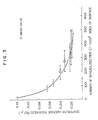
- Fig. 3 shows the relation of the centerline-average roughness to the number of spherulites per 0.1 mm 2 area, with the results being shown in Table 1. It can be seen from Fig. 3 that the surface smoothness becomes improved as the number of spherulites increases.
- Example 2 To individual samples of the same polyoxymethylene as used in Example 1 are respectively added and mixed 1, 3, 5, 10, and 30 wt. °a of a commercial polyoxymethylene (supplied by Polyplastics Co., Ltd. under the tradename of Duracon grade U-10), which are known to have superior nucleating action. According to the procedure of Example 1, each mixture is homogenized, pelletized, and formed into a film. which is then stretched biaxially, yielding a biaxially oriented film. Table 2 shows the results of measuring the centerline-average roughness Ra of each of the oriented films and the number of spherulites per 0.imm ? area of each of the film surfaces resulting from the remelting of each oriented film and the recrystallization of the melt.
- a commercial polyoxymethylene supplied by Polyplastics Co., Ltd. under the tradename of Duracon grade U-10
- Example 3 Using only a commercial polyoxymethylene having nucleating action (the same polymer as used in Example 3), a biaxially oriented film is produced according to the procedure of Example 1.
- the surface roughness Ra of this film is 0.012 ⁇ and the film surface resulting from the remelting of the oriented film and the recrystallization of the melt is formed of very small spherulites, that is, 500 or more spherulites are found per O.imm 2 area of the recrystallized film surface.
- Original films 800 u. thick containing severally 0, 0.01, 5, and 20 parts by weight of branched polyoxymethylene which are prepared in Example 2 are each rolled at a rolling-down ratio of 2.5 in the machine direction.
- Each of the rolled films is led to a transverse stretching tenter and then to a machine-dimentional roller stretcher, thereby being stretched biaxially.
- the stretch ratio in this case is set at 10 : 1 in the transverse direction and at 4.5 : 1 in the machine direction.
- Each of biaxially oriented films obtained is in a machine-directional stretch ratio of 11 : 1 and a transverse stretch ratio of 9 : 1.
- the stretch of each original film is continued for 30 minutes at a winding speed of 5 mimin.
- Table 3 shows the result of evaluating the stretching stability of the original film of each composition and the result of measuring the machine- directional tensile elastic modulus of each biaxially oriented film obtained.
- mark 0 means that the film could be stretched without break during 30 minutes' continuous operation
- mark ⁇ means that the stable stretch could be continuous for a period of 15 to 30 minutes
- mark X means that the stable stretch could not be continued for 15 minutes.
- the biaxiaily oriented polyoxymethyene film of the present invention has been improved in surface smoothness to a great extent without impairing the excellent mechanical and thermal properties of pofyoxymethylene.
- the present film can be produced with much improved stretching stability.
- the present inventive film can be used for various applications taking advantage of such characteristics as stated above, for example, base films for magnetic recording media, such as magnetic tapes and floppy disks, and ribbon cassette films for thermal transfer copying. Thus the industrial significance of the present invention is very great.
Landscapes
- Engineering & Computer Science (AREA)
- Chemical & Material Sciences (AREA)
- Manufacturing & Machinery (AREA)
- Mechanical Engineering (AREA)
- Materials Engineering (AREA)
- Health & Medical Sciences (AREA)
- Chemical Kinetics & Catalysis (AREA)
- Medicinal Chemistry (AREA)
- Polymers & Plastics (AREA)
- Organic Chemistry (AREA)
- Manufacture Of Macromolecular Shaped Articles (AREA)
- Shaping By String And By Release Of Stress In Plastics And The Like (AREA)
Applications Claiming Priority (4)
| Application Number | Priority Date | Filing Date | Title |
|---|---|---|---|
| JP17992387 | 1987-07-21 | ||
| JP179923/87 | 1987-07-21 | ||
| JP12586/88 | 1988-01-25 | ||
| JP1258688 | 1988-01-25 |
Publications (3)
| Publication Number | Publication Date |
|---|---|
| EP0300480A2 true EP0300480A2 (fr) | 1989-01-25 |
| EP0300480A3 EP0300480A3 (en) | 1990-05-30 |
| EP0300480B1 EP0300480B1 (fr) | 1993-12-15 |
Family
ID=26348215
Family Applications (1)
| Application Number | Title | Priority Date | Filing Date |
|---|---|---|---|
| EP88111782A Expired - Lifetime EP0300480B1 (fr) | 1987-07-21 | 1988-07-21 | Film en polyoxyméthylène à orientation biaxiale |
Country Status (4)
| Country | Link |
|---|---|
| US (1) | US4946930A (fr) |
| EP (1) | EP0300480B1 (fr) |
| KR (1) | KR910004047B1 (fr) |
| DE (1) | DE3886288T2 (fr) |
Cited By (7)
| Publication number | Priority date | Publication date | Assignee | Title |
|---|---|---|---|---|
| EP1964879A1 (fr) * | 2003-12-30 | 2008-09-03 | Metabolix, Inc. | Agents de nucléation |
| US7781539B2 (en) | 2003-02-21 | 2010-08-24 | Metabolix Inc. | PHA blends |
| US7928167B2 (en) | 2003-02-21 | 2011-04-19 | Metabolix Inc. | PHA blends |
| US10030135B2 (en) | 2012-08-17 | 2018-07-24 | Cj Cheiljedang Corporation | Biobased rubber modifiers for polymer blends |
| US10611903B2 (en) | 2014-03-27 | 2020-04-07 | Cj Cheiljedang Corporation | Highly filled polymer systems |
| US10669417B2 (en) | 2013-05-30 | 2020-06-02 | Cj Cheiljedang Corporation | Recyclate blends |
| US10794087B2 (en) | 2017-01-16 | 2020-10-06 | Kendrion Kuhnke Automation Gmbh | Door locking device, in particular an electromagnetic door locking device |
Families Citing this family (4)
| Publication number | Priority date | Publication date | Assignee | Title |
|---|---|---|---|---|
| DE3703790A1 (de) * | 1987-02-07 | 1988-08-18 | Hoechst Ag | Kontinuierliches verfahren zur entfernung instabiler anteile aus rohem oxymethylencopolymerisat |
| US5177656A (en) * | 1991-02-05 | 1993-01-05 | Hoechst Celanese Corporation | Flexible magnetic disc cassettes with integrally molded wear button |
| WO2012070451A1 (fr) * | 2010-11-26 | 2012-05-31 | 株式会社カネカ | Film étiré et procédé de production d'un film étiré |
| DE102016116259B4 (de) * | 2015-09-11 | 2025-01-09 | Schott Ag | Vorrichtung und Verfahren zur Stabilisierung von Scheiben eines sprödharten Materials |
Family Cites Families (2)
| Publication number | Priority date | Publication date | Assignee | Title |
|---|---|---|---|---|
| US3980734A (en) * | 1972-07-06 | 1976-09-14 | Hoechst Aktiengesellschaft | Thermoplastic moulding compositions based on poly (oxymethylene) |
| JPS6213318A (ja) * | 1985-07-11 | 1987-01-22 | Asahi Chem Ind Co Ltd | 2軸延伸ポリオキシメチレンフイルムの製造方法 |
-
1988
- 1988-07-20 US US07/221,602 patent/US4946930A/en not_active Expired - Lifetime
- 1988-07-21 DE DE3886288T patent/DE3886288T2/de not_active Expired - Fee Related
- 1988-07-21 KR KR1019880009150A patent/KR910004047B1/ko not_active Expired
- 1988-07-21 EP EP88111782A patent/EP0300480B1/fr not_active Expired - Lifetime
Cited By (10)
| Publication number | Priority date | Publication date | Assignee | Title |
|---|---|---|---|---|
| US7781539B2 (en) | 2003-02-21 | 2010-08-24 | Metabolix Inc. | PHA blends |
| US7928167B2 (en) | 2003-02-21 | 2011-04-19 | Metabolix Inc. | PHA blends |
| US8283435B2 (en) | 2003-02-21 | 2012-10-09 | Metabolix, Inc. | PHA adhesive compositions |
| EP1964879A1 (fr) * | 2003-12-30 | 2008-09-03 | Metabolix, Inc. | Agents de nucléation |
| US7718720B2 (en) | 2003-12-30 | 2010-05-18 | Metabolix Inc. | Nucleating agents |
| US8003719B2 (en) | 2003-12-30 | 2011-08-23 | Metabolix, Inc. | Nucleating agents |
| US10030135B2 (en) | 2012-08-17 | 2018-07-24 | Cj Cheiljedang Corporation | Biobased rubber modifiers for polymer blends |
| US10669417B2 (en) | 2013-05-30 | 2020-06-02 | Cj Cheiljedang Corporation | Recyclate blends |
| US10611903B2 (en) | 2014-03-27 | 2020-04-07 | Cj Cheiljedang Corporation | Highly filled polymer systems |
| US10794087B2 (en) | 2017-01-16 | 2020-10-06 | Kendrion Kuhnke Automation Gmbh | Door locking device, in particular an electromagnetic door locking device |
Also Published As
| Publication number | Publication date |
|---|---|
| EP0300480B1 (fr) | 1993-12-15 |
| DE3886288T2 (de) | 1994-07-07 |
| KR890002295A (ko) | 1989-04-10 |
| DE3886288D1 (de) | 1994-01-27 |
| KR910004047B1 (ko) | 1991-06-22 |
| EP0300480A3 (en) | 1990-05-30 |
| US4946930A (en) | 1990-08-07 |
Similar Documents
| Publication | Publication Date | Title |
|---|---|---|
| EP1023388B2 (fr) | Composition de polypropylene convenant a la confection d'un film oriente a l'etat solide | |
| EP0300480A2 (fr) | Film en polyoxyméthylène à orientation biaxiale | |
| US4962001A (en) | Biaxially oriented polyoxymethylene film | |
| US3901851A (en) | Strengthened films and method for producing same | |
| EP0140546A2 (fr) | Film orienté du type fluor et méthode pour sa fabrication | |
| EP1135446B1 (fr) | Films de polypropylene oriente pour ruban adhesif | |
| JPH01286820A (ja) | 2軸延伸ポリオキシメチレンフィルム | |
| EP0174376A1 (fr) | Feuille ou pellicule resistant a la chaleur | |
| JP2000326405A (ja) | 熱可塑性液晶ポリマーフィルムの製造方法 | |
| EP0205331A2 (fr) | Procédé de fabrication de feuilles, étirées d'une façon biaxiale, à base de polyepsilon capramide | |
| JPS59215833A (ja) | 超高分子量ポリエチレン多孔質フイルムの製造方法 | |
| JPH04101827A (ja) | 二軸延伸ポリエーテルエーテルケトンフィルムの製造方法 | |
| JPH0598039A (ja) | 2軸延伸ポリオキシメチレンフイルム組成物 | |
| KR0173730B1 (ko) | 이축 배향 폴리에스테르 필름의 제조방법 | |
| KR0135914B1 (ko) | 종방향의 인장 특성이 개선된 폴리프로필렌 필름의 제조방법 | |
| JP2661403B2 (ja) | 二軸配向熱可塑性樹脂フィルム | |
| KR0142039B1 (ko) | 이축 배향 폴리에스테르 필름의 제조방법 | |
| JP4277349B2 (ja) | 脂肪族ポリエステル系フィルム | |
| KR0173731B1 (ko) | 이축 배향 폴리에스테르 필름의 제조방법 | |
| JPS6134466B2 (fr) | ||
| KR0173727B1 (ko) | 이축 배향 폴리에스테르 필름의 제조방법 | |
| KR0173729B1 (ko) | 이축 배향 폴리에스테르 필름의 제조방법 | |
| KR0173732B1 (ko) | 이축 배향 폴리에스테르 필름의 제조방법 | |
| JP2000336183A (ja) | 二軸配向ポリエステルフイルムおよびその製造方法 | |
| KR0173728B1 (ko) | 이축 배향 폴리에스테르 필름의 제조방법 |
Legal Events
| Date | Code | Title | Description |
|---|---|---|---|
| PUAI | Public reference made under article 153(3) epc to a published international application that has entered the european phase |
Free format text: ORIGINAL CODE: 0009012 |
|
| AK | Designated contracting states |
Kind code of ref document: A2 Designated state(s): DE FR GB |
|
| PUAL | Search report despatched |
Free format text: ORIGINAL CODE: 0009013 |
|
| AK | Designated contracting states |
Kind code of ref document: A3 Designated state(s): DE FR GB |
|
| 17P | Request for examination filed |
Effective date: 19900723 |
|
| 17Q | First examination report despatched |
Effective date: 19910626 |
|
| GRAA | (expected) grant |
Free format text: ORIGINAL CODE: 0009210 |
|
| AK | Designated contracting states |
Kind code of ref document: B1 Designated state(s): DE FR GB |
|
| REF | Corresponds to: |
Ref document number: 3886288 Country of ref document: DE Date of ref document: 19940127 |
|
| ET | Fr: translation filed | ||
| PLBE | No opposition filed within time limit |
Free format text: ORIGINAL CODE: 0009261 |
|
| STAA | Information on the status of an ep patent application or granted ep patent |
Free format text: STATUS: NO OPPOSITION FILED WITHIN TIME LIMIT |
|
| 26N | No opposition filed | ||
| PGFP | Annual fee paid to national office [announced via postgrant information from national office to epo] |
Ref country code: FR Payment date: 20010712 Year of fee payment: 14 |
|
| PGFP | Annual fee paid to national office [announced via postgrant information from national office to epo] |
Ref country code: GB Payment date: 20010718 Year of fee payment: 14 |
|
| REG | Reference to a national code |
Ref country code: GB Ref legal event code: IF02 |
|
| PG25 | Lapsed in a contracting state [announced via postgrant information from national office to epo] |
Ref country code: GB Free format text: LAPSE BECAUSE OF NON-PAYMENT OF DUE FEES Effective date: 20020721 |
|
| GBPC | Gb: european patent ceased through non-payment of renewal fee |
Effective date: 20020721 |
|
| PG25 | Lapsed in a contracting state [announced via postgrant information from national office to epo] |
Ref country code: FR Free format text: LAPSE BECAUSE OF NON-PAYMENT OF DUE FEES Effective date: 20030331 |
|
| REG | Reference to a national code |
Ref country code: FR Ref legal event code: ST |
|
| PGFP | Annual fee paid to national office [announced via postgrant information from national office to epo] |
Ref country code: DE Payment date: 20030731 Year of fee payment: 16 |
|
| PG25 | Lapsed in a contracting state [announced via postgrant information from national office to epo] |
Ref country code: DE Free format text: LAPSE BECAUSE OF NON-PAYMENT OF DUE FEES Effective date: 20050201 |