EP0256090B1 - Solubilisierung wasserabweisender verbindungen mittels lysophospholipid - Google Patents
Solubilisierung wasserabweisender verbindungen mittels lysophospholipid Download PDFInfo
- Publication number
- EP0256090B1 EP0256090B1 EP87901210A EP87901210A EP0256090B1 EP 0256090 B1 EP0256090 B1 EP 0256090B1 EP 87901210 A EP87901210 A EP 87901210A EP 87901210 A EP87901210 A EP 87901210A EP 0256090 B1 EP0256090 B1 EP 0256090B1
- Authority
- EP
- European Patent Office
- Prior art keywords
- hydrophobic material
- carbon atoms
- aqueous medium
- film
- double bonds
- Prior art date
- Legal status (The legal status is an assumption and is not a legal conclusion. Google has not performed a legal analysis and makes no representation as to the accuracy of the status listed.)
- Expired
Links
- 230000002209 hydrophobic effect Effects 0.000 title claims abstract description 40
- 239000000463 material Substances 0.000 title claims abstract description 40
- 230000007928 solubilization Effects 0.000 title abstract description 11
- 238000005063 solubilization Methods 0.000 title abstract description 11
- 238000000034 method Methods 0.000 claims abstract description 33
- 239000012736 aqueous medium Substances 0.000 claims abstract description 22
- 239000000203 mixture Substances 0.000 claims abstract description 19
- 150000003904 phospholipids Chemical class 0.000 claims abstract description 16
- 239000003960 organic solvent Substances 0.000 claims abstract description 8
- 230000000887 hydrating effect Effects 0.000 claims abstract description 6
- JZNWSCPGTDBMEW-UHFFFAOYSA-N Glycerophosphorylethanolamin Natural products NCCOP(O)(=O)OCC(O)CO JZNWSCPGTDBMEW-UHFFFAOYSA-N 0.000 claims description 29
- CWRILEGKIAOYKP-SSDOTTSWSA-M [(2r)-3-acetyloxy-2-hydroxypropyl] 2-aminoethyl phosphate Chemical compound CC(=O)OC[C@@H](O)COP([O-])(=O)OCCN CWRILEGKIAOYKP-SSDOTTSWSA-M 0.000 claims description 28
- 125000004432 carbon atom Chemical group C* 0.000 claims description 20
- 150000002632 lipids Chemical class 0.000 claims description 18
- 125000001183 hydrocarbyl group Chemical group 0.000 claims description 7
- 238000002360 preparation method Methods 0.000 claims description 7
- 230000003381 solubilizing effect Effects 0.000 claims description 7
- WTJKGGKOPKCXLL-RRHRGVEJSA-N phosphatidylcholine Chemical compound CCCCCCCCCCCCCCCC(=O)OC[C@H](COP([O-])(=O)OCC[N+](C)(C)C)OC(=O)CCCCCCCC=CCCCCCCCC WTJKGGKOPKCXLL-RRHRGVEJSA-N 0.000 claims description 5
- 239000007864 aqueous solution Substances 0.000 claims description 4
- SNKAWJBJQDLSFF-NVKMUCNASA-N 1,2-dioleoyl-sn-glycero-3-phosphocholine Chemical compound CCCCCCCC\C=C/CCCCCCCC(=O)OC[C@H](COP([O-])(=O)OCC[N+](C)(C)C)OC(=O)CCCCCCC\C=C/CCCCCCCC SNKAWJBJQDLSFF-NVKMUCNASA-N 0.000 claims description 3
- 239000012867 bioactive agent Substances 0.000 claims description 3
- 239000012062 aqueous buffer Substances 0.000 claims description 2
- 238000001816 cooling Methods 0.000 claims description 2
- 238000001914 filtration Methods 0.000 claims description 2
- 125000005313 fatty acid group Chemical group 0.000 claims 2
- 125000005314 unsaturated fatty acid group Chemical group 0.000 claims 1
- 238000001035 drying Methods 0.000 abstract 1
- 239000010408 film Substances 0.000 description 17
- HEDRZPFGACZZDS-UHFFFAOYSA-N Chloroform Chemical compound ClC(Cl)Cl HEDRZPFGACZZDS-UHFFFAOYSA-N 0.000 description 12
- 229910052799 carbon Inorganic materials 0.000 description 9
- 239000012071 phase Substances 0.000 description 9
- BTBUEUYNUDRHOZ-UHFFFAOYSA-N Borate Chemical compound [O-]B([O-])[O-] BTBUEUYNUDRHOZ-UHFFFAOYSA-N 0.000 description 7
- 239000000872 buffer Substances 0.000 description 7
- RYCNUMLMNKHWPZ-SNVBAGLBSA-N 1-acetyl-sn-glycero-3-phosphocholine Chemical compound CC(=O)OC[C@@H](O)COP([O-])(=O)OCC[N+](C)(C)C RYCNUMLMNKHWPZ-SNVBAGLBSA-N 0.000 description 6
- RTZKZFJDLAIYFH-UHFFFAOYSA-N Diethyl ether Chemical compound CCOCC RTZKZFJDLAIYFH-UHFFFAOYSA-N 0.000 description 6
- 239000006185 dispersion Substances 0.000 description 6
- 238000001394 phosphorus-31 nuclear magnetic resonance spectrum Methods 0.000 description 6
- PEDCQBHIVMGVHV-UHFFFAOYSA-N Glycerine Chemical compound OCC(O)CO PEDCQBHIVMGVHV-UHFFFAOYSA-N 0.000 description 5
- MDJRZSNPHZEMJH-MTMZYOSNSA-N artisone acetate Chemical compound C1C=C2C[C@@H](O)CC[C@]2(C)[C@@H]2[C@@H]1[C@@H]1CC[C@H](C(=O)COC(=O)C)[C@@]1(C)CC2 MDJRZSNPHZEMJH-MTMZYOSNSA-N 0.000 description 5
- 238000001125 extrusion Methods 0.000 description 5
- 230000002949 hemolytic effect Effects 0.000 description 5
- SLKDGVPOSSLUAI-PGUFJCEWSA-N 1,2-dihexadecanoyl-sn-glycero-3-phosphoethanolamine zwitterion Chemical compound CCCCCCCCCCCCCCCC(=O)OC[C@H](COP(O)(=O)OCCN)OC(=O)CCCCCCCCCCCCCCC SLKDGVPOSSLUAI-PGUFJCEWSA-N 0.000 description 4
- IJGRMHOSHXDMSA-UHFFFAOYSA-N Atomic nitrogen Chemical compound N#N IJGRMHOSHXDMSA-UHFFFAOYSA-N 0.000 description 4
- 230000000694 effects Effects 0.000 description 4
- 239000000047 product Substances 0.000 description 4
- 239000000243 solution Substances 0.000 description 4
- 239000000725 suspension Substances 0.000 description 4
- JKMHFZQWWAIEOD-UHFFFAOYSA-N 2-[4-(2-hydroxyethyl)piperazin-1-yl]ethanesulfonic acid Chemical compound OCC[NH+]1CCN(CCS([O-])(=O)=O)CC1 JKMHFZQWWAIEOD-UHFFFAOYSA-N 0.000 description 3
- OKTJSMMVPCPJKN-UHFFFAOYSA-N Carbon Chemical group [C] OKTJSMMVPCPJKN-UHFFFAOYSA-N 0.000 description 3
- YMWUJEATGCHHMB-UHFFFAOYSA-N Dichloromethane Chemical compound ClCCl YMWUJEATGCHHMB-UHFFFAOYSA-N 0.000 description 3
- OKKJLVBELUTLKV-UHFFFAOYSA-N Methanol Chemical compound OC OKKJLVBELUTLKV-UHFFFAOYSA-N 0.000 description 3
- DNIAPMSPPWPWGF-UHFFFAOYSA-N Propylene glycol Chemical compound CC(O)CO DNIAPMSPPWPWGF-UHFFFAOYSA-N 0.000 description 3
- 238000007792 addition Methods 0.000 description 3
- 230000009089 cytolysis Effects 0.000 description 3
- MWRBNPKJOOWZPW-CLFAGFIQSA-N dioleoyl phosphatidylethanolamine Chemical compound CCCCCCCC\C=C/CCCCCCCC(=O)OCC(COP(O)(=O)OCCN)OC(=O)CCCCCCC\C=C/CCCCCCCC MWRBNPKJOOWZPW-CLFAGFIQSA-N 0.000 description 3
- 125000002811 oleoyl group Chemical group O=C([*])C([H])([H])C([H])([H])C([H])([H])C([H])([H])C([H])([H])C([H])([H])C([H])([H])/C([H])=C([H])\C([H])([H])C([H])([H])C([H])([H])C([H])([H])C([H])([H])C([H])([H])C([H])([H])C([H])([H])[H] 0.000 description 3
- 239000004417 polycarbonate Substances 0.000 description 3
- 239000000126 substance Substances 0.000 description 3
- 239000004094 surface-active agent Substances 0.000 description 3
- CSCPPACGZOOCGX-UHFFFAOYSA-N Acetone Chemical compound CC(C)=O CSCPPACGZOOCGX-UHFFFAOYSA-N 0.000 description 2
- 239000007995 HEPES buffer Substances 0.000 description 2
- NBIIXXVUZAFLBC-UHFFFAOYSA-N Phosphoric acid Chemical compound OP(O)(O)=O NBIIXXVUZAFLBC-UHFFFAOYSA-N 0.000 description 2
- 210000004369 blood Anatomy 0.000 description 2
- 239000008280 blood Substances 0.000 description 2
- 150000001721 carbon Chemical group 0.000 description 2
- 210000004027 cell Anatomy 0.000 description 2
- 150000004665 fatty acids Chemical group 0.000 description 2
- 230000002101 lytic effect Effects 0.000 description 2
- 239000012528 membrane Substances 0.000 description 2
- 238000002156 mixing Methods 0.000 description 2
- 229910052757 nitrogen Inorganic materials 0.000 description 2
- 231100000252 nontoxic Toxicity 0.000 description 2
- 230000003000 nontoxic effect Effects 0.000 description 2
- 230000008520 organization Effects 0.000 description 2
- 229920000515 polycarbonate Polymers 0.000 description 2
- 239000002904 solvent Substances 0.000 description 2
- 239000011550 stock solution Substances 0.000 description 2
- 238000012360 testing method Methods 0.000 description 2
- 230000002588 toxic effect Effects 0.000 description 2
- 238000003260 vortexing Methods 0.000 description 2
- YAMUFBLWGFFICM-PTGWMXDISA-N 1-O-oleoyl-sn-glycero-3-phosphocholine Chemical compound CCCCCCCC\C=C/CCCCCCCC(=O)OC[C@@H](O)COP([O-])(=O)OCC[N+](C)(C)C YAMUFBLWGFFICM-PTGWMXDISA-N 0.000 description 1
- 238000005160 1H NMR spectroscopy Methods 0.000 description 1
- 229940121819 ATPase inhibitor Drugs 0.000 description 1
- 108091006112 ATPases Proteins 0.000 description 1
- 102000057290 Adenosine Triphosphatases Human genes 0.000 description 1
- 238000012935 Averaging Methods 0.000 description 1
- UXVMQQNJUSDDNG-UHFFFAOYSA-L Calcium chloride Chemical compound [Cl-].[Cl-].[Ca+2] UXVMQQNJUSDDNG-UHFFFAOYSA-L 0.000 description 1
- 102000004190 Enzymes Human genes 0.000 description 1
- 108090000790 Enzymes Proteins 0.000 description 1
- LFQSCWFLJHTTHZ-UHFFFAOYSA-N Ethanol Chemical compound CCO LFQSCWFLJHTTHZ-UHFFFAOYSA-N 0.000 description 1
- WQZGKKKJIJFFOK-GASJEMHNSA-N Glucose Natural products OC[C@H]1OC(O)[C@H](O)[C@@H](O)[C@@H]1O WQZGKKKJIJFFOK-GASJEMHNSA-N 0.000 description 1
- 102000001554 Hemoglobins Human genes 0.000 description 1
- 108010054147 Hemoglobins Proteins 0.000 description 1
- 241000124008 Mammalia Species 0.000 description 1
- 239000007983 Tris buffer Substances 0.000 description 1
- 238000002441 X-ray diffraction Methods 0.000 description 1
- 239000000362 adenosine triphosphatase inhibitor Substances 0.000 description 1
- 238000013019 agitation Methods 0.000 description 1
- XAGFODPZIPBFFR-UHFFFAOYSA-N aluminium Chemical compound [Al] XAGFODPZIPBFFR-UHFFFAOYSA-N 0.000 description 1
- 229910052782 aluminium Inorganic materials 0.000 description 1
- 229910000147 aluminium phosphate Inorganic materials 0.000 description 1
- 239000008346 aqueous phase Substances 0.000 description 1
- 238000003556 assay Methods 0.000 description 1
- WQZGKKKJIJFFOK-VFUOTHLCSA-N beta-D-glucose Chemical compound OC[C@H]1O[C@@H](O)[C@H](O)[C@@H](O)[C@@H]1O WQZGKKKJIJFFOK-VFUOTHLCSA-N 0.000 description 1
- 230000000975 bioactive effect Effects 0.000 description 1
- 230000015572 biosynthetic process Effects 0.000 description 1
- 239000007853 buffer solution Substances 0.000 description 1
- -1 but not limited to Substances 0.000 description 1
- 239000001110 calcium chloride Substances 0.000 description 1
- 229910001628 calcium chloride Inorganic materials 0.000 description 1
- 235000011148 calcium chloride Nutrition 0.000 description 1
- 230000006037 cell lysis Effects 0.000 description 1
- 238000006243 chemical reaction Methods 0.000 description 1
- WORJEOGGNQDSOE-UHFFFAOYSA-N chloroform;methanol Chemical compound OC.ClC(Cl)Cl WORJEOGGNQDSOE-UHFFFAOYSA-N 0.000 description 1
- 150000001875 compounds Chemical class 0.000 description 1
- 229960003964 deoxycholic acid Drugs 0.000 description 1
- 230000001419 dependent effect Effects 0.000 description 1
- 239000003599 detergent Substances 0.000 description 1
- 125000004177 diethyl group Chemical group [H]C([H])([H])C([H])([H])* 0.000 description 1
- FLAYZGYYOSGYDY-UHFFFAOYSA-L dipotassium;pentanedioate Chemical compound [K+].[K+].[O-]C(=O)CCCC([O-])=O FLAYZGYYOSGYDY-UHFFFAOYSA-L 0.000 description 1
- 229940079593 drug Drugs 0.000 description 1
- 239000003814 drug Substances 0.000 description 1
- 239000000975 dye Substances 0.000 description 1
- 230000002708 enhancing effect Effects 0.000 description 1
- 210000003743 erythrocyte Anatomy 0.000 description 1
- 150000002170 ethers Chemical class 0.000 description 1
- 238000002474 experimental method Methods 0.000 description 1
- 239000012530 fluid Substances 0.000 description 1
- 239000011888 foil Substances 0.000 description 1
- 239000008103 glucose Substances 0.000 description 1
- 229940088597 hormone Drugs 0.000 description 1
- 239000005556 hormone Substances 0.000 description 1
- 125000002887 hydroxy group Chemical group [H]O* 0.000 description 1
- 239000012216 imaging agent Substances 0.000 description 1
- 229940025708 injectable product Drugs 0.000 description 1
- 238000004811 liquid chromatography Methods 0.000 description 1
- 239000000693 micelle Substances 0.000 description 1
- 238000001000 micrograph Methods 0.000 description 1
- 239000011236 particulate material Substances 0.000 description 1
- 239000003208 petroleum Substances 0.000 description 1
- 239000000546 pharmaceutical excipient Substances 0.000 description 1
- 229940124531 pharmaceutical excipient Drugs 0.000 description 1
- 150000008104 phosphatidylethanolamines Chemical class 0.000 description 1
- 150000003905 phosphatidylinositols Chemical class 0.000 description 1
- 150000008106 phosphatidylserines Chemical class 0.000 description 1
- 238000001556 precipitation Methods 0.000 description 1
- 102000004169 proteins and genes Human genes 0.000 description 1
- 108090000623 proteins and genes Proteins 0.000 description 1
- 230000006903 response to temperature Effects 0.000 description 1
- 150000003839 salts Chemical class 0.000 description 1
- 210000001908 sarcoplasmic reticulum Anatomy 0.000 description 1
- 239000003998 snake venom Substances 0.000 description 1
- FHHPUSMSKHSNKW-SMOYURAASA-M sodium deoxycholate Chemical compound [Na+].C([C@H]1CC2)[C@H](O)CC[C@]1(C)[C@@H]1[C@@H]2[C@@H]2CC[C@H]([C@@H](CCC([O-])=O)C)[C@@]2(C)[C@@H](O)C1 FHHPUSMSKHSNKW-SMOYURAASA-M 0.000 description 1
- 238000002798 spectrophotometry method Methods 0.000 description 1
- 150000003431 steroids Chemical class 0.000 description 1
- 239000006228 supernatant Substances 0.000 description 1
- 239000010409 thin film Substances 0.000 description 1
- 231100000331 toxic Toxicity 0.000 description 1
- 231100000563 toxic property Toxicity 0.000 description 1
- 230000007704 transition Effects 0.000 description 1
- LENZDBCJOHFCAS-UHFFFAOYSA-N tris Chemical compound OCC(N)(CO)CO LENZDBCJOHFCAS-UHFFFAOYSA-N 0.000 description 1
- 239000002691 unilamellar liposome Substances 0.000 description 1
- 239000003981 vehicle Substances 0.000 description 1
- 239000011782 vitamin Substances 0.000 description 1
- 229940088594 vitamin Drugs 0.000 description 1
- 229930003231 vitamin Natural products 0.000 description 1
- 235000013343 vitamin Nutrition 0.000 description 1
- 239000003643 water by type Substances 0.000 description 1
Images



Classifications
-
- A—HUMAN NECESSITIES
- A61—MEDICAL OR VETERINARY SCIENCE; HYGIENE
- A61K—PREPARATIONS FOR MEDICAL, DENTAL OR TOILETRY PURPOSES
- A61K9/00—Medicinal preparations characterised by special physical form
- A61K9/10—Dispersions; Emulsions
- A61K9/127—Synthetic bilayered vehicles, e.g. liposomes or liposomes with cholesterol as the only non-phosphatidyl surfactant
- A61K9/1277—Preparation processes; Proliposomes
-
- A—HUMAN NECESSITIES
- A61—MEDICAL OR VETERINARY SCIENCE; HYGIENE
- A61K—PREPARATIONS FOR MEDICAL, DENTAL OR TOILETRY PURPOSES
- A61K47/00—Medicinal preparations characterised by the non-active ingredients used, e.g. carriers or inert additives; Targeting or modifying agents chemically bound to the active ingredient
- A61K47/06—Organic compounds, e.g. natural or synthetic hydrocarbons, polyolefins, mineral oil, petrolatum or ozokerite
- A61K47/24—Organic compounds, e.g. natural or synthetic hydrocarbons, polyolefins, mineral oil, petrolatum or ozokerite containing atoms other than carbon, hydrogen, oxygen, halogen, nitrogen or sulfur, e.g. cyclomethicone or phospholipids
-
- A—HUMAN NECESSITIES
- A61—MEDICAL OR VETERINARY SCIENCE; HYGIENE
- A61K—PREPARATIONS FOR MEDICAL, DENTAL OR TOILETRY PURPOSES
- A61K9/00—Medicinal preparations characterised by special physical form
- A61K9/0012—Galenical forms characterised by the site of application
- A61K9/0019—Injectable compositions; Intramuscular, intravenous, arterial, subcutaneous administration; Compositions to be administered through the skin in an invasive manner
Definitions
- the present invention is directed to the field of solubilization of hydrophobic materials. More particularly, the invention describes the use of certain lysophospholipids as solubilizers and non-toxic delivery vehicles.
- hydrophobic materials particularly bioactive materials
- surfactants such as sodium deoxycholate or propylene glycol.
- Such surfactants due to their detergent properties, are biologically incompatible and toxic due to their lytic effects on cells. It would, therefore, be desirable to employ a naturally occurring substance without toxic properties as a surfactant for pharmaceutical use.
- Lysophospholipids have heretofore been improbable candidates for pharmaceutical excipients due to their lytic effects on cells.
- LPE lysophosphatidylethanolamine's
- the present invention exploits the pH and temperature dependent phase transitions of lysophosphatidylethanolamines to result in micellar solubilization of hydrophobic materials and delivery of a non-toxic product.
- the present invention describes solubilization of hydrophobic substances using LPE alone or LPE in combination with an unsaturated phospholipid.
- the LPE's of the present invention have the formula H2C(O2CR)CH(OH)CH2OP(O)2OCH2CH2NH3 I or H2C(OH)CH(O2CR)CH2OP(O)2OCH2CH2NH3 II wherein R is a hydrocarbon chain having between 11 and 21 carbon atoms and between 1 and 6 double bonds, preferably 13-19 carbon atoms, and more preferably 15-17 carbon atoms and 1-3 double bonds.
- RCO2 is 1-oleoyl, as in formula I above, where the oleoyl group is bound to the 1 carbon atom.
- a phospholipid is a glycerol molecule having one hydroxyl esterified to phosphoric acid which is further esterified to an alcohol component; and the other glycerol hydroxyls are esterfied to carboxylate fatty acid chains.
- the unsaturated phospholipids used in the present invention contain at least one fatty acid chain of between 12 and 22 carbon atoms and 1 to 6 double bonds, preferably 16 to 20 carbon atoms and 1 to 3 double bonds.
- the second fatty acid chain contains 12 to 22 carbon atoms and 0 to 6 double bonds, preferably 14 to 18 carbon atoms and 0 to 2 double bonds, more preferably 0 or 1 double bonds.
- Suitable phospholipids include, but are not limited to, derivatives of phosphatidylserine, phosphatidylethanolamine, phosphatidylinositol or phosphatidylcholine.
- Preferred unsaturated phospholipids include egg phosphatidylcholine, soy phosphatidylcholine or dioleoylphosphatidylcholine.
- the lysophospholipid, LPE, alone or in combination with a phospholipid, is mixed with the hydrophobic material in an aqueous medium at a temperature of between 1°C and 90°C, and at pH between 8.5 and 14.0, preferably 25°C and pH 8.5.
- a more highly unsaturated LPE may be used; in this case, the hydrophobic material may be mixed with the lipid and aqueous medium at a temperature of between 0°C and 90°C, preferably 25°C and at pH 7.0. The temperature of the suspension is then reduced to below 0°C.
- the hydrophobic material can comprise bioactive agents including, but not limited to, drugs, hormones, proteins, dyes, vitamins or imaging agents.
- the aqueous medium can comprise a buffer system such as borate or N-2-hydroxyethyl piperazine-N'-2-ethane sulfonic acid (HEPES).
- a buffer system such as borate or N-2-hydroxyethyl piperazine-N'-2-ethane sulfonic acid (HEPES).
- HEPES N-2-hydroxyethyl piperazine-N'-2-ethane sulfonic acid
- An object of the invention is a composition
- a composition comprising an aqueous micellar solution at between pH 8.2 to 14.0 of a hydrophobic material and a lysophospholipid of the formula : H2C(O2CR)CH(OH)CH2OP(O)2OCH2CH2NH3 I or H2C(OH)CH(O2CR)CH2OP(O)2OCH2CH2NH3 II wherein R is a hydrocarbon chain having between 11 and 21 carbon atoms and 1 double bond.
- this composition comprises an aqueous solution at a pH of 8.2 to 8.5.
- compositions may comprise an aqueous micellar solution at between pH 6.0 to 8.0 of a hydrophobic material and a lysophospholipid of the formula : H2C(O2CR)CH(OH)CH2OP(O)2OCH2CH2NH3 I or H2C(OH)CH(O2CR)CH2OP(O)2OCH2CH2NH3 II wherein R is a hydrocarbon chain having between 11 and 21 carbon atoms and 2 to 6 double bonds, and wherein the temperature of the composition is between -20°C and 0°C.
- this last composition may comprise an aqueous solution at a pH of 7.0.
- Another object of the present invention is a method of preparation of a composition which comprises solubilizing a hydrophobic material with the steps of :
- Another method of preparation of a composition comprises solubilizing a hydrophobic material with the steps of :
- FIGURE 1 are 81MHz 31p-NMR spectra of aqueous dispersions of 1-oleoyl lysophosphatidylethanolamine (LOPE, or sn-1-18 : 1 cis -PE) at pH 7,0 between - 20°C and 90°C.
- LOPE 1-oleoyl lysophosphatidylethanolamine
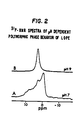
- FIGURE 2 are 31P-NMR spectra showing the effect of pH variation on the polymorphic phase behavior of LOPE.
- FIGURE 3 are 31P-NMR spectra showing the effect of temperature variation on the polymorphic phase behavior of (A),sn-1-18:2 cis -PE and (B) sn-1-18:3 cis -PE.
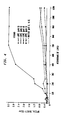
- FIGURE 4 is a graph depicting the hemolytic properties of various phospholipids.
- FIGURE 5 is an expanded scale of hemolytic properties of various phospholipids.
- 1-oleoyl lysophosphatidylethanolamine may be expressed as wherein R is the oleoyl group attached to the carbon in the 1-position, as labeled [1], thus 1-oleoyl.
- the (OH) group is located on the [2] carbon.
- This lipid may be further expressed as sn-1-18:1 cis -PE, denoting the 18 carbon composition of the oleoyl group, followed by a number denoting the number of double bonds, in ths case 1 double bond in the cis configuration.
- LPE's wherein R is in the 1-position and has 2 or 3 double bonds and 17 carbon atoms; are expressed as sn-1-18:2 cis -PE and sn-1-18:3 cis -PE, respectively.
- the carboxylate carbon atom is the 18th carbon atom.
- LOPE 1-oleoyl lysophosphatidylethanolamine
- LOPE 1-oleoyl lysophosphatidylethanolamine
- LOPE exhibits a lamellar phase at physiological pH rather than the micellar arrangement of other lysophospholipids.
- LOPE exhibits a micellar state at higher pH (i.e., at about 8.5 or higher) which promotes micellar solubilization of hydrophobic substances under such conditions.
- This polymorphic phase behavior from micellar to bilayer states is substantiated by: (a) 31P-NMR spectra, which correspond to a lamellar configuration at pH 7 at temperatures of -20°C to 90°C, in contrast to lysophosphatidylcholine which is micellar (Fig.
- lysophosphatidylethanolamines having 2 or 3 double bonds such as sn-1-18:2 cis -PE and sn-1-18:3 cis -PE, respectively, exhibit polymorphic phase behavior in response to temperature variation. Below 0°C, both lipids give rise to 31P-NMR spectra indicative of overall lamellar organization indicated by a low field shoulder followed by a peak (Fig. 3). Both sn-1-18:2 cis -PE and sn-1-18:3 cis -PE show a hexagonal structure at 0-1°C. However, at 10-20°C and above, both lipids are in the (inverted) micelle or H I state.
- a lipid film and hydrophobic material are mixed in an aqueous medium resulting in solubilization of the hydrophobic material.
- This solubilization may be achieved by several methods.
- the hydrophobic material is combined with LOPE in an amount sufficient to solubilize it, and both dried to a film in a receptacle, from an organic solvent.
- Suitable organic solvents are those with a variety of polarities and dielectric properties, including chloroform, acetone, methylene chloride, diethyl and petroleum ethers, and mixtures of chloroform and methanol. All of the above-mentioned solvents will dissolve the phospholipids.
- the dry film is then hydrated with an aqueous medium at pH of between 8.2 and 14.0.
- a dry film of LOPE may be hydrated with an aqueous medium at pH of between 8.2 and 14.0, followed by addition of the hydrophobic material.
- an aqueous medium at pH of between 8.2 and 14.0 containing a hydrophobic material may be used to hydrate a dry film of LOPE.
- the hydrophobic material may be a bioactive agent.
- lipid and hydrophobic material are dried under vacuum from chloroform to a thin film.
- the dried film is then hydrated with an aqueous buffer such as borate, HEPES, or potassium glutarate (KGlu) at pH 8.5-14.0; most preferably pH 8.5.
- an aqueous buffer such as borate, HEPES, or potassium glutarate (KGlu) at pH 8.5-14.0; most preferably pH 8.5.
- aqueous buffer such as borate, HEPES, or potassium glutarate (KGlu)
- pH 8.5-14.0 lysophosphatidylethanolamine assumes its micellar state.
- LOPE is in a lamellar state.
- the hydrophobic material is rehydrated with the lipid in an aqueous medium with agitation and/or vortical mixing.
- the concentration of hydrophobic material can preferably range from 5-25 mg/ml of buffer.
- the LOPE dispersion was held at 4°C for 2-3 hours to favor micellization.
- This dispersion is optionally then subjected to 10 repeated extrusions at pressures of 4827 kPa (700 psi) using an extrusion apparatus; this method and "LUVET" apparatus described in a copending application, Serial No. 622,690, filed June 20, 1984, Pieter R. Cullis et.al., "Extrusion Technique for Producing Unilamellar Vesicles", relevant portions of which are incorporated herein by reference.
- the samples were held at 20-30°C, preferably 25°C for 16-18 hours to confirm complete solubilization, evidenced by lack of precipitation.
- the solubilized product can be used as an injectable product administered, for example, intravenously, intramuscularly, or subcutaneously, in a subject including mammals such as humans.
- the product is best used in the form of a sterile aqueous solution which may contain other solutes, for example, enough salts or glucose to make the solution isotonic.
- the hydrophobic material may be combined with the lipid in an amount sufficient to solubilize it, and both dried to a film in a receptacle, from organic solvent.
- the dry film may then be hydrated with an aqueous medium at pH between 6.0 and 8.0 and held at a temperature from -90°C to 0°C, preferably -20°C, which favors the lamellar phase of the lipid.
- a dry lipid film may be hydrated with an aqueous medium at pH of between 6.0 and 8.0 followed by addition of or combined with the hydrophobic material.
- the solubilized product may be stored at this reduced temperature, in lamellar phase lipid for purposes of enhancing shelf life.
- Dioleoyl phosphatidylethanolamine was prepared from dioleoyl PC according to established procedures, Confurius, P. et al., Biophys . Biochem . Acta ., 488 , 36-42 (1977). Lysophosphatidylethanolamine was prepared according to the following protocol: 500 mg DOPE was dissolved in 50 ml anhydrous diethyl ether to which was added 10 ml 0.5M Tris/HCl buffer (pH 7.4), 10 ml of 2.5 mM CaCl2 and 100 mg of Crotalus adamanteus venom (Sigma Chemical Co., St. Louis, MO).
- the reaction vessel was flushed with nitrogen, sealed, covered with aluminum foil, and stirred vigorously at room temperature.
- the mixture was rotoevaporated under reduced pressure to remove the diethyl ether and the aqueous phase extracted with chloroform methanol 2:1 v/v followed by chloroform.
- the preparation was purified by liquid chromatography using a Waters Prep 500 LC unit. Purity was further verified by H-NMR.
- Positive pressure was applied to the chamber by way of a standard nitrogen cylinder at 3500 kPa (500 psi). The pressure was adjusted within the 1400-6300 kPa (200-900 psi) range to allow complete extrusion of the sample without the membrane filter clogging. Application of pressure results in the extrusion of the sample through the filters. Each sample was extruded a total of ten times.
- Example 1 The procedures and materials of Example 1 were employed using LOPE and DOPC in a 1:1 molar ratio to solubilize 10 mg of 21-acetoxypregnenolone. Following the LUVET treatment, the solution was allowed to stand for 16-18 hours at 25°C, and a further LUVET filtration employing a 50 nm filter system at a pressure of 1400 kPa (200) psi was performed. Following this treatment, no particulate material was observed on the filter, and the preparation appeared translucent. Attempts to solubilize 20 mg of steroid in 1.0 ml of buffer were unsuccessful.
- LOPE 1-oleoyl lysophosphatidylethanolamine
- LOPC 1-oleoyl lysophosphatidylcholine
- DPPE dipalmitoylphosphatidylethanolamine
- FIG. 4 shows the reduced hemolytic activity of LOPE at both pH 7.0 and 8.5 as compared to LOPC, when added to whole blood.
- LOPC produced the greatest amount of red blood cell lysis, liberating the most hemoglobin.
- High concentrations of LOPE produced lysis as compared to DPPE, which caused minimal lysis (FIG. 5). Control experiments with borate buffer alone at both pH 7.0 and 8.5 produced no lysis.
Landscapes
- Health & Medical Sciences (AREA)
- Chemical & Material Sciences (AREA)
- Life Sciences & Earth Sciences (AREA)
- Veterinary Medicine (AREA)
- Pharmacology & Pharmacy (AREA)
- Public Health (AREA)
- General Health & Medical Sciences (AREA)
- Animal Behavior & Ethology (AREA)
- Epidemiology (AREA)
- Medicinal Chemistry (AREA)
- Oil, Petroleum & Natural Gas (AREA)
- Molecular Biology (AREA)
- General Chemical & Material Sciences (AREA)
- Chemical Kinetics & Catalysis (AREA)
- Engineering & Computer Science (AREA)
- Biophysics (AREA)
- Dermatology (AREA)
- Dispersion Chemistry (AREA)
- Medicinal Preparation (AREA)
- Pharmaceuticals Containing Other Organic And Inorganic Compounds (AREA)
- Medicines That Contain Protein Lipid Enzymes And Other Medicines (AREA)
- Materials Applied To Surfaces To Minimize Adherence Of Mist Or Water (AREA)
Claims (26)
- Zusammensetzung, umfassend eine wäßrige micellare Lösung mit einem pH-Wert von 8,2 bis 14,0, eines hydrophoben Materials und eines Lysophospolipids der Formel
H₂C(O₂CR)CH(OH)CH₂OP(O)₂OCH₂CH₂NH₃ I
oder
H₂C(OH)CH(O₂CR)CH₂OP(O)₂OCH₂CH₂NH₃ II
worin R eine Kohlenwasserstoffkette mit 11 bis 21 Kohlenstoffatomen und 1 Doppelbindung ist. - Zusammensetzung nach den Ansprüchen 1 und 2, worin die wäßrige Lösung den pH-Wert 8,5 hat.
- Zusammensetzung, umfassend eine wäßrige micellare Lösung mit einem pH-Wert von etwa 6,0 bis 8,0, eines hydrophoben Materials und eines Lysophospholipids der Formel
H₂C(O₂CR)CH(OH)CH₂OP(O)₂OCH₂CH₂NH₃ I
oder
H₂C(OH)CH(O₂CR)CH₂OP(O)₂OCH₂CH₂NH₃ II
worin R eine Kohlenwasserstoffkette mit etwa 11 bis 21 Kohlenstoffatomen und 2 bis 6 Doppelbindungen ist und worin die Temperatur der Zusammensetzung bei -20°C bis 0°C liegt. - Zusammensetzung nach Anspruch 3, worin die wäßrige Lösung einen pH-Wert von 7,0 hat.
- Zusammensetzung nach den Ansprüchen 1 bis 4, worin das Lysophosphatidylethanolamin die Formel I hat.
- Zusammensetzung nach den Ansprüchen 1 bis 5, worin R 13 bis 19 Kohlenstoffatome hat.
- Zusammensetzung nach den Ansprüchen 1 bis 6, worin R 15 bis 17 Kohlenstoffatome hat.
- Zusammensetzung nach Anspruch 3, worin R 3 Doppelbindungen hat.
- Zusammensetzung nach den Ansprüchen 3 bis 7, worin R 15 bis 17 Kohlenstoffatome und 2 oder 3 Doppelbindungen hat.
- Zusammensetzung nach den Ansprüchen 1 bis 9, worin RCO₂ 1-Oleoyl ist.
- Zusammensetzung nach den Ansprüchen 1 bis 10, worin das hydrophobe Material ein bioaktives Mittel ist.
- Zusammensetzung nach den Ansprüchen 1 bis 11, worin die wäßrige Lösung wäßrigen Puffer umfaßt.
- Zusammensetzung nach den Ansprüchen 1 bis 12, die zusätzlich ein ungesättigtes Phospholipid umfaßt.
- Zusammensetzung nach Anspruch 13, worin das ungesättigte Phospholipid mindestens eine ungesättigte Fettsäurekette mit 12 bis 22 Kohlenstoffatomen und 1 bis 6 Doppelbindungen umfaßt.
- Zusammensetzung nach den Ansprüchen 13 und 14, worin eine zweite Fettsäurekette des ungesättigten Phospholipids 12 bis 22 Kohlenstoffatome und 0 bis 6 Doppelbindungen umfaßt.
- Zusammensetzung nach den Ansprüchen 13 bis 15, worin die Fettsäurekette des ungesättigten Phospholipids 16 bis 20 Kohlenstoffatome und 1 bis 3 Doppelbindungen umfaßt.
- Zusammensetzung nach den Ansprüchen 13 bis 16, worin das ungesättigte Phosholipid ausgewählt ist aus Ei-Phosphatidylcholin, Soja-Phosphatidylcholin und Dioleoylphosphatidylcholin.
- Zusammensetzung nach den Ansprüchen 1 bis 17, die parenteral verabreicht werden kann.
- Zusammensetzung nach den Ansprüchen 1 bis 18, die parenteral an einen Säuger verabreicht werden kann.
- Verfahren zur Herstellung einer Zusammensetzung nach den Ansprüchen 1 bis 2 und 5 bis 19, das das Solubilisieren eines hydrophoben Materials mit folgenden Stufen umfaßt:a) Entfernen eines organischen Lösungsmittels, in dem eine Zusammensetzung, umfassend eine zum Solubilisieren von hydrophobem Material wirksame Menge eines Lysophoshatidylethanolamins der Formel
H₂C(O₂CR)CH(OH)CH₂OP(O)₂OCH₂CH₂NH₃ I
oder
H₂C(OH)CH(O₂CR)CH₂OP(O)₂OCH₂CH₂NH₃ II
und ein hydrophobes Material gelöst sind, unter Bildung eines Films; undb) Hydratisieren des Films mit einem wäßrigen Medium beim pH-Wert von 8,2 bis 14,0; undc) Vermischen des wäßrigen Mediums und des hydratisierten Films, der das hydrophobe Material und das Lysophosphatidylethanolamin enthält,worin R eine Kohlenwasserstoffkette mit 11 bis 21 Kohlenstoffatomen und 1 Doppelbindung ist. - Verfahren nach Anspruch 20, worin das wäßrige Medium den pH-Wert 8,5 hat.
- Verfahren zur Herstellung einer Zusammensetzung nach den Ansprüchen 3 bis 19, das das Solubilisieren eines hydrophoben Materials mit folgenden Stufen umfaßt:a) Entfernen eines organischen Lösungsmittels, in dem eine Zusammensetzung, umfassend eine zum Solubilisieren von hydrophobem Material wirksame Menge an Lysophosphatidylethanolamin der Formel
H₂C(O₂CR)CH(OH)CH₂OP(O)₂OCH₂CH₂NH₃ I
oder
H₂C(OH)CH(O₂CR)CH₂OP(O)₂OCH₂CH₂NH₃ II
gelöst ist, unter Erzielung eines Films;b) Hydratisieren des Films mit einem wäßrigen Medium beim pH-Wert von 6,0 bis 8,0;c) Vermischen des hydrophoben Materials mit dem hydratisierten Film der Stufe (b); undd) Kühlen des dispergierten Lipids in wäßrigem Medium auf eine Temperatur unter 0°C;worin R eine Kohlenwasserstoffkette mit 11 bis 21 Kohlenstoffatomen und 2 bis 6 Doppelbindungen ist. - Verfahren nach Anspruch 22, worin das wäßrige Medium den pH-Wert 7,0 hat.
- Verfahren nach den Ansprüchen 20 bis 23, worin der Stufe (b) die Stufe des Zusatzes des hydrophoben Materials folgt.
- Verfahren nach den Ansprüchen 20 bis 24, worin das hydrophobe Material mit dem wäßrigen Medium vor dem Hydratisieren des Films in der Stufe (b) kombiniert wird.
- Verfahren nach den Ansprüchen 20 bis 25, umfassend die zusätzliche Stufe des Filtrierens des Produkts der letzten Stufe.
Priority Applications (1)
| Application Number | Priority Date | Filing Date | Title |
|---|---|---|---|
| AT87901210T ATE77748T1 (de) | 1986-01-22 | 1987-01-22 | Solubilisierung wasserabweisender verbindungen mittels lysophospholipid. |
Applications Claiming Priority (2)
| Application Number | Priority Date | Filing Date | Title |
|---|---|---|---|
| US821366 | 1986-01-22 | ||
| US06/821,366 US4923854A (en) | 1986-01-22 | 1986-01-22 | Solubilization of hydrophobic materials using lysophospholipid |
Publications (3)
| Publication Number | Publication Date |
|---|---|
| EP0256090A1 EP0256090A1 (de) | 1988-02-24 |
| EP0256090A4 EP0256090A4 (de) | 1988-04-06 |
| EP0256090B1 true EP0256090B1 (de) | 1992-07-01 |
Family
ID=25233191
Family Applications (1)
| Application Number | Title | Priority Date | Filing Date |
|---|---|---|---|
| EP87901210A Expired EP0256090B1 (de) | 1986-01-22 | 1987-01-22 | Solubilisierung wasserabweisender verbindungen mittels lysophospholipid |
Country Status (7)
| Country | Link |
|---|---|
| US (1) | US4923854A (de) |
| EP (1) | EP0256090B1 (de) |
| JP (2) | JP2543114B2 (de) |
| AT (1) | ATE77748T1 (de) |
| CA (1) | CA1303990C (de) |
| DE (1) | DE3780100T2 (de) |
| WO (1) | WO1987004347A1 (de) |
Families Citing this family (9)
| Publication number | Priority date | Publication date | Assignee | Title |
|---|---|---|---|---|
| US5041581A (en) * | 1985-10-18 | 1991-08-20 | The University Of Texas System Board Of Regents | Hydrophobic cis-platinum complexes efficiently incorporated into liposomes |
| EP0355331A3 (de) * | 1988-07-01 | 1991-08-14 | G.D. Searle & Co. | Poly(aminoalkyl)aminocarbonylaminoacylaminodiolaminosäure als antihypertensive Agenzien |
| FI893212L (fi) * | 1988-07-01 | 1990-01-02 | Searle & Co | Antihypertensiva aminoalkylaminokarbo- nylaminodiolaminsyraderivat. |
| US5234912A (en) * | 1989-02-14 | 1993-08-10 | Incyte Pharmaceuticals, Inc. | Pharmaceutical compositions comprising recombinant BPI proteins and a lipid carrier and uses thereof |
| DK0458894T3 (da) * | 1989-02-17 | 1996-10-07 | Liposome Co Inc | Lipidexcipiens til nasal afgivelse og topisk påføring |
| JPH02273536A (ja) * | 1989-04-13 | 1990-11-08 | Yakult Honsha Co Ltd | 界面活性剤およびその製造法 |
| GB2237143A (en) * | 1989-09-15 | 1991-04-24 | Philips Electronic Associated | Two-terminal non-linear devices and their fabrication |
| US6165997A (en) * | 1997-11-20 | 2000-12-26 | Statens Serum Institut | Phospholipids having antimicrobial activity with or without the presence of antimicrobials |
| KR100472297B1 (ko) * | 2001-09-27 | 2005-03-07 | 주식회사 두산 | 리소인지질의 수용성 조성물 |
Family Cites Families (11)
| Publication number | Priority date | Publication date | Assignee | Title |
|---|---|---|---|---|
| DE2009343C3 (de) * | 1970-02-27 | 1980-10-23 | Max-Planck-Gesellschaft Zur Foerderung Der Wissenschaften E.V., 3400 Goettingen | Verwendung von Lysolecithinen als immunologische Adjuvantien |
| FR2374910A1 (fr) * | 1976-10-23 | 1978-07-21 | Choay Sa | Preparation a base d'heparine, comprenant des liposomes, procede pour l'obtenir et medicaments contenant de telles preparations |
| JPS54117034A (en) * | 1978-02-28 | 1979-09-11 | Nippon Shoji Kk | Treating agent for consciousness and perception motion disorder |
| GB2046092B (en) * | 1979-03-05 | 1983-11-02 | Toyama Chemical Co Ltd | Pharmaceutical composition containing a lysophospholid and a phospholipid |
| JPS57179114A (en) * | 1981-04-25 | 1982-11-04 | Green Cross Corp:The | Acetylsalicylic acid liposome preparation |
| DE3374837D1 (en) * | 1982-02-17 | 1988-01-21 | Ciba Geigy Ag | Lipids in the aqueous phase |
| US4485054A (en) * | 1982-10-04 | 1984-11-27 | Lipoderm Pharmaceuticals Limited | Method of encapsulating biologically active materials in multilamellar lipid vesicles (MLV) |
| JPS59163315A (ja) * | 1983-03-09 | 1984-09-14 | Mitsui Pharmaceut Inc | カルモフ−ル含有リポソ−ム |
| US4588578A (en) * | 1983-08-08 | 1986-05-13 | The Liposome Company, Inc. | Lipid vesicles prepared in a monophase |
| US4622219A (en) * | 1983-06-17 | 1986-11-11 | Haynes Duncan H | Method of inducing local anesthesia using microdroplets of a general anesthetic |
| EP0153955A1 (de) * | 1983-09-06 | 1985-09-11 | Health Research, Inc. | Verfahren zum verabreichen von liposomen zum herabsetzen der toxizität eines antitumor-arzneimittels |
-
1986
- 1986-01-22 US US06/821,366 patent/US4923854A/en not_active Expired - Lifetime
-
1987
- 1987-01-21 CA CA000527856A patent/CA1303990C/en not_active Expired - Lifetime
- 1987-01-22 WO PCT/US1987/000143 patent/WO1987004347A1/en not_active Ceased
- 1987-01-22 DE DE8787901210T patent/DE3780100T2/de not_active Expired - Lifetime
- 1987-01-22 EP EP87901210A patent/EP0256090B1/de not_active Expired
- 1987-01-22 JP JP62501050A patent/JP2543114B2/ja not_active Expired - Fee Related
- 1987-01-22 AT AT87901210T patent/ATE77748T1/de not_active IP Right Cessation
-
1995
- 1995-06-13 JP JP7146082A patent/JP2533755B2/ja not_active Expired - Fee Related
Also Published As
| Publication number | Publication date |
|---|---|
| EP0256090A1 (de) | 1988-02-24 |
| JP2533755B2 (ja) | 1996-09-11 |
| WO1987004347A1 (en) | 1987-07-30 |
| EP0256090A4 (de) | 1988-04-06 |
| ATE77748T1 (de) | 1992-07-15 |
| DE3780100T2 (de) | 1992-12-24 |
| JPH0899907A (ja) | 1996-04-16 |
| JPS63502433A (ja) | 1988-09-14 |
| JP2543114B2 (ja) | 1996-10-16 |
| DE3780100D1 (de) | 1992-08-06 |
| US4923854A (en) | 1990-05-08 |
| CA1303990C (en) | 1992-06-23 |
Similar Documents
| Publication | Publication Date | Title |
|---|---|---|
| CA1314481C (en) | Liposomal preparation and antibiotic | |
| KR890000115B1 (ko) | 수용성 약제 콤플렉스의 제조방법 | |
| EP0094692B1 (de) | Ubidecarenone enthaltende, eingekapselte Liposome | |
| EP0256090B1 (de) | Solubilisierung wasserabweisender verbindungen mittels lysophospholipid | |
| US20040115255A1 (en) | Method and composition for solubilising a biologically active compound with low water solubility | |
| JP2000086501A (ja) | ヒトカルシトニンのリポソーム製剤 | |
| AU599456B2 (en) | Phospholipid composition | |
| EP0354855A2 (de) | Liposomen, an deren Oberfläche die Adsorption on Proteinen verhindert wird | |
| EP0637463A1 (de) | Stabile, wässrige liposomensuspension | |
| HU180792B (en) | Process for producing water-containing compositions | |
| US6965049B2 (en) | Zwitterionic lipid compound and uses thereof | |
| JP4669665B2 (ja) | 細胞毒性のないポリカチオン修飾リポソームおよびその製造方法 | |
| EP0850646B1 (de) | Liposomale zubereitungen von indolocarbazol-derivaten | |
| EP0467275B1 (de) | Liposomen | |
| Komatsu et al. | Ethanol-enhanced permeation of phosphatidylcholine/phosphatidylethanolamine mixed liposomal membranes due to ethanol-induced lateral phase separation | |
| CN101766571B (zh) | 一种头孢匹胺/苯甲酸钠/碳酸氢钠药物组合物脂质体注射剂 | |
| YASUHARA et al. | Intestinal absorption aspect of non-lipophilic low molecular weight drugs: A case of cephalexin and cefazolin | |
| JP2599390B2 (ja) | 安定なリポソーム水分散液 | |
| JPH06329533A (ja) | リポソーム製剤の製造法 | |
| JPH0363226A (ja) | アドリアマイシン内包リポソーム製剤 | |
| Aranda et al. | Interaction of glycolipid biosurfactants with model membranes and proteins | |
| CA2066698A1 (en) | Liposomal compositions | |
| EP0319136A1 (de) | Liposome und Verfahren zu deren Darstellung | |
| KR800001360B1 (ko) | 리포솜의 제조법 | |
| JPH0773668B2 (ja) | リポソ−ム及びその前駆体の調製法 |
Legal Events
| Date | Code | Title | Description |
|---|---|---|---|
| PUAI | Public reference made under article 153(3) epc to a published international application that has entered the european phase |
Free format text: ORIGINAL CODE: 0009012 |
|
| 17P | Request for examination filed |
Effective date: 19871214 |
|
| AK | Designated contracting states |
Kind code of ref document: A1 Designated state(s): AT BE CH DE FR GB IT LI LU NL SE |
|
| A4 | Supplementary search report drawn up and despatched |
Effective date: 19880406 |
|
| 17Q | First examination report despatched |
Effective date: 19890824 |
|
| GRAA | (expected) grant |
Free format text: ORIGINAL CODE: 0009210 |
|
| AK | Designated contracting states |
Kind code of ref document: B1 Designated state(s): AT BE CH DE FR GB IT LI LU NL SE |
|
| REF | Corresponds to: |
Ref document number: 77748 Country of ref document: AT Date of ref document: 19920715 Kind code of ref document: T |
|
| REF | Corresponds to: |
Ref document number: 3780100 Country of ref document: DE Date of ref document: 19920806 |
|
| ET | Fr: translation filed | ||
| ITF | It: translation for a ep patent filed | ||
| K2C2 | Correction of patent specification (partial reprint) published |
Effective date: 19920701 |
|
| PLBE | No opposition filed within time limit |
Free format text: ORIGINAL CODE: 0009261 |
|
| STAA | Information on the status of an ep patent application or granted ep patent |
Free format text: STATUS: NO OPPOSITION FILED WITHIN TIME LIMIT |
|
| 26N | No opposition filed | ||
| EPTA | Lu: last paid annual fee | ||
| EAL | Se: european patent in force in sweden |
Ref document number: 87901210.2 |
|
| REG | Reference to a national code |
Ref country code: GB Ref legal event code: IF02 |
|
| PGFP | Annual fee paid to national office [announced via postgrant information from national office to epo] |
Ref country code: NL Payment date: 20041229 Year of fee payment: 19 |
|
| PGFP | Annual fee paid to national office [announced via postgrant information from national office to epo] |
Ref country code: AT Payment date: 20050103 Year of fee payment: 19 |
|
| PGFP | Annual fee paid to national office [announced via postgrant information from national office to epo] |
Ref country code: FR Payment date: 20050117 Year of fee payment: 19 |
|
| PGFP | Annual fee paid to national office [announced via postgrant information from national office to epo] |
Ref country code: GB Payment date: 20050119 Year of fee payment: 19 |
|
| PGFP | Annual fee paid to national office [announced via postgrant information from national office to epo] |
Ref country code: SE Payment date: 20050120 Year of fee payment: 19 |
|
| PGFP | Annual fee paid to national office [announced via postgrant information from national office to epo] |
Ref country code: CH Payment date: 20050124 Year of fee payment: 19 |
|
| PGFP | Annual fee paid to national office [announced via postgrant information from national office to epo] |
Ref country code: LU Payment date: 20050204 Year of fee payment: 19 |
|
| PGFP | Annual fee paid to national office [announced via postgrant information from national office to epo] |
Ref country code: DE Payment date: 20050228 Year of fee payment: 19 |
|
| PGFP | Annual fee paid to national office [announced via postgrant information from national office to epo] |
Ref country code: BE Payment date: 20050303 Year of fee payment: 19 |
|
| PG25 | Lapsed in a contracting state [announced via postgrant information from national office to epo] |
Ref country code: GB Free format text: LAPSE BECAUSE OF NON-PAYMENT OF DUE FEES Effective date: 20060122 Ref country code: AT Free format text: LAPSE BECAUSE OF NON-PAYMENT OF DUE FEES Effective date: 20060122 |
|
| PG25 | Lapsed in a contracting state [announced via postgrant information from national office to epo] |
Ref country code: SE Free format text: LAPSE BECAUSE OF NON-PAYMENT OF DUE FEES Effective date: 20060123 |
|
| PG25 | Lapsed in a contracting state [announced via postgrant information from national office to epo] |
Ref country code: LU Free format text: LAPSE BECAUSE OF NON-PAYMENT OF DUE FEES Effective date: 20060131 Ref country code: LI Free format text: LAPSE BECAUSE OF NON-PAYMENT OF DUE FEES Effective date: 20060131 Ref country code: FR Free format text: LAPSE BECAUSE OF NON-PAYMENT OF DUE FEES Effective date: 20060131 Ref country code: CH Free format text: LAPSE BECAUSE OF NON-PAYMENT OF DUE FEES Effective date: 20060131 Ref country code: BE Free format text: LAPSE BECAUSE OF NON-PAYMENT OF DUE FEES Effective date: 20060131 |
|
| PGFP | Annual fee paid to national office [announced via postgrant information from national office to epo] |
Ref country code: IT Payment date: 20060131 Year of fee payment: 20 |
|
| PG25 | Lapsed in a contracting state [announced via postgrant information from national office to epo] |
Ref country code: NL Free format text: LAPSE BECAUSE OF NON-PAYMENT OF DUE FEES Effective date: 20060801 Ref country code: DE Free format text: LAPSE BECAUSE OF NON-PAYMENT OF DUE FEES Effective date: 20060801 |
|
| REG | Reference to a national code |
Ref country code: CH Ref legal event code: PL |
|
| EUG | Se: european patent has lapsed | ||
| GBPC | Gb: european patent ceased through non-payment of renewal fee |
Effective date: 20060122 |
|
| NLV4 | Nl: lapsed or anulled due to non-payment of the annual fee |
Effective date: 20060801 |
|
| REG | Reference to a national code |
Ref country code: FR Ref legal event code: ST Effective date: 20060929 |
|
| BERE | Be: lapsed |
Owner name: THE *LIPOSOME CY INC. Effective date: 20060131 |