EP0248036B1 - In liposomen inkorporierte hydrophobe cis-platin-komplexe - Google Patents
In liposomen inkorporierte hydrophobe cis-platin-komplexe Download PDFInfo
- Publication number
- EP0248036B1 EP0248036B1 EP86906624A EP86906624A EP0248036B1 EP 0248036 B1 EP0248036 B1 EP 0248036B1 EP 86906624 A EP86906624 A EP 86906624A EP 86906624 A EP86906624 A EP 86906624A EP 0248036 B1 EP0248036 B1 EP 0248036B1
- Authority
- EP
- European Patent Office
- Prior art keywords
- platinum
- carbon atoms
- complex
- alkyl
- cis
- Prior art date
- Legal status (The legal status is an assumption and is not a legal conclusion. Google has not performed a legal analysis and makes no representation as to the accuracy of the status listed.)
- Expired - Lifetime
Links
Classifications
-
- C—CHEMISTRY; METALLURGY
- C07—ORGANIC CHEMISTRY
- C07F—ACYCLIC, CARBOCYCLIC OR HETEROCYCLIC COMPOUNDS CONTAINING ELEMENTS OTHER THAN CARBON, HYDROGEN, HALOGEN, OXYGEN, NITROGEN, SULFUR, SELENIUM OR TELLURIUM
- C07F15/00—Compounds containing elements of Groups 8, 9, 10 or 18 of the Periodic Table
-
- A—HUMAN NECESSITIES
- A61—MEDICAL OR VETERINARY SCIENCE; HYGIENE
- A61K—PREPARATIONS FOR MEDICAL, DENTAL OR TOILETRY PURPOSES
- A61K31/00—Medicinal preparations containing organic active ingredients
- A61K31/28—Compounds containing heavy metals
-
- A—HUMAN NECESSITIES
- A61—MEDICAL OR VETERINARY SCIENCE; HYGIENE
- A61K—PREPARATIONS FOR MEDICAL, DENTAL OR TOILETRY PURPOSES
- A61K9/00—Medicinal preparations characterised by special physical form
- A61K9/10—Dispersions; Emulsions
- A61K9/127—Synthetic bilayered vehicles, e.g. liposomes or liposomes with cholesterol as the only non-phosphatidyl surfactant
-
- C—CHEMISTRY; METALLURGY
- C07—ORGANIC CHEMISTRY
- C07F—ACYCLIC, CARBOCYCLIC OR HETEROCYCLIC COMPOUNDS CONTAINING ELEMENTS OTHER THAN CARBON, HYDROGEN, HALOGEN, OXYGEN, NITROGEN, SULFUR, SELENIUM OR TELLURIUM
- C07F15/00—Compounds containing elements of Groups 8, 9, 10 or 18 of the Periodic Table
- C07F15/0006—Compounds containing elements of Groups 8, 9, 10 or 18 of the Periodic Table compounds of the platinum group
- C07F15/0086—Platinum compounds
- C07F15/0093—Platinum compounds without a metal-carbon linkage
-
- C—CHEMISTRY; METALLURGY
- C07—ORGANIC CHEMISTRY
- C07F—ACYCLIC, CARBOCYCLIC OR HETEROCYCLIC COMPOUNDS CONTAINING ELEMENTS OTHER THAN CARBON, HYDROGEN, HALOGEN, OXYGEN, NITROGEN, SULFUR, SELENIUM OR TELLURIUM
- C07F17/00—Metallocenes
- C07F17/02—Metallocenes of metals of Groups 8, 9 or 10 of the Periodic Table
Definitions
- This invention relates to newly synthesized platinum complexes with hydrophobic properties.
- liposomes incorporating these new and previously synthesized complexes in anti-tumor chemotherapy is also described.
- Cis-platinum is a highly effective drug in the treatment of several neoplastic diseases in humans (Loehrer et al (1984) Ann. Int. Med. V 100, pp 704-713). However, its use is limited by severe systemic toxicity, particularly nephrotoxicity and neurotoxicity (Zwelling et al Platinum Complexes. In: Pharmacologic principles of cancer treatment (1982) Ed by B.A. Chabner, Saunders, Philadelphia, PA). In an attempt to modify the therapeutic index of CDDP, new derivatives have been synthesized during the last decade. However, the development of some promising analogues has been prevented by their low hydrosolubility, which decreases their potential for clinical use (Burchenal et al (1979) Cancer Treat. Rep. V 63, pp 1493-1497).
- Liposomes are lipid vesicles which may form spontaneously upon addition of an aqueous solution to a dry lipid film (Mayhew et al, In: Liposomes (1983) Ed by Marc J. Ostro, Marcel Dekker, Inc., New York, N.Y.). Liposomes may be used as drug carriers of hydrophobic or hydrophilic drugs entrapped in their hydrophobic or hydrophilic compartments respectively.
- Multilamellar liposomes are multilayer lipid vesicles (MLV) that are particularly suited for carrying hydrophobic drugs since their hydrophobic compartment is larger than their hydrophilic compartment.
- Liposomes have been previously used in vitro to deliver chemotherapeutic agents, (Mayhew et al, Liposomes (1983), Ed by Ostro, Marcel Dekker, Inc., New York, N.Y.) and immunomodulators and anti-fungal agents in vitro (Mehta et al (1984), Immunology V 51 pp 517-527, and in vivo in animals (Lopez-Berestein et al (4)(1984) Clin Exp Metastasis V 2 pp 127-137 and Lopez-Berestein et al (1983), J Inf Dis V 147, pp 937-945) and in humans (Lopez-Berestein et al (1985) J. Inf. Dis. V 151 pp 704-710).
- liposomes can reduce certain types of drug-related toxicities such as doxorubicin cardiotoxicity (Forssen et al (1981) Proc. Natl. Acad. Sci. V 78 pp 1873-1877, Olson et al (1982), Eur. J. Cancer Clin. Oncol. V 18 pp 167-176, Gabizon et al (1982) Cancer Res. V 42 pp 4734-4739, Herman et al (1983) Cancer Res. V 43 pp 5427-5432) and CDDP nephrotoxicity, (Fieri et al (1982), Arch. Int.
- CDDP has been previously encapsulated in MLV but with a very low encapsulation efficiency (7.4%) and poor stability (75% at 48 hours in 0.9% NaCl solution) (Fumble et al (1982) Arch. Int. Pharmacodynamie Therapie V 258 pp 180-192).
- platinum compounds which may comprise diaminocyclohexane (non-stereochemically resolved) and do comprise phosphatidyl groups having fatty acid substituents. These compounds are described as largely insoluble in plasma and preferably employed with lipid vesicle carriers.
- the platinum compound-phospholipid vesicles were preferably prepared by a sonic oscillation procedure which characteristically yields unilamellar vesicles.
- liposoluble platinum (II) complexes described which comprise amines and saturated or unsaturated higher fatty acid residues as ligands.
- the present invention comprises a platinum (II) four-coordinate complex having the formula:
- R1 and R2 are each alkyl carboxylates bearing a hydrophobic radical function, most preferably neodecyl, or, when linked together, are alkylene dicarboxylato bearing a hydrophobic radical function, wherein R1 and R2 are other than saturated or unsaturated higher fatty acids.
- R5 is selected from the group consisting of hydrogen, an alkyl having from 2 to 6 carbon atoms such as isopropyl, aryl, aralkyl, alkenyl, a cycloalkyl such as cyclohexyl, cycloalkenyl and a combination thereof.
- R5 is preferably hydrogen, alkyl having between 1 and 20 carbon atoms, more preferably between 6 and 12 carbon atoms and most preferably between 2 and 6 carbon atoms or cycloalkyl having between 3 and 12 carbon atoms.
- R3 and R4 may be linked together in a single function.
- R3 and R4 are preferably selected from the group consisting of cycloalkyl-1,2-diamino functions having between 3 and 7 carbon atoms, and alkyl-1,2-diamino having between 2 and 12 carbon atoms, preferably ethyl.
- a preferred cycloalkyl-1,2-diamino component is 1,2-diaminocyclohexane, preferably in the trans-R,R- or trans-S,S- form.
- alkyl carboxylato for the ligands R1 and R2 describes alkyl carboxylato ligands other than saturated or unsaturated higher fatty acids. Therefore, whenever the term alkyl carboxylato is mentioned hereinafter it has said meaning, i.e. designating alkyl carboxylato ligands other than saturated or unsaturated higher fatty acids.
- the alkyl carboxylato of R1 and R2 has preferably between about 5 and 20 carbon atoms.
- the alkylene dicarboxylato has preferably between 5 and 20 carbon atoms.
- aryl is defined further as a function preferably having between about 6 and 14 carbon atoms.
- alkenyl is preferably a function having between about 5 and 20 carbon atoms.
- the cycloalkyl referred to in the present descriptions is preferably a function having between about 3 and 12 carbon atoms.
- the cycloalkenyl term as used above is preferably a function having between about 5 and 20 carbon atoms.
- aralkyl as used above is a function preferably having between about 7 and 20 carbon atoms and contains linked aryl and alkyl portions.
- the aryl portion herein preferably has between about 6 and 10 carbon atoms and the alkyl portion preferably has between about 1 and 10 carbon atoms.
- R3 and R4 are taken together they are preferably a cycloalkyl-1,2-diamino having between 3 and 20 carbon atoms.
- the alkyl ring of the cycloalkyl preferably has between 3 and 12 carbon atoms.
- the complexes are substantially soluble in methanol or chloroform and substantially insoluble in water.
- liposomes comprising fatty substances such as phospholipids, optionally cholesterol, and the four-coordinate platinum complexes described above, as well as the preparation and uses of these liposomes.
- Liposomes of the present invention contain the platinum complex and the phospholipid in a preferred ratio between about 1 to 10 and about 1 to 30, a more preferred ratio being 1 to 15.
- Preferred phospholipids of these liposomes include phosphatidylglycerol, phosphatidylcholine, sphingomyelin, phosphatidic acid or phosphatidylserine, the more preferred phospholipids being phosphatidylglycerol, phosphatidylcholine or a combination thereof.
- the most preferred phosphatidylglycerol is one consisting essentially of dimyristoylphosphatidylglycerol and the most preferred phosphatidylcholine is one consisting essentially of dimyristoylphosphatidylcholine.
- the liposomes of the present invention comprise dimyristoylphosphatidylglycerol and dimyristoylphosphatidylcholine they are preferably in a ratio between about 1-10 and 10-1, more preferably in a ratio of about 3 to 7.
- the liposomes of the present invention may be multilamellar, unilamellar or have an undefined lamellar construction.
- a pharmaceutical composition comprising the liposomes of and a pharmaceutically acceptable carrier or diluent may be used for the therapy of disease conditions such as cancer.
- a focal point of the present invention involves a pharmaceutical composition comprising the above platinum (II) four coordinate complexes, optionally comprises in the above liposomes, for use in a method of treating a host animal afflicted with tumor cells sensitive to the presence of a platinum (II) four-coordinate complex.
- This method comprises administering to the host an amount of the platinum (II) four-coordinate complex described above or a liposome of the present invention comprising a phospholipid and a tumor cell-inhibiting effective amount of said platinum complex.
- the administering step is preferably parenteral and by intravenous, intraarterial, intramuscular, intralymphatic, intraperitoneal, subcutaneous, intrapleural or intrathecal injection or by topical application or oral dosage. Such administration is preferably repeated on a timed schedule, for example twice daily for a period of two weeks.
- the treatment may be maintained until tumor regression or disappearance has been achieved and may be used in conjunction with other forms of tumor therapy such as surgery or chemotherapy with different agents.
- antitumor methods may also be used to inhibit the metastatic spread of tumors such as reticulosarcoma.
- a preventative pretreatment with the platinum(II) complexes or liposomes comprising those complexes may be used to preclude metastatic spread in a vaccination-like manner.
- Liposomes incorporating these platinum complexes were found to be stable in an aqueous milieu, non-nephrotoxic and active against murine leukemia L-1210.
- the square-planar platinum (II) four coordinate complexes of the present invention have the formula: where R1 and R2 are alkyl carboxylato monoanions bearing a hydrophobic radical function. R1 and R2 may also be a single alkyien carboxylato dianion, Additionally, R3 is a vicinal diaminoalkane or vicinal diaminocycloalkane. It is contemplated that R3 may be composed of two independent alkylamines, cycloalkylamines or ammonia.
- the hydrophobic radical function that function covalently pendant from the carboxyl group is an alkyl group.
- the hydrophobic radical function characteristically has between 5 and 20 carbon atoms.
- the alkyl group of this hydrophobic radical function may be straight or branched.
- R3 is 1, 2 diaminocyclohexane (DACH) the amino groups may be in several relative stereochemical configurations, cis, trans-RR and trans-SS (a mixture of these being termed “racemic").
- DACH diaminocyclohexane
- a hydrophobic radical function was a branched alkyl containing nine carbon atoms such as that in neodecanoato, (C10H20O2, empirical formula) the incorporation efficiency of a platinum (II) complex comprising racemic DACH or trans-RR-DACH was maximal (100%).
- linear or branched alkyl radical functions having from about 6 to about 12 carbon atoms confer properties of efficient phospholipid liposome incorporation upon any DACH-containing Pt (II) complex.
- Liposomes containing the platinum (II) complexes described herein may be prepared from various amphipathic substances including natural or synthetic phospholipids.
- the phospholipids usable to produce liposomes are numerous and not exhaustively listed herein since they are generally well known in the art. These phospholipids include but are not limited to: lecithin, phosphatidylethanolamine, lysolecithin, lysophatidylethanolamine, phosphatidylserine, phosphatidylinositol, sphingomyelin, cardiolipin, phosphatidic acid and the cerebrosides.
- phospholipids for the practice of aspects of the present invention include dimyristoylphosphatidylglycerol (DMPG) and dimyristoylphosphatidylcholine (DMPC). Cholesterol in minor proportions ranging from less than 1% to about 50% may be included with phospholipids and platinum (II) complexes to produce liposomes of the present invention.
- DMPG dimyristoylphosphatidylglycerol
- DMPC dimyristoylphosphatidylcholine
- Cholesterol in minor proportions ranging from less than 1% to about 50% may be included with phospholipids and platinum (II) complexes to produce liposomes of the present invention.
- a preferable but not limiting combination of DMPG and DMPC has been found to be a ratio of 3 to 7 although ratios between 1:10 and 10:1 are contemplated as satisfactory.
- Ratios of platinum (II) complex to phospholipid between about 1 to 10 and about 1 to 30 are
- Either unilamellar or multilamellar or other platinum (II) complex - containing liposomes may be used in the practice of the present invention.
- Multilamellar liposomes are presently preferred since the platinum (II) complexes of the present invention are substantially water - insoluble and they appear to be incorporated into the phospholipid bilayers of the liposome lamellae.
- the procedure for synthesis of the platinum II compounds of the present invention may be described on one scale as follows: (1) about 10 mmole vicinal diamino cycloalkane or alkane are added to 50 ml aqueous solution of K2Pt Cl4 (3.5 g) and stirred for six to eight hours at room temperature.
- the yellow solid formed comprising cis-bis-dichloro-1,2-diamine-Pt(II) may be removed by filtration and washed with fluids such as water, methanol or acetone.
- the solid may then be suspended in about 20 ml H2O and an aqueous solution containing about 0.75 g Ag2SO4 added thereto.
- Liposomes comprising phospholipids and platinum complexes (Pt-liposomes) of the present invention are useful in inhibiting both the growth and metastatic spread of tumors.
- Such Pt-liposomes may be administered parenterally, topically or orally. Oral or parenteral dosages of these Pt-liposomes between about 2.5 mg/kg body weight and 25 mg/kg body weight are contemplated as adequate in most conditions.
- the particular dosages, if a tumor-bearing human is being treated may vary in each case according to the condition of the patient, the type and extent of tumor, and particular Pt-liposome toxicity.
- liposomal-platinum included in the pharmaceutical composition and the dosage utilized in the method of treatment will vary depending in each case upon the conditions of the patients, the nature of the tumor undergoing treatment, antitumor activity of liposomal-platinum, the toxicity and solubility characteristics thereof, etc. Liposomal-platinum may also be administered in combination with other antitumor agents in a combined therapeutic regimen.
- Parenteral administration may be intraperitoneal, subcutaneous, intrapleural, intrathecal, intraurethral, intravenous, intraarterial, intramuscular or intralymphatic.
- Such parenteral administration preferably involves Pt-liposome suspensions in pharmaceutically acceptable solutions such as sterile isotonic aqueous solutions. These suspensions may be obtained fully prepared or may be prepared from preformed components.
- Pt-liposomes may be prepared as pellets or powders. These pellets or powders may be mixed with pharmaceutically acceptable solutions to form suspensions for parenteral administration.
- Topical administration of Pt-liposomes may involve pharmaceutical compositions such as suspensions, creams or ointments which may be obtained fully prepared or prepared from Pt-liposome powders or pellets. Such topical administration may be near to sites of cancerous lesions such as the epithelium or mucosa for example.
- Oral administrations of Pt-liposomes preferably involve encapsulation of Pt-liposome powder or pellets whereby the Pt-liposomes are protected from much gastric and intestinal digestive activity before release from the encapsulation.
- Pt-liposomes may be prepared to contain, for example, other therapeutic agents for treatment of tumors or anti-oxidants to aid in liposome stabilization.
- a host is identified as bearing a tumor type known to generally contain cells whose growth is often inhibited by platinum (II) complexes. Tumor growth in the host may be inhibited by administering to the host the PT-containing liposomes of the present invention.
- II platinum
- metastatic spread of tumors in a host may be inhibited.
- a host bearing metastatic or potentially metastatic tumors of a type noted often to be sensitive to platinum (II) complexes, would first be identified.
- the administration of the PT-containing liposomes of the present invention to that host would serve to inhibit metastatic spread.
- K2PtCl4 was purchased from AESAR (Johnson Matthey, Inc. Seabrook, NH). 1,2-diaminocyclohexane (DACH was purchased from Aldrich Chemical Co., Milwaukee, WI., trans-RR-DACH and trans-SS-DACH from Mortol Thiokol, Inc., Danvers, MO., and neodecanoic acid from Exxon Chemical Co., Houston, Texas. Elemental analyses on the platinum complexes were performed by Integral Microanalytical Laboratories, Inc., Raleigh, NC and by Robertson Laboratory, Inc., Florham Park, N.J. Infrared spectra of the complexes (as KBr pellets) were measured in the range of 600-4000 cm ⁇ 1 using a Nicolet 6000 Fourier transform infrared spectrophotometer.
- DMPC dimyristoylphosphatidylcholine
- DMPG dimyristoylphosphatidylglycerol
- Cis-bis-Neodecanoato-1,2-DACH-platinum (II) was one cis-platinum (CDDP) hydrophobic analogue used as a prototype to develop liposomal-platinum (L-PT) preparations.
- This prototype was synthesized using a multi-step procedure as described for racemic DACH (Khokhar et al. Inorg. Chem. Acta. Bioinorganic Section, V 108, p 63 (1985) follows: 0.96 g of DACH were added to a filtered aqueous solution of K2PtCl4 (3.5 g in 50 ml H2O) and the mixture was stirred for six to eight hours at room temperature. The yellow solid containing cis-bis-dichloro-DACH-Pt (II) was removed by filtration and washed with H2O, methanol, and finally acetone. After the final product was dried under vacuum, the yield was calculated to be 56%.
- the sulfato-racemic-DACH-platinum (II) (0.423 g) was dissolved in 10 ml water. A potassium salt of neodecanoic acid (0.420 g) was added to this solution and the reaction mixture stirred for 30 minutes at room temperature. A gummy mass was obtained which was extracted in chloroform and the chloroform extract was dried over anhydrous MgSO4. The MgSO4 was separated by filtration and the filtrate evaporated to dryness. An off-white solid product was obtained which was dried in vacuo and over P2O5. This final product was stored at 0°C.
- the elemental analysis of the final product was: C-48.30%; H-8.10% and N-3.92%.
- the calculated elemental values for a compound of the empirical formula; C26H52N2O4Pt. is: C-47.93%; H-8.00% and N-4.30%.
- Cis,bis-neodecanoato-DACH-platinum (II) was highly soluble in methanol and chloroform and insoluble in water.
- Multilamellar lipid vesicles (MLV) or liposomes containing incorporated platinum complexes (PT) of the above descriptions were prepared as previously described for other compounds (Lopez-Berestein et al (4)(1984) Clin. Exp. Metastasis V 2 pp 127-137 and Lopez-Berestein et al (1983) J Inf Dis V 147 pp 937-945).
- chloroform solutions of lipids (at the desired molar ratio) and PT were mixed at a lipid-PT ratio of 15:1 and the chloroform was evaporated in a rotary evaporator (Buchi, Brinkmann Instruments, Westbury, NY).
- the dried lipid film obtained, containing PT was then dispersed with an aqueous solution (0.9% NaCl in water) by vigorous handshaking. The suspension was subsequently centrifuged at 30,000 x g for 45 minutes, the supernatant was discarded, and the pellet containing PT was resuspended in 0.9% NaCl solution.
- MLV or liposomes containing platinum complexes may also be prepared from a lyophilized powder containing lipid and platinum compound.
- the lipid and platinum compound are dissolved in the hydrophobic solvent tertiary butanol (M.P. 26°C) at the ratios described above.
- the solution is freeze-dried and a white powder obtained.
- MLV containing the platinum compound are formed upon the addition of 0.9% NaCL solution in water to the lyophilized powder with mild shaking by hand.
- Elemental platinum (Pt) was determined in the liposome suspension and the pellet by x-ray fluorescence as previously reported (Seifert et al (1979) Proc. Amer. Ass'n. Cancer Res. V 20 p. 168) in the Department of Analytical Chemistry, The University of Texas Medical School at Houston, TX.
- the amount of platinum complex (PT) was determined in the supernatant by ultraviolet (UV) spectrophotometry using a wavelength of 224 nm.
- the EE values used in the stability determinations were obtained by measuring PT in the supernatants by UV spectrophotometry (0.9% NaCl solution) or x-ray fluorescence (50% human AB serum). The stability in 0.9% NaCl solution was determined up to 14 days after the initial preparation. In addition, the L-PT preparations were observed microscopically on day 14 to check the morphology of the vesicles. The stability in 50% human AB serum was determined up to 18 hours after incubation.
- Preparations were suspended in 0.9% saline and incubated at 4°C for 14 days.
- the liposome compositions were observed by light microscopy and the amount of free PT in the saline determined.
- Liposomes containing PT and composed of DMPG as the only phospholipid showed significant microscopically determined loss of structure. Free PT was determined and stability was calculated as the percentage PT remaining in the liposomes. The results of these measurements are presented in Table 2 below.
- L-PT-NEODECANOATO-RACEMIC-DACH prepared as described in Example 3 and the mouse M5076 reticulosarcoma, which is a tumor that metastasizes exclusively to the liver.
- L-PT-NEODECANOATO-RACEMIC-DACH was more active than cis-platinum in the treatment of established liver metastases of M5076 using two different tumor inocula and schedules of administration (Table 4 and 5).
- L-PT-NEODECANOATO-RACEMIC-DACH 25 mg/kg on days, 8, 12, 16
- resulted in a more than two fold reduction in the number of liver metastases compared with cis-platinum (7.5 mg/kg on days, 8, 12, 16) on day 30 after the intravenous inoculation of 105 M5076 cells (mean number of liver metastases ⁇ SD 39 ⁇ 21 for L-PT vs 114 ⁇ 38 for cis-platinum (Table 4).
- L-PT-NEODECANOATO-RACEMIC-DACH (25 mg/kg on days 4, 8, 12) resulted in the complete inhibition of liver metastases of M5076 on day 45 after the inoculation of 104 M5076 cells, while 4/6 animals treated with cis-platinum (7.5 mg/kg on days 4, 8, 12) had 175 or more liver metastases (Table 5).
- L-PT-NEODECANOATO-RACEMIC-DACH was effective in the prophylaxis of liver metastases of M5076 reticulosarcoma.
- the median survival of untreated animals was 30 days. Treated animals were sacrificed on day 45, the livers dissected, placed in Bouin's fixative, and the number of liver-tumor colonies counted. Two of the animals treated with cis-platinum died before day 45 versus none in the group treated with L-PT.
- Cis-diamine-diiodo-platinum (II) (NH3)2 Pt-I2 was first prepared by the following method: K2 PtCl4 (5g) was dissolved in water (20ml). An aqueous solution of KI (3g) was added and a dark brown solution was obtained. Aqueous concentrated ammonia (2ml) was added to the mixture which was stirred for 2-3 hr. at room temperature. The mixture was filtered and the solid was washed with an excess of water, ethanol and ether. The product was dried over P205 under vacuum. Yield 4.5g (77%).
- the compound according to the invention was then prepared as follows: (NH3)2-Pt-I2 (1.0g) was suspended in water (50ml), and aqueous solutions of AgNO3 (0.68g 20ml H20) was added thereto. The reaction mixture was stirred overnight at room temperature in the dark. The AgI precipitate was filtered and filtrate was concentrated by rotary evaporation. To the concentrated solution a solution of sodium neodecanoato prepared in situ, (neodecanoic acid 0.688g in 20ml methanol and 1N NaOH, 4ml) was added. The reaction mixture was stirred overnight at room temperature. The yellow reaction mixture was evaporated to dryness at 40°C udder reduced pressure using a rotary evaporator.
- Cis-bis-neodecanoato-bis-diamine-platinum (II) is highly soluble in chloroform, methanol and other common organic solvents, but insoluble in water.
- Example 8 The method of Example 8 was followed, using the cyclohexylamine ligand in place of ammonia.
- the complex is highly soluble in chloroform, methanol and other organic solvents, but insoluble in water.
- Cis-diiodo-ethylenediamine-platinum (II) was first prepared by the method of Example 8, using ethylenediamine ligand in place of ammonia and with a 96% yield of product.
- Cis-bis-diiodo-ethylenediamine-platinum (II), (3.9) was suspended in 10ml H2O and an aqueous solutions of Ag2SO4 (2.2g in 200 ml H2O) was added thereto.
- the reaction mixture was stirred in the dark overnight at room temperature.
- AgI was removed by filtration and the yellow filtrate was evaporated to dryness at 40-45°C under reduced pressure using rotary evaporation.
- the final product was dried over P2O5 under vacuum.
- the product yield was 2.35g (81%).
- the compound according to the invention was then prepared as follows: Sulfato-ethylenediamine-platinum (II), H2O (0.369 g) was dissolved in H2O (20ml) and a solution of sodium neodecanoato prepared in situ (neodecanoic acid, 0.344g in 20 ml methanol and IN NaOH, 2ml) was added thereto. The reaction mixture was stirred for 2-3 hr. at room temperature. The reaction mixture was evaporated to dryness at 40-45°C under reduced pressure using rotary evaporation. A gummy product was obtained which was extracted in chloroform and the chloroform extract was dried over anhydrous MgSO4. The MgSO4 was separated by filtration and the filtrate was evaporated to dryness under reduced pressure using a rotary evaporator. The final product was dried over P2O5 in vacuo . The product was stored at 0°C.
- Cis-bis-neodecanoato-ethylenediamine-platinum (II) is highly soluble in chloroform, methanol and other organic solvents, but insoluble in water.
- Cis-bis-neodecanoato-bis-isopropylamine-platinum (II) and sulfato-bis-isopropylamineplatinum (II) were first prepared by the method of Example 10, using isopropylamine ligand in place of ethylenediamine.
- the compound according to the invention was then prepared as follows: Sulfato-bis-isopropylamine-platinum (II). H2O (0.427g) was dissolved in H2O (50ml) and a solution of sodium-neodecanoato prepared in situ (neodecanoic acid 0.344g in 20 ml of methanol and 1N NaOH, 2 ml) was added thereto. The reaction mixture was stirred for 2-3 hr. at room tempeature. The reaction mixture was evaporated to dryness at 40-45°C under reduced pressure using rotary evaporator. A gummy mass was obtained which was extracted in chloroform and the chloroform extract was dried over anhydrous MgSO4. The MgSO4 was separated by filtration and filtrate was evaporated to dryness under reduced pressure using a rotary evaporator. The product was dried over P2O5 in vacuo . The final product was stored at 0°C.
- Cis-bis-neodecanoato-bis-isopropylamine-platinum (II) is highly soluble in chloroform, methanol and other organic solvents, but insoluble in water.
- Cis-bis-Neopentanoato-trans-R,R-1,2-diaminocyclohexane-platinum II is highly soluble in chloroform, methanol and other common organic solvents.
- Example 8-12 The compounds prepared in Examples 8-12 were tested for their efficiency of encapulation in liposomes by the methods described in Example 4. These liposome-encapsulated compounds were tested to determine their optimal dose and effectiveness as inhibitors of in vivo tumor growth as described in Example 6. The data in Table 7 reveal the resultant measurements.
- Cis-bis-neodecancato-1,2-diaminocyclohexane platinum (II) was tested in the liposomal-form against three human malignant cell lines of colon carcinoma (LoVo, SW620, and SW403) using a colony formation inhibition assay.
- the drug concentration that resulted in a 50% inhibition of colony formation (IC50) ranged from 4 to 8 uM.
- the IC50 of cisplatinum for these same cell lines ranged from 3 to 7 uM.
Landscapes
- Chemical & Material Sciences (AREA)
- Health & Medical Sciences (AREA)
- Organic Chemistry (AREA)
- Public Health (AREA)
- Medicinal Chemistry (AREA)
- Life Sciences & Earth Sciences (AREA)
- Animal Behavior & Ethology (AREA)
- General Health & Medical Sciences (AREA)
- Pharmacology & Pharmacy (AREA)
- Veterinary Medicine (AREA)
- Epidemiology (AREA)
- Dispersion Chemistry (AREA)
- Medicinal Preparation (AREA)
- Pharmaceuticals Containing Other Organic And Inorganic Compounds (AREA)
- Emulsifying, Dispersing, Foam-Producing Or Wetting Agents (AREA)
- Cosmetics (AREA)
- Manufacturing Of Micro-Capsules (AREA)
Claims (11)
- Verfahren zur Herstellung eines vierfach koordinierten Platin(II)-Komplexes der Formel:


worin R₃ und R₄ zusammen aus der Gruppe Cycloalkyl-1,2-diamino mit 3 bis 20 Kohlenstoffatomen und Alkyl-1,2-diamino mit 2 bis 12 Kohlenstoffatomen ausgewählt sind;
insbesondere wobei der Cycloalkylrest 3 bis 12 Kohlenstoffatome und ganz besonders 3 bis 7 Kohlenstoffatome aufweist; und
wobei der Komplex ferner dadurch definiert ist, daß er in Methanol oder Chloroform im wesentlichen löslich und in Wasser im wesentlichen unlöslich ist,
wobei das Verfahren folgendes umfaßt: Umsetzen eines Sulfato-trans-R,R-1,2-diaminoalkan-platin(II)-Komplexes mit einem Erdalkalimetallsalz eines Carboxylatomonoanions mit einer hydrophoben Radikalfunktion unter Bildung des vierfach koordinierten Platin(II)-Komplexes,
insbesondere wobei die Umsetzung in einer wässrigen Umgebung erfolgt,
insbesondere wobei das Sulfatsalz des Erdalkalimetalls durch Filtration entfernt wird und der Platinkomplex durch Kristallisation oder durch Entfernung des Lösungsmittels unter Abdampfen, wobei das Abdampfen insbesondere unter vermindertem Druck bei 45-50°C erfolgt, erhalten wird,
insbesondere wobei der Platin-Komplex zusätzlich über einem Trocknungsmittel, insbesondere über Phosphorpentoxid, getrocknet wird. - Verfahren nach Anspruch 1, wobei der vierfach koordinierte Platin(II)-Komplex folgende Formel aufweist:
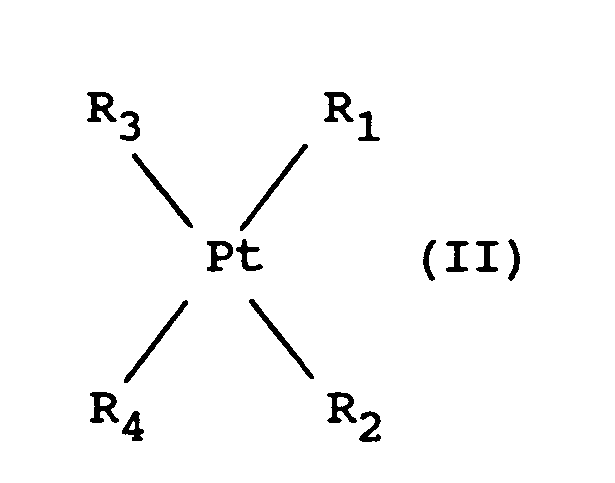

worin R₃ und R₄ zusammen aus der Gruppe Cycloalkyl-1,2-diamino mit 3 bis 7 Kohlenstoffatomen und Alkyl-1,2-diamino mit 2 bis 12 Kohlenstoffatomen ausgewählt sind;
wobei der Komplex ferner dadurch definiert ist, daß er in Methanol oder Chloroform im wesentlichen löslich und in Wasser im wesentlichen unlöslich ist. - Verfahren nach Anspruch 1 oder 2, wobei der Komplex zusätzlich durch eines oder mehrere der folgenden Merkmale definiert ist:a) R₁ und/oder R₂ bedeutenaa) Alkylcarboxylato, vorzugsweise mit 5 bis 20 Kohlenstoffatomen, insbesondere Neodecanoato oder Neopentanoato, ganz besonders, wenn sich diese in cis-Stellung befinden, oder
R₁ und R₂ bedeuten zusammenbb) Alkylendicarboxylato mit 5 bis 20 Kohlenstoffatomen oderb) R₃ und/oder R₄aa) umfassen ferneraaa) Alkyl mit 1 bis 20, insbesondere mit 6 bis 12 und ganz besonders mit 2 bis 6 Kohlenstoffatomen,bbb) Cycloalkyl mit 3 bis 12 Kohlenstoffatomen,bb) bedeuten Aralkyl, das zusätzlich definiert ist durch einen Gehalt an verknüpften Aryl- und Alkylbereichen und 7 bis 20 Kohlenstoffatome aufweist, insbesondere wobei der Arylbereich 6 bis 10 Kohlenstoffatome und/oder der Alkylbereich 1 bis 10 Kohlenstoffatome aufweist, oder
R₃ und R₄ bedeuten zusammencc) Cycloalkyl-1,2-diamino mit 3 bis 20 Kohlenstoffatomen, wobei der Cycloalkylring 3 bis 12 Kohlenstoffatome aufweist, insbesondere wobei es sich beim Cycloalkyl-1,2-diamino um 1,2-Diaminocyclohexan und ganz besonders um trans-R,R-1,2-Diaminocyclohexan oder trans-S,S-1,2-Diaminocyclohexan handelt, oderdd) Alkyl-1,2-diamino, insbesondere mit 2 bis 12 Kohlenstoffatomen, wobei für Alkyl die Bedeutung Ethyl ganz besonders bevorzugt ist,c) R₅ bedeutetaa) Wasserstoff oderbb) Alkenyl mit 5 bis 20 Kohlenstoffatomen odercc) Alkyl mit 1 bis 20 Kohlenstoffatomen, insbesondere Isopropyl, oderdd) Cyclohexyl. - Verfahren zur Herstellung eines Liposoms, umfassend(a) Bereitstellen eines vierfach koordinierten Platinkomplexes der Formel


oder worin R₃ und R₄ zusammen Cycloalkyl-1,2-diamino mit 3 bis 7 Kohlenstoffatomen oder Alkyl-1,2-diamino mit 2 bis 12 Kohlenstoffatomen bedeuten;
wobei der Komplex ferner dadurch definiert ist, daß er in Methanol oder Chloroform im wesentlichen löslich und in Wasser im wesentlichen unlöslich ist,
und eines Phospholipids, insbesondere wobei das Gewichtsverhältnis des Platinkomplexes zu Phospholipid 1 zu 10 bis 1 zu 30 und ganz besonders 1 zu 15 beträgt,
insbesondere wobei das Liposom zusätzlich dadurch definiert ist, daß es Cholesterin enthält,(b) Vermischen des Komplexes mit dem Phospholipid, insbesondere in einem Gewichtsverhältnis von 1 zu 10 bis 1 zu 30 und ganz besonders von 1 zu 15, in einem hydrophoben Lösungsmittel, gegebenenfalls unter Vermischen des Komplexes mit Cholesterin;(c) Abdampfen des hydrophoben Lösungsmittels unter Bildung eines Films von Phospholipid und Komplex oder Lyophilisieren des Gemisches unter Bildung eines Pulvers, insbesondere wobei diese Stufe c) eine Rotationsverdampfung umfaßt;(d) Dispergieren des Films oder Pulvers in einer wässrigen Lösung unter Bildung von Liposomen, insbesondere wobei der Komplex und/oder das Phospholipid der Definition in einem der Ansprüche 4 bis 7 entsprechen. - Verfahren nach Anspruch 4, wobei der Komplex ausgewählt ist unter
cis-Bis-neodecanoato-trans-R,R-1,2-diaminocyclohexan-platin (II),
cis-Bis-ammin-bis-neodecanoato-platin(II),
cis-Bis-neopentanoato-1,2-diaminocyclohexan-platin(II),
cis-Bis-cyclopentencarboxylato-trans-R,R-1,2-diaminocyclohexan-platin(II),
cis-Bis-neodecanoato-ethylendiamin-platin(II),
cis-Bis-neodecanoato-bis-isopropylamin-platin(II),
cis-Bis-neopentanoato-trans-R,R-1,2-diaminocyclohexan-platin(II),
cis-Bis-neodecanoato-bis-cyclohexylamin-platin(II). - Verfahren nach Anspruch 4, wobei das Phospholipid zusätzlich dadurch definiert ist, daß es sich um Phosphatidylglycerin, Phosphatidylcholin, Sphingomyelin, Phosphatidinsäure oder Phosphatidylserin handelt,
insbesondere wobei das Phospholipid zusätzlich dadurch definiert ist, daß es im wesentlichen aus Phosphatidylglycerin, einem Phosphatidylcholin oder einer Kombination davon besteht,
insbesondere wobei das Phosphatidylglycerin zusätzlich dadurch definiert ist, daß es im wesentlichen aus Dimyristoylphosphatidylglycerin besteht, und das Phosphatidylcholin zusätzlich dadurch definiert ist, daß es im wesentlichen aus Dimyristoylphosphatidylcholin besteht,
wobei das Dimyristoylphosphatidylglycerin und das Dimyristoylphosphatidylcholin zusätzlich dadurch definiert sind, daß sie in einem Verhältnis von 1 zu 10 bis 10 zu 1, insbesondere in einem Verhältnis von 3 zu 7, vorliegen. - Verfahren nach Anspruch 4, wobei das Liposom multilamellar oder unilamellar ist.
- Verfahren zur Herstellung einer pharmazeutischen Zusammensetzung, umfassend die Zugabe eines nach einem der Ansprüche 4-7 hergestellten Liposoms zu einen pharmazeutisch verträglichen Träger oder Verdünnungsmittel.
- Verfahren nach Anspruch 4, wobei eine zusätzliche Stufe hinzugefügt wird, bei der die Liposomen einer Schalloszillation unter Bildung von unilamellaren Liposomen unterzogen werden.
Priority Applications (1)
| Application Number | Priority Date | Filing Date | Title |
|---|---|---|---|
| AT86906624T ATE77384T1 (de) | 1985-10-18 | 1986-10-17 | In liposomen inkorporierte hydrophobe cis-platin- komplexe. |
Applications Claiming Priority (4)
| Application Number | Priority Date | Filing Date | Title |
|---|---|---|---|
| US78875085A | 1985-10-18 | 1985-10-18 | |
| US914591 | 1986-10-07 | ||
| US06/914,591 US5041581A (en) | 1985-10-18 | 1986-10-07 | Hydrophobic cis-platinum complexes efficiently incorporated into liposomes |
| US788750 | 1997-01-24 |
Publications (2)
| Publication Number | Publication Date |
|---|---|
| EP0248036A1 EP0248036A1 (de) | 1987-12-09 |
| EP0248036B1 true EP0248036B1 (de) | 1992-06-17 |
Family
ID=27120836
Family Applications (1)
| Application Number | Title | Priority Date | Filing Date |
|---|---|---|---|
| EP86906624A Expired - Lifetime EP0248036B1 (de) | 1985-10-18 | 1986-10-17 | In liposomen inkorporierte hydrophobe cis-platin-komplexe |
Country Status (10)
| Country | Link |
|---|---|
| US (3) | US5041581A (de) |
| EP (1) | EP0248036B1 (de) |
| KR (1) | KR900003094B1 (de) |
| AT (1) | ATE77384T1 (de) |
| CA (1) | CA1312616C (de) |
| DE (1) | DE3685751T2 (de) |
| DK (1) | DK307787A (de) |
| FI (1) | FI85492C (de) |
| IL (1) | IL80349A (de) |
| WO (1) | WO1987002364A1 (de) |
Families Citing this family (54)
| Publication number | Priority date | Publication date | Assignee | Title |
|---|---|---|---|---|
| JPS6296A (ja) | 1985-03-06 | 1987-01-06 | Sumitomo Pharmaceut Co Ltd | 脂溶性白金(2)錯体 |
| US5117022A (en) * | 1985-10-18 | 1992-05-26 | The Board Of Regents, The University Of Texas System | Hydrophobic cis-platinum complexes efficiently incorporated into liposomes |
| US5384127A (en) * | 1985-10-18 | 1995-01-24 | Board Of Regents, The University Of Texas System | Stable liposomal formulations of lipophilic platinum compounds |
| US5206400A (en) * | 1986-07-07 | 1993-04-27 | Ohio State University | Diastereomeric mono- and di-substituted diamino cyclohexane compounds and the method of preparation thereof |
| US5320906A (en) * | 1986-12-15 | 1994-06-14 | Vestar, Inc. | Delivery vehicles with amphiphile-associated active ingredient |
| DK175531B1 (da) * | 1986-12-15 | 2004-11-22 | Nexstar Pharmaceuticals Inc | Leveringsvehikel med amphiphil-associeret aktiv bestanddel |
| EP0284197A1 (de) * | 1987-02-20 | 1988-09-28 | Tanabe Seiyaku Co., Ltd. | Organische Platinkomplexe und Verfahren zu deren Herstellung |
| DK86988A (da) * | 1987-02-25 | 1988-08-26 | Takeda Chemical Industries Ltd | Liposompraeparat og anvendelse deraf |
| IL85595A0 (en) * | 1987-03-06 | 1988-08-31 | Tanabe Seiyaku Co | Organic platinum complex and its preparation |
| DE3710371A1 (de) * | 1987-03-28 | 1988-10-13 | Dornier Medizintechnik | Zerstoerung von krankhaft veraenderten gewebezellen |
| CA1339034C (en) * | 1988-08-22 | 1997-04-01 | Paul A. Tremblay | Platinum complexes of single isomer neoalkyl acids |
| US5041578A (en) * | 1988-11-22 | 1991-08-20 | Board Of Regents, The University Of Texas System | Water soluble 1,2-diaminocyclohexane platinum (IV) complexes as antitumor agents |
| US5393909A (en) * | 1988-11-22 | 1995-02-28 | Board Of Regents, The University Of Texas System | Diamine platinum complexes as antitumor agents |
| US5434256A (en) * | 1988-11-22 | 1995-07-18 | Board Of Regents, The University Of Texas System | Diamine platinum complexes as antitumor agents |
| ATE252372T1 (de) * | 1996-08-23 | 2003-11-15 | Sequus Pharm Inc | Liposome enthaltend cisplatin |
| US5843475A (en) * | 1996-12-06 | 1998-12-01 | Board Of Regents, The University Of Texas System | Delivery and activation through liposome incorporation of diaminocyclohexane platinum (II) complexes |
| US6548541B1 (en) * | 1999-04-21 | 2003-04-15 | Unitech Pharmaceuticals, Inc. | Carboplatin analogs for cancer treatment |
| JP4776843B2 (ja) | 1999-10-01 | 2011-09-21 | イムノゲン インコーポレーティッド | 免疫複合体及び化学療法剤を用いる癌治療用組成物及び方法 |
| JP2005502653A (ja) * | 2001-08-20 | 2005-01-27 | トランセーヴ・インコーポレーテッド | 肺ガンの治療方法 |
| AU2003230600B2 (en) * | 2002-03-05 | 2009-06-04 | Transave, Inc. | An inhalation system for prevention and treatment of intracellular infections |
| WO2004054499A2 (en) * | 2002-08-02 | 2004-07-01 | Transave, Inc. | Platinum aggregates and process for producing the same |
| US9186322B2 (en) | 2002-08-02 | 2015-11-17 | Insmed Incorporated | Platinum aggregates and process for producing the same |
| US7718189B2 (en) | 2002-10-29 | 2010-05-18 | Transave, Inc. | Sustained release of antiinfectives |
| AU2003304204B2 (en) * | 2002-10-29 | 2009-12-24 | Insmed Incorporated | Sustained release of antiinfectives |
| US7879351B2 (en) * | 2002-10-29 | 2011-02-01 | Transave, Inc. | High delivery rates for lipid based drug formulations, and methods of treatment thereof |
| US7160908B2 (en) * | 2003-03-04 | 2007-01-09 | Unitech Pharmaceuticals, Inc. | Dynamic anticancer platinum compounds |
| AU2004235781A1 (en) * | 2003-05-02 | 2004-11-18 | Aronex Pharmaceuticals, Inc. | Lipid platinum complexes and methods of use thereof |
| EP1663153A4 (de) * | 2003-05-20 | 2011-01-05 | Aronex Pharmaceuticals Inc | Kombinationschemotherapie mit einem liposomalen platinkomplex |
| CA2525952A1 (en) * | 2003-05-20 | 2004-12-09 | Aronex Pharmaceuticals, Inc. | Combination chemotherapy comprising gemcitabine and a liposomal platinum complex |
| CA2526289A1 (en) * | 2003-05-20 | 2004-12-02 | Aronex Pharmaceuticals, Inc. | Combination chemotherapy comprising 5-fluorouracil or a derivative thereof and a liposomal platinum complex |
| CA2525973A1 (en) * | 2003-05-20 | 2004-12-09 | Aronex Pharmaceuticals, Inc. | Combination chemotherapy comprising capecitabine and a liposomal platinum complex |
| US20050196455A1 (en) * | 2003-10-27 | 2005-09-08 | Jianbing Chen | Suspension delivery system for the sustained and controlled local release of pharmaceuticals |
| US20070065522A1 (en) * | 2004-03-18 | 2007-03-22 | Transave, Inc. | Administration of high potency platinum compound formulations by inhalation |
| AU2005223654A1 (en) * | 2004-03-18 | 2005-09-29 | Transave, Inc. | Administration of cisplatin by inhalation |
| AU2005245018A1 (en) * | 2004-05-21 | 2005-12-01 | Transave, Inc. | Treatment of lung diseases and pre-lung disease conditions |
| KR20070089693A (ko) * | 2004-11-08 | 2007-08-31 | 트랜세이브, 인코포레이티드 | 지질-기재 플래티넘 화합물 제형을 복막내 투여하여 암을치료하는 방법 |
| US8895717B2 (en) | 2005-04-15 | 2014-11-25 | The Board Of Regents Of The University Of Texas System | Delivery of siRNA by neutral lipid compositions |
| CN1913508B (zh) * | 2005-08-08 | 2010-05-05 | 华为技术有限公司 | 基于正交频分复用的信号调制方法及其调制装置 |
| US9107824B2 (en) | 2005-11-08 | 2015-08-18 | Insmed Incorporated | Methods of treating cancer with high potency lipid-based platinum compound formulations administered intraperitoneally |
| US20070190182A1 (en) * | 2005-11-08 | 2007-08-16 | Pilkiewicz Frank G | Methods of treating cancer with high potency lipid-based platinum compound formulations administered intraperitoneally |
| ES2798263T3 (es) | 2005-12-08 | 2020-12-10 | Insmed Inc | Composiciones a base de lípidos de antiinfecciosos para tratar infecciones pulmonares |
| WO2008137717A1 (en) | 2007-05-04 | 2008-11-13 | Transave, Inc. | Compositions of multicationic drugs for reducing interactions with polyanionic biomolecules and methods and uses thereof |
| US9119783B2 (en) | 2007-05-07 | 2015-09-01 | Insmed Incorporated | Method of treating pulmonary disorders with liposomal amikacin formulations |
| US9114081B2 (en) | 2007-05-07 | 2015-08-25 | Insmed Incorporated | Methods of treating pulmonary disorders with liposomal amikacin formulations |
| US9333214B2 (en) | 2007-05-07 | 2016-05-10 | Insmed Incorporated | Method for treating pulmonary disorders with liposomal amikacin formulations |
| FR2945946B1 (fr) | 2009-05-29 | 2011-08-26 | Univ Victor Segalen Bordeaux 2 | Formulations a compartiments multiples a base de molecules ou macromolecules amphiphiles fonctionnelles |
| PL2852391T3 (pl) | 2012-05-21 | 2022-04-11 | Insmed Incorporated | Układy do leczenia infekcji płuc |
| EP2892524B1 (de) | 2012-09-04 | 2020-11-25 | Eleison Pharmaceuticals, LLC | Prävention eines lungenkarzinomrezidivs mit lipidkomplexiertem cisplatin |
| CA2891487A1 (en) | 2012-11-29 | 2014-06-05 | Insmed Incorporated | Stabilized vancomycin formulations |
| MX384843B (es) | 2014-05-15 | 2025-03-14 | Insmed Inc | Métodos para tratar infecciones pulmonares micobacterianas no tuberculosas. |
| US20170208825A1 (en) * | 2016-01-21 | 2017-07-27 | Alan Backus | Gaseous transfer device |
| US10925831B2 (en) * | 2017-08-28 | 2021-02-23 | Wake Forest University | Liposomal formulations of platinum-acridine anticancer agents and methods thereof |
| EP3773505B1 (de) | 2018-03-30 | 2026-04-29 | Insmed Incorporated | Verfahren zur kontinuierlichen herstellung von liposomalen arzneimittelprodukten |
| EP3787602A4 (de) | 2018-05-02 | 2022-03-23 | Insmed Incorporated | Verfahren zur herstellung von liposomalen arzneimittelformulierungen |
Family Cites Families (42)
| Publication number | Priority date | Publication date | Assignee | Title |
|---|---|---|---|---|
| GB1432563A (en) * | 1972-04-10 | 1976-04-22 | Rustenburg Platinum Mines Ltd | Platinum- co-ordination compounds |
| CH605550A5 (de) * | 1972-06-08 | 1978-09-29 | Research Corp | |
| US3993754A (en) * | 1974-10-09 | 1976-11-23 | The United States Of America As Represented By The United States Energy Research And Development Administration | Liposome-encapsulated actinomycin for cancer chemotherapy |
| US4115418A (en) * | 1976-09-02 | 1978-09-19 | Government Of The United States Of America | 1,2-diaminocyclohexane platinum (ii) complexes having antineoplastic activity |
| JPS6041077B2 (ja) * | 1976-09-06 | 1985-09-13 | 喜徳 喜谷 | 1,2‐ジアミノシクロヘキサン異性体のシス白金(2)錯体 |
| US4137248A (en) * | 1977-08-29 | 1979-01-30 | The United States Of America As Represented By The Department Of Health, Education And Welfare | Compound, 4-carboxyphthalato(1,2-diaminocyclohexane)-platinum(II) and alkali metal salts thereof |
| JPS5829957B2 (ja) * | 1977-09-12 | 1983-06-25 | 喜徳 喜谷 | 新規な白金錯体 |
| SE447385B (sv) * | 1977-10-19 | 1986-11-10 | Johnson Matthey Co Ltd | Cis-koordinationsforeningar av platina |
| US4203912A (en) * | 1977-10-19 | 1980-05-20 | Johnson, Matthey & Co., Limited | Compositions containing platinum |
| US4225529A (en) * | 1977-10-19 | 1980-09-30 | Johnson, Matthey & Co., Limited | Compositions containing platinum |
| US4235871A (en) * | 1978-02-24 | 1980-11-25 | Papahadjopoulos Demetrios P | Method of encapsulating biologically active materials in lipid vesicles |
| US4657927A (en) * | 1978-05-04 | 1987-04-14 | Research Corporation | Malonato platinum compounds |
| US4241046A (en) * | 1978-11-30 | 1980-12-23 | Papahadjopoulos Demetrios P | Method of encapsulating biologically active materials in lipid vesicles |
| US4271085A (en) * | 1979-06-20 | 1981-06-02 | Engelhard Minerals & Chemicals Corporation | Cis-platinum (II) amine lactate complexes |
| US4284579A (en) * | 1979-07-17 | 1981-08-18 | The United States Of America As Represented By The Of The Department Of Health & Human Services | (N-Phosphonacetyl-L-aspartato)(1,2-diaminocyclchexane)platinum(II) or alkali metal salt |
| JPS5622724A (en) * | 1979-08-02 | 1981-03-03 | Asahi Chem Ind Co Ltd | Pharmaceutical preparation of n4-acylcytosine arabinoside |
| NL181434C (nl) * | 1980-01-03 | 1987-08-17 | Tno | Platina(iv)-diamine-complexen, alsmede hun bereiding en toepassing. |
| NL8101026A (nl) * | 1981-03-03 | 1982-10-01 | Tno | Platinadiamine-complexen, werkwijze voor het bereiden daarvan, werkwijze voor het bereiden van een geneesmiddel met toepassing van een dergelijk platinadiamine-complex voor de behandeling van kanker alsmede aldus verkregen gevormd geneesmiddel. |
| US4522803A (en) * | 1983-02-04 | 1985-06-11 | The Liposome Company, Inc. | Stable plurilamellar vesicles, their preparation and use |
| EP0113508A1 (de) * | 1982-11-04 | 1984-07-18 | Inco Research & Development Center, Inc. | Hydrophobische Platinverbindungen und ihre Herstellung |
| US4661516A (en) * | 1983-06-20 | 1987-04-28 | Research Corporation | Diaminocyclohexane platinum complexes |
| DE3475782D1 (en) * | 1983-06-20 | 1989-02-02 | Research Corp | Diaminocyclohexane platinum complexes, process for preparing same and pharmaceutical compositions containing same |
| US4710577A (en) * | 1983-08-05 | 1987-12-01 | Yoshinori Kidani | Cytostatic platinum organic complexes |
| BE898614A (fr) * | 1984-01-05 | 1984-05-02 | Abello Quimicos Farma Prod Sa | Nouveaux composes de coordination contenant du platine |
| US4663167A (en) * | 1984-04-16 | 1987-05-05 | The Board Of Regents Of The University Of Texas System | Composition and method for treatment of disseminated fungal infections in mammals |
| JPS617283A (ja) * | 1984-06-20 | 1986-01-13 | Shionogi & Co Ltd | 新規白金錯体および抗悪性腫瘍剤 |
| DE3582961D1 (de) * | 1984-06-27 | 1991-07-04 | Johnson Matthey Plc | Platinkoordinationsverbindungen. |
| EP0169645A1 (de) * | 1984-06-27 | 1986-01-29 | Johnson Matthey Public Limited Company | Platin-Koordinationsverbindungen |
| CA1270198A (en) * | 1984-08-08 | 1990-06-12 | Marcel B. Bally | Encapsulation of antineoplastic agents in liposomes |
| JPS6296A (ja) * | 1985-03-06 | 1987-01-06 | Sumitomo Pharmaceut Co Ltd | 脂溶性白金(2)錯体 |
| EP0198765A3 (de) * | 1985-04-09 | 1987-10-21 | Georgetown University | Herstellung von Liposomen |
| US5059421A (en) * | 1985-07-26 | 1991-10-22 | The Liposome Company, Inc. | Preparation of targeted liposome systems of a defined size distribution |
| US4680308A (en) * | 1985-12-26 | 1987-07-14 | Andrulis Research Corporation | Stable soluble 1,2-diaminocyclohexane platinum complexes |
| US4923854A (en) * | 1986-01-22 | 1990-05-08 | The Liposome Company, Inc. | Solubilization of hydrophobic materials using lysophospholipid |
| US4760157A (en) * | 1986-01-31 | 1988-07-26 | American Cyanamid Company | (2,2,-bis(aminomethyl)-1,3-propanediol-N,N')platinum complexes |
| JPS62207283A (ja) * | 1986-03-07 | 1987-09-11 | Yoshinori Kitani | 新規な白金錯体 |
| US5011959A (en) * | 1986-11-17 | 1991-04-30 | The Board Of Regents, The University Of Texas System | 1,2-diaminocyclohexane-platinum complexes with antitumor activity |
| JPH0825869B2 (ja) * | 1987-02-09 | 1996-03-13 | 株式会社ビタミン研究所 | 抗腫瘍剤包埋リポソ−ム製剤 |
| US4956459A (en) * | 1987-07-17 | 1990-09-11 | Georgetown University | Platinum compounds suitable for use as pharmaceuticals |
| DE3826946C1 (de) * | 1988-08-09 | 1990-03-15 | A. Nattermann & Cie Gmbh, 5000 Koeln, De | |
| US4913907A (en) * | 1988-08-15 | 1990-04-03 | Cytopharm, Inc. | Porphycene anti-cancer agents and treatment methods |
| US4946954A (en) * | 1989-01-17 | 1990-08-07 | Georgetown University | Platinum pharmaceutical agents |
-
1986
- 1986-10-07 US US06/914,591 patent/US5041581A/en not_active Expired - Fee Related
- 1986-10-17 WO PCT/US1986/002181 patent/WO1987002364A1/en not_active Ceased
- 1986-10-17 EP EP86906624A patent/EP0248036B1/de not_active Expired - Lifetime
- 1986-10-17 DE DE8686906624T patent/DE3685751T2/de not_active Expired - Lifetime
- 1986-10-17 KR KR1019870700524A patent/KR900003094B1/ko not_active Expired
- 1986-10-17 AT AT86906624T patent/ATE77384T1/de not_active IP Right Cessation
- 1986-10-17 IL IL80349A patent/IL80349A/xx not_active IP Right Cessation
- 1986-10-20 CA CA000520893A patent/CA1312616C/en not_active Expired - Lifetime
-
1987
- 1987-06-15 FI FI872646A patent/FI85492C/fi not_active IP Right Cessation
- 1987-06-17 DK DK307787A patent/DK307787A/da not_active Application Discontinuation
-
1991
- 1991-05-31 US US07/709,122 patent/US5178876A/en not_active Expired - Lifetime
- 1991-05-31 US US07/709,121 patent/US5186940A/en not_active Expired - Lifetime
Non-Patent Citations (1)
| Title |
|---|
| Eur. J. Med. Chem.-Chim. Ther., volume19, no.4, 1984, D G Craciunescu et al.:"On the pre4paration, antitumour and cytotoxic evaluation of some new qanalogues of the cis-dichloro (1,2-diamino-cyclohexane) platinum (II) complex", pages 353-357 see page 353, compounds 1a, 1b, 1c; page 353, tables II, III;page 356 * |
Also Published As
| Publication number | Publication date |
|---|---|
| WO1987002364A1 (en) | 1987-04-23 |
| FI872646L (fi) | 1987-06-15 |
| DK307787D0 (da) | 1987-06-17 |
| DK307787A (da) | 1987-08-17 |
| FI85492B (fi) | 1992-01-15 |
| US5041581A (en) | 1991-08-20 |
| US5186940A (en) | 1993-02-16 |
| KR870700631A (ko) | 1987-12-30 |
| EP0248036A1 (de) | 1987-12-09 |
| IL80349A0 (en) | 1987-01-30 |
| DE3685751D1 (de) | 1992-07-23 |
| DE3685751T2 (de) | 1993-02-04 |
| CA1312616C (en) | 1993-01-12 |
| ATE77384T1 (de) | 1992-07-15 |
| US5178876A (en) | 1993-01-12 |
| IL80349A (en) | 1991-06-30 |
| FI872646A0 (fi) | 1987-06-15 |
| KR900003094B1 (ko) | 1990-05-07 |
| FI85492C (fi) | 1992-04-27 |
Similar Documents
| Publication | Publication Date | Title |
|---|---|---|
| CA1312616C (en) | Hydrophobic cis-platinum complexes efficiently incorporated into liposomes | |
| US5117022A (en) | Hydrophobic cis-platinum complexes efficiently incorporated into liposomes | |
| US5945122A (en) | Liposomes containing a cisplatin compound | |
| Rubas et al. | Treatment of murine L1210 lymphoid leukemia and melanoma B16 with lipophilic cytosine arabinoside prodrugs incorporated into unilamellar liposomes | |
| JP2716178B2 (ja) | アンスラサイクリン誘導体のリポソーム組成物 | |
| US6696079B2 (en) | Delivery and activation through liposome incorporation of diaminocyclohexane platinum(II) complexes | |
| US7122668B2 (en) | Platinum complexes and their use in therapy | |
| Perez-Soler et al. | Toxicity and antitumor activity of cis-bis-cyclopentenecarboxylato-1, 2-diaminocyclohexane platinum (II) encapsulated in multilamellar vesicles | |
| WO1994014470A1 (en) | Stable liposomal formulations of lipophilic platinum compounds | |
| EP0198765A2 (de) | Herstellung von Liposomen | |
| Perez-Soler et al. | Lipophilic platinum complexes entrapped in liposomes: improved stability and preserved antitumor activity with complexes containing linear alkyl carboxylato leaving groups | |
| EP0356332B1 (de) | Platinkomplexe mit einzelnen Isomeren von Neoalkylsäuren | |
| CA1330938C (en) | Hydrophobic cis-platinum complexes efficiently incorporated into liposomes | |
| AU593608B2 (en) | Hydrophobic CIS-platinum complexes efficiently incorporated into liposomes | |
| US5620703A (en) | Stimulating hematopoietic activity with carboplatin or lobaplatin | |
| JPS63501568A (ja) | リポソ−ムに有効に組み込まれた疎水性シス−プラチナ複合体 | |
| HU198079B (en) | Process for producing hydrophobic cis-platinum complexes and incorporating them in liposomes | |
| JPH04169531A (ja) | 脂溶性白金錯体を含有するリポソーム製剤 | |
| HK1021320B (en) | Liposomes containing a cisplatin compound |
Legal Events
| Date | Code | Title | Description |
|---|---|---|---|
| PUAI | Public reference made under article 153(3) epc to a published international application that has entered the european phase |
Free format text: ORIGINAL CODE: 0009012 |
|
| AK | Designated contracting states |
Kind code of ref document: A1 Designated state(s): AT BE CH DE FR GB IT LI LU NL SE |
|
| 17P | Request for examination filed |
Effective date: 19871023 |
|
| R17P | Request for examination filed (corrected) |
Effective date: 19871102 |
|
| 17Q | First examination report despatched |
Effective date: 19890526 |
|
| GRAA | (expected) grant |
Free format text: ORIGINAL CODE: 0009210 |
|
| AK | Designated contracting states |
Kind code of ref document: B1 Designated state(s): AT BE CH DE FR GB IT LI LU NL SE |
|
| REF | Corresponds to: |
Ref document number: 77384 Country of ref document: AT Date of ref document: 19920715 Kind code of ref document: T |
|
| REF | Corresponds to: |
Ref document number: 3685751 Country of ref document: DE Date of ref document: 19920723 |
|
| ITF | It: translation for a ep patent filed | ||
| ET | Fr: translation filed | ||
| PG25 | Lapsed in a contracting state [announced via postgrant information from national office to epo] |
Ref country code: LU Free format text: LAPSE BECAUSE OF NON-PAYMENT OF DUE FEES Effective date: 19921031 |
|
| PLBE | No opposition filed within time limit |
Free format text: ORIGINAL CODE: 0009261 |
|
| STAA | Information on the status of an ep patent application or granted ep patent |
Free format text: STATUS: NO OPPOSITION FILED WITHIN TIME LIMIT |
|
| 26N | No opposition filed | ||
| PGFP | Annual fee paid to national office [announced via postgrant information from national office to epo] |
Ref country code: AT Payment date: 19941012 Year of fee payment: 9 |
|
| PGFP | Annual fee paid to national office [announced via postgrant information from national office to epo] |
Ref country code: NL Payment date: 19941031 Year of fee payment: 9 |
|
| PGFP | Annual fee paid to national office [announced via postgrant information from national office to epo] |
Ref country code: BE Payment date: 19941208 Year of fee payment: 9 |
|
| EAL | Se: european patent in force in sweden |
Ref document number: 86906624.1 |
|
| PG25 | Lapsed in a contracting state [announced via postgrant information from national office to epo] |
Ref country code: AT Effective date: 19951017 |
|
| PG25 | Lapsed in a contracting state [announced via postgrant information from national office to epo] |
Ref country code: BE Effective date: 19951031 |
|
| BERE | Be: lapsed |
Owner name: BOARD OF REGENTS THE UNIVERSITY OF TEXAS SYSTEM Effective date: 19951031 |
|
| PG25 | Lapsed in a contracting state [announced via postgrant information from national office to epo] |
Ref country code: NL Effective date: 19960501 |
|
| NLV4 | Nl: lapsed or anulled due to non-payment of the annual fee |
Effective date: 19960501 |
|
| REG | Reference to a national code |
Ref country code: GB Ref legal event code: IF02 |
|
| PGFP | Annual fee paid to national office [announced via postgrant information from national office to epo] |
Ref country code: IT Payment date: 20050310 Year of fee payment: 20 |
|
| PGFP | Annual fee paid to national office [announced via postgrant information from national office to epo] |
Ref country code: SE Payment date: 20051005 Year of fee payment: 20 |
|
| PGFP | Annual fee paid to national office [announced via postgrant information from national office to epo] |
Ref country code: FR Payment date: 20051010 Year of fee payment: 20 |
|
| PGFP | Annual fee paid to national office [announced via postgrant information from national office to epo] |
Ref country code: GB Payment date: 20051012 Year of fee payment: 20 |
|
| PGFP | Annual fee paid to national office [announced via postgrant information from national office to epo] |
Ref country code: CH Payment date: 20051014 Year of fee payment: 20 Ref country code: DE Payment date: 20051014 Year of fee payment: 20 |
|
| REG | Reference to a national code |
Ref country code: GB Ref legal event code: PE20 |
|
| PG25 | Lapsed in a contracting state [announced via postgrant information from national office to epo] |
Ref country code: GB Free format text: LAPSE BECAUSE OF EXPIRATION OF PROTECTION Effective date: 20061016 |
|
| REG | Reference to a national code |
Ref country code: CH Ref legal event code: PL |
|
| EUG | Se: european patent has lapsed |