EP0211250B1 - Nucleierungsmittel als Porenregler zur Herstellung direktbegaster Thermoplastschäume - Google Patents
Nucleierungsmittel als Porenregler zur Herstellung direktbegaster Thermoplastschäume Download PDFInfo
- Publication number
- EP0211250B1 EP0211250B1 EP86109202A EP86109202A EP0211250B1 EP 0211250 B1 EP0211250 B1 EP 0211250B1 EP 86109202 A EP86109202 A EP 86109202A EP 86109202 A EP86109202 A EP 86109202A EP 0211250 B1 EP0211250 B1 EP 0211250B1
- Authority
- EP
- European Patent Office
- Prior art keywords
- agent
- nucleating agent
- gassed
- directly
- talc
- Prior art date
- Legal status (The legal status is an assumption and is not a legal conclusion. Google has not performed a legal analysis and makes no representation as to the accuracy of the status listed.)
- Expired - Lifetime
Links
- 239000003795 chemical substances by application Substances 0.000 title claims description 8
- 239000006260 foam Substances 0.000 title claims description 8
- 229920001169 thermoplastic Polymers 0.000 title claims description 7
- 239000004416 thermosoftening plastic Substances 0.000 title claims description 7
- 239000002667 nucleating agent Substances 0.000 title abstract description 21
- 239000011148 porous material Substances 0.000 title description 9
- 230000001105 regulatory effect Effects 0.000 title 1
- 239000000454 talc Substances 0.000 claims abstract description 17
- 229910052623 talc Inorganic materials 0.000 claims abstract description 17
- UIIMBOGNXHQVGW-UHFFFAOYSA-M Sodium bicarbonate Chemical compound [Na+].OC([O-])=O UIIMBOGNXHQVGW-UHFFFAOYSA-M 0.000 claims description 22
- 235000012222 talc Nutrition 0.000 claims description 14
- 229910000030 sodium bicarbonate Inorganic materials 0.000 claims description 11
- 235000017557 sodium bicarbonate Nutrition 0.000 claims description 11
- 239000000203 mixture Substances 0.000 claims description 10
- HWPKGOGLCKPRLZ-UHFFFAOYSA-M monosodium citrate Chemical compound [Na+].OC(=O)CC(O)(C([O-])=O)CC(O)=O HWPKGOGLCKPRLZ-UHFFFAOYSA-M 0.000 claims description 7
- 235000018342 monosodium citrate Nutrition 0.000 claims description 7
- 239000002524 monosodium citrate Substances 0.000 claims description 7
- KRKNYBCHXYNGOX-UHFFFAOYSA-N citric acid Chemical compound OC(=O)CC(O)(C(O)=O)CC(O)=O KRKNYBCHXYNGOX-UHFFFAOYSA-N 0.000 abstract description 17
- BVKZGUZCCUSVTD-UHFFFAOYSA-M Bicarbonate Chemical compound OC([O-])=O BVKZGUZCCUSVTD-UHFFFAOYSA-M 0.000 abstract description 2
- 150000002148 esters Chemical class 0.000 abstract description 2
- 150000003839 salts Chemical class 0.000 abstract description 2
- BVKZGUZCCUSVTD-UHFFFAOYSA-L Carbonate Chemical compound [O-]C([O-])=O BVKZGUZCCUSVTD-UHFFFAOYSA-L 0.000 abstract 1
- 239000004793 Polystyrene Substances 0.000 description 13
- 229920002223 polystyrene Polymers 0.000 description 13
- 238000002474 experimental method Methods 0.000 description 11
- -1 citric acid ester Chemical class 0.000 description 9
- 239000004604 Blowing Agent Substances 0.000 description 6
- CURLTUGMZLYLDI-UHFFFAOYSA-N Carbon dioxide Chemical compound O=C=O CURLTUGMZLYLDI-UHFFFAOYSA-N 0.000 description 4
- 238000004519 manufacturing process Methods 0.000 description 4
- 229920003023 plastic Polymers 0.000 description 4
- 239000004033 plastic Substances 0.000 description 4
- 239000012815 thermoplastic material Substances 0.000 description 4
- 235000014113 dietary fatty acids Nutrition 0.000 description 3
- 239000000194 fatty acid Substances 0.000 description 3
- 229930195729 fatty acid Natural products 0.000 description 3
- 239000000126 substance Substances 0.000 description 3
- 239000004698 Polyethylene Substances 0.000 description 2
- PPBRXRYQALVLMV-UHFFFAOYSA-N Styrene Chemical compound C=CC1=CC=CC=C1 PPBRXRYQALVLMV-UHFFFAOYSA-N 0.000 description 2
- CJZGTCYPCWQAJB-UHFFFAOYSA-L calcium stearate Chemical compound [Ca+2].CCCCCCCCCCCCCCCCCC([O-])=O.CCCCCCCCCCCCCCCCCC([O-])=O CJZGTCYPCWQAJB-UHFFFAOYSA-L 0.000 description 2
- 239000008116 calcium stearate Substances 0.000 description 2
- 235000013539 calcium stearate Nutrition 0.000 description 2
- 239000001569 carbon dioxide Substances 0.000 description 2
- 229910002092 carbon dioxide Inorganic materials 0.000 description 2
- 229920001577 copolymer Polymers 0.000 description 2
- 230000000694 effects Effects 0.000 description 2
- 238000001125 extrusion Methods 0.000 description 2
- 239000007789 gas Substances 0.000 description 2
- HQKMJHAJHXVSDF-UHFFFAOYSA-L magnesium stearate Chemical compound [Mg+2].CCCCCCCCCCCCCCCCCC([O-])=O.CCCCCCCCCCCCCCCCCC([O-])=O HQKMJHAJHXVSDF-UHFFFAOYSA-L 0.000 description 2
- 238000000034 method Methods 0.000 description 2
- 229920001200 poly(ethylene-vinyl acetate) Polymers 0.000 description 2
- 229920001083 polybutene Polymers 0.000 description 2
- 229920000573 polyethylene Polymers 0.000 description 2
- 238000012545 processing Methods 0.000 description 2
- CDBYLPFSWZWCQE-UHFFFAOYSA-L sodium carbonate Substances [Na+].[Na+].[O-]C([O-])=O CDBYLPFSWZWCQE-UHFFFAOYSA-L 0.000 description 2
- 239000004616 structural foam Substances 0.000 description 2
- 238000012360 testing method Methods 0.000 description 2
- 239000001993 wax Substances 0.000 description 2
- 229910002012 Aerosil® Inorganic materials 0.000 description 1
- OYPRJOBELJOOCE-UHFFFAOYSA-N Calcium Chemical compound [Ca] OYPRJOBELJOOCE-UHFFFAOYSA-N 0.000 description 1
- VOPWNXZWBYDODV-UHFFFAOYSA-N Chlorodifluoromethane Chemical compound FC(F)Cl VOPWNXZWBYDODV-UHFFFAOYSA-N 0.000 description 1
- 239000004338 Dichlorodifluoromethane Substances 0.000 description 1
- FYYHWMGAXLPEAU-UHFFFAOYSA-N Magnesium Chemical compound [Mg] FYYHWMGAXLPEAU-UHFFFAOYSA-N 0.000 description 1
- 239000002033 PVDF binder Substances 0.000 description 1
- 239000004952 Polyamide Substances 0.000 description 1
- 239000002202 Polyethylene glycol Substances 0.000 description 1
- 239000004721 Polyphenylene oxide Substances 0.000 description 1
- 239000004734 Polyphenylene sulfide Substances 0.000 description 1
- 239000004743 Polypropylene Substances 0.000 description 1
- VYPSYNLAJGMNEJ-UHFFFAOYSA-N Silicium dioxide Chemical compound O=[Si]=O VYPSYNLAJGMNEJ-UHFFFAOYSA-N 0.000 description 1
- KKEYFWRCBNTPAC-UHFFFAOYSA-N Terephthalic acid Chemical class OC(=O)C1=CC=C(C(O)=O)C=C1 KKEYFWRCBNTPAC-UHFFFAOYSA-N 0.000 description 1
- 239000000654 additive Substances 0.000 description 1
- 238000009835 boiling Methods 0.000 description 1
- 239000011575 calcium Substances 0.000 description 1
- 229910052791 calcium Inorganic materials 0.000 description 1
- 239000001913 cellulose Substances 0.000 description 1
- 229920002678 cellulose Polymers 0.000 description 1
- 229920002301 cellulose acetate Polymers 0.000 description 1
- 229920006218 cellulose propionate Polymers 0.000 description 1
- 229940088560 citric acid / sodium bicarbonate Drugs 0.000 description 1
- 239000011248 coating agent Substances 0.000 description 1
- 238000000576 coating method Methods 0.000 description 1
- 238000013461 design Methods 0.000 description 1
- PXBRQCKWGAHEHS-UHFFFAOYSA-N dichlorodifluoromethane Chemical compound FC(F)(Cl)Cl PXBRQCKWGAHEHS-UHFFFAOYSA-N 0.000 description 1
- 235000019404 dichlorodifluoromethane Nutrition 0.000 description 1
- 239000000806 elastomer Substances 0.000 description 1
- 229920001971 elastomer Polymers 0.000 description 1
- 238000005538 encapsulation Methods 0.000 description 1
- 229920000840 ethylene tetrafluoroethylene copolymer Polymers 0.000 description 1
- 239000005038 ethylene vinyl acetate Substances 0.000 description 1
- 229920006244 ethylene-ethyl acrylate Polymers 0.000 description 1
- 239000003925 fat Substances 0.000 description 1
- 150000004665 fatty acids Chemical class 0.000 description 1
- 230000002349 favourable effect Effects 0.000 description 1
- 235000013305 food Nutrition 0.000 description 1
- 238000003958 fumigation Methods 0.000 description 1
- 238000001746 injection moulding Methods 0.000 description 1
- 239000000314 lubricant Substances 0.000 description 1
- 210000004072 lung Anatomy 0.000 description 1
- 239000011777 magnesium Substances 0.000 description 1
- 229910052749 magnesium Inorganic materials 0.000 description 1
- 235000019359 magnesium stearate Nutrition 0.000 description 1
- 239000000463 material Substances 0.000 description 1
- 239000000155 melt Substances 0.000 description 1
- 229910052751 metal Inorganic materials 0.000 description 1
- 239000002184 metal Substances 0.000 description 1
- 239000002557 mineral fiber Substances 0.000 description 1
- 238000000465 moulding Methods 0.000 description 1
- 230000006911 nucleation Effects 0.000 description 1
- 238000010899 nucleation Methods 0.000 description 1
- 229920006287 phenoxy resin Polymers 0.000 description 1
- 239000013034 phenoxy resin Substances 0.000 description 1
- 230000037074 physically active Effects 0.000 description 1
- 229920003227 poly(N-vinyl carbazole) Polymers 0.000 description 1
- 229920003229 poly(methyl methacrylate) Polymers 0.000 description 1
- 229920002285 poly(styrene-co-acrylonitrile) Polymers 0.000 description 1
- 229920002492 poly(sulfone) Polymers 0.000 description 1
- 229920002647 polyamide Polymers 0.000 description 1
- 229920001707 polybutylene terephthalate Polymers 0.000 description 1
- 239000004417 polycarbonate Substances 0.000 description 1
- 229920000515 polycarbonate Polymers 0.000 description 1
- 229920000570 polyether Polymers 0.000 description 1
- 229920006393 polyether sulfone Polymers 0.000 description 1
- 229920001223 polyethylene glycol Polymers 0.000 description 1
- 229920000306 polymethylpentene Polymers 0.000 description 1
- 239000011116 polymethylpentene Substances 0.000 description 1
- 229920006380 polyphenylene oxide Polymers 0.000 description 1
- 229920000069 polyphenylene sulfide Polymers 0.000 description 1
- 229920001155 polypropylene Polymers 0.000 description 1
- 229920001296 polysiloxane Polymers 0.000 description 1
- 229920001343 polytetrafluoroethylene Polymers 0.000 description 1
- 239000004810 polytetrafluoroethylene Substances 0.000 description 1
- 229920003225 polyurethane elastomer Polymers 0.000 description 1
- 239000004800 polyvinyl chloride Substances 0.000 description 1
- 229920000915 polyvinyl chloride Polymers 0.000 description 1
- 229920002981 polyvinylidene fluoride Polymers 0.000 description 1
- 239000000843 powder Substances 0.000 description 1
- 150000004760 silicates Chemical class 0.000 description 1
- 239000000344 soap Substances 0.000 description 1
- 229910000029 sodium carbonate Inorganic materials 0.000 description 1
- 239000001509 sodium citrate Substances 0.000 description 1
- NLJMYIDDQXHKNR-UHFFFAOYSA-K sodium citrate Chemical compound O.O.[Na+].[Na+].[Na+].[O-]C(=O)CC(O)(CC([O-])=O)C([O-])=O NLJMYIDDQXHKNR-UHFFFAOYSA-K 0.000 description 1
- 235000011083 sodium citrates Nutrition 0.000 description 1
- 239000007787 solid Substances 0.000 description 1
- 238000003860 storage Methods 0.000 description 1
- CYRMSUTZVYGINF-UHFFFAOYSA-N trichlorofluoromethane Chemical compound FC(Cl)(Cl)Cl CYRMSUTZVYGINF-UHFFFAOYSA-N 0.000 description 1
- 229940029284 trichlorofluoromethane Drugs 0.000 description 1
- 239000002699 waste material Substances 0.000 description 1
- XOOUIPVCVHRTMJ-UHFFFAOYSA-L zinc stearate Chemical compound [Zn+2].CCCCCCCCCCCCCCCCCC([O-])=O.CCCCCCCCCCCCCCCCCC([O-])=O XOOUIPVCVHRTMJ-UHFFFAOYSA-L 0.000 description 1
Images

Classifications
-
- C—CHEMISTRY; METALLURGY
- C08—ORGANIC MACROMOLECULAR COMPOUNDS; THEIR PREPARATION OR CHEMICAL WORKING-UP; COMPOSITIONS BASED THEREON
- C08J—WORKING-UP; GENERAL PROCESSES OF COMPOUNDING; AFTER-TREATMENT NOT COVERED BY SUBCLASSES C08B, C08C, C08F, C08G or C08H
- C08J9/00—Working-up of macromolecular substances to porous or cellular articles or materials; After-treatment thereof
- C08J9/04—Working-up of macromolecular substances to porous or cellular articles or materials; After-treatment thereof using blowing gases generated by a previously added blowing agent
- C08J9/06—Working-up of macromolecular substances to porous or cellular articles or materials; After-treatment thereof using blowing gases generated by a previously added blowing agent by a chemical blowing agent
- C08J9/08—Working-up of macromolecular substances to porous or cellular articles or materials; After-treatment thereof using blowing gases generated by a previously added blowing agent by a chemical blowing agent developing carbon dioxide
-
- C—CHEMISTRY; METALLURGY
- C08—ORGANIC MACROMOLECULAR COMPOUNDS; THEIR PREPARATION OR CHEMICAL WORKING-UP; COMPOSITIONS BASED THEREON
- C08J—WORKING-UP; GENERAL PROCESSES OF COMPOUNDING; AFTER-TREATMENT NOT COVERED BY SUBCLASSES C08B, C08C, C08F, C08G or C08H
- C08J9/00—Working-up of macromolecular substances to porous or cellular articles or materials; After-treatment thereof
- C08J9/0014—Use of organic additives
- C08J9/0023—Use of organic additives containing oxygen
-
- C—CHEMISTRY; METALLURGY
- C08—ORGANIC MACROMOLECULAR COMPOUNDS; THEIR PREPARATION OR CHEMICAL WORKING-UP; COMPOSITIONS BASED THEREON
- C08J—WORKING-UP; GENERAL PROCESSES OF COMPOUNDING; AFTER-TREATMENT NOT COVERED BY SUBCLASSES C08B, C08C, C08F, C08G or C08H
- C08J9/00—Working-up of macromolecular substances to porous or cellular articles or materials; After-treatment thereof
- C08J9/0066—Use of inorganic compounding ingredients
-
- C—CHEMISTRY; METALLURGY
- C08—ORGANIC MACROMOLECULAR COMPOUNDS; THEIR PREPARATION OR CHEMICAL WORKING-UP; COMPOSITIONS BASED THEREON
- C08K—Use of inorganic or non-macromolecular organic substances as compounding ingredients
- C08K3/00—Use of inorganic substances as compounding ingredients
- C08K3/18—Oxygen-containing compounds, e.g. metal carbonyls
- C08K3/24—Acids; Salts thereof
- C08K3/26—Carbonates; Bicarbonates
-
- C—CHEMISTRY; METALLURGY
- C08—ORGANIC MACROMOLECULAR COMPOUNDS; THEIR PREPARATION OR CHEMICAL WORKING-UP; COMPOSITIONS BASED THEREON
- C08K—Use of inorganic or non-macromolecular organic substances as compounding ingredients
- C08K3/00—Use of inorganic substances as compounding ingredients
- C08K3/34—Silicon-containing compounds
-
- C—CHEMISTRY; METALLURGY
- C08—ORGANIC MACROMOLECULAR COMPOUNDS; THEIR PREPARATION OR CHEMICAL WORKING-UP; COMPOSITIONS BASED THEREON
- C08K—Use of inorganic or non-macromolecular organic substances as compounding ingredients
- C08K5/00—Use of organic ingredients
- C08K5/0008—Organic ingredients according to more than one of the "one dot" groups of C08K5/01 - C08K5/59
-
- C—CHEMISTRY; METALLURGY
- C08—ORGANIC MACROMOLECULAR COMPOUNDS; THEIR PREPARATION OR CHEMICAL WORKING-UP; COMPOSITIONS BASED THEREON
- C08K—Use of inorganic or non-macromolecular organic substances as compounding ingredients
- C08K5/00—Use of organic ingredients
- C08K5/0008—Organic ingredients according to more than one of the "one dot" groups of C08K5/01 - C08K5/59
- C08K5/0083—Nucleating agents promoting the crystallisation of the polymer matrix
-
- C—CHEMISTRY; METALLURGY
- C08—ORGANIC MACROMOLECULAR COMPOUNDS; THEIR PREPARATION OR CHEMICAL WORKING-UP; COMPOSITIONS BASED THEREON
- C08K—Use of inorganic or non-macromolecular organic substances as compounding ingredients
- C08K5/00—Use of organic ingredients
- C08K5/04—Oxygen-containing compounds
- C08K5/09—Carboxylic acids; Metal salts thereof; Anhydrides thereof
Definitions
- the invention relates to a new nucleating agent (pore regulator) for producing directly fumigated thermoplastic foams.
- solids - such as talc - are added to the plastic in concentrations above about 1%, the quality of the plastic, in particular color, structure and gloss, is influenced.
- active nucleating agents are therefore becoming increasingly important.
- Active nucleating agents are pore regulators that degrade during the extrusion or injection molding process; the regenerate then contains no - or at least less - nucleating components and can be reused without significant loss of quality.
- thermoplastic foams which consists of monosodium citrate (A) and sodium bicarbonate (B) in an approximately stoichiometric ratio and talc (C), has particularly favorable properties.
- Components A and B are active nucleating agents (blowing agents), while component C is a passive nucleating agent.
- the optimum amount of carbon dioxide is released by using the citric acid component and the bicarbonate component in a stoichiometric or approximately stoichiometric ratio.
- talc qualities can be used as talc.
- Talcum qualities that are also used for pharmaceutical production are preferred because there are no food law concerns regarding the quality of the material. In particular, it should be emphasized that these talc qualities do not contain mineral fiber components that are harmful to the lungs.
- the mixture according to the invention can be admixed with the customary agents for improving the flowability or with lubricants or release agents.
- Metal soaps are to be mentioned, such as calcium, magnesium or zinc stearate; Paraffins; Silicates such as Aerosil; Silicones; Waxes; Fats.
- thermoplastics are: Polyethylenes; Ethylene-vinyl acetate copolymers; Ethylene-ethyl acrylate copolymers; ionomeric polyethylenes; Polypropylene; Polybutenes; Polymethylpentene; Polystyrene; impact resistant polystyrene; Styrene-acrylonitrile copolymers; Acrylic-butadiene-styrene copolymers; ASA (acrylonitrile-styrylacrylester) copolymers polyvinylcarbazoles; Polyvinylchloride; Polytrifluorethylene; Polytetrafluoroethylene; Polyperflouorpropylene; Polyvinylidene fluoride; Ethylene-tetrafluoroethylene copolymers; Polymethyl methacrylates; Polyamides; Polyethylene glycol terephthalates; Polybutylene terephthalates; Polymethylene; Polycarbonates; Chlorinated polyethers; Phen
- the three components of the agent according to the invention can be mixed as a finely ground free-flowing powder. It is also possible to coat (hydrophobize) or encapsulate the mixture by customary processes, either encapsulating, coating or hydrophobizing all three components together, or encapsulating or hydrophobizing one or two components first, and then admixing the remaining components.
- Numerous substances are suitable for encapsulation, for covering or for hydrophobizing. Preference is given to those substances which melt or have already melted at the temperatures customary in thermoplastic melts, but are solidified or wax-like at room temperature.
- fatty acids and their esters and salts are preferred; Calcium stearate or magnesium stearate and fatty acid glycerides are particularly suitable.
- the ratio of talc (C) to the two other components (A + B) can be freely selected within the limits (C): (A + B) from 1: 9 to 9: 1.
- the range (C): (A + B) is preferably from 1: 1 to 4: 1.
- the amounts of the blowing agent and the nucleating agent relate to the amount of polystyrene used, the dosage of the nucleating agent being varied — with constant blowing agent addition — until polystyrene films of approximately the same cell structure are obtained.
- the film described in Experiment 1 serves as the standard.
- polystyrene polystyrene Dow 648 nucleating agent: 0.35% talcum 0.09% of a mixture of monosodium citrate and sodium hydrogen carbonate (corresponding to Jap. Pat. 715 375) Result: fine, uniform structure, pores finer than in experiment 1
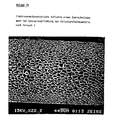
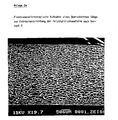
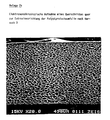
- the electromicroscopic images submitted as Appendix 1 and 2 are sections along and across the extrusion direction of the foam sheet and demonstrate the improvement in pore quality
Landscapes
- Chemical & Material Sciences (AREA)
- Health & Medical Sciences (AREA)
- Medicinal Chemistry (AREA)
- Organic Chemistry (AREA)
- Polymers & Plastics (AREA)
- Chemical Kinetics & Catalysis (AREA)
- Materials Engineering (AREA)
- Engineering & Computer Science (AREA)
- Inorganic Chemistry (AREA)
- General Chemical & Material Sciences (AREA)
- Emergency Medicine (AREA)
- Crystallography & Structural Chemistry (AREA)
- Manufacture Of Porous Articles, And Recovery And Treatment Of Waste Products (AREA)
- Medicinal Preparation (AREA)
- Compositions Of Macromolecular Compounds (AREA)
Description
- Die Erfindung betrifft ein neues Nucleierungsmittel (Porenregler) zur Herstellung direktbegaster Thermoplastschäume.
- Es ist bekannt, zur Herstellung von Strukturschäumen dem thermoplastischen Material physikalisch wirkende Treibmittel (d.h. Treibmittel deren Siedetemperatur unterhalb der Verarbeitungsemperatur des Kunststoffes liegt) zuzusetzen. Zur Steuerung der Zellstruktur werden Nucleierungsmittel als Porenregler verwendet. Eines der am häufigsten gebrauchten Nucleierungsmittel ist Talkum, welches in der Regel in 1,0 bis 2,5 % dem thermoplastischen Material zudosiert wird. Die Verwendung von Talkum oder anderen sich nicht zersetzenden Porenreglern als sog. "passives Nucleierungsmittel" hat den Nachteil, daß bei der Wiederverwendung von Abfallprodukten aus der Kunststoffverarbeitung - dem Regenerat - stets das "passive Nucleierungsmittel" erneut in den Prozeß zurückgeführt wird, wobei die Nucleierungswirkung des unzersetzten Porenreglers aus dem Regenerat nur schwer eingeschätzt werden kann.
- In Chem. Abstr. Bd. 88, Nr. 90726 k bzw. JP-A 52/121669 ist eine Formmasse beschrieben worden, bei der auf 100 Teile eines thermoplastischen Materials aus Polystyrol und Ethylenvinylacetat-Copolymerisat und 0,1 Teile Polybuten 0,8 Teile eines Gemischs aus 0,1 Teilen Zitronensäure, 0,2 Teilen Natriumbicarbonat und 0,5 Teilen Talkum als Nucleierungsmittel verwendet werden. Überraschenderweise kann mit näherungsweise der halben Menge Nucleierungsmittel gemäß der Erfindung eine gleich gute Wirkung erzielt werden.
- Wenn dem Kunststoff Feststoffe - wie Talkum - in Konzentrationen über etwa 1 % beigemischt werden, wird die Qualität des Kunststoffes insbesondere Farbe, Struktur und Glanz beeinflußt.
- Daher gewinnen sog. "aktive Nucleierungsmittel" zunehmend an Bedeutung. "Aktive Nucleierungsmittel" sind Porenregler, die sich während des Extrusions- oder Spritzgußverfahrens zersetzen; das Regenerat enthält dann keine - oder zumindest weniger - nucleierend wirkenden Bestandteile und kann ohne wesentlichen Qualitätsverlust wiederverwendet werden.
- Hervorzuheben sind Kohlendioxid abspaltende Systeme, von denen Natriumbicarbonat oder Citronensäureester (DE-OS 34 11 319) oder die Kombination von Citronensäure oder Natriumcitrat mit Natriumbicarbonat oder Natriumcarbonat (Jap. Pat. 715 375) beschrieben sind. Das System Citronensäure/Natriumbicarbonat ist in 0,4 - 1,0 % Zuschlag als Porenregler wirksam.
- Es wurde nun gefunden, daß ein Mittel zur Nucleierung direktbegaster Thermoplastschäume, das aus Mononatriumcitrat (A) und Natriumbicarbonat (B) in annähernd stöchiometrischem Verhältnis und Talkum (C) besteht, besonders günstige Eigenschaften aufweist.
- Die beiden Komponenten A und B stellen aktive Nucleierungsmittel (Treibmittel) dar, während Komponente C ein passives Nucleierungsmittel ist.
- Durch Verwendung der Citronensäurekomponente und der Bicarbonatkomponente in stöchiometrischem oder annähernd stöchiometrischem Verhältnis wird die optimale Menge an Kohlendioxid freigesetzt.
- Als Talkum können die handelsüblichen Talkumqualitäten verwendet werden. Bevorzugt sind Talkumqualitäten, die auch für die pharmazeutische Fertigung eingesetzt werden, weil hier keine lebensmittelrechtlichen Bedenken bezüglich der Qualität des Materials bestehen. Insbesondere ist hervorzuheben, daß diese Talkumqualitäten keine lungenschädlichen Mineralfaseranteile enthalten.
- Der erfindungsgemäßen Mischung können die üblichen Mittel zur Verbesserung der Fließfähigkeit oder Gleit- oder Trennmittel beigemischt werden.
- Derartige Zusatzstoffe sind allgemein bekannter Stand der Technik. Zu nennen sind Metallseifen, wie Calcium-, Magnesium- oder Zinkstearat ; Paraffine; Silikate, wie Aerosil; Silicone; Wachse; Fette.
- Geeignete Thermoplaste sind:
Polyethylene; Ethylen-Vinylacetat-Copolymerisate; Ethylen-Ethylacrylate-Copolymerisate; ionomere Polyethylene; Polypropylene; Polybutene; Polymethylpentene; Polystyrole; schlagfeste Polystyrole; Styrol-Acrylnitril-Copolymerisate; Acryl-Butadien-Styrol-Copolymerisate; ASA (Acrylnitril-styrylacrylester)-Copolymerisate Polyvinylcarbazole; Polyvinylchloride; Polytrifluorethylene; Polytetrafluorethylen; Polyperflouorpropylene; Polyvinylidenfluoride; Ethylen-Tetrafluorethylen-Copolymerisate; Polymethylmethacrylate; Polyamide; Polyethylenglycolterephthalate; Polybutylenterephthalate; Polymethylene;
Polycarbonate; Chlorierte Polyether; Phenoxy-Harze; Polyphenylenoxide; Polysulfone; Polyethersulfone; Polyphenylensulfide; Polyurethan-Elastomere; Celluloseacetate; Cellulosepropionate; Cellulose-Aceto-Butyrate und andere Thermoplaste oder Elastomere. - Die drei Komponenten des erfindungsgemäßen Mittels können als feinvermahlenes freifließendes Pulver abgemischt werden. Es ist auch möglich, die Mischung nach üblichen Verfahren zu überziehen (hydrophobieren) oder zu verkapseln, wobei entweder alle drei Komonenten gemeinsam verkapselt, überzogen oder hydrophobiert werden oder aber eine oder zwei Komponenten zunächst verkapselt überzogen oder hydrophobiert und die restlichen Komponenten dann zugemischt werden.
- Zur Verkapselung, zum Überziehen oder Hydrophobieren sind zahlreiche Stoffe geeignet. Bevorzugt sind solche Stoffe, die bei den bei Thermoplastschmelzen üblichen Temperaturen schmelzen oder bereits geschmolzen, bei Raumtemperatur aber fest oder wachsartig erstarrt sind.
- Neben den zahlreichen Wachsen sind Fettsäuren und deren Ester und Salze bevorzugt zu nennen; besonders geeignet ist Calciumstearat, bzw. Magnesiumstearat, sowie Fettsäureglyceride.
- Dabei erweist es sich als vorteilhaft, wenn zunächst Natriumbicarbonat allein und/oder die Citronensäure allein mit Calciumstearat bzw. Fettsäureestern hydrophobiert wird, weil derartige Mischungen besonders gut gegen Luftfeuchtigkeit stabilisiert sind und selbst bei langer Lagerung nicht klumpen, oder sich zersetzen.
- Das Verhältnis von Talkum (C) zu den beiden anderen Komponenten (A + B) kann in den Grenzen (C) : (A + B) von 1 : 9 bis 9 : 1 frei gewählt werden. Bevorzugt ist der Bereich (C) : (A + B) von 1 : 1 bis 4 : 1.
- Herstellung direktbegaster Polystyrol-Strukturschaumfolien
- Die Versuche werden mit einer Berstoff-Tandem Anlage durchgeführt. Als Treibmittel werden 5-7 % eines 1:1-Gemisches aus Trichlormonofluormethan und Dichlordifluormethan eingesetzt. Als thermoplastisches Material wird technisches-Polystyrol (Typ DOW 648) verwendet.
- Die Mengenangaben des Treibmittels und des Nucleierungsmittels beziehen sich auf die Menge des eingesetzten Polystyrols, dabei wird - bei konstantem Treibmittelzusatz - die Dosierung des Nucleierungsmittels so lange variiert, bis Polystyrolfolien annähernd gleicher Zellstruktur erhalten werden. Als Standard dient dabei die in Versuch 1 beschriebene Folie.
- Die als Anlage 1 und 2 eingereichten elektromikroskopischen Aufnahmen sind Schnitte jeweils längs und quer zur Extrusionsrichtung der Schaumfolie und belegen die Verbesserung der Porenqualität
- Direkte Begasung von LDPE (Low Density Polyethylene)
- Einschneckenextruder mit Begasungseinrichtung, Ringdüse (übliche Ausführung für Shaumfolienherstellung). LDPE: Dichte ca. 0,918
Schmelzindex ca. 2
Gas: Frigen® 114
Gasmenge: 4 - 5 %
Schaumdichte: 0,3 - 0,4 g /ml - LDPE: siehe oben
Nucleierungsmittel: 0,6 - 0,8 % Talkum
Ergebnis: gleichmäßige Schaumstruktur, Farbe grau-gelblich - LDPE: siehe oben
Nucleierungsmittel: 0,3 - 0,4 % analog Versuch 2
Ergebnis: gleichmäßige feine Struktur, Farbe heller als Versuch 4 - LDPE: siehe oben
Nucleierungsmittel: 0,25 - 0,4 % analog Versuch 3
Ergebnis: gleichmäßige feine Struktur, Farbe heller als Versuch 4
Claims (3)
- Mittel zur Nucleierung direktbegaster Thermoplastschäume, umfassend Mononatriumcitrat, Natriumbicarbonat und Talkum, wobei Mononatriumcitrat und Natriumbicarbonat in stöchiometrischem oder annähernd stöchiometrischem Verhältnis stehen.
- Mittel nach Anspruch 1, dadurch gekennzeichnet, daß das Verhältnis von Talkum zur Mischung aus Mononatriumcitrat und Natriumbicarbonat 1 : 9 bis 9 : 1 beträgt.
- Mittel nach Anspruch 2, dadurch gekennzeichnet, daß das Verhältnis von Talkum zur Mischung von Mononatriumcitrat und Natriumbicarbonat 1 : 1 bis 4 : 1 beträgt.
Priority Applications (1)
| Application Number | Priority Date | Filing Date | Title |
|---|---|---|---|
| AT86109202T ATE64605T1 (de) | 1985-07-11 | 1986-07-05 | Nucleierungsmittel als porenregler zur herstellung direktbegaster thermoplastschaeume. |
Applications Claiming Priority (2)
| Application Number | Priority Date | Filing Date | Title |
|---|---|---|---|
| DE3524704 | 1985-07-11 | ||
| DE19853524704 DE3524704A1 (de) | 1985-07-11 | 1985-07-11 | Nucleierungsmittel (porenregler) zur herstellung direktbegaster thermoplastschaeume |
Publications (3)
| Publication Number | Publication Date |
|---|---|
| EP0211250A2 EP0211250A2 (de) | 1987-02-25 |
| EP0211250A3 EP0211250A3 (en) | 1988-03-23 |
| EP0211250B1 true EP0211250B1 (de) | 1991-06-19 |
Family
ID=6275451
Family Applications (1)
| Application Number | Title | Priority Date | Filing Date |
|---|---|---|---|
| EP86109202A Expired - Lifetime EP0211250B1 (de) | 1985-07-11 | 1986-07-05 | Nucleierungsmittel als Porenregler zur Herstellung direktbegaster Thermoplastschäume |
Country Status (5)
| Country | Link |
|---|---|
| EP (1) | EP0211250B1 (de) |
| JP (1) | JPH0672192B2 (de) |
| AT (1) | ATE64605T1 (de) |
| CA (1) | CA1316352C (de) |
| DE (2) | DE3524704A1 (de) |
Families Citing this family (9)
| Publication number | Priority date | Publication date | Assignee | Title |
|---|---|---|---|---|
| DE3722539A1 (de) * | 1987-07-08 | 1989-01-19 | Reichenecker Hans Storopack | Geschaeumter formkoerper |
| US5116881A (en) * | 1990-03-14 | 1992-05-26 | James River Corporation Of Virginia | Polypropylene foam sheets |
| JPH08863B2 (ja) * | 1990-12-27 | 1996-01-10 | 積水化成品工業株式会社 | ポリスチレン系樹脂発泡体の製造方法 |
| DE4234225A1 (de) * | 1992-10-10 | 1994-04-14 | Roehm Pharma Gmbh | Stabile topische Formulierungen mit gutem Wirkstoff-Freisetzungsvermögen enthaltend mindestens ein lipophilisiertes Makrolidantibiotikum |
| ATE290041T1 (de) † | 1997-12-19 | 2005-03-15 | Trexel Inc | Mikrozellulares schaumstoff- extrusions/blasformverfahren und damit hergestellter gegenstand |
| ES2253281T3 (es) | 1999-12-24 | 2006-06-01 | Huntsman International Llc | Moldeo por inyeccion asistido por gas. |
| DE10036101A1 (de) * | 2000-07-25 | 2002-03-28 | Volker Heppert | Verfahren zur Herstellung von geschäumten Kunststoffgegenständen |
| JP2007017421A (ja) * | 2004-10-28 | 2007-01-25 | Matsushita Electric Ind Co Ltd | ケーブル状圧電素子とその製造方法 |
| DE102009028562A1 (de) | 2009-08-14 | 2011-02-17 | Chemische Fabrik Budenheim Kg | Schäumungsmittel für Kunststoffe |
Family Cites Families (8)
| Publication number | Priority date | Publication date | Assignee | Title |
|---|---|---|---|---|
| US3444283A (en) * | 1965-11-08 | 1969-05-13 | Mobil Oil Corp | Method for direct injection extrusion of polystyrene foam |
| JPS5721453B2 (de) * | 1973-07-06 | 1982-05-07 | ||
| JPS5359756A (en) * | 1976-11-11 | 1978-05-29 | Mitsubishi Chem Ind | Manufacture of polyethylene foam |
| JPS57105429A (en) * | 1980-12-24 | 1982-06-30 | Japan Styrene Paper Co Ltd | Preparation of thick board of foamed polystyrene resin |
| FR2500463A1 (de) * | 1981-02-24 | 1982-08-27 | Solvay | |
| JPS5836005A (ja) * | 1981-08-28 | 1983-03-02 | Hitachi Ltd | 増幅回路 |
| JPS58111834A (ja) * | 1981-12-25 | 1983-07-04 | Japan Styrene Paper Co Ltd | ポリスチレン板状押出発泡体の製造法 |
| DE3411319C2 (de) * | 1984-03-28 | 1986-12-04 | Boehringer Ingelheim KG, 6507 Ingelheim | Verwendung von Citronensäureestern als Treib- und/oder Nucleierungsmittel zur Herstellung thermoplastischer Kunststoffschäume |
-
1985
- 1985-07-11 DE DE19853524704 patent/DE3524704A1/de not_active Ceased
-
1986
- 1986-07-05 DE DE8686109202T patent/DE3679867D1/de not_active Expired - Lifetime
- 1986-07-05 EP EP86109202A patent/EP0211250B1/de not_active Expired - Lifetime
- 1986-07-05 AT AT86109202T patent/ATE64605T1/de not_active IP Right Cessation
- 1986-07-10 CA CA000513458A patent/CA1316352C/en not_active Expired - Fee Related
- 1986-07-10 JP JP61162914A patent/JPH0672192B2/ja not_active Expired - Fee Related
Also Published As
| Publication number | Publication date |
|---|---|
| EP0211250A3 (en) | 1988-03-23 |
| JPS6264835A (ja) | 1987-03-23 |
| EP0211250A2 (de) | 1987-02-25 |
| JPH0672192B2 (ja) | 1994-09-14 |
| ATE64605T1 (de) | 1991-07-15 |
| DE3679867D1 (de) | 1991-07-25 |
| CA1316352C (en) | 1993-04-20 |
| DE3524704A1 (de) | 1987-01-15 |
Similar Documents
| Publication | Publication Date | Title |
|---|---|---|
| DE3301963C2 (de) | ||
| EP0282882B1 (de) | Polyolefinformmasse | |
| DE4116396C2 (de) | Modifizierte amorphe Kieselsäure, Verfahren zu deren Herstellung und Antiblockingmittel | |
| DE3221704A1 (de) | Formentrennmittel enthaltende zubereitung | |
| DE2938539C2 (de) | ||
| DE4326326A1 (de) | Kunststofformteil und Verfahren zum Herstellen desselben | |
| EP0148443B1 (de) | Weichgemachter Polyvinylalkohol | |
| DE68915389T2 (de) | Stabilisierte Polyäthylenzusammensetzung. | |
| DE3411319A1 (de) | Citronensaeureester als treibmittel zur kunststoffverarbeitung | |
| EP0211250A2 (de) | Nucleierungsmittel als Porenregler zur Herstellung direktbegaster Thermoplastschäume | |
| DE2827396B2 (de) | Geschmierte thermoplastische Massen auf der Basis von Polyvinylidenfluorid | |
| DE3028993A1 (de) | Gefuellte extrudierte endlose thermoplastische flaechige materialien und ihre herstellung | |
| US5225107A (en) | Nucleating agents (pore regulators) for the preparation of directly gassed thermoplastic foams | |
| DE4015184A1 (de) | Antistatisch ausgeruestete kunststoff-formmasse | |
| DE69725387T2 (de) | Mittel und Verfahren zum Reinigen | |
| DE2608833A1 (de) | Flammschutzmittelkonzentrate fuer die flammwidrige ausruestung von kunststoffen | |
| DE3347704C1 (de) | Antistatika enthaltendes Konzentrat auf Basis von Polymeren,Verfahren zu dessen Herstellung sowie dessen Verwendung | |
| DE4324904A1 (de) | Verfahren zur Herstellung eines Schaumstoffes aus thermoplastischem Kunststoff | |
| DE4230792C2 (de) | Schreibstift und Verfahren zu seiner Herstellung | |
| DE1933969C3 (de) | Thermoplastische Formmassen auf Basis gesättigter Polyester | |
| DE2545223B2 (de) | Selbstverloeschende thermoplastische formmassen | |
| DE1950252A1 (de) | Thermoplastische Polyesterformmassen | |
| DE19903715C2 (de) | Verwendung von Fettsäurealkanolaminestern als interne Antistatika für thermoplastische Kunststoffe | |
| DE2422644C2 (de) | Thermoplastische Formmasse | |
| DE2560539C2 (de) |
Legal Events
| Date | Code | Title | Description |
|---|---|---|---|
| PUAI | Public reference made under article 153(3) epc to a published international application that has entered the european phase |
Free format text: ORIGINAL CODE: 0009012 |
|
| AK | Designated contracting states |
Kind code of ref document: A2 Designated state(s): AT BE CH DE FR GB IT LI LU NL SE |
|
| 17P | Request for examination filed |
Effective date: 19870203 |
|
| PUAL | Search report despatched |
Free format text: ORIGINAL CODE: 0009013 |
|
| AK | Designated contracting states |
Kind code of ref document: A3 Designated state(s): AT BE CH DE FR GB IT LI LU NL SE |
|
| 17Q | First examination report despatched |
Effective date: 19891128 |
|
| GRAA | (expected) grant |
Free format text: ORIGINAL CODE: 0009210 |
|
| AK | Designated contracting states |
Kind code of ref document: B1 Designated state(s): AT BE CH DE FR GB IT LI LU NL SE |
|
| REF | Corresponds to: |
Ref document number: 64605 Country of ref document: AT Date of ref document: 19910715 Kind code of ref document: T |
|
| ITF | It: translation for a ep patent filed | ||
| REF | Corresponds to: |
Ref document number: 3679867 Country of ref document: DE Date of ref document: 19910725 |
|
| GBT | Gb: translation of ep patent filed (gb section 77(6)(a)/1977) | ||
| ET | Fr: translation filed | ||
| PLBE | No opposition filed within time limit |
Free format text: ORIGINAL CODE: 0009261 |
|
| STAA | Information on the status of an ep patent application or granted ep patent |
Free format text: STATUS: NO OPPOSITION FILED WITHIN TIME LIMIT |
|
| 26N | No opposition filed | ||
| EPTA | Lu: last paid annual fee | ||
| EAL | Se: european patent in force in sweden |
Ref document number: 86109202.1 |
|
| REG | Reference to a national code |
Ref country code: CH Ref legal event code: PUE Owner name: BOEHRINGER INGELHEIM KG TRANSFER- CLARIANT FINANCE Ref country code: CH Ref legal event code: NV Representative=s name: CLARIANT INTERNATIONAL LTD. |
|
| REG | Reference to a national code |
Ref country code: FR Ref legal event code: TP |
|
| NLS | Nl: assignments of ep-patents |
Owner name: CLARIANT FINANCE (BVI) LIMITED |
|
| REG | Reference to a national code |
Ref country code: GB Ref legal event code: 732E |
|
| PGFP | Annual fee paid to national office [announced via postgrant information from national office to epo] |
Ref country code: LU Payment date: 20000929 Year of fee payment: 15 |
|
| PG25 | Lapsed in a contracting state [announced via postgrant information from national office to epo] |
Ref country code: LU Free format text: LAPSE BECAUSE OF NON-PAYMENT OF DUE FEES Effective date: 20010705 |
|
| REG | Reference to a national code |
Ref country code: GB Ref legal event code: IF02 |
|
| PGFP | Annual fee paid to national office [announced via postgrant information from national office to epo] |
Ref country code: DE Payment date: 20030917 Year of fee payment: 18 |
|
| PGFP | Annual fee paid to national office [announced via postgrant information from national office to epo] |
Ref country code: CH Payment date: 20031001 Year of fee payment: 18 |
|
| PGFP | Annual fee paid to national office [announced via postgrant information from national office to epo] |
Ref country code: FR Payment date: 20040616 Year of fee payment: 19 |
|
| PGFP | Annual fee paid to national office [announced via postgrant information from national office to epo] |
Ref country code: GB Payment date: 20040621 Year of fee payment: 19 |
|
| PGFP | Annual fee paid to national office [announced via postgrant information from national office to epo] |
Ref country code: AT Payment date: 20040706 Year of fee payment: 19 |
|
| PG25 | Lapsed in a contracting state [announced via postgrant information from national office to epo] |
Ref country code: LI Free format text: LAPSE BECAUSE OF NON-PAYMENT OF DUE FEES Effective date: 20040731 Ref country code: CH Free format text: LAPSE BECAUSE OF NON-PAYMENT OF DUE FEES Effective date: 20040731 |
|
| PGFP | Annual fee paid to national office [announced via postgrant information from national office to epo] |
Ref country code: NL Payment date: 20040731 Year of fee payment: 19 |
|
| PG25 | Lapsed in a contracting state [announced via postgrant information from national office to epo] |
Ref country code: DE Free format text: LAPSE BECAUSE OF NON-PAYMENT OF DUE FEES Effective date: 20050201 |
|
| REG | Reference to a national code |
Ref country code: CH Ref legal event code: PL |
|
| PGFP | Annual fee paid to national office [announced via postgrant information from national office to epo] |
Ref country code: BE Payment date: 20050616 Year of fee payment: 20 |
|
| PG25 | Lapsed in a contracting state [announced via postgrant information from national office to epo] |
Ref country code: IT Free format text: LAPSE BECAUSE OF NON-PAYMENT OF DUE FEES;WARNING: LAPSES OF ITALIAN PATENTS WITH EFFECTIVE DATE BEFORE 2007 MAY HAVE OCCURRED AT ANY TIME BEFORE 2007. THE CORRECT EFFECTIVE DATE MAY BE DIFFERENT FROM THE ONE RECORDED. Effective date: 20050705 Ref country code: GB Free format text: LAPSE BECAUSE OF NON-PAYMENT OF DUE FEES Effective date: 20050705 Ref country code: AT Free format text: LAPSE BECAUSE OF NON-PAYMENT OF DUE FEES Effective date: 20050705 |
|
| PGFP | Annual fee paid to national office [announced via postgrant information from national office to epo] |
Ref country code: SE Payment date: 20050811 Year of fee payment: 20 |
|
| PG25 | Lapsed in a contracting state [announced via postgrant information from national office to epo] |
Ref country code: NL Free format text: LAPSE BECAUSE OF NON-PAYMENT OF DUE FEES Effective date: 20060201 |
|
| GBPC | Gb: european patent ceased through non-payment of renewal fee |
Effective date: 20050705 |
|
| PG25 | Lapsed in a contracting state [announced via postgrant information from national office to epo] |
Ref country code: FR Free format text: LAPSE BECAUSE OF NON-PAYMENT OF DUE FEES Effective date: 20060331 |
|
| NLV4 | Nl: lapsed or anulled due to non-payment of the annual fee |
Effective date: 20060201 |
|
| REG | Reference to a national code |
Ref country code: FR Ref legal event code: ST Effective date: 20060331 |
|
| EUG | Se: european patent has lapsed | ||
| BE20 | Be: patent expired |
Owner name: *CLARIANT FINANCE (BVI) LTD Effective date: 20060705 |