EP0103765B1 - Elektrisch betätigbare Ausgabevorrichtung - Google Patents
Elektrisch betätigbare Ausgabevorrichtung Download PDFInfo
- Publication number
- EP0103765B1 EP0103765B1 EP83108237A EP83108237A EP0103765B1 EP 0103765 B1 EP0103765 B1 EP 0103765B1 EP 83108237 A EP83108237 A EP 83108237A EP 83108237 A EP83108237 A EP 83108237A EP 0103765 B1 EP0103765 B1 EP 0103765B1
- Authority
- EP
- European Patent Office
- Prior art keywords
- pump
- dispenser
- dispensing
- electromagnet
- dispensing container
- Prior art date
- Legal status (The legal status is an assumption and is not a legal conclusion. Google has not performed a legal analysis and makes no representation as to the accuracy of the status listed.)
- Expired
Links
Images




Classifications
-
- A—HUMAN NECESSITIES
- A47—FURNITURE; DOMESTIC ARTICLES OR APPLIANCES; COFFEE MILLS; SPICE MILLS; SUCTION CLEANERS IN GENERAL
- A47K—SANITARY EQUIPMENT; ACCESSORIES THEREFOR, e.g. TOILET ACCESSORIES
- A47K5/00—Holders or dispensers for soap, toothpaste or the like
- A47K5/06—Dispensers for soap
- A47K5/12—Dispensers for soap for liquid or pasty soap
- A47K5/1217—Electrical control means for the dispensing mechanism
Definitions
- the invention relates to an electrically actuated dispensing device with non-contact dispensing for liquid or pasty goods, such as disinfectants and cleaning agents, soap and ointments, which essentially consist of a dispensing container for the dispensing goods, a pump connected to the dispensing container and executed by means of a lifting magnet Electromagnet is actuated and there is an inlet and an outlet valve for the goods to be dispensed (GB-A-1 085 326).
- Other dispensing devices are known, for example, from US-A-4 316 555 and DE-A-30 36 523 and have also proven themselves in practice. With these units, however, manual operation is still required, i. H.
- the dispenser must be operated with a lever for dispensing, which is undesirable for areas in which increased hygienic requirements are placed.
- the absolute guarantee must be given that no germs are transferred to the user's hands. There is therefore a requirement that the donor work independently, that is to say dispense a metered amount of its contents without touching the hand.
- a soap dispenser with proximity switch which fulfills this requirement, i. that is, when an object approaches, for example, the hand to the dispenser, a motor is switched on, which pumps out a predetermined amount of soap from the container.
- the motor is controlled by a switching device that reacts to fast movement in an electrical or acoustic field, but not to slow movements.
- the switching device also contains timers with which the delivery quantity and the minimum pause length between the individual soap deliveries can be set.
- this unit is a very complex device that must be operated via the network due to the built-in motor. This is not without problems in damp rooms and when dispensing liquids. In many cases, an attempt will also be made to replace an existing hand-operated dispenser with an automatic dispenser and therefore a new electrical installation has to be installed in the intended place of the dispenser, which means additional effort. An economical operation of an electric motor by means of built-in batteries is not possible, since these are consumed too quickly due to the load, so that the dispenser is often filled with soap, but equipped with batteries that are now empty, would not be operational.
- a solenoid-operated piston pump is known from GB-A-1 085 326, which causes the contactless dispensing of liquid via complicated lever transmission.
- the unit is not only complex, but has such a high power consumption that it is not suitable to serve as a drive for battery-operated dispensers.
- the piston pump requires a long stroke and is therefore unsuitable.
- the full resistance that the dispensing nozzle opposes to the dispensing of liquid must be overcome from the start.
- a diaphragm pump has a completely different characteristic, i. H. in the start-up area, that is, in the area in which the lifting magnet has not yet reached its full capacity, the resistance which the diaphragm pump opposes to the lifting magnet is also low and can therefore be easily overcome by it.
- US-A-3 273 752 there is shown a battery dispenser controlled by photoelectric means.
- the dispensing nozzle of a dispensing container is closed by a steel ball, and a magnet is arranged at the level of the steel ball outside the dispensing container.
- the magnet is excited, the ball is moved from its position to the side so that liquid can escape from the container during the duration of the magnet excitation.
- the amount of liquid escaping depends not only on the duration of the magnetic excitation, but also on the level of the liquid in the dispensing container. It is therefore not possible to dispense an identical amount of liquid with every dispensing.
- the present invention is therefore based on the object of providing a dispenser which dispenses non-contact liquid or pasty goods in a definable quantity, has a minimal power consumption, so that it can work with a battery pack independently of the mains and the battery pack has a long service life.
- an electrically actuated dispensing device with non-contact dispensing for liquid or pasty goods such as disinfectants and cleaning agents, soap and ointments
- a dispensing container for the dispensing goods a pump connected to the dispensing container and operated by means of a pump
- the solenoid is actuated and the solenoid is actuated and there is an inlet and an outlet valve for the goods to be dispensed, with the characteristic feature that the pump is a diaphragm pump and the solenoid has a tensile force of 1 to 100 N.
- Electromagnets only need a short current surge in order to be able to perform quite considerable work. If the battery is only loaded for a short time, it is possible to use a solenoid to operate a pump.
- Diaphragm pumps have the Characteristic that initially only a slight pressure on the membrane is required, which must increase with increasing depth of impression.
- Electromagnets, in particular the solenoids have an analog characteristic, ie if the solenoid is switched on, it initially exerts only a small force due to the relatively large gap distance. This force becomes stronger as the gap decreases.
- the performance curves of the diaphragm pump and solenoid therefore correspond, that is, they form an ideal combination.
- the armature of the solenoid is expediently conical, so that a relatively large distance is available over which the magnetic field extends.
- the invention provides that the lifting magnet has a tensile force of 1-100 N.
- the range is preferably between 15 and 45 N.
- the range from 1 to 20 N is suitable for dispensing small quantities, i.e. for dispensing relatively highly concentrated goods, such as disinfectants or perfume.
- the range from 15 to 45 N meets the requirements that are generally placed on a soap dispenser that dispenses liquid or cream-like soap, whereas the upper range, i.e. the range between 50 and 100 N, is more suitable for dispensing pasty goods, the higher Have viscosity. Above 100 N, the current consumption rises despite the brief actuation of an electromagnet, so that the use of battery-operated electromagnets becomes uneconomical.
- an advantageous embodiment of the invention provides that the stroke of the magnet armature is 1 to 10 mm. Below 1 mm, there is practically no longer any sufficient movement that a pump can operate; Above 10 mm, the forces that are generated when the stroke movement is started are so small that considerable magnet sizes are required in order to achieve an effective movement at all. On the other hand, this requires more electricity, which is contrary to the task of developing an energy-saving unit.
- a preferred embodiment of the invention provides that the pump membrane is connected to the electromagnet via an actuating lever. This actuating lever is designed as a two-armed lever, with the shorter of the two-armed lever normally being assigned to the lifting magnet and the longer one to the diaphragm. This allows the movement, i.e. the stroke on the pump, to be controlled within fairly wide limits.
- the actuating lever is advantageously provided with a return spring.
- This return spring supports the efforts of the pump diaphragm to return to its original position by compensating for the armature weight of the magnet. This automatically extends the life and thus the service life of the pump membrane without the dispenser becoming more susceptible to malfunction.
- Another very advantageous embodiment of the invention provides that the energy supply and the electromagnet are arranged in a separate housing that can be separated from the output device, the separable housing advantageously being designed as a snap-in insert.
- the dispenser can remain installed on the wall while the plug-in unit with the electrical units is removed from it and these can be checked without having to disassemble the dispenser. It is very important that the insert is provided with a catch so that it can be firmly anchored in the dispenser housing. Since the electromagnet is installed in the drawer, the pump can only function if the drawer as such cannot move relative to the dispenser, i.e. is secured by a catch.
- Electrically chemical elements are used as the current source. This includes both the commercially available batteries, several combined into one set guaranteeing the dispenser a considerable dispensing time, as well as rechargeable batteries, which also emit a power source with a lower voltage and can therefore be used safely in wet rooms.
- the wall mounting 1 consists of a flat plate which forms the rear wall 7 and receives bores 8 which are used to screw the wall mounting 1 to a room wall.
- the holes 8 are countersunk so that countersunk screws can be used.
- the rear wall 7 is delimited on the right and left by side walls 59 which have a triangular shape and are angled in the lower region. Between the angled ends of the side walls 59 extends a channel-shaped holder 6, which is attached directly to the rear wall 7 and, like the guide 3, the spring 4 and the hook-shaped extension 5, serves to receive or fasten the dispensing container 2.
- the guide 3 has the shape of a tab, which is arranged offset inwards on the rear wall 7 by the wall thickness of the rear wall 7. In its upper region it is separated from the rear wall 7 by free spaces 60 arranged on the right and left, so that the bridge 11, in which the guide groove 10 of the dispensing container 2 ends along its rear wall 9, surrounds the guide 3.
- the spring 4 carries at its upper end a hook-shaped extension 5 and is an integral part of the guide 3. It engages when the dispensing container 2 is inserted into the holding slot 12 located in the front part of the bridge 11, as a result of which the dispensing container 2 is locked in the wall fastening.
- the dispensing container 2 has a U-shaped profile 14 on its base 13.
- the web 16 of the U-shaped profile 14 extends parallel to the container rear wall 9 and is received by the channel-shaped holder 6 of the wall fastening 1.
- the legs 15 of the U-shaped profile 14 which are arranged on the right and left of the web 16 have a triangular profile, i. H. they taper from the container rear wall 9 to the container front wall 61 and each have a bearing bore 17 in the downward-pointing tip of the triangle, while an elongated hole 18 extends parallel to the bottom 13.
- a module 21 is arranged under the bottom 13 of the dispensing container 2, which partially penetrates the container bottom 13 and projects into the container interior 25.
- the module 21 is designed as a ring approach and here forms the body of the pump 29, i. H. a tubular nozzle which is closed by the pump membrane 56.
- the pump membrane 56 has a pot shape. Its central base piece is reinforced, the edge encompassing the cylindrical part of the pump 29 is connected to the module 21 by a retaining spring ring 55.
- a pump channel 30 extends from the pump 29 in the direction of the outlet valve 31.
- a relief channel 23 is connected to this pump channel 30 and opens into an opening 28 which is located in a mandrel 27 below the knife 26.
- the opening 28 is covered by the neck 50 of the storage container 49, so that when the pump 29 is actuated, the liquid soap is not pressed back into the container interior 25, but rather reaches the outlet valve 31 via the pump channel 30.
- the pump diaphragm 56 is actuated via an actuating lever 19.
- the actuating lever 19 consists of a handle 37 and a cover plate 38 which closes the entire bottom area of the soap dispenser and thus prevents the pump 29 and the outlet valve 31 from becoming dirty from the outside.
- a pressure p is arranged
- Olster 40 which consists of a cylindrical cap with a flattened spherical approach. This pressure cushion 40 engages with the movement of the handle 37 on the pump membrane 56 and presses it into the module 21, as a result of which the soap located there flows out via the outlet valve 31.
- a stop screw 41 arranged in the front area of the cover plate 38 serves to limit the movement of the handle 37 and thus to regulate the depth of penetration of the pressure cushion 40 into the pump membrane 56. This regulation adjusts the amount of soap to be dispensed.
- the stop screw 41 is usually designed as a grub screw, which is arranged self-locking in the cover plate 38.
- the handle 37 is mounted via articulated levers 39, which are resiliently connected to the handle 37. They carry at their ends outward axle stub 54, which in the. Bearing holes 17 of the U-shaped profile 14 engage.
- the soap dispenser should be operated with the arm, for what. the operating lever 19 is extended by spacers 42 so that the spacers 42 connect the handle 37 to the cover plate 38 and the articulated lever 39.
- the cover 20 is provided in its lower region with two hinge arms 43, on which there are pivot pins 58. These pivot pins 58 engage in the elongated holes 18 of the U-shaped profile 14 so that the cover 20 can be moved in the direction of the wall mounting 1, so that the nose 46, which delimits the recess 45 in the cover 20, behind the catch 47 of the dispensing container 2 engages.
- the be in the bottom of the cover 20 sensitive recess 44 forms an opening for the outlet valve 31 through which the soap exits.
- the viewing windows 48 are located in the hood side walls 63 of the cover 20 and are only delimited on one side by the hood side wall 63.
- the opposite limitation is made by the wall mounting 1, d. H. the side walls 59.
- the storage container 49 has a cuboid shape and has on one long side an outwardly projecting neck 50, which is covered with a film cap 51.
- the reservoir bottom 64 has two opposing depressions 52 which leave a web 53 in the middle. This web 53 is used for inserting the storage container 49 into the dispensing container 2, the depressions 52 allowing the web 53 to be gripped with the fingers.
- the soap dispenser is opened by means of a lever 57, which consists of a flat material bent at one end in a crescent shape.
- the crescent-shaped piece of the lever 57 is inserted into the recess 45 and the lever 57 is then moved upwards.
- the lever 57 is supported on the electronics housing 101 and lifts the nose 46 of the cover 20 out of the catch 47 of the dispensing container 2, so that the cover 20 is guided in the slot 18 through the pivot pin 58, moved towards the operator and released the output container 2 can be folded down.
- the actuating lever 19 is designed in this case as a double lever, that is equipped with two arms, of which one arm carries the pressure cushion 40, which acts on the pump diaphragm 56, as before, whereas the second arm is acted upon by the magnet armature 70 of the electromagnet 65.
- the electromagnet 65 is permanently installed in the rear area of the electronics housing 101, and next to it is the circuit board 104, which accommodates the electronics units for controlling the electromagnet 65.
- the lever side of the actuating lever 19, which carries the pressure cushion 40, has an extension 105, in the front area of which the return spring 66 is arranged.
- This return spring 66 essentially has the task of balancing the weight of the magnet armature 70 and thereby largely relieving the pressure on the pump diaphragm 56.
- FIGS. 7 and 8 Since all electrical components should be completely separated from the wet part of the soap dispenser if possible, they are encapsulated, as shown in FIGS. 7 and 8. In the simplest form, this can be done in that the electronics housing 101 is closed towards the front and has only one opening 106, above which the electromagnet 65 is located and into which the actuating lever 19 engages. In this embodiment, as shown in FIG. 7, the electromagnet 65 is accessible from the rear 107 of the electronics housing 101, as is the circuit board 104 and the connecting capacitor 98.
- the sensor plate 71 is arranged on the bottom of the pocket 108 of the electronics housing 101. Above it is the shielding electrode 69, which shields the sensor plate 71 from being influenced by the level of the soap in the reservoir 49. Screws, not shown, are guided through the fastening bores 109 and are used for fastening the electronics housing 101 to a house wall or the like.
- the pocket 108 is provided in its lower region with a conductive layer 110, which prevents the soap dispensing from the dispenser from being impaired by dirtying the underside of the pocket.
- the insert 68 which is inserted vertically from above into the electronics housing 101, contains the current source, that is to say the electrochemical elements 72. These electrochemical elements are shown as monocells in FIG. 9, but rechargeable batteries can also be used instead.
- the insert 68 is electrically connected via the contact springs 111 to the electronics housing 101, which, as shown in FIG. 10, has contact springs 111. There is a different voltage between the individual contact springs 111, since the electromagnet 65 must be operated at full voltage in order to provide the required power, but the proximity switch 67 as such can be operated at a lower voltage, which saves electricity.
- the proximity switch 67 is composed of the circuit board 104, the connecting capacitor 98 and the sensor plate 71, which are accommodated in the electronics housing 101 according to FIG. 10.
- An adjusting screw 112 made of insulating material enables adjustment of the response distance, i.e. adjusting the height of the shielding electrode 69 in the pocket 108. H. the distance at which the dispenser dispenses soap when the hand approaches the dispenser, ie in the area of the sensor plate 71.
- Receiving bores 113 serve to screw the dispensing container 2 to the electronics housing 101. They are arranged in lugs 114 which are part of the rear side 107 of the electronics housing 101.
- Fig. 7 and Fig. 8 as shown, the electrical parts were encapsulated in that they were enclosed by the electronics housing 101 to the front, that is to the soap dispenser side, so that they could only be reached from the wall side.
- 10 shows the alternative solution here, ie all electrical parts are arranged on the rear side 107 of the electronics housing 101 and are thus openly accessible from the front.
- the cover with respect to the soap dispenser is provided by the insert 68, as shown in FIG. 11, and the front 115 thereof except for the opening 106, through which the actuating lever 19 engages the electromagnet 65 and the long holes 116 is completely closed.
- the locking takes place in the right and left wing 117 of the electronics housing 101 by introducing catch windows 103 and by resilient tabs 119 arranged on the insertion side walls 118, which spring outwards from the insertion side wall 118 and thus engage in the catch windows 103 of the electronics housing 101.
- the electronics housing 101 When inserting the insert 68 into the electronics housing 101, these resilient tabs 119 are pressed inward and only come out again at the catch window 103, where they lock the insert 68 in the intended position.
- the electronics housing 101 only has parts in the area of the pocket 108, which are connected to the proximity switch 67 via the shielding contact 120 and the sensor contact 121.
Landscapes
- Health & Medical Sciences (AREA)
- Public Health (AREA)
- Containers And Packaging Bodies Having A Special Means To Remove Contents (AREA)
- Valve Device For Special Equipments (AREA)
- Polysaccharides And Polysaccharide Derivatives (AREA)
- Reciprocating Pumps (AREA)
- Devices For Dispensing Beverages (AREA)
Description
- Die Erfindung betrifft eine elektrisch betätigbare Ausgabevorrichtung mit berührungsloser Ausgabe für flüssige oder pastöse Güter, wie Desinfektions- und Putzmittel, Seife und Salben, die im wesentlichen aus einem Ausgabebehälter für die auszugebenden Güter, einer mit dem Ausgabebehälter verbundenen Pumpe, die mittels eines als Hubmagnet ausgeführten Elektromagneten betätigt wird und einem Ein- und einem Auslaßventil für die auszugebenden Güter besteht (GB-A-1 085 326). Weitere Ausgabevorrichtungen sind beispielsweise durch die US-A-4 316 555 und die DE-A-30 36 523 bekannt und haben sich auch in der Praxis gut bewährt. Bei diesen Aggregaten ist jedoch noch eine Bedienung von Hand erforderlich, d. h. die Ausgabevorrichtung muß zum Ausgeben mit einem Hebel betätigt werden, was für Bereiche,_in denen erhöhte hygienische Anforderungen gestellt werden, unerwünscht ist. Insbesondere gilt das für Seifenspender, die in Molkereien, Metzgereien usw. eingesetzt sind, in noche höherem Maß aber für Seifenspender und Desinfektionsmitteispender in Krankenhäusern und Arztpraxen. Hier muß die absolute Gewähr dafür gegeben sein, daß keine Keime auf die Hände des Benutzers übertragen werden. Es wird also die Forderung erhoben, daß der Spender selbsttätig arbeitet, also ohne Handberührung eine dosierte Menge seines Inhaltes ausgibt.
- Aus der DE-A-2644151 ist ein Seifenspender mit Annäherungsschalter bekannt, der diese Forderung erfüllt, d. h., daß bei Annäherung eines Gegenstandes, also beispielsweise der Hand an den Spender, ein Motor eingeschaltet wird, der eine vorbestimmte Menge Seife aus dem Behälter auspumpt. Der Motor wird dabei von einer Schaltvorrichtung gesteuert, die auf schnelle Bewegung in einem elektrischen oder akustischen Feld reagiert, nicht jedoch auf langsame Bewegungen. Die Schaltvorrichtung enthält ferner Zeitglieder, mit denen die Abgabemenge und die Mindestpausenlänge zwischen den einzelnen Seifenabgaben eingestellt werden können.
- Bei diesem Aggregat handelt es sich jedoch um eine sehr aufwendige Vorrichtung, die aufgrund des eingebauten Motors über das Netz betrieben werden muß. In Feuchträumen und bei der Ausgabe von Flüssigkeiten ist das nicht unproblematisch. In vielen Fällen wird man auch versuchen, einen vorhandenen handbetätigten Spender durch einen automatischen Spender zu ersetzen und muß daher zum vorgesehenen Platz des Spenders eine neue elektrische Installation verlegen, was einen zusätzlichen Aufwand bedeutet. Ein wirtschaftlicher Betrieb eines Elektromotors mittels eingebauter Batterien ist nicht möglich, da diese aufgrund der Belastung zu schnell verbraucht werden, so daß der Spender häufig zwar mit Seife gefüllt, aber mit inzwischen leeren Batterien ausgerüstet, nicht einsatzfähig wäre.
- Aus der GB-A-1 085 326 ist eine hubmagnetbetätigte Kolbenpumpe bekannt, die über komplizierte Hebelübersetzung die berührungslose Ausgabe von Flüssigkeit bewirkt. Das Aggregat ist nicht nur aufwendig, sondern hat einen so hohen Stromverbrauch, daß es nicht geeignet ist, als Antrieb für batteriebetätigte Spender zu dienen. Die Kolbenpumpe benötigt einen großen Hub und ist damit ungeeignet, ferner muß bei Verwendung einer Kolbenpumpe von Anfang an der volle Widerstand überwunden werden, den die Ausgabedüse der Ausgabe von Flüssigkeit entgegensetzt. Eine Membranpumpe besitzt demgegenüber eine völlig andere Charakteristik, d. h. im Anlaufbereich, also in dem Bereich, in dem der Hubmagnet noch nicht seine volle Leistung erreicht, ist auch der Widerstand, den die Membranpumpe dem Hubmagneten entgegensetzt, gering und kann von diesem daher leicht überwunden werden.
- In der US-A-3 273 752 ist eine mit Batterien arbeitende Ausgabevorrichtung gezeigt, die über fotoelektrische Mittel gesteuert wird. Die Ausgabedüse eines Ausgabebehälters ist im Ruhezustand durch eine Stahlkugel verschlossen, in Höhe der Stahlkugel außerhalb des Ausgabebehälters ein Magnet angeordnet. Durch Erregung des Magneten wird die Kugel aus ihrer Lage zur Seite bewegt, so daß während der Dauer der Magneterregung Flüssigkeit aus dem Behälter austreten kann. Die Menge der austretenden Flüssigkeit ist jedoch nicht nur von der Dauer der Magneterregung abhängig, sondern zusätzlich von der Höhe des Flüssigkeitsstandes im Ausgabebehälter. Damit ist es nicht möglich, bei jeder Ausgabe eine identisch große Menge an Flüssigkeit auszugeben.
- Der vorliegenden Erfindung liegt damit die Aufgabe zugrunde, einen Spender zu schaffen, der berührungslos flüssige oder pastöse Güter in definierbarer Menge ausgibt, einen minimalen Stromverbrauch aufweist, so daß er mit einem Batteriesatz netzunabhängig arbeiten kann und der Batteriesatz eine hohe Lebensdauer aufweist.
- Diese Aufgabe wird gelöst durch eine elektrisch betätigbare Ausgabevorrichtung mit berührungsloser Ausgabe für flüssige oder pastöse Güter, wie Desinfektions- und Putzmittel, Seife und Salben, die im wesentlichen aus einem Ausgabebehälter für die auszugebenden Güter, einer mit dem Ausgabebehälter verbundenen Pumpe, die mittels eines als Hubmagnet ausgeführten Elektromagneten betätigt wird und einem Ein- und einem Auslaßventil für die auszugebenden Güter besteht, mit dem kennzeichnenden Merkmal, daß die Pumpe eine Membranpumpe ist und der Hubmagnet eine Zugkraft von 1 bis 100 N aufweist.
- Elektromagnete benötigen nur einen kurzen Stromstoß, um bereits recht erhebliche Arbeitsleistungen vollbringen zu können. Bei nur kurzzeitiger Belastung einer Batterie ist es somit möglich, einen Hubmagneten zur Betätigung einer Pumpe einzusetzen. Membranpumpen weisen die Charakteristik auf, daß zunächst nur ein leichter Druck auf die Membran erforderlich ist, der sich mit zunehmender Eindrucktiefe verstärken muß. Elektromagnete, also insbesondere die Hubmagnete, weisen eine analoge Charakteristik auf, d. h., wird der Hubmagnet eingeschaltet, so übt er zunächst aufgrund des relativ großen Spaltabstandes nur eine geringe Kraft aus. Diese Kraft wird mit sich verringerndem Spalt immer stärker. Die Leistungskurven von Membranpumpe und Hubmagnet entsprechen sich also, d. h., daß sie eine ideale Kombination bilden. Der Anker des Hubmagneten ist dabei zweckmäßig konisch ausgeführt, so daß eine relativ große Strecke zur Verfügung steht, über die sich das Magnetfeld erstreckt.
- Die Erfindung sieht vor, daß der Hubmagnet eine Zugkraft von 1-100 N aufweist. Vorzugsweise liegt der Bereich zwischen 15 und 45 N.
- Der Bereich von 1 bis 20 N ist für die Ausgabe kleiner Mengen geeignet, also für die Ausgabe von relativ hoch konzentrierten Gütern, wie Desinfektionsmittel oder auch Parfüm. Der Bereich von 15 bis 45 N erfüllt die Anforderungen, die gemeinhin an einen Seifenspender gestellt werden, der flüssige oder cremartige Seife ausgibt, wohingegen der obere Bereich, also der Bereich zwischen 50 und 100 N zur Ausgabe pastöser Güter besser geeignet ist, die eine höhere Viskosität aufweisen. Oberhalb 100 N steigt trotz der kurzzeitigen Betätigung eines Elektromagneten der Stromverbrauch an, so daß der Einsatz von batteriebetriebenen Elektromagneten unwirtschaftlich wird.
- Eine vorteilhafte Ausführung der Erfindung sieht vor, daß die Hubstrecke des Magnetankers 1 bis 10 mm beträgt. Unterhalb 1 mm ist praktisch keine ausreichende Bewegung mehr möglich, die eine Pumpe betätigen kann ; oberhalb 10 mm sind die Kräfte, die beim Einsetzen der Hubbewegung erzeugt werden so gering, daß es schon erheblicher Magnetgrößen bedarf, um überhaupt eine wirkungsvolle Bewegung zustande zu bringen. Das erfordert andererseits aber mehr Strom, was der Aufgabe, ein stromsparendes Aggregat zu entwickeln, entgegensteht. Um trotzdem den Hub zu vergrößern, d. h. die Bewegung der Pumpenmembran zu verlängern, sieht eine bevorzugte Ausgestaltung der Erfindung vor, daß die Pumpenmembran über einen Betätigungshebel mit dem Elektromagneten verbunden ist. Dieser Betätigungshebel ist als zweiarmiger Hebel ausgeführt, wobei im Normalfall der kürzere der zweiarmigen Hebel dem Hubmagneten und der längere der Membran zugeordnet ist. Dadurch läßt sich die Bewegung, also der Hub an der Pumpe, in ziemlich weiten Grenzen steuern.
- Vorteilhaft ist der Betätigungshebel mit einer Rückholfeder versehen. Diese Rückholfeder unterstützt das Bestreben der Pumpenmembran, in ihre Ausgangslage zurückzukehren dadurch, daß sie das Ankergewicht des Magneten kompensiert. Damit wird automatisch eine Verlängerung des Lebens und damit der Einsatzdauer der Pumpenmembran erreicht, ohne daß die Ausgabevorrichtung störungsanfälliger wird.
- Eine weitere sehr vorteilhafte Ausgestaltung der Erfindung sieht vor, daß die Energieversorgung und der Elektromagnet in einem separaten, von der Ausgabevorrichtung trennbaren Gehäuse angeordnet sind, wobei vorteilhaft das trennbare Gehäuse als einrastbarer Einschub ausgeführt ist.
- Durch die Zusammenfassung der elektrischen Aggregate in einem separaten Gehäuse können diese Teile weitgehend gekapselt werden, so daß sie auch bei ungeschickter Reinigung des Spenders weitgehend vor Wasser geschützt sind. Ein weiterer wesentlicher Vorteil ist, daß der Spender installiert an der Wand verbleiben kann, während der Einschub mit den Elektroaggregaten daraus entfernt wird und diese überprüft werden können, ohne daß der Spender dazu zerlegt werden muß. Sehr wichtig ist dabei, daß der Einschub mit einer Raste versehen ist, so daß er fest im Gehäuse des Spenders verankert werden kann. Da der Elektromagnet im Einschub installiert ist, kann die Pumpe nur funktionieren, wenn der Einschub als solcher sich gegenüber dem Spender nicht bewegen kann, also durch eine Raste gesichert ist.
- Als Stromquelle werden elektrisch chemische Elemente eingesetzt. Man versteht darunter sowohl die handelsüblichen Batterien, wobei mehrere zu einem Satz zusammengefaßt dem Spender eine erhebliche Ausgabezeit garantieren, als auch wiederaufladbare Akkumulatoren, die ebenfalls eine Stromquelle mit niedrigerer Spannung abgeben und somit auch für Feuchträume gefahrlos einsetzbar sind.
- Die Erfindung wird nachstehend anhand der Zeichnungen beschrieben.
- Figur 1 zeigt einen handelsüblichen Ausgabebehälter im Schnitt ;
- Figur 2 diesen Ausgabebehälter als Explosionsschaubild, wobei die Einzelteile perspektivisch dargestellt sind ;
- Figur 3 zeigt den erfindungsgemäßen Ausgabebehälter perspektivisch im Teilschnitt ;
- Figur 4 zeigt als Explosionsschaubild Einzelteile des Ausgabebehälters gemäß Fig. 3 ;
- Figur 5 zeigt den Pumpenbereich des Ausgabebehälters in perspektivischer Darstellung ;
- Figur 6 zeigt als Detail einen Schnitt des Ausgabebehälters gemäß der Linie VV in Fig. 5 ;
- Figur 7 zeigt das Elektronikgehäuse in perspektivischer Darstellung von der Rückseite ;
- Figur 8 das gleiche Gehäuse von der Vorderseite ;
- Figur 9 zeigt den Einschub mit dem Batterieteil ;
- Figur 10 zeigt die Innenansicht des Elektronikgehäuses mit Sensorplatte und Abschirmelektrode bei im Gehäuse angeordneten Elektromagneten ;
- Figur 11 den zugehörigen Einschub ;
- Figur 12 ein Elektronikgehäuse ohne Einbauten mit Rastenfenster ;
- Figur 13 den zugehörigen Einschub mit Rasten, eingebautem Elektromagnet und Platine.
- Die Wandbefestigung 1 besteht aus einer ebenen Platte, die die Rückwand 7 bildet und Bohrungen 8 aufnimmt, die zum Verschrauben der Wandbefestigung 1 an eine Raumwand dienen. Die Bohrungen 8 sind ausgesenkt, so daß Senkschrauben eingesetzt werden können. Die Rückwand 7 wird rechts und links von Seitenwänden 59 begrenzt, die eine dreieckige Form aufweisen und im unteren Bereich abgewinkelt sind. Zwischen den abgewinkelten Enden der Seitenwände 59 erstreckt sich eine rinnenförmige Halterung 6, die direkt an der Rückwand 7 angebracht ist und ebenso wie die Führung 3, die Feder 4 und der hakenförmige Ansatz 5 zur Aufnahme bzw. Befestigung des Ausgabebehälters 2 dient.
- Die Führung 3 weist die Form einer Lasche auf, die um die Wandstärke der Rückwand 7 versetzt nach innen an der Rückwand 7 angeordnet ist. In ihrem oberen Bereich ist sie durch rechts und links angeordnete Freiräume 60 von der Rückwand 7 getrennt, so daß die Brücke 11, in der die Führungsnut 10 des Ausgabebehälters 2 entlang seiner Rückwand 9 endet, die Führung 3 umgreift. Die Feder 4 trägt an ihrem oberen Ende einen hakenförmigen Ansatz 5 und ist integrales Teil der Führung 3. Sie greift beim Einsetzen des Ausgabebehälters 2 in den im Vorderteil der Brücke 11 befindlichen Halteschlitz 12 ein, wodurch der Ausgabebehälter 2 in der Wandbefestigung arretiert ist.
- Der Ausgabebehälter 2 weist an seinem Boden 13 ein U-förmiges Profil 14 auf. Der Steg 16 des U-förmigen Profils 14 erstreckt sich parallel zur Behälterrückwand 9 und wird durch die rinnenförmige Halterung 6 der Wandbefestigung 1 aufgenommen. Die rechts und links des Steges 16 angeordneten Schenkel 15 des U-förmigen Profils 14 weisen ein dreieckiges Profil auf, d. h. sie verjüngen sich von der Behälterrückwand 9 zur Behältervorderwand 61 und weisen in der nach unten zeigenden Spitze des Dreiecks je eine Lagerbohrung 17 auf, während sich parallel zum Boden 13 je ein Langloch 18 erstreckt.
- Unter dem Boden 13 des Ausgabebehälters 2 ist ein Modul 21 angeordnet, der den Behälterboden 13 teilweise durchdringt und in den Behälterinnenraum 25 hineinragt. Unterhalb des Einlaßventiles 22 ist der Modul 21 als Ringansatz ausgebildet und formt hier den Körper der Pumpe 29, d. h. einen rohrförmigen Stutzen, der von der Pumpenmembran 56 abgeschlossen wird. Die Pumpenmembran 56 weist Topfform auf. Ihr mittleres Bodenstück ist verstärkt ausgeführt, der den zylindrischen Teil der Pumpe 29 umgreifende Rand wird durch einen Haltefederring 55 mit dem Modul 21 verbunden.
- Von der Pumpe 29 erstreckt sich ein Pumpkanal 30 in Richtung des Auslaßventils 31. Mit diesem Pumpkanal 30 ist ein Entlastungskanal 23 verbunden, der in eine Öffnung 28 mündet, die sich in einem Dorn 27 unterhalb des Messers 26 befindet. Im Betriebszustand des Seifenspenders ist die Öffnung 28 durch den Halsansatz 50 des Vorratsbehälters 49 abgedeckt, so daß bei Betätigung der Pumpe 29 die flüssige Seife nicht in den Behälterinnenraum 25 zurückgedrückt wird, sondern über den Pumpkanal 30 das Auslaßventil 31 erreicht.
- Der beim Pumpvorgang auftretende Druck schließt das Einlaßventil 22 und hebt durch Druck auf den Druckflansch 36 des Ventilkörpers 32 diesen gegen die Wirkungsrichtung der Druckfeder 62 an, wodurch die Ventilkörperspitze 33 die Düsenbohrung 35 in der Ventilkappe 34 freigibt, so daß die Seife aus der Düsenbohrung 35 austreten kann. Um zu vermeiden, daß z. B. durch Temperaturänderungen der Druck im Pumpkanal 30 ansteigt und das Ventil leck wird, ist eine Ausgleichsbohrung 24 vorgesehen.
- Die Betätigung der Pumpenmembran 56 erfolgt über einen Betätigungshebel 19. Der Betätigungshebel 19 besteht aus einem Griff 37 und einer Abdeckplatte 38, die den gesamten Bodenbereich des Seifenspenders verschließt und so ein Verschmutzen der Pumpe 29 und des Auslaßventils 31 von außen verhindert. Auf der Abdeckplatte 38 ist ein Druckpolster 40 angeordnet, das aus einem zylindrischen Aufsatz mit abgeflachtem kugeligem Ansatz besteht. Dieses Druckpolster 40 greift bei der Bewegung des Griffes 37 an der Pumpenmembran 56 an und drückt diese in den Modul 21 ein, wodurch die dort befindliche Seife über das Auslaßventil 31 ausströmt.
- Eine im vorderen Bereich der Abdeckplatte 38 angeordnete Anschlagschraube 41 dient zur Begrenzung der Bewegung des Griffes 37 und damit zur Regulierung der Eindringtiefe des Druckpolsters 40 in die Pumpenmembran 56. Durch diese Regulierung wird die auszugebende Seifenmenge eingestellt. Die Anschlagschraube 41 ist dabei normalerweise als Madenschraube ausgeführt, die selbsthemmend in der Abdeckplatte 38 angeordnet ist.
- Die Lagerung des Griffes 37 erfolgt über Gelenkhebel 39, die federnd mit dem Griff 37 verbunden sind. Sie tragen an ihren Enden nach außen gerichtete Achsstummel 54, die in die . Lagerbohrungen 17 des U-förmigen Profils 14 eingreifen.
- Bei Einsatz des Seifenspenders in desinfizierten Räumen ist es erforderlich, daß der Bedienende, beispielsweise ein Chirurg, mit sterilen Händen arbeitet und nicht mit den Händen den Griff 37 des Seifenspenders berührt. Die Betätigung des Seifenspenders soll mit dem Arm erfolgen, wozu. der Betätigungshebel 19 durch Distanzstücke 42 so verlängert wird, daß die Distanzstücke 42 den Griff 37 mit der Abdeckplatte 38 und dem Gelenkhebel 39 verbinden. Die Abdeckhaube 20 ist in ihrem unteren Bereich mit zwei Scharnierarmen 43 versehen, an denen sich Gelenkzapfen 58 befinden. Diese Gelenkzapfen 58 greifen in die Langlöcher 18 des U-förmigen Profils 14 ein, so daß die Abdeckhaube 20 in Richtung auf die Wandbefestigung 1 verschoben werden kann, so daß die Nase 46, die die Ausnehmung 45 in der Abdeckhaube 20 begrenzt, hinter die Raste 47 des Ausgabebehälters 2 einrastet.
- Die im Bodenbereich der Abdeckhaube 20 befindliche Aussparung 44 bildet eine Öffnung für das Auslaßventil 31, durch die die Seife austritt.
- Die Sichtfenster 48 befinden sich in den Haubenseitenwänden 63 der Abdeckhaube 20 und werden nur einseitig von der Haubenseitenwand 63 begrenzt. Die gegenüberliegende Begrenzung erfolgt durch die Wandbefestigung 1, d. h. deren Seitenwände 59.
- Der Vorratsbehälter 49 weist quaderförmige Gestalt auf und besitzt an einer Längsseite einen nach außen ragenden Halsansatz 50, der mit einer Folienkappe 51 abgedeckt ist. Der Vorratsbehälterboden 64 weist zwei gegenüberliegende Vertiefungen 52 auf, die in der Mitte einen Steg 53 freilassen. Dieser Steg 53 dient zum Einsetzen des Vorratsbehälters 49 in den Ausgabebehälter 2, wobei die Vertiefungen 52 gestatten, daß der Steg 53 mit den Fingern ergriffen werden kann.
- Das Öffnen des Seifenspenders erfolgt mittels eines Hebels 57, der aus einem an einem Ende sichelförmig gebogenem Flachmaterial besteht. Das sichelförmig gebogene Stück des Hebels 57 wird dazu in die Ausnehmung 45 eingelegt und der Hebel 57 dann nach oben bewegt. Der Hebel 57 stützt sich dabei an dem Elektronikgehäuse 101 ab und hebt die Nase 46 der Abdeckhaube 20 aus der Raste 47 des Ausgabebehälters 2 hinaus, so daß die Abdeckhaube 20 in dem Langloch 18 durch die Gelenkzapfen 58 geführt, auf den Bedienenden zubewegt und zur Freigabe des Ausgabebehälters 2 abgeklappt werden kann.
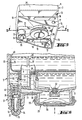
- Die Fig. 3 zeigt, wie der gleiche Spender durch Austauschen des Betätigungshebels 19 in einen elektronisch betätigbaren Spender umrüstbar ist. Der Betätigungshebel 19 ist in diesem Falle als Doppelhebel ausgeführt, also mit zwei Armen ausgerüstet, von denen der eine Arm wie bisher das Druckpolster 40 trägt, das auf die Pumpenmembran 56 einwirkt, wohingegen der zweite Arm durch den Magnetanker 70 des Elektromagneten 65 beaufschlagt wird. Der Elektromagnet 65 ist bei dieser Ausführungsform im rückwärtigen Bereich des Elektronikgehäuses 101 fest installiert, neben ihm ist die Platine 104 angebracht, die die Elektronikaggregate zur Steuerung des Elektromagneten 65 aufnimmt.
- Die Hebelseite des Betätigungshebels 19, die das Druckpolster 40 trägt, weist eine Verlängerung 105 auf, in deren vorderem Bereich die Rückholfeder 66 angeordnet ist. Diese Rückholfeder 66 hat im wesentlichen die Aufgabe, das Gewicht des Magnetankers 70 auszugleichen und dadurch die Pumpenmembran 56 weitgehend zu entlasten.
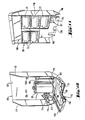
- Da alle elektrischen Komponenten nach Möglichkeit völlig vom Naßteil des Seifenspenders getrennt sein sollten, sind sie, wie die Fig. 7 und 8 zeigen, gekapselt. In einfachster Form kann das dadurch geschehen, daß das Elektronikgehäuse 101 zur Vorderseite hin geschlossen ist und nur einen Durchbruch 106 aufweist, über dem sich der Elektromagnet 65 befindet und in den der Betätigungshebel 19 eingreift. Bei dieser Ausführungsform ist, wie Fig. 7 zeigt, der Elektromagnet 65 von der Rückseite 107 des Elektronikgehäuses 101 zugänglich, ebenso wie die Platine 104 und der Anschießkondensator 98.
- Die Sensorplatte 71 ist am Boden der Tasche 108 des Elektronikgehäuses 101 angeordnet. Über ihr befindet sich die Abschirmelektrode 69, die die Sensorplatte 71 vor der Beeinflussung durch den Füllstand der Seife im Vorratsbehälter 49 abschirmt. Nicht dargestellte Schrauben werden durch die Befestigungsbohrungen 109 geführt und dienen zur Befestigung des Elektronikgehäuses 101 an einer Hauswand o. ä.
- Die Tasche 108 ist in ihrem unteren Bereich mit einer leitfähigen Schicht 110 versehen, die eine Beeinträchtigung der Seifenausgabe aus der Ausgabevorrichtung durch Verschmutzen der Taschenunterseite verhindert.
- Der Einschub 68, der senkrecht von oben in das Elektronikgehäuse 101 eingeschoben wird, enthält die Stromquelle, also die elektrochemischen Elemente 72. In Fig. 9 sind diese elektrochemischen Elemente als Monozellen dargestellt, stattdessen können aber auch wiederaufladbare Akkumulatoren eingesetzt werden. Über die Kontaktfedern 111 wird der Einschub 68 elektrisch mit dem Elektronikgehäuse 101 verbunden, das ebenso, wie Fig. 10 zeigt, Kontaktfedern 111 aufweist. Zwischen den einzelnen Kontaktfedern 111 herrscht unterschiedliche Spannung, da der Elektromagnet 65 mit voller Spannung betrieben werden muß, um die erforderliche Leistung zu erbringen, der Näherungsschalter 67 als solcher aber mit einer geringeren Spannung betrieben werden kann, wodurch Strom eingespart wird. Der Näherungsschalter 67 setzt sich dabei aus der Platine 104, dem Anschießkondensator 98 sowie der Sensorplatte 71 zusammen, die gemäß Fig. 10 im Elektronikgehäuse 101 untergebracht sind.
- Eine Einstellschraube 112 aus isolierendem Material ermöglicht durch Verstellen der Höhe der Abschirmelektrode 69 in der Tasche 108 ein Einstellen der Ansprechentfernung, d. h. der Entfernung, bei der der Spender bei Annäherung der Hand unter den Spender, also in den Bereich der Sensorplatte 71, Seife ausgibt.
- Aufnahmebohrungen 113 dienen dem Verschrauben des Ausgabebehälters 2 mit dem Elektronikgehäuse 101. Sie sind in Ansätzen 114 angeordnet, die Teil der Rückseite 107 des Elektronikgehäuses 101 sind.
- In Fig. 7 und Fig. 8 waren, wie dargestellt, die elektrischen Teile dadurch gekapselt, daß sie vom Elektronikgehäuse 101 nach vorne, also zur Seifenspenderseite umschlossen waren, so daß sie nur von der Wandseite erreicht werden konnten. Die Fig. 10 zeigt hier die alternative Lösung, d. h. alle elektrischen Teile sind auf der Rückseite 107 des Elektronikgehäuses 101 angeordnet und somit von vorne offen zugängig. Die Abdeckung gegenüber dem Seifenspender erfolgt durch den Einschub 68, wie er in der Fig. 11 dargestellt ist und dessen Vorderseite 115 bis auf den Durchbruch 106, durch den der Betätigungshebel 19 am Elektromagneten 65 angreift und die Langlöcher 116 völlig geschlossen ist.
- Die Fig. 12 und 13 zeigen eine weitere Paarung von Elektronikgehäuse 101 und Einschub 68, wobei hier der Einschub 68 alle die elektrischen bzw. elektronischen Teile aufnimmt, die einer Wartung bedürfen. Das sind zum einen die elektrochemischen Elemente 72, die nachgeladen oder ersetzt werden müssen, zum anderen die Platine 104, die ggf. überprüft werden muß, des weiteren der Elektromagnet 65 und der Anschießkondensator 98. Da der Elektromagnet 65 gegenüber dem Betätigungshebel 19 stets eine feste, sich nicht verändernde Position einnehmen muß, wenn eine gleiche Ausgabemenge durch die Pumpbewegung bewerkstelligt werden soll, ist der Einschub 68 in seiner Lage arretiert. Die Arretierung erfolgt im rechten und linken Flügel 117 des Elektronikgehäuses 101 durch das Einbringen von Rastenfenstern 103 und durch an den Einschubseitenwänden 118 angeordnete federnde Lappen 119, die aus der Einschubseitenwand 118 nach außen heraus federn und so in die Rastenfenster 103 des Elektronikgehäuses 101 eingreifen.
- Beim Einsetzen des Einschubs 68 in das Elektronikgehäuse 101 werden diese federnden Lappen 119 nach innen gedrückt und treten erst am Rastenfenster 103 wieder nach außen, wo sie den Einschub 68 in der vorgesehenen Position arretieren. Bei dieser, in Fig. 12 dargestellten Ausführungsform weist das Elektronikgehäuse 101 nur noch im Bereich der Tasche 108 Teile auf, die mit dem Näherungsschalter 67 über den Abschirmkontakt 120 und den Sensorkontakt 121 verbunden sind.
Claims (7)
Priority Applications (1)
| Application Number | Priority Date | Filing Date | Title |
|---|---|---|---|
| AT83108237T ATE25577T1 (de) | 1982-08-26 | 1983-08-20 | Elektrisch betaetigbare ausgabevorrichtung. |
Applications Claiming Priority (2)
| Application Number | Priority Date | Filing Date | Title |
|---|---|---|---|
| DE3231842A DE3231842C2 (de) | 1982-08-26 | 1982-08-26 | Elektrisch betätigbare Ausgabevorrichtung |
| DE3231842 | 1982-08-26 |
Publications (3)
| Publication Number | Publication Date |
|---|---|
| EP0103765A2 EP0103765A2 (de) | 1984-03-28 |
| EP0103765A3 EP0103765A3 (en) | 1985-01-23 |
| EP0103765B1 true EP0103765B1 (de) | 1987-03-04 |
Family
ID=6171806
Family Applications (1)
| Application Number | Title | Priority Date | Filing Date |
|---|---|---|---|
| EP83108237A Expired EP0103765B1 (de) | 1982-08-26 | 1983-08-20 | Elektrisch betätigbare Ausgabevorrichtung |
Country Status (3)
| Country | Link |
|---|---|
| EP (1) | EP0103765B1 (de) |
| AT (1) | ATE25577T1 (de) |
| DE (2) | DE3231842C2 (de) |
Cited By (2)
| Publication number | Priority date | Publication date | Assignee | Title |
|---|---|---|---|---|
| DE3819412A1 (de) * | 1988-06-07 | 1989-12-21 | Schulze Karl Heinz | Dosierbarer fluessigkeitsspender |
| RU2735633C1 (ru) * | 2020-05-25 | 2020-11-05 | Людмила Андреевна Караогланова | Бесконтактная автоматическая система для санитарно-гигиенической обработки кожного покрова |
Families Citing this family (6)
| Publication number | Priority date | Publication date | Assignee | Title |
|---|---|---|---|---|
| AU582491B2 (en) * | 1986-03-06 | 1989-03-23 | Warwick Alan Bell | A drum lifting device |
| DE3836189A1 (de) * | 1988-10-24 | 1990-04-26 | Luettichau Conrad Reichsgraf V | Vorrichtung zur abgabe einer vorbestimmten menge eines fliessfaehigen mediums in einen fluessigkeitsbehaelter, oder dergleichen |
| DE3902476A1 (de) * | 1989-01-27 | 1990-08-02 | Feldmuehle Ag | Ausgabevorrichtung fuer fluessige oder pastoese gueter |
| PL163791B1 (pl) * | 1991-02-20 | 1994-05-31 | Feliks Jalowski | Zawór odcinajacy sterowany elektronicznie PL PL PL PL |
| CN102616419B (zh) * | 2011-01-27 | 2013-10-23 | 宁波市镇海西门专利技术开发有限公司 | 挤牙膏器 |
| DE102021003193A1 (de) | 2021-06-21 | 2022-12-22 | Anna Czapka | elektrische Spendervorrichtung fur Trockenseife |
Family Cites Families (4)
| Publication number | Priority date | Publication date | Assignee | Title |
|---|---|---|---|---|
| US3327901A (en) * | 1963-12-13 | 1967-06-27 | Jet Dispenser Corp | Dispenser |
| US3273752A (en) * | 1965-02-11 | 1966-09-20 | Geza E Horeczky | Photo-electric controlled dispenser |
| DE2851886C2 (de) * | 1978-11-30 | 1981-01-29 | Dagma Deutsche Automaten- Und Getraenkemaschinen Gmbh & Co Kg, 2067 Reinfeld | Vorrichtung zur dosierten Abgabe von Flüssigkeiten |
| US4316555A (en) * | 1980-03-03 | 1982-02-23 | Steiner Corporation | System for dispensing fluids |
-
1982
- 1982-08-26 DE DE3231842A patent/DE3231842C2/de not_active Expired
-
1983
- 1983-08-20 AT AT83108237T patent/ATE25577T1/de active
- 1983-08-20 DE DE8383108237T patent/DE3369903D1/de not_active Expired
- 1983-08-20 EP EP83108237A patent/EP0103765B1/de not_active Expired
Cited By (2)
| Publication number | Priority date | Publication date | Assignee | Title |
|---|---|---|---|---|
| DE3819412A1 (de) * | 1988-06-07 | 1989-12-21 | Schulze Karl Heinz | Dosierbarer fluessigkeitsspender |
| RU2735633C1 (ru) * | 2020-05-25 | 2020-11-05 | Людмила Андреевна Караогланова | Бесконтактная автоматическая система для санитарно-гигиенической обработки кожного покрова |
Also Published As
| Publication number | Publication date |
|---|---|
| ATE25577T1 (de) | 1987-03-15 |
| EP0103765A2 (de) | 1984-03-28 |
| DE3231842A1 (de) | 1984-03-01 |
| DE3231842C2 (de) | 1984-06-14 |
| EP0103765A3 (en) | 1985-01-23 |
| DE3369903D1 (en) | 1987-04-09 |
Similar Documents
| Publication | Publication Date | Title |
|---|---|---|
| EP0455679B1 (de) | Ausgabevorrichtung für flüssige oder pastöse güter | |
| DE60317072T2 (de) | Verdampfer | |
| EP0777077A1 (de) | Schmierstoffspender mit elektromotorisch gesteuerter Abgabe eines Schmierstoffes an eine Maschine | |
| EP0103765B1 (de) | Elektrisch betätigbare Ausgabevorrichtung | |
| DE2734287A1 (de) | Verfahren und vorrichtung zum reinigen von gegenstaenden | |
| DE68901666T2 (de) | Waermebehaelter fuer fluessigkeiten, fette produkte, gele und aehnliches. | |
| WO2021093972A1 (de) | Pumpspender, füllvorichtung und nachfüllsystem mit einer mehrzahl von pumspendern | |
| EP0419613A1 (de) | Gerät zur pflege von kontaktlinsen. | |
| EP0104422B1 (de) | Elektrisch betätigbare Ausgabevorrichtung | |
| DE3249421C2 (de) | Elektrisch betätigbare Ausgabevorrichtung | |
| DE3400575A1 (de) | Durch gleichspannung mittels eines kapazitiven naeherungsschalters betaetigbare ausgabevorrichtung | |
| EP0856692A1 (de) | Vorrichtung zur Verstellung des Stössels eines Ventils | |
| DE3738792C2 (de) | ||
| DE102021124705B4 (de) | Vorrichtung zur Desinfektion einer eine Türklinke drückenden Hand | |
| DE3036523C2 (de) | Ausgabevorrichtung für flüssige oder pastöse Güter | |
| DE4211494A1 (de) | Dispenser, insbesondere für Flüssigseife | |
| DE69903435T2 (de) | Spender für abgabe einer viskosen substanz, z.b. einer antiseptischen flüssigkeit, und behälter für solchen spender | |
| DE3101020A1 (de) | "portionenspender fuer fluessiges medium sowie dessen verwendung" | |
| DE102004044089A1 (de) | Ladegerät für Elektrokleingeräte | |
| DE3036589A1 (de) | Ausgabevorrichtung fuer fluessige oder pastoese gueter | |
| EP3721764B1 (de) | Spender zur ausgabe eines bahnförmigen flächenprodukts, insbesondere aus papier, oder zur ausgabe eines fluids | |
| DE3036493A1 (de) | Ausgabevorrichtung fuer fluessige oder pastoese gueter | |
| DE202025108007U1 (de) | Haustier-Trinkwasserspender mit Halterung | |
| DE29903245U1 (de) | Vorrichtung zur Befeuchtung von Küchenrollenpapier | |
| DE102012220190A1 (de) | Dosiervorrichtung |
Legal Events
| Date | Code | Title | Description |
|---|---|---|---|
| PUAI | Public reference made under article 153(3) epc to a published international application that has entered the european phase |
Free format text: ORIGINAL CODE: 0009012 |
|
| 17P | Request for examination filed |
Effective date: 19830909 |
|
| AK | Designated contracting states |
Designated state(s): AT BE CH DE FR GB IT LI LU NL SE |
|
| PUAL | Search report despatched |
Free format text: ORIGINAL CODE: 0009013 |
|
| AK | Designated contracting states |
Designated state(s): AT BE CH DE FR GB IT LI LU NL SE |
|
| 17Q | First examination report despatched |
Effective date: 19860320 |
|
| ITF | It: translation for a ep patent filed | ||
| GRAA | (expected) grant |
Free format text: ORIGINAL CODE: 0009210 |
|
| AK | Designated contracting states |
Kind code of ref document: B1 Designated state(s): AT BE CH DE FR GB IT LI LU NL SE |
|
| REF | Corresponds to: |
Ref document number: 25577 Country of ref document: AT Date of ref document: 19870315 Kind code of ref document: T |
|
| ET | Fr: translation filed | ||
| REF | Corresponds to: |
Ref document number: 3369903 Country of ref document: DE Date of ref document: 19870409 |
|
| PLBE | No opposition filed within time limit |
Free format text: ORIGINAL CODE: 0009261 |
|
| STAA | Information on the status of an ep patent application or granted ep patent |
Free format text: STATUS: NO OPPOSITION FILED WITHIN TIME LIMIT |
|
| 26N | No opposition filed | ||
| ITPR | It: changes in ownership of a european patent |
Owner name: CESSIONE;SCOTT FELDMUEHLE GMBH |
|
| REG | Reference to a national code |
Ref country code: CH Ref legal event code: PUE Owner name: SCOTT-FELDMUEHLE GMBH |
|
| ITTA | It: last paid annual fee | ||
| NLS | Nl: assignments of ep-patents |
Owner name: SCOTT-FELDMUEHLE GMBH TE DUESSELDORF, BONDSREPUBLI |
|
| REG | Reference to a national code |
Ref country code: FR Ref legal event code: TP |
|
| REG | Reference to a national code |
Ref country code: GB Ref legal event code: 732 |
|
| PGFP | Annual fee paid to national office [announced via postgrant information from national office to epo] |
Ref country code: GB Payment date: 19930616 Year of fee payment: 11 Ref country code: FR Payment date: 19930616 Year of fee payment: 11 |
|
| PGFP | Annual fee paid to national office [announced via postgrant information from national office to epo] |
Ref country code: SE Payment date: 19930621 Year of fee payment: 11 Ref country code: LU Payment date: 19930621 Year of fee payment: 11 Ref country code: AT Payment date: 19930621 Year of fee payment: 11 |
|
| PGFP | Annual fee paid to national office [announced via postgrant information from national office to epo] |
Ref country code: BE Payment date: 19930705 Year of fee payment: 11 |
|
| PGFP | Annual fee paid to national office [announced via postgrant information from national office to epo] |
Ref country code: CH Payment date: 19930715 Year of fee payment: 11 |
|
| PGFP | Annual fee paid to national office [announced via postgrant information from national office to epo] |
Ref country code: DE Payment date: 19930825 Year of fee payment: 11 |
|
| PGFP | Annual fee paid to national office [announced via postgrant information from national office to epo] |
Ref country code: NL Payment date: 19930831 Year of fee payment: 11 |
|
| EPTA | Lu: last paid annual fee | ||
| PG25 | Lapsed in a contracting state [announced via postgrant information from national office to epo] |
Ref country code: LU Free format text: LAPSE BECAUSE OF NON-PAYMENT OF DUE FEES Effective date: 19940820 Ref country code: GB Effective date: 19940820 Ref country code: AT Effective date: 19940820 |
|
| PG25 | Lapsed in a contracting state [announced via postgrant information from national office to epo] |
Ref country code: SE Effective date: 19940821 |
|
| PG25 | Lapsed in a contracting state [announced via postgrant information from national office to epo] |
Ref country code: LI Effective date: 19940831 Ref country code: CH Effective date: 19940831 Ref country code: BE Effective date: 19940831 |
|
| EAL | Se: european patent in force in sweden |
Ref document number: 83108237.5 |
|
| BERE | Be: lapsed |
Owner name: SCOTT-FELDMUHLE G.M.B.H. Effective date: 19940831 |
|
| PG25 | Lapsed in a contracting state [announced via postgrant information from national office to epo] |
Ref country code: NL Effective date: 19950301 |
|
| NLV4 | Nl: lapsed or anulled due to non-payment of the annual fee | ||
| GBPC | Gb: european patent ceased through non-payment of renewal fee |
Effective date: 19940820 |
|
| PG25 | Lapsed in a contracting state [announced via postgrant information from national office to epo] |
Ref country code: FR Effective date: 19950428 |
|
| REG | Reference to a national code |
Ref country code: CH Ref legal event code: PL |
|
| PG25 | Lapsed in a contracting state [announced via postgrant information from national office to epo] |
Ref country code: DE Effective date: 19950503 |
|
| EUG | Se: european patent has lapsed |
Ref document number: 83108237.5 |
|
| REG | Reference to a national code |
Ref country code: FR Ref legal event code: ST |