EP0044932B1 - Gegebenenfalls N-substituierte Amino-desoxy-1.4;3.6-dianhydro-hexit-Derivate, Verfahren zu ihrer Herstellung und deren Verwendung - Google Patents
Gegebenenfalls N-substituierte Amino-desoxy-1.4;3.6-dianhydro-hexit-Derivate, Verfahren zu ihrer Herstellung und deren Verwendung Download PDFInfo
- Publication number
- EP0044932B1 EP0044932B1 EP81104569A EP81104569A EP0044932B1 EP 0044932 B1 EP0044932 B1 EP 0044932B1 EP 81104569 A EP81104569 A EP 81104569A EP 81104569 A EP81104569 A EP 81104569A EP 0044932 B1 EP0044932 B1 EP 0044932B1
- Authority
- EP
- European Patent Office
- Prior art keywords
- dianhydro
- desoxy
- iditol
- radical
- amino
- Prior art date
- Legal status (The legal status is an assumption and is not a legal conclusion. Google has not performed a legal analysis and makes no representation as to the accuracy of the status listed.)
- Expired
Links
- 238000002360 preparation method Methods 0.000 title claims abstract description 30
- 238000000034 method Methods 0.000 title claims abstract description 20
- -1 aromatic secondary amine Chemical class 0.000 claims abstract description 88
- 125000004432 carbon atom Chemical group C* 0.000 claims abstract description 34
- 229960000278 theophylline Drugs 0.000 claims abstract description 32
- 239000000047 product Substances 0.000 claims abstract description 31
- 150000003839 salts Chemical class 0.000 claims abstract description 31
- 125000000217 alkyl group Chemical group 0.000 claims abstract description 27
- 150000001875 compounds Chemical class 0.000 claims abstract description 25
- 125000004435 hydrogen atom Chemical group [H]* 0.000 claims abstract description 22
- 229910052757 nitrogen Inorganic materials 0.000 claims abstract description 18
- 125000004122 cyclic group Chemical group 0.000 claims abstract description 10
- 125000005842 heteroatom Chemical group 0.000 claims abstract description 10
- 125000004433 nitrogen atom Chemical group N* 0.000 claims abstract description 8
- 239000012048 reactive intermediate Substances 0.000 claims abstract description 5
- 150000002823 nitrates Chemical class 0.000 claims abstract 2
- ZFXYFBGIUFBOJW-UHFFFAOYSA-N theophylline Chemical compound O=C1N(C)C(=O)N(C)C2=C1NC=N2 ZFXYFBGIUFBOJW-UHFFFAOYSA-N 0.000 claims description 53
- ZMXDDKWLCZADIW-UHFFFAOYSA-N N,N-Dimethylformamide Chemical compound CN(C)C=O ZMXDDKWLCZADIW-UHFFFAOYSA-N 0.000 claims description 43
- RWRDLPDLKQPQOW-UHFFFAOYSA-N Pyrrolidine Chemical compound C1CCNC1 RWRDLPDLKQPQOW-UHFFFAOYSA-N 0.000 claims description 37
- IAZDPXIOMUYVGZ-UHFFFAOYSA-N Dimethylsulphoxide Chemical compound CS(C)=O IAZDPXIOMUYVGZ-UHFFFAOYSA-N 0.000 claims description 31
- YNAVUWVOSKDBBP-UHFFFAOYSA-N Morpholine Chemical compound C1COCCN1 YNAVUWVOSKDBBP-UHFFFAOYSA-N 0.000 claims description 23
- NQRYJNQNLNOLGT-UHFFFAOYSA-N Piperidine Chemical compound C1CCNCC1 NQRYJNQNLNOLGT-UHFFFAOYSA-N 0.000 claims description 23
- 150000003254 radicals Chemical class 0.000 claims description 23
- 238000006243 chemical reaction Methods 0.000 claims description 16
- 229960001760 dimethyl sulfoxide Drugs 0.000 claims description 16
- QGZKDVFQNNGYKY-UHFFFAOYSA-N ammonia Natural products N QGZKDVFQNNGYKY-UHFFFAOYSA-N 0.000 claims description 15
- 238000007098 aminolysis reaction Methods 0.000 claims description 14
- KLDXJTOLSGUMSJ-JGWLITMVSA-N Isosorbide Chemical compound O[C@@H]1CO[C@@H]2[C@@H](O)CO[C@@H]21 KLDXJTOLSGUMSJ-JGWLITMVSA-N 0.000 claims description 13
- QARBMVPHQWIHKH-UHFFFAOYSA-N methanesulfonyl chloride Chemical compound CS(Cl)(=O)=O QARBMVPHQWIHKH-UHFFFAOYSA-N 0.000 claims description 12
- PVOAHINGSUIXLS-UHFFFAOYSA-N 1-Methylpiperazine Chemical compound CN1CCNCC1 PVOAHINGSUIXLS-UHFFFAOYSA-N 0.000 claims description 11
- WPYMKLBDIGXBTP-UHFFFAOYSA-N benzoic acid Chemical compound OC(=O)C1=CC=CC=C1 WPYMKLBDIGXBTP-UHFFFAOYSA-N 0.000 claims description 11
- VHUUQVKOLVNVRT-UHFFFAOYSA-N Ammonium hydroxide Chemical compound [NH4+].[OH-] VHUUQVKOLVNVRT-UHFFFAOYSA-N 0.000 claims description 10
- 235000011114 ammonium hydroxide Nutrition 0.000 claims description 10
- 238000005915 ammonolysis reaction Methods 0.000 claims description 10
- 229930024421 Adenine Natural products 0.000 claims description 8
- 229960000643 adenine Drugs 0.000 claims description 8
- GFFGJBXGBJISGV-UHFFFAOYSA-N Adenine Chemical compound NC1=NC=NC2=C1N=CN2 GFFGJBXGBJISGV-UHFFFAOYSA-N 0.000 claims description 7
- 125000003277 amino group Chemical group 0.000 claims description 7
- 229960002479 isosorbide Drugs 0.000 claims description 7
- 125000004545 purin-9-yl group Chemical group N1=CN=C2N(C=NC2=C1)* 0.000 claims description 7
- ZKBQDFAWXLTYKS-UHFFFAOYSA-N 6-Chloro-1H-purine Chemical compound ClC1=NC=NC2=C1NC=N2 ZKBQDFAWXLTYKS-UHFFFAOYSA-N 0.000 claims description 6
- 239000000010 aprotic solvent Substances 0.000 claims description 6
- 125000002924 primary amino group Chemical group [H]N([H])* 0.000 claims description 6
- HDECRAPHCDXMIJ-UHFFFAOYSA-N 2-methylbenzenesulfonyl chloride Chemical compound CC1=CC=CC=C1S(Cl)(=O)=O HDECRAPHCDXMIJ-UHFFFAOYSA-N 0.000 claims description 4
- NLXLAEXVIDQMFP-UHFFFAOYSA-N Ammonium chloride Substances [NH4+].[Cl-] NLXLAEXVIDQMFP-UHFFFAOYSA-N 0.000 claims description 4
- 238000005904 alkaline hydrolysis reaction Methods 0.000 claims description 4
- 150000003973 alkyl amines Chemical group 0.000 claims description 4
- DKNWSYNQZKUICI-UHFFFAOYSA-N amantadine Chemical compound C1C(C2)CC3CC2CC1(N)C3 DKNWSYNQZKUICI-UHFFFAOYSA-N 0.000 claims description 4
- WXMKPNITSTVMEF-UHFFFAOYSA-M sodium benzoate Chemical compound [Na+].[O-]C(=O)C1=CC=CC=C1 WXMKPNITSTVMEF-UHFFFAOYSA-M 0.000 claims description 4
- 239000004299 sodium benzoate Substances 0.000 claims description 4
- 235000010234 sodium benzoate Nutrition 0.000 claims description 4
- CIUQDSCDWFSTQR-UHFFFAOYSA-N [C]1=CC=CC=C1 Chemical compound [C]1=CC=CC=C1 CIUQDSCDWFSTQR-UHFFFAOYSA-N 0.000 claims description 3
- 229910052783 alkali metal Inorganic materials 0.000 claims description 3
- 125000003282 alkyl amino group Chemical group 0.000 claims description 3
- 125000004414 alkyl thio group Chemical group 0.000 claims description 3
- 125000002947 alkylene group Chemical group 0.000 claims description 3
- 239000012298 atmosphere Substances 0.000 claims description 3
- 125000002496 methyl group Chemical group [H]C([H])([H])* 0.000 claims description 3
- AFVFQIVMOAPDHO-UHFFFAOYSA-M Methanesulfonate Chemical compound CS([O-])(=O)=O AFVFQIVMOAPDHO-UHFFFAOYSA-M 0.000 claims description 2
- 238000005903 acid hydrolysis reaction Methods 0.000 claims description 2
- 229910052801 chlorine Inorganic materials 0.000 claims description 2
- 125000001309 chloro group Chemical group Cl* 0.000 claims description 2
- 125000004663 dialkyl amino group Chemical group 0.000 claims description 2
- 239000011261 inert gas Substances 0.000 claims 2
- CPELXLSAUQHCOX-UHFFFAOYSA-M Bromide Chemical compound [Br-] CPELXLSAUQHCOX-UHFFFAOYSA-M 0.000 claims 1
- VEXZGXHMUGYJMC-UHFFFAOYSA-M Chloride anion Chemical compound [Cl-] VEXZGXHMUGYJMC-UHFFFAOYSA-M 0.000 claims 1
- 230000002378 acidificating effect Effects 0.000 claims 1
- 150000004820 halides Chemical class 0.000 claims 1
- BDHFUVZGWQCTTF-UHFFFAOYSA-N sulfonic acid Chemical compound OS(=O)=O BDHFUVZGWQCTTF-UHFFFAOYSA-N 0.000 claims 1
- HEDRZPFGACZZDS-UHFFFAOYSA-N Chloroform Chemical compound ClC(Cl)Cl HEDRZPFGACZZDS-UHFFFAOYSA-N 0.000 description 190
- LFQSCWFLJHTTHZ-UHFFFAOYSA-N Ethanol Chemical compound CCO LFQSCWFLJHTTHZ-UHFFFAOYSA-N 0.000 description 146
- XLYOFNOQVPJJNP-UHFFFAOYSA-N water Substances O XLYOFNOQVPJJNP-UHFFFAOYSA-N 0.000 description 112
- HEMHJVSKTPXQMS-UHFFFAOYSA-M sodium hydroxide Inorganic materials [OH-].[Na+] HEMHJVSKTPXQMS-UHFFFAOYSA-M 0.000 description 74
- VEXZGXHMUGYJMC-UHFFFAOYSA-N Hydrochloric acid Chemical compound Cl VEXZGXHMUGYJMC-UHFFFAOYSA-N 0.000 description 66
- 239000000203 mixture Substances 0.000 description 63
- LRHPLDYGYMQRHN-UHFFFAOYSA-N N-Butanol Chemical compound CCCCO LRHPLDYGYMQRHN-UHFFFAOYSA-N 0.000 description 50
- 239000000243 solution Substances 0.000 description 49
- KFZMGEQAYNKOFK-UHFFFAOYSA-N Isopropanol Chemical compound CC(C)O KFZMGEQAYNKOFK-UHFFFAOYSA-N 0.000 description 48
- 238000000921 elemental analysis Methods 0.000 description 47
- 238000001816 cooling Methods 0.000 description 38
- 230000002829 reductive effect Effects 0.000 description 36
- 239000000706 filtrate Substances 0.000 description 31
- RTZKZFJDLAIYFH-UHFFFAOYSA-N Diethyl ether Chemical compound CCOCC RTZKZFJDLAIYFH-UHFFFAOYSA-N 0.000 description 28
- 238000001704 evaporation Methods 0.000 description 28
- OKKJLVBELUTLKV-UHFFFAOYSA-N Methanol Chemical compound OC OKKJLVBELUTLKV-UHFFFAOYSA-N 0.000 description 27
- JUJWROOIHBZHMG-UHFFFAOYSA-N Pyridine Chemical compound C1=CC=NC=C1 JUJWROOIHBZHMG-UHFFFAOYSA-N 0.000 description 27
- 230000008020 evaporation Effects 0.000 description 23
- 238000001953 recrystallisation Methods 0.000 description 23
- CSCPPACGZOOCGX-UHFFFAOYSA-N Acetone Chemical compound CC(C)=O CSCPPACGZOOCGX-UHFFFAOYSA-N 0.000 description 22
- 229910000831 Steel Inorganic materials 0.000 description 21
- 239000012071 phase Substances 0.000 description 21
- 239000010959 steel Substances 0.000 description 21
- YXFVVABEGXRONW-UHFFFAOYSA-N Toluene Chemical compound CC1=CC=CC=C1 YXFVVABEGXRONW-UHFFFAOYSA-N 0.000 description 18
- 239000002253 acid Substances 0.000 description 18
- 239000002026 chloroform extract Substances 0.000 description 17
- QTBSBXVTEAMEQO-UHFFFAOYSA-N Acetic acid Chemical compound CC(O)=O QTBSBXVTEAMEQO-UHFFFAOYSA-N 0.000 description 16
- 229910017604 nitric acid Inorganic materials 0.000 description 15
- GRYLNZFGIOXLOG-UHFFFAOYSA-N Nitric acid Chemical compound O[N+]([O-])=O GRYLNZFGIOXLOG-UHFFFAOYSA-N 0.000 description 14
- 238000003756 stirring Methods 0.000 description 14
- OKTJSMMVPCPJKN-UHFFFAOYSA-N Carbon Chemical compound [C] OKTJSMMVPCPJKN-UHFFFAOYSA-N 0.000 description 12
- AFVFQIVMOAPDHO-UHFFFAOYSA-N Methanesulfonic acid Chemical compound CS(O)(=O)=O AFVFQIVMOAPDHO-UHFFFAOYSA-N 0.000 description 12
- UIIMBOGNXHQVGW-UHFFFAOYSA-M Sodium bicarbonate Chemical compound [Na+].OC([O-])=O UIIMBOGNXHQVGW-UHFFFAOYSA-M 0.000 description 12
- 239000012043 crude product Substances 0.000 description 12
- PMZURENOXWZQFD-UHFFFAOYSA-L Sodium Sulfate Chemical compound [Na+].[Na+].[O-]S([O-])(=O)=O PMZURENOXWZQFD-UHFFFAOYSA-L 0.000 description 11
- 239000002244 precipitate Substances 0.000 description 11
- UMJSCPRVCHMLSP-UHFFFAOYSA-N pyridine Natural products COC1=CC=CN=C1 UMJSCPRVCHMLSP-UHFFFAOYSA-N 0.000 description 11
- 239000012299 nitrogen atmosphere Substances 0.000 description 10
- 230000002040 relaxant effect Effects 0.000 description 10
- 0 *N(*)[C@](CO[C@@]12)[C@]1OC[C@]2O* Chemical compound *N(*)[C@](CO[C@@]12)[C@]1OC[C@]2O* 0.000 description 9
- YMWUJEATGCHHMB-UHFFFAOYSA-N Dichloromethane Chemical compound ClCCl YMWUJEATGCHHMB-UHFFFAOYSA-N 0.000 description 9
- 238000001035 drying Methods 0.000 description 9
- 239000002904 solvent Substances 0.000 description 9
- ROSDSFDQCJNGOL-UHFFFAOYSA-N Dimethylamine Chemical compound CNC ROSDSFDQCJNGOL-UHFFFAOYSA-N 0.000 description 8
- 239000002585 base Substances 0.000 description 8
- 239000007795 chemical reaction product Substances 0.000 description 8
- 239000000284 extract Substances 0.000 description 7
- 238000002844 melting Methods 0.000 description 7
- 230000008018 melting Effects 0.000 description 7
- 239000012452 mother liquor Substances 0.000 description 7
- KLDXJTOLSGUMSJ-UNTFVMJOSA-N (3s,3ar,6s,6ar)-2,3,3a,5,6,6a-hexahydrofuro[3,2-b]furan-3,6-diol Chemical compound O[C@H]1CO[C@@H]2[C@@H](O)CO[C@@H]21 KLDXJTOLSGUMSJ-UNTFVMJOSA-N 0.000 description 6
- IJGRMHOSHXDMSA-UHFFFAOYSA-N Atomic nitrogen Chemical compound N#N IJGRMHOSHXDMSA-UHFFFAOYSA-N 0.000 description 6
- BAVYZALUXZFZLV-UHFFFAOYSA-N Methylamine Chemical compound NC BAVYZALUXZFZLV-UHFFFAOYSA-N 0.000 description 6
- ZMANZCXQSJIPKH-UHFFFAOYSA-N Triethylamine Chemical compound CCN(CC)CC ZMANZCXQSJIPKH-UHFFFAOYSA-N 0.000 description 6
- 229960000583 acetic acid Drugs 0.000 description 6
- WGQKYBSKWIADBV-UHFFFAOYSA-N benzylamine Chemical compound NCC1=CC=CC=C1 WGQKYBSKWIADBV-UHFFFAOYSA-N 0.000 description 6
- 239000006227 byproduct Substances 0.000 description 6
- 238000012512 characterization method Methods 0.000 description 6
- 238000002955 isolation Methods 0.000 description 6
- 238000010992 reflux Methods 0.000 description 6
- ODIGIKRIUKFKHP-UHFFFAOYSA-N (n-propan-2-yloxycarbonylanilino) acetate Chemical compound CC(C)OC(=O)N(OC(C)=O)C1=CC=CC=C1 ODIGIKRIUKFKHP-UHFFFAOYSA-N 0.000 description 5
- 238000004458 analytical method Methods 0.000 description 5
- 239000000538 analytical sample Substances 0.000 description 5
- 229910000030 sodium bicarbonate Inorganic materials 0.000 description 5
- 235000017557 sodium bicarbonate Nutrition 0.000 description 5
- 125000001424 substituent group Chemical group 0.000 description 5
- CQVKMVQRSNNAGO-UHFFFAOYSA-N 2-[4-formyl-3-methyl-n-(2-methylsulfonyloxyethyl)anilino]ethyl methanesulfonate Chemical compound CC1=CC(N(CCOS(C)(=O)=O)CCOS(C)(=O)=O)=CC=C1C=O CQVKMVQRSNNAGO-UHFFFAOYSA-N 0.000 description 4
- DGAQECJNVWCQMB-PUAWFVPOSA-M Ilexoside XXIX Chemical compound C[C@@H]1CC[C@@]2(CC[C@@]3(C(=CC[C@H]4[C@]3(CC[C@@H]5[C@@]4(CC[C@@H](C5(C)C)OS(=O)(=O)[O-])C)C)[C@@H]2[C@]1(C)O)C)C(=O)O[C@H]6[C@@H]([C@H]([C@@H]([C@H](O6)CO)O)O)O.[Na+] DGAQECJNVWCQMB-PUAWFVPOSA-M 0.000 description 4
- 229910002651 NO3 Inorganic materials 0.000 description 4
- BHHGXPLMPWCGHP-UHFFFAOYSA-N Phenethylamine Chemical compound NCCC1=CC=CC=C1 BHHGXPLMPWCGHP-UHFFFAOYSA-N 0.000 description 4
- 239000008346 aqueous phase Substances 0.000 description 4
- 239000002021 butanolic extract Substances 0.000 description 4
- 239000003054 catalyst Substances 0.000 description 4
- 238000000605 extraction Methods 0.000 description 4
- 238000001914 filtration Methods 0.000 description 4
- 125000002887 hydroxy group Chemical group [H]O* 0.000 description 4
- 125000004170 methylsulfonyl group Chemical group [H]C([H])([H])S(*)(=O)=O 0.000 description 4
- 239000003208 petroleum Substances 0.000 description 4
- 150000003212 purines Chemical class 0.000 description 4
- KKVTYAVXTDIPAP-UHFFFAOYSA-M sodium;methanesulfonate Chemical compound [Na+].CS([O-])(=O)=O KKVTYAVXTDIPAP-UHFFFAOYSA-M 0.000 description 4
- 238000011282 treatment Methods 0.000 description 4
- LRFVTYWOQMYALW-UHFFFAOYSA-N 9H-xanthine Chemical compound O=C1NC(=O)NC2=C1NC=N2 LRFVTYWOQMYALW-UHFFFAOYSA-N 0.000 description 3
- WFDIJRYMOXRFFG-UHFFFAOYSA-N Acetic anhydride Chemical compound CC(=O)OC(C)=O WFDIJRYMOXRFFG-UHFFFAOYSA-N 0.000 description 3
- 239000005711 Benzoic acid Substances 0.000 description 3
- LSNNMFCWUKXFEE-UHFFFAOYSA-M Bisulfite Chemical compound OS([O-])=O LSNNMFCWUKXFEE-UHFFFAOYSA-M 0.000 description 3
- XEKOWRVHYACXOJ-UHFFFAOYSA-N Ethyl acetate Chemical compound CCOC(C)=O XEKOWRVHYACXOJ-UHFFFAOYSA-N 0.000 description 3
- UFHFLCQGNIYNRP-UHFFFAOYSA-N Hydrogen Chemical compound [H][H] UFHFLCQGNIYNRP-UHFFFAOYSA-N 0.000 description 3
- 239000012359 Methanesulfonyl chloride Substances 0.000 description 3
- NHNBFGGVMKEFGY-UHFFFAOYSA-N Nitrate Chemical compound [O-][N+]([O-])=O NHNBFGGVMKEFGY-UHFFFAOYSA-N 0.000 description 3
- ZLMJMSJWJFRBEC-UHFFFAOYSA-N Potassium Chemical compound [K] ZLMJMSJWJFRBEC-UHFFFAOYSA-N 0.000 description 3
- KWYUFKZDYYNOTN-UHFFFAOYSA-M Potassium hydroxide Chemical compound [OH-].[K+] KWYUFKZDYYNOTN-UHFFFAOYSA-M 0.000 description 3
- 125000002252 acyl group Chemical group 0.000 description 3
- 229910021529 ammonia Inorganic materials 0.000 description 3
- 235000010233 benzoic acid Nutrition 0.000 description 3
- 238000009835 boiling Methods 0.000 description 3
- 238000009833 condensation Methods 0.000 description 3
- 230000005494 condensation Effects 0.000 description 3
- MTHSVFCYNBDYFN-UHFFFAOYSA-N diethylene glycol Chemical compound OCCOCCO MTHSVFCYNBDYFN-UHFFFAOYSA-N 0.000 description 3
- 230000007717 exclusion Effects 0.000 description 3
- 238000010438 heat treatment Methods 0.000 description 3
- 229910052739 hydrogen Inorganic materials 0.000 description 3
- 229960001428 mercaptopurine Drugs 0.000 description 3
- 230000003287 optical effect Effects 0.000 description 3
- 229910052700 potassium Inorganic materials 0.000 description 3
- 239000011591 potassium Substances 0.000 description 3
- NLKNQRATVPKPDG-UHFFFAOYSA-M potassium iodide Chemical compound [K+].[I-] NLKNQRATVPKPDG-UHFFFAOYSA-M 0.000 description 3
- 238000000746 purification Methods 0.000 description 3
- 150000003335 secondary amines Chemical class 0.000 description 3
- 238000000926 separation method Methods 0.000 description 3
- 229910052708 sodium Inorganic materials 0.000 description 3
- 239000011734 sodium Substances 0.000 description 3
- 239000007858 starting material Substances 0.000 description 3
- 125000004434 sulfur atom Chemical group 0.000 description 3
- YAPQBXQYLJRXSA-UHFFFAOYSA-N theobromine Chemical class CN1C(=O)NC(=O)C2=C1N=CN2C YAPQBXQYLJRXSA-UHFFFAOYSA-N 0.000 description 3
- 125000005147 toluenesulfonyl group Chemical group C=1(C(=CC=CC1)S(=O)(=O)*)C 0.000 description 3
- 229940075420 xanthine Drugs 0.000 description 3
- LYUQWQRTDLVQGA-UHFFFAOYSA-N 3-phenylpropylamine Chemical compound NCCCC1=CC=CC=C1 LYUQWQRTDLVQGA-UHFFFAOYSA-N 0.000 description 2
- AGNFWIZBEATIAK-UHFFFAOYSA-N 4-phenylbutylamine Chemical compound NCCCCC1=CC=CC=C1 AGNFWIZBEATIAK-UHFFFAOYSA-N 0.000 description 2
- ZZWGXGHWFOTKNP-UHFFFAOYSA-N 7-(2-bromoethyl)-1,3-dimethylpurine-2,6-dione Chemical compound O=C1N(C)C(=O)N(C)C2=C1N(CCBr)C=N2 ZZWGXGHWFOTKNP-UHFFFAOYSA-N 0.000 description 2
- DZIAWYYZORIFPF-UHFFFAOYSA-N 7-(4-bromobutyl)-1,3-dimethylpurine-2,6-dione Chemical compound O=C1N(C)C(=O)N(C)C2=C1N(CCCCBr)C=N2 DZIAWYYZORIFPF-UHFFFAOYSA-N 0.000 description 2
- KXDAEFPNCMNJSK-UHFFFAOYSA-N Benzamide Chemical compound NC(=O)C1=CC=CC=C1 KXDAEFPNCMNJSK-UHFFFAOYSA-N 0.000 description 2
- FBPFZTCFMRRESA-KVTDHHQDSA-N D-Mannitol Chemical class OC[C@@H](O)[C@@H](O)[C@H](O)[C@H](O)CO FBPFZTCFMRRESA-KVTDHHQDSA-N 0.000 description 2
- QUSNBJAOOMFDIB-UHFFFAOYSA-N Ethylamine Chemical compound CCN QUSNBJAOOMFDIB-UHFFFAOYSA-N 0.000 description 2
- OFBQJSOFQDEBGM-UHFFFAOYSA-N Pentane Chemical compound CCCCC OFBQJSOFQDEBGM-UHFFFAOYSA-N 0.000 description 2
- QAOWNCQODCNURD-UHFFFAOYSA-N Sulfuric acid Chemical compound OS(O)(=O)=O QAOWNCQODCNURD-UHFFFAOYSA-N 0.000 description 2
- XSQUKJJJFZCRTK-UHFFFAOYSA-N Urea Chemical compound NC(N)=O XSQUKJJJFZCRTK-UHFFFAOYSA-N 0.000 description 2
- 150000007513 acids Chemical class 0.000 description 2
- 150000001412 amines Chemical class 0.000 description 2
- 125000003118 aryl group Chemical group 0.000 description 2
- 125000004429 atom Chemical group 0.000 description 2
- 230000017531 blood circulation Effects 0.000 description 2
- HQABUPZFAYXKJW-UHFFFAOYSA-N butan-1-amine Chemical compound CCCCN HQABUPZFAYXKJW-UHFFFAOYSA-N 0.000 description 2
- 229910052799 carbon Inorganic materials 0.000 description 2
- 239000012230 colorless oil Substances 0.000 description 2
- 238000002425 crystallisation Methods 0.000 description 2
- 230000008025 crystallization Effects 0.000 description 2
- 238000000354 decomposition reaction Methods 0.000 description 2
- JQVDAXLFBXTEQA-UHFFFAOYSA-N dibutylamine Chemical compound CCCCNCCCC JQVDAXLFBXTEQA-UHFFFAOYSA-N 0.000 description 2
- HPNMFZURTQLUMO-UHFFFAOYSA-N diethylamine Chemical compound CCNCC HPNMFZURTQLUMO-UHFFFAOYSA-N 0.000 description 2
- 230000000694 effects Effects 0.000 description 2
- 230000032050 esterification Effects 0.000 description 2
- 238000005886 esterification reaction Methods 0.000 description 2
- XWBDWHCCBGMXKG-UHFFFAOYSA-N ethanamine;hydron;chloride Chemical compound Cl.CCN XWBDWHCCBGMXKG-UHFFFAOYSA-N 0.000 description 2
- 238000001640 fractional crystallisation Methods 0.000 description 2
- 239000012362 glacial acetic acid Substances 0.000 description 2
- 239000001257 hydrogen Substances 0.000 description 2
- 230000007062 hydrolysis Effects 0.000 description 2
- 238000006460 hydrolysis reaction Methods 0.000 description 2
- MOYKHGMNXAOIAT-JGWLITMVSA-N isosorbide dinitrate Chemical compound [O-][N+](=O)O[C@H]1CO[C@@H]2[C@H](O[N+](=O)[O-])CO[C@@H]21 MOYKHGMNXAOIAT-JGWLITMVSA-N 0.000 description 2
- 229960000201 isosorbide dinitrate Drugs 0.000 description 2
- 229940098779 methanesulfonic acid Drugs 0.000 description 2
- 238000006386 neutralization reaction Methods 0.000 description 2
- 229910000510 noble metal Inorganic materials 0.000 description 2
- 239000003921 oil Substances 0.000 description 2
- 239000008177 pharmaceutical agent Substances 0.000 description 2
- WGYKZJWCGVVSQN-UHFFFAOYSA-N propylamine Chemical compound CCCN WGYKZJWCGVVSQN-UHFFFAOYSA-N 0.000 description 2
- 229910052938 sodium sulfate Inorganic materials 0.000 description 2
- 235000011152 sodium sulphate Nutrition 0.000 description 2
- 239000007787 solid Substances 0.000 description 2
- 239000000725 suspension Substances 0.000 description 2
- 238000001291 vacuum drying Methods 0.000 description 2
- 238000005406 washing Methods 0.000 description 2
- IHJVDPWMLXFQAI-UHFFFAOYSA-N 1,3-dimethyl-7h-purine-2,6-dione;sodium Chemical compound [Na].O=C1N(C)C(=O)N(C)C2=C1NC=N2 IHJVDPWMLXFQAI-UHFFFAOYSA-N 0.000 description 1
- RYHBNJHYFVUHQT-UHFFFAOYSA-N 1,4-Dioxane Chemical compound C1COCCO1 RYHBNJHYFVUHQT-UHFFFAOYSA-N 0.000 description 1
- RRQYJINTUHWNHW-UHFFFAOYSA-N 1-ethoxy-2-(2-ethoxyethoxy)ethane Chemical compound CCOCCOCCOCC RRQYJINTUHWNHW-UHFFFAOYSA-N 0.000 description 1
- HIXDQWDOVZUNNA-UHFFFAOYSA-N 2-(3,4-dimethoxyphenyl)-5-hydroxy-7-methoxychromen-4-one Chemical compound C=1C(OC)=CC(O)=C(C(C=2)=O)C=1OC=2C1=CC=C(OC)C(OC)=C1 HIXDQWDOVZUNNA-UHFFFAOYSA-N 0.000 description 1
- NGNBDVOYPDDBFK-UHFFFAOYSA-N 2-[2,4-di(pentan-2-yl)phenoxy]acetyl chloride Chemical compound CCCC(C)C1=CC=C(OCC(Cl)=O)C(C(C)CCC)=C1 NGNBDVOYPDDBFK-UHFFFAOYSA-N 0.000 description 1
- GOJUJUVQIVIZAV-UHFFFAOYSA-N 2-amino-4,6-dichloropyrimidine-5-carbaldehyde Chemical group NC1=NC(Cl)=C(C=O)C(Cl)=N1 GOJUJUVQIVIZAV-UHFFFAOYSA-N 0.000 description 1
- MWBWWFOAEOYUST-UHFFFAOYSA-N 2-aminopurine Chemical compound NC1=NC=C2N=CNC2=N1 MWBWWFOAEOYUST-UHFFFAOYSA-N 0.000 description 1
- 125000000094 2-phenylethyl group Chemical group [H]C1=C([H])C([H])=C(C([H])=C1[H])C([H])([H])C([H])([H])* 0.000 description 1
- RVLNDSYSQLMPRC-UHFFFAOYSA-N 3-(4-chlorophenyl)propan-1-amine Chemical compound NCCCC1=CC=C(Cl)C=C1 RVLNDSYSQLMPRC-UHFFFAOYSA-N 0.000 description 1
- 125000006201 3-phenylpropyl group Chemical group [H]C1=C([H])C([H])=C(C([H])=C1[H])C([H])([H])C([H])([H])C([H])([H])* 0.000 description 1
- FCZOVUJWOBSMSS-UHFFFAOYSA-N 5-[(6-aminopurin-9-yl)methyl]-5-methyl-3-methylideneoxolan-2-one Chemical compound C1=NC2=C(N)N=CN=C2N1CC1(C)CC(=C)C(=O)O1 FCZOVUJWOBSMSS-UHFFFAOYSA-N 0.000 description 1
- CGNLNKFBSBFJHY-UHFFFAOYSA-N 5-phenylpentan-1-amine Chemical compound NCCCCCC1=CC=CC=C1 CGNLNKFBSBFJHY-UHFFFAOYSA-N 0.000 description 1
- UIJIQXGRFSPYQW-UHFFFAOYSA-N 6-methylthiopurine Chemical compound CSC1=NC=NC2=C1N=CN2 UIJIQXGRFSPYQW-UHFFFAOYSA-N 0.000 description 1
- MEOMXKNIFWDDGZ-UHFFFAOYSA-N 6-morpholin-4-yl-9h-purine Chemical compound C1COCCN1C1=NC=NC2=C1N=CN2 MEOMXKNIFWDDGZ-UHFFFAOYSA-N 0.000 description 1
- ZSXRNISZKBBQRN-UHFFFAOYSA-N 6-phenylhexan-1-amine Chemical compound NCCCCCCC1=CC=CC=C1 ZSXRNISZKBBQRN-UHFFFAOYSA-N 0.000 description 1
- OXCZAXJFRBPQRP-UHFFFAOYSA-N 6-piperidin-1-yl-7h-purine Chemical compound C1CCCCN1C1=NC=NC2=C1NC=N2 OXCZAXJFRBPQRP-UHFFFAOYSA-N 0.000 description 1
- IQSRNEOAVVBNGN-UHFFFAOYSA-N 6-pyrrolidin-1-yl-7h-purine Chemical compound C1CCCN1C1=NC=NC2=C1NC=N2 IQSRNEOAVVBNGN-UHFFFAOYSA-N 0.000 description 1
- MORVOYPJRATMRS-UHFFFAOYSA-N 7-(3-chloropropyl)-1,3-dimethylpurine-2,6-dione Chemical compound O=C1N(C)C(=O)N(C)C2=C1N(CCCCl)C=N2 MORVOYPJRATMRS-UHFFFAOYSA-N 0.000 description 1
- JFFFKDHHNGBVFT-UHFFFAOYSA-N 7-phenylheptan-1-amine Chemical compound NCCCCCCCC1=CC=CC=C1 JFFFKDHHNGBVFT-UHFFFAOYSA-N 0.000 description 1
- DQVXBSLEVBEQCB-UHFFFAOYSA-N 8-phenyloctan-1-amine Chemical compound NCCCCCCCCC1=CC=CC=C1 DQVXBSLEVBEQCB-UHFFFAOYSA-N 0.000 description 1
- 206010002383 Angina Pectoris Diseases 0.000 description 1
- HVESQEUNWAWTIA-UHFFFAOYSA-N CN(c(nc1)c(C(N2C)=O)[n]1C#C)C2=O Chemical compound CN(c(nc1)c(C(N2C)=O)[n]1C#C)C2=O HVESQEUNWAWTIA-UHFFFAOYSA-N 0.000 description 1
- XDTMQSROBMDMFD-UHFFFAOYSA-N Cyclohexane Chemical compound C1CCCCC1 XDTMQSROBMDMFD-UHFFFAOYSA-N 0.000 description 1
- 206010013786 Dry skin Diseases 0.000 description 1
- 206010019233 Headaches Diseases 0.000 description 1
- 206010019280 Heart failures Diseases 0.000 description 1
- 208000001953 Hypotension Diseases 0.000 description 1
- FBPFZTCFMRRESA-UNTFVMJOSA-N L-iditol Chemical compound OC[C@H](O)[C@@H](O)[C@H](O)[C@@H](O)CO FBPFZTCFMRRESA-UNTFVMJOSA-N 0.000 description 1
- 229930195725 Mannitol Natural products 0.000 description 1
- 239000002202 Polyethylene glycol Substances 0.000 description 1
- KDCGOANMDULRCW-UHFFFAOYSA-N Purine Natural products N1=CNC2=NC=NC2=C1 KDCGOANMDULRCW-UHFFFAOYSA-N 0.000 description 1
- UCKMPCXJQFINFW-UHFFFAOYSA-N Sulphide Chemical compound [S-2] UCKMPCXJQFINFW-UHFFFAOYSA-N 0.000 description 1
- 229940008309 acetone / ethanol Drugs 0.000 description 1
- 239000013543 active substance Substances 0.000 description 1
- 230000010933 acylation Effects 0.000 description 1
- 238000005917 acylation reaction Methods 0.000 description 1
- 150000001298 alcohols Chemical class 0.000 description 1
- 150000001447 alkali salts Chemical class 0.000 description 1
- 229960003805 amantadine Drugs 0.000 description 1
- 230000003257 anti-anginal effect Effects 0.000 description 1
- 239000006286 aqueous extract Substances 0.000 description 1
- 239000007864 aqueous solution Substances 0.000 description 1
- 125000006615 aromatic heterocyclic group Chemical group 0.000 description 1
- FFBHFFJDDLITSX-UHFFFAOYSA-N benzyl N-[2-hydroxy-4-(3-oxomorpholin-4-yl)phenyl]carbamate Chemical compound OC1=C(NC(=O)OCC2=CC=CC=C2)C=CC(=C1)N1CCOCC1=O FFBHFFJDDLITSX-UHFFFAOYSA-N 0.000 description 1
- 238000012658 bimolecular nucleophilic substitution Methods 0.000 description 1
- 210000004556 brain Anatomy 0.000 description 1
- 239000004202 carbamide Substances 0.000 description 1
- 150000001720 carbohydrates Chemical class 0.000 description 1
- 235000014633 carbohydrates Nutrition 0.000 description 1
- 150000001735 carboxylic acids Chemical class 0.000 description 1
- 239000000812 cholinergic antagonist Substances 0.000 description 1
- 238000004440 column chromatography Methods 0.000 description 1
- 208000029078 coronary artery disease Diseases 0.000 description 1
- 239000013078 crystal Substances 0.000 description 1
- 230000001419 dependent effect Effects 0.000 description 1
- 125000005265 dialkylamine group Chemical group 0.000 description 1
- 239000002027 dichloromethane extract Substances 0.000 description 1
- 229940019778 diethylene glycol diethyl ether Drugs 0.000 description 1
- 150000004683 dihydrates Chemical class 0.000 description 1
- WEHWNAOGRSTTBQ-UHFFFAOYSA-N dipropylamine Chemical compound CCCNCCC WEHWNAOGRSTTBQ-UHFFFAOYSA-N 0.000 description 1
- 230000008030 elimination Effects 0.000 description 1
- 238000003379 elimination reaction Methods 0.000 description 1
- 238000006345 epimerization reaction Methods 0.000 description 1
- 239000000469 ethanolic extract Substances 0.000 description 1
- 239000012259 ether extract Substances 0.000 description 1
- 239000002360 explosive Substances 0.000 description 1
- 239000012065 filter cake Substances 0.000 description 1
- 238000004508 fractional distillation Methods 0.000 description 1
- 239000012458 free base Substances 0.000 description 1
- 229940093915 gynecological organic acid Drugs 0.000 description 1
- 231100000869 headache Toxicity 0.000 description 1
- 230000000004 hemodynamic effect Effects 0.000 description 1
- 125000000623 heterocyclic group Chemical group 0.000 description 1
- 238000005984 hydrogenation reaction Methods 0.000 description 1
- 208000021822 hypotensive Diseases 0.000 description 1
- 230000001077 hypotensive effect Effects 0.000 description 1
- 229910010272 inorganic material Inorganic materials 0.000 description 1
- 239000011147 inorganic material Substances 0.000 description 1
- 229910052500 inorganic mineral Chemical class 0.000 description 1
- 230000000297 inotrophic effect Effects 0.000 description 1
- 238000009413 insulation Methods 0.000 description 1
- 239000000543 intermediate Substances 0.000 description 1
- JJWLVOIRVHMVIS-UHFFFAOYSA-N isopropylamine Chemical compound CC(C)N JJWLVOIRVHMVIS-UHFFFAOYSA-N 0.000 description 1
- 238000000622 liquid--liquid extraction Methods 0.000 description 1
- 235000010355 mannitol Nutrition 0.000 description 1
- 239000000594 mannitol Substances 0.000 description 1
- 238000004519 manufacturing process Methods 0.000 description 1
- FRKDEDBRSLDGIX-UHFFFAOYSA-N methanesulfonate;piperidin-1-ium Chemical compound CS([O-])(=O)=O.C1CC[NH2+]CC1 FRKDEDBRSLDGIX-UHFFFAOYSA-N 0.000 description 1
- 239000011707 mineral Chemical class 0.000 description 1
- 235000010755 mineral Nutrition 0.000 description 1
- 150000007522 mineralic acids Chemical class 0.000 description 1
- 208000010125 myocardial infarction Diseases 0.000 description 1
- 230000003472 neutralizing effect Effects 0.000 description 1
- 230000000802 nitrating effect Effects 0.000 description 1
- 238000010534 nucleophilic substitution reaction Methods 0.000 description 1
- 150000007524 organic acids Chemical class 0.000 description 1
- 235000005985 organic acids Nutrition 0.000 description 1
- 229910052763 palladium Inorganic materials 0.000 description 1
- 210000005259 peripheral blood Anatomy 0.000 description 1
- 239000011886 peripheral blood Substances 0.000 description 1
- 229940083251 peripheral vasodilators purine derivative Drugs 0.000 description 1
- 125000001997 phenyl group Chemical group [H]C1=C([H])C([H])=C(*)C([H])=C1[H] 0.000 description 1
- 235000011007 phosphoric acid Nutrition 0.000 description 1
- 150000003016 phosphoric acids Chemical class 0.000 description 1
- 229920001223 polyethylene glycol Polymers 0.000 description 1
- 239000010970 precious metal Substances 0.000 description 1
- 150000003141 primary amines Chemical class 0.000 description 1
- 238000011321 prophylaxis Methods 0.000 description 1
- 125000006239 protecting group Chemical group 0.000 description 1
- 230000001681 protective effect Effects 0.000 description 1
- 125000000561 purinyl group Chemical group N1=C(N=C2N=CNC2=C1)* 0.000 description 1
- 239000011541 reaction mixture Substances 0.000 description 1
- 239000000523 sample Substances 0.000 description 1
- 239000002002 slurry Substances 0.000 description 1
- 159000000000 sodium salts Chemical class 0.000 description 1
- QVGLHVDBDYLFON-UHFFFAOYSA-M sodium;1,3-dimethylpurin-7-ide-2,6-dione Chemical compound [Na+].O=C1N(C)C(=O)N(C)C2=C1[N-]C=N2 QVGLHVDBDYLFON-UHFFFAOYSA-M 0.000 description 1
- 230000002048 spasmolytic effect Effects 0.000 description 1
- 238000001228 spectrum Methods 0.000 description 1
- 239000000126 substance Substances 0.000 description 1
- 238000006467 substitution reaction Methods 0.000 description 1
- 235000000346 sugar Nutrition 0.000 description 1
- 150000005846 sugar alcohols Chemical class 0.000 description 1
- 150000008163 sugars Chemical class 0.000 description 1
- 150000003460 sulfonic acids Chemical class 0.000 description 1
- 229960004559 theobromine Drugs 0.000 description 1
- JOXIMZWYDAKGHI-UHFFFAOYSA-N toluene-4-sulfonic acid Chemical compound CC1=CC=C(S(O)(=O)=O)C=C1 JOXIMZWYDAKGHI-UHFFFAOYSA-N 0.000 description 1
- 125000005490 tosylate group Chemical group 0.000 description 1
- 230000007704 transition Effects 0.000 description 1
- 230000000304 vasodilatating effect Effects 0.000 description 1
Classifications
-
- C—CHEMISTRY; METALLURGY
- C07—ORGANIC CHEMISTRY
- C07D—HETEROCYCLIC COMPOUNDS
- C07D473/00—Heterocyclic compounds containing purine ring systems
-
- A—HUMAN NECESSITIES
- A61—MEDICAL OR VETERINARY SCIENCE; HYGIENE
- A61P—SPECIFIC THERAPEUTIC ACTIVITY OF CHEMICAL COMPOUNDS OR MEDICINAL PREPARATIONS
- A61P9/00—Drugs for disorders of the cardiovascular system
-
- A—HUMAN NECESSITIES
- A61—MEDICAL OR VETERINARY SCIENCE; HYGIENE
- A61P—SPECIFIC THERAPEUTIC ACTIVITY OF CHEMICAL COMPOUNDS OR MEDICINAL PREPARATIONS
- A61P9/00—Drugs for disorders of the cardiovascular system
- A61P9/08—Vasodilators for multiple indications
-
- A—HUMAN NECESSITIES
- A61—MEDICAL OR VETERINARY SCIENCE; HYGIENE
- A61P—SPECIFIC THERAPEUTIC ACTIVITY OF CHEMICAL COMPOUNDS OR MEDICINAL PREPARATIONS
- A61P9/00—Drugs for disorders of the cardiovascular system
- A61P9/10—Drugs for disorders of the cardiovascular system for treating ischaemic or atherosclerotic diseases, e.g. antianginal drugs, coronary vasodilators, drugs for myocardial infarction, retinopathy, cerebrovascula insufficiency, renal arteriosclerosis
-
- A—HUMAN NECESSITIES
- A61—MEDICAL OR VETERINARY SCIENCE; HYGIENE
- A61P—SPECIFIC THERAPEUTIC ACTIVITY OF CHEMICAL COMPOUNDS OR MEDICINAL PREPARATIONS
- A61P9/00—Drugs for disorders of the cardiovascular system
- A61P9/12—Antihypertensives
-
- C—CHEMISTRY; METALLURGY
- C07—ORGANIC CHEMISTRY
- C07D—HETEROCYCLIC COMPOUNDS
- C07D473/00—Heterocyclic compounds containing purine ring systems
- C07D473/02—Heterocyclic compounds containing purine ring systems with oxygen, sulphur, or nitrogen atoms directly attached in positions 2 and 6
- C07D473/04—Heterocyclic compounds containing purine ring systems with oxygen, sulphur, or nitrogen atoms directly attached in positions 2 and 6 two oxygen atoms
- C07D473/06—Heterocyclic compounds containing purine ring systems with oxygen, sulphur, or nitrogen atoms directly attached in positions 2 and 6 two oxygen atoms with radicals containing only hydrogen and carbon atoms, attached in position 1 or 3
- C07D473/08—Heterocyclic compounds containing purine ring systems with oxygen, sulphur, or nitrogen atoms directly attached in positions 2 and 6 two oxygen atoms with radicals containing only hydrogen and carbon atoms, attached in position 1 or 3 with methyl radicals in positions 1 and 3, e.g. theophylline
-
- C—CHEMISTRY; METALLURGY
- C07—ORGANIC CHEMISTRY
- C07D—HETEROCYCLIC COMPOUNDS
- C07D493/00—Heterocyclic compounds containing oxygen atoms as the only ring hetero atoms in the condensed system
- C07D493/02—Heterocyclic compounds containing oxygen atoms as the only ring hetero atoms in the condensed system in which the condensed system contains two hetero rings
- C07D493/04—Ortho-condensed systems
Definitions
- the invention relates to amino-deoxy-1,4; 3,6-dianhydrohexite derivatives of the general formula I,
- R 1 and R 2 are each independently a hydrogen atom or a lower alkyl group having 1 to 4 carbon atoms
- R 1 is a hydrogen atom and R 2 is an adamant (1) yl radical
- R 1 and R 2 together with the nitrogen atom to which they are attached (a) the residue of a cyclic, non-aromatic secondary amine, optionally containing a further hetero atom, which is selected from the group pyrrolidine, piperidine, morpholine, Methylpiperazine, or (b) the aden (9) yl radical, the 6-alkylamino-purine (9) yl or 6-dialkylamino-purine (9) yl radical, the alkyl groups having 1 to 4 carbon atoms, the optionally halogen-substituted 6- (w-phenylalkyl) amino-purine (9) yl radical, the alkyl group of which has 1 to 8 C atoms, or the 6-pyrrolidinopurine (9) yl-, 6-piperidinopurine (9) yl- , 6-morpholinopurine (9) yl or 6-methylpiperazinopurine (9) yl residue, or (c) the 6-pyrrol
- R 1 is a hydrogen atom or a lower alkyl group having 1 to 4 C atoms and R 2 is an ⁇ -theophylline (7) yl-alkyl radical or a w-theobromine-1-yl-alkyl radical or a w- (N , N'-di-lower alkyl-substituted xanthine-N "-yl) -alkyl radical, where" lower alkyl "means an alkyl group having 1 to 5 carbon atoms, or an ⁇ -adenin-9-yl-alkyl radical, where the Alkyl radicals each have 2 to 7 carbon atoms and can be straight-chain or branched,
- R 3 represents a hydrogen atom, a methanesulfonyl or toluenesulfonyl group, and their acid addition salts.
- the isoidide derivatives are referred to here as 5-aminoisoidide derivatives, since they result from the isosorbide derivatives which are acyi-substituted in the 5-position.
- the isomannide acyl derivatives used as starting compounds are referred to as 2-acyl isomannide derivatives, since they are used to produce the 2-amino-isosorbide derivatives.
- the compounds according to the invention are valuable intermediates for the preparation of the optionally N-substituted amino-deoxy-1,4; 3,6-dianhydro-hexitol mononitrates of the general formula (Ia) described in EP ⁇ A ⁇ 44927, 44928 and 44940, wherein R 1 and R 2 have the meanings given above.
- the compounds of the general formula (Ia) have coronary flow-increasing, spasmolytic, hypotensive, negative inotropic and heart rate-lowering activity. They are suitable for the treatment of coronary diseases, for the cropping and prophylaxis of angina pectoris attacks, for the after-treatment of heart attacks and for the treatment of heart failure. They also improve peripheral blood flow and blood flow to the brain.
- the object of the invention is to satisfy the need mentioned, the solution to this problem is to provide the compounds according to the invention as reactive intermediates for the preparation of the new 1,4; 3,6-dianhydro-hexitol mononitrates.
- amino derivatives are also taken to mean those derivatives in which the nitrogen atom is part of an aromatic or non-aromatic heterocyclic ring system and which is optionally fused with a further heterocyclic ring system; especially also purine derivatives such as 6-N-substituted adenine, theophylline or other dialkylxanthine derivatives.
- the compounds according to the invention have four asymmetric carbon atoms in the 1.4; 3.6-dianhydro-hexite skeleton and are in optically active form, since optically pure 1.4; 3.6-dianhydro-hexites are used as starting compounds, which are easily derived from naturally occurring sugars or sugar alcohols are accessible.
- the compounds according to the invention can be prepared starting from the epimeric, unsubstituted 1,4; 3,6-dianhydrohexites, that is to say starting from L-isoidide, D-isosorbide and D-isomannide, several different synthetic routes being possible in each case.
- one of these routes consists in that the corresponding 1,4; 3,6-dianhydro-hexite with a sulfonic acid chloride, preferably with methanesulfonic acid chloride or toluenesulonic acid chloride, in a suitable anhydrous solvent and in the presence of an auxiliary base, preferably in pyridine or in chloroform / triethylamine, at a reduced temperature , preferably between -20 ° and + 10 ° C, is converted into the corresponding mono-0-acyl-1.4; 3.6-dianhydro-hexite, which is then added by adding an aqueous, for example 25% ammonia solution or by adding a primary or secondary Alkylamines having 1 to 4 carbon atoms, by adding 1-aminoadamantane or by adding a cyclic, non-aromatic secondary amine, optionally containing a further heteroatom, optionally with the addition of a suitable solvent, are subjected to aminolysis, advantageously with
- the aminolysis is expediently carried out in a closed steel autoclave until quantitative conversion.
- Suitable solvents are - optionally with the addition of water - e.g. Alcohols, di- or polyglykoyl ether or dioxane.
- the aminolysis of the corresponding mono-O-acyl-1.4; 3.6-dianhydro-hexite can also be carried out under normal pressure, but also at elevated temperature, namely if, instead of a primary or secondary amine, an alkali salt of adenine, 6-chloro- or 6-alkyl mercaptopurine or theophylline is added, preferably using dipolar aprotic solvents, for example Dimethylformamide or dimethyl sulfoxide, is added and preferably works at temperatures between 90 and 120 ° C and the reaction mixture is stirred for several days.
- dipolar aprotic solvents for example Dimethylformamide or dimethyl sulfoxide
- the mesylate or tosylate group is replaced by the amino or substituted amino group or by the optionally substituted purinyl residue after Reaction patterns of a typical bimolecular nucleophilic substitution (S N 2 reaction) exchanged, which is always associated with a reversal of the configuration at the central carbon atom.
- the Walden reversal associated with the S N 2 reaction is responsible in a very corresponding way for the glucite derivative endo-substituted in the 5-position from the corresponding iditol acylate and the corresponding one in 2 from the mannitol acylate -Position exo-substituted glucite derivative and from the glucite-2-exo-acylate the corresponding, in the 2-position endo-substituted mannitol derivative is formed.
- the 6-chloropurin-9-yl- or 6-alkylmercaptopurine - 9 - yl - deoxy - 1.4; 3.6 - dianhydro - hexite is then at a temperature between 90 and 150 ° C in a closed autoclave with an aqueous alkylamine or dialkylamine solution , wherein the alkyl group has 1 to 4 carbon atoms, with a cyclic, non-aromatic, optionally containing a further heteroatom-containing secondary amine which is selected from the group pyrrolidine, piperidine, morpholine, methylpiperazine, or with an optionally halogen-substituted w-phenylalkylamine, whose alkyl group has 1 to 8 carbon atoms, reacted, water or a lower alcohol optionally being added as a solvent.
- Examples of the primary and secondary amines used for this are: methylamine, ethylamine, propylamine, isopropylamine, butylamine, dimethylamine, diethylamine, dipropylamine, dibutylamine, pyrrolidine, piperidine, morpholine, methylpiperazine, benzylamine, 2-phenylethylamine, 3-phenylpropylamine, 4 -Phenyl-butylamine, 5-phenyl-pentylamine, 6-phenyl-hexylamine, 7-phenyl-heptylamine, 8-phenyl-octylamine and the corresponding w-phenyl-alkylamines ortho-, meta- or para-halogen-substituted in the phenyl ring.
- an adenine, xanthine, theophylline or theobromine derivative , the corresponding amino - deoxy - 1.4; 3.6 - dianhydro - hexite preferably reacted with an N- ( ⁇ -bromo, w-chloro or ⁇ -methanesulfonyloxy-alkyl) theophylline, theobromine, dialkylxanthine or adenine, preferably with 7 - (2-bromoethyl) theophylline, 7 - ( 3 - chloropropyl) - theophylline, 7 - (3 - bromopropyl) - theophylline, 7 - (3 - methanesulfonyloxypropyl) theophylline, 7 - (4 - bromobutyl) theophylline, 7 - (5 - bromopentyl) theophylline, 7 - ( 6 - bro
- this amino group can be reacted with a compound suitable for use as a protecting group, for example a benzyl compound, before the reaction with the reactive purine derivative, which can easily be split off again after the reaction, for example by hydrogenation in the presence of a usual precious metal catalyst.
- a compound suitable for use as a protecting group for example a benzyl compound
- Another suitable process for the preparation of those compounds according to the invention in which the "bridge" between the aminoisohexide and the purine derivative is an alkylene group consists in that the corresponding aminoisohexide together with an ⁇ -acyl-alkyl or ⁇ -oxoalkylxanthine or adenine derivative in a manner known per se to a reductive condensation in the presence of hydrogen and a suitable noble metal or noble metal sulfide catalyst, optionally in the presence of a solvent.
- the corresponding purinylalkylamino isohexide derivatives with unbranched alkylene bridge for example 3 - theophylline - 7 - yl - propylamino - isohexide.
- the w-acylalkyl xanthine or adenine derivatives e.g.
- the compounds according to the invention with a branched alkylene bridge thus obtained have an additional asymmetry center, so that two diastereomers are formed in each case in the reductive condensation, which can be separated into the two isomers using conventional separation methods, for example by column chromatography, liquid-liquid distribution or fractional crystallization, for example in (+) - 5 - (3 - theophylline - 7 - yl - 1 - methyl - propylamino) - 5 - deoxy - 1.4; 3.6 - dianhydro - L - idite and (-) - 5 - (3 - theophylline - 7 - yl - 1 - methyl - propylamino) - 5 - deoxy - 1.4; 3.6 - dianhydro - L - idit.
- the separation can also take place only after further processing to the nitric acid esters.
- the previously described first route according to the invention for the preparation of the compounds according to the invention in which the corresponding isohexide is converted into the corresponding monoacyl-1.4; 3.6-dianhydro-hexitol with a sulfonic acid chloride, preferably with methanesulfonic acid chloride or toluenesulfonic acid chloride, has the disadvantage that during acylation not only is the corresponding 5-O acyl derivative or 2-O-acyl derivative formed, but at the same time the 2,5-diacyl derivative, so that in the case of the isoidide and isomannide derivatives, the monoacyl compound of the diacylate must be separated off, while in the case of isosorbide, in which two stereoisomeric monoacyl derivatives are formed in addition to the diacylate, the desired acylate must be isolated from the mixture of the three acyl derivatives.
- the acylate mixture is separated
- the diacylate is then subjected to the aminolysis under appropriate conditions, as described for the first synthetic route, whereby owing to preferred substitution of the 5-endo-acyl group with reversal of configuration and due to partial hydrolysis of the 2-exo-acyl group while maintaining the configuration in addition to a small, in amount of 2.5-diamino-2.5-dideoxy-1.4; 3.6-dianhydro-D-glucite remaining in the aqueous phase is a mixture of 5-amino-5-deoxy-1.4; 3.6-dianhydro-L-iditol and 5-amino-5- deoxy - 1.4; 3.6 - dianhydro - L - idit - 2 - methanesulfonate in a ratio of about 1: 4.
- this 1: 4 mixture is then subjected to alkaline or acid hydrolysis, and the resulting 5-amino-5-deoxy-1.4; 3.6-dianhydro-L-idite is then optionally treated with the desired reactive purinyl alkyl derivative condensed.
- the aminolysis of the isosorbide-2,5-diacylate mainly leads to the 5-amino-isoidide-2-acylate
- the nucleophilic substitution of the 2-exo-acylate group in the isosorbide-diacylate is sterically hindered.
- the degree of steric hindrance is temperature dependent.
- the process according to the invention is preferably carried out at a temperature of 80 to 110 ° C., since at temperatures above 110 ° C. the 2-exo-acyl group, albeit to a small extent, by ammonia or by the amine used.
- An alcohol preferably ethanol
- dipolar aprotic solvents are used, preferably dimethyl sulfoxide, dimethylformamide or diether of mono-, di- or polyethylene glycol.
- This product is again subjected to ammonolysis with a 25% ammonia solution or to aminolysis under elevated pressure and temperature, the benzoic acid ester not being substituted but being split off hydrolytically, while maintaining the configuration on the C S atom, while the acylate residue is on C 2 atom with reversal of configuration through the amino or alkylamino group to the corresponding 5 - amino - 5 - deoxy - 1.4; 3.6 - dianhydro - D - glucite or 5 - alkylamino - 5 - deoxy - 1.4; 3.6 - dianhydro - D - glucite is substituted.
- the 5-amino- or 5-alkylamino-5-deoxy-1.4; 3.6-dianhydro-D-glucite derivatives obtained in this way can then be converted into the 5 - ( ⁇ - purinyl - alkylamino) according to the invention using reactive purinylalkyl derivatives according to the reaction routes described above.
- - 5 - deoxy - 1.4; 3.6 - dianhydro - D - glucite derivatives - 5 - deoxy - 1.4; 3.6 - dianhydro - D - glucite derivatives.
- the acid addition salts of the compounds according to the invention can optionally also be used, namely the addition salts of inorganic acids and mineral acids, for example hydrohalic acids, sulfuric acid or phosphoric acids, and organic acids, for example carboxylic and sulfonic acids.
- the free bases can be released from the acid addition salts again by treatment with strong bases, for example sodium or potassium hydroxide.
- concentrations of the measured solutions are given behind the optical rotation values, where c 2 means, for example, a concentration of 2 g / 100 ml of solution; the solvent is specified separately. All temperatures are given in degrees Celsius.
- the aqueous phase is continuously extracted with chloroform in the rotary perforator (Normag) for 48 hours.
- 2.5-Diamino-2.5-dideoxy-1.4; 3.6-dianhydro-D-glucite remains as a by-product in the water phase.
- the chloroform extract gives 105 g (approx.
- the combined filtrates are evaporated after the addition of 1 kg (25 mol) of sodium hydroxide under reduced pressure.
- the residue consisting of the mixture of 1.4; 3.6-dianhydro-D-glucit-2- and -5-methanesulfonate and sodium methanesulfonate, is subjected to aqueous ammonolysis without further purification.
- 4 liters of water and 12 liters of 25% strength aqueous ammonia are added and the solution thus obtained is heated to 120 ° (pressure: approx. 7-8 bar) with stirring in a closed steel autoclave for 2 days.
- the product can be obtained in two ways:
- the mother liquor provides further monomethanesulfonate after concentration.
- a total of 51.5 g (213 mmol) of 1.4; 3.6 - dianhydro - L - idit - 2 - methanesulfonate is obtained.
- a small amount is recrystallized from methanol for analysis.
- the water phase is extracted at the boil with 2 liters of isopropanol.
- isopropanol extract is concentrated to 0.5 liters of crystallizing ammonium methanesulfonate, the mixture is filtered off, the filtrate is neutralized with dilute sodium hydroxide solution, evaporated and extracted hot with 1 liter of n-butanol. The butanol extract is evaporated and the residue extracted with 1 liter of chloroform.
- the oily crude base obtained in this way is dissolved in 100 ml of isopropanol and converted into the hydrogen nitrate using 6.5 ml of 65% nitric acid. After evaporation under reduced pressure, the product is recrystallized from isopropanol and 15.3 g (68.9 mmol) of 5-methylamino-5-deoxy-1.4; 3.6-dianhydro-L-idite - hydrogen nitrate are obtained.
- the chloroform phase is extracted twice with 200 ml of water; the combined water phases result after evaporation in a vacuum. and azeotropic. Drying the raw base with ethanol and chloroform. This is dissolved in 50 ml of glacial acetic acid and converted into the dihydrogen nitrate by adding the double molar amount of dilute nitric acid, the majority of which crystallizes out directly. The rest of the product is precipitated with ether. Recrystallization from isopropanol / ethanol gives 8.9 g (25 mmol) of 5 - (4-methylpiperazino) - 5-deoxy-1.4; 3.6-dianhydro - L - idite - dihydrogen nitrate.
- the chloroform extract is concentrated to about 300 ml, the crude product is precipitated and separated by adding 600 ml of petroleum ether; the filtrate is discarded.
- the butanol extract results after evaporation in a vacuum. another raw product.
- the combined crude products are recrystallized from 400 ml of ethanol. 9.2 g (35 mmol) of 5 - (9 - adenyl) - 5 - deoxy - 1.4; 3.6 - dianhydro - L - idite are obtained.
- the evaporated mother liquor is dissolved in 200 ml of water and extracted continuously with about 1 liter of a mixture of chloroform / butanol 9/1. Evaporation of the extract and recrystallization from chloroform gives a further 3.9 g (15 mmol) of pure product.
- the mixture is then dried in a vacuum drying cabinet at 120 ° to constant weight and 147 g (0.5 mol) of 5 - (6-methylmercaptopurin-9-yl) - 5-deoxy-1.4; 3.6-dianhydro-L-idite are obtained.
- the product is recrystallized from chloroform / toluene.
- the hydrochloric acid extracts are alkalized with sodium hydroxide solution and extracted with 400 ml dichloromethane. After drying over anhydrous sodium sulfate, filtering and evaporation, the dichloromethane extract gives 20 g (52.4 mmol) of crude base, which is dissolved in 150 ml of isopropanol in the heat and mixed with 15 ml of 37% hydrochloric acid (180 mmol). On cooling, 18.8 g (41.4 mmol) of pure product crystallize out in the form of the dihydrochloride.
- the chloroform extract is evaporated under reduced pressure, dissolved in isopropanol, converted into the hydrogen methanesulfonate by adding methanesulfonic acid and, after evaporation, recrystallized from ethanol / isopropanol. 83.5 g (0.18 mol) of 5 - (3 - theophylline - 7 - yl - propylamino) - 5 - deoxy - 1.4; 3.6 - dianhydro - L - idite - hydrogen methanesulfonate are obtained.
- N 1 is stirred with 400 ml of water, suction filtered, dried, boiled with 200 ml of dichloromethane, after cooling for 2 hours, left to stand and suction filtered again. Almost pure product (N 2) is obtained.
- the chloroform solution C is evaporated and boiled with 200 ml of acetone.
- the disubstitution product which precipitates after cooling is separated off, the filtrate is evaporated and recrystallized from dichloromethane.
- the crystals (N 3) are combined with N 2 and recrystallized from acetone. 44.6 g (115 mmol) of pure 2 - (7 - theophyllinyl) - 2 - deoxy - 1.4; 3.6 - dianhydro - D - glucite - 5 - methanesulfonate with a melting point of 200-203 ° C. and (c 0.40; dimethylformamide).
Landscapes
- Chemical & Material Sciences (AREA)
- Organic Chemistry (AREA)
- Health & Medical Sciences (AREA)
- Engineering & Computer Science (AREA)
- Bioinformatics & Cheminformatics (AREA)
- Life Sciences & Earth Sciences (AREA)
- General Health & Medical Sciences (AREA)
- General Chemical & Material Sciences (AREA)
- Medicinal Chemistry (AREA)
- Nuclear Medicine, Radiotherapy & Molecular Imaging (AREA)
- Heart & Thoracic Surgery (AREA)
- Pharmacology & Pharmacy (AREA)
- Cardiology (AREA)
- Animal Behavior & Ethology (AREA)
- Chemical Kinetics & Catalysis (AREA)
- Public Health (AREA)
- Veterinary Medicine (AREA)
- Urology & Nephrology (AREA)
- Vascular Medicine (AREA)
- Pharmaceuticals Containing Other Organic And Inorganic Compounds (AREA)
- Heterocyclic Carbon Compounds Containing A Hetero Ring Having Oxygen Or Sulfur (AREA)
- Nitrogen And Oxygen Or Sulfur-Condensed Heterocyclic Ring Systems (AREA)
- Peptides Or Proteins (AREA)
- Organic Low-Molecular-Weight Compounds And Preparation Thereof (AREA)
- Saccharide Compounds (AREA)
Description
- Die Erfindung betrifft Amino-desoxy-1.4;3.6-dianhydrohexit-Derivate der allgemeinen Formel I,

- worin R1 und R2 jeweils unabhängig voneinander ein Wasserstoffatom oder eine Niedrigalkylgruppe mit 1 bis 4 C-Atomen
- oder worin R1 ein Wasserstoffatom und R2 einen Adamant(1)yl-Rest
- oder worin R1 und R2 gemeinsam mit dem Stickstoffatom, an das sie gebunden sind, (a) den Rest eines cyclischen, nicht-aromatischen, gegebenenfalls ein weiteres Heteroatom enthaltenden sekundären Amins, das ausgewählt ist aus der Gruppe Pyrrolidin, Piperidin, Morpholin, Methylpiperazin, oder (b) den Aden(9)yl-Rest, den 6-Alkylamino-purin(9)yl- oder 6-Dialkylamino-purin(9)yl-Rest, wobei die Alkylgruppen 1 bis 4 C-Atome aufweisen, den gegebenenfalls halogensubstituierten 6-(w-Phenylalkyl)-amino-purin(9)yl-Rest, dessen Alkylgruppe 1 bis 8 C-Atome aufweist, oder den 6-Pyrrolidinopurin(9)yl-, 6-Piperidinopurin(9)yl-, 6-Morpholinopurin(9)yl- oder 6-Methylpiperazinopurin(9)yl-Rest, oder (c) den 6-Alkylmercaptopurin(9)yl-Rest oder (d) den Theophyllin(7)yl-Rest oder (e) den 6-Chlorpurin(9)yl-Rest
- oder worin R1 ein Wasserstoffatom oder eine Niedrigalkylgruppe mit 1 bis 4 C-Atomen und R2 einen ω-Theophyllin(7)yl-alkyl-Rest oder einen w-Theobromin-1-yl-alkyl-Rest oder einen w-(N,N'-diniedrigalkyl- substituierten Xanthin-N"-yl)-alkyl-Rest, wobei "niedrigalkyl" eine Alkylgruppe mit 1 bis 5 C-Atomen bedeutet, oder einen ω-Adenin-9-yl-alkyl-Rest, wobei der Alkylrest jeweils 2 bis 7 C-Atome aufweisen und geradkettig oder verzweigt sein kann,
- und worin R3 ein Wasserstoffatom, eine Methansulfonyl- oder Toluolsulfonylgruppe bedeuten, sowie deren Säureadditionssalze.
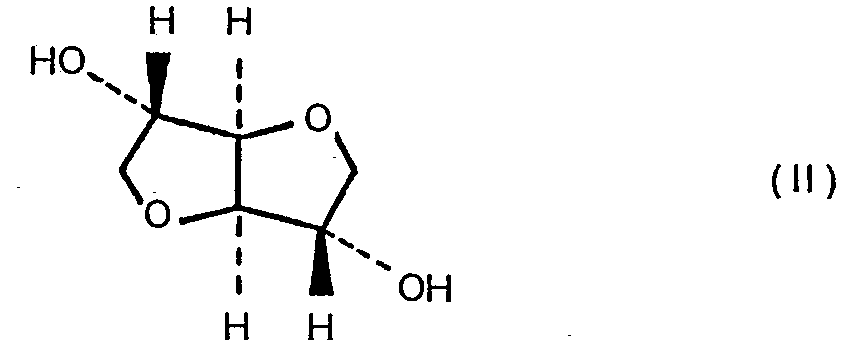
- Das Grundgerüst dieser Verbindungen besteht aus einem der stereoisomeren, unter Epimerisierung ineinander umwandelbaren 1.4;3.6-Dianhydro-hexite, nämlich entweder dem 1.4;3.6-Dianhydro-L-idit (="Isoidid") (II),

- Des Grundgerüst einiger Verbindungen schließlich besteht aus dem 1.4;3.6-Dianhydro-D-mannit (="Isomannid") (IV),

- Da im Gegensatz zu den Glucit-Derivaten bei den Idit- und Mannit-Derivaten eine Unterscheidung zwischen den 2- und 5-Substituenten nicht möglich ist, weil das C2-Atom bei Drehung des Moleküls um 180° zum CS-Atom wird, sind Hinweise auf die 5-Stellung oder 2-Stellung von Substituenten bei diesen Derivaten an sich überflüssig. Des besseren Vergleiches der Strukturen der einzelnen Verbindungen mit den allgemeinen Formeln wegen werden aber hier die lsoidid-Derivate durchweg als 5-Aminoisoidid-Derivate bezeichnet, da sie aus den in 5-Stellung acyisubstituierten Isosorbid-Derivaten entstehen. Entsprechend werden die als Ausgangsverbindungen verwendeten Isomannid-Acyl-Derivate als 2-Acylisomannid-Derivate bezeichnet, da aus ihnen die 2-Amino-isosorbid-Derivate hergestellt werden.
- Eine kurze Zusammenfassung über die Stereoisomerie der 1.4;3.6-Dianhydro-hexite gibt J. A. Mills in Advances in Carbohydrate Chem. 10, 1-53 (1955).
- Die erfindungsgemäßen Verbindungen sind wertvolle Zwischenprodukte zur Herstellung der in EP―A―44927, 44928 und 44940 beschriebenen gegebenenfalls N-substituierten Amino-desoxy-1.4;3.6-dianhydro-hexit-mononitrate der allgemeinen Formel (la),

- Die Verbindungen der allgemeinen Formel (la) besitzen koronardurchflußsteigernde, spasmolytische, blutdrucksenkende, negativ inotrope und die Herzfrequenz senkende Wirksamkeit. Sie sind zur Behandlung von Koronarerkrankungen, zur Kupierung und Prophylaxe von Angina-pectoris-Anfällen, zur Nachbehandlung von Herzinfarkten und zur Behandlung von Herzinsuffizienzen geeignet. Sie bewirken darüber hinaus eine Verbesserung der peripheren Durchblutung und der Gehirndurchblutung.
- Da sich gezeigt hatte, daß die beispielsweise aus der US-PS-3 886 186 bekannten 2- und 5-Mononitrate sowie das 2,5-Dinitrat des Isosorbids, die ebenfalls pharmakologisch wirksame Substanzen mit hämodynamischer, vasodilatorischer und antianginöser Wirksamkeit sind, unangenehme Nebenwirkungen, insbesondere Kopfschmerzen, verursachen, teilweise schlecht resorbierbar und teilweise-da es sich bei den Dinitraten um Explosivstoffe handelt-nur unter besonderen Vorsichtsmaßnahmen herstellen und handhaben lassen, bestand ein Bedürfnis nach der Bereitstellung neuer pharmazeutischer Mittel mit gleichem Wirkungsspektrum, die die Nachteile der bekannten Isosorbidmononitrate (ISMN) und des Isosorbiddinitrats (ISDN) nicht aufweisen, sowie nach der Schaffung neuer 1.4;3.6-Dianhydro-hexit-mononitrate, die als wirksame Bestandteile solcher pharmazeutischer Mittel verwendet werden können.
- Die der Erfindung zugrundeliegende Aufgabe besteht darin, das angeführte Bedürfnis zu befriedigen, die Lösung dieser Aufgabe darin, die erfindungsgemäßen Verbindungen als reaktive Zwischenprodukte zur Herstellung der neuen 1.4;3.6-Dianhydro-hexit-mononitrate bereitzustellen.
- Gegenstand der Erfindung sind demnach
- 1. 5-Amino-5-desoxy-1.4;3.6-dianhydro-L-idit-Derivate der allgemeinen Formel V,

- 2. 5-Amino-5-desoxy-1.4;3.6-dianhydro-D-glucit-Derivate der allgemeinen Formel VI

- 3. 2-Amino-2-desoxy-1.4;3.6-dianhydro-D-glucit-Derivate der allgemeinen Formel VII,

- 4. 2-Amino-2-desoxy-1.4;3.6-dianhydro-D-mannit-Derivate der allgemeinen Formel VIII,

- 5. (Purin-9-yl)-desoxy-1.4;3.6-dianhydro-hexit-Derivate der allgemeinen Formel IX,

- R4 eine Aminogruppe, eine Alkylmercapto-, Alkylamino- oder Dialkylaminogruppe mit 1 bis 4 C-Atomen, eine w-Phenylalkylaminogruppe, deren Alkylrest 1 bis 8 C-Atome aufweist und deren Phenylrest gegebenenfalls halogensubstituiert ist, oder den Rest eines cyclischen, nicht-aromatischen, gegebenenfalls ein weiteres Heteroatom enthaltenden sekundaren Amins das ausgewählt ist aus der Gruppe Pyrrolidin, Piperidin, Morpholin, Methylpiperazin, oder ein Chloratom bedeuten, sowie deren Säureadditionssalze;
- 6. 5-(Purin-9-yl)-5-desoxy-1.4;3.6-dianhydro-L-idit-Derivate der allgemeinen Formel X,

- 7. 5-(Purin-9-yl)-5-desoxy-1.4;3.6-dianhydro-D-glucit-Derivate der allgemeinen Formel XI,

- 8. 2-(Purin-9-yl)-2-desoxy-1.4;3.6-dianhydro-D-glucit-Derivate der allgemeinen Formel XII,

- 9. 2-(Purin-9-yl)-2-desoxy-1.4;3.6-dianhydro-D-mannit-Derivate der allgemeinen Formel XIII,
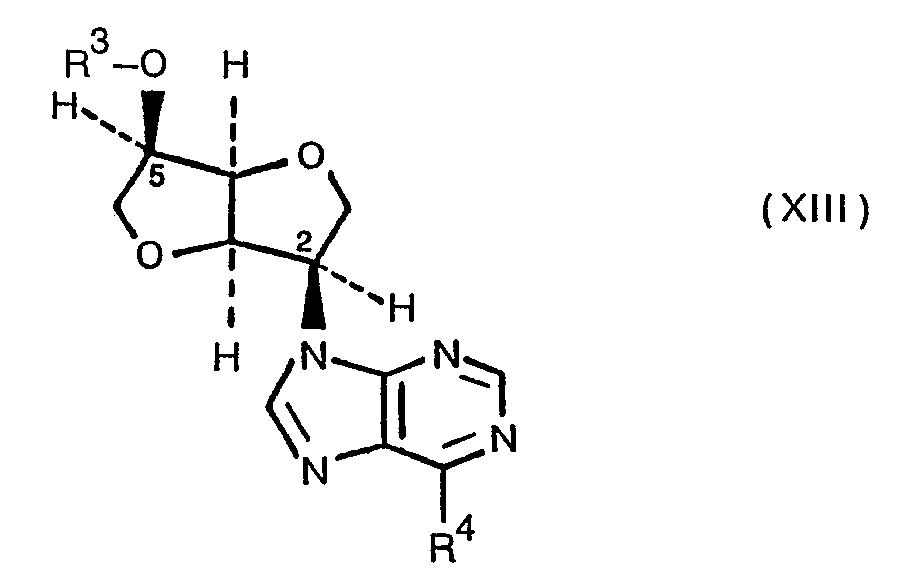
- 10. (Theophyllin-7-yl)-desoxy-1.4;3.6-dianhydro-hexit-Derivate der allgemeinen Formel XIV,

- 11. (ω-Purinylalkylamino)-desoxy-1.4;3.6-dianhydro-hexit-Derivate der allgemeinen Formel XV,

- R5 den Adenin-9-yl-Rest, den Theophyllin-7-yl-Rest, den Theobromin-1-yl-Rest oder einen weiteren N,N'-diniedrigalkylxanthin-N"-yl-Rest, wobei "niedrigalkyl" eine Alkylgruppe mit 1 bis 5 C-Atomen bedeutet,
- RB ein Wasserstoffatom oder eine Methylgruppe und m eine ganze Zahl von 1 bis 6 bedeuten, sowie deren Säureadditionssalze;
- 12. ω-(Theophyllin-7-yl)-alkylamino-desoxy-1.4;3.6-dianhydro-hexite der allgemeinen Formel XVI,
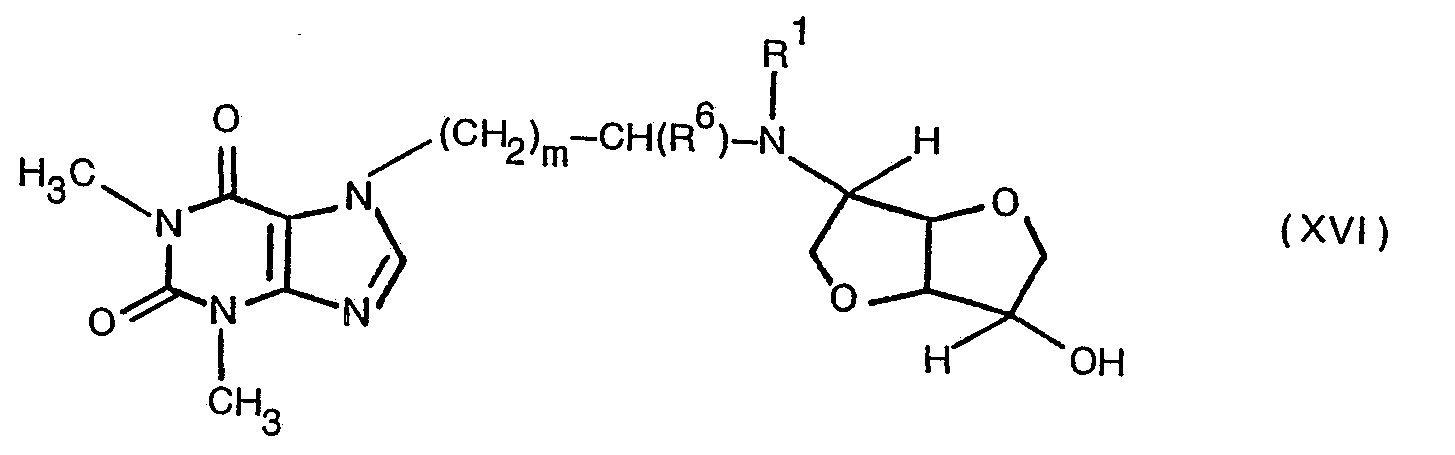
- 13. verschiedene Verfahren zur Herstellung der erfindungsgemäßen Verbindungen und
- 14. die Verwendung der erfindungsgemäßen Verbindungen als reaktive Zwischenprodukte zur Herstellung der entsprechenden Amino-desoxy-1.4;3.6-dianhydro-hexit-nitrate.
- Wie aus den vorstehenden allgemeinen Formeln hervorgeht, werden unter "Amino"-Derivaten auch solche Derivate verstanden, bei denen das Stickstoffatom Bestandteil eines aromatischen oder nicht-aromatischen heterocyclischen Ringsystems ist und das gegebenenfalls mit einem weiteren heterocyclischen Ringsystem anelliert ist; insbesondere auch Purin-Derivate wie gegebenenfalls 6-N-substituierte Adenin-, Theophyllin- oder andere Dialkylxanthin-Derivate.
- Die erfindungsgemäßen Verbindungen besitzen im 1.4;3.6-Dianhydro-hexit-Grundgerüst vier asymmetrische C-Atome und liegen in optisch aktiver Form vor, da als Ausgangsverbindungen optisch reine 1.4;3.6-Dianhydro-hexite verwendet werden, die aus natürlich vorkommenden Zuckern oder Zuckeralkoholen leicht zugänglich sind.
- Die Weiterverarbeitung der erfindungsgemäßen reaktiven Zwischenprodukte zu den Endprodukten, also den entspechenden Mononitraten, erfolgt so, daß die freie Hydroxylgruppe des entsprechenden, gegebenenfalls N-substituierten Amino-desoxy-1.4;3.6-dianhydro-hexits (R3=H), die gegebenenfalls vorher durch alkalische Hydrolyse des entsprechenden Mesylats oder Tosylats (R3=Methansulfonyl-, Toluolsulfonyl-) geschaffen wird, mit Salpetersäure, Nitriersäure oder mit einem Gemisch aus Salpetersäure und Eisessig/Acetanhydrid, gegebenenfalls in Gegenwart von Harnstoff zum entsprechenden Amino-desoxy-1.4;3.6-dianhydro-hexit-nitrat verestert wird. Die Weiterverarbeitung ist auch in den bereits genannten drei gleichzeitig eingereichten Patentanmeldungen beschrieben (vgl. insbesondere die dortigen Beispiele).
- Die erfindungsgemäßen Verbindungen können ausgehend von den epimeren, unsubstituierten 1.4;3.6-Dianhydro-hexiten, also ausgehend von L-Isoidid, D-Isosorbid und D-Isomannid, hergestellt werden, wobei jeweils mehrere verschiedene Synthesewege möglich sind.
- Einer dieser Wege besteht erfindungsgemäß darin, daß der entsprechende 1.4;3.6-Dianhydro-hexit mit einem Sulfonsäurechlorid, vorzugsweise mit Methansulfonsäurechlorid oder Toluolsulonsäurechlorid, in einem geeigneten wasserfreien Lösungsmittel und in Gegenwart einer Hilfsbase, vorzugsweise in Pyridin oder in Chloroform/Triäthylamin, bei erniedrigter Temperatur, vorzugsweise zwischen -20° und +10°C, in den entsprechenden Mono - 0 - acyl - 1.4;3.6 - dianhydro - hexit übergeführt wird, welcher dann durch Zusatz einer wäßrigen, beispielsweise 25%igen Ammoniaklösung oder durch Zusatz eines primären oder sekundären Alkylamins mit 1 bis 4 C-Atomen, durch Zusatz von 1-Aminoadamantan oder durch Zusatz eines cyclischen, nicht-aromatischen, gegebenenfalls ein weiteres Heteroatom enthaltenden sekundären Amins, gegebenenfalls unter Zusatz eines geeigneten Lösungsmittels, einer Aminolyse unterworfen wird, und zwar vorteilhaft unter erhöhtem Druck, vorzugsweise bei einem Druck von 2 bis 20 at, und erhöhter Temperatur, vorzugsweise bei 90 bis 180°C. Die Aminolyse wird zweckmäßig in einem geschlossenen Stahlautoklaven bis zur quantitativen Umsetzung druchgeführt. Geeignete Lösungsmittel sind-gegebenenfalls unter Zusatz von Wasser-z.B. Alkohole, Di- oder Polyglykoyläther oder Dioxan.
- Die Aminolyse des entsprechenden Mono-O-acyl-1.4;3.6-dianhydro-hexits kann auch unter Normaldruck, jedoch ebenfalls bei erhöhter Temperatur durchgeführt werden, nämlich dann, wenn anstelle eines primären oder sekundären Amins ein Alkalisalz des Adenins, 6-Chlor- oder 6-Alkylmercaptopurins oder des Theophyllins zugesetzt wird, wobei man vorzugsweise dipolare aprotische Lösungsmittel, z.B. Dimethylformamid oder Dimethylsulfoxid, zusetzt und vorzugsweise bei Temperaturen zwischen 90 und 120°C arbeitet und das Reaktionsgemisch mehrere Tage lang rührt.
- Bei der Aminolyse zum entsprechenden, gegebenenfalls N-mono- oder -di-substituierten Amino - desoxy - 1.4;3.6 - dianhydro - hexit wird die Mesylat- bzw. Tosylatgruppe durch die Amino- oder substituierte Aminogruppe bzw. durch den gegebenenfalls substituierten Purinylrest nach dem Reaktionsmuster einer typischen bimolekularen nucleophilen Substitution (SN2-Reaktion) ausgetauscht, die stets mit einer Umkehr der Konfiguration am zentralen Kohlenstoffatom verbunden ist. Diese Konfigurationsumkehr, dem Fachmann auch unter den Begriffen "Inversion" oder "Walden-Umkehr" geläufig, ist der Grund dafür, daß aus dem 1.4;3.6 - Dianhydro - D - glucit - 5 - acyl - Derivat, bei dem der Acylrest in 5-Stellung endo-ständig vorliegt, stets das in 5-Stellung durch die Aminogruppe oder eine entsprechend substituierte Aminogruppe oder den gegebenenfalls substituierten Purinylrest substituierte 1.4;3.6 - Dianhydro - L - idit - Derivat entsteht, bei dem der anstelle des Acylrests in das Molekül eingetretene Substituent nicht mehr in endo-, sondern in exo-Stellung steht. Die mit der SN2-Reaktion verbundene Walden-Umkehr ist in ganz entsprechender Weise verantwortlich dafür, daß aus dem entsprechenden Idit-acylat stets das in 5-Stellung endo-substituierte Glucit-Derivat, aus dem Mannit-acylat das entsprechende, in 2-Stellung exo-substituierte Glucit-Derivat und aus dem Glucit-2-exo-acylat das entsprechende, in 2-Stellung endo-substituierte Mannit-Derivat entsteht.
- Zur Herstellung derjenigen erfindungsgemäßen Verbindungen der allgemeinen Formel 1, worin R1 und R2 gemeinsam mit dem Stickstoffatom, an das sie gebunden sind, einen an der 6-Aminogruppe mono- oder disubstituierten Aden(9)yl-Rest bedeuten, wird zunächst, wie vorstehend beschrieben, der entsprechende 6-Chlorpurin-9-yl- oder 6 - Alkylmercaptopurin - 9 - yl - desoxy - 1.4;3.6 - dianhydro - hexit hergestellt, und zwar durch Umsetzung des 6-Chlorpurin- oder 6 - Alkymercaptopurin - 9 - natriumsalzes mit dem entsprechenden Monoacyldesoxy - 1.4;3.6 - dianhydro - hexit. Der 6-Chlorpurin-9-yl- oder 6-Alkylmercaptopurin - 9 - yl - desoxy - 1.4;3.6 - dianhydro - hexit wird dann bei einer Temperatur zwischen 90 und 150°C im geschlossenen Autoklaven mit einer wäßrigen Alkylamin- oder Dialkylamin-Lösung, wobei die Alkylgruppe 1 bis 4 C-Atome aufweist, mit einem cyclischen, nicht-aromatischen, gegebenenfalls ein weiteres Heteroatom enthaltenden sekundären Amin das ausgewählt ist aus der Gruppe Pyrrolidin, Piperidin, Morpholin, Methylpiperazin, oder mit einem gegebenenfalls halogensubstituierten w-Phenylalkylamin, dessen Alkylgruppe 1 bis 8 C-Atome aufweist, umgesetzt, wobei gegebenenfalls Wasser oder ein niederer Alkohol als Lösungsmittel zugesetzt wird.
- Beispiele für die hierfür eingesetzten primären und sekundären Amine sind: Methylamin, Äthylamin, Propylamin, Isopropylamin, Butylamin, Dimethylamin, Diäthylamin, Dipropylamin, Dibutylamin, Pyrrolidin, Piperidin, Morpholin, Methylpiperazin, Benzylamin, 2-Phenyl-äthylamin, 3-Phenylpropylamin, 4-Phenyl-butylamin, 5-Phenyl-pentylamin, 6-Phenyl-hexylamin, 7-Phenyl-heptylamin, 8-Phenyl-octylamin sowie die entsprechenden im Phenylring ortho-, meta- oder para-halogensubstituierten w-Phenyl-alkylamine.
- Zur Herstellung derjenigen erfindungsgemäßen Verbindungen, bei denen das Stickstoffatom des Amino - desoxy - isohexid - Ringsystem durch eine geradkettige, unsubstituierte Alkylgruppe mit einem der Ring-Stickstoffatome eines Purinderivats, also eines Adenin-, Xanthin-, Theophyllin- oder Theobromin-Derivats, verbunden ist, wird der entsprechende Amino - desoxy - 1.4;3.6 - dianhydro - hexit vorzugsweise mit einem N-(ω-Brom-, w-Chlor- oder ω - Methansulfonyloxy - alkyl) - theophyllin, -theobromin, -dialkylxanthin oder -adenin umgesetzt, vorzugsweise mit 7 - (2 - Bromäthyl) - theophyllin, 7 - (3 - Chlorpropyl) - theophyllin, 7 - (3 - Brompropyl) - theophyllin, 7 - (3 - Methansulfonyloxypropyl) -theophyllin, 7 -(4 - Brombutyl) -theophyllin, 7 - (5 - Brompentyl) -theophyllin, 7 - (6 - Bromhexyl) - theophyllin und dergleichen.
- Zur Vermeidung einer Disubstitution am Stickstoffatom der Aminogruppe des Aminoisohexids kann diese Aminogruppe vor der Umsetzung mit dem reaktiven Purinderivat mit einer als Schlutzgruppe geeigneten Verbindung, beispielsweise einer Benzylverbindung, umgesetzt werden, die sich nach der Umsetzung leicht wieder abspalten läßt, beispielsweise durch Hydrierung in Gegenwart eines üblichen Edelmetallkatlysators.
- Ein weiteres geeignetes Verfahren zur Herstellung derjenigen erfindungsgemäßen Verbindungen, bei denen die "Brücke" zwischen dem Aminoisohexid und dem Purinderivat eine Alkylengruppe ist, besteht darin, daß man den entsprechenden Aminoisohexid zusammen mit einem ω-Acyl-alkyl- bzw. ω-Oxoalkylxanthin- oder -adenin-Derivat in an sich bekannter Weise einer reduktiven Kondensation in Gegenwart von Wasserstoff und einem geeigneten Edelmetall- oder Edelmetallsulfid-Katalysator, gegebenenfalls in Gegenwart eines Lösungsmittels, unterwirft. Im Falle der ω-Oxoalkyl-xanthin- oder -adenin-Derivate, beispielsweise des 7 - (3 - Oxopropyl) - theophyllins, entstehen die entsprechenden Purinylalkylamino-isohexid-Derivate mit unverzweigter Alkylenbrücke, beispielsweise 3 - Theophyllin - 7 - yl - propylamino - isohexid. Im Falle der w-Acylalkyl-xanthin- oder -adenin-Derivate, z.B. des 7 - (2 - Acetyläthyl) - theophyllins oder des 7-(4-Acetylbutyl)-theophyllins, entstehen bei der reduktiven Kondensation mit dem Aminoisohexid die entsprechenden ω-Purinyl-alkylamino-iso-hexid-Derivate mit verzweigter Alkylengruppe, beispielsweise 3 Theophyllin 7 - -yl- 1 - methyl - propylamino - isohexid oder 5 - Theophyllin - 7 - yl - 1 - methyl - pentylamino - isohexid. Die so erhaltenen erfindungsgemäßen Verbindungen mit verzweigter Alkylenbrücke besitzen ein zusätzliches Asymmetriezentrum, so daß jeweils zwei Diastereomere bei der reduktiven Kondensation entstehen, welche mit Hilfe üblicher Trennmethoden, beispielsweise durch Säulenchromatographie, Flüssig-Flüssig-Verteilung oder fraktionierte Kristallisation in die beiden Isomeren aufgetrennt werden können, also beispielsweise in (+) - 5 - (3 - Theophyllin - 7 - yl - 1 - methyl - propylamino) - 5 - desoxy - 1.4;3.6 - dianhydro - L - idit und (-) - 5 - (3 - Theophyllin - 7 - yl - 1 - methyl - propylamino) - 5 - desoxy - 1.4;3.6 - dianhydro - L - idit. Die Auftrennung kann auch erst nach Weiterverarbeitung zu den Salpetersäureestern stattfinden. Der bisher beschriebene erste erfindungsgemäße Weg zur Herstellung der erfindungsgemäßen Verbindungen, bei dem der entsprechende Isohexid mit einem Sulfonsäurechlorid, vorzugsweise mit Methansulfonsäurechlorid oder Toluolsulfonsäurechlorid, in den entsprechenden Monoacyl - 1.4;3.6 - dianhydro - hexit übergeführt wird, hat den Nachteil, daß bei der Acylierung nicht nur das entsprechende 5 - O Acyl - Derivat bzw. 2-O-Acyl-Derivat entsteht, sondern gleichzeitig auch das 2,5-Diacyl-Derivat, so daß bei den Isoidid- und Isomannid-Derivaten jeweils die Monoacyl-Verbindung vom Diacylat abgetrennt werden muß, während beim Isosorbid, bei dem zwei stereoisomere Monoacyl-Derivate neben dem Diacylat entstehen, das gewünschte Acylat aus dem Gemisch der drei Acyl-Derivate isoliert werden muß. Die auftrennung des Acylatgemisches erfolgt entweder durch fraktionierte Kristallisation, fraktionierte Extraktion oder mit Hilfe anderer an sich bekannter Methoden.
- Die mühsame und aufwendige Auftrennung des Acylat-Gemisches entfällt jedoch bei Anwendung eines weiteren erfindungesgemäßen Syntheseweges dadurch, daß 1.4;3.6-Dianhydro-D-glucit mit einem Überschuß an Sulfonsäurechlorid, vorzugsweise Methansulfonylchlorid oder Toluolsulfonylchlorid, in Pyridin oder Chloroform/Triäthylamin quantitativ zum entsprechenden 1.4;3.6-Dianhydro-D-glucit-2.5-diacylat umgesetzt wird.
- Das Diacylat wird dann unter entsprechenden Bedingungen, wie bei dem ersten Syntheseweg beschrieben, der Aminolyse unterworfen, wobei infolge bevorzugter Substitution der 5-endo-Acylgruppe unter Konfigurationsumkehr und infolge teilweiser Hydrolyse der 2-exo-Acylgruppe unter Biebehaltung der Konfiguration neben einer geringen, in der wäßrigen Phase verbleibenden Menge an 2.5 - Diamino - 2.5 - didesoxy - 1.4;3.6 - dianhydro - D - glucit ein Gemisch aus 5 - Amino - 5 - desoxy - 1.4;3.6 - dianhydro - L - idit und 5 - Amino - 5 - desoxy - 1.4;3.6 - dianhydro - L - idit - 2 - methansulfonat im Verhältnis von etwa 1:4 entsteht.
- Zur Vervollständigung der Hydrolyse der 2-exo-Acylgruppe wird denn dieses 1:4-Gemisch einer alkalischen oder sauren Hydrolyse unterworfen, und der entstehende 5 - Amino - 5 - desoxy - 1.4;3.6 - dianhydro - L - idit wird anschließend gegebenenfalls mit dem gewünschten reaktiven Purinyl- alkyl-Derivat kondensiert.
- Wie sich aus der Tatsache, daß die Aminolyse des Isosorbid-2.5-diacylats überwiegend zum 5-Amino-isoidid-2-acylat führt, ergibt, ist die nucleophile Substitution der 2-exo-Acylatgruppe im Isosorbid-diacylat sterisch gehindert. Der Grad der sterischen Hinderung ist temperaturabhängig. Um aus dem entsprechenden Diacylat möglichst quantitativ das 5-Amino-isoidid-2-acylat zu erhalten, arbeitet man deshalb erfindungsgemäß vorzugsweise bei einer Temperatur von 80 bis 110°C, da bei Temperaturen über 110°C auch die 2-exo-Acylgruppe, wenn auch in geringem Ausmaß, durch Ammoniak oder durch das eingesetzte Amin angegriffen wird. Als Lösungsvermittler kann der wäßrigen Ammoniaklösung oder dem Amin ein Alkohol, vorzugsweise Äthanol, zugesetzt werden. Im Falle der Aminolyse durch Purin-Alkalisalze verwendet man dipolare aprotische Lösungsmittel, vorzugsweise Dimethylsulfoxid, Dimethylformamid oder Diäther von Mono-, Di- oder Polyäthylenglykol.
- Bei einem weiteren erfindungsgemäßen Weg zur Herstellung der erfindungsgemäßen Verbindungen macht man sich die überraschend aufgefundene Tatsache zunutze, daß 1.4;3.6 - Dianhydro - D - glucit - 2.5 - diacylate (Dimesylat oder Ditosylat) von Natriumbenzoat oder anderen Alkalisalzen der Benzoesäure in einem geeigneten Lösungsmittel, vorzugsweise einem dipolaren aprotischen Lösungsmittel, beispielsweise in wasserfreiem Dimethylformamid, Dimethylsulfoxid oder Diäthern des Äthylenglykols bei Temperaturen von 100 bis 180°, vorzugsweise 120 bis 150°C selektiv am CS-Atom angegriffen werden, so daß unter Konfigurationsumkehr in hoher Ausbeute 1.4;3.6 - Dianhydro - L - idit - 2 - methansulfonat - 5 - benzoat bzw. 1.4;3.6 - Dianhydro - L - idit - 2 - toluolsulfonat - 5 - benzoat entsteht. Dieses Produkt wird nun wieder der Ammonolyse mit 25%iger Ammoniaklösung oder der Aminolyse unter erhöhtem Druck und erhöhter Temperatur unterworfen, wobei der Benzoesäureester nicht substituiert, sondern hydrolytisch abgespalten wird, und zwar unter Beibehaltung der Konfiguration am CS-Atom, während der Acylatrest am C2-Atom unter Konfigurationsumkehr durch die Amino- bzw. Alkylaminogruppe zum entsprechenden 5 - Amino - 5 - desoxy - 1.4;3.6 - dianhydro - D - glucit bzw. 5 - Alkylamino - 5 - desoxy - 1.4;3.6 - dianhydro - D - glucit substituiert wird.
- Da das zuletzt genannte elegante Verfahren mit einer zweimaligen selektiven Konfigurationsumkehr verbunden ist, ist die Konfiguration des Endproduktes bezüglich seiner Substituenten identisch mit der Konfiguration der Ausgangsverbindung; aus dem Isosorbid-disulfonat entsteht wieder ein Isosorbid-Derivat, nämlich 5-Amino- bzw. 5 - Alkylamino - 5 - desoxy - 1.4;3.6 - dianhydro - D - glucit.
- Die so gewonnenen 5-Amino- bzw. 5-Alkylamino-5-desoxy-1.4;3.6-dianhydro-D-glucit-Derivate können anschließend nach den zuvor beschriebenen Reaktionswegen mit reaktiven Purinylalkylderivaten zu den erfindungsgemäßen 5 - (ω - Purinyl - alkylamino) - 5 - desoxy - 1.4;3.6 - dianhydro - D - glucit - Derivaten kondensiert werden.
- Anstelle der freien Basen können ggf. auch die Säureadditionssalze der erfindungsgemäßen Verbindungen eingesetzt werden, und zwar die Additionssalze anorganischer Säuren und Mineralsäuren, beispielsweise der Halogenwasserstoffsäuren, Schwefelsäure oder Phosphorsäuren, sowie organischer Säuren, beispielsweise der Carbon- und Sulfonsäuren. Die freien Basen können aus den Säureadditionssalzen wieder durch Behandlung mit starken Basen, beispielsweise Natrium- oder Kaliumhydroxid, freigesetzt werden.
- Die in den folgenden Beispielen enthaltenen Abkürzungen haben folgende Bedeutungen:
- Schmp. =Schmelzpunkt (unkorrigiert)
- (Z) =Zersetzung
- d =Dichte
- [al D 26 =optische Drehung bei 25°C, Natrium-D-Linie.
- Hinter den optischen Drehwerten sind die Konzentrationen der gemessenen Lösungen angegeben, wobei c 2 beispielsweise eine Konzentration von 2 g/100 ml Lösung bedeutet; das Lösungsmittel ist jeweils gesondert angegeben. Alle Temperaturen sind in Grad Celsius angegeben.
- a) 1.4;3.6-Dianhydro-D-glucit-2-methansulfonat, -5-methansulfonat und 2.5-dimethansulfonat:
- Zur Lösung von 4.82 kg (33 Mol) 1.4;3.6-Dianhydro-D-glucit in 24 Liter Pyridin tropft man unter Feuchtigkeitsausschluß, Rühren und Kühlen auf -15° bis -20° innerhalb mehrerer Stunden 3.1 Liter (40 Mol) Methansulfonsäurechlorid. Anschließend rührt man 15 Stunden ohne Kühlung weiter. Man destilliert im Vak. das Pyridin ab, gibt zum öligen Rückstand 15 Liter Wasser, kocht auf und läßt abkühlen. Absaugen, Waschen mit 4 Litern Wasser und Trocknen des kristallinen Niederschlags ergibt 2.22 kg (7.34 Mol) 1.4;3.6 - Dianhydro - D - glucit - 2.5 - dimethansulfonat. Das Filtrat wird unter Rühren und Wasserkühlung mit ca. 1.5 kg Natriumhydroxid neutralisiert und bei ca. 70° im Vakuum bis zur Trockne eingedampft. Der Trockenrückstand wird mit insgesamt 30 Litern Chloroform kontinuierlich heiß extrahiert und der Extrakt heiß filtriert. Man läßt den Extrakt 15 Stdn. bei 20° stehen, saugt den kristallinen Niederschlag ab, wäscht ihn zweimal mit je 2 Litern Chloroform, trocknet und erhält 2.3 kg (10.26 Mol) 1.4;3.6 - Dianhydro - D - glucit - 5 - methansulfonat. Die vereinigten Filtrate werden im Vakuum eingedampft und der Rückstand heiß in 22 Litern Aethanol gelöst. Man läßt 15 Stunden bei 20° stehen, saugt den kristallinen Niederschlag ab, wäscht ihn zweimal mit je 3 Litern Aethanol, trocknet und erhält 0.65 kg (2.90 Mol) 1.4;3.6 - Dianhydro - D - glucit - 2 - methansulfonat. Eindampfen der Filtrate ergibt 2.21 kg (9.85 Mol) eines Gemisches der beiden isomeren Mono-methansulfonate, das je nach Bedarf durch Wiederholung der abwechselnden Kristallisationen aus Chloroform und Aethanol weiter aufgetrennt werden kann, bzw. durch Veresterung mit Methansulfonsäurechlorid in Pyridin vollständig in 1.4;3.6 - Dianhydro - D - glucit - 2.5 - dimethansulfonat übergeführt wird.
- Analytische Mengen der Methansulfonate ergeben nach Umkristallisation korrekte Elementaranalysen und die in Tabelle 1 aufgeführten Schmelzpunkte und optischen Drehungen:

- Setzt man 1.4;3.6-Dianhydro-D-glucit mit der 2 bis 2.5-fach molaren Menge Methansulfonsäurechlorid unter den gleichen Reaktionsbedingungen um, erhält man das 1.4;3.6-Dianhydro-D-glucit-2.5-dimethan- sulfonat in nahezu quantitativer Ausbeute.
- b) 5-Amino-5-desoxy-1.4;3.6-dianhydro-L-idit:
- Das Produkt kann auf folgenden 2 Wegen erhalten werden:
- Herstellung durch Ammonolyse von 1.4;3.6-Dianhydro-D-glucit-5-methansulfonat. Das Gemisch aus 448 g (2 Mol) 1.4;3.6-Dianhydro - D - glucit - 5 - methansulfonat und 1.5 Liter 25 %igem wäßrigen Ammoniak (20 Mol) wird im geschlossenen Stahlautoklaven 24 Stunden bei 130° gerührt. Danach ist die Umsetzung quantitativ. Man dampft unter vermindertem Druck ein und trocknet azeotrop durch aufeinanderfolgende Zugabe und erneutes Eindampfen von je 1 Liter Aethanol und Chloroform nach. Der ölige Rückstand wird unter Erwärmen in 500 ml Aethanol gelöst und mit Isopropanol auf 2 Liter verdünnt. Beim Erkalten kristallisieren 311 g (1.3 Mol) 5 - Amino - 5 - desoxy - 1.4;3.6 - dianhydro - L - idit als methansulfonsaures Salz aus. Weitere 100 g (0.4 Mol) kristallines Reinprodukt fallen nach Behandeln der Mutterlauge mit 30 g Aktivkohle und Konzentrieren des Filtrats aus. Zur Analyse kristallisiert man aus Aethanol/Chloroform um.
- Schmp. 151―4°;

- Elementaranalyse: C6H11NO3xCH3SO3H (241.27)

- Ein kleiner Teil des Produkts wird in die freie Base übergeführt und aus Chloroform/Aether umkristallisiert. Schmp. 103―104°;

- Ammonolyse von 1.4;3.6-Dianhydro-D-glucit-2.5-dimethansulfonat gefolgt von alkalischer Hydrolyse des erhaltenen 5 - Amino - 5 - desoxy - 1.4;3.6 - dianhydro - L - idit - 2 - methansulfonats.
- Das Gemisch aus 302g (1 Mol) 1.4;3.6-Dianhydro-D-glucit-2.5-dimethansulfonat, 750 ml 25 %igem wäßrigen Ammoniak (10 Mol) und 750 ml Aethanol wird im verschlessenen Stahlautoklaven 4 Tage bei 100° gerührt Nach dem Abkühlen versetzt man mit 1 Liter Wasser und saugt vom auskristallisierten nicht umgesetzten Dimethansulfonat (100 g=0.35 Mol) ab. Das Filtrat wird zur Entfernung von Ammoniak mit 104 g (1.3 Mol) Natriumhydrogencarbonat versetzt und unter vermindertem Druck eingedampft. Man löst in 5 Liter Wasser und extrahiert mit 500 ml Chloroform Eliminierungsprodukte heraus. Die wäßrige Phase wird 48 Stdn. lang im Rotationsperforator (Normag) kontinuierlich mit Chloroform extrahiert. In der Wasserphase verbleibt als Nebenprodukt entstandener 2.5 - Diamino - 2.5 - didesoxy - 1.4;3.6 - dianhydro - D - glucit. Der Chloroformextrakt ergibt nach dem Trocknen über wasserfreiem Natriumsulfat, Filtrieren und Eindampfen 105 g (ca. 0.55 Mol) eines 1:4-Gemisches aus 5 - Amino - 5 - desoxy -1.4;3:6 - dianhydro - L - idit und 5 - Amino - 5 - desoxy - 1.4;3.6 - dianhydro - L - idit - 2 - methansulfonat.
- Zur Charakterisierung des letzteren Produkts wird ein kleiner Teil des Gemisches in Chloroform gelöst, 2 mal mit Wasser gewaschen, die Chloroformphase eingedampft, in das methansulfonsaure Salz übergeführt und 2 mal aus Aethanol umkristallisiert.
- Schmp. 213―5°;

- Elementaranalyse: C7H13NO5SxCH3SO3H (319.37)
-

- Das oben erhaltene Gemisch wird zu einer Lösung von 60 g (1.5 Mol) Natriumhydroxid in 1.5 Litern Wasser gegeben und 24 Stunden unter Rückfluß gekocht. Nach dem Abkühlen stellt man durch Zugabe von konz. Salzsäure auf pH=10 ein, filtriert und dampft unter vermindertem Druck ein, trocknet aceotrop mit n-Butanol nach, erwärmt den Rückstand mit 500 ml n-Butanol und filtriert von anorganischen Salzen ab. Die butanolische Lösung wird eingedampft, der Rückstand in 200 ml Isopropanol gelöst und mit 34 g (0.35 Mol) Methansulfonsäure versetzt. Es kristallisieren 80 g (0.33 Mol) 5 - Amino - 5 - desoxy - 1.4;3.6 - dianhydro - L - idit in Form des methansulfonsauren Salzes aus. Schmp. 150-2°. Ausbeute bezogen auf umgesetztes 1.4;3.6 - Dianhydro - D - glucit - 2.5 - dimethansulfonat: 50%
- Zur Lösung von 2923 g (20 Mol) 1.4;3.6-Dianhydro-D-glucit in 16 Litern wasserfr. Pyridin tropft man unter Rühren und Kühlen auf -15° 2 Liter (25 Mol) Methansulfonsäurechlorid, rührt 15 Stdn. bei -15° nach und destilliert das Pyridin unter vermindertem Druck ab. Der ölige Rückstand wird mit 10 Litern Wasser versetzt, kurz zum Sieden erhitzt und nach dem Abkühlen vom auskristallisierten 1.4;3.6 - Dianhydro - D - glucit - 2.5 - dimethansulfonat abfiltriert und der Filterkuchen 2 mal mit je 2.5 Litern Wasser gewaschen. Die vereinigten Filtrate werden nach Zugabe von 1 kg (25 Mol) Natriumhydroxid unter reduziertem Druck eingedampft. Der Rückstand, bestehend aus dem Gemisch von 1.4;3.6-Dianhydro-D-glucit-2- und -5-methansulfonat und Natriummethansulfonat wird ohne weitere Reinigung der wäßrigen Ammonolyse unterworfen. Hierzu versetzt man mit 4 Litern Wasser und 12 Litern 25 %igem wäßrigem Ammoniak und erhitzt die so erhaltene Lösung 2 Tage unter Rühren im geschlossenen Stahlautoklaven auf 120° (Druck: ca. 7-8 bar). Nach dem Abkühlen und Entspannen setzt man 400 g Aktivkohle zu, filtriert, engt das Filtrat auf ca. 4 Liter ein und extrehiert zweimal mit je 1 Liter Chloroform den als Nebenprodukt aus dem 1.4;3.6 - Dianhydro - D - glucit - 2 - methansulfonat gebildeten 1.4;2.5;3.6 - Trianhydro - D - mannit (insgesamt ca. 90 g=0.7 Mol) heraus. Die wäßrige Phase wird durch Zugabe von Natriumhydroxid auf pH=9 gebracht und zur Trockne eingedampft. Der halbfeste Rückstand wird zur Abtrennung anorganischen Materials mit 10 Litern Aethanol aufgekocht und nach dem Abkühlen filtriert. Das eingedampfte Filtrat wird in 10 Litern n-Butanol unter Erwärmen gelöst, über wasserfr. Natriumsulfat getrocknet, filtriert, eingedampft und im Vakuum fraktionierend destilliert. Nach dem Vorlauf (0.4 Torr. 122-135°) von 55 g (0.38 Mol) durch Trianhydro-D-mannit schwach verunreinigtem 5 - Amino - 5 - desoxy - 1.4;3.6 - dianhydro - L - idit destillieren zwischen 140° und 144° bei 0.15 bis 0.2 Torr insgesamt 681 g (4.69 Mol) reiner 5 - Amino - 5 - desoxy - 1.4;3.6 - dianhydro - L - idit als langsam erstarrendes schwach gelbliches Oel über. Schmp. (nach Umkristallisation aus Chloroform/Aethylacetat/Aether) 103―4°;

- Das Produkt kann auf folgenden zwei Wegen erhalten werden:
- Herstellung und Ammonolyse von 1.4;3.6-Dianhydro-L-idit-2-methansulfonat.
- Die Lösung von 73 g (480 mmol) 96 %ig. 1.4;3.6-Dianhydro-L-idit in 500 ml wasserfreiem Pyridin wird unter Feuchtigkeitsauschluß, Rühren und Kühlen auf -20° tropfenweise mit 52 ml (660 mmol) 98 %igem Methansulfonylchlorid versetzt und 15 Stdn. bei -20° nachgerührt. Unter vermindertem Druck destilliert man das Pyridin soweit wie möglich ab und erwärmt den Rückstand nach Zugabe von 500 ml heißem Wasser bis zur Lösung. Beim Abkühlen kristallisieren 47.6 g (157 mmol) 1.4;3.6 - Dianhydro - L - idit - 2.5 - dimethansulfonat aus, die abgesaugt und zweimal mit je 100 ml Wasser nachgewaschen werden. Die vereinigten Filtrate werden durch Zugabe von Natriumhydrogencarbonat neutralisiert (pH=7), unter vermindertem Druck eingedampft und getrocknet. Der gepulverte Trockenrückstand wird zweimal mit je 400 ml Chloroform ausgekocht und noch heiß filtriert. Nach dem Abkühlen des Filtrats kristallisiert 1.4;3.6 - Dianhydro - L - idit - 2 - methansulfonat aus. Die Mutterlauge liefert nach Konzentration weiteres Monomethansulfonat. Insgesamt erhält man 51.5 g (213 mmol) 1.4;3.6 - Dianhydro - L - idit - 2 - methansulfonat. Zur Analyse wird eine kleine Menge aus Methanol umkristallisiert.
- Schmp. 124-5°; [a]ö 33.7 (c 1.0; Aceton).
- Elementaranalyse: C7H12O6S (224.24)

- 33.6 g (150 mmol) des so erhaltenen 1.4;3.6-Dianhydro-L-idit-2-methansulfonats werden zusammen mit einer Lösung von 17 g (1 Mol) Ammoniak in 250 ml n-Butanol im geschlossenen Stahlautoklaven 3 Tage auf 170° erhitzt. Nach dem Abkühlen saugt man auskristallisiertes Ammoniummethansulfonat abt und wäscht mit 100 ml n-Butanol nach. Das Filtrat wird zweimal mit je 200 ml Wasser extrahiert. Die vereinigten wäßrigen Extrakte werden mit 200 ml Chloroform gewaschen, zur Trockne eingedampft und aceotrop mit Butanol nachgetrocknet. Der Trockenrückstand wird unter Zusatz von 10 g wasserfreiem Natriumsulfat mit 50 ml n-Butanol aufgekocht, heiß filtriert und das Filtrat eingedampft. Das so erhaltene ölige Rohprodukt wird in 50 ml Chloroform aufgenommen, filtriert und eingedampft. Man erhält 14 g (96 mmol) langsam erstarrenden 5 - Amino - 5 - desoxy - 1.4;3.6 - dianhydro - D - glucit. Zur Charakterisierung überführt man einen kleinen Anteil des Produkts in das Hydrochlorid und kristallisiert aus Isopropanol um.
- Zersetzungspunkt: 240°; [a]ös 39.1 (c 1.0; Wasser)
- Elementaranalyse: C6H11NO3×HCl (181.63)

- Herstellung und selektive Ammonolyse von 1.4;3.6-Dianhydro-L-idit-2-methansulfonat-5-benzoat.
- Die Mischung aus 604 g (2 Mol) 1.4;3.6-Dianhydro-D-glucit-2.5-dimethansulfonat, 317 g (2.2 Mol) Natriumbenzoat und 8 Litern wasserfreiem Dimethylformamid wird 2 Tage bei 145° im Stahlautoklaven unter Stickstoffschutzatmosphäre gerührt. Unter vermindertem Druck destilliert man das Dimethylformamid ab, nimmt den Rückstand in 5 Litern Chloroform auf, extrahiert nacheinander mit je 2 Litern 1-molarer Natronlauge und Wasser, trocknet die Chloroformphase über wasserfreiem Natriumsulfat, filtriert und konzentriert auf 1500 ml Volumen. Das beim Stehenlassen kristallisierende Rohprodukt wird abgesaugt, unter Erwärmen in 500 ml Aceton gelöst und die heiße Lösung in 1000 ml Aethanol gegossen. Beim Abkühlen kristallisieren 273 g (0.83 Mol) 1.4;3.6 - Dianhydro - L - idit - 2 - methansulfonat - 5 - benzoat aus. Die Mutterlauge ergibt nach Eindampfen und Umristallisation weitere 120 g (0.37 Mol) schwach durch Ausgangssubstanz verunreinigtes Produkt. Die analytische Probe hat nach Umkristallisation aus Aethanol den Schmp.
- 117° und

- Elementaranalyse: C14H16O7S (328.35)
-

- 328 g (1 Mol) des so erhaltenen 1.4;3.6-Dianhydro-L-idit-2-methansulfonat-5-benzoats werden zusammen mit 1 Liter Aethanol und 1.5 Liter 25 %igem wäßrigen Ammoniak 1 Tag bei 130° im geschlossenen Stahlautoklaven gerührt. Man dampft unter vermindertem Druck ein, löst den Rückstand in 1 Liter Wasser, stellt durch Zugabe von konz. Salzsäure auf pH=1 ein und saugt den Niederschlag-bestehend aus Benzoesäure und Benzamid-ab. Das Filtrat wird nach zweimaligem Waschen mit je 500 ml Chloroform durch Zugabe von Natriumhydrogencarbonat auf pH=8 gebracht, erneut eingedampft und der Rückstand mit 2 Litern Aethanol extrahiert. Der Aethanol-Extrakt wird nach dem Eindampfen mit 2 Litern Chloroform extrahiert, der Chloroformextrakt mit 60 g Aktivkohle aufgekocht, filtriert und eingedampft. Die so erhaltenen 105 g Rohprodukt liefern nach fraktionierter Destillation bei 0.2 Torr und 136-142° Uebergangstemperatur 86.3 g (0.59 Mol) 5 - Amino - 5 - desoxy - 1.4;3.6 - dianhydro - D - glucit in Form eines langsam erstarrenden farblosen Oels, das nach Ueberführung in das Hydrochlorid identisch mit dem nach Verfahren 1 gewonnenen Produkt ist.
- a) 1.4;3.6-Dianhydro-D-mannit-2-methansulfonat:
- Der Lösung von 877 g (6 Mol) 1.4;3.6-Dianhydro-D-mannit in 6 Litern Pyridin tropft man unter Rühren und Feuchtigkeitsausschluß sowie Kühlen auf -15° innerhalb 6 Stdn. 525 ml (6.6 Mol) Methansulfonylchlorid zu, rührt weitere 3 Tage bei -150 und destilliert dann unter vermindertem Druck das Pyridin ab. Beim Versetzen des öligen Rückstande mit 2.7 Litern Wasser kristallisiert reines 1.4;3.6 - Dianhydro - D - mannit - 2.5 - dimethansulfonat aus, das abgetrennt und 2 mal mit je 700 ml Wasser gewaschen wird. Die vereinigten Filtrate werden mit einer Lösung von 264 g (6.6 Mol) Natriumhydroxid in 2.5 Litern Wasser versetzt, durch Zugabe von Natriumhydrogencarbonat auf pH=7 eingestellt, unter reduziertem Druck eingedampft und aceotrop mit Chloroform getrocknet. Der Rückstand wird zweimal mit je 2.5 Litern Chloroform heiß extrahiert und filtriert. Die vereinigten Chloroformextrakte werden 5 mal mit je 1 Liter Wasser extrahiert. Beim Konzentrieren der Wasserphasen kristallisiert das 1.4;3.6 - Dianhydro - D - mannit - 2 - methansulfonat aus. Die nach dem Absaugen verbleibende Mutterlauge ergibt nach dem Eindampfen und Umkristallisieren aus Aethanol weiteres Produkt. Restliches Produkt wird durch Eindampfen der aethanolischen Mutterlauge, Lösen des Rückstandes in Wasser und kontinuierliche Extraktion der wäßrigen Lösung mit Chloroform im Rotationsperforator gewonnen. In der Wasserphase verbleibt nicht umgesetzter 1.4;3.6-Dianhydro-D-mannit. Insgesamt er hält man 396 g (1.77 Mol) 1.4;3.6 - Dianhydro - D - mannit - 2 - methansulfonat (neben 465 g=1.54 Mol des Dimethansulfonats). Die analytische Probe hat nach Umkristallisation aus Chloroform den Schmp. 111―112° und

- Elementaranalyse: C,H1206S (224.24)

- b) 2-Amino-2-desoxy-1.4;3.6-dianhydro-D-glucit:
- Die Mischung aus 224 g (1 Mol) des zuvor erhaltenen 1.4;3.6-Dianhydro-D-mannit-2-methansulfonats und 1 Liter 25 %igem wäßrigen Ammoniak wird 24 Stdn. bei 120° im geschlossenen Stahlautoklaven gerührt. Nach dem Abkühlen gibt man 84 g (1 Mol) Natriumhydrogencarbonat zu, dampft unter reduziertem Druck ein und kocht den Rückstand mit 2 Litern n-Butanol aus. Der eingedampfte Butanol-Extrakt wird in 1 Liter Chloroform aufgenommen, restliches Natriummethansulfonat abriltriert und das Filtrat eingedampft. Man erhält 130 g (0.9 Mol) 2 - Amino - 2 - desoxy - 1.4;3.6 - dianhydro - D - glucit als schwach gelbliches Oel. Zur Charakterisierung überführt man einen kleinen Teil in das Hydrochlorid und kristallisiert aus Isopropanol/Methanol/Chloroform um.
- Schmp. 230° (Z);

- Elementaranalyse: C6H11NO3xHCl (181.62)

- Das Gemisch aus 448 g (2 Mol) 1.4;3.6-Dianhydro-D-glucit-2-methansulfonat (Herstellung siehe Beispiel 1 a) und 1500 ml 25 %igem wäßrigen Ammoniak wird 1 Tag bei 130° im geschlossenen Stahlautoklaven gerührt. Nach dem Abkühlen gibt man 30 g Aktivkohle zu, filtriert und extrahiert mit 1 Liter Chloroform den als Nebenprodukt gebildeten 1.4;2.5;3.6-Trianhydro-D-mannit [nach Eindampfen der Chloroformphase und Umkristallisation aus Aether/Petroläther insgesamt 104 g (0.81 Mol)]. Die Wasserphase wird nach dem Eindampfen unter reduziertem Druck und aceotropem Trocknen mit Aethanol und Chloroform in der Siedehitze mit 2 Litern Isopropanol extrahiert. Beim Einengen des Isopropanolextrakts auf 0.5 Liter auskristallisierendes Ammoniummethansulfonat wird abfiltriert, das Filtrat mit verdünnter Natronlauge neutralisiert, eingedampft und mit 1 Liter n-Butanol heiß extrahiert. Der Butanolextrakt wird eingedampft und der Rückstand mit 1 Liter Chloroform extrahiert. Eindampfen des filtrierten Chloroformextrakts ergibt 60 g (0.41 Mol) ölige Rohbase, die in 100 ml Essigsäure gelöst und tropfenweise mit einer Lösung von 15 ml 96 %iger Salpetersäure (d=1.5) in 75 ml Essigsäure versetzt wird. Das auskristallisierende Hydrogennitrat wird abgesaugt und aus Isopropanol/Aethanol umkristallisiert. Man erhält 32 g (154 mmol) 2 - Amino - 2 - desoxy - 1.4;3.6 - dianhydro - D - mannit - Hydrogennitrat.
- Schmp. 192―3° (Z);
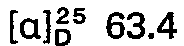
- Elementaranalvse: C6H11NO3×HNO3 (208.18)

- Ein kleiner Teil wird in das Hydrochlorid übergeführt und aus Aethanol umkristallisiert.
- Schmp. 263―8° (Z);

- Elementaranalyse: C6H11NO3×HCl (181.63)

- Die Mischung aus 22.4 g (0.1 Mol) 1.4;3.6-Dianhydro-D-glucit-5-methansulfonat (Herstellung siehe Beispiel 1 a), 31 g (1 Mol) Methylamin und 150 ml n-Butanol wird im geschlossenen Stahlautoklaven 15 Stdn. bei 150° unter Stickstoffatmosphäre gerührt. Nach dem Abkühlen setzt man die Lösung von 4 g (0.1 Mol) Natriumhydroxid in 200 ml n-Butanol zu, rührt durch, fällt mit 600 ml Chloroform das gebildete Natriummethansulfonat aus, filtriert und dampft das Filtrat unter vermindertem Druck ein. Die so erhaltene ölige Rohbase wird in 100 ml Isopropanol gelöst und mit 6.5 ml 65 %iger Salpetersäure in das Hydrogennitrat übergeführt. Nach dem Eindampfen unter reduziertem Druck kristallisiert man aus Isopropanol um und erhält 15.3 g (68.9 mmol) 5 - Methylamino - 5 - desoxy - 1.4;3.6 - dianhydro - L - idit - Hydrogennitrat.
- Schmp. 103―9°;

- Elementaranalyse: C7H13NO3×HNO3 (222.20)

- Das Gemisch aus 11.2 g (50 mmol) 1.4;3.6-Dianhydro-D-glucit-5-methansulfonat, 40.5 g (500 mmol) Aethylamin-Hydrochlorid, 20 g (500 mmol) Natriumhydroxid und 200 ml Wasser wird im geschlossenen Stahlautoklaven 15 Stdn. bei 150° unter Stickstoffatmosphäre gerührt. Nach dem Abkühlen und Entspannen gibt man 2 g (50 mmol) Natriumhydroxid zu, engt unter reduziertem Druck zur Trockne ein, extrahiert den Rückstand heiß mit Chloroform und dampft den Extrakt zur Trockne ein. Man erhält 9 g (ca. 50 mmol) öligen 5 - Aethylamino - 5 - desoxy - 1.4;3.6 - dianhydro - L - idit, der für die nachfolgende Veresterung mit Salpetersäure eingesetzt wird. Zur Charakterisierung wird ein kleiner Anteil in das Hydrochlorid übergeführt und 2 mal aus Isopropanol umkristallisiert.
- Schmp. 181―3° (Z);

- Elementaranalyse: C8H15NO3×HCl (209.68)

- Das Gemisch aus 11.2 g (50 mmol) 1.4;3.6-Dianhydro-D-glucit-5-methansulfonat, 39 g (250 mmol) 1-Aminoadamantan und 100 ml n-Butanol wird 3 Tage im geschlossenen Stahlautoklaven auf 150° erhitzt. Anschließend dampft man unter reduziertem Druck zur Trockne ein, löst den Rückstand in 250 ml Chloroform, gewinnt durch Extraktion mit 1-molarer Salzsäure zunächst überschüssiges Adamantylamin zurück und bei weiterer Extraktion das Reaktionprodukt. Die salzsaure Lösung des Reaktionsproduktes wird mit verdünnter Natronlauge auf pH=8 gestellt und mit Chloroform reextrahiert. Eindampfen der über wasserfr. Natriumsulfat getrockneten Chloroformphasen liefert 3.85 g (13.8 mmol) 5 - Adamant - 1 - ylamino - 5 - desoxy - 1.4;3.6 - dianhydro - L - idit. Zur Analyse kristallisiert man aus Cyclohexan um.
- Schmp. 126―7°;
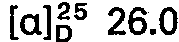
- Elementaranalyse: C16H25NO3 (279.39)

- 22.5 g (0.5 Mol) Dimethylamin werden unter Kühlen in 100 ml n-Butanol gelöst, mit 11.2 g (50 mmol) 1.4;3.6 - Dianhydro - D - glucit - 5 - methansulfonat versetzt und 15 Stdn. im geschlossenen Stahlautoklaven auf 150° erhitzt. Nach dem Abkühlen und Entspannen gibt man 100 ml 0.5-molare butanolische Natriumhydroxidlösung zu, filtriert und dampft unter reduziertem Druck ein. Der Rückstand wird mit Chloroform extrahiert und der Chloroformextrakt unter reduziertem Druck eingedampft. Man erhält 8.5 g (49 mmol) öligen 5 - Dimethylamino - 5 - desoxy - 1.4;3.6 - dianhydro - L - idit. Zur Charakterisierung überführt man einen kleinen Teil in das Hydrochlorid und kristallisiert aus Isopropanol um.
- Schmp. 227―9°;

- Elementaranalvse: C8H15NO3×HCl (209.68)

- Herstellung analog Beispiel 9) durch Umsetzung von überschüssigem Diäthylamin mit 1.4;3.6-Dianhydro-D-glucit-5-methansulfonat in Butanol bei 150°. Isolierung als Hydrogennitrat.
- Schmp.. 129° (aus Isopropanol); [a]ö5 39.8 (c 1; Wasser)
- Elementaranalyse: C10H19NO3×HNO3 (264.28)

- Das Gemisch aus 11.2 g (50 mmol) 1.4;3.6-Dianhydro-D-glucit-5-methansulfonat, 36 g (0.5 Mol) Pyrrolidin und 100 ml n-Butanol wird im geschlossenem Stahlautoklaven unter Stickstoff-Schutzatmosphäre 24 Stdn. auf 150° erhitzt. Nach dem Abkühlen gibt man 10 ml 5-molare Natronlauge zu, dampft unter reduziertem Druck das überschüssige Pyrrolidin ab-gegen Ende unter Zusatz von Wasser-und extrahiert das Produkt aus dem Rückstand mit Chloroform heraus. Der eingedampfte Chloroformextrakt wird durch Lösen in Aethervon unlöslichen Nebenprodukten befreit. Das Aetherfiltrat liefert nach Trocknen über wasserfreiem Natriumsulfat und Eindampfen 8,7 g (43.7 mmol) 5 - Pyrrolidino - 5 - desoxy - 1.4;3.6 - dianhydro - L - idit. Zur Charakterisierung wird ein kleiner Teil in das Hydrogennitrat übergeführt und aus Isopropanol umkristallisiert.
- Schmp. 123―4°;

- Elementaranalyse: C10H17NO3×HNO3 (262.26)

- Das Gemisch aus 11.2 g (50 mmol) 1.4;3.6-Dianhydro-D-glucit-5-methansulfonat, 42.5 g (0.5 Mol) Piperidin und 100 ml n-Butanol wird 24 Stdn. im geschlossenen Stahlautoklaven unter Stickstoffatmosphäre auf 150° erhitzt. Nach dem Eindampfen unter reduziertem Druck extrahiert man den Rückstand mit Aether, wobei Piperidin-Hydrogenmethansulfonat ungelöst bleibt. Der über wasserfr. Natriumsulfat getrocknete Aetherextrakt ergibt nach dem Eindampfen 10 g (47 mmol) Produkt, die in 50 ml Essigsäure gelöst und mit der äquimolaren Menge 30 %iger Salpetersäure in das Hydrogennitrat übergeführt werden. Dieses wird mit Aether ausgefällt und ergibt nach Umkristallisation aus Isopropanol 11.6 g (42 mmol) 5 - Piperidino - 5 - desoxy - 1.4;3.6 - dianhydro - L - idit - Hydrogennitrat.
- Schmp. 182―4° (Z);

- Elementaranalyse: C11H19NO3×HNO3 (276.29)

- Herstellung analog Beispiel 9) durch Umsetzung von 50 mmol 1.4;3.6-Dianhydro-D-glucit-5- methansulfonat mit 0.5 Mol Morpholin. Ausbeute 8.6 g (40 mmol) öliges Produkt. Charakterisierung als Hydrochlorid.
- Schmp. 159―161° (aus Isopropanol/Aethanol).

- Elementaranalvse: C10H17NO4×HCl (251.71)

- Die Mischung aus 11.2 g (50 mmol) 1.4;3.6-Dianhydro-D-glucit-5-methansulfonat und 15 g (150 mmol) N-Methylpiperazin wird unter Stickstoff-Atomsphäre bei 150° 24 Stdn. im Stahlautoklaven gerührt. Nach dem Abkühlen gibt man eine Lösung von 2.0 g (50 mmol) Natriumhydroxid in 100 ml n-Butanol zu und dampft unter reduziertem Druck zur Trockne ein. Der ölige Rückstand wird mit 500 ml Chloroform behandelt und vom Ungelösten (Natriummethansulfonat) abfiltriert. Die Chloroformphase wird 2 mal mit je 200 ml Wasser extrahiert; die vereinigten Wasserphasen ergeben nach dem Eindampfen im Vak. und azeotrop. Trocknung mit Aethanol und Chloroform die Rohbase. Diese wird in 50 ml Eisessig gelöst und durch Zugabe der doppelt molaren Menge an verd. Salpetersäure in das Dihydrogennitrat übergeführt, das größtenteils direkt auskristallisiert. Restliches Produkt fällt man mit Aether aus. Umkristallisation aus Isopropanol/Aethanol ergibt 8.9 g (25 mmol) 5 - (4 - Methylpiperazino) - 5 - desoxy - 1.4;3.6 - dianhydro - L - idit - Dihydrogennitrat.
- Schmp. 124―5° (Z):

- Elementaranalyse: C11H20N2O3×2 HNO3 (354.32)

- Unter Stickstoffatmosphäre und Rühren tropft man bei 100° zur Suspension von 15.7 g (0.1 Mol) Adenin-Natriumsalz in 200 ml wasserfreiem Dimethylsulfoxid die Lösung von 22.4 g (0.1 Mol) 1.4;3.6 - Dianhydro - D - glucit - 5 - methansulfonat in 100 ml wasserfreiem Dimethylsulfoxid zu und rührt noch 8 Tage bei 100°. Man destilliert im Vakuum das Lösungsmittel ab und extrahiert den Rückstand in der Siedehitze nacheinander mit 100 ml Chloroform und n-Butanol. Der Chloroformextrakt wird auf ca. 300 ml konzentriert, durch Zugabe von 600 ml Petroläther das Rohprodukt ausgefällt und abgetrennt; das Filtrat wird verworfen. Der Butanolextrakt ergibt nach Eindampfen im Vak. weiteres Rohprodukt. Die vereinigten Rohprodukte werden aus 400 ml Aethanol umkristallisiert. Man erhält 9.2 g (35 mmol) 5 - (9 - Adenyl) - 5 - desoxy - 1.4;3.6 - dianhydro - L - idit. Die eingedampfte Mutterlauge wird in 200 ml Wasser gelöst und kontinuierlich mit ca. 1 Liter einer Mischung von Chloroform/Butanol 9/1 extrahiert. Eindampfen des Extraktes und Umkristallisation aus Chloroform ergibt weitere 3.9 g (15 mmol) Reinprodukt.
- Schmp. 202.5―204.5°
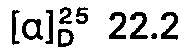
- Elementaranalyse: C11H13N5O3 (263.25)

- a) 5-(9-Adenyl)-5-desoxy-1.4;3.6-dianhydro-L-idit-2-methansulfonat:
- Die Mischung aus 20.15 g (150 mmol) Adenin-Natriumsalz, 30.2 g (100 mmol) 1.4;3.6 - Dianhydro - D - glucit - 2.5 - dimethan-sulfonat und 300 ml Dimethylsulfoxid wird 24 Stdn. unter Rühren auf 100° erhitzt. Nach dem Abkühlen versetzt man mit 600 ml Wasser, saugt den aus Reaktionsprodukt und nicht umgesetztem Dimethansulfonat bestehenden Niederschlag ab und wäscht zweimal mit je 50 ml Wasser nach. Der Niederschlag wird mit 600 ml Chloroform verrührt, wobei das Dimethansulfonat in Lösung geht und reines Produkt zurückbleibt. Weiteres Produkt erhält man durch zweimalige Extraktion der Chloroformphase mit je 100 ml 2-molarer Salzsäure, Neutralisation der Salzsäurephasen mit verd. Natronlauge und Absaugen des dabei entstehenden Niederschlags. Anschließend kristallisiert man aus Aethanol um und erhält 17.5 g (51.3 mmol) 5 - (9 - Adenyl) - 5 - desoxy - 1.4;3.6 - dianhydro - L - idit - 2 - methansulfonat vom Schmp. 238―240°.
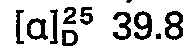
- Elementaranalyse: C12H15N5O5S (341.34)

- b) 5-(9-Adenyl)-5-desoxy-1.4;3.6-dianhydro-L-idit:
- Zur unter Rückfluß siedenden Mischung von 87 g (255 mmol) 5 - (9 - Adenyl) - 5 - desoxy - 1.4;3.6 - dianhydro - L - idit - 2 - methansulfonat und 4 Litern Wasser tropftman mit einer Geschwindigkeit von 10 ml/Stunde die Lösung von 30.6 g (765 mmol) Natriumhydroxid in 250 ml Wasser unter Rühren zu und rührt anschließend noch 5 Stunden unter Rückfluß. Nach dem Abkühlen neutralisiert man die Lösung mit 510 mmol Salzsäure, dampft im Vakuum ein, trocknet den Rückstand azeotrop mit n-Butanol und kocht ihn dreimal mit je 2 Litern n-Butanol aus. Die Butanolextrakte werden im Vakuum eingedampft und aus Aethanol umkristallisiert. Man erhält 41.5 g (158 mmol) 5 - (9 - Adenyl) - 5 - desoxy - 1.4;3.6 - dianhydro - L - idit vom Schmp. 203°. Weitere 10 g (38 mmol) Produkt erhält man durch Eindampfen der Mutterlange, Extraktion des Rückstandes mit Chloroform und Eindampfen des Chloroformextraktes.
- Die Lösung von 166 g (1 Mol) 6-Methylmercaptopurin und 40 g (1 Mol) Natriumhydroxid in 1 Liter Methanol wird im Vakuum eingedampft und bei 140° bis zur Gewichtskonstanz getrocknet. Man erhält 188 g (1 Mol) des 6-Methylmercaptopurin-9-Natriumsalzes. Diese werden zusammen mit 224 g (1 Mol) 1.4;3.6 - Dianhydro - D - glucit - 5 - methansulfonat in 3 Litern Dimethylformamid suspendiert und 24 Stunden unter Rühren und Stickstoffatmosphäre auf 130° erwärmt. Anschließend destilliert man im Vakuum des Dimethylformamid ab, nimmt den Rückstand in 2 Litern Wasser auf und extrahiert im Rotationsperforator kontinuierlich mit ca. 5 Litern Chloroform. Der Chloroformextrakt wird über wasserfreiem Natriumsulfat geklärt, filtriert und eingedampft. Das verbleibende ölige Reaktionsprodukt erstarrt beim Verreiben mit etwas Wasser zu einem kristallinen Brei, der mit 600 ml Wasser verrührt, abgesaugt und mit 2 mal 75 ml Wasser gewaschen wird. Anschließend trocknet man im Vakuumtrockenschrank bei 120° bis zur Gewichtskonstanz und erhält 147 g (0.5 Mol) 5 - (6 - Methylmercaptopurin - 9 - yl) - 5 - desoxy - 1.4;3.6 - dianhydro - L - idit. Zur Analyse kristallisiert man aus Chloroform/Toluol um.
- Schmp. 146-80; [a]6S 22.5 (c 1; Chloroform)
- Elementaranalyse: C12H14N4O3S (294.33)

- Das Gemisch aus 8.8 g (30 mmol) 5-(6-Methylmercaptopurin-9-yl)-5-desoxy-1.4;3.6-dianhydro-L-idit, 8.5 ml 33 %iger methanolischer Methylamin-Lösung (90 mmol) und 100 ml Wasser wird bei 130° 20 Stunden im geschlossenen Autoklaven gerührt. Nach dem Abkühlen und Entspannen dampft man zur Trockne ein, löst den Rückstand in 50 ml Wasser und extrahiert kontinuierlich mit Chloroform. Eindampfen des über wasserfreiem Natriumsulfat getrockneten Chloroformextrakts ergibt 7.1 g (25.6 mmol) öliges Rohprodukt, das zur Reinigung in das Hydrochlorid übergeführt und aus Methanol umkristallisiert wird.
- Schmp. 247―250° (Z);

- Elementaranalvse: C12H15N5O3xHCl (313.74)

- Die Mischung aus 8.8 g (30 mmol) 5-(6-Methylmercaptopurin-9-yl)-5-desoxy-1.4;3.6-dianhydro-L-idit und 50 ml 40 %iger wäßriger Dimethylamin-Lösung wird im geschlossenen Autoklaven 20 Stdn. bei 130° gerührt. Nach dem Abkühlen und Entspannen dampft man im Vakuum ein und kristallisiert aus 20 ml Aethanol um. Man erhält 5.68 g (19.5 mmol) 5 - (6 - Dimethylaminopurin - 9 - yl) - 5 - desoxy - 1.4;3.6 - dianhydro - L - idit. Die analytische Probe wird aus Toluol umkristallisiert.
- Schmp. 139―141°

- Elementaranalyse: C13H17N5O3 (291.31)

- Die Mischung aus 8.8 g (30 mmol) 5-(6-Methylmercaptopurin-9-yl)-5-desoxy-1.4;3.6-dianhydro-L-idit, 8.1 g (100 mmol) Aethylamin-Hydrochlorid, 4.0 g (100 mmol) Natriumhydroxid und 50 ml Wasser wird im geschlossenen Autoklaven 20 Stdn. bei 130° gerührt. Nach dem Abkühlen und Entspannen dampft man zur Trockne ein, löst den Rückstand in 100 ml Wasser und extrahiert 10 mal mit je 100 ml Chloroform. Eindampfen der Chloroformextrakte ergibt 8.15 g öliges Rohprodukt, das mit 14 ml 2-molarer Salzsäure in das Hydrochlorid übergeführt, erneut eingedampft und aus Methanol/Aether umkristallisiert wird. Man erhält 5.7 g (17.4 mmol) 5 - (6 - Aethylaminopurin - 9 - yl) - 5 - desoxy - 1.4;3.6 - dianhydro - L - idit - Hydrochlorid.
- Schmp. 240―2°;
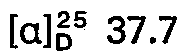
- Elementaranalyse: C13H17N5O3×HCl (327.76)

- Das Gemisch aus 8.8 g (30 mmol) 5-(6-Methylmercaptopurin-9-yl)-5-desoxy-1.4;3.6-dianhydro-L-idit und 25 ml (300 mmol) Pyrrolidin wird 20 Stdn. im geschlossenen Autoklaven bei 130° gerührt. Nach dem Abkühlen und Entspannen destilliert man überschüssiges Pyrrolidin ab, gegen Ende unter Zugabe von Wasser, und kristallisiert den Rückstand aus Wasser um. Man erhält 8.43 g (26.6 mmol) 5 - (6 - Pyrrolidinopurin - 9 - yl) - 5 - desoxy - 1.4;3.6 - dianhydro - L - idit.
- Schmp. 183.5-185.5°; [a]5S 34.5 (c 1; Chloroform)
- Elementaranalyse: C15H19N5O3 (317.35)

- Analog zum vorgehenden Beispiel werden 8.8 g (30 mmol) 5-(6-Methylmercaptopurin-9-yl)-5-desoxy-1.4;3.6-dianhydro-L-idit zusammen mit 25 ml (253 mmol) Piperidin 20 Stunden bei 130° im geschlossenen Autoklaven gerührt. Nach Abdestillieren des überschüssigen Piperidins (gegen Ende unter Zugabe von Wasser) verreibt man den öligen Rückstand mit Toluol. Das nun feste Rohprodukt wird abgesaugt, getrocknet und aus Wasser umkristallisiert. Man erhält 7.7 g (23.2 mmol) reinen 5 - (6 - Piperidinopurin - 9 - yl) - 5 - desoxy - 1.4;3.6 - dianhydro - L - idit.
- Schmp. 136―139°;

- Elementaranalyse: C16H21N5O3 (331.38)

- Analog zu den voranstehenden Beispielen 21 und 22 erhält man aus 8.8 g (30 mmol) 5-(6-Methylmercaptopurin-9-yl)-5-desoxy-1.4;3.6-dianhydro-L-idit und 25 ml (287 mmol) Morpholin nach 20 Stdn. Rühren bei 130° im geschlossenen Autoklaven, Abdestillieren des überschüssigen Morpholins unter Wasserzugabe und Umkristallisation des Rückstandes aus Wasser 6.9 g (18.7 mmol) reinen 5 - (6 - Morpholinopurin - 9 - yl) - 5 - desoxy - 1.4;3.6 - dianhydro - L - idit in Form des Dihydrats.
- Schmp. 84―88°;

- Elementaranalyse: C15H19N5O4×2 H2O (369.38)

- Analog zu den vorhergehenden Beispielen erhält man aus 8.8 g (30 mmol) 5-(6-Methylmercaptopurin-9-yl)-5-desoxy-1.4;3.6-dianhydro-L-idit und 25 ml (225 mmol) N-Methylpiperazin 10.2 g (29.4 mmol) Rohprodukt. Umkristallisation aus Toluol ergibt 6.3 g (18.2 mmol) Reinprodukt.
- Schmp. 166―7°;

- Elementaranalyse: C16H22N603 (346.40)

- Das Gemisch aus 8.8 g (30 mmol) 5-(6-Methylmercaptopurin-9-yl)-5-desoxy-1.4;3.6-dianhydro-L-idit und 25 ml (229 mmol) Benzylamin wird im geschlossenen Autoklaven 20 Stdn. bei 130° gerührt. Nach dem Abkühlen und Entspannen destilliert man das überschüssige Benzylamin-gegen Ende unter Zugabe von Wasser-im Vakuum ab, kristallisiert den öligen Rückstand aus Aceton um und erhält 6.9 g (19.5 mmol) 5 - (6 - Benzylamino - purin - 9 - yl) - 5 - desoxy - 1.4;3.6 - dianhydro - L - idit. Die analytische Probe wird nochmals aus Toluol umkristallisiert.
- Schmp. 151―3°;
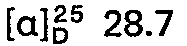
- Elementaranalyse: C18H19N5O3 (353.38)

- Das Gemisch aus 19.1 g (65 mmol) 5-(6-Methylmercaptopurin-9-yl)-5-desoxy-1.4;3.6-dianhydro-L-idit und 94 ml (650 mmol) 3-Phenylpropylamin wird im geschlossenen Stahlautoklaven 36 Stdn. auf 150° erhitzt. Nach dem Abkühlen und Entspannen gibt man 80 ml Essigsäure und 500 ml Wasser zu und extrahiert zweimal mit je 300 ml Chloroform. Die Chloroformextrakte werden mit 300 ml Wasser gewaschen und zweimal mit der Lösung von 25 ml 37 %iger Salzsäure in 200 ml Wasser extrahiert. Die salzsauren Extrakte werden mit Natronlauge alkalisiert und mit 400 ml Dichlormethan extrahiert. Der Dichlormethanextrakt ergibt nach dem Trocknen über wasserfreiem Natriumsulfat, Filtrieren und Eindampfen 20 g (52.4 mmol) Rohbase, die in 150 ml Isopropanol in der Wärme gelöst und mit 15 ml 37 %iger Salzsäure (180 mmol) versetzt werden. Beim Abkühlen kristallisieren 18.8 g (41.4 mmol) reines Produkt in Form des Dihydrochloride aus.
- Schmp. 159―62°;

- Elementaranalvse: C20H23N5O3×2 HCI (454.36)
-

- Herstellung analog Beispiel 26 durch Umsetzung von 5-(6-Methylmercaptopurin-9-yl)-5-desoxy-1.4;3.6-dianhydro-L-idit mit überschüssigem 2-Phenyläthylamin bei 130°. Isolierung als Hydrochlorid. Ausbeute nach Umkristallisation aus Aethanol: 58:
- Schmp. 214―18°;

- Elementaranalyse: C19H21N5O3×HCl (403.87)

- Herstellung analog Beispiel 26 durch Umsetzung von 5-(6-Methylmercaptopurin-9-yl)-5-desoxy-1.4;3.6-dianhydro-L-idit mit überschüssigem 4-Phenylbutylamin bei 150°. Isolierung als Hydrochlorid. Ausbeute nach Umkristallisation aus Isopropanol: 47%
- Schmp. 172―6°;

- Elementaranalyse: C21H25N5O3×HCl (431.92)

- Die Mischung aus 112 g (0.5 Mol) 1.4;3.6-Dianhydro-D-mannit-2-methansulfonat (hergestellt nach Beispiel 4 a), 86 g (0.55 Mol) Adenin-Natriumsalz und 1500 ml wasserfr. Dimethylsulfoxid wird 24 Stdn. unter Stickstoffatmosphäre bei 120° gerührt. Unter reduziertem Druck destilliert man das Dimethylsulfoxid ab, löst den Rückstand in 1 Liter Wasser, extrahiert lipophile Nebenprodukte 2 mal mit je 300 ml Chloroform und konzentriert die Wasserphase auf ca. 200 ml. Das auskristallisierende Rohprodukt ergibt nach Umkristallisation aus Aethanol/Wasser 47.4 g (0.18 Mol) 2 - (9 - Adenyl) - 2 - desoxy - 1.4;3.6 - dianhydro - D - glucit.
- Schmp. 265―7°;

- Elementaranalyse: C11H13N5O3 (263.25)
-

- Die Mischung aus 44.8 g (0.2 Mol) 1.4;3.6-Dianhydro-D-glucit-5-methansulfonat, 80 g (0.4 Mol) Theophyllin-Natriumsalz und 600 ml Dimethylsulfoxid wird 48 Stdn. unter Stickstoffatmosphäre bei 130° gerührt. Man destilliert das Dimethylsulfoxid im Vakuum ab, löst den Rückstand in 400 ml heißem Wasser, extrahiert nach dem Abkühlen zweimal mit je 200 ml Chloroform und schüttelt die Chloroformextrakte mit 200 ml Wasser aus. Die vereinigten Wasserphasen werden mit 30 g Aktivkohle aufgekocht, filtriert und das Filtrat nach Neutralisation zur Trockne eingedampft. Der Rückstand wird mit 1 Liter Aethanol gerührt, filtriert und ernent eingedampft. Zur Entfernung restlichen Theophyllins löst man dann in 700 ml 2 %iger Natronlauge und extrahiert das Reaktionsprodukt kontinuierlich mit Chloroform. Der Chloroformextrakt ergibt nach dem Trocknen über wasserfreiem Natriumsulfat und Eindampfen 27.5 g (89 mmol) 5 - (7 - Theophyllinyl) - 5 - desoxy - 1.4;3.6 - dianhydro - L - idit. Die analytische Probe wird aus Aceton/ Aethanol umkristallisiert.
- Schmp. 196―8°;

- Elementaranalyse: C13H16N4O5 (308.30)

- Die Mischung aus 8.6 g (30 mmol) 7-(2-Bromäthyl)-theophyllin, 8 ml Aethanol und 10.8 g (75 mmol) 5 - Amino - 5 - desoxy - 1.4;3.6 - dianhydro - L - idit (Herstellung s. Beispiele 1 und 2) wird 24 Stdn. unter Rückfluß gekocht und dann unter reduziertem Druck eingedampft. Der Rückstand wird in 100 ml Wasser gelöst und 10 mal mit je 100 ml Chloroform extrahiert, wobei der erste Chloroformextrakt verworfen wird. Die Chloroformextrakte 2-10 werden unter reduziertem Druck eingedampft. Ueberführung des Rückstandes in das Hydrochlorid und Umkristallisation aus Methanol ergeben 7.93 g (20.4 mmol) 5 - (2 - Theophyllin - 7 - yläthylamino) - 5 - desoxy - 1.4;3.6 - dianhydro - L - idit - Hydrochlorid.
- Schmp. 216―221°;

- Elementaranalyse: C15H21N5O5×HCl (387.83)

- Zur unter Rückfluß siedenen Lösung von 109 g (0.75 Mol) 5-Amino-5-desoxy-1.4;3.6-dianhydro-L-idit in 1 Liter Aethanol gibt man über einen Soxhlet Extraktoraufsatz innerhalb 10 Stdn. 75.3 g (0.25 Mol) 7 - (3 - Brompropyl) - theophyllin zu, kocht 48 Stdn. nach und dampft unter reduziertem Druck ein. Der Rückstand wird in 1.5 Liter Wasser gelöst, mit Salzsäure auf pH=4 gebracht, mit 500 ml Chloroform gewaschen, dann mit Natriumhydroxid auf pH=8.5 eingestellt und im Rotationsperforator (Normag) kontinuierlich mit Chloroform extrahiert, bis sämtliches Reaktionsprodukt in die Chloroformphase übergegangen ist. Der Chloroformextrakt wird unter reduziertem Druck eingedampft, in Isopropanol gelöst, durch Zugabe von Methansulfonsäure in das Hydrogenmethansulfonat übergeführt und nach dem Eindampfen aus Aethanol/lsopropanol umkristallisiert. Man erhält 83.5 g (0.18 Mol) 5 - (3 - Theophyllin - 7 - yl - propylamino) - 5 - desoxy - 1.4;3.6 - dianhydro - L - idit - Hydrogenmethansulfonat.
- Schmp. 145―147°;

- Elementaranalyse: C16H23N5O5×CH3SO3H (461.50)

- Die Wasserphase der Perforation wird unter reduziertem Druck eingedampft, mit Aethanol extrahiert, filtriert und eingedampft, der Eindampfrückstand mit Chloroform extrahiert, filtriert und erneut eingedampft. Dieser Rückstand ergibt nach Extraktion mit n-Butanol, Filtrieren, Eindampfen und Trocknen im Vakuumtrockenschrank bei 80°, 59 g (406 mmol=81%) des überschüssigen 5-Amino-5-desoxy-1.4;3.6-dianhydro-L-idits zurück.
- Herstellung analog Beispiel 32 durch Umsetzung von 7-(4-Brombutyl)-theophyllin mit überschüssigem 5 - Amino - 5 - desoxy - 1.4;3.6 - dianhydro - L - idit unter Zusatz von Kaliumjodid. Isolierung als Hydrochlorid. Ausbeute nach Umkristallisation aus Isopropanol/Chloroform: 44%.
- Schmp. 196―8°;

- Elementaranalyse: C17H25N5O5×HCl (415.88)

- Herstellung analog Beispiel 33 durch Umsetzung von 7-(5-Brompentyl)-theophyllin mit überschüssigem 5 - Amino - 5 - desoxy - 1.4;3.6 - dianhydro - L - idit. Isolierung als Hydrochlorid. Ausbeute nach Umkristallisation aus Aethanol/Chloroform: 69%.
- Schmp. 230―233°;

- Elementaranalyse: C18H27N5O5×HCl (429.90)

- Herstellung analog Beispiel 33 durch Umsetzung von 7-(6-Bromhexyl)-theophyllin mit überschüssigem 5 - Amino - 5 - desoxy - 1.4;3.6 - dianhydro - L - idit. Isolierung als Hydrochlorid. Ausbeute nach Umkristallisation aus Chloroform/Aceton: 39%.
- Schmp. 180―183°;

- Elementaranalyse: C19H29N5O5×HCl (443.93)

- Zur Lösung von 10 g (40 mmol) 7-(3-Oxobutyl)-theophyllin in 75 ml Aethanol gibt man die Lösung von 5.8 g (40 mmol) 5 - Amino - 5 - desoxy - 1.4;3.6 - dianhydro - L - idit in 40 ml Methanol, setzt die Suspension von 1.5 g 10 %igem Pd/C-Katalysator in 100 ml Aethanol zu, spült mit Stickstoff und hydriert im geschlossenen Stahlautoklaven unter 50 atm Wasserstoffdruck 20 Stdn. bei Raumtemperatur und 8 Stdn. bei 50°, wobei ca, 250-mal/min. geschüttelt wird. Nach dem Abkühlen, Entspannen und Abfiltrieren des Katalysators dampft man das Filtrat unter reduz. Druck ein, stellt die Lösung des Rückstands in Wasser mit Salzsäure auf pH=2 ein und perforiert 8 Stdn. im Rotationsperforator mit Chloroform, um Nebenprodukte zu extrahieren. Man stellt die wäßrige Phase auf pH=4 und perforiert erneut mit Chloroform. Beide Chloroformphasen werden verworfen. Nach Einstellung auf pH=7 perforiert man 8 Stdn. mit Chloroform. Aus dieser Chloroformphase erhält man nach dem Trocknen über wasserfreiem Natriumsulfat und Eindampfen unter reduziertem Druck 8.5 g (22.4 mmol) 5 - (4 -Theophyllin -7 -yl - 2 - butylamino) - 5 - desoxy - 1.4;3.6 - dianhydro - L - idit(Gemisch der beiden Epimeren) in Form eines farblosen Oels. Zur Analyse überführt man in das Hydrochlorid und fällt aus Isopropanol mit Pentan um.
- Schmp. 155―166° (Z);

- Elementaranalyse: C17H25N5O5×HCI (415.88)

- Das Gemisch aus 36 g (178 mmol) Theophyllin Natrium, 36 g (120 mmol) 1.4;3.6-Dianhydro-D-glucit-2.5-dimethansulfonat und 500 ml wasserfr. Diäthylenglykoldiäthyläther wird 2 Tage unter Feuchtigkeitsausschluß bei 180° gerührt. Man filtriert, engt das Filtrat unter reduziertem Druck ein, versetzt den Rückstand mit 800 ml Wasser, filtriert und extrahiert das Filtrat 3 mal mit je 600 ml Chloroform. Die Chloroformphasen werden nach dem Waschen mit 200 ml 2-molarer Natronlauge und Trocknen über wasserfr. Natriumsulfat auf ca. 200 ml Volumen konzentriert und das Rohprodukt durch Zugabe von Petroläther gefällt. Die Fällung wird in siedendem Chloroform gelöst. Beim Abkühlen kristallisiert nicht umgesetztes 1.4;3.6 - Dianhydro - D - glucit - 2.5 - dimethansulfonat aus und wird abgesaugt. Aus dem Filtrat fällt man durch erneute Zugabe von Petroläther 24.3 g (63 mmol) 5 - Theophyllin - 7 - yl - 5 - desoxy - 1.4;3.6 - dianhydro - L - idit - 2 - methansulfonat aus, das nach Umkristallisation aus Aethanol den Schmp. 191―4° besitzt.

- Elementaranalyse: C14H18N4O7S (386.39)

- Herstellung analog Beispiel 26 durch Umsetzung von 5-(6-Methylmercaptopurin-9-yl)-5-desoxy-1.4;3.6-dianhydro-L-idit mit überschüssigem 3 - (4 - Chlorphenyl) - propylamin in Aethanol bei 150° im geschlossenen Stahlautoklaven. Isolierung als Hydrochlorid mit 1/2 Mol Kristallwasser.
- Schmp. nach Umkristallisation aus Aethanol 116―120°
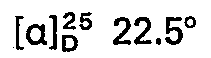
- Elementaranalyse: C20H22ClN5O3×HCl×0.5 H2O (461.35)

- Herstellung analog zu Beispiel Nr. 30 durch Umsetzung von 1.4;3.6-Dianhydro-D-mannit-2-methansulfonat mit Theophyllin-Kalium in wasserfr. Dimethylsulfoxid bei 120°C. Nach Umkristallisation aus Methanol/Wasser erhält man reinen 2 - (7 - Theophyllinyl) - 2 - desoxy -1.4;3.6 - dianhydro - D - glucit mit Schmp. 230―31°C und

- Elementaranalyse: C13H16N4O5 (308.30)

- Die Mischung aus 150 g (0.5 Mol) 1.4;3.6-Dianhydro-D-mannit-2.5-dimethansulfonat, 87 g (0.4 Mol) Theophyllin-Kalium und 1500 ml wasserfr. Dimethylsulfoxid wird 68 Std. bei 110°C im geschlossenen Stahlautoklaven unter Stickstoffatmosphäre gerührt. Nach weitgehender Abdestillation des Dimethylsulfoxids unter reduziertem Druck verrührt man den Rückstand mit 500 ml Wasser und 200 ml Chloroform, saugt den Niederschlag (N 1) ab, trennt aus dem Filtrat die Chloroformphase (C) ab und verwirft die Wasserphase.
- N 1 wird mit 400 ml Wasser verrührt, abgesaugt, getrocknet, mit 200 ml Dichlormethan aufgekocht, nach dem Abkühlen 2 Stdn, stehen gelassen und erneut abgesaugt. Man erhält fast reines Produkt (N 2).
- Die Chloroformlösung C wird eingedampft und mit 200 ml Aceton aufgekocht. Das nach Abkühlen ausfallende Disubstitutionsprodukt wird abgetrennt, das Filtrat wird eingedampft und aus Dichlormethan umkristallisiert. Das Kristallisat (N 3) wird mit N 2 vereinigt und aus Aceton umkristallisiert. Man erhält 44.6 g (115 mmol) reines 2 - (7 - Theophyllinyl) - 2 - desoxy - 1.4;3.6 - dianhydro - D - glucit - 5 - methansulfonat mit Schmp. 200―203°C und

- Elementaranalyse: C14H18N4O7S (386.39)

- Umkristallisation des Disubstitutionsproduktes aus 96 %igem Aethanol ergibt reisnen 2.5 - Bis - (7 - theophyllinyl) - 2.5 - didesoxy - 1.4;3.6 - dianhydro - L - idit in Form des Halbhydrates mit Schmp. 303―305° (Z) und

- Elementaranalyse: C20H22N18O6×0.5 H2O (479.45)

- Herstellung analog Beispiel 40 durch Umsetzung von 1.4;3.6 - Dianhydro - D - mannit - 2.5 - di - p - toluolsulfonat mit Theophyllin-Kalium in Dimethylsulfoxid. Umkristallisation aus Chloroform/Aethanol ergibt reines Produkt mit Schmp. 175―176° und

- Elementaranalyse: C20H22N4O7S (462.49)

- Die Mischung aus 45 g (0.2 Mol) 1.4;3.6-Dianhydro-D-mannit-2-methansulfonat und 150 ml 40 %iger wäßriger Dimethylamin-Lösung wird 18 Stdn. unter Stickstoffatmosphäre im geschlossenen Stahlautoklaven bei 150°C gerührt. Nach dem Abkühlen und Entspannen gibt man 8.0 g (0.2 Mol) Natriumhydroxid und 10 g Aktivkohle zu, kocht 15 Min. unter Rückfluß, filtriert, dampft das Filtrat ein und trocknet aceotrop mit Toluol. Der Rückstand wird mit Chloroform extrahiert. Eindampfen des Extraktes ergibt 25 g (144 mmol) langsam erstarrendes Rohprodukt. Zur Reinigung überführt man in das Hydrochlorid und kristallisiert zweimal aus Isopropanol um. Man erhält 2 - Dimethylamino - 2 - desoxy - 1.4;3.6 - dianhydro - D - glucit - Hydrochlorid mit Schmp. 175°C und
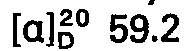
- Elementaranalyse: C8H15NO3×HCl (209.68)

Claims (67)


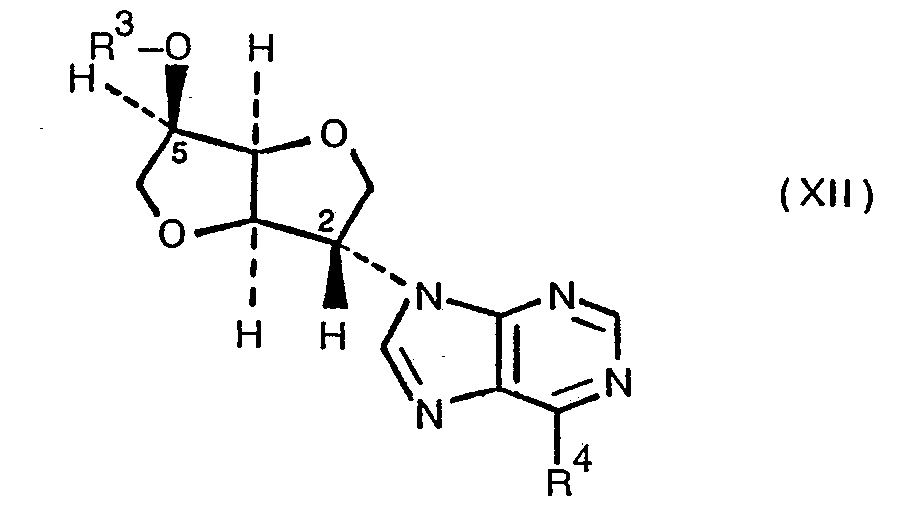


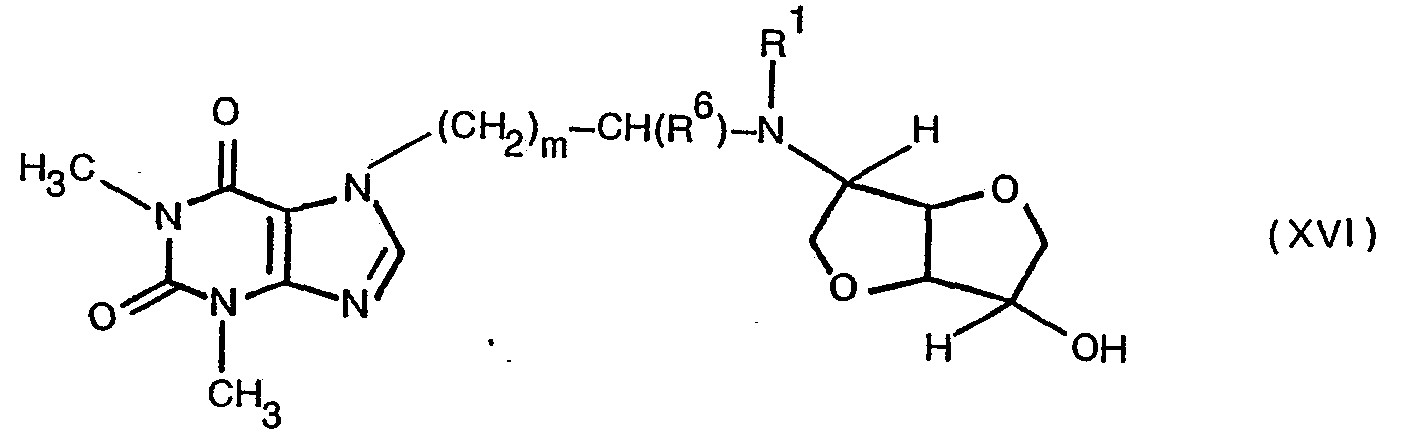
Priority Applications (1)
| Application Number | Priority Date | Filing Date | Title |
|---|---|---|---|
| AT81104569T ATE12499T1 (de) | 1980-07-25 | 1981-06-13 | Gegebenenfalls n-substituierte amino-desoxy1.4;3.6-dianhydro-hexit-derivate, verfahren zu ihrer herstellung und deren verwendung. |
Applications Claiming Priority (2)
| Application Number | Priority Date | Filing Date | Title |
|---|---|---|---|
| DE3028288 | 1980-07-25 | ||
| DE19803028288 DE3028288A1 (de) | 1980-07-25 | 1980-07-25 | Gegebenenfalls n-substituierte aminodesoxy-1.4;3.6-dianhydro-hexit-derivate, verfahren zu ihrer herstellung und deren verwendung |
Publications (2)
| Publication Number | Publication Date |
|---|---|
| EP0044932A1 EP0044932A1 (de) | 1982-02-03 |
| EP0044932B1 true EP0044932B1 (de) | 1985-04-03 |
Family
ID=6108128
Family Applications (1)
| Application Number | Title | Priority Date | Filing Date |
|---|---|---|---|
| EP81104569A Expired EP0044932B1 (de) | 1980-07-25 | 1981-06-13 | Gegebenenfalls N-substituierte Amino-desoxy-1.4;3.6-dianhydro-hexit-Derivate, Verfahren zu ihrer Herstellung und deren Verwendung |
Country Status (7)
| Country | Link |
|---|---|
| US (2) | US4413122A (de) |
| EP (1) | EP0044932B1 (de) |
| JP (1) | JPS5764696A (de) |
| AT (1) | ATE12499T1 (de) |
| CA (1) | CA1248096A (de) |
| DE (1) | DE3028288A1 (de) |
| ES (1) | ES8403902A1 (de) |
Families Citing this family (7)
| Publication number | Priority date | Publication date | Assignee | Title |
|---|---|---|---|---|
| DE3028272A1 (de) * | 1980-07-25 | 1982-02-25 | Fa. Dr. Willmar Schwabe, 7500 Karlsruhe | Durch purinbasen substituierte alkylamino-desoxy-1.4;3.6-dianhydro-hexit-nitrate, verfahren zu ihrer herstellung und pharmazeutische zubereitung |
| DE3421072A1 (de) * | 1984-06-06 | 1985-12-12 | Heinrich Mack Nachf., 7918 Illertissen | 1,4:3,6-dianhydro-hexit-derivate, verfahren zu ihrer herstellung und ihre verwendung als arzneimittel |
| CA2014520C (en) * | 1989-04-17 | 1996-07-16 | Fumio Suzuki | Hexitol derivatives |
| JP3696882B2 (ja) | 1993-07-23 | 2005-09-21 | メレル ファーマス−ティカルズ インコーポレイテッド | プロ炎症性サイトカインの選択的抑制剤として有用な新規な9−n−二環式ヌクレオシド剤 |
| US6994310B2 (en) * | 2003-04-24 | 2006-02-07 | Ranco Incorporated Of Delaware | Stepper motor driven valve for thermal management and associated method of use |
| DE102009000592A1 (de) | 2009-02-04 | 2010-08-05 | Evonik Degussa Gmbh | Verfahren zur Herstellung von Aminogruppen tragenden, multizyklischen Ringsystemen |
| KR102638391B1 (ko) | 2023-05-30 | 2024-02-20 | 삼화페인트공업주식회사 | 다이알칸설포닐 아이소소바이드 화합물의 제조 방법, 리튬이차전지용 전해액 첨가제, 리튬이차전지용 전해액 및 리튬이차전지 |
Family Cites Families (4)
| Publication number | Priority date | Publication date | Assignee | Title |
|---|---|---|---|---|
| DE1545635A1 (de) * | 1965-10-16 | 1969-08-07 | Boehringer Mannheim Gmbh | Verfahren zur Herstellung von Adenosin-Derivaten |
| US3886186A (en) * | 1971-04-29 | 1975-05-27 | American Home Prod | Mononitrate esters of 1,4:3,6-dianhydro-d-glucitol |
| GB1356374A (en) * | 1971-04-29 | 1974-06-12 | American Home Prod | Mononitrate esters of 1,3 3,6-dianhydro-d-glucitol |
| DE3028273A1 (de) * | 1980-07-25 | 1982-02-25 | Fa. Dr. Willmar Schwabe, 7500 Karlsruhe | Durch purinbasen substituierte 1.4;3.6-dianhydro-hexit-nitrate |
-
1980
- 1980-07-25 DE DE19803028288 patent/DE3028288A1/de active Granted
-
1981
- 1981-06-13 AT AT81104569T patent/ATE12499T1/de not_active IP Right Cessation
- 1981-06-13 EP EP81104569A patent/EP0044932B1/de not_active Expired
- 1981-07-08 CA CA000381304A patent/CA1248096A/en not_active Expired
- 1981-07-15 ES ES503997A patent/ES8403902A1/es not_active Expired
- 1981-07-20 US US06/285,358 patent/US4413122A/en not_active Expired - Fee Related
- 1981-07-24 JP JP56116323A patent/JPS5764696A/ja active Granted
-
1983
- 1983-09-19 US US06/533,538 patent/US4535158A/en not_active Expired - Fee Related
Also Published As
| Publication number | Publication date |
|---|---|
| DE3028288A1 (de) | 1982-02-25 |
| US4413122A (en) | 1983-11-01 |
| ATE12499T1 (de) | 1985-04-15 |
| JPS637550B2 (de) | 1988-02-17 |
| JPS5764696A (en) | 1982-04-19 |
| DE3028288C2 (de) | 1991-10-10 |
| CA1248096A (en) | 1989-01-03 |
| US4535158A (en) | 1985-08-13 |
| EP0044932A1 (de) | 1982-02-03 |
| ES503997A0 (es) | 1984-04-16 |
| ES8403902A1 (es) | 1984-04-16 |
Similar Documents
| Publication | Publication Date | Title |
|---|---|---|
| DE69033614T2 (de) | Kondensierte Purinderivate | |
| DE69033915T2 (de) | Xanthinderivate, Verfahren zu ihrer Herstellung und ihre pharmazeutische Anwendung | |
| CH626364A5 (de) | ||
| EP0071738B1 (de) | Neue Theophyllinderivate und Verfahren zu deren Herstellung | |
| DE69130869T2 (de) | Xanthinderivate | |
| EP0044928B1 (de) | Durch Purinbasen substituierte 1.4;3.6-Dianhydro-hexit-nitrate, Verfahren zu ihrer Herstellung und pharmazeutische Zubereitung | |
| EP0044940B1 (de) | Amino-desoxy-1.4; 3.6-dianhydro-hexit-nitrate, Verfahren zu ihrer Herstellung und pharmazeutische Zubereitung | |
| DD216934A5 (de) | Verfahren zur herstellung neuer derivate von xanthinen | |
| DE69718619T2 (de) | Synthese von azyklischen nukleosiden | |
| DE2918261C2 (de) | ||
| EP0044932B1 (de) | Gegebenenfalls N-substituierte Amino-desoxy-1.4;3.6-dianhydro-hexit-Derivate, Verfahren zu ihrer Herstellung und deren Verwendung | |
| DE3650384T2 (de) | Antivirale Purin-Derivate und Verfahren zu ihrer Herstellung. | |
| EP0053767A1 (de) | Tricyclische Cytosinderivate zur Verwendung in Arzneimitteln und Verfahren zu ihrer Herstellung | |
| DE3889362T2 (de) | Substituierte 1,2,4-Triazolo[1,5-a]triazine als Bronchodilatatoren. | |
| DE69104948T2 (de) | Spiro[4,5]decanderivate, Verfahren zu ihrer Herstellung und diese enthaltende pharmazeutische Zubereitungen. | |
| EP0400686A1 (de) | 2-Amino-9-[1,3-bis-(isopropoxy)-propyl-2-oxymethyl]-purin, seine Verwendung und diese Verbindung enthaltende Arzneimittel | |
| DE3854991T2 (de) | Cyclische Amine und pharmakologische Verbindungen | |
| DE112011101112T5 (de) | Verfahren zur Herstellung von 1-[4-(1,1-Dimethylethyl)phenyl]-4-[4-(diphenylmethoxy)-1-piperidinyl]-1-butanon und Säureadditionssalzen davon | |
| EP0044927B1 (de) | Durch Purinbasen substituierte Alkylamino-desoxy-1.4;3.6-dianhydro-hexit-nitrate, Verfahren zu ihrer Herstellung und pharmazeutische Zubereitung | |
| DE3606634A1 (de) | Isohexid-nucleoside, verfahren zu ihrer herstellung und ihre verwendung als arzneimittel | |
| DE2403786A1 (de) | Neue derivate der cumarine | |
| DE924632C (de) | Verfahren zur Herstellung von Dialkylxanthinabkoemmlingen | |
| DE2708827A1 (de) | Substituierte purinverbindungen, verfahren zu ihrer herstellung und pharmazeutische zubereitungen | |
| DE1150976B (de) | Verfahren zur Herstellung von als Psychotherapeutica geeigneten basischen Fluorenverbindungen | |
| CH643272A5 (en) | Process for the preparation of 5-fluorouracil derivatives |
Legal Events
| Date | Code | Title | Description |
|---|---|---|---|
| PUAI | Public reference made under article 153(3) epc to a published international application that has entered the european phase |
Free format text: ORIGINAL CODE: 0009012 |
|
| AK | Designated contracting states |
Designated state(s): AT BE CH FR GB IT LI NL SE |
|
| 17P | Request for examination filed |
Effective date: 19820322 |
|
| RAP1 | Party data changed (applicant data changed or rights of an application transferred) |
Owner name: DR. WILLMAR SCHWABE GMBH & CO. |
|
| ITF | It: translation for a ep patent filed | ||
| GRAA | (expected) grant |
Free format text: ORIGINAL CODE: 0009210 |
|
| AK | Designated contracting states |
Designated state(s): AT BE CH FR GB IT LI NL SE |
|
| REF | Corresponds to: |
Ref document number: 12499 Country of ref document: AT Date of ref document: 19850415 Kind code of ref document: T |
|
| PG25 | Lapsed in a contracting state [announced via postgrant information from national office to epo] |
Ref country code: SE Effective date: 19850430 |
|
| ET | Fr: translation filed | ||
| PLBE | No opposition filed within time limit |
Free format text: ORIGINAL CODE: 0009261 |
|
| STAA | Information on the status of an ep patent application or granted ep patent |
Free format text: STATUS: NO OPPOSITION FILED WITHIN TIME LIMIT |
|
| 26N | No opposition filed | ||
| ITTA | It: last paid annual fee | ||
| PGFP | Annual fee paid to national office [announced via postgrant information from national office to epo] |
Ref country code: GB Payment date: 19920505 Year of fee payment: 12 |
|
| PGFP | Annual fee paid to national office [announced via postgrant information from national office to epo] |
Ref country code: FR Payment date: 19920609 Year of fee payment: 12 |
|
| PGFP | Annual fee paid to national office [announced via postgrant information from national office to epo] |
Ref country code: AT Payment date: 19920611 Year of fee payment: 12 |
|
| PGFP | Annual fee paid to national office [announced via postgrant information from national office to epo] |
Ref country code: CH Payment date: 19920615 Year of fee payment: 12 |
|
| PGFP | Annual fee paid to national office [announced via postgrant information from national office to epo] |
Ref country code: NL Payment date: 19920630 Year of fee payment: 12 |
|
| PGFP | Annual fee paid to national office [announced via postgrant information from national office to epo] |
Ref country code: BE Payment date: 19920903 Year of fee payment: 12 |
|
| PG25 | Lapsed in a contracting state [announced via postgrant information from national office to epo] |
Ref country code: GB Effective date: 19930613 Ref country code: AT Effective date: 19930613 |
|
| PG25 | Lapsed in a contracting state [announced via postgrant information from national office to epo] |
Ref country code: LI Effective date: 19930630 Ref country code: CH Effective date: 19930630 Ref country code: BE Effective date: 19930630 |
|
| BERE | Be: lapsed |
Owner name: WILLMAR SCHWABE G.M.B.H. & CO. Effective date: 19930630 |
|
| PG25 | Lapsed in a contracting state [announced via postgrant information from national office to epo] |
Ref country code: NL Effective date: 19940101 |
|
| GBPC | Gb: european patent ceased through non-payment of renewal fee |
Effective date: 19930613 |
|
| NLV4 | Nl: lapsed or anulled due to non-payment of the annual fee | ||
| PG25 | Lapsed in a contracting state [announced via postgrant information from national office to epo] |
Ref country code: FR Effective date: 19940228 |
|
| REG | Reference to a national code |
Ref country code: CH Ref legal event code: PL |
|
| REG | Reference to a national code |
Ref country code: FR Ref legal event code: ST |