WO2025115529A1 - 電極形成用組成物、添加剤、及びゲル化抑制剤 - Google Patents
電極形成用組成物、添加剤、及びゲル化抑制剤 Download PDFInfo
- Publication number
- WO2025115529A1 WO2025115529A1 PCT/JP2024/039207 JP2024039207W WO2025115529A1 WO 2025115529 A1 WO2025115529 A1 WO 2025115529A1 JP 2024039207 W JP2024039207 W JP 2024039207W WO 2025115529 A1 WO2025115529 A1 WO 2025115529A1
- Authority
- WO
- WIPO (PCT)
- Prior art keywords
- active material
- positive electrode
- forming composition
- electrode active
- electrode
- Prior art date
- Legal status (The legal status is an assumption and is not a legal conclusion. Google has not performed a legal analysis and makes no representation as to the accuracy of the status listed.)
- Pending
Links
Images
Classifications
-
- H—ELECTRICITY
- H01—ELECTRIC ELEMENTS
- H01M—PROCESSES OR MEANS, e.g. BATTERIES, FOR THE DIRECT CONVERSION OF CHEMICAL ENERGY INTO ELECTRICAL ENERGY
- H01M4/00—Electrodes
- H01M4/02—Electrodes composed of, or comprising, active material
- H01M4/13—Electrodes for accumulators with non-aqueous electrolyte, e.g. for lithium-accumulators; Processes of manufacture thereof
-
- H—ELECTRICITY
- H01—ELECTRIC ELEMENTS
- H01M—PROCESSES OR MEANS, e.g. BATTERIES, FOR THE DIRECT CONVERSION OF CHEMICAL ENERGY INTO ELECTRICAL ENERGY
- H01M4/00—Electrodes
- H01M4/02—Electrodes composed of, or comprising, active material
- H01M4/13—Electrodes for accumulators with non-aqueous electrolyte, e.g. for lithium-accumulators; Processes of manufacture thereof
- H01M4/131—Electrodes based on mixed oxides or hydroxides, or on mixtures of oxides or hydroxides, e.g. LiCoOx
-
- H—ELECTRICITY
- H01—ELECTRIC ELEMENTS
- H01M—PROCESSES OR MEANS, e.g. BATTERIES, FOR THE DIRECT CONVERSION OF CHEMICAL ENERGY INTO ELECTRICAL ENERGY
- H01M4/00—Electrodes
- H01M4/02—Electrodes composed of, or comprising, active material
- H01M4/13—Electrodes for accumulators with non-aqueous electrolyte, e.g. for lithium-accumulators; Processes of manufacture thereof
- H01M4/139—Processes of manufacture
-
- H—ELECTRICITY
- H01—ELECTRIC ELEMENTS
- H01M—PROCESSES OR MEANS, e.g. BATTERIES, FOR THE DIRECT CONVERSION OF CHEMICAL ENERGY INTO ELECTRICAL ENERGY
- H01M4/00—Electrodes
- H01M4/02—Electrodes composed of, or comprising, active material
- H01M4/13—Electrodes for accumulators with non-aqueous electrolyte, e.g. for lithium-accumulators; Processes of manufacture thereof
- H01M4/139—Processes of manufacture
- H01M4/1391—Processes of manufacture of electrodes based on mixed oxides or hydroxides, or on mixtures of oxides or hydroxides, e.g. LiCoOx
-
- H—ELECTRICITY
- H01—ELECTRIC ELEMENTS
- H01M—PROCESSES OR MEANS, e.g. BATTERIES, FOR THE DIRECT CONVERSION OF CHEMICAL ENERGY INTO ELECTRICAL ENERGY
- H01M4/00—Electrodes
- H01M4/02—Electrodes composed of, or comprising, active material
- H01M4/36—Selection of substances as active materials, active masses, active liquids
-
- H—ELECTRICITY
- H01—ELECTRIC ELEMENTS
- H01M—PROCESSES OR MEANS, e.g. BATTERIES, FOR THE DIRECT CONVERSION OF CHEMICAL ENERGY INTO ELECTRICAL ENERGY
- H01M4/00—Electrodes
- H01M4/02—Electrodes composed of, or comprising, active material
- H01M4/36—Selection of substances as active materials, active masses, active liquids
- H01M4/48—Selection of substances as active materials, active masses, active liquids of inorganic oxides or hydroxides
- H01M4/50—Selection of substances as active materials, active masses, active liquids of inorganic oxides or hydroxides of manganese
- H01M4/505—Selection of substances as active materials, active masses, active liquids of inorganic oxides or hydroxides of manganese of mixed oxides or hydroxides containing manganese for inserting or intercalating light metals, e.g. LiMn2O4 or LiMn2OxFy
-
- H—ELECTRICITY
- H01—ELECTRIC ELEMENTS
- H01M—PROCESSES OR MEANS, e.g. BATTERIES, FOR THE DIRECT CONVERSION OF CHEMICAL ENERGY INTO ELECTRICAL ENERGY
- H01M4/00—Electrodes
- H01M4/02—Electrodes composed of, or comprising, active material
- H01M4/36—Selection of substances as active materials, active masses, active liquids
- H01M4/48—Selection of substances as active materials, active masses, active liquids of inorganic oxides or hydroxides
- H01M4/52—Selection of substances as active materials, active masses, active liquids of inorganic oxides or hydroxides of nickel, cobalt or iron
- H01M4/525—Selection of substances as active materials, active masses, active liquids of inorganic oxides or hydroxides of nickel, cobalt or iron of mixed oxides or hydroxides containing iron, cobalt or nickel for inserting or intercalating light metals, e.g. LiNiO2, LiCoO2 or LiCoOxFy
-
- H—ELECTRICITY
- H01—ELECTRIC ELEMENTS
- H01M—PROCESSES OR MEANS, e.g. BATTERIES, FOR THE DIRECT CONVERSION OF CHEMICAL ENERGY INTO ELECTRICAL ENERGY
- H01M4/00—Electrodes
- H01M4/02—Electrodes composed of, or comprising, active material
- H01M4/62—Selection of inactive substances as ingredients for active masses, e.g. binders, fillers
-
- Y—GENERAL TAGGING OF NEW TECHNOLOGICAL DEVELOPMENTS; GENERAL TAGGING OF CROSS-SECTIONAL TECHNOLOGIES SPANNING OVER SEVERAL SECTIONS OF THE IPC; TECHNICAL SUBJECTS COVERED BY FORMER USPC CROSS-REFERENCE ART COLLECTIONS [XRACs] AND DIGESTS
- Y02—TECHNOLOGIES OR APPLICATIONS FOR MITIGATION OR ADAPTATION AGAINST CLIMATE CHANGE
- Y02E—REDUCTION OF GREENHOUSE GAS [GHG] EMISSIONS, RELATED TO ENERGY GENERATION, TRANSMISSION OR DISTRIBUTION
- Y02E60/00—Enabling technologies; Technologies with a potential or indirect contribution to GHG emissions mitigation
- Y02E60/10—Energy storage using batteries
Definitions
- the present invention relates to an electrode-forming composition, an additive, and a gelation inhibitor. Furthermore, the present invention relates to an electrode layer, a secondary battery, a method for producing an electrode-forming composition, and a method for inhibiting gelation of an electrode-forming composition.
- Lithium-ion secondary batteries have a high energy density per unit weight and volume, which contributes to making electronic devices smaller and lighter.
- the spread of electric vehicles has accelerated as part of efforts toward zero-emission automobiles, and there is a demand for even lower resistance, longer life, higher capacity, safety, and lower cost.
- Lithium-ion secondary batteries generally have a three-layer structure of a positive electrode, a separator, and a negative electrode, which contains an electrolyte.
- the positive and negative electrodes are manufactured, for example, by coating a current collector with an electrode slurry made by mixing an active material, a conductive material, and a binder.
- the mainstream method for manufacturing negative electrodes is to coat the negative electrode slurry on copper foil, which serves as the current collector, and then dry it.
- the mainstream method for manufacturing positive electrodes is to prepare a positive electrode slurry using an organic solvent such as N-methyl-2-pyrrolidone as the solvent, and then coat the resulting positive electrode slurry on aluminum foil, which serves as the current collector.
- Inorganic compounds such as transition metal oxides and transition metal chalcogens that contain alkali metals are known as positive electrode active materials for lithium-ion secondary batteries that can obtain a battery voltage of around 4 V.
- highly alkaline positive electrode active materials that contain large amounts of nickel and manganese are used to obtain high-capacity lithium-ion secondary batteries.
- high-nickel positive electrode active materials such as Li x NiO 2 have a high discharge capacity and are attractive positive electrode materials, but they contain alkaline components such as LiOH, Li 2 O, LiHCO 3 , and Li 2 CO 3 on their surface, which are generated through proton exchange reactions with raw material residues or moisture, and through reactions with moisture and carbon dioxide in the air.
- the electrode slurry When such positive electrode active materials are used, the electrode slurry will thicken or gel, causing it to gradually lose fluidity. When the electrode slurry loses fluidity, not only does it become difficult to achieve a uniform coating thickness, but in some cases, coating may not be possible, resulting in waste of material.
- the main cause of this is thought to be that during the process of manufacturing the positive electrode, alkaline components present on the surface of the positive electrode active material, in the presence of trace amounts of moisture, promote the dehydrofluorination reaction of the fluorine-based binder, such as polyvinylidene fluoride (PVdF), which has a vinylidene fluoride structure and is used as a binder.
- PVdF polyvinylidene fluoride
- the alkaline components corrode the aluminum foil that is generally used as the current collector for the positive electrode, thereby increasing the resistance of the battery.
- the alkaline components also react with the electrolyte inside the battery, increasing the resistance of the battery and potentially shortening its lifespan.
- the thickening and gelling mentioned above can be suppressed by handling the raw materials and electrode slurry in a dry environment and controlling the water content, but the entire mass production process from preparing the electrode slurry to manufacturing the battery requires large-scale equipment, and the use of large amounts of electricity leads to increased costs and increased environmental impact, which can be problematic.
- Patent Document 1 discloses a technique for suppressing gelation of an electrode slurry by preparing the electrode slurry (positive electrode material slurry) so that it does not become strongly alkaline even when dispersed in water.
- preparing an electrode slurry so that it does not become strongly alkaline using the method described in Patent Document 1 not only requires strict pH control, but also requires a process in which the positive electrode active material is dispersed in water once, filtered from the dispersion to extract the positive electrode active material, and then dried. This results in cumbersome work and reduced yields.
- the above-mentioned process may cause a decrease in the performance of the positive electrode active material itself.
- Patent Document 2 reports a technology that uses a compound such as ultra-high molecular weight (weight average molecular weight of 2.2 million or more) polyethylene oxide to bind water through interaction with water (e.g., hydrogen bonding), thereby suppressing the reaction between the alkaline component of the positive electrode active material and water, thereby suppressing thickening and gelation.
- ultra-high molecular weight polymers with strong thickening effects have handling problems, such as the time and cost required for uniform dissolution processing in a solvent, and the difficulty of making a high-concentration solution.
- the above-mentioned ultra-high molecular weight polymers have a high ability to bind water, there is a concern that the polymer itself may bring in water, and to prevent this, strict management of prior drying is required.
- Patent Document 3 and Patent Document 4 propose adding an organic acid or an inorganic acid to the positive electrode of a lithium-ion secondary battery to suppress gelation of the electrode slurry (positive electrode mixture slurry).
- maleic acid, citraconic acid, and malonic acid are used in the positive electrode mixture
- Patent Document 4 acetic acid, phosphoric acid, sulfuric acid, etc. are used in the electrode slurry (positive electrode paste).
- a large amount of acid must be added to neutralize the alkali, which may result in a decrease in the energy density of the battery and an increase in the resistance of the battery.
- the acid corrodes the device used to make the electrode.
- the high acidity of the organic acid or inorganic acid may cause a neutralization reaction with the lithium ions in the active material, which may lead to a deterioration in battery performance.
- Patent Document 5 reports a method in which the positive electrode active material is treated with fluorine gas and the remaining LiOH is fixed as LiF, thereby preventing gelation and suppressing gas generation.
- fluorine gas is highly toxic and difficult to handle, and LiF produced as a by-product increases the internal resistance of the battery, reducing capacity, and capacity also decreases due to corrosion of the positive electrode active material by fluorine gas.
- the residual fluorine reacts with traces of moisture present in the active material and electrolyte to produce hydrogen fluoride, which is prone to cycle deterioration.
- Patent Document 6 reports that unreacted lithium hydroxide and impurities derived from the raw materials can be removed by washing with an aqueous solution containing a lithium salt.
- this method such as the increased environmental burden caused by the wastewater generated during washing and the costs associated with treating the wastewater.
- the present invention aims to provide an electrode-forming composition that suppresses thickening and gelling and improves storage stability by a simple method, as well as an additive for the electrode-forming composition and gelling suppression.
- the present invention also aims to provide an electrode layer and a secondary battery that use the electrode-forming composition, as well as a method for producing the electrode-forming composition and a method for suppressing gelling of the electrode-forming composition.
- the present invention includes the following.
- An electrode-forming composition comprising a compound having a ring structure and an unsaturated bond, a positive electrode active material, a binder, and a solvent, The compound has a dissociable proton in the molecule, The bond dissociation energy of the compound is less than 397.27 (kJ/mol); the highest occupied molecular orbital (HOMO) of the compound is greater than -0.28384 (a.u.); Composition for forming electrodes.
- the positive electrode active material includes a first positive electrode active material that is a polycrystalline body and a second positive electrode active material that is a single crystal body.
- the positive electrode active material contains Ni, and the Ni content in the positive electrode active material is 30% by mass or more and 61% by mass or less.
- the solvent is an aprotic solvent.
- a secondary battery comprising the electrode layer according to [14].
- a method for producing an electrode-forming composition comprising producing the electrode-forming composition according to any one of [1] to [13], a first positive electrode active material that is a polycrystalline body, and a second positive electrode active material that is a single crystal, comprising: [17] The method for producing an electrode-forming composition according to [16], wherein a mass ratio of the first positive electrode active material to the second positive electrode active material in the electrode-forming composition (first positive electrode active material:second positive electrode active material) is 2:8 to 8:2.
- a gelation inhibitor for an electrode-forming composition comprising a first positive electrode active material that is a polycrystalline body, a second positive electrode active material that is a single crystal body, a binder, and a solvent, A gelation inhibitor having a dissociable proton in the molecule, a bond dissociation energy of less than 397.27 (kJ/mol), and a highest occupied molecular orbital (HOMO) of more than -0.28384 (au).
- a method for suppressing gelation of an electrode-forming composition including a first positive electrode active material that is a polycrystalline body, a second positive electrode active material that is a single crystal body, a binder, and a solvent comprising:
- the method for suppressing gelation includes making the electrode-forming composition contain a compound having a dissociable proton in the molecule, a bond dissociation energy of less than 397.27 (kJ/mol), and a highest occupied molecular orbital (HOMO) of more than -0.28384 (a.u.).
- an electrode-forming composition that suppresses thickening and gelation and improves storage stability by a simple method, as well as an additive for the electrode-forming composition and gelation suppression.
- an electrode layer and a secondary battery using the electrode-forming composition, as well as a method for producing the electrode-forming composition and a method for suppressing gelation of the electrode-forming composition.
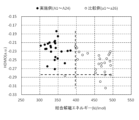
- FIG. 1 is a diagram in which bond dissociation energy is plotted on the horizontal axis and HOMO is plotted on the vertical axis for additives A1 to A24 and a1 to a26.
- the electrode-forming composition of the present invention contains at least a compound having a ring structure and an unsaturated bond (hereinafter sometimes referred to as a "specific compound"), a positive electrode active material, a binder, and a solvent.
- the electrode-forming composition may contain other components.
- the specific compound has a dissociable proton in the molecule.
- the bond dissociation energy of the specific compound is less than 397.27 (kJ/mol).
- the highest occupied molecular orbital (HOMO) of a particular compound is greater than -0.28384 (au).
- the electrode-forming composition of the present invention is resistant to thickening and gelling, has high storage stability, and can be suitably used for forming a positive electrode for a secondary battery.
- a secondary battery equipped with an electrode made using the composition When a secondary battery equipped with an electrode made using the composition is manufactured, merits such as improved quality and yield due to improved storage stability of the composition, cost reduction and reduction of environmental load due to high concentration of solids, and suppression of deterioration in the battery caused by alkaline components are expected, which can contribute to reducing the manufacturing cost of the secondary battery and improving the battery characteristics.
- the electrode-forming composition is more likely to thicken and gel when it contains two types of positive electrode active materials (particularly, a first positive electrode active material that is a polycrystalline body and a second positive electrode active material that is a single crystal body).
- the electrode-forming composition of the present invention by adding a specific compound to the electrode-forming composition containing the positive electrode active material containing two types of positive electrode active materials (particularly, a first positive electrode active material that is a polycrystalline body and a second positive electrode active material that is a single crystal body), it is possible to suppress thickening and gelling of the composition that is more likely to thicken and gel.
- a specific compound to the electrode-forming composition, the specific compound inactivates radicals that are generated in the composition and promote thickening and gelling.
- a compound has a dissociable proton and the bond dissociation energy of the compound is small, the compound is likely to be radicalized. If the highest occupied molecular orbital (HOMO) of a compound is high, the compound is likely to be radicalized and generate hydrogen radicals. This is illustrated below.
- HOMO highest occupied molecular orbital
- the hydrogen radicals react (e.g., radical coupling) with the binder that has been radicalized due to an alkaline component present or generated in the composition.
- the binder radicals are inactivated by the above reaction, the binder reaction that promotes thickening and gelation is suppressed.
- the present invention is not limited to these mechanisms.
- By suppressing thickening and gelation of the electrode-forming composition it is possible to form a homogeneous positive electrode layer.
- the specific compound is a compound having a ring structure and an unsaturated bond.
- the specific compound has a dissociable proton in the molecule.
- the bond dissociation energy of the specific compound is less than 397.27 (kJ/mol).
- the highest occupied molecular orbital (HOMO) of a particular compound is greater than -0.28384 (au).
- the ring structure of the specific compound may be an aliphatic ring or an aromatic ring.
- the ring structure of the specific compound may be a hydrocarbon ring or a heterocyclic ring.
- the specific compound may or may not have a heterocycle.
- the specific compound may or may not have an aromatic ring.
- the unsaturated bond in the specific compound may be a double bond or a triple bond.
- the unsaturated bond contained in the specific compound may be an unsaturated bond that constitutes a ring structure.
- benzene is a compound that has a ring structure and three unsaturated bonds.
- double bonds include carbon-carbon double bonds, carbon-oxygen double bonds, carbon-nitrogen double bonds, carbon-sulfur double bonds, and nitrogen-nitrogen double bonds.
- triple bonds include carbon-carbon triple bonds and carbon-nitrogen triple bonds.
- the number of unsaturated bonds in the specific compound is not particularly limited, and may be one or two or more.
- the specific compound is composed of, for example, hydrogen and at least one of nonmetallic elements from Group 14 to Group 17.
- the nonmetallic elements from Group 14 to Group 17 include boron, carbon, silicon, nitrogen, phosphorus, oxygen, sulfur, and halogens.
- the specific compound may or may not have a heteroatom.
- the heteroatom include an oxygen atom, a nitrogen atom, a phosphorus atom, a silicon atom, a sulfur atom, and a halogen atom.
- the halogen atom include a fluorine atom, a chlorine atom, an iodine atom, and a bromine atom.
- the heteroatom contained in the specific compound is at least any one of an oxygen atom, a sulfur atom, and a nitrogen atom.
- the heteroatom contained in the specific compound is only a nitrogen atom.
- the specific compound is different from the solvent in the present invention.
- the specific compound is, for example, a solid at room temperature.
- a solid at room temperature means that the melting point at 1 atmosphere is 25°C or higher.
- the molecular weight of the specific compound is not particularly limited, and may be, for example, 60 to 1,000, 60 to 700, 100 to 700, or 100 to 350.
- the number of dissociable protons possessed by the specific compound is not particularly limited, and may be one or may be two or more. If the proton dissociation energy can be calculated, the compound is said to have a dissociable proton.
- the bond dissociation energy of the specific compound is less than 397.27 (kJ/mol), and may be 386.7 (kJ/mol) or less, or may be 376.19 (kJ/mol) or less.
- the lower limit of the bond dissociation energy is not particularly limited, but the bond dissociation energy may be, for example, 250.00 (kJ/mol) or more, 276.33 (kJ/mol) or more, or 302.65 (kJ/mol) or more.
- the bond dissociation energy is calculated as follows.
- the total energy E(H.) is calculated using B3LYP as the functional and 6-31+G(d) as the basis function, and the bond dissociation energy ⁇ E bd (unit: kJ/mol) defined by the following formula (b) is calculated.
- ⁇ E bd [E(A ⁇ )+E(H ⁇ )] ⁇ E(HA)
- the highest occupied molecular orbital (HOMO) of the specific compound is greater than -0.28384 (au), and may be -0.27746 (au) or greater, or may be -0.27109 (au) or greater.
- the upper limit of the highest occupied molecular orbital (HOMO) is not particularly limited, but the highest occupied molecular orbital (HOMO) may be, for example, ⁇ 0.15780 (a.u.) or less, ⁇ 0.17617 (a.u.) or less, or ⁇ 0.19533 (a.u.) or less.
- the highest occupied molecular orbital (HOMO) is calculated as follows.
- the content of the specific compound in the electrode-forming composition is not particularly limited, but is preferably 0.001 to 4 mass %, more preferably 0.001 to 2 mass %, even more preferably 0.001 to 0.5 mass %, still more preferably 0.001 to 0.3 mass %, and particularly preferably 0.001 to 0.2 mass %, based on the solid content. Moreover, an even more preferable lower limit of the content of the specific compound is 0.01 mass% of the solid content.
- the solid content means the components other than the solvent that constitute the composition (hereinafter the same).
- the content of the specific compound in the electrode-forming composition is preferably 0.001 to 4 parts by mass, more preferably 0.001 to 2 parts by mass, even more preferably 0.001 to 0.5 parts by mass, still more preferably 0.001 to 0.3 parts by mass, and particularly preferably 0.001 to 0.2 parts by mass, relative to 100 parts by mass of the positive electrode active material.
- the content of the specific compound in the electrode-forming composition is preferably 0.1 to 50 parts by mass, more preferably 0.1 to 30 parts by mass, and even more preferably 0.1 to 20 parts by mass, relative to 100 parts by mass of the binder.
- the content of the specific compound in the electrode-forming composition is preferably 0.1 to 50 parts by mass, more preferably 0.1 to 30 parts by mass, and even more preferably 0.1 to 20 parts by mass, per 100 parts by mass of the conductive assistant.
- the positive electrode active material is not particularly limited.
- the positive electrode active material is preferably one containing S, Fe or Ni, and more preferably one containing 30 mass% or more of S, Fe or Ni, in order to further improve the battery capacity, while using less rare metals and being low cost. In order to further reduce the amount of rare metals used and obtain a battery with an even longer life, it is even more preferable to use one containing 35 mass% or more of Fe or Ni, and even more preferable to use one containing 45 mass% or more.
- the upper limit is not particularly limited, but is usually 61 mass% or less.
- An electrode-forming composition containing a positive electrode active material with a high nickel content has a strong tendency to thicken and gel. Therefore, in order to suppress thickening and gelling in an electrode-forming composition containing a positive electrode active material with a high nickel content, it is preferable for the positive electrode active material to contain Ni, and it is more preferable for the Ni content to be 30 mass% or more, and particularly preferable for the Ni content to be 40 mass% or more. There is no particular limit to the upper limit of the Ni content in the positive electrode active material, but for example, the Ni content is 61 mass% or less.
- the positive electrode active material can be appropriately selected from various active materials conventionally used in electrodes for secondary batteries.
- chalcogen compounds capable of adsorbing and releasing lithium ions or lithium ion-containing chalcogen compounds, polyanion compounds, elemental sulfur and its compounds, etc. can be used.
- lithium ion-containing chalcogen compound examples include LiNiO 2 , Li x Ni y M 1-y O 2 (wherein M represents at least one metal element selected from the group consisting of Co, Mn, Ti, Cr, V, Al, Sn, Pb, and Zn, and 0.05 ⁇ x ⁇ 1.10 and 0.3 ⁇ y ⁇ 1.0), Li a Ni (1-x-y) Co x M 1 y M 2 z O 2 ( wherein M represents at least one metal element selected from the group consisting of Mn and Al, and M 2 represents at least one selected from the group consisting of Zr, Ti, Mg, B, Zr, Si, W, and V, and examples thereof include 1.00 ⁇ a ⁇ 1.50, 0.00 ⁇ x ⁇ 0.50, 0.00 ⁇ y ⁇ 0.50, and 0.000 ⁇ z ⁇ 0.020).
- polyanion compounds examples include LiFePO4 , LiaMnbFecDdPO4 ( 1.00 ⁇ a ⁇ 1.15, 0.01 ⁇ b ⁇ 0.99 , 0.01 ⁇ c ⁇ 0.99, 0.00 ⁇ d ⁇ 0.10, D is selected from Co, Mn , Ti, Cr, V, Al, Sn , Pb, and Zn, and at least a part of the compound has an olivine structure).
- sulfur compounds include sulfur, Li2S , FeS2 , TiS2 , MoS2 , and rubeanic acid. These positive electrode active materials can be used alone or in combination of two or more.
- the general formula Li a Ni (1-x-y) Co x M 1 y M 2 z O 2 (wherein M 1 represents at least one selected from the group consisting of Mn and Al, M 2 represents at least one selected from the group consisting of Zr, Ti, Mg, B, W and V, and 1.00 ⁇ a ⁇ 1.50, 0.00 ⁇ x ⁇ 0.50, 0.00 ⁇ y ⁇ 0.50, 0.000 ⁇ z ⁇ 0.020) is preferred.
- x may be in the range of 0.01 ⁇ x ⁇ 0.30, or 0.03 ⁇ x ⁇ 0.20.
- the value of y may be in the range of 0.01 ⁇ x ⁇ 0.30, or in the range of 0.03 ⁇ x ⁇ 0.20.
- Li a Ni (1-x-y) Co x M 1 y M 2 z O 2 preferably has a Ni content of 30 mass% or more, more preferably a Ni content of 40 mass% or more, more preferably a Ni content of 45 mass% or more, and particularly preferably a Ni content of 47 mass% or more.
- the upper limit of the Ni content is not particularly limited, but is, for example, 61 mass% or less.
- the electrode-forming composition is more likely to thicken and gel when it contains two types of positive electrode active materials (particularly, a first positive electrode active material that is a polycrystalline body and a second positive electrode active material that is a monocrystalline body).
- a specific compound to an electrode-forming composition that contains a positive electrode active material that contains two types of positive electrode active materials (particularly, a first positive electrode active material that is a polycrystalline body and a second positive electrode active material that is a monocrystalline body)
- the positive electrode active material contains a first positive electrode active material that is a polycrystalline body and a second positive electrode active material that is a monocrystalline body.
- the first positive electrode active material which is a polycrystalline body, is, for example, a lithium-containing transition metal oxide particle having a layered rock salt structure.
- the crystallite size determined by Scherrer's formula based on the diffraction peak of the (104) plane obtained from the X-ray diffraction pattern using a CuK ⁇ radiation source of the lithium-containing transition metal oxide particle that is the first positive electrode active material is, for example, 20 nm or more and less than 500 nm.
- the second positive electrode active material which is a single crystal, is, for example, a lithium-containing transition metal oxide particle having a layered rock salt structure.
- the crystallite diameter of the first positive electrode active material and the crystallite diameter of the second positive electrode active material satisfy the relationship of the following formula (X).
- X formula (X).
- ⁇ 1 crystallite diameter (nm) of the first positive electrode active material
- ⁇ 2 crystallite diameter (nm) of the second positive electrode active material
- x1 is 0 nm, preferably 10 nm, more preferably 30 nm, and particularly preferably 70 nm.
- x2 is 400 nm, preferably 350 nm, more preferably 300 nm, and particularly preferably 250 nm.
- the crystallite size can be determined, for example, as follows.
- X-ray diffraction measurement X-ray diffraction patterns of the positive electrode active material are collected using an X'Pert Pro MPD (PANaltical) using a CuK ⁇ radiation source (45 kV, 40 mA) emitting at a wavelength of 1.5418 ⁇ .
- the instrument is configured with 0.02 rad Soller slits, 10 mm automatic variable divergence slits and 1/2° anti-scatter slits on the entrance side, and 8 mm anti-scatter slits and 0.02 rad Soller slits on the receiving side.
- the radius of the goniometer is 240 mm.
- XRD diffraction patterns are obtained in the range of 10 to 100° (2 ⁇ ) with a step size of 0.013°/scan and a time per step of 250 seconds.
- the crystallite size of the positive electrode active material is calculated using the known Scherrer equation from the diffraction angle of the (104) plane peak obtained from the X-ray diffraction pattern and the full width at half maximum (FWHM) obtained by subtracting the device-specific half width.
- ⁇ crystallite diameter (unit: nm) (Crystallite size refers to the average size of the ordered (crystalline) domains, which may be less than or equal to the grain size.)
- ⁇ FWHM ⁇ : 1/2 of the diffraction angle 2 ⁇ of the diffraction peak assigned to the (104) plane
- a peak of the (104) plane is observed, which is assigned to a crystal structure having space group R-3m.
- the half-width characteristic of the device is 47.3° obtained by using Si powder (SRM640f, manufactured by NIST).
- the mass ratio of the first positive electrode active material to the second positive electrode active material in the electrode forming composition is not particularly limited, but is preferably 2:8 to 8:2, more preferably 4:6 to 8:2, and particularly preferably 4:6 to 7:3.
- the amount of the positive electrode active material in the electrode-forming composition is not particularly limited, but is preferably 88.0 to 99.949% by mass, more preferably 88.0 to 99.899% by mass, and even more preferably 95.0 to 99.0% by mass, based on the solid content.
- the binder can be appropriately selected from known materials and is not particularly limited, but examples thereof include fluorine-based binders, polyimide, ethylene-propylene-diene terpolymer, styrene-butadiene rubber, polyethylene, polypropylene, etc. These are non-aqueous binders.
- fluorine-based binder include polyvinylidene fluoride (PVdF); polytetrafluoroethylene (PTFE); and copolymers containing at least one monomer selected from the group consisting of vinylidene fluoride, tetrafluoroethylene, and hexafluoropropylene.
- a fluorine-based binder In order to improve the storage stability of the electrode-forming composition, it is preferable to use a fluorine-based binder.
- the fluorine-based binder is preferably modified with a polar functional group such as a carboxyl group or a hydroxyl group.
- the polar functional group can be confirmed by the presence or absence of a clear peak detected in the range of 10 to 15 ppm in measurement using a nuclear magnetic resonance (NMR) device.
- the binder can be used alone or in combination of two or more types.
- the weight average molecular weight (Mw) of the binder is not particularly limited, but from the viewpoint of improving the adhesion between the current collector and the electrode layer, it is 600,000 to 3,000,000, preferably 700,000 to 2,000,000, and more preferably 700,000 to 1,500,000.
- the weight average molecular weight is a polystyrene-equivalent value measured by gel permeation chromatography (GPC).
- the content of the binder in the electrode-forming composition is not particularly limited, but from the viewpoint of reducing costs and obtaining a high energy density, it is preferably 0.05 to 8 mass% of the solid content, more preferably 0.05 to 5 mass%, even more preferably 0.05 to 4 mass%, even more preferably 0.1 to 3 mass%, particularly preferably 0.2 to 2 mass%, and most preferably 0.3 to 1.5 mass%.
- the solvent is not particularly limited, and examples thereof include solvents that are conventionally used in the preparation of electrode-forming compositions.
- examples of the solvent include water and organic solvents.
- organic solvents examples include ethers, halogenated hydrocarbons, amides, ketones, alcohols, aliphatic hydrocarbons, aromatic hydrocarbons, glycol ethers, glycols, carbonates, and other organic solvents.
- ethers examples include tetrahydrofuran (THF), diethyl ether, and 1,2-dimethoxyethane (DME).
- halogenated hydrocarbons examples include methylene chloride, chloroform, and 1,2-dichloroethane.
- amides include N,N-dimethylformamide (DMF), N,N-dimethylacetamide (DMAc), and N-methyl-2-pyrrolidone (NMP).
- ketones examples include acetone, methyl ethyl ketone, methyl isobutyl ketone, and cyclohexanone.
- Examples of the alcohols include methanol, ethanol, n-propanol, isopropanol, n-butanol, and t-butanol.
- Examples of the aliphatic hydrocarbons include n-heptane, n-hexane, and cyclohexane.
- Examples of aromatic hydrocarbons include benzene, toluene, xylene, and ethylbenzene.
- Examples of glycol ethers include ethylene glycol monoethyl ether, ethylene glycol monobutyl ether, and propylene glycol monomethyl ether. Examples of glycols include ethylene glycol and propylene glycol.
- carbonates examples include ethylene carbonate, propylene carbonate, dimethyl carbonate, diethyl carbonate, and methyl ethyl carbonate.
- organic solvents include, for example, ⁇ -butyrolactone, dimethylsulfoxide (DMSO), dioxolane, and sulfolane.
- the organic solvent may be either a protic solvent or an aprotic solvent, with the aprotic solvent being preferred.
- the aprotic solvent may, for example, be polar or non-polar.
- amides, ketones and carbonates are preferred, and amides are more preferred.
- solvents can be used alone or in combination of two or more.
- the binder may be dissolved or dispersed in these solvents as necessary.
- Suitable solvents in this case include water, NMP, DMSO, ethylene carbonate, propylene carbonate, dimethyl carbonate, diethyl carbonate, methyl ethyl carbonate, ⁇ -butyrolactone, THF, dioxolane, sulfolane, DMF, DMAc, etc.
- the solvent may be selected appropriately depending on the type of binder, but NMP is suitable for water-insoluble binders such as PVdF, and water is suitable for water-soluble binders.
- the solids concentration of the electrode-forming composition is set appropriately taking into consideration the coatability of the composition and the thickness of the electrode to be formed, but is usually 60 to 92% by mass, preferably 65 to 90% by mass, and more preferably 70 to 85% by mass.
- Electrode-forming composition examples include a conductive assistant and a dispersant.
- the conductive assistant is used, for example, to improve electrical conductivity.
- the conductive assistant is not particularly limited, but examples thereof include carbon materials and conductive polymers.
- carbon materials include graphite, carbon black, acetylene black (AB), vapor-grown carbon fibers, carbon nanotubes (CNT), carbon nanohorns, and graphene.
- the conductive polymer include polyaniline, polypyrrole, polythiophene, polyacetylene, and polyacene.
- the conductive assistant may be used alone or in combination of two or more kinds.
- the content of the conductive assistant in the electrode-forming composition is not particularly limited, but is preferably 0.05 to 5 mass% of the solid content, more preferably 0.05 to 4 mass%, even more preferably 0.1 to 3 mass%, and even more preferably 0.2 to 2 mass%. By keeping the content of the conductive assistant within the above range, good electrical conductivity can be obtained.
- the electrode-forming composition does not contain graphene, for example.
- the graphene content in the conductive assistant is not particularly limited, but is preferably 45 mass % or less, more preferably 40 mass % or less, and particularly preferably 10 mass % or less.
- the dispersant is used to improve the dispersibility of substances such as the positive electrode active material and the conductive assistant.
- the dispersant can be appropriately selected from those that have been conventionally used as dispersants for conductive carbon materials such as CNTs.
- a non-ionic polymer is preferred from the viewpoint of stability within the battery. Examples of nonionic polymers include polyvinylpyrrolidone (PVP) and polymers containing at least one functional group selected from the group consisting of a nitrile group, a hydroxyl group, a carbonyl group, an amino group, a sulfonyl group, and an ether group.
- the functional group-containing polymer examples include polyvinyl alcohol, polyacrylonitrile, polylactic acid, polyester, polyimide, polyphenyl ether, polyphenyl sulfone, polyethyleneimine, and polyaniline.
- a polymer containing a pyrrolidone structure or a nitrile group is preferred, and polyvinylpyrrolidone and polyacrylonitrile are more preferred.
- the dispersants can be used alone or in combination of two or more.
- the content of the dispersant in the electrode-forming composition is not particularly limited, but is preferably 0.001 to 0.5 mass % of the solid content, more preferably 0.001 to 0.3 mass %, and even more preferably 0.001 to 0.2 mass %. An even more preferable lower limit of the content of the dispersant is 0.01 mass % of the solid content.
- the total amount of the specific compound and the dispersant is preferably 0.001 to 1 mass % of the solid content, and more preferably 0.01 to 1 mass %.
- the viscosity of the electrode-forming composition is set appropriately taking into consideration the coating method and the thickness of the electrode to be formed, but is usually about 100 to 2,000,000 mPa ⁇ s, preferably about 300 to 1,000,000 mPa ⁇ s, and more preferably about 400 to 800,000 mPa ⁇ s.
- the above viscosity is measured at 25°C using an E-type viscometer.
- the electrode-forming composition of the present invention can be obtained by mixing the above-mentioned components.
- the composition contains optional components other than the gelation inhibitor (specific compound) which is the additive of the present invention, the positive electrode active material, and the binder, the gelation inhibitor which is the additive and the positive electrode active material may be mixed together with the optional components, or both components may be mixed in advance and then mixed with the optional components. Either method can produce the effects of the present invention.
- the electrode layer of the present invention is obtained from the electrode-forming composition of the present invention.
- a method for forming an electrode layer for example, a method of applying an electrode-forming composition onto a substrate to form a coating film and then drying the coating film can be mentioned. This method is not particularly limited, and various conventionally known methods can be used. Specific examples of the coating method include various printing methods such as offset printing and screen printing, blade coating, dip coating, spin coating, bar coating, slit coating, inkjet printing, and die coating.
- the temperature is preferably 50 to 400°C, and more preferably 70 to 150°C.
- the thickness of the electrode layer is not particularly limited, but is preferably 0.01 to 1,000 ⁇ m, and more preferably 5 to 300 ⁇ m. In the case where the electrode layer is used alone as an electrode in the secondary battery, the thickness of the electrode layer is preferably 10 ⁇ m or more.
- the electrode of the present invention comprises, for example, an electrode layer of the present invention on at least one surface of a substrate which is a current collector.
- substrates used for electrodes include metal substrates such as platinum, gold, iron, stainless steel, copper, aluminum, and lithium; alloy substrates made of any combination of these metals; oxide substrates such as indium tin oxide (ITO), indium zinc oxide (IZO), and antimony tin oxide (ATO); and carbon substrates such as glassy carbon, pyrolytic graphite, and carbon felt.
- the thickness of the substrate is not particularly limited, but is preferably from 1 to 100 ⁇ m, more preferably from 3 to 30 ⁇ m, and particularly preferably from 5 to 25 ⁇ m.
- the secondary battery of the present invention comprises the electrode layer of the present invention.
- the secondary battery of the present invention includes, for example, the electrode of the present invention.
- the secondary battery includes, for example, at least one pair of a positive electrode and a negative electrode, a separator interposed between the electrodes, and an electrolyte.
- the positive electrode is the electrode of the present invention.
- the material used for the separator is not particularly limited, but examples include glass fiber, cellulose, porous polyolefin, polyamide, polyester, etc.
- the electrolyte may be either liquid or solid, and may be either aqueous or non-aqueous, but from the viewpoint of easily achieving sufficient practical performance, an electrolyte solution composed of an electrolyte salt and a solvent, etc., is preferably used.
- electrolyte salt examples include lithium salts such as LiPF6, LiBF4 , LiN ( SO2F ) 2 , LiN( C2F5SO2 ) 2 , LiAsF6 , LiSbF6, LiAlF4 , LiGaF4 , LiInF4 , LiClO4 , LiN( CF3SO2 ) 2 , LiCF3SO3 , LiSiF6 , LiN ( CF3SO2 ) , and ( C4F9SO2 ) ; iodide salts of quaternary imidazolium compounds; iodide salts and perchlorate salts of tetraalkylammonium compounds; and metal bromides such as LiBr, NaBr, KBr, CsBr, and CaBr2 . These electrolyte salts can be used alone or in combination of two or more.
- the solvent there are no particular limitations on the solvent, so long as it does not corrode or decompose the materials constituting the battery, thereby causing a deterioration in performance, and dissolves the electrolyte salt.
- the solvent that can be used include non-aqueous solvents such as cyclic esters, such as ethylene carbonate, propylene carbonate, butylene carbonate, and ⁇ -butyrolactone; ethers, such as tetrahydrofuran and dimethoxyethane; chain esters, such as methyl acetate, dimethyl carbonate, diethyl carbonate, and ethyl methyl carbonate; and nitriles, such as acetonitrile. These solvents may be used alone or in combination of two or more.
- solid electrolyte inorganic solid electrolytes such as sulfide-based solid electrolytes and oxide-based solid electrolytes, and organic solid electrolytes such as polymer-based electrolytes can be suitably used. By using these solid electrolytes, it is possible to obtain an all-solid-state battery that does not use an electrolytic solution.
- sulfide-based solid electrolytes include thiolithium-based materials such as Li 2 S—SiS 2 -lithium compound (wherein the lithium compound is at least one selected from the group consisting of Li 3 PO 4 , LiI, and Li 4 SiO 4 ), Li 2 S—P 2 O 5 , Li 2 S—B 2 S 5 , and Li 2 S—P 2 S 5 -GeS 2 .
- Li 2 S—SiS 2 -lithium compound wherein the lithium compound is at least one selected from the group consisting of Li 3 PO 4 , LiI, and Li 4 SiO 4
- Li 2 S—P 2 O 5 Li 2 S—B 2 S 5
- Li 2 S—P 2 S 5 -GeS 2 Li 2 S—P 2 S 5 -GeS 2 .
- polymer solid electrolytes examples include polyethylene oxide-based materials and polymer compounds obtained by polymerizing or copolymerizing monomers such as hexafluoropropylene, tetrafluoroethylene, trifluoroethylene, ethylene, propylene, acrylonitrile, vinylidene chloride, acrylic acid, methacrylic acid, methyl acrylate, ethyl acrylate, methyl methacrylate, styrene, and vinylidene fluoride.
- the polymer solid electrolyte may contain a supporting salt and a plasticizer.
- the supporting salt include lithium (fluorosulfonylimide).
- plasticizer include succinonitrile.
- Batteries manufactured using the electrode-forming composition of the present invention have high battery characteristics even though they contain less binder (e.g., fluorine binder) compared to general secondary batteries.
- binder e.g., fluorine binder
- the type of secondary battery and the type of electrolyte are not particularly limited, and any type of battery such as a lithium ion secondary battery, a nickel hydrogen battery, a manganese battery, or an air battery may be used, but a lithium ion secondary battery is preferred. There are no particular limitations on the lamination method or production method of the secondary battery.
- the electrode of the present invention When applied to a coin cell, the electrode of the present invention can be punched out into a specified disk shape before use.
- a lithium-ion secondary battery can be produced by placing one electrode (negative electrode) on the lid of a coin cell to which a washer and spacer are welded, placing a separator of the same shape impregnated with an electrolyte on top of that, and then placing the electrode of the present invention (positive electrode) on top with the electrode layer facing down, placing a case and gasket on top, and sealing with a coin cell crimping machine.
- the method for producing an electrode-forming composition of the present invention is a method for producing an electrode-forming composition of the present invention.
- the method for producing an electrode-forming composition of the present invention includes mixing a specific compound, a binder, a solvent, and a positive electrode active material.
- the order of mixing these materials is not particularly limited.
- One embodiment of the method for producing an electrode-forming composition of the present invention includes mixing a specific compound, a binder, a solvent, a first positive electrode active material that is a polycrystalline body, and a second positive electrode active material that is a single crystal body. The order of mixing these materials is not particularly limited.
- the mass ratio of the first positive electrode active material to the second positive electrode active material in the electrode-forming composition is not particularly limited, but is preferably 2:8 to 8:2, more preferably 4:6 to 8:2, and particularly preferably 4:6 to 7:3.
- the additive of the present invention is an additive for an electrode-forming composition containing a positive electrode active material, a binder, and a solvent.
- the gelation inhibitor of the present invention is a gelation inhibitor for an electrode-forming composition including a positive electrode active material, a binder, and a solvent.
- the gelation inhibitor is added to the electrode-forming composition including a positive electrode active material, a binder, and a solvent to suppress gelation of the electrode-forming composition.
- the additive and the gelation inhibitor are the above-mentioned specific compounds, and examples and preferred examples thereof include the examples and preferred examples given in the description of the above-mentioned specific compounds.
- Examples and preferred examples of the positive electrode active material include the examples and preferred examples given in the description of the positive electrode active material as a component contained in the electrode-forming composition of the present invention.
- Examples and preferred examples of the binder include the examples and preferred examples given in the description of the binder as a component contained in the electrode-forming composition of the present invention.
- Examples and preferred examples of the solvent include the examples and preferred examples given in the description of the solvent as a component contained in the electrode-forming composition of the present invention.
- the electrode-forming composition in which the additive and the gelation inhibitor are used may contain other components.
- Examples and preferred examples of the other components include the examples and preferred examples given in the description of the other components contained in the electrode-forming composition of the present invention.
- the method for suppressing gelation of the present invention is a method for suppressing gelation of an electrode-forming composition containing a positive electrode active material, a binder, and a solvent.
- the electrode-forming composition is made to contain a specific compound.
- the present invention relates to the use of a specific compound for suppressing gelation of an electrode-forming composition that contains a positive electrode active material, a binder, and a solvent.
- Examples and preferred examples of the specific compound include the examples and preferred examples given in the description of the specific compound above.
- Examples and preferred examples of the positive electrode active material include the examples and preferred examples given in the description of the positive electrode active material as a component contained in the electrode-forming composition of the present invention.
- Examples and preferred examples of the binder include the examples and preferred examples given in the description of the binder as a component contained in the electrode-forming composition of the present invention.
- Examples and preferred examples of the solvent include the examples and preferred examples given in the description of the solvent as a component contained in the electrode-forming composition of the present invention.
- the electrode-forming composition used in the method for suppressing gelation may contain other components.
- Examples and preferred examples of the other components include the examples and preferred examples given in the description of the other components contained in the electrode-forming composition of the present invention.
- the bond dissociation energies and HOMOs of the additives used in the examples and comparative examples of the present invention were calculated by quantum chemical calculations using the following method.
- the quantum chemical calculation program used was Gaussian 16, a molecular orbital calculation software made by Gaussian, USA, and calculations were performed using density functional theory (DFT).
- DFT density functional theory
- the total energy E(H.) was calculated using B3LYP as the functional and 6-31+G(d) as the basis function, and the bond dissociation energy ⁇ E bd (unit: kJ/mol) defined by the following formula (b) was calculated.
- ⁇ E bd [E(A ⁇ )+E(H ⁇ )] ⁇ E(HA)
- the target molecule has multiple hydrogen atoms, hydrogen abstraction at only one site was considered, and the bond dissociation energy was calculated for the abstraction site at which the total energy E(A.) of the neutral radical obtained by hydrogen abstraction is minimal.
- HOMO calculation method The most stable structure of the target molecule in the ground state under vacuum was calculated using B3LYP as the functional and 6-31+G(d) as the basis function, and the energy level (unit: atomic unit (a.u.)) of the highest occupied molecular orbital (HOMO) was calculated.
- the apparatus used in this example is as follows: (1) Rotation and revolution type mixer: Thinky Corporation, Awatori Mixer, atmospheric pressure type, ARE-310 (2) Dry Boss: Manufactured by Nihon Spindle Mfg. Co., Ltd. (3) Rheometer (Condition 1): Manufactured by Anton Paar, MCR302, Jig: CP40-1, Measurement GAP: 0.08 mm, Measurement temperature: Shear viscosity measurement was performed while sweeping the shear rate from 0.01 to 1000 sec -1 under the measurement conditions of 25°C. The viscosity of the slurry was measured at 100 sec -1 .
- X-ray diffraction patterns of the positive electrode active material were collected using an X'Pert Pro MPD (PANaltical) using a CuK ⁇ radiation source (45 kV, 40 mA) emitting at a wavelength of 1.5418 ⁇ .
- the instrument configuration was set to 0.02 rad Soller slits, 10 mm automatic variable divergence slits and 1/2° anti-scatter slits on the input side, and 8 mm anti-scatter slits and 0.02 rad Soller slits on the receiving side.
- the radius of the goniometer was 240 mm.
- diffraction patterns were obtained in the range of 10 to 100° (2 ⁇ ) with a step size of 0.013°/scan and a time per step of 250 seconds.
- the crystallite size of the positive electrode active material was calculated using the known Scherrer equation from the diffraction angle of the (104) plane peak obtained from the X-ray diffraction pattern and the full width at half maximum (FWHM) obtained by subtracting the device-specific half width.
- ⁇ crystallite diameter (unit: nm) (Crystallite size refers to the average size of the ordered (crystalline) domains, which may be less than or equal to the grain size.)
- ⁇ FWHM ⁇ : 1/2 of the diffraction angle 2 ⁇ of the diffraction peak assigned to the (104) plane
- a peak of the (104) plane is observed, which is assigned to a crystal structure having space group R-3m.
- the half-width characteristic of the device was 47.3° obtained by using Si powder (SRM640f, manufactured by NIST).
- the raw materials used in this example are as follows: ⁇ Cathode active material> As the first positive electrode active material which is a polycrystalline body, S-800 was used, and as the second positive electrode active material which is a single crystal, T81RS was used.
- S-800 Lithium nickel manganese cobalt oxide ( LiNi0.8Co0.1Mn0.1O2 , polycrystalline type, manufactured by Ningbo Ronbay New Energy Technology Co., Ltd., Ni ratio: 50% by mass, crystallite size determined by X-ray diffraction: 97 nm)
- T81RS Lithium nickel manganese cobalt oxide ( LiNi0.8Co0.1Mn0.1O2 , single crystal type, manufactured by Hunan Shanshan Energy Technology Co., Ltd., Ni ratio: 50 mass%, crystallite size determined by X-ray diffraction: 296 nm)
- Solef-5130 Polyvinylidene fluoride (PVdF), manufactured by SOLVAY ⁇ Conductive additive> AB: Denka Black (registered trademark) Li100 (high purity acetylene black), manufactured by Denka Co., Ltd. ⁇ Solvent> NMP: N-methyl-2-pyrrolidone, manufactured by Nippon Refine Co., Ltd. ⁇ Additives A1 to A24, and a1 to a26> The additives described in Tables 1-1 and 1-2 below were used. The additives listed in Table 1-1 are the additives used in the examples. The additives listed in Table 1-2 are the additives used in the comparative examples.
- Company F Fujifilm Wako Pure Chemical Corporation Company T: Tokyo Chemical Industry Co., Ltd.
- Company C Tokyo Chemical Industry Co., Ltd.
- Company B BASF AD Company: ADEKA Co., Ltd.
- Company A Aldrich Irganox 3114 (trade name) of A18 is 1,3,5-Tris(3,5-di-tert.-butyl-4-hydroxybenzyl)-1,3,5-triazine-2,4,6(1H,3H,5H)-trione manufactured by BASF.
- A19 Irganox MD1024 (trade name) is 2',3-Bis[[3-[3,5-di-tert.-butyl-4-hydroxyphenyl]propionyl]]propionohydrazide manufactured by BASF.
- A20, Adeka STAB AO-40 (trade name), is 6,6'-di-tert-butyl-4,4'-butylidene di-m-cresol manufactured by ADEKA Corporation.
- Adeka STAB AO-80 (trade name) is 3,9-Bis ⁇ 2-[3-(3-tert-butyl-4-hydroxy-5-methylphenyl)propionyloxy]-1,1-dimethylethyl ⁇ -2,4,8,10-tetraoxaspiro[5.5]undecane manufactured by ADEKA Corporation.
- the water-soluble methylol melamine a8 (Nikaresin S176: trade name) is a water-soluble methylol melamine manufactured by Nippon Carbide Industries Co., Ltd.
- Examples 13 to 16, Comparative Examples 26 to 27 The positive electrode active material, binder powder, conductive assistant, additive, NMP, and water were mixed in a dry mixer so as to obtain the composition ratios shown in Tables 2-1, 2-2, and 2-4, and mixed using a rotation/revolution type mixer to obtain an electrode slurry.
- the water was added to intentionally create a state in which the slurry had a high water content.
- Example 17 A 5% by mass NMP solution (additive solution) was prepared for additive A2.
- the positive electrode active material, binder powder, conductive assistant, additive solution, NMP, and water were mixed in a dry mixer so as to obtain the composition ratio shown in Table 2-2, and mixed using a rotation/revolution type mixer to obtain an electrode slurry.
- the water was added to intentionally create a state in which the slurry has a high water content.
- Example 18 A 5% by mass NMP solution (additive solution) was prepared for additive A2.
- the positive electrode active material, binder powder, conductive assistant, additive solution, NMP, and water were mixed in a dry mixer so as to obtain the composition ratio shown in Table 2-2, and mixed using a rotation/revolution type mixer to obtain an electrode slurry.
- the water was added to intentionally create a state in which the slurry has a high water content.
- Examples 19 to 25 A 5% by mass NMP solution (additive solution) was prepared for each of the additives A17 to A23.
- the positive electrode active material, binder powder, conductive assistant, additive solution, NMP, and water were mixed in a dry mixer so as to obtain the composition ratio shown in Table 2-2, and mixed using a rotation/revolution type mixer to obtain an electrode slurry.
- the water was added to intentionally create a state in which the slurry had a high water content.
- Example 26 The positive electrode active material, binder powder, conductive assistant, additive, NMP, and water were mixed in a dry mixer so as to obtain the composition ratio shown in Table 2-2, and mixed using a rotation/revolution type mixer to obtain an electrode slurry.
- the water was added to intentionally create a state in which the slurry has a high water content.
- the slurries obtained above were subjected to viscosity measurement using a rheometer (condition 1) or a rheometer (condition 2) immediately after preparation. In addition, the presence or absence of gelation was confirmed visually after storage at 40°C for 24 hours. For those that did not gel, the viscosity was similarly measured using a rheometer (condition 1) or a rheometer (condition 2) to confirm the presence or absence of thickening and gelation tendency, and judged based on the following criteria. These evaluations are also summarized in each table.
- the electrode slurries obtained in Examples 1 to 26 and Comparative Examples 1 to 30 were each uniformly applied to an aluminum foil current collector (15 ⁇ m thick, UACJ Corporation) using a doctor blade, dried at 80°C for 30 minutes to form an active material layer, and then pressed twice with a roll press at a linear pressure of 0.25 kN/cm, twice at 1 kN/cm, and twice at 3 kN/cm to produce electrodes.
Landscapes
- Chemical & Material Sciences (AREA)
- Chemical Kinetics & Catalysis (AREA)
- Electrochemistry (AREA)
- General Chemical & Material Sciences (AREA)
- Engineering & Computer Science (AREA)
- Materials Engineering (AREA)
- Manufacturing & Machinery (AREA)
- Inorganic Chemistry (AREA)
- Battery Electrode And Active Subsutance (AREA)
Priority Applications (1)
| Application Number | Priority Date | Filing Date | Title |
|---|---|---|---|
| JP2025540120A JP7776045B2 (ja) | 2023-12-01 | 2024-11-05 | 電極形成用組成物、添加剤、及びゲル化抑制剤 |
Applications Claiming Priority (4)
| Application Number | Priority Date | Filing Date | Title |
|---|---|---|---|
| JP2023-204142 | 2023-12-01 | ||
| JP2023204142 | 2023-12-01 | ||
| JP2024-023518 | 2024-02-20 | ||
| JP2024023518 | 2024-02-20 |
Publications (1)
| Publication Number | Publication Date |
|---|---|
| WO2025115529A1 true WO2025115529A1 (ja) | 2025-06-05 |
Family
ID=95896427
Family Applications (1)
| Application Number | Title | Priority Date | Filing Date |
|---|---|---|---|
| PCT/JP2024/039207 Pending WO2025115529A1 (ja) | 2023-12-01 | 2024-11-05 | 電極形成用組成物、添加剤、及びゲル化抑制剤 |
Country Status (2)
| Country | Link |
|---|---|
| JP (1) | JP7776045B2 (https=) |
| WO (1) | WO2025115529A1 (https=) |
Citations (6)
| Publication number | Priority date | Publication date | Assignee | Title |
|---|---|---|---|---|
| WO2012029839A1 (ja) * | 2010-09-01 | 2012-03-08 | 日本ゼオン株式会社 | 二次電池正極用水系バインダー組成物、二次電池正極用スラリー組成物、二次電池正極及び二次電池 |
| CN111463508A (zh) * | 2020-03-31 | 2020-07-28 | 珠海冠宇电池股份有限公司 | 一种含有自由基淬灭剂的固态电池 |
| US20210135215A1 (en) * | 2019-10-31 | 2021-05-06 | Samsung Sdi Co., Ltd. | Positive active material for rechargeable lithium battery, method of preparing the same, and rechargeable lithium battery including the same |
| US20210384502A1 (en) * | 2020-06-04 | 2021-12-09 | Sk Innovation Co., Ltd. | Cathode active material for lithium secondary battery |
| US20210384505A1 (en) * | 2020-06-04 | 2021-12-09 | Sk Innovation Co., Ltd. | Cathode active material for lithium secondary battery and lithium secondary battery including the same |
| JP2022542774A (ja) * | 2019-07-02 | 2022-10-07 | 巴斯夫杉杉電池材料(寧郷)有限公司 | W含有高ニッケル三元正極材料及びその製造方法 |
Family Cites Families (11)
| Publication number | Priority date | Publication date | Assignee | Title |
|---|---|---|---|---|
| US7829219B2 (en) * | 2004-12-23 | 2010-11-09 | Ecopro Co. Ltd. | Cathode for lithium secondary batteries having improved coating properties and lithium secondary batteries using the same |
| US8426062B2 (en) * | 2008-02-29 | 2013-04-23 | Zeon Corporation | Binder composition for nonaqueous electrolyte secondary battery electrode and nonaqueous electrolyte secondary battery |
| JP2015072900A (ja) * | 2013-09-05 | 2015-04-16 | 三洋化成工業株式会社 | 電極スラリー増粘抑制剤、リチウムイオン電池用電極スラリー、リチウムイオン電池用電極、リチウムイオン電池、及び、リチウムイオン電池用電極の製造方法 |
| JP2016181479A (ja) * | 2015-03-25 | 2016-10-13 | 東洋インキScホールディングス株式会社 | リチウム二次電池用組成物 |
| JP2017228413A (ja) * | 2016-06-22 | 2017-12-28 | 関西ペイント株式会社 | リチウムイオン電池正極用導電ペースト及びリチウムイオン電池正極用合材ペースト |
| WO2019185318A1 (en) * | 2018-03-28 | 2019-10-03 | Umicore | Lithium transition metal composite oxide as a positive electrode active material for rechargeable lithium secondary batteries |
| CN110660961B (zh) * | 2018-06-28 | 2021-09-21 | 宁德时代新能源科技股份有限公司 | 正极片及锂离子电池 |
| JP2020071932A (ja) * | 2018-10-30 | 2020-05-07 | 東洋インキScホールディングス株式会社 | 電池用カーボンブラック合剤スラリーの製造方法とその利用 |
| JP7468621B2 (ja) * | 2020-03-27 | 2024-04-16 | 株式会社村田製作所 | 二次電池 |
| CN114335539A (zh) * | 2021-12-27 | 2022-04-12 | 苏州宇量电池有限公司 | 一种防止锂离子电池正极浆料形成凝胶的方法 |
| JP7597046B2 (ja) * | 2022-01-13 | 2024-12-10 | トヨタ自動車株式会社 | 電極および電池 |
-
2024
- 2024-11-05 WO PCT/JP2024/039207 patent/WO2025115529A1/ja active Pending
- 2024-11-05 JP JP2025540120A patent/JP7776045B2/ja active Active
Patent Citations (6)
| Publication number | Priority date | Publication date | Assignee | Title |
|---|---|---|---|---|
| WO2012029839A1 (ja) * | 2010-09-01 | 2012-03-08 | 日本ゼオン株式会社 | 二次電池正極用水系バインダー組成物、二次電池正極用スラリー組成物、二次電池正極及び二次電池 |
| JP2022542774A (ja) * | 2019-07-02 | 2022-10-07 | 巴斯夫杉杉電池材料(寧郷)有限公司 | W含有高ニッケル三元正極材料及びその製造方法 |
| US20210135215A1 (en) * | 2019-10-31 | 2021-05-06 | Samsung Sdi Co., Ltd. | Positive active material for rechargeable lithium battery, method of preparing the same, and rechargeable lithium battery including the same |
| CN111463508A (zh) * | 2020-03-31 | 2020-07-28 | 珠海冠宇电池股份有限公司 | 一种含有自由基淬灭剂的固态电池 |
| US20210384502A1 (en) * | 2020-06-04 | 2021-12-09 | Sk Innovation Co., Ltd. | Cathode active material for lithium secondary battery |
| US20210384505A1 (en) * | 2020-06-04 | 2021-12-09 | Sk Innovation Co., Ltd. | Cathode active material for lithium secondary battery and lithium secondary battery including the same |
Also Published As
| Publication number | Publication date |
|---|---|
| JP7776045B2 (ja) | 2025-11-26 |
| JPWO2025115529A1 (https=) | 2025-06-05 |
Similar Documents
| Publication | Publication Date | Title |
|---|---|---|
| JP5072242B2 (ja) | 非水電解液二次電池 | |
| KR102090296B1 (ko) | 리튬 이차전지용 음극, 이를 포함하는 리튬 이차전지, 및 이의 제조 방법 | |
| US20130216910A1 (en) | High capacity alloy anodes and lithium-ion electrochemical cells containing same | |
| JP2002110237A (ja) | リチウム−硫黄電池用正極活物質組成物、その製造方法及びリチウム−硫黄電池 | |
| JP2012164624A (ja) | リチウムイオン二次電池用負極活物質及びその負極活物質を用いたリチウムイオン二次電池 | |
| CN104798244A (zh) | 锂二次电池 | |
| JP2017526145A (ja) | リチウムイオン電池用アノード材料 | |
| WO2023282246A1 (ja) | 電極形成用組成物 | |
| WO2010082240A1 (ja) | 複合酸化物およびその製造方法、ならびにその複合酸化物を用いた非水電解質二次電池 | |
| JP7776045B2 (ja) | 電極形成用組成物、添加剤、及びゲル化抑制剤 | |
| JP7776046B2 (ja) | 電極形成用組成物、添加剤、及びゲル化抑制剤 | |
| JP7800783B2 (ja) | 電極形成用組成物、添加剤、及びゲル化抑制剤 | |
| WO2024150446A1 (ja) | 電極形成用組成物 | |
| JP7694857B2 (ja) | 電極形成用組成物および添加剤 | |
| JP7736223B2 (ja) | 電極形成用組成物および添加剤 | |
| JP7736222B2 (ja) | 電極形成用組成物および添加剤 | |
| US9960425B2 (en) | Positive electrode material, positive electrode for non-aqueous electrolyte secondary battery, and non-aqueous electrolyte secondary battery | |
| US20240322158A1 (en) | Composition for electrode formation | |
| WO2024262372A1 (ja) | 電極形成用組成物およびゲル化抑制剤 | |
| WO2026053578A1 (ja) | 電極形成用組成物、添加剤およびゲル化抑制剤 | |
| WO2025263249A1 (ja) | 電極形成用組成物、添加剤、及びゲル化抑制剤 | |
| WO2024150813A1 (ja) | 電極形成用組成物および添加剤 | |
| KR20170035569A (ko) | 두께 팽창이 감소된 리튬 이차전지용 음극 및 그 제조방법 | |
| CN117501471A (zh) | 电极形成用组合物 | |
| CN117480633A (zh) | 电极形成用组合物 |
Legal Events
| Date | Code | Title | Description |
|---|---|---|---|
| ENP | Entry into the national phase |
Ref document number: 2025540120 Country of ref document: JP Kind code of ref document: A |
|
| WWE | Wipo information: entry into national phase |
Ref document number: 2025540120 Country of ref document: JP |
|
| 121 | Ep: the epo has been informed by wipo that ep was designated in this application |
Ref document number: 24897217 Country of ref document: EP Kind code of ref document: A1 |