WO2024219094A1 - 自動分析装置及び自動分析方法 - Google Patents
自動分析装置及び自動分析方法 Download PDFInfo
- Publication number
- WO2024219094A1 WO2024219094A1 PCT/JP2024/007627 JP2024007627W WO2024219094A1 WO 2024219094 A1 WO2024219094 A1 WO 2024219094A1 JP 2024007627 W JP2024007627 W JP 2024007627W WO 2024219094 A1 WO2024219094 A1 WO 2024219094A1
- Authority
- WO
- WIPO (PCT)
- Prior art keywords
- liquid
- dispensing
- probe
- sample
- control unit
- Prior art date
- Legal status (The legal status is an assumption and is not a legal conclusion. Google has not performed a legal analysis and makes no representation as to the accuracy of the status listed.)
- Ceased
Links
Images



Classifications
-
- G—PHYSICS
- G01—MEASURING; TESTING
- G01N—INVESTIGATING OR ANALYSING MATERIALS BY DETERMINING THEIR CHEMICAL OR PHYSICAL PROPERTIES
- G01N35/00—Automatic analysis not limited to methods or materials provided for in any single one of groups G01N1/00 - G01N33/00; Handling materials therefor
- G01N35/10—Devices for transferring samples or any liquids to, in, or from, the analysis apparatus, e.g. suction devices, injection devices
- G01N35/1009—Characterised by arrangements for controlling the aspiration or dispense of liquids
-
- G—PHYSICS
- G01—MEASURING; TESTING
- G01N—INVESTIGATING OR ANALYSING MATERIALS BY DETERMINING THEIR CHEMICAL OR PHYSICAL PROPERTIES
- G01N35/00—Automatic analysis not limited to methods or materials provided for in any single one of groups G01N1/00 - G01N33/00; Handling materials therefor
- G01N35/10—Devices for transferring samples or any liquids to, in, or from, the analysis apparatus, e.g. suction devices, injection devices
- G01N35/1004—Cleaning sample transfer devices
-
- G—PHYSICS
- G01—MEASURING; TESTING
- G01N—INVESTIGATING OR ANALYSING MATERIALS BY DETERMINING THEIR CHEMICAL OR PHYSICAL PROPERTIES
- G01N35/00—Automatic analysis not limited to methods or materials provided for in any single one of groups G01N1/00 - G01N33/00; Handling materials therefor
- G01N2035/00178—Special arrangements of analysers
- G01N2035/00277—Special precautions to avoid contamination (e.g. enclosures, glove- boxes, sealed sample carriers, disposal of contaminated material)
Definitions
- the present invention relates to an automatic analysis device and an automatic analysis method.
- Automatic analyzers that analyze the components of a patient's blood, urine, cerebrospinal fluid, etc. include automatic biochemistry analyzers that measure the amount of transmitted or scattered light obtained by irradiating a reaction solution of a specimen and a reagent with light, and automatic immunological analyzers that react a reagent to which a label has been added with a specimen and measure the amount of light emitted by the label.
- Patent Document 1 maintains a constant gap between the bottom of the reaction vessel and the tip of the probe when dispensing the sample, and raises the probe while dispensing, reducing adhesion of the sample to the sides of the probe and improving dispensing accuracy.
- the present invention aims to provide an automatic analysis device and an automatic analysis method that can reduce contamination caused by liquid adhesion on the probe tip surface compared to conventional methods and can more stabilize the amount of liquid discharged.
- the present invention includes multiple means for solving the above problems, but one example includes a dispensing mechanism having a probe that dispenses liquid into a container, and a control unit that controls the operation of the dispensing mechanism, and when a second liquid is to be dispensed while a first liquid is contained in the container, the control unit controls the dispensing mechanism so that the tip of the probe is immersed in the liquid after the second liquid has been dispensed.
- the present invention can reduce contamination of the probe tip surface caused by liquid adhesion compared to conventional techniques, and can also stabilize the amount of liquid ejected. Problems, configurations, and effects other than those described above will become clear from the explanation of the embodiments below.
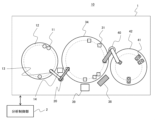
- FIG. 1 is a plan view illustrating an overall configuration of an automatic analyzer according to a first embodiment.
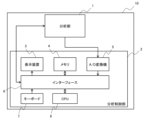
- FIG. 1 is a block diagram illustrating an overall configuration of an automatic analyzer according to a first embodiment.
- FIG. 2 is a diagram illustrating a schematic configuration of a dispensing mechanism of the automatic analyzer according to the first embodiment.
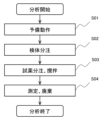
- 4 is a flowchart illustrating the flow of an analysis operation in the automatic analyzer of the first embodiment.
- 5 is a flowchart illustrating the flow of a sample dispensing operation in the automatic analyzer of the first embodiment.
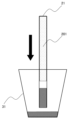
- 5A to 5C are diagrams illustrating the movement of a dispensing probe when a second stage of sample dispensing is performed by the sample dispensing mechanism in the automatic analyzer of Example 1.
- 5A to 5C are diagrams illustrating the movement of a dispensing probe when a second stage of sample dispensing is performed by the sample dispensing mechanism in the automatic analyzer of Example 1.
- 5A to 5C are diagrams illustrating the movement of a dispensing probe when a second stage of sample dispensing is performed by the sample dispensing mechanism in the automatic analyzer of Example 1.
- 5A to 5C are diagrams illustrating the movement of a dispensing probe when a second stage of sample dispensing is performed by the sample dispensing mechanism in the automatic analyzer of Example 1.
- FIG. 11 is a schematic diagram showing the movement of a dispensing probe when a second stage of sample dispensing is performed by a sample dispensing mechanism in an automatic analyzer according to a second embodiment.
- Figure 1 is a plan view showing the schematic configuration of the automatic analyzer
- Figure 2 is a block diagram showing the schematic overall configuration of the automatic analyzer
- Figure 3 is a diagram showing the schematic configuration of the dispensing mechanism.
- the automated analyzer 10 of this embodiment mainly comprises an analysis unit 1 that analyzes liquid samples, and an analysis control unit 2 that controls the operation of each mechanism of the analysis unit 1.
- the specimen holding unit 12 is structured to hold multiple specimen containers 11 in a ring shape, each of which contains a specimen to be analyzed in the analysis process.
- the specimen holding unit 12 is rotatable and has a disk-like shape. The specimen holding unit 12 rotates to transport the specimen container 11 to be dispensed to the specimen suction position 13 of the specimen dispensing mechanism 20.
- the reaction disk 34 holds multiple reaction vessels 31 for carrying out reactions and measurements.
- the reaction disk 34 is rotatable and has a disk-like shape.
- the reaction vessels 31 contain a mixture of a sample and a reagent that have been mixed and reacted.
- the specimen dispensing mechanism 20 aspirates the specimen from the specimen container 11 that has been transported to the specimen aspiration position 13 by the specimen holding unit 12.
- the specimen dispensing mechanism 20 then dispenses the aspirated specimen into a reaction container 31 held on the reaction disk 34.
- the sample dispensing mechanism 20 is composed of a dispensing probe 21, a dispensing arm 22, and a vertical rotation operation unit 23.
- the dispensing probe 21 is attached to one end of the dispensing arm 22, and the dispensing arm 22 is connected to the dispensing probe 21 and the up-down rotation operating part 23.
- the dispensing flow path 24 is a flow path of the dispensing mechanism that passes through the inside of the dispensing arm 22 and the vertical rotation operation part 23.
- the dispensing probe 21 is connected to the cylinder 25 via the dispensing flow path 24 inside the dispensing arm 22.
- the cylinder 25 has a plunger 26 and a plunger drive means 27, and is connected to the water supply pump 29 through a valve 28.
- the reagent holding unit 42 stores multiple reagent containers 41 containing reagents used in the analysis process that are to be reacted in the reaction container 31, and has a reagent disk and a reagent container holding unit (both not shown for convenience of illustration).
- the reagent holding unit 42 has a cooling function to increase the on-board stability of the reagent properties.
- Each reagent container 41 is filled with reagents to be mixed and reacted with the specimen, or reagents or detergents required for pre-processing of the analysis.
- the reagent dispensing mechanism 40 is a mechanism that dispenses reagent or detergent filled in the reagent container 41 into the reaction container 31 held on the reaction disk 34.
- the reagent dispensing mechanism 40 dispenses the reagent or detergent at a predetermined timing in the process including analysis or its pretreatment and cleaning. Its configuration is approximately the same as the specimen dispensing mechanism 20.
- the measurement unit 39 measures the concentration of the substance to be measured from the mixture of the sample and reagent that is reacting or has reacted in the reaction vessel 31.
- the measurement method varies depending on the substance to be measured, and may include measuring the transmitted light or the amount of luminescence. There is no limit to the measurement method, and the number of measurement methods is not limited to one, but may be two or more.
- the analysis control unit 2 controls the operation of the specimen dispensing mechanism 20 so that the tip of the dispensing probe 21 is immersed in the liquid after the discharge of the second liquid is completed.
- the specimen dispensing mechanism 20 can be controlled so that the tip of the dispensing probe 21 discharges the second liquid from vertically above the liquid surface.
- the specimen dispensing mechanism 20 can be controlled so that the tip of the dispensing probe 21 is immersed in the liquid after the discharge of the first liquid is completed. Details will be described later.
- the memory 4 is a recording device, and the keyboard 7 for inputting operation commands, etc.
- the memory 4 records information such as analysis parameters, analysis item requests, calibration results, and analysis results.
- the analysis control unit 2 controls the operation of each device based on various programs recorded in the storage device.
- the control processes for the operations executed by the analysis control unit 2 may be integrated into one program, or may be separated into multiple programs, or may be a combination of these. Some or all of the programs may be realized by dedicated hardware, or may be modularized.
- the display device 3 is equipped with a user interface such as a touch panel display, and outputs information to the user and accepts various inputs from the user.
- a user interface such as a touch panel display
- the configuration of the automated analyzer 10 is not limited to a single analysis module configuration as shown in FIG. 2, but may be configured to connect two or more analysis modules capable of measuring various identical or different analysis items and pre-processing modules that perform pre-processing via a transport device.
- the first liquid and the second liquid are both specimens, but one or more of the first liquid and the second liquid can be a different liquid other than the specimen.
- the explanation is given for a case where the ejection amount of the first liquid and the ejection amount of the second liquid are the same, but the ejection amount of one of the liquids can be greater than the other.
- the user places the sample in a sample container 11, such as a test tube, and places it in the sample holder 12.
- the user uses the keyboard 7 to request the analysis items to be measured for the sample, and then starts the measurement.
- Step S01 Preparatory operation
- the analysis control unit 2 rotates the sample holder 12 in the analysis unit 1 and transports the sample container 11 to the access position (sample suction position 13) of the sample dispensing mechanism 20.
- Step S02 Sample Dispensing
- the analysis control unit 2 moves the sample dispensing mechanism 20 by rotational and vertical movement to the sample suction position 13, and aspirates the sample from the sample container 11 into the dispensing probe 21.
- the analysis control unit 2 moves the sample dispensing mechanism 20 by vertical and rotational movement to above a reaction container 31 placed at the sample discharge position, and discharges a predetermined amount of sample. Details of this operation will be described later.
- Step S03 Dispensing and stirring reagent
- the analysis control unit 2 rotates the reaction vessel 31, which has finished dispensing the specified amount of specimen, to the reagent dispensing position. Furthermore, the analysis control unit 2 causes the reagent dispensing mechanism 40 to aspirate a specified amount of reagent from the reagent vessel 41 and dispense it into the reaction vessel 31. When dispensing multiple types of reagent depending on the measurement item, this reagent dispensing operation is appropriately repeated. After that, a reaction between the specimen and the reagent proceeds in the reaction vessel 31.
- Step S04 Measurement, Discard
- the measurement unit 39 measures the signal value of the color development/luminescence of the mixed solution in the reaction vessel 31 at a predetermined position and timing in the automatic analyzer 10. Arithmetic processing is performed in the analysis control unit 2 from the measured signal value, and the concentration of the target component is calculated as the measurement result. In addition, the analysis control unit 2 cleans the reaction vessel 31 where measurement has been completed by the cleaning mechanism 38 as necessary, in preparation for the next analysis.
- FIG. 5 is a flowchart that explains the sample dispensing process in step S02 of FIG. 4 in more detail.
- Step S0201 Probe cleaning and drying
- the analysis control unit 2 moves the sample dispensing mechanism 20 by rotational and vertical movements to the dispensing mechanism washing unit 14, and washes the inner and outer walls of the dispensing probe 21 with washing water. After washing, vacuum drying is performed to dry the washing water adhering to the inner and outer walls of the dispensing probe 21.
- the analysis control unit 2 sucks air in the air in the sample dispensing mechanism 20, forming an air layer at the tip of the dispensing probe 21. This air layer is provided to prevent the system water 201 (see FIG. 6, etc.) filling the dispensing flow path from the tip of the dispensing probe 21 and the sample to be subsequently sucked from the sample container 11 from mixing in the dispensing probe 21.
- Step S0202 Sample aspiration (first stage)
- the analysis control unit 2 moves the specimen dispensing mechanism 20 to the specimen suction position 13 by rotational movement and vertical movement, a predetermined amount of specimen is aspirated from the specimen container 11 into the dispensing probe 21.
- the specimen, the air layer, and the system water 201 are held inside the dispensing probe 21.
- the liquids inside the dispensing probe 21 are positioned as follows, in the vertically upward direction from the tip side of the dispensing probe 21: specimen, air layer, and system water 201.
- Step S0203 Sample Discharge (First Stage)
- the analysis controller 2 moves the sample dispensing mechanism 20 up and down and rotates it to the reaction vessel 31 placed at the sample discharge position, and discharges a predetermined amount of sample. If the predetermined amount of sample discharged here is sufficient for the analysis, the process proceeds to the probe washing and drying operation in step S0206.
- Step S0204 Sample aspiration (second stage)
- the analysis control unit 2 moves the sample dispensing mechanism 20 again to the same sample suction position as in the first stage, and aspirates the remaining amount of sample from the sample container into the dispensing probe 21 .
- Step S0205 Sample Discharge (Second Stage)
- the analysis controller 2 moves the sample dispensing mechanism 20 to the reaction vessel 31 in the same manner as in the first stage of sample dispensing, and dispenses the remaining amount of sample.
- Step S0206 Probe cleaning and drying
- the analysis control unit 2 moves the sample dispensing mechanism 20 by rotational and vertical movements to the dispensing mechanism cleaning unit 14, and cleans and dries the inner and outer walls of the tip of the dispensing probe 21 in the same manner as in step S0201.
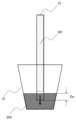
- FIGS. 6 to 9 are schematic diagrams showing the movement of the dispensing probe 21 when the sample dispensing mechanism 20 performs the second stage of sample dispensing in this embodiment 1.
- FIGS. 6 to 9 explain the operation of the dispensing probe 21 from step S0205 to step S0206 in FIG. 5.
- FIGS. 6 to 9 sequentially show the time flow of the operation during dispensing, and each schematic diagram shows the situation during dispensing at each elapsed time.
- the analysis control unit 2 lowers the dispensing probe 21 into the reaction vessel 31.
- the dispensing probe 21 may be lowered to a height that immerses it in the sample solution dispensed in the first stage in the reaction vessel 31, or may not be immersed in it.
- This predetermined length can be set shorter than the length Db (cleaning range Db, see FIG. 9 described later) that can be washed by the dispensing mechanism washing unit 14.
- the analysis control unit 2 controls the sample dispensing mechanism 20 so that, when the sample starts to be discharged, the tip of the dispensing probe 21 discharges the sample from a position vertically above the liquid surface of the previously discharged sample.
- the analysis control unit 2 then starts the dispensing operation.
- the sample is dispensed from the tip of the dispensing probe 21.
- the tip of the dispensing probe 21 is immersed in the solution after the sample is discharged, and the amount of descent of the dispensing probe 21 is preset in operation (a) so that the depth Da is shorter than the cleaning range Db of the dispensing probe 21. It is desirable for Da to be at least 1 mm shorter than Db.
- the analysis control unit 2 raises the specimen dispensing mechanism 20 after specimen discharge has been completed so that the tip of the dispensing probe 21 is removed from the liquid surface.
- the tip of the dispensing probe 21 By raising the tip of the dispensing probe 21 from a state in which it is immersed in the liquid surface at the end of specimen discharge, the specimen adhering to the tip of the dispensing probe 21 remains in the liquid inside the reaction vessel 31, resulting in better liquid drainage than in the past. This makes it possible to stabilize the amount of liquid discharged compared to the past.
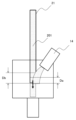
- the analysis control unit 2 then moves the sample dispensing mechanism 20 to the dispensing mechanism cleaning unit 14, and the sample adhering to the inner wall of the tip of the dispensing probe 21 is washed by pushing out the system water inside the dispensing probe 21.
- the cleaning water supplied from the dispensing mechanism cleaning unit 14 is ejected so as to cover the cleaning range Db, washing the sample adhering to the outer wall of the tip of the dispensing probe 21.
- the automated analyzer 10 of the first embodiment of the present invention described above includes a specimen dispensing mechanism 20 having a dispensing probe 21 that dispenses liquid into a reaction vessel 31, and an analysis control unit 2 that controls the operation of the specimen dispensing mechanism 20.
- the analysis control unit 2 controls the specimen dispensing mechanism 20 so that the tip of the dispensing probe 21 is immersed in the liquid after the second liquid has been dispensed.
- This type of control is more effective the smaller the diameter of the dispensing probe 21 becomes, which reduces the amount of liquid that is aspirated, i.e., the greater the effect of the amount of liquid remaining on the surface becomes.
- the analysis control unit 2 also controls the sample dispensing mechanism 20 so that the immersion depth Da between the start and end of the second liquid discharge is shorter than a predetermined length. More specifically, the analysis control unit 2 further includes a dispensing mechanism cleaning unit 14 that cleans the outside of the dispensing probe 21.
- the predetermined length is set to be shorter than the length Db that can be cleaned by the dispensing mechanism cleaning unit 14, thereby eliminating the risk of residual cleaning and more reliably preventing the occurrence of problems with sample carryover.
- the analysis control unit 2 can also control the sample dispensing mechanism 20 so that the tip of the dispensing probe 21 dispenses the second liquid from vertically above the liquid surface when dispensing of the second liquid begins, thereby minimizing the possibility of the first liquid coming into contact with the dispensing probe 21 when dispensing the second liquid.
- the analysis control unit 2 can also control the specimen dispensing mechanism 20 so that the tip of the dispensing probe 21 is immersed in the first liquid after dispensing of the first liquid is completed, thereby preventing residual solution from being dispensed, stabilizing the amount of solution dispensed, and reducing contamination of the surface of the tip of the dispensing probe 21 by the solution.
- the dispensing mechanism cleaning unit 14 is provided to clean the outside of the dispensing probe 21, and the analysis control unit 2 controls the specimen dispensing mechanism 20 so that the immersion depth from the start of dispensing the first liquid to the end of dispensing is shorter than the length Db that can be cleaned by the dispensing mechanism cleaning unit 14, thereby eliminating the risk of any specimen remaining uncleaned and more reliably preventing the occurrence of problems with specimen carryover.
- Example 2 Second Embodiment An automatic analyzer and an automatic analysis method according to a second embodiment of the present invention will be described with reference to FIG.
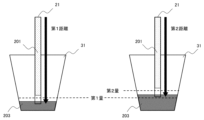
- the analysis control unit 2 controls the dispensing probe 21 to descend a first distance from its initial position when the sum of the volumes of the first liquid and the second liquid is equal to or less than a first amount, and controls the dispensing probe 21 to descend a second distance from its initial position that is smaller than the first distance when the sum of the volumes of the first liquid and the second liquid is greater than the first amount.
- the analysis control unit 2 controls the lowering height of the dispensing probe 21 according to the sum of the sample volumes discharged in the first and second stages.
- the analysis control unit 2 controls the dispensing probe 21 to descend a first distance if the amount of sample 203 dispensed in the first and second stages is less than a first amount.
- the dispensing probe 21 is controlled to be lowered a second distance that is shorter than the first distance, as shown in FIG. 10.
- multiple stages may be set in a similar manner.
- the automated analyzer and automated analysis method of the second embodiment of the present invention also provide substantially the same effects as the automated analyzer and automated analysis method of the first embodiment described above.
- the analysis control unit 2 controls the dispensing probe 21 to be lowered a first distance from its initial position when the sum of the volumes of the first and second liquids is equal to or less than a first amount, and controls the dispensing probe 21 to be lowered a second distance from its initial position that is smaller than the first distance when the sum of the volumes of the first and second liquids is greater than the first amount.
- Example 3 Third Embodiment An automatic analysis apparatus and an automatic analysis method according to a third embodiment of the present invention will be described.
- the analysis control unit 2 controls the sample dispensing mechanism 20 to raise the dispensing probe 21 during the period from the start of dispensing the second liquid to the end of dispensing. The details are explained below.
- the analysis control unit 2 controls the dispensing probe 21 to rise while the ejection operation continues.
- the analysis control unit 2 controls the depth Da of the tip of the dispensing probe 21 immersed in the solution so that it does not increase over time as the liquid level rises due to the discharge of the sample. However, the tip of the dispensing probe 21 remains immersed in the solution when discharge is complete.
- the automated analyzer and automated analysis method of the third embodiment of the present invention also provide substantially the same effects as the automated analyzer and automated analysis method of the first embodiment described above.
- the analysis control unit 2 controls the sample dispensing mechanism 20 to raise the dispensing probe 21 between the start and end of the dispensing of the second liquid, thereby minimizing the length of the tip of the dispensing probe 21 that is contaminated with the sample.
- the present invention is not limited to the above-mentioned embodiment, but includes various modified examples.
- the above-mentioned embodiment has been described in detail to explain the present invention in an easily understandable manner, and the present invention is not necessarily limited to the embodiment having all of the described configurations.
- Analysis unit 2 Analysis control unit 3: Display device 4: Memory 5: A/D converter 6: Interface 7: Keyboard 8: CPU 10: Automatic analyzer 11: Sample container 12: Sample holder 13: Sample suction position 14: Dispensing mechanism cleaning section (cleaning tank) 20: Sample dispensing mechanism 21: Dispensing probe 22: Dispensing arm 23: Up-down rotating operation unit 24: Dispensing flow path 25: Cylinder 26: Plunger 27: Plunger driving means 28: Valve 29: Water supply pump 31: Reaction vessel (vessel) 34: Reaction disk 38: Cleaning mechanism 39: Measurement unit 40: Reagent dispensing mechanism 41: Reagent container 42: Reagent holder 201: System water 203: Sample discharged in the first and second stages
Landscapes
- Physics & Mathematics (AREA)
- Health & Medical Sciences (AREA)
- Life Sciences & Earth Sciences (AREA)
- Chemical & Material Sciences (AREA)
- Analytical Chemistry (AREA)
- Biochemistry (AREA)
- General Health & Medical Sciences (AREA)
- General Physics & Mathematics (AREA)
- Immunology (AREA)
- Pathology (AREA)
- Automatic Analysis And Handling Materials Therefor (AREA)
Priority Applications (3)
| Application Number | Priority Date | Filing Date | Title |
|---|---|---|---|
| EP24792370.9A EP4700392A1 (en) | 2023-04-20 | 2024-02-29 | Automatic analysis device and automatic analysis method |
| CN202480014025.9A CN120752537A (zh) | 2023-04-20 | 2024-02-29 | 自动分析装置及自动分析方法 |
| JP2025515078A JPWO2024219094A1 (https=) | 2023-04-20 | 2024-02-29 |
Applications Claiming Priority (2)
| Application Number | Priority Date | Filing Date | Title |
|---|---|---|---|
| JP2023-069662 | 2023-04-20 | ||
| JP2023069662 | 2023-04-20 |
Publications (1)
| Publication Number | Publication Date |
|---|---|
| WO2024219094A1 true WO2024219094A1 (ja) | 2024-10-24 |
Family
ID=93152815
Family Applications (1)
| Application Number | Title | Priority Date | Filing Date |
|---|---|---|---|
| PCT/JP2024/007627 Ceased WO2024219094A1 (ja) | 2023-04-20 | 2024-02-29 | 自動分析装置及び自動分析方法 |
Country Status (4)
| Country | Link |
|---|---|
| EP (1) | EP4700392A1 (https=) |
| JP (1) | JPWO2024219094A1 (https=) |
| CN (1) | CN120752537A (https=) |
| WO (1) | WO2024219094A1 (https=) |
Citations (9)
| Publication number | Priority date | Publication date | Assignee | Title |
|---|---|---|---|---|
| JPH07239334A (ja) * | 1994-02-25 | 1995-09-12 | Fuji Photo Film Co Ltd | 液体の混合方法 |
| JPH08101202A (ja) * | 1994-09-30 | 1996-04-16 | Shimadzu Corp | 自動化学分析装置 |
| JP2010185829A (ja) * | 2009-02-13 | 2010-08-26 | Beckman Coulter Inc | 分注機構、分注方法及び分析装置 |
| JP5222771B2 (ja) | 2009-03-31 | 2013-06-26 | 株式会社日立ハイテクノロジーズ | 自動分析装置 |
| JP5646196B2 (ja) * | 2010-03-30 | 2014-12-24 | 武蔵エンジニアリング株式会社 | 吐出装置および液体分注装置並びに液体分注方法 |
| JP2015132521A (ja) * | 2014-01-10 | 2015-07-23 | 株式会社日立ハイテクノロジーズ | 溶液調製システム |
| JP6381917B2 (ja) * | 2014-01-23 | 2018-08-29 | キヤノンメディカルシステムズ株式会社 | 自動分析装置および試薬分注方法 |
| JP2021092413A (ja) * | 2019-12-09 | 2021-06-17 | 株式会社日立ハイテク | 自動分析装置 |
| WO2021245989A1 (ja) * | 2020-06-01 | 2021-12-09 | 株式会社日立ハイテク | 自動分析装置 |
-
2024
- 2024-02-29 JP JP2025515078A patent/JPWO2024219094A1/ja active Pending
- 2024-02-29 EP EP24792370.9A patent/EP4700392A1/en active Pending
- 2024-02-29 CN CN202480014025.9A patent/CN120752537A/zh active Pending
- 2024-02-29 WO PCT/JP2024/007627 patent/WO2024219094A1/ja not_active Ceased
Patent Citations (9)
| Publication number | Priority date | Publication date | Assignee | Title |
|---|---|---|---|---|
| JPH07239334A (ja) * | 1994-02-25 | 1995-09-12 | Fuji Photo Film Co Ltd | 液体の混合方法 |
| JPH08101202A (ja) * | 1994-09-30 | 1996-04-16 | Shimadzu Corp | 自動化学分析装置 |
| JP2010185829A (ja) * | 2009-02-13 | 2010-08-26 | Beckman Coulter Inc | 分注機構、分注方法及び分析装置 |
| JP5222771B2 (ja) | 2009-03-31 | 2013-06-26 | 株式会社日立ハイテクノロジーズ | 自動分析装置 |
| JP5646196B2 (ja) * | 2010-03-30 | 2014-12-24 | 武蔵エンジニアリング株式会社 | 吐出装置および液体分注装置並びに液体分注方法 |
| JP2015132521A (ja) * | 2014-01-10 | 2015-07-23 | 株式会社日立ハイテクノロジーズ | 溶液調製システム |
| JP6381917B2 (ja) * | 2014-01-23 | 2018-08-29 | キヤノンメディカルシステムズ株式会社 | 自動分析装置および試薬分注方法 |
| JP2021092413A (ja) * | 2019-12-09 | 2021-06-17 | 株式会社日立ハイテク | 自動分析装置 |
| WO2021245989A1 (ja) * | 2020-06-01 | 2021-12-09 | 株式会社日立ハイテク | 自動分析装置 |
Non-Patent Citations (1)
| Title |
|---|
| See also references of EP4700392A1 |
Also Published As
| Publication number | Publication date |
|---|---|
| CN120752537A (zh) | 2025-10-03 |
| EP4700392A1 (en) | 2026-02-25 |
| JPWO2024219094A1 (https=) | 2024-10-24 |
Similar Documents
| Publication | Publication Date | Title |
|---|---|---|
| JP5024990B2 (ja) | 自動分析装置及びプローブ昇降方法 | |
| JP6928712B2 (ja) | 自動分析装置 | |
| JP7305891B2 (ja) | 自動分析装置 | |
| CN108780102B (zh) | 自动分析装置 | |
| JP2011128075A (ja) | 自動分析装置、自動分析装置の検体攪拌方法および検体分注方法 | |
| WO2017145672A1 (ja) | 自動分析装置および洗浄方法 | |
| JP7494375B2 (ja) | 自動分析装置、および自動分析装置における検体の吸引方法 | |
| JP4812352B2 (ja) | 自動分析装置及びその分注方法 | |
| JP2010271203A (ja) | 液体のサンプリング方法、及び自動分析装置 | |
| JP2009121993A (ja) | 自動分析装置 | |
| JPH06289032A (ja) | 自動分析装置の分注方法および分注システム | |
| JP2019178938A (ja) | 自動分析装置および自動分析方法 | |
| WO2021215068A1 (ja) | 分注装置、自動分析装置、分注方法 | |
| WO2024219094A1 (ja) | 自動分析装置及び自動分析方法 | |
| JP2011227092A (ja) | 自動分析装置 | |
| JP5606843B2 (ja) | 自動分析装置 | |
| JPH06324058A (ja) | 分注装置 | |
| US11879902B2 (en) | Test method and dispensing device | |
| JP3873079B2 (ja) | 自動分析装置 | |
| JP7054616B2 (ja) | 自動分析装置 | |
| JP2003294773A (ja) | 臨床検査自動分析装置、臨床検査自動分析装置の洗浄方法 | |
| WO2025033096A1 (ja) | 自動分析装置、及び自動分析装置におけるノズルの洗浄方法 | |
| JP3831398B2 (ja) | 自動分析装置 | |
| WO2025150336A1 (ja) | 自動分析装置及び自動分析方法 | |
| JPH02134568A (ja) | 液体分注装置 |
Legal Events
| Date | Code | Title | Description |
|---|---|---|---|
| 121 | Ep: the epo has been informed by wipo that ep was designated in this application |
Ref document number: 24792370 Country of ref document: EP Kind code of ref document: A1 |
|
| WWE | Wipo information: entry into national phase |
Ref document number: 202480014025.9 Country of ref document: CN |
|
| ENP | Entry into the national phase |
Ref document number: 2025515078 Country of ref document: JP Kind code of ref document: A |
|
| WWE | Wipo information: entry into national phase |
Ref document number: 2025515078 Country of ref document: JP |
|
| WWP | Wipo information: published in national office |
Ref document number: 202480014025.9 Country of ref document: CN |
|
| WWE | Wipo information: entry into national phase |
Ref document number: 2024792370 Country of ref document: EP |
|
| NENP | Non-entry into the national phase |
Ref country code: DE |
|
| ENP | Entry into the national phase |
Ref document number: 2024792370 Country of ref document: EP Effective date: 20251120 |
|
| ENP | Entry into the national phase |
Ref document number: 2024792370 Country of ref document: EP Effective date: 20251120 |
|
| ENP | Entry into the national phase |
Ref document number: 2024792370 Country of ref document: EP Effective date: 20251120 |
|
| ENP | Entry into the national phase |
Ref document number: 2024792370 Country of ref document: EP Effective date: 20251120 |
|
| ENP | Entry into the national phase |
Ref document number: 2024792370 Country of ref document: EP Effective date: 20251120 |
|
| ENP | Entry into the national phase |
Ref document number: 2024792370 Country of ref document: EP Effective date: 20251120 |
|
| ENP | Entry into the national phase |
Ref document number: 2024792370 Country of ref document: EP Effective date: 20251120 |
|
| ENP | Entry into the national phase |
Ref document number: 2024792370 Country of ref document: EP Effective date: 20251120 |
|
| ENP | Entry into the national phase |
Ref document number: 2024792370 Country of ref document: EP Effective date: 20251120 |
|
| WWP | Wipo information: published in national office |
Ref document number: 2024792370 Country of ref document: EP |