WO2024177043A1 - リパーゼ変異体 - Google Patents
リパーゼ変異体 Download PDFInfo
- Publication number
- WO2024177043A1 WO2024177043A1 PCT/JP2024/005942 JP2024005942W WO2024177043A1 WO 2024177043 A1 WO2024177043 A1 WO 2024177043A1 JP 2024005942 W JP2024005942 W JP 2024005942W WO 2024177043 A1 WO2024177043 A1 WO 2024177043A1
- Authority
- WO
- WIPO (PCT)
- Prior art keywords
- amino acid
- seq
- lipase
- numbering
- acid residue
- Prior art date
- Legal status (The legal status is an assumption and is not a legal conclusion. Google has not performed a legal analysis and makes no representation as to the accuracy of the status listed.)
- Ceased
Links
Images


Classifications
-
- C—CHEMISTRY; METALLURGY
- C12—BIOCHEMISTRY; BEER; SPIRITS; WINE; VINEGAR; MICROBIOLOGY; ENZYMOLOGY; MUTATION OR GENETIC ENGINEERING
- C12N—MICROORGANISMS OR ENZYMES; COMPOSITIONS THEREOF; PROPAGATING, PRESERVING, OR MAINTAINING MICROORGANISMS; MUTATION OR GENETIC ENGINEERING; CULTURE MEDIA
- C12N15/00—Mutation or genetic engineering; DNA or RNA concerning genetic engineering, vectors, e.g. plasmids, or their isolation, preparation or purification; Use of hosts therefor
- C12N15/09—Recombinant DNA-technology
- C12N15/63—Introduction of foreign genetic material using vectors; Vectors; Use of hosts therefor; Regulation of expression
- C12N15/74—Vectors or expression systems specially adapted for prokaryotic hosts other than E. coli, e.g. Lactobacillus, Micromonospora
- C12N15/75—Vectors or expression systems specially adapted for prokaryotic hosts other than E. coli, e.g. Lactobacillus, Micromonospora for Bacillus
-
- C—CHEMISTRY; METALLURGY
- C11—ANIMAL OR VEGETABLE OILS, FATS, FATTY SUBSTANCES OR WAXES; FATTY ACIDS THEREFROM; DETERGENTS; CANDLES
- C11D—DETERGENT COMPOSITIONS; USE OF SINGLE SUBSTANCES AS DETERGENTS; SOAP OR SOAP-MAKING; RESIN SOAPS; RECOVERY OF GLYCEROL
- C11D3/00—Other compounding ingredients of detergent compositions covered in group C11D1/00
- C11D3/16—Organic compounds
- C11D3/38—Products with no well-defined composition, e.g. natural products
- C11D3/386—Preparations containing enzymes, e.g. protease or amylase
- C11D3/38627—Preparations containing enzymes, e.g. protease or amylase containing lipase
-
- C—CHEMISTRY; METALLURGY
- C12—BIOCHEMISTRY; BEER; SPIRITS; WINE; VINEGAR; MICROBIOLOGY; ENZYMOLOGY; MUTATION OR GENETIC ENGINEERING
- C12N—MICROORGANISMS OR ENZYMES; COMPOSITIONS THEREOF; PROPAGATING, PRESERVING, OR MAINTAINING MICROORGANISMS; MUTATION OR GENETIC ENGINEERING; CULTURE MEDIA
- C12N9/00—Enzymes; Proenzymes; Compositions thereof; Processes for preparing, activating, inhibiting, separating or purifying enzymes
- C12N9/14—Hydrolases (3)
-
- C—CHEMISTRY; METALLURGY
- C12—BIOCHEMISTRY; BEER; SPIRITS; WINE; VINEGAR; MICROBIOLOGY; ENZYMOLOGY; MUTATION OR GENETIC ENGINEERING
- C12N—MICROORGANISMS OR ENZYMES; COMPOSITIONS THEREOF; PROPAGATING, PRESERVING, OR MAINTAINING MICROORGANISMS; MUTATION OR GENETIC ENGINEERING; CULTURE MEDIA
- C12N9/00—Enzymes; Proenzymes; Compositions thereof; Processes for preparing, activating, inhibiting, separating or purifying enzymes
- C12N9/14—Hydrolases (3)
- C12N9/16—Hydrolases (3) acting on ester bonds (3.1)
- C12N9/18—Carboxylic ester hydrolases (3.1.1)
-
- C—CHEMISTRY; METALLURGY
- C12—BIOCHEMISTRY; BEER; SPIRITS; WINE; VINEGAR; MICROBIOLOGY; ENZYMOLOGY; MUTATION OR GENETIC ENGINEERING
- C12N—MICROORGANISMS OR ENZYMES; COMPOSITIONS THEREOF; PROPAGATING, PRESERVING, OR MAINTAINING MICROORGANISMS; MUTATION OR GENETIC ENGINEERING; CULTURE MEDIA
- C12N9/00—Enzymes; Proenzymes; Compositions thereof; Processes for preparing, activating, inhibiting, separating or purifying enzymes
- C12N9/14—Hydrolases (3)
- C12N9/16—Hydrolases (3) acting on ester bonds (3.1)
- C12N9/18—Carboxylic ester hydrolases (3.1.1)
- C12N9/20—Triglyceride splitting, e.g. by means of lipase
Definitions
- the present invention relates to a lipase variant.
- Lipases are useful in a variety of applications, including laundry detergents, dishwashing detergents, oil and fat processing, pulp treatment, feed, and pharmaceutical intermediate synthesis. In cleaning, lipases contribute to the removal of oily stains by hydrolyzing ester bonds in lipids to produce fatty acids.
- lipase derived from Thermomyces lanuginosus (hereinafter referred to as TLL) is sold under the trade name LIPOLASE (registered trademark).
- Patent Document 1 discloses that lipase Lipr139 derived from Cedecea sp-16640 strain has superior cleaning performance compared to TLL.
- Patent Document 2 discloses that lipase Lipr138 derived from metagenomics has superior cleaning performance compared to TLL.
- Patent Document 3 describes, for example, a method for cleaning oily stains by contacting a cleaning agent containing lipase and a sulfosuccinate ester as a surfactant with a hard object on which oily stains are attached and leaving the object without applying external force.
- a cleaning agent containing lipase and a sulfosuccinate ester as a surfactant
- the removal of triglycerides on the hard surface by lipase hardly progresses, but in a cleaning solution that contains an alkyl sulfosuccinate ester, the removal of triglycerides on the hard surface by lipase is greatly promoted.
- lipase can efficiently decompose ester substrates dispersed in an aqueous solution.
- Patent Document 1 JP-T-2015-523078 A
- Patent Document 2 JP-T-2015-525248 A
- Patent Document 3 JP-A-2021-17508
- the present invention relates to the following 1) to 7).
- a lipase variant consisting of an amino acid sequence having at least 75% identity to the amino acid sequence of SEQ ID NO: 2, 4, 6 or 8, and having an amino acid residue other than isoleucine at a position corresponding to position 44 in the numbering of SEQ ID NO: 2.
- a vector or a DNA fragment comprising the polynucleotide according to 2).
- a cleaning composition containing the lipase variant described in 1).
- a method for producing a lipase variant comprising a step of replacing an amino acid residue at a position corresponding to position 44 in the numbering of SEQ ID NO: 2 with an amino acid residue other than isoleucine in a polypeptide having lipase activity and consisting of an amino acid sequence having at least 75% identity to the amino acid sequence of SEQ ID NO: 2, 4, 6 or 8.
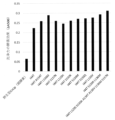
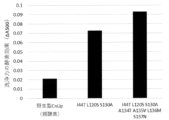
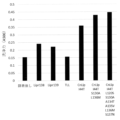
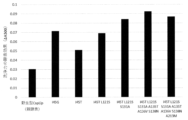
- Enzymatic effect of each lipase on the cleaning power in model cleaning solutions Enzymatic effect of each lipase on the cleaning power in model cleaning solutions. Enzymatic effect of each lipase on the cleaning power in model cleaning solutions. Enzymatic effect of each lipase on the cleaning power in model cleaning solutions. The cleaning power of each lipase in a model cleaning solution. Enzymatic effect of each lipase on the cleaning power in model cleaning solutions.
- lipase refers to triacylglycerol lipase (EC 3.1.1.3), a group of enzymes that have the activity of hydrolyzing ester bonds in lipids to produce fatty acids.
- the identity of amino acid sequences or nucleotide sequences is calculated by the Lipman-Pearson method (Science, 1985, 227: 1435-1441). Specifically, it is calculated by performing an analysis using the Search homology program of the genetic information processing software GENETYX Ver. 12 with the Unit size to compare (ktup) set to 2.
- At least 75% identity with respect to an amino acid sequence or a nucleotide sequence means identity of 75% or more, preferably 80% or more, more preferably 85% or more, even more preferably 90% or more, even more preferably 93% or more, even more preferably 94% or more, even more preferably 95% or more, even more preferably 96% or more, even more preferably 97% or more, even more preferably 98% or more, even more preferably 99% or more, even more preferably 99.5% or more.
- a "corresponding position" on an amino acid sequence or a nucleotide sequence can be determined by aligning a target sequence with a reference sequence (e.g., the amino acid sequence shown in SEQ ID NO: 2) to maximize homology. Alignment of amino acid sequences or nucleotide sequences can be performed using known algorithms, the procedures of which are known to those skilled in the art. For example, alignment can be performed using the Clustal W multiple alignment program (Thompson, J.D. et al, 1994, Nucleic Acids Res. 22:4673-4680) with default settings. Alternatively, revised versions of Clustal W, such as Clustal W2 and Clustal omega, can be used.
- Clustal W, Clustal W2, and Clustal omega are available, for example, on the Clustal website operated by University College Dublin [www.clustal.org], the European Bioinformatics Institute (EBI [www.ebi.ac.uk/index.html]), and the website of the DNA Data Bank of Japan operated by the National Institute of Genetics (DDBJ [www.ddbj.nig.ac.jp/searches-j.html]).
- the position of the target sequence aligned to any position of the reference sequence by the above-mentioned alignment is considered to be a "position corresponding to" that any position.
- amino acid sequences obtained above can further fine-tune the alignment of amino acid sequences obtained above to optimize it.
- Such an optimal alignment is preferably determined taking into consideration the similarity of the amino acid sequences, the frequency of gaps to be inserted, and the like.
- the similarity of amino acid sequences refers to the percentage (%) of the number of positions at which identical or similar amino acid residues exist in both sequences when two amino acid sequences are aligned, relative to the total number of amino acid residues.
- Similar amino acid residues refer to amino acid residues that have similar properties in terms of polarity and charge among the 20 types of amino acids that make up proteins, and that cause so-called conservative substitutions.
- Such groups of similar amino acid residues are well known to those skilled in the art, and examples include, but are not limited to, arginine and lysine or glutamine; glutamic acid and aspartic acid or glutamine; serine and threonine or alanine; glutamine and asparagine or arginine; leucine and isoleucine.
- amino acid residue refers to the 20 types of amino acid residues that make up proteins: alanine (Ala or A), arginine (Arg or R), asparagine (Asn or N), aspartic acid (Asp or D), cysteine (Cys or C), glutamine (Gln or Q), glutamic acid (Glu or E), glycine (Gly or G), histidine (His or H), isoleucine (Ile or I), leucine (Leu or L), lysine (Lys or K), methionine (Met or M), phenylalanine (Phe or F), proline (Pro or P), serine (Ser or S), threonine (Thr or T), tryptophan (Trp or W), tyrosine (Tyr or Y), and valine (Val or V).
- amino acid positions and variants are designated using the accepted IUPAC one-letter amino acid abbreviations as follows:
- the amino acid at a given position is designated as [amino acid, position].
- isoleucine at position 44 is designated as "I44.”
- Amino acid "substitutions” are represented as [original amino acid, position, substituted amino acid].
- a substitution of isoleucine at position 44 with alanine is represented as "I44A.”
- operably linked between a gene and a control region such as a promoter means that the gene and the control region are linked in such a way that the gene can be expressed under the control of the control region.
- the procedure for "operably linked" between a gene and a control region is well known to those skilled in the art.
- upstream and downstream in relation to a gene refer to the upstream and downstream of the transcription direction of the gene.
- a gene located downstream of a promoter means that the gene is present on the 3' side of the promoter in the DNA sense strand
- upstream of a gene means the region on the 5' side of the gene in the DNA sense strand.
- a "parent" polypeptide of a given mutant polypeptide refers to a polypeptide that becomes the mutant polypeptide by introducing a specific mutation into its amino acid residues.
- a "parent" polypeptide is a polypeptide before the mutation is introduced into the mutant polypeptide.
- Such a parent polypeptide may be a natural (wild-type) polypeptide or a mutant thereof.
- the present inventors have discovered an unexpected phenomenon in which a cleaning solution containing sulfosuccinate esters (hereinafter, cleaning solution) significantly promotes the removal of triglycerides from hard surfaces by lipase (Patent Document 3 above), yet significantly inhibits lipase activity against an ester substrate dispersed in the cleaning solution (hereinafter, dispersed substrate).
- cleaning solution a cleaning solution containing sulfosuccinate esters
- dispersed substrate an ester substrate dispersed in the cleaning solution
- Lipr139 and Lipr138 which are known to be suitable for cleaning, are inhibited in their decomposition activity against dispersed substrates to 5% or less in the presence of sulfosuccinate esters, with barely detectable activity.
- the inventors have obtained lipase variants that have improved inhibition of lipase activity against dispersed substrates in the presence of surfactants compared to the parent lipase. These lipase variants also have significantly improved ability to remove triglycerides from hard surfaces in the presence of surfactants.
- the lipase variant of the present invention has improved inhibition of lipase activity against dispersed substrates in the presence of surfactants, and has improved ability to remove triglycerides from hard surfaces in the presence of surfactants, resulting in excellent cleaning power.
- Lipase variants and methods for producing the same The present invention provides a lipase variant having excellent detergency, and a method for producing the same.
- the present invention provides a method for producing a lipase variant, the method comprising the step of substituting an amino acid residue at a predetermined position in the parent lipase, as numbered based on SEQ ID NO:2, with another amino acid residue.
- a parent lipase of the lipase variant of the present invention is a polypeptide having lipase activity and consisting of an amino acid sequence having at least 75% identity with the amino acid sequence of SEQ ID NO: 2.
- the polypeptide having lipase activity and consisting of the amino acid sequence of SEQ ID NO: 2 is lipase CnLip (NCBI Accession No. WP_061278013.1) derived from Cedecea neteri.
- the parent lipase which is a polypeptide having lipase activity and which consists of an amino acid sequence having at least 75% identity with the amino acid sequence of SEQ ID NO:2, is preferably one which has an I at the position corresponding to position 44 in the numbering of SEQ ID NO:2, an I and an L at the positions corresponding to positions 44 and 120 in the numbering of SEQ ID NO:2, an I and an S at the positions corresponding to positions 44 and 130 in the numbering of SEQ ID NO:2, an I and an A at the positions corresponding to positions 44 and 134 in the numbering of SEQ ID NO:2, an I and an L at the positions corresponding to positions 44 and 136 in the numbering of SEQ ID NO:2, or an I and an L at the positions corresponding to positions 44 and 137 in the numbering of SEQ ID NO:2.
- those having I and S are those having I and S, and even more preferred are those having I, L, and S at positions corresponding to 44th, 120th, and 130th positions in the numbering of SEQ ID NO:2, those having I, S, and L at positions corresponding to 44th, 130th, and 136th positions in the numbering of SEQ ID NO:2, those having I, L, and L at positions corresponding to 44th, 120th, and 136th positions in the numbering of SEQ ID NO:2, those having I, L, S, and L at positions corresponding to 44th, 120th, 130th, and 136th positions in the numbering of SEQ ID NO:2, or those having I, L, S, A, L, and S at positions corresponding to 44th, 120th, 130th, 134th, 136th, and 137th positions in the numbering of SEQ ID NO:2.
- the polypeptide having lipase activity and consisting of the amino acid sequence of SEQ ID NO: 4 is lipase EbLip (NCBI Accession No. MRT57156.1) derived from Enterobacteriaceae bacterium.
- the parent lipase which is a polypeptide having lipase activity and consisting of an amino acid sequence having at least 75% identity with the amino acid sequence of SEQ ID NO: 4, is preferably one having I at the position corresponding to position 44 in the numbering of SEQ ID NO: 2, one having I and L at the positions corresponding to positions 44 and 120 in the numbering of SEQ ID NO: 2, one having I and S at the positions corresponding to positions 44 and 130 in the numbering of SEQ ID NO: 2, one having I and A at the positions corresponding to positions 44 and 134 in the numbering of SEQ ID NO: 2, More preferably, it has I and L at positions corresponding to positions 44 and 136 in the numbering of SEQ ID NO:2, or I and S at positions corresponding to positions 44 and 137 in the numbering of SEQ ID NO:2, and even more preferably it has I, L, and S at positions corresponding to positions 44, 120, and 130 in the numbering of SEQ ID NO:2, or I, L, and S at positions corresponding to positions 44
- positions corresponding to positions 44, 120, 130, 134, 136, and 137 in the numbering of SEQ ID NO:2 are positions 44, 120, 130, 134, 136, and 137, respectively.
- the polypeptide having lipase activity and consisting of the amino acid sequence of SEQ ID NO: 6 is lipase Ag1Lip (NCBI Accession No. EJF30243.1) derived from Enterobacter sp.
- the parent lipase which is a polypeptide having lipase activity and consisting of an amino acid sequence having at least 75% identity with the amino acid sequence of SEQ ID NO: 6, is preferably one having I at the position corresponding to the 44th position in the numbering of SEQ ID NO: 2, one having I and L at the positions corresponding to the 44th and 120th positions in the numbering of SEQ ID NO: 2, one having I and S at the positions corresponding to the 44th and 130th positions in the numbering of SEQ ID NO: 2, one having I and A at the positions corresponding to the 44th and 134th positions in the numbering of SEQ ID NO: 2, More preferably, it has I and L at positions corresponding to positions 44 and 136 in the numbering of SEQ ID NO:2, or I and S at positions corresponding to positions 44 and 137 in the numbering of SEQ ID NO:2, and even more preferably it has I, L, and S at positions corresponding to positions 44, 120, and 130 in the numbering of SEQ ID NO:2, or I,
- positions corresponding to positions 44, 120, 130, 134, 136, and 137 in the numbering of SEQ ID NO:2 are positions 44, 120, 130, 134, 136, and 137, respectively.
- polypeptide having lipase activity and consisting of an amino acid sequence having at least 75% identity with the amino acid sequence of SEQ ID NO:8 is lipase CspLip (NCBI Accession No. WP_016537805.1) derived from Cedecea sp.
- the parent lipase which is a polypeptide having lipase activity and consisting of an amino acid sequence having at least 75% identity with the amino acid sequence of SEQ ID NO:8, is preferably one having I at the position corresponding to position 44 in the numbering of SEQ ID NO:2, one having I and L at the positions corresponding to positions 44 and 120 in the numbering of SEQ ID NO:2, one having I and S at the positions corresponding to positions 44 and 130 in the numbering of SEQ ID NO:2, one having I and A at the positions corresponding to positions 44 and 134 in the numbering of SEQ ID NO:2, More preferably, it has I and M at positions corresponding to positions 44 and 136 in the numbering of SEQ ID NO:2, or I and S at positions corresponding to positions 44 and 137 in the numbering of SEQ ID NO:2, and even more preferably it has I, L, and S at positions corresponding to positions 44, 120, and 130 in the numbering of SEQ ID NO:2, or I, L, S, A, M, and S at
- positions corresponding to positions 44, 120, 130, 134, 136, and 137 in the numbering of SEQ ID NO:2 are positions 45, 121, 131, 135, 137, and 138, respectively.
- the amino acid residue at the position corresponding to 44 in the numbering of SEQ ID NO:2 in the parent lipase is replaced with an amino acid residue other than I, preferably A, G, S, T, or V.
- the lipase variant of the present invention in addition to substituting the amino acid residue at the position corresponding to position 44 in SEQ ID NO:2 in the parent lipase, preferably one or more, more preferably two or more, even more preferably three or more, even more preferably four or more, and even more preferably all of the steps selected from the group consisting of (i) to (v) below are carried out, from the viewpoint of improving detergency.
- the parent lipase preferably consists of an amino acid sequence having at least 75% identity with the amino acid sequence of SEQ ID NO: 2, 4 or 6.
- the above (i) to (v) are more preferably the following (i') to (v'), respectively.
- the parent lipase preferably consists of an amino acid sequence having at least 75% identity with the amino acid sequence of SEQ ID NO: 2, 4 or 6.
- the present invention also provides a lipase variant.
- the lipase variant of the present invention is a polypeptide having lipase activity, which has an amino acid sequence in which an amino acid residue at a predetermined position in the amino acid sequence of a parent lipase, as numbered based on SEQ ID NO: 2, is replaced with another amino acid residue.
- the lipase variant of the present invention has an amino acid sequence that is at least 75% identical to the amino acid sequence of SEQ ID NO: 2, 4, 6 or 8, and has an amino acid residue other than I, preferably A, G, S, T or V, at the position corresponding to position 44 in the numbering of SEQ ID NO: 2.
- the lipase variant of the present invention further has preferably one or more, more preferably two or more, even more preferably three or more, even more preferably four or more, and even more preferably all of the amino acid residues selected from the group consisting of the following (a) to (e): (a) an amino acid residue other than L at a position corresponding to 120 in the numbering of SEQ ID NO:2; (b) an amino acid residue other than S at a position corresponding to 130 in the numbering of SEQ ID NO:2; (c) an amino acid residue other than A at a position corresponding to position 134 in the numbering of SEQ ID NO:2; (d) an amino acid residue other than L at a position corresponding to position 136 in the numbering of SEQ ID NO:2; and (e) an amino acid residue other than S at a position corresponding to position 137 in the numbering of SEQ ID NO:2.
- the lipase variant has only the amino acid residue (d) among the above (a) to (e), and the amino acid residue is M
- the lipase variant consists of an amino acid sequence having at least 75% identity with the amino acid sequence of SEQ ID NO: 2, 4 or 6.
- the above (a) to (e) are more preferably the following (a') to (e'), respectively.
- the lipase variant of the present invention is a lipase variant consisting of an amino acid sequence having at least 75% identity with the amino acid sequence of SEQ ID NO: 2, 4, 6 or 8, and having any of the amino acid residues No. 1 to 57 in Table 1 below.
- lipase variants consisting of an amino acid sequence having at least 75% identity with the amino acid sequence of SEQ ID NO: 2 and having any of the amino acid residues No. 1 to 23, 25 to 47, 49 and 50 in Table 1 below lipase variants consisting of an amino acid sequence having at least 75% identity with the amino acid sequence of SEQ ID NO: 4, and having any of the amino acid residues No.
- lipase variants consisting of an amino acid sequence having at least 75% identity with the amino acid sequence of SEQ ID NO: 6, and having any of the amino acid residues No. 4, 44 and 50 in Table 1 below, and lipase variants consisting of an amino acid sequence having at least 75% identity with the amino acid sequence of SEQ ID NO: 8, and having any of the amino acid residues No. Lipase variants having any of 1 to 5, 24, 44, 48 and 51 amino acid residues are more preferred.
- the substitution of the amino acid residues at the above-mentioned predetermined positions is for improving the inhibition of the lipase activity of the lipase against a dispersed substrate in the presence of a surfactant, and for improving the ability of the lipase to remove triglycerides from a hard surface in the presence of a surfactant.
- the substitution of the amino acid residues at the above-mentioned predetermined positions is for improving the cleaning power of the lipase. Therefore, the lipase variant of the present invention has improved cleaning power compared to the parent lipase, i.e., the lipase before the substitution of the amino acid residues at the above-mentioned predetermined positions.
- positions 120, 130, 134, 136, and 137 in the numbering of SEQ ID NO:2 are all present in the lid domain of the lipase (the lid of the active center located at positions 108 to 161 in the numbering of SEQ ID NO:2).
- the lipase variant of the present invention may have a mutation (e.g., deletion, substitution, addition, insertion) at any other position relative to the parent lipase, so long as the mutation does not interfere with its cleaning power.
- the mutation may be naturally occurring or artificially introduced.
- the lipase variant of the present invention can be produced by using various mutagenesis techniques known in the art, for example, by mutating a polynucleotide encoding an amino acid residue to be substituted in a parent lipase gene (reference lipase gene) encoding the reference amino acid sequence to a polynucleotide encoding the substituted amino acid residue, and then expressing the variant from the mutant gene.
- the polynucleotide encoding the lipase variant of the present invention may be in the form of single-stranded or double-stranded DNA, RNA, or an artificial nucleic acid, or may be cDNA or chemically synthesized DNA that does not contain introns.
- a polynucleotide encoding a lipase variant of the present invention can be obtained by mutating a nucleotide sequence encoding an amino acid residue to be mutated in a polynucleotide encoding the amino acid sequence of a parent lipase (hereinafter also referred to as a parent gene) to a nucleotide sequence encoding the mutated amino acid residue.
- the introduction of the desired mutation into the parent gene can basically be carried out using various site-directed mutagenesis methods well known to those skilled in the art.
- Site-directed mutagenesis can be carried out by any method, such as inverse PCR or annealing.
- Commercially available site-directed mutagenesis kits e.g., Stratagene's QuickChange II Site-Directed Mutagenesis Kit, QuickChange Multi Site-Directed Mutagenesis Kit, etc. can also be used.
- Site-specific mutagenesis of a parent gene can be most commonly performed using a mutagenesis primer containing the nucleotide mutation to be introduced.
- the mutagenesis primer can be designed to anneal to a region containing a nucleotide sequence encoding the amino acid residue to be mutated in the parent gene, and to contain a nucleotide sequence having a nucleotide sequence (codon) encoding the mutated amino acid residue instead of the nucleotide sequence (codon) encoding the amino acid residue to be mutated.
- a person skilled in the art can appropriately recognize and select the nucleotide sequences (codons) encoding the amino acid residues before and after the mutation based on ordinary textbooks, etc.
- site-specific mutagenesis can be performed by a method in which DNA fragments amplified upstream and downstream of the mutation site using two complementary primers containing the nucleotide mutation to be introduced separately are linked together by SOE (splicing by overlap extension)-PCR (Gene, 1989, 77(1): pp. 61-68).
- SOE splicing by overlap extension
- the template DNA containing the parent gene can be prepared by extracting genomic DNA from the microorganism that produces the above-mentioned parent lipase in a conventional manner, or by extracting RNA and synthesizing cDNA by reverse transcription.
- a corresponding nucleotide sequence can be chemically synthesized based on the amino acid sequence of the parent lipase and used as the template DNA.
- DNA sequences containing a base sequence encoding lipase consisting of the amino acid sequences shown in SEQ ID NOs: 2, 4, 6 and 8 are shown in SEQ ID NOs: 1, 3, 5 and 7, respectively.
- the mutation primer can be prepared by a well-known oligonucleotide synthesis method such as the phosphoramidite method (Nucleic Acids Research, 1989, 17:7059-7071). Such primer synthesis can also be performed using, for example, a commercially available oligonucleotide synthesizer (such as that manufactured by ABI).
- a primer set including the mutation primer can be used to perform site-specific mutagenesis as described above using the parent gene as template DNA to obtain a polynucleotide encoding the lipase mutant of the present invention having the desired mutation.
- the polynucleotide encoding the lipase variant of the present invention may comprise single-stranded or double-stranded DNA, cDNA, RNA, or other artificial nucleic acid.
- the DNA, cDNA, and RNA may be chemically synthesized.
- the polynucleotide may also comprise a nucleotide sequence of an untranslated region (UTR) in addition to an open reading frame (ORF).
- the polynucleotide may also be codon-optimized according to the species of the transformant used to produce the mutant polypeptide of the present invention. Information on codons used by various organisms is available from the Codon Usage Database ([www.kazusa.or.jp/codon/]).
- the obtained polynucleotide encoding the lipase variant of the present invention can be incorporated into a vector.
- the type of vector containing the polynucleotide is not particularly limited, and may be any vector such as a plasmid, a phage, a phagemid, a cosmid, a virus, a YAC vector, or a shuttle vector.
- the vector is preferably, but not limited to, a vector that can be amplified in bacteria, preferably in Bacillus bacteria (e.g., Bacillus subtilis or a mutant thereof), and more preferably an expression vector that can induce expression of an introduced gene in Bacillus bacteria.
- a shuttle vector that is a vector that can be replicated in both Bacillus bacteria and other organisms can be suitably used for recombinantly producing the lipase variant of the present invention.
- Preferred examples of the vector include, but are not limited to, shuttle vectors such as pHA3040SP64, pHSP64R or pASP64 (Patent No.
- pHY300PLK an expression vector capable of transforming both Escherichia coli and Bacillus subtilis; Jpn J Genet, 1985, 60:235-243), and pAC3 (Nucleic Acids Res, 1988, 16:8732); and plasmid vectors that can be used for transformation of bacteria of the genus Bacillus, such as pUB110 (J Bacteriol, 1978, 134:318-329) and pTA10607 (Plasmid, 1987, 18:8-15).
- coli e.g., pET22b(+), pBR322, pBR325, pUC57, pUC118, pUC119, pUC18, pUC19, pBluescript, etc.
- coli e.g., pET22b(+), pBR322, pBR325, pUC57, pUC118, pUC119, pUC18, pUC19, pBluescript, etc.
- coli e.g., pET22b(+), pBR322, pBR325, pUC57, pUC118, pUC119, pUC18, pUC19, pBluescript, etc.
- the vector may contain a DNA replication origin region or a DNA region containing a replication origin.
- the vector may have a control sequence, such as a promoter region for initiating transcription of the gene, a terminator region, or a secretion signal region for secreting the expressed protein outside the cell, operably linked upstream of the polynucleotide encoding the lipase variant of the present invention (i.e., the lipase variant gene).
- control sequences such as the promoter region, terminator region, and secretion signal region are not particularly limited, and promoters and secretion signal sequences that are commonly used can be appropriately selected and used depending on the host to be introduced.
- suitable examples of control sequences that can be incorporated into a vector include the promoter and secretion signal sequence of the cellulase gene of Bacillus sp. KSM-S237 strain.
- the vector of the present invention may further incorporate a marker gene (e.g., a resistance gene to a drug such as ampicillin, neomycin, kanamycin, or chloramphenicol) for selecting a host into which the vector has been appropriately introduced.
- a marker gene e.g., a resistance gene to a drug such as ampicillin, neomycin, kanamycin, or chloramphenicol
- a gene encoding an enzyme that synthesizes the required nutrient may be incorporated into the vector as a marker gene.
- a gene related to that metabolism may be incorporated into the vector as a marker gene.
- An example of such a metabolism-related gene is the acetamidase gene for utilizing acetamide as a nitrogen source.
- the polynucleotide encoding the lipase variant of the present invention can be linked to a control sequence and a marker gene by a method known in the art, such as the SOE (splicing by overlap extension)-PCR method (Gene, 1989, 77:61-68).
- SOE splicing by overlap extension
- the procedure for introducing the linked fragment into a vector is well known in the art.
- the transformed cell of the present invention can be obtained by introducing a vector containing a polynucleotide encoding the lipase variant of the present invention into a host, or by introducing a DNA fragment containing a polynucleotide encoding the lipase variant of the present invention into the genome of the host.
- Host cells include microorganisms such as bacteria and filamentous fungi.
- bacteria include Escherichia coli, Staphylococcus, Enterococcus, Listeria, and Bacillus. Of these, Escherichia coli and Bacillus bacteria are preferred, Bacillus bacteria are more preferred, and Bacillus subtilis (e.g., Bacillus subtilis Marburg No. 168 or a mutant thereof) are even more preferred. Examples of Bacillus mutants are described in J. Biosci. Bioeng. Examples of such fungi include the KA8AX strain, which is a nine-fold protease deletion strain described in Biotechnol.
- fungi include the genera Trichoderma, Aspergillus, and Rhizopus.
- a method commonly used in the field such as the protoplast method or electroporation, can be used to introduce a vector into a host.
- a strain in which the introduction has been properly performed using the expression of a marker gene, nutritional requirements, etc. as indicators, it is possible to obtain the desired transformant into which the vector has been introduced.
- a fragment linking a polynucleotide encoding the lipase variant of the present invention, a control sequence, and a marker gene can be directly introduced into the genome of the host.
- a DNA fragment in which sequences complementary to the host genome are added to both ends of the linked fragment is constructed by SOE-PCR or the like, and this is introduced into the host to cause homologous recombination between the host genome and the DNA fragment, thereby introducing the polynucleotide encoding the lipase variant of the present invention into the genome of the host.
- the gene encoding the protein on the vector is expressed to produce the lipase variant of the present invention.
- the medium used to culture the transformant can be appropriately selected by those skilled in the art depending on the type of microorganism that is the transformant.
- the lipase variant of the present invention may be expressed from a polynucleotide encoding the lipase variant of the present invention or a transcription product thereof using a cell-free translation system.
- cell-free translation system refers to an in vitro transcription/translation system or an in vitro translation system that is constructed by adding reagents such as amino acids necessary for protein translation to a suspension obtained by mechanically disrupting host cells.
- the lipase variant of the present invention produced in the above culture or cell-free translation system can be isolated or purified by using a general method used for protein purification, such as centrifugation, ammonium sulfate precipitation, gel chromatography, ion exchange chromatography, affinity chromatography, etc., either alone or in appropriate combination.
- the protein recovered from the culture may be further purified by known means.
- the thus obtained lipase variant of the present invention has a significantly improved inhibition of lipase activity against a dispersed substrate in the presence of a surfactant, compared to the parent lipase.
- the lipase variant of the present invention also has a significantly improved ability to remove triglycerides on a hard surface in the presence of a surfactant, compared to the parent lipase.
- the lipase variant of the present invention can remove triglycerides on a hard surface in the presence of a surfactant without the application of an external force, and therefore can remove triglycerides not only on hard surfaces but also on soft surfaces.
- the lipase variant of the present invention has excellent detergency and exhibits good detergency even in the presence of a surfactant.
- detergency refers to the ability to remove dirt, particularly oily dirt, in a washing or cleaning process.
- Surfactants include one or a combination of anionic surfactants, nonionic surfactants, amphoteric surfactants, and cationic surfactants, preferably one or a combination of anionic surfactants and nonionic surfactants, more preferably one or a combination of sulfosuccinic acid esters or salts thereof, SDS, and Triton X-100, which are described in detail below, and even more preferably sulfosuccinic acid esters or salts thereof.
- the term "dispersed substrate” refers to an ester substrate that contains an ester bond that can be hydrolyzed by lipase and is solubilized, emulsified or dispersed in an aqueous solution.
- the dispersed substrate that can be used include 4-nitrophenol fatty acid esters, triglycerides, methyl resorufin esters, arachidonic acid-1-thioglycerol, fluorescein diacetate, fluorescein isothiocyanate diacetate, EnzChek TM Lipase Substrate (Invitrogen TM ), and the like.
- the substrate When the substrate is insoluble, it can be emulsified by adding an emulsion stabilizer or emulsifier.
- 4-nitrophenol fatty acid esters are preferred, 4-nitrophenol fatty acid esters having a fatty acid chain length of 2 to 16 are more preferred, and 4-nitrophenyl octanoate is even more preferred.
- “Inhibition of lipase activity on a dispersed substrate in the presence of a surfactant” means that the lipase activity on a dispersed substrate in the presence of a surfactant is lower than the lipase activity on a dispersed substrate in the absence of a surfactant.
- the degree of inhibition of lipase activity on a dispersed substrate in the presence of a surfactant can be measured using a method well known in the art.
- lipase and a surfactant solution are mixed, a 4-nitrophenyl octanoate solution as a dispersed substrate is added to the mixture, and the change in absorbance at 405 nm (OD/min) associated with the liberation of 4-nitrophenol is measured, and the difference ⁇ OD/min (lipase activity value in the surfactant solution) from the blank (sample without lipase added) is taken to determine the lipase activity on a dispersed substrate in the presence of a surfactant.
- ⁇ OD/min lipase activity value in the buffer
- ⁇ OD/min lipase activity value in the buffer
- the lipase activity value in the surfactant solution is divided by the lipase activity value in the buffer to determine the ⁇ OD/min ratio.
- the ⁇ OD/min ratio is a relative measure of the lipase activity retention rate in a surfactant solution compared to that in a buffer, and the smaller the value, the more the lipase activity is inhibited in the presence of a surfactant. Therefore, the degree of inhibition of lipase activity against a dispersed substrate in the presence of a surfactant can be evaluated using this value as an index.
- the degree of improvement in the inhibition of lipase activity in the presence of a surfactant in the lipase variant compared to the parent lipase can be obtained. If the degree of improvement is greater than 1, the inhibition of lipase activity in the presence of a surfactant in the lipase variant is improved compared to the parent lipase.
- the lipase variant of the present invention is a lipase having a degree of improvement (( ⁇ OD/min ratio of lipase variant)/( ⁇ OD/min ratio of parent lipase)) of preferably 1.3 or more, more preferably 1.7 or more, even more preferably 2.4 or more, and even more preferably 3.5 or more under the conditions of (3) in the Examples described below.
- Hard surface refers to a hard solid surface of an inanimate object.
- Inanimate objects having such hard surfaces include tableware, kitchen items, and/or items in the living environment such as bathrooms, toilet areas, and floors.
- Tableware specifically includes so-called tableware such as plates and bowls; storage containers such as Tupperware and bottles; cooking utensils such as knives, cutting boards, pots, frying pans, and fish grills; and cooking appliances such as food processors and mixers, and other components and utensils that come into contact with food.
- Kitchen items are items used around the kitchen, and specifically include storage locations for food, tableware, and cooking utensils such as refrigerators and cupboards; cooking locations for food such as drains, counters, range hoods, sinks, gas ranges, and microwave ovens; and floors and walls around the storage locations and cooking locations.
- the lipase variant of the present invention is preferably used to remove triglycerides on the hard surfaces of items selected from tableware, storage containers, cooking utensils, and cooking appliances.
- Soft surface refers to the soft solid surface of an inanimate object.
- inanimate objects having such soft surfaces include textile products.
- Textile products include fabrics made by processing a large number of fibers into thin, wide sheets by weaving or knitting thread-like natural fibers, regenerated fibers, or synthetic fibers, and processed fabrics made by sewing, pressing, or the like using such fabrics.
- processed fabrics include clothing (e.g., underwear, shirts, sweaters, skirts, sweatshirts, etc.), towels, accessories (e.g., slippers, scarves, stolens, gloves, socks, etc.), appliances (e.g., supporters, masks, gauze, bandages, etc.), bedding (e.g., futons, mats, cushions, pillows, blankets, etc.), covers (e.g., futon covers, cushion covers, pillow covers, sheets, cushion covers, toilet seat covers, etc.), toys (e.g., stuffed toys, etc.), etc.
- clothing e.g., underwear, shirts, sweaters, skirts, sweatshirts, etc.
- towels e.g., accessories (e.g., slippers, scarves, stolens, gloves, socks, etc.), appliances (e.g., supporters, masks, gauze, bandages, etc.), bedding (e.g., futons, mats, cushions, pillows, blankets, etc.), covers (e.g.
- Triglyceride includes ester bonds and can be hydrolyzed by lipase. There are no particular limitations on triglycerides, but preferred examples include triglycerides that are attached or likely to be attached to hard surfaces, such as triglycerides whose constituent fatty acids are selected from palmitic acid, stearic acid, and oleic acid. Examples of oils that include triglycerides include oils derived from animals such as cows and pigs, and oils derived from plants such as rapeseed oil and olive oil.
- the "ability to remove triglycerides from a hard surface" of lipase means the ability of lipase to remove triglycerides from a hard surface by hydrolyzing the triglycerides attached to the hard surface, and can be an indicator of cleaning power.
- the ability to remove triglycerides from a hard surface in the presence of a surfactant can be evaluated using a method well known in the art. For example, a triglyceride-containing model oil stain containing a specified indicator substance (e.g., a staining agent with high solubility in fat such as Sudan III) is attached to a hard surface, and a cleaning solution containing lipase and a surfactant is added to perform a cleaning process under specified conditions.
- a specified indicator substance e.g., a staining agent with high solubility in fat such as Sudan III
- a portion of the cleaning solution is taken, and the concentration of the indicator substance in the model oil stain solubilized in the cleaning solution by the cleaning process is measured, for example, by absorbance measurement, and the difference from before cleaning can be obtained as an indicator of the ability to remove triglycerides from a hard surface in the presence of a surfactant.
- the lipase variant of the present invention is useful as an enzyme to be incorporated in various detergent compositions, and is particularly useful as an enzyme to be incorporated in detergent compositions suitable for low-temperature washing.
- low temperature includes 40° C. or lower, 35° C. or lower, 30° C. or lower, and 25° C. or lower, as well as 5° C. or higher, 10° C. or higher, and 15° C. or higher. Further examples include 5 to 40° C., 10 to 35° C., 15 to 30° C., and 15 to 25° C.
- the amount of the lipase variant of the present invention blended in the detergent composition is not particularly limited as long as the lipase variant is active in that amount, but is, for example, preferably 0.1 mg or more, more preferably 1 mg or more, even more preferably 5 mg or more, and preferably 5000 mg or less, more preferably 1000 mg or less, even more preferably 500 mg or less per 1 kg of detergent composition. Also, the amount is preferably 0.1 to 5000 mg, more preferably 1 to 1000 mg, and even more preferably 5 to 500 mg.
- the detergent composition preferably contains a sulfosuccinate ester or a salt thereof in addition to the lipase variant of the present invention.
- Sulfosuccinate esters or salts thereof are known as components to be incorporated into detergent compositions (for example, JP 2019-182911 A).
- the sulfosuccinate ester or salt thereof is preferably a branched alkyl sulfosuccinate ester or a salt thereof having a branched alkyl group having 9 to 12 carbon atoms, more preferably a branched alkyl sulfosuccinate ester or a salt thereof having a branched alkyl group having 9 or 10 carbon atoms, and even more preferably a branched alkyl sulfosuccinate ester or a salt thereof having a branched alkyl group having 10 carbon atoms.
- the sulfosuccinic acid ester or its salt is a dibranched alkyl sulfosuccinate or its salt, and preferably a dibranched alkyl sulfosuccinate or its salt in which the two branched alkyl groups each have a carbon number of 9 to 12, more preferably a dibranched alkyl sulfosuccinate or its salt in which the two branched alkyl groups each have a carbon number of 9 or 10, even more preferably a dibranched alkyl sulfosuccinate or its salt in which the two branched alkyl groups each have a carbon number of 10, and even more preferably bis-(2-propylheptyl)sulfosuccinic acid or its salt.
- Salts include, for example, alkali metal salts and alkanolamine salts, with alkali metal salts and alkanolamine salts being preferred, and salts selected from sodium salts, potassium salts, triethanolamine salts, diethanolamine salts, and monoethanolamine salts being more preferred, with sodium salts being even more preferred.
- sulfosuccinic acid esters or salts thereof include compounds represented by the following formula 1.
- R1 and R2 are each a branched alkyl group having 9 to 12 carbon atoms
- A1O and A2O are each an alkyleneoxy group having 2 to 4 carbon atoms
- x1 and x2 are the average number of moles added, each a number between 0 and 10
- M is a cation.
- R 1 and R 2 are each preferably a branched alkyl group selected from a branched nonyl group, a branched decyl group, and a branched dodecyl group, more preferably a branched decyl group.
- the branched decyl group is preferably a 2-propylheptyl group.
- A1O and A2O each represent an alkyleneoxy group having 2 to 4 carbon atoms, preferably 2 or 3 carbon atoms from the viewpoint of lubricity to water.
- x1 and x2 each represent the average number of moles added of A1O and A2O , each being 0 to 10, preferably 6 or less from the viewpoint of lubricity to water, more preferably 4 or less, even more preferably 2 or less, and even more preferably 0.
- M is a cation.
- M is preferably a cation other than a hydrogen ion.
- M include alkali metal ions such as lithium ion, sodium ion, and potassium ion, alkaline earth metal ions such as calcium ion and barium ion, and organic ammonium ions such as triethanolammonium ion, diethanolammonium ion, monoethanolammonium ion, trimethylammonium ion, and monomethylammonium ion.
- M is preferably an alkali metal ion or an alkanol ammonium ion, more preferably a sodium ion, a potassium ion, a triethanol ammonium ion, a diethanol ammonium ion or a monoethanol ammonium ion, and further preferably a sodium ion.
- the sulfosuccinic acid ester or salt thereof is preferably a compound represented by the following formula 1-1.
- the compound of formula 1-1 is a compound in which x1 and x2 in formula 1 are both 0.
- R 1 and R 2 each represent a branched alkyl group having 9 to 12 carbon atoms, and M represents a cation.
- R 1 , R 2 and M in formula 1-1 are the same as those in formula 1.
- the sulfosuccinate or salt thereof is bis-(2-propylheptyl)sulfosuccinic acid or salt thereof.
- the amount of sulfosuccinic acid ester or its salt in the cleaning composition is preferably 0.01% by mass or more, more preferably 0.1% by mass or more, and preferably 30.0% by mass or less, more preferably 10.0% by mass or less, and even more preferably 2.0% by mass or less. It is also preferably 0.01 to 30.0% by mass, more preferably 0.1 to 10.0% by mass, and even more preferably 0.1 to 2.0% by mass.
- lipases in addition to the lipase variant of the present invention, various enzymes can also be used in combination with the detergent composition.
- hydrolases oxidases, reductases, transferases, lyases, isomerases, ligases, synthetases, etc.
- lipases other than the lipase variant of the present invention amylases, proteases, cellulases, keratinases, esterases, cutinases, pullulanases, pectinases, mannanases, glucosidases, glucanases, cholesterol oxidases, peroxidases, laccases, etc.
- proteases, cellulases, amylases, and lipases are particularly preferred.
- proteases, cellulases, amylases, and lipases are particularly preferred.
- examples of commercially available proteases include Alcalase, Esperase, Everlase, Savinase, Kannase, Progress Uno (registered trademark; Novozymes), PREFERENZ, EFFECTENZ, EXCELLENZ (registered trademark; DuPont), Lavergy (registered trademark; BASF), and KAP (Kao).
- cellulases include Celluclean, Carezyme (registered trademark; Novozymes), KAC, alkaline cellulase produced by Bacillus sp.
- amylase include Termamyl, Duramyl, Stainzyme, Stainzyme Plus, Amplify Prime (registered trademark; Novozymes), PREFERENZ, EFFECTENZ (registered trademark; DuPont), and KAM (Kao).
- lipase include Lipolase and Lipex (registered trademark; Novozymes).
- the detergent composition may contain known detergent ingredients, such as the following:
- the surfactant is blended in the detergent composition in an amount of 0.5 to 60% by mass, and in particular, in the case of a powder detergent composition, it is preferably blended in an amount of 10 to 45% by mass, and in the case of a liquid detergent composition, it is preferably blended in an amount of 20 to 90% by mass.
- the surfactant is generally blended in an amount of 1 to 10% by mass, preferably 1 to 5% by mass.
- Surfactants used in the cleaning composition include, other than the above-mentioned sulfosuccinic acid esters or salts thereof, anionic surfactants, nonionic surfactants, amphoteric surfactants, cationic surfactants, or combinations thereof, with amphoteric surfactants being preferred.
- amphoteric surfactant an amine oxide type surfactant or a betaine type surfactant is preferable, and a tertiary amine oxide type surfactant, a sulfobetaine type surfactant or a carbobetaine type surfactant is more preferable.
- a tertiary amine oxide type surfactant in which one of the groups bonded to the nitrogen atom is an alkyl group having 8 to 18 carbon atoms, preferably an alkyl group having 8 to 16 carbon atoms, more preferably an alkyl group having 8 to 14 carbon atoms, which may be interrupted by an amide group or an ester group, and the remaining is an alkyl group having 1 to 3 carbon atoms, preferably a methyl group.
- sulfobetaine type surfactant a compound having one alkyl group having 10 to 18 carbon atoms, preferably 16 to 14 carbon atoms, more preferably 14 to 1 carbon atoms, two alkyl groups having 1 to 3 carbon atoms, preferably methyl groups, and a 3-sulfopropyl group or a 2-hydroxy-3-sulfopropyl group is preferable.
- the carbobetaine surfactant is preferably a carbobetaine surfactant having one alkyl group having 10 or more and 18 or less, preferably 16 or less, more preferably 14 or less carbon atoms, which may be interrupted by an amide group or an ester group, two alkyl groups having 1 to 3 carbon atoms, preferably two methyl groups, and one carboxyalkyl group, preferably one carboxymethyl group.
- Divalent metal ion trapping agent The divalent metal ion trapping agent is blended in an amount of 0.01 to 50 mass%, preferably 5 to 40 mass%.
- the divalent metal ion trapping agent used in the detergent composition include condensed phosphates such as tripolyphosphate, pyrophosphate, and orthophosphate, aluminosilicates such as zeolite, synthetic layered crystalline silicates, nitrilotriacetate, ethylenediaminetetraacetate, citrate, isocitrate, and polyacetal carboxylate.
- crystalline aluminosilicates are particularly preferred, and among A-type, X-type, and P-type zeolites, A-type is particularly preferred.
- Alkaline agent is blended in an amount of 0.01 to 80% by mass, preferably 1 to 40% by mass.
- the alkaline agent include alkali metal carbonates such as sodium carbonate, which are collectively called dense ash or light ash, and amorphous alkali metal silicates such as JIS No. 1, No. 2, and No. 3.
- alkali metal carbonates such as sodium carbonate, which are collectively called dense ash or light ash
- amorphous alkali metal silicates such as JIS No. 1, No. 2, and No. 3.
- These inorganic alkaline agents are effective in forming the skeleton of particles when the detergent is dried, and a detergent that is relatively hard and has excellent fluidity can be obtained.
- Other examples of alkalis include sodium sesquicarbonate and sodium bicarbonate, and phosphates such as tripolyphosphate also act as alkaline agents.
- sodium hydroxide and mono-, di-, or triethanolamine can be used as alkaline agents used in liquid detergents, and
- Anti-redeposition agent is blended in an amount of 0.001 to 10% by mass, preferably 1 to 5% by mass.
- anti-redeposition agents used in the detergent composition include polyethylene glycol, carboxylic acid polymers, polyvinyl alcohol, and polyvinylpyrrolidone.
- the carboxylic acid polymers have the function of capturing metal ions and dispersing solid particle soils from clothing into the wash bath in addition to the ability to prevent redeposition.
- the carboxylic acid polymers are homopolymers or copolymers of acrylic acid, methacrylic acid, itaconic acid, and the like, and the copolymers are preferably copolymers of the above monomers and maleic acid, and preferably have a molecular weight of several thousand to 100,000.
- polymers such as polyglycidyl acid salts, cellulose derivatives such as carboxymethylcellulose, and aminocarboxylic acid polymers such as polyaspartic acid are also preferred because they have the ability to capture metal ions, disperse, and prevent redeposition.
- a bleaching agent such as hydrogen peroxide or percarbonate is preferably blended in an amount of 1 to 10% by mass.
- TAED tetraacetylethylenediamine
- JP-A-6-316700 a bleaching activator such as that described in JP-A-6-316700 can be blended in an amount of 0.01 to 10% by mass.
- Fluorescent agents used in the cleaning composition include biphenyl-type fluorescent agents (e.g., Tinopal CBS-X, etc.) and stilbene-type fluorescent agents (e.g., DM-type fluorescent dyes, etc.).
- the fluorescent agent is preferably blended in an amount of 0.001 to 2% by mass.
- the detergent composition may contain solvents, builders, softeners, reducing agents (such as sulfites), foam inhibitors (such as silicones), fragrances, antibacterial and antifungal agents (such as Proxel [trade name] and benzoic acid), and other additives that are known in the field of laundry detergents.
- reducing agents such as sulfites
- foam inhibitors such as silicones
- fragrances such as fragrances
- antibacterial and antifungal agents such as Proxel [trade name] and benzoic acid
- the solvent examples include monohydric alcohols having 1 to 3 carbon atoms; polyhydric alcohols having 2 to 4 carbon atoms; di- or trialkylene glycols having 2 to 4 carbon atoms in the alkylene glycol unit; and monoalkoxy (methoxy, ethoxy, propoxy, butoxy), phenoxy, or benzooxy ethers of di- or tetraalkylene glycols having 2 to 4 carbon atoms in the alkylene glycol unit.
- the solvent is preferably a water-soluble organic solvent having 2 or more carbon atoms, preferably 3 or more carbon atoms, and 10 or less carbon atoms, preferably 8 or less carbon atoms.
- the water-soluble organic solvent refers to a solvent having an octanol/water partition coefficient (LogPow) of 3.5 or less.
- ethanol isopropyl alcohol, ethylene glycol, propylene glycol, glycerin, isoprene glycol, diethylene glycol, dipropylene glycol, propylene glycol monomethyl ether, propylene glycol monoethyl ether, diethylene glycol monobutyl ether (also called butyl diglycol, etc.), phenoxyethanol, phenoxytriethylene glycol, and phenoxyisopropanol are listed.
- the solvent is preferably selected from ethanol, propylene glycol, dipropylene glycol, diethylene glycol monobutyl ether, phenoxyethanol, phenyl glycol, and phenoxyisopropanol.
- the solvent is preferably one having an alkoxy group, and further preferably contains one or more selected from monoalkoxy, phenoxy, or benzooxy ether of di- or tetraalkylene glycol having 2 to 4 carbon atoms in the alkylene glycol unit, and more preferably contains diethylene glycol monobutyl ether.
- the detergent composition can be produced by combining the lipase variant of the present invention obtained by the above method with the above known detergent components according to a conventional method.
- the form of the detergent can be selected according to the application, and can be, for example, liquid, powder, granule, paste, solid, etc.
- the detergent composition thus obtained can be used as a clothing detergent, a dishwashing detergent, a bleaching agent, a detergent for cleaning hard surfaces, a drain cleaner, a denture cleaner, a germicidal cleaner for medical instruments, etc., but is preferably used as a clothing detergent or a dishwashing detergent, and more preferably used as a laundry laundry detergent (laundry detergent), a dishwashing agent for hand washing, or a detergent for automatic dishwashers.
- the detergent composition is suitable for use at temperatures of 40° C. or lower, 35° C. or lower, 30° C. or lower, or 25° C. or lower, and 5° C. or higher, 10° C. or higher, or 15° C. or higher.
- the detergent composition is also suitable for use at temperatures of 5 to 40° C., 10 to 35° C., 15 to 30° C., or 15 to 25° C.
- Preferred modes of use include use in low-temperature (15 to 30° C.) washing in a laundry and low-temperature (15 to 30° C.) washing in an automatic dishwashing machine.
- Such a cleaning method includes a step of contacting the object requiring stain removal with the detergent composition of the present invention.
- the stain is an oil stain.
- the object in order to bring the object to be cleaned into contact with the detergent composition, the object may be immersed in water in which the detergent composition has been dissolved, or the detergent composition may be directly applied to the object to be cleaned.
- the object to be cleaned after the immersion or application of the detergent composition may be further washed by hand, scrubbing with a sponge, or in a washing machine, but this is not necessarily required.
- a lipase variant consisting of an amino acid sequence having at least 75% identity to the amino acid sequence of SEQ ID NO: 2, 4, 6 or 8, and having an amino acid residue other than I at the position corresponding to position 44 in the numbering of SEQ ID NO: 2.
- a lipase variant described in ⁇ 1> which has A, G, S, T or V at the position corresponding to position 44 in the numbering of SEQ ID NO:2.
- the lipase variant according to ⁇ 1> or ⁇ 2> which has preferably one or more, more preferably two or more, even more preferably three or more, even more preferably four or more, and even more preferably all, of the amino acid residues selected from the group consisting of the following (a) to (e): (a) an amino acid residue other than L at a position corresponding to 120 in the numbering of SEQ ID NO:2; (b) an amino acid residue other than S at a position corresponding to 130 in the numbering of SEQ ID NO:2; (c) an amino acid residue other than A at a position corresponding to position 134 in the numbering of SEQ ID NO:2; (d) an amino acid residue other than L at a position corresponding to position 136 in the numbering of SEQ ID NO:2; and (e) an amino acid residue other than S at a position corresponding to position 137 in the numbering of SEQ ID NO:2.
- the lipase variant according to ⁇ 3> which has only the amino acid residue (d) among the amino acid residues (a) to (e), and when the amino acid residue is M, has an amino acid sequence having at least 75% identity with the amino acid sequence of SEQ ID NO: 2, 4 or 6.
- ⁇ 6> The lipase variant according to ⁇ 5>, wherein when only M (d') among (a') to (e') is present, the lipase variant has an amino acid sequence having at least 75% identity with the amino acid sequence of SEQ ID NO: 2, 4 or 6.
- ⁇ 7> The lipase variant according to any one of ⁇ 1> to ⁇ 6>, which has any one of amino acid residues No. 1 to 57 in Table 2 below.
- the lipase variant according to ⁇ 7> which is a lipase variant consisting of an amino acid sequence having at least 75% identity with the amino acid sequence of SEQ ID NO:2 and having any of the amino acid residues No. 1 to 23, 25 to 47, 49, and 50 in Table 2; a lipase variant consisting of an amino acid sequence having at least 75% identity with the amino acid sequence of SEQ ID NO:4 and having any of the amino acid residues No. 4, 24, 44, 49, and 52 to 57 in Table 2; a lipase variant consisting of an amino acid sequence having at least 75% identity with the amino acid sequence of SEQ ID NO:6 and having any of the amino acid residues No.
- a lipase variant consisting of an amino acid sequence having at least 75% identity with the amino acid sequence of SEQ ID NO:8 and having any of the amino acid residues No. 1 to 5, 24, 44, 48, and 51 in Table 2.
- ⁇ 9> A polynucleotide encoding the lipase variant according to any one of ⁇ 1> to ⁇ 8>.
- ⁇ 10> A vector or a DNA fragment comprising the polynucleotide according to ⁇ 9>.
- ⁇ 11> A transformed cell containing the vector or DNA fragment according to ⁇ 10>.
- ⁇ 12> The transformed cell according to ⁇ 11>, which is a microorganism.
- ⁇ 13> The transformed cell according to ⁇ 12>, which is Escherichia coli or a Bacillus bacterium, preferably a Bacillus bacterium, and more preferably Bacillus subtilis.
- ⁇ 14> A method for producing a lipase variant, comprising a step of culturing the transformed cell according to any one of ⁇ 11> to ⁇ 13>.
- the cleaning composition according to ⁇ 15> further comprising a sulfosuccinate ester or a salt thereof, preferably a branched alkyl sulfosuccinate ester having a branched alkyl group having from 9 to 12 carbon atoms or a salt thereof, more preferably a branched alkyl sulfosuccinate ester having a branched alkyl group having 9 or 10 carbon atoms or a salt thereof, and even more preferably a branched alkyl sulfosuccinate ester having a branched alkyl group having 10 carbon atoms or a salt thereof.
- the cleaning composition according to ⁇ 15> further comprising a sulfosuccinic acid diester or a salt thereof, preferably a sulfosuccinic acid dibranched alkyl ester or a salt thereof, wherein two branched alkyl groups each have from 9 to 12 carbon atoms, more preferably a sulfosuccinic acid dibranched alkyl ester or a salt thereof, wherein two branched alkyl groups each have 9 or 10 carbon atoms, even more preferably a sulfosuccinic acid dibranched alkyl ester or a salt thereof, wherein two branched alkyl groups each have 10 carbon atoms, and even more preferably bis-(2-propylheptyl)sulfosuccinic acid or a salt thereof.
- ⁇ 18> The detergent composition according to any one of ⁇ 15> to ⁇ 17>, which is a laundry detergent or a dishwashing detergent.
- the cleaning composition according to any one of ⁇ 15> to ⁇ 18> which is a powder or a liquid.
- ⁇ 20> The cleaning composition according to any one of ⁇ 15> to ⁇ 19>, which is used at low temperature.
- the cleaning agent composition according to ⁇ 20> which is used at 40° C. or lower, 35° C. or lower, 30° C. or lower, or 25° C. or lower and 5° C. or higher, 10° C. or higher, or 15° C. or higher, or is used at 5 to 40° C., 10 to 35° C., 15 to 30° C., or 15 to 25° C.
- ⁇ 22> A method for cleaning stains, using the cleaning agent composition according to any one of ⁇ 15> to ⁇ 21>.
- the method according to ⁇ 22> comprising a step of contacting an object to be cleaned with the cleaning composition according to any one of ⁇ 15> to ⁇ 21>.
- ⁇ 24> Use of the lipase variant according to any one of ⁇ 1> to ⁇ 8> for producing a detergent composition.
- ⁇ 25> Use of the lipase variant according to any one of ⁇ 1> to ⁇ 8> for cleaning stains.
- a method for producing a lipase variant comprising a step of substituting an amino acid residue at a position corresponding to position 44 in the numbering of SEQ ID NO: 2 with an amino acid residue other than I in a polypeptide having lipase activity and consisting of an amino acid sequence having at least 75% identity to the amino acid sequence of SEQ ID NO: 2, 4, 6 or 8.
- substitution of the amino acid residue at the position corresponding to position 44 in SEQ ID NO: 2 is a substitution with A, G, S, T or V.
- ⁇ 29> The method according to ⁇ 28>, comprising carrying out only step (iv) among steps (i) to (v), and wherein, when the substitution is made with M, the polypeptide has an amino acid sequence having at least 75% identity with the amino acid sequence of SEQ ID NO: 2, 4 or 6.
- ⁇ 31> The method according to ⁇ 30>, comprising carrying out only step (iv') among steps (i') to (v'), and wherein, when the substitution is made with M, the polypeptide has an amino acid sequence having at least 75% identity with the amino acid sequence of SEQ ID NO: 2, 4 or 6.
- ⁇ 32> The method according to any one of ⁇ 26> to ⁇ 31>, wherein the substitution is a substitution with any one of the amino acid residues No. 1 to 57 in Table 2.
- ⁇ 33> The method according to ⁇ 32>, wherein the substitution is a substitution of any of the amino acid residues No.
- lipase expression plasmid Using the expression plasmid for VHH of SEQ ID NO: 26 containing the Bacillus subtilis spoVG gene-derived promoter described in WO2021/153129 as a template, the following lipase expression plasmid was constructed by replacing each lipase gene by an In-Fusion reaction on the full-length ORF containing the VHH gene.
- pHY-CnLip, pHY-EbLip, pHY-Ag1Lip, pHY-Lipr138, and pHY-Lipr139 were constructed from artificially synthesized lipase genes CnLip, EbLip, Ag1Lip, Lipr138, and Lipr139 (which encode the polynucleotides of SEQ ID NOs: 1, 3, 5, 9, and 11, respectively, and the amino acid sequences of SEQ ID NOs: 2, 4, 6, 10, and 12, respectively).
- Plasmid pHY-AmyEsig-TLL was constructed by replacing an artificially synthesized gene of a lipase TLL gene (polynucleotide of SEQ ID NO: 13, encoding the amino acid sequence of SEQ ID NO: 14) to which a signal sequence derived from Bacillus subtilis amyE (polynucleotide of SEQ ID NO: 15, encoding the amino acid sequence of SEQ ID NO: 16) was linked on the N-terminal side with the full-length ORF containing the Lipr139 gene of plasmid pHY-Lipr139 by an in-fusion reaction.
- the artificially synthesized CspLip gene (encoding the polynucleotide sequence of SEQ ID NO: 7 and the amino acid sequence of SEQ ID NO: 8) was replaced by an in-fusion reaction onto the entire ORF of the alkaline cellulase gene to construct the plasmid pHY-CspLip. Mutations were introduced into each lipase by site-directed mutagenesis using PCR with complementary primer pairs (Zheng, Lei, Ulrich Baumann, and Jean-Louis Reymond. Nucleic Acids Research 32.14 (2004): e115-e115.).
- a lipase expression plasmid was introduced into a Bacillus subtilis strain by the protoplast method, and the strain was cultured in 2 ⁇ L-maltose medium (2% tryptone, 1% yeast extract, 1% NaCl, 7.5% maltose, 7.5 ppm manganese sulfate pentahydrate, 0.04% calcium chloride dihydrate, 15 ppm tetracycline; % is (w/v)%) at 30° C. for 3 days, and the culture supernatant containing lipase was recovered by centrifugation.
- 2 ⁇ L-maltose medium 2% tryptone, 1% yeast extract, 1% NaCl, 7.5% maltose, 7.5 ppm manganese sulfate pentahydrate, 0.04% calcium chloride dihydrate, 15 ppm tetracycline; % is (w/v)% at 30° C. for 3 days, and the culture supernatant containing lipase was recovered by centrifug
- the culture supernatant was mixed with an equal volume of 2x Laemmli Sample buffer (Bio-Rad) containing 100 mM DTT and incubated at 100 ° C. for 5 minutes. Each sample was applied to each lane of Any kDTM Mini-PROTEAN (registered trademark) TGX Stain-FreeTM Protein Gel (Bio-Rad) in an amount of 6 ⁇ L, and then electrophoresis was performed at a constant voltage of 200 V. The gel after electrophoresis was photographed using a Chemi Doc MP Imaging system (Bio-Rad), and the band intensity of the band estimated to be lipase was quantified. A calibration curve was created with the band intensity of BSA, and the concentration of each lipase in the culture supernatant was calculated.
- 2x Laemmli Sample buffer Bio-Rad
- TGX Stain-FreeTM Protein Gel Bio-Rad
- the ⁇ OD/min ratio is a relative measure of the activity maintenance rate in the model cleaning solution compared to in the buffer, and the smaller the value, the more the activity is inhibited in the model cleaning solution.
- the value obtained by dividing the ⁇ OD/min ratio of the mutant by the ⁇ OD/min ratio of the wild-type lipase was calculated as the degree of improvement of the mutant.
- a mutant with an improvement degree of more than 1 has improved activity inhibition in the model cleaning solution compared to the wild-type lipase.
- the relative activity (%) was calculated as follows.
- A500 absorbance at 500 nm
- the enzyme effect ( ⁇ A500) of cleaning power was calculated by subtracting the A500 of the cleaning solution to which 20 mM Tris-HCl (pH 7.0) was added instead of lipase from the A500 of the cleaning solution containing each lipase.
- the mutants in which the activity inhibition against the dispersed substrate in the model cleaning solution or surfactant solution was alleviated showed a greatly improved performance in removing triglycerides from hard surfaces in the model cleaning solution.
- the cleaning power of the CnLip mutants was compared with that of Lipr138, Lipr139, and TLL in a similar 30-minute cleaning test, the CnLip mutants with improved cleaning power showed significantly higher cleaning power than Lipr138, Lipr139, and TLL ( Figure 5).
- the activity inhibition in the model cleaning solution was greatly improved by substitution at position 44 for EbLip and Ag1Lip, or by combining substitution at position 44 with substitution of one or more residues selected from positions 120, 130, 134, 136, and 137; and by substitution at position 45 for CspLip (corresponding to position 44 of CnLip) or by combining substitution at position 45 with substitution of one or more residues selected from positions 121, 131, 135, 137, and 138 (corresponding to positions 120, 130, 134, 136, and 137 of CnLip, respectively).
Landscapes
- Health & Medical Sciences (AREA)
- Life Sciences & Earth Sciences (AREA)
- Chemical & Material Sciences (AREA)
- Genetics & Genomics (AREA)
- Engineering & Computer Science (AREA)
- Organic Chemistry (AREA)
- Wood Science & Technology (AREA)
- Zoology (AREA)
- Bioinformatics & Cheminformatics (AREA)
- Biomedical Technology (AREA)
- Biotechnology (AREA)
- General Engineering & Computer Science (AREA)
- Microbiology (AREA)
- Molecular Biology (AREA)
- Biochemistry (AREA)
- General Health & Medical Sciences (AREA)
- Medicinal Chemistry (AREA)
- Plant Pathology (AREA)
- Biophysics (AREA)
- Physics & Mathematics (AREA)
- Chemical Kinetics & Catalysis (AREA)
- Oil, Petroleum & Natural Gas (AREA)
- Enzymes And Modification Thereof (AREA)
- Micro-Organisms Or Cultivation Processes Thereof (AREA)
- Detergent Compositions (AREA)
Priority Applications (1)
| Application Number | Priority Date | Filing Date | Title |
|---|---|---|---|
| EP24760341.8A EP4671374A1 (en) | 2023-02-21 | 2024-02-20 | LIPASE VARIANT |
Applications Claiming Priority (2)
| Application Number | Priority Date | Filing Date | Title |
|---|---|---|---|
| JP2023-025141 | 2023-02-21 | ||
| JP2023025141A JP2024118709A (ja) | 2023-02-21 | 2023-02-21 | リパーゼ変異体 |
Publications (1)
| Publication Number | Publication Date |
|---|---|
| WO2024177043A1 true WO2024177043A1 (ja) | 2024-08-29 |
Family
ID=92501309
Family Applications (1)
| Application Number | Title | Priority Date | Filing Date |
|---|---|---|---|
| PCT/JP2024/005942 Ceased WO2024177043A1 (ja) | 2023-02-21 | 2024-02-20 | リパーゼ変異体 |
Country Status (3)
| Country | Link |
|---|---|
| EP (1) | EP4671374A1 (https=) |
| JP (1) | JP2024118709A (https=) |
| WO (1) | WO2024177043A1 (https=) |
Cited By (1)
| Publication number | Priority date | Publication date | Assignee | Title |
|---|---|---|---|---|
| WO2025126926A1 (ja) * | 2023-12-15 | 2025-06-19 | 花王株式会社 | リパーゼ変異体 |
Citations (11)
| Publication number | Priority date | Publication date | Assignee | Title |
|---|---|---|---|---|
| JPH06316700A (ja) | 1993-03-11 | 1994-11-15 | Kao Corp | 漂白剤組成物及び漂白洗浄剤組成物 |
| JPH10313859A (ja) | 1997-05-19 | 1998-12-02 | Kao Corp | 耐熱性アルカリセルラ−ゼ、それを生産する微生物及びその製造方法 |
| JP2003313592A (ja) | 2002-04-18 | 2003-11-06 | Kao Corp | 粉末洗浄剤組成物 |
| JP3492935B2 (ja) | 1999-04-02 | 2004-02-03 | 花王株式会社 | プラスミドベクター |
| WO2006068148A1 (ja) | 2004-12-20 | 2006-06-29 | Kao Corporation | 組換え微生物 |
| JP2015523078A (ja) | 2012-07-12 | 2015-08-13 | ノボザイムス アクティーゼルスカブ | リパーゼ活性を有するポリペプチドおよびそれをコードするポリヌクレオチド |
| JP2015525248A (ja) | 2012-05-16 | 2015-09-03 | ノボザイムス アクティーゼルスカブ | リパーゼを含む組成物およびその使用方法 |
| JP2019182911A (ja) | 2018-04-02 | 2019-10-24 | 花王株式会社 | 食器及び/又は台所周りの硬質物品用液体洗浄剤組成物 |
| JP2020537510A (ja) * | 2017-09-27 | 2020-12-24 | ノボザイムス アクティーゼルスカブ | リパーゼ変異体及びかかるリパーゼ変異体を含むマイクロカプセル組成物 |
| JP2021017508A (ja) | 2019-07-22 | 2021-02-15 | 花王株式会社 | 硬質物品の洗浄方法 |
| WO2021153129A1 (ja) | 2020-01-27 | 2021-08-05 | 花王株式会社 | 重鎖抗体の重鎖可変ドメインの製造方法 |
-
2023
- 2023-02-21 JP JP2023025141A patent/JP2024118709A/ja active Pending
-
2024
- 2024-02-20 EP EP24760341.8A patent/EP4671374A1/en active Pending
- 2024-02-20 WO PCT/JP2024/005942 patent/WO2024177043A1/ja not_active Ceased
Patent Citations (11)
| Publication number | Priority date | Publication date | Assignee | Title |
|---|---|---|---|---|
| JPH06316700A (ja) | 1993-03-11 | 1994-11-15 | Kao Corp | 漂白剤組成物及び漂白洗浄剤組成物 |
| JPH10313859A (ja) | 1997-05-19 | 1998-12-02 | Kao Corp | 耐熱性アルカリセルラ−ゼ、それを生産する微生物及びその製造方法 |
| JP3492935B2 (ja) | 1999-04-02 | 2004-02-03 | 花王株式会社 | プラスミドベクター |
| JP2003313592A (ja) | 2002-04-18 | 2003-11-06 | Kao Corp | 粉末洗浄剤組成物 |
| WO2006068148A1 (ja) | 2004-12-20 | 2006-06-29 | Kao Corporation | 組換え微生物 |
| JP2015525248A (ja) | 2012-05-16 | 2015-09-03 | ノボザイムス アクティーゼルスカブ | リパーゼを含む組成物およびその使用方法 |
| JP2015523078A (ja) | 2012-07-12 | 2015-08-13 | ノボザイムス アクティーゼルスカブ | リパーゼ活性を有するポリペプチドおよびそれをコードするポリヌクレオチド |
| JP2020537510A (ja) * | 2017-09-27 | 2020-12-24 | ノボザイムス アクティーゼルスカブ | リパーゼ変異体及びかかるリパーゼ変異体を含むマイクロカプセル組成物 |
| JP2019182911A (ja) | 2018-04-02 | 2019-10-24 | 花王株式会社 | 食器及び/又は台所周りの硬質物品用液体洗浄剤組成物 |
| JP2021017508A (ja) | 2019-07-22 | 2021-02-15 | 花王株式会社 | 硬質物品の洗浄方法 |
| WO2021153129A1 (ja) | 2020-01-27 | 2021-08-05 | 花王株式会社 | 重鎖抗体の重鎖可変ドメインの製造方法 |
Non-Patent Citations (12)
| Title |
|---|
| BIOTECHNOL. LETT., vol. 33, no. 9, 2011, pages 1847 - 1852 |
| GENE, vol. 77, no. 1, 1989, pages 61 - 68 |
| J. BACTERIOL., vol. 134, 1978, pages 318 - 329 |
| J. BIOSCI. BIOENG., vol. 104, no. 2, 2007, pages 135 - 143 |
| JPN J. GENET., vol. 60, 1985, pages 235 - 243 |
| LIPMAN-PEARSON, SCIENCE, vol. 227, 1985, pages 1435 - 1441 |
| NUCLEIC ACIDS RES., vol. 16, 1988, pages 8732 |
| NUCLEIC ACIDS RESEARCH, vol. 17, 1989, pages 7059 - 7071 |
| PLASMID, vol. 18, 1987, pages 8 - 15 |
| See also references of EP4671374A1 |
| THOMPSON, J.D. ET AL., NUCLEIC ACIDS RES., vol. 22, 1994, pages 4673 - 4680 |
| ZHENGLEIULRICH BAUMANNJEAN-LOUIS REYMOND, NUCLEIC ACIDS RESEARCH, vol. 14, 2004 |
Cited By (1)
| Publication number | Priority date | Publication date | Assignee | Title |
|---|---|---|---|---|
| WO2025126926A1 (ja) * | 2023-12-15 | 2025-06-19 | 花王株式会社 | リパーゼ変異体 |
Also Published As
| Publication number | Publication date |
|---|---|
| EP4671374A1 (en) | 2025-12-31 |
| JP2024118709A (ja) | 2024-09-02 |
Similar Documents
| Publication | Publication Date | Title |
|---|---|---|
| EP4509604A1 (en) | Novel lipase | |
| JP2026031993A (ja) | α-アミラーゼ変異体 | |
| JP6067409B2 (ja) | アルカリプロテアーゼの溶解性向上方法 | |
| JP7824143B2 (ja) | 新規リパーゼ | |
| WO2024177043A1 (ja) | リパーゼ変異体 | |
| WO2024177042A1 (ja) | リパーゼ変異体 | |
| JP2025096190A (ja) | リパーゼの安定性向上方法 | |
| JP5977029B2 (ja) | 変異グリコシドハイドロラーゼ | |
| WO2025126926A1 (ja) | リパーゼ変異体 | |
| JP7772526B2 (ja) | α-アミラーゼ変異体 | |
| EP4502161A1 (en) | Alpha-amylase variant | |
| JP6081172B2 (ja) | 変異グリコシドハイドロラーゼ | |
| JP6144483B2 (ja) | 変異グリコシドハイドロラーゼ | |
| WO2023120594A1 (ja) | アミラーゼ配合洗浄剤組成物 | |
| JP2024118710A (ja) | リパーゼの製造方法 | |
| WO2024024527A1 (ja) | 変異プロテアーゼ | |
| JP2023138320A (ja) | α-アミラーゼ変異体 | |
| US20250388887A1 (en) | Alpha-amylase variant | |
| JP5666816B2 (ja) | 変異アルカリセルラーゼ | |
| JP5714830B2 (ja) | 変異アルカリセルラーゼ | |
| JP5698460B2 (ja) | 変異アルカリセルラーゼ | |
| CN118891362A (zh) | α-淀粉酶突变体 |
Legal Events
| Date | Code | Title | Description |
|---|---|---|---|
| 121 | Ep: the epo has been informed by wipo that ep was designated in this application |
Ref document number: 24760341 Country of ref document: EP Kind code of ref document: A1 |
|
| WWE | Wipo information: entry into national phase |
Ref document number: 2024760341 Country of ref document: EP |
|
| NENP | Non-entry into the national phase |
Ref country code: DE |
|
| ENP | Entry into the national phase |
Ref document number: 2024760341 Country of ref document: EP Effective date: 20250922 |
|
| ENP | Entry into the national phase |
Ref document number: 2024760341 Country of ref document: EP Effective date: 20250922 |
|
| WWP | Wipo information: published in national office |
Ref document number: 2024760341 Country of ref document: EP |