WO2024150666A1 - プラズマ処理装置及びプラズマ処理方法 - Google Patents
プラズマ処理装置及びプラズマ処理方法 Download PDFInfo
- Publication number
- WO2024150666A1 WO2024150666A1 PCT/JP2023/046507 JP2023046507W WO2024150666A1 WO 2024150666 A1 WO2024150666 A1 WO 2024150666A1 JP 2023046507 W JP2023046507 W JP 2023046507W WO 2024150666 A1 WO2024150666 A1 WO 2024150666A1
- Authority
- WO
- WIPO (PCT)
- Prior art keywords
- frequency power
- antenna
- high frequency
- plasma processing
- generating unit
- Prior art date
- Legal status (The legal status is an assumption and is not a legal conclusion. Google has not performed a legal analysis and makes no representation as to the accuracy of the status listed.)
- Ceased
Links
Images




Classifications
-
- H—ELECTRICITY
- H01—ELECTRIC ELEMENTS
- H01J—ELECTRIC DISCHARGE TUBES OR DISCHARGE LAMPS
- H01J37/00—Discharge tubes with provision for introducing objects or material to be exposed to the discharge, e.g. for the purpose of examination or processing thereof
- H01J37/32—Gas-filled discharge tubes
- H01J37/32009—Arrangements for generation of plasma specially adapted for examination or treatment of objects, e.g. plasma sources
- H01J37/32082—Radio frequency generated discharge
- H01J37/32174—Circuits specially adapted for controlling the RF discharge
- H01J37/32183—Matching circuits
-
- H—ELECTRICITY
- H01—ELECTRIC ELEMENTS
- H01J—ELECTRIC DISCHARGE TUBES OR DISCHARGE LAMPS
- H01J37/00—Discharge tubes with provision for introducing objects or material to be exposed to the discharge, e.g. for the purpose of examination or processing thereof
- H01J37/32—Gas-filled discharge tubes
- H01J37/32009—Arrangements for generation of plasma specially adapted for examination or treatment of objects, e.g. plasma sources
- H01J37/32082—Radio frequency generated discharge
- H01J37/321—Radio frequency generated discharge the radio frequency energy being inductively coupled to the plasma
-
- H—ELECTRICITY
- H01—ELECTRIC ELEMENTS
- H01J—ELECTRIC DISCHARGE TUBES OR DISCHARGE LAMPS
- H01J37/00—Discharge tubes with provision for introducing objects or material to be exposed to the discharge, e.g. for the purpose of examination or processing thereof
- H01J37/32—Gas-filled discharge tubes
- H01J37/32009—Arrangements for generation of plasma specially adapted for examination or treatment of objects, e.g. plasma sources
- H01J37/32082—Radio frequency generated discharge
- H01J37/321—Radio frequency generated discharge the radio frequency energy being inductively coupled to the plasma
- H01J37/3211—Antennas, e.g. particular shapes of coils
-
- H—ELECTRICITY
- H01—ELECTRIC ELEMENTS
- H01J—ELECTRIC DISCHARGE TUBES OR DISCHARGE LAMPS
- H01J37/00—Discharge tubes with provision for introducing objects or material to be exposed to the discharge, e.g. for the purpose of examination or processing thereof
- H01J37/32—Gas-filled discharge tubes
- H01J37/32009—Arrangements for generation of plasma specially adapted for examination or treatment of objects, e.g. plasma sources
- H01J37/32082—Radio frequency generated discharge
- H01J37/321—Radio frequency generated discharge the radio frequency energy being inductively coupled to the plasma
- H01J37/32119—Windows
-
- H—ELECTRICITY
- H01—ELECTRIC ELEMENTS
- H01J—ELECTRIC DISCHARGE TUBES OR DISCHARGE LAMPS
- H01J37/00—Discharge tubes with provision for introducing objects or material to be exposed to the discharge, e.g. for the purpose of examination or processing thereof
- H01J37/32—Gas-filled discharge tubes
- H01J37/32009—Arrangements for generation of plasma specially adapted for examination or treatment of objects, e.g. plasma sources
- H01J37/32082—Radio frequency generated discharge
- H01J37/32137—Radio frequency generated discharge controlling of the discharge by modulation of energy
- H01J37/32155—Frequency modulation
- H01J37/32165—Plural frequencies
-
- H—ELECTRICITY
- H01—ELECTRIC ELEMENTS
- H01J—ELECTRIC DISCHARGE TUBES OR DISCHARGE LAMPS
- H01J37/00—Discharge tubes with provision for introducing objects or material to be exposed to the discharge, e.g. for the purpose of examination or processing thereof
- H01J37/32—Gas-filled discharge tubes
- H01J37/32009—Arrangements for generation of plasma specially adapted for examination or treatment of objects, e.g. plasma sources
- H01J37/32082—Radio frequency generated discharge
- H01J37/32174—Circuits specially adapted for controlling the RF discharge
Definitions
- An exemplary embodiment of the present disclosure relates to a plasma processing apparatus and a plasma processing method.
- a plasma processing apparatus is used in plasma processing of a substrate.
- the plasma processing apparatus includes a chamber, a substrate support, an antenna, a gas supply, and a high-frequency power supply.
- the chamber includes a dielectric window.
- the substrate support is provided within the chamber.
- the antenna is provided outside the chamber.
- the dielectric window is disposed between the substrate support and the antenna.
- the gas supply is configured to supply gas into the chamber.
- the high-frequency power supply is electrically connected to the antenna.
- the high-frequency power supply supplies high-frequency power to the antenna.
- a plasma processing apparatus in one exemplary embodiment, includes a chamber, a substrate support, at least one antenna, a gas supply, and an RF generator.
- the chamber includes a dielectric window.
- the substrate support is disposed within the chamber.
- the at least one antenna is disposed outside the chamber.
- the dielectric window is disposed between the substrate support and the at least one antenna.
- the gas supply is configured to supply gas into the chamber.
- the RF generator is electrically connected to the at least one antenna.
- the RF generator is configured to generate a first high frequency power and a second high frequency power.
- the first high frequency power has a first frequency.
- the second high frequency power has a second frequency.
- the dielectric loss in the dielectric window for the second frequency is greater than the dielectric loss in the dielectric window for the first frequency.
- wear of the dielectric window can be suppressed.
- FIG. 1 is a diagram for explaining a configuration example of an inductively coupled plasma processing apparatus.
- 1 is a diagram showing a configuration of a power supply system and a control system in a plasma processing apparatus according to an exemplary embodiment
- 4 is a timing chart of a first high frequency power and a second high frequency power in a plasma processing apparatus according to an example embodiment.
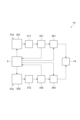
- FIG. 13 is a diagram showing the configuration of a power supply system and a control system in a plasma processing apparatus according to another exemplary embodiment.
- Figure 5(a) is a plan view of an antenna according to one exemplary embodiment
- Figure 5(b) is a plan view of an antenna according to another exemplary embodiment
- Figure 5(c) is a plan view of an antenna according to yet another exemplary embodiment.
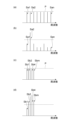
- FIG. 6A is a diagram showing an example of a power spectrum of high frequency power having a plurality of frequency components.
- Fig. 6B is a diagram showing an example of a plurality of measured values representing the coupling efficiency of the plurality of frequency components of Fig. 6A to the plasma.
- Fig. 6C is a diagram showing an example of a power spectrum of high frequency power having a plurality of frequency components.
- Fig. 6D is a diagram showing an example of a plurality of measured values representing the coupling efficiency of the plurality of frequency components of Fig. 6C to the plasma.
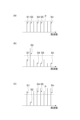
- Fig. 7A is a diagram showing an example of a power spectrum of the second high frequency power having a plurality of frequency components.
- FIG. 7B is a diagram showing an example of a plurality of measured values representing the coupling efficiency of the plurality of frequency components of Fig. 7A to the plasma.
- Fig. 7C is a diagram showing an example of a power spectrum of the second high frequency power having a plurality of frequency components.
- 1 is a flow diagram of a plasma processing method according to an exemplary embodiment.
- Figure 1 is a diagram for explaining an example of the configuration of an inductively coupled plasma processing apparatus.
- the plasma processing system includes an inductively coupled plasma processing device 1 and a control unit 2.
- the inductively coupled plasma processing device 1 includes a plasma processing chamber 10, a gas supply unit 20, a power supply 30, and an exhaust system 40.
- the plasma processing chamber 10 includes a dielectric window 101.
- the plasma processing device 1 also includes a substrate support unit 11, a gas introduction unit, and an antenna 14.
- the substrate support unit 11 is disposed within the plasma processing chamber 10.
- the antenna 14 is provided outside the chamber 10.
- the antenna 14 may be composed of a coil wound around an axis extending in the vertical direction.
- the antenna 14 is disposed, for example, on or above the plasma processing chamber 10 (i.e., on or above the dielectric window 101).
- the dielectric window 101 is disposed between the substrate support unit 11 and the antenna 14.
- the plasma processing chamber 10 has a plasma processing space 10s defined by the dielectric window 101, a sidewall 102 of the plasma processing chamber 10, and the substrate support unit 11.
- the plasma processing chamber 10 has at least one gas supply port for supplying at least one processing gas to the plasma processing space 10s and at least one gas exhaust port for exhausting gas from the plasma processing space.
- the plasma processing chamber 10 is grounded.
- the substrate support 11 includes a main body 111 and a ring assembly 112.
- the main body 111 has a central region 111a for supporting the substrate W and an annular region 111b for supporting the ring assembly 112.
- a wafer is an example of a substrate W.
- the annular region 111b of the main body 111 surrounds the central region 111a of the main body 111 in a plan view.
- the substrate W is disposed on the central region 111a of the main body 111
- the ring assembly 112 is disposed on the annular region 111b of the main body 111 so as to surround the substrate W on the central region 111a of the main body 111. Therefore, the central region 111a is also called a substrate support surface for supporting the substrate W, and the annular region 111b is also called a ring support surface for supporting the ring assembly 112.
- the main body 111 includes a base 1110 and an electrostatic chuck 1111.
- the base 1110 includes a conductive member.
- the conductive member of the base 1110 may function as a bias electrode.
- the electrostatic chuck 1111 is disposed on the base 1110.
- the electrostatic chuck 1111 includes a ceramic member 1111a and an electrostatic electrode 1111b disposed within the ceramic member 1111a.
- the ceramic member 1111a has a central region 111a. In one embodiment, the ceramic member 1111a also has an annular region 111b. Note that other members surrounding the electrostatic chuck 1111, such as an annular electrostatic chuck or an annular insulating member, may have the annular region 111b.
- the ring assembly 112 may be disposed on the annular electrostatic chuck or the annular insulating member, or may be disposed on both the electrostatic chuck 1111 and the annular insulating member.
- at least one RF/DC electrode coupled to an RF (Radio Frequency) power source 31 and/or a DC (Direct Current) power source 32, which will be described later, may be disposed within the ceramic member 1111a.
- the at least one RF/DC electrode functions as a bias electrode.
- the conductive member of the base 1110 and the at least one RF/DC electrode may function as multiple bias electrodes.
- the electrostatic electrode 1111b may function as a bias electrode.
- the substrate support 11 includes at least one bias electrode.
- the ring assembly 112 includes one or more annular members.
- the one or more annular members include one or more edge rings and at least one cover ring.
- the edge rings are formed of a conductive or insulating material, and the cover rings are formed of an insulating material.
- the substrate support 11 may also include a temperature adjustment module configured to adjust at least one of the electrostatic chuck 1111, the ring assembly 112, and the substrate to a target temperature.
- the temperature adjustment module may include a heater, a heat transfer medium, a flow passage 1110a, or a combination thereof.
- a heat transfer fluid such as brine or a gas flows through the flow passage 1110a.
- the flow passage 1110a is formed in the base 1110, and one or more heaters are disposed in the ceramic member 1111a of the electrostatic chuck 1111.
- the substrate support 11 may also include a heat transfer gas supply configured to supply a heat transfer gas to a gap between the back surface of the substrate W and the central region 111a.
- the gas introduction section is configured to introduce at least one processing gas from the gas supply section 20 into the plasma processing space 10s.
- the gas introduction section includes a center gas injector (CGI) 13.
- the center gas injector 13 is disposed above the substrate support section 11 and is attached to a central opening formed in the dielectric window 101.
- the center gas injector 13 has at least one gas supply port 13a, at least one gas flow path 13b, and at least one gas inlet port 13c.
- the processing gas supplied to the gas supply port 13a passes through the gas flow path 13b and is introduced into the plasma processing space 10s from the gas inlet port 13c.
- the gas introduction section may include one or more side gas injectors (SGI) attached to one or more openings formed in the sidewall 102.
- SGI side gas injectors
- the gas supply unit 20 may include at least one gas source 21 and at least one flow controller 22.
- the gas supply unit 20 is configured to supply at least one process gas from a respective gas source 21 to the gas inlet via a respective flow controller 22.
- Each flow controller 22 may include, for example, a mass flow controller or a pressure-controlled flow controller.
- the gas supply unit 20 may include one or more flow modulation devices to modulate or pulse the flow rate of the at least one process gas.
- the power supply 30 includes an RF power supply 31 coupled to the plasma processing chamber 10 via at least one impedance matching circuit.
- the RF power supply 31 is configured to supply at least one RF signal (RF power) to at least one bias electrode and the antenna 14. This causes a plasma to be formed from at least one processing gas supplied to the plasma processing space 10s.
- the RF power supply 31 can function as at least a part of a plasma generating unit configured to generate a plasma from one or more processing gases in the plasma processing chamber 10.
- a bias RF signal to at least one bias electrode, a bias potential is generated on the substrate W, and ions in the formed plasma can be attracted to the substrate W.
- the RF power supply 31 includes a first RF generating unit 31a and a second RF generating unit 31b.
- the first RF generating unit 31a (RF generating unit) is coupled to the antenna 14 and configured to generate a source RF signal (source RF power) for plasma generation via at least one impedance matching circuit.
- the source RF signal has a frequency in the range of 10 MHz to 150 MHz.
- the first RF generating unit 31a may be configured to generate multiple source RF signals having different frequencies. The generated one or more source RF signals are supplied to the antenna 14.
- the second RF generating unit 31b is coupled to at least one bias electrode via at least one impedance matching circuit and configured to generate a bias RF signal (bias RF power).
- the frequency of the bias RF signal may be the same as or different from the frequency of the source RF signal.
- the bias RF signal has a lower frequency than the frequency of the source RF signal.
- the bias RF signal has a frequency in the range of 100 kHz to 60 MHz.
- the second RF generating unit 31b may be configured to generate multiple bias RF signals having different frequencies.
- the generated one or more bias RF signals are supplied to at least one bias electrode.
- at least one of the source RF signal and the bias RF signal may be pulsed.
- the power supply 30 may also include a DC power supply 32 coupled to the plasma processing chamber 10.
- the DC power supply 32 includes a bias DC generator 32a.
- the bias DC generator 32a is connected to at least one bias electrode and configured to generate a bias DC signal. The generated bias DC signal is applied to the at least one bias electrode.
- the bias DC signal may be pulsed.
- a sequence of voltage pulses is applied to at least one bias electrode.
- the voltage pulses may have a rectangular, trapezoidal, triangular, or combination of these pulse waveforms.
- a waveform generator for generating a sequence of voltage pulses from the DC signal is connected between the bias DC generator 32a and at least one bias electrode.
- the bias DC generator 32a and the waveform generator constitute a voltage pulse generator.
- the voltage pulses may have a positive polarity or a negative polarity.
- the sequence of voltage pulses may include one or more positive voltage pulses and one or more negative voltage pulses within one period.
- the bias DC generator 32a may be provided in addition to the RF power source 31 or may be provided instead of the second RF generator 31b.
- the exhaust system 40 may be connected to, for example, a gas exhaust port 10e provided at the bottom of the plasma processing chamber 10.
- the exhaust system 40 may include a pressure regulating valve and a vacuum pump. The pressure in the plasma processing space 10s is adjusted by the pressure regulating valve.
- the vacuum pump may include a turbomolecular pump, a dry pump, or a combination thereof.
- the control unit 2 processes computer-executable instructions that cause the plasma processing apparatus 1 to perform the various steps described in this disclosure.
- the control unit 2 may be configured to control each element of the plasma processing apparatus 1 to perform the various steps described herein. In one embodiment, a part or all of the control unit 2 may be included in the plasma processing apparatus 1.
- the control unit 2 may include a processing unit 2a1, a storage unit 2a2, and a communication interface 2a3.
- the control unit 2 is realized, for example, by a computer 2a.
- the processing unit 2a1 may be configured to perform various control operations by reading a program from the storage unit 2a2 and executing the read program. This program may be stored in the storage unit 2a2 in advance, or may be acquired via a medium when necessary.
- the acquired program is stored in the storage unit 2a2 and is read from the storage unit 2a2 by the processing unit 2a1 and executed.
- the medium may be various storage media readable by the computer 2a, or may be a communication line connected to the communication interface 2a3.
- the processing unit 2a1 may be a CPU (Central Processing Unit).
- the memory unit 2a2 may include a RAM (Random Access Memory), a ROM (Read Only Memory), a HDD (Hard Disk Drive), a SSD (Solid State Drive), or a combination of these.
- the communication interface 2a3 may communicate with the plasma processing device 1 via a communication line such as a LAN (Local Area Network).
- FIG. 2 is a diagram showing the configuration of a power supply system and a control system in a plasma processing apparatus according to an exemplary embodiment.
- the plasma processing apparatus 1 may include a control unit 2.
- the first RF generating unit 31a may be controlled by the control unit 2.
- the first RF generating unit 31a may be composed of a single high-frequency power supply 300.
- the high-frequency power supply 300 may have a signal generator and an amplifier.
- the signal generator outputs a signal having a frequency specified by the control unit 2 to the amplifier.
- the amplifier generates high-frequency power by amplifying the signal input from the signal generator, and outputs the high-frequency power.
- the amplification factor of the amplifier may be specified by the control unit 2.
- the first RF generating unit 31a is configured to generate a first high frequency power RF1 and a second high frequency power RF2.
- the first high frequency power RF1 has a first frequency.
- the second high frequency power has a second frequency.
- the first frequency and the second frequency are different from each other.
- the second frequency may be 1% or more higher than the first frequency.
- the first RF generating unit 31a may be electrically connected to the antenna 14 via the directional coupler 310, the sensor 33, and the matching unit 34.
- the directional coupler 310 measures the power level of the forward wave of the high frequency power (each of the first high frequency power RF1 and the second high frequency power RF2) output from the first RF generating unit 31a and the power level of the reflected wave of the high frequency power.
- the directional coupler 310 may, for example, determine the reflection coefficient of the high frequency power (each of the first high frequency power RF1 and the second high frequency power RF2) output from the high frequency power source 300.
- the reflection coefficient is determined from the power level of the forward wave and the power level of the reflected wave.
- the reflection coefficient is notified from the directional coupler 310 to the control unit 2.
- the directional coupler 310 may be integrated with the high frequency power source 300.
- the sensor 33 is, for example, a voltage/current sensor.
- the sensor 33 measures the voltage and current of the high frequency power (each of the first high frequency power RF1 and the second high frequency power RF2) supplied to the antenna 14.
- the sensor 33 may determine the reflection coefficient of the high frequency power (each of the first high frequency power RF1 and the second high frequency power RF2) from the measured voltage and current.
- the sensor 33 may notify the control unit 2 of the reflection coefficient.
- the matching circuit 34 includes an impedance matching circuit having a variable impedance.
- the matching circuit 34 is connected between the first RF generating unit 31a and the antenna 14.
- the matching circuit 34 is configured to match the load impedance of the first RF generating unit 31a to the output impedance of the first RF generating unit 31a.
- the variable impedance of the matching circuit 34 can be controlled by the control unit 2.
- the plasma processing apparatus 1 may further include a first filter 35, an impedance converter 36, and a second filter 37.
- the first filter 35 is configured to selectively pass the first high frequency power RF1.
- the second filter 37 is configured to selectively pass the second high frequency power RF2.
- the first filter 35 and the second filter 37 are each connected in parallel between the matching device 34 and the antenna 14.
- the matching device 34, the first filter 35, and the antenna 14 form a first electrical path.
- the first high frequency power RF1 is supplied to the antenna 14 via the first electrical path.
- the matching device 34, the second filter 37, and the antenna 14 form a second electrical path.
- the second high frequency power RF2 is supplied to the antenna 14 via the second electrical path.
- the impedance converter 36 is connected between one of the first filter 35 and the second filter 37 and the antenna 14. In the example shown in FIG. 2, the impedance converter 36 is connected between the first filter 35 and the antenna 14.
- the matching device 34 may be configured to match the load impedance for the frequency of the high-frequency power selectively passed by the other of the first filter 35 and the second filter 37 to the output impedance of the first RF generating unit 31a.
- the matching device 34 is configured to match the load impedance for the second frequency to the output impedance of the first RF generating unit 31a.
- the impedance converter 36 is configured to match the load impedance for the frequency of the high frequency power selectively passed by one of the first filter 35 and the second filter 37 to the output impedance of the first RF generating unit 31a.
- the impedance converter 36 is configured to match the load impedance for the frequency of the first high frequency power RF1 selectively passed by the first filter 35 to the output impedance of the first RF generating unit 31a.
- the impedance converter 36 may be composed of a transformer.
- the dielectric window 101 is made of a material that causes the dielectric loss in the dielectric window 101 at the second frequency to be greater than the dielectric loss in the dielectric window 101 at the first frequency. That is, the second frequency is a frequency at which the dielectric loss in the dielectric window 101 is greater than the first frequency.
- Each of the first frequency and the second frequency may be set according to the material of the dielectric window 101.
- the dielectric window 101 may be made of a material that causes the dielectric loss to be maximized at the second frequency. The frequency at which the dielectric loss of the material is maximized can be adjusted by adjusting the type and concentration of the dopant contained in the material.
- the first RF generating unit 31a is configured to generate a first high frequency power RF1.
- the first RF generating unit 31a may be configured to generate a first high frequency power RF1 to ignite a plasma in the chamber 10.
- the first high frequency power RF1 may be supplied to the antenna 14 via a first electrical path.
- the first RF generating unit 31a is configured to generate a second high frequency power RF2.
- the first RF generating unit 31a may be configured to generate a second high frequency power RF2 to maintain the plasma ignited in the chamber 10.
- the second high frequency power RF2 may be supplied to the antenna 14 via a second electrical path.
- the dielectric loss in the dielectric window 101 is small, the loss of electrical energy coupled to the plasma is suppressed. Therefore, by supplying the first high frequency power RF1 to the antenna 14 to ignite the plasma, it is possible to efficiently ignite the plasma in the chamber 10.
- the dielectric loss in the dielectric window 101 is large, the potential difference between the potential of the bottom surface of the dielectric window 101 and the potential of the plasma becomes small. Therefore, if the dielectric loss in the dielectric window 101 is large, the energy of ions colliding from the plasma with the dielectric window 101 is kept low. Therefore, after the plasma is ignited, it is possible to suppress wear of the dielectric window 101 by using the second high frequency power RF2 to maintain it.
- the plasma processing apparatus 1 can have a simple configuration for its power supply system.
- FIG. 3 is a timing chart of the first and second high frequency powers in a plasma processing apparatus according to an exemplary embodiment.
- the first RF generating unit 31a may be configured to generate the first and second high frequency powers RF1 and RF2 simultaneously after generating only the first high frequency power RF1 and before generating only the second high frequency power RF2.
- the first RF generating unit 31a is configured to simultaneously supply the first and second high frequency powers RF1 and RF2 to the antenna 14 after supplying only the first high frequency power RF1 to the antenna 14 and before supplying only the second high frequency power RF2 to the antenna 14.
- the first RF generating unit 31a may supply both the first high frequency power RF1 and the second high frequency power RF2 to the antenna 14 in the period T1.
- the power level of the second high frequency power RF2 in the period T1 is lower than the power level of the second high frequency power RF2 in the period T2.
- the first RF generating unit 31a may also supply both the first high frequency power RF1 and the second high frequency power RF2 to the antenna 14 in the period T2.
- the power level of the first high frequency power RF1 in the period T2 is lower than the power level of the first high frequency power RF1 in the period T1.
- the first RF generating unit 31a may also supply the first high frequency power RF1 having a power level higher than its power level in the period T2 to the antenna 14 in the period T3 between the periods T1 and T2.
- the power level of the first high frequency power RF1 in the period T3 may be the same as the power level of the first high frequency power RF1 in the period T1.
- the first RF generating unit 31a may supply the second high frequency power RF2 having a higher power level than the power level in the period T1 to the antenna 14 in the period T3.
- the power level of the second high frequency power RF2 in the period T3 may be the same as the power level of the second high frequency power RF2 in the period T2.
- the first RF generating unit 31a of the plasma processing apparatus 1A includes a plurality of high frequency power sources 301, 302.
- the high frequency power source 301 (first high frequency power source) is configured to generate a first high frequency power RF1.
- the high frequency power source 302 (second high frequency power source) is configured to generate a second high frequency power RF2.
- the plasma processing apparatus 1A does not need to include the first filter 35, the impedance converter 36, and the second filter 37.
- the plasma processing apparatus 1A further includes a directional coupler 311, a sensor 331, a matching device 341, a directional coupler 312, a sensor 332, and a matching device 342.
- the high frequency power supply 301 is electrically connected to the antenna 14 via the directional coupler 311, the sensor 331, and the matching device 341.
- the matching device 341 is configured to match the load impedance for the first frequency to the output impedance of the high frequency power supply 301.
- the directional coupler 311 measures the power level of the forward wave of the first high frequency power RF1 and the power level of the reflected wave of the first high frequency power RF1.
- the directional coupler 311 may determine the reflection coefficient of the first high frequency power RF1.
- the reflection coefficient is determined from the power level of the forward wave and the power level of the reflected wave.
- the reflection coefficient is notified from the directional coupler 311 to the control unit 2.
- the directional coupler 311 may be integrated with the high frequency power source 301.
- the sensor 331 is, for example, a voltage/current sensor.
- the sensor 331 measures the voltage and current of the first high frequency power RF1 supplied to the antenna 14.
- the sensor 331 may determine the reflection coefficient of the first high frequency power RF1 from the measured voltage and current.
- the sensor 331 may notify the control unit 2 of the reflection coefficient.
- the high frequency power supply 302 is electrically connected to the antenna 14 via the directional coupler 312, the sensor 332, and the matching device 342.
- the matching device 342 is configured to match the load impedance for the second frequency to the output impedance of the high frequency power supply 302.
- the directional coupler 312 measures the power level of the traveling wave of the second high frequency power RF2 and the power level of the reflected wave of the second high frequency power RF2.
- the directional coupler 312 may determine the reflection coefficient of the second high frequency power RF2.
- the reflection coefficient is determined from the power level of the traveling wave and the power level of the reflected wave.
- the reflection coefficient is notified from the directional coupler 312 to the control unit 2.
- the directional coupler 312 may be integrated with the high frequency power source 302.
- the sensor 332 is, for example, a voltage/current sensor.
- the sensor 332 measures the voltage and current of the second high frequency power RF2 supplied to the antenna 14.
- the sensor 332 may determine the reflection coefficient of the second high frequency power RF2 from the measured voltage and current.
- the sensor 332 may notify the control unit 2 of the reflection coefficient.
- the antenna may be composed of multiple antennas.
- FIG. 5 is a plan view of an antenna in one exemplary embodiment.
- (b) of FIG. 5 is a plan view of an antenna in another exemplary embodiment.
- (c) of FIG. 5 is a plan view of an antenna in yet another exemplary embodiment.
- Plasma processing apparatuses according to various exemplary embodiments may include antenna 14A shown in FIG. 5(a), antenna 14B shown in FIG. 5(b), or antenna 14C shown in FIG. 5(c) instead of antenna 14.
- Each of antennas 14A, 14B, and 14C includes a first antenna 141 and a second antenna 142.
- Each of first antenna 141 and second antenna 142 may be composed of a coil wound around an axis extending in the vertical direction.
- Each of first antenna 141 and second antenna 142 has a circular shape in a plan view.
- the central axis of second antenna 142 may be located on the central axis of chamber 10.
- First antenna 141 is smaller than second antenna 142.
- first antenna 141 and second antenna 142 are arranged so as not to overlap each other in a planar view.
- the outer periphery of first antenna 141 and the outer periphery of second antenna 142 may be arranged so as to circumscribe each other in a planar view.
- the first antenna 141 and the second antenna 142 are arranged so as to overlap each other in a planar view. As shown in FIG. 5(b), the first antenna 141 and the second antenna 142 may share a central axis.
- the first antenna 141 and the second antenna 142 are arranged so as to overlap each other in a planar view.
- the central axis of the first antenna 141 may be located at a position offset from the central axis of the second antenna 142.
- the outer periphery of the first antenna 141 and the inner periphery of the second antenna 142 may be arranged so as to be inscribed in a planar view.
- each of antennas 14A, 14B, and 14C only the first high frequency power RF1 of the first high frequency power RF1 and the second high frequency power RF2 may be supplied to the first antenna 141. Only the second high frequency power RF2 of the first high frequency power RF1 and the second high frequency power RF2 may be supplied to the second antenna 142. Note that both the first high frequency power RF1 and the second high frequency power RF2 may be supplied to at least one of the first antenna 141 and the second antenna 142.
- control unit 2 may be configured to identify the first frequency and use the first high frequency power RF1 having the identified first frequency to ignite the plasma. Below, the process by which the control unit 2 identifies the first frequency will be described with reference to (a) to (d) of FIG. 6.
- FIG. 6 is a diagram showing an example of a power spectrum of high-frequency power having multiple frequency components.
- the first RF generating unit 31a may be configured to generate high-frequency power having multiple frequency components as shown in (a) in FIG. 6.
- the high-frequency power shown in (a) in FIG. 6 has multiple frequency components Sa1 to San. n is an integer equal to or greater than 2.
- the power level of each of the multiple frequency components Sa1 to San is a predetermined power level P.
- the control unit 2 controls the first RF generating unit 31a to supply high-frequency power having multiple frequency components to the antenna 14. Note that in the plasma processing apparatus 1A, the high-frequency power having multiple frequency components may be generated by the high-frequency power source 301.
- (b) of FIG. 6 is a diagram showing an example of multiple measured values representing the coupling efficiency of the multiple frequency components of (a) of FIG. 6 to the plasma.
- the control unit 2 uses multiple measured values to identify the first frequency.
- the multiple measured values represent the coupling efficiency of each of the multiple frequency components Sa1 to San to the plasma.
- the multiple measured values may be, for example, the reflection coefficients of each of the multiple frequency components Sa1 to San acquired by the directional coupler 310 or the sensor 33, or the directional coupler 311 or the sensor 331.
- the multiple measured values may be the load power levels of each of the multiple frequency components Sa1 to San acquired by the sensor 33 or the sensor 331.
- the load power level is the difference between the power level of the forward wave and the power level of the reflected wave of each of the multiple frequency components Sa1 to San.
- the control unit 2 uses multiple measurement values to identify the frequency of the component with the highest coupling efficiency among the multiple frequency components Sa1 to San as the first frequency.
- the frequency component with the highest coupling efficiency among the multiple frequency components Sa1 to San is frequency component Sa2.
- control unit 2 may update the first frequency by causing the first RF generating unit 31a to generate high-frequency power including multiple frequency components Sb1 to Sbm having a frequency pitch narrower than the frequency pitch of the multiple frequency components Sa1 to San.
- the control unit 2 may be configured to use the first high-frequency power RF1 having the updated first frequency to ignite the plasma. Note that in the plasma processing apparatus 1A, the high-frequency power having multiple frequency components may be generated by the high-frequency power source 301.
- (c) of FIG. 6 is a diagram showing an example of a power spectrum of high-frequency power having multiple frequency components.
- the high-frequency power shown in (c) of FIG. 6 has multiple frequency components Sb1 to Sbm.
- m is an integer equal to or greater than 2.
- the power level of each of the multiple frequency components Sb1 to Sbn is a predetermined power level P.
- the band including the multiple frequency components Sb1 to Sbm is narrower than the band including the multiple frequency components Sa1 to San.
- the band including the multiple frequency components Sb1 to Sbm includes a frequency component (e.g., frequency component Sa2) that has the highest coupling efficiency among the multiple frequency components Sa1 to San.
- the frequency component Sa2 may be the center frequency of the band including the multiple frequency components Sb1 to Sbm.
- (d) of FIG. 6 is a diagram showing an example of multiple measured values representing the coupling efficiency of the multiple frequency components of (c) of FIG. 6 to the plasma.
- the control unit 2 uses multiple measured values to update the first frequency.
- the multiple measured values represent the coupling efficiency of each of the multiple frequency components Sb1 to Sbn to the plasma.
- the multiple measured values may be, for example, the reflection coefficients of each of the multiple frequency components Sb1 to Sbn acquired by the directional coupler 310 or the sensor 33, or the directional coupler 311 or the sensor 331.
- the multiple measured values may be the load power levels of each of the multiple frequency components Sb1 to Sbn acquired by the sensor 33 or the sensor 331.
- the load power level is the difference between the power level of the forward wave and the power level of the reflected wave of each of the multiple frequency components Sb1 to Sbn.
- the control unit 2 may use multiple measurement values to identify the frequency of the multiple frequency components Sb1 to Sbn that has the highest coupling efficiency, and update the first frequency using the identified frequency.
- the frequency component Sb4 has the highest coupling efficiency among the multiple frequency components Sb1 to Sbm.
- the control unit 2 may maintain the plasma using the second high frequency power RF2 including multiple frequency components, and may also perform load power control of the multiple frequency components of the second high frequency power RF2.
- the process in which the control unit 2 performs load power control of the multiple frequency components of the second high frequency power RF2 will be described with reference to Figures 7(a) to 7(c).
- the 7A is a diagram showing an example of a power spectrum of a second high-frequency power having multiple frequency components.
- the first RF generating unit 31a may be configured to generate a second high-frequency power having multiple frequency components as shown in FIG. 7A after plasma ignition.
- the second high-frequency power shown in FIG. 7A has multiple frequency components S1 to Sn. n is an integer equal to or greater than 2.
- the power level of each of the multiple frequency components S1 to Sn is a predetermined power level P.
- the control unit 2 controls the first RF generating unit 31a to supply the second high-frequency power having multiple frequency components to the antenna 14.
- the second high-frequency power having multiple frequency components may be generated by the high-frequency power source 302.
- the 7B is a diagram showing an example of multiple measured values representing the coupling efficiency to plasma corresponding to the multiple frequency components in FIG. 7A.
- the control unit 2 uses multiple measured values for load power control of the multiple frequency components of the second high frequency power RF2.
- the multiple measured values represent the coupling efficiency to plasma of each of the multiple frequency components S1 to Sn.
- the multiple measured values may be, for example, the reflection coefficients of each of the multiple frequency components S1 to Sn acquired by the directional coupler 310 or the sensor 33, or the directional coupler 312 or the sensor 332.
- the multiple measured values may be the load power levels of each of the multiple frequency components S1 to Sn acquired by the sensor 33 or the sensor 332.
- the load power level is the difference between the power level of the forward wave and the power level of the reflected wave of each of the multiple frequency components S1 to Sn.
- (c) of FIG. 7 is a diagram showing an example of a power spectrum of the second high frequency power having multiple frequency components.
- the control unit 2 adjusts the power levels of each of the multiple frequency components of the second high frequency power RF2, as shown in (c) of FIG. 7, using multiple measured values so that the load power levels of the multiple frequency components of the second high frequency power RF2 approach their respective designated levels.
- the control unit 2 may adjust the power levels of each of the multiple frequency components of the second high frequency power RF2 so that the load power levels of the multiple frequency components of the second high frequency power RF2 are approximately the same.
- FIG. 8 is a flow chart of a plasma processing method according to one exemplary embodiment.
- the plasma processing method shown in FIG. 8 (hereinafter, referred to as "method MT") can be performed using plasma processing apparatus 1 or 1A.
- method MT performed using plasma processing apparatus 1 will be described.
- the method MT includes steps STa and STb.
- a first high frequency power RF1 is supplied from the first RF generating unit 31a to the antenna 14.
- the first high frequency power RF1 may be supplied from the first RF generating unit 31a to the antenna 14 to ignite plasma in the chamber 10 of the plasma processing apparatus 1.
- a second high frequency power RF2 is supplied from the first RF generating unit 31a to the antenna 14.
- the second high frequency power RF2 may be supplied from the first RF generating unit 31a to the antenna 14 to maintain the plasma ignited in the chamber 10.
- a first high frequency power RF1 may be supplied from the high frequency power supply 300.
- a second high frequency power RF2 may be supplied from the high frequency power supply 300.
- step STa when the method MT is performed using the plasma processing apparatus 1, in step STa, high-frequency power that has selectively passed through the first filter 35 may be supplied. In step STb, high-frequency power that has selectively passed through the second filter 37 may be supplied.
- a first high frequency power RF1 may be supplied from the high frequency power supply 301.
- a second high frequency power RF2 may be supplied from the high frequency power supply 302.
- the first high frequency power RF1 may be supplied to the first antenna 141.
- the second high frequency power RF2 may be supplied to the second antenna 142.
- the method MT may include a step STc.
- the step STc is performed after the step STa and before the step STb.
- the step STa only the first high frequency power RF1 is supplied from the first RF generating unit 31a to the antenna 14.
- the first high frequency power RF1 and the second high frequency power RF2 are simultaneously supplied from the first RF generating unit 31a to the antenna 14.
- the step STb only the second high frequency power RF2 is supplied from the first RF generating unit 31a to the antenna 14.
- the method MT may include steps STd and STe.
- steps STd and STe are performed before step STa.
- step STd high-frequency power having multiple frequency components Sa1 to San is supplied to the antenna 14 (see FIG. 6(a)).
- the frequency of the component having the maximum coupling efficiency among the multiple frequency components Sa1 to San supplied to the antenna 14 is identified as the first frequency.
- the first frequency is identified based on multiple measurement values (see FIG. 6B) that indicate the plasma coupling efficiency of each of the multiple frequency components Sa1 to San.
- the multiple measurement values may be, for example, the reflection coefficients of each of the multiple frequency components Sa1 to San acquired by the directional coupler 310 or the sensor 33, or the directional coupler 311 or the sensor 331.
- the multiple measurement values may be the load power levels of each of the multiple frequency components Sa1 to San acquired by the sensor 33 or the sensor 331.
- the load power level is the difference between the power level of the forward wave and the power level of the reflected wave of each of the multiple frequency components Sa1 to San.
- a first high-frequency power RF1 having the first frequency identified in step STe may be supplied.
- step STd and step STe may be performed again.
- high-frequency power including multiple frequency components Sb1 to Sbm having a frequency pitch narrower than the frequency pitch of the multiple frequency components Sa1 to San may be supplied to the antenna 14 (see FIG. 6(c)).
- the frequency of the component having the maximum coupling efficiency among the multiple frequency components Sb1 to Sbm supplied to the antenna 14 may be updated as the first frequency.
- the first frequency is updated based on multiple measured values (see FIG. 6(d)) that represent the coupling efficiency of the plasma of each of the multiple frequency components Sb1 to Sbm.
- the first high-frequency power RF1 having the first frequency updated in step STe that is performed again may be supplied.
- a chamber including a dielectric window; a substrate support disposed within the chamber; at least one antenna disposed outside the chamber, the dielectric window being disposed between the substrate support and the at least one antenna; a gas supply configured to supply a gas into the chamber; an RF generator electrically connected to the at least one antenna; Equipped with the RF generating unit is configured to generate a first high frequency power having a first frequency and a second high frequency power having a second frequency; a dielectric loss in the dielectric window for the second frequency is greater than a dielectric loss in the dielectric window for the first frequency; Plasma processing equipment.
- the RF generating unit is generating the first radio frequency power to ignite a plasma in the chamber; generating the second radio frequency power to maintain the plasma ignited in the chamber;
- the plasma processing apparatus according to E1, [E3] The plasma processing apparatus according to E1 or E2, wherein the RF generating unit is composed of a single high frequency power source.
- the plasma processing apparatus according to any one of claims E1 to E3, wherein the impedance converter is configured to match a load impedance for a frequency of the high-frequency power selectively passed by the one filter to an output impedance of the RF generating unit.
- the RF generating unit is a first high frequency power source configured to generate the first high frequency power; a second high frequency power source configured to generate the second high frequency power;
- the at least one antenna is a first antenna for receiving the first high frequency power; a second antenna for receiving the second high frequency power;
- the plasma processing apparatus of any one of claims E1 to E6, wherein the RF generation unit is configured to simultaneously supply the first high frequency power and the second high frequency power to the at least one antenna after supplying only the first high frequency power to the at least one antenna and before supplying only the second high frequency power to the at least one antenna.
- a control unit is further provided, The control unit is Controlling the RF generator to supply high frequency power having a plurality of frequency components to the at least one antenna; identifying a frequency of a component having a maximum coupling efficiency among the plurality of frequency components as the first frequency based on a plurality of measurement values obtained by a sensor, the measurement values being indicative of coupling efficiencies of the respective frequency components to the plasma;
- the plasma processing apparatus according to any one of E1 to E7, configured as above.
- [E9] (a) supplying a first high frequency power having a first frequency from an RF generating unit to at least one antenna in a plasma processing apparatus, the plasma processing apparatus comprising: the chamber including a dielectric window; a substrate support disposed within the chamber; the at least one antenna located outside the chamber, the dielectric window being disposed between the substrate support and the at least one antenna; the RF generator electrically connected to the at least one antenna;
- the process comprises: (b) supplying a second radio frequency power having a second frequency from the RF generating unit to the at least one antenna; Including, a dielectric loss in the dielectric window for the second frequency is greater than a dielectric loss in the dielectric window for the first frequency; Plasma treatment method.
- the first high frequency power is supplied from the RF generator to the at least one antenna to ignite a plasma in the chamber;
- the second high frequency power is supplied from the RF generating unit to the at least one antenna in order to maintain the plasma ignited in the chamber.
- the RF generating unit is composed of a single high frequency power source, In the step (a), the first high frequency power is supplied from the single high frequency power source, In the step (b), the second high frequency power is supplied from the single high frequency power source.
- the plasma processing apparatus includes: a matching box connected between the RF generating unit and the at least one antenna; a first filter configured to selectively pass the first high frequency power and connected between the matching box and the at least one antenna; a second filter configured to selectively pass the second high frequency power and connected between the matching box and the at least one antenna; an impedance converter connected between one of the first filter and the second filter and the at least one antenna; Further comprising: the matching device is configured to match a load impedance for a frequency of high frequency power selectively passed by the other of the first filter and the second filter to an output impedance of the RF generating unit; the impedance converter is configured to match a load impedance for a frequency of the high frequency power selectively passed by the one filter to an output impedance of the RF generating unit, In the step (a), the high-frequency power that has selectively passed through the first filter is supplied; In the step (b), the high-frequency power that has selectively passed through the second filter is supplied.
- the RF generating unit is a first high frequency power source configured to generate the first high frequency power; a second high frequency power source configured to generate the second high frequency power; Including, In the step (a), the first high frequency power is supplied from the first high frequency power source, In the step (b), the second high frequency power is supplied from the second high frequency power source.
- the at least one antenna is a first antenna for receiving the first high frequency power; a second antenna for receiving the second high frequency power; Including, In the step (a), the first high frequency power is supplied to the first antenna; In the step (b), the second high frequency power is supplied to the second antenna.
- [E16] (d) supplying radio frequency power having a plurality of frequency components to the at least one antenna; (e) identifying a frequency of the component having a maximum coupling efficiency among the plurality of frequency components as the first frequency based on a plurality of measurement values obtained by a sensor, the measurement values representing coupling efficiencies of each of the plurality of frequency components to the plasma; Further comprising: The first high frequency power having the first frequency specified in (e) is supplied to the at least one antenna in (a); The plasma processing method according to any one of E9 to E15.
- 1, 1A...plasma processing apparatus 2...control unit, 10...chamber, 11...substrate support unit, 14, 14A, 14B, 14C...antenna, 20...gas supply unit, 31a...first RF generation unit, 33, 331, 332...sensor, 34, 341, 342...matching unit, 35...first filter, 36...impedance converter, 37...second filter, 101...dielectric window, 300, 301, 302...high frequency power supply, 310, 311, 312...directional coupler, RF1...first high frequency power, RF2...second high frequency power.
Landscapes
- Physics & Mathematics (AREA)
- Engineering & Computer Science (AREA)
- Plasma & Fusion (AREA)
- Chemical & Material Sciences (AREA)
- Analytical Chemistry (AREA)
- Plasma Technology (AREA)
- Drying Of Semiconductors (AREA)
- Chemical Vapour Deposition (AREA)
Priority Applications (7)
| Application Number | Priority Date | Filing Date | Title |
|---|---|---|---|
| JP2024570142A JP7675954B2 (ja) | 2023-01-12 | 2023-12-25 | プラズマ処理装置及びプラズマ処理方法 |
| CN202380090409.4A CN120457773B (zh) | 2023-01-12 | 2023-12-25 | 等离子体处理装置和等离子体处理方法 |
| EP23916279.5A EP4651631A1 (en) | 2023-01-12 | 2023-12-25 | Plasma treatment device and plasma treatment method |
| KR1020257025723A KR20250123936A (ko) | 2023-01-12 | 2023-12-25 | 플라스마 처리 장치 및 플라스마 처리 방법 |
| TW113100369A TW202449837A (zh) | 2023-01-12 | 2024-01-04 | 電漿處理裝置及電漿處理方法 |
| JP2025074159A JP2025114638A (ja) | 2023-01-12 | 2025-04-28 | プラズマ処理装置及びプラズマ処理方法 |
| US19/266,191 US20250343028A1 (en) | 2023-01-12 | 2025-07-11 | Plasma processing apparatus and plasma processing method |
Applications Claiming Priority (2)
| Application Number | Priority Date | Filing Date | Title |
|---|---|---|---|
| JP2023002993 | 2023-01-12 | ||
| JP2023-002993 | 2023-08-18 |
Related Child Applications (1)
| Application Number | Title | Priority Date | Filing Date |
|---|---|---|---|
| US19/266,191 Continuation US20250343028A1 (en) | 2023-01-12 | 2025-07-11 | Plasma processing apparatus and plasma processing method |
Publications (1)
| Publication Number | Publication Date |
|---|---|
| WO2024150666A1 true WO2024150666A1 (ja) | 2024-07-18 |
Family
ID=91896897
Family Applications (1)
| Application Number | Title | Priority Date | Filing Date |
|---|---|---|---|
| PCT/JP2023/046507 Ceased WO2024150666A1 (ja) | 2023-01-12 | 2023-12-25 | プラズマ処理装置及びプラズマ処理方法 |
Country Status (7)
| Country | Link |
|---|---|
| US (1) | US20250343028A1 (https=) |
| EP (1) | EP4651631A1 (https=) |
| JP (2) | JP7675954B2 (https=) |
| KR (1) | KR20250123936A (https=) |
| CN (1) | CN120457773B (https=) |
| TW (1) | TW202449837A (https=) |
| WO (1) | WO2024150666A1 (https=) |
Cited By (1)
| Publication number | Priority date | Publication date | Assignee | Title |
|---|---|---|---|---|
| WO2026034454A1 (ja) * | 2024-08-06 | 2026-02-12 | パナソニックIpマネジメント株式会社 | 電波放射装置 |
Citations (4)
| Publication number | Priority date | Publication date | Assignee | Title |
|---|---|---|---|---|
| JP2011119658A (ja) | 2009-10-27 | 2011-06-16 | Tokyo Electron Ltd | プラズマ処理装置及びプラズマ処理方法 |
| JP2016528667A (ja) * | 2013-06-17 | 2016-09-15 | アプライド マテリアルズ インコーポレイテッドApplied Materials,Incorporated | プラズマチャンバ内での高速で再現性のあるプラズマの点火及び同調のための方法 |
| JP2020158814A (ja) * | 2019-03-26 | 2020-10-01 | 東京エレクトロン株式会社 | 成膜装置および成膜方法 |
| JP2022139328A (ja) * | 2021-03-11 | 2022-09-26 | 東京エレクトロン株式会社 | 着火方法及びプラズマ処理装置 |
Family Cites Families (6)
| Publication number | Priority date | Publication date | Assignee | Title |
|---|---|---|---|---|
| JP2008226857A (ja) * | 2008-05-16 | 2008-09-25 | Matsushita Electric Ind Co Ltd | プラズマ処理方法及び装置 |
| JP5479867B2 (ja) * | 2009-01-14 | 2014-04-23 | 東京エレクトロン株式会社 | 誘導結合プラズマ処理装置 |
| JP5606821B2 (ja) * | 2010-08-04 | 2014-10-15 | 東京エレクトロン株式会社 | プラズマ処理装置 |
| KR101914902B1 (ko) * | 2018-02-14 | 2019-01-14 | 성균관대학교산학협력단 | 플라즈마 발생장치 및 이를 포함하는 기판 처리 장치 |
| JP7280552B2 (ja) * | 2019-03-18 | 2023-05-24 | コニカミノルタ株式会社 | 画像形成システムおよび異常紙情報表示方法 |
| JP7503993B2 (ja) * | 2020-10-08 | 2024-06-21 | 東京エレクトロン株式会社 | プラズマ処理装置およびプラズマ処理方法 |
-
2023
- 2023-12-25 EP EP23916279.5A patent/EP4651631A1/en active Pending
- 2023-12-25 JP JP2024570142A patent/JP7675954B2/ja active Active
- 2023-12-25 KR KR1020257025723A patent/KR20250123936A/ko active Pending
- 2023-12-25 WO PCT/JP2023/046507 patent/WO2024150666A1/ja not_active Ceased
- 2023-12-25 CN CN202380090409.4A patent/CN120457773B/zh active Active
-
2024
- 2024-01-04 TW TW113100369A patent/TW202449837A/zh unknown
-
2025
- 2025-04-28 JP JP2025074159A patent/JP2025114638A/ja active Pending
- 2025-07-11 US US19/266,191 patent/US20250343028A1/en active Pending
Patent Citations (4)
| Publication number | Priority date | Publication date | Assignee | Title |
|---|---|---|---|---|
| JP2011119658A (ja) | 2009-10-27 | 2011-06-16 | Tokyo Electron Ltd | プラズマ処理装置及びプラズマ処理方法 |
| JP2016528667A (ja) * | 2013-06-17 | 2016-09-15 | アプライド マテリアルズ インコーポレイテッドApplied Materials,Incorporated | プラズマチャンバ内での高速で再現性のあるプラズマの点火及び同調のための方法 |
| JP2020158814A (ja) * | 2019-03-26 | 2020-10-01 | 東京エレクトロン株式会社 | 成膜装置および成膜方法 |
| JP2022139328A (ja) * | 2021-03-11 | 2022-09-26 | 東京エレクトロン株式会社 | 着火方法及びプラズマ処理装置 |
Cited By (1)
| Publication number | Priority date | Publication date | Assignee | Title |
|---|---|---|---|---|
| WO2026034454A1 (ja) * | 2024-08-06 | 2026-02-12 | パナソニックIpマネジメント株式会社 | 電波放射装置 |
Also Published As
| Publication number | Publication date |
|---|---|
| CN120457773B (zh) | 2026-04-28 |
| KR20250123936A (ko) | 2025-08-18 |
| CN120457773A (zh) | 2025-08-08 |
| EP4651631A1 (en) | 2025-11-19 |
| JP7675954B2 (ja) | 2025-05-13 |
| US20250343028A1 (en) | 2025-11-06 |
| JPWO2024150666A1 (https=) | 2024-07-18 |
| TW202449837A (zh) | 2024-12-16 |
| JP2025114638A (ja) | 2025-08-05 |
Similar Documents
| Publication | Publication Date | Title |
|---|---|---|
| JP7638168B2 (ja) | プラズマ処理装置及びプラズマ処理方法 | |
| US20250149296A1 (en) | Plasma processing apparatus and plasma processing method | |
| JP7577093B2 (ja) | プラズマ処理システムおよびプラズマ処理方法 | |
| JP2025114638A (ja) | プラズマ処理装置及びプラズマ処理方法 | |
| JP7756056B2 (ja) | エッチング方法及びプラズマ処理装置 | |
| JP7622252B2 (ja) | プラズマ処理装置、電源システム、制御方法、プログラム、及び記憶媒体 | |
| US20250191883A1 (en) | Plasma processing apparatus, rf system, and rf control method | |
| JP7828799B2 (ja) | プラズマ処理装置及びプラズマ処理方法 | |
| JP7678233B2 (ja) | プラズマ処理装置、ソース高周波電力のソース周波数を制御する方法、及び記憶媒体 | |
| JP2023129234A (ja) | プラズマ処理装置 | |
| KR20220163300A (ko) | 플라즈마 처리 장치 및 플라즈마 처리 방법 | |
| US20250343027A1 (en) | Plasma-processing apparatus and plasma-processing method | |
| JP2024098586A (ja) | プラズマ処理装置及び制御方法 | |
| WO2025169740A1 (ja) | プラズマ処理装置、電源システム、制御方法、及びプログラム | |
| JP2024119243A (ja) | プラズマ処理装置、電源システム、及びプラズマ処理方法 | |
| WO2024018960A1 (ja) | プラズマ処理装置及びプラズマ処理方法 | |
| WO2025057636A1 (ja) | プラズマ処理装置 | |
| WO2025047204A1 (ja) | プラズマ処理装置及び電源ユニット | |
| WO2025069652A1 (ja) | プラズマ処理装置 | |
| TW202533280A (zh) | 電漿處理裝置及控制方法 | |
| WO2024106256A1 (ja) | プラズマ処理装置及びプラズマ処理方法 | |
| JP2025064037A (ja) | 静電チャック、基板支持器、及びプラズマ処理装置 | |
| WO2024252740A1 (ja) | プラズマ処理装置 | |
| JP2026027648A (ja) | 基板支持器及びプラズマ処理装置 | |
| WO2025069651A1 (ja) | プラズマ処理装置 |
Legal Events
| Date | Code | Title | Description |
|---|---|---|---|
| 121 | Ep: the epo has been informed by wipo that ep was designated in this application |
Ref document number: 23916279 Country of ref document: EP Kind code of ref document: A1 |
|
| WWE | Wipo information: entry into national phase |
Ref document number: 2024570142 Country of ref document: JP |
|
| WWE | Wipo information: entry into national phase |
Ref document number: 202380090409.4 Country of ref document: CN |
|
| ENP | Entry into the national phase |
Ref document number: 1020257025723 Country of ref document: KR Free format text: ST27 STATUS EVENT CODE: A-0-1-A10-A15-NAP-PA0105 (AS PROVIDED BY THE NATIONAL OFFICE) |
|
| WWP | Wipo information: published in national office |
Ref document number: 202380090409.4 Country of ref document: CN |
|
| NENP | Non-entry into the national phase |
Ref country code: DE |
|
| WWP | Wipo information: published in national office |
Ref document number: 1020257025723 Country of ref document: KR |
|
| WWE | Wipo information: entry into national phase |
Ref document number: 11202504715Q Country of ref document: SG |
|
| WWP | Wipo information: published in national office |
Ref document number: 11202504715Q Country of ref document: SG |
|
| WWP | Wipo information: published in national office |
Ref document number: 2023916279 Country of ref document: EP |