WO2024070670A1 - 配信装置、配信方法、および記録媒体 - Google Patents
配信装置、配信方法、および記録媒体 Download PDFInfo
- Publication number
- WO2024070670A1 WO2024070670A1 PCT/JP2023/033239 JP2023033239W WO2024070670A1 WO 2024070670 A1 WO2024070670 A1 WO 2024070670A1 JP 2023033239 W JP2023033239 W JP 2023033239W WO 2024070670 A1 WO2024070670 A1 WO 2024070670A1
- Authority
- WO
- WIPO (PCT)
- Prior art keywords
- content
- user
- type
- information
- instruction
- Prior art date
- Legal status (The legal status is an assumption and is not a legal conclusion. Google has not performed a legal analysis and makes no representation as to the accuracy of the status listed.)
- Ceased
Links
Images






Classifications
-
- G—PHYSICS
- G06—COMPUTING OR CALCULATING; COUNTING
- G06Q—INFORMATION AND COMMUNICATION TECHNOLOGY [ICT] SPECIALLY ADAPTED FOR ADMINISTRATIVE, COMMERCIAL, FINANCIAL, MANAGERIAL OR SUPERVISORY PURPOSES; SYSTEMS OR METHODS SPECIALLY ADAPTED FOR ADMINISTRATIVE, COMMERCIAL, FINANCIAL, MANAGERIAL OR SUPERVISORY PURPOSES, NOT OTHERWISE PROVIDED FOR
- G06Q50/00—Information and communication technology [ICT] specially adapted for implementation of business processes of specific business sectors, e.g. utilities or tourism
- G06Q50/10—Services
-
- H—ELECTRICITY
- H04—ELECTRIC COMMUNICATION TECHNIQUE
- H04N—PICTORIAL COMMUNICATION, e.g. TELEVISION
- H04N21/00—Selective content distribution, e.g. interactive television or video on demand [VOD]
- H04N21/20—Servers specifically adapted for the distribution of content, e.g. VOD servers; Operations thereof
- H04N21/25—Management operations performed by the server for facilitating the content distribution or administrating data related to end-users or client devices, e.g. end-user or client device authentication, learning user preferences for recommending movies
- H04N21/262—Content or additional data distribution scheduling, e.g. sending additional data at off-peak times, updating software modules, calculating the carousel transmission frequency, delaying a video stream transmission, generating play-lists
-
- H—ELECTRICITY
- H04—ELECTRIC COMMUNICATION TECHNIQUE
- H04N—PICTORIAL COMMUNICATION, e.g. TELEVISION
- H04N21/00—Selective content distribution, e.g. interactive television or video on demand [VOD]
- H04N21/20—Servers specifically adapted for the distribution of content, e.g. VOD servers; Operations thereof
- H04N21/25—Management operations performed by the server for facilitating the content distribution or administrating data related to end-users or client devices, e.g. end-user or client device authentication, learning user preferences for recommending movies
- H04N21/266—Channel or content management, e.g. generation and management of keys and entitlement messages in a conditional access system, merging a VOD unicast channel into a multicast channel
- H04N21/2668—Creating a channel for a dedicated end-user group, e.g. insertion of targeted commercials based on end-user profiles
Definitions
- the present invention relates to a distribution device capable of distributing content.
- users could not select content based on their preferences, lifestyle, etc. from three or more content types that use one of the delivery methods for three or more types of content, including a first type of content that is live-streamed during a specific time period, a second type of content that is recorded and streamed during a specific time period, and a third type of content that is recorded and streamed on-demand.
- the distribution device of the first invention includes a first receiving unit that receives from a user terminal a first instruction, which is an instruction to distribute a first type of content transmitted from a content distributor terminal during a time period specified by first distribution time information, a content receiving unit that receives the first type of content transmitted from the distributor terminal during a time period specified by the first distribution time information, a first distribution unit that distributes the first type of content received by the content receiving unit to the user terminal that transmitted the first instruction during a time period specified by the first distribution time information, a second receiving unit that receives from the user terminal a second instruction, which is an instruction to distribute a second type of content to be distributed during a time period specified by second distribution time information, and a second receiving unit that corresponds to the second distribution time information and is configured to receive a second instruction from the user terminal specified by the second distribution time information.
- a first instruction which is an instruction to distribute a first type of content transmitted from a content distributor terminal during a time period specified by first distribution time information
- a content receiving unit that receive
- the distribution device includes a second distribution unit that acquires, at a time specified by second distribution time information corresponding to the second type of content, a second type of content corresponding to the second instruction received by the second receiving unit from a second storage unit in which the second type of content to be distributed to the user terminal is stored during a time period specified by the second distribution time information corresponding to the second type of content, and distributes the second type of content to the user terminal that transmitted the second instruction, a third receiving unit that receives from the user terminal a third instruction that is an instruction to distribute a third type of content to be distributed on-demand, and a third distribution unit that acquires, from a third storage unit in which the third type of content to be distributed on-demand is stored, a third type of content corresponding to the third instruction received by the third receiving unit, and distributes the third type of content to the user terminal that transmitted the third instruction.
- the distribution device of the second invention is different from the distribution device of the first invention in that the first receiving unit receives a first instruction from two or more user terminals, and further includes a user video receiving unit that receives user video from each of the two or more user terminals during distribution of the first type of content, and the first distribution unit distributes to each of the two or more user terminals user video of one or more other users from the user video received by the user video receiving unit and the first type of content, and the second receiving unit receives a second instruction from the two or more user terminals, and the second distribution unit does not distribute user video of the one or more other users to each of the two or more user terminals.
- users may or may not be able to know the status of other users, and can select and view content based on their preferences, etc.
- the distribution device of the third invention is different from the distribution device of the first invention in that the second receiving unit receives a second instruction from two or more user terminals, and further includes a user video receiving unit that receives user video from each of the two or more user terminals during distribution of the second type of content, and the second distribution unit distributes user video of one or more other users from the user video received by the user video receiving unit and the second type of content to each of the two or more user terminals.
- the distribution device of the fourth invention is a distribution device according to any one of the first to third inventions, further comprising an input information receiving unit that receives input information input by a user regarding the output content from each of two or more user terminals that have output the first type content, the second type content, or the third type content, and a statistical processing unit that performs statistical processing on the input information received by the input information receiving unit, obtains the statistical processing result, and outputs the statistical processing result.
- the distribution device of the fifth invention is different from the distribution device of the fourth invention in that the input information corresponds to a type identifier that identifies the type of output content, and the statistical processing unit obtains statistical processing results for each of at least three type identifiers and outputs the statistical processing results for each type identifier.
- the distribution device of the sixth invention compared to the fourth or fifth invention, further includes a first reservation receiving unit that receives from the user terminal a first reservation instruction that specifies a viewing reservation for the first type of content, and a second reservation receiving unit that receives from the user terminal a second reservation instruction that specifies a viewing reservation for the second type of content, and the statistical processing unit uses the first reservation instruction and the second reservation instruction to obtain statistical processing results regarding the viewing reservations for the content.
- the distribution device of the seventh invention is a distribution device that further includes a recommendation acquisition unit that acquires recommendation information about content using the statistical processing results, and a recommendation transmission unit that transmits the recommendation information to a user terminal, in comparison with the fourth invention.
- the distribution device of the eighth invention is a distribution device in which, compared to the seventh invention, the recommendation acquisition unit refers to a user management unit in which one or more types of user information among viewing history information on content viewed by the user, reservation history information on content reserved for viewing by the user, and input information entered by the user are stored in association with a user identifier, and the distribution device acquires recommendation information on content to be viewed by the user identified by the user identifier.
- the distribution device of the ninth invention is a distribution device according to any one of the first to eighth inventions, further comprising a communication unit that receives communication information from a user of a user terminal during distribution of the first type of content and transmits the communication information to the distributor terminal.
- the distribution device of the tenth invention is a distribution device according to any one of the first to ninth inventions, further comprising: a screen instruction receiving unit that receives from a user terminal a screen instruction, which is an instruction corresponding to a content identifier that identifies a piece of content and is an instruction to output a screen of a first size related to the piece of content; a screen acquisition unit that acquires screen information for constructing a screen related to the piece of content corresponding to the screen instruction from a screen storage unit that stores screen information, which is information for constructing a screen of the first size, information for constructing a screen related to the piece of content, and information for constructing a screen having user interface components instructed to view the piece of content on a screen of a second size larger than the first size; a screen transmission unit that transmits the screen information acquired by the screen acquisition unit to the user terminal; and a switching support unit that receives information corresponding to the instruction for the user interface components from the user terminal, and outputs screen information for constructing a screen of the second
- This configuration allows users to be guided to an environment where it is easy to watch content.
- the distribution device of the present invention allows users to select and view content based on their preferences, lifestyle, etc.
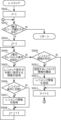
- Block diagram of information system A Block diagram of the distribution device 1 A flowchart illustrating an example of the operation of the distribution device 1. A flowchart illustrating an example of the viewing instruction process. A flowchart illustrating an example of the first distribution process. A flowchart illustrating an example of the second distribution process. A flowchart illustrating an example of the statistical processing A flowchart for explaining an example of the recommendation process. A flowchart illustrating an example of the warning process. A flowchart illustrating an example of the viewing end process.
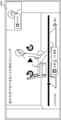
- a flowchart for explaining an example of the operation of the user terminal 2 A diagram showing the content management table A diagram showing the user management table A diagram showing an example of the screen A diagram showing an example of the screen A diagram showing an example of the screen A diagram showing an example of the screen A diagram showing an example of the screen A diagram showing an example of the screen A diagram showing an example of the screen A diagram showing an example of the screen Overview of the computer system Block diagram of the computer system
- an information system having a distribution device capable of distributing three types of content with different characteristics namely, a first type of content (which may also be called live broadcast content), a second type of content, and a third type of content.
- a first type of content which may also be called live broadcast content
- a second type of content which may also be called live broadcast content
- a third type of content namely, a third type of content
- the first type of content may also be called live broadcast content.
- the second type of content may also be called recorded/time-specified content.
- the third type of content may also be called recorded/on-demand content.
- an information system including a distribution device that performs statistical processing on information input from viewers will be described.
- the distribution device performs statistical processing, for example, for each user, for each type of content, or for each piece of content, and obtains the results of the statistical processing.
- the distribution device also obtains, for example, the results of statistical processing of viewing reservations.
- an information system includes a distribution device that transmits screen information that includes an interface for inducing a user to view content on a first-size operating screen of a smartphone or the like, on a second-size screen that is larger than the first size of a personal computer, television, projector, or the like.
- information X being associated with information Y means that information Y can be obtained from information X, or information X can be obtained from information Y, and the method of association is not important.
- Information X and information Y may be linked, may exist in the same buffer, information X may be included in information Y, or information Y may be included in information X, etc.
- FIG. 1 is a conceptual diagram of an information system A in this embodiment.
- Information system A includes a distribution device 1, one or more user terminals 2, and one or more distributor terminals 3.
- the distribution device 1 is a server that distributes content.
- the content includes video. It is preferable that the content includes audio.
- the content is, for example, exercise content.
- Exercise content is content that supports a user in exercising. Exercise content is, for example, exercise content, fitness content, stretching content, dance content, yoga content, aerobic exercise content, aerobics content, relaxation content, muscle training content, and boxercise content. It is preferable that the content here is not content that the user simply watches, but content that allows the user to do some kind of exercise.
- the distribution device 1 is a so-called server.
- the distribution device 1 is a cloud server or an ASP server, but the type is not important.
- the user terminal 2 is a terminal used by a user who wants to view content.
- the user terminal 2 may be, for example, a personal computer, a smartphone, or a tablet terminal, but the type is not important.
- the distributor terminal 3 is a terminal used by a distributor.
- a distributor is someone who distributes content.
- a distributor is, for example, a person who gives exercise instruction in exercise content.
- a distributor is, for example, a trainer in exercise content, fitness content, stretching content, etc.
- the distributor terminal 3 is, for example, a so-called personal computer, smartphone, or tablet terminal, but the type is not important.
- the distribution device 1 and one or more user terminals 2, and the distribution device 1 and one or more distributor terminals 3 can communicate with each other via a network such as the Internet or a LAN.
- FIG. 2 is a block diagram of information system A in this embodiment.
- FIG. 3 is a block diagram of distribution device 1.
- the distribution device 1 includes a storage unit 11, a receiving unit 12, a processing unit 13, and a transmitting unit 14.
- the storage unit 11 includes a screen storage unit 111, a content storage unit 112, and a user management unit 113.
- the content storage unit 112 includes a first storage unit 1121, a second storage unit 1122, and a third storage unit 1123.
- the receiving unit 12 includes a screen instruction receiving unit 121, a first reservation receiving unit 122, a second reservation receiving unit 123, a content receiving unit 124, a first receiving unit 125, a second receiving unit 126, a third receiving unit 127, a user video receiving unit 128, and an input information receiving unit 129.
- the processing unit 13 includes a screen acquisition unit 131, a reservation unit 132, a switching support unit 133, a content accumulation unit 134, a synthesis unit 135, a communication unit 136, an input information accumulation unit 137, a statistical processing unit 138, and a recommendation acquisition unit 139.
- the transmission unit 14 includes a screen transmission unit 141, a first distribution unit 142, a second distribution unit 143, a third distribution unit 144, and a recommendation transmission unit 145.
- the user terminal 2 includes a user storage unit 21, a user reception unit 22, a user processing unit 23, a user transmission unit 24, a user reception unit 25, and a user output unit 26.
- the distributor terminal 3 includes a distributor storage unit 31, a distributor reception unit 32, a distributor processing unit 33, a distributor transmission unit 34, a distributor reception unit 35, and a distributor output unit 36.
- the storage unit 11 constituting the distribution device 1 stores various types of information.
- the various types of information include, for example, screen information, three or more types of content, user information, input information, recommendation conditions, and one or more schedule information.
- Recommendation conditions are conditions for sending recommendation information. Examples of recommendation conditions are “having the largest number of viewers and not having been viewed by the user” and “having the same attribute value as content with a user satisfaction level above a threshold and not having been viewed by the user.”
- Schedule information is information about the schedule for distributing content.
- Schedule information includes, for example, a content identifier and distribution time information.
- a content identifier is information that identifies a content.
- a content identifier is, for example, an ID, a content name, or a URL.
- the content identifier contained in the schedule information is an identifier for a first type content or a second type content.
- the distribution time information is information that specifies the time period during which the content is distributed.
- the distribution time information includes the content distribution start time.
- the distribution time information may also include the content distribution end time.
- the distribution time information may be information that specifies only the content distribution start time, or information that specifies the distribution start time and distribution end time.
- the screen storage unit 111 stores one or more pieces of screen information.
- the screen information is associated with, for example, a screen identifier.
- a screen identifier is information that identifies a screen.
- a screen identifier is, for example, a URL or an ID.
- Screen information is information for constructing a screen to be output to the user terminal 2.
- Screen information is described in, for example, HTML, XML, etc., but the method of realization is not important. Examples of screens include a screen for selecting content to schedule for viewing, a screen for selecting content to view, and a screen for introducing content.
- Screen information is, for example, information for configuring a screen related to a certain piece of content.
- Screen information may be information for configuring a screen of a first size, information for configuring a screen of a second size larger than the first size, or information for configuring a screen for a tablet.
- the user terminal 2 having a screen of the first size may be, for example, a smartphone or a watch-type terminal, and the user terminal 2 having a screen of the second size may be, for example, a personal computer, a television, or a projector.
- Screen information is, for example, information for configuring a first size screen of a smartphone or the like, information for configuring a screen related to a certain piece of content, and information for configuring a screen having specific user interface components.
- a particular user interface part is a user interface for instructing to view a piece of content on a second-size user terminal 2 such as a personal computer.
- User interface parts (hereinafter, appropriately referred to as "UI parts") are parts that make up a user interface.
- UI parts are, for example, objects that can be selected by the user.
- UI parts are, for example, buttons, check boxes, and menu items.
- Screen information for constructing a screen having UI parts includes part information.
- Part information is information for constructing UI parts.
- the content storage unit 112 stores three or more pieces of content.
- the content may be, for example, a first type of content, which will be described later, a second type of content, which will be described later, and a third type of content, which will be described later.
- the content attribute values are, for example, a type identifier, a genre identifier, a distributor identifier, and a difficulty level identifier.
- the type identifier is, for example, "type two content” or "type three content.”
- a genre identifier is information that identifies the genre of content. Examples of genre identifiers are “exercise,” “fitness,” “yoga,” “aerobic exercise,” “aerobics,” “relaxation,” “muscle training,” “dance,” “boxercise,” “massage,” and “stretching.”
- the distributor identifier is information that identifies the distributor of the content.
- the distributor identifier is, for example, information that identifies the distributor of the first type of content.
- the distributor identifier is, for example, the distributor's ID, name, email address, telephone number, and IP address of the distributor terminal 3.
- the difficulty level identifier is information that specifies the difficulty level of the content.
- the difficulty level of the content is the difficulty level of the exercise, or the difficulty of keeping up with the exercise of the content. Difficulty level identifiers are, for example, "for beginners,” “for intermediate exercisers,” “for advanced exercisers,” “1,” “2,” “5,” “A,” “B,” or “C.”
- the first storage unit 1121 stores first type content.
- the first storage unit 1121 temporarily stores first type content that is being distributed.
- the first storage unit 1121 permanently stores distributed first type content.
- the first type content may be called live broadcast content.
- the distribution time of the first type content is fixed. It is preferable that the user is able to communicate with the distributor while the first type content is being distributed. The user may be called a viewer.
- the type identifier "first type content" is usually associated with the first type content.
- the first type of content is content that is distributed from the distributor terminal 3 of the content distributor during a time period specified by the first distribution time information.
- the first distribution time information is distribution time information of the first type of content.
- the first type of content corresponds to, for example, a content identifier, a distributor identifier of the content distributor, a type identifier "first type of content", and first distribution time information.
- the first type of content corresponds to a first instruction (described later) received by the first receiving unit 125 (described later).
- the second storage unit 1122 stores one or more second type contents in advance.
- the second type contents may be referred to as recorded/time-specified contents. Recorded/time-specified contents are contents that are recorded and are distributed during a specific time period. During the distribution of the second type contents, the user is usually unable to communicate with the distributor. During the distribution of the second type contents, communication between users may be possible.
- the second type of content is content that is distributed to the user terminal 2 during the time period specified by the second distribution time information.
- the second distribution time information is second distribution time information of the second type of content.
- the second type of content corresponds to, for example, a content identifier, a distributor identifier of the content distributor, a type identifier "second type of content", and second distribution time information.
- the second type of content corresponds to a second instruction (described later) received by the second receiving unit 126 (described later).
- the third storage unit 1123 stores one or more third-type contents in advance.
- the third-type contents may be called recorded/on-demand contents. Recorded/on-demand contents are contents that have been recorded and are downloaded on demand. During the distribution of the third-type contents, the user cannot communicate with the distributor. In addition, the distribution time of the third-type contents is not fixed.
- the third type of content corresponds to, for example, a content identifier, a distributor identifier of the content distributor, and a type identifier "third type of content.”
- the third type of content corresponds to a third instruction, which will be described later, received by a third receiving unit 127, which will be described later.
- content of the same content is stored in the storage unit 11 as a first type of content, a second type of content, and a third type of content.
- the user management unit 113 stores one or more pieces of user information.
- User information is information about a user.
- the user information includes one or more types of information from among viewing history information, reservation history information, and input information.
- the user information is associated with a user identifier.
- a user identifier is information that identifies a user.
- a user identifier is a user ID, an email address, or a phone number.
- the viewing history information is information about the content viewed by the user.
- the viewing history information has one or more pieces of viewing information.
- the viewing information is information about the content viewed by the user.
- the viewing information has, for example, a content identifier of the content viewed by the user.
- the viewing information has, for example, viewing time information that specifies when the user viewed the content.
- the viewing time information may be distribution time information that specifies a time period.
- the viewing information is usually associated with a user identifier.
- the viewing history information has, for example, the number of times a piece of content has been viewed.
- Reservation history information is information about content that a user has reserved for viewing. Note that a viewing reservation is expressed as a reservation as appropriate. Reservation history information has one or more reservation information. Reservation information is information about a reservation for viewing content. Reservation information has, for example, a content identifier for content reserved by a user. Reservation information is usually associated with a user identifier.
- Input information is information entered by the user.
- Input information is usually information entered by the user regarding content.
- Input information is, for example, the satisfaction level of the viewed content, and comments on the viewed content. Satisfaction level may also be referred to as an evaluation value, level, etc.
- the receiving unit 12 receives various instructions and information.
- the various instructions and information are, for example, a screen instruction described below, a first reservation instruction described below, a second reservation instruction described below, content, a first instruction described below, a second instruction described below, a third instruction described below, a user video image described below, and input information.
- the screen instruction receiving unit 121 receives a screen instruction from the user terminal 2.
- a screen instruction is a request to output screen information.
- a screen instruction is, for example, an instruction that corresponds to a content identifier that identifies a piece of content, and is an instruction to output a first size screen related to a piece of content.
- the first reservation receiving unit 122 receives a first reservation instruction from the user terminal 2.
- the first reservation instruction is an instruction that specifies a viewing reservation for the first type of content.
- the first reservation instruction usually has information that specifies the first type of content.
- the information that specifies the first type of content is, for example, a content identifier of the first type of content, or distribution time information that specifies the time period during which the first type of content is distributed.
- the second reservation receiving unit 123 receives a second reservation instruction from the user terminal 2.
- the second reservation instruction is an instruction that specifies a viewing reservation for the second type of content.
- the second reservation instruction usually has information that specifies the second type of content.
- the information that specifies the second type of content is, for example, a content identifier for the second type of content, or distribution time information that specifies the time period during which the second type of content is distributed.
- the content receiving unit 124 receives the first type of content transmitted from the distributor terminal 3 during the time period specified by the first distribution time information.
- the content receiving unit 124 normally receives the first type of content from the distributor terminal 3, but may also receive the first type of content from a server (not shown) that has received the first type of content from the distributor terminal 3.
- the first receiving unit 125 receives a first instruction from the user terminal 2. It is preferable that the first receiving unit 125 receives the first instruction from two or more user terminals 2.
- the first instruction is an instruction to distribute the first type of content.
- the first instruction usually has information that identifies the first type of content.
- the first instruction has, for example, a URL, a URI, and a content identifier.
- the second receiving unit 126 receives a second instruction from the user terminal 2.
- the second instruction is an instruction to distribute the second type of content.
- the second instruction usually includes information that identifies the second type of content.
- the second instruction includes, for example, a URL, a URI, and a content identifier.
- the third receiving unit 127 receives a third instruction from the user terminal 2.
- the third instruction is an instruction to distribute a third type of content.
- the third instruction usually includes information that identifies the third type of content.
- the third instruction includes, for example, a URL, a URI, and a content identifier.
- the user video receiving unit 128 receives user video from one or more user terminals 2 during the distribution of the first type content.
- the user terminal 2 here is the terminal that is outputting the first type content.
- the user video is video transmitted from the user terminal 2.
- the user video is, for example, video captured by a camera installed in the user terminal 2.
- the user video may include audio.
- the user video is usually video captured of a user watching the content.
- the user video receiving unit 128 receives user video from one or more user terminals 2, for example, during the distribution of the second type content.
- the user terminal 2 here is the terminal that is outputting the second type content.
- the user video is usually a video captured of a user watching the content.
- the input information receiving unit 129 receives input information from two or more user terminals 2 that have output the first type content, the second type content, or the third type content.
- the input information is information input by the user regarding the output content.
- the input information receiving unit 129 typically receives input information that corresponds to a content identifier.
- the input information typically corresponds to a type identifier that identifies the type of output content.
- the input information typically corresponds to a user identifier of the user who input the input information.
- the processing unit 13 performs various types of processing.
- the various types of processing are, for example, processing performed by a screen acquisition unit 131, a reservation unit 132, a switching support unit 133, a content storage unit 134, a synthesis unit 135, a communication unit 136, an input information storage unit 137, a statistical processing unit 138, and a recommendation acquisition unit 139.
- the screen acquisition unit 131 acquires screen information corresponding to the received screen instruction from the screen storage unit 111.
- screen information is, for example, information for constructing a screen related to a piece of content, and information for constructing a screen of a first size.
- screen information is, for example, information for constructing a screen having user interface components instructed to view the piece of content on a screen of a second size.
- the reservation unit 132 performs reservation processing in response to a reservation instruction received by the receiving unit 12.
- the reservation processing is processing for storing reservation information in the storage unit 11.
- the reservation unit 132 stores reservation information including a content identifier corresponding to the reservation instruction in association with the user identifier of the user who sent the reservation instruction.
- the reservation information is information on a viewing reservation.
- the reservation information has, for example, a content identifier and a user identifier.
- the reservation information is, for example, a user identifier associated with the content identifier, or a content identifier associated with the user identifier.
- the reservation unit 132 when the first reservation receiving unit 122 receives a first reservation instruction, the reservation unit 132 performs reservation processing in accordance with the first reservation instruction. For example, the reservation unit 132 stores reservation information including a content identifier corresponding to the first reservation instruction in the user management unit 113 in association with the user identifier of the user who sent the reservation instruction. For example, the reservation unit 132 stores reservation information including a user identifier corresponding to the first reservation instruction in the content storage unit 112 in association with the content identifier corresponding to the first reservation instruction.
- the reservation unit 132 when the second reservation receiving unit 123 receives a second reservation instruction, the reservation unit 132 performs reservation processing according to the second reservation instruction. For example, the reservation unit 132 stores reservation information including a content identifier corresponding to the second reservation instruction in the user management unit 113 in association with the user identifier of the user who sent the reservation instruction. For example, the reservation unit 132 stores reservation information including a user identifier corresponding to the second reservation instruction in the content storage unit 112 in association with the content identifier corresponding to the second reservation instruction.
- the switching support unit 133 receives information corresponding to an instruction to a user interface component from the user terminal 2, and outputs screen information of a second size screen of a personal computer or the like corresponding to the information, or access information for accessing the screen information.
- the access information is, for example, a URL or a URI.
- output means, for example, transmission, but it can also mean storage.
- Storage means, for example, storage in a web page paired with a user identifier, which can later be accessed by a user identified by the user identifier.
- the switching support unit 133 when the switching support unit 133 receives information corresponding to an instruction for a UI component from the user terminal 2, it sends access information for accessing the screen information of the second size screen of a personal computer or the like corresponding to the information to the email address of the user terminal 2.
- the information corresponding to the instruction for the UI component is, for example, a content identifier, a URL, and a UI component identifier.
- the content storage unit 134 stores the content received by the receiving unit 12.
- the content storage unit 134 stores the first type of content received by the first receiving unit 125 in the first storage unit 1121.
- the synthesis unit 135 synthesizes the first type of content received by the first receiving unit 125 with one or more user videos.
- the user videos are videos transmitted from the user terminal 2 and received by the user video receiving unit 128.
- the synthesis of the first type of content with one or more user videos means creating an image that has the first type of content and one or more user videos on one screen.
- the synthesis unit 135 can be realized using known video conference system technology, etc., so a detailed explanation will be omitted.
- the communication unit 136 receives communication information from the user of the user terminal 2 during the distribution of the first type content, and transmits the communication information to the distributor terminal 3. In this way, the opinions and impressions of the users watching the first type content can be conveyed to the distributor during the distribution of the first type content.
- the communication unit 136 receives communication information from the distributor at the distributor terminal 3 during distribution of the first type of content, and transmits the communication information to one or more user terminals 2. In this way, the opinions and impressions of the distributor of the first type of content can be conveyed to the users who are viewers during distribution of the first type of content.
- the communication unit 136 receives communication information from a user of the user terminal 2 during the distribution of the second type content, and transmits the communication information to the user terminals 2 of other users. In this way, the communication unit 136 can support communication between users who are viewing the same second type content.
- the communication information may be, for example, a character string entered by the user or the user's voice.
- the communication information may also be, for example, a character string entered by the distributor.
- the input information storage unit 137 stores the input information received by the input information receiving unit 129.
- the input information storage unit 137 stores the input information received by the input information receiving unit 129 in the user management unit 113 in association with a content identifier corresponding to the input information and a user identifier of the user who sent the input information.
- the statistical processing unit 138 performs statistical processing on two or more pieces of input information received by the input information receiving unit 129, obtains the statistical processing results, and outputs the statistical processing results.
- the input information received by the input information receiving unit 129 is, for example, the input information of the user management unit 113.
- the statistical processing results are statistical values for each content identifier, each type identifier, and each user identifier.
- the statistical value is, for example, a representative value of two or more pieces of input information.
- the representative value is, for example, an average value or a median value.
- the statistical value is, for example, a representative value of satisfaction, which is two or more pieces of input information.
- the statistical value is, for example, the number of reservations, the number of reservations per unit period, a representative value of the number of reservations, the number of views, the number of views per unit period, a representative value of the number of views, and the proportion of reservations made but not viewed. Note that the number of reservations is the number of pieces of content reserved.
- the number of views is the number of pieces of content viewed. Or the number of users who viewed.
- the statistical processing unit 138 obtains statistical processing results for each of at least three type identifiers and outputs the statistical processing results for each type identifier.
- the statistical processing unit 138 uses the first reservation instruction and the second reservation instruction to obtain statistical processing results regarding reservations for viewing of content.
- the statistical processing unit 138 uses the first reservation instruction and the second reservation instruction to obtain the proportion of reservations made but not viewed for each content identifier or type identifier.
- the statistical processing unit 138 obtains statistical processing results regarding the number of views of content.
- the recommendation acquisition unit 139 acquires recommendation information related to content using the statistical processing results acquired by the statistical processing unit 138.
- the recommendation acquisition unit 139 refers to the user management unit 113 and acquires recommendation information related to content that should be viewed by a user identified by a user identifier.
- the recommendation acquisition unit 139 acquires recommendation information using the user's viewing history information or reservation history information.
- Recommendation information is information about content recommended to a user.
- Recommendation information includes, for example, information that identifies the content recommended to a user.
- Recommendation information includes, for example, one or more content identifiers.
- Recommendation information is, for example, information about content that has a similarity to content viewed by a user that is equal to or greater than a threshold, and that is distributed on a different day of the week or at the same time as the content viewed by the user.
- Recommendation information is, for example, information about content that has a similarity to content viewed by a user that is equal to or greater than a threshold, and that has not been viewed by the user.
- the transmission unit 14 transmits various types of information.
- the various types of information include, for example, screen information, various types of content, and recommendation information.
- the screen transmission unit 141 transmits the screen information acquired by the screen acquisition unit 131 to the user terminal 2.
- the first distribution unit 142 distributes the first type of content received by the content receiving unit 124 to the user terminal 2 that sent the first instruction during the time period specified by the first distribution time information.
- the first distribution unit 142 distributes, to each of two or more user terminals, user video of one or more other users among the user video received by the user video receiving unit 128, and the first type of content.
- the other users are users who are not the user of the user terminal 2 to which the user video is transmitted.
- the other users are other users who are viewing the same content as the user of the user terminal 2 to which the user video is transmitted.
- the second distribution unit 143 acquires the second type of content corresponding to the second distribution time information from the second storage unit 1122 at the time specified by the second distribution time information, and distributes the acquired second type of content to the user terminal 2 that sent the second instruction.
- the second distribution unit 143 does not distribute user video of one or more other users to each of the two or more user terminals 2. Not distributing user video of one or more other users means that when distributing the second type of content, the user video is not distributed to the user terminal 2.
- the second distribution unit 143 may distribute, to each of two or more user terminals 2, user video of one or more other users among the user video received by the user video receiving unit 128, and the second type of content.
- the third distribution unit 144 obtains from the third storage unit 1123 the third type of content corresponding to the third instruction received by the third receiving unit 127, and distributes the third type of content to the user terminal 2 that sent the third instruction.
- the recommendation sending unit 145 sends the recommendation information acquired by the recommendation acquisition unit 139 to the user terminal 2.
- the user storage unit 21 that constitutes the user terminal 2 stores various types of information.
- the various types of information are, for example, user identifiers.
- the user reception unit 22 receives various instructions and information. Examples of various information and instructions include input information, communication information, first instructions, second instructions, third instructions, first reservation instructions, second reservation instructions, and screen instructions.
- the means for inputting various information and instructions can be anything, such as a touch panel, keyboard, mouse, or menu screen.
- the user processing unit 23 performs various types of processing. For example, various types of processing are processing that converts received information, instructions, etc. into information, instructions, etc. with a structure to be sent. For example, various types of processing are processing that converts received information into information with a structure to be output.
- the user transmission unit 24 transmits various information, instructions, etc. to the distribution device 1.
- the various information, instructions, etc. are, for example, input information, communication information, first instructions, second instructions, third instructions, first reservation instructions, second reservation instructions, and screen instructions.
- the user receiving unit 25 receives various information from the distribution device 1.
- the various information includes, for example, various contents, user videos of other users, and statistical processing results.
- the user output unit 26 outputs various information.
- the various information includes, for example, various screens, various contents, user videos of other users, and statistical processing results.
- output usually means showing on a display or projecting using a projector, but it can also be a concept that includes printing on a printer, outputting sound, sending to an external device, storing on a recording medium, and passing the processing results to other processing devices or other programs, etc.
- the distributor storage unit 31 that constitutes the distributor terminal 3 stores various types of information.
- the various types of information are distributor identifiers.
- the distributor reception unit 32 receives various instructions and information.
- the various information and instructions include, for example, content and communication information.
- the distributor receiving unit 32 includes, for example, a camera, and for example, captures a distributor exercising to obtain first type content.
- the distributor receiving unit 32 includes, for example, a microphone, and obtains the voice of the distributor. Note that it is preferable that the first type content includes not only video but also voice.
- the distributor processing unit 33 performs various types of processing. For example, various types of processing are processing to convert received information, instructions, etc. into information, instructions, etc. with a structure to be sent. For example, various types of processing are processing to convert received information into information with a structure to be output.
- the distributor transmission unit 34 transmits various information, instructions, etc. to the distribution device 1.
- the various information, instructions, etc. are, for example, content and communication information.
- the distributor receiving unit 35 receives various information from the distribution device 1.
- the various information is, for example, user video of one or more users, input information, and statistical processing results.
- the distributor output unit 36 outputs various information.
- the various information is, for example, user video of one or more users, input information, and statistical processing results.
- output usually means showing on a display or projecting using a projector, but it can also be a concept that includes printing on a printer, outputting sound, sending to an external device, storing on a recording medium, and passing the processing results to other processing devices or other programs, etc.
- the storage unit 11, screen storage unit 111, content storage unit 112, user management unit 113, input information management unit 114, first storage unit 1121, second storage unit 1122, third storage unit 1123, user storage unit 21, and distributor storage unit 31 are preferably non-volatile recording media, but can also be realized with volatile recording media.
- information may be stored in the storage unit 11, etc. via a recording medium, information transmitted via a communication line, etc. may be stored in the storage unit 11, etc., or information inputted via an input device may be stored in the storage unit 11, etc.
- the receiving unit 12, the screen instruction receiving unit 121, the first reservation receiving unit 122, the second reservation receiving unit 123, the content receiving unit 124, the first receiving unit 125, the second receiving unit 126, the third receiving unit 127, the user video receiving unit 128, the input information receiving unit 129, the user receiving unit 25, and the distributor receiving unit 35 are typically realized by wireless or wired communication means, but may also be realized by means of receiving broadcasts.
- the processing unit 13, screen acquisition unit 131, reservation unit 132, switching support unit 133, content storage unit 134, synthesis unit 135, communication unit 136, input information storage unit 137, statistical processing unit 138, recommendation acquisition unit 139, user processing unit 23, and distributor processing unit 33 can usually be realized by a processor, memory, etc.
- the processing procedures of the processing unit 13, etc. are usually realized by software, and the software is recorded in a recording medium such as a ROM. However, the processing procedures may also be realized by hardware (dedicated circuitry).
- the processor may be a CPU, MPU, GPU, etc., and the type does not matter.
- the transmitting unit 14, the screen transmitting unit 141, the first distribution unit 142, the second distribution unit 143, the third distribution unit 144, the recommendation transmitting unit 145, the user transmitting unit 24, and the distributor transmitting unit 34 are typically realized by wireless or wired communication means, but may also be realized by broadcasting means.
- the user reception unit 22 and the distributor reception unit 32 can be realized by device drivers for input means such as a touch panel or keyboard, or control software for a menu screen, etc.
- the user output unit 26 and the distributor output unit 36 may or may not include output devices such as a display or speaker.
- the user output unit 26, etc. may be realized by driver software for an output device, or by a combination of driver software for an output device and an output device, etc.
- Step S401 The screen instruction receiving unit 121 determines whether or not a screen instruction has been received from the user terminal 2. If a screen instruction has been received, the process proceeds to step S402; if a screen instruction has not been received, the process proceeds to step S404.
- Step S402 The screen acquisition unit 131 acquires screen information corresponding to the screen instruction received in step S401 from the screen storage unit 111.
- the screen information corresponding to the screen instruction is, for example, screen information identified by a screen identifier included in the screen instruction.
- Step S403 The screen transmission unit 141 transmits the screen information acquired in step S402 to the user terminal 2 that transmitted the screen instruction. Return to step S401.
- Step S404 The switching support unit 133 determines whether or not instruction information for a UI component has been received from the user terminal 2. If the instruction information has been received, the process proceeds to step S405; if the instruction information has not been received, the process proceeds to step S408.
- the instruction information for the UI component is associated with a user identifier corresponding to the user terminal 2.
- the switching support unit 133 obtains access information (e.g., a URL) corresponding to the information corresponding to the instruction for the UI component from the storage unit 11.
- the access information is screen information of a screen relating to the same content as the content identified by the information displayed on the screen including the UI component, and is information for accessing the screen information of a second size screen of a personal computer or the like.
- Step S406 The switching support unit 133 acquires the user identifier corresponding to the information received in step S404. Next, the switching support unit 133 acquires destination information (e.g., email address, mobile phone number) that pairs with the user identifier from the user management unit 113.
- destination information e.g., email address, mobile phone number
- Step S407 The switching support unit 133 transmits the access information acquired in step S405 to the destination information acquired in step S406. Return to step S401.
- Step S408 The receiving unit 12 determines whether or not a reservation instruction has been received from the user terminal 2. If the receiving unit 12 has received a reservation instruction, the process proceeds to step S409; if not, the process proceeds to step S410.
- reservation instruction is associated with the user identifier of the user who sent the reservation instruction. Furthermore, reception of the reservation instruction by the receiving unit 12 is reception of a first reservation instruction by the first reservation receiving unit 122, or reception of a second reservation instruction by the second reservation receiving unit 123.
- Step S409 The reservation unit 132 performs reservation processing in response to the reservation instruction received by the receiving unit 12 in step S408. Return to step S401.
- the reservation unit 132 stores reservation information including, for example, a content identifier corresponding to the received reservation instruction, in association with a user identifier corresponding to the user terminal 2 that sent the reservation instruction.
- Step S410 The receiving unit 12 determines whether or not a viewing instruction has been received from the user terminal 2. If the receiving unit 12 has received a viewing instruction, the process proceeds to step S411; if not, the process proceeds to step S412.
- Step S411 The processing unit 13 performs processing corresponding to the received viewing instruction. Return to step S401. This processing is called viewing instruction processing. An example of the viewing instruction processing will be described with reference to the flowchart in FIG. 5.
- Step S412 The processing unit 13 obtains the current time from a clock (not shown). Next, the processing unit 13 refers to the content storage unit 112 and determines whether the distribution start time of the first type content or the second type content has arrived. If the content distribution start time has arrived, the process proceeds to step S413, and if the content distribution start time has not arrived, the process proceeds to step S416.
- Step S413 The processing unit 13 refers to the content storage unit 112 and determines whether the target content whose distribution start time has come is a first type content or a second type content. If it is a first type content, the process proceeds to step S414, and if it is a second type content, the process proceeds to step S415.
- Step S414 The first distribution unit 142 performs a process of distributing the target first type content when the distribution start time has arrived. Return to step S401. This process is called a first distribution process. An example of the first distribution process will be described using the flowchart in FIG. 6.
- Step S415) The second distribution unit 143 performs a process of distributing the target second type content when the distribution start time has arrived. Return to step S401. This process is called a second distribution process. An example of the second distribution process will be described using the flowchart in FIG. 7.
- Step S416 The processing unit 13 judges whether or not it is time for statistical processing. If it is time for statistical processing, the process proceeds to step S417, and if it is not time for statistical processing, the process proceeds to step S418.
- the timing for statistical processing is, for example, when a predetermined time arrives or when an instruction is received from the user.
- Step S417) The statistical processing unit 138 performs statistical processing. Return to step S401. An example of statistical processing will be explained using the flowchart in FIG. 8.
- Step S4128 The processing unit 13 determines whether it is time for recommendation processing. If it is time for recommendation processing, the process proceeds to step S419, and if it is not time for recommendation processing, the process proceeds to step S420. Note that the timing for recommendation processing is, for example, when a predetermined time arrives or when an instruction is received from the user.
- Step S419) The recommendation acquisition unit 139 etc. performs recommendation processing. Return to step S401. An example of recommendation processing will be described using the flowchart in FIG. 9.
- Step S420 The processing unit 13 etc. performs a warning process on the user who has reserved the viewing. An example of the warning process is explained using the flowchart in FIG. 10.
- the distribution device 1 receives various instructions and information (e.g., screen instructions, reservation instructions, viewing instructions, etc.) from one or more user terminals 2 even during processing, and performs processing corresponding to the instructions and information. In other words, it is preferable for the distribution device 1 to perform various processes in parallel.
- various instructions and information e.g., screen instructions, reservation instructions, viewing instructions, etc.
- processing ends when the power is turned off or an interrupt occurs to end processing.
- Step S501 The processing unit 13 acquires a content identifier corresponding to the received viewing instruction.
- the processing unit 13 acquires a type identifier that pairs with the content identifier.
- the processing unit 13 determines whether the type identifier is "third type content.” If it is "third type content,” the processing proceeds to step S502, and if it is not "third type content,” the processing proceeds to step S506.
- Step S502 The processing unit 13 acquires the third type content identified by the content identifier corresponding to the received viewing instruction from the third storage unit 1123. Note that the processing unit 13 normally acquires the third type content sequentially until the end of the distribution.
- Step S503 The third distribution unit 144 transmits the third type of content acquired in step S502 to the user terminal 2 that transmitted the viewing instruction. Note that the third distribution unit 144 normally sequentially distributes the third type of content acquired in step S502 until the end of distribution.
- Step S504 The processing unit 13 judges whether or not to end the distribution. If the distribution is to end, the process proceeds to step S505, and if not, the process returns to step S502.
- the distribution is ended, for example, when the third type content has been distributed to the end, or when an end instruction has been received from the user terminal 2 of the user who has been viewing the third type content.
- Step S505 The processing unit 13 performs viewing end processing.
- the processing unit 13 returns to the upper level processing.
- An example of the viewing end processing will be described with reference to the flowchart in FIG. 10.
- Step S506 The processing unit 13 obtains the current time from a clock (not shown).
- Step S507 The processing unit 13 acquires from the content storage unit 112 the distribution time information that is paired with the content identifier that corresponds to the received viewing instruction. Next, the processing unit 13 judges whether or not the current time is within the distribution time period indicated by the distribution time information. If it is within the distribution time period, the process proceeds to step S413, and if it is not within the distribution time period, the process proceeds to step S508. If it is not within the distribution time period, a viewing reservation is made here. Furthermore, if it is within the distribution time period, one user terminal 2 to which the content is distributed is added.
- Step S508 The processing unit 13 acquires the user identifier corresponding to the received viewing instruction and temporarily stores the user identifier in a buffer (not shown). It then returns to the upper level processing.
- this buffer is a buffer that stores the user identifier of the user who made the viewing reservation. Then, when it becomes the distribution start time indicated by the distribution time information, the first distribution unit 142 or the second distribution unit 143 distributes the content to the user terminal 2 corresponding to one or more user identifiers in the buffer.
- Step S601 The content receiving unit 124 determines whether or not a first type of content has been received from the distributor terminal 3 corresponding to the distribution start time. If a first type of content has been received, the process proceeds to step S602, and if a first type of content has not been received, the process returns to step S601.
- Step S602 The content accumulation unit 134 acquires the first type of content received in step S601. The content accumulation unit 134 also accumulates the first type of content in the first storage unit 1121.
- Step S603 The user video receiving unit 128 determines whether or not user video has been received from one or more user terminals 2. If user video has been received, the process proceeds to step S604; if user video has not been received, the process proceeds to step S605.
- Step S604 The synthesis unit 135 acquires the user video acquired in step S603.
- Step S605 The communication unit 136 determines whether or not communication information has been received. If communication information has been received, the process proceeds to step S606; if communication information has not been received, the process proceeds to step S607.
- Step S606 The communication unit 136 acquires the received communication information.
- Step S607 The synthesis unit 135 creates a screen including the first type content received in step S601. Note that such a screen may include only the first type content, the first type content and one or more user videos, the first type content and one or more pieces of communication information, or the first type content, one or more user videos, and one or more pieces of communication information.
- Step S608 The first distribution unit 142 distributes the screen constructed in step S606 to the user terminal 2 corresponding to the user identifier of each of the one or more users who are viewing the content.
- the one or more user identifiers are user identifiers stored in a buffer (not shown).
- Each of the one or more user identifiers is an identifier of a user who is viewing the content.
- Step S609 The processing unit 13 judges whether or not to end the distribution. If the distribution is to end, the process proceeds to step S610, and if not, the process returns to step S601. Note that the distribution is to end when, for example, the first type content has been distributed to the end.
- Step S610 The processing unit 13 performs viewing end processing. An example of the viewing end processing is described using the flowchart in FIG. 10.
- Step S701 The second distribution unit 143 retrieves the second type of content corresponding to the distribution start time from the second storage unit 1122.
- Step S702 The user video receiving unit 128 determines whether or not user video has been received from one or more user terminals 2. If user video has been received, the process proceeds to step S703; if user video has not been received, the process proceeds to step S605.
- Step S703 The synthesis unit 135 acquires one or more user images received in step S702.
- Step S704 The synthesis unit 135 creates a screen including the second type of content acquired in step S701 and one or more user videos acquired in step S703.
- Step S705 The second distribution unit 143 distributes a screen including the second type of content to the user terminal 2 that has reserved viewing and the user terminal 2 that is currently viewing.
- Step S706 The processing unit 13 judges whether or not to end the distribution. If the distribution is to end, the process proceeds to step S707, and if not, the process returns to step S701. Note that the distribution is to end when, for example, the second type content has been distributed to the end.
- Step S707 The processing unit 13 performs viewing end processing. An example of the viewing end processing is described using the flowchart in FIG. 10.
- Step S801 The statistical processing unit 138 assigns 1 to counter i.
- Step S802 The statistical processing unit 138 determines whether the i-th user identifier exists. If the i-th user identifier exists, the process proceeds to step S803; if it does not exist, the process proceeds to step S810.
- Step S803 The statistical processing unit 138 assigns 1 to counter j.
- Step S804 The statistical processing unit 138 determines whether or not there is a jth statistical value to be obtained for each user. If there is a jth statistical value, the process proceeds to step S805; if there is no jth statistical value, the process proceeds to step S809. Note that the statistical value to be obtained for each user is predetermined.
- the statistical processing unit 138 acquires from the user management unit 113 one or more pieces of raw information used to acquire the jth statistical value to be acquired for each user, and which is paired with the ith user identifier.
- the raw information is, for example, a content identifier of the content viewed by the user, input information entered by the user, and a type identifier of the content viewed by the user.
- the statistical processing unit 138 uses one or more pieces of raw information acquired in step S805 to perform a calculation corresponding to the jth statistical value to be acquired for each user, and acquires the jth statistical value.
- the statistical value is, for example, the number of pieces of content viewed by the user within the unit period, the number of pieces of content viewed by the user within the unit period by type identifier, the average satisfaction level of the pieces of content viewed by the user within the unit period, and a content attribute value common to the pieces of content viewed by the user within the unit period with a satisfaction level equal to or higher than a threshold.
- the statistical value is usually a numerical value, but it does not have to be a numerical value.
- the storage unit 11 stores an arithmetic expression in association with the identifier of the jth statistical value to be obtained for each user.
- Step S807 The statistical processing unit 138 pairs the jth statistical value obtained in step S806 with the ith user identifier and stores it in the user management unit 113.
- Step S808 The statistical processing unit 138 increments counter j by 1. Return to step S804.
- Step S809 The statistical processing unit 138 increments the counter i by 1. Return to step S802.
- Step S810 The statistical processing unit 138 assigns 1 to counter i.
- Step S811 The statistical processing unit 138 determines whether the i-th type exists. If the i-th type exists, the process proceeds to step S812; if it does not exist, the process proceeds to step S818.
- the type is, for example, one of three types: "first type content,” "second type content,” and "third type content.”
- Step S812 The statistical processing unit 138 assigns 1 to counter j.
- Step S813 The statistical processing unit 138 determines whether or not there is a jth statistical value to be obtained for each type of content. If there is a jth statistical value, the process proceeds to step S814; if there is no jth statistical value, the process proceeds to step S818. Note that the statistical value to be obtained for each type of content is predetermined.
- the statistical processing unit 138 acquires from the content storage unit 112 one or more pieces of raw information to be used to acquire the jth statistical value to be acquired for each type of content, and which is paired with the ith type identifier.
- the raw information is, for example, the user identifier of the user who viewed the content, or the input information entered by the user who viewed the content.
- the statistical processing unit 138 uses one or more pieces of raw information acquired in step S814 to perform a calculation corresponding to the jth statistical value to be acquired for each type of content, and acquires the jth statistical value.
- the statistical value may be, for example, the number of viewers in a unit period for each type of content, or the average satisfaction level for each type of content.
- the storage unit 11 stores an arithmetic expression associated with the identifier of the jth statistical value to be obtained for each type of content.
- Step S816) The statistical processing unit 138 pairs the jth statistical value obtained in step S815 with the ith type identifier and stores it in the content storage unit 112.
- Step S817 The statistical processing unit 138 increments counter j by 1. Return to step S813.
- Step S8128 The statistical processing unit 138 increments the counter i by 1. Return to step S811.
- Step S819) The statistical processing unit 138 assigns 1 to counter i.
- Step S820 The statistical processing unit 138 determines whether the i-th content exists. If the i-th content exists, the process proceeds to step S821; if it does not exist, the process returns to the upper level process.
- Step S821 The statistical processing unit 138 assigns 1 to counter j.
- Step S822 The statistical processing unit 138 determines whether or not there is a jth statistical value to be obtained for each piece of content. If there is a jth statistical value, the process proceeds to step S823; if there is no jth statistical value, the process proceeds to step S827. Note that the statistical value to be obtained for each piece of content is predetermined.
- the statistical processing unit 138 acquires from the content storage unit 112 one or more pieces of raw information to be used to acquire the jth statistical value to be acquired for each piece of content, and which is paired with the ith content identifier.
- the raw information is, for example, the user identifier of the user who viewed the content, or the input information entered by the user who viewed the content.
- Step S824 The statistical processing unit 138 uses one or more pieces of raw information acquired in step S823 to perform a calculation corresponding to the jth statistical value to be acquired for each piece of content, and acquires the jth statistical value.
- the statistical value may be, for example, the number of viewers in a unit period for each piece of content, or the average satisfaction level for each piece of content.
- the storage unit 11 stores an arithmetic expression associated with the identifier of the jth statistical value to be obtained for each piece of content.
- Step S825) The statistical processing unit 138 pairs the jth statistical value obtained in step S824 with the ith content identifier and stores it in the content storage unit 112.
- Step S826 The statistical processing unit 138 increments counter j by 1. Return to step S822.
- Step S827) The statistical processing unit 138 increments the counter i by 1. Return to step S820.
- Step S901 The recommendation acquisition unit 139 assigns 1 to counter i.
- Step S902 The recommendation acquisition unit 139 determines whether or not the i-th user identifier exists in the user management unit 113. If the i-th user identifier exists, the process proceeds to step S903; if not, the process returns to the upper level process.
- Step S903 The recommendation acquisition unit 139 assigns 1 to counter j.
- Step S904 The recommendation acquisition unit 139 determines whether or not the jth recommendation condition exists in the storage unit 11. If the jth recommendation condition exists, the process proceeds to step S905; if not, the process proceeds to step S909.
- the recommendation acquisition unit 139 acquires one or more pieces of information that are used to determine the jth recommendation condition and that are paired with the ith user identifier.
- the information used to determine the recommendation condition is, for example, one or more content attribute values of content whose user satisfaction is equal to or higher than a threshold, and two or more user satisfaction levels for one piece of content.
- Step S906 The recommendation acquisition unit 139 determines whether or not the one or more pieces of information acquired in step S905 match the j-th recommendation condition. If they match the j-th recommendation condition, the process proceeds to step S907; if they do not match, the process proceeds to step S908.
- Step S907 The recommendation acquisition unit 139 acquires recommendation information corresponding to the j-th recommendation condition from the storage unit 11 and temporarily stores it in a buffer (not shown).
- Step S908 The recommendation acquisition unit 139 increments the counter j by 1. Return to step S904.
- Step S909 The recommendation acquisition unit 139 determines whether or not there is recommendation information in a buffer (not shown). If there is recommendation information, the process proceeds to step S910; if there is no recommendation information, the process proceeds to step S912.
- the recommendation sending unit 145 reads one or more pieces of recommendation information from a buffer (not shown) and composes the recommendation information to be sent.
- Step S911 The recommendation sending unit 145 acquires destination information paired with the i-th user identifier from the user management unit 113. Next, the recommendation sending unit 145 transmits the recommendation information configured in step S910 to the destination indicated by the destination information.
- Step S912 The recommendation sending unit 145 increments the counter i by 1. Return to step S902.
- Step S1001 The processing unit 13 obtains the current time from a clock (not shown).
- Step S1002 The processing unit 13 assigns 1 to the counter i.
- Step S1003 The processing unit 13 determines whether or not there is an i-th content that will start distribution at the scheduled time. If there is an i-th content, the process proceeds to step S1004; if there is no i-th content, the process returns to the upper process.
- Step S1004 The processing unit 13 obtains the distribution start time contained in the distribution time information that is paired with the content identifier of the i-th content.
- Step S1006 The processing unit 13 acquires a user identifier corresponding to each of the one or more reservation information items corresponding to the content identifier of the i-th content. In other words, the processing unit 13 acquires one or more user identifiers of users who have reserved viewing of the i-th content.
- Step S1007 The transmission unit 14 acquires destination information paired with each of the one or more user identifiers acquired in step S1006 from the user management unit 113. Next, the transmission unit 14 transmits warning information indicating that distribution of the i-th content will soon begin to the destinations indicated by each of the one or more pieces of destination information.
- Step S1008 The processing unit 13 increments the counter i by 1. Return to step S1003.
- Step S1101 The processing unit 13 acquires the content identifier of the viewed content.
- Step S1102 The processing unit 13 acquires the user identifiers of one or more users who have viewed the content.
- Step S1103 The processing unit 13 constructs viewing information using the content identifier acquired in step S1101 and one or more user identifiers acquired in step S1102. Note that the viewing information includes, for example, a content identifier and a user identifier.
- Step S1104 The processing unit 13 accumulates one or more pieces of viewing information constructed in step S1103 in the storage unit 11.
- Step S1105 The input information receiving unit 129 determines whether or not input information has been received from one or more user terminals 2. If input information has been received, the process proceeds to step S1106; if input information has not been received, the process returns to step S1105.
- Step S1106 The input information storage unit 137 stores one or more pieces of input information received in step S1105. The process returns to the upper level process.
- the input information storage unit 137 stores the received input information, for example, in association with a user identifier and a content identifier.
- Step S1201 The user reception unit 22 determines whether or not a screen instruction has been received. If a screen instruction has been received, the process proceeds to step S1202; if not, the process proceeds to step S1205.
- Step S1202 The user processing unit 23 composes screen instructions to be sent.
- the user sending unit 24 sends the screen instructions to the distribution device 1.
- Step S1203 The user receiving unit 25 determines whether or not screen information has been received from the distribution device 1. If screen information has been received, the process proceeds to step S1204; if screen information has not been received, the process returns to step S1203.
- Step S1204 The user processing unit 23 uses the received screen information to compose a screen to be output.
- the user output unit 26 outputs the screen that was composed in step S1204. Return to step S1201.
- Step S1205 The user reception unit 22 determines whether an instruction for a UI component has been received. If the instruction has been received, the process proceeds to step S1206; if the instruction has not been received, the process proceeds to step S1207.
- Step S1206 The user processing unit 23 composes an instruction to be sent.
- the user sending unit 24 sends the instruction to the distribution device 1. Return to step S1201.
- Step S1207 The user reception unit 22 determines whether or not an instruction to obtain access information has been received. If the instruction has been received, the process proceeds to step S1208; if not, the process proceeds to step S1209.
- an instruction to obtain access information is, for example, an instruction to open an e-mail mailer or an instruction to open the corresponding mail.
- Step S1208 The user processing unit 23 acquires the access information in response to the instruction to acquire the access information.
- the user output unit 26 outputs the access information. Return to step S1201. Note that the output of the access information is, for example, the output of an email.
- Step S1209 The user reception unit 22 determines whether or not a reservation instruction has been received. If the reservation instruction has been received, the process proceeds to step S1210; if not, the process proceeds to step S1211.
- the reservation instruction includes, for example, a content identifier.
- Step S1210 The user processing unit 23 composes a reservation instruction to be sent.
- the user sending unit 24 sends the reservation instruction to the distribution device 1.
- the reservation instruction to be sent usually includes a user identifier.
- Step S1211 The user reception unit 22 determines whether or not a viewing instruction has been received. If the viewing instruction has been received, the process proceeds to step S1212; if the viewing instruction has not been received, the process proceeds to step S1218.
- the viewing instruction includes, for example, a content identifier.
- Step S1212 The user processing unit 23 composes a viewing instruction to be transmitted.
- the user transmission unit 24 transmits the viewing instruction to the distribution device 1. Note that the transmitted viewing instruction typically includes a user identifier.
- Step S1213 The user receiving unit 25 determines whether or not content corresponding to the viewing instruction has been received from the distribution device 1. If content has been received, the process proceeds to step S1214, and if content has not been received, the process proceeds to step S1215. Note that the content here may include user video and communication information.
- Step S1214 The user processing unit 23 creates a screen including the received content.
- the user output unit 26 outputs the created screen.
- Step S1215) The user processing unit 23 determines whether or not to end the content output process. If the process is to be ended, the process proceeds to step S1216; if the process is not to be ended, the process returns to step S1213.
- Step S1216 The user reception unit 22 determines whether or not the input information has been received. If the input information has been received, the process proceeds to step S1217; if the input information has not been received, the process returns to step S1216.
- Step S1217) The user processing unit 23 composes the input information, etc. to be transmitted.
- the input information, etc. includes, for example, the input information, a content identifier, and a user identifier.
- the user transmission unit 24 transmits the input information, etc. to the distribution device 1. Return to step S1201.
- Step S12128 The user receiving unit 25 determines whether or not information has been received from the distribution device 1. If information has been received, the process proceeds to step S1219; if information has not been received, the process returns to step S1201.
- Step S1219) The user processing unit 23 uses the received information to construct a screen to be output.
- the user output unit 26 outputs the constructed screen.
- the screen includes the received information.
- the information here is, for example, recommendation information, warning information, and statistical processing results.
- the user receiving unit 22 of the user terminal 2 may receive communication information, the user processing unit 23 may convert the communication information into communication information to be transmitted, and the user transmitting unit 24 may transmit the communication information to the distribution device 1. It is preferable that such communication information is received only while the first type of content is being viewed. However, the user receiving unit 22 may also receive communication information while the second type of content is being viewed.
- processing ends when the power is turned off or an interrupt occurs to end processing.
- the broadcaster terminal 3 when the broadcast start time indicated by the broadcast time information arrives, in response to instructions from the broadcaster (e.g., a trainer), the camera on the broadcaster terminal 3 begins filming the broadcaster exercising.
- the broadcaster reception unit 32 acquires the captured video.
- the broadcaster reception unit 32 also acquires the voice of the broadcaster collected by the microphone on the broadcaster terminal 3.
- the broadcaster processing unit 33 composes the first type of content to be transmitted.
- the first type of content includes video and audio.
- the broadcaster transmission unit 34 transmits the composed first type of content to the distribution device 1.
- the distributor terminal 3 continues to acquire the first type of content and transmit it to the distribution device 1 until the distributor inputs an instruction to end the distribution or until the distribution end time indicated by the distribution time information.
- the distributor terminal 3 also receives screen information including user video of one or more users who are viewers of the first type content distributed by the distributor, and outputs a screen using the screen information.
- the distributor terminal 3 also receives screen information including input information from one or more users who are viewers of the first type content distributed by the distributor, and outputs a screen using the screen information.
- the distributor terminal 3 also receives and outputs statistical processing results from the distribution device 1, for example.
- the content management table is a table for managing information related to content.
- the content management table manages one or more records having "ID”, “content identifier”, “distribution time information”, “content attribute value”, “reservation history information”, “viewing history information”, and “satisfaction level representative value”.
- “Distribution time information” has “day of the week” and “time period”.
- “Content attribute value” has “type”, “genre”, “distributor”, and "difficulty level”.
- “Reservation history information” has “date” and “number of reservation holders”.
- “Viewing history information” has “date” and “number of viewers”.
- ID is information that identifies the record.
- Content identifier here is the ID of the content, but it may be the content name, etc.
- Time period may be only the start time, or may have both the start time and end time.
- Type is a type identifier.
- Gene is a genre identifier.
- Distributor is a distributor identifier.
- Deniculty is a difficulty identifier.
- Numberer of reservation users is the number of users who have reserved viewing of the corresponding content.
- Numberer of viewers is the number of users who have viewed the corresponding content.
- Representative satisfaction value here is the average satisfaction level sent from user terminal 2 to distribution device 1 by two or more viewers after viewing the corresponding content.
- the user management unit 113 of the distribution device 1 stores a user management table having the structure shown in FIG. 14.
- the user management table is a table for managing information about users.
- the user management table manages one or more records having an "ID”, “user identifier”, “user attribute value”, “reservation history information”, "viewing history information”, and “input information”.
- the "user attribute value” has "age”, “gender”, and "email address”.
- the "reservation history information” has a "date” and a "content identifier”.
- the "viewing history information” has a "date” and a “content identifier”.
- the "input information” has "satisfaction level” and "comments”.
- the “content identifier” in the “reservation history information” is the identifier of the content reserved for viewing by the user.
- the “content identifier” in the “viewing history information” is the identifier of the content viewed by the user.
- the “input information” is information input by the user after viewing the user's content and transmitted from the user terminal 2 to the distribution device 1.
- a user interface will be described for guiding a user from a screen output by user terminal 2, which is a smartphone that can easily schedule viewing and display a list of content, to a PC that has a larger screen size and makes it easier to view content.
- user terminal 2 which is a smartphone that can easily schedule viewing and display a list of content
- PC that has a larger screen size and makes it easier to view content.
- a process will be described in which, while a user is viewing first type content, the user can view user videos of other users and send information to the distributor (trainer).
- a process will be described in which, while a user is viewing second type content and third type content, the user cannot view user videos of other users but can view their own video.
- the distribution device 1 receives the screen instruction, refers to the content management table in FIG. 13, configures screen information for the content distribution schedule, and transmits the screen information to the user terminal 2S.
- the user terminal 2S receives the screen information of the content distribution schedule, and uses the screen information to construct and output a screen of the content distribution schedule.
- An example of such a screen is shown in FIG. 15.
- the user terminal 2S then receives a screen instruction corresponding to 1501 in FIG. 15.
- this screen instruction is an instruction to transmit screen information for a viewing reservation (lesson reservation) for the content corresponding to 1501 in FIG. 15.
- the user terminal 2S then transmits this screen instruction to the distribution device 1.
- the distribution device 1 receives the screen instruction.
- the distribution device 1 then obtains screen information corresponding to the screen instruction from the screen storage unit 111 and transmits it to the user terminal 2S.
- the user terminal 2S then receives the screen information and outputs a screen corresponding to the screen information.
- An example of such a screen is shown in FIG. 16.
- FIG. 16 is an example of a screen on a smartphone.
- the user reception unit 22 of the user terminal 2S receives an instruction for the UI part 1601.
- the user processing unit 23 composes an instruction to be transmitted.
- this instruction is an instruction to transmit a URL for accessing the first type of content (live broadcast) 1501.
- the instruction includes the content identifier "C011" corresponding to the first type of content (live broadcast) 1501.
- the user transmission unit 24 transmits the instruction to the distribution device 1.
- the switching support unit 133 of the distribution device 1 receives information on the instruction for the UI part 1601 from the user terminal 2S.
- the switching support unit 133 obtains access information corresponding to the information corresponding to the instruction for the UI part from the storage unit 11.
- the access information here is the URL to the content identified by the content identifier "C011".
- the switching support unit 133 acquires the user identifier "U001" corresponding to the received information.
- the switching support unit 133 acquires the destination information (here, the email address "x@A.jp" of user A) that pairs with the user identifier from the user management table.
- the switching support unit 133 sends an email including the acquired access information to the acquired email address "x@A.jp".
- user A changes the terminal he is using to user terminal 2P, which is a personal computer, starts up his mailer, and opens an email that has arrived at the email address "x@A.jp."
- the email then contains a URL for accessing the first type of content (live broadcast) 1501.
- user A specifies the URL on the screen of user terminal 2P.
- the user reception unit 22 of the user terminal 2P receives a viewing instruction for the first type of content 1501.
- the user processing unit 23 composes a viewing instruction to be transmitted.
- the user transmission unit 24 transmits the viewing instruction to the distribution device 1. Note that this viewing instruction corresponds to the content identifier "C011" of the first type of content 1501.
- the receiving unit 12 of the distribution device 1 receives the viewing instruction from the user terminal 2P. Then, the processing unit 13 detects that the distribution start time of the first type content 1501 has arrived. Furthermore, the content receiving unit 124 receives the first type content identified by the content identifier "C011" from the distributor terminal 3 corresponding to the first type content 1501. Then, the first distribution unit 142 distributes a screen including the received first type content to the user terminals 2 corresponding to the user identifiers of two or more users, including user A.
- the user terminal 2 of each of two or more users receives and outputs the first type content identified by the content identifier "C011."
- the user can view content by switching from a smartphone, which allows easy display of content lists and viewing reservations using a touch panel, to a PC, which has a larger screen size and makes it easier to view content.
- the screen on the user terminal 2 will be, for example, as shown in FIG. 17, instead of FIG. 16.
- a UI component 1701 on the screen for guiding the user from a smartphone with a small screen to a PC with a larger screen size where the content can be easily viewed.
- a flag specifying whether or not the distribution of the user video to others is permitted is stored in the storage unit 11 of the distribution device 1, for example, in association with a user identifier. It should be noted that the flag specifying whether or not the distribution of the user video to others is permitted is called a permission flag.
- the content receiving unit 124 of the distribution device 1 continues to receive the first type of content from the distributor terminal 3.
- the content storage unit 134 acquires the received first type of content and stores it in the first storage unit 1121.
- the user video receiving unit 128 also receives user videos from five or six or more user terminals 2, including a user terminal 2 whose permission flag corresponds to the value "allow distribution to others".
- the synthesis unit 135 then acquires the received first type content and five user videos corresponding to the five user identifiers that are paired with the permission flag that allows distribution of the user video to others.
- the synthesis unit 135 synthesizes the first type content and the five user videos to form screen information including the five user videos.
- the first distribution unit 142 distributes the synthesized screen information to the user terminal 2 and the distributor terminal 3 that correspond to the user identifiers of each user who is viewing.
- the first distribution unit 142 may transmit the screen information including the five user videos to the user terminals 2 of all 85 viewers, or may transmit it only to the user terminals 2 of the five users who are providing the user videos. When transmitting the screen information including the five user videos only to the five user terminals 2, the first distribution unit 142 transmits screen information that does not include the five user videos to the other 80 user terminals 2.
- the user terminal 2 corresponding to at least the permission flag that permits distribution to others receives the screen information in which the first type of content and the five user videos are combined, composes a screen using the screen information, and outputs the screen.
- An example of a screen including five user videos is shown in FIG. 18. On the screen in FIG. 18, the user can see how the other users are working out, which can improve the efficiency of the exercise and make it more enjoyable to work hard.
- the user terminal 2P then accepts the communication information "My lower back hurts, can I stand up and exercise?" and transmits the communication information to the distribution device 1.
- the communication unit 136 of the distribution device 1 receives the communication information.
- the synthesis unit 135 then composes screen information including the received first type content, the five user videos, and the communication information.
- the first distribution unit 142 distributes the composed screen information to the user terminal 2 and the distributor terminal 3 corresponding to the user identifiers of each user who is viewing the first type content.
- each user terminal 2 and distributor terminal 3 receives the screen information including the first type of content, the five user videos, and the communication information, composes a screen using the screen information, and outputs the screen.
- An example of such an output is shown in FIG. 19.
- the distributor who sees or hears the communication information 1901 in FIG. 19 speaks out, "It's okay. Stand up and exercise.” This voice is transmitted to the distribution device 1, and then transmitted via the distribution device 1 to the user terminal 2 of each user, where it is output.
- the user can view user videos of other users and send information to the distributor (trainer).
- the user's voice information is subjected to voice recognition in the user terminal 2 or the distribution device 1, and the acquired character string is transmitted to one or more user terminals 2 and the distributor terminal 3.
- the distribution device 1 receives the viewing instruction.
- the processing unit 13 obtains the type identifier "2" that pairs with the content identifier "C001" from the content management table ( Figure 13).
- the processing unit 13 also obtains the current time "7:00” from a clock (not shown).
- the processing unit 13 obtains the distribution time information " ⁇ Day of the week> Monday-Sunday ⁇ Time slot> 7:00-8:00" that pairs with the content identifier "C001" from the content management table ( Figure 13).
- the processing unit 13 determines that the current time is within the distribution time slot indicated by the distribution time information.
- the second distribution unit 143 performs a second distribution process. That is, the second distribution unit 143 reads the content with the content identifier "C001" from the second storage unit 1122, and distributes it to the user terminal 2 of one or more users who have reserved viewing or sent a viewing instruction.
- the user terminal 2 receives the content with the content identifier "C001".
- the user terminal 2 then combines an image captured by a camera included in the user terminal 2 with the received second type of content and outputs the result.
- An example of such an output is shown in FIG. 20.
- the video of the instructor and the user's own video (2001) captured by the camera of the user terminal 2 can be compared to enable appropriate exercise.
- the user videos of other users cannot be viewed.
- a user can select and view content from three or more types of content based on the user's preferences, lifestyle, etc.
- the situation of other users may or may not be known depending on the type of content, and the user can select and view content according to the user's preferences, etc.
- the same content is prepared as two or more types of content including first type content and second type content, or two or more types of content including first type content and third type content, during the same time period, and the user can select from them.
- statistical processing can be performed based on user input regarding each of three or more types of content, and the statistical processing results can be obtained.
- Based on user input can be, for example, based on input information, viewing reservations, viewing instructions, etc.
- statistical processing can be performed for each type of content based on user input regarding each of three or more types of content, and the statistical processing results can be obtained.
- statistical processing can be performed based on information regarding viewing reservations for content, and the results of the statistical processing can be obtained.
- statistical processing is performed based on user input regarding each of three or more types of content, and recommendations can be made to the user using the results of the statistical processing.
- statistical processing is performed based on the user's viewing history, reservation history, or input information for each of three or more types of content, and recommendations can be made to the user using the results of the statistical processing.
- communication information from the user can be transmitted to the distributor during the distribution of the first type of content.
- communication information from other users may also be transmitted to the user during the distribution of the first type of content.
- the processing in this embodiment may be realized by software.
- This software may be distributed by software download or the like.
- This software may also be recorded on a recording medium such as a CD-ROM and distributed. This also applies to other embodiments in this specification.
- the software that realizes the distribution device 1 in this embodiment is a program as follows.
- this program causes a computer to include a first receiving unit that receives from a user terminal a first instruction, which is an instruction to distribute a first type of content transmitted from a content distributor terminal in a time period specified by first distribution time information, a content receiving unit that receives the first type of content transmitted from the distributor terminal in a time period specified by the first distribution time information, a first distribution unit that distributes the first type of content received by the content receiving unit to the user terminal that transmitted the first instruction in a time period specified by the first distribution time information, a second receiving unit that receives from the user terminal a second instruction, which is an instruction to distribute a second type of content to be distributed in a time period specified by second distribution time information, and a program that corresponds to second distribution time information and distributes the first type of content to the user terminal that transmitted the first instruction in a time period specified by the second distribution time information.
- FIG. 21 also shows the appearance of a computer that executes the programs described in this specification to realize the distribution device 1 and the like of the various embodiments described above.
- the above-mentioned embodiments can be realized by computer hardware and a computer program executed thereon.
- FIG. 21 is an overview of this computer system 300
- FIG. 22 is a block diagram of system 300.
- computer system 300 includes computer 301, which includes a CD-ROM drive, keyboard 302, mouse 303, and monitor 304.
- computer 301 in addition to a CD-ROM drive 3012, computer 301 includes an MPU 3013, a bus 3014 connected to the CD-ROM drive 3012 etc., a ROM 3015 for storing programs such as a boot-up program, a RAM 3016 connected to the MPU 3013 for temporarily storing instructions for application programs and providing temporary storage space, and a hard disk 3017 for storing application programs, system programs, and data.
- computer 301 may further include a network card that provides connection to a LAN.
- the program that causes computer system 300 to execute the functions of distribution device 1 and the like of the above-mentioned embodiment may be stored on CD-ROM 3101, inserted into CD-ROM drive 3012, and then transferred to hard disk 3017.
- the program may be sent to computer 301 via a network (not shown) and stored on hard disk 3017.
- the program is loaded into RAM 3016 when executed.
- the program may be loaded directly from CD-ROM 3101 or the network.
- the program does not necessarily have to include an operating system (OS) that causes the computer 301 to execute the functions of the distribution device 1 of the above-mentioned embodiment, or a third-party program, etc.
- the program only needs to include an instruction portion that calls appropriate functions (modules) in a controlled manner to obtain the desired results. How the computer system 300 operates is well known, and a detailed description will be omitted.
- the steps of transmitting information and receiving information do not include processing performed by hardware, such as processing performed by a modem or interface card in the transmission step (processing that can only be performed by hardware).
- the computer that executes the above program may be a single computer or multiple computers. In other words, it may perform centralized processing or distributed processing.
- two or more communication means present in one device may be realized physically by one medium.
- each process may be realized by centralized processing in a single device, or may be realized by distributed processing in multiple devices.
- the distribution device 1 has the effect of allowing users to select and view content based on their preferences, lifestyle, etc., and is useful as a server for distributing content.
Landscapes
- Engineering & Computer Science (AREA)
- Business, Economics & Management (AREA)
- Tourism & Hospitality (AREA)
- Signal Processing (AREA)
- Multimedia (AREA)
- Databases & Information Systems (AREA)
- General Health & Medical Sciences (AREA)
- Primary Health Care (AREA)
- Strategic Management (AREA)
- Physics & Mathematics (AREA)
- General Business, Economics & Management (AREA)
- General Physics & Mathematics (AREA)
- Marketing (AREA)
- Theoretical Computer Science (AREA)
- Human Resources & Organizations (AREA)
- Economics (AREA)
- Health & Medical Sciences (AREA)
- Two-Way Televisions, Distribution Of Moving Picture Or The Like (AREA)
- Information Transfer Between Computers (AREA)
Priority Applications (2)
| Application Number | Priority Date | Filing Date | Title |
|---|---|---|---|
| JP2024550034A JPWO2024070670A1 (https=) | 2022-09-30 | 2023-09-12 | |
| CN202380068516.7A CN119923664A (zh) | 2022-09-30 | 2023-09-12 | 发布装置、发布方法及存储介质 |
Applications Claiming Priority (2)
| Application Number | Priority Date | Filing Date | Title |
|---|---|---|---|
| JP2022-157368 | 2022-09-30 | ||
| JP2022157368 | 2022-09-30 |
Publications (1)
| Publication Number | Publication Date |
|---|---|
| WO2024070670A1 true WO2024070670A1 (ja) | 2024-04-04 |
Family
ID=90477573
Family Applications (1)
| Application Number | Title | Priority Date | Filing Date |
|---|---|---|---|
| PCT/JP2023/033239 Ceased WO2024070670A1 (ja) | 2022-09-30 | 2023-09-12 | 配信装置、配信方法、および記録媒体 |
Country Status (4)
| Country | Link |
|---|---|
| JP (1) | JPWO2024070670A1 (https=) |
| CN (1) | CN119923664A (https=) |
| TW (1) | TW202423122A (https=) |
| WO (1) | WO2024070670A1 (https=) |
Citations (9)
| Publication number | Priority date | Publication date | Assignee | Title |
|---|---|---|---|---|
| JP2002077852A (ja) * | 2000-08-31 | 2002-03-15 | Hitachi Ltd | コンテンツの配信システム及び配信処理プログラムを格納した記憶媒体 |
| JP2003339001A (ja) * | 2002-05-21 | 2003-11-28 | Fujitsu Ltd | ストリーミング配信システムにおける管理サーバおよびコンピュータプログラム |
| JP2005073190A (ja) * | 2003-08-28 | 2005-03-17 | Sony Corp | 情報提供装置及び情報提供方法、並びにコンピュータ・プログラム |
| JP2006050370A (ja) * | 2004-08-06 | 2006-02-16 | Sony Corp | 情報処理装置および方法、記録媒体、並びにプログラム |
| JP2007114402A (ja) * | 2005-10-19 | 2007-05-10 | Matsushita Electric Ind Co Ltd | 表示処理装置 |
| JP2009296484A (ja) * | 2008-06-09 | 2009-12-17 | Hitachi Ltd | コンテンツ配信システム、および配信サーバ、送信側端末、ならびに配信サーバプログラム、送信側端末プログラム |
| JP2012004843A (ja) * | 2010-06-16 | 2012-01-05 | Ntt Docomo Inc | コンテンツ予約制御装置、コンテンツ予約制御方法、及び受信機 |
| US20170142460A1 (en) * | 2014-12-31 | 2017-05-18 | The Directv Group, Inc. | Systems and methods for controlling purchasing and/or reauthorization to access content using quick response codes and text messages |
| WO2021021447A1 (en) * | 2019-07-31 | 2021-02-04 | Peloton Interactive, Inc. | Leaderboard systems and methods for exercise equipment |
-
2023
- 2023-09-12 JP JP2024550034A patent/JPWO2024070670A1/ja active Pending
- 2023-09-12 CN CN202380068516.7A patent/CN119923664A/zh active Pending
- 2023-09-12 WO PCT/JP2023/033239 patent/WO2024070670A1/ja not_active Ceased
- 2023-09-26 TW TW112136739A patent/TW202423122A/zh unknown
Patent Citations (9)
| Publication number | Priority date | Publication date | Assignee | Title |
|---|---|---|---|---|
| JP2002077852A (ja) * | 2000-08-31 | 2002-03-15 | Hitachi Ltd | コンテンツの配信システム及び配信処理プログラムを格納した記憶媒体 |
| JP2003339001A (ja) * | 2002-05-21 | 2003-11-28 | Fujitsu Ltd | ストリーミング配信システムにおける管理サーバおよびコンピュータプログラム |
| JP2005073190A (ja) * | 2003-08-28 | 2005-03-17 | Sony Corp | 情報提供装置及び情報提供方法、並びにコンピュータ・プログラム |
| JP2006050370A (ja) * | 2004-08-06 | 2006-02-16 | Sony Corp | 情報処理装置および方法、記録媒体、並びにプログラム |
| JP2007114402A (ja) * | 2005-10-19 | 2007-05-10 | Matsushita Electric Ind Co Ltd | 表示処理装置 |
| JP2009296484A (ja) * | 2008-06-09 | 2009-12-17 | Hitachi Ltd | コンテンツ配信システム、および配信サーバ、送信側端末、ならびに配信サーバプログラム、送信側端末プログラム |
| JP2012004843A (ja) * | 2010-06-16 | 2012-01-05 | Ntt Docomo Inc | コンテンツ予約制御装置、コンテンツ予約制御方法、及び受信機 |
| US20170142460A1 (en) * | 2014-12-31 | 2017-05-18 | The Directv Group, Inc. | Systems and methods for controlling purchasing and/or reauthorization to access content using quick response codes and text messages |
| WO2021021447A1 (en) * | 2019-07-31 | 2021-02-04 | Peloton Interactive, Inc. | Leaderboard systems and methods for exercise equipment |
Also Published As
| Publication number | Publication date |
|---|---|
| TW202423122A (zh) | 2024-06-01 |
| JPWO2024070670A1 (https=) | 2024-04-04 |
| CN119923664A (zh) | 2025-05-02 |
Similar Documents
| Publication | Publication Date | Title |
|---|---|---|
| JP6428955B1 (ja) | 情報処理装置及び動画配信システム | |
| US8516521B2 (en) | Interactive learning | |
| KR101817652B1 (ko) | 게임 스트리밍 데이터 수신 방법 및 그를 위한 장치, 및 게임 스트리밍 데이터 제공 방법 및 그를 위한 서버 | |
| JP2003208085A (ja) | フリートークサービスを提供する教育サービス提供方法、教育サービス提供装置およびプログラム | |
| JP2023020814A (ja) | 動画配信装置、動画配信方法、および、動画配信プログラム | |
| JP2012114525A (ja) | 動画コメント返信管理装置、動画コメント評価管理装置、及び端末プログラム | |
| CN114564155A (zh) | 打印系统、控制方法和存储介质 | |
| JP2004145661A (ja) | コンテンツ配信システム及び方法 | |
| WO2024070670A1 (ja) | 配信装置、配信方法、および記録媒体 | |
| KR20220021579A (ko) | 콘텐츠 서비스 제공 방법 | |
| JP2024051291A (ja) | 情報提供装置、情報提供方法、およびプログラム | |
| JP6112883B2 (ja) | 音声配信システム及び録音方法 | |
| JP5188865B2 (ja) | テレビ会議システム、情報処理装置、情報処理方法、およびプログラム | |
| JP7106133B2 (ja) | ゲーム装置、ゲーム装置のプログラム、ゲーム装置の制御方法、及び、配信システム | |
| JP2022016424A (ja) | ストリーミング配信及びテレビ会議のためのシステム | |
| JP2003140583A (ja) | ループ広告配信システムならびにその最適化方法 | |
| JP4029792B2 (ja) | コンテンツ配信システム、プログラム、およびコンテンツ配信方法 | |
| JP7715548B2 (ja) | アンケート支援装置、端末装置、アンケート支援方法、およびプログラム | |
| JP6735524B1 (ja) | 情報画面制御装置 | |
| Guna et al. | The TV-WEB project-combining internet and television–lessons learnt from the user experience studies | |
| US20140195342A1 (en) | Information processing apparatus, information processing method, and recording medium | |
| JP2019053667A (ja) | プラン作成装置、プラン作成方法及びプラン作成プログラム | |
| KR20220021575A (ko) | 기록매체 | |
| KR20220021599A (ko) | 콘텐츠 서비스 제공 장치 | |
| KR20220021604A (ko) | 콘텐츠 서비스 제공을 위한 프로그램 |
Legal Events
| Date | Code | Title | Description |
|---|---|---|---|
| 121 | Ep: the epo has been informed by wipo that ep was designated in this application |
Ref document number: 23871903 Country of ref document: EP Kind code of ref document: A1 |
|
| WWE | Wipo information: entry into national phase |
Ref document number: 2024550034 Country of ref document: JP |
|
| WWE | Wipo information: entry into national phase |
Ref document number: 202380068516.7 Country of ref document: CN |
|
| WWE | Wipo information: entry into national phase |
Ref document number: 2501002142 Country of ref document: TH |
|
| WWE | Wipo information: entry into national phase |
Ref document number: 11202501430T Country of ref document: SG |
|
| WWP | Wipo information: published in national office |
Ref document number: 11202501430T Country of ref document: SG |
|
| NENP | Non-entry into the national phase |
Ref country code: DE |
|
| WWP | Wipo information: published in national office |
Ref document number: 202380068516.7 Country of ref document: CN |
|
| 122 | Ep: pct application non-entry in european phase |
Ref document number: 23871903 Country of ref document: EP Kind code of ref document: A1 |