WO2023182109A1 - 二次電池用バインダー組成物、非水二次電池用組成物、全固体二次電池用シート及び全固体二次電池、並びに、全固体二次電池用シート及び全固体二次電池の製造方法 - Google Patents
二次電池用バインダー組成物、非水二次電池用組成物、全固体二次電池用シート及び全固体二次電池、並びに、全固体二次電池用シート及び全固体二次電池の製造方法 Download PDFInfo
- Publication number
- WO2023182109A1 WO2023182109A1 PCT/JP2023/010142 JP2023010142W WO2023182109A1 WO 2023182109 A1 WO2023182109 A1 WO 2023182109A1 JP 2023010142 W JP2023010142 W JP 2023010142W WO 2023182109 A1 WO2023182109 A1 WO 2023182109A1
- Authority
- WO
- WIPO (PCT)
- Prior art keywords
- secondary battery
- composition
- solid
- group
- polymer
- Prior art date
- Legal status (The legal status is an assumption and is not a legal conclusion. Google has not performed a legal analysis and makes no representation as to the accuracy of the status listed.)
- Ceased
Links
Images

Classifications
-
- H—ELECTRICITY
- H01—ELECTRIC ELEMENTS
- H01M—PROCESSES OR MEANS, e.g. BATTERIES, FOR THE DIRECT CONVERSION OF CHEMICAL ENERGY INTO ELECTRICAL ENERGY
- H01M4/00—Electrodes
- H01M4/02—Electrodes composed of, or comprising, active material
- H01M4/62—Selection of inactive substances as ingredients for active masses, e.g. binders, fillers
-
- H—ELECTRICITY
- H01—ELECTRIC ELEMENTS
- H01M—PROCESSES OR MEANS, e.g. BATTERIES, FOR THE DIRECT CONVERSION OF CHEMICAL ENERGY INTO ELECTRICAL ENERGY
- H01M4/00—Electrodes
- H01M4/02—Electrodes composed of, or comprising, active material
- H01M4/13—Electrodes for accumulators with non-aqueous electrolyte, e.g. for lithium-accumulators; Processes of manufacture thereof
-
- C—CHEMISTRY; METALLURGY
- C08—ORGANIC MACROMOLECULAR COMPOUNDS; THEIR PREPARATION OR CHEMICAL WORKING-UP; COMPOSITIONS BASED THEREON
- C08F—MACROMOLECULAR COMPOUNDS OBTAINED BY REACTIONS ONLY INVOLVING CARBON-TO-CARBON UNSATURATED BONDS
- C08F212/00—Copolymers of compounds having one or more unsaturated aliphatic radicals, each having only one carbon-to-carbon double bond, and at least one being terminated by an aromatic carbocyclic ring
- C08F212/02—Monomers containing only one unsaturated aliphatic radical
- C08F212/04—Monomers containing only one unsaturated aliphatic radical containing one ring
- C08F212/06—Hydrocarbons
- C08F212/08—Styrene
-
- C—CHEMISTRY; METALLURGY
- C08—ORGANIC MACROMOLECULAR COMPOUNDS; THEIR PREPARATION OR CHEMICAL WORKING-UP; COMPOSITIONS BASED THEREON
- C08F—MACROMOLECULAR COMPOUNDS OBTAINED BY REACTIONS ONLY INVOLVING CARBON-TO-CARBON UNSATURATED BONDS
- C08F214/00—Copolymers of compounds having one or more unsaturated aliphatic radicals, each having only one carbon-to-carbon double bond, and at least one being terminated by a halogen
- C08F214/18—Monomers containing fluorine
- C08F214/22—Vinylidene fluoride
- C08F214/225—Vinylidene fluoride with non-fluorinated comonomers
-
- C—CHEMISTRY; METALLURGY
- C08—ORGANIC MACROMOLECULAR COMPOUNDS; THEIR PREPARATION OR CHEMICAL WORKING-UP; COMPOSITIONS BASED THEREON
- C08F—MACROMOLECULAR COMPOUNDS OBTAINED BY REACTIONS ONLY INVOLVING CARBON-TO-CARBON UNSATURATED BONDS
- C08F214/00—Copolymers of compounds having one or more unsaturated aliphatic radicals, each having only one carbon-to-carbon double bond, and at least one being terminated by a halogen
- C08F214/18—Monomers containing fluorine
- C08F214/28—Hexyfluoropropene
- C08F214/285—Hexyfluoropropene with non-fluorinated comonomers
-
- C—CHEMISTRY; METALLURGY
- C08—ORGANIC MACROMOLECULAR COMPOUNDS; THEIR PREPARATION OR CHEMICAL WORKING-UP; COMPOSITIONS BASED THEREON
- C08F—MACROMOLECULAR COMPOUNDS OBTAINED BY REACTIONS ONLY INVOLVING CARBON-TO-CARBON UNSATURATED BONDS
- C08F220/00—Copolymers of compounds having one or more unsaturated aliphatic radicals, each having only one carbon-to-carbon double bond, and only one being terminated by only one carboxyl radical or a salt, anhydride ester, amide, imide or nitrile thereof
- C08F220/02—Monocarboxylic acids having less than ten carbon atoms; Derivatives thereof
- C08F220/10—Esters
- C08F220/12—Esters of monohydric alcohols or phenols
- C08F220/16—Esters of monohydric alcohols or phenols of phenols or of alcohols containing two or more carbon atoms
- C08F220/18—Esters of monohydric alcohols or phenols of phenols or of alcohols containing two or more carbon atoms with acrylic or methacrylic acids
- C08F220/1812—C12-(meth)acrylate, e.g. lauryl (meth)acrylate
-
- C—CHEMISTRY; METALLURGY
- C08—ORGANIC MACROMOLECULAR COMPOUNDS; THEIR PREPARATION OR CHEMICAL WORKING-UP; COMPOSITIONS BASED THEREON
- C08F—MACROMOLECULAR COMPOUNDS OBTAINED BY REACTIONS ONLY INVOLVING CARBON-TO-CARBON UNSATURATED BONDS
- C08F295/00—Macromolecular compounds obtained by polymerisation using successively different catalyst types without deactivating the intermediate polymer
-
- C—CHEMISTRY; METALLURGY
- C08—ORGANIC MACROMOLECULAR COMPOUNDS; THEIR PREPARATION OR CHEMICAL WORKING-UP; COMPOSITIONS BASED THEREON
- C08K—Use of inorganic or non-macromolecular organic substances as compounding ingredients
- C08K3/00—Use of inorganic substances as compounding ingredients
- C08K3/02—Elements
- C08K3/04—Carbon
-
- C—CHEMISTRY; METALLURGY
- C09—DYES; PAINTS; POLISHES; NATURAL RESINS; ADHESIVES; COMPOSITIONS NOT OTHERWISE PROVIDED FOR; APPLICATIONS OF MATERIALS NOT OTHERWISE PROVIDED FOR
- C09D—COATING COMPOSITIONS, e.g. PAINTS, VARNISHES OR LACQUERS; FILLING PASTES; CHEMICAL PAINT OR INK REMOVERS; INKS; CORRECTING FLUIDS; WOODSTAINS; PASTES OR SOLIDS FOR COLOURING OR PRINTING; USE OF MATERIALS THEREFOR
- C09D127/00—Coating compositions based on homopolymers or copolymers of compounds having one or more unsaturated aliphatic radicals, each having only one carbon-to-carbon double bond, and at least one being terminated by a halogen; Coating compositions based on derivatives of such polymers
- C09D127/02—Coating compositions based on homopolymers or copolymers of compounds having one or more unsaturated aliphatic radicals, each having only one carbon-to-carbon double bond, and at least one being terminated by a halogen; Coating compositions based on derivatives of such polymers not modified by chemical after-treatment
- C09D127/12—Coating compositions based on homopolymers or copolymers of compounds having one or more unsaturated aliphatic radicals, each having only one carbon-to-carbon double bond, and at least one being terminated by a halogen; Coating compositions based on derivatives of such polymers not modified by chemical after-treatment containing fluorine atoms
- C09D127/16—Homopolymers or copolymers of vinylidene fluoride
-
- C—CHEMISTRY; METALLURGY
- C09—DYES; PAINTS; POLISHES; NATURAL RESINS; ADHESIVES; COMPOSITIONS NOT OTHERWISE PROVIDED FOR; APPLICATIONS OF MATERIALS NOT OTHERWISE PROVIDED FOR
- C09D—COATING COMPOSITIONS, e.g. PAINTS, VARNISHES OR LACQUERS; FILLING PASTES; CHEMICAL PAINT OR INK REMOVERS; INKS; CORRECTING FLUIDS; WOODSTAINS; PASTES OR SOLIDS FOR COLOURING OR PRINTING; USE OF MATERIALS THEREFOR
- C09D127/00—Coating compositions based on homopolymers or copolymers of compounds having one or more unsaturated aliphatic radicals, each having only one carbon-to-carbon double bond, and at least one being terminated by a halogen; Coating compositions based on derivatives of such polymers
- C09D127/02—Coating compositions based on homopolymers or copolymers of compounds having one or more unsaturated aliphatic radicals, each having only one carbon-to-carbon double bond, and at least one being terminated by a halogen; Coating compositions based on derivatives of such polymers not modified by chemical after-treatment
- C09D127/12—Coating compositions based on homopolymers or copolymers of compounds having one or more unsaturated aliphatic radicals, each having only one carbon-to-carbon double bond, and at least one being terminated by a halogen; Coating compositions based on derivatives of such polymers not modified by chemical after-treatment containing fluorine atoms
- C09D127/20—Homopolymers or copolymers of hexafluoropropene
-
- H—ELECTRICITY
- H01—ELECTRIC ELEMENTS
- H01M—PROCESSES OR MEANS, e.g. BATTERIES, FOR THE DIRECT CONVERSION OF CHEMICAL ENERGY INTO ELECTRICAL ENERGY
- H01M10/00—Secondary cells; Manufacture thereof
- H01M10/05—Accumulators with non-aqueous electrolyte
- H01M10/052—Li-accumulators
-
- H—ELECTRICITY
- H01—ELECTRIC ELEMENTS
- H01M—PROCESSES OR MEANS, e.g. BATTERIES, FOR THE DIRECT CONVERSION OF CHEMICAL ENERGY INTO ELECTRICAL ENERGY
- H01M10/00—Secondary cells; Manufacture thereof
- H01M10/05—Accumulators with non-aqueous electrolyte
- H01M10/052—Li-accumulators
- H01M10/0525—Rocking-chair batteries, i.e. batteries with lithium insertion or intercalation in both electrodes; Lithium-ion batteries
-
- H—ELECTRICITY
- H01—ELECTRIC ELEMENTS
- H01M—PROCESSES OR MEANS, e.g. BATTERIES, FOR THE DIRECT CONVERSION OF CHEMICAL ENERGY INTO ELECTRICAL ENERGY
- H01M10/00—Secondary cells; Manufacture thereof
- H01M10/05—Accumulators with non-aqueous electrolyte
- H01M10/056—Accumulators with non-aqueous electrolyte characterised by the materials used as electrolytes, e.g. mixed inorganic/organic electrolytes
- H01M10/0561—Accumulators with non-aqueous electrolyte characterised by the materials used as electrolytes, e.g. mixed inorganic/organic electrolytes the electrolyte being constituted of inorganic materials only
- H01M10/0562—Solid materials
-
- H—ELECTRICITY
- H01—ELECTRIC ELEMENTS
- H01M—PROCESSES OR MEANS, e.g. BATTERIES, FOR THE DIRECT CONVERSION OF CHEMICAL ENERGY INTO ELECTRICAL ENERGY
- H01M10/00—Secondary cells; Manufacture thereof
- H01M10/05—Accumulators with non-aqueous electrolyte
- H01M10/058—Construction or manufacture
- H01M10/0585—Construction or manufacture of accumulators having only flat construction elements, i.e. flat positive electrodes, flat negative electrodes and flat separators
-
- H—ELECTRICITY
- H01—ELECTRIC ELEMENTS
- H01M—PROCESSES OR MEANS, e.g. BATTERIES, FOR THE DIRECT CONVERSION OF CHEMICAL ENERGY INTO ELECTRICAL ENERGY
- H01M4/00—Electrodes
- H01M4/02—Electrodes composed of, or comprising, active material
- H01M4/13—Electrodes for accumulators with non-aqueous electrolyte, e.g. for lithium-accumulators; Processes of manufacture thereof
- H01M4/139—Processes of manufacture
-
- H—ELECTRICITY
- H01—ELECTRIC ELEMENTS
- H01M—PROCESSES OR MEANS, e.g. BATTERIES, FOR THE DIRECT CONVERSION OF CHEMICAL ENERGY INTO ELECTRICAL ENERGY
- H01M4/00—Electrodes
- H01M4/02—Electrodes composed of, or comprising, active material
- H01M4/62—Selection of inactive substances as ingredients for active masses, e.g. binders, fillers
- H01M4/621—Binders
- H01M4/622—Binders being polymers
-
- H—ELECTRICITY
- H01—ELECTRIC ELEMENTS
- H01M—PROCESSES OR MEANS, e.g. BATTERIES, FOR THE DIRECT CONVERSION OF CHEMICAL ENERGY INTO ELECTRICAL ENERGY
- H01M4/00—Electrodes
- H01M4/02—Electrodes composed of, or comprising, active material
- H01M4/62—Selection of inactive substances as ingredients for active masses, e.g. binders, fillers
- H01M4/621—Binders
- H01M4/622—Binders being polymers
- H01M4/623—Binders being polymers fluorinated polymers
-
- C—CHEMISTRY; METALLURGY
- C08—ORGANIC MACROMOLECULAR COMPOUNDS; THEIR PREPARATION OR CHEMICAL WORKING-UP; COMPOSITIONS BASED THEREON
- C08K—Use of inorganic or non-macromolecular organic substances as compounding ingredients
- C08K3/00—Use of inorganic substances as compounding ingredients
- C08K3/18—Oxygen-containing compounds, e.g. metal carbonyls
- C08K3/20—Oxides; Hydroxides
- C08K3/22—Oxides; Hydroxides of metals
- C08K2003/2203—Oxides; Hydroxides of metals of lithium
-
- H—ELECTRICITY
- H01—ELECTRIC ELEMENTS
- H01M—PROCESSES OR MEANS, e.g. BATTERIES, FOR THE DIRECT CONVERSION OF CHEMICAL ENERGY INTO ELECTRICAL ENERGY
- H01M4/00—Electrodes
- H01M4/02—Electrodes composed of, or comprising, active material
- H01M2004/026—Electrodes composed of, or comprising, active material characterised by the polarity
- H01M2004/027—Negative electrodes
-
- H—ELECTRICITY
- H01—ELECTRIC ELEMENTS
- H01M—PROCESSES OR MEANS, e.g. BATTERIES, FOR THE DIRECT CONVERSION OF CHEMICAL ENERGY INTO ELECTRICAL ENERGY
- H01M4/00—Electrodes
- H01M4/02—Electrodes composed of, or comprising, active material
- H01M2004/026—Electrodes composed of, or comprising, active material characterised by the polarity
- H01M2004/028—Positive electrodes
-
- H—ELECTRICITY
- H01—ELECTRIC ELEMENTS
- H01M—PROCESSES OR MEANS, e.g. BATTERIES, FOR THE DIRECT CONVERSION OF CHEMICAL ENERGY INTO ELECTRICAL ENERGY
- H01M2300/00—Electrolytes
- H01M2300/0017—Non-aqueous electrolytes
- H01M2300/0065—Solid electrolytes
- H01M2300/0068—Solid electrolytes inorganic
-
- Y—GENERAL TAGGING OF NEW TECHNOLOGICAL DEVELOPMENTS; GENERAL TAGGING OF CROSS-SECTIONAL TECHNOLOGIES SPANNING OVER SEVERAL SECTIONS OF THE IPC; TECHNICAL SUBJECTS COVERED BY FORMER USPC CROSS-REFERENCE ART COLLECTIONS [XRACs] AND DIGESTS
- Y02—TECHNOLOGIES OR APPLICATIONS FOR MITIGATION OR ADAPTATION AGAINST CLIMATE CHANGE
- Y02E—REDUCTION OF GREENHOUSE GAS [GHG] EMISSIONS, RELATED TO ENERGY GENERATION, TRANSMISSION OR DISTRIBUTION
- Y02E60/00—Enabling technologies; Technologies with a potential or indirect contribution to GHG emissions mitigation
- Y02E60/10—Energy storage using batteries
-
- Y—GENERAL TAGGING OF NEW TECHNOLOGICAL DEVELOPMENTS; GENERAL TAGGING OF CROSS-SECTIONAL TECHNOLOGIES SPANNING OVER SEVERAL SECTIONS OF THE IPC; TECHNICAL SUBJECTS COVERED BY FORMER USPC CROSS-REFERENCE ART COLLECTIONS [XRACs] AND DIGESTS
- Y02—TECHNOLOGIES OR APPLICATIONS FOR MITIGATION OR ADAPTATION AGAINST CLIMATE CHANGE
- Y02P—CLIMATE CHANGE MITIGATION TECHNOLOGIES IN THE PRODUCTION OR PROCESSING OF GOODS
- Y02P70/00—Climate change mitigation technologies in the production process for final industrial or consumer products
- Y02P70/50—Manufacturing or production processes characterised by the final manufactured product
Definitions
- the present invention relates to a binder composition for a secondary battery, a composition for a nonaqueous secondary battery, a sheet for an all-solid-state secondary battery, an all-solid-state secondary battery, a sheet for an all-solid-state secondary battery, and an all-solid-state secondary battery. Relating to a manufacturing method.
- a non-aqueous electrolyte secondary battery (also referred to as a non-aqueous secondary battery) has a negative electrode, a positive electrode, a non-aqueous electrolyte between the negative electrode and the positive electrode, and a specific metal ion such as lithium ion between the two electrodes.
- This is a storage battery that can be charged and discharged by moving it back and forth.
- non-aqueous secondary batteries non-aqueous electrolyte secondary batteries using organic electrolytes and all-solid-state secondary batteries are used in a wide range of applications.
- all-solid-state secondary batteries have a negative electrode, an electrolyte, and a positive electrode all made of solid materials, and can greatly improve safety and reliability, which are issues of non-aqueous electrolyte secondary batteries. It is also said that it will be possible to extend the lifespan.
- the all-solid-state secondary battery can have a structure in which electrodes and solid electrolytes are directly arranged in series. Therefore, all-solid-state secondary batteries can have higher energy density than nonaqueous electrolyte secondary batteries, and are expected to be applied to electric vehicles, large storage batteries, and the like.
- the electrode layers (negative electrode active material layer, positive electrode active material layer) in a non-aqueous electrolyte secondary battery and the constituent layers (solid electrolyte layer, negative electrode active material layer, positive electrode active material layer, etc.) in an all-solid-state secondary battery are In order to improve the performance of the layer, it is usually formed using a composition (constituent layer forming material) containing raw material compounds that constitute each layer such as active material and inorganic solid electrolyte, as well as a polymer binder that binds the raw material compounds. be done.
- Patent Document 1 describes "an inorganic solid electrolyte (A) having conductivity for metal ions belonging to Group 1 or Group 2 of the periodic table, and a dispersion medium (B) having a LogP value of 1.2 or less. and a dispersion medium (C) having a LogP value of 2 or more, and the mass ratio (C)/(B) of the dispersion medium (C) to the dispersion medium (B) is 100000 ⁇ (C)/(B) ⁇ 10 is described.
- Patent Document 2 describes that an electrode active material, "a particulate polymer made of a polymer having a block region made of aromatic vinyl monomer units, and water, the volume average of the particulate polymer
- a non-aqueous secondary battery electrode slurry composition which includes a binder composition for a non-aqueous secondary battery electrode having a particle size of 0.08 ⁇ m or more and less than 0.6 ⁇ m.
- the electrode layer of a non-aqueous electrolyte secondary battery and the constituent layers of an all-solid-state secondary battery are formed of solid particles (active material, conductive aid, inorganic solid electrolyte, etc.), the interfacial contact state between the solid particles and the In this case, the state of interfacial contact between the solid particles and the current collector is restricted, and as a result, the interfacial resistance tends to increase, and the solid particles cannot be brought into close contact with each other with strong adhesion (binding force).
- This increase in interfacial resistance causes not only an increase in battery resistance (a decrease in ionic conductivity) of the all-solid-state secondary battery, but also a decrease in cycle characteristics.
- the adhesion between solid particles is not sufficient, leading to further deterioration of cycle characteristics.
- the increase in resistance which is a factor in the deterioration of battery characteristics, is caused not only by the interfacial contact state of solid particles, but also by the non-uniform presence (arrangement) of solid particles in the constituent layers, and also by the surface flatness of the constituent layers. It becomes a factor. Therefore, when forming a constituent layer using a constituent layer forming material, the constituent layer forming material has a property (dispersion stability) that stably maintains excellent dispersibility (initial dispersibility) of solid particles immediately after preparation, It is required to have appropriate viscosity, high fluidity, and the ability to form a good coating film (handling properties).
- the polymer binder used for the constituent layer forming material can be used as a solid material obtained by synthesizing the polymer and then solidifying and drying it, but from the viewpoint of industrial manufacturing such as improving workability, reducing environmental impact, and reducing costs Therefore, it is advantageous to use it as a polymer liquid (solution or dispersion). Therefore, we investigated polymer liquids and found that even if the polymer solution was just prepared, a non-aqueous secondary material with excellent initial dispersibility, dispersion stability (also referred to as dispersion properties), and handling properties could be used. It has been found that it may not be possible to prepare a battery composition.
- the present invention provides a binder composition for a secondary battery that exhibits excellent storage stability, and is capable of preparing a composition for a non-aqueous secondary battery that exhibits excellent dispersion characteristics and handling properties.
- the challenge is to provide things.
- the present invention also provides a composition for a non-aqueous secondary battery that exhibits excellent dispersion characteristics and handling properties, and that enables the realization of a non-aqueous secondary battery that has low resistance and excellent cycle characteristics.
- An object of the present invention is to provide a composition for a secondary battery.
- the present invention provides a method for producing an all-solid-state secondary battery sheet and an all-solid-state secondary battery, as well as an all-solid-state secondary battery sheet and an all-solid-state secondary battery, using this composition for a non-aqueous secondary battery.
- the task is to provide a method.
- binder compositions for secondary batteries (hereinafter sometimes simply referred to as binder compositions) containing polymers that form polymer binders
- the present inventors have determined that the properties of dissolving polymers in organic solvents have been determined.
- Preservation of the polymer solution over time is achieved by coexisting an organic solvent with a boiling point of less than 120°C at a mass ratio of 3 to 1.0 x 10 5 ppm in the polymer solution (composition) that has been applied and dissolved in an organic solvent. It has been found that it is possible to prepare a composition for a non-aqueous secondary battery that has excellent dispersion characteristics and handling properties while achieving stability.
- the inorganic solid electrolyte composition prepared using this polymer solution exhibits excellent dispersion characteristics and handling properties, and can be used to form low-resistance electrode layers or constituent layers in which solid particles are firmly attached (bound). It has been found that it is possible to form a non-aqueous secondary battery with low resistance and excellent cycle characteristics.
- the present invention was completed after further studies based on these findings.
- a binder composition for a secondary battery containing an organic solvent and a polymer binder dissolved in the organic solvent A binder composition for a secondary battery, comprising 3 to 1.0 ⁇ 10 5 ppm of a low-boiling organic solvent (A) having a boiling point of less than 120° C.
- the polymer constituting the polymer binder is derived from a (meth)acrylic acid ester compound
- ⁇ 5> The binder composition for a secondary battery according to any one of ⁇ 1> to ⁇ 4>, wherein the low boiling point organic solvent (A) has a LogP value of 2.0 or less.
- ⁇ 6> The binder composition for a secondary battery according to any one of ⁇ 1> to ⁇ 5>, wherein the low boiling point organic solvent (A) has a boiling point of 90° C. or lower.
- the content of the low boiling point organic solvent (A) in the binder composition for secondary batteries is 3 to 3.0 x 10 3 ppm, according to any one of ⁇ 1> to ⁇ 6>. Binder composition for secondary batteries.
- composition for a non-aqueous secondary battery according to ⁇ 8> which contains an inorganic solid electrolyte having conductivity for metal ions belonging to Group 1 or Group 2 of the Periodic Table.
- inorganic solid electrolyte is a sulfide-based inorganic solid electrolyte.
- An all-solid-state secondary battery sheet having a layer made of the non-aqueous secondary battery composition according to any one of ⁇ 8> to ⁇ 11> above.
- An all-solid secondary battery comprising a positive electrode active material layer, a solid electrolyte layer, and a negative electrode active material layer in this order, At least one layer of the positive electrode active material layer, the solid electrolyte layer, and the negative electrode active material layer is a layer composed of the composition for a nonaqueous secondary battery according to any one of ⁇ 8> to ⁇ 11>. All-solid-state secondary battery.
- ⁇ 14> A method for producing an all-solid-state secondary battery sheet, which comprises forming a film from the non-aqueous secondary battery composition according to any one of ⁇ 8> to ⁇ 11> above.
- ⁇ 15> A method for manufacturing an all-solid-state secondary battery, which comprises manufacturing an all-solid-state secondary battery through the manufacturing method described in ⁇ 14> above.
- the binder composition of the present invention has excellent stability over time (storage stability), and can be used as a preparation material for a composition for a non-aqueous secondary battery, thereby improving the dispersion properties of the composition for a non-aqueous secondary battery. Handling performance can be improved.
- the composition for non-aqueous secondary batteries of the present invention exhibits excellent dispersion characteristics and handling properties, and can be used as a constituent layer forming material for non-aqueous secondary batteries, thereby firmly adhering (binding) solid particles. ), it is possible to form a low-resistance electrode layer or constituent layer, and a non-aqueous secondary battery with low resistance and excellent cycle characteristics can be realized.
- the present invention uses a composition for non-aqueous secondary batteries having these excellent properties as a constituent layer forming material, thereby making it possible to create a whole structure having a low-resistance constituent layer in which solid particles are firmly adhered (bound). It is possible to provide a sheet for a solid-state secondary battery, an all-solid-state secondary battery with low resistance and excellent cycle characteristics, and a method for producing these.
- FIG. 1 is a vertical cross-sectional view schematically showing an all-solid-state secondary battery according to a preferred embodiment of the present invention.
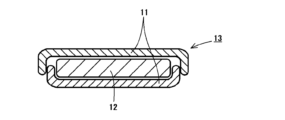
- FIG. 2 is a vertical cross-sectional view schematically showing a coin-type all-solid-state secondary battery produced in an example.
- a numerical range can be set by appropriately combining the upper limit value and lower limit value of each numerical range.
- the expression of a compound is used to include the compound itself, its salt, and its ion.
- the term also includes derivatives that have been partially changed, such as by introducing a substituent, within a range that does not impair the effects of the present invention.
- (meth)acrylic means one or both of acrylic and methacrylic. The same applies to (meth)acrylate.
- substituents, etc. that do not specify whether they are substituted or unsubstituted mean that they may have an appropriate substituent. Therefore, in the present invention, even if it is simply described as a YYY group, this YYY group includes not only an embodiment having no substituent but also an embodiment having a substituent. This also applies to compounds that do not specify whether they are substituted or unsubstituted.
- Preferred substituents include, for example, substituent Z described below.
- each substituent, etc. may be the same or different from each other. It means that. Further, even if not specified otherwise, when a plurality of substituents are adjacent to each other, it is meant that they may be connected to each other or condensed to form a ring.
- polymer refers to a polymer, and has the same meaning as a so-called high molecular compound.
- a polymer binder also simply referred to as a binder refers to a binder made of a polymer, and includes the polymer itself and a binder made up (formed) of a polymer.
- the main chain of a polymer or polymer chain refers to a linear molecular chain in which all other molecular chains constituting the polymer or polymer chain can be considered as branched chains or pendant groups with respect to the main chain. means.
- the longest chain among the molecular chains constituting the polymer or polymer chain becomes the main chain.
- the main chain does not include the terminal group at the end of the polymer or polymer chain.
- the side chain of a polymer refers to a branched chain other than the main chain, and includes short chains and long chains.
- the binder composition for secondary batteries of the present invention contains an organic solvent and a polymer binder dissolved in the organic solvent, and the content of the organic solvent in the binder composition is 3 to 1.0 ⁇ 10 Contains 5 ppm of a low-boiling organic solvent (A) with a boiling point of less than 120°C, and further contains an organic solvent other than the low-boiling organic solvent (A) (hereinafter referred to as a high-boiling organic solvent (B)). .
- a binder composition having such a composition has excellent storage stability over time, as described above.
- excellent storage stability is not particularly limited, but for example, in the "storage stability test” in the Examples described later, an all-solid-state secondary battery manufactured using a binder composition immediately after preparation was used.
- the rate of change in ionic conductivity of an all-solid-state secondary battery manufactured using a binder composition left (stored) in an environment of 60°C for one week after preparation is 30% or less with respect to the ionic conductivity of means.
- the binder composition of the present invention further improves the dispersion characteristics and handling properties of the composition for non-aqueous secondary batteries, thereby making it possible to prepare a composition for non-aqueous secondary batteries that exhibits excellent dispersion properties and handling properties.
- the binder composition of the present invention which is excellent in storage stability and property improvement effect of compositions for non-aqueous secondary batteries, can be used not only immediately after preparation but also after preparation.
- a composition for a nonaqueous secondary battery that exhibits excellent dispersion stability and handleability even if the polymer contained therein has a functional group, partial structure, etc. that is easily adsorbed to an inorganic solid electrolyte, an active material, etc. be able to.
- this composition for non-aqueous secondary batteries has been developed as an all-solid-state secondary battery sheet having a low-resistance constituent layer in which solid particles are tightly adhered, and furthermore, an all-solid-state secondary battery sheet that has low resistance and excellent cycle characteristics. Next batteries can be manufactured.
- the low-boiling organic solvent (A) generally has a small molecular weight, and its molecules can move relatively freely in the binder composition (high-boiling organic solvent (B)). Therefore, it is considered that the low boiling point organic solvent (A) can help improve the dispersion characteristics and handling properties of the inorganic solid electrolyte and the like by the polymer binder whose molecular structure is expanded by being dissolved in the organic solvent.
- the frequency of collisions with polymer molecules whose molecular structure is expanded in organic solvents is higher than in high boiling point solvents (B), making it easier to interact or react with polymers (structural changes in polymer molecules, etc.). ), which may reduce the storage stability of the binder composition over time.
- the amount (content) of the low boiling point organic solvent (A) in the binder composition within the above range, it is possible to balance the auxiliary effects such as improving the dispersion properties and the interaction with the polymer in a well-balanced manner. Therefore, it is thought that the above-mentioned effects can be achieved.
- the binder composition of the present invention is preferably a non-aqueous composition.
- the non-aqueous composition includes not only a form containing no water but also a form in which the water content (also referred to as water content) is preferably 500 ppm or less.
- the water content is more preferably 200 ppm or less, even more preferably 100 ppm or less, and particularly preferably 50 ppm or less.
- the water content indicates the amount of water contained in the binder composition (mass ratio to the binder composition), and specifically, it is measured by filtering with a 0.02 ⁇ m membrane filter and using Karl Fischer titration. value.
- the binder composition of the present invention only needs to contain an organic solvent (a low-boiling organic solvent (A) and a high-boiling organic solvent (B)) and a polymer binder, and may include constituent layers such as an inorganic solid electrolyte and an active material. It may contain a raw material compound to form.
- the binder composition of the present invention is used as a preparation material for the nonaqueous secondary battery composition of the present invention, which is a constituent layer forming material, it does not contain the raw material compound forming the above constituent layer. It is preferable not to.
- not containing raw material compounds does not mean excluding raw material compounds that are unavoidably contained, but within a range that does not impair the effects of the present invention, for example, 50% by mass or less in the binder composition. This means that the content of each raw material compound is preferably 7% by mass or less.
- the binder composition of the present invention exhibits the above-mentioned excellent storage stability, it can be used as a material for preparing constituent layer forming materials for all-solid-state secondary batteries (compositions for non-aqueous secondary batteries), and for all-solid-state secondary batteries. It is preferably used as a material for forming constituent layers of secondary battery sheets and all-solid-state secondary batteries.
- the binder composition of the present invention contains a low boiling point organic solvent (A) and a high boiling point organic solvent (B) as organic solvents, and the low boiling point organic solvent (A) and the high boiling point organic solvent (B) are It is preferable that they are mutually compatible to form a mixed solvent.
- the above effects are achieved because the organic solvent dissolves the polymer constituting the polymer binder as a whole and contains the low boiling point organic solvent (A) at a content within the above range.
- the low-boiling organic solvent (A) refers to an organic solvent with a boiling point of less than 120°C
- the high-boiling organic solvent (B) refers to an organic solvent with a boiling point of 120°C or higher.
- “boiling point” means the boiling point at a pressure of 101,325 Pa, and can be measured by a conventional method in a pressure environment of 101,325 Pa.
- the organic solvent may be any solvent that can dissolve the polymer binder (polymer constituting the polymer binder), which will be described later, and is appropriately determined depending on the type, chemical structure, etc. of the polymer binder.
- Such an organic solvent may be any organic compound that is liquid in the environment in which it is used, such as various organic solvents, specifically ester compounds, ketone compounds, alcohol compounds, chain ether compounds, and carbonates. compounds, nitrile compounds, halogen-containing compounds, heterocyclic compounds, hydrocarbon compounds (aliphatic hydrocarbon compounds, aromatic hydrocarbon compounds), amide compounds, amine compounds, and the like.
- Examples of the ester compound include compounds having an ester bond (-CO-O-) in the molecule.
- Examples of the ester compound include the compound represented by the formula (SB-31) described in paragraphs [0044] to [0046] of Patent Document 1, and the compound described in paragraph [0087].
- Examples of the ketone compound include , compounds having a carbonyl bond (-CO-) in the molecule. However, carbonyl bonds constituting ester bonds, carbonate bonds, amide bonds, etc. are not included.
- Examples of the ketone compound include the compound represented by the formula (SB-61) described in paragraphs [0054] to [0057] of Patent Document 1, and the compounds described in paragraphs [0078] to [0080]. It will be done.
- Examples of alcohol compounds include compounds having a hydroxyl group (-OH) in the molecule.
- Examples of the alcohol compound include compounds represented by formula (SB-71) described in paragraphs [0058] to [0061] of Patent Document 1.
- Examples of the chain ether compound include acyclic (linear or branched) compounds having an ether bond (-O-) in the molecule.
- Examples of the chain ether compound include a compound represented by the formula (SB-21) described in paragraphs [0040] to [0043] of Patent Document 1, and further compounds described in paragraphs [0085] to [0086]. can be mentioned.
- Examples of carbonate compounds include compounds having a carbonate bond (-O-CO-O-) in the molecule.
- Examples of the carbonate compound include compounds represented by formula (SB-41) described in paragraphs [0047] to [0049] of Patent Document 1.
- Examples of nitrile compounds include compounds having a nitrile group (-CN) in the molecule.
- Examples of the nitrile compound include the compound represented by the formula (SB-51) described in paragraphs [0050] to [0053] of Patent Document 1, and the compound described in paragraph [0077].
- Examples of the halogen-containing compound include compounds having a halogen atom in the molecule. Note that even if the compound corresponds to the above-mentioned compounds such as ester compounds, a compound having a halogen atom in the molecule is classified as a halogen-containing compound.
- Examples of the halogen-containing compound include compounds represented by formula (SB-81) described in paragraphs [0062] to [0065] of Patent Document 1.
- Examples of the heterocyclic compound include compounds having at least one heteroatom as an atom forming a cyclic molecular structure, and may be a saturated cyclic structure or an unsaturated cyclic structure. Heteroatoms include, but are not particularly limited to, atoms such as oxygen, sulfur, nitrogen, and phosphorus. The heterocyclic compound is preferably a 5-membered ring or a 6-membered ring. Examples of the heterocyclic compound include compounds represented by formula (SB-9) described in paragraphs [0066] to [0071] of Patent
- Examples of the aliphatic hydrocarbon compound include the compounds described in paragraphs [0088] to [0089] of Patent Document 1, as well as alkyl groups, alkenyl groups, alkynyl groups, cycloalkyl groups, etc. in the substituent Z described below.
- Examples include compounds that lead to Examples of the aromatic hydrocarbon compound include compounds represented by formula (SB-12) described in paragraphs [0090] to [0093] of Patent Document 1.
- Examples of the amide compound include compounds having an amide bond (-CO-NR N -) in the molecule.
- RN represents a hydrogen atom or a substituent.
- Examples of the amide group compound include compounds represented by formula (SB-11) described in paragraphs [0036] to [0039] of Patent Document 1.
- Examples of the amine compound include compounds having an amine bond (-N(R N ) 2 ) in the molecule.
- RN represents a hydrogen atom or a substituent.
- Examples of the amine group compound include compounds represented by formula (SB-111) described in paragraphs [0081] to [0084] of Patent Document 1.
- each compound examples include, in addition to the above, each compound described in the dispersion medium described later, and furthermore, a compound derived by adding a hydrogen atom to a corresponding group in the substituent Z described later.
- the low-boiling organic solvent (A) may be any organic solvent having a boiling point of less than 120°C.
- the boiling point of the low boiling point organic solvent (A) is determined based on the storage stability of the binder composition, the properties of the non-aqueous secondary battery composition (dispersion properties and handling properties), the battery properties (resistance and cycle properties), etc.
- the temperature is preferably 90°C or lower, more preferably 80°C or lower.
- the lower limit of the boiling point is not particularly limited as long as it is liquid in the usage environment, but in practice it is 50°C or higher, preferably 60°C or higher, and more preferably 70°C or higher. .
- the low boiling point organic solvent (A) exhibits a LogP value of 2.0 or less. Although the low boiling point organic solvent (A) exhibiting such a LogP value exhibits polarity (hydrophilicity), it does not impair the excellent storage stability of the binder composition and improves the dispersion properties of the composition for non-aqueous secondary batteries. and handling properties can be improved.
- the LogP value is a value calculated using ChemBioDraw (trade name, manufactured by PerkinElmer) Version: 12.9.2.1076.
- the LogP value of the low boiling point organic solvent (A) is preferably 1.0 or less, and 0. More preferably, it is .5 or less.
- the lower limit of the LogP value is not particularly limited, but is preferably -2.0 or more, more preferably -1.0 or more.
- the low boiling point organic solvent (A) can be selected from various organic solvents in consideration of the boiling point and further the LogP value, within a range that does not impair the solubility of the polymer binder.
- it is selected from ester compounds, ketone compounds, hydrocarbon compounds, alcohol compounds, chain ether compounds, carbonate compounds, nitrile compounds, halogen-containing compounds, and heterocyclic compounds.
- ester compounds, ketone compounds, hydrocarbon compounds, alcohol compounds, chain ether compounds, carbonate compounds, nitrile compounds, halogen-containing compounds, and heterocyclic compounds are described as an example of the low-boiling organic solvent (A).
- ester compounds include ethyl acetate (LogP value: 0.29, boiling point: 77°C), propyl acetate (LogP value: 0.78, boiling point: 101°C), ethyl propionate (LogP value: 0 .95, boiling point: 99°C).
- Specific examples of ketone compounds include acetone (LogP value: 0.20, boiling point: 56°C) and methyl ethyl ketone (LogP value: 0.86, boiling point: 80°C).
- alcohol compounds include methanol (LogP value: -0.27, boiling point: 65°C), ethanol (LogP value: 0.07, boiling point: 78°C), and 2-propanol (LogP value: 0.
- chain ether compounds include dimethoxyethane (LogP value: -0.07, boiling point: 85°C), 1,2-dimethoxypropane (LogP value: 0.25, boiling point: 96°C), diethyl Ether (LogP value: 0.76, boiling point: 35°C) is mentioned.
- carbonate compounds include dimethyl carbonate (LogP value: 0.54, boiling point: 90°C) and ethylmethyl carbonate (LogP value: 0.88, boiling point: 107°C).
- nitrile compound include acetonitrile (LogP value: 0.17, boiling point: 82°C) and propionitrile (PN) (LogP value: 0.82, boiling point: 97°C).
- PN propionitrile
- a specific example of the halogen-containing compound is, for example, dichloromethane (LogP value: 1.01, boiling point: 40°C).
- heterocyclic compounds include THF (tetrahydrofuran, LogP value: 0.40, boiling point: 66°C), 1,4-dioxane (LogP value: -0.31, boiling point: 101°C), pyridine ( LogP value: 0.70, boiling point: 115°C), and pyrrolidine (LogP value: 0.18, boiling point: 87°C).
- hydrocarbon compounds include hexane (LogP value: 3.00, boiling point: 69°C), heptane (LogP value: 3.42, boiling point: 98°C), cyclohexane (LogP value: 2.50, boiling point: 81°C).
- a specific example of the aromatic compound is toluene (LogP value: 2.52, boiling point: 111°C).
- the high boiling point organic solvent (B) is an organic solvent that is contained in the binder composition as a main solvent and dissolves the polymer binder (polymer constituting the polymer binder).
- a high boiling point organic solvent (B) may be any organic solvent having a boiling point of 120° C. or higher.
- the boiling point of the high boiling point organic solvent (B) is determined by the storage stability of the binder composition, the characteristics of the composition for non-aqueous secondary batteries (dispersion characteristics and handling characteristics), the battery characteristics (resistance and cycle characteristics), etc.
- the temperature is preferably 125°C or higher, more preferably 135°C or higher.
- the upper limit of the boiling point is not particularly limited, but is actually 240°C or lower, preferably 200°C or lower, and more preferably 180°C or lower.
- the difference in boiling point between the high boiling point organic solvent (B) and the low boiling point organic solvent (A) is not particularly limited, and is preferably 30 to 120°C, for example, 50 to 100°C. is more preferable.
- the LogP value of the high boiling point organic solvent (B) is not particularly limited, but it is preferably one that exhibits hydrophobicity, for example, preferably more than 2.0 and 10 or less, more than 2.0 and 5.0. It is more preferable that it is below.
- the difference in LogP value between the high boiling point organic solvent (B) and the low boiling point organic solvent (A) is not particularly limited and can be set as appropriate.
- the high boiling point organic solvent (B) can be selected from various organic solvents, taking into consideration the boiling point, compatibility with the low boiling point organic solvent (A), etc.
- it is selected from ester compounds, ketone compounds, hydrocarbon compounds, alcohol compounds, chain ether compounds, carbonate compounds, nitrile compounds, halogen-containing compounds, and heterocyclic compounds, and more preferably ester compounds, ketone compounds, and chain compounds.
- ester compounds, ketone compounds, and chain compounds examples include ether compounds, aromatic hydrocarbon compounds, aliphatic hydrocarbon compounds, and the like.
- the following organic solvents can be mentioned as examples of the high boiling point organic solvent (B).
- ester compounds include butyl butyrate (LogP value: 2.27, boiling point: 165°C).
- ketone compound include dibutyl ketone (LogP value: 3.18, boiling point: 186°C) and diisobutylketone (LogP value: 3.0, boiling point: 163°C).
- aliphatic hydrocarbon compounds include octane (LogP value: 3.84, boiling point: 125°C), nonane (LogP value: 4.25, boiling point: 151°C), cyclooctane (LogP value: 3 .34, boiling point: 149°C).
- aromatic compounds include xylene (LogP value: 3.01, boiling point: 140°C) and mesitylene (LogP value: 3.50, boiling point: 165°C).
- the low boiling point organic solvent (A) and the high boiling point organic solvent (B) can be appropriately combined from among the above organic solvents.
- a preferred combination includes the above organic solvent preferably selected as the low boiling point organic solvent (A) and the above organic solvent preferably selected as the high boiling point organic solvent (B).
- a combination with is more preferred.
- the binder composition may contain one type or two or more types of the low-boiling organic solvent (A) and the high-boiling organic solvent (B), respectively.
- the content C A of the low boiling point organic solvent (A) in the binder composition is 3 to 1.0 ⁇ 10 5 ppm. In the present invention, ppm is based on mass. When the content C of the low boiling point organic solvent (A) is within this range, the characteristics of the composition for non-aqueous secondary batteries can be improved while the binder composition exhibits high storage stability.
- the content C A of the low boiling point organic solvent (A) in the binder composition is 3.0 to 3.0 in that it can improve the storage stability and properties of the composition for non-aqueous secondary batteries to a higher level. It is preferably ⁇ 10 4 ppm, more preferably 3.0 to 3.0 ⁇ 10 3 ppm, and even more preferably 1.0 ⁇ 10 2 to 1.0 ⁇ 10 3 ppm.
- the content C B of the high boiling point organic solvent (B) in the binder composition is not particularly limited, and is, for example, 20 to 99% by mass in terms of storage stability, properties of the composition for non-aqueous secondary batteries, etc. It is preferably 35 to 97% by mass, more preferably 50 to 95% by mass.
- the ratio [C B /C A ] between the content C A of the low boiling point organic solvent (A) and the content C B of the high boiling point organic solvent (B) is not particularly limited, and is, for example, 2 to 2. It can be set to 3.3 ⁇ 10 6 , and can also be set to 250 to 3.3 ⁇ 10 6 .
- Identification and quantification of the low boiling point organic solvent (A) and the high boiling point organic solvent (B) in the binder composition can be performed by a known method, for example, using chromatography such as gas chromatography or liquid chromatography. It can be identified and quantified from the retention time and detection area.
- the polymer binder contained in the binder composition of the present invention is a polymer binder formed by containing a polymer, and usually exists in a state dissolved in the above-mentioned organic solvent (binder composition), although it depends on the content rate. .
- binder composition organic solvent
- the term "polymer binder dissolved in an organic solvent” means that the polymer binder is dissolved in the organic solvent in the binder composition.
- the solubility of the polymer binder in the following solubility measurement is 50%. This means the above.
- the polymer binder is not limited to an embodiment in which all the polymer binder is dissolved in the organic solvent in the binder composition, but also includes an embodiment in which a part of the polymer binder is present in an insoluble state.
- the method for measuring solubility is as follows. That is, approximately 0.1 g of the polymer binder (solid) is accurately weighed, and the accurately weighed mass is defined as W0.
- the polymer binder and the organic solvent contained in the binder composition (mixed organic solvent of a low boiling point organic solvent (A) and a high boiling point organic solvent (B)) and 10 g of an organic solvent having the same composition were placed in a container, and the organic solvent was placed in a container using a mix rotor. (Model number VMR-5, manufactured by As One Corporation) for 48 hours at a temperature of 25° C. and a rotation speed of 100 rpm. Thereafter, the insoluble matter is filtered from the solution, the obtained solid is vacuum dried at 120° C. for 3 hours, and the mass W1 of the insoluble matter is accurately weighed.
- a mix rotor Model number VMR-5, manufactured by As One Corporation
- solubility (%) (W0-W1)/W0 ⁇ 100
- solubility of the polymer binder in an organic solvent is determined by the type of polymer forming the polymer binder, the composition of this polymer (types and content of constituent components), the weight average molecular weight of this polymer, and the functional groups described below. It can be applied appropriately depending on the type of (I), its content, and furthermore, the combination with an organic solvent.
- the polymer contained in the polymer binder and forming the polymer binder is not particularly limited, but preferably contains one or two functional group-containing components (I) described below. It has more than one species.
- the functional group-containing component (I) is a component having at least one functional group from the functional group group (I) below, and has adsorption or adhesion to solid particles such as inorganic solid electrolytes to the polymer binder. Make it manifest.
- the chemical formula written in parentheses after the above functional group name indicates the chemical structure of the group.
- ester groups are included in thiocarbonate groups and urethane groups, but the -CO-O-R I group contained in these is not interpreted as an ester group. Further, an amide group is included in the urea group, but the -CO-NR N -R I group included therein is not interpreted as an amide group.
- the group formed by cleavage of a dicarboxylic acid group or its anhydride group may include an ester group (-CO-O-R I ), a carboxy group, an amide group, etc., but these should not be interpreted as separate functional groups. , is interpreted as a group formed by cleavage of a dicarboxylic acid group or an anhydride group thereof.
- the functional group-containing component (I) has the above functional group directly or via a linking group in a partial structure incorporated into the main chain of the binder-forming polymer.
- the partial structure incorporated into the main chain is not uniquely determined depending on the type of binder-forming polymer (main chain), but is appropriately selected.
- main chain For example, in the case of a chain polymer, carbon chains (carbon-carbon bonds) can be mentioned.
- the linking group L P that connects the partial structure incorporated into the main chain and the above functional group is not particularly limited, but includes, for example, an alkylene group (carbon number is preferably 1 to 12, more preferably 1 to 6, 1 to 3 is more preferable), alkenylene group (carbon number is preferably 2 to 6, more preferably 2 to 3), arylene group (carbon number is preferably 6 to 24, more preferably 6 to 10), oxygen atom, sulfur atom, imino group (-NR N -: R N represents a hydrogen atom, an alkyl group having 1 to 6 carbon atoms, or an aryl group having 6 to 10 carbon atoms), carbonyl group, phosphoric acid linking group (-O-P (OH)(O)-O-), a phosphonic acid linking group (-P(OH)(O)-O-), or a combination thereof.
- an alkylene group carbon number is preferably 1 to 12, more preferably 1 to 6, 1 to 3 is more preferable
- alkenylene group carbon number is preferably 2 to
- the linking group L P is preferably not a group obtained by removing R I from a functional group selected from the above functional group group (I).
- the number of atoms constituting the linking group is preferably 1 to 36, more preferably 1 to 30, and even more preferably 1 to 24.
- the number of linking atoms in the linking group is preferably 16 or less, more preferably 12 or less, and even more preferably 10 or less.
- the lower limit is 1 or more.
- R I serving as a terminal group represents a hydrogen atom, a substituent, or a polymer chain.
- R I in -CO-O-R I represents a substituent or a polymer chain.
- the substituent that can be used as R I is not particularly limited, but includes, for example, groups selected from substituents Z described below, with an alkyl group being preferred.
- R I bonded to the ester group is preferably a combination of a short chain alkyl group having 1 to 4 carbon atoms and a long chain alkyl group having 5 to 24 carbon atoms.
- the polymer chain that can be used as R I is not particularly limited, and includes the polymer chain P C described below.
- the substituent or polymer chain that can be used as R I may further have a substituent, and the substituent that may further have is not particularly limited, but may include a group selected from substituents Z described below. Among them, alkoxy groups, hydroxy groups, carboxy groups, sulfonic acid groups (sulfo groups), phosphoric acid groups, phosphonic acid groups, etc. are preferable.
- RN in each of the above functional groups represents a hydrogen atom or a substituent.
- the substituent that can be used as R N is not particularly limited, but includes, for example, a group selected from substituents Z described below, with an alkyl group being preferred. Note that the two RNs in the urea group may be the same or different.
- the dicarboxylic acid group is not particularly limited, but includes a group obtained by removing one or more hydrogen atoms from a dicarboxylic anhydride (for example, a group represented by the following formula (2a)), and a polymerizable compound. It includes a component itself formed by copolymerizing a polymerizable dicarboxylic acid anhydride (for example, a component represented by the following formula (2b)), and furthermore, the dicarboxylic acid anhydride reacts with an active hydrogen compound to form an anhydride group. Includes groups formed by cleavage.
- the group obtained by removing one or more hydrogen atoms from a dicarboxylic anhydride is preferably a group obtained by removing one or more hydrogen atoms from a cyclic dicarboxylic anhydride.
- dicarboxylic anhydrides include acyclic dicarboxylic anhydrides such as acetic anhydride, propionic anhydride, and benzoic anhydride; cyclic dicarboxylic anhydrides such as maleic anhydride, phthalic anhydride, fumaric anhydride, succinic anhydride, and itaconic anhydride; Examples include dicarboxylic acid anhydrides.
- Examples of the polymerizable dicarboxylic anhydride include, but are not limited to, dicarboxylic anhydrides having an unsaturated bond in the molecule, preferably polymerizable cyclic dicarboxylic anhydrides. Specific examples include maleic anhydride and itaconic anhydride.
- Examples of the dicarboxylic acid anhydride group include a group represented by the following formula (2a) or a component represented by the formula (2b), but the present invention is not limited thereto. In each formula, * indicates the bonding position.
- the active hydrogen compound is not particularly limited as long as it is a compound that reacts with a dicarboxylic anhydride group, and examples thereof include alcohol compounds, amine compounds, thiol compounds, and compounds having a polymer chain P (for example, a chain transfer agent) as described below. Reaction products with polymer chain PC ), etc. can be mentioned.
- the polymer chain P C is not particularly limited, and a chain consisting of a normal polymer, such as a sequential polymer or a chain polymer as described below, can be used.
- a chain made of a chain polymer is preferable, a polymer chain made of a (meth)acrylic polymer, a polymer chain made of a vinyl polymer is more preferable, and a polymer chain made of a (meth)acrylic polymer is even more preferable.
- the bonding mode of the constituent components is not particularly limited, and may be random, alternating, or block.
- the polymer chain made of (meth)acrylic polymer is not particularly limited, but preferably has a component derived from a (meth)acrylic compound (M1) described below and a component derived from a vinyl compound (M2) described below. .
- a polymer chain having a component derived from one or more types of (meth)acrylic acid ester compounds is more preferred, and a polymer chain having a component derived from a (meth)acrylic acid alkyl ester compound is even more preferred.
- the (meth)acrylic acid alkyl ester compound preferably contains an ester compound of an alkyl group having 4 or more carbon atoms (preferably 6 or more carbon atoms), and further contains an ester compound of a short-chain alkyl group having 3 or less carbon atoms. You can also do it.
- the group bonded to the terminal of the polymer chain PC is not particularly limited, and may be any suitable group depending on the polymerization method, polymerization termination method, etc. Examples include a hydrogen atom, an alkyl group, an aryl group, a hydroxy group, a chain transfer agent residue, an initiator residue, etc. Preferably, from the viewpoint of dispersion properties, an alkyl group (the number of carbon atoms is preferably 1 ⁇ 20, more preferably 4 ⁇ 20). This group may further have a substituent, but is preferably unsubstituted.
- the number average molecular weight of the polymer chain P C is determined appropriately, but it is preferably 200 or more, and 1,000 to 100,000 as the number average molecular weight (including the linking group P P ) in the measurement method described below. is more preferable, 1,000 to 50,000 is still more preferable, and 2,000 to 20,000 is particularly preferable.
- This polymer chain P C is preferably bonded to each of the above functional groups via a linking group P P . That is, R I is preferably formed of a linking group P P and a polymer chain P C.
- This linking group PP is not particularly limited, and the above-mentioned linking group LP is preferably mentioned.
- linking group PP a group formed by combining an alkylene group, an arylene group, a carbonyl group, an oxygen atom, a sulfur atom, and an imino group is more preferable; A group formed by combining imino groups is more preferred, and a group containing a -CO-O- group or a -CO-N(R N )- group (R N is as described above) and an alkylene group is particularly preferred.
- the linking group P P P a linking group containing a structural part derived from a chain transfer agent, a polymerization initiator, etc.
- Chain transfer agents include, but are not particularly limited to, 3-mercaptopropionic acid, mercaptoacetic acid, 2-mercaptopropionic acid, 3-mercaptoisobutyric acid, 2-mercaptoethanol, 6-mercapto-1-hexanol, 2-amino Examples include ethanethiol and 2-aminoethanethiol hydrochloride.
- the functional group-containing component (I) having a polymer chain PC is, for example, a structural part derived from a chain transfer agent or the like and a (meth)acrylic compound (M1) that reacts with the chain transfer agent or derived from a dicarboxylic acid group.
- Examples include structural components that are combined with a structural part.
- -CO-O- Examples include constituent components having a polymer chain P C bonded via an alkylene group -X-CO-(X)n-alkylene-S- (for example, polymer M-7 synthesized in Examples).
- X represents an oxygen atom or -NH-
- n is 0 or 1.
- a chain transfer agent etc. is subjected to ring-opening addition to a partial structure incorporated into the main chain.
- Examples include constituent components to which a polymer chain P C is bonded via a reacted dicarboxylic acid group (for example, polymer M-4 synthesized in Examples).
- the imide group is not particularly limited, but includes a group in which the oxygen atom bonded to the two carboxy groups in the dicarboxylic anhydride group is replaced with a nitrogen atom.
- the carboxy group and dicarboxylic acid group may form a salt.
- the salt include various metal salts, ammonium or amine salts, and the like.
- the binder-forming polymer contains one or more constituent components (AM) derived from (meth)acrylic acid ester compounds.
- the constituent component (AM) is not particularly limited, and includes constituent components derived from the (meth)acrylic acid ester compound (M1) described below.
- the component (AM) is one type of functional group-containing component (I), and has a partial structure in which an ester group, a carboxy group, or an amide group selected from the above functional group group (I) is incorporated into the main chain. Corresponds to a functional group-containing component that is directly bonded to.
- the binder-forming polymer may contain one or more components (referred to as other components (Z)) that do not fall under either component (I) or component (AM).
- Other constituent components (Z) are not particularly limited, and include constituent components derived from the vinyl compound (M2) described below, and constituent components essential for forming the main chains of various polymers.
- Binder-forming polymer is not particularly limited, and various known polymers can be used.
- the primary structure (the bonding mode of the constituent components) of the binder-forming polymer is not particularly limited, and may have any bonding mode such as a random structure, block structure, alternating structure, or graft structure.
- Preferred binder-forming polymers include, for example, polymers having a polymer chain of at least one type of bond selected from urethane bonds, urea bonds, amide bonds, imide bonds, and ester bonds, or carbon-carbon double bonds in the main chain. It will be done.
- the above bond is not particularly limited as long as it is included in the main chain of the polymer, and may be included in the constituent components (repeat units) and/or may be included as a bond connecting different constituent components. .
- the number of the above-mentioned bonds contained in the main chain is not limited to one type, but may be two or more types, preferably 1 to 6 types, and more preferably 1 to 4 types.
- the bonding mode of the main chain is not particularly limited, and it may have two or more types of bonds randomly, and the main chain may have a segmented main chain with a segment having a specific bond and a segment having another bond. It can also be a chain.
- polymers having a urethane bond, urea bond, amide bond, imide bond, or ester bond in the main chain of the above bonds include sequential polymerization (polycondensation, polymerization, etc.) of polyurethane, polyurea, polyamide, polyimide, polyester, polysiloxane, etc. (addition or addition condensation) polymers, or copolymers thereof.
- a polymer chain of carbon-carbon double bonds refers to a polymer chain formed by polymerization of carbon-carbon double bonds (ethylenic unsaturated groups), and specifically, A polymer chain formed by polymerizing (homopolymerizing or copolymerizing) monomers having saturated bonds.
- Examples of polymers having a polymer chain of carbon-carbon double bonds in the main chain include chain polymers such as fluorine-containing polymers, hydrocarbon polymers, vinyl polymers, and (meth)acrylic polymers. Acrylic polymers are preferred.
- Examples of (meth)acrylic polymers include polymers consisting of (co)polymers containing 50% by mass or more of constituent components derived from (meth)acrylic compounds.
- the functional group-containing component (I) is a component derived from a (meth)acrylic compound (including a monoester component in which a dicarboxylic acid anhydride group has reacted with an active hydrogen-containing compound)
- the content of each component is included in the content of the component derived from the (meth)acrylic compound.
- the content of the component derived from the (meth)acrylic compound can be the same as the content of the functional group-containing component (I) described below, but it is more preferably 60% by mass or more, and 70% by mass.
- the upper limit content can be 100% by mass, it can also be 97% by mass or less.
- a copolymer with a vinyl compound (M2) other than the (meth)acrylic compound (M1) is also preferable.
- the content of the constituent components derived from the vinyl compound (M2) is 50% by mass or less, preferably 3 to 40% by mass, and more preferably 3 to 30% by mass.
- hydrocarbon polymer examples include polyethylene, polypropylene, natural rubber, polybutadiene, polyisoprene, polystyrene, polystyrene-butadiene copolymer, styrenic thermoplastic elastomer, polybutylene, acrylonitrile-butadiene copolymer, or hydrogenated (hydrogenated) ) polymers, copolymers with copolymerizable compounds such as (meth)acrylic compounds (M1) and vinyl compounds (M2), and copolymers containing a functional group-containing component (I).
- the styrene thermoplastic elastomer or its hydride is not particularly limited, but examples include styrene-ethylene-butylene-styrene block copolymer (SEBS), styrene-isoprene-styrene block copolymer (SIS), and hydrogenated SIS.
- SEBS styrene-ethylene-butylene-styrene block copolymer
- SIS styrene-isoprene-styrene block copolymer
- hydrogenated SIS hydrogenated SIS
- styrene-butadiene-styrene block copolymer SBS
- hydrogenated SBS styrene-ethylene-ethylene-propylene-styrene block copolymer
- SEEPS styrene-ethylene-propylene-styrene block copolymer
- SEPS styrene-ethylene-propylene-styrene block copolymer
- SBR styrene-butadiene rubber
- HSBR hydrogenated styrene-butadiene rubber
- random copolymers corresponding to each of the above block copolymers such as SEBS.
- hydrocarbon polymers that do not have unsaturated groups for example, 1,2-butadiene constituents
- fluoropolymer examples include polytetrafluoroethylene (PTFE), polyvinylidene difluoride (PVDF), a copolymer of polyvinylidene difluoride and hexafluoropropylene (PVDF-HFP), and polyvinylidene difluoride and hexafluoropropylene. and a copolymer of tetrafluoroethylene (PVDF-HFP-TFE), and a copolymer with a copolymerizable compound such as a (meth)acrylic compound (M1) or a vinyl compound (M2), and a functional group-containing structure. Also included are copolymers containing component (I).
- PTFE polytetrafluoroethylene
- PVDF polyvinylidene difluoride
- PVDF-HFP a copolymer of polyvinylidene difluoride and hexafluoropropylene
- the copolymerization ratio of PVDF and HFP [PVDF:HFP] is not particularly limited, but is preferably 9:1 to 4:6, and 9:1 to 7:3 is suitable for adhesion. More preferable from this point of view.
- the copolymerization ratio of PVDF, HFP, and TFE [PVDF:HFP:TFE] is not particularly limited, but may be 20 to 60:10 to 40:5 to 30. The ratio is preferably 25-50:10-35:10-25.
- Examples of the (meth)acrylic compound (M1) include (meth)acrylic acid compounds, (meth)acrylic acid ester compounds, (meth)acrylamide compounds, (meth)acrylonitrile compounds, and the like. Among these, (meth)acrylic acid ester compounds are preferred. Examples of the (meth)acrylic acid ester compound include (meth)acrylic acid alkyl ester compounds, (meth)acrylic acid aryl ester compounds, etc., and (meth)acrylic acid alkyl ester compounds are preferable.
- the number of carbon atoms in the alkyl group constituting the (meth)acrylic acid alkyl ester compound is not particularly limited, but can be, for example, 1 to 24, and preferably 3 to 20 from the viewpoint of dispersion characteristics and adhesion.
- the number is preferably from 4 to 16, more preferably from 6 to 14.
- the number of carbon atoms in the aryl group constituting the aryl ester is not particularly limited, but may be, for example, 6 to 24, preferably 6 to 10, and preferably 6.
- the nitrogen atom of the amide group may be substituted with an alkyl group or an aryl group.
- the vinyl compound (M2) is not particularly limited, but vinyl compounds copolymerizable with the (meth)acrylic compound (M1) are preferred, such as styrene compounds, vinylnaphthalene compounds, vinylcarbazole compounds, vinylimidazole compounds, and vinylpyridine.
- examples include aromatic vinyl compounds, such as allyl compounds, vinyl ether compounds, vinyl ester compounds (eg, vinyl acetate compounds), dialkyl itaconate compounds, and the above-mentioned polymerizable cyclic dicarboxylic acid anhydrides.
- vinyl compounds include "vinyl monomers" described in JP-A No. 2015-88486.
- the (meth)acrylic compound (M1) and the vinyl compound (M2) may have a substituent.
- the substituent is not particularly limited, and includes groups selected from the substituents Z described below, preferably preferred substituents that the substituent that can be taken as R I above may have.
- the content of each component in the binder-forming polymer is not particularly limited, and is determined by appropriately considering the physical properties of the entire polymer, and is set, for example, in the following ranges.
- the content of each component in the binder-forming polymer is set, for example, in the following range so that the total content of all the components is 100% by mass.
- the binder-forming polymer has a plurality of specific constituent components, the content of these constituent components is the total content.
- the content of the functional group-containing component (I) is not particularly limited, but can be adjusted as appropriate in consideration of dispersion characteristics and the like.
- the content of the functional group-containing component (I) is preferably, for example, 1 to 100% by mass, more preferably 10 to 100% by mass, based on the total content of all components, More preferably, it is 50 to 100% by mass.
- the upper limit can also be set to 100% by mass.
- the binder-forming polymer has the above-mentioned constituent component (AM)
- the content of the constituent component (AM) is also included in the content of the functional group-containing constituent component (I).
- the content of the component (AM) is not particularly limited, but is appropriately determined depending on the type of binder-forming polymer.
- the binder-forming polymer when the binder-forming polymer is a (meth)acrylic polymer, it is 50% by mass or more based on the total content of all constituent components, and the preferable content is as explained above for the (meth)acrylic polymer. be.
- the binder-forming polymer when the binder-forming polymer is a polymer other than (meth)acrylic polymer, the content of the component (AM) is preferably 1 to 49% by mass based on the total content of all components, More preferably, it is 1 to 20% by mass.
- the content of other constituent components (Z) is not particularly limited, but it shall be the remainder obtained by subtracting the content of the above constituent component (I) and constituent component (AM) from the total content of all constituent components. For example, it is preferably 0 to 50% by weight, more preferably 0 to 20% by weight.
- the binder-forming polymer may have a substituent.
- the substituent is not particularly limited, but preferably includes a group selected from the following substituents Z.
- Substituent Z - Alkyl group preferably an alkyl group having 1 to 20 carbon atoms, such as methyl, ethyl, isopropyl, t-butyl, pentyl, heptyl, 1-ethylpentyl, benzyl, 2-ethoxyethyl, 1-carboxymethyl, etc.
- alkenyl group preferably an alkenyl group having 2 to 20 carbon atoms, such as vinyl, allyl, oleyl, etc.
- an alkynyl group preferably an alkynyl group having 2 to 20 carbon atoms, such as ethynyl, butadiynyl, phenylethynyl, etc.
- cycloalkyl group Preferably a cycloalkyl group having 3 to 20 carbon atoms, such as cyclopropyl, cyclopentyl, cyclohexyl, 4-methylcyclohexyl
- alkyl group usually includes a cycloalkyl group, but it is not specified separately here. ), aryl groups (preferably aryl groups having 6 to 26 carbon atoms, such as phenyl, 1-naphthyl, 4-methoxyphenyl, 2-chlorophenyl, 3-methylphenyl, etc.), aralkyl groups (preferably 7 to 26 carbon atoms), 23 aralkyl groups such as benzyl, phenethyl, etc.), heterocyclic groups (preferably heterocyclic groups having 2 to 20 carbon atoms, more preferably 5 or 6 carbon atoms having at least one oxygen atom, sulfur atom, or nitrogen atom) It is a membered heterocyclic group.
- Heterocyclic groups include aromatic heterocyclic groups and aliphatic heterocyclic groups.For example, tetrahydropyran ring group, tetrahydrofuran ring group, 2-pyridyl, 4-pyridyl, 2-
- alkoxy group preferably an alkoxy group having 1 to 20 carbon atoms, such as methoxy, ethoxy, isopropyloxy, benzyloxy, etc.
- aryloxy group Preferably, an aryloxy group having 6 to 26 carbon atoms, such as phenoxy, 1-naphthyloxy, 3-methylphenoxy, 4-methoxyphenoxy, etc.
- a heterocyclic oxy group an -O- group is bonded to the above heterocyclic group) group
- an alkoxycarbonyl group preferably an alkoxycarbonyl group having 2 to 20 carbon atoms, such as ethoxycarbonyl, 2-ethylhexyloxycarbonyl, dodecyloxycarbonyl, etc.
- an aryloxycarbonyl group preferably an aryl group having 6 to 26 carbon atoms
- alkoxycarbonyl group preferably an alkoxycarbonyl group having 2 to 20 carbon atoms, such as eth
- R P is a hydrogen atom or a substituent (preferably a group selected from substituents Z). Further, each of the groups listed as the substituent Z may be further substituted by the above substituent Z.
- the above-mentioned alkyl group, alkylene group, alkenyl group, alkenylene group, alkynyl group and/or alkynylene group may be cyclic or chain-like, and may be linear or branched.
- the binder-forming polymer can be synthesized by selecting a raw material compound and polymerizing the raw material compound by a known method.
- the method of incorporating each functional group is not particularly limited, and examples include a method of copolymerizing a compound having a functional group, a method of using a polymerization initiator or a chain transfer agent having (generates) the above-mentioned functional group, and a method of using a polymer reaction. Examples include ene reaction to a double bond, ene-thiol reaction, and ATRP (Atom Transfer Radical Polymerization) polymerization method using a copper catalyst.
- functional groups can also be introduced using functional groups present in the main chain, side chains, or terminals of the polymer as reaction sites.
- a functional group can be introduced by using a compound having a functional group and performing various reactions with a dicarboxylic acid anhydride group in a polymer chain.
- binder-forming polymers include the polymers synthesized in Examples, but the present invention is not limited thereto.
- the polymer binder or binder-forming polymer used in the present invention preferably has the following physical properties or characteristics.
- the weight average molecular weight of the binder-forming polymer is not particularly limited. For example, it is preferably 5,000 or more, more preferably 30,000 or more, and even more preferably 100,000 or more.
- the upper limit is substantially 5,000,000 or less, preferably 2,000,000 or less, more preferably 1,000,000 or less, even more preferably 600,000 or less, particularly less than 500,000. preferable.
- the weight average molecular weight of the binder-forming polymer can be adjusted as appropriate by changing the type and content of the polymerization initiator, polymerization time, polymerization temperature, and the like.
- the molecular weights of polymers, polymer chains, and macromonomers refer to mass average molecular weights or number average molecular weights measured by gel permeation chromatography (GPC) in terms of standard polystyrene, unless otherwise specified.
- the measurement method basically includes a method set under Condition 1 or Condition 2 (priority) below. However, depending on the type of polymer or macromonomer, an appropriate eluent may be selected and used.
- the moisture concentration of the binder is preferably 100 ppm (based on mass) or less.
- the binder may be obtained by crystallizing the polymer and drying it, or by using the binder dispersion as it is.
- the binder-forming polymer is amorphous.
- a polymer being "amorphous" typically means that no endothermic peak due to crystal melting is observed when measured at the glass transition temperature.
- the binder-forming polymer may be a non-crosslinked polymer or a crosslinked polymer. Further, when crosslinking of the polymer progresses by heating or application of voltage, the molecular weight may be larger than the above molecular weight. Preferably, the binder-forming polymer has a weight average molecular weight within the above-mentioned range when the non-aqueous secondary battery is first used.
- the binder-forming polymer contained in the polymer binder may be one type or two or more types.
- the binder composition may contain one or more kinds of polymer binders. When containing two or more kinds of polymer binders, it is also possible to contain a polymer binder having the functional group-containing component (I) and a polymer binder not having the functional group-containing component (I).
- the content of the polymer binder in the binder composition is not particularly limited, but from the viewpoint of storage stability, it is preferably 1 to 70% by mass, more preferably 5 to 50% by mass, and 8 to 70% by mass. More preferably, it is 40% by mass.
- the binder composition may contain, as other components, various additives and, as appropriate, various components described later contained in the composition for non-aqueous secondary batteries. Further, it may contain a polymer binder that is insoluble in the organic solvent and exists in a solid state. As such a polymer binder, any polymer binder commonly used as a binder for all-solid-state secondary batteries can be used without particular limitation. The content of other components in the binder composition is not particularly limited and is determined as appropriate.
- the binder composition of the present invention can be prepared as a mixture by mixing the polymer binder, the organic solvent, and other components using, for example, various commonly used mixers.
- a binder composition is prepared by actively mixing a low-boiling organic solvent (A) in addition to a high-boiling organic solvent (B).
- A low-boiling organic solvent
- B high-boiling organic solvent
- it can also be prepared by mixing a polymer binder in the form of a solid such as a powder, a low boiling point organic solvent (A), and a high boiling point organic solvent (B).
- a mixture of a polymer binder and a low boiling point organic solvent (A) or a high boiling point organic solvent (B) may be mixed with a high boiling point organic solvent (B) or a low boiling point organic solvent (B). It can also be prepared by mixing the solvent (A).
- the solvent replacement is stopped and the high boiling point organic solvent (B) is added as appropriate.
- the mixing method is not particularly limited, and it can be carried out using a known mixer such as a ball mill, bead mill, planetary mixer, blade mixer, roll mill, kneader, disc mill, revolution mixer, narrow gap disperser, etc. can.
- Mixing conditions are also not particularly limited.
- the mixing temperature is preferably a temperature at which the low-boiling organic solvent (A) during mixing does not volatilize, and can be, for example, a temperature below the boiling point of the low-boiling organic solvent (A), more specifically. , 15-50°C. Further, the rotational speed of the rotation-revolution mixer etc.
- the mixed atmosphere may be air, dry air (dew point -20° C. or less), inert gas (for example, argon gas, helium gas, nitrogen gas), or the like. Since the binder composition of the present invention has excellent storage stability, it can be stored after preparation and does not need to be prepared every time it is used.
- composition for a non-aqueous secondary battery of the present invention is a composition containing the binder composition of the present invention as a polymer binder component (further as a dispersion medium component).
- a composition for a non-aqueous secondary battery when used as a material for forming a constituent layer of an all-solid-state secondary battery, it is referred to as an inorganic solid electrolyte-containing composition, and is used to form an electrode layer of a non-aqueous electrolyte secondary battery.
- a non-aqueous electrolyte secondary battery electrode composition When used as a forming material, it is sometimes referred to as a non-aqueous electrolyte secondary battery electrode composition.
- the composition for a non-aqueous secondary battery of the present invention contains appropriate components depending on the use and the like.
- a non-aqueous electrolyte secondary battery electrode composition it contains the binder composition of the present invention, an active material, and other components, dispersion medium, etc., which will be described later as appropriate.
- an inorganic solid electrolyte-containing composition the binder composition of the present invention, an inorganic solid electrolyte having conductivity for metal ions belonging to Group 1 or Group 2 of the periodic table, and an active material as appropriate. , a conductive aid, a dispersion medium, and other components described below.
- each component constituting the binder composition of the present invention does not need to exist integrally as a binder composition, and each component may be present independently (separately). may exist in
- the polymer binder is insoluble in the dispersion medium (including the organic solvent of the binder composition; hereinafter, the same meaning unless otherwise specified) and is solid. Although it may exist in a solid state, it is preferably dissolved. Dissolving in a dispersion medium has the same meaning as dissolving in the above-mentioned organic solvent, except that the organic solvent is replaced with dispersion medium.
- the polymer binder When the polymer binder is dissolved in the composition for a non-aqueous secondary battery, the polymer binder stably exhibits adsorption properties for solid particles and also functions to disperse solid particles in a dispersion medium. , excellent dispersibility of solid particles in the composition for non-aqueous secondary batteries can be maintained. Furthermore, excellent dispersion stability can be achieved by suppressing (re)agglomeration or precipitation of solid particles over time. Furthermore, the effect of improving the cycle characteristics of the all-solid-state secondary battery can be enhanced by strengthening the adhesion between the solid particles or with the current collector.
- the solubility of the polymer binder in the dispersion medium depends on the type of binder-forming polymer, the composition of the binder-forming polymer (types and contents of constituent components), the weight average molecular weight of the binder-forming polymer, and the type of the above-mentioned functional group (I). Alternatively, it can be applied as appropriate depending on its content, combination with a dispersion medium, etc.
- composition for non-aqueous secondary batteries of the present invention exhibits excellent dispersion characteristics and handling properties. Therefore, a non-aqueous secondary battery having a constituent layer composed of the composition for a non-aqueous secondary battery of the present invention has low resistance and excellent cycle characteristics.
- the binder composition of the present invention since the binder is dissolved in an organic solvent, the binders are difficult to aggregate and adhere to each other even in the composition for non-aqueous secondary batteries, and the dispersibility of the polymer binder itself is improved. There is. Moreover, it is believed that the low boiling organic solvent (A) derived from the binder composition assists the highly dispersed polymeric binder in adsorbing and improving the dispersion properties and handling properties of the solid particles. As a result, solid particles can be highly dispersed by suppressing agglomeration, precipitation, etc.
- the composition for non-aqueous secondary batteries of the present invention firmly adheres or binds the solid particles to each other, while maintaining contact between the solid particles with suppressed uneven distribution to create a sufficient conduction path (ion conduction path). and electron conduction paths), and a constituent layer with reduced interfacial resistance can be formed. This constituent layer prevents overcurrent from occurring during charging and discharging of the all-solid-state secondary battery, and can also prevent deterioration of the solid particles.
- composition for a non-aqueous secondary battery of the present invention exhibiting the above-mentioned effects is used as a constituent layer forming material
- an all-solid-state secondary battery sheet having a constituent layer with low resistance in which solid particles are tightly adhered, and furthermore a low resistance It is possible to manufacture all-solid-state secondary batteries that exhibit excellent cycle characteristics.
- the polymer binder is considered to exhibit a function of dispersing the solid particles in the dispersion medium by adsorbing to the solid particles and interposing between the solid particles.
- the adsorption of the polymer binder onto each solid particle is not particularly limited, but includes not only physical adsorption but also chemical adsorption (adsorption due to chemical bond formation, adsorption due to transfer of electrons, etc.).
- the composition for a non-aqueous secondary battery of the present invention is preferably a slurry in which solid particles are dispersed in a dispersion medium.
- the polymer binder functions as a binder that firmly binds the solid particles together in the constituent layer formed from the composition for a non-aqueous secondary battery. Furthermore, it functions as a binder that firmly binds a base material such as a current collector and solid particles. In addition, in the composition for a non-aqueous secondary battery, the polymer binder may or may not have a function of binding solid particles together.
- the composition for a non-aqueous secondary battery of the present invention is preferably a non-aqueous composition.
- the non-aqueous composition has the same meaning as the description regarding the binder composition.
- composition for non-aqueous secondary batteries of the present invention exhibits the above-mentioned excellent properties, it can be used in sheets for non-aqueous secondary batteries (preferably sheets for all-solid-state secondary batteries) and electrode layers of non-aqueous secondary batteries. It can be used as a material for forming (preferably a constituent layer of an all-solid-state secondary battery).
- the composition for a nonaqueous secondary battery of the present invention includes an embodiment containing an active material and the like in addition to the inorganic solid electrolyte (the composition of this embodiment is referred to as an electrode composition).
- the components contained and the components that can be contained in the composition for a non-aqueous secondary battery of the present invention will be explained.
- the composition for a non-aqueous secondary battery of the present invention contains the above-mentioned binder composition.
- the content of the binder composition in the composition for non-aqueous secondary batteries can be determined as appropriate by taking into consideration the content of the polymer binder, the content of the organic solvent, etc., which will be described later.
- the ratio is set to the content of the polymer binder.
- the composition for a non-aqueous secondary battery of the present invention contains a polymer binder derived from the above-mentioned binder composition.
- the polymer binder is as described above.
- the above-mentioned polymer binder used in the binder composition can also be appropriately added and mixed.
- the content of the polymer binder in the composition for non-aqueous secondary batteries is not particularly limited, but is 0.1 to 8.0% by mass in terms of dispersion characteristics, ionic conductivity, and binding properties.
- the content is preferably from 0.2 to 4.0% by weight, even more preferably from 0.3 to 2.5% by weight.
- the content of the polymer binder in 100% by mass of solid content of the composition for nonaqueous secondary batteries is preferably 0.1 to 10.0% by mass, and 0.3 to 10.0% by mass for the same reason.
- the content is more preferably 5.0% by mass, and even more preferably 0.4 to 3.0% by mass.
- the mass ratio of the total mass (total amount) of the inorganic solid electrolyte and the active material to the mass of the polymer binder [(mass of inorganic solid electrolyte + mass of active material)/(mass of polymer binder) Total mass) is preferably in the range of 1,000 to 1. This ratio is more preferably 500-2, and even more preferably 100-10.
- the composition for a non-aqueous secondary battery of the present invention contains an organic solvent derived from the above-mentioned binder composition.
- the organic solvent, low boiling point organic solvent (A) and high boiling point organic solvent (B) are as described above.
- the organic solvent, particularly the high boiling point organic solvent (B) may be the same or different from the dispersion medium described below, but is preferably the same.
- the present invention is characterized by the content of the low-boiling organic solvent (A) in the binder composition, and the content of the low-boiling organic solvent (A) in the composition for non-aqueous secondary batteries is as follows: You can decide accordingly.
- the content of the low-boiling organic solvent (A) in the composition for non-aqueous secondary batteries is determined by the amount of the binder composition used (the above content) and the content of the low-boiling organic solvent (A) in the binder composition. determined by.
- the content in the composition for nonaqueous secondary batteries can be, for example, 1 to 5.0 ⁇ 10 4 ppm, preferably 1 to 1.0 ⁇ 10 3 ppm.
- the content of the organic solvent (the total amount of the content of the low-boiling point organic solvent (A) and the content of the high-boiling point organic solvent (B)) in the composition for non-aqueous secondary batteries, and the content of the high-boiling point organic solvent ( The content of B) can be appropriately determined depending on the amount of the binder composition used and each content of the above-mentioned binder compositions.
- the composition for a non-aqueous secondary battery of the present invention contains an inorganic solid electrolyte.
- the inorganic solid electrolyte refers to an inorganic solid electrolyte
- the solid electrolyte refers to a solid electrolyte that can move ions within it. Because it does not contain organic substances as the main ion-conducting material, organic solid electrolytes (polymer electrolytes such as polyethylene oxide (PEO), organic materials such as lithium bis(trifluoromethanesulfonyl)imide (LiTFSI)) It is clearly distinguished from electrolyte salts).
- PEO polyethylene oxide
- LiTFSI lithium bis(trifluoromethanesulfonyl)imide
- the inorganic solid electrolyte is solid in a steady state, it is not normally dissociated or liberated into cations and anions. In this respect, it is clearly distinguishable from inorganic electrolyte salts (LiPF 6 , LiBF 4 , lithium bis(fluorosulfonyl)imide (LiFSI), LiCl, etc.) that are dissociated or liberated into cations and anions in electrolytes or polymers. be done.
- the inorganic solid electrolyte is not particularly limited as long as it has conductivity for metal ions belonging to Group 1 or Group 2 of the periodic table, and generally does not have electron conductivity.
- the inorganic solid electrolyte solid electrolyte materials commonly used in all-solid-state secondary batteries can be appropriately selected and used.
- the inorganic solid electrolytes include (i) sulfide-based inorganic solid electrolytes, (ii) oxide-based inorganic solid electrolytes, (iii) halide-based inorganic solid electrolytes, and (iv) hydride-based inorganic solid electrolytes. Sulfide-based inorganic solid electrolytes are preferred from the viewpoint of being able to form a better interface between the active material and the inorganic solid electrolyte.
- the all-solid-state secondary battery of the present invention is a lithium ion battery
- the inorganic solid electrolyte preferably has ion conductivity for lithium ions.
- Sulfide-based inorganic solid electrolyte contain sulfur atoms, have the ionic conductivity of metals belonging to Group 1 or 2 of the periodic table, and are electronically insulating. It is preferable that the material has a certain property.
- the sulfide-based inorganic solid electrolyte preferably contains at least Li, S, and P as elements and has lithium ion conductivity, but may contain other elements other than Li, S, and P as appropriate. .
- Examples of the sulfide-based inorganic solid electrolyte include a lithium ion conductive inorganic solid electrolyte that satisfies the composition represented by the following formula (S1).
- L a1 M b1 P c1 S d1 A e1 (S1)
- L represents an element selected from Li, Na, and K, with Li being preferred.
- M represents an element selected from B, Zn, Sn, Si, Cu, Ga, Sb, Al, and Ge.
- A represents an element selected from I, Br, Cl and F.
- a1 to e1 indicate the composition ratio of each element, and a1:b1:c1:d1:e1 satisfies 1 to 12:0 to 5:1:2 to 12:0 to 10.
- a1 is preferably 1 to 9, more preferably 1.5 to 7.5.
- b1 is preferably 0 to 3, more preferably 0 to 1.
- d1 is preferably 2.5 to 10, more preferably 3.0 to 8.5.
- e1 is preferably 0 to 5, more preferably 0 to 3.
- composition ratio of each element can be controlled by adjusting the blending amount of the raw material compounds when producing the sulfide-based inorganic solid electrolyte, as described below.
- the sulfide-based inorganic solid electrolyte may be amorphous (glass) or crystallized (glass-ceramic), or only partially crystallized.
- Li-P-S glass containing Li, P, and S, or Li-P-S glass ceramic containing Li, P, and S can be used.
- Sulfide-based inorganic solid electrolytes include, for example, lithium sulfide (Li 2 S), phosphorus sulfide (e.g. diphosphorus pentasulfide (P 2 S 5 )), elemental phosphorus, elemental sulfur, sodium sulfide, hydrogen sulfide, lithium halide (e.g. LiI, LiBr, LiCl) and sulfides of the elements represented by M (for example, SiS 2 , SnS, GeS 2 ) can be produced by reacting at least two raw materials.
- Li 2 S lithium sulfide
- phosphorus sulfide e.g
- the ratio of Li 2 S to P 2 S 5 in Li-P-S glass and Li-P-S glass ceramics is a molar ratio of Li 2 S:P 2 S 5 , preferably 60:40 to 60:40.
- the ratio is 90:10, more preferably 68:32 to 78:22.
- the lithium ion conductivity can be made high.
- the lithium ion conductivity can be preferably set to 1 ⁇ 10 ⁇ 4 S/cm or higher, more preferably 1 ⁇ 10 ⁇ 3 S/cm or higher. Although there is no particular upper limit, it is practical to set it to 1 ⁇ 10 ⁇ 1 S/cm or less.
- Li 2 SP 2 S 5 Li 2 SP 2 S 5 , Li 2 SP 2 S 5 -LiCl, Li 2 SP 2 S 5 -H 2 S, Li 2 SP 2 S 5 -H 2 S-LiCl, Li 2 S-LiI-P 2 S 5 , Li 2 S-LiI-Li 2 OP 2 S 5 , Li 2 S-LiBr-P 2 S 5 , Li 2 S-Li 2 OP 2 S 5 , Li 2 S-Li 3 PO 4 -P 2 S 5 , Li 2 S-P 2 S 5 -P 2 O 5 , Li 2 S-P 2 S 5 -SiS 2 , Li 2 S-P 2 S 5 -SiS 2 -LiCl, Li 2 S-P 2 S 5 -SnS, Li 2 S-P 2 S 5 -Al 2 S 3 , Li 2 S-GeS 2 , Li 2
- amorphization method examples include a mechanical milling method, a solution method, and a melt quenching method. This is because processing at room temperature becomes possible and the manufacturing process can be simplified.
- Oxide-based inorganic solid electrolyte contains an oxygen atom, has the ionic conductivity of a metal belonging to Group 1 or 2 of the periodic table, and is electronically insulating. It is preferable that the material has a certain property.
- the ionic conductivity of the oxide-based inorganic solid electrolyte is preferably 1 ⁇ 10 ⁇ 6 S/cm or more, more preferably 5 ⁇ 10 ⁇ 6 S/cm or more, and 1 ⁇ 10 ⁇ 5 S It is particularly preferable that it is at least /cm. Although the upper limit is not particularly limited, it is practical that it is 1 ⁇ 10 ⁇ 1 S/cm or less.
- Li xa La ya TiO 3 [xa satisfies 0.3 ⁇ xa ⁇ 0.7, and ya satisfies 0.3 ⁇ ya ⁇ 0.7. ]
- LLT Li xb La yb Zr zb M bb mb Onb
- M bb is one or more elements selected from Al, Mg, Ca, Sr, V, Nb, Ta, Ti, Ge, In and Sn Yes.
- Li xc Byc M cc zc O nc (M cc is one or more elements selected from C, S, Al, Si, Ga, Ge, In, and Sn.
- xc is 0 ⁇ xc ⁇ 5 yc satisfies 0 ⁇ yc ⁇ 1, zc satisfies 0 ⁇ zc ⁇ 1, and nc satisfies 0 ⁇ nc ⁇ 6.); Li xd (Al, Ga) yd (Ti, Ge) zd Si ad P md O nd (xd satisfies 1 ⁇ xd ⁇ 3, yd satisfies 0 ⁇ yd ⁇ 1, zd satisfies 0 ⁇ zd ⁇ 2, ad satisfies 0 ⁇ ad ⁇ 1, md satisfies 1 ⁇ md ⁇ 7, nd satisfies 3 ⁇ nd ⁇ 13); Li (3-2xe) Mee xe D ee O (xe represents a number from 0 to 0.1, and M ee represents a divalent Represents a metal atom.Dee represents a halogen atom or a combination of two or more halogen atoms)
- Li 7 La 3 Zr 2 O 12 (LLZ) having a garnet-type crystal structure.
- phosphorus compounds containing Li, P and O include lithium phosphate (Li 3 PO 4 ); LiPON in which a part of the oxygen element of lithium phosphate is replaced with a nitrogen element; LiPOD 1 (D 1 is preferably Ti, V, Cr, Mn, Fe, Co, One or more elements selected from Ni, Cu, Zr, Nb, Mo, Ru, Ag, Ta, W, Pt, and Au.
- LiA 1 ON (A 1 is one or more elements selected from Si, B, Ge, Al, C, and Ga) can also be preferably used.
- Halide-based inorganic solid electrolyte contains a halogen atom, has ion conductivity of a metal belonging to Group 1 or Group 2 of the periodic table, and has electron conductivity. Compounds having insulating properties are preferred.
- the halide-based inorganic solid electrolyte include, but are not particularly limited to, compounds such as LiCl, LiBr, LiI, Li 3 YBr 6 and Li 3 YCl 6 described in ADVANCED MATERIALS, 2018, 30, 1803075. Among these, Li 3 YBr 6 and Li 3 YCl 6 are preferred.
- Hydride-based inorganic solid electrolyte contains hydrogen atoms, has the ionic conductivity of a metal belonging to Group 1 or Group 2 of the periodic table, and is electronically insulating. Compounds having properties are preferred.
- Examples of the hydride-based inorganic solid electrolyte include, but are not limited to, LiBH 4 , Li 4 (BH 4 ) 3 I, 3LiBH 4 -LiCl, and the like.
- the inorganic solid electrolyte is preferably in the form of particles in the composition for a non-aqueous secondary battery.
- the particle size (volume average particle size) of the inorganic solid electrolyte is not particularly limited, but is preferably 0.01 ⁇ m or more, more preferably 0.1 ⁇ m or more.
- the upper limit is preferably 100 ⁇ m or less, more preferably 50 ⁇ m or less.
- the particle size of the inorganic solid electrolyte is measured by the following procedure. A 1% by mass dispersion of inorganic solid electrolyte particles is prepared by diluting the particles in a 20 mL sample bottle with water (or heptane in the case of a substance unstable in water).
- the diluted dispersion sample is irradiated with 1 kHz ultrasonic waves for 10 minutes, and immediately thereafter used for the test.
- data was acquired 50 times using a laser diffraction/scattering particle size distribution analyzer LA-920 (trade name, manufactured by HORIBA) at a temperature of 25°C using a quartz cell for measurement. Obtain the volume average particle size.
- JIS Japanese Industrial Standards
- Z 8828:2013 Particle Size Analysis - Dynamic Light Scattering Method
- the method for adjusting the particle size is not particularly limited, and any known method can be applied, such as a method using a normal pulverizer or classifier.
- a normal pulverizer or classifier for example, a mortar, a ball mill, a sand mill, a vibrating ball mill, a satellite ball mill, a planetary ball mill, a swirling jet mill, a sieve, etc. are suitably used.
- wet pulverization can be performed in the presence of a dispersion medium such as water or methanol.
- classification is not particularly limited, and can be performed using a sieve, a wind classifier, or the like. Both dry and wet classification can be used.
- the inorganic solid electrolyte may contain one type or two or more types.
- the content of the inorganic solid electrolyte in the composition for non-aqueous secondary batteries is not particularly limited, but from the viewpoint of binding properties and further dispersion properties, the content of the inorganic solid electrolyte is 50% by mass or more based on 100% by mass of solid content. It is preferably at least 70% by mass, more preferably at least 90% by mass. From the same viewpoint, the upper limit is preferably 99.9% by mass or less, more preferably 99.5% by mass or less, and particularly preferably 99% by mass or less.
- the content of the inorganic solid electrolyte in the composition for non-aqueous secondary batteries is the total content of the active material and the inorganic solid electrolyte. It is preferably within the above range.
- the solid content refers to a component that does not disappear by volatilization or evaporation when the composition for a non-aqueous secondary battery is dried at 150°C under a nitrogen atmosphere for 6 hours under an atmospheric pressure of 1 mmHg. means. Typically, it refers to components other than the dispersion medium described below.
- the composition for a non-aqueous secondary battery of the present invention may contain, in addition to the organic solvent derived from the binder composition, a dispersion medium for dispersing or dissolving each of the above components.
- a dispersion medium may be any organic compound that is liquid in the environment in which it is used, such as the above-mentioned organic solvents, specifically alcohol compounds, ether compounds, amide compounds, amine compounds, and ketone compounds.
- Preferred examples include aromatic hydrocarbon compounds, aliphatic hydrocarbon compounds, nitrile compounds, and ester compounds.
- the dispersion medium may be either a non-polar dispersion medium (hydrophobic dispersion medium) or a polar dispersion medium (hydrophilic dispersion medium), but non-polar dispersion medium is preferred since it can exhibit excellent dispersion characteristics.
- a non-polar dispersion medium generally means a property having a low affinity for water, and in the present invention, examples thereof include ester compounds, ketone compounds, ether compounds, aromatic compounds, aliphatic compounds, and the like.
- alcohol compounds include methyl alcohol, ethyl alcohol, 1-propyl alcohol, 2-propyl alcohol, 2-butanol, ethylene glycol, propylene glycol, glycerin, 1,6-hexanediol, cyclohexanediol, sorbitol, xylitol, -Methyl-2,4-pentanediol, 1,3-butanediol, and 1,4-butanediol.
- ether compounds include alkylene glycols (diethylene glycol, triethylene glycol, polyethylene glycol, dipropylene glycol, etc.), alkylene glycol monoalkyl ethers (ethylene glycol monomethyl ether, ethylene glycol monobutyl ether, diethylene glycol monomethyl ether, propylene glycol monomethyl ether, Dipropylene glycol monomethyl ether, tripropylene glycol monomethyl ether, diethylene glycol monobutyl ether, etc.), alkylene glycol dialkyl ethers (ethylene glycol dimethyl ether, etc.), dialkyl ethers (dimethyl ether, diethyl ether, diisopropyl ether, dibutyl ether, etc.), cyclic ethers (tetrahydrofuran, dioxane (including 1,2-, 1,3- and 1,4-isomers), etc.).
- alkylene glycols diethylene glycol, triethylene glycol, polyethylene glycol, dipropylene glycol
- amide compound examples include N,N-dimethylformamide, N-methyl-2-pyrrolidone, 2-pyrrolidinone, 1,3-dimethyl-2-imidazolidinone, ⁇ -caprolactam, formamide, N-methylformamide, and acetamide. , N-methylacetamide, N,N-dimethylacetamide, N-methylpropanamide, hexamethylphosphoric triamide, and the like.
- Examples of the amine compound include triethylamine, diisopropylethylamine, and tributylamine.
- Examples of ketone compounds include acetone, methyl ethyl ketone, methyl isobutyl ketone (MIBK), cyclopentanone, cyclohexanone, cycloheptanone, dipropyl ketone, dibutyl ketone, diisopropyl ketone, diisobutyl ketone (DIBK), isobutylpropyl ketone, sec- Examples include butylpropylketone, pentylpropylketone, butylpropylketone, and the like.
- Examples of aromatic hydrocarbon compounds include benzene, toluene, xylene, perfluorotoluene, and the like.
- Examples of aliphatic hydrocarbon compounds include hexane, heptane, octane, nonane, decane, dodecane, cyclohexane, methylcyclohexane, ethylcyclohexane, cycloheptane, cyclooctane, decalin, paraffin, gasoline, naphtha, kerosene, light oil, etc. It will be done.
- Examples of the nitrile compound include acetonitrile, propionitrile, isobutyronitrile, and the like.
- ester compounds include ethyl acetate, propyl acetate, butyl acetate, ethyl butyrate, propyl butyrate, isopropyl butyrate, butyl butyrate, isobutyl butyrate, butyl pentanoate, pentyl pentanoate, ethyl isobutyrate, propyl isobutyrate, isopropyl isobutyrate.
- the number of carbon atoms in the compound constituting the dispersion medium is not particularly limited, and is preferably from 2 to 30, more preferably from 4 to 20, even more preferably from 6 to 15, and particularly preferably from 7 to 12.
- the dispersion medium should have low polarity (in terms of dispersion characteristics of solid particles, and furthermore, in terms of preventing deterioration (decomposition) of the sulfide-based inorganic solid electrolyte when a sulfide-based inorganic solid electrolyte is used as the inorganic solid electrolyte).
- a low polarity dispersion medium is preferred.
- the boiling point of the dispersion medium at normal pressure (1 atm: 101325 Pa) is not particularly limited, but is preferably 50°C or higher, more preferably 120°C or higher.
- the upper limit is preferably 250°C or less, more preferably 220°C or less.
- the composition for a non-aqueous secondary battery may contain one type or two or more types of dispersion medium.
- the content of the dispersion medium in the composition for nonaqueous secondary batteries is not particularly limited, and is preferably, for example, 10 to 80% by mass as the total amount with the organic solvent derived from the binder composition. It is more preferably 20 to 70% by weight, and even more preferably 25 to 50% by weight.
- the composition for a nonaqueous secondary battery of the present invention preferably contains an active material capable of inserting and releasing metal ions belonging to Group 1 or Group 2 of the periodic table.
- the active material include a positive electrode active material and a negative electrode active material, which will be explained below.
- a composition for a nonaqueous secondary battery containing an active material positive electrode active material or negative electrode active material
- an electrode composition positive electrode composition or negative electrode composition
- the positive electrode active material is an active material capable of inserting and extracting metal ions belonging to Group 1 or Group 2 of the periodic table, and is preferably one that can reversibly insert and release lithium ions.
- the material is not particularly limited as long as it has the above characteristics, and may be a transition metal oxide or an element such as sulfur that can be complexed with Li.
- it is preferable to use a transition metal oxide as the positive electrode active material and a transition metal oxide containing a transition metal element M a (one or more elements selected from Co, Ni, Fe, Mn, Cu, and V) is preferable. more preferable.
- this transition metal oxide contains elements M b (elements of group 1 (Ia) of the periodic table of metals other than lithium, elements of group 2 (IIa) of the periodic table of metals, Al, Ga, In, Ge, Sn, Pb, Elements such as Sb, Bi, Si, P, and B may be mixed.
- the mixing amount is preferably 0 to 30 mol % based on the amount of transition metal element M a (100 mol %). More preferably, it is synthesized by mixing Li/M a in a molar ratio of 0.3 to 2.2.
- transition metal oxides include (MA) transition metal oxides having a layered rock salt structure, (MB) transition metal oxides having a spinel structure, (MC) lithium-containing transition metal phosphate compounds, (MD ) Lithium-containing transition metal halide phosphoric acid compounds and (ME) lithium-containing transition metal silicate compounds.
- transition metal oxides having a layered rock salt type structure include LiCoO 2 (lithium cobalt oxide [LCO]), LiNi 2 O 2 (lithium nickel oxide), LiNi 0.85 Co 0.10 Al 0. 05 O 2 (nickel cobalt lithium aluminate [NCA]), LiNi 1/3 Co 1/3 Mn 1/3 O 2 (nickel manganese cobalt lithium [NMC]), and LiNi 0.5 Mn 0.5 O 2 ( lithium manganese nickelate).
- LiCoO 2 lithium cobalt oxide [LCO]
- LiNi 2 O 2 lithium nickel oxide
- LiNi 0.85 Co 0.10 Al 0. 05 O 2 nickel cobalt lithium aluminate [NCA]
- LiNi 1/3 Co 1/3 Mn 1/3 O 2 nickel manganese cobalt lithium [NMC]
- LiNi 0.5 Mn 0.5 O 2 lithium manganese nickelate
- transition metal oxides having a spinel structure include LiMn 2 O 4 (LMO), LiCoMnO 4 , Li 2 FeMn 3 O 8 , Li 2 CuMn 3 O 8 , Li 2 CrMn 3 O 8 and Li 2NiMn3O8 is mentioned .
- LMO LiMn 2 O 4
- MC lithium-containing transition metal phosphate compounds
- iron pyrophosphates such as LiFeP 2 O 7 , LiCoPO 4 , etc.
- lithium-containing transition metal halide phosphate compounds include iron fluorophosphates such as Li 2 FePO 4 F, manganese fluorophosphates such as Li 2 MnPO 4 F, and Li 2 CoPO 4 F.
- Examples include cobalt fluoride phosphates such as.
- ME Examples of the lithium-containing transition metal silicate compound include Li 2 FeSiO 4 , Li 2 MnSiO 4 , Li 2 CoSiO 4 , and the like.
- (MA) transition metal oxides having a layered rock salt type structure are preferred, and LCO or NMC is more preferred.
- the shape of the positive electrode active material is not particularly limited, it is preferably particulate in the composition for a non-aqueous secondary battery.
- the particle size (volume average particle size) of the positive electrode active material is not particularly limited. For example, it can be 0.1 to 50 ⁇ m.
- the particle size of the positive electrode active material particles can be prepared in the same manner as the particle size of the inorganic solid electrolyte, and can be measured in the same manner as the particle size of the inorganic solid electrolyte.
- the positive electrode active material obtained by the calcination method may be used after being washed with water, an acidic aqueous solution, an alkaline aqueous solution, or an organic solvent.
- the composition for non-aqueous secondary batteries of the present invention may contain one or more types of positive electrode active materials.
- the content of the positive electrode active material in the composition for nonaqueous secondary batteries is not particularly limited, and is preferably 10 to 97% by mass, more preferably 30 to 95% by mass, and more preferably 40 to 97% by mass based on 100% by mass of solid content. 93% by weight is more preferable, and 50 to 90% by weight is particularly preferable.
- the negative electrode active material is an active material capable of inserting and extracting metal ions belonging to Group 1 or Group 2 of the periodic table, and is preferably one that can reversibly insert and release lithium ions.
- the material is not particularly limited as long as it has the above characteristics, such as carbonaceous materials, metal oxides, metal composite oxides, lithium alone, lithium alloys, and negative electrode active materials that can be alloyed with lithium. Examples include substances. Among these, carbonaceous materials, metal composite oxides, or lithium alone are preferably used from the viewpoint of reliability.
- An active material that can be alloyed with lithium is preferable in terms of increasing the capacity of an all-solid-state secondary battery.
- the carbonaceous material used as the negative electrode active material is a material consisting essentially of carbon.
- carbon black such as acetylene black (AB)
- graphite natural graphite, artificial graphite such as vapor-grown graphite, etc.
- various synthetic materials such as PAN (polyacrylonitrile) resin or furfuryl alcohol resin.
- PAN polyacrylonitrile
- furfuryl alcohol resin examples include carbonaceous materials obtained by firing resin.
- various carbon fibers such as PAN carbon fiber, cellulose carbon fiber, pitch carbon fiber, vapor grown carbon fiber, dehydrated PVA (polyvinyl alcohol) carbon fiber, lignin carbon fiber, glassy carbon fiber, and activated carbon fiber.
- These carbonaceous materials can also be divided into non-graphitizable carbonaceous materials (also referred to as hard carbon) and graphite-based carbonaceous materials depending on the degree of graphitization.
- the carbonaceous material preferably has the interplanar spacing or density and crystallite size described in JP-A-62-22066, JP-A-2-6856, and JP-A-3-45473.
- the carbonaceous material does not need to be a single material, and a mixture of natural graphite and artificial graphite described in JP-A-5-90844, graphite with a coating layer as described in JP-A-6-4516, etc. may be used. You can also do it.
- hard carbon or graphite is preferably used, and graphite is more preferably used.
- the oxide of a metal or metalloid element used as a negative electrode active material is not particularly limited as long as it is an oxide that can absorb and release lithium, and metal element oxides (metal oxides) and composites of metal elements can be used. Examples include oxides or composite oxides of metal elements and metalloid elements (collectively referred to as metal composite oxides), and oxides of metalloid elements (metalloid oxides). As these oxides, amorphous oxides are preferred, and chalcogenides, which are reaction products of metal elements and elements of group 16 of the periodic table, are also preferred.
- a metalloid element refers to an element that exhibits intermediate properties between a metal element and a non-metallic element, and usually includes six elements: boron, silicon, germanium, arsenic, antimony, and tellurium, and further includes selenium. , polonium and astatine.
- amorphous means that it has a broad scattering band with an apex in the 2 ⁇ value range of 20° to 40° when measured by X-ray diffraction using CuK ⁇ rays, and crystalline diffraction lines are not observed. May have.
- the strongest intensity of the crystalline diffraction lines observed at 2 ⁇ values of 40° to 70° is 100 times or less than the diffraction line intensity at the top of the broad scattering band observed at 2 ⁇ values of 20° to 40°. , more preferably 5 times or less, and particularly preferably no crystalline diffraction lines.
- amorphous oxides of metalloid elements or the above-mentioned chalcogenides are more preferable, and elements of groups 13 (IIIB) to 15 (VB) of the periodic table (e.g. , Al, Ga, Si, Sn, Ge, Pb, Sb and Bi) or a (composite) oxide or chalcogenide consisting of one selected from the group consisting of one or a combination of two or more thereof is particularly preferred.
- preferable amorphous oxides and chalcogenides include, for example, Ga 2 O 3 , GeO, PbO, PbO 2 , Pb 2 O 3 , Pb 2 O 4 , Pb 3 O 4 , Sb 2 O 3 , Sb 2 O4 , Sb2O8Bi2O3 , Sb2O8Si2O3 , Sb2O5 , Bi2O3 , Bi2O4 , GeS , PbS , PbS2 , Sb2S3 or Sb2 S5 is preferred.
- negative electrode active materials that can be used in conjunction with amorphous oxides mainly containing Sn, Si, and Ge include carbonaceous materials that can absorb and/or desorb lithium ions or lithium metal, lithium alone, lithium alloys, and lithium.
- Preferred examples include negative electrode active materials that can be alloyed with.
- the oxide of a metal or metalloid element particularly the metal (composite) oxide and the chalcogenide described above, preferably contain at least one of titanium and lithium as a constituent from the viewpoint of high current density charge/discharge characteristics.
- the metal composite oxide containing lithium (lithium composite metal oxide) is, for example, a composite oxide of lithium oxide and the above metal (composite) oxide or the above chalcogenide, more specifically, Li 2 SnO 2 Can be mentioned. It is also preferable that the negative electrode active material, such as a metal oxide, contains a titanium element (titanium oxide).
- Li 4 Ti 5 O 12 lithium titanate [LTO]
- LTO lithium titanate
- the lithium alloy as the negative electrode active material is not particularly limited as long as it is an alloy commonly used as the negative electrode active material of secondary batteries. % added lithium aluminum alloy.
- the negative electrode active material capable of forming an alloy with lithium is not particularly limited as long as it is commonly used as a negative electrode active material of secondary batteries. Such active materials undergo large expansion and contraction during charging and discharging of all-solid-state secondary batteries, accelerating the deterioration of cycle characteristics.
- the composition for non-aqueous secondary batteries of the present invention contains the above-mentioned polymer binder, , it is possible to suppress deterioration of cycle characteristics.
- active materials include (negative electrode) active materials (alloys, etc.) containing silicon element or tin element, and metals such as Al and In, and negative electrode active materials containing silicon element that enable higher battery capacity.
- silicon element-containing active material is preferable, and a silicon element-containing active material in which the content of silicon element is 50 mol% or more of all constituent elements is more preferable.
- negative electrodes containing these negative electrode active materials are carbon negative electrodes (such as graphite and acetylene black). ) can store more Li ions. That is, the amount of Li ions stored per unit mass increases. Therefore, battery capacity (energy density) can be increased. As a result, there is an advantage that the battery operating time can be extended.
- silicon-containing active materials include silicon materials such as Si and SiOx (0 ⁇ x ⁇ 1), and silicon-containing alloys containing titanium, vanadium, chromium, manganese, nickel, copper, lanthanum, etc. (for example, LaSi 2 , VSi 2 , La-Si, Gd-Si, Ni-Si) or structured active materials (e.g. LaSi 2 /Si), as well as silicon elements and tin elements such as SnSiO 3 and SnSiS 3 Examples include active materials containing.
- SiOx itself can be used as a negative electrode active material (semi-metal oxide), and since SiOx generates Si when operating an all-solid-state secondary battery, it can be used as a negative electrode active material that can be alloyed with lithium (semi-metallic oxide). (precursor substances).
- the negative electrode active material containing the tin element include Sn, SnO, SnO 2 , SnS, SnS 2 , and active materials containing the silicon element and tin element described above.
- a composite oxide with lithium oxide for example, Li 2 SnO 2 can also be used.
- the above-mentioned negative electrode active materials can be used without particular limitation, but from the viewpoint of battery capacity, negative electrode active materials that can be alloyed with lithium are preferred as negative electrode active materials, and among them, negative electrode active materials that can be alloyed with lithium are preferred.
- the silicon material or silicon-containing alloy alloy containing silicon element
- the chemical formula of the compound obtained by the above firing method can be calculated using inductively coupled plasma (ICP) emission spectrometry as a measurement method, or from the difference in mass of the powder before and after firing as a simple method.
- ICP inductively coupled plasma
- the shape of the negative electrode active material is not particularly limited, it is preferably particulate in the composition for a non-aqueous secondary battery.
- the particle size of the negative electrode active material is not particularly limited, but is preferably 0.1 to 60 ⁇ m.
- the particle size of the negative electrode active material particles can be prepared in the same manner as the particle size of the inorganic solid electrolyte, and can be measured in the same manner as the particle size of the inorganic solid electrolyte.
- the composition for non-aqueous secondary batteries of the present invention may contain one or more types of negative electrode active materials.
- the content of the negative electrode active material in the composition for nonaqueous secondary batteries is not particularly limited, and is preferably 10 to 90% by mass, more preferably 20 to 85% by mass based on 100% by mass of solid content. , more preferably 30 to 80% by mass, and even more preferably 40 to 75% by mass.
- the negative electrode active material layer when the negative electrode active material layer is formed by charging the secondary battery, a metal belonging to Group 1 or Group 2 of the periodic table, which is generated in the all-solid-state secondary battery, is used instead of the negative electrode active material. Ions can be used. A negative electrode active material layer can be formed by combining these ions with electrons and depositing them as metal.
- the surfaces of the positive electrode active material and the negative electrode active material may be coated with another metal oxide.
- the surface coating agent include metal oxides containing Ti, Nb, Ta, W, Zr, Al, Si, or Li. Specific examples include spinel titanate, tantalum oxides, niobium oxides, lithium niobate compounds, and specific examples include Li 4 Ti 5 O 12 , Li 2 Ti 2 O 5 , LiTaO 3 , LiNbO 3 , LiAlO 2 , Li 2 ZrO 3 , Li 2 WO 4 , Li 2 TiO 3 , Li 2 B 4 O 7 , Li 3 PO 4 , Li 2 MoO 4 , Li 3 BO 3 , LiBO 2 , Li 2 CO 3 , Li 2 SiO 3 , SiO 2 , TiO 2 , ZrO 2 , Al 2 O 3 , B 2 O 3 and the like.
- the electrode surface containing the positive electrode active material or the negative electrode active material may be surface-treated with sulfur or phosphorus.
- the particle surface of the positive electrode active material or the negative electrode active material may be surface-treated with active light or active gas (plasma, etc.) before or after the surface coating.
- the composition for a non-aqueous secondary battery of the present invention may contain a conductive additive.
- a conductive additive there are no particular limitations on the conductive aid, and those known as general conductive aids can be used.
- electronic conductive materials such as graphites such as natural graphite and artificial graphite, carbon blacks such as acetylene black, Ketjen black, and furnace black, amorphous carbon such as needle coke, vapor-grown carbon fibers, or carbon nanotubes.
- a conductive additive is one that does not insert or release ions (ions) and does not function as an active material. Therefore, among conductive aids, those that can function as active materials in the active material layer when the battery is charged and discharged are classified as active materials rather than conductive aids. Whether or not it functions as an active material when charging and discharging a battery is not unique, but is determined by the combination with the active material.
- the conductive aid is preferably in the form of particles in the composition for a non-aqueous secondary battery.
- the particle diameter (volume average particle diameter) of the conductive aid is not particularly limited, but is preferably 0.02 to 1.0 ⁇ m, more preferably 0.03 to 0.5 ⁇ m. preferable.
- the particle size of the conductive additive can be adjusted in the same manner as the particle size of the inorganic solid electrolyte, and can be measured in the same manner as the particle size of the inorganic solid electrolyte.
- the composition for a non-aqueous secondary battery may contain one type or two or more types of conductive aids.
- the content of the conductive aid in the composition for nonaqueous secondary batteries is 0 to 10% by mass based on 100% by mass of solid content. Preferably, 1 to 5% by mass is more preferable.
- the composition for a non-aqueous secondary battery of the present invention contains a lithium salt (supporting electrolyte).
- the lithium salt is preferably a lithium salt that is normally used in this type of product, and is not particularly limited.
- the lithium salts described in paragraphs 0082 to 0085 of JP-A No. 2015-088486 are preferable.
- the content of the lithium salt is preferably 0.1 parts by mass or more, more preferably 5 parts by mass or more, based on 100 parts by mass of the solid electrolyte. .
- the upper limit is preferably 50 parts by mass or less, more preferably 20 parts by mass or less.
- the composition for non-aqueous secondary batteries of the present invention does not need to contain any dispersant other than this polymer binder, but it may contain a dispersant. good.
- the dispersant those commonly used in all-solid-state secondary batteries can be appropriately selected and used. Generally, compounds intended for particle adsorption and steric repulsion and/or electrostatic repulsion are preferably used.
- the composition for a non-aqueous secondary battery of the present invention contains, as appropriate, an ionic liquid, a thickener, and a crosslinking agent (one that undergoes a crosslinking reaction by radical polymerization, condensation polymerization, or ring-opening polymerization) as other components other than the above-mentioned components. etc.), a polymerization initiator (such as one that generates acid or radicals by heat or light), an antifoaming agent, a leveling agent, a dehydrating agent, an antioxidant, and the like.
- the ionic liquid is contained in order to further improve the ionic conductivity, and any known ionic liquid can be used without particular limitation. Furthermore, it may contain polymers other than the above-mentioned binder-forming polymers, commonly used binders, and the like.
- the composition for non-aqueous secondary batteries of the present invention can be prepared as a mixture, preferably as a slurry, by mixing the above-mentioned binder composition and each of the above-mentioned components depending on the use, for example, in the above-mentioned mixer. can do.
- the mixing conditions are not particularly limited, and include, for example, the mixing conditions in preparing the binder composition described above. Note that since the inorganic solid electrolyte easily reacts with moisture, it is preferable to perform the mixing under dry air or in an inert gas. Since the composition for non-aqueous secondary batteries of the present invention has excellent dispersion properties of solid particles, it can be stored after preparation and does not need to be prepared every time it is used.
- a sheet for non-aqueous secondary batteries can be produced using the composition for non-aqueous secondary batteries of the present invention.
- This sheet for a non-aqueous secondary battery is a sheet-like molded product that can form an electrode layer of a non-aqueous secondary battery, and includes various embodiments depending on its use.
- An all-solid-state secondary battery sheet which is a preferred form of a non-aqueous secondary battery sheet, will be explained below, but the following contents of this all-solid-state secondary battery sheet also apply to non-aqueous secondary battery sheets Applicable.
- the all-solid-state secondary battery sheet of the present invention is a sheet-like molded product that can form a constituent layer of an all-solid-state secondary battery, and includes various embodiments depending on its use.
- a sheet preferably used for a solid electrolyte layer also referred to as a solid electrolyte sheet for an all-solid-state secondary battery
- a sheet preferably used for an electrode or a laminate of an electrode and a solid electrolyte layer (an electrode for an all-solid-state secondary battery). sheets
- these various sheets are collectively referred to as sheets for all-solid-state secondary batteries.
- each layer constituting the all-solid-state secondary battery sheet may have a single-layer structure or a multi-layer structure.
- the solid electrolyte layer or the active material layer is formed from the non-aqueous secondary battery composition of the present invention.
- the layer formed from the composition for non-aqueous secondary batteries of the present invention is formed from components (excluding dispersion medium and organic solvent) derived from the composition for non-aqueous secondary batteries, and usually solid particles ( The inorganic solid electrolyte, the conductive aid, and the active material) and the polymer binder are tightly adhered (bound) in a mixed state.
- This all-solid-state secondary battery sheet improves the cycle characteristics and conductivity (lower resistance) of all-solid-state secondary batteries by peeling off the base material as appropriate or incorporating it into the all-solid-state secondary battery as is. can.
- the solid electrolyte sheet for an all-solid-state secondary battery of the present invention may be any sheet that has a solid electrolyte layer, and may be a sheet in which the solid electrolyte layer is formed on a base material or a sheet that does not have a base material and has a solid electrolyte layer. It may also be a sheet formed from a base material (a sheet from which the base material has been peeled off).
- the solid electrolyte sheet for an all-solid-state secondary battery may have other layers in addition to the solid electrolyte layer. Examples of other layers include a protective layer (release sheet), a current collector, and a coat layer.
- the solid electrolyte layer included in the solid electrolyte sheet for all-solid-state secondary batteries is preferably formed of the composition for non-aqueous secondary batteries (inorganic solid electrolyte-containing composition) of the present invention.
- the content of each component in this solid electrolyte layer is not particularly limited, but preferably has the same meaning as the content of each component in the solid content of the composition for a non-aqueous secondary battery of the present invention.
- the layer thickness of each layer constituting the solid electrolyte sheet for an all-solid-state secondary battery is the same as the layer thickness of each layer explained in the all-solid-state secondary battery described below.
- the base material is not particularly limited as long as it can support the solid electrolyte layer, and examples thereof include sheets (plates) of materials such as materials described below for the current collector, organic materials, and inorganic materials.
- the organic material include various polymers, and specific examples include polyethylene terephthalate, polypropylene, polyethylene, cellulose, and the like.
- inorganic materials include glass and ceramics.
- the electrode sheet for all-solid-state secondary batteries may be any electrode sheet having an active material layer, and the active material layer may be formed on a base material (current collector).
- the active material layer may be a sheet formed from an active material layer without a base material (a sheet from which the base material has been peeled off).
- This electrode sheet is usually a sheet having a current collector and an active material layer, but there are also embodiments in which the current collector, an active material layer, and a solid electrolyte layer are included in this order, and a current collector, an active material layer, and a solid electrolyte layer. Also included are embodiments having layers and active material layers in this order.
- the solid electrolyte layer and active material layer of the electrode sheet are preferably formed from the composition for non-aqueous secondary batteries (inorganic solid electrolyte-containing composition or electrode composition) of the present invention.
- the content of each component in this solid electrolyte layer or active material layer is not particularly limited, but preferably has the same meaning as the content of each component in the solid content of the composition for a non-aqueous secondary battery of the present invention.
- the layer thickness of each layer constituting the electrode sheet of the present invention is the same as the layer thickness of each layer explained in the all-solid-state secondary battery described below.
- the electrode sheet may have other layers mentioned above.
- a solid electrolyte layer or an active material layer is not formed with the composition for non-aqueous secondary batteries of the present invention, it is formed with a normal constituent layer forming material.
- the all-solid-state secondary battery sheet of the present invention at least one of the constituent layers is formed from the non-aqueous secondary battery composition of the present invention. Therefore, the all-solid-state secondary battery sheet of the present invention has a constituent layer with a flat surface in which uniformly arranged solid particles are firmly bound while suppressing an increase in the interfacial resistance of the solid particles. . Therefore, by incorporating this constituent layer into an all-solid-state secondary battery, it is possible to achieve excellent cycle characteristics and low resistance (high conductivity) of the all-solid-state secondary battery. Further, an electrode sheet in which an active material layer is formed on a current collector can firmly adhere the active material layer and the current collector. As described above, the sheet for an all-solid-state secondary battery of the present invention is suitably used as a sheet-like member (to be incorporated as a constituent layer of an all-solid-state secondary battery).
- the method for producing the sheet for an all-solid-state secondary battery of the present invention is not particularly limited, and the sheet can be produced by forming the above-mentioned constituent layers using the composition for a non-aqueous secondary battery of the present invention.
- a layer (coated dry layer) made of the non-aqueous secondary battery composition is formed by forming a film (coating and drying) on the base material or current collector (possibly with another layer interposed therebetween).
- a film coating and drying
- the adhesion between the current collector and the active material layer can be strengthened.
- the applied dry layer is a layer formed by applying the composition for non-aqueous secondary batteries of the present invention and drying the dispersion medium and organic solvent (i.e., the layer for non-aqueous secondary batteries of the present invention).
- the dispersion medium and organic solvent may remain in the constituent layers and the coated dry layer as long as they do not impair the effects of the present invention, and the remaining amount may be, for example, 3% by mass or less in each layer. can.
- each process such as coating and drying will be explained in the following method for manufacturing an all-solid-state secondary battery.
- the coated dry layer obtained as described above can also be pressurized. Pressurization conditions and the like will be explained in the method for manufacturing an all-solid-state secondary battery, which will be described later.
- the base material, the protective layer (particularly the release sheet), etc. can also be peeled off.
- the nonaqueous secondary battery of the present invention includes a positive electrode active material layer, a negative electrode active material layer facing the positive electrode active material layer, and an electrolyte layer disposed between the positive electrode active material layer and the negative electrode active material layer. .
- the nonaqueous secondary battery of the present invention is not particularly limited in other configurations as long as it has an electrolyte layer between the positive electrode active material layer and the negative electrode active material layer. configuration can be adopted.
- the all-solid-state secondary battery of the present invention includes a positive electrode active material layer, a negative electrode active material layer facing the positive electrode active material layer, and a solid electrolyte layer disposed between the positive electrode active material layer and the negative electrode active material layer.
- the all-solid-state secondary battery of the present invention is not particularly limited in other configurations as long as it has a solid electrolyte layer between the positive electrode active material layer and the negative electrode active material layer. configuration can be adopted.
- the positive electrode active material layer is preferably formed on the positive electrode current collector and constitutes a positive electrode.
- the negative electrode active material layer is preferably formed on the negative electrode current collector and constitutes a negative electrode.
- each constituent layer (including a current collector, etc.) constituting the all-solid-state secondary battery may have a single-layer structure or a multi-layer structure.
- At least one of the solid electrolyte layer, the negative electrode active material layer, and the positive electrode active material layer is formed from the composition for a nonaqueous secondary battery of the present invention.
- both the negative electrode active material layer and the positive electrode active material layer are formed from the composition for a non-aqueous secondary battery of the present invention.
- the electrode sheet is formed of an electrode sheet for a solid-state secondary battery, and it is also one of the preferable embodiments that both of the electrode sheets are formed of the electrode sheet for an all-solid-state secondary battery of the present invention. In the present invention, it is also one of the preferred embodiments that all the layers are formed from the composition for non-aqueous secondary batteries of the present invention.
- each constituent layer (including a current collector, etc.) constituting the all-solid-state secondary battery may have a single-layer structure or a multi-layer structure.
- the solid electrolyte layer and the active material layer formed from the composition for non-aqueous secondary batteries of the present invention preferably have different types of components and their contents. Same as in minutes.
- the thicknesses of the negative electrode active material layer, solid electrolyte layer, and positive electrode active material layer are not particularly limited. Considering the dimensions of a typical all-solid-state secondary battery, the thickness of each layer is preferably 10 to 1,000 ⁇ m, more preferably 20 ⁇ m or more and less than 500 ⁇ m. In the all-solid-state secondary battery of the present invention, the thickness of any one of the layers is more preferably 50 ⁇ m or more and less than 500 ⁇ m.
- the positive electrode active material layer and the negative electrode active material layer may each include a current collector on the side opposite to the solid electrolyte layer.
- An electron conductor is preferable as the positive electrode current collector and the negative electrode current collector.
- either or both of the positive electrode current collector and the negative electrode current collector may be simply referred to as a current collector.
- Materials for forming the positive electrode current collector include aluminum, aluminum alloy, stainless steel, nickel, and titanium, as well as aluminum or stainless steel whose surface is treated with carbon, nickel, titanium, or silver (to form a thin film). Among them, aluminum and aluminum alloys are more preferable.
- Materials for forming the negative electrode current collector include aluminum, copper, copper alloy, stainless steel, nickel, and titanium, as well as carbon, nickel, titanium, or silver treated on the surface of aluminum, copper, copper alloy, or stainless steel.
- aluminum, copper, copper alloys and stainless steel are more preferable.
- the shape of the current collector is usually in the form of a film sheet, but nets, punched objects, lath bodies, porous bodies, foam bodies, molded bodies of fiber groups, etc. can also be used.
- the thickness of the current collector is not particularly limited, but is preferably 1 to 500 ⁇ m. Further, it is also preferable that the surface of the current collector is made uneven by surface treatment.
- a functional layer or member, etc. is appropriately interposed or disposed between or outside each layer of the negative electrode current collector, negative electrode active material layer, solid electrolyte layer, positive electrode active material layer, and positive electrode current collector. You may.
- the all-solid-state secondary battery of the present invention may be used as an all-solid-state secondary battery with the above structure, but in order to form a dry battery, it may be further enclosed in a suitable housing.
- the housing may be made of metal or resin (plastic).
- a metal material for example, one made of aluminum alloy or stainless steel can be used.
- the metal casing is divided into a casing on the positive electrode side and a casing on the negative electrode side, and electrically connected to the positive electrode current collector and the negative electrode current collector, respectively. It is preferable that the positive electrode side casing and the negative electrode side casing be joined and integrated via a short-circuit prevention gasket.
- FIG. 1 is a cross-sectional view schematically showing an all-solid-state secondary battery (lithium ion secondary battery) according to a preferred embodiment of the present invention.
- the all-solid-state secondary battery 10 of the present embodiment includes, in this order, a negative electrode current collector 1, a negative electrode active material layer 2, a solid electrolyte layer 3, a positive electrode active material layer 4, and a positive electrode current collector 5 when viewed from the negative electrode side. .
- the layers are in contact with each other and have an adjacent structure. By adopting such a structure, during charging, electrons (e ⁇ ) are supplied to the negative electrode side, and lithium ions (Li + ) are accumulated there.
- lithium ions (Li + ) accumulated in the negative electrode are returned to the positive electrode side, and electrons are supplied to the operating region 6 .
- a light bulb is used as a model for the operating portion 6, and the light bulb is lit by discharge.
- an all-solid-state secondary battery having the layer structure shown in FIG. A battery manufactured by placing the body 12 in a 2032-type coin case 11 is sometimes called a (coin-type) all-solid-state secondary battery 13.
- all of the positive electrode active material layer, the solid electrolyte layer, and the negative electrode active material layer are formed from the composition for a non-aqueous secondary battery of the present invention.
- the inorganic solid electrolyte and polymer binder contained in the positive electrode active material layer 4, solid electrolyte layer 3, and negative electrode active material layer 2 may be the same or different.
- the conductive additives contained in the positive electrode active material layer 4 and the negative electrode active material layer 2 may be of the same type or different types.
- either or both of the positive electrode active material layer and the negative electrode active material layer may be simply referred to as an active material layer or an electrode active material layer.
- either or both of the positive electrode active material and the negative electrode active material may be simply referred to as an active material or an electrode active material.
- the solid electrolyte layer includes an inorganic solid electrolyte having conductivity for metal ions belonging to Group 1 or Group 2 of the periodic table, the above-mentioned polymer binder, and any of the above-mentioned optional components within the range that does not impair the effects of the present invention. etc., and usually does not contain a positive electrode active material and/or a negative electrode active material.
- the positive electrode active material layer includes an inorganic solid electrolyte having ion conductivity of a metal belonging to Group 1 or 2 of the periodic table, the above-mentioned polymer binder, a positive electrode active material, a conductive additive, and the present invention. It contains any of the above-mentioned components within a range that does not impair the effect.
- the negative electrode active material layer contains an inorganic solid electrolyte having conductivity for metal ions belonging to Group 1 or Group 2 of the periodic table, the above-mentioned polymer binder, a negative electrode active material, a conductive additive, and the effects of the present invention. Contains any of the above-mentioned components within a range that does not impair the properties.
- the negative electrode active material layer can be a lithium metal layer. Examples of the lithium metal layer include a layer formed by depositing or molding lithium metal powder, a lithium foil, and a lithium vapor-deposited film. The thickness of the lithium metal layer can be, for example, 1 to 500 ⁇ m, regardless of the thickness of the negative electrode active material layer.
- the constituent layers are formed from the composition for a non-aqueous secondary battery of the present invention
- an all-solid-state secondary battery with excellent cycle characteristics and low resistance can be realized. Furthermore, since the all-solid-state secondary battery of the present invention exhibits low resistance and high ionic conductivity, it is also possible to extract a large current.
- the positive electrode current collector 5 and the negative electrode current collector 1 are each as described above.
- a layer formed from a known constituent layer forming material can also be applied.
- each layer may be comprised of a single layer or may be comprised of multiple layers.
- a non-aqueous secondary battery can be manufactured by a conventional method using the composition for a non-aqueous secondary battery of the present invention.
- an all-solid-state secondary battery can be manufactured by forming each of the above layers using the composition for a non-aqueous secondary battery of the present invention.
- the all-solid-state secondary battery of the present invention is produced by applying the composition for a non-aqueous secondary battery of the present invention onto an appropriate base material (for example, a metal foil serving as a current collector), and forming a coating film.
- a non-aqueous secondary battery composition containing a positive electrode active material is applied as a positive electrode material (positive electrode composition) onto a metal foil serving as a positive electrode current collector and dried to form a positive electrode active material layer.
- a composition for a non-aqueous secondary battery for forming a solid electrolyte layer is applied onto this positive electrode active material layer and dried to form a solid electrolyte layer.
- a composition for a non-aqueous secondary battery containing a negative electrode active material is applied as a negative electrode material (negative electrode composition) and dried to form a negative electrode active material layer.
- a negative electrode current collector metal foil
- an all-solid-state secondary battery with a structure in which a solid electrolyte layer is sandwiched between the positive electrode active material layer and the negative electrode active material layer can be obtained. I can do it. This can also be enclosed in a housing to form a desired all-solid-state secondary battery.
- a negative electrode active material layer, a solid electrolyte layer, and a positive electrode active material layer are formed on the negative electrode current collector, and the positive electrode current collector is stacked to produce an all-solid-state secondary battery. You can also.
- a positive electrode sheet for an all-solid-state secondary battery is produced as described above.
- a non-aqueous secondary battery composition containing a negative electrode active material is coated and dried as a negative electrode material (negative electrode composition) on a metal foil serving as a negative electrode current collector to form a negative electrode active material layer.
- a negative electrode sheet for solid secondary batteries is produced.
- a solid electrolyte layer is formed on the active material layer of one of these sheets as described above.
- the other of the positive electrode sheet for an all-solid-state secondary battery and the negative electrode sheet for an all-solid-state secondary battery is laminated on the solid electrolyte layer so that the solid electrolyte layer and the active material layer are in contact with each other.
- an all-solid-state secondary battery can be manufactured.
- Another method is the following method. That is, as described above, a positive electrode sheet for an all-solid-state secondary battery and a negative electrode sheet for an all-solid-state secondary battery are produced. Separately from this, a composition for a non-aqueous secondary battery is applied onto a base material to produce a solid electrolyte sheet for an all-solid secondary battery including a solid electrolyte layer. Further, a positive electrode sheet for an all-solid-state secondary battery and a negative electrode sheet for an all-solid-state secondary battery are laminated so as to sandwich the solid electrolyte layer peeled off from the base material. In this way, an all-solid-state secondary battery can be manufactured.
- a positive electrode sheet for an all-solid-state secondary battery, a negative electrode sheet for an all-solid-state secondary battery, and a solid electrolyte sheet for an all-solid-state secondary battery are produced.
- the positive electrode sheet for an all-solid-state secondary battery or the negative electrode sheet for an all-solid-state secondary battery and the solid electrolyte sheet for an all-solid-state secondary battery were brought into contact with the positive electrode active material layer or the negative electrode active material layer and the solid electrolyte layer. Stack and pressurize. In this way, the solid electrolyte layer is transferred to the positive electrode sheet for an all-solid-state secondary battery or the negative electrode sheet for an all-solid-state secondary battery.
- the solid electrolyte layer has a negative electrode active material layer or (with the positive electrode active material layers in contact with each other) and pressurize.
- an all-solid-state secondary battery can be manufactured.
- the pressurizing method, pressurizing conditions, etc. in this method are not particularly limited, and the method, pressurizing conditions, etc. explained in the pressurizing step described later can be applied.
- the solid electrolyte layer and the like can also be formed, for example, by pressure-molding a composition for a non-aqueous secondary battery on the substrate or the active material layer under pressure conditions described below.
- the composition for non-aqueous secondary batteries of the present invention may be used for any one of the composition for non-aqueous secondary batteries, the positive electrode composition, and the negative electrode composition, and the composition for non-aqueous secondary batteries of the present invention may be used for all the compositions. It is also possible to use a composition for a non-aqueous secondary battery.
- examples of the material include commonly used compositions.
- a negative electrode active material layer can also be formed by combining metal ions with electrons and depositing the metal on a negative electrode current collector or the like.
- the method for applying the composition for non-aqueous secondary batteries is not particularly limited and can be selected as appropriate. Examples include coating (preferably wet coating), spray coating, spin coating, dip coating, slit coating, stripe coating, and bar coating.
- the coating temperature is not particularly limited, and includes, for example, a temperature range of about room temperature (eg, 15 to 30° C.) without heating.
- the composition for a non-aqueous secondary battery may be subjected to a drying treatment after being applied respectively, or may be subjected to a drying treatment after being applied in multiple layers.
- the drying temperature is not particularly limited.
- the lower limit is preferably 30°C or higher, more preferably 60°C or higher, and even more preferably 80°C or higher.
- the upper limit is preferably 300°C or less, more preferably 250°C or less, and even more preferably 200°C or less.
- the composition for a nonaqueous secondary battery After applying the composition for a nonaqueous secondary battery, after stacking the constituent layers, or after producing the all-solid-state secondary battery, it is preferable to pressurize each layer or the all-solid-state secondary battery. Further, it is also preferable to pressurize each layer in a laminated state.
- Examples of the pressurizing method include a hydraulic cylinder press machine.
- the pressing force is not particularly limited, and is generally preferably in the range of 5 to 1,500 MPa.
- the applied composition for a non-aqueous secondary battery may be heated at the same time as being pressurized.
- the heating temperature is not particularly limited and is generally in the range of 30 to 300°C. It is also possible to press at a temperature higher than the glass transition temperature of the inorganic solid electrolyte.
- pressing can also be performed at a temperature higher than the glass transition temperature of the polymer contained in the polymer binder. However, the temperature generally does not exceed the melting point of this polymer. Pressurization may be carried out with the coating solvent or dispersion medium and organic solvent dried in advance, or may be carried out with the solvent or dispersion medium and organic solvent remaining. In addition, each composition may be applied at the same time, and the application
- the atmosphere in the film forming method is not particularly limited, and may be in the atmosphere, in dry air (dew point -20°C or less), in an inert gas (for example, in argon gas, Helium gas, nitrogen gas), etc. may be used.
- high pressure may be applied for a short period of time (for example, within several hours), or medium pressure may be applied for a long period of time (for example, one day or more).
- restraints screw tightening pressure, etc.
- the all-solid-state secondary battery can also be used in order to continue applying moderate pressure.
- the press pressure may be uniform or different with respect to the pressurized portion such as the sheet surface.
- the press pressure can be changed depending on the area or film thickness of the pressurized portion. It is also possible to apply different pressures to the same area in stages.
- the press surface may be smooth or roughened.
- the all-solid-state secondary battery manufactured as described above is preferably initialized after manufacturing or before use. Initialization is not particularly limited, and can be performed, for example, by performing initial charging and discharging with increased press pressure, and then releasing the pressure until the pressure reaches the general operating pressure for all-solid-state secondary batteries.
- the non-aqueous secondary battery of the present invention can be applied to various uses. There are no particular restrictions on how it can be applied, but for example, when installed in electronic devices, it can be used in notebook computers, pen input computers, mobile computers, e-book players, mobile phones, cordless phone handsets, pagers, handy terminals, mobile fax machines, mobile phones, etc. Examples include copiers, portable printers, headphone stereos, video movies, LCD televisions, handy cleaners, portable CDs, mini discs, electric shavers, walkie talkies, electronic notebooks, calculators, memory cards, portable tape recorders, radios, backup power supplies, etc.
- consumer products include automobiles (electric vehicles, etc.), electric vehicles, motors, lighting equipment, toys, game equipment, road conditioners, watches, strobes, cameras, medical equipment (pacemakers, hearing aids, shoulder massagers, etc.), etc. . Furthermore, it can be used for various military purposes and space purposes. It can also be combined with solar cells.
- the mixed solution was separately added dropwise to the three-necked flask over 2 hours. After the dropwise addition, the mixture was further stirred at 80°C for 2 hours. Thereafter, it was added dropwise to methanol to obtain a macromonomer with a terminal amino group (hydrochloride) as a precipitate.
- the weight average molecular weight of the macromonomer was 3,000.
- 450 parts by mass of xylene (manufactured by Fuji Film Wako Pure Chemical Industries, Ltd.) and 50 parts by mass of the hydrocarbon polymer precursor A were placed in a 1 L three-necked flask equipped with a reflux condenser and a gas introduction cock, and dissolved.
- Synthesis Example M-6 Synthesis of Polymer M-6 In Synthesis Example M-5, each component was added so that Polymer M-6 had the chemical formula below and the composition (types and content of components) shown in Table 1. Polymer M-6 was synthesized in the same manner as in Synthesis Example M-5, except that the polymerization concentration and the amount of polymerization initiator were appropriately adjusted so as to have the mass average molecular weight shown in Table 1. A xylene solution M-6 of polymer M-6 (concentration 15% by mass) was obtained.
- the solid obtained by decantation of the supernatant liquid was dissolved in 1200 g of xylene, and the solvent was distilled off under reduced pressure to a solid content of 40% to obtain a macromonomer solution.
- 167 g of xylene and 112.5 g of macromonomer solution (solid content 40.0%) were charged into a 1 liter three-necked flask equipped with a stirrer, a thermometer, a reflux condenser, and a nitrogen gas inlet tube, and the mixture was heated under a nitrogen stream. The temperature was raised to 80°C.
- a monomer solution consisting of 105.0 g of mono(2-acryloyloxyethyl) succinate, 115.5 g of xylene, and 1.5 g of V-601 was added dropwise to the three-necked flask at a uniform rate so that the dropwise addition was completed in 2 hours. dripped. After the monomer solution was added dropwise, the mixture was stirred for 2 hours, then the temperature was raised to 90° C., and the mixture was further stirred for 2 hours. The resulting reaction mixture was filtered through a 50 ⁇ m mesh. In this way, a xylene dispersion M-7 (concentration 30% by mass) of polymer M-7 ((meth)acrylic polymer) was obtained. The average particle size of the binder made of polymer M-7 was 200 nm.
- each synthesized polymer is shown below. The numerical value at the bottom right of each component indicates the content (mass%).
- Me represents a methyl group
- MMA represents methyl methacrylate
- LMA represents lauryl methacrylate
- wt% means mass %.
- Example 1 In Example 1, a binder composition was prepared and its properties were evaluated.
- binder compositions S-1 to S-15 and T-1 to T-3 were all non-aqueous compositions.
- binder composition T-2 was prepared as follows. That is, in the synthesis of xylene solution M-1 of polymer M-1, polymer M-1 was synthesized in the same manner as the synthesis of xylene solution M-1, except that ethyl acetate was used instead of xylene. An ethyl acetate solution T-2 (concentration 30% by mass) of M-1 was obtained.
- binder composition Details of each binder composition are shown in Table 1.
- "Content in binder composition” in the “Polymer” column of Table 1 indicates the content (solid content concentration) of the polymer in the binder composition, and its unit (mass %) is omitted.
- the "state” column of Table 1 shows the state of the binder in the binder composition (dissolved (denoted as “dissolved” in Table 1), or insoluble and dispersed in particulate form (Table 1). (referred to as “particles”)) are shown as the results of evaluation by the above-mentioned solubility measurement.
- ⁇ Evaluation 1 Storage stability test> Each of the binder compositions prepared above was stored at 60° C. for one week to prepare binder compositions that had been aged (after storage) after preparation. For each binder composition, each composition was prepared in the same manner as in [Example 2] described later using the binder composition immediately after preparation and the aged binder composition (after storage without redispersion). All-solid-state secondary batteries were manufactured by producing sheets for all-solid-state secondary batteries.
- Li 2 S lithium sulfide
- P 2 S 5 diphosphorus pentasulfide
- Example 2 concerns an all-solid-state secondary battery, which is a form of a non-aqueous secondary battery, by preparing or producing various compositions and sheets for all-solid-state secondary batteries, manufacturing an all-solid-state secondary battery, These characteristics were evaluated.
- an inorganic solid electrolyte-containing composition which is one form of a composition for a non-aqueous secondary battery, using the binder composition immediately after preparation prepared in Example 1, Tables 2-1 to 2-4 (Summary) Each composition shown in Table 2 was prepared as follows.
- Inorganic solid electrolyte-containing compositions (slurries) K-1 to K-15 were prepared by mixing for 5 minutes at 25° C. and 2000 rpm.
- the dispersion medium used to prepare the inorganic solid electrolyte-containing composition was the same as the high-boiling organic solvent (B) in the binder composition, except for the following inorganic solid electrolyte-containing composition Kc12 (positive electrode composition and negative electrode composition). The same goes for things).
- the binder composition S-1 was changed to the binder composition shown in Table 2-4, and the content of each component was set to the content shown in the same table.
- Inorganic solid electrolyte-containing compositions (slurries) Kc11 to Kc13 were prepared in the same manner except for the above.
- NMC LiNi 1/3 Co 1/3 Mn 1/3 O 2
- ⁇ Preparation of negative electrode composition> In a container for an auto-revolution mixer (ARE-310), 2.8 g of the inorganic solid electrolyte LPS synthesized in Synthesis Example A, 0.06 g (solid mass) of the binder composition shown in Table 2-3 below, and The dispersion medium shown in Table 2-3 was added so that the content of the dispersion medium (including the organic solvent derived from the binder composition) in the negative electrode composition was 48% by mass. Thereafter, this container was set in an auto-revolution mixer ARE-310 (trade name) manufactured by Shinky Co., Ltd., and mixed for 2 minutes at 25° C. and a rotation speed of 2000 rpm.
- ARE-310 trade name
- the prepared inorganic solid electrolyte-containing composition, positive electrode composition, and negative electrode composition were all non-aqueous compositions.
- polymer binders M-1 to M-6 were dissolved in the dispersion medium, and polymer binder M-7 was not dissolved in the dispersion medium.
- the composition content is the content (% by mass) based on the total mass of the inorganic solid electrolyte-containing composition, the positive electrode composition, or the negative electrode composition
- the solid content is the solid content per 100 mass of the solid content of each composition. % (mass %), and the unit is omitted in the table.
- the "composition content" of the dispersion medium in Table 2 indicates the total amount including the content of the organic solvent derived from the binder composition.
- LPS LPS synthesized in Synthesis Example A
- NMC LiNi 1/3 Co 1/3 Mn 1/3 O 2 Si: Silicon (APS 1-5 ⁇ m, manufactured by Alfa Aesar)
- AB Acetylene black
- VGCF Carbon nanotube
- an all-solid-state secondary battery sheet was produced as follows. ⁇ Preparation of solid electrolyte sheet for all-solid-state secondary battery>
- Each inorganic solid electrolyte-containing composition shown in the "Solid electrolyte composition No.” column of Table 3-1 or Table 3-4 obtained above was applied onto a 20 ⁇ m thick aluminum foil (base material) using a Baker type applicator. (trade name: SA-201, manufactured by Tester Sangyo Co., Ltd.) and heated at 80° C. for 2 hours to dry the inorganic solid electrolyte-containing composition (remove the dispersion medium and organic solvent).
- the dried inorganic solid electrolyte-containing composition was heated and pressurized at a temperature of 120°C and a pressure of 10 MPa for 10 seconds to form a solid electrolyte sheet for an all-solid secondary battery (Table 3- 1 and Table 3-4. ) 101 to 115 and c11 to c13 were produced, respectively.
- the thickness of the solid electrolyte layer was 50 ⁇ m.
- Dispersion stability test (redispersibility)> For each composition prepared as described above, LPS, binder composition, dispersion medium, and active material and conductive additive were added in the same proportions as the composition content and solid content shown in Table 2.
- a composition for dispersibility evaluation (slurry) was prepared by mixing in the same manner as the composition preparation conditions. For each of the prepared compositions, the occurrence (presence or absence) of solid particle aggregates was confirmed using a grind meter (manufactured by Asahi Soken Co., Ltd.). The size of the aggregates at this time was defined as X ( ⁇ m), which was used as an index of initial dispersibility.
- each of the prepared compositions was left to stand at 25°C for 24 hours, and then mixed again at a temperature of 25°C using a planetary ball mill P-7 (trade name).
- the rotational speed and time during remixing were the same as the conditions for preparing each composition.
- the occurrence (presence or absence) of solid particle aggregates was confirmed using the grind meter.
- the size of the aggregates at this time was defined as Y ( ⁇ m) and was used as an index of redispersibility after storage.
- the size of the agglomerates was set at the point at which noticeable spots appeared on the coated material on the grindmeter (see JIS K-5600-2-5 6.6). Depending on which of the following evaluation criteria the sizes of aggregates evaluated.
- the evaluation standard "D" or higher for the size Y of aggregates is a passing level, and if the size Y is 10 ⁇ m or less (the evaluation standard is "D" or higher), the size X of the aggregates is also evaluated. included. The results are shown in Tables 3-1 to 3-4 (collectively referred to as Table 3).
- the tare weight (self-weight) of the polydropper is W 0 . It was determined that the slurry mass W ⁇ W 0 of less than 0.1 g was determined to be unable to be sucked with the dropper. If the slurry could not be sucked up with a dropper, the upper limit solid content concentration that could be sucked up with a dropper was determined while gradually adding dispersion medium. Depending on whether the obtained upper limit solid content concentration falls within any of the following evaluation criteria, the handling properties of the electrode composition (does it have an appropriate viscosity to form a flat constituent layer with good surface properties?) was evaluated. The solid content concentration was calculated by placing 0.30 g of the prepared slurry on an aluminum cup, heating it at 120° C.
- Adhesion test> The adhesion of the solid particles in the solid electrolyte layer of each obtained solid electrolyte sheet, and the adhesion between the solid electrolyte layer and the base material, and the adhesion of the solid particles and the active material in the active material layer of the electrode sheet. The adhesion between the layer and the base material was evaluated.
- Each of the produced sheets was cut into a rectangle with a width of 3 cm and a length of 14 cm. Using a cylindrical mandrel testing machine (product code 056, mandrel diameter 10 mm, manufactured by Allgood), one longitudinal end of the cut sheet specimen was fixed to the testing machine, and a cylindrical mandrel was placed in the center of the sheet specimen.
- the sheet test piece was set with the solid electrolyte layer or the active material layer on the side opposite to the mandrel (the base material on the mandrel side), and the width direction parallel to the axis of the mandrel. The test was conducted by gradually reducing the mandrel diameter from 32 mm.
- the evaluation is conducted to determine whether defects (cracks, cracks, chips, etc.) occur in the solid electrolyte layer or active material layer due to the collapse of solid particle binding, and when the solid electrolyte layer or active material layer is wrapped around a mandrel and unwrapped and restored to a sheet shape.
- the minimum diameter at which no peeling between the solid electrolyte layer and the base material or the peeling between the active material layer and the base material was confirmed was measured, and the evaluation was performed based on which of the following evaluation criteria this minimum diameter corresponds to.
- Table 3 In this test, the smaller the minimum diameter, the stronger the binding force of the solid particles constituting the solid electrolyte layer or the active material layer, and the stronger the adhesion with the base material.
- a positive electrode sheet for an all-solid-state secondary battery equipped with a solid electrolyte layer and a negative electrode sheet for an all-solid-state secondary battery equipped with a solid electrolyte layer were respectively produced to be used for manufacturing an all-solid-state secondary battery.
- All-solid-state secondary battery No. 1 having the layer structure shown in FIG. 1 was prepared as follows. 101 was produced. All-solid-state secondary battery positive electrode sheet No. 1 with a solid electrolyte layer obtained above. 116 (the aluminum foil of the solid electrolyte-containing sheet has been peeled off) is cut into a disc shape with a diameter of 14.5 mm, and as shown in FIG. 2, a stainless steel 2032 is assembled with a spacer and a washer (not shown in FIG. 2). I put it in a coin case 11. Next, a lithium foil cut out into a disk shape with a diameter of 15 mm was placed on the solid electrolyte layer. After further layering stainless steel foil on top of it, by caulking the 2032 type coin case 11, the No.
- the all-solid-state secondary battery manufactured in this way has the layer structure shown in FIG. 1 (however, the lithium foil corresponds to the negative electrode active material layer 2 and the negative electrode current collector 1).
- All-solid-state secondary battery No. 101 was manufactured in the same manner as No. 101. 102-115 and c101-c103 were produced, respectively.
- All-solid-state secondary battery No. 1 having the layer structure shown in FIG. 1 was prepared as follows. 116 was produced. Negative electrode sheet No. 1 for an all-solid-state secondary battery equipped with a solid electrolyte obtained above. 131 (the aluminum foil of the solid electrolyte-containing sheet has been peeled off) is cut into a disc shape with a diameter of 14.5 mm, and as shown in FIG. 2, a stainless steel 2032 is assembled with a spacer and a washer (not shown in FIG. 2). I put it in a coin case 11. Next, a positive electrode sheet (positive electrode active material layer) punched out with a diameter of 14.0 mm from the positive electrode sheet for an all-solid-state secondary battery produced below was stacked on the solid electrolyte layer.
- an all-solid-state secondary battery laminate 12 (stainless steel foil - aluminum foil - positive electrode active material layer - solid electrolyte layer - negative electrode active material layer - copper foil). A laminate) was formed. Thereafter, by caulking the 2032 type coin case 11, all-solid-state secondary battery No. 2 shown in FIG. 116 was produced.
- all-solid-state secondary battery No. A positive electrode sheet for an all-solid-state secondary battery used in the production of No. 116 was prepared.
- - Preparation of positive electrode composition 180 zirconia beads with a diameter of 5 mm were placed in a 45 mL zirconia container (manufactured by Fritsch), 2.7 g of LPS synthesized in Synthesis Example A above, and KYNAR FLEX 2500-20 (product name, PVDF-HFP: polyfluoride).
- This container was set in a planetary ball mill P-7 (trade name) manufactured by Fritsch, and stirred at 25° C. and a rotation speed of 300 rpm for 60 minutes. After that, 7.0 g of LiNi 1/3 Co 1/3 Mn 1/3 O 2 (NMC) was added as a positive electrode active material, and in the same way, the container was set in a planetary ball mill P-7 and heated at 25°C and the rotation speed. Mixing was continued for 5 minutes at 100 rpm to prepare a positive electrode composition.
- NMC LiNi 1/3 Co 1/3 Mn 1/3 O 2
- All-solid-state secondary battery No. 116 was manufactured in the same manner as No. 116. 117-130 and c104-c106 were produced, respectively.
- ⁇ Evaluation 5 Measurement of resistance> The ionic conductivity of each manufactured all-solid-state secondary battery was measured to evaluate the resistance. Specifically, for each all-solid-state secondary battery, AC impedance was measured at a voltage amplitude of 5 mV and a frequency of 1 MHz to 1 Hz using a 1255B FREQUENCY RESPONSE ANALYZER (trade name, manufactured by SOLARTRON) in a constant temperature bath at 25°C. Thereby, the resistance in the layer thickness direction of the sample for ionic conductivity measurement was determined, and the ionic conductivity was determined by calculation using the following formula (C1). The results are shown in Table 4.
- Ionic conductivity ⁇ (mS/cm) 1000 ⁇ sample layer thickness (cm)/[resistance ( ⁇ ) ⁇ sample area (cm 2 )]
- the sample layer thickness is measured before putting the laminate 12 into the 2032 type coin case 11, and is the value obtained by subtracting the thickness of the current collector (total layer thickness of the solid electrolyte layer and the electrode active material layer). It is.
- the sample area is the area of a disc-shaped sheet with a diameter of 14.5 mm. It was determined which of the following evaluation criteria the obtained ionic conductivity ⁇ was included in. Regarding the ionic conductivity ⁇ in this test, an evaluation standard "D" or higher is a passing level.
- the binder composition of the comparative example which does not contain a polymer binder soluble in an organic solvent and a predetermined amount of a low-boiling organic solvent (A), has poor storage stability and is not sufficient for an inorganic solid electrolyte-containing composition (electrode composition). It can be seen that dispersion stability and handling properties cannot be achieved. Therefore, it is also understood that it is not possible to realize an all-solid-state secondary battery sheet having constituent layers with high adhesion, and furthermore, an all-solid-state secondary battery with excellent ionic conductivity and cycle characteristics.
- the binder composition T-1 of the comparative example containing an excessive amount of the low-boiling organic solvent (A) has poor storage stability and is not sufficiently dispersed in the inorganic solid electrolyte-containing composition (electrode composition). Stability and handling cannot be achieved.
- this binder composition is used, the adhesion of the sheet for an all-solid-state secondary battery, as well as the ionic conductivity and cycle characteristics of the all-solid-state secondary battery, are not sufficient.
- Comparative example binder composition T-2 which contains an excessive amount of the low-boiling point organic solvent (A) and does not contain the high-boiling point organic solvent (B), has poor storage stability, and also has an inorganic solid electrolyte-containing composition (electrode).
- the dispersion stability and handling properties of the composition (composition) deteriorate significantly.
- this binder composition is used, the adhesion of the all-solid-state secondary battery sheet, as well as the ionic conductivity and cycle characteristics of the all-solid-state secondary battery, are significantly reduced.
- Comparative example binder composition T-3 which contains a particulate polymer binder even though it contains a predetermined amount of a low-boiling point organic solvent (A), has poor storage stability and an inorganic solid electrolyte-containing composition (electrode). The dispersion stability and handling properties of the composition (composition) deteriorate significantly. When this binder composition is used, the adhesion of the sheet for an all-solid-state secondary battery, as well as the ionic conductivity and cycle characteristics of the all-solid-state secondary battery, are not sufficient.
- binder compositions S-1 to S-15 of the present invention which contain a polymer binder soluble in an organic solvent and a predetermined amount of a low-boiling organic solvent (A), have excellent storage stability. Furthermore, the inorganic solid electrolyte-containing composition (electrode composition) can exhibit sufficient dispersion stability and handling properties.
- the binder composition of the present invention can effectively suppress a decrease in ionic conductivity even when used after a period of time. Considering this together with the above test results, it can be seen that the binder composition of the present invention can suppress the deterioration of cycle characteristics even when used after a certain period of time.
Landscapes
- Chemical & Material Sciences (AREA)
- Chemical Kinetics & Catalysis (AREA)
- General Chemical & Material Sciences (AREA)
- Electrochemistry (AREA)
- Engineering & Computer Science (AREA)
- Manufacturing & Machinery (AREA)
- Organic Chemistry (AREA)
- Polymers & Plastics (AREA)
- Health & Medical Sciences (AREA)
- Medicinal Chemistry (AREA)
- Materials Engineering (AREA)
- Physics & Mathematics (AREA)
- Condensed Matter Physics & Semiconductors (AREA)
- General Physics & Mathematics (AREA)
- Inorganic Chemistry (AREA)
- Wood Science & Technology (AREA)
- Life Sciences & Earth Sciences (AREA)
- Battery Electrode And Active Subsutance (AREA)
- Secondary Cells (AREA)
Priority Applications (5)
| Application Number | Priority Date | Filing Date | Title |
|---|---|---|---|
| EP23774705.0A EP4503196A4 (en) | 2022-03-24 | 2023-03-15 | Secondary battery binder composition, water-free secondary battery composition, solid body secondary battery film and solid body secondary battery film and method for its manufacture |
| CN202380018490.5A CN118591907A (zh) | 2022-03-24 | 2023-03-15 | 二次电池用粘合剂组合物、非水二次电池用组合物、全固态二次电池用片材及全固态二次电池、以及全固态二次电池用片材及全固态二次电池的制造方法 |
| JP2024510069A JPWO2023182109A1 (https=) | 2022-03-24 | 2023-03-15 | |
| KR1020247024365A KR20240122549A (ko) | 2022-03-24 | 2023-03-15 | 이차 전지용 바인더 조성물, 비수 이차 전지용 조성물, 전고체 이차 전지용 시트 및 전고체 이차 전지, 및, 전고체 이차 전지용 시트 및 전고체 이차 전지의 제조 방법 |
| US18/780,466 US20240379963A1 (en) | 2022-03-24 | 2024-07-22 | Binder composition for secondary battery, composition for non-aqueous secondary battery, sheet for all-solid state secondary battery, and all-solid state secondary battery, and manufacturing methods for sheet for all-solid state secondary battery and all-solid state secondary battery |
Applications Claiming Priority (2)
| Application Number | Priority Date | Filing Date | Title |
|---|---|---|---|
| JP2022048325 | 2022-03-24 | ||
| JP2022-048325 | 2022-03-24 |
Related Child Applications (1)
| Application Number | Title | Priority Date | Filing Date |
|---|---|---|---|
| US18/780,466 Continuation US20240379963A1 (en) | 2022-03-24 | 2024-07-22 | Binder composition for secondary battery, composition for non-aqueous secondary battery, sheet for all-solid state secondary battery, and all-solid state secondary battery, and manufacturing methods for sheet for all-solid state secondary battery and all-solid state secondary battery |
Publications (1)
| Publication Number | Publication Date |
|---|---|
| WO2023182109A1 true WO2023182109A1 (ja) | 2023-09-28 |
Family
ID=88101520
Family Applications (1)
| Application Number | Title | Priority Date | Filing Date |
|---|---|---|---|
| PCT/JP2023/010142 Ceased WO2023182109A1 (ja) | 2022-03-24 | 2023-03-15 | 二次電池用バインダー組成物、非水二次電池用組成物、全固体二次電池用シート及び全固体二次電池、並びに、全固体二次電池用シート及び全固体二次電池の製造方法 |
Country Status (6)
| Country | Link |
|---|---|
| US (1) | US20240379963A1 (https=) |
| EP (1) | EP4503196A4 (https=) |
| JP (1) | JPWO2023182109A1 (https=) |
| KR (1) | KR20240122549A (https=) |
| CN (1) | CN118591907A (https=) |
| WO (1) | WO2023182109A1 (https=) |
Citations (16)
| Publication number | Priority date | Publication date | Assignee | Title |
|---|---|---|---|---|
| JPS6222066A (ja) | 1985-07-23 | 1987-01-30 | Wako Pure Chem Ind Ltd | ラテツクス凝集反応測定装置 |
| JPH026856A (ja) | 1988-06-27 | 1990-01-11 | Motonobu Shibata | 触媒担体およびその製造方法 |
| JPH0345473A (ja) | 1989-07-11 | 1991-02-27 | Toyoda Mach Works Ltd | 四輪操舵装置 |
| JPH0590844A (ja) | 1991-09-26 | 1993-04-09 | Toshiba Corp | 歪補償器 |
| JPH064516A (ja) | 1992-06-17 | 1994-01-14 | Toshiba Corp | 割当て決定支援方式 |
| JP2007220642A (ja) * | 2006-01-20 | 2007-08-30 | Hitachi Maxell Ltd | 燃料電池の製造方法 |
| JP2008300160A (ja) * | 2007-05-31 | 2008-12-11 | Hitachi Maxell Ltd | 塗膜の製造方法、燃料電池の製造方法および塗布装置 |
| JP2011122013A (ja) * | 2009-12-09 | 2011-06-23 | Saiden Chemical Industry Co Ltd | 光学用粘着剤組成物 |
| JP2011134492A (ja) * | 2009-12-22 | 2011-07-07 | Hitachi Chem Co Ltd | 非水電解液系エネルギーデバイス電極用バインダ樹脂組成物、非水電解液系エネルギーデバイス電極及び非水電解液系エネルギーデバイス |
| JP2015088486A (ja) | 2013-09-25 | 2015-05-07 | 富士フイルム株式会社 | 固体電解質組成物、これを用いた電池用電極シートおよび全固体二次電池 |
| JP2017117784A (ja) * | 2015-12-22 | 2017-06-29 | 三星エスディアイ株式会社Samsung SDI Co., Ltd. | 多孔性接着層を含む分離膜およびこれを含む電気化学電池 |
| WO2017209233A1 (ja) | 2016-06-03 | 2017-12-07 | 富士フイルム株式会社 | 固体電解質組成物、固体電解質含有シート、全固体二次電池用電極シートおよび全固体二次電池ならびに固体電解質含有シート、全固体二次電池用電極シートおよび全固体二次電池の製造方法 |
| WO2020158626A1 (ja) | 2019-01-30 | 2020-08-06 | 日本ゼオン株式会社 | 非水系二次電池電極用バインダー組成物、非水系二次電池電極用スラリー組成物、非水系二次電池用電極、および非水系二次電池 |
| JP2022500825A (ja) * | 2018-09-14 | 2022-01-04 | オキシス エナジー リミテッド | バッテリー |
| JP2022508770A (ja) * | 2018-10-08 | 2022-01-19 | ユニバーシティ オブ ウーロンゴン | 分散性端部官能化グラフェンプレートレット |
| JP2022048325A (ja) | 2017-12-22 | 2022-03-25 | 日本製紙クレシア株式会社 | 尿取りパッドを併用するテープ止めタイプおむつ |
Family Cites Families (1)
| Publication number | Priority date | Publication date | Assignee | Title |
|---|---|---|---|---|
| CN111433961B (zh) * | 2017-12-15 | 2023-08-08 | 日本瑞翁株式会社 | 全固体二次电池用粘结剂组合物、功能层和二次电池 |
-
2023
- 2023-03-15 JP JP2024510069A patent/JPWO2023182109A1/ja active Pending
- 2023-03-15 WO PCT/JP2023/010142 patent/WO2023182109A1/ja not_active Ceased
- 2023-03-15 EP EP23774705.0A patent/EP4503196A4/en active Pending
- 2023-03-15 CN CN202380018490.5A patent/CN118591907A/zh active Pending
- 2023-03-15 KR KR1020247024365A patent/KR20240122549A/ko active Pending
-
2024
- 2024-07-22 US US18/780,466 patent/US20240379963A1/en active Pending
Patent Citations (16)
| Publication number | Priority date | Publication date | Assignee | Title |
|---|---|---|---|---|
| JPS6222066A (ja) | 1985-07-23 | 1987-01-30 | Wako Pure Chem Ind Ltd | ラテツクス凝集反応測定装置 |
| JPH026856A (ja) | 1988-06-27 | 1990-01-11 | Motonobu Shibata | 触媒担体およびその製造方法 |
| JPH0345473A (ja) | 1989-07-11 | 1991-02-27 | Toyoda Mach Works Ltd | 四輪操舵装置 |
| JPH0590844A (ja) | 1991-09-26 | 1993-04-09 | Toshiba Corp | 歪補償器 |
| JPH064516A (ja) | 1992-06-17 | 1994-01-14 | Toshiba Corp | 割当て決定支援方式 |
| JP2007220642A (ja) * | 2006-01-20 | 2007-08-30 | Hitachi Maxell Ltd | 燃料電池の製造方法 |
| JP2008300160A (ja) * | 2007-05-31 | 2008-12-11 | Hitachi Maxell Ltd | 塗膜の製造方法、燃料電池の製造方法および塗布装置 |
| JP2011122013A (ja) * | 2009-12-09 | 2011-06-23 | Saiden Chemical Industry Co Ltd | 光学用粘着剤組成物 |
| JP2011134492A (ja) * | 2009-12-22 | 2011-07-07 | Hitachi Chem Co Ltd | 非水電解液系エネルギーデバイス電極用バインダ樹脂組成物、非水電解液系エネルギーデバイス電極及び非水電解液系エネルギーデバイス |
| JP2015088486A (ja) | 2013-09-25 | 2015-05-07 | 富士フイルム株式会社 | 固体電解質組成物、これを用いた電池用電極シートおよび全固体二次電池 |
| JP2017117784A (ja) * | 2015-12-22 | 2017-06-29 | 三星エスディアイ株式会社Samsung SDI Co., Ltd. | 多孔性接着層を含む分離膜およびこれを含む電気化学電池 |
| WO2017209233A1 (ja) | 2016-06-03 | 2017-12-07 | 富士フイルム株式会社 | 固体電解質組成物、固体電解質含有シート、全固体二次電池用電極シートおよび全固体二次電池ならびに固体電解質含有シート、全固体二次電池用電極シートおよび全固体二次電池の製造方法 |
| JP2022048325A (ja) | 2017-12-22 | 2022-03-25 | 日本製紙クレシア株式会社 | 尿取りパッドを併用するテープ止めタイプおむつ |
| JP2022500825A (ja) * | 2018-09-14 | 2022-01-04 | オキシス エナジー リミテッド | バッテリー |
| JP2022508770A (ja) * | 2018-10-08 | 2022-01-19 | ユニバーシティ オブ ウーロンゴン | 分散性端部官能化グラフェンプレートレット |
| WO2020158626A1 (ja) | 2019-01-30 | 2020-08-06 | 日本ゼオン株式会社 | 非水系二次電池電極用バインダー組成物、非水系二次電池電極用スラリー組成物、非水系二次電池用電極、および非水系二次電池 |
Non-Patent Citations (3)
| Title |
|---|
| A. HAYASHIS. HAMAH. MORIMOTOM. TATSUMISAGOT. MINAMI, CHEM. LETT., 2001, pages 872 - 873 |
| See also references of EP4503196A4 |
| T. OHTOMOA. HAYASHIM. TATSUMISAGOY. TSUCHIDAS. HAMAK. KAWAMOTO, JOURNAL OF POWER SOURCES, vol. 233, 2013, pages 231 - 235 |
Also Published As
| Publication number | Publication date |
|---|---|
| EP4503196A1 (en) | 2025-02-05 |
| EP4503196A4 (en) | 2025-12-17 |
| US20240379963A1 (en) | 2024-11-14 |
| KR20240122549A (ko) | 2024-08-12 |
| JPWO2023182109A1 (https=) | 2023-09-28 |
| CN118591907A (zh) | 2024-09-03 |
Similar Documents
| Publication | Publication Date | Title |
|---|---|---|
| KR102822491B1 (ko) | 무기 고체 전해질 함유 조성물, 전고체 이차 전지용 시트 및 전고체 이차 전지, 및, 무기 고체 전해질 함유 조성물, 전고체 이차 전지용 시트 및 전고체 이차 전지의 제조 방법 | |
| JP7263525B2 (ja) | 無機固体電解質含有組成物、全固体二次電池用シート及び全固体二次電池並びに、全固体二次電池用シート及び全固体二次電池の製造方法 | |
| JP7455871B2 (ja) | 無機固体電解質含有組成物、全固体二次電池用シート及び全固体二次電池並びに、全固体二次電池用シート及び全固体二次電池の製造方法 | |
| JP7373577B2 (ja) | 無機固体電解質含有組成物、全固体二次電池用シート、全固体二次電池用電極シート及び全固体二次電池、並びに、全固体二次電池用シート及び全固体二次電池の製造方法 | |
| JP7320062B2 (ja) | 無機固体電解質含有組成物、全固体二次電池用シート、全固体二次電池用電極シート及び全固体二次電池、並びに、全固体二次電池用シート及び全固体二次電池の製造方法 | |
| JP7177944B2 (ja) | 電極用組成物の製造方法、全固体二次電池用電極シートの製造方法及び全固体二次電池の製造方法 | |
| US20230067637A1 (en) | Inorganic solid electrolyte-containing composition, sheet for all-solid state secondary battery, and all-solid state secondary battery, and manufacturing methods for sheet for all-solid state secondary battery and all-solid state secondary battery | |
| JP7796662B2 (ja) | 電極組成物、全固体二次電池用電極シート及び全固体二次電池、並びに、全固体二次電池用電極シート及び全固体二次電池の製造方法 | |
| WO2020138122A1 (ja) | 固体電解質組成物、固体電解質含有シート及び全固体二次電池、並びに、固体電解質含有シート及び全固体二次電池の製造方法 | |
| JP7779847B2 (ja) | 無機固体電解質含有組成物、全固体二次電池用シート及び全固体二次電池、並びに、全固体二次電池用シート及び全固体二次電池の製造方法 | |
| WO2023282312A1 (ja) | 無機固体電解質含有組成物、全固体二次電池用シート及び全固体二次電池並びに、全固体二次電池用シート及び全固体二次電池の製造方法 | |
| WO2020129802A1 (ja) | 固体電解質組成物、固体電解質含有シート及び全固体二次電池、並びに、固体電解質含有シート及び全固体二次電池の製造方法 | |
| JP7357144B2 (ja) | 電極組成物、全固体二次電池用電極シート及び全固体二次電池、並びに、全固体二次電池用電極シート及び全固体二次電池の製造方法 | |
| JP7263536B2 (ja) | 無機固体電解質含有組成物、全固体二次電池用シート及び全固体二次電池、並びに全固体二次電池用シート及び全固体二次電池の製造方法 | |
| WO2023249014A1 (ja) | 二次電池用バインダー組成物、二次電池用固体電解質含有組成物、全固体二次電池用シート及び全固体二次電池 | |
| JP7769685B2 (ja) | 電極組成物、全固体二次電池用電極シート及び全固体二次電池、並びに、全固体二次電池用電極シート及び全固体二次電池の製造方法 | |
| JP7266152B2 (ja) | 無機固体電解質含有組成物、全固体二次電池用シート及び全固体二次電池、並びに、全固体二次電池用シート及び全固体二次電池の製造方法 | |
| WO2023282333A1 (ja) | 電極組成物、全固体二次電池用電極シート及び全固体二次電池、並びに、全固体二次電池用電極シート及び全固体二次電池の製造方法 | |
| JP7427106B2 (ja) | 無機固体電解質含有組成物、全固体二次電池用シート及び全固体二次電池、並びに、全固体二次電池用シート及び全固体二次電池の製造方法 | |
| JP7301141B2 (ja) | 無機固体電解質含有組成物、全固体二次電池用シート、全固体二次電池用電極シート及び全固体二次電池、並びに、全固体二次電池用シート及び全固体二次電池の製造方法 | |
| WO2023054425A1 (ja) | 電極組成物、全固体二次電池用電極シート及び全固体二次電池、並びに、電極組成物、全固体二次電池用電極シート及び全固体二次電池の製造方法 | |
| WO2023054455A1 (ja) | 電極用シート及び全固体二次電池、並びに、電極用シート、電極シート及び全固体二次電池の製造方法 | |
| EP4503196A1 (en) | Secondary battery binder composition, nonaqueous secondary battery composition, sheet for all-solid-state secondary battery and all-solid-state secondary battery, and sheet for all-solid-state secondary battery and method for producing all-solid-state secondary battery | |
| JP7407286B2 (ja) | 無機固体電解質含有組成物、全固体二次電池用シート及び全固体二次電池、並びに、全固体二次電池用シート及び全固体二次電池の製造方法 | |
| US20250183358A1 (en) | Inorganic solid electrolyte-containing composition, sheet for all-solid state secondary battery, and all-solid state secondary battery, and manufacturing methods for sheet for all-solid state secondary battery and all-solid state secondary battery |
Legal Events
| Date | Code | Title | Description |
|---|---|---|---|
| 121 | Ep: the epo has been informed by wipo that ep was designated in this application |
Ref document number: 23774705 Country of ref document: EP Kind code of ref document: A1 |
|
| ENP | Entry into the national phase |
Ref document number: 2024510069 Country of ref document: JP Kind code of ref document: A |
|
| ENP | Entry into the national phase |
Ref document number: 20247024365 Country of ref document: KR Kind code of ref document: A |
|
| WWE | Wipo information: entry into national phase |
Ref document number: 202380018490.5 Country of ref document: CN |
|
| WWE | Wipo information: entry into national phase |
Ref document number: 2023774705 Country of ref document: EP |
|
| NENP | Non-entry into the national phase |
Ref country code: DE |
|
| ENP | Entry into the national phase |
Ref document number: 2023774705 Country of ref document: EP Effective date: 20241024 |