WO2023145916A1 - 肺サーファクタントプロテインを含む液状組成物、及びそれを含む免疫測定キット、並びに肺サーファクタントプロテインの保存安定性向上方法 - Google Patents
肺サーファクタントプロテインを含む液状組成物、及びそれを含む免疫測定キット、並びに肺サーファクタントプロテインの保存安定性向上方法 Download PDFInfo
- Publication number
- WO2023145916A1 WO2023145916A1 PCT/JP2023/002768 JP2023002768W WO2023145916A1 WO 2023145916 A1 WO2023145916 A1 WO 2023145916A1 JP 2023002768 W JP2023002768 W JP 2023002768W WO 2023145916 A1 WO2023145916 A1 WO 2023145916A1
- Authority
- WO
- WIPO (PCT)
- Prior art keywords
- acid
- liquid composition
- surfactant protein
- solution
- composition according
- Prior art date
- Legal status (The legal status is an assumption and is not a legal conclusion. Google has not performed a legal analysis and makes no representation as to the accuracy of the status listed.)
- Ceased
Links
Images



Classifications
-
- G—PHYSICS
- G01—MEASURING; TESTING
- G01N—INVESTIGATING OR ANALYSING MATERIALS BY DETERMINING THEIR CHEMICAL OR PHYSICAL PROPERTIES
- G01N33/00—Investigating or analysing materials by specific methods not covered by groups G01N1/00 - G01N31/00
- G01N33/48—Biological material, e.g. blood, urine; Haemocytometers
- G01N33/50—Chemical analysis of biological material, e.g. blood, urine; Testing involving biospecific ligand binding methods; Immunological testing
- G01N33/53—Immunoassay; Biospecific binding assay; Materials therefor
-
- G—PHYSICS
- G01—MEASURING; TESTING
- G01N—INVESTIGATING OR ANALYSING MATERIALS BY DETERMINING THEIR CHEMICAL OR PHYSICAL PROPERTIES
- G01N33/00—Investigating or analysing materials by specific methods not covered by groups G01N1/00 - G01N31/00
- G01N33/48—Biological material, e.g. blood, urine; Haemocytometers
- G01N33/50—Chemical analysis of biological material, e.g. blood, urine; Testing involving biospecific ligand binding methods; Immunological testing
- G01N33/68—Chemical analysis of biological material, e.g. blood, urine; Testing involving biospecific ligand binding methods; Immunological testing involving proteins, peptides or amino acids
Definitions
- the present invention relates to a liquid composition containing pulmonary surfactant protein and an immunoassay kit containing the same.
- the present invention also relates to a method for improving storage stability of pulmonary surfactant protein.
- Lung surfactant is a liquid substance produced and secreted from type II alveolar epithelial cells in the lung. Pulmonary surfactants have a role in weakening the surface tension of the alveoli to facilitate the expansion of the alveoli and assist in respiration and gas exchange. Lung surfactant protein (hereinafter sometimes simply referred to as SP) is a kind of component of lung surfactant. As SPs, pulmonary surfactant protein A (SP-A), pulmonary surfactant protein B (SP-B), pulmonary surfactant protein C (SP-C), and pulmonary surfactant protein D (SP-D) have been reported so far. ing. The amount of SP-D in serum is believed to reflect the presence of lung disease. Therefore, SP-D has attracted attention as a lung-specific serum marker. In particular, SP-D is considered useful for adjunctive diagnosis of idiopathic interstitial pneumonia (IIP) and collagen disease interstitial pneumonia (CDIP).
- IIP idiopathic interstitial pneumonia
- CDIP collagen
- a calibration sample is a sample containing a component to be measured, which is used for applications such as an internal standard or concentration calibration standard (calibrator).
- the calibration sample is preferably in the form of a fluid solution (hereinafter sometimes referred to as "liquid") in order to simplify the operation.
- the desired items for the calibration sample are the biological activity of the substance to be measured (for example, antigenicity to a specific antibody, binding activity to a specific binding partner possessed by an antibody or lectin, physiological activity possessed by a peptide hormone, etc.). activity, enzymatic activity, protein steric structure for supporting each of the above activities), prevention of adsorption of the substance to be measured to the container, and maintenance of antiseptic ability.
- Patent Document 1 As a method for preserving an SP calibration sample in liquid form, a method of adding divalent metal ions such as calcium chloride to an aqueous solution containing SP-D has been disclosed (Patent Document 1). It is also disclosed to add a redox-related substance to an aqueous solution containing SP-D in addition to divalent metal ions such as calcium chloride (Patent Document 2). It is also disclosed that a pharmaceutical composition containing SP-D or an active fragment thereof, a buffer, sugar and calcium ions improves the storage stability of SP-D (Patent Document 3). In the examples of this document, the variation in the biological activity of SP-D when compositions containing SP-D and sugar at pH 6 or 7 were lyophilized and the lyophilisates reconstituted with different solutions Variations in the biological activity of SP-D when
- the present inventors attempted to prepare a liquid composition containing SP with high storage stability. They also found that the stability of SP is improved by adjusting the pH of the liquid composition to 3.5 to 6.5.
- the present invention is based on such findings. Specifically, the present invention is as follows. ⁇ 1> A liquid composition comprising lung surfactant protein, The liquid composition having a pH of 3.5 to 6.5. ⁇ 2> The liquid composition according to ⁇ 1>, wherein the pulmonary surfactant protein is pulmonary surfactant protein D. ⁇ 3> The liquid composition according to ⁇ 1> or ⁇ 2>, which is a calibration sample solution or a quality control sample solution for measuring lung surfactant protein.
- ⁇ 4> The liquid composition according to any one of ⁇ 1> to ⁇ 3>, further comprising a buffering agent.
- ⁇ 5> The liquid composition according to any one of ⁇ 1> to ⁇ 4>, which has a pH of 4.0 to 6.0.
- ⁇ 6> The liquid composition according to any one of ⁇ 1> to ⁇ 5>, wherein the lung surfactant protein has a concentration of 10 pg/mL to 1 mg/mL relative to the composition.
- the buffer is citric acid, acetic acid, propionic acid, oxalic acid, phenylacetic acid, maleic acid, succinic acid, phthalic acid, phosphoric acid, malic acid, tartaric acid, aconitic acid, formic acid, 3,3-dimethylglutaric acid, imidazole , MES (2-(N-morpholino)ethanesulfonic acid), PIPES (piperazine-N,N'-bis(2-ethanesulfonic acid), ACES (N-(2-Acetamido)-2-aminoethanesulfonic acid), ADA (N -(2-Acetamido)iminodiacetic acid), Bis-Tris (2,2-Bis(hydroxyethyl)-(iminotris)-(hydroxymethyl)-methane), MOPS (3-Morpholinopropanesulfonic acid) and MOPSO (2-Hydroxy-3- The liquid composition according to any
- ⁇ 8> The liquid composition according to any one of ⁇ 4> to ⁇ 7>, wherein the buffer has a concentration of 10 to 1,000 mM.
- ⁇ 9> Any one of ⁇ 1> to ⁇ 8>, wherein when SP-D is stored at 37 ° C., the residual rate of SP-D after storage for 14 days is 60 to 140% relative to the initial value.
- liquid composition. ⁇ 10>
- KL-6 KL-6.
- the liquid composition according to any one of ⁇ 1> to ⁇ 10> which is a calibration sample solution or a quality control sample solution for measuring lung surfactant protein and KL-6.
- An immunoassay kit for pulmonary surfactant protein comprising the liquid composition according to any one of ⁇ 1> to ⁇ 11>.
- An immunoassay kit for KL-6 comprising the liquid composition according to any one of ⁇ 1> to ⁇ 12>.
- ⁇ 14> A method for improving the storage stability of a lung surfactant protein, comprising contacting the lung surfactant protein with a solution having a pH of 3.5 to 6.5.
- the method for improving storage stability according to any one of ⁇ 14> to ⁇ 16>, wherein the lung surfactant protein has a concentration of 10 pg/mL to 1 mg/mL with respect to the solution after contact.
- the buffer is citric acid, acetic acid, propionic acid, oxalic acid, phenylacetic acid, maleic acid, succinic acid, phthalic acid, phosphoric acid, malic acid, tartaric acid, aconitic acid, formic acid, 3,3-dimethylglutaric acid, imidazole , MES (2-(N-morpholino)ethanesulfonic acid), PIPES (piperazine-N,N'-bis(2-ethanesulfonic acid), ACES (N-(2-Acetamido)-2-aminoethanesulfonic acid), ADA (N -(2-Acetamido)iminodiacetic acid), Bis-Tris (2,2-Bis(hydroxye
- ⁇ 19> The method for improving storage stability according to any one of ⁇ 15> to ⁇ 18>, wherein the buffer has a concentration of 10 to 1,000 mM.
- ⁇ 20> The liquid composition according to any one of ⁇ 1> to ⁇ 11>, further comprising any one or more of calcium chloride, a chelating agent, a surfactant, or a saccharide.
- a liquid composition containing SP and having good storage stability can be provided. Therefore, according to the present invention, SP in a biological sample can be accurately quantified.
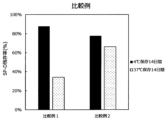
- Fig. 3 is a graph showing the survival rate of SP-D antigen in prior art storage solutions (stored at 4°C or 37°C for 14 days).
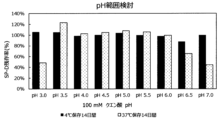
- Fig. 3 is a graph showing the residual rate of SP-D antigen in each of storage solutions with pH 3.0 to 7.0 (stored at 4°C or 37°C for 14 days).
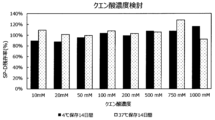
- Fig. 3 is a graph showing the residual rate of SP-D antigen in each of citrate buffers with various citrate concentrations (stored at 4°C or 37°C for 14 days).
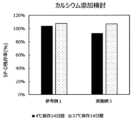
- Fig. 10 is a graph showing the residual rate of SP-D antigen in a storage solution to which calcium chloride was added and a storage solution to which calcium chloride was not added (stored at 4°C or 37°C for 14 days).
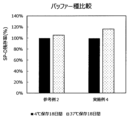
- FIG. 3 is a graph showing the residual rate of SP-D antigen in citrate buffer and acetate buffer (stored at 4°C or 37°C for 14 days).
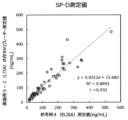
- FIG. 10 is a graph showing the correlation of the SP-D measured value with the LTIA reagent measured using the SP-D single calibrator with respect to the measured value of the approved external diagnostic agent.
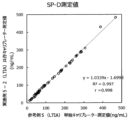
- FIG. 10 is a graph showing the correlation of the measured values of SP-D with the LTIA reagent measured using the co-calibrators of SP-D and KL-6 with respect to the measured values of certified external diagnostic agents.
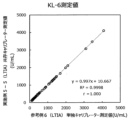
- FIG. 10 is a graph showing the correlation of the measured values of KL-6 with the LTIA reagent measured using the co-calibrators of SP-D and KL-6 with respect to the measured values of certified external diagnostic agents.
- 1 is a graph showing the residual rate of SP-D antigen in SP-D alone samples and SP-D and KL-6 coexistence samples (stored at 4° C. or 37° C. for 14 days).
- 1 is a graph showing the residual rate of KL-6 antigen in SP-D alone samples and SP-D and KL-6 coexistence samples (stored at 4° C. or 37° C. for 14 days).
- lung surfactant protein As used herein, "lung surfactant protein” (SP) is one of the constituents of pulmonary surfactant.
- SPs are SP-A, SP-B, SP-C, and SP-D. Among them, SP-B and SP-C are highly hydrophobic and associated with phospholipids.
- SP-A and SP-D are hydrophilic glycoproteins and belong to the collectin subgroup of C-type lectins that bind carbohydrates in a calcium ion-dependent manner (Non-Patent Document 1).
- SP herein includes SP-A and SP-D. SP in this specification is preferably SP-D. Since SP-A and SP-D belong to the same subgroup, the storage stability of SP-A and SP-D can be improved by the same method.
- Measurement of SP can be performed using known techniques, such as immunological techniques.
- Immunological methods include enzyme immunoassay (EIA, ELISA), surface plasmon resonance, latex immunoturbidimetric assay (LTIA), chemiluminescence immunoassay, electrochemiluminescence immunoassay, chemiluminescence enzyme immunoassay method, fluorescent antibody method, radioimmunoassay method, Western blot method, immunochromatographic method, high performance liquid chromatography method (HPLC method) and the like.
- the SP contained in the liquid composition of the present invention may be commercially available, or may be produced or purified by oneself.
- the SP contained in the liquid composition of the present invention may be one produced in vitro (for example, one produced using genetic recombination technology) or one extracted from a living organism.
- the concentration of SP-A or SP-D contained in the liquid composition of the present invention is not limited to the following, but is preferably 10 pg/mL to 1 mg/mL, more preferably 100 pg in the liquid composition. /mL to 500 ⁇ g/mL, more preferably 1 ng/mL to 100 ⁇ g/mL, most preferably 10 ng/mL to 10 ⁇ g/mL.
- the pH of the liquid composition of the present invention is 3.5-6.5, preferably 4.0-6.0, more preferably 4.0-5.9, most preferably 4.0-5.9. 5 to 5.5.
- the pH can be adjusted using pH adjusting reagents well known to those skilled in the art, such as sodium hydroxide and hydrochloric acid.
- buffer means a solution that has a buffering effect on pH changes.
- the buffer solution can be prepared by dissolving the following buffers.
- buffers used in the present invention include, but are not limited to, citric acid, acetic acid, propionic acid, oxalic acid, phenylacetic acid, maleic acid, succinic acid, phthalic acid, phosphoric acid, and malic acid.
- Buffers used in the present invention include buffers prepared by dissolving the above-mentioned buffers, preferably citrate buffer or acetate buffer, more preferably citrate buffer.
- the buffer concentration is not particularly limited as long as the effects of the present invention can be obtained, but is preferably 10 to 1,000 mM, more preferably 50 to 500 mM. A 50 to 500 mM citrate buffer is preferred as the buffer.
- the liquid composition of the present invention has a pH within the range of 3.5 to 6.5 and contains an additional substance on the premise that it does not impair the effect of improving the storage stability of the SP of the present invention. be able to.
- the liquid composition of can contain additional substances.
- Compositions of the invention may further comprise calcium ions.
- the concentration of calcium ions in the liquid composition of the invention can be, for example, 1 to 1,000 mM.
- the liquid composition of the present invention contains one or more commonly used components such as metal ions other than calcium ions, proteins, amino acids, sugars, surfactants, chelating agents, preservatives, reducing substances and chaotropic substances.
- Sugars include, for example, monosaccharides such as glucose and fructose, disaccharides such as maltose and sucrose, and glucosamines such as N-acetylglucosamine. Among them, N-acetylglucosamine is preferred.
- Surfactants include anionic surfactants, cationic surfactants, amphoteric surfactants, and nonionic surfactants.
- amphoteric surfactants such as CHAPS (3-[(3-Cholamidopropyl)dimethylammonio]propanesulfonate) and CHAPSO (3-[(3-Cholamidopropyl)dimethylammonio]-2-hydroxypropanesulfonate) are preferred, and CHAPS is the most preferred chelating agent.
- Examples include aminocarboxylic acids such as EDTA (ethylenediaminetetraacetic acid), DTPA (diethylenetriaminepentaacetic acid), HEDTA (hydroxyethylethylenediaminetriacetic acid), citric acid, gluconic acid, phytic acid and salts thereof.
- Salts of the chelating agent include sodium salts, potassium salts, magnesium salts, calcium salts and the like.
- aminocarboxylic acids and salts thereof are preferred, and EDTA and salts thereof are most preferred.
- the liquid composition of the present invention can be used as a calibration sample solution in SP measurement.
- calibration sample solution means a sample solution containing a substance to be measured at a constant concentration, which is used to accurately measure the substance to be measured, and is also referred to as a standard substance or a calibrator.
- the measured value of SP can be calculated using a calibration curve created using the SP concentration in the calibration sample solution and the measured value when the calibration sample solution is measured.
- the liquid composition of the present invention can be used as a sample solution for accuracy control in SP measurement.
- a sample solution for quality control means a sample solution containing a substance to be measured at a constant concentration, which is used to accurately measure the substance to be measured, and is also referred to as a control.
- the measurement accuracy of the SP measurement system can be verified by comparing the measured value of SP when the quality control sample solution is measured and the SP concentration in the quality control sample solution.
- the liquid composition of the present invention is preferably packed in a storage container.
- the material of the storage container is not particularly limited as long as the effect of the present invention can be obtained and the container can be sealed, but plastic or glass is preferable from the viewpoint of production, transportation and storage of the calibration sample.
- the form of the storage container may be either a hard type or a soft type, and eye drop bottles, ampoules, vials, soft bags, injection-type containers, glass bottles and the like can be used.
- An eyedropper bottle is preferably used as the storage container.
- the term "good storage stability” or “good storage stability” of SP means that most of SP contained in a solution containing SP is not decomposed for a long period of time, or the structure of SP is It means to remain unchanged. For example, if there is no significant difference between the initial value and the value after storage when the SP concentration is measured using a solution containing SP as a sample, it can be said that the storage stability of SP is good.
- the improved storage stability of SP is referred to as improved storage stability of SP.
- the value of SP can be represented by results obtained by various methods, such as measurement sensitivity, measured value, and analytical value in a method for measuring or analyzing desired SP.
- the initial value indicates the SP value at the start of storage of the solution.
- “good storage stability” or “good storage stability” of SP means that, for example, a solution having an SP concentration of 10 pg/mL to 1 mg/mL was stored at 37°C for 14 days. In this case, it can mean that the value after storage is 60% to 140%, preferably 70% to 130%, more preferably 80% to 120% of the initial value.
- SP “storage stability is good” or “storage stability is good” means, for example, when a solution with an SP concentration of 10 pg / mL to 1 mg / mL is stored at 4 ° C. for 14 days, after storage value is 80% to 120% of the initial value.
- the term "remaining ratio" means the ratio of the SP value after storage to the initial SP value.
- the SP value at the start of storage of the solution may be used, or the solution may be subdivided and stored frozen at -70 ° C. or lower, for example.
- a value measured at the time of evaluation of a solution stored under conditions that are difficult to The SP value after storage at each temperature and frozen product may be measured using a commercially available SP measurement reagent, or by latex immunoturbidimetric assay (LTIA) performed under the measurement conditions described in the Examples. may be measured.
- LTIA latex immunoturbidimetric assay
- the biological sample for SP measurement is not particularly limited as long as it allows SP measurement, but blood, serum, or plasma is preferably used, and serum is more preferably used.
- the biological sample may be appropriately pretreated as necessary.
- a biological sample is preferably a biological sample taken from a human.
- the immunoassay kit for SP of the present invention enables easy and accurate measurement of SP.
- Examples of SP measurement kits include kits using immunological techniques.
- the SP measurement kit of the present invention can contain reagents for measuring the concentration of SP in the human body by an immunological method.
- Immunological methods include enzyme immunoassay (EIA, ELISA), surface plasmon resonance, latex immunoturbidimetric assay (LTIA), chemiluminescence immunoassay, electrochemiluminescence immunoassay, chemiluminescence enzyme immunoassay method, fluorescent antibody method, radioimmunoassay method, Western blot method, immunochromatographic method, high performance liquid chromatography method (HPLC method) and the like.
- the kit for measuring SP of the present invention can be used for auxiliary diagnosis of idiopathic interstitial pneumonia (IIP) or collagen disease interstitial pneumonia (CDIP).
- IIP idiopathic interstitial pneumonia
- CDIP collagen disease interstitial pneumonia
- the SP measurement kit of the present invention can also contain additional documents, instructions for use, and the like.
- the SP immunoassay kit may contain arbitrary components such as a sample diluent, a pH adjuster, a reaction container, and the like.
- the method for improving storage stability of SP of the present invention comprises contacting a pulmonary surfactant protein with a solution having a pH of 3.5 to 6.5.
- the SP may be added to the solution adjusted to pH 3.5-6.5, and after the SP is added to the solution, the pH of this solution may be adjusted to 3.5-6.5.
- the solution is any one of the buffers described above.
- the liquid composition of the present invention can be stored in liquid form, or can be lyophilized and then stored. It is preferred that the liquid compositions of the present invention be stored without lyophilization.
- KL-6 The liquid composition of the present invention can contain KL-6.
- KL-6 is a sialylated carbohydrate antigen and is involved in pulmonary fibrosis (JP-B-7-31207, New serum indicator of interstitial pneumonitis activity. Sialylated carbohydrate antigen KL-6. Kohno N, Kyoizumi S, Awaya Y, Fukuhara H, Yamakido M, Akiyama M. Chest. 1989 Jul;96 (1):68-73.) . KL-6 becomes high in interstitial pneumonia and fluctuates reflecting the pathology, so it is measured for diagnosis of interstitial pneumonia and determination of treatment guideline (Japanese Patent Publication No. 7-31207). .
- a method for predicting the onset of interstitial pneumonia due to interferon administration by measuring the serum MUC-1/KL-6 level JP-A-2005-121441), and lung cancer patients by measuring KL-6
- a method for examining prognosis Patent No. 4083855
- a method for detecting intraductal papillary mucinous adenocarcinoma or pancreatic cancer by measuring KL-6 in pancreatic juice Japanese Patent Application Laid-Open No. 2006-308576
- interstitial pneumonia such as drug-induced interstitial pneumonia and collagen disease-derived interstitial pneumonia
- diagnostic methods for cancer patients such as lung cancer and pancreatic cancer
- administration of antibody drugs KL-6 is widely measured for diagnosing interstitial pneumonia in patients such as rheumatoid arthritis, Crohn's disease, systemic juvenile idiopathic arthritis, Castleman's disease, etc., and determining therapeutic guidelines.
- KL-6 can be measured using known techniques, such as immunological techniques.
- Immunological methods include enzyme immunoassay (EIA, ELISA), surface plasmon resonance, latex immunoturbidimetric assay (LTIA), chemiluminescence immunoassay, electrochemiluminescence immunoassay, chemiluminescence enzyme immunoassay method, fluorescent antibody method, radioimmunoassay method, Western blot method, immunochromatographic method, high performance liquid chromatography method (HPLC method) and the like.
- KL-6 and SP-D are considered useful for adjunctive diagnosis in idiopathic interstitial pneumonia (IIP) and collagen disease interstitial pneumonia (CDIP), and both items can be measured. It is useful (Journal of the Japanese Society of Internal Medicine, 96(10), 2144-2150, 2007; Journal of the Japanese Respiratory Society, 39(4), 298-302, 2001). In contrast, until now, when measuring KL-6, it was necessary to prepare a KL-6 calibration sample and measurement reagent, and when measuring SP, it was necessary to prepare a calibration sample and measurement reagent for SP. , was complicated.
- the present invention provides for the first time a liquid composition containing not only SP but also SP and KL-6.
- the liquid composition containing SP and KL-6 of the present invention may be a liquid composition containing both SP and KL-6 in advance, or a liquid composition containing SP and KL-6. It may be a liquid composition prepared by mixing the substances by the user.
- the liquid composition containing SP and KL-6 of the present invention can be used as a calibration sample solution in the measurement of SP and KL-6, and is also called a multi-standard substance or multi-calibrator.
- the liquid composition containing SP and KL-6 of the present invention can be used as a sample solution for quality control in the measurement of SP and KL-6, and is also called multi-control.
- the liquid composition containing SP and KL-6 of the present invention may contain multiple types of SP. That is, a configuration including SP-A and KL-6, a configuration including SP-D and KL-6, or a configuration including SP-A, SP-D and KL-6 may be used.
- KL-6 concentration The concentration of KL-6 contained in the liquid composition containing SP and KL-6 of the present invention is not limited to the following, but is preferably 0.01 U / mL to 100000 U / mL, more preferably 0.1 U/mL to 50000 U/mL, still more preferably 0.5 U/mL to 20000 U/mL, most preferably 0.5 U/mL to 12000 U/mL.
- Kits for measuring KL-6 include, for example, kits using immunological techniques.
- the kit for measuring KL-6 of the present invention can contain reagents for measuring the concentration of KL-6 in the human body by an immunological method.
- Immunological methods include enzyme immunoassay (EIA, ELISA), surface plasmon resonance, latex immunoturbidimetric assay (LTIA), chemiluminescence immunoassay, electrochemiluminescence immunoassay, chemiluminescence enzyme immunoassay method, fluorescent antibody method, radioimmunoassay method, Western blot method, immunochromatographic method, high performance liquid chromatography method (HPLC method) and the like.
- EIA enzyme immunoassay
- ELISA surface plasmon resonance
- LTIA latex immunoturbidimetric assay
- chemiluminescence immunoassay electrochemiluminescence immunoassay
- chemiluminescence enzyme immunoassay method fluorescent antibody method
- radioimmunoassay method Western blot method
- HPLC method high performance liquid chromatography method
- Example 1 Examination of storage stability of SP-D in a buffer solution of pH 3.0 to 7.0>> The storage stability of SP-D was tested in buffers with pH 3.0-7.0.
- the storage solution composition, measurement method, and evaluation method are as follows.
- Each 0.5 mL sample was dispensed into an eyedropper bottle, stored at 4°C or 37°C for 14 days, and then subjected to measurement.
- a sample stored at -70°C or below for 14 days was measured.
- a storage solution (blank) containing no SP-D was similarly stored and measured.
- the measurement sensitivity difference (mAbs.) between the sample measurement sensitivity and the blank measurement sensitivity was calculated and used for stability evaluation.
- the measurement sensitivity difference is simply referred to as "measurement sensitivity”.
- the anti-human SP-D monoclonal antibody commercially available Anti-Human SP-D MAb (Clone 292215) manufactured by R&D Systems can be used.
- Anti-human SP-D monoclonal antibody-sensitized latex can be prepared by a method well known to those skilled in the art.
- SP-D antigen residual rate was defined as the ratio of measurement sensitivity (mAbs.) (initial value) of samples stored at ⁇ 70° C. or lower for 14 days to measurement sensitivity of samples stored at each temperature. Good stability was determined when the SP-D antigen retention rate was 80 to 120% when stored at 4°C and when the SP-D antigen retention rate was 60 to 140% when stored at 37°C. Unless otherwise specified, the measurement sensitivity (mAbs.) of specimens stored at ⁇ 70° C. or lower for a specified number of days, including those in this example, did not change relative to the measurement sensitivity on the day the specimen was prepared.
- Comparative Example 1 is under the conditions described in Patent Document 1
- Comparative Example 2 is under the conditions described in Patent Document 2.
- Example 1 under the condition that SP-D was added to a solution in the range of pH 3.0 to 7.0, when stored at 4°C for 14 days, the SP-D antigen residual rate in the sample was 87.9 to 105.5%, indicating good storage stability of SP-D (Table 2, Fig. 2).
- the pH range of 3.5 to 6.5 the SP-D antigen residual rate of the samples stored at 37°C for 14 days was 65.5 to 123.3%, which was favorable.
- the pH range of 4.0 to 6.0 the SP-D antigen retention rate after storage at 4 ° C. or 37 ° C.
- Example 2 Examination of the effect of citric acid concentration on the storage stability of SP-D>>
- citrate buffer pH 5.0
- the storage solution composition, measurement method and evaluation method are as follows.
- Example 2 Storage solution composition [Example 2] - 10, 20, 50, 100, 200, 500, 750, and 1000 mM citrate buffer (pH 5.0) ⁇ 1 mass% BSA ⁇ 10 mM calcium chloride Recombinant SP-D was dissolved in the storage solution prepared with the above composition to a final concentration of 50 ng/mL, and used as a sample for the storage stability test.
- the sample storage conditions, measurement method, and evaluation method were the same as in Example 1.
- Example 3 Comparison of storage stability of SP-D with and without calcium>>> Examples 1 and 2 were investigated under the condition that calcium chloride was added to the liquid composition containing SP-D. On the other hand, in the pH range where the SP-D stabilizing effect was confirmed, it was evaluated whether a solution containing no calcium had the SP-D stabilizing effect.
- the storage solution composition, measurement method and evaluation method are as follows.
- Example 4 Comparison of stabilizing effects of different buffer species>> It was evaluated whether or not a buffer solution adjusted to pH 4.0 other than the citrate buffer solution exhibited a stabilizing effect.
- the storage solution composition, measurement method and evaluation method are as follows.
- Example 4 ⁇ 100 mM acetate buffer (pH 4.0) ⁇ 1 mass% BSA ⁇ 10 mM calcium chloride Recombinant SP-D was dissolved in the storage solution prepared with the above composition to a final concentration of 50 ng/mL, and used as a sample for the storage stability test.
- the sample storage conditions, measurement method, and evaluation method were the same as in Example 1.
- KL-6 is used for the diagnosis of interstitial pneumonia as well as SP-D, but the pathological conditions in which the blood abundance of each protein is increased are different. Therefore, simultaneous measurement of KL-6 and SP-D is useful for detailed understanding of interstitial pneumonia. If both the SP-D antigen and the KL-6 antigen are contained in the calibration sample, the standard curve can be prepared without replacing the calibration sample, which improves clinical convenience. Therefore, the influence on the measurement value when the sample in which the SP-D antigen and the KL-6 antigen coexist was measured was evaluated.
- the composition of the storage solution, the measurement method, and the evaluation method are as follows.
- Example 5-1 SP-D/KL-6 coexistence calibrator] ⁇ Blank: physiological saline (SP-D 0 ng / mL, KL-6 0 U / mL) ⁇ Calibration sample 5: SP-D 50 ng / mL, KL-6 500 U / mL ⁇ Calibration sample 6: SP-D 200 ng / mL, KL-6 1000 U / mL ⁇ Calibration sample 7: SP-D 600 ng / mL, KL-6 3000 U / mL ⁇ Calibration sample 8: SP-D 1000 ng / mL, KL-6 5000 U / mL
- Example 5-2 The SP-D concentration of 48 serum specimens identical to those of Reference Example 4 was measured using the LTIA reagent described in Example 1. At that time, a calibration curve was created using [Example 5-1: SP-D/KL-6 coexistence calibrator].
- Example 5-3 The KL-6 concentration of 48 serum specimens identical to those in Reference Example 4 was measured using Nanopia KL-6 (manufactured by Sekisui Medical Co., Ltd.). At that time, a calibration curve was created using [Example 5-1: SP-D/KL-6 coexistence calibrator].
- Reference Example 4 was measured according to the method described in the attached document of SP-D kit "Yamasa” EIA II.
- Reference Example 5 and Example 5-2 were measured by the method described in Example 1.
- Reference Example 6 and Example 5-3 were measured according to the method described in the attachment of Nanopia KL-6.
- FIG. 6 shows the measured values of Reference Example 5 (LTIA method reagent, SP-D single calibrator) against the measured values of Reference Example 4 (ELISA method).
- the slope of the regression line was 0.906 and the correlation coefficient was 0.940, indicating that the LTIA reagent and the SP-D single calibrator used in the present invention can accurately measure SP-D.
- FIG. 7 shows the SP-D measurement values calculated by Example 5-2: SP-D/KL-6 coexistence calibrator with respect to the measurement values by Reference Example 4 (ELISA method).
- the slope of the regression line was 0.931, and the correlation coefficient was good at 0.932. Furthermore, when the LTIA measurement values of Reference Example 5: SP-D single calibrator and Example 5-2: SP-D/KL-6 coexistence calibrator were compared (Fig. 8), the slope of the regression line was 1.03 and the correlation coefficient was 0.998. From this result, the SP-D KL-6 coexistence calibrator has the same calibration performance as the SP-D single calibrator, and the SP-D measurement due to the coexistence of the SP-D antigen and the KL-6 antigen The effect on values was shown to be very small. Next, the influence of SP-D and KL-6 coexistence on KL-6 measurements was evaluated.
- Example 6 Evaluation of the effect of coexistence of KL-6 antigen and SP-D antigen on storage stability>> The storage stability of each antigen was evaluated when the KL-6 antigen and the SP-D antigen were coexistent.
- the storage solution composition, measurement method, and evaluation method are as follows.
- Recombinant SP-D and KL-6 antigens were dissolved in the above stock solution so that SP-D was 200 ng/mL and KL-6 was 1000 U/mL, and used as samples for the storage stability test.
- 0.2 mL of each sample was dispensed into a plastic sample tube, stored at 4° C. or 37° C. for 14 days, and then subjected to measurement.
- a sample stored at -70°C or below for 14 days was measured.
- a storage solution (blank) containing no SP-D antigen and KL-6 antigen was similarly stored and measured.
- liquid composition of the present invention enables stable preservation of the SP-D antigen and the KL-6 antigen in a coexistent state.
- Example 7 Evaluation of influence of other coexisting substances on storage stability of each antigen>> Storage stability was evaluated when coexisting substances were added to a solution containing KL-6 antigen and SP-D antigen.
- the storage solution composition, test method, and evaluation method are as follows.
- Recombinant SP-D and KL-6 antigens were dissolved in the above stock solution so that SP-D was 200 ng/mL and KL-6 was 1000 U/mL, and used as samples for the storage stability test.
- 0.2 mL of each sample was dispensed into a plastic sample tube, stored at 4° C. or 37° C. for 14 days, and then subjected to measurement.
- a sample stored at -70°C or below for 14 days was measured.
- a storage solution (blank) containing no SP-D antigen and KL-6 antigen was similarly stored and measured.
- a chelating agent Ca(II)-EDTA
- calcium chloride a surfactant (CHAPS)
- a sugar N-acetylglucosamine
- an SP-containing liquid composition with high storage stability particularly an SP-containing calibration sample solution or accuracy control sample solution.
- an SP- and KL-6-containing liquid composition with high storage stability, particularly a SP- and KL-6-containing calibration sample solution or quality control sample solution.
Landscapes
- Life Sciences & Earth Sciences (AREA)
- Health & Medical Sciences (AREA)
- Engineering & Computer Science (AREA)
- Immunology (AREA)
- Molecular Biology (AREA)
- Biomedical Technology (AREA)
- Chemical & Material Sciences (AREA)
- Hematology (AREA)
- Urology & Nephrology (AREA)
- Biotechnology (AREA)
- Microbiology (AREA)
- Cell Biology (AREA)
- Food Science & Technology (AREA)
- Medicinal Chemistry (AREA)
- Physics & Mathematics (AREA)
- Analytical Chemistry (AREA)
- Biochemistry (AREA)
- General Health & Medical Sciences (AREA)
- General Physics & Mathematics (AREA)
- Pathology (AREA)
- Proteomics, Peptides & Aminoacids (AREA)
- Investigating Or Analysing Biological Materials (AREA)
Priority Applications (2)
| Application Number | Priority Date | Filing Date | Title |
|---|---|---|---|
| CN202380015004.4A CN118369582A (zh) | 2022-01-31 | 2023-01-30 | 包含肺表面活性蛋白的液态组合物和包含所述液态组合物的免疫测定试剂盒以及肺表面活性蛋白的保存稳定性提高方法 |
| JP2023577057A JPWO2023145916A1 (https=) | 2022-01-31 | 2023-01-30 |
Applications Claiming Priority (2)
| Application Number | Priority Date | Filing Date | Title |
|---|---|---|---|
| JP2022-013500 | 2022-01-31 | ||
| JP2022013500 | 2022-01-31 |
Publications (1)
| Publication Number | Publication Date |
|---|---|
| WO2023145916A1 true WO2023145916A1 (ja) | 2023-08-03 |
Family
ID=87471715
Family Applications (1)
| Application Number | Title | Priority Date | Filing Date |
|---|---|---|---|
| PCT/JP2023/002768 Ceased WO2023145916A1 (ja) | 2022-01-31 | 2023-01-30 | 肺サーファクタントプロテインを含む液状組成物、及びそれを含む免疫測定キット、並びに肺サーファクタントプロテインの保存安定性向上方法 |
Country Status (3)
| Country | Link |
|---|---|
| JP (1) | JPWO2023145916A1 (https=) |
| CN (1) | CN118369582A (https=) |
| WO (1) | WO2023145916A1 (https=) |
Cited By (2)
| Publication number | Priority date | Publication date | Assignee | Title |
|---|---|---|---|---|
| WO2024195854A1 (ja) * | 2023-03-23 | 2024-09-26 | 積水メディカル株式会社 | 肺サーファクタントプロテインdの測定方法、測定キット、モノクローナル抗体及び細胞 |
| WO2025205534A1 (ja) * | 2024-03-25 | 2025-10-02 | 積水メディカル株式会社 | 免疫測定方法、精度管理方法、標準試料及び免疫測定試薬 |
Citations (5)
| Publication number | Priority date | Publication date | Assignee | Title |
|---|---|---|---|---|
| JP2002521667A (ja) * | 1998-07-24 | 2002-07-16 | ビイク グルデン ロンベルク ヒエーミツシエ フアブリーク ゲゼルシヤフト ミツト ベシユレンクテル ハフツング | 疎水性の肺界面活性剤タンパク質sp−cの測定 |
| WO2006121064A1 (ja) * | 2005-05-11 | 2006-11-16 | Yamasa Corporation | 肺サーファクタント蛋白質の安定化法 |
| JP2021519757A (ja) * | 2018-03-29 | 2021-08-12 | エアウェイ・セラピューティクス・インコーポレイテッド | サーファクタントタンパク質d(sp−d)を含む方法及び組成物 |
| US20210322511A1 (en) * | 2020-04-17 | 2021-10-21 | President And Fellows Of Harvard College | Methods and compositions for treating a respiratory disease |
| WO2021216584A1 (en) * | 2020-04-22 | 2021-10-28 | Airway Therapeutics, Inc. | Use of surfactant protein d to treat viral infections |
-
2023
- 2023-01-30 JP JP2023577057A patent/JPWO2023145916A1/ja active Pending
- 2023-01-30 CN CN202380015004.4A patent/CN118369582A/zh active Pending
- 2023-01-30 WO PCT/JP2023/002768 patent/WO2023145916A1/ja not_active Ceased
Patent Citations (5)
| Publication number | Priority date | Publication date | Assignee | Title |
|---|---|---|---|---|
| JP2002521667A (ja) * | 1998-07-24 | 2002-07-16 | ビイク グルデン ロンベルク ヒエーミツシエ フアブリーク ゲゼルシヤフト ミツト ベシユレンクテル ハフツング | 疎水性の肺界面活性剤タンパク質sp−cの測定 |
| WO2006121064A1 (ja) * | 2005-05-11 | 2006-11-16 | Yamasa Corporation | 肺サーファクタント蛋白質の安定化法 |
| JP2021519757A (ja) * | 2018-03-29 | 2021-08-12 | エアウェイ・セラピューティクス・インコーポレイテッド | サーファクタントタンパク質d(sp−d)を含む方法及び組成物 |
| US20210322511A1 (en) * | 2020-04-17 | 2021-10-21 | President And Fellows Of Harvard College | Methods and compositions for treating a respiratory disease |
| WO2021216584A1 (en) * | 2020-04-22 | 2021-10-28 | Airway Therapeutics, Inc. | Use of surfactant protein d to treat viral infections |
Cited By (3)
| Publication number | Priority date | Publication date | Assignee | Title |
|---|---|---|---|---|
| WO2024195854A1 (ja) * | 2023-03-23 | 2024-09-26 | 積水メディカル株式会社 | 肺サーファクタントプロテインdの測定方法、測定キット、モノクローナル抗体及び細胞 |
| JP7590631B1 (ja) * | 2023-03-23 | 2024-11-26 | 積水メディカル株式会社 | 肺サーファクタントプロテインdの測定方法、測定キット、モノクローナル抗体及び細胞 |
| WO2025205534A1 (ja) * | 2024-03-25 | 2025-10-02 | 積水メディカル株式会社 | 免疫測定方法、精度管理方法、標準試料及び免疫測定試薬 |
Also Published As
| Publication number | Publication date |
|---|---|
| CN118369582A (zh) | 2024-07-19 |
| JPWO2023145916A1 (https=) | 2023-08-03 |
Similar Documents
| Publication | Publication Date | Title |
|---|---|---|
| Laigaard et al. | ADAM12: a novel first‐trimester maternal serum marker for Down syndrome | |
| EP3971570A2 (en) | Galectin-3 immunoassay | |
| WO2023145916A1 (ja) | 肺サーファクタントプロテインを含む液状組成物、及びそれを含む免疫測定キット、並びに肺サーファクタントプロテインの保存安定性向上方法 | |
| EP0585987B2 (en) | Liquid thromboplastin reagent | |
| CN108414767A (zh) | 糖化血红蛋白测定试剂盒 | |
| JP2011241206A (ja) | 標識抗体の安定化方法 | |
| CN113406339A (zh) | 一种干式免疫荧光定量法人和肽素(cpp)检测试剂盒 | |
| CN115327137A (zh) | 一种人免疫球蛋白g4亚型化学发光免疫检测试剂盒 | |
| AU2025267460A1 (en) | Method of stabilizing protein contained in specimen and solution for stabilizing protein contained in specimen | |
| JP2002357608A (ja) | 前進性グリコシル化終末産物を含有しない特異的結合アッセイの試薬および固相成分 | |
| JP4115588B2 (ja) | 改良された蛍光偏光免疫測定法 | |
| JP7348780B2 (ja) | 擬似便、およびこれを用いた便潜血検査の精度管理方法 | |
| CN112285359A (zh) | 一种涎液化糖链抗原测定试剂盒及其检测方法 | |
| JP2007531870A (ja) | ヒトナトリウム利尿ペプチド測定用の安定な組成物 | |
| EP2674755A1 (en) | Method for diagnosing acute lung injury | |
| JP4562771B2 (ja) | β細胞不全の標的/マーカーとしてのTIMP−2 | |
| JP3490715B2 (ja) | ヘモグロビン前進性グルコシル化終末産物の検出方法 | |
| US5614414A (en) | Liquid lipoprotein control | |
| CN114965990B (zh) | 一种糖类抗原CA125表面Tn抗原检测用校准品缓冲液及其制备方法、检测试剂盒 | |
| CN101228442B (zh) | 生物样品中肽的稳定方法 | |
| JP3993670B2 (ja) | 感作金属コロイド試薬溶液の安定化方法および安定な感作金属コロイド試薬含有溶液 | |
| ES2314624T3 (es) | Metodo mejorado para el diagnostico del sindrome coronario agudo. | |
| JP2008508504A (ja) | β細胞不全の標的/マーカーとしての膵臓ポリペプチド | |
| RU2333496C1 (ru) | Способ прогнозирования степени эндогенной интоксикации организма у больных распространенными хроническими дерматозами | |
| CN118706772B (zh) | 一种抗干扰的尿微量白蛋白测定试剂盒 |
Legal Events
| Date | Code | Title | Description |
|---|---|---|---|
| 121 | Ep: the epo has been informed by wipo that ep was designated in this application |
Ref document number: 23747126 Country of ref document: EP Kind code of ref document: A1 |
|
| WWE | Wipo information: entry into national phase |
Ref document number: 202380015004.4 Country of ref document: CN |
|
| WWE | Wipo information: entry into national phase |
Ref document number: 2023577057 Country of ref document: JP |
|
| NENP | Non-entry into the national phase |
Ref country code: DE |
|
| 122 | Ep: pct application non-entry in european phase |
Ref document number: 23747126 Country of ref document: EP Kind code of ref document: A1 |