WO2023132310A1 - 樹脂組成物、成形体およびフィルム - Google Patents
樹脂組成物、成形体およびフィルム Download PDFInfo
- Publication number
- WO2023132310A1 WO2023132310A1 PCT/JP2022/048340 JP2022048340W WO2023132310A1 WO 2023132310 A1 WO2023132310 A1 WO 2023132310A1 JP 2022048340 W JP2022048340 W JP 2022048340W WO 2023132310 A1 WO2023132310 A1 WO 2023132310A1
- Authority
- WO
- WIPO (PCT)
- Prior art keywords
- polyamideimide
- film
- acid
- derived
- resin composition
- Prior art date
- Legal status (The legal status is an assumption and is not a legal conclusion. Google has not performed a legal analysis and makes no representation as to the accuracy of the status listed.)
- Ceased
Links
Images
Classifications
-
- C—CHEMISTRY; METALLURGY
- C08—ORGANIC MACROMOLECULAR COMPOUNDS; THEIR PREPARATION OR CHEMICAL WORKING-UP; COMPOSITIONS BASED THEREON
- C08J—WORKING-UP; GENERAL PROCESSES OF COMPOUNDING; AFTER-TREATMENT NOT COVERED BY SUBCLASSES C08B, C08C, C08F, C08G or C08H
- C08J5/00—Manufacture of articles or shaped materials containing macromolecular substances
- C08J5/18—Manufacture of films or sheets
-
- C—CHEMISTRY; METALLURGY
- C08—ORGANIC MACROMOLECULAR COMPOUNDS; THEIR PREPARATION OR CHEMICAL WORKING-UP; COMPOSITIONS BASED THEREON
- C08G—MACROMOLECULAR COMPOUNDS OBTAINED OTHERWISE THAN BY REACTIONS ONLY INVOLVING UNSATURATED CARBON-TO-CARBON BONDS
- C08G73/00—Macromolecular compounds obtained by reactions forming a linkage containing nitrogen with or without oxygen or carbon in the main chain of the macromolecule, not provided for in groups C08G12/00 - C08G71/00
- C08G73/06—Polycondensates having nitrogen-containing heterocyclic rings in the main chain of the macromolecule
- C08G73/10—Polyimides; Polyester-imides; Polyamide-imides; Polyamide acids or similar polyimide precursors
- C08G73/1039—Polyimides; Polyester-imides; Polyamide-imides; Polyamide acids or similar polyimide precursors comprising halogen-containing substituents
-
- C—CHEMISTRY; METALLURGY
- C08—ORGANIC MACROMOLECULAR COMPOUNDS; THEIR PREPARATION OR CHEMICAL WORKING-UP; COMPOSITIONS BASED THEREON
- C08G—MACROMOLECULAR COMPOUNDS OBTAINED OTHERWISE THAN BY REACTIONS ONLY INVOLVING UNSATURATED CARBON-TO-CARBON BONDS
- C08G73/00—Macromolecular compounds obtained by reactions forming a linkage containing nitrogen with or without oxygen or carbon in the main chain of the macromolecule, not provided for in groups C08G12/00 - C08G71/00
- C08G73/06—Polycondensates having nitrogen-containing heterocyclic rings in the main chain of the macromolecule
- C08G73/10—Polyimides; Polyester-imides; Polyamide-imides; Polyamide acids or similar polyimide precursors
- C08G73/14—Polyamide-imides
-
- C—CHEMISTRY; METALLURGY
- C08—ORGANIC MACROMOLECULAR COMPOUNDS; THEIR PREPARATION OR CHEMICAL WORKING-UP; COMPOSITIONS BASED THEREON
- C08L—COMPOSITIONS OF MACROMOLECULAR COMPOUNDS
- C08L33/00—Compositions of homopolymers or copolymers of compounds having one or more unsaturated aliphatic radicals, each having only one carbon-to-carbon double bond, and only one being terminated by only one carboxyl radical, or of salts, anhydrides, esters, amides, imides or nitriles thereof; Compositions of derivatives of such polymers
-
- C—CHEMISTRY; METALLURGY
- C08—ORGANIC MACROMOLECULAR COMPOUNDS; THEIR PREPARATION OR CHEMICAL WORKING-UP; COMPOSITIONS BASED THEREON
- C08L—COMPOSITIONS OF MACROMOLECULAR COMPOUNDS
- C08L33/00—Compositions of homopolymers or copolymers of compounds having one or more unsaturated aliphatic radicals, each having only one carbon-to-carbon double bond, and only one being terminated by only one carboxyl radical, or of salts, anhydrides, esters, amides, imides or nitriles thereof; Compositions of derivatives of such polymers
- C08L33/04—Homopolymers or copolymers of esters
- C08L33/06—Homopolymers or copolymers of esters of esters containing only carbon, hydrogen and oxygen, which oxygen atoms are present only as part of the carboxyl radical
- C08L33/10—Homopolymers or copolymers of methacrylic acid esters
- C08L33/12—Homopolymers or copolymers of methyl methacrylate
-
- C—CHEMISTRY; METALLURGY
- C08—ORGANIC MACROMOLECULAR COMPOUNDS; THEIR PREPARATION OR CHEMICAL WORKING-UP; COMPOSITIONS BASED THEREON
- C08L—COMPOSITIONS OF MACROMOLECULAR COMPOUNDS
- C08L33/00—Compositions of homopolymers or copolymers of compounds having one or more unsaturated aliphatic radicals, each having only one carbon-to-carbon double bond, and only one being terminated by only one carboxyl radical, or of salts, anhydrides, esters, amides, imides or nitriles thereof; Compositions of derivatives of such polymers
- C08L33/04—Homopolymers or copolymers of esters
- C08L33/14—Homopolymers or copolymers of esters of esters containing halogen, nitrogen, sulfur, or oxygen atoms in addition to the carboxy oxygen
-
- C—CHEMISTRY; METALLURGY
- C08—ORGANIC MACROMOLECULAR COMPOUNDS; THEIR PREPARATION OR CHEMICAL WORKING-UP; COMPOSITIONS BASED THEREON
- C08L—COMPOSITIONS OF MACROMOLECULAR COMPOUNDS
- C08L79/00—Compositions of macromolecular compounds obtained by reactions forming in the main chain of the macromolecule a linkage containing nitrogen with or without oxygen or carbon only, not provided for in groups C08L61/00 - C08L77/00
- C08L79/04—Polycondensates having nitrogen-containing heterocyclic rings in the main chain; Polyhydrazides; Polyamide acids or similar polyimide precursors
- C08L79/08—Polyimides; Polyester-imides; Polyamide-imides; Polyamide acids or similar polyimide precursors
-
- C—CHEMISTRY; METALLURGY
- C09—DYES; PAINTS; POLISHES; NATURAL RESINS; ADHESIVES; COMPOSITIONS NOT OTHERWISE PROVIDED FOR; APPLICATIONS OF MATERIALS NOT OTHERWISE PROVIDED FOR
- C09D—COATING COMPOSITIONS, e.g. PAINTS, VARNISHES OR LACQUERS; FILLING PASTES; CHEMICAL PAINT OR INK REMOVERS; INKS; CORRECTING FLUIDS; WOODSTAINS; PASTES OR SOLIDS FOR COLOURING OR PRINTING; USE OF MATERIALS THEREFOR
- C09D179/00—Coating compositions based on macromolecular compounds obtained by reactions forming in the main chain of the macromolecule a linkage containing nitrogen, with or without oxygen, or carbon only, not provided for in groups C09D161/00 - C09D177/00
- C09D179/04—Polycondensates having nitrogen-containing heterocyclic rings in the main chain; Polyhydrazides; Polyamide acids or similar polyimide precursors
- C09D179/08—Polyimides; Polyester-imides; Polyamide-imides; Polyamide acids or similar polyimide precursors
-
- C—CHEMISTRY; METALLURGY
- C08—ORGANIC MACROMOLECULAR COMPOUNDS; THEIR PREPARATION OR CHEMICAL WORKING-UP; COMPOSITIONS BASED THEREON
- C08J—WORKING-UP; GENERAL PROCESSES OF COMPOUNDING; AFTER-TREATMENT NOT COVERED BY SUBCLASSES C08B, C08C, C08F, C08G or C08H
- C08J2333/00—Characterised by the use of homopolymers or copolymers of compounds having one or more unsaturated aliphatic radicals, each having only one carbon-to-carbon double bond, and only one being terminated by only one carboxyl radical, or of salts, anhydrides, esters, amides, imides, or nitriles thereof; Derivatives of such polymers
- C08J2333/04—Characterised by the use of homopolymers or copolymers of compounds having one or more unsaturated aliphatic radicals, each having only one carbon-to-carbon double bond, and only one being terminated by only one carboxyl radical, or of salts, anhydrides, esters, amides, imides, or nitriles thereof; Derivatives of such polymers esters
- C08J2333/06—Characterised by the use of homopolymers or copolymers of compounds having one or more unsaturated aliphatic radicals, each having only one carbon-to-carbon double bond, and only one being terminated by only one carboxyl radical, or of salts, anhydrides, esters, amides, imides, or nitriles thereof; Derivatives of such polymers esters of esters containing only carbon, hydrogen, and oxygen, the oxygen atom being present only as part of the carboxyl radical
- C08J2333/10—Homopolymers or copolymers of methacrylic acid esters
- C08J2333/12—Homopolymers or copolymers of methyl methacrylate
-
- C—CHEMISTRY; METALLURGY
- C08—ORGANIC MACROMOLECULAR COMPOUNDS; THEIR PREPARATION OR CHEMICAL WORKING-UP; COMPOSITIONS BASED THEREON
- C08J—WORKING-UP; GENERAL PROCESSES OF COMPOUNDING; AFTER-TREATMENT NOT COVERED BY SUBCLASSES C08B, C08C, C08F, C08G or C08H
- C08J2379/00—Characterised by the use of macromolecular compounds obtained by reactions forming in the main chain of the macromolecule a linkage containing nitrogen with or without oxygen, or carbon only, not provided for in groups C08J2361/00 - C08J2377/00
- C08J2379/04—Polycondensates having nitrogen-containing heterocyclic rings in the main chain; Polyhydrazides; Polyamide acids or similar polyimide precursors
- C08J2379/08—Polyimides; Polyester-imides; Polyamide-imides; Polyamide acids or similar polyimide precursors
-
- C—CHEMISTRY; METALLURGY
- C08—ORGANIC MACROMOLECULAR COMPOUNDS; THEIR PREPARATION OR CHEMICAL WORKING-UP; COMPOSITIONS BASED THEREON
- C08L—COMPOSITIONS OF MACROMOLECULAR COMPOUNDS
- C08L2201/00—Properties
- C08L2201/10—Transparent films; Clear coatings; Transparent materials
-
- C—CHEMISTRY; METALLURGY
- C08—ORGANIC MACROMOLECULAR COMPOUNDS; THEIR PREPARATION OR CHEMICAL WORKING-UP; COMPOSITIONS BASED THEREON
- C08L—COMPOSITIONS OF MACROMOLECULAR COMPOUNDS
- C08L2203/00—Applications
- C08L2203/16—Applications used for films
Definitions
- the present invention relates to molded articles such as resin compositions and films.
- Patent Document 1 A transparent polyimide film has been developed as an alternative to glass and is used for display substrates and cover films.
- Patent Document 1 Patent Document 2, and Patent Document 3 propose the use of polyamideimide as a material for a cover film of a flexible display.
- polyamideimide having a specific composition can have transparency as well as excellent mechanical strength and flexibility.
- Polyamideimide tends to improve solubility in organic solvents and transparency as the ratio of amide structure to the total of imide structure and amide structure increases.
- increasing the ratio of the amide structure tends to lower the mechanical strength, and it is not easy to achieve both transparency and high mechanical strength with polyamide-imide alone.
- an object of the present invention is to provide a resin composition capable of achieving both excellent mechanical strength and transparency.
- the resin composition may contain polyamideimide and acrylic resin in a weight ratio ranging from 98:2 to 2:98.
- Polyamideimide has a diamine-derived structure represented by general formula (IIIa), a tetracarboxylic dianhydride-derived structure represented by general formula (IVa), and a dicarboxylic acid-derived structure represented by general formula (Va). and includes a structure derived from a fluoroalkyl-substituted benzidine as a diamine-derived structure.
- Y is a divalent organic group and a diamine residue.
- X is a tetravalent organic group and is a tetracarboxylic dianhydride residue.
- Z is a divalent organic group and a dicarboxylic acid residue.
- Polyamideimide as a tetracarboxylic dianhydride-derived structure, fluorine-containing aromatic tetracarboxylic dianhydride, alicyclic tetracarboxylic dianhydride, bis (trimellitic anhydride) ester, 4,4'- ( It may contain a structure derived from one or more tetracarboxylic dianhydrides selected from the group consisting of 4,4′-isopropylidenediphenoxy)diphthalic anhydride and pyromellitic anhydride. The total content of the structures derived from these tetracarboxylic dianhydrides may be 50 mol % or more with respect to the total amount of the tetracarboxylic dianhydride-derived structures.
- Polyamideimide has a dicarboxylic acid-derived structure with respect to the total of the tetracarboxylic dianhydride-derived structure represented by the general formula (IVa) and the dicarboxylic acid-derived structure represented by the general formula (Va).
- the ratio is 5 to 80. It may be mol %.
- the acrylic resin may have an imide structure or a glutarimide structure.
- the acrylic resin may have a glutarimide structure content of 10% by weight or more.
- An acrylic resin with a high imide content can exhibit excellent compatibility even with polyamideimide, which has a high ratio of dicarboxylic acid-derived structures (ratio of amide structures).
- a transparent film with low haze can be obtained because the polyamide-imide and acrylic resin contained in the resin composition exhibit compatibility.
- polyamide-imide resins and acrylic resins show compatibility, they are highly transparent and can reduce coloring without significantly reducing the excellent mechanical strength of polyamide-imides, making them suitable for display cover films, etc. transparent film can be produced.
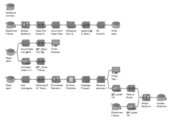
- FIG. 4 is a diagram showing a protocol in BIOVIA Pipeline Pilot Polymer Properties
- One embodiment of the present invention is a resin composition containing polyamideimide and an acrylic resin.
- Polyamideimide is a polymer having an imide structural unit represented by general formula (I) and an amide structural unit represented by general formula (II).
- X is a tetravalent organic group
- Y and Z are divalent organic groups.
- Y is a diamine residue, which is an organic group obtained by removing two amino groups from the diamine represented by the following general formula (III).
- X is a tetracarboxylic dianhydride residue, which is an organic group obtained by removing two anhydrous carboxyl groups from the tetracarboxylic dianhydride represented by the following general formula (IV).
- Z is a dicarboxylic acid residue, which is an organic group obtained by removing two carboxyl groups from the dicarboxylic acid represented by the following general formula (V).
- the polyamideimide has a diamine-derived structure represented by the following general formula (IIIa), a tetracarboxylic dianhydride-derived structure represented by the following general formula (IVa), and the following general formula (Va).
- IIIa diamine-derived structure represented by the following general formula (IIIa)
- IVa tetracarboxylic dianhydride-derived structure
- Va the following general formula (Va)
- dicarboxylic acid-derived structures that are By forming an imide bond between the diamine-derived structure (IIIa) and the tetracarboxylic dianhydride-derived structure (IVa), the imide structural unit represented by the general formula (I) is formed, and the diamine-derived structure (IIIa) and The dicarboxylic acid-derived structure (Va) forms an amide bond to form an amide structural unit represented by general formula (II).
- Polyamideimide may contain multiple types of diamine residues Y, may contain multiple types of tetracarboxylic dianhydride residues X, and may contain multiple types of dicarboxylic acid residues Z. good.
- polyamideimide is generally synthesized by synthesizing polyamic acid using dicarboxylic acid derivatives such as diamine, tetracarboxylic acid dianhydride, and dicarboxylic acid dichloride as monomers, and bonding tetracarboxylic acid and diamine. It is obtained by dehydration cyclization of a partial polyamic acid. Dicarboxylic acid derivatives such as dicarboxylic acid dichloride are used as starting monomers, and the resulting polyamideimide has a structure Z (dicarboxylic acid residue) obtained by removing two carboxy groups from a dicarboxylic acid.
- dicarboxylic acid derivatives such as diamine, tetracarboxylic acid dianhydride, and dicarboxylic acid dichloride
- the resulting polyamideimide has a structure obtained by removing two isocyanate groups from diisocyanatediamine, and this structure is obtained by removing two isocyanate groups from diamine. It is the same as the diamine-derived structure Y (diamine residue) except for the two amino groups. That is, even when any monomer is used, the resulting polyamideimide is a tetracarboxylic dianhydride-derived structure X (tetracarboxylic dianhydride residue) obtained by removing four carboxy groups from the tetracarboxylic dianhydride.
- the structure corresponding to the tetracarboxylic dianhydride residue X contained in the polyamideimide is referred to as the "tetracarboxylic dianhydride component"
- the diamine The structure corresponding to the residue Y is expressed as a "diamine component”
- the structure corresponding to the dicarboxylic acid residue Z is expressed as a "dicarboxylic acid component”.
- the diamine component, the tetracarboxylic dianhydride component, and the dicarboxylic acid component as the monomer units constituting the polyamideimide will be described with examples.
- the polyamideimide used in this embodiment contains a fluoroalkyl-substituted benzidine as a diamine component. That is, in the polyamideimide, at least one hydrogen atom at the 2,2', 3,3', 5,5', 6,6' positions of 4,4'-biphenylene is fluoro as Y in the general formula (IIIa). Contains alkyl-substituted structural units. Containing a fluoroalkyl-substituted benzidine as a diamine component tends to improve the solubility and transparency of the polyamide-imide resin and improve the compatibility with the acrylic resin.
- fluoroalkyl-substituted benzidine examples include 2-(trifluoromethyl)benzidine, 3-(trifluoromethyl)benzidine, 2,3-bis(trifluoromethyl)benzidine, 2,5-bis(trifluoromethyl) benzidine, 2,6-bis(trifluoromethyl)benzidine, 2,3,5-tris(trifluoromethyl)benzidine, 2,3,6-tris(trifluoromethyl)benzidine, 2,3,5,6- Tetrakis(trifluoromethyl)benzidine, 2,2'-bis(trifluoromethyl)benzidine, 3,3'-bis(trifluoromethyl)benzidine, 2,3'-bis(trifluoromethyl)benzidine, 2,2 ',3-bis(trifluoromethyl)benzidine, 2,3,3'-tris(trifluoromethyl)benzidine, 2,2',5-tris(trifluoromethyl)benzidine, 2,2',6-tris (trifluoromethyl)benzidine, 2,3′,
- fluoroalkyl-substituted benzidine having a fluoroalkyl group at the 2-position of biphenyl is preferred, and 2,2'-bis(trifluoromethyl)benzidine (TFMB) is particularly preferred.
- TFMB 2,2'-bis(trifluoromethyl)benzidine
- the polyamideimide may contain a diamine other than fluoroalkyl-substituted benzidine as a diamine component.
- diamines other than fluoroalkyl-substituted benzidine diamines having an alicyclic structure, diamines having a fluorene structure, diamines having a sulfonyl group, and fluoroalkyl, from the viewpoint of the solubility of polyamideimide and the compatibility with acrylic resins. Fluorine-containing diamines other than substituted benzidines are preferred.
- diamines having an alicyclic structure examples include isophoronediamine, 1,2-cyclohexanediamine, 1,3-cyclohexanediamine, 1,4-cyclohexanediamine, 1,2-bis(aminomethyl)cyclohexane, 1,3 -bis(aminomethyl)cyclohexane, 1,4-bis(aminomethyl)cyclohexane, bis(aminomethyl)norbornene, 4,4'-methylenebis(cyclohexylamine), bis(4-aminocyclohexyl)methane, 4,4' -methylenebis(2-methylcyclohexylamine), adamantane-1,3-diamine, 2,6-bis(aminomethyl)bicyclo[2.2.1]heptane, 2,5-bis(aminomethyl)bicyclo[2. 2.1]heptane, 1,1-bis(4-aminophenyl)cyclohexane and the like.
- diamines having a fluorene structure examples include 9,9-bis(4-aminophenyl)fluorene.
- diamines having a sulfonyl group examples include 3,3'-diaminodiphenylsulfone, 3,4'-diaminodiphenylsulfone, 4,4'-diaminodiphenylsulfone, bis[4-(3-aminophenoxy)phenyl]sulfone , bis[4-(4-aminophenoxy)phenyl]sulfone, 4,4′-bis[4-(4-amino- ⁇ , ⁇ -dimethylbenzyl)phenoxy]diphenylsulfone, 4,4′-bis[4- (4-aminophenoxy)phenoxy]diphenylsulfone and the like.
- diaminodiphenylsulfones such as 3,3'-diaminodiphenylsulfone and 4,4'-diaminodiphenylsulfone are preferred.
- Fluorine-containing diamines other than fluoroalkyl-substituted benzidine include 1,4-diamino-2-(trifluoromethyl)benzene, 1,4-diamino-2,3-bis(trifluoromethyl)benzene, 1,4-diamino -2,5-bis(trifluoromethyl)benzene, 1,4-diamino-2,6-bis(trifluoromethyl)benzene, 1,4-diamino-2,3,5-tris(trifluoromethyl)benzene , 1,4-diamino, 2,3,5,6-tetrakis(trifluoromethyl)benzene and other diamines having an aromatic ring to which a fluoroalkyl group is bonded; 2,2-bis(4-aminophenyl)hexafluoropropane , 2,2-bis(3-aminophenyl)hexafluoropropane, 2,2-bis[4-
- the polyamideimide may contain aromatic diamines and chain diamines other than those mentioned above as diamine components.
- a diamine having an amide bond may be used as the diamine.
- an amide formed by binding a diamine to carboxy groups at both ends of a dicarboxylic acid is represented by general formula (VI).
- Y1 and Y2 are diamine residues and Z is a dicarboxylic acid residue. Since the amide structure-containing diamine represented by the general formula (VI) is composed of one dicarboxylic acid (derivative) and two diamines, in calculating the composition of polyamideimide, one dicarboxylic acid residue and two are regarded as having one diamine residue.
- General formula (VI) shows a structure in which one dicarboxylic acid and two diamines are condensed, but two dicarboxylic acids and three diamines may be condensed, and three or more dicarboxylic acids and four or more The diamine may be condensed.
- an amine-terminated amide oligomer may be used to synthesize a polyimide (that is, polyamideimide) containing the structure represented by general formula (II). can.
- a dicarboxylic acid derivative and an amine-terminated amide oligomer may be used in combination.
- a specific example of a diamine containing a condensed structure of a fluoroalkyl-substituted benzidine and a dicarboxylic acid is a condensate of TFMB and a dicarboxylic acid.
- Terephthalic acid and/or isophthalic acid are particularly preferred as dicarboxylic acids.
- a diamine in which TFMB is condensed on both ends of terephthalic acid has a structure of the following formula (4).
- the tetracarboxylic dianhydride component of polyamideimide is not particularly limited. From the viewpoint of the solubility of polyamideimide and compatibility with acrylic resins, fluorine-containing aromatic tetracarboxylic dianhydrides, alicyclic tetracarboxylic dianhydrides, bis( trimellitic anhydride) ester, and fluorine-free aromatic tetracarboxylic acid dianhydride such as 4,4'-(4,4'-isopropylidenediphenoxy)diphthalic anhydride. It preferably includes the above.
- Fluorine-containing aromatic tetracarboxylic dianhydrides include 4,4′-(hexafluoroisopropylidene)diphthalic anhydride, 2,2-bis[4-(3,4-dicarboxyphenoxy)phenyl]hexafluoro Propane dianhydride, 1,4-difluoropyromellitic dianhydride, 1,4-bis(trifluoromethyl)pyromellitic dianhydride, 4-trifluoromethylpyromellitic dianhydride, 3,6- di[3′,5′-bis(trifluoromethyl)phenyl]pyromellitic dianhydride, 1-(3′,5′-bis(trifluoromethyl)phenyl)pyromellitic dianhydride and the like.
- 4,4'-(hexafluoroisopropylidene)diphthalic anhydride (6FDA) is particularly preferable from the viewpoint of achieving both transparency and mechanical strength of polyamideimide.
- the alicyclic tetracarboxylic dianhydride should have at least one alicyclic structure, and may have both an alicyclic ring and an aromatic ring in one molecule.
- the alicyclic ring may be polycyclic and may have a spiro structure.
- the alicyclic tetracarboxylic dianhydrides include 1,2,3,4-cyclobutanetetracarboxylic dianhydride, 1,2,3,4-cyclopentanetetracarboxylic dianhydride, 1,3-dimethyl cyclobutane-1,2,3,4-tetracarboxylic dianhydride, 1,2,3,4-tetramethyl-1,2,3,4-cyclobutanetetracarboxylic dianhydride, 1,2,4, 5-cyclohexanetetracarboxylic dianhydride, 1,1'-bicyclohexane-3,3',4,4'tetracarboxylic acid-3,4:3',4'-dianhydride, norbornane-2-spiro - ⁇ -cyclopentanone- ⁇ '-spiro-2′′-norbornane-5,5′′,6,6′′-tetracarboxylic dianhydride, 2,2′-vinorbornane-5,5′,6,6
- 1,2,3,4-cyclobutanetetracarboxylic dianhydride CBDA
- 1, 2,3,4-cyclopentanetetracarboxylic dianhydride CPDA
- 1,2,4,5-cyclohexanetetracarboxylic dianhydride H-PMDA
- 1,1′-bicyclohexane-3,3 ',4,4'tetracarboxylic acid-3,4:3',4'-dianhydride H-BPDA
- 1,2,3,4-cyclobutanetetracarboxylic dianhydride is particularly preferred.
- a bis(trimellitic anhydride) ester is represented by the following general formula (1).
- X in general formula (1) is an arbitrary divalent organic group, and a carboxy group and a carbon atom of X are bonded at both ends of X.
- the carbon atoms attached to the carboxy group may form a ring structure.
- Specific examples of the divalent organic group X include the following (A) to (K).
- R 1 in formula (A) is an alkyl group having 1 to 20 carbon atoms, and m is an integer of 0 to 4.
- the group represented by formula (A) is a group obtained by removing two hydroxyl groups from a hydroquinone derivative which may have a substituent on the benzene ring.
- Hydroquinones having a substituent on the benzene ring include tert-butylhydroquinone, 2,5-di-tert-butylhydroquinone, 2,5-di-tert-amylhydroquinone and the like.
- the bis(trimellitic anhydride) ester is p-phenylene bis( trimellitate anhydride) (abbreviation: TAHQ).
- R 2 in formula (B) is an alkyl group having 1-20 carbon atoms, and n is an integer of 0-4.
- the group represented by formula (B) is a group obtained by removing two hydroxyl groups from biphenol which may have a substituent on the benzene ring.
- Biphenol derivatives having a substituent on the benzene ring include 2,2′-dimethylbiphenyl-4,4′-diol, 3,3′-dimethylbiphenyl-4,4′-diol, 3,3′,5, 5'-tetramethylbiphenyl-4,4'-diol, 2,2',3,3',5,5'-hexamethylbiphenyl-4,4'-diol and the like.
- the group represented by formula (C) is a group obtained by removing two hydroxyl groups from 4,4'-isopropylidenediphenol (bisphenol A).
- the group represented by formula (D) is a group obtained by removing two hydroxyl groups from resorcinol.
- p in formula (E) is an integer from 1 to 10.
- the group represented by formula (E) is a straight-chain diol having 1 to 10 carbon atoms from which two hydroxyl groups have been removed. Examples of linear diols having 1 to 10 carbon atoms include ethylene glycol and 1,4-butanediol.
- the group represented by formula (F) is a group obtained by removing two hydroxyl groups from 1,4-cyclohexanedimethanol.
- R 3 in formula (G) is an alkyl group having 1-20 carbon atoms, and q is an integer of 0-4.
- the group represented by formula (G) is a group obtained by removing two hydroxyl groups from bisphenolfluorene which may have a substituent on the benzene ring having a phenolic hydroxyl group.
- Examples of the bisphenol fluorene derivative having a substituent on the benzene ring having a phenolic hydroxyl group include biscresol fluorene.
- the bis(trimellitic anhydride) ester is preferably an aromatic ester.
- X is preferably (A), (B), (C), (D), (G), (H), or (I).
- (A) to (D) are preferred, and (B) a group having a biphenyl skeleton is particularly preferred.
- X is a group represented by the general formula (B)
- B1 2,2 It is preferably ',3,3',5,5'-hexamethylbiphenyl-4,4'-diyl.
- a tetracarboxylic dianhydride in which X is a group represented by the formula (B1) in the general formula (1) is a bis(1,3-dioxo-1,3-dihydro represented by the following formula (3) isobenzofuran-5-carboxylic acid)-2,2′,3,3′,5,5′-hexamethylbiphenyl-4,4′-diyl (abbreviation: TAHMBP).
- one benzene ring such as pyromellitic dianhydride (PMDA) and merophanic dianhydride (MPDA) 2,3,6,7-naphthalenetetracarboxylic acid 2,3:6,7-dianhydride, naphthalene-1,4,5 Tetracarboxylic dianhydrides in which two acid anhydride groups are bonded to one condensed polycyclic ring such as ,8-tetracarboxylic dianhydride, terphenyltetracarboxylic dianhydride; ,4′-biphenyltetracarboxylic dianhydride (BPDA), 3,3′,4,4′-benzophenonetetracarboxylic dianhydride (BTDA), 4,4′-oxydiphthalic anhydride (ODPA), 3 ,4'-oxydiphthalic an
- PMDA pyromellitic dianhydride
- MPDA merophanic dianhydride
- BPDA 3,3′,4 ,4′-biphenyltetracarboxylic dianhydride
- ODPA 4,4′-oxydiphthalic anhydride
- BTDA 3,3′,4,4′-benzophenonetetracarboxylic dianhydride
- BPADA 4,4 '-(4,4'-Isopropylidenediphenoxy)diphthalic anhydride
- BPAF 9,9-bis(3,4-dicarboxyphenyl)fluorene dianhydride
- Dicarboxylic acids include aliphatic dicarboxylic acids such as adipic acid, suberic acid, azelaic acid, sebacic acid, dodecanedioic acid; terephthalic acid, isophthalic acid, 2-chloroterephthalic acid, 2-methylterephthalic acid, 5-methylisophthalic acid , 2,6-naphthalenedicarboxylic acid, 4,4′-oxybisbenzoic acid, 4,4′-biphenyldicarboxylic acid, 2-fluoroterephthalic acid and other aromatic dicarboxylic acids; 1,4-cyclohexanedicarboxylic acid, 1,3 - alicyclic dicarboxylic acids such as cyclohexanedicarboxylic acid, 1,2-hexahydroterephthalic acid, hexahydroisophthalic acid, 1,3-cyclopentanedicarboxylic acid, bi(cyclohexyl)
- the dicarboxylic acid is preferably an aromatic dicarboxylic acid or an alicyclic dicarboxylic acid, and particularly preferably an aromatic dicarboxylic acid.
- aromatic dicarboxylic acids terephthalic acid, isophthalic acid, 4,4'-biphenyldicarboxylic acid, and 4,4'-oxybisbenzoic acid are preferred, among which terephthalic acid and isophthalic acid are preferred, and terephthalic acid is particularly preferred.
- 1,4-cyclohexanedicarboxylic acid and bi(cyclohexyl)-4,4'-dicarboxylic acid are preferred, and 1,4-cyclohexanedicarboxylic acid is particularly preferred.
- dicarboxylic acid derivatives such as dicarboxylic acid dichloride, dicarboxylic acid ester, and dicarboxylic acid anhydride may be used instead of dicarboxylic acid.
- Polyamideimide is a tetracarboxylic dianhydride-derived structure represented by the general formula (IVa) with respect to 100 mol parts of the diamine-derived structure represented by the general formula (IIIa), and the general formula (Va).
- the total amount of dicarboxylic acid-derived structures is preferably 90 to 110 mol parts.
- the total of the structure of general formula (IVa) and the structure of general formula (Va) is 93 to 107 mol parts, 95 to 105 mol parts, and 97 to 103 mol parts with respect to 100 mol parts of the structure of general formula (IIIa) , or 99 to 101 mole parts.
- the ratio of the structure of general formula (Va) to the total of the structure of general formula (IVa) and the structure of general formula (Va) is 1 to 99 mol%.
- the ratio of the structure of general formula (IVa) to the structure of general formula (Va) is approximately equal to the ratio of the imide structure of general formula (I) to the amide structure of general formula (II).
- the ratio of the structure of general formula (Va) to the sum of the structure of general formula (IVa) and the structure of general formula (Va) is 5 mol% or more, 10 mol% or more, 20 mol% or more, 30 mol% or more, 40 It may be mol % or more, or 50 mol % or more, and may be 80 mol % or less, 75 mol % or less, or 70 mol % or less, or 65 mol % or less, or 60 mol % or less.
- a polyamideimide having a large ratio of dicarboxylic acid-derived structures may have poor compatibility with acrylic resins.
- an acrylic resin having an imide structure exhibits excellent compatibility even with polyamideimide, which has a high ratio of dicarboxylic acid-derived structures.
- the polyamideimide used in this embodiment contains fluoroalkyl-substituted benzidine as a diamine component.
- the amount of dicarboxylic acid relative to the amount of fluoroalkyl-substituted benzidine in polyamideimide, that is, Y in general formula (IIIa) is a structure in which at least one hydrogen atom on the benzene ring of 4,4'-biphenylene is fluoroalkyl-substituted
- the ratio of the structural unit of general formula (V) to the unit may be 5 mol% or more, 10 mol% or more, 20 mol% or more, 30 mol% or more, 40 mol% or more, or 50 mol% or more. It may be mol % or less, 75 mol % or less, or 70 mol % or less, 65 mol % or less, or 60 mol % or less.
- the ratio of the fluoroalkyl-substituted benzidine to the total amount of the diamine component of the polyamideimide is preferably 30 mol% or more.
- 30% or more is preferably a structural unit in which at least one hydrogen atom on the benzene ring of 4,4'-biphenylene is fluoroalkyl-substituted.
- the ratio of the diamine having a fluoroalkyl group to the total amount of the diamine component of the polyamideimide is more preferably 50 mol% or more, more preferably 70 mol% or more, 80 mol% or more, 85 mol% or more, or 90 mol% or more. good too. It is particularly preferred that the amount of TFMB relative to the total amount of diamine components is within the above range.
- Polyamideimide as a tetracarboxylic dianhydride component, fluorine-containing aromatic tetracarboxylic dianhydride, alicyclic tetracarboxylic dianhydride, bis (trimellitic anhydride) ester, 4,4'-(4 ,4′-isopropylidenediphenoxy)diphthalic anhydride and pyromellitic anhydride.
- Fluorine-containing aromatic tetracarboxylic dianhydride, alicyclic tetracarboxylic dianhydride, bis (trimellitic anhydride) ester, 4,4'-(4 ,4'-Isopropylidenediphenoxy)diphthalic anhydride and pyromellitic anhydride are preferably 50 mol% or more, more preferably 60 mol% or more, still more preferably 70 mol% or more, and 75 It may be mol % or more, 80 mol % or more, 85 mol % or more, 90 mol % or more, or 95 mol % or more.
- 4,4'-(hexafluoroisopropylidene)diphthalic anhydride (6FDA) is particularly preferred as the fluorine-containing aromatic tetracarboxylic dianhydride.
- 6FDA 4,4'-(hexafluoroisopropylidene)diphthalic anhydride
- CBDA 1,2,3,4-cyclobutanetetracarboxylic dianhydride
- Bis(trimellitic anhydride) esters include p-phenylenebis(trimellitate anhydride) (TAHQ) and bis(1,3-dioxo-1,3-dihydroisobenzofuran-5-carboxylic acid)-2,2 ',3,3',5,5'-Hexamethylbiphenyl-4,4'-diyl (TAHMBP) is particularly preferred.
- TAHQ p-phenylenebis(trimellitate anhydride)
- TAHMBP bis(1,3-dioxo-1,3-dihydroisobenzofuran-5-carboxylic acid)-2,2 ',3,3',5,5'-Hexamethylbiphenyl-4,4'-diyl
- fluorine-free aromatic tetracarboxylic dianhydrides other than bis(trimellitic anhydride) esters
- BPADA 4,4'-(4,4'-isopropylidenediphen
- the polyamideimide preferably contains one or more selected from the group consisting of 6FDA, CBDA, TAHQ, TAHMBP, BPADA and PMDA as a tetracarboxylic dianhydride component.
- the total amount of 6FDA, CBDA, TAHQ, TAHMBP, BPADA and PMDA with respect to the total amount of the tetracarboxylic dianhydride component of the polyamideimide is preferably 50 mol% or more, more preferably 60 mol% or more, and 70 mol% or more. More preferably, it may be 75 mol% or more, 80 mol% or more, 85 mol% or more, 90 mol% or more, or 95 mol% or more.
- the dicarboxylic acid components of the polyamideimide include terephthalic acid, isophthalic acid, 4,4'-biphenyldicarboxylic acid, 4,4'-oxybisbenzoic acid, 1,4-cyclohexanedicarboxylic acid and bi(cyclohexyl) -4,4'-dicarboxylic acids are preferred, among which terephthalic acid and isophthalic acid are preferred, and terephthalic acid is particularly preferred.
- the polyamideimide preferably contains one or more of these dicarboxylic acids as a dicarboxylic acid component.
- the total amount of dicarboxylic acid is preferably 50 mol% or more, more preferably 60 mol% or more, further preferably 70 mol% or more, 75 mol% or more, 80 mol% or more, 85 mol% or more, 90 mol% or more or 95 mol % or more.
- the total amount of terephthalic acid and isophthalic acid with respect to the total amount of dicarboxylic acid components of polyamideimide is 50 mol% or more, 60 mol% or more, 70 mol% or more, 75 mol% or more, 80 mol% or more, 85 mol% or more, It may be 90 mol % or more, or 95 mol % or more, and the amount of terephthalic acid may be within this range.
- the method for preparing the polyamideimide is not particularly limited. Generally, a polyamic acid as a precursor is prepared by reacting a diamine with a tetracarboxylic dianhydride and a dicarboxylic acid or a derivative thereof, and a polyamic acid is obtained by dehydration and cyclization (imidization) of the polyamic acid.
- a polyamic acid solution can be obtained by dissolving a diamine, a tetracarboxylic dianhydride, and a dicarboxylic acid or a derivative thereof in an organic solvent and stirring the solution.
- the amount of each monomer should be adjusted so that the total amount of tetracarboxylic dianhydride and dicarboxylic acid or its derivative is approximately equimolar to diamine (e.g., molar ratio of 90:100 to 110:100).
- Dicarboxylic acid derivatives include dicarboxylic acid dichlorides, dicarboxylic acid esters, dicarboxylic acid anhydrides, and the like.
- oligomers include the amine-terminated oligomers described above.
- the concentration of the polyamic acid solution is usually 5-35% by weight, preferably 10-30% by weight. When the concentration is within this range, the polyamic acid obtained by polymerization has an appropriate molecular weight and the polyamic acid solution has an appropriate viscosity.
- the organic solvent used for polyamic acid polymerization is not particularly limited as long as it does not react with diamine, tetracarboxylic dianhydride and dicarboxylic acid or its derivatives and can dissolve polyamic acid.
- organic solvents include urea-based solvents such as methylurea and N,N-dimethylethylurea; sulfoxide or sulfone-based solvents such as dimethylsulfoxide, diphenylsulfone, and tetramethylsulfone; N,N-dimethylacetamide (DMAc), N, Amide solvents such as N-dimethylformamide (DMF), N,N'-diethylacetamide, N-methyl-2-pyrrolidone (NMP), ⁇ -butyrolactone, hexamethylphosphoric triamide; alkyl halides such as chloroform and dichloromethane aromatic hydrocarbon solvents such as benzene and toluene; ether solvents
- Polyamideimide is obtained by cyclodehydration of polyamic acid.
- a method for preparing polyamide-imide from a polyamic acid solution there is a method in which a dehydrating agent, an imidization catalyst, etc. are added to the polyamic acid solution and imidization proceeds in the solution.
- the polyamic acid solution may be heated to accelerate imidization.
- polyamideimide precipitates as a solid matter.
- impurities generated during the synthesis of polyamic acid, residual dehydrating agent, imidization catalyst, etc. can be washed and removed with a poor solvent.
- a solvent suitable for forming a film such as a low boiling point solvent, can be applied when preparing a solution for producing a molded article such as a film.
- Polyamideimide molecular weight (polyethylene oxide equivalent weight average molecular weight measured by gel filtration chromatography (GPC)) is preferably 10,000 to 1,000,000, more preferably 20,000 to 500,000, 40 ,000 to 300,000 are more preferred. If the molecular weight is too small, the strength of the film may be insufficient. If the molecular weight is too large, the compatibility with the acrylic resin may be poor.
- acrylic resins include poly(meth)acrylic acid esters such as polymethyl methacrylate, methyl methacrylate-(meth)acrylic acid copolymer, methyl methacrylate-(meth)acrylic acid ester copolymer, methyl methacrylate- Acrylic acid ester-(meth)acrylic acid copolymer, methyl (meth)acrylate-styrene copolymer and the like.
- the stereoregularity of the polymer is not particularly limited, and may be isotactic, syndiotactic, or atactic.
- the acrylic resin preferably has methyl methacrylate as the main structural unit.
- the amount of methyl methacrylate with respect to the total amount of monomer components in the acrylic resin is preferably 60% by weight or more, and may be 70% by weight or more, 80% by weight or more, 85% by weight or more, 90% by weight or more, or 95% by weight or more. good.
- the acrylic resin may be a homopolymer of methyl methacrylate.
- the acrylic resin may have an imide structure or a lactone ring structure introduced.
- a modified polymer is preferably an acrylic polymer having a methyl methacrylate content within the above range into which an imide structure or a lactone ring structure is introduced. That is, in the acrylic resin modified by introducing an imide structure or a lactone ring structure, the total amount of methyl methacrylate and the modified structure of methyl methacrylate is preferably 60% by weight or more, 70% by weight or more, It may be 80% by weight or more, 85% by weight or more, 90% by weight or more, or 95% by weight or more.
- the modified polymer may be a homopolymer of methyl methacrylate into which an imide structure or a lactone ring structure is introduced.
- the glass transition temperature of the acrylic resin tends to increase.
- the acrylic resin contains an imide structure, the compatibility with polyamide-imide may be improved.
- a polyamideimide having a ratio of the structure of general formula (Va) to the total of the structure of general formula (IVa) and the structure of general formula (Va) of 60 mol% or more has poor compatibility with polymethyl methacrylate Although there are cases, it can exhibit high compatibility with polymethyl methacrylate into which an imide structure has been introduced.
- an acrylic resin having an imide structure can be obtained by heating and melting a polymethyl methacrylate resin and treating it with an imidizing agent.
- Commercially available products such as "PLEXIMID TT70" and “PLEXIMID 8805” manufactured by EVONIK can also be used as imide-modified polymethyl methacrylate.
- the glutarimide content may be 3% by weight or more, 10% by weight or more, 20% by weight or more, 30% by weight or more, or 50% by weight or more.
- the glutarimide content is calculated by obtaining the introduction rate (imidization rate) of the glutarimide structure from the 1 H-NMR spectrum of the acrylic resin and converting the imidization rate into weight.
- introduction rate imidization rate
- the area A of the peak derived from the O—CH 3 proton of methyl methacrylate around 3.5 to 3.8 ppm
- the area A of the peak derived from the N—CH 3 proton of glutarimide From the area B of the peak (near 3.0 to 3.3 ppm)
- the glass transition temperature of the acrylic resin is preferably 90° C. or higher, more preferably 100° C. or higher, still more preferably 110° C. or higher, and 115° C. or higher or 120° C. or higher.
- the weight average molecular weight (in terms of polystyrene) of the acrylic resin is preferably 5,000 to 5,000,000, and 10 ,000 to 2,000,000, more preferably 15,000 to 1,000,000, and 20,000 to 500,000, 30,000 to 300,000 or 50,000 to 200,000.
- the acrylic resin preferably has a low content of reactive functional groups such as ethylenically unsaturated groups and carboxyl groups.
- the iodine value of the acrylic resin is preferably 10.16 g/100 g (0.4 mmol/g) or less, more preferably 7.62 g/100 g (0.3 mmol/g) or less, and 5.08 g/100 g (0.2 mmol/g). /g) or less is more preferable.
- the iodine value of the acrylic resin may be 2.54 g/100 g (0.1 mmol/g) or less or 1.27 g/100 g (0.05 mmol/g) or less.
- the acid value of the acrylic resin is preferably 0.4 mmol/g or less, more preferably 0.3 mmol/g or less, and even more preferably 0.2 mmol/g or less.
- the acid value of the acrylic resin may be 0.1 mmol/g or less, 0.05 mmol/g or less, or 0.03 mmol/g or less.
- a low acid value tends to increase the stability of the acrylic resin and improve the compatibility with the polyamideimide.
- a resin composition is prepared by mixing the polyamide-imide and the acrylic resin.
- the ratio of polyamide-imide and acrylic resin in the resin composition is not particularly limited.
- the mixing ratio (weight ratio) of polyamideimide and acrylic resin may be 98:2 to 2:98, 95:5 to 10:90, or 90:10 to 15:85.
- the higher the proportion of polyamideimide the higher the mechanical strength of a molded article such as a film.
- the higher the proportion of the acrylic resin the less colored the molded article such as a film tends to be and the higher the transparency.
- the ratio of acrylic resin to the total of polyamideimide and acrylic resin is preferably 10% by weight or more, and 15% by weight. 20% by weight or more, 25% by weight or more, 30% by weight or more, 35% by weight or more, 40% by weight or more, 45% by weight or more, or 50% by weight or more.
- the resin composition containing polyamideimide and acrylic resin preferably has a single glass transition temperature in differential scanning calorimetry (DSC) and/or dynamic viscoelasticity measurement (DMA).
- DSC differential scanning calorimetry
- DMA dynamic viscoelasticity measurement
- the resin composition has a single glass transition temperature, it can be considered that the polyamideimide and the acrylic resin are completely compatible. It is preferable that the molded article containing polyamideimide and acrylic resin also have a single glass transition temperature.
- the resin composition may be a simple mixture of the polyamide-imide precipitated as a solid content and the acrylic resin, or may be a kneaded mixture of the polyamide-imide and the acrylic resin. Further, when the polyamideimide solution is mixed with a poor solvent to precipitate the polyamideimide resin, the acrylic resin is mixed with the solution, and the resin composition obtained by mixing the polyamideimide and the acrylic resin is used as a solid (powder). It may be precipitated.
- the resin composition may be a mixed solution containing polyamide-imide and acrylic resin.
- the method of mixing the resins is not particularly limited, and the resins may be mixed in a solid state or mixed in a liquid to form a mixed solution.
- a polyamideimide solution and an acrylic resin solution may be separately prepared and mixed to prepare a mixed solution of the polyamideimide and the acrylic resin.
- the solvent for the solution containing polyamideimide and acrylic resin is not particularly limited as long as it exhibits solubility in both polyamideimide and acrylic resin.
- solvents include amide solvents such as N,N-dimethylformamide, N,N-dimethylacetamide and N-methyl-2-pyrrolidone; ether solvents such as tetrahydrofuran and 1,4-dioxane; acetone, methyl ethyl ketone, ketone solvents such as methyl propyl ketone, methyl isopropyl ketone, methyl isobutyl ketone, diethyl ketone, cyclopentanone, cyclohexanone, methyl cyclohexanone; chloroform, 1,2-dichloroethane, 1,1,2,2-tetrachloroethane, chlorobenzene, Examples include halogenated alkyl solvents such as dichlorobenzene and dichloromethane.
- the resin composition may contain organic or inorganic low-molecular-weight compounds, high-molecular-weight compounds (eg, epoxy resins), and the like.
- the resin composition may contain flame retardants, ultraviolet absorbers, cross-linking agents, dyes, pigments, surfactants, leveling agents, plasticizers, fine particles, sensitizers and the like.
- the fine particles include organic fine particles such as polystyrene and polytetrafluoroethylene, inorganic fine particles such as colloidal silica, carbon, and layered silicate, and the like, and may have a porous or hollow structure.
- Fiber reinforcements include carbon fibers, glass fibers, aramid fibers, and the like.
- Polyimides and polyamideimides are polymers having special molecular structures, and generally have low solubility in organic solvents and low compatibility with other polymers. Polyamideimide tends to have higher solubility in organic solvents than polyimide having a similar composition, but is less compatible with other resins than polyimide. In this embodiment, by using a polyamideimide containing a fluoroalkyl-substituted benzidine as a diamine component, it exhibits high solubility in organic solvents and compatibility with acrylic resins. Polyamideimide with a high ratio of amide structures can exhibit high compatibility with acrylic resins having an imide structure even when it has low compatibility with general-purpose acrylic resins such as methyl methacrylate.
- a solubility parameter can be used as an index for predicting whether or not polyamideimide and acrylic resin exhibit compatibility.
- the SP value of a polymer is calculated by the Fedors method (atomic group contribution method).
- the SP value of polymethyl methacrylate calculated by the Fedors method is 20.15 (J/cm 3 ) 1/2 , and the introduction of the imide structure tends to increase the SP value.
- the SP value of glutarimide-modified polymethyl methacrylate having a glutarimide content of 30% by weight is 20.9 (J/cm 3 ) 1/2 .
- Polyamideimide tends to have a higher SP value as the ratio of the amide structure increases, and the difference in SP value with polymethyl methacrylate increases, so it is thought that compatibility decreases.
- the SP value of the acrylic resin increases. It is thought that the solubility is improved.
- the SP value of polyamideimide is preferably 24.0 (J/cm 3 ) 1/2 or less, more preferably 23.8 (J/cm 3 ) 1/2 or less. , 23.7 (J/cm 3 ) 1/2 or less, 23.6 (J/cm 3 ) 1/2 or less, or 23.6 (J/cm 3 ) 1/2 or less.
- the SP value of polyamideimide is 22.0 (J/cm 3 ) 1/2 or more, 22.5 (J/cm 3 ) 1/2 or more, 22.8 (J/cm 3 ) 1/2 or more, 23 0 (J/cm 3 ) 1/2 or more, or 23.2 (J/cm 3 ) 1/2 or more.
- the SP value of polyamideimide is 23.2 (J/cm 3 ) 1/2 or more, it is not compatible with polymethyl methacrylate in many cases, but is compatible with polymethyl methacrylate having an imide structure.
- the imide content in the acrylic resin is preferably 10% by weight or more, more preferably 20% by weight or more, and 30% by weight. Above, it may be 40% by weight or more, or 50% by weight or more.
- Molding methods include melt methods such as injection molding, transfer molding, press molding, blow molding, inflation molding, calender molding, and melt extrusion molding.
- a resin composition containing polyamideimide and an acrylic resin tends to have a lower melt viscosity than polyamideimide alone, and is excellent in moldability in injection molding, transfer molding, press molding, melt extrusion molding, and the like.
- a solution of a resin composition containing polyamideimide and an acrylic resin tends to have a lower solution viscosity than a solution of polyamideimide alone with the same solid content concentration. Therefore, it is excellent in handleability such as transportation of the solution, has high coatability, and is advantageous in reducing unevenness in the thickness of the film.
- the molded body is a film.
- the film forming method may be either a melt method or a solution method, but the solution method is preferred from the viewpoint of producing a film excellent in transparency and uniformity.
- a film is obtained by applying a solution containing the above-described polyamideimide and acrylic resin onto a support and removing the solvent by drying.
- a method for applying the resin solution onto the support a known method using a bar coater, a comma coater, or the like can be applied.
- a glass substrate, a metal substrate such as SUS, a metal drum, a metal belt, a plastic film, or the like can be used. From the viewpoint of improving productivity, it is preferable to use an endless support such as a metal drum, a metal belt, or a long plastic film as the support and to produce the film by roll-to-roll.
- a plastic film is used as the support, a material that does not dissolve in the solvent of the film-forming dope may be appropriately selected.
- the heating temperature is not particularly limited as long as the solvent can be removed and the coloration of the resulting film can be suppressed.
- the heating temperature may be increased stepwise.
- the resin film may be peeled off from the support and dried after drying has progressed to some extent. Heating under reduced pressure may be used to facilitate solvent removal.
- Acrylic films may have low toughness, but the strength of the film may be improved by adopting a compatible system of polyamide-imide and acrylic resin.
- a film containing polyamide-imide and an acrylic resin may be stretched in one direction or in multiple directions.
- a film immediately after film formation is a non-stretched film and generally does not have refractive index anisotropy.
- the polymer chains By stretching the film in at least one direction, the polymer chains tend to be oriented in the direction of stretching, increasing the refractive index anisotropy and improving the mechanical strength of the film.
- a film containing polyamide-imide and acrylic resin tends to have a large refractive index in the stretching direction.
- the tensile modulus in the stretching direction of the film increases, and the increase in tensile modulus is remarkable when the stretching ratio is increased.
- the stretching of the film tends to improve the bending resistance in the stretching direction (the bending resistance when the direction perpendicular to the stretching direction is taken as the bending axis).
- a film used as a cover film or a substrate material for a foldable display device is repeatedly bent along the bending axis at the same location, so the mechanical strength in the direction perpendicular to the bending axis must be high. is required. Therefore, by arranging the film so that the stretching direction of the film is perpendicular to the bending axis, even if bending is repeated at the same place, the film is less likely to break or crack, and a device with excellent bending resistance can be provided.
- the tensile elastic modulus tends to be smaller than before stretching (unstretched film), but compared to the increase in the tensile elastic modulus in the stretching direction, the tensile elastic modulus in the orthogonal direction decreases. is small.
- stretching the film not only improves the flex resistance in the stretching direction, but also tends to improve the flex resistance in the direction perpendicular to the stretching direction. .
- the stretching conditions of the film are not particularly limited, and a method of stretching the film in the conveying direction between a pair of nip rolls with different peripheral speeds (free end uniaxial stretching), fixing both ends of the film in the width direction with pins or clips, and stretching the film in the width direction (Fixed-end uniaxial stretching) or the like can be employed.
- the heating temperature during stretching is not particularly limited, and may be set, for example, within the range of the glass transition temperature of the film ⁇ 40°C.
- the refractive index anisotropy of the film tends to increase as the stretching temperature decreases.
- the refractive index anisotropy of the film tends to increase as the draw ratio increases.
- the stretching temperature is preferably less than 250°C, more preferably 245°C or less, 240°C or less, and 230°C. C. or less, 225.degree. C. or less, 220.degree. C. or less, 215.degree. C. or less, 210.degree. C. or less, 205.degree.
- a compatible resin composition of a polyamideimide and an acrylic resin has a glass transition temperature lower than that of a polyamideimide resin, and thus has good stretching processability even at a temperature of less than 250°C.
- the stretching temperature is preferably 100°C or higher, more preferably 110°C or higher, 120°C or higher, 130°C or higher, 140°C or higher, 150°C or higher, 160°C or higher, 170°C or higher. °C or higher or 180 °C or higher.
- the draw ratio is, for example, 1 to 300%, and may be 5% or more, 10% or more, 30% or more, 50% or more, 70% or more, 90% or more, or 120% or more, 250% or less, It may be 200% or less or 150% or less.
- the draw ratio (%) is expressed as 100 ⁇ (L 1 ⁇ L 0 )/L 0 , where L 0 is the length (original length) in the drawing direction of the film before stretching, and L 1 is after stretching. is the length in the stretching direction of the film.
- the difference between the refractive index n 1 in the first direction where the refractive index in the film plane is the maximum and the refractive index n 2 in the second direction perpendicular to the first direction (n 1 - n 2 ) may be 1% or more of n2 . That is, the stretched film may have in-plane refractive indices n 1 and n 2 satisfying 100 ⁇ (n 1 ⁇ n 2 )/n 2 ⁇ 1.0.
- the direction (first direction) in which the in-plane refractive index is maximum is determined using a phase difference meter.
- the slow axis direction determined by phase difference measurement is the first direction.
- the refractive index n1 in the first direction and the refractive index n2 in the second direction are measured by the prism coupler method.
- the refractive index anisotropy index R (%) 100 ⁇ (n 1 ⁇ n 2 )/n 2 tends to increase as the draw ratio increases and the orientation of the molecules in the drawing direction increases.
- R may be 1.0% or greater, 1.2% or greater, 1.5% or greater, 2.0% or greater, or 3.0% or greater.
- a film containing polyamideimide and an acrylic resin tends to have a large refractive index in the stretching direction.
- the first direction may be 10° or less, 5° or less, 3° or less, or 1° or less.
- the thickness of the film is not particularly limited, and may be set appropriately according to the application.
- the thickness of the film is, for example, 5-300 ⁇ m. From the viewpoint of achieving both self-supporting property and flexibility and making a highly transparent film, the thickness of the film is preferably 20 ⁇ m to 200 ⁇ m, and may be 30 ⁇ m to 150 ⁇ m, 40 ⁇ m to 100 ⁇ m, or 50 ⁇ m to 80 ⁇ m. .
- the thickness of the film used as a cover film for displays is preferably 10 ⁇ m or more. When the film is stretched, the thickness after stretching is preferably within the above range.
- the total light transmittance (TT) of the film is preferably 85% or higher, more preferably 87% or higher, even more preferably 89% or higher, particularly preferably 90% or higher, and may be 91% or higher.
- the haze of the film is preferably 10% or less, more preferably 5% or less, still more preferably 4% or less, and may be 3.5% or less, 3% or less, 2% or less, or 1% or less. The lower the haze of the film, the better.
- the resin composition obtained by mixing polyamide-imide and acrylic resin preferably has a total light transmittance and a haze within the above ranges when a film having a thickness of 10 ⁇ m is produced.
- the transmittance of the film at 400 nm is preferably 50% or higher, more preferably 70% or higher, even more preferably 80% or higher, and may be 85% or higher or 90% or higher.
- the yellowness index (YI) of the film is preferably 2.5 or less, and may be 2.0 or less, 1.5 or less, or 1.0 or less.
- the resin composition obtained by mixing the polyamide-imide and the acrylic resin preferably has a yellowness within the above range when a film having a thickness of 10 ⁇ m is produced. As described above, by mixing the polyamide-imide and the acrylic resin, a film with less coloring and a smaller YI can be obtained than when the polyamide-imide is used alone.
- the tensile modulus of the film is preferably 3.0 GPa or more, more preferably 3.3 GPa or more, still more preferably 3.4 GPa or more, 3.5 GPa or more, 3.6 GPa or more, 3.7 GPa or more, It may be 3.8 GPa or more, 3.9 GPa or more, or 4.0 GPa or more.
- the pencil hardness of the film is preferably F or higher, and may be H or higher or 2H or higher.
- the pencil hardness is less likely to decrease even if the ratio of the acrylic resin is increased. Therefore, it is possible to provide a film with little coloration and excellent transparency without significantly deteriorating the excellent mechanical strength peculiar to polyamideimide.
- the film of the present invention may be provided with an antistatic layer, an easy adhesion layer, a hard coat layer, an antireflection layer, etc. on the surface.
- a film formed from a resin composition containing polyamide-imide and an acrylic resin has little coloration and high transparency, so it is suitable for use as a display material.
- films with high mechanical strength can be applied to surface members such as display cover windows.
- a film with excellent bending resistance (bending resistance) can also be suitably used as a cover film arranged on the viewing side surface of a curved display or a foldable display.
- a cover film of a foldable image display device foldable display
- films with high bending resistance are less likely to break or crack even if they are repeatedly bent at the same location, so they can be suitably used for foldable devices.
- N,N-dimethylacetamide (DMAc) was added to the reaction vessel and stirred under a nitrogen atmosphere.
- Diamine, tetracarboxylic dianhydride and dicarboxylic acid dichloride are added thereto at the ratio (mol%) shown in Table 1, and the mixture is stirred and reacted under a nitrogen atmosphere for 5 to 10 hours to obtain a solid concentration of 10 weight. % polyamic acid solution was obtained.
- the solubility parameter was calculated by the Fedors method based on the resin composition.
- BIOVIA Notebook and BIOVIA Pipeline Pilot Polymer Properties were used for the calculation. Specifically, the protocol shown in Figure 1 was created in BIOVIA Pipeline Pilot Polymer Properties, and this was called from BIOVIA Notebook to calculate the solubility parameter based on the structure after the polymerization and imidization reactions had progressed completely. .
- acrylic resin As the acrylic resin 1, a commercially available polymethyl methacrylate resin (“Parapet HM1000” manufactured by Kuraray, glass transition temperature: 120° C.) was prepared. As the acrylic resin 2, a glutarimide-modified acrylic resin (glutarimide content: 29% by weight, glass transition temperature: 131° C.) prepared according to “Acrylic resin production example” of JP-A-2018-70710 was prepared.
- Examples 2 to 19> The composition of the polyamide-imide resin, the type of acrylic resin, and the type of solvent were changed as shown in Table 1, and in the same manner as in the preparation of sample 1, the solution was applied to a non-alkali glass plate, heated and dried, and the thickness A film of about 50 ⁇ m was produced.
- DMF is N,N-dimethylformamide
- DCM is methylene chloride.
- Examples 101 to 104 mixed films of polyimide and acrylic resin>
- a polyimide resin having the composition shown in Table 1 was used in place of polyamideimide, and the type of solvent was changed as shown in Table 1. Otherwise, a film having a thickness of about 50 ⁇ m was produced in the same manner as in Sample 1.
- ⁇ Sample 301 Acrylic film> A DMC solution of acrylic resin 1 was prepared, and the heating conditions during drying were changed to 60 ° C. for 30 minutes, 80 ° C. for 30 minutes, 100 ° C. for 30 minutes, and 110 ° C. for 30 minutes. A film having a thickness of about 50 ⁇ m was produced under the same conditions as the production.
- Example 302 Acrylic film> A DMC solution of acrylic resin 2 was prepared, and a film having a thickness of about 50 ⁇ m was produced under the same conditions as those for producing sample 301 .
- ⁇ Tensile modulus> Cut the film into strips with a width of 10 mm, leave it at 23 ° C./55% RH for 1 day to condition the humidity, and then use Shimadzu's "AUTOGRAPH AGS-X" to measure the tensile modulus under the following conditions. It was measured. Distance between grips: 100mm Tensile speed: 20.0mm/min Measurement temperature: 23°C
- Table 1 shows the resin composition (polyamide-imide composition and type of acrylic resin), the type of solvent, and the evaluation results of the film.
- the polyamideimide film of Sample 201 which was produced using only the polyamideimide resin, has a high tensile modulus and excellent mechanical properties, but has a YI exceeding 2.5 and a total light transmittance of 90%. and the transparency was insufficient.
- the acrylic film of sample 301 produced using only acrylic resin 1 had a low tensile modulus, a pencil hardness of HB, and insufficient mechanical strength.
- the acrylic film of Sample 201 was also insufficient in bending resistance.
- the film of Sample 1 which was produced using a resin composition obtained by mixing the same polyamideimide resin and acrylic resin 1 as in Sample 101, had a higher total light transmittance and a smaller YI than the polyamideimide film of Sample 201. It was less colored and had excellent transparency. Moreover, the film of Sample 1 had higher mechanical strength than the acrylic film of Sample 301, and had both transparency and mechanical strength. A similar tendency was observed when the film of sample 8 was compared with the polyamide-imide film of sample 202 and the acrylic film of sample 301.
- 6FDA fluorine-containing tetracarboxylic dianhydride
- the films of Samples 18 and 19 using a polyamideimide containing TAHMBP, which is a bis (trimellitic anhydride) ester, as a tetracarboxylic dianhydride component had high tensile modulus and pencil hardness and were extremely excellent. While having mechanical strength, it was also excellent in transparency.
- the film of sample 11 Similar to the film of sample 4, the haze of the film of sample 11 produced from a composition containing polyamideimide and acrylic resin 1 (PMMA) having a ratio of dicarboxylic acid components exceeding 70% was greatly increased.
- the film of sample 12 produced from the same composition containing polyamideimide and acrylic resin 2 having a glutarimide structure had a haze of 0.2% and exhibited high transparency. A similar tendency was observed in comparing Sample 14 and Sample 15 as well. Like Samples 12 and 15, the film of Sample 13 also had low haze and excellent transparency.
- acrylic resins with an imide structure exhibit excellent compatibility with polyamide-imide, which has a high proportion of amide structures, and can be used to produce low-haze films.
- polyamideimide has a higher SP than polyimide. It can be seen that the SP value tends to increase as the ratio of the amide structure increases. Polyamideimide, which has a large proportion of amide structure, has a large SP value and is difficult to be compatible with PMMA. On the other hand, the introduction of the imide structure increases the SP value of the acrylic resin, and accordingly, it is compatible with polyamideimide. Since the SP value difference is reduced, acrylic resins having an imide structure are considered to exhibit excellent compatibility even with polyamide-imide having a large proportion of amide structures.
- the obtained stretched film was evaluated for haze, total light transmittance (TT), yellowness (YI) and pencil hardness in the same manner as above.
- the pencil hardness was evaluated with the stretching direction as the scratching direction (moving direction of the pencil). Furthermore, evaluations of refractive index, tensile modulus and dynamic bending resistance were carried out as follows.
- ⁇ Refractive index> The film was cut into 3 cm squares, and a prism coupler ("2010/M” manufactured by Metricon) was used to measure the refractive index n1 in the first direction and the refractive index n2 in the second direction .
- ⁇ Tensile modulus> The film was cut into strips with a width of 10 mm with the long side in the first direction, left to stand at 23 ° C./55% RH for 1 day to condition the humidity, and then subjected to a tensile test with the first direction as the tensile direction. One-way tensile modulus was measured. In addition, the film was cut into strips with the second direction as the long side, left at rest at 23 ° C./55% RH for 1 day to condition the humidity, and then subjected to a tensile test with the second direction as the tensile direction. was also measured.
- ⁇ Dynamic bending test> The film was cut into strips of 20 mm ⁇ 150 mm with long sides in the first direction. The short side of this sample is attached to a U-shaped expansion test jig ("DMX-FS" manufactured by Yuasa System Equipment), and the temperature is 23 ° C. and the relative humidity is 55%. DMLHB", bending radius: 1.0 mm, bending angle: 180°, bending speed: 1 time/sec. Specifically, the presence or absence of cracks or breaks in the film was checked every 1,000 times of bending (every 100,000 times after 100,000 times), and the maximum number of times of bending where no cracks or breaks occurred was measured in the first direction.
- DMX-FS manufactured by Yuasa System Equipment
- the non-stretched film of sample 8 had a tensile modulus of 4.0 GPa and a bending endurance of 15000 times in the dynamic bending test, whereas the stretched film of sample 51 having the same composition had the first
- the refractive index in the direction (stretching direction) was 5.6 GPa, and it had excellent mechanical strength.
- the film of sample 51 was excellent in flex resistance, having a flex resistance of 200,000 times in the first direction.
- the film of sample 51 was also superior to sample 8 in the second direction flex resistance.
- the stretched film has a higher elastic modulus in the first direction (stretching direction) than the non-stretched film, and Both in the first direction and the second direction, the flex resistance was superior to that of the unstretched film.
Landscapes
- Chemical & Material Sciences (AREA)
- Chemical Kinetics & Catalysis (AREA)
- Organic Chemistry (AREA)
- Health & Medical Sciences (AREA)
- Medicinal Chemistry (AREA)
- Polymers & Plastics (AREA)
- Engineering & Computer Science (AREA)
- Manufacturing & Machinery (AREA)
- Materials Engineering (AREA)
- Life Sciences & Earth Sciences (AREA)
- Wood Science & Technology (AREA)
- Macromolecular Compounds Obtained By Forming Nitrogen-Containing Linkages In General (AREA)
Priority Applications (4)
| Application Number | Priority Date | Filing Date | Title |
|---|---|---|---|
| JP2023572462A JPWO2023132310A1 (https=) | 2022-01-05 | 2022-12-27 | |
| CN202280087467.7A CN118488991A (zh) | 2022-01-05 | 2022-12-27 | 树脂组合物、成型体和薄膜 |
| KR1020247025879A KR20240123400A (ko) | 2022-01-05 | 2022-12-27 | 수지 조성물, 성형체 및 필름 |
| US18/764,978 US20240392131A1 (en) | 2022-01-05 | 2024-07-05 | Resin composition, molded body, and film |
Applications Claiming Priority (4)
| Application Number | Priority Date | Filing Date | Title |
|---|---|---|---|
| JP2022000739 | 2022-01-05 | ||
| JP2022-000739 | 2022-01-05 | ||
| JP2022-093806 | 2022-06-09 | ||
| JP2022093806 | 2022-06-09 |
Related Child Applications (1)
| Application Number | Title | Priority Date | Filing Date |
|---|---|---|---|
| US18/764,978 Continuation US20240392131A1 (en) | 2022-01-05 | 2024-07-05 | Resin composition, molded body, and film |
Publications (1)
| Publication Number | Publication Date |
|---|---|
| WO2023132310A1 true WO2023132310A1 (ja) | 2023-07-13 |
Family
ID=87073707
Family Applications (1)
| Application Number | Title | Priority Date | Filing Date |
|---|---|---|---|
| PCT/JP2022/048340 Ceased WO2023132310A1 (ja) | 2022-01-05 | 2022-12-27 | 樹脂組成物、成形体およびフィルム |
Country Status (5)
| Country | Link |
|---|---|
| US (1) | US20240392131A1 (https=) |
| JP (1) | JPWO2023132310A1 (https=) |
| KR (1) | KR20240123400A (https=) |
| TW (1) | TW202334272A (https=) |
| WO (1) | WO2023132310A1 (https=) |
Citations (5)
| Publication number | Priority date | Publication date | Assignee | Title |
|---|---|---|---|---|
| JP2014070187A (ja) * | 2012-09-28 | 2014-04-21 | Kaneka Corp | 異物の少ないアクリル系樹脂の製造方法 |
| WO2018079474A1 (ja) * | 2016-10-28 | 2018-05-03 | 東レ株式会社 | 非水電解質電池用セパレータおよび非水電解質電池 |
| JP2020002325A (ja) * | 2018-07-02 | 2020-01-09 | 東レ株式会社 | 樹脂組成物 |
| WO2020138045A1 (ja) * | 2018-12-28 | 2020-07-02 | 住友化学株式会社 | 光学フィルム及びフレキシブル表示装置 |
| JP2021172087A (ja) * | 2020-04-24 | 2021-11-01 | エスケー イノベーション カンパニー リミテッドSk Innovation Co., Ltd. | ウィンドウカバーフィルムおよびそれを含むフレキシブルディスプレイパネル |
Family Cites Families (3)
| Publication number | Priority date | Publication date | Assignee | Title |
|---|---|---|---|---|
| KR101459178B1 (ko) | 2011-09-30 | 2014-11-07 | 코오롱인더스트리 주식회사 | 공중합 폴리아마이드-이미드 필름 및 공중합 폴리아마이드-이미드의 제조방법 |
| JP7084710B2 (ja) | 2017-01-20 | 2022-06-15 | 住友化学株式会社 | ポリアミドイミド樹脂および該ポリアミドイミド樹脂を含んでなる光学部材 |
| JP2020125454A (ja) | 2019-02-05 | 2020-08-20 | 住友化学株式会社 | ポリアミドイミド系樹脂、ポリアミドイミド系樹脂ワニス、光学フィルム及びフレキシブル表示装置 |
-
2022
- 2022-12-27 KR KR1020247025879A patent/KR20240123400A/ko active Pending
- 2022-12-27 WO PCT/JP2022/048340 patent/WO2023132310A1/ja not_active Ceased
- 2022-12-27 JP JP2023572462A patent/JPWO2023132310A1/ja active Pending
-
2023
- 2023-01-04 TW TW112100217A patent/TW202334272A/zh unknown
-
2024
- 2024-07-05 US US18/764,978 patent/US20240392131A1/en active Pending
Patent Citations (5)
| Publication number | Priority date | Publication date | Assignee | Title |
|---|---|---|---|---|
| JP2014070187A (ja) * | 2012-09-28 | 2014-04-21 | Kaneka Corp | 異物の少ないアクリル系樹脂の製造方法 |
| WO2018079474A1 (ja) * | 2016-10-28 | 2018-05-03 | 東レ株式会社 | 非水電解質電池用セパレータおよび非水電解質電池 |
| JP2020002325A (ja) * | 2018-07-02 | 2020-01-09 | 東レ株式会社 | 樹脂組成物 |
| WO2020138045A1 (ja) * | 2018-12-28 | 2020-07-02 | 住友化学株式会社 | 光学フィルム及びフレキシブル表示装置 |
| JP2021172087A (ja) * | 2020-04-24 | 2021-11-01 | エスケー イノベーション カンパニー リミテッドSk Innovation Co., Ltd. | ウィンドウカバーフィルムおよびそれを含むフレキシブルディスプレイパネル |
Also Published As
| Publication number | Publication date |
|---|---|
| US20240392131A1 (en) | 2024-11-28 |
| TW202334272A (zh) | 2023-09-01 |
| KR20240123400A (ko) | 2024-08-13 |
| JPWO2023132310A1 (https=) | 2023-07-13 |
Similar Documents
| Publication | Publication Date | Title |
|---|---|---|
| JP7817817B2 (ja) | 樹脂組成物およびフィルム | |
| JP7801879B2 (ja) | 樹脂組成物およびフィルム | |
| WO2023100806A1 (ja) | フィルムおよびその製造方法、ならびに画像表示装置 | |
| JP7833331B2 (ja) | 樹脂組成物、成形体およびフィルム | |
| WO2023249079A1 (ja) | 樹脂組成物、成形体およびフィルム | |
| JP2023182123A (ja) | 樹脂組成物およびフィルム | |
| KR102623480B1 (ko) | 폴리아미드이미드 공중합체 및 그를 포함하는 필름 | |
| US20250109264A1 (en) | Film, method for manufacturing same, and image display device | |
| WO2025063230A1 (ja) | ポリイミド、樹脂組成物、成形体およびフィルム | |
| WO2023132310A1 (ja) | 樹脂組成物、成形体およびフィルム | |
| JP2023086071A (ja) | 樹脂組成物およびフィルム | |
| JP7831979B2 (ja) | 樹脂組成物およびフィルム | |
| CN118488991A (zh) | 树脂组合物、成型体和薄膜 | |
| TWI917691B (zh) | 樹脂組合物、成形體及薄膜 | |
| WO2023085325A1 (ja) | 樹脂組成物、成形体およびフィルム | |
| WO2025074873A1 (ja) | ポリアミドイミド、樹脂組成物、成形体およびフィルム | |
| JP2023159875A (ja) | 樹脂組成物、成形体およびフィルム | |
| JP2024043439A (ja) | 樹脂組成物、成形体およびフィルム | |
| JP2026032734A (ja) | 樹脂組成物、成形体および樹脂フィルム、並びに樹脂フィルムの製造方法 | |
| WO2025135186A1 (ja) | ポリイミド、成形体およびフィルム | |
| JP2025183636A (ja) | 樹脂組成物、成形体およびフィルム | |
| JP2026029250A (ja) | 積層体およびディスプレイ | |
| JP2024113281A (ja) | 樹脂組成物、成形体および樹脂フィルム | |
| WO2026048254A1 (ja) | ポリアミドイミド、樹脂組成物、成形体およびフィルム | |
| WO2026079461A1 (ja) | ベンジジン誘導体、ポリイミド、成形体およびフィルム |
Legal Events
| Date | Code | Title | Description |
|---|---|---|---|
| 121 | Ep: the epo has been informed by wipo that ep was designated in this application |
Ref document number: 22918893 Country of ref document: EP Kind code of ref document: A1 |
|
| WWE | Wipo information: entry into national phase |
Ref document number: 2023572462 Country of ref document: JP |
|
| WWE | Wipo information: entry into national phase |
Ref document number: 202280087467.7 Country of ref document: CN |
|
| ENP | Entry into the national phase |
Ref document number: 20247025879 Country of ref document: KR Kind code of ref document: A |
|
| NENP | Non-entry into the national phase |
Ref country code: DE |
|
| 122 | Ep: pct application non-entry in european phase |
Ref document number: 22918893 Country of ref document: EP Kind code of ref document: A1 |