WO2023080182A1 - 積層体、及び積層体の製造方法 - Google Patents
積層体、及び積層体の製造方法 Download PDFInfo
- Publication number
- WO2023080182A1 WO2023080182A1 PCT/JP2022/041093 JP2022041093W WO2023080182A1 WO 2023080182 A1 WO2023080182 A1 WO 2023080182A1 JP 2022041093 W JP2022041093 W JP 2022041093W WO 2023080182 A1 WO2023080182 A1 WO 2023080182A1
- Authority
- WO
- WIPO (PCT)
- Prior art keywords
- group
- thin film
- molecular bonding
- laminate
- layer
- Prior art date
- Legal status (The legal status is an assumption and is not a legal conclusion. Google has not performed a legal analysis and makes no representation as to the accuracy of the status listed.)
- Ceased
Links
Images
Classifications
-
- B—PERFORMING OPERATIONS; TRANSPORTING
- B29—WORKING OF PLASTICS; WORKING OF SUBSTANCES IN A PLASTIC STATE IN GENERAL
- B29C—SHAPING OR JOINING OF PLASTICS; SHAPING OF MATERIAL IN A PLASTIC STATE, NOT OTHERWISE PROVIDED FOR; AFTER-TREATMENT OF THE SHAPED PRODUCTS, e.g. REPAIRING
- B29C65/00—Joining or sealing of preformed parts, e.g. welding of plastics materials; Apparatus therefor
- B29C65/48—Joining or sealing of preformed parts, e.g. welding of plastics materials; Apparatus therefor using adhesives, i.e. using supplementary joining material; solvent bonding
-
- B—PERFORMING OPERATIONS; TRANSPORTING
- B32—LAYERED PRODUCTS
- B32B—LAYERED PRODUCTS, i.e. PRODUCTS BUILT-UP OF STRATA OF FLAT OR NON-FLAT, e.g. CELLULAR OR HONEYCOMB, FORM
- B32B15/00—Layered products comprising a layer of metal
- B32B15/04—Layered products comprising a layer of metal comprising metal as the main or only constituent of a layer, which is next to another layer of the same or of a different material
- B32B15/08—Layered products comprising a layer of metal comprising metal as the main or only constituent of a layer, which is next to another layer of the same or of a different material of synthetic resin
-
- B—PERFORMING OPERATIONS; TRANSPORTING
- B32—LAYERED PRODUCTS
- B32B—LAYERED PRODUCTS, i.e. PRODUCTS BUILT-UP OF STRATA OF FLAT OR NON-FLAT, e.g. CELLULAR OR HONEYCOMB, FORM
- B32B7/00—Layered products characterised by the relation between layers; Layered products characterised by the relative orientation of features between layers, or by the relative values of a measurable parameter between layers, i.e. products comprising layers having different physical, chemical or physicochemical properties; Layered products characterised by the interconnection of layers
- B32B7/04—Interconnection of layers
- B32B7/12—Interconnection of layers using interposed adhesives or interposed materials with bonding properties
Definitions
- the present invention relates to a laminate and a method for manufacturing the laminate.
- one material is melted by heat and pressure by hot press or the like, and the roughened portion of the other material or the insulating resin material is melted.
- a method has been used in which strong adhesion is realized by an anchor effect by making the material bite into the roughened portion and the void portion.
- adhesion of dissimilar materials requires application of a primer solution, and prior to application of the primer solution, various surface treatments such as sandblasting, corona treatment, and plasma treatment are required as pretreatments.
- Patent Document 1 the surface of a solid adhesive base material made of resin or rubber, which is difficult to adhere to, is treated and adhered to a different type of solid adherend base material to be easily integrated.
- the adhesive group is formed by a covalent bond between a molecular adhesive molecule graft-copolymerized via an active group on the surface of an adhesive base material and a functional group on the surface of the base material to be adhered.
- Patent Document 1 describes an adhesion technique by hot pressing using a molecular adhesive, no consideration is given to lamination of thin films.
- an object of the present invention is to provide a laminate having excellent bonding strength and high adhesion, in which a thin film and a substrate are bonded by molecular bonding, and a method for manufacturing the laminate. do.
- Laminate [2] The laminate according to [1], wherein the thin film is at least one selected from a hard coat layer, a sputtered metal layer, and a plated metal layer. [3] The laminate according to [1], wherein the thin film contains at least one selected from acrylic, urethane, silicone, epoxy, copper, silver, gold, chromium, nickel, palladium, platinum, and alloys of these metals. body.
- the molecular bonding agent forming the molecular bonding layer contains a molecular bonding compound having a reactive group A and a reactive group B, wherein the reactive group A is an amino group, an azide group, a mercapto group, an isocyanate group, or a ureido group.
- a method for producing a laminate comprising a second step and a third step of forming the thin film on the molecular junction layer.
- a layered product in which a thin film and a substrate are firmly bonded by molecular bonding, which has excellent bonding strength and high adhesion, and a method for manufacturing the layered product.
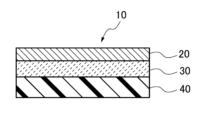
- FIG. 1 is a schematic cross-sectional view showing an example of a laminate according to an embodiment of the invention.
- a laminate according to an embodiment of the present invention is a laminate having a substrate, a molecular bonding layer, and a thin film in this order, wherein the thickness of the thin film is 10 ⁇ m or less, and the substrate and the thin film are separated from each other. It is a laminate bonded by chemical bonding via the molecular bonding layer.
- FIG. 1 is a schematic cross-sectional view showing a laminate 10 according to an embodiment of the invention.
- the layered product 10 according to this embodiment has a substrate 40, a molecular bonding layer 30, and a thin film 20 in this order.
- the base material and the thin film are chemically bonded because they are chemically bonded via the molecular bonding layer. Therefore, even if the base material and the thin film are made of different materials or are difficult to bond, a laminate with excellent bonding strength and high adhesion can be formed. Also, by setting the thickness of the thin film to 10 ⁇ m or less, a thin laminate can be obtained. Furthermore, the molecular bonding layer can be composed of a single molecule of the compound that constitutes the molecular bonding layer, and theoretically, it is possible to strongly bond with a thickness of one molecule. It is possible to join to Here, chemical bonds refer to covalent bonds, ionic bonds, hydrogen bonds, and coordinate bonds.
- the material used for the base material is not particularly limited, and resins, rubbers, metals, glass, ceramics, etc. can be mentioned, and can be selected according to the application.
- the material used for the substrate is preferably resin (resin material).
- resin material resin
- high-frequency wiring boards and multilayer wiring boards used in electronic devices generally require materials with a low dielectric constant, so it is preferable to use a resin material with a low dielectric constant.
- resin materials include resins such as curable resins (eg, thermosetting resins, photocurable resins, etc.) and thermoplastic resins.
- curable resins examples include polycarbonate resins, thermosetting polyimide resins, thermosetting fluorinated polyimide resins, epoxy resins, phenol resins, urea resins, melamine resins, diallyl phthalate resins, silicone resins, thermosetting urethane resins, Examples thereof include fluororesins (polymers of fluorine-containing olefins (specifically, polytetrafluoroethylene (PTFE), etc.)), liquid crystal polymers (LCP), and the like. These can be used singly or in combination of two or more.
- fluororesins polymers of fluorine-containing olefins (specifically, polytetrafluoroethylene (PTFE), etc.)
- LCP liquid crystal polymers
- thermoplastic resins include olefin resins such as polyethylene resins and polypropylene resins, acrylic resins, polystyrene resins, polyester resins, polyacrylonitrile resins, maleimide resins, polyvinyl acetate resins, ethylene-vinyl acetate copolymers, and polyvinyl alcohol resins.
- olefin resins such as polyethylene resins and polypropylene resins, acrylic resins, polystyrene resins, polyester resins, polyacrylonitrile resins, maleimide resins, polyvinyl acetate resins, ethylene-vinyl acetate copolymers, and polyvinyl alcohol resins.
- polyamide resin polyvinyl chloride resin, polyacetal resin, polyphenylene oxide resin, polyphenylene sulfide resin, polysulfone resin, polyethersulfone resin, polyetheretherketone resin, polyarylsulfone resin, thermoplastic polyimide resin, thermoplastic polyimide fluoride resin , thermoplastic urethane resins, polyetherimide resins, polymethylpentene resins, cellulose resins, liquid crystal polymers, ionomers, and the like. These can be used singly or in combination of two or more.
- the substrate is preferably a resin substrate containing at least one selected from fluororesin, silicone resin, polyethylene resin, and polypropylene resin.
- the resin material is preferably a curable resin, more preferably a thermosetting polyimide resin, a thermosetting polyimide fluoride resin, or a fluororesin, and still more preferably a fluororesin.
- a fluorine-based resin is a resin material with a low dielectric constant and a low dielectric loss material, and is therefore suitable for use as a high-frequency communication antenna substrate.
- the curable resin is a difficult-to-adhere resin, has poor compatibility with other materials, and is difficult to laminate with a thin film. For example, due to the low surface free energy of fluororesin, it is difficult to bond with other materials. It was difficult to get a body.
- the fluororesin is a polymer containing a fluoromonomer as a repeating unit, and may be a resin composition in which the fluororesin and another resin are blended. It may be a copolymer obtained by polymerization.
- fluororesins examples include polytetrafluoroethylene (PTFE), tetrafluoroethylene-perfluoroalkyl vinyl ether copolymer (PFA), tetrafluoroethylene-hexafluoropropylene copolymer (FEP), tetrafluoroethylene-ethylene copolymer Polymer (ETFE), polychlorotrifluoroethylene (PCTFE) and the like can be mentioned, among which PTFE and PFA are more preferred.
- PTFE polytetrafluoroethylene
- PFA tetrafluoroethylene-perfluoroalkyl vinyl ether copolymer
- FEP tetrafluoroethylene-hexafluoropropylene copolymer
- ETFE tetrafluoroethylene-ethylene copolymer Polymer
- PCTFE polychlorotrifluoroethylene
- Fluororesins include polytetrafluoroethylene (PTFE), tetrafluoroethylene-perfluoroalkyl vinyl ether copolymer (PFA), tetrafluoroethylene-hexafluoropropylene copolymer (FEP), tetrafluoroethylene-ethylene copolymer ( ETFE), and at least one selected from the group consisting of polychlorotrifluoroethylene.
- PTFE polytetrafluoroethylene
- PFA tetrafluoroethylene-perfluoroalkyl vinyl ether copolymer
- FEP tetrafluoroethylene-hexafluoropropylene copolymer
- ETFE tetrafluoroethylene-ethylene copolymer
- fluorine-based monomers examples include fluorine-based ethylene monomers such as vinylidene fluoride, hexafluoropropylene, tetrafluoroethylene, and chlorotrifluoroethylene.
- the fluororesin may contain no components other than the fluororesin, or may contain substantially no components other than the fluororesin.
- substantially free means that the content is less than 0.1% by mass, preferably less than 0.01% by mass.
- the shape of the substrate is not particularly limited, and may be, for example, a plate-like shape having a flat surface, a plate-like shape having a curved surface, a sheet-like shape, a film-like shape, or a molded body of the material used for the substrate.
- the thin film includes, for example, a coating film, a hard coat layer, a metal plating layer, a metal sputter layer, a metal foil, and combinations thereof. It is preferably at least one selected from a layer and a metal plating layer.
- the thin film according to the embodiment of the present invention may have a plurality of layers, a plurality of layers of one type, or a plurality of layers of two or more types.
- the material of the thin film is not particularly limited, and resin, rubber, metal, glass, ceramics, etc. can be mentioned, and can be selected according to the application.
- the coating film is formed by, for example, paint.
- paint There are no particular restrictions on the coating method of the paint, and general methods such as brush coating, roller coating, spray coating, and various coater coatings can be used, and the coating amount is not particularly limited. Also, the time and temperature for heating the paint can be appropriately determined depending on the paint used, the amount of application, and the like.
- the coating film is not particularly limited, and examples thereof include various coating films such as epoxy-based, polyester-melamine-based, alkyd-melamine-based, acrylic-melamine-based, acrylic-urethane-based, and acrylic-polyacid curing agent-based coatings. .
- the thickness of the coating film is not particularly limited, preferably 0.001 to 10 ⁇ m, more preferably 0.01 to 8 ⁇ m.
- the coating method of the coating film there are no particular restrictions on the coating method of the coating film, and general methods such as brush coating, roller coating, spray coating, and various coater coatings can be used, and the coating amount is not particularly limited.
- the time and temperature for heating the coating film can be appropriately determined depending on the coating material to be used, the coating amount, and the like.
- the hard coat layer can be formed, for example, from a composition for forming a hard coat layer.
- the composition for forming a hard coat layer is applied to the surface of the substrate on which the molecular bonding layer is provided, and if necessary, curing treatment (for example, ultraviolet irradiation, heat treatment, etc.) is performed, A hard coat layer can be formed.
- the hard coat layer may be subjected to surface treatment such as corona treatment or plasma treatment.
- any appropriate method can be adopted as the method of applying the composition for forming the hard coat layer, as long as the effects of the present invention are not impaired.
- coating methods include bar coating, gravure roll coating, die coating, rod coating, slot orifice coating, curtain coating, fountain coating and comma coating.
- the heating temperature of the coating layer formed by applying the hard coat layer-forming composition can be set to any appropriate temperature depending on the composition of the hard coat layer-forming composition.
- Such heating temperature is preferably set to the glass transition temperature of the resin contained in the base material layer or lower. By heating at a temperature equal to or lower than the glass transition temperature of the resin contained in the base material layer, it is possible to obtain a laminate with a hard coat layer in which deformation due to heating is suppressed.
- the heating temperature is preferably 60°C to 140°C, more preferably 60°C to 100°C. By heating in such a range, a hard coat layer having excellent adhesion to the base material layer can be formed.
- Typical curing treatments include ultraviolet irradiation, heat treatment, and the like.
- the cumulative amount of UV irradiation is preferably 200 mJ to 400 mJ.
- the composition for forming a hard coat layer may contain any suitable monomer or resin (at least one selected from the group consisting of oligomers, prepolymers and polymers) within a range that does not impair the effects of the present invention.
- the composition for forming a hard coat layer contains a thermosetting or photosetting curable compound.
- the curable compound is, for example, at least one selected from the group consisting of monomers and resins (at least one selected from the group consisting of oligomers, prepolymers and polymers).
- curable compound preferably at least one selected from the group consisting of polyfunctional monomers and oligomers can be employed.
- curable compounds include monomers or oligomers having two or more (meth)acryloyl groups, urethane (meth)acrylates or oligomers of urethane (meth)acrylates, epoxy monomers or oligomers, silicone monomers or oligomers, Among these, urethane (meth)acrylates or oligomers of urethane (meth)acrylates are preferable as the curable compound in that the effects of the present invention can be exhibited more effectively.
- the composition for forming a hard coat layer may contain any appropriate additive as long as it does not impair the effects of the present invention.
- additives include, for example, polymerization initiators, leveling agents, antiblocking agents, dispersion stabilizers, thixotropic agents, antioxidants, UV absorbers, antifoaming agents, thickeners, dispersants, surfactants, agents, catalysts, fillers, lubricants, antistatic agents, and the like. Only one kind of such additives may be used, or two or more kinds thereof may be used.
- the type, combination, content, and the like of additives that can be contained in the composition for forming a hard coat layer can be appropriately set according to the purpose and desired properties.
- the composition for forming a hard coat layer may contain fine particles as an additive. Anti-glare function can be imparted by using a composition for forming a hard coat layer containing fine particles.
- the fine particles may be inorganic fine particles or organic fine particles. Examples of inorganic fine particles include silicon oxide fine particles, titanium oxide fine particles, aluminum oxide fine particles, zinc oxide fine particles, tin oxide fine particles, calcium carbonate fine particles, barium sulfate fine particles, talc fine particles, kaolin fine particles, and calcium sulfate fine particles.
- organic fine particles examples include polymethyl methacrylate resin powder (PMMA fine particles), silicone resin powder, polystyrene resin powder, polycarbonate resin powder, acrylic styrene resin powder, benzoguanamine resin powder, melamine resin powder, polyolefin resin powder, and polyester resin powder. , polyamide resin powder, polyimide resin powder, polyethylene fluoride resin powder, and the like.
- PMMA fine particles polymethyl methacrylate resin powder
- silicone resin powder silicone resin powder
- polystyrene resin powder polycarbonate resin powder
- acrylic styrene resin powder benzoguanamine resin powder
- melamine resin powder polyolefin resin powder
- polyester resin powder polyester resin powder
- polyamide resin powder polyimide resin powder
- polyethylene fluoride resin powder polyethylene fluoride resin powder
- the composition for forming a hard coat layer may contain a solvent.
- solvents include dibutyl ether, dimethoxymethane, dimethoxyethane, diethoxyethane, propylene oxide, 1,4-dioxane, 1,3-dioxolane, 1,3,5-trioxane, tetrahydrofuran, acetone, and methyl ethyl ketone (MEK).
- Only one kind of solvent may be contained in the composition for forming a hard coat layer, or two or more kinds thereof may be used.
- the type, combination, content, etc. of solvents that can be contained in the composition for forming a hard coat layer can be appropriately set according to the purpose and desired properties.
- a metal plating layer is a metal-containing layer formed by a plating method.
- metals that can be contained in the metal plating layer include metals belonging to Groups 8 to 15 of the periodic table and Periods 4 to 6 of the IUPAC periodic table (iron, ruthenium, osmium, cobalt, rhodium, iridium, nickel, palladium, platinum, copper, silver, gold, zinc, cadmium, mercury, gallium, indium, thallium, germanium, tin, lead, arsenic, antimony, bismuth), chromium, and manganese; ruthenium, cobalt, rhodium , nickel, palladium, platinum, copper, silver, gold, cadmium, indium, tin, lead, antimony, and bismuth are preferable, and copper is more preferable from the viewpoint of low electric resistance and cost reduction.
- a metal sputter layer is a metal-containing layer formed by a sputtering method.
- materials that can be used for the metal sputtered layer it is preferable to use, for example, metals belonging to Group 11 of the periodic table and Periods 4 and 5 of the IUPAC periodic table.
- a metal foil is a foil (thin film) made of a metal material. Examples of metal materials include materials containing metals selected from gold, silver, copper, aluminum, iron, titanium, alloys containing one or more of these, and the like. Among these, materials containing copper or chromium are preferable, and materials containing copper are preferable.
- the thin film preferably contains at least one selected from acrylic, urethane, silicone, epoxy, copper, silver, gold, chromium, nickel, palladium, platinum, and alloys of these metals.
- the thin film 20 may consist of either a single layer or multiple layers.
- the thickness of the thin film is not particularly limited, and from the viewpoint of facilitating the formation of a uniform and stable thin film, it is preferably 0.01 ⁇ m or more, more preferably 0.1 ⁇ m or more, and 0.5 ⁇ m or more. is more preferred. From the viewpoint of weight reduction and cost reduction of the member, the thickness is preferably 10 ⁇ m or less, more preferably 8 ⁇ m or less, and even more preferably 5 ⁇ m or less.
- the thickness of the thin film can be measured using, for example, a film thickness meter (dial gauge).
- the molecular bonding layer in the laminate according to the embodiment of the present invention is a layer that chemically bonds the substrate and the thin film via the molecular bonding layer.
- the layer that joins the substrate and the thin film is not bonded by the intermolecular force of the adhesive, but by chemical bonding through the molecular bonding layer, so that the substrate and the thin film are chemically bonded. bind to Therefore, even if the base material and the thin film are made of different materials or are difficult to bond, a laminate having excellent bonding strength and high adhesion can be formed.
- the molecular bonding layer can be formed using a molecular bonding agent.
- the molecular bonding agent that forms the molecular bonding layer according to the embodiment of the present invention chemically bonds the substrate and the thin film via the molecular bonding layer. It preferably contains a compound having a reactive group that chemically bonds with the thin film. That is, the molecular bonding agent forming the molecular bonding layer according to the embodiment of the present invention contains a compound having a reactive group that chemically bonds with the substrate and a reactive group that chemically bonds with the thin film. is preferred.
- the reactive group that chemically bonds with the base material can be appropriately selected according to the material that constitutes the base material.
- the reactive group that chemically bonds with the thin film can be appropriately selected according to the material that constitutes the thin film.
- the substrate according to the embodiment of the present invention is a thermosetting resin such as a thermosetting polyimide resin, a thermosetting fluorinated polyimide resin, or a fluororesin
- the compound contained in the molecular bonding agent As the reactive group for chemical bonding, for example, a silanol group, a group capable of generating a silanol group by a hydrolysis reaction, and the like are preferable.
- a resin material or the like having a reactive group such as a hydroxyl group on the surface is used as the base material, it can be reacted with the reactive group of the molecular bonding layer without washing treatment or surface treatment.
- the surface of the base material is subjected to surface treatment, etc., the number of hydroxy groups on the surface of the base material can be increased. It can be improved further.
- the thin film according to the embodiment of the present invention is at least one selected from a coating film, a hard coat layer, a metal plating layer, a metal sputter layer, a metal foil, and a combination thereof
- the thin film and chemical Preferred examples of the reactive group that bonds to are amino group, azide group, mercapto group, isocyanate group, ureido group and epoxy group.
- a molecular bonding agent includes, for example, at least one reactive group A selected from the group consisting of an amino group, an azide group, a mercapto group, an isocyanate group, a ureido group and an epoxy group, and a silanol group. , and a group that generates a silanol group by hydrolysis reaction.
- the molecular bonding layer 30 and the thin film 20 are molecularly bonded firmly by chemical bonding.
- the molecular bonding layer 30 and the base material 40 are strongly molecularly bonded by chemical bonding. be. Then, the substrate 40 and the thin film 20 in the laminate are chemically bonded via the molecular bonding layer 30 .
- Examples of compounds having the reactive group A and the reactive group B include compounds represented by the following formula (1).
- RA represents a reactive group A or a monovalent substituent having one or more reactive groups A
- RB represents a reactive group B
- Z represents a divalent organic group.
- the divalent organic group represented by Z in formula (1) includes an optionally substituted alkylene group having 1 to 20 carbon atoms, and an optionally substituted alkylene group having 2 to 20 carbon atoms. an alkenylene group, an alkynylene group having 2 to 20 carbon atoms which may have a substituent, an arylene group having 6 to 20 carbon atoms which may have a substituent; and the like.
- Examples of the alkylene group having 1 to 20 carbon atoms represented by Z include methylene group, ethylene group, propylene group, trimethylene group, tetramethylene group, pentamethylene group, hexamethylene group and the like. A propylene group is preferred, and a propylene group is more preferred.
- the alkenylene group having 2 to 20 carbon atoms represented by Z includes vinylene group, propenylene group, butenylene group, pentenylene group and the like.
- Examples of the alkynylene group having 2 to 20 carbon atoms represented by Z include an ethynylene group and a propynylene group.
- the arylene group having 6 to 20 carbon atoms represented by Z includes o-phenylene group, m-phenylene group, p-phenylene group, 2,6-naphthylene group, 1,5-naphthylene group and the like.
- substituents that the alkylene group, alkenylene group, and alkynylene group may have include halogen atoms such as a fluorine atom and a chlorine atom; alkoxy groups such as a methoxy group and an ethoxy group; alkylthio groups such as a methylthio group and an ethylthio group; groups; alkoxycarbonyl groups such as a methoxycarbonyl group and an ethoxycarbonyl group; and the like.
- substituents that the arylene group may have include a cyano group; a nitro group; a halogen atom such as a fluorine atom, a chlorine atom and a bromine atom; an alkyl group such as a methyl group and an ethyl group; a methoxy group, an ethoxy group and the like. alkoxy group; alkylthio group such as methylthio group and ethylthio group; and the like. These substituents may be bonded to any position in a group such as an alkylene group, an alkenylene group, an alkynylene group, and an arylene group. good too.
- the reactive group A represented by RA in formula (1) includes an amino group, an azide group, a mercapto group, an isocyanate group, a ureido group, an epoxy group, a thiol group, and R 3 and R 4 in the following formula (2) are hydrogen.
- R 3 and R 4 in the following formula (2) are hydrogen atoms It is more preferably at least one selected from the group consisting of groups, and more preferably at least one selected from the group consisting of amino groups, azide groups, mercapto groups, isocyanate groups, ureido groups and epoxy groups. , an amino group or an azide group.
- the thin film is an organic substance such as a hard coat layer
- the reactive group A represented by RA in formula (1) is an amino group or an azide group
- the molecular bonding layer and the thin film are bonded more firmly. Therefore, it is preferable.
- Examples of the “monovalent group having at least one reactive group A” represented by R 1 A in formula (1) include groups represented by the following formulas (2) to (4).
- R 2 represents a divalent hydrocarbon group having 1 to 10 carbon atoms.
- R 3 , R 4 each independently represent a hydrogen atom or a hydrocarbon group having 1 to 20 carbon atoms, and R 5 and R 6 each independently represent a reactive group A or a group represented by the above formula (2) (this in formula (2), * represents a bond with a carbon atom constituting the triazine ring in formula (4).
- R 7 is a single bond or —N(R 8 )— R 8 represents a hydrogen atom or a hydrocarbon group having 1 to 20 carbon atoms.
- the divalent hydrocarbon group having 1 to 10 carbon atoms represented by R 2 is preferably a divalent hydrocarbon group having 2 to 6 carbon atoms.
- R 2 include an alkylene group having 1 to 10 carbon atoms or an arylene group, and specific examples include an alkylene group such as an ethylene group, a trimethylene group and a propylene group; an o-phenylene group and an m-phenylene group. , an arylene group such as a p-phenylene group;
- R 3 and R 4 each independently represent a hydrogen atom or a hydrocarbon group having 1 to 20 carbon atoms, preferably a hydrogen atom or a hydrocarbon group having 1 to 10 carbon atoms.
- Examples of the hydrocarbon group having 1 to 20 carbon atoms represented by R 3 and R 4 include an alkyl group, an alkenyl group, an alkynyl group, or an aryl group having 1 to 20 carbon atoms, and specifically, a methyl group.
- R 5 and R 6 are each independently a reactive group A or a group represented by the above formula (2) (in this case, in formula (2), * represents a carbon atom constituting an aromatic ring represents a bond with an atom.). R 5 and R 6 are preferably the same reactive group A.
- R 7 represents a single bond or a divalent group represented by -N(R 8 )-.
- R 8 represents a hydrogen atom or a hydrocarbon group having 1 to 20 carbon atoms. Examples of the hydrocarbon group for R 8 include the same hydrocarbon groups as those described above for R 3 and R 4 .
- R 7 preferably represents -NH-.
- R A in formula (1) is preferably a group represented by formula (4) among the groups represented by formulas (2) to (4) above, and a group represented by formula (4) and R 5 or R 6 preferably represents an azide group or a group represented by the above formula (2).
- RA is a group represented by formula (4) and R 5 or R 6 represents a group represented by formula (2)
- RA is, for example, represented by the following formula (5) group.
- R 7 represents a single bond or a divalent group represented by —N(R 8 )—.
- R 8 represents a hydrogen atom or a hydrocarbon group having 1 to 20 carbon atoms, each R 2 independently represents a divalent hydrocarbon group having 1 to 10 carbon atoms, and R 3 and R 4 are Each independently represents a hydrogen atom or a hydrocarbon group having 1 to 20 carbon atoms, and R 2 , R 3 and R 4 may be the same or different.
- R 7 examples include those similar to those shown in formula (4).
- R 2 , R 3 and R 4 include the same as R 2 , R 3 and R 4 in formula (2).
- the reactive group B represented by RB is a silanol group or a group that generates a silanol group by hydrolysis reaction, and may be, for example, a group represented by the following formula (6).
- X represents a hydroxy group or an alkoxy group having 1 to 10 carbon atoms
- Y represents a hydrocarbon group having 1 to 20 carbon atoms
- a represents an integer of 1 to 3.
- the alkoxy group having 1 to 10 carbon atoms represented by X includes methoxy group, ethoxy group, n-propoxy group, isopropoxy group and the like, and ethoxy group is preferred.
- the hydrocarbon group having 1 to 20 carbon atoms represented by Y includes the same hydrocarbon groups as R 3 and R 4 in formula (2).
- X represents a hydroxy group or an alkoxy group having 1 to 10 carbon atoms, preferably a represents 3, X represents a hydroxy group or an ethoxy group, and a represents 3 more preferred.
- the molecular bonding agent forming the molecular bonding layer contains a molecular bonding compound having a reactive group A and a reactive group B, wherein the reactive group A is an amino group, At least one selected from the group consisting of an azide group, a mercapto group, an isocyanate group, a ureido group and an epoxy group, and the reactive group B is selected from a silanol group and a group that generates a silanol group by hydrolysis reaction. At least one is preferred.
- the following compounds can be exemplified as compounds having a reactive group A and a reactive group B.
- Molecular bonding compounds in which RA is an amino group include 3-aminopropyltrimethoxysilane, 3-aminopropyltriethoxysilane, 3-aminopropyldimethoxymethylsilane, 3-aminopropyldiethoxymethylsilane, [3-( N,N-dimethylamino)propyl]trimethoxysilane, [3-(phenylamino)propyl]trimethoxysilane, trimethyl[3-(triethoxysilyl)propyl]ammonium chloride, trimethyl[3-(trimethoxysilyl)propyl ] and ammonium chloride.
- Molecular bonding compounds in which RA is an azide group include (11-azidoundecyl)trimethoxysilane, (11-azidoundecyl)triethoxysilane, and the like.
- Molecular bonding compounds in which RA is a mercapto group include 3-mercaptopropyltrimethoxysilane, 3-mercaptopropyltriethoxysilane, 3-mercaptopropyldimethoxymethylsilane, and the like.
- Molecular bonding compounds in which RA is an isocyanate group include 3-(trimethoxysilyl)propylisocyanate, 3-(triethoxysilyl)propylisocyanate, and the like.
- Molecular bonding compounds in which RA is a ureido group include 3-ureidopropyltrimethoxysilane, 3-ureidopropyltriethoxysilane, and the like.
- Molecular bonding compounds in which RA is an epoxy group include 3-glycidoxypropyltrimethoxysilane, 3-glycidoxypropyltriethoxysilane, 3-glycidoxypropylmethyldimethoxysilane, 3-glycidoxypropylmethyl diethoxysilane and the like.
- Examples of compounds in which R A is a monovalent group having one or more reactive groups A include 3-(2-aminoethylamino)propyltrimethoxysilane and 3-(2-aminoethylamino)propyltriethoxysilane. , 3-(2-aminoethylamino)propyldimethoxymethylsilane, 2-(3,4-epoxycyclohexyl)ethyltrimethoxysilane, and the following compounds (11) to (19).
- the compounds (11) to (19) are preferable, and among them, (11) N,N'-bis(2-aminoethyl)-6 -(3-trihydroxysilylpropyl)amino-1,3,5-triazine-2,4-diamine or (19) 6-(3-triethoxysilylpropyl)amino-1,3,5-triazine-2, Compounds of 4-diazide are preferred.
- the thickness of the molecular bonding layer can be compared with that of the adhesive layer when using a general adhesive. and can be formed very thin. Therefore, in the laminate according to the embodiment of the present invention, the thin film laminated on the substrate can be strongly bonded by the extremely thin molecular bonding layer.
- the thickness of the molecular bonding layer is preferably 5 nm or more, more preferably 10 nm or more, and even more preferably 30 nm or more in order to exhibit stable bonding strength.
- the thickness is preferably 300 nm or less, more preferably 200 nm or less, and even more preferably 100 nm or less.
- the total light transmittance of the laminate according to the embodiment of the present invention can be set according to the purpose and mode of use, so it is not limited to a specific range. From the viewpoint of, it is preferably 70% or more, more preferably 75% or more, still more preferably 80% or more, even more preferably 85% or more, and 90% or more Especially preferred.
- Such a light-transmitting layered body can adjust the appearance through the layered body, for example, by suppressing unevenness in the appearance of a member using the layered body. In addition, it is possible to impart a design property in which the light transmittance is moderately restricted.
- the total light transmittance of the laminate according to the embodiment of the present invention can be measured using a haze meter according to JIS K7136. Specifically, it can be measured by the method described in Examples below.
- the total light transmittance of the laminate can be adjusted by adjusting the types and amounts of materials and additives (for example, the types and amounts of particles such as pigments used) that constitute the base material and the thin film.
- Method for manufacturing laminate Although there is no particular limitation on the method for producing the laminate, it can be produced by, for example, the following production method according to an embodiment of the present invention.
- a manufacturing method is a method for manufacturing a laminate having a base material, a molecular bonding layer, and a thin film in this order, wherein the base material and the thin film are composed of the molecules
- a first step of activating the surface of the base material by surface treatment which is a laminate bonded by chemical bonding via a bonding layer, applying a molecular bonding agent to the surface of the activated base material.
- a second step of forming the molecular junction layer and a third step of forming the thin film on the molecular junction layer are included.
- the first step is to activate the surface of the substrate 40 by surface treatment.
- the substrate 40 is prepared, and the surface of the substrate 40 is activated by surface treatment before the second step.
- Examples of surface treatment include Na treatment, corona treatment, sputter etching treatment, plasma treatment, and the like.
- the first step can further improve the adhesive force between the thin film and the substrate 40 that requires strong bonding.
- reactive groups are generated by the first step such as surface treatment, thereby chemically bonding with the molecular bonding layer 30. be able to.
- the Na treatment is a surface treatment using a treatment liquid containing metallic sodium (hereinafter referred to as "Na treatment").
- the Na treatment of the base material 40 may be performed, for example, on the surface to be bonded to the thin film when the laminate 10 is formed.
- Reactive groups are generated by surface modification by Na treatment, and the base material and the molecular bonding layer are strongly bonded by chemical bonding.
- the Na treatment can be performed, for example, by immersing the substrate in a treatment liquid containing metallic sodium.
- the treatment liquid used for Na treatment is, for example, an ammonia solution of metallic sodium and a tetrahydrofuran solution of metallic sodium/naphthalene complex.
- a commercially available treatment liquid for example, Fluorobonder (registered trademark) manufactured by Technos) can also be used.
- corona treatment for example, there is a method of discharging in normal pressure air using a corona treatment machine.
- the corona treatment is carried out by irradiating the surface of the substrate with electric discharge using a corona surface treatment apparatus with a high frequency power supply.
- the discharge output intensity is preferably 0.5 kW or more, more preferably 0.8 kW or more, and still more preferably 0.10 kW or more.
- a sputter etching process for example, bombards the surface of a substrate with energetic particles from a gas. At the part of the substrate that the particles collide with, atoms or molecules present on the surface of the substrate are released to form reactive groups, thereby improving adhesion.
- the sputter etching process can be performed, for example, by placing the base material in a chamber, depressurizing the chamber, and applying a high-frequency voltage while introducing an atmospheric gas.
- Atmospheric gas is, for example, at least one selected from the group consisting of rare gases such as helium, neon, argon and krypton, nitrogen gas and oxygen gas.
- the frequency of the high frequency voltage to be applied is, for example, 1 to 100 MHz, preferably 5 to 50 MHz.
- the pressure in the chamber when applying the high-frequency voltage is, for example, 0.05 to 200 Pa, preferably 1 to 100 Pa.
- the sputter etching energy (product of processing time and applied power) is, for example, 1 to 1000 J/cm 2 , preferably 2 to 200 J/cm 2 .
- Plasma treatment includes, for example, a method of discharging in normal pressure air using a plasma discharger. It can be carried out by setting the substrate in a plasma apparatus and irradiating it with a predetermined gas.
- the plasma processing conditions can be set to any appropriate conditions as long as the effects of the present invention can be obtained.
- the plasma treatment may be a plasma treatment performed under atmospheric pressure or a plasma treatment performed under reduced pressure.
- the pressure (degree of vacuum) during plasma processing is, for example, 0.05 Pa to 200 Pa, preferably 0.5 Pa to 100 Pa.
- the frequency of the high frequency power source used for plasma processing is, for example, 1 MHz to 100 MHz, preferably 5 MHz to 50 MHz.
- the amount of energy during plasma treatment is preferably 0.1 J/cm 2 to 100 J/cm 2 , more preferably 1 J/cm 2 to 20 J/cm 2 .
- the plasma treatment time is preferably 1 second to 5 minutes, more preferably 5 seconds to 3 minutes.
- the amount of gas supplied during plasma processing is preferably 1 sccm to 150 sccm, more preferably 10 sccm to 100 sccm.
- reactive gases used in the plasma treatment include gases such as water vapor, air, oxygen, nitrogen, hydrogen, ammonia, and alcohols (eg, ethanol, methanol, isopropyl alcohol).
- gases such as water vapor, air, oxygen, nitrogen, hydrogen, ammonia, and alcohols (eg, ethanol, methanol, isopropyl alcohol).
- alcohols eg, ethanol, methanol, isopropyl alcohol.
- inert gases such as helium, neon, and argon may be used in combination with the reaction gas.
- the type of surface treatment can be appropriately selected according to the material that constitutes the base material.
- a surface-treated commercially available film substrate or the like can also be used as the substrate.
- the second step is a step of forming the molecular bonding layer by applying a molecular bonding agent to the surface of the activated substrate.
- a molecular bonding agent contains a molecular bonding compound, and can be prepared, for example, by dissolving a molecular bonding compound (preferably a compound having a reactive group A and a reactive group B) in a solvent.
- the molecular bonding layer 30 can be formed by drying the applied molecular bonding agent.
- the applied solution contains a compound having an azide group, it is preferable to irradiate ultraviolet rays (UV: ultraviolet).
- UV ultraviolet
- the solution contains a compound having an amino group
- the heating temperature is preferably 60.degree. C. or higher, more preferably 70.degree.
- the temperature is preferably 150°C or lower, more preferably 100°C or lower, and even more preferably 90°C or lower.
- the process of applying and drying a molecular bonding agent containing a compound having an azide group or a compound having an amino group may be repeated multiple times. Thereby, the concentration of the reactive group A and the reactive group B in the molecular bonding layer 30 can be increased.
- Different types of molecular bonding agents molecular bonding compounds
- a molecular bonding agent containing a compound having an amino group may be applied and dried one or more times.
- the third step is to form the thin film on the molecular junction layer.
- the thin film includes, for example, a coating film, a hard coat layer, a metal plating layer, a metal sputter layer, a metal foil, and a combination thereof, such as a hard coat layer, a metal plating layer, and a metal sputter layer. is preferred.
- the thin film the above description can be used as it is.
- the laminate according to the embodiment of the present invention is not particularly limited in its manufacturing method, and can be produced by the laminate manufacturing method according to the embodiment of the present invention. You may manufacture by methods other than the manufacturing method of a body. For example, when a base material having a reactive group capable of reacting with the molecular bonding layer on the surface is used as the base material 40, the surface treatment according to the embodiment of the present invention can be performed without performing the surface treatment in the first step. It is possible to produce laminates.
- the reactivity of the molecular bonding layer 30 may be reduced if hydroxyl groups are present on the surface without performing the first step such as cleaning treatment or molecular bonding treatment. can be reacted with groups.
- the first step such as cleaning treatment or molecular bonding treatment.
- the base material 40 when a resin material or the like having a reactive group such as a hydroxyl group on the surface is used as the base material 40, it can be reacted with the reactive group of the molecular bonding layer without washing treatment or surface treatment. .
- the first step such as surface treatment is carried out, it is possible to increase the number of hydroxyl groups appearing on the surface, which makes it easier to react with the reactive groups of the molecular bonding layer 30, thereby further improving the bonding strength. can.
- Laminate [2] The laminate according to [1], wherein the thin film is at least one selected from a hard coat layer, a sputtered metal layer, and a plated metal layer. [3] The laminate according to [1], wherein the thin film contains at least one selected from acrylic, urethane, silicone, epoxy, copper, silver, gold, chromium, nickel, palladium, platinum, and alloys of these metals. body.
- the molecular bonding agent forming the molecular bonding layer contains a molecular bonding compound having a reactive group A and a reactive group B, wherein the reactive group A is an amino group, an azide group, a mercapto group, an isocyanate group, or a ureido group.
- the laminate according to any one of items.
- a method for producing a laminate comprising a second step and a third step of forming the thin film on the molecular junction layer.
- ⁇ Base material> ⁇ Sputter-etched product: Single-sided sputter-etched product No. manufactured by Nitto Denko Corporation. 901W (thickness: 0.05 mm) was used. Corona-treated product: PTFE No. manufactured by Nitto Denko Corporation. About 900UL (thickness 0.05 mm), corona treatment was performed using KASUGA's corona treatment machine AGF-0121 under the conditions of 0.18 kW and 20 m / min Na-treated product: Na-treated product manufactured by Nitto Denko Co., Ltd. No. 901UL (thickness 0.05mm) is used
- molecular bonding agent A The following molecular conjugate compound (11) N,N'-bis(2-aminoethyl)-6-(3-trihydroxysilylpropyl)amino-1,3,5-triazine-2,4-diamine (Io Chemical Co., Ltd. Laboratory Co., Ltd.) 0.5% by mass aqueous solution was used as the molecular bonding agent A.
- Molecular bonding agent B The following molecular junction compound (19) 6-(3-triethoxysilylpropyl)amino-1,3,5-triazine-2,4-diazide (manufactured by Io Kagaku Kenkyusho Co., Ltd.) 0.1 wt% ethanol solution A molecular bonding agent B was used.
- Example 1 The molecular bonding agent A prepared above was applied to the sputter-etched surface of a PTFE film (base material: fluorine-based resin film No. 901W (thickness: 0.05 mm, single-sided sputter-etched product) manufactured by Nitto Denko Corporation)). It was coated using #14 and dried in an oven at 120° C. for 10 minutes to form a molecular junction layer with a thickness of 30 nm.
- base material fluorine-based resin film No. 901W (thickness: 0.05 mm, single-sided sputter-etched product) manufactured by Nitto Denko Corporation)
- a urethane-based hard coat reagent was applied onto the molecular bonding layer prepared on the sputter-etched surface of the PTFE film using a #4 wire bar, dried at 80°C for 60 seconds, and irradiated with UV (350-400 mJ).
- a laminate of Example 1 was obtained in which a hard coat layer (HC) having a thickness of 1 ⁇ m was formed, and the hard coat layer (thin film) and the fluororesin film (substrate) were chemically bonded via a molecular bonding layer. rice field.
- Example 2 The molecular bonding agent B prepared above was applied to the sputter-etched surface of a PTFE film (base material: No. 901W manufactured by Nitto Denko Corporation (thickness: 0.05 mm, single-sided sputter-etched product)) using a wire bar #14. After drying (drying conditions: 80° C. for 3 minutes), UV irradiation was performed (UV irradiation conditions: 254 nm, 100 mJ). Thereafter, the wire bar #14 was used again to apply the molecular bonding agent B, and after drying (drying conditions: 80° C. for 3 minutes), UV irradiation was performed (UV irradiation conditions: 254 nm, 100 mJ). A 30 nm-thick molecular bonding layer was formed on the sputter-etched surface of the substrate by the above operation.
- a hard coat layer (HC) having a thickness of 1 ⁇ m was formed on the molecular bonding layer formed on the sputter-etched surface of the base material in the same manner as in Example 1, and the hard coat layer (thin film) and the fluororesin film (base material) were formed.
- a laminate of Example 2 was obtained in which the material) was chemically bonded via the molecular bonding layer.
- Example 3 As in Example 1, using the molecular bonding agent A prepared above, a molecular bonding layer having a thickness of 30 nm was formed on the sputter-etched surface of the PTFE film.
- a Pd—Sn catalyst manufactured by Rohm & Haas Co., Ltd. was used to support a catalyst on the molecular bonding layer formed on the sputter-etched surface of the substrate by a colloid method (pre-dip/catalyst/accelerator).
- a colloid method pre-dip/catalyst/accelerator.
- the PTFE coated with the molecular bonding layer was immersed in the pre-dip at 25°C for 1 minute, the catalyst was immersed in the catalyst at 50°C for 1 minute, washed with deionized water, and then the accelerator was placed at 25°C for 3 minutes. immersion was performed. After that, by washing with ion-exchanged water, a Pd—Sn catalyst carrier was obtained.
- a copper plating layer having a thickness of 10 ⁇ m or less was formed by immersing the Pd—Sn catalyst carrier at 30° C. for 5 minutes using Surcup PEA (copper plating solution) manufactured by Uyemura Kogyo Co., Ltd. as an electroless plating bath.
- Surcup PEA copper plating solution manufactured by Uyemura Kogyo Co., Ltd. as an electroless plating bath.
- a laminate (copper-plated fluorine film) of Example 3 was obtained in which the copper-plated layer (thin film) and the fluorine-based resin film (substrate) were chemically bonded via the molecular bonding layer.
- Example 4 In the same manner as in Example 3, using the molecular bonding agent A prepared above, a molecular bonding layer having a thickness of 30 nm was formed on the sputter-etched surface of the PTFE film to obtain a Pd—Sn catalyst carrier.
- Example 5 A PTFE film (base material: Nitto Denko Corporation fluororesin film No. 900UL (thickness 0.05 mm) was treated with a corona treatment machine AGF-0121 manufactured by KASUGA under the conditions of 0.18 kW and 20 m / min. processed.
- the molecular bonding agent B prepared above was applied to the corona-treated surface of the PTFE film using a wire bar #14, dried (drying conditions: 80° C. for 3 minutes), and then irradiated with UV (UV irradiation conditions: 254 nm, 100 mJ). Thereafter, the wire bar #14 was used again to apply the molecular bonding agent B, and after drying (drying conditions: 80° C.
- UV irradiation was performed (UV irradiation conditions: 254 nm, 100 mJ).
- a 30 nm-thick molecular bonding layer was formed on the corona-treated surface of the substrate by the above operation.
- a urethane-based hard coat reagent was applied onto the molecular bonding layer formed on the corona-treated surface of the PTFE film using a #4 wire bar, dried at 80°C for 60 seconds, and irradiated with UV (350 to 400 mJ).
- a laminate of Example 5 was obtained in which a hard coat layer (HC) having a thickness of 1 ⁇ m was formed, and the hard coat layer (thin film) and the fluororesin film (substrate) were chemically bonded via a molecular bonding layer. .
- Example 6 The molecular bonding agent B prepared above was applied to the Na-treated surface of a PTFE film (base material: fluorine-based resin film No. 901UL (thickness: 0.05 mm, Na-treated product) manufactured by Nitto Denko Corporation)) with a wire bar #14. After drying (drying conditions: 80° C. for 3 minutes), UV irradiation was performed (UV irradiation conditions: 254 nm, 100 mJ). Thereafter, the wire bar #14 was used again to apply the molecular bonding agent B, and after drying (drying conditions: 80° C. for 3 minutes), UV irradiation was performed (UV irradiation conditions: 254 nm, 100 mJ). A 30 nm-thick molecular bonding layer was formed on the Na-treated surface of the substrate by the above operation.
- base material fluorine-based resin film No. 901UL (thickness: 0.05 mm, Na-treated product) manufactured by Nitto Denko Corporation)
- a urethane-based hard coat reagent was applied onto the molecular bonding layer prepared on the Na-treated surface of the PTFE film using a wire bar #4, dried at 80° C. for 60 seconds, and irradiated with UV (350-400 mJ).
- a laminate of Example 6 was obtained in which a hard coat layer (HC) having a thickness of 1 ⁇ m was formed, and the hard coat layer (thin film) and the fluororesin film (substrate) were chemically bonded via a molecular bonding layer. .
- Comparative Example 1 Hard coating was performed in the same manner as in Example 1 except that the base material was changed to an untreated PTFE film (base material: fluororesin film No. 900UL (thickness 0.05 mm) manufactured by Nitto Denko Corporation).
- base material fluororesin film No. 900UL (thickness 0.05 mm) manufactured by Nitto Denko Corporation.
- a laminate of Comparative Example 1 was obtained in which a layer (thin film: thickness 1 ⁇ m) and a fluororesin film (substrate) were bonded with a molecular bonding layer (thickness 30 nm).
- the PTFE film since the PTFE film was not pretreated, reactive groups were not excited on the surface of the PTFE film, and the substrate and the thin film were not chemically bonded via the molecular bonding layer. rice field.
- a PTFE film (base material: Nitto Denko Corporation fluororesin film No. 900UL (thickness 0.05 mm) was treated with a corona treatment machine AGF-0121 manufactured by KASUGA under the conditions of 0.18 kW and 20 m / min. processed.
- a urethane-based hard coat reagent was applied to the corona-treated surface of the PTFE film using a #4 wire bar, dried at 80°C for 60 seconds, and irradiated with UV (350 to 400 mJ) to form a 1 ⁇ m thick hard coat layer ( HC) was formed to obtain a laminate of Comparative Example 2 in which a hard coat layer (thin film) and a fluororesin film (substrate) were laminated.
- Example 7 A PFA (tetrafluoroethylene-perfluoroalkyl vinyl ether copolymer) sheet (thickness: 0.05 mm) was set in a sputter etching treatment apparatus, the pressure inside the apparatus was reduced to 10 -6 Torr, and then argon gas was introduced. Under this flow, the sheet was adjusted and held at 8 ⁇ 10 ⁇ 3 Torr, and a high frequency power of 13.56 MHz, 400 W was applied to generate glow discharge, and the sheet was sputter-etched for 1 minute. A molecular bonding agent A and a hard coat layer (HC) were formed by the method described in Example 1. The total light transmittance (%) of the formed laminate was measured using a haze meter Hz-1 manufactured by SUGA TEST INSTRUMENTS.
Landscapes
- Engineering & Computer Science (AREA)
- Mechanical Engineering (AREA)
- Laminated Bodies (AREA)
Priority Applications (1)
| Application Number | Priority Date | Filing Date | Title |
|---|---|---|---|
| JP2023558065A JPWO2023080182A1 (https=) | 2021-11-05 | 2022-11-02 |
Applications Claiming Priority (2)
| Application Number | Priority Date | Filing Date | Title |
|---|---|---|---|
| JP2021181507 | 2021-11-05 | ||
| JP2021-181507 | 2021-11-05 |
Publications (1)
| Publication Number | Publication Date |
|---|---|
| WO2023080182A1 true WO2023080182A1 (ja) | 2023-05-11 |
Family
ID=86241525
Family Applications (1)
| Application Number | Title | Priority Date | Filing Date |
|---|---|---|---|
| PCT/JP2022/041093 Ceased WO2023080182A1 (ja) | 2021-11-05 | 2022-11-02 | 積層体、及び積層体の製造方法 |
Country Status (2)
| Country | Link |
|---|---|
| JP (1) | JPWO2023080182A1 (https=) |
| WO (1) | WO2023080182A1 (https=) |
Cited By (2)
| Publication number | Priority date | Publication date | Assignee | Title |
|---|---|---|---|---|
| WO2025088902A1 (ja) * | 2023-10-23 | 2025-05-01 | 日東電工株式会社 | 積層光学フィルムおよび画像表示装置 |
| WO2026033986A1 (ja) * | 2024-08-08 | 2026-02-12 | 日東電工株式会社 | 接着剤、光学積層体、および画像表示装置 |
Citations (13)
| Publication number | Priority date | Publication date | Assignee | Title |
|---|---|---|---|---|
| US5368942A (en) * | 1993-01-15 | 1994-11-29 | The United States Of America As Represented By The Secreatary Of Commerce | Method of adhering substrates |
| JP2006054357A (ja) * | 2004-08-13 | 2006-02-23 | Nippon Steel Chem Co Ltd | フレキシブルプリント配線板用積層体及びその製造方法 |
| JP2009098465A (ja) * | 2007-10-17 | 2009-05-07 | Seiko Epson Corp | 偏光板、画像表示装置 |
| JP2013074193A (ja) * | 2011-09-28 | 2013-04-22 | Fujifilm Corp | 金属層を有する積層体およびその製造方法 |
| JP2017001119A (ja) * | 2015-06-08 | 2017-01-05 | 株式会社朝日Fr研究所 | マイクロ化学チップ及びその製造方法 |
| JP2017013287A (ja) * | 2015-06-29 | 2017-01-19 | 株式会社朝日Fr研究所 | 弾性基材接着体 |
| JP2018126922A (ja) * | 2017-02-08 | 2018-08-16 | 東洋紡株式会社 | 積層体 |
| US20190198421A1 (en) * | 2017-12-27 | 2019-06-27 | Kabushiki Kaisha Toshiba | Heat radiating plate-lined ceramics substrate |
| JP2019161054A (ja) * | 2018-03-14 | 2019-09-19 | 株式会社東芝 | フレキシブルプリント配線板、及び電子機器 |
| KR20200049085A (ko) * | 2018-10-31 | 2020-05-08 | 주식회사 두산 | 전자파 차폐 필름 및 이를 포함하는 전자파 차폐형 연성 인쇄회로기판 |
| WO2022172755A1 (ja) * | 2021-02-09 | 2022-08-18 | 大倉工業株式会社 | 偏光板 |
| WO2022181380A1 (ja) * | 2020-09-13 | 2022-09-01 | Jsr株式会社 | 表面処理方法、表面処理剤、結合体の製造方法、導体被覆を有する物質の製造方法、塗膜が形成された物質の製造方法、導体被覆樹脂基材の製造方法、導波管の製造方法、回路基板又はアンテナの製造方法、及び化合物 |
| JP2022141112A (ja) * | 2021-03-15 | 2022-09-29 | 大日本印刷株式会社 | 金属張積層板及び配線基板、並びにそれらの製造方法 |
-
2022
- 2022-11-02 JP JP2023558065A patent/JPWO2023080182A1/ja active Pending
- 2022-11-02 WO PCT/JP2022/041093 patent/WO2023080182A1/ja not_active Ceased
Patent Citations (13)
| Publication number | Priority date | Publication date | Assignee | Title |
|---|---|---|---|---|
| US5368942A (en) * | 1993-01-15 | 1994-11-29 | The United States Of America As Represented By The Secreatary Of Commerce | Method of adhering substrates |
| JP2006054357A (ja) * | 2004-08-13 | 2006-02-23 | Nippon Steel Chem Co Ltd | フレキシブルプリント配線板用積層体及びその製造方法 |
| JP2009098465A (ja) * | 2007-10-17 | 2009-05-07 | Seiko Epson Corp | 偏光板、画像表示装置 |
| JP2013074193A (ja) * | 2011-09-28 | 2013-04-22 | Fujifilm Corp | 金属層を有する積層体およびその製造方法 |
| JP2017001119A (ja) * | 2015-06-08 | 2017-01-05 | 株式会社朝日Fr研究所 | マイクロ化学チップ及びその製造方法 |
| JP2017013287A (ja) * | 2015-06-29 | 2017-01-19 | 株式会社朝日Fr研究所 | 弾性基材接着体 |
| JP2018126922A (ja) * | 2017-02-08 | 2018-08-16 | 東洋紡株式会社 | 積層体 |
| US20190198421A1 (en) * | 2017-12-27 | 2019-06-27 | Kabushiki Kaisha Toshiba | Heat radiating plate-lined ceramics substrate |
| JP2019161054A (ja) * | 2018-03-14 | 2019-09-19 | 株式会社東芝 | フレキシブルプリント配線板、及び電子機器 |
| KR20200049085A (ko) * | 2018-10-31 | 2020-05-08 | 주식회사 두산 | 전자파 차폐 필름 및 이를 포함하는 전자파 차폐형 연성 인쇄회로기판 |
| WO2022181380A1 (ja) * | 2020-09-13 | 2022-09-01 | Jsr株式会社 | 表面処理方法、表面処理剤、結合体の製造方法、導体被覆を有する物質の製造方法、塗膜が形成された物質の製造方法、導体被覆樹脂基材の製造方法、導波管の製造方法、回路基板又はアンテナの製造方法、及び化合物 |
| WO2022172755A1 (ja) * | 2021-02-09 | 2022-08-18 | 大倉工業株式会社 | 偏光板 |
| JP2022141112A (ja) * | 2021-03-15 | 2022-09-29 | 大日本印刷株式会社 | 金属張積層板及び配線基板、並びにそれらの製造方法 |
Cited By (2)
| Publication number | Priority date | Publication date | Assignee | Title |
|---|---|---|---|---|
| WO2025088902A1 (ja) * | 2023-10-23 | 2025-05-01 | 日東電工株式会社 | 積層光学フィルムおよび画像表示装置 |
| WO2026033986A1 (ja) * | 2024-08-08 | 2026-02-12 | 日東電工株式会社 | 接着剤、光学積層体、および画像表示装置 |
Also Published As
| Publication number | Publication date |
|---|---|
| JPWO2023080182A1 (https=) | 2023-05-11 |
Similar Documents
| Publication | Publication Date | Title |
|---|---|---|
| JP5302309B2 (ja) | 積層体及び回路配線基板 | |
| CN103796827B (zh) | 气体阻隔性膜、气体阻隔性膜的制造方法及电子器件 | |
| CN1088006C (zh) | 具有汽相淀积处理层和粘合促进层的金属体 | |
| KR101994855B1 (ko) | 고박리강도의 연성 동박 적층판 및 그의 제조방법 | |
| Yang et al. | Surface graft copolymerization of poly (tetrafluoroethylene) films with N-containing vinyl monomers for the electroless plating of copper | |
| Kang et al. | Surface modification of fluoropolymers via molecular design | |
| KR101563391B1 (ko) | 적층체, 그 제조 방법, 전자 디바이스 부재 및 전자 디바이스 | |
| WO2023080182A1 (ja) | 積層体、及び積層体の製造方法 | |
| Granado et al. | Improvements of the epoxy–copper adhesion for microelectronic applications | |
| JP2009502554A (ja) | 湿気防湿バリアコーティング | |
| JP5636725B2 (ja) | モールディング成形用離型フィルム及びその製造方法 | |
| WO2012090665A1 (ja) | ガスバリアフィルムの製造方法、ガスバリアフィルムおよび電子デバイス | |
| WO2013035432A1 (ja) | 変性ポリシラザンフィルム、および、ガスバリアフィルムの製造方法 | |
| CN101103138A (zh) | 金属膜和金属膜的形成方法 | |
| WO2012039357A1 (ja) | 成形体、その製造方法、電子デバイス用部材及び電子デバイス | |
| WO2010045152A2 (en) | Multi-layer fluoropolymer film | |
| JP6411707B2 (ja) | ガスバリア性積層体 | |
| Wu et al. | Electroless deposition of copper on surface modified poly (tetrafluoroethylene) films from graft copolymerization and silanization | |
| JP5034059B2 (ja) | 積層体の形成方法 | |
| JP3262748B2 (ja) | 銀メッキ層を備える積層品及びその製造方法 | |
| CN107922657A (zh) | 包括多层阻隔组件的复合材料制品及其制造方法 | |
| JP5751027B2 (ja) | 透明導電性フィルム | |
| EP3337847B1 (en) | Composite article and methods of making the same | |
| Borris et al. | Improvement of the adhesion of a galvanic metallization of polymers by surface functionalization using dielectric barrier discharges at atmospheric pressure | |
| EP2022625B1 (en) | Laminated body for resin glass and method for manufacturing such laminated body |
Legal Events
| Date | Code | Title | Description |
|---|---|---|---|
| 121 | Ep: the epo has been informed by wipo that ep was designated in this application |
Ref document number: 22890002 Country of ref document: EP Kind code of ref document: A1 |
|
| WWE | Wipo information: entry into national phase |
Ref document number: 2023558065 Country of ref document: JP |
|
| NENP | Non-entry into the national phase |
Ref country code: DE |
|
| 122 | Ep: pct application non-entry in european phase |
Ref document number: 22890002 Country of ref document: EP Kind code of ref document: A1 |